WO2014119042A1 - Particules de résine et leur utilisation - Google Patents
Particules de résine et leur utilisation Download PDFInfo
- Publication number
- WO2014119042A1 WO2014119042A1 PCT/JP2013/076379 JP2013076379W WO2014119042A1 WO 2014119042 A1 WO2014119042 A1 WO 2014119042A1 JP 2013076379 W JP2013076379 W JP 2013076379W WO 2014119042 A1 WO2014119042 A1 WO 2014119042A1
- Authority
- WO
- WIPO (PCT)
- Prior art keywords
- resin particles
- resin
- weight
- monomer
- polymerization
- Prior art date
- Legal status (The legal status is an assumption and is not a legal conclusion. Google has not performed a legal analysis and makes no representation as to the accuracy of the status listed.)
- Ceased
Links
Images




Classifications
-
- G—PHYSICS
- G02—OPTICS
- G02B—OPTICAL ELEMENTS, SYSTEMS OR APPARATUS
- G02B5/00—Optical elements other than lenses
- G02B5/20—Filters
- G02B5/206—Filters comprising particles embedded in a solid matrix
-
- C—CHEMISTRY; METALLURGY
- C08—ORGANIC MACROMOLECULAR COMPOUNDS; THEIR PREPARATION OR CHEMICAL WORKING-UP; COMPOSITIONS BASED THEREON
- C08J—WORKING-UP; GENERAL PROCESSES OF COMPOUNDING; AFTER-TREATMENT NOT COVERED BY SUBCLASSES C08B, C08C, C08F, C08G or C08H
- C08J3/00—Processes of treating or compounding macromolecular substances
- C08J3/12—Powdering or granulating
-
- C—CHEMISTRY; METALLURGY
- C08—ORGANIC MACROMOLECULAR COMPOUNDS; THEIR PREPARATION OR CHEMICAL WORKING-UP; COMPOSITIONS BASED THEREON
- C08K—Use of inorganic or non-macromolecular organic substances as compounding ingredients
- C08K5/00—Use of organic ingredients
- C08K5/0008—Organic ingredients according to more than one of the "one dot" groups of C08K5/01 - C08K5/59
- C08K5/0041—Optical brightening agents, organic pigments
-
- C—CHEMISTRY; METALLURGY
- C09—DYES; PAINTS; POLISHES; NATURAL RESINS; ADHESIVES; COMPOSITIONS NOT OTHERWISE PROVIDED FOR; APPLICATIONS OF MATERIALS NOT OTHERWISE PROVIDED FOR
- C09B—ORGANIC DYES OR CLOSELY-RELATED COMPOUNDS FOR PRODUCING DYES, e.g. PIGMENTS; MORDANTS; LAKES
- C09B67/00—Influencing the physical, e.g. the dyeing or printing properties of dyestuffs without chemical reactions, e.g. by treating with solvents grinding or grinding assistants, coating of pigments or dyes; Process features in the making of dyestuff preparations; Dyestuff preparations of a special physical nature, e.g. tablets, films
- C09B67/006—Preparation of organic pigments
- C09B67/0063—Preparation of organic pigments of organic pigments with only macromolecular substances
-
- C—CHEMISTRY; METALLURGY
- C09—DYES; PAINTS; POLISHES; NATURAL RESINS; ADHESIVES; COMPOSITIONS NOT OTHERWISE PROVIDED FOR; APPLICATIONS OF MATERIALS NOT OTHERWISE PROVIDED FOR
- C09B—ORGANIC DYES OR CLOSELY-RELATED COMPOUNDS FOR PRODUCING DYES, e.g. PIGMENTS; MORDANTS; LAKES
- C09B67/00—Influencing the physical, e.g. the dyeing or printing properties of dyestuffs without chemical reactions, e.g. by treating with solvents grinding or grinding assistants, coating of pigments or dyes; Process features in the making of dyestuff preparations; Dyestuff preparations of a special physical nature, e.g. tablets, films
- C09B67/0097—Dye preparations of special physical nature; Tablets, films, extrusion, microcapsules, sheets, pads, bags with dyes
-
- C—CHEMISTRY; METALLURGY
- C09—DYES; PAINTS; POLISHES; NATURAL RESINS; ADHESIVES; COMPOSITIONS NOT OTHERWISE PROVIDED FOR; APPLICATIONS OF MATERIALS NOT OTHERWISE PROVIDED FOR
- C09D—COATING COMPOSITIONS, e.g. PAINTS, VARNISHES OR LACQUERS; FILLING PASTES; CHEMICAL PAINT OR INK REMOVERS; INKS; CORRECTING FLUIDS; WOODSTAINS; PASTES OR SOLIDS FOR COLOURING OR PRINTING; USE OF MATERIALS THEREFOR
- C09D5/00—Coating compositions, e.g. paints, varnishes or lacquers, characterised by their physical nature or the effects produced; Filling pastes
- C09D5/006—Anti-reflective coatings
-
- C—CHEMISTRY; METALLURGY
- C09—DYES; PAINTS; POLISHES; NATURAL RESINS; ADHESIVES; COMPOSITIONS NOT OTHERWISE PROVIDED FOR; APPLICATIONS OF MATERIALS NOT OTHERWISE PROVIDED FOR
- C09D—COATING COMPOSITIONS, e.g. PAINTS, VARNISHES OR LACQUERS; FILLING PASTES; CHEMICAL PAINT OR INK REMOVERS; INKS; CORRECTING FLUIDS; WOODSTAINS; PASTES OR SOLIDS FOR COLOURING OR PRINTING; USE OF MATERIALS THEREFOR
- C09D5/00—Coating compositions, e.g. paints, varnishes or lacquers, characterised by their physical nature or the effects produced; Filling pastes
- C09D5/32—Radiation-absorbing paints
-
- G—PHYSICS
- G02—OPTICS
- G02B—OPTICAL ELEMENTS, SYSTEMS OR APPARATUS
- G02B5/00—Optical elements other than lenses
- G02B5/20—Filters
- G02B5/208—Filters for use with infrared or ultraviolet radiation, e.g. for separating visible light from infrared and/or ultraviolet radiation
-
- G—PHYSICS
- G02—OPTICS
- G02B—OPTICAL ELEMENTS, SYSTEMS OR APPARATUS
- G02B5/00—Optical elements other than lenses
- G02B5/20—Filters
- G02B5/22—Absorbing filters
- G02B5/223—Absorbing filters containing organic substances, e.g. dyes, inks or pigments
-
- C—CHEMISTRY; METALLURGY
- C08—ORGANIC MACROMOLECULAR COMPOUNDS; THEIR PREPARATION OR CHEMICAL WORKING-UP; COMPOSITIONS BASED THEREON
- C08F—MACROMOLECULAR COMPOUNDS OBTAINED BY REACTIONS ONLY INVOLVING CARBON-TO-CARBON UNSATURATED BONDS
- C08F220/00—Copolymers of compounds having one or more unsaturated aliphatic radicals, each having only one carbon-to-carbon double bond, and only one being terminated by only one carboxyl radical or a salt, anhydride ester, amide, imide or nitrile thereof
- C08F220/02—Monocarboxylic acids having less than ten carbon atoms; Derivatives thereof
- C08F220/10—Esters
- C08F220/12—Esters of monohydric alcohols or phenols
- C08F220/14—Methyl esters, e.g. methyl (meth)acrylate
Definitions
- the present invention relates to a resin particle containing a pigment and its use (coating composition, film, and resin molded product). More specifically, the present invention can efficiently cut blue light (light having a wavelength of 380 nm to 500 nm) by including a dye having a maximum absorption wavelength in the ultraviolet-visible absorption spectrum within a specific range, and as a result. Resin particles capable of protecting the eyes by preventing blue light strongly emitted from a light source such as an LED (light emitting diode) from reaching the eyes, and products using the particles (coating compositions, films, and resin moldings) Body).
- a light source such as an LED (light emitting diode)
- Some types of light-emitting devices such as displays using LED as a light source and LED lighting devices emit blue light strongly. This blue light is said to have an adverse effect on the human eye. Therefore, if it is possible to provide resin particles containing a pigment that can efficiently cut blue light, and coating compositions, films, and resin moldings using the same, it is considered useful for eye protection.
- Patent Document 1 discloses an acrylic colored polymer spherical particle having a core-shell structure in which a shell layer as a cross-linked polymer is formed on a core particle, which is colored with an oil-soluble dye.
- Patent Document 2 describes a fluorescent pigment that substantially includes a polymer matrix mainly composed of polymethyl methacrylate and a coumarin or perylene series nonpolar fluorescent dye.
- JP 2005-68381 A JP-A-8-48899 JP-A-63-270538
- the particles of Patent Documents 1 and 2 are intended for coloring. That is, the colored polymer spherical particles of Patent Document 1 are used as coloring materials such as inks, colorants, and electrostatic coloring toners, and the fluorescent pigments of Patent Document 2 are colored for producing printed products and the like. It is used as a material.
- Patent Documents 1 and 2 are intended for coloring as described above, the amount of pigment added is large and the coloring is strong. Therefore, when the resin particles of Patent Documents 1 and 2 are added to a film, a lighting cover, or the like disposed on the display surface, there is a problem that the color of the display, lighting, or the like changes greatly. Furthermore, since the resin particles of Patent Documents 1 and 2 have a large amount of pigment added and strong coloration, color reproducibility of the display, illumination, etc. is poor when added to a film, lighting cover, etc. disposed on the display surface. There was a problem of becoming.
- Patent Document 3 describes oil-soluble dye-containing polymer particles having an oil-soluble dye content of 0.5 to 20% by weight.
- Patent Document 3 as the oil-soluble dye-containing polymer particles, a toner colored in black with a chromium-containing dye “BONTRON (registered trademark)” (manufactured by Orient Chemical Co., Ltd.) (Example 1), Nippon Kayaku Only polymer particles (Example 2) colored red with “Kayaset Red SF-4G” manufactured by Co., Ltd. are described, and polymer particles containing a dye having a maximum absorption wavelength in the wavelength region of blue light are described. Not. Therefore, Patent Document 3 does not disclose polymer particles that can efficiently cut blue light.
- a toner colored in black with a chromium-containing dye “BONTRON (registered trademark)” manufactured by Orient Chemical Co., Ltd.
- the present invention has been made in view of the above-described conventional problems, and an object thereof is an optical member (illumination cover, film disposed on a display surface, etc.) disposed on a light emitting device (display, illumination device, etc.).
- a light emitting device display, illumination device, etc.
- resin particles that can efficiently cut blue light while suppressing large color changes and deterioration of color reproducibility when used in coatings, and products (paint compositions, films, and resin molded products) using the same. There is to do.
- the resin particles of the present invention are resin particles containing a dye, and the dye has a maximum absorption wavelength in the ultraviolet-visible absorption spectrum in the range of 380 to 500 nm, and the b * value of the resin particle is 10 to 80. It is characterized by being within the range.
- the dye since the dye has the maximum absorption wavelength in the ultraviolet-visible absorption spectrum in the range of 380 to 500 nm and the b * value is 10 or more, blue light can be cut efficiently. Therefore, by disposing the resin particles between a light source such as an LED and an eye such as a human, the amount of blue light reaching the eye from the light source can be reduced to protect the eye. Moreover, since the said resin particle has b * value of 80 or less, it can hold
- the resin particles of the present invention are suitable as resin particles for optical members (lighting covers, films disposed on the display surface, etc.).
- the coating composition of the present invention includes the resin particles of the present invention.
- the above configuration it is possible to realize a coating composition that can form a coating film that has antiglare property or light diffusibility and can efficiently cut blue light.
- the optical member film etc. which are arrange
- a light emitting device display etc.
- the said coating composition contains the pigment
- the film of the present invention is characterized by coating the coating composition of the present invention on a transparent film substrate.
- the film of the said structure contains the pigment
- the pigment when a pigment is contained in a portion other than the resin particle, the pigment is contained in both the resin particle portion and the portion other than the resin particle. A film with uniform light-cutting characteristics can be realized.
- the resin molded body of the present invention is characterized by being formed by molding a resin composition containing the resin particles of the present invention and a transparent resin.
- the resin molding contains the pigment
- the transparent resin contains a dye
- the blue light containing the dye is contained in both the resin particle part and the part other than the resin particle. It is possible to realize a resin molded product having a uniform property of cutting.
- the dye is not sufficiently dispersed only by kneading the resin particles, a small amount of the dye, and the transparent resin. Therefore, a resin molded body containing resin particles, a small amount of a dye and a transparent resin separately, for example, kneading and melting a transparent resin and a dye to create a compound, and then kneading and adding resin particles to the compound It needs to be manufactured by a melting method and requires many manufacturing steps.
- the resin particles of the present invention are mixed and molded with the transparent resin or the like, since the pigment is contained in the resin particles, the pigment is easily dispersed or molded. Therefore, the resin molded body having the above configuration can be easily manufactured with fewer manufacturing steps.
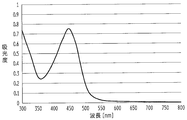
- FIG. 3 is a diagram showing an ultraviolet-visible absorption spectrum of “VALIFAST (registered trademark) YELLOW 3108” which is an example of a dye having a maximum absorption wavelength of an ultraviolet-visible absorption spectrum in a range of 380 to 500 nm. It is a figure which shows the ultraviolet visible absorption spectrum of "VALIFAST (trademark) YELLOW 3170” which is another example of the pigment
- FIG. 5 is a diagram showing an ultraviolet-visible absorption spectrum of “VALIFAST (registered trademark) ORANGE 3210” which is another example of a dye having a maximum absorption wavelength of an ultraviolet-visible absorption spectrum in a range of 380 to 500 nm.
- FIG. 3 is a diagram showing an ultraviolet-visible absorption spectrum of “NUBIAN (registered trademark) BLACK PA-2802” which is an example of a dye having a maximum absorption wavelength of an ultraviolet-visible absorption spectrum outside the range of 380 to 500 nm.
- FIG. 6 is a diagram showing an ultraviolet-visible absorption spectrum of “DAA51” which is another example of a dye having a maximum absorption wavelength of an ultraviolet-visible absorption spectrum in a range of 380 to 500 nm.
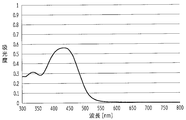
- FIG. 2 It is a figure which shows the spectral reflection characteristic of the resin particle obtained in Example 2.
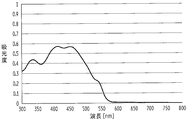
- FIG. It is a figure which shows the spectral reflection characteristic of the resin particle obtained in Example 3.
- FIG. It is a figure which shows the spectral reflection characteristic of the resin particle obtained in Example 4.
- FIG. It is a figure which shows the spectral reflection characteristic of the resin particle obtained by the comparative example 1.
- FIG. 5 is a diagram showing an ultraviolet-visible absorption spectrum of “YELLOW93” which is another example of a dye having a maximum absorption wavelength of an ultraviolet-visible absorption spectrum in a range of 380 to 500 nm.
- FIG. 6 is a diagram showing an ultraviolet-visible absorption spectrum of “YELLOW 186” which is another example of a dye having a maximum absorption wavelength of an ultraviolet-visible absorption spectrum in a range of 380 to 500 nm.
- the resin particles of the present invention are resin particles containing a dye, and the dye has a maximum absorption wavelength of an ultraviolet-visible absorption spectrum (an ultraviolet-visible absorption spectrum having a wavelength of 300 to 800 nm) in a range of 380 to 500 nm,
- the b * value of the resin particles is in the range of 10-80.
- the b * value of the resin particles is in the range of 10-80.
- the b * value of the resin particles is preferably in the range of 15-80.
- the blue light absorption of the resin particles becomes weak, and the blue light cutting efficiency by the resin particles is deteriorated.
- the above resin particles are used for an optical member (lighting cover, film placed on the display surface, etc.) placed on the light emitting device (display, lighting device, etc.), the color of the light emitting device changes greatly. End up.
- the volume average particle diameter of the resin particles is preferably in the range of 0.5 to 20 ⁇ m.
- the volume average particle diameter of the resin particles is smaller than 0.5 ⁇ m, when the resin particles are used in a product such as a coating composition, a film or a resin molded product, the light transmittance of the product is improved. The light diffusion effect of the product may be reduced.
- the volume average particle diameter of the resin particles is larger than 20 ⁇ m, the resin particles are too large. Therefore, when the resin particles are used in a product such as a coating composition, a film, or a resin molded body, the surface of the product is May be rough.
- the volume average particle diameter of the resin particles refers to the arithmetic average of the volume-based particle size distribution measured by the Coulter method, for example, the method described in the Examples section.
- the coefficient of variation (CV) of the particle diameter of the resin particles is preferably 50% or less, more preferably 40% or less, further preferably 35% or less, and preferably 20% or less. Particularly preferred. If the coefficient of variation of the particle diameter of the resin particles is larger than the above range, the amount of coarse particles contained in the resin particles increases, and the resin particles and products using the resin particles (coating compositions, films, resin molded bodies, etc.) ) May be adversely affected. Further, the coefficient of variation (CV) of the particle diameter of the resin particles is preferably 2% or more, and more preferably 5% or more.
- the coefficient of variation of the particle diameter of the resin particles is smaller than the above range, it is not preferable because it is not economical in cost.
- the coefficient of variation (CV) of the particle diameter of the resin particles is preferably in the range of 2 to 50%, more preferably in the range of 5 to 40%, and more preferably in the range of 5 to 35%. Is more preferably in the range of 5 to 20%.
- the variation coefficient of the particle size of the resin particles is obtained by dividing the standard deviation of the volume-based particle size distribution measured by the Coulter method, for example, the method described in the Examples section, by the volume average particle size. It shall refer to the percentage of the value.
- a dye having a maximum absorption wavelength in the ultraviolet-visible absorption spectrum within the range of 380 to 500 nm (hereinafter referred to as “specific” Called a “dye having the following characteristics”).
- the dye having the maximum absorption wavelength in the ultraviolet-visible absorption spectrum used in the present invention in the range of 380 to 500 nm is appropriately selected and used without any particular limitation. Among such dyes, dyes that can be dissolved in an organic solvent are preferable.
- Preferred organic solvents include aromatic hydrocarbon solvents such as toluene and xylene; ketone solvents such as methyl ethyl ketone and methyl isobutyl ketone; ester solvents such as ethyl acetate and butyl acetate; ether solvents such as dioxane and ethylene glycol diethyl ether A solvent etc. are mentioned. More preferable organic solvents include aromatic hydrocarbon solvents such as toluene, methyl isobutyl ketone, and methyl ethyl ketone. Examples of the dye that can be dissolved in an organic solvent include C.I. I. Solvent Yellow 16, C.I. I. Solvent Yellow 33, C.I. I.
- Solvent Yellow 79 C.I. I. Solvent Yellow 82 (for example, “VALIFAST (registered trademark) YELLOW 4120” manufactured by Orient Chemical Co., Ltd.), C.I. I. Solvent Yellow 93 (for example, “YELLOW 93” manufactured by Chuo Synthetic Chemical Co., Ltd.), “YELLOW 186” (trade name) (manufactured by Chuo Synthetic Chemical Co., Ltd.), C.I. I. Solvent Orange 80, C.I. I. Solvent Orange 45 (for example, “VALIFAST (registered trademark) YELLOW 3108” manufactured by Orient Chemical Co., Ltd.), C.I. I. Solvent Orange 62, C.I. I.
- Solvent Orange 54 for example, “VALIFAST (registered trademark) ORANGE 3210” manufactured by Orient Chemical Co., Ltd.), C.I. I. Solvent Yellow 151 (for example, “VALIFAST (registered trademark) YELLOW 3170” manufactured by Orient Chemical Co., Ltd.), C.I. I. Acid Yellow 42 (for example, “VALIFAST (registered trademark) YELLOW 1101” manufactured by Orient Chemical Co., Ltd.), “DAA51” (trade name) (manufactured by Yamada Chemical Co., Ltd.), C.I. I. Pigment yellow 74 (for example, “Fast Yellow 7416” manufactured by Sanyo Dyeing Co., Ltd.) and the like. These pigments may be used alone or in combination of two or more.
- UV-visible absorption spectra of dyes include “VALIFAST (registered trademark) YELLOW 3108”, “VALIFAST (registered trademark) YELLOW 3170”, “VALIFAST (registered trademark) YELLOW 4120”, “VALIFAST (registered trademark) YELLOW 1101”, “VALIFAST (registered trademark) ORANGE 3210", "NUBIAN (registered trademark) BLACK PA-2802” (manufactured by Orient Chemical Industry Co., Ltd.), “DAA51” (manufactured by Yamada Chemical Industry Co., Ltd.), “YELLOW 93” (Chuo Synthetic Chemical) And UV-visible absorption spectra of “YELLOW 186” (manufactured by Chuo Synthetic Chemical Co., Ltd.) are shown in FIG.
- VALIFAST (registered trademark) YELLOW 3170 “VALIFAST (registered trademark) YELLOW 4120”, “VALIFAST (registered trademark) YELLOW 1101”, “VALIFAST (registered) Trademarks)
- ORANGE 3210, DAA51, YELLOW 93, and YELLOW 186 have maximum absorption wavelengths of about 450 nm, about 450 nm, about 440 nm, about 420 nm, about 410 nm, about 440 nm, and about 440 nm, respectively.
- FIG. 6 shows that “NUBIAN (registered trademark) BLACK PA-2802” has a maximum absorption wavelength of 300 nm in the UV-visible absorption spectrum and cannot be used as a dye having the above-mentioned specific characteristics.
- the dye having the above specific characteristics it is preferable that the absorption peak (absorption maximum) of the UV-visible absorption spectrum is concentrated in the vicinity of the wavelength range of 380 to 500 nm.
- the pigment having the specific characteristics does not have an absorption peak in a wavelength region exceeding 500 nm and 800 nm.
- the absorbance of the dye having the specific characteristics is preferably 0.3 or less over the entire wavelength region of 550 to 800 nm, and more preferably 0.2 or less over the entire wavelength region of 550 to 800 nm. preferable. Since these suppress the absorption of visible light other than blue light by the resin particles, resin particles having good transparency (total light transmittance) and products using the same (coating compositions, films, resin moldings, etc.) ) Can be realized.
- other dyes can be added to the resin particles in addition to the above-mentioned dyes having specific characteristics.
- the other dye include C.I. I. Solvent Blue 35, C.I. I. Solvent Red 132, C.I. I. Solvent Black 27, C.I. I. Oil-soluble dyes such as Solvent Blue 70, “OIL GREEN 502” (manufactured by Orient Chemical Co., Ltd.); “OIL GREEN BG” (manufactured by Orient Chemical Co., Ltd.), “VALIFAST (registered trademark) RED 3306” (Orient Chemical Co., Ltd.) Etc.). These other pigments may be used alone or in combination of two or more.
- the amount of the dye added is preferably in the range of 0.005 to 2 parts by weight with respect to 100 parts by weight of the polymer contained in the resin particles.
- the blue light cutting efficiency by the resin particles can be improved while avoiding the above.
- the addition amount of the dye is less than 0.005 parts by weight with respect to 100 parts by weight of the polymer contained in the resin particles, the light absorption by the dye is weak, and the blue light cut efficiency by the resin particles is low. There is a risk of getting worse.
- the addition amount of the dye exceeds 2 parts by weight with respect to 100 parts by weight of the polymer contained in the resin particles, the resin particles are too colored to yellow, and light emission from a display, a lighting device, etc.
- the resin particles are used for the optical member disposed on the device, the color reproducibility of the light emitting device may be deteriorated.
- the polymer constituting the resin particles is, for example, a vinyl monomer polymer.
- the vinyl monomer is not particularly limited as long as it is a compound having at least one ethylenically unsaturated group (broadly defined vinyl group), and is a monofunctional (meth) acrylic monomer described later, A monofunctional styrene monomer described later, a polyfunctional vinyl monomer described later, and other monofunctional vinyl monomers described later can be used.
- the polymer constituting the resin particles includes a structural unit derived from a monofunctional (meth) acrylic monomer and / or a monofunctional styrene monomer and a polyfunctional vinyl monomer (crosslinkable vinyl monomer). More preferably, it is a polymer (crosslinked polymer) of a monomer mixture containing a structural unit derived from (mer).
- the polymer contains a structural unit derived from a monofunctional (meth) acrylic monomer and / or a monofunctional styrene monomer, resin particles with higher transparency can be realized.
- the polymer may be a polyfunctional vinyl monomer.
- the dye By being a crosslinked polymer containing a constitutional unit derived from a monomer, the dye can be sufficiently retained in the resin particles.
- (meth) acryl used in the present application document means methacryl or acryl.
- the monofunctional (meth) acrylic monomer is not particularly limited as long as it is a compound having one acryloyloxy group or methacryloyloxy group.
- acrylic acid methyl acrylate, ethyl acrylate, N-butyl acrylate, isobutyl acrylate, dodecyl acrylate, stearyl acrylate, 2-ethylhexyl acrylate, tetrahydrofurfuryl acrylate, methacrylic acid, methyl methacrylate, ethyl methacrylate, n-propyl methacrylate, n methacrylate -Butyl, isobutyl methacrylate, n-octyl methacrylate, dodecyl methacrylate, 2-ethylhexyl methacrylate, stearyl methacrylate and the like.
- These monofunctional (meth) acrylic monomers may be used alone or in a combination of two or more.
- the monofunctional styrene-based monomer is not particularly limited as long as it is a styrene having one ethylenically unsaturated group.
- styrene, o-methylstyrene, m-methylstyrene, p-methyl examples thereof include styrene and ⁇ -methylstyrene.
- These monofunctional styrenic monomers may be used alone or in combination of two or more.
- the structural unit derived from the monofunctional (meth) acrylic monomer and / or the monofunctional styrene monomer is preferably in the range of 50 to 95% by weight with respect to 100% by weight of the polymer. .
- the amount of the structural unit derived from the monofunctional (meth) acrylic monomer and / or the monofunctional styrene monomer is less than the above range, the transparency of the resin particles may be deteriorated.
- the amount of the structural unit derived from the monofunctional (meth) acrylic monomer and / or the monofunctional styrene monomer is more than the above range, the crosslinking degree of the crosslinked polymer is lowered. As a result, there is a possibility that the pigment is difficult to be retained in the resin particles.
- the resin particles are mixed when molded with a transparent resin or the like (so-called kneading application) when the resin particles are heated during mixing or molding. Particles are easily dissolved or deformed.
- the amount of the structural unit derived from the monomer with respect to 100% by weight of the polymer corresponds to the amount of the monomer with respect to 100% by weight of the monomer mixture.
- the polyfunctional vinyl monomer for imparting a crosslinked structure to the polymer constituting the resin particles is not particularly limited as long as it is a compound having two or more ethylenically unsaturated groups. , Trimethylolpropane triacrylate, ethylene glycol dimethacrylate, diethylene glycol dimethacrylate, triethylene glycol dimethacrylate, decaethylene glycol dimethacrylate, pentadecaethylene glycol dimethacrylate, pentacontactor ethylene glycol dimethacrylate, Polyfunctional (meth) acrylic monomers such as 1,3-butylene dimethacrylate, allyl methacrylate, trimethylolpropane trimethacrylate, pentaerythritol tetramethacrylate, diethylene glycol dimethacrylate; dibi Rubenzen, divinyl naphthalene, and aromatic divinyl compounds such as derivatives thereof. These polyfunctional vinyl monomers may be used alone or in a combination of two or more
- the amount of the structural unit derived from the polyfunctional vinyl monomer is 1 with respect to 100 parts by weight of the structural unit derived from the monofunctional (meth) acrylic monomer and / or the monofunctional styrene monomer. Is preferably in the range of ⁇ 100 parts by weight, and is preferably in the range of 5 ⁇ 50% by weight with respect to 100% by weight of the polymer.
- the quantity of the structural unit derived from the said polyfunctional vinyl-type monomer is less than the said range, the crosslinking degree of the said crosslinked polymer will become low. As a result, there is a possibility that the pigment is difficult to be retained in the resin particles.
- the resin particles are mixed when molded with a transparent resin or the like (so-called kneading application) when the resin particles are heated during mixing or molding. Particles are easily dissolved or deformed.
- the amount of the structural unit derived from the polyfunctional vinyl monomer is larger than the above range, the effect corresponding to the amount of the polyfunctional vinyl monomer used (the effect of retaining the dye in the resin particles) is improved. Not allowed and production costs may increase.
- the polymer constituting the resin particle may further include a structural unit derived from a monofunctional vinyl monomer other than the monofunctional (meth) acrylic monomer and the monofunctional styrene monomer.
- the other monofunctional vinyl monomer is particularly a compound having one ethylenically unsaturated group (except for a monofunctional (meth) acrylic monomer and a monofunctional styrene monomer). Examples thereof include, but are not limited to, vinyl chloride, vinyl acetate, acrylonitrile, acrylamide, methacrylamide, N-vinyl pyrrolidone and the like. These other monofunctional vinyl monomers may be used alone or in combination of two or more.
- the resin particles are obtained by subjecting the monomer mixture to a known polymerization method such as emulsion polymerization, suspension polymerization in an aqueous medium, seed polymerization, soap-free emulsion polymerization (emulsion polymerization without using a surfactant), dispersion polymerization and the like. It can be produced by polymerization.
- aqueous suspension polymerization suspension polymerization in an aqueous medium
- seed polymerization, emulsion polymerization, and soap-free emulsion polymerization are preferable.
- the method for producing resin particles by aqueous suspension polymerization is a method in which a monomer mixture is suspended and polymerized in an aqueous medium.
- the monomer mixture includes 50 to 95% by weight of a monofunctional (meth) acrylic monomer and / or a monofunctional styrene monomer, based on the amount of all components forming the resin particles, Among the raw materials used for the production of the resin particles, the composition contains 5 to 50% by weight of a polyfunctional vinyl monomer with respect to the amount of all components involved in the polymerization reaction to form the resin particles. Is preferred.
- the monomer mixture may contain the other monofunctional vinyl monomer described above.
- aqueous medium for subjecting the monomer mixture to aqueous suspension polymerization water or a mixed medium of water and a water-soluble solvent such as alcohol (for example, methanol, ethanol) can be used.
- the amount of the aqueous medium used is usually in the range of 100 to 1000 parts by weight with respect to 100 parts by weight of the monomer mixture in order to stabilize the suspension of the resin particles produced by suspension polymerization. .
- a polymerization initiator can be used for the aqueous suspension polymerization.
- the polymerization initiator include oil-soluble peroxide-based polymerization initiators and oil-soluble azo-based polymerization initiators that are usually used in aqueous suspension polymerization.
- polymerization initiator examples include benzoyl peroxide, lauroyl peroxide, octanoyl peroxide, orthochlorobenzoyl peroxide, orthomethoxybenzoyl peroxide, methyl ethyl ketone peroxide, diisopropyl peroxydicarbonate, cumene hydroperoxide, Oil-soluble peroxide polymerization initiators such as cyclohexanone peroxide, t-butyl hydroperoxide, diisopropylbenzene hydroperoxide; 2,2′-azobisisobutyronitrile, 2,2′-azobis (2, 4-dimethylvaleronitrile), 2,2′-azobis (2,3-dimethylbutyronitrile), 2,2′-azobis (2-methylbutyronitrile), 2,2′-azobis (2,3,3) 3-trimethylbutyronitrile), 2,2 ' Azobis (2-isopropylbutyronitrile), 1,1′-
- polymerization initiators 2,2′-azobisisobutyronitrile, 2,2′-azobis (2,4-dimethylvaleronitrile), benzoyl peroxide, lauroyl peroxide, etc. are decomposed by the polymerization initiator. It is preferable in terms of speed.
- These polymerization initiators may be used alone or in a combination of two or more.
- the amount of the polymerization initiator used is preferably in the range of 0.01 to 10 parts by weight, preferably in the range of 0.1 to 5 parts by weight, with respect to 100 parts by weight of the monomer mixture. Is more preferable.
- the amount of the polymerization initiator used is less than 0.01 parts by weight with respect to 100 parts by weight of the monomer mixture, the polymerization initiator hardly fulfills the function of initiating polymerization.
- the usage-amount of the said polymerization initiator exceeds 10 weight part with respect to 100 weight part of said monomer mixtures, since it is uneconomical in cost, it is unpreferable.
- the coloring matter soluble in the organic solvent, the polymerization initiator and other oil-soluble components used as necessary are uniformly mixed with the monomer mixture by a known method, and the monomer composition Is done.
- nitrites, sulfites, hydroquinones are used to suppress the generation of emulsion particles in the aqueous system (resin particles having a particle diameter of less than 1 ⁇ m produced by secondary emulsion polymerization).
- Ascorbic acids, water-soluble vitamin Bs, citric acid, polyphenols, and other water-soluble polymerization inhibitors may be used. These polymerization inhibitors may be used individually by 1 type, and may mix and use 2 or more types.
- a suspension stabilizer may be added to the reaction system for the aqueous suspension polymerization.
- the suspension stabilizer include, for example, phosphates such as calcium phosphate (tricalcium phosphate), magnesium phosphate, aluminum phosphate, zinc phosphate; calcium pyrophosphate (particularly calcium pyrophosphate produced by the metathesis method), pyrolin Pyrophosphates such as magnesium pyrophosphate (particularly magnesium pyrophosphate produced by the metathesis method), aluminum pyrophosphate, zinc pyrophosphate, etc .; carbonates such as calcium carbonate, magnesium carbonate; calcium hydroxide, magnesium hydroxide, aluminum hydroxide Metal hydroxides such as: calcium metasilicate; and poorly water-soluble inorganic compounds such as sulfates such as calcium sulfate and barium sulfate.
- calcium phosphate, and magnesium pyrophosphate and calcium pyrophosphate produced by the metathesis method are preferable
- the selection of the type of the suspension stabilizer and the adjustment of the amount used may be appropriately performed in consideration of the diameter of the resin particles obtained and the dispersion stability during polymerization.
- the amount of the suspension stabilizer used is usually in the range of 0.5 to 15 parts by weight with respect to 100 parts by weight of the monomer mixture.
- the suspension stabilizer and a surfactant such as an anionic surfactant, a cationic surfactant, a zwitterionic surfactant, and a nonionic surfactant are used in combination. Is also possible.
- anionic surfactant examples include fatty acid soaps such as sodium oleate and castor oil potassium soap; alkyl sulfate salts such as sodium lauryl sulfate and ammonium lauryl sulfate; alkylbenzene sulfonates such as sodium dodecylbenzenesulfonate; dodecyl Alkyl sulfonates (alkane sulfonates) such as sodium sulfonate; alkyl naphthalene sulfonates; succinate sulfonates; dialkyl sulfosuccinates such as sodium dioctyl sulfosuccinate; alkyl phosphate ester salts; polyoxyethylene alkylphenyl ethers Phosphate ester salts such as sodium phosphate and sodium polyoxyalkylene aryl ether; naphthalene sulfonic acid formalin condensate and metal salts thereof
- nonionic surfactant examples include polyoxyethylene alkyl ethers such as polyoxyethylene tridecyl ether; polyoxyethylene alkyl phenyl ethers; polyoxyethylene styrenated phenyl ethers; and alkylene groups having 3 or more carbon atoms.
- Polyoxyalkylene alkyl ethers such as polyoxyalkylene tridecyl ether; polyoxyethylene fatty acid esters; sorbitan fatty acid esters such as sorbitan monostearate and sorbitan monopalmitate; polyoxysorbitan fatty acid esters; polyoxyethylene sorbitan monolaurate, etc.
- Oxyethylene sorbitan fatty acid ester Polyoxyethylene alkylamine; Glycerin fatty acid ester; Oxyethylene-oxypropylene block Polymers; sucrose fatty acid ester (for example, trade name of Mitsubishi Chemical Foods Co., Ltd. "Ryoto (registered trademark) sugar ester"), and the like.
- cationic surfactant examples include alkylamine salts such as laurylamine acetate and stearylamine acetate; quaternary ammonium salts such as lauryltrimethylammonium chloride.
- zwitterionic surfactant examples include lauryl dimethylamine oxide, phosphate ester zwitterionic surfactant, phosphite ester zwitterionic surfactant, and the like. One of these surfactants may be used alone, or two or more thereof may be mixed and used.
- the selection of the type of the surfactant and the adjustment of the amount used may be appropriately performed in consideration of the diameter of the obtained resin particles and the dispersion stability during polymerization.
- the amount of the surfactant added is usually in the range of 0.001 to 0.1 parts by weight with respect to 100 parts by weight of the aqueous medium.
- the monomer composition thus prepared is added to an aqueous medium, and the monomer composition is dispersed in the aqueous medium to perform aqueous suspension polymerization.
- a method for dispersing the monomer composition for example, the monomer composition is directly added to the aqueous medium, and the monomer composition is formed into oil droplets (monomer droplets) in the aqueous medium by a stirring force such as a propeller blade.
- a method of dispersing a method of dispersing a monomer composition in an aqueous medium using a homomixer, which is a disperser using a high shear force composed of a rotor and a stator, or an ultrasonic disperser, etc. .
- suspension polymerization is started by heating the aqueous suspension in which the monomer composition is dispersed as spherical droplets.
- the aqueous suspension is preferably stirred with a stirrer. The stirring may be performed so gently as to prevent the droplets of the monomer composition from floating and settling of the resin particles after polymerization.
- the polymerization temperature is preferably in the range of 30 to 100 ° C., more preferably in the range of 40 to 80 ° C.
- the time for maintaining this polymerization temperature is preferably in the range of 0.1 to 20 hours.
- At least one of the monofunctional (meth) acrylic monomer and / or the monofunctional styrene monomer and the polyfunctional vinyl monomer is a compound having a boiling point near or below the polymerization temperature.
- a pressure-resistant polymerization facility such as an autoclave so that a compound having a boiling point near or below the polymerization temperature does not volatilize.
- the resin particles are separated as a hydrous cake by a method such as suction filtration, centrifugal dehydration, centrifugal separation, and pressure dehydration, and the obtained hydrous cake is washed with water and dried to obtain the desired resin particles.
- a method such as suction filtration, centrifugal dehydration, centrifugal separation, and pressure dehydration
- the obtained hydrous cake is washed with water and dried to obtain the desired resin particles.
- the adjustment of the volume average particle diameter of the obtained resin particles is carried out by mixing the monomer composition and the aqueous medium, the addition amount of the suspension stabilizer, the surfactant, the stirring condition of the agitator, and the dispersion. This is possible by adjusting the conditions.
- a method for producing resin particles by seed polymerization is a method in which seed particles composed of a polymer of a first vinyl monomer absorb the second vinyl monomer and polymerize the second vinyl monomer. It is. According to the method for producing resin particles by seed polymerization, resin particles having a particle diameter variation coefficient of 20% or less can be obtained.
- the weight average molecular weight (Mw) of the seed particles is preferably 50000 or less. When the weight average molecular weight of the seed particles exceeds 50,000, the seed particles hardly absorb the second vinyl monomer, and the particle size distribution of the obtained resin particles is widened.
- the seed particles are preferably non-crosslinked particles or finely crosslinked particles (particles crosslinked to such an extent that they can be dissolved in a solvent).
- the seed particles are cross-linked so as not to dissolve in the solvent, the amount of the second vinyl monomer absorbed by the seed particles is reduced, and furthermore, the resin particles become a core-shell shape (the seed particles keep a spherical shape). ), The resin particles are deformed, etc., and it is not preferable to obtain spherical resin particles having a uniform particle interior.
- the ratio of the seed particles to the total weight of the raw materials constituting the resin particles is preferably 10% by weight or less.
- the seed particles are non-crosslinked or microcrosslinked, when the ratio of the seed particles to the total weight of the resin particles exceeds 10% by weight, the seed particles having a low glass transition temperature are melted when the resin particles are dried, and the resin particles Since it becomes a factor which fuses each other, it is not preferable.
- the ratio of the seed particles to the total weight of the resin particles can be analyzed by dissolving the seed particles in the resin particles with a solvent.
- the first vinyl monomer and the second vinyl monomer which are combined together, form the resin particles by participating in a polymerization reaction among the raw materials used in the production of the resin particles.
- Polymerization of 50 to 95% by weight of monofunctional (meth) acrylic monomer and / or monofunctional styrene monomer and the raw materials used for the production of the resin particles The composition is preferably a monomer mixture containing 5 to 50% by weight of a polyfunctional vinyl monomer with respect to the amount of all components involved in the reaction to form the resin particles.
- the monomer mixture may contain the other monofunctional vinyl monomer.
- the seed particles are preferably non-crosslinked particles or finely crosslinked particles, the first vinyl monomer does not contain a polyfunctional vinyl monomer or the first vinyl monomer.
- the second vinyl monomer contains a monofunctional vinyl monomer (monofunctional (meta-functional) while containing a small amount of a polyfunctional vinyl monomer to the extent that finely crosslinked particles can be obtained by polymerization of the monomer. )
- Polymerization of the second vinyl monomer is usually performed in a state where seed particles that have absorbed the second vinyl monomer are dispersed in an aqueous medium.
- the aqueous medium is not particularly limited, and examples thereof include water and a mixed medium of water and a water-soluble organic medium (lower alcohol (alcohol having 5 or less carbon atoms) such as methanol and ethanol).
- the amount of the aqueous medium used is usually in the range of 100 to 1000 parts by weight with respect to 100 parts by weight of the second vinyl monomer in order to stabilize the resin particles.
- the polymerization of the second vinyl monomer in the aqueous medium is preferably performed by stirring an aqueous suspension in which the second vinyl monomer is dispersed as spherical droplets.
- the stirring may be performed loosely enough to prevent, for example, floating of spherical droplets and sedimentation of particles after polymerization.
- the polymerization temperature of the second vinyl monomer is preferably in the range of 30 to 100 ° C., and more preferably in the range of 40 to 80 ° C.
- the time for maintaining this polymerization temperature is preferably within the range of 0.1 to 20 hours.
- a polymerization initiator is usually used for the polymerization of the second vinyl monomer.
- the polymerization initiator include organic peroxides such as benzoyl peroxide, lauroyl peroxide, tert-butyl peroxyisobutyrate, acetyl peroxide, methyl ethyl ketone peroxide, tert-butyl peroxide, and dicumyl peroxide; 2,2′azobis (2-methylbutyronitrile), 2,2′-azobisisobutyronitrile, 2,2′-azobis (2,4-dimethylvaleronitrile), 2,2′-azobis (2 Azo compounds such as -methylpropionate). These polymerization initiators may be used alone or in combination of two or more.
- the polymerization initiator may be benzoyl peroxide, 2,2′-azobisisobutyronitrile, It is preferable to use an oil-soluble polymerization initiator such as 2′azobis (2-methylbutyronitrile).
- the target particle size 0.1%) is compared with the case where a water-soluble polymerization initiator such as potassium persulfate is used. It is possible to suppress the generation of fine resin particles smaller than ( ⁇ 1.0 ⁇ m) resin particles.
- the amount of the polymerization initiator used is preferably in the range of 0.01 to 10 parts by weight, preferably in the range of 0.01 to 5 parts by weight, with respect to 100 parts by weight of the second vinyl monomer. It is more preferable that When the usage-amount of the said polymerization initiator is less than 0.01 weight part with respect to 100 weight part of 2nd vinylic monomers, it is difficult for a polymerization initiator to fulfill
- a surfactant In the polymerization of the second vinyl monomer, it is preferable to use a surfactant.
- the surfactant is not particularly limited, and various surfactants (anionic surfactants, nonionic surfactants, cationic surfactants) that can be used for aqueous suspension polymerization. Any of an anionic surfactant and a nonionic surfactant can be used. Further, phosphate ester salts and sulfosuccinates are preferable as the anionic surfactant, and polyoxyethylene alkyl phenyl ether and polyoxyethylene styrenated phenyl ether are preferable as the nonionic surfactant. Moreover, the said surfactant may be used independently and may be used in combination of 2 or more type.
- the amount of the surfactant used in the polymerization of the second vinyl monomer is preferably in the range of 0.1 to 5 parts by weight with respect to 100 parts by weight of the second vinyl monomer.
- the amount of the surfactant used is less than 0.1 parts by weight with respect to 100 parts by weight of the second vinyl monomer, it is difficult to maintain the polymerization stability, which is not preferable.
- the amount of the surfactant used exceeds 5 parts by weight with respect to 100 parts by weight of the second vinyl monomer, it is smaller than the resin particles having the target particle diameter (0.1 to 1.0 ⁇ m). This is not preferable because fine resin particles may be generated.
- a chain transfer agent may be added to the second vinyl monomer polymerization system in order to improve the heat resistance of the resin particles.
- the chain transfer agent include mercaptans such as n-octyl mercaptan, tert-octyl mercaptan, n-dodecyl mercaptan, tert-dodecyl mercaptan, n-hexyl mercaptan; terpenes such as ⁇ -terpinene and dipentene; chloroform, Halogenated hydrocarbons such as carbon tetrachloride, dichloromethane and dibromomethane; ⁇ -methylstyrene dimer; phenolic compounds such as 2,6-di-tert-butyl-4-methylphenol and styrenated phenol; allyl such as allyl alcohol Compounds and the like.
- an additive such as an antioxidant may be added to the second vinyl monomer polymerization system in order to
- a polymer dispersion stabilizer may be added to the polymerization system of the second vinyl monomer in order to stabilize the dispersion of the second vinyl monomer in the aqueous medium.
- the polymer dispersion stabilizer include polyvinyl alcohol, methyl cellulose, ethyl cellulose, hydroxymethyl cellulose, hydroxyethyl cellulose, carboxymethyl cellulose, carboxyethyl cellulose, and amino-modified silicone. These polymer dispersion stabilizers may be used alone or in combination of two or more. The amount of the polymer dispersion stabilizer used is preferably in the range of 0.01 to 10 parts by weight with respect to 100 parts by weight of the second vinyl monomer.
- the seed particles are obtained by polymerizing the first vinyl monomer.
- the polymerization method of the first vinyl monomer is not particularly limited, but soap-free emulsion polymerization, emulsion polymerization, suspension polymerization, dispersion polymerization, seed polymerization, and the like can be used. Among these polymerization methods, soap-free emulsion polymerization or emulsion polymerization using a reactive surfactant (surfactant having an ethylenically unsaturated group) is preferable.
- a reactive surfactant surfactant having an ethylenically unsaturated group
- the polymerization temperature of the first vinyl monomer is preferably in the range of 30 to 100 ° C., and more preferably in the range of 40 to 80 ° C.
- the time for maintaining this temperature is preferably in the range of 1 to 30 hours.
- a polymerization initiator is usually used.
- the same polymerization initiator as that used for the second vinyl monomer can be used, but potassium persulfate, ammonium persulfate, etc.
- the water-soluble polymerization initiator is preferably used.
- the amount of the polymerization initiator used is preferably in the range of 0.01 to 10 parts by weight with respect to 100 parts by weight of the first vinyl monomer, and 0.01 to 5 parts by weight. More preferably within the range.
- the usage-amount of the said polymerization initiator is less than 0.01 weight part with respect to 100 weight part of 1st vinylic monomers, the said polymerization initiator is hard to fulfill
- the usage-amount of the said polymerization initiator exceeds 10 weight part with respect to 100 weight part of 1st vinylic monomers, since it is uneconomical in cost, it is not preferable.
- the surfactant used for the polymerization of the first vinyl monomer can be used for aqueous suspension polymerization.
- the various surfactants mentioned above may be used, and an anionic surfactant having an ethylenically unsaturated group (hereinafter referred to as “reactive anionic surfactant”) may be used. Since the specific example and preferable usage amount of the reactive anionic surfactant are the same as those in the method for producing resin particles by emulsion polymerization described later, description thereof is omitted here.
- a chain transfer agent can be added to the polymerization system of the first vinyl monomer in order to adjust the molecular weight.
- the chain transfer agent those used for the polymerization of the second vinyl monomer can be used.
- the method for producing resin particles by emulsion polymerization is a method in which a monomer mixture is emulsified in a medium in the presence of a surfactant and polymerized in the presence of a polymerization initiator.
- the monomer mixture is 50 to 95% by weight of monofunctional (meth) based on the amount of all the components that participate in the polymerization reaction and form the resin particles among the raw materials used for the production of the resin particles.
- monofunctional (meth) based on the amount of all the components that participate in the polymerization reaction and form the resin particles among the raw materials used for the production of the resin particles.
- the acrylic monomers and / or monofunctional styrene monomers and the raw materials used for the production of the resin particles 5 for the amount of all components involved in the polymerization reaction to form the resin particles.
- a composition containing -50% by weight of a polyfunctional vinyl monomer is preferred.
- the monomer mixture may contain the other monofunctional vinyl monomer described above.
- polymerization initiator examples include organic peroxides such as benzoyl peroxide, lauroyl peroxide, acetyl peroxide, methyl ethyl ketone peroxide, tert-butyl peroxide, and dicumyl peroxide; 2,2′-azobisisobutyl Ronitrile, 2,2′-azobis (2,4-dimethylvaleronitrile), 2,2′-azobis [2- (2-imidazolin-2-yl) propane] dihydrochloride, 2,2′-azobis [ 2- (2-imidazolin-2-yl) propane] disulfate dihydrate, 2,2′-azobis (2-amidinopropane) dihydrochloride, 2,2′-azobis [N- (2-carboxy Ethyl) -2-methylpropionamidine] hydrate, 2,2′-azobis ⁇ 2- [1- (2-hydroxyethyl) -2-imidazolin-2-yl] Lopan ⁇ di
- polymerization initiators may be used alone or in combination of two or more. Moreover, you may use what combined the said persulfate or organic peroxide, and a reducing agent as a polymerization initiator. Such a combination of polymerization initiators is called a redox polymerization initiator.
- the reducing agent include sodium sulfoxylate formaldehyde, sodium hydrogen sulfite, ammonium hydrogen sulfite, sodium thiosulfate, ammonium thiosulfate, hydrogen peroxide, sodium hydroxymethanesulfinate, L-ascorbic acid or a salt thereof, cuprous copper Examples thereof include salts and ferrous salts. These reducing agents may be used alone or in combination of two or more.
- the polymerization initiator varies depending on the kind thereof, but it is preferably used in the range of 0.1 to 5 parts by weight with respect to 100 parts by weight of the monomer mixture, and 0.3 to 3 parts by weight. It is more preferable to use within the range.
- a chain transfer agent may be added to the polymerization system in the emulsion polymerization.
- polymerization of the 2nd vinyl-type monomer in the said seed polymerization can be used.
- the chain transfer agent is preferably used within a range of 0.1 to 5 parts by weight, and preferably within a range of 0.3 to 3 parts by weight with respect to 100 parts by weight of the monomer mixture. More preferred.
- the medium used for emulsion polymerization it is preferable to use an aqueous medium.
- aqueous medium water alone or a mixture of water and lower alcohol (methanol, ethanol, isopropyl alcohol, etc.) can be used, but water alone is preferable from the viewpoint of waste liquid treatment.
- the amount of the aqueous medium used is preferably in the range of 200 to 2000 parts by weight, more preferably in the range of 300 to 1500 parts by weight with respect to 100 parts by weight of the monomer mixture.
- the amount of the aqueous medium used is less than 200 parts by weight, the stability of the particles during the polymerization is deteriorated, and an aggregate of resin particles may be formed after the polymerization, which is not preferable.
- productivity may be deteriorated, which is not preferable.
- the polymerization temperature varies depending on the type of monomer used and the type of polymerization initiator, but is preferably in the range of 30 to 100 ° C.
- the polymerization time is preferably 2 to 10 hours.
- surfactant various surfactants listed as those that can be used in the aqueous suspension polymerization can be used, but anionic surfactants are preferably used, and reactive anionic Surfactants (anionic surfactants having an ethylenically unsaturated group) can also be used.
- the reactive anionic surfactant has sulfonate, sulfate, phosphate, phosphate ester, sulfosuccinate, carboxylate, acylamino acid salt and the like as an anionic site.
- This anionic site becomes a functional group on the surface of the obtained resin particle.
- these salts include ammonium salts, sodium salts, potassium salts and the like.
- the reactive anionic surfactant include a reactive anionic surfactant having a polyoxyalkylene moiety, such as polyoxyethylene-1- (allyloxymethyl) alkyl ether manufactured by Daiichi Kogyo Seiyaku Co., Ltd.
- Aqualon (registered trademark) HS-10 (trade name, polyoxyethylene chain length 10), which is a polyoxyethylene alkylpropenyl phenyl ether sulfate ammonium salt manufactured by Daiichi Kogyo Seiyaku Co., Ltd.
- reactive anionic surfactants other than the reactive anionic surfactant having a polyoxyalkylene moiety include sodium p-styrene sulfonate and sodium allyl alkyl sulfonate.
- the amount of the surfactant used is preferably in the range of 0.01 to 5 parts by weight with respect to 100 parts by weight of the monomer mixture.
- a polymer dispersion stabilizer may be added to the polymerization system in the emulsion polymerization.
- the polymer dispersion stabilizer various polymer dispersion stabilizers listed as those that can be used for the polymerization of the second vinyl monomer in the seed polymerization can be used.
- the amount of the polymer dispersion stabilizer used is preferably in the range of 0.01 to 5 parts by weight with respect to 100 parts by weight of the monomer mixture.
- the method for producing resin particles by soap-free emulsion polymerization is the same as the method for producing resin particles by emulsion polymerization, except that the monomer mixture is emulsified in a medium in the absence of a surfactant.
- a slurry containing resin particles is obtained.
- a known method can be used as a method for isolating the resin particles from the slurry.
- a spray drying method a method of drying by attaching to a heated rotating drum typified by a drum dryer, or freeze drying The law etc. can be used. Of these isolation methods, spray drying is preferred.
- the spray drying method is generally a method of drying resin particles by spraying a water dispersion (slurry containing resin particles) together with a gas stream using a spray dryer such as a spray dryer or an air dryer. .
- the temperature (supply temperature) at the slurry inlet of the spray dryer is preferably within the range of 80 ° C to 220 ° C.
- the temperature at the slurry inlet is higher than 220 ° C., the resin particles are likely to be fused with each other, and a resin particle aggregate in which the resin particles are connected to each other may be obtained.
- the temperature at the slurry inlet is less than 80 ° C., drying may be insufficient or drying efficiency may be lowered.
- the temperature (exhaust temperature) at the powder outlet (exhaust temperature at which the resin particles are discharged) of the spray dryer is preferably within the range of 40 ° C to 100 ° C. Moreover, when the temperature at the powder outlet is lower than 40 ° C., drying may be insufficient. On the other hand, when the temperature at the powder outlet is higher than 100 ° C., the resin particles may be easily fused.
- the resin particles may be subjected to wet classification after polymerization, and the classified resin particles may be spray-dried. Thereby, coarse particles can be reduced.
- the coating composition of this invention is a composition for coating, and contains the said resin particle.
- the resin particles function as a matting agent (matting agent).
- the resin particles used in the coating composition of the present invention preferably have a volume average particle diameter in the range of 0.5 to 20 ⁇ m. Thereby, the matte property of the coating film formed with a coating composition becomes favorable. Therefore, the anti-glare property of the film formed by coating the coating composition on the transparent film substrate is improved.
- the coating composition of the present invention is preferably capable of forming a high-hardness coating film called a hard coat layer.
- the coating composition of the present invention usually contains a resin binder such as a thermoplastic resin, a thermosetting resin, a mixture of an ionizing radiation curable resin and an ionizing radiation polymerization initiator, in addition to the resin particles.
- a resin binder such as a thermoplastic resin, a thermosetting resin, a mixture of an ionizing radiation curable resin and an ionizing radiation polymerization initiator, in addition to the resin particles.
- thermoplastic resin examples include cellulose derivatives such as acetylcellulose, nitrocellulose, acetylbutylcellulose, ethylcellulose, and methylcellulose; vinyl acetate homopolymer or copolymer, vinyl chloride homopolymer or copolymer, chloride Vinylidene homopolymers or copolymers; acetal resins such as polyvinyl formal and polyvinyl butyral; acrylic resins (polyacrylate esters) and their copolymer resins, methacrylic resins (polymethacrylate esters) and their copolymer resins, etc. (Meth) acrylic resin; polystyrene resin; polyamide resin; linear polyester resin; polycarbonate resin.
- cellulose derivatives such as acetylcellulose, nitrocellulose, acetylbutylcellulose, ethylcellulose, and methylcellulose
- vinyl acetate homopolymer or copolymer vinyl chloride homopolymer or copolymer, chloride Vinyl
- thermosetting resin examples include a thermosetting acrylic resin, a thermosetting urethane resin composed of an acrylic polyol and an isocyanate prepolymer, a phenol resin, a urea melamine resin, an epoxy resin, an unsaturated polyester resin, and a silicone resin. Etc.
- the ionizing radiation curable resin may be any resin that can be cured by irradiation with ionizing radiation (ultraviolet rays, electron beams, etc.), such as an ionizing radiation polymerizable monomer or an ionizing radiation polymerizable prepolymer (ionizing radiation). What mixed 1 type (s) or 2 types or more, such as a polymerizable oligomer), can be used.
- ionizing radiation ultraviolet rays, electron beams, etc.
- What mixed 1 type (s) or 2 types or more, such as a polymerizable oligomer can be used.
- An ionizing radiation polymerizable polyfunctional prepolymer having two or more ionizing radiation polymerizable functional groups is preferred.
- the ionizing radiation polymerizable functional group possessed by the ionizing radiation polymerizable polyfunctional prepolymer or the polyfunctional monomer is a photopolymerizable functional group, an electron beam polymerizable functional group, or a radiation polymerizable functional group.
- photopolymerizable functional groups are particularly preferred.
- Specific examples of the photopolymerizable functional group include unsaturated polymerizable functional groups such as a (meth) acryloyl group, a vinyl group, a styryl group, and an allyl group. ) An acryloyl group is preferred.
- “(meth) acryloyl” represents acryloyl or methacryloyl.
- a polyfunctional prepolymer having two or more photopolymerizable functional groups (hereinafter referred to as “photopolymerizable polyfunctional prepolymer”) is preferable.
- photopolymerizable polyfunctional prepolymer a (meth) acrylic prepolymer having two or more (meth) acryloyl groups in one molecule is particularly preferably used.
- Such a (meth) acrylic prepolymer becomes a three-dimensional network structure by crosslinking and curing.
- (meth) acrylic prepolymer As the (meth) acrylic prepolymer, urethane (meth) acrylate, polyester (meth) acrylate, epoxy (meth) acrylate, melamine (meth) acrylate, and the like can be used.
- (meth) acrylate represents acrylate or methacrylate.
- the above-mentioned polyfunctional vinyl monomers can be used, but a polyfunctional monomer having two or more photopolymerizable functional groups (hereinafter referred to as “photopolymerizable polyfunctional”). (Referred to as "monomer”).
- the photopolymerizable polyfunctional monomer examples include alkylene glycol di (meth) acrylates such as neopentyl glycol acrylate, 1,6-hexanediol di (meth) acrylate, and propylene glycol di (meth) acrylate; Polyoxyalkylene glycol di (meth) acrylates such as triethylene glycol di (meth) acrylate, dipropylene glycol di (meth) acrylate, polyethylene glycol di (meth) acrylate, polypropylene glycol di (meth) acrylate; pentaerythritol di ( Di (meth) acrylates of trihydric or higher polyhydric alcohols such as meth) acrylate; 2,2-bis [4- (acryloxy-diethoxy) phenyl] propane, 2,2-bis [4- (acryloxy polyp) Di (meth) acrylates of polyhydric alcohol ethylene oxide adducts such as poxy) phenyl]
- the photopolymerizable polyfunctional monomer is preferably an ester of a polyhydric alcohol and (meth) acrylic acid as in these specific examples, and has 3 or more (meth) acryloyl groups in one molecule.
- the polyfunctional monomer having is more preferable.
- polyfunctional monomer having three or more (meth) acryloyl groups in one molecule include trimethylolpropane tri (meth) acrylate, trimethylolethane tri (meth) acrylate, 1,2,4- Cyclohexanetetra (meth) acrylate, pentaglycerol triacrylate, pentaerythritol tetra (meth) acrylate, pentaerythritol tri (meth) acrylate, dipentaerythritol triacrylate, dipentaerythritol pentaacrylate, dipentaerythritol tetra (meth) acrylate, di Examples include pentaerythritol hexa (meth) acrylate, tripentaerythritol triacrylate, and tripentaerythritol hexaacrylate. Two or more kinds of the photopolymerizable polyfunctional monomers may be used in combination.
- the photopolymerization initiator is used as the ionizing radiation polymerization initiator. It is preferable to use as.
- the photopolymerization initiator a photoradical polymerization initiator or a photocationic polymerization initiator is preferable, and a photoradical polymerization initiator is particularly preferable.
- Polymerization of the photopolymerizable polyfunctional monomer or photopolymerizable polyfunctional prepolymer can be performed by irradiation with ionizing radiation in the presence of a photo radical initiator. Accordingly, a coating composition containing the photopolymerizable polyfunctional monomer or photopolymerizable polyfunctional prepolymer, photo radical initiator, and resin particles is prepared, and the coating composition is applied on a transparent film substrate. After that, the coating composition can be cured by a polymerization reaction by ionizing radiation to form a hard coat layer of a film (such as an antiglare film).
- a film such as an antiglare film
- photo radical polymerization initiator examples include acetophenones, benzoins, benzophenones, phosphine oxides, ketals, ⁇ -hydroxyalkylphenones, ⁇ -aminoalkylphenones, anthraquinones, thioxanthones, azo compounds, peroxides (Described in JP 2001-139663 A), 2,3-dialkyldione compounds, disulfide compounds, fluoroamine compounds, aromatic sulfoniums, onium salts, borate salts, active halogen compounds, ⁇ -acyloxy Muester and the like.
- acetophenones examples include acetophenone, 2,2-diethoxyacetophenone, p-dimethylacetophenone, 1-hydroxydimethylphenyl ketone, 1-hydroxycyclohexyl phenyl ketone, 2-methyl-4-methylthio-2-morpholinopropio.
- examples include phenone and 2-benzyl-2-dimethylamino-1- (4-morpholinophenyl) -butanone.
- benzoins examples include benzoin, benzoin benzoate, benzoin benzene sulfonate, benzoin toluene sulfonate, benzoin methyl ether, benzoin ethyl ether, and benzoin isopropyl ether.
- benzophenones examples include benzophenone, 2,4-dichlorobenzophenone, 4,4-dichlorobenzophenone, p-chlorobenzophenone, and the like.
- phosphine oxides examples include 2,4,6-trimethylbenzoyldiphenylphosphine oxide.
- Examples of the ketals include benzylmethyl ketals such as 2,2-dimethoxy-1,2-diphenylethane-1-one.
- Examples of the ⁇ -hydroxyalkylphenones include 1-hydroxycyclohexyl phenyl ketone.
- Examples of the ⁇ -aminoalkylphenones include 2-methyl-1- [4- (methylthio) phenyl] -2- (4-morpholinyl) -1-propanone.
- photocleavable photoradical polymerization initiators include trade names “Irgacure (registered trademark) 651” (2,2-dimethoxy-1,2-diphenylethane-1-one) manufactured by BASF Japan Ltd., BASF Trade name “Irgacure (registered trademark) 184” manufactured by Japan Co., Ltd., trade name “Irgacure (registered trademark) 907” manufactured by BASF Japan Ltd. (2-methyl-1- [4- (methylthio) phenyl] -2- (4-morpholinyl) -1-propanone) and the like are preferable examples.
- the photopolymerization initiator is preferably used within a range of 0.1 to 15 parts by weight with respect to 100 parts by weight of the photopolymerizable polyfunctional monomer or photopolymerizable polyfunctional prepolymer. More preferably, it is used within the range of 10 parts by weight.
- a photosensitizer may be used in addition to the photopolymerization initiator.
- the photosensitizer include n-butylamine, triethylamine, tri-n-butylphosphine, Michler's ketone, thioxanthones and the like.
- the amount of the resin particles in the coating composition is preferably 2 parts by weight or more, more preferably 4 parts by weight or more, and more preferably 6 parts by weight or more with respect to 100 parts by weight of the solid content of the resin binder. More preferably it is.
- the amount of the resin particles in the coating composition is preferably 300 parts by weight or less, more preferably 200 parts by weight or less, and more preferably 100 parts by weight or less with respect to 100 parts by weight of the solid content of the resin binder. More preferably it is.
- the amount of the resin particles 300 parts by weight or less with respect to 100 parts by weight of the solid content of the resin binder the linear permeability of the coating film formed by the coating composition is easily made sufficient. Therefore, when the film formed by coating the coating composition on the transparent film substrate is disposed on the display, the resolution of the display is easily made sufficient.
- a diluent for diluting the solid content of the resin binder may be used as necessary.
- the diluent include aromatic hydrocarbon solvents such as toluene and xylene; ketone solvents such as methyl ethyl ketone and methyl isobutyl ketone; ester solvents such as ethyl acetate and butyl acetate; ether solvents such as dioxane and ethylene glycol diethyl ether Solvent; Water; Alcohol solvent etc. are mentioned.
- aromatic hydrocarbon solvents such as toluene and xylene
- ketone solvents such as methyl ethyl ketone and methyl isobutyl ketone
- ester solvents such as ethyl acetate and butyl acetate
- ether solvents such as dioxane and ethylene glycol diethyl ether Solvent
- Water Alcohol solvent etc.
- the film of the present invention is obtained by coating the coating composition on a transparent film substrate.
- the transparent film substrate preferably has characteristics such as light resistance, heat resistance and solvent resistance.
- the transparent film substrate include a transparent film substrate made of a resin such as polyethylene terephthalate (hereinafter abbreviated as “PET”), polyester, acrylic resin, polycarbonate, polyamide, and an inorganic film substrate such as a transparent glass film. Can be selected and used as appropriate.
- PET polyethylene terephthalate
- the thickness of the transparent film substrate is not particularly limited, but is preferably in the range of 10 to 500 ⁇ m in consideration of ease of processing and hand linkability.
- transparent includes translucent.
- transparent means transparent to light having a desired wavelength, and is not necessarily transparent to light having all wavelengths.
- the coating film formed on the transparent film substrate by applying the coating composition functions as a light diffusion layer.
- the thickness of the coating film (light diffusing layer) is not particularly limited, but is preferably in the range of 1 to 100 ⁇ m, preferably in the range of 3 to 30 ⁇ m, in consideration of the light diffusibility and strength of the coating film. Is more preferable.
- the coating composition contains an ionizing radiation curable resin
- the coating composition is irradiated with ionizing radiation (ultraviolet rays, electron beams, etc.) to cure the coating composition.
- ionizing radiation ultraviolet rays, electron beams, etc.
- a method of irradiating with ionizing radiation a method of irradiating ultraviolet rays in a wavelength region of 100 to 400 nm, preferably 200 to 400 nm, emitted from an ultrahigh pressure mercury lamp, a high pressure mercury lamp, a low pressure mercury lamp, a carbon arc, a metal halide lamp or the like;
- a method of irradiating an electron beam having a wavelength region of less than 100 nm emitted from a mold or curtain type electron beam accelerator can be used.
- the resin molding of the present invention is obtained by molding a resin composition containing the resin particles and a transparent resin.
- the resin particles function as light diffusion particles. Therefore, the resin molded body of the present invention functions as a light diffuser such as a light diffusing plate and can be used as an LED lighting cover or the like.
- the transparent resin is a base material of the resin molded body.
- polystyrene resin or (meth) acryl-styrene resin is preferable as the transparent resin.
- the amount of the resin particles contained in the resin composition is preferably in the range of 0.01 to 5 parts by weight, and in the range of 0.1 to 5 parts by weight with respect to 100 parts by weight of the transparent resin. It is more preferable. You may add additives, such as a ultraviolet absorber, antioxidant, a heat stabilizer, a light stabilizer, and a fluorescent whitening agent, to the said resin composition.
- the thickness, shape and the like of the resin molded body can be appropriately selected depending on the application of the resin molded body.
- the resin molded body of the present invention can be obtained by melt-kneading the transparent resin and the resin particles with a single screw extruder or a twin screw extruder. Moreover, the resin composition obtained by melt kneading may be molded into a plate shape via a T die and a roll unit to obtain a resin molded body. Moreover, the resin composition obtained by melt kneading may be pelletized, and the pellet may be formed into a plate shape by injection molding or press molding to obtain a resin molded body.
- the present invention is not limited to this.
- the volume average particle diameter of particles (resin particles and seed particles) and the method of measuring the coefficient of variation (CV value) of the particle diameter, the b * value of the resin particles, and the measurement of spectral reflection characteristics
- CV value coefficient of variation
- the method, the method for measuring the spectral transmission characteristics of the film, and the method for measuring the haze, total light transmittance, and spectral transmission characteristics of the resin molded body will be described.
- the arithmetic average diameter in the volume-based particle size distribution of the resin particles is calculated, and this arithmetic average diameter is defined as the sphere-converted volume average particle diameter of the resin particles.
- the measurement is performed by the Coulter method using a Coulter counter “Multisizer III” manufactured by Beckman Coulter, Inc.
- a Coulter counter “Multisizer III” manufactured by Beckman Coulter, Inc.
- calibration was performed using an aperture suitable for the particle size of the resin particles, and then the volume of the resin particles The average particle size is measured.
- 0.1 g of resin particles and 10 ml of a 0.1 wt% nonionic surfactant aqueous solution are put into a commercially available glass test tube.
- the input material was mixed for 2 seconds with a touch mixer “TOUCH MIXER MT-31” manufactured by Yamato Scientific Co., Ltd.
- the resin particles in the test tube were mixed with “ULTRASONIC” manufactured by VervoCrea Co., Ltd., a commercially available ultrasonic cleaner.
- the volume average particle size was measured with a laser diffraction / scattering particle size distribution analyzer (“LS 13 320” manufactured by Beckman Coulter, Inc.) and a universal liquid sample module.
- LS 13 320 manufactured by Beckman Coulter, Inc.
- 0.1 g (solid content) of a slurry containing particles (resin particles or seed particles) was added to a touch mixer (manufactured by Yamato Scientific Co., Ltd., “TOUCMIXER MT” in 10 ml of a 0.1 wt% nonionic surfactant aqueous solution. -31 ”) and an ultrasonic cleaner (" ULTRASONIC CLEANER VS-150 "manufactured by Vervocrea Co., Ltd.) and used as a dispersion.
- optical parameters required for evaluation based on the Mie theory are set in the software of the laser diffraction / scattering type particle size distribution measuring apparatus.
- the measurement is performed at room temperature, and from the obtained data, the software of the laser diffraction / scattering type particle size distribution measuring apparatus is used to set the volume average particle diameter ( The arithmetic average diameter in the volume-based particle size distribution) and the coefficient of variation (CV value) of the particle diameter are calculated.
- the refractive index of the particles was measured by inputting the refractive index of the polymer constituting the particles.
- the polymer constituting the particles is polymethyl methacrylate
- a known refractive index of 1.495 is input.
- the b * value of the resin particles is measured by measuring the chromaticity in the L * a * b * color system in accordance with JIS Z 8729. Specifically, 2.5 g of resin particles are filled in a measurement container (powder cell manufactured by Konica Minolta Sensing Co., Ltd., trade name “CR-A50”). The b * value of the filled resin particles is measured with a color difference meter (trade name “CR-300” manufactured by Konica Minolta Sensing Co., Ltd.). In addition, b * value increases yellowness, so that a numerical value becomes large on the + side.
- the spectral reflectance at a wavelength of 300 to 800 nm of a cell sandwiched with resin particles is measured with an ultraviolet-visible spectrophotometer commercially available from Shimadzu Corporation under the trade name “UV-2450”, and Shimadzu Corporation. Measurement is performed in combination with an integrating sphere attachment device (inner diameter: ⁇ 60 mm) commercially available from the manufacturer under the trade name “ISR-2200”.
- an integrating sphere attachment device inner diameter: ⁇ 60 mm
- 30 cells sandwiching the resin particles are prepared, and the arithmetic average value of the spectral reflectances of the 30 cells is defined as the spectral reflectance of the resin particles.
- Example 1 63 g of methyl methacrylate (MMA) as a monofunctional (meth) acrylic monomer (70% by weight based on 100% by weight of the monomer mixture) and ethylene glycol dimethacrylate as a polyfunctional vinyl monomer ( EGDMA) 27 g (43 parts by weight with respect to 100 parts by weight of monofunctional (meth) acrylic monomer; 30% by weight with respect to 100% by weight of monomer mixture) and DAA51 (Yamada Chemical Industries, Ltd.) as a pigment Product) 0.09 g (0.1 parts by weight with respect to 100 parts by weight of polymer) and 0.2 g of 2,2′-azobis (2,4-dimethylvaleronitrile) as a polymerization initiator are added and mixed. Thus, a monomer composition was prepared.
- MMA methyl methacrylate
- EGDMA polyfunctional vinyl monomer
- a separable flask having an internal volume of 500 ml 270 g of water as an aqueous medium, 8.7 g of tricalcium phosphate as a suspension stabilizer, and 0.08 g of sodium dodecyl sulfonate as a surfactant were placed.
- the monomer composition was added to the contents of the separable flask.
- the contents of the separable flask were stirred at high speed with a high-speed stirrer (trade name “Homomixer MARK II 2.5 type”, manufactured by Primix Co., Ltd.) to form fine droplets of the monomer composition.
- Polymerization was carried out by heating the contents of the separable flask at 50 ° C. for 5 hours while stirring.
- Example 2 Instead of 0.09 g of DAA51 (manufactured by Yamada Chemical Co., Ltd.) as a dye, 0.009 g of “VALIFAST (registered trademark) YELLOW 1101” (manufactured by Orient Chemical Co., Ltd.) (0.01 weight with respect to 100 parts by weight of polymer) Part) was used in the same manner as in Example 1 to obtain resin particles having a volume average particle diameter of 8 ⁇ m and a particle diameter variation coefficient (CV value) of 35%. The spectral reflection characteristics of the obtained resin particles are shown in FIG.
- Example 3 Instead of 0.09 g of DAA51 (manufactured by Yamada Chemical Co., Ltd.) as a dye, 0.9 g of “VALIFAST (registered trademark) YELLOW 3170” (manufactured by Orient Chemical Co., Ltd.) (1.0 weight with respect to 100 parts by weight of polymer) Part) was used in the same manner as in Example 1 to obtain resin particles having a volume average particle diameter of 8 ⁇ m and a particle diameter variation coefficient (CV value) of 35%. The spectral reflection characteristics of the obtained resin particles are shown in FIG.
- Example 4 As a monofunctional vinyl monomer, 63 g of styrene (St), which is a monofunctional styrene monomer, is used instead of 63 g of methyl methacrylate (MMA) (70% by weight with respect to 100% by weight of the monomer mixture).
- St styrene
- MMA methyl methacrylate
- Example 5 Instead of 0.09 g of DAA51 (manufactured by Yamada Chemical Co., Ltd.) as a dye, 0.09 g of “YELLOW 186” (manufactured by Chuo Synthetic Chemical Co., Ltd.) (0.1 part by weight with respect to 100 parts by weight of the polymer) was used. Except for this, resin particles having a volume average particle size of 8.4 ⁇ m and a particle size variation coefficient (CV value) of 36% were obtained in the same manner as in Example 1.
- Example 6 Instead of 0.09 g of DAA51 (manufactured by Yamada Chemical Co., Ltd.) as a dye, 0.09 g (0.1 part by weight with respect to 100 parts by weight of polymer) of “YELLOW 93” (manufactured by Chuo Synthetic Chemical Co., Ltd.) was used. Except for this, resin particles having a volume average particle diameter of 8.1 ⁇ m and a particle diameter variation coefficient (CV value) of 35% were obtained in the same manner as in Example 1.
- Example 7 Other than using 0.09 g of DAA51 (manufactured by Yamada Chemical Co., Ltd.) as a dye and 0.9 g of YELLOW 93 (manufactured by Chuo Synthetic Chemical Co., Ltd.) (1 part by weight with respect to 100 parts by weight of polymer) Produced resin particles having a volume average particle diameter of 8.0 ⁇ m and a coefficient of variation (CV value) of 34% in the same manner as in Example 1.
- DAA51 manufactured by Yamada Chemical Co., Ltd.
- YELLOW 93 manufactured by Chuo Synthetic Chemical Co., Ltd.
- Example 8 Instead of 0.09 g of DAA51 (manufactured by Yamada Chemical Co., Ltd.) as the dye, 0.09 g of “YELLOW 93” (manufactured by Chuo Synthetic Chemical Co., Ltd.) is used, and methyl methacrylate (MMA) is used as the monofunctional vinyl monomer.
- DAA51 manufactured by Yamada Chemical Co., Ltd.
- YELLOW 93 manufactured by Chuo Synthetic Chemical Co., Ltd.
- MMA methyl methacrylate
- MMA methyl methacrylate
- St styrene
- EGDMA ethylene glycol dimethacrylate
- DVB divinylbenzene
- Example 9 instead of 0.09 g of DAA51 (manufactured by Yamada Chemical Co., Ltd.) as the dye, 0.09 g (0.1 part by weight with respect to 100 parts by weight of the polymer) of “YELLOW 93” (manufactured by Chuo Synthetic Chemical Co., Ltd.)
- a monofunctional vinyl monomer instead of 63 g of methyl methacrylate (MMA), 81 g of styrene (St) which is a monofunctional styrene monomer (90% by weight with respect to 100% by weight of the monomer mixture)
- Used as a polyfunctional vinyl monomer instead of 27 g of ethylene glycol dimethacrylate (EGDMA), 9 g of divinylbenzene (DVB) (monofunctional (meth) acrylic monomer and monofunctional styrene monomer 100 weight) 11 parts by weight with respect to parts; 10% by weight with respect to 100% by weight of the monomer mixture).
- EGDMA ethylene glycol dim
- Example 10 Provide process of seed particles (1)- In a separable flask equipped with a stirrer, thermometer and reflux condenser, 1300 g of ion exchange water as an aqueous medium and 320 g of methyl methacrylate (MMA) as a monofunctional (meth) acrylic monomer as a chain transfer agent A solution in which 3 g of n-octyl mercaptan was dissolved was added, and the temperature was raised to 70 ° C. in a nitrogen atmosphere while stirring. A solution prepared by dissolving 1.6 g of ammonium persulfate as a polymerization initiator in 300 g of ion-exchanged water was continuously added, and the mixture was stirred at 70 ° C.
- MMA methyl methacrylate
- a slurry containing particles (referred to as (1)) was obtained.
- the volume average particle diameter of the seed particles (1) was 0.5 ⁇ m, and the solid content concentration was 14% by weight.
- a solution prepared by dissolving 1.6 g of ammonium persulfate as a polymerization initiator in 300 g of ion-exchanged water was continuously added, and the mixture was stirred at 70 ° C. for 12 hours to carry out a polymerization reaction, thereby producing polymethyl methacrylate particles (hereinafter referred to as seeds).
- a slurry containing particles (referred to as (2)) was obtained.
- the volume average particle diameter of the seed particles was 1.1 ⁇ m, and the solid content concentration was 14% by weight.
- MMA methyl methacrylate
- EGDMA ethylene glycol dimethacrylate
- YELLOW 93 manufactured by Chuo Synthetic Chemical Co., Ltd.
- 2,2′azobis (2 -Methylbutyronitrile) 6 g was added and mixed.
- the obtained mixture was mixed with 1 L of ion-exchanged water as an aqueous medium containing 10 g of sodium succinate as a surfactant.
- An aqueous emulsion was obtained by treatment at 8000 rpm for 10 minutes with a K homomixer (manufactured by PRIMIX Corporation). To this aqueous emulsion, 68 g of the slurry of seed particles (2) was added with stirring.
- all the components (monofunctional (meth) acrylic monomer and polyfunctional vinyl type) that participate in the polymerization reaction among the raw materials used for the production of the resin particles and form the resin particles are all the components (monofunctional (meth) acrylic monomer and polyfunctional vinyl type) that participate in the polymerization reaction among the raw materials used for the production of the resin particles and form the resin particles.
- the proportion of the monofunctional (meth) acrylic monomer is 70% by weight and the proportion of the polyfunctional vinyl monomer is 30% by weight with respect to 100% by weight of the monomer).
- the amount of the polyfunctional vinyl monomer forming the resin particles is 43 parts by weight with respect to 100 parts by weight of the monofunctional (meth) acrylic monomer forming the resin particles.
- Example 11 Except that the amount of “YELLOW 93” (manufactured by Chuo Gosei Chemical Co., Ltd.) used as the dye was 10 g (1.0 part by weight with respect to 100 parts by weight of the polymer), the same as in Example 10, Resin particles having a volume average particle diameter of 5.0 ⁇ m and a particle diameter variation coefficient (CV value) of 11% were obtained.
- Example 12 In the production process of the resin particles, instead of 1.0 g (0.1 part by weight with respect to 100 parts by weight of the polymer) as a dye “YELLOW 93” (manufactured by Chuo Synthetic Chemical Co., Ltd.), DAA51 (Yamada Chemical Industries, Ltd.) Product) 1.0 g (0.1 part by weight with respect to 100 parts by weight of polymer) is used, and monofunctional (meth) acrylic is replaced with 700 g of methyl methacrylate (MMA) as a monofunctional vinyl monomer.
- a dye “YELLOW 93” manufactured by Chuo Synthetic Chemical Co., Ltd.
- DAA51 Yamada Chemical Industries, Ltd.
- MMA methyl methacrylate
- St styrene
- EGDMA ethylene glycol dimethacrylate
- VB divinylbenzene
- all components (monofunctional (meth) acrylic monomer, monofunctional styrene type) that participate in the polymerization reaction among the raw materials used for the production of the resin particles and form the resin particles.
- the proportion of the monofunctional (meth) acrylic monomer is 40% by weight with respect to the amount of the monomer and the polyfunctional vinyl monomer) of 100% by weight, and the proportion of the monofunctional styrene monomer. Is 50% by weight, and the ratio of the polyfunctional vinyl monomer is 10% by weight.
- the amount of the polyfunctional vinyl monomer that forms the resin particles is: 11 parts by weight.
- Example 13 In an autoclave with an internal volume of 5 L equipped with a stirrer and a thermometer, 3200 g of water as an aqueous medium and polyoxyethylene alkyl ether sulfate as a reactive anionic surfactant (Daiichi Kogyo Seiyaku Co., Ltd., product) The name “AQUALON (registered trademark) KH-1025”; 25% by weight pure) 2.3 g (0.07 parts by weight pure with respect to 100 parts by weight of the monomer mixture) was supplied.
- AQUALON registered trademark
- MMA methyl methacrylate
- AMA polyfunctional Allyl methacrylate as vinyl monomer
- AMA manufactured by Mitsubishi Rayon Co., Ltd., trade name “Acryester (registered trademark) A”
- YELLOW 93 manufactured by Chuo Synthetic Chemical Co., Ltd.
- the volume average particle size of the resin particles in the slurry is 0.31 ⁇ m, and the coefficient of variation (CV value) of the particle size of the resin particles in the slurry is 15. 2%.
- the obtained slurry was cooled and wet classified, and then spray dried at a supply air temperature of 110 ° C. to obtain resin particles.
- the b * values of the resin particles of Examples 1 to 13 were in the range of 10 to 80.
- the resin particles having the b * value in the range of 10 to 80 are the resin particles having the b * value of less than 10 (Comparative Example 1). It can be seen that the blue light can be effectively cut as compared to). Further, by comparing FIG. 8 to FIG. 10 with FIG. 11, the resin particles (Examples 2 to 4) in which the amount of the dye added is in the range of 0.005 to 2 parts by weight with respect to 100 parts by weight of the polymer. It can be seen that the blue light can be effectively cut as compared with the resin particles (Comparative Example 1) in which the added amount of the dye is less than 0.005 parts by weight with respect to 100 parts by weight of the polymer.
- Example 14 10 parts by weight of dipentaerythritol hexaacrylate (manufactured by Daicel Cytec Co., Ltd., DPHA) which is an ultraviolet curable resin binder (photopolymerizable polyfunctional monomer) and “Irgacure (registered trademark)” as a photopolymerization initiator 184 "(manufactured by BASF Japan Ltd.) 0.5 parts by weight, 10 parts by weight of the resin particles obtained in Example 1 above, and 26 parts by weight of methyl ethyl ketone as a diluent are sufficiently mixed to form a coating composition.
- DPHA dipentaerythritol hexaacrylate
- Irgacure registered trademark
- this coating composition was applied onto a 188 ⁇ m thick PET film to form a coating composition layer.
- the coating composition layer is dried by heating at 60 ° C. for 1 minute, and then dried by irradiating the dried coating composition layer with an ultraviolet ray with an irradiation amount of 500 mJ / cm 2 with a high-pressure mercury lamp under a nitrogen purge.
- the resulting coating composition layer was cured to obtain an antiglare film having surface irregularities. The spectral characteristics of the obtained film are shown in FIG.
- Example 15 A film was obtained in the same manner as in Example 14 except that the resin particles obtained in Example 4 were used in place of the resin particles obtained in Example 1. The spectral transmission characteristics of the obtained film are shown in FIG.
- Comparative Example 3 A film was obtained in the same manner as in Example 14 except that the resin particles obtained in Comparative Example 1 were used in place of the resin particles obtained in Example 1. The spectral transmission characteristics of the obtained film are shown in FIG.
- the films using resin particles having a b * value in the range of 10 to 80 have resin particles having a b * value of less than 10. It can be seen that blue light can be effectively cut as compared with the film used (Comparative Example 3). 12 and 13 is compared with FIG. 14, a film using resin particles in which the amount of the dye added is in the range of 0.005 to 2 parts by weight with respect to 100 parts by weight of the polymer (Examples 14 and 13). 15) shows that blue light can be effectively cut as compared with a film (Comparative Example 3) using resin particles in which the addition amount of the dye is less than 0.005 parts by weight with respect to 100 parts by weight of the polymer. .
- Example 16 15 parts by weight of a resin particle of Example 8 and 100 parts by weight of a (meth) acrylic resin (“Delpet (registered trademark) 80N” manufactured by Asahi Kasei Chemicals Corporation) as a transparent resin is 15 parts by weight. Mixed for minutes. This mixture was extruded using a single screw extruder (product name: R50, manufactured by Hoshi Plastic Co., Ltd.) at a temperature of 250 to 280 ° C. and a discharge rate of 10 to 25 kg / h. After water cooling, the mixture was cut with a pelletizer, A resin composition was obtained.
- a (meth) acrylic resin (“Delpet (registered trademark) 80N” manufactured by Asahi Kasei Chemicals Corporation) as a transparent resin is 15 parts by weight.
- a transparent resin 15 parts by weight.
- This mixture was extruded using a single screw extruder (product name: R50, manufactured by Hoshi Plastic Co., Ltd.) at a temperature of 250 to 280 °
- the obtained resin composition was injection-molded as a raw material to obtain a plate-shaped resin molded body having a thickness of 3 mm and a size of 50 mm ⁇ 100 mm.
- Table 2 shows the total light transmittance and haze of the obtained resin molding
- FIG. 15 shows the spectral transmission characteristics of the obtained resin molding.
- Example 17 A plate-shaped resin molded product having a thickness of 3 mm and a size of 50 mm ⁇ 100 mm was obtained in the same manner as in Example 16 except that the amount of the resin particles used in Example 8 was 1.0 part by weight.
- Table 2 shows the total light transmittance and haze of the obtained resin molding, and FIG. 16 shows the spectral transmission characteristics of the obtained resin molding.
- Example 18 A plate-shaped resin molded product having a thickness of 3 mm and a size of 50 mm ⁇ 100 mm was obtained in the same manner as in Example 16 except that the amount of resin particles used in Example 8 was changed to 0.5 parts by weight.
- the total light transmittance and haze measurement result of the obtained resin molded body are shown in Table 2, and the spectral transmission characteristics of the obtained resin molded body are shown in FIG.
- the resin molded bodies (Examples 16 to 18) containing the resin particles of Example 8 having a b * value in the range of 10 to 80 can cut blue light. 15 to 17, it can be seen that the blue light can be cut more effectively as the content of the resin particles in the resin molding increases. Further, from the measurement results of the total light transmittance shown in Table 2, it can be seen that the resin particles of Examples 16 to 18 can sufficiently transmit light. Moreover, from the measurement result of the haze shown in Table 2, the resin molded body containing the resin particles of Example 8 has light diffusibility, and the greater the content of the resin particles in the resin molded body, the more light diffusibility. It turns out that it is excellent.
- the film of the present invention is disposed on the surface of a display such as a liquid crystal display used as a personal computer monitor, a tablet personal computer display, a notebook personal computer display, a mobile phone display, or the like. It can be used as a glare film or a protective film, and is particularly useful as an antiglare film or a protective film disposed on the surface of a display provided with an LED as a light source.
- the coating composition of the present invention can be used for producing, for example, the above-mentioned antiglare film and protective film.
- the resin molded body of the present invention can be used as an illumination cover or the like that covers an illumination device, and is particularly useful as an illumination cover (LED illumination cover) that covers an LED illumination device.
- LED illumination cover an illumination cover
- the resin particles of the present invention can be used for manufacturing various products such as the antiglare film and the lighting cover.
Landscapes
- Chemical & Material Sciences (AREA)
- Physics & Mathematics (AREA)
- Organic Chemistry (AREA)
- General Physics & Mathematics (AREA)
- Optics & Photonics (AREA)
- Chemical Kinetics & Catalysis (AREA)
- Health & Medical Sciences (AREA)
- Engineering & Computer Science (AREA)
- Materials Engineering (AREA)
- Wood Science & Technology (AREA)
- Life Sciences & Earth Sciences (AREA)
- Medicinal Chemistry (AREA)
- Polymers & Plastics (AREA)
- Toxicology (AREA)
- Compositions Of Macromolecular Compounds (AREA)
- Paints Or Removers (AREA)
- Optical Elements Other Than Lenses (AREA)
- Optical Filters (AREA)
- Polymerisation Methods In General (AREA)
- Graft Or Block Polymers (AREA)
Abstract
L'invention concerne des particules de résine qui contiennent un pigment, ledit pigment ayant une longueur d'onde d'absorption maximale dans la plage de 380-500 nm dans le spectre d'absorption ultraviolet-visible. La valeur de b* des particules de résine se situe dans la plage de 10-80. Les particules de résine peuvent être utilisées dans un élément optique. Il est possible d'utiliser une composition de revêtement contenant les particules de résine pour revêtir un film.
Priority Applications (2)
| Application Number | Priority Date | Filing Date | Title |
|---|---|---|---|
| CN201380072168.7A CN104968730B (zh) | 2013-02-04 | 2013-09-27 | 树脂粒子及其用途 |
| JP2014559488A JP6062968B2 (ja) | 2013-02-04 | 2013-09-27 | 樹脂粒子及びその用途 |
Applications Claiming Priority (2)
| Application Number | Priority Date | Filing Date | Title |
|---|---|---|---|
| JP2013-019811 | 2013-02-04 | ||
| JP2013019811 | 2013-02-04 |
Publications (1)
| Publication Number | Publication Date |
|---|---|
| WO2014119042A1 true WO2014119042A1 (fr) | 2014-08-07 |
Family
ID=51261777
Family Applications (1)
| Application Number | Title | Priority Date | Filing Date |
|---|---|---|---|
| PCT/JP2013/076379 Ceased WO2014119042A1 (fr) | 2013-02-04 | 2013-09-27 | Particules de résine et leur utilisation |
Country Status (4)
| Country | Link |
|---|---|
| JP (1) | JP6062968B2 (fr) |
| CN (1) | CN104968730B (fr) |
| TW (1) | TWI519582B (fr) |
| WO (1) | WO2014119042A1 (fr) |
Cited By (9)
| Publication number | Priority date | Publication date | Assignee | Title |
|---|---|---|---|---|
| JP2014152249A (ja) * | 2013-02-08 | 2014-08-25 | Dexerials Corp | 樹脂組成物、粘着テープ及び粘着テープの製造方法 |
| JP2015017152A (ja) * | 2013-07-09 | 2015-01-29 | 住化ケムテックス株式会社 | ブルーライトカット用樹脂組成物 |
| JP2015063643A (ja) * | 2013-09-26 | 2015-04-09 | 協立化学産業株式会社 | 光硬化樹脂組成物 |
| CN105461847A (zh) * | 2014-09-30 | 2016-04-06 | 积水化成品工业株式会社 | 聚合物颗粒及其用途 |
| JP2016114760A (ja) * | 2014-12-15 | 2016-06-23 | 積水化成品工業株式会社 | 光学フィルム及びその用途 |
| WO2017057748A1 (fr) * | 2015-09-30 | 2017-04-06 | 積水化成品工業株式会社 | Corps moulé à composition de résine diffusant la lumière et son utilisation |
| JP2018162463A (ja) * | 2018-05-31 | 2018-10-18 | 協立化学産業株式会社 | 光硬化樹脂組成物 |
| WO2020111170A1 (fr) * | 2018-11-30 | 2020-06-04 | 富士フイルム株式会社 | Composition polymérisable et lentille de contact |
| JPWO2021024962A1 (fr) * | 2019-08-06 | 2021-02-11 |
Families Citing this family (3)
| Publication number | Priority date | Publication date | Assignee | Title |
|---|---|---|---|---|
| CN105295279A (zh) * | 2015-10-22 | 2016-02-03 | 袁敏华 | 防紫外线和蓝光的光学防护材料 |
| EP3958044B1 (fr) * | 2019-04-19 | 2025-02-26 | Mitsui Chemicals, Inc. | Matériau optique, composition polymérisable pour matériau optique, produit durci, matériau optique, lentille en plastique, procédé de fabrication de matériau optique et procédé d'utilisation de matériau optique |
| CN113968930A (zh) * | 2021-10-14 | 2022-01-25 | 苏州双象光学材料有限公司 | 甲基丙烯酸甲酯-苯乙烯共聚物及其制备方法 |
Citations (7)
| Publication number | Priority date | Publication date | Assignee | Title |
|---|---|---|---|---|
| JP2001089510A (ja) * | 1999-09-22 | 2001-04-03 | Soken Chem & Eng Co Ltd | 着色ポリマー粒子およびその製造方法 |
| JP2002138119A (ja) * | 2000-10-31 | 2002-05-14 | Kanegafuchi Chem Ind Co Ltd | シリコン化合物が包含された樹脂エマルションおよびそれを含有してなる水性塗料用樹脂組成物 |
| JP2003105033A (ja) * | 2001-09-28 | 2003-04-09 | Nof Corp | 光学材料用単量体組成物及び硬化物 |
| JP2003206408A (ja) * | 2001-11-12 | 2003-07-22 | Mitsubishi Chemicals Corp | 着色剤含有重合体微粒子、及びその水性分散体、その製造方法、並びにそれを用いた水性インク及び水性塗料 |
| JP2005068381A (ja) * | 2003-08-27 | 2005-03-17 | Soken Chem & Eng Co Ltd | 耐溶剤退色性の染料着色ポリマー球状粒子及びその製造方法 |
| JP2007093927A (ja) * | 2005-09-28 | 2007-04-12 | Yamamoto Kogaku Co Ltd | 光学物品 |
| JP2011153215A (ja) * | 2010-01-27 | 2011-08-11 | Sekisui Plastics Co Ltd | 架橋(メタ)アクリル酸エステル系着色樹脂粒子及びそのシリコーンオイル分散体 |
Family Cites Families (12)
| Publication number | Priority date | Publication date | Assignee | Title |
|---|---|---|---|---|
| JPH10204304A (ja) * | 1997-01-28 | 1998-08-04 | Kyowa Hakko Kogyo Co Ltd | 合成樹脂成形体 |
| US5887965A (en) * | 1996-10-15 | 1999-03-30 | Escalon Medical Corp. | Cool white light source |
| JP2001026606A (ja) * | 1999-07-16 | 2001-01-30 | Sharp Corp | 重合体微粒子およびその製造方法 |
| DE10308226A1 (de) * | 2003-02-25 | 2004-09-23 | Degussa Ag | Transparente Formmasse für optische Anwendungen |
| JP4451256B2 (ja) * | 2004-09-13 | 2010-04-14 | 株式会社リコー | 画像形成装置 |
| CN2884249Y (zh) * | 2005-08-10 | 2007-03-28 | 周银明 | 一种视屏护目镜片 |
| US8113651B2 (en) * | 2006-03-20 | 2012-02-14 | High Performance Optics, Inc. | High performance corneal inlay |
| JP2008096622A (ja) * | 2006-10-11 | 2008-04-24 | Toppan Printing Co Ltd | カラーフィルタの製造方法 |
| JP5087303B2 (ja) * | 2007-03-30 | 2012-12-05 | 積水化成品工業株式会社 | 光拡散フィルム |
| JP2008081743A (ja) * | 2007-10-16 | 2008-04-10 | Toppan Printing Co Ltd | 低屈折率コーティング剤及び反射防止フィルム |
| CN101493532A (zh) * | 2008-01-24 | 2009-07-29 | Tcl集团股份有限公司 | 一种显示装置 |
| JP5975032B2 (ja) * | 2011-06-30 | 2016-08-23 | Jnc株式会社 | 耐候性積層フィルム |
-
2013
- 2013-09-27 WO PCT/JP2013/076379 patent/WO2014119042A1/fr not_active Ceased
- 2013-09-27 JP JP2014559488A patent/JP6062968B2/ja active Active
- 2013-09-27 CN CN201380072168.7A patent/CN104968730B/zh active Active
- 2013-09-30 TW TW102135382A patent/TWI519582B/zh active
Patent Citations (7)
| Publication number | Priority date | Publication date | Assignee | Title |
|---|---|---|---|---|
| JP2001089510A (ja) * | 1999-09-22 | 2001-04-03 | Soken Chem & Eng Co Ltd | 着色ポリマー粒子およびその製造方法 |
| JP2002138119A (ja) * | 2000-10-31 | 2002-05-14 | Kanegafuchi Chem Ind Co Ltd | シリコン化合物が包含された樹脂エマルションおよびそれを含有してなる水性塗料用樹脂組成物 |
| JP2003105033A (ja) * | 2001-09-28 | 2003-04-09 | Nof Corp | 光学材料用単量体組成物及び硬化物 |
| JP2003206408A (ja) * | 2001-11-12 | 2003-07-22 | Mitsubishi Chemicals Corp | 着色剤含有重合体微粒子、及びその水性分散体、その製造方法、並びにそれを用いた水性インク及び水性塗料 |
| JP2005068381A (ja) * | 2003-08-27 | 2005-03-17 | Soken Chem & Eng Co Ltd | 耐溶剤退色性の染料着色ポリマー球状粒子及びその製造方法 |
| JP2007093927A (ja) * | 2005-09-28 | 2007-04-12 | Yamamoto Kogaku Co Ltd | 光学物品 |
| JP2011153215A (ja) * | 2010-01-27 | 2011-08-11 | Sekisui Plastics Co Ltd | 架橋(メタ)アクリル酸エステル系着色樹脂粒子及びそのシリコーンオイル分散体 |
Cited By (15)
| Publication number | Priority date | Publication date | Assignee | Title |
|---|---|---|---|---|
| US9926475B2 (en) | 2013-02-08 | 2018-03-27 | Dexerials Corporation | Resin composition, adhesive tape, and method for producing adhesive tape |
| JP2014152249A (ja) * | 2013-02-08 | 2014-08-25 | Dexerials Corp | 樹脂組成物、粘着テープ及び粘着テープの製造方法 |
| JP2015017152A (ja) * | 2013-07-09 | 2015-01-29 | 住化ケムテックス株式会社 | ブルーライトカット用樹脂組成物 |
| JP2015063643A (ja) * | 2013-09-26 | 2015-04-09 | 協立化学産業株式会社 | 光硬化樹脂組成物 |
| CN105461847A (zh) * | 2014-09-30 | 2016-04-06 | 积水化成品工业株式会社 | 聚合物颗粒及其用途 |
| JP2016114760A (ja) * | 2014-12-15 | 2016-06-23 | 積水化成品工業株式会社 | 光学フィルム及びその用途 |
| WO2017057748A1 (fr) * | 2015-09-30 | 2017-04-06 | 積水化成品工業株式会社 | Corps moulé à composition de résine diffusant la lumière et son utilisation |
| JPWO2017057748A1 (ja) * | 2015-09-30 | 2018-08-30 | 積水化成品工業株式会社 | 光拡散性樹脂組成物の成形体及びその用途 |
| JP2018162463A (ja) * | 2018-05-31 | 2018-10-18 | 協立化学産業株式会社 | 光硬化樹脂組成物 |
| WO2020111170A1 (fr) * | 2018-11-30 | 2020-06-04 | 富士フイルム株式会社 | Composition polymérisable et lentille de contact |
| JPWO2020111170A1 (ja) * | 2018-11-30 | 2021-10-07 | 富士フイルム株式会社 | 重合性組成物及びコンタクトレンズ |
| JP7167184B2 (ja) | 2018-11-30 | 2022-11-08 | 富士フイルム株式会社 | 重合性組成物及びコンタクトレンズ |
| JPWO2021024962A1 (fr) * | 2019-08-06 | 2021-02-11 | ||
| WO2021024962A1 (fr) * | 2019-08-06 | 2021-02-11 | 三井化学株式会社 | Matériau optique |
| JP7233542B2 (ja) | 2019-08-06 | 2023-03-06 | 三井化学株式会社 | 光学材料 |
Also Published As
| Publication number | Publication date |
|---|---|
| TWI519582B (zh) | 2016-02-01 |
| CN104968730B (zh) | 2017-09-29 |
| CN104968730A (zh) | 2015-10-07 |
| TW201431931A (zh) | 2014-08-16 |
| JPWO2014119042A1 (ja) | 2017-01-26 |
| JP6062968B2 (ja) | 2017-01-18 |
Similar Documents
| Publication | Publication Date | Title |
|---|---|---|
| JP6062968B2 (ja) | 樹脂粒子及びその用途 | |
| US9890223B2 (en) | Resin particles and process for producing same, antiglare film, light-diffusing resin composition, and external preparation | |
| JP6069490B2 (ja) | 光学フィルム | |
| JP5785261B2 (ja) | 樹脂粒子集合体、その製造方法、およびその用途 | |
| JP5439102B2 (ja) | 中空粒子、その製造法及びその用途 | |
| JP6831849B2 (ja) | 蛍光樹脂粒子及びその用途 | |
| JP2019035097A (ja) | 重合体粒子及びその用途 | |
| JP6134592B2 (ja) | 樹脂粒子溶剤分散体及びその用途 | |
| JP2020125477A (ja) | 架橋アクリル系樹脂粒子及びその製造方法、樹脂組成物並びに包装物品 | |
| KR101947402B1 (ko) | 중합체 입자, 중합체 입자의 제조 방법 및 그 용도 | |
| JP7379782B2 (ja) | 樹脂微粒子及びその製造方法 | |
| CN105461847A (zh) | 聚合物颗粒及其用途 | |
| KR20130035737A (ko) | 폴리머 비드 및 이의 제조방법 | |
| JP6276842B2 (ja) | 光学フィルム及びその用途 | |
| JP6512813B2 (ja) | 光学フィルム及びその用途 | |
| WO2025205628A1 (fr) | Particules polymères et procédé pour leur production | |
| KR20110108942A (ko) | 구형의 저굴절율 폴리머 비드 및 그의 제조방법 |
Legal Events
| Date | Code | Title | Description |
|---|---|---|---|
| 121 | Ep: the epo has been informed by wipo that ep was designated in this application |
Ref document number: 13873824 Country of ref document: EP Kind code of ref document: A1 |
|
| ENP | Entry into the national phase |
Ref document number: 2014559488 Country of ref document: JP Kind code of ref document: A |
|
| NENP | Non-entry into the national phase |
Ref country code: DE |
|
| 122 | Ep: pct application non-entry in european phase |
Ref document number: 13873824 Country of ref document: EP Kind code of ref document: A1 |