WO2014132702A1 - Moule isolé et procédé de fabrication d'une pièce moulée - Google Patents
Moule isolé et procédé de fabrication d'une pièce moulée Download PDFInfo
- Publication number
- WO2014132702A1 WO2014132702A1 PCT/JP2014/051011 JP2014051011W WO2014132702A1 WO 2014132702 A1 WO2014132702 A1 WO 2014132702A1 JP 2014051011 W JP2014051011 W JP 2014051011W WO 2014132702 A1 WO2014132702 A1 WO 2014132702A1
- Authority
- WO
- WIPO (PCT)
- Prior art keywords
- mold
- heat insulating
- gas vent
- thickness
- thermoplastic resin
- Prior art date
- Legal status (The legal status is an assumption and is not a legal conclusion. Google has not performed a legal analysis and makes no representation as to the accuracy of the status listed.)
- Ceased
Links
Images

Classifications
-
- B—PERFORMING OPERATIONS; TRANSPORTING
- B29—WORKING OF PLASTICS; WORKING OF SUBSTANCES IN A PLASTIC STATE IN GENERAL
- B29C—SHAPING OR JOINING OF PLASTICS; SHAPING OF MATERIAL IN A PLASTIC STATE, NOT OTHERWISE PROVIDED FOR; AFTER-TREATMENT OF THE SHAPED PRODUCTS, e.g. REPAIRING
- B29C45/00—Injection moulding, i.e. forcing the required volume of moulding material through a nozzle into a closed mould; Apparatus therefor
- B29C45/17—Component parts, details or accessories; Auxiliary operations
- B29C45/26—Moulds
- B29C45/34—Moulds having venting means
- B29C45/345—Moulds having venting means using a porous mould wall or a part thereof, e.g. made of sintered metal
Definitions
- the present invention relates to a heat insulating mold and a method for producing a molded product.
- Thermoplastic resins are used in a wide range of fields such as interior parts and housings of home appliances, exterior and interior parts of automobiles, etc. because of their excellent moldability and relatively high physical properties such as mechanical strength.
- thermoplastic resin is excellent in moldability and physical properties, but if the appearance is poor due to the gas generated during molding or the crystalline thermoplastic resin, the crystallization does not proceed sufficiently and the predetermined physical properties are not exhibited. And appearance defects due to post-shrinkage may occur.
- post-shrinkage means that the crystallized thermoplastic resin contained in the molded product is crystallized by heat applied to the molded product under the use environment, and the size of the molded product is changed by this crystallization.
- thermoplastic resin with high quality such as stable appearance and physical properties. It is necessary to improve the appearance by discharging from the cavity, or by increasing the mold temperature and improving the transferability to the mold, and if it is a crystalline thermoplastic resin, it promotes crystallization There is a need to.
- the discharge of air and gas from the cavity will be described in detail.
- the air present in the cavity is compressed. If the air and volatile components and gas components generated from the molten resin are not completely expelled from the cavity, the resin cannot be completely filled, resulting in short shots (poor filling), or high temperatures due to compression.
- the air and gas may cause problems such as burning, scorching, poor gloss, and poor weld strength.
- compressed air and gas that are heated to high temperatures damage the mold, leading to an increase in the number of times the mold is maintained. In order to prevent such problems, the mold is provided with a gas vent.
- Patent Document 1 For example, in polyphenylene sulfide resin which is a crystalline thermoplastic resin, a method of blending various crystallization accelerators and plasticizers to improve the crystallization speed and solve the above-mentioned problems is known (for example, Patent Document 1).
- the gas venting effect in the cavity is improved by enlarging the gas vent of the mold (for example, increasing the thickness).
- the thickness of the gas vent is increased, naturally, burrs are more likely to occur, and the length of the burrs becomes longer.
- the present invention has been made in order to solve the above-described problems.
- the object of the present invention is to increase the thickness of the gas vent while suppressing the length of burrs generated in the gas vent to a conventional level, thereby increasing the gas from the cavity.
- a heat insulating mold that can improve the punching effect and can mold a molded article having a sufficient surface crystallization degree in the case of a surface mold transferability or a crystalline thermoplastic resin, and the above
- An object of the present invention is to provide a method for producing a molded article using a heat insulating mold.
- the inventors of the present invention have made extensive studies to solve the above problems. As a result, the inventors have found that the above problems can be solved by a heat insulating mold provided with a heat insulating mold main body provided with a gas vent and a heat insulating layer formed on the inner surface of the mold, and have completed the present invention. More specifically, the present invention provides the following.
- the thickness of the gas vent of the heat insulating mold is within a range where the ratio of the length of the burr generated by the gas vent of the heat insulating mold and the length of the burr generated by the gas vent of the non-insulating metal mold satisfies 0.9 to 1.1. Greater than the thickness of the gas vent of the non-insulated mold Hot mold.
- thermoplastic resin is a polyarylene sulfide-based resin.
- thermoplastic resin composition containing a thermoplastic resin comprising a step of molding the thermoplastic resin using the heat insulating mold according to any one of (1) to (3).
- the degassing effect from the cavity can be improved by increasing the thickness of the gas vent while suppressing the length of the burr generated in the gas vent to the conventional level, and the surface mold transfer
- a heat insulating mold capable of forming a molded article having a sufficient degree of crystallinity on the surface, and a method for producing a molded article using the heat insulating mold. it can.
- the heat insulating mold of the present invention is for molding a molded article made of a resin composition containing a thermoplastic resin, and includes a heat insulating mold body provided with a gas vent, and a heat insulating layer formed on the inner surface of the mold. And comprising.
- the molded product is molded using the heat insulation mold and the non-heat insulation mold that is the same as the heat insulation mold except that it does not include a heat insulation layer and the thickness of the gas vent is different.
- the thickness of the gas vent of the adiabatic mold is that of the gas vent of the non-adiabatic mold. Greater than thickness.
- the thickness of the gas vent of the heat insulation mold is preferably more than 1 time and 3 times or less the thickness of the gas vent of the non-heat insulation mold.
- the “inside mold surface” refers to the wall surface of the cavity.
- the heat insulation layer is formed in the whole wall surface of a cavity, as long as the effect of this invention is acquired, you may form in a part of wall surface.
- at least the above-mentioned heat insulating layer may be formed on all the inner surface portions of the mold that are in contact with the portions that require high transferability and high crystallinity in the obtained molded product. It is necessary and it is preferable to form a heat insulating layer on the entire inner surface of the mold.
- the cavity refers to the entire space filled with resin inside the mold.
- the heat insulating mold of the present invention is provided with a heat insulating layer formed on the inner surface of the mold, the mold transferability of the surface of the molded product to be molded or the crystallinity on the surface of the molded product to be molded
- the mold temperature can be set low without lowering.
- the burr length can be shortened by setting the mold temperature low. Therefore, when a heat insulating mold is used, if the thickness of the gas vent is the same as that of a conventional mold (non-insulating mold) that does not have a heat insulating layer, the length of the burr should be a non-insulating mold. It is shorter than if it were.
- the non-adiabatic mold is used at a higher mold temperature in order to maintain mold transferability and crystallinity.
- the thickness of the gas vent in the heat insulating mold can be increased until the burr length is reached.
- the effect of degassing from the cavity is improved.
- die of this invention is demonstrated in detail.
- the resin material is not particularly limited as long as it is a thermoplastic resin, and may be a crystalline thermoplastic resin or an amorphous thermoplastic resin, and conventionally known ones can be selected.
- thermoplastic resins polyarylene sulfide resins (particularly polyphenylene sulfide resins) which are crystalline thermoplastic resins are particularly problematic in terms of burrs and low crystallinity of the molded product surface. In other words, it is difficult to mold the polyarylene sulfide resin by setting the mold temperature to 100 ° C. or less so that the crystallinity of the surface of the molded product is sufficiently increased.
- the mold obtained by the method of the present invention is used, even if polyarylene sulfide resin is used as the resin material, the mold temperature is set to 100 ° C. or less, and the crystallinity of the surface of the molded article is sufficiently obtained. Can be increased.
- the polyarylene sulfide resin include polyarylene sulfide resins and modified products of polyarylene sulfide resins described in JP-A-2009-178967.
- polyether ether ketone resins In addition to polyarylene sulfide resins, polyether ether ketone resins, polyether ketone resins, polyphenylene ether resins, aromatic polyamide resins, and the like are slow to crystallize, and it is difficult to increase the degree of crystallinity on the surface of the molded product. If the heat insulation mold according to the above is used, the crystallinity of the surface of the molded product is sufficiently increased, and the gas from the cavity is increased by increasing the thickness of the gas vent while suppressing the burr length generated in the gas vent to the conventional level. Molding can be performed with improved punching effect.
- the crystallinity of the surface of the molded product is sufficiently increased, and the gas venting effect from the cavity is increased by increasing the thickness of the gas vent while suppressing the burr length generated by the gas vent to the conventional level. It is possible to improve the molding. For example, even when a resin composition made of a crystalline thermoplastic resin having a low crystallization rate is used, the crystallization degree of the surface of the molded article is sufficiently increased and the length of burrs generated by the gas vent is suppressed to the conventional level.
- a resin composition containing a crystalline thermoplastic resin in which a conventionally known additive such as another resin, an antioxidant, an inorganic filler, or a stabilizer is blended with the crystalline thermoplastic resin may be used as a raw material. .
- the desired mold transferability on the surface of the molded product or the desired crystallinity on the surface of the molded product is determined.
- the desired mold transferability and crystallinity can be arbitrarily determined according to, for example, the use of the molded product.
- the mold transferability can be evaluated by, for example, visual observation of the surface of the obtained molded product.
- the crystallinity can be measured by a known method.
- the thickness of the heat insulating layer is not particularly limited, and is appropriately determined in consideration of the heat insulating effect of the material constituting the heat insulating layer, but is preferably 60 ⁇ m or more. Moreover, the thickness of the heat insulation layer may not be constant. Although the heat conductivity calculated
- the material which comprises a heat insulation layer is not specifically limited, What is necessary is just to have heat resistance of the grade which is low in heat conductivity, and does not produce a malfunction even if it contacts a high temperature resin composition.
- materials having a heat conductivity of 2 W / m ⁇ K or less and heat resistance sufficient to withstand high temperatures during molding include epoxy, polyimide, polybenzimidazole, and polyetheretherketone. Examples thereof include resins having high heat resistance and low thermal conductivity, and porous ceramics such as porous zirconia.
- the method for forming the heat insulating layer on the inner surface of the metal part of the mold is not particularly limited.
- a polyimide precursor solution that can form a polymer heat insulation layer is applied to the inner surface of the metal part of the mold, heated to evaporate the solvent, and then heated to polymerize the polyimide.
- a method of forming a heat insulating layer such as a film a method of vapor-deposition polymerization of a monomer of a heat-resistant polymer, such as pyromellitic acid anhydride and 4,4-diaminodiphenyl ether, and a piece shape in which a portion corresponding to the cavity surface is made of a heat insulating plate.
- the heat insulating layer may be formed by a method in which a resin for forming the heat insulating layer is electrodeposited on a mold.
- a metal layer can be formed in order to provide durability, such as damage prevention, to a heat insulation layer and a heat insulation board surface.
- a ceramic material can be used for the heat insulating layer.
- the ceramic is preferably porous zirconia or silicon dioxide containing bubbles inside.
- the heat insulating layer made of porous zirconia is mainly made of zirconia, it has high durability against pressure applied to the heat insulating layer during injection molding. Therefore, it becomes difficult to produce the malfunction of the heat insulation layer which generate
- the zirconia is not particularly limited, and may be any of stabilized zirconia, partially stabilized zirconia, and unstabilized zirconia.
- Stabilized zirconia is one in which cubic zirconia is stabilized even at room temperature, and is excellent in mechanical properties such as strength and toughness and wear resistance.
- Partially stabilized zirconia refers to a state in which tetragonal zirconia partially remains even at room temperature, and when subjected to external stress, a martensitic transformation from tetragonal to monoclinic occurs, and is particularly advanced by the action of tensile stress. Suppresses crack growth and has high fracture toughness.
- Unstabilized zirconia refers to zirconia that is not stabilized by a stabilizer. In addition, you may use combining at least 2 or more types selected from stabilized zirconia, partially stabilized zirconia, and unstabilized zirconia.
- the stabilizer contained in the stabilized zirconia and the partially stabilized zirconia conventionally known general ones can be employed.
- yttria, ceria, magnesia and the like can be mentioned.
- the amount of the stabilizer used is not particularly limited, and the amount used can be appropriately set according to the application, the material used, and the like.
- porous ceramics other than porous zirconia can be used, but porous zirconia has higher durability than other porous ceramics. For this reason, if a mold having a heat insulating layer composed of porous zirconia is used, defects such as deformation of the heat insulating layer are unlikely to occur. Is greatly increased.
- the method for forming the heat insulating layer using the above raw materials is not particularly limited, but it is preferable to employ a thermal spraying method.
- the thermal spraying method By adopting the thermal spraying method, the thermal conductivity of porous zirconia can be easily adjusted to a desired range. Moreover, problems such as a significant decrease in the mechanical strength of the heat insulating layer due to excessive formation of bubbles inside the porous zirconia do not occur.
- the structure of a heat insulation layer becomes a thing suitable for the use of this invention.
- Formation of the heat insulation layer by thermal spraying can be performed as follows, for example. First, the raw material for the heat insulating layer is melted to form a liquid. This liquid is accelerated and collides with the inner surface of the cavity. Finally, the material that collides with and adheres to the inner surface of the cavity is solidified. By doing so, a very thin heat insulating layer is formed on the inner surface of the mold. The thickness of the heat insulating layer can be adjusted by causing the melted raw material to collide with the very thin heat insulating layer and solidify it. As a method for solidifying the raw material, a conventionally known cooling means may be used, or the raw material may be solidified simply by leaving it to stand.
- the thermal spraying method is not particularly limited, and a preferable method can be appropriately selected from conventionally known methods such as arc spraying, plasma spraying, and flame spraying.
- the heat insulating layer having the above multilayer structure can be manufactured by adjusting the manufacturing conditions of the heat insulating layer. For example, when forming a heat insulation layer by a thermal spraying method, it can manufacture by adjusting the conditions etc. which make the fuse
- Crystalline thermoplastic resin Polyphenylene sulfide resin (PPS resin) (manufactured by Polyplastics Co., Ltd., “DURAFIDE (registered trademark) 1140A64”)
- Thermal insulation layer A raw material mainly composed of zirconia was sprayed onto the metal surface of the mold by a thermal spraying method to form a thermal insulation layer.
- the thickness of the formed heat insulation layer is 0.5 mm.
- the heat insulating mold As the heat insulating mold, the one shown in FIG. 1 (c) was used.
- the moving-side mold has a cavity with dimensions of 50 mm width ⁇ 50 mm length ⁇ 1 mm thickness.
- the resin reservoir in FIG. 1A is a recess having an opening having a width of 5 mm and a length of 5 mm.
- the thickness of the gas vent in FIG. 1B was changed by 5 ⁇ m in the range of 5 to 30 ⁇ m.
- the non-insulating mold the one obtained by removing the heat insulating layer from the insulating mold shown in FIG. 1 was used.
- the crystalline thermoplastic resin was injection-molded into the cavity via the runner and gate under the following molding conditions, and the length of burrs generated at the gas vent was measured.
- the crystallinity degree on the surface of the molded product is in a desired range (whether using a heat insulating mold or a non-heat insulating mold) ( Specifically, it was 30 to 35%).
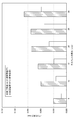
- the degree of crystallinity is the degree of crystallinity due to reflection, measured using a RINT2500HL X-ray diffractometer manufactured by Rigaku Corporation. The results are shown in Table 1 and FIG.
- Molding machine SE100D manufactured by Sumitomo Heavy Industries, Ltd. or TR100EH manufactured by Sodick Co., Ltd. Cylinder temperature: 320 ° C Mold temperature: 100 ° C (for heat insulation mold) or 150 ° C (for non-heat insulation mold) Injection speed: 50mm / s Screw rotation speed: 100rpm Filling pressure: Minimum filling pressure (minimum pressure that can completely fill the resin reservoir in FIG. 1A)
- the row where the mold temperature is 150 ° C. represents the result when the non-insulated mold is used, and the row where the mold temperature is 100 ° C. represents the result when the heat insulated mold is used.
- the burr length comparable to the burr length is 15 ⁇ m in thickness of the gas vent. This heat insulation mold was obtained when the mold temperature was 100 ° C. Further, when a non-insulating metal mold having a gas vent thickness of 10 ⁇ m is used at a mold temperature of 150 ° C., the burr length is approximately the same as the burr length. Obtained when used at °C.
- the thickness of the gas vent is reduced to the conventional level while the length of the burr generated in the gas vent is suppressed to the level when the conventional non-insulated metal mold is used. It was confirmed that it was possible to enlarge up to about 3 times.
Landscapes
- Engineering & Computer Science (AREA)
- Manufacturing & Machinery (AREA)
- Mechanical Engineering (AREA)
- Moulds For Moulding Plastics Or The Like (AREA)
Abstract
La présente invention concerne un moule isolé permettant d'améliorer l'extraction de gaz de la cavité et de former des pièces moulées qui présentent une transférabilité de moule satisfaisante et, dans le cas de résines thermoplastiques cristallines, une cristallinité de surface satisfaisante, en augmentant l'épaisseur des évents de gaz tout en maintenant la longueur des ébarbages générés dans les évents de gaz à des niveaux conventionnels; et un procédé de fabrication de pièces moulées utilisant ledit moule isolé. Le moule isolé permettant de former des pièces moulées obtenues à partir d'une composition de résine comprenant une résine thermoplastique est pourvu d'un corps de moule isolé avec des évents de gaz et d'une couche isolante formée sur la surface interne du moule. Lors du formage d'une pièce moulée dans des conditions dans lesquelles la transférabilité du moule de la surface de moulage ou la cristallinité sur la surface de moulage est dans une plage souhaitée en utilisant le moule isolé ou un moule non isolé, l'épaisseur des évents de gaz du moule isolé est supérieure à celle du moule non isolé dans la plage dans laquelle le rapport des longueurs des ébarbages survenant dans les évents de gaz pour le moule isolé et le moule non isolé est de 0,9 à 1,1.
Applications Claiming Priority (2)
| Application Number | Priority Date | Filing Date | Title |
|---|---|---|---|
| JP2013036121A JP2014162145A (ja) | 2013-02-26 | 2013-02-26 | 断熱金型、及び成形品の製造方法 |
| JP2013-036121 | 2013-02-26 |
Publications (1)
| Publication Number | Publication Date |
|---|---|
| WO2014132702A1 true WO2014132702A1 (fr) | 2014-09-04 |
Family
ID=51427976
Family Applications (1)
| Application Number | Title | Priority Date | Filing Date |
|---|---|---|---|
| PCT/JP2014/051011 Ceased WO2014132702A1 (fr) | 2013-02-26 | 2014-01-20 | Moule isolé et procédé de fabrication d'une pièce moulée |
Country Status (3)
| Country | Link |
|---|---|
| JP (1) | JP2014162145A (fr) |
| TW (1) | TW201501898A (fr) |
| WO (1) | WO2014132702A1 (fr) |
Citations (4)
| Publication number | Priority date | Publication date | Assignee | Title |
|---|---|---|---|---|
| JPH05116190A (ja) * | 1991-10-30 | 1993-05-14 | Asahi Chem Ind Co Ltd | 新規な合成樹脂射出成形法 |
| JP2003094495A (ja) * | 2001-09-20 | 2003-04-03 | Asahi Kasei Corp | 熱可塑性樹脂製精密成形品の製造方法 |
| WO2007015390A1 (fr) * | 2005-08-04 | 2007-02-08 | Tanazawa Hakkosha Co., Ltd. | Moule pour moulage de résine and article moulé de résine formé à l’aide dudit moule |
| WO2012121074A1 (fr) * | 2011-03-08 | 2012-09-13 | ポリプラスチックス株式会社 | Procédé de production pour article moulé par injection et article moulé par injection |
-
2013
- 2013-02-26 JP JP2013036121A patent/JP2014162145A/ja active Pending
-
2014
- 2014-01-20 WO PCT/JP2014/051011 patent/WO2014132702A1/fr not_active Ceased
- 2014-01-24 TW TW103102589A patent/TW201501898A/zh unknown
Patent Citations (4)
| Publication number | Priority date | Publication date | Assignee | Title |
|---|---|---|---|---|
| JPH05116190A (ja) * | 1991-10-30 | 1993-05-14 | Asahi Chem Ind Co Ltd | 新規な合成樹脂射出成形法 |
| JP2003094495A (ja) * | 2001-09-20 | 2003-04-03 | Asahi Kasei Corp | 熱可塑性樹脂製精密成形品の製造方法 |
| WO2007015390A1 (fr) * | 2005-08-04 | 2007-02-08 | Tanazawa Hakkosha Co., Ltd. | Moule pour moulage de résine and article moulé de résine formé à l’aide dudit moule |
| WO2012121074A1 (fr) * | 2011-03-08 | 2012-09-13 | ポリプラスチックス株式会社 | Procédé de production pour article moulé par injection et article moulé par injection |
Also Published As
| Publication number | Publication date |
|---|---|
| JP2014162145A (ja) | 2014-09-08 |
| TW201501898A (zh) | 2015-01-16 |
Similar Documents
| Publication | Publication Date | Title |
|---|---|---|
| KR101648184B1 (ko) | 사출 성형품의 제조방법 및 사출 성형품 | |
| US20120175816A1 (en) | Method for manufacturing an injection-molded article | |
| JP2012187727A (ja) | 射出成形品の製造方法 | |
| CN103038037B (zh) | 模具的制造方法 | |
| WO2014132702A1 (fr) | Moule isolé et procédé de fabrication d'une pièce moulée | |
| US20140217638A1 (en) | Mold and method for manufacturing mold | |
| KR101478197B1 (ko) | 금형 | |
| JP2012187729A (ja) | 射出成形品の製造方法 | |
| TW201307025A (zh) | 射出成形品之製造方法 | |
| WO2013054592A1 (fr) | Moule et procédé de production d'un corps moulé en résine |
Legal Events
| Date | Code | Title | Description |
|---|---|---|---|
| 121 | Ep: the epo has been informed by wipo that ep was designated in this application |
Ref document number: 14757767 Country of ref document: EP Kind code of ref document: A1 |
|
| NENP | Non-entry into the national phase |
Ref country code: DE |
|
| 122 | Ep: pct application non-entry in european phase |
Ref document number: 14757767 Country of ref document: EP Kind code of ref document: A1 |