WO2014157077A1 - ユーグレナ属微細藻類、多糖類の製造方法、及び有機化合物の製造方法 - Google Patents
ユーグレナ属微細藻類、多糖類の製造方法、及び有機化合物の製造方法 Download PDFInfo
- Publication number
- WO2014157077A1 WO2014157077A1 PCT/JP2014/058063 JP2014058063W WO2014157077A1 WO 2014157077 A1 WO2014157077 A1 WO 2014157077A1 JP 2014058063 W JP2014058063 W JP 2014058063W WO 2014157077 A1 WO2014157077 A1 WO 2014157077A1
- Authority
- WO
- WIPO (PCT)
- Prior art keywords
- microalgae
- culture
- euglena
- polysaccharide
- producing
- Prior art date
- Legal status (The legal status is an assumption and is not a legal conclusion. Google has not performed a legal analysis and makes no representation as to the accuracy of the status listed.)
- Ceased
Links
Images




Classifications
-
- C—CHEMISTRY; METALLURGY
- C12—BIOCHEMISTRY; BEER; SPIRITS; WINE; VINEGAR; MICROBIOLOGY; ENZYMOLOGY; MUTATION OR GENETIC ENGINEERING
- C12P—FERMENTATION OR ENZYME-USING PROCESSES TO SYNTHESISE A DESIRED CHEMICAL COMPOUND OR COMPOSITION OR TO SEPARATE OPTICAL ISOMERS FROM A RACEMIC MIXTURE
- C12P19/00—Preparation of compounds containing saccharide radicals
- C12P19/04—Polysaccharides, i.e. compounds containing more than five saccharide radicals attached to each other by glycosidic bonds
-
- C—CHEMISTRY; METALLURGY
- C12—BIOCHEMISTRY; BEER; SPIRITS; WINE; VINEGAR; MICROBIOLOGY; ENZYMOLOGY; MUTATION OR GENETIC ENGINEERING
- C12N—MICROORGANISMS OR ENZYMES; COMPOSITIONS THEREOF; PROPAGATING, PRESERVING, OR MAINTAINING MICROORGANISMS; MUTATION OR GENETIC ENGINEERING; CULTURE MEDIA
- C12N1/00—Microorganisms; Compositions thereof; Processes of propagating, maintaining or preserving microorganisms or compositions thereof; Processes of preparing or isolating a composition containing a microorganism; Culture media therefor
- C12N1/12—Unicellular algae; Culture media therefor
-
- C—CHEMISTRY; METALLURGY
- C12—BIOCHEMISTRY; BEER; SPIRITS; WINE; VINEGAR; MICROBIOLOGY; ENZYMOLOGY; MUTATION OR GENETIC ENGINEERING
- C12N—MICROORGANISMS OR ENZYMES; COMPOSITIONS THEREOF; PROPAGATING, PRESERVING, OR MAINTAINING MICROORGANISMS; MUTATION OR GENETIC ENGINEERING; CULTURE MEDIA
- C12N1/00—Microorganisms; Compositions thereof; Processes of propagating, maintaining or preserving microorganisms or compositions thereof; Processes of preparing or isolating a composition containing a microorganism; Culture media therefor
- C12N1/12—Unicellular algae; Culture media therefor
- C12N1/125—Unicellular algae isolates
-
- C—CHEMISTRY; METALLURGY
- C12—BIOCHEMISTRY; BEER; SPIRITS; WINE; VINEGAR; MICROBIOLOGY; ENZYMOLOGY; MUTATION OR GENETIC ENGINEERING
- C12P—FERMENTATION OR ENZYME-USING PROCESSES TO SYNTHESISE A DESIRED CHEMICAL COMPOUND OR COMPOSITION OR TO SEPARATE OPTICAL ISOMERS FROM A RACEMIC MIXTURE
- C12P1/00—Preparation of compounds or compositions, not provided for in groups C12P3/00 - C12P39/00, by using microorganisms or enzymes
-
- C—CHEMISTRY; METALLURGY
- C12—BIOCHEMISTRY; BEER; SPIRITS; WINE; VINEGAR; MICROBIOLOGY; ENZYMOLOGY; MUTATION OR GENETIC ENGINEERING
- C12P—FERMENTATION OR ENZYME-USING PROCESSES TO SYNTHESISE A DESIRED CHEMICAL COMPOUND OR COMPOSITION OR TO SEPARATE OPTICAL ISOMERS FROM A RACEMIC MIXTURE
- C12P7/00—Preparation of oxygen-containing organic compounds
- C12P7/64—Fats; Fatty oils; Ester-type waxes; Higher fatty acids, i.e. having at least seven carbon atoms in an unbroken chain bound to a carboxyl group; Oxidised oils or fats
-
- C—CHEMISTRY; METALLURGY
- C12—BIOCHEMISTRY; BEER; SPIRITS; WINE; VINEGAR; MICROBIOLOGY; ENZYMOLOGY; MUTATION OR GENETIC ENGINEERING
- C12P—FERMENTATION OR ENZYME-USING PROCESSES TO SYNTHESISE A DESIRED CHEMICAL COMPOUND OR COMPOSITION OR TO SEPARATE OPTICAL ISOMERS FROM A RACEMIC MIXTURE
- C12P7/00—Preparation of oxygen-containing organic compounds
- C12P7/64—Fats; Fatty oils; Ester-type waxes; Higher fatty acids, i.e. having at least seven carbon atoms in an unbroken chain bound to a carboxyl group; Oxidised oils or fats
- C12P7/6436—Fatty acid esters
-
- C—CHEMISTRY; METALLURGY
- C12—BIOCHEMISTRY; BEER; SPIRITS; WINE; VINEGAR; MICROBIOLOGY; ENZYMOLOGY; MUTATION OR GENETIC ENGINEERING
- C12R—INDEXING SCHEME ASSOCIATED WITH SUBCLASSES C12C - C12Q, RELATING TO MICROORGANISMS
- C12R2001/00—Microorganisms ; Processes using microorganisms
- C12R2001/89—Algae ; Processes using algae
Definitions
- the present invention relates to a Euglena microalgae, a method for producing a polysaccharide, and a method for producing an organic compound.
- Euglena microalgae are also referred to as Euglena and are known as microorganisms that produce polysaccharides such as paramylon when cultured.
- Such Euglena microalgae are cultivated to produce polysaccharides such as paramylon and accumulate the polysaccharides in the cells.
- Such Euglena microalgae can convert accumulated polysaccharides into wax esters or produce proteins while producing polysaccharides, depending on the culture conditions.
- the organic compounds such as polysaccharides, lipids, and proteins produced and accumulated in the cells of the microalgae can be used in applications such as fuel and food.
- an object of the present invention is to provide Euglena genus microalgae that can sufficiently produce at least a polysaccharide. Moreover, this invention makes it a subject to provide the manufacturing method of the polysaccharide which can fully obtain a polysaccharide.
- the present invention also provides a method for producing an organic compound capable of sufficiently obtaining at least one organic compound selected from the group consisting of polysaccharides, lipids, vitamin C, vitamin E, pigments, and proteins. This is the issue.
- Euglena microalgae is Euglena gracilis EOD-1 strain ( Accession No. FERM BP-11530) or a mutant strain thereof, and has at least a polysaccharide-producing ability. It is a Euglena genus microalgae.
- the method for producing a polysaccharide according to the present invention comprises the step of producing Euglena gracilis EOD-1 strain (Accession No. FERM BP-11530) or its mutant strain, which is a Euglena microalgae having at least the ability to produce polysaccharides.
- a polysaccharide is produced by culturing as a saccharide-producing organism.
- an aspect in which the culture solution used in the culture contains 15 to 30 g / L of glucose can be employed.
- cultivation contains a yeast degradation product as another aspect of the manufacturing method of the polysaccharide of this invention is employable.
- cultivation as another aspect of the manufacturing method of the polysaccharide of this invention is employable.
- the aspect whose said polysaccharide is paramylon is employable as another aspect of the manufacturing method of the polysaccharide of this invention.
- the method for producing an organic compound according to the present invention comprises culturing Euglena gracilis microalgae, which is Euglena gracilis EOD-1 strain (Accession No. FERM BP-11530) or a mutant strain thereof and has at least a polysaccharide-producing ability.
- Euglena gracilis microalgae which is Euglena gracilis EOD-1 strain (Accession No. FERM BP-11530) or a mutant strain thereof and has at least a polysaccharide-producing ability.
- at least one organic compound selected from the group consisting of polysaccharides, lipids, vitamin C, vitamin E, pigments, and proteins is produced.
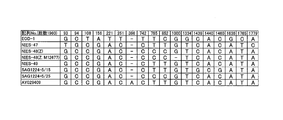
- surface which compares 18S rRNA gene base sequence of Euglena gracilis The figure showing the phylogenetic tree created using 18S rRNA gene.
- the Euglena genus microalgae of the present embodiment is a Euglena gracilis EOD-1 strain (Accession No. FERM BP-11530) or a mutant thereof, which has at least a polysaccharide-producing ability (hereinafter simply referred to as “euglena gracilis” ).
- Euglena genus microalgae or microalgae The Euglena genus microalgae of this embodiment has an effect that at least a polysaccharide can be sufficiently produced.
- the Euglena microalgae are living organisms that inhabit while floating in water.
- the Euglena genus microalgae are unicellular and are microalgae having a size of about 10 ⁇ m to 50 ⁇ m, although it varies slightly depending on the strain. Details of the properties of the Euglena genus microalgae are shown below.
- Euglena microalga vegetative cells have flagella and move actively. Moreover, the shape of the cell is approximately a spindle shape. In addition to general organelles such as nuclei, chloroplasts, and mitochondria, the cells have red organelles called eye spots.
- the Euglena microalgae has 18S rDNA (18S rRNA gene) represented by SEQ ID NO: 1.
- the 18S rRNA gene can be analyzed by a method commonly used as a microalgae identification method. Specifically, analysis of the 18S rRNA gene can be performed, for example, by the method described in the examples.
- the base sequence of the 18S rRNA gene of the Euglena microalga can be compared with the base sequence of the known Euglena microalga 18S rRNA gene obtained from GenBank using BLAST homology search. Results of comparing the degree of sequence homology with known Euglena microalgae will be shown in later examples.
- EMBL, DDBJ, etc. can also be used as a database.
- a molecular phylogenetic tree can be created by the maximum likelihood method using the molecular phylogenetic tree creation software Mega5 program (Tamura et al. 2011, Mol. Biol. Evol. 28: 2731-2739). The created molecular phylogenetic tree will be described in detail in a later example.
- the Euglena gracilis EOD-1 strain was issued on June 28, 2013 (original deposit date: March 25, 2013), the National Institute of Technology and Evaluation (NITE-IPOD) 292-0818 2-5-8 Kazusa-Kamashita, Kisarazu, Chiba, Japan, Room 120) under the provisions of the Budapest Treaty, it is deposited internationally under the deposit number FERM BP-11530.
- the Euglena microalgae since the Euglena microalgae have chloroplasts in the cells, they can grow by photosynthesis. That is, the Euglena microalga is a photoautotrophic organism. The Euglena spp. Microalgae can also grow even when organic nutrients such as glucose are used as nutrients. That is, the Euglena microalga is also a heterotrophic organism. Thus, the Euglena genus microalgae can be propagated by photoautotrophic only, by heterotrophic only, or by photoautotrophic and heterotrophic simultaneously.
- the mutant strain is produced, for example, by performing general mutation treatment, adaptation by subculture, or natural mutation.
- the mutation treatment can be performed using a general mutagen.
- the mutagen include a drug having a mutagen action and ultraviolet rays.
- drugs having mutagenic activity include streptomycin, ofloxacin, ethylmethanesulfonate, nucleotide base analogs such as N-methyl-N′-nitro-N-nitrosoguanidine, bromouracil, or acridines. .
- the method for producing a polysaccharide according to this embodiment at least a polysaccharide is produced by culturing the Euglena microalgae.
- the method for producing a polysaccharide according to this embodiment has an effect that the polysaccharide can be sufficiently obtained.
- the method for producing a polysaccharide according to the present embodiment includes a culture step of culturing the Euglena microalgae in a culture solution containing at least water.
- the culture solution preferably contains nutrients that promote the growth of microalgae and water.
- Examples of the nutrients include inorganic nutrients and organic nutrients.
- Examples of the inorganic nutrients include nitrogen-containing inorganic compounds and phosphorus-containing inorganic compounds.
- examples of the inorganic nutrient include potassium ion, iron ion, manganese ion, cobalt ion, zinc ion, copper ion, molybdenum ion, nickel ion and the like.
- the concentration of the inorganic nutrient in the culture solution is usually a generally known concentration.
- organic nutrients include monosaccharides such as glucose (glucose) and fructose (fructose), vitamins such as vitamins B6 and B12, amino acids such as arginine, aspartic acid, glutamic acid, glycine, and histidine, malic acid, and citric acid. , Organic acids such as succinic acid and acetic acid, and alcohols such as ethanol.
- composition of the culture solution for example, the composition of “AF-6 medium” described later, the composition of “Cramer-Myers medium”, the composition of “Hutner medium”, or a composition similar to these compositions is adopted. .
- the culture solution preferably contains 15 to 30 g / L of glucose as a carbon source. Moreover, it is preferable that a culture solution contains a yeast degradation product (after-mentioned). Moreover, it is preferable that a culture solution has a composition of AF6 culture medium.
- the culturing step can be performed, for example, in a tank that contains a mixture of the culture solution and microalgae.
- the microalgae can be synthesized by irradiating the microalgae with light. That is, in the culture step, photoautotrophic culture can be performed.
- the microalgae can take in carbon dioxide into the cells by photosynthesis and can grow while producing at least a polysaccharide such as paramylon.
- microalgae can grow while producing proteins and secondary metabolites such as lipids, pigments and vitamins.
- the light irradiated to the microalgae in the culturing step is not particularly limited as long as it allows the microalgae to carry out photosynthesis.
- the light for example, natural light from the sun or artificial light such as light from illumination is employed.
- the intensity of the light irradiated in the light autotrophic culture step is not particularly limited, it is usually, 50 ⁇ mol / m 2 ⁇ s ⁇ 200 ⁇ mol / m 2 ⁇ s.
- a period in which light is irradiated on the microalgae and a period in which light is not irradiated on the microalgae can be alternately repeated. That is, in the culture step, a period during which photoautotrophic culture is performed and a period during which photoautotrophic culture is not performed can be alternately repeated.
- the period of light irradiation in the culturing step is usually 8 to 15 hours corresponding to the daytime when sunlight is emitted.
- the period of dark conditions in which light is not irradiated to suppress photosynthesis of microalgae is usually 9 to 16 hours, which corresponds to night time when no sunlight is emitted. These periods can be changed according to the situation and purpose.
- the dark condition in which light is not irradiated is a condition in which the photosynthetic photon flux density (PPFD) is 50 ⁇ mol / m 2 ⁇ s or less.
- heterotrophic culture in which microalgae are cultured in the presence of organic nutrients among the above-described nutrients can also be performed.
- the microalgae when the microalgae are cultured in the presence of organic nutrients in the culturing step, the microalgae can grow while taking in the organic nutrients into the cells and producing at least a polysaccharide such as paramylon.
- the culture step at least one of photoautotrophic culture and heterotrophic culture can be performed.
- the culturing step it is preferable to perform both photoautotrophic culture and heterotrophic culture at the same time in that the growth of microalgae can be further promoted. That is, it is preferable to perform light heterotrophic culture in the culture step.
- Examples of organic nutrients used in the heterotrophic culture and the photoheterotrophic culture include alcohols such as ethanol, monosaccharides such as glucose and fructose, and wastes containing these components, which can be used by the Euglena microalgae. It is preferable to be adopted. Furthermore, it is preferable that yeast or a yeast degradation product (hereinafter also referred to as yeast extract) is used in combination as an organic nutrient in that the growth of the Euglena microalga can be more reliably promoted.
- yeast extract yeast or a yeast degradation product
- brewed liquor, distilled liquor, sake lees, shochu, molasses, waste molasses and the like can be mentioned as those containing at least a part of each organic nutrient described above. And these liquors etc. can be used in heterotrophic culture or light heterotrophic culture as a source of organic nutrients.
- the brewed liquor is produced by subjecting a raw material containing sugar to alcohol fermentation with yeast and has not been subjected to a distillation treatment. Since the brewed liquor does not undergo distillation and contains alcohol-fermented metabolites by yeast, in addition to ethanol and water, sugars such as glucose produced by yeast (glucose), proteins, amino acids, vitamins, phosphorus, potassium Contains nutrients such as.
- brewed liquor examples include beer, sake, wine, brewed liquor made from grains, brewed liquor made from beans, brewed liquor made from potatoes, or brewed liquor made from sugar.
- the beer is produced by saccharifying at least starch contained in malt with an enzyme in the malt to produce sugar, and further subjecting this sugar to alcohol fermentation with brewer's yeast. That is, as long as it is made as described above using at least malt as a raw material, it is included in the beer in this specification even if it is further used with other raw materials.
- malt barley malt is usually used.
- the sake (Japanese sake) is produced by saccharifying starch contained in rice with rice bran to produce sugar, and further fermenting the sugar with alcohol using yeast.
- the wine is made from at least grape juice by alcohol fermentation with yeast.
- yeast examples include those belonging to the genus Saccharomyces , and specific examples include Saccharomyces cerevisiae . Moreover, as said yeast, what is called sake yeast, what is called wine yeast, what is called beer yeast, etc. are mentioned, for example.
- the yeast degradation product is a yeast self-digested product produced by self-digestion of the yeast, a product obtained by contacting the yeast with hot water to destroy the cell wall, or a product obtained by destroying the yeast cell wall by an enzyme. Etc.
- a gas containing oxygen can be supplied to the culture solution in order to maintain oxygen respiration of microalgae.
- a gas containing carbon dioxide can be supplied to the culture solution in order to promote photosynthesis of microalgae.
- Such gas supply can be performed by aeration of the culture solution, stirring of the culture solution, or the like.
- the culture solution can be aerated with air, for example, to supply oxygen for respiration to microalgae.
- cultivation process in order to accelerate
- the culturing step it is preferable to simultaneously perform photoautotrophic culture and heterotrophic culture while supplying oxygen and carbon dioxide into the culture solution by aeration or the like. That is, in the culture step, heterotrophic culture is performed in the presence of organic nutrients while supplying a gas containing both oxygen and carbon dioxide to the culture solution by aeration, etc., in order to promote oxygen respiration and photosynthesis of microalgae. While performing, it is preferable to perform light heterotrophic culture by irradiating light. In the culturing step, photosynthesis of the microalgae can be promoted by supplying carbon dioxide to the culture solution while irradiating the microalgae with light in the daytime or the like.
- microalgae when light such as night is not irradiated, microalgae can be heterotrophically cultured by supplying air to the culture solution in the presence of organic nutrients.
- By carrying out the culturing step in this manner there is an advantage that the growth of microalgae is further promoted and the production of paramylon and the like by the microalgae is further promoted.
- the culture temperature in the culture step is not particularly limited as long as it is a temperature at which microalgae can grow. Specifically, for example, 15 to 35 ° C., preferably 20 to 30 ° C. is employed as the culture temperature (the temperature of the culture solution).
- the pH of the culture solution in the culturing step is not particularly limited as long as it is a pH at which microalgae can grow.
- As the pH for example, 2.5 to 5.5 is employed.
- an inorganic acid such as hydrochloric acid may be added to the culture solution, or an organic acid such as acetic acid may be added to the culture solution.
- an organic acid By adding an organic acid to the culture solution, there is an advantage that microalgae can grow using the organic acid as an organic nutrient.
- an alkaline agent may be added to the culture solution.
- sodium hydroxide or potassium hydroxide is usually used.
- the supply of oxygen to the culture solution can be suppressed so that the Euglena genus microalgae can produce wax esters.
- microalgae under anaerobic conditions for example, by stopping aeration to the culture solution or supplying an inert gas containing no oxygen to the culture solution.
- by further culturing microalgae in which polysaccharides such as paramylon are accumulated in cells under anaerobic conditions Euglena microalgae convert paramylon into wax esters, and the lipids are intracellularly contained. Can accumulate.
- Microalgae in order to produce protein in the Euglena genus microalgae, while supplying oxygen to the culture solution, in the presence of inorganic nutrients containing nitrogen or organic nutrients containing nitrogen, Microalgae can be cultured.
- the microalgae are grown while the organic compounds such as polysaccharides, lipids, or proteins are produced in the microalgae, Such organic compounds can be accumulated.
- pigments other than the above organic compounds vitamins such as vitamin C and vitamin E, proteins, linolenic acid, arachidonic acid, eicosapentaenoic acid and the like
- Organic compounds such as saturated fatty acids and fatty acids such as saturated fatty acids can also be produced in microalgae.
- the microalgae in which these organic compounds are accumulated in the cells can be used as biomass that can be used in various applications such as foods, pharmaceuticals, feeds, chemical products, or fuels.
- Examples of the polysaccharide include paramylon ( ⁇ -1,3-glucan). Paramylon is a combination of about 700 glucoses.
- Examples of the lipid include wax esters.
- the wax ester is an ester bond of a higher fatty acid and a higher alcohol, and examples of the wax ester include a ester bond of a C-14 fatty acid and a C-14 higher alcohol.
- the organic compound production method of the present embodiment is at least one selected from the group consisting of polysaccharides, lipids, vitamin C, vitamin E, pigments, and proteins by performing the culture method (culture step) described above. Is produced as an organic compound.
- the method for producing an organic compound of the present embodiment has an effect that it can sufficiently obtain at least one organic compound selected from the group consisting of polysaccharides, lipids, vitamin C, vitamin E, pigments, and proteins. Play. Among these, vitamin C, vitamin E, pigment, and protein can be produced together with the polysaccharide by performing the method for producing the polysaccharide.
- the method for producing an organic compound according to the present embodiment includes the culturing step described above, a concentration step for increasing the amount of microalgae after the culture, and further reducing the water content of the microalgae after the concentration step.
- a drying step of drying the algae in addition, in the manufacturing method of the said organic compound, a concentration process and a drying process are not necessarily required.
- the concentration step can be performed, for example, by using a general concentration device.
- the concentrating device include a device for concentrating by increasing the amount of microalgae by flotation concentration, gravity concentration, membrane concentration, belt concentration, or the like.
- a dehydrating device can be used to further increase the amount of microalgae.
- the dehydrator include a vacuum dehydrator, a pressure dehydrator (filter press), a belt press, a screw press, a centrifugal concentration dehydrator (screw decanter), and a multiple disk dehydrator.
- the concentration step may be performed only by a concentration device, or may be performed by both a concentration device and a dehydration device, depending on the intended use of the polysaccharide, lipid, protein and the like to be produced.
- the drying step can be performed, for example, by heating the microalgae that has undergone the concentration step, or by placing the microalgae that has undergone the concentration step under reduced pressure.
- the microalgae that have undergone the concentration step and the microalgae that have undergone the drying step can contain at least one of polysaccharides, lipids, vitamin C, vitamin E, pigments, and proteins in the cells. For example, it can be used as it is for food or the like.
- the microalgae that have undergone the concentration step and the microalgae that have undergone the drying step are subjected to a general extraction treatment as necessary, so that polysaccharides, lipids, vitamin C, vitamin E, pigments, and At least one of the proteins is extracted from microalgae as an organic compound.
- the extracted organic compound can be used, for example, in food raw materials and fuel applications.
- an extraction process in which the organic compound is extracted with an organic solvent such as ethanol or hexane, or an extraction process in which the lipid is extracted with a CO 2 solvent in a subcritical state is employed.
- the Euglena microalgae, the method for producing polysaccharides, and the method for producing organic compounds of the above-described embodiments are as illustrated above, but the present invention includes the Euglena microalgae exemplified above, a method for producing polysaccharides, And it is not limited to the manufacturing method of an organic compound. Moreover, the various aspects used in the general Euglena microalgae, the manufacturing method of a polysaccharide, and the manufacturing method of an organic compound are employable in the range which does not impair the effect of this invention.
- the present invention is not limited to the above-described embodiment, and can be appropriately modified within the intended scope of the present invention. Moreover, the effect of this invention is not limited to the said embodiment.
- the embodiment disclosed this time should be considered as illustrative in all points and not restrictive.
- the scope of the present invention is shown not by the above description but by the claims. Further, the scope of the present invention is intended to include all modifications within the scope and meaning equivalent to the scope of the claims.
- Lake water collected from a lake in Nagasaki Prefecture was inoculated into AF-6 medium (described later) and cultured at room temperature for 2 months while irradiating with fluorescent light.
- the target microalgae in the culture medium after culture was isolated with a micropipette.
- the isolated microalgae was cultured in AF-6 medium at room temperature while irradiating with fluorescent light.
- FIG. 28 The phylogenetic tree is shown in FIG.
- the microalgae isolated as described above were identified as a species belonging to the genus Euglena ( Euglena gracilis Klebs).
- Ka, Kb, Na, and Nb of EOD-1 strain are symbols attached to the isolated microalgal test sample. Similar results were obtained with either test sample.
- RAPD analysis Furthermore, RAPD analysis (Random Amplified Polymorphic DNA) (Reference: Williams et al. (1990) Nucleic Aids Res. 18 (22) 6531-6535), the band pattern of the isolated Euglena microalgae and the band pattern of the 6 strains preserved by the National Institute for Environmental Studies were obtained.
- PCR conditions in the RAPD analysis are as follows. Number of samples: 3 Primer 1: AAATCGGGCTG: RAPD-6 SEQ ID NO: 2 Enzyme: Ex Taq (manufactured by TAKARA) Reaction buffer volume: 50 ⁇ L DNA template amount: about 0.5 ng PCR temperature conditions: as shown in Table 1. Specifically, after treatment at 94 ° C.
- Electrophoretic conditions 2.5% by mass agarose gel, 100 V, 40 minutes
- primers 2 to 4 were changed, and RAPD analysis was performed by PCR in the same manner.
- Primer 2 ATCGGGTCCG: RAPD-4 SEQ ID NO: 3
- Primer 3 GCGATCCCCA: RAPD-3 SEQ ID NO: 4
- the base sequences of the primers 2 to 4 are those described in Mostafa et al. (2011) Molecules 16, 2598-2608.
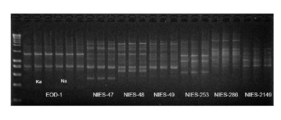
- FIG. 3A shows the result (band pattern) of the RAPD analysis using the primer 1 described above.
- the results of RAPD analysis using the above primers 2 and 3 are shown in FIGS. 3B and 3C, respectively.
- Ka and Na of EOD-1 strain in FIGS. 3A to 3C correspond to Ka and Na in FIG. 2, respectively.
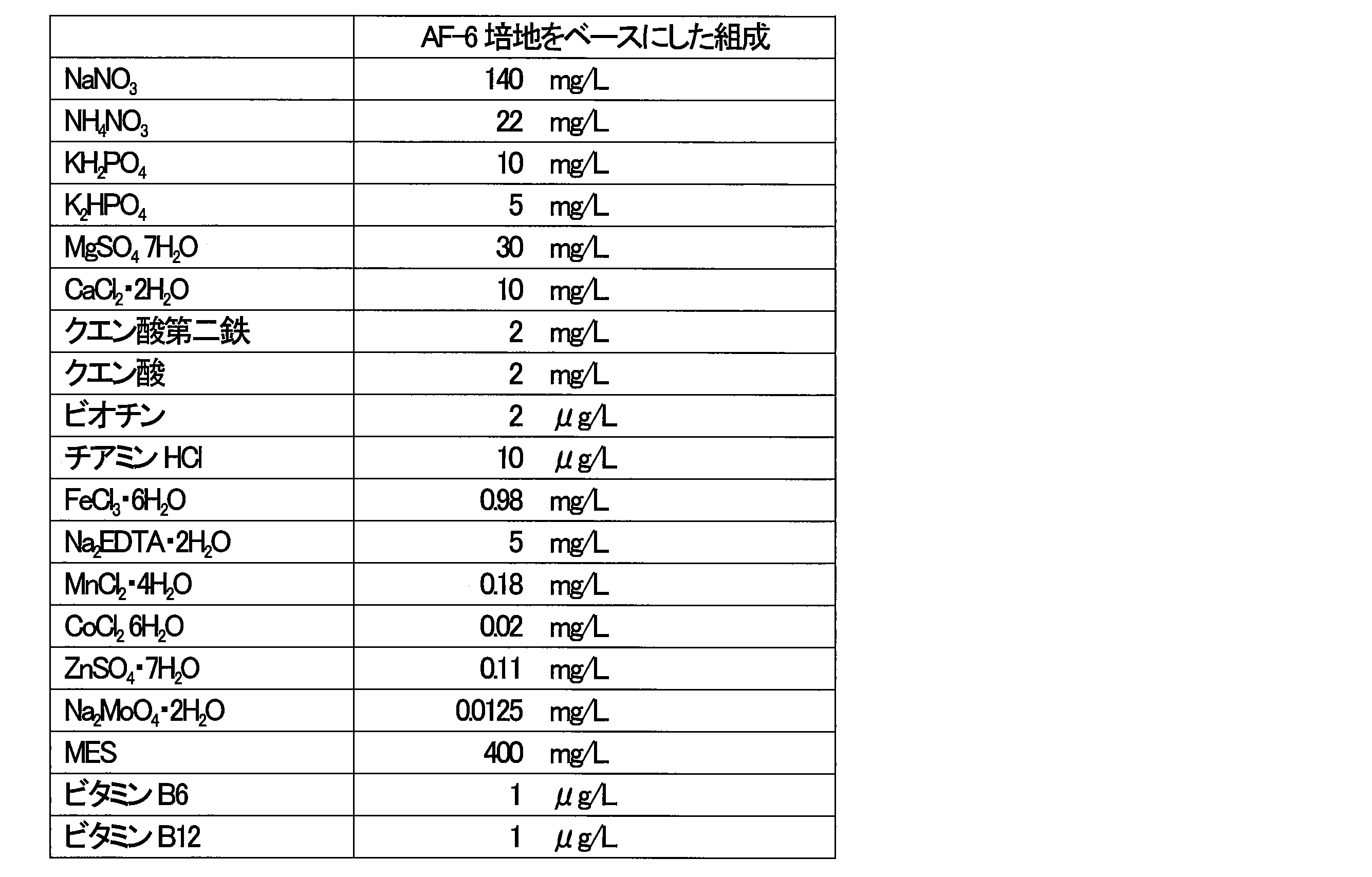
- compositions shown in Tables 2 and 3 were adopted as the basic composition.
- the composition shown in Table 2 is the composition of the “P IV metals” medium (National Institute for Environmental Studies) compared to the composition of “AF-6 medium” disclosed by the National Institute for Environmental Studies, It is added with the components of the Environmental Research Institute Microbial System Storage Facility. Moreover, it is water other than the nutrient contained in a culture solution.
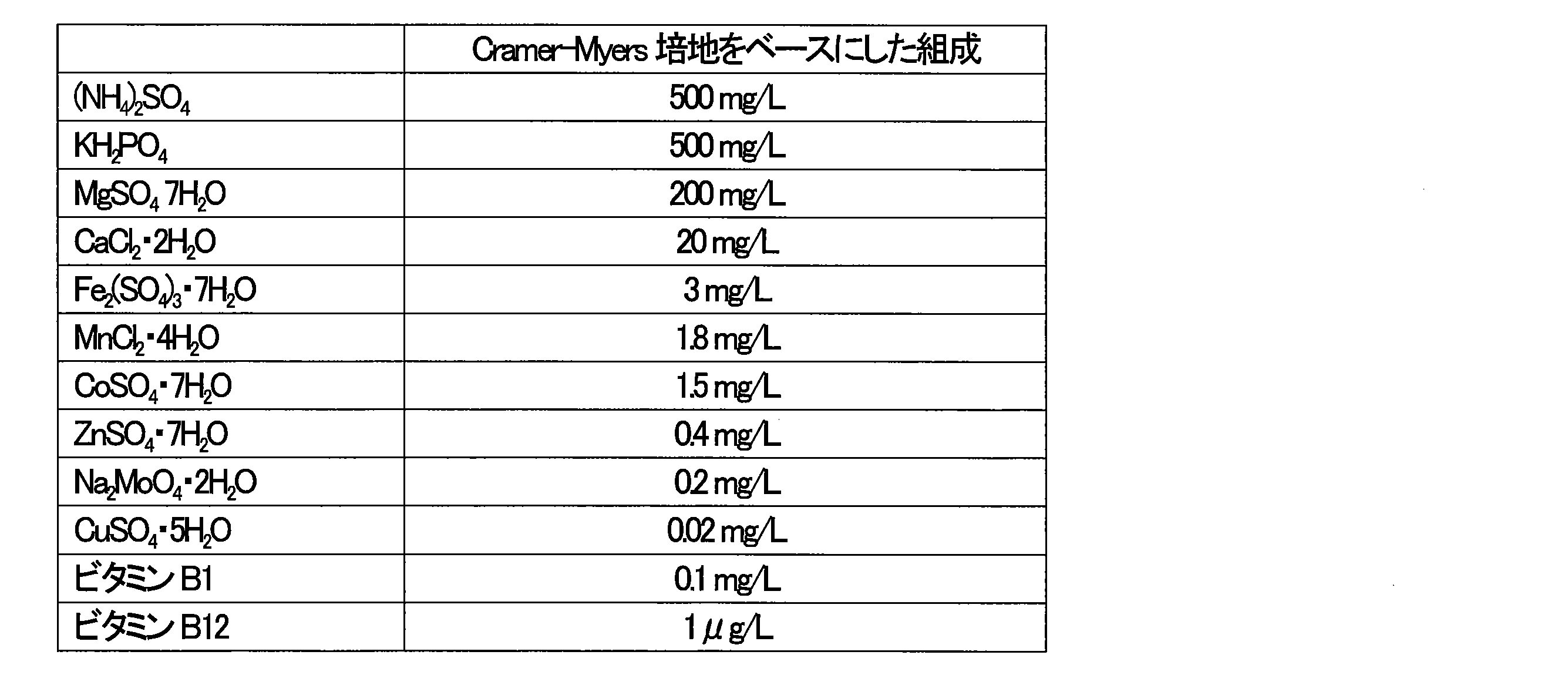
- the composition shown in Table 3 is based on the composition of Cramer-Myers medium.
- Light irradiation conditions 12 hours after light irradiation, 12 hours dark place
- Light intensity photosynthetic photon flux density (PPFD) —about 100 ⁇ mol / m 2 ⁇ s or about 200 ⁇ mol / m 2 ⁇ s
- Example 1 200 mL of the composition shown in Table 2 was placed in a 500 mL Sakaguchi flask. Furthermore, glucose and yeast extract were added so that glucose might become a density
- Examples 2 to 4 The culturing process was performed in the same manner as in Example 1 except that the amount of glucose was changed so that the glucose concentrations in the culture solution were 20 g / L, 25 g / L, and 30 g / L, respectively.
- Example 1 The culturing process was carried out in the same manner as in Example 1 except that Euglena gracilis NIES-48 strain was cultured over 5 days instead of Euglena gracilis EOD-1 strain. It was.
- Conversion rate (%) Increased dry weight of algae (g / L) / consumed glucose concentration (g / L)
- Example 5 A point using a 300 ml Erlenmeyer flask, a point using a culture solution in which beer is added so that the ethanol concentration derived from beer is 2.5% by volume with respect to 50 mL of the composition shown in Table 2, and culturing yeast extract
- the culture was repeated in a light irradiation environment of 12 hours and a dark environment of 12 hours, and the culture period was 7 days.
- the culture process was carried out by culturing an algae ( Euglena gracilis ) EOD-1 strain.
- the photosynthetic photon flux density (PPFD) was about 100 ⁇ mol / m 2 ⁇ s.
- Example 6 The culture process was performed in the same manner as in Example 5 except that the yeast extract was added to the culture solution so that the yeast extract concentration was 2 g / L.
- Example 5 The culturing process was carried out in the same manner as in Example 5 except that the Euglena microalgae NIES-48 strain was cultured instead of the Euglena gracilis strain EOD-1.
- Comparative Example 6 The culture process was performed in the same manner as in Comparative Example 5 except that the yeast extract was added to the culture solution so that the yeast extract concentration was 2 g / L.
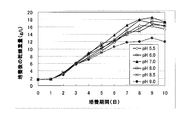
- Example 7 to 12 instead of the composition shown in Table 2, the composition shown in Table 3 was used, and the initial pH of the culture solution was pH 5.5, pH 6.0, pH 7.0, pH 8.0, pH 8.5, or pH 9 respectively.
- the culture process was carried out in the same manner as in Example 5 except that the change was made to 0.0 and the culture period was changed to 10 days.
- Example 13 to 17 The point of using the composition shown in Table 3 instead of the composition shown in Table 2, the point where the photosynthetic photon flux density (PPFD) was about 200 ⁇ mol / m 2 ⁇ s, and the initial pH of the culture solution were pH 3.5, The culture process was performed in the same manner as in Example 5 except that the pH was changed to 4.0, 4.5, 5.0, and 5.5, and the culture period was changed to 10 days.
- PPFD photosynthetic photon flux density
- Example 18 The point that the composition shown in Table 3 was used instead of the composition shown in Table 2, the initial pH of the culture solution was changed to pH 3.5 or 5.5 respectively, and the culture period was changed to 10 days. The culture process was performed in the same manner as in Example 5 except for the points.
- Example 20 The culture process was carried out by culturing Euglena gracilis EOD-1 strain in the same manner as in Example 5 except that the culture period was 7 days. From the start of the culture until 2 days later, the flask is shaken for aerobic conditions. After that, the shaking is stopped and an anaerobic condition is supplied by supplying an inert gas (nitrogen gas). The culture was performed under.
- an inert gas nitrogen gas
- Example 7 The culturing process was carried out in the same manner as in Example 20, except that Euglena gracilis strain NIES-48 was cultured instead of Euglena gracilis strain EOD-1. Until 4 days after the start of the culture, the flask is shaken for aerobic conditions. After that, the shaking is stopped and an inert gas (nitrogen gas) is supplied for anaerobic conditions. The culture was performed under.
- an inert gas nitrogen gas
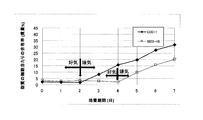
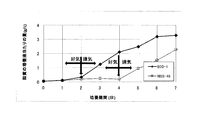
- the amount of paramylon and lipid (wax ester) produced by the culture of Example 20 and Comparative Example 7 was measured every day.
- the measurement of the amount of paramylon after the culture was performed according to the following procedure. That is, the mixture (40 mL) of the cultured microalgae and the culture solution was placed in a centrifuge tube and centrifuged. The operation of adding pure water to the precipitate after centrifugation, suspending it and centrifuging it again was repeated twice. Then, a small amount of pure water was added to the precipitate after centrifugation to suspend it, and the suspension was lyophilized. In this way, the components of the culture broth were removed.
- FIGS. 8A and 8B show the results of measuring the amount of lipid (wax ester) over time.
- the Euglena gracilis EOD-1 strain has a higher production rate of paramylon than the conventional Euglena gracilis NIES-48 strain. Faster than NIES-48.
- the EOD-1 strain has a paramylon content per cell of about 55% or more, and is larger than the NIES-48 strain.
- the Euglena gracilis EOD-1 strain has a higher lipid (wax ester) production rate and a higher wax ester content per cell. High in a short period of time.
- Example 21 The above EOD-1 strain as a microalga was cultured for 2 days by light heterotrophic culture.
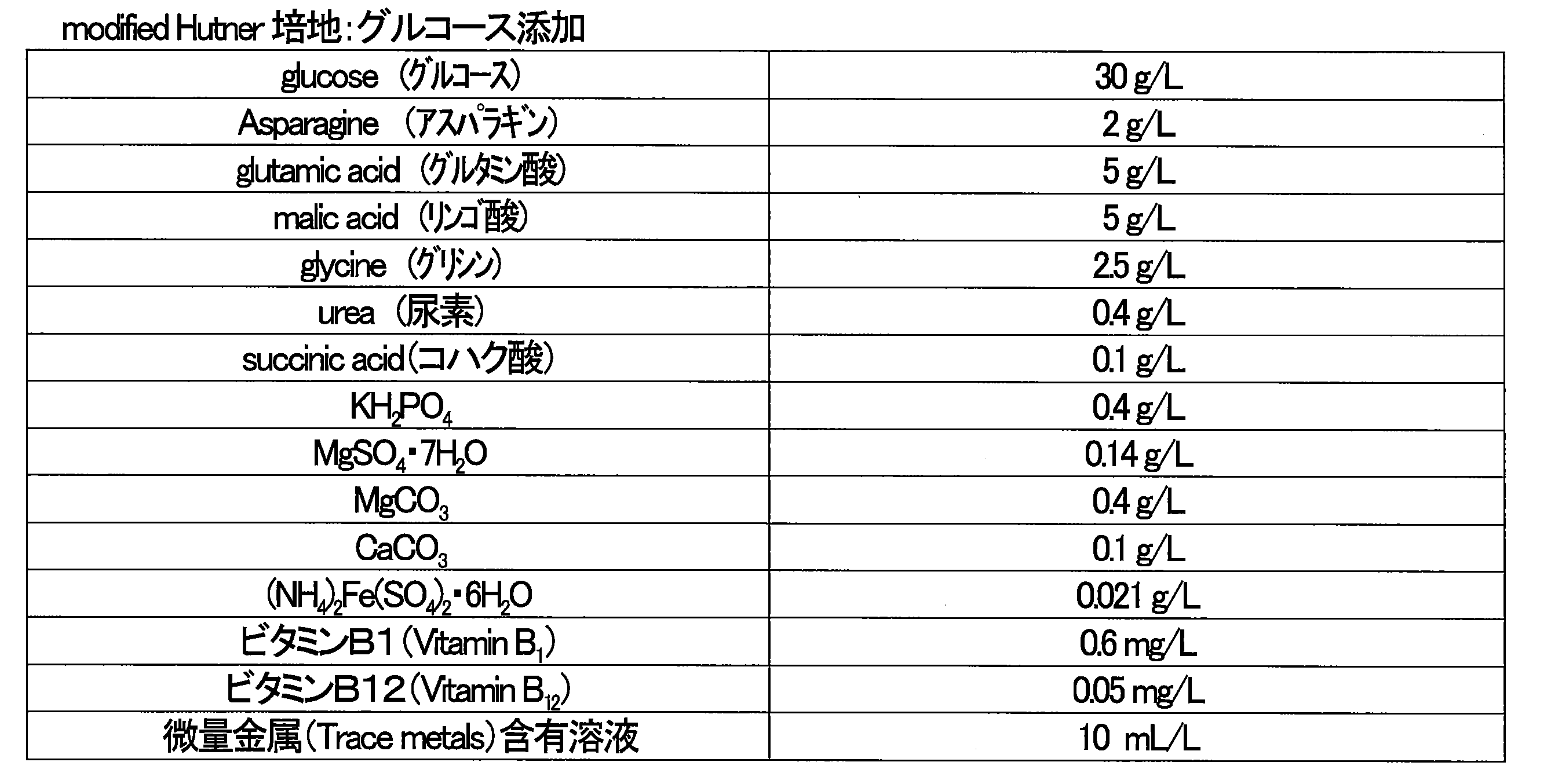
- a medium obtained by adding 30 g / L of glucose to a modified Hutner medium (hereinafter also referred to as “Modified Hutner medium”) was employed.
- the specific composition is as shown in Table 4, and water other than nutrients contained in the liquid.
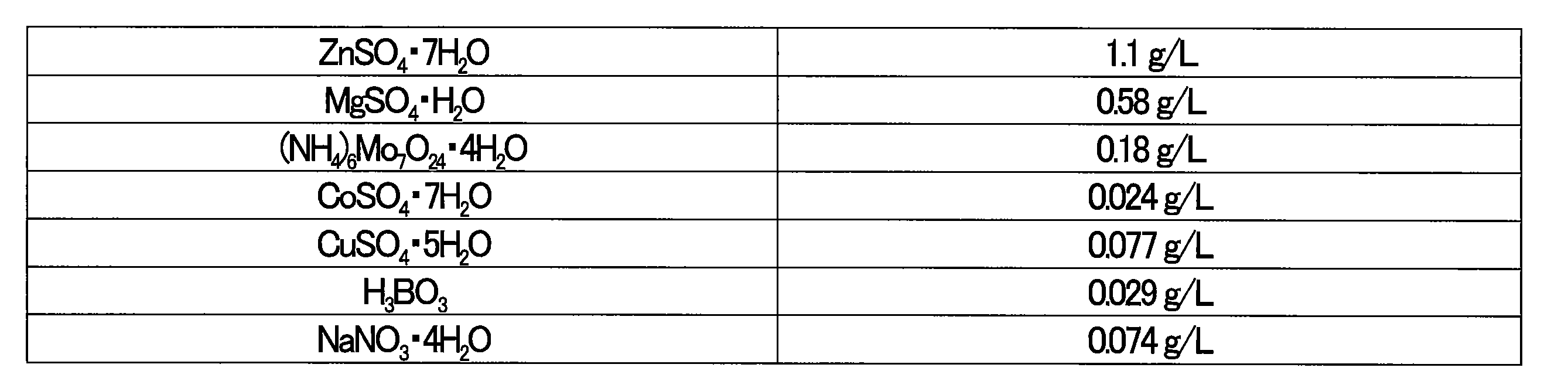
- a trace metal-containing solution in Table 4 a trace metal-containing solution having the composition shown in Table 5 below was used. Water other than the trace metal component is water.
- the details of the culture method are as follows.
- Croture solution pH adjusted to 4.0 with hydrochloric acid
- Culture vessel 500 mL Sakaguchi flask
- Pre-culture preparation 200 mL of culture solution and pre-cultured microalgae are contained in the Sakaguchi flask (to match initial biomass amount) In EOD-1 stock, a total of 220 mL, (Total of 236 mL for NIES-48)
- Culturing temperature 28 ° C.
- Light / dark conditions during culture Culture under dark conditions protected from light
- Aerobic conditions during culture Place the Sakaguchi flask on a shaker and operate by reciprocating shaking at 130 rpm to allow air to enter the culture medium.
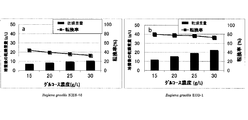
- Euglena gracilis EOD-1 strain is more excellent in biomass production capacity, and Have better glucose conversion.
- the microalgae of the present invention, the method for producing the polysaccharide of the present invention, and the method for producing the organic compound of the present invention are used for culturing organic compounds such as polysaccharides such as paramylon, lipids such as wax esters, proteins, etc. Preferably used.
- the obtained organic compound can be used in applications such as health foods, pharmaceuticals, feeds, chemicals, or fuels while being accumulated in the cells of microalgae or by extraction.
- lipid as an organic compound accumulated in cells of microalgae by culturing is taken out of the cells and used suitably as a raw material for fuel.
Landscapes
- Chemical & Material Sciences (AREA)
- Life Sciences & Earth Sciences (AREA)
- Engineering & Computer Science (AREA)
- Organic Chemistry (AREA)
- Wood Science & Technology (AREA)
- Zoology (AREA)
- Biotechnology (AREA)
- Health & Medical Sciences (AREA)
- Genetics & Genomics (AREA)
- Bioinformatics & Cheminformatics (AREA)
- General Engineering & Computer Science (AREA)
- General Health & Medical Sciences (AREA)
- Microbiology (AREA)
- Biochemistry (AREA)
- General Chemical & Material Sciences (AREA)
- Chemical Kinetics & Catalysis (AREA)
- Cell Biology (AREA)
- Oil, Petroleum & Natural Gas (AREA)
- Botany (AREA)
- Medicinal Chemistry (AREA)
- Tropical Medicine & Parasitology (AREA)
- Virology (AREA)
- Biomedical Technology (AREA)
- Mycology (AREA)
- Micro-Organisms Or Cultivation Processes Thereof (AREA)
- Preparation Of Compounds By Using Micro-Organisms (AREA)
Abstract
Description
また、斯かるユーグレナ属微細藻類は、培養条件に応じて、蓄積された多糖類をワックスエステルへと変換したり、多糖類を産生しつつ蛋白質も産生したりし得る。そして、産生され該微細藻類の細胞内に蓄積された多糖類、脂質、蛋白質などの有機化合物は、燃料や食品等の用途において利用され得る。
また、本発明の多糖類の製造方法の他態様として、前記培養において用いる培養液が、酵母分解物を含む態様を採用することができる。
また、本発明の多糖類の製造方法の他態様として、前記培養において用いる培養液が、AF6培地の組成を有する態様を採用することができる。
また、本発明の多糖類の製造方法の他態様として、前記多糖類がパラミロンである態様を採用することができる。
本実施形態のユーグレナ属微細藻類は、少なくとも多糖類を十分に産生できるという効果を奏する。
前記ユーグレナ属微細藻類の性質の詳細について以下に示す。
前記ユーグレナ属微細藻類の栄養型細胞は、鞭毛を有し、活発に運動する。また、細胞の形状は、おおよそ紡錘形である。細胞内には、核、葉緑体、ミトコンドリアなどの一般的なオルガネラに加えて眼点という赤色の小器官を有する。
(1)培地:主として淡水からなる培養液中で増殖できる(廃水由来の有機物を利用しても増殖可能)。
(2)光合成能:光合成による光独立栄養増殖ができる。
(3)含有色素:クロロフィルa、クロロフィルb、及び他のカロテノイド類を含む。
(4)同化蓄積物質:蛋白質、脂質(ワックスエステル)、多糖類(パラミロン)。
(5)増殖温度域:15℃~35℃(至適温度25℃)。
(6)好適増殖pH域:pH3.5~5.5(ただし、左記pH範囲外でも増殖可能)
前記ユーグレナ属微細藻類は、配列番号1で表される18S rDNA(18S rRNA遺伝子)を有する。
なお、18S rRNA遺伝子の解析は、微細藻類の同定方法として常用されている方法によって行うことができる。具体的には、18S rRNA遺伝子の解析は、例えば、実施例に記載された方法によって行うことができる。
なお、データベースとしてはEMBL、DDBJなどを使用することもできる。
さらに、分子系統樹作成ソフトMega5プログラム(Tamuraら.2011,Mol. Biol. Evol. 28:2731-2739)を用いて、最尤法によって分子系統樹を作成することができる。作成した分子系統樹については、後の実施例において詳細を示す。
また、前記ユーグレナ属微細藻類は、ブドウ糖などの有機栄養素を栄養素として利用しても増殖し得る。即ち、前記ユーグレナ属微細藻類は、従属栄養生物でもある。
このように、前記ユーグレナ属微細藻類は、光独立栄養のみによっても増殖し、従属栄養のみによっても増殖し、光独立栄養及び従属栄養を同時に行っても増殖し得る。
前記突然変異処理は、一般的な変異原を用いて行われ得る。変異原としては、例えば、変異原作用を有する薬剤、紫外線などが挙げられる。変異原作用を有する薬剤としては、例えば、ストレプトマイシン、オフロキサシン、エチルメタンスルホネート、N-メチル-N′-ニトロ-N-ニトロソグアニジン、ブロモウラシル等のヌクレオチド塩基類似体、又は、アクリジン類などが挙げられる。
本実施形態の多糖類の製造方法は、多糖類を十分に得ることができるという効果を奏する。
前記無機栄養素の培養液における濃度は、通常、一般的に知られている程度の濃度である。
前記培養工程において微細藻類に光を照射すると、微細藻類は、光合成によって二酸化炭素を細胞内に取り込み、少なくともパラミロンなどの多糖類を産生しつつ増殖し得る。さらに、微細藻類は、蛋白質、及び、脂質、色素やビタミン類などの二次代謝物などを産生しつつ増殖し得る。
即ち、前記培養工程においては、光独立栄養培養を行う期間と、光独立栄養培養を行わない期間とを交互に繰り返すことができる。
なお、光を照射しない暗条件下とは、光合成光量子束密度(PPFD)が50μmol/m2・s以下の条件である。
前記培養工程においては、微細藻類の増殖をより促進できるという点で、光独立栄養培養、及び、従属栄養培養の両方を同時に行うことが好ましい。即ち、前記培養工程においては、光従属栄養培養を行うことが好ましい。
なお、上述の各有機栄養素の少なくとも一部を含むものとして、醸造酒、蒸留酒、清酒粕、焼酎粕、糖蜜、廃糖蜜などが挙げられる。そして、これら酒類などは、有機栄養素の供給源として従属栄養培養や光従属栄養培養において用いられ得る。
前記醸造酒は、蒸留処理を行わず、酵母によるアルコール発酵代謝物を含んでいるため、エタノール、水以外に、酵母が産生したブドウ糖(グルコース)などの糖類、蛋白質、アミノ酸、ビタミン、リン、カリウムなどの栄養素を含んでいる。
前記麦芽としては、通常、大麦の麦芽が用いられる。
また、前記酵母としては、例えば、いわゆる清酒酵母、いわゆるワイン酵母、又は、いわゆるビール酵母などが挙げられる。
斯かるガスの供給は、培養液を曝気すること、培養液を撹拌することなどにより行うことができる。
具体的には、前記培養工程においては、微細藻類に呼吸用の酸素を供給すべく、例えば空気によって培養液を曝気することができる。また、前記培養工程においては、微細藻類の光合成を促進させるべく、例えば、二酸化炭素を比較的多く含む排気ガスなどによって培養液を曝気することができる。
前記培養工程においては、昼などにて、微細藻類に光を照射しつつ培養液に二酸化炭素を供給することによって微細藻類の光合成を促進させることができる。また、夜などの光が照射されないときに、有機栄養素の存在下で培養液に空気を供給して微細藻類を従属栄養培養することができる。
このようにして培養工程を実施することにより、微細藻類の増殖がより促進され、しかも、微細藻類によるパラミロン等の産生がより促進されるという利点がある。
なお、培養液のpHを調整するためには、塩酸のような無機酸を培養液に添加しても良く、酢酸のような有機酸を培養液に添加してもよい。有機酸を培養液に添加することにより、微細藻類が該有機酸を有機栄養素として利用し増殖できるという利点がある。
また、培養液のpHを調整するためには、アルカリ剤を培養液に添加しても良い。アルカリ剤としては、通常、水酸化ナトリウムや水酸化カリウム等が用いられる。
具体的には、前記培養工程においては、例えば、培養液への曝気を停止すること、又は、酸素を含まない不活性ガスなどを培養液に供給すること等により、嫌気条件下にて微細藻類を培養することができる。
前記培養工程においては、細胞内にパラミロンなどの多糖類を蓄積した微細藻類を嫌気条件下にてさらに培養することにより、ユーグレナ属微細藻類がパラミロンをワックスエステルへと変換し、該脂質を細胞内に蓄積し得る。
前記培養工程においては、ワックスエステルの産生をより促進できるという点で、嫌気条件下且つ光が照射されない暗条件下にて微細藻類を培養することが好ましい。
また、前記培養工程においては、培養条件を適宜調整することにより、上記の有機化合物以外の色素、ビタミンCやビタミンEなどのビタミン類、蛋白質、リノレン酸,アラキドン酸,エイコサペンタエン酸などの高度不飽和脂肪酸や飽和脂肪酸などの脂肪酸といった有機化合物をも微細藻類に産生させることができる。
そして、これらの有機化合物が細胞内に蓄積された微細藻類は、食品、医薬品、飼料、化成品、又は燃料など様々な用途にて使用され得るバイオマスとして利用することができる。
前記脂質としては、例えば、ワックスエステルが挙げられる。ワックスエステルは、高級脂肪酸と高級アルコールとがエステル結合したものであり、ワックスエステルとしては、例えば、C-14の脂肪酸とC-14の高級アルコールとがエステル結合したものが挙げられる。
本実施形態の有機化合物の製造方法は、多糖類、脂質、ビタミンC、ビタミンE、色素、及び、蛋白質からなる群より選択される少なくとも1種の有機化合物を十分に得ることができるという効果を奏する。
このうち、ビタミンC、ビタミンE、色素、及び蛋白質については、多糖類の製造方法を行うことによって、多糖類と共に製造され得る。
好ましくは、本実施形態の有機化合物の製造方法は、上述した培養工程と、さらに、培養後の微細藻類の分量を高める濃縮工程と、濃縮工程を経た微細藻類の水分をさらに減少させることにより微細藻類を乾燥させる乾燥工程とを有する。なお、前記有機化合物の製造方法においては、濃縮工程や乾燥工程が必ずしも必要でない。
前記脱水装置としては、具体的には例えば、真空脱水機、加圧脱水機(フィルタープレス)、ベルトプレス、スクリュープレス、遠心濃縮脱水機(スクリューデカンタ)、又は、多重円盤脱水機などが挙げられる。
前記濃縮工程は、製造する多糖類、脂質、蛋白質などの利用用途に応じて、濃縮装置のみによって行ってもよく、濃縮装置及び脱水装置の両方によって行ってもよい。
また、濃縮工程を経た微細藻類や、前記乾燥工程を経た微細藻類が、必要に応じて、一般的な抽出処理を施されることによって、多糖類、脂質、ビタミンC、ビタミンE、色素、及び、蛋白質のうちの少なくとも1種が有機化合物として微細藻類から取り出される。取り出された有機化合物は、例えば、食品原料や燃料の用途において利用され得る。
また、一般のユーグレナ属微細藻類、多糖類の製造方法、及び有機化合物の製造方法において用いられる種々の態様を、本発明の効果を損ねない範囲において、採用することができる。
今回開示された実施の形態は、すべての点で例示であって制限的なものではないと考えられるべきである。本発明の範囲は、上記の説明ではなく、特許請求の範囲によって示される。また、本発明の範囲には、特許請求の範囲と均等の意味及び範囲内でのすべての変更が含まれることが意図される。
長崎県の湖沼から採取した湖水をAF-6培地(後述)に接種し、室温にて蛍光灯の光を照射しながら2ヶ月間培養した。
培養後の培地中における対象微細藻類をマイクロピペットによって単離した。単離した微細藻類を、AF-6培地において、蛍光灯の光を照射しながら室温にて培養した。
[塩基配列の決定]
単離した微細藻類がユーグレナ属に属する種であることを確認すべく、下記の操作を行った。
即ち、培養したユーグレナ属微細藻類の18S rRNA遺伝子の塩基配列をユーグレナ属微細藻類18S rRNA遺伝子専用プライマーセット(Zakrysら.2002,Journal of Phycology 38:1190-1199)を用い、DNAシーケンサー(Beckman Coulter社製「CEQ8000」によって決定した。決定した塩基配列を配列表の配列番号1に示す。
[塩基配列の比較]
決定した塩基配列を、BLASTホモロジー検索を用いて、GenBankから得た既知のユーグレナ属微細藻類の18S rRNA遺伝子の塩基配列と比較した。また、既知のユーグレナ属微細藻類との配列相同性の一致の程度を比較した。単離したユーグレナ属微細藻類の18S rRNA遺伝子の塩基配列と、既知のユーグレナ属微細藻類の18S rRNA遺伝子の塩基配列との比較表を図1に示す。
また、分子系統樹作成ソフトMega5プログラム(Tamuraら.2011,Mol. Biol. Evol. 28:2731-2739)を用いて、最尤法によって分子系統樹を作成した。その系統樹を図2に示す。
その結果、上記のごとく単離した微細藻類が、ユーグレナ属に属する種(Euglena gracilis Klebs)であることを同定した。なお、図2におけるEOD-1株のKa、Kb、Na、及びNbは、単離した微細藻類の試験サンプルに付した記号である。いずれの試験サンプルを用いても同様な結果が得られた。
さらに、単離したユーグレナ属微細藻類と、既知のユーグレナ属微細藻類とを比較するために、RAPD解析(Random Amplified Polymorphic DNA)(参考文献:Williams ら.(1990) Nucleic Aids Res. 18(22), 6531-6535)によって、単離したユーグレナ属微細藻類のバンドパターンと、国立環境研究所保存株6株のバンドパターンとを得た。
RAPD解析におけるPCR条件は、下記の通りである。
サンプル数:3
プライマー1:AAATCGGGCTG:RAPD-6 配列番号2
酵素:Ex Taq(TAKARA社製)
反応バッファー量:50μL
DNAテンプレート量:約0.5ng
PCRの温度条件:表1に示す通り。詳しくは、94℃で1分間で処理した後、(94℃1分間、40℃45秒間、72℃1分間)×35回の繰り返し処理、その後72℃で7分間処理。
泳動条件:2.5質量%アガロースゲル、100V、40分

Euglena gracilis NIES-47
Euglena gracilis NIES-48
Euglena gracilis NIES-49
Euglena gracilis NIES-253
Euglena gracilis NIES-286
Euglena gracilis NIES-2149
プライマー2:ATCGGGTCCG:RAPD-4 配列番号3
プライマー3:GCGATCCCCA:RAPD-3 配列番号4
なお、上記プライマー2~4の塩基配列は、Mostafa ら. (2011) Molecules 16, 2598-2608 に記載されているものである。
そして、上記のごとく単離したユーグレナ属微細藻類をユーグレナグラシリス(Euglena gracilis)EOD-1株と命名した。
ユーグレナ属微細藻類を培養するために、下記のものを用意し、下記の培養条件下にて培養工程を行った。
「本発明のユーグレナ属微細藻類株」:
ユーグレナ属微細藻類(Euglena gracilis)EOD-1株
(受託番号:FERM BP-11530)
(独立行政法人製品評価技術基盤機構 特許生物寄託センターに寄託済み)
「既知のユーグレナ属微細藻類株」:
ユーグレナ属微細藻類(Euglena gracilis)NIES-48株
(独立行政法人国立環境研究所 微生物系統保存施設より入手)
「培養容器」:300~500mLフラスコなど、後述の通り
「培養液へのガスの供給」:130rpmの振とう
(培養液を振とうすることによって培養液中に空気を供給する)
「培養温度」:28℃
「培養期間」:後述の通り
「培養液のpH」:後述の通り
「培養のための培養液中の成分」:
表2、表3に示す組成を基本組成として採用した。
なお、表2に示す組成は、独立行政法人国立環境研究所 微生物系統保存施設によって開示されている「AF-6培地」の組成に対して、「P IV metals」培地の組成(独立行政法人国立環境研究所 微生物系統保存施設によって開示)の成分を加えたものである。また、培養液に含まれる栄養素以外は、水である。
また、表3に示す組成は、Cramer-Myers培地の組成を基にしたものである。
「有機栄養素」:下記のものを培養に応じて適宜変更
・グルコース
・酵母エキス(酵母自己消化物)-
製品名「Dried Yeast Extract D-3」日本製薬社製
・醸造酒としてのビール-市販のビール(麦芽の使用率が66.7%以上)
エタノール5容量%
実施例1~4、比較例1~4においては、暗条件下にて従属栄養培養を行い、それ以外の実施例及び比較例においては、光従属栄養培養を行った。微細藻類を光従属栄養培養するときの培養条件の詳細を以下に示す。
「光照射条件」:12時間光照射の後、12時間暗所
「光の強度」:光合成光量子束密度(PPFD)-約100μmol/m2・s又は約200μmol/m2・s
500mLの坂口フラスコに、表2に示す組成物を200mL入れた。さらに、グルコースが15g/Lの濃度となり、酵母エキスが5g/Lの濃度となるように、グルコース及び酵母エキスを添加した。さらに、塩酸の添加によってpHを4.0に調整し、培養液を調製した。
そして、上記の培養条件下、且つ暗条件下(即ち、従属栄養培養条件下)にてフラスコを振とうさせて、ユーグレナ属微細藻類(Euglena gracilis)EOD-1株を3日間培養することにより、培養工程を行った。
培養液中におけるグルコース濃度がそれぞれ20g/L、25g/L、30g/L濃度となるようにグルコース量を変えた点以外は、実施例1と同様にして培養工程を行った。
ユーグレナ属微細藻類(Euglena gracilis)EOD-1株に代えて、ユーグレナ属微細藻類(Euglena gracilis)NIES-48株を5日間かけて培養した点以外は、実施例1と同様にして培養工程を行った。
培養液中におけるグルコース濃度がそれぞれ20g/L、25g/L、30g/L濃度となるようにグルコース量を変えた点以外は、比較例1と同様にして培養工程を行った。
転換率(%)=
培養によって増加した藻の乾燥重量(g/L)/消費されたグルコース濃度(g/L)
図4から把握されるように、ユーグレナ属微細藻類(Euglena gracilis)EOD-1株は、既知のNIES-48株よりもバイオマス生産量が高いと言える。
300mlの三角フラスコを用いた点、表2に示す組成物50mLに対して、ビール由来のエタノール濃度が2.5容量%となるようにビールを添加した培養液を用いた点、酵母エキスを培養液に添加しなかった点、12時間の光照射環境と12時間の暗環境とを繰り返して培養した点、培養期間を7日間とした点以外は、実施例1と同様にして、ユーグレナ属微細藻類(Euglena gracilis)EOD-1株を培養することにより、培養工程を行った。なお、光合成光量子束密度(PPFD)を約100μmol/m2・sとした。
上記の酵母エキス濃度が2g/Lとなるように酵母エキスを培養液に添加した点以外は、実施例5と同様にして培養工程を行った。
ユーグレナ属微細藻類(Euglena gracilis)EOD-1株に代えて、ユーグレナ属微細藻類NIES-48株を培養した点以外は、実施例5と同様にして培養工程を行った。
(比較例6)
上記の酵母エキス濃度が2g/Lとなるように酵母エキスを培養液に添加した点以外は、比較例5と同様にして培養工程を行った。
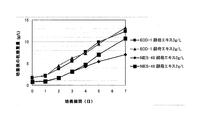
図5から把握されるように、ユーグレナ属微細藻類(Euglena gracilis)EOD-1株は、光従属栄養培養の条件下で培養されても、既知のNIES-48株に比べ高い生産性を有することが分かる。
表2に示す組成物に代えて表3に示す組成物を用いた点、培養液の初期pHをそれぞれpH5.5、pH6.0、pH7.0、pH8.0、pH8.5、又は、pH9.0に変更した点、培養期間を10日間に変更した点以外は、実施例5と同様にして培養工程を行った。
表2に示す組成物に代えて表3に示す組成物を用いた点、光合成光量子束密度(PPFD)を約200μmol/m2・sとした点、培養液の初期pHをそれぞれpH3.5、pH4.0、pH4.5、pH5.0、又は、pH5.5に変更した点、培養期間を10日間に変更した点以外は、実施例5と同様にして培養工程を行った。
表2に示す組成物に代えて表3に示す組成物を用いた点、培養液の初期pHをそれぞれpH3.5、又は、pH5.5にそれぞれ変更した点、培養期間を10日間に変更した点以外は、実施例5と同様にして培養工程を行った。
培養期間を7日間とした点以外は、実施例5と同様にして、ユーグレナ属微細藻類(Euglena gracilis)EOD-1株を培養することにより、培養工程を行った。
なお、培養開始から2日後までは、フラスコを振とうさせることによって好気条件下での培養とし、それ以後は、振とうを停止し、不活性ガス(窒素ガス)を供給することによって嫌気条件下での培養とした。
ユーグレナ属微細藻類(Euglena gracilis)EOD-1株に代えて、ユーグレナ属微細藻類(Euglena gracilis)NIES-48株を培養した点以外は、実施例20と同様にして培養工程を行った。
なお、培養開始から4日後までは、フラスコを振とうさせることによって好気条件下での培養とし、それ以後は、振とうを停止し、不活性ガス(窒素ガス)を供給することによって嫌気条件下での培養とした。
培養後のパラミロン量の測定は、下記の手順で行った。即ち、培養後の微細藻類と培養液との混合物(40mL)を遠心管に入れて、遠心分離した。遠心分離後の沈殿物に純水を加えて懸濁させ再度遠心分離する操作を2回繰り返した。そして、遠心分離後の沈殿物に少量の純水を加えて懸濁させ、懸濁物を凍結乾燥させた。このようにして、培養液の成分を除去した。
次に、凍結乾燥後の微細藻類の細胞を、秤量した遠心管(ブランク値となる)に400mg程度正確に量り取った。アセトンを加えて懸濁させ、遠心分離後の上澄液を取り除いた。上澄液の色がなくなるまで、アセトンによる洗浄操作を5回程度繰り返した。このようにして、微細藻類が産生した色素成分を除去した。
続いて、ドデシル硫酸ナトリウム溶液を用いて、パラミロン以外の成分を除去する操作を行った。即ち、色素成分を除去した後の残分に、1%ドデシル硫酸ナトリウム(SDS)溶液を20mL加え、懸濁させた後、100℃で10分間加熱した。そして、遠心分離した後の上澄液を除去した。このような操作を2回繰り返した後、SDS溶液に代えて純水を用いて同様な操作を3回繰り返して、SDSを洗浄除去した。
最後に、105℃の乾燥器内に遠心管ごと入れて水分を除去し、パラミロンが入った遠心管の重さを測定した。そして、上記のブランク値との差から、パラミロン量を求めた。
一方、培養後のワックスエステル量の測定は、BLIGHT-DYER法によって行った。
図8A及び図8Bから把握されるように、従来のユーグレナ属微細藻類(Euglena gracilis)NIES-48株と比較して、ユーグレナ属微細藻類(Euglena gracilis)EOD-1株は、パラミロンの産生速度がNIES-48株よりも速い。また、EOD-1株は、細胞あたりのパラミロン含有量が約55%以上であり、NIES-48株よりも多い。
また、図9A及び図9Bから把握されるように、ユーグレナ属微細藻類(Euglena gracilis)EOD-1株は、脂質(ワックスエステル)の産生速度がより速く、細胞あたりのワックスエステル含有量が、より短期間で高くなる。
微細藻類としての上記のEOD-1株を光従属栄養培養によって2日間培養した。
微細藻類としての上記のNIES-48株を光従属栄養培養によって2日間培養した。
培養方法の詳細は、以下の通りである。
「培養液」:塩酸によってpHを4.0に調整
「培養容器」:500mL坂口フラスコ
「培養前の仕込み」:培養液200mLと培養前微細藻類とを坂口フラスコに収容
(初期バイオマス量を合わせるため、EOD-1株では計220mL、
NIES-48株では計236mL)
「培養時の温度」:28℃
「培養時の明暗条件」:遮光した暗条件にて培養
「培養時の好気条件」:振とう機に坂口フラスコをセットし、130rpmの往復振とうで運転することにより培養液中に空気を供給

得られた有機化合物は、微細藻類の細胞内に蓄積されたまま、又は、抽出処理などによって取り出すことにより、健康食品、医薬品、飼料、化成品、又は燃料等の用途で利用することができる。具体的には、培養により微細藻類の細胞内に蓄積された有機化合物としての脂質は、例えば、細胞内から取り出されて燃料の原料として好適に使用される。
Claims (7)
- ユーグレナグラシリス(Euglena gracilis)EOD-1株(受託番号FERM BP-11530)又はその変異株である、少なくとも多糖類の産生能を有するユーグレナ属微細藻類。
- 請求項1記載のユーグレナ属微細藻類を多糖類産生生物として培養することによって多糖類を製造する多糖類の製造方法。
- 前記培養において用いる培養液が、グルコースを15~30g/L含む請求項2に記載の多糖類の製造方法。
- 前記培養において用いる培養液が、酵母分解物を含む請求項2又は3に記載の多糖類の製造方法。
- 前記培養において用いる培養液が、AF6培地の組成を有する請求項2~4のいずれか1項に記載の多糖類の製造方法。
- 前記多糖類がパラミロンである請求項2~5のいずれか1項に記載の多糖類の製造方法。
- 請求項1記載のユーグレナ属微細藻類を培養することにより、多糖類、脂質、ビタミンC、ビタミンE、色素、及び、蛋白質からなる群より選択される少なくとも1種の有機化合物を製造する有機化合物の製造方法。
Priority Applications (9)
| Application Number | Priority Date | Filing Date | Title |
|---|---|---|---|
| JP2015508477A JP6329940B2 (ja) | 2013-03-27 | 2014-03-24 | ユーグレナ属微細藻類、多糖類の製造方法、及び有機化合物の製造方法 |
| KR1020157026391A KR102102241B1 (ko) | 2013-03-27 | 2014-03-24 | 유글레나속 미세 조류, 다당류의 제조 방법, 및 유기 화합물의 제조 방법 |
| CA2907641A CA2907641C (en) | 2013-03-27 | 2014-03-24 | Microalgae of the genus euglena, method for producing polysaccharides, and method for producing organic compound |
| ES14772875T ES2729837T3 (es) | 2013-03-27 | 2014-03-24 | Microalgas euglena spp., método de fabricación de polisacárido y método de fabricación de compuesto orgánico |
| US14/779,168 US9845485B2 (en) | 2013-03-27 | 2014-03-24 | Microalgae of the genus Euglena, method for producing polysaccharides, and method for producing organic compound |
| EP14772875.2A EP2980205B1 (en) | 2013-03-27 | 2014-03-24 | Euglena spp. microalgae, polysaccharide manufacturing method, and organic compound manufacturing method |
| AU2014245973A AU2014245973B8 (en) | 2013-03-27 | 2014-03-24 | Microalgae of the genus Euglena, method for producing polysaccharides, and method for producing organic compound |
| CN201480016539.4A CN105229140B (zh) | 2013-03-27 | 2014-03-24 | 裸藻属微藻类、多糖类的制造方法、及有机化合物的制造方法 |
| BR112015024308A BR112015024308B8 (pt) | 2013-03-27 | 2014-03-24 | Método para a produção de polissacarídeos e método para a produção de um composto orgânico |
Applications Claiming Priority (2)
| Application Number | Priority Date | Filing Date | Title |
|---|---|---|---|
| JP2013-067558 | 2013-03-27 | ||
| JP2013067558 | 2013-03-27 |
Publications (1)
| Publication Number | Publication Date |
|---|---|
| WO2014157077A1 true WO2014157077A1 (ja) | 2014-10-02 |
Family
ID=51624050
Family Applications (1)
| Application Number | Title | Priority Date | Filing Date |
|---|---|---|---|
| PCT/JP2014/058063 Ceased WO2014157077A1 (ja) | 2013-03-27 | 2014-03-24 | ユーグレナ属微細藻類、多糖類の製造方法、及び有機化合物の製造方法 |
Country Status (12)
| Country | Link |
|---|---|
| US (1) | US9845485B2 (ja) |
| EP (1) | EP2980205B1 (ja) |
| JP (1) | JP6329940B2 (ja) |
| KR (1) | KR102102241B1 (ja) |
| CN (1) | CN105229140B (ja) |
| AU (1) | AU2014245973B8 (ja) |
| BR (1) | BR112015024308B8 (ja) |
| CA (1) | CA2907641C (ja) |
| ES (1) | ES2729837T3 (ja) |
| MY (1) | MY172431A (ja) |
| TW (1) | TWI605119B (ja) |
| WO (1) | WO2014157077A1 (ja) |
Cited By (22)
| Publication number | Priority date | Publication date | Assignee | Title |
|---|---|---|---|---|
| JP5883532B1 (ja) * | 2015-07-31 | 2016-03-15 | 株式会社神鋼環境ソリューション | 多糖類の精製方法 |
| EP2883952A4 (en) * | 2012-08-10 | 2016-03-16 | Kobelco Eco Solutions Co Ltd | CULTIVATION DEVICE FOR MICRO ALGAE AND CULTIVATION PROCESS FOR MICRO ALGAE |
| JP5899349B1 (ja) * | 2015-03-25 | 2016-04-06 | 株式会社神鋼環境ソリューション | パラミロン製造方法 |
| JP5899350B1 (ja) * | 2015-03-25 | 2016-04-06 | 株式会社神鋼環境ソリューション | パラミロン製造方法 |
| JP6019305B1 (ja) * | 2016-02-03 | 2016-11-02 | 和歌山県 | 新規のユーグレナ属微細藻類 |
| JP6031158B1 (ja) * | 2015-06-10 | 2016-11-24 | 株式会社ユーグレナ | ユーグレナの培養方法 |
| JP2017148005A (ja) * | 2016-02-26 | 2017-08-31 | 株式会社ユーグレナ | ユーグレナ,バイオ燃料組成物及びワックスエステルの製造方法 |
| JP2017184698A (ja) * | 2016-04-08 | 2017-10-12 | 株式会社ユーグレナ | 油脂高含有ユーグレナ |
| JP2017184699A (ja) * | 2016-04-08 | 2017-10-12 | 株式会社ユーグレナ | 油脂高含有ユーグレナの製造方法 |
| JP2018035102A (ja) * | 2016-09-01 | 2018-03-08 | 株式会社神鋼環境ソリューション | 抗肥満剤 |
| JP2019089733A (ja) * | 2017-11-15 | 2019-06-13 | 株式会社神鋼環境ソリューション | 腸内細菌叢改善剤 |
| JP2019104717A (ja) * | 2017-12-08 | 2019-06-27 | 株式会社神鋼環境ソリューション | 自律神経バランス改善剤 |
| JP2019103488A (ja) * | 2017-12-08 | 2019-06-27 | 株式会社神鋼環境ソリューション | 疲労感改善剤 |
| JP2019213518A (ja) * | 2018-06-11 | 2019-12-19 | 株式会社神鋼環境ソリューション | テストステロン分泌促進剤 |
| JP2020083873A (ja) * | 2018-11-21 | 2020-06-04 | 株式会社神鋼環境ソリューション | PPARα発現量増進剤 |
| JP2020164511A (ja) * | 2019-03-29 | 2020-10-08 | 株式会社神鋼環境ソリューション | 神経栄養因子発現量増進剤 |
| JP2021166510A (ja) * | 2020-04-10 | 2021-10-21 | スバル株式会社 | ユーグレナの培養方法 |
| JP2022012415A (ja) * | 2020-07-01 | 2022-01-17 | 株式会社神鋼環境ソリューション | 抗糖化剤 |
| JP2022119581A (ja) * | 2021-02-04 | 2022-08-17 | 株式会社神鋼環境ソリューション | 細胞間接着保護剤 |
| JP2023142838A (ja) * | 2022-03-25 | 2023-10-05 | 株式会社神鋼環境ソリューション | 塩味増強剤 |
| JP2023143445A (ja) * | 2022-03-25 | 2023-10-06 | 株式会社神鋼環境ソリューション | 尿酸合成抑制剤 |
| JP2024125141A (ja) * | 2023-03-03 | 2024-09-13 | 株式会社神鋼環境ソリューション | 抗原応答性増強剤 |
Families Citing this family (11)
| Publication number | Priority date | Publication date | Assignee | Title |
|---|---|---|---|---|
| CN105542031B (zh) * | 2016-02-22 | 2017-12-15 | 北京珍生康业生物科技有限公司 | 一种裸藻多糖的提取方法 |
| CN105942310A (zh) * | 2016-04-28 | 2016-09-21 | 北京珍生康业生物科技有限公司 | 一种破膜裸藻干粉的制备方法 |
| WO2017214224A1 (en) * | 2016-06-09 | 2017-12-14 | Algaeon, Inc. | Euglena lysate composition and method for producing the composition and a purified beta-1,3-glucan |
| KR102089449B1 (ko) | 2018-11-27 | 2020-03-16 | 고려대학교 산학협력단 | 유글레나 그라실리스 및 박테리움 비브리오 나트리에젠스 공동배양을 통한 파라밀론의 생산방법 |
| KR102096263B1 (ko) | 2018-12-12 | 2020-04-02 | 고려대학교 산학협력단 | 자연적으로 발생한 유글레나 그라실리스 돌연변이체를 이용한 파라밀론 생산 |
| CN114302950A (zh) * | 2019-06-28 | 2022-04-08 | 诺贝尔根公司 | 利用工程化储罐设计来优化裸藻发酵的方法 |
| KR102083165B1 (ko) * | 2019-09-18 | 2020-03-02 | 대상 주식회사 | 베타-1,3-글루칸 생산능을 갖는 신규의 유글레나 속 균주 및 이를 이용한 베타-1,3-글루칸을 함유하는 유글레나 균체의 제조방법 |
| CN112481330B (zh) * | 2020-12-18 | 2023-06-13 | 天津科技大学 | 一种藻源β-1,3-葡聚糖发酵生产方法 |
| CN112899168B (zh) * | 2021-02-05 | 2022-11-15 | 优格天成生物技术(义乌)有限公司 | 4r-氨基戊酸、4-氨基戊酸和/或4-氨基丁酸在提高裸藻中叶绿素含量中的应用 |
| JP7307435B2 (ja) * | 2021-04-12 | 2023-07-12 | 公立大学法人大阪 | ワックスエステル高含有ユーグレナの生産方法および生産システム、並びに、ワックスエステル又はバイオ燃料組成物の製造方法および製造システム、並びに、ワックスエステル発酵促進剤 |
| KR102627349B1 (ko) * | 2022-04-19 | 2024-01-19 | 주식회사 유일바이오텍 | 희토류 존재 하에서 미세조류의 배양을 통한 유용물질 생산방법 |
Citations (3)
| Publication number | Priority date | Publication date | Assignee | Title |
|---|---|---|---|---|
| JPS59118090A (ja) * | 1982-12-22 | 1984-07-07 | Shozaburo Kitaoka | ロウ・エステル、高級脂肪アルコ−ルおよび高級脂肪酸の製造法 |
| JPH06113819A (ja) * | 1992-10-01 | 1994-04-26 | Harima Chem Inc | ユーグレナの培養方法 |
| JPH0770207A (ja) | 1992-12-14 | 1995-03-14 | Takeda Chem Ind Ltd | β−1,3−グルカンの新規製造法 |
-
2014
- 2014-03-24 BR BR112015024308A patent/BR112015024308B8/pt active IP Right Grant
- 2014-03-24 KR KR1020157026391A patent/KR102102241B1/ko active Active
- 2014-03-24 AU AU2014245973A patent/AU2014245973B8/en active Active
- 2014-03-24 US US14/779,168 patent/US9845485B2/en active Active
- 2014-03-24 ES ES14772875T patent/ES2729837T3/es active Active
- 2014-03-24 CA CA2907641A patent/CA2907641C/en active Active
- 2014-03-24 EP EP14772875.2A patent/EP2980205B1/en active Active
- 2014-03-24 JP JP2015508477A patent/JP6329940B2/ja active Active
- 2014-03-24 CN CN201480016539.4A patent/CN105229140B/zh active Active
- 2014-03-24 WO PCT/JP2014/058063 patent/WO2014157077A1/ja not_active Ceased
- 2014-03-24 MY MYPI2015703249A patent/MY172431A/en unknown
- 2014-03-27 TW TW103111576A patent/TWI605119B/zh active
Patent Citations (3)
| Publication number | Priority date | Publication date | Assignee | Title |
|---|---|---|---|---|
| JPS59118090A (ja) * | 1982-12-22 | 1984-07-07 | Shozaburo Kitaoka | ロウ・エステル、高級脂肪アルコ−ルおよび高級脂肪酸の製造法 |
| JPH06113819A (ja) * | 1992-10-01 | 1994-04-26 | Harima Chem Inc | ユーグレナの培養方法 |
| JPH0770207A (ja) | 1992-12-14 | 1995-03-14 | Takeda Chem Ind Ltd | β−1,3−グルカンの新規製造法 |
Non-Patent Citations (9)
| Title |
|---|
| DATABASE GENBANK [online] 6 September 1999 (1999-09-06), HWANG,C.Y. ET AL.: "EUGLENA ANABAENA 18S RIBOSOMAL RNA GENE , COMPLETE SEQUENCE; MITOCHONDRIAL GENE FOR MITOCHONDRIAL PRODUCT", XP055280670, retrieved from NCBI Database accession no. AF081593.1 * |
| KAWACHI M. ET AL.: "MCC-NIES LIST OF STRAINS,9TH EDITION (2013) MICROALGAE,ENDANGERED MACROALGAE ANDPROTISTS", MICROBIAL CULTURE COLLECTION AT NATIONAL INSTITUTE FOR ENVIRONMENTAL STUDIES, 1 March 2013 (2013-03-01), TSUKUBA, JAPAN, pages 90 - 91, XP055280764, Retrieved from the Internet <URL:HTTP://MCC.NIES.GO.JP/DOWNLOAD/LIST9TH_J.PDF> [retrieved on 20140712] * |
| MOSTAFA ET AL., MOLECULES, vol. 16, 2011, pages 2598 - 2608 |
| See also references of EP2980205A4 |
| SHEVELEVA E.V. ET AL.: "Identification and comparative analysis of the chloroplast alpha- subunit gene of DNA-dependent RNA polymerase from seven Euglena species", NUCLEIC ACIDS RES., vol. 30, no. 5, 1 March 2002 (2002-03-01), pages 1247 - 54, XP002489662 * |
| SHIN W. ET AL.: "ULTRASTRUCTURE OF EUGLENA ANABAENA VAR. MINOR (EUGLENOPHYCEAE)", PHYCOLOGICAL RESEARCH, vol. 48, no. 1, 2000, pages 19 - 25, XP055280673 * |
| TAMURA ET AL., MOL. BIOL. EVOL., vol. 28, 2011, pages 2731 - 2739 |
| WILLIAMS ET AL., NUCLEIC AIDS RES., vol. 18, no. 22, 1990, pages 6531 - 6535 |
| ZAKRYS ET AL., JOURNAL OF PHYCOLOGY, vol. 38, 2002, pages 1190 - 1199 |
Cited By (33)
| Publication number | Priority date | Publication date | Assignee | Title |
|---|---|---|---|---|
| EP2883952A4 (en) * | 2012-08-10 | 2016-03-16 | Kobelco Eco Solutions Co Ltd | CULTIVATION DEVICE FOR MICRO ALGAE AND CULTIVATION PROCESS FOR MICRO ALGAE |
| JP5899349B1 (ja) * | 2015-03-25 | 2016-04-06 | 株式会社神鋼環境ソリューション | パラミロン製造方法 |
| JP5899350B1 (ja) * | 2015-03-25 | 2016-04-06 | 株式会社神鋼環境ソリューション | パラミロン製造方法 |
| JP6031158B1 (ja) * | 2015-06-10 | 2016-11-24 | 株式会社ユーグレナ | ユーグレナの培養方法 |
| WO2017022616A1 (ja) * | 2015-07-31 | 2017-02-09 | 株式会社神鋼環境ソリューション | 多糖類の精製方法 |
| JP5883532B1 (ja) * | 2015-07-31 | 2016-03-15 | 株式会社神鋼環境ソリューション | 多糖類の精製方法 |
| JP6019305B1 (ja) * | 2016-02-03 | 2016-11-02 | 和歌山県 | 新規のユーグレナ属微細藻類 |
| WO2017135446A1 (ja) * | 2016-02-03 | 2017-08-10 | 和歌山県 | 新規のユーグレナ属微細藻類 |
| JP2017148005A (ja) * | 2016-02-26 | 2017-08-31 | 株式会社ユーグレナ | ユーグレナ,バイオ燃料組成物及びワックスエステルの製造方法 |
| JP2017184698A (ja) * | 2016-04-08 | 2017-10-12 | 株式会社ユーグレナ | 油脂高含有ユーグレナ |
| JP2017184699A (ja) * | 2016-04-08 | 2017-10-12 | 株式会社ユーグレナ | 油脂高含有ユーグレナの製造方法 |
| JP2018035102A (ja) * | 2016-09-01 | 2018-03-08 | 株式会社神鋼環境ソリューション | 抗肥満剤 |
| JP7128459B2 (ja) | 2017-11-15 | 2022-08-31 | 株式会社神鋼環境ソリューション | 腸内細菌叢改善剤 |
| JP2019089733A (ja) * | 2017-11-15 | 2019-06-13 | 株式会社神鋼環境ソリューション | 腸内細菌叢改善剤 |
| JP7130408B2 (ja) | 2017-12-08 | 2022-09-05 | 株式会社神鋼環境ソリューション | 自律神経バランス改善剤 |
| JP7293307B2 (ja) | 2017-12-08 | 2023-06-19 | 株式会社神鋼環境ソリューション | 自律神経バランス改善剤 |
| JP7150494B2 (ja) | 2017-12-08 | 2022-10-11 | 株式会社神鋼環境ソリューション | 疲労感改善剤 |
| JP2019104717A (ja) * | 2017-12-08 | 2019-06-27 | 株式会社神鋼環境ソリューション | 自律神経バランス改善剤 |
| JP2021040640A (ja) * | 2017-12-08 | 2021-03-18 | 株式会社神鋼環境ソリューション | 自律神経バランス改善剤 |
| JP2019103488A (ja) * | 2017-12-08 | 2019-06-27 | 株式会社神鋼環境ソリューション | 疲労感改善剤 |
| JP2022002543A (ja) * | 2017-12-08 | 2022-01-11 | 株式会社神鋼環境ソリューション | 自律神経バランス改善剤 |
| JP2019213518A (ja) * | 2018-06-11 | 2019-12-19 | 株式会社神鋼環境ソリューション | テストステロン分泌促進剤 |
| JP2020083873A (ja) * | 2018-11-21 | 2020-06-04 | 株式会社神鋼環境ソリューション | PPARα発現量増進剤 |
| JP2020164511A (ja) * | 2019-03-29 | 2020-10-08 | 株式会社神鋼環境ソリューション | 神経栄養因子発現量増進剤 |
| JP2021166510A (ja) * | 2020-04-10 | 2021-10-21 | スバル株式会社 | ユーグレナの培養方法 |
| JP7286183B2 (ja) | 2020-04-10 | 2023-06-05 | 株式会社ユーグリード | ユーグレナの培養方法 |
| JP2022012415A (ja) * | 2020-07-01 | 2022-01-17 | 株式会社神鋼環境ソリューション | 抗糖化剤 |
| JP7627552B2 (ja) | 2020-07-01 | 2025-02-06 | 株式会社神鋼環境ソリューション | 抗糖化剤 |
| JP2022119581A (ja) * | 2021-02-04 | 2022-08-17 | 株式会社神鋼環境ソリューション | 細胞間接着保護剤 |
| JP7813518B2 (ja) | 2021-02-04 | 2026-02-13 | 株式会社神鋼環境ソリューション | 細胞間接着保護剤 |
| JP2023142838A (ja) * | 2022-03-25 | 2023-10-05 | 株式会社神鋼環境ソリューション | 塩味増強剤 |
| JP2023143445A (ja) * | 2022-03-25 | 2023-10-06 | 株式会社神鋼環境ソリューション | 尿酸合成抑制剤 |
| JP2024125141A (ja) * | 2023-03-03 | 2024-09-13 | 株式会社神鋼環境ソリューション | 抗原応答性増強剤 |
Also Published As
| Publication number | Publication date |
|---|---|
| EP2980205A4 (en) | 2016-09-28 |
| TW201518500A (zh) | 2015-05-16 |
| CN105229140B (zh) | 2019-06-21 |
| CA2907641A1 (en) | 2014-10-02 |
| CN105229140A (zh) | 2016-01-06 |
| AU2014245973B2 (en) | 2019-08-01 |
| BR112015024308B1 (pt) | 2022-10-25 |
| BR112015024308B8 (pt) | 2023-05-02 |
| ES2729837T3 (es) | 2019-11-06 |
| US9845485B2 (en) | 2017-12-19 |
| AU2014245973B8 (en) | 2019-12-12 |
| AU2014245973A1 (en) | 2015-10-29 |
| EP2980205A1 (en) | 2016-02-03 |
| CA2907641C (en) | 2021-06-15 |
| JP6329940B2 (ja) | 2018-05-23 |
| US20160122789A1 (en) | 2016-05-05 |
| EP2980205B1 (en) | 2019-03-06 |
| KR20150134350A (ko) | 2015-12-01 |
| TWI605119B (zh) | 2017-11-11 |
| JPWO2014157077A1 (ja) | 2017-02-16 |
| BR112015024308A2 (pt) | 2017-10-24 |
| MY172431A (en) | 2019-11-25 |
| KR102102241B1 (ko) | 2020-04-20 |
Similar Documents
| Publication | Publication Date | Title |
|---|---|---|
| JP6329940B2 (ja) | ユーグレナ属微細藻類、多糖類の製造方法、及び有機化合物の製造方法 | |
| CN103025862B (zh) | 新型破囊壶菌类微藻及用其生产生物油的方法 | |
| Ahmed et al. | Effects of various process parameters on the production of g-linolenic acid in submerged fermentation | |
| JP5775862B2 (ja) | 微細藻類の培養方法及び微細藻類の使用方法 | |
| KR101563148B1 (ko) | 감마선 조사에 의해 바이오매스, 전분 및 지질 함량이 증진된 미세조류 클라미도모나스 레인하드티아이 변이체 및 이의 용도 | |
| CN114058522B (zh) | 一种高产角鲨烯的酿酒酵母菌、应用及其选育方法 | |
| US20160194600A1 (en) | Method for liquid-surface floating culture of microalgae using microalgae on bottom surface as seed algae, method for producing algal biomass, and microalga | |
| JPWO2015025552A1 (ja) | 油脂成分を産生する方法、及び高級不飽和脂肪酸の製造方法 | |
| CN107384800B (zh) | 克莱曼都普帝藻(chlamydopodium sp.)和其用途 | |
| Zhu et al. | An axenic strain reveals the responses of Phaeodactylum tricornutum to external organic carbon | |
| Kim | Transforming okara into a microalgae culture medium | |
| KR20150138746A (ko) | 감마아미노부티르산 생산능을 가지는 락토바실러스 브레비스 llb5238 균주 및 이를 이용한 감마아미노부티르산의 생산방법 | |
| CN113512504A (zh) | 一株产虾青素菌株及其应用 | |
| JP2021069320A (ja) | ユーグレナの培養方法、油脂の製造方法及び下水処理プラント | |
| CN105695554B (zh) | 一种通过菌藻共培养提高叶黄素产量的方法 | |
| KR101058246B1 (ko) | 코엔자임 q10 생성능을 가지는 로도박터 스페어로이즈를 이용한 코엔자임 q10의 대량생산 방법 | |
| JP6019305B1 (ja) | 新規のユーグレナ属微細藻類 | |
| JP6014700B2 (ja) | 微細藻類の培養方法及び微細藻類の使用方法 | |
| CN121736896A (zh) | 一株高产C18的气生微藻Pilidiocystis sp. FDA-4的特性及其应用 | |
| CN107354147B (zh) | 尖状栅藻合成淀粉缺陷型突变株及其应用 | |
| RU2567675C1 (ru) | ШТАММ ГРИБА Eremothecium ashbyi - ПРОДУЦЕНТ ЭФИРНОГО МАСЛА С ЗАПАХОМ СВЕЖИХ ЦВЕТКОВ РОЗЫ | |
| JP6199580B2 (ja) | ネルボン酸を含む油脂組成物の製造方法、及びネルボン酸生産微生物をスクリーニングする方法 | |
| KR20230045218A (ko) | 녹조류 바이오매스의 생산성 증대를 위한 배양방법 |
Legal Events
| Date | Code | Title | Description |
|---|---|---|---|
| WWE | Wipo information: entry into national phase |
Ref document number: 201480016539.4 Country of ref document: CN |
|
| 121 | Ep: the epo has been informed by wipo that ep was designated in this application |
Ref document number: 14772875 Country of ref document: EP Kind code of ref document: A1 |
|
| ENP | Entry into the national phase |
Ref document number: 2015508477 Country of ref document: JP Kind code of ref document: A |
|
| ENP | Entry into the national phase |
Ref document number: 2907641 Country of ref document: CA |
|
| WWE | Wipo information: entry into national phase |
Ref document number: 14779168 Country of ref document: US |
|
| ENP | Entry into the national phase |
Ref document number: 20157026391 Country of ref document: KR Kind code of ref document: A |
|
| NENP | Non-entry into the national phase |
Ref country code: DE |
|
| WWE | Wipo information: entry into national phase |
Ref document number: 2014772875 Country of ref document: EP |
|
| WWE | Wipo information: entry into national phase |
Ref document number: IDP00201506775 Country of ref document: ID |
|
| ENP | Entry into the national phase |
Ref document number: 2014245973 Country of ref document: AU Date of ref document: 20140324 Kind code of ref document: A |
|
| REG | Reference to national code |
Ref country code: BR Ref legal event code: B01A Ref document number: 112015024308 Country of ref document: BR |
|
| ENP | Entry into the national phase |
Ref document number: 112015024308 Country of ref document: BR Kind code of ref document: A2 Effective date: 20150922 |