WO2014178145A1 - 蓄熱量予測装置、蓄熱量予測方法およびプログラム - Google Patents
蓄熱量予測装置、蓄熱量予測方法およびプログラム Download PDFInfo
- Publication number
- WO2014178145A1 WO2014178145A1 PCT/JP2013/062783 JP2013062783W WO2014178145A1 WO 2014178145 A1 WO2014178145 A1 WO 2014178145A1 JP 2013062783 W JP2013062783 W JP 2013062783W WO 2014178145 A1 WO2014178145 A1 WO 2014178145A1
- Authority
- WO
- WIPO (PCT)
- Prior art keywords
- heat storage
- storage amount
- value
- prediction
- outside air
- Prior art date
- Legal status (The legal status is an assumption and is not a legal conclusion. Google has not performed a legal analysis and makes no representation as to the accuracy of the status listed.)
- Ceased
Links
Images




Classifications
-
- G—PHYSICS
- G01—MEASURING; TESTING
- G01K—MEASURING TEMPERATURE; MEASURING QUANTITY OF HEAT; THERMALLY-SENSITIVE ELEMENTS NOT OTHERWISE PROVIDED FOR
- G01K17/00—Measuring quantity of heat
-
- F—MECHANICAL ENGINEERING; LIGHTING; HEATING; WEAPONS; BLASTING
- F24—HEATING; RANGES; VENTILATING
- F24F—AIR-CONDITIONING; AIR-HUMIDIFICATION; VENTILATION; USE OF AIR CURRENTS FOR SCREENING
- F24F11/00—Control or safety arrangements
- F24F11/30—Control or safety arrangements for purposes related to the operation of the system, e.g. for safety or monitoring
-
- F—MECHANICAL ENGINEERING; LIGHTING; HEATING; WEAPONS; BLASTING
- F24—HEATING; RANGES; VENTILATING
- F24F—AIR-CONDITIONING; AIR-HUMIDIFICATION; VENTILATION; USE OF AIR CURRENTS FOR SCREENING
- F24F11/00—Control or safety arrangements
- F24F11/50—Control or safety arrangements characterised by user interfaces or communication
- F24F11/52—Indication arrangements, e.g. displays
- F24F11/526—Indication arrangements, e.g. displays giving audible indications
-
- F—MECHANICAL ENGINEERING; LIGHTING; HEATING; WEAPONS; BLASTING
- F24—HEATING; RANGES; VENTILATING
- F24F—AIR-CONDITIONING; AIR-HUMIDIFICATION; VENTILATION; USE OF AIR CURRENTS FOR SCREENING
- F24F11/00—Control or safety arrangements
- F24F11/62—Control or safety arrangements characterised by the type of control or by internal processing, e.g. using fuzzy logic, adaptive control or estimation of values
-
- F—MECHANICAL ENGINEERING; LIGHTING; HEATING; WEAPONS; BLASTING
- F24—HEATING; RANGES; VENTILATING
- F24F—AIR-CONDITIONING; AIR-HUMIDIFICATION; VENTILATION; USE OF AIR CURRENTS FOR SCREENING
- F24F11/00—Control or safety arrangements
- F24F11/62—Control or safety arrangements characterised by the type of control or by internal processing, e.g. using fuzzy logic, adaptive control or estimation of values
- F24F11/63—Electronic processing
- F24F11/64—Electronic processing using pre-stored data
-
- F—MECHANICAL ENGINEERING; LIGHTING; HEATING; WEAPONS; BLASTING
- F24—HEATING; RANGES; VENTILATING
- F24F—AIR-CONDITIONING; AIR-HUMIDIFICATION; VENTILATION; USE OF AIR CURRENTS FOR SCREENING
- F24F11/00—Control or safety arrangements
- F24F11/62—Control or safety arrangements characterised by the type of control or by internal processing, e.g. using fuzzy logic, adaptive control or estimation of values
- F24F11/63—Electronic processing
-
- F—MECHANICAL ENGINEERING; LIGHTING; HEATING; WEAPONS; BLASTING
- F24—HEATING; RANGES; VENTILATING
- F24F—AIR-CONDITIONING; AIR-HUMIDIFICATION; VENTILATION; USE OF AIR CURRENTS FOR SCREENING
- F24F11/00—Control or safety arrangements
- F24F11/62—Control or safety arrangements characterised by the type of control or by internal processing, e.g. using fuzzy logic, adaptive control or estimation of values
- F24F11/63—Electronic processing
- F24F11/65—Electronic processing for selecting an operating mode
Definitions
- the present invention relates to a heat storage amount prediction device, a heat storage amount prediction method, and a program.
- the heat load is predicted using the amount of solar radiation, the outside air temperature, and the room temperature.
- Patent Document 1 it is necessary to acquire data on the amount of solar radiation, but the data on the amount of solar radiation cannot be easily acquired for both the actual value and the predicted value.
- the present invention has been made in view of such a background, and an object thereof is to provide a heat storage amount prediction device, a heat storage amount prediction method, and a program capable of accurately predicting a heat storage amount of a building.
- the main invention of the present invention for solving the above-mentioned problems is a device for predicting the amount of heat stored in a building, the actual heat storage amount storage unit storing the actual value of the heat storage amount, and the actual results of the outside air temperature per unit time.
- An actual outside temperature storage unit that stores values
- a prediction model storage unit that stores a prediction model that uses the temperature corresponding to the outside temperature per unit time as an explanatory variable, and the heat storage amount as a target variable, and the heat storage amount Based on the actual value, the actual value of the outside temperature, and the prediction model, an estimation unit for estimating a regression coefficient of the explanatory variable and a constant of the prediction model, and a predicted value of the outside temperature per unit time
- a predicted outside air temperature acquisition unit and a heat storage amount prediction unit that calculates the predicted value of the heat storage amount by applying the regression coefficient, the constant, and the predicted value of the outside air temperature to the prediction model.
- the temperature according to the outside air temperature is either the temperature obtained by subtracting a threshold value from the outside air temperature or a predetermined minimum value, and the estimation unit includes the regression coefficient.
- the threshold value may be estimated.
- the heat storage amount prediction device of the present invention further includes a housing temperature storage unit that stores a track value of the building body temperature of the building, and a housing temperature prediction unit that calculates a predicted value of the body temperature, and the prediction model Is a variable according to the outside air temperature per unit time and a temperature according to the enclosure temperature as explanatory variables, and the heat storage amount is a target variable.
- the regression coefficient of the explanatory variable and the constant of the prediction model are estimated, and the heat storage amount prediction unit is configured to calculate the regression coefficient
- the predicted value of the heat storage amount may be calculated by applying the constant, the predicted value of the outside air temperature, and the predicted value of the enclosure temperature to the prediction model.
- the heat storage amount prediction device of the present invention further includes a ventilation heat amount acquisition unit that acquires the actual value and the predicted value of the ventilation heat amount that is the amount of heat discharged from the building or taken into the building by ventilation of the building,
- the prediction model uses a temperature according to the outside air temperature per unit time, a temperature according to the housing temperature, and a temperature according to the ventilation heat amount as explanatory variables, and the heat storage amount as a target variable.
- the estimation unit is based on the actual value of the heat storage amount, the actual value of the outside air temperature, the actual value of the enclosure temperature, the actual value of the ventilation heat amount, and the prediction model, and the regression coefficient of the explanatory variable and A constant of the prediction model is estimated, and the heat storage amount prediction unit applies the regression coefficient, the constant, the prediction value of the outside air temperature, the prediction value of the enclosure temperature, and the prediction value of the ventilation heat amount to the prediction model. It may be calculated predicted value of the heat storage amount Te.
- the heat storage amount prediction device of the present invention further includes a ventilation heat amount acquisition unit that acquires the actual value and the predicted value of the ventilation heat amount that is the amount of heat discharged from the building or taken into the building by ventilation of the building,
- the prediction model further includes a temperature according to the outside air temperature per unit time and a temperature according to the ventilation heat amount as explanatory variables, and the heat storage amount as an objective variable.
- the heat storage amount prediction unit May apply the regression coefficient, the constant, the predicted value of the outside air temperature, and the predicted value of the ventilation heat amount to the prediction model to calculate the predicted value of the heat storage amount.
- the heat storage amount prediction device of the present invention is a ventilation amount acquisition unit that acquires the actual value of the ventilation amount related to the ventilation, a humidity acquisition unit that acquires the actual value of humidity when the ventilation is performed, A predicted humidity acquisition unit for acquiring a predicted value of humidity; and a planned ventilation amount acquisition unit for acquiring the planned value of ventilation.
- the ventilation heat quantity acquisition unit includes the actual value of temperature and the actual result of humidity. The actual value of the ventilation heat quantity is calculated based on the actual value and the actual value of the ventilation quantity. You may make it calculate.
- Another aspect of the present invention is a method for predicting the amount of heat stored in a building, wherein the computer stores the actual value of the stored heat amount, and the step of storing the actual value of the outside air temperature per unit time. And storing a prediction model having the temperature according to the outside air temperature per unit time as an explanatory variable and the heat storage amount as an objective variable, the actual value of the heat storage amount, the actual value of the outside air temperature, and the A step of estimating a regression coefficient of the explanatory variable and a constant of the prediction model based on a prediction model; a step of obtaining a predicted value of the outside air temperature per unit time; the regression coefficient, the constant and the outside air temperature; And applying the predicted value to the predicted model to calculate the predicted value of the heat storage amount.
- the other aspect of this invention is a program for estimating the heat storage amount of a building, Comprising: The step which memorize
- the amount of heat stored in a building can be predicted with high accuracy.
- FIG. It is a figure which shows the hardware structural example of the thermal storage amount prediction apparatus. It is a figure which shows the software structural example of the thermal storage amount prediction apparatus. It is a figure which shows the structural example of the database 131.
- FIG. It is the graph showing the predicted value 21 of the heat storage amount by the heat storage amount prediction part 115 using a prediction model, and the measured value 22 of the heat storage amount. It is a figure which shows the structural example of the database 131 in the case of considering a housing temperature.
- the heat storage amount prediction device 10 of the present embodiment predicts the heat amount of a building to be removed at a certain time, that is, the heat storage amount of the building. By predicting the amount of stored heat, the air conditioning can be operated according to the amount of stored heat so that the store has a comfortable temperature when the store is opened.
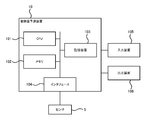
- FIG. 1 is a diagram illustrating a hardware configuration example of the heat storage amount prediction device 10.
- the heat storage amount prediction device 10 includes a CPU 101, a memory 102, a storage device 103, an interface 104, an input device 105, and an output device 106.
- the storage device 103 stores various data and programs, such as a hard disk drive, a solid state drive, and a flash memory.
- the CPU 101 implements various functions by reading a program stored in the storage device 103 into the memory 102 and executing it.
- the interface 104 is an interface for connecting to the sensor 5, for example, connecting a serial cable or a communication cable.
- the sensor 5 is a sensor that measures the outside air temperature.
- the heat storage amount prediction device 10 can acquire the measured value of the outside air temperature from the sensor 5 via the interface 104. Moreover, it connects with an air conditioning equipment via the interface 104, and you may make it the heat storage amount prediction apparatus 10 control an air conditioning equipment.
- the input device 105 is a keyboard, mouse, trackball, touch panel, microphone, or the like that accepts data input.
- the output device 106 is, for example, a display, a printer, or a speaker that outputs data.
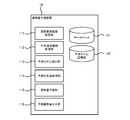
- FIG. 2 is a diagram illustrating a software configuration example of the heat storage amount prediction device 10.
- the heat storage amount prediction device 10 includes a heat storage amount actual value acquisition unit 111, an outside air temperature actual value acquisition unit 112, a prediction model estimation unit 113, a predicted outside air temperature acquisition unit, a heat storage amount prediction unit 115, a predicted heat storage amount output unit 116, and a database 131. And a prediction model storage unit 132.
- the heat storage amount actual value acquisition unit 111, the outside air temperature actual value acquisition unit 112, the prediction model estimation unit 113, the predicted outside air temperature acquisition unit, the heat storage amount prediction unit 115, and the predicted heat storage amount output unit 116 are provided in the heat storage amount prediction device 10. It is realized by the CPU 101 reading the program stored in the storage device 103 to the memory 102 and executing it, and the database 131 and the prediction model storage unit 132 are realized as part of the storage area provided by the memory 102 and the storage device 103. Is done.
- the heat storage amount actual value acquisition unit 111 acquires the actual value of the heat storage amount of the store at the time of opening the store.
- the heat storage amount actual value acquisition unit 111 can receive an input of the heat storage amount actual value from the input device 105, for example.
- the sensor 5 measures the temperature of the store housing and the room temperature in the store, and the heat storage amount actual value acquisition unit 111 calculates the heat storage amount from the temperature of the housing measured by the sensor 5 and the room temperature in the store. It may be.
- you may make it the heat storage amount performance value acquisition part 111 acquire from the air conditioner the cold energy amount required in order to lower the room temperature to a predetermined value immediately before opening as a heat storage amount.
- the outside air temperature actual value acquisition unit 112 acquires the outside air temperature for each predetermined unit time. In this embodiment, it is assumed that the unit time is one hour, and the outside air temperature actual value acquisition unit 112 acquires the outside air temperature measured by the sensor 5. For example, the outside air temperature is acquired from the user. May be.
- the outside air temperature actual value acquisition unit 112 obtains the outside air temperature at every hour on the hour, for example, and the outside air temperature at the hour may be set as the outside temperature in the time zone from the hour to the next hour.
- the average value of the outside air temperature may be the outside air temperature during the time period from the hour to the next hour.
- the outside air temperature actual value acquisition unit 112 may measure the outside air temperature every short time, such as 5 minutes or 10 minutes, and may use the average value of the outside air temperature measured during the time zone as the outside air temperature in the time zone. .
- the database 131 stores data necessary for predicting the heat storage amount, including the actual value of the outside air temperature.
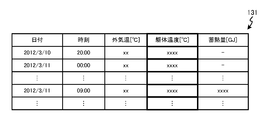
- FIG. 3 is a diagram illustrating a configuration example of the database 131.
- the database 131 stores the actual value of the outside air temperature and the actual value of the heat storage amount in the time zone indicated by the time in association with the date and time.
- the actual value of the outside air temperature is the outside air temperature acquired from the sensor 5 by the outside air temperature actual value acquisition unit 112.
- the actual value of the heat storage amount is a value acquired by the heat storage amount actual value acquisition unit 111, but in the present embodiment, only the actual value at 9:00 am when the store is opened is registered.
- the prediction model storage unit 132 stores a prediction model for predicting the heat storage amount.
- the prediction model is expressed by the following equation (1).
- Z is the amount of heat stored in the store when the store is opened.
- ⁇ is a constant and ⁇ is a regression coefficient.
- N is a numerical value indicating the time zone of the opening hours, and a numerical value 13 indicating 8:00 am the next day is N.
- V t is the difference between the outside temperature and the threshold value in the time zone t, obtained by the following expression (2).
- V t is a temperature difference between the outside air temperature temp t and the threshold value a (when it is negative, it is set to 0. The same applies hereinafter).
- the prediction model estimation unit 113 uses the actual value temp t of the outside air temperature for each time zone stored in the database 131 and the actual value Z of the heat storage amount at the time of opening the store, the formula (1) and the formula of the prediction model described above.
- the constant ⁇ , the regression coefficient ⁇ , and the threshold value a in (2) are estimated.
- the estimation process is performed by a general regression analysis method, and the description is omitted here.
- the prediction model estimation unit 113 applies the estimated threshold value a to the equation (2), and a statistical model (hereinafter referred to as a prediction equation) in which the estimated constant ⁇ and the estimated regression coefficient ⁇ are applied to the equation (1). Is registered in the prediction model storage unit 132.
- the predicted outside temperature acquisition unit 114 acquires a predicted value of the outside temperature for each time zone.
- the predicted outside air temperature acquisition unit 114 may predict the outside air temperature based on the actual outside air temperature value stored in the database 131, or may be an outside weather forecast value provided by a weather company or the like. You may make it acquire temperature.
- the heat storage amount prediction unit 115 calculates the predicted value of the heat storage amount by applying the predicted value of the outside air temperature acquired by the predicted outside air temperature acquisition unit 114 to the prediction formula.
- the predicted heat storage amount output unit 116 outputs the predicted value of the heat storage amount calculated by the heat storage amount prediction unit 115.
- the predicted heat storage amount output unit 116 may output the predicted value of the heat storage amount to the output device 106, for example, or may set the predicted value of the heat storage amount in an e-mail and send it to a predetermined address. Good.
- FIG. 4 is a graph showing the predicted value 21 of the heat storage amount by the heat storage amount prediction unit 115 using the prediction model and the actual measurement value 22 of the heat storage amount. According to the prediction value 21 and the actual measurement value 22 according to the prediction model of the present embodiment, although there is a divergence on May 29, 2012, the prediction value 21 and the actual measurement value 22 are approximately similar for other days. I understand.
- the heat storage amount prediction device 10 of the present embodiment can be predicted with high accuracy by the prediction formula that estimates the prediction model using the temperature according to the outside air temperature as an explanatory variable. it can. Therefore, since the amount of heat stored in the building can be predicted only from the predicted value of the outside air temperature that is easily available, it is possible to easily predict the amount of stored heat. In addition, since the prediction model can be estimated based only on the actual measured value of the outside air temperature and the actual value of the heat storage amount at the time of opening the store, it is possible to easily prepare a prediction formula. Therefore, since it is also easy to perform estimation periodically, the accuracy of the prediction model can be further improved by performing estimation based on more actual values.
- the heat storage amount of a building can be predicted using a prediction model in which the difference between the outside air temperature temp t and the threshold value a is used as an explanatory variable. Not all the energy of the outside air temperature is stored in the building, but the prediction accuracy of the heat storage amount is improved by using the prediction model that only the amount of the outside air temperature temp t exceeding the threshold value a contributes to the heat storage of the store. Can be improved.
- FIG. 9 is a diagram showing a correlation between accumulated air temperature (accumulated outside air temperature during closing when air conditioning is stopped) and heat storage amount. As shown in FIG.
- the accumulated temperature and the heat storage amount have a positive correlation when exceeding a certain value, and the accumulated temperature obtained by accumulating the difference between the outside temperature and the threshold, that is, ⁇ V t in the equation (1).
- the heat storage amount Z is predicted by a prediction model (Equation (1) and Equation (2)) representing the correlation between the outside air temperature temp and the heat storage amount Z. Temperature may be added. In this case, the expression (1) is changed to the following expression (1-1).
- the database 131 also stores the actual value of the body temperature for each time zone as shown in FIG. 5 (body temperature storage unit).
- the housing temperature may be measured by the sensor 5 so that the housing temperature acquired from the sensor 5 may be registered in the database 131, or the measured value of the housing temperature may be registered in the database 131 by the user. May be.
- Prediction model estimation unit 113 uses the actual value temp t of the outside air temperature for each time zone is stored in the database 131, the actual value Z of the heat storage amount when opened, the precursor temperature temp N H before the time of opening
- the constant ⁇ , the regression coefficients ⁇ and ⁇ , and the threshold values a and b in the equations (1-1), (2), and (3) of the prediction model are estimated.
- the prediction model estimation unit 113 stores the estimated constant ⁇ , the regression coefficients ⁇ and ⁇ , and the threshold values a and b applied to the equations (1-1), (2), and (3) as prediction equations. Registered in the unit 132.
- the heat storage amount prediction unit 115 predicts the body temperature at the time of opening a store (a body temperature prediction unit) and applies it to the prediction model.
- the heat storage amount prediction unit 115 can accept input of a predicted value of the housing temperature from, for example, a user. Further, the heat storage amount prediction unit 115 may predict the housing temperature at the time of opening the store based on the actual value of the housing temperature stored in the database 131 using a general statistical method. Since the housing temperature does not change much, the actual housing temperature value immediately before the heat storage amount prediction may be used without performing the prediction.
- the influence of the temperature of the building's enclosure can be considered. Therefore, by adding the precursor temperature temp N H before the time of opening the explanatory variables, it is possible to predict the amount of heat to be removed during opening of the store more accurately.
- Prediction model estimation unit 113 uses the actual value temp t of the outside air temperature for each time zone is stored in the database 131, the actual value Z of the heat storage amount when opened, the precursor temperature temp N H before the time of opening
- the constant ⁇ , regression coefficients ⁇ , ⁇ , and ⁇ , and threshold values a, b, and c of the prediction model formulas (1-2), (2), (3), and (4) are estimated.
- the prediction model estimation unit 113 sets the estimated constant ⁇ , regression coefficients ⁇ , ⁇ , and ⁇ , and thresholds a, b, and c to formulas (1-2), (2), (3), and (4).
- the applied one is registered in the prediction model storage unit 132 as a prediction formula.
- equation (1-2) may be changed to the following equation (1-2 ′) without considering the housing temperature.
- ventilation heat amount W changed by ventilating the store between the closing time and the opening time may be considered.
- the expression (1) is changed to the following expression.
- the ventilation heat quantity W is obtained by the following equation (5).
- W t IN is the amount of heat taken from outside in the time zone t.
- W t IN is expressed by the following equation (6), where h t OUT is the specific enthalpy (kJ / kg) of outdoor air, ⁇ OUT is the air density (kg / m 3 ) of outdoor air, and Q t is the ventilation volume (m 3 ). ).
- W t OUT is the amount of heat discharged from the indoor to the outdoor in the time zone t.
- W t OUT is expressed by the following equation (6), where the specific enthalpy (kJ / kg) of indoor air is h t IN , the air density (kg / m 3 ) of indoor air is ⁇ IN , and the ventilation volume (m 3 ) is Q t. ).
- the specific enthalpy can be calculated from temperature and humidity.
- the air density can be calculated from the temperature and atmospheric pressure.
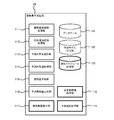
- FIG. 6 shows a software configuration example of the heat storage amount prediction device 10 when the ventilation heat amount W is considered as described above.
- the heat storage amount prediction device 10 includes a ventilation heat amount calculation unit 117, a humidity actual value acquisition unit 118, a predicted humidity acquisition unit 119, and a ventilation schedule storage unit 133 in addition to the functional unit and the storage unit illustrated in FIG. .
- FIG. 7 is a diagram illustrating a configuration example of the ventilation schedule storage unit 133.
- the ventilation schedule storage unit 133 stores the ventilation amount Q in association with the time indicating the date and the time zone t. In addition, ventilation of a store shall be performed along the ventilation schedule memory
- the ventilation volume corresponding to the past date and time stored in the ventilation schedule storage unit 133 is the actual value of the ventilation volume
- the ventilation volume corresponding to the future date and time is the predicted value of the ventilation volume.
- the database 131 includes a store air temperature (hereinafter referred to as “inside air temperature”), a humidity outside the store (hereinafter referred to as “outside humidity”), and a store humidity (hereinafter referred to as “inside humidity”). Memorize internal humidity.) And ventilation heat quantity.
- the humidity actual value acquisition unit 118 acquires the internal humidity and the external humidity for each time period.
- the sensor 5 that measures the internal humidity and the sensor 5 that measures the external humidity are installed, and the humidity actual value acquisition unit 118 acquires the internal humidity and the external humidity from the sensor 5.
- the input of internal humidity and external humidity may be received.
- the actual humidity value acquisition unit 118 registers the acquired internal humidity and external humidity in the database 131.
- the predicted humidity acquisition unit 119 acquires predicted values of internal humidity and external humidity for each time period.
- the predicted humidity acquisition unit 119 may predict the internal humidity and the external humidity based on the internal humidity and the external humidity stored in the database 131, or may calculate the internal humidity based on the external humidity from the database 131.
- a relational expression to be calculated may be estimated, a predicted value of external humidity provided by a weather company or the like may be acquired, and the internal humidity may be calculated from the external humidity.
- the ventilation heat quantity calculation unit 117 calculates the ventilation heat quantity. Specifically, the ventilation calorific value calculation unit 117 calculates the specific enthalpy h t OUT of the outside air from the actual value temp t and the outside humidity m t out of the outside air temperature for each time zone stored in the database 131, The specific enthalpy h t IN of the air in the building is calculated from the actual value temp t IN of the internal air temperature and the internal humidity m t IN for each time zone. Ventilation heat calculator 117 obtains the ventilation Q t time zone made ventilated from the ventilation schedule storage unit 133, the ventilation Q t of the time zone in which ventilation is not registered in the ventilation schedule storage unit 133 0.
- the ventilation heat quantity calculation unit 117 calculates air densities ⁇ OUT and ⁇ IN from a predetermined atmospheric pressure, the outside air temperature temp t, and the inside air temperature temp t IN .
- the ventilation heat quantity calculation unit 117 applies the specific enthalpy h t OUT of the outdoor air, the air density ⁇ OUT of the outdoor air, and the ventilation quantity Q t to the above formula (6) to calculate the heat quantity W t IN taken from the outdoors. Then, by applying the indoor air specific enthalpy h t IN , the indoor air density ⁇ IN and the ventilation amount Q t to the above equation (7), the amount of heat W t OUT discharged to the outdoors is calculated. Ventilation heat quantity W is calculated by 5).
- the ventilation heat quantity calculation unit 117 registers the ventilation heat quantity W in the database 131 in association with the opening hours.
- Prediction model estimation unit 113 and actual temp t of the outside air temperature, and actual Z of the heat storage amount when opening, the precursor temperature temp N H before the time of opening, wherein the prediction model by using the ventilation heat W
- the constant ⁇ , regression coefficients ⁇ , ⁇ , ⁇ , and ⁇ and threshold values a, b, and c in (1-3), Equation (2), Equation (3), and Equation (4) are estimated.
- the prediction model estimation unit 113 calculates the estimated constant ⁇ , regression coefficients ⁇ , ⁇ , ⁇ , and ⁇ , and the threshold values a, b, and c using the equations (1-3), (2), (3), and (4). ) Is registered in the prediction model storage unit 132 as a prediction formula.
- the amount of heat taken indoors or exhausted outdoors by ventilation can be added to the explanatory variable, so the amount of heat that needs to be removed at the time of opening the store can be predicted more accurately.
- the expression (1-3) may be changed to the following expression (1-3 ′) without using the outside temperature at the time of opening as an independent explanatory variable.
- the body temperature H may not be considered, and only the ventilation heat amount W may be added to the equation (1), and the equation (1) may be changed to the following equation (1-4).
- the amount of heat taken indoors or exhausted outdoors by ventilation can be added to the explanatory variable, so the amount of heat that needs to be removed at the time of opening the store can be predicted more accurately than when equation (1) is used. can do.
- equation (1-4) may be changed to the following equation (1-4 ′) using the outside temperature at the time of opening as an independent explanatory variable.
- the predicted heat storage amount output unit 116 may control the air conditioning equipment according to the predicted value of the heat storage amount.
- the predicted heat storage amount output unit 116 receives the input of the target heat storage amount at the time of opening the store, calculates the removal heat amount that is the difference between the target heat storage amount and the predicted value Z of the heat storage amount, and according to the removal heat amount
- the air conditioning equipment can be operated.
- the predicted heat storage amount output unit 116 calculates the operation time of the air conditioning facility by dividing the retirement heat storage amount by the amount of cold energy per unit time according to the rating of the air conditioning facility, for example, and operates the air conditioning facility from the opening time to the time before the operation time Can be controlled to start.
- the indoor temperature can be set to the set value when the store is opened. Therefore, it is not too hot at the time of opening of the store or being cooled too much by air conditioning, so that the inside of the store can be brought to a comfortable temperature from the time of opening.
Landscapes
- Engineering & Computer Science (AREA)
- Chemical & Material Sciences (AREA)
- Combustion & Propulsion (AREA)
- Mechanical Engineering (AREA)
- General Engineering & Computer Science (AREA)
- Signal Processing (AREA)
- Physics & Mathematics (AREA)
- Fuzzy Systems (AREA)
- Mathematical Physics (AREA)
- Human Computer Interaction (AREA)
- General Physics & Mathematics (AREA)
- Air Conditioning Control Device (AREA)
Abstract
【課題】精度良く建物の蓄熱量を予測することができるようにする。 【解決手段】蓄熱量予測装置10は、データベース131に、蓄熱量の実績値、1時間ごとの外気温の実績値を記憶し、予測モデル記憶部132に、外気温に応じた温度を説明変数とし蓄熱量を目的変数とする予測モデルを記憶する。予測モデル推計部113が、蓄熱量の実績値、外気温の実績値および予測モデルに基づいて、説明変数の回帰係数と予測モデルの定数とを推計し、予測外気温取得部114が外気温の予測値を取得し、蓄熱量予測部115が、回帰係数、定数および外気温の予測値を前記予測モデルに適用して蓄熱量の予測値を算出する。
Description
本発明は、蓄熱量予測装置、蓄熱量予測方法およびプログラムに関する。
店舗の冷房にあたり開店時に適切な温度に空調を行うためには、開店時における店舗の蓄熱量を精度良く予測する必要がある。たとえば特許文献1では、日射量、外気温および室温を用いて熱負荷の予測を行っている。
冷熱需要
しかしながら、特許文献1では日射量のデータを取得する必要があるが、日射量のデータは実績値、予測値ともに容易に取得することができない。
本発明は、このような背景を鑑みてなされたものであり、精度良く建物の蓄熱量を予測することのできる、蓄熱量予測装置、蓄熱量予測方法およびプログラムを提供することを目的とする。
上記課題を解決するための本発明の主たる発明は、建物の蓄熱量を予測する装置であって、前記蓄熱量の実績値を記憶する実績蓄熱量記憶部と、単位時間ごとの外気温の実績値を記憶する実績外気温記憶部と、前記単位時間ごとの前記外気温に応じた温度を説明変数とし、前記蓄熱量を目的変数とする予測モデルを記憶する予測モデル記憶部と、前記蓄熱量の実績値、前記外気温の実績値および前記予測モデルに基づいて、前記説明変数の回帰係数および前記予測モデルの定数を推計する推計部と、前記単位時間ごとの外気温の予測値を取得する予測外気温取得部と、前記回帰係数、前記定数および前記外気温の予測値を前記予測モデルに適用して前記蓄熱量の予測値を算出する蓄熱量予測部と、を備えることとする。
また、本発明の蓄熱量予測装置では、前記外気温に応じた温度は、前記外気温から閾値を引いた温度および所定の最低値のいずれか大きい方であり、前記推計部は、前記回帰係数および前記定数に加えて、前記閾値を推計するようにしてもよい。
また、本発明の蓄熱量予測装置は、前記建物の躯体温度の実績値を記憶する躯体温度記憶部と、前記躯体温度の予測値を算出する躯体温度予測部と、をさらに備え、前記予測モデルは、前記単位時間ごとの前記外気温に応じた温度と、前記躯体温度に応じた温度とを説明変数とし、前記蓄熱量を目的変数とするものであり、前記推計部は、前記蓄熱量の実績値、前記外気温の実績値、前記躯体温度の実績値および前記予測モデルに基づいて、前記説明変数の回帰係数および前記予測モデルの定数を推計し、前記蓄熱量予測部は、前記回帰係数、前記定数、前記外気温の予測値および前記躯体温度の予測値を前記予測モデルに適用して前記蓄熱量の予測値を算出するようにしてもよい。
また、本発明の蓄熱量予測装置は、前記建物の換気により前記建物から排出されまたは前記建物に取り込まれた熱量である換気熱量の実績値および予測値を取得する換気熱量取得部をさらに備え、前記予測モデルは、前記単位時間ごとの前記外気温に応じた温度と、前記躯体温度に応じた温度と、前記換気熱量に応じた温度とを説明変数とし、前記蓄熱量を目的変数とするものであり、前記推計部は、前記蓄熱量の実績値、前記外気温の実績値、前記躯体温度の実績値、前記換気熱量の実績値および前記予測モデルに基づいて、前記説明変数の回帰係数および前記予測モデルの定数を推計し、前記蓄熱量予測部は、前記回帰係数、前記定数、前記外気温の予測値、前記躯体温度の予測値および前記換気熱量の予測値を前記予測モデルに適用して前記蓄熱量の予測値を算出するようにしてもよい。
また、本発明の蓄熱量予測装置は、前記建物の換気により前記建物から排出されまたは前記建物に取り込まれた熱量である換気熱量の実績値および予測値を取得する換気熱量取得部をさらに備え、前記予測モデルにはさらに、前記単位時間ごとの前記外気温に応じた温度と、前記換気熱量に応じた温度とを説明変数とし、前記蓄熱量を目的変数とするものであり、前記推計部は、前記蓄熱量の実績値、前記外気温の実績値、前記換気熱量の実績値および前記予測モデルに基づいて、前記説明変数の回帰係数および前記予測モデルの定数を推計し、前記蓄熱量予測部は、前記回帰係数、前記定数、前記外気温の予測値および前記換気熱量の予測値を前記予測モデルに適用して前記蓄熱量の予測値を算出するようにしてもよい。
また、本発明の蓄熱量予測装置は、前記換気に係る換気量の実績値を取得する換気量取得部と、前記換気が実施されたときの湿度の実績値を取得する湿度取得部と、前記湿度の予測値を取得する予測湿度取得部と、前記換気量の予定値を取得する予定換気量取得部と、をさらに備え、前記換気熱量取得部は、前記気温の実績値、前記湿度の実績値および前記換気量の実績値に基づいて前記換気熱量の実績値を算出し、前記外気温の予測値、前記湿度の予測値および前記換気量の予定値に基づいて前記換気熱量の予測値を算出するようにしてもよい。
また、本発明の他の態様は、建物の蓄熱量を予測する方法であって、コンピュータが、前記蓄熱量の実績値を記憶するステップと、単位時間ごとの外気温の実績値を記憶するステップと、前記単位時間ごとの前記外気温に応じた温度を説明変数とし、前記蓄熱量を目的変数とする予測モデルを記憶するステップと、前記蓄熱量の実績値、前記外気温の実績値および前記予測モデルに基づいて、前記説明変数の回帰係数および前記予測モデルの定数を推計するステップと、前記単位時間ごとの外気温の予測値を取得するステップと、前記回帰係数、前記定数および前記外気温の予測値を前記予測モデルに適用して前記蓄熱量の予測値を算出するステップと、を実行することとする。
また、本発明の他の態様は建物の蓄熱量を予測するためのプログラムであって、コンピュータに、前記蓄熱量の実績値を記憶するステップと、単位時間ごとの外気温の実績値を記憶するステップと、前記単位時間ごとの前記外気温に応じた温度を説明変数とし、前記蓄熱量を目的変数とする予測モデルを記憶するステップと、前記蓄熱量の実績値、前記外気温の実績値および前記予測モデルに基づいて、前記説明変数の回帰係数および前記予測モデルの定数を推計するステップと、前記単位時間ごとの外気温の予測値を取得するステップと、前記回帰係数、前記定数および前記外気温の予測値を前記予測モデルに適用して前記蓄熱量の予測値を算出するステップと、を実行させることとする。
その他本願が開示する課題やその解決方法については、発明の実施形態の欄及び図面により明らかにされる。
本発明によれば、精度良く建物の蓄熱量を予測することができる。
以下、本発明の一実施形態に係る蓄熱量予測装置10について説明する。本実施形態の蓄熱量予測装置10は、ある時刻において除去すべき建物の熱量、すなわち建物の蓄熱量を予測するものである。蓄熱量を予測することにより、開店時に店舗が快適な温度となるように、蓄熱量に応じて空調を動作させることが可能となる。
==ハードウェア構成==
図1は、蓄熱量予測装置10のハードウェア構成例を示す図である。蓄熱量予測装置10は、CPU101、メモリ102、記憶装置103、インタフェース104、入力装置105、出力装置106を備える。記憶装置103は、各種のデータやプログラムを記憶する、例えばハードディスクドライブやソリッドステートドライブ、フラッシュメモリなどである。CPU101は記憶装置103に記憶されているプログラムをメモリ102に読み出して実行することにより各種の機能を実現する。
図1は、蓄熱量予測装置10のハードウェア構成例を示す図である。蓄熱量予測装置10は、CPU101、メモリ102、記憶装置103、インタフェース104、入力装置105、出力装置106を備える。記憶装置103は、各種のデータやプログラムを記憶する、例えばハードディスクドライブやソリッドステートドライブ、フラッシュメモリなどである。CPU101は記憶装置103に記憶されているプログラムをメモリ102に読み出して実行することにより各種の機能を実現する。
インタフェース104は、センサ5と接続する、たとえばシリアルケーブルや通信ケーブルなどを接続するためのインタフェースである。本実施形態において、センサ5は外気温を測定するセンサであることを想定している。蓄熱量予測装置10は、インタフェース104を介してセンサ5から外気温の測定値を取得することができる。また、インタフェース104を介して空調設備と接続し、蓄熱量予測装置10が空調設備を制御するようにしてもよい。
入力装置105は、データの入力を受け付ける、例えばキーボードやマウス、トラックボール、タッチパネル、マイクロフォンなどである。出力装置106は、データを出力する、例えばディスプレイやプリンタ、スピーカなどである。
==ソフトウェア構成==
図2は、蓄熱量予測装置10のソフトウェア構成例を示す図である。蓄熱量予測装置10は、蓄熱量実績値取得部111、外気温実績値取得部112、予測モデル推計部113、予測外気温取得部、蓄熱量予測部115、予測蓄熱量出力部116、データベース131および予測モデル記憶部132を備える。
図2は、蓄熱量予測装置10のソフトウェア構成例を示す図である。蓄熱量予測装置10は、蓄熱量実績値取得部111、外気温実績値取得部112、予測モデル推計部113、予測外気温取得部、蓄熱量予測部115、予測蓄熱量出力部116、データベース131および予測モデル記憶部132を備える。
なお、蓄熱量実績値取得部111、外気温実績値取得部112、予測モデル推計部113、予測外気温取得部、蓄熱量予測部115および予測蓄熱量出力部116は蓄熱量予測装置10が備えるCPU101が記憶装置103に記憶されているプログラムをメモリ102に読み出して実行することにより実現され、データベース131および予測モデル記憶部132は、メモリ102および記憶装置103が提供する記憶領域の一部として実現される。
蓄熱量実績値取得部111は、開店時における店舗の蓄熱量の実績値を取得する。蓄熱量実績値取得部111は、たとえば入力装置105から蓄熱量の実績値の入力を受け付けるようにすることができる。また、たとえばセンサ5が店舗の躯体の温度と店内の室温とを測定するようにし、蓄熱量実績値取得部111はセンサ5が測定した躯体の温度と店内の室温とから蓄熱量を算出するようにしてもよい。また、蓄熱量実績値取得部111は、開店直前に所定値まで室温を下げるために要した冷熱量を蓄熱量として空調機から取得するようにしてもよい。
外気温実績値取得部112は、所定の単位時間ごとの外気温を取得する。本実施形態では単位時間は1時間であるものとし、外気温実績値取得部112は、センサ5が測定した外気温を取得するものとするが、たとえば、ユーザから外気温の入力を受け付けるようにしてもよい。外気温実績値取得部112は、たとえば毎正時に外気温を取得し、正時の外気温を正時から次正時までの時間帯の外気温としてもよいし、正時と次正時の外気温の平均値を正時から次正時までの時間帯の外気温としてもよい。また、外気温実績値取得部112は、たとえば5分や10分などの短時間ごとに外気温を測定し、時間帯中に測定した外気温の平均値を当該時間帯の外気温としてもよい。
データベース131は、外気温の実績値を含む、蓄熱量の予測に必要なデータを記憶する。図3は、データベース131の構成例を示す図である。データベース131は、日付および時刻に対応付けて、当該時刻が示す時間帯の外気温の実績値および蓄熱量の実績値が記憶される。外気温の実績値は外気温実績値取得部112がセンサ5から取得した外気温である。蓄熱量の実績値は蓄熱量実績値取得部111が取得した値であるが、本実施形態では、開店時である午前9時の実績値のみが登録されるものとする。
予測モデル記憶部132は、蓄熱量を予測するための予測モデルを記憶する。予測モデルは次式(1)により表される。

ここで、Zは開店時における店舗の蓄熱量である。αは定数であり、βは回帰係数である。tは閉店時から開店時までの1時間単位の時間帯を表す数値であり、閉店時を「1」とする。本実施形態では、閉店時の午後8時がt=1となる。Nは開店時間の時間帯を示す数値であり、翌日の午前8時を示す数値13がNとなる。Vtは、時間帯tにおける外気温と閾値との差であり、次式(2)により求められる。

temptは時間帯tにおける外気温であり、aは閾値である。Vtは、外気温temptと閾値aとの温度差(マイナスの場合は0とする。以下同じ。)である。
予測モデル推計部113は、データベース131に記憶されている時間帯ごとの外気温の実績値temptと、開店時における蓄熱量の実績値Zとを用いて上記予測モデルの式(1)および式(2)の定数α、回帰係数βおよび閾値aを推計する。なお、推計処理は一般的な回帰分析の手法により行うものとし、ここでは説明を省略する。予測モデル推計部113は、推計した閾値aを式(2)に適用したものと、推計した定数αおよび推計した回帰係数βを式(1)に適用した統計モデル(以下、予測式という。)を予測モデル記憶部132に登録する。
予測外気温取得部114は、時間帯ごとの外気温の予測値を取得する。予測外気温取得部114は、たとえば、データベース131に記憶されている外気温の実績値に基づいて外気温を予測するようにしてもよいし、気象会社などにより提供される気象予報値としての外気温を取得するようにしてもよい。
蓄熱量予測部115は、予測外気温取得部114が取得した外気温の予測値を予測式に適用して蓄熱量の予測値を算出する。
予測蓄熱量出力部116は、蓄熱量予測部115が算出した蓄熱量の予測値を出力する。予測蓄熱量出力部116は、たとえば出力装置106に蓄熱量の予測値を出力するようにしてもよいし、電子メールに蓄熱量の予測値を設定して所定のアドレスに送信するようにしてもよい。
図4は、予測モデルを用いた蓄熱量予測部115による蓄熱量の予測値21と、蓄熱量の実測値22とを表したグラフである。本実施形態の予測モデルによる予測値21と実測値22とでは、2012年5月29日に乖離がみられるもののその他の日については、概ね予測値21と実測値22は近似していることが分かる。
==効果==
以上説明したように、本実施形態の蓄熱量予測装置10によれば、外気温に応じた温度を説明変数とした予測モデルを推計した予測式によって、精度の良く蓄熱量の予測を行うことができる。したがって、入手の容易な外気温の予測値のみにより建物の蓄熱量を予測することができるので、蓄熱量の予測を手軽に行うことが可能となる。また、入手の容易な外気温の実測値および開店時における蓄熱量の実績値のみによって予測モデルの推計を行うことができるので、予測式の準備も容易に行うことが可能となる。したがって、定期的に推計を行うことも容易であるので、より多くの実績値に基づいた推計を行っていくことで予測モデルの精度をさらに向上することができる。
以上説明したように、本実施形態の蓄熱量予測装置10によれば、外気温に応じた温度を説明変数とした予測モデルを推計した予測式によって、精度の良く蓄熱量の予測を行うことができる。したがって、入手の容易な外気温の予測値のみにより建物の蓄熱量を予測することができるので、蓄熱量の予測を手軽に行うことが可能となる。また、入手の容易な外気温の実測値および開店時における蓄熱量の実績値のみによって予測モデルの推計を行うことができるので、予測式の準備も容易に行うことが可能となる。したがって、定期的に推計を行うことも容易であるので、より多くの実績値に基づいた推計を行っていくことで予測モデルの精度をさらに向上することができる。
また、本実施形態の蓄熱量予測装置10によれば、外気温temptと閾値aとの差を説明変数に用いた予測モデルを使って建物の蓄熱量を予測することができる。外気温のエネルギーが全て建物に蓄積されるわけではなく、外気温temptが閾値aを超えた分だけが店舗の蓄熱に寄与するものとした予測モデルを用いることにより、蓄熱量の予測精度を向上させることができる。図9は累積気温(空調を停止している閉店中の外気温を累積したもの)と蓄熱量との相関を示す図である。図9に示すように、累積気温と蓄熱量とは、ある値を超えると正の相関を有しており、外気温と閾値との差を累積した累積気温、すなわち式(1)におけるΣVtに基づいて蓄熱量を予測することにより精度良く蓄熱量の予測を行うことが可能となる。
==変形例1==
本実施形態では、外気温tempと蓄熱量Zとの相関を表す予測モデル(式(1)および式(2))により蓄熱量Zを予測するものとしたが、さらに説明変数として、建物の躯体温度を加えてもよい。この場合、式(1)は次式(1-1)のように変更される。

本実施形態では、外気温tempと蓄熱量Zとの相関を表す予測モデル(式(1)および式(2))により蓄熱量Zを予測するものとしたが、さらに説明変数として、建物の躯体温度を加えてもよい。この場合、式(1)は次式(1-1)のように変更される。
ここで、γは回帰係数である。HNは、開店時前(時間帯t=N)における躯体温度tempN
Hと閾値bとの差であり、次式(3)により求められる。なお、躯体温度はあまり変化しないので、ここでは時間帯t=Nにおける温度を使用している。同様理由で、開店時より数時間前の躯体温度を使用してもよいし、開店時t=N+1の温度を使用してもよい。

この予測モデルを利用する場合、データベース131は図5に示すように時間帯ごとの躯体温度の実績値も記憶するようにする(躯体温度記憶部)。なお、躯体温度もセンサ5が測定するようにして、センサ5から取得した躯体温度がデータベース131に登録されるようにしてもよいし、躯体温度の測定値をユーザがデータベース131に登録するようにしてもよい。
予測モデル推計部113は、データベース131に記憶されている時間帯ごとの外気温の実績値temptと、開店時における蓄熱量の実績値Zと、開店時前における躯体温度tempN
Hを用いて上記予測モデルの式(1-1)、式(2)および式(3)の定数α、回帰係数βおよびγならびに閾値aおよびbを推計する。予測モデル推計部113は、推計した定数α、回帰係数βおよびγならびに閾値aおよびbを式(1-1)、式(2)および式(3)に適用したものを予測式として予測モデル記憶部132に登録する。
蓄熱量予測部115は、開店時における躯体温度を予測して(躯体温度予測部)、予測モデルに適用する。蓄熱量予測部115は、たとえばユーザから躯体温度の予測値の入力を受け付けることができる。また、蓄熱量予測部115は、データベース131に記憶されている躯体温度の実績値に基づいて、一般的な統計手法を用いて開店時の躯体温度を予測するようにしてもよい。躯体温度はあまり変化しないので予測を行わずに、蓄熱量予測直前の躯体温度実績値を使用してもよい。
店舗の空調にあたっては、建物の躯体の温度の影響が考えられる。したがって、開店時前における躯体温度tempN
Hを説明変数に加えることにより、店舗の開店時に除去すべき熱量をより正確に予測することができる。
==変形例2==
さらに、開店時の外気温を独立した説明変数としてもよい。この場合、式(1)は次式(1-2)のように変更される。

さらに、開店時の外気温を独立した説明変数としてもよい。この場合、式(1)は次式(1-2)のように変更される。
ここで、TN+1は、開店時(時間帯t=N+1)における外気温tempN+1と閾値cとの差であり、次式(4)により求められる。

予測モデル推計部113は、データベース131に記憶されている時間帯ごとの外気温の実績値temptと、開店時における蓄熱量の実績値Zと、開店時前における躯体温度tempN
Hを用いて上記予測モデルの式(1-2)、式(2)、式(3)および式(4)の定数α、回帰係数β、γおよびδ、ならびに閾値a、bおよびcを推計する。予測モデル推計部113は、推計した定数α、回帰係数β、γおよびδ、ならびに閾値a、bおよびcを式(1-2)、式(2)、式(3)および式(4)に適用したものを予測式として予測モデル記憶部132に登録する。
この場合、開店時に除去が必要な蓄熱量に対して最も影響が大きいと考えられる、開店時の外気温を独立した説明変数として加えることができるので、蓄熱量の予測の精度の向上が期待される。
なお、躯体温度を考慮せず、式(1-2)を次式(1-2’)に変更してもよい。

この場合にも、開店時の外気温を独立した説明変数として加えることができるので、式(1)を用いる場合に比べ、蓄熱量の予測の精度の向上が期待される。
==変形例3==
さらに、時間帯ごとの店舗の建物の躯体温度と閉店時から開店時までの間に店舗を換気することにより変化した熱量(以下、換気熱量という。)Wを考慮してもよい。この場合式(1)は次式のように変更される。

さらに、時間帯ごとの店舗の建物の躯体温度と閉店時から開店時までの間に店舗を換気することにより変化した熱量(以下、換気熱量という。)Wを考慮してもよい。この場合式(1)は次式のように変更される。
換気熱量Wは次式(5)により求められる。

ここで、Wt
INは、時間帯tにおいて屋外から取入れられた熱量である。Wt
INは、屋外空気の比エンタルピー(kJ/kg)をht
OUT、屋外空気の空気密度(kg/m3)をρOUT、換気量(m3)をQtとして、次式(6)により求められる。

また、Wt
OUTは、時間帯tにおいて屋内から屋外へ排出された熱量である。Wt
OUTは、屋内空気の比エンタルピー(kJ/kg)をht
IN、屋内空気の空気密度(kg/m3)をρIN、換気量(m3)をQtとして、次式(6)により求められる。

なお、比エンタルピーは温度と湿度とから算出することができる。また、空気密度は温度と大気圧とから算出することができる。
上記のように換気熱量Wを考慮する場合の蓄熱量予測装置10のソフトウェア構成例を図6に示す。この場合、蓄熱量予測装置10は、図2に示した機能部および記憶部に加えて、換気熱量算出部117、湿度実績値取得部118、予測湿度取得部119および換気スケジュール記憶部133を備える。
図7は換気スケジュール記憶部133の構成例を示す図である。換気スケジュール記憶部133は、日付および時間帯tを示す時刻に対応付けて、換気量Qを記憶する。なお、店舗の換気は換気スケジュール記憶部133に沿って行われるものとする。すなわち、換気スケジュール記憶部133に記憶される、過去の日付および時刻に対応する換気量は換気量の実績値であり、将来の日付および時刻に対応する換気量は換気量の予測値であるものとする。
さらに、データベース131は、図5に示した項目に加えて、店舗内空気の温度(以下、内気温という。)、店舗外の湿度(以下、外湿度という。)、店舗内の湿度(以下、内湿度という。)、および換気熱量を記憶する。
湿度実績値取得部118は、時間帯ごとの内湿度および外湿度を取得する。本実施形態では、内湿度を測定するセンサ5および外湿度を測定するセンサ5を設置し、湿度実績値取得部118は、センサ5から内湿度および外湿度を取得するものとするが、たとえばユーザから内湿度および外湿度の入力を受け付けるようにしてもよい。湿度実績値取得部118は取得した内湿度および外湿度をデータベース131に登録する。
予測湿度取得部119は、時間帯ごとの内湿度および外湿度の予測値を取得する。予測湿度取得部119は、たとえば、データベース131に記憶されている内湿度および外湿度に基づいて内湿度および外湿度を予測するようにしてもよいし、データベース131から外湿度に基づいて内湿度を算出する関係式を推計し、気象会社などにより提供される外湿度の予測値を取得して、外湿度から内湿度を算出するようにしてもよい。
換気熱量算出部117は、換気熱量を算出する。具体的には、換気熱量算出部117は、データベース131に記憶されている時間帯ごとの外気温の実績値temptおよび外湿度mt
outから建物外空気の比エンタルピーht
OUTを算出し、時間帯ごとの内気温の実績値tempt
INおよび内湿度mt
INから建物内空気の比エンタルピーht
INを算出する。換気熱量算出部117は、換気スケジュール記憶部133から換気の行われた時間帯の換気量Qtを取得し、換気スケジュール記憶部133に換気量が登録されていない時間帯の換気量Qtを0とする。換気熱量算出部117は、所定の大気圧と、外気温temptおよび内気温tempt
INから空気密度ρOUTおよびρINを算出する。換気熱量算出部117は、上記式(6)に屋外空気の比エンタルピーht
OUT、屋外空気の空気密度ρOUTおよび換気量Qtを適用して、屋外から取入れられた熱量Wt
INを算出し、上記式(7)に屋内空気の比エンタルピーht
IN、屋内空気の空気密度ρINおよび換気量Qtを適用して、屋外へ排出された熱量Wt
OUTを算出し、上記式(5)により換気熱量Wを算出する。換気熱量算出部117は、開店時間の時間帯に対応付けて換気熱量Wをデータベース131に登録する。
予測モデル推計部113は、外気温の実績値temptと、開店時における蓄熱量の実績値Zと、開店時前における躯体温度tempN
Hと、換気熱量Wとを用いて上記予測モデルの式(1-3)、式(2)、式(3)および式(4)の定数α、回帰係数β、γ、δおよびε、ならびに閾値a、bおよびcを推計する。予測モデル推計部113は、推計した定数α、回帰係数β、γ、δおよびε、ならびに閾値a、bおよびcを式(1-3)、式(2)、式(3)および式(4)に適用したものを予測式として予測モデル記憶部132に登録する。
この場合、換気により屋内に取り込まれまたは屋外に排出された熱量を説明変数に加えることができるので、開店時に除去が必要な熱量をより正確に予測することができる。
なお、開店時の外気温を独立した説明変数とせずに、式(1-3)は次式(1-3’)のようにしてもよい。

また、躯体温度Hは考慮せず、換気熱量Wのみを(1)式に加え、式(1)を次式(1-4)に変更してもよい。

この場合も、換気により屋内に取り込まれまたは屋外に排出された熱量を説明変数に加えることができるので、式(1)を用いる場合に比べて、開店時に除去が必要な熱量をより正確に予測することができる。
ここで、開店時の外気温を独立した説明変数として式(1-4)を次式(1-4’)のようにしてもよい。

この場合にも、開店時の外気温を独立した説明変数として加えることができるので、式(1-4)を用いる場合に比べ、蓄熱量の予測の精度の向上が期待される。
==変形例4==
また、予測蓄熱量出力部116は、蓄熱量の予測値に応じて空調設備を制御するようにしてもよい。この場合、たとえば、予測蓄熱量出力部116は、開店時における目標蓄熱量の入力を受け付け、目標蓄熱量と蓄熱量の予測値Zとの差である除却熱量を算出し、除却熱量に応じて空調設備を運転するようにすることができる。予測蓄熱量出力部116は、たとえば、空調設備の定格による単位時間あたりの冷熱量で除却蓄熱量を割って空調設備の稼働時間を算出し、開店時刻から稼働時間前の時刻に空調設備の稼働を開始するように制御するようにすることができる。
また、予測蓄熱量出力部116は、蓄熱量の予測値に応じて空調設備を制御するようにしてもよい。この場合、たとえば、予測蓄熱量出力部116は、開店時における目標蓄熱量の入力を受け付け、目標蓄熱量と蓄熱量の予測値Zとの差である除却熱量を算出し、除却熱量に応じて空調設備を運転するようにすることができる。予測蓄熱量出力部116は、たとえば、空調設備の定格による単位時間あたりの冷熱量で除却蓄熱量を割って空調設備の稼働時間を算出し、開店時刻から稼働時間前の時刻に空調設備の稼働を開始するように制御するようにすることができる。
この場合、開店時に屋内気温が設定値になるようにすることができる。したがって、開店時に暑すぎたり、空調により冷やしすぎたりすることがなくなるため、店舗内を開店時点から快適な温度にすることができる。
以上、本実施形態について説明したが、上記実施形態は本発明の理解を容易にするためのものであり、本発明を限定して解釈するためのものではない。本発明は、その趣旨を逸脱することなく、変更、改良され得ると共に、本発明にはその等価物も含まれる。
10 蓄熱量予測装置
111 蓄熱量実績値取得部
112 外気温実績値取得部
113 予測モデル推計部
114 予測外気温取得部
115 蓄熱量予測部
116 予測蓄熱量出力部
117 換気熱量算出部
118 湿度実績値取得部
119 予測湿度取得部
131 データベース
132 予測モデル記憶部
133 換気スケジュール記憶部
111 蓄熱量実績値取得部
112 外気温実績値取得部
113 予測モデル推計部
114 予測外気温取得部
115 蓄熱量予測部
116 予測蓄熱量出力部
117 換気熱量算出部
118 湿度実績値取得部
119 予測湿度取得部
131 データベース
132 予測モデル記憶部
133 換気スケジュール記憶部
Claims (8)
- 建物の蓄熱量を予測する装置であって、
前記蓄熱量の実績値を記憶する実績蓄熱量記憶部と、
単位時間ごとの外気温の実績値を記憶する実績外気温記憶部と、
前記単位時間ごとの前記外気温に応じた温度を説明変数とし、前記蓄熱量を目的変数とする予測モデルを記憶する予測モデル記憶部と、
前記蓄熱量の実績値、前記外気温の実績値および前記予測モデルに基づいて、前記説明変数の回帰係数および前記予測モデルの定数を推計する推計部と、
前記単位時間ごとの外気温の予測値を取得する予測外気温取得部と、
前記回帰係数、前記定数および前記外気温の予測値を前記予測モデルに適用して前記蓄熱量の予測値を算出する蓄熱量予測部と、
を備えることを特徴とする蓄熱量予測装置。 - 請求項1に記載の蓄熱量予測装置であって、
前記外気温に応じた温度は、前記外気温から閾値を引いた温度および所定の最低値のいずれか大きい方であり、
前記推計部は、前記回帰係数および前記定数に加えて、前記閾値を推計すること、
を特徴とする蓄熱量予測装置。 - 請求項1または2に記載の蓄熱量予測装置であって、
前記建物の躯体温度の実績値を記憶する躯体温度記憶部と、
前記躯体温度の予測値を算出する躯体温度予測部と、
をさらに備え、
前記予測モデルは、前記単位時間ごとの前記外気温に応じた温度と、前記躯体温度に応じた温度とを説明変数とし、前記蓄熱量を目的変数とするものであり、
前記推計部は、前記蓄熱量の実績値、前記外気温の実績値、前記躯体温度の実績値および前記予測モデルに基づいて、前記説明変数の回帰係数および前記予測モデルの定数を推計し、
前記蓄熱量予測部は、前記回帰係数、前記定数、前記外気温の予測値および前記躯体温度の予測値を前記予測モデルに適用して前記蓄熱量の予測値を算出すること、
を特徴とする蓄熱量予測装置。 - 請求項3に記載の蓄熱量予測装置であって、
前記建物の換気により前記建物から排出されまたは前記建物に取り込まれた熱量である換気熱量の実績値および予測値を取得する換気熱量取得部をさらに備え、
前記予測モデルは、前記単位時間ごとの前記外気温に応じた温度と、前記躯体温度に応じた温度と、前記換気熱量に応じた温度とを説明変数とし、前記蓄熱量を目的変数とするものであり、
前記推計部は、前記蓄熱量の実績値、前記外気温の実績値、前記躯体温度の実績値、前記換気熱量の実績値および前記予測モデルに基づいて、前記説明変数の回帰係数および前記予測モデルの定数を推計し、
前記蓄熱量予測部は、前記回帰係数、前記定数、前記外気温の予測値、前記躯体温度の予測値および前記換気熱量の予測値を前記予測モデルに適用して前記蓄熱量の予測値を算出すること、
を特徴とする蓄熱量予測装置。 - 請求項1または2に記載の蓄熱量予測装置であって、
前記建物の換気により前記建物から排出されまたは前記建物に取り込まれた熱量である換気熱量の実績値および予測値を取得する換気熱量取得部をさらに備え、
前記予測モデルにはさらに、前記単位時間ごとの前記外気温に応じた温度と、前記換気熱量に応じた温度とを説明変数とし、前記蓄熱量を目的変数とするものであり、
前記推計部は、前記蓄熱量の実績値、前記外気温の実績値、前記換気熱量の実績値および前記予測モデルに基づいて、前記説明変数の回帰係数および前記予測モデルの定数を推計し、
前記蓄熱量予測部は、前記回帰係数、前記定数、前記外気温の予測値および前記換気熱量の予測値を前記予測モデルに適用して前記蓄熱量の予測値を算出すること、
を特徴とする蓄熱量予測装置。 - 請求項4または5に記載の蓄熱量予測装置であって、
前記換気に係る換気量の実績値を取得する換気量取得部と、
前記換気が実施されたときの湿度の実績値を取得する湿度取得部と、
前記湿度の予測値を取得する予測湿度取得部と、
前記換気量の予定値を取得する予定換気量取得部と、
をさらに備え、
前記換気熱量取得部は、
前記気温の実績値、前記湿度の実績値および前記換気量の実績値に基づいて前記換気熱量の実績値を算出し、
前記外気温の予測値、前記湿度の予測値および前記換気量の予定値に基づいて前記換気熱量の予測値を算出すること、
を特徴とする蓄熱量予測装置。 - 建物の蓄熱量を予測する方法であって、
コンピュータが、
前記蓄熱量の実績値を記憶するステップと、
単位時間ごとの外気温の実績値を記憶するステップと、
前記単位時間ごとの前記外気温に応じた温度を説明変数とし、前記蓄熱量を目的変数とする予測モデルを記憶するステップと、
前記蓄熱量の実績値、前記外気温の実績値および前記予測モデルに基づいて、前記説明変数の回帰係数および前記予測モデルの定数を推計するステップと、
前記単位時間ごとの外気温の予測値を取得するステップと、
前記回帰係数、前記定数および前記外気温の予測値を前記予測モデルに適用して前記蓄熱量の予測値を算出するステップと、
を実行することを特徴とする蓄熱量予測方法。 - 建物の蓄熱量を予測するためのプログラムであって、
コンピュータに、
前記蓄熱量の実績値を記憶するステップと、
単位時間ごとの外気温の実績値を記憶するステップと、
前記単位時間ごとの前記外気温に応じた温度を説明変数とし、前記蓄熱量を目的変数とする予測モデルを記憶するステップと、
前記蓄熱量の実績値、前記外気温の実績値および前記予測モデルに基づいて、前記説明変数の回帰係数および前記予測モデルの定数を推計するステップと、
前記単位時間ごとの外気温の予測値を取得するステップと、
前記回帰係数、前記定数および前記外気温の予測値を前記予測モデルに適用して前記蓄熱量の予測値を算出するステップと、
を実行させるためのプログラム。
Priority Applications (2)
| Application Number | Priority Date | Filing Date | Title |
|---|---|---|---|
| JP2014524175A JP5579956B1 (ja) | 2013-05-02 | 2013-05-02 | 蓄熱量予測装置、蓄熱量予測方法およびプログラム |
| PCT/JP2013/062783 WO2014178145A1 (ja) | 2013-05-02 | 2013-05-02 | 蓄熱量予測装置、蓄熱量予測方法およびプログラム |
Applications Claiming Priority (1)
| Application Number | Priority Date | Filing Date | Title |
|---|---|---|---|
| PCT/JP2013/062783 WO2014178145A1 (ja) | 2013-05-02 | 2013-05-02 | 蓄熱量予測装置、蓄熱量予測方法およびプログラム |
Publications (1)
| Publication Number | Publication Date |
|---|---|
| WO2014178145A1 true WO2014178145A1 (ja) | 2014-11-06 |
Family
ID=51579140
Family Applications (1)
| Application Number | Title | Priority Date | Filing Date |
|---|---|---|---|
| PCT/JP2013/062783 Ceased WO2014178145A1 (ja) | 2013-05-02 | 2013-05-02 | 蓄熱量予測装置、蓄熱量予測方法およびプログラム |
Country Status (2)
| Country | Link |
|---|---|
| JP (1) | JP5579956B1 (ja) |
| WO (1) | WO2014178145A1 (ja) |
Cited By (2)
| Publication number | Priority date | Publication date | Assignee | Title |
|---|---|---|---|---|
| JP2016161251A (ja) * | 2015-03-04 | 2016-09-05 | アズビル株式会社 | ピーク電力発現予測装置および予測方法 |
| WO2018109924A1 (ja) * | 2016-12-16 | 2018-06-21 | 三菱電機株式会社 | 制御装置、換気システム、換気装置、換気方法及びプログラム |
Citations (4)
| Publication number | Priority date | Publication date | Assignee | Title |
|---|---|---|---|---|
| JPH0835706A (ja) * | 1994-07-21 | 1996-02-06 | Hitachi Plant Eng & Constr Co Ltd | 空調熱負荷予測システム |
| JP2001248879A (ja) * | 1999-12-27 | 2001-09-14 | Takenaka Komuten Co Ltd | 躯体蓄熱型空気調和システム |
| JP2001304658A (ja) * | 2000-04-18 | 2001-10-31 | Mitsubishi Electric Corp | 空気調和装置 |
| JP2002277000A (ja) * | 2001-03-22 | 2002-09-25 | Mitsubishi Electric Corp | 空気調和システム |
-
2013
- 2013-05-02 JP JP2014524175A patent/JP5579956B1/ja not_active Expired - Fee Related
- 2013-05-02 WO PCT/JP2013/062783 patent/WO2014178145A1/ja not_active Ceased
Patent Citations (4)
| Publication number | Priority date | Publication date | Assignee | Title |
|---|---|---|---|---|
| JPH0835706A (ja) * | 1994-07-21 | 1996-02-06 | Hitachi Plant Eng & Constr Co Ltd | 空調熱負荷予測システム |
| JP2001248879A (ja) * | 1999-12-27 | 2001-09-14 | Takenaka Komuten Co Ltd | 躯体蓄熱型空気調和システム |
| JP2001304658A (ja) * | 2000-04-18 | 2001-10-31 | Mitsubishi Electric Corp | 空気調和装置 |
| JP2002277000A (ja) * | 2001-03-22 | 2002-09-25 | Mitsubishi Electric Corp | 空気調和システム |
Cited By (2)
| Publication number | Priority date | Publication date | Assignee | Title |
|---|---|---|---|---|
| JP2016161251A (ja) * | 2015-03-04 | 2016-09-05 | アズビル株式会社 | ピーク電力発現予測装置および予測方法 |
| WO2018109924A1 (ja) * | 2016-12-16 | 2018-06-21 | 三菱電機株式会社 | 制御装置、換気システム、換気装置、換気方法及びプログラム |
Also Published As
| Publication number | Publication date |
|---|---|
| JP5579956B1 (ja) | 2014-08-27 |
| JPWO2014178145A1 (ja) | 2017-02-23 |
Similar Documents
| Publication | Publication Date | Title |
|---|---|---|
| Jiang et al. | Indoor occupancy estimation from carbon dioxide concentration | |
| JP5931281B2 (ja) | 空調システム制御装置 | |
| US9740545B2 (en) | Equipment evaluation device, equipment evaluation method and non-transitory computer readable medium | |
| US10731890B2 (en) | Air conditioning operation analysis device and non-transitory computer-readable recording medium storing program | |
| EP2251614B1 (en) | Air conditioning system and device for predicting building air conditioning facility power consumption amount | |
| EP2944891A1 (en) | Room temperature estimating device, program | |
| JP6142781B2 (ja) | 電力需要予測装置、電力需要予測方法および電力需要予測プログラム | |
| JP6373396B2 (ja) | 省エネルギ化診断装置、省エネルギ化診断方法およびプログラム | |
| WO2014115717A1 (ja) | エネルギー管理装置及びエネルギー管理システム | |
| US20210140660A1 (en) | Setting value calculation system, method, and program | |
| JP2020067270A (ja) | 空調制御プログラム、空調制御方法および空調制御装置 | |
| JP5635220B1 (ja) | 蓄熱量予測装置、蓄熱量予測方法およびプログラム | |
| JP5988217B2 (ja) | 部屋の熱特性推定装置、プログラム | |
| JP2009225613A (ja) | 電力需要予測装置及び電力需要予測方法 | |
| JP5579956B1 (ja) | 蓄熱量予測装置、蓄熱量予測方法およびプログラム | |
| An et al. | An inverse PDE-ODE model for studying building energy demand | |
| US20200278130A1 (en) | Operation control method, storage medium, and operation control device | |
| Singh et al. | Predicting Annual Energy Use in Buildings Using Short-Term Monitoring and Utility Bills: The Hybrid Inverse Model Using Daily Data (HIM-D). | |
| CN111656638A (zh) | 楼宇节能控制装置以及楼宇节能控制方法 | |
| JP4939456B2 (ja) | 温度推定方法および温度推定装置 | |
| Spencer et al. | Forecasting internal temperature in a home with a sensor network | |
| JP2012017930A (ja) | 空調システム内機器の使用エネルギー量推定方法、及び、この方法が実装された使用エネルギー量推定装置 | |
| JP2022076103A (ja) | 人数予測システム、人数推定システム、消費電力量予測システム、人数予測方法及びプログラム | |
| Yang et al. | The impact of occupancy prediction accuracy on the performance of model predictive control (MPC) in buildings | |
| KR101628784B1 (ko) | 데이터센터 건물의 에너지 소비량을 평가하는 장치 및 데이터센터 건물의 에너지 소비량 평가 방법 |
Legal Events
| Date | Code | Title | Description |
|---|---|---|---|
| ENP | Entry into the national phase |
Ref document number: 2014524175 Country of ref document: JP Kind code of ref document: A |
|
| 121 | Ep: the epo has been informed by wipo that ep was designated in this application |
Ref document number: 13883759 Country of ref document: EP Kind code of ref document: A1 |
|
| NENP | Non-entry into the national phase |
Ref country code: DE |
|
| 122 | Ep: pct application non-entry in european phase |
Ref document number: 13883759 Country of ref document: EP Kind code of ref document: A1 |