WO2014181767A1 - Procédé de production d'un tissu décellularisé particulaire - Google Patents
Procédé de production d'un tissu décellularisé particulaire Download PDFInfo
- Publication number
- WO2014181767A1 WO2014181767A1 PCT/JP2014/062149 JP2014062149W WO2014181767A1 WO 2014181767 A1 WO2014181767 A1 WO 2014181767A1 JP 2014062149 W JP2014062149 W JP 2014062149W WO 2014181767 A1 WO2014181767 A1 WO 2014181767A1
- Authority
- WO
- WIPO (PCT)
- Prior art keywords
- tissue
- decellularized tissue
- particulate
- particulate decellularized
- hydrostatic pressure
- Prior art date
- Legal status (The legal status is an assumption and is not a legal conclusion. Google has not performed a legal analysis and makes no representation as to the accuracy of the status listed.)
- Ceased
Links
Images



Classifications
-
- A—HUMAN NECESSITIES
- A61—MEDICAL OR VETERINARY SCIENCE; HYGIENE
- A61L—METHODS OR APPARATUS FOR STERILISING MATERIALS OR OBJECTS IN GENERAL; DISINFECTION, STERILISATION OR DEODORISATION OF AIR; CHEMICAL ASPECTS OF BANDAGES, DRESSINGS, ABSORBENT PADS OR SURGICAL ARTICLES; MATERIALS FOR BANDAGES, DRESSINGS, ABSORBENT PADS OR SURGICAL ARTICLES
- A61L27/00—Materials for grafts or prostheses or for coating grafts or prostheses
- A61L27/36—Materials for grafts or prostheses or for coating grafts or prostheses containing ingredients of undetermined constitution or reaction products thereof, e.g. transplant tissue, natural bone, extracellular matrix
- A61L27/3604—Materials for grafts or prostheses or for coating grafts or prostheses containing ingredients of undetermined constitution or reaction products thereof, e.g. transplant tissue, natural bone, extracellular matrix characterised by the human or animal origin of the biological material, e.g. hair, fascia, fish scales, silk, shellac, pericardium, pleura, renal tissue, amniotic membrane, parenchymal tissue, fetal tissue, muscle tissue, fat tissue, enamel
- A61L27/3633—Extracellular matrix [ECM]
-
- A—HUMAN NECESSITIES
- A61—MEDICAL OR VETERINARY SCIENCE; HYGIENE
- A61L—METHODS OR APPARATUS FOR STERILISING MATERIALS OR OBJECTS IN GENERAL; DISINFECTION, STERILISATION OR DEODORISATION OF AIR; CHEMICAL ASPECTS OF BANDAGES, DRESSINGS, ABSORBENT PADS OR SURGICAL ARTICLES; MATERIALS FOR BANDAGES, DRESSINGS, ABSORBENT PADS OR SURGICAL ARTICLES
- A61L27/00—Materials for grafts or prostheses or for coating grafts or prostheses
- A61L27/36—Materials for grafts or prostheses or for coating grafts or prostheses containing ingredients of undetermined constitution or reaction products thereof, e.g. transplant tissue, natural bone, extracellular matrix
- A61L27/3683—Materials for grafts or prostheses or for coating grafts or prostheses containing ingredients of undetermined constitution or reaction products thereof, e.g. transplant tissue, natural bone, extracellular matrix subjected to a specific treatment prior to implantation, e.g. decellularising, demineralising, grinding, cellular disruption/non-collagenous protein removal, anti-calcification, crosslinking, supercritical fluid extraction, enzyme treatment
- A61L27/3691—Materials for grafts or prostheses or for coating grafts or prostheses containing ingredients of undetermined constitution or reaction products thereof, e.g. transplant tissue, natural bone, extracellular matrix subjected to a specific treatment prior to implantation, e.g. decellularising, demineralising, grinding, cellular disruption/non-collagenous protein removal, anti-calcification, crosslinking, supercritical fluid extraction, enzyme treatment characterised by physical conditions of the treatment, e.g. applying a compressive force to the composition, pressure cycles, ultrasonic/sonication or microwave treatment, lyophilisation
-
- A—HUMAN NECESSITIES
- A61—MEDICAL OR VETERINARY SCIENCE; HYGIENE
- A61L—METHODS OR APPARATUS FOR STERILISING MATERIALS OR OBJECTS IN GENERAL; DISINFECTION, STERILISATION OR DEODORISATION OF AIR; CHEMICAL ASPECTS OF BANDAGES, DRESSINGS, ABSORBENT PADS OR SURGICAL ARTICLES; MATERIALS FOR BANDAGES, DRESSINGS, ABSORBENT PADS OR SURGICAL ARTICLES
- A61L27/00—Materials for grafts or prostheses or for coating grafts or prostheses
- A61L27/36—Materials for grafts or prostheses or for coating grafts or prostheses containing ingredients of undetermined constitution or reaction products thereof, e.g. transplant tissue, natural bone, extracellular matrix
- A61L27/3604—Materials for grafts or prostheses or for coating grafts or prostheses containing ingredients of undetermined constitution or reaction products thereof, e.g. transplant tissue, natural bone, extracellular matrix characterised by the human or animal origin of the biological material, e.g. hair, fascia, fish scales, silk, shellac, pericardium, pleura, renal tissue, amniotic membrane, parenchymal tissue, fetal tissue, muscle tissue, fat tissue, enamel
-
- A—HUMAN NECESSITIES
- A61—MEDICAL OR VETERINARY SCIENCE; HYGIENE
- A61L—METHODS OR APPARATUS FOR STERILISING MATERIALS OR OBJECTS IN GENERAL; DISINFECTION, STERILISATION OR DEODORISATION OF AIR; CHEMICAL ASPECTS OF BANDAGES, DRESSINGS, ABSORBENT PADS OR SURGICAL ARTICLES; MATERIALS FOR BANDAGES, DRESSINGS, ABSORBENT PADS OR SURGICAL ARTICLES
- A61L27/00—Materials for grafts or prostheses or for coating grafts or prostheses
- A61L27/50—Materials characterised by their function or physical properties, e.g. injectable or lubricating compositions, shape-memory materials, surface modified materials
- A61L27/54—Biologically active materials, e.g. therapeutic substances
-
- A—HUMAN NECESSITIES
- A61—MEDICAL OR VETERINARY SCIENCE; HYGIENE
- A61L—METHODS OR APPARATUS FOR STERILISING MATERIALS OR OBJECTS IN GENERAL; DISINFECTION, STERILISATION OR DEODORISATION OF AIR; CHEMICAL ASPECTS OF BANDAGES, DRESSINGS, ABSORBENT PADS OR SURGICAL ARTICLES; MATERIALS FOR BANDAGES, DRESSINGS, ABSORBENT PADS OR SURGICAL ARTICLES
- A61L27/00—Materials for grafts or prostheses or for coating grafts or prostheses
- A61L27/50—Materials characterised by their function or physical properties, e.g. injectable or lubricating compositions, shape-memory materials, surface modified materials
- A61L27/58—Materials at least partially resorbable by the body
-
- A—HUMAN NECESSITIES
- A61—MEDICAL OR VETERINARY SCIENCE; HYGIENE
- A61P—SPECIFIC THERAPEUTIC ACTIVITY OF CHEMICAL COMPOUNDS OR MEDICINAL PREPARATIONS
- A61P17/00—Drugs for dermatological disorders
- A61P17/02—Drugs for dermatological disorders for treating wounds, ulcers, burns, scars, keloids, or the like
-
- A—HUMAN NECESSITIES
- A61—MEDICAL OR VETERINARY SCIENCE; HYGIENE
- A61P—SPECIFIC THERAPEUTIC ACTIVITY OF CHEMICAL COMPOUNDS OR MEDICINAL PREPARATIONS
- A61P25/00—Drugs for disorders of the nervous system
-
- C—CHEMISTRY; METALLURGY
- C12—BIOCHEMISTRY; BEER; SPIRITS; WINE; VINEGAR; MICROBIOLOGY; ENZYMOLOGY; MUTATION OR GENETIC ENGINEERING
- C12N—MICROORGANISMS OR ENZYMES; COMPOSITIONS THEREOF; PROPAGATING, PRESERVING, OR MAINTAINING MICROORGANISMS; MUTATION OR GENETIC ENGINEERING; CULTURE MEDIA
- C12N5/00—Undifferentiated human, animal or plant cells, e.g. cell lines; Tissues; Cultivation or maintenance thereof; Culture media therefor
- C12N5/0081—Purging biological preparations of unwanted cells
-
- A—HUMAN NECESSITIES
- A61—MEDICAL OR VETERINARY SCIENCE; HYGIENE
- A61L—METHODS OR APPARATUS FOR STERILISING MATERIALS OR OBJECTS IN GENERAL; DISINFECTION, STERILISATION OR DEODORISATION OF AIR; CHEMICAL ASPECTS OF BANDAGES, DRESSINGS, ABSORBENT PADS OR SURGICAL ARTICLES; MATERIALS FOR BANDAGES, DRESSINGS, ABSORBENT PADS OR SURGICAL ARTICLES
- A61L2300/00—Biologically active materials used in bandages, wound dressings, absorbent pads or medical devices
- A61L2300/40—Biologically active materials used in bandages, wound dressings, absorbent pads or medical devices characterised by a specific therapeutic activity or mode of action
- A61L2300/412—Tissue-regenerating or healing or proliferative agents
-
- A—HUMAN NECESSITIES
- A61—MEDICAL OR VETERINARY SCIENCE; HYGIENE
- A61L—METHODS OR APPARATUS FOR STERILISING MATERIALS OR OBJECTS IN GENERAL; DISINFECTION, STERILISATION OR DEODORISATION OF AIR; CHEMICAL ASPECTS OF BANDAGES, DRESSINGS, ABSORBENT PADS OR SURGICAL ARTICLES; MATERIALS FOR BANDAGES, DRESSINGS, ABSORBENT PADS OR SURGICAL ARTICLES
- A61L2430/00—Materials or treatment for tissue regeneration
- A61L2430/34—Materials or treatment for tissue regeneration for soft tissue reconstruction
-
- C—CHEMISTRY; METALLURGY
- C12—BIOCHEMISTRY; BEER; SPIRITS; WINE; VINEGAR; MICROBIOLOGY; ENZYMOLOGY; MUTATION OR GENETIC ENGINEERING
- C12M—APPARATUS FOR ENZYMOLOGY OR MICROBIOLOGY; APPARATUS FOR CULTURING MICROORGANISMS FOR PRODUCING BIOMASS, FOR GROWING CELLS OR FOR OBTAINING FERMENTATION OR METABOLIC PRODUCTS, i.e. BIOREACTORS OR FERMENTERS
- C12M25/00—Means for supporting, enclosing or fixing the microorganisms, e.g. immunocoatings
- C12M25/14—Scaffolds; Matrices
-
- C—CHEMISTRY; METALLURGY
- C12—BIOCHEMISTRY; BEER; SPIRITS; WINE; VINEGAR; MICROBIOLOGY; ENZYMOLOGY; MUTATION OR GENETIC ENGINEERING
- C12N—MICROORGANISMS OR ENZYMES; COMPOSITIONS THEREOF; PROPAGATING, PRESERVING, OR MAINTAINING MICROORGANISMS; MUTATION OR GENETIC ENGINEERING; CULTURE MEDIA
- C12N2521/00—Culture process characterised by the use of hydrostatic pressure, flow or shear forces
Definitions
- the present invention relates to a method for producing a decellularized tissue that can be suitably used for regenerative medicine, cell culture, and the like.
- a method using a surfactant for example, see Patent Documents 1 and 2
- a method using an enzyme for example, see Patent Document 3
- a method using an oxidizing agent for example, refer to Patent Document 4
- methods using ultrahigh hydrostatic pressure treatment for example, refer to Patent Documents 5 to 7
- ultrahigh hydrostatic pressure treatment for example, refer to Patent Documents 5 to 7
- particulate decellularized tissue is also known, and the particulate decellularized tissue is injected into the diseased part and injected into the diseased part. Regeneration / healing is promoted or molded and used as a graft (see, for example, Patent Documents 8 to 10).
- Conventionally known particulate decellularized tissue is produced by a method using a surfactant, but particulate decellularized tissue produced by a method using ultrahigh hydrostatic pressure treatment has not been known. .
- the present inventors have found that the particulate animal tissue decellularized by applying a high hydrostatic pressure in the medium has the effect of attracting cells and inducing differentiation. It has been found that it has no cytotoxicity during cell culture, and the present invention has been completed. That is, the present invention is a method for producing a particulate decellularized tissue, which comprises a step of applying a high hydrostatic pressure to an animal-derived tissue in a medium.
- the present invention includes the following.
- a method for producing a particulate decellularized tissue comprising a step of applying a high hydrostatic pressure to an animal-derived tissue in a medium.
- the method for producing a particulate decellularized tissue according to [1] or [2], wherein the animal-derived decellularized tissue to which a high hydrostatic pressure is applied in a medium is pulverized.
- [5] The animal-derived decellularized tissue to which a high hydrostatic pressure is applied in a medium is washed with a washing solution that does not contain an anionic surfactant and / or a nonionic surfactant.
- 4] The method for producing a particulate decellularized tissue according to any one of 4).
- [6] A particulate decellularized tissue produced by the method for producing a particulate decellularized tissue according to any one of [1] to [5].
- [7] A material for transplantation or treatment using the particulate decellularized tissue according to [6].
- [8] A cell culture material using the particulate decellularized tissue according to [6].
- a particulate decellularized tissue having no cytotoxicity, a cell attracting effect or a differentiation inducing effect, no cytotoxicity, and a high tissue regeneration effect can be obtained. Since the particulate decellularized tissue obtained by the production method of the present invention is in a particulate form, the part to be applied is not limited and can be used in various parts.
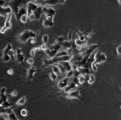
- Example 2 of the neurite extension test The result without NGF addition of Example 2 of the neurite extension test is shown.
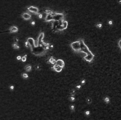
- the result of NGF non-addition of Example 3 of a neurite extension test is shown.
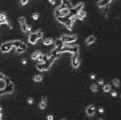
- the result of NGF non-addition of the blank of a neurite extension test is shown.
- the result of the NGF addition of the blank of a neurite extension test is shown.
- stained rat tissue after 28 days of Example 1 of a subcutaneous implantation test are shown.
- the appearance before the test (upper left figure), the appearance after the test (upper right figure), and the cross section of the stained rat tissue (lower figure) in Example 1 of the frostbite model test are shown.
- the appearance of the frostbite model test blank before the test (upper left figure), the appearance after the test (upper right figure), and the cross section of the stained rat tissue (lower figure) are shown.
- the biological tissue used in the method for producing the particulate decellularized tissue of the present invention is not particularly limited as long as it is a biological tissue having cells derived from vertebrates. However, since there are few rejection reactions, biological tissues derived from mammals or birds Tissues are preferred, and because they are readily available, mammalian livestock, avian livestock or human-derived ecological tissues are more preferred.
- Mammalian livestock includes cattle, horses, camels, llamas, donkeys, yaks, sheep, pigs, goats, deer, alpaca, dogs, raccoon dogs, weasels, foxes, cats, rabbits, hamsters, guinea pigs, rats, mice, squirrels, Raccoon etc. are mentioned.
- examples of avian livestock include parakeets, parrots, chickens, ducks, turkeys, geese, guinea fowls, pheasants, ostriches, and quails.
- porcine, rabbit, and human biological tissues are preferable from the viewpoint of availability.
- a part having a matrix structure outside the cell can be used as a part of a living tissue.
- a part having a matrix structure outside the cell examples include a liver, kidney, ureter, bladder, urethra, tongue, tonsils, esophagus, stomach, small intestine.
- cartilage, bone, liver, kidney, heart, lung, brain, and spinal cord are preferable because of the high tissue regeneration effect.
- the biological tissue is subjected to a treatment for preventing spoilage and functional deterioration after collection.
- a treatment for preventing spoilage and functional deterioration after collection examples include sterilization treatment with a drug, freezing treatment by freezing, and the like, and freezing treatment is preferable because there is little damage to the tissue.
- the biological tissue is collected, a high hydrostatic pressure is applied to the biological tissue, the broken cells are washed and removed, and the particulate decellularized tissue is obtained.
- the biological tissue or decellularized tissue
- the particles are more stable than the state in which the shape of the biological tissue is maintained. It is preferable to pulverize at least before washing and removing the cells because the broken cells can be easily washed away.
- Examples of the method of pulverizing the tissue include a method of pulverizing the living tissue as it is at room temperature, a method of freezing and pulverizing the living tissue in a frozen state, and the like.
- the pulverizing temperature when pulverizing in the frozen state is preferably ⁇ 80 to ⁇ 5 ° C., It is more preferably ⁇ 50 to ⁇ 10 ° C., and most preferably ⁇ 40 to ⁇ 15 ° C. Since it is preferable to store the living tissue in a frozen state, if the stored frozen living tissue is pulverized, the process can be simplified, and the particulate living tissue can be subjected to a high hydrostatic pressure treatment.
- the biological tissue may be pulverized after drying because it is easy to classify after pulverization.
- Examples of the method for drying a living tissue include heat drying, vacuum drying, freeze drying, dehydration with an organic solvent, and the like. Since cell and nucleic acid can be easily washed, freeze drying and dehydration with an organic solvent are preferable. Is more preferable.
- Examples of the organic solvent for dehydration using an organic solvent include ethanol and acetone.
- the living tissue may be decellularized without being pulverized, and the decellularized biological tissue may be dried and pulverized.
- grinding methods include ball mills, bead mills, colloid mills, conical mills, disk mills, edge mills, milling mills, hammer mills, pellet mills, cutting mills, roller mills, jet mills, etc., because there is little damage to living tissue.
- a cutting mill is preferred.
- the particle size of the decellularized tissue is preferably 0.1 to 1,000 ⁇ m, more preferably 0.5 to 500 ⁇ m, and most preferably 1 to 100 ⁇ m.
- the hydrostatic pressure applied to the living tissue is preferably 2 to 1,500 MPa, more preferably 10 to 1,000 MPa, and most preferably 80 to 500 MPa.
- examples of the medium used for applying the hydrostatic pressure include water, physiological saline, propylene glycol or an aqueous solution thereof, glycerin or an aqueous solution thereof, and an aqueous saccharide solution.
- examples of the buffer solution include acetate buffer solution, phosphate buffer solution, citrate buffer solution, borate buffer solution, tartaric acid buffer solution, Tris buffer solution, HEPES buffer solution, MES buffer solution and the like.
- saccharide in the aqueous saccharide solution examples include erythrose, xylose, arabinose, allose, talose, glucose, mannose, galactose, erythritol, xylitol, mannitol, sorbitol, galactitol, sucrose, lactose, maltose, trehalose, dextran, alginic acid, hyaluronic acid, etc. Can be mentioned.
- the temperature of the high hydrostatic pressure treatment is not particularly limited as long as no ice is generated and the tissue is not damaged by heat. However, since the decellularization treatment is performed smoothly and the tissue is less affected, it is 5 to 45 ° C is preferable, 10 to 40 ° C is more preferable, and 15 to 35 ° C is most preferable. If the time for the high hydrostatic pressure treatment is too short, the cells are not sufficiently destroyed, and if it is long, energy is wasted, and it is preferably 5 to 60 minutes, more preferably 7 to 30 minutes.
- the biological tissue to which the high hydrostatic pressure is applied is washed away with the cells destroyed by the washing liquid.
- the cleaning liquid may be the same liquid as the medium used for applying the hydrostatic pressure, may be a different cleaning liquid, or a combination of a plurality of types of cleaning liquids.
- the cleaning liquid preferably contains a nucleolytic enzyme, an organic solvent, or a chelating agent. Nucleolytic enzymes can improve the removal efficiency of nucleic acid components from living tissues to which hydrostatic pressure is applied, organic solvents are lipids, and chelating agents can reduce calcium ions and magnesium ions in decellularized tissues. By inactivation, calcification when the particulate decellularized tissue of the present invention is applied to a diseased part can be prevented.
- Chelating agents include ethylenediaminetetraacetic acid (EDTA), nitrilotriacetic acid (NTA), diethylenetriminepentaacetic acid (DTPA), hydroxyethylethylenediaminetriacetic acid (HEDTA), triethylenetetraminehexaacetic acid (TTHA), 1,3-propane Diamine tetraacetic acid (PDTA), 1,3-diamino-2-hydroxypropanetetraacetic acid (DPTA-OH), hydroxyethyliminodiacetic acid (HIDA), dihydroxyethylglycine (DHEG), glycol ether diamine tetraacetic acid (GEDTA), Iminocarboxylic acid chelating agents such as dicarboxymethylglutamic acid (CMGA), ethylenediaminetetraacetic acid (NTA), diethylenetriminepentaacetic acid (DTPA), hydroxyethylethylenediaminetriacetic acid (HEDTA), triethylenetetramine
- an anionic surfactant or a nonionic surfactant is added to the washing solution, the efficiency of removing damaged cell tissues, nucleic acids, lipids, etc. increases, but cytotoxicity occurs and tissue regeneration of decellularized tissues occurs. Since the effect may be reduced, it is preferable not to use such a surfactant.
- the particulate structure that has been subjected to the high hydrostatic pressure treatment is immersed in the washing liquid, but the washing liquid may be shaken or stirred as necessary.
- the disease site to which the particulate decellularized tissue of the present invention is applied is not particularly limited as long as it is a disease site having a cell tissue. Moreover, you may apply to the disease site
- the particulate decellularized tissue of the present invention is a decellularized tissue derived from the liver, it may be used for the liver, or may be used in different parts, for example, kidney, heart, lung, brain, spinal cord, etc. You may adapt to.
- the particulate decellularized tissue of the present invention may be applied to a diseased site as it is, dispersed in physiological saline, 5% glucose solution, Ringer's solution or the like, or made into a gel by fibrinogen or the like. May be applied.
- the particulate decellularized tissue of the present invention may be applied alone, or may be applied together with other components having an effect of regenerating / healing a disease site. Examples of such other components include growth factors, proteoglycans or glycosaminoglycans, cells, ⁇ -1,3-glucan, mevalonic acid and the like.
- Growth factors include insulin-like growth factor (IGF), basic fibroblast growth factor (bFGF), acidic fibroblast growth factor (aFGF), transforming growth factor- ⁇ (TGF- ⁇ ), transforming growth factor - ⁇ (TGF- ⁇ ), bone morphogenetic protein (BMP), platelet derived growth factor (PDGF), keratinocyte growth factor (KGF), epidermal cell growth factor (EGF), vascular endothelial growth factor (VEGF), hematopoietic promotion Factor (EPO), granule macrophage growth factor (GM-CSF), condyle d321 granule cell growth factor (G-CSF), nerve cell growth factor (NGF), heparin binding factor (EGF) and the like.
- IGF insulin-like growth factor
- bFGF basic fibroblast growth factor
- aFGF acidic fibroblast growth factor
- TGF- ⁇ transforming growth factor- ⁇
- TGF- ⁇ transforming growth factor - ⁇
- BMP bone morphogenetic
- proteoglycan or glycosaminoglycan examples include chondroitin sulfate, heparan sulfate, keratan sulfate, dermatan sulfate, hyaluronic acid, heparin and the like.
- the cell is not particularly limited as long as it can be used for regenerative medicine.
- a cell For example, stem cells such as neural stem cells, hematopoietic stem cells, mesenchymal stem cells, hepatic stem cells, pancreatic stem cells, skin stem cells, muscle stem cells, germ stem cells; myoblasts, osteoblasts, odontoblasts, neuroblastomas, fibroblasts Examples thereof include blasts such as cells, chondroblasts, retinoblastoma, enamel blasts, and cement blasts.
- the cell is preferably an autologous cell, but may be an autologous cell if no rejection occurs when applied to a diseased site.
- the particulate decellularized tissue of the present invention has a cell differentiation promoting effect and an attracting effect, and has a high healing / regenerative effect on the diseased part, so that it is dermatological such as treatment of skin wounds and frostbite.
- Applications Surgical applications such as tissue regeneration or replacement when tissue is removed due to surgery or accidents, or damage caused by accidents or illnesses; Cosmetic surgery applications such as tissue reconstruction or correction Etc. can be used.
- the particulate decellularized tissue of the present invention When the particulate decellularized tissue of the present invention is applied to a diseased site, it may be injected into the diseased site using application, adhesion, spraying, implantation, or a syringe.
- the particulate decellularized tissue of the present invention Since the particulate decellularized tissue of the present invention has low cytotoxicity and has a cell differentiation promoting effect and an attracting effect, it is a therapeutic agent for diseases, an adjuvant for tissue transplantation, a scaffold material for regenerative medicine, a cell It can be preferably used as a culture substrate.
- the particulate decellularized tissue of the present invention When the particulate decellularized tissue of the present invention is used as a disease treatment material, a tissue transplantation aid, or a scaffold material for regenerative medicine, it may be applied directly to the affected area, or it may be a gel or sheet. It may be applied after being processed into a three-dimensional structure or the like. Moreover, you may apply what was cell-cultured using the particulate decellularized tissue of this invention to an affected part.
- Example 1 Pig liver is frozen, crushed at -20 ° C using a food processor, and particles with a diameter of 500 ⁇ m or more are removed using a sieve to make fine particles of pig liver (average particle size 50 ⁇ m, particle size less than 1 ⁇ m) Of 5% or less).
- a bag with a polyethylene chuck 5 g of the fine particles and 15 g of physiological saline as a medium for high hydrostatic pressure treatment are placed, and a high-pressure treatment apparatus for research and development (product name: Dr. CHEF) is used. A hydrostatic pressure of 1,000 MPa was applied for 15 minutes.
- the high hydrostatic pressure-treated powder is transferred to a sterilization cup, and 20 g of physiological saline is added as a washing liquid, shaken at 25 ° C. for 5 hours, renewed washing liquid, and further permeated for 2 hours. A decellularized tissue was obtained.
- Example 2 The particulate decellularized tissue of Example 2 was obtained in the same manner as in Example 1 except that the pig liver was changed to a pig cerebrum.
- Example 3 The particulate decellularized tissue of Example 3 was obtained in the same manner as in Example 1 except that the pig liver was changed to a pig spinal cord.
- Example 1 In a sterilized cup, 5 g of fine particles of porcine liver ground in the same manner as in Example 1 and 15 g of Hanks' balanced salt solution containing 0.5% sodium dodecyl sulfate as a decellularized solution were placed at 25 ° C. Stored for 5 hours. After this, the decellularized solution is removed, 20 g of Hank's balanced salt solution containing no surfactant is added as a washing solution, shaken at 25 ° C. for 5 hours, and the washing solution is renewed and shaken for another 2 hours. The particulate decellularized tissue of Example 1 was obtained.
- Comparative Example 2 A particulate decellularized tissue of Comparative Example 2 was obtained in the same manner as in Comparative Example 1 except that the pig liver was changed to a pig cerebrum.
- Comparative Example 3 A particulate decellularized tissue of Comparative Example 3 was obtained in the same manner as in Comparative Example 1 except that the pig liver was changed to a pig spinal cord.
- L929 cells (mouse fibroblasts) were cultured in MEM medium for 24 hours at 37 ° C. and starved. 1 mL of MEM medium containing 5% powdered decellularized tissue was added to a 24-well plate dish, and cell culture inserts (pore diameter: 8 ⁇ m) were set in each well. L929 cells cultured in MEM medium were seeded in the insert (1.0 ⁇ 10 5 cells / well), cultured at 37 ° C. for 1 to 3 hours, and the number of cells migrated to the well part under the insert was counted. The number of cells was measured using a fluorescent microscope after staining with DAPI, and the average number of 5 well portions was determined. A blank that did not use powdered decellularized tissue was used as a blank. The results are shown in Table 1.
- a collagen-coated 24-well plate dish is seeded with PC12 cells (a pheochromocytoma derived from rat adrenal medulla) using RPMI medium containing 10% Horse serum and 5% fetal bovine serum (FBS) (1. 0 ⁇ 10 4 cells / well) and cultured at 37 ° C. for 24 hours.
- the medium was changed to an RPMI medium containing 0.1% Hose serum, and a cell culture insert (pore size: 8 ⁇ m) was set in each well. 200 ⁇ L of physiological saline containing 5% decellularized powder was added to the insert, and cultured for 24 hours with or without 50 ng of nerve cell growth factor (NGF).
- NGF nerve cell growth factor
- the powdered decellularized tissue of the present invention showed a clear neurite extension effect even when NGF was not added. This indicates that the powdered decellularized tissue of the present invention has an effect of inducing cell differentiation. In the comparative example, cell death was observed, suggesting that the powdered decellularized tissue of the comparative example has cytotoxicity.
- Rats (Wistar rat, male, 8-12 weeks old) were anesthetized, the back was shaved, and the shaved part was disinfected with povidone iodine solution. A defect (diameter 15 mm) up to the middle layer of the dermis was created on the back of this rat, and a metal body cooled with liquid nitrogen was pressed for 60 seconds to create a frostbite wound.
- the decellularized powder of Example 1 or Comparative Example 2 was applied to this wound, the wound part was covered with a bandage, and the entire circumference of the trunk of the rat was covered with gauze.
- the particulate decellularized tissue of the present invention Since the particulate decellularized tissue of the present invention has low cytotoxicity and has a cell differentiation promoting effect and an attracting effect, it is a therapeutic agent for diseases, an adjuvant for tissue transplantation, a scaffold material for regenerative medicine, a cell It can be preferably used as a culture substrate.
- the particulate decellularized tissue of the present invention When the particulate decellularized tissue of the present invention is used as a disease treatment material, a tissue transplantation aid, or a scaffold material for regenerative medicine, it may be applied directly to the affected area, or it may be a gel or sheet. It may be applied after being processed into a three-dimensional structure or the like. Moreover, you may apply what was cell-cultured using the particulate decellularized tissue of this invention to an affected part.
Landscapes
- Health & Medical Sciences (AREA)
- Life Sciences & Earth Sciences (AREA)
- Chemical & Material Sciences (AREA)
- Engineering & Computer Science (AREA)
- Biomedical Technology (AREA)
- General Health & Medical Sciences (AREA)
- Medicinal Chemistry (AREA)
- Public Health (AREA)
- Veterinary Medicine (AREA)
- Animal Behavior & Ethology (AREA)
- Dermatology (AREA)
- Epidemiology (AREA)
- Transplantation (AREA)
- Oral & Maxillofacial Surgery (AREA)
- Molecular Biology (AREA)
- Chemical Kinetics & Catalysis (AREA)
- Zoology (AREA)
- Bioinformatics & Cheminformatics (AREA)
- Organic Chemistry (AREA)
- Botany (AREA)
- Urology & Nephrology (AREA)
- Wood Science & Technology (AREA)
- Biotechnology (AREA)
- Genetics & Genomics (AREA)
- Biophysics (AREA)
- Nuclear Medicine, Radiotherapy & Molecular Imaging (AREA)
- General Chemical & Material Sciences (AREA)
- Pharmacology & Pharmacy (AREA)
- Biochemistry (AREA)
- General Engineering & Computer Science (AREA)
- Microbiology (AREA)
- Cell Biology (AREA)
- Neurosurgery (AREA)
- Neurology (AREA)
- Materials For Medical Uses (AREA)
- Micro-Organisms Or Cultivation Processes Thereof (AREA)
- Medicines Containing Material From Animals Or Micro-Organisms (AREA)
- Immunology (AREA)
- Sustainable Development (AREA)
Abstract
Priority Applications (6)
| Application Number | Priority Date | Filing Date | Title |
|---|---|---|---|
| KR1020157032675A KR102240373B1 (ko) | 2013-05-07 | 2014-05-02 | 입자상 탈세포화 조직의 제조방법 |
| EP14794303.9A EP2995325B1 (fr) | 2013-05-07 | 2014-05-02 | Procédé de production d'un tissu décellularisé particulaire |
| EP19174604.9A EP3556406B1 (fr) | 2013-05-07 | 2014-05-02 | Procédé de production d'un tissu décellularisé particulaire |
| JP2015515867A JP6515304B2 (ja) | 2013-05-07 | 2014-05-02 | 粒子状脱細胞化組織の製造方法 |
| US14/783,232 US20160058910A1 (en) | 2013-05-07 | 2014-05-02 | Method for preparing particulate decellularized tissue |
| CN201480025727.3A CN105188781A (zh) | 2013-05-07 | 2014-05-02 | 用于制备微粒脱细胞组织的方法 |
Applications Claiming Priority (2)
| Application Number | Priority Date | Filing Date | Title |
|---|---|---|---|
| JP2013-097402 | 2013-05-07 | ||
| JP2013097402 | 2013-05-07 |
Publications (1)
| Publication Number | Publication Date |
|---|---|
| WO2014181767A1 true WO2014181767A1 (fr) | 2014-11-13 |
Family
ID=51867247
Family Applications (1)
| Application Number | Title | Priority Date | Filing Date |
|---|---|---|---|
| PCT/JP2014/062149 Ceased WO2014181767A1 (fr) | 2013-05-07 | 2014-05-02 | Procédé de production d'un tissu décellularisé particulaire |
Country Status (6)
| Country | Link |
|---|---|
| US (1) | US20160058910A1 (fr) |
| EP (2) | EP2995325B1 (fr) |
| JP (2) | JP6515304B2 (fr) |
| KR (1) | KR102240373B1 (fr) |
| CN (1) | CN105188781A (fr) |
| WO (1) | WO2014181767A1 (fr) |
Cited By (4)
| Publication number | Priority date | Publication date | Assignee | Title |
|---|---|---|---|---|
| CN104740685A (zh) * | 2015-04-16 | 2015-07-01 | 烟台隽秀生物科技有限公司 | 一种神经修复膜及其制备方法 |
| EP3263140A4 (fr) * | 2015-02-27 | 2018-10-24 | Adeka Corporation | Tissu dépourvu de cellules |
| WO2021029216A1 (fr) * | 2019-08-09 | 2021-02-18 | 国立研究開発法人国立長寿医療研究センター | Culture de cellules régénératrices de dentine |
| WO2022270569A1 (fr) * | 2021-06-23 | 2022-12-29 | 株式会社Adeka | Structure cellulaire décellularisée |
Families Citing this family (6)
| Publication number | Priority date | Publication date | Assignee | Title |
|---|---|---|---|---|
| CA2911592C (fr) * | 2013-05-07 | 2021-10-26 | The Chemo-Sero-Therapeutic Research Institute | Gel hybride contenant un tissu decellularise particulaire |
| CN112826983A (zh) * | 2019-11-22 | 2021-05-25 | 中国科学院大连化学物理研究所 | 一种心脏脱细胞基质修饰仿生膜及其制备和应用 |
| CN112472870A (zh) * | 2020-12-03 | 2021-03-12 | 中国人民解放军陆军军医大学第一附属医院 | 一种人工微粒皮的制备方法及应用 |
| TW202440905A (zh) * | 2022-12-06 | 2024-10-16 | 日商Adeka股份有限公司 | 去細胞化細胞凝集體及其製造方法 |
| CN116688230B (zh) * | 2023-06-06 | 2025-12-05 | 杭州贤石生物科技有限公司 | 一种可注射微粒化脱细胞真皮基质及其制备方法与应用 |
| JP2025004711A (ja) * | 2023-06-26 | 2025-01-15 | 国立大学法人 東京大学 | 静水圧による脱細胞化組織又は臓器の製造方法 |
Citations (13)
| Publication number | Priority date | Publication date | Assignee | Title |
|---|---|---|---|---|
| JPS60501540A (ja) | 1983-06-10 | 1985-09-19 | ユニバ−シテイ パテンツ,インコ−ポレイテイド | 細胞外マトリクスの体移植片並びに該移植片の製造及び使用のための手段及び方法 |
| JPH07509638A (ja) | 1992-08-07 | 1995-10-26 | ティーイーアイ バイオサイエンシズ,インコーポレイテッド | 細胞外マトリックスからの移植片組織の製造 |
| JP2002507907A (ja) | 1997-06-27 | 2002-03-12 | バーダー、アウグスチヌス | 生合成移植片及びその製造方法 |
| JP2002518319A (ja) | 1998-06-19 | 2002-06-25 | ライフセル コーポレイション | 粒状無細胞組織マトリックス |
| JP2003518981A (ja) | 1999-12-29 | 2003-06-17 | チルドレンズ メディカル センター コーポレーション | 臓器脱細胞化のための方法および組成物 |
| JP2003525062A (ja) | 1998-09-30 | 2003-08-26 | メドトロニック・インコーポレーテッド | 移植で使用される組織の無機質化を減少させる方法 |
| JP2004094552A (ja) | 2002-08-30 | 2004-03-25 | Sumitomo Chem Co Ltd | 病理組織画像解析方法および病理組織画像解析システム |
| WO2008111530A1 (fr) | 2007-03-09 | 2008-09-18 | National University Corporation, Tokyo Medical And Dental University | Procédé de préparation d'un tissu mou décellularisé, d'une greffe et d'un matériau de culture |
| JP2010227246A (ja) * | 2009-03-26 | 2010-10-14 | Tokyo Medical & Dental Univ | 脱細胞化生体組織の調製方法 |
| JP2012505013A (ja) | 2008-10-13 | 2012-03-01 | アジュウ ユニバーシティー インダストリー アカデミック コーアベレイション ファンデーション | 動物組織の粉末を利用した多孔性3次元支持体の製造方法およびこれを利用して製造された多孔性3次元支持体 |
| JP2013502275A (ja) | 2009-08-18 | 2013-01-24 | ライフセル コーポレーション | 組織の処理方法 |
| US20130028981A1 (en) * | 2010-02-26 | 2013-01-31 | Decell Technologies Inc. | Methods for tissue decellularization |
| JP2013042677A (ja) * | 2011-08-22 | 2013-03-04 | Tokyo Medical & Dental Univ | 脱細胞処理液、脱細胞化角膜の調製方法、及び脱細胞化角膜を備える移植片 |
Family Cites Families (6)
| Publication number | Priority date | Publication date | Assignee | Title |
|---|---|---|---|---|
| US5800537A (en) * | 1992-08-07 | 1998-09-01 | Tissue Engineering, Inc. | Method and construct for producing graft tissue from an extracellular matrix |
| US6933326B1 (en) * | 1998-06-19 | 2005-08-23 | Lifecell Coporation | Particulate acellular tissue matrix |
| US8882850B2 (en) * | 1998-12-01 | 2014-11-11 | Cook Biotech Incorporated | Multi-formed collagenous biomaterial medical device |
| AU2002329884A1 (en) * | 2001-08-27 | 2003-03-10 | Regeneration Technologies, Inc. | Processed soft tissue for topical or internal application |
| JP4092397B2 (ja) | 2002-09-10 | 2008-05-28 | 国立循環器病センター総長 | 超高静水圧印加による移植用生体組織の処理方法 |
| WO2009022338A2 (fr) * | 2007-08-16 | 2009-02-19 | Saher Hamed | Compositions d'érythropoïétine et de fibronectine pour applications thérapeutiques et cosmétiques |
-
2014
- 2014-05-02 WO PCT/JP2014/062149 patent/WO2014181767A1/fr not_active Ceased
- 2014-05-02 EP EP14794303.9A patent/EP2995325B1/fr active Active
- 2014-05-02 EP EP19174604.9A patent/EP3556406B1/fr active Active
- 2014-05-02 KR KR1020157032675A patent/KR102240373B1/ko active Active
- 2014-05-02 US US14/783,232 patent/US20160058910A1/en not_active Abandoned
- 2014-05-02 CN CN201480025727.3A patent/CN105188781A/zh active Pending
- 2014-05-02 JP JP2015515867A patent/JP6515304B2/ja active Active
-
2018
- 2018-11-02 JP JP2018207431A patent/JP6623333B2/ja active Active
Patent Citations (13)
| Publication number | Priority date | Publication date | Assignee | Title |
|---|---|---|---|---|
| JPS60501540A (ja) | 1983-06-10 | 1985-09-19 | ユニバ−シテイ パテンツ,インコ−ポレイテイド | 細胞外マトリクスの体移植片並びに該移植片の製造及び使用のための手段及び方法 |
| JPH07509638A (ja) | 1992-08-07 | 1995-10-26 | ティーイーアイ バイオサイエンシズ,インコーポレイテッド | 細胞外マトリックスからの移植片組織の製造 |
| JP2002507907A (ja) | 1997-06-27 | 2002-03-12 | バーダー、アウグスチヌス | 生合成移植片及びその製造方法 |
| JP2002518319A (ja) | 1998-06-19 | 2002-06-25 | ライフセル コーポレイション | 粒状無細胞組織マトリックス |
| JP2003525062A (ja) | 1998-09-30 | 2003-08-26 | メドトロニック・インコーポレーテッド | 移植で使用される組織の無機質化を減少させる方法 |
| JP2003518981A (ja) | 1999-12-29 | 2003-06-17 | チルドレンズ メディカル センター コーポレーション | 臓器脱細胞化のための方法および組成物 |
| JP2004094552A (ja) | 2002-08-30 | 2004-03-25 | Sumitomo Chem Co Ltd | 病理組織画像解析方法および病理組織画像解析システム |
| WO2008111530A1 (fr) | 2007-03-09 | 2008-09-18 | National University Corporation, Tokyo Medical And Dental University | Procédé de préparation d'un tissu mou décellularisé, d'une greffe et d'un matériau de culture |
| JP2012505013A (ja) | 2008-10-13 | 2012-03-01 | アジュウ ユニバーシティー インダストリー アカデミック コーアベレイション ファンデーション | 動物組織の粉末を利用した多孔性3次元支持体の製造方法およびこれを利用して製造された多孔性3次元支持体 |
| JP2010227246A (ja) * | 2009-03-26 | 2010-10-14 | Tokyo Medical & Dental Univ | 脱細胞化生体組織の調製方法 |
| JP2013502275A (ja) | 2009-08-18 | 2013-01-24 | ライフセル コーポレーション | 組織の処理方法 |
| US20130028981A1 (en) * | 2010-02-26 | 2013-01-31 | Decell Technologies Inc. | Methods for tissue decellularization |
| JP2013042677A (ja) * | 2011-08-22 | 2013-03-04 | Tokyo Medical & Dental Univ | 脱細胞処理液、脱細胞化角膜の調製方法、及び脱細胞化角膜を備える移植片 |
Non-Patent Citations (1)
| Title |
|---|
| See also references of EP2995325A4 |
Cited By (6)
| Publication number | Priority date | Publication date | Assignee | Title |
|---|---|---|---|---|
| EP3263140A4 (fr) * | 2015-02-27 | 2018-10-24 | Adeka Corporation | Tissu dépourvu de cellules |
| EP3782629A1 (fr) * | 2015-02-27 | 2021-02-24 | Adeka Corporation | Tissu décellularisé |
| CN104740685A (zh) * | 2015-04-16 | 2015-07-01 | 烟台隽秀生物科技有限公司 | 一种神经修复膜及其制备方法 |
| WO2021029216A1 (fr) * | 2019-08-09 | 2021-02-18 | 国立研究開発法人国立長寿医療研究センター | Culture de cellules régénératrices de dentine |
| JP2021027803A (ja) * | 2019-08-09 | 2021-02-25 | 国立研究開発法人国立長寿医療研究センター | 象牙質再生用細胞培養物 |
| WO2022270569A1 (fr) * | 2021-06-23 | 2022-12-29 | 株式会社Adeka | Structure cellulaire décellularisée |
Also Published As
| Publication number | Publication date |
|---|---|
| KR20160005712A (ko) | 2016-01-15 |
| JP6623333B2 (ja) | 2019-12-25 |
| JPWO2014181767A1 (ja) | 2017-02-23 |
| EP2995325B1 (fr) | 2020-01-15 |
| EP2995325A4 (fr) | 2016-12-21 |
| JP2019030332A (ja) | 2019-02-28 |
| US20160058910A1 (en) | 2016-03-03 |
| KR102240373B1 (ko) | 2021-04-13 |
| JP6515304B2 (ja) | 2019-05-22 |
| EP3556406B1 (fr) | 2021-12-22 |
| CN105188781A (zh) | 2015-12-23 |
| EP3556406A1 (fr) | 2019-10-23 |
| EP2995325A1 (fr) | 2016-03-16 |
Similar Documents
| Publication | Publication Date | Title |
|---|---|---|
| JP6623333B2 (ja) | 粒子状脱細胞化組織の製造方法 | |
| US20250011721A1 (en) | Compositions and methods for implantation of processed adipose tissue and processed adipose tissue products | |
| JP6606429B2 (ja) | 非哺乳動物組織からの脱細胞化生体材料 | |
| US9814744B2 (en) | Decellularized adipose cell growth scaffold | |
| KR102604205B1 (ko) | 생물학적 기능성 연조직 스캐폴드 및 임플란트 | |
| US9370536B2 (en) | Processed adipose tissue | |
| JP7156597B2 (ja) | 胎盤由来マトリックス並びにその調製方法及び使用 | |
| JP2019038833A (ja) | 心臓治療のための組成物及び方法 | |
| US20120040013A1 (en) | Regenerative Tissue Scaffolds | |
| Inci et al. | Decellularized inner body membranes for tissue engineering: a review | |
| Dnyaneshwarrao | DEVELOPMENT, OPTIMIZATION AND BIOLOGICAL EVALUATION OF AMNIOTIC MEMBRANE FOR REGENERATIVE THERAPY | |
| HK1173180A (en) | Compositions and methods for implantation of processed adipose tissue and processed adipose tissue products |
Legal Events
| Date | Code | Title | Description |
|---|---|---|---|
| WWE | Wipo information: entry into national phase |
Ref document number: 201480025727.3 Country of ref document: CN |
|
| 121 | Ep: the epo has been informed by wipo that ep was designated in this application |
Ref document number: 14794303 Country of ref document: EP Kind code of ref document: A1 |
|
| ENP | Entry into the national phase |
Ref document number: 2015515867 Country of ref document: JP Kind code of ref document: A |
|
| WWE | Wipo information: entry into national phase |
Ref document number: 14783232 Country of ref document: US |
|
| WWE | Wipo information: entry into national phase |
Ref document number: 2014794303 Country of ref document: EP |
|
| NENP | Non-entry into the national phase |
Ref country code: DE |
|
| ENP | Entry into the national phase |
Ref document number: 20157032675 Country of ref document: KR Kind code of ref document: A |