WO2014181776A1 - Composition de caoutchouc et pneu l'utilisant - Google Patents
Composition de caoutchouc et pneu l'utilisant Download PDFInfo
- Publication number
- WO2014181776A1 WO2014181776A1 PCT/JP2014/062187 JP2014062187W WO2014181776A1 WO 2014181776 A1 WO2014181776 A1 WO 2014181776A1 JP 2014062187 W JP2014062187 W JP 2014062187W WO 2014181776 A1 WO2014181776 A1 WO 2014181776A1
- Authority
- WO
- WIPO (PCT)
- Prior art keywords
- rubber
- mass
- carbon black
- rubber composition
- butadiene rubber
- Prior art date
- Legal status (The legal status is an assumption and is not a legal conclusion. Google has not performed a legal analysis and makes no representation as to the accuracy of the status listed.)
- Ceased
Links
Images
Classifications
-
- C—CHEMISTRY; METALLURGY
- C08—ORGANIC MACROMOLECULAR COMPOUNDS; THEIR PREPARATION OR CHEMICAL WORKING-UP; COMPOSITIONS BASED THEREON
- C08L—COMPOSITIONS OF MACROMOLECULAR COMPOUNDS
- C08L9/00—Compositions of homopolymers or copolymers of conjugated diene hydrocarbons
- C08L9/06—Copolymers with styrene
-
- B—PERFORMING OPERATIONS; TRANSPORTING
- B60—VEHICLES IN GENERAL
- B60C—VEHICLE TYRES; TYRE INFLATION; TYRE CHANGING; CONNECTING VALVES TO INFLATABLE ELASTIC BODIES IN GENERAL; DEVICES OR ARRANGEMENTS RELATED TO TYRES
- B60C1/00—Tyres characterised by the chemical composition or the physical arrangement or mixture of the composition
-
- B—PERFORMING OPERATIONS; TRANSPORTING
- B60—VEHICLES IN GENERAL
- B60C—VEHICLE TYRES; TYRE INFLATION; TYRE CHANGING; CONNECTING VALVES TO INFLATABLE ELASTIC BODIES IN GENERAL; DEVICES OR ARRANGEMENTS RELATED TO TYRES
- B60C1/00—Tyres characterised by the chemical composition or the physical arrangement or mixture of the composition
- B60C1/0016—Compositions of the tread
-
- C—CHEMISTRY; METALLURGY
- C08—ORGANIC MACROMOLECULAR COMPOUNDS; THEIR PREPARATION OR CHEMICAL WORKING-UP; COMPOSITIONS BASED THEREON
- C08K—Use of inorganic or non-macromolecular organic substances as compounding ingredients
- C08K3/00—Use of inorganic substances as compounding ingredients
- C08K3/02—Elements
- C08K3/04—Carbon
-
- C—CHEMISTRY; METALLURGY
- C08—ORGANIC MACROMOLECULAR COMPOUNDS; THEIR PREPARATION OR CHEMICAL WORKING-UP; COMPOSITIONS BASED THEREON
- C08K—Use of inorganic or non-macromolecular organic substances as compounding ingredients
- C08K3/00—Use of inorganic substances as compounding ingredients
- C08K3/02—Elements
- C08K3/06—Sulfur
-
- C—CHEMISTRY; METALLURGY
- C08—ORGANIC MACROMOLECULAR COMPOUNDS; THEIR PREPARATION OR CHEMICAL WORKING-UP; COMPOSITIONS BASED THEREON
- C08K—Use of inorganic or non-macromolecular organic substances as compounding ingredients
- C08K3/00—Use of inorganic substances as compounding ingredients
- C08K3/18—Oxygen-containing compounds, e.g. metal carbonyls
- C08K3/20—Oxides; Hydroxides
- C08K3/22—Oxides; Hydroxides of metals
-
- C—CHEMISTRY; METALLURGY
- C08—ORGANIC MACROMOLECULAR COMPOUNDS; THEIR PREPARATION OR CHEMICAL WORKING-UP; COMPOSITIONS BASED THEREON
- C08K—Use of inorganic or non-macromolecular organic substances as compounding ingredients
- C08K3/00—Use of inorganic substances as compounding ingredients
- C08K3/34—Silicon-containing compounds
- C08K3/36—Silica
-
- C—CHEMISTRY; METALLURGY
- C08—ORGANIC MACROMOLECULAR COMPOUNDS; THEIR PREPARATION OR CHEMICAL WORKING-UP; COMPOSITIONS BASED THEREON
- C08K—Use of inorganic or non-macromolecular organic substances as compounding ingredients
- C08K5/00—Use of organic ingredients
- C08K5/04—Oxygen-containing compounds
- C08K5/09—Carboxylic acids; Metal salts thereof; Anhydrides thereof
-
- C—CHEMISTRY; METALLURGY
- C08—ORGANIC MACROMOLECULAR COMPOUNDS; THEIR PREPARATION OR CHEMICAL WORKING-UP; COMPOSITIONS BASED THEREON
- C08K—Use of inorganic or non-macromolecular organic substances as compounding ingredients
- C08K5/00—Use of organic ingredients
- C08K5/16—Nitrogen-containing compounds
- C08K5/17—Amines; Quaternary ammonium compounds
- C08K5/18—Amines; Quaternary ammonium compounds with aromatically bound amino groups
-
- C—CHEMISTRY; METALLURGY
- C08—ORGANIC MACROMOLECULAR COMPOUNDS; THEIR PREPARATION OR CHEMICAL WORKING-UP; COMPOSITIONS BASED THEREON
- C08K—Use of inorganic or non-macromolecular organic substances as compounding ingredients
- C08K5/00—Use of organic ingredients
- C08K5/16—Nitrogen-containing compounds
- C08K5/29—Compounds containing one or more carbon-to-nitrogen double bonds
- C08K5/31—Guanidine; Derivatives thereof
-
- C—CHEMISTRY; METALLURGY
- C08—ORGANIC MACROMOLECULAR COMPOUNDS; THEIR PREPARATION OR CHEMICAL WORKING-UP; COMPOSITIONS BASED THEREON
- C08K—Use of inorganic or non-macromolecular organic substances as compounding ingredients
- C08K5/00—Use of organic ingredients
- C08K5/36—Sulfur-, selenium-, or tellurium-containing compounds
- C08K5/45—Heterocyclic compounds having sulfur in the ring
- C08K5/46—Heterocyclic compounds having sulfur in the ring with oxygen or nitrogen in the ring
- C08K5/47—Thiazoles
-
- C—CHEMISTRY; METALLURGY
- C08—ORGANIC MACROMOLECULAR COMPOUNDS; THEIR PREPARATION OR CHEMICAL WORKING-UP; COMPOSITIONS BASED THEREON
- C08K—Use of inorganic or non-macromolecular organic substances as compounding ingredients
- C08K5/00—Use of organic ingredients
- C08K5/54—Silicon-containing compounds
- C08K5/548—Silicon-containing compounds containing sulfur
-
- C—CHEMISTRY; METALLURGY
- C08—ORGANIC MACROMOLECULAR COMPOUNDS; THEIR PREPARATION OR CHEMICAL WORKING-UP; COMPOSITIONS BASED THEREON
- C08L—COMPOSITIONS OF MACROMOLECULAR COMPOUNDS
- C08L15/00—Compositions of rubber derivatives
-
- C—CHEMISTRY; METALLURGY
- C08—ORGANIC MACROMOLECULAR COMPOUNDS; THEIR PREPARATION OR CHEMICAL WORKING-UP; COMPOSITIONS BASED THEREON
- C08L—COMPOSITIONS OF MACROMOLECULAR COMPOUNDS
- C08L9/00—Compositions of homopolymers or copolymers of conjugated diene hydrocarbons
-
- C—CHEMISTRY; METALLURGY
- C08—ORGANIC MACROMOLECULAR COMPOUNDS; THEIR PREPARATION OR CHEMICAL WORKING-UP; COMPOSITIONS BASED THEREON
- C08K—Use of inorganic or non-macromolecular organic substances as compounding ingredients
- C08K2201/00—Specific properties of additives
- C08K2201/002—Physical properties
- C08K2201/006—Additives being defined by their surface area
-
- C—CHEMISTRY; METALLURGY
- C08—ORGANIC MACROMOLECULAR COMPOUNDS; THEIR PREPARATION OR CHEMICAL WORKING-UP; COMPOSITIONS BASED THEREON
- C08L—COMPOSITIONS OF MACROMOLECULAR COMPOUNDS
- C08L2205/00—Polymer mixtures characterised by other features
- C08L2205/02—Polymer mixtures characterised by other features containing two or more polymers of the same C08L -group
-
- Y—GENERAL TAGGING OF NEW TECHNOLOGICAL DEVELOPMENTS; GENERAL TAGGING OF CROSS-SECTIONAL TECHNOLOGIES SPANNING OVER SEVERAL SECTIONS OF THE IPC; TECHNICAL SUBJECTS COVERED BY FORMER USPC CROSS-REFERENCE ART COLLECTIONS [XRACs] AND DIGESTS
- Y02—TECHNOLOGIES OR APPLICATIONS FOR MITIGATION OR ADAPTATION AGAINST CLIMATE CHANGE
- Y02T—CLIMATE CHANGE MITIGATION TECHNOLOGIES RELATED TO TRANSPORTATION
- Y02T10/00—Road transport of goods or passengers
- Y02T10/80—Technologies aiming to reduce greenhouse gasses emissions common to all road transportation technologies
- Y02T10/86—Optimisation of rolling resistance, e.g. weight reduction
Definitions
- the present invention relates to a rubber composition, and more particularly, to a rubber composition for a tire having excellent wet grip performance and wear resistance and low rolling resistance, and a tire using the same.
- silica is used instead of carbon black.
- the compounding amount of carbon black is relatively reduced, so that the breaking strength and wear resistance of the rubber composition are inevitably lowered.
- silica has a problem that the dispersibility in rubber is poor, the Mooney viscosity of the rubber composition when kneading is increased, and the processability such as extrusion is inferior.
- Patent Documents 1 to 3 for the purpose of obtaining a rubber composition excellent in low fuel consumption and wet grip performance without reducing wear resistance, an inorganic compound powder other than carbon black, silica as a rubber component and a filler is used. There has been proposed a rubber composition for tire treads.
- Patent Documents 1 to 3 need to contain a relatively large amount of inorganic compound powder in order to obtain sufficient effects of improving wet grip performance and fuel consumption. Therefore, a tire rubber composition that is further excellent in the balance of wet grip performance, wear resistance, and low fuel consumption has not been obtained.
- Patent Document 4 discloses wet grip performance by using carbon black specifying properties such as a diene rubber component, silica and properties calculated from a two-dimensional projection image analysis of an aggregate, DBP, N 2 SA, and the like.
- a rubber composition for a tire tread with improved wear resistance has been proposed, but it does not sufficiently satisfy the fuel economy in addition to the wet grip performance and the wear resistance.
- the present invention has been made in view of the above circumstances, and is a rubber composition for a fuel-efficient tire that has excellent wet grip performance and wear resistance using carbon black having a specific property as a reinforcing filler and has low rolling resistance. And a tire using the same.
- a rubber component composed of styrene-butadiene rubber (SBR) or styrene-butadiene rubber (SBR) and butadiene rubber (BR) has a fine particle size with high surface activity. It has been found that the above object can be achieved by blending a specific amount of the carbon black, and the present invention has been completed. That is, according to the present invention, a styrene-butadiene rubber (SBR) or a rubber component composed of styrene-butadiene rubber (SBR) and butadiene rubber (BR) has a hydrogen release rate of at least 0 as a reinforcing filler.
- SBR styrene-butadiene rubber
- SBR styrene-butadiene rubber
- BR butadiene rubber
- N 2 SA nitrogen adsorption specific surface area
- CTAB cetyltributylammonium bromide adsorption specific surface area
- a rubber composition for a fuel-efficient tire having excellent wet grip performance and wear resistance and low rolling resistance, and a tire using the rubber composition can be obtained.
- the rubber composition of the present invention comprises styrene-butadiene rubber (SBR) or a rubber component composed of styrene-butadiene rubber (SBR) and butadiene rubber (BR) with 100 parts by mass of carbon black having a high particle size and high surface activity. 2 to 200 parts by mass based on the above.
- the rubber component used in the present invention include styrene-butadiene rubber (SBR) and butadiene rubber (BR). Styrene-butadiene rubber (SBR) and butadiene rubber (BR) having a butadiene rubber (BR) of 40% by mass or less. ).
- the butadiene rubber is more preferably a modified butadiene rubber in which a functional group highly reactive with carbon black is introduced into an active site in the molecule.
- the modified butadiene rubber is, for example, a modified group and / or a primary group containing at least one selected from a silicon atom, a tin atom, a sulfur atom, an oxygen atom and a titanium atom in any of the polymerization active terminal, the polymerization initiation terminal and the polymerization chain.
- wet grip performance and wear resistance can be improved by blending a novel carbon black having specific characteristics.
- the compounding amount of carbon black is 2 to 200 parts by mass, preferably 5 to 100 parts by mass, and more preferably 5 to 50 parts by mass with respect to 100 parts by mass of the rubber component.
- the wear resistance is deteriorated.
- the blending amount of carbon black exceeds 200 parts by mass, fuel efficiency is deteriorated.
- the carbon black used in the present invention is a novel carbon black having the following characteristics. 1.
- Hydrogen release rate is 0.2% by mass or more, or N 2 SA / CTAB ratio is 1.2-1.5 More preferably, it is a novel carbon black having at least one of the following characteristics.
- Nitrogen adsorption specific surface area (N 2 SA) is 160 to 300 m 2 / g 4).
- Dibutyl phthalate (DBP) absorption is 100-150ml / 100g 5.
- the iodine adsorption specific surface area (IA) is 180 to 300 m 2 / g. 6). Specific coloring power of 120 to 150 7).
- Toluene color permeability is 90 or more
- the hydrogen release rate is as follows. After carbon black dried for 1 hour in a constant temperature dryer at 105 ° C. is cooled to room temperature in a desiccator, it is placed in a tin tube sample container and crimped, sealed, and sealed with a hydrogen analyzer. The amount of hydrogen gas generated when heated at 2000 ° C. for 15 minutes under an argon stream is measured and expressed in mass fraction. When the amount of hydrogen released is large, the wear resistance is improved.
- the nitrogen adsorption specific surface area (N 2 SA) is measured according to JIS K6217-2.
- the nitrogen adsorption specific surface area (N 2 SA) is preferably 160 to 300 m 2 / g, and more preferably 180 to 240 m 2 / g. When N 2 SA is less than 160 m 2 / g, wear resistance deteriorates, and when it exceeds 300 m 2 / g, rolling resistance deteriorates.
- the CTAB adsorption specific surface area is measured according to JIS K6217-3.
- the ratio of the N 2 SA / CTAB specific surface area is preferably 1.2 to 1.5. When the ratio of the N 2 SA / CTAB specific surface area is less than 1.2, the wear resistance is deteriorated. Resistance deteriorates.
- the ratio of the hydrogen release rate and the nitrogen adsorption specific surface area (N 2 SA) to the CTAB adsorption specific surface area N 2 SA / CTAB is an index representing the surface activity characteristics of carbon black.
- the carbon black used in the present invention has these values in the above range.
- the DBP absorption amount is measured according to the JIS K6217-4 oil absorption amount A method.
- the DBP absorption is 100 to 150 ml / 100 g, preferably 110 to 140 ml / 100 g.
- the wear resistance is insufficient.
- the molding processability of the rubber composition is lowered and the dispersibility of the carbon black is deteriorated, the reinforcing performance of the carbon black cannot be sufficiently obtained.
- the DBP absorption exceeds 150 ml / 100 g, the viscosity increases and the workability deteriorates.
- the iodine adsorption specific surface area is measured according to JIS K6217-1.
- the IA is 180 to 300 m 2 / g, preferably 200 to 270 m 2 / g.
- the specific coloring power of the carbon black used in the present invention is 120 to 150, preferably 130 to 140, as measured by the folktron method described in JIS K6217-5.
- the toluene coloring transmittance is measured by the method described in JIS K6218-4, and is preferably 90 or more. If it is less than 90, rolling resistance may deteriorate.
- Carbon black having the above-described characteristics is obtained by using a normal carbon black production apparatus, a raw material supply location, a raw material supply amount, a raw material supply temperature, a fuel oil supply amount, a fuel atomized air supply amount, a combustion air supply amount, It can be manufactured by adjusting the manufacturing conditions such as the combustion air temperature and the reaction stop point.
- wet grip performance is improved by compounding silica.
- silica Any commercially available silica can be used, among which wet silica, dry silica, and colloidal silica are preferably used, and wet silica is particularly preferably used.
- the silica has a BET specific surface area (measured in accordance with ISO 5794/1) of 50 to 300 m 2 / g, preferably 100 to 230 m 2 / g. When the BET specific surface area of silica is less than 50 m 2 / g, the reinforcing property as a filler becomes insufficient and the wear resistance is lowered.
- silica if the BET specific surface area of silica exceeds 300 m 2 / g, it becomes difficult to disperse the silica well, and the effect of improving the wet grip performance cannot be obtained sufficiently.
- the amount of silica is 20 to 130 parts by weight, preferably 50 parts per 100 parts by weight of the diene rubber. ⁇ 130 parts by mass. If the amount of silica is less than 20 parts by mass, the effect of improving wet grip performance cannot be obtained sufficiently. Moreover, when the compounding quantity of a silica exceeds 130 mass parts, abrasion resistance will fall.
- the dispersibility of the silica with respect to the diene rubber can be improved by blending the silane coupling agent with the silica, which is preferable.
- the amount of the silane coupling agent is preferably 3 to 15% by mass, more preferably 4 to 10% by mass, based on the amount of silica.
- the amount of the silane coupling agent is less than 3% by mass, the dispersibility of silica cannot be sufficiently improved.
- the compounding quantity of a silane coupling agent exceeds 15 mass%, silane coupling agents will aggregate and condense and it will become impossible to acquire a desired effect.
- the type of silane coupling agent is not particularly limited, but a sulfur-containing silane coupling agent is preferable.
- the sulfur-containing silane coupling agent include bis- (3-triethoxysilylpropyl) tetrasulfide, bis (3-triethoxysilylpropyl) disulfide, 3-trimethoxysilylpropylbenzothiazole tetrasulfide, and ⁇ -mercapto.
- Examples thereof include propyltriethoxysilane and 3-octanoylthiopropyltriethoxysilane.
- both wet grip performance and wear resistance are provided.
- the total amount of silica and carbon black is 60 to 160 parts by weight, preferably 70 to 140 parts by weight, per 100 parts by weight of the diene rubber.
- the total of silica and carbon black is less than 60 parts by mass, sufficient wet grip performance cannot be obtained.
- the durability of wet grip performance deteriorates and the wear resistance deteriorates.
- the rubber composition of the present invention includes various vulcanizing agents or crosslinking agents, vulcanization accelerators, various inorganic fillers, various oils, anti-aging agents, plasticizers and the like that are generally used for tire rubber compositions.
- Additives can be blended, and these additives can be kneaded by a general method to form a rubber composition, which can be used for vulcanization or crosslinking. As long as the amount of these additives is not contrary to the object of the present invention, a conventional general amount can be used.
- the rubber composition of the present invention can be produced by mixing the above components using a normal rubber kneading machine, such as a Banbury mixer, a kneader, or a roll.
- the pneumatic tire using the tire rubber composition of the present invention can improve wet grip performance, wear resistance, and fuel efficiency more than the conventional level, and is preferably used as a pneumatic tire for various vehicles. be able to.
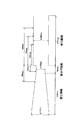
- Production Examples 1-6 Production of carbon black CB1 to 6 From the upstream part shown in FIG. 1, the first area (not shown): fuel introduction part (inner diameter 680 mm, length 900 mm), second area: raw material introduction part (upstream end inner diameter 435 mm) , Downstream end inner diameter 220 mm, length 1000 mm, taper angle 6.1 °), narrow cylindrical part (inner diameter 220 mm, length 190 mm), third region: reaction continuation and cooling equipped with a quench water pressure spraying device for stopping the reaction
- a carbon black production furnace having a chamber (inner diameter 365 mm, length 1200 mm) is used, and heavy oil shown in Table 1 is used as raw material oil, and carbon blacks of CB1 to 6 are produced according to the operating conditions shown in Table 2. did.
- the properties of the carbon black CB used in the examples and comparative examples were measured and the properties of the rubber compositions obtained were evaluated by the following methods.
- Measurement of CB Iodine adsorption specific surface area Measured according to JIS K6217-1 and expressed in mg / g of iodine adsorbed per unit mass of carbon black.
- N 2 SA adsorption specific surface area Measured according to JIS K6217-2, and expressed as a specific surface area m 2 / g per unit mass of carbon black.
- CTAB adsorption specific surface area Measured in accordance with JIS K6217-3 and displayed as a specific surface area m 2 / g per unit mass of carbon black. 4).
- DBP absorption amount Measured according to JIS K6217-4 oil absorption amount A method, and expressed in ml of dibutyl phthalate (DBP) absorbed per 100 g of carbon black.
- DBP absorption amount Measured according to JIS K6217-4 oil absorption amount A method,
- Abrasion resistance After running 10,000 km on a paved road surface on a real vehicle, measure the remaining groove, and compare the distance traveled to wear the tread 1 mm. Compare the tire of the comparative example with 100 (equivalent to 8000 km / mm). As an index. The larger the value, the better the wear resistance.
- a tire having a size of 195 / 65R15 was produced, and rotated at a speed of 80 km / h by a rotating drum, and the rolling resistance was measured at a load of 4.4 kN.
- the reciprocal of the rolling resistance of the tire of the comparative example was taken as 100 and expressed as an index. The larger the value, the lower the rolling resistance and the lower the fuel consumption.
- Table 3 shows the results of measuring the properties of the carbon blacks CB1 to CB6 used in Examples and Comparative Examples by the above measuring method.
- Examples 1 to 4 and Comparative Examples 1 to 2 Using six types of carbon black shown in Table 3, a rubber composition using only SBR as a rubber component in the formulation according to Table 4 was prepared by kneading with a Banbury mixer. Each obtained rubber composition was evaluated by the above evaluation method. The results are shown in Table 4.
- Examples 5 to 8 and Comparative Examples 3 to 4 Using six types of carbon black shown in Table 3, a rubber composition using SBR and a commercially available butadiene rubber as a rubber component was blended and formulated according to Table 5 and prepared by kneading with a Banbury mixer. Each obtained rubber composition was evaluated by the above evaluation method. The results are shown in Table 5.
- the rubber composition of the present invention using carbon black having a hydrogen release rate within the range of the present invention has a conventional carbon black or a hydrogen release rate outside the range of the present invention. It can be seen that although the fuel efficiency is slightly reduced as compared with the rubber composition used, the wear resistance is improved. In particular, when BR is used as a rubber component and further modified BR is used in combination with SBR, the fuel efficiency is not lowered and the wear resistance is greatly improved.
- the rubber composition of the present invention can be used for automobile tires.
Landscapes
- Chemical & Material Sciences (AREA)
- Health & Medical Sciences (AREA)
- Chemical Kinetics & Catalysis (AREA)
- Medicinal Chemistry (AREA)
- Polymers & Plastics (AREA)
- Organic Chemistry (AREA)
- Engineering & Computer Science (AREA)
- Mechanical Engineering (AREA)
- Compositions Of Macromolecular Compounds (AREA)
- Tires In General (AREA)
Abstract
Priority Applications (4)
| Application Number | Priority Date | Filing Date | Title |
|---|---|---|---|
| US14/888,150 US9873778B2 (en) | 2013-05-07 | 2014-05-02 | Rubber composition and tire using the same |
| EP14794229.6A EP2995645B1 (fr) | 2013-05-07 | 2014-05-02 | Composition de caoutchouc et pneu l'utilisant |
| JP2015515873A JP6397816B2 (ja) | 2013-05-07 | 2014-05-02 | ゴム組成物及びそれを用いたタイヤ |
| CN201480025875.5A CN105189635B (zh) | 2013-05-07 | 2014-05-02 | 橡胶组合物和使用其的轮胎 |
Applications Claiming Priority (2)
| Application Number | Priority Date | Filing Date | Title |
|---|---|---|---|
| JP2013097622 | 2013-05-07 | ||
| JP2013-097622 | 2013-05-07 |
Publications (1)
| Publication Number | Publication Date |
|---|---|
| WO2014181776A1 true WO2014181776A1 (fr) | 2014-11-13 |
Family
ID=51867256
Family Applications (1)
| Application Number | Title | Priority Date | Filing Date |
|---|---|---|---|
| PCT/JP2014/062187 Ceased WO2014181776A1 (fr) | 2013-05-07 | 2014-05-02 | Composition de caoutchouc et pneu l'utilisant |
Country Status (5)
| Country | Link |
|---|---|
| US (1) | US9873778B2 (fr) |
| EP (1) | EP2995645B1 (fr) |
| JP (1) | JP6397816B2 (fr) |
| CN (1) | CN105189635B (fr) |
| WO (1) | WO2014181776A1 (fr) |
Cited By (3)
| Publication number | Priority date | Publication date | Assignee | Title |
|---|---|---|---|---|
| US20160130417A1 (en) * | 2013-05-24 | 2016-05-12 | Bridgestone Corporation | Rubber composition |
| JP2020019835A (ja) * | 2018-07-30 | 2020-02-06 | 住友ゴム工業株式会社 | ゴム組成物及び空気入りタイヤ |
| WO2023008105A1 (fr) * | 2021-07-30 | 2023-02-02 | 株式会社ブリヂストン | Composition de caoutchouc pour bande de roulement de pneu et pneu |
Families Citing this family (2)
| Publication number | Priority date | Publication date | Assignee | Title |
|---|---|---|---|---|
| CN107345008A (zh) * | 2017-09-15 | 2017-11-14 | 苏州英得福机电科技有限公司 | 一种耐磨性橡胶材料 |
| ES3060888T3 (en) * | 2018-07-27 | 2026-03-30 | Add Ventures Capital International Company Ltd | Recovered carbon black and composite material comprising said recovered carbon black |
Citations (11)
| Publication number | Priority date | Publication date | Assignee | Title |
|---|---|---|---|---|
| JP2002338750A (ja) | 2001-05-15 | 2002-11-27 | Sumitomo Rubber Ind Ltd | タイヤトレッド用ゴム組成物およびそれを用いた空気入りタイヤ |
| JP2003055503A (ja) | 2001-08-10 | 2003-02-26 | Sumitomo Rubber Ind Ltd | タイヤトレッド用ゴム組成物およびそれを用いた空気入りタイヤ |
| JP2003261795A (ja) * | 2002-03-12 | 2003-09-19 | Mitsubishi Chemicals Corp | カーボンブラック及び高減衰性ゴム組成物 |
| JP2005139230A (ja) * | 2003-11-04 | 2005-06-02 | Sumitomo Rubber Ind Ltd | ゴム組成物およびそれを用いた競技用タイヤ |
| JP2005213353A (ja) | 2004-01-29 | 2005-08-11 | Sumitomo Rubber Ind Ltd | ゴム組成物の製造方法、ゴム組成物および空気入りタイヤ |
| JP2007112983A (ja) * | 2005-09-26 | 2007-05-10 | Sumitomo Rubber Ind Ltd | タイヤトレッド用ゴム組成物 |
| JP2009040904A (ja) * | 2007-08-09 | 2009-02-26 | Bridgestone Corp | ゴム組成物および空気入りタイヤ |
| JP2011079876A (ja) * | 2009-10-02 | 2011-04-21 | Bridgestone Corp | ゴム組成物及びそれを用いたタイヤ |
| JP2011116920A (ja) * | 2009-12-07 | 2011-06-16 | Bridgestone Corp | ゴム組成物及びそれを用いたタイヤ |
| WO2012043829A1 (fr) * | 2010-10-01 | 2012-04-05 | 株式会社ブリヂストン | Composition de caoutchouc et procédé de production de ladite composition, et pneu |
| JP2012158661A (ja) | 2011-01-31 | 2012-08-23 | Yokohama Rubber Co Ltd:The | タイヤトレッド用ゴム組成物 |
Family Cites Families (10)
| Publication number | Priority date | Publication date | Assignee | Title |
|---|---|---|---|---|
| WO1992004415A1 (fr) * | 1990-08-29 | 1992-03-19 | Cabot Corporation | Noirs de carbone a performances ameliorees |
| US6153684A (en) | 1990-08-29 | 2000-11-28 | Cabot Corporation | Performance carbon blacks |
| JP3183934B2 (ja) * | 1992-02-14 | 2001-07-09 | 株式会社ブリヂストン | タイヤ用ゴム組成物 |
| JP2000080302A (ja) * | 1998-09-07 | 2000-03-21 | Tokai Carbon Co Ltd | ハード系ハイストラクチャーカーボンブラック及び該カーボンブラックを配合したゴム組成物 |
| DE60221184T2 (de) | 2001-05-15 | 2008-04-10 | Sumitomo Rubber Industries Ltd., Kobe | Kautschukzusammensetzung für Reifenlauffläche und Reifen mit derselben |
| JP3895210B2 (ja) * | 2002-04-01 | 2007-03-22 | 東海カーボン株式会社 | カーボンブラック及びそのゴム組成物 |
| WO2004094525A1 (fr) * | 2003-04-22 | 2004-11-04 | Bridgestone Corporation | Composition de caoutchouc et pneumatique dans lequel elle est utilisee |
| JP5027989B2 (ja) | 2004-03-25 | 2012-09-19 | 旭カーボン株式会社 | タイヤトレッド用カーボンブラックの製造方法 |
| JP2007154089A (ja) | 2005-12-07 | 2007-06-21 | Bridgestone Corp | ゴム組成物及びそれを用いたタイヤ |
| EP2348068B1 (fr) | 2008-10-01 | 2017-01-04 | Bridgestone Corporation | Composition de caoutchouc et pneu fabriqué au moyen de celle-ci |
-
2014
- 2014-05-02 CN CN201480025875.5A patent/CN105189635B/zh not_active Expired - Fee Related
- 2014-05-02 WO PCT/JP2014/062187 patent/WO2014181776A1/fr not_active Ceased
- 2014-05-02 US US14/888,150 patent/US9873778B2/en not_active Expired - Fee Related
- 2014-05-02 EP EP14794229.6A patent/EP2995645B1/fr not_active Not-in-force
- 2014-05-02 JP JP2015515873A patent/JP6397816B2/ja active Active
Patent Citations (11)
| Publication number | Priority date | Publication date | Assignee | Title |
|---|---|---|---|---|
| JP2002338750A (ja) | 2001-05-15 | 2002-11-27 | Sumitomo Rubber Ind Ltd | タイヤトレッド用ゴム組成物およびそれを用いた空気入りタイヤ |
| JP2003055503A (ja) | 2001-08-10 | 2003-02-26 | Sumitomo Rubber Ind Ltd | タイヤトレッド用ゴム組成物およびそれを用いた空気入りタイヤ |
| JP2003261795A (ja) * | 2002-03-12 | 2003-09-19 | Mitsubishi Chemicals Corp | カーボンブラック及び高減衰性ゴム組成物 |
| JP2005139230A (ja) * | 2003-11-04 | 2005-06-02 | Sumitomo Rubber Ind Ltd | ゴム組成物およびそれを用いた競技用タイヤ |
| JP2005213353A (ja) | 2004-01-29 | 2005-08-11 | Sumitomo Rubber Ind Ltd | ゴム組成物の製造方法、ゴム組成物および空気入りタイヤ |
| JP2007112983A (ja) * | 2005-09-26 | 2007-05-10 | Sumitomo Rubber Ind Ltd | タイヤトレッド用ゴム組成物 |
| JP2009040904A (ja) * | 2007-08-09 | 2009-02-26 | Bridgestone Corp | ゴム組成物および空気入りタイヤ |
| JP2011079876A (ja) * | 2009-10-02 | 2011-04-21 | Bridgestone Corp | ゴム組成物及びそれを用いたタイヤ |
| JP2011116920A (ja) * | 2009-12-07 | 2011-06-16 | Bridgestone Corp | ゴム組成物及びそれを用いたタイヤ |
| WO2012043829A1 (fr) * | 2010-10-01 | 2012-04-05 | 株式会社ブリヂストン | Composition de caoutchouc et procédé de production de ladite composition, et pneu |
| JP2012158661A (ja) | 2011-01-31 | 2012-08-23 | Yokohama Rubber Co Ltd:The | タイヤトレッド用ゴム組成物 |
Cited By (7)
| Publication number | Priority date | Publication date | Assignee | Title |
|---|---|---|---|---|
| US20160130417A1 (en) * | 2013-05-24 | 2016-05-12 | Bridgestone Corporation | Rubber composition |
| US10280278B2 (en) * | 2013-05-24 | 2019-05-07 | Bridgestone Corporation | Rubber composition |
| JP2020019835A (ja) * | 2018-07-30 | 2020-02-06 | 住友ゴム工業株式会社 | ゴム組成物及び空気入りタイヤ |
| JP7155715B2 (ja) | 2018-07-30 | 2022-10-19 | 住友ゴム工業株式会社 | ゴム組成物及び空気入りタイヤ |
| WO2023008105A1 (fr) * | 2021-07-30 | 2023-02-02 | 株式会社ブリヂストン | Composition de caoutchouc pour bande de roulement de pneu et pneu |
| JP2023020658A (ja) * | 2021-07-30 | 2023-02-09 | 株式会社ブリヂストン | タイヤトレッド用ゴム組成物、及びタイヤ |
| JP7693436B2 (ja) | 2021-07-30 | 2025-06-17 | 株式会社ブリヂストン | タイヤトレッド用ゴム組成物、及びタイヤ |
Also Published As
| Publication number | Publication date |
|---|---|
| EP2995645B1 (fr) | 2018-07-04 |
| JPWO2014181776A1 (ja) | 2017-02-23 |
| CN105189635B (zh) | 2018-04-06 |
| EP2995645A1 (fr) | 2016-03-16 |
| JP6397816B2 (ja) | 2018-09-26 |
| EP2995645A4 (fr) | 2016-04-27 |
| CN105189635A (zh) | 2015-12-23 |
| US9873778B2 (en) | 2018-01-23 |
| US20160053098A1 (en) | 2016-02-25 |
Similar Documents
| Publication | Publication Date | Title |
|---|---|---|
| JP5006617B2 (ja) | ゴム組成物およびそれを用いたトレッドを有するタイヤ | |
| JP4088261B2 (ja) | トレッド用ゴム組成物 | |
| JP5147346B2 (ja) | ゴム組成物の製造方法および空気入りタイヤ | |
| JP2008050570A (ja) | ゴム組成物ならびにそれを用いたトレッドおよび/またはサイドウォールを有するタイヤ | |
| JP6926537B2 (ja) | タイヤ用ゴム組成物及び空気入りタイヤ | |
| JP6397816B2 (ja) | ゴム組成物及びそれを用いたタイヤ | |
| JP2006124487A (ja) | タイヤサイドウォール用ゴム組成物および空気入りタイヤ | |
| JP6420760B2 (ja) | ゴム組成物 | |
| JP4646523B2 (ja) | ゴム組成物の製造方法、ゴム組成物および空気入りタイヤ | |
| CN102443206A (zh) | 橡胶组合物和充气轮胎 | |
| CN103965528B (zh) | 轮胎用橡胶组合物以及充气轮胎 | |
| JP2012158661A (ja) | タイヤトレッド用ゴム組成物 | |
| JP4163863B2 (ja) | タイヤトレッド用ゴム組成物およびそれを用いた空気入りタイヤ | |
| JP5144137B2 (ja) | トレッド用ゴム組成物およびそれを用いたトレッドを有するタイヤ | |
| JP5616049B2 (ja) | タイヤ用ゴム組成物及び空気入りタイヤ | |
| JP2013023538A (ja) | タイヤ用ゴム組成物 | |
| EP3385317B1 (fr) | Procédé de préparation de composition de caoutchouc et procédé de préparation de pneus | |
| JP2011168709A (ja) | トレッド用ゴム組成物及び二輪車用タイヤ | |
| JP5214130B2 (ja) | ゴム組成物およびそれを用いたトレッドを有するタイヤ | |
| JP5236138B2 (ja) | タイヤトレッド用ゴム組成物およびそれを用いた空気入りタイヤ | |
| JP6215684B2 (ja) | 二輪車タイヤ用トレッドゴム組成物及び二輪車タイヤ | |
| JP4578673B2 (ja) | タイヤトレッド用ゴム組成物 | |
| JP2017008138A (ja) | ゴム組成物の製造方法およびゴム組成物 | |
| WO2012140979A1 (fr) | Composition de caoutchouc pour des pneus et pneumatiques | |
| JP2008115326A (ja) | ゴム組成物およびそれを用いたトレッドを有するタイヤ |
Legal Events
| Date | Code | Title | Description |
|---|---|---|---|
| WWE | Wipo information: entry into national phase |
Ref document number: 201480025875.5 Country of ref document: CN |
|
| 121 | Ep: the epo has been informed by wipo that ep was designated in this application |
Ref document number: 14794229 Country of ref document: EP Kind code of ref document: A1 |
|
| ENP | Entry into the national phase |
Ref document number: 2015515873 Country of ref document: JP Kind code of ref document: A |
|
| WWE | Wipo information: entry into national phase |
Ref document number: 14888150 Country of ref document: US |
|
| NENP | Non-entry into the national phase |
Ref country code: DE |
|
| WWE | Wipo information: entry into national phase |
Ref document number: 2014794229 Country of ref document: EP |