WO2014208484A1 - Composé de tétraphénylnaphtalocyanine, procédé pour sa production et utilisation de celui-ci - Google Patents
Composé de tétraphénylnaphtalocyanine, procédé pour sa production et utilisation de celui-ci Download PDFInfo
- Publication number
- WO2014208484A1 WO2014208484A1 PCT/JP2014/066514 JP2014066514W WO2014208484A1 WO 2014208484 A1 WO2014208484 A1 WO 2014208484A1 JP 2014066514 W JP2014066514 W JP 2014066514W WO 2014208484 A1 WO2014208484 A1 WO 2014208484A1
- Authority
- WO
- WIPO (PCT)
- Prior art keywords
- compound
- tetraphenylnaphthalocyanine
- general formula
- formula
- resin
- Prior art date
- Legal status (The legal status is an assumption and is not a legal conclusion. Google has not performed a legal analysis and makes no representation as to the accuracy of the status listed.)
- Ceased
Links
Images










Classifications
-
- C—CHEMISTRY; METALLURGY
- C07—ORGANIC CHEMISTRY
- C07D—HETEROCYCLIC COMPOUNDS
- C07D487/00—Heterocyclic compounds containing nitrogen atoms as the only ring hetero atoms in the condensed system, not provided for by groups C07D451/00 - C07D477/00
- C07D487/22—Heterocyclic compounds containing nitrogen atoms as the only ring hetero atoms in the condensed system, not provided for by groups C07D451/00 - C07D477/00 in which the condensed system contains four or more hetero rings
-
- B—PERFORMING OPERATIONS; TRANSPORTING
- B32—LAYERED PRODUCTS
- B32B—LAYERED PRODUCTS, i.e. PRODUCTS BUILT-UP OF STRATA OF FLAT OR NON-FLAT, e.g. CELLULAR OR HONEYCOMB, FORM
- B32B17/00—Layered products essentially comprising sheet glass, or glass, slag, or like fibres
- B32B17/06—Layered products essentially comprising sheet glass, or glass, slag, or like fibres comprising glass as the main or only constituent of a layer, next to another layer of a specific material
- B32B17/10—Layered products essentially comprising sheet glass, or glass, slag, or like fibres comprising glass as the main or only constituent of a layer, next to another layer of a specific material of synthetic resin
- B32B17/10005—Layered products essentially comprising sheet glass, or glass, slag, or like fibres comprising glass as the main or only constituent of a layer, next to another layer of a specific material of synthetic resin laminated safety glass or glazing
- B32B17/1055—Layered products essentially comprising sheet glass, or glass, slag, or like fibres comprising glass as the main or only constituent of a layer, next to another layer of a specific material of synthetic resin laminated safety glass or glazing characterized by the resin layer, i.e. interlayer
- B32B17/10614—Layered products essentially comprising sheet glass, or glass, slag, or like fibres comprising glass as the main or only constituent of a layer, next to another layer of a specific material of synthetic resin laminated safety glass or glazing characterized by the resin layer, i.e. interlayer comprising particles for purposes other than dyeing
- B32B17/10633—Infrared radiation absorbing or reflecting agents
-
- C—CHEMISTRY; METALLURGY
- C07—ORGANIC CHEMISTRY
- C07C—ACYCLIC OR CARBOCYCLIC COMPOUNDS
- C07C255/00—Carboxylic acid nitriles
- C07C255/49—Carboxylic acid nitriles having cyano groups bound to carbon atoms of six-membered aromatic rings of a carbon skeleton
- C07C255/52—Carboxylic acid nitriles having cyano groups bound to carbon atoms of six-membered aromatic rings of a carbon skeleton to carbon atoms of six-membered aromatic rings being part of condensed ring systems
-
- C—CHEMISTRY; METALLURGY
- C09—DYES; PAINTS; POLISHES; NATURAL RESINS; ADHESIVES; COMPOSITIONS NOT OTHERWISE PROVIDED FOR; APPLICATIONS OF MATERIALS NOT OTHERWISE PROVIDED FOR
- C09B—ORGANIC DYES OR CLOSELY-RELATED COMPOUNDS FOR PRODUCING DYES, e.g. PIGMENTS; MORDANTS; LAKES
- C09B47/00—Porphines; Azaporphines
- C09B47/04—Phthalocyanines abbreviation: Pc
- C09B47/06—Preparation from carboxylic acids or derivatives thereof, e.g. anhydrides, amides, mononitriles, phthalimide, o-cyanobenzamide
- C09B47/067—Preparation from carboxylic acids or derivatives thereof, e.g. anhydrides, amides, mononitriles, phthalimide, o-cyanobenzamide from phthalodinitriles naphthalenedinitriles, aromatic dinitriles prepared in situ, hydrogenated phthalodinitrile
- C09B47/0671—Preparation from carboxylic acids or derivatives thereof, e.g. anhydrides, amides, mononitriles, phthalimide, o-cyanobenzamide from phthalodinitriles naphthalenedinitriles, aromatic dinitriles prepared in situ, hydrogenated phthalodinitrile having halogen atoms linked directly to the Pc skeleton
-
- C—CHEMISTRY; METALLURGY
- C09—DYES; PAINTS; POLISHES; NATURAL RESINS; ADHESIVES; COMPOSITIONS NOT OTHERWISE PROVIDED FOR; APPLICATIONS OF MATERIALS NOT OTHERWISE PROVIDED FOR
- C09B—ORGANIC DYES OR CLOSELY-RELATED COMPOUNDS FOR PRODUCING DYES, e.g. PIGMENTS; MORDANTS; LAKES
- C09B47/00—Porphines; Azaporphines
- C09B47/04—Phthalocyanines abbreviation: Pc
- C09B47/06—Preparation from carboxylic acids or derivatives thereof, e.g. anhydrides, amides, mononitriles, phthalimide, o-cyanobenzamide
- C09B47/067—Preparation from carboxylic acids or derivatives thereof, e.g. anhydrides, amides, mononitriles, phthalimide, o-cyanobenzamide from phthalodinitriles naphthalenedinitriles, aromatic dinitriles prepared in situ, hydrogenated phthalodinitrile
- C09B47/0673—Preparation from carboxylic acids or derivatives thereof, e.g. anhydrides, amides, mononitriles, phthalimide, o-cyanobenzamide from phthalodinitriles naphthalenedinitriles, aromatic dinitriles prepared in situ, hydrogenated phthalodinitrile having alkyl radicals linked directly to the Pc skeleton; having carbocyclic groups linked directly to the skeleton
-
- C—CHEMISTRY; METALLURGY
- C09—DYES; PAINTS; POLISHES; NATURAL RESINS; ADHESIVES; COMPOSITIONS NOT OTHERWISE PROVIDED FOR; APPLICATIONS OF MATERIALS NOT OTHERWISE PROVIDED FOR
- C09B—ORGANIC DYES OR CLOSELY-RELATED COMPOUNDS FOR PRODUCING DYES, e.g. PIGMENTS; MORDANTS; LAKES
- C09B47/00—Porphines; Azaporphines
- C09B47/04—Phthalocyanines abbreviation: Pc
- C09B47/06—Preparation from carboxylic acids or derivatives thereof, e.g. anhydrides, amides, mononitriles, phthalimide, o-cyanobenzamide
- C09B47/073—Preparation from isoindolenines, e.g. pyrrolenines
-
- C—CHEMISTRY; METALLURGY
- C07—ORGANIC CHEMISTRY
- C07C—ACYCLIC OR CARBOCYCLIC COMPOUNDS
- C07C2601/00—Systems containing only non-condensed rings
- C07C2601/06—Systems containing only non-condensed rings with a five-membered ring
- C07C2601/08—Systems containing only non-condensed rings with a five-membered ring the ring being saturated
-
- C—CHEMISTRY; METALLURGY
- C07—ORGANIC CHEMISTRY
- C07C—ACYCLIC OR CARBOCYCLIC COMPOUNDS
- C07C2601/00—Systems containing only non-condensed rings
- C07C2601/12—Systems containing only non-condensed rings with a six-membered ring
- C07C2601/14—The ring being saturated
Definitions
- the present invention relates to a novel naphthalocyanine compound having excellent visible light transparency and high durability, and uses thereof. Specifically, it has strong absorption in the near-infrared region, very little absorption in the visible light region, little coloration, high durability against light and heat, soluble in organic solvents, near-infrared absorption filter, security
- the present invention relates to a novel naphthalocyanine compound that can be widely used for near-infrared absorbing materials such as inks, heat-ray shielding films, interlayer films for laminated glass, and infrared thermosensitive recording materials, and uses thereof, particularly to heat-ray shielding materials.
- near-infrared absorbing materials have been used in a wide range of fields such as optical recording media, near-infrared photosensitizers, photothermal conversion agents, near-infrared cut filters, near-infrared absorbing inks, and heat ray shielding materials.
- optical recording media such as optical recording media, near-infrared photosensitizers, photothermal conversion agents, near-infrared cut filters, near-infrared absorbing inks, and heat ray shielding materials.
- naphthalocyanine compounds have a high ability to absorb near-infrared light and have relatively good visible light transparency. Therefore, various studies have been conducted as near-infrared absorbing materials for the above purpose.
- Patent Documents 1 and 2 the center metal is perpendicular to the plane of the naphthalocyanine skeleton.
- the naphthalocyanine compound used here is described as absorbing near infrared rays and having little visible light absorption, but has a drawback of low durability.
- Patent Document 3 discloses a near-infrared absorbing ink composition containing a near-infrared absorber, an ultraviolet absorber, and a polyester resin.
- Patent Document 4 discloses a method in which a polyester having a specific polymerization catalyst and an infrared absorber is heated and crystallized in a short time with an infrared heater, and has eight butoxy groups at the ⁇ -position as the infrared absorber. Vanadyl naphthalocyanine is used. Since these naphthalocyanine compounds having an alkoxy group at the ⁇ -position have little absorption in the visible light region, they are characterized by little coloration and high transparency, but they have the disadvantage of low durability and visible light. Transparency is not sufficient.
- Patent Document 5 discloses a heat-absorbing layer system that is used as a heat-blocking thermoplastic plastic that can be used in place of automobile window glass and the like and that contains naphthalocyanine or the like as an infrared absorber.
- vanadyl-5,14,23,32-tetraphenyl-2,3-naphthalocyanine vanadyl naphthalocyanine having four phenyl groups at the ⁇ -position
- the naphthalocyanine compound is excellent in near-infrared absorption ability and transparency (visible light transmission property), but has insufficient light fastness.
- Patent Document 6 discloses a naphthalocyanine dye compound having four substituted phenyl groups at the ⁇ -position, specifically a vanadyl naphthalocyanine compound having a phenyl group having a nitro group or an acetamide group as a substituent at the ⁇ -position. Is disclosed. The naphthalocyanine compound is described as being excellent in light stability while maintaining invisibility, but according to the inventors' additional test, solvent solubility and resin compatibility are poor and processability is poor. There is also a problem that invisibility is insufficient.
- the compound represented by the general structural formula described in the Markush method includes formally a halogen group as a substituent that the phenyl group may have.
- Patent Document 7 discloses a tetraazaporphyrin compound obtained by adding one or two molecules of a naphthalene derivative to a naphthalocyanine compound having four substituted phenyl groups at the ⁇ -position, and has a characteristic absorption around 750 to 850 nm. However, it is soluble in a solvent and stable to heat and light. However, such a compound has a problem that the added naphthalene derivative is easily oxidized and easily deteriorated, so that the compound is easily discolored.
- the problem of the present invention is that it has a strong absorption in the near-infrared region, very small absorption in the visible light region, high fastness such as light resistance and heat resistance, and good solubility in organic solvents and resins.
- Naphthalocyanine compound, and its use such as heat ray shielding material.
- the present invention (I) a tetraphenylnaphthalocyanine compound represented by the general formula (1), [In the formula (1), M represents two hydrogen atoms, a divalent metal or a trivalent or tetravalent metal derivative, and R 1 to R 4 each independently represents a hydrogen atom, a halogen atom or an alkyl group.
- A represents formula (B).
- X 1 and X 2 each independently represent a hydrogen atom, a fluorine atom or an alkyl group substituted with a fluorine atom, and X 1 and X 2 are not simultaneously hydrogen atoms.
- X 1 and X 2 each independently represent a hydrogen atom, a fluorine atom or an alkyl group substituted with a fluorine atom, and X 1 and X 2 are not simultaneously hydrogen atoms.
- (Xi) a 1,3-diiminobenzoindoline compound represented by the general formula (3), [In Formula (3), R 1 to R 4 each independently represents a hydrogen atom, a halogen atom or an alkyl group, and A represents Formula (B).
- X 1 and X 2 each independently represent a hydrogen atom, a fluorine atom or an alkyl group substituted with a fluorine atom, and X 1 and X 2 are not simultaneously hydrogen atoms.
- a naphthalocyanine compound having strong absorption in the near-infrared region, very small absorption in the visible light region, high durability, and good solubility in organic solvents and resins, and such characteristics It has become possible to provide applications such as near infrared absorbing materials and heat ray shielding materials.
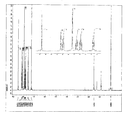
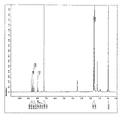
- FIG. 1 is a H-NMR spectrum diagram of the compound (2) -11 produced in Example 1.
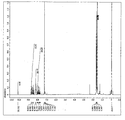
- FIG. 4 is a H-NMR spectrum of the compound (2) -18 produced in Example 2.
- FIG. 4 is a H-NMR spectrum of the compound (2) -31 produced in Example 4.
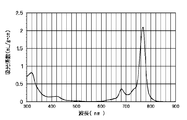
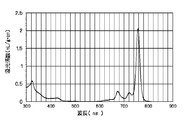
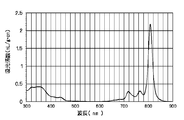
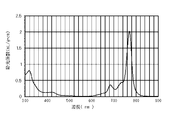
- FIG. 6 is an absorption spectrum diagram of compound (1) -7 produced in Example 9.
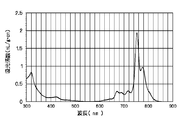
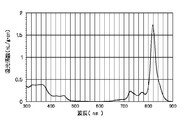
- FIG. 4 is an absorption spectrum diagram of compound (1) -8 produced in Example 10.
- FIG. 2 is a H-NMR spectrum of the compound (1) -34 produced in Example 11.
- FIG. 4 is an absorption spectrum diagram of compound (1) -34 produced in Example 11.
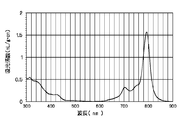
- FIG. 2 is an absorption spectrum diagram of compound (1) -36 produced in Example 12.
- FIG. 2 is an absorption spectrum diagram of compound (1) -26 produced in Example 13.
- FIG. 2 is an absorption spectrum diagram of compound (1) -27 produced in Example 14.
- FIG. 6 is an absorption spectrum diagram of compound (1) -29 produced in Example 15.
- FIG. 2 is an absorption spectrum diagram of compound (1) -37 produced in Example 16.
- FIG. 2 is a H-NMR spectrum of the compound (1) -37-a produced in Example 16.
- FIG. 2 is a H-NMR spectrum of the compound (1) -37-b produced in Example 16.
- FIG. 2 is an H-NMR spectrum of the compound (1) -37-c produced in Example 16.
- FIG. 2 is an absorption spectrum diagram of compound (1) -41 produced in Example 17.
- FIG. 2 is an absorption spectrum diagram of compound (1) -35 produced in Example 18.
- FIG. 2 is an absorption spectrum diagram of compound (1) -64 produced in Example 19.
- FIG. 2 is an absorption spectrum diagram of compound (1) -65 produced in Example 20.
- FIG. 2 is an absorption spectrum diagram of tetraphenyl-Pd-naphthalocyanine produced in Comparative Example 1.
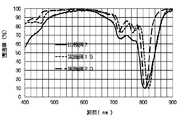
- FIG. 6 is a comparison diagram of transmission spectra of the tetraphenylnaphthalocyanine compound of the present invention produced in Example 15 and Example 20 and the compound of Comparative Example 2.
- FIG. 1 is an absorption spectrum diagram of compound (1) -65 produced in Example 20.
- FIG. 2 is an absorption spectrum diagram of tetraphenyl-Pd-naphthalocyanine produced in Comparative Example 1.
- FIG. 6 is a comparison diagram of transmission spectra of the tetraphenylnaphthalocyanine compound of the present invention produced in Example 15 and Example 20 and the compound of Comparative Example 2.
- [Tetraphenylnaphthalocyanine compound] 1st invention of this invention is the tetraphenyl naphthalocyanine compound represented by General formula (1).
- M represents two hydrogen atoms, a divalent metal or a trivalent or tetravalent metal derivative, and R 1 to R 4 each independently represents a hydrogen atom, a halogen atom or an alkyl group.
- A represents formula (B).
- X 1 and X 2 each independently represent a hydrogen atom, a fluorine atom or an alkyl group substituted with a fluorine atom, and X 1 and X 2 are not simultaneously hydrogen atoms.
- the tetraphenylnaphthalocyanine compound of the general formula (1) is at least one selected from the following general formulas (1) -a to (1) -d. That is, it is a mixture of one or more of the isomers represented by the following general formulas (1) -a to (1) -d.
- the isomers (1) -a to (1) -D, M, R 1 to R 4 , and A have the same meanings as those in formula (1).
- the isomer represented by (1) -a is preferable because it has particularly high durability such as light resistance and heat resistance. .
- M is preferably two hydrogen atoms, Pd, Cu, Zn, Pt, Ni, TiO, Co, Fe, Mn, Sn Al—Cl, VO or In—Cl. More preferably, M is two hydrogen atoms, Pd, Cu, Zn or VO. Most preferred M is Cu.
- R 1 to R 4 are preferably a hydrogen atom, a halogen atom or an alkyl group having 1 to 12 carbon atoms. R 1 to R 4 are more preferably a hydrogen atom, a fluorine atom, or a branched alkyl group having 3 to 8 carbon atoms.
- R 1 to R 4 are a halogen atom include a chlorine atom, a fluorine atom, a bromine atom, and an iodine atom, a chlorine atom and a fluorine atom are preferable, and a fluorine atom is more preferable.
- R 1 to R 4 being an alkyl group an alkyl group having 1 to 12 carbon atoms is preferable, and a branched alkyl group having 3 to 8 carbon atoms is more preferable.
- alkyl groups include methyl, ethyl, n-propyl, isopropyl, n-butyl, isobutyl, sec-butyl, tert-butyl, n-pentyl, isopentyl, neopentyl, tert-pentyl group, n-hexyl group, cyclohexyl group, 1-methylpentyl group, 4-methyl-2-pentyl group, 2-ethylbutyl group, n-heptyl group, 1-methylhexyl group, 4-methylcyclohexyl group, Examples thereof include linear or branched alkyl groups such as n-octyl group, tert-octyl group, 1-methylheptyl group and 2-ethylhexyl group.
- A represents the following formula (B).
- X 1 and X 2 each independently represent a hydrogen atom, a fluorine atom or an alkyl group substituted with a fluorine atom, and X 1 and X 2 are not simultaneously hydrogen atoms.
- X 1 and X 2 are preferably a hydrogen atom, a fluorine atom or a linear, branched or cyclic alkyl group having 1 to 12 carbon atoms substituted by a fluorine atom, and a hydrogen atom, a fluorine atom or a fluorine atom is A substituted linear, branched or cyclic alkyl group having 1 to 8 carbon atoms is more preferred.
- X 1 and X 2 are most preferably a trifluoromethyl group.
- X 1 and X 2 are alkyl groups substituted with fluorine atoms
- tetraphenylnaphthalocyanine compound represented by the general formula (1) a particularly preferable structure of the compound is represented by the general formula (1) -a, X 1 and X 2 are trifluoromethyl groups, R 1 , R 2 and R 4 are hydrogen atoms, R 3 is a branched alkyl group having 3 to 8 carbon atoms, and M is Cu.
- a compound having the following structural formula is preferable in that it has a feature of extremely high durability such as light resistance and heat resistance.
- Table 1 the specific example of the tetraphenyl naphthalocyanine compound represented by General formula (1) of this invention is shown in following Table 1, it is not limited to these.
- the tetraphenylnaphthalocyanine compound of the general formula (1) is a mixture of one or more of the isomers represented by the general formulas (1) -a to (1) -d. It is. In the case of a mixture of isomers, the absorption in the near infrared region becomes broader than in the case of each isomer alone. Depending on the application, such as heat ray shielding resin, a mixture of isomers having broad absorption as described above is preferable. The specific examples shown in Table 1 below also include these isomers or a mixture of two or more thereof.
- the second invention of the present invention is selected from a naphthalene-2,3-dicarbonitrile compound represented by the general formula (2) and a 1,3-diiminobenzoindoline compound represented by the general formula (3).
- R 1 to R 4 and A have the same meanings as those in the general formula (1).
- the naphthalene-2,3-dicarbonitrile compound represented by the general formula (2) and the 1,3-diiminobenzoindoline compound represented by the general formula (3) will be individually described later.
- metals or metal derivatives examples include Al, Si, Ti, V, Mn, Fe, Co, Ni, Cu, Zn, Ge, Ru, Rh, Pd, In, Sn, Pt, Pb, and their halides and carboxylates. , Sulfates, nitrates, carbonyl compounds, oxides, complexes and the like. In particular, metal halides or carboxylates are preferably used. Examples of these include copper chloride, copper bromide, copper iodide, nickel chloride, nickel bromide, nickel acetate, cobalt chloride, iron chloride, zinc chloride, odor.
- Examples thereof include zinc iodide, zinc iodide, zinc acetate, vanadium chloride, vanadium oxychloride, palladium chloride, palladium acetate, aluminum chloride, manganese chloride, lead chloride, lead acetate, indium chloride, titanium chloride, tin chloride and the like.
- the amount of metal or metal derivative used is 0. 1 mol per 1 mol of naphthalene-2,3-dicarbonitrile compound of general formula (6) or 1 mol of 1,3-diiminobenzoindoline compound of general formula (7). It is 1-fold mole to 0.6-fold mole, preferably 0.2-fold mole to 0.5-fold mole.
- the reaction temperature is 60 to 300 ° C, preferably 100 to 220 ° C.
- the reaction time is 30 minutes to 72 hours, preferably 1 hour to 48 hours.
- the solvent used for the reaction is preferably an organic solvent having a boiling point of 60 ° C. or higher, preferably 80 ° C. or higher.
- examples include methanol, ethanol, n-propyl alcohol, n-butyl alcohol, isobutyl alcohol, n-amyl alcohol, n-hexanol, 1-heptanol, 1-octanol, 1-dodecanol, benzyl alcohol, ethylene glycol, propylene glycol, ethoxy Alcohol solvents such as ethanol, propoxyethanol, butoxyethanol, dimethylethanol, diethylethanol, dichlorobenzene, trichlorobenzene, chloronaphthalene, sulfolane, nitrobenzene, quinoline, DMI (1,3-dimethyl-2-imidazolidinone), urea, etc.
- the amount of the solvent used is 0.5 to 50 times the volume of the naphthalene-2,3-dicarbonitrile compound of the general formula (2) or the 1,3-diiminobenzoindoline compound of the general formula (3), preferably 1 to 15 times the capacity.
- the reaction is carried out in the presence or absence of a catalyst, but is preferably in the presence of a catalyst.
- the catalyst include inorganic catalysts such as ammonium molybdate, DBU (1,8-diazabicyclo [5.4.0] -7-undecene), DBN (1,5-diazabicyclo [4.3.0] -5-nonene.
- Basic organic catalysts such as) can be used.
- the amount used is 0.01 to 10 times mol, preferably 1 to 2 times mol per mol of naphthalene-2,3-dicarbonitrile compound or 1 mol of 1,3-diiminoisondrine compound.
- a naphthalene-2,3-dicarbonitrile compound represented by the general formula (2) and a 1 represented by the general formula (3) After reacting at least one selected from 1,3-diiminobenzoindoline compounds with metallic sodium or metallic potassium under the above reaction conditions, the central metal sodium or potassium is eliminated with hydrochloric acid, sulfuric acid or the like. Can be manufactured.
- the solvent is distilled off, or the reaction solution is discharged into a poor solvent for the tetraphenylnaphthalocyanine compound to precipitate the target product, and the precipitate is filtered to filter the tetraphenylnaphthalocyanine of the general formula (1).
- a compound can be obtained.
- the tetraphenylnaphthalocyanine compound is obtained as a mixture of isomers represented by the general formulas (1) -a to (1) -d.
- further purification by a known purification method such as recrystallization or column chromatography can yield a higher-purity target product.
- the intended single product can be isolated from such a mixture of isomers represented by the general formulas (1) -a to (1) -d by such a purification method.
- the structure of these isomers can be confirmed by a known analysis method such as X-ray crystal structure analysis.
- the third invention of the present invention is a naphthalene-2,3-dicarbonitrile compound represented by the general formula (2).
- R 1 to R 4 each independently represents a hydrogen atom, a halogen atom or an alkyl group, and A represents Formula (B).
- X 1 and X 2 each independently represent a hydrogen atom, a fluorine atom or an alkyl group substituted with a fluorine atom, and X 1 and X 2 are not simultaneously hydrogen atoms.
- the naphthalene-2,3-dicarbonitrile compound represented by the general formula (2) is used for the production of the tetraphenylnaphthalocyanine compounds of the general formula (1) and the general formulas (1) -a to (1) -d.
- preferred ranges and specific examples of the substituents X 1 , X 2 and R 1 to R 4 in the general formula (2) are the general formula (1) and the general formulas (1) -a to (1)- The same as those indicated by d.
- Specific examples of the naphthalene-2,3-dicarbonitrile compound represented by the general formula (6) are shown in Table 2 below, but are not limited thereto.
- the naphthalene-2,3-dicarbonitrile compound represented by the general formula (2) can be produced with reference to known methods relating to known compounds. For example, with reference to the Russian Journal of General Chemistry, Vol 75, No. 5, 2005, pp. 795-799, it can be produced from the 2-methylbenzophenone compound of the general formula (4) by the following route. [In the general formulas (4) to (7), A and R 1 to R 4 have the same meanings as those shown in the general formula (2). ]
- the 2-methylbenzophenone compound of the general formula (4) is mixed with the 2-halogenomethylbenzophenone compound of the general formula (5) with a radical generator and a halogenating agent in the presence of an organic solvent, preferably under heating.
- a condensation reaction is performed to obtain an isobenzofuran compound of the general formula (6), followed by a Diels-Alder reaction with fumaronitrile to produce a 1,4-dihydro-1,4-epoxynaphthalene compound of the general formula (7).
- a condensation reaction is performed to obtain an isobenzofuran compound of the general formula (6), followed by a Diels-Alder reaction with fumaronitrile to produce a 1,4-dihydro-1,4-epoxynaphthalene compound of the general formula (7).
- a naphthalene-2,3-dicarbonitrile compound of the general formula (2) By dehydrating the 1,4-dihydro-1,4-epoxynaphthalene compound with sulfuric acid, a naphthalene-2,3-dicarbonitrile compound of the general formula (2) can be obtained.
- the naphthalene-2,3 of the general formula (2) is converted from the 2-methylbenzophenone compound of the general formula (4) without isolating the compounds of the general formulas (5), (6), (7).
- -Dicarbonitrile compounds can be produced in a one-pot system, which is preferable from the viewpoint of reaction yield and operational simplicity.
- the amount of radical generator used is 0.01 per mol of the 2-methylbenzophenone derivative.
- the molar ratio is from 1 to 3 times, preferably from 0.05 to 2 times, more preferably from 0.05 to 1 times.
- the amount of the halogenating agent used is 1 to 10 times mol, preferably 1 to 5 times mol, more preferably 1 to 10 times mol per mol of the 2-methylbenzophenone derivative of the general formula (4). 1 to 3 moles.
- the halogenating agent bromine, chlorine, N-bromosuccinimide, N-chlorosuccinimide and the like can be used.
- the reaction solvent is not particularly limited as long as it does not adversely affect the reaction, and aromatic hydrocarbons such as toluene, xylene, mesitylene, pseudocumene, chlorobenzene, dichlorobenzene, hexane, heptane, cyclohexane, carbon tetrachloride, chloroform, etc.
- Organic acids such as aliphatic hydrocarbons, acetic acid and trifluoroacetic acid, and aprotic solvents such as DMF, DMAC and DMI can be used.
- the solvent is used in an amount of 1 to 500 times, preferably 1 to 200 times, more preferably 5 to 100 times the volume of the 2-methylbenzophenone derivative of the general formula (4) used in the reaction.
- the reaction temperature in the halogenation step is room temperature to 200 ° C., preferably 50 to 150 ° C., more preferably 50 to 100 ° C.
- the reaction time of the halogenation step is 10 minutes to 48 hours, preferably 20 minutes to 24 hours, more preferably 30 minutes to 12 hours.
- the 2-halogenomethylbenzophenone compound of the general formula (5) can be isolated by filtering the reaction solution to remove insoluble matters such as succinimide and then concentrating the solvent under reduced pressure using an evaporator. It is preferable that the reaction solution which is unstable and filtered without being isolated is used as it is and transferred to the next reaction step. Fumaronitrile is added to the obtained 2-halogenomethylbenzophenone compound of general formula (5) and the isobenzofuran compound of general formula (6) is formed when the temperature is raised. 1,4-dihydro-1,4-epoxynaphthalene compound is produced and dehydrated with sulfuric acid to obtain a naphthalene-2,3-dicarbonitrile compound of the general formula (2).
- the reaction temperature of the series of reaction steps is room temperature to 250 ° C., preferably 50 to 200 ° C., more preferably 50 to 150 ° C.
- the reaction time of the series of reaction steps is 30 minutes to 48 hours, preferably 1 hour to 24 hours, more preferably 1 hour to 12 hours.
- the amount of fumaronitrile used is 1 to 5 moles, preferably 1 to 2 moles, more preferably 1 to 1.5 moles per mole of the 2-methylbenzophenone derivative of the general formula (4). Is a mole.
- the amount of sulfuric acid used is 0.05 times to 5 times mol, preferably 0.1 times to 3 times mol, more preferably 0.2 times to 1 times mol per mol of the 2-methylbenzophenone derivative. is there.
- naphthalene-2,3-dicarbonitrile compound of the general formula (2) is distilled off and dried to obtain a naphthalene-2,3-dicarbonitrile compound of the general formula (2). If necessary, a higher-purity product can be obtained by further adding known purification operations such as recrystallization and column chromatography to the product.
- the fourth invention of the present invention is a 1,3-diiminobenzoindoline compound represented by the general formula (3).
- R 1 to R 4 each independently represents a hydrogen atom, a halogen atom or an alkyl group
- A represents Formula (B).
- X 1 and X 2 each independently represent a hydrogen atom, a fluorine atom or an alkyl group substituted with a fluorine atom, and X 1 and X 2 are not simultaneously hydrogen atoms.
- the 1,3-diiminobenzoindoline compound represented by the general formula (3) is used for the production of the tetraphenylnaphthalocyanine compounds represented by the general formula (1) and the general formulas (1) -a to (1) -d.
- preferred ranges and specific examples of the substituents X 1 , X 2 and R 1 to R 4 in the general formula (3) include the general formula (1) and the general formulas (1) -a to (1)- The same as those indicated by d.
- Specific examples of the 1,3-diiminobenzoindoline compound represented by the general formula (3) are shown in Table 3 below, but are not limited thereto.
- the 1,3-diiminobenzoindoline compound represented by the general formula (3) can be produced with reference to known methods relating to known compounds. For example, it is produced by reacting a naphthalene-2,3-dicarbonitrile compound represented by the general formula (2) with ammonia in the presence of a metal alkoxide.
- the amount of ammonia used is 1 to 20 moles, preferably 3 to 10 moles per mole of the naphthalene-2,3-dicarbonitrile compound of the general formula (2).
- Metal alkoxides include sodium or potassium methoxide, ethoxide, n-propoxide, n-butoxide, n-pentoxide, n-hexyloxyside, n-octyloxyside, 2-methoxyethoxide, 2-ethoxyethoxide 2-butoxyethoxide is used.
- the metal alkoxide is used in an amount of 0.01 to 5 times, preferably 0.1 to 2.0 times the mol of the naphthalene-2,3-dicarbonitrile compound of the general formula (2). is there.
- an organic solvent is preferably used in combination, and usually an alcohol solvent is used as the organic solvent.
- alcohol solvents include methanol, ethanol, n-propanol, n-butanol, n-pentanol, n-hexanol, n-heptanol, n-octanol, 2-methoxyethanol, 2-ethoxyethanol, and 2-butoxyethanol.
- the amount of the alcohol solvent used is 200 mL to 15 L, preferably 500 mL to 5 L, per 1 mol of the naphthalene-2,3-dicarbonitrile compound of the general formula (2).
- the reaction operation after adding metal sodium or metal potassium to an alcohol solvent as a reaction solvent to prepare an alcohol solution of metal alkoxide, ammonia and a naphthalene-2,3-dicarbonitrile compound of the general formula (2) Alternatively, the reaction may be carried out by charging ammonia, a naphthalene-2,3-dicarbonitrile compound of the general formula (2) and a separately prepared metal alkoxide into a reaction solvent. You may do it.
- the amount of the metal used for adjusting the metal alkoxyside is 0.01 to 5.0 times mol, preferably 0.1 to mol of the naphthalene-2,3-dicarbonitrile compound of the general formula (2). ⁇ 2.0 times mol.
- the reaction temperature is 0 ° C.
- the reaction time is preferably 30 minutes to 72 hours.
- the solvent is distilled off, extracted with an aromatic solvent such as toluene or a halogenated hydrocarbon solvent such as methylene chloride, the extract is washed with water, concentrated, and the precipitate is filtered.
- the 1,3-diiminobenzoindoline compound (3) can be obtained.
- the tetraphenylnaphthalocyanine compound of the present invention is a heat ray shielding material for shielding heat rays, an optical filter for plasma display or liquid crystal display, a flash fixing toner, a photothermal exchange agent for thermal transfer / thermal stencil, etc.
- the near-infrared absorbing material of the present invention may be the tetraphenylnaphthalocyanine compound itself of the present invention represented by the general formula (1), or the general formula (1) together with other components such as a binder resin and additives.
- the tetraphenyl naphthalocyanine compound may be used.
- the modes and components of the near infrared absorbing material vary depending on the application and are various.
- the tetraphenylnaphthalocyanine compound of the present invention is suitably used for heat ray shielding materials used for films and interlayers used in buildings, automobile windows, etc., greenhouses, sun visors, welding goggles and the like.
- the heat ray shielding material of the present invention contains the tetraphenylnaphthalocyanine compound of the present invention represented by the general formula (1).
- the tetraphenylnaphthalocyanine compound of the general formula (1) contained in the heat ray shielding material of the present invention may be used as a single compound or in the form of a mixture of two or more.
- the isomer may also be any one of the isomers represented by the general formulas (1) -a to (1) -d, or a mixture of two or more isomers. It may be.
- the heat-shielding material is represented by the general formula (1) -a. Those having a high content of isomers are preferred.
- X 1 and X 2 are a hydrogen atom, a fluorine atom or a trifluoromethyl group
- R 1 to R 4 are a hydrogen atom or an alkyl group having 1 to 12 carbon atoms.
- the thing whose M is Cu is preferable.
- Most preferred is a compound represented by the following formula.
- the usage form of the heat ray shielding material of the present invention is not particularly limited, and may be any known form. Specific examples include the following examples. 1. 1. Form using molded body itself containing tetraphenylnaphthalocyanine compound of general formula (1) and resin as essential components A mode in which a coating film or a film containing a tetraphenylnaphthalocyanine compound of general formula (1) and a resin as essential components is applied on a base material 3. Between two or more base materials, the general formula (1) 3. Form of laminated body in which a film containing tetraphenylnaphthalocyanine compound and resin as essential components is provided as an intermediate layer.
- the aspect which contains the tetraphenyl naphthalocyanine compound and resin of General formula (1) as an essential component is preferable for the heat ray shielding material of this invention.
- the resin can be appropriately selected depending on the intended use of the heat ray shielding material, but is preferably a resin that is substantially transparent and does not significantly absorb and scatter.
- polycarbonate resin such as methyl methacrylate
- acrylic resin such as methyl methacrylate
- polyvinyl resin such as polystyrene, polyvinyl chloride and polyvinylidene chloride
- polyolefin resin such as polyethylene and polypropylene
- polybutyral resin acetic acid
- vinyl resins include vinyl resins; polyester resins; polyamide resins; polyvinyl acetal resins; polyvinyl alcohol resins; ethylene-vinyl acetate copolymer resins; ethylene-acrylic copolymer resins;
- it is substantially transparent, not only the above-mentioned one kind of resin but also a blend of two or more kinds of resins can be used, and the above-mentioned resin can be sandwiched between transparent glasses.
- polycarbonate resin (meth) acrylic resin, polyester resin, polyamide resin, polystyrene resin, polyvinyl chloride resin, polyvinyl acetal resin, and polyvinyl alcohol resin are preferable, and polycarbonate resin, methacrylic resin, polyethylene terephthalate (PET) are particularly preferable.
- PET polyethylene terephthalate
- Resin, polyvinyl chloride resin, and polyvinyl acetal resin are more preferable.
- the polycarbonate resin is produced by reacting a dihydric phenol and a carbonate precursor by a solution method or a melting method.
- dihydric phenol 2,2-bis (4-hydroxyphenyl) propane [bisphenol A], 1,1-bis (4-hydroxyphenyl) ethane, 1,1-bis (4-hydroxyphenyl) cyclohexane, 2,2-bis (4 -Hydroxy-3,5-dimethylphenyl) propane, 2,2-bis (4-hydroxy-3,5-dibromophenyl) propane, 2,2-bis (4-hydroxy-3-methylphenyl) propane, bis ( 4-hydroxyphenyl) sulfide, bis (4-hydroxyphenyl) sulfone and the like.
- Preferred divalent phenols are bis (4-hydroxyphenyl) alkanes, particularly those containing bisphenol as the main component.
- Examples of the (meth) acrylic resin include methyl methacrylate alone or a polymerizable unsaturated monomer mixture containing 50% or more of methyl methacrylate or a copolymer thereof.
- Examples of the polymerizable unsaturated monomer copolymerizable with methyl methacrylate include the following.
- polyester resins include homopolyesters such as poly C2-4 alkylene terephthalate and poly C2-4 alkylene naphthalate, C2-4 alkylene arylate units (C2-4 alkylene terephthalate and / or C2-4 alkylene naphthalate units).
- polyarylate resins aliphatic polyesters using aliphatic dicarboxylic acids such as adipic acid, and lactone homo- or copolymers such as ⁇ -caprolactone are also included.
- polyester resin polyethylene terephthalate (PET), polytrimethylene terephthalate (PTT), polybutylene terephthalate (PBT), polyethylene naphthalate (PEN) and the like are preferable in terms of high transparency.
- Amorphous copolyesters such as C2-4 alkylene arylate copolyesters are also preferred because of their excellent processability.
- PET is preferable because it is produced in large quantities and is excellent in heat resistance and strength.
- the polyamide resin is a resin having a dehydration polycondensate structure of a diamine compound containing an aromatic or aliphatic group and a dicarboxylic acid compound containing an aromatic or aliphatic group.
- the aliphatic group also includes an alicyclic aliphatic group.
- diamine compounds include hexamethylenediamine, m-xylylenediamine, bis (4-aminocyclohexyl) methane, bis (4-amino-3-methylcyclohexyl) methane, trimethylhexamethylenediamine, bis (aminomethyl) norbornane, Examples thereof include bis (aminomethyl) tetrahydrodicyclopentadiene.
- dicarboxylic acid compounds examples include adipic acid, dodecanedicarboxylic acid, isophthalic acid, terephthalic acid, bis (hydroxycarbonylmethyl) norbornane, bis (hydroxycarbonylmethyl) tetrahydrodicyclopentadiene, and the like.
- the polyamide resin an amorphous polyamide resin is particularly preferable from the viewpoint of transparency, and resins generally referred to as transparent nylon are preferable.
- polyvinyl chloride resin not only a polymer of vinyl chloride monomer but also a copolymer mainly composed of vinyl chloride can be used.
- monomers that can be copolymerized with vinyl chloride include vinylidene chloride, ethylene, propylene, acrylonitrile, vinyl acetate, maleic acid, itaconic acid, acrylic acid, and methacrylic acid.
- polyvinyl acetal resin a polyvinyl formal resin obtained by reacting polyvinyl alcohol (PVA) and formaldehyde, a narrowly defined polyvinyl acetal resin obtained by reacting PVA and acetaldehyde, PVA and n-butyraldehyde are reacted.
- Polyvinyl butyral resin (PVB) obtained by the above, and PVB is preferable.
- the PVA used for the synthesis of the polyvinyl acetal resin preferably has an average degree of polymerization of 200 to 5000, more preferably 500 to 3000.
- the acetalization degree is preferably 40 to 85 mol%, more preferably 50 to 75 mol%.
- the polyvinyl alcohol resin can be obtained, for example, by saponifying polyvinyl acetate.
- the degree of saponification of the polyvinyl alcohol resin is generally in the range of 70 to 99.9 mol%, preferably in the range of 75 to 99.8 mol%, and in the range of 80 to 99.8 mol%. It is more preferable.
- the average degree of polymerization of the polyvinyl alcohol resin is preferably 500 or more, more preferably 1000 or more and 5000 or less.
- the content of the tetraphenylnaphthalocyanine compound of the present invention represented by the general formula (1) in the heat ray shielding material of the present invention varies depending on the thickness of the heat ray shielding material.
- the amount is preferably 0.002 to 0.06 parts by weight, more preferably 0.003 to 0.04 parts by weight with respect to 100 parts by weight of the resin blended in the heat ray shielding material. 0.02 part by weight.
- 0.0005 to 0.02 parts by weight is preferable with respect to 100 parts by weight of the resin, and more preferably 0.001 to 0.005 parts by weight. It is.
- the amount is preferably 0.1 to 20 parts by weight, more preferably 0.5 to 10 parts by weight with respect to 100 parts by weight of the resin. If the content of the tetraphenylnaphthalocyanine compound of the general formula (1) is expressed regardless of the thickness of the heat ray shielding material, the weight in the projected area from above is considered to be 0.01 to 5.0 g / m.
- the blending amount of 2 is preferable, and more preferably 0.05 to 1.0 g / m 2 .
- the amount of the tetraphenylnaphthalocyanine compound of the general formula (1) is less than 0.01 g / m 2 , the heat ray shielding effect is reduced, and when it exceeds 5.0 g / m 2 , visible light is transmitted. May decrease.
- the heat ray shielding material of the present invention may contain various additives that are used when producing ordinary transparent resin materials.
- the additive include a colorant, a polymerization regulator, an antioxidant, an ultraviolet absorber, a heat ray shielding agent, a flame retardant, a plasticizer, a rubber for improving impact resistance, and a release agent. it can.
- the heat ray shielding agent means particles capable of absorbing infrared rays having a wavelength of 780 nm or more, and includes aluminum-doped tin oxide, indium-doped tin oxide, tin-doped indium oxide (ITO), antimony-doped tin oxide (ATO), and aluminum.
- metal oxides such as doped zinc oxide (AZO), tungsten oxide, composite tungsten oxide, and the like can be given.
- tin-doped indium oxide (ITO) is preferable.
- the addition amount of the additive in the heat ray shielding agent is not particularly limited, but is usually 10% by weight or less in the heat ray shielding material.
- an ultraviolet absorber it does not restrict
- the heat ray shielding material of the present invention may contain other near infrared ray absorbing materials.
- Other near-infrared absorbing materials are not particularly limited, and known near-infrared absorbing materials can be appropriately selected depending on the maximum absorption wavelength desired depending on the application.
- the shape of the heat ray shielding material is not particularly limited, and includes various shapes such as a corrugated plate shape, a spherical shape, and a dome shape in addition to the most common flat plate shape and film shape.
- the heat ray shielding material of the present invention is in the form of a flat plate or a film
- the tetraphenylnaphthalocyanine compound of the general formula (1) is mixed with the resin and, if necessary, the additive and other near infrared absorbing materials and then molded.
- a heat ray shielding material is obtained.
- the molding method is not particularly limited, and a known molding method can be applied. Specific examples include extrusion molding, injection molding, cast polymerization, press molding, calender molding, or cast film forming method.
- the use form of the heat ray shielding material of the present invention is a form in which a film containing a tetraphenylnaphthalocyanine compound of the general formula (1) and a resin as essential components is applied on a base material, It can be applied by sticking a film or sheet-like heat ray shielding material using an adhesive, an adhesive, an adhesive film, or the like.
- a heat ray shielding material in the form of a film or a sheet can be applied to the substrate by hot pressing or hot lamination molding.
- the usage form of the heat ray shielding material of the present invention is a form in which a coating film containing a tetraphenylnaphthalocyanine compound of the general formula (1) and a resin as essential components is applied on a substrate, the general formula (1)
- a coating film containing a tetraphenylnaphthalocyanine compound of the general formula (1) and a resin as essential components is applied on a substrate, the general formula (1)
- a paint liquid or pasty material
- the use form of the heat ray shielding material of the present invention is a laminate in which a film containing a tetraphenylnaphthalocyanine compound of the general formula (1) and a resin as essential components is provided as an intermediate layer between two or more substrates
- a film containing the tetraphenylnaphthalocyanine compound of the general formula (1) and the resin as essential components is sandwiched between the base materials, put into a rubber pack, heated under vacuum and vacuum bonded. Can be applied.
- a film containing a tetraphenylnaphthalocyanine compound of the general formula (1) and a resin as essential components is sandwiched between the substrates, or on one substrate, the tetraphenylnaphthalocyanine of the general formula (1) Apply a compound and resin, and if necessary, a solvent that dissolves them and a paint containing other components, then place the other base material and apply these laminates by heat or other means. You can also.
- an adhesive containing a tetraphenylnaphthalocyanine compound of general formula (1) and a resin or a composition containing a tetraphenylnaphthalocyanine compound of general formula (1) and a resin as an adhesive, It is also possible to apply by bonding.
- the use of the heat ray shielding material of the present invention is not particularly limited, and examples thereof include films and interlayer films, sun visors, welding goggles and the like used for buildings, automobile windows, etc. for solar energy heat ray shielding.
- the tetraphenyl naphthalocyanine compound represented by the general formula (1) of the present invention is excellent in solvent solubility and compatibility with a resin, and in various properties such as heat resistance, light resistance, and weather resistance. It is suitable as a film or an intermediate film used for a window of a building or an automobile.
- Embodiment 2 which is a film containing a tetraphenylnaphthalocyanine compound of general formula (1) and a resin
- Aspect 3 which is a mode having a film containing a tetraphenylnaphthalocyanine compound of the general formula (1) and a resin, a pressure-sensitive adhesive layer, and a release sheet provided on the surface of the pressure-sensitive adhesive layer as necessary.
- An aspect having an adhesive layer is preferable from the viewpoint of easiness of sticking to a window glass, and the like. Or 5.
- the embodiment is preferred.
- further layers such as a hard coat layer, an antifouling layer, an ultraviolet absorbing layer, and an antireflection layer may be provided depending on the purpose.
- Examples of the resin contained together with the tetraphenylnaphthalocyanine compound of the general formula (1) include the same resins as those of the resin contained in the heat ray shielding material.
- polycarbonate resin, (meth) acrylic resin, polyvinyl resin, polyolefin resin, polybutyral resin, polyester resin, polyamide resin, and polyurethane resin are preferable.
- Examples of the base material include those similar to the examples of the base material described in the use form of the heat ray shielding material, but a resin sheet or plate is preferable.
- Examples thereof include films of polyester, polyethylene, polypropylene, nylon, polyvinyl chloride, polycarbonate, polyvinyl alcohol, polymethyl methacrylate, fluororesin, ethylene, vinyl alcohol resin, and the like.
- a polyester film is preferable, and a polyethylene terephthalate (PET) film is more preferable.
- the pressure-sensitive adhesive is not particularly limited as long as it can be adhered to a substrate and has transparency.
- (meth) acrylic type; (meth) acrylic urethane type; (meth) acrylic silicone type; siloxane bond Thermoplastic or thermosetting such as fluororesin such as polyvinylidene fluoride, silicone based, polyvinyl chloride, melamine, urethane, styrene, alkyd, phenol, epoxy, polyester , Active energy ray-curable curable resin adhesive, natural rubber, butyl rubber, isopropylene rubber, ethylene propylene rubber, methyl rubber, chloroprene rubber, ethylene-propylene copolymer rubber, styrene-butadiene rubber, acrylonitrile-butadiene rubber, etc.
- the resin that is a pressure-sensitive adhesive examples include the above-mentioned thermoplastic, thermosetting, and active energy ray-curable curable resin pressure-sensitive adhesives, and (meth) acrylic resins are preferable, and the glass transition temperature is less than 0 ° C.
- Poly (meth) acrylic acid ester resins are particularly preferred.
- the poly (meth) acrylic acid ester-based resin those obtained by using 50% by weight or more of (meth) acrylic acid ester having an alkyl group having 1 to 14 carbon atoms as a monomer are preferable.
- copolymerizable monomers examples include hydroxyethyl (meth) acrylate, hydroxypropyl (meth) acrylate, methoxyethyl (meth) acrylate, ethoxyethyl (meth) acrylate, ethoxyethoxyethyl (meth) acrylate and the like ( (Meth) acrylates; styrene monomers represented by ⁇ -methylstyrene, vinyl toluene, styrene, etc .; vinyl ether monomers represented by methyl vinyl ether, ethyl vinyl ether, isobutyl vinyl ether, etc .; fumaric acid, fumaric acid Monoalkyl ester, dialkyl ester of fumaric acid; maleic acid, monoalkyl ester of maleic acid, dialkyl ester of maleic acid, itaconic acid, monoalkyl ester of itaconic acid, dialkyl ester of itaconic acid,
- Each layer of the heat ray shielding film may contain the same additives as those used in the production of the heat ray shielding material.
- examples include colorants, polymerization regulators, antioxidants, light stabilizers, ultraviolet absorbers, flame retardants, antistatic agents, plasticizers, and the like.
- an embodiment containing an ultraviolet absorber is preferred, such as an antioxidant, a flame retardant, an adhesive strength modifier, a moisture-resistant agent, a fluorescent brightening agent, and an infrared absorber.
- a material that can absorb heat rays such as carbon black, may be used in combination as long as the visible light transmittance is not significantly reduced.
- the thickness of the heat ray shielding film varies depending on the configuration, the type of resin of the base material and the heat ray shielding layer, the use thereof, and the like, but usually about 10 ⁇ m to 500 ⁇ m is preferably used.
- the thickness of the substrate is preferably about 20 ⁇ m to 300 ⁇ m.
- the thickness of the layer containing the tetraphenylnaphthalocyanine compound of general formula (1) and the resin is preferably about 0.3 to 100 ⁇ m.
- the content of the tetraphenylnaphthalocyanine compound of the general formula (1) relative to the resin depends on the thickness of the layer containing the tetraphenylnaphthalocyanine compound of the general formula (1) and the resin.
- the tetraphenylnaphthalocyanine compound of the general formula (1) is preferably in the range of 0.001 to 30 parts by weight, and more preferably in the range of 0.01 to 10 parts by weight.
- the heat ray shielding film of the present invention after mixing with the tetraphenylnaphthalocyanine compound of general formula (1) and a resin, and if necessary, the above additives, other near infrared absorbers, ultraviolet absorbers, etc. Mold.
- the molding method is not particularly limited, and a known molding method can be applied as it is or appropriately modified. Specifically, extrusion molding, injection molding, cast polymerization, press molding, calender molding, cast film forming method, or the like can be suitably used.
- a resin film containing the tetraphenylnaphthalocyanine compound of the general formula (1) can be produced, and the film can be produced by hot pressing or heat laminating the resin material. It can also be produced by printing or coating an acrylic resin ink or paint containing a tetraphenylnaphthalocyanine compound of general formula (1) on a resin material.
- the interlayer film for laminated glass is a resin film used in a form sandwiched between two sheets of glass.
- tetraphenyl of the general formula (1) is used.
- a naphthalocyanine compound and a resin are contained as essential components.
- the resin is not particularly limited as long as it has sufficient visibility when used for laminated glass, and preferably has a visible light transmittance of 70% or more when laminated glass is used.
- polyvinyl acetal resins polyvinyl chloride resins, saturated polyester resins, polyurethane resins, ethylene-vinyl acetate copolymer resins, ethylene-ethyl acrylate copolymer resins, and the like have been used for intermediate films.
- the thermoplastic resin which is mentioned.
- a plasticized polyvinyl acetal resin is preferable.
- the polyvinyl acetal resin include a polyvinyl formal resin obtained by reacting polyvinyl alcohol (PVA) and formaldehyde, a narrowly defined polyvinyl acetal resin obtained by reacting PVA and acetaldehyde, and a reaction between PVA and n-butyraldehyde.
- the polyvinyl butyral resin (PVB) etc. which are obtained by making it include are mentioned, and especially a polyvinyl butyral resin (PVB) is preferable.
- the PVA used for the synthesis of the polyvinyl acetal resin preferably has an average polymerization degree of 200 to 5000, more preferably 500 to 3000.
- the polyvinyl acetal-based resin preferably has an acetalization degree of 40 to 85 mol%, more preferably 50 to 75 mol%. Further, those having a residual acetyl group content of 30 mol% or less are preferred, and those having a residual acetyl group content of 0.5 to 24 mol% are more preferred.
- plasticizer used for plasticizing a thermoplastic resin preferably a polyvinyl acetal resin
- examples of the plasticizer used for plasticizing a thermoplastic resin, preferably a polyvinyl acetal resin include, for example, organic acid ester plasticizers such as monobasic organic acid esters and polybasic organic acid esters, Examples thereof include phosphoric acid plasticizers such as organic phosphoric acid and organic phosphorous acid.
- the thickness of the interlayer film for laminated glass varies depending on the type of resin, its use, etc., but is usually preferably in the range of 0.1 to 3 mm, and in the range of 0.3 to 1.5 mm. More preferably.
- the content of the tetraphenylnaphthalocyanine compound of the general formula (1) with respect to the resin is not particularly limited. And is more preferably within the range of 0.005 to 0.5 parts by weight.
- the interlayer film for laminated glass of the present invention may contain the same additives as those used in the production of the heat ray shielding material.
- examples thereof include a heat ray shielding agent, an ultraviolet absorber, an antioxidant, a light stabilizer, a flame retardant, an antistatic agent, an adhesive force adjusting agent, a moisture-resistant agent, a fluorescent whitening agent, a colorant, and an infrared absorber.
- an embodiment containing an ultraviolet absorber is preferable.
- Examples of the method for producing the interlayer film for laminated glass of the present invention include the same methods as those for producing the heat ray shielding material and the heat ray shielding film.
- the interlayer film for laminated glass according to the present invention has at least one of a primer function, an ultraviolet cut function, a flame retardant function, an antireflection function, an antiglare function, an antireflection antiglare function, and an antistatic function as necessary It is good also as a multilayer structure combined with the functional transparent layer which has a function.
- the laminated glass using the interlayer film for laminated glass of the present invention has a configuration in which the interlayer film of the present invention is sandwiched and bonded and integrated between at least two transparent glass substrates.
- a transparent glass base material For example, float plate glass, polished plate glass, flat glass, curved plate glass, parallel plate glass, type plate glass, wire mesh type plate glass, heat ray absorption plate glass, clear glass, colored glass plate, etc. And various inorganic glass plates, and organic glass plates such as polycarbonate plates and polymethylmethacrylate plates. These transparent glass substrates may be used alone or in combination of two or more kinds.
- the interlayer film of the present invention is sandwiched between two transparent glass substrates and placed in a vacuum bag, and the pressure in the vacuum bag is reduced to about ⁇ 65 to ⁇ 100 kPa. After preliminarily adhering at a temperature of about 70 to 110 ° C. while sucking under reduced pressure so that the pressure is about 50 ° C. It can be obtained by performing the main bonding at a temperature of about 120 to 150 ° C.
- Example 1 Production of 1- (3,5-difluorophenyl) naphthalene-2,3-dicarbonitrile (specific example (2) -11) 19 g of 3,5-difluoro-2'-methylbenzophenone and N- 16.6 g of bromosuccinimide and 0.5 g of radical generator V-70 (azonitrile compound manufactured by Wako Pure Chemical Industries, Ltd.) were stirred for 2 hours at an internal temperature of 70 ° C. in 60 mL of benzene.
- V-70 radical generator
- Example 2 Preparation of 6-t-butyl-1- (3,5-difluorophenyl) naphthalene-2,3-dicarbonitrile (specific example (2) -18) 3,5-difluoro-2'- Methyl-4′-t-butylbenzophenone (21.2 g), N-bromosuccinimide (14.4 g) and radical generator V-70 (0.5 g) were stirred in benzene (40 mL) at an internal temperature of 70 ° C. for 2 hours. After cooling, succinimide was removed by filtration, 6.25 g of fumaronitrile was added, and the mixture was stirred at an internal temperature of 90 ° C. for 16 hours.
- the reaction solution was cooled to 0 ° C., 20 mL of concentrated sulfuric acid was added dropwise, stirred for 10 minutes, the benzene solution was washed with water, and the solvent was distilled off by an evaporator and dried. Next, the obtained solid was purified by column chromatography (silica gel / chloroform) to obtain 13.4 g of a white solid (melting point: 167 ° C.). The obtained compound was confirmed to be the target compound from the following analysis results.
- Example 3 Preparation of 4- (3,5-difluorophenyl) -7-t-butyl-1,3-diiminobenzoisoindoline (specific example (3) -18) 28% solution of sodium methoxide After 3 mL of ammonia was blown and saturated, 6 g of 6-t-butyl-1- (3,5-difluorophenyl) naphthalene-2,3-dicarbonitrile prepared in Example 2 and 50 mL of toluene were added. Stir at 0 ° C. for 3 hours. After distilling off the solvent and ammonia, 50 mL of water was added to the distillation residue, dispersed and filtered.
- Example 4 Production of 1- (3,5-bis (trifluoromethyl) phenyl) naphthalene-2,3-dicarbonitrile (specific example (2) -31) 3,5-bis (trifluoromethyl) 27.6 g of 2′-methylbenzophenone, 16.3 g of N-bromosuccinimide and 0.5 g of radical generator V-70 were stirred in 60 mL of benzene at an internal temperature of 70 ° C. for 2 hours. After cooling, succinimide was removed by filtration, 7.78 g of fumaronitrile was added, and the mixture was stirred at an internal temperature of 90 ° C. for 16 hours.
- the reaction solution was cooled to 0 ° C., 20 mL of concentrated sulfuric acid was added dropwise, stirred for 10 minutes, the benzene solution was washed with water, and the solvent was distilled off by an evaporator and dried. Subsequently, the obtained solid was purified by column chromatography (silica gel / chloroform) to obtain 14.6 g of a white solid (melting point: 245 ° C.). The obtained compound was confirmed to be the target compound from the following analysis results.
- the reaction solution was cooled to 0 ° C., 10 mL of concentrated sulfuric acid was added dropwise, and the mixture was stirred for 10 minutes.
- the benzene solution was washed with water, and the solvent was distilled off with an evaporator and dried. Subsequently, the obtained solid was purified by column chromatography (silica gel / chloroform) to obtain 4.57 g of a white solid (melting point: 248 ° C.). The obtained compound was confirmed to be the target compound from the following analysis results.
- Example 6 Preparation of 4- (3,5-bis (trifluoromethyl) phenyl) -7-t-butyl-1,3-diiminobenzoisoindoline (specific example (3) -38) Ammonia was blown into 6.3 mL of a sodium methoxide 28% solution to saturate, and then 6 g of 1- (3,5-difluorophenyl) -6-fluoronaphthalene-2,3-dicarbonitrile prepared in Example 5 and Toluene 50mL was added and it stirred at 60 degreeC for 3 hours. After distilling off the solvent and ammonia, 50 mL of water was added to the distillation residue, dispersed and filtered.
- Example 7 Production of 1- (3,5-bis (trifluoromethyl) phenyl) -6-fluoronaphthalene-2,3-dicarbonitrile (Specific Example (2) -33) Trifluoromethyl) -2′-methyl-6-fluorobenzophenone 35 g, N-chlorosuccinimide 32.68 g and radical generator V-65 1.2 g were stirred in chlorobenzene 80 mL at an internal temperature of 70 ° C. for 33 hours. After cooling, succinimide was removed by filtration, 7.8 g of fumaronitrile was added, and the mixture was stirred at an internal temperature of 130 ° C. for 11 hours.
- the reaction solution was cooled to 0 ° C., 12 mL of concentrated sulfuric acid was added dropwise, stirred for 10 minutes, the benzene solution was washed with water, and the solvent was distilled off with an evaporator and dried. Subsequently, the obtained solid was purified by column chromatography (silica gel / heptane) to obtain 12.65 g of a white solid (melting point: 245 ° C.). The obtained compound was confirmed to be the target compound from the following analysis results.
- Example 8 Preparation of 4- (3,5-bis (trifluoromethyl) phenyl) -7-fluoro-1,3-diiminobenzoisoindoline (specific example (3) -33) Sodium methoxide 28% Ammonia was blown into 6.3 mL of the solution to saturate, and then 6 g of 1- (3,5-trifluorophenyl) -6-fluoronaphthalene-2,3-dinitrile prepared in Example 7 and 50 mL of toluene were added. Stir at 0 ° C. for 3 hours. After distilling off the solvent and ammonia, 50 mL of water was added to the distillation residue, dispersed and filtered.
- Example 9 Production of tetraphenylnaphthalocyanine compound (specific example (1) -7) 1.03 g of 1- (3,5-difluorophenyl) naphthalene-2,3-dicarbonitrile prepared in Example 1, 0.17 g of palladium chloride and 0.5 mL of DBU in 50 mL of 1-dodecanol had an internal temperature of 100 ° C. For 48 hours. After distilling off the solvent with an evaporator, 30 mL of methanol was added, and the precipitate was collected by filtration and dried. Purification by column chromatography (activated alumina / methylene chloride) gave 0.35 g of a dark green powder.
- the obtained compound was confirmed to be the target compound from the following analysis results.
- the present compound and the tetraphenylnaphthalocyanine compounds of the following examples obtained by the same production method are mixtures of isomers represented by the formulas (1) -a to (1) -d.
- the toluene solution of the compound thus obtained showed a maximum absorption at 768 nm, and the gram extinction coefficient was 2.10 ⁇ 10 5 g / mL ⁇ cm. This absorption spectrum chart is shown in FIG.
- Example 10 Production of tetraphenylnaphthalocyanine compound (specific example (1) -8) The same procedure as in Example 9 except that 0.1 g of copper chloride was used instead of 0.17 g of palladium chloride in Example 9. 0.7 g of dark green powder was obtained. The obtained compound was confirmed to be the target compound from the following analysis results.
- Example 11 Production of tetraphenylnaphthalocyanine compound (specific example (1) -34) 1- (3,5-bis (trifluoromethyl) phenyl) naphthalene-2,3-dicarbohydrate produced in Example 4 1.02 g of nitrile, 0.12 g of palladium chloride and 0.5 mL of DBU were stirred in 50 mL of 1-dodecanol at an internal temperature of 100 ° C. for 48 hours. After distilling off the solvent with an evaporator, 30 mL of methanol was added, and the precipitate was collected by filtration and dried.
- Example 12 Production of tetraphenylnaphthalocyanine compound (specific example (1) -36) The same procedure as in Example 11 except that 0.07 g of copper chloride was used instead of 0.12 g of palladium chloride in Example 11. 0.5 g of dark green powder was obtained. The obtained compound was confirmed to be the target compound from the following analysis results.
- Example 13 Production of tetraphenylnaphthalocyanine compound (specific example (1) -26) 4- (3,5-difluorophenyl) -7-t-butyl-1,3-diimino produced in Example 3 1 g of benzoisoindoline, 0.16 g of palladium chloride and 1 mL of DBU were stirred in 40 mL of n-butanol at an internal temperature of 100 ° C. for 36 hours. After distilling off the solvent with an evaporator, 30 mL of methanol was added, and the precipitate was collected by filtration and dried.
- Example 14 Production of tetraphenylnaphthalocyanine compound (specific example (1) -27) The same procedure as in Example 13 except that 0.09 g of copper chloride was used instead of 0.16 g of palladium chloride in Example 13. 0.7 g of dark green powder was obtained. The obtained compound was confirmed to be the target compound from the following analysis results.
- Example 15 Production of tetraphenylnaphthalocyanine compound (specific example (1) -29) The same procedure as in Example 13 except that 0.14 g of vanadium chloride was used instead of 0.16 g of palladium chloride in Example 13. 0.8 g of dark green powder was obtained. The obtained compound was confirmed to be the target compound from the following analysis results.
- Example 16 Production of tetraphenylnaphthalocyanine compound (specific example (1) -37) 4- (3,5-bis (trifluoromethyl) phenyl) -7-t-butyl-1 produced in Example 6 , 3-Diiminobenzoisoindoline (1.12 g), palladium chloride (0.12 g) and DBU (1 mL) were stirred in 80 mL of n-butanol at an internal temperature of 100 ° C. for 36 hours. After distilling off the solvent with an evaporator, 30 mL of methanol was added, and the precipitate was collected by filtration and dried.
- This compound is a mixture of isomers represented by the general formulas (1) -a to (1) -d.
- the mixture was further subjected to column chromatography as described below to separate each fraction, thereby separating each isomer.
- 110 mg of this compound (mixture) was subjected to silica gel column chromatography (hexane / chloroform 8/1, v / v) to fractionate each fraction.
- Each obtained fraction was concentrated with an evaporator, an appropriate amount of hexane was added, and the mixture was stirred and the precipitate was filtered and dried. Note that the fraction of the isomer corresponding to the general formula (1) -d was very small and could not be isolated.
- the single crystal used for the X-ray crystal structure analysis was prepared by a diffusion method in a mixed solvent system using chloroform as a good solvent and methanol as a poor solvent.
- a Rigaku Mercury single crystal X-ray structural analyzer with a CCD detector using Mo-K ⁇ rays ( ⁇ 0.71075 mm) monochromatized with graphite as the light source, 2 ⁇ is 20 ⁇ 1 ° C. Measurements were made in the range up to 62.5 °.
- the Crystal Structure crystal structure analysis program package was used for calculations related to structural analysis. The structure was determined using reflection of I> 2.00 ⁇ (I), and an approximate structure was obtained by a direct method using an SIR92 analysis program and a Fourier diagram using a DIRDIF99 analysis program.
- Example 17 Production of tetraphenylnaphthalocyanine compound (specific example (1) -41) The same procedure as in Example 16 except that 0.07 g of copper chloride was used instead of 0.12 g of palladium chloride in Example 16. 0.7 g of dark green powder was obtained. The obtained compound was confirmed to be the target compound from the following analysis results.
- Example 18 Production of tetraphenylnaphthalocyanine compound (specific example (1) -35) The same procedure as in Example 16 except that 0.11 g of vanadium chloride was used instead of 0.12 g of palladium chloride in Example 16. 0.8 g of dark green powder was obtained. The obtained compound was confirmed to be the target compound from the following analysis results.
- Example 19 Production of tetraphenylnaphthalocyanine compound (specific example (1) -64) 1- (3,5-bis (trifluoromethylphenyl) -6-fluoronaphthalene-2,3-dicarbonitrile prepared in Example 7 (4.0 g), copper chloride (0.339 g), DBU (1 mL) and n-octanol (25 mL) The mixture was stirred for 5 hours at an internal temperature of 180 ° C. After evaporating the solvent with an evaporator, 30 mL of methanol was added, and the precipitate was collected by filtration and dried, and purified by column chromatography (silica gel / toluene).
- Example 20 Production of tetraphenylnaphthalocyanine compound (specific example (1) -65) Instead of 0.339 g of copper chloride in Example 19, 0.54 g of vanadium chloride and 1- (3,5-bis (trifluoromethylphenyl) -6-fluoronaphthalene-2,3-dicarbox prepared in Example 7 Except that 4.17 g of 4- (3,5-bis (trifluoromethyl) phenyl) -6-fluoro-1,3-diimino-benzoisoindoline synthesized in Example 8 was used instead of 4.0 g of nitrile. 2.1 g of dark green powder was obtained in the same manner as in Example 19.
- Solubility (wt%) (W0-W1) / W0 W0: exact weight of tetraphenylnaphthalocyanine compound before treatment, W1: weight of filtrate after drying (dissolved residue of tetraphenylnaphthalocyanine compound). When no filter residue remained on the filter, the solubility was 1 wt% or more.
- Comparative Example 1 Compound of Comparative Example 1
- Comparative Example 2 Compound of Comparative Example 2
- the compound of Comparative Example 1 is tetraphenyl-Pd-naphthalocyanine prepared in the above Comparative Example 1. Comparative Example 2 The compound was produced according to Example 1 described in JP-A-2009-29955.
- FIG. 21 shows a comparison of transmission spectra of the tetraphenylnaphthalocyanine compound of the present invention produced in Example 15 and Example 20 and the compound of Comparative Example 2.
- (Visible light transmittance measurement method) In a 100 mL volumetric flask, 1.000 mg of each naphthalocyanine compound and about 90 mL of chloroform were placed, irradiated with ultrasonic waves for 30 minutes, and allowed to stand at room temperature for 2 hours.
- chloroform was added so that the meniscus of the solution coincided with the marked line of the volumetric flask to prepare a 10 mg / L naphthalocyanine solution.
- the solution thus prepared was placed in a 1 cm square Pyrex (registered trademark) cell, and an absorption spectrum was measured using a spectrophotometer (manufactured by Hitachi, Ltd .: Spectrophotometer U-3500). From the absorption spectrum measured in this way, as shown in FIG. 21, a conversion spectrum was obtained by converting the absorbance at the absorption maximum wavelength in the near infrared region to 1.0, that is, the transmittance was 10%. .
- the transmittance of this transmission spectrum at 460 nm and 610 nm is shown in Table 5 for compounds whose central metals are copper and palladium, and in Table 6 for compounds whose central metals are vanadium.
- the compound of the present invention has substantially the same transmittance at 610 nm, but the transmittance at 460 nm is greatly improved.
- This dye resin solution was applied on a glass substrate using a spin coater (manufactured by Kyoei Semiconductor Co., Ltd .: Spinner IH-III-A) to a dye concentration of 20 wt% and a dry film thickness of 2 ⁇ m, and at 100 ° C. for 3 minutes. Dried.
- the absorption spectrum of the coating glass plate thus obtained was measured with a spectrophotometer (manufactured by Hitachi, Ltd .: Spectrophotometer U-3500), and this was used as the spectrum before the test.
- the coated glass plate whose spectrum was measured before the test was irradiated with light of 550 W / h for 200 hours using a xenon light resistance tester (manufactured by Toyo Seiki Co., Ltd .: Suntest XLS +).
- the absorption spectrum of the light-irradiated coated glass plate was measured with a spectrophotometer to obtain a spectrum after a light resistance test.
- the coated glass plate whose spectrum was measured before the test was heat-treated at a temperature of 100 ° C. for 200 hours with a thermostat (manufactured by Yamato Kagaku Co .: IG400).
- the absorption spectrum of the heat-treated coated glass plate was measured with a spectrophotometer to obtain a spectrum after the heat resistance test.
- the absorbance values in the range of 400 to 900 nm were integrated, and the difference between the values before and after the light resistance / heat resistance test was calculated.
- the absorbance difference ⁇ E before and after the light resistance / heat resistance test was expressed by the following formula.
- ⁇ (%) ⁇ (400 to 900 nm of E1) ⁇ (400 to 900 nm of E2) ⁇ / ⁇ (400 to 900 nm of E1) ⁇ 100
- E1 spectrum before test
- E2 spectrum after test
- ⁇ integration of absorbance values.
- Table 7 all of the compounds of the examples exhibited excellent light resistance and heat resistance as compared with the comparative examples.
- the isomers of the general formula (1) -a are represented by the general formulas (1) -b and (1) -c.
- compound (1) -41-a which is an isomer of general formula (1) -a of a tetraphenylnaphthalocyanine compound in which the central metal is copper, showed very high light resistance and heat resistance.
- Example 21 Production of heat-shielding film 5 parts by weight of tetraphenylnaphthalocyanine compound (specific example (1) -7) produced in Example 9, acrylic resin LP-45M (product name, manufactured by Soken Chemical Co., Ltd.) 50 Part by weight, 20 parts by weight of methyl ethyl ketone, and 20 parts by weight of toluene were mixed and stirred to produce a resin composition.
- the resin composition was coated on a polyethylene terephthalate film (PET film) having a thickness of 100 ⁇ m as a transparent substrate so as to have a thickness of 2.5 ⁇ m, and then dried at 100 ° C. for 3 minutes.
- PET film polyethylene terephthalate film
- Example 22 Production of heat ray shielding film Example 21 except that the compound of Example (1) -8 was used in place of the compound of Example (1) -7 as the tetraphenylnaphthalocyanine compound in Example 21. In the same manner as described above, a heat ray shielding film was produced.
- Example 23 Production of heat ray shielding film Example 21 except that the compound of Example (1) -26 was used instead of the compound of Example (1) -7 as the tetraphenylnaphthalocyanine compound in Example 21. In the same manner as described above, a heat ray shielding film was produced.
- Example 24 Production of heat ray shielding film Example 21 except that the compound of Example (1) -27 was used instead of the compound of Example (1) -7 as the tetraphenylnaphthalocyanine compound in Example 21. In the same manner as described above, a heat ray shielding film was produced.
- Example 25 Production of heat ray shielding film In Example 21, Example 21 was used except that the compound of Example (1) -35 was used instead of the compound of Example (1) -7 as the tetraphenylnaphthalocyanine compound. In the same manner as described above, a heat ray shielding film was produced.
- Example 26 Production of heat ray shielding film Example 21 except that the compound of Example (1) -37 was used instead of the compound of Example (1) -7 as the tetraphenylnaphthalocyanine compound in Example 21. In the same manner as described above, a heat ray shielding film was produced.
- Example 27 Production of heat ray shielding film
- Example 21 was used except that the compound of Example (1) -41 was used instead of the compound of Example (1) -7 as the tetraphenylnaphthalocyanine compound. In the same manner as described above, a heat ray shielding film was produced.
- Example 3 Production of heat ray shielding film
- Example 21 the same operation as in Example 21 was conducted except that the compound of Comparative Example 1 was used instead of the compound of Specific Example (1) -7 as the tetraphenylnaphthalocyanine compound.
- a heat ray shielding film was manufactured.
- Comparative Example 4 Production of heat ray shielding film In Example 21, the same operation as in Example 21 was performed except that the compound of Comparative Example 2 was used instead of the compound of Specific Example (1) -7 as the tetraphenylnaphthalocyanine compound. A heat ray shielding film was manufactured.
- ⁇ (%) ⁇ (400 to 900 nm of E1) ⁇ (400 to 900 nm of E2) ⁇ / ⁇ (400 to 900 nm of E1) ⁇ 100
- E1 spectrum before test
- E2 spectrum after test
- ⁇ integration of absorbance values.
- Table 8 all of the heat ray shielding films of the Examples exhibited superior characteristics in heat shielding ability, light resistance and heat resistance as compared with the Comparative Example. In particular, it was very excellent in light resistance and heat resistance.
- Example 28 Production of interlayer film for laminated glass and laminated glass ⁇ Production of interlayer film for laminated glass>
- organic ester plasticizer 0.013 part by weight of the tetraphenylnaphthalocyanine compound (specific example (1) -7) prepared in Example 9 was dissolved in 40 parts by weight of triethylene glycol-di-2-ethylhexanoate. This solution was added to 100 parts by weight of polyvinyl butyral resin (trade name: BH-3, manufactured by Sekisui Chemical Co., Ltd.), sufficiently melt-kneaded with a mixing roll, and then extruded using an extruder to obtain a thickness of 0. An intermediate film of .76 mm was obtained.
- polyvinyl butyral resin trade name: BH-3, manufactured by Sekisui Chemical Co., Ltd.
- the above interlayer film is cut into a size of 100 mm ⁇ 100 mm, sandwiched between heat ray absorbing plate glasses (length 100 mm ⁇ width 100 mm ⁇ thickness 2.0 mm) according to JIS R3208, put in a rubber bag, and a vacuum degree of 2.6 kPa After degassing for 20 minutes, it was transferred to an oven while being degassed, and further vacuum-pressed by holding at 90 ° C. for 30 minutes. Then, it pressure-bonded for 20 minutes on the conditions of the temperature of 130 degreeC, and the pressure of 1.3 MPa in the autoclave, and the sample of the laminated glass was obtained.
- Example 29 Preparation of interlayer film for laminated glass and laminated glass
- the compound of the specific example (1) -8 was used as the tetraphenylnaphthalocyanine compound instead of the compound of the specific example (1) -7. Except for the above, the same operation as in Example 28 was performed to produce an interlayer film for laminated glass and a laminated glass.
- Example 30 Preparation of interlayer film for laminated glass and laminated glass
- the compound of specific example (1) -34 was used in place of the compound of specific example (1) -7 as the tetraphenylnaphthalocyanine compound. Except for the above, the same operation as in Example 28 was performed to produce an interlayer film for laminated glass and a laminated glass.
- the compound of the specific example (1) -36 was used as the tetraphenylnaphthalocyanine compound instead of the compound of the specific example (1) -7. Except for the above, the same operation as in Example 28 was performed to produce an interlayer film for laminated glass and a laminated glass.
- Example 32 Preparation of interlayer film for laminated glass and laminated glass
- the compound of specific example (1) -26 was used in place of the compound of specific example (1) -7 as the tetraphenylnaphthalocyanine compound. Except for the above, the same operation as in Example 28 was performed to produce an interlayer film for laminated glass and a laminated glass.
- Example 33 Preparation of interlayer film for laminated glass and laminated glass
- the compound of the specific example (1) -27 was used as the tetraphenylnaphthalocyanine compound instead of the compound of the specific example (1) -7. Except for the above, the same operation as in Example 28 was performed to produce an interlayer film for laminated glass and a laminated glass.
- the compound of the specific example (1) -29 was used in place of the compound of the specific example (1) -7 as the tetraphenylnaphthalocyanine compound. Except for the above, the same operation as in Example 28 was performed to produce an interlayer film for laminated glass and a laminated glass.
- Example 35 Preparation of interlayer film for laminated glass and laminated glass
- the compound of specific example (1) -37 was used as the tetraphenylnaphthalocyanine compound instead of the compound of specific example (1) -7. Except for the above, the same operation as in Example 28 was performed to produce an interlayer film for laminated glass and a laminated glass.
- compound (1) -37-a was used as the tetraphenylnaphthalocyanine compound in place of the compound of specific example (1) -7. Were operated in the same manner as in Example 28 to produce an interlayer film for laminated glass and laminated glass.
- Example 37 Preparation of interlayer film for laminated glass and laminated glass
- Compound (1) -37-b was used as the tetraphenylnaphthalocyanine compound instead of the compound of Specific Example (1) -7
- Example 38 Preparation of interlayer film for laminated glass and laminated glass
- Compound (1) -37-c was used in place of the compound of Specific Example (1) -7 as the tetraphenylnaphthalocyanine compound.
- Example 39 Preparation of interlayer film for laminated glass and laminated glass
- the compound of specific example (1) -41 was used in place of the compound of specific example (1) -7 as the tetraphenylnaphthalocyanine compound. Except for the above, the same operation as in Example 28 was performed to produce an interlayer film for laminated glass and a laminated glass.
- Example 40 Preparation of interlayer film for laminated glass and laminated glass
- Compound (1) -41-a was used in place of the compound of Specific Example (1) -7 as the tetraphenylnaphthalocyanine compound. Were operated in the same manner as in Example 28 to produce an interlayer film for laminated glass and laminated glass.
- Example 41 Preparation of interlayer film for laminated glass and laminated glass In Example 28, Compound (1) -41-b was used instead of the compound of Specific Example (1) -7 as the tetraphenylnaphthalocyanine compound. Were operated in the same manner as in Example 28 to produce an interlayer film for laminated glass and laminated glass.
- Example 42 Preparation of interlayer film for laminated glass and laminated glass
- Compound (1) -41-c was used instead of the compound of Specific Example (1) -7 as the tetraphenylnaphthalocyanine compound.
- Example 43 Preparation of interlayer film for laminated glass and laminated glass
- the compound of Specific Example (1) -35 was used in place of the compound of Specific Example (1) -7 as the tetraphenylnaphthalocyanine compound. Except for the above, the same operation as in Example 28 was performed to produce an interlayer film for laminated glass and a laminated glass.
- the compound of the specific example (1) -64 was used as the tetraphenylnaphthalocyanine compound instead of the compound of the specific example (1) -7. Except for the above, the same operation as in Example 28 was performed to produce an interlayer film for laminated glass and a laminated glass.
- Example 45 Preparation of interlayer film for laminated glass and laminated glass
- the compound of Specific Example (1) -65 was used in place of the compound of Specific Example (1) -7 as the tetraphenylnaphthalocyanine compound. Except for the above, the same operation as in Example 28 was performed to produce an interlayer film for laminated glass and a laminated glass.
- the compound of Comparative Example 1 was used instead of the compound of Specific Example (1) -7 as the tetraphenylnaphthalocyanine compound. In the same manner as described above, an interlayer film for laminated glass and a laminated glass were produced.
- Example 6 Preparation of interlayer film for laminated glass and laminated glass
- the compound of Comparative Example 2 was used instead of the compound of Specific Example (1) -7 as the tetraphenylnaphthalocyanine compound.
- an interlayer film for laminated glass and a laminated glass were produced.
- ⁇ (%) ⁇ (400 to 900 nm of E1) ⁇ (400 to 900 nm of E2) ⁇ / ⁇ (400 to 900 nm of E1) ⁇ 100
- E1 spectrum before test
- E2 spectrum after test
- ⁇ integration of absorbance values. The greater the value of ⁇ , the greater the spectral change before and after the light and heat resistance test.
- the laminated glasses of Examples 28 to 45 using the tetraphenylnaphthalocyanine compound of the present invention compared to Comparative Examples 5 and 6 are all heat-shielding ability, visible light transmittance, and light resistance. In addition, it showed excellent characteristics in heat resistance. In particular, it was very excellent in light resistance and heat resistance. Further, as shown in Examples 35 to 42, the laminated glass using the isomer of the general formula (1) -a is an isomer of the general formula (1) -b or the general formula (1) -c, Or it showed especially high light resistance and heat resistance compared with the laminated glass using the mixture of each isomer.
- a laminated glass using compound (1) -41-a which is an isomer of general formula (1) -a of a tetraphenylnaphthalocyanine compound whose central metal is copper, has very high light resistance and heat resistance. showed that.
- the tetraphenylnaphthalocyanine compound of the present invention has strong absorption in the near infrared region, very small absorption in the visible light region, good solubility in organic solvents and resins, light resistance, heat resistance, etc. Very high durability. Therefore, it is used for applications such as near-infrared cut filters, transparent ink used for security, heat ray shielding films used for automobiles and building windows, interlayer films for laminated glass, infrared thermosensitive recording materials, plastic laser welding, etc. It is very useful as a near infrared absorbing dye.
Landscapes
- Chemical & Material Sciences (AREA)
- Organic Chemistry (AREA)
- Nitrogen Condensed Heterocyclic Rings (AREA)
- Organic Low-Molecular-Weight Compounds And Preparation Thereof (AREA)
- Indole Compounds (AREA)
Abstract
Le problème de l'invention concerne un nouveau composé de tétraphénylnaphtalocyanine qui présente une absorption intense dans une région infrarouge proche et une absorption extrêmement faible d'une région de lumière visible et qui présente une durabilité élevée et une bonne solubilité dans les solvants et les résines organiques ; un procédé pour produire le composé de tétraphénylnaphtalocyanine ; un intermédiaire ; et l'utilisation du composé de tétraphénylnaphtalocyanine. La solution de l'invention est un composé de tétraphénylnaphtalocyanine représenté par la formule générale (1) ; un procédé pour produire le composé de tétraphénylnaphtalocyanine ; et un intermédiaire. [Dans la formule (1), M représente deux atomes d'hydrogène, un métal divalent ou un dérivé d'un métal trivalent ou tétravalent ; R1 à R4 représentent, indépendamment, un atome d'hydrogène, un atome d'halogène ou un groupe alkyle ; et A représente un groupe représenté par la formule (B).] [Dans la formule (B), X1 et X2 représentent indépendamment un atome d'hydrogène, un atome de fluor ou un groupe alkyle substitué par un atome de fluor, un cas dans lequel chacun de X1 et X2 représente un atome d'hydrogène étant exclus.]
Priority Applications (1)
| Application Number | Priority Date | Filing Date | Title |
|---|---|---|---|
| JP2015524032A JP6306003B2 (ja) | 2013-06-27 | 2014-06-23 | テトラフェニルナフタロシアニン化合物、その製造方法および用途 |
Applications Claiming Priority (2)
| Application Number | Priority Date | Filing Date | Title |
|---|---|---|---|
| JP2013-135415 | 2013-06-27 | ||
| JP2013135415 | 2013-06-27 |
Publications (1)
| Publication Number | Publication Date |
|---|---|
| WO2014208484A1 true WO2014208484A1 (fr) | 2014-12-31 |
Family
ID=52141820
Family Applications (1)
| Application Number | Title | Priority Date | Filing Date |
|---|---|---|---|
| PCT/JP2014/066514 Ceased WO2014208484A1 (fr) | 2013-06-27 | 2014-06-23 | Composé de tétraphénylnaphtalocyanine, procédé pour sa production et utilisation de celui-ci |
Country Status (2)
| Country | Link |
|---|---|
| JP (1) | JP6306003B2 (fr) |
| WO (1) | WO2014208484A1 (fr) |
Cited By (5)
| Publication number | Priority date | Publication date | Assignee | Title |
|---|---|---|---|---|
| WO2018186490A1 (fr) * | 2017-04-07 | 2018-10-11 | 山本化成株式会社 | Composé naphtalocyanine, son procédé de production et utilisation associée |
| CN110741287A (zh) * | 2017-06-19 | 2020-01-31 | 住友金属矿山株式会社 | 光热转换层及其制造方法和使用了该光热转换层的供体片材 |
| JP2021107882A (ja) * | 2019-12-27 | 2021-07-29 | 三井化学株式会社 | 光学材料、光学材料用重合性組成物、プラスチックレンズ、アイウェア及び光学センサー |
| KR20210143831A (ko) | 2019-04-26 | 2021-11-29 | 미쓰이 가가쿠 가부시키가이샤 | 광학 재료, 광학 재료용 중합성 조성물, 플라스틱 렌즈, 아이웨어, 적외선 센서 및 적외선 카메라 |
| KR20210144775A (ko) | 2019-04-26 | 2021-11-30 | 미쓰이 가가쿠 가부시키가이샤 | 광학 재료, 광학 재료용 중합성 조성물, 플라스틱 렌즈, 아이웨어, 적외선 센서 및 적외선 카메라 |
Citations (4)
| Publication number | Priority date | Publication date | Assignee | Title |
|---|---|---|---|---|
| JPH02160583A (ja) * | 1988-12-14 | 1990-06-20 | Toyobo Co Ltd | 光学記録媒体 |
| JPH02160248A (ja) * | 1988-12-14 | 1990-06-20 | Toyobo Co Ltd | 電子写真感光体 |
| JP2004525802A (ja) * | 2001-04-10 | 2004-08-26 | バイエル アクチェンゲゼルシャフト | 熱吸収性層系 |
| JP2009029955A (ja) * | 2007-07-27 | 2009-02-12 | Fuji Xerox Co Ltd | ナフタロシアニン色素化合物、その製造方法及び近赤外線吸収材料 |
Family Cites Families (5)
| Publication number | Priority date | Publication date | Assignee | Title |
|---|---|---|---|---|
| US7083984B2 (en) * | 1993-09-24 | 2006-08-01 | Biosite, Inc. | Hybrid phthalocyanine derivatives and their uses |
| DE69613825T2 (de) * | 1995-03-23 | 2002-04-11 | Biosite Diagnostics Inc., San Diego | Hybride phtalocyaninederivaten und deren verwendungen |
| JPH11133868A (ja) * | 1997-10-29 | 1999-05-21 | Mitsubishi Chemical Corp | プラズマディスプレイパネル用フィルター |
| WO2012039361A1 (fr) * | 2010-09-24 | 2012-03-29 | 株式会社日本触媒 | Composé azo et colorant pour colorer des filtres contenant ledit composé |
| JP5996901B2 (ja) * | 2011-09-02 | 2016-09-21 | 株式会社日本触媒 | 光選択透過フィルター、樹脂シート及び固体撮像素子 |
-
2014
- 2014-06-23 JP JP2015524032A patent/JP6306003B2/ja active Active
- 2014-06-23 WO PCT/JP2014/066514 patent/WO2014208484A1/fr not_active Ceased
Patent Citations (4)
| Publication number | Priority date | Publication date | Assignee | Title |
|---|---|---|---|---|
| JPH02160583A (ja) * | 1988-12-14 | 1990-06-20 | Toyobo Co Ltd | 光学記録媒体 |
| JPH02160248A (ja) * | 1988-12-14 | 1990-06-20 | Toyobo Co Ltd | 電子写真感光体 |
| JP2004525802A (ja) * | 2001-04-10 | 2004-08-26 | バイエル アクチェンゲゼルシャフト | 熱吸収性層系 |
| JP2009029955A (ja) * | 2007-07-27 | 2009-02-12 | Fuji Xerox Co Ltd | ナフタロシアニン色素化合物、その製造方法及び近赤外線吸収材料 |
Cited By (9)
| Publication number | Priority date | Publication date | Assignee | Title |
|---|---|---|---|---|
| WO2018186490A1 (fr) * | 2017-04-07 | 2018-10-11 | 山本化成株式会社 | Composé naphtalocyanine, son procédé de production et utilisation associée |
| JPWO2018186490A1 (ja) * | 2017-04-07 | 2020-04-23 | 山本化成株式会社 | ナフタロシアニン化合物、その製造方法および用途 |
| US11174274B2 (en) | 2017-04-07 | 2021-11-16 | Yamamoto Chemicals, Inc. | Naphthalocyanine compound, method for producing same, and use thereof |
| JP7128804B2 (ja) | 2017-04-07 | 2022-08-31 | 山本化成株式会社 | ナフタロシアニン化合物、その製造方法および用途 |
| CN110741287A (zh) * | 2017-06-19 | 2020-01-31 | 住友金属矿山株式会社 | 光热转换层及其制造方法和使用了该光热转换层的供体片材 |
| KR20210143831A (ko) | 2019-04-26 | 2021-11-29 | 미쓰이 가가쿠 가부시키가이샤 | 광학 재료, 광학 재료용 중합성 조성물, 플라스틱 렌즈, 아이웨어, 적외선 센서 및 적외선 카메라 |
| KR20210144775A (ko) | 2019-04-26 | 2021-11-30 | 미쓰이 가가쿠 가부시키가이샤 | 광학 재료, 광학 재료용 중합성 조성물, 플라스틱 렌즈, 아이웨어, 적외선 센서 및 적외선 카메라 |
| JP2021107882A (ja) * | 2019-12-27 | 2021-07-29 | 三井化学株式会社 | 光学材料、光学材料用重合性組成物、プラスチックレンズ、アイウェア及び光学センサー |
| JP7540625B2 (ja) | 2019-12-27 | 2024-08-27 | 三井化学株式会社 | 光学材料、光学材料用重合性組成物、プラスチックレンズ、アイウェア及び光学センサー |
Also Published As
| Publication number | Publication date |
|---|---|
| JPWO2014208484A1 (ja) | 2017-02-23 |
| JP6306003B2 (ja) | 2018-04-04 |
Similar Documents
| Publication | Publication Date | Title |
|---|---|---|
| JP7128803B2 (ja) | フタロシアニン系化合物、及びその用途 | |
| JP6306003B2 (ja) | テトラフェニルナフタロシアニン化合物、その製造方法および用途 | |
| CN100501462C (zh) | 滤光片及花青化合物 | |
| JP6081771B2 (ja) | フタロシアニン化合物およびこれを用いる熱線吸収材 | |
| TWI535794B (zh) | Phthalocyanine compounds, near infrared absorption pigments and near infrared absorbers | |
| WO2006028006A1 (fr) | Compose de diimmonium et utilisation de celui-ci | |
| TW201033151A (en) | Laminate for laminated glass and interlayer for laminated glass | |
| JPWO2020071470A1 (ja) | フタロシアニン系化合物、及びその用途 | |
| KR20120115238A (ko) | 근적외선 흡수 색소 및 근적외선 흡수 조성물 | |
| WO2006118277A1 (fr) | Adhésif sensible à la presion contenant une matière colorante absorbant les pré-infrarouges | |
| JP2011094127A (ja) | 熱線吸収材 | |
| JP2014106309A (ja) | 近赤外線吸収樹脂組成物及び近赤外線吸収フィルム | |
| JP5289813B2 (ja) | フタロシアニン化合物 | |
| JP7288812B2 (ja) | フタロシアニン系化合物およびこれを含む熱線吸収材ならびにフタロシアニン系化合物の製造方法 | |
| JP7128804B2 (ja) | ナフタロシアニン化合物、その製造方法および用途 | |
| CN102575110A (zh) | 酞菁化合物 | |
| JP2014105251A (ja) | 近赤外線吸収樹脂組成物及び近赤外線吸収フィルム | |
| JP3940786B2 (ja) | 赤外線吸収フィルター及びプラズマディスプレイパネル用フィルター | |
| JP3932761B2 (ja) | 有機金属錯体、それを用いた赤外線吸収フィルター及びプラズマディスプレイパネル用フィルター | |
| JP2014025016A (ja) | 近赤外線吸収樹脂組成物及び近赤外線吸収フィルム | |
| JP2014024763A (ja) | フタロシアニンダイマーおよびこれを用いる熱線吸収材 | |
| JP6004566B2 (ja) | 近赤外線吸収剤分散液の製造方法及び近赤外線吸収積層体 | |
| JP7538013B2 (ja) | フタロシアニン系化合物およびこれを含む熱線吸収材 | |
| JP2005165265A (ja) | 光学フィルター |
Legal Events
| Date | Code | Title | Description |
|---|---|---|---|
| 121 | Ep: the epo has been informed by wipo that ep was designated in this application |
Ref document number: 14818763 Country of ref document: EP Kind code of ref document: A1 |
|
| ENP | Entry into the national phase |
Ref document number: 2015524032 Country of ref document: JP Kind code of ref document: A |
|
| NENP | Non-entry into the national phase |
Ref country code: DE |
|
| 122 | Ep: pct application non-entry in european phase |
Ref document number: 14818763 Country of ref document: EP Kind code of ref document: A1 |