WO2014208645A1 - Méthode de prédiction de la réponse d'un patient atteint d'une maladie prurigineuse à une thérapie avec antagoniste de l'il-31 - Google Patents
Méthode de prédiction de la réponse d'un patient atteint d'une maladie prurigineuse à une thérapie avec antagoniste de l'il-31 Download PDFInfo
- Publication number
- WO2014208645A1 WO2014208645A1 PCT/JP2014/066930 JP2014066930W WO2014208645A1 WO 2014208645 A1 WO2014208645 A1 WO 2014208645A1 JP 2014066930 W JP2014066930 W JP 2014066930W WO 2014208645 A1 WO2014208645 A1 WO 2014208645A1
- Authority
- WO
- WIPO (PCT)
- Prior art keywords
- patient
- pruritus
- antagonist
- expression level
- tchh
- Prior art date
- Legal status (The legal status is an assumption and is not a legal conclusion. Google has not performed a legal analysis and makes no representation as to the accuracy of the status listed.)
- Ceased
Links
Images







Classifications
-
- C—CHEMISTRY; METALLURGY
- C12—BIOCHEMISTRY; BEER; SPIRITS; WINE; VINEGAR; MICROBIOLOGY; ENZYMOLOGY; MUTATION OR GENETIC ENGINEERING
- C12Q—MEASURING OR TESTING PROCESSES INVOLVING ENZYMES, NUCLEIC ACIDS OR MICROORGANISMS; COMPOSITIONS OR TEST PAPERS THEREFOR; PROCESSES OF PREPARING SUCH COMPOSITIONS; CONDITION-RESPONSIVE CONTROL IN MICROBIOLOGICAL OR ENZYMOLOGICAL PROCESSES
- C12Q1/00—Measuring or testing processes involving enzymes, nucleic acids or microorganisms; Compositions therefor; Processes of preparing such compositions
- C12Q1/68—Measuring or testing processes involving enzymes, nucleic acids or microorganisms; Compositions therefor; Processes of preparing such compositions involving nucleic acids
- C12Q1/6876—Nucleic acid products used in the analysis of nucleic acids, e.g. primers or probes
- C12Q1/6883—Nucleic acid products used in the analysis of nucleic acids, e.g. primers or probes for diseases caused by alterations of genetic material
-
- A—HUMAN NECESSITIES
- A61—MEDICAL OR VETERINARY SCIENCE; HYGIENE
- A61K—PREPARATIONS FOR MEDICAL, DENTAL OR TOILETRY PURPOSES
- A61K31/00—Medicinal preparations containing organic active ingredients
-
- A—HUMAN NECESSITIES
- A61—MEDICAL OR VETERINARY SCIENCE; HYGIENE
- A61P—SPECIFIC THERAPEUTIC ACTIVITY OF CHEMICAL COMPOUNDS OR MEDICINAL PREPARATIONS
- A61P17/00—Drugs for dermatological disorders
- A61P17/04—Antipruritics
-
- A—HUMAN NECESSITIES
- A61—MEDICAL OR VETERINARY SCIENCE; HYGIENE
- A61P—SPECIFIC THERAPEUTIC ACTIVITY OF CHEMICAL COMPOUNDS OR MEDICINAL PREPARATIONS
- A61P37/00—Drugs for immunological or allergic disorders
- A61P37/08—Antiallergic agents
-
- A—HUMAN NECESSITIES
- A61—MEDICAL OR VETERINARY SCIENCE; HYGIENE
- A61P—SPECIFIC THERAPEUTIC ACTIVITY OF CHEMICAL COMPOUNDS OR MEDICINAL PREPARATIONS
- A61P43/00—Drugs for specific purposes, not provided for in groups A61P1/00-A61P41/00
-
- C—CHEMISTRY; METALLURGY
- C07—ORGANIC CHEMISTRY
- C07K—PEPTIDES
- C07K16/00—Immunoglobulins [IG], e.g. monoclonal or polyclonal antibodies
- C07K16/18—Immunoglobulins [IG], e.g. monoclonal or polyclonal antibodies against material from animals or humans
- C07K16/28—Immunoglobulins [IG], e.g. monoclonal or polyclonal antibodies against material from animals or humans against receptors, cell surface antigens or cell surface determinants
- C07K16/2866—Immunoglobulins [IG], e.g. monoclonal or polyclonal antibodies against material from animals or humans against receptors, cell surface antigens or cell surface determinants against receptors for cytokines, lymphokines, interferons
-
- G—PHYSICS
- G01—MEASURING; TESTING
- G01N—INVESTIGATING OR ANALYSING MATERIALS BY DETERMINING THEIR CHEMICAL OR PHYSICAL PROPERTIES
- G01N33/00—Investigating or analysing materials by specific methods not covered by groups G01N1/00 - G01N31/00
- G01N33/48—Biological material, e.g. blood, urine; Haemocytometers
- G01N33/50—Chemical analysis of biological material, e.g. blood, urine; Testing involving biospecific ligand binding methods; Immunological testing
- G01N33/68—Chemical analysis of biological material, e.g. blood, urine; Testing involving biospecific ligand binding methods; Immunological testing involving proteins, peptides or amino acids
- G01N33/6893—Chemical analysis of biological material, e.g. blood, urine; Testing involving biospecific ligand binding methods; Immunological testing involving proteins, peptides or amino acids related to diseases not provided for elsewhere
-
- A—HUMAN NECESSITIES
- A61—MEDICAL OR VETERINARY SCIENCE; HYGIENE
- A61K—PREPARATIONS FOR MEDICAL, DENTAL OR TOILETRY PURPOSES
- A61K39/00—Medicinal preparations containing antigens or antibodies
- A61K2039/505—Medicinal preparations containing antigens or antibodies comprising antibodies
-
- C—CHEMISTRY; METALLURGY
- C12—BIOCHEMISTRY; BEER; SPIRITS; WINE; VINEGAR; MICROBIOLOGY; ENZYMOLOGY; MUTATION OR GENETIC ENGINEERING
- C12Q—MEASURING OR TESTING PROCESSES INVOLVING ENZYMES, NUCLEIC ACIDS OR MICROORGANISMS; COMPOSITIONS OR TEST PAPERS THEREFOR; PROCESSES OF PREPARING SUCH COMPOSITIONS; CONDITION-RESPONSIVE CONTROL IN MICROBIOLOGICAL OR ENZYMOLOGICAL PROCESSES
- C12Q2600/00—Oligonucleotides characterized by their use
- C12Q2600/106—Pharmacogenomics, i.e. genetic variability in individual responses to drugs and drug metabolism
-
- C—CHEMISTRY; METALLURGY
- C12—BIOCHEMISTRY; BEER; SPIRITS; WINE; VINEGAR; MICROBIOLOGY; ENZYMOLOGY; MUTATION OR GENETIC ENGINEERING
- C12Q—MEASURING OR TESTING PROCESSES INVOLVING ENZYMES, NUCLEIC ACIDS OR MICROORGANISMS; COMPOSITIONS OR TEST PAPERS THEREFOR; PROCESSES OF PREPARING SUCH COMPOSITIONS; CONDITION-RESPONSIVE CONTROL IN MICROBIOLOGICAL OR ENZYMOLOGICAL PROCESSES
- C12Q2600/00—Oligonucleotides characterized by their use
- C12Q2600/158—Expression markers
-
- G—PHYSICS
- G01—MEASURING; TESTING
- G01N—INVESTIGATING OR ANALYSING MATERIALS BY DETERMINING THEIR CHEMICAL OR PHYSICAL PROPERTIES
- G01N2800/00—Detection or diagnosis of diseases
- G01N2800/52—Predicting or monitoring the response to treatment, e.g. for selection of therapy based on assay results in personalised medicine; Prognosis
Definitions
- the present invention relates to a method for predicting a response to treatment of a patient suffering from a disease associated with pruritus.
- the present invention also relates to a therapeutic agent for diseases associated with pruritus, a method for treating patients suffering from pruritus-related diseases, a method for selecting patients suffering from pruritus-related diseases, and diseases involving pruritus
- the invention relates to a kit for predicting the response to treatment of a patient suffering from.
- the present invention relates to a method for diagnosing a disease associated with pruritus and a kit for diagnosing a disease associated with pruritus.
- Pruritus is a skin-specific sensation and is often seen in various skin diseases with inflammation, but certain medical diseases (malignant tumor, diabetes, liver disease, renal failure, renal dialysis, gout, thyroid gland) (Disease, blood disease, iron deficiency), pregnancy, parasitic infections, and sometimes drug or psychogenic. Since itching is a subjective sensation, it is difficult to evaluate it quantitatively objectively, and the mechanism of itching has not been fully elucidated. At present, histamine, substance P, bradykinin, proteinase, prostaglandin, opioid peptide, and the like are known as stimulating substances that cause itching (Non-patent Document 1).
- Pruritus is a very unpleasant symptom for the patient himself, and in severe cases it becomes a serious obstacle to running daily life.
- the symptoms are worsened by scratching, so it is necessary to treat the itching itself at the same time.
- the scratching damages the skin and thereby impairs the barrier function of the skin, making it susceptible to invasion of antigens such as invasion and bacterial infection against physical and chemical stimuli.
- inflammation often worsens and itching further increases, often resulting in a vicious cycle of repeated scratching.
- Non-patent Document 2 it is considered that treating pruritus itself leads directly to fundamental treatment
- antihistamines and antiallergic agents are mainly used as internal preparations, and as external preparations, antihistamines, corticosteroid external preparations, nonsteroidal anti-inflammatory drugs, camphor, menthol, Phenol, salicylic acid, tar, crotamiton, capsaicin, humectants (urea, hirudoid, petrolatum, etc.) are used.
- Specific skin diseases for which pruritus is treated include atopic dermatitis, neurodermatitis, contact dermatitis, seborrheic dermatitis, self-sensitizing dermatitis, caterpillar dermatitis, sebum deficiency, elderly Skin itch, insect bites, photosensitivity, hives, urticaria, shingles, impetigo, eczema, ringworm, lichen, psoriasis, scabies, acne vulgaris.
- malignant tumors, diabetes, liver diseases, renal failure, renal dialysis, and pregnancy are particularly problematic as visceral diseases with pruritus.
- Atopic dermatitis is known to be easily exacerbated by external stimuli such as sweating, scratching and friction, and pruritus is the most important therapeutic target.
- Atopic dermatitis is a chronic skin disease characterized by itching and is a disease that causes skin irritation, rash, and eczema. It is thought to develop due to various stimuli on top of allergic predisposition (atopic predisposition) that easily causes bronchial asthma, allergic rhinitis, and allergic dermatitis.
- atopic dermatitis Although the onset mechanism of atopic dermatitis has not yet been fully elucidated, as a result of cross-linking by IgE of the Fc ⁇ receptor present on activated T cells, basophils or mast cells, and the activation thereof, Th2 It is considered important that production of related cytokines (IL-4, IL-13, IL-5, etc.) and chemical mediators (histamine, serotonin, etc.) occur.
- Treatment methods for atopic dermatitis include steroids, antihistamines and other drug therapies, as well as PUVA therapy with UVA (ultraviolet A wave) irradiation.
- Non-patent Document 3 Non-patent Document 3
- IL-31 (Interleukin-31) is a newly discovered T cell cytokine. In transgenic mice that overexpress IL-31, dermatitis-like symptoms similar to pruritus and atopic dermatitis are observed. It is known to develop (Non-patent Document 4). In addition, the receptor to which IL-31 binds has been found to be a heterodimer of IL-31RA (Interleukin-31 receptor A) and OSMR (Oncostatin M receptor) (Patent Document 1). Transmits signals into the cell via this receptor. It has been reported that the expression of human IL-31RA is increased in the thick epidermis of atopic dermatitis patients (Non-patent Document 5).
- Patent Documents 2 to 5 There are already reports on methods for treating pruritus-related diseases such as atopic dermatitis using IL-31 antagonists (Patent Documents 2 to 5). As IL-31 antagonists, IL-31 neutralizing antibodies and IL-31RA (NR10) neutralizing antibodies have already been reported in several documents (Patent Documents 6 to 9).
- Non-patent Document 6 Non-patent Document 6
- IL-31 is not involved in the itch of all patients with atopic dermatitis. Therefore, it is considered necessary to have a method of selecting only patients who can expect the effect of treatment with IL-31 antagonist from patients suffering from pruritus-related diseases such as atopic dermatitis.
- Non-patent Document 11 genes (SERPINB3 and SERPINB4 (Non-Patent Documents 8 and 9), S100A9 (Patent Documents 12 and 10), CXCL1 (Non-Patent Documents 11 to 13), SFTPD (Non-Patent Documents) described later in this specification.
- Reference 14) and CXCL6 (Non-patent Document 15)) have also been reported to change expression levels in atopic dermatitis, but each gene is involved in the onset and pathology of atopic dermatitis. This suggests that the response to treatment with an IL-31 antagonist was not predictable.
- an object of the present invention is to provide a method for predicting a response to treatment with an IL-31 antagonist in a patient suffering from a disease associated with pruritus.
- a therapeutic agent for diseases associated with pruritus comprising an IL-31 antagonist as an active ingredient and administered to a patient determined to be a responder to treatment with an IL-31 antagonist, an IL-31 antagonist
- a method of treating a patient suffering from pruritus-related disease comprising the step of administering an IL-31 antagonist to a patient determined to be a responder to the treatment by
- Another object of the present invention is to provide a method for selecting whether or not to respond to treatment with 31 antagonists, and a kit for predicting response to treatment with IL-31 antagonists in patients suffering from pruritus-related diseases. To do. It is another object of the present invention to provide a method for diagnosing whether a patient suffers from a disease associated with pruritus and a kit for diagnosing a disease
- the present inventors conducted extensive research on a method for predicting the response of a patient suffering from pruritus to a treatment with an IL-31 antagonist.
- -31 There are responders and non-responders to treatment with antagonists, (1) SERPINB3 and / or SERPINB4, (2) S100A9, (3) CXCL1, (4) SFTPD, (5)
- SERPINB3 and / or SERPINB4 responders and non-responders to treatment with antagonists
- S100A9 (3) CXCL1, (4) SFTPD
- a method for predicting the response of a patient suffering from pruritus to a treatment with an IL-31 antagonist in a sample obtained from a patient suffering from pruritus (1) SERPINB3 and / or Or SERPINB4 (2) S100A9 (3) CXCL1 (4) SFTPD (5) TCHH and (6) CXCL6 Measuring the expression level of at least one marker selected from the group consisting of: [2] The method according to [1], further comprising the step of determining that a patient having a high expression level of the marker in a sample obtained from a patient is a responder to treatment with an IL-31 antagonist.
- an anti-IL-31RA neutralizing antibody comprises a heavy chain variable region comprising CDR1 of SEQ ID NO: 9, CDR2 of SEQ ID NO: 10, and CDR3 of SEQ ID NO: 11, and SEQ ID NO: 12.
- the anti-IL-31RA neutralizing antibody is an anti-IL-31RA antibody comprising the heavy chain variable region set forth in SEQ ID NO: 15 and the light chain variable region set forth in SEQ ID NO: 16; The method described. [11] The method according to [10], wherein the anti-IL-31RA neutralizing antibody is an anti-IL-31RA antibody comprising the H chain described in SEQ ID NO: 17 and the L chain described in SEQ ID NO: 18.
- a therapeutic agent for diseases associated with pruritus comprising an IL-31 antagonist as an active ingredient, and (1) SERPINB3 and / or SERPINB4 in a sample obtained from a patient suffering from pruritus-related diseases (2) S100A9 (3) CXCL1 (4) SFTPD (5) TCHH and (6) CXCL6
- the therapeutic agent characterized by being administered to the patient judged to be a person.
- a method of treating a patient suffering from a disease associated with pruritus in a sample obtained from a patient suffering from a disease associated with pruritus (1) SERPINB3 and / or SERPNB4 (2) S100A9 (3) CXCL1 (4) SFTPD (5) TCHH and (6) CXCL6
- a method for selecting a patient suffering from a disease associated with pruritus in a sample obtained from a patient suffering from a disease associated with pruritus (1) SERPINB3 and / or SERPNB4 (2) S100A9 (3) CXCL1 (4) SFTPD (5) TCHH and (6) CXCL6 Determining that a patient having a high expression level of at least one marker selected from the group consisting of is a responder to treatment with an IL-31 antagonist.
- kits for predicting a response to treatment with an IL-31 antagonist in a patient suffering from a disease involving pruritus (1) SERPINB3 and / or SERPINB4 (2) S100A9 (3) CXCL1 (4) SFTPD (5) TCHH and (6) CXCL6
- a kit comprising a reagent for measuring the expression level of at least one marker selected from the group consisting of: [18]
- the kit according to [17] further comprising instructions describing that a patient having a high expression level of the marker in a sample obtained from a patient is determined to be a responder to treatment with an IL-31 antagonist .
- a method for diagnosing a disease associated with pruritus comprising the step of determining that a patient having a high expression level of TCHH in a sample obtained from a patient is suffering from a disease associated with pruritus .
- a kit for diagnosing a disease associated with pruritus comprising a reagent for measuring the expression level of TCHH.
- the kit according to [20] further comprising an instruction describing that a patient having a high expression level of TCHH in a sample obtained from a patient is suffering from a disease associated with pruritus.
- the present invention further relates to the following inventions.
- [A-1] (1) SERPINB3 and / or SERPINB4 for use in predicting response to treatment with an IL-31 antagonist in patients suffering from pruritus-related diseases (2) S100A9 (3) CXCL1 (4) SFTPD (5) TCHH and (6) CXCL6
- the present invention further relates to the following inventions.
- An IL-31 antagonist for use in the treatment of diseases involving pruritus in a sample obtained from a patient receiving the treatment (1) SERPINB3 and / or SERPINB4 (2) S100A9 (3) CXCL1 (4) SFTPD (5) TCHH and (6) CXCL6
- [B-2] Use of an IL-31 antagonist in the manufacture of a therapeutic agent for diseases associated with pruritus in a sample obtained from a patient to which the therapeutic agent is administered (1) SERPINB3 and / or SERPINB4 (2) S100A9 (3) CXCL1 (4) SFTPD (5) TCHH and (6) CXCL6 Use of an IL-31 antagonist, characterized in that the expression level of at least one marker selected from the group consisting of: [B-3] Use of an IL-31 antagonist in the treatment of a disease associated with pruritus in a sample obtained from a patient receiving the treatment (1) SERPINB3 and / or SERPINB4 (2) S100A9 (3) CXCL1 (4) SFTPD (5) TCHH and (6) CXCL6 Use of an IL-31 antagonist, characterized in that the expression level of at least one marker selected from the group consisting of: [B-4] A method for producing a therapeutic agent for diseases associated with pruritus, comprising an IL-31 antagonist as an
- the present invention further relates to the following inventions.
- [C-1] (1) SERPINB3 and / or SERPINB4 for use in selection of patients suffering from pruritus-related diseases (2) S100A9 (3) CXCL1 (4) SFTPD (5) TCHH and (6) CXCL6
- [C-2] (1) SERPINB3 and / or SERPINB4 in the production of screening agents for patients suffering from pruritus-related diseases (2) S100A9 (3) CXCL1 (4) SFTPD (5) TCHH and (6) CXCL6 Use of a reagent for detecting at least one marker selected from the group consisting of: wherein a patient with a high expression level of the marker is determined to be a responder to treatment with an IL-31 antagonist.
- [C-3] (1) SERPINB3 and / or SERPINB4 in screening patients suffering from pruritus-related diseases (2) S100A9 (3) CXCL1 (4) SFTPD (5) TCHH and (6) CXCL6 Use of a reagent for detecting at least one marker selected from the group consisting of: wherein a patient with a high expression level of the marker is determined to be a responder to treatment with an IL-31 antagonist.
- [C-4] A method for detecting a selection marker for a patient suffering from a disease associated with pruritus, wherein (1) SERPINB3 and / or SERPINB4 in a sample obtained from the patient (2) S100A9 (3) CXCL1 (4) SFTPD (5) TCHH and (6) CXCL6 Measuring the expression level of at least one marker selected from the group consisting of: and determining that a patient with a high expression level of the marker is a responder to treatment with an IL-31 antagonist.
- [C-5] A method for obtaining an intermediate result for selection of patients suffering from pruritus-related diseases, wherein (1) SERPINB3 and / or SERPINB4 in a sample obtained from the patient (2) S100A9 (3) CXCL1 (4) SFTPD (5) TCHH and (6) CXCL6 A step of measuring the expression level of at least one marker selected from the group consisting of, and treating the patient with a high expression level of the marker with an IL-31 antagonist by combining the result of the measured expression level with other information Determining that the responder is a responder to.
- the present invention further relates to the following inventions.
- [D-1] A method for diagnosing pruritus-related diseases, comprising the step of measuring the expression level of TCHH.
- [D-2] A method for in vitro diagnosis of a disease associated with pruritus, comprising the step of measuring the expression level of TCHH.
- [D-3] A method for detecting a marker for a disease associated with pruritus, which comprises the step of measuring the expression level of TCHH.
- [D-6] Use of a TCHH detection reagent in the diagnosis of diseases associated with pruritus.
- [D-7] A method for obtaining an intermediate result for diagnosis of a disease associated with pruritus, comprising measuring the expression level of TCHH.
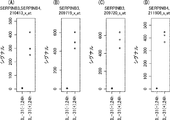
- (A) is a probe specific to SEPINB3 / B4, (B) (C) is a probe specific to SERPINB3, (D) is a probe specific to SERPINB4, each with and without IL-31 stimulation
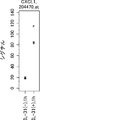
- the results measured for each group are shown. It is a figure which shows the result of the microarray analysis of CXCL1 in a HaCaT cell. The results measured for each group with and without IL-31 stimulation are shown. It is a figure which shows the result of the microarray analysis of CXCL6 in a HaCaT cell. The results measured for each group with and without IL-31 stimulation are shown. It is a figure which shows the result of the microarray analysis of TCHH in a HaCaT cell.
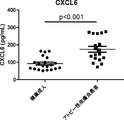
- the results measured for each group with and without IL-31 stimulation are shown. It is a figure which shows the measurement result of the expression level of CXCL1 in the serum sample of a healthy adult and an atopic dermatitis patient. It is a figure which shows the measurement result of the expression level of CXCL6 in the serum sample of a healthy adult and atopic dermatitis patient. It is a figure which shows the measurement result of the expression level of TCHH in the serum sample of a healthy adult and an atopic dermatitis patient. It is a figure which shows the result of the microarray analysis of S100A9 in cynomolgus monkey skin. The results measured for each group with and without IL-31 stimulation are shown.
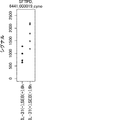
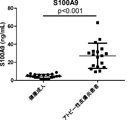
- FIG. 1 shows the result of the microarray analysis of SFTPD in cynomolgus monkey skin. The results measured for each group with and without IL-31 stimulation are shown. It is a figure which shows the expression level of S100A9 in the healthy adult and the serum sample of atopic dermatitis patient. It is a figure which shows the expression level of SFTPD in the serum sample of a healthy adult and atopic dermatitis patient. Serum SERPINB3 / B4 concentrations in healthy adults, patients with atopic dermatitis administered with placebo, and patients with atopic dermatitis administered with anti-human IL-31 receptor A antibody (non-responder / responder) FIG.
- the present invention relates to a method for predicting the response of a patient suffering from pruritus to a treatment with an IL-31 antagonist, in a sample obtained from a patient suffering from pruritus (1) SERPINB3 and / Or SERPINB4 (2) S100A9 (3) CXCL1 (4) SFTPD (5) TCHH and (6) CXCL6 Measuring the expression level of at least one marker selected from the group consisting of:
- a patient with a high expression level of a marker in a sample obtained from a patient is judged to be a responder to treatment with an IL-31 antagonist, and a patient with a low expression level is not responding to treatment with an IL-31 antagonist.
- a high expression level of a marker means that the measurement value of the marker is higher than a predetermined value set for the marker, and a low expression level of the marker means that the expression level of the marker is low. It means that it is less than or equal to the preset value.
- the method of the present invention when the expression level of a marker measured in a sample obtained from a patient is higher than a predetermined value set for the marker, the patient responds to treatment with an IL-31 antagonist. It is shown that it is a person.
- the method of the invention comprises the step of comparing the expression level of a marker measured in a sample obtained from a patient with a predetermined value set for the marker, and the measured expression level Determining that the patient is a responder to treatment with an IL-31 antagonist when the is higher than the predetermined value.
- the marker in the present invention can also be referred to as a biomarker, and is a specific biochemistry that can be objectively measured and evaluated as an indicator of normal biological process, pathogenesis process, or pharmacological responsiveness to treatment. Refers to a substance.
- the marker is useful for evaluating the presence / absence of disease, progression, or susceptibility to disease, evaluating or predicting the effect, optimum dose, or safety of a drug, or predicting prognosis.
- the marker in the present invention is specified by a gene name, and the gene serving as the marker is preferably measured as a polypeptide or polynucleotide, and particularly preferably measured as a polypeptide.
- the measurement of the expression level of the marker can be carried out by selecting an appropriate method according to the form of the marker or the type of sample for which the expression level of the marker is to be measured.
- the marker form is a polypeptide
- the measurement is preferably performed by an immunological technique using an antibody that specifically binds to the polypeptide. Examples of such a technique include enzyme immunoassay (ELISA, EIA).
- Fluorescence immunoassay FIA
- radioimmunoassay RIA
- luminescence immunoassay LIA
- electrochemiluminescence ECL
- Western blotting method surface plasmon resonance method, method using antibody array
- FACS fluorescence activated cell sorting
- FACS fluorescence activated cell sorting
- chromatography an immunoprecipitation method
- immunoturbidimetric an immunoturbidimetric method
- latex agglutination method a latex agglutination method.
- the form of the marker is a polynucleotide
- PCR polymerase chain reaction
- RT-PCR Reverse transcription PCR
- Q-PCR real-time quantitative PCR
- Northern blotting method hybridization method (including methods using oligonucleotide arrays such as DNA microarrays) and the like.
- the sample in the present invention can also be called a biological sample, and refers to an organ, tissue, cell, body fluid, or a mixture thereof contained in the living body. Specific examples include skin, respiratory tract, intestinal tract, urogenital tract, nerve, tumor, bone marrow, blood cell, blood (whole blood, plasma, serum), lymph, cerebrospinal fluid, intraperitoneal fluid, synovial fluid, intrapulmonary Examples include liquid, saliva, sputum, and urine. In addition, samples obtained by washing these or those obtained by culturing in vitro are also included in the sample in the present invention.
- a preferred sample in the present invention is blood, and a particularly preferred sample is plasma or serum.
- a sample obtained from a patient or the like may be processed by a method such as concentration, purification, extraction, isolation, or physical / chemical treatment before being subjected to measurement of the expression level of the marker.
- a method such as concentration, purification, extraction, isolation, or physical / chemical treatment before being subjected to measurement of the expression level of the marker.
- blood cells or plasma components may be separated from a blood sample, or DNA or RNA may be extracted from a tissue / cell sample.
- unnecessary components may be denatured / removed by heating or a chemical reagent.
- Such processing is performed mainly for the purpose of improving sensitivity and specificity for measuring the expression level of the marker.
- the predetermined value in the present invention means a value determined in advance on the basis of some scientific basis, but on the basis of the value, a patient suffering from a disease with pruritus is treated for treatment with an IL-31 antagonist. Any value can be used as long as it can be determined whether the responder or the non-responder.
- the predetermined value in the present invention may be set for each marker as described later.
- the predetermined value in the present invention can be set, for example, from the measured value of the marker in a sample (control sample) obtained from a healthy adult.
- a sample control sample
- the average value of the marker measurement values in samples obtained from multiple healthy adults may be used as it is, or as another possible measure, the average value of the measurement values is 1.0 times or 1.5 times the standard deviation.
- a value obtained by adding a value of 2.0 times, 2.5 times, or 3.0 times may be set as the predetermined value.
- the expression level of the marker is measured in a sample obtained from a patient suffering from pruritus as compared to the expression level of the marker measured in a sample obtained from a healthy adult (control sample).
- the high expression level of the marker indicates that the patient is a responder to treatment with an IL-31 antagonist.
- the predetermined value in the present invention can be set based on the results of treatment with a IL-31 antagonist for a plurality of patients suffering from pruritus-related diseases such as clinical trials.
- that reference value is determined according to the present invention.
- it is associated with pruritus as compared to the expression level of a marker measured in a sample obtained from a patient suffering from pruritus-related disease that has a low therapeutic effect with an IL-31 antagonist.
- a marker measured in a sample obtained from a patient suffering from pruritus-related disease that has a low therapeutic effect with an IL-31 antagonist.
- High levels of marker expression measured in samples obtained from patients suffering from the disease indicate that the patient is a responder to treatment with an IL-31 antagonist.
- the measured value or predetermined value of the marker in the present invention means a value obtained by quantifying the measurement result of the expression level of the marker by some method, but the value obtained as a result of the measurement (for example, color intensity) is used as it is.
- a positive control sample with a known amount of marker included may be prepared separately, and a value (for example, concentration) obtained by converting a measurement result by comparison with the sample may be used.
- values obtained by scoring by dividing the values obtained as described above within a certain range for example, grades 1, 2, 3, etc.
- the patient from whom the sample is obtained may be any patient as long as it suffers from pruritus-related diseases. It may be a patient who has not yet received treatment for a disease involving pruritus, or a patient who has already received treatment.
- the present invention provides a method for monitoring the patient's responsiveness to treatment with an IL-31 antagonist or to continue treatment with an IL-31 antagonist for the patient. Provide a way to determine whether or not to do.
- IL-31 Interleukin-311 is a newly discovered T cell cytokine. In transgenic mice that overexpress IL-31, dermatitis-like symptoms similar to atopic dermatitis develop and persist. It is known to be involved in pruritus, such as typical scratching behavior.
- nucleic acid sequence and amino acid sequence of human IL-31 are described in SEQ ID NO: 1 (RefSeq accession number NM_001014336) and SEQ ID NO: 2 (RefSeq accession number NP_001014358), respectively.
- IL-31 receptor is formed from heterodimer of IL-31 receptor A (IL-31RA) and oncostatin M receptor (OSMR) (Nat Immunol (2004) 5 752-60).
- IL-31RA is also called NR10 and is known to have multiple splicing variants (see WO00 / 075314). Splicing variants include NR10.1 (652 amino acids), NR10.2 (252 amino acids), NR10.3 (662 amino acids, also called IL-31RAv4), IL-31RAv3 (764 amino acids), etc.
- Preferred IL-31RA includes NR10.3 (IL-31RAv4) and IL-31RAv3.
- the human IL-31RA (IL-31RAv4) nucleic acid sequence and amino acid sequence are respectively represented by SEQ ID NO: 3 (RefSeq accession number NM_001242638) and SEQ ID NO: 4 (RefSeq accession number NP_001229567).
- the nucleic acid sequence and amino acid sequence are shown in SEQ ID NO: 5 (RefSeq accession number NM_139017) and SEQ ID NO: 6 (RefSeq accession number NP_620586), respectively.
- the nucleic acid sequence and amino acid sequence of human OSMR are shown in SEQ ID NO: 7 (RefSeq registration number NM_003999) and SEQ ID NO: 8 (RefSeq registration number NP_003990), respectively.
- the IL-31 antagonist in the present invention means a compound that suppresses or blocks intracellular signal transduction caused by IL-31, which can also be referred to as a compound that inhibits IL-31 signal.
- a compound may be a naturally occurring compound or an artificially synthesized compound.
- a low molecular compound may be sufficient and a high molecular compound like protein may be sufficient.
- Extracellular IL-31 is known to cause intracellular signal transduction via IL-31 receptors (IL-31RA and OSMR heterodimers) present on the cell surface (Nat Immunol (2004 ) 5, 752-760).
- the extracellular domain of IL-31 receptor contains an IL-31 binding domain, and when IL-31 binds to it, the conformation of the IL-31 receptor changes, resulting in IL-31 receptor Intracellular signaling is initiated from the intracellular domain of the body.
- a compound inhibits IL-31 signaling can be confirmed by examining whether the compound inhibits the binding between IL-31 and the IL-31 receptor, as one method. it can.
- Examples of a method for performing such measurement include an assay using ELISA and flow cytometry, and an assay using surface plasmon resonance.
- an assay using ELISA and flow cytometry examples include an assay using ELISA and flow cytometry, and an assay using surface plasmon resonance.
- an IL-31 receptor (or IL-31RA) protein is immobilized on a plate, and the amount of the IL-31 protein bound thereto is determined according to the enzyme-labeled anti-IL-31 antibody or the like.
- a compound inhibits IL-31 signaling can also be confirmed by examining whether the biological activity caused by the action of IL-31 on cells is inhibited by the compound. can do.
- the physiological activity here is not particularly limited as long as it is an activity that can be quantitatively or qualitatively measured by any method, and examples thereof include cell proliferation activity, protein phosphorylation activity, and gene / protein expression inducing activity.
- IL-31 Whether or not the compound has inhibited IL-31 signal can be evaluated by measuring whether the induced cell proliferation activity is reduced.
- natural cells that naturally express the IL-31 receptor may be used, or genetically modified cells that artificially express the IL-31 receptor may be used. Good.
- the genetically modified cells include Ba / F3 cells expressing IL-31 receptor.
- the method described in Dillon et al. can also be used.
- the degree to which IL-31 antagonist inhibits IL-31 signal is not particularly limited, but at least 10% or more, preferably 20% or more, 30% or more, 40% or more, 50% or more, 60% or more, Inhibits 70% or more, 80% or more, particularly preferably 90% or more, 95% or more, 98% or more.
- a preferred embodiment of the compound that inhibits IL-31 signal includes a protein that inhibits IL-31 signal.
- the protein here is not particularly limited as long as it is a protein that specifically binds to IL-31 or IL-31 receptor.
- Preferred examples include antibodies and antibody-like molecules (Curr Opin Biotechnol (2006) 17 , 653-658, Curr Opin Struct Biol (1997) 7, 463-469, Protein Sci (2006) 15, 14-27).
- antibodies include monoclonal antibodies (eg, IgG, IgM, IgE, IgA, IgD), polyclonal antibodies, modified antibodies (eg, chimeric antibodies, humanized antibodies, sugar chain-modified antibodies (WO99 / 54342, WO00 / 61739), etc.), Antibody fragments (for example, Fab, F (ab ') 2, Fv, CDR, etc.), multispecific antibodies (for example, bispecific antibodies), conjugate antibodies (for example, polyethylene glycol (PEG), radioisotopes, drugs, etc.) Any antibody, such as an antibody to which is added.
- monoclonal antibodies eg, IgG, IgM, IgE, IgA, IgD
- polyclonal antibodies eg, modified antibodies (eg, chimeric antibodies, humanized antibodies, sugar chain-modified antibodies (WO99 / 54342, WO00 / 61739), etc.
- Antibody fragments for example, Fab, F (ab
- antibody-like molecules examples include DARPin (WO2002 / 020565), Affibody (WO1995 / 001937), Avimer (WO2004 / 044011), Adnectin (WO2002 / 032925) and the like. More preferred are antibodies that inhibit the IL-31 signal.
- a protein that inhibits IL-31 signal is a protein containing the extracellular domain of IL-31RA, or each extracellular domain of IL-31 receptor (IL-31RA and OSMR heterodimer). Mention may be made of proteins containing.
- an antibody that inhibits IL-31 signal an antibody that inhibits IL-31 signal by binding to IL-31 (anti-IL-31 neutralizing antibody), or IL-31 receptor
- Anti-IL-31 receptor neutralizing antibodies include antibodies that inhibit IL-31 signal by binding to IL-31RA (anti-IL-31RA neutralizing antibody), and IL-31 signal by binding to OSMR.
- Antibody that inhibits IL-31 signal by binding to IL-31RA and OSMR heterodimer anti-IL-31RA / OSMR heterodimer neutralizing antibody
- An anti-IL-31RA neutralizing antibody or an anti-IL-31RA / OSMR heterodimer neutralizing antibody is preferable, and an anti-IL-31RA neutralizing antibody is more preferable.
- IL-31 protein or IL-31 receptor protein is used as an immunogen, a large number of anti-IL-31 antibodies and anti-IL-31 receptor antibodies can be obtained by these methods.
- screening is performed using the above-described method for detecting a compound that inhibits IL-31 signal, an anti-IL-31 neutralizing antibody or an anti-IL-31 receptor neutralizing antibody can be obtained.
- Proteins such as IL-31 and IL-31 receptor can be prepared by genetic engineering techniques known to those skilled in the art. Specifically, after inserting a gene encoding a desired protein into an expression vector and introducing it into an appropriate host cell, the target protein expressed in the host cell or in the culture supernatant of the host cell Can be prepared by purifying.
- anti-IL-31 neutralizing antibody examples include the anti-IL-31 antibody described in WO2006 / 122079 and the anti-IL-31 antibody described in WO2008 / 028192.
- anti-IL-31RA neutralizing antibody examples include an anti-IL-31RA (NR10) antibody described in WO2007 / 142325, an anti-IL-31RA (NR10) antibody described in WO2009 / 072604, and an anti-IL-31RA (NR10) antibody described in WO2010 / 064697.
- IL-31RA (NR10) antibody and the like can be mentioned.
- Another preferred example is an anti-IL-31RA antibody that recognizes domain 1 of human IL-31RA.
- domain 1 of human IL-31RA refers to a region from the 53rd amino acid to the 152nd amino acid (LPAKP to LENIA) in the amino acid sequence shown in SEQ ID NO: 6.
- the H chain variable region comprising CDR1 set forth in SEQ ID NO: 9, CDR2 set forth in SEQ ID NO: 10, and CDR3 set forth in SEQ ID NO: 11, and CDR1 set forth in SEQ ID NO: 12.
- An anti-IL-31RA antibody comprising a light chain variable region comprising CDR2 set forth in SEQ ID NO: 13 and CDR3 set forth in SEQ ID NO: 14, more preferably a heavy chain variable region set forth in SEQ ID NO: 15.
- an anti-IL-31RA antibody comprising the L chain variable region set forth in SEQ ID NO: 16, particularly preferably an anti-IL-31RA antibody comprising the H chain set forth in SEQ ID NO: 17 and the L chain set forth in SEQ ID NO: 18.
- IL-31RA antibody particularly preferably an anti-IL-31RA antibody comprising the H chain set forth in SEQ ID NO: 17 and the L chain set forth in SEQ ID NO: 18.
- CDR includes Kabat et al. (Sequences of Proteins of Immunological Interest, 5th Ed (1991), Bethesda, MD), Chothia et al. (Science (1986) 233, 755-758), antigens -Methods based on the contact region of antibodies (J Mol Biol (1996) 262, 732-745) are known. Specifically, the CDR by each method is defined as follows.
- CDR1, CDR2, and CDR3 contained in the H chain variable region described in SEQ ID NO: 15 and the L chain variable described in SEQ ID NO: 16 are used. Mention may be made of anti-IL-31RA antibodies comprising CDR1, CDR2 and CDR3 contained in the region as H chain CDR1, CDR2 and CDR3 and L chain CDR1, CDR2 and CDR3, respectively.
- the method for defining the CDR in such an antibody may be any of Kabat et al., Chothia et al., An antigen-antibody contact region-based method, or a combination thereof.
- Anti-IL-31RA that binds to the same epitope as the anti-IL-31RA antibody identified in the sequences of CDRs of H chain and L chain, H chain and L chain variable region, and full length of H chain and L chain. Antibodies are also preferred as anti-IL-31RA neutralizing antibodies.
- An epitope is a specific structural unit of an antigen that is recognized and bound by an antibody. When the antigen is a polypeptide, it usually consists of about 6 to 10 amino acids.
- Epitope identification is performed by a method of synthesizing a peptide in which an antigen is fragmented, a method of introducing a site-specific mutation into an antigen (for example, arginine / glutamate scanning, J Biol Chem (1995) 270, 21619-21625, J Biol Chem ( 2006) 281, 20464-20473) and methods known to those skilled in the art such as crystallization of antigen-antibody complexes (Using Antibodies: A Laboratory Manual (1999), Cold Spring Harbor Laboratory Press, New York).
- “binds to the same epitope” means that the epitopes to which two kinds of antibodies bind at least partially overlap.
- the degree of overlap is not particularly limited, but at least 10% or more, preferably 20% or more, 30% or more, 40% or more, 50% or more, 60% or more, 70% or more, 80% or more, particularly preferably 90% or more Most preferably 100% overlap.
- an anti-IL-31RA antibody whose binding to IL-31RA is specified by the CDR sequences of the above H chain and L chain, the sequence of the H chain and L chain variable regions, and the sequence of the entire H chain and L chain, Competing anti-IL-31RA antibodies are also preferred as anti-IL-31RA neutralizing antibodies.
- two types of antibodies compete with each other can be evaluated by a competitive binding assay using ELISA or the like. Specifically, one of the two types of antibodies is pre-labeled with fluorescence or the like, and a system for detecting the binding of the antibody (labeled antibody) to the antigen is prepared.
- the amount of binding of the labeled antibody to the antigen is reduced when the test antibody coexists, compared with the case where the non-coexisting antibody (test antibody) coexists. It can be determined that the antibody and the labeled antibody compete with each other.
- the degree of competing is not particularly limited, but at least 10% or more, preferably 20% or more, 30% or more, 40% or more, 50% or more, 60% or more, 70% or more, 80% or more, particularly preferably Compete for 90% or more, 95% or more, 98% or more (ie, reduce the amount of binding of the other antibody).
- the pruritus in the present invention may be pruritus caused by any cause, but is preferably pruritus caused by IL-31.
- the disease accompanied by pruritus in the present invention may be any disease as long as pruritus is caused as a result of suffering from the disease.
- Specific examples include atopic dermatitis, contact Dermatitis, neurodermatitis, seborrheic dermatitis, self-sensitizing dermatitis, caterpillar dermatitis, lice parasitism, insect bite, sebum deficiency, senile cutaneous pruritus, nodular prurigo, shingles, Urticaria, impetigo, eczema, sweat, herpes zoster, pemphigoid, rosacea acne, acne vulgaris, ringworm, psoriasis, lichen, scabies, vitiligo, psoriasis, alopecia areata, Photosensitivity, biliary obstruction, primary biliary cirrhosis, viral hepatitis, uremia, chronic renal failure, hemodialysis, gout,
- the present invention also relates to a therapeutic agent for diseases associated with pruritus, comprising an IL-31 antagonist as an active ingredient, and (1) SERPINB3 and / or in a sample obtained from a patient suffering from diseases associated with pruritus SERPINB4 (2) S100A9 (3) CXCL1 (4) SFTPD (5) TCHH and (6) CXCL6
- the therapeutic agent is administered to a patient having a high expression level of at least one marker selected from the group consisting of:
- the present invention provides a method for predicting the response of a patient suffering from pruritus-related disease to treatment with an IL-31 antagonist.
- a therapeutic agent comprising an IL-31 antagonist as an active ingredient and administered to a patient determined to be a responder to treatment with an IL-31 antagonist by the method is also provided.
- the present invention also relates to a method of treating a patient suffering from a disease associated with pruritus, wherein (1) SERPINB3 and / or SERPNB4 in a sample obtained from the patient suffering from a pruritus-related disease (2) S100A9 (3) CXCL1 (4) SFTPD (5) TCHH and (6) CXCL6 Administering an IL-31 antagonist to a patient having a high expression level of at least one marker selected from the group consisting of:
- the present invention provides a method for predicting the response of a patient suffering from pruritus to a treatment with an IL-31 antagonist, so that the present invention provides a patient suffering from pruritus associated with a disorder.
- a method comprising the step of administering an IL-31 antagonist to a patient determined by the method to be a responder to treatment with an IL-31 antagonist.
- the method for treating a patient suffering from pruritus-related diseases includes: (a) obtaining a sample from a patient suffering from a disease involving pruritus, (b) in the sample (1) SERPINB3 and / or SERPINB4 (2) S100A9 (3) CXCL1 (4) SFTPD (5) TCHH and (6) CXCL6 Measuring the expression level of at least one marker selected from the group consisting of: (c) a step of comparing the measured value of the marker in the sample obtained from the patient with a predetermined value set for the marker, and (d) a case where the measured value of the marker is higher than the predetermined value. 31 administering an antagonist; And the like.
- the present invention also provides an IL-31 antagonist for use in the treatment of a disease associated with pruritus, in a sample obtained from a patient suffering from a disease associated with pruritus (1) SERPINB3 and / or SERPINB4 (2) S100A9 (3) CXCL1 (4) SFTPD (5) TCHH and (6) CXCL6 It relates to an IL-31 antagonist, characterized in that it is administered to a patient having a high expression level of at least one marker selected from the group consisting of:
- the present invention provides a method for predicting response to treatment with an IL-31 antagonist in a patient suffering from pruritus-related diseases, so that the present invention is used for the treatment of diseases associated with pruritus.
- the IL-31 antagonist is administered to a patient determined by the method to be a responder to treatment with an IL-31 antagonist.
- the present invention also relates to the use of an IL-31 antagonist in the manufacture of a therapeutic agent for diseases associated with pruritus, wherein (1) SERPINB3 and / or SERPINB4 in a sample obtained from a patient suffering from pruritus-related diseases (2) S100A9 (3) CXCL1 (4) SFTPD (5) TCHH and (6) CXCL6 It relates to the use of an IL-31 antagonist, characterized in that the therapeutic agent is administered to a patient with a high expression level of at least one marker selected from the group consisting of
- the present invention provides a method for predicting the response to treatment with an IL-31 antagonist in patients suffering from pruritus-related diseases.
- the present invention also relates to a method for selecting a patient suffering from a disease associated with pruritus, wherein (1) SERPINB3 and / or SERPNB4 in a sample obtained from a patient suffering from a pruritus associated disease (2) S100A9 (3) CXCL1 (4) SFTPD (5) TCHH and (6) CXCL6 And determining that a patient with a high expression level of at least one marker selected from the group consisting of is a responder to treatment with an IL-31 antagonist.
- the method for screening patients suffering from pruritus-related diseases in the present invention includes: (a) obtaining a sample from a patient suffering from a disease involving pruritus, (b) in the sample (1) SERPINB3 and / or SERPINB4 (2) S100A9 (3) CXCL1 (4) SFTPD (5) TCHH and (6) CXCL6 Measuring the expression level of at least one marker selected from the group consisting of: (c) a step of comparing the measured value of the marker in the sample obtained from the patient with a predetermined value set for the marker; and (d) a patient whose measured value of the marker is higher than the predetermined value. 31 determining a responder to treatment with an antagonist; And the like.
- the present invention also provides a kit for predicting a response to treatment with an IL-31 antagonist in a patient suffering from a disease involving pruritus, (1) SERPINB3 and / or SERPINB4 (2) S100A9 (3) CXCL1 (4) SFTPD (5) TCHH and (6) CXCL6 And a reagent for measuring the expression level of at least one marker selected from the group consisting of:
- the kit may further include instructions describing how to use the kit.
- a preferable example may be an instruction describing that it is determined that a patient having a predetermined value or less is a non-responder to treatment with an IL-31 antagonist.
- the reagent contained in the kit of the present invention is not particularly limited as long as the expression level of the marker can be measured, but a reagent corresponding to the form of the marker can be appropriately selected.
- a reagent corresponding to the form of the marker can be appropriately selected.
- the marker form is a polypeptide
- a reagent containing an antibody that specifically binds to the polypeptide is preferable.
- the marker form is a polynucleotide
- an oligonucleotide that specifically binds to the polynucleotide is used.
- the containing reagent is preferred.
- the kit of the present invention preferably includes a positive control sample that serves as a reference when measuring the expression level of the marker.
- the positive control sample is not particularly limited as long as the amount of the marker contained therein is specified in advance, but can be appropriately prepared according to the form of the marker measured with the kit.
- a sample containing a polypeptide obtained by isolating and purifying the same polypeptide as the marker is preferably used as the positive control sample.
- the method for predicting the response to treatment with an IL-31 antagonist in a patient suffering from pruritus-related disease is to evaluate the effectiveness of the patient suffering from pruritus-related disease due to treatment with an IL-31 antagonist. It can be paraphrased as a method of doing. In other words, it can be paraphrased as a method of selecting a patient suitable for treatment with an IL-31 antagonist from patients suffering from diseases involving pruritus.
- a marker for predicting response to treatment with an IL-31 antagonist selects a marker for predicting response to treatment with an IL-31 antagonist, a marker for assessing efficacy for the treatment, or a patient suitable for the treatment in a patient suffering from pruritus-related disease
- it can be rephrased as a method of detecting a marker.
- the present invention can provide a method of obtaining an intermediate result for assessing the response of a patient suffering from pruritus to a treatment with an IL-31 antagonist.
- the present invention can provide a method for obtaining intermediate results for screening patients suffering from diseases involving pruritus.
- the present invention can provide a method of obtaining intermediate results for the diagnosis of diseases involving pruritus.
- a patient suffering from a disease with pruritus is a responder to treatment with an IL-31 antagonist means that treatment with an IL-31 antagonist reduces the pruritus in the patient, and no response Being a person means that treatment with an IL-31 antagonist does not reduce pruritus in the patient.
- the disease accompanied by pruritus is a skin disease such as atopic dermatitis
- responders are accompanied by the effect of treating the underlying skin disease in addition to the effect of reducing pruritus. Also good. Whether pruritus has been reduced can be evaluated by methods known to those skilled in the art.
- VAS Visual Analogue Scale
- SERPINB3 and / or SERPINB4 SERPINB3 are proteins having a molecular weight of about 45000 and are serine protease inhibitors belonging to the Serpin family.
- SERPINB3 and SERPINB4 are both types of squamous cell carcinoma antigen (SCCA), also known as SCCA1 and SCCA2, and are high in patients with cervical cancer, esophageal cancer, lung cancer, skin cancer, etc. It shows blood concentration and is also used for cancer diagnosis.
- SCCA squamous cell carcinoma antigen
- SERPINB3 SCCA1
- SCCA2 SERPINB4
- SCCA1 SERPINB3
- SCCA2 SERPINB4
- SERPINB3 and SERPINB4 have been reported to slightly increase the expression level of mRNA in keratinocyte cells stimulated with IL-31 (J Allergy Clin Immunol (2012) 129, 426-433).
- the nucleic acid sequence and amino acid sequence of human SERPNB3 are shown in SEQ ID NO: 19 (RefSeq registration number NM_006919) and SEQ ID NO: 20 (RefSeq registration number NP_008850), respectively.
- the nucleic acid sequence and amino acid sequence of human SERPINB4 are shown in SEQ ID NO: 21 (RefSeq accession number NM_002974) and SEQ ID NO: 22 (RefSeq accession number NP_002965), respectively.
- SERPINB3 and SERPINB4 are very high, 95% and 91%, respectively, and it is not always easy to distinguish and specifically measure them. In many cases, measurements are made simultaneously. For example, by setting a primer for gene amplification or a probe for gene detection at a common part of both nucleic acid sequences and performing detection, both can be measured simultaneously, and both amino acid sequences It is also possible to measure both at the same time by preparing an antibody that binds to a common portion in and performing detection using an antigen-antibody reaction such as ELISA.
- an antigen-antibody reaction such as ELISA.
- SERPINB3 or SERPINB4 may be used alone as a marker, or a combination of both may be used as a marker.
- SERPINB3 and SERPINB4 may be measured after SERPINB3 and SERPINB4 are individually measured, or the results may be combined, or SERPINB3 and SERPINB4 may be simultaneously measured by the method described above.
- the notation “SERPINB3 / B4” in this specification represents SERPINB3 and SERPINB4 when measured by a method that does not distinguish between the two.
- the measurement of the expression level of SERPINB3 and / or SERPINB4 can be performed using the measurement method described in the present invention, or a commercially available measurement reagent (for example, Architect SCC (registered trademark) (Abbott Japan Co., Ltd.). )). Specific measurement values and predetermined values of SERPINB3 and / or SERPINB4 described in the present specification can be interpreted as values measured using the measurement reagent.
- the predetermined value set for SERPINB3 and / or SERPINB4 may vary depending on the type of patient sample for which the expression level of SERPINB3 and / or SERPINB4 is to be measured, for example, 0.1 to 100 ng / mL It can be set from the range. Or 0.2 to 90 ng / mL, 0.3 to 80 ng / mL, 0.4 to 70 ng / mL, 0.5 to 60 ng / mL, 1.0 to 50 ng / mL, 1.5 to 40 ng / mL, 2.0 to 30 ng / mL , 2.5 to 20 ng / mL, 3.0 to 10 ng / mL, etc. can also be set, but it is not limited thereto.
- the predetermined values set for SERPNB3 and / or SERPNB4 are 0.1 ng / mL, 0.2 ng / mL, 0.3 ng / mL, 0.4 ng / mL, 0.5 ng / mL, 0.6 ng / mL, 0.7 ng / mL, 0.8 ng / mL, 0.9 ng / mL, 1.0 ng / mL, 1.5 ng / mL, 2.0 ng / mL, 2.5 ng / mL, 3.0 ng / mL, 3.5 ng / mL, 4.0 ng / mL, 4.5 ng / mL, 5.0 ng / mL, 5.5 ng / mL, 6.0 ng / mL, 6.5 ng / mL, 7.0 ng / mL, 7.5 ng / mL, 8.0 ng / /
- S100A9 S100 calcium binding protein A9 is a protein having a molecular weight of about 14000 and belongs to the EF-hand calcium binding S100 protein family.
- S100A9 also known as calgranulin B or MRP14 (migration inhibitory factor-related protein 14)
- MRP14 migration inhibitory factor-related protein 14
- S100A9 is known to have an increased gene expression level in the skin of atopic dermatitis patients (Exp Dermatol (2012) 21, 184-188).
- S100A9 has been reported to induce mRNA expression in keratinocyte cells stimulated with IL-31 (WO2006 / 063865).
- S100A9 The nucleic acid sequence and amino acid sequence of human S100A9 are shown in SEQ ID NO: 23 (RefSeq registration number NM_002965) and SEQ ID NO: 24 (RefSeq registration number NP_002956), respectively.
- the expression level of S100A9 can be measured using the measurement method described in the present invention, or can be performed using a commercially available measurement reagent (for example, CircuitLex S100A9 / MRP14 ELISA Kit (Circulex)). . Specific measurement values and predetermined values of S100A9 described in this specification can be interpreted as values measured using the measurement reagent.
- the predetermined value set for S100A9 may vary depending on the type of patient sample for which the expression level of S100A9 is to be measured, but can be set, for example, in the range of 0.1 to 100 ng / mL.
- 0.5 to 90 ng / mL, 1.0 to 85 mLng / mL, 1.5 to 80 ng / mL, 2.0 to 75 ng / mL, 2.5 to 70 ng / mL, 3.0 to 65 ng / mL, 4.0 to 60 ng / mL , 5.0 to 55 ng / mL, 10 to 50 ng / mL, and the like can also be set, but is not limited thereto.
- the predetermined values set for S100A9 are 0.1 ng / mL, 0.5 ng / mL, 1.0 ng / mL, 1.5 ng / mL, 2.0 ng / mL, 2.5 ng / mL, 3.0 ng / mL, 3.5 ng / mL, 4.0 ng / mL, 4.5 ng / mL, 5.0 ng / mL, 5.5 ng / mL, 6.0 ng / mL, 6.5 ng / mL, 7.0 ng / mL, 7.5 ng / mL, 8.0 ng / mL, 8.5 ng / mL, 9.0 ng / mL, 9.5 ng / mL, 10 ng / mL, 15 ng / mL, 20 ng / mL, 25 ng / mL, 30 ng / mL, 35
- CXCL1 (chemokine (CXC motif) ligand 1) is a protein having a molecular weight of about 7800 and is a kind of chemokine belonging to the CXC family, and is also called GRO- ⁇ (growth regulated oncogene- ⁇ ).
- CXCL1 has been reported to vary in gene level and protein level in tissues and blood of patients with malignant tumors such as colorectal cancer, ovarian cancer, and malignant melanoma.
- CXCL1 is known to have an increased protein expression level in the skin of patients with atopic dermatitis (Methods (2012) 56, 198-203).
- CXCL1 has been reported to be induced by IL-31 stimulation in a state where eosinophils and keratinocyte cells or fibroblasts are co-cultured (Int Immunol (2010) 22, 453- 467, PLoS One (2012) 7, e29815).
- the nucleic acid sequence and amino acid sequence of human CXCL1 are shown in SEQ ID NO: 25 (RefSeq registration number NM_001511) and SEQ ID NO: 26 (RefSeq registration number NP_001502), respectively.
- the measurement of the expression level of CXCL1 can be performed using the measurement method described in the present invention, or is performed using a commercially available measurement reagent (for example, Human CXCL1 / GRO alpha alphaQuantikine ELISA ELISA (R & D Systems)). You can also. Specific measurement values and predetermined values of CXCL1 described in the present specification can be interpreted as values measured using the measurement reagent.
- the predetermined value set for CXCL1 may vary depending on the type of patient sample for which the expression level of CXCL1 is to be measured, but can be set, for example, in the range of 40 to 800 pg / mL. Or 50 to 780 pg / mL, 60 to 760 pg / mL, 70 to 740 pg / mL, 80 to 720 pg / mL, 90 to 700 pg / mL, 100 to 680 pg / mL, 110 to 660 pg / mL , 120 to 640 ⁇ pg / mL, 130 to 620 ⁇ pg / mL, etc. can also be set, but it is not limited to these.
- the predetermined values set for CXCL1 are 40 ⁇ pg / mL, 50 ⁇ pg / mL, 60 ⁇ pg / mL, 70 ⁇ pg / mL, 80 ⁇ pg / mL, 90 ⁇ pg / mL, 100 ⁇ pg / mL, 110 pg / mL, 120 ⁇ pg / mL, 130 ⁇ pg / mL, 140 ⁇ pg / mL, 150 ⁇ pg / mL, 160 ⁇ pg / mL, 170 ⁇ pg / mL, 180 ⁇ pg / mL, 190 ⁇ pg / mL, 200 ⁇ pg / mL, 210 pg / mL, 220 pg / mL, 230 pg / mL, 240 pg / mL, 250 pg / mL,
- SFTPD surfactant protein D
- SFTPD surfactant protein D
- collectin a protein with a molecular weight of about 43,000 and is a kind of protein called collectin.
- SFTPD is a component of pulmonary surfactant and is known to be involved in biological defense as a factor of innate immunity as well as being contributed to maintaining smooth breathing by being secreted into the alveoli.
- SFTPD has an increased protein expression level in the spinous layer of the epidermis of patients with atopic dermatitis, but when comparing the serum concentration of SFTPD, It has been reported that there is no difference between patients with atopic dermatitis and healthy adults (Exp Dermatol (2006) 15, 168-174).
- SEQ ID NO: 27 The nucleic acid sequence and amino acid sequence of human SFTPD are shown in SEQ ID NO: 28 (RefSeq registration number NP_003010), respectively.
- the measurement of the expression level of SFTPD can be performed using the measurement method described in the present invention, or a commercially available measurement reagent (for example, SP-D kit “Yamasa” EIAII (Yamasa Soy Sauce Co., Ltd.)) is used. Can also be done. Specific measured values and predetermined values of SFTPD described in the present specification can be interpreted as values measured using the measurement reagent.
- a commercially available measurement reagent for example, SP-D kit “Yamasa” EIAII (Yamasa Soy Sauce Co., Ltd.
- the predetermined value set for SFTPD may vary depending on the type of sample of the patient whose SFTPD expression level is to be measured, but can be set, for example, in the range of 1.0 to 400 ⁇ ng / mL. Or 5.0 to 350 ng / mL, 10 to 300 ng / mL, 20 to 250 ng / mL, 25 to 200 ng / mL, 30 to 190 ng / mL, 35 to 180 ng / mL, 40 to 170 ng / mL , 45 to 160 ng / mL, 50 to 150 ng / mL, and the like.
- the predetermined values set for SFTPD are 1.0 ng / mL, 2.0 ng / mL, 5.0 ng / mL, 10 ng / mL, 15 ng / mL, 20 ng / mL, 25 ng / mL, 30 ng / mL, 35 ng / mL, 40 ng / mL, 45 ng / mL, 50 ng / mL, 55 ng / mL, 60 ng / mL, 65 ng / mL, 70 ng / mL, 75 ng / mL, 80 ng / mL, 85 ng / mL, 90 ng / mL, 95 ng / mL, 100 ng / mL, 110 ng / mL, 120 ng / mL, 130 ng / mL, 140 ng / mL, 150 ng / mL
- TCHH trichohyalin
- TCHH is a protein having a molecular weight of about 220,000. It is thought to be involved in keratinization of cells by specifically expressing it at a site called the inner root sheath of the hair follicle, which is an organ that produces hair, and binding to and joining the keratin filaments there. So far, there has been no particular report regarding an association with diseases accompanied by pruritus such as atopic dermatitis.
- the nucleic acid sequence and amino acid sequence of human TCHH are shown in SEQ ID NO: 29 (RefSeq accession number NM_007113) and SEQ ID NO: 30 (RefSeq accession number NP_009044), respectively.
- the measurement of the expression level of TCHH can be performed using the measurement method described in the present invention, or can be performed using a commercially available measurement reagent (for example, ELISA Kit for Trichohyalin (TCHH) (USCN)). it can.
- a commercially available measurement reagent for example, ELISA Kit for Trichohyalin (TCHH) (USCN)
- TCHH Trichohyalin
- USCN ELISA Kit for Trichohyalin
- a specific measured value or predetermined value of TCHH described in the present specification can be interpreted as a value measured using the measurement reagent.
- the predetermined value set for TCHH may vary depending on the type of sample of the patient whose TCHH expression level is to be measured, but can be set, for example, in the range of 10 to 400 ng / mL. Or 20 to 380 ng / mL, 30 to 350 ng / mL, 40 to 320 ng / mL, 50 to 300 ng / mL, 60 to 280 ng / mL, 70 to 260 ng / mL, 80 to 240 ng / mL , 90 to 220 ng / mL, 100 to 200 ng / mL, etc. can also be set, but not limited thereto.
- the predetermined values set for TCHH are 10 ng / mL, 15 ng / mL, 20 ng / mL, 25 ng / mL, 30 ng / mL, 35 ng / mL, 40 ng / mL, 45 ng / mL, 50 ng / mL, 55 ng / mL, 60 ng / mL, 65 ⁇ ng / mL, 70 ng / mL, 75 ng / mL, 80 ng / mL, 85 ng / mL, 90 ng / mL, 95 ng / mL, 100 ng / mL, 105 ng / mL, 110 ng / mL, 115 ng / mL, 120 ng / mL, 125 ng / mL, 130 ng / mL, 135 ng / mL, 140 ng
- CXCL6 (chemokine (CXC motif) ligand 6) is a protein with a molecular weight of about 12000, a type of chemokine belonging to the CXC family, also known as GCP2 (granulocyte chemotactic protein 2) and SCYB6 (small-inducible cytokine B6).
- GCP2 granulocyte chemotactic protein 2
- SCYB6 small-inducible cytokine B6
- the nucleic acid sequence and amino acid sequence of human CXCL6 are shown in SEQ ID NO: 31 (RefSeq registration number NM_002993) and SEQ ID NO: 32 (RefSeq registration number NP_002984), respectively.
- the measurement of the expression level of CXCL6 can be performed using the measurement method described in the present invention, or by using a commercially available measurement reagent (for example, Human CXCL6 / GCP-2 Quantikine ELISA Kit (R & D Systems)). It can also be done. Specific measurement values and predetermined values of CXCL6 described in the present specification can be interpreted as values measured using the measurement reagent.
- a commercially available measurement reagent for example, Human CXCL6 / GCP-2 Quantikine ELISA Kit (R & D Systems)
- the predetermined value set for CXCL6 may vary depending on the type of sample of the patient whose CXCL6 expression level is to be measured, but can be set, for example, in the range of 10 to 400 ⁇ g / mL. Or 20 to 390 pg / mL, 30 to 380 pg / mL, 40 to 370 pg / mL, 50 to 360 pg / mL, 60 to 350 pg / mL, 70 to 340 pg / mL, 80 to 330 pg / mL , 90 to 320 ⁇ pg / mL, 100 to 310 ⁇ pg / mL, and the like can be set, but not limited thereto.
- the predetermined values set for CXCL6 are 10 pg / mL, 20 pg / mL, 30 pg / mL, 40 pg / mL, 50 pg / mL, 60 pg / mL, 70 pg / mL, 80 pg / mL, 90 pg / mL, 100 pg / mL, 105 pg / mL, 110 pg / mL, 115 pg / mL, 120 pg / mL, 125 pg / mL, 130 pg / mL, 135 pg / mL, 140 pg / mL, 145 pg / mL, 150 pg / mL, 155 pg / mL, 160 pg / mL, 165 pg / mL, 170 pg
- IL-31 and IL-31RA can be mentioned in addition to the above.
- the measurement of the expression level of IL-31 or IL-31RA can be performed using the measurement method described in the present invention, or can be performed using a commercially available measurement reagent.
- one of the markers listed in the present specification may be selected and used, or two or more may be selected and used in combination.
- the present invention relates to a method for diagnosing a disease associated with pruritus, which comprises the step of determining that a patient having a high expression level of TCHH in a sample obtained from a patient is suffering from a disease associated with pruritus. About.
- the method for diagnosing pruritus-related diseases in the present invention includes: (a) obtaining a sample from a patient; (b) measuring the expression level of TCHH in the sample, (c) a step of comparing a measured value of TCHH in a sample obtained from a patient with a predetermined value, and (d) a patient whose TCHH measured value is higher than the predetermined value is suffering from a disease with pruritus. The process of judging, And the like.
- the present invention also relates to a kit for diagnosing pruritus-related diseases, comprising a reagent for measuring the expression level of TCHH.
- the kit may further include instructions describing how to use the kit.
- instructions describing how to use the kit it is desirable to describe a method for determining the result of measuring the expression level of TCHH. Specifically, it is described that a measured value of TCHH in a sample obtained from a patient is compared with a predetermined value, and a patient who is higher than the predetermined value is judged to have a disease with pruritus.
- the above instructions can be given as a preferred example.
- the animal that is the subject of the present invention is not particularly limited, but is preferably a mammal, particularly preferably a human.
- the IL-31 antagonist and marker of the present invention can be appropriately selected according to the target animal. That is, when a patient suffering from a pruritus-related disease is a human patient, a human marker may be measured in order to predict a response to treatment with a human IL-31 antagonist.
- the therapeutic agent in the present invention can be formulated by a known method by combining an IL-31 antagonist as an active ingredient and a pharmaceutically acceptable carrier.
- a pharmaceutically acceptable carrier or medium specifically, sterile water or physiological saline, vegetable oil, emulsifier, suspending agent, surfactant, stabilizer, flavoring agent, excipient, or IL-31 antagonist
- a pharmaceutical preparation by combining agents, vehicles, preservatives, binders and the like in an appropriate combination and mixing them in a unit dosage form generally required for pharmaceutical practice.
- Examples of carriers include light anhydrous silicic acid, lactose, crystalline cellulose, mannitol, starch, carmellose calcium, carmellose sodium, hydroxypropylcellulose, hydroxypropylmethylcellulose, polyvinylacetal diethylaminoacetate, polyvinylpyrrolidone, gelatin, medium chain fatty acid triglyceride , Polyoxyethylene hydrogenated castor oil 60, sucrose, carboxymethylcellulose, corn starch, inorganic salts, and the like. The amount of the active ingredient in these preparations can be appropriately set within the specified dose range.
- the dosage and administration method of the therapeutic agent of the present invention vary depending on the patient's weight, age, symptoms, etc., but can be appropriately selected by those skilled in the art.
- the dose can be selected, for example, within the range of 0.0001 mg to 1000 mg per kg of body weight per dose, or within the range of 0.001 to 100,000 mg / body per patient, but is not necessarily limited to these values. Absent.
- oral administration or parenteral administration can be selected. In general, oral administration is preferred when the active ingredient is a low molecular weight compound, and parenteral administration is preferred when the active ingredient is a high molecular weight compound.
- parenteral administration examples include injection administration, nasal administration, pulmonary administration, and transdermal administration
- examples of injection include intravenous injection, intramuscular injection, intraperitoneal injection, and subcutaneous injection. Can be mentioned.
- the therapeutic agent of the present invention can be administered systemically or locally.
- Example 1 Search for biomarker candidates using NHEK cells (1-1) Acquisition of cells and samples NHEK, which is the primary cell of human normal keratinocytes , was obtained from Lonza Walkersville Inc. (Product code: C2507A). The cells were cultured at 37 ° C. in an incubator in an atmosphere containing 5% CO 2 using KGM-Gold SingleQuots (Lonza) as a medium. Samples used for the microarray were 2 groups with and without IL-31 stimulation under IFN ⁇ stimulation conditions, and the N number was 3. IFN ⁇ was used to induce IL-31RA, a receptor for IL-31.
- the microarray uses GeneChip Human Genome U133 Plus 2.0 Array (Affymetrix), and hybridization and washing and staining of the array and fragmented cRNA use GeneChip (trademark) Hybridization, Wash, and Stain Kit (Affymetrix). The method was recommended by the manufacturer. Array data scanning was performed with GeneChip (registered trademark) Scanner 3000 7G upgrade (Affymetrix).
- SERPINB3 is a factor that is considered to be measurable in serum and plasma and that is most strongly induced by IL-31 stimulation.
- SERPINB4 was found. The results of microarray analysis of SERPINB3 and SERPINB4 are shown in FIG. These factors were not induced by stimulation with IFN ⁇ alone, suggesting that they have selectivity for IL-31. From these results, SERPINB3 and SERPINB4 were selected as biomarker candidate factors.
- Example 2 Search for biomarker candidates using HaCaT cells (2-1) Acquisition of cells and samples HaCaT, a cell line of human normal keratinocytes, was obtained from Deutsches Krebsgeberstechnik. The cells were cultured at 37 ° C. in an incubator in an atmosphere containing 5% CO 2 using DMEM (GIBCO) supplemented with 10% fetal calf serum (MOREGATE) and 1% penicillin / streptomycin (GIBCO) as a medium. did. Samples used for the microarray were (1) IL-31 stimulated, IFN ⁇ stimulated, (2) IL-31 stimulated, IFN ⁇ stimulated, 2 groups, N number was 3.
- IFN ⁇ was used to induce IL-31RA, a receptor for IL-31.
- IL-31RA a receptor for IL-31.
- 5 ⁇ 10 4 cells / well were seeded in a 24-well plate (Corning) and cultured. Then, after 1 day, the medium was removed and replaced with DMEM to which Human IFN ⁇ (Peprotech) was added so as to be 100 ng / mL. After further culturing for 1 day, Human IL-31 diluted in DMEM was added to a final concentration of 375 ng / mL. In addition, the same amount of DMEM was added to the group without IL-31 stimulation and cultured again.
- RNA microarray experiment of HaCaT cells The amount of total RNA extracted was measured with NanoDrop 1000 (Thermo Scientific), and the quality was measured with Agilent 2100 Bioanalyzer (Agilent Technologies) using RNA 6000 Pico Kit (Agilent Technologies). confirmed. Synthesis of cRNA from total RNA, labeling with biotin, and fragmentation were performed using GeneChip (registered trademark) 3 ′ IVT Express Kit (Affymetrix) by the method recommended by the manufacturer. The amount of labeled cRNA synthesized before fragmentation was measured with NanoDrop, and the quality was confirmed with Bioanalyzer using RNA 6000 Pico Kit (Agilent Technologies).
- the microarray uses GeneChip Human Genome U133 Plus 2.0 Array (Affymetrix), and hybridization and washing and staining of the array and fragmented cRNA use GeneChip (trademark) Hybridization, Wash, and Stain Kit (Affymetrix). The method was recommended by the manufacturer. Array data scanning was performed with GeneChip (registered trademark) Scanner 3000 7G upgrade (Affymetrix).
- SERPINB3 and SERPINB4 are factors that are induced by IL-31 stimulation and can be measured in blood.
- CXCL1, CXCL6, TCHH were found.
- the results of microarray analysis of SERPINB3 and SERPINB4 are shown in Fig. 2-1, the results of microarray analysis of CXCL1 are shown in Fig. 2-2, the results of microarray analysis of CXCL6 are shown in Fig. 2-3, and the results of microarray analysis of TCHH are shown in Fig. 2. -4.
- CXCL1, CXCL6, and TCHH were measured by ELISA using serum samples from 18 patients with atopic dermatitis purchased from PROTEOGENEX and serum samples obtained from healthy adults.
- CXCL1 ELISA kit is from R & D Systems (Cat.No. DGR00)
- CXCL6 ELISA kit is from R & D Systems (Cat.No. DGC00)
- TCHH is from Uscn Life Science Inc. (Cat.No. E96480Hu) Measurements were performed using an ELISA kit.
- the measurement results of CXCL1, CXCL6, and TCHH are shown in FIGS. 3-1, 3-2, and 3-3, respectively. A two-sided test was performed using a Student's t-test with no correspondence for statistical analysis.
- Example 3 Search for biomarker candidates using cynomolgus monkey skin (3-1) Acquisition of tissues and samples Vietnamese cynomolgus monkeys were obtained from Hamley Co., Ltd. Cynomolgus monkey abdominal skin was collected, soaked in 70% ethanol in a safety cabinet, and then subcutaneous fat was removed in phosphate buffered saline (PBS). The samples used for the microarray were a comparative examination of four types of conditions depending on the combination of the presence or absence of IL-31 stimulation and the presence or absence of Staphylococcal enterotoxin B (SEB) stimulation.
- SEB Staphylococcal enterotoxin B
- the sample used for the microarray was injected with 50 ⁇ L of stimulant into the collected skin tissue using an injection needle, floated in the stimulant after collection with a biopsy trepan (Kaiin Co., Ltd.) with a diameter of 4 mm around the injection site, and 5 It was obtained by culturing at 37 ° C. in an incubator under an atmosphere containing% CO 2 .
- the skin tissues subjected to various stimuli were prepared in groups of 5 samples, and after culturing, they were immediately frozen in liquid nitrogen, and total RNA was extracted using RNeasy plus kit (Qiagen).
- the amount of cDNA was measured with Quant-iT PicoGreen dsDNA Assay Kit (Life Technologies), and the quality was confirmed with Bioanalyzer using RNA 6000 Pico Kit (Agilent Technologies). Labeling of cDNA was performed using a NimbleGen One-Color DNA Labeling Kit (Roche NimbleGen) according to the method recommended by the manufacturer. The amount of labeled cDNA was measured with NanoDrop.
- the microarray used was NimbleGen 12-plex Gene Expression Array for Cynomolgus monkey (135K) (version II microarray in Reference 1).
- Hybridization and washing of labeled cDNA and arrays was performed using the NimbleGen Hybridization Kit (Roche NimbleGen), NimbleGen Sample Tracking Control Kit (Roche NimbleGen), and NimbleGen Wash Buffer Kit (Roche NimbleGen) as recommended by the manufacturer. .
- Microarray data was obtained by scanning the array with a Roche NimbleGen MS200 Microarray Scanner (Roche NimbleGen).
- References 1 Genome-based analysis of the nonhuman primate Macaca fascicularis as a model for drug safety assessment.Genome Res. 2011 Oct; 21 (10): 1746-56
- Example 4 Study of biomarkers in patients with atopic dermatitis (SERPINB3 / B4) (4-1) Healthy adults and patients with atopic dermatitis who participated in a phase I single-dose study of anti-human IL-31 receptor A antibody (H chain SEQ ID NO: 17, L chain SEQ ID NO: 18) Thus, serum samples were collected and evaluated with the consent for biomarker study. Serum sample providers received a single subcutaneous dose of 0.3 mg / kg, 1 mg / kg or 3 mg / kg of placebo or anti-human IL-31 receptor A antibody, Collected.
- SERPINB3 / B4 (4-1) Healthy adults and patients with atopic dermatitis who participated in a phase I single-dose study of anti-human IL-31 receptor A antibody (H chain SEQ ID NO: 17, L chain SEQ ID NO: 18)
- Serum sample providers received a single subcutaneous dose of 0.3 mg / kg, 1 mg / kg or 3 mg / kg of placebo or anti-human IL-31 receptor
- the number of cases was 24 healthy adults, 6 patients with atopic dermatitis, placebo, 5 patients with anti-human IL-31 receptor A antibody 0.3 mg / kg, 6 patients with 1 mg / kg, 3 There were 7 patients in the mg / kg group.
- the collected serum samples were stored at -70 ° C until measurement.
- Serum SERPINB3 / B4 measurement In a measurement facility, serum is thawed, diluted 10-fold with physiological saline, and then “Architect SCC (registered trademark)” (Abbott Japan) as a clinical test. Serum Serpinb3 / B4 concentration was measured using a product number 8D18-26 / 8D18-36).
- the weekly average of pruritus VAS (weekly average of pruritus VAS after waking up and at bedtime) at the second week of administration was compared with the weekly average of one week before administration.
- Subjects with a decrease of 50% or more are highly responsive subjects (responders) to anti-human IL-31 receptor A antibody, and subjects with a decrease of less than 50% are anti-human IL-31 receptor A antibody
- Subjects with low response (non-responders) were defined.
- Serum SERPINB3 / B4 concentrations were divided into subjects with serum SERPINB3 / B4 concentrations higher than 5 ng / mL (SERPINB3 / B4 High group) and subjects with 5 ng / mL or less (SERPINB3 / B4 Low group). Calculate the ratio of responders and non-responders for each SERPNB3 / B4 High group and SERPNB3 / B4 Low group divided as described above, and this ratio between the SERPNB3 / B4 High group and the SERPNB3 / B4 Low group The p-value based on Fisher's exact test was calculated and examined.
- the proportion of responders was as high as 80% (4 out of 5 cases), while in the SERPINB3 / B4 ⁇ ⁇ Low group, the proportion of responders was as low as 23.08% (3 out of 13 cases).
- the two-sided p-value was 0.0474.
- Example 5 Examination of biomarkers in patients with atopic dermatitis (S100A9, TCHH) (5-1) Sampling From a patient with atopic dermatitis who participated in a single phase I administration study of anti-human IL-31 receptor A antibody (H chain SEQ ID NO: 17, L chain SEQ ID NO: 18) Serum samples were collected and evaluated with consent for marker studies. The donor of the serum sample received a single subcutaneous administration of 0.3 mg / kg, 1 mg / kg or 3 mg / kg of anti-human IL-31 receptor A antibody, and collected the serum sample before administration on the day of administration.
- the number of cases in each administration group was 5 in the anti-human IL-31 receptor A antibody 0.3 mg / kg administration group, 6 in the 1 mg / kg administration group, and 7 in the 3 mg / kg administration group.
- the collected serum samples were stored at -70 ° C until measurement.
- VAS Visual Analog Scale
- the weekly average of pruritus VAS (weekly average of pruritus VAS after waking up and at bedtime) at the second week of administration was compared with the weekly average of one week before administration.
- Subjects with a decrease of 50% or more are highly responsive subjects (responders) to anti-human IL-31 receptor A antibody, and subjects with a decrease of less than 50% are anti-human IL-31 receptor A antibody
- Subjects with low response (non-responders) were defined.
- the serum S100A9 concentration and serum TCHH concentration were examined by calculating the p-value based on Student's t-test with no correspondence whether there was a difference in the average value between responders and non-responders.
- FIG. 7 shows the serum S100A9 concentration of the patient with atopic dermatitis
- FIG. 8 shows the serum TCHH concentration measured in this test.
- the serum S100A9 concentration and serum TCHH concentration of patients with atopic dermatitis who received anti-human IL-31 receptor A antibody were both responders and higher than non-responders, and as a result of t-test, serum S100A9
- the two-sided p-value of the concentration was 0.0200
- the two-sided p-value of the serum CHTH concentration was 0.0296.
- a sample obtained from a patient is selected from the group consisting of (1) SERPINB3 and / or SERPNB4, (2) S100A9, (3) CXCL1, (4) SFTPD, (5) TCHH, and (6) CXCL6
- the response to treatment with an IL-31 antagonist can be predicted by measuring the expression level of at least one marker that is The present invention predicts the response in advance before starting treatment with an IL-31 antagonist for a patient suffering from a pruritus-related disease, and treats only a patient who is expected to be effective. It is extremely useful from the viewpoint of personalized medicine in which appropriate treatment is performed on an appropriate patient.
Landscapes
- Health & Medical Sciences (AREA)
- Chemical & Material Sciences (AREA)
- Life Sciences & Earth Sciences (AREA)
- Organic Chemistry (AREA)
- Engineering & Computer Science (AREA)
- General Health & Medical Sciences (AREA)
- Medicinal Chemistry (AREA)
- Immunology (AREA)
- Proteomics, Peptides & Aminoacids (AREA)
- Molecular Biology (AREA)
- Pharmacology & Pharmacy (AREA)
- Animal Behavior & Ethology (AREA)
- Bioinformatics & Cheminformatics (AREA)
- Public Health (AREA)
- Veterinary Medicine (AREA)
- General Chemical & Material Sciences (AREA)
- Biochemistry (AREA)
- Genetics & Genomics (AREA)
- Nuclear Medicine, Radiotherapy & Molecular Imaging (AREA)
- Analytical Chemistry (AREA)
- Chemical Kinetics & Catalysis (AREA)
- Biophysics (AREA)
- Hematology (AREA)
- Biotechnology (AREA)
- Microbiology (AREA)
- Pathology (AREA)
- Wood Science & Technology (AREA)
- Zoology (AREA)
- Urology & Nephrology (AREA)
- Physics & Mathematics (AREA)
- Biomedical Technology (AREA)
- Dermatology (AREA)
- General Engineering & Computer Science (AREA)
- Pulmonology (AREA)
- Food Science & Technology (AREA)
- General Physics & Mathematics (AREA)
- Epidemiology (AREA)
- Cell Biology (AREA)
- Medicines Containing Antibodies Or Antigens For Use As Internal Diagnostic Agents (AREA)
- Measuring Or Testing Involving Enzymes Or Micro-Organisms (AREA)
Abstract
La présente invention concerne la découverte selon laquelle la mesure du niveau d'expression d'au moins un marqueur sélectionné dans le groupe constitué par (1) SERPINB3 et/ou SERPINB4, (2) S100A9, (3) CXCL1, (4) SFTPD, (5) TCHH et (6) CXCL6 dans un échantillon obtenu auprès d'un patient atteint d'une maladie prurigineuse permet de prédire très facilement et de façon efficace si ledit patient répondra ou ne répondra pas à une thérapie avec antagoniste de l'IL-31. L'invention concerne également la découverte selon laquelle la mesure du niveau d'expression de TCHH dans l'échantillon obtenu auprès du patient permet de diagnostiquer si ledit patient est ou n'est pas atteint d'une maladie prurigineuse.
Priority Applications (1)
| Application Number | Priority Date | Filing Date | Title |
|---|---|---|---|
| JP2014533499A JP5650871B1 (ja) | 2013-06-28 | 2014-06-26 | そう痒を伴う疾患に罹患した患者のil−31アンタゴニストによる治療に対する応答を予測する方法 |
Applications Claiming Priority (4)
| Application Number | Priority Date | Filing Date | Title |
|---|---|---|---|
| JP2013-136501 | 2013-06-28 | ||
| JP2013136501 | 2013-06-28 | ||
| JP2013-259918 | 2013-12-17 | ||
| JP2013259918 | 2013-12-17 |
Publications (1)
| Publication Number | Publication Date |
|---|---|
| WO2014208645A1 true WO2014208645A1 (fr) | 2014-12-31 |
Family
ID=52141972
Family Applications (1)
| Application Number | Title | Priority Date | Filing Date |
|---|---|---|---|
| PCT/JP2014/066930 Ceased WO2014208645A1 (fr) | 2013-06-28 | 2014-06-26 | Méthode de prédiction de la réponse d'un patient atteint d'une maladie prurigineuse à une thérapie avec antagoniste de l'il-31 |
Country Status (3)
| Country | Link |
|---|---|
| JP (3) | JP5650871B1 (fr) |
| TW (1) | TW201537175A (fr) |
| WO (1) | WO2014208645A1 (fr) |
Cited By (12)
| Publication number | Priority date | Publication date | Assignee | Title |
|---|---|---|---|---|
| JP5954916B1 (ja) * | 2015-04-14 | 2016-07-20 | 中外製薬株式会社 | Il−31アンタゴニストを有効成分として含有する、アトピー性皮膚炎の予防用及び/又は治療用医薬組成物 |
| JP2019128317A (ja) * | 2018-01-26 | 2019-08-01 | 学校法人同志社 | 多発性硬化症の診断マーカー又は診断キット |
| JP2020046200A (ja) * | 2018-09-14 | 2020-03-26 | ポーラ化成工業株式会社 | 肌状態の鑑別法 |
| JP6799831B1 (ja) * | 2020-09-01 | 2020-12-16 | 中外製薬株式会社 | Il−31アンタゴニストを有効成分として含有する、透析そう痒症の予防用及び/又は治療用医薬組成物 |
| US11260125B2 (en) | 2019-11-20 | 2022-03-01 | Chugai Seiyaku Kabushiki Kaisha | Anti-IL31RA antibody-containing formulations |
| EP3813678A4 (fr) * | 2018-05-09 | 2022-06-08 | Dermtech, Inc. | Nouveaux classificateurs de gènes et leurs utilisations dans des maladies auto-immunes |
| US11578373B2 (en) | 2019-03-26 | 2023-02-14 | Dermtech, Inc. | Gene classifiers and uses thereof in skin cancers |
| US11673946B2 (en) | 2017-02-24 | 2023-06-13 | Kindred Biosciences, Inc. | Methods of treating a companion animal species comprising administering anti-IL31 antibodies |
| US11753687B2 (en) | 2008-05-14 | 2023-09-12 | Dermtech, Inc. | Diagnosis of melanoma and solar lentigo by nucleic acid analysis |
| RU2806304C1 (ru) * | 2015-04-14 | 2023-10-30 | Чугаи Сейяку Кабусики Кайся | Фармацевтическая композиция для профилактики и/или лечения атопического дерматита, включающая антагонист ил-31 в качестве активного ингредиента |
| US11976332B2 (en) | 2018-02-14 | 2024-05-07 | Dermtech, Inc. | Gene classifiers and uses thereof in non-melanoma skin cancers |
| WO2025167991A1 (fr) * | 2024-02-07 | 2025-08-14 | 武汉人福创新药物研发中心有限公司 | Anticorps ciblant il-31ra ou fragment de liaison à l'antigène de celui-ci et son utilisation |
Families Citing this family (2)
| Publication number | Priority date | Publication date | Assignee | Title |
|---|---|---|---|---|
| CN108931517A (zh) * | 2018-07-16 | 2018-12-04 | 台州市第人民医院 | 白介素31在制备原发性胆汁性胆管炎诊断试剂或试剂盒中的应用 |
| TWI871349B (zh) * | 2020-09-01 | 2025-02-01 | 日商中外製藥股份有限公司 | 含有il-31拮抗劑作為有效成分之透析搔癢症的預防用及/或治療用醫藥組合物 |
Citations (2)
| Publication number | Priority date | Publication date | Assignee | Title |
|---|---|---|---|---|
| JP2008530137A (ja) * | 2005-02-14 | 2008-08-07 | ザイモジェネティクス,インコーポレイティド | 皮膚リンパ球抗原陽性細胞により仲介される疾患を治療するための方法 |
| JP2010530972A (ja) * | 2007-06-20 | 2010-09-16 | シェーリング コーポレイション | 炎症性関節疾患に対する抗il−17a治療のための関節破壊のバイオマーカー |
Family Cites Families (3)
| Publication number | Priority date | Publication date | Assignee | Title |
|---|---|---|---|---|
| EP1858924A1 (fr) * | 2005-02-14 | 2007-11-28 | ZymoGenetics, Inc. | Methodes de traitement d'affections de la peau en employant un antagoniste de il-31ra |
| KR20160062207A (ko) * | 2008-12-05 | 2016-06-01 | 추가이 세이야쿠 가부시키가이샤 | 항nr10 항체 및 그의 이용 |
| JP2010210772A (ja) * | 2009-03-13 | 2010-09-24 | Dainippon Screen Mfg Co Ltd | 液晶表示装置の製造方法 |
-
2014
- 2014-06-26 TW TW103122027A patent/TW201537175A/zh unknown
- 2014-06-26 WO PCT/JP2014/066930 patent/WO2014208645A1/fr not_active Ceased
- 2014-06-26 JP JP2014533499A patent/JP5650871B1/ja not_active Expired - Fee Related
- 2014-10-08 JP JP2014206816A patent/JP2015134746A/ja not_active Withdrawn
- 2014-10-22 JP JP2014215700A patent/JP5697119B1/ja not_active Expired - Fee Related
Patent Citations (3)
| Publication number | Priority date | Publication date | Assignee | Title |
|---|---|---|---|---|
| JP2008530137A (ja) * | 2005-02-14 | 2008-08-07 | ザイモジェネティクス,インコーポレイティド | 皮膚リンパ球抗原陽性細胞により仲介される疾患を治療するための方法 |
| JP2008530138A (ja) * | 2005-02-14 | 2008-08-07 | ザイモジェネティクス,インコーポレイティド | Il−31アンタゴニストに対するアトピー性皮膚炎の治療応答を予測する方法 |
| JP2010530972A (ja) * | 2007-06-20 | 2010-09-16 | シェーリング コーポレイション | 炎症性関節疾患に対する抗il−17a治療のための関節破壊のバイオマーカー |
Cited By (35)
| Publication number | Priority date | Publication date | Assignee | Title |
|---|---|---|---|---|
| US11753687B2 (en) | 2008-05-14 | 2023-09-12 | Dermtech, Inc. | Diagnosis of melanoma and solar lentigo by nucleic acid analysis |
| US12441804B2 (en) | 2015-04-14 | 2025-10-14 | Chugai Seiyaku Kabushiki Kaisha | Pharmaceutical composition for prevention and/or treatment of atopic dermatitis comprising IL-31 antagonist as active ingredient |
| US11773173B2 (en) | 2015-04-14 | 2023-10-03 | Chugai Seiyaku Kabushiki Kaisha | Pharmaceutical composition for prevention and/or treatment of atopic dermatitis comprising IL-31 antagonist as active ingredient |
| JP5954916B1 (ja) * | 2015-04-14 | 2016-07-20 | 中外製薬株式会社 | Il−31アンタゴニストを有効成分として含有する、アトピー性皮膚炎の予防用及び/又は治療用医薬組成物 |
| US10544227B2 (en) | 2015-04-14 | 2020-01-28 | Chugai Seiyaku Kabushiki Kaisha | Pharmaceutical composition for prevention and/or treatment of atopic dermatitis comprising IL-31 antagonist as active ingredient |
| EP4650370A3 (fr) * | 2015-04-14 | 2026-03-11 | Chugai Seiyaku Kabushiki Kaisha | Composition pharmaceutique pour la prévention et/ou le traitement de la dermatite atopique contenant un antagoniste de l'il-31 comme principe actif |
| JP2020075937A (ja) * | 2015-04-14 | 2020-05-21 | 中外製薬株式会社 | Il−31アンタゴニストを有効成分として含有する、アトピー性皮膚炎の予防用及び/又は治療用医薬組成物 |
| WO2016167263A1 (fr) * | 2015-04-14 | 2016-10-20 | 中外製薬株式会社 | Composition pharmaceutique pour la prévention et/ou le traitement de la dermatite atopique contenant comme principe actif un antagoniste de l'il-31 |
| JP2021105051A (ja) * | 2015-04-14 | 2021-07-26 | 中外製薬株式会社 | Il−31アンタゴニストを有効成分として含有する、アトピー性皮膚炎の予防用及び/又は治療用医薬組成物 |
| JP2017160178A (ja) * | 2015-04-14 | 2017-09-14 | 中外製薬株式会社 | Il−31アンタゴニストを有効成分として含有する、アトピー性皮膚炎の予防用及び/又は治療用医薬組成物 |
| RU2806304C1 (ru) * | 2015-04-14 | 2023-10-30 | Чугаи Сейяку Кабусики Кайся | Фармацевтическая композиция для профилактики и/или лечения атопического дерматита, включающая антагонист ил-31 в качестве активного ингредиента |
| US12435132B2 (en) | 2017-02-24 | 2025-10-07 | Elanco Us Inc. | Anti-IL31 antibodies for veterinary use |
| US11673946B2 (en) | 2017-02-24 | 2023-06-13 | Kindred Biosciences, Inc. | Methods of treating a companion animal species comprising administering anti-IL31 antibodies |
| US12448438B2 (en) | 2017-02-24 | 2025-10-21 | Elanco Us Inc. | Anti-IL31 antibodies for veterinary use |
| US11697683B2 (en) | 2017-02-24 | 2023-07-11 | Kindred Biosciences, Inc. | Anti-IL31 antibodies for veterinary use |
| JP2019128317A (ja) * | 2018-01-26 | 2019-08-01 | 学校法人同志社 | 多発性硬化症の診断マーカー又は診断キット |
| US11976332B2 (en) | 2018-02-14 | 2024-05-07 | Dermtech, Inc. | Gene classifiers and uses thereof in non-melanoma skin cancers |
| EP3813678A4 (fr) * | 2018-05-09 | 2022-06-08 | Dermtech, Inc. | Nouveaux classificateurs de gènes et leurs utilisations dans des maladies auto-immunes |
| US11643689B2 (en) | 2018-05-09 | 2023-05-09 | Dermtech, Inc. | Methods for diagnosing atopic dermatitis using gene classifiers |
| JP7259169B2 (ja) | 2018-09-14 | 2023-04-18 | ポーラ化成工業株式会社 | 肌状態の鑑別法 |
| JP2020046200A (ja) * | 2018-09-14 | 2020-03-26 | ポーラ化成工業株式会社 | 肌状態の鑑別法 |
| US11578373B2 (en) | 2019-03-26 | 2023-02-14 | Dermtech, Inc. | Gene classifiers and uses thereof in skin cancers |
| US12171830B2 (en) | 2019-11-20 | 2024-12-24 | Chugai Seiyaku Kabushiki Kaisha | Anti-IL-31RA antibody-containing formulations |
| US11723976B2 (en) | 2019-11-20 | 2023-08-15 | Chugai Seiyaku Kabushiki Kaisha | Methods of administering anti-IL31A antibody-containing formulations |
| US11260125B2 (en) | 2019-11-20 | 2022-03-01 | Chugai Seiyaku Kabushiki Kaisha | Anti-IL31RA antibody-containing formulations |
| JP7548784B2 (ja) | 2020-09-01 | 2024-09-10 | 中外製薬株式会社 | Il-31アンタゴニストを有効成分として含有する、透析そう痒症の予防用及び/又は治療用医薬組成物 |
| CN116096411A (zh) * | 2020-09-01 | 2023-05-09 | 中外制药株式会社 | 含有作为活性成分的il-31拮抗剂的用于预防和/或治疗透析瘙痒的药物组合物 |
| WO2022049614A1 (fr) * | 2020-09-01 | 2022-03-10 | 中外製薬株式会社 | Composition pharmaceutique pour la prévention et/ou le traitement du prurit en dialyse contenant comme principe actif un antagoniste de l'il-31 |
| KR102800698B1 (ko) * | 2020-09-01 | 2025-04-24 | 추가이 세이야쿠 가부시키가이샤 | Il-31 안타고니스트를 유효 성분으로서 함유하는, 투석 소양증의 예방용 및/또는 치료용 의약 조성물 |
| JP2022041802A (ja) * | 2020-09-01 | 2022-03-11 | 中外製薬株式会社 | Il-31アンタゴニストを有効成分として含有する、透析そう痒症の予防用及び/又は治療用医薬組成物 |
| KR102269716B1 (ko) * | 2020-09-01 | 2021-06-28 | 추가이 세이야쿠 가부시키가이샤 | Il-31 안타고니스트를 유효 성분으로서 함유하는, 투석 소양증의 예방용 및/또는 치료용 의약 조성물 |
| JP6799831B1 (ja) * | 2020-09-01 | 2020-12-16 | 中外製薬株式会社 | Il−31アンタゴニストを有効成分として含有する、透析そう痒症の予防用及び/又は治療用医薬組成物 |
| KR20230048233A (ko) * | 2020-09-01 | 2023-04-11 | 추가이 세이야쿠 가부시키가이샤 | Il-31 안타고니스트를 유효 성분으로서 함유하는, 투석 소양증의 예방용 및/또는 치료용 의약 조성물 |
| RU2828120C1 (ru) * | 2024-01-31 | 2024-10-07 | Федеральное государственное бюджетное образовательное учреждение дополнительного профессионального образования "Российская медицинская академия непрерывного профессионального образования" Министерства здравоохранения Российской Федерации (ФГБОУ ДПО РМАНПО Минздрава России) | Способ прогнозирования эффективности лечения атопического дерматита у беременных женщин при использовании комбинации эмолента и топического противозудного средства |
| WO2025167991A1 (fr) * | 2024-02-07 | 2025-08-14 | 武汉人福创新药物研发中心有限公司 | Anticorps ciblant il-31ra ou fragment de liaison à l'antigène de celui-ci et son utilisation |
Also Published As
| Publication number | Publication date |
|---|---|
| JP2015134747A (ja) | 2015-07-27 |
| JPWO2014208645A1 (ja) | 2017-02-23 |
| JP5697119B1 (ja) | 2015-04-08 |
| JP2015134746A (ja) | 2015-07-27 |
| JP5650871B1 (ja) | 2015-01-07 |
| TW201537175A (zh) | 2015-10-01 |
Similar Documents
| Publication | Publication Date | Title |
|---|---|---|
| JP5697119B1 (ja) | そう痒を伴う疾患に罹患した患者のil−31アンタゴニストによる治療に対する応答を予測する方法 | |
| CN107099581B (zh) | 预测、诊断和治疗特发性肺纤维化的方法 | |
| Setiadi et al. | IL-17A is associated with the breakdown of the blood-brain barrier in relapsing-remitting multiple sclerosis | |
| Izuhara et al. | Recent developments regarding periostin in bronchial asthma | |
| US10613091B2 (en) | Methods of developing a prognosis for pancreatic cancer and predicting responsiveness to cancer therapeutics | |
| US20070154482A1 (en) | Methods and compositions for the treatment and diagnosis of diseases characterized by vascular leak, hypotension, or a procoagulant state | |
| JP2018506528A (ja) | Ibdにおける治療標的及びバイオマーカー | |
| US8309299B2 (en) | Combination therapy and method for assessing resistance to treatment | |
| JP6671298B2 (ja) | Th1及びth2細胞集団を検出するためのアッセイ | |
| WO2020115051A1 (fr) | Interleukine-6 en tant que biomarqueur de gravité de maladie dans la dystrophie musculaire facio-scapulo-humérale de type 1 (fshd1) | |
| JP2013213774A (ja) | 結核検査用バイオマーカー | |
| WO2020082037A1 (fr) | Méthodes de traitement d'un sous-type de cancer du poumon à petites cellules | |
| CN114058700A (zh) | Rbm10基因的用途 | |
| WO2011129427A1 (fr) | Agent de diagnostic et agent thérapeutique pour les cancers | |
| Chen et al. | CXCL1 promotes cell migration in hepatocellular carcinoma by regulating the miR-30b-5p/ICAM-1 axis | |
| JP6306124B2 (ja) | 結核検査用バイオマーカー | |
| Castellani | Gene expression of monocytes and targeted protein biomarker assessment in patients with polymyalgia rheumatica | |
| US11674951B2 (en) | Methods for identifying a treatment for rheumatoid arthritis | |
| Sigle | Targeting Extracellular Cyclophilin A in Cardiac Extracellular Matrix Remodeling | |
| Zhu et al. | IFITM1 is required for epithelial mesenchymal transition in airway remodeling of allergic asthma | |
| HK1242740A1 (en) | Methods of prognosing, diagnosing and treating idiopathic pulmonary fibrosis | |
| WO2017070589A1 (fr) | Méthodes et compositions pour le diagnostic et le traitement de maladies autoimmunes du système nerveux central | |
| CN119410772A (zh) | MYO1F或Myo1f作为靶点在制备诊断或治疗肿瘤的产品中的应用 | |
| Paredes et al. | AB0241 Plasma Micro-RNAs Potentially Associated with The Increase Risk for Cardiovascular Disease in Rheumatoid Arthritis Patients | |
| Canestri et al. | AB0242 IL6 Genetic Variants and IGA-RF as Markers of Erosiveness at Onset in Early Rheumatoid Arthritis |
Legal Events
| Date | Code | Title | Description |
|---|---|---|---|
| ENP | Entry into the national phase |
Ref document number: 2014533499 Country of ref document: JP Kind code of ref document: A |
|
| 121 | Ep: the epo has been informed by wipo that ep was designated in this application |
Ref document number: 14817188 Country of ref document: EP Kind code of ref document: A1 |
|
| NENP | Non-entry into the national phase |
Ref country code: DE |
|
| 122 | Ep: pct application non-entry in european phase |
Ref document number: 14817188 Country of ref document: EP Kind code of ref document: A1 |