WO2015114939A1 - Composé d'organopolysiloxane et son procédé de production, et composition de silicone durcissable par addition - Google Patents
Composé d'organopolysiloxane et son procédé de production, et composition de silicone durcissable par addition Download PDFInfo
- Publication number
- WO2015114939A1 WO2015114939A1 PCT/JP2014/081820 JP2014081820W WO2015114939A1 WO 2015114939 A1 WO2015114939 A1 WO 2015114939A1 JP 2014081820 W JP2014081820 W JP 2014081820W WO 2015114939 A1 WO2015114939 A1 WO 2015114939A1
- Authority
- WO
- WIPO (PCT)
- Prior art keywords
- group
- carbon atoms
- integer
- same
- hydrocarbon group
- Prior art date
- Legal status (The legal status is an assumption and is not a legal conclusion. Google has not performed a legal analysis and makes no representation as to the accuracy of the status listed.)
- Ceased
Links
Images


Classifications
-
- C—CHEMISTRY; METALLURGY
- C08—ORGANIC MACROMOLECULAR COMPOUNDS; THEIR PREPARATION OR CHEMICAL WORKING-UP; COMPOSITIONS BASED THEREON
- C08G—MACROMOLECULAR COMPOUNDS OBTAINED OTHERWISE THAN BY REACTIONS ONLY INVOLVING UNSATURATED CARBON-TO-CARBON BONDS
- C08G77/00—Macromolecular compounds obtained by reactions forming a linkage containing silicon with or without sulfur, nitrogen, oxygen or carbon in the main chain of the macromolecule
- C08G77/04—Polysiloxanes
-
- C—CHEMISTRY; METALLURGY
- C08—ORGANIC MACROMOLECULAR COMPOUNDS; THEIR PREPARATION OR CHEMICAL WORKING-UP; COMPOSITIONS BASED THEREON
- C08G—MACROMOLECULAR COMPOUNDS OBTAINED OTHERWISE THAN BY REACTIONS ONLY INVOLVING UNSATURATED CARBON-TO-CARBON BONDS
- C08G77/00—Macromolecular compounds obtained by reactions forming a linkage containing silicon with or without sulfur, nitrogen, oxygen or carbon in the main chain of the macromolecule
- C08G77/04—Polysiloxanes
- C08G77/06—Preparatory processes
- C08G77/10—Equilibration processes
-
- C—CHEMISTRY; METALLURGY
- C08—ORGANIC MACROMOLECULAR COMPOUNDS; THEIR PREPARATION OR CHEMICAL WORKING-UP; COMPOSITIONS BASED THEREON
- C08G—MACROMOLECULAR COMPOUNDS OBTAINED OTHERWISE THAN BY REACTIONS ONLY INVOLVING UNSATURATED CARBON-TO-CARBON BONDS
- C08G77/00—Macromolecular compounds obtained by reactions forming a linkage containing silicon with or without sulfur, nitrogen, oxygen or carbon in the main chain of the macromolecule
- C08G77/04—Polysiloxanes
- C08G77/12—Polysiloxanes containing silicon bound to hydrogen
-
- C—CHEMISTRY; METALLURGY
- C08—ORGANIC MACROMOLECULAR COMPOUNDS; THEIR PREPARATION OR CHEMICAL WORKING-UP; COMPOSITIONS BASED THEREON
- C08G—MACROMOLECULAR COMPOUNDS OBTAINED OTHERWISE THAN BY REACTIONS ONLY INVOLVING UNSATURATED CARBON-TO-CARBON BONDS
- C08G77/00—Macromolecular compounds obtained by reactions forming a linkage containing silicon with or without sulfur, nitrogen, oxygen or carbon in the main chain of the macromolecule
- C08G77/04—Polysiloxanes
- C08G77/20—Polysiloxanes containing silicon bound to unsaturated aliphatic groups
-
- C—CHEMISTRY; METALLURGY
- C08—ORGANIC MACROMOLECULAR COMPOUNDS; THEIR PREPARATION OR CHEMICAL WORKING-UP; COMPOSITIONS BASED THEREON
- C08G—MACROMOLECULAR COMPOUNDS OBTAINED OTHERWISE THAN BY REACTIONS ONLY INVOLVING UNSATURATED CARBON-TO-CARBON BONDS
- C08G77/00—Macromolecular compounds obtained by reactions forming a linkage containing silicon with or without sulfur, nitrogen, oxygen or carbon in the main chain of the macromolecule
- C08G77/48—Macromolecular compounds obtained by reactions forming a linkage containing silicon with or without sulfur, nitrogen, oxygen or carbon in the main chain of the macromolecule in which at least two but not all the silicon atoms are connected by linkages other than oxygen atoms
- C08G77/50—Macromolecular compounds obtained by reactions forming a linkage containing silicon with or without sulfur, nitrogen, oxygen or carbon in the main chain of the macromolecule in which at least two but not all the silicon atoms are connected by linkages other than oxygen atoms by carbon linkages
-
- C—CHEMISTRY; METALLURGY
- C08—ORGANIC MACROMOLECULAR COMPOUNDS; THEIR PREPARATION OR CHEMICAL WORKING-UP; COMPOSITIONS BASED THEREON
- C08K—Use of inorganic or non-macromolecular organic substances as compounding ingredients
- C08K3/00—Use of inorganic substances as compounding ingredients
- C08K3/01—Use of inorganic substances as compounding ingredients characterized by their specific function
- C08K3/013—Fillers, pigments or reinforcing additives
-
- C—CHEMISTRY; METALLURGY
- C08—ORGANIC MACROMOLECULAR COMPOUNDS; THEIR PREPARATION OR CHEMICAL WORKING-UP; COMPOSITIONS BASED THEREON
- C08K—Use of inorganic or non-macromolecular organic substances as compounding ingredients
- C08K3/00—Use of inorganic substances as compounding ingredients
- C08K3/18—Oxygen-containing compounds, e.g. metal carbonyls
- C08K3/20—Oxides; Hydroxides
- C08K3/22—Oxides; Hydroxides of metals
-
- C—CHEMISTRY; METALLURGY
- C08—ORGANIC MACROMOLECULAR COMPOUNDS; THEIR PREPARATION OR CHEMICAL WORKING-UP; COMPOSITIONS BASED THEREON
- C08K—Use of inorganic or non-macromolecular organic substances as compounding ingredients
- C08K5/00—Use of organic ingredients
- C08K5/56—Organo-metallic compounds, i.e. organic compounds containing a metal-to-carbon bond
-
- C—CHEMISTRY; METALLURGY
- C08—ORGANIC MACROMOLECULAR COMPOUNDS; THEIR PREPARATION OR CHEMICAL WORKING-UP; COMPOSITIONS BASED THEREON
- C08L—COMPOSITIONS OF MACROMOLECULAR COMPOUNDS
- C08L83/00—Compositions of macromolecular compounds obtained by reactions forming in the main chain of the macromolecule a linkage containing silicon with or without sulfur, nitrogen, oxygen or carbon only; Compositions of derivatives of such polymers
- C08L83/04—Polysiloxanes
-
- C—CHEMISTRY; METALLURGY
- C08—ORGANIC MACROMOLECULAR COMPOUNDS; THEIR PREPARATION OR CHEMICAL WORKING-UP; COMPOSITIONS BASED THEREON
- C08L—COMPOSITIONS OF MACROMOLECULAR COMPOUNDS
- C08L83/00—Compositions of macromolecular compounds obtained by reactions forming in the main chain of the macromolecule a linkage containing silicon with or without sulfur, nitrogen, oxygen or carbon only; Compositions of derivatives of such polymers
- C08L83/14—Compositions of macromolecular compounds obtained by reactions forming in the main chain of the macromolecule a linkage containing silicon with or without sulfur, nitrogen, oxygen or carbon only; Compositions of derivatives of such polymers in which at least two but not all the silicon atoms are connected by linkages other than oxygen atoms
-
- C—CHEMISTRY; METALLURGY
- C08—ORGANIC MACROMOLECULAR COMPOUNDS; THEIR PREPARATION OR CHEMICAL WORKING-UP; COMPOSITIONS BASED THEREON
- C08L—COMPOSITIONS OF MACROMOLECULAR COMPOUNDS
- C08L2205/00—Polymer mixtures characterised by other features
- C08L2205/02—Polymer mixtures characterised by other features containing two or more polymers of the same C08L -group
- C08L2205/025—Polymer mixtures characterised by other features containing two or more polymers of the same C08L -group containing two or more polymers of the same hierarchy C08L, and differing only in parameters such as density, comonomer content, molecular weight, structure
Definitions
- the present invention relates to a novel organopolysiloxane compound, particularly a terminal vinylene group-containing organopolysiloxane compound and a method for producing the same.
- the present invention also relates to an addition-curable silicone composition that exhibits excellent storage stability and heat resistance by utilizing such an organopolysiloxane compound.
- An organopolysiloxane compound having an aliphatic unsaturated monovalent hydrocarbon group on a silicon atom is useful as a base polymer of an addition-curable silicone composition.
- Addition-curable silicone compositions cure to form silicone gels and silicone rubbers with excellent electrical properties, cold resistance, etc., so electrical and electronic components, semiconductor element sealants, fillers or coating agents, light It is widely used as a semiconductor insulation coating protective agent.
- organopolysiloxane compounds having vinyl groups on silicon atoms are mostly used, and silicone curing is achieved by hydrosilylation reaction with organohydrogen (poly) siloxane. Give things.
- the aliphatic unsaturated hydrocarbon group that can be originally applied to the hydrosilylation reaction is not limited to a vinyl group, and any addition-curable silicone composition can be used as long as it has an aliphatic carbon-carbon multiple bond as a partial structure.
- Application to the base polymer is theoretically possible.
- the simplest compound having two units of the general formula (b) as a partial structure is represented by the following general formula (c).
- R 1 represents a hydrogen atom or a monovalent hydrocarbon group having 1 to 20 carbon atoms which may have a substituent, and each R 1 may be the same or different.
- R 4 represents a monovalent hydrocarbon group having 1 to 20 carbon atoms which may have a substituent, and each R 4 may be the same or different.
- this compound has a problem that it has a low molecular weight and is difficult to apply as a base polymer of an addition-curable silicone composition.
- the addition-curable silicone composition is cured to form a silicone gel, a silicone rubber, a hard coat film, etc. having excellent electrical characteristics, cold resistance, heat resistance, and chemical stability. It is widely used as a sealing agent, filler, coating agent, optical semiconductor insulating coating protective agent, etc. for semiconductor elements. Moreover, the intensity
- a hydrosilylation catalyst for proceeding the addition reaction is embedded in a thermoplastic resin or silicone resin having a specific melting point and encapsulated and incorporated into the composition.
- a method in which the hydrosilylation catalyst is released into the silicone composition by melting these resins by heating or by dissolving them in a solvent Patent Documents 1 to 6: Japanese Patent Laid-Open Nos. 58-37053 and 64. No. -51140, JP-A-2-9448, JP-A-2-14244, JP-A-5-202193, JP-A-7-196921, etc.).
- this method using microencapsulation has a problem that partial curing is likely to occur because a high concentration of platinum group metal catalyst is present in the composition.
- Patent Document 7 Japanese Patent Laid-Open No. 4-46962, etc.
- Patent Document 7 Japanese Patent Laid-Open No. 4-46962, etc.
- this composition may also have some drawbacks when deployed in various applications. For example, when a hydroxyl group source such as alcohol or water is blended in the composition to obtain a foam in a heating line, a good foam can be obtained with foaming due to a small amount of dehydrogenation at the beginning of the reaction as the core.
- the reaction inhibitor also suppresses the initial foaming, and there is a problem that a good foam cannot be obtained.
- a method for increasing the heat resistance of the silicone composition for example, a method of adding a heat resistance imparting agent has been proposed.
- the heat resistance-imparting agent include amine compounds such as hindered amines (Patent Document 8: Japanese Patent Application Laid-Open No. 2004-190013).
- amine compounds are not preferred because they serve as catalyst poisons for hydrosilylation reactions. In particular, it cannot be used for molding in a short time.
- Patent Document 9 Japanese Patent Laid-Open No. 2006-2006). -225420.
- the addition of these metal oxides significantly reduces the transparency of the composition, and therefore has a problem that it cannot be applied to materials that require transparency.
- JP 58-37053 A Japanese Patent Application Laid-Open No. 64-51140 Japanese Patent Laid-Open No. 2-9448 Japanese Patent Laid-Open No. 2-14244 JP-A-5-202193 Japanese Patent Laid-Open No. 7-196921 JP-A-4-46962 JP 2004-190013 A JP 2006-225420 A
- the present invention has been made in view of the above circumstances, and is a novel vinylene group-containing organopolysiloxane compound, particularly a terminal vinylene group-containing organopolysiloxane compound, which can be applied as a base polymer of an addition-curable silicone composition, and a method for producing the same
- the purpose is to provide.
- Another object of the present invention is to provide an addition-curable silicone composition that exhibits excellent storage stability and heat resistance by utilizing such an organopolysiloxane compound.
- R 2 is a hydrogen atom, an optionally substituted monovalent hydrocarbon group having 1 to 20 carbon atoms, or the following general formula (a) And each R 2 may be the same or different.
- x represents an integer of 0 to 1,998.
- R 3 represents a group represented by the above formula (a), and each R 3 may be the same or different.
- R 4 represents an optionally substituted monovalent hydrocarbon group having 1 to 20 carbon atoms, and each R 4 may be the same or different.
- a represents an integer of 1 to 2,000
- b represents an integer of 0 to 1,999
- the sum of a, b and x represents an integer of 1 to 2,000.
- the present inventors have at least one unit represented by the following general formula (1) as a partial structure, and are linear or branched.
- a novel organopolysiloxane compound particularly a compound having the unit, in the presence of an acidic or basic catalyst, a compound represented by the following general formula (3) and a compound represented by the following general formula (4) or
- the terminal vinylene group-containing organopolysiloxane compound as described above, an organohydrogenpolysiloxane compound having hydrogen atoms bonded to two or more silicon atoms (that is, SiH groups) in a molecule, and a hydrosilylation catalyst are essential components.
- an addition-curable silicone composition containing one or more control agents selected from the group consisting of acetylene compounds, nitrogen compounds, organic phosphorus compounds, oxime compounds and organic chloro compounds has excellent storage stability and heat resistance. As a result, the present inventors have found that the present invention exhibits a sex.
- the present invention provides an organopolysiloxane compound having at least one unit represented by the following general formula (1) as a partial structure and being linear or branched.
- R 1 represents a hydrogen atom or a monovalent hydrocarbon group having 1 to 20 carbon atoms which may have a substituent, and each R 1 may be the same or different.
- R 2 is a hydrogen atom, an optionally substituted monovalent hydrocarbon group having 1 to 20 carbon atoms, or the following general formula (a) And each R 2 may be the same or different.
- x represents an integer of 0 to 1,998.
- R 3 represents a group represented by the above formula (a), and each R 3 may be the same or different.
- R 4 represents an optionally substituted monovalent hydrocarbon group having 1 to 20 carbon atoms, and each R 4 may be the same or different.
- a represents an integer of 1 to 2,000
- b represents an integer of 0 to 1,999.
- this invention provides the terminal vinylene group containing organopolysiloxane compound shown by following General formula (2) as another aspect.
- R 1 represents a hydrogen atom or a monovalent hydrocarbon group having 1 to 20 carbon atoms which may have a substituent, and each R 1 may be the same or different.
- R 2 is a hydrogen atom, an optionally substituted monovalent hydrocarbon group having 1 to 20 carbon atoms, or the following general formula (a) And each R 2 may be the same or different.
- x represents an integer of 0 to 1,998.
- R 3 represents a group represented by the above formula (a), and each R 3 may be the same or different.
- R 4 represents an optionally substituted monovalent hydrocarbon group having 1 to 20 carbon atoms, and each R 4 may be the same or different.
- a represents an integer of 1 to 2,000
- b represents an integer of 0 to 1,999
- the sum of a, b and x represents an integer of 1 to 2,000.
- the present invention also includes a compound represented by the following general formula (3) and a compound represented by the following general formula (4) or a compound represented by the following general formula (5) in the presence of an acidic or basic catalyst.
- R 2 is a hydrogen atom, an optionally substituted monovalent hydrocarbon group having 1 to 20 carbon atoms, or the following general formula (a) And each R 2 may be the same or different.
- x represents an integer of 0 to 1,998.
- R 3 represents a group represented by the above formula (a), and each R 3 may be the same or different.
- R 4 represents an optionally substituted monovalent hydrocarbon group having 1 to 20 carbon atoms, and each R 4 may be the same or different.
- a represents an integer of 1 to 2,000
- b represents an integer of 0 to 1,999
- the sum of a, b and x represents an integer of 1 to 2,000.
- R 20 represents a hydrogen atom, a monovalent hydrocarbon group having 1 to 20 carbon atoms which may have a substituent, or the following general formula (a0)
- each R 20 may be the same or different.
- R 30 represents a group represented by the above formula (a0), and each R 30 may be the same or different.
- m represents an integer of 3 to 20, and y represents 3 or 4. ]
- the present invention provides (A) a terminal vinylene group-containing organopolysiloxane compound represented by the following general formula (2A): 100 parts by mass, [Wherein R 01 represents a monovalent hydrocarbon group having 1 to 20 carbon atoms which may have a substituent, and each R 01 may be the same or different. R 02 represents an optionally substituted monovalent hydrocarbon group having 1 to 20 carbon atoms, or the following general formula (a ′) And each R 02 may be the same or different. x represents an integer of 0 to 1,998. R 03 represents a group represented by the above formula (a ′), and each R 03 may be the same or different.
- 2A a terminal vinylene group-containing organopolysiloxane compound represented by the following general formula (2A): 100 parts by mass, [Wherein R 01 represents a monovalent hydrocarbon group having 1 to 20 carbon atoms which may have a substituent, and each R 01 may be the same or different. R 02 represents an optionally substituted monovalent hydrocarbon
- R 04 represents a monovalent hydrocarbon group having 1 to 20 carbon atoms which may have a substituent, and each R 04 may be the same or different.
- a represents an integer of 1 to 2,000
- b represents an integer of 0 to 1,999
- the sum of a, b and x represents an integer of 1 to 2,000.
- (B) Organohydrogenpolysiloxane compound having hydrogen atoms (ie, SiH groups) bonded to two or more silicon atoms in one molecule: (A) with respect to the total number of aliphatic unsaturated hydrocarbon groups in component (B) an amount such that the number of SiH groups in the component is 0.5 to 5, (C) Hydrosilylation catalyst: An addition-curable silicone composition characterized by comprising an effective amount as an essential component is provided.
- the addition-curable silicone composition is (D) containing an effective amount of one or more kinds of control agents selected from the group consisting of acetylene compounds, nitrogen compounds, organic phosphorus compounds, oxime compounds and organic chloro compounds, (E) At least one inorganic filler selected from the group consisting of metals, metal oxides, metal hydroxides, metal nitrides, metal carbides, and carbon allotropes is added in an amount of 1 to 100 parts by weight per 100 parts by weight of component (A). Further including 2,000 parts by mass; (F) The following general formula (i) [Wherein R 01 represents a monovalent hydrocarbon group having 1 to 20 carbon atoms which may have a substituent, and each R 01 may be the same or different.
- c represents an integer of 5 to 100.
- (G) The following general formula (ii) [Wherein R 01 represents a monovalent hydrocarbon group having 1 to 20 carbon atoms which may have a substituent, and each R 01 may be the same or different.
- R 05 represents a monovalent hydrocarbon group having 1 to 20 carbon atoms which may have a substituent.
- the hydrolyzable organosilane compound represented by the formula (A) may further contain either 0.01 to 10 parts by mass or both with respect to 100 parts by mass of the component (A).
- the novel terminal vinylene group-containing organopolysiloxane compound of the present invention when applied as a base polymer of an addition-curable silicone composition, controls the curing reaction rate by the substituent effect of the triorganosilyl group substituted on the vinyl group. And improvement in properties of the composition are expected. Further, according to the method of the present invention, when applied as a base polymer of an addition-curable silicone composition, control of the curing reaction rate due to the substituent effect of the triorganosilyl group substituted on the vinyl group and the characteristics of the composition A terminal vinylene group-containing organopolysiloxane compound that is expected to be improved can be stably produced. Furthermore, the addition-curable silicone composition of the present invention exhibits excellent storage stability and heat resistance.
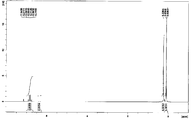
- Example 3 is an FT-IR spectrum of a terminal vinylene group-containing organopolysiloxane compound obtained in Example 2 of the present invention. It is a GPC curve of the terminal vinylene group containing organopolysiloxane compound obtained in Example 2 of this invention.
- the manufacturing method of the organopolysiloxane compound of the present invention particularly the terminal vinylene group-containing organopolysiloxane compound and the terminal vinylene group-containing organopolysiloxane compound will be described in more detail, the present invention is not limited thereto. .
- Organopolysiloxane Compound has at least one unit represented by the following general formula (1) as a partial structure, and is either linear or branched It is what.
- R 1 represents a hydrogen atom or a monovalent hydrocarbon group having 1 to 20 carbon atoms which may have a substituent, and each R 1 may be the same or different.
- R 2 is a hydrogen atom, an optionally substituted monovalent hydrocarbon group having 1 to 20 carbon atoms, or the following general formula (a) And each R 2 may be the same or different.
- x represents an integer of 0 to 1,998.
- R 3 represents a group represented by the above formula (a), and each R 3 may be the same or different.
- R 4 represents an optionally substituted monovalent hydrocarbon group having 1 to 20 carbon atoms, and each R 4 may be the same or different.
- a represents an integer of 1 to 2,000
- b represents an integer of 0 to 1,999.
- This organopolysiloxane compound has a vinyl group substituted with a triorganosilyl group on the terminal silicon atom.
- R 1 in the above formula (1) is a hydrogen atom or a monovalent hydrocarbon group having 1 to 20 carbon atoms which may have a substituent, and preferably has a hydrogen atom or a substituent.
- a monovalent saturated aliphatic hydrocarbon group, a monovalent unsaturated aliphatic hydrocarbon group which may have a substituent, a monovalent aromatic hydrocarbon group which may have a substituent (an aromatic heterocyclic ring) More preferably, a hydrogen atom, a monovalent saturated aliphatic hydrocarbon group which may have a substituent, a monovalent aromatic hydrocarbon group which may have a substituent, particularly preferably, It is a monovalent saturated aliphatic hydrocarbon group which may have a substituent.
- Branched alkyl groups such as alkyl group, isopropyl group, isobutyl group, tert-butyl group, isopentyl group and neopentyl group, cycloalkyl groups such as cyclopentyl group, cyclohexyl group and cycloheptyl group, chloromethyl group and 3-chloropropyl group
- a halogen-substituted alkyl group such as 3,3,3-trifluoropropyl group, bromopropyl group, etc., having 1 to 20 carbon atoms, preferably 1 to 12 carbon atoms, more preferably 1 to 6 carbon atoms. .
- alkenyl groups such as ethenyl group, 1-methylethenyl group and 2-propenyl group, ethynyl group and 2-propynyl group.
- An alkynyl group or the like having 2 to 20 carbon atoms, preferably 2 to 12 carbon atoms, more preferably 2 to 6 carbon atoms.
- R 1 is preferably a methyl group, an ethyl group, a 3,3,3-trifluoropropyl group or a phenyl group, more preferably a methyl group, an ethyl group or a phenyl group.
- R 2 in the above formula (1) is a hydrogen atom, a monovalent hydrocarbon group having 1 to 20 carbon atoms which may have a substituent, or the following general formula (a) (Wherein R 1 and R 4 are the same as above.
- X represents an integer of 0 to 1,998, preferably an integer of 0 to 1,800, more preferably an integer of 0 to 1,500.)
- a monovalent aromatic hydrocarbon group (including an aromatic heterocycle) and a group represented by the formula (a) are preferable, and a hydrogen atom or a substituent may be more preferable.
- a monovalent saturated aliphatic hydrocarbon group a monovalent aromatic hydrocarbon group which may have a substituent, a group represented by the formula (a), particularly preferably a monovalent saturated aliphatic which may have a substituent A hydrocarbon group, a group represented by the formula (a).
- Branched alkyl groups such as alkyl group, isopropyl group, isobutyl group, tert-butyl group, isopentyl group and neopentyl group, cycloalkyl groups such as cyclopentyl group, cyclohexyl group and cycloheptyl group, chloromethyl group and 3-chloropropyl group
- a halogen-substituted alkyl group such as 3,3,3-trifluoropropyl group, bromopropyl group, etc., having 1 to 20 carbon atoms, preferably 1 to 12 carbon atoms, more preferably 1 to 6 carbon atoms. .
- alkenyl groups such as ethenyl group, 1-methylethenyl group and 2-propenyl group, ethynyl group and 2-propynyl group.
- An alkynyl group or the like having 2 to 20 carbon atoms, preferably 2 to 12 carbon atoms, more preferably 2 to 6 carbon atoms.
- R 2 among these, a methyl group, an ethyl group, a 3,3,3-trifluoropropyl group, a phenyl group, or a group represented by the above formula (a), wherein R 4 is a methyl group And more preferably a methyl group, an ethyl group, a phenyl group, or a group represented by the above formula (a), wherein R 4 is a methyl group.
- R 3 in the above formula (1) is a group represented by the above formula (a).
- Specific examples of the group represented by the formula (a) include the same groups as those represented by the formula (a) exemplified for R 2 above.
- the R 3, among these, the groups represented by the above formula (a), R 4 is a methyl group.
- R 4 in the above formula (1) is a monovalent hydrocarbon group having 1 to 20 carbon atoms which may have a substituent, preferably a monovalent saturated aliphatic group which may have a substituent.
- the monovalent saturated aliphatic hydrocarbon group which may have a substituent the monovalent aromatic hydrocarbon group which may have a substituent, particularly preferably, the monovalent which may have a substituent It is a saturated aliphatic hydrocarbon group.
- Branched alkyl groups such as alkyl group, isopropyl group, isobutyl group, tert-butyl group, isopentyl group and neopentyl group, cycloalkyl groups such as cyclopentyl group, cyclohexyl group and cycloheptyl group, chloromethyl group and 3-chloropropyl group
- a halogen-substituted alkyl group such as 3,3,3-trifluoropropyl group, bromopropyl group, etc., having 1 to 20 carbon atoms, preferably 1 to 12 carbon atoms, more preferably 1 to 6 carbon atoms. .
- alkenyl groups such as ethenyl group, 1-methylethenyl group and 2-propenyl group, ethynyl group and 2-propynyl group.
- An alkynyl group or the like having 2 to 20 carbon atoms, preferably 2 to 12 carbon atoms, more preferably 2 to 6 carbon atoms.
- R 4 is preferably a methyl group, an ethyl group, a 3,3,3-trifluoropropyl group or a phenyl group, more preferably a methyl group, an ethyl group or a phenyl group, and particularly preferably a methyl group. It is.
- a is an integer of 1 to 2,000, preferably an integer of 10 to 1,800, more preferably an integer of 20 to 1,500. When a exceeds 2,000, the viscosity becomes high and handling becomes difficult.
- b is an integer of 0 to 1,999, preferably an integer of 0 to 1,000, more preferably an integer of 0 to 100. When b exceeds 1,999, the viscosity becomes high and handling becomes difficult.
- each repeating unit may be couple
- the organopolysiloxane compound having at least one unit represented by the above formula (1) as the terminal vinylene group-containing organopolysiloxane compound partial structure, which is either linear or branched, has the following general formula (
- the terminal vinylene group containing organopolysiloxane compound shown by 2) can be mentioned. (Wherein R 1 to R 4 , a, b are the same as above, and the sum of x in formula (a) contained as a, b and R 2 or R 3 is an integer of 1 to 2,000. is there.)
- R 1 in the formula (2) can be exemplified by the same as R 1 of the above-mentioned formula (1), among these, a methyl group, an ethyl group, a 3,3,3-trifluoropropyl Group and phenyl group are preferable, and methyl group, ethyl group and phenyl group are more preferable.
- R 2 in the formula (2) can be exemplified by the same as R 2 of the above-mentioned formula (1), among these, a methyl group, an ethyl group, a 3,3,3-trifluoropropyl
- R 4 is a methyl group
- R 4 is a methyl group
- R 4 is a methyl group.
- R 3 in the formula (2) in may be exemplified by the same as R 3 of the above formula (1), among these, the groups represented by the above formula (a), R 4 is Those which are methyl groups are preferred.
- R 4 in the formula (2) in may be exemplified by the same as R 4 of the above-mentioned formula (1), among these, a methyl group, an ethyl group, a 3,3,3-trifluoropropyl Group and phenyl group are preferred, methyl group, ethyl group and phenyl group are more preferred, and methyl group is particularly preferred.
- a and b in the formula (2) are the same as a and b in the formula (1) described above.
- the sum of x in the formula (a) contained as a, b and R 2 or R 3 is an integer of 1 to 2,000, preferably an integer of 10 to 1,800, more preferably Is an integer from 20 to 1,500.
- each repeating unit may be couple
- terminal vinylene group-containing organopolysiloxane compound represented by the formula (2) include the following.
- a represents an integer of 1 to 2,000
- b represents an integer of 0 to 1,999
- x, x1, x2 represents an integer of 0 to 1,998, and
- a, b, x , X1 and x2 each represents an integer of 1 to 2,000.
- the viscosity of the terminal vinylene group-containing organopolysiloxane compound is not particularly limited, but the viscosity at 25 ° C. is preferably 10 to 1,000,000 mPa ⁇ s, preferably 100 to 100,000 mPa ⁇ s. It is more preferable that In the present invention, the viscosity can be measured with a rotational viscometer.
- the terminal vinylene group-containing organopolysiloxane compound of the present invention can be prepared, for example, by the following method for producing a terminal vinylene group-containing organopolysiloxane compound.
- the terminal vinylene group-containing organopolysiloxane compound (2) of the present invention comprises a compound represented by the following general formula (3) in the presence of an acidic or basic catalyst, and the following general formula: It is produced by an equilibration reaction with a compound represented by the formula (4) or a compound represented by the following general formula (5).
- R 1 to R 4 , a and b are the same as above.
- R 20 and R 30 will be described later.
- M represents an integer of 3 to 20, and y represents 3 or 4.
- a terminal vinylene group-containing organopolysiloxane compound represented by the above formula (2) can be produced, and a cyclic organosiloxane compound represented by the above formula (3) and The degree of polymerization can be easily adjusted by changing the molar ratio of the terminal vinylene group-containing organodisiloxane compound represented by the above formula (4) or the organosiloxane compound represented by the above formula (5). Excellent in properties.
- the main raw material of the present invention includes a cyclic organosiloxane compound represented by the above formula (3).
- R 1 in the formula (3) can be exemplified by the same as R 1 of the above-mentioned formula (1) and (2), among these, a methyl group, an ethyl group, 3,3,3 -A trifluoropropyl group and a phenyl group are preferred, and a methyl group, an ethyl group and a phenyl group are more preferred.
- M is an integer of 3 to 20, preferably an integer of 3 to 15, more preferably an integer of 3 to 10.
- cyclic organosiloxane compound represented by the above formula (3) examples include hexamethylcyclotrisiloxane, octamethylcyclotetrasiloxane, decamethylcyclopentasiloxane, dodecamethylcyclohexasiloxane, hexaethylcyclotrisiloxane, and octaethyl.
- examples include cyclotetrasiloxane, hexaphenylcyclotrisiloxane, and octaphenylcyclotetrasiloxane.
- the terminal raw material of the present invention includes a terminal vinylene group-containing organodisiloxane compound represented by the above formula (4).
- R 1 in the formula (4) in may be exemplified by the same as R 1 of the above-mentioned formula (1) and (2), among these, a methyl group, an ethyl group, 3,3,3 -A trifluoropropyl group and a phenyl group are preferred, and a methyl group, an ethyl group and a phenyl group are more preferred.
- R 4 in the formula (4) in may be exemplified by the same as R 4 of the above-mentioned formula (1) and (2), among these, a methyl group, an ethyl group, 3,3,3 -A trifluoropropyl group and a phenyl group are preferred, and a methyl group, an ethyl group and a phenyl group are more preferred.
- terminal vinylene group-containing organodisiloxane compound represented by the above formula (4) examples include 1,1,3,3-tetramethyl-1,3-bis [2- (trimethylsilyl) ethenyl]-(E, E) -disiloxane, 1,1,3,3-tetraethyl-1,3-bis [2- (trimethylsilyl) ethenyl]-(E, E) -disiloxane, 1,1,3,3-tetraphenyl- 1,3-bis [2- (trimethylsilyl) ethenyl]-(E, E) -disiloxane, 1,1,3,3-tetramethyl-1,3-bis [2- (triethylsilyl) ethenyl]-( E, E) -disiloxane, 1,1,3,3-tetraethyl-1,3-bis [2- (triethylsilyl) ethenyl]-( E, E
- the compound of the said Formula (4) can be manufactured by hydrosilylation reaction of following formula (4a) and Formula (4b). (In the formula, R 1 and R 4 are the same as above.) In this case, the hydrosilylation reaction can be performed by a conventional method.
- R 20 in the above formula (5) is a hydrogen atom, an optionally substituted monovalent hydrocarbon group having 1 to 20 carbon atoms, or the following general formula (a0) (In the formula, R 1 and R 4 are the same as above.)
- Examples of the monovalent hydrocarbon group having 1 to 20 carbon atoms which may have a substituent of R 20 include those similar to R 2 in the above formulas (1) and (2), Among these, a methyl group, an ethyl group, a 3,3,3-trifluoropropyl group, a phenyl group, or a group represented by the above formula (a0) is preferably one in which R 4 is a methyl group. Is a methyl group, an ethyl group, a phenyl group, or a group represented by the above formula (a0), wherein R 4 is a methyl group.
- R 30 in the above formula (5) is the above formula (a0), among which R 4 is preferably a methyl group.
- This compound of the formula (5) can be obtained by a reaction between the compound of the above formula (4) and the compound of the following formula (5i).
- R 20 is the same as above, y is 3 or 4, and R ′ is an alkoxy group having 1 to 4 carbon atoms
- the reaction is carried out by adding concentrated sulfuric acid in the presence of an alcohol such as methanol at a temperature of about 0 to 25 ° C., and converting the compound of formula (4) into (In the formula, R 1 and R 4 are the same as above.)
- the compound of the formula (5) can be obtained by a reaction of producing an alkoxysilane of the formula (5i), a dehydration reaction with a compound of the formula (5ii), and a condensation reaction involving dealcoholization.
- organosiloxane compound represented by the above formula (5) examples include those shown below.
- the (ratio) can be arbitrarily selected according to the degree of polymerization of the terminal vinylene group-containing organopolysiloxane compound represented by the formula (2) designed as described above.
- a terminal vinylene group-containing organodisiloxane compound represented by the above formula (4) or an organosiloxane compound represented by the above formula (5) is used as a terminal raw material, and this is expressed by the above formula (3).
- the reaction is carried out by an equilibration reaction known per se.
- the equilibration reaction can be performed, for example, at 10 to 180 ° C. without using a solvent, or may be performed using an appropriate solvent such as toluene or xylene.
- Examples of the acidic catalyst include sulfuric acid or trifluoromethanesulfonic acid, and examples of the basic catalyst include potassium hydroxide, sodium hydroxide, potassium siliconate, sodium siliconate, and the like. By using these catalysts, the equilibration reaction can proceed stably.
- an acidic catalyst such as sulfuric acid or trifluoromethanesulfonic acid
- it is at a relatively low temperature, for example, 10 to 150 ° C., preferably 20 to 100 ° C. for 30 minutes to 12 hours, particularly 1 hour to The equilibration reaction is carried out for 8 hours, and the acidic catalyst is used in a mass ratio of 1,000 to 100,000 ppm, preferably 10,000 to 100,000 ppm, based on the total organosiloxane compound.
- a basic catalyst such as potassium hydroxide, sodium hydroxide, potassium siliconate or sodium siliconate
- it is relatively high temperature, for example, 50 to 180 ° C., preferably 80 to 160 ° C. for 1 hour to
- the equilibration reaction is carried out for 24 hours, particularly 2 to 12 hours, and the basic catalyst is used as a hydroxide in an amount of 1 to 1,000 ppm, preferably 10 to 500 ppm as a hydroxide with respect to all raw organosiloxane compounds.
- the target terminal vinylene group-containing organopolysiloxane compound can be obtained by neutralizing the catalyst and filtering, and then subjecting the filtrate to purification such as distillation.
- the molecular composition of the terminal vinylene group-containing organopolysiloxane compound to be produced has a R 1 2 SiO 2/2 unit of 0.05 to 99.90 mol%, R 2 R 3 SiO 2/2 units 0 to 99.85 mol%, R 4 3 SiHC ⁇ CH (R 1 ) 2 SiO 1/2 units 0.1 to 66.67 mol% (formula Wherein R 1 to R 4 are the same as described above), and the cyclic organosiloxane compound represented by the formula (3), wherein the total of these siloxane units is 100 mol%,
- the amount of the terminal vinylene group-containing organodisiloxane compound represented by (4) or the organosiloxane compound represented by the above formula (5) it is represented by the above formula (2) having such a molecular composition. Be done It is possible to obtain an end
- the above production method is useful in that it can easily produce a terminal vinylene group-containing organopolysiloxane compound having a desired degree of polymerization.
- the terminal vinylene group-containing organopolysiloxane compound according to the present invention can be used as a main material of an addition-curable silicone composition.
- the addition-curable silicone composition using the terminal vinylene group-containing organopolysiloxane compound of the present invention is: (A) Terminal vinylene group-containing organopolysiloxane compound represented by the following general formula (2A): 100 parts by mass, [Wherein R 01 represents a monovalent hydrocarbon group having 1 to 20 carbon atoms which may have a substituent, and each R 01 may be the same or different. R 02 represents an optionally substituted monovalent hydrocarbon group having 1 to 20 carbon atoms, or the following general formula (a ′) And each R 02 may be the same or different.
- 2A Terminal vinylene group-containing organopolysiloxane compound represented by the following general formula (2A): 100 parts by mass, [Wherein R 01 represents a monovalent hydrocarbon group having 1 to 20 carbon atoms which may have a
- x represents an integer of 0 to 1,998.
- R 03 represents a group represented by the above formula (a ′), and each R 03 may be the same or different.
- R 04 represents a monovalent hydrocarbon group having 1 to 20 carbon atoms which may have a substituent, and each R 04 may be the same or different.
- a represents an integer of 1 to 2,000
- b represents an integer of 0 to 1,999
- the sum of a, b and x represents an integer of 1 to 2,000.
- (B) Organohydrogenpolysiloxane compound having hydrogen atoms (ie, SiH groups) bonded to two or more silicon atoms in one molecule: (A) with respect to the total number of aliphatic unsaturated hydrocarbon groups in component (B) an amount such that the number of SiH groups in the component is 0.5 to 5, (C) Hydrosilylation catalyst: an effective amount as an essential component, preferably (D) one or more control agents selected from the group consisting of acetylene compounds, nitrogen compounds, organic phosphorus compounds, oxime compounds and organic chloro compounds: effective It contains the amount.
- a component is a base polymer of this composition, and is a terminal vinylene group containing organopolysiloxane compound shown by the following general formula (2A).
- R 01 represents a monovalent hydrocarbon group having 1 to 20 carbon atoms which may have a substituent, and each R 01 may be the same or different.
- R 02 represents an optionally substituted monovalent hydrocarbon group having 1 to 20 carbon atoms, or the following general formula (a ′) And each R 02 may be the same or different.
- x represents an integer of 0 to 1,998.
- R 03 represents a group represented by the above formula (a ′), and each R 03 may be the same or different.
- R 04 represents a monovalent hydrocarbon group having 1 to 20 carbon atoms which may have a substituent, and each R 04 may be the same or different.
- a represents an integer of 1 to 2,000
- b represents an integer of 0 to 1,999
- the sum of a, b and x represents an integer of 1 to 2,000.
- This organopolysiloxane compound has a vinyl group substituted with a triorganosilyl group on the terminal silicon atom. If such an organopolysiloxane compound is applied as the base polymer of an addition-curable silicone composition, excellent storage stability and heat resistance are exhibited by the substituent effect of the triorganosilyl group substituted on the vinyl group. To do.
- R 01 in the above formula (2A) is a monovalent hydrocarbon group having 1 to 20 carbon atoms which may have a substituent, preferably a monovalent saturated aliphatic carbon group which may have a substituent.
- Branched alkyl groups such as alkyl group, isopropyl group, isobutyl group, tert-butyl group, isopentyl group and neopentyl group, cycloalkyl groups such as cyclopentyl group, cyclohexyl group and cycloheptyl group, chloromethyl group and 3-chloropropyl group
- a halogen-substituted alkyl group such as 3,3,3-trifluoropropyl group, bromopropyl group, etc., having 1 to 20 carbon atoms, preferably 1 to 12 carbon atoms, more preferably 1 to 6 carbon atoms. .
- alkenyl groups such as ethenyl group, 1-methylethenyl group and 2-propenyl group, ethynyl group and 2-propynyl group.
- An alkynyl group or the like having 2 to 20 carbon atoms, preferably 2 to 12 carbon atoms, more preferably 2 to 6 carbon atoms.
- R 01 is preferably a methyl group, an ethyl group, a 3,3,3-trifluoropropyl group, or a phenyl group, more preferably a methyl group, an ethyl group, or a phenyl group, and particularly preferably a methyl group. It is.
- R 02 in the above formula (2A) is an optionally substituted monovalent hydrocarbon group having 1 to 20 carbon atoms, or the following general formula (a ′) (Wherein R 01 and R 04 are the same as above.
- X represents an integer of 0 to 1,998, preferably an integer of 0 to 1,800, more preferably an integer of 0 to 1,500.
- a monovalent saturated aliphatic hydrocarbon group that may have a substituent a monovalent unsaturated aliphatic hydrocarbon group that may have a substituent, and a substituent.
- Branched alkyl groups such as alkyl group, isopropyl group, isobutyl group, tert-butyl group, isopentyl group and neopentyl group, cycloalkyl groups such as cyclopentyl group, cyclohexyl group and cycloheptyl group, chloromethyl group and 3-chloropropyl group
- a halogen-substituted alkyl group such as 3,3,3-trifluoropropyl group, bromopropyl group, etc., having 1 to 20 carbon atoms, preferably 1 to 12 carbon atoms, more preferably 1 to 6 carbon atoms. .
- alkenyl groups such as ethenyl group, 1-methylethenyl group and 2-propenyl group, ethynyl group and 2-propynyl group.
- An alkynyl group or the like having 2 to 20 carbon atoms, preferably 2 to 12 carbon atoms, more preferably 2 to 6 carbon atoms.
- R 02 is a methyl group, an ethyl group, a 3,3,3-trifluoropropyl group, a phenyl group, or a group represented by the formula (a ′), wherein R 04 is a methyl group More preferably, among the groups represented by the methyl group, ethyl group, phenyl group, or formula (a ′), R 04 is a methyl group, and particularly preferably the methyl group or the formula (a ′). Of these groups, R 04 is a methyl group.
- R 03 in the above formula (2A) is a group represented by the above formula (a ′).
- R 03 is preferably a group represented by the above formula (a ′) in which R 04 is a methyl group.
- R 04 in the above formula (2A) is a monovalent hydrocarbon group having 1 to 20 carbon atoms which may have a substituent, preferably a monovalent saturated aliphatic carbon group which may have a substituent.
- Branched alkyl groups such as alkyl group, isopropyl group, isobutyl group, tert-butyl group, isopentyl group and neopentyl group, cycloalkyl groups such as cyclopentyl group, cyclohexyl group and cycloheptyl group, chloromethyl group and 3-chloropropyl group
- a halogen-substituted alkyl group such as 3,3,3-trifluoropropyl group, bromopropyl group, etc., having 1 to 20 carbon atoms, preferably 1 to 12 carbon atoms, more preferably 1 to 6 carbon atoms. .
- alkenyl groups such as ethenyl group, 1-methylethenyl group and 2-propenyl group, ethynyl group and 2-propynyl group.
- An alkynyl group or the like having 2 to 20 carbon atoms, preferably 2 to 12 carbon atoms, more preferably 2 to 6 carbon atoms.
- R 04 is preferably a methyl group, an ethyl group, a 3,3,3-trifluoropropyl group, or a phenyl group, more preferably a methyl group, an ethyl group, or a phenyl group, and particularly preferably a methyl group. It is.
- a is an integer of 1 to 2,000, preferably an integer of 10 to 1,800, more preferably an integer of 20 to 1,500.
- b is an integer of 0 to 1,999, preferably an integer of 0 to 1,000, more preferably an integer of 0 to 100.
- the sum of x in the formula (a ′) contained as a, b and R 02 or R 03 is an integer of 1 to 2,000, preferably an integer of 10 to 1,800, more preferably 20 to 1,500. It is an integer.
- each repeating unit may be couple
- terminal vinylene group-containing organopolysiloxane compound represented by the formula (2A) include those represented by the above formulas (7) to (9).
- Component (B) is a cross-linking agent of the present composition, and has 2 or more, preferably 3 or more, particularly 3 to 100, more preferably 3 to 100 hydrogen atoms bonded to silicon atoms in one molecule. 3 to 20 organohydrogenpolysiloxanes.
- the organohydrogenpolysiloxane is not particularly limited as long as the SiH group in the molecule can undergo an addition reaction in the presence of the above-described component (A) and the platinum group metal catalyst described later to form a crosslinked structure.
- the organohydrogenpolysiloxane is not particularly limited in its molecular structure as long as it has the above-mentioned properties, and examples thereof include linear, branched, cyclic, partially branched or linear linear structures. Preferably it is linear or cyclic.
- the organohydrogenpolysiloxane has a kinematic viscosity at 25 ° C. of 1.0 to 1,000 mm 2 / s, preferably 10 to 100 mm 2 / s. If the kinematic viscosity is less than the lower limit, the physical properties of the composition may be deteriorated, and if it exceeds the upper limit, the extensibility of the composition may be poor. In the present invention, the kinematic viscosity is a value at 25 ° C. measured by an Ubbelohde Ostwald viscometer.
- Examples of the organic group bonded to the silicon atom of the organohydrogenpolysiloxane include monovalent hydrocarbon groups other than aliphatic unsaturated hydrocarbon groups. Particularly, it is an unsubstituted or substituted monovalent hydrocarbon group having 1 to 20 carbon atoms, preferably 1 to 12 carbon atoms.
- alkyl groups such as methyl group, ethyl group, propyl group, butyl group, hexyl group and dodecyl group, aryl groups such as phenyl group, aralkyl groups such as 2-phenylethyl group and 2-phenylpropyl group, hydrogens thereof
- aryl groups such as phenyl group
- aralkyl groups such as 2-phenylethyl group and 2-phenylpropyl group
- hydrogens thereof Those in which some or all of the atoms are substituted with halogen atoms such as fluorine, bromine, chlorine, cyano groups, etc., such as chloromethyl group, chloropropyl group, bromoethyl group, trifluoropropyl group, cyanoethyl group, and the like
- 2- Examples include epoxy ring-containing organic groups (glycidyl group or glycidyloxy group-substituted alkyl group) such as
- the organohydrogenpolysiloxane is represented, for example, by the following average composition formula (iii).
- R 06 independently of each other is an unsubstituted or substituted monovalent hydrocarbon group having 1 to 20 carbon atoms, preferably 1 to 12 carbon atoms, excluding the aliphatic unsaturated hydrocarbon group.
- Groups. d is a positive number of 0.7 to 2.1, preferably 0.8 to 2.05, e is a positive number of 0.001 to 1.0, preferably 0.005 to 1.0, D + e is a number satisfying 0.8 to 3.0, preferably 1.0 to 2.5.
- the weight average molecular weight of the organohydrogenpolysiloxane (polystyrene converted weight average molecular weight by gel permeation chromatography) is preferably 100 to 30,000, more preferably 500 to 10,000.
- the structure of the organohydrogenpolysiloxane is not particularly limited, and may be linear, branched, cyclic, partially branched, or linear having a cyclic structure.
- the amount of (B) organohydrogenpolysiloxane is such that the number of SiH groups in component (B) is 0.5 to 5, preferably 0 with respect to the total number of aliphatic unsaturated hydrocarbon groups in component (A). An amount of 8 to 3 is preferable, and an amount of 1 to 2 is more preferable. If the amount of component (B) is less than the above lower limit, the addition reaction will not proceed sufficiently, and crosslinking may be insufficient. On the other hand, if the value exceeds the upper limit, the cross-linked structure may be non-uniform or the storage stability of the composition may be significantly deteriorated.
- Component (C) is a hydrosilylation catalyst and functions to promote the addition reaction described above.
- the hydrosilylation catalyst a conventionally known catalyst used for the addition reaction can be used.
- platinum-based, palladium-based, and rhodium-based catalysts may be mentioned.
- platinum or platinum compounds that are relatively easily available are preferable. Examples include platinum alone, platinum black, chloroplatinic acid, platinum-olefin complexes, platinum-alcohol complexes, platinum coordination compounds, and the like.
- the hydrosilylation catalyst may be used singly or in combination of two or more kinds.
- the amount of component (C) is an effective amount as a catalyst, that is, to accelerate the addition reaction and cure the composition of the present invention. Any effective amount may be required.
- it is 0.1 to 500 ppm, more preferably 1 to 200 ppm, based on the mass converted to platinum group metal atoms with respect to component (A). If the amount of the catalyst is smaller than the lower limit, the effect as a catalyst may not be obtained. Moreover, even if it exceeds the said upper limit, a catalyst effect does not increase and is unpreferable since it is uneconomical.
- the component (D) is a control agent and functions to suppress the progress of the hydrosilylation reaction at room temperature and extend the shelf life and pot life.
- a conventionally known control agent used in addition-curable silicone compositions can be used.
- acetylene compounds such as acetylene alcohols (for example, 1-ethynyl-1-cyclohexanol, 3,5-dimethyl-1-hexyn-3-ol), various nitrogen compounds such as tributylamine, tetramethylethylenediamine, and benzotriazole
- organic phosphorus compounds such as triphenylphosphine, oxime compounds, and organic chloro compounds.
- the amount of the component (D) is 0.05 to 0.6 parts by mass, preferably 0.1 to 0.5 parts by mass with respect to 100 parts by mass of the component (A). If the amount of the control agent is less than the above lower limit value, the desired sufficient shelf life and pot life may not be obtained, and if it exceeds the upper limit value, the curability of the silicone composition may be lowered. In order to improve the dispersibility in the silicone composition, the control agent may be diluted with toluene or the like.
- the silicone composition of the present invention further comprises (E) at least one inorganic filler selected from the group consisting of metals, metal oxides, metal hydroxides, metal nitrides, metal carbides, and carbon allotropes. can do.
- the (E) component inorganic filler is for imparting various properties such as thermal conductivity, heat resistance, reinforcement and conductivity to the composition of the present invention, and is a metal, metal oxide, metal hydroxide.
- Metal nitride, metal carbide, and at least one material selected from the group consisting of allotrope of carbon are preferable.
- aluminum, silver, copper, metal silicon, alumina, zinc oxide, magnesium oxide, silicon dioxide examples include cerium oxide, iron oxide, aluminum hydroxide, cerium hydroxide, aluminum nitride, boron nitride, silicon carbide, diamond, graphite, carbon nanotube, graphene, and the like.
- aluminum, Alumina, zinc oxide, and boron nitride are preferably used.
- cerium oxide and cerium hydroxide are used.
- the resulting composition may be non-uniform, so the range is 100 ⁇ m or less, preferably 40 ⁇ m or less.
- an average particle diameter can be calculated
- the shape of the inorganic filler is not particularly limited, such as a spherical shape, an indefinite shape, a needle shape, or a plate shape.
- the blending amount of these (E) components is more than 2,000 parts by mass with respect to 100 parts by mass of (A) component, the viscosity may become high and handling may be difficult, and a uniform composition may not be obtained.
- the range is 2,000 parts by mass or less, preferably 1,500 parts by mass or less.
- it is preferable that it is 0.1 mass part or more, especially 1.0 mass part or more.
- the silicone composition of the present invention further comprises a hydrolyzable organopolysiloxane compound of component (F) represented by the following general formula (i) and a hydrolyzable organo compound of component (G) represented by the following general formula (ii).
- silane compounds can be included.
- R 01 represents a monovalent hydrocarbon group having 1 to 20 carbon atoms which may have a substituent, and each R 01 may be the same or different.
- c represents an integer of 5 to 100.
- R 01 represents a monovalent hydrocarbon group having 1 to 20 carbon atoms which may have a substituent, and each R 01 may be the same or different.
- R 05 represents a monovalent hydrocarbon group having 1 to 20 carbon atoms which may have a substituent.
- the hydrolyzable organopolysiloxane compound of component (F) and the hydrolyzable organosilane compound of component (G) are used for treating the surface of the inorganic filler, but assist in increasing the filling of the filler.
- the filler surface is less likely to aggregate by covering the surface of the filler, and the effect is maintained even at high temperatures, so that the heat resistance of the silicone composition of the present invention is improved.
- R 01 in the above formulas (i) and (ii) can be exemplified by the same ones as R 01 described above.
- a methyl group, an ethyl group, a 3,3,3-trifluoropropyl group can be exemplified.
- R 05 in the above formula (ii) can be exemplified by the same as R 01 described above.
- an unsubstituted linear monovalent saturated aliphatic hydrocarbon group having 4 to 20 carbon atoms can be exemplified. More preferably, it is an unsubstituted linear monovalent saturated aliphatic hydrocarbon group having 6 to 14 carbon atoms, and particularly preferably an unsubstituted linear monovalent saturated aliphatic hydrocarbon group having 6 to 12 carbon atoms. is there.
- the amount of the component (F) hydrolyzable organopolysiloxane compound added is too large in the silicone composition, oil bleeding tends to occur or the curing reaction may not proceed sufficiently.
- It is preferably 1 to 200 parts by weight, particularly preferably 5 to 100 parts by weight, based on 100 parts by weight of the component.
- the hydrolyzable organosilane compound of component (G) when blended, if the amount is too large in the silicone composition, oil bleeding tends to occur or voids may be generated.
- the amount is preferably from 0.01 to 10 parts by weight, particularly preferably from 0.1 to 8 parts by weight, based on 100 parts by weight of the component.
- the silicone composition of the present invention may contain an organo (poly) siloxane having no reactivity such as methylpolysiloxane in order to adjust the elastic modulus and viscosity of the composition. Furthermore, in order to prevent deterioration of the silicone composition, a conventionally known antioxidant such as 2,6-di-t-butyl-4-methylphenol may be contained as necessary. Furthermore, an adhesion assistant, a dye, a pigment, a flame retardant, an antisettling agent, a thixotropy improver, and the like can be blended as necessary.
- the manufacturing method of the silicone composition in this invention is demonstrated, it is not limited to these.
- the components (A) to (C) and, if necessary, the components (D), (E), (F), (G), and other components are prepared by scouring.
- the silicone composition of the present invention can be suitably used for a wide range of applications, as in the case of conventional general silicone compositions, and is particularly effective for applications requiring good storage stability and heat resistance.
- the curing conditions for heat curing the silicone composition of the present invention are not particularly limited, but are usually 80 to 200 ° C., preferably 90 to 180 ° C., particularly preferably 100 to 170 ° C., and 10 minutes to 24.
- the time is preferably 30 minutes to 12 hours, particularly preferably 1 to 6 hours.
- Example 1 Preparation of terminal vinylene group-containing organopolysiloxane compound 1 In a 300 mL four-necked flask equipped with a stirrer and a thermometer, 50 g (169 mmol) of octamethylcyclotetrasiloxane, 1,1,3,3-tetramethyl-1,3-bis [2- (trimethylsilyl) ethenyl]- 7.2 g (27 mmol) of (E, E) -disiloxane and 0.12 g of 3 mass% potassium siliconate as potassium hydroxide were added and stirred at 150 ° C. for 8 hours.
- octamethylcyclotetrasiloxane 1,1,3,3-tetramethyl-1,3-bis [2- (trimethylsilyl) ethenyl]- 7.2 g (27 mmol) of (E, E) -disiloxane and 0.12 g of 3 mass% potassium siliconate as potassium hydroxide
- Example 2 Preparation of terminal vinylene group-containing organopolysiloxane compound 2 In a 500 mL four-necked flask equipped with a stirrer and a thermometer, 295 g (997 mmol) of octamethylcyclotetrasiloxane, 1,1,3,3-tetramethyl-1,3-bis [2- (trimethylsilyl) ethenyl]- 7.7 g (29 mmol) of (E, E) -disiloxane and 0.64 g of 3 mass% potassium siliconate as potassium hydroxide were added and stirred at 150 ° C. for 8 hours.
- octamethylcyclotetrasiloxane 1,1,3,3-tetramethyl-1,3-bis [2- (trimethylsilyl) ethenyl]- 7.7 g (29 mmol) of (E, E) -disiloxane and 0.64 g of 3 mass% potassium siliconate as potassium hydrox
- Example 4 Preparation of terminal vinylene group-containing organopolysiloxane compound 4 To a 1 L four-necked flask equipped with a stirrer and a thermometer, 614 g (2,074 mmol) of octamethylcyclotetrasiloxane, 1,1,3,3-tetramethyl-1,3-bis [2- (trimethylsilyl) ethenyl ] 2.2 g (8.3 mmol) of-(E, E) -disiloxane and 1.31 g of 3 mass% potassium siliconate as potassium hydroxide were added and stirred at 150 ° C. for 8 hours.
- Example 7 Preparation of terminal vinylene group-containing organopolysiloxane compound 7 In a 500 mL four-necked flask equipped with a stirrer and a thermometer, 295 g (997 mmol) of octamethylcyclotetrasiloxane, 1,1,3,3-tetramethyl-1,3-bis [2- (trimethylsilyl) ethenyl]- 7.7 g (29 mmol) of (E, E) -disiloxane and 9.1 g of concentrated sulfuric acid were added and stirred at room temperature for 3 hours. Subsequently, 3.6 g of water was added and stirred for 1 hour.
- Example 8 Preparation of terminal vinylene group-containing organopolysiloxane compound 8 In a 500 mL four-necked flask equipped with a stirrer and a thermometer, 295 g (997 mmol) of octamethylcyclotetrasiloxane, 1,1,3,3-tetramethyl-1,3-bis [2- (trimethylsilyl) ethenyl]- (E, E) -disiloxane (2.2 g, 8.3 mmol) and concentrated sulfuric acid (9.1 g) were added, and the mixture was stirred at room temperature for 3 hours. Subsequently, 3.6 g of water was added and stirred for 1 hour.
- Example 9 Preparation of terminal vinylene group-containing organopolysiloxane compound 9 To a 1 L four-necked flask equipped with a stirrer and a thermometer, 614 g (2,074 mmol) of octamethylcyclotetrasiloxane, 1,1,3,3-tetramethyl-1,3-bis [2- (trimethylsilyl) ethenyl ]-(E, E) -Disiloxane (2.2 g, 8.3 mmol) and concentrated sulfuric acid (18.5 g) were added, and the mixture was stirred at room temperature for 3 hours. Subsequently, 7.4 g of water was added and stirred for 1 hour.
- Example 10 Preparation of terminal vinylene group-containing organopolysiloxane compound 10 Into a 2 L four-necked flask equipped with a stirrer and a thermometer, 1,166 g (3,939 mmol) of octamethylcyclotetrasiloxane, 1,1,3,3-tetramethyl-1,3-bis [2- (trimethylsilyl) ) Ethenyl]-(E, E) -disiloxane (2.2 g, 8.3 mmol) and concentrated sulfuric acid (35.0 g) were added and the mixture was stirred at room temperature for 3 hours. Subsequently, 14.0 g of water was added and stirred for 1 hour.
- Example 11 Preparation of terminal vinylene group-containing organopolysiloxane compound 11 To a 1 L four-necked flask equipped with a stirrer and a thermometer, 407 g (997 mmol) of octaethylcyclotetrasiloxane, 1,1,3,3-tetramethyl-1,3-bis [2- (trimethylsilyl) ethenyl]- 7.7 g (29 mmol) of (E, E) -disiloxane and 12.5 g of concentrated sulfuric acid were added and stirred at room temperature for 3 hours.
- Example 12 Preparation of terminal vinylene group-containing organopolysiloxane compound 12 In a 500 mL four-necked flask equipped with a stirrer and a thermometer, 92 g (169 mmol) of 1,3,5,7-tetramethyl-1,3,5,7-tetraphenylcyclotetrasiloxane, 1,1,3, 7.2 g (27 mmol) of 3-tetramethyl-1,3-bis [2- (trimethylsilyl) ethenyl]-(E, E) -disiloxane and 3.0 g of concentrated sulfuric acid were added and stirred at room temperature for 3 hours.
- Component A-1 In a 500 mL four-necked flask equipped with a stirrer and a thermometer, 295 g (997 mmol) of octamethylcyclotetrasiloxane and 1,1,3,3-tetramethyl-1,3-bis [ 2- (Trimethylsilyl) ethenyl]-(E, E) -disiloxane (5.5 g, 17
- A-2 To a 1 L four-necked flask equipped with a stirrer and a thermometer, 407 g (997 mmol) of octaethylcyclotetrasiloxane, 1,1,3,3-tetramethyl-1,3-bis [2- (trimethylsilyl) ethenyl]- 5.5 g (17 mmol) of (E, E) -disiloxane and 9.0 g of concentrated sulfuric acid were added and stirred at room temperature for 3 hours. Subsequently, 3.0 g of water was added and stirred for 30 minutes. Further, 150 mL of toluene was added to perform waste acid separation, and then washing and washing were performed until the system became neutral.
- A-3 A dimethylpolysiloxane having both ends blocked with dimethylvinylsilyl groups and a viscosity at 25 ° C. of 1,000 mPa ⁇ s.
- Component C-1 A solution in which a platinum-divinyltetramethyldisiloxane complex is dissolved in the same dimethylpolysiloxane as A-3 described above (platinum atom content: 1% by mass as platinum atoms).
- E-1 Aluminum powder having an average particle size of 10.0 ⁇ m
- E-2 Zinc oxide powder having an average particle size of 1.0 ⁇ m
- E-3 Hydrophobic fumed silica powder having an average particle size of 30 nm
- the components (A) to (F) were mixed as follows to obtain compositions of Examples 15 to 20 and Comparative Examples 1 to 6. That is, to Awatori Neritaro (Sinky Co., Ltd.), add the components (A) in the blending amounts shown in Tables 1 and 2, and if necessary, add the components (E), (F), (G), and uniformly It mixed so that it might become. Next, the components (D), (C), and (B) were added and further mixed to be uniform. SiH groups in the component (B) / aliphatic unsaturated hydrocarbon groups in the component (A) (number ratio) of the compositions of Examples 15 to 20 and Comparative Examples 1 to 6 obtained and the storage shown below Tables 1 and 2 show the results of the property test and heat resistance test.
- the present invention is not limited to the above embodiment.
- the above-described embodiment is an exemplification, and the present invention has any configuration that has substantially the same configuration as the technical idea described in the claims of the present invention and that exhibits the same effects. Are included in the technical scope.
Landscapes
- Chemical & Material Sciences (AREA)
- Health & Medical Sciences (AREA)
- Chemical Kinetics & Catalysis (AREA)
- Medicinal Chemistry (AREA)
- Polymers & Plastics (AREA)
- Organic Chemistry (AREA)
- Silicon Polymers (AREA)
- Compositions Of Macromolecular Compounds (AREA)
Abstract
Priority Applications (3)
| Application Number | Priority Date | Filing Date | Title |
|---|---|---|---|
| US15/115,588 US9840594B2 (en) | 2014-01-31 | 2014-12-02 | Organopolysiloxane compound and method for producing the same, and addition-curable silicone composition |
| KR1020167021803A KR102277649B1 (ko) | 2014-01-31 | 2014-12-02 | 오가노폴리실록세인 화합물 및 그 제조 방법, 그리고 부가 경화형 실리콘 조성물 |
| JP2015559764A JP6024839B2 (ja) | 2014-01-31 | 2014-12-02 | オルガノポリシロキサン化合物及びその製造方法並びに付加硬化型シリコーン組成物 |
Applications Claiming Priority (4)
| Application Number | Priority Date | Filing Date | Title |
|---|---|---|---|
| JP2014016703 | 2014-01-31 | ||
| JP2014-016703 | 2014-01-31 | ||
| JP2014-080654 | 2014-04-10 | ||
| JP2014080654 | 2014-04-10 |
Publications (1)
| Publication Number | Publication Date |
|---|---|
| WO2015114939A1 true WO2015114939A1 (fr) | 2015-08-06 |
Family
ID=53756533
Family Applications (1)
| Application Number | Title | Priority Date | Filing Date |
|---|---|---|---|
| PCT/JP2014/081820 Ceased WO2015114939A1 (fr) | 2014-01-31 | 2014-12-02 | Composé d'organopolysiloxane et son procédé de production, et composition de silicone durcissable par addition |
Country Status (5)
| Country | Link |
|---|---|
| US (1) | US9840594B2 (fr) |
| JP (1) | JP6024839B2 (fr) |
| KR (1) | KR102277649B1 (fr) |
| TW (1) | TWI650348B (fr) |
| WO (1) | WO2015114939A1 (fr) |
Cited By (4)
| Publication number | Priority date | Publication date | Assignee | Title |
|---|---|---|---|---|
| JPWO2016157948A1 (ja) * | 2015-04-03 | 2018-02-15 | 信越化学工業株式会社 | 室温硬化性オルガノポリシロキサン組成物及び該組成物の硬化物である成形物 |
| JPWO2017195508A1 (ja) * | 2016-05-09 | 2019-03-07 | 信越化学工業株式会社 | 室温硬化性オルガノポリシロキサン組成物及び該組成物の硬化物でコーティングされた基材 |
| WO2024024454A1 (fr) * | 2022-07-25 | 2024-02-01 | 信越化学工業株式会社 | Organopolysiloxane modifié à une terminaison ainsi que procédé de fabrication de celui-ci, agent de traitement de surface, et composition de silicone |
| WO2024024453A1 (fr) * | 2022-07-25 | 2024-02-01 | 信越化学工業株式会社 | Agent de modification constitué d'un composé bis-silane ainsi que procédé de fabrication de celui-ci, et application associée |
Families Citing this family (4)
| Publication number | Priority date | Publication date | Assignee | Title |
|---|---|---|---|---|
| JP2017088776A (ja) * | 2015-11-13 | 2017-05-25 | 信越化学工業株式会社 | 付加硬化型シリコーン樹脂組成物、該組成物の製造方法、及び光学半導体装置 |
| EP3580790B1 (fr) | 2017-02-08 | 2024-01-24 | Elkem Silicones USA Corp. | Paquet de batterie secondaire avec la direction thermale améliorée |
| CN111094458B (zh) * | 2017-07-24 | 2022-03-29 | 陶氏东丽株式会社 | 导热性硅酮凝胶组合物、导热性部件及散热构造体 |
| CN119137215A (zh) * | 2022-02-28 | 2024-12-13 | 信越化学工业株式会社 | 导热性有机硅组合物 |
Citations (9)
| Publication number | Priority date | Publication date | Assignee | Title |
|---|---|---|---|---|
| JPH06248084A (ja) * | 1993-02-25 | 1994-09-06 | Toshiba Silicone Co Ltd | エチニル基含有有機ケイ素化合物 |
| US20020156186A1 (en) * | 2001-01-25 | 2002-10-24 | Alexander Bublewitz | Two-step curable mixer-suitable materials |
| PL188755B1 (pl) * | 1999-05-23 | 2005-04-29 | Univ Adama Mickiewicza | Nowe fosfinowe kompleksy niklu(0) oraz sposób ich wytwarzania |
| PL188754B1 (pl) * | 1999-05-23 | 2005-04-29 | Univ Adama Mickiewicza | Sposób otrzymywania sililoetenów |
| JP2008523165A (ja) * | 2004-12-07 | 2008-07-03 | 松下電工株式会社 | 紫外線透過多面体シルセスキオキサンポリマー |
| JP2011045798A (ja) * | 2009-08-25 | 2011-03-10 | Osaka City Univ | 脱水素シリル化反応用触媒、及び有機ケイ素化合物の製造方法 |
| WO2013081794A1 (fr) * | 2011-12-01 | 2013-06-06 | Dow Corning Corporation | Catalyseurs de réaction d'hydrosilylation et compositions durcissables et procédés pour leur préparation et utilisation |
| WO2014097573A1 (fr) * | 2012-12-20 | 2014-06-26 | 信越化学工業株式会社 | Nouveau composé organopolysiloxane contenant un groupe éthynyle, procédé de production de composé organopolysiloxane à chaîne linéaire contenant un groupe éthynyle aux deux extrémités de la chaîne moléculaire, procédé de production d'un polymère organosiloxane terminé par un groupe alcoxysilyl-éthynyle, composition durcissable à température ambiante, et article moulé qui est durci produit à partir de celui-ci |
| WO2014097574A1 (fr) * | 2012-12-20 | 2014-06-26 | 信越化学工業株式会社 | Nouveau composé contenant du silicium, terminé par un groupe alcoxysilyl-éthylène, composition d'organopolysiloxane durcissable à température ambiante et objet moulé obtenu par le durcissement de ladite composition |
Family Cites Families (11)
| Publication number | Priority date | Publication date | Assignee | Title |
|---|---|---|---|---|
| DE3131734A1 (de) | 1981-08-11 | 1983-02-24 | Bayer Ag, 5090 Leverkusen | Hitzehaertbare organopolysiloxan-mischungen |
| US4874667A (en) | 1987-07-20 | 1989-10-17 | Dow Corning Corporation | Microencapsulated platinum-group metals and compounds thereof |
| US5009957A (en) | 1987-07-20 | 1991-04-23 | Dow Corning Corporation | Microencapsulated platinum-group metals and compounds thereof |
| JP2665941B2 (ja) | 1988-06-29 | 1997-10-22 | 東レ・ダウコーニング・シリコーン株式会社 | ヒドロシリル化反応用白金系触媒含有粒状物 |
| JPH0214244A (ja) | 1988-06-30 | 1990-01-18 | Toray Dow Corning Silicone Co Ltd | 加熱硬化性オルガノポリシロキサン組成物 |
| JPH0826225B2 (ja) | 1990-06-13 | 1996-03-13 | 東レ・ダウコーニング・シリコーン株式会社 | 加熱硬化型シリコーンエラストマー組成物 |
| JP2526187B2 (ja) | 1991-11-21 | 1996-08-21 | 東レ・ダウコーニング・シリコーン株式会社 | フルオロシリコ―ンレジンおよびその製造方法 |
| JP3899134B2 (ja) | 1993-12-29 | 2007-03-28 | 東レ・ダウコーニング株式会社 | 加熱硬化性シリコーン組成物 |
| JP4727139B2 (ja) | 2002-11-28 | 2011-07-20 | 信越化学工業株式会社 | シリコーン粘着剤組成物及び粘着テープ |
| US7329464B2 (en) | 2002-11-28 | 2008-02-12 | Shin-Etsu Chemical Co., Ltd. | Silicone adhesive composition and an adhesive tape thereof |
| JP4525914B2 (ja) | 2005-02-15 | 2010-08-18 | 信越化学工業株式会社 | 付加硬化型シリコーンゴム組成物及び粘着ゴムシート |
-
2014
- 2014-12-02 WO PCT/JP2014/081820 patent/WO2015114939A1/fr not_active Ceased
- 2014-12-02 US US15/115,588 patent/US9840594B2/en not_active Expired - Fee Related
- 2014-12-02 KR KR1020167021803A patent/KR102277649B1/ko not_active Expired - Fee Related
- 2014-12-02 JP JP2015559764A patent/JP6024839B2/ja active Active
- 2014-12-16 TW TW103143896A patent/TWI650348B/zh not_active IP Right Cessation
Patent Citations (9)
| Publication number | Priority date | Publication date | Assignee | Title |
|---|---|---|---|---|
| JPH06248084A (ja) * | 1993-02-25 | 1994-09-06 | Toshiba Silicone Co Ltd | エチニル基含有有機ケイ素化合物 |
| PL188755B1 (pl) * | 1999-05-23 | 2005-04-29 | Univ Adama Mickiewicza | Nowe fosfinowe kompleksy niklu(0) oraz sposób ich wytwarzania |
| PL188754B1 (pl) * | 1999-05-23 | 2005-04-29 | Univ Adama Mickiewicza | Sposób otrzymywania sililoetenów |
| US20020156186A1 (en) * | 2001-01-25 | 2002-10-24 | Alexander Bublewitz | Two-step curable mixer-suitable materials |
| JP2008523165A (ja) * | 2004-12-07 | 2008-07-03 | 松下電工株式会社 | 紫外線透過多面体シルセスキオキサンポリマー |
| JP2011045798A (ja) * | 2009-08-25 | 2011-03-10 | Osaka City Univ | 脱水素シリル化反応用触媒、及び有機ケイ素化合物の製造方法 |
| WO2013081794A1 (fr) * | 2011-12-01 | 2013-06-06 | Dow Corning Corporation | Catalyseurs de réaction d'hydrosilylation et compositions durcissables et procédés pour leur préparation et utilisation |
| WO2014097573A1 (fr) * | 2012-12-20 | 2014-06-26 | 信越化学工業株式会社 | Nouveau composé organopolysiloxane contenant un groupe éthynyle, procédé de production de composé organopolysiloxane à chaîne linéaire contenant un groupe éthynyle aux deux extrémités de la chaîne moléculaire, procédé de production d'un polymère organosiloxane terminé par un groupe alcoxysilyl-éthynyle, composition durcissable à température ambiante, et article moulé qui est durci produit à partir de celui-ci |
| WO2014097574A1 (fr) * | 2012-12-20 | 2014-06-26 | 信越化学工業株式会社 | Nouveau composé contenant du silicium, terminé par un groupe alcoxysilyl-éthylène, composition d'organopolysiloxane durcissable à température ambiante et objet moulé obtenu par le durcissement de ladite composition |
Cited By (6)
| Publication number | Priority date | Publication date | Assignee | Title |
|---|---|---|---|---|
| JPWO2016157948A1 (ja) * | 2015-04-03 | 2018-02-15 | 信越化学工業株式会社 | 室温硬化性オルガノポリシロキサン組成物及び該組成物の硬化物である成形物 |
| JPWO2017195508A1 (ja) * | 2016-05-09 | 2019-03-07 | 信越化学工業株式会社 | 室温硬化性オルガノポリシロキサン組成物及び該組成物の硬化物でコーティングされた基材 |
| WO2024024454A1 (fr) * | 2022-07-25 | 2024-02-01 | 信越化学工業株式会社 | Organopolysiloxane modifié à une terminaison ainsi que procédé de fabrication de celui-ci, agent de traitement de surface, et composition de silicone |
| WO2024024453A1 (fr) * | 2022-07-25 | 2024-02-01 | 信越化学工業株式会社 | Agent de modification constitué d'un composé bis-silane ainsi que procédé de fabrication de celui-ci, et application associée |
| JP2024015716A (ja) * | 2022-07-25 | 2024-02-06 | 信越化学工業株式会社 | ビスシラン化合物からなる変性剤、その製造方法及びその使用 |
| JP2024015717A (ja) * | 2022-07-25 | 2024-02-06 | 信越化学工業株式会社 | 片末端変性オルガノポリシロキサン及びその製造方法、表面処理剤、並びにシリコーン組成物 |
Also Published As
| Publication number | Publication date |
|---|---|
| US9840594B2 (en) | 2017-12-12 |
| TWI650348B (zh) | 2019-02-11 |
| JP6024839B2 (ja) | 2016-11-16 |
| US20170066886A1 (en) | 2017-03-09 |
| KR20160113625A (ko) | 2016-09-30 |
| TW201538575A (zh) | 2015-10-16 |
| JPWO2015114939A1 (ja) | 2017-03-23 |
| KR102277649B1 (ko) | 2021-07-16 |
Similar Documents
| Publication | Publication Date | Title |
|---|---|---|
| JP6024839B2 (ja) | オルガノポリシロキサン化合物及びその製造方法並びに付加硬化型シリコーン組成物 | |
| US8378004B2 (en) | Process for the production of silicone coatings and silicone moldings from photocrosslinkable silicone mixtures | |
| JP5972511B2 (ja) | 硬化性オルガノポリシロキサン組成物およびその硬化物 | |
| EP2110401B1 (fr) | Composition d'addition de silicone durcissable et produit durci correspondant | |
| KR101851423B1 (ko) | 반도체 밀봉용 실리콘 조성물 | |
| JP6264307B2 (ja) | 付加硬化型シリコーン組成物 | |
| WO2017159047A1 (fr) | Composition de caoutchouc de silicone durcissable par addition et produit durci | |
| KR20130088791A (ko) | 경화성 오르가노폴리실록산 조성물, 광학 소자 밀봉재 및 광학 소자 | |
| KR20140043744A (ko) | 가교결합성 실리콘 조성물 및 그의 가교결합 생성물 | |
| EP3318593B1 (fr) | Matériau à dissipation de chaleur | |
| WO2016199742A1 (fr) | Composition de caoutchouc de silicone durcissable par addition et produit durci | |
| KR101216576B1 (ko) | 오가노하이드로겐폴리실록산 수지 및 실리콘 조성물 | |
| JP5503963B2 (ja) | 有機ケイ素化合物、その製造方法、及びその有機ケイ素化合物を接着性付与剤として含む硬化性シリコーン組成物 | |
| JP5508843B2 (ja) | 硬化性シリコーン組成物 | |
| KR20220155324A (ko) | 열 전도성 실리콘 조성물 | |
| JP2006188549A (ja) | 付加反応硬化型シリコーンゲル組成物、熱伝導性シリコーン組成物及び放熱シート | |
| JP5913537B2 (ja) | 硬化性オルガノポリシロキサン組成物の製造方法 | |
| JP6907978B2 (ja) | 片末端アルケニル基含有オルガノポリシロキサンを含む混合物の製造方法及び付加硬化性オルガノポリシロキサンゲル組成物並びにシリコーンゲル硬化物 | |
| EP4370606A1 (fr) | Composition de silicone thermoconductrice | |
| JP5943104B2 (ja) | 硬化性組成物、硬化膜、ポリシロキサンおよび光半導体装置 | |
| JP5807427B2 (ja) | 硬化性組成物、硬化膜、ポリシロキサンおよび光半導体装置 | |
| CN111936556A (zh) | 可交联的有机硅氧烷组合物 | |
| WO2024024454A1 (fr) | Organopolysiloxane modifié à une terminaison ainsi que procédé de fabrication de celui-ci, agent de traitement de surface, et composition de silicone |
Legal Events
| Date | Code | Title | Description |
|---|---|---|---|
| 121 | Ep: the epo has been informed by wipo that ep was designated in this application |
Ref document number: 14881334 Country of ref document: EP Kind code of ref document: A1 |
|
| ENP | Entry into the national phase |
Ref document number: 2015559764 Country of ref document: JP Kind code of ref document: A |
|
| WWE | Wipo information: entry into national phase |
Ref document number: 15115588 Country of ref document: US |
|
| NENP | Non-entry into the national phase |
Ref country code: DE |
|
| ENP | Entry into the national phase |
Ref document number: 20167021803 Country of ref document: KR Kind code of ref document: A |
|
| 122 | Ep: pct application non-entry in european phase |
Ref document number: 14881334 Country of ref document: EP Kind code of ref document: A1 |