WO2015129191A1 - Plaque d'acier pour capsule-couronne, procédé de fabrication de celle-ci, et capsule-couronne - Google Patents
Plaque d'acier pour capsule-couronne, procédé de fabrication de celle-ci, et capsule-couronne Download PDFInfo
- Publication number
- WO2015129191A1 WO2015129191A1 PCT/JP2015/000684 JP2015000684W WO2015129191A1 WO 2015129191 A1 WO2015129191 A1 WO 2015129191A1 JP 2015000684 W JP2015000684 W JP 2015000684W WO 2015129191 A1 WO2015129191 A1 WO 2015129191A1
- Authority
- WO
- WIPO (PCT)
- Prior art keywords
- less
- crown
- temperature
- steel plate
- rolling
- Prior art date
- Legal status (The legal status is an assumption and is not a legal conclusion. Google has not performed a legal analysis and makes no representation as to the accuracy of the status listed.)
- Ceased
Links
Images
Classifications
-
- C—CHEMISTRY; METALLURGY
- C21—METALLURGY OF IRON
- C21D—MODIFYING THE PHYSICAL STRUCTURE OF FERROUS METALS; GENERAL DEVICES FOR HEAT TREATMENT OF FERROUS OR NON-FERROUS METALS OR ALLOYS; MAKING METAL MALLEABLE, e.g. BY DECARBURISATION OR TEMPERING
- C21D8/00—Modifying the physical properties of ferrous metals or ferrous alloys by deformation combined with, or followed by, heat treatment
- C21D8/02—Modifying the physical properties of ferrous metals or ferrous alloys by deformation combined with, or followed by, heat treatment during manufacturing of plates or strips
- C21D8/0247—Modifying the physical properties of ferrous metals or ferrous alloys by deformation combined with, or followed by, heat treatment during manufacturing of plates or strips characterised by the heat treatment
- C21D8/0268—Modifying the physical properties of ferrous metals or ferrous alloys by deformation combined with, or followed by, heat treatment during manufacturing of plates or strips characterised by the heat treatment between cold rolling steps
-
- B—PERFORMING OPERATIONS; TRANSPORTING
- B65—CONVEYING; PACKING; STORING; HANDLING THIN OR FILAMENTARY MATERIAL
- B65D—CONTAINERS FOR STORAGE OR TRANSPORT OF ARTICLES OR MATERIALS, e.g. BAGS, BARRELS, BOTTLES, BOXES, CANS, CARTONS, CRATES, DRUMS, JARS, TANKS, HOPPERS, FORWARDING CONTAINERS; ACCESSORIES, CLOSURES, OR FITTINGS THEREFOR; PACKAGING ELEMENTS; PACKAGES
- B65D41/00—Caps, e.g. crown caps or crown seals, i.e. members having parts arranged for engagement with the external periphery of a neck or wall defining a pouring opening or discharge aperture; Protective cap-like covers for closure members, e.g. decorative covers of metal foil or paper
- B65D41/02—Caps or cap-like covers without lines of weakness, tearing strips, tags, or like opening or removal devices
- B65D41/10—Caps or cap-like covers adapted to be secured in position by permanent deformation of the wall-engaging parts
- B65D41/12—Caps or cap-like covers adapted to be secured in position by permanent deformation of the wall-engaging parts made of relatively stiff metallic materials, e.g. crown caps
-
- C—CHEMISTRY; METALLURGY
- C21—METALLURGY OF IRON
- C21D—MODIFYING THE PHYSICAL STRUCTURE OF FERROUS METALS; GENERAL DEVICES FOR HEAT TREATMENT OF FERROUS OR NON-FERROUS METALS OR ALLOYS; MAKING METAL MALLEABLE, e.g. BY DECARBURISATION OR TEMPERING
- C21D8/00—Modifying the physical properties of ferrous metals or ferrous alloys by deformation combined with, or followed by, heat treatment
- C21D8/02—Modifying the physical properties of ferrous metals or ferrous alloys by deformation combined with, or followed by, heat treatment during manufacturing of plates or strips
- C21D8/0221—Modifying the physical properties of ferrous metals or ferrous alloys by deformation combined with, or followed by, heat treatment during manufacturing of plates or strips characterised by the working steps
- C21D8/0226—Hot rolling
-
- C—CHEMISTRY; METALLURGY
- C21—METALLURGY OF IRON
- C21D—MODIFYING THE PHYSICAL STRUCTURE OF FERROUS METALS; GENERAL DEVICES FOR HEAT TREATMENT OF FERROUS OR NON-FERROUS METALS OR ALLOYS; MAKING METAL MALLEABLE, e.g. BY DECARBURISATION OR TEMPERING
- C21D8/00—Modifying the physical properties of ferrous metals or ferrous alloys by deformation combined with, or followed by, heat treatment
- C21D8/02—Modifying the physical properties of ferrous metals or ferrous alloys by deformation combined with, or followed by, heat treatment during manufacturing of plates or strips
- C21D8/0221—Modifying the physical properties of ferrous metals or ferrous alloys by deformation combined with, or followed by, heat treatment during manufacturing of plates or strips characterised by the working steps
- C21D8/0236—Cold rolling
-
- C—CHEMISTRY; METALLURGY
- C21—METALLURGY OF IRON
- C21D—MODIFYING THE PHYSICAL STRUCTURE OF FERROUS METALS; GENERAL DEVICES FOR HEAT TREATMENT OF FERROUS OR NON-FERROUS METALS OR ALLOYS; MAKING METAL MALLEABLE, e.g. BY DECARBURISATION OR TEMPERING
- C21D8/00—Modifying the physical properties of ferrous metals or ferrous alloys by deformation combined with, or followed by, heat treatment
- C21D8/02—Modifying the physical properties of ferrous metals or ferrous alloys by deformation combined with, or followed by, heat treatment during manufacturing of plates or strips
- C21D8/0247—Modifying the physical properties of ferrous metals or ferrous alloys by deformation combined with, or followed by, heat treatment during manufacturing of plates or strips characterised by the heat treatment
- C21D8/0263—Modifying the physical properties of ferrous metals or ferrous alloys by deformation combined with, or followed by, heat treatment during manufacturing of plates or strips characterised by the heat treatment following hot rolling
-
- C—CHEMISTRY; METALLURGY
- C21—METALLURGY OF IRON
- C21D—MODIFYING THE PHYSICAL STRUCTURE OF FERROUS METALS; GENERAL DEVICES FOR HEAT TREATMENT OF FERROUS OR NON-FERROUS METALS OR ALLOYS; MAKING METAL MALLEABLE, e.g. BY DECARBURISATION OR TEMPERING
- C21D8/00—Modifying the physical properties of ferrous metals or ferrous alloys by deformation combined with, or followed by, heat treatment
- C21D8/02—Modifying the physical properties of ferrous metals or ferrous alloys by deformation combined with, or followed by, heat treatment during manufacturing of plates or strips
- C21D8/04—Modifying the physical properties of ferrous metals or ferrous alloys by deformation combined with, or followed by, heat treatment during manufacturing of plates or strips to produce plates or strips for drawing, e.g. for deep-drawing
- C21D8/0447—Modifying the physical properties of ferrous metals or ferrous alloys by deformation combined with, or followed by, heat treatment during manufacturing of plates or strips to produce plates or strips for drawing, e.g. for deep-drawing characterised by the heat treatment
- C21D8/0468—Modifying the physical properties of ferrous metals or ferrous alloys by deformation combined with, or followed by, heat treatment during manufacturing of plates or strips to produce plates or strips for drawing, e.g. for deep-drawing characterised by the heat treatment between cold rolling steps
-
- C—CHEMISTRY; METALLURGY
- C21—METALLURGY OF IRON
- C21D—MODIFYING THE PHYSICAL STRUCTURE OF FERROUS METALS; GENERAL DEVICES FOR HEAT TREATMENT OF FERROUS OR NON-FERROUS METALS OR ALLOYS; MAKING METAL MALLEABLE, e.g. BY DECARBURISATION OR TEMPERING
- C21D8/00—Modifying the physical properties of ferrous metals or ferrous alloys by deformation combined with, or followed by, heat treatment
- C21D8/02—Modifying the physical properties of ferrous metals or ferrous alloys by deformation combined with, or followed by, heat treatment during manufacturing of plates or strips
- C21D8/04—Modifying the physical properties of ferrous metals or ferrous alloys by deformation combined with, or followed by, heat treatment during manufacturing of plates or strips to produce plates or strips for drawing, e.g. for deep-drawing
- C21D8/0447—Modifying the physical properties of ferrous metals or ferrous alloys by deformation combined with, or followed by, heat treatment during manufacturing of plates or strips to produce plates or strips for drawing, e.g. for deep-drawing characterised by the heat treatment
- C21D8/0473—Final recrystallisation annealing
-
- C—CHEMISTRY; METALLURGY
- C21—METALLURGY OF IRON
- C21D—MODIFYING THE PHYSICAL STRUCTURE OF FERROUS METALS; GENERAL DEVICES FOR HEAT TREATMENT OF FERROUS OR NON-FERROUS METALS OR ALLOYS; MAKING METAL MALLEABLE, e.g. BY DECARBURISATION OR TEMPERING
- C21D9/00—Heat treatment, e.g. annealing, hardening, quenching or tempering, adapted for particular articles; Furnaces therefor
- C21D9/46—Heat treatment, e.g. annealing, hardening, quenching or tempering, adapted for particular articles; Furnaces therefor for sheet metals
-
- C—CHEMISTRY; METALLURGY
- C22—METALLURGY; FERROUS OR NON-FERROUS ALLOYS; TREATMENT OF ALLOYS OR NON-FERROUS METALS
- C22C—ALLOYS
- C22C38/00—Ferrous alloys, e.g. steel alloys
- C22C38/001—Ferrous alloys, e.g. steel alloys containing N
-
- C—CHEMISTRY; METALLURGY
- C22—METALLURGY; FERROUS OR NON-FERROUS ALLOYS; TREATMENT OF ALLOYS OR NON-FERROUS METALS
- C22C—ALLOYS
- C22C38/00—Ferrous alloys, e.g. steel alloys
- C22C38/002—Ferrous alloys, e.g. steel alloys containing In, Mg, or other elements not provided for in one single group C22C38/001 - C22C38/60
-
- C—CHEMISTRY; METALLURGY
- C22—METALLURGY; FERROUS OR NON-FERROUS ALLOYS; TREATMENT OF ALLOYS OR NON-FERROUS METALS
- C22C—ALLOYS
- C22C38/00—Ferrous alloys, e.g. steel alloys
- C22C38/004—Very low carbon steels, i.e. having a carbon content of less than 0,01%
-
- C—CHEMISTRY; METALLURGY
- C22—METALLURGY; FERROUS OR NON-FERROUS ALLOYS; TREATMENT OF ALLOYS OR NON-FERROUS METALS
- C22C—ALLOYS
- C22C38/00—Ferrous alloys, e.g. steel alloys
- C22C38/02—Ferrous alloys, e.g. steel alloys containing silicon
-
- C—CHEMISTRY; METALLURGY
- C22—METALLURGY; FERROUS OR NON-FERROUS ALLOYS; TREATMENT OF ALLOYS OR NON-FERROUS METALS
- C22C—ALLOYS
- C22C38/00—Ferrous alloys, e.g. steel alloys
- C22C38/04—Ferrous alloys, e.g. steel alloys containing manganese
-
- C—CHEMISTRY; METALLURGY
- C22—METALLURGY; FERROUS OR NON-FERROUS ALLOYS; TREATMENT OF ALLOYS OR NON-FERROUS METALS
- C22C—ALLOYS
- C22C38/00—Ferrous alloys, e.g. steel alloys
- C22C38/06—Ferrous alloys, e.g. steel alloys containing aluminium
-
- C—CHEMISTRY; METALLURGY
- C22—METALLURGY; FERROUS OR NON-FERROUS ALLOYS; TREATMENT OF ALLOYS OR NON-FERROUS METALS
- C22C—ALLOYS
- C22C38/00—Ferrous alloys, e.g. steel alloys
- C22C38/12—Ferrous alloys, e.g. steel alloys containing tungsten, tantalum, molybdenum, vanadium, or niobium
-
- C—CHEMISTRY; METALLURGY
- C23—COATING METALLIC MATERIAL; COATING MATERIAL WITH METALLIC MATERIAL; CHEMICAL SURFACE TREATMENT; DIFFUSION TREATMENT OF METALLIC MATERIAL; COATING BY VACUUM EVAPORATION, BY SPUTTERING, BY ION IMPLANTATION OR BY CHEMICAL VAPOUR DEPOSITION, IN GENERAL; INHIBITING CORROSION OF METALLIC MATERIAL OR INCRUSTATION IN GENERAL
- C23G—CLEANING OR DE-GREASING OF METALLIC MATERIAL BY CHEMICAL METHODS OTHER THAN ELECTROLYSIS
- C23G1/00—Cleaning or pickling metallic material with solutions or molten salts
-
- C—CHEMISTRY; METALLURGY
- C21—METALLURGY OF IRON
- C21D—MODIFYING THE PHYSICAL STRUCTURE OF FERROUS METALS; GENERAL DEVICES FOR HEAT TREATMENT OF FERROUS OR NON-FERROUS METALS OR ALLOYS; MAKING METAL MALLEABLE, e.g. BY DECARBURISATION OR TEMPERING
- C21D2211/00—Microstructure comprising significant phases
- C21D2211/005—Ferrite
Definitions
- the present invention relates to a steel plate for a crown that is used in beer bottles and the like and has excellent shape uniformity when forming a crown, a method for producing the same, and a crown.
- SR Single Reduce
- DR Double Reduce
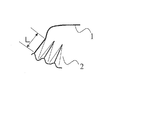
- crown molding In crown molding, the central part is squeezed to some extent at the initial stage of molding, and then the outer edge part is molded into a pleated shape.
- a shape defect that causes uneven pleat shapes may occur.
- a crown with a non-uniform pleat shape has a problem that even if it is plugged into a bottle, the pressure resistance cannot be obtained, the contents leak, and it does not serve as a lid. Even if the pleat shape is uniform, if the steel plate strength is low, there is a risk that the crown may come off due to insufficient pressure resistance.
- the present invention has been made in view of the above circumstances, and an object of the present invention is to solve the above-described problems of the prior art and to provide a crown steel plate excellent in workability, a manufacturing method thereof, and a crown.
- the inventors have conducted intensive research to solve the above problems. Based on ultra-low carbon steel, study chemical composition, hot rolling conditions, cold rolling conditions (primary and secondary), continuous annealing conditions, improve average r value and control YP to appropriate value As a result, it has been found that it is possible to reduce the shape defect rate of the crown and to secure the compressive strength.
- the present invention has been made based on the above findings, and the gist thereof is as follows.
- C 0.0005 to 0.0050%
- Si 0.020% or less
- Mn 0.10 to 0.60%
- P 0.020% or less
- S 0.020 %: Al: 0.01 to 0.10% or less
- N 0.0050% or less
- Nb 0.010 to 0.050%
- the balance is made of Fe and inevitable impurities
- the average r value Is a steel plate for a crown having 1.30 or more and YP of 450 MPa or more and 650 MPa or less.
- a steel slab having the chemical composition described in [1] above is subjected to hot rolling at a slab reheating temperature of 1150 ° C or higher and a finishing temperature of 870 ° C or higher, and then wound at a winding temperature of 600 ° C or higher.
- a method of manufacturing a steel plate for a crown which is first cold-rolled after pickling, annealed at an annealing temperature of not less than the recrystallization temperature and not more than 790 ° C., and then subjected to secondary cold rolling at a reduction rate of not less than 10% and not more than 50%.
- % indicating the ratio of the component composition is all by mass.
- a crown steel plate excellent in workability having an average r value of 1.30 or more and YP of 450 MPa or more and 650 MPa or less can be obtained.
- the steel plate for a crown of the present invention it becomes possible to improve the shape uniformity of the crown used for a beer bottle and the like and to obtain a sufficient pressure resistance.
- C is an element that increases the strength of steel, but decreases workability.
- the amount of the solute C in the steel sheet is large, the yield elongation increases, which tends to cause age hardening and stretcher strain during processing. Therefore, in the present invention using the continuous annealing method, it is necessary to control so that the C content is kept as low as possible in the steelmaking stage.
- the amount of residual solid solution C increases, a steel plate will harden and it will become easy to generate
- C is an element that affects the recrystallization texture.
- the texture of the annealed plate increases in the crystal orientation group in which the ⁇ 111> direction is parallel to the normal direction of the plate surface, and the average r value is improved.
- the drawability is improved and the crown shape defect is improved.
- the C content is set to 0.0050% or less.
- 0.0035% or less is preferable, and 0.0023% or less is more preferable.
- excessive decarburization leads to an increase in cost during steelmaking, so 0.0005% is made the lower limit.
- Si 0.020% or less
- Mn 0.10 to 0.60%
- Mn is added for the purpose of preventing hot brittleness. There is also an effect of preventing a decrease in hot ductility due to S contained in steel. In order to obtain these effects, addition of 0.10% or more is necessary.
- the upper limit of Mn of the tin plate used for normal food containers is It is specified as 0.60% or less. From the above, the upper limit of Mn of the present invention is 0.60% or less. From the viewpoint of workability, Mn is preferably 0.45% or less.
- S 0.020% or less
- S combines with Fe in the steel to form FeS and reduces the hot ductility of the steel. In order to prevent this, S is made 0.020% or less. On the other hand, if S is too low, the risk of pitting corrosion increases, so 0.008% or more is preferable.
- Al 0.01 to 0.10%
- Al is an element added as a deoxidizer. Further, by forming N and AlN, there is an effect of reducing solid solution N in the steel. However, if the Al content is less than 0.01%, a sufficient deoxidation effect or a solid solution N reduction effect cannot be obtained. On the other hand, if it exceeds 0.10%, not only is the above effect saturated, but also inclusions such as alumina increase, such being undesirable. Therefore, the Al content is in the range of 0.01% to 0.10%.
- N 0.0050% or less
- the steel becomes hard due to strain age hardening and the workability decreases.
- the element added in order to fix solid solution N must be increased, it leads to a cost increase. Therefore, the upper limit of N is set to 0.0050% or less.
- 0.0010% or more is preferable.
- Nb is an element that can improve the average r value by fixing the solid solution C in the steel sheet as NbC and decreasing the solid solution C.
- the increase in the average r value improves the drawability and is effective in suppressing shape defects. If the amount of Nb is small, the effect of increasing the average r value is diminished, so the lower limit is made 0.010%.
- the Nb addition amount increases, the recrystallization temperature rises, and thus there is a possibility that non-recrystallization occurs after annealing. Since this causes a variation in material, the content is made 0.050% or less.
- the balance is Fe and inevitable impurities.
- Cu, Ni, Cr, and Mo may be contained within a range that does not impair the effects of the present invention. According to ASTM A623M-11, Cu is 0.2% or less, Ni is 0.15% or less, Cr is 0.10% or less, and Mo is 0.05% or less. Other elements are 0.02% or less.
- Sn may be contained within a range not impairing the effects of the present invention.
- the structure of the steel plate for crowns of the present invention is a recrystallized structure. This is because if there is unrecrystallized after annealing, the material becomes non-uniform and the mechanical properties vary. However, an unrecrystallized area ratio of 5% or less is acceptable because it hardly affects the material variation.
- the recrystallized structure is preferably a ferrite phase, and the phase other than the ferrite phase is preferably less than 1.0%. From the viewpoint of suppressing anisotropy during secondary cold rolling, the ferrite extension is preferably 4.2 or less.
- a ferrite extension degree can be 4.2 or less by making the rolling rate of secondary cold rolling into 50% or less among the manufacturing methods mentioned later. Further, the ferrite extension can be measured by the method described in Examples below.
- the slab having the above composition is subjected to hot rolling at a slab reheating temperature of 1150 ° C. or higher and a finishing temperature of 870 ° C. or higher, and then wound at a winding temperature of 600 ° C. or higher, pickled, and then first cold rolled. Then, annealing at an annealing temperature not lower than the recrystallization temperature and not higher than 790 ° C., followed by secondary cold rolling at a rolling reduction of not less than 10% and not more than 50%, a crown steel sheet having excellent workability can be obtained.
- the hot rolling finishing temperature 870 ° C or higher
- the hot rolling finishing temperature is set to 870 ° C. or higher.
- the hot rolling finishing temperature is preferably 910 ° C. or lower.
- the coiling temperature after hot rolling 600 ° C. or higher.
- the coiling temperature is preferably higher than 700 ° C.
- the coiling temperature after hot rolling is preferably 730 ° C. or lower.
- the pickling conditions are not particularly limited as long as the surface scale can be removed.
- Pickling can be performed by a commonly performed method.
- pickling was illustrated as a scale removal method, methods other than pickling may be used as long as scale can be removed. For example, mechanical removal may be used.
- the reduction ratio of primary cold rolling is preferably 86 to 89%.
- the annealing method is preferably a continuous annealing method from the viewpoint of material uniformity and productivity. It is essential that the annealing temperature in the continuous annealing is equal to or higher than the recrystallization temperature. However, if the annealing temperature is too high, the crystal grains become coarse, the steel sheet strength decreases, and there is a possibility that YP within the range specified in the present invention cannot be obtained. In addition, with thin materials, there is a greater risk of breakage in the furnace and occurrence of buckling. For this reason, an annealing temperature shall be 790 degrees C or less. The soaking time during annealing is preferably 10 seconds to 90 seconds from the viewpoint of productivity.
- Secondary cold rolling is a particularly important production condition in the present invention. If the rolling reduction exceeds 50%, the steel sheet becomes excessively hard, and the workability decreases. In addition, the average r value decreases and the ⁇ r value increases. Therefore, the reduction ratio of secondary cold rolling is set to 50% or less. On the other hand, secondary rolling is performed at a rolling reduction of 10% or more in order to ensure the pressure strength. Furthermore, in order to ensure the pressure strength, the rolling reduction is preferably over 30%.
- the cold-rolled steel sheet obtained as described above is preferably subjected to the following surface treatment before being formed into a crown.
- the steel plate subjected to the following surface treatment is also a crown steel plate of the present invention.
- Various surface treatments may be applied to the steel sheet surface of the steel sheet after the secondary cold rolling.
- a method of forming at least one of tin plating, chromium plating, and nickel plating by a general plating method such as electroplating can be given. Since the film thickness of the surface treatment such as plating is sufficiently small with respect to the plate thickness, the influence on the mechanical properties of the steel plate for crowns is at a negligible level.
- the pressure resistance of the container is proportional to YP of the lid material. If the strength of the steel sheet is insufficient, sufficient pressure strength cannot be obtained, so the lower limit of YP is set to 450 MPa. On the other hand, if YP is too high, the compressive stress in the circumferential direction of the crown pleat increases and exceeds the critical buckling stress at the initial stage of crown molding, so that wrinkles are likely to occur. In order to prevent such a shape defect, the upper limit is set to 650 MPa.
- the tensile test is performed using a JIS No. 5 size tensile test piece according to JIS Z 2241. The tensile direction is the rolling direction (L direction).
- the pressure resistance of the container is proportional to the square of the plate thickness of the lid. If the plate thickness is too thin, the pressure resistance is reduced and the role as a lid cannot be achieved. Therefore, the plate thickness is preferably 0.13 mm or more, and more preferably 0.16 mm or more. On the other hand, from the viewpoint of resource saving by reducing the thickness of the crown steel plate, reducing the environmental burden, and reducing the material cost, it is preferable that the thickness of the steel plate is thinner than 0.22 mm which is the thickness of the current crown steel plate. . In order to obtain such an effect, the plate thickness is preferably 0.18 mm or less.
- the crown steel plate excellent in workability of the present invention can be obtained.
- a crown is a lid used for beverage bottles, etc. It has pleated projections on the side of the crown (generally 21 pleats) and caulks the pleated grooves on the drinking mouth of bottles. Seal the contents with.
- a packing is provided on the inner surface of the crown lid to enhance the sealing performance. Cork sheets, PVC (polyvinyl chloride), PE (polyethylene), etc. are used as the packing material.
- a steel slab was obtained by melting steel containing the component composition shown in Table 1 and the balance being Fe and inevitable impurities. Here, it is confirmed that the Sn amount is less than 0.0050% at all levels.
- the obtained steel slab was reheated at the temperature shown in Table 2, and then hot rolled at the finish rolling temperature and the winding temperature shown in Table 2.
- primary cold rolling was performed at the rolling reduction shown in Table 2
- the obtained thin steel sheet was annealed at the annealing temperature (recrystallization temperature) shown in Table 2 in a continuous annealing furnace.
- Secondary cold rolling was performed at the rolling reduction shown in Table 2 to produce a thin steel plate with the final finished plate thickness shown in Table 2.
- Microstructure observation was performed on the steel sheet obtained by the above manufacturing method. Microscopic observation was performed in accordance with “JIS G 0551”, in which ferrite grains were revealed with nital and photographed at 400 ⁇ using an optical microscope. The presence or absence of non-recrystallization was confirmed visually with an optical microscope, and crystal grains that had not been recrystallized were judged as non-recrystallized. In addition, a photograph taken using an optical microscope is subjected to image processing, and the area ratio of non-recrystallized grains is calculated by distinguishing the non-recrystallized part from the re-crystallized completed part. Recrystallized more than 0% and 5% or less was marked with ⁇ , and unrecrystallized more than 5% with x.
- the degree of extension of ferrite grains was calculated by the method shown in “JIS G 0202”.
- the steel plate obtained by the above manufacturing method was subjected to chromium (tin-free) plating as a surface treatment, and then coated (baking treatment condition: heat treatment at 210 ° C. for 20 minutes) and pressed into a crown shape.
- the mechanical properties and formability were investigated under the following test conditions.
- the average r value average plastic strain ratio
- the natural vibration method defined in JIS Z 2254 Annex JA was used. That is, the resonance frequency and average Young's modulus of the steel plates in the 0 °, 45 °, and 90 ° directions with respect to the rolling direction were obtained, and the average r value was calculated.
- ⁇ r in-plane anisotropy
- the natural vibration method defined in JIS Z 2254 Annex JA was used. That is, the resonance frequency of the steel sheet in the 0 °, 45 °, and 90 ° directions with respect to the rolling direction is measured, the Young's modulus anisotropy ⁇ E is calculated, and the ⁇ r value is calculated from an empirical formula showing the correlation between ⁇ r and ⁇ E. did.
- the tensile test for YP measurement was performed using a JIS No. 5 size tensile test piece in accordance with JIS Z2241.
- the tensile direction was the rolling direction (L direction).
- a crown was molded and the uniformity of the pleat shape of the crown was evaluated.
- the present invention examples have an average r value of 1.30 or more, YP of 450 MPa or more and 650 MPa or less, no non-recrystallization that may cause material variations, and excellent shape uniformity and pressure resistance. I understand.
- one or more of the shape uniformity and pressure resistance are inferior, or there are unrecrystallized crystals with an area ratio exceeding 5%, which may cause material variations.
Landscapes
- Chemical & Material Sciences (AREA)
- Engineering & Computer Science (AREA)
- Mechanical Engineering (AREA)
- Materials Engineering (AREA)
- Metallurgy (AREA)
- Organic Chemistry (AREA)
- Crystallography & Structural Chemistry (AREA)
- Thermal Sciences (AREA)
- Physics & Mathematics (AREA)
- Chemical Kinetics & Catalysis (AREA)
- General Chemical & Material Sciences (AREA)
- Heat Treatment Of Sheet Steel (AREA)
- Closures For Containers (AREA)
- Metal Rolling (AREA)
Abstract
Priority Applications (5)
| Application Number | Priority Date | Filing Date | Title |
|---|---|---|---|
| JP2016505035A JP6195012B2 (ja) | 2014-02-25 | 2015-02-13 | 王冠用鋼板およびその製造方法ならびに王冠 |
| CN201580010012.5A CN106029926B (zh) | 2014-02-25 | 2015-02-13 | 瓶盖用钢板及其制造方法以及瓶盖 |
| KR1020167026089A KR101871735B1 (ko) | 2014-02-25 | 2015-02-13 | 크라운 캡용 강판 및 그의 제조 방법 및 크라운 캡 |
| BR112016019612A BR112016019612A2 (pt) | 2014-02-25 | 2015-02-13 | folha de aço para tampa de coroa, método para fabricação da mesma e tampa de coroa |
| US15/121,540 US20160362761A1 (en) | 2014-02-25 | 2015-02-13 | Steel sheet for crown cap, method for manufacturing same, and crown cap |
Applications Claiming Priority (2)
| Application Number | Priority Date | Filing Date | Title |
|---|---|---|---|
| JP2014033851 | 2014-02-25 | ||
| JP2014-033851 | 2014-02-25 |
Publications (1)
| Publication Number | Publication Date |
|---|---|
| WO2015129191A1 true WO2015129191A1 (fr) | 2015-09-03 |
Family
ID=54008529
Family Applications (1)
| Application Number | Title | Priority Date | Filing Date |
|---|---|---|---|
| PCT/JP2015/000684 Ceased WO2015129191A1 (fr) | 2014-02-25 | 2015-02-13 | Plaque d'acier pour capsule-couronne, procédé de fabrication de celle-ci, et capsule-couronne |
Country Status (8)
| Country | Link |
|---|---|
| US (1) | US20160362761A1 (fr) |
| JP (1) | JP6195012B2 (fr) |
| KR (1) | KR101871735B1 (fr) |
| CN (1) | CN106029926B (fr) |
| BR (1) | BR112016019612A2 (fr) |
| MY (1) | MY174492A (fr) |
| TW (1) | TWI541363B (fr) |
| WO (1) | WO2015129191A1 (fr) |
Cited By (2)
| Publication number | Priority date | Publication date | Assignee | Title |
|---|---|---|---|---|
| JP6465265B1 (ja) * | 2017-07-31 | 2019-02-06 | Jfeスチール株式会社 | 王冠用鋼板、王冠、および王冠用鋼板の製造方法 |
| WO2019026738A1 (fr) | 2017-07-31 | 2019-02-07 | Jfeスチール株式会社 | Tôle d'acier pour capsule couronne, capsule couronne et procédé de production de tôle d'acier pour capsule couronne |
Families Citing this family (8)
| Publication number | Priority date | Publication date | Assignee | Title |
|---|---|---|---|---|
| CN107335968A (zh) * | 2016-11-19 | 2017-11-10 | 张红伟 | 瓶盖制作工艺 |
| CN107335967A (zh) * | 2016-11-19 | 2017-11-10 | 张红伟 | 密封瓶盖制作工艺 |
| CN106868400A (zh) * | 2017-03-21 | 2017-06-20 | 德龙钢铁有限公司 | 一种瓶盖用钢及其制造方法 |
| JP6468404B1 (ja) * | 2017-03-31 | 2019-02-13 | Jfeスチール株式会社 | 鋼板およびその製造方法と王冠およびdrd缶 |
| CN114277312A (zh) * | 2017-03-31 | 2022-04-05 | 杰富意钢铁株式会社 | 钢板以及瓶盖和drd罐 |
| WO2023217382A1 (fr) * | 2022-05-12 | 2023-11-16 | Actega Ds Gmbh | Insert d'étanchéité pour capsules couronnes à épaisseur de feuille réduite |
| KR20250092851A (ko) * | 2023-12-15 | 2025-06-24 | 주식회사 포스코 | 캔용 냉연 강판 및 그 제조방법 |
| KR20250092494A (ko) * | 2023-12-15 | 2025-06-24 | 주식회사 포스코 | 캔용 냉연 강판 및 그 제조방법 |
Citations (4)
| Publication number | Priority date | Publication date | Assignee | Title |
|---|---|---|---|---|
| JPH05247669A (ja) * | 1992-03-06 | 1993-09-24 | Toyo Kohan Co Ltd | 薄肉化深絞り缶用高強度鋼板の製造方法 |
| JPH07228921A (ja) * | 1993-12-20 | 1995-08-29 | Kawasaki Steel Corp | 加工性に優れた表面処理鋼板用原板の製造方法 |
| JPH11209845A (ja) * | 1998-01-28 | 1999-08-03 | Kawasaki Steel Corp | 加工性と耐肌荒れ性に優れる缶用鋼板ならびにその製造方法 |
| JP2008202113A (ja) * | 2007-02-21 | 2008-09-04 | Jfe Steel Kk | 缶用鋼板の製造方法 |
Family Cites Families (10)
| Publication number | Priority date | Publication date | Assignee | Title |
|---|---|---|---|---|
| JP3331504B2 (ja) | 1992-04-13 | 2002-10-07 | 新日本製鐵株式会社 | ネックドイン加工性に優れた非時効性容器用鋼板 |
| JP2980486B2 (ja) | 1993-06-24 | 1999-11-22 | 新日本製鐵株式会社 | 非時効低イヤリング容器用鋼板の製造方法 |
| JPH08218146A (ja) * | 1995-02-08 | 1996-08-27 | Kawasaki Steel Corp | フランジ加工性及びネック成形性に優れた溶接缶用鋼板とその製造方法 |
| JP4045602B2 (ja) * | 1995-10-05 | 2008-02-13 | Jfeスチール株式会社 | 絞り成形性に優れる缶用鋼板の製造方法 |
| JP4635525B2 (ja) * | 2003-09-26 | 2011-02-23 | Jfeスチール株式会社 | 深絞り性に優れた高強度鋼板およびその製造方法 |
| KR20120040758A (ko) * | 2006-12-20 | 2012-04-27 | 제이에프이 스틸 가부시키가이샤 | 냉연 강판 및 그 제조 방법 |
| JP5463720B2 (ja) | 2009-04-22 | 2014-04-09 | Jfeスチール株式会社 | 缶用鋼板用冷延鋼板と缶用鋼板およびそれらの製造方法 |
| JP5056863B2 (ja) * | 2010-01-15 | 2012-10-24 | Jfeスチール株式会社 | 冷延鋼板およびその製造方法 |
| JP5051247B2 (ja) * | 2010-01-15 | 2012-10-17 | Jfeスチール株式会社 | 成形性と形状凍結性に優れた冷延鋼板およびその製造方法 |
| JP5794004B2 (ja) * | 2011-07-12 | 2015-10-14 | Jfeスチール株式会社 | フランジ加工性に優れる高強度缶用鋼板およびその製造方法 |
-
2015
- 2015-02-13 BR BR112016019612A patent/BR112016019612A2/pt not_active Application Discontinuation
- 2015-02-13 KR KR1020167026089A patent/KR101871735B1/ko active Active
- 2015-02-13 US US15/121,540 patent/US20160362761A1/en not_active Abandoned
- 2015-02-13 MY MYPI2016703067A patent/MY174492A/en unknown
- 2015-02-13 CN CN201580010012.5A patent/CN106029926B/zh not_active Expired - Fee Related
- 2015-02-13 WO PCT/JP2015/000684 patent/WO2015129191A1/fr not_active Ceased
- 2015-02-13 JP JP2016505035A patent/JP6195012B2/ja active Active
- 2015-02-24 TW TW104105830A patent/TWI541363B/zh active
Patent Citations (4)
| Publication number | Priority date | Publication date | Assignee | Title |
|---|---|---|---|---|
| JPH05247669A (ja) * | 1992-03-06 | 1993-09-24 | Toyo Kohan Co Ltd | 薄肉化深絞り缶用高強度鋼板の製造方法 |
| JPH07228921A (ja) * | 1993-12-20 | 1995-08-29 | Kawasaki Steel Corp | 加工性に優れた表面処理鋼板用原板の製造方法 |
| JPH11209845A (ja) * | 1998-01-28 | 1999-08-03 | Kawasaki Steel Corp | 加工性と耐肌荒れ性に優れる缶用鋼板ならびにその製造方法 |
| JP2008202113A (ja) * | 2007-02-21 | 2008-09-04 | Jfe Steel Kk | 缶用鋼板の製造方法 |
Cited By (6)
| Publication number | Priority date | Publication date | Assignee | Title |
|---|---|---|---|---|
| JP6465265B1 (ja) * | 2017-07-31 | 2019-02-06 | Jfeスチール株式会社 | 王冠用鋼板、王冠、および王冠用鋼板の製造方法 |
| WO2019026738A1 (fr) | 2017-07-31 | 2019-02-07 | Jfeスチール株式会社 | Tôle d'acier pour capsule couronne, capsule couronne et procédé de production de tôle d'acier pour capsule couronne |
| WO2019026739A1 (fr) * | 2017-07-31 | 2019-02-07 | Jfeスチール株式会社 | Tôle d'acier pour capsule-couronne, capsule-couronne et procédé de fabrication de tôle d'acier pour capsule-couronne |
| AU2018309965B2 (en) * | 2017-07-31 | 2020-12-10 | Jfe Steel Corporation | Steel sheet for crown cap, crown cap, and method for manufacturing steel sheet for crown cap |
| US11359255B2 (en) | 2017-07-31 | 2022-06-14 | Jfe Steel Corporation | Steel sheet for crown cap, crown cap and method for producing steel sheet for crown cap |
| US11459149B2 (en) | 2017-07-31 | 2022-10-04 | Jfe Steel Corporation | Steel sheet for crown cap, crown cap and method for producing steel sheet for crown cap |
Also Published As
| Publication number | Publication date |
|---|---|
| TW201536930A (zh) | 2015-10-01 |
| CN106029926A (zh) | 2016-10-12 |
| JP6195012B2 (ja) | 2017-09-13 |
| KR20160126014A (ko) | 2016-11-01 |
| TWI541363B (zh) | 2016-07-11 |
| MY174492A (en) | 2020-04-23 |
| US20160362761A1 (en) | 2016-12-15 |
| BR112016019612A2 (pt) | 2018-10-23 |
| KR101871735B1 (ko) | 2018-06-27 |
| CN106029926B (zh) | 2018-10-02 |
| JPWO2015129191A1 (ja) | 2017-03-30 |
Similar Documents
| Publication | Publication Date | Title |
|---|---|---|
| JP6195012B2 (ja) | 王冠用鋼板およびその製造方法ならびに王冠 | |
| TWI617677B (zh) | Steel plate for can and method for producing steel plate for can | |
| US12129535B2 (en) | Steel sheet for cans and method of producing same | |
| CN102482748A (zh) | 高加工性三片焊接罐用钢板及其制造方法 | |
| TW201837199A (zh) | 兩片罐用鋼板及其製造方法 | |
| TWI493053B (zh) | 三片式罐體及其製造方法 | |
| JP6123735B2 (ja) | 王冠用鋼板、その製造方法および王冠 | |
| JP5803660B2 (ja) | 高強度高加工性缶用鋼板およびその製造方法 | |
| JP6198011B2 (ja) | 硬質容器用鋼板の製造方法 | |
| CN104781437B (zh) | 三片罐用钢板及其制造方法 | |
| US10837078B2 (en) | Steel sheet, method of manufacturing same, crown cap, and drawing and redrawing (DRD) can | |
| JP5540580B2 (ja) | 高強度高加工性缶用鋼板およびその製造方法 | |
| KR101975129B1 (ko) | 왕관용 강판 및 그 제조 방법 그리고 왕관 | |
| KR102587650B1 (ko) | 캔용 강판 및 그의 제조 방법 | |
| JP5803510B2 (ja) | 高強度高加工性缶用鋼板およびその製造方法 | |
| AU2018309964B2 (en) | Steel sheet for crown cap, crown cap and method for producing steel sheet for crown cap | |
| CA2975068A1 (fr) | Plaque d'acier pour capsule-couronne ainsi que procede de fabrication de celle-ci, et capsule-couronne | |
| NZ756845B2 (en) | Steel Sheet, Method of Manufacturing Same, Crown Cap, and Drawing and Redrawing (DRD) Can |
Legal Events
| Date | Code | Title | Description |
|---|---|---|---|
| 121 | Ep: the epo has been informed by wipo that ep was designated in this application |
Ref document number: 15755200 Country of ref document: EP Kind code of ref document: A1 |
|
| ENP | Entry into the national phase |
Ref document number: 2016505035 Country of ref document: JP Kind code of ref document: A |
|
| WWE | Wipo information: entry into national phase |
Ref document number: NC2016/0000497 Country of ref document: CO |
|
| NENP | Non-entry into the national phase |
Ref country code: DE |
|
| WWE | Wipo information: entry into national phase |
Ref document number: 15121540 Country of ref document: US |
|
| ENP | Entry into the national phase |
Ref document number: 20167026089 Country of ref document: KR Kind code of ref document: A |
|
| 122 | Ep: pct application non-entry in european phase |
Ref document number: 15755200 Country of ref document: EP Kind code of ref document: A1 |
|
| REG | Reference to national code |
Ref country code: BR Ref legal event code: B01A Ref document number: 112016019612 Country of ref document: BR |
|
| ENP | Entry into the national phase |
Ref document number: 112016019612 Country of ref document: BR Kind code of ref document: A2 Effective date: 20160824 |