WO2015163316A1 - Composition pour prévenir ou améliorer la neuropathie périphérique - Google Patents
Composition pour prévenir ou améliorer la neuropathie périphérique Download PDFInfo
- Publication number
- WO2015163316A1 WO2015163316A1 PCT/JP2015/062092 JP2015062092W WO2015163316A1 WO 2015163316 A1 WO2015163316 A1 WO 2015163316A1 JP 2015062092 W JP2015062092 W JP 2015062092W WO 2015163316 A1 WO2015163316 A1 WO 2015163316A1
- Authority
- WO
- WIPO (PCT)
- Prior art keywords
- peripheral neuropathy
- serine
- composition
- group
- pain
- Prior art date
- Legal status (The legal status is an assumption and is not a legal conclusion. Google has not performed a legal analysis and makes no representation as to the accuracy of the status listed.)
- Ceased
Links
Images




Classifications
-
- A—HUMAN NECESSITIES
- A61—MEDICAL OR VETERINARY SCIENCE; HYGIENE
- A61K—PREPARATIONS FOR MEDICAL, DENTAL OR TOILETRY PURPOSES
- A61K31/00—Medicinal preparations containing organic active ingredients
- A61K31/185—Acids; Anhydrides, halides or salts thereof, e.g. sulfur acids, imidic, hydrazonic or hydroximic acids
- A61K31/19—Carboxylic acids, e.g. valproic acid
- A61K31/20—Carboxylic acids, e.g. valproic acid having a carboxyl group bound to a chain of seven or more carbon atoms, e.g. stearic, palmitic, arachidic acids
- A61K31/202—Carboxylic acids, e.g. valproic acid having a carboxyl group bound to a chain of seven or more carbon atoms, e.g. stearic, palmitic, arachidic acids having three or more double bonds, e.g. linolenic
-
- A—HUMAN NECESSITIES
- A61—MEDICAL OR VETERINARY SCIENCE; HYGIENE
- A61K—PREPARATIONS FOR MEDICAL, DENTAL OR TOILETRY PURPOSES
- A61K31/00—Medicinal preparations containing organic active ingredients
- A61K31/185—Acids; Anhydrides, halides or salts thereof, e.g. sulfur acids, imidic, hydrazonic or hydroximic acids
- A61K31/19—Carboxylic acids, e.g. valproic acid
- A61K31/195—Carboxylic acids, e.g. valproic acid having an amino group
- A61K31/197—Carboxylic acids, e.g. valproic acid having an amino group the amino and the carboxyl groups being attached to the same acyclic carbon chain, e.g. gamma-aminobutyric acid [GABA], beta-alanine, epsilon-aminocaproic acid or pantothenic acid
- A61K31/198—Alpha-amino acids, e.g. alanine or edetic acid [EDTA]
-
- A—HUMAN NECESSITIES
- A61—MEDICAL OR VETERINARY SCIENCE; HYGIENE
- A61K—PREPARATIONS FOR MEDICAL, DENTAL OR TOILETRY PURPOSES
- A61K35/00—Medicinal preparations containing materials or reaction products thereof with undetermined constitution
- A61K35/56—Materials from animals other than mammals
- A61K35/60—Fish, e.g. seahorses; Fish eggs
-
- A—HUMAN NECESSITIES
- A61—MEDICAL OR VETERINARY SCIENCE; HYGIENE
- A61P—SPECIFIC THERAPEUTIC ACTIVITY OF CHEMICAL COMPOUNDS OR MEDICINAL PREPARATIONS
- A61P25/00—Drugs for disorders of the nervous system
- A61P25/02—Drugs for disorders of the nervous system for peripheral neuropathies
-
- A—HUMAN NECESSITIES
- A61—MEDICAL OR VETERINARY SCIENCE; HYGIENE
- A61P—SPECIFIC THERAPEUTIC ACTIVITY OF CHEMICAL COMPOUNDS OR MEDICINAL PREPARATIONS
- A61P25/00—Drugs for disorders of the nervous system
- A61P25/04—Centrally acting analgesics, e.g. opioids
-
- A—HUMAN NECESSITIES
- A61—MEDICAL OR VETERINARY SCIENCE; HYGIENE
- A61P—SPECIFIC THERAPEUTIC ACTIVITY OF CHEMICAL COMPOUNDS OR MEDICINAL PREPARATIONS
- A61P43/00—Drugs for specific purposes, not provided for in groups A61P1/00-A61P41/00
Definitions
- the present invention relates to a composition for preventing or improving peripheral neuropathy, which contains serine and n-3 fatty acids as active ingredients.
- Neuroneuropathic pain is more likely to become chronic and has characteristics that are different from “nociceptive” pain, which is often acute (eg, injuries, burns, etc.). Acute pain following body tissue damage serves as an alarm for body tissue damage and leads the body tissue to repair over a period of time. On the other hand, it is said that chronic pain does not work as a protective biological function and continues for several months to several years (Non-patent Document 1).
- Non-Patent Document 2 Psychiamic Pain and depression associated with pain have a significant effect on the amount of activity, so removing pain can improve quality of life.
- Pain due to peripheral neuropathy is pain caused by primary damage or abnormal function in any part of the peripheral nerve transmission system.
- the cause of this nerve injury is mainly trauma or injury to the peripheral nerve, plexus or perineural soft tissue. Pain due to peripheral neuropathy also occurs with injury to central somatosensory pathways (eg, ascending somatosensory pathways in the spinal cord, brainstem, thalamus or cortex). Pain caused by peripheral neuropathy is induced by any of neurodegenerative diseases, bone degenerative diseases, metabolic disorders, cancer, infection, inflammation, surgical operation, trauma, radiation therapy, treatment with anticancer drugs, etc. Is done.
- the function of the knee joint is reduced due to muscular weakness, aging, obesity, etc. of the elderly, and the meshing of the knee cartilage and meniscus is loosened, causing deformation and tearing.
- Such loosening, deformation, and tearing of the knee cartilage and meniscus meshing occurs when the knee cartilage and meniscus acting as a cushion for the knee joint are worn and deformed little by little over a long period of activity, It may occur due to illness or injury such as rheumatoid arthritis or knee injury. In many of these, there is an excessive retention of joint fluid due to inflammation and is painful.
- deterioration of function due to muscle weakness, aging, obesity, etc. in the elderly can occur in the waist with cartilage as well as the knee, causing loosening, deformation or tearing of the lumbar engagement, chronic pain Is often accompanied.
- Non-patent Document 3 In cancer patients, unbearable numbness, aching sensation, etc. persist for a long time due to peripheral nerve and spinal cord compression caused by cancer, tissue infiltration, or peripheral nerve damage due to the action of chemotherapy itself. In particular, the pain due to chemotherapy is often forced to stop chemotherapy, and the pain due to chemotherapy is a major obstacle to cancer treatment (Non-patent Document 3).
- Peripheral neuropathy is characterized by a hypersensitive response (allodynia) in which pain is felt by stimuli that healthy individuals do not feel. Although the molecular mechanism of this onset has not been fully clarified, abnormal responses such as excessive excitement and sustained spontaneous excitement occur in sensory neurons in common with various peripheral neuropathies.
- Non-Patent Document 1 For peripheral neuropathic pain, opioid central analgesics such as morphine; steroids; non-steroidal anti-inflammatory analgesics; (Non-Patent Document 1). Therefore, there is a need for a method that can reduce peripheral neuropathic pain effectively with few side effects.
- opioid central analgesics such as morphine; steroids; non-steroidal anti-inflammatory analgesics; (Non-Patent Document 1). Therefore, there is a need for a method that can reduce peripheral neuropathic pain effectively with few side effects.
- Serine is a kind of non-essential amino acid and is involved in the biosynthesis of nucleic acids such as purines and pyrimidines and the biosynthesis of cysteine.
- nucleic acids such as purines and pyrimidines
- cysteine has been reported to be involved in the promotion of dorsal root ganglion neurite outgrowth in chicken embryo cells, the survival and development of rat fetal cell-derived hippocampal neurons and rat cerebellar Purkinje neurons ( Non-patent documents 4, 5, 6).
- All of these reports are in-vitro assessments in the early stages of neuronal development, which is very different from the situation in which peripheral neuropathy occurred after neuronal cells were formed.
- Patent Document 1 it has been reported that L-serine exhibits a reducing effect on peripheral neuropathic pain in an anticancer drug or a model animal of diabetes. Anticancer drugs and diabetes directly affect peripheral nerve cells and nerve axons.
- peripheral neuropathic pain due to knee arthritis is pain that acts locally on the sensory organs of the knee, and the nature of the pain is different from that caused by anticancer drugs or diabetes.
- the peripheral neuropathic pain caused by this knee arthritis has not been studied in Patent Document 1.
- the alleviation effect of L-serine on the pain of peripheral neuropathy caused by anticancer drugs and diabetes which was examined in Patent Document 1, was partial even at the maximum concentration of L-serine.
- eicosapentaenoic acid has already been used clinically as an agent for improving hypertriglyceridemia, but clinical reports regarding pain relief are not clear. Even in studies using animal models, there is no report that clearly shows a mitigating effect on mechanical stimulation of peripheral nerves when eicosapentaenoic acid is added to a meal and ingested.
- the problem to be solved by the present invention is to provide a novel composition having an effect of preventing or improving peripheral neuropathy.
- peripheral neuropathy can be prevented or ameliorated by adding serine and n-3 fatty acids, and the present invention has been completed. .
- the present invention is as follows.
- a composition for preventing or ameliorating peripheral neuropathy comprising a serine-containing amino acid and an n-3 fatty acid-containing lipid.
- the n-3 fatty acid contains one or more selected from the group consisting of eicosapentaenoic acid, docosapentaenoic acid and docosahexaenoic acid.
- the amount of serine is 50% by weight or more based on the total amount of amino acids.
- Peripheral neuropathy is a peripheral neuropathy caused by an anticancer agent, a peripheral neuropathy caused by knee osteoarthritis, a spinal nerve disorder, a peripheral neuropathy caused by mechanical compression of a peripheral nerve trunk, a diabetic peripheral neuropathy,
- a composition for preventing or ameliorating a decrease in activity due to peripheral neuropathy comprising a serine-containing amino acid and an n-3 fatty acid-containing lipid.
- a method for preventing or ameliorating peripheral neuropathy comprising administering an effective amount of a composition containing an amino acid containing serine and a lipid containing an n-3 fatty acid to a subject in need thereof.
- the n-3 fatty acid contains one or more selected from the group consisting of eicosapentaenoic acid, docosapentaenoic acid and docosahexaenoic acid.
- the amount of serine in the composition is 50% by weight or more based on the total amount of amino acids in the composition.
- the composition is in a unit package form per ingestion, contains 0.1 g or more of serine per unit, and contains 0.03 g or more of n-3 fatty acid per unit. [11 ] To [15].
- Peripheral neuropathy is a peripheral neuropathy caused by an anticancer agent, a peripheral neuropathy caused by knee osteoarthritis, a spinal nerve disorder, a peripheral neuropathy caused by mechanical compression of a peripheral nerve trunk, a diabetic peripheral neuropathy, The method according to any one of [11] to [16], wherein the method is any one selected from the group consisting of renal disease urine toxicity peripheral neuropathy, shingles peripheral neuropathy, and Guillain-Barre syndrome. [18] The method according to any one of [11] to [16], wherein the peripheral neuropathy is a peripheral neuropathy caused by an anticancer agent or a peripheral neuropathy caused by osteoarthritis of the knee. [19] Prevention or improvement of decreased activity due to peripheral neuropathy, comprising administering an effective amount of a composition containing an amino acid containing serine and a lipid containing n-3 fatty acid to a subject in need thereof Method.
- a composition comprising a serine-containing amino acid and an n-3 fatty acid-containing lipid for use in the prevention or amelioration of peripheral neuropathy.
- the n-3 fatty acid contains one or more selected from the group consisting of eicosapentaenoic acid, docosapentaenoic acid and docosahexaenoic acid.
- the amount of serine is 50% by weight or more based on the total amount of amino acids.
- Peripheral neuropathy is a peripheral neuropathy caused by an anticancer agent, a peripheral neuropathy caused by osteoarthritis of the knee, a spinal nerve disorder, a peripheral neuropathy caused by mechanical compression of a peripheral nerve trunk, a diabetic peripheral neuropathy,
- composition containing an amino acid containing serine and a lipid containing n-3 fatty acids for use in preventing or ameliorating a decrease in activity due to peripheral neuropathy [29] The composition according to any one of [20] to [28], which is a pharmaceutical.
- a composition for preventing or improving peripheral neuropathy can be provided.
- the composition has an effect of reducing pain of peripheral neuropathy, peripheral neuropathy caused by administration of an anticancer agent, peripheral neuropathy caused by osteoarthritis of the knee, spinal neuropathy (eg, disc herniation, lumbar region) Spinal canal stenosis, deformed spondylosis, etc., peripheral neuropathy due to mechanical compression of peripheral nerve trunk, diabetic peripheral neuropathy, renal urine peripheral neuropathy, peripheral neuropathy due to shingles, Guillain-Barre syndrome, etc.
- the said composition can prevent or improve the active mass fall by peripheral neuropathy.
- the composition contains serine and n-3 fatty acid, which have established safety, as active ingredients, it can be safely ingested over a long period of time, and the QOL of the ingestor can be increased.
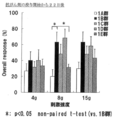
- the vertical axis (Overall response (%)) indicates the ratio (%) of the frequency of pain response to the number of times the filament is pressed. It is the result of the Von Frey test with respect to the left foot 7 days after administration of the knee arthritis inducer in Test Example 2. * Indicates that there is a significant difference (p ⁇ 0.05, non-paired t-test) compared to the 2B group.
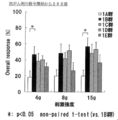
- the vertical axis (Overall response (%)) indicates the ratio (%) of the frequency of pain response to the number of times the filament is pressed. It is the result of the Von Frey test with respect to the right leg 14 days after administration of the knee arthritis inducer in Test Example 2.
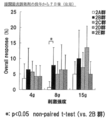
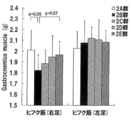
- the vertical axis (Gastrocnemus muscle (g)) indicates the weight (g) of the scissors muscle. 4 is a ratio (right foot / left foot) between the weight of the right leg and the left leg in Test Example 2. * Indicates that there is a significant difference (p ⁇ 0.05, non-paired t-test) compared to the 2B group.
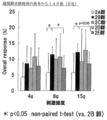
- the vertical axis (Gastrocnemus muscle ratio.) Shows the ratio (right foot / left foot) between the weight of the right foot and the left foot. It is the result of the Von Frey test with respect to the right leg 21 days after administration of the knee arthritis inducer in Test Example 3.
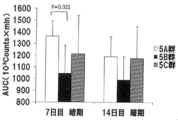
- FIG. 9 is a measurement result of behavior amounts of groups 5A to 5C in Test Example 5.
- FIG. The vertical axis (AUC (10 3 Counts ⁇ min)) represents the cumulative number of times that the rat has passed the infrared sensor in the cage.
- the composition for preventing or ameliorating peripheral neuropathy of the present invention mainly comprises an amino acid containing serine and a lipid containing n-3 fatty acids.
- prevention of peripheral neuropathy refers to preventing the manifestation of symptoms in individuals who do not exhibit various symptoms of peripheral neuropathy (eg, hypersensitive pain, sensory abnormalities, etc.). Prevention).
- improvement of peripheral neuropathy means to reduce the symptoms or prevent or delay the deterioration of the symptoms in an individual exhibiting various symptoms of peripheral neuropathy.
- the amino acid used in the present invention contains serine as an essential component.
- the form of the serine is not particularly limited, and may be any form of a free form, a peptide constituent amino acid, and a protein constituent amino acid. When free serine is used, it may be in the form of a salt or a solvate thereof, or a mixture thereof.
- Examples of serine salts include acid addition salts and salts with bases, and physiologically acceptable salts are preferred.
- acids that form physiologically acceptable salts of serine include inorganic acids such as hydrogen chloride, hydrogen bromide, sulfuric acid, and phosphoric acid; acetic acid, lactic acid, citric acid, tartaric acid, maleic acid, fumaric acid, monomethyl Organic acids such as sulfuric acid can be mentioned.
- bases that form physiologically acceptable salts of serine include, for example, metal (eg, sodium, potassium, calcium, etc.) hydroxides or carbonates, inorganic bases such as ammonia; ethylenediamine, propylenediamine, ethanolamine. And organic bases such as monoalkylethanolamine, dialkylethanolamine, diethanolamine, and triethanolamine. These salts may be either a single salt or a combination of two or more salts.
- the free serine used in the present invention may be any of the L-form, D-form and DL-form, but the L-form is preferred.
- the production method of serine is not particularly limited, and can be produced by a method known per se (eg, protein hydrolysis method, chemical synthesis method, enzyme method, fermentation method, etc.). Moreover, you may use a commercial item. Serine can also be obtained by enzymatic hydrolysis of an animal or plant-derived natural protein having an amino acid sequence containing the serine residue.
- the composition of the present invention may contain amino acids other than serine (eg, threonine, glycine, etc.) in addition to serine.
- the form of these amino acids is not particularly limited, and may be a free form and a salt thereof, or a peptide form in which two or more amino acids are peptide-bonded.
- the protein may be in the form of a protein, for example, animal protein (eg, casein, acid casein, casein sodium, casein calcium, whey protein, whey whey protein, fish meat protein, egg protein, and And hydrolysates thereof) and vegetable proteins (eg, soy protein, wheat protein, corn protein, and hydrolysates thereof).
- the amino acid used in the composition of the present invention may be any of L-form, D-form and DL-form.
- the amount of serine in the composition of the present invention is preferably 50% by weight or more, more preferably 70% by weight or more, and particularly preferably 90% by weight or more based on the total amount of amino acids.
- the amount of serine in the composition of the present invention is calculated as the sum of the weights of all forms of serine contained in the composition of the present invention.
- the form of serine is other than the free form, for example, a salt or a constituent amino acid of a peptide and protein
- the “total amount of amino acids” is calculated as the total weight of all forms of amino acids (eg, free amino acids and salts thereof, peptides, proteins, etc.) contained in the composition of the present invention.
- the weight of the amino acid is converted to the weight of the free form.
- the upper limit of the amount of serine in the composition of the present invention is not particularly limited, but is usually 100% by weight, preferably 95% by weight, based on the total amount of amino acids.
- the weight ratio of serine to threonine is preferably a specific value or more.
- the weight ratio of serine to threonine is equal to or higher than a specific value, the composition of the present invention sufficiently exhibits a desired effect (eg, an effect of reducing pain of peripheral neuropathy, etc.). Can do.
- the weight ratio of serine to threonine (serine / threonine) is preferably 2.60 or more, more preferably 5.20 or more, and particularly preferably 10.40 or more.
- the weight ratio of serine to threonine is a value obtained by dividing the amount of serine in the composition of the present invention by the amount of threonine in the present invention.
- the amount of threonine in the composition of the present invention is calculated as the sum of the weights of all forms of threonine contained in the composition of the present invention.
- the form of threonine is other than the free form, for example, a salt, or a constituent amino acid of peptides and proteins, the weight of the threonine is converted to the weight of the free form.
- Table 1 shows the weight ratio (serine / threonine) of serine and threonine contained in 100 g of food edible portion of natural food materials (“Japanese Food Standard Component Conformity Amino Acid Composition Table 2010” (Ministry of Education, Culture, Sports, Science and Technology) Calculated based on the Council's Resource Research Subcommittee).
- a natural food material cannot achieve a food having a weight ratio of serine to threonine (serine / threonine) of 2.60 or more. In order to obtain such a food, it is necessary to add, for example, free serine to a natural food material.
- the upper limit of the weight ratio of serine to threonine is not particularly limited, and the smaller the amount of threonine, the more preferable.
- the composition of the present invention most preferably does not substantially contain threonine.
- the weight ratio of threonine to serine is preferably 0.38 or less, more preferably 0. .20 or less, particularly preferably 0.10 or less, and most preferably 0.
- substantially free of threonine means (a) no threonine or (b) an amount that does not affect the effect of the composition of the present invention (for example, relative to the total amount of amino acids). 1% by weight or less, preferably 0.1% by weight or less).
- threonine taken from a meal or the like may affect the effect of the composition of the present invention.
- Ingestion eg, meal
- the total amount of amino acids contained in the composition of the present invention is usually 1 to 90% by weight, preferably 5 to 85% by weight, based on the whole composition.
- the lipid used in the composition of the present invention contains n-3 fatty acid as an essential component.
- n-3 fatty acid in the present specification means an unsaturated fatty acid having a double bond third from the methyl group at the end of the hydrocarbon chain, specifically, eicosapentaenoic acid, docosahexaenoic acid, Examples include ⁇ -linolenic acid and docosapentaenoic acid.
- n-3 fatty acid used in the composition of the present invention is preferably eicosapentaenoic acid, docosahexaenoic acid and docosapentaenoic acid, particularly preferably eicosapentaenoic acid.
- n-3 fatty acids may be used alone or in combination of two or more.
- eicosapentaenoic acid may be abbreviated as “EPA”.
- N-3 fatty acids are abundantly contained in oils and fats such as fish oil, perilla oil and linseed oil, and those extracted and purified from these oils and fats can be used.
- oils and fats such as fish oil, perilla oil and linseed oil, and those extracted and purified from these oils and fats can be used.
- those produced by a method known per se eg, chemical synthesis method, fermentation method, etc.
- Commercial products marketed for food can also be used.
- fats and oils rich in n-3 fatty acids can be used as they are.
- the lipid contained in the composition of the present invention may contain other lipids in addition to n-3 fatty acids.
- the lipid include edible vegetable oils such as cottonseed oil, sunflower oil, peanut oil, rapeseed oil, soybean oil, safflower oil, olive oil, rice bran oil, corn oil, sesame oil, cocoa butter; beef fat, pork fat, fish oil, butter, Edible animal oils such as butter oil; processed fats and oils such as shortening; medium chain fatty acid oils such as coconut oil, palm oil, and palm kernel oil.
- edible vegetable oils such as cottonseed oil, sunflower oil, peanut oil, rapeseed oil, soybean oil, safflower oil, olive oil, rice bran oil, corn oil, sesame oil, cocoa butter
- beef fat, pork fat, fish oil, butter, Edible animal oils such as butter oil
- processed fats and oils such as shortening
- medium chain fatty acid oils such as coconut oil, palm oil, and palm kernel oil.
- the amount of n-3 fatty acid is preferably 20% by weight or more, more preferably 25% by weight or more, particularly preferably 30% by weight or more, based on the total amount of lipids contained in the composition of the present invention. It is.
- the upper limit of the amount of n-3 fatty acid is not particularly limited.
- the content of eicosapentaenoic acid with respect to the total amount of the n-3 fatty acid is usually 5 to 100% by weight, from the viewpoint of suppressing oil intake even a little,
- the amount is preferably 10 to 100% by weight, more preferably 50 to 100% by weight.
- the total amount of lipid contained in the composition of the present invention is usually 1 to 90% by weight, preferably 5 to 85% by weight, based on the whole composition.
- composition of the present invention can be provided as a medicine or the like.
- administration subjects include mammals (eg, humans, mice, rats, hamsters, rabbits, cats, dogs, cows, sheep, monkeys, etc.), and preferably humans.
- the dosage form is not particularly limited, and may be either an oral medicine or a parenteral medicine.
- oral medicines include tablets, granules, powders, capsules (including soft capsules), elixirs, syrups, microcapsules, drinks, emulsions, suspensions, etc.
- oral medicines include tablets, granules, powders, capsules (including soft capsules), elixirs, syrups, microcapsules, drinks, emulsions, suspensions, etc.
- Examples include external preparations for skin (eg, ointments, creams, gels, solutions, lotions, packs, bathing agents, etc.), injections, and the like. It can also be used in combination with currently marketed analgesics (opioid central analgesics; steroids; nonsteroidal anti-inflammatory analgesics, etc.).
- Serine and n-3 fatty acids which are active ingredients of the composition of the present invention, can be contained in a plurality (two or more) of the compositions alone or in combination.
- the plurality of compositions may be, for example, a combination of two or more medicaments.
- the amount of serine relative to the total amount of amino acids, the amount of n-3 fatty acids relative to the total amount of lipids, and the amount of eicosapentaenoic acid relative to the total amount of n-3 fatty acids Content etc. are computed from the total amount of each component contained in a some composition.
- composition of the present invention may contain a carrier conventionally used in the field of medicine or the like, if necessary, as long as the object of the present invention is not impaired.
- composition of the present invention is an oral medicine or the like
- carriers include binders such as tragacanth, gum arabic, corn starch, gelatin, and high molecular weight polyvinylpyrrolidone; cellulose and its derivatives (eg, fine Excipients such as crystalline cellulose, crystalline cellulose, hydroxypropyl cellulose, etc .; swelling agents such as corn starch, pregelatinized starch, alginic acid, dextrin; lubricants such as magnesium stearate; fluidity such as fine silicon dioxide, methylcellulose, etc.
- binders such as tragacanth, gum arabic, corn starch, gelatin, and high molecular weight polyvinylpyrrolidone
- cellulose and its derivatives eg, fine Excipients such as crystalline cellulose, crystalline cellulose, hydroxypropyl cellulose, etc .
- swelling agents such as corn starch, pregelatinized starch, alginic acid, dextrin
- Lubricants such as glycerin fatty acid ester, talc, polyethylene glycol 6000; thickeners such as sodium carboxymethylcellulose, carboxyvinyl polymer, xanthan gum, gelatin; sweeteners such as sucrose, lactose, aspartame; peppermint tofu -Flavoring agents such as flavors, crocodile flavors, cherry flavors and orange flavors; emulsifiers such as monoglycerides, polyglycerin fatty acid esters, sucrose fatty acid esters, lecithin, polyoxyethylene hydrogenated castor oil, polyoxyethylene monostearate; citric acid PH adjusters such as sodium citrate, acetic acid, sodium acetate and sodium hydroxide; thickeners such as sodium carboxymethylcellulose, carboxyvinyl polymer, xanthan gum and gelatin; flavoring agents such as aspartame, licorice extract and saccharin; , Antioxidants such as butylhydroxyanisole and propyl
- examples of the carrier that may be contained include higher fatty acid esters such as petrolatum, liquid paraffin, isopropyl myristate, octyldodecyl myristate; squalane, lanolin, cetanol and the like Higher alcohols; oily bases such as silicone oils and animal and vegetable oils; lower alcohols such as ethanol; polyhydric alcohols such as polyethylene glycol and propylene glycol; ⁇ -monoglyceryl ether, lecithin, sorbitan fatty acid ester, dextrin fatty acid Emulsifiers or emulsion stabilizers such as esters, fatty acid monoglycerides, fatty acid metal salts, magnesium sulfate; fragrances; antiseptics; pigments; thickeners; antioxidants; UV protection agents; Water etc. are mentioned.
- higher fatty acid esters such as petrolatum, liquid paraffin, isopropyl myristate, octyldodecyl
- the composition of this invention can be made into the unit packaging form per ingestion amount.
- the “unit packaging form per intake” means a form in which one unit or two or more units are packaged with a single intake as one unit.
- a packaging material, a packaging method, and a filling method eg, packaging packaging, stick packaging, etc.
- the “single intake” is, for example, the amount of the composition to be administered at one time when the composition of the present invention is a medicine.
- the single intake can be appropriately adjusted according to the age, weight, gender, etc. of the person who takes the intake.
- the single dose of the composition of the present invention is not particularly limited as long as it is appropriately set according to the form of the composition, the dosage form, the subject of intake, etc., but in the case of a general adult (body weight 60 kg), 0.2 to 12.0 g is preferable, more preferably 0.3 to 10.0 g, and particularly preferably 0.5 to 8.0 g.
- the single intake of the composition of the present invention is within the above range, the normal diet is not significantly affected, and continuous intake can be expected.
- serine When the composition of the present invention is in a unit package form per ingestion, serine may be contained in an amount of 0.1 g or more (more preferably 0.2 g or more, particularly preferably 0.3 g or more). preferable.
- the serine content in this case is preferably 10.0 g or less (more preferably 8.0 g or less, particularly preferably 5.0 g or less) in one unit.
- the content is less than 0.1 g in one unit, serine is used as a constituent component or energy source of protein in the body, and thus a desired effect tends not to be expected.
- the said content exceeds 10.0g in 1 unit, a single amino acid will be ingested in large quantities, and it is not so preferable from a viewpoint of an amino acid balance.
- the content of threonine is 0.15 g or less (more preferably 0.1 g or less, more preferably 0.05 g or less, particularly preferably 1 unit). Preferably it is 0.025 g or less.
- n-3 fatty acid content is preferably 6.00 g or less (more preferably 4.50 g or less, particularly preferably 3.00 g or less) in one unit.
- the content is less than 0.03 g per unit, the desired effect tends not to be clearly expected.
- the said content exceeds 6.00g in 1 unit, it is not much preferable from a viewpoint of flavor.
- eicosapentaenoic acid when the n-3 fatty acid contains eicosapentaenoic acid and is in a unit packaging form per ingestion, eicosapentaenoic acid is contained in one unit, preferably 20 to 4000 mg, More preferably 30 to 3000 mg, particularly preferably 40 to 2000 mg.
- the daily intake of serine can be appropriately set according to the age, sex, weight, dietary conditions, etc. of the person who takes it, but is usually 0.1-10.0 g for a normal adult (body weight 60 kg) It is preferably 0.2 to 8.0 g, more preferably 0.3 to 5.0 g.
- eicosapentaenoic acid is recommended to be taken in an amount of 1 g or more per day together with docosahexaenoic acid in the case of general adults (weight 60 kg) based on the past lipid intake situation.
- composition of the present invention is once to several times a day (preferably 1 to 1 day a day) so that the daily intake amounts of serine, n-3 fatty acid and eicosapentaenoic acid are within the above ranges, respectively. (3 times) preferably taken.
- the composition of the present invention When the composition of the present invention is applied to animals other than humans, the above-mentioned one-time intake, the content in one unit, the daily intake, etc. What is necessary is just to adjust suitably according to a body weight or a magnitude
- the dose of each component (serine and the like) of the composition of the present invention may be determined based on the experimental results of animals other than humans. For example, when estimating the dose to humans from the results of experiments using rats, it can be assumed that the intake per body weight of rats and the intake per human body weight are equal.
- composition of the present invention can be produced by a method known per se in the field of pharmaceutical technology and the like (for example, the method described in the 16th revised Japanese Pharmacopeia).
- composition of the present invention is useful for prevention or improvement of peripheral neuropathy.
- it is useful for the relief of hypersensitive pain of peripheral neuropathy. It is also useful for preventing or improving a decrease in activity due to peripheral neuropathy.
- the composition of the present invention is useful for the prevention or improvement of peripheral neuropathy caused by an anticancer agent.
- Peripheral neuropathy caused by an anticancer drug occurs in the patient's body as the anticancer drug attacks the cancer. Due to the persistent pain throughout the body, anticancer drug treatment may have to be discontinued. Since the composition of the present invention can reduce the pain of peripheral neuropathy caused by an anticancer agent, it is useful for continuing treatment with an anticancer agent.
- the anticancer agent is not particularly limited as long as it can cause peripheral neuropathy.
- taxane anticancer agents such as paclitaxel and docetaxel
- platinum complex anticancer agents such as oxaliplatin, cisplatin and carboplatin Cancer agents
- Vinca alkaloid anticancer agents such as vincristine
- alkylating agent anticancer agents such as ifosfamide
- antimetabolite anticancer agents such as methotrexate, fluorouracil, cytarabine
- antibiotics such as doxorubicin and bleomycin Examples include anticancer agents.
- the composition of the present invention is useful for the prevention or improvement of peripheral neuropathy due to osteoarthritis of the knee.
- the composition of the present invention is useful for preventing or ameliorating disuse syndrome.
- Osteoarthritis of the knee occurs frequently in elderly women and is a representative example of locomotive syndrome. Since knee osteoarthritis is accompanied by intense pain as the stage progresses, it reduces the amount of activity of patients (eg, elderly people) and weakens the muscles of the legs. As a result, the burden on the knee is further increased, and the knee arthropathy is further aggravated, resulting in a negative spiral in which a disuse syndrome is developed. In addition, the decrease in the opportunity for elderly people to go out affects depression, dementia, continuation of independent life, and the like. Since the composition of the present invention can reduce pain in the knee joint, it is useful for escape from the negative spiral described above.
- Peripheral neuropathy pain is caused by abnormalities in sensory neurons that transmit sensory organ signals in the extremities.
- Cell bodies of sensory neurons exist in the dorsal root ganglia, and transmit stimulation signals by extending nerve fibers to the ends of the extremities and the inside of the spinal cord.
- abnormalities such as hyperdepolarization occur in areas where dorsal root ganglia and information inside the spinal cord are integrated, resulting in hypersensitive pain in various parts of the body. Arise.
- peripheral neuropathy examples include spinal nerve disorders (eg, herniated disc, lumbar spinal canal stenosis, degenerative spondylosis, etc.), mechanical compression of peripheral nerve trunk Peripheral neuropathy, diabetic peripheral neuropathy, renal disease urine toxicity peripheral neuropathy, peripheral neuropathy due to shingles, Guillain-Barre syndrome and the like.
- spinal nerve disorders eg, herniated disc, lumbar spinal canal stenosis, degenerative spondylosis, etc.
- the composition of the present invention is preferably used for the pain of these peripheral neuropathies.
- the limb with pain tends to decrease in momentum, while the other limb tends to increase because it tries to compensate for the decreased momentum. It is in.
- the muscle balance between the left and right limbs may be lost and physical ability may be reduced.
- Such a change in muscle balance and a decrease in physical ability can be caused not only by the pain of peripheral neuropathy due to the above knee osteoarthritis, but also by joint pain of the limbs due to sports, rheumatism, gout and the like.
- the composition of the present invention is preferably used for such a change in muscle balance and a decrease in physical ability.
- the present invention provides a method for preventing or ameliorating peripheral neuropathy, comprising administering an effective amount of the composition of the present invention to a subject in need thereof, and an effective amount of the composition of the present invention. Also provided is a method for preventing or ameliorating a decrease in activity due to peripheral neuropathy, which comprises administering to a subject in need thereof.
- medical practice refers to an act of treating, operating or diagnosing a human being performed by a doctor or dentist or under the supervision of a doctor or dentist.
- Example 1 Granular powder nutritional composition 1 Each component shown in Table 2 was mixed for 5 minutes in a small high speed mixer (NSK-150S, manufactured by Okada Seiko Co., Ltd.). Thereafter, 2 to 5% by weight of distilled water and 99.5% alcohol was added to the mixture, and the mixture was further kneaded for 5 minutes to obtain a wet kneaded product. Next, the wet kneaded product was granulated using an extrusion granulator equipped with a 1.0 mm ⁇ screen, and the resulting molded product was dried at normal pressure 70 ° C. for 2 hours and then sized to 1.05 g. The granules were filled into aluminum bags.
- the granular powder nutritional composition 1 thus obtained, all components were stably present even after being stored for 1 year under the condition of 24 ° C. Moreover, even if this granular powder nutrition composition 1 melt
- Example 2 Granular powder nutritional composition 2
- granulation was carried out in the same manner as in Example 1 except that kneading was performed using a mortar instead of a high speed mixer, and a horizontal extruder (manufactured by Umeda Iron Works Co., Ltd.) was used as the extrusion granulator.
- a powdery powder nutritional composition 2 was obtained.
- Example 3 Liquid composition capsule-filled product Each component shown in Table 3 was mixed, filled in a vegetable capsule soft capsule so that the total weight was 343.747 mg, and packed in an aluminum bag. In the liquid compositions thus obtained (Examples 2-1 and 2-2), all components were stably present even after storage for 1 year under conditions of 24 ° C. and humidity of 78%.
- the Von Frey test is the presence or absence of a reaction (pain response) that pulls in the foot when filaments of different thickness (stimulus intensity: 4g, 8g, 15g) are pressed against the center of the sole at a right angle at right angles. By observing. Each filament was pressed 5 times against the left and right feet. The pressing interval was 5 minutes. For each stimulation intensity, the ratio (%) of the frequency of pain response to the number of times the filament was pressed (5 times) was calculated.
- FIG. 3 shows the test results for the right foot 7 days after administration of the knee arthritis inducer
- FIG. 4 shows the test results for the left foot.
- FIG. 5 shows the test results for the right foot 14 days after administration of the knee arthritis inducer
- FIG. 6 shows the test results for the left foot.
- FIG. 7 shows the measurement results of the weight of the right foot and left foot.
- FIG. 8 shows the ratio (right foot / left foot) between the weight of the right foot and the left foot.
- the number of pain responses in the group 2B after 7 days and 14 days from the start of administration of the evaluation solution (that is, 7 days and 14 days after administration of the knee arthritis inducer)
- the left foot significantly increased compared to the 2A group.
- the number of pain responses was slightly reduced at any stimulation intensity compared to the group 2B, and the effect of alleviating hypersensitive pain was observed. The degree was not significant.
- the group (2D group) to which eicosapentaenoic acid was administered alone there was almost no change in the number of pain responses compared to the 2B group at any stimulation intensity.
- the weight of the right foot of the group that received the knee arthritis inducer was higher than that of the group that did not receive the knee arthritis inducer (group 2A). A downward trend was observed. Comparing the weight of the right foot of the 2C group to the 2E group, the 2E group was the highest, followed by the 2D group, and the 2C group was the lowest.
- the group to which the knee arthritis inducer was administered shook the right foot
- the weight of the left foot of the group showed an increasing tendency compared to the group to which the knee arthritis inducer was not administered. The difference between the weight of the right foot and the left foot was highest in the 2B group, and a difference of 10% or more was recognized.
- Group 3A distilled water
- Group 3B distilled water
- 3F group L-serine 10.5 mg / kg
- the Von Frey test is the presence or absence of a reaction (pain response) that pulls in the foot when filaments of different thickness (stimulus intensity: 4g, 8g, 15g) are pressed against the center of the sole at a right angle at right angles. By observing. Each filament was pressed 5 times against the right foot. The pressing interval was 5 minutes. For each stimulation intensity, the ratio (%) of the frequency of pain response to the number of times the filament was pressed (5 times) was calculated. The test results for the right foot 21 days after administration of the knee arthritis inducer are shown in FIG.
- the number of pain responses in the 3B group administered with the knee arthritis inducing agent was significantly increased as compared to the 3A group.
- the 3C to 3F groups in which the dose of L-threonine was changed did not show a significant decrease in the number of pain responses at any stimulation intensity compared to the 3B group.
- significant reductions were observed in many stimulation intensities. That is, when the weight ratio of L-serine to L-threonine (L-serine / L-threonine) is 2.56 or less, the effect of reducing hypersensitivity pain is not observed, while the ratio of L-serine is further increased. The above alleviating effect was observed at a high 5.25 or more.
- the weight ratio of serine to threonine is 2.56 in order to sufficiently exert the effect of reducing hypersensitive pain. It became clear that it was preferable to exceed.
- the amount of L-serine ingested in groups 4C to 4E is 10 mg / kg body weight, and EPA (eicosapentaenoic acid) has a fish oil equivalent to 100 mg / kg body weight (143 mg / body weight as n-3 fatty acids). kg equivalent amount) was used.
- Each group of meals is carried out at the same time as the start of the dark period, and the amount of threonine ingested by one meal is 313 mg / kg body weight in terms of free form.
- the amount of serine ingested by one meal is 489 mg / kg body weight in terms of free form, and the weight ratio of serine to threonine (serine / threonine) in the meal is 1.56.
- the number of pain responses in the 4B group administered with the knee arthritis inducing agent was significantly increased as compared to the 4A group.
- the 4C group to which L-serine and EPA were administered at a time point 9 hours after the start of the light period, which is a time zone 3 hours or more away from the immediately preceding meal a significant decrease in the number of pain responses or A downward trend was observed.
- the 4D group administered immediately before the meal no significant decrease was observed compared to the 4B group, and the number of pain responses increased compared to the 4C group.
- the 4E group administered 1 hour after the meal showed a significant decrease or tendency to decrease the number of pain responses compared to the 4B group, but when compared with the 4C group, the stimulation intensity was 8 g. And 15 g, the number of pain responses increased.
- the administration of the composition of the present invention is separated from the meal by at least 1 hour or more in order to sufficiently exert the alleviation of hypersensitivity pain by the composition of the present invention. It was inferred that the longer the distance, the better.
- composition of the present invention alleviates the pain of hypersensitivity and recovers the decreased amount of behavior.
- a composition for preventing or improving peripheral neuropathy can be provided.
- the composition has an effect of reducing pain of peripheral neuropathy, peripheral neuropathy caused by administration of an anticancer agent, peripheral neuropathy caused by osteoarthritis of the knee, spinal neuropathy (eg, disc herniation, lumbar region) Spinal canal stenosis, deformed spondylosis, etc., peripheral neuropathy due to mechanical compression of peripheral nerve trunk, diabetic peripheral neuropathy, renal urine peripheral neuropathy, peripheral neuropathy due to shingles, Guillain-Barre syndrome, etc.
- the said composition can prevent or improve the active mass fall by peripheral neuropathy.
- the composition contains L-serine and n-3 fatty acid, which have been established as safe, as active ingredients, it can be safely ingested over a long period of time, and the QOL of the ingestor can be increased.
Landscapes
- Health & Medical Sciences (AREA)
- Life Sciences & Earth Sciences (AREA)
- Chemical & Material Sciences (AREA)
- Veterinary Medicine (AREA)
- Public Health (AREA)
- Medicinal Chemistry (AREA)
- General Health & Medical Sciences (AREA)
- Animal Behavior & Ethology (AREA)
- Pharmacology & Pharmacy (AREA)
- Epidemiology (AREA)
- General Chemical & Material Sciences (AREA)
- Organic Chemistry (AREA)
- Nuclear Medicine, Radiotherapy & Molecular Imaging (AREA)
- Engineering & Computer Science (AREA)
- Chemical Kinetics & Catalysis (AREA)
- Bioinformatics & Cheminformatics (AREA)
- Biomedical Technology (AREA)
- Neurology (AREA)
- Neurosurgery (AREA)
- Marine Sciences & Fisheries (AREA)
- Pain & Pain Management (AREA)
- Acyclic And Carbocyclic Compounds In Medicinal Compositions (AREA)
Abstract
Priority Applications (5)
| Application Number | Priority Date | Filing Date | Title |
|---|---|---|---|
| EP15783692.5A EP3135281B8 (fr) | 2014-04-22 | 2015-04-21 | Composition pour prévenir ou améliorer la neuropathie périphérique |
| CN201580021078.4A CN106232114B (zh) | 2014-04-22 | 2015-04-21 | 周围神经病变的预防或改善用组合物 |
| JP2016514944A JP6775419B2 (ja) | 2014-04-22 | 2015-04-21 | 末梢神経障害の予防又は改善用組成物 |
| US15/298,953 US20170035721A1 (en) | 2014-04-22 | 2016-10-20 | Composition for preventing or improving peripheral neuropathy |
| US16/129,875 US10653655B2 (en) | 2014-04-22 | 2018-09-13 | Composition for preventing or improving peripheral neuropathy |
Applications Claiming Priority (2)
| Application Number | Priority Date | Filing Date | Title |
|---|---|---|---|
| JP2014088051 | 2014-04-22 | ||
| JP2014-088051 | 2014-04-22 |
Related Child Applications (1)
| Application Number | Title | Priority Date | Filing Date |
|---|---|---|---|
| US15/298,953 Continuation US20170035721A1 (en) | 2014-04-22 | 2016-10-20 | Composition for preventing or improving peripheral neuropathy |
Publications (1)
| Publication Number | Publication Date |
|---|---|
| WO2015163316A1 true WO2015163316A1 (fr) | 2015-10-29 |
Family
ID=54332480
Family Applications (1)
| Application Number | Title | Priority Date | Filing Date |
|---|---|---|---|
| PCT/JP2015/062092 Ceased WO2015163316A1 (fr) | 2014-04-22 | 2015-04-21 | Composition pour prévenir ou améliorer la neuropathie périphérique |
Country Status (5)
| Country | Link |
|---|---|
| US (2) | US20170035721A1 (fr) |
| EP (1) | EP3135281B8 (fr) |
| JP (2) | JP6775419B2 (fr) |
| CN (1) | CN106232114B (fr) |
| WO (1) | WO2015163316A1 (fr) |
Cited By (4)
| Publication number | Priority date | Publication date | Assignee | Title |
|---|---|---|---|---|
| JP2018027925A (ja) * | 2016-08-19 | 2018-02-22 | 株式会社明治 | 抗がん剤に起因する末梢神経障害を改善するための組成物 |
| WO2019146735A1 (fr) | 2018-01-26 | 2019-08-01 | 味の素株式会社 | Composition pour prévention ou amélioration de la douleur nociceptive |
| CN115397960A (zh) * | 2020-01-30 | 2022-11-25 | 硅循环股份有限公司 | 制备多不饱和脂肪酸的固体中性氨基酸盐的方法 |
| WO2023002979A1 (fr) * | 2021-07-20 | 2023-01-26 | 学校法人近畿大学 | Nouveau composé et agent prophylactique ou d'atténuation de la neuropathie périphérique le comprenant |
Citations (1)
| Publication number | Priority date | Publication date | Assignee | Title |
|---|---|---|---|---|
| WO2011111355A1 (fr) * | 2010-03-10 | 2011-09-15 | 北海道公立大学法人札幌医科大学 | Agent prophylactique/thérapeutique pour neuropathie périphérique comprenant de la l-sérine |
Family Cites Families (3)
| Publication number | Priority date | Publication date | Assignee | Title |
|---|---|---|---|---|
| CN1151800C (zh) * | 1999-07-23 | 2004-06-02 | 王钢柱 | 一种治疗糖尿病周围神经病变的药物 |
| IT1316998B1 (it) * | 2000-03-02 | 2003-05-26 | Sigma Tau Healthscience Spa | Composizione per la prevenzione e/o il trattamento degli effetticitotossici indotti dall'uso di agenti immunosoppressori. |
| DE10340740A1 (de) * | 2003-09-04 | 2005-03-31 | Degussa Food Ingredients Gmbh | Physiologisch aktive Zusammensetzung auf Phosphatidylserin-Basis |
-
2015
- 2015-04-21 JP JP2016514944A patent/JP6775419B2/ja active Active
- 2015-04-21 WO PCT/JP2015/062092 patent/WO2015163316A1/fr not_active Ceased
- 2015-04-21 CN CN201580021078.4A patent/CN106232114B/zh active Active
- 2015-04-21 EP EP15783692.5A patent/EP3135281B8/fr active Active
-
2016
- 2016-10-20 US US15/298,953 patent/US20170035721A1/en not_active Abandoned
-
2018
- 2018-09-13 US US16/129,875 patent/US10653655B2/en active Active
-
2019
- 2019-08-06 JP JP2019144227A patent/JP2019182881A/ja active Pending
Patent Citations (1)
| Publication number | Priority date | Publication date | Assignee | Title |
|---|---|---|---|---|
| WO2011111355A1 (fr) * | 2010-03-10 | 2011-09-15 | 北海道公立大学法人札幌医科大学 | Agent prophylactique/thérapeutique pour neuropathie périphérique comprenant de la l-sérine |
Non-Patent Citations (3)
| Title |
|---|
| GHOREISHI ET AL.: "Omega-3 fatty acids are protective against paclitaxel-induced peripheral neuropathy: A randomized double- blind placebo controlled trial", BMC CANCER, vol. 12, 2012, pages 355, XP021115528, Retrieved from the Internet <URL:http://www.ncbi.nlm.nih.gov/pmc/articles/PMC3459710/pdf/1471-2407-12-355.pdf> * |
| KIYA ET AL.: "ROLE OF SATELLITE CELL -DERIVED L- SERINE IN THE DORSAL ROOT GANGLION IN PACRITAXEL-INDUCED PAINFUL PERIPHERAL NEUROPATHY", NEUROSCIENCE, vol. 174, 2011, pages 190 - 199, XP027589595 * |
| SHAPIRO: "Could n-3 polyunsaturated fatty acids reduce pathological pain by direct actions on the nervous system?", PROSTAGLANDINS, LEUKOTRIENES AND ESSENTIAL FATTY ACIDS, vol. 68, no. 3, 2003, pages 219 - 224, XP055233047 * |
Cited By (7)
| Publication number | Priority date | Publication date | Assignee | Title |
|---|---|---|---|---|
| JP2018027925A (ja) * | 2016-08-19 | 2018-02-22 | 株式会社明治 | 抗がん剤に起因する末梢神経障害を改善するための組成物 |
| WO2018034345A1 (fr) * | 2016-08-19 | 2018-02-22 | 株式会社明治 | Composition permettant d'améliorer la neuropathie périphérique provoquée par des agents anticancéreux |
| WO2019146735A1 (fr) | 2018-01-26 | 2019-08-01 | 味の素株式会社 | Composition pour prévention ou amélioration de la douleur nociceptive |
| US20200345677A1 (en) * | 2018-01-26 | 2020-11-05 | Ajinomoto Co., Inc. | Composition for preventing or improving nociceptive pain |
| US11730713B2 (en) * | 2018-01-26 | 2023-08-22 | Ajinomoto Co., Inc. | Composition for preventing or improving nociceptive pain |
| CN115397960A (zh) * | 2020-01-30 | 2022-11-25 | 硅循环股份有限公司 | 制备多不饱和脂肪酸的固体中性氨基酸盐的方法 |
| WO2023002979A1 (fr) * | 2021-07-20 | 2023-01-26 | 学校法人近畿大学 | Nouveau composé et agent prophylactique ou d'atténuation de la neuropathie périphérique le comprenant |
Also Published As
| Publication number | Publication date |
|---|---|
| EP3135281B1 (fr) | 2020-10-28 |
| CN106232114B (zh) | 2022-03-18 |
| EP3135281A1 (fr) | 2017-03-01 |
| JPWO2015163316A1 (ja) | 2017-04-20 |
| US20170035721A1 (en) | 2017-02-09 |
| EP3135281A4 (fr) | 2017-12-20 |
| JP2019182881A (ja) | 2019-10-24 |
| JP6775419B2 (ja) | 2020-10-28 |
| US10653655B2 (en) | 2020-05-19 |
| US20190008814A1 (en) | 2019-01-10 |
| CN106232114A (zh) | 2016-12-14 |
| EP3135281B8 (fr) | 2020-12-23 |
Similar Documents
| Publication | Publication Date | Title |
|---|---|---|
| US12297182B2 (en) | Compositions comprising an urolithin compound | |
| BR112018003745B1 (pt) | Composições que compreendem um composto de urolitina e uso da referida composição | |
| KR20100094485A (ko) | 아미노산 조성물을 함유하는 피로 방지제 | |
| JP2019182881A (ja) | 末梢神経障害の予防又は改善用組成物 | |
| JP2019031504A (ja) | トコトリエノールの経粘膜送達 | |
| US11730713B2 (en) | Composition for preventing or improving nociceptive pain | |
| US20150050260A1 (en) | Pyrroloquinoline quinone based compositions and uses | |
| EP3461479B1 (fr) | Compositions nutraceutiques et pharmaceutiques et leurs utilisations pour conserver les fonctions cognitives | |
| WO2012036208A1 (fr) | Agent d'amélioration de l'oxydation des graisses et du métabolisme énergétique | |
| WO2007128465A1 (fr) | Nouvelle utilisation de composés organiques | |
| CN109954052A (zh) | 一种具有抗氧化活性的组合物 | |
| JPS6210018A (ja) | 肥満抑制組成物 | |
| AU2022419516A1 (en) | Placental composition | |
| KR20250133322A (ko) | 우롤리틴과 케톤체의 조합물 | |
| HK40129047A (zh) | 包含尿石素化合物的组合物 | |
| HK1242594B (zh) | 昼夜节律改善用组合物 |
Legal Events
| Date | Code | Title | Description |
|---|---|---|---|
| 121 | Ep: the epo has been informed by wipo that ep was designated in this application |
Ref document number: 15783692 Country of ref document: EP Kind code of ref document: A1 |
|
| ENP | Entry into the national phase |
Ref document number: 2016514944 Country of ref document: JP Kind code of ref document: A |
|
| NENP | Non-entry into the national phase |
Ref country code: DE |
|
| REEP | Request for entry into the european phase |
Ref document number: 2015783692 Country of ref document: EP |
|
| WWE | Wipo information: entry into national phase |
Ref document number: 2015783692 Country of ref document: EP |