WO2015170605A1 - Aliment ou boisson contenant de la tomate - Google Patents
Aliment ou boisson contenant de la tomate Download PDFInfo
- Publication number
- WO2015170605A1 WO2015170605A1 PCT/JP2015/062445 JP2015062445W WO2015170605A1 WO 2015170605 A1 WO2015170605 A1 WO 2015170605A1 JP 2015062445 W JP2015062445 W JP 2015062445W WO 2015170605 A1 WO2015170605 A1 WO 2015170605A1
- Authority
- WO
- WIPO (PCT)
- Prior art keywords
- tomato
- water
- food
- alanine
- concentration
- Prior art date
- Legal status (The legal status is an assumption and is not a legal conclusion. Google has not performed a legal analysis and makes no representation as to the accuracy of the status listed.)
- Ceased
Links
Images





Classifications
-
- A—HUMAN NECESSITIES
- A61—MEDICAL OR VETERINARY SCIENCE; HYGIENE
- A61K—PREPARATIONS FOR MEDICAL, DENTAL OR TOILETRY PURPOSES
- A61K31/00—Medicinal preparations containing organic active ingredients
- A61K31/185—Acids; Anhydrides, halides or salts thereof, e.g. sulfur acids, imidic, hydrazonic or hydroximic acids
- A61K31/19—Carboxylic acids, e.g. valproic acid
- A61K31/195—Carboxylic acids, e.g. valproic acid having an amino group
- A61K31/197—Carboxylic acids, e.g. valproic acid having an amino group the amino and the carboxyl groups being attached to the same acyclic carbon chain, e.g. gamma-aminobutyric acid [GABA], beta-alanine, epsilon-aminocaproic acid or pantothenic acid
- A61K31/198—Alpha-amino acids, e.g. alanine or edetic acid [EDTA]
-
- A—HUMAN NECESSITIES
- A23—FOODS OR FOODSTUFFS; TREATMENT THEREOF, NOT COVERED BY OTHER CLASSES
- A23L—FOODS, FOODSTUFFS OR NON-ALCOHOLIC BEVERAGES, NOT OTHERWISE PROVIDED FOR; PREPARATION OR TREATMENT THEREOF
- A23L2/00—Non-alcoholic beverages; Dry compositions or concentrates therefor; Preparation or treatment thereof
- A23L2/02—Non-alcoholic beverages; Dry compositions or concentrates therefor; Preparation or treatment thereof containing fruit or vegetable juices
-
- A—HUMAN NECESSITIES
- A23—FOODS OR FOODSTUFFS; TREATMENT THEREOF, NOT COVERED BY OTHER CLASSES
- A23L—FOODS, FOODSTUFFS OR NON-ALCOHOLIC BEVERAGES, NOT OTHERWISE PROVIDED FOR; PREPARATION OR TREATMENT THEREOF
- A23L33/00—Modifying nutritive qualities of foods; Dietetic products; Preparation or treatment thereof
- A23L33/10—Modifying nutritive qualities of foods; Dietetic products; Preparation or treatment thereof using additives
-
- A—HUMAN NECESSITIES
- A23—FOODS OR FOODSTUFFS; TREATMENT THEREOF, NOT COVERED BY OTHER CLASSES
- A23L—FOODS, FOODSTUFFS OR NON-ALCOHOLIC BEVERAGES, NOT OTHERWISE PROVIDED FOR; PREPARATION OR TREATMENT THEREOF
- A23L33/00—Modifying nutritive qualities of foods; Dietetic products; Preparation or treatment thereof
- A23L33/10—Modifying nutritive qualities of foods; Dietetic products; Preparation or treatment thereof using additives
- A23L33/17—Amino acids, peptides or proteins
-
- A—HUMAN NECESSITIES
- A61—MEDICAL OR VETERINARY SCIENCE; HYGIENE
- A61K—PREPARATIONS FOR MEDICAL, DENTAL OR TOILETRY PURPOSES
- A61K36/00—Medicinal preparations of undetermined constitution containing material from algae, lichens, fungi or plants, or derivatives thereof, e.g. traditional herbal medicines
- A61K36/18—Magnoliophyta (angiosperms)
- A61K36/185—Magnoliopsida (dicotyledons)
- A61K36/81—Solanaceae (Potato family), e.g. tobacco, nightshade, tomato, belladonna, capsicum or jimsonweed
Definitions
- the present invention relates to a tomato-containing food or drink that reduces the blood alcohol concentration after drinking.
- Alcohol taken into the body by drinking is metabolized by mitochondria in hepatocytes and decomposed into acetaldehyde with strong hepatotoxicity, and then acetaldehyde is rapidly decomposed into acetic acid.
- Acetic acid is released from the liver into the blood, enters the TCA circuit as a source of energy for peripheral tissues, and is eventually broken down into carbon dioxide and water.
- Patent Document 1 discloses a blood alcohol concentration inhibitor containing dextrins as an active ingredient.
- Patent Document 2 describes an anti-alcoholic composition in which alanine and glutamine are used in combination at a molar concentration ratio of 1: 0.001 or more.
- alanine and glutamine are used in combination at a molar concentration ratio of 1: 0.001 or more.
- the blood alcohol concentration in mice after alcohol intake was reduced by ingesting alanine and glutamine (molar ratio 5: 1) (Example III, Table 4). .
- Patent Document 2 states that when the combined ratio of glutamine to alanine is less than 1/1000, the effect can hardly be expected (the second column, upper right column, lines 8 to 11). This description means that if alanine is used alone, the effect of reducing blood alcohol concentration cannot be obtained.
- Non-patent document 1 shows that the simultaneous intake of 3 tomato juice cans (about 160 ml x 3) and shochu beetle (straight about 100 ml) compared to the case of ingesting water and shochu beetle in blood. It has been described that alcohol concentration has decreased by about 30% as the maximum blood concentration (Research 1), suggesting that intake of tomato moderates drunkness by suppressing rapid increase in alcohol concentration (Conclusion 1).
- Non-Patent Document 1 in order to examine the mechanism of reducing the alcohol concentration in the blood by taking tomato and alcohol together, rats are allowed to ingest water-soluble components of tomato, and then administer alcohol. Experiments were conducted to measure the activity of enzymes related to alcohol metabolism in the liver (Research 2). As a result, there was a tendency to increase the activity of enzymes that metabolize alcohol and acetaldehyde, and LDH (promoting alcohol metabolism) It has been described that the activity of an important enzyme) was significantly increased (FIG. 2).
- Non-Patent Document 1 does not describe the functional action of water-insoluble components derived from tomato fruits.
- JP 2013-124243 A JP-A-63-54320
- the present invention solves the above-described conventional problems, and an object of the present invention is to provide a food and drink that exhibits an efficient blood alcohol concentration lowering efficiency and is excellent in safety.
- the present invention provides a water-insoluble component derived from tomato fruit and a food or drink containing alanine at a concentration of 3 g / 100 ml or more.
- the alanine content is 0.7 to 21.4 as a weight ratio based on a water-insoluble component derived from tomato fruit.
- the water-insoluble component has a concentration of 0.45 g / 100 ml or more.
- the said water-insoluble component contains water-insoluble dietary fiber.
- the said food / beverage products contain tomato fruit juice, a tomato paste, or a tomato squeezed rice cake.
- the said food / beverage products contain the concentrated tomato fruit juice or the diluted tomato paste.
- the said tomato fruit juice is a liquid component obtained when squeezing the tomato fruit.
- the present invention also provides any of the foods and drinks used as a blood alcohol concentration reducing agent.
- the present invention also provides any of the foods and drinks used as a drunk reducing agent.
- the present invention also provides a water-insoluble component derived from tomato fruit and a blood alcohol concentration-reducing agent containing alanine at a concentration of 3 g / 100 ml or more.
- the present invention provides a water-insoluble component derived from tomato fruit and a drunk reducing agent containing alanine at a concentration of 3 g / 100 ml or more.
- the present invention provides a food or drink that reduces the blood alcohol concentration after drinking.
- the food and drink of the present invention can reduce the degree of drought or drunkness when drinking in large quantities.
- the food-drinks of this invention use tomato fruit and alanine as a raw material. Tomato fruit is edible and alanine is widely used as a food additive. Therefore, the food / beverage products of this invention can be ingested easily and safely on a daily basis.
- the tomato referred to in the present invention is a variety of tomatoes conventionally used for food.
- Tomatoes include, for example, so-called pink tomatoes and red tomatoes.
- Tomato is a fruit that can be eaten raw.
- the tomato fruit in a ready-to-eat state is preferably a ripe fruit.
- Tomato fruit refers to the edible portion.
- tomato straw and stem are not edible parts and are not included in tomato fruit.
- tomato seeds and skins are edible parts and are contained in tomato fruits.
- tomato varieties include “Momotaro” (trade name), First Tomato, Mini Tomato, Plum Tomato, “Kinko Hime” (trade name), Cindy Sweet, Cindy Orange, Reward, Sunroad, Shurei, Palto, Raw tomatoes such as My Rock, Rinka 409, Renaissance, Reika, Reiko and Rokusanmaru, San Marzano, Chico No. 3, Kurikoma, Furikoma, High Peel, Kagome 77, KGM952, and KGM993 etc.
- Processing tomatoes, Aichi Examples include raw food processing tomatoes such as tomatoes, June pink and Ponterosa.
- Water-insoluble means not soluble in water.
- Water-insoluble components include water-insoluble solids and water-insoluble dietary fibers.
- Dietary fiber refers to indigestible components that are not digested by digestive enzymes in the human body among the components of food. It is known that water-insoluble dietary fibers include cellulose, hemicellulose, lignin and the like (Herranz J et al. Journal of Food Sciences, 46, p1927-1981).
- the water-insoluble component derived from tomato fruit is specifically a solid content obtained by removing the water-soluble component from the tomato raw material.
- tomato materials include tomato fruit, tomato juice, tomato paste, dried tomato powder, and tomato squeezed rice cake.
- the tomato fruit may be after heating.
- the step of removing the water-soluble component from the tomato raw material is performed, for example, by adding the crushed tomato raw material to water and stirring as necessary, and then separating the liquid part containing the water-soluble component from the solid part. Separation of the liquid part and the solid part is performed by a commonly used method such as filtration and centrifugation.
- the food and drink referred to in the present invention refers to an article used for use by animals, preferably humans.
- Examples of the types of food and drink include beverages such as drinks, soft drinks, alcoholic beverages, and foods such as supplements.
- the food and drink of the present invention contains tomato fruit containing a water-insoluble component. More specifically, the food / beverage products of this invention contain the water-insoluble component derived from a tomato fruit. Although the mechanism is not clear, the water-insoluble component derived from tomato fruit or the water-insoluble dietary fiber derived from tomato fruit is excellent in the ability to absorb and retain ethanol in the in vivo environment. Therefore, if water-insoluble components derived from tomato fruits are present in the body during drinking, water-insoluble components derived from tomato fruits preferentially absorb ethanol, reducing the amount of ethanol absorbed by the body, and blood alcohol concentration Is reduced.
- the content of the water-insoluble component derived from the tomato fruit in the food and drink of the present invention is 0.45 g / 100 ml or more as a weight / volume concentration when the beverage has fluidity, and 0.5 g / 100 ml. It is preferable that it is above, and it is more preferable that it is 0.7 g / 100 ml or more. If the concentration of the water-insoluble component derived from tomato fruit contained in the food or drink is less than 0.45 g / 100 ml, the blood alcohol concentration lowering efficiency after drinking may become insufficient.
- the food or drink of the present invention may be a liquid or paste containing a water-insoluble component derived from tomato fruit, or may be a solid such as a powder containing a water-insoluble component derived from dried tomato fruit.
- the upper limit of the concentration of water-insoluble components derived from tomato fruits is preferably 4.0 g / 100 ml. If the concentration exceeds 4.0 g / 100 ml, it becomes pasty and difficult to be formed as a beverage.
- the concentration of the water-insoluble component derived from tomato fruit contained in the beverage of the present invention is preferably 0.9 to 3.5 g / 100 ml, more preferably 1.1 to 3.0 g / 100 ml.
- the concentration of the water-insoluble component derived from tomato fruit contained in the beverage of the present invention is preferably 0.5 to 3.5 g / 100 ml, more preferably 0.7 to 3.0 g / 100 ml. It is.
- the food / beverage product of the present invention has no fluidity, if the content of water-insoluble components derived from tomato fruits contained in 100 ml of the beverage is equal to or greater than that, the same effect as a beverage when ingested Is obtained.
- the intake amount of water-insoluble components derived from tomato fruits per time is, for example, 0.3 g or more, preferably 0.45 g or more, more preferably 0.7 g or more.
- Some of the beverages shown in the examples of the present specification have a weight of 100 ml and a weight of 103 g. If it does so, content of the water-insoluble component derived from the tomato fruit of the food / beverage products of this invention is 0.3g / 103g or more, for example, Preferably it is 0.45g / 103g or more, More preferably, it is 0.7g / 103g or more. .
- the food and drink of the present invention contains alanine.
- Alanine is one of the neutral amino acids that make up protein. Alanine is widely present in nature, and is abundant in, for example, seafood. Alanine is a substance specified by the Minister of Health, Labor and Welfare that it is clear that there is no risk of damaging human health based on the provisions of Article 11, Paragraph 3 of the Food Sanitation Law (Act No. 233 of 1947). Yes, it is widely used as a food additive.
- the alanine used in the food and drink of the present invention may be commercially available, and may be racemic, D-form, or L-form.
- the content of alanine in the food and drink of the present invention is 0.7 to 21.4, preferably 3.3 to 14.2, more preferably, as a weight ratio based on water-insoluble components derived from tomato fruits. 4.3 to 11.1.
- the weight ratio of alanine to the water-insoluble component derived from tomato fruit is within the above range, the effect of reducing the blood alcohol concentration after drinking is improved.
- the content of alanine in the food and drink of the present invention is, for example, 1 g / 100 ml or more, preferably 2 g / 100 ml or more, more preferably 3 g / 100 ml or more as a weight / volume concentration when the beverage has fluidity. It is. If the concentration of alanine contained in the food or drink is less than 1 g / 100 ml, the blood alcohol concentration lowering efficiency after drinking may become insufficient.
- the concentration of alanine contained in the food or drink of the present invention is, for example, 3 g to 25 g / 100 ml, preferably 4 g to 15 g / 100 ml, more preferably 5 g to 10 g / 100 ml. It will become difficult to melt
- the intake amount of alanine per one time is, for example, 2 g or more, preferably 3 g or more, more preferably 4 g or more, and further preferably 5 g or more.
- Some of the beverages shown in the examples of the present specification have a weight of 100 ml and a weight of 103 g. If it does so, content of alanine of the food / beverage products of this invention is 2 g / 103g or more, Preferably it is 3 g / 103 g or more, More preferably, it is 4 g / 103 g or more, More preferably, it is 5 g / 103 g or more.
- the food or drink of the present invention is produced by combining a water-insoluble component derived from tomato fruit and alanine.
- the shape of the water-insoluble component derived from tomato fruit is not specified, and may be, for example, a solid containing no liquid medium, a semi-solid or paste dispersed in a small amount of liquid medium, or a liquid dispersed in the liquid medium.
- the water-insoluble component derived from tomato fruit used in the present invention is preferably performed at a temperature lower than 80 ° C, more preferably lower than 60 ° C.
- Examples of the method for drying a water-insoluble component derived from tomato fruit include freeze drying and reduced pressure equilibrium exothermic drying.
- the food and drink of the present invention can be obtained by mixing a water-insoluble component derived from tomato fruit and alanine. You may add the mixture of the water-insoluble component derived from a tomato fruit, and alanine to drinking water or a drink according to a use.
- tablets, powders or powders are combined with additives such as sweeteners, fragrances, vitamins, and coloring agents and components conventionally used in foods and drinks (eg, liver extract and sesame extract). It is common to prepare in the form of a drink or the like. You may make soft drink or alcoholic beverage contain the mixture of the water-insoluble component derived from a tomato fruit, and alanine. What is necessary is just to manufacture these food-drinks by the method used conventionally.
- liquidity can be solidified.
- solidification means include drying and freezing.
- the content of components such as water-insoluble components and amino acids may be higher than that of the liquid.
- drying the food or drink of the present invention When drying the food or drink of the present invention, it is preferably performed at a temperature lower than 80 ° C, more preferably lower than 60 ° C.
- Examples of the method for drying the food and drink of the present invention include freeze drying and reduced pressure equilibrium exothermic drying.
- the content of the water-insoluble component derived from tomato fruit is, for example, 0.3 to 59% by weight, preferably 4 to 25% by weight, more preferably 5 to 19%. % By weight.
- the alanine content is, for example, 0.2 to 95.5% by weight, preferably 7 to 65% by weight, and more preferably 25 to 55% by weight.
- the form of the food or drink of the present invention is not particularly limited, but may be a container-packed food or drink.
- Container-packed food and drink means food and drink filled in a packaging container.
- Specific examples of the container-packed food / beverage include bottled food / beverage, canned food / beverage, plastic bottled food / beverage, vacuum-packed food / beverage, retort food / beverage and the like.
- Tomato juice, tomato paste, etc. can be used as a liquid in which water-insoluble components derived from tomato fruits are dispersed in a liquid medium.
- Tomato fruit juice means a liquid component obtained when squeezing tomato fruit. Juice refers to the operation of squeezing and separating liquid components from tomato fruit. By squeezing, the solid components in the tomato fruit are removed, and the resulting beverage is easy to drink. For example, tomato fruit juice is obtained by crushing tomato fruit to an appropriate size and squeezing the crushed tomato fruit. Commercial tomato juice may be used as the tomato juice.
- Tomato fruit squeezing can be carried out in a conventional manner using a normal squeezing machine that can remove the skin, seeds, core, spatula and pulp particles from crushed tomato fruit, for example, , Brown type (paddle type) or butterfly type pulper finisher.
- a normal squeezing machine that can remove the skin, seeds, core, spatula and pulp particles from crushed tomato fruit, for example, Brown type (paddle type) or butterfly type pulper finisher.
- Tomato juice contains water-insoluble components. By concentrating by evaporating volatile components such as water from the tomato juice, the concentration of the water-insoluble component of the tomato juice can be adjusted to the predetermined range.
- Tomato paste refers to a concentrate of tomato juice until it becomes pasty. The tomato paste can be diluted by adding a solvent such as water to the tomato paste to adjust the concentration of the water-insoluble component to the predetermined range.
- the reduction efficiency of the blood alcohol concentration of the food and drink of the present invention shows a specific dependency on the concentration of the water-insoluble component derived from tomato fruit. That is, when the intake amounts of the components derived from tomato fruits other than moisture are made the same, the reduction efficiency of the blood alcohol concentration increases as the concentration of the water-insoluble components derived from tomato fruits increases. If this characteristic is utilized, the effect of reducing the blood alcohol concentration can be enhanced by increasing the concentration of the water-insoluble component without increasing the intake of the tomato fruit-derived component. That is, the effect of reducing blood alcohol concentration can be obtained efficiently without increasing the amount of tomato raw material used.
- water-insoluble components separated from tomato fruits may be added.
- the amount of the water-insoluble component added is limited to a range that does not impair the ease of drinking as a food or drink.
- Tomato squeezed rice cake is a by-product in the production process of juice and the like, and is a residue obtained by squeezing tomato and then filtering and removing liquid components such as fruit juice.
- Tomato fruit which is a raw material for water-insoluble ingredients derived from tomato fruit, is washed, crushed and squeezed as necessary to remove as much liquid component as possible. However, it is not necessary to completely remove the liquid component.
- there are two methods for crushing tomatoes One is a hot break method of crushing at a temperature of 100 ° C.
- the other is a cold break method in which crushing is performed at a temperature of about 80 ° C.
- the tomato raw material from which the liquid component has been removed is subjected to a step of removing the water-soluble component and, if necessary, a step of removing the fat-soluble component.
- a step of removing the water-soluble component Either the step of removing the water-soluble component or the step of removing the fat-soluble component may be performed first. However, from the viewpoint of work efficiency, it is preferable to perform the step of removing the water-soluble component first.
- the step of removing the fat-soluble component from the tomato raw material is, for example, putting the tomato raw material from which liquid components such as tomato squeezed rice cake or dried tomato are removed as much as possible into the above organic solvent and stirring, and the liquid part containing the fat-soluble component By separating from the solid part. Separation of the liquid part and the solid part is performed by a commonly used method such as filtration and centrifugation.
- the organic solvent here means an organic solvent capable of dissolving the fat-soluble component contained in tomato.
- organic solvents include alcohol solvents, ethanol, propanol, isopropanol, butanol, isobutanol, etc., ester solvents, ethyl acetate, ethyl acetoacetate, isoamyl formate, methyl cinnamate, etc., ketone solvents
- ether solvents such as acetophenone, ionone, methyl- ⁇ -naphthyl ketone, and ketones include 1,8-cineol, ethyl panillin, vanillin, ethers, phenol ethers, and the like.
- Preferred organic solvents are ethanol and ethyl acetate.
- the food and drink of the present invention can be used as a blood alcohol concentration-reducing agent after drinking or an anti-drunk agent.
- Tomato fruit is a food, and water-insoluble components derived from tomato fruit are harmless.
- Alanine is a substance that has been confirmed to be safe from human health even when ingested. Therefore, when a human being ingests the food / beverage product of the present invention, an appropriate intake amount may be determined according to the purpose.
- the food and drink of the present invention may be taken before, during or after drinking.
- the food / beverage products of the present invention are highly efficient in reducing blood alcohol concentration, and are characterized by exhibiting blood alcohol concentration reducing effects even when ingested after drinking.
- Example 1 About 50 ml of distilled water was added to 5.0 g of tomato paste (Kagome “CB Tomato Paste”, Brix: 28), vigorously stirred for 2 minutes with vortex, centrifuged (3000 rpm, 10 minutes), and aqueous supernatant The fraction and residue were separated. This was repeated three times to obtain a residue from which water-soluble components were completely removed. The obtained residue was heated with a moisture content meter to completely remove moisture, thereby obtaining a water-insoluble component contained in the tomato paste. When this was weighed, it was 0.18 g. That is, the concentration of the water-insoluble component contained in the tomato paste was 3.6 g / 100 g (3.3 g / 100 ml).
- Tomato paste fruit juice having a water-insoluble component concentration of 0.9 g / 100 ml (0.9 w / v%) was obtained by adding water to 25 g of the tomato paste and diluting until the volume reached 100 ml. Divide this tomato paste juice into 5 parts, and in 4 fractions of it, alanine (Ajinomoto Healthy Supply) in the amount of alanine concentration 1, 2, 3, and 5 g / 100 ml (1, 2, 3, and 5 w / v%) “DL-alanine”) was dissolved. In addition, an alanine aqueous solution having a concentration of 5 g / 100 ml (5 w / v%) was prepared. The test solution was adopted as follows.
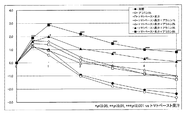
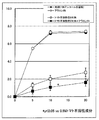
- ⁇ Weight> Four male F344 rats 6 weeks of age or older were fasted for 7 hours, and the test solution was administered by intragastric administration in an amount of 20 ml / kg body weight. 30 minutes and 1 hour later, a large amount of alcohol, that is, 2.0 g / kg body weight was administered (total alcohol dosage was 4.0 g / kg body weight). For these rats, the rate of change in body weight (%) was monitored over time from immediately before the start of administration to 5 hours after the administration. The results of averaging the values of 4 animals are shown in Table 2 and FIG.
- test liquid in which 3% or more of alanine was added to tomato paste fruit juice significantly reduced the blood alcohol concentration compared to tomato paste fruit juice.
- Example 2 Tomato paste fruit juice having a water-insoluble component concentration of 0.72 g / 100 ml (0.72 w / v%) was obtained by adding water to 20 g of the same tomato paste as in Example 1 and diluting until the volume reached 100 ml.
- Alanine (“DL-alanine” manufactured by Ajinomoto Healthy Supply Co., Ltd.) was dissolved in this tomato paste fruit juice in such an amount that the alanine concentration was 5 g / 100 ml (5 w / v%).
- an alanine aqueous solution having a concentration of 5 g / 100 ml (5 w / v%) was prepared.
- the test solution was adopted as follows.
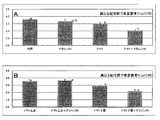
- ⁇ Blood alcohol concentration> Four male F344 rats 6 weeks of age or older were fasted for 7 hours, and the test solution was administered by intragastric administration in an amount of 20 ml / kg body weight. 30 minutes and 1 hour later, a large amount of alcohol, that is, 2.0 g / kg body weight was administered (total alcohol dosage was 4.0 g / kg body weight). For these rats, 50 ⁇ l of blood was collected from the tail vein 5 hours after the end of alcohol administration, and the blood alcohol concentration (mg / ml) was measured by headspace GC-MS. The results of averaging the values are shown in Table 6 and FIG.
- test liquid in which 5% of alanine was added even in the diluted tomato paste juice significantly reduced the blood alcohol concentration compared to the tomato paste juice.
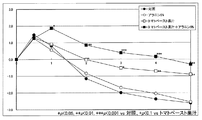
- FIG. 5 shows that the tomato paste juice alleviated weight loss associated with increased urine volume.
- alanine did not reduce weight loss at all even when administered at a concentration of 5%.
- adding 5% alanine to this tomato paste juice showed a stronger weight loss reducing effect than tomato paste juice.
- Example 3 Fresh edible tomato juice is obtained by washing 2,926 g of fresh edible tomato fruits (“4 Musketeer Tomato” (trade name)) with water, crushing with a mixer, and removing the crushed material with a 40 mesh wire mesh. 2,590 g was obtained (Brix: 4.7).
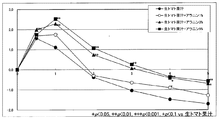
- the weight fluctuation rate and blood alcohol concentration of the rats were measured in the same manner as in Example 1 except that the test solution and 6 rats each were used. The results are shown in Table 9, FIG. 6, Table 10, and FIG.
- Example 4 Tomato paste fruit juices having different water-insoluble component concentrations were prepared in the same manner as in Example 2 except that the amount of tomato paste used was changed.
- Table 8 shows the amount of tomato paste used (g) and the concentration of water-insoluble components (g / 100 ml (w / v%)).
- Each of the tomato paste fruit juices 1 to 3 was divided into two, and alanine was dissolved in one fraction in such an amount that the alanine concentration was 5 g / 100 ml (5 w / v%).
- the tomato paste fruit juice 4 was divided into two, and alanine was dissolved in one fraction in such an amount that the alanine concentration was 3 g / 100 ml (3 w / v%).
- the test solution was adopted as follows.
- Example 5 Water was added to 400.0 g of tomato paste (“CB Tomato Paste” manufactured by Kagome, Brix: 28) and 50.0 g of alanine until diluted to 1000.0 g, and mixed well. This mixed solution was filled into a pack tray 120 (cube type), and vacuum freeze-dried at a drying shelf temperature of 50 ° C. to obtain 120 freeze-dried tomato cubes. The weight per freeze-dried tomato cube was 1.1 g. Moreover, the water-insoluble component content rate of the freeze-dried tomato cube was 8.5 weight%, and the alanine content rate was 26.7 weight%.
- CB Tomato Paste manufactured by Kagome, Brix: 28
- Reference example 1 Relationship between tomato water-insoluble component concentration and blood alcohol concentration lowering effect 35 g and 70 g of the tomato paste of Example 1 were weighed, and each was diluted with water to a volume of 100 ml. Prepared. The test solution was forcibly administered intragastrically to male F344 rats 6 weeks of age or older in an amount of 10, 20 ml / kg body weight so that all doses were the same as tomato paste. The dosage is 0.25 g / kg body weight as a tomato water-insoluble component and 7.0 g / kg body weight as a tomato paste. Thirty minutes and one hour later, alcohol was administered at 2.0 g / kg body weight (total alcohol dosage was 4.0 g / kg body weight).
- Reference example 2 Reduction of blood alcohol concentration by tomato water-insoluble component and alanine
- water (control) tomato paste used in Example 1 with water added to 20% (w / v) Tomato juice containing juice, 5% (w / v) alanine aqueous solution, and alanine 5% (w / v) was prepared.
- Part B 100 ml of the tomato juice was separated into a supernatant (water-soluble component) and a lower layer (water-insoluble component) by centrifugation at 3000 rpm for 10 minutes.
- the supernatant (water-soluble component) and the lower layer (water-insoluble component) were each diluted with water to 100 ml.
- Alanine was added to a part of them so as to be 5%, and four types of test liquids were obtained: a supernatant (with / without alanine) and a lower layer (with / without alanine).
- Reference example 3 Enhancement of alcohol retention ability of tomato water-insoluble component by alanine 10 ml each of 15% aqueous alcohol solution containing 0.5% of dried tomato water-insoluble component, 5% of alanine, and both. 10 ml of the solution was filtered with a filter paper (ADVANTEC 131 110 mm), and the filtration amount (ml) after 5, 10, and 20 minutes was measured over time. In this case, the amount of filtration decreases as the material has a higher alcohol retention effect. Measurement was performed on three samples, and an average value was calculated. The results are shown in Table 16 and FIG.
- Reference example 4 Enhancement of alcohol retention ability of water-insoluble components of tomato by alanine in stomach
- water (control) tomato paste used in Example 1 to which water was added to 20% (w / v) Tomato juice containing juice, 5% (w / v) alanine aqueous solution, and alanine 5% (w / v) was prepared.
Landscapes
- Health & Medical Sciences (AREA)
- Life Sciences & Earth Sciences (AREA)
- Chemical & Material Sciences (AREA)
- Engineering & Computer Science (AREA)
- Natural Medicines & Medicinal Plants (AREA)
- Nutrition Science (AREA)
- Food Science & Technology (AREA)
- Polymers & Plastics (AREA)
- Mycology (AREA)
- Public Health (AREA)
- Animal Behavior & Ethology (AREA)
- General Health & Medical Sciences (AREA)
- Epidemiology (AREA)
- Veterinary Medicine (AREA)
- Pharmacology & Pharmacy (AREA)
- Medicinal Chemistry (AREA)
- Botany (AREA)
- Biotechnology (AREA)
- Alternative & Traditional Medicine (AREA)
- Medical Informatics (AREA)
- Microbiology (AREA)
- Proteomics, Peptides & Aminoacids (AREA)
- Medicines Containing Plant Substances (AREA)
- Acyclic And Carbocyclic Compounds In Medicinal Compositions (AREA)
- Coloring Foods And Improving Nutritive Qualities (AREA)
- Non-Alcoholic Beverages (AREA)
- General Preparation And Processing Of Foods (AREA)
Abstract
La présente invention vise à obtenir un aliment ou une boisson permettant d'abaisser le taux d'alcoolémie après la consommation d'une ou plusieurs boissons alcoolisées. Ainsi, l'invention porte sur un aliment ou sur une boisson qui contient des constituants insolubles dans l'eau issus de la tomate et de l'alanine.
Priority Applications (1)
| Application Number | Priority Date | Filing Date | Title |
|---|---|---|---|
| JP2015521908A JP5801515B1 (ja) | 2014-05-08 | 2015-04-23 | トマト含有飲食品 |
Applications Claiming Priority (4)
| Application Number | Priority Date | Filing Date | Title |
|---|---|---|---|
| JP2014096713 | 2014-05-08 | ||
| JP2014-096713 | 2014-05-08 | ||
| JPPCT/JP2014/082092 | 2014-12-04 | ||
| JP2014082092 | 2014-12-04 |
Publications (1)
| Publication Number | Publication Date |
|---|---|
| WO2015170605A1 true WO2015170605A1 (fr) | 2015-11-12 |
Family
ID=54392458
Family Applications (1)
| Application Number | Title | Priority Date | Filing Date |
|---|---|---|---|
| PCT/JP2015/062445 Ceased WO2015170605A1 (fr) | 2014-05-08 | 2015-04-23 | Aliment ou boisson contenant de la tomate |
Country Status (3)
| Country | Link |
|---|---|
| JP (2) | JP5801515B1 (fr) |
| TW (1) | TW201545659A (fr) |
| WO (1) | WO2015170605A1 (fr) |
Cited By (1)
| Publication number | Priority date | Publication date | Assignee | Title |
|---|---|---|---|---|
| WO2016084290A1 (fr) * | 2014-11-25 | 2016-06-02 | アサヒグループホールディングス株式会社 | Aliment ou boisson contenant un constituant dérivé d'un fruit |
Citations (4)
| Publication number | Priority date | Publication date | Assignee | Title |
|---|---|---|---|---|
| JPS6240258A (ja) * | 1985-08-13 | 1987-02-21 | Showa Denko Kk | 豆乳、野菜ジユ−ス類の臭気のマスキング方法 |
| JPS6354320A (ja) * | 1986-08-26 | 1988-03-08 | Ajinomoto Co Inc | 抗アルコ−ル症組成物 |
| WO2014010656A1 (fr) * | 2012-07-11 | 2014-01-16 | 興和株式会社 | Agent d'accélération de la baisse de concentration d'alcool supérieur dans le sang |
| JP2014039478A (ja) * | 2010-11-15 | 2014-03-06 | Musashino Chemical Laboratory Ltd | アラニン含有食品 |
-
2015
- 2015-04-23 JP JP2015521908A patent/JP5801515B1/ja active Active
- 2015-04-23 WO PCT/JP2015/062445 patent/WO2015170605A1/fr not_active Ceased
- 2015-05-07 TW TW104114606A patent/TW201545659A/zh unknown
- 2015-07-07 JP JP2015136456A patent/JP2015226538A/ja active Pending
Patent Citations (4)
| Publication number | Priority date | Publication date | Assignee | Title |
|---|---|---|---|---|
| JPS6240258A (ja) * | 1985-08-13 | 1987-02-21 | Showa Denko Kk | 豆乳、野菜ジユ−ス類の臭気のマスキング方法 |
| JPS6354320A (ja) * | 1986-08-26 | 1988-03-08 | Ajinomoto Co Inc | 抗アルコ−ル症組成物 |
| JP2014039478A (ja) * | 2010-11-15 | 2014-03-06 | Musashino Chemical Laboratory Ltd | アラニン含有食品 |
| WO2014010656A1 (fr) * | 2012-07-11 | 2014-01-16 | 興和株式会社 | Agent d'accélération de la baisse de concentration d'alcool supérieur dans le sang |
Non-Patent Citations (8)
| Title |
|---|
| "Amino San Alanine Haigo Shijimi 600 Tsubu Soto no Power - Nomi Sokko Rescue 'No·Mikata' 100ml Kan (Drink Type) Shin Hatsubai, 2009 Nen 12 Gatsu 7 Nichi (Getsu) yori Zenkoku no Seven-Eleven de Hatsubai Kaishi", 3 December 2009 (2009-12-03), Retrieved from the Internet <URL:http://www.ajinomoto.com/jp/presscenter/press/detail/2009_12_03.html> [retrieved on 20150202] * |
| "Asahi Group, Kagome Kyodo Kenkyu Tomato ga Inshugo no Kecchu Alcohol Nodo o Teika saseru Koto o Hito de Kakunin -Yoi no Mawari ga Yuruyaka ni nari, Inshugo no Yoizame* mo Hayamaru Kanosei ga Shisa", 25 May 2012 (2012-05-25), Retrieved from the Internet <URL:http://www.kagome.co.jp/company/news/2012/05/001371.html> [retrieved on 20150129] * |
| "Prostate Formula", LIFEPLUS INTERNATIONAL, August 2009 (2009-08-01), Retrieved from the Internet <URL:http://lifeplus.com/media/pdf/piSheets/US/6118-PI_JA.pdf> [retrieved on 20150602] * |
| "Syner Protein Cocoa", SYNERGY WORLDWIDE, 2015, Japan, Retrieved from the Internet <URL:http://synergyjapan.jp/Products/Product.aspx?ItemId=10092&CatalogId=163> [retrieved on 20150602] * |
| "Synergy Salon de Otoriatsukai Shiteiru NSPJ Seihin", SYNERGY WORLDWIDE, 6 February 2013 (2013-02-06), Japan, Retrieved from the Internet <URL:http://jpblog.synergyworldwide.com/2013/02/nspj.html> [retrieved on 20150602] * |
| "Turmeric carbonated soft drink", REAL UKON, November 2012 (2012-11-01), Japan, Retrieved from the Internet <URL:http://www.gnpd.com/sinatra/recordpage/1925782> [retrieved on 20150202] * |
| "Turmeric drink.", TOPVALU, January 2014 (2014-01-01), Japan, Retrieved from the Internet <URL:http://www.gnpd.com/sinatra/recordpage/2287259> [retrieved on 20150202] * |
| YOSHIKO KAGAWA: "Food Composition Tables 2014 Hon Hyo Hen first edition", KAGAWA NUTRITION UNIVERSITY SHUPPAN BU, 10 February 2014 (2014-02-10), pages 66 - 69 * |
Cited By (1)
| Publication number | Priority date | Publication date | Assignee | Title |
|---|---|---|---|---|
| WO2016084290A1 (fr) * | 2014-11-25 | 2016-06-02 | アサヒグループホールディングス株式会社 | Aliment ou boisson contenant un constituant dérivé d'un fruit |
Also Published As
| Publication number | Publication date |
|---|---|
| JP2015226538A (ja) | 2015-12-17 |
| JP5801515B1 (ja) | 2015-10-28 |
| JPWO2015170605A1 (ja) | 2017-04-20 |
| TW201545659A (zh) | 2015-12-16 |
Similar Documents
| Publication | Publication Date | Title |
|---|---|---|
| CN101720957A (zh) | 紫玉米饮料及其制备方法 | |
| JP6440962B2 (ja) | 青汁食品及びその製造方法 | |
| JP2013202005A (ja) | クルクミン類含有油脂およびその製造方法 | |
| JP2008255040A (ja) | アディポネクチン産生促進剤 | |
| JP2009011186A (ja) | アーティチョーク含有機能性改善食品 | |
| JP5801515B1 (ja) | トマト含有飲食品 | |
| JP6573756B2 (ja) | トマト含有飲食品 | |
| JP7016810B2 (ja) | 液体油および粉末原料の混合可食性組成物、並びにその製造方法 | |
| JP2012121840A (ja) | 血中中性脂肪上昇抑制剤 | |
| JP6689752B2 (ja) | 果物由来成分含有飲食品 | |
| JP2008214191A (ja) | 肝中脂質蓄積抑制剤 | |
| JP6012415B2 (ja) | 酒酔い軽減剤 | |
| JP2013199447A (ja) | 肝機能保護又は改善剤 | |
| JP2016086715A (ja) | ニンジン由来成分含有飲食品 | |
| JP2012206964A (ja) | PPAR−α活性調節剤 | |
| JP6010482B2 (ja) | 経口用組成物 | |
| JP7505728B2 (ja) | 経口組成物 | |
| JP2016119880A (ja) | 野菜由来成分含有飲食品 | |
| JP2015213440A (ja) | トマト果実含有飲料 | |
| JP7026899B2 (ja) | 脂肪肝抑制剤 | |
| CN108936109A (zh) | 一种百香果调制苏打水 | |
| JP2009273442A (ja) | リンゴ様粉末組成物及びその用途 | |
| JP2005336165A (ja) | ノコギリヤシ抽出物組成物及びノコギリヤシ抽出物組成物の製造方法 | |
| JP2007045751A (ja) | 肝機能賦活剤 | |
| JP6424025B2 (ja) | 小麦ふすま含有製剤 |
Legal Events
| Date | Code | Title | Description |
|---|---|---|---|
| ENP | Entry into the national phase |
Ref document number: 2015521908 Country of ref document: JP Kind code of ref document: A |
|
| 121 | Ep: the epo has been informed by wipo that ep was designated in this application |
Ref document number: 15788584 Country of ref document: EP Kind code of ref document: A1 |
|
| NENP | Non-entry into the national phase |
Ref country code: DE |
|
| 122 | Ep: pct application non-entry in european phase |
Ref document number: 15788584 Country of ref document: EP Kind code of ref document: A1 |