WO2015174427A1 - 微生物を用いたマイコスポリン様アミノ酸を生産する方法 - Google Patents
微生物を用いたマイコスポリン様アミノ酸を生産する方法 Download PDFInfo
- Publication number
- WO2015174427A1 WO2015174427A1 PCT/JP2015/063682 JP2015063682W WO2015174427A1 WO 2015174427 A1 WO2015174427 A1 WO 2015174427A1 JP 2015063682 W JP2015063682 W JP 2015063682W WO 2015174427 A1 WO2015174427 A1 WO 2015174427A1
- Authority
- WO
- WIPO (PCT)
- Prior art keywords
- maa
- amino acid
- amir
- mycosporin
- strain
- Prior art date
- Legal status (The legal status is an assumption and is not a legal conclusion. Google has not performed a legal analysis and makes no representation as to the accuracy of the status listed.)
- Ceased
Links
Images


Classifications
-
- A—HUMAN NECESSITIES
- A61—MEDICAL OR VETERINARY SCIENCE; HYGIENE
- A61K—PREPARATIONS FOR MEDICAL, DENTAL OR TOILETRY PURPOSES
- A61K31/00—Medicinal preparations containing organic active ingredients
- A61K31/185—Acids; Anhydrides, halides or salts thereof, e.g. sulfur acids, imidic, hydrazonic or hydroximic acids
- A61K31/19—Carboxylic acids, e.g. valproic acid
- A61K31/195—Carboxylic acids, e.g. valproic acid having an amino group
- A61K31/197—Carboxylic acids, e.g. valproic acid having an amino group the amino and the carboxyl groups being attached to the same acyclic carbon chain, e.g. gamma-aminobutyric acid [GABA], beta-alanine, epsilon-aminocaproic acid or pantothenic acid
- A61K31/198—Alpha-amino acids, e.g. alanine or edetic acid [EDTA]
-
- A—HUMAN NECESSITIES
- A61—MEDICAL OR VETERINARY SCIENCE; HYGIENE
- A61K—PREPARATIONS FOR MEDICAL, DENTAL OR TOILETRY PURPOSES
- A61K35/00—Medicinal preparations containing materials or reaction products thereof with undetermined constitution
- A61K35/66—Microorganisms or materials therefrom
- A61K35/74—Bacteria
-
- A—HUMAN NECESSITIES
- A61—MEDICAL OR VETERINARY SCIENCE; HYGIENE
- A61K—PREPARATIONS FOR MEDICAL, DENTAL OR TOILETRY PURPOSES
- A61K8/00—Cosmetics or similar toiletry preparations
- A61K8/18—Cosmetics or similar toiletry preparations characterised by the composition
- A61K8/30—Cosmetics or similar toiletry preparations characterised by the composition containing organic compounds
- A61K8/40—Cosmetics or similar toiletry preparations characterised by the composition containing organic compounds containing nitrogen
- A61K8/44—Aminocarboxylic acids or derivatives thereof, e.g. aminocarboxylic acids containing sulfur; Salts; Esters or N-acylated derivatives thereof
-
- A—HUMAN NECESSITIES
- A61—MEDICAL OR VETERINARY SCIENCE; HYGIENE
- A61K—PREPARATIONS FOR MEDICAL, DENTAL OR TOILETRY PURPOSES
- A61K8/00—Cosmetics or similar toiletry preparations
- A61K8/18—Cosmetics or similar toiletry preparations characterised by the composition
- A61K8/96—Cosmetics or similar toiletry preparations characterised by the composition containing materials, or derivatives thereof of undetermined constitution
- A61K8/97—Cosmetics or similar toiletry preparations characterised by the composition containing materials, or derivatives thereof of undetermined constitution from algae, fungi, lichens or plants; from derivatives thereof
- A61K8/9728—Fungi, e.g. yeasts
-
- A—HUMAN NECESSITIES
- A61—MEDICAL OR VETERINARY SCIENCE; HYGIENE
- A61P—SPECIFIC THERAPEUTIC ACTIVITY OF CHEMICAL COMPOUNDS OR MEDICINAL PREPARATIONS
- A61P17/00—Drugs for dermatological disorders
-
- A—HUMAN NECESSITIES
- A61—MEDICAL OR VETERINARY SCIENCE; HYGIENE
- A61P—SPECIFIC THERAPEUTIC ACTIVITY OF CHEMICAL COMPOUNDS OR MEDICINAL PREPARATIONS
- A61P17/00—Drugs for dermatological disorders
- A61P17/02—Drugs for dermatological disorders for treating wounds, ulcers, burns, scars, keloids, or the like
-
- A—HUMAN NECESSITIES
- A61—MEDICAL OR VETERINARY SCIENCE; HYGIENE
- A61P—SPECIFIC THERAPEUTIC ACTIVITY OF CHEMICAL COMPOUNDS OR MEDICINAL PREPARATIONS
- A61P17/00—Drugs for dermatological disorders
- A61P17/16—Emollients or protectives, e.g. against radiation
-
- A—HUMAN NECESSITIES
- A61—MEDICAL OR VETERINARY SCIENCE; HYGIENE
- A61P—SPECIFIC THERAPEUTIC ACTIVITY OF CHEMICAL COMPOUNDS OR MEDICINAL PREPARATIONS
- A61P35/00—Antineoplastic agents
-
- A—HUMAN NECESSITIES
- A61—MEDICAL OR VETERINARY SCIENCE; HYGIENE
- A61Q—SPECIFIC USE OF COSMETICS OR SIMILAR TOILETRY PREPARATIONS
- A61Q17/00—Barrier preparations; Preparations brought into direct contact with the skin for affording protection against external influences, e.g. sunlight, X-rays or other harmful rays, corrosive materials, bacteria or insect stings
- A61Q17/04—Topical preparations for affording protection against sunlight or other radiation; Topical sun tanning preparations
-
- A—HUMAN NECESSITIES
- A61—MEDICAL OR VETERINARY SCIENCE; HYGIENE
- A61Q—SPECIFIC USE OF COSMETICS OR SIMILAR TOILETRY PREPARATIONS
- A61Q19/00—Preparations for care of the skin
-
- A—HUMAN NECESSITIES
- A61—MEDICAL OR VETERINARY SCIENCE; HYGIENE
- A61Q—SPECIFIC USE OF COSMETICS OR SIMILAR TOILETRY PREPARATIONS
- A61Q19/00—Preparations for care of the skin
- A61Q19/08—Anti-ageing preparations
-
- C—CHEMISTRY; METALLURGY
- C07—ORGANIC CHEMISTRY
- C07C—ACYCLIC OR CARBOCYCLIC COMPOUNDS
- C07C249/00—Preparation of compounds containing nitrogen atoms doubly-bound to a carbon skeleton
- C07C249/04—Preparation of compounds containing nitrogen atoms doubly-bound to a carbon skeleton of oximes
- C07C249/14—Separation; Purification; Stabilisation; Use of additives
-
- C—CHEMISTRY; METALLURGY
- C07—ORGANIC CHEMISTRY
- C07C—ACYCLIC OR CARBOCYCLIC COMPOUNDS
- C07C251/00—Compounds containing nitrogen atoms doubly-bound to a carbon skeleton
- C07C251/02—Compounds containing nitrogen atoms doubly-bound to a carbon skeleton containing imino groups
- C07C251/20—Compounds containing nitrogen atoms doubly-bound to a carbon skeleton containing imino groups having carbon atoms of imino groups being part of rings other than six-membered aromatic rings
-
- C—CHEMISTRY; METALLURGY
- C12—BIOCHEMISTRY; BEER; SPIRITS; WINE; VINEGAR; MICROBIOLOGY; ENZYMOLOGY; MUTATION OR GENETIC ENGINEERING
- C12N—MICROORGANISMS OR ENZYMES; COMPOSITIONS THEREOF; PROPAGATING, PRESERVING, OR MAINTAINING MICROORGANISMS; MUTATION OR GENETIC ENGINEERING; CULTURE MEDIA
- C12N15/00—Mutation or genetic engineering; DNA or RNA concerning genetic engineering, vectors, e.g. plasmids, or their isolation, preparation or purification; Use of hosts therefor
- C12N15/09—Recombinant DNA-technology
-
- C—CHEMISTRY; METALLURGY
- C12—BIOCHEMISTRY; BEER; SPIRITS; WINE; VINEGAR; MICROBIOLOGY; ENZYMOLOGY; MUTATION OR GENETIC ENGINEERING
- C12N—MICROORGANISMS OR ENZYMES; COMPOSITIONS THEREOF; PROPAGATING, PRESERVING, OR MAINTAINING MICROORGANISMS; MUTATION OR GENETIC ENGINEERING; CULTURE MEDIA
- C12N15/00—Mutation or genetic engineering; DNA or RNA concerning genetic engineering, vectors, e.g. plasmids, or their isolation, preparation or purification; Use of hosts therefor
- C12N15/09—Recombinant DNA-technology
- C12N15/63—Introduction of foreign genetic material using vectors; Vectors; Use of hosts therefor; Regulation of expression
- C12N15/74—Vectors or expression systems specially adapted for prokaryotic hosts other than E. coli, e.g. Lactobacillus, Micromonospora
- C12N15/76—Vectors or expression systems specially adapted for prokaryotic hosts other than E. coli, e.g. Lactobacillus, Micromonospora for Actinomyces; for Streptomyces
-
- C—CHEMISTRY; METALLURGY
- C12—BIOCHEMISTRY; BEER; SPIRITS; WINE; VINEGAR; MICROBIOLOGY; ENZYMOLOGY; MUTATION OR GENETIC ENGINEERING
- C12P—FERMENTATION OR ENZYME-USING PROCESSES TO SYNTHESISE A DESIRED CHEMICAL COMPOUND OR COMPOSITION OR TO SEPARATE OPTICAL ISOMERS FROM A RACEMIC MIXTURE
- C12P13/00—Preparation of nitrogen-containing organic compounds
- C12P13/04—Alpha- or beta- amino acids
-
- A—HUMAN NECESSITIES
- A61—MEDICAL OR VETERINARY SCIENCE; HYGIENE
- A61K—PREPARATIONS FOR MEDICAL, DENTAL OR TOILETRY PURPOSES
- A61K35/00—Medicinal preparations containing materials or reaction products thereof with undetermined constitution
-
- A—HUMAN NECESSITIES
- A61—MEDICAL OR VETERINARY SCIENCE; HYGIENE
- A61K—PREPARATIONS FOR MEDICAL, DENTAL OR TOILETRY PURPOSES
- A61K36/00—Medicinal preparations of undetermined constitution containing material from algae, lichens, fungi or plants, or derivatives thereof, e.g. traditional herbal medicines
-
- C—CHEMISTRY; METALLURGY
- C07—ORGANIC CHEMISTRY
- C07C—ACYCLIC OR CARBOCYCLIC COMPOUNDS
- C07C2601/00—Systems containing only non-condensed rings
- C07C2601/12—Systems containing only non-condensed rings with a six-membered ring
- C07C2601/16—Systems containing only non-condensed rings with a six-membered ring the ring being unsaturated
-
- C—CHEMISTRY; METALLURGY
- C12—BIOCHEMISTRY; BEER; SPIRITS; WINE; VINEGAR; MICROBIOLOGY; ENZYMOLOGY; MUTATION OR GENETIC ENGINEERING
- C12N—MICROORGANISMS OR ENZYMES; COMPOSITIONS THEREOF; PROPAGATING, PRESERVING, OR MAINTAINING MICROORGANISMS; MUTATION OR GENETIC ENGINEERING; CULTURE MEDIA
- C12N1/00—Microorganisms; Compositions thereof; Processes of propagating, maintaining or preserving microorganisms or compositions thereof; Processes of preparing or isolating a composition containing a microorganism; Culture media therefor
- C12N1/20—Bacteria; Culture media therefor
- C12N1/205—Bacterial isolates
-
- C—CHEMISTRY; METALLURGY
- C12—BIOCHEMISTRY; BEER; SPIRITS; WINE; VINEGAR; MICROBIOLOGY; ENZYMOLOGY; MUTATION OR GENETIC ENGINEERING
- C12R—INDEXING SCHEME ASSOCIATED WITH SUBCLASSES C12C - C12Q, RELATING TO MICROORGANISMS
- C12R2001/00—Microorganisms ; Processes using microorganisms
- C12R2001/01—Bacteria or Actinomycetales ; using bacteria or Actinomycetales
- C12R2001/465—Streptomyces
-
- Y—GENERAL TAGGING OF NEW TECHNOLOGICAL DEVELOPMENTS; GENERAL TAGGING OF CROSS-SECTIONAL TECHNOLOGIES SPANNING OVER SEVERAL SECTIONS OF THE IPC; TECHNICAL SUBJECTS COVERED BY FORMER USPC CROSS-REFERENCE ART COLLECTIONS [XRACs] AND DIGESTS
- Y02—TECHNOLOGIES OR APPLICATIONS FOR MITIGATION OR ADAPTATION AGAINST CLIMATE CHANGE
- Y02A—TECHNOLOGIES FOR ADAPTATION TO CLIMATE CHANGE
- Y02A50/00—TECHNOLOGIES FOR ADAPTATION TO CLIMATE CHANGE in human health protection, e.g. against extreme weather
- Y02A50/30—Against vector-borne diseases, e.g. mosquito-borne, fly-borne, tick-borne or waterborne diseases whose impact is exacerbated by climate change
Definitions
- the present invention relates to a method for producing a mycosporine-like amino acid using a microorganism, a mycosporin-like amino acid produced by the method, and an ultraviolet absorber containing the mycosporin-like amino acid.
- UV-A and UV-B have an influence on the living body, and UV-C does not normally cause problems because it cannot pass through the atmosphere.
- UV-B is a main cause of sunburn outdoors, and it is known that energy is relatively large compared to UV-A. When absorbed by the skin layer, it reaches the stratum corneum and epidermis, causing acute skin pigmentation such as spots and freckles. It is also known to cause immunosuppression, which is involved in the development of aging and skin cancer.
- UV-A has a longer wavelength and lower energy than UV-B, but is known to penetrate deeper into the skin than UV-B and reach the dermis. As a result, it causes not only acute skin pigmentation such as spots and freckles but also a decrease in elasticity of the dermis (photoelastic fibrosis), and causes early skin aging such as wrinkles and sagging. More recently, UV-A has also been shown to cause immunosuppression and participate in the development of precancerous skin lesions and skin cancer.
- UV-B The amount of UV-B varies depending on the season, weather, latitude, etc., while UV-A reaches a certain amount on the surface throughout the year. Therefore, it is also important to protect the skin from UV-A.
- the ultraviolet absorber is an agent that converts ultraviolet energy into heat energy and releases it, and examples thereof include organic compounds such as 4-tert-butyl-4′-methoxydibenzomethane.
- the ultraviolet scattering agent contains inorganic particles such as titanium oxide (TiO 2 ) and zinc oxide (ZnO), and when applied to the skin, the inorganic particles present on the skin surface function as a barrier that reflects ultraviolet rays.
- UV absorbers are (1) easily decomposed by light and have poor stability, (2) cause molecular excitation and promote melanin production, causing itching and allergies, and (3) chemical synthesis substances There is a problem that the image given to the user is bad.
- UV scattering agents (1) When applied to the skin, it tends to whiten and give a heavy feeling to the skin. (2) Causes the generation of active oxygen. (3) Blocks skin pores and inhibits skin respiration There is a problem that there are concerns. Due to such problems, expectations for safe UV-absorbing substances derived from nature are increasing.
- Mycosporine-like amino acid (Mycosporine-like Amino Acid, hereinafter referred to as MAA) is a natural UV-A absorber known to exist widely in aquatic organisms such as corals, red algae, fish internal organs, and microalgae. is there. Among them, sinoline is known to be the most effective UV-A absorber in nature.
- MAA Mycosporine-like Amino Acid
- production of MAA by a light irradiation method using cyanobacteria has been attempted, but its production amount is extremely small (Non-patent Document 1).
- Patent Document 2 attempts have been made to extract MAA from natural products such as laver, algae, and shellfish, but none of them has yielded a sufficient yield
- extraction from natural products and production from natural products are often unstable due to the influence of seasons and the like, and it is difficult to stably obtain a large amount of MAA.
- methods of biosynthesizing MAA with microorganisms have also been attempted, but in these methods, in order to extract biosynthesized MAA from the cells, operations such as cell disruption and extraction using an organic solvent are performed. (Patent Document 3 and Non-Patent Documents 5 to 6). For this reason, there are problems that the operation becomes complicated and further purification operation for removing impurities derived from the bacterial cells is required.
- the problems to be solved by the present invention include providing a method for stably and mass-producing a safe UV-absorbing substance derived from nature.
- the present inventors have established a method of biosynthesizing MAA using a microorganism that produces MAA outside the fungus body and obtaining a large amount of MAA from the culture solution outside the fungus body. As a result, it was found that naturally derived MAA can be produced relatively easily and stably compared with the conventional method, and the present invention was completed.
- the present invention provides the following: (1) A method for producing a mycosporin-like amino acid, Culturing microorganisms that produce mycosporin-like amino acids outside the cells, A method comprising separating a microbial cell and an extracellular culture solution, and recovering a mycosporin-like amino acid from the extracellular culture solution; (2) The method according to (1), further comprising a step of purifying the recovered mycosporin-like amino acid; (3) The method according to (1) or (2), wherein the microorganism is a microorganism belonging to Escherichia coli, yeast, actinomycetes, microalgae or Labyrinthula; (4) The method according to (3), wherein the microorganism is actinomycetes; (5) The method according to (4), wherein the actinomycete is a genus Streptomyces, an Actinocinema genus, a Pseudocardia genus, or a Coryne
- a composition comprising:
- MAA can be easily produced as compared with the conventional chemical synthesis method having many steps and complicated. Further, MAA can be obtained in a larger amount than the conventional method of obtaining from natural products such as laver and shellfish. Therefore, MAA can be produced stably. In addition, since MAA can be obtained from the culture solution outside the cells, the purification process is simplified as compared with the method of obtaining MAA by crushing microbial cells, so that high-purity MAA can be obtained quickly and with high yield. Can be obtained at
- FIG. 1 shows a comparison of the amount of sinoline and porphyra-334 produced in an extracellular culture solution and in a cell body using Streptomyces avermitilis MA-4680 strain (NITE deposit number: NBRC 14893). Show. (A) shows sinoline and (B) shows porphyra-334. White circle / solid line: culture medium outside cells, black circle / broken line: inside cells.
- FIG. 2 shows changes over time in the concentrations of synoline and porphyra-334 in the extracellular medium of Corynebacterium glutamicum ATCC13032 strain (NITE deposit number: NBRC 12168). Black triangles indicate sinoline and white triangles indicate porphyra-334.
- the present invention is a method for producing MAA, the step of culturing a microorganism that produces MAA outside the microbial cell, the step of separating the microbial cell and the extracellular medium, and the extracellular A method comprising the step of recovering MAA from a culture solution is provided.
- MAA is obtained from the culture supernatant of microorganisms. Therefore, MAA can be obtained in a larger amount than the conventional method using a natural product. Moreover, this method does not require the crushing process of microorganisms themselves. Therefore, time and cost can be reduced compared with the conventional method of crushing natural products such as algae and extracting MAA. In addition, in the method including the crushing step, the introduction of contaminants caused by crushing complicates the subsequent purification step, but in this method, the introduction of such contaminants can be prevented. Can be easily. Thereby, the time and cost required for purification can also be reduced.
- MAA mycosporine-like amino acid
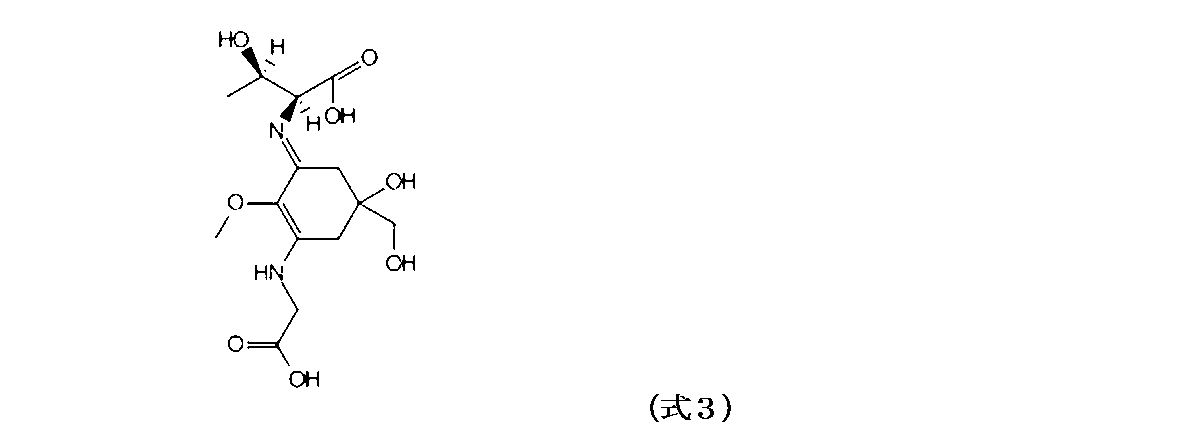
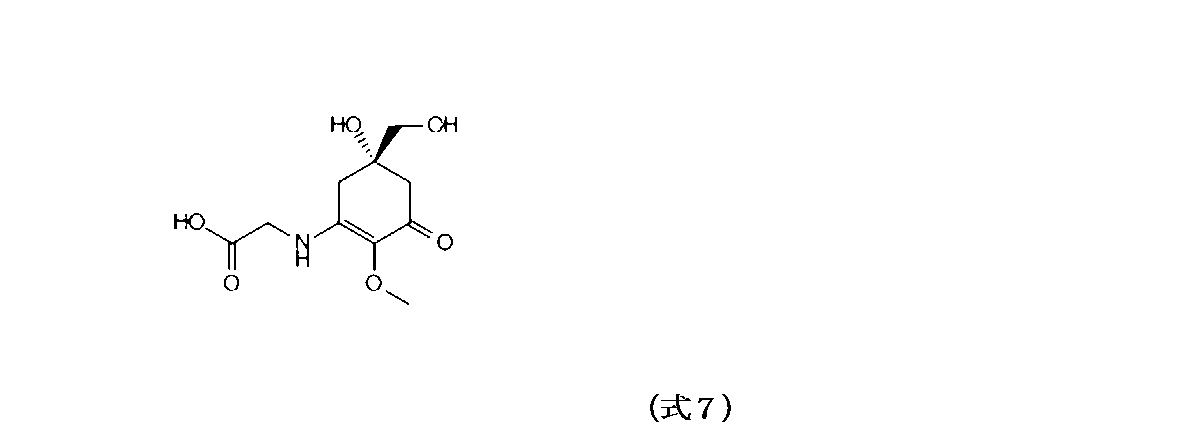
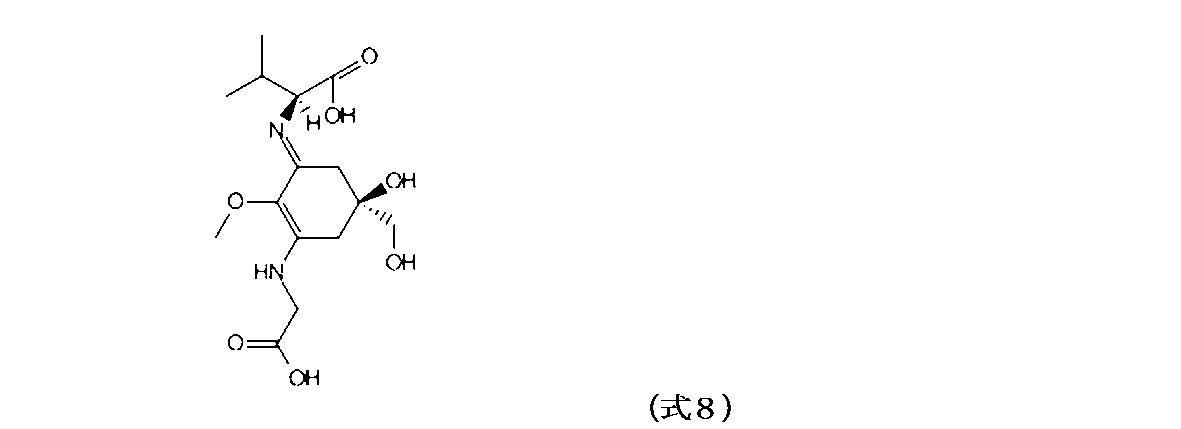
- MAA includes, for example, sinoline (hereinafter referred to as formula 2), porphyra-334 (hereinafter referred to as formula 3), asterina-330 (hereinafter referred to as formula 4), paritene (hereinafter referred to as formula 5), paritine (hereinafter referred to as formula 6)
- formula 2 sinoline
- formula 3 porphyra-334
- formula 4 asterina-330
- formula 4 paritene
- formula 5 paritine
- Examples include, but are not limited to, mycosporin-glycine (hereinafter, formula 7), mycosporin-glycine: valine (hereinafter, formula 8), mycosporine serinol (hereinafter, formula 9), and the like.
- microorganism means, for example, actinomycetes, bacteria such as Escherichia coli and Bacillus subtilis, fungi such as mold and yeast, microalgae such as Cyanobacteria, and Examples include, but are not limited to, Labyrinthula.
- Actinomycetes refers to gram-positive eubacteria belonging to Actinobacteria. Examples of “actinomycetes” include Streptomyces lividans, Streptomyces violaceoruber, Streptomyces cerimitostomyctostomyctostomycto, Stomyces vivocaceto, S.
- Streptomyces such as Streptomyces griseius, Actinocinema pletisum and Actinosinumineum Pseudonocardia bacterium, Pseudonocardia thermophila and Pseudonocardia genus Pseudonocardia
- the genus Corynebacterium is included. Actinomycetes can be isolated from soil, for example, or can be obtained from a microorganism depository distribution agency.
- yeast includes asynocystospore yeast, basidiospore-forming yeast, and yeast belonging to imperfect fungi.
- Saccharomyces Saccharomyces cerevisiae
- Saccharomyces cerevisiae Saccharomyces cerevisiae
- Saccharomyces pombe Saccharomyces cerevisiae
- Kluyveromyces Kluyveromyces marxianus and other genus Kluyveromyces, Yarrowia lipolytica (Yarrowia) genus, Pichia chipitis a stipitis) Pichia (Pichia) sp such, as well as Candida (Candida) spp such as Candida utilis (Candida utilis).
- Yeast can be isolated, for example, from plants, animals, soil, and the like, and can also be obtained from microorganism depository distribution agencies.
- Microalgae refers to algae having a microscopic structure obtained by removing seaweeds that are multicellular organisms from algae.
- Algae refers to all of the organisms that perform oxygen-generating photosynthesis, excluding moss plants, fern plants, and seed plants that mainly live on the ground. Algae include a variety of unicellular and multicellular organisms. Examples include seaweeds, prokaryotes, Cyanobacteria, eukaryotes, Gray plant phyto (Glaucophyta), red plant phylum (Rhodophyta), green plant phylum (Chlorophyta), and the like.
- the microalgae includes those in which a plurality of cells form a colony.
- Cyanobacteria includes, for example, Anabena variabilis, Nostoc punctiforme, Nostoc linckia, Nostoc commune (mm). Nostoc verrucosum) and Nostoc muscorum are included. Cyanobacteria can be isolated, for example, from the natural world, or can be obtained from a microbial deposit agency.
- Labyrinthula is an amoeba-like eukaryote contained in Stramenopiles.
- Labyrinthula includes, for example, the genus Aurantiochytrium, the genus Schizochytrium, the genus Thraustochytrium, and the genus Ulkenia.
- Labyrinthulas can be isolated from the natural world such as seaweeds and land plants, and can also be obtained from microbial deposit agencies.
- the “microorganism that produces a mycosporin-like amino acid outside the cell” refers to a microorganism that has the ability to biosynthesize MAA and produce it outside the cell, for example, a microorganism having an MAA biosynthetic enzyme gene.
- These “microorganisms producing MAA outside the cells” may be wild strains or strains that have been artificially subjected to mutation treatment. Examples of the artificial mutation treatment include gene recombination, UV irradiation, X-ray irradiation, treatment with a mutation agent, and the like.
- the microorganism that produces MAA outside the cells may be a naturally occurring mutant strain.
- Microorganisms that produce MAA outside the cell also include microorganisms having the same or different origin of the MAA biosynthetic enzyme gene.
- a microorganism into which a heterologous MAA biosynthetic enzyme gene has been introduced by genetic recombination may be used.
- a method widely known in the art can be used.
- a promoter, 5 ′ untranslated region (UTR), a transformant selection marker gene, 3 ′ untranslated region (UTR) or A part of them may be introduced together with the gene.
- a promoter widely known to those skilled in the art as used in each microorganism may be used.
- the codon of the gene may be appropriately modified according to the codon usage frequency of the microorganism into which the MAA biosynthetic enzyme gene is introduced.
- codon usage frequency of a certain microorganism using, for example, Kazusa DNA Research Institute database Codon Usage Database (http://www.kazusa.or.jp/codon/). Can do.
- the codon usage frequency can be investigated using a geneart design program GeneOptimizer (registered trademark) of GENEART.
- GeneOptimizer registered trademark of GENEART.
- the codons of the gene of interest can be optimized using conventional means.
- mycosporin-like amino acid biosynthetic enzyme gene examples include, for example, amir_4256 (SEQ ID NO: 1), amir_4257 (SEQ ID NO: 2), amir_4258 (SEQ ID NO: 3) and amir_4259 (SEQ ID NO: 4) derived from Actinocinema mirum DSM43827. Genes, Pseudocardia sp.
- Labyrinthula as a mycosporin-like amino acid biosynthetic enzyme gene, codon-modified amir_4256 (SEQ ID NO: 9), codon-modified amir_4257 (SEQ ID NO: 10), codon-modified Amir_4258 (SEQ ID NO: 11) and codon-modified amir_4259 (SEQ ID NO: 12) genes are used.
- the microorganism used herein is Escherichia coli, yeast, actinomycetes, microalgae or Labyrinthula.
- the microorganism used herein is Escherichia coli, yeast, actinomycetes or Labyrinthula.
- the genus Streptomyces is used. In other embodiments, Streptomyces or Corynebacterium is used. In another embodiment, Streptomyces lividans, Streptomyces avermitilis or Corynebacterium glutamicum is used. In another embodiment, Streptomyces lividans, Streptomyces avermitilis or Corynebacterium glutamicum is used.
- actinomycetes are used that contain the amir_4256, amir_4257, amir_4258 and amir_4259 genes from Actinocinema mirum.
- the Streptomyces evamethyltos (Streptomyces eva), which includes the genes amir_4256 (SEQ ID NO: 1), amir_4257 (SEQ ID NO: 2), amir_4258 (SEQ ID NO: 3) and amir_4259 (SEQ ID NO: 4) from Actinocinema mirum.
- avermitilis MA-4680 strain (2-5-8, Kazusa Kama feet, Kisarazu City, Chiba Prefecture, Japan, National Institute of Technology and Evaluation (NITE), Patent Microorganism Depositary Center (NPMD), NITE Deposit Number: NBRC 14893), Streptomyces lividans 1326 shares (2-5-8 Kazusa Kamashika, Kisarazu City, Chiba Prefecture, Japan, National Institute of Technology and Evaluation (N) TE), Patent Microorganism Deposit Center (NPMD), NITE Deposit Number: NBRC 15675), or Corynebacterium glutamicum ATCC 13032 (Kisarakama, Kisarazu City, Chiba Prefecture, 2-5-8, Japan, Independent Administration) Corporate Product Evaluation Technology Infrastructure (NITE), Patent Microorganism Deposit Center (NPMD), NITE Deposit Number: NBRC 12168) are used.
- the genus Aurantiochytrium in one embodiment, the genus Aurantiochytrium, the genus Schizochytrium, the genus Thraustochytrium, or the genus Ulkenia is used. In other embodiments, the genus Aurantiochytrium is used. In another embodiment, Labyrinthulas comprising amir_4256 (SEQ ID NO: 1), amir_4257 (SEQ ID NO: 2), amir_4258 (SEQ ID NO: 3) and amir_4259 (SEQ ID NO: 4) genes from Actinocinema mirum Is used.
- amir_4256 SEQ ID NO: 1
- amir_4257 SEQ ID NO: 2
- amir_4258 SEQ ID NO: 3
- amir_4259 SEQ ID NO: 459
- Labyrinthulas are used that include the amir_4256, amir_4257, amir_4258, and amir_4259 genes that have been codon modified for Labyrinthulas.
- the strain of Aurantiochytrium sp. SAM2179 (FERM BP-5601, which contains amir_4256, amir_4257, amir_4258, and amir_4259 genes whose codons have been modified for Labyrinthula, Urkenia sp. (Deposited as SAM2179 strain, but later classified by genome decoding) is used.
- yeast when yeast is used, in one embodiment, the genus Saccharomyces, Schizosaccharomyces, Phaffia, Kluyveromyces, Yarrowia, Yarrowia, The genus or Candida is used. In other embodiments, the genus Saccharomyces is used. In another embodiment, yeast having a xylose utilization gene is used. In yet another embodiment, the yeast comprising Amir_4256 (SEQ ID NO: 1), amir_4257 (SEQ ID NO: 2), amir_4258 (SEQ ID NO: 3) and amir_4259 (SEQ ID NO: 4) genes from Actinocinema mirum DSM43827 Is used.
- Amir_4256 SEQ ID NO: 1
- amir_4257 SEQ ID NO: 2
- amir_4258 SEQ ID NO: 3
- amir_4259 SEQ ID NO: 459
- an xylose asset comprising amir_4256 (SEQ ID NO: 1), amir_4257 (SEQ ID NO: 2), amir_4258 (SEQ ID NO: 3), and amir_4259 (SEQ ID NO: 4) genes from Actinocinema mirum DSM43827. Saccharomyces cerevisiae YPH499XW strain having an oxidative gene is used.
- actin_4256 (SEQ ID NO: 1), amir_4257 (SEQ ID NO: 2), amir_4258 (SEQ ID NO: 3) and amir_4259 (SEQ ID NO: 4) genes from Actinocinema mirum DSM43827 E. coli containing is used.
- Escherichia comprising the genes Actin_cinema mirum Dmir 43427, amir_4256 (SEQ ID NO: 1), amir_4257 (SEQ ID NO: 2), amir_4258 (SEQ ID NO: 3) and amir_4259 (SEQ ID NO: 4).
- Escherichia coli JM109 strain is used.
- bacteria refers to microbial cells.
- extracellular culture solution refers to a portion of a culture solution obtained by culturing microorganisms, excluding microbial cells. That is, the extracellular culture solution contains various components contained in the medium used for the culture, substances produced by the microorganism during the culture, and the like.
- a method for separating the bacterial cells and the extracellular medium is appropriately selected by those skilled in the art.
- the bacterial cells and the extracellular culture solution may be separated by subjecting the culture solution obtained by culturing the microorganisms to centrifugation. Conditions well known to those skilled in the art can be used for centrifugation conditions such as temperature, time and speed, depending on the type of microorganism used. Or you may isolate
- the recovery of MAA from the extracellular culture medium means the removal of various components contained in the culture medium used in the culture contained in the extracellular culture medium and substances other than MAA produced by the microorganism during the culture. , Refers to obtaining a solution mainly containing MAA.
- a method for recovering MAA from the extracellular medium is also appropriately selected by those skilled in the art.
- MAA can be recovered from the extracellular medium using membrane filtration or an appropriate medium.
- the medium is appropriately selected by those skilled in the art.
- an aqueous medium is used. Examples of the aqueous medium include, but are not limited to, an acidic, neutral or alkaline aqueous solution, or an aqueous solution containing a salt.
- the present invention provides a method of the present invention as described above, further comprising the step of purifying the recovered MAA.
- methods well known to those skilled in the art for purifying metabolites from microbial cultures can be used.
- purified MAA may be obtained using extraction with an organic solvent, activated carbon treatment, gel filtration, ion exchange column chromatography, high performance liquid chromatography (HPLC), crystallization, electrodialysis and the like.
- the medium may be neutralized as necessary.
- neutralizers may be used, such as carbonates such as calcium carbonate, magnesium carbonate, sodium carbonate and sodium bicarbonate, sodium hydroxide, potassium hydroxide, calcium hydroxide and magnesium hydroxide. Hydroxides, ammonia, quicklime, limestone, slaked lime, etc. are used.
- the neutralizing agent used in the present invention is a carbonate such as calcium carbonate, magnesium carbonate, sodium carbonate and sodium bicarbonate.
- the neutralizing agent may be added to the medium before culturing or may be added during culturing. Further, the neutralizing agent may be added continuously or intermittently. The addition amount of the neutralizing agent can be easily determined by measuring the pH of the medium. The pH can be measured using a conventionally known method, for example, a pH meter.
- a medium for culturing a microorganism and other culture conditions can be appropriately selected by those skilled in the art depending on the type of microorganism to be cultured.
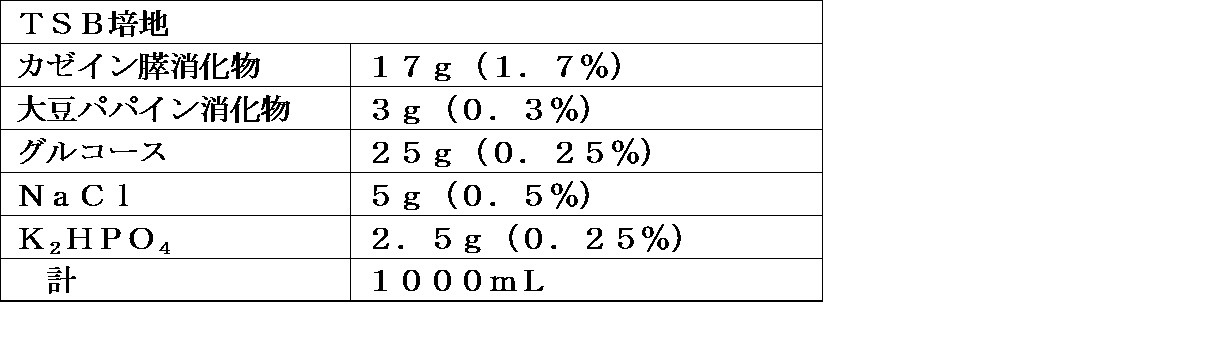
- a semi-synthetic medium for actinomycetes (6% glucose, 0.2% NaCl, 0.05% K 2 HPO 4 , 0.01% MgSO 4 .7H 2 O, 0.2% (NH 4 ) 2 SO 4 , 0.2% yeast extract, 0.005% FeSO 4 .7H 2 O, 0.005% MnSO 4 .4H 2 O, 0.005% ZnSO 4 .7H 2 O, 0 0.5% CaCO 3 ), TSB medium (0.25% glucose, 1.7% casein pancreatic digest, 0.3% soybean papain digest, 0.5% NaCl, 0.25% K 2 HPO 4 ), Or SYN medium (0.7% casamino acid, 0.2% yeast extract, 0.264% (NH 4 ) 2 SO 4 , 0.238% KH 2 PO 4 , 0.556% K 2 HPO 4 , 0 .1% MgSO 4 ⁇ 7H 2 O , 0.0064% CuS 4 ⁇ 5H 2 O, 0.001
- LB medium 2 ⁇ YT medium, NZY medium, M9 medium, SOC medium, or YPD medium
- yeast for example, an SD medium, a YPD medium, or a YPAD medium may be used.
- the above medium may be appropriately modified and used in order to improve the culture of microorganisms.
- increase of initial glucose concentration in the medium, or trace element solution ( ⁇ 200) (CuSO 4 .5H 2 O 64 mg, FeSO 4 .7H 2 O 11 mg, MnSO 4 .4H 2 O 79 mg, ZnSO 4 .7H 2 O
- the medium may be modified by the addition of 15 mg / 50 mL).
- the present invention provides MAA produced by the inventive method described above.
- the MAA produced by the present invention may include not only MAA that has already been determined, but also MAA having a novel structure.
- such MAA is sinoline, porphyra-334, paritin, mycosporin serinol, or mycosporin lysine, or any combination thereof.
- An example of MAA having a novel structure is mycosporin-glycine-alanine (hereinafter, formula 10).
- the present invention provides mycosporin-glycine-alanine.
- the present invention provides mycosporin-glycine-alanine produced by the method of the present invention described above.
- a conventionally known method can be used for the MAA identification method.
- high performance liquid chromatography-time-of-flight mass spectrometry HPLC-TOFMS
- HPLC-TOFMS high performance liquid chromatography-time-of-flight mass spectrometry
- a conventionally known method can be used as a method for identifying a novel MAA.
- a new MAA may be identified by combining high resolution mass spectrometry (HR-MS), nuclear magnetic resonance (NMR), and nuclear magnetic resonance (NMR).
- HR-MS high resolution mass spectrometry
- NMR nuclear magnetic resonance
- NMR nuclear magnetic resonance
- a novel MAA may be identified by measuring the ultraviolet absorption spectrum and accurate mass using HPLC with a photodiode array detector and an HR-MS detector.
- the present invention further comprises, as an active ingredient, an effective amount of MAA produced by the method of the present invention or the above-mentioned mycosporin-glycine-alanine and other ingredients acceptable for cosmetics, quasi drugs or pharmaceuticals,
- An ultraviolet absorbing composition is provided.
- the ultraviolet ray absorbing composition of the present invention can be used as a coating composition and other coating agents in addition to the cosmetics and pharmaceutical fields.
- the ultraviolet absorbing composition of the present invention when applied to human skin, contains about 0.05 to 10% by weight of MAA produced by the method of the present invention and contains about 5 to 40 oil phase medium.
- % By weight, about 1-10% by weight of emulsifier, trace amounts of adjuvants and aqueous phase media such as water.
- the invention further provides MAA produced by the method of the invention or mycosporin-glycine-alanine as described above for preventing one or more symptoms or diseases selected from the group consisting of acute skin reaction, skin aging and skin cancer. And a cosmetic, quasi-drug, or pharmaceutically acceptable ingredient.
- the composition comprises as an active ingredient an effective amount of MAA produced by the method of the present invention.
- compositions of the present invention described above can be used in creams, lotions, pastes, ointments, emulsions (oil-in-water emulsions, water-in-oil emulsions, multiple emulsions, microemulsions, PET-emulsions, pickering emulsions), gels ( Hydrogels, alcohol gels), suspensions, foams, sprays, tablets or powders, and the like can be taken by ordinary cosmetics or pharmaceuticals intended for application to the skin.
- emulsions oil-in-water emulsions, water-in-oil emulsions, multiple emulsions, microemulsions, PET-emulsions, pickering emulsions
- gels Hydrogels, alcohol gels
- suspensions foams
- sprays tablets or powders, and the like
- the cosmetic, quasi-drug or pharmaceutical acceptable components that can be included in the composition of the present invention described above include benzalkonium chloride, benzethonium chloride, hexamethonium chloride, butyl alcohol, benzyl alcohol, methyl paraben or Preservatives such as alkylparabens such as propylparaben, catechol, resorcinol, cyclohexanol, and m-cresol; antioxidants such as ascorbic acid and methionine; buffers such as phosphoric acid, citric acid and other organic acids; sorbitan esters, Emulsifiers such as Tween®, silicone polyols, potassium stearate and ethoxylated fatty acid esters; emulsion stabilizers; anionic, cationic, nonionic or amphoteric polymers; chelating agents such as EDTA; Phase medium (hydrocarbon oil such as mineral oil, paraffin wax, natural oil, silicon oil, fatty acid este
- Example 1 Production of MAA using Streptomyces
- the inventors produced MAA using Streptomyces lividans and Streptomyces avermitilis.
- the present inventors compared the amount of MAA produced in the extracellular medium and in the bacterial body (FIG. 1).
- MAA biosynthetic enzyme gene 1-1-1 Introduction of MAA biosynthetic enzyme gene 1-1-1. Introduction of MAA biosynthetic enzyme gene into Streptomyces lividans As MAA biosynthetic enzyme genes, amir_4256 (SEQ ID NO: 1), amir_4257 (SEQ ID NO: 2), amir_4258 (SEQ ID NO: 2) derived from Actinocinema mirum DSM43827 3) and mir_4259 (SEQ ID NO: 4) genes were used. These genes were ligated to a vector having the replication origin of pIJ101 under the control of a PLD promoter (see JP 2002-51780 A) to prepare a gene expression vector.
- Streptomyces lividans 1326 strain (NITE deposit number: NBRC 15675) was transformed to obtain a MAA producing strain. Transformation of Streptomyces lividans was performed according to a conventionally known method.
- Streptomyces lividans and Streptomyces evamethyls main culture 0.1% of the preculture was added to 50 mL of TSBt medium (see Tables 2-4 below) in a 500 mL baffled flask. .
- Glucose was further added to the TSBt medium at the start of the culture so that the initial glucose concentration was 50 g / L.
- the culture was shaken at 28 ° C. and 160 rpm for 2 weeks.
- FIG. 1A shows the distribution of synoline
- FIG. 1B shows the distribution of porphyra-334. It was confirmed that both sinoline and porphyra-334 were distributed more in the extracellular medium than in the microbial cells. From these results, it was shown that the amount of sinoline produced in the extracellular medium was about 5 times the amount of sinoline produced in the microbial cells at 2 weeks from the start of the culture. Similarly, for Porphyra-334, the production amount in the extracellular medium was shown to be about 7 times the production amount in the bacterial cells.
- Streptomyces lividans 1326 strain 150 mg / L outside the cells and 50 mg / L inside the cells were produced in about 1 week of culture. In about 2 weeks of culture, 510 mg / L of cynoline was produced outside the cells and 105 mg / L inside the cells.
- Example 2 2. Production of novel MAA (mycosporin-glycine-alanine) 2-1.
- Streptomyces evamethyls producing MAA was cultured for 2 weeks.
- the initial glucose concentration was 100 g / L.
- mycosporin-glycine-alanine was produced as a novel MAA in addition to sinoline and porphyra-334 in the extracellular medium.
- the amount of mycosporin-glycine-alanine obtained was 25 mg / L.
- HPLC analysis was performed under the conditions shown in Table 5, the retention time was around 15 minutes.
- novel MAA mycosporin-glycine-alanine
- the novel MAA was identified as follows. For the analysis, an ultraviolet absorption spectrum and an accurate mass were measured using HPLC equipped with a photodiode array detector and an HR-MS detector. The HPLC measurement conditions are as shown in the following table. The ultraviolet absorption spectrum of the peak eluted at around 9 minutes had an absorption maximum at around 333 nm and had the same shape as that of sinoline and porphyra-334. Moreover, this peak was ionized by ESI (fragmenter voltage 200.0V), and exact mass was measured with the TOF detector. m / z ([M + H] + ): 317.1338 (calculated for C 13 H 21 N 2 O 7 + : 317.1349).
- Example 3 Production of MAA using Corynebacterium The present inventors produced MAA using Corynebacterium glutamicum.
- MAA biosynthetic enzyme gene 3-1-1 Introduction of MAA biosynthetic enzyme gene 3-1-1. Introduction of MAA Biosynthetic Enzyme Gene into Corynebacterium glutamicum As MAA biosynthetic enzyme genes, amir_4256 (SEQ ID NO: 1), amir_4257 (SEQ ID NO: 2), and amir_4258 (SEQ ID NO: 2) derived from Actinocinema mirum DSM43827 3) and mir_4259 (SEQ ID NO: 4) genes were used. These genes were ligated to a vector having a pBL1 origin of replication under the control of the gapA promoter (see Appl Microbiol Biotechnol (2008) 81: 291-301) to produce a gene expression vector.
- Corynebacterium glutamicum ATCC 13032 strain (NITE deposit number: NBRC 12168, National Institute of Technology and Evaluation (NITE), Patent Organism Depositary Center (IPOD), Kazusa Kamashika, Kisarazu City, Chiba Prefecture 2-5-8) was transformed by electroporation to obtain a MAA production strain.
- the electroporation method was performed according to a conventionally known method.
- Corynebacterium glutamicum A glycerol stock of Corynebacterium glutamicum ATCC13032 having the MAA biosynthetic enzyme gene prepared in 3-1 above was added to 50 mL of BHI medium (see Table 7 below). Added. These Corynebacterium glutamicum were cultured with shaking at 30 ° C. and 180 rpm for 24 hours.
- Example 4 4 Production of MAA using yeast The inventors produced MAA using Saccharomyces cerevisiae.
- Saccharomyces cerevisiae YPH499 strain (Genetics 1989 May; 122 (1): 19-27) was transformed to obtain a YPH499XW strain having xylose-assimilating ability. Transformation of Saccharomyces cerevisiae was performed according to a conventionally known method.
- MAA biosynthetic enzyme gene into Saccharomyces cerevisiae YPH499XW strain 2 ⁇ m so that MAA biosynthetic enzyme genes amir4256 (SEQ ID NO: 1) and amir4257 (SEQ ID NO: 2) are expressed under the control of TDH3 promoter and ADH1 promoter
- a gene expression vector pAT426-amyl4256-7 was prepared by ligating to the pAT426 vector (FEMS Yeast Res. 2014 May; 14 (3): 399-411) having an origin of replication and a URA3 selection marker.
- MAA biosynthetic enzyme genes amir4258 (SEQ ID NO: 3) and amir4259 (SEQ ID NO: 4) were transformed into a pAT425 vector (FEMS Yeast Res. 2014 May; 14 ⁇ having a replication origin of 2 ⁇ under the control of TDH3 promoter and ADH1 promoter. 3): 399-411) to produce the gene expression vector pAT425-amyl4258-9.
- the YPH499XW strain was transformed to obtain a YPH499XWMAA strain, which is a MAA production strain. Transformation of Saccharomyces cerevisiae was performed according to a conventionally known method.
- Example 5 Production of MAA using Labyrinthula
- the present inventors produced MAA using Labyrinthula.
- Aulanthiochytrium main culture 10 mL of GY seawater medium (see Table 11 below) was cultured with shaking for 5 days at 28 ° C. and 300 rpm.
- the culture solution was centrifuged at 15000 rpm for 10 minutes to separate it into an extracellular culture solution and a precipitate (bacteria).
- the separated extracellular culture solution was filtered using a membrane filter having a pore size of 0.2 ⁇ m, and the obtained solution was used as an extracellular culture solution sample.
- the amount of sinoline produced in the extracellular medium sample was measured by HPLC.
- the HPLC measurement conditions are the same as those described in Table 5.
- Example 6 Production of MAA using E. coli
- the inventors produced MAA using Escherichia coli.
- Escherichia coli JM109 strain manufactured by Takara Bio Inc., product code: 9052
- Escherichia coli JM109 strain manufactured by Takara Bio Inc., product code: 9052
- Transformation of Escherichia coli was performed according to a conventionally known method.
- Escherichia coli main culture 2% of the preculture was inoculated into 50 mL of LB medium in a 500 mL baffled flask.
- sodium gluconate is added to the LB medium at the start of culture so that the initial concentration of sodium gluconate is 50 g / L (final concentration 50 g / L), so that the final concentration of calcium carbonate is 0.5%. Added more.
- the shaking culture was performed at 30 ° C. and 160 rpm for 1 week.
- MAA can be produced using microorganisms and MAA can be recovered from the extracellular medium. It was also shown that a novel MAA, mycosporin-glycine-alanine, can be obtained. According to this method, MAA can be obtained from the extracellular medium, which is very advantageous in connection with the subsequent purification step.
- MAA can be produced stably and in large quantities using microorganisms. Further, the MAA thus obtained can be used as an active ingredient of an ultraviolet absorbing composition. Therefore, the present invention can be used in the fields of cosmetics and pharmaceuticals.
- SEQ ID NO: 9 Codon-optimized amir_4256 for SAM2179
- SEQ ID NO: 10 Codon-optimized amir_4257 for SAM2179
- SEQ ID NO: 11 Codon-optimized amir_4258 for SAM2179
- SEQ ID NO: 12 Codon-optimized amir_4259 for SAM2179
Landscapes
- Health & Medical Sciences (AREA)
- Life Sciences & Earth Sciences (AREA)
- Chemical & Material Sciences (AREA)
- Organic Chemistry (AREA)
- General Health & Medical Sciences (AREA)
- Engineering & Computer Science (AREA)
- Animal Behavior & Ethology (AREA)
- Public Health (AREA)
- Veterinary Medicine (AREA)
- Genetics & Genomics (AREA)
- Zoology (AREA)
- Wood Science & Technology (AREA)
- Biotechnology (AREA)
- Bioinformatics & Cheminformatics (AREA)
- Microbiology (AREA)
- Dermatology (AREA)
- Epidemiology (AREA)
- General Engineering & Computer Science (AREA)
- Medicinal Chemistry (AREA)
- Pharmacology & Pharmacy (AREA)
- Biochemistry (AREA)
- Biomedical Technology (AREA)
- General Chemical & Material Sciences (AREA)
- Chemical Kinetics & Catalysis (AREA)
- Mycology (AREA)
- Birds (AREA)
- Molecular Biology (AREA)
- Nuclear Medicine, Radiotherapy & Molecular Imaging (AREA)
- Gerontology & Geriatric Medicine (AREA)
- Physics & Mathematics (AREA)
- Biophysics (AREA)
- Plant Pathology (AREA)
- Botany (AREA)
- Tropical Medicine & Parasitology (AREA)
- Toxicology (AREA)
- Virology (AREA)
- Preparation Of Compounds By Using Micro-Organisms (AREA)
- Micro-Organisms Or Cultivation Processes Thereof (AREA)
- Cosmetics (AREA)
- Acyclic And Carbocyclic Compounds In Medicinal Compositions (AREA)
Abstract
Description
(1)マイコスポリン様アミノ酸を生産する方法であって、
マイコスポリン様アミノ酸を菌体外に産生する微生物を培養する工程、
菌体と菌体外培養液を分離する工程、および
菌体外培養液からマイコスポリン様アミノ酸を回収する工程
を含む、方法;
(2)回収したマイコスポリン様アミノ酸を精製する工程をさらに含む、(1)に記載の方法;
(3)微生物が大腸菌、酵母、放線菌、微細藻類またはラビリンチュラ類に属する微生物である、(1)または(2)に記載の方法;
(4)微生物が放線菌である、(3)に記載の方法;
(5)放線菌が、ストレプトマイセス(Streptomyces)属、アクチノシネマ(Actinosynnema)属、シュードノカルディア(Pseudonocardia)属またはコリネバクテリウム(Corynebacterium)属である、(4)に記載の方法;
(6)微生物がラビリンチュラ類であって、該ラビリンチュラ類がオーランチオキトリウム(Aurantiochytrium)属である、(3)に記載の方法;
(7)微生物が酵母であって、該酵母がサッカロミセス(Saccharomyces)属である、(3)に記載の方法;
(8)微生物が異種由来のマイコスポリン様アミノ酸生合成酵素遺伝子群を含む、(1)~(7)のいずれか一つに記載の方法;
(9)マイコスポリン様アミノ酸生合成酵素遺伝子群が、アクチノシネマ・ミルム(Actinosynnema mirum)由来のamir_4256、amir_4257、amir_4258およびamir_4259遺伝子である、(8)に記載の方法;
(10)マイコスポリン様アミノ酸生合成酵素遺伝子群の少なくとも1つの遺伝子のコドンが、導入される微生物用に改変されている、(8)に記載の方法;
(11)微生物が、ストレプトマイセス・エバメチルス(Streptomyces avermitilis) MA-4680株(NITE寄託番号:NBRC 14893)、ストレプトマイセス・リビダンス(Streptomyces lividans) 1326株(NITE寄託番号:NBRC 15675)、コリネバクテリウム・グルタミカム(Corynebacterium glutamicum) ATCC13032株)(NITE寄託番号:NBRC 12168)、オーランチオキトリウム(Aurantiochytrium sp.) SAM2179株(FERM BP-5601)、エシェリヒア・コリ(Escherichia coli) JM109株、またはサッカロミセス・セレビシエ(Saccharomyces cerevisiae) YPH499XW株である、(9)または(10)に記載の方法;
(12)下記、式1で表されるマイコスポリン様アミノ酸

(14)(1)~(11)のいずれか一つに記載の方法によって生産されるマイコスポリン様アミノ酸、または(12)もしくは(13)に記載のマイコスポリン様アミノ酸と、化粧品、医薬部外品もしくは医薬品に許容される成分とを含む、紫外線吸収用組成物;および
(15)急性皮膚反応、皮膚老化および皮膚癌からなる群から選択される一以上の症状または疾患を予防するための、(1)~(11)のいずれか一つに記載の方法によって生産されるマイコスポリン様アミノ酸、または(12)もしくは(13)に記載のマイコスポリン様アミノ酸と、化粧品、医薬部外品もしくは医薬品に許容される成分とを含む、組成物。





1.ストレプトマイセスを用いたMAAの産生
本発明者らは、ストレプトマイセス・リビダンス(Streptomyces lividans)およびストレプトマイセス・エバメチルス(Streptomyces avermitilis)を用いて、MAAを産生した。また、本発明者らは、菌体外培養液および菌体内におけるMAA産生量の比較を行った(図1)。
1-1-1.ストレプトマイセス・リビダンスへのMAA生合成酵素遺伝子の導入
MAA生合成酵素遺伝子として、アクチノシネマ・ミルム(Actinosynnema mirum) DSM43827由来のamir_4256(配列番号1)、amir_4257(配列番号2)、amir_4258(配列番号3)およびamir_4259(配列番号4)遺伝子を用いた。これらの遺伝子を、PLDプロモーター(特開2002-51780号公報を参照のこと)の制御下にてpIJ101の複製起点を有するベクターに連結し、遺伝子発現ベクターを作製した。この遺伝子発現ベクターを用いて、ストレプトマイセス・リビダンス 1326株(NITE寄託番号:NBRC 15675)を形質転換し、MAA生産株を得た。ストレプトマイセス・リビダンスの形質転換は、従来公知の方法に従って行った。
上記遺伝子amir_4256(配列番号1)、amir_4257(配列番号2)、amir_4258(配列番号3)およびamir_4259(配列番号4)をストレプトマイセス・エバメチルス MA-4680株(NITE寄託番号:NBRC 14893)に、相同組換えによって導入し、MAA生産株を得た。ストレプトマイセス・エバメチルスの相同組換えは、従来公知の方法に従って行った。
5mLのAVM培地(以下、表1を参照のこと)に、上記1-1で作製したMAA生合成酵素遺伝子を有する、ストレプトマイセス・リビダンス 1326株またはストレプトマイセス・エバメチルス MA-4680株の胞子のグリセロールストックを添加した。28℃、160rpmで48時間、これらの放線菌を振盪培養した。

0.1%量の前培養液を、500mLバッフル付フラスコ中の50mLのTSBt培地(以下、表2~4を参照のこと)に添加した。なお、グルコースの初期濃度が50g/Lとなるように、培養開始時にTSBt培地へグルコースをさらに追加した。28℃、160rpmで2週間、振盪培養した。


本培養の間、所定の時間に培養液1mLを採取し、600nmでの濁度を測定した。採取した培養液を14000rpmで20分間、遠心分離して、菌体外培養液と沈殿物(菌体)とに分離した。分離した菌体外培養液を、菌体外培養液サンプルとして用いた。分離した菌体に1mLのメタノールを添加し、撹拌によって菌体を破砕した。次いで、遠心分離に供し、上清を回収した(菌体サンプル)。菌体外培養液サンプルおよび、希釈した菌体サンプルそれぞれにおける、シノリンおよびポルフィラ-334の生産量を、HPLCにより測定した。HPLC測定条件は以下の表の通りである。

ストレプトマイセス・エバメチルス MA-4680株の結果を図1に示す。図1(A)はシノリンの分布を、図1(B)はポルフィラ-334の分布を示す。シノリンおよびポルフィラ-334のいずれについても、菌体内よりも菌体外培養液中に多く分布していることが確認された。これらの結果より、培養開始から2週間の時点で、菌体外培養液中のシノリン生産量は、菌体内のシノリン生産量に比べ、約5倍であることが示された。ポルフィラ-334についても同様に、菌体外培養液中の生産量が菌体内の生産量に比べ、約7倍であることが示された。ストレプトマイセス・リビダンス 1326株では、培養約1週間で、菌体外に150mg/L、菌体内に50mg/Lのシノリンが生産された。培養約2週間では、菌体外に510mg/L、菌体内に105mg/Lのシノリンが生産された。
2.新規MAA(マイコスポリン-グリシン-アラニン)の産生
2-1.実施例1と同様にして、MAAを生産するストレプトマイセス・エバメチルスを2週間培養した。但し、初期グルコース濃度は100g/Lとした。その結果、菌体外培養液中に、シノリンおよびポルフィラ-334に加え、新規MAAとしてマイコスポリン-グリシン-アラニンが生産された。得られたマイコスポリン-グリシン-アラニンの生産量は25mg/Lであった。表5に示す条件でHPLC分析すると、保持時間は15分付近であった。
上記新規MAAの同定は、以下の様に行った。分析には、フォトダイオードアレイ検出器とHR-MS検出器を備えたHPLCを用い、紫外吸収スペクトルと精密質量を測定した。HPLC測定条件は、以下の表の通りである。

3.コリネバクテリウムを用いたMAAの産生
本発明者らは、コリネバクテリウム・グルタミカム(Corynebacterium glutamicum)を用いて、MAAを産生した。
3-1-1.コリネバクテリウム・グルタミカムへのMAA生合成酵素遺伝子の導入
MAA生合成酵素遺伝子として、アクチノシネマ・ミルム(Actinosynnema mirum) DSM43827由来のamir_4256(配列番号1)、amir_4257(配列番号2)、amir_4258(配列番号3)およびamir_4259(配列番号4)遺伝子を用いた。これらの遺伝子を、gapAプロモーター(Appl Microbiol Biotechnol (2008) 81:291-301を参照のこと)の制御下にてpBL1の複製起点を有するベクターに連結し、遺伝子発現ベクターを作製した。この遺伝子発現ベクターを用いて、コリネバクテリウム・グルタミカム ATCC13032株(NITE寄託番号:NBRC 12168、独立行政法人製品評価技術基盤機構(NITE)、特許生物寄託センター(IPOD)、千葉県木更津市かずさ鎌足2-5-8)をエレクトロポレーション法によって形質転換し、MAA生産株を得た。エレクトロポレーション法は、従来公知の方法に従って行った。
50mLのBHI培地(以下、表7を参照のこと)に、上記3-1で作製したMAA生合成酵素遺伝子を有する、コリネバクテリウム・グルタミカム ATCC13032株のグリセロールストックを添加した。30℃、180rpmで24時間、これらのコリネバクテリウム・グルタミカムを振盪培養した。

3%量の前培養液を、坂口フラスコ中の50mLのBHI培地に添加した。なお、グルコン酸ナトリウムの初期濃度が20g/Lとなるように、培養開始時にBHI培地へ400g/Lのグルコン酸ナトリウムを5mL追加した。pH調整のため、10%炭酸カルシウム溶液を5mL添加した。30℃、180rpmで48時間、振盪培養した。
本培養の間、所定の時間に培養液1mLを採取し、600nmでの濁度を測定した。採取した培養液を15000rpmで10分間、遠心分離して、菌体外培養液と沈殿物(菌体)とに分離した。分離した菌体外培養液を孔径0.2μmのメンブレンフィルターを用いてろ過し、ろ液を菌体外培養液サンプルとして用いた。菌体外培養液サンプルにおける、シノリンおよびポルフィラ-334の生産量を、HPLCにより測定した。HPLC測定条件は表5に記載する条件と同じである。
結果を図2に示す。シノリンおよびポルフィラ-334のいずれについても、菌体外培養液中に存在することが確認された。
4.酵母を用いたMAAの産生
本発明者らは、サッカロミセス・セレビシエ(Saccharomyces cerevisiae)を用いて、MAAを産生した。
4-1-1.YPH499XW株の構築
プラスミドpWX1X2XK(Appl Environ Microbiol. 2004 Sep;70(9):5407-14を参照のこと)から、キシロース資化性遺伝子をコードするXYL1(Scheffersomyces stipitis由来キシロースレダクダーゼ)(配列番号13)、XYL2(Scheffersomyces stipitis由来キシリトールデヒドロゲナーゼ)(配列番号14)、およびXKS1(Saccharomyces cerevisiae由来キシルロキナーゼ)(配列番号15)をTDH3プロモーターの制御下にてそれぞれ発現するカセットを、BssHIIで切断した。これらのカセットを、BssHIIで切断したTRP1選択マーカーを有するpRS404ベクター(ATCC寄託番号:ATCC 87515)に連結し、ゲノム組込み用ベクターpIWX1X2XKを作製した。このゲノム組込み用ベクターpIWX1X2XKをEcoRVで処理した。得られた断片を用いて、サッカロミセス・セレビシエ(Saccharomyces cerevisiae)YPH499株(Genetics 1989 May;122(1):19-27)を形質転換し、キシロース資化性を有するYPH499XW株を得た。サッカロミセス・セレビシエの形質転換は、従来公知の方法に従って行った。
MAA生合成酵素遺伝子amir4256(配列番号1)およびamir4257(配列番号2)を、TDH3プロモーターおよびADH1プロモーターの制御下にて発現するよう、2μの複製起点およびURA3選択マーカーを有するpAT426ベクター(FEMS Yeast Res. 2014 May;14(3):399-411)に連結し、遺伝子発現ベクターpAT426-amir4256-7を作製した。また、MAA生合成酵素遺伝子amir4258(配列番号3)およびamir4259(配列番号4)を、TDH3プロモーターおよびADH1プロモーターの制御下にて2μの複製起点を有するpAT425ベクター(FEMS Yeast Res. 2014 May;14(3):399-411)に連結し、遺伝子発現ベクターpAT425-amir4258-9を作製した。これらの遺伝子発現ベクターpAT426-amir4256-7およびpAT425-amir4258-9を用いて、YPH499XW株を形質転換し、MAA生産株であるYPH499XWMAA株を得た。サッカロミセス・セレビシエの形質転換は、従来公知の方法に従って行った。
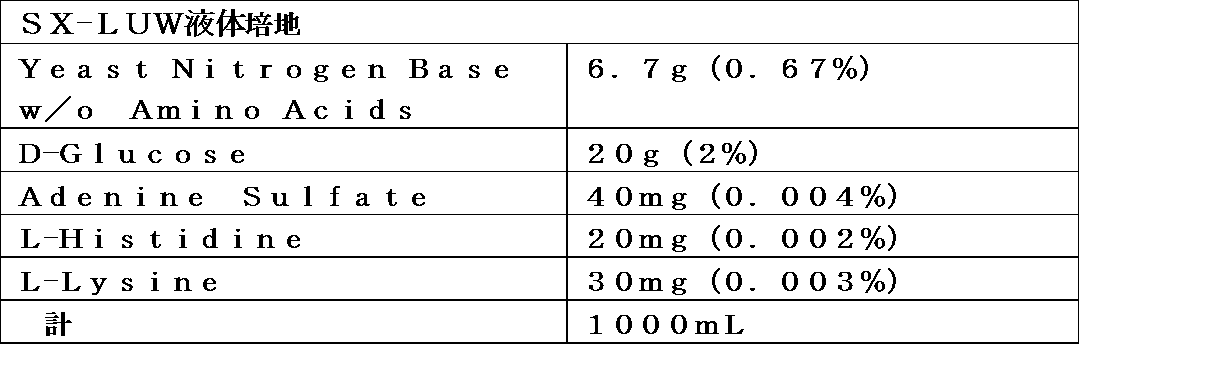
上記5-1で作製したMAA生合成酵素遺伝子を有する、YPH499XWMAA株のグリセロールストックを、SD-LUW寒天培地(以下、表8を参照のこと)上で培養した。その後、5mLのSX-LUW液体培地(以下、表9を参照のこと)に得られたコロニーを植菌した。30℃、150opmで13日間、振盪培養した。

2%量の前培養液を、300mLバッフル付フラスコ中の100mLのSD-LU液体培地に添加した。30℃、150rpmで48時間、振盪培養した。
13日間培養後、培養液4mLを採取し、600nmでの濁度を測定した。採取した培養液を3,000rpmで5分間、遠心分離して、菌体外培養液と沈殿物(菌体)とに分離した。分離した菌体外培養液をPTFEフィルター(0.45μm)に通し、得られた溶液を菌体外培養液サンプルとして用いた。
菌体外培養液のMAA濃度を測定した。結果、0.19mg/Lのシノリンが菌体外に生産された。
5.ラビリンチュラ類を用いたMAAの産生
本発明者らは、ラビリンチュラ類を用いて、MAAを産生した。
5-1.ラビリンチュラ類へのMAA生合成酵素遺伝子の導入
オーランチオキトリウム(Aurantiochytrium sp.) SAM2179株(FERM BP-5601)用に、上記遺伝子amir_4256(配列番号1)、amir_4257(配列番号2)、amir_4258(配列番号3)およびamir_4259(配列番号4)のコドンを改変した(それぞれ、配列番号9~12)。改変したこれらの遺伝子を相同組換えによってオーランチオキトリウム SAM2179株に導入し、MAA生産株を得た。ラビリンチュラ類の相同組換えは、従来公知の方法に従って行った。
1.5%寒天を含むGY海水培地プレート(以下、表10を参照のこと)に、上記5-1で作製したMAA生合成酵素遺伝子を有する、オーランチオキトリウム SAM2179 株のグリセロールストックを添加した。28℃で2日間、このオーランチオキトリウムを培養した。

10mLのGY海水培地(以下、表11を参照のこと)で、上記5-2で前培養したオーランチオキトリウムを28℃、300rpmで5日間、振盪培養した。

本培養の後、培養液を15000rpmで10分間、遠心分離して、菌体外培養液と沈殿物(菌体)とに分離した。分離した菌体外培養液を孔径0.2μmのメンブレンフィルターを用いてろ過し、得られた溶液を菌体外培養液サンプルとして用いた。菌体外培養液サンプルにおける、シノリンの生産量を、HPLCにより測定した。HPLC測定条件は表5に記載する条件と同じである。
菌体外に1.5mg/Lのシノリンが生産された。
6.大腸菌を用いたMAAの生産
本発明者らは、エシェリヒア・コリ(Escherichia coli)を用いて、MAAを産生した。
6-1-1.エシェリヒア・コリへのMAA生合成酵素遺伝子の導入
上記MAA生合成酵素遺伝子として、amir_4256(配列番号1)、amir_4257(配列番号2)、amir_4258(配列番号3)およびamir_4259(配列番号4)を用いた。これらの遺伝子を、tacプロモーターの制御下にてpBR322の複製起点を有するベクターpkk223-3(GenBank No.M77749)に連結し、遺伝子発現ベクターを作製した。この遺伝子発現ベクターを用いて、エシェリヒア・コリ(Escherichia coli) JM109株(タカラバイオ社製、製品コード:9052)を形質転換し、MAA生産株を得た。エシェリヒア・コリの形質転換は、従来公知の方法に従って行った。
5mLのLB培地(以下、表12を参照のこと)に、上記6-1で作製したMAA生合成酵素遺伝子を有する、エシェリヒア・コリJM109株のグリセロールストックを添加した。37℃、160rpmで18時間、これらのエシェリヒア・コリを振盪培養した。

2%量の前培養液を、500mLバッフル付フラスコ中の50mLのLB培地へ植菌した。なお、グルコン酸ナトリウムの初期濃度が50g/Lとなるように、培養開始時にLB培地へグルコン酸ナトリウムを追加し(終濃度50g/L)、炭酸カルシウムを終濃度0.5%となるようにさらに追加した。30℃、160rpmで1週間、振盪培養した。
本培養の開始から24時間後に培養液1mLを採取し、14000rpmで10分間、遠心分離して、菌体外培養液と沈殿物(菌体)とに分離した。分離した菌体外培養液を、菌体外培養液サンプルとして用いた。菌体外培養液サンプルにおける、シノリンの生産量を、HPLCにより測定した。HPLC測定条件は表5に記載する条件と同じである。
菌体外培養液のMAA濃度を測定した。結果、0.82mg/Lのシノリンが菌体外に生産された。
SEQ ID NO:10: Codon-optimized amir_4257 for SAM2179
SEQ ID NO:11: Codon-optimized amir_4258 for SAM2179
SEQ ID NO:12: Codon-optimized amir_4259 for SAM2179
Claims (15)
- マイコスポリン様アミノ酸を生産する方法であって、
マイコスポリン様アミノ酸を菌体外に産生する微生物を培養する工程、
菌体と菌体外培養液を分離する工程、および
菌体外培養液からマイコスポリン様アミノ酸を回収する工程
を含む、方法。 - 回収したマイコスポリン様アミノ酸を精製する工程をさらに含む、請求項1に記載の方法。
- 微生物が大腸菌、酵母、放線菌、微細藻類またはラビリンチュラ類に属する微生物である、請求項1または2に記載の方法。
- 微生物が放線菌である、請求項3に記載の方法。
- 放線菌が、ストレプトマイセス(Streptomyces)属、アクチノシネマ(Actinosynnema)属、シュードノカルディア(Pseudonocardia)属またはコリネバクテリウム(Corynebacterium)属である、請求項4に記載の方法。
- 微生物がラビリンチュラ類であって、該ラビリンチュラ類がオーランチオキトリウム(Aurantiochytrium)属である、請求項3に記載の方法。
- 微生物が酵母であって、該酵母がサッカロミセス(Saccharomyces)属である、請求項3に記載の方法。
- 微生物が異種由来のマイコスポリン様アミノ酸生合成酵素遺伝子群を含む、請求項1~7のいずれか一項に記載の方法。
- マイコスポリン様アミノ酸生合成酵素遺伝子群が、アクチノシネマ・ミルム(Actinosynnema mirum)由来のamir_4256、amir_4257、amir_4258およびamir_4259遺伝子である、請求項8に記載の方法。
- マイコスポリン様アミノ酸生合成酵素遺伝子群の少なくとも1つの遺伝子のコドンが、導入される微生物用に改変されている、請求項8に記載の方法。
- 微生物が、ストレプトマイセス・エバメチルス(Streptomyces avermitilis) MA-4680株(NITE寄託番号:NBRC 14893)、ストレプトマイセス・リビダンス(Streptomyces lividans) 1326株(NITE寄託番号:NBRC 15675)、コリネバクテリウム・グルタミカム(Corynebacterium glutamicum) ATCC13032株)(NITE寄託番号:NBRC 12168)、オーランチオキトリウム(Aurantiochytrium) SAM2179株(FERM BP-5601)、エシェリヒア・コリ(Escherichia coli) JM109株、またはサッカロミセス・セレビシエ(Saccharomyces cerevisiae) YPH499XW株である、請求項9または10に記載の方法。
- 下記、式1で表されるマイコスポリン様アミノ酸。

- 請求項1~11のいずれか一項に記載の方法によって生産される、請求項12に記載のマイコスポリン様アミノ酸。
- 請求項1~11のいずれか一項に記載の方法によって生産されるマイコスポリン様アミノ酸、または請求項12もしくは13に記載のマイコスポリン様アミノ酸と、化粧品、医薬部外品もしくは医薬品に許容される成分とを含む、紫外線吸収用組成物。
- 急性皮膚反応、皮膚老化および皮膚癌からなる群から選択される一以上の症状または疾患を予防するための、請求項1~11のいずれか一項に記載の方法によって生産されるマイコスポリン様アミノ酸、または請求項12もしくは13に記載のマイコスポリン様アミノ酸と、化粧品、医薬部外品もしくは医薬品に許容される成分とを含む、組成物。
Priority Applications (6)
| Application Number | Priority Date | Filing Date | Title |
|---|---|---|---|
| US15/309,449 US10307356B2 (en) | 2014-05-13 | 2015-05-12 | Method for producing mycosporine-like amino acid using microbes |
| EP15792252.7A EP3144392B1 (en) | 2014-05-13 | 2015-05-12 | Method for producing mycosporine-like amino acid using microbes |
| JP2015545234A JP5927593B2 (ja) | 2014-05-13 | 2015-05-12 | 微生物を用いたマイコスポリン様アミノ酸を生産する方法 |
| KR1020167034333A KR102148740B1 (ko) | 2014-05-13 | 2015-05-12 | 미생물을 사용한 미코스포린 유사 아미노산을 생산하는 방법 |
| ES15792252T ES2742162T3 (es) | 2014-05-13 | 2015-05-12 | Método para producir aminoácidos tipo micosporina utilizando microbios |
| CN201580024948.3A CN106574282B (zh) | 2014-05-13 | 2015-05-12 | 使用微生物的生产类菌孢素氨基酸的方法 |
Applications Claiming Priority (2)
| Application Number | Priority Date | Filing Date | Title |
|---|---|---|---|
| JP2014-099647 | 2014-05-13 | ||
| JP2014099647 | 2014-05-13 |
Publications (1)
| Publication Number | Publication Date |
|---|---|
| WO2015174427A1 true WO2015174427A1 (ja) | 2015-11-19 |
Family
ID=54479964
Family Applications (1)
| Application Number | Title | Priority Date | Filing Date |
|---|---|---|---|
| PCT/JP2015/063682 Ceased WO2015174427A1 (ja) | 2014-05-13 | 2015-05-12 | 微生物を用いたマイコスポリン様アミノ酸を生産する方法 |
Country Status (7)
| Country | Link |
|---|---|
| US (1) | US10307356B2 (ja) |
| EP (1) | EP3144392B1 (ja) |
| JP (1) | JP5927593B2 (ja) |
| KR (1) | KR102148740B1 (ja) |
| CN (1) | CN106574282B (ja) |
| ES (1) | ES2742162T3 (ja) |
| WO (1) | WO2015174427A1 (ja) |
Cited By (8)
| Publication number | Priority date | Publication date | Assignee | Title |
|---|---|---|---|---|
| JP2020531007A (ja) * | 2017-08-16 | 2020-11-05 | シージェイ チェイルジェダング コーポレイション | マイコスポリン様アミノ酸を生産する微生物及びそれを用いたマイコスポリン様アミノ酸の生産方法 |
| EP3754024A4 (en) * | 2018-02-23 | 2021-01-13 | CJ Cheiljedang Corporation | MYCOSPORIN-LIKE AMINO ACID PRODUCING MICRO-ORGANISM AND METHOD FOR MANUFACTURING MYCOSPORIN-LIKE AMINO ACIDS USING THESE THESE |
| JP2021088521A (ja) * | 2019-12-03 | 2021-06-10 | メディカランド株式会社 | 皮膚用組成物 |
| US11525103B2 (en) | 2015-12-01 | 2022-12-13 | Nippon Suisan Kaisha, Ltd. | Docosahexaenoic acid-containing oil and method for producing same |
| US11739337B2 (en) | 2019-09-06 | 2023-08-29 | Oregon State University | Gadusol derivative production in bacteria |
| WO2025022833A1 (ja) * | 2023-07-21 | 2025-01-30 | 学校法人名城大学 | 紫外線吸収剤、抗酸化剤、抗糖化剤、皮膚外用剤、化粧料、化合物の製造方法、及び化合物 |
| WO2025041758A1 (ja) | 2023-08-23 | 2025-02-27 | パナソニックIpマネジメント株式会社 | 抗酸化剤、活性酸素の除去方法、及び抗酸化剤の製造方法 |
| WO2025095048A1 (ja) * | 2023-11-02 | 2025-05-08 | 国立大学法人九州大学 | 新規ビナミジニウム塩、及びかかる新規ビナミジニウム塩を含むuv-a吸収剤 |
Families Citing this family (12)
| Publication number | Priority date | Publication date | Assignee | Title |
|---|---|---|---|---|
| WO2019094447A2 (en) * | 2017-11-07 | 2019-05-16 | Algenol Biotech LLC | Production of mycosporine-like amino acids in cyanobacteria |
| WO2020231426A1 (en) * | 2019-05-15 | 2020-11-19 | Algenol Biotech LLC | Production of mycosporine-like amino acids employing enhanced production strains and novel enzymes |
| KR102351059B1 (ko) * | 2019-12-24 | 2022-01-12 | 씨제이제일제당 (주) | 마이코스포린 유사 아미노산을 생산하는 미생물 및 이를 이용한 마이코스포린 유사 아미노산의 생산방법 |
| CN117881655A (zh) * | 2021-07-07 | 2024-04-12 | 爱尔克米亚公司 | 紫外线辐射和可见光辐射吸收化合物 |
| EP4385506A4 (en) * | 2021-08-12 | 2025-08-06 | Nagase & Co Ltd | STABILIZATION OF MYCOSPORINE-TYPE AMINO ACID |
| KR102710251B1 (ko) * | 2021-12-24 | 2024-09-25 | 전남대학교산학협력단 | 시노린의 생산 방법 |
| CN114395053B (zh) * | 2022-03-25 | 2022-06-14 | 中国科学院南海海洋研究所 | 一种虫黄藻来源的DHQS-OMT融合基因及其在高效合成MAAs中的应用 |
| KR102548752B1 (ko) * | 2022-09-28 | 2023-07-03 | 큐티스바이오 주식회사 | 마이코스포린 유사 아미노산 생산능을 갖는 미생물 및 이를 이용한 마이코스포린 유사 아미노산의 생산 방법 |
| KR102603304B1 (ko) * | 2023-06-28 | 2023-11-16 | 전남대학교산학협력단 | 포피라-334 생산용 조성물 및 생산방법 |
| WO2025184401A1 (en) * | 2024-02-29 | 2025-09-04 | Heliobiosys, Inc. | A method for the purification of mycosporine-like amino acids from organisms for cosmetics and sunscreens |
| WO2025257308A1 (en) | 2024-06-14 | 2025-12-18 | Basf Se | Biodegradable two-part composition for skin protection against uv radiation |
| CN119193457B (zh) * | 2024-11-29 | 2025-03-18 | 浙江大学海南研究院 | 一种生产类菌胞素代谢物的链霉菌重组工程菌株及其构建方法与应用 |
Citations (1)
| Publication number | Priority date | Publication date | Assignee | Title |
|---|---|---|---|---|
| JP2013142058A (ja) * | 2012-01-06 | 2013-07-22 | Idemitsu Kosan Co Ltd | Aureobasidiumpullulans菌体抽出物を含む多機能化粧品原料 |
Family Cites Families (9)
| Publication number | Priority date | Publication date | Assignee | Title |
|---|---|---|---|---|
| JPH0662878A (ja) | 1992-08-12 | 1994-03-08 | Kaiyo Bio Technol Kenkyusho:Kk | 微生物によるマイコスポリン様アミノ酸の製造法 |
| JPH06329576A (ja) * | 1993-05-24 | 1994-11-29 | Kaiyo Bio Technol Kenkyusho:Kk | 新規紫外線吸収物質 |
| CA2251457A1 (en) * | 1998-10-23 | 2000-04-23 | Norman Huner | Compositions including naturally occurring compounds from plants, algae and cyanobacteria for protection against solar radiation |
| GB0028161D0 (en) | 2000-11-17 | 2001-01-03 | Natural Environment Res | Personal care compositions |
| EP2031067A1 (de) * | 2007-08-30 | 2009-03-04 | Albert-Ludwigs-Universität Freiburg | Herstellung von genetisch modifizierten Aktinomyceten durch Rekombination |
| JP2009120562A (ja) | 2007-11-16 | 2009-06-04 | Dic Corp | グリコシル基を有するマイコスポリン様アミノ酸誘導体及びその製造方法 |
| WO2010068413A1 (en) * | 2008-11-25 | 2010-06-17 | Emergent Product Development Gaithersburg Inc. | Chlamydia vaccine comprising htra polypeptides |
| KR100969325B1 (ko) | 2010-02-08 | 2010-07-09 | 인천대학교 산학협력단 | 홍조류로부터 비독성 자외선 차단용 추출물을 제조하는 방법 및 이를 이용한 비독성 자외선 차단제 |
| MX2015001751A (es) * | 2012-08-07 | 2015-11-13 | Topgenix Inc | Composicion topica comprendiendo bacterias transformadas que expresan un compuesto de interes. |
-
2015
- 2015-05-12 JP JP2015545234A patent/JP5927593B2/ja active Active
- 2015-05-12 CN CN201580024948.3A patent/CN106574282B/zh active Active
- 2015-05-12 EP EP15792252.7A patent/EP3144392B1/en active Active
- 2015-05-12 ES ES15792252T patent/ES2742162T3/es active Active
- 2015-05-12 US US15/309,449 patent/US10307356B2/en active Active
- 2015-05-12 KR KR1020167034333A patent/KR102148740B1/ko active Active
- 2015-05-12 WO PCT/JP2015/063682 patent/WO2015174427A1/ja not_active Ceased
Patent Citations (1)
| Publication number | Priority date | Publication date | Assignee | Title |
|---|---|---|---|---|
| JP2013142058A (ja) * | 2012-01-06 | 2013-07-22 | Idemitsu Kosan Co Ltd | Aureobasidiumpullulans菌体抽出物を含む多機能化粧品原料 |
Non-Patent Citations (4)
| Title |
|---|
| KIYOKO T. MIYAMOTO: "Discovery of Gene Cluster for Mycosporine-Like Amino Acid Biosynthesis from Actinomycetales Microorganisms and Production of a Novel Mycosporine-Like Amino Acid by Heterologous Expression", APPL. ENVIRON. MICROBIOL., vol. 80, no. 16, August 2014 (2014-08-01), pages 5028 - 5036, XP055236703 * |
| QUNJIE GAO: "An ATP-Grasp Ligase Involved in the Last Biosynthetic Step of the Iminomycosporine Shinorine in Nostoc punctiforme ATCC 29133", JOURNAL OF BACTERIOLOGY, vol. 193, no. 21, 2011, pages 5923 - 5928, XP055236700 * |
| RUNGAROON WADITEE-SIRISATTHA: "Identification and Upregulation of Biosynthetic Genes Required for Accumulation of Mycosporine-2-Glycine under Salt Stress Conditions in the Halotolerant Cyanobacterium Aphanothece halophytica", APPL. ENVIRON. MICROBIOL., vol. 80, no. 5, March 2014 (2014-03-01), pages 1763 - 1769, XP055236695 * |
| See also references of EP3144392A4 * |
Cited By (15)
| Publication number | Priority date | Publication date | Assignee | Title |
|---|---|---|---|---|
| US12209227B2 (en) | 2015-12-01 | 2025-01-28 | Nippon Suisan Kaisha, Ltd. | Docosahexaenoic acid-containing oil and method for producing same |
| US11525103B2 (en) | 2015-12-01 | 2022-12-13 | Nippon Suisan Kaisha, Ltd. | Docosahexaenoic acid-containing oil and method for producing same |
| JP2020531007A (ja) * | 2017-08-16 | 2020-11-05 | シージェイ チェイルジェダング コーポレイション | マイコスポリン様アミノ酸を生産する微生物及びそれを用いたマイコスポリン様アミノ酸の生産方法 |
| US20210230610A1 (en) * | 2018-02-23 | 2021-07-29 | Cj Cheiljedang Corporation | A microorganism producing a mycosporine-like amino acid and a method for producing a mycosporine-like amino acid using the same |
| RU2757424C1 (ru) * | 2018-02-23 | 2021-10-15 | СиДжей ЧеилДжеданг Корпорейшн | Микроорганизм, продуцирующий микоспорин-подобную аминокислоту, и способ получения микоспорин-подобной аминокислоты с его использованием |
| EP3754024A4 (en) * | 2018-02-23 | 2021-01-13 | CJ Cheiljedang Corporation | MYCOSPORIN-LIKE AMINO ACID PRODUCING MICRO-ORGANISM AND METHOD FOR MANUFACTURING MYCOSPORIN-LIKE AMINO ACIDS USING THESE THESE |
| US11739337B2 (en) | 2019-09-06 | 2023-08-29 | Oregon State University | Gadusol derivative production in bacteria |
| US12378562B2 (en) | 2019-09-06 | 2025-08-05 | Oregon State University | Gadusol derivative production in bacteria |
| JP2022136172A (ja) * | 2019-12-03 | 2022-09-15 | メディカランド株式会社 | 皮膚用組成物 |
| JP2021088521A (ja) * | 2019-12-03 | 2021-06-10 | メディカランド株式会社 | 皮膚用組成物 |
| JP7504346B2 (ja) | 2019-12-03 | 2024-06-24 | 株式会社リツビ | 皮膚用組成物 |
| JP7529959B2 (ja) | 2019-12-03 | 2024-08-07 | 株式会社リツビ | 皮膚用組成物 |
| WO2025022833A1 (ja) * | 2023-07-21 | 2025-01-30 | 学校法人名城大学 | 紫外線吸収剤、抗酸化剤、抗糖化剤、皮膚外用剤、化粧料、化合物の製造方法、及び化合物 |
| WO2025041758A1 (ja) | 2023-08-23 | 2025-02-27 | パナソニックIpマネジメント株式会社 | 抗酸化剤、活性酸素の除去方法、及び抗酸化剤の製造方法 |
| WO2025095048A1 (ja) * | 2023-11-02 | 2025-05-08 | 国立大学法人九州大学 | 新規ビナミジニウム塩、及びかかる新規ビナミジニウム塩を含むuv-a吸収剤 |
Also Published As
| Publication number | Publication date |
|---|---|
| US10307356B2 (en) | 2019-06-04 |
| EP3144392A4 (en) | 2018-02-21 |
| KR102148740B1 (ko) | 2020-08-27 |
| ES2742162T3 (es) | 2020-02-13 |
| KR20170002587A (ko) | 2017-01-06 |
| JPWO2015174427A1 (ja) | 2017-04-20 |
| CN106574282A (zh) | 2017-04-19 |
| US20170202762A1 (en) | 2017-07-20 |
| EP3144392A1 (en) | 2017-03-22 |
| JP5927593B2 (ja) | 2016-06-01 |
| EP3144392B1 (en) | 2019-07-10 |
| CN106574282B (zh) | 2020-11-06 |
Similar Documents
| Publication | Publication Date | Title |
|---|---|---|
| JP5927593B2 (ja) | 微生物を用いたマイコスポリン様アミノ酸を生産する方法 | |
| ES2948261T3 (es) | Método de producción de ergotioneína | |
| WO2020177390A1 (zh) | 一种猴头菌发酵制备含麦角硫因的化妆品原液的方法 | |
| JP2005501805A (ja) | Thermus科の微生物の発酵によるタンパク質の生成のためのプロセス、このようにして得られたタンパク質の混合物、およびそれらを含有する美容用組成物 | |
| KR102133689B1 (ko) | 용암해수 유래 미네랄과 더마바이오틱스 유래 뉴클레오티드의 결합체 제조방법 및 이를 이용한 기능성 더마바이오틱스 화장품 조성물 | |
| CN118086355A (zh) | 一种富集松茸活性成分的菌株及松茸发酵油的制备方法 | |
| JP2022028808A (ja) | エルゴチオネインの製造方法 | |
| Bairwa et al. | Evaluation of UV-B protection efficiency of mycosporine like amino acid extracted from the cyanobacteria Anabaenopsis sp. SLCyA isolated from a hypersaline lake | |
| KR102214150B1 (ko) | 데이노잔틴 발효추출물의 제조방법 및 데이노잔틴 발효추출물을 포함하는 화장료 조성물 | |
| Sui et al. | Characterization of halophilic C50 carotenoid-producing archaea isolated from solar saltworks in Bohai Bay, China | |
| TWI814972B (zh) | 植物發酵物及其用於護肝、提升細胞的粒線體活性、抗氧化、抗老化、及提升CCT基因、Pink1基因、MRPS5基因、FOXO基因與UBL5基因的表現量之用途 | |
| WO2017082144A1 (ja) | 新規マイコスポリン様アミノ酸 | |
| KR102155716B1 (ko) | 락토바실러스 플란타룸 ami-1103 균주를 이용한 당근 발효물 제조방법 | |
| KR101796696B1 (ko) | 리보핵산 및 오미자 추출물을 함유하는 화장료 조성물 | |
| KR20170031291A (ko) | 디이노코커스 라디오두란스 유래 엑소폴리사카라이드 및 이를 포함하는 조성물 | |
| WO2024150591A1 (ja) | マイコスポリングルタミン含有抽出物 | |
| WO2024150592A1 (ja) | マイコスポリン様アミノ酸含有菌体、及びその抽出物の製造方法 | |
| WO2009147673A1 (en) | Bacteria expressing a sequestration and secretion pathway from paracoccus marcusii and uses thereof | |
| KR20230034047A (ko) | 해조류 추출물을 이용한 히알루론산의 제조방법 | |
| KR20200095347A (ko) | 로리오라이드 생산성이 높은 신규 미세조류 | |
| KR102931817B1 (ko) | 비동물성 pdrn의 제조방법 및 비동물성 pdrn을 함유하는 화장료 조성물 | |
| Thomas | Microorganisms in Sea Ice Melt Pools as a Source of Ultra-Violet Radiation Absorbing Metabolites | |
| Martins-Silva et al. | UV radiation triggers mycosporine-glutaminol-glucoside biosynthesis in Naganishia friedmannii FBU002, a non-pathogenic yeast | |
| KR20190050355A (ko) | 비파엽 추출물을 유효성분으로 포함하는 미생물 균총 개선용 조성물 | |
| KR20240156491A (ko) | 사카로마이세스 속 미생물의 배양물을 포함하는 피부 주름 개선용 또는 피부 탄력 증진용 조성물 |
Legal Events
| Date | Code | Title | Description |
|---|---|---|---|
| ENP | Entry into the national phase |
Ref document number: 2015545234 Country of ref document: JP Kind code of ref document: A |
|
| 121 | Ep: the epo has been informed by wipo that ep was designated in this application |
Ref document number: 15792252 Country of ref document: EP Kind code of ref document: A1 |
|
| WWE | Wipo information: entry into national phase |
Ref document number: 15309449 Country of ref document: US |
|
| NENP | Non-entry into the national phase |
Ref country code: DE |
|
| ENP | Entry into the national phase |
Ref document number: 20167034333 Country of ref document: KR Kind code of ref document: A |
|
| REEP | Request for entry into the european phase |
Ref document number: 2015792252 Country of ref document: EP |
|
| WWE | Wipo information: entry into national phase |
Ref document number: 2015792252 Country of ref document: EP |