WO2015190073A1 - Procédé de production d'un copolymère multicomposant - Google Patents
Procédé de production d'un copolymère multicomposant Download PDFInfo
- Publication number
- WO2015190073A1 WO2015190073A1 PCT/JP2015/002817 JP2015002817W WO2015190073A1 WO 2015190073 A1 WO2015190073 A1 WO 2015190073A1 JP 2015002817 W JP2015002817 W JP 2015002817W WO 2015190073 A1 WO2015190073 A1 WO 2015190073A1
- Authority
- WO
- WIPO (PCT)
- Prior art keywords
- group
- component copolymer
- compound
- copolymer
- producing
- Prior art date
- Legal status (The legal status is an assumption and is not a legal conclusion. Google has not performed a legal analysis and makes no representation as to the accuracy of the status listed.)
- Ceased
Links
Images



Classifications
-
- C—CHEMISTRY; METALLURGY
- C08—ORGANIC MACROMOLECULAR COMPOUNDS; THEIR PREPARATION OR CHEMICAL WORKING-UP; COMPOSITIONS BASED THEREON
- C08F—MACROMOLECULAR COMPOUNDS OBTAINED BY REACTIONS ONLY INVOLVING CARBON-TO-CARBON UNSATURATED BONDS
- C08F236/00—Copolymers of compounds having one or more unsaturated aliphatic radicals, at least one having two or more carbon-to-carbon double bonds
- C08F236/02—Copolymers of compounds having one or more unsaturated aliphatic radicals, at least one having two or more carbon-to-carbon double bonds the radical having only two carbon-to-carbon double bonds
- C08F236/04—Copolymers of compounds having one or more unsaturated aliphatic radicals, at least one having two or more carbon-to-carbon double bonds the radical having only two carbon-to-carbon double bonds conjugated
- C08F236/10—Copolymers of compounds having one or more unsaturated aliphatic radicals, at least one having two or more carbon-to-carbon double bonds the radical having only two carbon-to-carbon double bonds conjugated with vinyl-aromatic monomers
-
- C—CHEMISTRY; METALLURGY
- C08—ORGANIC MACROMOLECULAR COMPOUNDS; THEIR PREPARATION OR CHEMICAL WORKING-UP; COMPOSITIONS BASED THEREON
- C08F—MACROMOLECULAR COMPOUNDS OBTAINED BY REACTIONS ONLY INVOLVING CARBON-TO-CARBON UNSATURATED BONDS
- C08F236/00—Copolymers of compounds having one or more unsaturated aliphatic radicals, at least one having two or more carbon-to-carbon double bonds
- C08F236/02—Copolymers of compounds having one or more unsaturated aliphatic radicals, at least one having two or more carbon-to-carbon double bonds the radical having only two carbon-to-carbon double bonds
- C08F236/04—Copolymers of compounds having one or more unsaturated aliphatic radicals, at least one having two or more carbon-to-carbon double bonds the radical having only two carbon-to-carbon double bonds conjugated
-
- C—CHEMISTRY; METALLURGY
- C08—ORGANIC MACROMOLECULAR COMPOUNDS; THEIR PREPARATION OR CHEMICAL WORKING-UP; COMPOSITIONS BASED THEREON
- C08F—MACROMOLECULAR COMPOUNDS OBTAINED BY REACTIONS ONLY INVOLVING CARBON-TO-CARBON UNSATURATED BONDS
- C08F4/00—Polymerisation catalysts
- C08F4/42—Metals; Metal hydrides; Metallo-organic compounds; Use thereof as catalyst precursors
- C08F4/44—Metals; Metal hydrides; Metallo-organic compounds; Use thereof as catalyst precursors selected from light metals, zinc, cadmium, mercury, copper, silver, gold, boron, gallium, indium, thallium, rare earths or actinides
- C08F4/52—Metals; Metal hydrides; Metallo-organic compounds; Use thereof as catalyst precursors selected from light metals, zinc, cadmium, mercury, copper, silver, gold, boron, gallium, indium, thallium, rare earths or actinides selected from boron, aluminium, gallium, indium, thallium or rare earths
Definitions
- the present invention relates to a method for producing a multi-component copolymer.
- Patent Document 1 discloses that a conjugated diene compound (part derived from a conjugated diene compound) has a cis-1,4 bond content of greater than 70.5 mol% and a non-conjugated olefin content of 10 mol% or more. Copolymers with conjugated olefins are disclosed, and it is disclosed that the copolymers can be used to produce rubbers with good crack growth resistance and weather resistance.
- Such a copolymer is a binary copolymer obtained by polymerizing one kind of conjugated diene compound and one kind of non-conjugated olefin compound, and by increasing the content of the non-conjugated olefin part that contributes to improving the weather resistance.
- the crystallinity tends to increase. Due to the increase in crystallinity in the copolymer, the physical properties as an elastomer may be reduced, and when a rubber composition or a rubber product or the like is produced using this (particularly during kneading in the production of the rubber composition). There is a risk that the workability of the machine may be reduced.
- a conjugated diene As a polymer that eliminates the problems of the binary copolymer as described above, contributes to the improvement of durability and weather resistance of rubber compositions and rubber products, and has low crystallinity and excellent workability, a conjugated diene A multi-component copolymer having a main chain composed only of an acyclic structure, which has both a compound-derived part, a non-conjugated olefin compound-derived part, and an aromatic vinyl compound-derived part is conceivable. However, no method has been reported so far that can produce such a multi-component copolymer by copolymerizing a conjugated diene compound, a non-conjugated olefin compound, and an aromatic vinyl compound.
- such a ternary copolymer is obtained by synthesizing a binary copolymer of a conjugated diene compound and an aromatic vinyl compound, and with respect to the obtained binary copolymer. It is produced by a method of performing hydrogenation reaction and randomly adding hydrogen to unsaturated double bonds in the main chain of the binary copolymer.
- the present invention provides a multi-component copolymer in which a conjugated diene compound, a non-conjugated olefin compound, and an aromatic vinyl compound are copolymerized to obtain a multi-component copolymer having a main chain composed only of an acyclic structure. It aims at providing the manufacturing method of unification.
- the method for producing a multi-component copolymer of the present invention is to produce a multi-component copolymer having a main chain consisting only of an acyclic structure by copolymerizing a conjugated diene compound, a non-conjugated olefin compound, and an aromatic vinyl compound. It is characterized by that.
- a conjugated diene compound, a nonconjugated olefin compound, and an aromatic vinyl compound are copolymerized to obtain a multicomponent copolymer having a main chain composed only of an acyclic structure. Can be manufactured.
- a conjugated diene compound, a non-conjugated olefin compound, and an aromatic vinyl compound are represented by the following general formula (I):
- M represents a lanthanoid element, scandium or yttrium
- Cp R each independently represents a substituted indenyl group
- R a to R f each independently represents an alkyl group having 1 to 3 carbon atoms or A hydrogen atom
- L represents a neutral Lewis base
- w represents an integer of 0 to 3
- M represents a lanthanoid element, scandium or yttrium
- Cp R independently represents a substituted indenyl group
- X ′ represents a hydrogen atom, a halogen atom, an alkoxide group, a thiolate group, an amide group, a silyl group, Or a hydrocarbon group having 1 to 20 carbon
- Cp R ′ in the general formula (III) is a substituted indenyl group, and is a complex represented by the general formula (I), (II) or (III)
- the inside substituted indenyl group preferably has two or more substituents.
- At least one substituent on the substituted indenyl group is a phenyl group.
- the non-conjugated olefin compound is preferably an acyclic non-conjugated olefin compound, more preferably an ⁇ -olefin, and even more preferably ethylene. .
- the aromatic vinyl compound is preferably styrene.
- the conjugated diene compound is preferably 1,3-butadiene.
- the 1,4-bond content in the whole unit derived from the conjugated diene compound in the produced multi-component copolymer is preferably 50% or more.
- the multi-component copolymer which can improve effectively physical properties, such as a crack growth resistance and abrasion resistance, such as a rubber composition and a tire, can be provided.
- a conjugated diene compound, a non-conjugated olefin compound, and an aromatic vinyl compound can be copolymerized to obtain a multi-component copolymer having a main chain composed only of an acyclic structure.
- a method for producing a coalescence is provided.
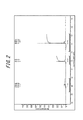
- FIG. 2 is a 1 H-NMR spectrum of a terpolymer A produced by an embodiment of the production method of the present invention.
- 3 is a 13 C-NMR spectrum of a ternary copolymer A produced by an embodiment of the production method of the present invention.
- 2 shows a GPC-RI curve and a GPC-UV curve of terpolymer A produced by an embodiment of the production method of the present invention.
- FIG. 4 is an enlarged view of a 10 ppm to 50 ppm portion of a 13 C-NMR spectrum of a ternary copolymer C produced by an embodiment of the production method of the present invention.
- the method for producing a multi-component copolymer of the present invention is to produce a multi-component copolymer having a main chain consisting only of an acyclic structure by copolymerizing a conjugated diene compound, a non-conjugated olefin compound, and an aromatic vinyl compound. It is characterized by that. Conventionally, there has been no method for producing a multi-component copolymer having a main chain composed only of an acyclic structure by copolymerizing a conjugated diene compound, a non-conjugated olefin compound, and an aromatic vinyl compound.
- such a multi-component copolymer for example, such a ternary copolymer has been produced by subjecting a binary copolymer obtained by polymerizing a conjugated diene compound and an aromatic vinyl compound to a hydrogenation reaction.
- a conjugated diene compound, a non-conjugated olefin compound, and an aromatic vinyl compound were copolymerized to produce a multi-component copolymer having a main chain composed only of an acyclic structure. .
- the production method of the present invention has a 1,4 bond content in the whole unit derived from the conjugated diene in the produced multi-component copolymer, as compared with the conventional method in which the binary copolymer is subjected to a hydrogenation reaction. Can be greatly increased.
- the multi-component copolymer means a copolymer obtained by copolymerizing three or more kinds of monomers. That is, a multi-component copolymer having a main chain composed only of an acyclic structure, which is obtained by copolymerizing a conjugated diene compound, a non-conjugated olefin compound, and an aromatic vinyl compound, includes one or more types of conjugated diene compounds, It means a copolymer obtained by copolymerizing one or more kinds of non-conjugated olefin compounds and one or more kinds of aromatic vinyl compounds, the main chain of which only consists of an acyclic structure.
- the multi-component copolymer of the present invention is preferably a ternary copolymer. This is because not only the possibility of side reactions during production is low, but also industrial demand and versatility are high.
- the multi-component copolymer of the present invention is a multi-component copolymer having a main chain composed only of an acyclic structure.
- the “main chain” refers to a long chain portion formed by linking the bonding ends of each unit in a copolymer.
- the “main chain” does not include a branched portion (that is, a pendant group) that is not bonded to an adjacent unit in each unit constituting the copolymer.
- the main chain does not include an aromatic ring in a unit derived from an aromatic vinyl compound constituting the multi-component copolymer.
- the aromatic ring in the unit derived from the aromatic vinyl compound constituting the multi-component copolymer is not included in the main chain of the multi-component copolymer unless it is bonded to an adjacent unit.
- the main chain consists only of an acyclic structure means that the main chain does not contain any of an aliphatic ring structure, an aromatic ring structure, and a heterocyclic structure. Since the multi-component polymer of the present invention has a main chain consisting only of an acyclic structure, the conjugated diene compound, the non-conjugated olefin compound, and the vinyl group of the aromatic vinyl compound are copolymerized in the production method of the present invention.
- the main chain is formed by addition polymerization without cyclization reaction.
- an alicyclic structure is formed in the main chain of the multi-component copolymer depending on the catalyst used and the reaction conditions. Cases can be envisaged.
- the copolymerization of the conjugated diene compound, the non-conjugated olefin compound, and the vinyl group of the aromatic vinyl compound is performed by stereoselective and regioselective addition polymerization.
- a multi-component copolymer in which the chain consists only of an acyclic structure can be produced.
- the multi-component copolymer of the present invention may have a main chain consisting of only a straight chain or may have a side chain.
- the “side chain” does not include a pendant group in each monomer unit constituting the main chain (for example, an aromatic ring in a unit derived from an aromatic vinyl compound).
- the side chain may or may not be a multi-component copolymer. Even if the main chain of the multi-component copolymer of the present invention has a side chain, it is clearly different from the “graft copolymer”.
- the “graft copolymer” is a polymer comprising one or more side chains grafted onto a main chain which is a polymer composed of one or more monomers, and constitutes such a side chain.
- One or more kinds of monomers are different from at least one kind of monomers constituting the main chain by at least one kind.
- the multi-component copolymer produced by the production method of the present invention (hereinafter also referred to as “multi-component copolymer of the present invention”) is obtained by copolymerizing a conjugated diene compound, a non-conjugated olefin compound and an aromatic vinyl compound. Therefore, both high durability derived from the conjugated diene compound and improvement in weather resistance due to the reduction of the double bond ratio through the presence of the non-conjugated olefin compound and the aromatic vinyl compound are compatible.
- the multi-component copolymer of the present invention is copolymerized using a conjugated diene compound, for example, a known non-conjugated diene compound such as ethylene-propylene-nonconjugated diene copolymer (EPDM) is used. Compared to a copolymer obtained by copolymerization, the crosslinking property is excellent. Therefore, the multi-component copolymer of the present invention also has an advantage that the mechanical properties of a rubber composition and a rubber product produced using the copolymer can be further improved.
- a conjugated diene compound for example, a known non-conjugated diene compound such as ethylene-propylene-nonconjugated diene copolymer (EPDM) is used. Compared to a copolymer obtained by copolymerization, the crosslinking property is excellent. Therefore, the multi-component copolymer of the present invention also has an advantage that the mechanical properties of a rubber composition and
- the 1,4 bond content in the whole unit derived from the conjugated diene compound is preferably 50% or more, and more preferably 70% or more. If the bond content in the entire unit derived from the conjugated diene compound is 50% or more, the glass transition temperature becomes low, so that the crack growth resistance and wear resistance of the rubber composition or tire using the resulting multi-component copolymer are reduced. The physical properties such as can be effectively improved.
- the 1,4 bond in the entire unit derived from the conjugated diene compound is preferably a cis-1,4 bond. This is because rubber elasticity can be exhibited by including a cis-1,4 bond.
- the 3,4 vinyl bond content and the 1,2 vinyl bond content in the whole unit derived from the conjugated diene compound are not particularly limited, but both are preferably 50% or less, and 30% or less. Is more preferable.
- the multi-component copolymer of the present invention has a melting point (T m ) of the conjugated diene compound used in the multi-component copolymer, and the non-conjugated olefin compound and aromatic vinyl compound used in the multi-component copolymer. It is preferably lower than the melting point (T m ) of the binary copolymer obtained by polymerizing any one kind. More specifically, the multi-component copolymer of the present invention preferably has a melting point (T m ) of 100 ° C. or less, more preferably 80 ° C. or less, and particularly preferably 50 ° C. or less. preferable.
- the multi-component copolymer of the present invention preferably has its melting point (T m ) disappeared.
- T m melting point
- the advantage of the present invention which is characterized in that polymerization is carried out using, can be further enjoyed. That is, in these cases, it is possible to produce a rubber composition, a tire and the like using such a multi-component copolymer with high workability, and also to improve the durability and weather resistance of the rubber composition and the tire. Can be expensive.
- the copolymer mentioned above has several melting
- the content of the unit derived from the conjugated diene compound is preferably 1 to 99 mol%, more preferably 5 to 95 mol%, and particularly preferably 10 to 90 mol%. . If the content of the unit derived from the conjugated diene compound is 1 mol% or more, the resulting multi-component copolymer can behave uniformly as an elastomer and can provide higher durability, while it is 99 mol% or less. If it exists, the effect of using a nonconjugated olefin compound and an aromatic vinyl compound can fully be acquired.
- the total content of the unit derived from the non-conjugated olefin compound and the unit derived from the aromatic vinyl compound is preferably 1 to 99 mol%, and preferably 5 to 95 mol%. More preferred is 10 to 90 mol%. If the total content of the unit derived from the non-conjugated olefin compound and the unit derived from the aromatic vinyl compound is 1 mol% or more, the resulting multi-component copolymer can be provided with higher weather resistance, while 99 mol. % Or less, the effect of using the conjugated diene compound can be sufficiently obtained.
- a unit or aromatic derived from a non-conjugated olefin compound is generally used.
- the content of the unit derived from the group vinyl compound is 50 mol% or more, that is, when the content of the unit derived from the conjugated diene compound is 50 mol% or less, sufficient physical properties as an elastomer are lost.
- crystallinity can be kept low by using a conjugated olefin compound and an aromatic vinyl compound, even if the total content of the unit derived from the non-conjugated olefin compound or the unit derived from the aromatic vinyl compound is 90 mol%, the elastomer physical properties can be reduced. Can be secured.
- the ratio of one unit in the unit derived from the non-conjugated olefin compound and the entire unit derived from the aromatic vinyl compound is preferably 1 to 99 mol%, and 3 to 97 mol%. More preferably, it is 10 to 90 mol%.
- crystallinity can be effectively reduced by containing at least 1 mol% of units derived from two types of non-conjugated olefin compounds.
- the multi-component copolymer of the present invention preferably has a polystyrene equivalent weight average molecular weight (Mw) of 10,000 to 10,000,000, more preferably 100,000 to 9,000,000, and 150 000 to 8,000,000 is particularly preferable.
- Mw polystyrene equivalent weight average molecular weight
- the Mw of the multi-component copolymer is 10,000 or more, the mechanical strength as a rubber product material can be sufficiently secured, and when the Mw is 10,000,000 or less, it is high. Workability can be maintained.
- the multi-component copolymer of the present invention preferably has a molecular weight distribution (Mw / Mn) represented by a ratio of the weight average molecular weight (Mw) to the number average molecular weight (Mn) of 10.0 or less, It is more preferably 9.0 or less, and particularly preferably 8.0 or less.
- Mw / Mn molecular weight distribution
- Mw weight average molecular weight
- Mn number average molecular weight
- the chain structure of the multi-component copolymer of the present invention is not particularly limited and can be appropriately selected according to the purpose.
- a unit derived from a conjugated diene compound is A
- a unit derived from a non-conjugated olefin compound is B
- the unit derived from the aromatic vinyl compound is C
- A, B A random copolymer having a configuration in which C is randomly arranged, a taper copolymer in which the random copolymer and a block copolymer are mixed, (ABC) w (w is an integer of 1 or more) Or the like.
- Whether or not a multi-component copolymer was obtained by the production method of the present invention was determined by using a technique such as gel permeation chromatography (GPC), 1 H-NMR, 13 C-NMR, or the like on the polymerization product. Can be confirmed. Specifically, aromatics such as benzene rings in the copolymer based on gel permeation chromatography-refractive index curve (GPC-RI curve) and gel permeation chromatography-ultraviolet absorption curve (GPC-UV curve). The presence of the skeleton derived from the aromatic vinyl compound can be confirmed by confirming the UV absorption by the ring. Further, the presence of units derived from each monomer component can be confirmed based on the 1 H-NMR spectrum and the 13 C-NMR spectrum.
- GPC gel permeation chromatography
- 1 H-NMR 1 H-NMR
- 13 C-NMR 13 C-NMR
- the physical properties and microstructure of the multi-component copolymer can be identified by using techniques such as differential scanning calorimetry (DSC), 1 H-NMR, 13 C-NMR, and gel permeation chromatography (GPC). Specifically, the melting point (° C.) can be determined by DSC. The content and ratio of each monomer component-derived unit and the cis-1,4 bond content, trans-1,4 bond content, and 1,2 vinyl bond content in the entire unit derived from the conjugated diene compound are determined by 1 H-NMR and It can be determined by 13 C-NMR. The weight average molecular weight and molecular weight distribution can be determined by gel permeation chromatography (GPC) using polystyrene as a standard substance. The chain structure can be identified based on physical properties and microstructure identified using DSC, 1 H-NMR, 13 C-NMR, and GPC.
- the main chain of the multi-component copolymer consists only of an acyclic structure can be confirmed by the absence of a peak derived from an aliphatic ring structure in the 1 H-NMR spectrum and the 13 C-NMR spectrum.
- 1,3-butadiene is used as the conjugated diene compound and ethylene is used as the nonconjugated olefin compound
- 1,2-addition to 1,3-butadiene results in an aliphatic cyclic structure in the main chain.
- a cyclopropane ring three-membered ring
- a cyclopentane ring five-membered ring
- the 13 C-NMR spectrum of the obtained multi-component copolymer was measured, and the main chain was only a non-cyclic structure due to the absence of a peak (10 to 24 ppm) derived from a 3- to 5-membered aliphatic ring structure. Can be confirmed.
- the presence of a peak derived from the aromatic ring structure of the aromatic vinyl compound in the 1 H-NMR spectrum or GPC spectrum of the obtained multi-component copolymer preserves the aromatic ring structure as a side chain in the multi-component copolymer. Can be confirmed.
- the conjugated diene compound refers to a conjugated diene compound.
- the conjugated diene compound used as a monomer in the production method of the present invention is not particularly limited, but preferably has 4 to 8 carbon atoms.
- Specific examples of the conjugated diene compound include 1,3-butadiene, isoprene, 1,3-pentadiene, 2,3-dimethylbutadiene, and among these, 1,3-butadiene is preferable. This is because the durability of a rubber composition, a tire, and the like using the produced multi-component copolymer can be effectively improved.
- the olefin compound refers to a compound that is an aliphatic unsaturated hydrocarbon and has one or more carbon-carbon double bonds, and the non-conjugated olefin compound does not include an aromatic vinyl compound.
- the non-conjugated olefin compound used as a monomer in the production method of the present invention is not particularly limited, but preferably has 2 to 10 carbon atoms.
- non-conjugated olefin compounds include ⁇ -olefins such as ethylene, propylene, 1-butene, 1-pentene, 1-hexene, 1-heptene, or 1-octene, vinyl pivalate, 1-phenylthioethene, or N -Heteroatom-substituted alkene compounds such as vinylpyrrolidone.
- the non-conjugated olefin compound is not particularly limited, and the above-described non-conjugated olefin compounds can be used. Among these, non-cyclic non-conjugated olefin compounds are preferable, and ⁇ -olefins are preferred.
- Acyclic non-conjugated olefin compounds such as ⁇ -olefins, especially ethylene, have a double bond at the ⁇ -position of the olefin, so that they can be efficiently polymerized with conjugated diene compounds, and the produced multi-component copolymer This is because the crystallinity of the coalescence can be further reduced, and the weather resistance of such a rubber composition and tire using the multi-component copolymer can be further improved.
- the aromatic vinyl compound refers to an aromatic compound substituted with at least a vinyl group.
- the aromatic vinyl compound used as a monomer in the production method of the present invention is not particularly limited, but preferably has 8 to 10 carbon atoms.
- Examples of such aromatic vinyl compounds include styrene, o-methylstyrene, m-methylstyrene, p-methylstyrene, o, p-dimethylstyrene, o-ethylstyrene, m-ethylstyrene, p-ethylstyrene, and the like. .
- the aromatic vinyl compound is not particularly limited, and the above-described aromatic vinyl compound can be used. Among these, styrene is more preferable. This is because it can be efficiently polymerized with the conjugated diene compound, and the crystallinity of the produced copolymer can be further reduced and the weather resistance can be further improved.
- a conjugated diene compound, a non-conjugated olefin compound, and an aromatic vinyl compound are represented by the following general formula (I):
- M represents a lanthanoid element, scandium or yttrium
- Cp R independently represents a substituted indenyl group
- R a to R f each independently represents an alkyl group having 1 to 3 carbon atoms or hydrogen.
- L represents a neutral Lewis base
- w represents an integer of 0 to 3
- M represents a lanthanoid element, scandium or yttrium
- Cp R independently represents a substituted indenyl group
- X ′ represents a hydrogen atom, a halogen atom, an alkoxide group, a thiolate group, an amide group, or a silyl group.
- a hydrocarbon group having 1 to 20 carbon atoms L represents a neutral Lewis base, and w represents an integer of 0 to 3, and the following general formula (III):
- M represents a lanthanoid element, scandium or yttrium
- Cp R ′ represents a substituted cyclopentadienyl, a substituted indenyl or a substituted fluorenyl
- X represents a hydrogen atom, a halogen atom, an alkoxide group, a thiolate group
- L represents a neutral Lewis base
- w represents an integer of 0 to 3
- [B] ⁇ represents a non-coordinating anion. It is preferable to include a step of copolymerization in the presence of a polymerization catalyst composition containing at least one kind of complex selected from the group consisting of half metallocene cation complexes
- the polymerization catalyst composition may further contain other components contained in the polymerization catalyst composition containing a normal metallocene complex, such as a promoter.
- the metallocene complex is a complex compound in which one or more cyclopentadienyl or a derivative thereof is bonded to a central metal, and in particular, one cyclopentadienyl or a derivative thereof bonded to the central metal.
- a certain metallocene complex may be called a half metallocene complex.
- the concentration of the complex contained in the polymerization catalyst composition is preferably in the range of 0.1 to 0.0001 mol / L.
- Cp R in the formula is substituted indenyl.
- Cp R having a substituted indenyl ring as a basic skeleton can be represented by C 9 H 7-x R x or C 9 H 11-x R x .
- X is the number of substituents on the substituted indenyl group, and X is an integer of 1 to 7 or 1 to 11. From the viewpoint of increasing the copolymerization ratio of the aromatic vinyl compound, X is preferably 2 or more, and preferably present on the 5-membered ring of the substituted indenyl group.
- Each R is preferably independently a hydrocarbyl group or a metalloid group.
- the hydrocarbyl group preferably has 1 to 20 carbon atoms, more preferably 1 to 10 carbon atoms, and still more preferably 1 to 8 carbon atoms.
- Specific examples of the hydrocarbyl group include a methyl group, an ethyl group, a tert-butyl group, a phenyl group, and a benzyl group.
- at least one R is preferably an aromatic group such as a phenyl group or a benzyl group.
- Cp R becomes bulky, and the monomer to be polymerized may have the general formulas (I) and (I) due to steric hindrance.
- the metal M which is the catalyst center of the metallocene complex represented by II
- examples of metalloid group metalloids include germyl Ge, stannyl Sn, and silyl Si, and the metalloid group preferably has a hydrocarbyl group, and the hydrocarbyl group that the metalloid group has is the same as the above hydrocarbyl group. is there.
- Specific examples of the metalloid group include a trimethylsilyl group.
- Specific examples of the substituted indenyl include 2-phenylindenyl, 2-methylindenyl, 1-methyl-2-phenylindenyl, 1,3-bis (t-butyldimethylsilyl) indenyl, 1-ethyl-2 -Phenylindenyl, 1-benzyl-2-phenylindenyl and the like. Note that the two Cp Rs in the general formulas (I) and (II) may be the same as or different from each other.
- Cp R ′ in the formula is substituted cyclopentadienyl, substituted indenyl or substituted fluorenyl, and among these, the copolymerization ratio of the aromatic vinyl compound is From the viewpoint of enhancing, substituted indenyl is preferable.
- Cp R ′ having a substituted cyclopentadienyl ring as a basic skeleton is represented by C 5 H 5-x R x .
- X is an integer of 1 to 4. From the viewpoint of increasing the copolymerization ratio of the aromatic vinyl compound, X is preferably 2 or more, and preferably present on the 5-membered ring of the substituted indenyl group.
- each R is preferably independently a hydrocarbyl group or a metalloid group.
- the hydrocarbyl group preferably has 1 to 20 carbon atoms, more preferably 1 to 10 carbon atoms, and still more preferably 1 to 8 carbon atoms.
- Specific examples of the hydrocarbyl group include a methyl group, an ethyl group, a tert-butyl group, a phenyl group, and a benzyl group.
- at least one R is preferably an aromatic group such as a phenyl group or a benzyl group.
- Cp R becomes bulky, and the monomer to be polymerized may have the general formulas (I) and (I) due to steric hindrance.
- the metal M which is the catalyst center of the metallocene complex represented by II
- examples of metalloid group metalloids include germyl Ge, stannyl Sn, and silyl Si, and the metalloid group preferably has a hydrocarbyl group, and the hydrocarbyl group that the metalloid group has is the same as the above hydrocarbyl group. is there.
- Specific examples of the metalloid group include a trimethylsilyl group.
- Specific examples of Cp R ′ having a substituted cyclopentadienyl ring as a basic skeleton include the following.
- R ′ represents a methyl group or an ethyl group, and R represents a hydrogen atom, a methyl group or an ethyl group.
- Cp R ′ having the substituted indenyl ring as a basic skeleton is defined in the same manner as Cp R in the general formula (I), and preferred examples thereof are also the same.
- Cp R ′ having the above substituted fluorenyl ring as a basic skeleton can be represented by C 13 H 9-x R x or C 13 H 17-x R x .
- X is an integer of 1 to 9 or 1 to 17.
- each R is preferably independently a hydrocarbyl group or a metalloid group.
- the hydrocarbyl group preferably has 1 to 20 carbon atoms, more preferably 1 to 10 carbon atoms, and still more preferably 1 to 8 carbon atoms.
- Specific examples of the hydrocarbyl group include a methyl group, an ethyl group, a tert-butyl group, a phenyl group, and a benzyl group.
- At least one R is preferably an aromatic group such as a phenyl group or a benzyl group.
- X is 2 or more, or R has a bulky substituent such as an aromatic group, Cp R becomes bulky, and the monomer to be polymerized may have the general formulas (I) and (I) due to steric hindrance.
- metal M which is the catalyst center of the metallocene complex represented by II
- metalloid group metalloids include germyl Ge, stannyl Sn, and silyl Si, and the metalloid group preferably has a hydrocarbyl group, and the hydrocarbyl group that the metalloid group has is The same as the above hydrocarbyl group.
- Specific examples of the metalloid group include a trimethylsilyl group.
- the central metal M in the general formulas (I), (II) and (III) is a lanthanoid element, scandium or yttrium.
- the lanthanoid elements include 15 elements having atomic numbers of 57 to 71, and any of these may be used.
- Preferred examples of the central metal M include samarium Sm, neodymium Nd, praseodymium Pr, gadolinium Gd, cerium Ce, holmium Ho, scandium Sc, and yttrium Y.
- the metallocene complex represented by the general formula (I) contains a silylamide ligand [—N (SiR 3 ) 2 ].
- the R groups contained in the silylamide ligand (R a to R f in the general formula (I)) are each independently an alkyl group having 1 to 3 carbon atoms or a hydrogen atom. Further, it is preferable that at least one of R a to R f is a hydrogen atom. By making at least one of R a to R f a hydrogen atom, the synthesis of the catalyst is facilitated, and the bulk around silicon is reduced, so that non-conjugated olefin compounds and aromatic vinyl compounds are introduced. It becomes easy to be done.
- At least one of R a to R c is a hydrogen atom and at least one of R d to R f is a hydrogen atom. Furthermore, a methyl group is preferable as the alkyl group.
- the metallocene complex represented by the general formula (II) contains a silyl ligand [—SiX ′ 3 ].
- X ′ contained in the silyl ligand [—SiX ′ 3 ] is a group defined in the same manner as X in the general formula (III) described below, and preferred groups are also the same.
- X is a group selected from the group consisting of a hydrogen atom, a halogen atom, an alkoxide group, a thiolate group, an amide group, a silyl group, and a hydrocarbon group having 1 to 20 carbon atoms.
- examples of the alkoxide group include aliphatic alkoxy groups such as methoxy group, ethoxy group, propoxy group, n-butoxy group, isobutoxy group, sec-butoxy group, tert-butoxy group; phenoxy group, 2,6-dioxy -Tert-butylphenoxy group, 2,6-diisopropylphenoxy group, 2,6-dineopentylphenoxy group, 2-tert-butyl-6-isopropylphenoxy group, 2-tert-butyl-6-neopentylphenoxy group, Examples include aryloxide groups such as 2-isopropyl-6-neopentylphenoxy group, and among these, 2,6-di-tert-butylphenoxy group is preferable.
- the thiolate group represented by X includes a thiomethoxy group, a thioethoxy group, a thiopropoxy group, a thio n-butoxy group, a thioisobutoxy group, a thiosec-butoxy group, a thiotert-butoxy group and the like Group thiolate group; thiophenoxy group, 2,6-di-tert-butylthiophenoxy group, 2,6-diisopropylthiophenoxy group, 2,6-dineopentylthiophenoxy group, 2-tert-butyl-6-isopropyl Arylthiolate groups such as thiophenoxy group, 2-tert-butyl-6-thioneopentylphenoxy group, 2-isopropyl-6-thioneopentylphenoxy group, 2,4,6-triisopropylthiophenoxy group, etc. Among these, 2,4,6-triisopropylthiophenoxy group,
- examples of the amide group represented by X include aliphatic amide groups such as dimethylamide group, diethylamide group, diisopropylamide group; phenylamide group, 2,6-di-tert-butylphenylamide group, 2 , 6-diisopropylphenylamide group, 2,6-dineopentylphenylamide group, 2-tert-butyl-6-isopropylphenylamide group, 2-tert-butyl-6-neopentylphenylamide group, 2-isopropyl- Arylamido groups such as 6-neopentylphenylamide group and 2,4,6-tri-tert-butylphenylamide group; bistrialkylsilylamide groups such as bistrimethylsilylamide group, among them bistrimethylsilylamide Groups are preferred.
- examples of the silyl group represented by X include trimethylsilyl group, tris (trimethylsilyl) silyl group, bis (trimethylsilyl) methylsilyl group, trimethylsilyl (dimethyl) silyl group, triisopropylsilyl (bistrimethylsilyl) silyl group, and the like.
- a tris (trimethylsilyl) silyl group is preferable.
- the halogen atom represented by X may be a fluorine atom, a chlorine atom, a bromine atom or an iodine atom, but a chlorine atom or a bromine atom is preferred.
- Specific examples of the hydrocarbon group having 1 to 20 carbon atoms represented by X include a methyl group, an ethyl group, an n-propyl group, an isopropyl group, an n-butyl group, an isobutyl group, a sec-butyl group, and a tert-butyl group.
- Linear or branched aliphatic hydrocarbon groups such as butyl group, neopentyl group, hexyl group, octyl group; aromatic hydrocarbon groups such as phenyl group, tolyl group, naphthyl group; aralkyl groups such as benzyl group, etc.
- Others include hydrocarbon groups containing silicon atoms such as trimethylsilylmethyl group and bistrimethylsilylmethyl group. Among these, methyl group, ethyl group, isobutyl group, trimethylsilylmethyl group and the like are preferable.
- X is preferably a bistrimethylsilylamide group or a hydrocarbon group having 1 to 20 carbon atoms.
- the non-coordinating anion represented by, for example, a tetravalent boron anion.
- tetravalent boron anion include tetraphenyl borate, tetrakis (monofluorophenyl) borate, tetrakis (difluorophenyl) borate, tetrakis (trifluorophenyl) borate, tetrakis (tetrafluorophenyl) borate, tetrakis ( Pentafluorophenyl) borate, tetrakis (tetrafluoromethylphenyl) borate, tetra (tolyl) borate, tetra (xylyl) borate, (triphenylpentafluorophenyl) borate, [tris (pentafluorophenyl) phenyl] borate, tridecahydride Examples include ⁇ 7,
- the metallocene complex represented by the above general formulas (I) and (II) and the half metallocene cation complex represented by the above general formula (III) may further have 0 to 3, preferably 0 to 1, neutral Lewis Contains base L.
- examples of the neutral Lewis base L include tetrahydrofuran, diethyl ether, dimethylaniline, trimethylphosphine, lithium chloride, neutral olefins, neutral diolefins, and the like.
- the neutral Lewis bases L may be the same or different.
- metallocene complex represented by the general formulas (I) and (II) and the half metallocene cation complex represented by the general formula (III) may exist as a monomer, or a dimer. Or it may exist as a multimer more than that.
- the metallocene complex represented by the general formula (I) includes, for example, a lanthanoid trishalide, scandium trishalide, or yttrium trishalide in a solvent, an indenyl salt (for example, potassium salt or lithium salt) and bis (trialkylsilyl). ) It can be obtained by reacting with an amide salt (for example, potassium salt or lithium salt).
- reaction temperature should just be about room temperature, it can manufacture on mild conditions.
- the reaction time is arbitrary, but is about several hours to several tens of hours.
- the reaction solvent is not particularly limited, but is preferably a solvent that dissolves the raw material and the product. For example, toluene may be used.
- the metallocene complex represented by the general formula (II) includes, for example, a lanthanoid trishalide, a scandium trishalide, or a yttrium trishalide in a solvent, an indenyl salt (for example, potassium salt or lithium salt), and a silyl salt (for example, potassium). Salt or lithium salt).
- reaction temperature should just be about room temperature, it can manufacture on mild conditions.
- the reaction time is arbitrary, but is about several hours to several tens of hours.
- the reaction solvent is not particularly limited, but is preferably a solvent that dissolves the raw material and the product.
- a solvent that dissolves the raw material and the product For example, toluene may be used.
- the reaction example for obtaining the metallocene complex represented by general formula (II) is shown. (In the formula, X ′′ represents a halide.)
- the half metallocene cation complex represented by the general formula (III) can be obtained, for example, by the following reaction.
- M represents a lanthanoid element, scandium or yttrium
- Cp R ′ represents each independently substituted cyclopentadienyl, substituted indenyl or substituted fluorenyl
- X represents a hydrogen atom, a halogen atom, an alkoxide group, a thiolate group, an amide group, a silyl group, or a hydrocarbon group having 1 to 20 carbon atoms
- L represents a neutral Lewis base
- w represents 0 to 3 Indicates an integer.
- [A] + [B] ⁇ [A] + represents a cation
- [B] ⁇ represents a non-coordinating anion.
- Examples of the cation represented by [A] + include a carbonium cation, an oxonium cation, an amine cation, a phosphonium cation, a cycloheptatrienyl cation, and a ferrocenium cation having a transition metal.
- Examples of the carbonium cation include trisubstituted carbonium cations such as a triphenylcarbonium cation and a tri (substituted phenyl) carbonium cation.
- the tri (substituted phenyl) carbonyl cation is specifically exemplified by tri (methylphenyl). ) Carbonium cation and the like.
- amine cations include trialkylammonium cations such as trimethylammonium cation, triethylammonium cation, tripropylammonium cation, and tributylammonium cation; N, N-dimethylanilinium cation, N, N-diethylanilinium cation, N, N— N, N-dialkylanilinium cations such as 2,4,6-pentamethylanilinium cation; dialkylammonium cations such as diisopropylammonium cation and dicyclohexylammonium cation.
- trialkylammonium cations such as trimethylammonium cation, triethylammonium cation, tripropylammonium cation, and tributylammonium cation
- Examples of the phosphonium cation include triarylphosphonium cations such as triphenylphosphonium cation, tri (methylphenyl) phosphonium cation, and tri (dimethylphenyl) phosphonium cation.
- triarylphosphonium cations such as triphenylphosphonium cation, tri (methylphenyl) phosphonium cation, and tri (dimethylphenyl) phosphonium cation.
- N, N-dialkylanilinium cation or carbonium cation is preferable, and N, N-dialkylanilinium cation is particularly preferable.
- the ionic compound represented by the general formula [A] + [B] ⁇ used for the above reaction is a compound selected and combined from the above non-coordinating anions and cations, and is an N, N-dimethylaniline. Preference is given to nium tetrakis (pentafluorophenyl) borate, triphenylcarbonium tetrakis (pentafluorophenyl) borate and the like.
- the ionic compound represented by the general formula [A] + [B] ⁇ is preferably added in an amount of 0.1 to 10 times mol, more preferably about 1 time mol based on the metallocene complex.
- the half metallocene cation complex represented by the general formula (III) may be provided as it is in the polymerization reaction system, or the compound represented by the general formula (IV) and the general formula used in the reaction [a] + [B] - provides an ionic compound represented separately into the polymerization reaction system, the general formula in the reaction system (III You may form the half metallocene cation complex represented by this. Further, by using a combination of the metallocene complex represented by the general formula (I) or (II) and the ionic compound represented by the general formula [A] + [B] - , the general formula in the reaction system is used. A half metallocene cation complex represented by (III) can also be formed.
- the structures of the metallocene complexes represented by the general formulas (I) and (II) and the half metallocene cation complex represented by the general formula (III) are preferably determined by X-ray structural analysis.
- the cocatalyst that can be used in the polymerization catalyst composition can be arbitrarily selected from components used as a cocatalyst for a polymerization catalyst composition containing a normal metallocene complex.
- suitable examples of the cocatalyst include aluminoxanes, organoaluminum compounds, and the above ionic compounds. These promoters may be used alone or in combination of two or more.
- the aluminoxane is preferably an alkylaminoxan, and examples thereof include methylaluminoxane (MAO) and modified methylaluminoxane. Further, as the modified methylaluminoxane, MMAO-3A (manufactured by Tosoh Finechem) and the like are preferable.
- the content of the aluminoxane in the second polymerization catalyst composition is such that the element ratio Al / M of the aluminum element Al of the aluminoxane to the central metal M of the metallocene complex is about 10 to 1000, preferably about 100. It is preferable to do.
- the organoaluminum compound the general formula AlRR′R ′′ (wherein R and R ′ are each independently a hydrocarbon group or hydrogen atom having 1 to 10 carbon atoms, and R ′′ is a carbon number) 1 to 10 hydrocarbon groups) are preferred.
- the organoaluminum compound include trialkylaluminum, dialkylaluminum chloride, alkylaluminum dichloride, and dialkylaluminum hydride. Among these, trialkylaluminum is preferable.
- the trialkylaluminum include triethylaluminum and triisobutylaluminum.
- the content of the organoaluminum compound in the polymerization catalyst composition is preferably 1 to 50 times mol, more preferably about 10 times mol relative to the metallocene complex.
- the metallocene complex represented by the general formulas (I) and (II) and the half metallocene cation complex represented by the general formula (III) are combined with an appropriate promoter.
- the cis-1,4 bond content and the molecular weight of the resulting polymer can be increased.
- the production method of the present invention comprises a step of polymerizing a conjugated diene compound, a non-conjugated olefin compound, and an aromatic vinyl compound in the presence of the polymerization catalyst composition (hereinafter also referred to as a polymerization step), and If necessary, a coupling step, a washing step, and other steps can be included as appropriate.
- any method such as a solution polymerization method, a suspension polymerization method, a liquid phase bulk polymerization method, an emulsion polymerization method, a gas phase polymerization method, and a solid phase polymerization method can be used.
- a solvent may be any inactive in the polymerization reaction, and examples thereof include toluene, hexane (for example, cyclohexane, normal hexane) and the like. Of these, hexane is preferable.
- hexane is preferable.
- the polymerization step may be performed in one step, or may be performed in multiple steps including two or more steps.
- the one-step polymerization step is a step in which all three types of monomers to be polymerized, that is, a conjugated diene compound, a non-conjugated olefin compound, and an aromatic vinyl compound are reacted at the same time for polymerization.
- the multi-stage polymerization process means that a part or all of one or two kinds of monomers are first reacted to form a polymer (first polymerization stage), and then the remaining kinds of monomers and the above-mentioned monomers This is a step of performing polymerization by performing one or more stages (second polymerization stage to final polymerization stage) in which the remainder of one or two types of monomers is added and polymerized.
- the polymerization catalyst composition In the presence of the polymerization catalyst composition, by controlling the charging order of each monomer, the charging amount of each monomer, and other reaction conditions, it is derived from the conjugated diene compound in the produced multi-component copolymer. Bond content in the whole unit (cis-1,4 bond content, trans-1,4 bond content, 3,4 vinyl bond content and 1,2 vinyl bond content) and content of units derived from each monomer (ie, The copolymerization ratio of each monomer can be controlled.
- the polymerization step is preferably performed in an atmosphere of an inert gas, preferably nitrogen gas or argon gas.
- the polymerization temperature in the polymerization step is not particularly limited, but is preferably in the range of ⁇ 100 to 200 ° C., for example, and can be about room temperature. When the polymerization temperature is raised, the cis-1,4 selectivity of the polymerization reaction may be lowered.
- the pressure in the polymerization step is preferably in the range of 0.1 to 10.0 MPa in order to sufficiently incorporate the non-conjugated olefin compound into the polymerization reaction system.
- the reaction time of the polymerization step is not particularly limited, and is, for example, in the range of 1 second to 10 days.
- the desired microstructure of the resulting multi-component copolymer, the type of each monomer, the input amount and the order of addition, catalyst It can be appropriately selected depending on the conditions such as the type of polymerization and the polymerization temperature.
- the polymerization may be stopped using a polymerization terminator such as methanol, ethanol, isopropanol or the like.
- the coupling step is a step of performing a reaction (coupling reaction) for modifying at least a part (for example, a terminal) of the polymer chain of the multi-component copolymer obtained in the polymerization step.
- the coupling reaction is preferably performed when the polymerization reaction reaches 100%.
- the coupling agent used in the coupling reaction is not particularly limited and may be appropriately selected depending on the intended purpose.
- a tin-containing compound such as bis (-1-octadecyl maleate) dioctyl tin;
- examples thereof include isocyanate compounds such as' -diphenylmethane diisocyanate; alkoxysilane compounds such as glycidylpropyltrimethoxysilane. These may be used individually by 1 type and may use 2 or more types together.
- bis (-1-octadecyl maleate) dioctyltin is preferable in terms of reaction efficiency and low gel formation.
- the number average molecular weight (Mn) can be increased by performing a coupling reaction.
- the washing step is a step of washing the multi-component copolymer obtained in the polymerization step.
- the medium used for washing is not particularly limited and may be appropriately selected depending on the intended purpose. Examples thereof include methanol, ethanol, isopropanol and the like.
- a catalyst derived from a Lewis acid is used as a polymerization catalyst.
- the amount of the acid to be added is preferably 15 mol% or less with respect to the solvent. Above this, the acid remains in the copolymer, which may adversely affect the reaction during kneading and vulcanization.
- the amount of catalyst residue in the copolymer can be suitably reduced.
- a rubber composition can be produced using the multi-component copolymer of the present invention.
- the rubber composition contains at least the multi-component copolymer of the present invention as a rubber component, and may further contain other rubber components, a filler, a crosslinking agent, and other components as necessary.
- the other rubber components are not particularly limited and can be appropriately selected depending on the purpose.
- examples thereof include rubber (EPM), ethylene-propylene-nonconjugated diene rubber (EPDM), polysulfide rubber, silicone rubber, fluorine rubber, and urethane rubber. These may be used individually by 1 type, and 2 or more types may be mixed and used for them.
- a filler can be used in the rubber composition as necessary for the purpose of improving the reinforcing property.
- the blending amount of the filler is not particularly limited and may be appropriately selected depending on the intended purpose, but is preferably 10 to 100 parts by weight, more preferably 20 to 80 parts by weight with respect to 100 parts by weight of the rubber component. 30 to 60 parts by mass is particularly preferable.
- the blending amount of the filler is 10 parts by mass or more, an effect of improving the reinforcing property by blending the filler can be obtained, and when the blending amount is 100 mass or less, a significant reduction in low loss can be achieved. While avoiding, good workability can be maintained.
- the filler is not particularly limited, and carbon black, silica, aluminum hydroxide, clay, alumina, talc, mica, kaolin, glass balloon, glass beads, calcium carbonate, magnesium carbonate, magnesium hydroxide, magnesium oxide. , Titanium oxide, potassium titanate, barium sulfate and the like. Among these, carbon black is preferably used. These may be used alone or in combination of two or more.
- the carbon black there is no restriction
- the carbon black has a nitrogen adsorption specific surface area (N 2 SA) of 20 m 2 / g or more, durability of the resulting rubber composition is improved, sufficient crack growth resistance is obtained, and 100 m 2 is obtained. By being / g or less, good workability can be maintained while avoiding a significant decrease in low loss.
- N 2 SA nitrogen adsorption specific surface area
- a crosslinking agent can be used as necessary.
- a sulfur type crosslinking agent an organic peroxide type crosslinking agent, an inorganic crosslinking agent, a polyamine crosslinking agent, a resin crosslinking agent, sulfur Compound-based crosslinking agents, oxime-nitrosamine-based crosslinking agents and the like can be mentioned.
- a sulfur type crosslinking agent vulcanizing agent
- vulcanizing agent is more preferable among these.
- the content of the crosslinking agent is not particularly limited and may be appropriately selected depending on the intended purpose, but is preferably 0.1 to 20 parts by mass with respect to 100 parts by mass of the rubber component. If the content of the cross-linking agent is less than 0.1 parts by mass, the cross-linking may hardly proceed. On the other hand, if the content exceeds 20 parts by mass, cross-linking proceeds during kneading with some cross-linking agents. There is a tendency, and physical properties of the vulcanizate may be impaired.
- a vulcanization accelerator When using the vulcanizing agent, a vulcanization accelerator can be used in combination.
- the vulcanization accelerator include guanidine, aldehyde-amine, aldehyde-ammonia, thiazole, sulfenamide, thiourea, thiuram, dithiocarbamate, and xanthate compounds.
- the rubber composition of the present invention if necessary, softener, vulcanization aid, colorant, flame retardant, lubricant, foaming agent, plasticizer, processing aid, antioxidant, anti-aging agent, Known materials such as a scorch inhibitor, an ultraviolet light inhibitor, an antistatic agent, an anti-coloring agent, and other compounding agents can be used depending on the purpose of use.
- a crosslinked rubber composition can be obtained by crosslinking the rubber composition containing the multi-component copolymer of the present invention.
- the crosslinking conditions are not particularly limited and may be appropriately selected depending on the intended purpose. However, the temperature is preferably 120 to 200 ° C., and the heating time is preferably 1 minute to 900 minutes. Since such a crosslinked rubber composition uses a conjugated diene compound as one of the monomers of the rubber component, compared to the case where a polymer having a non-conjugated diene compound such as EPDM as one of the monomers is used. Good cross-linking properties and therefore higher mechanical properties.
- a tire can be manufactured using the rubber composition containing the multi-component copolymer of the present invention.
- the tire is not particularly limited as long as it uses the rubber composition containing the multi-component copolymer of the present invention, and can be appropriately selected according to the purpose. Since such a tire uses the rubber composition containing the multi-component copolymer of the present invention, it can be produced with high workability and has high durability and weather resistance.
- the application site of the rubber composition of the present invention in a tire is not particularly limited and may be appropriately selected depending on the intended purpose. Examples thereof include tread, base tread, sidewall, side reinforcing rubber, and bead filler. . Among these, it is advantageous from the viewpoint of durability to use the rubber composition of the present invention for a tread.
- a conventional method can be used. For example, on a tire molding drum, members normally used for manufacturing tires such as a carcass layer, a belt layer, a tread layer and the like made of an unvulcanized rubber composition and / or a cord are sequentially laminated, and the drum is removed and a green tire is removed. To do. Then, a desired tire (for example, a pneumatic tire) can be manufactured by heating and vulcanizing the green tire according to a conventional method.
- a desired tire for example, a pneumatic tire
- the rubber composition containing the multi-component copolymer of the present invention can be used for anti-vibration rubbers, seismic isolation rubbers, belts such as conveyor belts, rubber crawlers, various hoses and the like in addition to tire applications.
- a catalyst solution is taken out from the glove box, and after adding a catalyst solution in an amount of 35 ⁇ mol in terms of gadolinium to the monomer solution, 600 g of a monomer solution containing 100 g (1.85 mol) of 1,3-butadiene is introduced. Polymerization was carried out at 80 ° C. for 240 minutes under ethylene pressure (1.5 MPa). After the polymerization, the reaction was stopped by adding 1 mL of a 5% by mass isopropanol solution of 2,2′-methylene-bis (4-ethyl-6-tert-butylphenol) (NS-5), and a large amount of 2-propanol was used to stop the reaction. The polymer was separated and vacuum dried at 60 ° C. to obtain a terpolymer A. The yield of the obtained terpolymer A was 154 g.
- the catalyst solution is taken out from the glove box, and after adding a catalyst solution in an amount of 35 ⁇ mol in terms of gadolinium to the monomer solution, 600 g of a monomer solution containing 150 g (2.78 mol) of 1,3-butadiene is introduced. Polymerization was carried out at 80 ° C. for 240 minutes under ethylene pressure (1.5 MPa). After the polymerization, the reaction was stopped by adding 1 mL of a 5% by mass isopropanol solution of 2,2′-methylene-bis (4-ethyl-6-tert-butylphenol) (NS-5), and a large amount of 2-propanol was used to stop the reaction. The polymer was separated and vacuum-dried at 60 ° C. to obtain a terpolymer B. The yield of the obtained terpolymer B was 264 g.
- the catalyst solution is taken out from the glove box, and after adding a catalyst solution in an amount of 35 ⁇ mol in terms of gadolinium to the monomer solution, 600 g of a monomer solution containing 150 g (2.78 mol) of 1,3-butadiene is introduced. Polymerization was carried out at 80 ° C. for 240 minutes under ethylene pressure (1.5 MPa). After the polymerization, the reaction was stopped by adding 5 mL of an isopropanol solution containing 5% by mass of 2,2′-methylene-bis (4-ethyl-6-tert-butylphenol) (NS-5), and a copolymer with a large amount of methanol. Was separated and vacuum dried at 60 ° C. to obtain a polymer C. The yield of the obtained polymer C was 78 g.
- the catalyst solution is taken out from the glove box, and after adding a catalyst solution in an amount of 35 ⁇ mol in terms of gadolinium to the monomer solution, 600 g of a monomer solution containing 150 g (2.78 mol) of 1,3-butadiene is introduced. Polymerization was carried out at 80 ° C. for 240 minutes under ethylene pressure (1.5 MPa). After the polymerization, the reaction was stopped by adding 5 mL of an isopropanol solution of 5% by mass of 2,2′-methylene-bis (4-ethyl-6-t-butylphenol) (NS-5), and a copolymer with a large amount of methanol. Was separated and vacuum dried at 60 ° C. to obtain a polymer D. The yield of the obtained polymer D was 86 g.
- the catalyst solution is taken out from the glove box, and after adding a catalyst solution in an amount of 35 ⁇ mol in terms of gadolinium to the monomer solution, 600 g of a monomer solution containing 100 g (2.78 mol) of 1,3-butadiene is introduced. Polymerization was carried out at 80 ° C. for 240 minutes under ethylene pressure (1.5 MPa). After the polymerization, the reaction was stopped by adding 5 mL of an isopropanol solution containing 5% by mass of 2,2′-methylene-bis (4-ethyl-6-tert-butylphenol) (NS-5), and a copolymer with a large amount of methanol. Was separated and vacuum dried at 60 ° C. to obtain a polymer E. The yield of the obtained polymer E was 98 g.
- the catalyst solution was taken out from the glove box, and after adding the entire amount to the reaction vessel, 300 g of a monomer solution containing 90 g (1.66 mol) of 1,3-butadiene was introduced, and 80 ° C. under ethylene pressure (1.5 MPa). For 300 minutes. After the polymerization, the reaction was stopped by adding 1 mL of a 5% by mass isopropanol solution of 2,2′-methylene-bis (4-ethyl-6-tert-butylphenol) (NS-5), and a large amount of 2-propanol was used to stop the reaction. The polymer was separated and vacuum dried at 60 ° C. to obtain a terpolymer H. The yield of the obtained terpolymer H was 63 g.
- the catalyst solution is taken out from the glove box, and after adding the entire amount to the reaction vessel, 600 g of a monomer solution containing 150 g (2.77 mol) of 1,3-butadiene is introduced, and the ethylene solution (1.5 MPa) is used at 80 ° C. Polymerization was conducted for 420 minutes. After the polymerization, the reaction was stopped by adding 1 mL of an isopropanol solution containing 5% by mass of 2,2′-methylene-bis (4-ethyl-6-tert-butylphenol) (NS-5), and a large amount of 2-propanol was used to stop the reaction. The polymer was separated and vacuum-dried at 60 ° C. to obtain a terpolymer I. The yield of the obtained terpolymer I was 127 g.
- the catalyst solution is taken out from the glove box, and after adding the entire amount to the reaction vessel, a monomer solution containing 10 g (0.19 mol) of 1,3-butadiene is introduced, and the ethylene solution (1.5 MPa) is used at 80 ° C. Polymerization was carried out for 300 minutes. After the polymerization, the reaction was stopped by adding 1 mL of an isopropanol solution containing 5% by mass of 2,2′-methylene-bis (4-ethyl-6-tert-butylphenol) (NS-5), and a large amount of 2-propanol was used to stop the reaction. The polymer was separated and vacuum dried at 60 ° C. to obtain a terpolymer K. The yield of the obtained terpolymer K was 96 g.
- the catalyst solution was taken out from the glove box, and after adding the entire amount to the reaction vessel, 400 g of a monomer solution containing 80 g (1.48 mol) of 1,3-butadiene was introduced, and 80 ° C. under ethylene pressure (0.5 MPa). For 460 minutes. After the polymerization, the reaction was stopped by adding 1 mL of an isopropanol solution containing 5% by mass of 2,2′-methylene-bis (4-ethyl-6-tert-butylphenol) (NS-5), and a large amount of 2-propanol was used to stop the reaction. The polymer was separated and vacuum dried at 60 ° C. to obtain a terpolymer L. The yield of the obtained terpolymer F was 79 g.
- the catalyst solution was taken out from the glove box, added to the monomer solution, and polymerized at 70 ° C. for 30 minutes.
- the reaction was stopped by adding 5 mL of an isopropanol solution containing 5% by mass of 2,2′-methylene-bis (4-ethyl-6-t-butylphenol) (NS-5), and a large amount of methanol / hydrochloric acid mixed solvent.
- the copolymer was separated with a vacuum and dried at 60 ° C. under vacuum to obtain 29.6 g of high cis SBR.
- Step 2 Hydrogenation of SBR with high cis content
- a polymer cement prepared by dissolving 25 g of the high cis-containing SBR obtained in the above (Step 1) in 400 g of hexane was added to a sufficiently dried 2 L stainless steel reactor.
- 0.06 mmol of bis (2-ethylhexanoic acid) nickel [Ni (OC ⁇ OCH (Et) C 4 H 9 ) 2 ] and 0.40 mmol of triethylaluminum were placed in a glass container. was dissolved in 10 mL of hexane to obtain a catalyst solution.
- the catalyst solution was taken out from the glove box, added to the polymer cement, and reacted at 50 ° C. for 20 minutes under hydrogen pressure (0.2 MPa). After the reaction, 5 mL of 5% by mass of 2,2′-methylene-bis (4-ethyl-6-tert-butylphenol) (NS-5) isopropanol solution was added, and then the copolymer was separated with a large amount of methanol.
- the polymer F was obtained by vacuum drying at 60 ° C. The yield of the obtained polymer F was 21 g.
- the catalyst solution was taken out from the glove box, added to the monomer solution, and polymerized at 70 ° C. for 30 minutes.
- the reaction was stopped by adding 5 mL of an isopropanol solution containing 5% by mass of 2,2′-methylene-bis (4-ethyl-6-t-butylphenol) (NS-5), and a large amount of methanol / hydrochloric acid mixed solvent.
- the copolymer was separated with a vacuum and dried at 60 ° C. under vacuum to obtain 27.3 g of a high cis-containing SBR.
- Step 2 Hydrogenation of SBR with high cis content
- a polymer cement prepared by dissolving 25 g of the high cis-containing SBR obtained in the above (Step 1) in 400 g of hexane was added to a sufficiently dried 2 L stainless steel reactor.
- 0.06 mmol of bis (2-ethylhexanoic acid) nickel [Ni (OC ⁇ OCH (Et) C 4 H 9 ) 2 ] and 0.40 mmol of triethylaluminum were placed in a glass container. was dissolved in 10 mL of hexane to obtain a catalyst solution.
- the catalyst solution was taken out from the glove box, added to the polymer cement, and reacted at 50 ° C. for 20 minutes under hydrogen pressure (0.2 MPa). After the reaction, 5 mL of 5% by mass of 2,2′-methylene-bis (4-ethyl-6-tert-butylphenol) (NS-5) isopropanol solution was added, and then the copolymer was separated with a large amount of methanol.
- the polymer G was obtained by vacuum drying at 60 ° C. The yield of the obtained polymer G was 16.4 g.
- the catalyst solution was taken out from the glove box, a monomer solution was added, and polymerization was performed at 70 degrees for 30 minutes. After polymerization, the reaction was stopped by adding 5 mL of 5% by weight isopropanol solution of 2,2′-methylene-bis (4-ethyl-6-t-butylphenol) (NS-5), and a large amount of methanol / hydrochloric acid mixed solvent. The copolymer was separated with a vacuum and dried at 60 ° C. under vacuum to obtain 29.6 g of high cis SBR.
- Step 2 Hydrogenation of SBR with high cis content
- the 1 H-NMR spectrum, 13 C-NMR spectrum, GPC-RI curve and GPC-UV curve of copolymer A are shown in FIGS. 1, 2 and 3, respectively.
- 1 H-NMR spectrum and 13 C-NMR spectrum were measured at 100 ° C. using tetrachloroethane as a solvent.
- the horizontal axis represents the chemical shift value (ppm), and the vertical axis represents the peak intensity (integrated value).
- GPC-RI curves and GPC-UV curves were measured using THF as a solvent.
- FIG. 1 H-NMR spectrum and 13 C-NMR spectrum were measured at 100 ° C. using tetrachloroethane as a solvent.
- the horizontal axis represents the chemical shift value (ppm)
- the vertical axis represents the peak intensity (integrated value).
- GPC-RI curves and GPC-UV curves were measured using THF as a solvent.
- the horizontal axis represents the elution time (minutes), and the vertical axis represents the refractive index (mV) and the amount of ultraviolet absorption (mV) (left scale: refractive index, right scale: ultraviolet absorption).
- the upper side is a GPC-RI curve, and the lower side is a GPC-UV curve. Since UV absorption exists in the same molecular weight region as the main peak detected by the RI detector, it was confirmed that the copolymer A had a styrene skeleton in the molecule. In this way, it was confirmed that the copolymers A to M were ternary copolymers.
- Weight average molecular weight (Mw) and molecular weight distribution (Mw / Mn) Gel permeation chromatography [GPC: Tosoh HLC-8220GPC / HT, column: Tosoh GMH HR -H (S) HT ⁇ 2, detector: differential refractometer (RI)], based on monodisperse polystyrene
- the weight average molecular weight (Mw) and molecular weight distribution (Mw / Mn) in terms of polystyrene of copolymers A to G were determined.
- the measurement temperature is 40 ° C.
- microstructures in the copolymers A to M were measured by 1 H-NMR spectrum (1,2-vinyl bond content) and 13 C-NMR spectrum (cis-1,4 bond and trans-1). , 4 bond content ratio).
- Table 1 shows cis-1,4 bond content (%), trans-1,4 bond content (%), and 1,2 vinyl bond content (%) in all units derived from conjugated diene compounds, derived from conjugated diene compounds.
- the unit content (mol%), the content (mol%) of the unit derived from the non-conjugated olefin compound, and the content (mol%) of the unit derived from the aromatic vinyl compound are shown.
- the multi-component copolymers of Examples have various weight average molecular weights, various copolymerization ratios, and various crystallinity. Moreover, it turns out that the multicomponent copolymer of an Example has a higher 1, 4-bond content compared with the hydrogenated SBR copolymer of a comparative example. Therefore, the method for producing a multi-component copolymer of the present invention can efficiently produce multi-component copolymers having various microstructures by polymerizing a conjugated diene compound, a non-conjugated olefin compound, and an aromatic vinyl compound. It can be said.
- the main chain of the produced multi-component copolymer can be composed only of an acyclic structure, and the multi-component copolymer production method of the present invention can be stereoselectively and regioselectively coupled with a conjugated diene compound and non-conjugated. It can be said that addition polymerization of the olefin compound and the vinyl group of the aromatic vinyl compound can be performed.
- the method for producing a multi-component copolymer of the present invention can be used for producing a multi-component copolymer comprising a conjugated diene compound, a non-conjugated olefin compound, and an aromatic vinyl compound.
- the multi-component copolymer of the present invention can be used as a rubber composition as a raw material for rubber products such as tires, anti-vibration rubbers, seismic isolation rubbers, belts such as conveyor belts, rubber crawlers and various hoses.
Landscapes
- Chemical & Material Sciences (AREA)
- Health & Medical Sciences (AREA)
- Chemical Kinetics & Catalysis (AREA)
- Medicinal Chemistry (AREA)
- Polymers & Plastics (AREA)
- Organic Chemistry (AREA)
- Addition Polymer Or Copolymer, Post-Treatments, Or Chemical Modifications (AREA)
- Transition And Organic Metals Composition Catalysts For Addition Polymerization (AREA)
- Polymerization Catalysts (AREA)
- Compositions Of Macromolecular Compounds (AREA)
Abstract
Priority Applications (5)
| Application Number | Priority Date | Filing Date | Title |
|---|---|---|---|
| CN201580031481.5A CN106459311B (zh) | 2014-06-12 | 2015-06-03 | 多元共聚物的制备方法 |
| RU2016148734A RU2663660C2 (ru) | 2014-06-12 | 2015-06-03 | Способ получения многокомпонентного сополимера |
| JP2016527627A JP6541654B2 (ja) | 2014-06-12 | 2015-06-03 | 多元共重合体の製造方法 |
| US15/317,526 US10053530B2 (en) | 2014-06-12 | 2015-06-03 | Method for producing a multicomponent copolymer |
| EP15807535.8A EP3138859B1 (fr) | 2014-06-12 | 2015-06-03 | Procédé de production d'un copolymère multicomposant |
Applications Claiming Priority (2)
| Application Number | Priority Date | Filing Date | Title |
|---|---|---|---|
| JP2014-121721 | 2014-06-12 | ||
| JP2014121721 | 2014-06-12 |
Publications (1)
| Publication Number | Publication Date |
|---|---|
| WO2015190073A1 true WO2015190073A1 (fr) | 2015-12-17 |
Family
ID=54833188
Family Applications (1)
| Application Number | Title | Priority Date | Filing Date |
|---|---|---|---|
| PCT/JP2015/002817 Ceased WO2015190073A1 (fr) | 2014-06-12 | 2015-06-03 | Procédé de production d'un copolymère multicomposant |
Country Status (6)
| Country | Link |
|---|---|
| US (1) | US10053530B2 (fr) |
| EP (1) | EP3138859B1 (fr) |
| JP (1) | JP6541654B2 (fr) |
| CN (1) | CN106459311B (fr) |
| RU (1) | RU2663660C2 (fr) |
| WO (1) | WO2015190073A1 (fr) |
Cited By (23)
| Publication number | Priority date | Publication date | Assignee | Title |
|---|---|---|---|---|
| WO2017064858A1 (fr) * | 2015-10-16 | 2017-04-20 | 株式会社ブリヂストン | Copolymère à composants multiples, composition de caoutchouc, composition de caoutchouc réticulé, et article en caoutchouc |
| WO2017065299A1 (fr) * | 2015-10-16 | 2017-04-20 | 株式会社ブリヂストン | Copolymère à composants multiples, composition de caoutchouc, composition de caoutchouc réticulé, produit en caoutchouc et pneu |
| WO2017064859A1 (fr) * | 2015-10-16 | 2017-04-20 | 株式会社ブリヂストン | Copolymère à composants multiples, composition de caoutchouc, composition de caoutchouc réticulé, et article en caoutchouc |
| WO2017065301A1 (fr) * | 2015-10-16 | 2017-04-20 | 株式会社ブリヂストン | Copolymère à composants multiples, composition de caoutchouc, composition de caoutchouc réticulé, article en caoutchouc, et pneumatique |
| WO2017065298A1 (fr) * | 2015-10-16 | 2017-04-20 | 株式会社ブリヂストン | Copolymère à plusieurs constituants, composition de caoutchouc, composition de caoutchouc réticulée, produit en caoutchouc et pneu |
| WO2017064862A1 (fr) * | 2015-10-16 | 2017-04-20 | 株式会社ブリヂストン | Copolymère à composants multiples, composition de caoutchouc, composition de caoutchouc réticulé, et article en caoutchouc |
| WO2017064860A1 (fr) * | 2015-10-16 | 2017-04-20 | 株式会社ブリヂストン | Copolymère à composants multiples, composition de caoutchouc, composition de caoutchouc réticulé, et article en caoutchouc |
| WO2017064861A1 (fr) * | 2015-10-16 | 2017-04-20 | 株式会社ブリヂストン | Copolymère multicomposant, composition de caoutchouc, composition de caoutchouc réticulée, et article en caoutchouc |
| WO2017065300A1 (fr) * | 2015-10-16 | 2017-04-20 | 株式会社ブリヂストン | Copolymère à composants multiples, composition de résine, composition de résine réticulée, et article |
| WO2018150900A1 (fr) * | 2017-02-20 | 2018-08-23 | 株式会社ブリヂストン | Copolymère à plusieurs constituants, composition de caoutchouc et article en caoutchouc |
| WO2018194028A1 (fr) * | 2017-04-18 | 2018-10-25 | 株式会社ブリヂストン | Procédé de production d'un multi-copolymère, multi-copolymère, composition de caoutchouc et pneumatique |
| WO2018194027A1 (fr) * | 2017-04-18 | 2018-10-25 | 株式会社ブリヂストン | Procédé de production d'un multi-copolymère, multi-copolymère, composition de caoutchouc et pneumatique |
| WO2019116655A1 (fr) * | 2017-12-13 | 2019-06-20 | 株式会社ブリヂストン | Composition de caoutchouc, pneumatique, courroie transporteuse, chenille en caoutchouc, dispositif d'amortissement des vibrations, isolateur sismique, et tuyau souple |
| CN110023352A (zh) * | 2016-11-21 | 2019-07-16 | 株式会社普利司通 | 多元共聚物、橡胶组合物、交联橡胶组合物和橡胶制品 |
| JP2019151817A (ja) * | 2018-03-05 | 2019-09-12 | 株式会社ブリヂストン | 共重合体、共重合体の製造方法、ゴム組成物及びタイヤ |
| JP2020500989A (ja) * | 2016-12-09 | 2020-01-16 | コンパニー ゼネラール デ エタブリッスマン ミシュラン | エチレン、1,3−ブタジエンまたはイソプレン、および芳香族α−モノオレフィンのターポリマー |
| US10538649B2 (en) | 2015-10-16 | 2020-01-21 | Bridgestone Corporation | Multi-component copolymer, rubber composition, crosslinked rubber composition and rubber article |
| WO2020054239A1 (fr) * | 2018-09-11 | 2020-03-19 | 株式会社ブリヂストン | Composition de caoutchouc et pneu |
| US10669364B2 (en) | 2015-10-16 | 2020-06-02 | Bridgestone Corporation | Multi-component copolymer, rubber composition, crosslinked rubber composition and rubber article |
| WO2020158678A1 (fr) | 2019-01-30 | 2020-08-06 | Jsr株式会社 | Composition de caoutchouc, corps réticulé et pneumatique |
| WO2020203984A1 (fr) | 2019-04-01 | 2020-10-08 | Jsr株式会社 | Produit réticulé et pneumatique |
| JPWO2019116659A1 (ja) * | 2017-12-13 | 2020-12-17 | 株式会社ブリヂストン | 防振ゴム組成物及び防振ゴム |
| WO2021039985A1 (fr) | 2019-08-30 | 2021-03-04 | Jsr株式会社 | Composition polymère, produit réticulé et pneumatique |
Families Citing this family (5)
| Publication number | Priority date | Publication date | Assignee | Title |
|---|---|---|---|---|
| WO2019146323A1 (fr) * | 2018-01-23 | 2019-08-01 | 株式会社ブリヂストン | Composition de caoutchouc, pneu, bande transporteuse, chenille en caoutchouc, isolateur de vibrations, isolateur sismique et tuyau |
| EP3922672B1 (fr) * | 2019-02-05 | 2025-03-05 | Bridgestone Corporation | Composition et produit de résine |
| JP7404350B2 (ja) * | 2019-04-12 | 2023-12-25 | 株式会社ブリヂストン | ポリイソプレンの製造方法 |
| CN113840741A (zh) * | 2019-05-17 | 2021-12-24 | 株式会社普利司通 | 多元共聚物、橡胶组合物、树脂组合物、轮胎以及树脂制品 |
| CN113292667B (zh) * | 2021-05-06 | 2022-03-29 | 中国科学院长春应用化学研究所 | 一种多元共聚物及其制备方法 |
Citations (6)
| Publication number | Priority date | Publication date | Assignee | Title |
|---|---|---|---|---|
| JPH1135744A (ja) * | 1997-07-18 | 1999-02-09 | Mitsui Chem Inc | α−オレフィン/共役ジエン系共重合体組成物 |
| JP2002003553A (ja) * | 2000-06-23 | 2002-01-09 | Denki Kagaku Kogyo Kk | クロス鎖にポリエンを含むクロス共重合体及びその製造方法 |
| WO2007129670A1 (fr) * | 2006-05-09 | 2007-11-15 | Riken | Complexe metallocene et composition de catalyseur de polymerisation le contenant |
| JP2011084634A (ja) * | 2009-10-14 | 2011-04-28 | Bridgestone Corp | ゴム組成物及びそれを用いたタイヤ |
| WO2012014455A1 (fr) * | 2010-07-30 | 2012-02-02 | 株式会社ブリヂストン | Copolymère de composés diènes conjugués et d'oléfines non conjuguées, composition de caoutchouc, composition de caoutchouc réticulée et pneu |
| JP2014037500A (ja) * | 2012-08-20 | 2014-02-27 | Bridgestone Corp | 共重合体の製造方法 |
Family Cites Families (9)
| Publication number | Priority date | Publication date | Assignee | Title |
|---|---|---|---|---|
| RU2058322C1 (ru) | 1994-07-06 | 1996-04-20 | Воронежский филиал Государственного предприятия "Научно-исследовательский институт синтетического каучука им.С.В.Лебедева" | Способ получения (со)полимеров диенов |
| EP0891993B1 (fr) * | 1997-07-18 | 2003-05-02 | Mitsui Chemicals, Inc. | Copolymères insaturés, procédés de fabrication et compositions les contenant |
| RU2002128724A (ru) | 2000-03-24 | 2004-02-27 | Байер Акциенгезельшафт (De) | Способ полимеризации сопряженных диолефинов (диенов) с помощью редкоземельных катализаторов в присутствии винилароматических растворителей |
| DE10022497A1 (de) * | 2000-05-09 | 2001-11-15 | Bayer Ag | Copolymerisation konjugierter Diene mit nichtkonjugierten Olefinen mittels Katalysatoren der Seltenen Erden |
| EP1777240A1 (fr) * | 2005-10-24 | 2007-04-25 | Total Petrochemicals Research Feluy | procédés de préparation de copolymère styrène-isoprène et de copolymère styrène-isoprène-ethylène |
| RU2500691C2 (ru) | 2009-08-07 | 2013-12-10 | Бриджстоун Корпорейшн | Способ получения сополимера |
| JP5731217B2 (ja) * | 2011-02-04 | 2015-06-10 | 株式会社ブリヂストン | 共重合体、ゴム組成物、架橋ゴム組成物、及びタイヤ |
| JP5769577B2 (ja) * | 2011-10-04 | 2015-08-26 | 株式会社ブリヂストン | クローラ用ゴム組成物及びそれを用いたゴムクローラ |
| WO2015190072A1 (fr) | 2014-06-12 | 2015-12-17 | 株式会社ブリヂストン | Copolymère multicomposant, composition de caoutchouc et pneu |
-
2015
- 2015-06-03 CN CN201580031481.5A patent/CN106459311B/zh active Active
- 2015-06-03 JP JP2016527627A patent/JP6541654B2/ja active Active
- 2015-06-03 US US15/317,526 patent/US10053530B2/en active Active
- 2015-06-03 RU RU2016148734A patent/RU2663660C2/ru active
- 2015-06-03 EP EP15807535.8A patent/EP3138859B1/fr active Active
- 2015-06-03 WO PCT/JP2015/002817 patent/WO2015190073A1/fr not_active Ceased
Patent Citations (6)
| Publication number | Priority date | Publication date | Assignee | Title |
|---|---|---|---|---|
| JPH1135744A (ja) * | 1997-07-18 | 1999-02-09 | Mitsui Chem Inc | α−オレフィン/共役ジエン系共重合体組成物 |
| JP2002003553A (ja) * | 2000-06-23 | 2002-01-09 | Denki Kagaku Kogyo Kk | クロス鎖にポリエンを含むクロス共重合体及びその製造方法 |
| WO2007129670A1 (fr) * | 2006-05-09 | 2007-11-15 | Riken | Complexe metallocene et composition de catalyseur de polymerisation le contenant |
| JP2011084634A (ja) * | 2009-10-14 | 2011-04-28 | Bridgestone Corp | ゴム組成物及びそれを用いたタイヤ |
| WO2012014455A1 (fr) * | 2010-07-30 | 2012-02-02 | 株式会社ブリヂストン | Copolymère de composés diènes conjugués et d'oléfines non conjuguées, composition de caoutchouc, composition de caoutchouc réticulée et pneu |
| JP2014037500A (ja) * | 2012-08-20 | 2014-02-27 | Bridgestone Corp | 共重合体の製造方法 |
Cited By (60)
| Publication number | Priority date | Publication date | Assignee | Title |
|---|---|---|---|---|
| US11059928B2 (en) | 2015-10-16 | 2021-07-13 | Bridgestone Corporation | Multi-component copolymer, rubber composition, crosslinked rubber composition and rubber article |
| US10875952B2 (en) | 2015-10-16 | 2020-12-29 | Bridgestone Corporation | Multi-component copolymer, rubber composition, crosslinked rubber composition, rubber product and tire |
| WO2017064859A1 (fr) * | 2015-10-16 | 2017-04-20 | 株式会社ブリヂストン | Copolymère à composants multiples, composition de caoutchouc, composition de caoutchouc réticulé, et article en caoutchouc |
| WO2017065301A1 (fr) * | 2015-10-16 | 2017-04-20 | 株式会社ブリヂストン | Copolymère à composants multiples, composition de caoutchouc, composition de caoutchouc réticulé, article en caoutchouc, et pneumatique |
| JP7213014B2 (ja) | 2015-10-16 | 2023-01-26 | 株式会社ブリヂストン | 多元共重合体、ゴム組成物、架橋ゴム組成物及びゴム物品 |
| WO2017065298A1 (fr) * | 2015-10-16 | 2017-04-20 | 株式会社ブリヂストン | Copolymère à plusieurs constituants, composition de caoutchouc, composition de caoutchouc réticulée, produit en caoutchouc et pneu |
| WO2017064862A1 (fr) * | 2015-10-16 | 2017-04-20 | 株式会社ブリヂストン | Copolymère à composants multiples, composition de caoutchouc, composition de caoutchouc réticulé, et article en caoutchouc |
| WO2017064860A1 (fr) * | 2015-10-16 | 2017-04-20 | 株式会社ブリヂストン | Copolymère à composants multiples, composition de caoutchouc, composition de caoutchouc réticulé, et article en caoutchouc |
| WO2017064861A1 (fr) * | 2015-10-16 | 2017-04-20 | 株式会社ブリヂストン | Copolymère multicomposant, composition de caoutchouc, composition de caoutchouc réticulée, et article en caoutchouc |
| WO2017065300A1 (fr) * | 2015-10-16 | 2017-04-20 | 株式会社ブリヂストン | Copolymère à composants multiples, composition de résine, composition de résine réticulée, et article |
| JPWO2017064859A1 (ja) * | 2015-10-16 | 2018-08-02 | 株式会社ブリヂストン | 多元共重合体、ゴム組成物、架橋ゴム組成物及びゴム物品 |
| JPWO2017065298A1 (ja) * | 2015-10-16 | 2018-08-02 | 株式会社ブリヂストン | 多元共重合体、ゴム組成物、架橋ゴム組成物、ゴム製品、及びタイヤ |
| JPWO2017064860A1 (ja) * | 2015-10-16 | 2018-08-02 | 株式会社ブリヂストン | 多元共重合体、ゴム組成物、架橋ゴム組成物及びゴム物品 |
| JPWO2017065300A1 (ja) * | 2015-10-16 | 2018-08-02 | 株式会社ブリヂストン | 多元共重合体、樹脂組成物、架橋樹脂組成物、及び製品 |
| JPWO2017064862A1 (ja) * | 2015-10-16 | 2018-08-02 | 株式会社ブリヂストン | 多元共重合体、ゴム組成物、架橋ゴム組成物、及びゴム物品 |
| JPWO2017065301A1 (ja) * | 2015-10-16 | 2018-08-09 | 株式会社ブリヂストン | 多元共重合体、ゴム組成物、架橋ゴム組成物、ゴム製品、及びタイヤ |
| JP7097152B2 (ja) | 2015-10-16 | 2022-07-07 | 株式会社ブリヂストン | 多元共重合体、ゴム組成物、架橋ゴム組成物及びゴム物品 |
| US11098146B2 (en) | 2015-10-16 | 2021-08-24 | Bridgestone Corporation | Multi-component copolymer, rubber composition, crosslinked rubber composition and rubber article |
| WO2017064858A1 (fr) * | 2015-10-16 | 2017-04-20 | 株式会社ブリヂストン | Copolymère à composants multiples, composition de caoutchouc, composition de caoutchouc réticulé, et article en caoutchouc |
| US11021595B2 (en) | 2015-10-16 | 2021-06-01 | Bridgestone Corporation | Multicomponent copolymer, rubber composition, cross-linked rubber composition, rubber product, and tire |
| US10920003B2 (en) | 2015-10-16 | 2021-02-16 | Bridgestone Corporation | Multi-component copolymer, rubber composition, crosslinked rubber composition and rubber article |
| US10808061B2 (en) | 2015-10-16 | 2020-10-20 | Bridgestone Corporation | Multi-component copolymer, rubber composition, crosslinked rubber composition and rubber article |
| US10793658B2 (en) | 2015-10-16 | 2020-10-06 | Bridgestone Corporation | Multi-component copolymer, rubber composition, crosslinked rubber composition, rubber product, and tire |
| US10669364B2 (en) | 2015-10-16 | 2020-06-02 | Bridgestone Corporation | Multi-component copolymer, rubber composition, crosslinked rubber composition and rubber article |
| JP2017075288A (ja) * | 2015-10-16 | 2017-04-20 | 株式会社ブリヂストン | 多元共重合体、ゴム組成物、架橋ゴム組成物及びゴム物品 |
| WO2017065299A1 (fr) * | 2015-10-16 | 2017-04-20 | 株式会社ブリヂストン | Copolymère à composants multiples, composition de caoutchouc, composition de caoutchouc réticulé, produit en caoutchouc et pneu |
| US10538649B2 (en) | 2015-10-16 | 2020-01-21 | Bridgestone Corporation | Multi-component copolymer, rubber composition, crosslinked rubber composition and rubber article |
| US10550216B2 (en) | 2015-10-16 | 2020-02-04 | Bridgestone Corporation | Multi-component copolymer, rubber composition, crosslinked rubber composition and rubber article |
| EP3543262A4 (fr) * | 2016-11-21 | 2020-06-24 | Bridgestone Corporation | Copolymère multicomposant, composition de caoutchouc, composition de caoutchouc réticulée et produit en caoutchouc |
| US11142606B2 (en) | 2016-11-21 | 2021-10-12 | Bridgestone Corporation | Multicomponent copolymer, rubber composition, crosslinked rubber composition and rubber product |
| CN110023352A (zh) * | 2016-11-21 | 2019-07-16 | 株式会社普利司通 | 多元共聚物、橡胶组合物、交联橡胶组合物和橡胶制品 |
| JP7302968B2 (ja) | 2016-11-21 | 2023-07-04 | 株式会社ブリヂストン | 多元共重合体、ゴム組成物、架橋ゴム組成物及びゴム製品 |
| JPWO2018092733A1 (ja) * | 2016-11-21 | 2019-10-17 | 株式会社ブリヂストン | 多元共重合体、ゴム組成物、架橋ゴム組成物及びゴム製品 |
| JP2020500989A (ja) * | 2016-12-09 | 2020-01-16 | コンパニー ゼネラール デ エタブリッスマン ミシュラン | エチレン、1,3−ブタジエンまたはイソプレン、および芳香族α−モノオレフィンのターポリマー |
| JP7125399B2 (ja) | 2016-12-09 | 2022-08-24 | コンパニー ゼネラール デ エタブリッスマン ミシュラン | エチレン、1,3-ブタジエンまたはイソプレン、および芳香族α-モノオレフィンのターポリマー |
| JP7027351B2 (ja) | 2017-02-20 | 2022-03-01 | 株式会社ブリヂストン | 多元共重合体、ゴム組成物及びゴム物品 |
| CN110312745A (zh) * | 2017-02-20 | 2019-10-08 | 株式会社普利司通 | 多元共聚物、橡胶组合物和橡胶制品 |
| JPWO2018150900A1 (ja) * | 2017-02-20 | 2019-12-12 | 株式会社ブリヂストン | 多元共重合体、ゴム組成物及びゴム物品 |
| WO2018150900A1 (fr) * | 2017-02-20 | 2018-08-23 | 株式会社ブリヂストン | Copolymère à plusieurs constituants, composition de caoutchouc et article en caoutchouc |
| EP3584263A4 (fr) * | 2017-02-20 | 2020-03-25 | Bridgestone Corporation | Copolymère à plusieurs constituants, composition de caoutchouc et article en caoutchouc |
| US11518831B2 (en) | 2017-04-18 | 2022-12-06 | Bridgestone Corporation | Method for producing multicomponent copolymer, multicomponent copolymer, rubber composition, and tire |
| JP7155113B2 (ja) | 2017-04-18 | 2022-10-18 | 株式会社ブリヂストン | 多元共重合体の製造方法、多元共重合体、ゴム組成物およびタイヤ |
| JP7155112B2 (ja) | 2017-04-18 | 2022-10-18 | 株式会社ブリヂストン | 多元共重合体の製造方法、多元共重合体、ゴム組成物およびタイヤ |
| JPWO2018194028A1 (ja) * | 2017-04-18 | 2020-03-05 | 株式会社ブリヂストン | 多元共重合体の製造方法、多元共重合体、ゴム組成物およびタイヤ |
| WO2018194027A1 (fr) * | 2017-04-18 | 2018-10-25 | 株式会社ブリヂストン | Procédé de production d'un multi-copolymère, multi-copolymère, composition de caoutchouc et pneumatique |
| US11021550B2 (en) | 2017-04-18 | 2021-06-01 | Bridgestone Corporation | Method for producing multicomponent copolymer, multicomponent copolymer, rubber composition, and tire |
| WO2018194028A1 (fr) * | 2017-04-18 | 2018-10-25 | 株式会社ブリヂストン | Procédé de production d'un multi-copolymère, multi-copolymère, composition de caoutchouc et pneumatique |
| JPWO2018194027A1 (ja) * | 2017-04-18 | 2020-02-27 | 株式会社ブリヂストン | 多元共重合体の製造方法、多元共重合体、ゴム組成物およびタイヤ |
| WO2019116655A1 (fr) * | 2017-12-13 | 2019-06-20 | 株式会社ブリヂストン | Composition de caoutchouc, pneumatique, courroie transporteuse, chenille en caoutchouc, dispositif d'amortissement des vibrations, isolateur sismique, et tuyau souple |
| JPWO2019116655A1 (ja) * | 2017-12-13 | 2021-01-21 | 株式会社ブリヂストン | ゴム組成物、タイヤ、コンベヤベルト、ゴムクローラ、防振装置、免震装置及びホース |
| JPWO2019116659A1 (ja) * | 2017-12-13 | 2020-12-17 | 株式会社ブリヂストン | 防振ゴム組成物及び防振ゴム |
| JP7348070B2 (ja) | 2017-12-13 | 2023-09-20 | 株式会社ブリヂストン | 防振ゴム組成物及び防振ゴム |
| JP2019151817A (ja) * | 2018-03-05 | 2019-09-12 | 株式会社ブリヂストン | 共重合体、共重合体の製造方法、ゴム組成物及びタイヤ |
| JP7160620B2 (ja) | 2018-03-05 | 2022-10-25 | 株式会社ブリヂストン | 共重合体、共重合体の製造方法、ゴム組成物及びタイヤ |
| WO2020054239A1 (fr) * | 2018-09-11 | 2020-03-19 | 株式会社ブリヂストン | Composition de caoutchouc et pneu |
| US11920022B2 (en) | 2018-09-11 | 2024-03-05 | Bridgestone Corporation | Rubber composition and tire |
| WO2020158678A1 (fr) | 2019-01-30 | 2020-08-06 | Jsr株式会社 | Composition de caoutchouc, corps réticulé et pneumatique |
| WO2020203984A1 (fr) | 2019-04-01 | 2020-10-08 | Jsr株式会社 | Produit réticulé et pneumatique |
| US12479982B2 (en) | 2019-04-01 | 2025-11-25 | Eneos Materials Corporation | Cross-linked product and tire |
| WO2021039985A1 (fr) | 2019-08-30 | 2021-03-04 | Jsr株式会社 | Composition polymère, produit réticulé et pneumatique |
Also Published As
| Publication number | Publication date |
|---|---|
| US10053530B2 (en) | 2018-08-21 |
| EP3138859A4 (fr) | 2017-04-19 |
| JPWO2015190073A1 (ja) | 2017-04-20 |
| RU2663660C2 (ru) | 2018-08-08 |
| EP3138859B1 (fr) | 2019-08-07 |
| EP3138859A1 (fr) | 2017-03-08 |
| CN106459311A (zh) | 2017-02-22 |
| RU2016148734A3 (fr) | 2018-06-14 |
| JP6541654B2 (ja) | 2019-07-10 |
| CN106459311B (zh) | 2019-07-05 |
| US20170129981A1 (en) | 2017-05-11 |
| RU2016148734A (ru) | 2018-06-14 |
Similar Documents
| Publication | Publication Date | Title |
|---|---|---|
| JP6541654B2 (ja) | 多元共重合体の製造方法 | |
| JP7302968B2 (ja) | 多元共重合体、ゴム組成物、架橋ゴム組成物及びゴム製品 | |
| JP7213014B2 (ja) | 多元共重合体、ゴム組成物、架橋ゴム組成物及びゴム物品 | |
| JP6637716B2 (ja) | 多元共重合体、ゴム組成物、架橋ゴム組成物及びゴム物品 | |
| JP6602150B2 (ja) | 多元共重合体、ゴム組成物、架橋ゴム組成物、及びゴム物品 | |
| JP6602151B2 (ja) | 多元共重合体、ゴム組成物、架橋ゴム組成物、及びゴム物品 | |
| JP7198579B2 (ja) | 多元共重合体、ゴム組成物、架橋ゴム組成物及びゴム物品 | |
| US11518831B2 (en) | Method for producing multicomponent copolymer, multicomponent copolymer, rubber composition, and tire | |
| WO2017064862A1 (fr) | Copolymère à composants multiples, composition de caoutchouc, composition de caoutchouc réticulé, et article en caoutchouc | |
| EP3613777B1 (fr) | Procédé de production d'un multi-copolymère, multi-copolymère, composition de caoutchouc et pneumatique | |
| JP7491906B2 (ja) | ポリイソプレン、ゴム組成物及びタイヤ | |
| WO2017064858A1 (fr) | Copolymère à composants multiples, composition de caoutchouc, composition de caoutchouc réticulé, et article en caoutchouc | |
| JPWO2019163835A1 (ja) | ゴム組成物、タイヤ、コンベヤベルト、ゴムクローラ、防振装置、免震装置及びホース |
Legal Events
| Date | Code | Title | Description |
|---|---|---|---|
| 121 | Ep: the epo has been informed by wipo that ep was designated in this application |
Ref document number: 15807535 Country of ref document: EP Kind code of ref document: A1 |
|
| ENP | Entry into the national phase |
Ref document number: 2016527627 Country of ref document: JP Kind code of ref document: A |
|
| REEP | Request for entry into the european phase |
Ref document number: 2015807535 Country of ref document: EP |
|
| WWE | Wipo information: entry into national phase |
Ref document number: 2015807535 Country of ref document: EP |
|
| WWE | Wipo information: entry into national phase |
Ref document number: 15317526 Country of ref document: US |
|
| ENP | Entry into the national phase |
Ref document number: 2016148734 Country of ref document: RU Kind code of ref document: A |
|
| NENP | Non-entry into the national phase |
Ref country code: DE |