WO2016001981A1 - エレベータの制御装置及びエレベータの群管理制御装置 - Google Patents
エレベータの制御装置及びエレベータの群管理制御装置 Download PDFInfo
- Publication number
- WO2016001981A1 WO2016001981A1 PCT/JP2014/067413 JP2014067413W WO2016001981A1 WO 2016001981 A1 WO2016001981 A1 WO 2016001981A1 JP 2014067413 W JP2014067413 W JP 2014067413W WO 2016001981 A1 WO2016001981 A1 WO 2016001981A1
- Authority
- WO
- WIPO (PCT)
- Prior art keywords
- car
- floor
- call
- registered
- control device
- Prior art date
- Legal status (The legal status is an assumption and is not a legal conclusion. Google has not performed a legal analysis and makes no representation as to the accuracy of the status listed.)
- Ceased
Links
Images

Classifications
-
- B—PERFORMING OPERATIONS; TRANSPORTING
- B66—HOISTING; LIFTING; HAULING
- B66B—ELEVATORS; ESCALATORS OR MOVING WALKWAYS
- B66B1/00—Control systems of elevators in general
- B66B1/02—Control systems without regulation, i.e. without retroactive action
- B66B1/06—Control systems without regulation, i.e. without retroactive action electric
- B66B1/14—Control systems without regulation, i.e. without retroactive action electric with devices, e.g. push-buttons, for indirect control of movements
-
- B—PERFORMING OPERATIONS; TRANSPORTING
- B66—HOISTING; LIFTING; HAULING
- B66B—ELEVATORS; ESCALATORS OR MOVING WALKWAYS
- B66B1/00—Control systems of elevators in general
- B66B1/02—Control systems without regulation, i.e. without retroactive action
- B66B1/06—Control systems without regulation, i.e. without retroactive action electric
- B66B1/14—Control systems without regulation, i.e. without retroactive action electric with devices, e.g. push-buttons, for indirect control of movements
- B66B1/18—Control systems without regulation, i.e. without retroactive action electric with devices, e.g. push-buttons, for indirect control of movements with means for storing pulses controlling the movements of several cars or cages
Definitions
- the present invention relates to an elevator control device and an elevator group management control device.
- an elevator that assigns a car to a landing call when the landing call is registered, and this elevator responds to the landing call, detects that the car is assigned to a landing call in the direction opposite to its driving direction.
- Patent Document 1 Japanese Patent Document 1
- one of the plurality of cars is not stopped at the currently assigned call source floor, and then moved in the direction opposite to the direction from the source floor to the destination floor.
- a device for assigning a new call to such a car is also known in the art (see, for example, Patent Document 2).
- Patent Document 1 and Patent Document 2 do not assign a car in a traveling direction opposite to the direction of the hall call to the hall call, or oppose the hall call.
- the hall call is canceled.
- the present invention has been made to solve such a problem, and is an elevator that can improve driving efficiency when a hall call in both upward and downward directions occurs on the same floor.
- a control device and an elevator group management control device are obtained.
- the hall call registration device is provided at the landing of each floor where the elevator car can stop and can register the hall call in the upward and downward directions
- an elevator control device that controls the operation of the car, wherein the elevator control device is registered with both upward and downward landing calls by the landing call registration device on the same floor
- a car dispatching unit that determines whether or not to dispatch one of the cars at a time in response to the two-way hall call; and the car dispatching part that serves to place one of the cars in the two-way platform at a time. If it is determined that the call will be dispatched for a call, the call will be canceled when the car arrives at the floor where the two-way hall call is registered.
- a plurality of hall call registration devices that are provided at the landings of each floor where the elevator car can be stopped and that can register a landing destination call specifying a destination floor
- a group management control device that manages the operation of the car as a group
- the group management control device designates a destination floor above the floor by the hall call registration device on the same floor If a boarding destination call and a boarding destination call that designates a destination floor lower than the floor are registered, it is determined whether or not one car is assigned to both at once.
- the assigned car determining unit and the assigned car determining unit determine that one car is to be assigned to both at the same time, when the car arrives at the floor where both of them are registered
- a configuration that includes a deallocation unit for releasing the two.
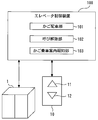
- FIG. 1 and 2 relate to Embodiment 1 of the present invention.
- FIG. 1 is a diagram showing an overall configuration of an elevator control device
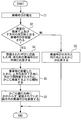
- FIG. 2 is a flowchart showing an operation flow of the elevator control device. .
- the elevator car 1 shown in FIG. 1 is installed in a hoistway (not shown) of the elevator so that it can be raised and lowered.
- the car 1 moves up and down in the hoistway across a plurality of floors of the building where the elevator is installed.
- the car 1 can be stopped on a plurality of floors of the building. Although only one car 1 is shown here, a plurality of cars 1 may be provided.
- the hall call registration apparatus 10 is installed in each of the halls of each floor.
- the hall call registration device 10 is for registering a hall call in a direction desired by a hall user.
- the hall call registration device 10 can register an upward hall call and a downward hall call.
- the hall call registration device 10 includes an upward button 11 and a downward button 12. Strictly speaking, the hall call registration device 10 on the upper floor and the lower floor only needs to include only one of the up button 11 and the down button 12.
- the up hall call is a call for calling the car 1 whose traveling direction is the upward direction to the floor where the hall call registration device 10 is installed.
- the downward landing call is a call for bringing the car 1 whose traveling direction is the downward direction to the floor where the landing call registration device 10 is installed.
- Only one hall call registration device 10 is shown in the figure, but a plurality of hall call registration devices 10 may be installed at halls on each floor as necessary.
- the operation of the car 1 is controlled by the elevator control device 100.
- the elevator control device 100 controls the operation of the car 1 to respond to the registered hall call.
- the elevator control device 100 includes a car dispatch unit 101, a call release unit 102, and a car boarding guide notification unit 103.
- the car dispatch unit 101 dispatches the car 1 that responds to the registered hall call.
- the landing call registration device 10 On a certain floor.
- the car dispatch unit 101 dispatches one car 1. Then, before the dispatched car 1 responds to the landing call, that is, before the dispatched car 1 arrives at the floor where the landing call is registered, the landing call on the same floor is made. Assume that the registration device 10 registers the other of the upward and downward hall calls.
- both the upward and downward landing calls (hereinafter simply referred to as “bidirectional landing calls”) are registered by the landing call registration device 10 on the same floor.
- the car dispatching unit 101 determines whether or not to dispatch one car 1 at a time (simultaneously) to a hall call in both directions.
- the car dispatching unit 101 always dispatches one car 1 at a time to a bi-directional hall call when a bi-directional hall call is registered by the hall call registration device 10 on the same floor. It may be determined.
- the car dispatching unit 101 decides not to dispatch one car 1 at a time for both directions. You may make it do.
- the call canceling unit 102 not only receives the hall call in the same direction as the traveling direction of the car 1, but also the boarding call.
- the hall call in the direction opposite to the traveling direction of the car 1 is also canceled. For this reason, after the car 1 stops once on the floor where the hall calls in both directions are registered, no hall call in any direction remains on the floor.
- the car 1 dispatched at one time for the two-way hall call is After stopping at the floor, the vehicle first travels to the destination floor in one of the vertical directions. After arriving at the destination floor in this one direction, the car 1 reverses the traveling direction. Then, the car 1 whose traveling direction is reversed travels to the destination floor in the other direction in the up and down direction. At this time, since the hall call in both directions is canceled when the vehicle first stops on the floor, the car 1 with the traveling direction reversed passes without stopping on the floor and moves in the other direction. I will head to the destination floor.
- the direction of travel of the car 1 at that time is the same as the traveling direction. Not only the user who registered the hall call but also the user who registered the hall call in the direction opposite to the traveling direction of the car 1 at that time must get on the car 1.
- the user who has registered the hall call in the direction opposite to the traveling direction of the car 1 at that time must go in the direction opposite to the destination floor desired by the user once.
- the car 1 moves in the direction opposite to the traveling direction.
- the time until the user who registered the hall call arrives at the desired destination floor can be shortened.
- the elevator control device 100 includes a car boarding guide notification unit 103.
- the car boarding guidance notifying unit 103 determines that the car dispatching unit 101 dispatches one car 1 at a time to the two-way hall call registered by the hall call registration device 10 on the same floor, Regardless of the travel direction of the car 1, when the car 1 arrives at the floor, the user who registered the hall call in the upper direction and the user who registered the hall call in the lower direction A notification is made to urge both of the passengers to get on the car 1.
- the car dispatch unit 101 decides to dispatch one car 1 at a time to the two-way hall call registered by the hall call registration device 10 on the same floor, It is not necessary to consider the current traveling direction for the car 1 to be dispatched. In both directions, the call for the car 1 is always the same as the direction of the car 1 and the direction of the car 1 regardless of the current direction of travel. This is because the direction of the hall call and the traveling direction of the car 1 are opposite.
- step S1 when the hall call registration device 10 is operated at a certain arbitrary floor and a hall call is registered (step S1), the process proceeds to step S2.
- step S ⁇ b> 2 the car dispatch unit 101 confirms whether or not hall calls in both the upward direction and the downward direction are registered on any same floor. If the hall call in both the upward and downward directions is not registered on any one of the same floors, the process proceeds to step S3.
- step S3 only one of the upward hall call and the downward hall call is registered in any one of the same floors. Therefore, the car dispatch unit 101 dispatches the car 1 that has the same traveling direction as the registered hall call direction to the hall call. The car 1 thus dispatched responds to the hall call. This completes the series of operation flows.
- step S4 the car dispatching unit 101 determines that one car 1 is dispatched at the same time (at a time) for both-way hall calls. Then, the dispatched car 1 responds to the hall calls in both directions at the same time.
- step S5 when the car 1 dispatched in step S4 arrives at the floor, i.e., the boarding floor, the car boarding guidance notifying unit 103 notifies each of the users heading upward and downward. A notification is given to encourage the user to get into the car 1. After step S5, the process proceeds to step S6.
- step S6 the call canceling unit 102 cancels both hall calls registered in the boarding floor regardless of the traveling direction of the car 1 that has arrived. And a series of operation
- FIG. 3 and 4 relate to Embodiment 2 of the present invention.
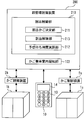
- FIG. 3 is a diagram showing the overall configuration of the elevator group management control device, and
- FIG. 4 shows the flow of operation of the elevator group management control device.
- a plurality of cars are provided.
- two cars a first car 1a and a second car 1b
- the use of two cars is merely an example, and three or more cars may be provided.
- the first car 1a and the second car 1b will be collectively referred to as "car 1".
- Each of these cars 1 is lifted and lowered in the hoistway between a plurality of floors of the building as in the first embodiment.
- Each car 1 can be stopped at a plurality of floors of the building.
- the hall call registration apparatus 10 is installed in each of the halls of each floor.
- the hall call registration device 10 is for registering a hall destination call to a destination floor desired by a hall user.
- the hall call registration device 10 can register a hall destination call specifying a destination floor. For this reason, the hall call registration device 10 includes a numeric keypad 13.
- the numeric keypad 13 includes numeric keys from “0” to “9”.
- the hall call registration device 10 includes a display unit 14 including a liquid crystal display, for example. The contents entered by the user operating the numeric keypad 13 are displayed on the display unit 14.
- the landing destination call is a call that calls the car 1 that will travel to the designated destination floor to the floor where the landing call registration device 10 is installed.
- the destination floor specified here is either the floor above the floor where the hall call registration device 10 is installed or the floor below the floor. Accordingly, landing destination calls are broadly classified into two types: those that specify a destination floor that is higher than the floor and those that specify a destination floor that is lower than the floor.
- the operation of the plurality of cars 1 is managed as a group (bank) by the group management control device 200.
- the operation of each of the plurality of cars 1 is controlled by a car control device provided for each car 1 under the management of the group management control device 200. That is, the first car control device 2a controls the operation of the first car 1a under the management of the group management control device 200.
- the second car control device 2b controls the operation of the second car 1b under the management of the group management control device 200.
- the first car control device 2a and the second car control device 2b are collectively referred to as "car control device 2".
- the group management control device 200 controls the operation of the car 1 to respond to the registered landing destination call.
- the group management control device 200 includes an allocation control unit 210 and a car boarding guide notification unit 103.
- the assignment control unit 210 is mainly in charge of controlling which one of the plurality of cars 1 is assigned to the registered landing destination call.
- the allocation control unit 210 includes an allocation car determination unit 211, an expected waiting time calculation unit 212, and an allocation cancellation unit 213.
- the assigned car determination unit 211 determines a car 1 (hereinafter referred to as “assigned car”) to be assigned to the registered landing destination call. To do. This determination is made by selecting one vehicle from a plurality of cars 1 managed by the group management control device 200 as a group.
- the optimum car 1 is selected in consideration of the current position and current traveling direction of each car 1, the call assignment status to each car 1, and the like.
- the “optimum” can be realized such that the driving efficiency is the highest.
- the “optimum” can be realized such that the average waiting time of the user is minimized.
- this latter example will be described.
- the expected waiting time calculation unit 212 calculates the average expected waiting time of the users at each landing when each of the plurality of cars 1 is assigned to the landing destination call registered by the landing call registration device 10. . Then, the assigned car determination unit 211 determines the car 1 to be assigned to the landing destination call based on the expected waiting time calculated by the expected waiting time calculating unit 212.
- a response command to the landing destination call is sent to the car management device 200 that controls the assigned car. Is output from.
- the car control device 2 controls the operation of the car 1 (assigned car) so as to respond to the landing destination call.
- the hall call registration device 10 of a certain floor registers one of the hall destination call that designates the destination floor above the floor and the hall destination call that designates the destination floor lower than the floor.
- the assigned car determination unit 211 determines an assigned car for the registered landing destination call.
- the landing call registration device 10 of the same floor It is assumed that the other one of the hall destination call specifying the destination floor higher than the floor and the hall destination call specifying the destination floor lower than the floor is registered.
- a hall destination call that designates a destination floor above the floor by the hall call registration device 10 on the same floor and a hall destination call that designates a destination floor below the floor is registered.
- the assigned car determination unit 211 determines whether or not one car 1 is assigned to a landing destination call in both directions at once.
- the assigned car determination unit 211 registers one car 1 at a time by the hall call registration device 10 on the same floor based on the expected waiting time calculated by the expected waiting time calculation unit 212. It is determined whether or not to assign to the destination call in both directions.
- the expected waiting time calculation unit 212 estimates the expected waiting time when one car 1 is assigned at a time to the landing destination calls in both directions registered by the hall call registration device 10 on the same floor (hereinafter referred to as “the waiting time”). , “First expected waiting time”). Further, the expected waiting time calculation unit 212 expects the waiting time when the car 1 is assigned separately to each of the two-way hall destination calls registered by the hall call registration device 10 on the same floor. (Hereinafter referred to as “second expected waiting time”) is calculated.
- the assigned car determination unit 211 compares the first expected waiting time with the second expected waiting time. When the first expected waiting time is shorter than the second expected waiting time, the assigned car determination unit 211 determines that one car 1 is assigned to a landing destination call in both directions at once.
- the expected waiting time calculation unit 212 registers an upward hall call at the floor landing.
- the expected waiting time of the user (hereinafter referred to as “third expected waiting time”) is calculated.
- the expected waiting time calculation unit 212 calculates the expected waiting time (hereinafter referred to as “fourth expected waiting time”) of the user who has registered a downward hall call at the landing on the floor.
- the assigned car determination unit 211 assigns one car 1 having the smallest sum of the third expected waiting time and the fourth expected waiting time to the landing destination call in both directions registered on the floor. To determine the allocation basket to be allocated at once.
- the allocation cancellation unit 213 is determined by the allocation car determination unit 211 to allocate one car 1 at a time to the landing destination calls in both directions registered by the hall call registration device 10 on the same floor. In this case, when the car 1 arrives at the floor, the landing destination calls in both directions are canceled at once.
- the deallocating unit 213 not only performs the landing destination call in the same direction as the traveling direction of the assigned car but also the assigned destination call. Also cancel the landing destination call in the direction opposite to the direction of travel of the car. For this reason, after the assigned car stops once on the floor where the landing destination call in both directions is registered, no landing destination call in any direction remains on the floor.
- the assigned car first stops after stopping on the floor. Drive to the destination floor in one of the up and down directions. After arriving at the destination floor in this one direction, the assigned car reverses the direction of travel. Then, the assigned car whose traveling direction is reversed travels to the destination floor in the other direction of the up and down direction. At this time, since the landing destination call in both directions was canceled when it first stopped on the floor, the assigned car that reversed the traveling direction passed without stopping on the floor and moved in the other direction. I will head to the destination floor.
- a user who has registered a destination call in a direction opposite to the traveling direction of the car 1 at that time must go in a direction opposite to the destination floor desired by the user.
- a landing call in the direction opposite to the traveling direction of the assigned car is made. Time until the registered user arrives at the desired destination floor can be shortened.
- the group management control device 200 includes a car boarding guide notification unit 103.
- the car boarding guidance notifying unit 103 is determined by the allocation car determining unit 211 to allocate one car 1 at a time to the landing destination calls in both directions registered by the hall call registration device 10 on the same floor. If the car 1 arrives at the floor, the destination destination call specifying the destination floor above the floor at the landing of the floor is registered regardless of the traveling direction of the car 1 To the registered user and the user who has registered a downward hall call specifying a destination floor below the floor is notified that the user is prompted to board the car 1.
- the assigned car determination unit 211 determines to assign one car 1 at a time to the two-way hall destination call registered by the hall call registration device 10 on the same floor, the two-way hall There is no need to consider the current traveling direction for the car 1 assigned to the destination call.
- step S11 when the hall call registration device 10 is operated on an arbitrary floor to register a hall destination call (step S11), the process proceeds to step S12.
- step S12 the assigned car determination unit 211 confirms whether or not landing destination calls in both directions that are upward and downward on any same floor are registered.
- the process proceeds to step S13.
- step S13 in any given floor, only one of the up-facing hall destination call and the down-facing hall destination call is registered. Therefore, the assigned car determination unit 211 determines the car 1 that has the same traveling direction as the direction of the registered landing destination call as the assigned car for the landing call. The assigned car thus determined responds to the landing destination call. This completes the series of operation flows.
- step S12 if the hall call in both the upward and downward directions is registered on any same floor, the process proceeds to step S14.
- step S14 the assigned car determination unit 211 compares the first expected waiting time calculated by the expected waiting time calculating unit 212 with the second expected waiting time. If the first expected waiting time is not shorter than the second expected waiting time, the process proceeds to step S13.
- step S15 the assigned car determination unit 211 determines that one car 1 is assigned to the landing destination calls in both directions simultaneously (at the same time). Then, the assigned car 1 responds simultaneously to the landing destination calls in both directions.
- step S16 when the car 1 dispatched in step S15 arrives at the floor, that is, the boarding floor, the car boarding guidance notifying unit 103 notifies each of the users heading upward and downward. A notification is given to encourage the user to get into the car 1. After step S16, the process proceeds to step S17.
- step S17 regardless of the traveling direction of the car 1 that has arrived, the deallocation unit 213 cancels the bi-directional landing destination call registered on the boarding floor. And a series of operation
- the present invention can be used for an elevator control device and an elevator group management control device that allocate a car to a landing call or assign a car to a landing call when a landing call or a landing destination call is registered. .
Landscapes
- Engineering & Computer Science (AREA)
- Automation & Control Theory (AREA)
- Elevator Control (AREA)
Abstract
同一の階床で上下両方向の乗場呼びが発生した場合に、運転効率の向上を図ることができるエレベータの制御装置及びエレベータの群管理制御装置を提供する。このため、エレベータの乗りかご(1)が停止可能な各階床の乗場に設けられ、上方向及び下方向の乗場呼びを登録可能な乗場呼び登録装置(10)と、乗りかごの運行を制御するエレベータ制御装置(100)と、を備える。エレベータ制御装置は、同一の階床の乗場呼び登録装置により上方向及び下方向の両方向の乗場呼びが登録された場合に、1台の乗りかごを一度に両方向の乗場呼びに対して配車するか否かを決定するかご配車部(101)と、かご配車部により1台の乗りかごを一度に両方向の乗場呼びに対して配車すると決定された場合、両方向の乗場呼びが登録されている階床に当該乗りかごが到着した時に、両方向の乗場呼びを解除する呼び解除部(102)とを備える。
Description
この発明は、エレベータの制御装置及びエレベータの群管理制御装置に関するものである。
従来、乗場呼びが登録されたときこれにかごを割り当て、このかごを乗場呼びに応答させるエレベータにおいては、かごがその運転方向と逆方向の乗場呼びに割り当てられたことを検出すると、この逆方向の乗場呼びを解除するものが知られている(例えば、特許文献1参照)。
また、複数のかごのうちの1つを、現在割り当てられている呼びの発生源階床に停止させ、次いで、当該発生源階床から目的階への方向とは反対方向に移動させることにならないようなかごに新たな呼びを割り当てるものも、従来において知られている(例えば、特許文献2参照)。
このように、特許文献1及び特許文献2に示された従来のエレベータは、乗場呼びの方向と反対方向の進行方向の乗りかごを、当該乗場呼びには割り当てない、あるいは、当該乗場呼びに反対方向の進行方向の乗りかごが割り当てられた場合には当該乗場呼びをキャンセルするものである。
しかしながら、乗場呼びの方向と反対方向の進行方向の乗りかごを、当該乗場呼びに割り当てることで、運転効率の向上が望める場合は少なからず存在する。特に、同一の階床で上方向と下方向の両方向の乗場呼びが発生した場合に、これらの従来のエレベータでは、両方向の乗場呼びに一度で応答することができないため、運転効率の向上を図ることができない。
この発明は、このような課題を解決するためになされたもので、同一の階床で上方向と下方向の両方向の乗場呼びが発生した場合に、運転効率の向上を図ることができるエレベータの制御装置及びエレベータの群管理制御装置を得るものである。
この発明に係るエレベータの制御装置及びエレベータの群管理制御装置においては、エレベータの乗りかごが停止可能な各階床の乗場に設けられ、上方向及び下方向の乗場呼びを登録可能な乗場呼び登録装置と、前記乗りかごの運行を制御するエレベータ制御装置と、を備え、前記エレベータ制御装置は、同一の階床の前記乗場呼び登録装置により上方向及び下方向の両方向の乗場呼びが登録された場合に、1台の前記乗りかごを一度に前記両方向の乗場呼びに対して配車するか否かを決定するかご配車部と、前記かご配車部により1台の前記乗りかごを一度に前記両方向の乗場呼びに対して配車すると決定された場合、前記両方向の乗場呼びが登録されている階床に当該乗りかごが到着した時に、前記両方向の乗場呼びを解除する呼び解除部とを備えた構成とする。
また、この発明に係るエレベータの群管理制御装置においては、エレベータの乗りかごが停止可能な各階床の乗場に設けられ、行先階を指定した乗場行先呼びを登録可能な乗場呼び登録装置と、複数の前記乗りかごの運行を一群として管理する群管理制御装置と、を備え、前記群管理制御装置は、同一の階床の前記乗場呼び登録装置により、当該階床より上階の行先階を指定した乗場行先呼び及び当該階床より下階の行先階を指定した乗場行先呼びの両者が登録された場合に、1台の前記乗りかごを一度に前記両者に対して割り当てるか否かを決定する割当かご決定部と、前記割当かご決定部により1台の前記乗りかごを一度に前記両者に対して割り当てると決定された場合、前記両者が登録されている階床に当該乗りかごが到着した時に、前記両者を解除する割当解除部とを備えた構成とする。
この発明に係るエレベータの制御装置及びエレベータの群管理制御装置においては、同一の階床で上方向と下方向の両方向の乗場呼び又は乗場行先呼びが発生した場合に、運転効率の向上を図ることができるという効果を奏する。
実施の形態1.
図1及び図2は、この発明の実施の形態1に係るもので、図1はエレベータの制御装置の全体構成を示す図、図2はエレベータの制御装置の動作の流れを示すフロー図である。
図1及び図2は、この発明の実施の形態1に係るもので、図1はエレベータの制御装置の全体構成を示す図、図2はエレベータの制御装置の動作の流れを示すフロー図である。
図1に示すエレベータの乗りかご1は、当該エレベータの昇降路(図示せず)内に昇降可能に設置されている。乗りかご1は、昇降路内を当該エレベータが設置された建物の複数の階床間にわたって昇降する。乗りかご1は、当該建物の複数の階床に停止可能である。なお、ここでは、乗りかご1は1台しか図示していないが、乗りかご1は複数台設けられてもよい。
乗りかご1が停止可能な各階床には、図示しない乗場が設けられている。そして、各階床の乗場のそれぞれには、乗場呼び登録装置10が設置されている。乗場呼び登録装置10は、乗場の利用者が所望する方向への乗場呼びを登録するためのものである。乗場呼び登録装置10は、上方向の乗場呼び及び下方向の乗場呼びを登録可能である。乗場呼び登録装置10は、上方向ボタン11及び下方向ボタン12を備えている。なお、より厳密にいえば、上端階及び下端階の乗場呼び登録装置10は、上方向ボタン11及び下方向ボタン12のうちの必要な一方のみを備えればよい。
乗場の利用者が上方向ボタン11を操作すると、上方向乗場呼びを登録することができる。乗場の利用者が下方向ボタン12を操作すると、下方向乗場呼びを登録することができる。上方向乗場呼びとは、当該乗場呼び登録装置10が設置された階床に、進行方向が上方向となる乗りかご1を呼び寄せる呼びである。下方向乗場呼びとは、当該乗場呼び登録装置10が設置された階床に、進行方向が下方向となる乗りかご1を呼び寄せる呼びである。なお、ここでは、乗場呼び登録装置10は1つしか図示していないが、必要に応じて各階床の乗場に複数の乗場呼び登録装置10を設置してもよい。
乗りかご1の運行は、エレベータ制御装置100により制御される。エレベータ制御装置100は、乗場呼び登録装置10への操作により乗場呼びが登録されると、この登録された乗場呼びに応答させるべく乗りかご1の運行を制御する。エレベータ制御装置100は、かご配車部101、呼び解除部102及びかご乗車案内報知部103を備えている。
かご配車部101は、乗場呼び登録装置10への操作により乗場呼びが登録されると、この登録された乗場呼びに対して応答させる乗りかご1を配車する。
ここで、ある階床の乗場呼び登録装置10により上方向及び下方向の乗場呼びの一方が登録されたとする。この登録された乗場呼びに対し、かご配車部101は、1台の乗りかご1を配車する。そして、この配車された乗りかご1が当該乗場呼びに応答する前に、すなわち、配車された乗りかご1が当該乗場呼びが登録された階床に到着する前に、同一の階床の乗場呼び登録装置10により上方向及び下方向の乗場呼びの他方が登録されたとする。
このような場合には、同一の階床の乗場呼び登録装置10により上方向及び下方向の両方向の乗場呼び(以下、単に「両方向の乗場呼び」という)が登録された状態となる。そして、このような状態となった場合には、かご配車部101は、1台の乗りかご1を一度に(同時に)両方向の乗場呼びに対して配車するか否かを決定する。
なお、かご配車部101は、同一の階床の乗場呼び登録装置10により両方向の乗場呼びが登録された場合には、常に1台の乗りかご1を一度に両方向の乗場呼びに対して配車すると決定するようにしてもよい。
あるいは、同一の階床の乗場呼び登録装置10により登録された両方向の乗場呼びのそれぞれに対し、別々の乗りかご1を配車した方が明らかに運転効率等がよいと考えられる場合(例えば、当該階床において既に2台以上の乗りかご1が戸閉待機している場合等)には、かご配車部101は、1台の乗りかご1を一度に両方向の乗場呼びに対して配車しないと決定するようにしてもよい。
呼び解除部102は、かご配車部101により、1台の乗りかご1を一度に、同一の階床の乗場呼び登録装置10により登録された両方向の乗場呼びに対して配車すると決定された場合、当該階床に当該乗りかご1が到着した時に、これらの両方向の乗場呼びの両方を一度に解除する。
したがって、呼び解除部102は、両方向の乗場呼びが登録されている階床に初めに乗りかご1が停止した際に、当該乗りかご1の進行方向と同じ方向の乗場呼びのみならず、当該乗りかご1の進行方向と反対方向の乗場呼びについても解除する。このため、両方向の乗場呼びが登録されている階床に一度乗りかご1が停止した後には、当該階床についていずれの方向の乗場呼びも残らない。
このようにして、同一の階床において登録された両方向の乗場呼びに対して1台の乗りかご1を一度に配車すると決定された場合、両方向の乗場呼びに一度に配車された乗りかご1は、当該階床に停止した後、まず、上下方向の一方の方向の行先階へと走行する。この一方の方向の行先階に到着した後、乗りかご1は進行方向を反転させる。そして、進行方向を反転させた乗りかご1は、今度は上下方向の他方の方向の行先階へと走行する。この際、当該階床に最初に停止した際に両方向の乗場呼びが解除されているため、進行方向を反転させた乗りかご1は、当該階床に停止することなく通過して他方の方向の行先階へと向かうことになる。
したがって、同一の階床において登録された両方向の乗場呼びに対して一度に配車された乗りかご1が当該階床に最初に停止した際、その時点の乗りかご1の進行方向と同じ方向への乗場呼びを登録した利用者だけでなく、その時点の乗りかご1の進行方向と反対方向への乗場呼びを登録した利用者も乗りかご1に乗車しなくてはならない。
すなわち、その時点の乗りかご1の進行方向と反対方向への乗場呼びを登録した利用者は、一旦自身が所望する行先階とは反対の方向に行かなければならない。しかし、一旦乗りかご1を見送って当該階床の乗場で待つよりも、乗りかご1が当該階床に停止する回数を1回減らせるため、結果として乗りかご1の進行方向と反対方向への乗場呼びを登録した利用者が所望する行先階に到着するまでの時間を短縮することができる。
ただし、利用者は、自身が登録した乗場呼びの方向とは反対方向の進行方向である乗りかご1に乗車することには慣れていないと思われる。そこで、エレベータ制御装置100は、かご乗車案内報知部103を備えている。
かご乗車案内報知部103は、かご配車部101により1台の乗りかご1を一度に同一の階床の乗場呼び登録装置10により登録された両方向の乗場呼びに対して配車すると決定された場合、当該階床に当該乗りかご1が到着した時に、当該乗りかご1の進行方向にかかわらず、当該階床の乗場で上方向の乗場呼びを登録した利用者及び下方向の乗場呼びを登録した利用者の両方に対し、当該乗りかご1への乗車を促す旨の報知を行う。
この報知を行うため、各階床の乗場には、音声を鳴動させるスピーカ及び情報を表示する例えば液晶ディスプレイ等の表示装置の少なくもいずれかが設置されている。そして、かご乗車案内報知部103は、スピーカ及び表示装置の一方又は両方を用いて両方向の行先階への利用者に対して、乗りかご1への乗車を促す旨の報知を行う。
このようにして、両方向の乗場呼びのそれぞれの利用者に対し、乗りかご1への乗車を促すようにすることで、所望する行先階とは反対方向の進行方向である乗りかご1に、円滑かつ確実に利用者を乗車させることができる。
なお、かご配車部101は、1台の乗りかご1を一度に、同一の階床の乗場呼び登録装置10により登録された両方向の乗場呼びに対して配車すると決定した場合、両方向の乗場呼びに配車する乗りかご1については現在の進行方向を考慮する必要はない。両方向の乗場呼びということは、乗りかご1については現在の進行方向が上下方向のいずれであっても、必ず、一方の乗場呼びの方向と乗りかご1の進行方向が同じであり、かつ、他方の乗場呼びの方向と乗りかご1の進行方向とは反対となるからである。
次に、図2のフロー図を参照しながら、以上のように構成されたエレベータの制御装置の動作の流れについて説明する。
まず、ある任意の階床において乗場呼び登録装置10が操作されて乗場呼びが登録されると(ステップS1)、ステップS2へと進む。ステップS2においては、かご配車部101は、任意の同一の階床で上方向及び下方向の両方向の乗場呼びが登録されているか否かを確認する。任意の同一の階床で上方向及び下方向の両方向の乗場呼びが登録されていない場合には、ステップS3へと進む。
まず、ある任意の階床において乗場呼び登録装置10が操作されて乗場呼びが登録されると(ステップS1)、ステップS2へと進む。ステップS2においては、かご配車部101は、任意の同一の階床で上方向及び下方向の両方向の乗場呼びが登録されているか否かを確認する。任意の同一の階床で上方向及び下方向の両方向の乗場呼びが登録されていない場合には、ステップS3へと進む。
ステップS3においては、任意の同一の階床では上方向の乗場呼び及び下方向の乗場呼びのいずれか一方だけが登録されているということである。そこで、かご配車部101は、登録されている乗場呼びの方向と同じ進行方向となる乗りかご1を当該乗場呼びに対して配車する。そして、こうして配車された乗りかご1が当該乗場呼びに応答する。これで、一連の動作フローは終了となる。
一方、ステップS2において、任意の同一の階床で上方向及び下方向の両方向の乗場呼びが登録されている場合には、ステップS4へと進む。ステップS4においては、かご配車部101は、1台の乗りかご1を同時に(一度に)両方向の乗場呼びに対して配車することを決定する。そして、配車された1台の乗りかご1が、両方向の乗場呼びに同時に応答する。
続くステップS5において、ステップS4で配車された乗りかご1が、当該階床すなわち乗車階に到着すると、かご乗車案内報知部103は、上方向及び下方向に向かう利用者のそれぞれに対し、当該乗りかご1への乗車を促す旨の報知を行う。ステップS5の後は、ステップS6へと進む。
ステップS6においては、呼び解除部102は、到着した乗りかご1の進行方向にかかわらず、乗車階において登録されていた両方向の乗場呼びの両方を解除する。そして、一連の動作フローは終了となる。
以上のように構成されたエレベータの制御装置においては、同一の階床で上方向と下方向の両方向の乗場呼びが発生した場合に、両方向の乗場呼びに一度の1台の乗りかごを配車し、両方向の乗場呼びに一度に応答することができるため、運転効率の向上を図ることができる。
また、この際に、両方向の乗場呼びが登録された階床に1回停止するだけで、両方向の乗場呼びに応答することができるため、さらに運転効率の向上を図ることができる。
実施の形態2.
図3及び図4は、この発明の実施の形態2に係るもので、図3はエレベータの群管理制御装置の全体構成を示す図、図4はエレベータの群管理制御装置の動作の流れを示すフロー図である。
図3及び図4は、この発明の実施の形態2に係るもので、図3はエレベータの群管理制御装置の全体構成を示す図、図4はエレベータの群管理制御装置の動作の流れを示すフロー図である。
図3に示すように、この実施の形態2においては、複数の乗りかごが設けられている。ここでは、複数の乗りかごとして1号機かご1a及び2号機かご1bの2台が設けられているとする。なお、乗りかごを2台としたのは単なる例示であり、3台以上の乗りかごが設けられてもよい。以下においては、これら1号機かご1a及び2号機かご1bを総称する場合に「乗りかご1」という。
これらの乗りかご1のそれぞれは、実施の形態1と同じく、昇降路内を建物の複数の階床間にわたって昇降する。それぞれ乗りかご1は、当該建物の複数の階床に停止可能である。乗りかご1が停止可能な各階床には、図示しない乗場が設けられている。そして、各階床の乗場のそれぞれには、乗場呼び登録装置10が設置されている。乗場呼び登録装置10は、乗場の利用者が所望する行先階への乗場行先呼びを登録するためのものである。
乗場呼び登録装置10は、行先階を指定した乗場行先呼びを登録可能である。このため、乗場呼び登録装置10は、テンキー13を備えている。テンキー13は、「0」から「9」までの各数字キー等からなる。また、乗場呼び登録装置10は、例えば液晶ディスプレイ等からなる表示部14を備えている。利用者がテンキー13を操作して入力した内容等は、表示部14に表示される。
乗場の利用者が所望する行先階をテンキー13を操作して入力すると、当該入力した行先階を指定した乗場行先呼びを登録することができる。乗場行先呼びとは、当該乗場呼び登録装置10が設置された階床に、指定された行先階まで走行することになる乗りかご1を呼び寄せる呼びである。
ここで指定される行先階は、当該乗場呼び登録装置10が設置された階床より上にある階か、当該階床より下にある階のいずれかである。したがって、乗場行先呼びは、当該階床より上階の行先階を指定したものと、当該階床より下階の行先階を指定したものの2種に大別される。
複数の乗りかご1の運行は、群管理制御装置200により、一群(バンク)として管理される。そして、複数の乗りかご1それぞれの運転は、群管理制御装置200による管理の下で、それぞれの乗りかご1毎に設けられたかご制御装置により制御されている。すなわち、1号機かご制御装置2aは、群管理制御装置200の管理下で、1号機かご1aの運転を制御する。また、2号機かご制御装置2bは、群管理制御装置200の管理下で、2号機かご1bの運転を制御する。以下において、1号機かご制御装置2a及び2号機かご制御装置2bを総称する場合には「かご制御装置2」という。
群管理制御装置200は、乗場呼び登録装置10への操作により乗場行先呼びが登録されると、この登録された乗場行先呼びに応答させるべく乗りかご1の運行を制御する。群管理制御装置200は、割当制御部210及びかご乗車案内報知部103を備えている。
割当制御部210は、主に、登録された乗場行先呼びに対し複数の乗りかご1のうちのどれを割り当てるのかに係る制御を担当している。割当制御部210は、割当かご決定部211、予想待ち時間演算部212及び割当解除部213を備えている。
割当かご決定部211は、乗場呼び登録装置10への操作により乗場行先呼びが登録されると、この登録された乗場行先呼びに対して割り当てる乗りかご1(以下、「割当かご」という)を決定する。この決定は、群管理制御装置200が一群として管理する複数の乗りかご1のうちから1台を選択することにより行われる。
この割当かごの選択においては、各乗りかご1の現在位置及び現在の進行方向並びに各乗りかご1への呼びの割り当て状況等を考慮して、最適な乗りかご1が選択される。
ただし、ここでいう「最適」を実現するための具体的な手法は、複数考えられる。例えば、一群として管理される複数の乗りかご1を総合的に見た場合に最も運転効率が高くなるようにして「最適」を実現することができる。あるいは、利用者の平均待ち時間が最も短くなるようにして「最適」を実現することもできる。ここでは、この後者の例により説明する。
予想待ち時間演算部212は、乗場呼び登録装置10により登録された乗場行先呼びに対して複数の乗りかご1のそれぞれを割り当てた場合における各乗場の利用者の平均的な予想待ち時間を演算する。そして、割当かご決定部211は、予想待ち時間演算部212により演算された予想待ち時間に基づいて、乗場行先呼びに対して割り当てる乗りかご1を決定する。
登録された乗場行先呼びへの割当かごが割当かご決定部211により決定されると、当該割当かごを制御するかご制御装置2に対して、当該乗場行先呼びへの応答指令が群管理制御装置200から出力される。この応答指令を受けたかご制御装置2は、当該乗場行先呼びに応答するように、乗りかご1(割当かご)の運転を制御する。
ここで、ある階床の乗場呼び登録装置10により、当該階床より上階の行先階を指定した乗場行先呼び及び当該階床より下階の行先階を指定した乗場行先呼びの一方が登録されたとする。すると、割当かご決定部211は、この登録された乗場行先呼びに対する割当てかごを決定する。そして、この割当かごが当該乗場行先呼びに応答する前に、すなわち、割当かごが当該乗場行先呼びが登録された階床に到着する前に、同一の階床の乗場呼び登録装置10により、当該階床より上階の行先階を指定した乗場行先呼び及び当該階床より下階の行先階を指定した乗場行先呼びの他方が登録されたとする。
このような場合には、同一の階床の乗場呼び登録装置10により当該階床より上階の行先階を指定した乗場行先呼び及び当該階床より下階の行先階を指定した乗場行先呼び(以下、「両方向の乗場行先階呼び」という)が登録された状態となる。そして、このような状態となった場合には、割当かご決定部211は、1台の乗りかご1を一度に両方向の乗場行先呼びに対して割り当てるか否かを決定する。
そして、この際、割当かご決定部211は、予想待ち時間演算部212により演算された予想待ち時間に基づいて、1台の乗りかご1を一度に同一の階床の乗場呼び登録装置10により登録された両方向の乗場行先呼びに対して割り当てるか否かを決定する。
例えば、予想待ち時間演算部212は、同一の階床の乗場呼び登録装置10により登録された両方向の乗場行先呼びに対して1台の乗りかご1を一度に割り当てた場合の予想待ち時間(以下、「第1の予想待ち時間」という)を演算する。また、予想待ち時間演算部212は、同一の階床の乗場呼び登録装置10により登録された両方向の乗場行先呼びのそれぞれに対して別々に1台ずつ乗りかご1を割り当てた場合の予想待ち時間(以下、「第2の予想待ち時間」という)を演算する。
そして、割当かご決定部211は、第1の予想待ち時間と第2の予想待ち時間とを比較する。第1の予想待ち時間が第2の予想待ち時間よりも短い場合に、割当かご決定部211は、1台の乗りかご1を一度に両方向の乗場行先呼びに対して割り当てると決定する。
また、さらに例えば、予想待ち時間演算部212は、同一の階床の乗場呼び登録装置10により両方向の乗場行先呼びが登録された場合に、当該階床の乗場で上方向の乗場呼びを登録した利用者の予想待ち時間(以下、「第3の予想待ち時間」という)を算出する。また、予想待ち時間演算部212は、当該階床の乗場で下方向の乗場呼びを登録した利用者の予想待ち時間(以下、「第4の予想待ち時間」という)を算出する。そして、割当かご決定部211は、第3の予想待ち時間と第4の予想待ち時間の和が最小となる1台の乗りかご1を、当該階床で登録された両方向の乗場行先呼びに対して一度に割り当てられる割当かごに決定する。
割当解除部213は、割当かご決定部211により、1台の乗りかご1を一度に、同一の階床の乗場呼び登録装置10により登録された両方向の乗場行先呼びに対して割り当てると決定された場合、当該階床に当該乗りかご1が到着した時に、これらの両方向の乗場行先呼びを一度に解除する。
したがって、割当解除部213は、両方向の乗場行先呼びが登録されている階床に初めに割当かごが停止した際に、当該割当かごの進行方向と同じ方向の乗場行先呼びのみならず、当該割当かごの進行方向と反対方向の乗場行先呼びについても解除する。このため、両方向の乗場行先呼びが登録されている階床に一度割当かごが停止した後には、当該階床についていずれの方向の乗場行先呼びも残らない。
このようにして、同一の階床において登録された両方向の乗場行先呼びに対して1台の乗りかご1を一度に割り当てると決定された場合、割当かごは、当該階床に停止した後、まず、上下方向の一方の方向の行先階へと走行する。この一方の方向の行先階に到着した後、割当かごは進行方向を反転させる。そして、進行方向を反転させた割当かごは、今度は上下方向の他方の方向の行先階へと走行する。この際、当該階床に最初に停止した際に両方向の乗場行先呼びが解除されているため、進行方向を反転させた割当かごは、当該階床に停止することなく通過して他方の方向の行先階へと向かうことになる。
したがって、同一の階床において登録された両方向の乗場行先呼びに対して一度に割り当てられた割りかごが当該階床に最初に停止した際、その時点の割当かごの進行方向と同じ方向への乗場行先呼びを登録した利用者だけでなく、その時点の割当かごの進行方向と反対方向への乗場行先呼びを登録した利用者も割当かごに乗車しなくてはならない。
すなわち、その時点の乗りかご1の進行方向と反対方向への乗場行先呼びを登録した利用者は、一旦自身が所望する行先階とは反対の方向に行かなければならない。しかし、一旦割当かごを見送って当該階床の乗場で待つよりも、割当かごが当該階床に停止する回数を1回減らせるため、結果として割当かごの進行方向と反対方向への乗場呼びを登録した利用者が所望する行先階に到着するまでの時間を短縮することができる。
ただし、利用者は、自身が登録した乗場行先呼びの方向とは反対方向の進行方向である割当かごに乗車することには慣れていないと思われる。そこで、群管理制御装置200は、かご乗車案内報知部103を備えている。
かご乗車案内報知部103は、割当かご決定部211により、1台の乗りかご1を一度に同一の階床の乗場呼び登録装置10により登録された両方向の乗場行先呼びに対して割り当てると決定された場合、当該階床に当該乗りかご1が到着した時に、当該乗りかご1の進行方向にかかわらず、当該階床の乗場で当該階床より上階の行先階を指定した乗場行先呼びを登録した利用者及び当該階床より下階の行先階を指定した下方向の乗場呼びを登録した利用者の両方に対し、当該乗りかご1への乗車を促す旨の報知を行う。
この報知を行うため、各階床の乗場には、音声を鳴動させるスピーカ及び情報を表示する例えば液晶ディスプレイ等の表示装置の少なくもいずれかが設置されている。そして、かご乗車案内報知部103は、スピーカ及び表示装置の一方又は両方を用いて両方向の行先階への利用者に対して、乗りかご1への乗車を促す旨の報知を行う。
このようにして、両方向の乗場行先呼びのそれぞれの利用者に対し、乗りかご1への乗車を促すようにすることで、所望する行先階とは反対方向の進行方向である乗りかご1に、円滑かつ確実に利用者を乗車させることができる。
なお、割当かご決定部211は、1台の乗りかご1を一度に、同一の階床の乗場呼び登録装置10により登録された両方向の乗場行先呼びに対して割り当てると決定した場合、両方向の乗場行先呼びに割り当てる乗りかご1については現在の進行方向を考慮する必要はない。
次に、図4のフロー図を参照しながら、以上のように構成されたエレベータの制御装置の動作の流れについて説明する。
まず、ある任意の階床において乗場呼び登録装置10が操作されて乗場行先呼びが登録されると(ステップS11)、ステップS12へと進む。ステップS12においては、割当かご決定部211は、任意の同一の階床で上方向及び下方向となる両方向の乗場行先呼びが登録されているか否かを確認する。任意の同一の階床で上方向及び下方向となる両方向の乗場行先呼びが登録されていない場合には、ステップS13へと進む。
まず、ある任意の階床において乗場呼び登録装置10が操作されて乗場行先呼びが登録されると(ステップS11)、ステップS12へと進む。ステップS12においては、割当かご決定部211は、任意の同一の階床で上方向及び下方向となる両方向の乗場行先呼びが登録されているか否かを確認する。任意の同一の階床で上方向及び下方向となる両方向の乗場行先呼びが登録されていない場合には、ステップS13へと進む。
ステップS13においては、任意の同一の階床では上方向となる乗場行先呼び及び下方向となる乗場行先呼びのいずれか一方だけが登録されているということである。そこで、割当かご決定部211は、登録されている乗場行先呼びの方向と同じ進行方向となる乗りかご1を当該乗場呼びの割当かごに決定する。そして、こうして決定された割当かごが当該乗場行先呼びに応答する。これで、一連の動作フローは終了となる。
一方、ステップS12において、任意の同一の階床で上方向及び下方向の両方向の乗場呼びが登録されている場合には、ステップS14へと進む。ステップS14においては、割当かご決定部211は、予想待ち時間演算部212により演算された前記第1の予想待ち時間と前記第2の予想待ち時間とを比較する。そして、前記第2の予想待ち時間より前記第1の予想待ち時間の方が短くない場合には、ステップS13へと進む。
一方、ステップS14において、前記第2の予想待ち時間より前記第1の予想待ち時間の方が短い場合には、ステップS15へと進む。ステップS15においては、割当かご決定部211は、1台の乗りかご1を同時に(一度に)両方向の乗場行先呼びに対して割り当てることを決定する。そして、割り当てられた1台の乗りかご1が、両方向の乗場行先呼びに同時に応答する。
続くステップS16において、ステップS15で配車された乗りかご1が、当該階床すなわち乗車階に到着すると、かご乗車案内報知部103は、上方向及び下方向に向かう利用者のそれぞれに対し、当該乗りかご1への乗車を促す旨の報知を行う。ステップS16の後は、ステップS17へと進む。
ステップS17においては、割当解除部213、到着した乗りかご1の進行方向にかかわらず、乗車階において登録されていた両方向の乗場行先呼びを解除する。そして、一連の動作フローは終了となる。
以上のように構成されたエレベータの群管理制御装置においては、同一の階床で上方向と下方向の両方向の乗場行先呼びが発生した場合に、両方向の乗場行先呼びに一度の1台の乗りかごを割り当て、両方向の乗場行先呼びに一度に応答することができるため、運転効率の向上を図ることができる。
また、この際に、両方向の乗場行先呼びが登録された階床に1回停止するだけで、両方向の乗場行先呼びに応答することができるため、さらに運転効率の向上を図ることができる。
この発明は、乗場呼び又は乗場行先呼びが登録された場合に、乗りかごを乗場呼びに配車し、あるいは、乗りかごを乗場行先呼びに割り当てるエレベータの制御装置及びエレベータの群管理制御装置に利用できる。
1 乗りかご、 1a 1号機かご、 1b 2号機かご、 2a 1号機かご制御装置、 2b 2号機かご制御装置、 10 乗場呼び登録装置、 11 上方向ボタン、 12 下方向ボタン、 13 テンキー、 14 表示部、 100 エレベータ制御装置、 101 かご配車部、 102 呼び解除部、 103 かご乗車案内報知部、 200 群管理制御装置、 210 割当制御部、 211 割当かご決定部、 212 予想待ち時間演算部、 213 割当解除部
Claims (7)
- エレベータの乗りかごが停止可能な各階床の乗場に設けられ、上方向及び下方向の乗場呼びを登録可能な乗場呼び登録装置と、
前記乗りかごの運行を制御するエレベータ制御装置と、を備え、
前記エレベータ制御装置は、
同一の階床の前記乗場呼び登録装置により上方向及び下方向の両方向の乗場呼びが登録された場合に、1台の前記乗りかごを一度に前記両方向の乗場呼びに対して配車するか否かを決定するかご配車部と、
前記かご配車部により1台の前記乗りかごを一度に前記両方向の乗場呼びに対して配車すると決定された場合、前記両方向の乗場呼びが登録されている階床に当該乗りかごが到着した時に、前記両方向の乗場呼びを解除する呼び解除部とを備えたエレベータの制御装置。 - 前記エレベータ制御装置は、前記かご配車部により1台の前記乗りかごを一度に前記両方向の乗場呼びに対して配車すると決定された場合、前記両方向の乗場呼びが登録されている階床に当該乗りかごが到着した時に、当該階床の乗場で上方向の乗場呼びを登録した利用者及び下方向の乗場呼びを登録した利用者の両方に対し、当該乗りかごへの乗車を促す旨の報知を行う報知部を備えた請求項1に記載のエレベータの制御装置。
- エレベータの乗りかごが停止可能な各階床の乗場に設けられ、行先階を指定した乗場行先呼びを登録可能な乗場呼び登録装置と、
複数の前記乗りかごの運行を一群として管理する群管理制御装置とを備え、
前記群管理制御装置は、
同一の階床の前記乗場呼び登録装置により、当該階床より上階の行先階を指定した乗場行先呼び及び当該階床より下階の行先階を指定した乗場行先呼びの両者が登録された場合に、1台の前記乗りかごを一度に前記両者に対して割り当てるか否かを決定する割当かご決定部と、
前記割当かご決定部により1台の前記乗りかごを一度に前記両者に対して割り当てると決定された場合、前記両者が登録されている階床に当該乗りかごが到着した時に、前記両者を解除する割当解除部とを備えたエレベータの群管理制御装置。 - 前記群管理制御装置は、前記乗場呼び登録装置により登録された乗場行先呼びに対して複数の前記乗りかごのそれぞれを割り当てた場合における各乗場の利用者の平均的な予想待ち時間を演算する予想待ち時間演算部を備え、
前記割当かご決定部は、前記予想待ち時間演算部により演算された予想待ち時間に基づいて、1台の前記乗りかごを一度に前記両者に対して割り当てるか否かを決定する請求項3に記載のエレベータの群管理制御装置。 - 前記割当かご決定部は、前記両者に対して1台の前記乗りかごを一度に割り当てた場合の前記予想待ち時間が、前記両者のそれぞれに対して別々に1台ずつ前記乗りかごを割り当てた場合の前記予想待ち時間よりも短い場合に、1台の前記乗りかごを一度に前記両者に対して割り当てると決定する請求項4に記載のエレベータの群管理制御装置。
- 前記割当かご決定部は、当該階床の乗場で上方向の乗場呼びを登録した利用者の前記予想待ち時間と下方向の乗場呼びを登録した利用者の前記予想待ち時間との和が最小となる1台の前記乗りかごを、前記両者に対して一度に割り当てられる割当かごに決定する請求項4に記載のエレベータの群管理制御装置。
- 前記群管理制御装置は、前記割当かご決定部により1台の前記乗りかごを一度に前記両者に対して割り当てると決定された場合、前記両者が登録されている階床に当該乗りかごが到着した時に、当該階床の乗場で、当該階床より上階の行先階を指定した乗場行先呼びを登録した利用者及び当該階床より下階の行先階を指定した乗場行先呼びを登録した利用者の両方に対し、当該乗りかごへの乗車を促す旨の報知を行う報知部を備えた請求項3から請求項6のいずれか一項に記載のエレベータの群管理制御装置。
Priority Applications (1)
| Application Number | Priority Date | Filing Date | Title |
|---|---|---|---|
| PCT/JP2014/067413 WO2016001981A1 (ja) | 2014-06-30 | 2014-06-30 | エレベータの制御装置及びエレベータの群管理制御装置 |
Applications Claiming Priority (1)
| Application Number | Priority Date | Filing Date | Title |
|---|---|---|---|
| PCT/JP2014/067413 WO2016001981A1 (ja) | 2014-06-30 | 2014-06-30 | エレベータの制御装置及びエレベータの群管理制御装置 |
Publications (1)
| Publication Number | Publication Date |
|---|---|
| WO2016001981A1 true WO2016001981A1 (ja) | 2016-01-07 |
Family
ID=55018583
Family Applications (1)
| Application Number | Title | Priority Date | Filing Date |
|---|---|---|---|
| PCT/JP2014/067413 Ceased WO2016001981A1 (ja) | 2014-06-30 | 2014-06-30 | エレベータの制御装置及びエレベータの群管理制御装置 |
Country Status (1)
| Country | Link |
|---|---|
| WO (1) | WO2016001981A1 (ja) |
Cited By (4)
| Publication number | Priority date | Publication date | Assignee | Title |
|---|---|---|---|---|
| WO2017216907A1 (ja) * | 2016-06-15 | 2017-12-21 | 三菱電機株式会社 | エレベータシステム |
| JPWO2018016031A1 (ja) * | 2016-07-20 | 2018-09-27 | 三菱電機株式会社 | エレベータ群管理制御装置およびエレベータ群管理制御方法 |
| JP2019151420A (ja) * | 2018-02-28 | 2019-09-12 | フジテック株式会社 | 情報通信端末、プログラム、エレベータの群管理システム |
| CN114506755A (zh) * | 2020-11-17 | 2022-05-17 | 株式会社日立制作所 | 电梯的呼梯动作控制装置和方法 |
Citations (3)
| Publication number | Priority date | Publication date | Assignee | Title |
|---|---|---|---|---|
| JPS6131704B2 (ja) * | 1980-05-23 | 1986-07-22 | Mitsubishi Electric Corp | |
| JPS6279178A (ja) * | 1985-09-30 | 1987-04-11 | 株式会社東芝 | エレベ−タの群管理制御方法 |
| JP2009051577A (ja) * | 2007-08-23 | 2009-03-12 | Mitsubishi Electric Building Techno Service Co Ltd | エレベータの制御装置 |
-
2014
- 2014-06-30 WO PCT/JP2014/067413 patent/WO2016001981A1/ja not_active Ceased
Patent Citations (3)
| Publication number | Priority date | Publication date | Assignee | Title |
|---|---|---|---|---|
| JPS6131704B2 (ja) * | 1980-05-23 | 1986-07-22 | Mitsubishi Electric Corp | |
| JPS6279178A (ja) * | 1985-09-30 | 1987-04-11 | 株式会社東芝 | エレベ−タの群管理制御方法 |
| JP2009051577A (ja) * | 2007-08-23 | 2009-03-12 | Mitsubishi Electric Building Techno Service Co Ltd | エレベータの制御装置 |
Cited By (5)
| Publication number | Priority date | Publication date | Assignee | Title |
|---|---|---|---|---|
| WO2017216907A1 (ja) * | 2016-06-15 | 2017-12-21 | 三菱電機株式会社 | エレベータシステム |
| JPWO2017216907A1 (ja) * | 2016-06-15 | 2018-06-21 | 三菱電機株式会社 | エレベータシステム |
| JPWO2018016031A1 (ja) * | 2016-07-20 | 2018-09-27 | 三菱電機株式会社 | エレベータ群管理制御装置およびエレベータ群管理制御方法 |
| JP2019151420A (ja) * | 2018-02-28 | 2019-09-12 | フジテック株式会社 | 情報通信端末、プログラム、エレベータの群管理システム |
| CN114506755A (zh) * | 2020-11-17 | 2022-05-17 | 株式会社日立制作所 | 电梯的呼梯动作控制装置和方法 |
Similar Documents
| Publication | Publication Date | Title |
|---|---|---|
| JP5761454B2 (ja) | エレベーターシステム | |
| CN110116943B (zh) | 电梯群管理系统和电梯群管理方法 | |
| JPWO2016142968A1 (ja) | エレベーターの群管理制御装置 | |
| JP4189013B2 (ja) | エレベータの制御装置 | |
| US9663324B2 (en) | Elevator system with an elevator group-control device for controlling a plurality of cars | |
| JP5705704B2 (ja) | エレベータ群管理システムおよびその制御方法 | |
| WO2018066057A1 (ja) | エレベーター制御装置および自律移動体制御装置 | |
| CN100503409C (zh) | 电梯组群管理控制装置 | |
| JP2016159993A (ja) | エレベータ装置 | |
| JP2015059032A (ja) | エレベータ群管理制御装置 | |
| WO2013080276A1 (ja) | エレベーターシステム | |
| JP6202213B2 (ja) | エレベーターシステム | |
| JP2016166080A (ja) | エレベータの群管理制御装置 | |
| JPWO2018025376A1 (ja) | エレベータの利用者案内装置 | |
| CN107428494B (zh) | 电梯组群管理系统 | |
| JPWO2009081464A1 (ja) | エレベータ群管理システム | |
| JP6355136B2 (ja) | エレベータ制御装置およびエレベータシステム | |
| JP2012192998A (ja) | エレベータシステム | |
| JP5665078B2 (ja) | エレベータ | |
| JP2015199564A (ja) | エレベーター制御装置 | |
| JP2009051577A (ja) | エレベータの制御装置 | |
| JP5951737B2 (ja) | エレベータの群管理制御装置 | |
| WO2016129011A1 (ja) | エレベーターシステム | |
| JP6624159B2 (ja) | エレベータの群管理システム | |
| JP7022830B2 (ja) | マルチカーエレベーター |
Legal Events
| Date | Code | Title | Description |
|---|---|---|---|
| 121 | Ep: the epo has been informed by wipo that ep was designated in this application |
Ref document number: 14896766 Country of ref document: EP Kind code of ref document: A1 |
|
| NENP | Non-entry into the national phase |
Ref country code: DE |
|
| NENP | Non-entry into the national phase |
Ref country code: JP |
|
| 122 | Ep: pct application non-entry in european phase |
Ref document number: 14896766 Country of ref document: EP Kind code of ref document: A1 |