WO2016002909A1 - ジアクリレート化合物およびその組成物ならびにそれらの硬化物 - Google Patents
ジアクリレート化合物およびその組成物ならびにそれらの硬化物 Download PDFInfo
- Publication number
- WO2016002909A1 WO2016002909A1 PCT/JP2015/069207 JP2015069207W WO2016002909A1 WO 2016002909 A1 WO2016002909 A1 WO 2016002909A1 JP 2015069207 W JP2015069207 W JP 2015069207W WO 2016002909 A1 WO2016002909 A1 WO 2016002909A1
- Authority
- WO
- WIPO (PCT)
- Prior art keywords
- formula
- diacrylate
- methyl
- composition
- diacrylate compound
- Prior art date
- Legal status (The legal status is an assumption and is not a legal conclusion. Google has not performed a legal analysis and makes no representation as to the accuracy of the status listed.)
- Ceased
Links
- DCUXSTOTZVRQNI-UHFFFAOYSA-N CC(C)(C)CN=C Chemical compound CC(C)(C)CN=C DCUXSTOTZVRQNI-UHFFFAOYSA-N 0.000 description 1
Images


Classifications
-
- C—CHEMISTRY; METALLURGY
- C08—ORGANIC MACROMOLECULAR COMPOUNDS; THEIR PREPARATION OR CHEMICAL WORKING-UP; COMPOSITIONS BASED THEREON
- C08F—MACROMOLECULAR COMPOUNDS OBTAINED BY REACTIONS ONLY INVOLVING CARBON-TO-CARBON UNSATURATED BONDS
- C08F222/00—Copolymers of compounds having one or more unsaturated aliphatic radicals, each having only one carbon-to-carbon double bond, and at least one being terminated by a carboxyl radical and containing at least one other carboxyl radical in the molecule; Salts, anhydrides, esters, amides, imides, or nitriles thereof
- C08F222/10—Esters
- C08F222/1006—Esters of polyhydric alcohols or polyhydric phenols
- C08F222/102—Esters of polyhydric alcohols or polyhydric phenols of dialcohols, e.g. ethylene glycol di(meth)acrylate or 1,4-butanediol dimethacrylate
-
- C—CHEMISTRY; METALLURGY
- C07—ORGANIC CHEMISTRY
- C07C—ACYCLIC OR CARBOCYCLIC COMPOUNDS
- C07C67/00—Preparation of carboxylic acid esters
- C07C67/03—Preparation of carboxylic acid esters by reacting an ester group with a hydroxy group
-
- C—CHEMISTRY; METALLURGY
- C07—ORGANIC CHEMISTRY
- C07C—ACYCLIC OR CARBOCYCLIC COMPOUNDS
- C07C67/00—Preparation of carboxylic acid esters
- C07C67/08—Preparation of carboxylic acid esters by reacting carboxylic acids or symmetrical anhydrides with the hydroxy or O-metal group of organic compounds
-
- C—CHEMISTRY; METALLURGY
- C07—ORGANIC CHEMISTRY
- C07C—ACYCLIC OR CARBOCYCLIC COMPOUNDS
- C07C69/00—Esters of carboxylic acids; Esters of carbonic or haloformic acids
- C07C69/52—Esters of acyclic unsaturated carboxylic acids having the esterified carboxyl group bound to an acyclic carbon atom
- C07C69/533—Monocarboxylic acid esters having only one carbon-to-carbon double bond
- C07C69/54—Acrylic acid esters; Methacrylic acid esters
-
- C—CHEMISTRY; METALLURGY
- C08—ORGANIC MACROMOLECULAR COMPOUNDS; THEIR PREPARATION OR CHEMICAL WORKING-UP; COMPOSITIONS BASED THEREON
- C08F—MACROMOLECULAR COMPOUNDS OBTAINED BY REACTIONS ONLY INVOLVING CARBON-TO-CARBON UNSATURATED BONDS
- C08F2/00—Processes of polymerisation
- C08F2/46—Polymerisation initiated by wave energy or particle radiation
- C08F2/48—Polymerisation initiated by wave energy or particle radiation by ultraviolet or visible light
- C08F2/50—Polymerisation initiated by wave energy or particle radiation by ultraviolet or visible light with sensitising agents
-
- C—CHEMISTRY; METALLURGY
- C08—ORGANIC MACROMOLECULAR COMPOUNDS; THEIR PREPARATION OR CHEMICAL WORKING-UP; COMPOSITIONS BASED THEREON
- C08F—MACROMOLECULAR COMPOUNDS OBTAINED BY REACTIONS ONLY INVOLVING CARBON-TO-CARBON UNSATURATED BONDS
- C08F20/00—Homopolymers and copolymers of compounds having one or more unsaturated aliphatic radicals, each having only one carbon-to-carbon double bond, and only one being terminated by only one carboxyl radical or a salt, anhydride, ester, amide, imide or nitrile thereof
- C08F20/02—Monocarboxylic acids having less than ten carbon atoms, Derivatives thereof
- C08F20/10—Esters
- C08F20/26—Esters containing oxygen in addition to the carboxy oxygen
- C08F20/28—Esters containing oxygen in addition to the carboxy oxygen containing no aromatic rings in the alcohol moiety
-
- C—CHEMISTRY; METALLURGY
- C08—ORGANIC MACROMOLECULAR COMPOUNDS; THEIR PREPARATION OR CHEMICAL WORKING-UP; COMPOSITIONS BASED THEREON
- C08F—MACROMOLECULAR COMPOUNDS OBTAINED BY REACTIONS ONLY INVOLVING CARBON-TO-CARBON UNSATURATED BONDS
- C08F220/00—Copolymers of compounds having one or more unsaturated aliphatic radicals, each having only one carbon-to-carbon double bond, and only one being terminated by only one carboxyl radical or a salt, anhydride ester, amide, imide or nitrile thereof
- C08F220/02—Monocarboxylic acids having less than ten carbon atoms; Derivatives thereof
- C08F220/10—Esters
- C08F220/26—Esters containing oxygen in addition to the carboxy oxygen
- C08F220/28—Esters containing oxygen in addition to the carboxy oxygen containing no aromatic rings in the alcohol moiety
- C08F220/282—Esters containing oxygen in addition to the carboxy oxygen containing no aromatic rings in the alcohol moiety and containing two or more oxygen atoms
-
- C—CHEMISTRY; METALLURGY
- C09—DYES; PAINTS; POLISHES; NATURAL RESINS; ADHESIVES; COMPOSITIONS NOT OTHERWISE PROVIDED FOR; APPLICATIONS OF MATERIALS NOT OTHERWISE PROVIDED FOR
- C09D—COATING COMPOSITIONS, e.g. PAINTS, VARNISHES OR LACQUERS; FILLING PASTES; CHEMICAL PAINT OR INK REMOVERS; INKS; CORRECTING FLUIDS; WOODSTAINS; PASTES OR SOLIDS FOR COLOURING OR PRINTING; USE OF MATERIALS THEREFOR
- C09D11/00—Inks
- C09D11/02—Printing inks
- C09D11/10—Printing inks based on artificial resins
- C09D11/101—Inks specially adapted for printing processes involving curing by wave energy or particle radiation, e.g. with UV-curing following the printing
-
- C—CHEMISTRY; METALLURGY
- C09—DYES; PAINTS; POLISHES; NATURAL RESINS; ADHESIVES; COMPOSITIONS NOT OTHERWISE PROVIDED FOR; APPLICATIONS OF MATERIALS NOT OTHERWISE PROVIDED FOR
- C09D—COATING COMPOSITIONS, e.g. PAINTS, VARNISHES OR LACQUERS; FILLING PASTES; CHEMICAL PAINT OR INK REMOVERS; INKS; CORRECTING FLUIDS; WOODSTAINS; PASTES OR SOLIDS FOR COLOURING OR PRINTING; USE OF MATERIALS THEREFOR
- C09D11/00—Inks
- C09D11/02—Printing inks
- C09D11/10—Printing inks based on artificial resins
- C09D11/106—Printing inks based on artificial resins containing macromolecular compounds obtained by reactions only involving carbon-to-carbon unsaturated bonds
- C09D11/107—Printing inks based on artificial resins containing macromolecular compounds obtained by reactions only involving carbon-to-carbon unsaturated bonds from unsaturated acids or derivatives thereof
-
- C—CHEMISTRY; METALLURGY
- C09—DYES; PAINTS; POLISHES; NATURAL RESINS; ADHESIVES; COMPOSITIONS NOT OTHERWISE PROVIDED FOR; APPLICATIONS OF MATERIALS NOT OTHERWISE PROVIDED FOR
- C09D—COATING COMPOSITIONS, e.g. PAINTS, VARNISHES OR LACQUERS; FILLING PASTES; CHEMICAL PAINT OR INK REMOVERS; INKS; CORRECTING FLUIDS; WOODSTAINS; PASTES OR SOLIDS FOR COLOURING OR PRINTING; USE OF MATERIALS THEREFOR
- C09D4/00—Coating compositions, e.g. paints, varnishes or lacquers, based on organic non-macromolecular compounds having at least one polymerisable carbon-to-carbon unsaturated bond ; Coating compositions, based on monomers of macromolecular compounds of groups C09D183/00 - C09D183/16
-
- C—CHEMISTRY; METALLURGY
- C09—DYES; PAINTS; POLISHES; NATURAL RESINS; ADHESIVES; COMPOSITIONS NOT OTHERWISE PROVIDED FOR; APPLICATIONS OF MATERIALS NOT OTHERWISE PROVIDED FOR
- C09D—COATING COMPOSITIONS, e.g. PAINTS, VARNISHES OR LACQUERS; FILLING PASTES; CHEMICAL PAINT OR INK REMOVERS; INKS; CORRECTING FLUIDS; WOODSTAINS; PASTES OR SOLIDS FOR COLOURING OR PRINTING; USE OF MATERIALS THEREFOR
- C09D7/00—Features of coating compositions, not provided for in group C09D5/00; Processes for incorporating ingredients in coating compositions
- C09D7/40—Additives
-
- C—CHEMISTRY; METALLURGY
- C09—DYES; PAINTS; POLISHES; NATURAL RESINS; ADHESIVES; COMPOSITIONS NOT OTHERWISE PROVIDED FOR; APPLICATIONS OF MATERIALS NOT OTHERWISE PROVIDED FOR
- C09J—ADHESIVES; NON-MECHANICAL ASPECTS OF ADHESIVE PROCESSES IN GENERAL; ADHESIVE PROCESSES NOT PROVIDED FOR ELSEWHERE; USE OF MATERIALS AS ADHESIVES
- C09J4/00—Adhesives based on organic non-macromolecular compounds having at least one polymerisable carbon-to-carbon unsaturated bond ; adhesives, based on monomers of macromolecular compounds of groups C09J183/00 - C09J183/16
Definitions
- the present invention relates to a novel diacrylate compound, a composition thereof and a cured product thereof, and more particularly to a diacrylate compound excellent in flexibility and low curling property, a composition containing the same and a cured product thereof.
- a photo-curing resin that is cured by ultraviolet rays or electron beams has advantages such as resource saving, energy saving, and high productivity as compared to a thermosetting resin because it has a short curing time and does not contain a solvent. Therefore, photocurable resins are widely used in various applications such as paints, coating agents, hard coat agents, inks, adhesives, pressure-sensitive adhesives, resists, molding materials, surface processing agents, and surface modifiers. In such a resin composition containing a photocurable resin, acrylate and methacrylate are widely used because of their good curability (Non-Patent Document 1).
- a diacrylate monomer and a dimethacrylate monomer are blended as a reactive diluent and a viscosity modifier.
- diacrylates include 1,4-butanediol diacrylate, 1,6-hexanediol diacrylate, 1,9-nonanediol diacrylate, neopentyl glycol diacrylate, ethylene glycol diacrylate, and polyethylene glycol diacrylate.
- dimethacrylate in which the acrylate portion of the diacrylate is substituted with methacrylate examples include 1,4-butanediol dimethacrylate, 1,6-hexanediol dimethacrylate, 1,9-nonanediol dimethacrylate, neopentyl glycol dimethacrylate, ethylene
- glycol dimethacrylate, polyethylene glycol dimethacrylate, dipropylene glycol dimethacrylate, and tripropylene glycol dimethacrylate examples include 1,4-butanediol dimethacrylate, 1,6-hexanediol dimethacrylate, 1,9-nonanediol dimethacrylate, neopentyl glycol dimethacrylate, ethylene Examples include glycol dimethacrylate, polyethylene glycol dimethacrylate, dipropylene glycol dimethacrylate, and tripropylene glycol dimethacrylate.
- Patent Document 1 shows that a coating agent containing 46% by mass of dineopentyl glycol diacrylate as a diluent with respect to polyester acrylate exhibits good adhesion and hardness.
- Non-patent Document 1 In order to reduce the curing shrinkage rate and skin irritation, the alkylene oxide modified product of the raw material diol is often acrylated, but there is a problem that the chain length is extended and the curability is lowered and the viscosity is increased (Patent Document 2). . Furthermore, adhesion and weather resistance may be reduced by using these modified products (Non-patent Document 1).
- diacrylate monomer and dimethacrylate monomer such as low cure shrinkage, flexibility, low curl, bending resistance, low skin irritation, low molecular weight, low viscosity and good curability, etc. Compounds that are balanced in terms are desired.
- the coating agent of Patent Document 1 only describes hardness, curability and adhesiveness, and it is shown that physical properties such as flexibility, low curling property, bending resistance, and low curing shrinkage and physical property balance are good.
- the present invention is a diacrylate compound having a low cure shrinkage when cured and an excellent balance of physical properties such as flexibility, bending resistance, and low curl properties, and a composition thereof and their curing. It provides things.
- the present inventors have found a novel diacrylate compound. Furthermore, it has been found that these diacrylate compounds have a small cure shrinkage ratio and excellent properties in bending resistance and low curling properties, and have completed the present invention. That is, the present invention is as follows.
- a diacrylate compound represented by the following general formula (1) represented by the following general formula (1).
- R represents a hydrogen atom or a methyl group.
- R 1 , R 2 , R 3 , and R 4 each independently represent a linear or branched alkyl group having 1 to 6 carbon atoms. However, R 1, R 2, R 3, R 4 are all except the case of methyl group.
- R 1, R 2, R 3, R 4 are all except the case of methyl group.
- R 3 The diacrylate compound according to [1] or [2], wherein in formula (1), R 1 and R 2 are both methyl groups.
- a composition comprising the diacrylate compound according to any one of [1] to [3] and at least one selected from other polymerizable monomers, polymerizable oligomers and radical polymerization initiators.
- the composition according to [4] which contains a radical polymerization initiator.
- [8] [4] A cured product obtained by curing the composition according to any one of [7].
- R represents a hydrogen atom or a methyl group.
- R 1 , R 2 , R 3 , and R 4 each independently represent a linear or branched alkyl group having 1 to 6 carbon atoms. However, R 1, R 2, R 3, R 4 are all except the case of methyl group.
- R 1 , R 2, R 3, R 4 are all except the case of methyl group.
- the cured product according to [9] wherein the combination of alkyl groups in R 1 and R 2 and the combination of alkyl groups in R 3 and R 4 are different from each other.
- An adhesive comprising the composition according to any one of [7].
- a diester represented by the following general formula (1) is obtained by subjecting a hindered polyol represented by the following general formula (2) to an alkyl acrylate or alkyl methacrylate having an alkyl group having 1 to 4 carbon atoms.
- a method for producing a diacrylate compound to obtain an acrylate compound in the formula, R 1 , R 2 , R 3 , and R 4 each independently represent a linear or branched alkyl group having 1 to 6 carbon atoms. However, R 1, R 2, R 3, R 4 are all except the case of methyl group.
- R represents a hydrogen atom or a methyl group.
- the diacrylate compound of the present invention can be used as a photo- or thermal radical polymerizable monomer, and provides a composition and a cured product that give excellent physical properties in terms of flexibility, flex resistance, low curling property, and low curing shrinkage. Can be provided.
- the diacrylate compound of the present invention is represented by the following general formula (1).
- the “diacrylate compound” includes those in which the acrylate moiety is substituted with methacrylate.
- R represents a hydrogen atom or a methyl group
- R 1 , R 2 , R 3 , and R 4 each independently represent a linear or branched alkyl group having 1 to 6 carbon atoms.
- R 1, R 2, R 3, R 4 are all except the case of methyl group.
- alkyl group examples include methyl group, ethyl group, n-propyl group, isopropyl group, n-butyl group, sec-butyl group, isobutyl group, tert-butyl group, n-pentyl group, n-hexyl group and the like. It is done.
- the diacrylate compound represented by formula (1) it is preferable that the combination of the alkyl group for R 1 and R combination of alkyl groups in the 2 and R 3 and R 4 are different from each other, methyl R 1 and R 2 are both More preferably, R 1 and R 2 are both methyl groups, R 3 and R 4 are a combination of methyl and n-propyl groups, or R 1 and R 2 are both methyl groups, R 3 and R 4 are more preferably a combination of an ethyl group and an n-butyl group.
- Diacrylate compounds having such a combination include 2-((3- (acryloyloxy) -2,2-dimethylpropoxy) methyl) -2-ethylhexyl acrylate, 2-((3- (acryloyloxy) -2 , 2-dimethylpropoxy) methyl) -2-methylpentyl acrylate, 2-((3- (methacryloyloxy) -2,2-dimethylpropoxy) methyl) -2-ethylhexyl methacrylate, 2-((3- (methacryloyloxy) ) -2,2-dimethylpropoxy) methyl) -2-methylpentyl methacrylate and the like.
- the cured product obtained by polymerizing the diacrylate compound represented by the formula (1) of the present invention exhibits excellent balance of physical properties in terms of bending resistance, low curling property and low curing shrinkage.
- the diacrylate compound represented by the formula (1) is a diacrylate compound having a linear structure such as 1,6-hexanediol diacrylate and 1,6-hexanediol dimethacrylate, or neopentyl glycol diacrylate.
- the steric hindrance of the branched structure is large and has a flexible ether bond.
- the diacrylate compound shown by Formula (1) has a long-chain branched chain structure compared with dineopentyl glycol diacrylate and dineopentyl glycol dimethacrylate. For this reason, the diacrylate compound represented by the formula (1) is considered to have a small curing shrinkage rate and an excellent flexibility and low curling property as compared with a conventionally known diacrylate compound.
- the diacrylate compound represented by the formula (1) includes a dehydration condensation reaction between a hindered polyol represented by the following general formula (2) and acrylic acid or methacrylic acid, or a hindered polyol and acrylic represented by the following general formula (2). Synthesized by transesterification with acid alkyl ester or methacrylic acid alkyl ester.
- the amount of acrylic acid or methacrylic acid to be used is preferably in the range of 2 to 10 mol, more preferably 2 to 5 mol, relative to 1 mol of the polyol represented by the formula (2).
- the amount of acrylic acid alkyl ester or methacrylic acid alkyl ester used is preferably in the range of 2 to 20 mol, more preferably 2 to 8 mol, relative to 1 mol of the polyol represented by formula (2). .
- R 1 , R 2 , R 3 and R 4 are the same as those in the formula (1).
- the hindered polyol represented by the formula (2) can be obtained by hydrogenating and reducing the acetal compound of the general formula (3).
- R 1 , R 2 , R 3 and R 4 are the same as those in the formula (1).
- the acetal compound described in the general formula (3) includes 2,2-disubstituted-3-hydroxypropanal and 2,2-disubstituted-1,3-propanediol as described in the formula (4). It can be obtained by acetalization.
- R 1 , R 2 , R 3 and R 4 are the same as those in the formula (1).
- the dehydration condensation reaction between the polyol represented by the formula (2) and acrylic acid or methacrylic acid can be carried out by a known method using an acid catalyst, an organic solvent, and a polymerization inhibitor.
- the acid catalyst used in the dehydration condensation reaction is arbitrarily selected from known ones such as sulfuric acid, hydrochloric acid, phosphoric acid, methanesulfonic acid, p-toluenesulfonic acid, benzenesulfonic acid, boron trifluoride, and cationic ion exchange resin. it can. You may use an acid catalyst individually or in combination of 2 or more types.
- the amount of the acid catalyst used is preferably from 0.1 to 10 mol%, more preferably from 1 to 5 mol%, based on 1 mol of the polyol represented by the formula (2).
- the organic solvent used in the dehydration condensation reaction is not particularly limited as long as it does not cause side reactions with the raw material, but can be used to distill off the water generated to accelerate the reaction, that is, with water Any solvent may be used as long as it is separated into two layers and azeotropically.
- a solvent selected from hexane, heptane, cyclohexane, methylcyclohexane, benzene, toluene, xylene and the like can be suitably used. You may use an organic solvent individually or in mixture of 2 or more types.
- the used amount of the organic solvent may be the minimum required amount of the solvent necessary for the azeotropic dehydration calculated from the azeotropic composition ratio of the theoretical amount of water to be generated and the used solvent. Further, if the Dean-Stark apparatus is used, dehydration can be performed while continuously returning the azeotropic solvent to the reaction vessel, so that the amount used can be reduced from the theoretical value. More simply, the amount of the organic solvent used is preferably 20 to 200% by mass, more preferably 30 to 100% by mass, based on the total mass of the polyol and acrylic acid or methacrylic acid used.
- the polymerization inhibitor is not particularly limited as long as it is a compound capable of scavenging radicals.
- hydroquinone, p-methoxyphenol, t-butylhydroquinone, p-benzoquinone and 2,2,6,6-tetramethylpiperidine-1- It can be arbitrarily selected from known materials such as oxides.
- the polymerization inhibitors may be used alone or in combination of two or more.
- the amount of the polymerization inhibitor used in the dehydration condensation reaction is preferably 0.001 to 5% by mass, more preferably 0.01 to 1% by mass with respect to acrylic acid or methacrylic acid.
- the polymerization inhibitor may or may not be removed by washing with a basic aqueous solution after the dehydration condensation reaction.
- the transesterification reaction between the polyol represented by the formula (2) and the alkyl acrylate or methacrylate is performed by a known method using at least one selected from a Lewis acid catalyst and a base catalyst and a polymerization inhibitor. be able to.
- a Lewis acid catalyst and a base catalyst and a polymerization inhibitor be able to.
- known alkyl alkyl esters or alkyl methacrylates having an alkyl group having 1 to 4 carbon atoms can be used.
- the alkyl group include a methyl group, an ethyl group, an n-propyl group, an isopropyl group, and n-butyl.
- methyl acrylate and methyl methacrylate are preferred because the resulting alcohol can be easily distilled off.
- the reactor is equipped with a distillation column, and the reaction is carried out while distilling off the lower alcohol. Is preferred.
- Lewis acid catalysts used for transesterification include dimethyltin oxide, dibutyltin oxide, dimethyltin dichloride, dibutyltin dichloride, aluminum isopropoxide, zinc acetylacetonate, tetramethoxytitanium, tetraisopropoxytitanium and tetrabutoxytitanium. Etc. Further, these Lewis acid catalysts may be generated in the reaction system using a base. On the other hand, examples of the base catalyst used in the transesterification include lithium methoxide, sodium methoxide, potassium methoxide, lithium ethoxide, sodium ethoxide, and potassium ethoxide.
- a catalyst may be used independently or may be used in combination of 2 or more type as long as there is no trouble.
- the amount of the polymerization inhibitor used in the transesterification reaction is preferably 0.001 to 3% by mass, more preferably 0.005 to 1% by mass with respect to the acrylic acid alkyl ester or methacrylic acid alkyl ester.
- the polymerization inhibitor may or may not be removed by washing with a basic aqueous solution after the ester exchange reaction.
- the diacrylate compound of the present invention is used for applications such as paints, coating agents, hard coat agents, inks, adhesives, pressure-sensitive adhesives, resists and molding materials, and surface finishing agents as reactive diluents and viscosity modifiers. Can do.
- 2-((3- (acryloyloxy) -2,2-dimethylpropoxy) methyl) -2-ethylhexyl acrylate (NBDA) a diacrylate compound of the present invention, is classified as a primary skin irritant and mild irritant. I found out that
- composition of the present invention contains a diacrylate compound represented by the formula (1) and at least one selected from other polymerizable monomers, polymerizable oligomers and radical polymerization initiators.
- the diacrylate compound may be polymerized alone or copolymerized with other polymerizable monomers or polymerizable oligomers depending on the application. Also good. Moreover, you may use the other polymerizable monomer and polymerizable oligomer to copolymerize individually or in combination of 2 or more types.
- the polymerizable monomer or polymerizable oligomer to be copolymerized is not particularly limited, and examples thereof include an acrylic monomer having an acryloyl group, a methacrylic monomer having a methacryloyl group, and a styrene derivative.
- acrylic monomers include methyl acrylate, ethyl acrylate, n-butyl acrylate, n-hexyl acrylate, 2-ethylhexyl acrylate, lauryl acrylate, dicyclopentenyl acrylate, dicyclopentanyl acrylate, isobornyl acrylate, and tetrafurfuryl.
- Examples include acrylate, phenoxyethyl acrylate, 2-hydroxyethyl acrylate, polypropylene glycol diacrylate, trimethylolpropane triacrylate, pentaerythritol tetraacrylate, ditrimethylolpropane tetraacrylate, and dipentaerythritol hexaacrylate.
- methacrylic monomers examples include methyl methacrylate, ethyl methacrylate, n-butyl methacrylate, n-hexyl methacrylate, 2-ethylhexyl methacrylate, lauryl methacrylate, dicyclopentenyl methacrylate, dicyclopentanyl methacrylate, isobornyl methacrylate, tetra
- methacrylic monomers include methyl methacrylate, ethyl methacrylate, n-butyl methacrylate, n-hexyl methacrylate, 2-ethylhexyl methacrylate, lauryl methacrylate, dicyclopentenyl methacrylate, dicyclopentanyl methacrylate, isobornyl methacrylate, tetra
- polymerizable oligomer examples include polyester acrylate oligomer, epoxy acrylate oligomer, urethane acrylate oligomer, polyester methacrylate oligomer, epoxy methacrylate oligomer, and urethane methacrylate oligomer.
- polyester acrylate oligomer examples include polyester acrylate oligomer, epoxy acrylate oligomer, urethane acrylate oligomer, polyester methacrylate oligomer, epoxy methacrylate oligomer, and urethane methacrylate oligomer.
- at least one selected from a urethane acrylate oligomer and a urethane methacrylate oligomer is preferable from the viewpoint of excellent mechanical properties and UV curability.
- the urethane acrylate oligomer and urethane methacrylate oligomer used in the present invention are not particularly limited, but a urethane acrylate oligomer obtained from polyol, polyisocyanate and hydroxyl group-containing acrylate, and a urethane methacrylate oligomer obtained from polyol, polyisocyanate and hydroxyl group-containing methacrylate.
- urethane acrylate oligomers (bifunctional urethane acrylate oligomers) each having one acryloyl group at both ends
- urethane methacrylate oligomers (bifunctional urethane methacrylate oligomers) each having one methacryloyl group at both ends
- examples thereof include those represented by the following general formula (7).
- R 5 is a hydroxyl group-containing acrylate or hydroxyl group-containing methacrylate residue
- R 6 is a polyisocyanate residue
- R 7 is a polyol residue
- m is an integer of 1-20.
- a plurality of R 5 , R 6 and R 7 may be the same or different.
- the above-mentioned “residue” is a portion excluding the functional group that forms a urethane bond in the structure of the urethane acrylate oligomer and urethane methacrylate oligomer material represented by the above formula (7).
- a portion excluding a hydroxyl group represented by R 5
- a portion excluding an isocyanate group represented by R 6
- a polyol excluding a hydroxyl group Part represented by R 7
- a conventionally known method can be used without particular limitation.
- a hydroxyl group is further contained. Examples thereof include a method obtained by reacting at least one selected from acrylate and hydroxyl group-containing methacrylate.
- hydroxyl group-containing acrylates examples include 2-hydroxyethyl acrylate, 2-hydroxypropyl acrylate, 2-hydroxybutyl acrylate, 4-hydroxybutyl acrylate, 2-hydroxy-3-phenoxypropyl acrylate, glycerin diacrylate, trimethylolpropane diacrylate, Examples include pentaerythritol triacrylate and dipentaerythritol pentaacrylate.
- hydroxyl group-containing methacrylates examples include 2-hydroxyethyl methacrylate, 2-hydroxypropyl methacrylate, 2-hydroxybutyl methacrylate, 4-hydroxybutyl methacrylate, 2-hydroxy-3-phenoxypropyl methacrylate, glycerin dimethacrylate, trimethylolpropane dimethacrylate, Examples include pentaerythritol trimethacrylate and dipentaerythritol pentamethacrylate.
- the hydroxyl group-containing acrylate and the hydroxyl group-containing methacrylate may be used alone or in combination of two or more. Moreover, you may use combining a hydroxyl-containing acrylate and a hydroxyl-containing methacrylate.
- Polyisocyanates include aliphatic diisocyanates such as methylene diisocyanate, propylene diisocyanate, lysine diisocyanate, trimethylhexamethylene diisocyanate and hexamethylene diisocyanate; cycloaliphatic diisocyanate, methylcyclohexane diisocyanate, isophorone diisocyanate, dicyclohexylmethane diisocyanate, isopropylidene dicyclohexyl diisocyanate and other alicyclic rings Aliphatic diisocyanates having aromatic rings such as ⁇ , ⁇ , ⁇ ′, ⁇ ′-tetramethylxylylene diisocyanate; tolylene diisocyanate, xylylene diisocyanate, methylene diphenyl diisocyanate, phenylene diisocyanate, naphthalene diisocyanate, tridi And aromatic diisocyanates such
- Aliphatic and alicyclic polyols include ethylene glycol, propylene glycol, trimethylene glycol, 1,4-butylene glycol, 1,3-butylene glycol, 1,2-butylene glycol, 1,5-pentanediol, 3 -Methyl-1,5-pentanediol, 2,2-dimethyl-1,3-propanediol, 1,6-hexanediol, 2,2-diethyl-1,3-propanediol, 3,3-dimethylolheptane Aliphatic diols such as 2-ethyl-2-butyl-1,3-propanediol, 1,12-dodecanediol, 1,18-octadecanediol
- the polyester polyol is obtained by a dehydration condensation reaction between the above compound and a polybasic carboxylic acid or an anhydride thereof.
- polybasic carboxylic acids include succinic acid, succinic anhydride, adipic acid, maleic acid, maleic anhydride, trimellitic acid, trimellitic anhydride, phthalic acid, phthalic anhydride, isophthalic acid, terephthalic acid An acid etc. are mentioned.
- polyether polyol examples include polyalkylene glycols such as polyethylene glycol, polypropylene glycol, polytetramethylene glycol, and polyheptamethylene glycol, as well as polyoxyalkylene-modified polyols obtained by reaction of the polyol or phenols with alkylene oxide. Can be mentioned.
- polycarbonate polyol examples include those obtained by reacting the polyol with a carbonate compound such as dialkyl carbonate, alkylene carbonate, and diphenyl carbonate. Among these, at least one selected from polyester polyols and polyether polyols is preferable from the viewpoints of flexibility, adhesiveness, and the like, and polyether polyols are more preferable. Polyols may be used alone or in combination of two or more.
- the amount of the diacrylate compound represented by the formula (1) blended in the composition of the present invention is a balance of flexibility, flex resistance, low curling property, and low curing shrinkage.
- other polymerizable monomer and polymerizable oligomer preferably 20 to 90% by mass, more preferably 30 to 80% by mass, More preferable is 70 mass%.
- the total amount of the other polymerizable monomer and the polymerizable oligomer is preferably 10 to 80% by mass with respect to the total mass of the diacrylate compound of the present invention, the other polymerizable monomer and the polymerizable oligomer, and 20 to 70% by mass is more preferable, and 30 to 60% by mass is even more preferable.
- the composition of the present invention preferably contains a radical polymerization initiator.
- the radical polymerization initiator is not particularly limited as long as it is generally used as a polymerization initiator, but a radical photopolymerization initiator and a thermal radical initiator can be used, and a radical photopolymerization initiator can be used. preferable.
- the photo radical polymerization initiator include acetophenone, p-anisyl, benzoin, benzoin methyl ether, benzoin isobutyl ether, dibenzoyl and 1-hydroxycyclohexyl phenyl ketone.
- thermal radical polymerization initiator examples include 2,2′-azobis (isobutyronitrile), 2,2′-azobis (2,4-dimethylvaleronitrile), benzoyl peroxide, and the like.
- the radical polymerization initiators may be used alone or in combination of two or more.
- the amount of the radical polymerization initiator compounded in the composition is preferably 0.1 to 10 parts by mass with respect to 100 parts by mass of the total amount of the diacrylate compound of the present invention, other polymerizable monomer and polymerizable oligomer, 1 to 8 parts by mass is more preferable, and 2 to 6% by mass is still more preferable.
- additives may be used as necessary to give desired physical properties.
- examples include pigments, dyes, antifoaming agents, anti-sagging agents, adhesion improvers, plasticizers, dispersants, surface smoothing agents, viscosity modifiers, antistatic agents, mold release agents, light diffusing agents, and antioxidants. It is done.
- inorganic fillers such as glass fiber, carbon fiber, and a clay compound, can also be added to the said composition. These additives may be used alone or in combination of two or more.
- the composition can be used without a solvent, but an organic solvent can also be blended depending on the substrate used, the coating method, and the like.
- the organic solvent is not particularly limited, and examples thereof include hexane, heptane, toluene, xylene, methanol, ethanol, diethyl ether, tetrahydrofuran, 1,4-dioxane, ethyl acetate, acetone, methyl ethyl ketone, and cyclohexanone. You may use an organic solvent individually or in combination of 2 or more types.
- the cured product of the present invention is obtained by curing the above composition.
- a composition obtained by adding one or more selected from other polymerizable monomers, polymerizable oligomers and radical polymerization initiators to the diacrylate compound represented by the formula (1) of the present invention is obtained. There is a method of preparing a product and subjecting it to light or thermal radical polymerization.
- the cured product of the present invention may be a homopolymer of a diacrylate compound represented by the formula (1), and is selected from the diacrylate compound represented by the formula (1) and other polymerizable monomers and polymerizable oligomers. It may be a copolymer with at least one.
- a structural unit derived from the diacrylate compound represented by formula (1), and urethane acrylate A copolymer containing a structural unit derived from at least one selected from an oligomer and a urethane methacrylate oligomer is preferable.
- cured material of this invention contains the structural unit shown by following General formula (8).
- the structural unit represented by the formula (8) is a structural unit derived from the diacrylate compound represented by the formula (1).
- R represents a hydrogen atom or a methyl group.
- R 1 , R 2 , R 3 , and R 4 each independently represent a linear or branched alkyl group having 1 to 6 carbon atoms. However, R 1, R 2, R 3, R 4 are all except the case of methyl group.
- the alkyl group is the same as that described in Formula (1).
- the combination of alkyl groups in R 1 and R 2 and the combination of alkyl groups in R 3 and R 4 are preferably different from each other, and both R 1 and R 2 are more preferably methyl groups.
- R 1 and R 2 are both methyl groups
- R 3 and R 4 are a combination of methyl and n-propyl groups, or R 1 and R 2 are both methyl groups
- R 3 and R 4 are ethyl More preferred is a combination of a group and an n-butyl group.
- the cured product of the present invention is the copolymer, it preferably contains a structural unit represented by the general formula (8) and a structural unit represented by the following general formula (9).
- the structural unit represented by the formula (9) is a structural unit derived from at least one selected from a urethane acrylate oligomer and a urethane methacrylate oligomer.
- R 6 is a group of polyisocyanate, which is at least one material selected from urethane acrylate oligomers and urethane methacrylate oligomers, a group excluding an isocyanate group that forms a urethane bond
- R 7 is a urethane acrylate oligomer.
- R 8 is a structure of a hydroxyl group-containing acrylate which is a material of a urethane acrylate oligomer, and an acryloyl group
- R 9 represents a hydrogen atom or a methyl group.
- m is an integer of 1 to 20. The plurality of R 6 , R 7 , R 8 , and R 9 may be the same or different.
- the cured product of the present invention can be obtained by irradiating and / or heating the composition with active energy rays.
- active energy rays include infrared rays, visible rays, ultraviolet rays, X rays, electron rays, ⁇ rays, ⁇ rays, ⁇ rays, and the like. It is preferable to use an electron beam or an ultraviolet ray from the viewpoint of apparatus cost and productivity.
- an electron beam irradiation apparatus an ultrahigh pressure mercury lamp, a high pressure mercury lamp, a medium pressure mercury lamp, a low pressure mercury lamp, a metal halide lamp, Ar Lasers, He—Cd lasers, solid lasers, xenon lamps, high frequency induction mercury lamps, sunlight, and the like are suitable.
- the irradiation amount of the active energy ray can be appropriately selected according to the type of the active energy ray.
- the irradiation amount is preferably 1 to 15 Mrad.
- the curing temperature when cured by heating is preferably 30 to 150 ° C, more preferably 40 to 120 ° C, and still more preferably 50 to 100 ° C.
- it may be in any atmosphere of an inert gas such as air, nitrogen or argon, but under an inert gas or between a film or glass and a metal mold to suppress oxygen inhibition. It is desirable to irradiate in an enclosed space.
- the thickness of the cured product of the present invention is appropriately determined according to the intended use, but is preferably 1 to 100 ⁇ m, more preferably 3 to 70 ⁇ m.
- the cured product of the present invention is preferably obtained by curing after applying the composition on a substrate.
- the substrate include various kinds of polyesters such as polyethylene terephthalate and polybutylene terephthalate, polyolefins such as polypropylene and polyethylene, various plastics such as nylon, polycarbonate, acrylic resin, and methacrylic resin, and plates formed of glass or metal.
- the article of the form is mentioned.
- the coating method is not particularly limited, and conventionally known methods such as a die coater, comma coater, curtain coater, gravure coater, roll coater, spray coater, spin coater, and ink jet can be used.
- Synthesis example 1 Synthesis of 2- (5-butyl-5-ethyl-1,3-dioxane-2-yl) -2-methylpropan-1-ol 73.6 g of 2,2-dimethyl-3-hydroxypropanal, 111.8 g of 2-butyl-2-ethyl-1,3-propanediol, 705 g of benzene and granular Nafion (trade name “NR-50”, Sigma-Aldrich) 3.0g) was placed in a 2L round bottom flask, and the water produced under normal pressure was azeotroped with benzene while being extracted out of the system using a Dean-Stark apparatus until the water stopped distilling. It was. The reaction product was filtered, concentrated, and distilled under reduced pressure to obtain the desired product in a yield of 99%.
- the reaction formula in the above reaction is shown in Formula (5).
- the catalyst used for acetal hydrogenation was synthesized as follows.
- Carrier preparation Zirconium oxide used as a carrier for the metal component was prepared by the following method.
- a white precipitate was obtained by dropping 15.5 g of 28% aqueous ammonia with stirring into 505 g of an aqueous zirconium oxynitrate solution having a concentration of 25% by mass in terms of zirconium oxide (ZrO 2 ). This was filtered, washed with ion-exchanged water, and then dried at 110 ° C. for 10 hours to obtain hydrous zirconium oxide. This is stored in a magnetic crucible, and subjected to a baking treatment at 400 ° C.
- carrier A powdered zirconium oxide
- Catalyst preparation A catalyst containing palladium as a specific metal component was prepared by the following method. 0.66 mass% palladium chloride-0.44 mass% sodium chloride aqueous solution was added to 50 g of the carrier A, and the metal component was adsorbed on the carrier. The adsorbed metal component was instantaneously reduced by pouring formaldehyde-sodium hydroxide aqueous solution there. Thereafter, the catalyst was washed with ion-exchanged water and dried to prepare a 1.0% by mass palladium-supported zirconium oxide catalyst (hereinafter referred to as “catalyst A”).
- Synthesis example 2 Synthesis of 2-ethyl-2- (3-hydroxy-2,2-dimethyl-propoxymethyl) -hexane-1-ol
- 60.0 g and 1,4-dioxane 240 g were added, and the inside of the reactor was replaced with nitrogen gas. Thereafter, hydrogen gas was charged to 8.5 MPa in the reactor, and the reaction temperature was raised to 230 ° C. to 13 MPa. The reaction was carried out at 230 ° C.
- reaction formula in the above reaction is shown in Formula (6).
- the mixture was heated at an internal temperature of 85 to 105 ° C., and stirred for 31 hours while distilling methanol from the system azeotropically with methyl acrylate. After washing with a basic aqueous solution to remove the catalyst and the polymerization inhibitor, unreacted methyl acrylate was distilled off under reduced pressure to obtain the desired product (yield 37.3 g, purity 94.0). %, 99 mmol, 81% yield).
- PI Skin primary irritation
- the mixture was heated at an internal temperature of 100 to 115 ° C., and stirred for 24 hours while distilling methanol from the system azeotropically with methyl methacrylate. After washing with a basic aqueous solution to remove the catalyst and the polymerization inhibitor, unreacted methyl methacrylate was distilled off under reduced pressure to obtain the desired product (yield 29.6 g, purity 93.6). %, 72 mmol, 89% yield).
- Example 3 The mixture was heated at an internal temperature of 90-105 ° C. and stirred for 10 hours while distilling off water from the system by azeotropy with cyclohexane. Cyclohexane was continuously returned to the reactor. After washing with a basic aqueous solution to remove the catalyst, unreacted methacrylic acid and polymerization inhibitor, cyclohexane was distilled off under reduced pressure to obtain the desired product (yield 30.5 g, purity 93. 9%, 72 mmol, 96% yield).
- the product obtained in Example 3 ′ was identified by 1 HNMR and 13 CNMR spectra, it was confirmed to be a compound having the same structure as Example 3.
- NDA Neopentyl glycol diacrylate (manufactured by Tokyo Chemical Industry Co., Ltd.)
- HDDA 1,6-hexanediol diacrylate (manufactured by Tokyo Chemical Industry Co., Ltd.)
- HDDM 1,6-hexanediol dimethacrylate (manufactured by Tokyo Chemical Industry Co., Ltd.)
- UV-3300B Bifunctional urethane acrylate oligomer Product name “Shikou UV-3300B” (manufactured by Nihon Gosei Co., Ltd.)
- HCPK 1-hydroxycyclohexyl phenyl ketone (radical polymerization initiator, manufactured by Wako Pure Chemical Industries, Ltd.)
- Examples 4, 5 and 6 below the diacrylate compounds synthesized in Examples 1, 2 and 3 were UV cured with the physical properties measured.
- dNDM dineopentyl glycol dimethacrylate
- Pencil hardness 0.4 mm thick cured plate was measured using a pencil hardness meter manufactured by Cortec Co., Ltd. according to JIS K 5600-5-4. In addition, it expressed as less than 6B when a damage
- Bending resistance A 50 ⁇ m thin film cured plate cured on a polycarbonate substrate having a thickness of 0.5 mm is compliant with JIS K 5600-5-1, and a cured film is formed using a cylindrical mandrel bending tester manufactured by Co-Tech Co., Ltd. It was bent 180 degrees and visually checked for cracks and peeling. The maximum diameter of the mandrel that cracks or peels off.
- Curling property 100 ⁇ m-thick polycarbonate film (trade name “Iupilon Film FE-2000” manufactured by Mitsubishi Gas Chemical Co., Ltd.) Cured film with a film thickness of 50 ⁇ m is cured and cut into 100 mm ⁇ 100 mm together with the film. Then, the specimen was placed on a horizontal plate and the lift of the test piece from the four square plate surfaces was measured. The average value of the four corners was recorded as the measured value.
- Example 4 The polymerization initiator 1-hydroxycyclohexyl phenyl ketone (HCPK) 5 mass% (225 mg) was added to NBDA (4.5 g) produced in Example 1 and dissolved uniformly. Deaeration was performed with a vacuum pump to obtain a monomer composition. The obtained monomer composition was cured by the following method. 1) A 1 mm-thick glass plate, a 100 ⁇ m PET film, and a 0.4 mm-thick SUS type obtained by hollowing out 50 mm ⁇ 50 mm were stacked in this order, and the monomer composition was poured into the SUS type. Further, a PET film and a glass plate were stacked and fixed, and then cured by ultraviolet irradiation.
- HCPK 1-hydroxycyclohexyl phenyl ketone
- the monomer composition was applied at a film thickness of 50 ⁇ m on a 0.5 mm thick polycarbonate plate using a bar coater and cured by ultraviolet irradiation.
- the monomer composition was applied to a film thickness of 50 ⁇ m on a 100 ⁇ m polycarbonate film and cured by ultraviolet irradiation.
- the curing shrinkage rate was 7.0%
- the flex resistance was 4 mm
- the curl property was 7.5 mm
- the pencil hardness was 2H.
- Example 5 Comparative Example 1, Comparative Example 2, and Comparative Example 3 NMDA, neopentyl glycol diacrylate (NDA), 1,6-hexanediol diacrylate (HDDA) produced in Example 2 and dineopentyl glycol diacrylate (dNDA) synthesized in the same manner as in Example 1 were used.
- neopentyl glycol diacrylate (NDA), 1,6-hexanediol diacrylate (HDDA) produced in Example 2 and dineopentyl glycol diacrylate (dNDA) synthesized in the same manner as in Example 1 were used.
- 5% by mass of a polymerization initiator HCPK was added, respectively, and in the same manner as in Example 4, preparation of a monomer composition, preparation of a cured product and measurement of various physical properties were performed.
- the diacrylates belonging to the present invention shown in Examples 4 and 5 showed good physical properties in all evaluation items of curing shrinkage rate, bending resistance, curling property, and pencil hardness, and were well balanced. Gave a cured product.
- Example 6 Comparative Examples 4 and 5 Polymerization of 5% by mass with respect to NBDM produced in Example 3, 1,6-hexanediol dimethacrylate (HDDM), and dineopentyl glycol dimethacrylate (dNDM) synthesized in the same manner as Example 3.
- the initiator HCPK was added, and the monomer composition was prepared, the cured product was prepared, and various physical properties were measured in the same manner as in Example 4.
- dimethacrylates of Comparative Examples 4 and 5 have large cure shrinkage ratios and inferior flex resistance and curling properties, whereas dimethacrylates belonging to the present invention have low cure shrinkage percentages and are resistant to bending. Good curability and low curling property.
- Examples 7 and 8 below a composition of the diacrylate synthesized in Examples 1 and 2 and a urethane acrylate oligomer (trade name “purple light UV-3300B” manufactured by Nihon Gosei Co., Ltd., pencil hardness of less than 6B) is cured. The physical properties of the cured product were measured. In Comparative Examples 6 and 7, the composition was cured in the same manner for NDA and HDDA, and the physical properties of the cured product were measured.
- Adhesiveness A cross-cut guide manufactured by Cortec Co., Ltd. is used for a 50 ⁇ m-thin film cured plate cured on a polycarbonate substrate with a thickness of 0.5 mm, using a cross-cut tape method in accordance with JIS K 5400-8-5-2. And evaluated. The degree of peeling in the 100 grids was measured. The evaluation result is shown by (scale remaining without peeling) / 100.
- Example 7 NBDA 2.9g manufactured in Example 1 and urethane acrylate oligomer 2.9g were dissolved in a 60 ° C water bath to make uniform. 290 mg of HCPK was added, dissolved, and degassed using a vacuum pump to obtain a composition. The composition was cured in the same manner as in Example 4, and various physical properties of the obtained cured product were measured. The pencil hardness was less than 6B, the flex resistance was less than 3 mm, the curl property was less than 0.5 mm, and the adhesiveness was 100/100. It was.
- Example 8 Comparative Examples 6 and 7
- the NMDA, NDA, and HDDA produced in Example 2 were mixed with the urethane acrylate oligomer in the proportions shown below to make uniform.
- a polymerization initiator HCPK of 5% by mass of the total resin amount was added, and in the same manner as in Example 7, preparation of a resin composition, preparation of a cured product, and measurement of various physical properties were performed.
- the diacrylate compound represented by the formula (1) of the present invention is a cured product that exhibits a good balance in various physical properties such as low curing shrinkage, high bending resistance, and low curl properties when cured.
- the diacrylate compound can be used as various curable resin compositions, and a cured product having a good balance in various physical properties such as low curing shrinkage, flexibility, high bending resistance, and low curling properties. give.
- the diacrylate compound represented by the formula (1) of the present invention having the above characteristics and the composition containing the diacrylate compound are, for example, paints, coating agents, hard coat agents, inks, adhesives as reaction diluents and viscosity modifiers. It can be used for applications such as adhesives, pressure-sensitive adhesives, resists and molding materials, and surface finishing agents.
Landscapes
- Chemical & Material Sciences (AREA)
- Organic Chemistry (AREA)
- Chemical Kinetics & Catalysis (AREA)
- Materials Engineering (AREA)
- Polymers & Plastics (AREA)
- Medicinal Chemistry (AREA)
- Life Sciences & Earth Sciences (AREA)
- Engineering & Computer Science (AREA)
- Health & Medical Sciences (AREA)
- Wood Science & Technology (AREA)
- Addition Polymer Or Copolymer, Post-Treatments, Or Chemical Modifications (AREA)
- Macromonomer-Based Addition Polymer (AREA)
- Organic Low-Molecular-Weight Compounds And Preparation Thereof (AREA)
- Paints Or Removers (AREA)
- Inks, Pencil-Leads, Or Crayons (AREA)
- Adhesives Or Adhesive Processes (AREA)
Abstract
Description
特許文献1のコーティング剤は硬度と硬化性および接着性を記載しているのみであり、柔軟性、低カール性、耐屈曲性、低硬化収縮性等の物性および物性バランスが良いことは示されていない。
これらの背景をもとに、本発明は硬化した際に硬化収縮率が小さく、柔軟性、耐屈曲性、低カール性などの優れた物性バランスを示すジアクリレート化合物およびその組成物およびそれらの硬化物を提供するものである。
下記一般式(1)で示されるジアクリレート化合物。

式中、Rは水素原子またはメチル基を表す。R1、R2、R3、R4はそれぞれ独立に炭素数1~6の直鎖または分岐したアルキル基を示す。ただし、R1、R2、R3、R4がすべてメチル基の場合を除く。
[2]
上記式(1)において、R1およびR2におけるアルキル基の組み合わせとR3およびR4におけるアルキル基の組み合わせとが互いに異なる[1]に記載のジアクリレート化合物。
[3]
上記式(1)において、R1及びR2が共にメチル基である[1]または[2]に記載のジアクリレート化合物。
[4]
[1]~[3]のいずれか1つに記載のジアクリレート化合物と、他の重合性モノマー、重合性オリゴマーおよびラジカル重合開始剤から選ばれる少なくとも1つとを含有する組成物。
[5]
ラジカル重合開始剤を含有する[4]に記載の組成物。
[6]
光ラジカル重合開始剤を含有する[4]に記載の組成物。
[7]
ウレタンアクリレートオリゴマーまたはウレタンメタクリレートオリゴマーから選ばれる少なくとも1つを含有する[4]~[6]のいずれかに記載の組成物。
[8]
[4]~[7]のいずれかに記載の組成物を硬化して得られる硬化物。
[9]
下記一般式(8)で示される構成単位を含有する硬化物。
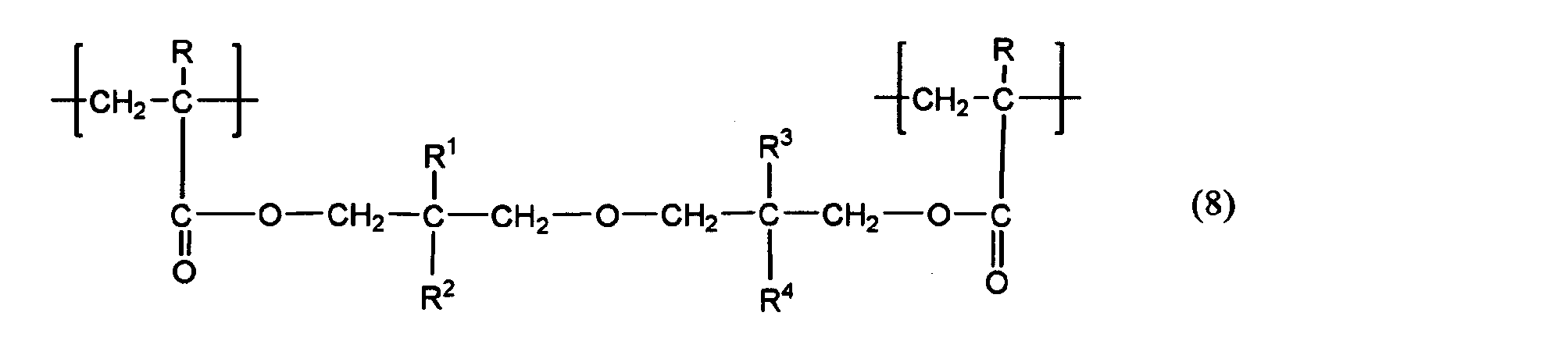
式中、Rは水素原子またはメチル基を表す。R1、R2、R3、R4はそれぞれ独立に炭素数1~6の直鎖または分岐したアルキル基を示す。ただし、R1、R2、R3、R4がすべてメチル基の場合を除く。
[10]
上記式(8)において、R1およびR2におけるアルキル基の組み合わせとR3およびR4におけるアルキル基の組み合わせとが互いに異なる[9]に記載の硬化物。
[11]
[4]~[7]のいずれかに記載の組成物を含有する接着剤。
[12]
[4]~[7]のいずれかに記載の組成物を含有するインキ。
[13]
[4]~[7]のいずれかに記載の組成物を含有する塗料。
[14]
下記一般式(2)で示されるヒンダードポリオールとアクリル酸またはメタクリル酸を脱水縮合反応させることにより下記一般式(1)で示されるジアクリレート化合物を得るジアクリレート化合物の製造方法。

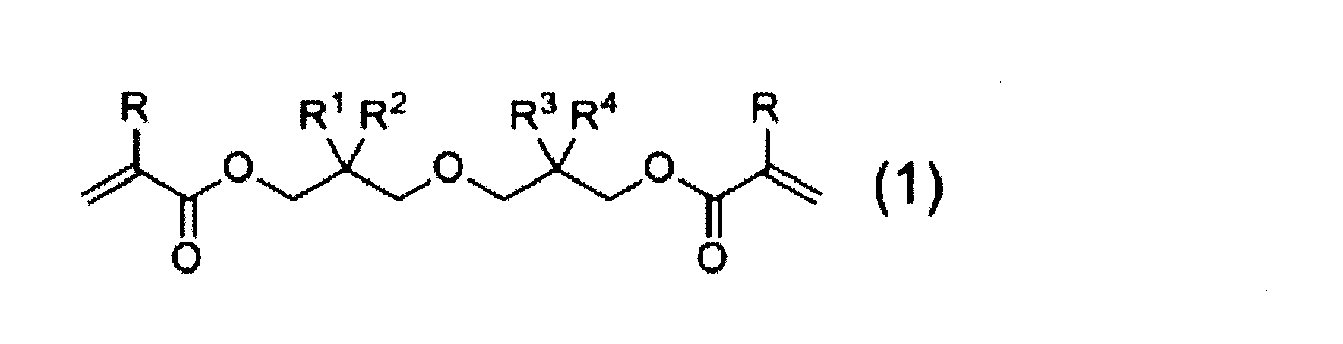
式中、R1、R2、R3、R4はそれぞれ独立に炭素数1~6の直鎖または分岐したアルキル基を示す。ただし、R1、R2、R3、R4がすべてメチル基の場合を除く。Rは水素原子またはメチル基を表す。
[15]
下記一般式(2)で示されるヒンダードポリオールと炭素数1~4のアルキル基を有するアクリル酸アルキルエステルまたはメタクリル酸アルキルエステルとをエステル交換反応させることにより下記一般式(1)で示されるジアクリレート化合物を得るジアクリレート化合物の製造方法。

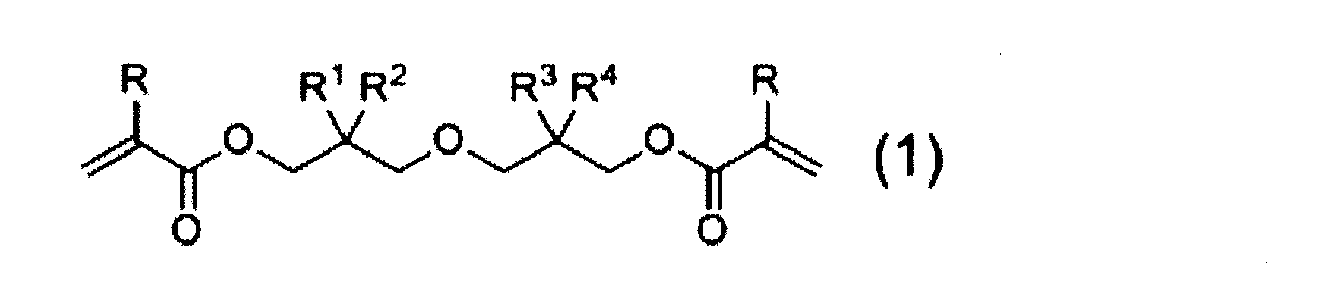
式中、R1、R2、R3、R4はそれぞれ独立に炭素数1~6の直鎖または分岐したアルキル基を示す。ただし、R1、R2、R3、R4がすべてメチル基の場合を除く。Rは水素原子またはメチル基を表す。
本発明のジアクリレート化合物は、下記一般式(1)で示される。なお、本明細書中で「ジアクリレート化合物」とは、アクリレート部位をメタクリレートで置換したものも含む。
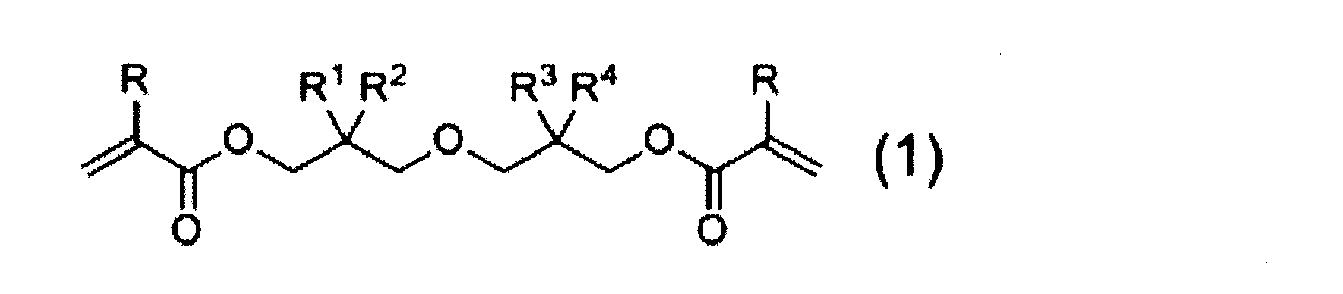
式(1)においてRは水素原子またはメチル基を示し、R1、R2、R3、R4はそれぞれ独立に炭素数1~6の直鎖または分岐したアルキル基を示す。ただし、R1、R2、R3、R4がすべてメチル基の場合を除く。上記アルキル基としては、メチル基、エチル基、n-プロピル基、イソプロピル基、n-ブチル基、sec-ブチル基、イソブチル基、tert-ブチル基、n-ペンチル基、n-ヘキシル基等が挙げられる。
式(1)で示されるジアクリレート化合物としては、R1およびR2におけるアルキル基の組み合わせとR3およびR4におけるアルキル基の組み合わせとが互いに異なることが好ましく、R1及びR2が共にメチル基であることがより好ましく、R1とR2が共にメチル基であり、R3とR4がメチル基とn-プロピル基の組み合わせ、あるいは、R1とR2が共にメチル基であり、R3とR4がエチル基とn-ブチル基の組み合わせが更に好ましい。このような組み合わせを有するジアクリレート化合物としては、2-((3-(アクリロイルオキシ)-2,2-ジメチルプロポキシ)メチル)-2-エチルヘキシル アクリレート、2-((3-(アクリロイルオキシ)-2,2-ジメチルプロポキシ)メチル)-2-メチルペンチル アクリレート、2-((3-(メタクリロイルオキシ)-2,2-ジメチルプロポキシ)メチル)-2-エチルヘキシル メタクリレート、2-((3-(メタクリロイルオキシ)-2,2-ジメチルプロポキシ)メチル)-2-メチルペンチル メタクリレート等が挙げられる。
式(1)で示されるジアクリレート化合物は、下記一般式(2)で示されるヒンダードポリオールとアクリル酸またはメタクリル酸の脱水縮合反応、または下記一般式(2)で示されるヒンダードポリオールとアクリル酸アルキルエステルまたはメタクリル酸アルキルエステルとのエステル交換反応によって合成される。
脱水縮合反応の場合、アクリル酸またはメタクリル酸の使用量は、式(2)で示されるポリオール1モルに対し2~10モルの範囲が好ましく、2~5モルがより好ましい。また、エステル交換反応の場合、アクリル酸アルキルエステルまたはメタクリル酸アルキルエステルの使用量は、式(2)で示されるポリオール1モルに対し2~20モルの範囲が好ましく、2~8モルがより好ましい。

式(2)において、R1、R2、R3、R4は式(1)のものと同じである。
式(3)において、R1、R2、R3、R4は式(1)のものと同じである。

式(4)において、R1、R2、R3、R4は式(1)のものと同じである。
酸触媒は単独または2種以上を組み合わせて用いてもよい。酸触媒の使用量は式(2)で示されるポリオール1モルに対して0.1~10モル%が好ましく、1~5モル%がより好ましい。
有機溶媒は単独または2種以上を混合して用いてもよい。有機溶媒の使用量は、生成する水の理論量と使用溶媒との共沸組成比から算出される共沸脱水に必要な溶媒の最低必要量を使用すればよい。またディーン・スターク装置を用いれば共沸溶媒を連続的に反応容器へ返送しながら脱水できるため、使用量は理論値より減らすことが可能である。より簡易的には、有機溶媒の使用量は、使用するポリオールおよびアクリル酸またはメタクリル酸の総質量に対して好ましくは20~200質量%、より好ましくは30~100質量%である。
脱水縮合反応に用いる重合禁止剤の使用量はアクリル酸またはメタクリル酸に対して好ましくは0.001~5質量%、より好ましくは0.01~1質量%である。重合禁止剤は脱水縮合反応後に塩基性水溶液を用いて洗浄することによって除いてもよいし、除かなくてもよい。
エステル交換反応に用いるアクリル酸アルキルエステルまたはメタクリル酸アルキルエステルとしては、公知の炭素数1~4のアルキル基を有するアクリル酸アルキルエステルまたはメタクリル酸アルキルエステルを使用することができる。上記アルキル基としては、メチル基、エチル基、n-プロピル基、イソプロピル基およびn-ブチル等が挙げられる。これらの中で、生成するアルコールの留去が容易なことからアクリル酸メチルおよびメタクリル酸メチルが好ましい。
また、反応で生じる低級アルコールを反応系中から除くことで反応を速やかに進行させることができるため、反応器としては蒸留塔を備えたものを用い、低級アルコールを留去しながら反応を行うのが好適である。
一方、エステル交換反応に用いる塩基触媒としては、リチウムメトキシド、ナトリウムメトキシド、カリウムメトキシド、リチウムエトキシド、ナトリウムエトキシドおよびカリウムエトキシドなどが挙げられる。
触媒は単独で用いても、または支障がない範囲で適宜、2種以上を組み合わせて用いてもよい。
エステル交換反応に用いる重合禁止剤の使用量はアクリル酸アルキルエステルまたはメタクリル酸アルキルエステルに対して好ましくは0.001~3質量%、より好ましくは0.005~1質量%である。重合禁止剤はエステル交換反応後に塩基性水溶液を用いて洗浄することによって除いてもよいし、除かなくてもよい。
また、本発明のジアクリレート化合物の2-((3-(アクリロイルオキシ)-2,2-ジメチルプロポキシ)メチル)-2-エチルヘキシル アクリレート(NBDA)は、皮膚一次刺激性で軽度の刺激性に分類されるものであることが分かった。
本発明の組成物は、式(1)で示されるジアクリレート化合物と、他の重合性モノマー、重合性オリゴマーおよびラジカル重合開始剤から選ばれる少なくとも1つとを含有する。
また、メタクリル系モノマーとしては、例えばメチルメタクリレート、エチルメタクリレート、n-ブチルメタクリレート、n-ヘキシルメタクリレート、2-エチルヘキシルメタクリレート、ラウリルメタクリレート、ジシクロペンテニルメタクリレート、ジシクロペンタニルメタクリレート、イソボルニルメタクリレート、テトラフルフリルメタクリレート、フェノキシエチルメタクリレート、2-ヒドロキシエチルメタクリレート、ポリプロピレングリコールジメタクリレート、トリメチロールプロパントリメタクリレート、ペンタエリスリトールテトラメタクリレート、ジトリメチロールプロパンテトラメタクリレートおよびジペンタエリスリトールヘキサメタクリレート等が挙げられる。
これらの中で、優れた力学的特性およびUV硬化性の観点から、ウレタンアクリレートオリゴマーおよびウレタンメタクリレートオリゴマーから選ばれる少なくとも1つが好ましい。
本発明で用いられるウレタンアクリレートオリゴマーおよびウレタンメタクリレートオリゴマーとしては、特に限定されないが、ポリオール、ポリイソシアネートおよび水酸基含有アクリレートから得られるウレタンアクリレートオリゴマー、ならびにポリオール、ポリイソシアネートおよび水酸基含有メタクリレートから得られるウレタンメタクリレートオリゴマーが好ましく、両末端にそれぞれ1個のアクリロイル基を有するウレタンアクリレートオリゴマー(2官能ウレタンアクリレートオリゴマー)および両末端にそれぞれ1個のメタクリロイル基を有するウレタンメタクリレートオリゴマー(2官能ウレタンメタクリレートオリゴマー)がより好ましく、例えば、下記一般式(7)で示されるもの等が挙げられる。

上記式(7)において、R5は水酸基含有アクリレートまたは水酸基含有メタクリレートの残基、R6はポリイソシアネートの残基、R7はポリオールの残基、mは1~20の整数である。複数のR5、R6、およびR7は、それぞれ同一でも異なっていてもよい。
上記の「残基」とは、上記式(7)で示されるウレタンアクリレートオリゴマーおよびウレタンメタクリレートオリゴマーの材料の構造において、ウレタン結合を形成する官能基を除いた部分のことであり、具体的には、水酸基含有アクリレートおよび水酸基含有メタクリレートではヒドロキシル基を除いた部分(R5で表される。)、ポリイソシアネートではイソシアネート基を除いた部分(R6で表される。)、ポリオールではヒドロキシル基を除いた部分(R7で表される。)である。
ウレタンアクリレートオリゴマーおよびウレタンメタクリレートオリゴマーを得る方法としては、従来公知の方法を特に制限なく用いることができる。例えば、ポリオールにポリイソシアネートを、イソシアネート基が過剰となるような条件下(原料として用いるポリオール1モル当量に対し、ポリイソシアネートが1モル当量よりも多い条件下)で反応させた後、更に水酸基含有アクリレートおよび水酸基含有メタクリレートから選ばれる少なくとも1つを反応させて得られる方法等が挙げられる。
水酸基含有メタクリレートとしては、2-ヒドロキシエチルメタクリレート、2-ヒドロキシプロピルメタクリレート、2-ヒドロキシブチルメタクリレート、4-ヒドロキシブチルメタクリレート、2-ヒドロキシ-3-フェノキシプロピルメタクリレート、グリセリンジメタクリレート、トリメチロールプロパンジメタクリレート、ペンタエリスリトールトリメタクリレート、ジペンタエリスリトールペンタメタクリレート等が挙げられる。
水酸基含有アクリレートおよび水酸基含有メタクリレートは、それぞれ単独または2種以上を組み合わせて用いてもよい。また、水酸基含有アクリレートおよび水酸基含有メタクリレートを組み合わせて用いてもよい。
ポリイソシアネートとしては、メチレンジイソシアネート、プロピレンジイソシアネート、リジンジイソシアネート、トリメチルヘキサメチレンジイソシアネート、ヘキサメチレンジイソシアネート等の脂肪族ジイソシアネート;シクロヘキサンジイソシアネート、メチルシクロヘキサンジイソシアネート、イソホロンジイソシアネート、ジシクロヘキシルメタンジイソシアネート、イソプロピリデンジシクロヘキシルジイソシアネート等の脂環族ジイソシアネート;α,α,α’,α’-テトラメチルキシリレンジイソシアネート等の芳香環を有する脂肪族ジイソシアネート;トリレンジイソシアネート、キシリレンジイソシアネート、メチレンジフェニルジイソシアネート、フェニレンジイソシアネート、ナフタレンジイソシアネート、トリジンジイソシアネート等の芳香族ジイソシアネート等が挙げられる。これらの中で、無黄変性の観点から、脂肪族ジイソシアネートおよび脂環族ジイソシアネートが好ましい。ポリイソシアネートは、単独または2種以上を組み合わせて用いてもよい。
ポリオールとしては、一般的に芳香族、脂肪族および脂環式のポリオールのほか、ポリエステルポリオール、ポリエーテルポリオール、ポリカーボネートポリオール等が使用される。
脂肪族および脂環式のポリオールとしては、エチレングリコール、プロピレングリコール、トリメチレングリコール、1,4-ブチレングリコール、1,3-ブチレングリコール、1,2-ブチレングリコール、1,5-ペンタンジオール、3-メチル-1,5-ペンタンジオール、2,2-ジメチル-1,3-プロパンジオール、1,6-ヘキサンジオール、2,2-ジエチル-1,3-プロパンジオール、3,3-ジメチロールヘプタン、2-エチル-2-ブチル-1,3-プロパンジオール、1,12-ドデカンジオール、1,18-オクタデカンジオール等の脂肪族ジオール;1,4-シクロヘキサンジオール、1,4-シクロヘキサンジメタノール、水添ビスフェノールA等の脂環族ジオール;グリセリン、2-メチル-2-ヒドロキシメチル-1,3-プロパンジオール、2,4-ジヒドロキシ-3-ヒドロキシメチルペンタン、1,2,6-ヘキサントリオール、トリメチロールエタン、トリメチロールプロパン、2-メチル-2-ヒドロキシメチル-1,3-プロパンジオール、2,4-ジヒドロキシ-3-(ヒドロキシメチル)ペンタン、2,2-ビス(ヒドロキシメチル)-3-ブタノール等の脂肪族トリオール;テトラメチロールメタン、ペンタエリスリトール、ジペンタエリスリトール、キシリトール等の水酸基を4つ以上有するポリオール等が挙げられる。これらの中で、オリゴマーを低粘度とする観点から、脂肪族ポリオールおよび脂環族ポリオールが好ましい。
ポリエーテルポリオールとしては、ポリエチレングリコール、ポリプロピレングリコール、ポリテトラメチレングリコール、ポリヘプタメチレングリコール等のポリアルキレングリコールのほか、前記ポリオールまたはフェノール類とアルキレンオキサイドとの反応により得られるポリオキシアルキレン変性ポリオール等が挙げられる。
ポリカーボネートポリオールとしては前記ポリオールとジアルキルカーボネート、アルキレンカーボネート、ジフェニルカーボネート等のカーボネート化合物との反応により得られるものが挙げられる。
これらの中で、柔軟性、接着性等の観点から、ポリエステルポリオールおよびポリエーテルポリオールから選ばれる少なくとも1つが好ましく、ポリエーテルポリオールがより好ましい。ポリオールは、単独または2種以上を組み合わせて用いてもよい。
ラジカル重合開始剤としては、一般に重合開始剤として用いられるものであれば特に限定されないが、光ラジカル重合開始剤および熱ラジカル開始剤を使用することができ、光ラジカル重合開始剤を使用することが好ましい。光ラジカル重合開始剤としては、例えばアセトフェノン、p-アニシル、ベンゾイン、ベンゾインメチルエーテル、ベンゾインイソブチルエーテル、ジベンゾイルおよび1-ヒドロキシシクロヘキシルフェニルケトン等が挙げられる。熱ラジカル重合開始剤としては、2,2’-アゾビス(イソブチロニトリル)、2,2’-アゾビス(2,4-ジメチルバレロニトリル)および過酸化ベンゾイル等が挙げられる。ラジカル重合開始剤は単独または2種以上を組み合わせて用いてもよい。
本発明の硬化物は上記組成物を硬化して得られる。本発明の硬化物を得るためには、本発明の式(1)で示されるジアクリレート化合物に、他の重合性モノマー、重合性オリゴマーおよびラジカル重合開始剤から選ばれる1つ以上を加えた組成物を調製し、光または熱ラジカル重合させる方法がある。
本発明の硬化物は、式(1)で示されるジアクリレート化合物の単独重合体であってもよく、式(1)で示されるジアクリレート化合物と他の重合性モノマーおよび重合性オリゴマーから選ばれる少なくとも1つとの共重合体であってもよい。これらの中で、柔軟性、耐屈曲性、低カール性、および低硬化収縮のバランスに優れた物性を与える観点から、式(1)で示されるジアクリレート化合物に由来する構成単位と、ウレタンアクリレートオリゴマーおよびウレタンメタクリレートオリゴマーから選ばれる少なくとも1つに由来する構成単位とを含有する共重合体が好ましい。
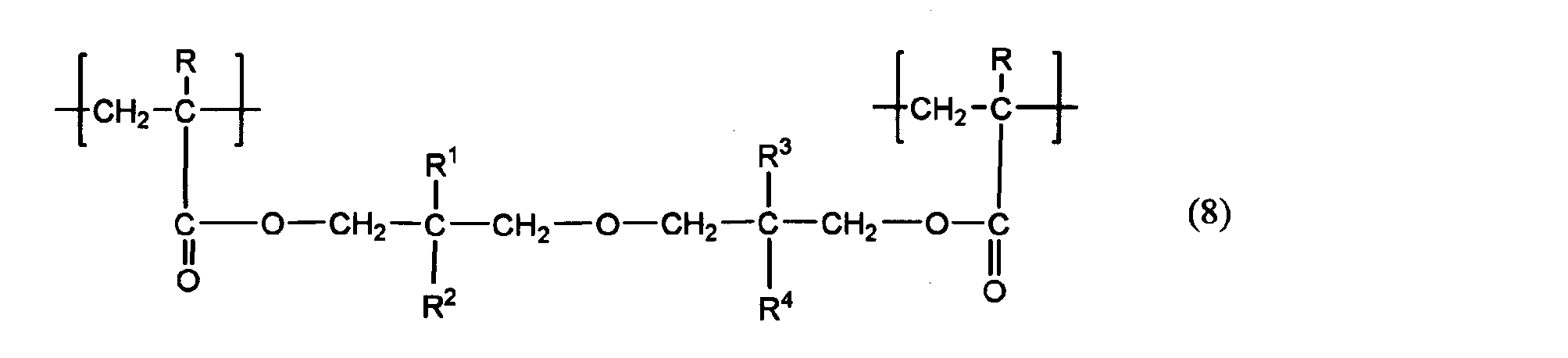
式(8)において、Rは水素原子またはメチル基を表す。R1、R2、R3、R4はそれぞれ独立に炭素数1~6の直鎖または分岐したアルキル基を示す。ただし、R1、R2、R3、R4がすべてメチル基の場合を除く。上記アルキル基としては、式(1)において述べたものと同じである。
式(8)において、R1およびR2におけるアルキル基の組み合わせとR3およびR4におけるアルキル基の組み合わせとが互いに異なることが好ましく、R1及びR2が共にメチル基であることがより好ましく、R1とR2が共にメチル基であり、R3とR4がメチル基とn-プロピル基の組み合わせ、あるいは、R1とR2が共にメチル基であり、R3とR4がエチル基とn-ブチル基の組み合わせが更に好ましい。

上記式(9)において、R6はウレタンアクリレートオリゴマーおよびウレタンメタクリレートオリゴマーから選ばれる少なくとも1つの材料であるポリイソシアネートの構造において、ウレタン結合を形成するイソシアネート基を除いた基、R7はウレタンアクリレートオリゴマーおよびウレタンメタクリレートオリゴマーから選ばれる少なくとも1つの材料であるポリオールの構造において、ウレタン結合を形成するヒドロキシル基を除いた基、R8はウレタンアクリレートオリゴマーの材料である水酸基含有アクリレートの構造において、アクリロイル基とウレタン結合を形成するヒドロキシル基とを除いた基、またはウレタンメタクリレートオリゴマーの材料である水酸基含有メタクリレートの構造において、メタクリロイル基とウレタン結合を形成するヒドロキシル基とを除いた基を表す。R9は水素原子またはメチル基を表す。mは1~20の整数である。複数のR6、R7、R8、およびR9は、それぞれ同一でも異なっていてもよい。
本発明の硬化物は、前記組成物に活性エネルギー線を照射および/または加熱することにより得ることができる。活性エネルギー線としては、赤外線、可視光線、紫外線、X線、電子線、α線、β線、γ線等が挙げられる。装置コストや生産性の観点から電子線又は紫外線を利用することが好ましく、光源としては、電子線照射装置、超高圧水銀ランプ、高圧水銀ランプ、中圧水銀ランプ、低圧水銀ランプ、メタルハライドランプ、Arレーザー、He-Cdレーザー、固体レーザー、キセノンランプ、高周波誘導水銀ランプ、太陽光等が好適である。
活性エネルギー線の照射量は、活性エネルギー線の種類に応じて適宜に選ぶことができる。例えば、電子線照射により硬化する場合には、その照射量は1~15Mradであることが好ましい。また、紫外線照射により硬化する場合には、50~2000mJ/cm2であることが好ましい。
加熱により硬化する場合の硬化温度は、好ましくは30~150℃であり、より好ましくは40~120℃、更に好ましくは50~100℃である。
硬化する際には、空気、窒素やアルゴン等の不活性ガスのいずれの雰囲気下であってもよいが、酸素阻害を抑制するため不活性ガス下またはフィルムやガラスと金属金型との間の密閉空間で照射するのが望ましい。
本発明の硬化物の厚さは、目的とされる用途に応じて適宜決められるが、好ましくは1~100μm、より好ましくは3~70μmである。
本発明の硬化物は、前記組成物を基材上に塗布後に硬化することにより得ることが好ましい。基材としては、例えば、ポリエチレンテレフタレートやポリブチレンテレフタレート等のポリエステル、ポリプロピレンやポリエチレン等のポリオレフィン、ナイロン、ポリカーボネート、アクリル樹脂、メタクリル樹脂等の種々のプラスチック、ガラス又は金属で形成された板等の種々の形態の物品が挙げられる。
塗布方法としては特に限定は無く、ダイコーター、コンマコーター、カーテンコーター、グラビアコーター、ロールコーター、スプレーコーター、スピンコーター、インクジェットなど、従来公知の方法を用いることができる。
生成物の同定は1HNMRおよび13CNMRスペクトルによってそれぞれ500MHz、125MHzで行った。測定溶媒はCDCl3を使用した。測定装置は日本電子株式会社製JNM-ECA500を用いた。
2-(5-ブチル-5-エチル-1,3-ジオキサン-2-イル)-2-メチルプロパン-1-オールの合成
2,2-ジメチル-3-ヒドロキシプロパナール73.6g、2-ブチル-2-エチル-1,3-プロパンジオール111.8g、ベンゼン705gと粒状ナフィオン(商品名「NR-50」、シグマアルドリッチ社製)3.0gとを2Lの丸底フラスコに入れ、常圧下で生成する水をベンゼンと共沸させながら、ディーン・スターク装置を用いて系外に抜き出して水の留出が止まるまで反応させた。反応生成物をろ過、濃縮後、減圧蒸留することにより、目的物を99%の収率で得た。上記反応における反応式を式(5)に示す。

金属成分の担体として用いた酸化ジルコニウムを下記の方法で調製した。
酸化ジルコニウム(ZrO2)換算で25質量%の濃度のオキシ硝酸ジルコニウム水溶液505gに、撹拌しながら28%アンモニア水15.5gを滴下することにより白色沈殿物を得た。これを濾過し、イオン交換水で洗浄した後に、110℃、10時間乾燥して含水酸化ジルコニウムを得た。これを磁製坩堝に収容し、電気炉を用いて空気中で400℃、3時間の焼成処理を行った後、メノウ乳鉢で粉砕して粉末状酸化ジルコニウム(以下、「担体A」と表記する。)を得た。担体AのBET比表面積(窒素吸着法により測定。)は102.7m2/gであった。
パラジウムを特定金属成分とする触媒を下記の方法で調製した。
50gの担体Aに0.66質量%塩化パラジウム-0.44質量%塩化ナトリウム水溶液を添加し、担体上に金属成分を吸着させた。そこにホルムアルデヒド-水酸化ナトリウム水溶液を注加して吸着した金属成分を瞬時に還元した。その後、イオン交換水により触媒を洗浄し、乾燥することにより1.0質量%パラジウム担持酸化ジルコニウム触媒(以下、「触媒A」と表記する。)を調製した。
2-エチル-2-(3-ヒドロキシ-2,2-ジメチル-プロポキシメチル)-ヘキサン-1-オールの合成
500mLのSUS製反応器内に、触媒A3.0g、合成例1で得た2-(5-ブチル-5-エチル-1,3-ジオキサン-2-イル)-2-メチルプロパン-1-オール60.0g、及び1,4-ジオキサン240gを入れ、反応器内を窒素ガスで置換した。その後、反応器内に水素ガスを8.5MPaまで充填し、反応温度である230℃へ昇温して13MPaとした。反応圧が13MPaで維持するように水素を充填しながら230℃で5時間反応させた。その後に冷却して反応器の内容物をろ過して触媒を分離した後に、減圧蒸留精製することにより、目的物を得た。上記反応における反応式を式(6)に示す。

2-((3-(アクリロイルオキシ)-2,2-ジメチルプロポキシ)メチル)-2-エチルヘキシル アクリレート(NBDA)の合成
2-エチル-2-(3-ヒドロキシ-2,2-ジメチル-プロポキシメチル)-ヘキサン-1-オール(30.0g、122mmol)、アクリル酸メチル(42.2g、487mmol)ジメチル錫ジクロリド(268mg、1.2mmol)、ナトリウムメトキシド(67mg、1.2mmol)、p-メトキシフェノール(91mg、0.7mmol)、ハイドロキノン(39mg、0.4mmol)を撹拌子、温度計、ビグリューカラムを備えたガラス製反応器中で混合した。内温85-105℃で加温し、アクリル酸メチルとの共沸でメタノールを系内から留去しながら31時間加熱撹拌した。塩基性水溶液を用いて洗浄することにより、触媒と重合禁止剤を除いたのち、減圧下で未反応のアクリル酸メチルを留去して目的物を得た(収量37.3g、純度94.0%、99mmol、収率81%)。
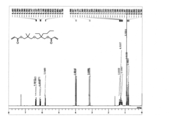
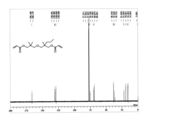
実施例1で得られた物を1HNMRおよび13CNMRスペクトルで同定したところ以下化学構造式で示される新規化合物であった。なお、該化合物を本明細書中でNBDAと称することがある。

NBDA: 油状、無色。
1H NMR δ 0.80 (t, -CH 3 , 3H), 0.88 (t, -CH 3 , 3H), 0.93 (s, -C(CH 3 ) 2 , 6H) 1.17-1.36(m, -(CH 2 ) 3 CH3 & -CH 2 CH3, 8H), 3.13 (s, -CH 2 O-, 2H), 3.19 (s, -CH 2 O-, 2H), 3.96 (s, -COOCH 2 -, 2H), 4.01 (s, -COOCH 2 , 2H), 5.81 (dd, H a ’, 1H), 5.81 (dd, H a , 1H), 6.11 (dd, H b ’, 1H), 6.12 (dd, H b , 1H), 6.37 (dd, H c ’, 1H), 6.38 (dd, H c , 1H).
13C NMR δ. 7.32, 14.06, 21.95, 23.51, 24.15, 24.92, 30.93, 31.59, 35.68, 40.45, 66.75, 69.87, 73.26, 76.99, 128.61, 128.69, 130.28, 130.35, 166.16(×2C).
2-((3-(アクリロイルオキシ)-2,2-ジメチルプロポキシ)メチル)-2-メチルペンチル アクリレート(NMDA)の合成
2-(3-ヒドロキシ-2,2-ジメチル-プロポキシメチル)-2-メチル-ペンタン-1-オール(38.0g、174mmol)、アクリル酸メチル(63.9g、732mmol)ジメチル錫ジクロリド(1.2g、5.5mmol)、ナトリウムメトキシド(300mg、0.55mmol)、p-メトキシフェノール(189mg、1.5mmol)を撹拌子、温度計、ビグリューカラムを備えたガラス製反応器中で混合した。内温85-105℃で加温し、アクリル酸メチルとの共沸でメタノールを系内から留去しながら20時間加熱撹拌した。塩基性水溶液を用いた洗浄で触媒と重合禁止剤を除いたのち、減圧下で未反応のアクリル酸メチルを留去して目的物を得た(収量51.5g、純度96.5%、152mmol、収率87%)。
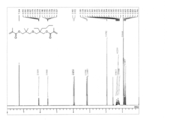
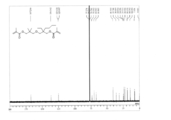
実施例2で得られた物を1HNMRおよび13CNMRスペクトルで同定したところ以下化学構造式で示される新規化合物であった。なお、該化合物を本明細書中でNMDAと称することがある。

NMDA: 油状、無色。
1H NMR δ 0.87-0.90 (m, -CH 3 & -(CH2)2CH 3 , 6H), 0.93 (s, -C(CH 3 ) 2 , 6H), 1.24-1.30 (m, -(CH 2 ) 2 CH3, 4H), 3.14 (s, -CH 2 O-, 2H), 3.18 (d, -CH 2 O-, 2H), 3.96 (s, -COOCH 2 -, 2H), 3.99 (d, -COOCH 2 , 2H), 5.82 (dd, Ha’, 1H), 5.82 (dd, Ha, 1H), 6.11 (dd, Hb’, 1H), 6.13 (dd, Hb, 1H), 6.38 (dd, Hc’, 1H), 6.39 (dd, Hc, 1H).
13C NMR δ 14.96, 16.49, 19.40, 21.93, 21.95, 35.72, 37.25, 38.25, 68.80, 69.88, 75.36, 77.04, 128.59, 128.64, 130.36, 130.39, 166.18, 166.20.
2-((3-(メタクリロイルオキシ)-2,2-ジメチルプロポキシ)メチル)-2-エチルヘキシル メタクリレート(NBDM)の合成
2-エチル-2-(3-ヒドロキシ-2,2-ジメチル-プロポキシメチル)-ヘキサン-1-オール(20.0g、81mmol)、メタクリル酸メチル(32.7g、324mmol)ジメチル錫ジクロリド(533mg、2.4mmol)、ナトリウムメトキシド(134mg、2.4mmol)、p-メトキシフェノール(66mg、0.5mmol)、ハイドロキノン(28mg、0.3mmol)を撹拌子、温度計、ビグリューカラムを備えたガラス製反応器中で混合した。内温100-115℃で加温し、メタクリル酸メチルとの共沸でメタノールを系内から留去しながら24時間加熱撹拌した。塩基性水溶液を用いて洗浄することにより、触媒と重合禁止剤を除いたのち、減圧下で未反応のメタクリル酸メチルを留去して目的物を得た(収量29.6g、純度93.6%、72mmol、収率89%)。
実施例3で得られた物を1HNMRおよび13CNMRスペクトルで同定したところ以下化学構造式で示される新規化合物であった。なお、該化合物を本明細書中でNBDMと称することがある。

NBDM: 油状、無色。
1H NMR δ 0.81 (t, -CH 3 , 3H), 0.88 (t, -CH 3 , 3H), 0.93 (s, -C(CH 3 ) 2 , 6H) 1.17-1.39(m, -(CH 2 ) 3 CH3 & -CH 2 CH3, 8H),1.94(s,C(CH3)2,6H), 3.14 (s, -CH 2 O-, 2H), 3.19 (s, -CH 2 O-, 2H), 3.93 (s, -COOCH 2 -, 2H), 3.98 (s, -COOCH 2 , 2H), 5.52-5.55 (m, H a & H a’ 2H), 6.07-6.09 (m, H b & H b ’, 2H).
13C NMR δ. 7.33, 14.05, 18.35, 18.37, 22.00, 23.52, 24.26, 24.93, 31.02, 35.74, 40.52, 66.87, 69.99(×2C), 73.33, 125.10, 125.13, 136.56, 167.29.
2-((3-(メタクリロイルオキシ)-2,2-ジメチルプロポキシ)メチル)-2-エチルヘキシル メタクリレート(NBDM)の合成
2-エチル-2-(3-ヒドロキシ-2,2-ジメチル-プロポキシメチル)-ヘキサン-1-オール(20.0g、81mmol)、メタクリル酸(17.8g、200mmol)、p-トルエンスルホン酸一水和物(750mg、4mmol)、p-メトキシフェノール(90mg、0.7mmol)、シクロヘキサン(25g)を撹拌子、温度計、ビグリューカラム、ディーン・スターク装置を備えたガラス製反応器中で混合した。内温90-105℃で加温し、シクロヘキサンとの共沸で水を系内から留去しながら10時間加熱撹拌した。シクロヘキサンは連続的に反応器に返送した。塩基性水溶液を用いて洗浄することにより、触媒と未反応のメタクリル酸および重合禁止剤を除いたのち、減圧下でシクロヘキサンを留去して目的物を得た(収量30.5g、純度93.9%、72mmol、収率96%)。実施例3’で得られた物を1HNMRおよび13CNMRスペクトルで同定したところ実施例3と同じ構造を有する化合物であることを確認した。
NDA:ネオペンチルグリコールジアクリレート(東京化成工業株式会社製)
HDDA:1,6-ヘキサンジオールジアクリレート(東京化成工業株式会社製)
HDDM:1,6-ヘキサンジオールジメタクリレート(東京化成工業株式会社製)
UV-3300B:2官能ウレタンアクリレートオリゴマー 商品名「紫光 UV-3300B」(日本合成株式会社製)
HCPK:1-ヒドロキシシクロヘキシルフェニルケトン(ラジカル重合開始剤、和光純薬工業株式会社製)
(硬化収縮率,%)=[{(硬化物比重)-(硬化前比重)}/(硬化物比重)]×100 として算出。
実施例1にて製造されたNBDA(4.5g)に対して、重合開始剤1-ヒドロキシシクロヘキシルフェニルケトン(HCPK)5質量%(225mg)添加し、均一に溶解させた。真空ポンプにて脱気を行い、モノマー組成物とした。得られたモノマー組成物を以下の方法で硬化した。
1)1mm厚ガラス板、100μmPETフィルム、50mm×50mmをくりぬいた0.4mm厚SUS型の順に重ね、SUS型の中にモノマー組成物を流し込んだ。さらにPETフィルム、ガラス板を重ね、固定した後に紫外線照射により硬化させた。
2)バーコーターを用いて0.5mm厚ポリカーボネート板上にモノマー組成物を膜厚50μmで塗布し、紫外線照射によって硬化させた。
3)2)と同様にして100μmポリカーボネートフィルム上にモノマー組成物を膜厚50μmで塗布し、紫外線照射によって硬化させた。
得られた硬化物の各種物性を測定したところ、硬化収縮率7.0%、耐屈曲性4mm、カール性7.5mm、鉛筆硬度2Hであった。
実施例2にて製造されたNMDA、ネオペンチルグリコールジアクリレート(NDA)、1,6-ヘキサンジオールジアクリレート(HDDA)および実施例1と同様にして合成したジネオペンチルグリコールジアクリレート(dNDA)に対してそれぞれ5質量%の重合開始剤HCPKを添加し実施例4と同様にモノマー組成物の調製、硬化物の作製および各種物性の測定を行った。

実施例3にて製造されたNBDM、1,6-ヘキサンジオールジメタクリレート(HDDM)、および実施例3と同様にして合成したジネオペンチルグリコールジメタクリレート(dNDM)に対してそれぞれ5質量%の重合開始剤HCPKを添加し実施例4と同様にモノマー組成物の調製、硬化物の作製および各種物性の測定を行った。

実施例1にて製造したNBDA2.9g、ウレタンアクリレートオリゴマー2.9gを60℃水浴にて溶解させ、均一とした。HCPK290mgを添加し、溶解させ、真空ポンプを用いて脱気し、組成物とした。実施例4と同様にして組成物を硬化し、得られた硬化物の各種物性を測定したところ、鉛筆硬度6B未満、耐屈曲性3mm未満、カール性0.5mm未満、接着性100/100だった。
実施例2にて製造されたNMDA、NDAおよびHDDAをそれぞれ下記に示す割合でウレタンアクリレートオリゴマーと混合し、均一とした。全樹脂量の5質量%の重合開始剤HCPKを添加し、実施例7と同様に樹脂組成物の調製、硬化物の作製および各種物性の測定を行った。

また該ジアクリレート化合物は種々の硬化性樹脂組成物としても利用することができ、低硬化収縮率、柔軟性、高耐屈曲性および低カール性等の諸物性で良好なバランスを示す硬化物を与える。
上記の特徴を有する本発明の式(1)で示されるジアクリレート化合物および該ジアクリレート化合物を含む組成物は、例えば反応希釈剤や粘度調節剤として塗料、コーティング剤、ハードコート剤、インキ、接着剤、粘着剤、レジスト及び成形材料および表面加工剤等の用途に使用することができる。
Claims (15)
- 下記一般式(1)で示されるジアクリレート化合物。

式中、Rは水素原子またはメチル基を表す。R1、R2、R3、R4はそれぞれ独立に炭素数1~6の直鎖または分岐したアルキル基を示す。ただし、R1、R2、R3、R4がすべてメチル基の場合を除く。 - 上記式(1)において、R1およびR2におけるアルキル基の組み合わせとR3およびR4におけるアルキル基の組み合わせとが互いに異なる請求項1に記載のジアクリレート化合物。
- 上記式(1)において、R1及びR2が共にメチル基である請求項1または2に記載のジアクリレート化合物。
- 請求項1~3のいずれか1つに記載のジアクリレート化合物と、他の重合性モノマー、重合性オリゴマーおよびラジカル重合開始剤から選ばれる少なくとも1つとを含有する組成物。
- ラジカル重合開始剤を含有する請求項4に記載の組成物。
- 光ラジカル重合開始剤を含有する請求項4に記載の組成物。
- ウレタンアクリレートオリゴマーおよびウレタンメタクリレートオリゴマーから選ばれる少なくとも1つを含有する請求項4~6のいずれかに記載の組成物。
- 請求項4~7のいずれかに記載の組成物を硬化して得られる硬化物。
- 下記一般式(8)で示される構成単位を含有する硬化物。
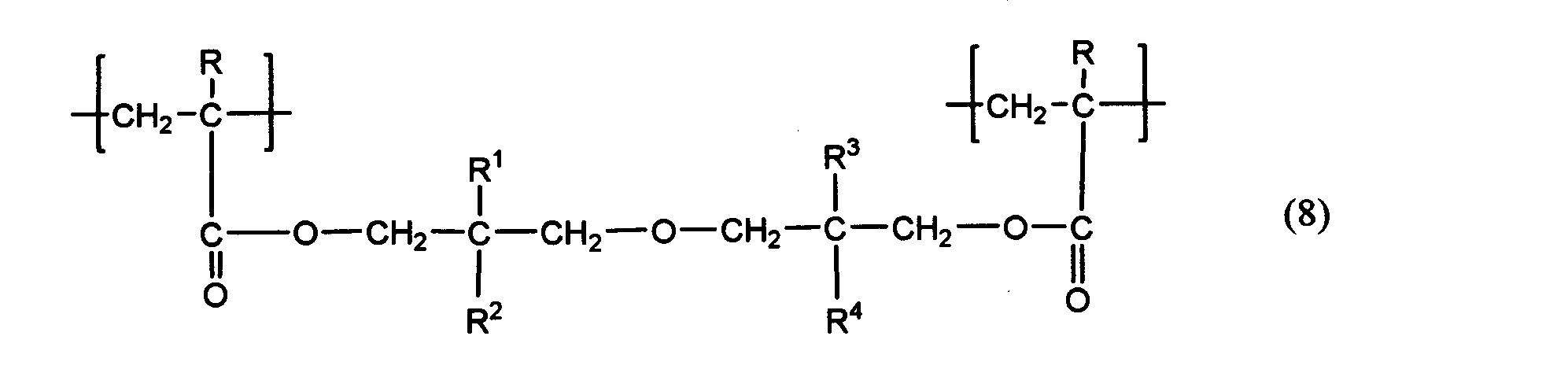
式中、Rは水素原子またはメチル基を表す。R1、R2、R3、R4はそれぞれ独立に炭素数1~6の直鎖または分岐したアルキル基を示す。ただし、R1、R2、R3、R4がすべてメチル基の場合を除く。 - 上記式(8)において、R1およびR2におけるアルキル基の組み合わせとR3およびR4におけるアルキル基の組み合わせとが互いに異なる請求項9に記載の硬化物。
- 請求項4~7のいずれかに記載の組成物を含有する接着剤。
- 請求項4~7のいずれかに記載の組成物を含有するインキ。
- 請求項4~7のいずれかに記載の組成物を含有する塗料。
- 下記一般式(2)で示されるヒンダードポリオールとアクリル酸またはメタクリル酸を脱水縮合反応させることにより下記一般式(1)で示されるジアクリレート化合物を得るジアクリレート化合物の製造方法。


式中、R1、R2、R3、R4はそれぞれ独立に炭素数1~6の直鎖または分岐したアルキル基を示す。ただし、R1、R2、R3、R4がすべてメチル基の場合を除く。Rは水素原子またはメチル基を表す。 - 下記一般式(2)で示されるヒンダードポリオールと炭素数1~4のアルキル基を有するアクリル酸アルキルエステルまたはメタクリル酸アルキルエステルとをエステル交換反応させることにより下記一般式(1)で示されるジアクリレート化合物を得るジアクリレート化合物の製造方法。


式中、R1、R2、R3、R4はそれぞれ独立に炭素数1~6の直鎖または分岐したアルキル基を示す。ただし、R1、R2、R3、R4がすべてメチル基の場合を除く。Rは水素原子またはメチル基を表す。
Priority Applications (5)
| Application Number | Priority Date | Filing Date | Title |
|---|---|---|---|
| EP15816032.5A EP3165543B1 (en) | 2014-07-02 | 2015-07-02 | Diacrylate compound, composition thereof, and cured product thereof |
| JP2016531459A JP6558368B2 (ja) | 2014-07-02 | 2015-07-02 | ジアクリレート化合物およびその組成物ならびにそれらの硬化物 |
| US15/322,031 US10457762B2 (en) | 2014-07-02 | 2015-07-02 | Diacrylate compound, composition thereof, and cured product thereof |
| KR1020167036434A KR20170026388A (ko) | 2014-07-02 | 2015-07-02 | 다이아크릴레이트 화합물과 그의 조성물 및 그들의 경화물 |
| CN201580034950.9A CN106661151B (zh) | 2014-07-02 | 2015-07-02 | 二丙烯酸酯化合物和其组合物以及它们的固化物 |
Applications Claiming Priority (2)
| Application Number | Priority Date | Filing Date | Title |
|---|---|---|---|
| JP2014-137107 | 2014-07-02 | ||
| JP2014137107 | 2014-07-02 |
Publications (1)
| Publication Number | Publication Date |
|---|---|
| WO2016002909A1 true WO2016002909A1 (ja) | 2016-01-07 |
Family
ID=55019435
Family Applications (1)
| Application Number | Title | Priority Date | Filing Date |
|---|---|---|---|
| PCT/JP2015/069207 Ceased WO2016002909A1 (ja) | 2014-07-02 | 2015-07-02 | ジアクリレート化合物およびその組成物ならびにそれらの硬化物 |
Country Status (6)
| Country | Link |
|---|---|
| US (1) | US10457762B2 (ja) |
| EP (1) | EP3165543B1 (ja) |
| JP (1) | JP6558368B2 (ja) |
| KR (1) | KR20170026388A (ja) |
| CN (1) | CN106661151B (ja) |
| WO (1) | WO2016002909A1 (ja) |
Families Citing this family (2)
| Publication number | Priority date | Publication date | Assignee | Title |
|---|---|---|---|---|
| CN110028404B (zh) * | 2018-01-11 | 2023-01-24 | 深圳有为技术控股集团有限公司 | 低粘度丙烯酸酯型化合物及其复配应用体系 |
| CN109445249A (zh) * | 2018-10-23 | 2019-03-08 | 武汉华星光电半导体显示技术有限公司 | 感光树脂组合物、显示设备及感光树脂组合物的制备方法 |
Citations (8)
| Publication number | Priority date | Publication date | Assignee | Title |
|---|---|---|---|---|
| US3287419A (en) * | 1962-08-16 | 1966-11-22 | Eastman Kodak Co | 3, 3'-oxybis |
| JPS4952283A (ja) * | 1972-09-18 | 1974-05-21 | ||
| JPH01221348A (ja) * | 1987-11-26 | 1989-09-04 | Basf Ag | 新規なジ(メタ)アクリラート、その製法及び用途 |
| JPH10204137A (ja) * | 1997-01-24 | 1998-08-04 | Nippon Paint Co Ltd | 高透光性硬化性組成物およびそれを用いた積層体ならびにタッチパネル |
| JP2006169374A (ja) * | 2004-12-15 | 2006-06-29 | Nippon Shokubai Co Ltd | 硬化性組成物 |
| US20120203028A1 (en) * | 2009-10-15 | 2012-08-09 | Bromine Compounds Ltd. | Process for the preparation of pure acrylate esters |
| WO2014104341A1 (ja) * | 2012-12-28 | 2014-07-03 | 三菱瓦斯化学株式会社 | ポリエーテルジオール及びその製造方法 |
| JP2015030677A (ja) * | 2013-07-31 | 2015-02-16 | 三菱瓦斯化学株式会社 | ポリオール−エーテル化合物の製法 |
Family Cites Families (3)
| Publication number | Priority date | Publication date | Assignee | Title |
|---|---|---|---|---|
| US4287330A (en) * | 1975-05-23 | 1981-09-01 | Loctite Corporation | Accelerator for curable compositions |
| US5217760A (en) * | 1990-07-20 | 1993-06-08 | Loctite Corporation | Free radically curable formulations employing dithiolate catalysts |
| JP2010209199A (ja) | 2009-03-10 | 2010-09-24 | Seiko Epson Corp | 光硬化型インク組成物、インクジェット記録方法、記録物、インクセット、インクカートリッジおよび記録装置 |
-
2015
- 2015-07-02 US US15/322,031 patent/US10457762B2/en not_active Expired - Fee Related
- 2015-07-02 JP JP2016531459A patent/JP6558368B2/ja not_active Expired - Fee Related
- 2015-07-02 CN CN201580034950.9A patent/CN106661151B/zh not_active Expired - Fee Related
- 2015-07-02 WO PCT/JP2015/069207 patent/WO2016002909A1/ja not_active Ceased
- 2015-07-02 EP EP15816032.5A patent/EP3165543B1/en not_active Not-in-force
- 2015-07-02 KR KR1020167036434A patent/KR20170026388A/ko not_active Abandoned
Patent Citations (8)
| Publication number | Priority date | Publication date | Assignee | Title |
|---|---|---|---|---|
| US3287419A (en) * | 1962-08-16 | 1966-11-22 | Eastman Kodak Co | 3, 3'-oxybis |
| JPS4952283A (ja) * | 1972-09-18 | 1974-05-21 | ||
| JPH01221348A (ja) * | 1987-11-26 | 1989-09-04 | Basf Ag | 新規なジ(メタ)アクリラート、その製法及び用途 |
| JPH10204137A (ja) * | 1997-01-24 | 1998-08-04 | Nippon Paint Co Ltd | 高透光性硬化性組成物およびそれを用いた積層体ならびにタッチパネル |
| JP2006169374A (ja) * | 2004-12-15 | 2006-06-29 | Nippon Shokubai Co Ltd | 硬化性組成物 |
| US20120203028A1 (en) * | 2009-10-15 | 2012-08-09 | Bromine Compounds Ltd. | Process for the preparation of pure acrylate esters |
| WO2014104341A1 (ja) * | 2012-12-28 | 2014-07-03 | 三菱瓦斯化学株式会社 | ポリエーテルジオール及びその製造方法 |
| JP2015030677A (ja) * | 2013-07-31 | 2015-02-16 | 三菱瓦斯化学株式会社 | ポリオール−エーテル化合物の製法 |
Non-Patent Citations (1)
| Title |
|---|
| BELLO, ANTONIO ET AL.: "Thermotropic liquid crystal polyestersderived from 4,4'- biphenyldicarboxylic acid and oxyalkylenespacers", MACROMOLECULAR SYMPOSIA, vol. 84, 1994, pages 297 - 306, XP055249618 * |
Also Published As
| Publication number | Publication date |
|---|---|
| CN106661151A (zh) | 2017-05-10 |
| EP3165543A4 (en) | 2018-01-03 |
| US20170129980A1 (en) | 2017-05-11 |
| JPWO2016002909A1 (ja) | 2017-04-27 |
| CN106661151B (zh) | 2018-11-06 |
| JP6558368B2 (ja) | 2019-08-14 |
| EP3165543A1 (en) | 2017-05-10 |
| EP3165543B1 (en) | 2018-09-26 |
| US10457762B2 (en) | 2019-10-29 |
| KR20170026388A (ko) | 2017-03-08 |
Similar Documents
| Publication | Publication Date | Title |
|---|---|---|
| US11591425B2 (en) | Curable compositions and uses thereof | |
| EP2415751A1 (en) | Alpha-(unsaturated alkoxyalkyl) acrylate composition and process for production thereof | |
| KR20160004300A (ko) | 우레탄 (메트)아크릴레이트 및 활성 에너지선 경화형 수지 조성물 | |
| JP5561517B2 (ja) | 活性エネルギー線硬化型オリゴマー、活性エネルギー線硬化型樹脂組成物、硬化被膜、およびプラスチックフィルム。 | |
| JP6696423B2 (ja) | ジアクリレート化合物を含む組成物およびその硬化物 | |
| JP6558368B2 (ja) | ジアクリレート化合物およびその組成物ならびにそれらの硬化物 | |
| TWI848908B (zh) | 活性能量射線硬化性樹脂組成物及塗佈劑 | |
| JP6432603B2 (ja) | トリアクリレート化合物及びその製造方法並びに組成物 | |
| JP6425986B2 (ja) | ウレタン(メタ)アクリレート、並びに活性エネルギー線硬化型ウレタン(メタ)アクリレート組成物及びその硬化物 | |
| JPS63152603A (ja) | 光硬化可能な樹脂組成物 | |
| JPH04136041A (ja) | アクリル酸エステル又はメタクリル酸エステルの製造法及び被覆用組成物 | |
| JP2011201937A (ja) | (メタ)アクリル系樹脂、(メタ)アクリル系化合物、(メタ)アクリル系樹脂の製造方法、(メタ)アクリル系化合物の製造方法及び活性エネルギー線硬化型コーティング用樹脂組成物 | |
| JPS62101610A (ja) | 放射線硬化型樹脂組成物 | |
| WO2020137737A1 (ja) | 塗工性に優れる組成物 |
Legal Events
| Date | Code | Title | Description |
|---|---|---|---|
| 121 | Ep: the epo has been informed by wipo that ep was designated in this application |
Ref document number: 15816032 Country of ref document: EP Kind code of ref document: A1 |
|
| ENP | Entry into the national phase |
Ref document number: 2016531459 Country of ref document: JP Kind code of ref document: A |
|
| REEP | Request for entry into the european phase |
Ref document number: 2015816032 Country of ref document: EP |
|
| WWE | Wipo information: entry into national phase |
Ref document number: 2015816032 Country of ref document: EP |
|
| WWE | Wipo information: entry into national phase |
Ref document number: 15322031 Country of ref document: US |
|
| ENP | Entry into the national phase |
Ref document number: 20167036434 Country of ref document: KR Kind code of ref document: A |
|
| NENP | Non-entry into the national phase |
Ref country code: DE |