WO2016103468A1 - Système permettant d'éviter une collision et procédé permettant d'éviter une collision - Google Patents
Système permettant d'éviter une collision et procédé permettant d'éviter une collision Download PDFInfo
- Publication number
- WO2016103468A1 WO2016103468A1 PCT/JP2014/084577 JP2014084577W WO2016103468A1 WO 2016103468 A1 WO2016103468 A1 WO 2016103468A1 JP 2014084577 W JP2014084577 W JP 2014084577W WO 2016103468 A1 WO2016103468 A1 WO 2016103468A1
- Authority
- WO
- WIPO (PCT)
- Prior art keywords
- vehicle
- driver
- alarm
- warning
- state
- Prior art date
- Legal status (The legal status is an assumption and is not a legal conclusion. Google has not performed a legal analysis and makes no representation as to the accuracy of the status listed.)
- Ceased
Links
Images




Classifications
-
- A—HUMAN NECESSITIES
- A61—MEDICAL OR VETERINARY SCIENCE; HYGIENE
- A61B—DIAGNOSIS; SURGERY; IDENTIFICATION
- A61B5/00—Measuring for diagnostic purposes; Identification of persons
- A61B5/16—Devices for psychotechnics; Testing reaction times ; Devices for evaluating the psychological state
- A61B5/18—Devices for psychotechnics; Testing reaction times ; Devices for evaluating the psychological state for vehicle drivers or machine operators
-
- A—HUMAN NECESSITIES
- A61—MEDICAL OR VETERINARY SCIENCE; HYGIENE
- A61B—DIAGNOSIS; SURGERY; IDENTIFICATION
- A61B5/00—Measuring for diagnostic purposes; Identification of persons
- A61B5/48—Other medical applications
- A61B5/4806—Sleep evaluation
- A61B5/4809—Sleep detection, i.e. determining whether a subject is asleep or not
-
- B—PERFORMING OPERATIONS; TRANSPORTING
- B60—VEHICLES IN GENERAL
- B60K—ARRANGEMENT OR MOUNTING OF PROPULSION UNITS OR OF TRANSMISSIONS IN VEHICLES; ARRANGEMENT OR MOUNTING OF PLURAL DIVERSE PRIME-MOVERS IN VEHICLES; AUXILIARY DRIVES FOR VEHICLES; INSTRUMENTATION OR DASHBOARDS FOR VEHICLES; ARRANGEMENTS IN CONNECTION WITH COOLING, AIR INTAKE, GAS EXHAUST OR FUEL SUPPLY OF PROPULSION UNITS IN VEHICLES
- B60K28/00—Safety devices for propulsion-unit control, specially adapted for, or arranged in, vehicles, e.g. preventing fuel supply or ignition in the event of potentially dangerous conditions
- B60K28/02—Safety devices for propulsion-unit control, specially adapted for, or arranged in, vehicles, e.g. preventing fuel supply or ignition in the event of potentially dangerous conditions responsive to conditions relating to the driver
- B60K28/06—Safety devices for propulsion-unit control, specially adapted for, or arranged in, vehicles, e.g. preventing fuel supply or ignition in the event of potentially dangerous conditions responsive to conditions relating to the driver responsive to incapacity of driver
- B60K28/066—Safety devices for propulsion-unit control, specially adapted for, or arranged in, vehicles, e.g. preventing fuel supply or ignition in the event of potentially dangerous conditions responsive to conditions relating to the driver responsive to incapacity of driver actuating a signalling device
-
- B—PERFORMING OPERATIONS; TRANSPORTING
- B60—VEHICLES IN GENERAL
- B60Q—ARRANGEMENT OF SIGNALLING OR LIGHTING DEVICES, THE MOUNTING OR SUPPORTING THEREOF OR CIRCUITS THEREFOR, FOR VEHICLES IN GENERAL
- B60Q1/00—Arrangement of optical signalling or lighting devices, the mounting or supporting thereof or circuits therefor
- B60Q1/26—Arrangement of optical signalling or lighting devices, the mounting or supporting thereof or circuits therefor the devices being primarily intended to indicate the vehicle, or parts thereof, or to give signals, to other traffic
-
- B—PERFORMING OPERATIONS; TRANSPORTING
- B60—VEHICLES IN GENERAL
- B60Q—ARRANGEMENT OF SIGNALLING OR LIGHTING DEVICES, THE MOUNTING OR SUPPORTING THEREOF OR CIRCUITS THEREFOR, FOR VEHICLES IN GENERAL
- B60Q1/00—Arrangement of optical signalling or lighting devices, the mounting or supporting thereof or circuits therefor
- B60Q1/26—Arrangement of optical signalling or lighting devices, the mounting or supporting thereof or circuits therefor the devices being primarily intended to indicate the vehicle, or parts thereof, or to give signals, to other traffic
- B60Q1/50—Arrangement of optical signalling or lighting devices, the mounting or supporting thereof or circuits therefor the devices being primarily intended to indicate the vehicle, or parts thereof, or to give signals, to other traffic for indicating other intentions or conditions, e.g. request for waiting or overtaking
- B60Q1/52—Arrangement of optical signalling or lighting devices, the mounting or supporting thereof or circuits therefor the devices being primarily intended to indicate the vehicle, or parts thereof, or to give signals, to other traffic for indicating other intentions or conditions, e.g. request for waiting or overtaking for indicating emergencies
-
- B—PERFORMING OPERATIONS; TRANSPORTING
- B60—VEHICLES IN GENERAL
- B60Q—ARRANGEMENT OF SIGNALLING OR LIGHTING DEVICES, THE MOUNTING OR SUPPORTING THEREOF OR CIRCUITS THEREFOR, FOR VEHICLES IN GENERAL
- B60Q1/00—Arrangement of optical signalling or lighting devices, the mounting or supporting thereof or circuits therefor
- B60Q1/26—Arrangement of optical signalling or lighting devices, the mounting or supporting thereof or circuits therefor the devices being primarily intended to indicate the vehicle, or parts thereof, or to give signals, to other traffic
- B60Q1/50—Arrangement of optical signalling or lighting devices, the mounting or supporting thereof or circuits therefor the devices being primarily intended to indicate the vehicle, or parts thereof, or to give signals, to other traffic for indicating other intentions or conditions, e.g. request for waiting or overtaking
- B60Q1/525—Arrangement of optical signalling or lighting devices, the mounting or supporting thereof or circuits therefor the devices being primarily intended to indicate the vehicle, or parts thereof, or to give signals, to other traffic for indicating other intentions or conditions, e.g. request for waiting or overtaking automatically indicating risk of collision between vehicles in traffic or with pedestrians, e.g. after risk assessment using the vehicle sensor data
-
- B—PERFORMING OPERATIONS; TRANSPORTING
- B60—VEHICLES IN GENERAL
- B60Q—ARRANGEMENT OF SIGNALLING OR LIGHTING DEVICES, THE MOUNTING OR SUPPORTING THEREOF OR CIRCUITS THEREFOR, FOR VEHICLES IN GENERAL
- B60Q5/00—Arrangement or adaptation of acoustic signal devices
- B60Q5/005—Arrangement or adaptation of acoustic signal devices automatically actuated
- B60Q5/006—Arrangement or adaptation of acoustic signal devices automatically actuated indicating risk of collision between vehicles or with pedestrians
-
- B—PERFORMING OPERATIONS; TRANSPORTING
- B60—VEHICLES IN GENERAL
- B60Q—ARRANGEMENT OF SIGNALLING OR LIGHTING DEVICES, THE MOUNTING OR SUPPORTING THEREOF OR CIRCUITS THEREFOR, FOR VEHICLES IN GENERAL
- B60Q9/00—Arrangement or adaptation of signal devices not provided for in one of main groups B60Q1/00 - B60Q7/00, e.g. haptic signalling
- B60Q9/008—Arrangement or adaptation of signal devices not provided for in one of main groups B60Q1/00 - B60Q7/00, e.g. haptic signalling for anti-collision purposes
-
- B—PERFORMING OPERATIONS; TRANSPORTING
- B60—VEHICLES IN GENERAL
- B60W—CONJOINT CONTROL OF VEHICLE SUB-UNITS OF DIFFERENT TYPE OR DIFFERENT FUNCTION; CONTROL SYSTEMS SPECIALLY ADAPTED FOR HYBRID VEHICLES; ROAD VEHICLE DRIVE CONTROL SYSTEMS FOR PURPOSES NOT RELATED TO THE CONTROL OF A PARTICULAR SUB-UNIT
- B60W30/00—Purposes of road vehicle drive control systems not related to the control of a particular sub-unit, e.g. of systems using conjoint control of vehicle sub-units
- B60W30/08—Active safety systems predicting or avoiding probable or impending collision or attempting to minimise its consequences
- B60W30/095—Predicting travel path or likelihood of collision
-
- B—PERFORMING OPERATIONS; TRANSPORTING
- B60—VEHICLES IN GENERAL
- B60W—CONJOINT CONTROL OF VEHICLE SUB-UNITS OF DIFFERENT TYPE OR DIFFERENT FUNCTION; CONTROL SYSTEMS SPECIALLY ADAPTED FOR HYBRID VEHICLES; ROAD VEHICLE DRIVE CONTROL SYSTEMS FOR PURPOSES NOT RELATED TO THE CONTROL OF A PARTICULAR SUB-UNIT
- B60W50/00—Details of control systems for road vehicle drive control not related to the control of a particular sub-unit, e.g. process diagnostic or vehicle driver interfaces
- B60W50/08—Interaction between the driver and the control system
- B60W50/14—Means for informing the driver, warning the driver or prompting a driver intervention
-
- G—PHYSICS
- G06—COMPUTING OR CALCULATING; COUNTING
- G06V—IMAGE OR VIDEO RECOGNITION OR UNDERSTANDING
- G06V20/00—Scenes; Scene-specific elements
- G06V20/50—Context or environment of the image
- G06V20/59—Context or environment of the image inside of a vehicle, e.g. relating to seat occupancy, driver state or inner lighting conditions
- G06V20/597—Recognising the driver's state or behaviour, e.g. attention or drowsiness
-
- G—PHYSICS
- G08—SIGNALLING
- G08B—SIGNALLING SYSTEMS, e.g. PERSONAL CALLING SYSTEMS; ORDER TELEGRAPHS; ALARM SYSTEMS
- G08B21/00—Alarms responsive to a single specified undesired or abnormal condition and not otherwise provided for
- G08B21/02—Alarms for ensuring the safety of persons
- G08B21/06—Alarms for ensuring the safety of persons indicating a condition of sleep, e.g. anti-dozing alarms
-
- G—PHYSICS
- G08—SIGNALLING
- G08G—TRAFFIC CONTROL SYSTEMS
- G08G1/00—Traffic control systems for road vehicles
- G08G1/16—Anti-collision systems
- G08G1/161—Decentralised systems, e.g. inter-vehicle communication
- G08G1/162—Decentralised systems, e.g. inter-vehicle communication event-triggered
-
- G—PHYSICS
- G08—SIGNALLING
- G08G—TRAFFIC CONTROL SYSTEMS
- G08G1/00—Traffic control systems for road vehicles
- G08G1/16—Anti-collision systems
- G08G1/161—Decentralised systems, e.g. inter-vehicle communication
- G08G1/163—Decentralised systems, e.g. inter-vehicle communication involving continuous checking
-
- B—PERFORMING OPERATIONS; TRANSPORTING
- B60—VEHICLES IN GENERAL
- B60W—CONJOINT CONTROL OF VEHICLE SUB-UNITS OF DIFFERENT TYPE OR DIFFERENT FUNCTION; CONTROL SYSTEMS SPECIALLY ADAPTED FOR HYBRID VEHICLES; ROAD VEHICLE DRIVE CONTROL SYSTEMS FOR PURPOSES NOT RELATED TO THE CONTROL OF A PARTICULAR SUB-UNIT
- B60W50/00—Details of control systems for road vehicle drive control not related to the control of a particular sub-unit, e.g. process diagnostic or vehicle driver interfaces
- B60W50/08—Interaction between the driver and the control system
- B60W50/14—Means for informing the driver, warning the driver or prompting a driver intervention
- B60W2050/143—Alarm means
-
- B—PERFORMING OPERATIONS; TRANSPORTING
- B60—VEHICLES IN GENERAL
- B60W—CONJOINT CONTROL OF VEHICLE SUB-UNITS OF DIFFERENT TYPE OR DIFFERENT FUNCTION; CONTROL SYSTEMS SPECIALLY ADAPTED FOR HYBRID VEHICLES; ROAD VEHICLE DRIVE CONTROL SYSTEMS FOR PURPOSES NOT RELATED TO THE CONTROL OF A PARTICULAR SUB-UNIT
- B60W2420/00—Indexing codes relating to the type of sensors based on the principle of their operation
- B60W2420/40—Photo, light or radio wave sensitive means, e.g. infrared sensors
- B60W2420/403—Image sensing, e.g. optical camera
-
- B—PERFORMING OPERATIONS; TRANSPORTING
- B60—VEHICLES IN GENERAL
- B60W—CONJOINT CONTROL OF VEHICLE SUB-UNITS OF DIFFERENT TYPE OR DIFFERENT FUNCTION; CONTROL SYSTEMS SPECIALLY ADAPTED FOR HYBRID VEHICLES; ROAD VEHICLE DRIVE CONTROL SYSTEMS FOR PURPOSES NOT RELATED TO THE CONTROL OF A PARTICULAR SUB-UNIT
- B60W2540/00—Input parameters relating to occupants
- B60W2540/22—Psychological state; Stress level or workload
-
- B—PERFORMING OPERATIONS; TRANSPORTING
- B60—VEHICLES IN GENERAL
- B60W—CONJOINT CONTROL OF VEHICLE SUB-UNITS OF DIFFERENT TYPE OR DIFFERENT FUNCTION; CONTROL SYSTEMS SPECIALLY ADAPTED FOR HYBRID VEHICLES; ROAD VEHICLE DRIVE CONTROL SYSTEMS FOR PURPOSES NOT RELATED TO THE CONTROL OF A PARTICULAR SUB-UNIT
- B60W2540/00—Input parameters relating to occupants
- B60W2540/26—Incapacity
-
- B—PERFORMING OPERATIONS; TRANSPORTING
- B60—VEHICLES IN GENERAL
- B60W—CONJOINT CONTROL OF VEHICLE SUB-UNITS OF DIFFERENT TYPE OR DIFFERENT FUNCTION; CONTROL SYSTEMS SPECIALLY ADAPTED FOR HYBRID VEHICLES; ROAD VEHICLE DRIVE CONTROL SYSTEMS FOR PURPOSES NOT RELATED TO THE CONTROL OF A PARTICULAR SUB-UNIT
- B60W2554/00—Input parameters relating to objects
-
- B—PERFORMING OPERATIONS; TRANSPORTING
- B60—VEHICLES IN GENERAL
- B60W—CONJOINT CONTROL OF VEHICLE SUB-UNITS OF DIFFERENT TYPE OR DIFFERENT FUNCTION; CONTROL SYSTEMS SPECIALLY ADAPTED FOR HYBRID VEHICLES; ROAD VEHICLE DRIVE CONTROL SYSTEMS FOR PURPOSES NOT RELATED TO THE CONTROL OF A PARTICULAR SUB-UNIT
- B60W2554/00—Input parameters relating to objects
- B60W2554/80—Spatial relation or speed relative to objects
- B60W2554/801—Lateral distance
-
- B—PERFORMING OPERATIONS; TRANSPORTING
- B60—VEHICLES IN GENERAL
- B60W—CONJOINT CONTROL OF VEHICLE SUB-UNITS OF DIFFERENT TYPE OR DIFFERENT FUNCTION; CONTROL SYSTEMS SPECIALLY ADAPTED FOR HYBRID VEHICLES; ROAD VEHICLE DRIVE CONTROL SYSTEMS FOR PURPOSES NOT RELATED TO THE CONTROL OF A PARTICULAR SUB-UNIT
- B60W2554/00—Input parameters relating to objects
- B60W2554/80—Spatial relation or speed relative to objects
- B60W2554/802—Longitudinal distance
Definitions
- the present invention relates to a collision avoidance system and a collision avoidance method.
- the present invention has been made in view of the above, and provides a collision avoidance system and a collision avoidance method capable of increasing the possibility of avoiding a collision between a running vehicle due to a drowsy driving and another vehicle. With the goal.
- a collision avoidance system includes a driver state detection unit that detects a state of a driver of the own vehicle, and an out-of-vehicle alarm device that performs an out-of-vehicle alarm operation related to an alarm toward another vehicle that runs around the host vehicle. And an in-vehicle alarm device that performs an in-vehicle alarm operation relating to an alarm to the driver of the host vehicle, and the out-of-vehicle alarm device and the in-vehicle alarm device based on the state of the driver detected by the driver state detection unit.
- a control unit that controls the vehicle, and the control unit performs the vehicle alarm operation after performing the vehicle alarm operation based on the state of the driver, the vehicle alarm device and the vehicle alarm device. To control.
- the other vehicle includes a subsequent vehicle that runs behind the host vehicle.
- the driver state detection unit detects a drowsiness state of the driver.
- the driver state detection unit may include an electroencephalogram sensor that detects the driver's brain wave, and may detect the driver's sleep state based on the driver's brain wave.
- the driver state detection unit may include a photographing unit that detects a driver's image, and may detect the driver's sleep state based on the driver's image.
- the controller may perform the in-vehicle alarm operation after a predetermined time has elapsed after performing the out-of-vehicle alarm operation.
- the vehicle outside alarm operation preferably includes at least one of an operation of performing a predetermined display toward the other vehicle and an operation of outputting a predetermined sound toward the other vehicle.
- the vehicle outside alarm operation may include an operation of transmitting a signal for operating another alarm device provided in the other vehicle to the other vehicle.
- a collision avoidance method includes a step of detecting a state of a driver of the own vehicle, a step of performing an out-of-vehicle alarm operation related to an alarm toward another vehicle running around the own vehicle, Performing an in-vehicle alarm operation relating to an alarm to the driver, and performing the in-vehicle alarm operation after performing the out-of-vehicle alarm operation based on the state of the driver.
- the collision avoidance system and the collision avoidance method according to the present invention when it is determined that the host vehicle is running due to a drowsy driving, the other vehicle is warned first, and then the driver of the host vehicle is subsequently notified. By performing the warning, it is possible to increase the possibility of avoiding a collision between the traveling vehicle and another vehicle.
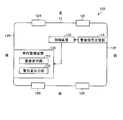
- FIG. 1 is a functional block diagram of a collision avoidance system according to the first embodiment.
- FIG. 2 is a diagram schematically illustrating an example of a vehicle provided with the collision avoidance system according to the first embodiment.
- FIG. 3 is a diagram schematically showing the operation of the collision avoidance system shown in FIGS. 1 and 2.
- FIG. 4 is a diagram schematically illustrating an example of another vehicle that travels around the host vehicle of the collision avoidance system according to the present embodiment.
- FIG. 5 is a functional block diagram of the collision avoidance system according to the second embodiment.
- FIG. 6 is a diagram schematically illustrating an example of a vehicle provided with the collision avoidance system according to the second embodiment.
- FIG. 7 is a functional block diagram of the collision avoidance system according to the third embodiment.
- FIG. 8 is a flowchart showing an example of a collision avoidance method by the collision avoidance system according to the present embodiment.
- FIG. 1 is a functional block diagram of a collision avoidance system according to the first embodiment.
- a collision avoidance system 1 according to the present embodiment is provided in a vehicle, and includes a driver state detection unit 21, a control device 30, an outside alarm device 40, and an in-vehicle alarm device 50. Yes.
- Driver state detector 21 detects the state of the driver of the vehicle. For example, the driver state detection unit 21 detects the driver's dozing state.
- the driver state detection unit 21 may include an electroencephalogram sensor that detects a driver's brain wave, and may detect the driver's sleep state based on the driver's brain wave.
- the driver's dozing state may be detected based on at least one of the theta wave and alpha wave.
- the electroencephalogram is the total sum of electrical changes in the nerve cell population existing below the scalp or detected from electrodes placed on the skull.
- the driver state detection unit 21 further includes an electromyographic sensor that acquires the driver's electromyogram, and detects the driver's sleep state based on the driver's brain wave and electromyogram. Good.
- the driver's dozing state may be detected based on an electromyogram, an electroencephalogram theta wave, and an alpha wave. Note that the electromyogram is the sum of electrical changes associated with muscle contraction.
- the driver state detection unit 21 may include a photographing unit that detects a driver's image, and may detect the driver's sleep state based on the driver's image. For example, the driver's face may be photographed, and the image may be analyzed to determine whether the driver is dozing. More specifically, when the eye-closing time is longer than the driver's eye opening time, it can be determined that the driver is dozing.
- the driver state detection unit 21 includes a biological light measurement device that measures a change in blood dynamics in the driver's brain, and detects the driver's sleep state based on the change in blood dynamics in the driver's brain. Good.
- the driver's drowsiness state may be detected using the biological light measurement device described in Japanese Patent No. 3599426.
- the control device 30 includes a driver state determination unit 31, an outside alarm device control unit 32, and an in-vehicle alarm device control unit 33.
- the driver state determination unit 31 determines the state of the driver based on the detection result of the driver state detection unit 21. For example, when the detection result of the driver state detection unit 21 is outside a predetermined range, the driver state determination unit 31 determines that the driver is in a doze state.
- the outside alarm device control unit 32 controls the outside alarm device 40 and performs an alarm operation related to an alarm toward other vehicles running around the host vehicle.
- the in-vehicle alarm device control unit 33 controls the in-vehicle alarm device 50 to perform an alarm operation related to the alarm for the driver of the own vehicle.
- the outside alarm device 40 performs an alarm operation related to an alarm toward other vehicles running around the host vehicle.
- the vehicle outside alarm device 40 includes a warning display unit 41, a warning sound output unit 42, and a warning signal transmission unit 43.
- the warning display unit 41 performs a warning by lighting a lamp or displaying an image, for example.
- the lamp is not limited to the lamp originally provided in the vehicle in order to satisfy the traffic regulations.
- the image may be displayed by blinking the lamp (for example, blinking the brake lamp) in addition to lighting the lamp.
- the image is displayed by, for example, displaying a predetermined message on a known LED display device or liquid crystal display.
- the warning sound output unit 42 issues a warning by outputting a warning sound.
- the warning sound includes synthesized speech.
- the warning signal transmission unit 43 wirelessly transmits a warning signal for operating another alarm device provided in another vehicle such as the following vehicle to the vehicle.
- the vehicle that has received the warning signal from the warning signal transmission unit 43 operates an alarm device provided in the host vehicle and warns the driver of the host vehicle.
- the in-vehicle warning device 50 performs a warning operation related to a warning to the driver of the own vehicle.
- the in-vehicle warning device 50 includes a warning display unit 51, a warning sound output unit 52, and a warning vibration unit 53.
- the warning display unit 51 performs a warning by turning on a lamp or displaying an image, for example.
- the image is displayed by, for example, displaying a predetermined message on a known LED display device or liquid crystal display.
- the image may be displayed on the liquid crystal display of the navigation device.
- the warning sound output unit 52 issues a warning by outputting a warning sound.
- the warning sound includes synthesized speech.
- the warning vibration unit 53 gives a warning by vibrating the equipment in the vehicle. For example, a part of a steering handle held by the driver is vibrated to warn the driver.
- FIG. 2 is a diagram schematically illustrating an example of a vehicle provided with the collision avoidance system according to the present embodiment.
- the host vehicle 10 is a four-wheeled vehicle.
- the own vehicle 10 has two front wheels 12F and two rear wheels 12R.
- the own vehicle 10 has a driver's cab in which the driver is boarded.
- the host vehicle 10 may be a vehicle other than a four-wheel vehicle.
- FIG. 3 is a diagram schematically showing the operation of the collision avoidance system according to this embodiment.
- the own vehicle 10 travels in the direction of the arrow Y1
- the following vehicle 100 travels in the direction of the arrow Y2.
- the outside alarm device 40 performs a warning operation.
- the warning operation performed by the outside alarm device 40 includes warnings by lighting of lamps and image display by the warning display unit 41, warnings by the warning sound output by the warning sound output unit 42, and transmission of warning signals by the warning signal transmission unit 43. At least one of the warnings in the car alarm device.
- the warning by lighting the lamp and displaying the image by the warning display unit 41 is a warning appealing to the driver of the following vehicle 100.
- the warning by the warning sound output from the warning sound output unit 42 is a warning appealing to the hearing of the driver of the succeeding vehicle 100.
- the warning signal transmitted by the warning signal transmitting unit 43 is received by the warning signal receiving unit 110 of the succeeding vehicle 100. Thereby, in the following vehicle 100, a warning appealing to the driver's vision or hearing can be given.
- the warning may be given not only to the following vehicle 100 but also to a parallel running vehicle running on the left side or the right side of the own vehicle 10 (including diagonally forward and diagonally backward).
- the parallel running vehicle running on the left side or the right side (including diagonally forward and diagonally rearward) of the following vehicle 100 or the host vehicle 10 may warn other vehicles traveling further rearward.
- FIG. 4 is a diagram schematically illustrating an example of another vehicle that travels around the host vehicle of the collision avoidance system according to the present embodiment.
- FIG. 4 is a diagram illustrating an example when the other vehicle is a subsequent vehicle.
- the succeeding vehicle 100 is a four-wheeled vehicle.
- the succeeding vehicle 100 has two front wheels 12F and two rear wheels 12R.
- the succeeding vehicle 100 has a driver's cab in which the driver is boarded.
- the following vehicle 100 includes a warning signal receiving unit 110, a control device 130, and an in-vehicle warning device 150 in the vehicle body 11.
- the following vehicle 100 may be a vehicle other than a four-wheel vehicle.
- the warning signal receiving unit 110 is disposed on the front part 13F of the vehicle body 11, and receives the warning signal transmitted by the host vehicle 10 in FIG.
- the warning signal receiving unit 110 activates the control device 130 when receiving the warning signal.
- the control device 130 is activated by the warning signal receiving unit 110 and controls the in-vehicle warning device 150 to warn the driver of the following vehicle 100.
- the in-vehicle warning device 150 is disposed at the rear portion 13R of the vehicle body 11 and includes a warning display unit 151 and a warning sound output unit 152.
- the warning display unit 151 gives a warning to the driver of the succeeding vehicle 100 by lighting a lamp or displaying an image.
- the warning sound output unit 152 issues a warning to the driver of the succeeding vehicle 100 by outputting a warning sound.
- the warning sound includes synthesized speech.
- the driver state detection unit 21 detects the state of the driver of the own vehicle 10.
- the driver state determination unit 31 determines whether the driver state detected by the driver state detection unit 21 is a dozing state.
- the vehicle outside alarm device control unit 32 activates the vehicle outside alarm device 40.
- the outside alarm device 40 warns other vehicles.
- the vehicle alarm device control unit 33 activates the vehicle alarm device 50.
- the in-vehicle warning device 50 gives a warning to the driver of the own vehicle. Therefore, after the vehicle outside alarm device 40 warns the other vehicle, the vehicle interior alarm device 50 warns the driver of the own vehicle.
- the vehicle driver can be warned after warning the other vehicles around the vehicle. If a warning is given to the driver first, the driver who has awakened from the dozing state may operate the sudden brake or the sudden handle. As in the above operation, after warning the other vehicle, the driver who has been awakened from the dozing state after receiving a warning from the in-vehicle warning device 50 is alerted to the sudden braking or steering wheel. Even when the operation is performed, the vehicle outside warning device 40 warns the other vehicle before the warning, so that it can be expected that the other vehicle appropriately operates the brake or the accelerator, or the steering operation, thereby avoiding the collision. be able to.
- FIG. 5 is a functional block diagram of the collision avoidance system according to the second embodiment.
- the collision avoidance system 1 according to the present embodiment further includes a distance measurement unit 22 and a distance determination unit 34 in addition to the collision avoidance system according to the first embodiment described with reference to FIGS. 1 and 2. This is the configuration.
- the distance measuring unit 22 measures the distance between the vehicle (own vehicle) and another vehicle traveling around the vehicle without contact.
- the vehicle that travels around the host vehicle is, for example, a following vehicle that runs behind the host vehicle, a parallel vehicle that runs beside the host vehicle (left side or right side), or both the following vehicle and the parallel vehicle.
- the subsequent vehicle to be measured by the distance measuring unit 22 may be, for example, a vehicle that runs diagonally behind the vehicle other than the vehicle that runs immediately after the host vehicle.
- the parallel running vehicle to be measured by the distance measuring unit 22 may be, for example, a vehicle running diagonally forward.
- the measurement by the distance measuring unit 22 is performed at a predetermined cycle (for example, every second).
- the distance measuring unit 22 includes a radar device (millimeter wave radar device, Doppler radar device).
- the radar device can transmit a radio wave (or ultrasonic wave), receive a radio wave (or ultrasonic wave) reflected by an object, and measure the distance between the own vehicle and another vehicle.
- the distance measuring unit 22 may include at least one of a laser scanner and a three-dimensional distance sensor.
- the distance measurement unit 22 may include an imaging device (camera) that can acquire an optical image of an object and detect the object in a non-contact manner.
- the distance measuring unit 22 includes an imaging device, the distance may be measured based on the captured image. For example, the distance between the host vehicle and the other vehicle can be obtained based on the size of the other vehicle included in the photographed image.
- the measurement by the distance measuring unit 22 is performed at a predetermined cycle (for example, every second).
- the distance determination unit 34 determines whether or not the distance between the host vehicle and another vehicle traveling around the host vehicle measured by the distance measuring unit 22 is within a predetermined range (for example, within 20 meters). When the distance between the host vehicle and the other vehicle measured by the distance measuring unit 22 is within a predetermined range (for example, within 20 meters), the distance determining unit 34 and the vehicle outside alarm device control unit 32 and the vehicle interior alarm device The control unit 33 is activated.
- the vehicle outside alarm device control unit 32 gives a warning by the vehicle outside alarm device 40
- the vehicle interior alarm device control unit 33 gives a warning by the vehicle inside alarm device 50.
- the distance determining unit 34 When the distance between the host vehicle and the other vehicle measured by the distance measuring unit 22 is not within a predetermined range (for example, when exceeding 20 meters), the distance determining unit 34 The control unit 32 and the vehicle alarm device control unit 33 are not activated. For this reason, the in-vehicle warning device control unit 33 does not give a warning by the in-vehicle warning device 50.
- FIG. 6 is a diagram schematically illustrating an example of a vehicle provided with the collision avoidance system according to the present embodiment.
- the vehicle body 11 according to the present embodiment has a configuration in which a distance measuring unit 22 is added to the configuration described with reference to FIG. 2. That is, the host vehicle 10 includes a distance measuring unit 22 disposed on the rear portion 13R of the vehicle body 11. For this reason, the distance measurement part 22 can detect the distance from the own vehicle 10 to the following vehicle running behind the own vehicle 10 in a non-contact manner.
- the distance measurement unit 22 may detect the distance to a vehicle that runs diagonally backward or sideways in a non-contact manner, for example, other than a vehicle that runs immediately after the host vehicle.
- the driver state detection unit 21 detects the state of the driver of the own vehicle 10.
- the driver state determination unit 31 determines whether the driver state detected by the driver state detection unit 21 is a dozing state.
- the distance determination unit 34 is measured by the distance measurement unit 22 and the other vehicle that travels around the host vehicle. Is determined to be within a predetermined range.
- the vehicle outside alarm device control unit 32 activates the vehicle outside alarm device 40.
- the outside alarm device 40 warns other vehicles.
- the vehicle alarm device control unit 33 activates the vehicle alarm device 50.
- the in-vehicle warning device 50 gives a warning to the driver of the own vehicle. Therefore, after the vehicle outside alarm device 40 warns the other vehicle, the vehicle interior alarm device 50 warns the driver of the own vehicle.
- the vehicle outside alarm device control unit 32, the vehicle interior alarm device control unit 33 does not activate the outside alarm device 40 and the inside alarm device 50. For this reason, the vehicle outside alarm device 40 and the vehicle interior alarm device 50 do not give a warning.
- the vehicle warning device 40 warns other vehicles such as subsequent vehicles before the warning. Therefore, it can be expected that the driver of the other vehicle appropriately operates the brake or the accelerator or the steering, and the collision can be avoided.
- the collision avoidance system unlike the first embodiment, when the distance between the host vehicle and the other vehicle exceeds a predetermined range, it is considered that there is almost no possibility of a collision accident. Since there is no need to issue a warning, the warning by the outside alarm device 40 and the inside alarm device 50 is not performed. For this reason, it can prevent performing useless warning.
- FIG. 7 is a functional block diagram of the collision avoidance system according to the third embodiment.
- the collision avoidance system 1 according to the present embodiment has a configuration in which a time determination unit 35 is further added to the collision avoidance system according to the second embodiment described with reference to FIGS. 5 and 6.
- the time determination unit 35 determines the time that has elapsed since the time when the vehicle warning device 40 warned other vehicles.
- the time determination unit 35 activates the in-vehicle warning device 50 when a predetermined time (for example, one second) has elapsed from the time when the warning to the other vehicle by the outside warning device 40 is performed, and notifies the driver of the own vehicle. Make a warning.
- the predetermined time may be set in advance or may be set by the driver.
- the predetermined time may be adjusted according to the traveling speed of the vehicle. It is desirable to shorten the predetermined time when the traveling speed of the host vehicle is high and to extend the predetermined time when the traveling speed of the host vehicle is low.
- a time determination unit 35 is added to the control device 30, and the vehicle body 11 has the same configuration as already described with reference to FIG.
- the configuration of other vehicles around the host vehicle 10 such as the following vehicle is the same as the configuration already described with reference to FIGS. 3 and 4.
- the driver state detection unit 21 detects the state of the driver of the own vehicle 10.
- the driver state determination unit 31 determines whether the driver state detected by the driver state detection unit 21 is a dozing state.
- the distance determination unit 34 is measured by the distance measurement unit 22 and the other vehicle that travels around the host vehicle. Is determined to be within a predetermined range.
- the vehicle outside alarm device control unit 32 activates the vehicle outside alarm device 40.
- the outside alarm device 40 warns other vehicles.
- the vehicle alarm device control unit 33 activates the vehicle alarm device 50.
- the in-vehicle warning device 50 gives a warning to the driver of the own vehicle. Therefore, the alarm device 40 outside the vehicle warns other vehicles, and after a predetermined time has elapsed, the vehicle alarm device 50 warns the driver of the vehicle.
- the vehicle outside alarm device control unit 32, the vehicle interior alarm device control unit 33 does not activate the outside alarm device 40 and the inside alarm device 50. For this reason, the vehicle outside alarm device 40 and the vehicle interior alarm device 50 do not give a warning.
- the collision avoidance system unlike the first embodiment, when the distance between the host vehicle and the other vehicle exceeds a predetermined range, it is considered that there is almost no possibility of a collision accident. Since there is no need to issue a warning, the warning by the outside alarm device 40 and the inside alarm device 50 is not performed. For this reason, it can prevent performing useless warning.
- the warning from the outside alarm device 40 to the other vehicle until the warning to the driver of the host vehicle by the in-vehicle warning device 50 is performed. Since sufficient time can be secured, sufficient time can be secured for the other vehicle to properly operate the brake or accelerator or the steering, and collision can be avoided.
- the driver state detection unit 21 and the driver state determination unit 31 may detect and determine the elapsed time from the driving start time. For example, when the host vehicle 10 is a rental car, the driver may not be used to driving the host vehicle 10 immediately after the start of driving (the elapsed time from the driving start time is short). By giving a warning to the vehicle, a sufficient time can be secured for the other vehicle to properly operate the brake or accelerator or the steering, and a collision can be avoided.
- Mode 2 You may make it perform the warning to another vehicle according to a driver
- Modification 3 When an incoming call is received by a mobile phone or a smartphone while driving, a warning may be given to another vehicle.
- the vehicle alarm device 50 warns the other vehicle by the vehicle alarm device 40 and then the vehicle alarm device 50 Since a warning is given to the driver of the host vehicle 10, it can be expected that the other vehicle appropriately operates the brake or the accelerator or the steering, and a collision can be avoided.
- the ring tone can be detected by providing a microphone in the vehicle.
- the driver state detection unit 21 and the driver state determination unit 31 may detect and determine other driver states in addition to the dozing state. For example, after detecting the driver's side-viewing state and the state of occurrence of seizures of the driver's chronic disease (e.g., epilepsy) and warning the other vehicle by the outside alarm device 40, the in-vehicle alarm device 50 causes the vehicle 10 to A warning may be given to the driver.
- the driver's side-view state can be detected by photographing and analyzing the driver's face.
- the driver's chronic seizure can be detected by, for example, an electromyogram.
- FIG. 8 is a flowchart showing an example of a collision avoidance method by the collision avoidance system according to the present embodiment.
- the driver state detector 21 detects the state of the driver of the host vehicle 10 (step S101).
- the driver state determination unit 31 determines whether or not the driver state detected by the driver state detection unit 21 is a dozing state (step S102).
- the distance determination unit 34 measures the host vehicle and its surroundings measured by the distance measurement unit 22. It is determined whether the distance from the other vehicle traveling on the vehicle is within a predetermined range (step S103).
- step S104 When the distance determination unit 34 determines that the distance between the host vehicle and another vehicle traveling around the vehicle is within a predetermined range (Yes in step S103), the vehicle outside alarm device control unit 32 activates the vehicle outside alarm device 40. A warning is given (step S104).
- the time determination unit 35 determines whether or not a predetermined time has elapsed (step S105).
- the vehicle alarm device control unit 33 activates the vehicle alarm device 50 and issues a warning (step S106).
- step S107 it is determined whether or not the processing by the present system is finished.
- the process by this system is complete (Yes in step S107)
- the process by this system is terminated. If the process by the system is not finished (No in step S107), the system continues the process.
- step S102 determines in step S102 that the driver of the host vehicle 10 is not in a dozing state (No in step S102)
- the distance determination unit 34 determines whether the driver and the surroundings are in step S103. If it is determined that the distance from the traveling vehicle is not within the predetermined range (No in step S103), the process returns to step S101, and the system continues processing.
- step S105 when the time determination unit 35 determines that the predetermined time has not elapsed (No in step S105), the process returns to step S105, and the time determination unit 35 continues the determination process.
- step S103 and step S105 may or may not be performed.
- step S103 and step S105 when the process by step S103 and step S105 is not performed (equivalent to 1st Embodiment), when the driver state determination part 31 determines with the driver
- the vehicle outside alarm device control unit 32 activates the vehicle outside alarm device 40 to give a warning (step S104), and then the vehicle interior alarm device control unit. 33 activates the in-vehicle warning device 50 to give a warning (step S106).
- step S103 determines that the driver of the own vehicle 10 is in a dozing state (step) If the distance determination unit 34 determines that the distance between the host vehicle and another vehicle traveling therearound is within a predetermined range (Yes in step S103), the vehicle outside alarm device control unit 32 performs the following. After the vehicle outside alarm device 40 is activated to give a warning (step S104), the vehicle interior alarm device control unit 33 subsequently activates the vehicle interior alarm device 50 to give a warning (step S106).
Landscapes
- Engineering & Computer Science (AREA)
- Health & Medical Sciences (AREA)
- Physics & Mathematics (AREA)
- Life Sciences & Earth Sciences (AREA)
- Mechanical Engineering (AREA)
- General Physics & Mathematics (AREA)
- Biophysics (AREA)
- Animal Behavior & Ethology (AREA)
- Pathology (AREA)
- Heart & Thoracic Surgery (AREA)
- Veterinary Medicine (AREA)
- Public Health (AREA)
- General Health & Medical Sciences (AREA)
- Biomedical Technology (AREA)
- Surgery (AREA)
- Medical Informatics (AREA)
- Molecular Biology (AREA)
- Automation & Control Theory (AREA)
- Transportation (AREA)
- Human Computer Interaction (AREA)
- Psychology (AREA)
- Developmental Disabilities (AREA)
- Child & Adolescent Psychology (AREA)
- Social Psychology (AREA)
- Psychiatry (AREA)
- Hospice & Palliative Care (AREA)
- Educational Technology (AREA)
- Anesthesiology (AREA)
- Business, Economics & Management (AREA)
- Emergency Management (AREA)
- Multimedia (AREA)
- Theoretical Computer Science (AREA)
- Combustion & Propulsion (AREA)
- Chemical & Material Sciences (AREA)
- Acoustics & Sound (AREA)
- Traffic Control Systems (AREA)
- Fittings On The Vehicle Exterior For Carrying Loads, And Devices For Holding Or Mounting Articles (AREA)
- Control Of Driving Devices And Active Controlling Of Vehicle (AREA)
- Emergency Alarm Devices (AREA)
Abstract
Priority Applications (5)
| Application Number | Priority Date | Filing Date | Title |
|---|---|---|---|
| EP14909072.2A EP3239958B1 (fr) | 2014-12-26 | 2014-12-26 | Système permettant d'éviter une collision et procédé permettant d'éviter une collision |
| PCT/JP2014/084577 WO2016103468A1 (fr) | 2014-12-26 | 2014-12-26 | Système permettant d'éviter une collision et procédé permettant d'éviter une collision |
| US15/533,972 US9913607B2 (en) | 2014-12-26 | 2014-12-26 | Collision avoidance system and collision avoidance method |
| CN201480084042.6A CN107004364B (zh) | 2014-12-26 | 2014-12-26 | 防撞系统以及防撞方法 |
| JP2014561661A JP5880740B1 (ja) | 2014-12-26 | 2014-12-26 | 衝突回避システム及び衝突回避方法 |
Applications Claiming Priority (1)
| Application Number | Priority Date | Filing Date | Title |
|---|---|---|---|
| PCT/JP2014/084577 WO2016103468A1 (fr) | 2014-12-26 | 2014-12-26 | Système permettant d'éviter une collision et procédé permettant d'éviter une collision |
Publications (1)
| Publication Number | Publication Date |
|---|---|
| WO2016103468A1 true WO2016103468A1 (fr) | 2016-06-30 |
Family
ID=55453341
Family Applications (1)
| Application Number | Title | Priority Date | Filing Date |
|---|---|---|---|
| PCT/JP2014/084577 Ceased WO2016103468A1 (fr) | 2014-12-26 | 2014-12-26 | Système permettant d'éviter une collision et procédé permettant d'éviter une collision |
Country Status (5)
| Country | Link |
|---|---|
| US (1) | US9913607B2 (fr) |
| EP (1) | EP3239958B1 (fr) |
| JP (1) | JP5880740B1 (fr) |
| CN (1) | CN107004364B (fr) |
| WO (1) | WO2016103468A1 (fr) |
Cited By (3)
| Publication number | Priority date | Publication date | Assignee | Title |
|---|---|---|---|---|
| WO2018117631A1 (fr) * | 2016-12-21 | 2018-06-28 | Samsung Electronics Co., Ltd. | Appareil électronique et procédé d'exploitation de celui-ci |
| GB2571121A (en) * | 2018-02-19 | 2019-08-21 | Jaguar Land Rover Ltd | Method for use in a vehicle |
| JP7611540B1 (ja) | 2023-09-05 | 2025-01-10 | 利明 塩見 | 運転中の運転者のマイクロスリープ関連行動の検知システム及び検知方法 |
Families Citing this family (10)
| Publication number | Priority date | Publication date | Assignee | Title |
|---|---|---|---|---|
| CN107111949B (zh) * | 2014-12-26 | 2020-04-10 | 横滨橡胶株式会社 | 防撞系统以及防撞方法 |
| US20180050659A1 (en) * | 2016-08-22 | 2018-02-22 | Faraday&Future Inc. | Electric seatbelt notification systems and methods |
| US10346697B2 (en) * | 2016-12-21 | 2019-07-09 | Hyundai America Technical Center, Inc | Driver state monitoring using corneal reflection detection |
| JP6722132B2 (ja) * | 2017-04-27 | 2020-07-15 | クラリオン株式会社 | 推奨運転出力装置、推奨運転出力方法、及び推奨運転出力システム |
| US10373500B1 (en) * | 2017-09-22 | 2019-08-06 | State Farm Mutual Automobile Insurance Company | Technology for using image data to assess vehicular risks and communicate notifications |
| KR102598953B1 (ko) * | 2018-09-28 | 2023-11-06 | 현대자동차주식회사 | 차량 제어 장치, 그를 포함한 시스템 및 그 방법 |
| KR102807503B1 (ko) * | 2019-05-14 | 2025-05-16 | 현대자동차주식회사 | 차량 및 그 제어방법 |
| CN112550282A (zh) * | 2019-09-09 | 2021-03-26 | 大陆泰密克汽车系统(上海)有限公司 | 用于机动车的警示方法及警示系统 |
| CN115335268B (zh) * | 2020-03-24 | 2026-02-24 | Jvc建伍株式会社 | 危险驾驶警告装置以及危险驾驶警告方法 |
| KR20240095968A (ko) * | 2022-12-19 | 2024-06-26 | 현대모비스 주식회사 | 뇌파를 이용한 운전자 보조 시스템 및 보조 방법 |
Citations (4)
| Publication number | Priority date | Publication date | Assignee | Title |
|---|---|---|---|---|
| JPS63270240A (ja) * | 1987-04-29 | 1988-11-08 | Fujitsu Ten Ltd | 居眠り状態検出装置 |
| JP2005190082A (ja) * | 2003-12-25 | 2005-07-14 | Fuji Photo Film Co Ltd | 居眠り運転警告装置及びカーナビゲーション装置 |
| JP2011057134A (ja) * | 2009-09-11 | 2011-03-24 | Mitsubishi Fuso Truck & Bus Corp | 車両緊急停止装置 |
| JP2013182521A (ja) * | 2012-03-02 | 2013-09-12 | Advanced Telecommunication Research Institute International | ネットワークシステムおよび検知システム |
Family Cites Families (18)
| Publication number | Priority date | Publication date | Assignee | Title |
|---|---|---|---|---|
| JPH07244787A (ja) * | 1994-03-08 | 1995-09-19 | Toyota Motor Corp | 車両用警報装置 |
| JP3599426B2 (ja) | 1995-07-05 | 2004-12-08 | 株式会社日立製作所 | 生体光計測装置 |
| US5990795A (en) * | 1998-02-06 | 1999-11-23 | Miller; Bernard J. | Sleep warning device for mobile vehicles |
| US6575902B1 (en) * | 1999-01-27 | 2003-06-10 | Compumedics Limited | Vigilance monitoring system |
| CN1160210C (zh) * | 1999-09-20 | 2004-08-04 | 松下电器产业株式会社 | 驾驶提醒装置 |
| KR100566272B1 (ko) * | 2003-11-11 | 2006-03-30 | 삼성전자주식회사 | 졸음운전 경고 시스템 |
| JP2009223752A (ja) | 2008-03-18 | 2009-10-01 | Hyundai Motor Co Ltd | 居眠り運転危険判定装置 |
| US8773281B2 (en) * | 2009-09-15 | 2014-07-08 | Ohanes D. Ghazarian | Intersection vehicle collision avoidance system |
| US8405496B2 (en) * | 2009-11-13 | 2013-03-26 | William Bennett | Wheel watcher |
| JP5273030B2 (ja) | 2009-12-18 | 2013-08-28 | 株式会社デンソー | 顔特徴点検出装置および眠気検出装置 |
| WO2011140993A1 (fr) * | 2010-05-12 | 2011-11-17 | 北京星河易达科技有限公司 | Système de sécurité de trafic intelligent basé sur un procédé de décision et de détection d'état complet associé |
| CN202383802U (zh) * | 2011-12-31 | 2012-08-15 | 长安大学 | 货车疲劳驾驶声光警告系统 |
| US20130297387A1 (en) * | 2012-05-01 | 2013-11-07 | Joseph Michael | Systems and methods for monitoring, managing, and facilitating communications and/or transactions relating to transportation infrastructure utilization |
| CN103253187B (zh) * | 2013-05-30 | 2015-07-22 | 苏州福丰科技有限公司 | 一种对疲劳驾驶进行报警的方法 |
| CN105324804A (zh) * | 2013-05-31 | 2016-02-10 | 日立汽车系统株式会社 | 车辆用危险警报控制装置 |
| US9247219B2 (en) * | 2013-07-26 | 2016-01-26 | SkyBell Technologies, Inc. | Doorbell communication systems and methods |
| US9302584B2 (en) * | 2014-08-25 | 2016-04-05 | Verizon Patent And Licensing Inc. | Drowsy driver prevention systems and methods |
| CN107111949B (zh) * | 2014-12-26 | 2020-04-10 | 横滨橡胶株式会社 | 防撞系统以及防撞方法 |
-
2014
- 2014-12-26 CN CN201480084042.6A patent/CN107004364B/zh not_active Expired - Fee Related
- 2014-12-26 EP EP14909072.2A patent/EP3239958B1/fr active Active
- 2014-12-26 WO PCT/JP2014/084577 patent/WO2016103468A1/fr not_active Ceased
- 2014-12-26 US US15/533,972 patent/US9913607B2/en not_active Expired - Fee Related
- 2014-12-26 JP JP2014561661A patent/JP5880740B1/ja not_active Expired - Fee Related
Patent Citations (4)
| Publication number | Priority date | Publication date | Assignee | Title |
|---|---|---|---|---|
| JPS63270240A (ja) * | 1987-04-29 | 1988-11-08 | Fujitsu Ten Ltd | 居眠り状態検出装置 |
| JP2005190082A (ja) * | 2003-12-25 | 2005-07-14 | Fuji Photo Film Co Ltd | 居眠り運転警告装置及びカーナビゲーション装置 |
| JP2011057134A (ja) * | 2009-09-11 | 2011-03-24 | Mitsubishi Fuso Truck & Bus Corp | 車両緊急停止装置 |
| JP2013182521A (ja) * | 2012-03-02 | 2013-09-12 | Advanced Telecommunication Research Institute International | ネットワークシステムおよび検知システム |
Non-Patent Citations (1)
| Title |
|---|
| See also references of EP3239958A4 * |
Cited By (6)
| Publication number | Priority date | Publication date | Assignee | Title |
|---|---|---|---|---|
| WO2018117631A1 (fr) * | 2016-12-21 | 2018-06-28 | Samsung Electronics Co., Ltd. | Appareil électronique et procédé d'exploitation de celui-ci |
| US10745009B2 (en) | 2016-12-21 | 2020-08-18 | Samsung Electronics Co., Ltd. | Electronic apparatus for determining a dangerous situation of a vehicle and method of operating the same |
| GB2571121A (en) * | 2018-02-19 | 2019-08-21 | Jaguar Land Rover Ltd | Method for use in a vehicle |
| GB2571121B (en) * | 2018-02-19 | 2022-09-28 | Jaguar Land Rover Ltd | Alerting a non-driver of a vehicle to the driver's reduction in concentration |
| JP7611540B1 (ja) | 2023-09-05 | 2025-01-10 | 利明 塩見 | 運転中の運転者のマイクロスリープ関連行動の検知システム及び検知方法 |
| JP2025037221A (ja) * | 2023-09-05 | 2025-03-17 | 利明 塩見 | 運転中の運転者のマイクロスリープ関連行動の検知システム及び検知方法 |
Also Published As
| Publication number | Publication date |
|---|---|
| CN107004364A (zh) | 2017-08-01 |
| US9913607B2 (en) | 2018-03-13 |
| CN107004364B (zh) | 2020-04-10 |
| EP3239958A4 (fr) | 2018-08-15 |
| EP3239958A1 (fr) | 2017-11-01 |
| JPWO2016103468A1 (ja) | 2017-04-27 |
| JP5880740B1 (ja) | 2016-03-09 |
| US20170325732A1 (en) | 2017-11-16 |
| EP3239958B1 (fr) | 2020-01-22 |
Similar Documents
| Publication | Publication Date | Title |
|---|---|---|
| JP5880740B1 (ja) | 衝突回避システム及び衝突回避方法 | |
| JP5880741B1 (ja) | 衝突回避システム及び衝突回避方法 | |
| WO2019073708A1 (fr) | Dispositif d'assistance à la conduite véhiculaire | |
| CN112424848A (zh) | 警告装置、驾驶倾向分析装置、驾驶倾向分析方法以及程序 | |
| CN115335269B (zh) | 信息提示控制装置以及功能控制装置 | |
| CN208027537U (zh) | 智能穿戴设备和车辆辅助驾驶系统 | |
| CN112292081A (zh) | 用于自主车辆的乘员意识监视 | |
| CN111409551B (zh) | 注意提醒装置及注意提醒系统 | |
| JPWO2014054153A1 (ja) | 車載情報処理装置 | |
| JP2005253590A (ja) | 運転支援装置 | |
| JP7043795B2 (ja) | 運転支援装置、運転状況情報取得システム、運転支援方法及びプログラム | |
| CN107571869A (zh) | 驾驶辅助方法和系统 | |
| JP2007183824A (ja) | 運転支援装置 | |
| JP4655730B2 (ja) | 車両用運転支援装置 | |
| WO2019087531A1 (fr) | Dispositif de véhicule et programme informatique | |
| JP6288838B2 (ja) | 車両における積雪検知システム | |
| US12266195B2 (en) | Vehicular driver monitoring system with alert to other vehicles | |
| JP2022087117A (ja) | 運転支援装置、運転支援方法及びプログラム | |
| JP2019109677A (ja) | 乗員の状態判定システム及び警告装置 | |
| JP7775135B2 (ja) | 交通安全支援システム | |
| US12525119B2 (en) | Vehicle emergency notification apparatus and vehicle emergency notification system | |
| JP7767219B2 (ja) | 交通安全支援システム | |
| CN116895176B (zh) | 交通安全辅助系统 | |
| CN121425262A (zh) | 车辆风险提示方法、装置、设备、存储介质以及程序产品 | |
| CN116895182A (zh) | 交通安全辅助系统 |
Legal Events
| Date | Code | Title | Description |
|---|---|---|---|
| ENP | Entry into the national phase |
Ref document number: 2014561661 Country of ref document: JP Kind code of ref document: A |
|
| 121 | Ep: the epo has been informed by wipo that ep was designated in this application |
Ref document number: 14909072 Country of ref document: EP Kind code of ref document: A1 |
|
| WWE | Wipo information: entry into national phase |
Ref document number: 15533972 Country of ref document: US |
|
| REEP | Request for entry into the european phase |
Ref document number: 2014909072 Country of ref document: EP |
|
| NENP | Non-entry into the national phase |
Ref country code: DE |