WO2016104183A1 - リチウムイオン二次電池の充電制御方法、および、充電機構 - Google Patents
リチウムイオン二次電池の充電制御方法、および、充電機構 Download PDFInfo
- Publication number
- WO2016104183A1 WO2016104183A1 PCT/JP2015/084777 JP2015084777W WO2016104183A1 WO 2016104183 A1 WO2016104183 A1 WO 2016104183A1 JP 2015084777 W JP2015084777 W JP 2015084777W WO 2016104183 A1 WO2016104183 A1 WO 2016104183A1
- Authority
- WO
- WIPO (PCT)
- Prior art keywords
- secondary battery
- lithium ion
- ion secondary
- charging
- value
- Prior art date
- Legal status (The legal status is an assumption and is not a legal conclusion. Google has not performed a legal analysis and makes no representation as to the accuracy of the status listed.)
- Ceased
Links
Images


Classifications
-
- H—ELECTRICITY
- H01—ELECTRIC ELEMENTS
- H01M—PROCESSES OR MEANS, e.g. BATTERIES, FOR THE DIRECT CONVERSION OF CHEMICAL ENERGY INTO ELECTRICAL ENERGY
- H01M10/00—Secondary cells; Manufacture thereof
- H01M10/42—Methods or arrangements for servicing or maintenance of secondary cells or secondary half-cells
- H01M10/44—Methods for charging or discharging
-
- G—PHYSICS
- G01—MEASURING; TESTING
- G01R—MEASURING ELECTRIC VARIABLES; MEASURING MAGNETIC VARIABLES
- G01R31/00—Arrangements for testing electric properties; Arrangements for locating electric faults; Arrangements for electrical testing characterised by what is being tested not provided for elsewhere
- G01R31/36—Arrangements for testing, measuring or monitoring the electrical condition of accumulators or electric batteries, e.g. capacity or state of charge [SoC]
- G01R31/392—Determining battery ageing or deterioration, e.g. state of health
-
- H—ELECTRICITY
- H01—ELECTRIC ELEMENTS
- H01M—PROCESSES OR MEANS, e.g. BATTERIES, FOR THE DIRECT CONVERSION OF CHEMICAL ENERGY INTO ELECTRICAL ENERGY
- H01M10/00—Secondary cells; Manufacture thereof
- H01M10/05—Accumulators with non-aqueous electrolyte
- H01M10/052—Li-accumulators
- H01M10/0525—Rocking-chair batteries, i.e. batteries with lithium insertion or intercalation in both electrodes; Lithium-ion batteries
-
- H—ELECTRICITY
- H01—ELECTRIC ELEMENTS
- H01M—PROCESSES OR MEANS, e.g. BATTERIES, FOR THE DIRECT CONVERSION OF CHEMICAL ENERGY INTO ELECTRICAL ENERGY
- H01M10/00—Secondary cells; Manufacture thereof
- H01M10/42—Methods or arrangements for servicing or maintenance of secondary cells or secondary half-cells
- H01M10/48—Accumulators combined with arrangements for measuring, testing or indicating the condition of cells, e.g. the level or density of the electrolyte
-
- H—ELECTRICITY
- H02—GENERATION; CONVERSION OR DISTRIBUTION OF ELECTRIC POWER
- H02J—ELECTRIC POWER NETWORKS; CIRCUIT ARRANGEMENTS OR SYSTEMS FOR SUPPLYING OR DISTRIBUTING ELECTRIC POWER; SYSTEMS FOR STORING ELECTRIC ENERGY
- H02J50/00—Circuit arrangements or systems for wireless supply or distribution of electric power
- H02J50/10—Circuit arrangements or systems for wireless supply or distribution of electric power using inductive coupling
-
- H—ELECTRICITY
- H02—GENERATION; CONVERSION OR DISTRIBUTION OF ELECTRIC POWER
- H02J—ELECTRIC POWER NETWORKS; CIRCUIT ARRANGEMENTS OR SYSTEMS FOR SUPPLYING OR DISTRIBUTING ELECTRIC POWER; SYSTEMS FOR STORING ELECTRIC ENERGY
- H02J50/00—Circuit arrangements or systems for wireless supply or distribution of electric power
- H02J50/80—Circuit arrangements or systems for wireless supply or distribution of electric power involving the exchange of data, concerning supply or distribution of electric power, between transmitting devices and receiving devices
-
- H—ELECTRICITY
- H02—GENERATION; CONVERSION OR DISTRIBUTION OF ELECTRIC POWER
- H02J—ELECTRIC POWER NETWORKS; CIRCUIT ARRANGEMENTS OR SYSTEMS FOR SUPPLYING OR DISTRIBUTING ELECTRIC POWER; SYSTEMS FOR STORING ELECTRIC ENERGY
- H02J7/00—Circuit arrangements for charging or discharging batteries or for supplying loads from batteries
- H02J7/02—Circuit arrangements for charging or discharging batteries or for supplying loads from batteries for charging batteries from AC mains by converters
- H02J7/04—Regulation of charging current or voltage
- H02J7/06—Regulation of charging current or voltage using discharge tubes or semiconductor devices
-
- H—ELECTRICITY
- H02—GENERATION; CONVERSION OR DISTRIBUTION OF ELECTRIC POWER
- H02J—ELECTRIC POWER NETWORKS; CIRCUIT ARRANGEMENTS OR SYSTEMS FOR SUPPLYING OR DISTRIBUTING ELECTRIC POWER; SYSTEMS FOR STORING ELECTRIC ENERGY
- H02J7/00—Circuit arrangements for charging or discharging batteries or for supplying loads from batteries
- H02J7/14—Circuit arrangements for charging or discharging batteries or for supplying loads from batteries for charging batteries from dynamo-electric generators driven at varying speed, e.g. on vehicle
-
- H—ELECTRICITY
- H02—GENERATION; CONVERSION OR DISTRIBUTION OF ELECTRIC POWER
- H02J—ELECTRIC POWER NETWORKS; CIRCUIT ARRANGEMENTS OR SYSTEMS FOR SUPPLYING OR DISTRIBUTING ELECTRIC POWER; SYSTEMS FOR STORING ELECTRIC ENERGY
- H02J7/00—Circuit arrangements for charging or discharging batteries or for supplying loads from batteries
- H02J7/60—Circuit arrangements for charging or discharging batteries or for supplying loads from batteries including safety or protection arrangements
- H02J7/663—Circuit arrangements for charging or discharging batteries or for supplying loads from batteries including safety or protection arrangements using battery or load disconnect circuits
-
- H—ELECTRICITY
- H02—GENERATION; CONVERSION OR DISTRIBUTION OF ELECTRIC POWER
- H02J—ELECTRIC POWER NETWORKS; CIRCUIT ARRANGEMENTS OR SYSTEMS FOR SUPPLYING OR DISTRIBUTING ELECTRIC POWER; SYSTEMS FOR STORING ELECTRIC ENERGY
- H02J7/00—Circuit arrangements for charging or discharging batteries or for supplying loads from batteries
- H02J7/80—Circuit arrangements for charging or discharging batteries or for supplying loads from batteries including monitoring or indicating arrangements
- H02J7/84—Control of state of health [SOH]
-
- H—ELECTRICITY
- H02—GENERATION; CONVERSION OR DISTRIBUTION OF ELECTRIC POWER
- H02J—ELECTRIC POWER NETWORKS; CIRCUIT ARRANGEMENTS OR SYSTEMS FOR SUPPLYING OR DISTRIBUTING ELECTRIC POWER; SYSTEMS FOR STORING ELECTRIC ENERGY
- H02J7/00—Circuit arrangements for charging or discharging batteries or for supplying loads from batteries
- H02J7/90—Regulation of charging or discharging current or voltage
- H02J7/92—Regulation of charging or discharging current or voltage with prioritisation of loads or sources
-
- H—ELECTRICITY
- H02—GENERATION; CONVERSION OR DISTRIBUTION OF ELECTRIC POWER
- H02J—ELECTRIC POWER NETWORKS; CIRCUIT ARRANGEMENTS OR SYSTEMS FOR SUPPLYING OR DISTRIBUTING ELECTRIC POWER; SYSTEMS FOR STORING ELECTRIC ENERGY
- H02J7/00—Circuit arrangements for charging or discharging batteries or for supplying loads from batteries
- H02J7/90—Regulation of charging or discharging current or voltage
- H02J7/96—Regulation of charging or discharging current or voltage in response to battery voltage
-
- H—ELECTRICITY
- H02—GENERATION; CONVERSION OR DISTRIBUTION OF ELECTRIC POWER
- H02J—ELECTRIC POWER NETWORKS; CIRCUIT ARRANGEMENTS OR SYSTEMS FOR SUPPLYING OR DISTRIBUTING ELECTRIC POWER; SYSTEMS FOR STORING ELECTRIC ENERGY
- H02J7/00—Circuit arrangements for charging or discharging batteries or for supplying loads from batteries
- H02J7/90—Regulation of charging or discharging current or voltage
- H02J7/971—Regulation of charging or discharging current or voltage the charge cycle being controlled or terminated in response to non-electric parameters
- H02J7/975—Regulation of charging or discharging current or voltage the charge cycle being controlled or terminated in response to non-electric parameters in response to temperature
-
- H—ELECTRICITY
- H02—GENERATION; CONVERSION OR DISTRIBUTION OF ELECTRIC POWER
- H02J—ELECTRIC POWER NETWORKS; CIRCUIT ARRANGEMENTS OR SYSTEMS FOR SUPPLYING OR DISTRIBUTING ELECTRIC POWER; SYSTEMS FOR STORING ELECTRIC ENERGY
- H02J7/00—Circuit arrangements for charging or discharging batteries or for supplying loads from batteries
- H02J7/90—Regulation of charging or discharging current or voltage
- H02J7/971—Regulation of charging or discharging current or voltage the charge cycle being controlled or terminated in response to non-electric parameters
- H02J7/975—Regulation of charging or discharging current or voltage the charge cycle being controlled or terminated in response to non-electric parameters in response to temperature
- H02J7/977—Regulation of charging or discharging current or voltage the charge cycle being controlled or terminated in response to non-electric parameters in response to temperature of the battery
-
- G—PHYSICS
- G01—MEASURING; TESTING
- G01R—MEASURING ELECTRIC VARIABLES; MEASURING MAGNETIC VARIABLES
- G01R31/00—Arrangements for testing electric properties; Arrangements for locating electric faults; Arrangements for electrical testing characterised by what is being tested not provided for elsewhere
- G01R31/36—Arrangements for testing, measuring or monitoring the electrical condition of accumulators or electric batteries, e.g. capacity or state of charge [SoC]
- G01R31/374—Arrangements for testing, measuring or monitoring the electrical condition of accumulators or electric batteries, e.g. capacity or state of charge [SoC] with means for correcting the measurement for temperature or ageing
-
- G—PHYSICS
- G01—MEASURING; TESTING
- G01R—MEASURING ELECTRIC VARIABLES; MEASURING MAGNETIC VARIABLES
- G01R31/00—Arrangements for testing electric properties; Arrangements for locating electric faults; Arrangements for electrical testing characterised by what is being tested not provided for elsewhere
- G01R31/36—Arrangements for testing, measuring or monitoring the electrical condition of accumulators or electric batteries, e.g. capacity or state of charge [SoC]
- G01R31/382—Arrangements for monitoring battery or accumulator variables, e.g. SoC
-
- G—PHYSICS
- G01—MEASURING; TESTING
- G01R—MEASURING ELECTRIC VARIABLES; MEASURING MAGNETIC VARIABLES
- G01R31/00—Arrangements for testing electric properties; Arrangements for locating electric faults; Arrangements for electrical testing characterised by what is being tested not provided for elsewhere
- G01R31/36—Arrangements for testing, measuring or monitoring the electrical condition of accumulators or electric batteries, e.g. capacity or state of charge [SoC]
- G01R31/382—Arrangements for monitoring battery or accumulator variables, e.g. SoC
- G01R31/3842—Arrangements for monitoring battery or accumulator variables, e.g. SoC combining voltage and current measurements
-
- H—ELECTRICITY
- H01—ELECTRIC ELEMENTS
- H01M—PROCESSES OR MEANS, e.g. BATTERIES, FOR THE DIRECT CONVERSION OF CHEMICAL ENERGY INTO ELECTRICAL ENERGY
- H01M10/00—Secondary cells; Manufacture thereof
- H01M10/42—Methods or arrangements for servicing or maintenance of secondary cells or secondary half-cells
- H01M10/44—Methods for charging or discharging
- H01M10/443—Methods for charging or discharging in response to temperature
-
- H—ELECTRICITY
- H01—ELECTRIC ELEMENTS
- H01M—PROCESSES OR MEANS, e.g. BATTERIES, FOR THE DIRECT CONVERSION OF CHEMICAL ENERGY INTO ELECTRICAL ENERGY
- H01M10/00—Secondary cells; Manufacture thereof
- H01M10/42—Methods or arrangements for servicing or maintenance of secondary cells or secondary half-cells
- H01M10/48—Accumulators combined with arrangements for measuring, testing or indicating the condition of cells, e.g. the level or density of the electrolyte
- H01M10/486—Accumulators combined with arrangements for measuring, testing or indicating the condition of cells, e.g. the level or density of the electrolyte for measuring temperature
-
- H—ELECTRICITY
- H02—GENERATION; CONVERSION OR DISTRIBUTION OF ELECTRIC POWER
- H02J—ELECTRIC POWER NETWORKS; CIRCUIT ARRANGEMENTS OR SYSTEMS FOR SUPPLYING OR DISTRIBUTING ELECTRIC POWER; SYSTEMS FOR STORING ELECTRIC ENERGY
- H02J7/00—Circuit arrangements for charging or discharging batteries or for supplying loads from batteries
- H02J7/50—Circuit arrangements for charging or discharging batteries or for supplying loads from batteries acting upon multiple batteries simultaneously or sequentially
-
- H—ELECTRICITY
- H02—GENERATION; CONVERSION OR DISTRIBUTION OF ELECTRIC POWER
- H02J—ELECTRIC POWER NETWORKS; CIRCUIT ARRANGEMENTS OR SYSTEMS FOR SUPPLYING OR DISTRIBUTING ELECTRIC POWER; SYSTEMS FOR STORING ELECTRIC ENERGY
- H02J7/00—Circuit arrangements for charging or discharging batteries or for supplying loads from batteries
- H02J7/50—Circuit arrangements for charging or discharging batteries or for supplying loads from batteries acting upon multiple batteries simultaneously or sequentially
- H02J7/575—Parallel/serial switching of connection of batteries to charge or load circuit
-
- H—ELECTRICITY
- H02—GENERATION; CONVERSION OR DISTRIBUTION OF ELECTRIC POWER
- H02J—ELECTRIC POWER NETWORKS; CIRCUIT ARRANGEMENTS OR SYSTEMS FOR SUPPLYING OR DISTRIBUTING ELECTRIC POWER; SYSTEMS FOR STORING ELECTRIC ENERGY
- H02J7/00—Circuit arrangements for charging or discharging batteries or for supplying loads from batteries
- H02J7/90—Regulation of charging or discharging current or voltage
- H02J7/94—Regulation of charging or discharging current or voltage in response to battery current
-
- Y—GENERAL TAGGING OF NEW TECHNOLOGICAL DEVELOPMENTS; GENERAL TAGGING OF CROSS-SECTIONAL TECHNOLOGIES SPANNING OVER SEVERAL SECTIONS OF THE IPC; TECHNICAL SUBJECTS COVERED BY FORMER USPC CROSS-REFERENCE ART COLLECTIONS [XRACs] AND DIGESTS
- Y02—TECHNOLOGIES OR APPLICATIONS FOR MITIGATION OR ADAPTATION AGAINST CLIMATE CHANGE
- Y02E—REDUCTION OF GREENHOUSE GAS [GHG] EMISSIONS, RELATED TO ENERGY GENERATION, TRANSMISSION OR DISTRIBUTION
- Y02E60/00—Enabling technologies; Technologies with a potential or indirect contribution to GHG emissions mitigation
- Y02E60/10—Energy storage using batteries
-
- Y—GENERAL TAGGING OF NEW TECHNOLOGICAL DEVELOPMENTS; GENERAL TAGGING OF CROSS-SECTIONAL TECHNOLOGIES SPANNING OVER SEVERAL SECTIONS OF THE IPC; TECHNICAL SUBJECTS COVERED BY FORMER USPC CROSS-REFERENCE ART COLLECTIONS [XRACs] AND DIGESTS
- Y02—TECHNOLOGIES OR APPLICATIONS FOR MITIGATION OR ADAPTATION AGAINST CLIMATE CHANGE
- Y02T—CLIMATE CHANGE MITIGATION TECHNOLOGIES RELATED TO TRANSPORTATION
- Y02T10/00—Road transport of goods or passengers
- Y02T10/60—Other road transportation technologies with climate change mitigation effect
- Y02T10/70—Energy storage systems for electromobility, e.g. batteries
Definitions
- the present disclosure relates to a charge control method for a lithium ion secondary battery and a charging mechanism for a lithium ion secondary battery, and in particular, performs accurate life estimation in consideration of the degree of deterioration from the state of the lithium ion secondary battery during charging.
- the present invention relates to a charging control method for a lithium ion secondary battery and a charging mechanism.
- втори ⁇ ески of rechargeable batteries so-called secondary batteries, that can be charged and used repeatedly as operating power sources for portable electronic devices is in progress.
- secondary batteries a lithium ion secondary battery that can be charged and discharged by using lithium ion migration in a positive electrode, a negative electrode, and an electrolyte disposed between them has a high energy density, so-called memory effect. Therefore, it has become the mainstream of secondary batteries for power supplies including those for portable electronic devices and electric vehicles.
- Patent Document 1 charged and discharged with different number of cycles as a voltage value at the time of an open circuit after discharging.
- a method has been proposed in which a plurality of later values are measured and the lifetime is estimated from this voltage value.
- Patent Document 2 a substantial capacity at the time of charging is calculated and compared with an initial capacity from a voltage value after a predetermined time has elapsed during constant current charging when charging a lithium ion secondary battery.
- a method for estimating the degree of deterioration has been proposed.
- the lifetime estimation method of the conventional lithium ion secondary battery described in Patent Document 1 and Patent Document 2 is effective in predicting the future lifetime in the state from the initial stage to the middle stage of the use of the lithium ion secondary battery. is there.
- the above-mentioned conventional life estimation method may cause the life prediction value to change greatly due to a slight error in measuring the voltage value used as the basic data for life detection, and is calculated especially as the end of life approaches. In some cases, the number of times of use until the end of the service life increases or decreases, resulting in confusion for the user.
- the conventional life estimation method calculates a predetermined amount each time using a voltage value obtained by performing voltage value measurement a plurality of times in order to estimate the life. It is necessary to provide a circuit configuration for performing value measurement and calculation. For this reason, it cannot be said that it is very preferable as a life estimation method of a lithium ion secondary battery used as an operation power source of an electronic device that is required to be reduced in size and weight.
- the present disclosure provides a charge control method and a charge mechanism for a lithium ion secondary battery that can solve the above-described conventional problems and can more accurately determine the life of the lithium ion secondary battery with a simple configuration. Objective.
- a charging control method for a lithium ion secondary battery disclosed in the present application is a charging control method for a lithium ion secondary battery that grasps an integrated value of the number of times of charging, and is a lithium ion secondary battery before the start of charging.
- the residual voltage value which is the battery voltage value
- the elapsed time from the previous charging time of the lithium ion secondary battery are both equal to or greater than a predetermined value
- the integrated value of the number of times the lithium ion secondary battery is charged A predetermined value is added, and the life of the lithium ion secondary battery is estimated based on the integrated value of the number of times of charging.
- the charging mechanism of the lithium ion secondary battery disclosed in the present application includes a charging circuit unit, a voltage detection unit that detects a voltage of a lithium ion secondary battery to be charged, and an integration of the number of times of charging of the lithium ion secondary battery.
- a memory unit in which a value is recorded a timer unit that grasps an elapsed time from the end of the previous charging of the lithium ion secondary battery, the charging circuit, the voltage detection unit, the memory unit, and the timer unit.
- a control unit that controls the residual voltage value of the lithium ion secondary battery before the start of charging detected by the voltage detection unit and the elapsed time detected by the timer unit are both predetermined. When the value is equal to or greater than the value, a predetermined value is added to the integrated value of the number of times of charging, and the life of the lithium ion secondary battery is estimated based on the integrated value of the number of times of charging.
- the charging control method for a lithium ion secondary battery and the charging mechanism disclosed in the present application are such that when the residual voltage value before starting charging and the elapsed time from the previous charging time are both equal to or greater than a predetermined value, A predetermined numerical value is added to the number of times of charging the secondary battery, and the life of the lithium ion secondary battery is estimated based on the integrated value of the number of times of charging. For this reason, charge control based on more accurate life estimation reflecting the deterioration characteristics of the lithium ion secondary battery can be performed.
- FIG. 1 is a block diagram showing a configuration of a charging mechanism of a lithium ion secondary battery.
- FIG. 2 is a flowchart for explaining a charging operation of the lithium ion secondary battery.
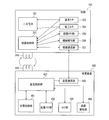
- FIG. 3 is a block diagram illustrating a configuration example of a charging mechanism when a lithium ion secondary battery is used as an operation power source of a hearing aid.
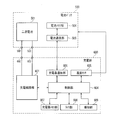
- FIG. 4 is a block diagram illustrating a configuration example of a charging mechanism when a lithium ion secondary battery is used as a secondary battery in a battery pack that is an operation power source of the portable electronic device.
- a charge control method for a lithium ion secondary battery is a charge control method for a lithium ion secondary battery that grasps an integrated value of the number of times of charging, and is a voltage value of the lithium ion secondary battery before the start of charging.
- a predetermined value is added to the integrated value of the number of times of charging the lithium ion secondary battery, The lifetime of the lithium ion secondary battery is estimated based on the integrated value of the number of times of charging.
- the charging control method for a lithium ion secondary battery grasps the residual voltage value before the start of charging and the elapsed time from the previous charging time for the lithium ion secondary battery to be charged. If the value is equal to or greater than a predetermined value, a predetermined numerical value is added to the number of times the lithium ion secondary battery is charged. For this reason, in the charge control method that estimates the life based on the integrated value of the number of times of charging, a more accurate reflecting the characteristics of the lithium ion secondary battery that the deterioration is likely to proceed if a high voltage state is maintained for a long time. Life estimation can be performed.
- the charging mechanism of the lithium ion secondary battery of the present disclosure includes a charging circuit unit, a voltage detection unit that detects a voltage of a lithium ion secondary battery to be charged, and an integrated value of the number of times of charging of the lithium ion secondary battery.
- the control unit is configured such that a residual voltage value of the lithium ion secondary battery before the start of charging detected by the voltage detection unit and the elapsed time detected by the timer unit are both predetermined. When the value is equal to or greater than the value, a predetermined value is added to the integrated value of the number of times of charging, and the life of the lithium ion secondary battery is estimated based on the integrated value of the number of times of charging.
- the charging mechanism of the lithium ion secondary battery of the present disclosure is based on the residual voltage value before the start of charging of the lithium ion secondary battery to be charged and the previous charging time of the lithium ion secondary battery. And the integrated value of the number of times of charging of the lithium ion secondary battery to be charged can be grasped. Then, when both the residual voltage value and the elapsed time are greater than or equal to a predetermined value, a predetermined numerical value is added to the number of times of charging the lithium ion secondary battery, and the life is estimated based on the integrated value of the number of times of charging. For this reason, it is possible to provide a charging mechanism that performs more accurate life estimation that reflects the characteristics of a lithium ion secondary battery in which deterioration tends to proceed when a high voltage state is maintained for a long time.
- the control unit may increase the number of times of charging by 0.5 when both the residual voltage value and the elapsed time are equal to or greater than a predetermined value. preferable. By doing in this way, the deterioration degree of a lithium ion secondary battery when the state of a high voltage is maintained for a long time can be correctly reflected on lifetime estimation.
- a temperature detection unit that detects a temperature of the lithium ion secondary battery is further provided, and the control unit sets the number of times of charging when the temperature of the lithium ion secondary battery being charged is equal to or higher than a predetermined temperature. It is preferable to increase by one. By doing in this way, deterioration of the lithium ion secondary battery by having been exposed to the high temperature during charge can be reflected in life estimation.
- control unit notifies the user that the life of the lithium ion secondary battery is approaching when the integrated value of the number of times of charging exceeds a predetermined alarm value. In this way, the user can be urged to prepare for replacement of the lithium ion secondary battery.
- control unit may notify the user that the lithium ion secondary battery has reached the end of its service life and not perform charging when the integrated value of the number of times of charging exceeds a predetermined limit value. preferable. By doing in this way, the danger of continuing using the lithium ion secondary battery which became the lifetime can be avoided.
- the charging mechanism of the lithium ion secondary battery includes: a device that operates with the lithium ion secondary battery; and a charger that charges the lithium ion secondary battery; and at least a part of the voltage detection unit; At least a part of the memory unit and at least a part of the control unit are arranged inside the device together with the lithium ion secondary battery, and constitute the charging mechanism other than the portion arranged inside the device. It is preferable that each part is arrange
- the device is a hearing aid and non-contact power supply is performed between the hearing aid and the charging device.
- FIG. 1 is a block diagram showing a schematic configuration of a charging mechanism of the lithium ion secondary battery of the present embodiment.
- FIG. 1 explains each component constituting the charging mechanism of the lithium ion secondary battery according to the present embodiment and its interrelationship from the functional aspect.
- Each block shown in FIG. It does not indicate an independent member. Therefore, one block in FIG. 1 may be separately configured as two different members, and a plurality of blocks may be configured as one member.
- the charging mechanism 200 of the lithium ion secondary battery has a function of charging the lithium ion secondary battery 100 and estimating its lifetime at the time of charging.
- the lithium ion secondary battery 100 includes a positive electrode, a negative electrode, and an electrolyte disposed between the positive electrode and the negative electrode, and charging and discharging are performed using movement of lithium ions between them.
- a battery main body 101 that is a secondary battery cell that can be connected to the battery, and a plus (+) terminal 102 and a minus ( ⁇ ) terminal 103 connected thereto.
- battery packs used as power sources for portable electronic devices include control circuits that control charging and discharging of battery bodies, battery protection circuits, output voltage conversion circuits, remaining amount detection circuits, etc. Some of these additional circuits are incorporated.
- Various components that are incorporated together with the battery body and perform additional functions in charging and discharging the battery body are grasped as components in the charging mechanism 200 that charges the lithium ion secondary battery 100 in the present embodiment.
- a battery pack having a load circuit configuration other than the main body does not correspond to the lithium ion secondary battery 100 in the present embodiment.
- the lithium ion secondary battery 100 is not limited in the shape that can be taken, such as a thin, substantially rectangular parallelepiped shape that is often used in portable electronic devices, a cylindrical shape that is compatible with a dry battery, a large capacity battery, and the like.
- Various shapes such as a box shape and a coin shape (button shape) used for a small device such as a hearing aid can be adopted.
- the charging mechanism 200 of the lithium ion secondary battery includes a charging circuit unit 201, a control unit 204, a battery identification unit 205, a temperature sensor 206, a memory unit 207, a timer unit 208, and a notification unit 209.
- the charging circuit unit 201 is a circuit block having a circuit configuration for charging the lithium ion secondary battery 100.
- a charging power source (not shown) is provided inside the charging circuit unit 201, and two charging terminals 202 connected to the positive (+) terminal 102 and the negative ( ⁇ ) terminal 103 of the lithium ion secondary battery 100, respectively. 203.
- the charging circuit unit 201 includes a voltage value of the lithium ion secondary battery 100 via the charging terminals 202 and 203 and the lithium ion secondary battery 100 from the charging terminals 202 and 203. A voltage sensor and a current sensor for detecting a current value supplied to the battery are provided. In this sense, the charging circuit unit 201 also serves as a voltage detection unit that detects the voltage value of the lithium ion secondary battery 100.
- the execution of the above-described charging program is performed under the control of the control unit 204 based on the voltage value and current value detected by the voltage sensor and current sensor of the charging circuit unit 201.
- the charging mechanism 200 of the lithium ion secondary battery 100 of the present embodiment it can be detected whether or not the lithium ion secondary battery 100 is correctly connected to the charging mechanism 200.
- a method for detecting that the lithium ion secondary battery 100 is connected to the charging mechanism 200 a method for detecting that a predetermined voltage is applied to the charging terminals 202 and 203 of the charging circuit unit 201 from the outside. Can be considered.
- the connection of the lithium ion secondary battery 100 can be detected by detecting that a current flows between the charging terminals 202 and 203 of the charging circuit unit 201. In this sense, the charging circuit unit 201 has a function as a battery mounting sensor.
- the terminals 102 and 103 of the lithium ion secondary battery 100 are short-circuited by a fine metal piece or the like.
- the lithium ion secondary battery 100 is physically insulated when foreign matter is sandwiched between the terminals 102 and 103 of the lithium ion secondary battery 100 and the charging terminals 202 and 203 of the charging mechanism 200. It is possible to detect an abnormal state such as when the battery is mounted but cannot be charged correctly.
- a detection pin (not shown) provided on the mounting portion of the lithium ion secondary battery 100 of the charging mechanism 200 may include a lithium ion secondary battery. It is possible to use a mechanical method such as detecting pressing when the 100 is attached. In addition, a method of detecting that the lithium ion secondary battery 100 is mounted at a predetermined position of the charging mechanism 200 using an optical or electromagnetic detection device can be employed.
- control unit 204 controls the charging of the lithium ion secondary battery 100 and simultaneously estimates the life of the lithium ion secondary battery 100.
- control unit 204 receives various types of information related to the lithium ion secondary battery 100 to be charged from the charging circuit unit 201, the battery identification unit 205, the temperature sensor 206, and the memory unit 207, and receives the timer unit 208. Based on the elapsed time information regarding the charging interval of the lithium ion secondary battery 100 obtained from the above, the integrated value of the number of times of charging, which is an index for estimating the life of the lithium ion secondary battery 100 to be charged, is updated.
- the control unit 204 is based on the integrated value of the number of times of charging, which is an index for estimating the life of the lithium ion secondary battery 100 to be charged.
- the notification unit 209 notifies the user to that effect. Further, when it is determined that the lithium ion secondary battery 100 to be charged has already reached the end of life, the control unit 204 notifies the user of the fact from the notification unit 209 and stops charging.
- control unit 204 determines that the lithium ion secondary battery 100 to be charged is still usable, the control unit 204 controls the charging circuit unit 201 and follows the predetermined power receiving program. To charge. Note that the control unit 204 appropriately refers to temperature information from the temperature sensor 206 when executing the charging program.
- control unit 204 when charging is completed, notifies the user of the completion of charging from the notification unit 209. Further, even when an abnormality occurs during charging and charging cannot be performed correctly, the control unit 204 notifies the user of the fact from the notification unit 209.
- the battery identification unit 205 acquires identification information of the lithium ion secondary battery 100 to be charged attached to the charging mechanism 200.
- the identification information of the lithium ion secondary battery 100 is acquired by an optical method in which the battery identification unit 205 including an optical detection unit reads information such as a barcode attached to the surface of the lithium ion secondary battery 100, for example. Can be realized. In addition, it can be realized by an electromagnetic method or a mechanical method using a contact pin. Further, in the case where information transmission means such as wireless or wired communication means capable of exchanging information is provided between the charging mechanism 200 and the lithium ion secondary battery 100, a part of the battery identification unit 205 is provided. The ID information recorded in the lithium ion secondary battery 100 can be read by using this information transmission means.
- the battery identification unit 205 detects the mounting of the lithium ion secondary battery 100 to be charged into the charging mechanism 200, the charging circuit unit 201 does not need to function as a mounting sensor. Further, the battery identification unit 205 confirms that the identification information of the attached lithium ion secondary battery 100 has been correctly obtained, and confirms that the lithium ion secondary battery 100 to be charged is attached to the charging mechanism 200. It can be used as information.
- the charging mechanism 200 of the lithium ion secondary battery according to the present embodiment is realized in an inseparable form with the lithium ion secondary battery 100, or the lithium ion secondary battery to be charged that is charged by the charging mechanism 200 When 100 is always the same, it may be assumed that the battery identification unit 205 is not provided.
- the temperature sensor 206 is a temperature detection unit that directly or indirectly detects the temperature of the mounted lithium ion secondary battery 100.
- the temperature information of the lithium ion secondary battery 100 detected by the temperature sensor 206 is used to determine the life of the lithium ion secondary battery 100 in the control unit 204 and / or to execute the charging program for the lithium ion secondary battery 100 in the control unit 204.
- the temperature sensor 206 only needs to be able to directly or indirectly measure the temperature of the lithium ion secondary battery 100, and can be an electrical element such as a thermocouple or a thermistor, an optical element such as an optical thermosensor, or the like. Various existing or novel means capable of measuring temperature can be used.
- the memory unit 207 can record various information of the lithium ion secondary battery 100 to be charged by the control unit 204 and can provide the recorded information to the control unit 204.
- an integrated value of the number of times of charging of the target lithium ion secondary battery 100 is used as an index used for estimating the life of the lithium ion secondary battery 100. Therefore, in the memory unit 207, the integrated value of the number of times of charging updated at the previous charging time of the lithium ion secondary battery 100 to be charged is associated with the battery identification information of the lithium ion secondary battery 100. To be recorded.
- control unit 204 reads the integrated value of the number of times of charging of the lithium ion secondary battery 100 to be charged recorded in the memory unit 207, determines the life, and then charges the lithium ion secondary battery 100 to newly The updated integrated value of the number of times of charging is recorded in the memory unit 207 together with the battery identification information.
- various memory elements such as a RAM capable of appropriately updating and recording information, a storage medium, and the like can be used.
- the memory unit 207 is provided in the battery pack of the lithium ion secondary battery 100 and the device operated by the lithium ion secondary battery 100 together with the lithium ion secondary battery 100 and is charged by a different charger. It is preferable to update the integrated value of the number of times of charging, which is an index for estimating the lifetime.
- the memory unit 207 includes various other progress information of the lithium ion secondary battery 100 to be charged, such as manufacturing information and usage history, specifications such as charging voltage and charging current characteristics, error occurrence history during charging, and charging.
- the history of the temperature change at the time can be stored, and can be referred to when the control unit 204 executes the charging program.
- the timer unit 208 uses the elapsed time as the charging interval of the lithium ion secondary battery 100 to be charged in the charging mechanism 200 of the lithium ion secondary battery according to the present embodiment, that is, the current charging time from the previous charging time. To know the time between.
- the control unit 204 Based on the value of the elapsed time from the previous charging of the lithium ion secondary battery 100 to be charged, which is grasped by the timer unit 208, the control unit 204 is an index indicating the life of the lithium ion secondary battery 100. It is determined whether to add a predetermined numerical value to the numerical value of the number of times of charging or keep it as it is.
- the timer unit 208 is provided in the charging mechanism 200 and can be realized as a timer counter that always counts the passage of time. Moreover, it is realized as a method of acquiring current time information for a radio timepiece at every timing of charging the lithium ion secondary battery 100 and grasping the value of the elapsed time as a charging interval based on the acquired current time information. can do.
- the notification unit 209 is a member that notifies the user of various states such as wearing and life of the lithium ion secondary battery 100 detected by the control unit 204, the progress of the charging operation in the charging mechanism 200, the occurrence of abnormality, and the like. is there.
- the notification unit 209 includes a member for displaying information appealing to the user's vision, such as one or a plurality of LED lamps, a display device such as a liquid crystal panel or an EL panel, and the user's hearing such as a buzzer, an electronic sound, and a synthesized voice.
- a member for displaying information appealing to the user's vision such as one or a plurality of LED lamps
- a display device such as a liquid crystal panel or an EL panel
- the user's hearing such as a buzzer, an electronic sound, and a synthesized voice.
- Various notification means such as voice means for appealing to the user can be used.
- the notification unit 209 is not an essential component and can be configured not to notify the user.
- the residual voltage value V which is the voltage value of the lithium ion secondary battery 100 at the start of charging, is equal to or higher than a predetermined voltage value V 0 , and
- the control unit 204 increases the number of times of charging by a predetermined value.
- the lithium ion secondary battery has a feature that its charge / discharge characteristics deteriorate even when a long time elapses while maintaining a high charge voltage.
- the sustain voltage V of the lithium ion secondary battery at the start of charging is equal to or higher than a predetermined voltage value V 0
- the elapsed time t of the lithium ion secondary battery is predetermined. If it is the time period t 0 or more, increasing the charge count value is an index showing a deterioration by determining deterioration of the lithium ion secondary battery and advanced to some extent.
- the deterioration factor of the charge / discharge characteristic peculiar to the lithium ion secondary battery is correctly reflected, and a more accurate life determination is performed. be able to.
- CLB2030 (product name) manufactured by Hitachi Maxell Co., Ltd., which is a coin-type lithium-ion secondary battery, has a charging voltage of 4.2 V and a discharge end voltage of 3.0 V, and has a capacity maintenance rate of 90% after 500 cycles of charging.
- the temperature range is 0 to + 45 ° C.
- the limit value that is the number of times of charging that reaches the end of life is set to 500 times, and the charging unit 200 according to the present embodiment is used to charge the charging time that is an index indicating the life of the controller 204 every time charging is performed.
- a numerical value CT (Charged Times) is counted by +1 and stored in the memory unit 207.
- the battery temperature T is set to a predetermined value T 0 when the lithium ion secondary battery is charged, in response to a temperature rise during charging which is considered as a deterioration factor of the lithium ion secondary battery.
- the control unit 204 sets the charge count CT to +1.
- a warning can be given in advance that the life is approaching before the user is informed that the lithium ion secondary battery to be charged has reached the end of its life.
- the charging mechanism 200 of the lithium ion secondary battery when the number of times of charging for estimating the life has not reached the numerical value 500 specified as the limit value, but approaches this value, for example, the life The alarm value is set to 450 times, which is 90% of the number of times of judgment 500, and when the number of times exceeds the alarm value, the notification unit 209 is set to warn the user that the life is approaching. be able to.
- the user can know in advance that the life of the lithium ion secondary battery is near, and can take measures such as preparing an alternative lithium ion secondary battery.
- a simple indicator may be used to notify the user of the remaining life after each charge.
- the charging mechanism 200 of the lithium ion secondary battery in addition to the original number of times of charging as described above, the number of times of long-time maintenance at a high voltage value and the high temperature during charging were obtained.
- the life of the lithium ion secondary battery can be more accurately determined by reflecting the number of times in the number of times of charging, and the value of the number of times of charging CT counted in this way is a predetermined limit value CT.
- the control unit 204 does not perform charging, and a notification unit configured as a display unit 209 such as an LED lamp indicates that the lithium ion secondary battery to be charged has reached the end of its life. I will inform you.
- the standard maintenance voltage V 0 that causes deterioration of the lithium ion secondary battery is set to 3.9 V corresponding to 93% of the rated charge voltage value.
- this standard maintenance voltage is limited to 3.9 V. It goes without saying that it is not possible.
- the reference maintenance voltage value V 0 is appropriately set according to the deterioration characteristics determined by the capacity and size of the lithium ion secondary battery charged by the charging mechanism that is the object of life estimation, the positive electrode, the negative electrode, and the electrolyte material. Should be.
- the maintenance voltage value V 0 of this standard is a value of 90% or more of the rated charge voltage value as an example.
- 12 hours is set as the reference value t 0 for the elapsed time that elapses in the high voltage state.
- This numerical value is also a value that should be appropriately determined according to the deterioration characteristics of the lithium ion secondary battery that is the object of life determination, as with the reference voltage value V 0 . In general, it is practical to set the time to approximately 12 hours or longer.
- the reference value T 0 of the temperature rise during charging as the deterioration factor of the lithium ion secondary battery is 40 ° C., but this numerical value is also the deterioration characteristic of the lithium ion secondary battery that is the object of life determination. Should be determined accordingly.
- the reference value T 0 for the temperature rise during charging is highly likely to fluctuate depending on the surrounding environmental factors of the state of the battery body of the lithium ion secondary battery during charging.
- the material of the members surrounding the secondary battery body, the number of battery bodies arranged adjacent to it, and other circuit components that serve as heat sources are arranged near the lithium ion secondary battery. It is preferable to set in consideration of these factors.
- the increase amount of the charge count value when a long time has passed at a high voltage is set to +0.5
- the increase amount of the charge count value when the battery temperature rises to a certain level or more during charging is set to +1.
- these values are also values that should be appropriately determined in consideration of various characteristics of the lithium ion secondary battery to be estimated for life.
- the number of times of charging is to determine that the lithium ion secondary battery has reached the end of life depending on whether or not the predetermined number of times (500 times in the above embodiment) is exceeded, it is too small after the decimal point. In terms of actual operation, it is preferable to perform conversion as an index in units of one time or 0.5 times shown in the present embodiment, and as a result, sufficiently accurate life estimation can be performed. it can.
- FIG. 2 is a flowchart for explaining the flow of the charging operation of the lithium ion secondary battery by the charging mechanism according to the present embodiment and the adjustment operation of the life judgment index performed simultaneously with the charging operation.
- the charging mechanism will be described as a case where the charging mechanism 200 illustrated in FIG. 1 is used in the present embodiment, and the reference numerals of the members are illustrated in FIG. 1. We will use the thing.
- Step S101 the charging operation of the lithium ion secondary battery 100 is started by the user pressing the charging start button or the like of the charger.
- control unit 204 correctly attaches the lithium ion secondary battery 100 to be charged to a predetermined position of the charging mechanism 200 based on a signal from the charging circuit unit 201 or the battery identification unit 205 or the like. It is judged whether it is (step S102).
- step S102 When the correct installation of the battery is not detected in step S102 (in the case of “No”), the control unit 204 notifies the error that the battery is not correctly installed from the notification unit 209 (step S103), and performs the charging operation. Cancel (step S104).
- the control unit 204 identifies the ID data of the attached lithium ion secondary battery 100, etc. Battery identification information is acquired from the battery identification unit 205. Moreover, the control part 204 acquires the charge frequency value CT of the lithium ion secondary battery 100 to be charged from the memory part 207 using the acquired ID data (step S105). When the charge count value CT of the lithium ion secondary battery 100 to be charged is recorded in the memory unit in the lithium ion secondary battery 100, the control unit 204 reads the battery identification information from the battery identification unit 205 at the same time. The charge count value CT of the battery is acquired.
- control unit 204 should inform the user of a warning because the charge count value CT, which is an index representing the life of the acquired lithium ion secondary battery 100, is close to the charge count determined as the life of the secondary battery. It is determined whether or not the alarm value CT is equal to or greater than 0 (step S106).
- the control unit 204 When the number of times of charging CT is not equal to or greater than CT 0 (in the case of “No”), the control unit 204 does not need to warn the user because the attached lithium ion secondary battery 100 has not yet reached the end of its life. Judgment is made and charging operation by a predetermined charging program is started.
- the control unit 204 acquires from the charging circuit unit 201 a sustain voltage value V that is a voltage value of the lithium ion secondary battery 100 in a state before the start of the charging program. Then, it is determined whether or not the obtained sustain voltage value V is greater than or equal to a predetermined reference voltage value V 0 (step S107).
- control unit 204 proceeds to step S108, and from the timer unit 208, the lithium ion to be charged An elapsed time t from the previous charging of the secondary battery 100 is acquired. Then, when the acquired elapsed time t is equal to or longer than the predetermined period value t 0 (in the case of “Yes” in Step S108), the control unit 204 proceeds to Step S109 and proceeds to the lithium ion secondary battery 100.
- the number of times of charge CT +0.5 is added to the value of CT before the start of charging.
- the lithium ion secondary battery 100 is charged according to a charging program of a predetermined procedure (step S110).
- step S107 when the acquired sustain voltage value V is not greater than or equal to the reference voltage value V 0 (in the case of “No” in step S107), or when the acquired elapsed time t is not greater than or equal to the predetermined period value t 0 (step S108).
- the control unit 204 maintains the charge count value CT of the lithium ion secondary battery 100 as it is, and in accordance with a charge program of a predetermined procedure, the lithium ion secondary battery 100 is charged (step S110).
- a constant current It can be set as the charge program which performs charge and performs constant voltage charge after that.
- the control unit 204 is based on the charging circuit unit 201. Is controlled to perform charging with a predetermined program.
- the control unit 204 sets the voltage value of the lithium ion secondary battery 100 even if a certain charging time has elapsed. If it is determined that an error has occurred during the execution of the charging program (for example, “Yes” in step S111), such as when the charging current has become larger than the setting current, Then, the notification unit 209 notifies the user of a charging error and stops the charging operation (step S113).
- the control unit 204 performs lithium charging during the charging operation based on the temperature data of the lithium ion secondary battery 100 being charged from the temperature sensor 206. Although the temperature of the ion secondary battery 100 is not a temperature until the charging operation is stopped due to a charging error, it is determined whether or not it is recognized that the ion secondary battery 100 has reached a predetermined reference temperature T 0 or more (step S114).
- step S114 When the temperature of the lithium ion secondary battery 100 being charged is equal to or higher than the reference temperature T 0 (in the case of “Yes” in step S114), the value of the charge count value CT that is an index for life detection is set. It is increased by 1 (step S115).
- the reference temperature T 0 in an abnormal state equal to or higher than the reference temperature is a state where the temperature is in the range of 40 ° C. to 45 ° C. in the coin-type lithium ion secondary battery.
- the control unit 204 the temperature of the lithium ion secondary battery 100 during charging as if it is determined that a predetermined reference temperature T 0 or more, the reference temperature T 0 or more state continues consecutively for 10 minutes
- a condition for determining the time during which the state of the reference temperature T 0 or higher is continued such as setting the state, the determination by the control unit 204 can be made more accurate.
- control unit 204 sets the charging count value CT of the lithium ion secondary battery 100 to be charged to +1 (step S116).
- the control unit 204 does not set the control for increasing the number of times of charging shown as step S116 in FIG. 2 by 1 but after a period of 30 minutes from the start of charging, rather than setting the control after the charging program is completed. It can be set to be performed when the state of charge continues.
- the control unit 204 After the end of the charging program, the control unit 204 increases the numerical value 1 and stores the number-of-charges value CT, which is a value commensurate with the current state, in the memory unit 207 as a correct numerical value as a life determination index at that time. (Step S117). As a result, the number of times of charging of the lithium ion secondary battery 100 to be charged is stored at a correct value in accordance with the current situation, and the life is determined based on this value at the next charging time.
- the control unit 204 notifies the user that the charging is completed (step S118), and the charging operation ends.
- control unit 204 determines that the charge count value CT of the lithium ion secondary battery 100 to be charged exceeds the warning value CT 0 that will soon reach the end of life (“Yes” in step S106) at the start of charging. ), the control unit 204 again determines whether the charging frequency value CT exceeds the threshold value CT 1 showing the lifetime of the lithium ion secondary cell 100 (step S119).
- the control unit 204 When the charge count value CT exceeds the alarm value CT 0 but does not exceed the limit value CT 1 , the control unit 204 notifies that the life of the lithium ion secondary battery 100 to be charged is approaching. A warning is given to the user through the unit 209 (step S120).
- control unit 204 proceeds to step S107 to perform a charging operation according to the charging program.
- step S119 When the charge count value CT exceeds the limit value CT 1 (in the case of “Yes” in step S119), the control unit 204 charges the user that the lithium ion secondary battery 100 has reached the end of its life. Even if it is notified that the desired characteristics cannot be obtained (step S121), the charging operation is stopped (step S122).
- the charge count value CT indicates the lifetime at the stage of step S106 at the time of determination immediately after the start of the charging operation. Even if it does not exceed the limit value CT 1, depending on the state of the lithium ion secondary battery 100 in the middle charge, situation in which the number of charging times CT exceeds the threshold value CT 1 may occur at the end of charge. However, in general, deterioration of a lithium ion secondary battery does not proceed greatly due to a difference in the number of times of charging, and as shown in FIG. 2, the number of times of charging CT at the start of charging is limited. if not exceed the value CT 1, the big problem is not believed to occur be used to charge as it is. In addition, in consideration of the error of the charge count value CT in this case, the limit value CT 1 may be set to a value that is smaller than the design life limit value by several times.
- the charging number value is appropriately updated by recognizing the influence on the lifetime in the charging operation, and appropriately updating the charging number value indicating the lifetime. More accurate life determination in the secondary battery can be performed.
- the lithium ion secondary battery charging mechanism 200 includes an electronic device using the lithium ion secondary battery 100 as an operating power source, and a lithium ion secondary battery as described at the beginning of the description.
- the arrangement position of each element block in relation to the device configuration is different.
- a specific example of the arrangement of the lithium ion secondary battery charging mechanism 200 according to this embodiment in a device will be described.
- FIG. 3 is a block diagram showing a device configuration example in the case where a lithium ion secondary battery is used as the power supply of the hearing aid illustrated and described in the above embodiment.
- a lithium ion secondary battery 301 is built in the hearing aid shown as the device 300.
- the user uses it continuously for a certain period of time, and the power supply from the lithium ion secondary battery stops during the continuous use. If it does not work, there is a concern that it will develop into a situation that threatens the safety of the user.
- the user cannot take out the secondary battery 301 from the hearing aid that is the device 300, and the charging device 400 that charges the hearing aid corresponds to the hearing aid that is the device 300 on a one-to-one basis. It has become.
- the receiving coil 310 and the feeding coil 410 that can supply power to the device 300 side and the charging device 400 side in a non-contact manner, Is provided. For this reason, the user can charge the secondary battery 301 inside the hearing aid only by placing or storing the hearing aid in a predetermined place during periods of non-use such as during sleep.
- FIG. 3 shows a configuration in which a strong correspondence is maintained between the device 300 in which the secondary battery 310 is accommodated and the charging device 400 in which the charging circuit unit 401 is accommodated. It is an example.
- a secondary battery 301 that is an operating power source and a device control unit 302 that controls the overall operation of the hearing aid are disposed inside the device 300 that is a hearing aid.
- the device control unit 302 serves as a control unit for the charging mechanism of the lithium ion secondary battery, and controls the operation of the hearing aid that is the device 300, and can be realized using a microcomputer or the like.
- the charging device 400 and the secondary battery 301 in the device 300 are not in contact with each other.
- a temperature sensor 303 that monitors the temperature and a voltage sensor 304 that monitors the voltage value of the secondary battery are arranged inside the device 300.
- the device 300 By further including a device memory unit 305 in the device 300, it is possible to store the ID information of the lithium ion secondary battery 301 accommodated therein, the charge count value CT of the secondary battery 301, and the like. Moreover, the apparatus alerting
- the device communication unit 307 is provided so that communication can be performed.
- the charging circuit unit 401 that supplies charging power from the power transmission coil 410 to the power receiving coil 310 and the entire charging device 400 are controlled, and exchange of information with the device 300 as necessary.
- Device control unit 402 that performs the function of the control unit in the charging mechanism while performing charging
- device memory unit 403 that stores predetermined information such as the number of charging times CT of the secondary battery on the charging device 400 side, and a lithium ion secondary battery to be charged
- device control A device communication unit 406 that is controlled by the unit 402 to exchange information with the device communication unit 307 in the device 300 is provided.
- each element block constituting the charging mechanism of the present embodiment is appropriately dispersed and arranged in a device 300 that is a hearing aid and a charging device 400, and will be described using the flowchart of FIG. 2.
- the charging operation and the life estimation operation can be executed.
- the timer unit 404 arranged in the charging device 400 can be arranged in the device 300.
- the device 300 that is a hearing aid is more strongly required to be small and light.
- members such as the timer unit 404 that can be disposed on either the device 300 side or the charging device 400 side have relatively few demands for reduction in size and weight, and use of commercial power is expected. Therefore, it is more practical to dispose the battery pack on the side of the charging device 400, which is less likely to cause a problem in terms of securing the operating power supply.
- the configuration in which the secondary battery 301 of the device 300 is charged by the wireless power feeding method is illustrated.
- the device 300 and the charging device 400 are wired to charge the secondary battery 301.
- the case where it connects can be assumed, Furthermore, it can also be set as the structure which can be switched and used for wireless feeding and wired feeding suitably.
- the communication between the device communication unit 307 and the device communication unit 405 can use either wired, wireless, or both means.
- FIG. 4 shows that the lithium-ion secondary battery to be charged is placed in a battery pack of a portable electronic device such as a mobile phone or a notebook computer, and this embodiment is implemented in a charger for charging the battery pack.
- FIG. 4 shows the example of distribution arrangement
- the battery pack 500 used as the power source of the portable electronic device is relatively easily replaced and used. For this reason, it is required to reduce the number of mounting members other than the secondary battery 501 as much as possible.
- charging of the battery pack 500 of the portable electronic device is performed when the battery pack 500 is taken out from the electronic device and charged by the charging device or when the battery pack 500 is mounted in the portable electronic device. The case where it is performed by connecting a cord etc. is assumed.
- the battery pack 500 and the charger 600 there is often no correspondence between the battery pack 500 and the charger 600, such as a case where a plurality of battery packs 500 are used together in one electronic device.
- a lithium ion secondary battery 501 in the battery pack 500, a lithium ion secondary battery 501, a battery memory unit 504 that stores a charge count value CT of the lithium ion secondary battery 501, and a battery Only the battery communication unit 505 capable of transmitting the information transmitted from the charger 600 while accommodating the information of the memory unit 504 to the charger 600 side as needed is accommodated. Note that reading of data from the battery memory unit 504 and storage of data in the battery memory unit 504 can be handled by an additional function of the battery memory unit 504.
- One charger 600 side is supplied with electric power for charging the lithium ion secondary battery 501 from the charger side charging terminals 602 and 603 connected to the charging terminals 502 and 503 of the battery pack 500, respectively.
- a charging circuit unit 601 that detects a voltage value and a charging current value of the battery 501 and a control unit 604 that controls the charging circuit unit 601 to perform charging are housed.
- the charger 600 includes a temperature sensor 605 that contacts the battery pack 500 during charging and detects the temperature of the secondary battery 501, and a battery communication unit 505 in the battery pack 500.
- a charger communication unit 606 for exchanging information of the battery memory unit 504 with the control unit 604, a charger memory unit 607 for storing predetermined information on the side of the charger 600, and a timer for grasping an elapsed time as a charging interval 608, and a notification unit 609 for notifying the user of various types of information such as the state of charge, abnormality of the lithium ion secondary battery 501, and the lifetime.
- the minimum necessary components are arranged in the battery pack 500, and main components for controlling charging are arranged in the charger 600 for charging the battery pack 500, whereby the battery pack 500 is arranged.
- the charging mechanism of the lithium ion secondary battery of this embodiment is configured when charging the battery with the charger 600, and the charging operation and the life estimation operation of the charging mechanism according to this embodiment are performed according to the flowchart described in FIG. It can be carried out.
- the configuration examples shown in FIGS. 3 and 4 are examples, and arrangement configurations other than the configurations in FIGS. 3 and 4 can be adopted in the battery pack of a hearing aid or a portable electronic device.
- the charging mechanism according to the present embodiment is divided into two members as shown in FIGS. 3 and 4, for example, this is used together with a lithium ion secondary battery to be charged.
- all the members for charging are provided in an electronic device using a lithium ion secondary battery as an operating power source, all charging mechanisms are also provided in one electronic device.
- the communication unit that transmits information between the two devices illustrated in the case of the configuration examples shown in FIGS. 3 and 4 is not necessary, and the charging mechanism can be realized with a simpler configuration.
- the charging circuit according to the present embodiment is used when the charging circuit unit that requires electric power to charge the lithium ion secondary battery is separated from other control-related mechanism units and accommodated in a device that can use a commercial power source. It can be assumed that the mechanism is distributed and arranged in three or more devices.
- the charge control method and the charging mechanism of the lithium ion secondary battery according to the present embodiment correspond to the life characteristics of the lithium ion secondary battery, and the lithium ion secondary battery maintains a high voltage. Even when a certain period of time elapses, life estimation that reflects this can be performed by converting the value into the number of times of charging that is an index representing the life. For this reason, although it is the simple structure of using the frequency
- the lithium ion secondary battery charging control method and the lithium ion secondary battery charging mechanism of the present disclosure have a simple configuration, the life estimation is more accurate in consideration of the deterioration factors unique to the lithium ion secondary battery. It can be performed. For this reason, it is useful as a charging control method and charging mechanism for lithium ion secondary batteries widely used as a power source for electronic devices.
- Charge control that controls the charging of lithium-ion secondary batteries that are used as an operating power source for devices that require continuous charge control based on accurate life judgment, such as medical aids such as hearing aids It is extremely useful as a method and a charging mechanism.
Landscapes
- Engineering & Computer Science (AREA)
- Power Engineering (AREA)
- Chemical & Material Sciences (AREA)
- General Chemical & Material Sciences (AREA)
- Chemical Kinetics & Catalysis (AREA)
- Electrochemistry (AREA)
- Manufacturing & Machinery (AREA)
- Computer Networks & Wireless Communication (AREA)
- Physics & Mathematics (AREA)
- General Physics & Mathematics (AREA)
- Materials Engineering (AREA)
- Charge And Discharge Circuits For Batteries Or The Like (AREA)
- Secondary Cells (AREA)
Abstract
リチウムイオン二次電池の寿命を簡単な構成でより正確に求めることができる、リチウムイオン二次電池の充電制御方法と充電機構とを提供する。充電回数の積算値を把握するリチウムイオン二次電池の充電制御方法であって、充電開始前のリチウムイオン二次電池の電圧値である残留電圧値と前記リチウムイオン二次電池の前回充電時点からの経過時間とがいずれも所定の値以上である場合に、前記リチウムイオン二次電池の充電回数の積算値に所定値を加え、前記充電回数の積算値に基づいて前記リチウムイオン二次電池の寿命を推定する。
Description
本開示は、リチウムイオン二次電池の充電制御方法とリチウムイオン二次電池の充電機構とに関し、特に、充電時におけるリチウムイオン二次電池の状態からその劣化度合いを考慮した正確な寿命推定を行う、リチウムイオン二次電池の充電制御方法、および、充電機構に関する。
ポータブルタイプの電子機器の動作電源として、充電して繰り返し利用することができる充電式電池、いわゆる二次電池の開発が進んでいる。これら二次電池の中で、正極、負極と、これらの間に配置された電解質とにおけるリチウムイオンの移動を用いて充放電が可能なリチウムイオン二次電池は、エネルギー密度が高く、いわゆるメモリー効果が小さいなどの利点を有するために、ポータブルタイプの電子機器用をはじめとして電気自動車用を含めた電源用二次電池の主流となっている。
一方で、リチウムイオン二次電池であっても、充放電を繰り返すことに伴う劣化は避けられず、一定回数以上の充放電を行ったリチウムイオン二次電池は容量が低下していわゆる寿命を迎え、以降は長時間の連続使用が困難となるなどの弊害が生じる。特に、リチウムイオン二次電池が補聴器などの医療補助器具等の電源として用いられている場合には、連続使用の途中でリチウムイオン二次電池の電圧が低下してしまうと、突然器具の動作が停止することとなり使用者の安全をも脅かしかねない重大な事態に至る畏れがある。
このため、リチウムイオン二次電池の寿命推定、すなわち、あとどのくらいの間安心してリチウムイオン二次電池を使用することができるかをより正確に把握することに対する強いニーズがある。
従来、このようなニーズに応えてリチウムイオン二次電池の寿命や劣化度合いを検出する方法として、特許文献1には、放電後の開回路時の電圧値として異なるサイクル数の充放電を行った後の複数の値を測定して、この電圧値から寿命を推定する方法が提案されている。また、特許文献2には、リチウムイオン二次電池を充電する際の定電流充電時における所定時間経過後の電圧値から、充電時点での実質的な容量を算出して初期の容量と対比することで劣化度を推定する方法が提案されている。
上記特許文献1や特許文献2に記載の従来のリチウムイオン二次電池の寿命推定方法は、リチウムイオン二次電池の使用の初期から中期までの状態における将来的な寿命を予測する上で効果がある。しかし、上記従来の寿命推定方法は、寿命検出の基礎データとして用いられる電圧値を測定する際のわずかな誤差によって寿命予測値が大きく変わる畏れがあり、特に寿命末期が近づいて来るにつれて、算出された寿命までの利用可能回数が増減するなどしてユーザの混乱を来す場合がある。
また、従来の寿命推定方法は、寿命を推定するために複数回の電圧値測定を行って得られた電圧値を用いて都度所定量の計算を行うものであるため、寿命判断のための電圧値測定や計算を行う回路構成を備えることが必要となる。このため、小型軽量化が求められる電子機器の動作電源として用いられるリチウムイオン二次電池の寿命推定方法としては、あまり好ましいものとは言えない。
本開示は、上記従来の課題を解決し、リチウムイオン二次電池の寿命を簡単な構成でより正確に求めることができる、リチウムイオン二次電池の充電制御方法と充電機構とを提供することを目的とする。
上記課題を解決するため本願で開示するリチウムイオン二次電池の充電制御方法は、充電回数の積算値を把握するリチウムイオン二次電池の充電制御方法であって、充電開始前のリチウムイオン二次電池の電圧値である残留電圧値と前記リチウムイオン二次電池の前回充電時点からの経過時間とがいずれも所定の値以上である場合に、前記リチウムイオン二次電池の充電回数の積算値に所定値を加え、前記充電回数の積算値に基づいて前記リチウムイオン二次電池の寿命を推定する。
また、本願で開示するリチウムイオン二次電池の充電機構は、充電回路部と、充電対象のリチウムイオン二次電池の電圧を検知する電圧検知部と、前記リチウムイオン二次電池の充電回数の積算値が記録されるメモリ部と、前記リチウムイオン二次電池の前回の充電終了時点からの経過時間を把握するタイマ部と、前記充電回路と前記電圧検知部と前記メモリ部と前記タイマ部とを制御する制御部とを備え、前記制御部は、前記電圧検知部が検知した充電開始前の前記リチウムイオン二次電池の残留電圧値と、前記タイマ部が把握した前記経過時間とがいずれも所定の値以上である場合に、前記充電回数の積算値に所定値を加え、前記充電回数の積算値に基づいて前記リチウムイオン二次電池の寿命を推定する。
本願で開示するリチウムイオン二次電池の充電制御方法、および、充電機構は、充電開始前の残留電圧値と前回の充電時点からの経過時間とがいずれも所定の値以上の場合に、リチウムイオン二次電池の充電回数に所定の数値を加え、充電回数の積算値に基づいてリチウムイオン二次電池の寿命を推定する。このため、リチウムイオン二次電池の劣化特性を反映したより正確な寿命の推定に基づいた充電の制御を行うことができる。
本開示にかかるリチウムイオン二次電池の充電制御方法は、充電回数の積算値を把握するリチウムイオン二次電池の充電制御方法であって、充電開始前のリチウムイオン二次電池の電圧値である残留電圧値と前記リチウムイオン二次電池の前回充電時点からの経過時間とがいずれも所定の値以上である場合に、前記リチウムイオン二次電池の充電回数の積算値に所定値を加え、前記充電回数の積算値に基づいて前記リチウムイオン二次電池の寿命を推定する。
本開示のリチウムイオン二次電池の充電制御方法は、充電対象のリチウムイオン二次電池について、充電開始前の残留電圧値と前回の充電時点からの経過時間とを把握し、これらの数値がいずれも所定の値以上の場合に、リチウムイオン二次電池の充電回数に所定の数値を加える。このため、充電回数の積算値に基づいて寿命を推定する充電制御方法において、長時間高い電圧の状態が維持されると劣化が進みやすいというリチウムイオン二次電池の特性を反映した、より正確な寿命推定を行うことができる。
また、本開示のリチウムイオン二次電池の充電機構は、充電回路部と、充電対象のリチウムイオン二次電池の電圧を検知する電圧検知部と、前記リチウムイオン二次電池の充電回数の積算値が記録されるメモリ部と、前記リチウムイオン二次電池の前回の充電終了時点からの経過時間を把握するタイマ部と、前記充電回路と前記電圧検知部と前記メモリ部と前記タイマ部とを制御する制御部とを備え、前記制御部は、前記電圧検知部が検知した充電開始前の前記リチウムイオン二次電池の残留電圧値と、前記タイマ部が把握した前記経過時間とがいずれも所定の値以上である場合に、前記充電回数の積算値に所定値を加え、前記充電回数の積算値に基づいて前記リチウムイオン二次電池の寿命を推定する。
このようにすることで、本開示のリチウムイオン二次電池の充電機構は、充電対象のリチウムイオン二次電池の充電開始前の残留電圧値と、当該リチウムイオン二次電池の前回の充電時点からの経過時間と、充電対象のリチウムイオン二次電池の充電回数の積算値とを把握することができる。そして、残留電圧値と経過時間とがいずれも所定の値以上の場合にリチウムイオン二次電池の充電回数に所定の数値を加えて、充電回数の積算値に基づいて寿命を推定する。このため、長時間高い電圧の状態が維持されると劣化が進みやすいというリチウムイオン二次電池の特性を反映した、より正確な寿命推定を行う充電機構を提供することができる。
本開示のリチウムイオン二次電池の充電機構では、前記残留電圧値と前記経過時間とがいずれも所定の値以上である場合に、前記制御部は、前記充電回数を0.5増加させることが好ましい。このようにすることで、長時間高い電圧の状態が維持された場合のリチウムイオン二次電池の劣化度を、正確に寿命推定に反映させることができる。
また、前記リチウムイオン二次電池の温度を検知する温度検知部をさらに備え、前記制御部は、充電中の前記リチウムイオン二次電池の温度が所定の温度以上である場合に、前記充電回数を1増加させることが好ましい。このようにすることで、充電中に高い温度に曝されたことによるリチウムイオン二次電池の劣化を、寿命の推定に反映することができる。
さらに、前記制御部は、前記充電回数の積算値が所定の警報値を超えている場合に、前記リチウムイオン二次電池の寿命が近づいていることをユーザに報知することが好ましい。このようにすることで、ユーザに対してリチウムイオン二次電池の交換の準備を促すことができる。
また、前記制御部は、前記充電回数の積算値が所定の限界値を超えている場合に、前記リチウムイオン二次電池が寿命を迎えていることをユーザに報知して充電を行わないことが好ましい。このようにすることで、寿命となったリチウムイオン二次電池を使用し続ける危険性を回避することができる。
本開示にかかるリチウムイオン二次電池の充電機構は、前記リチウムイオン二次電池で動作する機器と、前記リチウムイオン二次電池を充電する充電器とにおいて、前記電圧検知部の少なくとも一部と、前記メモリ部の少なくとも一部と、前記制御部の少なくとも一部とが、前記リチウムイオン二次電池ととともに前記機器内部に配置され、前記機器内部に配置された部分以外の前記充電機構を構成する各部が前記充電装置内部に配置され、前記機器と前記充電器との間で情報交換が可能であることが好ましい。このようにすることで、本開示にかかる充電機構を実現したより小型の携帯型電子機器を実現することができる。
この場合において、前記機器が補聴器であり、前記補聴器と前記充電装置との間で非接触電力供給が行われることが好ましい。
以下、本開示にかかるリチウムイオン二次電池の充電制御方法と、リチウムイオン二次電池の充電機構との実施形態について、図面を参照して説明する。
(実施の形態)
図1は、本実施形態のリチウムイオン二次電池の充電機構の概略構成を示すブロック図である。
図1は、本実施形態のリチウムイオン二次電池の充電機構の概略構成を示すブロック図である。
なお図1は、本実施形態のリチウムイオン二次電池の充電機構を構成するそれぞれの構成要素とその相互関係とを機能面から説明するものであり、図1に示した各ブロックそれぞれは物理的に独立した部材を示すものではない。したがって、図1における一つのブロックが、2つの異なる部材として別々に構成される場合があり、また、複数のブロックが1つの部材として構成される場合がある。
図1に示すように、本実施形態にかかるリチウムイオン二次電池の充電機構200は、リチウムイオン二次電池100を充電すると共に、充電時にその寿命を推定する機能を備えている。
本実施形態において、リチウムイオン二次電池100は、正極と、負極と、正極および負極の間に配置された電解質とを含み、これらの間でのリチウムイオンの移動を利用して充電と放電とが可能な二次電池セルである電池本体101と、これに接続されたプラス(+)端子102とマイナス(-)端子103を備えている。
なお、携帯型電子機器の電源として用いられている電池パックとして、電池本体以外に、電池本体の充電と放電とを制御する制御回路、電池保護回路、出力電圧の変換回路、残量検知回路などの各種付加回路が組み込まれているものがある。これら電池本体と共に組み込まれて電池本体の充放電における付加機能を果たす各種の構成部分は、本実施形態ではリチウムイオン二次電池100を充電する充電機構200内の構成要素として把握されるため、電池本体以外の負荷回路構成を備えた電池パックは、本実施形態におけるリチウムイオン二次電池100には該当しない。
本実施形態にかかるリチウムイオン二次電池100は、その取り得る形状に限定はなく、携帯型電子機器に多く用いられる薄型の略直方体形状、乾電池と互換可能な筒型形状、大容量バッテリなどのボックス型形状、補聴器など小型の機器に用いられるコイン型(ボタン型)形状などのさまざまな形状を採ることができる。
本実施形態にかかるリチウムイオン二次電池の充電機構200は、充電回路部201、制御部204、電池識別部205、温度センサ206、メモリ部207、タイマ部208、報知部209を備えている。
充電回路部201は、リチウムイオン二次電池100を充電するための回路構成を備えた回路ブロックである。充電回路部201内部には、図示しない充電電源が備えられていて、リチウムイオン二次電池100のプラス(+)端子102とマイナス(-)端子103とにそれぞれ接続される2つの充電端子202と203とを備えている。
一般にリチウムイオン二次電池100の充電は、まず定電流充電を行った後に定電圧充電が行われるという充電プログラムにしたがって行われる。また、充電開始時点での電池電圧が所定の値よりも低い場合には、電池を保護して劣化を防ぐことを目的として、低電圧での予備充電が行われる。このような充電プログラムを実行可能とするために、充電回路部201には、充電端子202、203を介してリチウムイオン二次電池100の電圧値や充電端子202、203からリチウムイオン二次電池100に供給される電流値を検知する電圧センサや電流センサを備えている。この意味で、充電回路部201は、リチウムイオン二次電池100の電圧値を検知する電圧検知部を兼ねている。
また、上記例示した充電プログラムの実行は、充電回路部201の電圧センサや電流センサで検知された電圧値、電流値に基づいて、制御部204が制御して行われる。
本実施形態のリチウムイオン二次電池100の充電機構200では、充電機構200にリチウムイオン二次電池100が正しく接続されているか否かを検知することができる。充電機構200にリチウムイオン二次電池100が接続されていることを検知する方法の一つとして、充電回路部201の充電端子202、203に外部から所定の電圧が印加されたことを検知する方法が考えられる。また、充電回路部201の充電端子202、203間に電流が流れたことを検知して、リチウムイオン二次電池100の接続を検知することができる。この意味で、充電回路部201は、電池装着の装着センサとしての機能を有している。
このように、充電回路部201を用いてリチウムイオン二次電池100の正しい装着を検知することによって、微細金属片などによってリチウムイオン二次電池100の端子102、103間が短絡されている場合や、リチウムイオン二次電池100の端子102、103と充電機構200の充電端子202、203との間に異物が挟まっていて絶縁状態となっている場合など、物理的にはリチウムイオン二次電池100が装着されているものの充電が正しく行えない場合などの異常状態をも検知することができる。
なお、充電機構200にリチウムイオン二次電池100が接続されたことを検知する方法としては、充電機構200のリチウムイオン二次電池100装着部に設けた図示しない検出ピンが、リチウムイオン二次電池100が装着されることで押圧されることを検出するなどの機械的方法を用いることができる。また、光学的、もしくは、電磁的な検出機器を用いて、充電機構200の所定位置にリチウムイオン二次電池100が装着されたことを検知する方法を採用することができる。
本実施形態にかかるリチウムイオン二次電池の充電機構200において、制御部204は、リチウムイオン二次電池100の充電制御を行うと同時に、当該リチウムイオン二次電池100の寿命推定を行う。
より具体的には、制御部204は、充電対象であるリチウムイオン二次電池100に関する各種の情報を、充電回路部201、電池識別部205、温度センサ206、メモリ部207から受け取り、タイマ部208から得られた当該リチウムイオン二次電池100の充電間隔に関する経過時間情報に基づいて、充電対象のリチウムイオン二次電池100の寿命を推定する指標である充電回数の積算値を更新する。
そして、制御部204は、充電対象であるリチウムイオン二次電池100の寿命を推定する指標である充電回数の積算値に基づいて、当該リチウムイオン二次電池100の寿命が近づいている場合には、報知部209よりその旨をユーザに報知する。また、制御部204は、充電対象のリチウムイオン二次電池100が既に寿命を迎えていると判断される場合には、報知部209よりその旨をユーザに報知し、充電を中止する。
一方、制御部204が、充電対象のリチウムイオン二次電池100がまだ使用可能であると判断される場合には、充電回路部201を制御して所定の受電プログラムにしたがってリチウムイオン二次電池100を充電する。なお、制御部204は、充電プログラムを実行するに際して適宜温度センサ206からの温度情報を参照する。
また、充電が完了すると、制御部204は報知部209から充電完了をユーザに報知する。さらに、充電中に異常が生じて正しく充電ができなかった場合にも、制御部204は、報知部209からその旨をユーザに報知する。
電池識別部205は、充電機構200に装着された充電対象のリチウムイオン二次電池100の識別情報を取得する。リチウムイオン二次電池100の識別情報の取得は、例えば光学検知手段を備えた電池識別部205が、リチウムイオン二次電池100の表面に添付されたバーコード等の情報を読み取る光学的な方法により実現することができる。また、その他にも、電磁的な方法、または、接触ピンを用いた機械的な方法によっても実現することができる。さらに、充電機構200とリチウムイオン二次電池100との間で、情報のやりとりが可能な無線もしくは有線による通信手段などの情報伝達手段を備えている場合には、電池識別部205の一部を構成するこの情報伝達手段を用いてリチウムイオン二次電池100内に記録されているID情報を読み取ることができる。
なお、電池識別部205が、充電機構200への充電対象のリチウムイオン二次電池100の装着を検知する場合には、充電回路部201が装着センサとしての機能を果たす必要はなくなる。また、電池識別部205が、装着されたリチウムイオン二次電池100の識別情報を正しく得られたこと自体を、充電対象のリチウムイオン二次電池100が充電機構200に装着されたことを確認する情報として利用することができる。
また、本実施形態のリチウムイオン二次電池の充電機構200が、リチウムイオン二次電池100と一体不可分の形態で実現される場合、もしくは、充電機構200が充電する充電対象のリチウムイオン二次電池100が常に同一のものである場合には、電池識別部205を備えない場合が想定され得る。
温度センサ206は、装着されたリチウムイオン二次電池100の温度を、直接的または間接的に検知する温度検知部である。温度センサ206で検知されたリチウムイオン二次電池100の温度情報は、制御部204におけるリチウムイオン二次電池100の寿命判定、および/または、制御部204におけるリチウムイオン二次電池100の充電プログラム実行における情報として利用される。なお、温度センサ206は、本実施形態にかかる充電機構200において必ずしも必要な部材ではなく、制御部204が、充電対象であるリチウムイオン二次電池100の温度情報を必要としない制御のみを行う場合には、温度センサ206は不要となる。
温度センサ206は、直接的または間接的にリチウムイオン二次電池100の温度を測定することができればよく、熱電対やサーミスタなどの電気的素子、光学的サーモセンサなどの光学素子等、対象物の温度を測定することができる既存のまたは新規の各種手段を使用することができる。
メモリ部207は、制御部204によって充電対象のリチウムイオン二次電池100の各種情報が記録され、制御部204に対して記録された情報を提供することができる。本実施形態のリチウムイオン二次電池の充電機構200では、リチウムイオン二次電池100の寿命を推定するために用いる指標として、対象となるリチウムイオン二次電池100の充電回数の積算値を用いる。このためメモリ部207には、充電対象であるリチウムイオン二次電池100の前回の充電の際に更新された充電回数の積算値が、当該リチウムイオン二次電池100の電池識別情報と関連づけられて記録される。また、制御部204は、メモリ部207に記録されていた充電対象のリチウムイオン二次電池100の充電回数の積算値を読み出して寿命判断をした後、リチウムイオン二次電池100を充電し、新たに更新された充電回数の積算値を電池識別情報と共にメモリ部207に記録する。
本実施形態にかかるリチウムイオン二次電池の充電機構200におけるメモリ部207としては、適宜情報の更新と記録が可能なRAMなどの各種メモリ素子、記憶メディアなどを使用することができる。
なお、リチウムイオン二次電池100とこれを充電する充電機構200とが一対一で対応しておらず、リチウムイオン二次電池100が異なる充電機構200で充電されることが想定される場合には、メモリ部207はリチウムイオン二次電池100とともに、リチウムイオン二次電池100の電池パックや、当該リチウムイオン二次電池100により動作する機器の内部に設けられ、異なる充電器で充電された場合でも、寿命を推定するための指標である充電回数の積算値を更新していくことが好ましい。
また、メモリ部207には、充電対象のリチウムイオン二次電池100のその他の各種経過情報、例えば、製造情報や使用履歴、充電電圧や充電電流特性などの仕様、充電時のエラー発生経歴や充電時の温度変化の経緯などを記憶させて、制御部204が充電プログラムを実行する際に参照可能とすることができる。
タイマ部208は、本実施形態にかかるリチウムイオン二次電池の充電機構200における、充電対象であるリチウムイオン二次電池100の充電間隔としての経過時間、すなわち、前回の充電時から今回の充電時までの間の時間を把握する。
タイマ部208が把握した、充電対象のリチウムイオン二次電池100の前回の充電時からの経過時間の値に基づいて、制御部204は、当該リチウムイオン二次電池100の寿命を示す指標である充電回数の数値に、所定の数値を付加するかそのままで維持するかを決定する。
なお、タイマ部208としては、充電機構200内に備えられ、常に時間経過をカウントするタイマーカウンターとして実現することができる。また、リチウムイオン二次電池100を充電するタイミングごとに電波時計用の現在時情報などを取得して、取得された現在時情報に基づいて充電間隔である経過時間の値を把握する方法として実現することができる。
報知部209は、制御部204が検出したリチウムイオン二次電池100の装着や寿命などのさまざまな状態、充電機構200での充電動作の進行状況、異常の発生状況などをユーザに報知する部材である。
報知部209としては、1または複数個のLEDランプ、液晶パネルやELパネルなどの表示デバイスなど、ユーザの視覚に訴える情報を表示する部材の他、ブザーや電子音、合成音声などのユーザの聴覚に訴える音声手段など、各種の報知手段を用いることができる。
なお、本実施形態のリチウムイオン二次電池の充電機構200において、報知部209は必須の構成部材ではなく、ユーザへの報知を行わない構成とすることもできる。
次に、本実施形態にかかるリチウムイオン二次電池の充電機構200の制御部204が行う、充電対象となるリチウムイオン二次電池100の寿命推定方法について説明する。
本実施形態にかかるリチウムイオン二次電池の充電機構200では、充電開始時のリチウムイオン二次電池100の電圧値である残留電圧値Vが、所定の電圧値V0以上であって、かつ、当該リチウムイオン二次電池100の充電間隔である経過時間tが所定の期間t0以上である場合に、制御部204が、充電回数値を所定の値だけ増加させる。
リチウムイオン二次電池は充電回数による劣化に加えて、高い充電電圧を維持したまま長時間が経過した場合にもその充放電特性が劣化するという特徴を有する。本実施形態にかかるリチウムイオン二次電池の充電方法では、充電開始時のリチウムイオン二次電池の維持電圧Vが所定の電圧値V0以上で、当該リチウムイオン二次電池の経過時間tが所定の期間t0以上である場合に、リチウムイオン二次電池の劣化がある程度進んだと判断して劣化を示す指標である充電回数値を増加させる。このようにすることで、本実施形態にかかるリチウムイオン二次電池の充電機構200では、リチウムイオン二次電池に特有の充放電特性の劣化要因を正しく反映させて、より正確な寿命判断を行うことができる。
以下、本実施形態にかかるリチウムイオン二次電池の充電機構における寿命判断の具体的な内容について、リチウムイオン二次電池100として補聴器の電源として用いられるコイン型リチウムイオン二次電池を用いた場合について説明する。
コイン型リチウムイオン二次電池である日立マクセル株式会社製CLB2030(製品名)は、充電電圧4.2V、放電終止電圧3.0Vであり、充電回数500サイクルでの容量維持率が90%、充電温度範囲が0~+45℃という仕様のものである。このため、寿命に至る充電回数値である限界値を500回と設定し、本実施形態にかかる充電機構200を用いて、充電が行われるごとに制御部204が寿命を示す指標である充電回数値CT(Charged Times)を+1ずつカウントし、メモリ部207に記憶させる。このとき、制御部204は、充電開始時のコイン型リチウムイオン二次電池の維持電圧Vが充電定格電圧の約93%に相当する所定電圧V0=3.9V以上であり、かつ、前回の充電からの経過時間tが所定時間であるt0=12時間以上である場合に、充電回数値CTを+0.5とする。このようにすることで、本実施形態のリチウムイオン二次電池の充電機構では、充電回数のみによらず、高い電圧値で長時間経過することにより劣化が進行するという、リチウムイオン二次電池特有の劣化要因を反映させた寿命管理を行うことができる。
なお、本実施形態の充電機構では、リチウムイオン二次電池の劣化要因として考えられる充電時の温度上昇にも対応して、リチウムイオン二次電池の充電時に、電池温度Tが所定の値T0=40℃以上となった場合にも、制御部204が充電回数CTを+1とする。このようにすることで、本実施形態にかかる充電機構では、制御部204が充電異常であるとして充電を停止しない温度範囲である45℃以下ではあるものの、リチウムイオン二次電池の劣化要因でありその寿命を短くさせる充電時の温度上昇が生じた場合に、これを正しく反映して充電対象のリチウムイオン二次電池の寿命判断を行うことができる。
また、制御部204が行う寿命判断として、充電対象のリチウムイオン二次電池が寿命となったことをユーザに報知する前に、寿命が近づきつつあることを事前に警告報知することができる。例えば、本実施形態のリチウムイオン二次電池の充電機構200として、寿命を推定する充電回数値が限界値として規定した数値500回に到達していないがこの値に近づいてきた場合、例えば、寿命判断となる回数500回の90%である450回を警報値として、この警報値を超えた回数となった場合に、報知部209によってユーザに寿命が近づきつつあることを警告するように設定することができる。このようにすることで、ユーザは、リチウムイオン二次電池の寿命が近いことを予め知ることができ、例えば代替のリチウムイオン二次電池の準備をするなどの対応を行うことができる。また、充電対象のリチウムイオン二次電池の寿命の事前報知としては、簡単なインジケータを用いて、充電の都度残りの寿命をユーザに報知する構成とすることもできる。
本実施形態のリチウムイオン二次電池の充電機構200では、上記のようにして本来の充電回数に加えて、高電圧値での長時間維持が行われた回数と、充電時に高い温度となった回数とを充電回数に反映させて把握することで、リチウムイオン二次電池の寿命をより正確に判断することができ、このようにしてカウントされた充電回数値CTの値が所定の限界値CT=500回となった場合に、制御部204は充電を行わず、ユーザに対して充電対象のリチウムイオン二次電池が寿命となったことをLEDランプなどの表示部209として構成された報知部から報知する。
上記説明では、リチウムイオン二次電池の劣化が生じる目安の維持電圧V0として、充電定格電圧値の93%に相当する3.9Vと設定したが、この目安の維持電圧は3.9Vに限られるものでないことは言うまでもない。寿命を推定する対象である充電機構で充電するリチウムイオン二次電池の容量や大きさ、正極、負極、電解質の材料などによって定まる劣化特性に合わせて、目安の維持電圧値V0は適宜設定されるべきである。なお、この目安の維持電圧値V0は、一例として充電定格電圧値の90%以上の値とすることが好ましい。
また、上記本実施形態では、高電圧状態で経過する経過時間の基準値t0として、12時間と設定した。この数値も、目安の電圧値V0と同様に、寿命判定対象であるリチウムイオン二次電池の劣化特性に応じて適宜定めるべき値である。一般的には、概ね12時間以上とすることが実用的である。
さらに、上記実施形態では、リチウムイオン二次電池の劣化要因としての充電中の温度上昇の基準値T0を40℃としたが、この数値も寿命判定対象であるリチウムイオン二次電池の劣化特性に応じて適宜定めるべきである。ただし、この充電中における温度上昇の基準値T0は、リチウムイオン二次電池の電池本体が充電時にどのような状態でおかれているかの周辺環境要因により変動する可能性が高く、リチウムイオン二次電池本体の周辺でこれを取り巻く部材の材料や隣接して配置される電池本体の個数、その他、熱源となるような回路部品等がリチウムイオン二次電池の近傍に配置されているか否かなどの要因も踏まえて設定することが好ましい。
さらに、上記実施形態では、高電圧で長時間経過した場合の充電回数値の増加量を+0.5とし、充電中に電池温度が一定以上に上昇した場合の充電回数値の増加量を+1.0としたが、これらの数値も、寿命推定対象のリチウムイオン二次電池の諸特性を考慮して適宜定めるべき数値である。なお、この充電回数値は、所定の回数(上記実施形態では500回)を超えたか否かによって当該リチウムイオン二次電池が寿命を迎えたことを判別するものであるため、小数点以下のあまり細かな数値として規定する意味はなく、本実施形態として示した、1回または0.5回単位での指標として換算することが実際の運用上は好ましく、結果として十分正確な寿命推定を行うことができる。
次に、本実施形態にかかるリチウムイオン二次電池の充電機構における充電動作について説明する。
図2は、本実施形態にかかる充電機構によるリチウムイオン二次電池の充電動作と、充電動作と同時に行われる寿命判断指標の調整動作との流れを説明するフローチャートである。なお、図2のフローチャートの説明において、充電機構は、本実施形態で図1を用いてその構成例を示した充電機構200が用いられた場合として説明し、各部材の符号として図1に示したものを用いることとする。
図2に示すように、本実施形態にかかる充電機構200での充電動作では、まず、ユーザが充電器の充電開始ボタン等を押下するなどして、リチウムイオン二次電池100の充電動作が開始される(ステップS101)。
充電動作が開始されると、制御部204は、充電回路部201または電池識別部205等からの信号に基づいて、充電機構200の所定位置に充電対象のリチウムイオン二次電池100が正しく装着されているか否かを判断する(ステップS102)。
ステップS102で電池の正しい装着が検出されなかった場合(「No」の場合)には、制御部204は報知部209から電池が正しく装着されていないエラー報知を行い(ステップS103)、充電動作を中止する(ステップS104)。
一方、リチウムイオン二次電池100が正しく装着されていることを検出した場合(ステップS102で「Yes」の場合)には、制御部204は、装着されたリチウムイオン二次電池100のIDデータなどの電池識別情報を電池識別部205から取得する。また、制御部204は、取得したIDデータを用いてメモリ部207から充電対象のリチウムイオン二次電池100の充電回数値CTを取得する(ステップS105)。なお、充電対象のリチウムイオン二次電池100の充電回数値CTが、リチウムイオン二次電池100内のメモリ部に記録されている場合は、制御部204は電池識別情報と同時に電池識別部205から当該電池の充電回数値CTを取得することとなる。
次に、制御部204は、取得したリチウムイオン二次電池100の寿命を表す指標である充電回数値CTが、当該二次電池の寿命として定められた充電回数に近く、ユーザに警告を知らせるべき警報値CT0以上であるか否かを判別する(ステップS106)。
充電回数CTがCT0以上ではないとき(「No」の場合)、制御部204は、装着されたリチウムイオン二次電池100がまだ寿命を迎えておらず、ユーザにも警告する必要がないと判断して、所定の充電プログラムによる充電動作を開始する。
制御部204は、充電回路部201から、充電プログラムの開始前の状態でのリチウムイオン二次電池100の電圧値である維持電圧値Vを取得する。そして、取得した維持電圧値Vが所定の基準電圧値V0以上であるか否かを判定する(ステップS107)。
維持電圧値Vが、基準電圧値V0以上である場合には(ステップS107で「Yes」の場合)、制御部204は、ステップS108へと進んで、タイマ部208から当該充電対象のリチウムイオン二次電池100の前回の充電時からの経過時間tを取得する。そして、制御部204は、取得した経過時間tが、所定の期間値t0以上の場合(ステップS108で「Yes」の場合)には、ステップS109へと進んで、当該リチウムイオン二次電池100の充電回数値CTとして、充電開始前のCTの値に+0.5加えた値とする。
そして予め定められていた手順の充電プログラムにしたがって、リチウムイオン二次電池100の充電を行う(ステップS110)。
一方、取得した維持電圧値Vが基準電圧値V0以上ではない場合(ステップS107で「No」の場合)、または、取得した経過時間tが所定の期間値t0以上ではない場合(ステップS108で「No」の場合)には、制御部204は当該リチウムイオン二次電池100の充電回数値CTをそのまま維持した状態で、予め定められていた手順の充電プログラムにしたがって、リチウムイオン二次電池100の充電を行う(ステップS110)。
なお、本実施形態にかかる充電機構で行う充電プログラムとしては、上記例示した補聴器用のコイン型リチウムイオン二次電池の充電プログラムのように、必要に応じて予備充電を行った後に、まず定電流充電を行ってその後定電圧充電を行う充電プログラムとすることができる。制御部204は、充電回路部201から得られるリチウムイオン二次電池100の電圧値や充電電流値、温度センサ206で得られるリチウムイオン二次電池100の温度データなどに基づいて、充電回路部201を制御して所定プログラムでの充電を行う。
制御部204は、上記充電プログラムでの充電動作中に、リチウムイオン二次電池100の温度が異常な高温となった場合、一定の充電時間が経過してもリチウムイオン二次電池100の電圧値が上昇しない場合、充電電流が設定以上の大電流となってしまった場合など、充電プログラムの実行中に何らかのエラーが生じたと判断される場合(ステップS111で「Yes」の場合)は、ステップS112で報知部209によりユーザに充電エラーを報知して、充電動作を停止する(ステップS113)。
異常なく充電が終了した場合(ステップS111で「No」の場合)は、制御部204は、温度センサ206からの充電中のリチウムイオン二次電池100の温度データに基づいて、充電動作中にリチウムイオン二次電池100の温度が充電エラーとして充電動作を中止するまでの温度ではないものの、所定の基準温度T0以上となったことが認められるか否かを判断する(ステップS114)。
充電中のリチウムイオン二次電池100の温度が、基準温度T0以上となった場合(ステップS114で「Yes」の場合)には、寿命検出のための指標である充電回数値CTの値を1増加させる(ステップS115)。
このようにすることで、リチウムイオン二次電池100の劣化に繋がる充電時の温度上昇が起こったことを、当該リチウムイオン二次電池100の寿命を表す指標として反映させることができる。
なお、充電エラーとなる温度とは、上記例示したコイン型リチウムイオン二次電池の場合での45℃以上であり、ステップS114で「Yes」となる充電異常ではないもの電池の特性に悪影響を与える基準温度以上の異常状態の基準温度T0とは、同じくコイン型リチウムイオン二次電池における温度40℃~45℃の範囲となる状態である。また、制御部204が、充電中のリチウムイオン二次電池100の温度が所定の基準温度T0以上となったと判断する場合として、当該基準温度T0以上の状態が連続して10分間続いた状態とするなど、基準温度T0以上の状態が継続された時間を判断する条件を付すことにより、制御部204での判断をより正確なものとすることができる。
以上で所定の充電プログラムが終了したため、制御部204は、充電対象のリチウムイオン二次電池100の充電回数値CTを+1とする(ステップS116)。
なお、本実施形態で説明したように、充電プログラムが全て完了した後に充電対象のリチウムイオン二次電池100の充電回数値CTを+1とするように設定した場合には、十分な充電時間がない場合や、何らかの突発的な理由で充電が途中で強制的に終了させられてしまった場合には、充電回数値CTのカウント対象外となってしまう。このため、制御部204は、図2ではステップS116として示した充電回数値を1増やす制御を、充電プログラムが全て終了した後に設定するのではなく、充電開始から30分経過後など、ある程度の時間充電状態が継続した場合に行うように設定することができる。
充電プログラムが終了した後、制御部204は、数値1を増加させて現状に見合った値となった充電回数値CTを、その時点での寿命判断指標としての正しい数値として、メモリ部207に記憶させる(ステップS117)。これによって、充電対象のリチウムイオン二次電池100の充電回数が、現状に即した正しい値で保管され、次の充電時にはこの数値に基づいて寿命判断が行われることとなる。
制御部204は、充電が完了したことをユーザに報知して(ステップS118)、充電動作が終了する。
なお、充電開始時に制御部204が、充電対象のリチウムイオン二次電池100の充電回数値CTがまもなく寿命を迎える警報値CT0を超えていると判断した場合(ステップS106で「Yes」の場合)、制御部204は改めて、充電回数値CTが当該リチウムイオン二次電池100の寿命を示す限界値CT1を超えているか否かを判断する(ステップS119)。
充電回数値CTが、警報値CT0を超えているが、限界値CT1を超えていない場合は、制御部204は、充電対象のリチウムイオン二次電池100の寿命が近づいているとして、報知部209を通じてユーザに警告を行う(ステップS120)。
その後、制御部204は、ステップS107に進んで、充電プログラムでの充電動作を行う。
充電回数値CTが、限界値CT1を超得ている場合(ステップS119で「Yes」の場合)には、制御部204はユーザに当該リチウムイオン二次電池100が寿命を迎えていて、充電しても所期の特性が得られないことを報知して(ステップS121)、充電動作を中止する(ステップS122)。
なお、上記説明から明らかなように、図2のフローチャートによって充電動作が行われた場合には、充電動作が開始した直後の判断時点でのステップS106の段階では、充電回数値CTが寿命を示す限界値CT1を超えていない場合でも、充電途中でのリチウムイオン二次電池100の状態によっては、充電終了時には充電回数CTが限界値CT1を超えてしまう事態が生じうる。しかし、一般的にリチウムイオン二次電池の劣化は、数回程度の充電回数の差によって大きく進行するものではないため、図2に示すように、充電開始時点での充電回数値CTが、限界値CT1を上回っていなければ、そのまま充電して使用しても大きな問題は生じないと考えられる。また、この場合の充電回数値CTの誤差を考慮して、限界値CT1の値を、設計上の寿命限度数値から数回程度小さな値に設定することも考えられる。
このように、本実施形態にかかるリチウムイオン二次電池の充電機構では、充電動作において寿命への影響を見極めて寿命を示す指標となる充電回数値を適宜更新することで、充電対象のリチウムイオン二次電池におけるより正確な寿命判断を行うことができる。
上記図1で説明した本実施形態にかかるリチウムイオン二次電池の充電機構200は、説明の冒頭に記載したように、リチウムイオン二次電池100を動作電源とする電子機器と、リチウムイオン二次電池100を充電する充電装置とが取り得る具体的な形態によって、装置構成との関係における各要素ブロックの配置位置が異なって構成される。以下、本実施形態のリチウムイオン二次電池の充電機構200について、具体的な機器での配置例について説明する。
図3は、上記実施形態において例示説明した、補聴器の電源としてリチウムイオン二次電池を用いた場合の、装置構成例を示すブロック図である。
図3に示す、補聴器の場合の装置構成では、機器300として示される補聴器内にリチウムイオン二次電池301が内蔵されている。リチウムイオン二次電池で動作する電子機器としての補聴器の場合には、ユーザが一定時間連続して使用するものであって、かつ、連続使用の途中でリチウムイオン二次電池からの電力供給が停止してしまって動作しなくなると、ユーザの安全を脅かすような事態にまで発展する懸念がある。また、ユーザが機器300である補聴器から二次電池301を取り出すことができないようになっていて、さらに、補聴器の充電を行う充電装置400とは、機器300である補聴器が一対一で対応するようになっている。
さらにまた、本実施形態で示す補聴器では、ユーザの利便性を考慮して、機器300側と充電装置400側とに、互いに非接触で電力を供給することができる受電コイル310と給電コイル410とが備えられている。このため、ユーザは、睡眠時などの使用しない時間に補聴器を所定の場所に載置もしくは収納するだけで、補聴器内部の二次電池301の充電が行われるようになっている。
図3は、このように、二次電池310が収容された機器300と、充電回路部401が収容された充電装置400との間に強い対応関係が保たれていることを考慮した場合の構成例である。
図3に示すように、補聴器である機器300内部には、動作電源である二次電池301と、補聴器の全体動作を制御する機器制御部302とが配置されている。機器制御部302は、リチウムイオン二次電池の充電機構の制御部としての役割を果たすと共に、機器300である補聴器の動作を制御するもので、マイコン等を用いて実現できる。
また、図3に示した補聴器の場合には、充電装置400からの充電を非接触で行うために、充電装置400と機器300内の二次電池301とが接触しないため、二次電池301の温度を監視する温度センサ303、二次電池の電圧値を監視する電圧センサ304は、機器300内部に配置されている。
機器300内部には、さらに機器メモリ部305を備えることで、収容されているリチウムイオン二次電池301のID情報や、当該二次電池301の充電回数値CTなどを記憶させることができる。また、二次電池301に異常が生じた場合や寿命となった場合にこれを表示する機器報知部306を備えている。さらに、機器300内部には、受電コイル310と送電コイル410との間での電力のやりとりとは独立して、機器300と充電装置400との間で、所定の制御信号や記憶されているデータのやりとりを行うことができるように、機器通信部307を備えている。
一方、充電装置400側には、充電電力を送電コイル410から受電コイル310へと供給する充電回路部401と、充電装置400全体の制御を行うと共に、必要に応じて機器300との情報のやりとりを行いながら充電機構における制御部の機能を果たす機器制御部402、充電装置400側で二次電池の充電回数CTなどの所定の情報を記憶する装置メモリ部403、充電対象のリチウムイオン二次電池301の充電間隔である経過時間tを算出するためのタイマ部404、充電装置400側で充電状態や二次電池301の異常や、寿命が来たことなどを報知する装置報知部405、装置制御部402に制御されて機器300内の機器通信部307との間で情報のやりとりを行う装置通信部406を備えている。
図3に示すように、本実施形態の充電機構を構成する各要素ブロックを、補聴器である機器300と、充電装置400とに適宜分散させて配置することで、図2のフローチャートを用いて説明した本実施形態にかかる充電機構における、充電動作と寿命推定動作とを実行することができる。
なお、図3において、充電機器400に配置したタイマ部404は、機器300内に配置することも可能である。しかし、補聴器である機器300は、小型軽量であることがより強く求められるものである。このため、機器300側、および、充電装置400側のいずれにも配置することが可能なタイマ部404などの部材は、小型軽量化への要求が比較的乏しく、かつ、商用電源の利用が見込まれるために動作電源の確保の面でも問題が生じにくい充電装置400側に配置することがより実用的である。
なお、図3における補聴器の例では、機器300の二次電池301を無線給電方法により充電する構成を示したが、二次電池301の充電のために、機器300と充電装置400とを有線で接続する場合が想定でき、さらに、適宜無線給電と有線給電とを切り替えて使用できる構成とすることもできる。また、機器通信部307と装置通信部405との間の通信も、有線、無線、もしくはその両方のいずれの手段をも用いることができる。
次に図4は、充電対象であるリチウムイオン二次電池として、携帯電話やノート型パソコンなどの携帯用電子機器の電池パック内に配置されたものとし、これを充電する充電器内に本実施形態のリチウムイオン二次電池の充電機構の主要部分が配置された構成の場合の、各構成要素の分配配置例を示すブロック図である。
図3で示した、機器300としての補聴器内にリチウムイオン二次電池を配置する場合と異なり、携帯型電子機器の電源として用いられる電池パック500は、比較的容易に交換使用されるものであるため、二次電池501以外の搭載部材を極力少なくすることが求められる。一方、携帯型電子機器の電池パック500の充電は、電池パック500を電子機器から取り出して充電装置によって充電が行われる場合や、携帯型電子機器内に装着した状態で充電装置から充電のためのコードを接続等することによって行われる場合などが想定される。
また、一つの電子機器で複数の電池パック500が併用される場合が想定されるなど、電池パック500と充電器600との対応が取れないことが多いと想定される。
これらの事情を踏まえて、図4に示すように、電池パック500内にはリチウムイオン二次電池501と、リチウムイオン二次電池501の充電回数値CTを記憶する電池メモリ部504、さらに、電池メモリ部504の情報を必要に応じて充電器600側に伝達するとともに、充電器600から送信された情報を受け取ることができる電池通信部505のみが収容されている。なお、電池メモリ部504からのデータの読み出しと電池メモリ部504へのデータの収納とは、電池メモリ部504の付加機能で対応できるようになっている。
一方の充電器600側には、電池パック500の充電端子502、503とそれぞれ接続された充電器側充電端子602、603から、リチウムイオン二次電池501を充電する電力を供給すると共に、二次電池501の電圧値や充電電流値を検出する充電回路部601、充電回路部601を制御して充電を行う制御部604が収容されている。また、図4に示すように、充電器600内には、充電時に電池パック500に接触して二次電池501の温度を検知する温度センサ605、電池パック500内の電池通信部505を介して電池メモリ部504の情報を制御部604とやりとりするための充電器通信部606、充電器600側で所定の情報を記憶する充電器メモリ部607、充電間隔である経過時間を把握するためのタイマ部608、充電状態やリチウムイオン二次電池501の異常、寿命などの各種情報をユーザに報知する報知部609が収容されている。
このようにすることで、電池パック500内に必要最小限の構成部材を配置し、充電を制御する主たる構成部品は、電池パック500を充電する充電器600内に配置することで、電池パック500を充電器600で充電する際に本実施形態のリチウムイオン二次電池の充電機構が構成され、図2で説明したフローチャートにしたがって、本実施形態にかかる充電機構の充電動作と寿命推定動作とを行うことができる。
なお、図3、図4に示した構成例は例示であり、補聴器や携帯用電子機器の電池パックにおいて、図3、図4の構成以外の配置構成を採用することができる。また、図3、図4に示したような、本実施形態にかかる充電機構が、2つの部材に分割して配置される以外にも、例えば、充電対象であるリチウムイオン二次電池とともにこれを充電するための部材全てがリチウムイオン二次電池を動作電源とする電子機器内に備えられる構成の場合には、充電機構も全て一つの電子機器内に備えられる。この結果、図3、図4で示す構成例の場合に例示した、2つの機器間の情報伝達を行う通信部などが不要となり、より簡単な構成で充電機構を実現できる。さらに、リチウムイオン二次電池の充電を行うために電力が必要となる充電回路部を、他の制御に関する機構部分と切り分けて商用電源が使用可能な機器に収容する場合など、本実施形態の充電機構が3つ以上の機器に分散して配置される場合も想定できる。
以上説明したように、本実施形態のリチウムイオン二次電池の充電制御方法と充電機構とは、リチウムイオン二次電池の寿命特性に対応して、リチウムイオン二次電池が高電圧を維持した状態で一定の時間が経過した場合にも、寿命を表す指標である充電回数値に換算することでこれを反映した寿命推定を行うことができる。このため、充電回数を指標として用いるという簡易な構成でありながら、実際の使用状態に応じたリチウムイオン二次電池の正確な寿命推定を行うことができる。
本開示のリチウムイオン二次電池の充電制御方法、および、リチウムイオン二次電池の充電機構は、簡単な構成でありながら、リチウムイオン二次電池特有の劣化要因を勘案したより正確な寿命の推定を行うことができる。このため、電子機器の電源として広く使用されるリチウムイオン二次電池の充電制御方法、充電機構として有用である。
特に、補聴器などの医療補助機器など、連続使用が前提であり、かつ、正確な寿命判断に基づいた充電制御が必要な機器の動作電源として用いられるリチウムイオン二次電池の充電制御を行う充電制御方法、充電機構として、極めて有用である。
100 リチウムイオン二次電池
101 電池本体
200 リチウムイオン二次電池の充電機構
201 充電回路部(電圧検知部)
204 制御部
207 メモリ部
208 タイマ部
101 電池本体
200 リチウムイオン二次電池の充電機構
201 充電回路部(電圧検知部)
204 制御部
207 メモリ部
208 タイマ部
Claims (8)
- 充電回数の積算値を把握するリチウムイオン二次電池の充電制御方法であって、
充電開始前のリチウムイオン二次電池の電圧値である残留電圧値と前記リチウムイオン二次電池の前回充電時点からの経過時間とがいずれも所定の値以上である場合に、前記リチウムイオン二次電池の充電回数の積算値に所定値を加え、
前記充電回数の積算値に基づいて前記リチウムイオン二次電池の寿命を推定する、リチウムイオン二次電池の充電制御方法。 - 充電回路部と、
充電対象のリチウムイオン二次電池の電圧を検知する電圧検知部と、
前記リチウムイオン二次電池の充電回数の積算値が記録されるメモリ部と、
前記リチウムイオン二次電池の前回の充電終了時点からの経過時間を把握するタイマ部と、
前記充電回路と前記電圧検知部と前記メモリ部と前記タイマ部とを制御する制御部とを備え、
前記制御部は、
前記電圧検知部が検知した充電開始前の前記リチウムイオン二次電池の残留電圧値と、前記タイマ部が把握した前記経過時間とがいずれも所定の値以上である場合に、前記充電回数の積算値に所定値を加え、
前記充電回数の積算値に基づいて前記リチウムイオン二次電池の寿命を推定する、リチウムイオン二次電池の充電機構。 - 前記残留電圧値と前記経過時間とがいずれも所定の値以上である場合に、前記制御部は、前記充電回数を0.5増加させる、請求項2に記載のリチウムイオン二次電池の充電機構。
- 前記リチウムイオン二次電池の温度を検知する温度検知部をさらに備え、
前記制御部は、充電中の前記リチウムイオン二次電池の温度が所定の温度以上である場合に、前記充電回数を1増加させる、請求項2または3に記載のリチウムイオン二次電池の充電機構。 - 前記制御部は、前記充電回数の積算値が所定の警報値を超えている場合に、前記リチウムイオン二次電池の寿命が近づいていることをユーザに報知する、請求項2~4のいずれかに記載のリチウムイオン二次電池の充電機構。
- 前記制御部は、前記充電回数の積算値が所定の限界値を超えている場合に、前記リチウムイオン二次電池が寿命を迎えていることをユーザに報知して充電を行わない、請求項2~5のいずれかに記載のリチウムイオン二次電池の充電機構。
- 前記リチウムイオン二次電池で動作する機器と、前記リチウムイオン二次電池を充電する充電器とにおいて、
前記電圧検知部の少なくとも一部と、前記メモリ部の少なくとも一部と、前記制御部の少なくとも一部とが、前記リチウムイオン二次電池ととともに前記機器内部に配置され、
前記機器内部に配置された部分以外の前記充電機構を構成する各部が前記充電装置内部に配置され、
前記機器と前記充電器との間で情報交換が可能である、請求項2~6のいずれかに記載のリチウムイオン二次電池の充電機構。 - 前記機器が補聴器であり、前記補聴器と前記充電装置との間で非接触電力供給が行われる、請求項7に記載のリチウムイオン二次電池の充電機構。
Priority Applications (3)
| Application Number | Priority Date | Filing Date | Title |
|---|---|---|---|
| EP15872752.9A EP3240135B1 (en) | 2014-12-26 | 2015-12-11 | Lithium ion secondary battery charging control method and charging mechanism |
| US15/506,371 US10587014B2 (en) | 2014-12-26 | 2015-12-11 | Lithium ion secondary battery charging control method and charging mechanism |
| CN201580047573.2A CN106605349B (zh) | 2014-12-26 | 2015-12-11 | 锂离子二次电池的充电控制方法以及充电机构 |
Applications Claiming Priority (2)
| Application Number | Priority Date | Filing Date | Title |
|---|---|---|---|
| JP2014266611A JP6257510B2 (ja) | 2014-12-26 | 2014-12-26 | リチウムイオン二次電池の充電制御方法、および、充電機構 |
| JP2014-266611 | 2014-12-26 |
Publications (1)
| Publication Number | Publication Date |
|---|---|
| WO2016104183A1 true WO2016104183A1 (ja) | 2016-06-30 |
Family
ID=56150213
Family Applications (1)
| Application Number | Title | Priority Date | Filing Date |
|---|---|---|---|
| PCT/JP2015/084777 Ceased WO2016104183A1 (ja) | 2014-12-26 | 2015-12-11 | リチウムイオン二次電池の充電制御方法、および、充電機構 |
Country Status (5)
| Country | Link |
|---|---|
| US (1) | US10587014B2 (ja) |
| EP (1) | EP3240135B1 (ja) |
| JP (1) | JP6257510B2 (ja) |
| CN (1) | CN106605349B (ja) |
| WO (1) | WO2016104183A1 (ja) |
Cited By (1)
| Publication number | Priority date | Publication date | Assignee | Title |
|---|---|---|---|---|
| EP3467527A4 (en) * | 2017-08-25 | 2019-07-31 | Shenzhen Yun Zhong Fei Network Technology Co., Ltd. | DEVICE DEVICE, ADAPTER, METHOD AND SYSTEM FOR MONITORING THE BATTERY SAFETY |
Families Citing this family (14)
| Publication number | Priority date | Publication date | Assignee | Title |
|---|---|---|---|---|
| JP6784129B2 (ja) * | 2016-10-11 | 2020-11-11 | セイコーエプソン株式会社 | 制御装置、受電装置、電子機器及び無接点電力伝送システム |
| US10491024B2 (en) * | 2016-10-28 | 2019-11-26 | Starkey Laboratories, Inc. | Charging systems for contact chargers and related methods |
| US10424955B2 (en) | 2016-10-28 | 2019-09-24 | Starkey Laboratories, Inc. | Charging system with compressible contacts |
| CN108189685A (zh) * | 2017-12-22 | 2018-06-22 | 银隆新能源股份有限公司 | 充电柜控制方法、系统、存储介质、及充电柜 |
| JP7098981B2 (ja) * | 2018-03-16 | 2022-07-12 | ソニーグループ株式会社 | 電子機器、充電制御方法及びコンピュータプログラム |
| CN108808789A (zh) * | 2018-06-29 | 2018-11-13 | 深圳市安科讯实业有限公司 | 多电池修复方法及装置 |
| KR102589313B1 (ko) * | 2018-08-30 | 2023-10-12 | 주식회사 엘지에너지솔루션 | 알람 설정 장치 |
| KR102655792B1 (ko) * | 2018-10-19 | 2024-04-09 | 삼성전자주식회사 | 배터리 충전 장치 및 방법 |
| KR20210068168A (ko) * | 2019-11-29 | 2021-06-09 | 현대자동차주식회사 | 리튬이온 이차전지 제조 시스템 및 그 방법 |
| CN111707943B (zh) * | 2020-05-15 | 2025-10-21 | 中国电力科学研究院有限公司 | 一种基于电池仿真的电动汽车充电故障预警方法和系统 |
| CN112659957B (zh) * | 2020-12-31 | 2022-11-25 | 爱驰汽车有限公司 | 充电设备的远程监测方法 |
| DE102021205663B3 (de) * | 2021-06-03 | 2022-07-14 | Sivantos Pte. Ltd. | Verfahren zum Betrieb eines Hörgeräts und Hörgerät |
| JP7371966B2 (ja) * | 2021-07-15 | 2023-10-31 | 株式会社スリーダムアライアンス | 二次電池評価装置及び二次電池評価方法 |
| US20230155424A1 (en) * | 2021-11-16 | 2023-05-18 | Medtronic Minimed, Inc. | Auxiliary devices and methods for non-contact hardware shutdown and/or reset of electronic devices |
Citations (3)
| Publication number | Priority date | Publication date | Assignee | Title |
|---|---|---|---|---|
| JP2001136673A (ja) * | 1999-11-10 | 2001-05-18 | Makita Corp | 充電装置 |
| JP2003017138A (ja) * | 2001-07-04 | 2003-01-17 | Matsushita Electric Ind Co Ltd | 電池パック |
| JP2013172476A (ja) * | 2012-02-17 | 2013-09-02 | Toyota Motor Corp | 情報報知システム |
Family Cites Families (15)
| Publication number | Priority date | Publication date | Assignee | Title |
|---|---|---|---|---|
| JPH0785893A (ja) * | 1993-09-17 | 1995-03-31 | Sony Corp | 電池充電方法 |
| JPH0935756A (ja) * | 1995-07-20 | 1997-02-07 | Nippon Soken Inc | 充電装置 |
| EP1100172A3 (en) | 1999-11-10 | 2004-10-13 | Makita Corporation | Battery charging device |
| JP2001309568A (ja) * | 2000-04-26 | 2001-11-02 | Internatl Business Mach Corp <Ibm> | 充電システム、充電制御装置、充電制御方法及びコンピュータ |
| JP3807965B2 (ja) * | 2001-09-19 | 2006-08-09 | インターナショナル・ビジネス・マシーンズ・コーポレーション | インテリジェント電池、電気機器、コンピュータ装置及び電池の劣化度を求める方法 |
| JP3672248B2 (ja) * | 2001-09-19 | 2005-07-20 | インターナショナル・ビジネス・マシーンズ・コーポレーション | 電気機器、コンピュータ装置、インテリジェント電池、電池診断方法、電池状態表示方法、およびプログラム |
| JP2003132955A (ja) * | 2001-10-23 | 2003-05-09 | Nec Yonezawa Ltd | 非水電解質二次電池の充放電方法 |
| JP4093205B2 (ja) * | 2003-12-05 | 2008-06-04 | 松下電器産業株式会社 | 充電制御装置 |
| JP2008295169A (ja) * | 2007-05-23 | 2008-12-04 | Canon Inc | バッテリーパック、充電装置、及び電子機器 |
| EP2096452A1 (en) * | 2007-12-13 | 2009-09-02 | Panasonic Corporation | Lifetime estimating method and deterioration suppressing method for lithium secondary cell, lifetime estimator and deterioration suppressor, battery pack using the same, and charger |
| JP5064204B2 (ja) * | 2007-12-27 | 2012-10-31 | 京セラ株式会社 | 携帯電子機器 |
| JP5747610B2 (ja) * | 2011-03-30 | 2015-07-15 | ソニー株式会社 | 充電制御装置、充電制御方法、プログラム及びシステム |
| JP2012235551A (ja) | 2011-04-28 | 2012-11-29 | Konica Minolta Medical & Graphic Inc | 充電システムおよび電子機器 |
| CN102938479A (zh) * | 2011-08-16 | 2013-02-20 | 杭州市电力局 | 电池充放电方法及电池循环放电设备 |
| US20140039573A1 (en) | 2012-08-03 | 2014-02-06 | International Rehabilitative Sciences, Inc. | Neuromuscular stimulator with battery monitoring, external data adapter, and simplified user interface |
-
2014
- 2014-12-26 JP JP2014266611A patent/JP6257510B2/ja active Active
-
2015
- 2015-12-11 CN CN201580047573.2A patent/CN106605349B/zh active Active
- 2015-12-11 WO PCT/JP2015/084777 patent/WO2016104183A1/ja not_active Ceased
- 2015-12-11 EP EP15872752.9A patent/EP3240135B1/en active Active
- 2015-12-11 US US15/506,371 patent/US10587014B2/en active Active
Patent Citations (3)
| Publication number | Priority date | Publication date | Assignee | Title |
|---|---|---|---|---|
| JP2001136673A (ja) * | 1999-11-10 | 2001-05-18 | Makita Corp | 充電装置 |
| JP2003017138A (ja) * | 2001-07-04 | 2003-01-17 | Matsushita Electric Ind Co Ltd | 電池パック |
| JP2013172476A (ja) * | 2012-02-17 | 2013-09-02 | Toyota Motor Corp | 情報報知システム |
Non-Patent Citations (1)
| Title |
|---|
| See also references of EP3240135A4 * |
Cited By (1)
| Publication number | Priority date | Publication date | Assignee | Title |
|---|---|---|---|---|
| EP3467527A4 (en) * | 2017-08-25 | 2019-07-31 | Shenzhen Yun Zhong Fei Network Technology Co., Ltd. | DEVICE DEVICE, ADAPTER, METHOD AND SYSTEM FOR MONITORING THE BATTERY SAFETY |
Also Published As
| Publication number | Publication date |
|---|---|
| US10587014B2 (en) | 2020-03-10 |
| EP3240135A4 (en) | 2018-05-16 |
| CN106605349A (zh) | 2017-04-26 |
| JP2016127701A (ja) | 2016-07-11 |
| US20170279165A1 (en) | 2017-09-28 |
| CN106605349B (zh) | 2019-07-09 |
| EP3240135A1 (en) | 2017-11-01 |
| JP6257510B2 (ja) | 2018-01-10 |
| EP3240135B1 (en) | 2019-09-18 |
Similar Documents
| Publication | Publication Date | Title |
|---|---|---|
| JP6257510B2 (ja) | リチウムイオン二次電池の充電制御方法、および、充電機構 | |
| KR101355218B1 (ko) | 전동 공구용 배터리 | |
| US9954384B2 (en) | Instrumented super-cell | |
| JP5198502B2 (ja) | 電池寿命判定装置及び電池寿命判定方法 | |
| TW552730B (en) | Battery pack and battery pack checking method | |
| JP6564647B2 (ja) | 電池の劣化状態推定装置及び、その劣化状態推定方法 | |
| KR102044559B1 (ko) | 축전 장치 및 전력 경로 개폐 장치 | |
| ES2993259T3 (en) | Battery fault determination | |
| JP2010139396A (ja) | 電池寿命検出装置、蓄電装置、及び電池寿命検出方法 | |
| JP2009186235A (ja) | モバイル機器及び電池情報表示方法 | |
| KR20060059682A (ko) | 배터리팩의 모니터링 장치 및 그 방법 | |
| JP2011142036A (ja) | 電池管理方法および電子機器 | |
| KR101602848B1 (ko) | 배터리 수명 예측 방법 | |
| EP2876775B1 (en) | Determination of battery type | |
| CN103197248B (zh) | 用于机器人的蓄电池电量检测装置及方法 | |
| JP5184791B2 (ja) | 電池寿命判定装置及び電池寿命判定方法 | |
| KR102733072B1 (ko) | 배터리의 고장을 진단하기 위한 장치 및 방법과, 상기 장치를 포함하는 배터리팩 | |
| JP2017220293A (ja) | 電池の充放電曲線推定装置及び、その充放電曲線推定方法 | |
| JP2013186956A (ja) | 充電管理装置 | |
| JP5431685B2 (ja) | 電池寿命判定装置及び電池寿命判定方法 | |
| JP2013141379A (ja) | 無停電電源装置 | |
| EP2597478B1 (en) | Battery discharge system | |
| JP2009112180A (ja) | パック電池及びその制御方法 | |
| JP2006312528A (ja) | エレベータの電力蓄積装置 | |
| EP2871701B1 (en) | Battery pack and electric device including the battery pack |
Legal Events
| Date | Code | Title | Description |
|---|---|---|---|
| 121 | Ep: the epo has been informed by wipo that ep was designated in this application |
Ref document number: 15872752 Country of ref document: EP Kind code of ref document: A1 |
|
| WWE | Wipo information: entry into national phase |
Ref document number: 15506371 Country of ref document: US |
|
| REEP | Request for entry into the european phase |
Ref document number: 2015872752 Country of ref document: EP |
|
| WWE | Wipo information: entry into national phase |
Ref document number: 2015872752 Country of ref document: EP |
|
| NENP | Non-entry into the national phase |
Ref country code: DE |