WO2016143700A1 - Procédé de stabilisation d'un aptamère d'adn - Google Patents
Procédé de stabilisation d'un aptamère d'adn Download PDFInfo
- Publication number
- WO2016143700A1 WO2016143700A1 PCT/JP2016/056805 JP2016056805W WO2016143700A1 WO 2016143700 A1 WO2016143700 A1 WO 2016143700A1 JP 2016056805 W JP2016056805 W JP 2016056805W WO 2016143700 A1 WO2016143700 A1 WO 2016143700A1
- Authority
- WO
- WIPO (PCT)
- Prior art keywords
- aptamer
- dna aptamer
- nucleic acid
- dna
- base
- Prior art date
- Legal status (The legal status is an assumption and is not a legal conclusion. Google has not performed a legal analysis and makes no representation as to the accuracy of the status listed.)
- Ceased
Links
Images








Classifications
-
- C—CHEMISTRY; METALLURGY
- C12—BIOCHEMISTRY; BEER; SPIRITS; WINE; VINEGAR; MICROBIOLOGY; ENZYMOLOGY; MUTATION OR GENETIC ENGINEERING
- C12N—MICROORGANISMS OR ENZYMES; COMPOSITIONS THEREOF; PROPAGATING, PRESERVING, OR MAINTAINING MICROORGANISMS; MUTATION OR GENETIC ENGINEERING; CULTURE MEDIA
- C12N15/00—Mutation or genetic engineering; DNA or RNA concerning genetic engineering, vectors, e.g. plasmids, or their isolation, preparation or purification; Use of hosts therefor
- C12N15/09—Recombinant DNA-technology
- C12N15/11—DNA or RNA fragments; Modified forms thereof; Non-coding nucleic acids having a biological activity
- C12N15/115—Aptamers, i.e. nucleic acids binding a target molecule specifically and with high affinity without hybridising therewith ; Nucleic acids binding to non-nucleic acids, e.g. aptamers
-
- C—CHEMISTRY; METALLURGY
- C12—BIOCHEMISTRY; BEER; SPIRITS; WINE; VINEGAR; MICROBIOLOGY; ENZYMOLOGY; MUTATION OR GENETIC ENGINEERING
- C12N—MICROORGANISMS OR ENZYMES; COMPOSITIONS THEREOF; PROPAGATING, PRESERVING, OR MAINTAINING MICROORGANISMS; MUTATION OR GENETIC ENGINEERING; CULTURE MEDIA
- C12N15/00—Mutation or genetic engineering; DNA or RNA concerning genetic engineering, vectors, e.g. plasmids, or their isolation, preparation or purification; Use of hosts therefor
- C12N15/09—Recombinant DNA-technology
- C12N15/10—Processes for the isolation, preparation or purification of DNA or RNA
-
- A—HUMAN NECESSITIES
- A61—MEDICAL OR VETERINARY SCIENCE; HYGIENE
- A61K—PREPARATIONS FOR MEDICAL, DENTAL OR TOILETRY PURPOSES
- A61K31/00—Medicinal preparations containing organic active ingredients
- A61K31/70—Carbohydrates; Sugars; Derivatives thereof
- A61K31/7088—Compounds having three or more nucleosides or nucleotides
-
- A—HUMAN NECESSITIES
- A61—MEDICAL OR VETERINARY SCIENCE; HYGIENE
- A61K—PREPARATIONS FOR MEDICAL, DENTAL OR TOILETRY PURPOSES
- A61K48/00—Medicinal preparations containing genetic material which is inserted into cells of the living body to treat genetic diseases; Gene therapy
-
- C—CHEMISTRY; METALLURGY
- C12—BIOCHEMISTRY; BEER; SPIRITS; WINE; VINEGAR; MICROBIOLOGY; ENZYMOLOGY; MUTATION OR GENETIC ENGINEERING
- C12N—MICROORGANISMS OR ENZYMES; COMPOSITIONS THEREOF; PROPAGATING, PRESERVING, OR MAINTAINING MICROORGANISMS; MUTATION OR GENETIC ENGINEERING; CULTURE MEDIA
- C12N15/00—Mutation or genetic engineering; DNA or RNA concerning genetic engineering, vectors, e.g. plasmids, or their isolation, preparation or purification; Use of hosts therefor
- C12N15/09—Recombinant DNA-technology
-
- C—CHEMISTRY; METALLURGY
- C12—BIOCHEMISTRY; BEER; SPIRITS; WINE; VINEGAR; MICROBIOLOGY; ENZYMOLOGY; MUTATION OR GENETIC ENGINEERING
- C12N—MICROORGANISMS OR ENZYMES; COMPOSITIONS THEREOF; PROPAGATING, PRESERVING, OR MAINTAINING MICROORGANISMS; MUTATION OR GENETIC ENGINEERING; CULTURE MEDIA
- C12N2310/00—Structure or type of the nucleic acid
- C12N2310/10—Type of nucleic acid
- C12N2310/16—Aptamers
-
- C—CHEMISTRY; METALLURGY
- C12—BIOCHEMISTRY; BEER; SPIRITS; WINE; VINEGAR; MICROBIOLOGY; ENZYMOLOGY; MUTATION OR GENETIC ENGINEERING
- C12N—MICROORGANISMS OR ENZYMES; COMPOSITIONS THEREOF; PROPAGATING, PRESERVING, OR MAINTAINING MICROORGANISMS; MUTATION OR GENETIC ENGINEERING; CULTURE MEDIA
- C12N2310/00—Structure or type of the nucleic acid
- C12N2310/30—Chemical structure
- C12N2310/33—Chemical structure of the base
-
- C—CHEMISTRY; METALLURGY
- C12—BIOCHEMISTRY; BEER; SPIRITS; WINE; VINEGAR; MICROBIOLOGY; ENZYMOLOGY; MUTATION OR GENETIC ENGINEERING
- C12N—MICROORGANISMS OR ENZYMES; COMPOSITIONS THEREOF; PROPAGATING, PRESERVING, OR MAINTAINING MICROORGANISMS; MUTATION OR GENETIC ENGINEERING; CULTURE MEDIA
- C12N2310/00—Structure or type of the nucleic acid
- C12N2310/30—Chemical structure
- C12N2310/33—Chemical structure of the base
- C12N2310/334—Modified C
-
- C—CHEMISTRY; METALLURGY
- C12—BIOCHEMISTRY; BEER; SPIRITS; WINE; VINEGAR; MICROBIOLOGY; ENZYMOLOGY; MUTATION OR GENETIC ENGINEERING
- C12N—MICROORGANISMS OR ENZYMES; COMPOSITIONS THEREOF; PROPAGATING, PRESERVING, OR MAINTAINING MICROORGANISMS; MUTATION OR GENETIC ENGINEERING; CULTURE MEDIA
- C12N2310/00—Structure or type of the nucleic acid
- C12N2310/30—Chemical structure
- C12N2310/33—Chemical structure of the base
- C12N2310/336—Modified G
-
- C—CHEMISTRY; METALLURGY
- C12—BIOCHEMISTRY; BEER; SPIRITS; WINE; VINEGAR; MICROBIOLOGY; ENZYMOLOGY; MUTATION OR GENETIC ENGINEERING
- C12N—MICROORGANISMS OR ENZYMES; COMPOSITIONS THEREOF; PROPAGATING, PRESERVING, OR MAINTAINING MICROORGANISMS; MUTATION OR GENETIC ENGINEERING; CULTURE MEDIA
- C12N2310/00—Structure or type of the nucleic acid
- C12N2310/50—Physical structure
- C12N2310/51—Physical structure in polymeric form, e.g. multimers, concatemers
-
- C—CHEMISTRY; METALLURGY
- C12—BIOCHEMISTRY; BEER; SPIRITS; WINE; VINEGAR; MICROBIOLOGY; ENZYMOLOGY; MUTATION OR GENETIC ENGINEERING
- C12N—MICROORGANISMS OR ENZYMES; COMPOSITIONS THEREOF; PROPAGATING, PRESERVING, OR MAINTAINING MICROORGANISMS; MUTATION OR GENETIC ENGINEERING; CULTURE MEDIA
- C12N2310/00—Structure or type of the nucleic acid
- C12N2310/50—Physical structure
- C12N2310/53—Physical structure partially self-complementary or closed
- C12N2310/531—Stem-loop; Hairpin
-
- C—CHEMISTRY; METALLURGY
- C12—BIOCHEMISTRY; BEER; SPIRITS; WINE; VINEGAR; MICROBIOLOGY; ENZYMOLOGY; MUTATION OR GENETIC ENGINEERING
- C12N—MICROORGANISMS OR ENZYMES; COMPOSITIONS THEREOF; PROPAGATING, PRESERVING, OR MAINTAINING MICROORGANISMS; MUTATION OR GENETIC ENGINEERING; CULTURE MEDIA
- C12N2320/00—Applications; Uses
- C12N2320/50—Methods for regulating/modulating their activity
- C12N2320/51—Methods for regulating/modulating their activity modulating the chemical stability, e.g. nuclease-resistance
-
- C—CHEMISTRY; METALLURGY
- C12—BIOCHEMISTRY; BEER; SPIRITS; WINE; VINEGAR; MICROBIOLOGY; ENZYMOLOGY; MUTATION OR GENETIC ENGINEERING
- C12N—MICROORGANISMS OR ENZYMES; COMPOSITIONS THEREOF; PROPAGATING, PRESERVING, OR MAINTAINING MICROORGANISMS; MUTATION OR GENETIC ENGINEERING; CULTURE MEDIA
- C12N2320/00—Applications; Uses
- C12N2320/50—Methods for regulating/modulating their activity
- C12N2320/52—Methods for regulating/modulating their activity modulating the physical stability, e.g. GC-content
Definitions
- the present invention relates to a method for designing a base sequence that enhances the ability of a DNA aptamer to bind to a target molecule and / or stabilizes the DNA aptamer, and a DNA aptamer having such properties.
- nucleic acid drugs and the like have attracted attention as pharmaceuticals or diagnostic agents, and research and development of various nucleic acid drugs and the like have been promoted in various countries around the world for their medical applications.
- nucleic acids usually have a problem that they are easily degraded in vivo by nucleases such as nucleases. Stabilization of nucleic acids in vivo has become an indispensable issue for allowing the pharmacological effects of nucleic acid pharmaceuticals to act efficiently and continuously.
- Non-patent Documents 1 and 2, and Patent Documents a technique for chemically modifying the sugar or phosphate moiety serving as the backbone of the nucleic acid molecule is generally used.
- these modifications may also affect the higher-order structure and physical properties of nucleic acids, not only reducing the ability to bind to target molecules and increasing toxicity in vivo, but also increasing production costs.
- Peng CG, Masad, J., Damha, MJ, G-quadruplex induced stabilization by 2′-deoxy-2′-fluoro-D-arabinonucleic acids (2′F-ANA), 2007, Nucl. Acids Res., 35 , Pp. 4977-4988.
- An object of the present invention is to provide a simple and low-cost method for increasing the stability and / or target molecule binding ability of a DNA aptamer, and a DNA aptamer obtained by the method.
- the inventor of the present application replaces an internal hairpin structure of a DNA aptamer with a structure called a mini hairpin structure, and optionally replaces an AT base pair of the stem structure of the DNA aptamer with a GC base pair, thereby replacing an existing DNA aptamer. It was found that the stability and / or the ability to bind to a target molecule can be enhanced, and the present invention has been completed.
- the present invention includes the following aspects. (1) A method for designing a base sequence that enhances a target molecule-binding ability of an existing DNA aptamer and / or stabilizes the aptamer, wherein the aptamer includes one or more stem structures and one or more loop structures.
- nucleic acid region (A) a first nucleic acid region consisting of 2 to 5 arbitrary nucleotides, (B) gna or gnna (where each n is independently g, t, a or c, a base analog or a modified base)), a second nucleic acid region comprising a base sequence, and (C) a third nucleic acid region comprising a base sequence complementary to the first nucleic acid region, and The first nucleic acid region and the third nucleic acid region are base paired with each other.
- the design method constituted by arm portion and loop portion of a second nucleic acid region, said design method.
- the DNA aptamer includes one or more base analogs and / or modified bases.
- the base analog is 7- (2-thienyl) -3H-imidazo [4,5-b] pyridine-3-yl.
- the method includes increasing the GC pair by 1 to 5 pairs at the end of the DNA aptamer. The method according to any one.
- a stabilized DNA aptamer with enhanced target molecule binding ability obtained by a production method comprising a step of designing a base sequence of a DNA aptamer and a step of producing a DNA aptamer based on the designed base sequence, The step comprises replacing a hairpin structure composed of a set of stem structures and loop structures with a mini hairpin structure in a DNA aptamer comprising one or more stem structures and one or more loop structures, wherein the mini hairpin structure comprises: The following nucleic acid regions (A) to (C) linked in order from the 5 ′ end to the 3 ′ end: (A) a first nucleic acid region consisting of 2 to 5 arbitrary nucleotides, ( B) a second nucleic acid region comprising a base sequence of gna or gnna (where each n is independently g, t, a or c, a base analog or a modified base), and (C) Base sequence complementary to the first nucleic acid region Ranaru and a third nucle
- the DNA aptamer according to (8) comprising one or more base analogs and / or modified bases.
- the design step includes increasing the number of GC pairs by 1 to 5 at the end of the DNA aptamer.
- nucleic acid regions of the following (A) to (C) are sequentially linked from the 5 ′ end to the 3 ′ end: (A) a first nucleic acid region consisting of 2 to 5 arbitrary nucleotides, (B) a second nucleic acid region comprising a base sequence of gna or gnna (where each n is independently g, t, a or c, a base analog or a modified base), and (C ) Consists of a third nucleic acid region consisting of a base sequence complementary to the first nucleic acid region, and the first nucleic acid region and the third nucleic acid region are composed of a stem portion and a loop portion consisting of the second nucleic acid region.
- the DNA aptamer (15) The DNA aptamer according to (14), wherein a total GC content in the one or more stem structures is 75% or more. (16) The DNA aptamer according to (14) or (15), further comprising a hairpin structure defined in (14) at one end.
- a DNA aptamer for IFN- ⁇ comprising the nucleotide sequence shown in any of SEQ ID NOs: 6 and 8-11.
- a DNA aptamer for VEGF comprising the base sequence represented by any of SEQ ID NOs: 19 to 22.
- a DNA aptamer for vWF comprising the base sequence represented by any of SEQ ID NOs: 14 to 16. (20) A pharmaceutical composition comprising the DNA aptamer according to any one of (8) to (19).
- the method of the present invention it is possible to impart stability to a DNA aptamer, ensure high stability in vivo, and / or enhance target molecule binding ability by a low-cost and simple preparation method. it can. Thereby, the DNA aptamer can exert its pharmacological effect continuously over a long period of time.
- FIG. 1 shows an example of the first step of the present invention.
- A shows an example of replacing a hairpin structure with a mini hairpin structure
- B shows an example of replacing a hairpin structure including one bulge structure in the stem structure with a mini hairpin structure
- C shows a stem structure. Shows an example of replacing a hairpin structure including one internal loop structure with a mini hairpin structure.
- 101 is a stem structure
- 102 is a loop structure
- 103 is a hairpin structure
- 104 is a first nucleic acid region
- 105 is a second nucleic acid region
- 106 is a third nucleic acid region
- 107 is a mini hairpin structure.
- FIG. 2 shows an example of the second step of the present invention.
- (A) is an example of adding the same number of bases as the base constituting the bulge structure to the other strand
- (B) is an example of adding fewer bases than the base constituting the bulge structure to the other strand Indicates.
- S represents G or C
- S ′ represents the complementary base of S.
- FIG. 3 is an example of the second step of the present invention and shows an example in which A or T in the bulge structure is substituted with G or C, and then a complementary base of the substituted base is added.
- W represents A or T
- S represents G or C
- S ′ represents a complementary base of S.
- FIG. 4 shows an example of the second step of the present invention.
- A is an example of replacing all of the bases constituting an internal loop with a GC pair
- B is an example of replacing some of the bases and replacing the end of the internal loop structure.
- C shows an example of substituting a part of the bases and substituting the internal loop structure.
- N represents A, T, G, or C
- S represents G or C
- S ′ represents a complementary base of S.
- FIG. 5 shows an example of the second step of the present invention.
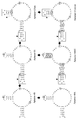
- FIG. 6 is a diagram showing the sequence and secondary structure of each aptamer for IFN- ⁇ prepared in Example.
- the position of the artificial base Ds is indicated by a round frame.
- the part where the hairpin is replaced with the mini hairpin and the part where the mini hairpin is added to the original Aptamer 49 are indicated by a square frame with an arrowhead.
- FIG. 7 is a diagram showing the results of a competition test of each IFN- ⁇ aptamer with Aptamer49.
- various aptamers added together with P-labeled Aptamer49 and the presence or absence of addition of IFN- ⁇ are shown.
- a complex of P-labeled Aptamer49 and IFN- ⁇ and a band of free P-labeled Aptamer49 are shown.
- FIG. 8 is a diagram showing the results of measuring the binding of each IFN- ⁇ aptamer to human IFN- ⁇ by surface plasmon resonance.
- the horizontal axis indicates time (seconds), the vertical axis indicates resonance units (resonance unit: RU), and the numerical values in the figure indicate calculated Kd values.
- FIG. 9 is a diagram showing the results of gel electrophoresis confirming the stability of each IFN- ⁇ aptamer in human serum.
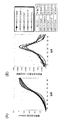
- FIG. 10 is a diagram showing measurement results of Tm values of each IFN- ⁇ aptamer.
- the horizontal axis indicates temperature, and the vertical axis indicates standardized absorbance.
- the horizontal axis represents temperature, and the vertical axis represents the first derivative of standardized absorbance.
- FIG. 11 is a diagram showing the results of measuring the IFN- ⁇ stimulation response inhibitory effect of each IFN- ⁇ aptamer by FACS using cultured cells.
- FIG. 1 is a schematic diagram showing that STAT1 is phosphorylated via an IFN- ⁇ receptor by IFN ⁇ stimulation.
- B shows the results of FACS analysis using phosphorylated STAT antibody. The horizontal axis indicates the fluorescence intensity, and the vertical axis indicates the number of cells. Unstimulated cells are shown in shaded areas. Unstimulated cells that have not been treated with anti-phosphorylated STAT-1 antibody solution are indicated by lines.
- C shows FACS analysis of cells treated with IFN- ⁇ using phosphorylated STAT antibody. The horizontal axis indicates the fluorescence intensity, and the vertical axis indicates the number of cells. Unstimulated cells are shown in gray, and cells stimulated with IFN- ⁇ are shown as lines.
- FIG. 12 shows the results of measuring the IFN- ⁇ stimulation response inhibitory effect of each IFN- ⁇ aptamer by FACS using cultured cells.
- the horizontal axis indicates the fluorescence intensity, and the vertical axis indicates the number of cells.
- the upper panel shows the inhibitory effect of Aptamer 49, and the lower panel shows the inhibitory effect of Aptamer 58.
- FIG. 13 is a diagram showing the results of measuring the IFN- ⁇ stimulation response inhibitory effect of each IFN- ⁇ aptamer by FACS using cultured cells.
- the horizontal axis indicates the fluorescence intensity, and the vertical axis indicates the number of cells.
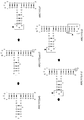
- FIG. 14 is a diagram showing the sequence and secondary structure of each aptamer for IFN- ⁇ consisting only of a natural base, prepared in Example.
- FIG. 15 is a diagram showing the results of a competition test for Aptamer49. In the upper row, various aptamers added together with P-labeled Aptamer49 and the presence or absence of addition of IFN- ⁇ (-: no addition; +: with addition) are shown.
- FIG. 16 is a diagram showing the measurement results of the Tm value of each IFN- ⁇ aptamer consisting only of natural bases.
- the horizontal axis represents temperature and the vertical axis represents standardized absorbance.
- the horizontal axis represents temperature, and the vertical axis represents the first derivative of standardized absorbance.
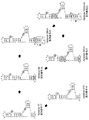
- FIG. 17 is a diagram showing the sequence and secondary structure of each aptamer for vWF A1 domain prepared in Example.
- the part replaced when the hairpin is replaced with the mini hairpin and the part added with the mini hairpin with respect to the original ARC1172 (wt) are indicated by a square frame with an arrowhead.
- the position of inverted dT added to the end is indicated by a round frame.
- FIG. 18 is a diagram showing the results of a competition test of each vWF A1 domain aptamer for ARC1172 (wt). In the upper row, various aptamers added together with P-labeled ARC1172 (wt) and the presence / absence of addition of vWF A1 (-: no addition; +: with addition) are shown.
- the middle panel shows a complex of P-labeled ARC1172 (wt) and vWF A1, and a free P-labeled ARC1172 (wt) band.
- the bottom row shows the gel shift rate, the inhibition rate by each aptamer of binding of ARC1172 (wt) to the vWF A1 domain calculated from the gel shift rate, and the relative binding rate calculated by comparing with the competitive inhibition ability of ARC1172 (wt) itself.
- FIG. 19 is a diagram showing the results of confirming the stability of aptamers for vWF A1 domain in human serum by gel electrophoresis. The position of the unresolved aptamer band is indicated by a black triangle.
- FIG. 20 is a diagram showing measurement results of Tm values of aptamers for vWF A1 domain.
- the horizontal axis represents temperature and the vertical axis represents standardized absorbance.
- the horizontal axis represents temperature, and the vertical axis represents the first derivative of standardized absorbance.
- FIG. 21 shows the sequence and secondary structure of each aptamer for VEGF165 prepared in the Example.
- FIG. 22 is a diagram showing the results of a competition test of each aptamer for VEGF165 to Aptamer47. In the upper row, various aptamers added together with P-labeled Aptamer47 and the presence or absence of addition of VEGF165 (-: no addition; +: with addition) are shown.
- the middle panel shows a complex of P-labeled Aptamer47 and VEGF165, and a free P-labeled Aptamer47 band.
- the lower row shows the gel shift rate, the inhibition rate of Aptamer47 binding to VEGF165 calculated from the gel shift rate by each aptamer, and the relative binding rate calculated by comparing with the competitive inhibition ability of Aptamer47 itself.
- FIG. 23 shows the results of gel electrophoresis confirming the stability of each aptamer for VEGF165 in human serum. The position of the unresolved aptamer band is indicated by a black triangle.
- FIG. 24 is a diagram showing measurement results of Tm values of aptamers for VEGF165.
- the horizontal axis represents temperature and the vertical axis represents standardized absorbance.
- the horizontal axis represents temperature, and the vertical axis represents the first derivative of standardized absorbance.
- the graph of (C) is an enlargement of the portion up to 50 ° C of the graph of (A).
- nucleic acid or “nucleic acid molecule” refers to a biopolymer composed of nucleotides as structural units and linked by phosphodiester bonds.
- natural nucleotide refers to a nucleotide that exists in nature and is composed of a deoxyribonucleotide having a natural base of any one of adenine, guanine, cytosine and thymine, and adenine, guanine, Examples thereof include RNA composed of ribonucleotides having a natural base of either cytosine or uracil, or a combination thereof.
- a nucleic acid (molecule) composed only of natural nucleotides is referred to as a natural nucleic acid (molecule).
- non-natural nucleotide refers to a nucleotide that does not exist in nature, the base of which is an artificial base.
- the phosphate group and sugar constituting the non-natural nucleotide in the present invention are structurally identical to the phosphate group and sugar of the natural nucleotide.
- the “base analog” or “artificial base” is an artificially constructed chemical substance having properties similar to the natural base constituting the natural nucleotide, and is similar to the natural base. And a base analog (hereinafter referred to as “complementary artificial base”) that can form an artificial base pairing.
- “artificial base pairing” refers to base pairing formed by a pair of complementary artificial bases such as adenine and thymine, adenine and uracil, or guanine and cytosine, which are natural bases.
- Artificial base pairing is based on chemical bonds via hydrogen bonds found in base pairing between natural bases, physical bonds via fitting based on the molecular structure between artificial bases, and hydrophobic interactions. Including stacking effect.
- the “characteristics similar to natural bases” possessed by artificial bases include the ability to replicate or transcribe nucleic acids (including reverse transcription) by complementation by artificial base pairing.
- Artificial bases like natural bases, have exclusive selectivity in artificial base pairing. Therefore, if a non-natural nucleotide having a pair of complementary artificial bases exists in a substrate nucleotide, even a nucleic acid molecule containing a non-natural nucleotide can be accurately detected in the same manner as a natural nucleotide due to complementarity between artificial bases. Can be duplicated and transcribed. Therefore, it is possible to amplify DNA molecules by a nucleic acid amplification method such as PCR while containing non-natural nucleotides.
- the artificial base include Ds (7- (2-thienyl) imidazo [4,5-b] pyridine; referred to herein as “Ds”), Pn (2-nitropyrrole-1-yl; this specification "Pn”), Pa (2-formyl-1H-pyrrole-1-yl; referred to herein as “Pa”), P (2-amino-imidazo [1,2-a] -1 , 3,5-triazin-4 (8H) -one; referred to herein as “P”), Z (6-amino-5-nitro-2 (1H) -pyridone; referred to herein as “Z”.
- 5SICS (6-methylisoquinoline-1 (2H) -thione; referred to herein as “5SICS”), NaM (3-methoxynaphthalen-2-yl; referred to herein as “NaM”), and MMO2 (2-methoxy-4-methylphenyl; referred to herein as “MMO2”).
- complementary artificial bases for Ds include Pn and Pa.
- a complementary artificial base of P includes Z.
- 5SICS complementary artificial bases include NaM and MMO2.
- An artificial base is a natural base that is structurally and / or close in nature to a complementary artificial base when the substrate does not contain a non-natural nucleotide having a complementary artificial base during replication or transcription.
- base pairing can be performed.
- the non-natural nucleotide in the template nucleic acid molecule is replaced with the natural nucleotide after replication or transcription.
- Ds it is known that it is replaced with A or T.
- modified base means a base that has been chemically chemically modified.
- Modified bases include, for example, modified pyrimidines (eg, 5-hydroxycytosine, 5-fluorouracil, 4-thiouracil, 5- (3-indole-2-ethyl) uracil, 5- (4-hydroxyphenyl-2-ethyl) Uracil), modified purines (eg 6-methyladenine, 6-thioguanosine) and other heterocyclic bases.
- modified pyrimidines eg, 5-hydroxycytosine, 5-fluorouracil, 4-thiouracil, 5- (3-indole-2-ethyl) uracil, 5- (4-hydroxyphenyl-2-ethyl) Uracil
- modified purines eg 6-methyladenine, 6-thioguanosine
- nucleic acid aptamer is an aptamer composed of nucleic acids, and is formed by a three-dimensional structure formed on the basis of the secondary structure and further the tertiary structure of a single-stranded nucleic acid molecule through hydrogen bonding or the like.
- inhibition of target molecule function refers to inhibition of biological functions such as catalytic function or gene expression control function (including control of transcription, translation, transport, etc.) and apoptosis control function of target molecule. Or to suppress.
- nucleic acid aptamer an RNA aptamer composed only of RNA and a DNA aptamer composed only of DNA are generally known, but the nucleic acid constituting the nucleic acid aptamer in the present specification is DNA.
- target molecule refers to a substance that can be a binding target of a DNA aptamer.
- the type of target molecule is not particularly limited as long as it is a biological substance to which a DNA aptamer can bind. Examples include peptides (oligopeptides or polypeptides), nucleic acids, lipids, sugars (including sugar chains), and low molecular compounds. Preferably it is a peptide, more preferably a polypeptide, ie a protein. Moreover, any of naturally derived substances, chemically synthesized substances, genetically modified substances, cells, viruses and the like may be used. 2.
- the present invention relates to a method for designing a base sequence that enhances the target molecule binding ability of an existing DNA aptamer and / or stabilizes the aptamer.
- the present invention relates to a method that makes it possible to enhance and / or stabilize the binding ability, in particular based on information on the secondary structure level of DNA aptamers.
- the base sequence design method according to the present invention includes the first step as an essential step.
- the base sequence design method according to the present invention includes one or more of the second step, the third step, and the fourth step as an optional step. When these arbitrary steps are included, the order of each step is not limited.
- the fourth step is performed after the third step.
- the “first step” means a hairpin structure composed of a pair of stem structures and loop structures in an existing DNA aptamer including one or more stem structures and one or more loop structures. This is a process of substituting a mini hairpin structure.
- the “stem structure” means that a part of constituent bases, preferably two or more consecutive bases, for example, 3 or more, 4 or more, or 5 or more bases are completely or partially base-paired with each other.
- “completely” base pairing means base pairing with a base corresponding to all of two or more consecutive bases between DNA aptamers, for example, three or more, four or more, or five or more.
- “partially” base pairing means that 1 or 2 or more, for example, 3 or more, 4 or more, or 5 or more base pairs are formed between the base sequences of the stem structure that is completely base-paired. Is meant to contain no base.
- internal loop structure means a loop structure in a stem structure that occurs when one or more bases that do not form a base pair are present at corresponding positions in both of the double strands that form the stem structure.
- bulge structure means a protruding structure in a stem structure that occurs when one or more bases that do not form a base pair are present only at one of the corresponding positions of the double strand that forms the stem structure. Point to.
- the “loop structure” means a loop-like structure inside a nucleic acid that is located between the two strands constituting the stem structure and is formed by the formation of the stem structure and does not base pair.
- hairpin structure or “stem loop structure” means a structure composed of one stem structure and one loop structure (a set of stem structure and loop structure).
- mini-hairpin structure means that three DNA nucleic acid regions of a first nucleic acid region, a second nucleic acid region, and a third nucleic acid region are linked in order from the 5 ′ end to the 3 ′ end. Has a structured.
- the “first nucleic acid region” is a nucleic acid region consisting of 2 to 5 arbitrary nucleotides.
- the nucleotide refers to a deoxyribonucleotide having a base of guanine (g), adenine (a), cytosine (c) or thymine (t).
- the base of this nucleic acid region is preferably guanine or cytosine. This is because when the stem structure is formed with the third nucleic acid region described later, the Tm value increases as the gc content increases, and the stem structure can be stably maintained. Therefore, it is most preferable that the entire base sequence of the first nucleic acid region is composed of g and / or c.
- the “second nucleic acid region” is a nucleic acid region consisting of a 5′-gna-3 ′ or 5′-gnna-3 ′ base sequence. Each n in the sequence is independently composed of a natural base (g, a, t, or c), the base analog, or a modified base.
- the “third nucleic acid region” is a nucleic acid region having a base sequence complementary to the first nucleic acid region. Therefore, the base sequence of the third nucleic acid region is determined by the base sequence of the first nucleic acid region, and the first nucleic acid region and the third nucleic acid region form a base pair in the molecule. As a result, the first nucleic acid region and the third nucleic acid region have completely stem-paired stem portions, and the second nucleic acid region existing between the first and third nucleic acid regions has a loop portion. As a whole, for example, a mini hairpin type DNA consisting of 7 to 14 nucleotides having the base sequence of SEQ ID NO: 1, 2, 23, or 24 is formed.
- the target DNA aptamer in the first step is an existing DNA aptamer containing one or more stem structures and one or more loop structures.
- the “existing DNA aptamer” is a known DNA aptamer and a DNA aptamer obtained by a method known in the art, the nucleotide sequence of which is known, or the nucleotide sequence thereof. It means what can be clarified.
- a DNA aptamer for example, it can be produced by in vitro selection using a modified SELEX method to which a known SELEX (systematic evolution of ligands by exponential enrichment) method is applied.
- a nucleic acid molecule bound to a target molecule is selected from a pool consisting of a random sequence region and nucleic acid molecules having primer binding regions at both ends, amplified after recovery, and then transferred to the nucleic acid pool of the next round.
- This is a method of selecting a nucleic acid having a stronger binding force with respect to a target molecule by repeating a series of cycles of several to several tens of rounds.
- the modified SELEX method includes a step of immobilizing a complex obtained by mixing a nucleic acid pool and a target molecule on a solid phase carrier in addition to the steps of the conventional SELEX method.
- the DNA molecule finally obtained by such a method can be used as a DNA aptamer.
- the base sequence constituting the stem structure and the loop structure can be easily identified by those skilled in the art by performing secondary structure prediction based on the base sequence.
- secondary structure prediction For the prediction of the secondary structure based on the nucleic acid base sequence, see, for example, Zuker M., “Mfold web server for nucleic acid folding and hybridization prediction”, Nucleic Acids Res. 2003, 31, pp. 3406-3415.
- a library in which mutations are introduced into the base sequence of a DNA aptamer is created, and the SELEX method is used to comprehensively analyze the sequence that binds to the target. Knowing the secondary structure can be estimated (eg Kimoto M., et al., “Generation of high-affinity DNA aptamer using an expanded genetic alphabet” Nat. Biotechnol., 2013, 31, pp. 453-457). Moreover, in the existing DNA aptamer, the secondary structure of a DNA aptamer can also be estimated using the structural information by X-ray crystal structure analysis or NMR.
- the base length of the existing DNA aptamer is not particularly limited. What is necessary is just to determine suitably in the range in which a DNA aptamer can exhibit the target binding ability.
- Existing DNA aptamers may contain one or more base analogs and / or modified bases.
- the content of base analogs and / or modified bases in the DNA aptamer of the present invention may be 20% or less, preferably 15% or less, more preferably 10% or less of the total number of nucleotides constituting the nucleic acid aptamer.
- the hairpin structure to be replaced in this step is approximately the same size as the mini hairpin structure after replacement.
- “the same size” means that the difference in nucleotide length between the substituted hairpin structure and the substituted mini hairpin structure is preferably 5 or less, for example, 4 or less, 3 or less, 2 or less, or 1 It means that the nucleotide length of the hairpin structure to be substituted or the substituted mini hairpin structure is the same.
- the mini hairpin structure is composed of 7 to 14 bases
- the substituted hairpin structure is preferably composed of 7 to 19 bases, for example.
- the stem structure constituting the hairpin structure to be replaced in this step may have 1 to 3 internal loop structures and / or 1 to 3 bulge structures.
- the number of bases constituting the internal loop structure in the stem structure is, for example, 10 or less, preferably 6 or less, 5 or less, 4 or less, 3 or less, 2 or less, for both strands. It is a piece.
- the number of bases constituting the bulge structure in the stem structure is, for example, 10 or less, preferably 6 or less, 5 or less, 4 or less, 3 or less, 2 or less, or 1.
- a hairpin structure including an internal loop structure and a stem structure not including a bulge structure, a stem structure including one internal loop structure, and a stem structure including one bulge structure is converted into a mini hairpin structure.
- the substitution is shown in FIGS. 1 (A)-(C), respectively.
- the replacement of the hairpin structure with the mini-hairpin structure may be performed by changing a part of the base sequence constituting the hairpin structure, or by changing the entire base sequence constituting the hairpin structure. .
- two or more hairpin structures When two or more hairpin structures are present in an existing DNA aptamer, two or more hairpin structures may be replaced with a mini hairpin structure, for example, all hairpin structures can be replaced.
- the hairpin structure to be substituted in this step is preferably a hairpin structure that is not involved in the binding of the DNA aptamer to the target molecule or has a low contribution to the binding to the target molecule.
- hairpin structures that are not involved in the binding of the DNA aptamer to the target molecule or have a low contribution to the binding to the target molecule for hairpin structures that are not involved in the binding of the DNA aptamer to the target molecule or have a low contribution to the binding to the target molecule are performed. Thus, those skilled in the art can easily identify the situation.
- the DNA aptamer when obtained by a screening method such as a modified SELEX method, it is not involved in binding to the target molecule from the sequence conserved among the selected DNA aptamers, or to the target molecule. It is also possible to infer a hairpin structure that has a low contribution to binding. For example, by creating a library (Doped library) in which mutations are introduced into the base sequence of a DNA aptamer, using this, perform a SELEX method, comprehensively analyze the sequence that binds to the target, and a site where base pairs are conserved By knowing, it is possible to infer a hairpin structure that is not involved in the binding to the target molecule or has a low contribution to the binding to the target molecule. 2-2.
- a library Doped library
- the “second step” is a step of increasing GC pairs in one or more stem structures when an existing DNA aptamer has two or more stem structures. This step can be performed by replacing one or more AT pairs in the stem structure with GC pairs and / or adding GC pairs in the stem structure.
- the part of the target stem structure in the second step is not particularly limited as long as it is not a stem structure constituting a mini hairpin structure.
- the number of GC pairs to be increased is, for example, 10 pairs or less, preferably 5 pairs or less, 4 pairs or less, 3 pairs or less, 2 pairs or less, or 1 pair.
- all AT pairs in the stem structure may be replaced with GC pairs, or the AT pairs in the stem structure are, for example, 10 pairs or less, preferably 5 pairs or less, preferably 4 pairs or less, 3 pairs Hereinafter, it may be replaced with 2 pairs or less, or 1 pair or GC pair.
- the GC pair is added to the stem structure, for example, 10 pairs or less, preferably 5 pairs or less, 4 pairs or less, 3 pairs or less, 2 pairs or less, or 1 pair. , May be added.
- the site to which the GC pair is added may be at the end of the stem structure or inside the stem structure.
- the DNA aptamer has a bulge structure or internal
- the number of GC pairs in the stem structure may be increased by performing substitution and / or addition to the base constituting the bulge structure or the internal loop structure.
- the base pair constituting the stem structure is perfectly paired and the bulge structure disappears.
- a smaller number of bases than the base constituting the bulge structure may be added to the other strand.
- the base pair constituting the stem structure is partially base-paired, and the bulge structure is Remains.
- the number of additions of G or C is not particularly limited as long as it is less than the number of bases constituting the bulge structure, but is, for example, 10 or less, preferably 5 or less, 4 or less, 3 or less, 2 or less, or 1 or less.
- Fig. 2 shows an example of adding the same number of bases as the base constituting the bulge structure to the other strand and adding a smaller number of bases than the base constituting the bulge structure to the other strand.
- B shows an example of adding the same number of bases as the base constituting the bulge structure to the other strand and adding a smaller number of bases than the base constituting the bulge structure to the other strand.
- B shows an example of adding the same number of bases as the base constituting the bulge structure to the other strand and adding a smaller number of bases than the base constituting the bulge structure to the other strand.
- B shows an example of adding the same number of bases as the base constituting the bulge structure to the other strand and adding a smaller number of bases than the base constituting the bulge structure to the other strand.
- B shows an example of adding the same number of bases as the base constituting the bulge structure to the other strand and adding a smaller number of bases than the base constituting the bulge structure to the other strand.
- B
- both bases constituting the internal loop present in the stem structure are both The number of GC pairs in the stem structure is increased by substituting the same number, for example, 10 bases or less, preferably 5 bases or less, 4 bases or less, 3 bases or less, 2 bases or less, or 1 base at a time. Can be made. All of the bases constituting the internal loop may be replaced with a GC pair, or a part of the bases may be replaced with a GC pair.
- the GC pair in the stem structure may be further increased by replacing and / or adding the newly formed bulge structure and / or internal loop structure according to (i) to (iv). Good.
- FIGS. 4A to 4C An example of replacing the internal loop structure is shown in FIGS. 4A to 4C, respectively.
- a base that does not form base pairing present in the stem structure are replaced by the same number from both strands, for example, each 10 bases or less, preferably 5 bases or less, 4 bases or less, 3 bases or less, 2 bases or less, or 1 base each in a GC pair. Pairs can be increased.
- the description is omitted.
- the number of bases that have not formed base pairing is replaced with the same number of GC pairs from both strands, a bulge structure is finally formed on one strand.
- the number of GC pairs in the stem structure may be further increased by performing substitution and / or addition to the formed structure in accordance with the above (i) or (ii).
- the “third step” is a step of increasing the GC pair at the end of the DNA aptamer when at least one end of the DNA aptamer forms a stem structure.
- the number of GC pairs added is not limited as long as the binding ability of the DNA aptamer to the target molecule is not lowered, but is, for example, 5 pairs or less, preferably 3 pairs or less, 2 pairs or less, or 1 pair.
- This step can be performed by adding a GC pair, ie, G and C, or C and G, to the 5 ′ end and 3 ′ end, respectively.
- a GC pair ie, G and C, or C and G
- the base constituting the protruding end is changed to This can be done by adding G or C to the other strand to form base pairing.
- the “fourth step” is a step of adding a mini hairpin structure to one end of the DNA aptamer.
- the mini hairpin structure is added to the 5 ′ end or the 3 ′ end, but it is preferable to add the mini hairpin structure to the 3 ′ end. 2-5. Effect According to the method for designing a base sequence of the present invention, it becomes possible to enhance the target molecule binding ability of an existing DNA aptamer and / or to stabilize the aptamer.
- target molecule binding ability means binding ability to a target molecule. By strengthening the binding ability to the target molecule, the ability to specifically inhibit or suppress the function of the DNA aptamer such as the physiological activity of the target molecule can be improved.
- the present invention provides a step of designing a base sequence of a DNA aptamer based on the base sequence design method described in the first embodiment, And a method for producing a stabilized DNA aptamer with enhanced target molecule binding ability, comprising a step of producing a DNA aptamer based on the designed base sequence. Since the design process is as described in the first embodiment, the description is omitted here.
- the “target molecule binding ability-enhanced stabilized DNA aptamer” means that the target molecule binding ability is enhanced with respect to the existing DNA aptamer used in the base sequence design method described in the first embodiment. And / or a stabilized DNA aptamer.
- the process for producing the DNA aptamer is not particularly limited. Any method known in the art may be used.
- the DNA aptamer of the present invention can be chemically synthesized according to a known solid phase synthesis method based on the sequence of the DNA aptamer designed as described above. See, for example, Current-Protocols-in-Nucleic-Acid-Chemistry, Volume 1, and Section 3 for the chemical synthesis of nucleic acids.
- many life science manufacturers for example, Takara Bio Inc., Life Technologies Corporation, Sigma-Aldrich Corporation, etc.
- a DNA aptamer may be prepared by synthesizing several fragments based on the designed DNA aptamer sequence and then ligating the fragments by intramolecular annealing, ligase ligation, or the like.
- the DNA aptamer of the present invention after chemical synthesis is preferably purified by a method known in the art before use.
- the purification method include a gel purification method, an affinity column purification method, and an HPLC method. 4).
- DNA aptamer In a third embodiment, the present invention provides a DNA aptamer having one or more stem structures and loop structures, wherein the hairpin structure present at the non-terminal portion of the DNA aptamer is a mini hairpin structure. About.
- the DNA aptamer of the present invention may be obtained by the production method described in the second embodiment.
- the “non-terminal portion” is not particularly limited as long as it is a place other than the 5 ′ end and 3 ′ end of the DNA aptamer.
- the non-terminal portion of the DNA aptamer is preferably a site separated from the terminal portion of the DNA by 2 bases or more, for example, 3 bases, 4 bases, or 5 bases or more.
- the DNA aptamer of the present invention may further contain a mini hairpin structure at the end in addition to the non-terminal mini hairpin structure. Although it does not restrict
- the DNA aptamer of the present invention may further have one or more stem structures and / or one or more loop structures. In this case, the stem structure of the DNA aptamer may have one or more base mismatch sites or one or more bulge structures therein.
- the base length of the DNA aptamer of the present invention is not particularly limited. What is necessary is just to determine suitably in the range which a DNA aptamer can exhibit the function.
- the DNA aptamer of the present invention may contain one or more base analogs and / or modified bases.
- the content of base analogs and / or modified bases in the DNA aptamer of the present invention may be 20% or less, preferably 15% or less, more preferably 10% or less of the total number of nucleotides constituting the nucleic acid aptamer.
- the DNA aptamer of the present invention preferably has a high GC content in one or more, for example, one, two, three, or all stem structures.
- the GC content means the ratio of GC pairs in the base pairs forming the stem structure contained in the DNA aptamer, and one or more, for example, one, two, three, or all stem structures of the DNA aptamer of the present invention.
- the GC content in is, for example, 50% or more, 75% or more, or 90% or more. All base pairs in one or more, for example one, two, three or all stem structures may be GC pairs.
- the base pair at the end is preferably a GC pair. 5.
- a fourth embodiment of the present invention is a DNA aptamer for interferon- ⁇ (abbreviated herein as “IFN- ⁇ ”).
- the DNA aptamer for IFN- ⁇ of the present invention has the configuration of the DNA aptamer described in the third embodiment.
- the DNA aptamer for IFN- ⁇ of the present invention is composed of a single-stranded DNA molecule that binds firmly and specifically with IFN- ⁇ as a target substance and suppresses cytotoxic T cell-inducing activity of IFN- ⁇ . It is a DNA aptamer (hereinafter referred to as “DNA aptamer for IFN- ⁇ ”).
- the biological species from which the target molecule of the DNA aptamer for IFN- ⁇ of the present invention is derived is not limited, for example, mammals, for example, primates such as humans and chimpanzees, laboratory animals such as rats and mice, pigs, Examples include domestic animals such as cattle, horses, sheep and goats, and pets such as dogs and cats, preferably human IFN- ⁇ .
- the DNA aptamer for IFN- ⁇ of the present invention consists of the base sequence shown in any of SEQ ID NOs: 6 and 8-11.
- the DNA aptamer for IFN- ⁇ of the present invention consists of the base sequence shown in SEQ ID NO: 8 or 9. 6).
- DNA Aptamer for VEGF A fifth embodiment of the present invention is a DNA aptamer for vascular endothelial growth factor (abbreviated as “VEGF” in the present specification).
- VEGF is a growth factor that functions as a pro-angiogenic factor, and is known as one of the causative factors of age-related macular degeneration (AMD).
- AMD age-related macular degeneration
- Age-related macular degeneration is a progressive retinal disease that causes serious symptoms such as decreased visual function and blindness in adults, and it has been found that the pathological condition worsens and becomes severe with the progress of neovascularization in the retina. (Martin A. et al., 2003, Medicinal Research Reviews, Vol. 23, No. 2: 117-145; Ferris III, FL et al., 1984, Archives of Ophthalmology, Vol. 102, Issue 11: 1640-1642 ).
- the DNA aptamer for VEGF of the present invention is a DNA aptamer composed of a single-stranded DNA molecule that binds firmly and specifically with VEGF as a target substance and suppresses the angiogenic function of VEGF (hereinafter, “DNA aptamer for VEGF”). ”).
- the biological species from which VEGF as a target molecule of the DNA aptamer for VEGF of the present invention is derived does not matter. For example, mammals, primates such as humans and chimpanzees, laboratory animals such as rats and mice, pigs, cows, horses, Examples include livestock animals such as sheep and goats, and pets such as dogs and cats, preferably human VEGF.
- the DNA aptamer for VEGF of the present invention consists of the base sequence shown in any of SEQ ID NOs: 19-22.
- the DNA aptamer for VEGF of the present invention consists of the base sequence shown in SEQ ID NO: 20 or 22. 7).
- DNA aptamer for vWF The sixth embodiment of the present invention is a DNA aptamer for von Willebrand factor (abbreviated herein as “vWF”), particularly a DNA aptamer for the A1 domain of vWF. .
- the DNA aptamer for vWF of the present invention is a DNA aptamer composed of a single-stranded DNA molecule that binds firmly and specifically with vWF, in particular, the A1 domain of vWF (hereinafter referred to as “DNA aptamer for vWF”). It is.
- the biological species from which vWF as a target molecule of the DNA aptamer for vWF of the present invention is derived does not matter. For example, mammals, primates such as humans and chimpanzees, laboratory animals such as rats and mice, pigs, cows, horses, Examples include livestock animals such as sheep and goats, and pet animals such as dogs and cats, preferably human vWF.
- the vWF of the present invention in particular, the DNA aptamer for the A1 domain of vWF consists of the base sequence shown in any of SEQ ID NOs: 14 to 16.
- the vWF of the present invention particularly the DNA aptamer for the A1 domain of vWF, consists of the base sequence shown in SEQ ID NO: 16. 8).
- Pharmaceutical composition A seventh embodiment of the present invention is a pharmaceutical composition. 8-1. Structure
- the pharmaceutical composition of the present invention contains at least one DNA aptamer described in any of Embodiments 3 to 6 as an active ingredient.
- the pharmaceutical composition of the present invention can also contain a pharmaceutically acceptable carrier.
- “Pharmaceutically acceptable carrier” refers to its action in order to facilitate the formulation of a pharmaceutical composition ordinarily used in the field of pharmaceutical technology and application to a living body, and to maintain the effect of the target substance function inhibitor. A substance added within a range not inhibiting or suppressing. Carriers include, for example, excipients, binders, disintegrants, fillers, emulsifiers, flow control agents, lubricants or surfactants.
- excipient examples include sugars such as monosaccharides, disaccharides, cyclodextrins and polysaccharides (specifically, but not limited to, glucose, sucrose, lactose, raffinose, mannitol, sorbitol, inositol, Including dextrin, maltodextrin, starch and cellulose), metal salts (eg, sodium phosphate or calcium phosphate, calcium sulfate, magnesium sulfate), citric acid, tartaric acid, glycine, low, medium, high molecular weight polyethylene glycol (PEG), Pluronics, or combinations thereof.
- sugars such as monosaccharides, disaccharides, cyclodextrins and polysaccharides (specifically, but not limited to, glucose, sucrose, lactose, raffinose, mannitol, sorbitol, inositol, Including dextrin, mal
- binder examples include starch paste using corn, wheat, rice, or potato starch, gelatin, tragacanth, methylcellulose, hydroxypropylmethylcellulose, sodium carboxymethylcellulose, and / or polyvinylpyrrolidone.
- disintegrant examples include the starch, carboxymethyl starch, cross-linked polyvinyl pyrrolidone, agar, alginic acid, sodium alginate or salts thereof.
- filler examples include the sugar and / or calcium phosphate (for example, tricalcium phosphate or calcium hydrogen phosphate).
- emulsifier examples include sorbitan fatty acid ester, glycerin fatty acid ester, sucrose fatty acid ester, and propylene glycol fatty acid ester.
- Examples of the “flow additive modifier” and “lubricant” include silicate, talc, stearate or polyethylene glycol.
- the drug composition of the present invention comprises a flavoring agent, a solubilizing agent (solubilizing agent), a suspending agent, a diluent, a surfactant, a stabilizer, an absorption accelerator (if necessary)
- a flavoring agent for example, quaternary ammonium salts, sodium lauryl sulfate, etc., extenders, moisturizers, humectants (eg, glycerin, starch, etc.), adsorbents (eg, starch, lactose, kaolin, bentonite, colloidal silicic acid, etc.
- Disintegration inhibitors eg, sucrose, stearin, cocoa butter, hydrogenated oil, etc.
- coating agents colorants, preservatives, antioxidants, fragrances, flavoring agents, sweetening agents, buffering agents, and the like.
- surfactant examples include lignosulfonic acid, naphthalene sulfonic acid, phenol sulfonic acid, alkali metal salt, alkaline earth metal salt and ammonium salt of dibutyl naphthalene sulfonic acid, alkyl aryl sulfonate, alkyl sulfate, alkyl sulfonate.
- the pharmaceutical composition of the present embodiment can include one or more of the above carriers in one pharmaceutical composition.
- the pharmaceutical composition of the present invention can also contain other drugs as long as the pharmacological effect of the nucleic acid of the present invention is not lost.
- a predetermined amount of antibiotics may be contained.
- the dosage form of the pharmaceutical composition of the present invention is not particularly limited as long as it is a form that does not inactivate the active ingredient and can exhibit its pharmacological effect in vivo after administration. Usually, it varies depending on the administration method and / or prescription conditions.
- dosage forms suitable for oral administration include solid preparations (including tablets, pills, sublinguals, capsules, drops, troches), granules, powders, powders, liquids, and the like.
- the solid preparation can be made into a dosage form known in the art, for example, a sugar-coated tablet, a gelatin-encapsulated tablet, an enteric tablet, a film-coated tablet, a double tablet, or a multilayer tablet, if necessary. .
- Parenteral administration is subdivided into systemic administration and local administration, and local administration is further subdivided into intra-tissue administration, transepidermal administration, transmucosal administration, and rectal administration.
- the dosage form can be made suitable for.
- dosage forms suitable for systemic or intra-tissue administration include injections that are liquids.
- Suitable dosage forms for transepidermal or transmucosal administration include, for example, liquids (including coating agents, eye drops, nasal drops, and inhalants), suspensions (including emulsions and creams), and powders (points). Nasal and suction agents), pastes, gels, ointments, plasters and the like.
- Examples of dosage forms suitable for rectal administration include suppositories.
- the dosage form of the pharmaceutical composition may be liquid, solid (including semi-solid), or a combination thereof. Solutions, oily dispersions, emulsions, suspensions, powders, powders, pastes, gels, pellets, tablets and granules can be used.
- each dosage form are not particularly limited as long as each dosage form is within the range of dosage forms known in the art. 8-2.
- Production Method In order to produce the pharmaceutical composition of the present invention, a formulation method known in the art may be applied in principle. For example, reference can be made to the method described in Remington's Pharmaceutical Sciences (Merck Publishing Co., Easton, Pa.).
- the DNA aptamer according to any of the third to sixth embodiments is dissolved in a pharmaceutically acceptable solvent, and a pharmaceutically acceptable carrier is added as necessary, which is conventionally used in the art. It can be manufactured by the method.
- the pharmaceutical composition of the present embodiment can be administered to a living body in a pharmaceutically effective amount for treatment or prevention of a target disease or the like.
- the living body to be administered is a vertebrate, preferably a mammal, more preferably a human.
- the pharmaceutical composition of the present invention may be either systemic administration or local administration. It can select suitably according to the kind of disease, onset location, or a progression degree. If the onset site is a local disease, local administration directly administered to and around the onset site by injection or the like is preferable. This is because a sufficient amount of the DNA aptamer of the present invention can be administered to a site (tissue or organ) to be treated, and other tissues are hardly affected. On the other hand, when the treatment site cannot be specified or the onset is a systemic disease, systemic administration by intravenous injection or the like is preferable, although there is no limitation. This is because the DNA aptamer of the present invention is distributed throughout the body through the bloodstream, so that it can be administered even to a lesion that cannot be detected by diagnosis.
- the pharmaceutical composition of the present invention can be administered by any appropriate method that does not deactivate the active ingredient.
- it may be parenteral (for example, injection, aerosol, application, eye drop, nose drop) or oral.
- parenteral for example, injection, aerosol, application, eye drop, nose drop
- oral Preferably, it is an injection.
- the injection site is not particularly limited. Any site may be used as long as the DNA aptamer, which is an active ingredient, can bind to the target substance and suppress its function.
- Intravenous injection such as intravenous injection or intraarterial injection is preferable. This is because the pharmaceutical composition of the present invention can be distributed throughout the body through the blood stream as described above, and is less invasive. 9.
- the eighth embodiment of the present invention is a method for detecting a target substance using the DNA aptamer according to any one of Embodiments 3 to 6. 9-1. Since the DNA aptamer according to any of the third to sixth embodiments can bind to the target substance very firmly and specifically, the target substance present in the sample using the properties of the DNA aptamer. Can be detected.
- a known detection method may be used as the detection method itself.
- SPR method quartz crystal microbalance method, turbidimetric method, colorimetric method, or fluorescent method can be used.
- SPR surface plasmon resonance
- the SPR method is a measurement method that utilizes this phenomenon, and can measure the adsorbate on the surface of the metal thin film that is the sensor portion with high sensitivity.
- the DNA aptamer according to any of the third to sixth embodiments is immobilized on the surface of the metal thin film in advance, and a sample is passed over the surface of the metal thin film, so that the DNA aptamer and the target substance are The target substance in the sample can be detected by detecting the difference in adsorbate on the metal surface before and after passing through the sample caused by the binding.
- a substitution method, an indirect competition method, and the like are known, and any of them may be used.
- the QCM (Quartz Crystal Microbalance) method uses a phenomenon in which when a substance is adsorbed on the surface of an electrode attached to a crystal resonator, the resonance frequency of the crystal resonator decreases according to its mass. .
- a QCM sensor using this method can quantitatively capture an extremely small amount of adsorbate based on the amount of change in the water resonance frequency.
- a DNA aptamer is immobilized on the electrode surface in the same manner as in the SPR method, and the amount of change in the water resonance frequency caused by the binding between the DNA aptamer and the target substance is brought into contact with the sample surface.
- the target substance in the sample can be detected quantitatively.
- This technique is well known in the art. For example, see Christopher J., et al. (2005) Self-Assembled Monolayers of a Form of Nanotechnology, Chemical Review, 105: 1103-1169.
- the turbidimetric method irradiates a solution with light and optically measures the attenuation of scattered light scattered by a substance suspended in the solution or transmitted light that has passed through the solution using a colorimeter or the like. It is a method of measuring the amount of substance in it.
- the target substance in the sample can be quantitatively detected by measuring the absorbance before and after adding the DNA aptamer of any of the third to sixth embodiments to the sample.
- the target substance can be detected by using it together with an antibody against the target substance.
- a method using an ELISA sandwich method may be used. In this method, first, the DNA aptamer according to any of the third to sixth embodiments is immobilized on a solid phase carrier, and then a sample is added to bind the target substance present in the sample and the DNA aptamer. . Subsequently, after washing the sample, an anti-target substance antibody is added to bind to the target substance. After washing, the target substance in the sample can be detected by detecting the anti-target substance antibody using a secondary antibody with an appropriate label.
- beads made of materials such as polystyrene, polycarbonate, polyvinyltoluene, polypropylene, polyethylene, polyvinyl chloride, nylon, polymethacrylate, latex, gelatin, agarose, cellulose, sepharose, glass, metal, ceramics or magnetic materials
- Insoluble carriers in the form of microplates, test tubes, sticks or test pieces can be used.
- Example 1 Preparation of DNA aptamer containing mini hairpin sequence
- GC of AT base pairs in the stem sequence GC of AT base pairs in the stem sequence
- various nucleic acid fragments were first designed and prepared for human IFN- ⁇ DNA aptamers.
- the sequence of the aptamer prepared in this example and its secondary structure are shown in FIG.
- Aptamer 49 (SEQ ID NO: 4) is a previously reported IFN- ⁇ binding DNA aptamer found by the inventors.
- Aptamer 49A (SEQ ID NO: 5) is obtained by replacing the artificial base Ds of Aptamer 49 with the natural base A.
- Aptamer 58 (SEQ ID NO: 6) is obtained by binding a mini hairpin structure (short DNA fragment comprising the sequence of CGCGAAGCG (SEQ ID NO: 1)) to the 3 ′ end of Aptamer 49.
- Aptamer 57mh (SEQ ID NO: 9) is obtained by replacing the hairpin in the sequence of Aptamer 58 with a mini hairpin structure (short DNA fragment comprising the sequence of CGCGAAGCG (SEQ ID NO: 1)).
- Aptamer 58GC (SEQ ID NO: 7) and Aptamer 57GCmh (SEQ ID NO: 8) are obtained by replacing two AT base pairs in the stem structures of Aptamertam58 and Aptamer 57mh with G-C base pairs.
- Aptamer 49, Aptamer 58, Aptamer 58GC, Aptamer 57mh, Aptamer 57 GCmh, and Aptamer 49A were prepared by chemical synthesis of nucleic acids having the base sequences shown in the figure, and then purified by denaturing acrylamide gel. Each nucleic acid fragment was reconstituted in phosphate buffer solution (pH 7.4), heated at 95 ° C for 3 minutes, allowed to cool at room temperature for 10 minutes, and allowed to stand on ice for 5 minutes. Prepared.
- Example 2 Analysis of binding activity of various IFN- ⁇ aptamers to human IFN- ⁇
- a competition experiment using Aptamer 49 containing the artificial base Ds was performed.
- the inhibition rate was calculated as a value obtained by subtracting 100 from the percentage obtained by dividing the gel shift rate in the presence of each competitive aptamer by the gel shift rate in the absence of the competitive aptamer.
- the relative binding rate was calculated by dividing the inhibition rate of each aptamer by the inhibition rate of Aptamer 49.
- aptamers 49, Aptamer 58, Aptamer 57GCmh were picked up from the sequences prepared in Example 1, and human IFN was measured by measuring surface plasmon resonance (SPR) using BIAcoreT200 of GE Healthcare. The binding ability to - ⁇ was analyzed.
- nucleic acid fragments having various sequences whose structure ends are biotinylated are chemically synthesized, and then each nucleic acid fragment is purified on a denaturing acrylamide gel in the same manner as in Example 1, and then in a phosphate buffer (pH 7.4).
- the sample was reconstituted by heating at 95 ° C. and then slowly cooling to 25 ° C.
- the SPR sensor chip was an SA chip coated with streptavidin (GE Healthcare).
- the DNA fragment was irreversibly immobilized on the chip by the following method, and then the binding to human IFN- ⁇ was analyzed.
- SPR was measured using a running buffer (1 ⁇ PBS, +50 mM NaCl (final NaCl concentration 205 mM), 0.05% Nonidet P-40) at a set temperature of 25 ° C.
- the DNA solution diluted with PBS solution to 25 nM is folded (95 ° C, heat-denatured for 3 minutes, then slowly cooled to 25 ° C) and 0.5 nM with running buffer.
- Nonidet P-40 was added to a final concentration of 0.05%, and this DNA solution was injected at 40 ⁇ L (equivalent to 8 minutes) at a flow rate of 5 ⁇ L / min.
- a 50 mM NaOH solution was injected (5 ⁇ L, 5 times) at a flow rate of 20 ⁇ L / min to wash DNA fragments adsorbed nonspecifically on the SA chip.
- the interaction between the immobilized DNA fragment and human IFN- ⁇ can be detected using Kinetic Injection mode with 1.25nM, 2.5nM, 5nM, 10nM, 20nM, 30nM and 50nM human IFN- ⁇ solutions (diluted with running buffer). Monitored by injection.
- the measurement conditions are a flow rate of 100 ⁇ L / min and a protein injection time of 150 seconds.
- Chip regeneration binding protein dissociation and DNA refolding was performed by injecting a 50 mM NaOH solution in 5 ⁇ L (equivalent to 15 seconds) and then running a running buffer for 10 minutes. In order to subtract the response value due to the bulk effect and nonspecific adsorption to the sensor chip, the sensor value of each DNA fragment is taken as the reference cell, and the response value is calculated from the sensorgram of each DNA fragment. deducted. ⁇ Result> The binding inhibition ratios of various aptamer mutants to Aptamer 49 are shown in FIG.
- the relative binding rates of aptamer mutants containing a mini hairpin structure are 0.05 (Aptamer 49A), 1.29 (Aptamer 58), 0.26 (Aptamer 58GC), 1.53 ( Aptamer 57GCmh) and 1.40 (Aptamer 57mh). It was found that Aptamer 58, Aptamer 57mh, and Aptamer 57GCmh containing a mini hairpin had significantly higher binding strength than Aptamer 49 as a control.
- DNA aptamers (Aptamer 49, Aptamer 58, Aptamer 57mh, Aptamer 57GCmh, final concentration 2 ⁇ M) were mixed at a human serum concentration of 96% and incubated at 37 ° C. After 0 hour, 1 hour, 6 hours, 24 hours, 48 hours, 72 hours, 10 ⁇ L was taken from the mixed solution and mixed with 110 ⁇ L of 1 ⁇ TBE, 10M Urea solution to stop the decomposition reaction. . After the reaction, the sample was separated by denaturing 15% polyacrylamide gel electrophoresis, and then the gel was stained with SYBR GOLD to detect single-stranded nucleic acid.
- DNA aptamers (Aptamer 58, Aptamer 57mh, Aptamer 57GCmh) containing mini hairpin DNA still have a band pattern that more than 30% of the total amount is retained in the full-length product state even after 72 hours in the presence of human serum.
- Aptamer 57GCmh in which a mini hairpin is added to the 3 ′ end, the internal hairpin part is replaced with mini hairpin DNA, and the AT base pair in the stem part is replaced with GC base pair, is 72 hours after human serum is present.
- Example 4 Thermal stability analysis of aptamers for various IFN- ⁇ ] ⁇ Method> The thermal stability of various DNA aptamers (Aptamer 49, Aptamer 49A, Aptamer 58, Aptamer 58GC, Aptamer 57mh, Aptamer 57GCmh, final concentration 2 ⁇ M) was examined by measuring Tm values.
- the absorbance change of the DNA aptamer at a temperature rise change was measured with an ultraviolet-visible spectrophotometer UV-2450 (Shimadzu), and the Tm value, which is the melting temperature, was calculated from the first derivative.
- the results are shown in FIG.
- the Tm value of the control DNA aptamer (Aptamer 49) was 37.8 ° C.
- the Tm value of the DNA aptamer containing no artificial base was 33.4 ° C.
- the Tm values of the Ds aptamer mutants containing the mini hairpin structure were 43.9 ° C (Aptamer 58), 72.0 ° C (Aptamer 58GC), 51.1 ° C (Aptamer 57mh), and 64.2 ° C (Aptamer 57GCmh), respectively.
- the addition of mini hairpin DNA to the DNA aptamer significantly increased the Tm value, indicating that the thermal stability was improved. It was also found that the Tm value was further increased by replacing the AT base pair in the stem sequence with a GC base pair.
- Example 5 Analysis of IFN- ⁇ stimulation response suppression effect in various Ds aptamer cultured cells
- DMEM medium Dulbecco's Minimal Essential Medium, Corning cellgro
- FBS fetal bovine serum
- streptomycin penicillin, streptomycin
- the test was carried out using a 100-fold L-glutamine solution (Gibco). 2) Stimulation treatment with IFN- ⁇
- 10% FBS-containing DMEM medium containing 10 6 / mL MDA-MB-231 cells is placed in a round tube made of polystyrene (Falcon). Incubated at 37 degrees for 15 minutes. The cells were then collected by centrifugation at 1200 g for 5 minutes, then resuspended in DMEM medium containing 2 ng / mL of the recombinant protein human IFN- ⁇ (Peprotech), incubated at 37 degrees for 10 minutes, and IFN -Stimulated with ⁇ .
- the cells collected by centrifugation were washed twice with 0.5 mL of FACS analysis buffer (containing 1 ⁇ PBS pH 7.4, 0.1% sodium azide and 0.1% BSA), and then 7.5 ⁇ L of anti-phosphorylated STAT -1 antibody solution (BD Phosflow PE mouse anti-Stat-1 pY701) in 0.1 mL of FACS analysis buffer, incubate for 30 to 60 minutes under 4 times shading conditions, then 0.5 mL of FACS analysis buffer Washed twice with liquid. The washed cells were suspended in 0.5 mL of FACS analysis buffer and analyzed by flow cytometry.
- FACS analysis buffer containing 1 ⁇ PBS pH 7.4, 0.1% sodium azide and 0.1% BSA
- anti-phosphorylated STAT -1 antibody solution BD Phosflow PE mouse anti-Stat-1 pY701
- Example 6 Analysis of binding activity of human base IFN- ⁇ aptamer consisting of natural bases to human IFN- ⁇
- a nucleic acid having the base sequence shown in FIG. 14 was prepared by chemical synthesis.
- Aptamer 49 is a previously reported IFN- ⁇ -binding DNA aptamer found by the inventors
- Aptamer 49A (SEQ ID NO: 5) is the natural base Ds of Aptamer 49.
- Type base A is a product in which a mini hairpin structure is attached to the 3 ′ end of Aptamer 49A, and the hairpin inside the sequence is replaced with a mini hairpin structure (short DNA fragment consisting of the sequence of CGCGAAGCG (SEQ ID NO: 1)). is there.
- Aptamer 57AGCmh (SEQ ID NO: 10) is obtained by replacing two A-T base pairs in the stem structure of Aptamer 57Amh with G-C base pairs.
- Nucleic acids having the above base sequences were chemically synthesized in the same manner as in Example 1, purified and reconstructed to prepare various DNA aptamers.
- Aptamer 49 which is a wild-type aptamer containing an artificial base Ds.
- Aptamer 49 (final concentration 20 nM) labeled with [ ⁇ - 32 P] ATP, 1000 times unlabeled nucleic acid (Aptamer 49A, Aptamer 57AGCmh) in 20 ⁇ L reaction solution (1 ⁇ PBS, 0.005% Nonidet P-40) , Aptamer 57Amh) (final concentration 20 ⁇ M) and human IFN- ⁇ (20 nM, Peprotech) were mixed and incubated at 37 ° C. for 30 minutes.
- the binding inhibition ratio of Aptamer 49A as a control was 1.00
- the binding inhibition ratio (relative binding ratio) of the aptamer mutants containing the mini hairpin structure was 3.00 (Aptamer 57AGCmh) and 3.09 (Aptamer 57Amh), respectively. It was found that Aptamer 57AGCmh and Aptamer 57Amh containing a mini hairpin had significantly improved binding strength compared to Aptamer49A as a control.
- Example 7 Thermal stability analysis of aptamer for IFN- ⁇ made of natural base
- ⁇ Method> The thermal stability of various natural base DNA aptamers (Aptamer 49A, Aptamer 57Amh, Aptamer 57AGCmh, final concentration 2 ⁇ M) was examined by measuring Tm values.
- the absorbance change of the DNA aptamer at a temperature rise change (0.5 ° C./min) was measured with an ultraviolet-visible spectrophotometer UV-2450 (Shimadzu), and the Tm value, which is the melting temperature, was calculated from the first derivative.
- UV-2450 ultraviolet-visible spectrophotometer
- the Tm value of the control DNA aptamer (Aptamer 49A) was 33.4 ° C, whereas the Tm values of the aptamer mutants consisting of natural bases containing the mini hairpin structure were 45.4 ° C (Aptamer 57Amh) and 61.6 ° C, respectively. (Aptamer 57AGCmh).
- the addition of mini hairpin DNA to the DNA aptamer significantly increased the Tm value, indicating that the thermal stability was improved. From this result, it was found that mini hairpin addition and GC addition improve the thermal stability of the DNA aptamer regardless of the presence or absence of the artificial base Ds.
- Example 8 Analysis of binding activity of vWF aptamer to vWF A1 domain
- ARC1172 (wt) (SEQ ID NO: 12) is a known vWF A1 domain-binding DNA aptamer.
- ARC1172 (wt) -iT (SEQ ID NO: 13) is obtained by adding inverted dT to the 3 ′ end, which is a conventional nucleic acid stabilization technique, to ARC1172 (wt).
- ARC1172-F (SEQ ID NO: 14) is obtained by replacing the hairpin in the sequence with a mini hairpin structure (short DNA fragment comprising the sequence of GCCGAAGGC (SEQ ID NO: 2)).
- ARC1172-F-iT (SEQ ID NO: 15) is obtained by adding inverted dT to the 3 ′ end, which is a conventional nucleic acid stabilization technique, to ARC1172-F.
- ARC1172-G (SEQ ID NO: 16) is obtained by binding a mini hairpin structure (short DNA fragment comprising the sequence of CGCGAAGCG (SEQ ID NO: 1)) to the 3 'end of ARC1172-F.
- Nucleic acids having the above base sequences were chemically synthesized in the same manner as in Example 1, purified and reconstructed to prepare various DNA aptamers.
- ARC1172 In order to examine the binding of various prepared nucleic acids to the vWF A1 domain, competition experiments using various mutant nucleic acids were performed on ARC1172 reported as an aptamer that binds to the vWF A1 domain.
- ARC1172 final concentration 100 nM labeled with [ ⁇ - 32 P] ATP, unlabeled nucleic acid (ARC1172 (wt), ARC1172 (wt) -iT) in 20 ⁇ L reaction solution (1 ⁇ PBS, 0.1 mg / mL BSA) ARC1172-F, ARC1172-F-iT, ARC1172-G) (final concentration 100 nM) and vWF A1 domain (100 nM, U-ProteinExpress) were mixed and incubated at 37 ° C.
- the binding inhibition ratio of unlabeled ARC1172 (wt) as a control was 1.00
- the binding inhibition ratio (relative binding ratio) of the 3′-terminal inverted dT addition and the mini-hairpin DNA addition aptamer mutant was 1.12 (ARC1172), respectively.
- Example 9 Stability analysis of aptamer for vWF against nucleolytic enzymes
- the stability of a DNA aptamer to which a mini hairpin DNA was added to a DNA aptamer composed only of natural bases to nucleolytic enzymes contained in human serum was examined.
- the conventional nucleic acid stabilization technique which is the addition of inverted dT to the 3 ′ end.
- DNA aptamer with and without mini hairpin DNA (ARC1172 (wt), ARC1172 (wt) -iT, ARC1172-F, ARC1172-F-iT, ARC1172-G, final concentration 2 ⁇ M)
- ARC1172 (wt) -iT DNA aptamer with and without mini hairpin DNA
- ARC1172-F DNA aptamer with and without mini hairpin DNA
- ARC1172-F ARC1172-F-iT
- ARC1172-G final concentration 2 ⁇ M
- 10 ⁇ L was taken from the mixed solution and mixed with 110 ⁇ L of 1 ⁇ TBE, 10M Urea solution to stop the decomposition reaction. .
- the sample after the reaction was separated by denaturing 15% polyacrylamide gel electrophoresis, and then the gel was stained with SYBR GOLD to detect single-stranded nucleic acid.
- inverted dT-added DNA aptamer (ARC1172 (wt) -iT), which is a conventional nucleic acid stabilization technology, has improved stability against nucleolytic enzymes in human serum compared to ARC1172 (wt).
- the band corresponding to the full-length product was degraded to 47% after 24 hours in the presence of human serum, and the band corresponding to the full-length product was degraded to 27% after 72 hours.
- the DNA aptamer (ARC1172-G) with the mini hairpin DNA attached to the 3 'end and inside is 70% after 24 hours in the presence of human serum, and 42% of the total amount is still in the full-length product state after 72 hours. It was confirmed from the band pattern that it was retained.
- the stability against nucleolytic enzymes contained in human serum is remarkably increased by the addition of mini hairpin DNA.
- the effect of improving the stability of nucleolytic enzymes contained in human serum by adding a mini hairpin DNA to the 3 'end may be higher than the conventional ds addition of inverted dT to the 3' end, which is a conventional nucleic acid stabilization technology. I understood.
- Example 10 Thermal stability analysis of aptamer for vWF] ⁇ Method> The thermal stability of various DNA aptamers (ARC1172 (wt), ARC1172 (wt) -iT, ARC1172-F, ARC1172-F-iT, ARC1172-G, final concentration 2 ⁇ M) was examined by measuring the Tm value. The absorbance change of the DNA aptamer at a temperature rise change (0.5 ° C./min) was measured with an ultraviolet-visible spectrophotometer UV-2450 (Shimadzu), and the Tm value, which is the melting temperature, was calculated from the first derivative. ⁇ Result> The results are shown in FIG.
- the Tm value of the control DNA aptamer (ARC1172 (wt)) was 63.8 ° C.
- the DNA aptamer (ARC1172) to which the inverted dT addition to the 3 ′ end, which is a conventional nucleic acid stabilization technique, was performed.
- the Tm value of (wt) -iT) was 63.2 ° C.
- the Tm values of the Ds aptamer mutants containing the mini hairpin structure were 64.3 ° C. (ARC1172-F), 64.4 ° C. (ARC1172-F-iT), and 61.9 ° C. (ARC1172-G), respectively.
- Aptamer 47 (SEQ ID NO: 17) is a previously reported VEGF-binding DNA aptamer found by the inventors.
- Aptamer 47A (SEQ ID NO: 18) is obtained by replacing the artificial base Ds of Aptamer 47 with the natural base A.
- Aptamer 49 (SEQ ID NO: 19) is a mutant obtained by extending one G-C base pair to the stem structure on the terminal side of Aptamer 47.
- Aptamer 58mh (SEQ ID NO: 20) is obtained by further binding a mini hairpin structure (short DNA fragment consisting of the sequence of CGCGAAGCG (SEQ ID NO: 1)) to the 3 'end of Aptamer 49.
- Aptamer 49GC (SEQ ID NO: 21) and Aptamer 58GCmh (SEQ ID NO: 22) are obtained by replacing two AT base pairs in the stem structure of Aptamer 49 and Aptamer 58mh with G-C base pairs.
- Example 12 Analysis of binding activity of aptamer for VEGF to target protein
- the scale is 20 ⁇ L, Aptamer 47 (final concentration 100 nM) labeled with [ ⁇ - 32 P] ATP in phosphate buffer (pH 7.4) containing 0.005% NonidetP-40, various unlabeled variants ( Final concentration 100 nM) and VEGF165 protein (Peprotech, final concentration 100 nM) were mixed and incubated at 37 ° C. for 30 minutes. Immediately after addition of 5 ⁇ l of 25% glycerol, labeled Aptamer 47 bound to VEGF165 protein and released Aptamer 47 were separated by 10% non-denaturing polyacrylamide gel electrophoresis, the gel was dried, and the bioimage analyzer And the radioactivity was measured.
- the gel shift rate, inhibition rate, and relative binding rate were calculated according to Example 2. ⁇ Result> The results are shown in FIG. As shown in FIG. 22, the aptamer 47 in which Aptamer 47 was replaced with A (Aptamer 47A) did not show any inhibition of binding, whereas Aptamer 49, which was obtained by extending the stem region of Aptamer 47, had a relative binding rate. It became 1.53, and it was found that the binding power was significantly improved. Aptamer 49GC in which AT base pairs in the stem region of Aptamer 49 were replaced with two GC base pairs had a relative binding rate of 1.50.
- Aptamer with mini hairpin structure (Aptamer 58mh, Aptamer 58GCmh) and aptamer without aptamer (Aptamer 47, Aptamer 49, Aptamer 49GC) final concentration 2 ⁇ M and human serum (Millipore) final concentration 96% are mixed together. Incubated at 0 ° C. After 0 hour, 1 hour, 6 hours, 24 hours, 48 hours, and 72 hours, dispense 10 ⁇ L from the mixed solution and mix 110 ⁇ L of 10M urea / 1 ⁇ TBE to stop the decomposition reaction. It was.
- Aptamers that do not contain a mini hairpin structure had less than 50% of bands corresponding to the full-length product after 24 hours, whereas aptamers that contain a mini hairpin structure (Aptamer 58mh, Aptamer 58GCmh), even after 72 hours, more than 50% of the band corresponding to the full-length product was retained. From this result, it was found that the mini hairpin structure is stabilized against the degradation of aptamers by nucleolytic enzymes in human serum.
- the Tm value of the control DNA aptamer was 69.5 ° C, while the Tm values of various mutants without GC base pair substitution were 60.0 ° C (Aptamer 47A) and 67.7 ° C (Aptamer 49). ), 65.6 ° C. (Aptamer 58mh), and the Tm value itself was not significantly changed by the addition of the mini hairpin structure and GC base pair.
Landscapes
- Health & Medical Sciences (AREA)
- Life Sciences & Earth Sciences (AREA)
- Engineering & Computer Science (AREA)
- Genetics & Genomics (AREA)
- Chemical & Material Sciences (AREA)
- Biomedical Technology (AREA)
- Molecular Biology (AREA)
- Biotechnology (AREA)
- Organic Chemistry (AREA)
- General Engineering & Computer Science (AREA)
- Bioinformatics & Cheminformatics (AREA)
- Zoology (AREA)
- Wood Science & Technology (AREA)
- General Health & Medical Sciences (AREA)
- Physics & Mathematics (AREA)
- Microbiology (AREA)
- Biochemistry (AREA)
- Plant Pathology (AREA)
- Biophysics (AREA)
- Medicinal Chemistry (AREA)
- Pharmacology & Pharmacy (AREA)
- Epidemiology (AREA)
- Animal Behavior & Ethology (AREA)
- Public Health (AREA)
- Veterinary Medicine (AREA)
- Crystallography & Structural Chemistry (AREA)
- Pharmaceuticals Containing Other Organic And Inorganic Compounds (AREA)
Abstract
Le problème de la présente invention concerne un procédé simple et peu onéreux pour améliorer la stabilité et/ou l'aptitude de liaison à une molécule cible d'un aptamère d'ADN et un aptamère d'ADN obtenu par le procédé. Selon la présente invention, le problème ci-dessus est résolu par la substitution d'une structure en épingle à cheveux (structure tige-boucle) dans l'aptamère d'ADN par une structure qui est appelée structure de mini-épingle à cheveux et par l'augmentation arbitraire de paires GC dans la partie de tige de l'aptamère d'ADN.
Priority Applications (4)
| Application Number | Priority Date | Filing Date | Title |
|---|---|---|---|
| JP2017505304A JP6544750B2 (ja) | 2015-03-06 | 2016-03-04 | Dnaアプタマーの安定化法 |
| US15/555,496 US10550393B2 (en) | 2015-03-06 | 2016-03-04 | Method for stabilizing DNA aptamers |
| EP16761670.5A EP3266871B1 (fr) | 2015-03-06 | 2016-03-04 | Procédé de stabilisation d'aptamères d'adn |
| US16/520,594 US11104904B2 (en) | 2015-03-06 | 2019-07-24 | Method for stabilizing DNA aptamers |
Applications Claiming Priority (2)
| Application Number | Priority Date | Filing Date | Title |
|---|---|---|---|
| JP2015045266 | 2015-03-06 | ||
| JP2015-045266 | 2015-03-06 |
Related Child Applications (2)
| Application Number | Title | Priority Date | Filing Date |
|---|---|---|---|
| US15/555,496 A-371-Of-International US10550393B2 (en) | 2015-03-06 | 2016-03-04 | Method for stabilizing DNA aptamers |
| US16/520,594 Division US11104904B2 (en) | 2015-03-06 | 2019-07-24 | Method for stabilizing DNA aptamers |
Publications (1)
| Publication Number | Publication Date |
|---|---|
| WO2016143700A1 true WO2016143700A1 (fr) | 2016-09-15 |
Family
ID=56879590
Family Applications (1)
| Application Number | Title | Priority Date | Filing Date |
|---|---|---|---|
| PCT/JP2016/056805 Ceased WO2016143700A1 (fr) | 2015-03-06 | 2016-03-04 | Procédé de stabilisation d'un aptamère d'adn |
Country Status (4)
| Country | Link |
|---|---|
| US (2) | US10550393B2 (fr) |
| EP (1) | EP3266871B1 (fr) |
| JP (1) | JP6544750B2 (fr) |
| WO (1) | WO2016143700A1 (fr) |
Cited By (7)
| Publication number | Priority date | Publication date | Assignee | Title |
|---|---|---|---|---|
| JP2020522566A (ja) * | 2017-05-19 | 2020-07-30 | バンド セラピューティクス エルエルシーBand Therapeutics,Llc | フォン・ヴィレブランド因子に関連する合併症及び障害の処置のための組成物及び方法 |
| CN112813070A (zh) * | 2021-01-27 | 2021-05-18 | 复旦大学 | 结合河豚毒素的高亲和性核酸适配体及其获得方法和用途 |
| WO2021117729A1 (fr) | 2019-12-09 | 2021-06-17 | アステラス製薬株式会社 | Arn guide antisens ayant une région fonctionnelle ajoutée pour l'édition d'arn cible |
| WO2023063242A1 (fr) | 2021-10-11 | 2023-04-20 | タグシクス・バイオ株式会社 | AGENT THÉRAPEUTIQUE POUR LES MALADIES AUTOIMMUNES COMPRENANT UN OLIGONUCLÉOTIDE SE LIANT SÉLECTIVEMENT À L'IFN-γ, ET LEDIT OLIGONUCLÉOTIDE |
| WO2024029560A1 (fr) | 2022-08-03 | 2024-02-08 | タグシクス・バイオ株式会社 | AGENT THÉRAPEUTIQUE POUR LA CYSTITE INTERSTITIELLE DE TYPE HUNNER CONTENANT UN OLIGONUCLÉOTIDE D'ADN SE LIANT SÉLECTIVEMENT À L'IFN-γ |
| WO2024029597A1 (fr) | 2022-08-03 | 2024-02-08 | タグシクス・バイオ株式会社 | REMÈDE POUR L'ŒIL SEC CONTENANT UN OLIGONUCLÉOTIDE D'ADN SE LIANT SÉLECTIVEMENT À L'IFN-γ |
| WO2024232421A1 (fr) | 2023-05-11 | 2024-11-14 | タグシクス・バイオ株式会社 | Aptamère d'adn pouvant se lier sélectivement à flt-1 soluble et vecteur portant ledit aptamère d'adn immobilisé |
Families Citing this family (4)
| Publication number | Priority date | Publication date | Assignee | Title |
|---|---|---|---|---|
| AU2016346270A1 (en) * | 2015-10-30 | 2018-05-24 | Tagcyx Biotechnologies | DNA aptamer capable of bonding to vWF |
| EP4179325A4 (fr) * | 2019-10-04 | 2024-10-02 | University of Cincinnati | Capteurs d'aptamères électrochimiques prêts à l'emploi, stables au stockage |
| CN113567684B (zh) * | 2021-09-26 | 2021-12-21 | 瑞博奥(广州)生物科技股份有限公司 | 基于核酸适配体探针的IFNg识别方法及检测IFNg的试剂盒 |
| CN114606239B (zh) * | 2022-03-15 | 2023-08-25 | 暨南大学 | 特异性识别血管内皮生长因子的核酸适配体及用途 |
Citations (4)
| Publication number | Priority date | Publication date | Assignee | Title |
|---|---|---|---|---|
| WO2006033854A2 (fr) * | 2004-09-07 | 2006-03-30 | Archemix Corp. | Aptameres au facteur de von willebrand et leur utilisation en tant qu'agents therapeutiques pour des maladies thrombotiques |
| WO2011132672A1 (fr) * | 2010-04-19 | 2011-10-27 | 独立行政法人理化学研究所 | Procédé de stabilisation des acides nucléiques fonctionnels |
| WO2013058306A1 (fr) * | 2011-10-19 | 2013-04-25 | 独立行政法人理化学研究所 | Activation d'un acide nucléique fonctionnel par une modification spécifique |
| WO2013073602A1 (fr) * | 2011-11-18 | 2013-05-23 | 独立行政法人理化学研究所 | Liaison de fragment d'acide nucléique à une protéine cible |
Family Cites Families (6)
| Publication number | Priority date | Publication date | Assignee | Title |
|---|---|---|---|---|
| WO2008150495A2 (fr) * | 2007-06-01 | 2008-12-11 | Archemix Corp. | Formulations d'aptamère vwf et procédés d'utilisation |
| US20090082217A1 (en) * | 2007-07-16 | 2009-03-26 | California Institute Of Technology | Selection of nucleic acid-based sensor domains within nucleic acid switch platform |
| EP2260103A4 (fr) * | 2008-03-12 | 2012-06-13 | Univ Syracuse | Sélection directe d'aptamères définis de manière structurale |
| US20110306653A1 (en) * | 2010-05-14 | 2011-12-15 | Tagcyx Biotechnologies | Stabilization method of functional nucleic acid |
| CA2844750A1 (fr) * | 2011-08-12 | 2013-02-21 | Tagcyx Biotechnologies | Procede pour la production d'un aptamere d'acide nucleique |
| AU2016346270A1 (en) * | 2015-10-30 | 2018-05-24 | Tagcyx Biotechnologies | DNA aptamer capable of bonding to vWF |
-
2016
- 2016-03-04 EP EP16761670.5A patent/EP3266871B1/fr active Active
- 2016-03-04 JP JP2017505304A patent/JP6544750B2/ja active Active
- 2016-03-04 WO PCT/JP2016/056805 patent/WO2016143700A1/fr not_active Ceased
- 2016-03-04 US US15/555,496 patent/US10550393B2/en active Active
-
2019
- 2019-07-24 US US16/520,594 patent/US11104904B2/en active Active
Patent Citations (4)
| Publication number | Priority date | Publication date | Assignee | Title |
|---|---|---|---|---|
| WO2006033854A2 (fr) * | 2004-09-07 | 2006-03-30 | Archemix Corp. | Aptameres au facteur de von willebrand et leur utilisation en tant qu'agents therapeutiques pour des maladies thrombotiques |
| WO2011132672A1 (fr) * | 2010-04-19 | 2011-10-27 | 独立行政法人理化学研究所 | Procédé de stabilisation des acides nucléiques fonctionnels |
| WO2013058306A1 (fr) * | 2011-10-19 | 2013-04-25 | 独立行政法人理化学研究所 | Activation d'un acide nucléique fonctionnel par une modification spécifique |
| WO2013073602A1 (fr) * | 2011-11-18 | 2013-05-23 | 独立行政法人理化学研究所 | Liaison de fragment d'acide nucléique à une protéine cible |
Non-Patent Citations (5)
Cited By (13)
| Publication number | Priority date | Publication date | Assignee | Title |
|---|---|---|---|---|
| JP2023093535A (ja) * | 2017-05-19 | 2023-07-04 | バンド セラピューティクス エルエルシー | フォン・ヴィレブランド因子に関連する合併症及び障害の処置のための組成物及び方法 |
| JP7781815B2 (ja) | 2017-05-19 | 2025-12-08 | バンド セラピューティクス エルエルシー | フォン・ヴィレブランド因子に関連する合併症及び障害の処置のための組成物及び方法 |
| JP2020522566A (ja) * | 2017-05-19 | 2020-07-30 | バンド セラピューティクス エルエルシーBand Therapeutics,Llc | フォン・ヴィレブランド因子に関連する合併症及び障害の処置のための組成物及び方法 |
| JP7317805B2 (ja) | 2017-05-19 | 2023-07-31 | バンド セラピューティクス エルエルシー | フォン・ヴィレブランド因子に関連する合併症及び障害の処置のための組成物及び方法 |
| WO2021117729A1 (fr) | 2019-12-09 | 2021-06-17 | アステラス製薬株式会社 | Arn guide antisens ayant une région fonctionnelle ajoutée pour l'édition d'arn cible |
| CN112813070B (zh) * | 2021-01-27 | 2023-01-06 | 复旦大学 | 结合河豚毒素的高亲和性核酸适配体及其获得方法和用途 |
| CN112813070A (zh) * | 2021-01-27 | 2021-05-18 | 复旦大学 | 结合河豚毒素的高亲和性核酸适配体及其获得方法和用途 |
| JP2023057328A (ja) * | 2021-10-11 | 2023-04-21 | タグシクス・バイオ株式会社 | 自己免疫性疾患治療効果を有するオリゴヌクレオチドおよびそのオリゴヌクレオチドを含有する自己免疫性疾患治療薬 |
| WO2023063242A1 (fr) | 2021-10-11 | 2023-04-20 | タグシクス・バイオ株式会社 | AGENT THÉRAPEUTIQUE POUR LES MALADIES AUTOIMMUNES COMPRENANT UN OLIGONUCLÉOTIDE SE LIANT SÉLECTIVEMENT À L'IFN-γ, ET LEDIT OLIGONUCLÉOTIDE |
| JP7359457B2 (ja) | 2021-10-11 | 2023-10-11 | タグシクス・バイオ株式会社 | 自己免疫性疾患治療薬 |
| WO2024029560A1 (fr) | 2022-08-03 | 2024-02-08 | タグシクス・バイオ株式会社 | AGENT THÉRAPEUTIQUE POUR LA CYSTITE INTERSTITIELLE DE TYPE HUNNER CONTENANT UN OLIGONUCLÉOTIDE D'ADN SE LIANT SÉLECTIVEMENT À L'IFN-γ |
| WO2024029597A1 (fr) | 2022-08-03 | 2024-02-08 | タグシクス・バイオ株式会社 | REMÈDE POUR L'ŒIL SEC CONTENANT UN OLIGONUCLÉOTIDE D'ADN SE LIANT SÉLECTIVEMENT À L'IFN-γ |
| WO2024232421A1 (fr) | 2023-05-11 | 2024-11-14 | タグシクス・バイオ株式会社 | Aptamère d'adn pouvant se lier sélectivement à flt-1 soluble et vecteur portant ledit aptamère d'adn immobilisé |
Also Published As
| Publication number | Publication date |
|---|---|
| JP6544750B2 (ja) | 2019-07-17 |
| US20180346912A1 (en) | 2018-12-06 |
| EP3266871A1 (fr) | 2018-01-10 |
| EP3266871B1 (fr) | 2021-04-28 |
| US11104904B2 (en) | 2021-08-31 |
| EP3266871A4 (fr) | 2018-08-15 |
| JPWO2016143700A1 (ja) | 2017-10-26 |
| US10550393B2 (en) | 2020-02-04 |
| US20190345499A1 (en) | 2019-11-14 |
Similar Documents
| Publication | Publication Date | Title |
|---|---|---|
| JP6544750B2 (ja) | Dnaアプタマーの安定化法 | |
| RU2633510C2 (ru) | Аптамер против ngf и его применение | |
| US9857362B2 (en) | Method for preparing nucleic acid aptamer | |
| JP5899550B2 (ja) | Fgf2に対するアプタマー及びその使用 | |
| JP6721189B2 (ja) | vWFに結合するDNAアプタマー | |
| Jain et al. | Nucleic acid therapeutics: a focus on the development of aptamers | |
| JP7041517B2 (ja) | 癌細胞に結合するdnaアプタマー | |
| US12534734B2 (en) | Stem-loop compositions and methods for inhibiting interleukin-8 | |
| JP6634554B2 (ja) | Fgf2に対するアプタマー及びその使用 | |
| US12540330B2 (en) | Stem-loop compositions and methods for inhibiting vascular endothelial growth factor | |
| KR102929968B1 (ko) | Cxcl8 결합 핵산 |
Legal Events
| Date | Code | Title | Description |
|---|---|---|---|
| 121 | Ep: the epo has been informed by wipo that ep was designated in this application |
Ref document number: 16761670 Country of ref document: EP Kind code of ref document: A1 |
|
| ENP | Entry into the national phase |
Ref document number: 2017505304 Country of ref document: JP Kind code of ref document: A |
|
| NENP | Non-entry into the national phase |
Ref country code: DE |
|
| REEP | Request for entry into the european phase |
Ref document number: 2016761670 Country of ref document: EP |