WO2017009347A1 - Oligonucleotide und deren verwendung - Google Patents
Oligonucleotide und deren verwendung Download PDFInfo
- Publication number
- WO2017009347A1 WO2017009347A1 PCT/EP2016/066561 EP2016066561W WO2017009347A1 WO 2017009347 A1 WO2017009347 A1 WO 2017009347A1 EP 2016066561 W EP2016066561 W EP 2016066561W WO 2017009347 A1 WO2017009347 A1 WO 2017009347A1
- Authority
- WO
- WIPO (PCT)
- Prior art keywords
- seq
- oligonucleotides
- nucleotide sequence
- nucleotide
- homologous
- Prior art date
- Legal status (The legal status is an assumption and is not a legal conclusion. Google has not performed a legal analysis and makes no representation as to the accuracy of the status listed.)
- Ceased
Links
Classifications
-
- C—CHEMISTRY; METALLURGY
- C12—BIOCHEMISTRY; BEER; SPIRITS; WINE; VINEGAR; MICROBIOLOGY; ENZYMOLOGY; MUTATION OR GENETIC ENGINEERING
- C12Q—MEASURING OR TESTING PROCESSES INVOLVING ENZYMES, NUCLEIC ACIDS OR MICROORGANISMS; COMPOSITIONS OR TEST PAPERS THEREFOR; PROCESSES OF PREPARING SUCH COMPOSITIONS; CONDITION-RESPONSIVE CONTROL IN MICROBIOLOGICAL OR ENZYMOLOGICAL PROCESSES
- C12Q1/00—Measuring or testing processes involving enzymes, nucleic acids or microorganisms; Compositions therefor; Processes of preparing such compositions
- C12Q1/68—Measuring or testing processes involving enzymes, nucleic acids or microorganisms; Compositions therefor; Processes of preparing such compositions involving nucleic acids
- C12Q1/6876—Nucleic acid products used in the analysis of nucleic acids, e.g. primers or probes
- C12Q1/6888—Nucleic acid products used in the analysis of nucleic acids, e.g. primers or probes for detection or identification of organisms
- C12Q1/6893—Nucleic acid products used in the analysis of nucleic acids, e.g. primers or probes for detection or identification of organisms for protozoa
-
- C—CHEMISTRY; METALLURGY
- C07—ORGANIC CHEMISTRY
- C07H—SUGARS; DERIVATIVES THEREOF; NUCLEOSIDES; NUCLEOTIDES; NUCLEIC ACIDS
- C07H21/00—Compounds containing two or more mononucleotide units having separate phosphate or polyphosphate groups linked by saccharide radicals of nucleoside groups, e.g. nucleic acids
-
- C—CHEMISTRY; METALLURGY
- C12—BIOCHEMISTRY; BEER; SPIRITS; WINE; VINEGAR; MICROBIOLOGY; ENZYMOLOGY; MUTATION OR GENETIC ENGINEERING
- C12Q—MEASURING OR TESTING PROCESSES INVOLVING ENZYMES, NUCLEIC ACIDS OR MICROORGANISMS; COMPOSITIONS OR TEST PAPERS THEREFOR; PROCESSES OF PREPARING SUCH COMPOSITIONS; CONDITION-RESPONSIVE CONTROL IN MICROBIOLOGICAL OR ENZYMOLOGICAL PROCESSES
- C12Q1/00—Measuring or testing processes involving enzymes, nucleic acids or microorganisms; Compositions therefor; Processes of preparing such compositions
- C12Q1/68—Measuring or testing processes involving enzymes, nucleic acids or microorganisms; Compositions therefor; Processes of preparing such compositions involving nucleic acids
- C12Q1/6876—Nucleic acid products used in the analysis of nucleic acids, e.g. primers or probes
- C12Q1/6883—Nucleic acid products used in the analysis of nucleic acids, e.g. primers or probes for diseases caused by alterations of genetic material
Definitions
- the present invention relates to oligonucleotides and relates to the use of oligonucleotides for medical diagnosis.
- the invention relates to oligonucleotides which can be used for a real-time polymerase chain reaction (RT-PCR) in the diagnosis of Chagas disease.
- RT-PCR real-time polymerase chain reaction
- the Chagas disease is one of the parasitic infections and is caused by the protozoan Trypanosoma cruzi (T. cruzi).
- the pathogen is transmitted mainly by various blood-sucking robber bugs. Congenital transmissions, transmission by blood transfusion and organ transplantation, transmission by contaminated food and transmission from laboratory accidents are also documented.
- the bug bite is usually painless, but leaves a skin lesion and itching. If the bruised person combs the itching (often involuntarily) by rubbing, the pathogens are rubbed into the wound with the bug feces. Also, infection via the mucous membranes of the eyes (conjunctiva), the nose or the mouth is possible. In the tissue, the pathogens invade the host cell and multiply by splitting, forming so-called pseudocysts. Finally, the pseudocyst bursts and releases the parasites, which are then transported through the bloodstream to new host cells, initiating further cycles of proliferation. At the next blood meal, other predatory insects become infected, to which even low parasitemia suffice. Predator bugs are nocturnal animals. They can be up to 2 years old and multiply by oviposition. Their radius is several hundred meters. All stages (adults and larvae) and both sexes suck blood. Once infected, they remain infectious for life.
- the Chagas disease runs in different stages.
- a local inflammatory reaction (chagoma) with adjacent lymph node swelling may occur.
- the Romaha symbol is rare ( ⁇ 5%).
- the nonspecific disease symptoms are like a flu infection. The symptoms usually resolve spontaneously, often within 2 to 4 weeks. In a few cases meningoencephalitis or myocarditis with fatal outcome occurs at this stage.
- phase This is followed by a latency phase.
- This phase is also called indeterminant or chronically indeterminant form. Normally, this phase is symptom-free, but studies have shown in some cases discrete disorders of the nervous system.
- Chagas disease could be diagnosed in the acute phase, since the parasite density is high (smear, concentration method, buffy coat Procedures, etc.), but this usually does not happen, whether the doctor is not first consulted or the symptoms are not seen in the context of Chagas. Therefore, it is usually diagnosed serologically later.
- benznidazole drugs: Ragonil ®, Radanil ®
- nifurtimox drug: Lampit ®
- both agents are toxic and should be administered at the beginning of hospitalization. They destroy the parasites in the blood and are therefore particularly successful in the acute phase. The treatments are tedious (60-90 days for benznidazole, 90-120 days for nifurtimox).
- the advantages and disadvantages must be carefully weighed by the doctor in particular for chronic infections. They should not be used during pregnancy.
- kDNA PCR leads to numerous false positive results. These are predominantly based on cross reactions with Trypanosoma rangeli.
- RT-PCR's the currently most efficient PCR's
- RT current PCRs target structures of the cell that are either highly conserved (18s rRNA PCR) and thus are very specific, or the occur in many copies in different parasite genomes (eg Leishmania) (kinetoplast kDNA PCR) and thus falsely show a high sensitivity.
- the clones for Trypanosoma cruzi were compared against each other and against the clones of Trypanosoma rangeli and against sequences stored in the database.
- a region could be found in which the sequences of all Trypanosoma cruzi examined differed significantly from the sequences of Trypanosoma rangeli.
- the invention therefore relates to oligonucleotides (i) having the sequence SEQ ID NO 3 or oligonucleotides with homologous nucleotide sequences thereto, or (ii) oligonucleotides having a nucleotide sequence complementary to the nucleotide sequence of SEQ ID NO 3 or oligonucleotides to the complementary nucleotide sequence Nucleotide sequence homologous nucleotide sequences; or (iii) oligonucleotides having nucleotide sequences homologous to the nucleotide nucleotide sequence opposite to the nucleotide sequence of SEQ ID NO 3, 5 '->3' to the nucleotide sequence of SEQ ID NO 3, or nucleotide sequences homologous to the opposite nucleotide sequence: wherein
- the invention furthermore relates to oligonucleotides of the sequences SEQ ID NO 3, SEQ ID NO 4, SEQ ID NO 5, SEQ ID NO 6, SEQ ID NO 7, SEQ ID NO 8, SEQ ID NO 9, SEC ID NO 10, SEQ ID NO 1 1, SEQ ID NO 12, SEQ ID NO 13, SEQ ID NO 14, SEQ ID NO 15 and / or SEQ ID NO 16 according to the following detailed description for use in the amplification of pathogen nucleotide sequences, preferably for exclusive amplification of Trypanosoma craz / ' DNA sequences, in a mixture of DNA of different provenance, more preferably by PCR, most preferably by real-time PCR.
- the invention further relates to the use of the oligonucleotides of the sequences SEQ ID NO 3, SEQ ID NO 4, SEQ ID NO 5, SEQ ID NO 6, SEQ ID NO 7, SEQ ID NO 8, SEQ ID NO 9, SEC ID NO 10, SEQ ID NO 1, SEQ ID NO 12, SEQ ID NO 13, SEQ ID NO 14, SEQ ID NO 15 and / or SEQ ID NO 16 according to the following detailed description for determining the presence or absence of DNA of Trypanosoma cruzi in the body an animal or human, preferably in the body of an insect, a fowl, a mammal or a human, more preferably in a sample of body tissue or body fluid of a poultry, mammal or human, most preferably in a tissue or blood sample or a human Plasma sample or a serum sample of a human.
- the invention further relates to the use of the oligonucleotides of the sequences SEQ ID NO 3, SEQ ID NO 4, SEQ ID NO 5, SEQ ID NO 6, SEQ ID NO 7, SEQ ID NO 8, SEQ ID NO 9, SEC ID NO 10 , SEQ ID NO 1, SEQ ID NO 12, SEQ ID NO 13, SEQ ID NO 14, SEQ ID NO 15 and / or SEQ ID NO 16 according to the following the detailed description of the diagnosis of Chagas' disease in the body of an animal or human, preferably in the body of an insect, a fowl, a mammal or a human, more preferably in a sample of body tissue or body fluid of a poultry, mammal or human, most preferably in a tissue sample or a blood sample or a plasma sample or a serum sample of a human.
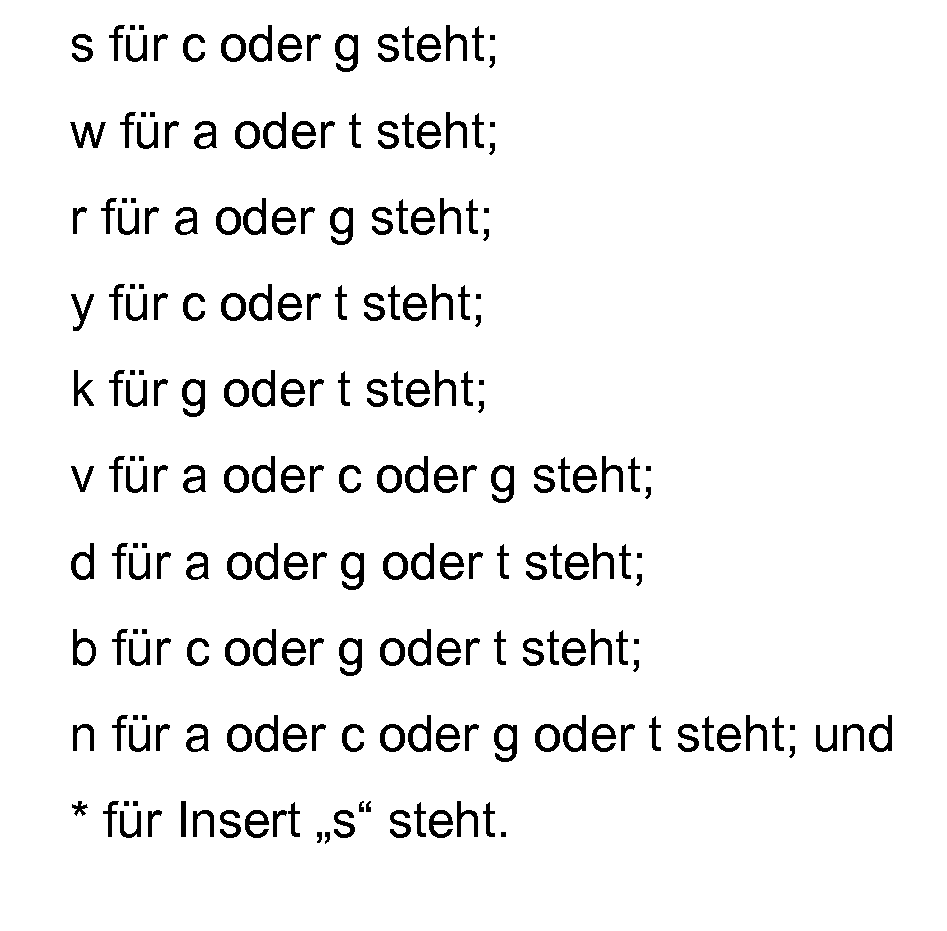
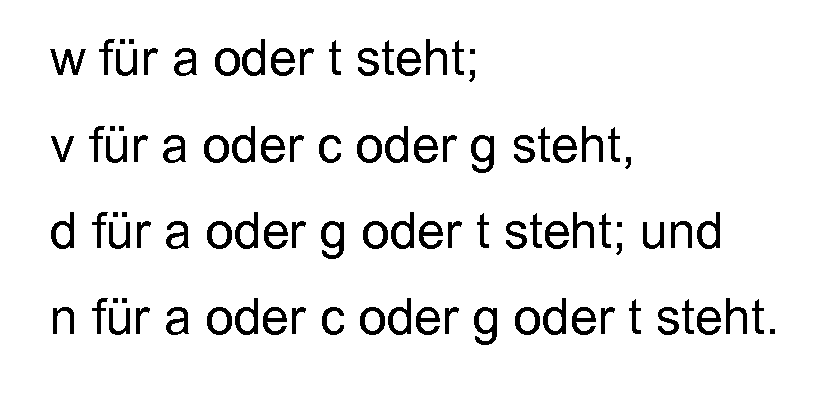
- the invention also relates according to claim 1 1 (i) oligonucleotides of the sequence SEQ ID NO 1 or oligonucleotides with homologous nucleotide sequences, or (ii) oligonucleotides having to the nucleotide sequence of SEQ ID NO 1 complementary nucleotide sequence or oligonucleotides nucleotide sequences homologous to the complementary nucleotide sequence; or (iii) oligonucleotides having 5 '-> 3' reading direction to the nucleotide sequence of SEQ ID NO 1 opposite nucleotide sequence or oligonucleotides having nucleotide sequences homologous to the counter nucleotide sequence: ccccwccwcc and 13 SEQ ID NO 1 in which
- nucleotide sequence of a probe which is specific for the distinguishing region in the DNA of Trypanosoma cruzi and which was used for a ne use in real-time PCR is suitable, as well as combinable forward primer and reverse primer created.
- oligonucleotides which are characterized by individually specified SEQ ID Nos 1 to 16 according to the description of the sequence listing.
- oligonucleotides are understood as meaning linear sequences of up to 40 covalently linked phosphorus acid ester bridges from the 3'-C atom of one nucleotide to the 5'-C atom of the following nucleotides. These are usually abbreviated (also in the present claims and in the description) by the small letters a (for adenine), c for cytosine, g for guanine and t for thymine. Linear sequences are represented by the covalent juxtaposition of the individual nucleotides. The specified nucleotide sequence is always read in the direction 5 '-> 3'.
- Oligonucleotides according to the invention in one embodiment of the invention have the nucleotide sequence given under SEQ ID NO 3:
- This embodiment of the invention comprises oligonucleotides with the indicated sequence SEQ ID NO 3 or oligonucleotides with homologous nucleotide sequences; or oligonucleotides having a nucleotide sequence complementary to the nucleotide sequence of the given SEQ ID NO 3 or oligonucleotides having nucleotide sequences homologous to the complementary nucleotide sequence; or oligonucleotides with respect to the reading direction 5 '->3' to the nucleotide sequence of the SEQ ID NO 3 opposite nucleotide sequence or oligonucleotides with homologous to the opposite nucleotide sequence nucleotide sequences.
- the invention relates to oligonucleotides comprising the nucleotide sequence SEQ ID NO 14 (similar to the sequence of SEQ ID NO 3) or oligonucleotides having homologous nucleotide sequences, or oligonucleotides having a nucleotide sequence complementary to the nucleotide sequence of SEQ ID NO 14, or oligonucleotides having nucleotide sequences homologous to the complementary nucleotide sequence; or oligonucleotides with nucleotide sequences opposite to the nucleotide sequence of SEQ ID NO 14 with respect to the reading direction 5 '-> 3' or oligonucleotides with nucleotide sequences homologous to the counter nucleotide sequence:
- the invention relates to oligonucleotides comprising, or even consisting of (the sequence having SEQ ID NO 3 and the sequence having the SEQ ID NO 14 similar) nucleotide sequence SEQ ID NO 4, or oligonucleotides with homologous nucleotide sequences, or oligonucleotides with the nucleotide sequence of SEQ ID NO 4 complementary nucleotide sequence or oligonucleotides homologous to the complementary nucleotide sequence Nudeotid sequences; or oligonucleotides with nucleotide sequences opposite to the nucleotide sequence of SEQ ID NO 4 with respect to the reading direction 5 '->3' or oligonucleotides with nucleotide sequences homologous to the counter nucleotide sequence: where * stands for an insert "c '.
- oligonucleotides comprising, or even consisting of, the nucleotide sequence SEQ ID NO. (Similar to the sequences having SEQ ID NO 3 and SEQ ID NO 14 and SEQ ID NO 4 and SEQ ID NO 4) 10, or oligonucleotides with homologous nucleotide sequences, or oligonucleotides having nucleotide sequence complementary to the nucleotide sequence of SEQ ID NO 10 or oligonucleotides having nucleotide sequences homologous to the complementary nucleotide sequence; or oligonucleotides with nucleotide sequence opposite to the nucleotide sequence of SEQ ID NO 10 with respect to the reading direction 5 '->3' or oligonucleotides with nucleotide sequences homologous to the counter nucleotide sequence:
- the invention relates to oligonucleotides which, as will be seen below, include nucleotide sequences of the above SEQ ID Nos 3 or 4 or 10 or 14, but at their 5'-end and / or 3'-end, bound further nucleotide sequences or oligonucleotides having homologous nucleotide sequences, or oligonucleotides having nucleotide sequence complementary to the indicated nucleotide sequence, or oligonucleotides having nucleotide sequences homologous to the complementary nucleotide sequence; or oligonucleotides with nucleotide sequence opposite in sense direction 5 '-> 3' to the indicated nucleotide sequence or oligonucleotides with nucleotide sequences homologous to the counter nucleotide sequence.
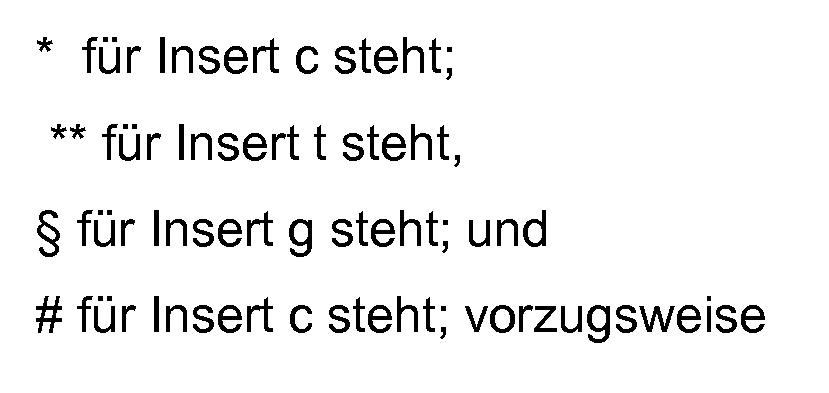
- oligonucleotides comprise the nucleotide sequences of SEQ ID NO 5: caaccccaat cgaacccc * w ccwyc and ** d ⁇ nm # hwhy 38 SEQ ID NO 5, wherein
- Preferred oligonucleotides of the abovementioned group include oligonucleotides of SEQ ID NO 15 or comprise oligonucleotides with homologous nucleotide sequences, or oligonucleotides with a nucleotide sequence complementary to the specified nucleotide sequence or oligonucleotides with nucleotide sequences homologous to the complementary nucleotide sequence; or oligonucleotides with nucleotide sequence opposite to the nucleotide sequence indicated in FIG.
- oligonucleotides having nucleotide sequences homologous to the counter nucleotide sequence and having nucleotide sequences of SEQ ID NO 15: caaccccaat cgaacccc * a cctcccg ** a ⁇ aa # attc 38 SEQ ID NO 15, wherein
- oligonucleotides of the abovementioned group include oligonucleotides of SEQ ID NO 11 or comprise oligonucleotides with homologous nucleotide sequences, or oligonucleotides with a nucleotide sequence complementary to the specified nucleotide sequence or oligonucleotides with nucleotide sequences homologous to the complementary nucleotide sequence ; or oligonucleotides with respect to the reading direction 5 '->3' to the stated nucleotide Sequence of opposite nucleotide sequence or oligonucleotides with nucleotide sequences homologous to the counter nucleotide sequence and having nucleotide sequences of SEQ ID NO 1 1: SEQ ID NO 1 1,
- oligonucleotides of the abovementioned group include oligonucleotides or comprise oligonucleotides with homologous nucleotide sequences, or oligonucleotides with a nucleotide sequence complementary to the specified nucleotide sequence, or oligonucleotides with nucleotide sequences homologous to the complementary nucleotide sequence; or oligonucleotides with nucleotide sequence opposite to the nucleotide sequence indicated in the 5 'to 3' reading direction or oligonucleotides having nucleotide sequences which are homologous to the counter nucleotide sequence and have nucleotide sequences of SEQ ID NO 16:
- the latter group of oligonucleotides of SEQ ID NO 16 is particularly preferred because of the recognition of Trypanosoma craz / ' pathogen sequences.
- the invention relates to oligonucleotides of the type defined above SEQ ID NO 3 or SEQ ID NO 4 or SEQ ID NO 5 or SEQ ID NO 10 or SEQ ID NO 1 1 or SEQ ID NO 14 or SEQ ID NO 15 or SEQ ID NO 16 indicating one or more labels have one or both of their 5 'ends and / or 3' ends.
- labels which may serve specific purposes in the later use of the oligonucleotides, are well known to those skilled in the art and, therefore, may be selected according to circumstances from labels known in the art.
- the one or more labels are markers and are even more preferably fluorescent labels or quenchers.
- known fluorescence markers or quenchers such as FAM or BHQ1 can be used at this point.
- Oligonucleotides of SEQ ID NOS 3, 4, 5, 10, 11, 14, 15 and / or 16 as described above can be used, for example (without limitation), as probes for the PCR and according to the invention are particularly preferably used as probes for the Real Time PCR, without limiting the use of the oligonucleotides of the invention to this use.
- oligonucleotides of SEQ ID NO 3 or SEQ ID NO 4 or SEQ ID NO 5 or SEQ ID NO 10 or SEQ ID NO 1 1 or SEQ ID NO 14 or SEQ ID NO 15 or SEQ ID NO 16 according to the above detailed exemplary description in combination with one or more further oligonucleotide (s) from the group forward primer and reverse primer.
- oligonucleotides of SEQ ID NO 3 or SEQ ID NO 4 or SEQ ID NO 5 or SEQ ID NO 10 or SEQ ID NO 1 1 or SEQ ID NO 14 or SEQ ID NO 15 or SEQ ID NO 16 can be combined with a Primer (1), for example in the form of oligonucleotides of the oligonucleotide sequence of SEQ ID NO 6 or of oligonucleotides with homologous nucleotide sequences thereof, or of oligonucleotides with complementary to the nucleotide sequence of SEQ ID NO 6 a nucleotide or oligonucleotide nucleotide sequences homologous to the complementary nucleotide sequence; or of oligonucleotides with nucleotide sequence 5 '->3' to the nucleotide sequence of SEQ ID NO 6 opposite to the nucleotide sequence of SEQ ID NO 6 or oligonucleotides having nucleo
- a primer (2) for example in the form of an oligonucleotide sequence of SEQ ID NO 7 or of oligonucleotides with homologous nucleotide sequences, or of oligonucleotides with a nucleotide sequence complementary to the nucleotide sequence of SEQ ID NO 7 or oligonucleotides having nucleotide sequences homologous to the complementary nucleotide sequence; or oligonucleotides with nucleotide sequence 5 '-> 3' to the nucleotide sequence of SEQ ID NO 7, or oligonucleotides having nucleotide sequences homologous to the counter nucleotide sequence:
- nucleotide sequence is one of SEQ ID NO 12:
- the primer (1) is a forward primer and / or the primer (2) is a reverse primer.
- the primer (2) is a forward primer and / or the primer (1) is a reverse primer.
- primers (1) and / or primers (2) it is also possible to use oligonucleotides which contain further nucleotide sequences bound at their 5 'end and / or at their 3' end, but in each case an oligonucleotide sequence according to the above SEQ ID Nos 6 and / or 7 contain (or at least a homolog thereof):
- the invention therefore also relates to oligonucleotides of the above-defined SEQ ID Nos 4, 5, 6, 7, 10, 11 and 12, which comprise as primer (1) nucleotide sequences of SEQ ID NO 8 or oligonucleotides with homologous nucleotide Sequences, or oligonucleotides with nucleotide sequence complementary to the nucleotide sequence of SEQ ID NO 8 or oligonucleotides with nucleotide sequences homologous to the complementary nucleotide sequence; or oligonucleotides with nucleotide sequence opposite to the nucleotide sequence of SEQ ID NO 8 with respect to the reading direction 5 '->3' or oligonucleotides with nucleotide sequences homologous to the counter nucleotide sequence:
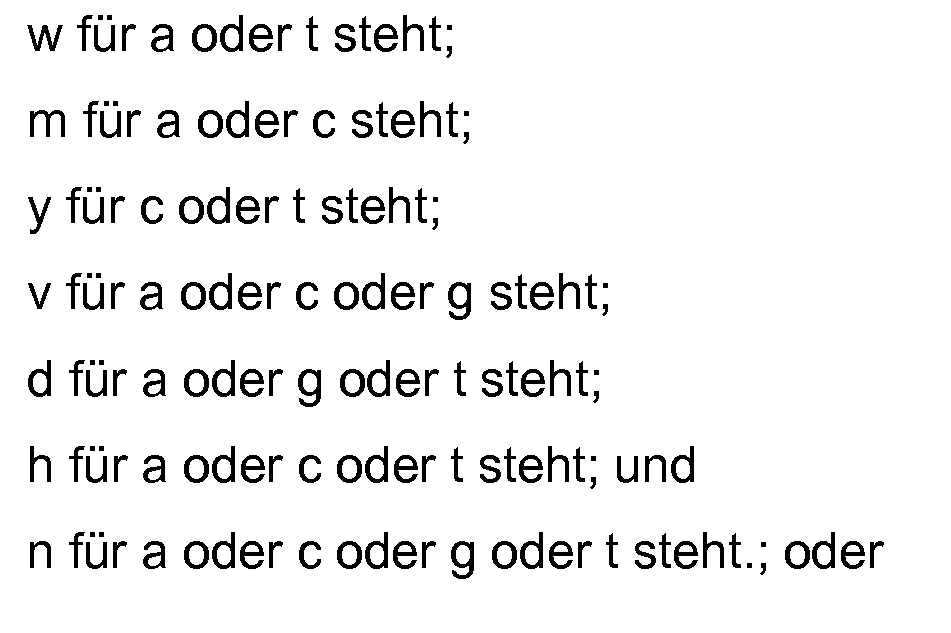
- nucleotide sequences of SEQ ID NO 9 or oligonucleotides with homologous nucleotide sequences or oligonucleotides having nucleotide sequence complementary to the nucleotide sequence of SEQ ID NO 9 or oligonucleotides to which complementary nucleotide sequence homologous nucleotide sequences; or oligonucleotides with nucleotide sequence opposite to the nucleotide sequence of SEQ ID NO 9 with respect to the reading direction 5 '->3' or oligonucleotides with nucleotide sequences homologous to the counter nucleotide sequence: vbsbnrdwwwk catgcawctc mcccgtmcat tatyt * bn 38 SEQ ID NO 9 wherein
- nucleotide sequence is one of SEQ ID NO 13:
- the primer (1) a forward primer and / or the primer (2) is a reverse primer
- the primer (2) is a forward primer and / or the primer (1) is a reverse primers.
- the invention relates to oligonucleotides of the sequences SEQ ID NO 3, SEQ ID NO 4, SEQ ID NO 5, SEQ ID NO 6, SEQ ID NO 7, SEQ ID NO 8, SEQ ID NO 9, SEQ ID NO. 10, SEQ ID NO 1, SEQ ID NO 12, SEQ ID NO 13, SEQ ID NO 14, SEQ ID NO 15 and SEQ ID NO 16, as described in detail above, for use in the amplification of pathogens -Nucleotid sequences.
- the oligonucleotides according to the above-mentioned SEQ ID Nos. 3 to 16 have proven useful in the exclusive amplification of Trypanosoma craz / ' DNA sequences, in a mixture of DNA of different provenance, particularly preferably by PCR, according to the invention most preferably by real Time PCR.
- Trypanosoma cruzi tested in the present invention are Trypanosoma cruzi CL Brenner (Hg 39), Trypanosoma cruzi type Y (Vero) and Trypanosoma cruzi Brazil (HG 39). These were detected in the new real-time PCR's using the oligonucleotides of the invention. On the other hand, there were no cross-reactions with Malaria tertiana and Malaria tropica and Leishmania brasiliensis.
- the invention therefore also relates to the use of the oligonucleotides of the defined SEQ ID Nos. 3 to 16 for determining the presence or absence of DNA of Trypanosoma cruzi in the body of an animal or human, preferably in the body of an insect, a poultry, a mammal or a human, more preferably in a sample of a body tissue or a body fluid of a poultry, a mammal or a human, most preferably in a tissue sample or a blood sample or a plasma sample or a serum sample from a human.
- the invention further relates to the use of the oligonucleotides of the defined SEQ ID Nos. 3 to 16 for the diagnosis of Chagas disease in the body of an animal or human, preferably in the body of an insect, a poultry, a mammal or a human, more preferably in a sample of a Body tissue or a body fluid of a poultry, mammal or human, most preferably in a tissue sample or a blood sample or a plasma sample or serum sample of a human.
- the invention also relates to oligonucleotides
- Trypanosoma rangeli which are suitable for distinguishing the pathogen sequence of Trypanosoma cruzi from sequences of other Trypanosoma, for example Trypanosoma rangeli.
- the invention relates to oligonucleotides comprising or consisting of the nucleotide sequence SEQ ID NO 2, or oligonucleotides having nucleotide sequences homologous thereto, or oligonucleotides to the nucleotide Sequence of SEQ ID NO 2 complementary nucleotide sequence or oligonucleotides with nucleotide sequences homologous to the complementary nucleotide sequence; or oligonucleotides with nucleotide sequence opposite to the nucleotide sequence of SEQ ID NO 2 with respect to the reading direction 5 '->3' or oligonucleotides with nucleotide sequences homologous to the counter nucleotide sequence: with a particularly reliable distinction of the pathogen sequence of Trypanosoma cruzi of Trypanosoma rangeli succeed, in contrast to the PCR described in the introduction from the prior art.
- Samples designated in the table with “Cruzi”, “Rangeli” and “Homo s” were additionally sequenced. "Neg. Sample “1-4 are subject samples that were negative in all serological and PCR assays.
- Troahuen refers to two positive controls with two different concentrations.
- Primer 1 (Forward): gcactatatt acaccaaccc c (21 nucleotides)
- the described 18 .mu.M mix were each mixed with 2 .mu.l of the extracted DNA of the sample to be examined.
- the determined values are compared in FIG. 2 in a graph.
- the laboratory diagnosis of Chagas disease is a challenge in that there is no gold standard.
- diagnosis depends on the stage of the disease.
- chronic forms can already be identified with the help of serological methods (rapid test, Elisa, immunofluorescence, etc.), but acute, indeterminant or congenital forms as well as relapses or the control of an on-going therapy are not.
- serological methods rapid test, Elisa, immunofluorescence, etc.
- acute, indeterminant or congenital forms as well as relapses or the control of an on-going therapy are not.
- the direct detection of the pathogen is recommended here, for example. by RT-PCR.
- the PCR amplificates of six samples of the newly developed PCR were also sequenced. All showed positive evidence for T. cruzi. One of these positively sequenced samples was positive only in the new PCR and was not detected by any of the other three PCRs.
- the kDNA-PCR shows good sensitivity, but is very low in specificity.
- One reason for this are many false positive results, which are mostly due to a cross reaction with T. rangeli.
- T. rangeli is considered a close relative to T. cruzi, but in contrast to T. cruzi is considered to be apathogenic.
- the newly developed PCR is the only one that has both good sensitivities and specificities. In this group, no sample was classified as false positive and all negative ones were recognized as true negative.
- the Tulahuen Positive Control was used at a 1: 100 dilution and tested on three different days on 10 samples per run (22.-24.6.15). The coefficient of variation was 1, 86%.
- primer-dimer run also called watercourse
- only primers, probe, magnesium chloride, buffer and water were used to detect possible interactions of the individual components of the kit. These did not occur in any of the 30 samples tested.
- a standard curve for determining the quantity of parasitemia was created.
- an already known positive sample was amplified, cloned and sequenced, at the same time the plasmid concentration measured.
- the standard curve could be determined over a series of dilutions in the triplicate. The measurement of the dilution series and the preparation of the standard curve was carried out both for kDNA PCR (modified by Qvarnström et al) and for the new PCR.
- the newly developed PCR has a detection limit of 3 x 10 "4 pathogens / ml.
- the newly developed PCR can even detect low parasitemia, with the possibility of diagnostics in acute, congenital, chronic-indeterminant infections and therapy success checks, reactivation under immunosuppression, screening before organ transplants or blood donations and control measures (eg. Vector / reservoir control, etc.).
Landscapes
- Chemical & Material Sciences (AREA)
- Life Sciences & Earth Sciences (AREA)
- Organic Chemistry (AREA)
- Health & Medical Sciences (AREA)
- Proteomics, Peptides & Aminoacids (AREA)
- Analytical Chemistry (AREA)
- Engineering & Computer Science (AREA)
- Wood Science & Technology (AREA)
- Zoology (AREA)
- Genetics & Genomics (AREA)
- Biochemistry (AREA)
- Molecular Biology (AREA)
- General Health & Medical Sciences (AREA)
- Biotechnology (AREA)
- Physics & Mathematics (AREA)
- Microbiology (AREA)
- Immunology (AREA)
- Bioinformatics & Cheminformatics (AREA)
- General Engineering & Computer Science (AREA)
- Biophysics (AREA)
- Tropical Medicine & Parasitology (AREA)
- Pathology (AREA)
- Measuring Or Testing Involving Enzymes Or Micro-Organisms (AREA)
- Medicines That Contain Protein Lipid Enzymes And Other Medicines (AREA)
- Pharmaceuticals Containing Other Organic And Inorganic Compounds (AREA)
- Saccharide Compounds (AREA)
Abstract
Description





Claims





Priority Applications (4)
| Application Number | Priority Date | Filing Date | Title |
|---|---|---|---|
| CN201680045711.8A CN107922943A (zh) | 2015-07-13 | 2016-07-12 | 寡核苷酸及其用途 |
| EP16739091.3A EP3322817B8 (de) | 2015-07-13 | 2016-07-12 | Oligonucleotide und deren verwendung |
| ES16739091T ES2857513T3 (es) | 2015-07-13 | 2016-07-12 | Oligonucleótidos y su uso |
| US15/744,135 US20190093179A1 (en) | 2015-07-13 | 2016-07-12 | Oligonucleotides and use thereof |
Applications Claiming Priority (4)
| Application Number | Priority Date | Filing Date | Title |
|---|---|---|---|
| DE102015111267.1 | 2015-07-13 | ||
| DE102015111267 | 2015-07-13 | ||
| DE102015113038.6A DE102015113038B3 (de) | 2015-07-13 | 2015-08-07 | Oligonucleotide und deren Verwendung |
| DE102015113038.6 | 2015-08-07 |
Publications (1)
| Publication Number | Publication Date |
|---|---|
| WO2017009347A1 true WO2017009347A1 (de) | 2017-01-19 |
Family
ID=57630183
Family Applications (1)
| Application Number | Title | Priority Date | Filing Date |
|---|---|---|---|
| PCT/EP2016/066561 Ceased WO2017009347A1 (de) | 2015-07-13 | 2016-07-12 | Oligonucleotide und deren verwendung |
Country Status (8)
| Country | Link |
|---|---|
| US (1) | US20190093179A1 (de) |
| EP (1) | EP3322817B8 (de) |
| CN (1) | CN107922943A (de) |
| AR (1) | AR105622A1 (de) |
| DE (1) | DE102015113038B3 (de) |
| ES (1) | ES2857513T3 (de) |
| UY (1) | UY36785A (de) |
| WO (1) | WO2017009347A1 (de) |
Cited By (1)
| Publication number | Priority date | Publication date | Assignee | Title |
|---|---|---|---|---|
| US11015610B2 (en) | 2016-07-27 | 2021-05-25 | Denso Corporation | Centrifugal blower |
Citations (4)
| Publication number | Priority date | Publication date | Assignee | Title |
|---|---|---|---|---|
| WO2011087782A2 (en) * | 2009-12-22 | 2011-07-21 | The Administrators Of The Tulane Educational Fund | Compositions, kits and methods for detection of trypanosoma cruzi using loop-mediated isothermal amplication |
| CA2736087A1 (en) * | 2011-03-31 | 2012-09-30 | Xinjun Li | Oligonucleotide probe for the detection of trypanosoma. cruzi (chagas d isease) in biological samples |
| US20130267429A1 (en) * | 2009-12-21 | 2013-10-10 | Lawrence Livermore National Security, Llc | Biological sample target classification, detection and selection methods, and related arrays and oligonucleotide probes |
| WO2015006755A2 (en) * | 2013-07-12 | 2015-01-15 | Castellanos Alejandro | Recombinase polymerase amplification (rpa) method for leishmania spp. and trypanosoma cruzi |
Family Cites Families (2)
| Publication number | Priority date | Publication date | Assignee | Title |
|---|---|---|---|---|
| EP1212416A2 (de) * | 1999-08-31 | 2002-06-12 | Ribozyme Pharmaceuticals, Inc. | Auf nukeinsäure-basierende modulatoren der expression von genen |
| DE10204858B4 (de) * | 2002-02-06 | 2007-08-02 | Fröhlich, Jürgen, Dr. | Gensonden zum Nachweis von Spezies der Gattung Oenococcus |
-
2015
- 2015-08-07 DE DE102015113038.6A patent/DE102015113038B3/de active Active
-
2016
- 2016-07-12 UY UY0001036785A patent/UY36785A/es not_active Application Discontinuation
- 2016-07-12 EP EP16739091.3A patent/EP3322817B8/de active Active
- 2016-07-12 ES ES16739091T patent/ES2857513T3/es active Active
- 2016-07-12 CN CN201680045711.8A patent/CN107922943A/zh active Pending
- 2016-07-12 WO PCT/EP2016/066561 patent/WO2017009347A1/de not_active Ceased
- 2016-07-12 US US15/744,135 patent/US20190093179A1/en not_active Abandoned
- 2016-07-13 AR ARP160102129A patent/AR105622A1/es unknown
Patent Citations (4)
| Publication number | Priority date | Publication date | Assignee | Title |
|---|---|---|---|---|
| US20130267429A1 (en) * | 2009-12-21 | 2013-10-10 | Lawrence Livermore National Security, Llc | Biological sample target classification, detection and selection methods, and related arrays and oligonucleotide probes |
| WO2011087782A2 (en) * | 2009-12-22 | 2011-07-21 | The Administrators Of The Tulane Educational Fund | Compositions, kits and methods for detection of trypanosoma cruzi using loop-mediated isothermal amplication |
| CA2736087A1 (en) * | 2011-03-31 | 2012-09-30 | Xinjun Li | Oligonucleotide probe for the detection of trypanosoma. cruzi (chagas d isease) in biological samples |
| WO2015006755A2 (en) * | 2013-07-12 | 2015-01-15 | Castellanos Alejandro | Recombinase polymerase amplification (rpa) method for leishmania spp. and trypanosoma cruzi |
Non-Patent Citations (4)
| Title |
|---|
| BURGOS J M ET AL: "Direct molecular profiling of minicircle signatures and lineages of Trypanosoma cruzi bloodstream populations causing congenital Chagas disease", INTERNATIONAL JOURNAL OF PARASITOLOGY, PERGAMON PRESS, GB, vol. 37, no. 12, 1 October 2007 (2007-10-01), pages 1319 - 1327, XP026865144, ISSN: 0020-7519, [retrieved on 20070824] * |
| DATABASE EMBL [online] 11 September 2006 (2006-09-11), "Trypanosoma cruzi clone Si.I-3 kinetoplastid minicircle, partial sequence.", retrieved from EBI accession no. EM_STD:DQ873372 Database accession no. DQ873372 * |
| DATABASE EMBL [online] 16 May 2010 (2010-05-16), "TcT-E01h14.b1d TcT-E Trypanosoma cruzi cDNA clone tcte-01h14, mRNA sequence.", retrieved from EBI accession no. EM_EST:GW883681 Database accession no. GW883681 * |
| ELIZABETH A. GARCÍA ET AL: "TcTASV: A Novel Protein Family in Trypanosoma cruzi Identified from a Subtractive Trypomastigote cDNA Library", PLOS NEGLECTED TROPICAL DISEASES, vol. 4, no. 10, 5 October 2010 (2010-10-05), pages e841, XP055309452, DOI: 10.1371/journal.pntd.0000841 * |
Cited By (2)
| Publication number | Priority date | Publication date | Assignee | Title |
|---|---|---|---|---|
| US11015610B2 (en) | 2016-07-27 | 2021-05-25 | Denso Corporation | Centrifugal blower |
| US11608834B2 (en) | 2016-07-27 | 2023-03-21 | Denso Corporation | Centrifugal blower |
Also Published As
| Publication number | Publication date |
|---|---|
| AR105622A1 (es) | 2017-10-25 |
| DE102015113038B3 (de) | 2017-01-19 |
| EP3322817A1 (de) | 2018-05-23 |
| CN107922943A (zh) | 2018-04-17 |
| EP3322817B1 (de) | 2020-12-02 |
| EP3322817B8 (de) | 2021-03-24 |
| US20190093179A1 (en) | 2019-03-28 |
| UY36785A (es) | 2017-01-31 |
| ES2857513T3 (es) | 2021-09-29 |
Similar Documents
| Publication | Publication Date | Title |
|---|---|---|
| DE60105411T2 (de) | Verfahren zur diagnose von krebs | |
| DE2915082C3 (de) | Verfahren und Verwendung eines Reagenzsatzes zum Nachweis und zur Charakterisierung von Nukleinsäuren und ihren Sequenzen | |
| DE69333887T2 (de) | Sonde zur Diagnose einer ansteckenden Krankheit verursacht durch Staphylococcus Epidermidis | |
| WO2013127782A2 (de) | Verwendung von micrornas oder genen als marker zur identifizierung, diagnose und therapie einzelner formen nicht-ischämischer kardiomyopathien oder speichererkrankungen des herzens | |
| EP3344781B1 (de) | Verwendung von im blutserum oder blutplasma zirkulierenden micrornas zur identifikation biopsiepflichtiger patienten und als marker zur differentialdiagnose einzelner nicht-ischämischer kardiomyopathien oder speichererkrankungen des herzens | |
| DE69121975T2 (de) | Spezifischer Nachweis von Mycobacterium Tuberculosis | |
| DE60318294T2 (de) | Nachweis von invasivem Krebs induziert von HPV und dessen Vorläufer Läsionen mit Invasionspotential | |
| DE102015113038B3 (de) | Oligonucleotide und deren Verwendung | |
| DE69130845T2 (de) | HLA-DR Antigen-Gen, dessen Nukleotidsequenz und Verwendung | |
| DE19530333C2 (de) | Amplifikation von Pilzzellen-DNA sowie Verfahren zum Nachweisen von Pilzzellen in klinischem Material | |
| EP2841596B1 (de) | Nachweisverfahren für mycobacterium avium ssp. paratuberculosis | |
| DE69029737T2 (de) | Diagnose und behandlung von neuro-cognitiven störungen assoziiert mit systemisch-immunologischer fehlfunktion | |
| DE60127901T2 (de) | TCF-1 Nukleotidsequenzvariation | |
| EP1379687A2 (de) | Detektion von seltenen candida-spezies | |
| DE102010008827B3 (de) | Verfahren zur Diagnose oder Prädiagnose von Multipler Sklerose anhand von Einzelnukleotid-Polymorphismen des humanen Chromosoms 4 im Inositol-polyphosphat-4-phosphatase-Typ II-Gen (INPP4b-Gen) | |
| DE69426387T2 (de) | Nukleinsäuresonde spezifisch für den spirochaeten borrelia burgdorferi | |
| DE69908688T2 (de) | Verfahren zur Diagnose von HIV-Infektionen | |
| DE60213373T2 (de) | Zf9 genpolymorphismen die in zusammenhang mit einer prädisposition für die entwicklung von ungeeigneten narbengewebe oder fibrose stehen | |
| DE102018131696A1 (de) | Verfahren für die Analyse einer Blutprobe eines Menschen auf eine Tuberkuloseerkrankung | |
| DE10058847B4 (de) | Verfahren zur Identifizierung von Interferon-therapieempfänglichen Patienten mit chronisch myeloischer Leukämie (CML) | |
| WO2002042492A2 (de) | Verfahren zum nachweis von protozoen der gattung naegleria | |
| Panda | Rising visceral leishmaniasis in holy Himalayas (Uttarakhand, India)–A cross-sectional hospital-based study | |
| DE10030827A1 (de) | Verfahren zum Nachweis von Cathepsinen, Asparaginylendopeptidase und deren Isozyme, sowie von Leukocystatin | |
| DE19806274A1 (de) | Verfahren zum Nachweis von Aspergillus-Nukleinsäuren in einer Körperprobe, Nukleinsäure-Sonden und Diagnosekits zur Durchführung des Verfahrens | |
| DE102009054098A1 (de) | Nachweis von Mykobakterien und deren Resistenzgenen |
Legal Events
| Date | Code | Title | Description |
|---|---|---|---|
| 121 | Ep: the epo has been informed by wipo that ep was designated in this application |
Ref document number: 16739091 Country of ref document: EP Kind code of ref document: A1 |
|
| NENP | Non-entry into the national phase |
Ref country code: DE |
|
| WWE | Wipo information: entry into national phase |
Ref document number: 2016739091 Country of ref document: EP |
|
| REG | Reference to national code |
Ref country code: BR Ref legal event code: B01A Ref document number: 112018000727 Country of ref document: BR |
|
| REG | Reference to national code |
Ref country code: BR Ref legal event code: B01E Ref document number: 112018000727 Country of ref document: BR Free format text: COM BASE NA RESOLUCAO 187 DE 27/04/2017, SOLICITA-SE QUE SEJA APRESENTADO, EM ATE 60 (SESSENTA) DIAS, NOVO CONTEUDO DE LISTAGEM DE SEQUENCIA (INCLUINDO NOVA DECLARACAO E NOVO CODIGO ALFANUMERICO) POIS O CONTEUDO APRESENTADO NA PETICAO NO 870180009825 DE 05/02/2018 NAO ESTA NO FORMATO ST.25. |
|
| ENPW | Started to enter national phase and was withdrawn or failed for other reasons |
Ref document number: 112018000727 Country of ref document: BR Free format text: PEDIDO RETIRADO POR NAO CUMPRIMENTO DA EXIGENCIA PUBLICADA NA RPI 2490 DE 25/09/2018. |