WO2017061628A1 - 食品改質剤 - Google Patents
食品改質剤 Download PDFInfo
- Publication number
- WO2017061628A1 WO2017061628A1 PCT/JP2016/080038 JP2016080038W WO2017061628A1 WO 2017061628 A1 WO2017061628 A1 WO 2017061628A1 JP 2016080038 W JP2016080038 W JP 2016080038W WO 2017061628 A1 WO2017061628 A1 WO 2017061628A1
- Authority
- WO
- WIPO (PCT)
- Prior art keywords
- food
- texture
- welan gum
- protein
- processed
- Prior art date
- Legal status (The legal status is an assumption and is not a legal conclusion. Google has not performed a legal analysis and makes no representation as to the accuracy of the status listed.)
- Ceased
Links
Classifications
-
- A—HUMAN NECESSITIES
- A23—FOODS OR FOODSTUFFS; TREATMENT THEREOF, NOT COVERED BY OTHER CLASSES
- A23L—FOODS, FOODSTUFFS OR NON-ALCOHOLIC BEVERAGES, NOT OTHERWISE PROVIDED FOR; PREPARATION OR TREATMENT THEREOF
- A23L29/00—Foods or foodstuffs containing additives; Preparation or treatment thereof
- A23L29/20—Foods or foodstuffs containing additives; Preparation or treatment thereof containing gelling or thickening agents
- A23L29/269—Foods or foodstuffs containing additives; Preparation or treatment thereof containing gelling or thickening agents of microbial origin, e.g. xanthan or dextran
-
- A—HUMAN NECESSITIES
- A23—FOODS OR FOODSTUFFS; TREATMENT THEREOF, NOT COVERED BY OTHER CLASSES
- A23L—FOODS, FOODSTUFFS OR NON-ALCOHOLIC BEVERAGES, NOT OTHERWISE PROVIDED FOR; PREPARATION OR TREATMENT THEREOF
- A23L29/00—Foods or foodstuffs containing additives; Preparation or treatment thereof
- A23L29/20—Foods or foodstuffs containing additives; Preparation or treatment thereof containing gelling or thickening agents
- A23L29/269—Foods or foodstuffs containing additives; Preparation or treatment thereof containing gelling or thickening agents of microbial origin, e.g. xanthan or dextran
- A23L29/271—Curdlan; beta-1-3 glucan; Polysaccharides produced by agrobacterium or alcaligenes
-
- A—HUMAN NECESSITIES
- A23—FOODS OR FOODSTUFFS; TREATMENT THEREOF, NOT COVERED BY OTHER CLASSES
- A23L—FOODS, FOODSTUFFS OR NON-ALCOHOLIC BEVERAGES, NOT OTHERWISE PROVIDED FOR; PREPARATION OR TREATMENT THEREOF
- A23L13/00—Meat products; Meat meal; Preparation or treatment thereof
- A23L13/40—Meat products; Meat meal; Preparation or treatment thereof containing additives
- A23L13/42—Additives other than enzymes or microorganisms in meat products or meat meals
- A23L13/422—Addition of natural plant hydrocolloids, e.g. gums of cellulose derivatives or of microbial fermentation gums
-
- A—HUMAN NECESSITIES
- A23—FOODS OR FOODSTUFFS; TREATMENT THEREOF, NOT COVERED BY OTHER CLASSES
- A23L—FOODS, FOODSTUFFS OR NON-ALCOHOLIC BEVERAGES, NOT OTHERWISE PROVIDED FOR; PREPARATION OR TREATMENT THEREOF
- A23L15/00—Egg products; Preparation or treatment thereof
-
- A—HUMAN NECESSITIES
- A23—FOODS OR FOODSTUFFS; TREATMENT THEREOF, NOT COVERED BY OTHER CLASSES
- A23L—FOODS, FOODSTUFFS OR NON-ALCOHOLIC BEVERAGES, NOT OTHERWISE PROVIDED FOR; PREPARATION OR TREATMENT THEREOF
- A23L23/00—Soups; Sauces; Preparation or treatment thereof
-
- A—HUMAN NECESSITIES
- A23—FOODS OR FOODSTUFFS; TREATMENT THEREOF, NOT COVERED BY OTHER CLASSES
- A23L—FOODS, FOODSTUFFS OR NON-ALCOHOLIC BEVERAGES, NOT OTHERWISE PROVIDED FOR; PREPARATION OR TREATMENT THEREOF
- A23L9/00—Puddings; Cream substitutes; Preparation or treatment thereof
- A23L9/10—Puddings; Dry powder puddings
-
- A—HUMAN NECESSITIES
- A23—FOODS OR FOODSTUFFS; TREATMENT THEREOF, NOT COVERED BY OTHER CLASSES
- A23V—INDEXING SCHEME RELATING TO FOODS, FOODSTUFFS OR NON-ALCOHOLIC BEVERAGES AND LACTIC OR PROPIONIC ACID BACTERIA USED IN FOODSTUFFS OR FOOD PREPARATION
- A23V2002/00—Food compositions, function of food ingredients or processes for food or foodstuffs
-
- A—HUMAN NECESSITIES
- A23—FOODS OR FOODSTUFFS; TREATMENT THEREOF, NOT COVERED BY OTHER CLASSES
- A23V—INDEXING SCHEME RELATING TO FOODS, FOODSTUFFS OR NON-ALCOHOLIC BEVERAGES AND LACTIC OR PROPIONIC ACID BACTERIA USED IN FOODSTUFFS OR FOOD PREPARATION
- A23V2200/00—Function of food ingredients
- A23V2200/14—Mouthfeel improving agent
Definitions
- the present invention relates to a food modifier. More specifically, the present invention relates to the following technical fields ⁇ 1> to ⁇ 4>.
- the present invention relates to a protein aggregation inhibitor and a protein-containing food in which protein aggregation is suppressed by adding the aggregation inhibitor. Specifically, it suppresses excessive protein aggregation during the heat treatment in the production process of foods containing protein-containing materials such as eggs, milk, and soy milk, and is soft and smooth without impairing the appearance and mouthfeel caused by tissue roughness.
- the present invention relates to a protein-containing food that has a texture or can be used as a food for persons with difficulty in chewing or swallowing, and a method for producing the same.
- the present invention is a processed meat food that has a soft texture but maintains or enhances the original texture of the meat processed food [e.g. sausage, meatballs, fried chicken, tonkatsu, salmon, and Processed food of livestock meat or fish, such as violet, and a manufacturing method thereof.
- meat processed food e.g. sausage, meatballs, fried chicken, tonkatsu, salmon
- Processed food of livestock meat or fish, such as violet e.g. sausage, meatballs, fried chicken, tonkatsu, salmon, and Processed food of livestock meat or fish, such as violet, and a manufacturing method thereof.
- the texture of the present invention is improved in foods containing flour such as takoyaki, okonomiyaki, Akashiyaki, taiyaki, Imagawayaki, monjayaki, pizza, bread, cake, and donut (eg, good mouth melting) It relates to foods containing flour.
- the present invention relates to a gelatin-containing soup that suppresses the generation of water separation during freezing and thawing, and that does not gel easily even when cooled after being heated in a microwave oven.
- the food containing protein has a problem that protein aggregation or precipitation occurs during the heat treatment such as retort sterilization during the production process, and the inside or the surface of the food is rough (that is, the uniformity is reduced).
- This “roughness” is caused by heating and denaturation of proteins derived from milk or eggs used as raw materials, resulting in aggregation or precipitation. Means a damaged state.
- “Rough” foods usually have a rough texture such that the contents of the ingredients are agglomerated, turbid or suspended, and the texture or mouthfeel of the foods is also poor, which significantly impairs the commercial value of the food. There is.
- protein is an important ingredient among the nutritional components contained in foods for persons with mastication or dysphagia, and there is a demand for foods that can ingest many proteins even in small amounts.
- severe conditions such as retort sterilization in which treatment at 120 ° C. or higher is performed, there is a problem that protein aggregation or precipitation is likely to occur.
- the texture tends to be hardened.
- hollandaise sauce, carbonara sauce, etc. are known as protein-containing foods mainly made from protein-containing liquid eggs. There are also many foods such as soups made from soy milk or milk. Since the hollandaise sauce and carbonara sauce are entangled with food, they are provided in a smooth state without roughness.
- Hollandaise sauce contains butter and lemon juice used in French cuisine, and is known as one of the basic sauces emulsified with egg yolk. Although these are used for vegetables and egg benedict, they are entangled with food in a smooth state without roughness, so the presence of agglomerates caused by overheating is unfavorable because it deteriorates the mouthfeel and impairs the commercial value. Similarly, since carbonara sauce is also entangled with pasta, deterioration of the texture due to aggregates is not preferable because the smooth texture of pasta and sauce is impaired.
- starch has been used as a material for improving the physical properties of the above-mentioned processed egg products or protein-containing foods such as sauces.
- the addition of starch plays a role of imparting resistance to freezing and thawing, making the dough difficult to break, or imparting shape retention.
- the addition of starch has a problem that the texture becomes heavy and pasty and it is impossible to obtain a fried egg with a soft texture.
- Patent Document 1-2 there is a method for producing a gel food characterized in that a complex of whey protein and gelatin is gelled in an acidic region (Patent Document 1-2), but there are many restrictions on the production method and special conditions. Under the circumstances, gelatin and whey protein must be reacted, and the resulting gel has a problem that its physical properties vary greatly depending on conditions. In particular, if the protein exceeds 5% by weight, it becomes a strong gel, and the higher the content of protein contained in the gel-like food, the less smooth texture can be obtained.
- a gel food containing egg components and / or whey protein and gelled with hydrocolloid, and further comprising a polyglycerin fatty acid ester having an organic acid monoglyceride and HLB of 10 or more.
- a characteristic gel food Patent Documents 1-3.
- this gel food if it has a high protein content (for example, containing about 5% by weight), it will have a rough texture after retort sterilization, and it will not be a gel food with a smooth texture.
- the type of emulsifier and the method of use are prescribed, and the first component containing an organic acid monoglyceride and the second component containing a polyglycerin fatty acid ester having an HLB of 10 or more must be prepared and then mixed to prepare.
- the manufacturing process is complicated and not efficient.
- an egg yolk composition (Patent Documents 1-4) characterized by blending celluloses having an average particle size of 15 ⁇ m or less, egg yolk, A method for producing an egg yolk-containing food raw material that is heated, coagulated and then refined after a suspension containing a thickening polysaccharide, dextrin and water is contained (patent documents 1-5), containing liquid egg and cellulose Liquid egg compositions (Patent Documents 1-6) and the like have been disclosed, but none of them suggested a sufficient solution.
- Patent Documents 1-7 As a method for imparting a smooth texture without roughness to protein-containing foods such as hollandaise sauce, a liquid egg composition containing crystalline fibrous cellulose, water-soluble polymer, etc. (Patent Documents 1-7) In an egg food material or egg processed product obtained by adding acidic soluble soybean protein to an egg raw material (Patent Documents 1-8), or an egg processed product containing a non-uniform film-like egg coagulum, an area of 700 to 5000 mm 2 And processed egg products containing a specific amount of a yellow membranous egg coagulum having a thickness of 7 mm or less (Patent Document 9, Patent Document 1-10), a protein reaggregation inhibitor containing polyglutamic acid (Patent Document 1-11) Egg processed foods to which fermented cellulose is added (Patent Documents 1-12) and the like are disclosed for improving the texture of processed egg products. However, even with these techniques, it has been insufficient as a technique for imparting a rich texture to protein-
- Patent Document 2-1 proposes a method of producing aerated meat processed food having a soft and light texture by salting, foaming, stirring and foaming livestock. Further, it is described that yam, egg white, thickening polysaccharide [eg, guar gum], and an emulsifier can be added as a foaming agent during the stirring. Further, for example, in Patent Document 2-2, a processed meat food having a soft texture can be produced by adding hydrolyzed soy protein to livestock meat, kneading, whipping and aeration, followed by molding and heating. Are listed.
- Patent Document 2-3 after pulverized meat, an enzymatic decomposition product of a plant protein having a foaming property (wheat protein, soybean protein) and a polysaccharide mucilage are kneaded, and then molded and heated. It is described that a processed meat food product having a soft texture is produced. Furthermore, for example, Patent Documents 2-4 and 2-5 disclose a technique for giving a gravy and a soft meat-like texture by using whey protein in processed meat foods.
- Patent Document 3-1 Takoyaki powder containing maltodextrin having a DE of 10 to 20
- Patent Document 3-2 Takoyaki powder containing maltodextrin having a DE of 10 to 20
- Patent Document 3-3 A method for producing steamed bread in which maltodextrin of DE 20 or less is added
- a dampener containing 10 to 10 parts by mass of a glucose polymer contains 1 to 10 parts by mass of dextrin in the souffle cake (Patent Document 3-4), and a dextrin having specific properties.
- Characteristic improver for flour-containing foods Patent Documents 3-5) Etc. have been proposed.
- this technology can provide a certain moist texture to pizza, bread, cakes, donuts, etc., which are flour-containing foods, but it cannot be used to provide light and creamy mouth-melting properties. It was. Since the technique disclosed in Patent Document 3-2 uses pregelatinized starch, there is a problem in that a starchy texture peculiar to starch is pushed to the front. With the technique using maltodextrin disclosed in Patent Documents 3-3 and 3-4, it is possible to impart a moist texture to steamed bread, but the moisturization increases the amount of melting in the mouth. However, it was impossible to give a moist but good mouthfeel. The technique disclosed in Patent Documents 3-5 has a problem in simplicity.
- the flour-containing food has a problem that the texture is lowered by long-term storage or by freezing and thawing.
- takoyaki and okonomiyaki besides being cooked from flour in each home, are often distributed as cooked frozen foods and are often thawed and eaten using a microwave oven in each home.
- takoyaki that is distributed and sold as frozen food, or flour alone as the main ingredient flour for okonomiyaki, it will become heavy and textured by passing through the freezing and thawing process.
- the combined use of modified starch has been attempted.
- Soups or pots containing noodles [eg: Chinese noodles (eg: ramen), udon, soba] and / or ingredients (eg: meat dumplings, vegetables, etc.), stew, curry, and pasta sauce
- noodles eg: Chinese noodles (eg: ramen), udon, soba] and / or ingredients (eg: meat dumplings, vegetables, etc.), stew, curry, and pasta sauce
- fluid cooked processed foods such as (2) liquid seasonings such as dressings and sauces, etc.
- liquid seasonings such as dressings and sauces, etc.
- the fluid parts hardened with gelatin or the like used in these foods are manufactured separately according to the timing of manufacturing chilled products and stored in a chilled state.
- the fluid parts of chilled products are pre-manufactured to some extent and stored frozen. It is efficient.
- a frozen sauce or frozen comprising a complex of plant sterols and egg yolk lipoprotein and one or more selected from starch, dextrin, reduced dextrin, gelatin and thickening polysaccharide Soup (Patent Document 4-1);
- white sauce-containing food 0.0001 to 0.01 parts by weight of sucralose is contained.
- gelatin and / or thickening polysaccharide is 0.01 to 5 parts by weight.
- Patent Document 4-2 As a thickener, modified starch, thickened polysaccharide, and gelatin are used, and by adjusting the sugar content, a liquid seasoning that imparts freezing resistance to the gel structure of gelatin (Patent Documents 4-3); Addition of gelatin powder to ingredients by adding seasonings to shredded vegetables and meats, and water release prevention agent for frozen foods prepared by mixing fish gelatin powder with food material before coagulation (Patent Document 4-4) Raw dumplings with mixed ingredients wrapped in skin to prevent water separation (Patent Documents 4-5) Such a technique is disclosed.
- the present invention aims at the following.
- the present invention has been developed to solve the above-described problems, and suppresses protein aggregation and the like that occur during heat treatment of foods containing protein-containing materials such as milk or eggs, and is smooth and free from roughness.
- An object of the present invention is to provide a protein-containing food that maintains a texture.
- the present invention has another object as follows.
- the present inventors have studied various materials for the purpose of preparing a meat processed food having a soft texture, and the meat processed food having a soft texture is not necessarily consumed. I found out that it does not lead to the taste that is preferred by the elderly. Then, the present inventors have found that the problem is that in the processed meat food having a soft texture, the texture of the meat (that is, the texture or ingestion of the processed meat food derived from the meat contained in the processed meat food) It has been found that this is due to a reduction in the texture that makes the person feel that meat is contained. However, as a result of further studies, the present inventors have found that the softening of the texture of processed meat food and the maintenance of the texture of meat are not necessarily contradictory and can be compatible.
- the present invention has been developed in view of such circumstances, and has a soft texture in the recent trend toward softening the texture, but also has a soft texture and originally has processed food containing livestock meat or seafood meat.
- the object is to provide processed meat foods such as sausages or meatballs (e.g. processed foods of livestock meat or fishery meat) having a texture maintained or enhanced.
- the present invention has another object as follows.
- the present invention relates to flour-containing foods such as takoyaki, okonomiyaki, Akashiyaki, Taiyaki, Imagawayaki, Monjayaki, pizza, bread, cake and donut, and to provide a method for improving the texture and the like.
- takoyaki, okonomiyaki, etc. to provide a method for imparting a light mouthfeel and a good mouth-melting feeling without stickiness, while being crisp and creamy
- Another object of the present invention is to provide a method for imparting a soft texture and a smooth mouth melting feeling to pizza, bread, cakes, donuts, and the like.
- the present invention has another object as follows.
- Ramen soup and pasta sauce with a lot of water require a large number of ingredients as described in Patent Document 4-1 in order to suppress water separation, and when using a sweetener as in Patent Document 4-2, the taste The influence on the content must be taken into consideration, or if it is a technique such as Patent Document 4-3, fine adjustment of the content component amount is necessary.
- an object of the present invention is to provide a method for suppressing water separation during freezing and thawing from a solid soup containing gelatin.
- the present inventors have conducted extensive research on protein-containing foods, and as a result, found that the above-mentioned problem can be solved by adding welan gum as one of the raw materials of protein-containing foods.
- the invention has been completed.
- Item 1-1 Protein aggregation inhibitor containing welan gum.
- Item 1-2 Protein-containing food containing welan gum (preferably protein-containing food containing welan gum and protein aggregation is suppressed).
- Item 1-3 Item 11. The protein-containing food according to Item 1-2, wherein the protein-containing food is any one of a processed egg product, a processed milk product, and a processed soybean product.
- Item 1-4 A method for suppressing thermal aggregation of protein in a protein-containing food, comprising adding welan gum.
- Item 1-5 Item 5.
- Item 1-4 wherein the protein-containing food is any one of a processed egg product, a processed milk product, and a processed soybean product.
- Item 1-6 Item 12.
- a method for producing a protein-containing food comprising adding the protein aggregation inhibitor according to Item 1-1.
- Item 1-7 Item 7.
- the present inventors have added a welan gum to a raw material composition containing livestock meat or seafood meat, thereby providing a soft texture. It has been found that the texture of meat is maintained or enhanced while having it.
- Item 2-1 Processed meat containing welan gum. [Preferably, processed meat foods having improved texture (meat-like texture) as compared to processed meat foods containing welan gum and not containing welan gum. ]
- Item 2-2 Item 2. The meat processed food according to Item 2-1, wherein the content of welan gum in the processed meat food is in the range of 0.001 to 3% by mass with respect to the total mass of the processed meat food after the addition of the welan gum.
- Item 2-3 A method for improving the texture of processed meat foods, comprising adding welan gum.
- Item 2-4 Item 4.
- Item 2-5 A method for producing processed meat foods, comprising adding welan gum.
- Item 2-6 Item 6. The method for producing processed meat food according to Item 2-5, wherein the amount of welan gum in the processed meat food is within a range of 0.001 to 3% by mass with respect to the total mass of the processed meat food.
- Item 2-7 Item 7. The method for producing processed meat food according to Item 2-5 or 2-6, wherein the processed meat food is cooked through a step of mixing a meat mass and an aqueous liquid containing welan gum.
- Item 2-8 Item 8. The method for producing processed meat food according to any one of Items 2-5 to 2-7, A production method comprising a step of bringing a meat chunk into contact with a pickle solution containing welan gum.
- Item 2-9 A texture improver for processed meat foods containing welan gum.
- welan gum is superior in improving the texture of flour-containing foods compared to conventional food hydrocolloids. I found out. That is, by using welan gum, it was confirmed that a texture that could not be realized by a technique using a conventional thickening polysaccharide or protein could be imparted to the target food, and the present invention was completed. .
- Item 3-1 A flour-containing food containing welan gum (preferably a flour-containing food containing welan gum and having improved texture compared to processed meat foods not containing welan gum).
- Item 3-2 Item 3. The flour-containing food according to Item 3-1, wherein the amount of welan gum in the flour-containing food is 0.001 to 1 part by mass.
- Item 3-3 A method for improving the texture of a flour-containing food, comprising adding welan gum.
- Item 3-4 Item 4. The method for improving the texture of a flour-containing food according to Item 3-3, wherein the amount of welan gum in the flour-containing food is 0.001 to 1 part by mass.
- Item 3-5 A method for producing a flour-containing food comprising adding welan gum.
- Item 3-6 Item 6. The method for producing a flour-containing food according to Item 3-5, wherein the amount of welan gum in the flour-containing food is 0.001 to 1 part by mass.
- Item 3-7 A texture improving agent for flour-containing foods, comprising welan gum.
- the present inventors have repeatedly studied the above problems, and by adding welan gum to a solid soup containing gelatin that is used after freezing and thawing, it suppresses water separation during thawing.
- the present invention was completed with the knowledge that it was possible.
- the present invention relates to a gelatin-containing soup having the following aspects;
- Item 4-1 A method of suppressing water separation during freezing and thawing of gelatin-containing soup, comprising adding welan gum to gelatin-containing soup.
- Item 4-2 Item 4.
- the suppression method according to Item 4-1 wherein the addition amount of the welan gum is in the range of 0.01 to 1% by mass with respect to the total mass of the gelatin-containing soup after the addition of the welan gum.
- Item 4-3 Item 4.
- the method according to Item 4-2 or 4-3 comprising adding a thickening polysaccharide in combination with welan gum.
- Item 4-4 Gelatin-containing soup for freezing and thawing containing welan gum.
- Item 4-5 Item 5.
- the gelatin-containing soup according to Item 4-4 wherein the content of welan gum is 0.01 to 1% by mass.
- Item 4-6 Item 6.
- a protein-containing food that suppresses protein aggregation and the like that occurs during heat treatment of foods containing protein-containing materials such as milk, eggs, and soybeans, and maintains a smooth texture without roughness. Can be provided.
- processed meat foods having a soft texture can be provided by a regular method (ordinary method).
- This is a simple method of using welan gum as a raw material for processed meat foods, and there is an advantage that it is not necessary to add special steps and manufacturing conditions in the production of processed meat foods.
- takoyaki, okonomiyaki, akashiyaki, taiyaki, imagawayaki, monjayaki, pizza, bread, cake, donut and the like, which has a good mouth melting feeling Food can be provided.
- it is possible to impart a texture that is creamy but lightly meltable to flour-containing foods such as takoyaki, okonomiyaki, Akashiyaki, taiyaki, Imagawayaki, and monjayaki. .
- flour containing foodstuffs such as a pizza, bread
- the protein aggregation inhibitor of the present invention contains welan gum.
- the protein-containing food in which protein aggregation is suppressed can be provided by adding a protein aggregation inhibitor containing the welan gum to a protein-containing food.
- Examples of the protein-containing food include foods (specifically, processed egg products, processed milk products, or processed processed soybean products) containing proteins derived from animals and plants such as eggs, milk, soybeans, and rice.
- the Examples of the processed egg products include processed egg foods mainly made of liquid eggs containing egg yolk [eg egg sauce, steamed egg custard, omelet, scrambled egg, and egg sauce placed on a parent-child bowl].
- the liquid egg may be manufactured using one or more raw materials selected from the group consisting of whole egg, egg yolk, and egg white.
- a protein derived from one or more selected from the group consisting of milk raw materials, eggs, soybeans, and the like (along with other components as desired) is solidified with a gelling agent.
- Gel foods preferably semi-solid foods, and more preferably gel foods that require a finer and smoother texture or texture). Specific examples thereof include pudding, pudding shake, pudding drink jelly, drink jelly, mousse, bavaroa, milk pudding, tofu, flour paste (wheat flour-containing cream), apricot tofu, and food for people with difficulty in swallowing.
- Particularly suitable examples include products manufactured as gelled foods with a high protein content.
- the protein-containing food may be, for example, the gel food or a food containing the gel food.
- the description of “gel food” may also be applicable to “protein-containing food” depending on the context.
- the gel food in the protein-containing food as described above usually contains a gelling agent for forming a gel.
- the said gelatinizer is normally used for a foodstuff, What is necessary is just to have the gelatinization effect
- the gelling agent also has a function of improving the texture or physical properties of the resulting gel.
- deacylated gellan gum for example, deacylated gellan gum, native gellan gum, agar, carrageenan, xanthan gum, far cerulean, alginic acid, alginates, pectin, gelatin, locust bean gum, guar gum, gum arabic, caraya gum, pullulan, tara gum, gluco Mention may be made of one or more selected from the group consisting of mannan, tamarind seed gum, psyllium seed gum, macrohomopsis gum, rhamzan gum and starch.
- preferred specific examples include one selected from agar, deacylated gellan gum, native gellan gum, carrageenan, xanthan gum, locust bean gum, pectin, psyllium seed gum, tamarind seed gum, glucomannan, tara gum, and guar gum. Includes two or more.
- Gelling agents containing the components can be obtained commercially. Examples thereof include Gel Up PI, Gel Up PI-963, and Gel Up PI-983 (F) manufactured by San-Ei Gen FFI Co., Ltd.
- starch such as corn starch and tapioca starch
- polysaccharides such as carboxymethylcellulose
- starch such as corn starch and tapioca starch
- polysaccharides such as carboxymethylcellulose
- Addition of these gelling agents and / or polysaccharides in such an amount that the viscosity is increased to such an extent that the physical properties of the gel are not affected assists the protein stabilizing effect.
- salts such as calcium lactate and potassium chloride may be added to the gel food.
- the amount of gelling agent added to the gelled food can be determined according to the type of gelling agent used and the type of product.
- the total amount of pudding is 0.05 to 4 parts by weight, preferably 0.1 to 2% by weight, more preferably 0.15 to 1.5% by weight.
- the gel food according to the present invention is not limited by the sterilization conditions to which it is exposed or the temperature at the time of distribution, and also includes foods in a form that can be distributed at normal temperature and requires sterilization at a high temperature.
- Retort sterilization, UHT sterilization, or HTST sterilization method in which heating is performed at a temperature of 100 to 150 ° C. for a time of about 10 to 60 minutes can be adopted to obtain food that can be distributed at room temperature. Retort sterilization is preferred.
- a gel-like food in which the content components are kept homogeneous is provided.
- the container filled with the gel food can be filled or sealed in, for example, cans, bottles, paper packs, PET bottles, laminate packs, cheer packs, etc. It can be distributed and sold in a sealed state in a simple container. Thereby, the consumer can obtain or ingest the gel food easily.
- a gel-like food having a high protein content among protein-containing foods causes aggregation or precipitation due to heat denaturation, particularly when subjected to severe heat treatment such as retort sterilization.
- the protein-containing food eg, gel food
- the protein-containing food can be added with heat-denatured fine whey protein as a protein component.
- the protein-containing food of the present invention is agglomerated by heat denaturation in the production process or the like even if the protein contains a high content (specifically, for example, 3 to 20% by mass).
- the occurrence of precipitation and the like is highly suppressed, and in this connection, a smooth and soft texture can be obtained.
- the protein-containing food of the present invention has physical properties that are very suitable for food for persons with difficulty in chewing or swallowing. In general, foods suitable for people with mastication or dysphagia 1) Excellent in bolus formation (easiness of collecting food in the mouth), 2) Texture conditions such as low adhesion to the oral cavity and pharynx and 3) high water retention are required.
- the protein-containing food of the present invention can be a food that satisfies such a texture condition.
- the protein-containing food of the present invention Served as a gel-like food such as pudding or jelly for nutritional supplementation, gel-like protein-adjusted food, mousse-like food, hydrated jelly, blended processed food, mixed vegetable, chopped meal, or highly nutritious liquid food be able to.
- a gel-like food such as pudding or jelly for nutritional supplementation
- gel-like protein-adjusted food mousse-like food
- hydrated jelly blended processed food
- mixed vegetable, chopped meal or highly nutritious liquid food
- the protein aggregation inhibitor of the present invention is not limited to the above-mentioned gel food, but a protein-containing food (preferably having a thick and smooth texture while having the original taste or flavor of milk or egg)
- the protein-containing food having fluidity can also have the desired effect.
- Providing protein-containing foods preferably fluid-containing protein-containing foods) such as sauces (eg, Hollandaise sauce, carbonara sauce, etc.) and liquid soups that have a meltable egg texture and rich flavor can do.
- the protein aggregation inhibitor according to the present invention is characterized by containing welan gum.
- Welan gum is mainly composed of a polysaccharide obtained from a culture solution of Sphingomonas sp.
- Sphingomonas sp a culture solution of Sphingomonas sp.
- specific examples include Bistop W of Saneigen FFI Co., Ltd.
- the protein-containing food of the present invention is produced by a production method including adding welan gum.
- the production of the protein-containing food of the present invention may be carried out by employing a production method usually employed for producing the food except that welan gum is added.
- the addition time of welan gum is not particularly limited, but when the production of the protein-containing food has a heat treatment step, it is desirable to add the welan gum before the heat treatment step.
- a method of adding a welan gum solution when mixing raw materials for protein-containing foods a method of adding welan gum together with a gelling agent, etc., it suppresses protein aggregation that occurs during subsequent heat treatment
- welan gum when welan gum is added to a liquid egg, (1) A method in which welan gum is pre-dissolved in water and added to liquid egg, which is one of the raw materials, a method in which welan gum is directly added to liquid egg and mixed, and (2) welan gum is added to all eggs and stirred To make liquid egg Is mentioned.
- the method for producing a protein-containing food according to the present invention needs to be a method in which welan gum is included in the raw material before the heat treatment step (eg, heat preparation).
- the amount of welan gum added to the protein-containing food can be appropriately adjusted according to the type of protein-containing food to be prepared and the raw materials included.
- welan gum For processed egg foods [eg, fried eggs, omelets, scrambled eggs, and sauces (eg, egg sauce, liquid hollandaise sauce, and carbonara sauce used as ingredients of the food)] It is desirable to add welan gum so as to contain 0.01 to 0.5% by mass, preferably 0.1 to 0.3% by mass. If the amount added is less than 0.01% by mass, the effects of the present invention may not be sufficiently obtained. On the other hand, if the added amount exceeds 0.5% by mass, the viscosity becomes high and the physical properties close to that of a gel, and the fluffy texture derived from eggs etc. is damaged, resulting in a heavy texture. There is.
- sauces eg, egg sauce, liquid hollandaise sauce, and carbonara sauce used as ingredients of the food
- welan gum is added to the gelled food in an amount of 0.01 to 1% by mass, preferably 0.05 to 0.5% by mass, more preferably 0.1 to 0.3% by mass. It is desirable to add so that it may contain%.
- the addition amount is less than 0.01% by mass, the effect of the present invention cannot be sufficiently obtained, and protein aggregation cannot be suppressed.
- the addition amount exceeds 1.0% by mass, the protein aggregation suppressing effect can be obtained, but the texture of the gel food becomes heavy.
- the protein-containing food of the present invention has a milk source [eg, milk, fresh cream, whole milk powder, skim milk powder, whole fat condensed milk, skim condensed milk, yogurt (fermented milk), powdered fermented milk, butter, soy milk as a protein source. Etc.], and proteins derived from animals and plants, such as whole egg, egg yolk, egg white, and soy protein.
- the protein-containing food of the present invention may be further added to various food ingredients or food additives used in normal food production [eg, carbohydrates, sweeteners, organic acids or salts thereof, as long as the effects of the present invention are not significantly impaired. Perfumes, pigments, antioxidants, shelf life improvers, preservatives, etc.] may be added.
- processed egg foods which are protein-containing foods of the present invention
- Vegetable pieces such as carrots, tomatoes and green peas
- Processed livestock products such as bacon and kamaboko
- Edible fats and oils such as margarine and butter
- seasonings such as salt, pepper, ketchup, mayonnaise, and sauce.
- xanthan gum for use in combination with welan gum or for use in addition to the preparation, but for other purposes (for example, for the purpose of thickening or stabilizing egg processed foods), xanthan gum, guar gum, agar, Locust bean gum, carrageenan, gellan gum, tamarind seed gum, gum arabic, pectin, gelatin, tara gum, celluloses, and soy polysaccharides may be added.
- saccharide and the sweetener are: Sugar, fructose, glucose, syrup, reduced starch syrup, honey, isomerized sugar, invert sugar, oligosaccharide (isomalto-oligosaccharide, reduced xylo-oligosaccharide, reduced gentio-oligosaccharide, xylo-oligosaccharide, gentio-oligosaccharide, nigerooligosaccharide, theande-oligosaccharide, soybean oligosaccharide Etc.), trehalose, sugar alcohol (maltitol, erythritol, sorbitol, palatinit, xylitol, lactitol, etc.), sugar-bound starch syrup (coupling sugar), aspartame, acesulfame potassium, sucralose, alitame, neotame, licorice extract (glycyrrhizin), Includes sweet
- organic acid or a salt thereof includes organic acids or their sodium salts such as citric acid, trisodium citrate, tartaric acid, sodium tartrate, malic acid, sodium malate, lactic acid, sodium lactate, gluconic acid and sodium gluconate.
- the protein-containing food of the present invention may also contain extract components such as tea and coffee, powder components such as cocoa and matcha, fruit juices such as strawberry and orange, etc.
- the amount of calcium may be strengthened by adding calcium such as calcium and calcium gluconate.
- an emulsifier, an antioxidant, a preservative, vitamins, minerals other than calcium eg, iron, magnesium, phosphorus, potassium, etc.
- the production of the protein-containing food according to the present invention requires only adding welan gum to one of the production raw materials, and it is not necessary to change the production conditions in particular, according to the production method commonly used for each food type. Can be done. Therefore, there is an advantage that existing factory equipment can be used without adding new production equipment.
- “meat” can be livestock meat or seafood (ie, edible aquatic meat).
- the meat processed food targeted by the present invention is part or all of Livestock such as beef, pork, poultry (chicken, duck, etc.), lamb, horse, and rabbit meat; Any type of seafood such as cod, guillo, sardines, sardines, thailand, hoki, sea urchin, sea bass, hockey, etc. may be used as long as it is processed.
- the “meat” may be a crushed product or a crushed product (eg mince, surimi) to which an additive (eg salt) may be added.
- the “livestock meat” may contain fat.
- the “live meat” can broadly include internal organs (eg, heart, stomach, intestine).
- the “livestock meat” also includes livestock meat that has been processed without removing parts (eg, tendons, bones) other than the raw animal meat.
- the “seafood” may contain fat.
- the “seafood” also includes seafood that has been processed without removing parts other than the raw fish meat (eg, head, internal organs, bones, skin, etc.).
- (1) Foods that are prepared from ground meat, or cut or crushed meat (that is, crushed meat or crushed meat), which are prepared from one or more of the above-mentioned livestock meat, respectively [Example: Processed meat products such as sausages and ham]; (2) Foods that use livestock meat in part or in whole [eg fried chicken, tonkatsu, meat dumplings (eg meatballs, meatballs), meatloaf, hamburger, putty, shish kebab, chicken nuggets, roll cabbage, meat gyoza , Meat shumai, cakes containing livestock meat, etc.] (3) Foods (eg, fried chicken, tonkatsu, and chicken nuggets) using molded meat obtained by treating cut pieces of meat with a binder, etc., and (4) Processed foods made from seafood (eg, one) Processed foods using seafood meat such as seafood ham, seafood sausage, salmon, tsumire, bamboo rings, hampen, deep-fried fish
- the present invention provides a meat processed food that imparts a soft texture to the meat processed food and maintains or enhances the texture of the meat, and a method for producing the same.
- the meat processed food of the present invention can be obtained by adding welan gum to the meat processed food.
- the meat processed food of the present invention can be obtained by adding welan gum to the meat processed food.
- this processed meat food is (1) A production method comprising a step of mixing the welan gum with a part or all of one or more raw materials constituting meat processed food, including meat, or (2) the welan gum-containing aqueous solution.
- Other manufacturing methods including a step of mixing with one or more various raw materials constituting meat processed food, including meat, It can be prepared by a manufacturing method such as
- the proportion of welan gum to be added to various raw materials including meat constituting meat processed food is usually such that at least 0.001% by mass of welan gum is contained in the meat processed food. Can be mentioned.
- the ratio is preferably 0.005% by mass or more.
- welan gum is used in an amount exceeding 3% by weight, the viscosity becomes too high at the time of mixing, making it difficult to mix with livestock meat or seafood, and the texture of the processed meat processed food is heavy. An undesirable effect of becoming too much may appear.
- the method of mixing the welan gum-containing aqueous solution and the raw material of the processed meat food may be a method of simply mixing with a material such as meat.
- the mixing can mean contacting the meat and the welan gum-containing aqueous solution.
- the method is a method of preparing a welan gum-containing pickle solution (this is an example of a welan gum-containing aqueous solution) and causing the meat mass to contain the welan gum-containing pickle solution by a method such as injection, tumbling, or dipping. It may be.
- thickening polysaccharides other than welan gum may be used as long as the effects of the present invention are not significantly impaired.
- the processed meat foods are starch (processed starch), emulsifier, seasoning, flavoring, coloring agent, sweetener, acidulant, pH adjuster, polymerized phosphate, baking powder, skim milk powder, casein sodium, shelf life.
- Contains optional ingredients such as improvers, preservatives, antioxidants, enzymes, gelatin, processed egg products, processed milk products, processed soybean products, processed wheat products, processed rice products, processed fats and oils, dietary fiber, etc. Good.
- the use of the thickening polysaccharide is useful in preparing a meat processed food that maintains or enhances the texture of meat while improving the meat-like texture of welan gum.
- thickening polysaccharides include guar gum, gellan gum, carrageenan, xanthan gum, locust bean gum, glucomannan, agar, alginic acid, sodium alginate, tamarind seed gum, tara gum, gum arabic, tragacanth gum, caraya gum, pectin, pullulan, carboxymethylcellulose (CMC) or a sodium salt thereof, microcrystalline cellulose, fermented cellulose, furceleran and the like. These may be used alone or in any combination of two or more.
- CMC carboxymethylcellulose
- the processed meat food of the present invention is (A) (i) including the step of mixing said welan gum and (ii) thickening polysaccharide with some or all of one or more raw materials constituting meat processed foods including meat.
- Production method (B) One or more raw materials constituting meat processed foods, including meat, prepared from an aqueous solution containing (i) the welan gum and (ii) thickening polysaccharide And (c) (i) said welan gum, (ii) thickening polysaccharide, and (ii) other one or more of the meat processed foods including meat
- An aqueous solution containing various raw materials can be prepared, and the aqueous solution can be used as a pickle solution by a manufacturing method such as a manufacturing method including a step of injecting, tumbling, or immersing the meat mass.
- the blending ratio of the thickening polysaccharide can vary depending on the type of thickening polysaccharide used or the difference in texture required for the final processed meat food, but cannot be specified unconditionally. Examples of the range of 0.001 to 3.0% by mass, preferably 0.005 to 2.5% by mass, and more preferably 0.01 to 2.0% by mass in 100% by mass of the processed food. .
- the operation of mixing various raw materials in addition to welan gum and meat is not particularly limited as long as it results in a method in which welan gum is uniformly dispersed in the processed meat food.
- various conventional stirrers whippers, beaders
- Any method can be used as long as it is a method of stirring and mixing an object using a mixer, a cutting machine or the like.
- the meat processed food of the present invention can be prepared by processing by a conventional processing method used for the production of these foods depending on the type and use of each meat processed food.
- a processing method for example, it is formed into a desired shape after the treatment, and is selected from refrigeration, freezing, boiling (boiling), steaming, baking, oil-like (frying), drying and smoke, microwave heating 1 or Two or more treatment methods can be mentioned.
- the welan gum may be pre-formulated with food additives used for the production of processed meat foods.
- a texture improving agent by formulation there is an advantage that convenience during the production process of processed meat foods is improved.
- the food additive and food raw material which are used for meat processed food as mentioned above can be mentioned without a restriction
- xanthan gum, galactomannan, gellan gum, carrageenan, cellulose, soybean polysaccharide, starch (modified starch), and gelatin examples of the emulsifier include lecithin, sucrose fatty acid ester, and glycerin fatty acid ester; and examples of excipients, dextrin, cyclodextrin, glucose, sucrose, lactose, and trehalose.
- seasoning acidulant, pH adjuster, various phosphates, sodium caseinate, processed egg products, processed milk products, processed soybean products, processed wheat products, processed rice products, processed fats and oils, dietary fiber, improved shelf life Agents and preservatives can also be arbitrarily used in amounts and combinations necessary for producing processed meat foods.
- the wheat flour containing foodstuff of this invention its manufacturing method, the food texture improvement method of the wheat flour containing foodstuff of this invention, and the food texture improving agent for wheat flour containing foodstuffs are demonstrated.
- the person skilled in the art combines the following description of the wheat flour-containing food of the present invention, the production method thereof, the texture improving method of the wheat flour-containing food of the present invention, and the texture improving agent for flour-containing foods, and the technical common sense Thus, these aspects of the present invention can be understood.
- the present invention relates to a flour-containing food containing welan gum as described above.
- a flour-containing food is not particularly limited as long as it is a food containing flour.
- Breads such as Takoyaki, Okonomiyaki, Akashiyaki, Taiyaki, Imagawa Yaki, Monjayaki, Steamed Bread, Sweet Bread, and Bread Cakes such as sponge cakes and hot cakes; Pizza; and donuts.
- the welan gum may be added in an amount of 0.001 to 1 part by mass, preferably 0.005 to 0.5 part by mass.
- each contains flour, (1) Protein / phosphorus / potassium-adjusted foods, salt-adjusted foods, oil / fat-adjusted foods, intestinal foods, calcium / iron / vitamin-enriched foods, hypoallergenic foods, concentrated liquid foods, blended foods, and chopped foods ; (2) therapeutic foods; and (3) chewing / swallowing supplements.
- the method of adding the welan gum of the present invention to the wheat flour-containing food is not particularly limited, and for example, a conventionally known method such as a method of mixing with other powder raw materials in advance, a method of kneading, spraying or dipping can be used. it can.
- a conventionally known method such as a method of mixing with other powder raw materials in advance, a method of kneading, spraying or dipping can be used. it can.
- welan gum When welan gum is added, it does not require special conditions and equipment, so it can be said that it is industrially advantageous.
- various food materials and additives used in producing flour-containing food can be used in combination with the flour-containing food according to the present invention within the range that does not significantly impair the effects of the present invention.
- extract components such as tea, black tea, and coffee; Powder components, such as cocoa and green tea; Fruit pulp or fruit juices, such as a strawberry and orange, can also be utilized as needed.
- the welan gum may be pre-formulated with food additives used for the production of flour-containing food.
- a texture improving agent by formulation there is a merit that convenience during the production process of the flour-containing food is improved.
- the food additive and food raw material which are used for a wheat flour containing food as mentioned above can be mentioned without a restriction
- Examples include dextrin, cyclodextrin, glucose, sucrose, lactose and trehalose.
- other food ingredients include processed egg products, processed soybean products, processed milk products, whey protein, processed rice products, processed wheat products, and processed fats and oils.
- composition of the texture improving agent of the present invention can be appropriately varied depending on the type of flour-containing food to which it is applied. What is necessary is just to set the addition amount to the wheat flour containing foodstuff of the food texture improving agent of this invention so that the addition amount of the welan gum in the wheat flour containing foodstuff to manufacture will be in the range of the above-mentioned value.
- the texture improvement method of the flour-containing food of the present invention will be described.
- the method for improving the texture of wheat flour-containing food according to the present invention can be a method of using welan gum or the above-mentioned texture improving agent containing welan gum as one of the raw materials for producing flour-containing food.
- the above-described method for adding to a flour-containing food can be referred to.
- the texture improving method of the present invention it is possible to impart a texture that is soft and moist but has a good melting quality to the flour-containing food.
- the present invention also provides a method for producing a flour-containing food having an improved texture.
- the said manufacturing method can be a method including adding the texture improving agent of the above-mentioned this invention to a flour containing foodstuff.
- the details can be understood by referring to the description of the wheat flour-containing food.
- the water separation inhibiting method of the present invention (specifically, the method of inhibiting water separation during freezing and thawing of gelatin-containing soup) and the gelatin-containing soup for freezing and thawing of the present invention will be described.
- Those skilled in the art can understand these aspects of the present invention by combining the following description of the water separation inhibiting method of the present invention and the gelatin-containing soup for freezing and thawing of the present invention, and common technical knowledge.
- gelatin-containing soup has a fluid part constituting foods such as soup and soup (for the sake of convenience, this is only described) All of them may be prepared in large quantities, and then frozen and stored, and the amount necessary for producing chilled products is thawed by a hot water treatment such as a water bath, or manufactured without special thawing treatment. Those used by being naturally thawed during the process may be applicable.
- Examples of foods that use gelatin-containing soup as described above include: Soups with vegetables, meat dumplings, and boiled dumplings added as ingredients; Examples include noodles such as ramen, udon, and soba; fluid cooked processed foods (e.g., curry and beef bowl sauce) that are eaten over stew, cooked rice, and pasta sauces.
- the present invention can also be used for soups such as roll cabbage, oden, porridge, and miscellaneous food that can be distributed while the ingredients and the soup are in contact with each other. All of these are distributed and stored in a chilled temperature range, and the gelatin-containing soup dissolves by heating with a microwave oven or the like when eating, so that it can be eaten as a normal food.
- the gelatin-containing soup that is the subject of the present invention contains gelatin and can be used after freezing and thawing.
- the gelatin-containing soup that is the subject of the present invention is not particularly limited depending on the production method, flavoring, and genre (eg, Japanese, Western, and Chinese).
- the ingredients combined with the gelatin-containing soup that is the subject of the present invention are not particularly limited.
- the gelatin-containing soup of the present invention contains welan gum in addition to gelatin.
- the gelatin-containing soup of the present invention can be for freezing and thawing.
- the gelatin-containing soup of the present invention can be suitably frozen and thawed.
- the manufacturing method and manufacturing conditions of the gelatin-containing soup of the present invention can be the same as those of conventional gelatin-containing soups, except that welan gum is used or added.
- the timing of the use or addition is not particularly limited, but is preferably before the gelatin-containing soup undergoes freezing and thawing.
- the method for suppressing water separation during freezing and thawing of gelatin-containing soup according to the present invention includes adding welan gum to gelatin-containing soup.
- the step of adding can be a step of adding welan gum in the production of gelatin-containing soup.
- the gelatin-containing soup that is the subject of the present invention includes chicken, beef, pork, fish (eg, bonito), kelp, and shiitake mushrooms in the same manner as ordinary gelatin-containing soups. Extracts (eg, soup stock, consomme, bouillon); soy sauce; salt; vinegar; citric acid; umami seasoning; antioxidant; fragrance;
- the gelatin-containing soup that is the subject of the present invention in combination with welan gum, xanthan gum, carrageenan, guar gum, pectin, locust bean gum, tamarind seed gum, curdlan, Polysaccharides such as gellan gum and fermented cellulose can be used.
- ingredients that can be combined with the gelatin-containing soup of the present invention include materials that are commonly used in the already exemplified foods, In particular, Dairy products such as milk, butter and cheese; Vegetables such as corn, green peas, onions, tomatoes, peppers, parsley, carrots and potatoes; Processed meat products or fish paste products such as ham, bacon, meat dumplings, and sardine pickles; Noodles such as ramen, pasta, udon and soba noodles; Boiled dumplings, roll cabbage, ingredients for oden and the like can be exemplified.
- Dairy products such as milk, butter and cheese
- Vegetables such as corn, green peas, onions, tomatoes, peppers, parsley, carrots and potatoes
- Processed meat products or fish paste products such as ham, bacon, meat dumplings, and sardine pickles
- Noodles such as ramen, pasta, udon and soba noodles
- the gelatin-containing soup that is the subject of the present invention also includes soup-like foods [eg, stew, potage, curry, beef bowl sauce, pasta sauce] in addition to soup.
- soup-like foods eg, stew, potage, curry, beef bowl sauce, pasta sauce
- the gelatin contained in the gelatin-containing soup that is the subject of the present invention can be usually used for food production, and is not limited by the raw materials such as cows, pigs, and fish, and the production method thereof.
- the gelatin content of the gelatin-containing soup of the present invention can vary depending on the amount of welan gum and other components described below and the type of soup, but is usually in the range of 0.5 to 3% by mass, and preferably It is in the range of 1 to 2% by mass. If the amount is too small, the soup may be insufficiently gelled. On the other hand, if the amount is too large, the odor of the gelatin-derived raw material becomes strong, and the soup at the time of eating becomes higher than the appropriate viscosity, resulting in poor texture, or the soup, or this This may have an undesired effect on the taste or texture of the food.
- the content of welan gum in the gelatin-containing soup of the present invention can vary depending on the amount of gelatin described above, but is usually in the range of 0.01 to 1% by mass, and preferably 0.05 to 0.5% by mass. Is within the range. If the amount is too small, there is a possibility that the effect of suppressing water separation during freezing and thawing will be insufficient. On the other hand, if the amount is too large, the flavor release of the gelatin-containing soup may be deteriorated, and the texture may be deteriorated due to excessive viscosity imparting. However, here, in the case of a soup where it is desirable to have a high viscosity such as, for example, a sprinkle, the content of welan gum can exceed the above range without any problem or preferably.
- the weight ratio of gelatin and welan gum can be, for example, in the range of 20: 1 to 2: 1 and in the range of 20: 1 to 10: 1.
- the unit of the numerical value of the prescription is “part by mass”.
- “parts” is “parts by mass”.
- “%” is “% by mass”.
- the symbol “*” indicates that the product is manufactured by Saneigen FFI Co., Ltd.
- the superscript “TM” indicates a registered trademark of Saneigen FFI Co., Ltd.
- the evaluation symbol ⁇ can particularly indicate excellent, the symbol O can indicate excellent, the symbol ⁇ can indicate good, and the symbol X can indicate poor.
- the “blank” in each table is a blank for the examples or comparative examples in the table (or in the sections in the table).
- Test Example 1-1 Omelet An egg slurry was prepared based on the following formulation, and this was fired to prepare an omelet. Table 1-1 shows the types and amounts of additives used. ⁇ Prescription> Whole egg 70.0 Salad oil 15.0 Salt 0.5 Preservative 0.2 (Natural Keeper TM *) Seasoning 0.1 (Sunlike TM Amino Base NAG *) Additives See Table 1-1 100 parts with ion exchange water
- Step 1) Additive was added to water and stirred for 10 minutes.
- Step 2) Materials other than salad oil were added and stirred for 5 minutes.
- Step 3) Salad oil was added and baked at 150 ° C. for 1 minute 40 seconds.
- Step 4) After removing the crude heat, it was stored refrigerated.
- Step 5) The texture was confirmed the next day.
- ⁇ Evaluation> The omelet with added welan gum had a softer texture than that with the modified starch or microcrystalline cellulose preparation. Moreover, there was no paste like starch and it was an omelet with a soft texture. Moreover, what added 0.1 mass% or more of welan gums was a semi-ripe state in the center part. Further, even when the amount of welan gum was 0.5%, the viscosity of the egg slurry did not increase significantly, and the slurry was easy to spread on the iron plate for cooking. Therefore, the workability was not impaired by the increase in viscosity, and the problem of being easily burned during work did not occur. In addition, combining welan gum with processed starch or microcrystalline cellulose formulation, the feeling of fluffy synergistically increased compared to the one added with welan gum alone, and the effect of reducing the starchiness of starch was also seen .
- Test Example 1-2 Hollandaise sauce An Hollandaise sauce was prepared based on the following formulation. Table 1-2 shows the types and amounts of additives used, and the evaluation of the obtained Hollandaise sauce. ⁇ Prescription> Butter 35.0 Yolk 14.0 White wine 7.0 Salt 0.8 Lemon freezing juice 1.0 Black pepper powder 0.01 Seasoning (Sunlike TM Basic Aji *) 0.8 Seasoning 0.2 (Sunlike TM Egg Enhancer VN-43 *) Preservative (Natural Keeper TM *) 0.2 Sweetener (Sun Sweet TM SU-100 *) 0.01 Additives See Table 1-2 100 parts with ion exchange water
- Step 1) Additives were added to water and stirred with a homomixer at 6,000 rpm for 10 minutes.
- Step 2) After white wine was boiled, ingredients other than the preparation of Step 1 and butter were added and stirred for 5 minutes.
- Step 3) While gradually adding butter previously dissolved in a hot water bath, the mixture was stirred with a homomixer at 3,000 rpm for 10 minutes.
- Step 4) A PE pouch was filled and sterilized in a hot water bath at 85 ° C. for 30 minutes.
- the hollandaise sauce with added welan gum was a smooth sauce with no agglomerates. Furthermore, it was found that the protein aggregation suppressing effect was synergistically increased by combining the microcrystalline cellulose preparation.
- Carbonara Sauce was prepared based on the following formulation. Table 1-3 shows the types and amounts of additives used and the evaluation of the obtained carbonara sauce. ⁇ Prescription> Egg yolk 3.0 Nonfat dry milk 5.6 Salt 1.6 Salad oil 5.2 Additives See Table 1-3 100 parts with ion exchange water
- Step 1) Additive was added to water and stirred at 80 ° C. for 10 minutes.
- Step 2) Temperature was adjusted to 40 ° C. and the remaining ingredients were added and stirred for an additional 5 minutes.
- Step 3) A PE pouch was filled and sterilized at 121 ° C. for 20 minutes.
- Test Example 1-4 Retort Purine Retort purine was prepared based on the following formulation. Table 1-4 shows the types and amounts of additives used. The viscosity of the mixed solution after the homogenization treatment was measured, and the value is shown in Table 1-4. Moreover, the external appearance of the completed retort pudding was confirmed visually, and what was not aggregated was judged to have stability and evaluated. ⁇ Prescription> Sugar 10.0 Nonfat dry milk 3.0 Palm oil 3.0 Gelling agent (Gel-up TM PI *) 0.3 Additives See Table 1-4 Emulsifier (Homogen TM DM-S *) 0.1 Trisodium citrate 0.1 Colorant (Carotene base No. 9400-SV *) 0.1 Fragrance (Purine Flavor No.72724 (P) *) 0.1 100 parts with ion exchange water
- Step 1) While stirring ion-exchanged water and coconut oil, a powder mixture of sugar, skim milk powder, gelling agent, additive, emulsifier, and trisodium citrate was added and dissolved by heating at 80 ° C. for 10 minutes. Step 2) Further, coloring and flavoring were added, and the whole amount was corrected with water. Step 3) Homogenization was performed at 75 ° C. with a homogenizer (first stage 10 MPa, second stage 5 MPa). Step 4) A PP pudding cup was filled at a liquid temperature of 60 ° C. Step 5) Retort sterilization was performed at 121 ° C. for 20 minutes. Step 6) The mixture was cooled and solidified to obtain retort pudding.
- ⁇ Evaluation method> ⁇ Stability Check for agglomerates visually. Evaluation criteria for stability ⁇ : No aggregation, good stability ⁇ : A little aggregated ⁇ : Aggregated vigorously, separation occurred ⁇ Viscosity during preparation Viscosity of the mix after homogenization treatment (stage 3), B It was measured with a type viscometer. Measurement conditions: 60 rpm, rotor No. 3, mix temperature 60 ⁇ 2 ° C.
- welan gum suppresses protein aggregation during retort sterilization. Even when compared with the xanthan gum and fermented cellulose preparation used as comparative examples, superior results were obtained. Specifically, welan gum has a low viscosity to the same level as that using xanthan gum or fermented cellulose preparation even at a low addition amount, and also has improved stability and is soft and smooth like chilled pudding. It became a pleasant texture.
- Test Example 1-5 High Protein Retort Purine A retort purine having a high protein content was prepared according to the following formulation. The types and amounts of additives used are shown in Table 1-5. The appearance of the completed retort pudding was confirmed based on the same criteria as in Test Example 1-4, and the evaluation is shown in Table 1-5. The protein amount per 100 g of retort pudding obtained by the postscript formulation was 7.5 g.
- Step 1) While stirring water and coconut oil, a powder mixture of sugar, sodium caseinate, protein concentrated whey powder, additives, agar, carrageenan and sweetener was added and dissolved by stirring at 90 ° C. for 10 minutes.
- Step 2) Coloring and flavoring were added and the whole amount was corrected with water.
- Step 3) Homogenization was performed at 75 ° C. with a homogenizer (first stage 10 MPa, second stage 5 MPa).
- Step 4) After filling the PP pudding cup, retort sterilization was performed at 121 ° C. for 20 minutes.
- Step 5) The mixture was cooled and solidified to obtain a retort pudding.
- Test Example 1-6 Coffee jelly beverage containing milk A coffee jelly beverage containing milk according to the present invention was prepared based on the following formulation. Table 1-6 shows the types and amounts of additives used. The viscosity after the homogenization treatment was measured, and the appearance of the finished coffee jelly beverage containing milk was visually confirmed. The evaluation is shown in Table 1-6.
- Step 1) While stirring water and milk, a powder mixture of sugar, skim milk powder, sweetener, instant coffee, gelling agent, additive, emulsifier and sodium bicarbonate was added and dissolved by stirring at 80 ° C. for 10 minutes.
- Step 2) A fragrance was added and the whole amount was corrected with water.
- Step 3) Homogenization was performed at 75 ° C. with a homogenizer (first stage 10 MPa, second stage 5 MPa).
- Step 4) The can was filled at a liquid temperature of 60 ° C.
- Step 5) Retort sterilization was performed at 121 ° C. for 20 minutes.
- Step 6) The mixture was cooled and solidified to obtain a coffee jelly drink containing milk.
- Test Example 1-7 Tofu Tofu was prepared based on the following formulation. Table 1-7 shows the types and amounts of additives used and the evaluation of the tofu obtained.
- Step 1) Processed starch and additives were added to soy milk and dissolved by stirring for 10 minutes. Step 2) After adding bittern, the mixture was stirred for 10 seconds. Step 3) After filling the PP container, retort sterilization was performed at 121 ° C. for 20 minutes.
- Test Example 1-8 Baked pudding A baked pudding was prepared based on the following formulation. Table 1-8 shows the types and amounts of additives used. Further, the hardness (gel strength) of the finished baked pudding was evaluated with a texture analyzer. ⁇ Prescription> Sweetened frozen whole egg 20 (Kewpie) 30.0 Sugar 7.0 Nonfat dry milk 2.1 Palm oil 4.2 Additives See Table 1-8 Emulsifier (Homogen TM DM-S *) 0.07 Perfume (Purin Flavor No.72724 (P) *) 0.07 100 parts with ion exchange water
- Step 1) While stirring ion-exchanged water and coconut oil, a powder mixture of sugar, skim milk powder, additives, and emulsifier was added and dissolved by stirring at 80 ° C. for 10 minutes.
- Step 2) A fragrance and ion-exchanged water were added, and homogenization was performed at 75 ° C. with a homogenizer (first stage 10 MPa, second stage 5 MPa).
- Step 3) After cooling to 20 ° C., the sweetened frozen whole egg 20 was added.
- Step 4) A PP cup was filled and baked in an oven at 170 ° C. for 40 minutes.
- Test Example 1-9 Flower paste A flower paste was prepared based on the following formulation. Table 1-9 shows the types and amounts of additives used. The finished flour paste was evaluated by visual observation and texture. ⁇ Prescription> Sugar 12.0 Gelatin (Special Gelatin *) 1.0 Longevity improver (Glycine) 1.0 Longevity improver (Art Fresh TM 50/50 *) 0.025 Mizuame 10.1 Salad oil 2.0 Sweetened frozen egg yolk 20 (Kewpie) 15.0 Milk 10.0 Ion exchange water 65.0 Additives See Table 1-9 Fragrance (Cream Oil No.86654 (P) *) 0.1 The total amount is 120 parts with ion-exchanged water.
- Step 1) While stirring ion-exchanged water, syrup, salad oil, sweetened frozen egg yolk 20, and milk, a powder mixture of sugar, gelatin, shelf life improver, and additives was added and heated to 70 ° C.
- Step 2) A fragrance and ion-exchanged water were added, and homogenization was performed at 8,000 rpm for 10 minutes with a homomixer.
- Stage 3) Boiled to the specified amount in a hand pan.
- Step 4) The PE bag was filled and cooled and solidified.
- Test Example 2-1 Deep-fried chicken was prepared according to the following formulation.
- Table 2-1 shows the types and amounts of additives used.
- the pickle solution was prepared so as to have a viscosity of 80 mPa ⁇ s (measurement temperature: 8 ° C., rotation speed: 60 rpm).
- Table 2-1 also shows the evaluation of the yield and texture of the obtained deep-fried chicken.
- Pickle solution pH adjuster 4.0 (g) (Sun Polymer TM No. 366 *) Salt 1.0 Additives See Table 2-1 95.0 parts with deionized water
- Step 1) An additive was added to ion-exchanged water, and the mixture was stirred and dissolved at 80 ° C for 10 minutes, and then cooled. Step 2) The remaining ingredients were added and stirred to dissolve.
- Step 1) Chicken breast (without skin) was cut to a weight of about 20 g.
- Step 2) 20 parts of the pickle solution was added to 100 parts of the cut chicken breast and tumbled for 2 hours and refrigerated overnight.
- Step 3) Battering and oiling at 175 ° C. for 3 minutes 30 seconds.
- Viscosity measurement conditions Measurement temperature 8 ° C., B-type viscometer, rotation speed 60 rpm, rotor No. 1. Measure viscosity after 1 minute.
- Final yield water yield x oil tone yield
- Example 2-1 In Comparative Example 2-1 using xanthan gum, it was softer than the blank with no additive, and the original chewing response was lost, resulting in an unsatisfactory texture. On the other hand, Example 2-1 to which one welan gum was added had a flesh feel similar to that of the blank, and the flesh was sufficiently felt while the yield was improved.
- Test Example 2-2 Meatloaf A meatloaf was prepared according to the following formulation. Table 2-2 shows the types and amounts of additives used. Table 2-2 also shows evaluation of the texture of the obtained meat loaf. ⁇ Prescription> Pork Ude (5mm ⁇ ) 65.0 (g) Pork fat (5mm ⁇ ) 10.0 Salt 0.7 Sugar 0.5 Polymerized phosphate 0.3 Sodium L-ascorbate (crystal) 0.08 Sodium nitrite 0.012 Seasoning (Sunlike TM sauteed onion 9Y55E *) 0.3 Seasoning (Sunlike TM beef enhancer VF-1734 *) 0.2 Seasoning (Sunlike TM Spice Mix AR-1 * 0.3 Whey protein (Mirpro TM LG *) 3.0 Casein sodium 1.0 Preservative (Natural Keeper TM *) 0.3 Preservative (Art Fresh TM 50/50 *) 0.05 Additives Refer to Table 2-2. Make the total amount 100.0 parts with ice water.
- Step 1) Additives were added to ice water and dissolved by stirring. Step 2) The remaining ingredients were added and mixed and filled into a casee mold. Step 3) Oven heated at 180 ° C. for 5 minutes in a convection oven. Step 4) Steam heated at 80 ° C. until the center of the meat was 70 ° C.
- Test Example 2-3 Hamburg Hamburger was prepared according to the following formulation. Table 2-3 shows the types and amounts of additives used. Table 2-3 shows the evaluation of the yield and texture after heating of the obtained hamburger.
- Table 2-3 shows the types and amounts of additives used. Table 2-3 shows the evaluation of the yield and texture after heating of the obtained hamburger.
- ⁇ Prescription> Chicken breast mince (with skin, 5mm mince) 15.0 Pork Ude meat mince (with skin, 5mm mince) 10.0 Pork fat (5mm mince) 10.0 Water-returned granular vegetable protein (4 times water) 15.0 Onion (chopped, sauteed 80%) 15.0 Dry bread crumbs 5.0 Powdered soy protein 2.0 Modified starch 2.0 Sugar 1.0 Salt 0.5 pH adjuster (Sunpolymer TM NO.366 *) 0.4 Seasoning (Sunlike TM Spice Mix BW-1 *) 0.3 Longevity improver (Art Fresh TM NO.101 *) 0.2 Additives Refer to Table 2-3. Use ion-exchanged water to make 100 parts.
- Test Example 2-4 Sputum was prepared according to the following table recipe. Table 2-4 shows the types and amounts of additives used. The texture of the obtained koji was evaluated. ⁇ Prescription> Surimi (SA) 34.0 Surimi (2nd grade) 16.0 Salt 1.5 Potato starch 5.0 Preservative (Sankipro TM NO.9) 1.0 Sodium L-glutamate 0.5 Additives Refer to Table 2-4. Use ice water to make 100 parts. ⁇ Preparation method> Step 1) The surimi (SA) and surimi (second grade) in the prescription were cut into 2 cm square blocks and put into a cooled cutter for roughening. Step 2) Salt was added and salted until pasty. Step 3) Add 1/3 ice water, then add preservative and sodium L-glutamate and stir well.
- Step 4) Further, 1/3 of ice water was added, and then the additives and ice water were added and mixed well. Step 5) The remaining ice water and potato starch were added little by little and sprinkled until 8 ° C. Step 6) A vinyl chloride casing was filled, steamed at 40 ° C. for 20 minutes, and then allowed to stand at room temperature for 30 minutes. Step 7) Boiled at 90 ° C. for 40 minutes and cooled.
- ⁇ Evaluation criteria> ⁇ Food texture: Evaluated by eating candy cut into 1 cm widths. ⁇ Result> Based on the blank, the wrinkles of the examples had a soft and loose texture. The wrinkles of one comparative example had a texture that was softer than the blanks.
- Test Example 2-5 Finely ground sausage Finely ground sausage was prepared based on the following formulation. Table 2-5 shows the types and amounts of additives used. Table 2-5 also shows the evaluation results of the texture of the finely ground sausage obtained. ⁇ Prescription> Chicken breast mince (with skin, 5mm mince) 30.0 Chicken skin (5mm mince) 5.0 Modified starch 8.0 Powdered soy protein 5.0 Dried egg white 3.0 Salt 1.5 Casein sodium 1.0 Sugar 0.5 Polymerized phosphate 0.3 Seasoning (Sunlike TM Spice Mix SW-1 *) 0.3 Preservative (Natural Keeper TM *) 0.3 Seasoning (Sunlike TM Amino Base NAG *) 0.2 Sodium L-ascorbate (crystal) 0.08 Sodium nitrite 0.012 Additives Refer to Table 2-5.
- ⁇ Preparation method> Stage 1) Chicken breast minced (with skin, 5mm minced), chicken skin (5mm minced), salt, polymerized phosphate, and half amount of ice water in the prescription are mixed in a cooled cutter and added further The agent was added and mixed. Step 2) Add remaining ingredients and mix to 12 ° C. Step 3) Filled into a Nojax casing, dried in a smoke house at 50 ° C. for 15 minutes, smoked at 60 ° C. for 30 minutes, and steamed at 75 ° C. for 20 minutes. ⁇ Result> Although the blank sausage was sticky, the addition of welan gum had little stickiness and slime, giving it a texture that was easily loosened. In Comparative Example 2-6 to which xanthan gum was added, slime was produced and the texture was sticky.
- Test Example 2-6 Crushed Sausage Finely ground sausage was prepared based on the following formulation. Table 2-6 shows the types and amounts of additives used. The evaluation results of the texture are also shown in Table 2-6.
- ⁇ Preparation method> Ingredients Ingredients Pork Udeiku (5 mm minced), pork fat (5 mm minced), salt, polymerized phosphate, and half of ice water were mixed, and additives were added and mixed. Step 2) Add remaining ingredients and mix to 12 ° C. Step 3) Filled into a Nojax casing, dried in a smoke house at 50 ° C. for 15 minutes, smoked at 60 ° C. for 30 minutes, and steamed at 75 ° C. for 20 minutes. ⁇ Result> Similar to the finely ground sausage of Test Example 2-5, the blank was sticky, but by adding welan gum, there was almost no stickiness or slime and the texture was easy to loosen. In Comparative Example 2-7 to which xanthan gum was added, slime was generated and the texture was crisp.
- Test Example 3-1 Takoyaki Takoyaki was prepared according to the following formulation. Table 3-1 shows the types and amounts of additives used. The texture (after baking and after freezing and thawing) was evaluated. The results are also shown in Table 3-1. ⁇ Prescription> Soft flour (8.6M sieving) 100.0 (g) Whole egg (filtered through a net) 21.1 Seasoning (Sunlike TM Japanese style L *) 2.6 Salt 2.1 Sodium L-glutamate 2.1 Seasoning (Sunlike TM Taste Base TM A (revised) *) 0.1 Swelling agent Sunover TM O-62 *) 1.1 Additives Table 3-1 Refers to total amount of ion-exchanged water 76.7
- Step 1 A 1% aqueous solution of xanthan or welan gum (dissolved with propeller stirring at 80 ° C. for 10 minutes) was prepared and cooled. Step 2) Water and the Step 1 preparation were mixed so that the additive was at the specified concentration. Step 3) The flour was added to the preparation of Step 2 and stirred for 5 minutes. Step 4) All remaining ingredients except the swelling agent were added and stirred for 5 minutes. Step 5) Immediately before baking cooking, the swelling agent was added and stirred for 1 minute. Step 6) Baking on a hot plate for takoyaki (using salad oil, 230 ° C.). Step 7) After 7 minutes of firing, it was turned over from what was fired to a hardness that could be rotated. Step 8) Turned over appropriately and baked until the surface became crispy and slightly burnt. (About 30 minutes from the start of firing)
- Test Example 3-2 Bread Bread was prepared according to the following formulation. Table 3-2 shows the types and amounts of additives used. The evaluation of the texture of the resulting bread is also shown in Table 3-2. ⁇ Prescription> Flour 100.0 (g) Instant dry yeast 1.0 Sugar 5.0 Nonfat dry milk 3.0 Salt 2.0 East Food 0.1 Margarine 5.0 Additives See Table 3-2. Ion exchange water 70.0
- Step 1) Raw materials other than margarine were mixed with a universal mixing stirrer at 63 rpm to 107 rpm for about 7 minutes.
- Step 2) Margarine was added and mixed at 63 rpm to 107 rpm for about 6 minutes (heating temperature: about 27 ° C.).
- Step 3) After fermenting at 30 ° C. for 1 hour, a punch was placed (degassed) and the mixture was further fermented for 30 minutes.
- Step 4) The dough was divided into 220 g, rounded and benched for 30 minutes.
- Step 5) Molded and fermented on a proofer (35 ° C, 85% humidity) for about 60 minutes.
- Step 6) Using an oven (Queen Oven EPQS-9-2 manufactured by Fujisawa), firing was performed at an upper flame of 160 ° C. and a lower flame of 230 ° C. for 33 minutes (burning rate: about 12%).
- Comparative Example 3-5 to which xanthan gum was added had a softer texture than the blank. Further, Comparative Example 3-5 to which 0.093 g of welan gum was added (0.05% in the bread) had a texture close to that of Comparative Example 3-5 to which xanthan gum was added. As the amount of welan gum was increased, the texture became softer, and Example 3-5 was the best texture.
- Test Example 3-3 Frozen bread dough A frozen bread dough was prepared according to the following formulation. Table 3-3 shows the types and amounts of additives used. The evaluation of the texture of the resulting bread is also shown in Table 3-3.
- ⁇ Prescription> Flour 100.0 Instant dry yeast 5.0 Sugar 5.0 Nonfat dry milk 3.0 Salt 2.0 East Food 0.1 Margarine 5.0 Additives See Table 3-3.
- Step 3) After 15 minutes of floor time, the dough was divided into 220 g, rounded and 10 minutes bench time was taken. Step 4) Molded and stored in a freezer ( ⁇ 30 ° C.) for 18 days. Step 5) Thawed at room temperature until the dough temperature was 20 ° C. Step 6) Fermentation was carried out on a proofer (35 ° C., 85% RH) for 60 minutes. Stage 7) It was baked for 33 minutes at an upper flame of 160 ° C. and a lower flame of 230 ° C. (burn-out rate: about 12%).
- welan gum resulted in a soft texture with no roughness than the blank frozen bread dough and the frozen bread dough added with xanthan gum.
- Test Example 3-4 Chilled noodles Chilled noodles were prepared according to the following prescription and evaluated for the texture improvement effect of the noodles. Table 3-4 shows the types and amounts of additives used. Table 3-4 also shows the evaluation of the texture of the obtained chilled noodles. Wheat flour (Japanese flour, special life) 100.0 Salt 1.0 Potassium carbonate 0.6 Sodium carbonate 0.9 Colorant (Sunero TM NO.3L *) 0.1 Additives See Table 3-4 Ion-exchanged water 35.0
- Step 1) Sodium ion, potassium carbonate, sodium carbonate, and a coloring agent were added to 20 ° C. ion-exchanged water and dissolved by stirring for 5 minutes.
- Step 2) After flour and additives were mixed, the preparation of Step 1 was slowly added while stirring with a universal mixer, followed by stirring and mixing for 12 minutes.
- Step 3) The preparation of Step 2 was transferred to a noodle making machine, coarsely combined to form a noodle band, and then combined twice.
- Step 4) Subsequently, rolling was performed twice to adjust the thickness of the noodle strip to 1.4 mm.
- Step 5) The noodle strip was cut with a # 22 cutting blade and boiled for 3 minutes and 15 seconds.
- Step 6) After cooling with running water for 15 seconds, it was cooled with ice water for 15 seconds.
- Test Example 4-1 Japanese Pasta Sauce A Japanese pasta sauce was prepared according to the following prescription and the sauce was evaluated. The types and amount of additives used are shown in Table 4-1, Table 4-2, and 4-3. The evaluation results of the pasta sauce obtained are shown in Table 4-4.
- Step 1) Additives (Table 4-1) were added to ion-exchanged water and stirred at 80 ° C. for 10 minutes.
- Step 2) Bunashimeji, cabbage, bacon, dark soy sauce, salt, 3 seasonings, sweetener and flavor were added and stirred for another 10 minutes.
- Step 3) After correcting for the evaporating water, 100 g was filled into a PP cup container, after removing the rough heat, snap frozen at ⁇ 40 ° C. and stored frozen overnight.
- ⁇ Evaluation method> The soup that had been stored frozen overnight was thawed in a refrigerator at 5 ° C., and the mass of water that came out of the gel-like soup was measured at that time to obtain the amount of water separation.
- the soup after thawing was cooked in a microwave at 800 W for 1 minute to dissolve the gel and cooked into a soup. Sensory evaluation of the flavor standing immediately after cooking was performed, and the temperature at which the soup after cooking gelled again was measured.
Landscapes
- Chemical & Material Sciences (AREA)
- Life Sciences & Earth Sciences (AREA)
- Engineering & Computer Science (AREA)
- Health & Medical Sciences (AREA)
- Nutrition Science (AREA)
- Food Science & Technology (AREA)
- Polymers & Plastics (AREA)
- Dispersion Chemistry (AREA)
- Biotechnology (AREA)
- Botany (AREA)
- Jellies, Jams, And Syrups (AREA)
- Seeds, Soups, And Other Foods (AREA)
- Beans For Foods Or Fodder (AREA)
- Fish Paste Products (AREA)
- General Preparation And Processing Of Foods (AREA)
- Meat, Egg Or Seafood Products (AREA)
- Grain Derivatives (AREA)
- Bakery Products And Manufacturing Methods Therefor (AREA)
- Noodles (AREA)
- Non-Alcoholic Beverages (AREA)
Abstract
Description
より詳細には、本発明は以下の<1>~<4>の技術分野に関する。
まず、乳清蛋白質を使用した蛋白質含有食品の一つであるゲル状食品を製造する方法としては、乳清蛋白質自体の加熱凝固性を利用してゲル化させたゲル状食品が知られている。例えば、牛乳又は乳製品に乳清蛋白質濃縮物を添加し、加熱することによって得られるゲル状食品の製造法がある(特許文献1-1)。このような乳清蛋白質の熱凝固性を利用して製造したゲル状食品は食感が固くなる傾向があり、チルド流通のミルクプリンのような、口溶けのよい、なめらかな食感とは異なる。更には、乳清蛋白質とゼラチンの複合体を酸性領域にてゲル化させることを特徴とするゲル食品の製造法(特許文献1-2)があるが、製造方法に制約が多く、特殊な条件下でゼラチンと乳清蛋白質を反応させなければならず、得られるゲルは条件により大きく物性が異なるという課題がある。特に、蛋白質が5重量%を超えると強固なゲルとなってしまい、ゲル状食品に含まれる蛋白質の含量が高くなればなるほど、なめらかな食感を得ることができなくなる。
しかし、これらの技術をもってしても、蛋白質含有食品にとろりとした食感を付与し、蛋白質の加熱によって生じる凝集による滑らかさの喪失を防ぐ技術としては不十分であった。
また例えば特許文献2-2には、畜肉に加水分解した大豆蛋白を加えて混練、ホイップして含気させた後、成形、加熱してソフトな食感を有する食肉加工食品を製造することが記載されている。
さらにまた、例えば、特許文献2-3には、細砕した食肉と起泡性を有する植物蛋白質(小麦蛋白質、大豆蛋白質)の酵素分解物と多糖類粘質物とを混練した後、成形、加熱してソフトな食感を有する食肉加工食品を製造することが記載されている。
さらにまた、例えば、特許文献2-4及び2-5では、食肉加工食品に乳清蛋白質を用いることで、肉汁感とソフトな肉様食感を与える技術が開示されている。
また、卵白及び小麦を用いる技術には、一般的に、摂食者のアレルギー反応を引き起こす問題が存在する場合がある。
澱粉分解度DEが5~28、及び30質量%溶液を4℃で3日間保存したときの濁度が1.0未満という2つの要件を備えた澱粉分解物を含有するお好み焼き、たこ焼き、ホットケーキ、又はスポンジケーキ(特許文献3-1)、
DEが10~20のマルトデキストリンを含有するたこ焼き粉(特許文献3-2)、
DE20以下のマルトデキストリンを添加する蒸しパンの製造方法(特許文献3-3)、
好ましくはグルコースポリマーを10質量部以上含むデキストリンをスフレケーキ中に1~10質量部含む、しっとりしたスフレケーキの製造方法(特許文献3-4)、及び
特定の性状を有するデキストリンを含有することを特徴とする小麦粉含有食品の品質改良剤(特許文献3-5)
等が提案されている。
すなわち、従来の、デキストリンを用いる技術は、小麦粉含有食品である、たこ焼き、又はお好み焼きに対して、トロっとしたクリーミー感を付与することができなかった。従って、これらにクリーミー感を付与するためには、油脂等を添加する必要があった。しかし、油脂の添加により、(1)油脂特有の舌にまとわりつくような重い食感、及びべたつきが生じるので、クリーミーでありつつも軽く、且つ良好な口溶けの良い食感を有するたこ焼き、又はお好み焼きを調製することは困難であった。また、当該技術は、小麦粉含有食品である、ピザ、パン、ケーキ、及びドーナツ等に対して、一定のしっとりとした食感を付与できるが、軽くクリーミーな口溶け性を付与することは到底できなかった。
特許文献3-2に開示されている技術は、α化澱粉を使用しているので、澱粉特有の糊っぽい食感が前面に押し出される問題があった。
特許文献3-3、及び3-4に開示されているマルトデキストリンを用いる技術では、しっとりとした食感を蒸しパンに付与することは可能であるものの、しっとりとする分、口溶けが重くなることは否めず、しっとりとしつつも口溶けの良い食感を付与することは到底できなかった。
特許文献3-5に開示されている技術は、簡便性において問題があった。
例えば、たこ焼き、及びお好み焼きは、各家庭で粉から調理される以外にも、調理済みの冷凍食品として流通し、各家庭で電子レンジを用いて解凍され、食される場合も多々ある。
このように、冷凍食品として流通販売されるたこ焼き、又はお好み焼きの主原料の穀粉として小麦粉を単独で使用した場合は、冷凍解凍工程を経ることによってボソボソとパサつき、重たい食感となるので、これを防止するために、加工澱粉の併用が試みられている。同様に、ケーキ、パン、ピザ、及びドーナツ等の小麦粉含有食品についても、長期保存による食感の低下、及び小麦粉自体のボソボソとした食感を改良するために、加工澱粉の併用が試みられている。
しかし、加工澱粉は、通常の澱粉に比較して冷凍解凍耐性には優れるものの、これを含有する小麦粉含有食品は、通常の澱粉を使用した場合に比べ、更に糊っぽく重い食感となり、口溶けも悪化することが問題視されていた。
従って、長期保存された場合、並びに冷凍解凍された場合であっても、喫食時に、澱粉特有の糊っぽさ、及びべたつき感が感じられず、及び調製直後と遜色ない良好な食感及び口溶け感が保持されている小麦粉含有食品が求められていた。
(1)麺[例:中華麺(例:ラーメン)、うどん、そば]及び/又は具材(例:肉団子、及び野菜等)等を含有するスープ類又は鍋物、シチュー、カレー、及びパスタソース等の、流動性のある調理加工食品、並びに
(2)ドレッシング、及びソース等の液状調味料
のように、流動性部分(念のために述べるに過ぎないが、これは、全部である場合もある。)を有する食品において、当該流動性部分をゼラチン等の多糖類で固めた状態で流通させるチルド商品が、コンビニエンスストアを中心に多く販売されている。
具体的には、
植物ステロール類と卵黄リポ蛋白質との複合体と、澱粉、デキストリン、還元デキストリン、ゼラチン及び増粘多糖類から選ばれる1種又は2種以上とを配合していることを特徴とする冷凍ソース又は冷凍スープ(特許文献4-1);
ホワイトソース含有食品100重量部中、スクラロースを0.0001~0.01重量部含み、更にはホワイトソース含有食品中100重量部中に、ゼラチン及び/又は増粘多糖類を0.01~5重量部含ませる方法(特許文献4-2)、
増粘剤として、化工澱粉、増粘多糖類、及びゼラチンを使用し、及び糖度を調整することによって、ゼラチンによるゲル構造に対して冷凍耐性を付与した液体調味料(特許文献4-3);
魚類ゼラチン粉末を凝固前の食品素材に混合してなる冷凍食品の離水防止剤(特許文献4-4);及び
細切野菜類、及び肉類に調味料等を加えて具材にゼラチン粉末を添加混合した具材を皮で包み込んだ、離水防止されている生餃子(特許文献4-5)
等の技術が開示されている。
そして、本発明者らは、この問題が、ソフトな食感を有する肉加工食品では、肉の食感(すなわち、肉加工食品が含有する肉に由来する、肉加工食品の食感、又は摂取者に肉が含有されていることを感じさせる食感)が軽減してしまっていることに起因することを見出した。
しかし、本発明者らは、更に、検討の結果、肉加工食品の食感のソフト化と肉の食感の維持とは必ずしも相反するものではなく、両立し得ることを見出した。
具体的には、例えば、たこ焼き、及びお好み焼き等に対しては、トロっとしたクリーミーでありつつも軽い食感、並びに糊っぽさのない良好な口溶け感を付与する方法を提供すること、並びに
ピザ、パン、ケーキ、及びドーナツ等に対しては、ソフトな食感及びなめらかな口溶け感を付与する方法等を提供することを目的とする。
項1-1
ウェランガムを含有する蛋白質凝集抑制剤。
項1-2
ウェランガムを含有する蛋白質含有食品(好ましくは、ウェランガムを含有し、及び蛋白質凝集が抑制されている蛋白質含有食品)。
項1-3
前記蛋白質含有食品が、卵加工品、乳加工品、及び大豆加工品のいずれかである項1-2に記載の蛋白質含有食品。
項1-4
ウェランガムを添加することを特徴とする、蛋白質含有食品の蛋白質の熱凝集を抑制する方法。
項1-5
前記蛋白質含有食品が、卵加工品、乳加工品、及び大豆加工品のいずれかである、項1-4に記載の方法。
項1-6
項1-1に記載の蛋白質凝集抑制剤を添加することを含む、蛋白質含有食品の製造方法。
項1-7
前記蛋白質含有食品が、卵加工品、乳加工品、及び大豆加工品のいずれかである、項1-6に記載の蛋白質含有食品の製造方法。
項2-1
ウェランガムを含有する肉加工食品。[好ましくは、ウェランガムを含有し、且つウェランガムを含有しない肉加工食品に比べて食感(肉様食感)が改良されている、肉加工食品。]
項2-2
肉加工食品中のウェランガムの含有量が、当該ウェランガム添加後の肉加工食品の全質量に対して、0.001~3質量%の範囲内である、項2-1に記載の肉加工食品。
項2-3
ウェランガムを添加することを含む肉加工食品の食感改良方法。
項2-4
肉加工食品中のウェランガムの添加量が、前記肉加工食品の全質量に対して、0.001~3質量%の範囲内である、項2-3に記載の肉加工食品の食感改良方法。
項2-5
ウェランガムを添加することを含む肉加工食品の製造方法。
項2-6
肉加工食品中のウェランガムの添加量が、前記肉加工食品の全質量に対して、0.001~3質量%の範囲内である、項2-5に記載の肉加工食品の製造方法。
項2-7
肉加工食品が、肉塊及びウェランガム含有水性液を混合する工程を経て調理されるものである、項2-5又は2-6に記載の肉加工食品の製造方法。
項2-8
項2-5から2-7のいずれか1項に記載の肉加工食品の製造方法であって、
肉塊をウェランガムを含有するピックル液と接触させる工程を含む製造方法。
項2-9
ウェランガムを含有する、肉加工食品用の食感改良剤。
ウェランガムを含有する小麦粉含有食品(好ましくは、ウェランガムを含有し、及びウェランガムを含有しない肉加工食品に比べて食感が改良されている、小麦粉含有食品)。
項3-2
小麦粉含有食品中のウェランガムの添加量が0.001~1質量部である、項3-1に記載の小麦粉含有食品。
項3-3
ウェランガムを添加することを特徴とする小麦粉含有食品の食感改良方法。
項3-4
小麦粉含有食品中のウェランガムの添加量が0.001~1質量部である、項3-3に記載の小麦粉含有食品の食感改良方法。
項3-5
ウェランガムを添加することを特徴とする小麦粉含有食品の製造方法。
項3-6
小麦粉含有食品中のウェランガムの添加量が0.001~1質量部である、項3-5に記載の小麦粉含有食品の製造方法。
項3-7
ウェランガムを含有することを特徴とする小麦粉含有食品用の食感改良剤。
項4-1
ゼラチン含有スープの冷凍解凍時の離水を抑制する方法であって、ゼラチン含有スープにウェランガムを添加することを含む方法。
項4-2
ウェランガムの添加量が、ウェランガムの前記添加後のゼラチン含有スープの全質量に対して0.01~1質量%の範囲内である項4-1に記載の抑制方法。
項4-3
ウェランガムとの組み合わせにおいて増粘多糖類を添加することを含む項4-2又は4-3に記載の抑制方法。
項4-4
ウェランガムを含有する、冷凍解凍用のゼラチン含有スープ。
項4-5
ウェランガムの含有量が、0.01~1質量%である項4-4に記載のゼラチン含有スープ。
項4-6
さらに増粘多糖類を含有する項4-4又は4-5に記載のゼラチン含有スープ。
詳細には、本発明によれば、たこ焼き、お好み焼き、明石焼き、たい焼き、今川焼き、及びもんじゃ焼き等の小麦粉含有食品に対しては、クリーミーでありつつも軽く口溶けの良い食感を付与できる。
また、本発明によれば、ピザ、パン、ケーキ、及びドーナツ等の小麦粉含有食品に対しては、ソフトでしっとりとした食感及び良好な口溶け性を付与できる。
以下に、本発明の蛋白質凝集抑制剤、本発明の蛋白質凝集が抑制された蛋白質含有食品、及び本発明の蛋白質凝集抑制方法について説明する。
当業者は、以下の、本発明の蛋白質凝集抑制剤、本発明の蛋白質凝集が抑制された蛋白質含有食品、及び本発明の蛋白質凝集抑制方法についてのそれぞれ説明、並びに技術常識を組み合わせて、これらの本発明の態様を理解できる。
本発明の蛋白質凝集抑制剤はウェランガムを含有する。
例えば、蛋白質を含有する食品に、当該ウェランガムを含有する蛋白質凝集抑制剤を添加することにより、蛋白質凝集が抑制された前記蛋白質含有食品を提供することができる。
当該卵加工品の例として、卵黄を含む液卵を主原料とする卵加工食品[例:タマゴ焼き、茶碗蒸し、オムレツ、スクランブルエッグ、及び親子丼にのせるタマゴソース]などが挙げられる。
前記液卵は、全卵、卵黄、及び卵白からなる群から選択される一種以上原料を原料として製造されたものであることができる。
その具体例としては、プリン、プリンシェイク、プリンドリンクゼリー、ドリンクゼリー、ムース、ババロア、ミルクプリン、豆腐、フラワーペースト(小麦粉含有クリーム)、杏仁豆腐、及び嚥下困難者用食品等が挙げられる。
その特に好適な例には、高蛋白質含量のゲル状食品として製造される製品が含まれる。
前記蛋白質含有食品は、例えば、当該ゲル状食品であってもよく、当該ゲル状食品を含有する食品であってもよい。以下、「ゲル状食品」についての記述は、文脈によって、「蛋白質含有食品」にも該当し得る。
当該ゲル化剤は、通常食品に使用されるものであって、1種又は2種以上を組み合わせて用いることにより、食品を液状から固形状態にするゲル化作用を有するものであればよい。好ましくは、当該ゲル化剤は、生じたゲルの食感又は物性を改良する機能もまた有する。
その具体例としては、例えば、脱アシル型ジェランガム、ネイティブ型ジェランガム、寒天、カラギナン、キサンタンガム、ファーセレラン、アルギン酸、アルギン酸塩、ペクチン、ゼラチン、ローカストビーンガム、グァーガム、アラビアガム、カラヤガム、プルラン、タラガム、グルコマンナン、タマリンドシードガム、サイリウムシードガム、マクロホモプシスガム、ラムザンガム、及び澱粉等からなる群より選択される1種又は2種以上を挙げることができる。
当該成分を含有するゲル化剤は商業的に入手することができる。その例としては、三栄源エフ・エフ・アイ株式会社製のゲルアップPI、ゲルアップPI-963、及びゲルアップPI-983(F)等を挙げることができる。
これらゲル化剤、及び/又は多糖類を、ゲルの物性に影響を与えない程度に粘度を高められる量で添加することは、蛋白質の安定化効果に補助的に作用する。
更に、ゲル化剤のゲル化機構に補助的に作用させる目的で、乳酸カルシウム、塩化カリウム等の塩類を、前記ゲル状食品に添加してもよい。
本発明によれば、レトルト殺菌のような過酷な殺菌を行っても、ゲルの均一性が失われること、及び蛋白質が凝集、又は沈殿を起こすこと、等の問題の発生が高度に抑制され、且つ内容成分が均質に保持されたゲル状食品が提供される。
当該ゲル状食品を充填する容器についての制限はなく、例えば缶、ビン、紙パック、ペットボトル、ラミネートパック、又はチアパック等に充填、又は密封することが可能で、当該ゲル状食品は、このような容器に密封された状態での流通、及び販売可能である。これにより、消費者は、ゲル状食品を、簡便に、入手又は摂取できる。
これに対して、本発明によって提供される蛋白質含有食品(例:ゲル状食品)は、熱変性した微粒子の乳清蛋白質を、蛋白質成分として添加することができる。
この場合、特に有利なこととして、本発明の蛋白質含有食品は、蛋白質が高含量(具体的には、例えば、3~20質量%)で含んでいても、その製造工程等において熱変性による凝集及び沈殿等の発生が高度に抑制されており、このことに関連して、滑らか且つ軟らかい食感を有することができる。
一般に、咀嚼又は嚥下障害者に適した食品には、
1)食塊形成性(口中での食品のまとまりやすさ)に優れること、
2)口腔及び咽頭への付着性が少ないこと、及び
3)保水性が高いこと
などのテクスチャー条件が要求される。
本発明の蛋白質含有食品は、このようなテクスチャー条件を満たす食品であることができる。
本発明の蛋白質含有食品は、具体的には、
栄養補給用のプリン若しくはゼリー、ゲル状の蛋白質調整食品、ムース状食品、水分補給ゼリー、ミキサー加工食品、うらごし野菜、キザミ食、又は高栄養流動食品等の、ゲル状の食品として提供することができる。
具体的には、本発明によれば、
独特のとろりとした食感を付与すること、及び蛋白質の加熱によって生じる蛋白質の凝集による滑らかさの喪失を防ぐこと等によって、
とろけるような卵の食感と濃厚な風味を有する、ソース類[例:オランデーズソース、カルボナーラソース等]及び液状のスープ等の、蛋白質含有食品(好ましくは、流動性を有する蛋白質含有食品)を提供することができる。
ウェランガムは、スフィンゴモナス属細菌(Sphingomonas sp.)の培養液から得られた多糖類を主成分とするものである。簡便には、一般に流通している市販製品を利用することが可能であり、具体的には三栄源エフ・エフ・アイ株式会社のビストップW等が例示できる。
ウェランガムの添加時期は、通常、特に限定されないが、当該蛋白質含有食品の製造が加熱処理工程を有する場合、当該加熱処理工程の前にウェランガムの添加が実施されることが望ましい。
例えば、ウェランガム溶液を蛋白質含有食品の原材料を混合する際に添加する方法、ウェランガムをゲル化剤と一緒に添加する方法等を用いることにより、その後に実施する加熱処理時に生じる蛋白質の凝集等を抑制し、荒れの無いなめらかな食感を維持した蛋白質含有食品を提供することが可能となる。
より具体的には、例えば、液卵にウェランガムを添加する場合、
(1)ウェランガムを予め水に溶解したものを原料の一つである液卵に添加混合する方法、直接液卵にウェランガムを添加し混合する方法、及び
(2)全卵にウェランガムを添加し撹拌して液卵とする方法等、
が挙げられる。
このように、本発明の蛋白質含有食品の製造方法は、加熱処理工程(例:加熱調製)前に原料中にウェランガムが含まれる形態となる方法である必要がある。
当該添加量が0.01質量%を下回ると本発明の効果が十分に得られない場合がある。
一方、当該添加量が0.5質量%を上回ると、粘度が高くゲルに近い物性となり、卵等に由来するふんわりした食感(fluffy texture)が損なわれて、重たい食感となってしまう場合がある。
添加量が0.01質量%を下回ると本発明の効果が充分に得られず、蛋白質の凝集を抑えることができない。
一方、添加量が1.0質量%を超えても蛋白質の凝集抑制効果は得られるが、ゲル状食品の食感が重たい食感になってしまう。
本発明の蛋白質含有食品へは、更に、本発明の効果を著しく損なわない限り、通常の食品製造時に使用する各種食品原料又は食品添加物[例:、糖質、甘味料、有機酸若しくはその塩、香料、色素、酸化防止剤、日持ち向上剤、保存料等]を添加してもよい。
ニンジン、トマト、及びグリーンピース等の野菜片;
ベーコン、及びかまぼこ等の畜肉水産加工品;
マーガリン、及びバター等の食用油脂;並びに
塩、コショウ、ケチャップ、マヨネーズ、及びソース等の調味料
等を包含する。
砂糖、果糖、ブドウ糖、水飴、還元水飴、はちみつ、異性化糖、転化糖、オリゴ糖(イソマルトオリゴ糖、還元キシロオリゴ糖、還元ゲンチオオリゴ糖、キシロオリゴ糖、ゲンチオオリゴ糖、ニゲロオリゴ糖、テアンデオリゴ糖、大豆オリゴ糖等)、トレハロース、糖アルコール(マルチトール、エリスリトール、ソルビトール、パラチニット、キシリトール、ラクチトール等)、砂糖結合水飴(カップリングシュガー)、アスパルテーム、アセスルファムカリウム、スクラロース、アリテーム、ネオテーム、カンゾウ抽出物(グリチルリチン)、サッカリン、サッカリンナトリウム、アドバンテーム、ステビア抽出物、及びステビア末等の、甘味成分
を包含する。
クエン酸、クエン酸三ナトリウム、酒石酸、酒石酸ナトリウム、リンゴ酸、リンゴ酸ナトリウム、乳酸、乳酸ナトリウム、グルコン酸、及びグルコン酸ナトリウム等の、有機酸若しくはそのナトリウム塩
を包含する。
本発明の蛋白質含有食品へは、更には、乳化剤、酸化防止剤、保存料、ビタミン類、カルシウム以外のミネラル類[例:鉄、マグネシウム、リン、カリウム等]などを添加してもよい。
そのため、新たな製造装置の追加を必要とせず、既存の工場設備を利用できるメリットがある。
以下に、本発明の肉加工食品、本発明の肉加工食品の食感改良方法、及び本発明の肉加工食品の製造方法について説明する。
当業者は、以下の、本発明の肉加工食品、本発明の肉加工食品の食感改良方法、及び本発明の肉加工食品の製造方法についてのそれぞれ説明、並びに技術常識を組み合わせて、これらの本発明の態様を理解できる。
本発明が対象とする肉加工食品は、その一部又は全部に、
牛肉、豚肉、家禽肉(鶏肉、鴨肉など)、羊肉、馬肉、家兎肉等の畜肉;
タラ、グチ、ハモ、イワシ、タイ、ホキ、タチウオ、スズキ、ホッケ等の魚介肉
が加工材料として使用されている食品であればよく、その種類を特に問わない。
ここで、「肉」は、添加剤(例:塩)を添加されていてもよい、肉塊の細砕物、又は破砕物(例:ミンチ、すり身)であってもよい。
当該「畜肉」は、脂肪を含有してもよい。
当該「畜肉」は、広義に、内臓(例:心臓、胃、腸)を包含することができる。
当該「畜肉」には、原料動物の肉以外の部分(例:腱、骨)を除去せずに加工された畜肉も包含される。
当該「魚介肉」は、脂肪を含有してもよい。
当該「魚介肉」には、原料魚の肉以外の部分(例:頭、内臓、骨、及び皮等)を除去せずに加工された魚介肉も包含される。
(1)前記畜肉の1種又は2種以上からそれぞれ調製される、挽肉、又は裁断もしくは細砕した肉(すなわち、細砕肉、又は破砕肉)を原料として加工調製された、食品[例:ソーセージ、及びハム等の畜肉加工品];
(2)一部又は全部に、畜肉が使用されている食品[例:唐揚げ、トンカツ、肉団子(例:ミートボール、つくね)、ミートローフ、ハンバーグ、パテ、シシカバブ、チキンナゲット、ロールキャベツ、肉ギョーザ、肉シューマイ、畜肉含有ケーキ等]、
(3)裁断した畜肉片を結着剤等で処理した成型肉を使用した、食品[例:唐揚げ、トンカツ、及びチキンナゲット]、及び
(4)魚介肉を原料とした加工食品[例:一部又は全部に、魚介肉ハム、魚介肉ソーセージ、蒲鉾、つみれ、竹輪、はんぺん、さつま揚げ、及び魚介肉含有ケーキ等の魚介肉が使用されている加工食品]
を挙げることができる。
なお、ここで前記「畜肉含有ケーキ」、及び前記「魚介肉含有ケーキ」とは、それぞれ、畜肉又は魚介肉を含有するスポンジケーキを意味する。
(1)前記ウェランガムを、その他の、肉をはじめとする、肉加工食品を構成する1種以上の原材料の一部又は全部と混合する工程を含む製造方法、又は
(2)前記ウェランガム含有水溶液を、その他の、肉をはじめとする、肉加工食品を構成する1種以上の各種原材料と混合する工程を含む製造方法、
等の製造方法によって、調製することができる。
ウェランガムの添加量が0.001質量%より極端に少なくなると肉様食感の向上効果が低下し、充分な肉様食感を感じることができなくなる。好ましくは0.005質量%以上の割合である。
また、ウェランガムの使用量の上限は、ウェランガムが調製される肉加工食品に、3質量%以下、好ましくは1.5質量%以下の量で含有されるように調整することが好ましい。
ウェランガムの含有量が3質量%を超える量でウェランガムを使用すると、混合時に粘度が高くなりすぎて、畜肉又は魚介肉との混合が困難になる、及び製造された肉加工食品の食感が重くなりすぎる、といった好ましくない効果が現れてしまう場合がある。
当該混合は、肉とウェランガム含有水溶液とを接触させることを意味することができる。
或いは、当該方法は、ウェランガム含有ピックル液(これは、ウェランガム含有水溶液の一例である。)を調製し、インジェクション、タンブリング、又は浸漬等の方法により、肉塊へ、ウェランガム含有ピックル液を含有せしめる方法であってもよい。
更に、前記肉加工食品は、澱粉(加工澱粉)、乳化剤、調味料、着香料、着色料、甘味料、酸味料、pH調整剤、重合リン酸塩、ベーキングパウダー、脱脂粉乳、カゼインナトリウム、日持ち向上剤、保存料、酸化防止剤、酵素、ゼラチン、卵加工品、乳加工品、大豆加工品、小麦加工品、米加工品、油脂加工品、食物繊維等の任意の成分を含んでいてもよい。
前記増粘多糖類の使用は、ウェランガムによる肉様食感を向上させることによって、よりソフトな食感でありながら肉の食感を維持又は増強する肉加工食品を調製する上で有用である。
(a)(i)前記ウェランガム、及び(ii)増粘多糖類を、その他の、肉をはじめとする、肉加工食品を構成する1種以上の原材料の一部又は全部と混合する工程を含む製造方法、
(b)(i)前記ウェランガム、及び(ii)増粘多糖類を含有する水溶液を調製し、及び当該水溶液を、その他の、肉をはじめとする、肉加工食品を構成する1種以上の原材料と混合する工程を含む製造方法、及び
(c)(i)前記ウェランガム、(ii)増粘多糖類、及び(ii)その他の、肉をはじめとする、肉加工食品を構成する1種以上の各種原材料を含有する水溶液を調製し、及び当該水溶液をピックル液として、肉塊にインジェクション、タンブリング、又は浸漬する工程を含む製造方法等の製造方法によって調製することができる。
具体的には、
増粘安定剤として、キサンタンガム、ガラクトマンナン、ジェランガム、カラギナン、セルロース、大豆多糖類、澱粉(加工澱粉)、及びゼラチン;
乳化剤として、レシチン、ショ糖脂肪酸エステル、及びグリセリン脂肪酸エステル;及び
賦形剤として、デキストリン、シクロデキストリン、ブドウ糖、ショ糖、乳糖、トレハロース
を、例示できる。
その他、調味料、酸味料、pH調整剤、各種リン酸塩、カゼインナトリウム、卵加工品、乳加工品、大豆加工品、小麦加工品、米加工品、油脂加工品、食物繊維、日持向上剤、保存料についても、肉加工食品を製造する際に必要な量、組合せで任意に使用することができる。
以下に、本発明の小麦粉含有食品、その製造方法、本発明の小麦粉含有食品の食感改良方法、及び小麦粉含有食品用の食感改良剤について説明する。
当業者は、以下の、本発明の小麦粉含有食品、その製造方法、本発明の小麦粉含有食品の食感改良方法、及び小麦粉含有食品用の食感改良剤についてのそれぞれ説明、並びに技術常識を組み合わせて、これらの本発明の態様を理解できる。
本発明は前記の通りウェランガムを含有する小麦粉含有食品に関する。
かかる小麦粉含有食品としては、小麦粉を含有する食品であれば特に限定されないが、具体的には、
たこ焼き、お好み焼き、明石焼き、たい焼き、今川焼き、もんじゃ焼き、蒸しパン、菓子パン、及び食パン等のパン類;
スポンジケーキ、及びホットケーキ等のケーキ類;
ピザ;並びに
ドーナツ
等を挙げることができる。
これら小麦粉含有食品に対する本発明のウェランガムの添加量としては、対象食品、及び求められる食感に応じて適宜調整することが可能であるが、具体的には、小麦粉を含有する食品全体に対し、ウェランガムの添加量が0.001~1質量部、好ましくは0.005~0.5質量部となるように添加すればよい。
(1)蛋白質・リン・カリウム調整食品、塩分調整食品、油脂調整食品、整腸作用食品、カルシウム・鉄・ビタミン強化食品、低アレルギー食品、濃厚流動食、ミキサー食、およびキザミ食等の特殊食品;
(2)治療食;並びに
(3)咀嚼・嚥下補助食品
等を挙げることができる。
具体的には、増粘安定剤としてキサンタンガム、ガラクトマンナン、ジェランガム、カラギナン、セルロース、大豆多糖類、澱粉(加工澱粉)、ゼラチン;乳化剤としてレシチン、ショ糖脂肪酸エステル、グリセリン脂肪酸エステル;賦形剤としてデキストリン、シクロデキストリン、ブドウ糖、ショ糖、乳糖、トレハロースが例示できる。その他の食品原料として、卵加工品、大豆加工品、乳加工品、乳清蛋白、米加工品、小麦加工品、油脂加工品を挙げることができる。
本発明の食感改良剤の小麦粉含有食品への添加量は、製造する小麦粉含有食品中のウェランガムの添加量が上述の値の範囲内となるように設定すればよい。
次いで、本発明の小麦粉含有食品の食感改良方法について説明する。
本発明にかかる小麦粉含有食品の食感改良方法は、ウェランガム、又は上述のウェランガムを含有する食感改良剤を、小麦粉含有食品を製造する原材料の一つとして用いる方法であることができる。
食感改良剤を添加する点に関しては、上述の小麦粉含有食品への添加方法を参照できる。
本発明の食感改良方法により、小麦粉含有食品へ、ソフトでしっとりとした食感でありつつも口溶けの良い食感を付与することが可能となる。
当該製造方法は、上述の本発明の食感改良剤を小麦粉含有食品に添加することを含む方法であることができる。その詳細は、前記小麦粉含有食品の記載を参照することにより理解可能である。
本発明により、ソフトでしっとりとした食感でありつつも口溶けの良い食感を有する小麦粉含有食品の製造が可能になる。
以下に、本発明の離水抑制方法(具体的には、ゼラチン含有スープの冷凍解凍時の離水を抑制する方法)、及び本発明の冷凍解凍用のゼラチン含有スープについて説明する。
当業者は、以下の、本発明の離水抑制方法、及び本発明の冷凍解凍用のゼラチン含有スープについてのそれぞれ説明、並びに技術常識を組み合わせて、これらの本発明の態様を理解できる。
野菜、肉団子、及び水餃子が具材として添加されているスープ類;
ラーメン、うどん、及びそばといった麺類;並びに
シチュー、米飯等にかけて食される流動性のある調理加工食品(例:カレー、牛丼のタレ)、及びパスタソース類等が挙げられる。
また、具材とスープが接した状態で流通可能なロールキャベツ、おでん、お粥、雑炊などのスープにも本発明を利用することができる。
これらはいずれもチルド温度帯で流通及び保存され、食する際に電子レンジ等で加熱することによってゼラチン含有スープが溶解し、通常の食品として食すことができるものである。
本発明の対象となるゼラチン含有スープは、その製造方法、風味付け、及びジャンル(例:和風、洋風、及び中華風)等によっては、特に制限されない。
本発明の対象となるゼラチン含有スープに組み合わせられる具材は、特に制限されない。
本発明のゼラチン含有スープは、冷凍解凍用であることができる。
本発明のゼラチン含有スープは、好適に、冷凍及び解凍され得る。
本発明のゼラチン含有スープの製造方法及び製造条件は、ウェランガムを使用又は添加することを除いて、従来のゼラチン含有スープのものと同じであることができる。
当該使用又は添加のタイミングは、特に制限されないが、ゼラチン含有スープが冷凍解凍を経る前であることが望ましい。
当該添加の工程は、ゼラチン含有スープの製造において、ウェランガムを添加する工程であることができる。
具体的には、
牛乳、バター、及びチーズ等の乳製品;
コーン、グリーンピース、タマネギ、トマト、ピーマン、パセリ、ニンジン、及びイモ類等の野菜類;
ハム、ベーコン、肉団子、及びイワシのつみれ等の、肉加工品又は水産練製品;
ラーメン、パスタ類、うどん、及びそば等の麺類;
水餃子、ロールキャベツ、及びおでん用の具材等
を例示することができる。
但し、ここで、例えば餡かけのように高い粘度を有することが望ましいスープの場合、ウェランガムの含有量は、問題無しに、又は好適に、前記範囲を超えることができる。
処方中、特に記載がない限り、処方の数値の単位は「質量部」である。
特に記載がない限り、「部」は「質量部」である。
特に記載がない限り、「%」は「質量%」である。
文中、記号「*」は、三栄源エフ・エフ・アイ株式会社製であることを示す。
文中、上付きの「TM」は、三栄源エフ・エフ・アイ株式会社の登録商標であることを示す。
評価の記号◎は特に優を、記号〇は優を、記号△は良を、及び記号×は不良を示すことができる。
各表中の「ブランク」は、同表中(又はその中の区分中)の実施例、又は比較例についてのブランクである。
次の処方に基づきタマゴスラリーを調製し、これを焼成してオムレツを調製した。使用した添加剤の種類と添加量は、表1-1に示す。
<処方>
全卵 70.0
サラダ油 15.0
食塩 0.5
保存料 0.2
(ナチュラルキーパーTM*)
調味料 0.1
(サンライクTMアミノベースNAG*)
添加剤 表1-1参照
イオン交換水にて全量 100部とする
段階1) 水に添加剤を加え、10分間撹拌した。
段階2) サラダ油以外の素材を加えて、5分間撹拌した。
段階3) サラダ油を加え、150℃ 1分40秒間焼成した。
段階4) 粗熱を除去後、冷蔵保存した。
段階5) 翌日、食感を確認した。

ウェランガムを添加したオムレツは、加工澱粉又は微結晶セルロース製剤を添加したものよりも食感がふんわりとしたものであった。また、澱粉のような糊っぽさがなく、ふんわり食感のオムレツであった。また、ウェランガムが0.1質量%以上添加されたものは、中心部が半熟状態であった。
さらに、ウェランガムの添加量を0.5%としても、タマゴスラリーの粘度が大幅に上昇することなく、調理用の鉄板にスラリーが広がりやすかった。その為、粘度の上昇によって作業性が損なわれず、作業中に焦げ付き易いという問題も生じなかった。
また、ウェランガムを、加工澱粉又は微結晶セルロース製剤と組み合わせることで、ウェランガム単独で添加したものよりもふんわり感は相乗的に高まっており、さらに澱粉の糊っぽさを軽減する効果も見られた。
次の処方に基づき、オランデーズソースを調製した。使用した添加剤の種類及び添加量と、得られたオランデーズソースの評価を表1-2に示す。
<処方>
バター 35.0
卵黄 14.0
白ワイン 7.0
食塩 0.8
レモン凍結果汁 1.0
ブラックペパー末 0.01
調味料(サンライクTM基礎あじ*) 0.8
調味料 0.2
(サンライクTMエッグエンハンサーVN-43*)
保存料(ナチュラルキーパーTM*) 0.2
甘味料(サンスイートTM SU-100*) 0.01
添加剤 表1-2参照
イオン交換水にて全量 100部とする
段階1) 水に添加剤を加え、ホモミキサーにて6,000rpm、10分間撹拌した。
段階2) 白ワインを一煮立ちさせた後、段階1の調製物とバター以外の原料を加え、5分間撹拌した。
段階3) 予め湯煎で溶かしたバターを徐々に加えながら、ホモミキサーにて3,000rpmで10分間撹拌した。
段階4) PE製パウチ容器に充填し、85℃で30分間湯浴殺菌した。

ウェランガムを添加したオランデーズソースは、凝集物が生じない滑らかなソースであった。さらに微結晶セルロース製剤を組み合わせることで、たん白の凝集抑制効果は相乗的に高まることがわかった。
次の処方に基づき、カルボナーラソースを調製した。使用した添加剤の種類及び添加量と、得られたカルボナーラソースの評価を表1-3に示す。
<処方>
卵黄 3.0
脱脂粉乳 5.6
食塩 1.6
サラダ油 5.2
添加剤 表1-3参照
イオン交換水にて全量 100部とする
段階1) 水に添加剤を加え、80℃にて10分間撹拌した。
段階2) 40℃に調温し、残りの材料を加え、さらに5分間撹拌した。
段階3) PE製パウチ容器に充填し、121℃にて20分間レトルト殺菌を行った。

本発明にかかるウェランガムを使用したカルボナーラソースでは、凝集を生じることなく、滑らかな粘度が付与されていた。また、多糖類特有のヌメリを感じることも無かった。比較例の加工澱粉を使用したものでは凝集が生じ、キサンタンガムを0.4%添加したものでは凝集が僅かに生じていた。キサンタンガム0.5%添加のカルボナーラソースでは、凝集物は生じなかったが、ヌメリが強くなり、パスタには適さない食感となった。微結晶セルロース製剤を添加したものでは激しい凝集を生じ、凝集抑制効果は見られなかった。
次の処方に基づき、レトルトプリンを調製した。使用した添加剤の種類と添加量に関しては、表1-4に示す。ホモジナイズ処理後のミックス液の粘度を測定し、表1-4にその値を示す。また、完成したレトルトプリンの外観を目視で確認し、凝集の生じていないものを安定性を有するものと判断して評価した。
<処方>
砂糖 10.0
脱脂粉乳 3.0
ヤシ油 3.0
ゲル化剤(ゲルアップTMPI*) 0.3
添加剤 表1-4参照
乳化剤(ホモゲンTMDM-S*) 0.1
クエン酸三ナトリウム 0.1
着色料(カロチンベースNo.9400-SV*) 0.1
香料 (プリンフレーバーNo.72724(P)*) 0.1
イオン交換水にて全量 100部とする
段階1) イオン交換水、ヤシ油を撹拌しながら砂糖、脱脂粉乳、ゲル化剤、添加剤、乳化剤、クエン酸三ナトリウムの粉体混合物を加え、80℃10分間加熱撹拌溶解した。
段階2) さらに着色料、香料を加え、水で全量補正した。
段階3) 75℃でホモジナイザー(第一段 10MPa、第二段 5MPa)にて均質化処理を行った。
段階4) 液温60℃でPP製プリンカップに充填した。
段階5) 121℃20分間レトルト殺菌を行った。
段階6) 冷却固化し、レトルトプリンを得た。
・安定性
目視にて凝集物を確認。
安定性の評価基準
○:凝集無く、安定性良好
△:少し凝集している
×:激しく凝集し、分離が生じている
・調製時の粘度
ホモジナイズ処理(段階3)後のミックスの粘度を、B型粘度計にて測定した。
測定条件:60rpm、ローターNO.3、ミックスの温度60±2℃
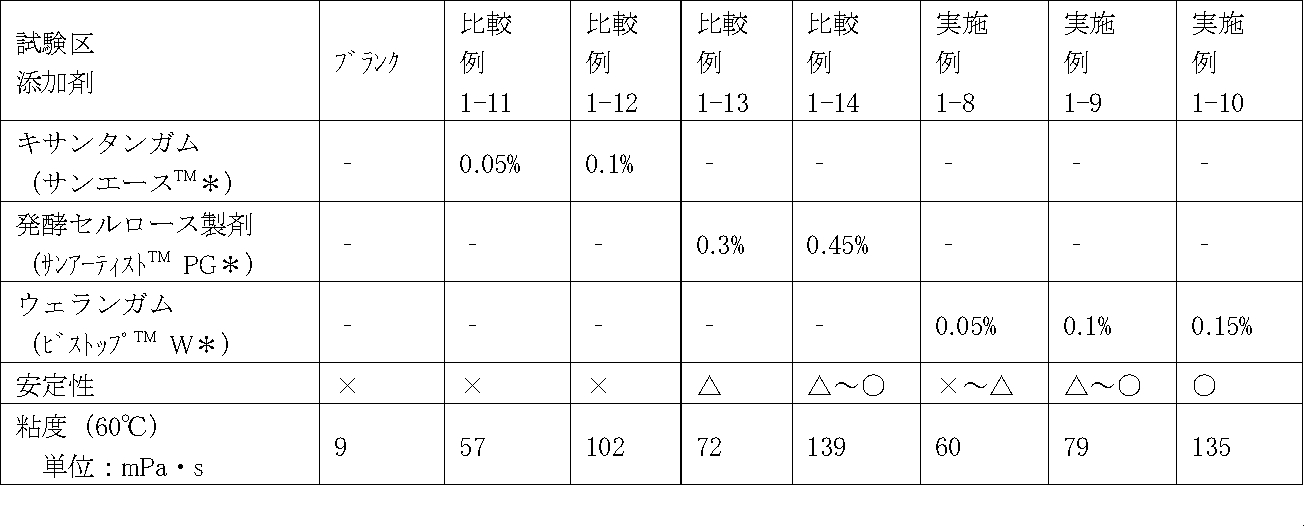
ウェランガムを使用することにより、レトルト殺菌時の蛋白質の凝集が抑制されることがわかった。比較例として使用したキサンタンガム、発酵セルロース製剤と比較しても、優位な結果が得られた。具体的には、ウェランガムは低添加量であってもキサンタンガム又は発酵セルロース製剤を使用したものよりも低粘度~同程度の粘度を発現し、しかも安定性が向上し、チルドプリンのような柔らかくなめらかな食感となった。
次の処方に従い、蛋白質含量の高いレトルトプリンを調製した。使用した添加剤の種類と添加量に関しては、表1-5に示す。完成したレトルトプリンの外観を試験例1-4と同様の基準で確認し、その評価を表1-5に示す。後記処方によって得られるレトルトプリン100g当たりの蛋白質量は7.5gであった。
砂糖 1.5
カゼインナトリウム 2.7
蛋白質 濃縮ホエイパウダー(CP Kelco社 シンプレス100) 10.1
ヤシ油 5.0
寒天(ゲルアップTM J-1630*) 0.3
カラギナン(ゲルリッチTM NO.3(F)*) 0.05
添加剤 表1-5参照
着色料(カロチンベースNo.9400-SV*) 0.2
香料(ワニラエッセンスNo.70*) 0.1
甘味料(サンスイートTM SU-100*) 0.1
甘味料(ネオサンマルク TM AG*) 0.1
イオン交換水にて全量 100部とする
段階1) 水、ヤシ油を撹拌しながら砂糖、カゼインナトリウム、蛋白質濃縮ホエイパウダー、添加剤、寒天、カラギナン、甘味料の粉体混合物を加え、90℃10分間加熱撹拌溶解した。
段階2) 着色料、香料を加え、水で全量補正した。
段階3) 75℃でホモジナイザー(第一段 10MPa、第二段 5MPa)にて均質化処理を行った。
段階4) PP製プリンカップに充填後、121℃20分間レトルト殺菌を行った。
段階5) 冷却固化し、レトルトプリンを得た。
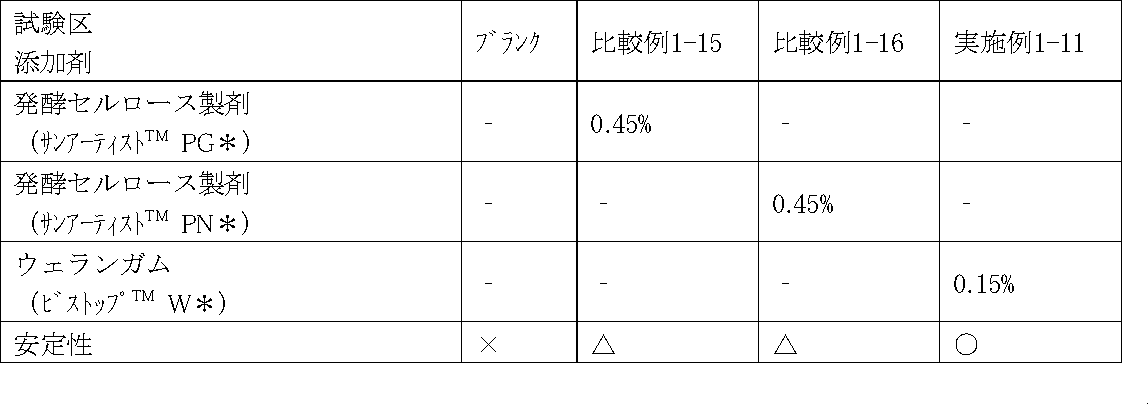
前記試験結果より、ウェランガムを使用することにより、レトルト殺菌時の蛋白質の凝集が抑制されることがわかった。これは、発酵セルロース製剤と比較しても優位な結果であった。発酵セルロース製剤を使用すると、得られたプリンは硬く脆い食感となったが、ウェランガムを使用すると、口溶けがよくなめらかな食感になった。
次の処方に基づき、本発明にかかるミルク入りコーヒーゼリー飲料を調製した。使用した添加剤の種類と添加量に関しては、表1-6に示す。ホモジナイズ処理後の粘度を測定し、また、完成したミルク入りコーヒーゼリー飲料の外観を目視で確認し、その評価を表1-6に示す。
牛乳 22.0
脱脂粉乳 1.0
砂糖 4.0
甘味料(サンスイートTM SA-5050*) 0.025
インスタントコーヒー 1.0
ゲル化剤(カラギナン、ローカストビーンガム) 0.3
添加剤 表1-6参照
乳化剤(ホモゲンTM NO.3136*) 0.14
炭酸水素ナトリウム 0.1
香料 (コーヒーフレーバー No.112246(P)*) 0.07
イオン交換水にて全量 100部とする
段階1) 水、牛乳を撹拌しながら砂糖、脱脂粉乳、甘味料、インスタントコーヒー、ゲル化剤、添加剤、乳化剤、炭酸水素ナトリウムの粉体混合物を加え、80℃10分間加熱撹拌溶解した。
段階2) 香料を加え、水で全量補正した。
段階3) 75℃でホモジナイザー(第一段 10MPa、第二段 5MPa)にて均質化処理を行った。
段階4) 液温60℃で缶に充填した。
段階5) 121℃20分間レトルト殺菌を行った。
段階6) 冷却固化し、ミルク入りコーヒーゼリー飲料を得た。
・蛋白質の安定性
目視にて凝集物を確認。
安定性の評価基準
○:凝集無く、安定性良好
△:少し凝集している
×:激しく凝集し、分離している
ホモジナイズ処理(段階3)後のミックスの粘度をB型粘度計にて測定した。
測定条件:60rpm、ローターNO.1 or 2、温度60±2℃
・食感
冷却固化後の缶を、飲用に適するよう手で10回強く振とうして飲用し、その崩壊性を官能で評価した。
○: 程よい硬さで、振ると適度に崩れる
△: やや硬く、振っても粗い粒が残り飲みづらい
×: 硬くて振っても崩れにくく、飲用に適さない

ウェランガムをドリンクゼリーに使用することにより、レトルト殺菌時の蛋白質の凝集を抑制しつつ、ドリンクゼリーに適した崩壊性、食感を付与できることがわかった。一方、キサンタンガムを使用した比較例では蛋白質の凝集が止まらず、かつ冷却固化後に強い弾力が付与されるために、振とうしてもゼリーが崩れにくくなり、ドリンクゼリーには適さない物性となった。発酵セルロース製剤を使用した比較例では、レトルト殺菌時の蛋白質の凝集にはやや改善が見られたが、冷却固化後のゼリーはやはり崩れにくくなってしまい、ドリンクゼリーには適さなかった。
次の処方に基づき、豆腐を調製した。使用した添加剤の種類及び添加量と、得られた豆腐の評価を表1-7に示す。
豆乳 95.0
にがり 3.0
添加剤 表1-7参照
イオン交換水にて全量100部とする
段階1) 豆乳に加工でん粉、添加剤を投入し、10分間撹拌溶解した。
段階2) にがりを投入後、10秒間撹拌した。
段階3) PP製容器に充填後、121℃にて20分間レトルト殺菌を行った。
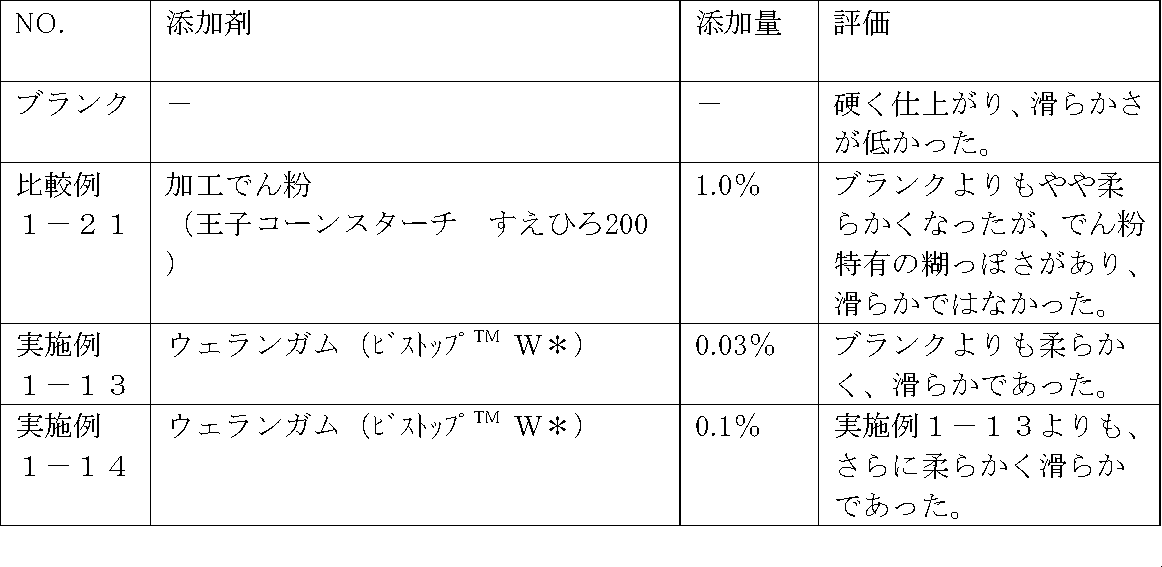
本発明にかかるウェランガムを使用した豆腐は、レトルト殺菌したにも関わらず硬くなりにくく、滑らかな食感を有していた。また、多糖類特有のヌメリを感じることも無く、豆腐特有のツルンとした食感を維持していた。
一方、比較例の加工でん粉を使用したものでは、やや柔らかくなったものの、糊っぽい食感となり、滑らかさは極めて低いものであった。
次の処方に基づき、焼きプリンを調製した。使用した添加剤の種類と添加量に関しては、表1-8に示す。また、完成した焼プリンの硬さ(ゲル強度)をテクスチャーアナライザーで評価した。
<処方>
加糖凍結全卵20(キユーピー) 30.0
砂糖 7.0
脱脂粉乳 2.1
ヤシ油 4.2
添加剤 表1-8参照
乳化剤(ホモゲンTMDM-S*) 0.07
香料 (プリンフレーバーNo.72724(P)*)0.07
イオン交換水にて全量 100部とする
段階1) イオン交換水、ヤシ油を撹拌しながら砂糖、脱脂粉乳、添加剤、乳化剤の粉体混合物を加え、80℃10分間加熱撹拌溶解した。
段階2) 香料とイオン交換水を加え、75℃でホモジナイザー(第一段 10MPa、第二段 5MPa)にて均質化処理を行った。
段階3) 20℃まで冷却した後、加糖凍結全卵20を添加した。
段階4) PP製カップに充填し、170℃のオーブンで40分間焼成を行った。
段階5) 冷却固化させた。
・ゲル強度
一晩冷蔵後のプリンをテクスチャーアナライザー(Texture Analyzer TA-XT plus (Stable Micro Systems製))を用いて、硬さ(ゲル強度)を測定した。
測定条件:直径11.3mm円柱状プランジャー(ステンレス製)、侵入速度1mm/sec、品温5℃

ウェランガムを使用することにより、卵を多く含んだ焼プリンでも卵蛋白質が加熱凝固することによって硬くなりすぎることがなく、食感がソフトでなめらかなプリンを作ることができた。キサンタンガムと比較しても、なめらかでソフトな食感を有していた。
次の処方に基づき、フラワーペーストを調製した。使用した添加剤の種類と添加量に関しては、表1-9に示す。また、完成したフラワーペーストを目視と食感によって評価した。
<処方>
砂糖 12.0
ゼラチン(スペシャルゼラチン*) 1.0
日持ち向上剤(グリシン) 1.0
日持ち向上剤(アートフレッシュTM50/50*) 0.025
水あめ 10.1
サラダ油 2.0
加糖凍結卵黄20(キユーピー) 15.0
牛乳 10.0
イオン交換水 65.0
添加剤 表1-9参照
香料(クリームオイル No.86654(P)*) 0.1
イオン交換水にて全量 120部とする
さらに煮詰めて、全量 100部とする
段階1) イオン交換水、水あめ、サラダ油、加糖凍結卵黄20、牛乳を撹拌しながら砂糖、ゼラチン、日持ち向上剤、添加剤の粉体混合物を加え、70℃達温まで加熱した。
段階2) 香料とイオン交換水を加え、ホモミキサーにて8,000rpmにて10分間均質化処理を行った。
段階3) 手鍋にて指定量まで煮詰めた。
段階4) PE袋に充填し、冷却固化させた。

ウェランガムを使用することにより、フラワーペーストにおいて卵蛋白質の加熱凝固によるざらつきの発生を抑制することができ、滑らかでさっぱりした食感となった。ブランクでは凝集を生じ、保形性のないゆるい食感となっていた。比較例1-23として加工デンプンの添加量をブランクよりも増やしたフラワーペーストでは、凝集は発生せず滑らかな食感となっていたが、重く糊っぽいべたついた食感となっていた。さらに、キサンタンガムを添加した比較例1-24では、凝集の発生を抑制することができず、食感としてもざらついた糊っぽい食感であった。
次の処方に従い、唐揚げを調製した。使用した添加剤の種類と添加量は、表2-1に示す。尚、ピックル液は、粘度が80mPa・s(測定温度8℃、回転数60rpm)となるよう調製した。得られた唐揚げの歩留まり及び食感に関する評価についても、表2-1に示す。
<処方>
ピックル液
pH調整剤 4.0 (g)
(サンポリマーTM No.366*)
食塩 1.0
添加剤 表2-1参照
イオン交換水にて 95.0部とする
段階1) イオン交換水に添加剤を添加し、80℃で10分間加熱撹拌溶解後、冷却した。
段階2) 残りの材料を加え、撹拌溶解した。
段階1) 鶏胸肉(皮なし)を20g程度の重さになるようカットした。
段階2) カットした鶏胸肉100部に前記ピックル液を20部加え、2時間タンブリングし一晩冷蔵した。
段階3) バッターリングし、175℃で3分30秒間油調した。

測定温度8℃、B型粘度計にて回転数60rpm、ローターNo.1、1分後の粘度を測定。
2) 最終歩留まり: 加水歩留まり×油調歩留まり
キサンタンガムを用いた比較例2-1では、無添加のブランクよりも軟らかくなり、肉本来の噛み応えが失われて物足りない食べごたえとなっていた。一方のウェランガムを添加した実施例2-1では、ブランクと同程度の肉の繊維感があり、歩留まりが向上しながらも肉感を充分に感じることができた。
次の処方に従い、ミートローフを調製した。使用した添加剤の種類と添加量は、表2-2に示す。得られたミートローフの食感に関する評価についても、表2-2に示す。
<処方>
豚ウデ肉(5mmФ) 65.0 (g)
豚脂(5mmФ) 10.0
食塩 0.7
砂糖 0.5
重合リン酸塩 0.3
L-アスコルビン酸ナトリウム(結晶) 0.08
亜硝酸ナトリウム 0.012
調味料(サンライクTM ソテードオニオン 9Y55E*) 0.3
調味料(サンライクTM ビーフエンハンサー VF-1734*) 0.2
調味料(サンライクTM スパイスミックス AR-1* 0.3
乳清たん白(ミルプロTM LG*) 3.0
カゼインナトリウム 1.0
保存料(ナチュラルキーパーTM*) 0.3
保存料(アートフレッシュTM 50/50*) 0.05
添加剤 表2-2参照
氷水にて全量 100.0部とする
段階1) 氷水に添加剤を加え、撹拌溶解した。
段階2) 残りの材料を加え混合し、ケーゼ型に充填した。
段階3) コンベクションオーブンにて180℃にて5分間オーブン加熱した。
段階4) 肉の中心が70℃になるまで、80℃にてスチーム加熱した。
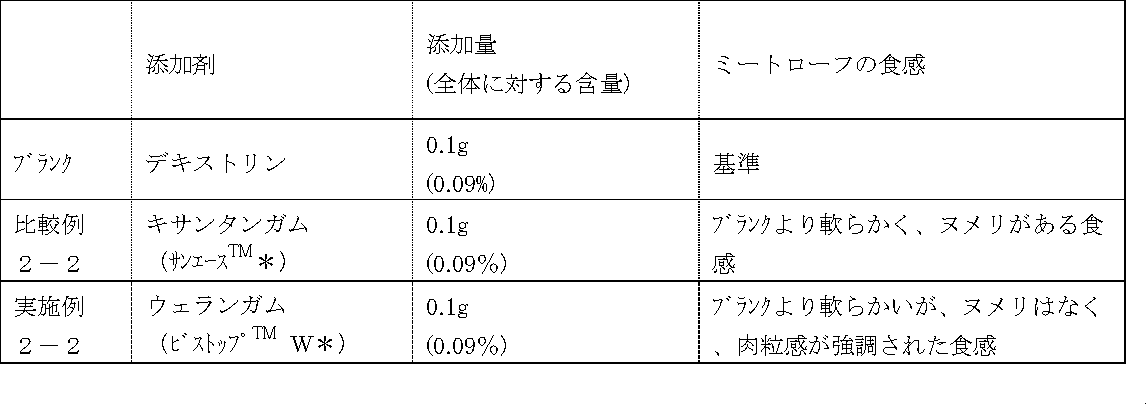
表2-2の結果より、ウェランガムをミートローフに添加した場合、肉の生地がソフトでほぐれやすくなり、さらにミンチ肉そのもののような肉粒感を強く感じる食感となった。
次の処方に従い、ハンバーグを調製した。使用した添加剤の種類と添加量は、表2-3に示す。得られたハンバーグの加熱後の歩留りと食感の評価についても表2-3に示す。
<処方>
鶏胸肉ミンチ(皮付き、5mmミンチ) 15.0
豚ウデ肉ミンチ(皮付き、5mmミンチ) 10.0
豚脂(5mmミンチ) 10.0
水戻し粒状植物性たん白(4倍加水) 15.0
玉ねぎ(みじん切り、80%ソテー) 15.0
ドライパン粉 5.0
粉末大豆たん白 2.0
加工デンプン 2.0
砂糖 1.0
食塩 0.5
pH調整剤(サンポリマーTM NO.366*) 0.4
調味料(サンライクTMスパイスミックス BW-1*) 0.3
日持ち向上剤(アートフレッシュTM NO.101*) 0.2
添加剤 表2-3参照
イオン交換水にて全量 100部とする
段階1)処方中の全材料を良く混合し、80gの平たい長円型に成型した。
段階2)ホットプレートにて180℃で片面ずつ焼き色がつくまで焼成し、中心が80℃に達するまで90℃でスチーム加熱した。
段階3)中心温度が室温(25℃)になるまで静置した。
加熱歩留りを次の式で算出した。
加熱歩留り(%)=(加熱前重量/加熱後重量)×100
室温の状態でハンバーグを食して、食感を評価した。
<評価>
ウェランガムを添加したハンバーグでは、ブランク及びキサンタンガムを添加した比較例2-4のハンバーグよりも、加熱歩留りが優れていた。また食感においても、ヌメリがなく食べ易い食感であった。
次の表処方に従い、蒲鉾を調製した。使用した添加剤の種類と添加量は、表2-4に示す。得られた蒲鉾の食感の評価を行った。
<処方>
すり身(SA) 34.0
すり身(2級) 16.0
食塩 1.5
馬鈴薯澱粉 5.0
保存料 (サンキプロTM NO.9) 1.0
L-グルタミン酸ナトリウム 0.5
添加剤 表2-4参照
氷水にて全量 100部とする
<調製方法>
段階1)処方中のすり身(SA)とすり身(2級)を2cm角のブロック状に切断し、冷却したカッターに投入して荒ずりした。
段階2)食塩を加え、ペースト状になるまで塩ずりした。
段階3)氷水の1/3を加え、次に保存料とL-グルタミン酸ナトリウムを加えてよく擂った。
段階4)さらに氷水の1/3を加え、次に添加剤と、氷水を加えてよく擂った。
段階5)氷水の残部と馬鈴薯澱粉を少しずつ加え、8℃になるまで擂った。
段階6)塩化ビニルのケーシングに充填し、40℃で20分間スチーム後、室温で30分間静置した。
段階7)90℃で40分間ボイル加熱し、冷却した。
<評価基準>
・食感:1cm幅に切り分けた蒲鉾を食して評価した。

<結果>
ブランクを基準とすると、実施例の蒲鉾は柔らかく、ほぐれるような食感となっていた。一方の比較例の蒲鉾は、ブランクより軟らかいもののボソボソとした食感になっていた。
次の処方に基づき、細挽きソーセージを調製した。使用した添加剤の種類と添加量は、表2-5に示す。得られた細挽きソーセージの食感の評価結果についても表2-5に示す。
<処方>
鶏胸肉ミンチ(皮付き、5mmミンチ) 30.0
鶏皮(5mmミンチ) 5.0
加工デンプン 8.0
粉末大豆たん白 5.0
乾燥卵白 3.0
食塩 1.5
カゼインナトリウム 1.0
砂糖 0.5
重合リン酸塩 0.3
調味料(サンライクTM スパイスミックス SW-1*) 0.3
保存料(ナチュラルキーパーTM*) 0.3
調味料(サンライクTM アミノベースNAG*) 0.2
L-アスコルビン酸ナトリウム(結晶) 0.08
亜硝酸ナトリウム 0.012
添加剤 表2-5参照
氷水にて全量 100部まで
<調製方法>
段階1)処方中の鶏胸肉ミンチ(皮付き、5mmミンチ)、鶏皮(5mmミンチ)、食塩、及び重合リン酸塩、並びに半量の氷水を冷却したカッターに投入して混合し、さらに添加剤を加え混合した。
段階2)残りの材料を加え12℃になるまで混合した。
段階3)ノジャックスケーシングに充填し、スモークハウスにて50℃で15分間の乾燥後、60℃で30分間のスモークを行い、75℃で20分間のスチームをした。

<結果>
ブランクのソーセージでは粘りが生じていたが、ウェランガムを添加することで粘り及びヌメリは殆どなく、ほぐれやすい食感が付与されていた。キサンタンガムを添加した比較例2-6ではヌメリが生じ、べちゃっとした食感となっていた。
次の処方に基づき、細挽きソーセージを調製した。使用した添加剤の種類と添加量は、表2-6に示す。食感の評価結果についても表2-6に示す。
<処方>
豚ウデ肉(5mmミンチ) 55.0
豚脂(5mmミンチ) 14.0
加工デンプン 3.0
粉末大豆たん白 2.0
食塩 1.5
砂糖 0.5
重合リン酸塩 0.3
調味料(サンライクTMスパイスミックス SW-1*) 0.3
保存料(ナチュラルキーパーTM*) 0.3
調味料(サンライクTM アミノベース NAG*) 0.2
L-アスコルビン酸ナトリウム(結晶) 0.08
亜硝酸ナトリウム 0.012
添加剤 表2-6参照
氷水にて全量 100部とする
<調製方法>
段階1)処方中の材料豚ウデ肉(5mmミンチ)、豚脂(5mmミンチ)、食塩、及び重合リン酸塩、並びに半量の氷水を混合し、さらに添加剤を加え混合した。
段階2)残りの材料を加え12℃になるまで混合した。
段階3)ノジャックスケーシングに充填し、スモークハウスにて50℃で15分間の乾燥後、60℃で30分間のスモークを行い、75℃で20分間のスチームをした。
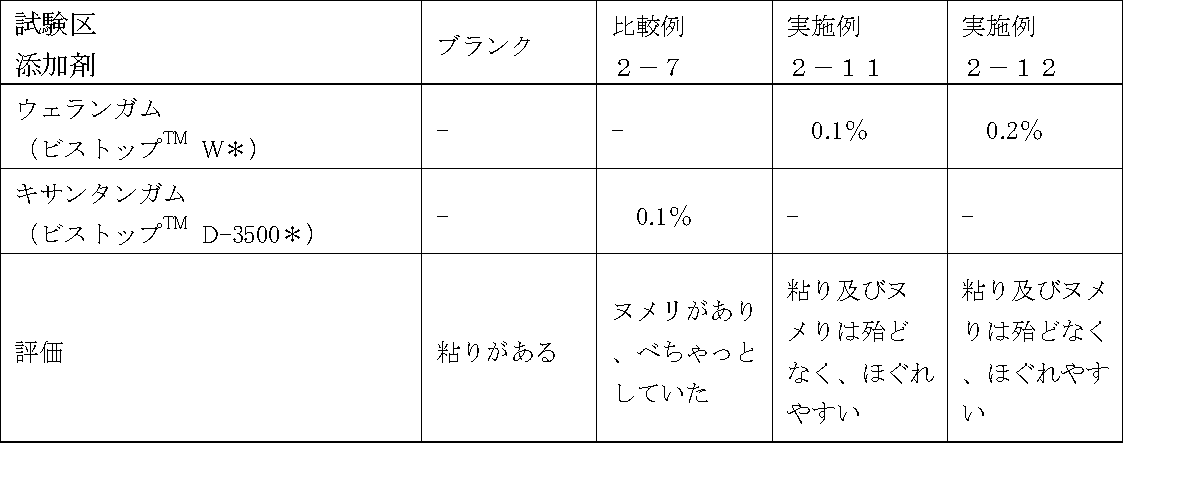
<結果>
試験例2-5の細挽きソーセージと同様、ブランクには粘りが生じていたが、ウェランガムを添加することで粘り及びヌメリはほとんどなく、ほぐれやすい食感となっていた。キサンタンガムを添加した比較例2-7では、ヌメリが生じべちゃっとした食感となっていた。
次の処方に従い、たこ焼きを調製した。使用した添加剤の種類と添加量については、表3-1に示す。食感(焼成後と冷凍解凍後)の評価を行った。その結果についても表3-1に示す。
<処方>
薄力粉(8.6M篩過) 100.0 (g)
全卵(網で濾したもの) 21.1
調味料(サンライクTM和風だしL*) 2.6
食塩 2.1
L-グルタミン酸ナトリウム 2.1
調味料(サンライクTM テイストベースTM A(改)*) 0.1
膨張剤サンオーバーTM O-62*) 1.1
添加剤 表3-1参照
イオン交換水にて全量 76.7
○比較例3-1、並びに実施例3-1及び3-2
段階1) キサンタンもしくはウェランガムの1%水溶液(80℃で10分間プロペラ撹拌にて溶解)を調製し、冷却した。
段階2) 添加剤が規定の濃度になるように水と段階1の調製物を混合した。
段階3) 薄力粉を段階2の調製物に加え、5分間撹拌した。
段階4) 膨張剤以外の残りの原料を全て加え、5分間撹拌した。
段階5) 焼成調理の直前に、膨張剤を加え1分間撹拌した。
段階6) たこ焼き用ホットプレート(サラダ油使用、230℃)にて焼成した。
段階7) 焼成7分後、回転できる硬さに焼成されたものからひっくり返した。
段階8) 適宜ひっくり返し、表面がサクサクになりやや焦げ目が付くまで焼成した。(焼成開始から約30分間)
段階1) 薄力粉、食感改良剤を水に加え、5分間撹拌した。
段階2) 膨張剤以外の残りの原料を全て加え、5分間撹拌した。
段階3) 焼成調理の直前に膨張剤を加え、1分間撹拌した。
段階4) 上述の段階6)以降と同様の方法によって焼成した。

ウェランガムを使用したたこ焼き(実施例3-1、3-2)は、キサンタンガム(比較例3-1)、加工デンプン(比較例3-2、3-3)、デキストリン(比較例3-4)よりも表面はかりっと香ばしく焼きあがり、内部は糊っぽさが無く良好な口どけを有していた。
次の処方に従い、食パンを調製した。使用した添加剤の種類と添加量については、表3-2に示す。得られた食パンの食感の評価についても表3-2に示す。
<処方>
小麦粉 100.0(g)
インスタントドライイースト 1.0
砂糖 5.0
脱脂粉乳 3.0
食塩 2.0
イーストフード 0.1
マーガリン 5.0
添加剤 表3-2参照
イオン交換水 70.0
段階1) マーガリン以外の原料を万能混合撹拌機で63rpm~107rpmで約7分間混合した。
段階2) マーガリンを加え、63rpm~107rpmで約6分間混合した(捏上温度:約27℃)。
段階3) 30℃で1時間発酵させた後、パンチを入れ(ガス抜き)、さらに30分間発酵させた。
段階4) 生地を220gに分割し、丸めて、30分間ベンチタイムをとった。
段階5) 成形し、ホイロ(35℃、湿度85%)で約60分間発酵させた。
段階6) オーブン(クイーンオーブンEPQS-9-2 フジサワ製)を用いて、上火160℃、下火230℃で33分間焼成した(焼減率:約12%)。

ブランクの食感を基準として評価を行うと、キサンタンガムを添加した比較例3-5では、ブランクよりもソフトな食感となっていた。また、ウェランガムを0.093g(食パン中0.05%)添加した比較例3-5では、キサンタンガム添加の比較例3-5のものに近い食感となっていた。
ウェランガムの添加量を増やすにつれて、食感はさらにソフトなものとなり、実施例3-5が最もよい食感となっていた。
次の処方に従い、冷凍パン生地を調製した。使用した添加剤の種類と添加量については、表3-3に示す。得られた食パンの食感の評価についても表3-3に示す。
<処方>
小麦粉 100.0
インスタントドライイースト 5.0
砂糖 5.0
脱脂粉乳 3.0
食塩 2.0
イーストフード 0.1
マーガリン 5.0
添加剤 表3-3参照
イオン交換水 70.0
<調製方法>
段階1)マーガリン以外の材料を予め粉体混合し、イオン交換水に加えて万能混合撹拌機で63rpm~107rpmで7分間混合した。
段階2)マーガリンを加え、63rpm~107rpmで6分間混合した(捏上温度:約22℃)。
段階3)15分間のフロアタイム後、生地を220gに分割し、丸めて、10分間のベンチタイムをとった。
段階4)成形し、冷凍庫(-30℃)で18日間保存した。
段階5)室温で生地温度が20℃になるまで解凍した。
段階6)ホイロ(35℃、85%RH)で60分間発酵させた。
段階7)上火160℃、及び下火230℃で、33分間焼成した(焼減率:約12%)。

次の処方に従って、チルド麺を調製し、麺の食感改良効果について評価を行った。使用した添加剤の種類と添加量については、表3-4に示す。得られたチルド麺の食感の評価についても表3-4に示す。
小麦粉(日本製粉、特寿) 100.0
食塩 1.0
炭酸カリウム 0.6
炭酸ナトリウム 0.9
着色料(サンエローTM NO.3L*) 0.1
添加剤 表3-4参照
イオン交換水 35.0
段階1)20℃のイオン交換水に、食塩、炭酸カリウム、炭酸ナトリウム、着色料を添加して、5分間撹拌溶解した。
段階2)小麦粉、添加剤を粉体混合後、万能混合機で撹拌しながら、段階1の調製物をゆっくり添加し、続けて12分間撹拌混合した。
段階3)段階2の調製物を製麺機に移し、粗複合を行い麺帯にして、続けて複合を2回行った。
段階4)続いて、圧延を2回行い、麺帯の厚さを1.4mmに調整した。
段階5)#22の切り刃で麺帯をカットし、3分15秒間茹でた。
段階6)15秒間流水で冷却した後、15秒間氷水で冷却した。
麺の硬さ及び弾力を官能で評価
硬さ ○:硬さがあり、コシがある
△:やや硬さがある
×:柔らかく、切れやすい
弾力 ○:弾力があり、もちもちしている
△:やや弾力がある
×:弾力がなく、脆い

ウェランガムを使用することで、麺がかたく、弾力が付与され、食べ応えのある麺になる。加工でん粉も麺に硬さと弾力を付与するが、ウェランガムの方が、より弾力がある食感である。
また、添加量が0.6%のものは、0.2%のものと比較して、顕著に硬さと弾力が付与されており、食べ応えのある食感となった。
次の処方に従って和風パスタソースを調製し、ソースの評価を行った。使用した添加剤の種類と添加量については、表4-1、表4-2、4-3に示す。得られたパスタソースの評価結果について表4-4に示す。
<処方>
ぶなしめじ 10.0
キャベツ 8.0
ベーコン 8.0
濃口醤油 5.0
食塩 1.0
調味料(サンライクTM 和風だしL*) 1.0
調味料(サンライクTM シイタケM*) 0.5
調味料(サンライクTM コンソメ0316P*) 0.5
甘味料(スクラロース*) 0.002
香料(シソフレーバーG*) 0.1
添加剤(成分については表4-2参照) 表4-3、及び4-4参照
イオン交換水にて全量 100部まで
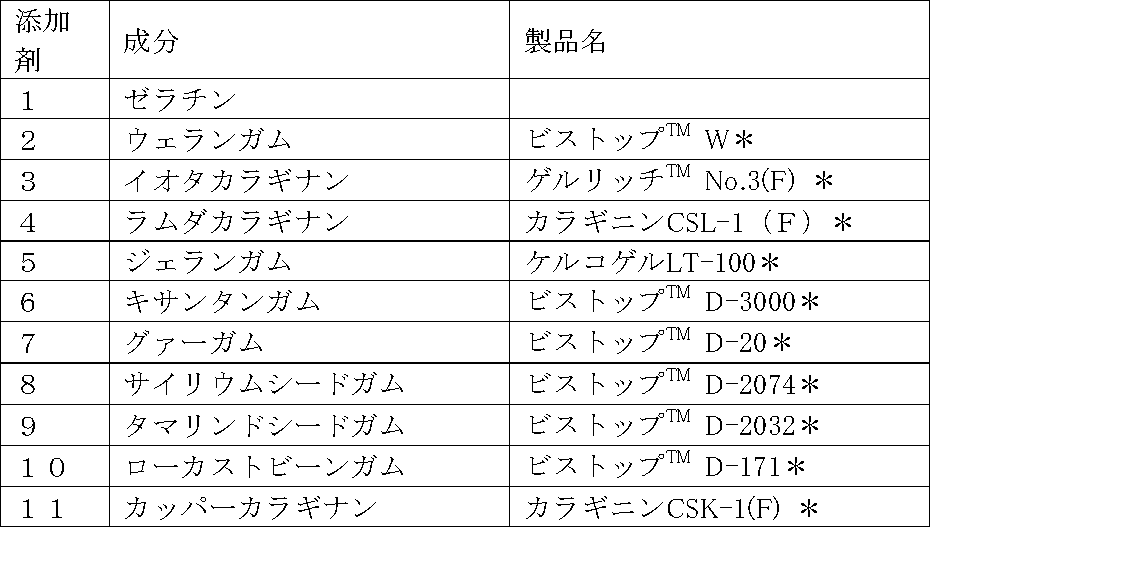
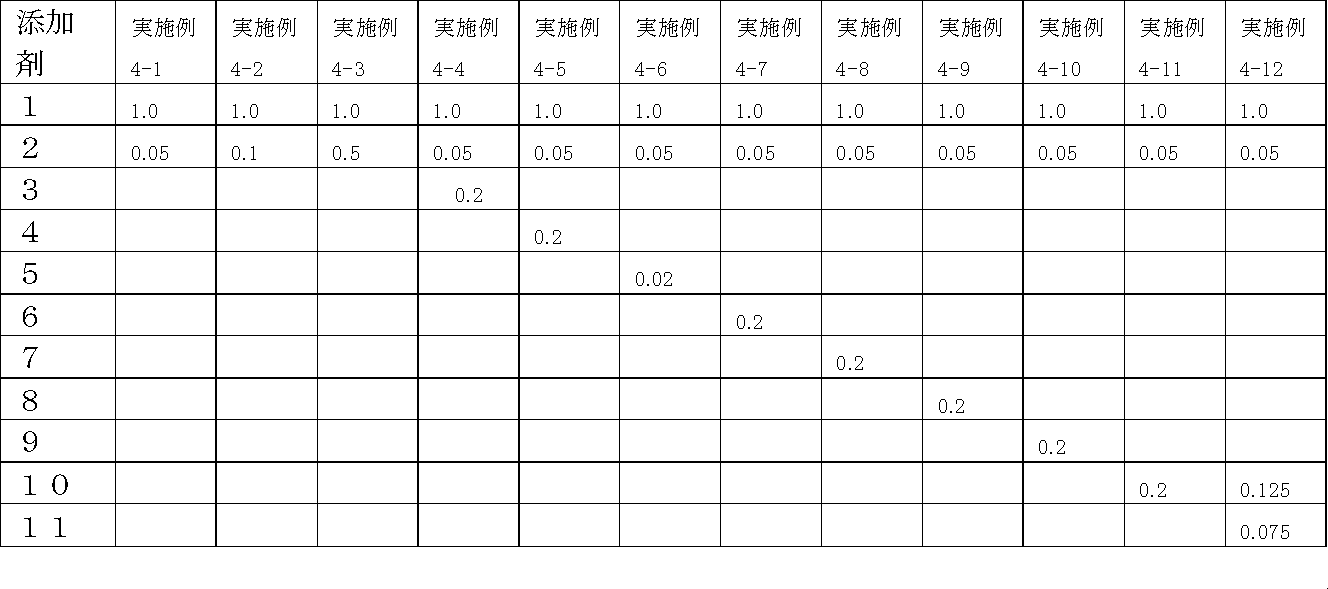

段階1)イオン交換水に添加剤(表4-1)を加えて、80℃で10分間撹拌した。
段階2)ぶなしめじ、キャベツ、ベーコン、濃口醤油、食塩、調味料3品、甘味料、香料を加えて、さらに10分間撹拌した。
段階3)蒸発水を補正後、100gをPP製カップ容器に充填し、粗熱を除去後-40℃で急速凍結し、一晩冷凍保存した。
一晩冷凍保存したスープを5℃の冷蔵庫で解凍し、その際ゲル状のスープから出た水分の質量を測定し、離水量とした。
解凍後のスープを800Wで1分間電子レンジ調理を行い、ゲルを溶解させスープ状に調理した。調理直後の風味立ちを官能評価し、調理後のスープが再びゲル化する温度を測定した。

表4-4の結果より、ゼラチン含有スープにウェランガムを添加することで、冷凍解凍時の離水が大幅に抑制できることが明らかとなった(実施例4-1から4-3)。また、食品製造で一般的に利用される多糖類と併用することにより、ウェランガム単独添加の実施例4-1(ウェランガムの添加量は同じ)よりも一層離水が抑制されるとの結果が得られた(実施例4-4から4-12)。ウェランガムを添加した実施例4-1から4-12の和風パスタソースは、レンジ調理後の風味立ちも良好であり、調理後にパスタソースが再度ゲル化する温度も、ゼラチン単独使用である比較例4-1と同程度であり、パスタソースが冷えることによりゲル化してしまうといった事態も生じず、ウェランガム添加による影響は見られなかった。
Claims (12)
- ウェランガムを含有する蛋白質凝集抑制剤。
- ウェランガムを含有する、蛋白質凝集が抑制された蛋白質含有食品。
- 蛋白質含有食品が、卵加工品、乳加工品、及び大豆加工品のいずれかである請求項2に記載の蛋白質含有食品。
- ウェランガムを含有する肉加工食品。
- ウェランガムの含有量が0.001~3質量%の範囲内である、請求項4に記載の肉加工食品。
- ウェランガムを添加することを含む肉加工食品の食感改良方法。
- ウェランガムを含有する小麦粉含有食品。(好ましくは、ウェランガムを含有し、且つ食感が改良されている小麦粉含有食品。)
- 小麦粉含有食品全体に対するウェランガムの添加量が0.001~1質量部の範囲内である、請求項7に記載の小麦粉含有食品。
- ウェランガムを添加することを含む、麦粉含有食品の食感改良方法。
- ゼラチン含有スープの冷凍解凍時の離水を抑制する方法であって、ゼラチン含有スープにウェランガムを添加することを含む方法。
- ウェランガムの添加量が、ウェランガムの前記添加後のゼラチン含有スープの全質量に対して0.01~1質量%の範囲内である請求項10に記載の離水の抑制方法。
- ウェランガムとの組み合わせにおいて増粘多糖類を添加することを含む請求項10又は11に記載の離水の抑制方法。
Priority Applications (6)
| Application Number | Priority Date | Filing Date | Title |
|---|---|---|---|
| CN201680071984.XA CN108366592A (zh) | 2015-10-08 | 2016-10-07 | 食品改良剂 |
| HK19101068.4A HK1258690A1 (en) | 2015-10-08 | 2016-10-07 | Food-improving agent |
| JP2017544255A JPWO2017061628A1 (ja) | 2015-10-08 | 2016-10-07 | 食品改質剤 |
| KR1020187011937A KR20180063185A (ko) | 2015-10-08 | 2016-10-07 | 식품 개질제 |
| US15/765,169 US20180317536A1 (en) | 2015-10-08 | 2016-10-07 | Food-improving agent |
| EP16853779.3A EP3360426A4 (en) | 2015-10-08 | 2016-10-07 | FOOD IMPROVEMENT AGENTS |
Applications Claiming Priority (8)
| Application Number | Priority Date | Filing Date | Title |
|---|---|---|---|
| JP2015200601 | 2015-10-08 | ||
| JP2015-200601 | 2015-10-08 | ||
| JP2015212034 | 2015-10-28 | ||
| JP2015-212034 | 2015-10-28 | ||
| JP2015218483 | 2015-11-06 | ||
| JP2015-218483 | 2015-11-06 | ||
| JP2016-097467 | 2016-05-13 | ||
| JP2016097467 | 2016-05-13 |
Publications (1)
| Publication Number | Publication Date |
|---|---|
| WO2017061628A1 true WO2017061628A1 (ja) | 2017-04-13 |
Family
ID=58487963
Family Applications (1)
| Application Number | Title | Priority Date | Filing Date |
|---|---|---|---|
| PCT/JP2016/080038 Ceased WO2017061628A1 (ja) | 2015-10-08 | 2016-10-07 | 食品改質剤 |
Country Status (7)
| Country | Link |
|---|---|
| US (1) | US20180317536A1 (ja) |
| EP (1) | EP3360426A4 (ja) |
| JP (1) | JPWO2017061628A1 (ja) |
| KR (1) | KR20180063185A (ja) |
| CN (1) | CN108366592A (ja) |
| HK (1) | HK1258690A1 (ja) |
| WO (1) | WO2017061628A1 (ja) |
Cited By (10)
| Publication number | Priority date | Publication date | Assignee | Title |
|---|---|---|---|---|
| JP2018201504A (ja) * | 2017-06-02 | 2018-12-27 | 三栄源エフ・エフ・アイ株式会社 | 酸性殺菌タンパク質含有飲食品、酸性殺菌タンパク質含有飲食品の製造方法、酸性殺菌タンパク質含有飲食品の凝集抑制方法、酸性殺菌タンパク質含有飲食品の流通方法及び酸性殺菌タンパク質含有飲食品の保存方法 |
| JP2019068745A (ja) * | 2017-10-06 | 2019-05-09 | 株式会社カネカ | ホイロ後冷凍パン生地 |
| JP2019176749A (ja) * | 2018-03-30 | 2019-10-17 | 雪印メグミルク株式会社 | ゲル状食品及びその製造方法 |
| JP2019176748A (ja) * | 2018-03-30 | 2019-10-17 | 雪印メグミルク株式会社 | ゲル状食品及びその製造方法 |
| JP2019176746A (ja) * | 2018-03-30 | 2019-10-17 | 雪印メグミルク株式会社 | ゲル状食品及びその製造方法 |
| JP2019176747A (ja) * | 2018-03-30 | 2019-10-17 | 雪印メグミルク株式会社 | ゲル状食品及びその製造方法 |
| JP2019176776A (ja) * | 2018-03-30 | 2019-10-17 | 伊藤ハム株式会社 | 燻煙風味を有する食肉加工食品及びその製造方法 |
| JP2020025481A (ja) * | 2018-08-10 | 2020-02-20 | 三栄源エフ・エフ・アイ株式会社 | チーズソース |
| JP2020036590A (ja) * | 2018-08-30 | 2020-03-12 | 三栄源エフ・エフ・アイ株式会社 | 灰汁発生及び/又は成長抑制剤 |
| US20210289812A1 (en) * | 2018-06-01 | 2021-09-23 | I Cook Catering Services Pty Ltd | Texture modified food product |
Families Citing this family (4)
| Publication number | Priority date | Publication date | Assignee | Title |
|---|---|---|---|---|
| JP6565013B1 (ja) * | 2018-09-27 | 2019-08-28 | 日本食品化工株式会社 | 畜肉様加工食品、その製造方法及び畜肉様加工食品用添加剤 |
| AU2019201778A1 (en) | 2019-03-14 | 2020-10-01 | I Cook Catering Services Pty Ltd | A texture modified food product |
| KR102550996B1 (ko) * | 2020-12-07 | 2023-07-04 | 황대진 | 마육 미트로프 제조 방법 및 이를 통해 제조된 마육 미트로프 |
| KR102722606B1 (ko) * | 2021-12-07 | 2024-10-28 | 주식회사 교동식품 | 실온용 레토르트 음식물 및 그 제조 방법 |
Citations (8)
| Publication number | Priority date | Publication date | Assignee | Title |
|---|---|---|---|---|
| JPS52128249A (en) * | 1976-04-20 | 1977-10-27 | Sanei Kagaku Kogyo Kk | Base material for dough suitable for mochi |
| WO1997014320A1 (fr) * | 1995-10-18 | 1997-04-24 | Kabushiki Kaisha Kibun Shokuhin | Aliments transformes en mousse de viande |
| JPH1056960A (ja) * | 1996-08-19 | 1998-03-03 | Asahi Chem Ind Co Ltd | 微細セルロース含有酸性乳飲料 |
| JP2003219845A (ja) * | 2002-01-29 | 2003-08-05 | Sanei Gen Ffi Inc | ホワイトソース含有食品 |
| JP2006217802A (ja) * | 2005-01-11 | 2006-08-24 | Nippon Meat Packers Inc | コラーゲン入り豆腐 |
| JP2007049908A (ja) * | 2005-08-15 | 2007-03-01 | Ina Food Ind Co Ltd | 消化吸収抑制剤及び食品のgi値低減剤、並びにこれらが含まれた食品 |
| JP2008127364A (ja) * | 2006-11-24 | 2008-06-05 | Taiyo Kagaku Co Ltd | マーカータンパク質発現制御剤 |
| JP2013078279A (ja) * | 2011-10-04 | 2013-05-02 | Nippon Soda Co Ltd | 挽肉加工製品の製造方法 |
Family Cites Families (34)
| Publication number | Priority date | Publication date | Assignee | Title |
|---|---|---|---|---|
| JPH02286059A (ja) | 1989-04-26 | 1990-11-26 | Fuji Oil Co Ltd | 含気性畜肉加工食品の製造方法 |
| JP2836867B2 (ja) | 1989-10-26 | 1998-12-14 | 三栄源エフ・エフ・アイ株式会社 | ゲル状食品の製造法 |
| JP2881661B2 (ja) | 1990-11-27 | 1999-04-12 | 千葉製粉株式会社 | 多孔質食肉加工食品およびその製造法 |
| CA2080035A1 (en) * | 1991-10-15 | 1993-04-16 | George Colegrove | Gelled foams |
| ZA935729B (en) * | 1992-08-21 | 1995-02-06 | Unilever Plc | Bakery custard |
| JP2613837B2 (ja) | 1993-03-24 | 1997-05-28 | 雪印乳業株式会社 | ゲル食品及びその製造方法 |
| JP3238808B2 (ja) | 1993-10-08 | 2001-12-17 | 旭化成株式会社 | 卵黄組成物 |
| JPH08205831A (ja) | 1995-01-30 | 1996-08-13 | Nippon Flour Mills Co Ltd | 蒸しパン及びその製造法 |
| JPH1075748A (ja) | 1996-09-05 | 1998-03-24 | Kibun Foods Inc | 離水防止されている生餃子及びその製造方法 |
| JP2985953B2 (ja) | 1997-12-05 | 1999-12-06 | ニッピコラーゲン工業株式会社 | 冷凍食品の離水防止剤 |
| JP4160698B2 (ja) | 1999-09-03 | 2008-10-01 | 松谷化学工業株式会社 | たこ焼用粉 |
| JP2001224335A (ja) | 2000-02-10 | 2001-08-21 | Sanei Gen Ffi Inc | 食感の改善された食肉加工食品 |
| JP3794675B2 (ja) | 2000-06-20 | 2006-07-05 | 日本食研株式会社 | 冷凍・解凍しても粘度低下せず、食品素材からの肉汁の流出を防止する液体調味料組成物 |
| JP2002262787A (ja) | 2001-03-14 | 2002-09-17 | Morinaga Milk Ind Co Ltd | ゲル状食品およびその製造方法 |
| JP4587649B2 (ja) | 2002-08-27 | 2010-11-24 | 三栄源エフ・エフ・アイ株式会社 | 畜肉加工食品 |
| JP2004267160A (ja) * | 2003-03-11 | 2004-09-30 | Sanei Gen Ffi Inc | 乳製品及びその製造法並びに応用 |
| JP4382409B2 (ja) | 2003-08-13 | 2009-12-16 | 昭和産業株式会社 | 冷蔵・冷凍澱粉質食品類 |
| RU2350123C2 (ru) * | 2003-09-03 | 2009-03-27 | Юнилевер Н.В. | Пищевые композиции, усиливающие чувство сытости |
| JPWO2006038413A1 (ja) | 2004-09-30 | 2008-05-15 | 不二製油株式会社 | 卵食品素材若しくは卵加工製品 |
| US20060093720A1 (en) * | 2004-10-28 | 2006-05-04 | Ed Tatz | Pumpable, semi-solid low calorie sugar substitute compositions |
| JP2007028938A (ja) * | 2005-07-25 | 2007-02-08 | Sanei Gen Ffi Inc | タンパク質含有組成物 |
| CA2616391A1 (en) * | 2005-08-01 | 2007-02-08 | Cp Kelco U.S., Inc. | Low-sediment acidic protein beverages |
| JP2007215448A (ja) | 2006-02-15 | 2007-08-30 | Nof Corp | スフレケーキの製造方法 |
| JP4789677B2 (ja) | 2006-03-30 | 2011-10-12 | キユーピー株式会社 | 冷凍ソース又は冷凍スープ |
| JP4664244B2 (ja) | 2006-07-03 | 2011-04-06 | 太陽化学株式会社 | 蛋白再凝集抑制剤 |
| JP4680212B2 (ja) | 2007-02-16 | 2011-05-11 | 花王株式会社 | 卵黄含有食品用原料及びその製造方法 |
| JP4294700B2 (ja) | 2007-03-12 | 2009-07-15 | 三栄源エフ・エフ・アイ株式会社 | ホワイトソース含有食品の風味向上方法 |
| JP2009065836A (ja) | 2007-09-10 | 2009-04-02 | Asahi Kasei Chemicals Corp | 液卵組成物及び卵加工食品 |
| JP5192368B2 (ja) | 2008-12-26 | 2013-05-08 | 三栄源エフ・エフ・アイ株式会社 | 小麦粉含有食品用の品質改良剤 |
| JP5398382B2 (ja) | 2009-06-30 | 2014-01-29 | キユーピー株式会社 | 卵加工品及びその製造方法 |
| JP5202453B2 (ja) | 2009-06-30 | 2013-06-05 | キユーピー株式会社 | 卵加工品の製造方法 |
| JP2013247869A (ja) | 2012-05-30 | 2013-12-12 | Sanei Gen Ffi Inc | 卵加工食品の変色防止方法 |
| CN103571767B (zh) * | 2012-07-26 | 2016-03-02 | 细胞生物技术公司 | 利用食用琼脂的双重涂布乳酸菌粉及其制备方法 |
| WO2015193122A1 (en) * | 2014-06-17 | 2015-12-23 | Unilever Plc | Ready-to-drink proteinaceous beverage |
-
2016
- 2016-10-07 JP JP2017544255A patent/JPWO2017061628A1/ja active Pending
- 2016-10-07 HK HK19101068.4A patent/HK1258690A1/en unknown
- 2016-10-07 WO PCT/JP2016/080038 patent/WO2017061628A1/ja not_active Ceased
- 2016-10-07 CN CN201680071984.XA patent/CN108366592A/zh active Pending
- 2016-10-07 US US15/765,169 patent/US20180317536A1/en not_active Abandoned
- 2016-10-07 KR KR1020187011937A patent/KR20180063185A/ko not_active Withdrawn
- 2016-10-07 EP EP16853779.3A patent/EP3360426A4/en not_active Withdrawn
Patent Citations (8)
| Publication number | Priority date | Publication date | Assignee | Title |
|---|---|---|---|---|
| JPS52128249A (en) * | 1976-04-20 | 1977-10-27 | Sanei Kagaku Kogyo Kk | Base material for dough suitable for mochi |
| WO1997014320A1 (fr) * | 1995-10-18 | 1997-04-24 | Kabushiki Kaisha Kibun Shokuhin | Aliments transformes en mousse de viande |
| JPH1056960A (ja) * | 1996-08-19 | 1998-03-03 | Asahi Chem Ind Co Ltd | 微細セルロース含有酸性乳飲料 |
| JP2003219845A (ja) * | 2002-01-29 | 2003-08-05 | Sanei Gen Ffi Inc | ホワイトソース含有食品 |
| JP2006217802A (ja) * | 2005-01-11 | 2006-08-24 | Nippon Meat Packers Inc | コラーゲン入り豆腐 |
| JP2007049908A (ja) * | 2005-08-15 | 2007-03-01 | Ina Food Ind Co Ltd | 消化吸収抑制剤及び食品のgi値低減剤、並びにこれらが含まれた食品 |
| JP2008127364A (ja) * | 2006-11-24 | 2008-06-05 | Taiyo Kagaku Co Ltd | マーカータンパク質発現制御剤 |
| JP2013078279A (ja) * | 2011-10-04 | 2013-05-02 | Nippon Soda Co Ltd | 挽肉加工製品の製造方法 |
Non-Patent Citations (2)
| Title |
|---|
| See also references of EP3360426A4 * |
| TORU HIDAKA ET AL.: "Shokuhin Tenkabutsu Jiten", FOOD CHEMICALS NEWSPAPER INC., 1 October 2001 (2001-10-01), pages 38, XP009510130 * |
Cited By (17)
| Publication number | Priority date | Publication date | Assignee | Title |
|---|---|---|---|---|
| JP2018201504A (ja) * | 2017-06-02 | 2018-12-27 | 三栄源エフ・エフ・アイ株式会社 | 酸性殺菌タンパク質含有飲食品、酸性殺菌タンパク質含有飲食品の製造方法、酸性殺菌タンパク質含有飲食品の凝集抑制方法、酸性殺菌タンパク質含有飲食品の流通方法及び酸性殺菌タンパク質含有飲食品の保存方法 |
| JP6993833B2 (ja) | 2017-10-06 | 2022-01-14 | 株式会社カネカ | ホイロ後冷凍パン生地 |
| JP2019068745A (ja) * | 2017-10-06 | 2019-05-09 | 株式会社カネカ | ホイロ後冷凍パン生地 |
| JP7184322B2 (ja) | 2018-03-30 | 2022-12-06 | 雪印メグミルク株式会社 | ゲル状食品及びその製造方法 |
| JP7184323B2 (ja) | 2018-03-30 | 2022-12-06 | 雪印メグミルク株式会社 | ゲル状食品及びその製造方法 |
| JP2019176747A (ja) * | 2018-03-30 | 2019-10-17 | 雪印メグミルク株式会社 | ゲル状食品及びその製造方法 |
| JP2019176776A (ja) * | 2018-03-30 | 2019-10-17 | 伊藤ハム株式会社 | 燻煙風味を有する食肉加工食品及びその製造方法 |
| JP7188897B2 (ja) | 2018-03-30 | 2022-12-13 | 雪印メグミルク株式会社 | ゲル状食品及びその製造方法 |
| JP2019176746A (ja) * | 2018-03-30 | 2019-10-17 | 雪印メグミルク株式会社 | ゲル状食品及びその製造方法 |
| JP2019176749A (ja) * | 2018-03-30 | 2019-10-17 | 雪印メグミルク株式会社 | ゲル状食品及びその製造方法 |
| JP2019176748A (ja) * | 2018-03-30 | 2019-10-17 | 雪印メグミルク株式会社 | ゲル状食品及びその製造方法 |
| JP7184321B2 (ja) | 2018-03-30 | 2022-12-06 | 雪印メグミルク株式会社 | ゲル状食品及びその製造方法 |
| US20210289812A1 (en) * | 2018-06-01 | 2021-09-23 | I Cook Catering Services Pty Ltd | Texture modified food product |
| JP2020025481A (ja) * | 2018-08-10 | 2020-02-20 | 三栄源エフ・エフ・アイ株式会社 | チーズソース |
| JP7190279B2 (ja) | 2018-08-10 | 2022-12-15 | 三栄源エフ・エフ・アイ株式会社 | チーズソース |
| JP2020036590A (ja) * | 2018-08-30 | 2020-03-12 | 三栄源エフ・エフ・アイ株式会社 | 灰汁発生及び/又は成長抑制剤 |
| JP7432324B2 (ja) | 2018-08-30 | 2024-02-16 | 三栄源エフ・エフ・アイ株式会社 | 灰汁発生及び/又は成長抑制剤 |
Also Published As
| Publication number | Publication date |
|---|---|
| US20180317536A1 (en) | 2018-11-08 |
| HK1258690A1 (en) | 2019-11-15 |
| JPWO2017061628A1 (ja) | 2018-07-26 |
| EP3360426A1 (en) | 2018-08-15 |
| CN108366592A (zh) | 2018-08-03 |
| KR20180063185A (ko) | 2018-06-11 |
| EP3360426A4 (en) | 2019-08-21 |
Similar Documents
| Publication | Publication Date | Title |
|---|---|---|
| WO2017061628A1 (ja) | 食品改質剤 | |
| US6676986B1 (en) | Method of making formed food puree products | |
| JP4950105B2 (ja) | 加工食品及び加工食品の食感改良方法 | |
| JP7108167B2 (ja) | 卵非含有模造卵食品 | |
| TW202126183A (zh) | 組成物 | |
| JP2022056235A (ja) | 水中油型乳化油脂組成物、植物原料含有代替肉加工食品 | |
| JPWO2004098315A1 (ja) | 大豆成分含有食品の原料、該原料を使用した大豆成分含有食品、及び前記大豆成分含有食品の製造方法 | |
| JP4313107B2 (ja) | 食品用静菌剤 | |
| JP2013212079A (ja) | 加熱調理済卵加工食品 | |
| US20230172247A1 (en) | Method for producing composition for food | |
| JP4077719B2 (ja) | 飲食品及びその製造方法 | |
| CA2379396C (en) | Flavored solid-form food product and method of preparation | |
| JP2008199900A (ja) | 卵黄含有食品用原料及びその製造方法 | |
| JP3519637B2 (ja) | 食感改良用乳化組成物 | |
| JP3163339B2 (ja) | 食用蛋白の改質 | |
| JP7027192B2 (ja) | クリームコロッケ及びその製造方法 | |
| JP2016116509A (ja) | 多様な性状を表現するこんにゃく加工食品 | |
| JP6510717B1 (ja) | 加熱凝固卵白の製造方法 | |
| JP6530154B1 (ja) | カルボナーラソース | |
| CN107259413A (zh) | 一种鱼糜夹心鱼皮肠及其制作方法 | |
| JP2005000113A (ja) | ハンバーグの製造方法 | |
| TW200901897A (en) | Processed food composition containing dextrin | |
| JP4587649B2 (ja) | 畜肉加工食品 | |
| JP2023144495A (ja) | 水中油型乳化油脂組成物 | |
| WO2022181759A1 (ja) | 乳化組成物 |
Legal Events
| Date | Code | Title | Description |
|---|---|---|---|
| 121 | Ep: the epo has been informed by wipo that ep was designated in this application |
Ref document number: 16853779 Country of ref document: EP Kind code of ref document: A1 |
|
| ENP | Entry into the national phase |
Ref document number: 2017544255 Country of ref document: JP Kind code of ref document: A |
|
| NENP | Non-entry into the national phase |
Ref country code: DE |
|
| ENP | Entry into the national phase |
Ref document number: 20187011937 Country of ref document: KR Kind code of ref document: A |
|
| WWE | Wipo information: entry into national phase |
Ref document number: 2016853779 Country of ref document: EP |
|
| WWE | Wipo information: entry into national phase |
Ref document number: 15765169 Country of ref document: US |