WO2017104630A1 - 非水電解液二次電池用正極活物質及び非水電解液二次電池並びにこれらの製造方法 - Google Patents
非水電解液二次電池用正極活物質及び非水電解液二次電池並びにこれらの製造方法 Download PDFInfo
- Publication number
- WO2017104630A1 WO2017104630A1 PCT/JP2016/086975 JP2016086975W WO2017104630A1 WO 2017104630 A1 WO2017104630 A1 WO 2017104630A1 JP 2016086975 W JP2016086975 W JP 2016086975W WO 2017104630 A1 WO2017104630 A1 WO 2017104630A1
- Authority
- WO
- WIPO (PCT)
- Prior art keywords
- aqueous electrolyte
- electrolyte secondary
- electrode active
- cotton
- active material
- Prior art date
- Legal status (The legal status is an assumption and is not a legal conclusion. Google has not performed a legal analysis and makes no representation as to the accuracy of the status listed.)
- Ceased
Links
Images


Classifications
-
- H—ELECTRICITY
- H01—ELECTRIC ELEMENTS
- H01M—PROCESSES OR MEANS, e.g. BATTERIES, FOR THE DIRECT CONVERSION OF CHEMICAL ENERGY INTO ELECTRICAL ENERGY
- H01M4/00—Electrodes
- H01M4/02—Electrodes composed of, or comprising, active material
- H01M4/36—Selection of substances as active materials, active masses, active liquids
- H01M4/58—Selection of substances as active materials, active masses, active liquids of inorganic compounds other than oxides or hydroxides, e.g. sulfides, selenides, tellurides, halogenides or LiCoFy; of polyanionic structures, e.g. phosphates, silicates or borates
- H01M4/583—Carbonaceous material, e.g. graphite-intercalation compounds or CFx
-
- H—ELECTRICITY
- H01—ELECTRIC ELEMENTS
- H01M—PROCESSES OR MEANS, e.g. BATTERIES, FOR THE DIRECT CONVERSION OF CHEMICAL ENERGY INTO ELECTRICAL ENERGY
- H01M10/00—Secondary cells; Manufacture thereof
- H01M10/05—Accumulators with non-aqueous electrolyte
-
- H—ELECTRICITY
- H01—ELECTRIC ELEMENTS
- H01M—PROCESSES OR MEANS, e.g. BATTERIES, FOR THE DIRECT CONVERSION OF CHEMICAL ENERGY INTO ELECTRICAL ENERGY
- H01M10/00—Secondary cells; Manufacture thereof
- H01M10/05—Accumulators with non-aqueous electrolyte
- H01M10/052—Li-accumulators
- H01M10/0525—Rocking-chair batteries, i.e. batteries with lithium insertion or intercalation in both electrodes; Lithium-ion batteries
-
- H—ELECTRICITY
- H01—ELECTRIC ELEMENTS
- H01M—PROCESSES OR MEANS, e.g. BATTERIES, FOR THE DIRECT CONVERSION OF CHEMICAL ENERGY INTO ELECTRICAL ENERGY
- H01M10/00—Secondary cells; Manufacture thereof
- H01M10/05—Accumulators with non-aqueous electrolyte
- H01M10/056—Accumulators with non-aqueous electrolyte characterised by the materials used as electrolytes, e.g. mixed inorganic/organic electrolytes
- H01M10/0564—Accumulators with non-aqueous electrolyte characterised by the materials used as electrolytes, e.g. mixed inorganic/organic electrolytes the electrolyte being constituted of organic materials only
- H01M10/0566—Liquid materials
-
- H—ELECTRICITY
- H01—ELECTRIC ELEMENTS
- H01M—PROCESSES OR MEANS, e.g. BATTERIES, FOR THE DIRECT CONVERSION OF CHEMICAL ENERGY INTO ELECTRICAL ENERGY
- H01M4/00—Electrodes
- H01M4/02—Electrodes composed of, or comprising, active material
- H01M4/36—Selection of substances as active materials, active masses, active liquids
- H01M4/58—Selection of substances as active materials, active masses, active liquids of inorganic compounds other than oxides or hydroxides, e.g. sulfides, selenides, tellurides, halogenides or LiCoFy; of polyanionic structures, e.g. phosphates, silicates or borates
- H01M4/583—Carbonaceous material, e.g. graphite-intercalation compounds or CFx
- H01M4/587—Carbonaceous material, e.g. graphite-intercalation compounds or CFx for inserting or intercalating light metals
-
- Y—GENERAL TAGGING OF NEW TECHNOLOGICAL DEVELOPMENTS; GENERAL TAGGING OF CROSS-SECTIONAL TECHNOLOGIES SPANNING OVER SEVERAL SECTIONS OF THE IPC; TECHNICAL SUBJECTS COVERED BY FORMER USPC CROSS-REFERENCE ART COLLECTIONS [XRACs] AND DIGESTS
- Y02—TECHNOLOGIES OR APPLICATIONS FOR MITIGATION OR ADAPTATION AGAINST CLIMATE CHANGE
- Y02E—REDUCTION OF GREENHOUSE GAS [GHG] EMISSIONS, RELATED TO ENERGY GENERATION, TRANSMISSION OR DISTRIBUTION
- Y02E60/00—Enabling technologies; Technologies with a potential or indirect contribution to GHG emissions mitigation
- Y02E60/10—Energy storage using batteries
Definitions
- the present invention relates to a positive electrode active material for a non-aqueous electrolyte secondary battery, a non-aqueous electrolyte secondary battery, and a production method thereof.
- Non-aqueous electrolyte secondary batteries composed of a positive electrode using a carbon material as a positive electrode active material, an electrolyte containing a lithium salt, and a negative electrode using metallic lithium as a negative electrode active material are known. There is also known a method for improving cycle characteristics by using a carbon material capable of inserting and removing lithium ions as a negative electrode active material of a water electrolyte secondary battery.
- Examples of the positive electrode carbon material used in such a non-aqueous electrolyte secondary battery include graphite (Patent Document 1), carbon fiber (Patent Documents 2 and 3), and boronated graphite (Patent Document 4).
- a lithium salt-derived anion (PF 6 - etc.) such as LiPF 6 is inserted from the non-aqueous electrolyte into the carbon material that is the positive electrode active material during charging, and Lithium ions are inserted into the negative electrode active material from the non-aqueous electrolyte (when the negative electrode active material is a carbon material), or metallic lithium is deposited from the non-aqueous electrolyte (the negative electrode active material is made of metal lithium). If).
- anions such as PF 6- and the like from the negative electrode active material and lithium ions from the negative electrode active material are desorbed into the non-aqueous electrolyte.
- the charge / discharge reaction in the case where the negative electrode active material is a carbon material is shown in the following reaction formulas 1 and 2 (the left side to the right side is a charge reaction, and the right side to the left side is a discharge reaction).
- the conventional hybrid capacitor charge / discharge voltage range of about 0V to 3.5V
- EDLC charge / discharge voltage range of about 0V to 2.7V
- lithium ion capacitor charge / discharge voltage range 2.8V to 3.8V
- the volume density or the output density compared to the conventional high volume lithium ion battery charge / discharge voltage range of 2.8V to 3.6V. Or has the effect of being great in both respects.
- the “cell having the above-described configuration” in the above cited part of Patent Document 1 includes “a positive electrode using a carbon material as a positive electrode active material and a lithium salt” described in Examples of Patent Document 1. It is a non-aqueous electrolyte secondary battery to which a carbon material capable of inserting and removing lithium ions is applied as an electrolyte and a negative electrode active material.
- a non-aqueous electrolyte secondary battery containing a positive electrode made of a lithium composite oxide and a carbon material capable of inserting and removing lithium ions as a negative electrode active material.
- a battery lithium ion secondary battery
- at least one selected from coconut beans, tea leaves, sugarcane, corn, fruits, and rice husks is carbonized and used as a carbon material for a negative electrode (Patent Document 5).
- plant-derived carbon materials as shown in Patent Document 5 are reproducible, and it is preferable to use them from the viewpoint of conservation and improvement of the global environment. ing. Furthermore, it is also known that the plant-derived carbon material has less variation in the degree of polymerization than the synthetic polymer and less variation in the fired product.
- Patent Document 6 plant-derived carbon materials have been used as negative electrode active materials for non-aqueous electrolyte secondary batteries, and cannot be used as positive electrode active materials that require a higher potential than the negative electrode.
- Patent Document 6 discloses a “mixing step of mixing plant waste and simple sulfur to form a mixture. And a heating step in which the mixture is put in a sealed container and heated at 250 ° C. to 600 ° C. for 1 hour or longer, and the vegetable waste is made up of coffee beans, tea leaves, sugar cane, corns, fruits, and grains.
- a method for producing a positive electrode active material for a non-aqueous electrolyte secondary battery, which is at least one selected from moss, cocoons and rice husks ” is shown.
- the carbon material can be used for the first time as a positive electrode active material of a non-aqueous electrolyte secondary battery.
- Patent Document 7 discloses an electrode obtained by carbonizing cotton, but the element disclosed here is an electric double layer capacitor (EDLC), and the nonaqueous electrolyte secondary battery is a storage principle and characteristics. Is different. It is clear from the fact that the two are different power storage devices as specified in the cited part of Patent Document 1.
- EDLC electric double layer capacitor
- the positive electrode active material for a non-aqueous electrolyte secondary battery of the present invention contains a plant component and a plant carbonized product (preferably a cotton carbonized product) that can insert and remove anions. It is.
- the above-mentioned problems can be solved by using a plant carbonized material containing a graphite component and capable of inserting and removing anions as a positive electrode active material for a non-aqueous electrolyte secondary battery.
- the positive electrode active material for a non-aqueous electrolyte secondary battery of the present invention is a plant carbonized material containing a graphite component and capable of inserting and removing anions, and has been conventionally considered to be unusable. There exists an effect that it can be used as a positive electrode active material of an electrolyte secondary battery.
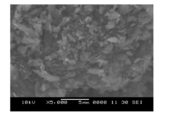
- FIG. 2 is a SEM photograph of the positive electrode active material of Example 1.
- 2 is an X-ray diffraction data of cotton carbonized material containing the graphite component of Example 1.
- FIG. It is an X-ray diffraction data of cotton carbonized material obtained by heating at 1400 ° C.
- 2 is a charge / discharge curve using the positive electrode active material for a non-aqueous electrolyte secondary battery in Example 1.
- FIG. 2 is a charge / discharge curve using the negative electrode active material for a non-aqueous electrolyte secondary battery of Example 2.
- plant carbonized products containing graphite components can be used as positive electrode active materials for non-aqueous electrolyte secondary batteries.
- At least one kind of cotton, cotton fiber taken from cotton, cotton yarn spun from cotton fiber, and cotton fabric made from cotton yarn is fired to obtain a carbonized product containing a graphite component.
- the maximum temperature of the cotton firing should be higher than 2000 ° C (preferably 2500 ° C to 3200 ° C, particularly preferably 2800 ° C to 3000 ° C).
- cotton carbonized material containing a graphite component can insert and desorb anions, and can be used as a positive electrode active material for a non-aqueous electrolyte secondary battery.
- metallic lithium can be used as the negative electrode, or a negative electrode containing a carbon material capable of inserting and removing lithium ions as a negative electrode active material can be used. It is more preferable to include it from the viewpoints of reproductivity, conservation and improvement of the global environment.
- ⁇ About raw materials of carbonized products As a raw material (plant raw material) of “plant carbonized material containing graphite component and capable of inserting and removing anions” in the present invention, wood (including processed products such as sawdust and paper), bamboo, rice Mention can be made of cocoons and fibers such as cotton and hemp, and these can be used alone or in combination. Moreover, the beans, tea leaves, sugarcane, corn, fruit, and rice husk conventionally used as the negative electrode material of the nonaqueous electrolyte secondary battery may be used. Among these, cotton can be mentioned as a preferable raw material.
- Cotton is a fiber that can be taken from cotton seeds (what the seeds bounced is called cotton), and the type and shape are not particularly limited. In other words, cotton is grown all over the world. Cotton, Indian cotton, Sudan cotton, Supima cotton, etc. are known. The shape may be cotton itself or a lump-like cotton fiber taken from cotton (for example, absorbent cotton used for medical purposes), or may be processed into cotton yarn, cotton cloth, or the like.
- the cotton yarn may be a single fiber yarn or a twisted yarn of a plurality of fibers, and the thickness of the yarn is not particularly limited, but those having a count of 10 to 100 are usually used.
- the cotton yarn is not subjected to processing such as coloring, but even a partially processed product is not unusable.
- the weaving method and knitting method of the cotton fabric are not particularly limited, and the weaving method is plain weave, twill weave, satin weaving, etc., and the knitting method is single knit, double knit, or a combination of these. . Other than this, a non-woven fabric may be used.
- the cotton cloth is not subjected to processing such as coloring, but even a partially processed product is not unusable.
- the method for producing a plant carbonized material containing a graphite component is particularly preferable if it includes firing conditions in which the maximum temperature is higher than 2000 ° C. under an inert atmosphere (a reduced pressure environment and / or an inert gas environment).
- the second heating method is used for the carbonized material produced by heating the plant material to the first temperature using the first heating furnace using the first heating method.
- An example is a method of heating to a second temperature (higher than the first temperature) using a second heating furnace to obtain a plant carbonized product containing a graphite component.
- the plant material is dried, and a part of the cellulose which is the main component of the plant is thermally decomposed to produce a tar-like decomposition product.
- the main component of this tar is considered to be levoglucosan, which is decomposed or carbonized into water and carbon dioxide by further heating.
- an air release step for releasing the air at a temperature lower than 200 ° C. after the cooling step of C), and a moving step of loading the firing object after carbonization at room temperature into the second heating furnace after the air release. It is preferable that there is.
- the volume ratio can be improved by taking out the object to be heated from the first heating furnace at the time of the carbonization process and transferring it to the second heating furnace. it can.
- the optimum heating method and peripheral equipment may vary depending on the maximum temperature of the heating furnace.
- silicon carbide which is relatively inexpensive as a heating element for a heating furnace, has a maximum temperature of about 1600 ° C. and can be used up to the carbonization process but cannot be used in the graphitization process.
- plant materials such as cotton itself are not conductive, they cannot be directly heated by induction heating (not heated by the conductive container but heated by the heat of the heating object itself), but once carbonized Direct heating is possible with an induction heating furnace.
- the decomposition products are discharged in the above-described preheating step, the discharged materials are not discarded as they are in the environment (in the atmosphere, sewage, etc.), and a recovery device is required.
- This recovery apparatus becomes unnecessary in the carbonization process and the graphitization process (or an apparatus having a different recovery target and recovery method may be required), and a wasteful period of not operating is increased during the entire heating process.
- each heating method and peripheral equipment can be optimized by performing the preliminary firing process to the carbonization process in the first heating furnace and performing the graphitization process in the second heating furnace.
- a cotton carbonized material containing a graphite component fired at a temperature higher than 2000 ° C. is used as the positive electrode active material
- a cotton carbonized material fired at a temperature of 2000 ° C. or lower is used as the negative electrode active material.
- Non-aqueous electrolyte secondary batteries can be mentioned, but when producing such non-aqueous electrolyte secondary batteries, one of the carbonized carbonized products that have been subjected to the carbonization process in the first heating furnace. If the part is used as the negative electrode active material and the rest is heated in the second heating furnace and used as the positive electrode active material, the battery production efficiency is good.
- the carbonized material of cotton contains a graphite component.
- the heating time to each predetermined temperature and the maintenance time at the predetermined temperature are the conditions of the cotton to be heated (whether it is cotton or yarn or cloth, The thickness, thickness, weaving method, etc.) and weight, and the type and volume of the heating furnace need to be adjusted accordingly, but the following ranges can be given as an example.
- Pre-baking step temperature raising time 0.5 to 4 hours. Maintenance time 0-10 hours. Carbonization step: Temperature rising time from pre-baking temperature is 2 to 15 hours. Maintenance time 2-20 hours. Graphitization step: The temperature rising time from the carbonization temperature is 5 to 20 hours. Maintenance time 5-24 hours.
- argon or nitrogen gas of about 0.5 to 1.5 atmospheres, or a reduced pressure environment of about 30 to 750 Pa can be mentioned.
- a heating step there can be mentioned a step in which the inside of the heating furnace is depressurized for about 0.5 to 1 hour before the preliminary firing step is started, and then heating is started by introducing argon or nitrogen gas.
- the positive electrode active material in the present invention is a carbon material capable of inserting and removing anions in the non-aqueous electrolyte, and is a vegetable (preferably cotton) carbonized material containing a graphite component.
- a conductive agent made of other carbon material powder or the like, and / or a binder for increasing the adhesion between the powders and / or increasing the adhesion to the positive electrode current collector are added as necessary.
- a positive electrode slurry is prepared by mixing with an aqueous or organic solvent, and this positive electrode slurry is applied to a positive electrode current collector and dried to form a positive electrode active material layer, thereby producing a positive electrode.
- a metal foil, mesh or the like having a thickness of about 10 to 100 microns made of a metal such as stainless steel, aluminum or titanium is used.
- the negative electrode active material in the present invention is a carbon material capable of inserting and removing lithium ions in the nonaqueous electrolytic solution, or metallic lithium.
- Examples of the carbon material used for the negative electrode active material include natural or artificial graphite or carbon fiber, but vegetable (preferably cotton) carbonized material may be used.
- Such a carbon material is added with a conductive agent made of another carbon material powder or the like, or a binder for increasing the bonding property between the powders and / or increasing the adhesion to the negative electrode current collector as necessary.
- a negative electrode slurry is prepared by mixing with an aqueous or organic solvent, and this negative electrode slurry is applied to a negative electrode current collector and dried to form a negative electrode active material layer, thereby producing a negative electrode.
- a metal foil, mesh or the like made of a metal such as copper, stainless steel, titanium or nickel and having a thickness of about 10 to 100 microns is used.
- the negative electrode active material is metallic lithium
- a metallic lithium film may be formed on the negative electrode current collector, or an alloy of lithium and aluminum or tin may be used as the negative electrode.
- the separator in the present invention is a porous film or thin plate having electronic insulating properties and ion permeability, and a polyethylene or polypropylene film is preferably used.
- the non-aqueous electrolyte in the present invention is a solution in which a lithium salt such as LiPF 6 is dissolved in an organic solvent such as ethylene carbonate or diethyl carbonate.
- this problem can be solved by constructing the first factory relatively near the place where the plant-based raw materials are cut or harvested, and producing carbonized products there.
- the first factory is a factory that heats at a relatively low temperature, and the infrastructure (such as securing power and factory water) associated with the factory construction is not so difficult.
- plants that can be systematically grown and harvested such as wood and bamboo, are used as plant material, and the first plant is built near the planting area, the reproductivity of the plant's resources can be increased. It can be used at a high level, secure stable employment in the region, and can be expected to develop and sustain as a whole region.
- the plant material when the plant material is carbonized as described above, its volume and weight are reduced, which facilitates transportation. Therefore, it is possible to transport the carbide from the first factory using one or more of a vehicle, a ship, and an airplane at a low cost.
- the transport destination here is the second factory, which is a high-temperature heating factory, so infrastructure is important.
- the first factory and transportation line Even if the distance is far away, problems are unlikely to occur and the location can be selected with priority on infrastructure.
- ⁇ 1 Preparation of cotton carbonized product> A commercially available cotton cloth is loaded into a carbonization furnace capable of degassing and introducing argon gas. After decompression for 30 minutes, the temperature is raised to 500 ° C. while introducing argon gas, held for 2 hours, and then heated to 1400 ° C. Hold for 6 hours, then stop heating and allow to cool to room temperature and take out the resulting carbonized product.
- This process from loading of the cotton cloth to removal of the carbonized product was repeated a plurality of times, and a portion of the obtained carbonized product was charged into a graphitization furnace and argon gas was introduced, and the temperature was raised to 2000 ° C, 2500 ° C and 3000 ° C, respectively. And it was set as the cotton carbonized material containing a graphite component by hold
- Cotton carbonized material containing a graphite component obtained by heating at 3000 ° C. was pulverized with a ball mill (LP-4 manufactured by Ito Seisakusho) (grinding conditions: 200 rpm, 30 minutes), and the obtained powder was used as a positive electrode active material.
- LP-4 manufactured by Ito Seisakusho
- FIG. 2 shows X-ray diffraction data (using Rigaku Ultra X-18 / HG Co., Ltd.) of cotton carbonized material containing graphite components obtained by heating at 2000 ° C. and 3000 ° C.
- the data string a in FIG. 2 corresponds to 2000 ° C.
- the data string b corresponds to 300 ° C.
- Data column c shows a commercially available electrode material for comparison.
- the cotton carbide obtained by heating at 2000 ° C. and 3000 ° C. has a peak derived from graphite in X-ray diffraction, although it is not clear compared with a commercially available electrode material (artificial graphite).
- FIG. 3 shows X-ray diffraction data (using the same apparatus as above) of cotton carbonized material obtained by heating at 1400 ° C. That is, the data string a in FIG. 3 corresponds to 1400 ° C.
- a positive electrode active material, a binder (3% by mass aqueous solution of carboxymethyl cellulose), and a conductive agent (acetylene black) were mixed at the same weight, and kneaded with water to prepare a positive electrode slurry.
- the positive electrode slurry was applied to one side of a 20 ⁇ m-thick porous aluminum foil (commercially available) as a positive electrode current collector, and dried in a vacuum at 200 ° C. for 4 hours to form a positive electrode active material layer, thereby producing a positive electrode.
- EC ethylene carbonate
- DMC dimethyl carbonate
- data string a corresponds to charging and data string b corresponds to discharging.
- the slope is gentler in the high voltage region than the voltage indicated by the arrow, which is considered to be an increase in voltage due to anion insertion reaction.
- the negative electrode active material 96% by mass, a binder (3% by mass aqueous solution of carboxymethyl cellulose) and a conductive agent (acetylene black) were mixed at a weight ratio of 90: 6: 4 and kneaded with water to prepare a negative electrode slurry. .
- This negative electrode slurry was applied to one side of a 15 ⁇ m thick porous copper foil (commercially available product), which was a negative electrode current collector, and vacuum-dried at 160 ° C. for 1 hour to prepare a negative electrode active material layer.
- the cell configuration is the same as the positive cell test half cell.
- Fig. 5 shows the charge / discharge results.
- Data strings a, b, and c correspond to discharges at 2000 ° C., 2500 ° C., and 3000 ° C., respectively.
- Data strings d, e, and g correspond to charging at 2000 ° C., 2500 ° C., and 3000 ° C., respectively.
Landscapes
- Chemical & Material Sciences (AREA)
- Electrochemistry (AREA)
- General Chemical & Material Sciences (AREA)
- Chemical Kinetics & Catalysis (AREA)
- Engineering & Computer Science (AREA)
- Manufacturing & Machinery (AREA)
- Inorganic Chemistry (AREA)
- Materials Engineering (AREA)
- Physics & Mathematics (AREA)
- Condensed Matter Physics & Semiconductors (AREA)
- General Physics & Mathematics (AREA)
- Battery Electrode And Active Subsutance (AREA)
- Carbon And Carbon Compounds (AREA)
- Secondary Cells (AREA)
Abstract
植物質由来の炭素材料は非水電解液二次電池の負極活物質としての使用が可能であるものの、負極よりも高電位が必要とされる正極活物質に用いることは出来ないとされていた。黒鉛成分を含有する植物炭素化物、特に木綿炭素化物を非水電解液二次電池用正極活物質として使用する。植物質由来の炭素材料は、化石資源から得られる炭素材料と異なり再生産性があり、地球環境の保全や改善という観点から、その利用を計ることが好ましい。
Description
本発明は、非水電解液二次電池用正極活物質及び非水電解液二次電池並びにこれらの製造方法に関する。
正極活物質として炭素材料を用いた正極、リチウム塩を含んだ電解液、負極活物質として金属リチウムを用いた負極から構成された非水電解液二次電池が知られており、このような非水電解液二次電池の負極活物質としてリチウムイオンの挿入及び脱離が可能な炭素材料を使ってサイクル特性を向上させる方法も知られている。
このような非水電解液二次電池に用いる正極用炭素材料の例としては、グラファイト(特許文献1)、炭素繊維(特許文献2、3)やホウ素化黒鉛(特許文献4)が挙げられる。
このような非水電解液二次電池においては、充電時に非水電解液中から正極活物質である炭素材料中にLiPF6等のリチウム塩由来のアニオン(PF6
-等)が挿入され、かつ、非水電解液中から負極活物質中にリチウムイオンが挿入される(負極活物質が炭素材料の場合)か、あるいは非水電解液中から金属リチウムが析出する(負極活物質が金属リチウムの場合)。
放電時には正極活物質からPF6
-等のアニオン、負極活物質からリチウムイオンが非水電解液へ脱離する。
負極活物質が炭素材料の場合における充放電反応を下記反応式1、2に示す(左辺から右辺が充電反応、右辺から左辺が放電反応)。
[反応式1]正極:PF6
- +nC = Cn(PF6)+ e-
[反応式2]負極:Li+ +nC +e- = LiCn
[反応式2]負極:Li+ +nC +e- = LiCn
このような非水電解液二次電池の利点の1つとして、容量が大きく高電圧(すなわち高エネルギー)化が可能であることが挙げられ、この具体例として、特許文献1の記載を一部引用する。
「上述した構成のセルにおいて、最高電圧5.0V~5.4Vの範囲にて充放電を行うことにより、既知のリチウムイオン電池等の蓄電デバイスよりも大きな蓄電容積を発生させることができる。例えば、本発明に係る蓄電デバイスによれば、従来のハイブリッドキャパシタ(充放電電圧範囲0V~3.5V程度)、EDLC(充放電電圧範囲0V~2.7V程度)、リチウムイオンキャパシタ(充放電電圧範囲2.8V~3.8V程度)に比べて、また従前の高容積型リチウムイオン電池(充放電電圧範囲2.8V~3.6V程度)に比べても、容積密度、出力密度のどちらか一方、あるいは両方の点で大きいという効果を有する」。
なお、上記の特許文献1引用部(括弧内表記)における「上述した構成のセル」とは、特許文献1の実施例に記載の「正極活物質として炭素材料を用いた正極、リチウム塩を含んだ電解液、負極活物質としてリチウムイオンの挿入及び脱離が可能な炭素材料を適用した非水電解液二次電池」のことである。
また、このような非水電解液二次電池とは別に、リチウム複合酸化物からなる正極と、負極活物質としてリチウムイオンの挿入及び脱離が可能な炭素材料を含んだ非水電解液二次電池(リチウムイオン二次電池)において、負極用炭素材料として珈琲豆、茶葉、サトウキビ、トウモロコシ、果実、及び籾殻から選択される少なくとも一種を炭素化して用いることが開示されている(特許文献5)。
特許文献5に示されるような植物質由来の炭素材料は、化石資源から得られる炭素材料と異なり再生産性があり、地球環境の保全や改善という観点からもその利用を計ることが好ましいとされている。さらに植物質由来の炭素材料は合成高分子に比べて重合度のばらつきが少なく、焼成物のばらつきが小さいという利点も知られている。
しかしながら、これまで植物質由来の炭素材料は非水電解液二次電池の負極活物質として用いられており、負極よりも高電位が必要とされる正極活物質に用いることは出来ないと考えられていた(特許文献6)。
これに対し、植物質由来の炭素材料を非水電解液二次電池の正極活物質として使用する方法として特許文献6には「植物性廃棄物と硫黄単体とを混合して混合物とする混合工程と、前記混合物を密閉容器に入れ250℃~600℃で1時間以上加熱する加熱工程とを有し、前記植物性廃棄物は、コーヒー豆、茶葉、サトウキビ類、トウモロコシ類、果実類、穀物の藁類、糠および籾殻類から選択される少なくとも一種である非水電解液二次電池の正極活物質の製造方法」が示されている。
すなわち「植物性廃棄物の低温焼成体と硫黄とを含む複合体」を作製することにより、初めて非水電解液二次電池の正極活物質として使用可能な炭素材料となることが示されている。
なお、特許文献7には木綿を炭素化した電極が開示されているが、ここに開示された素子は電気二重層キャパシタ(EDLC)であり、非水電解液二次電池とは蓄電原理と特性が異なる。両者が異なる蓄電デバイスであることは、上記特許文献1の引用部に明記されていることからも明らかである。
上述した課題を解決するため、本発明の非水電解液二次電池用正極活物質は、黒鉛成分を含有し、かつ、アニオンを挿入及び脱離可能な植物炭素化物(好ましくは木綿炭素化物)である。言い換えれば、黒鉛成分を含有し、かつ、アニオンを挿入及び脱離可能な植物炭素化物の、非水電解液二次電池用正極活物質としての使用により上述した課題を解決できる。
本発明の非水電解液二次電池用正極活物質は、黒鉛成分を含有し、かつ、アニオンを挿入及び脱離可能な植物炭素化物であって、従来は使用できないと考えられていた非水電解液二次電池の正極活物質として使用可能となる、という効果を奏する。
本発明者は鋭意検討の結果、黒鉛成分を含有する植物炭素化物、特に木綿炭素化物であれば非水電解液二次電池用正極活物質として使用可能であることを見出した。
具体的には綿花、綿花から採れる綿繊維、綿繊維から紡がれた綿糸および綿糸から作られた綿布の少なくとも一種を焼成し、黒鉛成分を含有する炭素化物とすることが好ましい。
黒鉛成分を含有する炭素化物とするためには、木綿焼成の最高温度を2000℃より高くすればよい(好ましくは2500℃以上3200℃以下、特に好ましくは2800℃以上3000℃以下)。
すなわち黒鉛成分を含有する木綿炭素化物は、アニオンを挿入及び脱離可能であり、さらに非水電解液二次電池用正極活物質として使用可能であることが分かった。
この場合、負極としては金属リチウムを用いるか、またはリチウムイオンを挿入及び脱離可能な炭素材料を負極活物質として含む負極を用いることが出来るが、特に負極においても木綿炭素化物を負極活物質として含むようにすることは、再生産性、地球環境の保全や改善という観点から見て、さらに好ましい。
<炭素化物の原料について>
本発明における「黒鉛成分を含有し、かつ、アニオンを挿入及び脱離可能な植物炭素化物」の原料(植物質原料)としては、木材(おが屑や紙等の加工品を含む)、竹、稲藁、および木綿や麻などの繊維を挙げることができ、これらをそれぞれ単独で、あるいは混合して用いることができる。また、従来は非水電解液二次電池の負極材料として用いられている珈琲豆、茶葉、サトウキビ、トウモロコシ、果実、及び籾殻であっても良い。これらのうち、好ましい原料として木綿を挙げることができる。
本発明における「黒鉛成分を含有し、かつ、アニオンを挿入及び脱離可能な植物炭素化物」の原料(植物質原料)としては、木材(おが屑や紙等の加工品を含む)、竹、稲藁、および木綿や麻などの繊維を挙げることができ、これらをそれぞれ単独で、あるいは混合して用いることができる。また、従来は非水電解液二次電池の負極材料として用いられている珈琲豆、茶葉、サトウキビ、トウモロコシ、果実、及び籾殻であっても良い。これらのうち、好ましい原料として木綿を挙げることができる。
<木綿について>
木綿とは、ワタの種子(種子が弾けたものを綿花という)から取れる繊維のことで、種類や形状は特に限定されない。すなわち、木綿は世界各地で栽培されており、アジア綿・インドデシ綿・パキスタンデシ綿・アプランド綿・アメリカ綿・旧ソ連綿・オーストラリア綿・中国綿・シーアイランド綿(海島綿)・エジプト綿・ペルー綿・インド綿・スーダン綿・スーピマ綿などが知られている。形状としては綿花そのもの、あるいは綿花から採れた塊状の綿繊維(たとえば医療用に用いられる脱脂綿)であっても良いし、それらから綿糸、綿布等に加工されていても良い。
木綿とは、ワタの種子(種子が弾けたものを綿花という)から取れる繊維のことで、種類や形状は特に限定されない。すなわち、木綿は世界各地で栽培されており、アジア綿・インドデシ綿・パキスタンデシ綿・アプランド綿・アメリカ綿・旧ソ連綿・オーストラリア綿・中国綿・シーアイランド綿(海島綿)・エジプト綿・ペルー綿・インド綿・スーダン綿・スーピマ綿などが知られている。形状としては綿花そのもの、あるいは綿花から採れた塊状の綿繊維(たとえば医療用に用いられる脱脂綿)であっても良いし、それらから綿糸、綿布等に加工されていても良い。
<綿糸について>
綿糸としては、単繊維糸であっても複数の繊維の捻糸であってもよく、糸の太さも特に限定されるものではないが、通常は番手10~100番程度のものが用いられる。
綿糸としては、単繊維糸であっても複数の繊維の捻糸であってもよく、糸の太さも特に限定されるものではないが、通常は番手10~100番程度のものが用いられる。
さらに、綿糸は着色等の加工が施されていないものが好ましいが、一部加工品であっても利用不可能ではない。
<綿布について>
綿布の織り方、編み方も特に限定されるものではなく、織り方としては、平織り、綾織り、繻子織り等、編み方としてはシングルニット、ダブルニット等、およびこれらを組合せたものが用いられる。これ以外に不織布であっても構わない。
綿布の織り方、編み方も特に限定されるものではなく、織り方としては、平織り、綾織り、繻子織り等、編み方としてはシングルニット、ダブルニット等、およびこれらを組合せたものが用いられる。これ以外に不織布であっても構わない。
さらに、綿布は着色等の加工が施されていないものが好ましいが、一部加工品であっても利用不可能ではない。
<黒鉛成分を含有する植物炭素化物の製造方法について>
本発明における、黒鉛成分を含有する植物炭素化物の製造方法は、不活性雰囲気下(減圧環境および/または不活性ガス環境)で、最高温度が2000℃よりも高い焼成条件を含んでいれば特に限定はないが、好ましい製造方法として、植物質原料を第一の加熱方式を用いた第一の加熱炉を用いて第一温度まで加熱して製造した炭素化物を、第二の加熱方式を用いた第二の加熱炉を用いて第二温度(第一温度よりも高い)まで加熱して黒鉛成分を含有する植物炭素化物とする方法を挙げることができる。
本発明における、黒鉛成分を含有する植物炭素化物の製造方法は、不活性雰囲気下(減圧環境および/または不活性ガス環境)で、最高温度が2000℃よりも高い焼成条件を含んでいれば特に限定はないが、好ましい製造方法として、植物質原料を第一の加熱方式を用いた第一の加熱炉を用いて第一温度まで加熱して製造した炭素化物を、第二の加熱方式を用いた第二の加熱炉を用いて第二温度(第一温度よりも高い)まで加熱して黒鉛成分を含有する植物炭素化物とする方法を挙げることができる。
具体的には、以下のAからDの工程を含む方法を挙げることができる。
なお、本明細書において「数値1~数値2」で示された範囲は「1以上、2以下」を示すものとする。
A)植物質原料を第一の加熱炉において、不活性雰囲気下で300~500℃まで昇温、加熱する予備加熱工程。
B)引き続き第一の加熱炉において不活性雰囲気下で1000~1600℃まで昇温、加熱して炭素化物とする炭素化工程。
C)第一の加熱炉を、少なくとも200℃まで不活性雰囲気下で冷却する冷却工程。
D)炭素化物を第二の加熱炉において、不活性雰囲気下で最高温度を2000℃より高く(好ましくは2500℃以上3200℃以下、特に好ましくは2800℃以上3000℃以下)昇温、加熱する黒鉛化工程。
B)引き続き第一の加熱炉において不活性雰囲気下で1000~1600℃まで昇温、加熱して炭素化物とする炭素化工程。
C)第一の加熱炉を、少なくとも200℃まで不活性雰囲気下で冷却する冷却工程。
D)炭素化物を第二の加熱炉において、不活性雰囲気下で最高温度を2000℃より高く(好ましくは2500℃以上3200℃以下、特に好ましくは2800℃以上3000℃以下)昇温、加熱する黒鉛化工程。
A)の予備加熱工程において、植物質材料が乾燥し、さらに植物の主成分であるセルロースの一部が熱分解され、タール状の分解生成物が生じる。このタールの主成分はレボグルコサンであると考えられており、これは更なる加熱により水や二酸化炭素に分解、あるいは炭素化する。
B)の炭素化工程において、炭素六員環網状平面構造が主に発達すると考えられている。ただし上記予備加熱工程においても、一部の芳香族化と縮合による多環芳香族化は進んでいると考えられている。
最後にD)の黒鉛化工程において、木綿炭素化物の少なくとも一部が黒鉛化する。
なお、C)の冷却工程後に200℃より低い温度で大気開放する大気開放工程があっても良く、大気開放後、室温にて炭素化後の焼成対象を第二の加熱炉に装填する移動工程があることが好ましい。
ここで、C)の冷却工程、さらには大気開放工程および移動工程は、以下の理由により好ましい工程であると言える。
すなわち、木綿などの植物質原料を炭素化する際には、その体積および重量が減少する(=収率が低い)ことが知られている。セルロースの炭素化を(C6H10O5)nの脱水反応と見做すと、その理論収率は44.4%になるが、実際には15%程度、場合によっては10%以下となる。
よって、木綿を原料とし、これを炭素化し、さらに2000℃よりも高温で黒鉛化を行う一連の工程を同一の加熱炉で連続して行うと、後工程になるにつれて加熱炉と加熱対象との容積比が大きく(すなわち加熱対象に比べて加熱炉の容積が無駄に大きく)なることが分かる。
これに対し、炭素化工程時点で第一の加熱炉から加熱対象物を取り出し、第二の加熱炉に移し替えることで、この容積比を改善でき、加熱炉のムダを省け、コストダウンが期待できる。
また、加熱炉はその最高温度などの違いにより、最適な加熱方法や周辺機器が異なることがある。たとえば加熱炉用発熱体として比較的安価な炭化ケイ素は、最高温度が1600℃程度とされ、炭素化工程までは使用できても黒鉛化工程には用いることができない。
あるいは木綿などの植物原料そのものは導電性を有さないため、誘導加熱によって直接加熱(導電性容器を介する熱伝導ではなく加熱対象そのものの発熱により高温化すること)できないが、一旦炭素化すれば誘導加熱炉により直接加熱が可能となる。
また、たとえば上述の予備加熱工程における分解生成物の排出の際には、排出物を環境中(大気中や下水など)にそのまま廃棄せず、回収装置が必要となる。この回収装置は炭素化工程、黒鉛化工程においては不要となり(あるいは回収対象および回収方法が異なる装置が必要な場合がある)、全加熱工程中、稼働していない無駄な期間が多くなる。
これに対し、予備焼成工程から炭素化工程までを第一の加熱炉で行い、黒鉛化工程を第二の加熱炉で行うことにより、それぞれの加熱方法や周辺機器を最適化できる。
さらに、本発明の好ましい例として、正極活物質として2000℃よりも高い温度で焼成した黒鉛成分を含有する木綿炭素化物を用い、負極活物質として2000℃以下の温度で焼成した木綿炭素化物を用いた非水電解液二次電池を挙げることができるが、このような非水電解液二次電池を作製する際にも、第一の加熱炉で炭素化工程までを行った木綿炭素化物の一部を負極活物質として使用し、残りを第二の加熱炉で加熱して正極活物質に用いれば電池製造上効率が良い。
ここで、木綿の炭素化物が黒鉛成分を含有することは、X線回折分析により確認できる。
また、予備焼成工程、炭素化工程および黒鉛化工程における、各所定温度までの昇温時間と所定温度での維持時間は、加熱対象である木綿の状況(綿花なのか糸なのか布なのか、その太さや厚み、織り方等)や重量、および加熱炉の種類や容積などにより変わってくるので適宜調整が必要であるが、一例として以下の範囲を挙げることができる。
予備焼成工程:昇温時間0.5~4時間。維持時間0~10時間。
炭素化工程:予備焼成温度からの昇温時間2~15時間。維持時間2~20時間。
黒鉛化工程:炭素化温度からの昇温時間5~20時間。維持時間5~24時間。
炭素化工程:予備焼成温度からの昇温時間2~15時間。維持時間2~20時間。
黒鉛化工程:炭素化温度からの昇温時間5~20時間。維持時間5~24時間。
不活性雰囲気としては0.5気圧~1.5気圧程度のアルゴンまたは窒素ガス中、あるいは30Pa~750Pa程度の減圧環境を挙げることができる。好ましい加熱工程としては、予備焼成工程開始前に加熱炉内部を0.5~1時間程度減圧した後、アルゴンまたは窒素ガスを導入して加熱開始する工程を挙げることができる。
<正極活物質/正極活物質層/正極集電体/正極について>
本発明における正極活物質とは、非水電解液中のアニオンを挿入及び脱離可能な炭素材料であり、黒鉛成分を含有する植物質(好ましくは木綿)炭素化物である。
本発明における正極活物質とは、非水電解液中のアニオンを挿入及び脱離可能な炭素材料であり、黒鉛成分を含有する植物質(好ましくは木綿)炭素化物である。
この正極活物質に、他の炭素材料粉末などからなる導電剤や、粉末同士の結合性を上げるため、および/または正極集電体への接着性をあげるためのバインダを必要に応じて加え、水系または有機系溶媒により混合することで正極スラリとし、この正極スラリを正極集電体に塗布、乾燥して正極活物質層を形成することで正極を製造する。
正極集電体には、ステンレス、アルミニウム、またはチタン等の金属からなる、10~100ミクロン程度の厚さの金属箔、メッシュ等が用いられる。
<負極活物質/負極活物質層/負極集電体/負極について>
本発明における負極活物質とは、非水電解液中のリチウムイオンを挿入及び脱離可能な炭素材料であるか、または金属リチウムである。
本発明における負極活物質とは、非水電解液中のリチウムイオンを挿入及び脱離可能な炭素材料であるか、または金属リチウムである。
負極活物質に用いられる炭素材料としては、天然または人造黒鉛、あるいは炭素繊維を挙げることが出来るが、植物質(好ましくは木綿)炭素化物を用いてもよい。
このような炭素材料を、他の炭素材料粉末などからなる導電剤や、粉末同士の結合性を上げるため、および/または負極集電体への接着性をあげるためのバインダを必要に応じて加え、水系または有機系溶媒により混合することで負極スラリとし、この負極スラリを負極集電体に塗布、乾燥して負極活物質層を形成することで負極を製造する。
負極集電体には銅、ステンレス、チタン、またはニッケル等の金属からなる、10~100ミクロン程度の厚さの金属箔、メッシュ等が用いられる。
負極活物質が金属リチウムである場合は、負極集電体上に金属リチウム皮膜を形成するか、あるいはリチウムと、アルミニウムや錫などとの合金を負極として用いればよい。
<セパレータについて>
本発明におけるセパレータとは、電子絶縁性とイオン透過性を有する多孔質のフィルムまたは薄板であり、ポリエチレンやポリプロピレン製フィルムが好ましく用いられる。
本発明におけるセパレータとは、電子絶縁性とイオン透過性を有する多孔質のフィルムまたは薄板であり、ポリエチレンやポリプロピレン製フィルムが好ましく用いられる。
<非水電解液について>
本発明における非水電解液は、エチレンカーボネートやジエチルカーボネートなどの有機溶媒にLiPF6などのリチウム塩を溶解させた溶液である。
本発明における非水電解液は、エチレンカーボネートやジエチルカーボネートなどの有機溶媒にLiPF6などのリチウム塩を溶解させた溶液である。
<製造システムについて>
本発明者は検討の結果、植物質原料を第一の加熱方式を用いた第一の加熱炉を用いて不活性雰囲気下にて第一温度まで加熱して炭素化物を生産する第一工場と、その炭素化物を第二の加熱方式を用いた第二の加熱炉を用いて不活性雰囲気下にて第一温度よりも高い第二温度まで加熱して黒鉛成分を含有する炭素化物とする第二工場を備え、炭素化物を第一工場から第二工場に、車両、船舶、飛行機のいずれか1つ以上を用いて輸送することにより、低コストかつコンパクトな非水電解液二次電池用正極活物質およびこれを用いた非水電解液二次電池の製造システムが構築可能であることを見出した。
本発明者は検討の結果、植物質原料を第一の加熱方式を用いた第一の加熱炉を用いて不活性雰囲気下にて第一温度まで加熱して炭素化物を生産する第一工場と、その炭素化物を第二の加熱方式を用いた第二の加熱炉を用いて不活性雰囲気下にて第一温度よりも高い第二温度まで加熱して黒鉛成分を含有する炭素化物とする第二工場を備え、炭素化物を第一工場から第二工場に、車両、船舶、飛行機のいずれか1つ以上を用いて輸送することにより、低コストかつコンパクトな非水電解液二次電池用正極活物質およびこれを用いた非水電解液二次電池の製造システムが構築可能であることを見出した。
すなわち、非水電解液二次電池用正極活物質として使用する植物質原料のうち、木材、竹や木綿、麻などを伐採あるいは収穫し、これらを非水電解液二次電池用正極活物質や非水電解液二次電池の製造工場に輸送する際にコスト的、あるいは立地的、地形的に大量輸送に適さないなど、問題が生じる場合がある。
これに対し、植物質原料を伐採あるいは収穫する場所の比較的近くに上記第一工場を建設し、そこで炭素化物を製造することにより、この問題は解決できる。
すなわち第一工場は比較的低温加熱を行う工場であり、工場建設に伴うインフラ(電力や工場用水の確保等)がそれほど困難ではないからである。
さらに、木材や竹などのように、計画的に育成、伐採が可能な植物を植物質原料として採用し、その育成地近傍に第一工場を建設すれば、植物が持つ資源の再生産性を高度に利用できるとともに、地域の安定的な雇用も確保でき、地域全体としての発展と持続可能性を得ることも期待できる。
また、上述のように植物質原料を炭素化する際には、その体積および重量が減少するので輸送が容易となる。よって低コストで第一工場から炭化物を車両、船舶、飛行機のいずれか1つ以上を用いて輸送することが可能となる。
ここでの輸送先は上記第二工場であり、これは高温加熱を行う工場であるためインフラが重要となるが、第一工場と輸送ラインを確保することにより、植物質原料の育成地との距離が離れていても問題が生じにくく、インフラ優先で立地を選択できる。
<1:木綿炭素化物の作製>
市販の綿布を脱気およびアルゴンガス導入可能な炭素化炉内に装填し、30分間の減圧後、アルゴンガスを導入しつつ500℃まで昇温し、2時間保持、その後1400℃まで昇温して6時間保持、その後加熱を停止して室温まで放冷、得られた炭素化物を取り出す。
市販の綿布を脱気およびアルゴンガス導入可能な炭素化炉内に装填し、30分間の減圧後、アルゴンガスを導入しつつ500℃まで昇温し、2時間保持、その後1400℃まで昇温して6時間保持、その後加熱を停止して室温まで放冷、得られた炭素化物を取り出す。
この綿布装填から炭素化物取り出しまでの工程を複数回繰り返し、得られた炭素化物の一部を黒鉛化炉に装填してアルゴンガスを導入しつつ、それぞれ2000℃、2500℃および3000℃まで昇温し、6時間保持することで黒鉛成分を含有する木綿炭素化物とした。
3000℃加熱により得られた黒鉛成分を含有する木綿炭素化物をボールミル(伊藤製作所製LP-4)にて粉砕し(粉砕条件:200rpm、30分間)、得られた粉末を正極活物質とした。
なお、得られた正極活物質のSEM(日本電子(株)JSM-6060LA/VIを使用した)写真を図1に示す。
また、2000℃および3000℃加熱により得られた黒鉛成分を含有する木綿炭素化物のX線回折データ((株)リガクultraX-18/HGを使用した)を図2に示す。図2中のデータ列aは2000℃に、データ列bは300℃に対応している。データ列cは、比較のために市販の電極材料を示す。
2000℃および3000℃加熱により得られた木綿炭化物には、市販の電極材料(人造黒鉛)に比べれば明瞭ではないものの、X線回折において黒鉛由来のピークが得られている事が分かる。
なお、参考例として1400℃加熱により得られた木綿炭素化物のX線回折データ(上記と同じ装置を使用した)を図3に示す。すなわち、図3中のデータ列aは、1400℃に対応している。
<2:正極の作製>
正極活物質と、バインダ(カルボキシメチルセルロースの3質量%水溶液)と、導電剤(アセチレンブラック)をそれぞれ同重量で混合し、水で混錬して正極スラリを作製した。
正極活物質と、バインダ(カルボキシメチルセルロースの3質量%水溶液)と、導電剤(アセチレンブラック)をそれぞれ同重量で混合し、水で混錬して正極スラリを作製した。
この正極スラリを正極集電体である厚さ20μmの多孔アルミニウム箔(市販品)の片面に塗布し、200℃で4時間真空乾燥して正極活物質層とすることで、正極を作製した。
<3:正極テスト用ハーフセルの作製>
上記正極に対し、金属リチウムを対極としたハーフセルを作製した。
上記正極に対し、金属リチウムを対極としたハーフセルを作製した。
セパレータに市販のポリエチレン多孔質フィルムを、非水電解液としてエチレンカーボネート(EC)とジメチルカーボネート(DMC)の体積比EC:DMC=1:2混合溶媒によるLiPF6の1mol/l溶液を、さらに容器としてCR2032タイプのステンレス製コイン型容器を用いた。
<4:正極テスト用ハーフセルのテスト結果>
上記ハーフセルを、0.1Cで5.2Vまで充電後、0.1Cで放電することにより、上記で調製した黒鉛成分を含有する木綿炭素化物がアニオン挿入および脱離が可能な炭素材料であり、非水電解液二次電池の正極として動作していることが確認できた。
上記ハーフセルを、0.1Cで5.2Vまで充電後、0.1Cで放電することにより、上記で調製した黒鉛成分を含有する木綿炭素化物がアニオン挿入および脱離が可能な炭素材料であり、非水電解液二次電池の正極として動作していることが確認できた。
図4において、データ列aが充電、データ列bが放電に対応している。充放電結果の充電カーブ(データ列a)において、矢印で示す電圧よりも高電圧領域においては傾きが緩やかになっており、これはアニオンの挿入反応による電圧増加と考えられるからである。
<5:負極の作製>
実施例1において2000℃、2500℃および3000℃まで加熱した木綿炭素化物を、それぞれ実施例1同様にボールミルにて粉砕し、得られた粉末を負極活物質とした。
実施例1において2000℃、2500℃および3000℃まで加熱した木綿炭素化物を、それぞれ実施例1同様にボールミルにて粉砕し、得られた粉末を負極活物質とした。
この負極活物質96質量%と、バインダ(カルボキシメチルセルロースの3質量%水溶液)と、導電剤(アセチレンブラック)を重量比90:6:4で混合し、水で混錬して負極スラリを作製した。
この負極スラリを負極集電体である厚さ15μmの多孔銅箔(市販品)の片面に塗布し、160℃で1時間真空乾燥して負極活物質層とすることで、負極を作製した。
<6:負極テスト用ハーフセルの作製>
上記負極に対し、金属リチウムを対極としたハーフセルを作製した。
上記負極に対し、金属リチウムを対極としたハーフセルを作製した。
セル構成は正極テスト用ハーフセルと同じである。
<7:負極テスト用ハーフセルのテスト結果>
上記ハーフセルを、0.1Cで3.0Vまで充電後、0.1Cで放電することにより、上記で調製した黒鉛成分を含有する木綿炭素化物が非水電解液二次電池の負極として動作していることが確認できた。
上記ハーフセルを、0.1Cで3.0Vまで充電後、0.1Cで放電することにより、上記で調製した黒鉛成分を含有する木綿炭素化物が非水電解液二次電池の負極として動作していることが確認できた。
充放電結果を図5に示す。データ列a、b、cは、それぞれ2000℃、2500℃、3000℃の場合の放電に対応している。データ列d、e、gは、それぞれ2000℃、2500℃、3000℃の充電に対応している。
Claims (12)
- 黒鉛成分を含有し、かつ、アニオンを挿入及び脱離可能な植物炭素化物であることを特徴とする非水電解液二次電池用正極活物質。
- 該植物炭素化物が木綿炭素化物である、請求項1記載の非水電解液二次電池用正極活物質。
- 黒鉛成分を含有し、かつ、アニオンを挿入及び脱離可能であって、非水電解液二次電池用正極活物質としての使用可能な植物炭素化物。
- 木綿炭素化物である、請求項3記載の植物炭素化物。
- 黒鉛成分を含有し、かつ、アニオンを挿入及び脱離可能な植物炭素化物を正極活物質として含む正極と、
金属リチウム、またはリチウムイオンを挿入及び脱離可能な炭素材料を負極活物質として含む負極と、
該正極と該負極に挟持されたセパレータと、
リチウム塩を含んだ非水電解液と
を備えたことを特徴とする非水電解液二次電池。 - 該植物炭素化物が木綿炭素化物である、請求項5記載の非水電解液二次電池。
- 該負極が木綿炭素化物を負極活物質として含む、請求項5または請求項6に記載の非水電解液二次電池。
- 植物質原料を第一の加熱方式を用いた第一の加熱炉を用いて不活性雰囲気下にて第一温度まで加熱する第一加熱工程と、
該第一加熱工程によって得られた炭素化物を第二の加熱方式を用いた第二の加熱炉を用いて不活性雰囲気下にて該第一温度よりも高い第二温度まで加熱して黒鉛成分を含有する炭素化物とする第二加熱工程と
を有することを特徴とする非水電解液二次電池用正極活物質の製造方法。 - 該植物質原料が綿花、綿花から採れる綿繊維、綿繊維から紡がれた綿糸および綿糸から作られた綿布の少なくとも一種である、請求項8記載の非水電解液二次電池用正極活物質の製造方法。
- 請求項8又は請求項9に記載の非水電解液二次電池用正極活物質の製造方法において、該第一の加熱炉で該第一温度まで加熱して製造した木綿炭素化物の一部を負極活物質として使用し、それ以外の該木綿炭素化物を該第二の加熱炉で該第二温度まで加熱して製造した黒鉛成分を含有する木綿炭素化物を正極活物質として使用する非水電解液二次電池の製造方法。
- 植物質原料を第一の加熱方式を用いた第一の加熱炉を用いて不活性雰囲気下にて第一温度まで加熱して炭素化物とする第一工場と、
該炭素化物を第二の加熱方式を用いた第二の加熱炉を用いて不活性雰囲気下にて該第一温度よりも高い第二温度まで加熱して黒鉛成分を含有する炭素化物とする第二工場とを備え、
該炭素化物を該第一工場から該第二工場に、車両、船舶、飛行機のいずれか1つ以上を用いて輸送することを特徴とする非水電解液二次電池用正極活物質の製造システム。 - 請求項11記載の非水電解液二次電池用正極活物質の製造システムにおいて、非水電解液二次電池の製造装置をさらに有する非水電解液二次電池の製造システム。
Applications Claiming Priority (2)
| Application Number | Priority Date | Filing Date | Title |
|---|---|---|---|
| JP2015257786A JP2017112080A (ja) | 2015-12-15 | 2015-12-15 | 非水電解液二次電池用正極活物質と非水電解液二次電池および、その製造方法と製造システム。 |
| JP2015-257786 | 2015-12-15 |
Publications (1)
| Publication Number | Publication Date |
|---|---|
| WO2017104630A1 true WO2017104630A1 (ja) | 2017-06-22 |
Family
ID=59056712
Family Applications (1)
| Application Number | Title | Priority Date | Filing Date |
|---|---|---|---|
| PCT/JP2016/086975 Ceased WO2017104630A1 (ja) | 2015-12-15 | 2016-12-13 | 非水電解液二次電池用正極活物質及び非水電解液二次電池並びにこれらの製造方法 |
Country Status (2)
| Country | Link |
|---|---|
| JP (1) | JP2017112080A (ja) |
| WO (1) | WO2017104630A1 (ja) |
Cited By (3)
| Publication number | Priority date | Publication date | Assignee | Title |
|---|---|---|---|---|
| CN108439397A (zh) * | 2018-05-02 | 2018-08-24 | 太原理工大学 | 一种轻质成型活性炭的制备工艺 |
| CN110683845A (zh) * | 2019-11-18 | 2020-01-14 | 青岛瀚博电子科技有限公司 | 一种极细结构炭素石墨制品的制备方法 |
| CN118954484A (zh) * | 2024-10-15 | 2024-11-15 | 江西科星储能技术有限公司 | 一种硬碳材料及制备方法和作为钠离子电池负极材料的应用 |
Families Citing this family (2)
| Publication number | Priority date | Publication date | Assignee | Title |
|---|---|---|---|---|
| JP6992579B2 (ja) * | 2018-02-20 | 2022-01-13 | Tdk株式会社 | 活物質粒子及びそれを用いたリチウムイオン二次電池 |
| KR102871283B1 (ko) * | 2023-07-11 | 2025-10-14 | 성균관대학교산학협력단 | 카페인 유기물을 포함하는 리튬이차전지용 양극소재 및 그의 제조방법 |
Citations (8)
| Publication number | Priority date | Publication date | Assignee | Title |
|---|---|---|---|---|
| JPH0582130A (ja) * | 1991-09-24 | 1993-04-02 | Sanyo Electric Co Ltd | 非水系二次電池 |
| JPH08162158A (ja) * | 1994-12-01 | 1996-06-21 | Fuji Photo Film Co Ltd | 非水二次電池 |
| JP2001040548A (ja) * | 1999-07-22 | 2001-02-13 | Showa Denko Kk | 活性炭素繊維、活性炭素繊維布及びその製造方法 |
| JP2008124034A (ja) * | 1995-03-06 | 2008-05-29 | Sony Corp | 非水電解液二次電池用負極材料の製造方法 |
| JP2010525551A (ja) * | 2007-04-24 | 2010-07-22 | テミツク・オートモテイーベ・エレクトリツク・モータース・ゲゼルシヤフト・ミツト・ベシユレンクテル・ハフツング | 黒鉛化不可能な炭素電極を持つ電気化学単電池及びエネルギー貯蔵装置 |
| JP2013196978A (ja) * | 2012-03-21 | 2013-09-30 | National Institute Of Advanced Industrial & Technology | ナトリウム二次電池用正極材料及びその製造方法、並びにナトリウム二次電池用正極、ナトリウム二次電池及びこれを用いた電気機器 |
| JP5578532B2 (ja) * | 2012-02-13 | 2014-08-27 | 日新電機株式会社 | 蓄電デバイス |
| JP2015154003A (ja) * | 2014-02-18 | 2015-08-24 | 住友電気工業株式会社 | 蓄電デバイスおよび充放電システム |
-
2015
- 2015-12-15 JP JP2015257786A patent/JP2017112080A/ja active Pending
-
2016
- 2016-12-13 WO PCT/JP2016/086975 patent/WO2017104630A1/ja not_active Ceased
Patent Citations (8)
| Publication number | Priority date | Publication date | Assignee | Title |
|---|---|---|---|---|
| JPH0582130A (ja) * | 1991-09-24 | 1993-04-02 | Sanyo Electric Co Ltd | 非水系二次電池 |
| JPH08162158A (ja) * | 1994-12-01 | 1996-06-21 | Fuji Photo Film Co Ltd | 非水二次電池 |
| JP2008124034A (ja) * | 1995-03-06 | 2008-05-29 | Sony Corp | 非水電解液二次電池用負極材料の製造方法 |
| JP2001040548A (ja) * | 1999-07-22 | 2001-02-13 | Showa Denko Kk | 活性炭素繊維、活性炭素繊維布及びその製造方法 |
| JP2010525551A (ja) * | 2007-04-24 | 2010-07-22 | テミツク・オートモテイーベ・エレクトリツク・モータース・ゲゼルシヤフト・ミツト・ベシユレンクテル・ハフツング | 黒鉛化不可能な炭素電極を持つ電気化学単電池及びエネルギー貯蔵装置 |
| JP5578532B2 (ja) * | 2012-02-13 | 2014-08-27 | 日新電機株式会社 | 蓄電デバイス |
| JP2013196978A (ja) * | 2012-03-21 | 2013-09-30 | National Institute Of Advanced Industrial & Technology | ナトリウム二次電池用正極材料及びその製造方法、並びにナトリウム二次電池用正極、ナトリウム二次電池及びこれを用いた電気機器 |
| JP2015154003A (ja) * | 2014-02-18 | 2015-08-24 | 住友電気工業株式会社 | 蓄電デバイスおよび充放電システム |
Cited By (3)
| Publication number | Priority date | Publication date | Assignee | Title |
|---|---|---|---|---|
| CN108439397A (zh) * | 2018-05-02 | 2018-08-24 | 太原理工大学 | 一种轻质成型活性炭的制备工艺 |
| CN110683845A (zh) * | 2019-11-18 | 2020-01-14 | 青岛瀚博电子科技有限公司 | 一种极细结构炭素石墨制品的制备方法 |
| CN118954484A (zh) * | 2024-10-15 | 2024-11-15 | 江西科星储能技术有限公司 | 一种硬碳材料及制备方法和作为钠离子电池负极材料的应用 |
Also Published As
| Publication number | Publication date |
|---|---|
| JP2017112080A (ja) | 2017-06-22 |
Similar Documents
| Publication | Publication Date | Title |
|---|---|---|
| Zheng et al. | Sweet potato-derived carbon nanoparticles as anode for lithium ion battery | |
| EP3358656B1 (en) | Carbonaceous material for negative electrode of nonaqueous-electrolyte secondary battery, and process for producing same | |
| KR101545116B1 (ko) | 리튬 이온 캐패시터 부극용 탄소질 재료 및 그의 제조 방법 | |
| Lin et al. | Exploring room-and low-temperature performance of hard carbon material in half and full Na-ion batteries | |
| KR101552089B1 (ko) | 비수전해질 이차 전지 부극용 탄소질 재료 및 그의 제조 방법 | |
| KR101433720B1 (ko) | 고밀도 바이오매스를 이용한 리튬이차전지용 하드카본 제조방법 및 이에 의하여 제조되는 리튬이차전지용 하드카본 | |
| CN109950520B (zh) | 一种含氮石墨烯包覆生物质碳负极材料及其制备方法 | |
| KR101992668B1 (ko) | 비수 전해질 이차전지용 혼합 음극 재료의 제조 방법 및 이의 제조 방법에 의해 얻어지는 비수 전해질 이차전지용 혼합 음극 재료 | |
| WO2017104630A1 (ja) | 非水電解液二次電池用正極活物質及び非水電解液二次電池並びにこれらの製造方法 | |
| WO2022153326A1 (en) | High performance sodium ion battery (sib) anode material using rice straw and its method of synthesis | |
| CN107925082A (zh) | 充满电来使用的非水电解质二次电池用的难石墨化碳质材料、其制造方法、非水电解质二次电池用负极材料和充满电的非水电解质二次电池 | |
| JP5957631B2 (ja) | 非水電解質二次電池用炭素質材料の製造方法 | |
| Liu et al. | Porous nitrogen-doped carbon derived from peanut shell as anode material for lithium ion battery | |
| Venkatesh et al. | Green peas pod derived hierarchical porous N-doped hard carbon as high performance anode for sodium ion battery | |
| KR101783435B1 (ko) | 나트륨 하이브리드 커패시터용 전극의 제조 방법 및 이에 의하여 제조된 커패시터 시스템 | |
| CN112174119A (zh) | 一种抗生素菌渣制备泡沫石墨烯的方法 | |
| CN103247776B (zh) | 电极复合材料的制备方法 | |
| Zhang et al. | Multi layered porous nitrogen-rich biochar materials derived from soybean cellulose for lithium metal anode three-dimensional skeleton in lithium batteries | |
| KR20170110369A (ko) | 나트륨 하이브리드 커패시터용 전극의 제조 방법 및 이에 의하여 제조된 커패시터 시스템 | |
| JP2020087670A (ja) | 非水電解質二次電池負極用炭素質材料の製造方法 | |
| WO2025224745A1 (en) | Biomass-derived carbon as electrode for sodium ion battery, and process of preparation thereof | |
| KR101751607B1 (ko) | 커패시터용 전극물질 제조방법, 이에 의하여 제조된 전극물질 및 이를 포함하는 커패시터 | |
| CN119230793A (zh) | 一种硅碳复合材料、其制备方法和包含其的锂离子电池 | |
| CN121922634A (zh) | 一种高容量硬碳负极及其制备方法 | |
| CN121134762A (zh) | 芦苇基硬碳负极活性材料及其制备和在钠离子电池中的应用 |
Legal Events
| Date | Code | Title | Description |
|---|---|---|---|
| 121 | Ep: the epo has been informed by wipo that ep was designated in this application |
Ref document number: 16875607 Country of ref document: EP Kind code of ref document: A1 |
|
| NENP | Non-entry into the national phase |
Ref country code: DE |
|
| 122 | Ep: pct application non-entry in european phase |
Ref document number: 16875607 Country of ref document: EP Kind code of ref document: A1 |