WO2017114052A1 - 高抗逆性的植物生长调节剂及其制法和用途 - Google Patents
高抗逆性的植物生长调节剂及其制法和用途 Download PDFInfo
- Publication number
- WO2017114052A1 WO2017114052A1 PCT/CN2016/107516 CN2016107516W WO2017114052A1 WO 2017114052 A1 WO2017114052 A1 WO 2017114052A1 CN 2016107516 W CN2016107516 W CN 2016107516W WO 2017114052 A1 WO2017114052 A1 WO 2017114052A1
- Authority
- WO
- WIPO (PCT)
- Prior art keywords
- group
- compound
- substituted
- unsubstituted
- formula
- Prior art date
- Legal status (The legal status is an assumption and is not a legal conclusion. Google has not performed a legal analysis and makes no representation as to the accuracy of the status listed.)
- Ceased
Links
- 0 *c(c(*)c1*)c(*)c(CS(Cl)(=O)=O)c1I Chemical compound *c(c(*)c1*)c(*)c(CS(Cl)(=O)=O)c1I 0.000 description 7
- NJUNRTKTEBVOIH-UHFFFAOYSA-N Cc(c(F)c(c(CS(Cl)(=O)=O)c1F)F)c1F Chemical compound Cc(c(F)c(c(CS(Cl)(=O)=O)c1F)F)c1F NJUNRTKTEBVOIH-UHFFFAOYSA-N 0.000 description 2
- VZOIRCOLZZXIOZ-NTEUORMPSA-N CC(C)(C)S(/N=C(\C)/c(cccc1)c1N)=O Chemical compound CC(C)(C)S(/N=C(\C)/c(cccc1)c1N)=O VZOIRCOLZZXIOZ-NTEUORMPSA-N 0.000 description 1
- FRJHVZGMKWKPSR-UHFFFAOYSA-N CC(c(cc(cc1)[N+]([O-])=O)c1N1)OC1=O Chemical compound CC(c(cc(cc1)[N+]([O-])=O)c1N1)OC1=O FRJHVZGMKWKPSR-UHFFFAOYSA-N 0.000 description 1
- QLQQOKKKXYRMRG-UHFFFAOYSA-N CC(c(cccc1)c1N)N Chemical compound CC(c(cccc1)c1N)N QLQQOKKKXYRMRG-UHFFFAOYSA-N 0.000 description 1
- BVRRTJPMSAWGAA-UHFFFAOYSA-N CC(c(cccc1)c1N)NS(C(C)(C)C)=O Chemical compound CC(c(cccc1)c1N)NS(C(C)(C)C)=O BVRRTJPMSAWGAA-UHFFFAOYSA-N 0.000 description 1
- IFRDJPSZEQELJW-UHFFFAOYSA-N CC(c1ccccc1N1)NC1=O Chemical compound CC(c1ccccc1N1)NC1=O IFRDJPSZEQELJW-UHFFFAOYSA-N 0.000 description 1
- UUXFNUUIQMYCNS-UHFFFAOYSA-N CCCN(c(cc1)c(C(C)O2)cc1N)C2=O Chemical compound CCCN(c(cc1)c(C(C)O2)cc1N)C2=O UUXFNUUIQMYCNS-UHFFFAOYSA-N 0.000 description 1
- YJJYIUWKXFMHMG-UHFFFAOYSA-N CCN(c(cc1)c(C(C)O2)cc1[N+]([O-])=O)C2=O Chemical compound CCN(c(cc1)c(C(C)O2)cc1[N+]([O-])=O)C2=O YJJYIUWKXFMHMG-UHFFFAOYSA-N 0.000 description 1
Images






Classifications
-
- C—CHEMISTRY; METALLURGY
- C07—ORGANIC CHEMISTRY
- C07D—HETEROCYCLIC COMPOUNDS
- C07D265/00—Heterocyclic compounds containing six-membered rings having one nitrogen atom and one oxygen atom as the only ring hetero atoms
- C07D265/04—1,3-Oxazines; Hydrogenated 1,3-oxazines
- C07D265/12—1,3-Oxazines; Hydrogenated 1,3-oxazines condensed with carbocyclic rings or ring systems
- C07D265/14—1,3-Oxazines; Hydrogenated 1,3-oxazines condensed with carbocyclic rings or ring systems condensed with one six-membered ring
- C07D265/18—1,3-Oxazines; Hydrogenated 1,3-oxazines condensed with carbocyclic rings or ring systems condensed with one six-membered ring with hetero atoms directly attached in position 2
-
- A—HUMAN NECESSITIES
- A01—AGRICULTURE; FORESTRY; ANIMAL HUSBANDRY; HUNTING; TRAPPING; FISHING
- A01N—PRESERVATION OF BODIES OF HUMANS OR ANIMALS OR PLANTS OR PARTS THEREOF; BIOCIDES, e.g. AS DISINFECTANTS, AS PESTICIDES OR AS HERBICIDES; PEST REPELLANTS OR ATTRACTANTS; PLANT GROWTH REGULATORS
- A01N43/00—Biocides, pest repellants or attractants, or plant growth regulators containing heterocyclic compounds
- A01N43/34—Biocides, pest repellants or attractants, or plant growth regulators containing heterocyclic compounds having rings with one nitrogen atom as the only ring hetero atom
- A01N43/40—Biocides, pest repellants or attractants, or plant growth regulators containing heterocyclic compounds having rings with one nitrogen atom as the only ring hetero atom six-membered rings
- A01N43/42—Biocides, pest repellants or attractants, or plant growth regulators containing heterocyclic compounds having rings with one nitrogen atom as the only ring hetero atom six-membered rings condensed with carbocyclic rings
-
- A—HUMAN NECESSITIES
- A01—AGRICULTURE; FORESTRY; ANIMAL HUSBANDRY; HUNTING; TRAPPING; FISHING
- A01N—PRESERVATION OF BODIES OF HUMANS OR ANIMALS OR PLANTS OR PARTS THEREOF; BIOCIDES, e.g. AS DISINFECTANTS, AS PESTICIDES OR AS HERBICIDES; PEST REPELLANTS OR ATTRACTANTS; PLANT GROWTH REGULATORS
- A01N43/00—Biocides, pest repellants or attractants, or plant growth regulators containing heterocyclic compounds
- A01N43/48—Biocides, pest repellants or attractants, or plant growth regulators containing heterocyclic compounds having rings with two nitrogen atoms as the only ring hetero atoms
- A01N43/54—1,3-Diazines; Hydrogenated 1,3-diazines
-
- A—HUMAN NECESSITIES
- A01—AGRICULTURE; FORESTRY; ANIMAL HUSBANDRY; HUNTING; TRAPPING; FISHING
- A01N—PRESERVATION OF BODIES OF HUMANS OR ANIMALS OR PLANTS OR PARTS THEREOF; BIOCIDES, e.g. AS DISINFECTANTS, AS PESTICIDES OR AS HERBICIDES; PEST REPELLANTS OR ATTRACTANTS; PLANT GROWTH REGULATORS
- A01N43/00—Biocides, pest repellants or attractants, or plant growth regulators containing heterocyclic compounds
- A01N43/72—Biocides, pest repellants or attractants, or plant growth regulators containing heterocyclic compounds having rings with nitrogen atoms and oxygen or sulfur atoms as ring hetero atoms
- A01N43/86—Biocides, pest repellants or attractants, or plant growth regulators containing heterocyclic compounds having rings with nitrogen atoms and oxygen or sulfur atoms as ring hetero atoms six-membered rings with one nitrogen atom and either one oxygen atom or one sulfur atom in positions 1,3
-
- C—CHEMISTRY; METALLURGY
- C07—ORGANIC CHEMISTRY
- C07D—HETEROCYCLIC COMPOUNDS
- C07D215/00—Heterocyclic compounds containing quinoline or hydrogenated quinoline ring systems
- C07D215/02—Heterocyclic compounds containing quinoline or hydrogenated quinoline ring systems having no bond between the ring nitrogen atom and a non-ring member or having only hydrogen atoms or carbon atoms directly attached to the ring nitrogen atom
- C07D215/16—Heterocyclic compounds containing quinoline or hydrogenated quinoline ring systems having no bond between the ring nitrogen atom and a non-ring member or having only hydrogen atoms or carbon atoms directly attached to the ring nitrogen atom with hetero atoms or with carbon atoms having three bonds to hetero atoms with at the most one bond to halogen, e.g. ester or nitrile radicals, directly attached to ring carbon atoms
- C07D215/20—Oxygen atoms
- C07D215/22—Oxygen atoms attached in position 2 or 4
- C07D215/227—Oxygen atoms attached in position 2 or 4 only one oxygen atom which is attached in position 2
-
- C—CHEMISTRY; METALLURGY
- C07—ORGANIC CHEMISTRY
- C07D—HETEROCYCLIC COMPOUNDS
- C07D215/00—Heterocyclic compounds containing quinoline or hydrogenated quinoline ring systems
- C07D215/02—Heterocyclic compounds containing quinoline or hydrogenated quinoline ring systems having no bond between the ring nitrogen atom and a non-ring member or having only hydrogen atoms or carbon atoms directly attached to the ring nitrogen atom
- C07D215/16—Heterocyclic compounds containing quinoline or hydrogenated quinoline ring systems having no bond between the ring nitrogen atom and a non-ring member or having only hydrogen atoms or carbon atoms directly attached to the ring nitrogen atom with hetero atoms or with carbon atoms having three bonds to hetero atoms with at the most one bond to halogen, e.g. ester or nitrile radicals, directly attached to ring carbon atoms
- C07D215/38—Nitrogen atoms
-
- C—CHEMISTRY; METALLURGY
- C07—ORGANIC CHEMISTRY
- C07D—HETEROCYCLIC COMPOUNDS
- C07D239/00—Heterocyclic compounds containing 1,3-diazine or hydrogenated 1,3-diazine rings
- C07D239/70—Heterocyclic compounds containing 1,3-diazine or hydrogenated 1,3-diazine rings condensed with carbocyclic rings or ring systems
- C07D239/72—Quinazolines; Hydrogenated quinazolines
- C07D239/78—Quinazolines; Hydrogenated quinazolines with hetero atoms directly attached in position 2
- C07D239/80—Oxygen atoms
-
- C—CHEMISTRY; METALLURGY
- C07—ORGANIC CHEMISTRY
- C07D—HETEROCYCLIC COMPOUNDS
- C07D263/00—Heterocyclic compounds containing 1,3-oxazole or hydrogenated 1,3-oxazole rings
- C07D263/52—Heterocyclic compounds containing 1,3-oxazole or hydrogenated 1,3-oxazole rings condensed with carbocyclic rings or ring systems
- C07D263/54—Benzoxazoles; Hydrogenated benzoxazoles
- C07D263/58—Benzoxazoles; Hydrogenated benzoxazoles with hetero atoms or with carbon atoms having three bonds to hetero atoms with at the most one bond to halogen, e.g. ester or nitrile radicals, directly attached in position 2
-
- C—CHEMISTRY; METALLURGY
- C07—ORGANIC CHEMISTRY
- C07D—HETEROCYCLIC COMPOUNDS
- C07D413/00—Heterocyclic compounds containing two or more hetero rings, at least one ring having nitrogen and oxygen atoms as the only ring hetero atoms
- C07D413/02—Heterocyclic compounds containing two or more hetero rings, at least one ring having nitrogen and oxygen atoms as the only ring hetero atoms containing two hetero rings
- C07D413/04—Heterocyclic compounds containing two or more hetero rings, at least one ring having nitrogen and oxygen atoms as the only ring hetero atoms containing two hetero rings directly linked by a ring-member-to-ring-member bond
-
- C—CHEMISTRY; METALLURGY
- C07—ORGANIC CHEMISTRY
- C07B—GENERAL METHODS OF ORGANIC CHEMISTRY; APPARATUS THEREFOR
- C07B2200/00—Indexing scheme relating to specific properties of organic compounds
- C07B2200/07—Optical isomers
Definitions
- the present invention relates to the field of botany, and in particular to a plant growth regulator having high stress resistance, a process for its preparation and use.
- Abscisic Acid is a key factor in balancing the metabolism of endogenous hormones and related active substances in plants. It has the ability to promote the balanced absorption of water, fertilizer and coordination of metabolism in plants, and can effectively regulate root/crown and vegetative growth of plants. And reproductive growth plays an important role in improving the quality and yield of crops.
- ABA Abscisic Acid
- exogenous ABA can cause rapid closure of leaf stomata, inhibit transpiration, and can be used for flower preservation, or to prevent wilting during transportation of crop seedlings.
- ABA can also control flower bud differentiation, regulate flowering, and has great application value in flower gardening.
- ABA can improve the growth of crops in low temperature, drought, spring cold, salt and other adverse growth environments. Therefore, ABA has a wide range of applications and can be used in lawns, farmland, gardens, and especially in water-deficient areas such as the western region, which is of great significance for the development of China's agricultural industry.
- a first aspect of the invention provides a compound of formula I, or a salt thereof, or an optical isomer thereof, or a racemate thereof, or a solvate thereof, or a precursor thereof,
- R 1 is H, halogen, C 1 -C 3 alkyl, or C 1 -C 3 haloalkyl
- R 2 is H, halogen, C 1 -C 3 alkyl, or C 1 -C 3 haloalkyl
- R 3 is H, halogen, C 1 -C 3 alkyl, or C 1 -C 3 haloalkyl
- R 4 is H, halogen, C 1 -C 3 alkyl, or C 1 -C 3 haloalkyl
- R 5 is halogen, C 1 -C 3 alkyl, C 1 -C 3 haloalkyl, SF 5 or C 3 -C 8 cycloalkyl;
- R 6 is a substituted or unsubstituted C 1 -C 7 alkyl group, a substituted or unsubstituted C 2 -C 7 alkenyl group, a substituted or unsubstituted C 2 -C 7 alkynyl group, a substituted or unsubstituted C a 3- C 7 cycloalkyl group, or a substituted or unsubstituted -R a -OR b , wherein R a is a C 1 -C 2 alkylene group and R b is a H, C 1 -C 3 alkyl group; Substituted as having one or more substituents selected from the group consisting of halogen, -OR b , -CN, -N(R b ) 2 , and nitro;
- R 7 is selected from the group consisting of H, substituted or unsubstituted C 1 -C 6 alkyl, substituted or unsubstituted C 2 -C 6 alkenyl, substituted or unsubstituted C 2 -C 6 alkynyl, Substituted or unsubstituted C 3 -C 8 cycloalkyl, substituted or unsubstituted C 5 -C 10 heterocyclic group, R c -C(O)-, -OR b , -CN, and -N(R b 2 ; R c is selected from the group consisting of a hydroxyl group, a mercapto group, a substituted or unsubstituted C 1 -C 6 alkyl group, a substituted or unsubstituted C 1 -C 6 alkoxy group; wherein the heterocyclic group contains 1 To 2 heteroatoms selected from N, O, S, and the substitutions are one or more substituents selected
- R 8 , R 9 and R 10 are each independently selected from the group consisting of:
- R 11 is H, C 1 -C 3 alkyl, or C 1 -C 3 haloalkyl
- X is CR 12 , NR 13 , O, or S, wherein R 12 is selected from the group consisting of H, halogen, C 1 -C 3 alkyl, C 2 -C 3 alkenyl, C 2 -C 3 alkynyl , C 1 -C 3 haloalkyl, or a combination thereof; R 13 is absent or selected from the group consisting of H, halogen, C 1 -C 3 alkyl, C 2 -C 3 alkenyl, C 2 -C 3 An alkynyl group, a C 1 -C 3 haloalkyl group, or a combination thereof;
- R 6 is C 1 -C 7 alkyl, C 2 -C 7 alkenyl, C 2 -C 7 alkynyl, C 3 -C 7 cycloalkyl, or -R a - OR b , wherein R a is a C 1 -C 2 alkylene group and R b is H, C 1 -C 3 alkyl.
- R 7 is selected from the group consisting of substituted or unsubstituted C 1 -C 6 alkyl, substituted or unsubstituted C 2 -C 6 alkenyl, substituted or unsubstituted C 2 -C 6 alkynyl, substituted or unsubstituted C 3 -C 8 cycloalkyl, substituted or unsubstituted C 5 -C 10 heterocyclyl, R c -C(O)-, -OR b , -CN, and -N(R b ) 2 ;
- R c is selected from the group consisting of a hydroxyl group, a mercapto group, a substituted or unsubstituted C 1 -C 6 alkyl group, a substituted or unsubstituted C 1 -C 6 alkoxy group;
- the heterocyclic group contains 1 to 2 hetero atoms selected from N, O, S, and the substitution is one or more substituents selected from
- R 7 is H.
- R 8 , R 9 , and R 10 are simultaneously H.
- R 13 is selected from the group consisting of H, halogen, C 1 -C 3 alkyl, C 2 -C 3 alkenyl, C 2 -C 3 alkynyl, C 1 -C 3
- the halogen includes F, Cl, Br or I.
- the halogen is F.
- the compound has the structure of Formula Ia:
- R 1 - R 10 and m are as defined above.
- the compound has the structure of formula Ib:
- the compound has the structure of formula Ic:
- R 1 - R 10 and m are as defined above.
- the compound has the structure of formula Id:
- R 1 - R 10 , R 12 , m are as defined above.
- R 1 , R 2 , R 3 and R 4 are all H.
- 1 , 2 , 3 or 4 of R 1 , R 2 , R 3 and R 4 are halogen.
- the halogen includes F, Cl, Br or I.
- the halogen is F.
- R 1 , R 2 , R 3 and R 4 are F.
- R 5 is C 1 -C 3 alkyl, C 1 -C 3 haloalkyl, SF 5 or C 3 -C 6 cycloalkyl.
- R 5 is methyl or cyclopropyl.
- R 6 is a substituted or unsubstituted C 1 -C 5 alkyl group, a substituted or unsubstituted C 2 -C 5 alkenyl group, a substituted or unsubstituted C 2 -C 5 alkynyl group.
- R a is a C 1 -C 2 alkylene group and R b is H, C 1 - C 3 alkyl; and the substitution is one or more substituents selected from the group consisting of halogen, -OR b , -CN, -N(R b ) 2 , or a nitro group.
- R 6 is n-propyl, ethyl, isopropyl, isobutyl, or fluoro-n-propyl.
- R 6 is a C 3 alkyl group, a C 3 alkenyl group, or a C 3 alkynyl group.
- R 6 is n-propyl
- R 7 is selected from the group consisting of H, substituted or unsubstituted C 1 -C 4 alkyl, substituted or unsubstituted C 2 -C 4 alkenyl, substituted or unsubstituted C 2 -C 4 alkynyl, substituted or unsubstituted C 3 -C 6 cycloalkyl, substituted or unsubstituted C 5 -C 8 heterocyclic group, R c -C(O)-, -OH, -CN, and -NH 2 ;
- R c is selected from the group consisting of a hydroxyl group, a mercapto group, a substituted or unsubstituted C 1 -C 4 alkyl group, a substituted or unsubstituted C 1 -C 4 alkoxy group; wherein the heterocyclic group contains 1 to 2 hetero atoms selected from N, O, S, and the substitution is one or more substituents selected from the group consisting of
- R 8 , R 9 and R 10 are each independently selected from the group consisting of:
- R c is selected from the group consisting of: a hydroxy, decyl, substituted or unsubstituted C 1 -C 4 alkyl, substituted or unsubstituted C 1 -C 4 alkoxy; wherein the substituent is one or more substituents selected from the group consisting of: Halogen, -OH, -CN, -NH 2 , and nitro.
- R 7 is selected from the group consisting of H, substituted or unsubstituted C 1 -C 4 alkyl, substituted or unsubstituted C 2 -C 4 alkenyl, substituted or unsubstituted C 2 -C 4 alkynyl, substituted or unsubstituted C 3 -C 6 cycloalkyl, substituted or unsubstituted C 5 -C 8 heterocyclic group, R c -C(O)-, -OH, -CN, and -NH 2 ;
- R c is selected from the group consisting of a hydroxyl group, a mercapto group, a substituted or unsubstituted C 1 -C 4 alkyl group, a substituted or unsubstituted C 1 -C 4 alkoxy group; wherein the heterocyclic group contains a hetero atom selected from N, O, S, and the substitution is one or more substituents selected from the group consisting of hal
- R 8 , R 9 and R 10 are each independently selected from the group consisting of:
- R c is selected from the group consisting of: a hydroxy, decyl, substituted or unsubstituted C 1 -C 4 alkyl, substituted or unsubstituted C 1 -C 4 alkoxy; wherein the substituent is one or more substituents selected from the group consisting of: Halogen, -OH, -CN, -NH 2 , and nitro.
- R 7 is selected from the group consisting of substituted or unsubstituted C 1 -C 4 alkyl, substituted or unsubstituted C 2 -C 4 alkenyl, substituted or unsubstituted C 2 -C 4 alkynyl, substituted or unsubstituted C 3 -C 6 cycloalkyl, substituted or unsubstituted C 5 -C 8 heterocyclic group, R c -C(O)-, -OH, -CN, and -NH 2 ; R c is selected from the group consisting of a hydroxyl group, a mercapto group, a substituted or unsubstituted C 1 -C 4 alkyl group, a substituted or unsubstituted C 1 -C 4 alkoxy group; wherein the heterocyclic group contains 1 to 2 heteroatoms selected from N, O, S, and said substituents having one or more substituents selected from the group consisting of
- R 8 , R 9 and R 10 are each independently selected from the group consisting of:
- R c is selected from the group consisting of: a hydroxy, decyl, substituted or unsubstituted C 1 -C 4 alkyl, substituted or unsubstituted C 1 -C 4 alkoxy; wherein the substituent is one or more substituents selected from the group consisting of: Halogen, -OH, -CN, -NH 2 , and nitro.
- R 7 is selected from the group consisting of substituted or unsubstituted C 1 -C 4 alkyl, substituted or unsubstituted C 2 -C 4 alkenyl, substituted or unsubstituted C 2 -C 4 alkynyl, substituted or unsubstituted C 3 -C 6 cycloalkyl, substituted or unsubstituted C 5 -C 8 heterocyclic group, R c -C(O)-, -OH, -CN, and -NH 2 ; R c is selected from the group consisting of a hydroxyl group, a mercapto group, a substituted or unsubstituted C 1 -C 4 alkyl group, a substituted or unsubstituted C 1 -C 4 alkoxy group; wherein the heterocyclic group contains 1 a hetero atom selected from N, O, S, and the substitution is one or more substituents selected from the group consisting of halogen
- R 8 , R 9 and R 10 are each independently selected from the group consisting of:
- R c is selected from the group consisting of: a hydroxy, decyl, substituted or unsubstituted C 1 -C 4 alkyl, substituted or unsubstituted C 1 -C 4 alkoxy; wherein the substituent is one or more substituents selected from the group consisting of: Halogen, -OH, -CN, -NH 2 , and nitro.
- R 7 , R 8 , R 9 and R 10 are the specific groups corresponding to the specific compounds in the examples of the present application.
- the compound is selected from the group consisting of:
- the compound is selected from the group consisting of:
- a second aspect of the invention provides a use of a compound of formula I according to the first aspect of the invention, or a salt thereof, or an optical isomer thereof, or a racemate thereof, or a solvate thereof, or a precursor thereof,
- a compound of formula I for the preparation of an agricultural preparation or composition for (i) enhancing plant stress resistance; (ii) preparing an agonist of an ABA receptor; and/or (iii) preparing a seed germination inhibitor.
- the agonist promotes the interaction of the ABA receptor PYL protein with the PP2C protein phosphatase.
- the agricultural formulation or composition is for one or more of the following uses:
- the stress resistance is ABA-related abiotic stress resistance.
- the stress resistance is selected from the group consisting of drought resistance, cold tolerance, salt and alkali resistance, osmotic pressure resistance, heat resistance, or a combination thereof.
- the plant is a plant comprising a PYR/PYL family ABA receptor.
- the plant comprises moss, fern, gymnosperm, monocot, and dicot.
- the plant comprises an agricultural plant, a horticultural plant, a forestry plant.
- the plant comprises a woody plant, a herbaceous plant.
- the plant comprises intact plants, organs (such as roots, stems, leaves, branches, flowers, fruits, seeds), tissues (such as callus), or cells.
- organs such as roots, stems, leaves, branches, flowers, fruits, seeds
- tissues such as callus
- the plant is selected from the group consisting of Gramineae, Compositae, Liliaceae, Cruciferae, Rosaceae, Leguminosae, Tea, Sycamore, Pine, Walnut, Piper, Magnoliaceae, Rhododendron, Actinidia, Vitis, Begonia, Bromeliaceae, Ginkgo, Star Anise, Zingiberaceae, Pomegranate, Apocynaceae, Polygonaceae, Rutaceae, Solanaceae, Cypress, Holly, palm plant, or a combination thereof.
- the plant is selected from the group consisting of Arabidopsis thaliana, tobacco, cotton, lettuce, rice, wheat, corn, peanuts, sorghum, oats, rye, sugar cane, soybeans, potatoes, buckwheat, pepper, Grape, pear, apple, banana, ginseng, tomato, pepper, eggplant, broccoli, Chinese cabbage, rape, cucumber, watermelon, onion, sunflower, lily, rose, chrysanthemum, peony, carnation, eucalyptus, sycamore, pine, or a combination thereof .
- a third aspect of the invention provides an agricultural preparation comprising:
- the component (i) is contained in the agricultural preparation in an amount of from 0.1 to 1000 ⁇ M, preferably from 1 to 200 ⁇ M, more preferably from 5 to 100 ⁇ M.
- the agricultural preparation contains 0.0001 to 99% by weight, preferably 0.1 to 90% by weight, of the component (i), based on the total weight of the agricultural preparation.
- the agricultural preparation further comprises an additional drought-tolerant (such as a drought-resistant seed coating, a drought-resistant water-retaining agent, or a drought-resistant spray) or other agricultural active ingredient.
- an additional drought-tolerant such as a drought-resistant seed coating, a drought-resistant water-retaining agent, or a drought-resistant spray
- the agricultural active ingredient is selected from the group consisting of fungicides, herbicides, insecticides, nematicides, insecticides, plant activators, synergists, plant growth regulators, Acaricide.
- the agricultural formulation further comprises a surfactant (such as a cationic, anionic, amphoteric, or nonionic surfactant).
- a surfactant such as a cationic, anionic, amphoteric, or nonionic surfactant.
- the dosage form of the agricultural preparation is selected from the group consisting of a solution, an emulsion, a suspension, a powder, a foaming agent, a paste, a granule, an aerosol, or a combination thereof.
- a fourth aspect of the invention provides a method of enhancing plant stress resistance, which comprises administering to a plant a compound of formula I according to the first aspect of the invention, or a salt thereof, or an optical isomer thereof, or a racemic thereof The body, or a solvate thereof, or a precursor thereof, or the agricultural preparation of the third aspect of the invention.
- the administration is selected from the group consisting of spraying or irrigation.
- the dosage is from 2 to 100 g/ha, preferably from 4 to 80 g/ha, more preferably Ground, 6-60g / ha.
- the dose to be administered is 1-5000 ⁇ g/plant, preferably 10-2500 ⁇ g/plant, more preferably 20-1000 ⁇ g/plant.
- a process for the preparation of a compound of the formula I or a salt thereof comprising the steps of:
- the inert solvent is selected from the group consisting of N,N-dimethylformamide (DMF), dichloromethane (DCM), acetonitrile (ACN), or a combination thereof.
- DMF N,N-dimethylformamide
- DCM dichloromethane
- ACN acetonitrile
- reaction is carried out in the presence of an acid binding agent.
- the acid binding agent is selected from the group consisting of potassium carbonate (K 2 CO 3 ), triethylamine (Et 3 N), pyridine (Py), or a combination thereof.
- the reaction temperature is 0 to 150 ° C (or reflux temperature), preferably 10 to 60 ° C, more preferably 20 to 40 ° C.
- the reaction time is from 0.1 to 72 hours, more preferably from 1 to 24 hours, more preferably from 8 to 20 hours, more preferably from 4 to 12 hours.
- X is O, and Is a single button.
- the compound I-S2 is prepared by the following method:
- R 1 , R 2 , R 3 , R 4 and R 5 are as defined in the first aspect of the invention, and X 2 is a leaving group such as Cl, Br or I.
- the inert solvent is selected from the group consisting of ethanol, acetonitrile, tetrahydrofuran, or a combination thereof.
- reaction is carried out under acidic conditions.
- the acid is selected from the group consisting of hydrochloric acid, hydrobromic acid, or a combination thereof.
- the reaction temperature is 0 to 150 ° C (or reflux temperature), preferably 10 to 50 ° C, more preferably 15 to 25 ° C.
- the reaction time is from 0.1 to 72 hours, more preferably from 1 to 24 hours, more preferably from 2 to 12 hours.
- Figure 1 shows a plurality of compounds of the invention, including 0224 (Figure 1a), 0304 ( Figure 1b), 0706, 0708, 0713, 0715 (Figure 1c), 1028c ( Figure 1d), 0428 (1e), 1022B (1f) and NC0F4 (1g) binds to the Arabidopsis PYL2 receptor-HAB1 complex, thereby inhibiting the activity of the protein phosphatase HAB1. And at lower concentrations, the above compounds have inhibitory effects, and most compounds have better or significantly better inhibitory effects than ABA.
- Figure 2 shows the presence of a number of compounds of the invention as a PYL receptor agonist with a dose dependent effect.
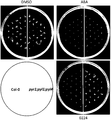
- Figure 3 shows the effect of 0224 compound and ABA on seed germination of Col-0 and pyr1; pyl1; pyl4 triple mutant at a concentration of 1 ⁇ M.
- Col-0 was sown in the left half of each dish, and pyr1; pyl1; pyl4 triple mutant was seeded in the right half.
- the picture is obtained from pyr1; pyl1; pyl4 triple mutant seeds after 4 days of germination (after 6 days of sowing).
- DMSO treatment was used as a control group.
- Figure 4 shows that treatment of the compound 0224, 0304, 0706, 0715 or 0428 of the present invention significantly reduced the transpiration rate of the Arabidopsis leaf surface, resulting in an increase in leaf surface temperature.
- Figure 4a shows that after treatment with 5 ⁇ M ABA or Compound 0224, the leaf surface temperature increased significantly compared with the control (DMSO) treatment, and the compound 0224 lasted longer;
- Figure 4b showed that the 5 ⁇ M compound 0304 treatment, the leaf surface temperature was compared with the control Group (DMSO) treatment increased significantly, while the compound 0224 concentration decreased to 2 ⁇ M or 1 ⁇ M, the leaf surface temperature was significantly increased compared with the control (DMSO) treatment, and the effect decreased stepwise, indicating the inhibition of compound 0224 on foliar transpiration There was a concentration-dependent effect in the effect;
- Figure 4c shows that after treatment with 5 ⁇ M of compound 0706 or 0715, the leaf surface temperature was significantly increased compared to the control (DMSO) treatment, with a duration comparable to 0224;
- Figure 5 shows that the treatment of compounds 0224 and 0304 of the present invention significantly reduced the transpiration rate of soybean leaf surface, resulting in an increase in leaf surface temperature. Soybean plants after 14 days of sowing were stopped from watering while spraying the compound 0224, 0304 or ABA of the present invention, and 20 ⁇ M of the compound compared with the control group (DMSO). 0224 or 0304 can significantly reduce the transpiration rate of soybean leaf surface, and the inhibition effect is better than the same concentration of ABA.
- Figure 6 shows that treatment of compound 0224 of the present invention significantly reduced the transpiration rate of cotton leaf surface, resulting in elevated leaf surface temperatures.
- 20 ⁇ M of compound 0224 can significantly reduce the transpiration rate of cotton leaf surface, and the inhibition effect is better.
- the same concentration of ABA is better.
- Figure 7 shows the results of soil drought experiments in Arabidopsis.
- Arabidopsis thaliana was photographed before drought and four weeks after drought.
- Arabidopsis thaliana in the control group (DMSO treatment) had dried up after four weeks of drought, and Arabidopsis thaliana treated with compound 0224, 0706 or 0715 still grew normally.
- FIG 8 shows the results of soil drought experiments in soybeans.
- the soybean in Figure 5 was rehydrated after 6 days of drought, and the photograph shows the growth of soybeans after one day of rehydration.
- the growth of soybeans treated with compound 0224 or 0304 was significantly better than that of the control (DMSO) or the same concentration of ABA treated soybeans.
- Figure 9 shows the results of soil drought experiments in cotton.
- the cotton in Fig. 6 was rehydrated after 6 days of drought, during which the compound 0224 or ABA of the present invention was sprayed every 3 days, and the photograph showed the growth of cotton before rehydration and after one day of rehydration.
- the cotton treated with compound 0224 was significantly better than the control (DMSO) or the same concentration of ABA treated cotton.
- Figure 10 shows the transcriptional level changes of ABA-induced stress-related genes in wild-type Arabidopsis thaliana after treatment with 10 ⁇ M of the present compound 1022B for 6 hours.
- DMSO and the same concentration of ABA were negative and positive control, respectively.
- the results showed that the transcription levels of the four stress-related genes induced by the compound 1022B of the present invention were higher than those of the ABA.
- Figures 11a and 11b show the two-dimensional structure of ABA(a) or a compound of the invention (0428) (b) interacting with multiple amino acid residues within the PYL2-HAB1 complex pocket structure, respectively.
- the figure shows the water molecule, the nitrogen atom, the oxygen atom and the halogen atom, the dashed line represents the hydrogen bond, and the number on it represents the distance between two atoms/molecule (in angstroms, ).
- the compound 0428 of the present invention forms a plurality of hydrogen bonds with the amino acid residues in the PYL2 pocket structure, except that the formation of these hydrogen bonds does not require water molecule mediated, which contributes to the compound 0428 and The PYL2-HAB1 complex is more tightly bound.
- Figure 12 shows the results of soil drought experiments in Arabidopsis. Wild-type Arabidopsis plants (Col-0) grown for 3 weeks in a short-day environment were stopped from watering and sprayed with 5 ⁇ M ABA or the compound 0428 of the present invention. The pictures show the growth of the plants on the day of the first spraying of the compound and after 14 days, and the plants sprayed with the DMSO solution served as a negative control. The results showed that the plant growth of the compound 4428 was superior to that of the control group and the ABA-sprayed plants.
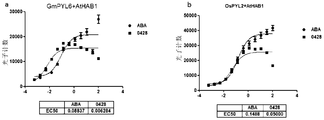
- Figure 13 shows dose response curves of compounds of the invention (e.g., compound 0428) and ABA of soybean GmPYL6 and rice OsPYL2 receptor agonists.
- Compound 0428 can promote the interaction of Arabidopsis protein phosphatase HAB1 with soybean GmPYL6 or rice OsPYL2, and this interaction has a dose-dependent effect.
- Figures 14a and 14b show the results of soil drought experiments for soybean and corn, respectively.
- the corn of the small bell stage and the soybean plants of the three groups of three-leaf stage were selected, and the compound of the present invention (such as compound 0428) was sprayed on the first day and the second day after the start of the drought, and the photograph showed that the corn was treated for four days in drought.
- the concentration of compound 0428 in the experiment was 50 ⁇ M.
- the growth of corn and soybean treated with compound 0428 was significantly better than that of the control group.
- Figure 15 shows the effect of compound 0428 and ABA on seed germination of Col-0 and pyr1; pyl1; pyl4 triple mutants at a concentration of 2 ⁇ M. Sowing the left half of each dish with Col-0, sowing the right half Pyr1; pyl1; pyl4 triple mutant. The photographs were taken for pyr1; pyl1; pyl4 triple mutant seeds after 7 days of germination (after 9 days of sowing). DMSO treatment was used as a control group.
- Figure 16 shows that treatment of compound 0224 of the present invention significantly reduced the transpiration rate of wheat leaf surface, resulting in an increase in leaf surface temperature.
- the wheat plants after 18 days of sowing were stopped from watering while spraying the compound 0224 of the present invention, and 100 ⁇ M of the compound 0224 significantly reduced the transpiration rate of the wheat leaf surface as compared with the control group (DMSO).
- DMSO control group
- Figure 17 shows the results of soil drought experiments in wheat.
- the wheat in Fig. 16 was photographed after 6 days of drought, and the photograph showed that the growth of wheat treated with 100 ⁇ M of compound 0224 or ABA was significantly superior to that of the control group (DMSO).
- the inventors have for the first time developed a class of ABA substitutes (compounds of the present invention) having high abscisic acid (ABA) activity through extensive and intensive research.
- the compounds of the present invention are capable of significantly enhancing a variety of stress resistance of plants (e.g., drought resistance, cold tolerance, etc.).
- the compound of the present invention has a simple preparation method, and has the advantages of excellent environmental friendliness and rapid action, and therefore has broad application prospects.
- the present invention has been completed on this basis.
- substituted or unsubstituted means that the group may be unsubstituted or that H in the group is one or more (eg 1-10, preferably 1-5) More preferably 1-3, optimally, 1-2) substituents are substituted.
- substituted or “substituted” means that the group has one or more (preferably 1-6, more preferably 1-3) substituents selected from the group consisting of: Halogen, hydroxy, -NH 2 , nitro, -CN, C 1 -C 4 alkyl, C 1 -C 4 haloalkyl, C 1 -C 4 alkoxy, C 3 -C 6 cycloalkyl, C 1 -C 3 carboxyl group, C 2 -C 4 alkenyl group, C 2 -C 4 alkynyl group.
- substituents selected from the group consisting of: Halogen, hydroxy, -NH 2 , nitro, -CN, C 1 -C 4 alkyl, C 1 -C 4 haloalkyl, C 1 -C 4 alkoxy, C 3 -C 6 cycloalkyl, C 1 -C 3 carboxyl group, C 2 -C 4 alkenyl group, C 2 -C 4 alkynyl group
- C 1 -C 7 alkyl refers to a straight or branched alkyl group having from 1 to 7 carbon atoms, such as methyl, ethyl, propyl, isopropyl, butyl, iso Butyl, sec-butyl, tert-butyl, or the like.
- the term includes substituted or unsubstituted C 1 -C 7 alkyl, unless otherwise specified.
- C 1 -C 6 alkyl refers to a straight or branched alkyl group having from 1 to 6 carbon atoms, such as methyl, ethyl, propyl, isopropyl, butyl, iso Butyl, sec-butyl, tert-butyl, or the like.
- the term includes a substituted or unsubstituted C 1 -C 6 alkyl group, unless otherwise specified.
- C 1 -C 4 alkyl refers to a straight or branched alkyl group having from 1 to 4 carbon atoms, such as methyl, ethyl, propyl, isopropyl, butyl, iso Butyl, sec-butyl, tert-butyl, or the like.
- the term includes substituted or unsubstituted C 1 -C 4 alkyl, unless otherwise specified.
- C 1 -C 3 alkyl refers to a straight or branched alkyl group having from 1 to 3 carbon atoms, such as methyl, ethyl, n-propyl, isopropyl, or the like. group.
- the term includes substituted or unsubstituted C 1 -C 3 alkyl, unless otherwise specified.
- C 1 -C 2 alkylene refers to a divalent hydrocarbon group having 1-2 carbon atoms, such as a methylene group, an ethylene group, or the like.
- the term includes a substituted or unsubstituted C 1 -C 2 alkylene group, unless otherwise specified.
- C 2 -C 7 alkenyl refers to a straight or branched alkenyl group having 2 to 7 carbon atoms, such as ethenyl, allyl, 1-propenyl, isopropenyl, 1-butenyl, 2-butenyl, or the like.
- the term includes a substituted or unsubstituted C 2 -C 7 alkenyl group, unless otherwise specified.
- C 2 -C 6 alkenyl refers to a straight or branched alkenyl group having 2 to 6 carbon atoms, such as ethenyl, allyl, 1-propenyl, isopropenyl, 1-butenyl, 2-butenyl, or the like.
- the term includes a substituted or unsubstituted C 2 -C 6 alkenyl group, unless otherwise specified.
- C 2 -C 3 alkenyl refers to a straight or branched alkenyl group having 2 to 3 carbon atoms, such as vinyl, allyl, 1-propenyl, isopropenyl or Similar group.
- the term includes a substituted or unsubstituted C 2 -C 3 alkenyl group, unless otherwise specified.
- C 2 -C 7 alkynyl group means a straight or branched alkynyl chain having 2-7 carbon atoms, e.g. ethynyl, propynyl, or the like.
- the term includes a substituted or unsubstituted C 2 -C 7 alkynyl group, unless otherwise specified.
- C 2 -C 6 alkynyl group means a straight or branched alkynyl chain having 2-6 carbon atoms, e.g. ethynyl, propynyl, or the like.
- the term includes a substituted or unsubstituted C 2 -C 6 alkynyl group, unless otherwise specified.
- C 2 -C 3 alkynyl group means a straight or branched alkynyl chain having 2-3 carbon atoms, e.g. ethynyl, propynyl, or the like.
- the term includes a substituted or unsubstituted C 2 -C 3 alkynyl group, unless otherwise specified.
- C 3 -C 8 cycloalkyl refers to a cyclic alkyl group having from 3 to 8 carbon atoms, such as cyclopropyl, cyclobutyl, cyclopentyl, cyclohexyl, cycloheptyl, or Similar group.
- the term includes a substituted or unsubstituted C 3 -C 8 cycloalkyl group, unless otherwise specified.
- C 3 -C 7 cycloalkyl refers to a cyclic alkyl group having 3 to 7 carbon atoms, such as cyclopropyl, cyclobutyl, cyclopentyl, cyclohexyl, cycloheptyl, or Similar group.
- the term includes a substituted or unsubstituted C 3 -C 7 cycloalkyl group, unless otherwise specified.
- C 3 -C 6 cycloalkyl refers to a cyclic alkyl group having 3-6 carbon atoms, such as cyclopropyl, cyclobutyl, cyclopentyl, cyclohexyl, or the like. The term includes a substituted or unsubstituted C 3 -C 6 cycloalkyl group, unless otherwise specified.
- C 5 -C 10 heterocyclyl refers to a saturated, partially saturated or unsaturated group (but not aromatic) having a single ring or a fused ring (including a bridged ring system and a spiro ring).
- one or more of the rings may be a cycloalkyl, aryl or heteroaryl group, As long as the junction passes through a non-aromatic ring.
- the term includes substituted or unsubstituted heterocyclic groups.
- C 5 -C 8 heterocyclyl refers to a saturated, partially saturated or unsaturated group (but not aromatic) having a single ring or a fused ring (including a bridged ring system and a spiro ring). a system having 5 to 8 carbon atoms and 1 to 2 heteroatoms selected from nitrogen, sulfur or oxygen), wherein in the fused ring system, one or more of the rings may be a cycloalkyl, aryl or heteroaryl group, As long as the junction passes through a non-aromatic ring.
- the term includes substituted or unsubstituted heterocyclic groups.
- C 1 -C 3 haloalkyl refers to a straight or branched alkyl group having from 1 to 3 carbon atoms in which hydrogen is substituted by one or more halogens, for example, a halomethyl group. , haloethyl, halopropyl, haloisopropyl, or the like.
- the term includes a substituted or unsubstituted C 1 -C 3 haloalkyl group, unless otherwise specified.
- C 1 -C 6 alkoxy refers to a group having the structure "(C 1 -C 6 alkyl)-O-, for example, CH 3 -O-, C 2 H 5 -O -, C 3 H 7 -O-, (CH 3 ) 2 CH-O-, nC 4 H 9 -O-, tC 4 H 9 -O-, or the like. The term is used unless otherwise specified. A substituted or unsubstituted C 1 -C 6 alkoxy group is included.
- C 1 -C 4 alkoxy refers to a group having the structure "(C 1 -C 4 alkyl)-O-, for example, CH 3 -O-, C 2 H 5 -O -, C 3 H 7 -O-, (CH 3 ) 2 CH-O-, nC 4 H 9 -O-, tC 4 H 9 -O-, or the like. The term is used unless otherwise specified. A substituted or unsubstituted C 1 -C 4 alkoxy group is included.
- halogen means fluoro, chloro, bromo, or iodo, preferably fluoro and chloro, most preferably fluoro.
- halo refers to a group substituted by the same or different one or more of the above halogen atoms, and may be partially or fully halogenated, such as trifluoromethyl, pentafluoroethyl, heptafluoro. Isopropyl, or a similar group.
- the compounds of the invention may contain one or more asymmetric centers and thus occur as racemates, racemic mixtures, single enantiomers, diastereomeric compounds and single diastereomers.
- the asymmetric center that can exist depends on the nature of the various substituents on the molecule. Each such asymmetric center will independently produce two optical isomers, and all possible optical isomers and diastereomeric mixtures and pure or partially pure compounds are included within the scope of the invention.
- the invention includes all isomeric forms of the compounds.
- the terms “compound of the invention”, “analog of ABA of the invention”, “compound of formula I” are used interchangeably and refer to a compound having the structure of formula I. Furthermore, the term also includes salts, optical isomers, racemates, solvates (eg, hydrates), and/or precursors of the compounds of Formula I,
- R 1 - R 10 , R 11 , m, X The definition is as described above.
- the compound has the structure of Formula Ia:
- R 1 - R 10 and m are as defined above.
- the compound has the structure of formula Ib:
- the compound has the structure of formula Ic:
- R 1 - R 10 and m are as defined above.
- the compound has the structure of formula Id:
- R 1 - R 10 , R 12 , m are as defined above.
- each reaction is mostly carried out in an inert solvent at 0 ° C to 150 ° C (or reflux temperature) (preferably, 10-60 ° C, or 20-40 ° C) for a period of time. (eg 0.1-72 hours, preferably 2-20 hours).
- room temperature means 4-35 ° C, preferably 20-30 ° C.
- the compounds of formula I of the present invention can be prepared by the following schemes and exemplary methods described in the Examples and related publications used by those skilled in the art.
- the methods of preparing the compounds of Formula Ia of the present invention can include, but are not limited to, the following schemes.
- step 1 in a inert solvent (such as tetrahydrofuran), the compound of formula I-1 is first reacted with N,N'-carbonyldiimidazole (CDI) at a certain temperature (such as 20-40 ° C) for a period of time to form Formula I-2 Compound.
- a inert solvent such as tetrahydrofuran
- Step 2 In the presence of a base such as sodium hydride, the compound of formula 1-2 is reacted with iodine propane at a temperature (eg 20-40 ° C) in an inert solvent such as N,N-dimethylformamide. The reaction is continued for a period of time to form a compound of formula 1-3.
- a base such as sodium hydride
- Step 3 The compound of formula 1-3 is reacted with potassium nitrate at a temperature (e.g., 0-10 ° C) for a period of time in the presence of an acid such as sulfuric acid to form a compound of formula 1-4.
- a temperature e.g., 0-10 ° C
- Step 4 The compound of the formula I-4 is subjected to a reduction reaction in an inert solvent (e.g., methanol) using palladium on carbon as a catalyst at a temperature (e.g., 20 to 40 ° C) to form a compound of the formula I-5.
- an inert solvent e.g., methanol
- palladium on carbon e.g., palladium on carbon
- Step 5 Compounds of formula I-SS1 (eg 2,3,5,6-tetrafluoro-4-methylbenzyl bromide or 2,3,5,6-tetrafluoro-) in an inert solvent such as ethanol or acetonitrile 4-methylbenzyl chloride) is reacted with thiourea to form a reaction product; then, the reaction product and sodium chlorite are at a certain temperature in an inert solvent such as acetonitrile in the presence of an acid such as concentrated hydrochloric acid. The reaction is carried out for a period of time (e.g., 15-25 ° C) to form a compound of formula I-S2.
- an inert solvent such as ethanol or acetonitrile 4-methylbenzyl chloride
- Step 6 The compound of the formula I-5 is reacted with the compound of the formula I-S2 at a certain temperature (for example, 20-50 ° C) for a while in an inert solvent such as DMF in the presence of an acid binding agent such as potassium carbonate. Thereby obtaining a compound of the formula Ia.
- X 2 is a leaving group and is chlorine, bromine or iodine.
- Other various substituents and groups are as defined in the specification.
- the active substance of the present invention (the compound of the formula I, or a salt thereof, or an optical isomer thereof, or a racemate thereof, or a solvate thereof, or a precursor thereof) can be prepared into an agricultural preparation by a conventional method, for example, Solutions, emulsions, suspensions, powders, foams, pastes, granules, aerosols, natural and synthetic materials impregnated with active substances, microcapsules in polymers, bags for seeds Coating agent.
- compositions can be produced by known methods, for example, by mixing the active compound with an extender.
- the extender is a liquid or liquefied gas or a solid diluent or carrier, and optionally a surfactant, that is, an emulsifier and/or a dispersant and/or a foam former.
- a surfactant that is, an emulsifier and/or a dispersant and/or a foam former.
- an organic solvent can also be used as an auxiliary.
- a liquid solvent When a liquid solvent is used as the diluent or carrier, it is basically suitable, such as: aromatic hydrocarbons such as xylene, toluene or alkylnaphthalene; chlorinated aromatic or chlorinated aliphatic hydrocarbons such as chlorobenzene, vinyl chloride Or methylene chloride; aliphatic hydrocarbons such as cyclohexane or paraffin, such as mineral oil fractions; alcohols such as ethanol or ethylene glycol and their ethers and lipids; ketones such as acetone, methyl ethyl ketone, methyl isobutyl Ketone or cyclohexanone; or less common polar solvents such as dimethylformamide and dimethyl sulfoxide, and water.
- aromatic hydrocarbons such as xylene, toluene or alkylnaphthalene
- chlorinated aromatic or chlorinated aliphatic hydrocarbons such as chlorobenzene, vinyl chloride Or
- a diluent or carrier for a liquefied gas it is meant a liquid which will become a gas at normal temperature and pressure, such as an aerosol propellant such as a halogenated hydrocarbon and butane, propane, nitrogen and carbon dioxide.
- the solid support can be ground natural minerals such as kaolin, clay, talc, quartz, activated clay, montmorillonite, or diatomaceous earth, and ground synthetic minerals such as highly dispersed silicic acid, alumina and silicates.
- Solid supports for granules are ground and graded natural zircons such as calcite, marble, pumice, sepiolite and dolomite, as well as inorganic and organic coarse powder synthetic particles, and organic materials such as sawdust, coconut shell, Corn cobs and granules of tobacco stems.
- Emulsified columns of nonionic and anionic agents can be used as emulsifiers and/or foam formers.
- polyoxyethylene-fatty acid esters polyoxyethylene-fatty alcohol ethers, such as alkaryl polyglycol ethers, alkyl sulfonates, alkyl sulfates, aryl sulfonates, and white Protein hydrolysate.
- Dispersing agents include, for example, lignin sulfite waste liquid and methyl cellulose.
- Binders such as carboxymethylcellulose and natural and synthetic polymers in the form of powders, granules or emulsions such as acacia, polyvinyl alcohol and polyvinyl acetate may be employed in the formulation.
- Coloring agents such as inorganic dyes such as iron oxide, oxidized diamonds and Prussian blue; organic dyes such as organic dyes such as azo dyes or metal phthalocyanine dyes; and trace nutrients such as iron, lanthanum, boron, copper may be used. , cobalt, aluminum and zinc salts, etc.
- the "agronomic preparation” is generally an agricultural plant growth regulator comprising a compound of the formula I or a salt thereof, an optical isomer, a racemate, a solvate or a precursor thereof for enhancing plant stress resistance.
- An active ingredient such as drought resistance
- an agriculturally acceptable carrier for enhancing plant stress resistance.
- the "agriculturally acceptable carrier” is an agrochemical for the delivery of a compound of the formula I according to the invention, or a salt, optical isomer, racemate, solvate or precursor thereof, to a plant.
- the carrier can be a liquid or a solid.
- the agriculturally acceptable carrier suitable for use in the present invention is selected from the group consisting of water, buffer, DMSO, a surfactant such as Tween-20, or a combination thereof. Any agriculturally acceptable carrier known to those skilled in the art can be used in the present invention.
- the agricultural preparation of the present invention may be combined with other drought-tolerant agents in their commercial preparations or in the preparation forms prepared from these preparations.
- These other drought-resistant agents include, but are not limited to, drought-resistant seed coating agents, drought-resistant agents.
- the agricultural preparations of the invention may also be formulated as a mixture with the synergist in their commercial preparations or in the dosage forms prepared from these preparations, which are compounds which enhance the action of the active compound, due to the active compound It is active in itself, and it is not necessary to add a synergist.
- the dosage form of the agricultural preparation of the present invention may be various, as long as the active ingredient can be effectively brought into the dosage form of the plant, and from the standpoint of ease of preparation and application, the preferred agricultural preparation is a spray. Agent or solution preparation.
- the agricultural preparation of the present invention usually contains 0.0001 to 99% by weight based on the total weight of the agricultural preparation. Preferably 0.1 to 90% by weight of a compound of the invention.
- concentration of the compound of the present invention in a commercial preparation or a used dosage form can be varied within a wide range.
- the concentration of the compound of the invention in a commercial formulation or in a dosage form may range from 0.0000001 to 100% (g/v), preferably between 0.0001 and 1% (g/v).
- the present invention provides a method for enhancing plant stress resistance (such as drought resistance, cold tolerance), comprising the steps of: administering to a plant a compound of formula I or a salt thereof, an optical isomer thereof, a racemate, a solvate or a former Body, or its corresponding agricultural preparation.
- plant stress resistance such as drought resistance, cold tolerance
- the application may be carried out by various methods known, for example, by spraying, spraying, dusting or spreading the compound or an agricultural preparation containing the compound on the plant leaf, the propagation material, or otherwise contacting the plant with the compound or containing the compound.
- An agricultural preparation of a compound, if seeded, is coated, wrapped or otherwise treated.
- Another method of directly treating plants or seeds prior to planting can also introduce the agricultural preparation of the present invention into soil or other medium to be seeded.
- a carrier can also be used, which can be a solid, liquid state as described above.
- the compound or an agricultural formulation containing the compound can also be delivered to the plant by spraying (e.g., by aircraft spraying) or irrigation.
- a class of ABA substitutes (compounds of the invention) having high abscisic acid (ABA) activity was first developed.
- the compounds of the present invention are capable of significantly enhancing a variety of stress resistance of plants (e.g., drought resistance, cold tolerance, etc.).
- the compound of the present invention is simple in preparation and has excellent environmental friendliness, and therefore has broad application prospects. The present invention has been completed on this basis.
- the compounds of the present invention can bind to a plurality of different PYL receptors, and the activity in vitro is significantly better than Abscisic Acid (ABA). It can significantly enhance the stress resistance of various plants.
- Abscisic Acid ABA
- the present invention is the first to synthesize a series of highly active alternative compounds of natural abscisic acid (ABA).
- ABA abscisic acid
- the compounds of the present invention are capable of significantly enhancing a variety of plant resistance (e.g., drought and cold tolerance). Further, the compounds of the present invention which are optical isomers or racemates have high activities.
- the compound of the present invention promotes the interaction of a plurality of PYR/PYL receptor proteins with the PP2C protein phosphatase HAB1.
- the model plants used in the experiments were all conventional or commercially available varieties, of which Arabidopsis thaliana includes: Columbia (Col-0) ecotype, based on the Col-0 ecotype-based ABA synthetic mutant aba2-1 and A PYL receptor triple deletion mutant based on the Col-0 ecotype (pyr1; pyl1; pyl4).
- Soybean varieties are commercially available as Shaanxi 125 (0224, 0304, 0706, 0708, 0713, 0715 and 1028c) and Xiaxia 10 (0428, 1022B and NC0F4).
- the cotton varieties are commercially available conventional upland cotton R15, and the wheat variety is the city. Selling Xi Nong 979, the corn variety is commercially available No. 13 on the market.
- the growth temperature of Arabidopsis thaliana is 22 °C.
- the photoperiod of plants grown on plant growth medium is long daylight (24 hours light), and the photoperiod of plants growing in soil (such as foliar transpiration experiment and soil drought experiment)
- the light intensity is 75 ⁇ mol ⁇ m –2 ⁇ s –1 .
- the plant growth medium used in the experiments was 1/2 MS (Murashige and Skoog) solid medium containing 1% (w/v) sucrose and 0.6% (w/v) agar (purchased from Phyto Technology) unless otherwise specified. Labotories company).
- Arabidopsis gene PYL1 (amino acid sequence 36-211), PYL2 (amino acid sequence 14-188) and Arabidopsis gene HAB1 (amino acid sequence 172-511) carrying the Biotin tag sequence with the 6 ⁇ His and SUMO double-tag sequences
- Arabidopsis gene HAB1 (amino acid sequence 172-511) carrying the Biotin tag sequence with the 6 ⁇ His and SUMO double-tag sequences
- a gate-latch-lock mechanism for hormone signalling by abscisic acid receptors (Nature, Vol 462, 2009), PYR1 and PYL7 with 6 ⁇ His and SUMO double-tag sequences (full gene coding sequence).
- the construction method of soybean GmPYL6 and rice OsPYL2 recombinant plasmid is the same as that of Arabidopsis thaliana PYL2.
- the recombinant plasmid of PYR1/PYL1/PYL2/PYL7/GmPYL6/OsPYL2 carrying the 6 ⁇ His and SUMO double-tag sequences was induced with 100 ⁇ M IPTG overnight, while the HAB1 recombinant plasmid carrying the Biotin tag sequence was simultaneously induced with 100 ⁇ M IPTG and 40 ⁇ M biotin.
- the bacterial cells after 16 hours of induction were centrifuged in a low-speed large-capacity centrifuge to collect the cells, and centrifuged at 4000 rpm for 20 min at 4 °C.
- Each 2 L of the bacterial solution was resuspended in 50 ml of extraction buffer (containing 20 mM Tris, pH 8.0, 200 mM NaCl, and 10% (v/v) glycerin), and then crushed 3-5 times at a pressure of 1000 Pa at 4 °C.
- the disrupted cells were subjected to ultracentrifugation, centrifuged at 16000 rpm for 30 min, and repeated twice, and the supernatant was collected through an affinity chromatography column.
- the AlphaScreen kit (purchased from Perkin Elmer) was used as follows: 150 ⁇ l of the experimental system containing 1:10 diluted 10 ⁇ buffer (50 mM MOPS, pH 7.4, 50 mM NaF, 50 mM CHAPS, 0.1 mg/ml bovine serum albumin), each 100nM HAB1 with Biotin tag sequence and PYR1/PYL1/PYL2/PYL7/GmPYL6/OsPYL2 protein with 6 ⁇ His and SUMO double-tag sequences, corresponding concentrations of (+)-ABA/0224/0304/0706/0708/0713/ 0715/0428/NC0F4, 5 ⁇ g/ml donor beads and acceptor beads (purchased from Perkin Elmer), incubated at room temperature for 1.5 hours in the dark, placed on Envision Plate Reader (purchased from Perkin Elmer) In the ), the reading is performed according to the set AlphaScreen program.
- 10 ⁇ buffer 50 mM MOPS, pH 7.4, 50
- the reaction system contains 50 mM imidazole, pH 7.2, 5 mM MgCl 2 , 0.1% ⁇ -mercaptoethanol, 0.5 ⁇ g ⁇ ml -1 BSA, 100 nM HAB1 protein with Biotin tag sequence, 500 nM PYL2 with 6 ⁇ His-SUMO double tag sequence.
- the receptor protein and the corresponding concentration of (+)-ABA/0224/0304/0706/0708/0713/0715/1028c/0428/1022B/NC0F4 were incubated for 30 minutes at room temperature, followed by the addition of a phosphorylated polypeptide containing 11 amino acids. The reaction was continued for 30 minutes.
- the phosphorylated polypeptide was amino acids 170-180 of the SnRK2.6 protein kinase.
- the phosphorylated serine at position 175 (sequence is HSQPKpSTVGTP, purchased from Kingsley) is a known target for dephosphorylation of HAB1.
- Site. After 30 minutes, a chromogenic reagent (purchased from BioVision) was added, and the absorbance at a wavelength of 650 nm was read with a microplate reader (purchased from Molecular Device).
- RNA extraction was carried out by a conventional method, followed by reverse transcription and fluorescent quantitative PCR. Three biological replicates were taken for each treatment and two experimental replicates were performed, and the ACT7 gene was used as an internal reference.
- the Arabidopsis PYL2 and HAB1 proteins after excision and label removal were mixed with (+)-ABA or Compound 0428 in a molar ratio of 1:1:5, and concentrated to 6 mg/ml for dot crystals.
- the spot crystal was carried out by the hanging drop method; the well buffer for crystallization contained 0.2 M sodium di-todium tartrate and 20% PEG 3350.
- the crystal can be seen after one day and can grow to 100-120 ⁇ m in about 3-4 days.
- the crystal is X-ray diffracted and the diffraction data is collected, and the complex is analyzed according to the relevant PYR/PYL receptor structure model. structure.
- the compounds 0428 and 0224 of the present invention are exemplified. Seeds of Arabidopsis Col-0 ecotype and PYL receptor triple deletion mutant (pyr1; pyl1; pyl4) were sterilized with NaClO and placed at 4 °C for 3 days, then seeded at 1 ⁇ M (+)-ABA/0224. Compound or 0.05% DMSO (control) on 1/2 MS solid medium, or 1/2 MS solid medium containing 2 ⁇ M (+)-ABA/inventive compound 0428 or 0.05% DMSO (control). Two lines were sown simultaneously on each 6 cm diameter medium, and each line was sown with 15-20 seeds, with 4 replicates for each compound.
- the medium was placed in a long-day culture at 22 ° C, and the seeds germinated on a solid medium containing 1 ⁇ M of (+)-ABA/0224 compound were photographed after 6 days of sowing, on a solid medium containing 2 ⁇ M of (+)-ABA/0428 compound. The germinated seeds were photographed 9 days after sowing.
- the Arabidopsis thaliana leaf transpiration experiment used the ABA synthetic mutant aba2-1. Under environmental stress conditions, the endogenous ABA content in the mutant did not increase, only 1/40 of the wild-type Arabidopsis Col-0 under the same conditions, so the use of this mutant can exclude endogenous ABA for transpiration.
- the impact of the experiment Plants sprayed for three weeks after continuous watering were sprayed with 0.05% Tween-20 and corresponding concentrations of (+)-ABA/0224/0304/0706/0715/0428 or 0.05% Tween-20 and 0.05% DMSO (control), using The amount is 1.2 ml / pot.
- the foliar transpiration experiment of soybean was carried out at 26 ° C long day, and after spraying for 14 days, 0.1% tween-20 and 20 ⁇ M (+)-ABA/0224/0304 compound or 0.1% Tween-20 and 0.05% DMSO (control) were sprayed.
- the solution was used in an amount of 4 ml/pot; the leaf transpiration experiment of cotton was sprayed with 0.1% tween-20 and 20 ⁇ M (+)-ABA/0224 compounds or 0.1% Tween-20 and 0.05% DMSO, respectively, after 25 days of sowing.
- control solution was used in an amount of 4 ml/pot; the wheat leaf transpiration experiment was sprayed with 0.1% tween-20 and 100 ⁇ M (+)-ABA/0224 compound or 0.1% Tween-20 and 0.05, respectively, after 18 days of sowing.
- a solution of % DMSO (control) was used in an amount of 6 ml per pot. All plants were imaged using a FLIR A655sc thermal imaging camera at the same time period before and after spraying.
- the Arabidopsis Col-0 ecotype seeds were sterilized with NaClO and placed at 4 °C for 3 days and then sown on 1/2MS solid medium. After 6 days of growth, seedlings with good growth and uniform size were selected and transplanted into 8 ⁇ 7 filled with soil. ⁇ 6cm 3 in a flower pot. Each pot was filled with the same weight of soil and transferred to the same number of plants (six strains) to reduce the experimental error. All the pots were placed in a short daylight culture at 22 ° C. After two weeks, the watering was stopped for drought treatment.
- a solution containing 0.05% Tween-20 and 5 ⁇ M of 0224/0706/0715/0428 or 0.05% Tween-20 and 0.05% DMSO (control) was sprayed onto the circumferential leaf surface at a spray rate of 2 ml solution/pot.
- the position of the flowerpot is used to reduce the error caused by environmental factors.
- the total solution is sprayed twice during the whole drought period, and photographed after four weeks.
- Soybean, cotton and wheat for leaf transpiration experiments were also used for soil drought experiments, and each pot was filled with the same weight of soil to reduce experimental error. All soybean plants were cultured at 26 °C for a long period of time. After 14 days of sowing, the watering was stopped and the plants with the same growth were selected for drought treatment. At the beginning of the drought, a solution containing 0.1% Tween-20 and 20 ⁇ M (+)-ABA/0224/0304 or 0.1% Tween-20 and 0.05% DMSO (control) was sprayed onto the foliage at a spray rate of 4 ml/pot. At the same time, the position of the flowerpot was changed, and the water was rehydrated after 6 days of drought and photographed after one day of rehydration.
- the cotton drought experiment was similar to that of soybeans. After 25 days of sowing, the watering was stopped, and the plants with the same growth were selected for drought treatment. Spraying 0.1% Tween-20 and 20 ⁇ M(+)-ABA/0224 to the foliage at the beginning of the drought Or 0.1% Tween-20 and 0.05% DMSO (control) solution, sprayed once every 3 days, sprayed 4ml / pot, while changing the position of the pot, rehydration after 6 days of drought, and before rehydration Take a photo after one day of rehydration. In the drought experiment of wheat, 16 days of consistent wheat was selected for drought treatment.
- the soil drought test for soybean and corn for compound 0428 was similar to the soybean drought test for compound 0224, containing only one plant per pot. All soybean plants were cultured at 26 °C for a long period of time. After 3 groups of 3 leaves, the watering was stopped. The plants with the same growth were selected for drought treatment; the corn was stopped at the small bell mouth for water treatment. A solution containing 0.05% Tween-20 and 50 ⁇ M (+)-0428 or 0.05% Tween-20 and 0.05% DMSO (control) was sprayed onto the leaves on the first and second days of the drought, and the spray amount was 4 ml. / Basin, while changing the position of the pot. After 9 days of drought, the corn was rehydrated after 4 days of drought and photographed the next day.
- the intermediate preparation method of 0708 was the same as that of 0706 except that 2-iodopropane was used instead of 1-iodoethane.
- the intermediate preparation method of 0713 was the same as that of 0706 except that 1-iodoisobutyl was used instead of 1-iodoethane.
- the intermediate preparation method of 0715 was the same as that of 0706 except that 1-fluoro-3-iodopropane was used instead of 1-iodoethane.
- the reaction was allowed to stir at room temperature for 12-16 hours. At the end of the reaction, ice water was added, and ethyl acetate was extracted. Dry over anhydrous sodium sulfate and concentrate the organic phase.
- the crude product was purified by silica gel column chromatography eluting
- Methyl-4-nitroaniline was added to 250 ml of dry tetrahydrofuran and 1.5 equivalents of CDI were added with stirring. After the addition, the temperature was raised to reflux and stirred overnight; tetrahydrofuran was evaporated under reduced pressure, and water and dichloromethane were combined to extract mixture. The organic phases were combined, washed with a saturated aqueous solution of sodium chloride and dried over anhydrous sodium sulfate. 6-Nitro-3,4-dihydroquinazoline-2(1H)-one was obtained in a yield of 74%.
- HAB1 protein phosphatase activity using SnRK2.6 phosphorylated polypeptide as substrate showed that compounds 0224, 0304, 0706, 0708, 0713, 0715, 1028c, 0428, 1022B and NC0F4 can promote PYL2 receptor and PP2C protein phosphoric acid.
- the enzyme (HAB1) binds, thereby inhibiting the dephosphorylation of HAB1 to the SnRK2.6 phosphorylated polypeptide, and at a low concentration most compounds are superior or significantly superior to the same concentration of ABA.
- PYL2 EC 50 values of the volume -HAB1 protein phosphatase complex were 1/29 and 1/15 of ABA (Fig. 2c)
- 50 -HAB1 value PYL7 receptor protein phosphatases are complexes of the ABA-1 EC / 10 (Fig. 2d).
- 0706,0708,0713,0715,0428,1022B NC0F4 compound and showed the same affinity for the receptor than PYL2 ABA, wherein 0706,0708,0713 and EC 0715 ABA 50 value of about 1 / 5-1 / 8 (Fig. 2e).
- Compound 0428 has an EC 50 value of about 1/8 of ABA (Fig.
- 1022B has an EC 50 value that is one order of magnitude lower than ABA (Fig. 2g), and the PYL2 receptor binds to HAB1 in a dose-dependent manner. effect.
- the compound NC0F4 showed a PYR1 receptor affinity superior to ABA with an EC 50 value of about 1/11 of ABA (Fig. 2h).
- the above plurality of compounds of the present invention are a series of PYL receptor agonists which are more efficient than existing compounds such as ABA.
- the compounds of the present invention all exhibited significant PYR/PYL receptor affinity when the concentrations of other compounds of the present invention tested in vitro ranged from 0.01 to 100 ⁇ M.
- the infrared camera was used to observe and record the temperature change of the leaf surface, thus reflecting the transpiration of the plant. The stronger the transpiration, the lower the leaf surface temperature.
- the results of foliar transpiration experiments of soybean, cotton and wheat are shown in Fig. 5 and Fig. 6.
- the foliar transpiration inhibition experiment on soybean showed that the plant surface temperature of 20 ⁇ M of compound 0224 or 0304 was still significant after two days.
- the control group above the spraying of DMSO showed that the transpiration of soybean leaf surface was still inhibited, and the leaf surface temperature of the same concentration of ABA was the same as that of the control group (Fig. 5).
- the foliar transpiration inhibition experiment on cotton showed that the leaf temperature of the plants with 20 ⁇ M of compound 0224 was still significantly higher than that of the control group sprayed with DMSO two days later, and the leaf temperature of the plants sprayed with the same concentration of ABA was already It was no different from the control group (Fig. 6).
- the Arabidopsis Col-0 ecotype which was grown in soil for two weeks, stopped the feed water, and sprayed a solution containing 5 ⁇ M of compound 0224/0706/0715 or 0.05% DMSO (control) once a week during the drought, spraying 2 ml of solution.
- the pots were sprayed twice and a 0.05% (v/v) surfactant Tween-20 was added to the solution to enhance the penetration of the spray on the leaf epidermis.
- the control group sprayed with DMSO had dried out, while the plants sprayed with 5 ⁇ M of compound 0224/0706/0715 survived (Fig. 7).
- Soybeans of 14 days and 25 days of cotton were separately sown, and plants of the same size were selected for soil drought experiments.
- An aqueous solution of DMSO (control) was added with 0.1% (v/v) surfactant Tween-20 to enhance the penetration of the spray on the leaf epidermis.
- Rehydration after 6 days of drought, spraying 20 ⁇ M of compound 0224 or 0304 compound of soybean (Fig. 8) and spraying 20 ⁇ M of compound 0224 (Fig. 9) were significantly better after rehydration than the control group sprayed with DMSO and spray Plants of the same concentration of ABA were applied.
- Example 13 Compound 1022B can induce the expression of stress-related genes in response to ABA
- the inventors analyzed the effect of exogenously added compound 1022B on plant gene expression.
- the crystal structure of the PYL2-0428-HAB1 complex formed by the compound 0428 of the present invention was examined by the protein crystal analysis method described in the general method.
- the composite crystal has a resolution of 2.4 angstroms and the control is ABA.
- the two-dimensional structure of the two composite crystals is partially shown in Figures 11a and 11b.
- 0428 is present in the pocket structure of PYL2.
- the four oxygen atoms in the ABA structure can form hydrogen bonds with a plurality of water molecules with a PYL2 pocket structure and a plurality of amino acid residues of HAB1.
- the oxygen atom and the nitrogen atom on the compound 0428 sulfonylamino group and the oxygen atom on the quinoline ring can also form a hydrogen bond.
- the halogen substituent on the p-xylene (the fluorine atom) can also be combined with the amino acid in the PYL2 pocket structure.
- the residue forms a hydrogen bond that further enhances the affinity of compound 0428 for the PYL2 receptor.
Landscapes
- Organic Chemistry (AREA)
- Chemical & Material Sciences (AREA)
- Life Sciences & Earth Sciences (AREA)
- Health & Medical Sciences (AREA)
- Environmental Sciences (AREA)
- Engineering & Computer Science (AREA)
- Dentistry (AREA)
- General Health & Medical Sciences (AREA)
- Wood Science & Technology (AREA)
- Zoology (AREA)
- Plant Pathology (AREA)
- Pest Control & Pesticides (AREA)
- Agronomy & Crop Science (AREA)
- Agricultural Chemicals And Associated Chemicals (AREA)
- Organic Low-Molecular-Weight Compounds And Preparation Thereof (AREA)
- Fertilizers (AREA)
- Hydroponics (AREA)
- Pyridine Compounds (AREA)
Abstract
Description


Claims (10)
- 一种式I化合物、或其盐、或其光学异构体、或其外消旋体、或其溶剂化物、或其前体,
 式中,R1为H、卤素、C1-C3烷基、或C1-C3卤代烷基;R2为H、卤素、C1-C3烷基、或C1-C3卤代烷基;R3为H、卤素、C1-C3烷基、或C1-C3卤代烷基;R4为H、卤素、C1-C3烷基、或C1-C3卤代烷基;R5为卤素、C1-C3烷基、C1-C3卤代烷基、SF5或C3-C8环烷基;R6为取代或未取代的C1-C7烷基、取代或未取代的C2-C7链烯基、取代或未取代的C2-C7链炔基、取代或未取代的C3-C7环烷基、或取代或未取代的-Ra-O-Rb,其中,Ra为C1-C2亚烷基而Rb为H、C1-C3烷基;并且所述的取代为具有一个或多个选自下组的取代基:卤素、-ORb、-CN、-N(Rb)2、和硝基;R7选自下组:H、取代或未取代的C1-C6烷基、取代或未取代的C2-C6链烯基、取代或未取代的C2-C6链炔基、取代或未取代的C3-C8环烷基、取代或未取代的C5-C10杂环基、Rc-C(O)-、-ORb、-CN、和-N(Rb)2;Rc选自下组:羟基、巯基、取代或未取代的C1-C6烷基、取代或未取代的C1-C6烷氧基;其中,所述杂环基含有1至2个选自N、O、S的杂原子,并且所述的取代为具有一个或多个选自下组的取代基:卤素、-ORb、-CN、-N(Rb)2、和硝基;R8、R9、R10各自独立地选自下组:(i)H;(ii)取代或未取代的C1-C6烷基、C3-C8烷氧基、取代或未取代的C3-C8环烷基、卤素、Rc-C(O)-、-OH、-NH2;R11选自下组:羟基、巯基、取代或未取代的C1-C6烷基、取代或未取代的C1-C6烷氧基;其中所述的取代为具有一个或多个选自下组的取代基:卤素、-ORb、-CN、-N(Rb)2、和硝基;R11为H、C1-C3烷基、或C1-C3卤代烷基;X为CR12、NR13、O、或S,其中R12选自下组:H、卤素、C1-C3烷基、C2-C3链烯基、C2-C3链炔基、C1-C3卤代烷基、或其组合;R13为无,或选自下组:H、卤素、C1-C3烷基、C2-C3链烯基、C2-C3链炔基、C1-C3卤代烷基、或其组合;m=1或2;表示单键或双键;
 附件条件是,X为CR12时,为双键。
- 如权利要求1所述的式I化合物、或其盐、或其光学异构体、或其外消旋体、或其溶剂化物、或其前体,其特征在于,所述化合物具有式Ia结构:
 式Ia中,R1-R10、m的定义如上所述。
 - 如权利要求1所述的式I化合物、或其盐、或其光学异构体、或其外消旋体、或其溶剂化物、或其前体,其特征在于,所述化合物具有式Ib结构:
 式Ib中,R1-R10、R13、m、的定义如上所述。
- 如权利要求1所述的式I化合物、或其盐、或其光学异构体、或其外消旋体、或其溶剂化物、或其前体,其特征在于,所述化合物具有式Ic结构:
 式Ic中,R1-R10、m的定义如上所述。
 - 如权利要求1所述的式I化合物、或其盐、或其光学异构体、或其外消旋体、或其溶剂化物、或其前体,其特征在于,所述化合物具有式Id结构:
 式Id中,R1-R10、R12、m的定义如上所述。
 - 如权利要求1所述的式I化合物、或其盐、或其光学异构体、或其外消旋体、或其溶剂化物、或其前体,其特征在于,所述化合物选自下组:


 在另一优选例中,所述化合物选自下组:
- 一种权利要求1所述式I化合物、或其盐、或其光学异构体、或其外消旋体、或其溶剂化物、或其前体的用途,其特征在于,用于制备农用制剂或组合物,所述农用制剂或组合物用于(i)增强植物抗逆性;(ii)制备ABA受体的激动 剂;和/或(iii)制备种子萌发抑制剂。
- 一种农用制剂,其特征在于,所述农用制剂包括:(i)权利要求1所述的式I化合物、或其盐、或其光学异构体、或其外消旋体、或其溶剂化物、或其前体;和(ii)农业上可接受的载体。
- 一种增强植物抗逆性的方法,其特征在于,给所述植物施用本发明权利要求1所述的式I化合物、或其盐、或其光学异构体、或其外消旋体、或其溶剂化物、或其前体或施用权利要求8所述的农用制剂。
- 一种式I化合物或其盐的制法,其特征在于,包括步骤:(a)在惰性溶剂中,将化合物I-A与化合物I-S2进行反应,从而形成式I化合物;
 上述各式中,R1、R2、R3、R4、R5、R6、R7、R8、R9、R10、R11、m、X、如权利要求1所定义。
Priority Applications (6)
| Application Number | Priority Date | Filing Date | Title |
|---|---|---|---|
| US16/066,755 US11076597B2 (en) | 2015-12-28 | 2016-11-18 | High stress resistant plant growth regulator and preparation method and use thereof |
| ES16880842T ES2923784T3 (es) | 2015-12-28 | 2016-11-28 | Regulador del crecimiento de las plantas de alta resistencia al estrés y procedimiento de preparación y uso del mismo |
| CA3010014A CA3010014C (en) | 2015-12-28 | 2016-11-28 | High stress resistant plant growth regulator and preparation and use thereof |
| AU2016380736A AU2016380736B2 (en) | 2015-12-28 | 2016-11-28 | High stress resistant plant growth regulator and preparation and use thereof |
| EP16880842.6A EP3398940B1 (en) | 2015-12-28 | 2016-11-28 | High stress resistant plant growth regulator and preparation method and use thereof |
| BR112018013314-0A BR112018013314B1 (pt) | 2015-12-28 | 2016-11-28 | Regulador de crescimento de planta resistente a alta tensão e preparação e uso do mesmo |
Applications Claiming Priority (4)
| Application Number | Priority Date | Filing Date | Title |
|---|---|---|---|
| CN201511004527 | 2015-12-28 | ||
| CN201511004527.2 | 2015-12-28 | ||
| CN201610325811 | 2016-05-16 | ||
| CN201610325811.8 | 2016-05-16 |
Publications (1)
| Publication Number | Publication Date |
|---|---|
| WO2017114052A1 true WO2017114052A1 (zh) | 2017-07-06 |
Family
ID=58902229
Family Applications (1)
| Application Number | Title | Priority Date | Filing Date |
|---|---|---|---|
| PCT/CN2016/107516 Ceased WO2017114052A1 (zh) | 2015-12-28 | 2016-11-28 | 高抗逆性的植物生长调节剂及其制法和用途 |
Country Status (8)
| Country | Link |
|---|---|
| US (1) | US11076597B2 (zh) |
| EP (1) | EP3398940B1 (zh) |
| CN (1) | CN106749080B (zh) |
| AU (1) | AU2016380736B2 (zh) |
| BR (1) | BR112018013314B1 (zh) |
| CA (1) | CA3010014C (zh) |
| ES (1) | ES2923784T3 (zh) |
| WO (1) | WO2017114052A1 (zh) |
Cited By (2)
| Publication number | Priority date | Publication date | Assignee | Title |
|---|---|---|---|---|
| WO2018017490A1 (en) * | 2016-07-18 | 2018-01-25 | The Regents Of The University Of California | Carbamate quinabactin |
| JP2019525909A (ja) * | 2016-07-05 | 2019-09-12 | シンジェンタ パーティシペーションズ アーゲー | 植物成長調節剤化合物 |
Families Citing this family (4)
| Publication number | Priority date | Publication date | Assignee | Title |
|---|---|---|---|---|
| CN109053847B (zh) * | 2018-07-18 | 2020-05-19 | 云南大学 | 一种17β-咪唑烷基溴盐-去氢表雄烷衍生物及其制备方法和应用 |
| CN115151304B (zh) * | 2020-02-12 | 2025-02-11 | 库拉德夫制药私人有限公司 | 小分子干扰素基因刺激因子(sting)拮抗剂 |
| US12582132B2 (en) | 2021-03-25 | 2026-03-24 | The United States Of America, As Represented By The Secretary Of Agriculture | Germination/sprouting and fruit ripening regulators |
| CN119082123A (zh) * | 2024-09-06 | 2024-12-06 | 南京林业大学 | 一种牡丹PsPYL4基因在调控根系发育中的应用 |
Citations (5)
| Publication number | Priority date | Publication date | Assignee | Title |
|---|---|---|---|---|
| CN104170823A (zh) * | 2013-05-23 | 2014-12-03 | 中国科学院上海生命科学研究院 | 一种增强植物抗逆性的小分子化合物 |
| WO2014210555A1 (en) * | 2013-06-28 | 2014-12-31 | The Regents Of The University Of California | Compounds that induce aba responses |
| CN104363760A (zh) * | 2012-03-30 | 2015-02-18 | 加利福尼亚大学董事会 | 用于植物aba反应的合成化合物 |
| WO2015155154A1 (de) * | 2014-04-10 | 2015-10-15 | Bayer Cropscience Ag | Verwendung von substituierten oxotetrahydrochinolinylsulfonamiden oder deren salzen zur steigerung der stresstoleranz in pflanzen |
| WO2016022915A1 (en) * | 2014-08-08 | 2016-02-11 | The Regent Of The University Of California | 6-sulfonylamino quinoline compounds as plant growth regulators |
Family Cites Families (4)
| Publication number | Priority date | Publication date | Assignee | Title |
|---|---|---|---|---|
| JP6505825B2 (ja) * | 2014-08-08 | 2019-04-24 | ザ リージェンツ オブ ザ ユニバーシティ オブ カリフォルニア | 植物成長調節剤化合物 |
| AR103543A1 (es) * | 2015-02-13 | 2017-05-17 | Bayer Cropscience Ag | 1-cicloalquil-2-oxotetrahidroquinolina-6-ilsulfonamida sustituida o una sal de la misma y su uso para aumentar la tolerancia al estrés en plantas |
| AU2016314390B2 (en) * | 2015-08-28 | 2019-07-11 | CAS Center of Excellence in Molecular Plant Sciences | Small molecule compound for enhancing plant stress resistance |
| WO2018017490A1 (en) * | 2016-07-18 | 2018-01-25 | The Regents Of The University Of California | Carbamate quinabactin |
-
2016
- 2016-11-18 US US16/066,755 patent/US11076597B2/en active Active
- 2016-11-28 EP EP16880842.6A patent/EP3398940B1/en active Active
- 2016-11-28 CA CA3010014A patent/CA3010014C/en active Active
- 2016-11-28 AU AU2016380736A patent/AU2016380736B2/en active Active
- 2016-11-28 BR BR112018013314-0A patent/BR112018013314B1/pt active IP Right Grant
- 2016-11-28 WO PCT/CN2016/107516 patent/WO2017114052A1/zh not_active Ceased
- 2016-11-28 CN CN201611066258.7A patent/CN106749080B/zh active Active
- 2016-11-28 ES ES16880842T patent/ES2923784T3/es active Active
Patent Citations (5)
| Publication number | Priority date | Publication date | Assignee | Title |
|---|---|---|---|---|
| CN104363760A (zh) * | 2012-03-30 | 2015-02-18 | 加利福尼亚大学董事会 | 用于植物aba反应的合成化合物 |
| CN104170823A (zh) * | 2013-05-23 | 2014-12-03 | 中国科学院上海生命科学研究院 | 一种增强植物抗逆性的小分子化合物 |
| WO2014210555A1 (en) * | 2013-06-28 | 2014-12-31 | The Regents Of The University Of California | Compounds that induce aba responses |
| WO2015155154A1 (de) * | 2014-04-10 | 2015-10-15 | Bayer Cropscience Ag | Verwendung von substituierten oxotetrahydrochinolinylsulfonamiden oder deren salzen zur steigerung der stresstoleranz in pflanzen |
| WO2016022915A1 (en) * | 2014-08-08 | 2016-02-11 | The Regent Of The University Of California | 6-sulfonylamino quinoline compounds as plant growth regulators |
Non-Patent Citations (1)
| Title |
|---|
| See also references of EP3398940A4 * |
Cited By (2)
| Publication number | Priority date | Publication date | Assignee | Title |
|---|---|---|---|---|
| JP2019525909A (ja) * | 2016-07-05 | 2019-09-12 | シンジェンタ パーティシペーションズ アーゲー | 植物成長調節剤化合物 |
| WO2018017490A1 (en) * | 2016-07-18 | 2018-01-25 | The Regents Of The University Of California | Carbamate quinabactin |
Also Published As
| Publication number | Publication date |
|---|---|
| US11076597B2 (en) | 2021-08-03 |
| US20190000084A1 (en) | 2019-01-03 |
| CA3010014A1 (en) | 2017-07-06 |
| AU2016380736B2 (en) | 2019-11-14 |
| EP3398940A4 (en) | 2019-06-19 |
| CA3010014C (en) | 2020-10-06 |
| BR112018013314B1 (pt) | 2022-02-08 |
| CN106749080A (zh) | 2017-05-31 |
| EP3398940A1 (en) | 2018-11-07 |
| ES2923784T3 (es) | 2022-09-30 |
| CN106749080B (zh) | 2021-06-15 |
| EP3398940B1 (en) | 2022-06-22 |
| BR112018013314A2 (zh) | 2018-12-26 |
| AU2016380736A1 (en) | 2018-08-09 |
Similar Documents
| Publication | Publication Date | Title |
|---|---|---|
| US11076597B2 (en) | High stress resistant plant growth regulator and preparation method and use thereof | |
| EP2229814B1 (en) | Fungicidal Compositions | |
| US10842151B2 (en) | Small molecule compound for enhancing plant stress resistance | |
| JPS6248649A (ja) | アクリル酸エステル誘導体、その製造方法および殺菌剤または植物生長調整剤組成物 | |
| HU230165B1 (hu) | Fungicid hatású pirazolil-karboxanilid-származékok | |
| CN101437806A (zh) | 1,2-苯并异噻唑衍生物及农业或园艺用植物病害防除剂 | |
| UA126056C2 (uk) | Піридазинонові гербіциди | |
| CA2255778A1 (en) | 1-alkyl-4-benzoyl-5-hydroxypyrazole compounds and their use as herbicides | |
| JP2010529971A (ja) | 新規殺微生物剤 | |
| JPH07507781A (ja) | 除草剤ピラゾール−(チオ)−カルボキサミド | |
| NO168801B (no) | Nye 2,6-substituert-3,5-pyridindicarboxylsyrederivater, herbicide preparater inneholdende samme som aktive forbindelser, og anvendelse av derivatene for ugressbekjempelse | |
| CA2263399A1 (en) | 1-alkyl-4-benzoyl-5-hydroxypyrazole compounds and their use as herbicides | |
| KR910004206B1 (ko) | 4, 5, 6, 7-테트라히드로-2h-인다졸 유도체의 제조방법 | |
| CN107556253A (zh) | 含三氮唑杂环取代的氰基丙烯酸酯类化合物及其制备方法和用途 | |
| WO2018017490A1 (en) | Carbamate quinabactin | |
| CN106749044B (zh) | 增强植物抗逆性的aba类似物 | |
| CN108349899B (zh) | 卤代喹那菌素的衍生物 | |
| CN113549053B (zh) | 一种吡唑喹(唑)啉醚类化合物及其应用 | |
| JPS6097964A (ja) | Ν−キノキザリルアニリン系化合物,その製造法および農園芸用殺菌,殺虫,殺ダニ剤 | |
| JP6583737B2 (ja) | アブシジン酸誘導体 | |
| JPS6317880A (ja) | 新規n−ベンゾチアゾリル−2,5−ジヒドロピロ−ル類及び除草剤 | |
| CN107522675A (zh) | 含噁唑联苄氧基结构的氰基丙烯酸酯化合物的制备和应用 | |
| HK1145941B (zh) | 杀真菌组合物 | |
| KR20090048750A (ko) | 테트라하이드로인다졸계 화합물 및 이를 포함하는 제초제 | |
| JPS62120373A (ja) | (e)−1−(4−クロロフエニル)−5−フルオロ−4,4−ジメチル−3−ヒドロキシ−2−(1,2,4−トリアゾル−1−イル)−ペント−1−エンの(−)−対掌体 |
Legal Events
| Date | Code | Title | Description |
|---|---|---|---|
| 121 | Ep: the epo has been informed by wipo that ep was designated in this application |
Ref document number: 16880842 Country of ref document: EP Kind code of ref document: A1 |
|
| ENP | Entry into the national phase |
Ref document number: 3010014 Country of ref document: CA |
|
| NENP | Non-entry into the national phase |
Ref country code: DE |
|
| REG | Reference to national code |
Ref country code: BR Ref legal event code: B01A Ref document number: 112018013314 Country of ref document: BR |
|
| WWE | Wipo information: entry into national phase |
Ref document number: 2016880842 Country of ref document: EP |
|
| ENP | Entry into the national phase |
Ref document number: 2016380736 Country of ref document: AU Date of ref document: 20161128 Kind code of ref document: A |
|
| ENP | Entry into the national phase |
Ref document number: 2016880842 Country of ref document: EP Effective date: 20180730 |
|
| ENP | Entry into the national phase |
Ref document number: 112018013314 Country of ref document: BR Kind code of ref document: A2 Effective date: 20180628 |