WO2017145254A1 - 食品を用いた脳の前頭前野活性化方法 - Google Patents
食品を用いた脳の前頭前野活性化方法 Download PDFInfo
- Publication number
- WO2017145254A1 WO2017145254A1 PCT/JP2016/055184 JP2016055184W WO2017145254A1 WO 2017145254 A1 WO2017145254 A1 WO 2017145254A1 JP 2016055184 W JP2016055184 W JP 2016055184W WO 2017145254 A1 WO2017145254 A1 WO 2017145254A1
- Authority
- WO
- WIPO (PCT)
- Prior art keywords
- edible
- brain
- paint
- preparation
- food
- Prior art date
- Legal status (The legal status is an assumption and is not a legal conclusion. Google has not performed a legal analysis and makes no representation as to the accuracy of the status listed.)
- Ceased
Links
Images


Classifications
-
- A—HUMAN NECESSITIES
- A23—FOODS OR FOODSTUFFS; TREATMENT THEREOF, NOT COVERED BY OTHER CLASSES
- A23L—FOODS, FOODSTUFFS OR NON-ALCOHOLIC BEVERAGES, NOT OTHERWISE PROVIDED FOR; PREPARATION OR TREATMENT THEREOF
- A23L5/00—Preparation or treatment of foods or foodstuffs, in general; Food or foodstuffs obtained thereby; Materials therefor
-
- A—HUMAN NECESSITIES
- A23—FOODS OR FOODSTUFFS; TREATMENT THEREOF, NOT COVERED BY OTHER CLASSES
- A23P—SHAPING OR WORKING OF FOODSTUFFS, NOT FULLY COVERED BY A SINGLE OTHER SUBCLASS
- A23P10/00—Shaping or working of foodstuffs characterised by the products
-
- B—PERFORMING OPERATIONS; TRANSPORTING
- B65—CONVEYING; PACKING; STORING; HANDLING THIN OR FILAMENTARY MATERIAL
- B65D—CONTAINERS FOR STORAGE OR TRANSPORT OF ARTICLES OR MATERIALS, e.g. BAGS, BARRELS, BOTTLES, BOXES, CANS, CARTONS, CRATES, DRUMS, JARS, TANKS, HOPPERS, FORWARDING CONTAINERS; ACCESSORIES, CLOSURES, OR FITTINGS THEREFOR; PACKAGING ELEMENTS; PACKAGES
- B65D1/00—Rigid or semi-rigid containers having bodies formed in one piece, e.g. by casting metallic material, by moulding plastics, by blowing vitreous material, by throwing ceramic material, by moulding pulped fibrous material or by deep-drawing operations performed on sheet material
- B65D1/34—Trays or like shallow containers
- B65D1/36—Trays or like shallow containers with moulded compartments or partitions
Definitions
- the present invention relates to a method for activating the prefrontal cortex of a brain using a food that can activate the prefrontal cortex of a human brain, particularly a child's brain, more specifically, in the preparation process of a food,
- the present invention relates to a method for activating the prefrontal region of the brain using a food that can be activated mainly in the left prefrontal cortex.
- a food and drink for improving brain function containing a milk casein-derived peptide is known (for example, see Patent Document 1).
- the oxyhemoglobin concentration in the left and right prefrontal cortex is increased, the activity level of the prefrontal cortex is improved, and the work efficiency is further improved, so that the brain function is improved. Is.
- a brain function improving agent containing krill oil as an active ingredient and a food or drink containing the brain function improving agent are known (see, for example, Patent Document 2).
- a brain function-improving agent By ingesting the brain function-improving agent and the food or drink, oxygenated hemoglobin in the left and right frontal and frontal regions during execution of tasks such as memory tasks and calculation tasks is increased, thereby promoting brain metabolism. It prevents the improvement, recovery, maintenance and decline of brain function.
- a measurement experiment of the brain activity of a child in parent-child cooking suggests that cooking performed by the parent and child may develop various brain functions of the child (for example, see Non-Patent Document 1).
- parent-child cooking was performed by baking and serving hot cake using a gas stove, and as a result of measuring brain activity of the child during cooking, activation of the dorsolateral prefrontal cortex of the left and right cerebral hemispheres was activated. It has been confirmed that cooking habits performed by parents and children have a positive effect on children's cognitive function.
- the human brain controls specific biological functions by specific parts.
- the prefrontal cortex is a high-order human function such as thinking and creativity, specifically working memory, reaction suppression, behavior switching, planning, inference and other cognitive / executive functions, high-order emotional and motivational functions, and It is known to be involved in the decision-making process based on it.
- food and drink useful for improving brain functions of the left and right frontal cortex, left and right frontal and frontal heads, and the dorsolateral frontal front of the left and right cerebral hemispheres of a child in parent-child cooking It is known about the usefulness of brain function development in Maeno.
- there has been no proposal for a method for activating the prefrontal area of the brain particularly focusing on the food preparation process performed by the child alone.
- the present invention has been made in view of the circumstances as described above, and the object of the present invention is to use the food that can activate the prefrontal cortex of the human brain, particularly the child's brain. It is an object of the present invention to provide a method for activating the prefrontal cortex using a food that can activate the prefrontal cortex of the brain, particularly the left prefrontal cortex, particularly in the preparation process of the food.
- the present invention provides a method for activating the prefrontal area of the brain, characterized in that a food is prepared by mixing a plurality of edible paints having different colors and preparing an edible paint having an arbitrary new color. Achieve the goal.
- the present invention achieves the above object by a method for activating the prefrontal cortex of a brain, wherein a food is prepared through a process of applying an arbitrary color scheme to a pattern using a plurality of edible paints having different color tones. To do.
- the above object is achieved by a method for activating the prefrontal area of the brain, characterized in that a food is prepared through a process of creating an arbitrary pattern using a plurality of edible paints having different colors and a pattern outline mold. Achieve.
- This invention achieves the said objective by the prefrontal cortex activation method of the brain characterized by preparing a foodstuff through the following process (1) (2) or (1) (3).
- (1) A step of mixing a plurality of edible paints having different colors and preparing a paint after an edible preparation having an arbitrary new color
- (2) A plurality of pre-edible preparations and / or edible preparations having a different color
- Step of applying an arbitrary color scheme to a pattern using post-painting (3)
- Arbitrary pattern using a plurality of pre-edible composition paints and / or post-edible composition paints and pattern outline molds of different colors Process for creating patterns
- this invention achieves the said objective by the prefrontal cortex activation method characterized by preparing a foodstuff using the brain activation food kit provided with following (A) (B).
- A) A plurality of edible pre-preparation paints having different colors
- B) A mixture of two or more edible pre-preparation paint storage portions and two or more edible pre-preparation paints for storing (A) above.
- a food preparation container comprising an edible pre-prepared paint container for preparing an edible post-prepared paint of any new color
- the following (C) is further provided, and more preferably, the following (D) is further provided.
- (C) A pattern outline formwork for coloring a pattern and / or creating a pattern using an edible pre-preparation paint and / or a post-edible preparation paint of different colors
- (D) The edible paint Eyedropper for at least one of handling, blending, coloring the pattern, creating a pattern
- the Applicant has marketed handmade food kits such as combination sweets that children can easily make (prepare) themselves. From surveys such as questionnaire surveys, group interview surveys, and monitor surveys, we can understand the subjective evaluation of children on finished products made from each handmade food kit. However, in the work process that children actually prepare handmade food kits, it is not possible to objectively grasp how the child feels in the work process, which part of the preparation process feels more fun or more difficult It was.
- the viewpoint of product development was changed to evaluation of each preparation process from the food kit to completion of the finished food, instead of evaluation of the finished food obtained from the conventional food kit.
- the preparation process that makes you feel more fun or more difficult and wants to challenge you more than once can be evaluated and grasped with objective indicators, you can apply it to food products for children with a high repeat rate.
- the handling of monochromatic edible paint is more than the process of handling monochromatic edible paint (transferring and preparing (dissolving, mixing, etc.) using a dropper etc.).
- Mixing multiple edible paints to formulate an edible paint of any new color will stimulate the prefrontal cortex, increasing cerebral blood flow and increasing the concentration of oxyhemoglobin in the human.
- the present inventors have found that the present invention is effective for activating the prefrontal cortex (especially the left prefrontal cortex) of (especially a child).
- the present inventors have found that the present invention is effective for activating the prefrontal cortex (particularly the left frontal cortex) of humans (particularly children).
- the method for activating the prefrontal brain using the food of the present invention includes a step of mixing a plurality of edible paints to prepare any new edible paint, and a pattern contour frame using the plurality of edible paints.
- Prepares food because it is equipped with a slightly complicated preparation process, especially for children, such as the process of coloring a pattern on a pattern, the process of creating an arbitrary pattern in a pattern outline mold using multiple edible paints When you can activate the prefrontal cortex of the brain.
- the brain activated food kit activates the prefrontal area of the brain, particularly the left prefrontal area, through the fun and difficulty felt during preparation, and can feel a sense of accomplishment and satisfaction.
- the prefrontal cortex especially the left frontal cortex, without stress.
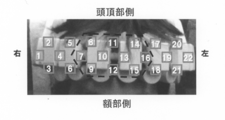
- the figure which shows an example of the measurement point (channel) at the time of mounting the headset of the apparatus which measures the oxyhemoglobin density
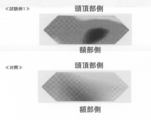
- Brain activity map showing prefrontal oxyhemoglobin concentration distribution measured in the color preparation process (Test Example 1) Explanatory drawing which shows an example of the preparation method of the brain activation food kit used when measuring a brain activation state Oxyhemoglobin concentration measurement graph of prefrontal cortex during color preparation process (Test Example 1) Graph of oxyhemoglobin concentration measurement in prefrontal cortex during coloration process (Test Example 2) Prefrontal oxyhemoglobin concentration measurement graph during the process of creating a pattern (Test Example 3)
- the brain prefrontal activation method using the food of the present invention is a method of activating the prefrontal cortex of the cerebral cortex, particularly the left prefrontal cortex.
- a specific biological function and a specific part of the brain are related, and when brain activation occurs with the biological function, the cerebral blood flow in the related specific part of the brain increases, and as a result, It is known that oxyhemoglobin concentration increases. That is, in the present invention, activating the prefrontal cortex means that the oxyhemoglobin concentration in the blood in the prefrontal area of the brain is increased.
- the prefrontal area of the scalp is irradiated with near infrared rays
- the oxyhemoglobin concentration in the prefrontal cortex is 1.1 times or more, preferably 1.2 times or more than the “control” described later. Refers to the raised state. More preferably, it indicates a state of significant difference p ⁇ 0.05.
- the target age of a human who activates the brain by the method for activating the prefrontal cortex of the present invention is not particularly limited, but children of 3 to 12 years old who are particularly interested in simple actions such as drawing Is preferred. It is also effective for seniors and above for the prevention of dementia.
- a device that can irradiate near-infrared light from above the scalp of the subject and measure the oxyhemoglobin concentration in the blood in the prefrontal area of the cerebral cortex is used.
- Examples include wearable optical topography WOT-220 (manufactured by Hitachi High-Technologies Corporation, 22 channels), FOIR-300 (manufactured by Shimadzu Corporation), and the like.
- FIG. 1 shows a headset of a wearable optical topography WOT-220 device manufactured by Hitachi High-Technologies Corporation as a headset for a device for measuring the oxyhemoglobin concentration in the prefrontal region (built-in near-infrared light source and detector). It is a figure which shows the measurement point (channel) at the time of mounting
- the measurement target part of the oxyhemoglobin concentration in the prefrontal cortex region is a prefrontal cortex region of the cerebral cortex, that is, a region including 10 to 44 fields and 46 fields in the Broadman brain map is a prefrontal region of the brain.
- a maximum of 22 measurement points can be set.
- the measurement points may be appropriately selected according to the size of the head. For example, as shown in FIG. 1, the measurement points corresponding to the prefrontal area of the brain of the head of a 10-year-old child are channels 7 to 16, of which the left prefrontal area corresponds to channels 13 to 16. In this way, the channel selection may be set according to the size of the head to be measured, but when measuring multiple children, it is better to match the size of the head to be measured so that the channels are the same. Good.
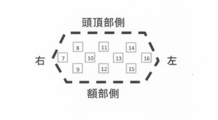
- FIG. 2 is a simulation diagram in which the position of the channel when measuring the head of a 10-year-old child from the top of the face to the forehead of the face in FIG. 1 is replaced with a cross-sectional view.
- “right” indicates the right side of the face and “left” indicates the left side of the face
- channels 13 to 16 are the left prefrontal cortex region.
- FIG. 3 is a brain activity map showing oxyhemoglobin concentration distribution in the prefrontal cortex measured in the step of preparing the color of Test Example 1 to be described later. It is a mapping. The higher the activation state of the brain, the darker the color, and the lower the activation state, the lighter the color.
- the prefrontal area of «Test Example 1» is shown to be dark overall, and in particular, the channels 12, 13, and 15 have the darkest color. . Further, in the range corresponding to the left prefrontal cortex (channels 13, 15, and 16), the difference in density between ⁇ Test Example 1 >> and ⁇ Control >> is remarkable. That is, in ⁇ Test Example 1 >>, the prefrontal cortex of the brain, particularly the left frontal cortex, is more activated than ⁇ Control >>.
- the brain prefrontal activation method includes a step of mixing a plurality of edible paints having different tones to prepare an edible paint having an arbitrary new color tone, and an arbitrary design pattern using the edible paint. It is effective for the prefrontal area of the brain to prepare food through any one or more of the step of applying a color scheme or the step of creating an arbitrary pattern using the edible paint and the pattern outline formwork. It is important in that it is activated.
- the above edible paint refers to a paint-like coloring material that can be eaten by humans, and is a concept that includes both pre-edible and pre-edible paints described below.
- the edible paint may be in any state of solid (powder, granule, etc.), liquid, or fluid (sol, cream, etc.). Good.
- the component include sugars, starches, dextrins, thickeners, powdered fats and oils, coloring agents, fragrances and the like, and one or more of them may be used as appropriate.
- the edible paint can be used in a temperature range from 5 to 30 ° C refrigerated to room temperature, that is, non-heated (5 to 30 ° C) that does not require heating. From this point, it is preferable.
- edible paint refers to edible paint (prepared in advance) used to formulate new colors, and the colors are red, blue, yellow, white, black, etc. Etc.
- the paint after edible preparation refers to an edible paint having a new color obtained by mixing a plurality of paints before edible preparation. For example, green mixed with blue and yellow, purple mixed with red and blue, pink mixed with red and white, orange mixed with red and yellow, tea mixed with red and yellow and black, or tea mixed with red and yellow and blue And so on.
- mixing a plurality of edible paints of different colors to prepare an edible paint of any new color tone uses one or more of the edible pre-preparation paint and the edible post-preparation paint, It means to blend the paint after any edible edible formulation.
- applying an arbitrary color scheme to a pattern using an edible paint means that the edible paint is arbitrarily colored on the pattern.
- creating an arbitrary pattern using edible paint and a pattern outline formwork means freely creating a pattern in the pattern outline form using edible paint and creating a pattern pattern. To do.
- the above pattern outline formwork forms the outline shape of the pattern pattern.
- the pattern pattern can be colored and colored. It is a formwork for creating a pattern by drawing a pattern.
- As the pattern outline formwork one having an outline wall formed along the outline of the pattern may be used.
- the material for the pattern outline mold is made of polystyrene, polypropylene, polyethylene terephthalate, silicone resin, metal, etc., and plastic foods such as clay-like candy and powdered food. Those formed may be mentioned and may be appropriately selected.
- a formwork formed in a concave shape on the surface of a solid confectionery such as candy, or the like may be used.
- a shape of a formwork any of a hollow cylinder shape without a bottom and a concave shape with a bottom may be used.
- the outline shape of the above pattern includes animals (mammals, birds, fish, reptiles, etc.), vehicles (airplanes, trains, cars, etc.) plants, confectionery, food and drink, robots, characters, buildings, national flags, sun, moon, stars , Planetary patterns, geometric patterns, and the like, and may be set as appropriate.
- preparing food through the following steps (1), (2) or (1), (3) effectively activates the prefrontal cortex of the brain.
- a step of mixing a plurality of edible paints having different colors and preparing a paint after an edible preparation having an arbitrary new color (2)
- a plurality of pre-edible preparations and / or edible preparations having a different color (3)
- preparing food using a brain activated food kit comprising the following (A) and (B) effectively activates the prefrontal cortex of the brain: It is important to do.
- B A mixture of two or more edible pre-preparation paint storage portions and two or more edible pre-preparation paints for storing (A) above.
- a food preparation container comprising an edible pre-prepared paint container for preparing an edible post-prepared paint of any new color
- the container for food preparation of (B) is a plurality of edible pre-preparation paint storage units for storing edible pre-preparation paint and a plurality of edible post-preparation paints for preparing post-edible preparation paint It is a container in which an edible paint provided with a storage portion can be stored separately. In addition, it is preferable at the point of the ease of handling that the paint storage part before edible preparation and the paint storage part after edible preparation have a recessed part shape.
- the brain prefrontal activation method of the present invention preferably further comprises the following (C), more preferably further comprises the following (D).
- C A pattern outline formwork for coloring a pattern and / or creating a pattern using an edible pre-preparation paint and / or a new blended edible paint of a different color
- D A dropper for at least one of handling, blending, coloring the pattern, and creating a pattern.
- the dropper in (D) above is handling (transferring, preparing (dissolving, mixing, etc.) the edible paint, etc., preparing the paint after edible preparation, coloring the pattern, It is a dropper for creating at least one of the patterns, especially because it can be easily handled by children, the amount of water added to the powder for edible paint is easy to understand, and it can be measured and transferred without spilling. Is preferred.
- the brain activated food kit includes a step of mixing a plurality of edible paints having different color tones to prepare an edible paint having an arbitrary new color, and a pattern using the edible paints.
- a step of mixing a plurality of edible paints having different color tones to prepare an edible paint having an arbitrary new color, and a pattern using the edible paints.
- the edible pre-preparation paint of (A) above is provided with the edible pre-preparation paint of (A) above, and the food preparation container of (B) above. This is important because it effectively activates the prefrontal cortex.
- a jig for handling edible paint such as a spoon, a spatula, or a brush may be added.
- the brain-activated food kit according to the present invention is an edible formulation according to (A) described above for designing a food preparation process for creating an arbitrary pattern using the edible paint and a pattern outline formwork.
- the provision of the pre-paint and the above-mentioned (B) food preparation container is important from the viewpoint of effectively activating the prefrontal cortex of the brain.
- a jig for handling edible paint such as a spoon, a spatula, or a brush may be added.
- the food prepared using the brain activated food kit according to the present invention may be directly eaten as syrup, chocolate sauce, fruit sauce, jam, cream, etc. It can be chilled to make a frozen dessert.
- the prepared food is an edible paint
- the edible paint may be instantly solidified at room temperature by pouring solidifying powder into a gummy-like, jelly-like or ramune-like food. Or you may play by coloring the solid food or drawing a pattern.
- the solid food include candy, bakery food (bread, baked confectionery, etc.), tableting confectionery such as chewing gum, gummy, chocolate, jelly, and ramune.
- FIG. 4A shows an example of a set of food kits
- 11 is a food preparation container
- 12 is a dropper
- 13 is a tulip-shaped pattern outline formwork.
- an element of paint before edible preparation three types of powdered edible paint red, blue, yellow, etc.
- edible paint are solidified. It is good also as a food kit provided with the powder for solidification together.
- the food preparation container 11 is provided with three edible pre-preparation paint storage portions 21 for storing edible paint. What is necessary is just to provide the number of this edible pre-preparation paint accommodating parts 21 according to the number of the edible pre-preparation paints to be used.
- the food preparation container 11 is provided with eight edible pre-preparation paint storage units 22 for mixing two or more kinds of pre-edible preparation paints to prepare an edible post-preparation paint of any new color. It has been.
- the number of paint storage units 22 after edible preparation may be arbitrarily set, but from the viewpoint of drawing out the child's imagination, the possibility of mixing failure and further mixing of paints after edible preparation are possible. Therefore, it is preferable to provide a larger amount.
- the container 11 for food preparation contains, for example, an element (powder) of edible pre-preparation paint and a powder for solidification.
- a mold mounting recess 23 for mounting the frame 13 is provided.
- the recess 23 for placing the mold is not necessarily limited to containing the solidifying powder. For example, a clay-like candy is put, and the pattern outline mold 13 is pressed thereon to change the color scheme. It may be used for applying or creating a pattern.
- the dropper 12 is used for handling (preparing edible pre-preparation paint, transferring edible pre-preparation paint to edible preparation post-container 22 or preparing edible pre-preparation paint). . Specifically, for example, it is used as a mixing means for dissolving the edible pre-preparation paint (powder) in water to form a liquid edible pre-formulation paint, transferring the liquid edible paint, Used to mix paints.
- the pattern outline mold 13 can be freely colored by painting and coloring the pattern by arbitrarily adding edible paint (paint before edible preparation and / or paint after edible preparation). It is a formwork for drawing and creating a pattern.
- Fig.4 (a) in order to mount and use on the powder for solidification, the shape of the formwork is formed in the hollow cylinder shape.
- the contour shape is not limited to the tulip shape as shown in FIG. 4A, and may be arbitrarily set such as the shape of the paragraph [0041] described above or the shape of the tropical fish shape of FIG. 4D.
- the number of pattern outline molds 13 to be prepared may be arbitrarily set. In FIG. 4, three identical tulip-shaped pattern contour molds 13 are used as described later, but a plurality of different molds may be combined.
- the method for preparing a food kit according to the present invention is as follows. First, an edible pre-preparation paint element (not shown. Three types of powdered edible pre-preparation paints, red, blue and yellow) are prepared separately. It accommodates in the front paint storage part 21, puts water with the dropper 12 from above, and mixes as it is, and as shown in FIG. 4 (a), three colors of edible pre-preparation paint (red, blue, yellow) Get. Further, the solidification powder 30 for solidifying the edible paint is put into the mold mounting recess 23 and leveled flat.
- the pattern outline formwork 13 is optionally used by using the edible pre-preparation paint 41 prepared in the post-edible preparation paint storage unit 22 or the pre-edible preparation paint 40 stored in the pre-edible preparation paint storage unit 21. Color the inside with a color scheme. Since the above preparation process includes a step of blending colors and a step of applying a color (separation), the prefrontal cortex of the brain is activated.
- a tropical fish-shaped pattern contour mold 14 is used. Is mentioned.
- the pattern outline mold 14 a pattern is freely drawn using edible paint (40 and / or 41) obtained in the same manner as in FIGS. 4 (a) to 4 (c). Since this is equipped with a process of creating an arbitrary pattern, the prefrontal area of the brain is activated.
- FIG. 4E shows a tropical fish-shaped pattern contour mold 15 in which the inside of the mold is subdivided, as will be described later.
- a food preparation container is prepared.
- preparation and preparation of edible paint may be performed using a container such as tableware at home.
- examples of the food kit according to the present invention include powders for molded confectionery described in JP-A-9-47221.
- the food kit uses a molding mold described in [0014], and, as described in [0016] and [0019], a solution in which a pigment or the like is dissolved or dispersed is used as a molding recess in the molding mold. Since the powder for molded confectionery is added after being added to the above, the above-mentioned “coloring step” is added in which edible paint is added from above the powder in the specific pattern outline mold.
- a combination confectionery provided with a mixed powder of sugar, pregelatinized starch, thickening polysaccharide, etc., which is the basis of a gummy-like texture, and a solution in which a pigment or the like is dissolved or dispersed.
- the dye solution of different colors in the combination confectionery is mixed to prepare another color, the above-described “color preparation step” is provided, and a cookie mold or the like is removed on the mixed powder.
- the above-described “color arrangement step” is provided.
- Powders 1 to 3 were prepared by mixing the raw materials in the composition shown in Table 1 and serving as a base for the edible pre-preparation paint. Thereafter, as shown in FIG. 4 (a), each of the powders 1 to 3 described above is accommodated in each of the three edible pre-preparation paint accommodating portions 21 in the food preparation container 11, and each of the powders and the water supply Of water (25 ° C.) were mixed at a weight ratio of 1: 3, respectively, to prepare edible pre-preparation paints of blue, red and yellow.
- ⁇ Measurement of oxyhemoglobin concentration in prefrontal brain area As shown in FIG. 4 (a), two or more kinds of edible pre-preparation paints contained in the three edible pre-preparation paint storage units 21 are arbitrarily stored in one edible post-preparation paint. After being transferred to the unit 22, the mixture was mixed, and the oxyhemoglobin concentration in the prefrontal area of the brain during the process of preparing a color different from the color of the original edible pre-preparation paint was measured. Subjects were 18 right-handed healthy children and men who were 10 years old. (1) As shown in FIG. 1, a wearable optical topography WOT-220 headset (manufactured by Hitachi High-Technologies Corporation) was attached to the subject's head.
- the edible pre-preparation paint 40 in the edible pre-preparation paint container 21 of three colors of blue, red, and yellow can be freely selected and used with the dropper 12.
- the edible mixed paint 41 having a color tone different from that of the edible pre-prepared paint was mixed by dropping.
- the oxyhemoglobin concentration in the prefrontal area of the brain during the above step (2) was measured. All of the subjects' heads were of the same size, and channels 7 to 16 were used as measurement points in the prefrontal area as shown in FIG.
- the operation of the above (2) is replaced with the step (2 ′) below, and the frontal brain in the process of transferring one color of the edible pre-preparation paint to the vacant edible preparation post-container container 22 Maeno oxyhemoglobin concentration was measured.
- (2 ′) As shown in FIG. 4B, the blue edible pre-preparation paint 40 in the pre-edible preparation container 21 is moved to the post-edible paint container 22 using the dropper 12. .
- both the test example 1 and the control were performed in 20 seconds, and the above process was performed once, the process was performed four times, and the addition average was performed.
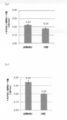
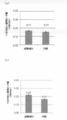
- FIG. 5 is a graph showing the average value of hemoglobin concentration in the prefrontal cortex.
- FIG. 5 (a) shows the results for channels 7 to 16, and
- FIG. 5 (b) shows the results for channels 13, 15, and 16.
- 5 (a) and 5 (b) Test Example 1 showed a higher value than the control (FIG. 5 (a) was 1.13 times that of the control and
- FIG. 5 (b) was 1.26 times that of the control).
- FIG. 5B shows the difference between Test Example 1 and the control in FIG. 5B than in FIG. 5A.
- the process of blending multiple edible paints together with the handling of a single color edible paint to formulate an edible paint of any new color is easier than the process of handling only a single color edible paint.
- Stimulation of the anterior cortex increases cerebral blood flow and increases the concentration of oxyhemoglobin in the blood, indicating that it is effective in activating the prefrontal cortex, particularly the left prefrontal cortex.
- the paint 40 before edible preparation, the paint 41 after edible preparation, and the powder 30 for solidification were prepared.
- ⁇ Preparation of paint before edible preparation In the same manner as in Test Example 1, edible pre-preparation paint 40 of three colors of blue, red, and yellow was prepared.
- ⁇ Preparation of paint after edible preparation The blue, red, and yellow edible pre-preparation paint 40 was appropriately selected and mixed to prepare an orange, green, purple, and brown edible pre-preparation paint 41.
- ⁇ Test Example 2> Using the pre-edible edible preparation paint 40 and the edible post-preparation paint 41 prepared in advance, the oxyhemoglobin concentration in the prefrontal cortex of the brain during the process of coloring in the pattern outline mold 13 was measured. Subjects were 18 right-handed healthy children and men who were 10 years old. In addition, the measurement was performed once in 20 seconds for both Test Example 2 and the control, and the step was repeated four times, and the addition average was performed. (1) As shown in FIG. 1, a wearable optical topography WOT-220 headset (manufactured by Hitachi High-Technologies Corporation) was attached to the subject's head. (2) First, an instruction was given to paint the leaves of the tulip-shaped pattern outline mold 13 in green.
- a color is freely selected from the pre-edible edible preparation paint 40 and the edible pre-preparation paint 41 prepared in advance, and a tulip-shaped pattern outline mold
- the flower portion of the frame 13 was colored using the dropper 12, and the solidified powder 30 was prepared as a tulip-shaped gummy-like texture solid with moisture in the edible paint.
- the leaf portion was instructed in advance to be colored in green.
- the oxyhemoglobin concentration in the prefrontal area of the brain during the above step (2) was measured. All of the subjects' heads were of the same size, and channels 7 to 16 were used as measurement points in the prefrontal area as shown in FIG.
- step (2) was replaced with the step (2 ′) below, and the oxyhemoglobin concentration in the prefrontal cortex of the brain during the following (2) operation was measured.
- step (2) As shown in FIG. 4 (c), the yellow color of the edible paint is instructed to color the flower part and the green color to the leaf part, and is solidified in the formwork installation recess 23 A dropper is added into the tulip-shaped pattern outline mold 13 placed on the powder 30, and the solidifying powder 30 is yellow in all three flower parts due to moisture in the paint before edible preparation. A tulip-shaped gummy-like solid with green leaves was prepared.
- FIG. 6 is a graph showing the average value of hemoglobin concentration in the prefrontal cortex.
- FIG. 6 (a) shows the results for channels 7 to 16, and
- FIG. 6 (b) shows the results for channels 13, 15, and 16.
- 6 (a) and 6 (b) Test Example 2 showed a higher value than the control (FIG. 6 (a) was 1.22 times that of the control, and
- FIG. 6 (b) was 1.7 times that of the control).
- the difference between Test Example 2 and the control is more remarkable in FIG. 6 (b) than in FIG. 6 (a), and FIG. 6 (b) shows a significant difference (p ⁇ 0.05). .
- the process of applying an arbitrary color scheme at one or more locations using edible paints of a plurality of tones is more suitable than the color scheme in the pattern outline frame with a predetermined color scheme (only yellow and green).
- a predetermined color scheme only yellow and green
- the “pattern creation process” affects the prefrontal cortex of the subject's brain using the food kit preparation method shown in FIGS. 4 (a), 4 (b), 4 (d), and 4 (e). The impact was evaluated.
- ⁇ Test Example 3> In the same manner as in Test Example 2, an edible pre-preparation paint 40 and a solidifying powder 30 were prepared, and an edible pre-preparation paint 41 was prepared in advance, and a tropical fish shape as shown in FIG. Using the pattern outline mold 14, the pattern inside the mold was freely drawn with edible paint (40, 41) to create a pattern, and the oxyhemoglobin concentration in the prefrontal area of the brain was measured. As a control, the pattern was made by using a pattern outline mold 15 in which the inside of a tropical fish-shaped mold as shown in FIG. The subjects were 18 right-handed healthy children and men who were 10 years old. Note that the measurement was performed once in 40 seconds for both Test Example 3 and the control, and this step was repeated four times, and the addition average was performed.
- FIG. 7 is a graph showing the average value of hemoglobin concentration in the prefrontal cortex.
- FIG. 7 (a) shows the results for channels 7 to 16, and
- FIG. 7 (b) shows the results for channels 13, 15, and 16. 7A and 7B
- Test Example 3 showed a higher value than the control (FIG. 7A was 1.13 times that of the control, and
- FIG. 7B was 1.29 times that of the control).
- the difference between Test Example 3 and the control is more conspicuous in FIG. 7B than in FIG. 7A, and a significant difference was observed in FIG. 7B (p ⁇ 0.05). .
- the process of creating a pattern in the pattern outline formwork stimulates the prefrontal cortex and increases cerebral blood flow, rather than coloring in the pattern outline formwork that is subdivided in the formwork. Since the concentration of oxyhemoglobin in the medium increased, it was shown to be effective in activating the prefrontal cortex, particularly the left prefrontal cortex.
- control example 3 Note that the difference between the control example 3 and the control example is smaller than the test example 2 because the control of the test example 3 required color selection, and the work time per operation was long and ended halfway. It is presumed that there was also.
Landscapes
- Engineering & Computer Science (AREA)
- Life Sciences & Earth Sciences (AREA)
- Chemical & Material Sciences (AREA)
- Food Science & Technology (AREA)
- Polymers & Plastics (AREA)
- Ceramic Engineering (AREA)
- Mechanical Engineering (AREA)
- Health & Medical Sciences (AREA)
- Nutrition Science (AREA)
- Coloring Foods And Improving Nutritive Qualities (AREA)
Abstract
【課題】ヒトの脳、特に子どもの脳の前頭前野を活性化することのできる食品を用いた脳の前頭前野活性化方法、更に詳しくは、食品の調製過程において、脳の前頭前野を、特に左前頭前野を中心に活性化し得る食品を用いた脳の前頭前野活性化方法を提供する。 【解決手段】 本発明は、複数の色調の異なる可食性ペイントを混合して、任意の新たな色調の可食性ペイントを調合する工程を経て食品を調製することを特徴とする脳の前頭前野活性化方法により上記課題を達成する。
Description
本発明は、ヒトの脳、特に子どもの脳の前頭前野を活性化することのできる食品を用いた脳の前頭前野活性化方法、更に詳しくは、食品の調製過程において、脳の前頭前野を、特に左前頭前野を中心に活性化し得る食品を用いた脳の前頭前野活性化方法に関する。
近年、機能的核磁気共鳴画像法(fMRI)、近赤外線分光法(NIRS)、脳波(EEG)測定法等による、脳の状態の可視化技術の発達に伴い、様々な分野において、脳科学を事業活用する取り組みが行われている。食品分野でも、特定の食品成分を含有することで、上記方法を用いて脳機能の向上が認められた脳機能改善食品の提案や、上記方法で評価した親子調理における子どもの脳活動の計測実験の報告等がある。
脳機能改善食品としては、牛乳カゼイン由来ペプチドを含有する脳機能改善用飲食品が知られている(例えば、特許文献1参照)。該脳機能改善用飲食品は摂取することにより、左右の前頭前野のオキシヘモグロビン濃度が上昇して前頭前皮質の活動レベルが向上し、更に作業能率が向上することから、脳機能が改善されるものである。
他には、オキアミ油を有効成分として含有する脳機能改善剤、及び該脳機能改善剤を含有する飲食品が知られている(例えば、特許文献2参照)。該脳機能改善剤及び該飲食品は摂取することにより、記憶課題や計算課題等の課題遂行中の左右の前頭部及び前側頭部の酸素化ヘモグロビンが高まり、脳の代謝を促進することによって、脳機能の向上、回復、維持、及び低下を防止するものである。
また、親子調理における子どもの脳活動の計測実験から、親子で行う調理が子どものさまざまな脳機能を発達させる可能性を示唆している(例えば、非特許文献1参照)。この計測実験では、ガスコンロを使ってホットケーキを焼き、盛り付けるという親子調理を実施し、その調理中の子どもの脳活動の計測を行った結果、左右の大脳半球の背外側前頭前野の活性化が確認されたことから、親子で行う調理習慣が子どもの認知機能に良い影響を与えることを報告している。
ヒトの脳は、特定の部位によって特定の生体機能を制御している。中でも前頭前野は、思考や創造性といった人間の高次機能、具体的には、ワーキングメモリー、反応抑制、行動の切り替え、プランニング、推論などの認知・実行機能、高次な情動・動機づけ機能とそれに基づく意思決定過程等に関与することが知られている。また、上述したように、食品分野において、左右の前頭前野や、左右の前頭部及び前側頭部の脳機能改善に有用な飲食品や、親子調理における子どもの左右の大脳半球の背外側前頭前野の脳機能発達の有用性について知られている。しかしながら、特に子どもが単独で行う食品調製過程に焦点をあてた脳の前頭前野の活性化方法の提案はされていない。
「日本食生活学会誌」、2011年、第22巻、第2号、p.88-97
本発明は、以上のような事情に鑑みなされたものであって、その目的とするところは、ヒトの脳、特に子どもの脳の前頭前野を活性化することのできる食品を用いた脳の前頭前野活性化方法、更に詳しくは、食品の調製過程において、脳の前頭前野を、特に左前頭前野を中心に活性化し得る食品を用いた脳の前頭前野活性化方法を提供することにある。
本発明は、複数の色調の異なる可食性ペイントを混合して、任意の新たな色調の可食性ペイントを調合する工程を経て食品を調製することを特徴とする脳の前頭前野活性化方法により上記目的を達成する。
また、本発明は、複数の色調の異なる可食性ペイントを用いて、絵柄模様に任意の配色を施す工程を経て食品を調製することを特徴とする脳の前頭前野活性化方法により上記目的を達成する。
さらに、複数の色調の異なる可食性ペイントと模様輪郭用型枠とを用いて、任意の絵柄模様を創る工程を経て食品を調製することを特徴とする脳の前頭前野活性化方法により上記目的を達成する。
本発明は、下記工程(1)(2)又は(1)(3)を経て食品を調製することを特徴とする脳の前頭前野活性化方法により上記目的を達成する。
(1)複数の色調の異なる可食性ペイントを混合して、任意の新たな色調の可食性調合後ペイントを調合する工程
(2)複数の色調の異なる可食性調合前ペイント及び/又は可食性調合後ペイントを用いて、絵柄模様に任意の配色を施す工程
(3)複数の色調の異なる可食性調合前ペイント及び/又は可食性調合後ペイントと模様輪郭用型枠とを用いて、任意の絵柄模様を創る工程
(1)複数の色調の異なる可食性ペイントを混合して、任意の新たな色調の可食性調合後ペイントを調合する工程
(2)複数の色調の異なる可食性調合前ペイント及び/又は可食性調合後ペイントを用いて、絵柄模様に任意の配色を施す工程
(3)複数の色調の異なる可食性調合前ペイント及び/又は可食性調合後ペイントと模様輪郭用型枠とを用いて、任意の絵柄模様を創る工程
次に、本発明は、下記(A)(B)を備える脳活性化食品キットを用いて食品を調製することを特徴とする脳の前頭前野活性化方法により上記目的を達成する。
(A)複数の色調の異なる可食性調合前ペイント
(B)上記(A)を各々別に収容するための、複数の可食性調合前ペイント収容部と該可食性調合前ペイントを2種以上混合して任意の新たな色調の可食性調合後ペイントを調合するための可食性調合後ペイント収容部とを備えた食品調製用容器
(A)複数の色調の異なる可食性調合前ペイント
(B)上記(A)を各々別に収容するための、複数の可食性調合前ペイント収容部と該可食性調合前ペイントを2種以上混合して任意の新たな色調の可食性調合後ペイントを調合するための可食性調合後ペイント収容部とを備えた食品調製用容器
好ましくは、さらに、下記(C)を備えることが、より好ましくは、さらに、下記(D)を備えることが好適である。
(C)色調の異なる可食性調合前ペイント及び/又は可食性調合後ペイントを用いて、絵柄模様に配色を施す及び/又は絵柄模様を創るための模様輪郭用型枠
(D)上記可食性ペイントをハンドリングする、調合する、絵柄模様に配色を施す、絵柄模様を創る、の少なくとも1つを行うためのスポイト
(C)色調の異なる可食性調合前ペイント及び/又は可食性調合後ペイントを用いて、絵柄模様に配色を施す及び/又は絵柄模様を創るための模様輪郭用型枠
(D)上記可食性ペイントをハンドリングする、調合する、絵柄模様に配色を施す、絵柄模様を創る、の少なくとも1つを行うためのスポイト
本出願人は、子どもが容易に自分で手作り(調製)できるような、組み合わせ菓子などの手作り食品キットを市場で展開している。アンケート調査、グループインタビュー調査、モニター調査等の調査などから、それぞれの手作り食品キットから作られた完成品に対する子どもの主観的な評価については把握できている。しかし、子どもが実際に手作り食品キットを調製する作業過程において、どこの調製工程をより楽しく感じ、又はより難しく感じているのか、という作業過程における子どもの感じ方については客観的に把握できていなかった。
そこで、商品開発の視点を、従来の食品キットから得られる完成食品に対する評価ではなく、食品キットから完成食品を完成させるまでの各調製工程の評価に変更した。すなわち、より楽しく感じる、又はより難しく感じることで何度も挑戦したいと思えるような調製工程を客観的な指標によって評価・把握できれば、リピーター率の高い子ども向け食品に応用展開できると考えた。
また、一般に、幼少期3~12歳における思考は段階的に発達することが知られている(永江誠司著、「脳と発達の心理学」、初版、ブレーン出版株式会社、2004年4月、p.139-146)。したがって、ヒト、特に子どもの脳を活性化するために有効な食品調製工程を見極め、該工程を手造り食品キットへ応用し、頻繁に該工程を経験してもらうことは、幼少期の子どもの脳の成長に有意義であると考えた。
以上のことより、子どもが食品を調製する工程に着目し、鋭意検討を行った結果、食品調製中の子どもの脳活動の変化、具体的には、近赤外線分光法(NIRS)を用いた血液中のオキシヘモグロビンの濃度変化を計測すると、驚くべきことに単純な調製工程の繰返しではなく、多少複雑さを備えた調製工程のほうが脳の前頭前野の活性化には有効であることを見出した。
具体的には、単色の可食性ペイントをハンドリング(スポイト等を使って移し替えや調製(溶解、混合など)する作業などをいう。)するだけの工程よりも、単色の可食性ペイントのハンドリングとともに複数の可食性ペイントを混合して任意の新たな色調の可食性ペイントを調合する工程のほうが、前頭前野を刺激して脳血流量が増加し血液中のオキシヘモグロビンの濃度が上昇するため、ヒト(特に子ども)の前頭前野(特に左前頭前野)の活性化に有効であることを見出し、本発明に到達した。
また、色を塗る調製工程において、可食性ペイントの配色を指定するよりも1種以上任意に配色を施す工程のほうが、前頭前野を刺激して脳血流量が増加し血液中のオキシヘモグロビンの濃度が上昇するため、ヒト(特に子ども)の前頭前野(特に左前頭前野)の活性化に有効であることを見出し、本発明に到達した。
さらに、模様輪郭用型枠を用いて模様を描く調製工程において、枠内が細分化された模様輪郭用枠内に配色するよりも、枠内が細分化されていない模様輪郭用枠内に任意の絵柄模様を創るほうが、前頭前野を刺激して脳血流量が増加し血液中のオキシヘモグロビンの濃度が上昇するため、ヒト(特に子ども)の前頭前野(特に左前頭前野)の活性化に有効であることを見出し、本発明に到達した。
本発明の食品を用いた脳の前頭前野活性化方法は、複数の可食性ペイントを混合して任意の新たな可食性ペイントを調合する工程、複数の可食性ペイントを用いて模様輪郭用枠内に絵柄模様に配色を施す工程、複数の可食性ペイントを用いて模様輪郭用型枠内で任意の絵柄模様を創る工程といった、特に子どもにとってやや複雑な調製工程を備えているので、食品を調製する時に脳の前頭前野を活性化することができる。
また、本発明に係る脳活性化食品キットは、調製時に感じる楽しさや難しさを通して脳の前頭前野、特に左前頭前野の活性化が起こり、達成感や満足感を感じることができる。そもそも、食品を調製するという作業であるため、ストレスを与えずに楽しく前頭前野、特に左前頭前野を鍛えることができる。
本発明に係る脳活性化食品キットを用いて食品を繰り返し調製することで、幼少期の子どもの脳を頻繁に活性化することができ、将来的な思考能力や計画性の向上(ブロードマンの10野)、ワーキングメモリーの強化による学習効率の向上(ブロードマンの46野)、自己の抑制力の向上、遂行能力の向上(ブロードマンの10野)など、論理的思考や創造的思考のための脳の発達を助けとなることが期待できる(永江誠司著、「脳と発達の心理学」、初版、ブレーン出版株式会社、2004年4月、p.120-122、p.174-177)。
本発明を詳しく説明する。ただし、本発明は以下の好ましい実施形態に限定されず、本発明の範囲内で自由に変更することができる。
本発明の食品を用いた脳の前頭前野活性化方法は、脳の大脳皮質の前頭前野、特に左前頭前野を活性化する方法である。一般に、特定の生体機能と脳の特定部位は関連しており、生体機能に伴って脳の活性化が生じると、関連する脳の特定部位における脳血流量が増加し、その結果、血液中のオキシヘモグロビン濃度が上昇することが知られている。すなわち、本発明において前頭前野を活性化するとは、脳の前頭前野の血液中のオキシヘモグロビン濃度が上昇することを意味し、具体的には、頭皮の前頭前野領域に近赤外線を照射し、近赤外線分光法(NIRS)を用いて前頭前野のオキシヘモグロビンの濃度変化を計測する際、後述する「対照」よりも、前頭前野のオキシヘモグロビン濃度が1.1倍以上、好ましくは1.2倍以上上昇した状態を指す。また、さらに好ましくは有意差p<0.05の状態を指す。
さらに、本発明の脳の前頭前野活性化方法によって脳を活性化させるヒトの対象年齢は特に限定するものではないが、特にお絵かきなどの簡単な動作に興味を示す3歳~12歳の子どもが好適である。また、認知症予防のためのシニア層以上にも有効である。
なお、脳の前頭前野のオキシヘモグロビン濃度の計測には、被験者の頭皮の上から近赤外光を照射し、大脳皮質の前頭前野領域の血液中のオキシヘモグロビン濃度を計測し得る装置が用いられる。例えば、ウェアラブル光トポグラフィWOT-220(株式会社日立ハイテクノロジーズ製、22チャンネル)、FOIR-300(株式会社島津製作所製)等が挙げられる。
次に、本発明で計測する脳の前頭前野領域について、図1に基づき説明する。図1は、前頭前野領域のオキシヘモグロビン濃度を計測する装置のヘッドセットとして、株式会社日立ハイテクノロジーズ製のウェアラブル光トポグラフィWOT-220装置のヘッドセット(近赤外光の光源及び検出器を内臓)を、被験者(満10歳の子ども)の頭部に装着した際の計測点(チャンネル)を示す図である。図1に示すように、上方が顔面の頭頂部側を示し、下方が顔面の額(ひたい)部側となっている。「右」の表示が顔面の右側を「左」の表示が顔面の左側を示している。また、四角で囲んだ数字1~22は計測点(チャンネル)を示し、チャンネル1~10は右前頭前野領域、チャンネル11、12は前頭前野中央領域、チャンネル13~22は左前頭前野領域となる。
本発明において前頭前野領域のオキシヘモグロビン濃度の計測対象部は、大脳皮質の前頭前野領域、すなわちブロードマンの脳地図における10~44野、46野を含む領域を脳の前頭前野領域とする。上記装置の場合、計測点を最大22箇所設定できるが、実際の計測では、頭部の大きさに合わせて計測点を適宜選択すればよい。例えば、図1に示すように、満10歳の子どもの頭部の脳の前頭前野領域に該当する計測点はチャンネル7~16となり、そのうち左前頭前野領域はチャンネル13~16が該当する。このようにチャンネル選択は、計測する頭部の大きさに準じて設定すればよいが、複数の子どもを計測する場合は、チャンネルが同じになるように、計測する頭部の大きさを合わせるほうがよい。
図2は、図1の顔面の頭頂部側から額部側にかけての、満10歳の子どもの頭部を計測した時のチャンネルの位置を断面図に置き換えた模擬図である。図1と同様に、「右」の表示が顔面の右側を、「左」の表示が顔面の左側を示しており、チャンネル13~16が左前頭前野領域となる。
図3は、後述する試験例1の色を調合する工程で計測した前頭前野のオキシヘモグロビン濃度分布を表す脳活動マップであり、計測されたオキシヘモグロビン濃度を視覚的に認識できるよう色の濃淡でマッピングしたものである。脳の活性化状態が高いほど濃い色を帯び、活性化状態が低いほど薄い色で表される。
図3の≪試験例1≫と≪対照≫とを比較すると、≪試験例1≫の前頭前野ほうが全体的に濃く示されており、特にチャンネル12、13、15が最も濃い色を帯びている。また、左前頭前野に該当する範囲(チャンネル13、15、16)では、≪試験例1≫と≪対照≫の濃淡の差が顕著である。すなわち、≪試験例1≫は≪対照≫よりも脳の前頭前野、特に左前頭前野が活性化された状態となっている。
本発明の脳の前頭前野活性化方法は、複数の色調の異なる可食性ペイントを混合して任意の新たな色調の可食性ペイントを調合する工程、該可食性ペイントを用いて絵柄模様に任意の配色を施す工程、又は該可食性ペイントと模様輪郭用型枠とを用いて任意の絵柄模様を創る工程のいずれか1つ以上の工程を経て食品調製することが、脳の前頭前野を効果的に活性化する点で重要である。
上記可食性ペイントとは、ヒトが食することができる絵具様の彩色材料をいい、後述の可食性調合前ペイント及び可食性調合後ペイントの両者を含む概念である。上記可食性ペイントは、固体状(粉末状、顆粒状等)、液状、流動状(ゾル状、クリーム状等)の何れの状態でもよく、調合前に調製者が加水し調製して用いてもよい。成分としては、糖類、澱粉、デキストリン、増粘剤、粉末油脂、着色料、香料などが挙げられ、これらの中から単独または複数を適宜用いればよい。また、上記可食性ペイントは、5~30℃の冷蔵から常温の温度帯、すなわち、加熱を必要としない非加熱(5~30℃)で用いると、調製者が扱う際の安全性、扱いやすさの点で好適である。
また、可食性調合前ペイントとは、新たな色を調合するために使用する(前もって準備された)可食性ペイントをいい、色調としては原色に該当する赤、青、黄をはじめ、白、黒などが挙げられる。一方、可食性調合後ペイントとは、複数の色調の可食性調合前ペイントを混合して得られた新たな色調の可食性ペイントをいう。例えば、青と黄を混合した緑、赤と青を混合した紫、赤と白を混合したピンク、赤と黄を混合したオレンジ、赤と黄と黒、あるいは赤と黄と青を混合した茶などが該当する。
次に、複数の色調の異なる可食性ペイントを混合して任意の新たな色調の可食性ペイントを調合するとは、可食性調合前ペイント及び可食性調合後ペイントのいずれか1つ以上を用いて、任意の新たな色調の可食性調合後ペイントを調合することを意味する。また、可食性ペイントを用いて絵柄模様に任意の配色を施すとは、可食性ペイントを絵柄模様に任意に色塗りをして配色することを意味する。さらに、可食性ペイントと模様輪郭用型枠とを用いて任意の絵柄模様を創るとは、自由に可食性ペイントを用いて模様輪郭用型枠内に模様を描き、絵柄模様を創ることを意味する。
上記模様輪郭用型枠とは、絵柄模様の輪郭形状を形成するものであり、この輪郭型枠内に可食性ペイントを任意に入れることで、絵柄模様に色塗りをして配色を施す、自由に模様を描いて絵柄模様を創るための型枠である。該模様輪郭用型枠は、絵柄模様の輪郭に沿って輪郭壁が形成されたものを用いればよい。また、模様輪郭用型枠の材質は、ポリスチレン、ポリプロピレン、ポリエチレンテレフタレート、シリコン樹脂、金属等の他、粘土状キャンディ、粉末食品などの可塑性食品に、絵柄形状のスタンプを押して型枠状の凹部を形成させたものなどが挙げられ、適宜選択すればよい。他に、輪郭壁が形成された型枠としては、市販のクッキー型や、キャンディ等の固形菓子表面に凹状に形成された型枠等を用いてもよい。また、型枠の形状としては、底のない抜け筒状、底のある凹型状の何れを用いてもよい。
上記絵柄模様の輪郭形状としては、動物(哺乳類、鳥類、魚類、爬虫類等)、乗り物(飛行機、電車、自動車等)植物、菓子、飲食物、ロボット、キャラクター、建物、国旗、太陽、月、星、惑星、幾何学模様等の絵柄模様が挙げられ、適宜設定すればよい。
また、本発明の脳の前頭前野活性化方法は、次の工程(1)(2)又は(1)(3)を経て食品を調製することが、脳の前頭前野を効果的に活性化する点で重要である。
(1)複数の色調の異なる可食性ペイントを混合して、任意の新たな色調の可食性調合後ペイントを調合する工程
(2)複数の色調の異なる可食性調合前ペイント及び/又は可食性調合後ペイントを用いて、絵柄模様に任意の配色を施す工程
(3)複数の色調の異なる可食性調合前ペイント及び/又は可食性調合後ペイントを用いて、任意の絵柄模様を創る工程。
(1)複数の色調の異なる可食性ペイントを混合して、任意の新たな色調の可食性調合後ペイントを調合する工程
(2)複数の色調の異なる可食性調合前ペイント及び/又は可食性調合後ペイントを用いて、絵柄模様に任意の配色を施す工程
(3)複数の色調の異なる可食性調合前ペイント及び/又は可食性調合後ペイントを用いて、任意の絵柄模様を創る工程。
さらに、上記(1)乃至(3)の工程の他に、「可食性調合前ペイントを準備する」、「可食性調合後ペイントを調合する際に食品の調製者が色の変化を視覚的に認識する」などの工程を備えてもよい。
次に、本発明の脳の前頭前野活性化方法は、次の(A)(B)を備える脳活性化食品キットを用いて食品を調製することが、脳の前頭前野を効果的に活性化する点で重要である。
(A)複数の色調の異なる可食性調合前ペイント
(B)上記(A)を各々別に収容するための、複数の可食性調合前ペイント収容部と該可食性調合前ペイントを2種以上混合して任意の新たな色調の可食性調合後ペイントを調合するための可食性調合後ペイント収容部とを備えた食品調製用容器
(A)複数の色調の異なる可食性調合前ペイント
(B)上記(A)を各々別に収容するための、複数の可食性調合前ペイント収容部と該可食性調合前ペイントを2種以上混合して任意の新たな色調の可食性調合後ペイントを調合するための可食性調合後ペイント収容部とを備えた食品調製用容器
上記(B)の食品調製用容器とは、可食性調合前ペイントを収容するための複数の可食性調合前ペイント収容部と、可食性調合後ペイントを調合するための複数の可食性調合後ペイント収容部とが設けられた、可食性ペイントを各々別に収容することのできる容器である。なお、可食性調合前ペイント収容部及び可食性調合後ペイント収容部は、凹部形状を備えることが扱い易さの点で好ましい。
また、本発明の脳の前頭前野活性化方法は、上記(A)(B)の他に、好ましくは、さらに下記(C)を備えることが、より好ましくは、さらに下記(D)を備えることが、脳の前頭前野を効果的に活性化する、可食性ペイントの調製をし易くする点で好適である。
(C)色調の異なる可食性調合前ペイント及び/又は調合した新たな色調の可食性調合後ペイントを用いて、絵柄模様に配色を施す及び/又は絵柄模様を創る、ための模様輪郭用型枠
(D)上記可食性ペイントをハンドリングする、調合する、絵柄模様に配色を施す、絵柄模様を創る、の少なくとも1つを行うためのスポイト
(C)色調の異なる可食性調合前ペイント及び/又は調合した新たな色調の可食性調合後ペイントを用いて、絵柄模様に配色を施す及び/又は絵柄模様を創る、ための模様輪郭用型枠
(D)上記可食性ペイントをハンドリングする、調合する、絵柄模様に配色を施す、絵柄模様を創る、の少なくとも1つを行うためのスポイト
また、上記(D)のスポイトとは、可食性ペイントをハンドリング(移し替え、調製(溶解、混合など)する作業など)する、可食性調合後ペイントを調合する、絵柄模様に配色を施す、絵柄模様を創る、の少なくとも1つを行うためのスポイトであり、特に子どもが簡便に扱える点、可食性ペイント用粉末に添加する水の量がわかりやすく、こぼさずに計量や移し替えができる点で好適である。
上述の通り、本発明に係る脳活性化食品キットは、複数の色調の異なる可食性ペイントを混合して任意の新たな色調の可食性ペイントを調合する工程、該可食性ペイントを用いて絵柄模様に任意の配色を施す工程のいずれか1つ以上の食品調製工程を設計するために、上記(A)の可食性調合前ペイント、上記(B)の食品調製用容器を備えることが、脳の前頭前野を効果的に活性化する点で重要である。また、好ましくは上記(D)のスポイトを備えることが好適である。また、上記(A)、(B)、(D)の他に、あるいは(D)に代えて、スプーン、へら、筆等の可食性ペイントをハンドリングするための治具を追加してもよい。
さらに、本発明に係る脳活性化食品キットは、該可食性ペイントと模様輪郭用型枠とを用いて任意の絵柄模様を創る食品調製工程を設計するために、上記(A)の可食性調合前ペイント、上記(B)の食品調製用容器を備えることが、脳の前頭前野を効果的に活性化する点で重要である。また、好ましくは上記(C)の輪郭用型枠、より好ましくは上記(D)のスポイトを備えることが好適である。また、上記(A)乃至(D)の他に、あるいは(D)に代えて、スプーン、へら、筆等の可食性ペイントをハンドリングするための治具を追加してもよい。
さらに、本発明に係る脳活性化食品キットは、該可食性ペイントと模様輪郭用型枠とを用いて任意の絵柄模様を創る食品調製工程を設計するために、上記(A)の可食性調合前ペイント、上記(B)の食品調製用容器を備えることが、脳の前頭前野を効果的に活性化する点で重要である。また、好ましくは上記(C)の輪郭用型枠、より好ましくは上記(D)のスポイトを備えることが好適である。また、上記(A)乃至(D)の他に、あるいは(D)に代えて、スプーン、へら、筆等の可食性ペイントをハンドリングするための治具を追加してもよい。
また、本発明に係る脳活性化食品キットを用いて調製された食品は、そのままシロップ、チョコレートソース、フルーツソース、ジャム、クリーム等として喫食しても良いし、冷蔵庫で冷やしてゼリー化したり、冷凍庫で冷やして冷菓にしても良い。あるいは、調製された食品が可食性ペイントの場合、固化用粉末を振り入れるなどして可食性ペイントを常温で即席に固化して、グミ様、ゼリー様、ラムネ様食品に調製してもよい。または、固形食品に配色を施す、絵柄模様を描くなどして遊んでもよい。該固形食品としては、例えば、キャンディ、ベーカリー食品(パン、焼き菓子等)、チューインガム、グミ、チョコレート、ゼリー、ラムネなどの打錠菓子などが挙げられる。
次に、本発明に係る脳活性化食品キット(以後、食品キットと記す)の調製方法の一例を、図4を用いて説明する。まず、図4(a)は食品キット一式の一例が示されており、11は食品調製用容器、12はスポイト、13はチューリップ形の模様輪郭用型枠である。また、図示はしていないが、この他に、可食性調合前ペイントの素(粉末状の可食性調合前ペイントの赤、青、黄色の3種類等)と、可食性ペイントを固化するための固化用粉末を一緒に備える食品キットとしてもよい。
上記食品調製用容器11には、可食性ペイントを収容するために、可食性調合前ペイント収容部21が3個設けられている。この可食性調合前ペイント収容部21の数は、使用する可食性調合前ペイントの数に応じて設ければよい。また、食品調製用容器11には、可食性調合前ペイントを2種以上混合して任意の新たな色調の可食性調合後ペイントを調合するための可食性調合後ペイント収容部22が8個設けられている。この可食性調合後ペイント収容部22の数も任意に設ければよいが、子どもの想像力を引き出す観点から、また、調合に失敗することや、可食性調合後ペイント同士をさらに混合するといった可能性を考慮し、多めに設けることが好適である。他に、食品調製用容器11には、例えば、可食性調合前ペイントの素(粉末)や、固化用粉末を備える場合のために、該粉末類を収容しその上に後述する模様輪郭用型枠13を載置するための型枠載置用凹部23が設けられている。この型枠載置用凹部23は、必ずしも固化用粉末を収容することに限定されておらず、例えば、粘土状のキャンディを入れて、その上に模様輪郭用型枠13を押し付けて、配色を施したり絵柄模様を創るために用いるなどに使用してもよい。
上記スポイト12は、ハンドリング(可食性調合前ペイントを調製したり、可食性調合前ペイントを可食性調合後ペイント収容部22に移したり、可食性調合後ペイントを調合する等)するのに用いられる。具体的には、例えば、可食性調合前ペイントの素(粉末)を水に溶いて液状の可食性調合前ペイントにするための混合手段に用いたり、液状の可食性ペイントを移したり、可食性ペイント同士を混合するために用いる。
上記模様輪郭用型枠13は、可食性ペイント(可食性調合前ペイント及び/又は可食性調合後ペイント)を任意に入れることで、絵柄模様に色塗りをして配色を施す、自由に模様を描いて絵柄模様を創る、ための型枠である。図4(a)では、固化用粉末上に載置して使用するために、型枠の形状は抜け筒状に形成されている。また、輪郭形状は図4(a)に示すようなチューリップ形に限定されず、上述した段落[0041]の形状や、図4(d)の熱帯魚形の形状等任意に設定すればよい。また、準備する模様輪郭用型枠13の数も任意に設定すればよい。図4では、後述するように同一のチューリップ形の模様輪郭用型枠13を3個用いているが、異なる型枠を複数組み合わせてもよい。
本発明に係る食品キットの調製方法は、まず、可食性調合前ペイントの素(図示せず。粉末状の可食性調合前ペイントの赤、青、黄色の3種類)を各々別に、可食性調合前ペイント収容部21に収容し、その上からスポイト12で水を入れてそのまま混合し、図4(a)に示すように、液状化した可食性調合前ペイント3色(赤、青、黄色)を得る。また、型枠載置用凹部23に、可食性ペイントを固化するための固化用粉末30を振り入れ平らに均す。
次に、図4(b)に示すように、可食性調合前ペイント40を2種以上任意に選択し、スポイト12を用いて可食性調合後ペイント収容部22に移してそのまま混合し、可食性調合後ペイント41を調合する。
次に、図4(c)に示すように、固化用粉末30を収容した型枠載置用凹部23に、チューリップ形の模様輪郭用型枠13を、3個並べて設載する。そして、可食性調合後ペイント収容部22で調合した可食性調合後ペイント41や可食性調合前ペイント収容部21に収容した可食性調合前ペイント40を任意に用いて、模様輪郭用型枠13の中に色塗りをして配色を施す。以上の調製過程には、色の調合する工程及び配色を施す(塗り分け)工程が備わっていることから、脳の前頭前野が活性化される。
図4(c)のチューリップ形の模様輪郭用型枠13の代わりに、他の模様輪郭用型枠の使用例として、図4(d)に示すように、熱帯魚形の模様輪郭用型枠14が挙げられる。該模様輪郭用型枠14内では、上述の図4(a)乃至(c)と同様に行って得られた可食性ペイント(40及び/又は41)を任意に用いて自由に模様が描かれており、これは任意の絵柄模様を創る工程が備わっていることから、脳の前頭前野が活性化される。なお、図4(e)には、後述するように、型枠内が細分化された熱帯魚形の模様輪郭用型枠15が示されている。
以上のように、図4では、食品調製用容器を準備したが、本発明に係る食品キットとしては、可食性ペイントの調製、調合を家庭にある食器などの容器を用いて行ってもよい。
次に、本発明に係る食品キットとしては、例えば、特開平9-47221号公報記載の成形菓子用粉末が挙げられる。該食品キットは、[0014]記載の成形用モールドを用いて、[0016]、[0019]に記載されているように、色素等を溶解もしくは分散させた溶液を、成形用モールドの成形用凹部に成形菓子用粉末を入れた後添加していることから、特定の模様輪郭用型枠内の粉末の上から可食性ペイントを添加するという上述の「色を配色する工程」を備えている。
他には、例えば、グミ様食感のもとになる糖質、α化澱粉、増粘多糖類等による混合粉末と、色素等を溶解もしくは分散させた溶液を備える組合せ菓子が挙げられる。該組合せ菓子中の異なる色の該色素溶液を混合して別の色を調合させると、上述の「色を調合する工程」を備えることになり、また、該混合粉末上にクッキー型等の抜き型を複数載せ、その型内に該色素溶液を複数添加すると、上述の「色を配色する工程」を備えることとなる。
図4(a)、(b)に示すような食品キットの調製方法を用いて、「色を調合する工程」が被験者の脳の前頭前野に及ぼす影響について評価した。
<試験例1>
≪可食性調合前ペイントの調製≫
表1に示す組成で各原料を粉体混合し、可食性調合前ペイントの素となる粉末1~3を調製した。その後、図4(a)に示すように、食品調製用容器11中の3つの可食性調合前ペイント収容部21内に、各々別に上記の各粉末1~3を収容し、該各粉末と上水道の水(25℃)とを、それぞれ重量比1:3の割合で混合し青色、赤色、黄色の3色の可食性調合前ペイントを調製した。
≪可食性調合前ペイントの調製≫
表1に示す組成で各原料を粉体混合し、可食性調合前ペイントの素となる粉末1~3を調製した。その後、図4(a)に示すように、食品調製用容器11中の3つの可食性調合前ペイント収容部21内に、各々別に上記の各粉末1~3を収容し、該各粉末と上水道の水(25℃)とを、それぞれ重量比1:3の割合で混合し青色、赤色、黄色の3色の可食性調合前ペイントを調製した。

≪脳の前頭前野のオキシヘモグロビン濃度の計測≫
図4(a)に示すように、3つの可食性調合前ペイント収容部21に入っている3色の可食性調合前ペイントの中から、任意に2種以上を1つの可食性調合後ペイント収容部22に移した後混合し、元の可食性調合前ペイントの色とは異なる色を調合する工程中の、脳の前頭前野のオキシヘモグロビン濃度を計測した。
被験者は、満10歳の右利きの健康な子ども男女18名とした。
(1)図1に示すように、被験者の頭部に、ウェアラブル光トポグラフィWOT-220装置のヘッドセット(株式会社日立ハイテクノロジーズ製)を装着した。
(2)図4(b)に示すように、青、赤、黄の3色の可食性調合前ペイント収容部21中の可食性調合前ペイント40を自由に選択し、スポイト12を用いて可食性調合後ペイント収容部22に移す際、滴下することで混合し、可食性調合前ペイントとは異なる色調の可食性調合後ペイント41を調合させた。
(3)上記(2)工程中の脳の前頭前野のオキシヘモグロビン濃度を計測した。被験者の頭部は全員同じ程度の大きさであり、前頭前野領域の計測点は図2に示すようにチャンネル7~16を使用した。
図4(a)に示すように、3つの可食性調合前ペイント収容部21に入っている3色の可食性調合前ペイントの中から、任意に2種以上を1つの可食性調合後ペイント収容部22に移した後混合し、元の可食性調合前ペイントの色とは異なる色を調合する工程中の、脳の前頭前野のオキシヘモグロビン濃度を計測した。
被験者は、満10歳の右利きの健康な子ども男女18名とした。
(1)図1に示すように、被験者の頭部に、ウェアラブル光トポグラフィWOT-220装置のヘッドセット(株式会社日立ハイテクノロジーズ製)を装着した。
(2)図4(b)に示すように、青、赤、黄の3色の可食性調合前ペイント収容部21中の可食性調合前ペイント40を自由に選択し、スポイト12を用いて可食性調合後ペイント収容部22に移す際、滴下することで混合し、可食性調合前ペイントとは異なる色調の可食性調合後ペイント41を調合させた。
(3)上記(2)工程中の脳の前頭前野のオキシヘモグロビン濃度を計測した。被験者の頭部は全員同じ程度の大きさであり、前頭前野領域の計測点は図2に示すようにチャンネル7~16を使用した。
対照として、上記(2)の動作を下記(2´)の工程に替えて、1色の可食性調合前ペイントを空いている可食性調合後ペイント収容部22に移し替える工程中の脳の前頭前野のオキシヘモグロビン濃度を計測した。
(2´)図4(b)に示すように、可食性調合前ペイント収容部21中の青色の可食性調合前ペイント40を、スポイト12を用いて可食性調合後ペイント収容部22に移した。
計測は試験例1及び対照いずれも20秒で行う上記工程を1回とし、該工程を4回ずつ行い、加算平均を行った。
(2´)図4(b)に示すように、可食性調合前ペイント収容部21中の青色の可食性調合前ペイント40を、スポイト12を用いて可食性調合後ペイント収容部22に移した。
計測は試験例1及び対照いずれも20秒で行う上記工程を1回とし、該工程を4回ずつ行い、加算平均を行った。
上記試験例1及び対照の結果を図5に示す。図5は前頭前野のヘモグロビン濃度の平均値をグラフ化したものであり、図5(a)はチャンネル7~16の結果で、図5(b)はチャンネル13、15、16の結果である。図5(a)(b)とも、試験例1のほうが対照に比べ高い値を示した(図5(a)は対照の1.13倍、図5(b)は対照の1.26倍)。また、図5(a)よりも図5(b)のほうが、試験例1と対照との差が顕著である。したがって、単色の可食性ペイントをハンドリングするだけの工程よりも、単色の可食性ペイントのハンドリングとともに複数の可食性ペイントを混合して任意の新たな色調の可食性ペイントを調合する工程のほうが、前頭前野を刺激して脳血流量が増加し血液中のオキシヘモグロビンの濃度が上昇するため、前頭前野、特に左前頭前野の活性化に有効であることが示された。
次の試験では、図4(a)~(c)に示すような食品キットを用いて、図4(c)の調製方法を用いて、「配色を施す工程」が被験者の脳の前頭前野に及ぼす影響について評価した。
まず、可食性調合前ペイント40、可食性調合後ペイント41及び固化用粉末30を調製した。
≪可食性調合前ペイントの調製≫
試験例1と同様にして、青、赤、黄の3色の可食性調合前ペイント40を調製した。
≪可食性調合後ペイントの調合≫
この青、赤、黄の3色の可食性調合前ペイント40を適宜選択して混合し、オレンジ、緑、紫、茶の可食性調合後ペイント41を調合した。
≪可食性調合前ペイントの調製≫
試験例1と同様にして、青、赤、黄の3色の可食性調合前ペイント40を調製した。
≪可食性調合後ペイントの調合≫
この青、赤、黄の3色の可食性調合前ペイント40を適宜選択して混合し、オレンジ、緑、紫、茶の可食性調合後ペイント41を調合した。
≪固化用粉末の調製≫
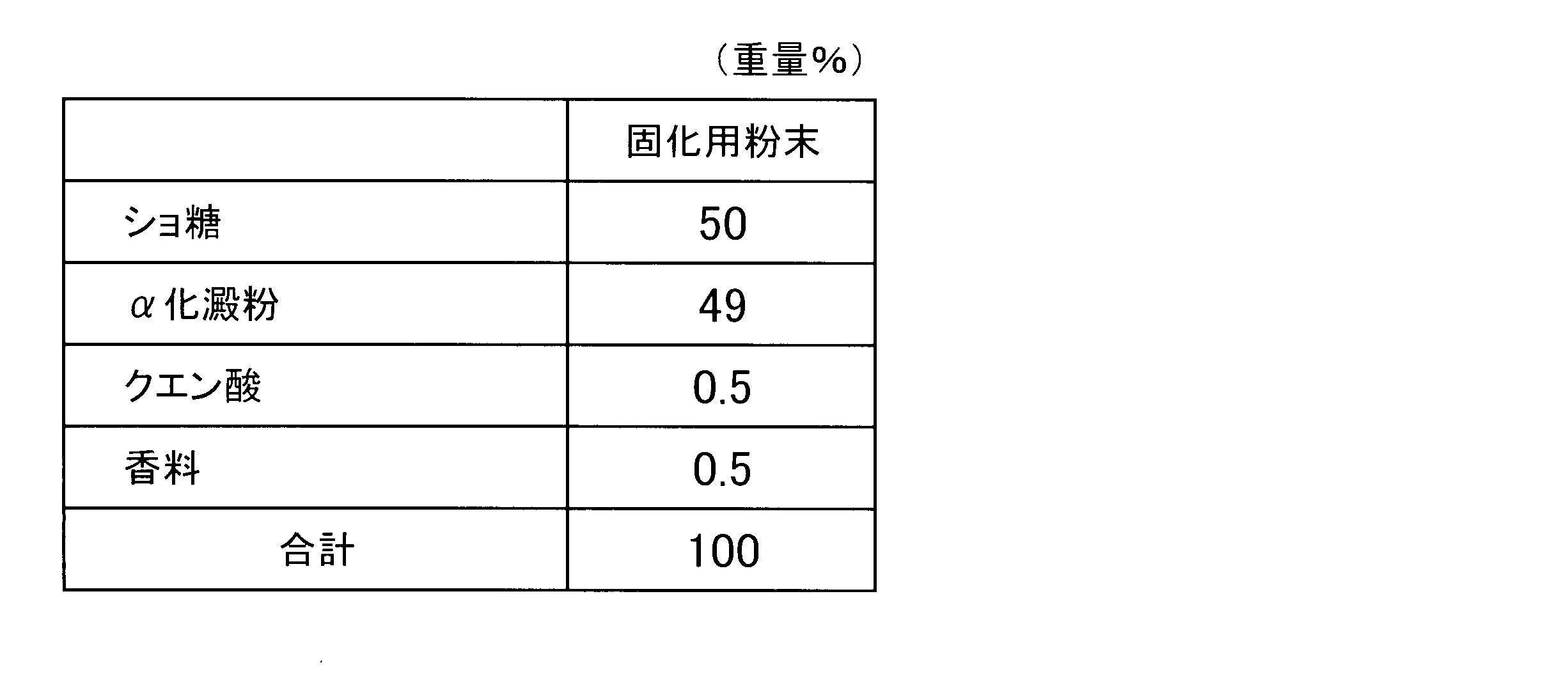
表2に示す組成で各原料を粉体混合し、可食性ペイントを添加することでグミ様食感の固形物となる固化用粉末30を調製した。
表2に示す組成で各原料を粉体混合し、可食性ペイントを添加することでグミ様食感の固形物となる固化用粉末30を調製した。
≪脳の前頭前野のオキシヘモグロビン濃度の計測≫
図4(a)(b)に示すように、食品調製用容器11の型枠設置用凹部23内に予め固化用粉末30を平らに均して敷き詰めた。次に、図4(c)に示すように、この固化用粉末30上にチューリップ形の模様輪郭用型枠13を載置した。次に、上述したように、青、赤、黄の可食性調合前ペイント40と、オレンジ、緑、紫、茶の可食性調合後ペイント41を調製した。
<試験例2>
事前に準備した可食性調合前ペイント40及び可食性調合後ペイント41を用いて、模様輪郭用型枠13内にて配色を施す工程中の脳の前頭前野のオキシヘモグロビン濃度を計測した。
被験者は、満10歳の右利きの健康な子ども男女18名とした。また、計測は試験例2及び対照いずれも20秒で行う上記工程を1回とし、該工程を4回ずつ行い、加算平均を行った。
(1)図1に示すように、被験者の頭部に、ウェアラブル光トポグラフィWOT-220装置のヘッドセット(株式会社日立ハイテクノロジーズ製)を装着した。
(2)まず、チューリップ形の模様輪郭用型枠13の葉の部分を緑に塗るよう指示した。次に、図4(a)(b)に示すように、事前に準備した可食性調合前ペイント40及び可食性調合後ペイント41の中から自由に色を選択し、チューリップ形の模様輪郭用型枠13の花の部分について、スポイト12を用いて花部分の配色を施させ、固化用粉末30を、可食性ペイント中の水分によって、チューリップ形のグミ様食感の固形物を調製させた。なお、葉の部分は緑で配色するように予め指示した。
(3)上記(2)工程中の脳の前頭前野のオキシヘモグロビン濃度を計測した。被験者の頭部は全員同じ程度の大きさであり、前頭前野領域の計測点は図2に示すようにチャンネル7~16を使用した。
図4(a)(b)に示すように、食品調製用容器11の型枠設置用凹部23内に予め固化用粉末30を平らに均して敷き詰めた。次に、図4(c)に示すように、この固化用粉末30上にチューリップ形の模様輪郭用型枠13を載置した。次に、上述したように、青、赤、黄の可食性調合前ペイント40と、オレンジ、緑、紫、茶の可食性調合後ペイント41を調製した。
<試験例2>
事前に準備した可食性調合前ペイント40及び可食性調合後ペイント41を用いて、模様輪郭用型枠13内にて配色を施す工程中の脳の前頭前野のオキシヘモグロビン濃度を計測した。
被験者は、満10歳の右利きの健康な子ども男女18名とした。また、計測は試験例2及び対照いずれも20秒で行う上記工程を1回とし、該工程を4回ずつ行い、加算平均を行った。
(1)図1に示すように、被験者の頭部に、ウェアラブル光トポグラフィWOT-220装置のヘッドセット(株式会社日立ハイテクノロジーズ製)を装着した。
(2)まず、チューリップ形の模様輪郭用型枠13の葉の部分を緑に塗るよう指示した。次に、図4(a)(b)に示すように、事前に準備した可食性調合前ペイント40及び可食性調合後ペイント41の中から自由に色を選択し、チューリップ形の模様輪郭用型枠13の花の部分について、スポイト12を用いて花部分の配色を施させ、固化用粉末30を、可食性ペイント中の水分によって、チューリップ形のグミ様食感の固形物を調製させた。なお、葉の部分は緑で配色するように予め指示した。
(3)上記(2)工程中の脳の前頭前野のオキシヘモグロビン濃度を計測した。被験者の頭部は全員同じ程度の大きさであり、前頭前野領域の計測点は図2に示すようにチャンネル7~16を使用した。
対照として、上記(2)の工程を下記(2´)の工程に替えて、下記(2)動作中の脳の前頭前野のオキシヘモグロビン濃度を計測した。
(2´)図4(c)に示すように、可食性ペイントの黄色を花の部分に、緑を葉の部分に配色するように指示し、型枠設置用凹部23内に敷き詰めた固化用粉末30上に載せたチューリップ形の模様輪郭用型枠13の中にスポイトを用いて添加し、固化用粉末30を、可食性調合前ペイント中の水分によって、3つとも花の部分が黄色で葉の部分が緑色のチューリップ形のグミ様食感の固形物を調製させた。
(2´)図4(c)に示すように、可食性ペイントの黄色を花の部分に、緑を葉の部分に配色するように指示し、型枠設置用凹部23内に敷き詰めた固化用粉末30上に載せたチューリップ形の模様輪郭用型枠13の中にスポイトを用いて添加し、固化用粉末30を、可食性調合前ペイント中の水分によって、3つとも花の部分が黄色で葉の部分が緑色のチューリップ形のグミ様食感の固形物を調製させた。
上記試験例2及び対照の結果を図6に示す。図6は前頭前野のヘモグロビン濃度の平均値をグラフ化したものであり、図6(a)はチャンネル7~16の結果で、図6(b)はチャンネル13、15、16の結果である。図6(a)(b)とも、試験例2のほうが対照に比べ高い値を示した(図6(a)は対照の1.22倍、図6(b)は対照の1.7倍)。また、図6(a)よりも図6(b)のほうが、試験例2と対照との差が顕著であり、図6(b)は有意な差が認められた(p<0.05)。したがって、模様輪郭用枠内を予め指定された配色パターン(黄と緑のみ)で配色するよりも、複数の色調の可食性ペイントを用いて1箇所以上任意の配色を施す工程のほうが、前頭前野を刺激して脳血流量が増加し血液中のオキシヘモグロビンの濃度が上昇するため、前頭前野、特に左前頭前野の活性化に有効であることが示された。
次の試験では、図4(a)、(b)、(d)、(e)に示すような食品キットの調製方法を用いて「絵柄模様を創る工程」が被験者の脳の前頭前野に及ぼす影響について評価した。
<試験例3>
試験例2と同様にして、可食性調合前ペイント40及び固化用粉末30を調製し、可食性調合後ペイント41は事前に調合したものを準備し、図4(d)に示すような熱帯魚形の模様輪郭用型枠14を用いて、型枠内を可食性ペイント(40、41)によって自由に模様を描いて絵柄模様を創らせ、脳の前頭前野のオキシヘモグロビン濃度を計測した。対照として図4(e)に示すような熱帯魚形の型枠内が細分化された模様輪郭用型枠15を用いて配色させた。
また、被験者は、満10歳の右利きの健康な子ども男女18名とした。なお、計測は試験例3及び対照いずれも40秒で行う上記工程を1回とし、該工程を4回ずつ行い、加算平均を行った。
試験例2と同様にして、可食性調合前ペイント40及び固化用粉末30を調製し、可食性調合後ペイント41は事前に調合したものを準備し、図4(d)に示すような熱帯魚形の模様輪郭用型枠14を用いて、型枠内を可食性ペイント(40、41)によって自由に模様を描いて絵柄模様を創らせ、脳の前頭前野のオキシヘモグロビン濃度を計測した。対照として図4(e)に示すような熱帯魚形の型枠内が細分化された模様輪郭用型枠15を用いて配色させた。
また、被験者は、満10歳の右利きの健康な子ども男女18名とした。なお、計測は試験例3及び対照いずれも40秒で行う上記工程を1回とし、該工程を4回ずつ行い、加算平均を行った。
上記試験例3及び対照の結果を図7に示す。図7は前頭前野のヘモグロビン濃度の平均値をグラフ化したものであり、図7(a)はチャンネル7~16の結果で、図7(b)はチャンネル13、15、16の結果である。図7(a)(b)とも、試験例3のほうが対照に比べ高い値を示した(図7(a)は対照の1.13倍、図7(b)は対照の1.29倍)。また、図7(a)よりも図7(b)のほうが、試験例3と対照との差が顕著であり、図7(b)は有意な差が認められた(p<0.05)。したがって、型枠内が細分化された模様輪郭用型枠内に配色するよりも、模様輪郭用型枠内で絵柄模様を創る工程のほうが、前頭前野を刺激して脳血流量が増加し血液中のオキシヘモグロビンの濃度が上昇するため、前頭前野、特に左前頭前野の活性化に有効であることが示された。
なお、試験例2に比べ試験例3のほうが対照と差が小さいのは試験例3の対照では色の選択が必要であったため、また、1回あたりの作業時間が長く途中で終わってしまう子どももいたためと推察される。
上記試験後、被験者全員に、各工程に対する難易度及び楽しさについてアンケート調査を行ったところ、難易度と脳活性度に正の弱い相関(R2=0.0832)が認められた。
11 食品調製用容器
12 スポイト
13 チューリップ形の模様輪郭用型枠
14 熱帯魚形の模様輪郭用型枠
15 熱帯魚形の型枠内が細分化された模様輪郭用型枠
21 可食性調合前ペイント収容部
22 可食性調合後ペイント収容部
23 型枠設置用凹部
30 固化用粉末
40 可食性調合前ペイント
41 可食性調合後ペイント
12 スポイト
13 チューリップ形の模様輪郭用型枠
14 熱帯魚形の模様輪郭用型枠
15 熱帯魚形の型枠内が細分化された模様輪郭用型枠
21 可食性調合前ペイント収容部
22 可食性調合後ペイント収容部
23 型枠設置用凹部
30 固化用粉末
40 可食性調合前ペイント
41 可食性調合後ペイント
Claims (8)
- 複数の色調の異なる可食性ペイントを混合して、任意の新たな色調の可食性ペイントを調合する工程を経て食品を調製することを特徴とする脳の前頭前野活性化方法。
- 複数の色調の異なる可食性ペイントを用いて、絵柄模様に任意の配色を施す工程を経て食品を調製することを特徴とする脳の前頭前野活性化方法。
- 複数の色調の異なる可食性ペイントと模様輪郭用型枠とを用いて、任意の絵柄模様を創る工程を経て食品を調製することを特徴とする脳の前頭前野活性化方法。
- 下記工程(1)(2)を経て食品を調製することを特徴とする脳の前頭前野活性化方法。
(1)複数の色調の異なる可食性ペイントを混合して、任意の新たな色調の可食性調合後ペイントを調合する工程
(2)複数の色調の異なる可食性調合前ペイント及び/又は可食性調合後ペイントを用いて、絵柄模様に任意の配色を施す工程 - 下記工程(1)(3)を経て食品を調製することを特徴とする脳の前頭前野活性化方法。
(1)複数の色調の異なる可食性ペイントを混合して、任意の新たな色調の可食性調合後ペイントを調合する工程
(3)複数の色調の異なる可食性調合前ペイント及び/又は可食性調合後ペイントと模様輪郭用型枠とを用いて、任意の絵柄模様を創る工程 - 下記(A)(B)を備える脳活性化食品キットを用いて食品を調製することを特徴とする脳の前頭前野活性化方法。
(A)複数の色調の異なる可食性調合前ペイント
(B)上記(A)を各々別に収容するための、複数の可食性調合前ペイント収容部と該可食性調合前ペイントを2種以上混合して任意の新たな色調の可食性調合後ペイントを調合するための可食性調合後ペイント収容部とを備えた食品調製用容器 - さらに、下記(C)を備えてなる請求項6記載の脳の前頭前野活性化方法。
(C)色調の異なる可食性調合前ペイント及び/又は可食性調合後ペイントを用いて、絵柄模様に配色を施す及び/又は絵柄模様を創るための模様輪郭用型枠 - さらに、下記(D)を備えてなる請求項6又は7記載の脳の前頭前野活性化方法。
(D)上記可食性ペイントをハンドリングする、調合する、絵柄模様に配色を施す、絵柄模様を創る、の少なくとも1つを行うためのスポイト
Priority Applications (1)
| Application Number | Priority Date | Filing Date | Title |
|---|---|---|---|
| PCT/JP2016/055184 WO2017145254A1 (ja) | 2016-02-23 | 2016-02-23 | 食品を用いた脳の前頭前野活性化方法 |
Applications Claiming Priority (1)
| Application Number | Priority Date | Filing Date | Title |
|---|---|---|---|
| PCT/JP2016/055184 WO2017145254A1 (ja) | 2016-02-23 | 2016-02-23 | 食品を用いた脳の前頭前野活性化方法 |
Publications (1)
| Publication Number | Publication Date |
|---|---|
| WO2017145254A1 true WO2017145254A1 (ja) | 2017-08-31 |
Family
ID=59685977
Family Applications (1)
| Application Number | Title | Priority Date | Filing Date |
|---|---|---|---|
| PCT/JP2016/055184 Ceased WO2017145254A1 (ja) | 2016-02-23 | 2016-02-23 | 食品を用いた脳の前頭前野活性化方法 |
Country Status (1)
| Country | Link |
|---|---|
| WO (1) | WO2017145254A1 (ja) |
Citations (2)
| Publication number | Priority date | Publication date | Assignee | Title |
|---|---|---|---|---|
| JPH02200148A (ja) * | 1989-01-30 | 1990-08-08 | Kanebo Ltd | 粉末組成物 |
| JP2015123058A (ja) * | 2013-12-27 | 2015-07-06 | クラシエフーズ株式会社 | 成型菓子用粉末及びそれを用いた組合せ菓子 |
-
2016
- 2016-02-23 WO PCT/JP2016/055184 patent/WO2017145254A1/ja not_active Ceased
Patent Citations (2)
| Publication number | Priority date | Publication date | Assignee | Title |
|---|---|---|---|---|
| JPH02200148A (ja) * | 1989-01-30 | 1990-08-08 | Kanebo Ltd | 粉末組成物 |
| JP2015123058A (ja) * | 2013-12-27 | 2015-07-06 | クラシエフーズ株式会社 | 成型菓子用粉末及びそれを用いた組合せ菓子 |
Non-Patent Citations (6)
| Title |
|---|
| CHIIKU KASHI], OEKAKI CAN LAND, BLOG MAINICHI MICHIKUSA, 26 September 2014 (2014-09-26), Retrieved from the Internet <URL:http://mainichi.michi93.jp/p7116.html> [retrieved on 20160322] * |
| HIDENORI KUSUMOTO, SOZO KOI NI OKERU SEISAKU TAISHO OYOBI DOGU NO EIKYO NO HYOKA, March 2009 (2009-03-01), Retrieved from the Internet <URL:http://www.kochitech.ac.jp/library/ron/2008/2008mech/a1090142.pdf> [retrieved on 20160322] * |
| KENJI KAWASAKI ET AL.: "Tezukuri Kashi ga Jido no Zento Zen'ya No Katsudo ni Oyobosu Eikyo", THE JAPAN SOCIETY OF COOKERY SCIENCE TAIKAI KENKYU HAPPYO YOSHISHU, vol. 2015, 24 August 2015 (2015-08-24), pages 101 * |
| NEWS RELEASE SUKINA IRO O KUMIAWASETE JIBUN DAKENO RITTAI RAMUNE O TSUKURO! 'COLORFUL RAMUNE LAND' SHIN-HATSUBAI POPIN'COOKIN' SOZO SERIES, 3 February 2015 (2015-02-03), Retrieved from the Internet <URL:http://www.kracie.co.jp/release/10106835_3833.html> [retrieved on 20160322] * |
| NEWS RELEASE SUKINA IRO O TSUKUTTE, JIYU NI CANDY NI NURO! 'OEKAKI CAN LAND' SHIN-HATSUBAI JIBUN DAKENO CANDY GA TSUKURERU, 16 January 2014 (2014-01-16), Retrieved from the Internet <URL:http://www.kracie.co.jp/release/10094899_3833.html> [retrieved on 20160322] * |
| TABERARERU NENDO 'YUMMY DOUGH, 27 January 2012 (2012-01-27), Retrieved from the Internet <URL:http://allabout.co.jp/gm/gc/389849> [retrieved on 20160322] * |
Similar Documents
| Publication | Publication Date | Title |
|---|---|---|
| Wang et al. | Shortening replacement by hydroxypropyl methylcellulose-based oleogels obtained by different indirect approaches. Texture and sensory properties of baked puff pastry | |
| BR112017013004B1 (pt) | Produto frito obtido a partir de uma composição para um produto frito, uso de uma farinha de microalgas como substituta da gordura e método de preparação de um produto frito | |
| Ekantari et al. | Stability of chocolate bars fortified with nanocapsules carotenoid of Spirulina platensis | |
| TW201836689A (zh) | 模擬製作食品套組、玩具組、及模擬食品之製造方法 | |
| CN103210987A (zh) | 一种彩色木薯月饼皮、包含该月饼皮的月饼及其制备方法 | |
| CN102578183A (zh) | 一种增强记忆缓解脑疲劳的面包 | |
| JP6976611B2 (ja) | 食品を用いた脳の前頭前野活性化方法 | |
| JP6791639B2 (ja) | 食品を用いた脳の前頭前野活性化方法 | |
| ES2381347A1 (es) | Pan de color y procedimiento de obtención del mismo. | |
| RU2496350C1 (ru) | Способ приготовления кулинарного изделия из рыбного фарша для школьного питания | |
| KR20130102437A (ko) | 닥나무를 포함하는 과자 또는 빵의 제조 방법 및 그 방법에 의해 제조된 과자 또는 빵 | |
| CN105192040A (zh) | 一种芒果豆蓉油皮月饼的制作方法 | |
| JPS5942864A (ja) | 食品の着色法 | |
| CN109006934A (zh) | 一种含有虾青素的功能性月饼及其制备方法 | |
| Taylor et al. | We can cook! Snack preparation with toddlers and twos | |
| CN206963832U (zh) | 一种趣味曲奇饼干 | |
| Hammond et al. | Creepy cooking! | |
| EP1629726B1 (de) | Verfahren zur Färbung von Eiern mittels einer Farbübertragungskomponente | |
| RU2768981C1 (ru) | Жировая композиция, способ получения указанной жировой композиции и продукт, содержащий данную жировую композицию | |
| CN202354311U (zh) | 一种可健脑葫芦糖 | |
| Mushet et al. | The Art and Soul of Baking | |
| Moran | Minibeasts: Nice or nasty? | |
| CN102485005A (zh) | 一种苹果蛋糕 | |
| Kench | The Icing on the Communication: Text or Video? | |
| Gagnaire | Culinary Constructivism and Note by Note Cooking |
Legal Events
| Date | Code | Title | Description |
|---|---|---|---|
| NENP | Non-entry into the national phase |
Ref country code: DE |
|
| 121 | Ep: the epo has been informed by wipo that ep was designated in this application |
Ref document number: 16891413 Country of ref document: EP Kind code of ref document: A1 |
|
| 122 | Ep: pct application non-entry in european phase |
Ref document number: 16891413 Country of ref document: EP Kind code of ref document: A1 |
|
| NENP | Non-entry into the national phase |
Ref country code: JP |