WO2017163284A1 - Dispositif de traduction - Google Patents
Dispositif de traduction Download PDFInfo
- Publication number
- WO2017163284A1 WO2017163284A1 PCT/JP2016/004155 JP2016004155W WO2017163284A1 WO 2017163284 A1 WO2017163284 A1 WO 2017163284A1 JP 2016004155 W JP2016004155 W JP 2016004155W WO 2017163284 A1 WO2017163284 A1 WO 2017163284A1
- Authority
- WO
- WIPO (PCT)
- Prior art keywords
- translation
- data
- utterance
- control unit
- translated
- Prior art date
- Legal status (The legal status is an assumption and is not a legal conclusion. Google has not performed a legal analysis and makes no representation as to the accuracy of the status listed.)
- Ceased
Links
Images




Classifications
-
- G—PHYSICS
- G06—COMPUTING OR CALCULATING; COUNTING
- G06F—ELECTRIC DIGITAL DATA PROCESSING
- G06F40/00—Handling natural language data
- G06F40/40—Processing or translation of natural language
- G06F40/51—Translation evaluation
-
- G—PHYSICS
- G06—COMPUTING OR CALCULATING; COUNTING
- G06F—ELECTRIC DIGITAL DATA PROCESSING
- G06F40/00—Handling natural language data
- G06F40/20—Natural language analysis
- G06F40/237—Lexical tools
- G06F40/242—Dictionaries
-
- G—PHYSICS
- G06—COMPUTING OR CALCULATING; COUNTING
- G06F—ELECTRIC DIGITAL DATA PROCESSING
- G06F40/00—Handling natural language data
- G06F40/40—Processing or translation of natural language
- G06F40/58—Use of machine translation, e.g. for multi-lingual retrieval, for server-side translation for client devices or for real-time translation
-
- G—PHYSICS
- G10—MUSICAL INSTRUMENTS; ACOUSTICS
- G10L—SPEECH ANALYSIS TECHNIQUES OR SPEECH SYNTHESIS; SPEECH RECOGNITION; SPEECH OR VOICE PROCESSING TECHNIQUES; SPEECH OR AUDIO CODING OR DECODING
- G10L15/00—Speech recognition
- G10L15/22—Procedures used during a speech recognition process, e.g. man-machine dialogue
-
- G—PHYSICS
- G10—MUSICAL INSTRUMENTS; ACOUSTICS
- G10L—SPEECH ANALYSIS TECHNIQUES OR SPEECH SYNTHESIS; SPEECH RECOGNITION; SPEECH OR VOICE PROCESSING TECHNIQUES; SPEECH OR AUDIO CODING OR DECODING
- G10L13/00—Speech synthesis; Text to speech systems
-
- G—PHYSICS
- G10—MUSICAL INSTRUMENTS; ACOUSTICS
- G10L—SPEECH ANALYSIS TECHNIQUES OR SPEECH SYNTHESIS; SPEECH RECOGNITION; SPEECH OR VOICE PROCESSING TECHNIQUES; SPEECH OR AUDIO CODING OR DECODING
- G10L15/00—Speech recognition
- G10L15/26—Speech to text systems
Definitions
- the present disclosure relates to a translation device that translates an utterance (first language) into a translated story (second language different from the first language).
- Patent Document 1 discloses a translation system that performs translation using an automatic translation function of a computer.
- This translation system translates the input language input from the first party through the language input unit into the translation language to the second party by the translation conversion unit, and converts it into the translation language to the first party by the retranslation conversion unit.
- the re-translation language is re-translated and the re-translation language is always presented to the first party through the feedback language output unit.
- the first party can always check whether the translation language for the second party has been translated with the correct expression content. If the expression content is against the intention, the input language is convenient for translation interpretation. Can be re-entered with a different expression. Therefore, it is possible to make it easy to maintain language that is convenient for translation interpretation, without being anxious about whether or not the other party is translating correctly.
- This disclosure provides a translation device that improves translation accuracy.
- the translation device includes an input unit that inputs an utterance of a speaker and generates utterance data, a control unit that determines accuracy of a translation result when the utterance data is translated into translated utterance data, and a determination by the control unit A notification unit that notifies the speaker of the result, and an output unit that outputs a translation story corresponding to the translation story data.
- the control unit controls the output unit so as not to output the translation, and controls the notification unit so as to notify the determination result.
- the translation device in the present disclosure can improve translation accuracy.
- FIG. 2 is a block diagram showing an electrical configuration of the translation apparatus according to the first embodiment.
- Flowchart of translation operation by control unit of translation apparatus according to embodiment 1 The figure which shows an example of the translation operation
- Embodiment 1 will be described with reference to FIGS.
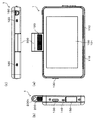
- FIG. 1 is a perspective view showing an external appearance of the translation apparatus according to the first embodiment
- FIG. 2 is an (a) front view and (b) a side view showing the external appearance of the translation apparatus according to the first embodiment.
- c) It is a top view.
- a liquid crystal display (display unit) 100 On the surface side of the translation apparatus 1, a liquid crystal display (display unit) 100, a capacitive touch panel (operation unit) 101, and a speaker opening 110 are provided.
- the display 100 and the touch panel 101 will be described in detail in the description of the electrical configuration of the translation apparatus to be described later.
- a speaker described later is provided inside the translation apparatus 1 corresponding to the speaker opening 110.
- the strap attachment portion 200 is provided on the upper side of the translation device 1, and the translation device 1 can be hung on the user's neck using a strap attached to the through hole 200h of the attachment portion 200.
- a microphone opening 120 is provided on the upper side surface of the translation device 1 and the front surface side of the mounting portion 200. Inside the translation apparatus 1 corresponding to the microphone opening 120, a microphone described later is provided.
- the power switch 130 and the LED 140 are provided on the left side of the translation apparatus 1.
- the power switch 130 is a switch for turning on / off the power of the translation apparatus 1.
- the LED 140 will be described in detail in the description of the electrical configuration of the translation apparatus to be described later.
- USB terminal connection unit 150 is provided on the left side surface of the translation apparatus 1, and the headphone terminal connection unit 160 is provided on the upper surface side.
- FIG. 3 is a block diagram of an electrical configuration of the translation apparatus according to the first embodiment.
- the translation device 1 inputs a speech of a first language (for example, Japanese) by a speaker and translates the speech into a second language (for example, English) by referring to a translation dictionary. Output audio.
- the translation apparatus 1 notifies the speaker that the accuracy of the translation result is low without outputting the translation, and until the accuracy of the translation result increases to a predetermined value or more.
- the translation device 1 outputs the translated story when the accuracy of the translation result becomes high again by utterance.
- the translation apparatus 1 updates the translation dictionary by associating data indicating all utterances uttered by the speaker before the translation utterance with high accuracy of the translation result is obtained and data indicating the translation utterance.
- the utterance means an act of speaking and its voice
- the translated story means a voice indicating a sentence as a translation result.
- the translation apparatus 1 includes a microphone (input unit) 10, a memory 12, a control unit 14, a speaker (output unit) 16, a display (display unit) 100, a touch panel 101 (operation unit), and an LED (notification unit). 140).
- the microphone 10 is a device that converts sound into an electrical signal.
- the microphone 10 inputs an utterance by a speaker and converts the sound into an electric signal (speech waveform).
- a microphone with high directivity is used in order to reduce picking up noise other than the voice of the speaker.
- the microphone 10 is an example of an input unit that inputs an utterance by a speaker.
- the memory 12 is a storage element, and includes a flash memory, a ferroelectric memory, an HDD, an SSD, and the like.
- the memory 12 stores a reference table for speech recognition and speech synthesis for each of a plurality of languages.
- the reference table for speech recognition is a table in which character data and features of the speech waveform (for example, an acoustic model as an acoustic feature and a language model as a linguistic feature) are associated with each other.
- the reference table for speech synthesis is a table in which character data and features of the speech waveform are associated with each other.
- the memory 12 stores a plurality of translation dictionaries for translation for each type of language translation (for example, language translation from Japanese to English, language translation from English to Japanese).
- the translation dictionary is a dictionary in which character string (text) utterance data and character string translated speech data are associated with each other (see FIG. 6 described later and the description thereof).
- the translation dictionary stores and updates utterance data and translation narration data in units of one sentence.
- the memory 12 stores various programs for the control unit 14.
- the control unit 14 includes a CPU, an MPU, and the like, and controls the entire translation apparatus 1 by executing various programs stored in the memory.
- the control unit 14 receives an electric signal (speech waveform) from the microphone 10, recognizes speech, generates speech data of a character string, and translates the speech data into translated speech data of a character string.
- the control part 14 determines the precision of a translation result, and controls the lighting color of LED140 according to a determination result.
- the control unit 14 controls the update of the translation dictionary in the memory 12 according to the determination result.
- the control unit 14 synthesizes speech of the translated story data to generate an electrical signal (speech waveform), and controls the speaker 16 to output the translated story as speech.
- the control unit 14 generates a character image for displaying the translated story data, and controls the display 100 to display the character image.
- control unit 14 The function of the control unit 14 is realized by cooperation of hardware and software. However, the control unit 14 may be realized only by a hardware circuit designed exclusively for realizing a predetermined function. For example, the control unit 14 can be composed of not only a CPU and MPU but also a DSP, FPGA, ASIC, or the like.
- Speaker 16 is a device that converts an electrical signal into sound.
- the speaker 16 outputs a voice based on an electric signal (voice waveform) from the control unit 14 as a translated story.
- the speaker 16 is an example of an output unit that outputs a translated story (voice indicating translated content).
- the translated story may be output from the headphone terminal connection unit 160 connected to an external speaker.
- the display 100 is a device that displays an image.
- the display 100 displays the character image from the control unit 14. Further, the display 100 displays a selection screen for the spoken language and the translated spoken language under the control of the control unit 14.
- the display 100 also displays an operation screen for starting speech such as “speech switch”.
- the touch panel 101 functions as various operation units such as an utterance language / translation language switching switch and an utterance switch.
- the spoken language / translated language switching switch is a switch for switching the translation from Japanese to English, the translation from English to Japanese, and the like in conjunction with the display content of the display 100.
- the utterance switch is a switch for informing the translation apparatus 1 of the start of the utterance in conjunction with the display content of the display 100 after switching between the utterance language and the translation language.
- the LED 140 performs green lighting or red lighting based on a command from the control unit 14.
- LED140 expresses the accuracy of a translation result, for example with lighting color. For example, when the LED 140 is lit in green, the translation result is high in accuracy and the translation result can be output. When the LED 140 is lit in red, the translation result is low in accuracy and prompts the user to speak again. Represents that The LED 140 is an example of a notification unit that notifies the speaker of the accuracy of the translation result. The notification of the accuracy of the translation result may be displayed on the display 100.
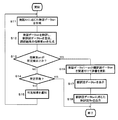
- FIG. 4 is a flowchart of the translation operation performed by the control unit 14 of the translation apparatus 1.
- n indicates the number of utterances input.
- “An” indicates the nth utterance, and “an”, “bn”, “ ⁇ n”, and “Bn” respectively indicate the utterance data corresponding to the nth utterance, the translated story data, the reliability of the translation result, and the translation. Show the story.
- the utterance An is the voice of the speaker
- the utterance data an is data of a character string (text) obtained by performing a voice recognition process on the utterance An.
- the translated story data bn is character string (text) data
- the translated story Bn is speech output from the speaker 16 by performing speech synthesis processing on the translated story data bn.
- the control unit 14 causes the display 100 to display a selection screen for the spoken language and the translated spoken language.
- the speaker operates the touch panel 101 to select an utterance language and a translation language (for example, translation from Japanese to English).
- a translation language for example, translation from Japanese to English.
- the control unit 14 determines the utterance language and the translation language, and is set so as to refer to the Japanese speech recognition reference table, the Japanese-English translation dictionary, and the English speech synthesis reference table in the memory 12. To do.
- control unit 14 causes the display 100 to display a speech start operation screen such as “speech switch”.
- a speech start operation screen such as “speech switch”.
- the speaker operates the touch panel 101 and selects to speak.
- the control unit 14 recognizes that the utterance is started, and performs the translation operation shown in FIG.
- the microphone 10 When an utterance An by a speaker is input to the microphone 10, the microphone 10 generates an electrical signal (voice waveform) corresponding to the utterance An of the speaker.
- the control unit 14 receives an electrical signal from the microphone 10 and performs speech recognition to generate utterance data an (S11).
- the speech recognition technology is a technology for generating speech data an from a speech waveform by extracting acoustic features and linguistic features of speech from the speech waveform. Specifically, the acoustic features of the speech are extracted using an acoustic model, and a combination of words that are more natural as a language is determined by the language model for the extracted phoneme data. Generate.
- the control unit 14 analyzes the speech waveform indicated by the electrical signal using an acoustic model, and generates utterance data an of a character string using the Japanese language model for the characteristics of the analyzed speech waveform.
- the voice recognition function of the control unit 14 and the microphone 10 are examples of the input unit.
- the control unit 14 translates the utterance data an to generate character string translation story data bn, and generates a translation result reliability ⁇ n (S12).
- the control unit 14 refers to a Japanese-English translation dictionary and generates translated story data bn corresponding to the utterance data an.
- the translation dictionary is a one-sentence dictionary, but the control unit 14 can replace numeric data, proper nouns such as personal names and place names, and the like.
- the control unit 14 generates the reliability ⁇ n of the translation result.
- the reliability ⁇ n is information indicating the accuracy of the translation result.
- Known techniques such as BLUE and RIBES are used as a translation technique and a technique for obtaining the reliability of the translation result.
- the control unit 14 determines whether or not the reliability ⁇ n of the translation result is a predetermined value (for example, 60%) or more (S13). When the reliability ⁇ n is less than the predetermined value, the control unit 14 does not output the translation story data bn, and temporarily stores the speech data an and the translation story data bn in the memory 12. At this time, the control unit 14 determines whether or not the current utterance input number n has reached a predetermined number (S14), and the current utterance input number n has not reached a predetermined number (for example, five times). Therefore, without outputting the translation story data bn, the determination result is notified to the speaker (S15), and the process returns to step S11. Specifically, the control unit 14 causes the LED 140 to light up in red without causing the speaker 16 to output the translated story Bn corresponding to the translated story data bn.
- the speaker when the reliability ⁇ n of the translation result is lower than a predetermined value, the speaker is notified of this, so that the speaker can be prompted to speak again with a different expression.
- the reliability ⁇ n of the translation result when the reliability ⁇ n of the translation result is as low as less than a predetermined value, the translation story data bn is not output autonomously, so that the translation story Bn with an uncertain translation result is output. There is nothing.
- step S13 when the reliability ⁇ n reaches a predetermined value or more, the control unit 14 turns on the LED 140 in green to notify the speaker that the translated speech data bn having high reliability has been obtained. At this time, the control unit 14 updates the translation dictionary, displays the translated story data bn, and outputs the translated story Bn from the speaker 16 (S16 to S18).
- control unit 14 associates all the utterance data a1 to an generated before the translation utterance data bn having a reliability of a predetermined value or more with the translation utterance data bn, and translates them in the memory 12.
- the dictionary is updated (S16).
- all the utterances of the speaker can be stored (learned) in association with the final translation result, and the translation result can be obtained without repeating the utterance again at the next (second or later) utterance. Can be output quickly.
- control unit 14 generates a character image for displaying the translation story data bn and displays the character image on the display 100 (S17).
- the control unit 14 may display all the translation history so far (utterance data a1 to an, translation story data b1 to bn, translation result reliability ⁇ 1 to ⁇ n) on the display 100.
- the control unit 14 synthesizes speech of the translated story data bn to generate an electrical signal (speech waveform), and outputs the translated story Bn (speech) corresponding to the electrical signal from the speaker 16 (S18).
- speech waveform an electrical signal
- speech Bn the translated story Bn
- the control unit 14 refers to an English speech synthesis reference table and generates an electrical signal obtained by converting the translated speech data bn of a character string into a speech waveform. This electrical signal is converted into speech by the speaker 16 and output as a translated story Bn.
- the voice synthesis function of the control unit 14 and the speaker 16 are examples of the output unit.
- step S14 the control unit 14 also ends the above translation operation when the number of utterance inputs n this time has reached a predetermined number.
- the control unit 14 causes the display 100 to display an operation screen for starting speech such as an “utterance switch” or a selection screen for the speech language and the translated speech language to prepare for the next translation operation.
- FIG. 5 is a diagram illustrating an example of a translation operation performed by the control unit 14 of the translation apparatus 1.
- FIG. 6A is a diagram illustrating an example of information in the translation dictionary before the update
- FIG. 6B is a diagram illustrating an example of information in the translation dictionary after the update.
- the translation dictionary is registered with only “How much is this?” As utterance data associated with the translation story data “How much is this?” As shown in FIG. Yes.
- the control unit 14 since the reliability ⁇ 1 of the translation result is less than a predetermined value (for example, 60%) (S13), the control unit 14 does not output the translation story data b1 and temporarily stores the speech data a1 in the memory 12. Store. At this time, since the number n of utterances input this time has not reached a predetermined number (for example, 5 times) (S14), the control unit 14 turns on the LED 140 in red and outputs the determination result without outputting the translation utterance data b1. To the speaker (S15), and the process returns to step S11.
- a predetermined value for example, 60%
- the speaker recognizes that the utterance A1 “Kono Nanbo?” Has not been translated with high accuracy, and tries to translate with a different expression.
- Utterance data a2 “how much is this?” Is generated (S11).
- the control unit 14 translates the utterance data a2 into the translated utterance data b2 “How much is this?”. At this time, as shown in FIG.
- the control unit 14 since the utterance data a1 “How much is this?” Is registered in the translation dictionary before the update, the translation utterance data b1 is a complete translation. Therefore, the control unit 14 generates a translation result reliability ⁇ 2 as high as 100% (S12).
- the control unit 14 since the reliability ⁇ 2 of the translation result is equal to or higher than a predetermined value (for example, 60%) (S13), the control unit 14 turns on the LED 140 in green so that the translated speech data b2 with high reliability is obtained. Notify the speaker. Further, as shown in FIG. 6 (b), the control unit 14 determines that all the utterance data a1 “this what?” And a2 “this” generated until the translation utterance data b2 having a reliability of a predetermined value or more is obtained. The translation dictionary in the memory 12 is updated in association with the translation story data b2 “How much is this?” (S16). Next, the control unit 14 displays the translated story data b2 on the display 100 (S17).
- a predetermined value for example, 60%
- control unit 14 and the speaker 16 perform speech synthesis of the translated story data b2 to generate an electrical signal (speech waveform), and output the translated story Bn (speech) corresponding to the electrical signal from the speaker 16 ( S18). In this way, translation is performed and the translation dictionary is updated.
- translation apparatus 1 includes microphone 10, control unit 14, LED 140, and speaker 16.
- the microphone 10 inputs the utterance of the speaker and generates utterance data.
- the control unit 14 determines the accuracy of the translation result when the utterance data is translated into the translation utterance data.
- the LED 140 notifies the speaker of the determination result of the control unit 14.
- the speaker 16 outputs a translated story corresponding to the translated story data.
- the control unit 14 controls the speaker 16 so as not to output the translation story and controls the LED 140 so as to notify the determination result.
- the control unit 14 when the reliability (accuracy) ⁇ n of the translation result is low precision such that it is less than a predetermined value, the control unit 14 notifies the judgment result by turning on the LED 140 in red. Therefore, the speaker can be prompted (requested) to speak again with a different expression. Thereby, translation can be performed a plurality of times and the translation accuracy can be improved. Further, since the control unit does not output the translation Bn from the speaker 16 until the reliability (accuracy) of the translation result increases to a predetermined value or more, the translation Bn with an uncertain translation result is not output. Only the translation story Bn with high translation accuracy is output.
- translation apparatus 1 further includes a memory 12 that stores a translation dictionary in which speech data an and translation story data bn are associated, and control unit 14 performs translation based on the translation dictionary.
- control unit 14 determines that the reliability (accuracy) ⁇ n of the translation result is greater than or equal to a predetermined value
- the control unit 14 is generated until obtaining the translated speech data bn whose reliability (accuracy) ⁇ n of the translation result is greater than or equal to the predetermined value.
- the translation dictionary is updated by associating all the utterance data a1 to an with the translation utterance data bn.
- the control unit 14 determines that the reliability (accuracy) ⁇ n of the translation result is equal to or higher than a predetermined value, the control unit 14 obtains the translated speech data bn whose reliability (accuracy) ⁇ n of the translation result is equal to or higher than the predetermined value.
- the translation dictionary may be updated by associating a part of the generated utterance data a1 to an with the translation utterance data bn.
- the translation accuracy is determined based on the reliability ⁇ n of the translation result provided at the time of translation.
- the translation accuracy is determined by comparing the reverse translation speech data bnx of the reverse translation result obtained by reverse translation of the translation speech data bn of the translation result into the speech language, and the speech data an.
- the configuration of the translation apparatus of the second embodiment is basically the same as that of the first embodiment described with reference to FIG. 3, but the function and operation of the control unit 14 are different from those described above.
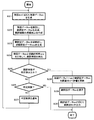
- FIG. 5 is a flowchart of the translation operation by the control unit 14 in the second embodiment.
- steps S21 to S22 are the same as the operations in steps S11 to S12 in the first embodiment shown in FIG. That is, the control unit 14 performs speech recognition of the utterance An by the speaker to generate the utterance data an (S21), translates the utterance data an, and generates translated text data bn of the character string (S22).
- control unit 14 back-translates the translated story data bn into an utterance language (Japanese) to generate reverse-translated story data bnx of a character string (S23).
- the control unit 14 refers to an English-Japanese translation dictionary stored in the memory 12 and generates reverse translation story data bnx corresponding to the translation story data bn.
- the reverse translation technique may be the same as the translation technique described above.
- control unit 14 compares the speech data an and the reverse translation speech data bnx, and detects the accuracy of the translation result of the translated speech data (S24). Specifically, the control unit 14 obtains the accuracy of the translation result based on the matching degree of each word (subject, predicate, object, complement, particle, etc.).
- the control unit 14 determines whether or not the accuracy of the translation result is a predetermined value (for example, 60%) or more (S25). When the accuracy is less than the predetermined value, the control unit 14 does not output the translation story data bn, and temporarily stores the speech data an, the translation story data bn, and the reverse translation story data bnx in the memory 12.
- a predetermined value for example, 60%
- S25 the control unit 14 does not output the translation story data bn, and temporarily stores the speech data an, the translation story data bn, and the reverse translation story data bnx in the memory 12.
- steps S26 to S30 are the same as the operations in steps S14 to S18 in the first embodiment shown in FIG. That is, the control unit 14 determines whether or not the current utterance input number n has reached a predetermined number (for example, 5 times) (S26), and when the current utterance input number n has not reached the predetermined number. Without outputting the translated story data bn, the LED 140 is lit red to notify the speaker of the determination result (S27), and the process returns to step S21.
- a predetermined number for example, 5 times
- step S25 when the accuracy of the translation result reaches a predetermined value or more, the control unit 14 makes all the utterance data a1 to an generated before the translation story data bn having the reliability of the predetermined value or more is obtained. Is associated with the translation story data bn, and the translation dictionary in the memory 12 is updated (S28). Next, the control part 14 produces
- Embodiments 1 and 2 have been described as examples of the technology disclosed in the present application. However, the technology in the present disclosure is not limited to this, and can also be applied to an embodiment in which changes, substitutions, additions, omissions, and the like are appropriately performed. In addition, it is possible to combine the components described in the first and second embodiments to form a new embodiment. Therefore, other embodiments will be exemplified below.
- the operation of the control unit 14 according to the first and second embodiments may be performed by a server device on the network.
- a translation dictionary for translation and a reference table for speech recognition and speech synthesis are stored in the memory of the server device.
- only part of the operation of the control unit 14 (for example, translation operation) may be performed by a server device on the network.
- an utterance An (voice) of a speaker input via the microphone 10 in the terminal device is converted into voice data, and the voice data is transmitted from the terminal device to the server device via the network.
- the server device performs speech recognition on the received speech data to generate utterance data an (S11), translates the utterance data an, and generates translated speech data bn (S12).
- the server device notifies the terminal device via the network (S15).
- the terminal device does not output the translated story data bn, but lights the LED 140 in red to notify the speaker that the reliability of the translation result is low.
- the server device applies all the utterance data a1 to an generated until the translation utterance data bn having the reliability greater than or equal to the predetermined value is obtained.
- the translation dictionary in its own memory is updated in association with the translation story data bn (S16). Then, the server device performs speech synthesis of the translated story data bn to generate speech data, and transmits this speech data to the terminal device via the network (S18). Accordingly, the terminal device outputs the translated story Bn (voice) corresponding to the voice data from the speaker 16.
- control unit 14 The operation of the control unit 14 according to the first and second embodiments can be applied to various devices such as smartphones and tablets.
- the program executed by the control unit 14 may be provided via a network, or stored in a computer-readable recording medium (non-transitoryHDDcomputer readable medium) such as a CD-ROM, HDD, or SSD. May be provided.
- control unit 14 turns on the LED 140 to notify the speaker of the determination result.
- control unit 14 may output the sound to the speaker, or may display characters or pictures on the display 100. May be displayed.
- the control unit 14 ends the translation operation when the number of utterance inputs n reaches a predetermined number. For example, the control unit 14 translates when a predetermined time elapses from the first utterance input time. The operation may be terminated. Further, the control unit 14 always displays the “speech switch” (reset switch) on the display 100 and translates when the utterance switch (reset switch) of the touch panel 101 linked with the display “speech switch” on the display 100 is operated. You may reset to the state which complete
- the present disclosure can be applied to a translation device that translates an utterance (first language) into a translated story (second language different from the first language).
Landscapes
- Engineering & Computer Science (AREA)
- Theoretical Computer Science (AREA)
- Audiology, Speech & Language Pathology (AREA)
- Health & Medical Sciences (AREA)
- Computational Linguistics (AREA)
- Physics & Mathematics (AREA)
- General Health & Medical Sciences (AREA)
- General Engineering & Computer Science (AREA)
- General Physics & Mathematics (AREA)
- Artificial Intelligence (AREA)
- Human Computer Interaction (AREA)
- Acoustics & Sound (AREA)
- Multimedia (AREA)
- Machine Translation (AREA)
Abstract
L'invention concerne un dispositif de traduction 1 comportant: un microphone 10 qui reçoit de la parole d'une personne qui parle et génère des données de parole; une unité de commande 14 qui détermine la précision des résultats de traduction obtenus par traduction des données de parole en données de parole traduites; une LED 140 qui notifie à la personne qui parle le résultat de la détermination par l'unité de commande 14; et un haut-parleur 16 qui délivre une parole traduite correspondant aux données de parole traduites. Si l'unité de commande 14 détermine que la précision des résultats de traduction est inférieure à une valeur prédéterminée, l'unité de commande 14 commande le haut-parleur 16 pour l'empêcher d'émettre la parole traduite, et commande également la LED 140 pour fournir une notification du résultat de détermination.
Priority Applications (2)
| Application Number | Priority Date | Filing Date | Title |
|---|---|---|---|
| JP2017548322A JP6555553B2 (ja) | 2016-03-25 | 2016-09-13 | 翻訳装置 |
| US15/723,696 US10671814B2 (en) | 2016-03-25 | 2017-10-03 | Translation device and program recording medium |
Applications Claiming Priority (2)
| Application Number | Priority Date | Filing Date | Title |
|---|---|---|---|
| JP2016062353 | 2016-03-25 | ||
| JP2016-062353 | 2016-03-25 |
Related Child Applications (1)
| Application Number | Title | Priority Date | Filing Date |
|---|---|---|---|
| US15/723,696 Continuation US10671814B2 (en) | 2016-03-25 | 2017-10-03 | Translation device and program recording medium |
Publications (1)
| Publication Number | Publication Date |
|---|---|
| WO2017163284A1 true WO2017163284A1 (fr) | 2017-09-28 |
Family
ID=59899996
Family Applications (1)
| Application Number | Title | Priority Date | Filing Date |
|---|---|---|---|
| PCT/JP2016/004155 Ceased WO2017163284A1 (fr) | 2016-03-25 | 2016-09-13 | Dispositif de traduction |
Country Status (3)
| Country | Link |
|---|---|
| US (1) | US10671814B2 (fr) |
| JP (1) | JP6555553B2 (fr) |
| WO (1) | WO2017163284A1 (fr) |
Cited By (2)
| Publication number | Priority date | Publication date | Assignee | Title |
|---|---|---|---|---|
| CN107833577A (zh) * | 2017-11-29 | 2018-03-23 | 宋晓成 | 一种语音实时多语言翻译记录方法 |
| WO2019150996A1 (fr) * | 2018-01-30 | 2019-08-08 | パナソニックIpマネジメント株式会社 | Dispositif, procédé et programme de présentation linguistique |
Families Citing this family (3)
| Publication number | Priority date | Publication date | Assignee | Title |
|---|---|---|---|---|
| US11507618B2 (en) | 2016-10-31 | 2022-11-22 | Rovi Guides, Inc. | Systems and methods for flexibly using trending topics as parameters for recommending media assets that are related to a viewed media asset |
| CA3002383A1 (fr) * | 2017-05-24 | 2018-11-24 | Arun Sreedhara | Methodes et systemes de correction, fondee sur la parole, d'entree generee au moyen de la reconnaissance automatique de la parole |
| US11170782B2 (en) * | 2019-04-08 | 2021-11-09 | Speech Cloud, Inc | Real-time audio transcription, video conferencing, and online collaboration system and methods |
Citations (2)
| Publication number | Priority date | Publication date | Assignee | Title |
|---|---|---|---|---|
| JPH08221422A (ja) * | 1995-02-10 | 1996-08-30 | Oki Electric Ind Co Ltd | 機械翻訳システム |
| WO2013014877A1 (fr) * | 2011-07-28 | 2013-01-31 | 日本電気株式会社 | Dispositif de calcul de fiabilité, procédé pour utiliser un calcul de fiabilité de traduction et programme pour moteur de traduction |
Family Cites Families (20)
| Publication number | Priority date | Publication date | Assignee | Title |
|---|---|---|---|---|
| JPH04319769A (ja) | 1991-04-18 | 1992-11-10 | Toshiba Corp | 通訳システム |
| EP1567945A2 (fr) * | 2002-11-22 | 2005-08-31 | Transclick, Inc. | Systeme et procede permettant la traduction vocale au moyen de dispositifs a distance |
| JP4398144B2 (ja) * | 2002-12-24 | 2010-01-13 | インターナショナル・ビジネス・マシーンズ・コーポレーション | 辞書更新システム、更新処理サーバ、端末、制御方法、プログラム及び記録媒体 |
| US7536293B2 (en) * | 2003-02-24 | 2009-05-19 | Microsoft Corporation | Methods and systems for language translation |
| JP3858901B2 (ja) * | 2004-02-23 | 2006-12-20 | 日本電気株式会社 | 言語自動翻訳システム |
| US20070016401A1 (en) * | 2004-08-12 | 2007-01-18 | Farzad Ehsani | Speech-to-speech translation system with user-modifiable paraphrasing grammars |
| JP4680714B2 (ja) * | 2005-08-03 | 2011-05-11 | パナソニック株式会社 | 音声認識装置および音声認識方法 |
| US7590536B2 (en) * | 2005-10-07 | 2009-09-15 | Nuance Communications, Inc. | Voice language model adjustment based on user affinity |
| JP4393494B2 (ja) * | 2006-09-22 | 2010-01-06 | 株式会社東芝 | 機械翻訳装置、機械翻訳方法および機械翻訳プログラム |
| JP4372133B2 (ja) * | 2006-09-27 | 2009-11-25 | 株式会社東芝 | 辞書登録装置、辞書登録方法及び辞書登録プログラム |
| US20120284015A1 (en) * | 2008-01-28 | 2012-11-08 | William Drewes | Method for Increasing the Accuracy of Subject-Specific Statistical Machine Translation (SMT) |
| JP5100445B2 (ja) * | 2008-02-28 | 2012-12-19 | 株式会社東芝 | 機械翻訳する装置および方法 |
| US8838434B1 (en) * | 2011-07-29 | 2014-09-16 | Nuance Communications, Inc. | Bootstrap call router to other languages using selected N-best translations |
| FI125823B (en) * | 2011-11-03 | 2016-02-29 | Rex Partners Oy | A measure of the quality of machine translation |
| JP6150405B2 (ja) * | 2013-01-15 | 2017-06-21 | ヴィキ, インク.Viki, Inc. | メディアにキャプションを付けるシステム及び方法 |
| US9231898B2 (en) * | 2013-02-08 | 2016-01-05 | Machine Zone, Inc. | Systems and methods for multi-user multi-lingual communications |
| JP2015060095A (ja) * | 2013-09-19 | 2015-03-30 | 株式会社東芝 | 音声翻訳装置、音声翻訳方法およびプログラム |
| JP6327848B2 (ja) * | 2013-12-20 | 2018-05-23 | 株式会社東芝 | コミュニケーション支援装置、コミュニケーション支援方法およびプログラム |
| KR20150085145A (ko) * | 2014-01-13 | 2015-07-23 | 한국전자통신연구원 | 사용자 반응 기반 통역 시스템 및 그 방법 |
| US9747281B2 (en) * | 2015-12-07 | 2017-08-29 | Linkedin Corporation | Generating multi-language social network user profiles by translation |
-
2016
- 2016-09-13 WO PCT/JP2016/004155 patent/WO2017163284A1/fr not_active Ceased
- 2016-09-13 JP JP2017548322A patent/JP6555553B2/ja active Active
-
2017
- 2017-10-03 US US15/723,696 patent/US10671814B2/en active Active
Patent Citations (2)
| Publication number | Priority date | Publication date | Assignee | Title |
|---|---|---|---|---|
| JPH08221422A (ja) * | 1995-02-10 | 1996-08-30 | Oki Electric Ind Co Ltd | 機械翻訳システム |
| WO2013014877A1 (fr) * | 2011-07-28 | 2013-01-31 | 日本電気株式会社 | Dispositif de calcul de fiabilité, procédé pour utiliser un calcul de fiabilité de traduction et programme pour moteur de traduction |
Cited By (2)
| Publication number | Priority date | Publication date | Assignee | Title |
|---|---|---|---|---|
| CN107833577A (zh) * | 2017-11-29 | 2018-03-23 | 宋晓成 | 一种语音实时多语言翻译记录方法 |
| WO2019150996A1 (fr) * | 2018-01-30 | 2019-08-08 | パナソニックIpマネジメント株式会社 | Dispositif, procédé et programme de présentation linguistique |
Also Published As
| Publication number | Publication date |
|---|---|
| JPWO2017163284A1 (ja) | 2018-03-29 |
| US20180039625A1 (en) | 2018-02-08 |
| JP6555553B2 (ja) | 2019-08-07 |
| US10671814B2 (en) | 2020-06-02 |
Similar Documents
| Publication | Publication Date | Title |
|---|---|---|
| CN114141228B (zh) | 语音合成模型的训练方法、语音合成方法和装置 | |
| JP6555553B2 (ja) | 翻訳装置 | |
| KR102386854B1 (ko) | 통합 모델 기반의 음성 인식 장치 및 방법 | |
| CN103578464B (zh) | 语言模型的建立方法、语音辨识方法及电子装置 | |
| KR20220004737A (ko) | 다국어 음성 합성 및 언어간 음성 복제 | |
| US9262410B2 (en) | Speech translation apparatus, speech translation method and program product for speech translation | |
| WO2019165748A1 (fr) | Procédé et appareil de traduction vocale | |
| KR20230086737A (ko) | 단순화된 스트리밍 및 비스트리밍 스피치 인식을 위한 캐스케이드 인코더들 | |
| JP5058280B2 (ja) | 翻訳装置、翻訳方法及びコンピュータプログラム | |
| CN110870004B (zh) | 基于音节的自动语音识别 | |
| US20150081270A1 (en) | Speech translation apparatus, speech translation method, and non-transitory computer readable medium thereof | |
| US20060253272A1 (en) | Voice prompts for use in speech-to-speech translation system | |
| JP2014048506A (ja) | 単語登録装置及びそのためのコンピュータプログラム | |
| KR20170035529A (ko) | 전자 기기 및 그의 음성 인식 방법 | |
| JP2011504624A (ja) | 自動同時通訳システム | |
| JP2016521383A (ja) | 少なくとも一つの意味論的単位の集合を改善するための方法、装置およびコンピュータ読み取り可能な記録媒体 | |
| JP2018045001A (ja) | 音声認識システム、情報処理装置、プログラム、音声認識方法 | |
| JPWO2011033834A1 (ja) | 音声翻訳システム、音声翻訳方法および記録媒体 | |
| JP5336805B2 (ja) | 音声翻訳装置、方法、およびプログラム | |
| WO2018198807A1 (fr) | Dispositif de traduction | |
| JP6397641B2 (ja) | 自動通訳装置及び方法 | |
| JP2004271895A (ja) | 複数言語音声認識システムおよび発音学習システム | |
| CN110010122A (zh) | 护理床语音控制方法 | |
| CN118471194B (zh) | 语音合成方法、装置、设备、存储介质及计算机程序产品 | |
| KR20230127783A (ko) | 사용자의 음성 입력을 처리하는 방법 및 이를 위한 장치 |
Legal Events
| Date | Code | Title | Description |
|---|---|---|---|
| ENP | Entry into the national phase |
Ref document number: 2017548322 Country of ref document: JP Kind code of ref document: A |
|
| NENP | Non-entry into the national phase |
Ref country code: DE |
|
| 121 | Ep: the epo has been informed by wipo that ep was designated in this application |
Ref document number: 16895324 Country of ref document: EP Kind code of ref document: A1 |
|
| 122 | Ep: pct application non-entry in european phase |
Ref document number: 16895324 Country of ref document: EP Kind code of ref document: A1 |