WO2017167992A1 - Photosensibilisator-dispersion und verwendung derselben - Google Patents
Photosensibilisator-dispersion und verwendung derselben Download PDFInfo
- Publication number
- WO2017167992A1 WO2017167992A1 PCT/EP2017/057763 EP2017057763W WO2017167992A1 WO 2017167992 A1 WO2017167992 A1 WO 2017167992A1 EP 2017057763 W EP2017057763 W EP 2017057763W WO 2017167992 A1 WO2017167992 A1 WO 2017167992A1
- Authority
- WO
- WIPO (PCT)
- Prior art keywords
- dispersion
- microemulsion
- photosensitizer
- range
- weight
- Prior art date
- Legal status (The legal status is an assumption and is not a legal conclusion. Google has not performed a legal analysis and makes no representation as to the accuracy of the status listed.)
- Ceased
Links
- 0 NC(NCC*CC(C1=O)=Cc2cccc3c2c1ccc3)=N Chemical compound NC(NCC*CC(C1=O)=Cc2cccc3c2c1ccc3)=N 0.000 description 2
- SMLDTGQZHNJVAR-UHFFFAOYSA-N CNCC[N](CCN)(CCN)CC(C1=O)=Cc2cccc3c2c1ccc3 Chemical compound CNCC[N](CCN)(CCN)CC(C1=O)=Cc2cccc3c2c1ccc3 SMLDTGQZHNJVAR-UHFFFAOYSA-N 0.000 description 1
- SJSCLCITEINPIS-UHFFFAOYSA-N Cc(cc1N(CCN)C2=NC(N3CCN)=O)c(C)cc1N=C2C3=O Chemical compound Cc(cc1N(CCN)C2=NC(N3CCN)=O)c(C)cc1N=C2C3=O SJSCLCITEINPIS-UHFFFAOYSA-N 0.000 description 1
- AOFPLCAIYXDNFL-UHFFFAOYSA-N NCC[NH2]CC[NH2]CC(C1=O)=Cc2cccc3c2c1ccc3 Chemical compound NCC[NH2]CC[NH2]CC(C1=O)=Cc2cccc3c2c1ccc3 AOFPLCAIYXDNFL-UHFFFAOYSA-N 0.000 description 1
- YOGKCFCLMFSIGT-UHFFFAOYSA-N NCC[NH2]CC[NH2]CC[NH2]CC(C1O)=Cc2cccc3c2c1ccc3 Chemical compound NCC[NH2]CC[NH2]CC[NH2]CC(C1O)=Cc2cccc3c2c1ccc3 YOGKCFCLMFSIGT-UHFFFAOYSA-N 0.000 description 1
Classifications
-
- A—HUMAN NECESSITIES
- A01—AGRICULTURE; FORESTRY; ANIMAL HUSBANDRY; HUNTING; TRAPPING; FISHING
- A01N—PRESERVATION OF BODIES OF HUMANS OR ANIMALS OR PLANTS OR PARTS THEREOF; BIOCIDES, e.g. AS DISINFECTANTS, AS PESTICIDES OR AS HERBICIDES; PEST REPELLANTS OR ATTRACTANTS; PLANT GROWTH REGULATORS
- A01N25/00—Biocides, pest repellants or attractants, or plant growth regulators, characterised by their forms, or by their non-active ingredients or by their methods of application, e.g. seed treatment or sequential application; Substances for reducing the noxious effect of the active ingredients to organisms other than pests
- A01N25/02—Biocides, pest repellants or attractants, or plant growth regulators, characterised by their forms, or by their non-active ingredients or by their methods of application, e.g. seed treatment or sequential application; Substances for reducing the noxious effect of the active ingredients to organisms other than pests containing liquids as carriers, diluents or solvents
- A01N25/04—Dispersions, emulsions, suspoemulsions, suspension concentrates or gels
-
- A—HUMAN NECESSITIES
- A61—MEDICAL OR VETERINARY SCIENCE; HYGIENE
- A61L—METHODS OR APPARATUS FOR STERILISING MATERIALS OR OBJECTS IN GENERAL; DISINFECTION, STERILISATION OR DEODORISATION OF AIR; CHEMICAL ASPECTS OF BANDAGES, DRESSINGS, ABSORBENT PADS OR SURGICAL ARTICLES; MATERIALS FOR BANDAGES, DRESSINGS, ABSORBENT PADS OR SURGICAL ARTICLES
- A61L2/00—Disinfection or sterilisation of materials or objects, in general; Accessories therefor
- A61L2/02—Disinfection or sterilisation of materials or objects, in general; Accessories therefor using physical processes
- A61L2/08—Radiation
- A61L2/088—Radiation using photocatalysts or photosensitisers
-
- A—HUMAN NECESSITIES
- A01—AGRICULTURE; FORESTRY; ANIMAL HUSBANDRY; HUNTING; TRAPPING; FISHING
- A01N—PRESERVATION OF BODIES OF HUMANS OR ANIMALS OR PLANTS OR PARTS THEREOF; BIOCIDES, e.g. AS DISINFECTANTS, AS PESTICIDES OR AS HERBICIDES; PEST REPELLANTS OR ATTRACTANTS; PLANT GROWTH REGULATORS
- A01N25/00—Biocides, pest repellants or attractants, or plant growth regulators, characterised by their forms, or by their non-active ingredients or by their methods of application, e.g. seed treatment or sequential application; Substances for reducing the noxious effect of the active ingredients to organisms other than pests
-
- A—HUMAN NECESSITIES
- A01—AGRICULTURE; FORESTRY; ANIMAL HUSBANDRY; HUNTING; TRAPPING; FISHING
- A01N—PRESERVATION OF BODIES OF HUMANS OR ANIMALS OR PLANTS OR PARTS THEREOF; BIOCIDES, e.g. AS DISINFECTANTS, AS PESTICIDES OR AS HERBICIDES; PEST REPELLANTS OR ATTRACTANTS; PLANT GROWTH REGULATORS
- A01N25/00—Biocides, pest repellants or attractants, or plant growth regulators, characterised by their forms, or by their non-active ingredients or by their methods of application, e.g. seed treatment or sequential application; Substances for reducing the noxious effect of the active ingredients to organisms other than pests
- A01N25/30—Biocides, pest repellants or attractants, or plant growth regulators, characterised by their forms, or by their non-active ingredients or by their methods of application, e.g. seed treatment or sequential application; Substances for reducing the noxious effect of the active ingredients to organisms other than pests characterised by the surfactants
-
- A—HUMAN NECESSITIES
- A23—FOODS OR FOODSTUFFS; TREATMENT THEREOF, NOT COVERED BY OTHER CLASSES
- A23B—PRESERVATION OF FOODS, FOODSTUFFS OR NON-ALCOHOLIC BEVERAGES; CHEMICAL RIPENING OF FRUIT OR VEGETABLES
- A23B2/00—Preservation of foods or foodstuffs, in general
- A23B2/50—Preservation of foods or foodstuffs, in general by irradiation without heating
-
- A—HUMAN NECESSITIES
- A23—FOODS OR FOODSTUFFS; TREATMENT THEREOF, NOT COVERED BY OTHER CLASSES
- A23B—PRESERVATION OF FOODS, FOODSTUFFS OR NON-ALCOHOLIC BEVERAGES; CHEMICAL RIPENING OF FRUIT OR VEGETABLES
- A23B2/00—Preservation of foods or foodstuffs, in general
- A23B2/70—Preservation of foods or foodstuffs, in general by treatment with chemicals
- A23B2/725—Preservation of foods or foodstuffs, in general by treatment with chemicals in the form of liquids or solids
-
- A—HUMAN NECESSITIES
- A61—MEDICAL OR VETERINARY SCIENCE; HYGIENE
- A61K—PREPARATIONS FOR MEDICAL, DENTAL OR TOILETRY PURPOSES
- A61K41/00—Medicinal preparations obtained by treating materials with wave energy or particle radiation ; Therapies using these preparations
- A61K41/0057—Photodynamic therapy with a photosensitizer, i.e. agent able to produce reactive oxygen species upon exposure to light or radiation, e.g. UV or visible light; photocleavage of nucleic acids with an agent
-
- A—HUMAN NECESSITIES
- A61—MEDICAL OR VETERINARY SCIENCE; HYGIENE
- A61K—PREPARATIONS FOR MEDICAL, DENTAL OR TOILETRY PURPOSES
- A61K41/00—Medicinal preparations obtained by treating materials with wave energy or particle radiation ; Therapies using these preparations
- A61K41/0057—Photodynamic therapy with a photosensitizer, i.e. agent able to produce reactive oxygen species upon exposure to light or radiation, e.g. UV or visible light; photocleavage of nucleic acids with an agent
- A61K41/0071—PDT with porphyrins having exactly 20 ring atoms, i.e. based on the non-expanded tetrapyrrolic ring system, e.g. bacteriochlorin, chlorin-e6, or phthalocyanines
-
- A—HUMAN NECESSITIES
- A61—MEDICAL OR VETERINARY SCIENCE; HYGIENE
- A61K—PREPARATIONS FOR MEDICAL, DENTAL OR TOILETRY PURPOSES
- A61K6/00—Preparations for dentistry
-
- A—HUMAN NECESSITIES
- A61—MEDICAL OR VETERINARY SCIENCE; HYGIENE
- A61K—PREPARATIONS FOR MEDICAL, DENTAL OR TOILETRY PURPOSES
- A61K6/00—Preparations for dentistry
- A61K6/50—Preparations specially adapted for dental root treatment
- A61K6/52—Cleaning; Disinfecting
-
- A—HUMAN NECESSITIES
- A61—MEDICAL OR VETERINARY SCIENCE; HYGIENE
- A61K—PREPARATIONS FOR MEDICAL, DENTAL OR TOILETRY PURPOSES
- A61K6/00—Preparations for dentistry
- A61K6/60—Preparations for dentistry comprising organic or organo-metallic additives
- A61K6/62—Photochemical radical initiators
-
- A—HUMAN NECESSITIES
- A61—MEDICAL OR VETERINARY SCIENCE; HYGIENE
- A61K—PREPARATIONS FOR MEDICAL, DENTAL OR TOILETRY PURPOSES
- A61K6/00—Preparations for dentistry
- A61K6/60—Preparations for dentistry comprising organic or organo-metallic additives
- A61K6/69—Medicaments
-
- A—HUMAN NECESSITIES
- A61—MEDICAL OR VETERINARY SCIENCE; HYGIENE
- A61K—PREPARATIONS FOR MEDICAL, DENTAL OR TOILETRY PURPOSES
- A61K8/00—Cosmetics or similar toiletry preparations
- A61K8/02—Cosmetics or similar toiletry preparations characterised by special physical form
- A61K8/04—Dispersions; Emulsions
- A61K8/042—Gels
-
- A—HUMAN NECESSITIES
- A61—MEDICAL OR VETERINARY SCIENCE; HYGIENE
- A61K—PREPARATIONS FOR MEDICAL, DENTAL OR TOILETRY PURPOSES
- A61K8/00—Cosmetics or similar toiletry preparations
- A61K8/02—Cosmetics or similar toiletry preparations characterised by special physical form
- A61K8/04—Dispersions; Emulsions
- A61K8/06—Emulsions
- A61K8/068—Microemulsions
-
- A—HUMAN NECESSITIES
- A61—MEDICAL OR VETERINARY SCIENCE; HYGIENE
- A61K—PREPARATIONS FOR MEDICAL, DENTAL OR TOILETRY PURPOSES
- A61K8/00—Cosmetics or similar toiletry preparations
- A61K8/18—Cosmetics or similar toiletry preparations characterised by the composition
- A61K8/30—Cosmetics or similar toiletry preparations characterised by the composition containing organic compounds
- A61K8/40—Cosmetics or similar toiletry preparations characterised by the composition containing organic compounds containing nitrogen
- A61K8/41—Amines
-
- A—HUMAN NECESSITIES
- A61—MEDICAL OR VETERINARY SCIENCE; HYGIENE
- A61K—PREPARATIONS FOR MEDICAL, DENTAL OR TOILETRY PURPOSES
- A61K8/00—Cosmetics or similar toiletry preparations
- A61K8/18—Cosmetics or similar toiletry preparations characterised by the composition
- A61K8/30—Cosmetics or similar toiletry preparations characterised by the composition containing organic compounds
- A61K8/40—Cosmetics or similar toiletry preparations characterised by the composition containing organic compounds containing nitrogen
- A61K8/41—Amines
- A61K8/416—Quaternary ammonium compounds
-
- A—HUMAN NECESSITIES
- A61—MEDICAL OR VETERINARY SCIENCE; HYGIENE
- A61K—PREPARATIONS FOR MEDICAL, DENTAL OR TOILETRY PURPOSES
- A61K8/00—Cosmetics or similar toiletry preparations
- A61K8/18—Cosmetics or similar toiletry preparations characterised by the composition
- A61K8/30—Cosmetics or similar toiletry preparations characterised by the composition containing organic compounds
- A61K8/40—Cosmetics or similar toiletry preparations characterised by the composition containing organic compounds containing nitrogen
- A61K8/43—Guanidines
-
- A—HUMAN NECESSITIES
- A61—MEDICAL OR VETERINARY SCIENCE; HYGIENE
- A61K—PREPARATIONS FOR MEDICAL, DENTAL OR TOILETRY PURPOSES
- A61K8/00—Cosmetics or similar toiletry preparations
- A61K8/18—Cosmetics or similar toiletry preparations characterised by the composition
- A61K8/30—Cosmetics or similar toiletry preparations characterised by the composition containing organic compounds
- A61K8/49—Cosmetics or similar toiletry preparations characterised by the composition containing organic compounds containing heterocyclic compounds
- A61K8/4906—Cosmetics or similar toiletry preparations characterised by the composition containing organic compounds containing heterocyclic compounds with one nitrogen as the only hetero atom
- A61K8/4926—Cosmetics or similar toiletry preparations characterised by the composition containing organic compounds containing heterocyclic compounds with one nitrogen as the only hetero atom having six membered rings
-
- A—HUMAN NECESSITIES
- A61—MEDICAL OR VETERINARY SCIENCE; HYGIENE
- A61K—PREPARATIONS FOR MEDICAL, DENTAL OR TOILETRY PURPOSES
- A61K8/00—Cosmetics or similar toiletry preparations
- A61K8/18—Cosmetics or similar toiletry preparations characterised by the composition
- A61K8/30—Cosmetics or similar toiletry preparations characterised by the composition containing organic compounds
- A61K8/49—Cosmetics or similar toiletry preparations characterised by the composition containing organic compounds containing heterocyclic compounds
- A61K8/494—Cosmetics or similar toiletry preparations characterised by the composition containing organic compounds containing heterocyclic compounds with more than one nitrogen as the only hetero atom
-
- A—HUMAN NECESSITIES
- A61—MEDICAL OR VETERINARY SCIENCE; HYGIENE
- A61K—PREPARATIONS FOR MEDICAL, DENTAL OR TOILETRY PURPOSES
- A61K8/00—Cosmetics or similar toiletry preparations
- A61K8/18—Cosmetics or similar toiletry preparations characterised by the composition
- A61K8/30—Cosmetics or similar toiletry preparations characterised by the composition containing organic compounds
- A61K8/49—Cosmetics or similar toiletry preparations characterised by the composition containing organic compounds containing heterocyclic compounds
- A61K8/494—Cosmetics or similar toiletry preparations characterised by the composition containing organic compounds containing heterocyclic compounds with more than one nitrogen as the only hetero atom
- A61K8/4953—Cosmetics or similar toiletry preparations characterised by the composition containing organic compounds containing heterocyclic compounds with more than one nitrogen as the only hetero atom containing pyrimidine ring derivatives, e.g. minoxidil
-
- A—HUMAN NECESSITIES
- A61—MEDICAL OR VETERINARY SCIENCE; HYGIENE
- A61K—PREPARATIONS FOR MEDICAL, DENTAL OR TOILETRY PURPOSES
- A61K9/00—Medicinal preparations characterised by special physical form
- A61K9/10—Dispersions; Emulsions
- A61K9/107—Emulsions ; Emulsion preconcentrates; Micelles
- A61K9/1075—Microemulsions or submicron emulsions; Preconcentrates or solids thereof; Micelles, e.g. made of phospholipids or block copolymers
-
- A—HUMAN NECESSITIES
- A61—MEDICAL OR VETERINARY SCIENCE; HYGIENE
- A61L—METHODS OR APPARATUS FOR STERILISING MATERIALS OR OBJECTS IN GENERAL; DISINFECTION, STERILISATION OR DEODORISATION OF AIR; CHEMICAL ASPECTS OF BANDAGES, DRESSINGS, ABSORBENT PADS OR SURGICAL ARTICLES; MATERIALS FOR BANDAGES, DRESSINGS, ABSORBENT PADS OR SURGICAL ARTICLES
- A61L2/00—Disinfection or sterilisation of materials or objects, in general; Accessories therefor
- A61L2/02—Disinfection or sterilisation of materials or objects, in general; Accessories therefor using physical processes
- A61L2/08—Radiation
- A61L2/084—Visible light
-
- A—HUMAN NECESSITIES
- A61—MEDICAL OR VETERINARY SCIENCE; HYGIENE
- A61L—METHODS OR APPARATUS FOR STERILISING MATERIALS OR OBJECTS IN GENERAL; DISINFECTION, STERILISATION OR DEODORISATION OF AIR; CHEMICAL ASPECTS OF BANDAGES, DRESSINGS, ABSORBENT PADS OR SURGICAL ARTICLES; MATERIALS FOR BANDAGES, DRESSINGS, ABSORBENT PADS OR SURGICAL ARTICLES
- A61L2/00—Disinfection or sterilisation of materials or objects, in general; Accessories therefor
- A61L2/02—Disinfection or sterilisation of materials or objects, in general; Accessories therefor using physical processes
- A61L2/08—Radiation
- A61L2/10—Ultraviolet [UV] radiation
-
- A—HUMAN NECESSITIES
- A61—MEDICAL OR VETERINARY SCIENCE; HYGIENE
- A61P—SPECIFIC THERAPEUTIC ACTIVITY OF CHEMICAL COMPOUNDS OR MEDICINAL PREPARATIONS
- A61P1/00—Drugs for disorders of the alimentary tract or the digestive system
- A61P1/02—Stomatological preparations, e.g. drugs for caries, aphtae, periodontitis
-
- A—HUMAN NECESSITIES
- A61—MEDICAL OR VETERINARY SCIENCE; HYGIENE
- A61P—SPECIFIC THERAPEUTIC ACTIVITY OF CHEMICAL COMPOUNDS OR MEDICINAL PREPARATIONS
- A61P31/00—Antiinfectives, i.e. antibiotics, antiseptics, chemotherapeutics
-
- A—HUMAN NECESSITIES
- A61—MEDICAL OR VETERINARY SCIENCE; HYGIENE
- A61P—SPECIFIC THERAPEUTIC ACTIVITY OF CHEMICAL COMPOUNDS OR MEDICINAL PREPARATIONS
- A61P31/00—Antiinfectives, i.e. antibiotics, antiseptics, chemotherapeutics
- A61P31/04—Antibacterial agents
-
- A—HUMAN NECESSITIES
- A61—MEDICAL OR VETERINARY SCIENCE; HYGIENE
- A61P—SPECIFIC THERAPEUTIC ACTIVITY OF CHEMICAL COMPOUNDS OR MEDICINAL PREPARATIONS
- A61P31/00—Antiinfectives, i.e. antibiotics, antiseptics, chemotherapeutics
- A61P31/10—Antimycotics
-
- A—HUMAN NECESSITIES
- A61—MEDICAL OR VETERINARY SCIENCE; HYGIENE
- A61P—SPECIFIC THERAPEUTIC ACTIVITY OF CHEMICAL COMPOUNDS OR MEDICINAL PREPARATIONS
- A61P31/00—Antiinfectives, i.e. antibiotics, antiseptics, chemotherapeutics
- A61P31/12—Antivirals
-
- A—HUMAN NECESSITIES
- A61—MEDICAL OR VETERINARY SCIENCE; HYGIENE
- A61P—SPECIFIC THERAPEUTIC ACTIVITY OF CHEMICAL COMPOUNDS OR MEDICINAL PREPARATIONS
- A61P33/00—Antiparasitic agents
-
- A—HUMAN NECESSITIES
- A61—MEDICAL OR VETERINARY SCIENCE; HYGIENE
- A61Q—SPECIFIC USE OF COSMETICS OR SIMILAR TOILETRY PREPARATIONS
- A61Q11/00—Preparations for care of the teeth, of the oral cavity or of dentures; Dentifrices, e.g. toothpastes; Mouth rinses
-
- A—HUMAN NECESSITIES
- A61—MEDICAL OR VETERINARY SCIENCE; HYGIENE
- A61Q—SPECIFIC USE OF COSMETICS OR SIMILAR TOILETRY PREPARATIONS
- A61Q11/00—Preparations for care of the teeth, of the oral cavity or of dentures; Dentifrices, e.g. toothpastes; Mouth rinses
- A61Q11/02—Preparations for deodorising, bleaching or disinfecting dentures
-
- B—PERFORMING OPERATIONS; TRANSPORTING
- B65—CONVEYING; PACKING; STORING; HANDLING THIN OR FILAMENTARY MATERIAL
- B65B—MACHINES, APPARATUS OR DEVICES FOR, OR METHODS OF, PACKAGING ARTICLES OR MATERIALS; UNPACKING
- B65B55/00—Preserving, protecting or purifying packages or package contents in association with packaging
- B65B55/02—Sterilising, e.g. of complete packages
- B65B55/04—Sterilising wrappers or receptacles prior to, or during, packaging
- B65B55/08—Sterilising wrappers or receptacles prior to, or during, packaging by irradiation
-
- C—CHEMISTRY; METALLURGY
- C02—TREATMENT OF WATER, WASTE WATER, SEWAGE, OR SLUDGE
- C02F—TREATMENT OF WATER, WASTE WATER, SEWAGE, OR SLUDGE
- C02F1/00—Treatment of water, waste water, or sewage
- C02F1/30—Treatment of water, waste water, or sewage by irradiation
-
- C—CHEMISTRY; METALLURGY
- C02—TREATMENT OF WATER, WASTE WATER, SEWAGE, OR SLUDGE
- C02F—TREATMENT OF WATER, WASTE WATER, SEWAGE, OR SLUDGE
- C02F1/00—Treatment of water, waste water, or sewage
- C02F1/50—Treatment of water, waste water, or sewage by addition or application of a germicide or by oligodynamic treatment
-
- A—HUMAN NECESSITIES
- A23—FOODS OR FOODSTUFFS; TREATMENT THEREOF, NOT COVERED BY OTHER CLASSES
- A23V—INDEXING SCHEME RELATING TO FOODS, FOODSTUFFS OR NON-ALCOHOLIC BEVERAGES AND LACTIC OR PROPIONIC ACID BACTERIA USED IN FOODSTUFFS OR FOOD PREPARATION
- A23V2002/00—Food compositions, function of food ingredients or processes for food or foodstuffs
-
- A—HUMAN NECESSITIES
- A61—MEDICAL OR VETERINARY SCIENCE; HYGIENE
- A61K—PREPARATIONS FOR MEDICAL, DENTAL OR TOILETRY PURPOSES
- A61K2800/00—Properties of cosmetic compositions or active ingredients thereof or formulation aids used therein and process related aspects
- A61K2800/70—Biological properties of the composition as a whole
-
- A—HUMAN NECESSITIES
- A61—MEDICAL OR VETERINARY SCIENCE; HYGIENE
- A61L—METHODS OR APPARATUS FOR STERILISING MATERIALS OR OBJECTS IN GENERAL; DISINFECTION, STERILISATION OR DEODORISATION OF AIR; CHEMICAL ASPECTS OF BANDAGES, DRESSINGS, ABSORBENT PADS OR SURGICAL ARTICLES; MATERIALS FOR BANDAGES, DRESSINGS, ABSORBENT PADS OR SURGICAL ARTICLES
- A61L2103/00—Materials or objects being the target of disinfection or sterilisation
- A61L2103/05—Living organisms or biological materials
-
- A—HUMAN NECESSITIES
- A61—MEDICAL OR VETERINARY SCIENCE; HYGIENE
- A61L—METHODS OR APPARATUS FOR STERILISING MATERIALS OR OBJECTS IN GENERAL; DISINFECTION, STERILISATION OR DEODORISATION OF AIR; CHEMICAL ASPECTS OF BANDAGES, DRESSINGS, ABSORBENT PADS OR SURGICAL ARTICLES; MATERIALS FOR BANDAGES, DRESSINGS, ABSORBENT PADS OR SURGICAL ARTICLES
- A61L2103/00—Materials or objects being the target of disinfection or sterilisation
- A61L2103/23—Containers other than laboratory or medical, e.g. bottles or mail
-
- A—HUMAN NECESSITIES
- A61—MEDICAL OR VETERINARY SCIENCE; HYGIENE
- A61L—METHODS OR APPARATUS FOR STERILISING MATERIALS OR OBJECTS IN GENERAL; DISINFECTION, STERILISATION OR DEODORISATION OF AIR; CHEMICAL ASPECTS OF BANDAGES, DRESSINGS, ABSORBENT PADS OR SURGICAL ARTICLES; MATERIALS FOR BANDAGES, DRESSINGS, ABSORBENT PADS OR SURGICAL ARTICLES
- A61L2103/00—Materials or objects being the target of disinfection or sterilisation
- A61L2103/50—Textiles, e.g. bedwear or towels
-
- A—HUMAN NECESSITIES
- A61—MEDICAL OR VETERINARY SCIENCE; HYGIENE
- A61L—METHODS OR APPARATUS FOR STERILISING MATERIALS OR OBJECTS IN GENERAL; DISINFECTION, STERILISATION OR DEODORISATION OF AIR; CHEMICAL ASPECTS OF BANDAGES, DRESSINGS, ABSORBENT PADS OR SURGICAL ARTICLES; MATERIALS FOR BANDAGES, DRESSINGS, ABSORBENT PADS OR SURGICAL ARTICLES
- A61L2103/00—Materials or objects being the target of disinfection or sterilisation
- A61L2103/75—Room floors or walls
Definitions
- the present invention relates to a photosensitizer-containing dispersion and its use.
- VRSA vacomycin-resistant strains of bacteria
- New approaches to combating resistant or multi-drug resistant pathogens are, on the one hand, the search for new antidotes, such as antibiotics or antimycotics, and, on the other hand, the search for alternatives
- a photosensitizer is excited by light of a certain wavelength.
- the excited photosensitizer can cause the formation of reactive oxygen species (ROS), on the one hand radicals, such as superoxide anions,
- ROS reactive oxygen species
- Hydrogen peroxide or hydroxyl radicals and / or on the other hand excited molecular oxygen, for example, singlet oxygen, can be formed.
- ROS reactive oxygen species
- singlet oxygen preferably attacks oxidation-sensitive molecules.
- oxidation-sensitive molecules are molecules which contain double bonds or oxidation-sensitive groups such as phenols, sulfides or thiols. Particularly vulnerable to injury in particular
- a photosensitizer-containing composition is to be provided, which ensures easy application and in particular at the same time a good
- the photosensitizer-containing composition after application to a surface, preferably to ensure improved adhesion of the photosensitizer.
- the effectiveness of the photosensitizer should be improved.
- the photosensitizer-containing composition should substantially hinder the excitation of the photosensitizer molecules contained in the composition by light of a specific wavelength.
- the object of the present invention is achieved by the provision of a
- the dispersion at a temperature of a range of 2 to 50 ° C and a pressure in a range of 800 to 1200 mbar comprises a microemulsion, a gel or a mixture thereof, preferably consists thereof.
- Preferred embodiments of the dispersion according to the invention are specified in claims 1 to 14.
- the object of the present invention is further achieved by the use of a dispersion according to any one of claims 1 to 14 for inactivating microorganisms, preferably from the group consisting of viruses, archaea, bacteria, bacterial spores, fungi, fungal spores, protozoa, algae and blood-borne parasites exists, be selected.
- This use may be medical or non-medical
- the object of the present invention is further achieved by providing a method for inactivating microorganisms, preferably selected from the group consisting of viruses, archaea, bacteria, bacterial spores, fungi, fungal spores, protozoa, algae and blood-borne parasites, the said Procedure includes the following steps:
- the inventive method for inactivating microorganisms in the photodynamic therapy of a patient or in the photodynamic degermination of a surface of an object or a room or in the photodynamic sterilization of a liquid preferably in the photodynamic sterilization of a surface of an object or in the photodynamic sterilization of a Liquid, performed.
- a photosensitizer-containing dispersion according to the invention comprises:
- the dispersion at a temperature in a range of 2 to 50 ° C and a pressure in a range of 800 to 1200 mbar, a microemulsion, a gel or a mixture thereof, preferably a microemulsion or a gel, preferably consists thereof.
- the inventors have found that providing a photosensitizer-containing dispersion of the present invention can efficiently apply a variety of different photosensitizer classes to hydrophobic surfaces as well.
- an amount of photosensitizer necessary for the photodynamic inactivation can be applied to the surface to be treated.
- the dispersion according to the invention has sufficient wettability of hydrophobic surfaces for different photosensitizer classes, so that the photosensitizer-containing dispersion according to the invention and thus the at least one photosensitizer contained therein can preferably be distributed uniformly on the surface to be sterilized and preferably after application sticks.
- the dispersion of the invention has the photodynamic activity of at least one of them
- the photosensitizer-containing dispersion according to the invention has little to no turbidity, as a result of which irradiated electromagnetic radiation is hardly or not attenuated.
- dispersion according to the invention compared to the use of pure photosensitizer surprisingly no significant reduction in the yield of reactive oxygen species and / or singlet oxygen.
- the highest possible yield of reactive oxygen species or singlet oxygen is desirable for antimicrobial efficacy in photodynamic therapy or in the photodynamic purification of surfaces or liquids.
- Higher turbidity leads to a significant reduction in the energy of the radiated electromagnetic radiation.
- the occurrence of quenching within a photosensitizer composition after irradiation with electromagnetic radiation of appropriate wavelength and energy density results in delivery of the absorbed energy, usually by the appearance of fluorescence effects, nonradiative relaxation, and / or heat release Surroundings.
- this comprises, in addition to the at least one photosensitizer, no further organic compounds which contain unsaturated groups, for example in the form of
- the photosensitizer dispersion of the invention comprises, in addition to the at least one photosensitizer, no further oxidizable aromatics such as phenols, polyphenols, aniline or phenylenediamines, and no further activated amino acids such as histidine or tryptophan, no imidazole, no alkyl sulfides or thioethers.
- the photosensitizer dispersion of the invention does not comprise a pesticide.
- the electromagnetic radiation preferably visible light, UV light and / or
- ROS reactive oxygen species
- photodynamic therapy is understood to mean the light-induced inactivation of cells or microorganisms, which preferably include viruses, archaea, bacteria, bacterial spores, fungi, fungal spores, protozoa, algae, blood-transmissible parasites or combinations thereof, on and / or in patients.
- photodynamic degermination is the light-induced inactivation of microorganisms, preferably viruses, archaea, bacteria,
- Microorganisms which preferably include viruses, archaea, bacteria, bacterial spores, fungi, fungal spores, protozoa, algae, blood-borne parasites or combinations thereof, on surfaces of objects, spaces and / or food understood.
- surface cleaning and / or coating does not include surfaces on a human or animal body, such as the skin, and / or in a human or animal body, such as the outer, apical side of the epithelium of a hollow organ.
- Destruction understood.
- a light-induced inactivation for example, by reducing the number of microorganisms after irradiation of a defined Starting amount of these microorganisms in the presence of a novel
- Dispersion can be determined.
- a reduction in viability is understood to mean that the number of microorganisms is at least 80.0%, preferably at least 99.0%, preferably at least 99.9%, more preferably at least 99.99%, further preferably at least 99.999%. , even more preferably at least 99.9999%, is reduced. Most preferably, the number of microorganisms is reduced by more than 99.9 to 100%, preferably by more than 99.99 to 100%.
- the reduction in the number of microorganisms is assessed in accordance with Boyce, J.M., and Pittet, D. ("Guidelines for Hand Hygiene in Healthcare Settings.") Recommendations to the Healthcare Infection Control Practices Advisory Committee and the
- log-io reduction factor the difference between the decimal logarithm of the number of microorganisms before and the decimal logarithm of the number of microorganisms after irradiation of these
- Virus Diseases e. V. and the Robert Koch Institute (RKI) for the testing of chemical disinfectants on effectiveness against viruses in human medicine "Federal Health Gazette, Health Research, Health Protection 51 (8), (2008), pages 937 - 945) described.
- dispersion according to the invention at least 2 log- ⁇ , preferably at least 3 log-io, more preferably at least 4 log- ⁇ , more preferably at least 4.5 log- ⁇ , more preferably at least 5 log- ⁇ , more preferably at least 6 log- ⁇ , still more preferably at least 7 log- ⁇ , even more preferably at least 7.5 log-i 0 .
- a reduction in the number of microorganisms after irradiation of these microorganisms with electromagnetic radiation in the presence of a dispersion according to the invention by 2 orders of magnitude, based on the initial amount of these microorganisms means a log-io reduction factor of 2 log-i 0 .
- dispersion according to the invention by at least one order of magnitude, more preferably by at least 2 powers of 10, more preferably by at least 3 powers of 10, preferably by at least 4 powers of 10, more preferably by at least 5 powers of 10, more preferably by at least 6 powers of 10, even more preferably by at least 7 powers of 10, respectively based on the initial amount of these microorganisms, reduced.
- microorganisms is understood in particular as meaning viruses, archae, prokaryotic microorganisms, such as fungi, protozoa, fungal spores, unicellular algae
- the microorganisms may be unicellular or multicellular, for example as fungal mycelia.
- a photosensitizer dispersion of the invention comprises (a) at least one photosensitizer.
- the at least one photosensitizer is positively charged, negatively charged, uncharged or a mixture thereof. More preferably, the at least one photosensitizer has at least one organic radical having a) at least one neutral, protonatable nitrogen atom and / or b) at least one positively charged nitrogen atom. In a preferred embodiment, the at least one photosensitizer is selected from the group consisting of phenalenones, curcumins, flavins, porphyrins, porphycenes, xanthene dyes, coumarins, phthalocyanines, phenothiazine compounds,
- Anthracene dyes pyrenes, fullerenes, perylenes and mixtures thereof,
- phenalenones preferably selected from phenalenones, curcumins, flavins, porphyrins, phthalocyanines, phenothiazine compounds and mixtures thereof, more preferably from phenalenones, curcumins, flavins and mixtures thereof.
- Suitable phenalenones are disclosed, for example, in EP 2 678 035 A2, the content of which, with regard to the structure and synthesis of suitable phenalenones, is disclosed below
- a suitable phenalenone derivative is selected from the group consisting of the compounds of formulas (2) to (25) and mixtures thereof:
- a suitable phenalenone derivative is further selected from the group consisting of the compounds of formulas (26) to (28) and mixtures thereof:
- Suitable flavins are disclosed, for example, in EP 2 723 342 A1, EP 2 723 743 A1 and EP 2 723 742 A1, the content of which with regard to structure and synthesis of suitable flavins is hereby incorporated by reference.
- a suitable flavin derivative is selected from the group consisting of the compound of formulas 32) to (49), (51) to (64), and mixtures thereof:
- Suitable curcumins are disclosed, for example, in unpublished patent application EP 18152597.3, the contents of which are hereby incorporated by reference for the structure and synthesis of suitable curcumins.
- a suitable curcumin derivative is for example selected from the group consisting of
- Suitable curcumin derivatives and their preparation are described, for example, in CA 2 888 140 A1, the content of which with regard to the structure and synthesis of suitable curcumins is hereby incorporated by reference.
- Suitable curcumin-3,5-dione derivatives and their preparation are likewise described in EP 2 698 368 A1, whose content in terms of structure and synthesis of suitable curcumins is hereby incorporated by reference.
- Suitable commercially available phenothiazinium dyes are, for example, Neu methylene blue (NMB; 3,7-bis (ethylamino) -2,8-dimethylphenothiazine-5-ium chloride), 1, 9
- DMMB Dimethyl methylene blue
- Base Green 5 [7- (dimethylamino) -4-nitrophenothiazine-3] ylidene] -dimethylazaniumchlorid
- Suitable commercially available polymethine dyes are, for example, cyanine-5 (Cy5), cyanine-3 (Cy3) or indocyanine green (ICG).
- Suitable commercially available xanthene dyes are, for example, pyronin G, eosin B, eosin Y, rose bengal, erythrosin (E127) or phloxin B,
- Suitable commercially available triphenylmethane dyes are, for example
- Patent Blue V (4- [4,4'-bis (diethylamino) -a-hydroxy-benzhydryl] -6-hydroxy-benzene-1,3-disulfonic acid), malachite green (N, N, N ', N'-tetramethyl) 4,4'-diaminotriphenylcarbenium chloride), fuchsin (4 - [(4-aminophenyl) - (4-imino-1-cyclohexa-2,5-dienylidene) methyl] aniline hydrochloride), parafuchsin (4,4 '- (4-lminocyclohexa -2,5-dienylidenemethylene) dianiline hydrochloride), crystal violet ((4- (4,4'-bis (dimethylaminophenyl) benzhydrylidene) cyclohexa-2,5-dien-1-ylidene) dimethylammonium chloride).
- Suitable commercially available anthraquinone dyes are, for example, (1,2-dihydroxyanthraquinone) or indanthrene (6,15-dihydro-5,9,14,18-anthrazinetetron).
- Suitable commercially available porphyrin dyes are, for example, 5,10,15,20-tetrakis (1-methyl-4-pyridinio) porphyrin-tetra (p-toluenesulfonate) (TMPyP), or tetrakis (p-trimethylammoniumphenyl) porphyrin chloride.
- Suitable commercially available phthalocyanine dyes are, for example, zinc phthalocyanine tetrasulfonate or tetrakis (p-trimethylammonium) phthalocyanine zinc chloride,
- Suitable commercially available indamine dyes are, for example, safranine T (3,7-diamino-2,8-dimethyl-5-phenylphenazinium chloride) or phenosafranine (3,7-diamino-5-phenylphenaziniumchloride)
- counterions to the positively charged nitrogen atom are anions selected from the group consisting of fluoride, chloride, bromide, iodide, sulfate,
- the at least one photosensitizer is selected from the group consisting of the compounds of formulas (2) to (25), (32) to (49), (51) to (64), (75) to (105), and mixtures of which is selected.
- the dispersion comprises the at least one photosensitizer in a concentration ranging from 0.1 ⁇ to 1000 ⁇ .
- a dispersion according to the invention further comprises (b) at least one liquid, polar phase.
- the at least one liquid, polar phase is present at a temperature from a range of 0 ° C to 100 ° C and a pressure from a range of 800 to 1200 mbar in the liquid state.
- the at least one liquid, polar phase comprises at least one polar solvent, preferably water.
- a dispersion according to the invention comprises the at least one polar solvent, preferably water, in a proportion of at least 0.1% by weight, preferably of at least 0.5% by weight, more preferably of at least 1% by weight, more preferably of at least 4% by weight, more preferably at least 10% by weight, more preferably at least 35% by weight, more preferably at least 50% by weight, even more preferably at least 51% by weight, each on the total weight of the dispersion.
- a dispersion according to the invention preferably comprises the at least one polar solvent, preferably water, in a proportion of from a range from 0.1% by weight to 99.8% by weight, preferably from a range of 0.5% by weight. to 99 wt.%, more preferably from a range from 4 wt.% to 98 wt.%, more preferably from a range from 10 wt.% to 97 wt.%, more preferably from a range of 35 Wt .-% to 96 wt .-%, more preferably from a range of 50 wt .-% to 95 wt%, more preferably from a range of 51 wt .-% to 94 wt .-%, more preferably from a range of 53 wt .-% to 93 wt .-%, more preferably from a range of 70 wt .-% to 92 wt .-%, each based on the total weight of the dispersion.
- a dispersion according to the invention furthermore comprises (c) at least one surfactant.
- a dispersion according to the invention comprises the at least one surfactant in a proportion from a range from 0.1% by weight to 65% by weight, preferably from a range from 1% by weight to 55% by weight, more preferably from a range from 3% to 50%, more preferably from 5% to 41%, more preferably from 7% to 37%, by weight. , more preferably from a range of 9 wt .-% to 30 wt .-%, more preferably from a range of 10 wt .-% to 27 wt .-%, each based on the total weight of the dispersion.
- the at least one surfactant is preferably selected from the group consisting of nonionic surfactants, anionic surfactants, cationic surfactants, amphoteric surfactants and mixtures thereof, preferably nonionic surfactants, anionic surfactants and mixtures thereof.
- the at least one surfactant preferably has an HLB value in the range of 4 to 40, preferably in the range of 5 to 20.
- the HLB value of a surfactant can be determined, for example, according to the procedure described in Griffin, WC (1949) ("Classification of Surface-Active Agents by 'HLB', J. Soc., Cosmet., Chem. 1 (5), pages 31 1 to 326). or the methods described in Griffin, WC (1954) ("Calculation of HLB Values of Non-ionic Surfactants", J. Soc. Cosmet. Chem., 5 (4): pp. 249-256).
- suitable nonionic surfactants are selected from the group consisting of
- Polyalkylene glycol ethers alkylglucosides, alkyl polyglycosides, alkyl glycoside esters, and
- Suitable polyalkylene glycol ethers preferably have the general formula (I):
- a combination of different polyalkylene glycol ethers is used, for example with different alkoxy units (- (O- [CH 2 ] x) n -).
- Suitable polyalkylene glycol ethers are, for example, polyoxyethylene ethers of
- Lauryl alcohol (dodecan-1-ol), polyoxyethylene ethers of cetyl alcohol (hexadecane-1-ol), polyoxyethylene ethers of stearyl alcohol (1-octadecanol), polyoxyethylene ethers of
- Oleyl alcohol ((E) -octadec-9-en-1-ol) or polyoxyethylene ethers of mixtures of stearyl alcohol and cetyl alcohol, (cetylstearyl alcohol).
- Suitable polyalkylene glycol ethers are commercially available, for example, under the trade names: Brij, Thesit, Cremophor, Genapol, Magrogol, Lutensol, etc.
- Suitable polyalkylene glycol ethers are, for example:
- Suitable alkylglucosides are, for example, ethoxylated sorbitan fatty acid esters
- Kosteran SQ / O VH is a sorbitan oleic acid ester with an average of 1, 5 oleic acid molecules per molecule (sorbitan sesquioleate
- alkyl glucoside is, for example, PEG-80 sorbitan laurate, an ethoxylated sorbitan monoester of lauric acid having an average ethylene oxide content of 80 moles of ethylene oxide per molecule.
- PEG-80 sorbitan laurate is commercially available under the tradename Tween® 28 from Croda International Plc.
- Suitable alkyl glycoside esters are fatty acid esters of methyl or ethyl glycosides, for example methyl glycoside esters and ethyl glycoside esters, or sucrose esters.
- suitable anionic surfactants are selected from the group consisting of
- Alkyl carboxylates alkyl sulfonates, alkyl sulfates, alkyl phosphates,
- Suitable alkyl carboxylates preferably have the general formula (II):
- M + denotes a water-soluble cation, preferably cation of an alkali metal or ammonium, preferably Li + , Na + , K + or NH 4 + .
- Suitable alkyl sulfonates preferably have 3 to 30 carbon atoms.
- Alkyl sulfonates are preferably monoalkyl sulfonates having 8-20 carbon atoms, secondary alkyl sulfonates of the general formula (III):
- Suitable alkyl sulfates preferably have the general formula (IV):
- M + denotes a water-soluble cation, preferably cation of an alkali metal or ammonium, preferably Li + , Na + , K + or NH4 + .
- a suitable alkyl sulfate is, for example, sodium dodecyl sulfate (SDS).
- Suitable alkyl phosphates preferably have the general formula (V):
- M + denotes a water-soluble cation, preferably cation of an alkali metal or ammonium, preferably Li + , Na + , K + or NH4 + .
- Suitable alkyl polyglycol ether sulfates preferably have an alkyl group having 6 to 22 carbon atoms, preferably 8 to 20 carbon atoms, and 1 to 10
- Ethylene oxide units preferably 2 to 6 ethylene oxide units, in the ether part.
- a suitable N-alkyl sarcosinate is e.g. N-lauroyl.
- Suitable sulfonates of alkylcarboxylic acid esters preferably have 6 to 30
- Carbon atoms preferably 8 to 20 carbon atoms.
- suitable sulfonates of alkylcarboxylic acid esters comprise at least one alkyl radical of 6 to 20 carbon atoms, preferably 8 to 18 carbon atoms, and an alkylcarboxylic acid radical of 2 to 10 carbon atoms, preferably 2 to 6
- the alkyl group may contain polyoxyethylene (POE) groups.
- Suitable sulfonates of alkylcarboxylic acid esters include, for example, monoalkyl ester sulfosuccinates or di-alkyl ester sulfosuccinates, e.g. Dioctylnatnumsulfosuccinat.
- suitable cationic surfactants are alkyl quaternary ammonium salts
- Esterquats acylated polyamines, benzylammonium salts or mixtures thereof.
- Suitable alkylammonium salts preferably have the general formula (VI):
- organic radical R 1 is an alkyl radical which may be straight-chain or branched, preferably straight-chain, having 8 to 20 C atoms , preferably with 10 to 18 carbon atoms, on preferably having 12 to 16 carbon atoms
- the organic radicals R 2 , R 3 , and R 4 are each independently an alkyl radical which may be straight-chain or branched, preferably straight-chain, having 1 to 20 carbon atoms, preferably with 1 to 16 C atoms, more preferably with 1 to 12 C atoms
- Z " denotes an anion which is preferably selected from the group consisting of fluoride, chloride, bromide, iodide, sulfate,
- Hydrogen sulfate, phosphate, dihydrogen phosphate, hydrogen phosphate, tosylate, mesylate, formate, acetate, propionate, butanoate, oxalate, tartrate, fumarate, benzoate, citrate and / or mixtures thereof is selected.
- the organic group R 1 is an alkyl group selected from the group consisting of octyl, nonyl, decyl, undecyl, dodecyl, tridecyl, tetradecyl, pentadecyl, hexadecyl, heptadecyl, octadecyl, nonadecyl, eicosadecyl and combinations thereof, preferably dodecyl, tridecyl , Tetradecyl, pentadecyl, hexadecyl and combinations thereof, is selected.
- the organic radicals R 2 , R 3 , and R 4 are each independently an alkyl radical selected from the group consisting of methyl, ethyl, propyl, butyl, octyl, nonyl, decyl, undecyl, dodecyl, tridecyl, tetradecyl, pentadecyl , Hexadecyl, heptadecyl, octadecyl, nonadecyl, eicosadecyl and combinations thereof, preferably methyl, ethyl, propyl, butyl, dodecyl, tridecyl, tetradecyl, pentadecyl, hexadecyl and combinations thereof.
- a suitable alkylammonium salt of general formula (VI) is a monoalkyltrimethylammonium salt of an anion, preferably selected from the group consisting of fluoride, chloride, bromide, iodide, sulphate, bisulphate, phosphate, dihydrogenphosphate,
- Hydrogen phosphate, tosylate, mesylate, formate, acetate, propionate, butanoate, oxalate, tartrate, fumarate, benzoate, citrate and / or mixtures thereof is selected, wherein the organic radical R 1 is an alkyl radical selected from the group consisting of octyl , Nonyl, decyl, undecyl, dodecyl, tridecyl, tetradecyl, pentadecyl, hexadecyl, heptadecyl, octadecyl, nonadecyl, eicosadecyl and combinations thereof, preferably dodecyl, tridecyl, tetradecyl,
- Pentadecyl, hexadecyl and combinations thereof, is selected, and wherein the organic radicals R 2 , R 3 and R 4 are each methyl.
- a suitable alkylammonium salt of general formula (VI) is a dialkyltrimethylammonium salt of an anion, preferably selected from the group consisting of fluoride, chloride, bromide, iodide, sulfate, bisulfate, phosphate, dihydrogen phosphate, hydrogen phosphate, tosylate, mesylate, formate, acetate, Propionate, butanoate, oxalate, tartrate, Fumarate, benzoate, citrate and / or mixtures thereof, wherein the organic radicals R 1 and R 2 are each independently an alkyl radical selected from the group consisting of octyl, nonyl, decyl, undecyl, dodecyl, tridecyl, tetradecyl , Pentadecyl, hexadecyl, heptadecyl, octadecyl, nonadecyl, e
- Suitable alkylammonium salt of the general formula (VI) are preferably
- DTAB Dodecyltrimethylammonium bromide
- DDAB didodecyldimethylammonium bromide
- Suitable ester quats include, for example, triethanolamine diester quats,
- Suitable esterquats can be prepared, for example, starting from triethanolamine or
- Diethanolmethylamin be prepared by, for example, diethanolmethylamine with one or two molecules of a fatty acid or in the case of triethanolamine with one, two or three molecules of a fatty acid, preferably with two molecules of a fatty acid, esterified and then quaternized with methyl chloride, methyl bromide or dimethyl sulfate.
- diethanolmethylamine with one or two molecules of a fatty acid or in the case of triethanolamine with one, two or three molecules of a fatty acid, preferably with two molecules of a fatty acid, esterified and then quaternized with methyl chloride, methyl bromide or dimethyl sulfate.
- fatty acids with 8 to 24 are used as fatty acids
- Carbon atoms which may be saturated or unsaturated.
- suitable amphoteric surfactants have both a negatively and positively charged functional group.
- Suitable amphoteric surfactants are, for example, alkylbetaines of alkyl radicals having 8-20 carbon atoms, alkylsulfobetaines of alkyl radicals having 8-20 carbon atoms, lecithins or combinations thereof.
- Suitable amphoteric surfactants are, for example, CHAPS (3 - [(3-cholamidopropyl) dimethylammonio] -1-propanesulfonate), CHAPSO (3 - [(3-cholamidopropyl) dimethylammonio] -2-hydroxy-1-propanesulfonate),
- a dispersion according to the invention preferably further comprises at least one alkanol having 2 to 12 carbon atoms, and at least 1 OH group, preferably having 1 to 6 OH groups.
- a dispersion according to the invention comprises the at least one alkanol in a proportion from a range of 0 wt .-% to 50 wt .-%, preferably from a range of 0.1 wt .-% to 40 wt .-%, more preferably from a range of from 0.5% to 35% by weight, more preferably from a range of from 1% to 30% by weight, more preferably from a range of from 1.5% to 25% Wt .-%, more preferably from a range of 5 wt .-% to 20 wt .-%, more preferably from a range of 7 wt .-% to 19 wt .-%, more preferably from a range of 10 wt. -% to 17 wt .-%, each based on the total weight of the dispersion.
- the at least one alkanol having from 2 to 12 carbon atoms will be used when using at least one anionic surfactant, cationic surfactant or
- amphoteric surfactant used as cosurfactant used as cosurfactant.
- Suitable alkanols are branched or unbranched, preferably unbranched,
- Alkanols having 2 to 12 carbon atoms and at least 1 OH group, preferably 1 to 6 OH groups, preferably 1 to 3 OH groups, or mixtures thereof.
- suitable alkanols are branched or unbranched and have 2 to 12 carbon atoms, more preferably 4 to 10 carbon atoms.
- Suitable alkanols with 1 OH group are preferably selected from the group consisting of
- Ethanol 1-propanol, 2-propanol, 1-butanol, 2-methyl-2-propanol, 1-pentanol, 3-methyl-1-butanol, 1-hexanol, 1-heptanol, 1-octanol, 1-nonanol, 1-decanol, 1-undecanol, 1-dodecanol, and mixtures thereof.
- Suitable unbranched alkanols having 2 or more OH groups, preferably 2 or 3 OH groups are preferably selected from the group consisting of propane-1,2-diol (propylene glycol), propane-1,3-diol, butane-1,2 -diol, butane-1, 3-diol, butane-1, 4-diol, butane-2,3-diol, pentane-1, 5-diol, octane-1, 8-diol, propane-1, 2,3 triol (glycerol) or mixtures thereof is selected.
- propane-1,2-diol propane-1,3-diol
- propane-1,3-diol propane-1,3-diol, butane-1,2 -diol, butane-1, 3-diol, butane-1, 4-diol, butane-2,3-diol, pentane-1, 5-diol,
- the mass ratio of surfactants to alkanol is preferably 4: 1 to 1: 4, preferably from 3: 1 to 1: 3, preferably from 2: 1 to 1: 2, more preferably 1: 1.
- dispersion according to the invention is preferably a component of
- Dispersion according to the invention finely divided (dispersed phase) in another continuous component of the dispersion according to the invention (dispersion medium, coherent phase).
- a dispersion according to the invention is a thermodynamically stable dispersion comprising at least one liquid phase at a temperature from a range of 2 to 50 ° C and a pressure from 800 to 1200 mbar and preferably hardly, preferably not, separate.
- a dispersion according to the invention comprises or is a microemulsion, a gel, preferably a lyogel, or a mixture thereof, preferably one
- Microemulsion and / or a lyogel are examples of microemulsion and / or a lyogel.
- a dispersion according to the invention which comprises or is a microemulsion, a gel, preferably a lyogel, or a mixture thereof, at a temperature from a range of 2 to 50 ° C and a pressure of one
- the dispersion according to the invention comprises or is a microemulsion at a pressure from a range from 800 to 1200 mbar and a temperature from a range from 2 to 50 ° C., the microemulsion preferably having droplets with a droplet size of less than 1 ⁇ m, preferably less than 350 nm, preferably less than 100 nm, more preferably from 1 nm to 95 nm inclusive, more preferably from 5 nm to 50 nm inclusive.
- the dispersed phase is a liquid phase dispersed in another liquid phase (dispersion medium), the at least one photosensitizer being preferably dissolved in the dispersed phase, the dispersion medium, or in both phases.
- a microemulsion according to the invention preferably further comprises at least one liquid, non-polar phase.
- the at least one liquid, non-polar phase is present at a temperature from a range of 0 ° C to 100 ° C and a pressure from a range of 800 to 1200 mbar in the liquid state.
- the at least one liquid, non-polar phase comprises at least one non-polar solvent, preferably an aprotic nonpolar solvent.
- a microemulsion according to the invention comprises the at least one nonpolar solvent in an amount of at least 0.1% by weight, preferably at least 0.5% by weight, more preferably at least 1% by weight, more preferably at least 4% by weight .-%, more preferably of at least 10 wt .-%, more preferably of at least 35 wt .-%, more preferably of at least 50 wt .-%, more preferably of at least 51 wt .-%, each based on the total weight of microemulsion.
- a microemulsion according to the invention comprises the at least one non-polar solvent in a proportion of from a range of 0.1 wt .-% to 99.8 wt .-%, preferably from a range of 0.5 wt .-% to 99 wt. -%, more preferably from a range of 1 wt .-% to 96 wt .-%, more preferably from a range of 1, 5 wt .-% to 90 wt .-%, more preferably from a range of 3 wt.
- -% to 80 wt .-% more preferably from a range of 5 wt .-% to 75 wt .-%, more preferably from a range of 10 wt .-% to 60 wt .-%, more preferably from one area from 12 wt .-% to 49 wt .-%, each based on the total weight of the microemulsion.
- the at least one nonpolar solvent is selected from the group consisting of alkanes of 6 to 30 carbon atoms, monocarboxylic acid esters of 4 to 20
- Polycarboxylic acid esters have a solubility in the at least one polar solvent, preferably water, at a temperature in the range of 2 to 50 ° C and at a pressure in the range of 800 to 1200 mbar less than 1 g per liter of polar solvent, preferably water , More preferably, the aforementioned alkanes, monocarboxylic acid esters and polycarboxylic acid esters in the polar solvent, preferably water, at a temperature from a range of 10 to 25 ° C and a pressure from a range of 800 to 1200 mbar are not soluble. Suitable alkanes, monocarboxylic acid esters and polycarboxylic acid esters preferably have a boiling point (Sdp) of more than 80 ° C, preferably of more than 100 ° C.
- Sdp boiling point
- alkanes, monocarboxylic esters and polycarboxylic esters have one Melting point (Smp) of below 20 ° C, preferably below 10 ° C, more preferably below 0 ° C, on.
- Melting point Smp
- Suitable alkanes are preferably acyclic alkanes, which may be straight or branched, having from 5 to 30 carbon atoms, preferably from 6 to 25 carbon atoms, more preferably from 8 to 20 carbon atoms, cyclic alkanes from 5 to 13
- Carbon atoms more preferably 6 to 12 carbon atoms, or mixtures thereof.
- Suitable alkanes may be unsubstituted or substituted with fluorine atoms.
- suitable fluorine-substituted alkanes are perfluoroalkanes having from 5 to 20 carbon atoms, for example perfluoroheptane, perfluorooctane, perfluorononane,
- Perfluorodecane perfluorodecalin or mixtures thereof.
- Suitable cyclic alkanes are preferably cyclohexane, cycloheptane, cyclooctane, cyclononane, cyclodecane, cycloundecane or mixtures thereof.
- Suitable cyclic alkanes can furthermore be substituted by acyclic alkyl radicals having 1 to 6 carbon atoms, for example methyl, ethyl, n-propyl, i-propyl, n-butyl, sec-butyl, tert-butyl, n-pentyl or combinations thereof and are selected, for example, from the group consisting of ethylcyclopentane, propylcyclopentane, n-butylcyclopentane, sec-butylcyclopentane, tert-butylcyclopentane, n-pentylcyclopentane, methylcyclohexane,
- Suitable acyclic alkanes are more preferably mixtures of liquid acyclic alkanes which have a melting point (Smp) of not more than 20 ° C.
- Suitable alkanes are preferably paraffin oils, more preferably white oils.
- Suitable white oils are, for example, medicinal white oils.
- Suitable liquid paraffins are listed, for example, in the CAS list under CAS-8012-95-1 or in the EINECS directory under EC 232-384-2. Preferably, their density is 0.81-0.89 g / cm 3 . More preferably, the boiling point of suitable liquid paraffins is above 250 ° C.
- Suitable monocarboxylic esters are preferably esters of alkanols
- polycarboxylic acid esters having 6 to 20 carbon atoms preferably have 2 to 4 carboxy groups, which are preferably completely esterified.
- Suitable polycarboxylic acid esters are preferably diesters of alkanedicarboxylic acids having 4 to 8 carbon atoms, and alkanols having 1 to 12 carbon atoms.
- alkanedicarboxylic acids may be substituted with OH groups.
- Suitable polycarboxylic esters are, for example, dimethyl succinate, diethyl succinate, dimethyl sebacate, diethyl sebacate, diethylhexyl adipate, diisononyl adipate, dimethyl tartrate, diethyl tartrate, diisopropyl tartrate or mixtures thereof. Chirality centers may be in the R or S configuration unless otherwise specified.
- the invention relates both to the use of optically pure compounds and stereoisomer mixtures, such as mixtures of enantiomers and
- diethyl tartrate can be used as diethyl (2S, 3S) -tinate, (2R, 3R) -
- a microemulsion is an emulsion that is thermodynamically stable at a temperature in the range of 2 to 50 ° C and pressure in the range of 800 to 1200 mbar, and the dispersed phase of which is such small domains
- a microemulsion according to the invention is transparent.
- a microemulsion according to the invention preferably comprising an oil-in-water (O / W) microemulsion, a water-in-oil (W / O) microemulsion or a bicontinuous microemulsion, preferably an oil-in-water (O / W) Microemulsion or a water-in-oil (W / O) microemulsion, is:
- At least one photosensitizer more preferably selected from the group consisting of the above-mentioned phenalenones, the above-mentioned curcumins, the above-mentioned flavins, the above-mentioned porphyrins, the above-mentioned
- Phenalenones the above-mentioned curcumins, the above-mentioned flavins, the above-mentioned porphyrins, the above-mentioned phthalocyanines, the above-mentioned phenothiazine compounds and mixtures thereof, further preferably from the above-mentioned phenalenones, the above-mentioned curcumins, the above-mentioned flavins and mixtures thereof, more preferably consisting of the compounds of formulas (2) to (28), (32) to (49), (51) to (64), (75) to (105) and mixtures thereof,
- nonionic surfactants the above-mentioned anionic surfactants, the above-mentioned cationic surfactants, the above-mentioned amphoteric surfactants and mixtures thereof, preferably from the above-mentioned nonionic
- Surfactants the above-mentioned anionic surfactants and mixtures thereof, is selected, and
- At least one nonpolar solvent which is more preferably selected from the group consisting of the above-mentioned acyclic alkanes having 5 to 30 carbon atoms, the above-mentioned cyclic alkanes having 5 to 13 carbon atoms, the above-mentioned perfluoroalkanes having 5 to 20 carbon atoms, monocarboxylic acid ester having 4 to 20 carbon atoms, the above-mentioned polycarboxylic acid ester having 6 to 20 carbon atoms and mixtures thereof is selected.
- a microemulsion according to the invention further comprises:
- the at least one surfactant is selected from the group consisting of the above-mentioned anionic surfactants and mixtures thereof
- the microemulsion of the invention further comprises at least one alkanol selected from the group consisting of the above-mentioned alkanols having 2 to 12 carbon atoms and preferably having 1 to 6 OH groups and mixtures thereof is selected.
- a microemulsion of the invention may be an oil-in-water (O / W) microemulsion, a water-in-oil (W / O) microemulsion or a bicontinuous
- Microemulsion preferably an oil-in-water (O / W) microemulsion or a water-in-oil (W / O) microemulsion, or consist thereof.
- O / W oil-in-water
- W / O water-in-oil
- a bicontinuous microemulsion preferably comprises two domains, a hydrophobic and a hydrophilic domain in the form of extended juxtaposed and intertwined domains, at the interface of which stabilizing surfactant surfactants are enriched in a monomolecular layer.
- the microemulsion of the present invention may comprise or consist of an oil-in-water (O / W) microemulsion, wherein the dispersed phase comprises at least one liquid, non-polar phase, more preferably comprising at least one non-polar solvent selected from the group prepared from the abovementioned alkanes having 6 to 30 carbon atoms, the abovementioned monocarboxylic acid ester having 4 to 20 carbon atoms, the abovementioned polycarboxylic acid ester having 6 to 20
- O / W oil-in-water
- the dispersion medium of the oil-in-water (O / W) microemulsion comprises at least one polar solvent, preferably water.
- an oil-in-water (O / W) microemulsion according to the invention comprises the at least one non-polar solvent in an amount from 0.1% by weight to 49.9% by weight, preferably from a range of 0, 5 wt .-% to 48 wt .-%, more preferably from a range of 1 wt .-% to 45 wt.%, More preferably from a range of 3 wt .-% to 40 wt.%, More preferably from a Range from 5 wt .-% to 35 wt.%, More preferably from a range of 7 wt .-% to 30 wt.%, Each based on the total weight of the microemulsion.
- an oil-in-water (O / W) microemulsion according to the invention further comprises the at least one polar solvent, preferably water, in an amount ranging from 50% to 99.8% by weight, preferably from one range from 51% to 99%, more preferably from 52% to 96%, more preferably from 53% to 90%, more preferably a range of 54 wt .-% to 85 wt.%, Each based on the total weight of the microemulsion.
- an oil-in-water (O / W) microemulsion according to the invention further comprises the at least one surfactant in an amount from 0.1% to 45% by weight, preferably from 0.5% by weight % to 40% by weight, more preferably from 1% to 35% by weight, more preferably from 3% to 30% by weight, more preferably from a range of 5 wt .-% to 27 wt.%, More preferably from a range of 7 wt .-% to 25 wt.%, More preferably from a range of 10 wt .-% to 20 wt.%, Each based on the total weight the microemulsion.
- an oil-in-water (O / W) microemulsion according to the invention further comprises the at least one alkanol in an amount ranging from 0% by weight to 50% by weight, preferably from a range of 0.1% by weight. % to 40% by weight, more preferably from a range of 0.5% to 35% by weight, more preferably from a range of 1% to 30% by weight, more preferably from a range of 1 , 5 wt .-% to 25 wt.%, More preferably from a range of 5 wt .-% to 20 wt.%, More preferably from a range of 7 wt .-% to 19 wt.%, More preferably from a Range from 10 wt .-% to 17 wt.%, Each based on the total weight of the microemulsion.
- the microemulsion according to the invention can be used in a further alternative
- Embodiment comprise or consist of a water-in-oil (W / O) microemulsion, wherein the dispersed phase comprises at least one polar solvent, preferably water.
- the dispersion medium comprises the water-in-oil (W / O)
- Microemulsion at least one liquid, nonpolar phase, more preferably comprising at least one nonpolar solvent selected from the group consisting of the above-mentioned acyclic alkanes having 5 to 30 carbon atoms, the above-mentioned cyclic alkanes having 5 to 13 carbon atoms, the above-mentioned perfluoroalkanes having 5 to 20 carbon atoms, the above monocarboxylic acid ester having 4 to 20
- Carbon atoms and mixtures thereof is selected.
- a water-in-oil (W / O) microemulsion according to the invention comprises the at least one polar solvent, preferably water, in an amount ranging from 0.1% to 49.9% by weight, preferably one Range from 0.5% to 48% by weight, more preferably from 1% to 45% by weight, more preferably from 3% to 40% by weight, more preferably from one Range from 5 wt .-% to 35 wt.%, More preferably from a range of 7 wt .-% to 30 wt.%, Each based on the total weight of the microemulsion.
- a water-in-oil (W / O) microemulsion according to the invention further comprises the at least one nonpolar solvent in an amount ranging from 50% to 99.8% by weight, preferably from a range of 51% by weight. % to 99% by weight, more preferably from a range from 52% to 96% by weight, more preferably from a range from 55% to 90% by weight, more preferably from a range of 60% Wt .-% to 80 wt.%, Each based on the total weight of the microemulsion.
- a water-in-oil (W / O) microemulsion according to the invention further comprises the at least one surfactant and the at least one alkanol in the abovementioned proportions by weight, based in each case on the total weight of the microemulsion.
- a water-in-oil (W / O) microemulsion or an oil-in-water (O / W) microemulsion according to the present invention further comprises at least one salt of a metal soluble in the at least one polar solvent, preferably water, from the Group consisting of metals of the 1. to 3 main group of the
- Periodic Table of Elements preferably alkali metals or alkaline earth metals, and at least one anion selected from the group consisting of fluoride, chloride, bromide, iodide, sulfate, hydrogen sulfate, phosphate, dihydrogen phosphate, hydrogen phosphate, tosylate, mesylate, formate, Acetate, propionate, butanoate, oxalate, tartrate, fumarate, benzoate, citrate and / or mixtures thereof, more preferably chloride, sulfate, hydrogen sulfate, formate, acetate, benzoate, citrate and / or mixtures thereof is selected.
- a water-in-oil (W / O) microemulsion or an oil-in-water (O / W) microemulsion according to the present invention comprises the at least one soluble salt in a proportion ranging from 0% to 20% by weight. -%, preferably from a range of 0.5 wt .-% to 15 wt .-%, more preferably from a range of 0.7 wt .-% to 10 wt.%, More preferably from a range of 1 wt. % to 7% by weight, more preferably from 1 to 5% by weight to 5% by weight, based in each case on the total weight of the microemulsion.
- the microemulsion according to the invention is a monophase, more preferably at a temperature from a range of 2 to 50 ° C and a pressure from a range of 800 to 1200 mbar thermodynamically stable. More preferably, the microemulsion contains droplets having a droplet size of less than 350 nm, preferably less than 100 nm, more preferably ranging from 1 nm to 95 nm inclusive, more preferably from 5 nm to 50 nm inclusive.
- the inventors have found surprisingly found that the provision of at least one
- Photosensitizer in a microemulsion wherein the at least one photosensitizer is preferably dissolved in the microemulsion, the application properties of the
- the at least one photosensitizer may be provided in a concentrate containing a higher concentration of the photosensitizer than required, for example, for an application solution.
- a concentrate is also in the form of a microemulsion.
- the inventors have surprisingly found that a microemulsion according to the invention with a multiple amount of water, preferably 4 times to 16 times the amount of water, each based on the volume of the concentrate to be diluted, can be diluted without the wetting ability of the resulting dilution in comparison to the
- An alternative embodiment of the dispersion according to the invention comprises or is the dispersion at a pressure from a range from 800 to 1200 mbar and a temperature from a range from 2 to 50 ° C a gel, preferably a lyogel.
- a gel preferably lyogel
- the dispersed phase is a solid component dispersed in a liquid phase (dispersion medium).
- the at least one photosensitizer is dissolved in the liquid phase.
- the solid component thereby forms a sponge-like, three-dimensional network whose pores are filled by a liquid (lyogel).
- the liquid component is thereby preferably immobilized in the solid component. Both components preferably penetrate completely (bi-coherently).
- a gel according to the invention preferably lyogel:
- At least one photosensitizer more preferably selected from the group consisting of the above-mentioned phenalenones, the above-mentioned curcumins, the above-mentioned flavins, the above-mentioned porphyrins, the above-mentioned porphycenes, the above-mentioned xanthene dyes, the above-mentioned coumarins , the above-mentioned phthalocyanines, the above
- Phenothiazine compounds the above-mentioned anthracene dyes, the above pyrenes, the above-mentioned fullerenes, the above
- Phenalenones the above-mentioned curcumins, the above-mentioned flavins, the above-mentioned porphyrins, the above-mentioned phthalocyanines, the above-mentioned phenothiazine compounds and mixtures thereof, more preferably from the above-mentioned phenalenones, the above-mentioned curcumins, the above-mentioned flavins and mixtures thereof, more preferably consisting of the compounds of formulas (2) to (25), (32) to (49), (51) to (64), (75) to (105) and mixtures thereof,
- nonionic surfactants the above-mentioned anionic surfactants, the above-mentioned cationic surfactants, the above-mentioned amphoteric surfactants and mixtures thereof, preferably from the above-mentioned nonionic
- Surfactants the above-mentioned anionic surfactants and mixtures thereof, is selected, and
- Suitable gelling agents are preferably selected from the group consisting of polyacrylic acids, polyacrylamides, alginates, cellulose ethers, and mixtures.
- Suitable cellulose ethers are, for example, carboxymethylcellulose (CMC),
- Methylcellulose MC
- EC ethylcellulose
- HEC hydroxyethylcellulose
- HEMC Hydroxyethylmethylcellulose
- HPMC hydroxypropylmethylcellulose
- Hydroxyethyl methyl celluloses hydroxypropylmethyl celluloses, ethylhydroxyethyl celluloses, carboxymethylhydroxyethyl celluloses or mixtures thereof.
- Suitable carboxyyninyl polymers are, for example, polyacrylic acids, acrylate copolymers or mixtures thereof.
- a gel according to the invention preferably lyogel, comprises the at least one gelling agent in an amount from 0.1% by weight to 49.9% by weight, preferably from 0.5% by weight to 45% by weight % By weight, more preferably from 1% to 41% by weight, more preferably from 2% to 37% by weight, more preferably from 3% by weight to 25% by weight, more preferably from a range of 5% by weight to 15% by weight, in each case based on the total weight of the gel, preferably lyogel.
- a gel according to the invention preferably lyogel, further comprises:
- the pH of the gel preferably lyogel, at a temperature from a range of 2 to 50 ° C and a pressure in a range of 800 to 1200 mbar in a range of 4 to 1 1, preferably from 6 to 10.
- Suitable inorganic acids are, for example, phosphoric acid, sulfuric acid, hydrochloric acid or mixtures thereof.
- Suitable organic acids are, for example, acetic acid, sulfuric acid,
- Toluenesulfonic acid citric acid, barbituric acid, 4- (2-hydroxyethyl) -1-piperazineethanesulfonic acid, 4- (2-hydroxyethyl) piperazine-1-propanesulfonic acid, 2- (N-morpholino) ethanesulfonic acid, or mixtures thereof.
- Suitable inorganic bases are, for example, phosphates, hydrogen phosphates, dihydrogen phosphates, sulfates, hydrogen sulfates, ammonia, NaOH, KOH or mixtures thereof.
- a suitable organic base is, for example, tris (hydroxymethyl) aminomethane, N-methylmorpholine, triethylamine, pyridine or mixtures thereof.
- a gel according to the invention preferably lyogel, further comprises:
- At least one polar solvent preferably water, soluble salt of a metal selected from the group consisting of metals of the 1. to 3 main group of the Periodic Table of the Elements, preferably alkali metals or Alkaline earth metals, is selected, and at least one anion selected from the group consisting of fluoride, chloride, bromide, iodide, sulfate, hydrogen sulfate, phosphate,
- a gel according to the invention comprises at least one soluble salt in an amount from 0% to 20% by weight, preferably from 0.5% to 15% by weight. %, more preferably from a range of 0.7% by weight to 10% by weight, more preferably from a range of 1% by weight to 7% by weight, more preferably from a range of 1.5% by weight % to 5 wt.%, in each case based on the total weight of the gel according to the invention, preferably lyogel.
- the gel preferably lyogel, has a dynamic viscosity ranging from 1000 Pas to 5000 Pas.
- infectious particles occur everywhere.
- the human body is colonized by a large number of microorganisms, usually through normal metabolism and intact
- Immune system are kept under control. However, it can, for example, in a weakening of the immune system, come to a strong increase in the pathogens and, depending on the nature of the pathogen to different disease symptoms.
- the medicine holds for many pathogen-related diseases specific antidotes ready, for example, antibiotics against bacteria or antimicotics against fungi or antivirals against viruses.
- pathogen-related diseases specific antidotes ready, for example, antibiotics against bacteria or antimicotics against fungi or antivirals against viruses.
- the occurrence of resistant pathogens is increasingly observed, some of which at the same time have resistance to several antidotes.
- the occurrence of these resistant or multidrug-resistant pathogens has made the treatment of infectious diseases increasingly difficult.
- the clinical consequence of resistance is manifested by treatment failure, especially in immunocompromised patients. Unicellular or multicellular microorganisms can trigger infectious
- pathogen-specific antidote for example antibiotic, antimicrobial or antiviral agent
- the number of pathogens reduced and / or the pathogens are inactivated.
- the application of a pathogen-specific antidote can be systemic and / or topical.
- the pathogen-specific antidote is transferred into the blood and / or lymphatic system of the body to be treated and distributed over the entire body.
- Systemic uptake of the pathogen-specific antidote may result in degradation of the antidote and / or side effects, for example, by biochemical conversion (metabolism) of the antidote.
- the application of the antidote takes place where it is to act therapeutically, for example on an infected skin area, while the healthy skin is not burdened.
- systemic side effects can be largely avoided.
- Superficial skin or soft tissue infections need not necessarily be treated with systemic application of a pathogen-specific antidote because the antidote can be applied directly to the infected skin.
- the pathogen-specific antidotes known hitherto have, in the case of systemic as well as topical application, in some cases strong side effects and interactions. In addition, it can also be topical application by an unreliable pathogen-specific antidote.
- Microorganisms such as fungi and bacteria or different
- the object of the present invention is also achieved by providing a dispersion according to any one of claims 1 to 14 for use in photodynamic therapy for inactivating microorganisms, preferably from the group consisting of viruses, archaea, bacteria, bacterial spores, fungi, fungal spores , Protozoa, algae and blood-borne parasites, can be selected, the dispersion
- Tooth tissue and / or the periodontium apparatus is used.
- the object of the present invention is also achieved by providing a method for the photodynamic inactivation of microorganisms, preferably comprising viruses, archaea, bacteria, bacterial spores, fungi, fungal spores, protozoa, algae, blood-borne parasites or combinations thereof, the method comprising the following steps includes:
- photodynamic sterilization performed at least one surface of an object and / or at least one surface of a room.
- the at least one oxygen-releasing compound and / or the at least one oxygen-containing gas may preferably be present before or during step (B) of the
- ROS reactive oxygen species
- Oxygen radicals and / or singlet oxygen increases.
- the object of the present invention is also achieved by the use of at least one dispersion according to one of claims 1 to 14 for inactivating microorganisms, which preferably comprise viruses, archaea, bacteria, bacterial spores, fungi, fungal spores, protozoa, algae, blood-borne parasites or combinations thereof ,
- a dispersion to be used according to the invention has after irradiation with
- the electromagnetic radiation is preferably in the visible spectral range
- the electromagnetic radiation has a wavelength from a range of 280 to 1000 nm, more preferably from 380 to 1000 nm.
- the electromagnetic radiation has an energy density from a range of 1 ⁇ W cm 2 to 1 kW / cm 2 , more preferably from 1 mW / cm 2 to 100 W / cm 2 , more preferably from 2 mW / cm 2 to 50 W / cm 2 , more preferably from 6 mW / cm 2 to 30 W / cm 2 , more preferably from 7 mW / cm 2 to 25 W / cm 2 .
- the irradiation time may be varied depending on the type of microorganisms and / or the severity of the infection.
- the irradiation time is preferably in the range from 1 s to 1 h, more preferably from 1 ms to 1000 s.
- an irradiation device described in WO 96/29943 A1, EP 0 437 183 B1 or WO 2013/172977 A1 can be used.
- the irradiation device further comprises a device for dispensing the at least one oxygen-containing compound, preferably peroxide, and / or the at least one oxygen-containing gas, preferably oxygen
- the electromagnetic radiation is generated by a radiation source selected from the group consisting of artificial radiation sources, for example UV lamp, IR lamp, fluorescent lamps, light-emitting diodes, laser or chemical light.
- a radiation source selected from the group consisting of artificial radiation sources, for example UV lamp, IR lamp, fluorescent lamps, light-emitting diodes, laser or chemical light.
- the inventors have surprisingly found that at least one photosensitizer contained in the dispersion of the invention has a high affinity for microorganisms. Due to the affinity, at least one photosensitizer contained in the dispersion of the present invention can effectively bind to microorganisms and locally generate enough singlet oxygen to inactivate, preferably kill, the microorganisms.
- the provision of the at least one photosensitizer in the form of the dispersion according to the invention significantly extends the half-life of the locally formed singlet oxygen after irradiation with electromagnetic radiation of suitable wavelength and energy density.
- the microorganisms are inactivated by the resulting reactive oxygen species (ROS), preferably oxygen radicals and / or singlet oxygen, preferably killed.
- ROS reactive oxygen species
- the course of the activation of microorganisms or the decolonization is accelerated.
- the term "decolonization” is understood to mean the removal, preferably complete removal, of microorganisms.
- body surfaces such as skin or mucosa
- body surfaces such as skin or mucosa
- at least one dispersion to be used according to the invention is used in the sterilization and / or decolonization of skin or skin
- Soft tissue surfaces used, preferably maintaining the skin integrity.
- a dispersion to be used according to the invention is used for local and / or topical, preferably nasal, oral, anal, vaginal or dermal application.
- Topical application is also understood to mean the application on or in the ear, preferably the outer ear.
- the outer ear includes the ear cartilage, the auricle, the earlobe, the external auditory canal or ear canal and the outside of the eardrum.
- Topical application also includes application to or in the nose and / or paranasal sinuses, such as the antrum, the frontal sinus and / or
- Topical application is also understood as meaning the application on the surface of the eye, preferably the outer, apical side of the epithelial layer of the cornea, and / or the outer surface of the appendage organs of the eye, preferably the tear apparatus, the conjunctiva and / or the eyelids.
- Topical application also includes application to or in teeth, for example in a root canal and / or a root cavity and / or tooth fissure, or
- At least one dispersion to be used according to the invention is prepared for the preparation of a pharmaceutical preparation in the prophylaxis and / or treatment of an infectious, preferably viral, bacterial and / or mycotic, skin disease, preferably selected from the group consisting of Staphylococcal scalded skin syndrome, impetigo, skin abscess, boils,
- Carbuncle, phlegmon, cellulitis, acute lymphadenitis, pilonidal cyst, pyoderma, purulenta dermatitis, dermatitis septica, dermatitis suppurativa, erythrasma, erysipelas, acne vulgaris or fungal infection is used.
- At least one dispersion to be used according to the invention is used for the production of a pharmaceutical preparation in wound healing, for example in the case of healing disorders after surgical interventions.
- at least one dispersion to be used according to the invention is used in the disinfection and / or reduction of the germ count in infected wounds.
- infectious, preferably viral, bacterial and / or mycotic, diseases of the ear, the upper respiratory tract, the oral cavity, the pharynx, of the larynx, lower respiratory tract and / or esophagus infectious, preferably viral, bacterial and / or mycotic, diseases of the ear, the upper respiratory tract, the oral cavity, the pharynx, of the larynx, lower respiratory tract and / or esophagus.
- Dental plaque is created especially where tooth surfaces can not be kept free of coating by natural or artificial cleaning. This fact makes it difficult to access the microorganisms embedded in the biofilm.
- the method according to the invention and the use according to the invention are suitable for an effective elimination of microorganisms in the
- Root canal system of a human tooth whereby the root canals and dentinal tubules are understood.
- Braces used or used in the nasal decolonization of microorganisms are used or used in the nasal decolonization of microorganisms.
- MRSA methicillin-resistant Staphylococcus aureus
- At least one dispersion to be used according to the invention is used in the inactivation of microorganisms in a biological fluid, preferably medical blood product.
- Suitable devices for irradiation of a biological fluid are the
- Suitable biological fluids include, for example, blood and blood products, including frozen fresh plasma, red blood cell concentrate, platelet concentrate, granulocyte concentrate, platelet-rich plasma, stem cell preparations, concentrates of individual coagulation factors, human albumin, immunoglobulins,
- Fibrin glue antithrombin, protein C, protein S, fibrinolytics or combinations thereof.
- At least one dispersion to be used according to the invention is used for the photodynamic degermination of surfaces of all kinds.
- a photodynamic disinfection of surfaces causes a
- Suitable surfaces include, for example, surfaces of plastic, metal, glass, textiles, wood, stone or combinations thereof. At least one dispersion according to the invention in the
- floors, walls and / or windows used.
- articles are treated which have a thermally limited durability, for example objects made of thermoplastic materials, or are attacked by disinfectants.
- articles that have thermally-limited durability can not be adequately sterilized because they lose their shape or become brittle at elevated temperatures.
- the method according to the invention is used to prevent a bacterial infection, for example, before implantation or after decolonization, for example, to prevent new colonization with pathogenic microorganisms, such as paradontal pathogenic microorganisms.
- the method according to the invention can likewise be used for the decolonization of surfaces.
- the contact of immunosuppressed patients with contaminated objects often leads to the formation of an infection, since immunosuppressed patients are usually susceptible to infections, for example, of low
- Dispersion according to the invention for the inactivation of microorganisms on surfaces of medical devices preferably invasive medical aids such as
- the medical devices are selected from wound dressings, dressings, surgical instruments, catheters, hollow probes, tubing or needles.
- Dental devices are also preferred among medical devices.
- Impression trays, braces, bite splints or dentures for example, prostheses, crowns or implants, as well as, for example, hearing aids or contact lenses understood.
- treatment of the surface of objects of all kinds with at least one dispersion according to the invention on the surface of medical devices and subsequent irradiation with electromagnetic radiation of suitable wavelength and energy density reduces, preferably prevents, the colonization of microorganisms on the treated surfaces.
- the treatment of the surface is by spraying, brushing, spraying, spraying, dipping or combinations thereof.
- the irradiation can be carried out directly after the treatment of the surface with at least one dispersion according to the invention and / or at a later time, before or during the use of the treated article, for example
- Suitable food packages include, for example, containers of glass, metal, plastic, paper, cardboard or combinations thereof.
- suitable containers may be treated with at least one dispersion according to the invention prior to filling with a foodstuff or beverage and subsequently with a suitable radiation source which is more suitable for electromagnetic radiation Wavelength and energy density are generated, irradiated. Subsequently, the corresponding food or drink can be filled in the sterilized container and the container can be closed.
- at least one dispersion according to the invention is used for inactivating microorganisms on surfaces of foods.
- Suitable foods include, for example, foods such as meat, fish, eggs, seeds, seeds, nuts, berries, spices, fruits or vegetables, which may come into contact with pathogenic bacteria such as Salmonella, Clostridia, Escherichia coli or Camphylobacter species. Preferably also hatching eggs
- Gastrointestinal infections are a group of disorders characterized mainly by upper gastrointestinal symptoms such as vomiting, diarrhea and abdominal pain. Gastrointestinal infections are caused by viruses, bacteria or parasites. The pathogens are usually absorbed via contaminated water and / or contaminated food.
- Salmonella, Campylobacter species or Escherichia coli species such as, for example, Salmonella, Campylobacter species, and the like, are known to cause gastrointestinal infections.
- Salmonella, Campylobacter species or Escherichia coli species such as, for example, Salmonella, Campylobacter species, and the like, are known to cause gastrointestinal infections.
- EHEC enterohaemorrhagic Escherichia coli
- Food poisoning is mainly caused by staphylococci.
- pathogens enter from gastrointestinal infections, such as
- Salmonella via food in the digestive tract of man.
- the inventors have found that by the method according to the invention microorganisms on the surface of foods can be efficiently removed.
- Salmonella for example, are bacteria that occur worldwide. Salmonella disease is a typical food infection that causes diarrhea. The pathogens multiply in the gastrointestinal tract of humans and animals. Salmonella can quickly multiply on uncooled foods. The bacteria get under
- foods often loaded with salmonella are raw eggs or eggs that are not completely cooked and egg products such as mayonnaise, creams or egg-based salads or raw cake dough.
- Foods that are often contaminated with salmonella are also ice cream, raw meat, such as raw hack or tartare, raw sausage varieties, for example, mett or salami.
- Vegetable foods can also be colonized with Salmonella.
- Campylobacter are, for example, bacteria that occur worldwide and cause infectious diarrheal diseases. Campylobacter species live mainly in the
- Campylobacter The main source of infection for Campylobacter is the consumption of foods that are contaminated with the bacteria. Often, the transmission is done on poultry meat. Although Campylobacter in food can not multiply, but can
- Campylobacter survive for some time in the environment. Also, lack of kitchen hygiene can lead to infection, for example on cutting boards and / or knives that are not sufficiently cleaned after the preparation of raw meat.
- common foods that are contaminated with Campylobacter are insufficiently heated poultry and poultry products, raw milk or raw milk products, uncooked minced meat or fresh raw sausage varieties such as mettwurst, and contaminated drinking water, for example from a well.
- Enterohemorrhagic Escherichia coli (EHEC) are found in the gut of ruminants such as cattle, sheep, goats, deer or stags. The bacteria are excreted in the feces of infected animals. Because EHECs are relatively insensitive, they can survive in the environment for weeks. They are highly contagious and even a small amount of germs is sufficient for a transmission. The coat of cattle and others
- Ruminating may be contaminated with droppings. By touching and caressing the animals, the bacteria can reach the hands and from there into the mouth. Also, playing on meadows where ruminants are kept, for example, represents a risk of infection for children.
- surfaces of shoes, such as soles can be easily sterilized photodynamically.
- the method according to the invention is also suitable for photodynamic degermination of the surface of animal products, for example skins, leather, hair, fibers, or wool.
- the EHEC bacteria for example, in the case of poor hand hygiene, can also adhere to touched objects and be indirectly distributed from there.
- a transmission to humans can also be done by raw consumed or insufficiently heated food.
- Foods that are often burdened with EHEC are, for example, raw milk and raw milk products, raw or insufficiently cooked
- Meat products such as ground beef (e.g., hamburger) and
- Foods are also plant-based foods such as vegetables that have been contaminated with fertilizers or contaminated water, unpasteurized fruit juices made from contaminated fruit, seeds that are used to pull
- Sprout seedlings are used, and all foods to which the pathogens of contaminated food directly or indirectly through contaminated hands or
- Clostridium difficile is a bacterium found worldwide. In healthy people, Clostridium difficile is a harmless intestinal bacterium. When competitive species of the normal intestinal flora are suppressed by antibiotics, Clostridium difficile can multiply and produce toxins that may be one
- Clostridium difficile is one of the most common hospital germs (nosocomial pathogens).
- Clostridium difficile can form resistant permanent forms, so-called spores, through which the bacteria can possibly survive even outside the gastrointestinal tract for many years.
- a transmission can therefore also take place on objects and surfaces to which the pathogens adhere, such as toilets, door handles, handles and / or handrails.
- the problems described above can be avoided when using the method according to the invention, since disease-causing pathogens are effectively removed on contaminated surfaces after application of the method according to the invention.
- at least one dispersion according to the invention is used for inactivating microorganisms in a room, for example a clean room or an operating room.
- the room After introduction into the room, for example by atomizing, spraying, splashing or evaporating, the room can be irradiated with a suitable radiation source, which generates electromagnetic radiation of suitable wavelength and energy density, whereby existing solar cells can be irradiated
- Microorganisms are inactivated.
- at least one dispersion according to the invention is used for inactivating microorganisms in a liquid or liquid preparations.
- suitable liquids or liquid preparations are, for example, emulsion paints, coolants, cooling lubricants, lubricants,
- the liquid preparation is an aqueous preparation.
- the liquid is water.
- At least one dispersion of the invention for the treatment of water for the beverage and food industry, the pharmaceutical, chemical and cosmetics industry, the electrical industry can be used.
- at least one dispersion of the invention can be used in drinking water and rainwater treatment, the treatment of wastewater or in the treatment of water for use in air conditioning.
- Suitable items are, for example, medical devices, food packaging, hygiene articles, textiles, handles, handrails, contact lenses, building materials, banknotes, coins, game chips, cards, sports equipment, textiles, crockery, cutlery, or electronic devices.
- Suitable objects are also devices or systems with water-bearing lines and / or water-bearing containers in which, for example, occurs during operation of the device or the system condensation.
- Suitable articles are, for example, seals, membranes, sieves, filters, containers and / or pipes of hot water production plants,
- Hot water distribution systems heat exchangers, air conditioners, humidifiers, refrigerators, refrigerators, vending machines, washing machines or dryers.
- small amounts of microorganisms despite filtering the air supplied from the outside, can enter an air conditioning system and exist there for at least a short time.
- the metabolic products of these microorganisms can lead to musty and musty odors.
- an air conditioner deprives the air of moisture and collected. Most of the condensed water is removed and runs off, for example, by a condensation drain. Nevertheless, a residual moisture remains on the surface of the evaporator of the air conditioning back, especially if the air conditioning, for example, in a car only with the shutdown of the engine
- microorganisms such as fungal spores and / or bacteria, now find an ideal, humid-warm climate and can spread unhindered.
- the air conditioner should be regularly sterilized and existing microorganisms by applying the
- the filter housing and the adjacent air ducts of the air conditioner can continue to be cleaned by applying the method according to the invention.
- the cleaning of the evaporator of the air conditioner by application of the method according to the invention, odor nuisances caused by the air conditioning system can be eliminated.
- legionella are bacteria that differ in humans
- Illnesses cause, for example, flu-like symptoms or severe pneumonia. Legionella proliferate preferably at temperatures between 25 ° C and 45 ° C. Especially in artificial water systems like
- the method according to the invention can be used, for example, in combination with a method for removing the deposits and / or coverings. Legionella are transmitted through atomised, atomised water. The pathogen-containing droplets can spread in the air and be inhaled. Possible
- Contagion sources are, for example, hot water supplies, in particular
- Fog generators fog wells, ornamental spring fountains or the like. Even in swimming pools, waterfalls, slides, hot tubs (whirlpools) and / or fountains can be transmitted. Infection with Legionella is prevented by application of the method according to the invention on surfaces of contaminated objects.
- the method according to the invention can be used, for example, in devices or systems with water-carrying lines and / or water-bearing containers, for example devices or systems used in fish farming.
- epidemic fish diseases are a major economic threat to all intensively managed fish farms, where farmed fish are kept in confined spaces.
- antibiotics and / or chemical additives are used to combat fish diseases.
- slaked lime calcium hydroxide
- hydrogen peroxide hydrogen peroxide
- peracetic acid preparations copper sulfate
- chloroamines sodium carbonate
- sodium chloride or formaldehyde formaldehyde
- At least one dispersion to be used according to the invention can be used for the photodynamic disinfection of fish farming equipment or installations, for example fish tanks, ponds, pumps, filters, pipes, nets, hooks or floor mats become.
- fish and / or fish eggs for example, fish and / or fish eggs
- terrariums, aquarium containers, sand, gravel, and / or green plants may be used before and / or during their use
- Suitable electronic devices include, for example, stovetops, remote controls, headphones, hands-free devices, headsets, mobile phones, controls such as buttons, switches, touch screens, or keyboards.
- Suitable building materials include, for example, concrete, glass, sand, gravel, wall coverings, plaster, screed or
- Suitable wallcoverings include, for example, wood paneling, tiles, Solid wood panels, medium-density fibreboards, plywood panels, multiplex panels, fiberboard panels, plasterboard panels, gypsum fibreboards, plastic wallpapers,
- At least one dispersion to be used according to the invention can be used to eliminate mold fungi.
- a mold-adhering surface is treated with at least one dispersion to be used according to the invention and subsequently irradiated with a suitable radiation source which generates electromagnetic radiation of suitable wavelength and energy density, thereby subsequently reducing, preferably inactivating, mold on the treated surface comes.
- the irradiation of the microorganisms and of the at least one dispersion to be used according to the invention takes place with
- the at least one oxygen-donating compound and / or the at least one oxygen-containing gas can preferably be applied before or during irradiation with electromagnetic radiation of suitable wavelength and energy density.
- ROS reactive oxygen species
- Oxygen radicals and / or singlet oxygen increases .
- the present invention relates to a photosensitizer dispersion comprising:
- the present invention relates to a photosensitizer dispersion according to aspect 1, wherein the at least one photosensitizer is positively charged, negatively charged or uncharged, the at least one photosensitizer more preferably having at least one organic radical having a) at least one neutral, protonatable nitrogen atom and / or b) at least one positively charged one
- the present invention relates to a photosensitizer dispersion according to any one of aspects 1 to 2, wherein the at least one
- Photosensitizer from the group consisting of phenalenones, curcumins, flavins, porphyrins, porphycenes, xanthene dyes, coumarins, phthalocyanines,
- Phenothiazine compounds anthracene dyes, pyrenes, fullerenes, perylenes, and mixtures thereof, preferably phenalenones, curcumins, flavins, porphyrins, phthalocyanines, phenothiazine compounds, and mixtures thereof, more preferably phenalenones, curcumins, flavins, and mixtures thereof.
- the present invention relates to a photosensitizer dispersion according to any one of aspects 1 to 3, wherein the at least one
- a photosensitizer wherein the at least one photosensitizer is a phenalenone derivative selected from the group consisting of the compounds of the formulas (2) to (28) and mixtures thereof:
- the present invention relates to a photosensitizer dispersion according to any of aspects 1 to 4, wherein the at least one
- the present invention relates to a photosensitizer dispersion according to any one of aspects 1 to 5, wherein the at least one
- a photosensitizer is a curcumin derivative selected from the group consisting of the compounds of the formulas (75) to (104b), (105) and mixtures thereof:
- the present invention relates to a photosensitizer dispersion according to any one of aspects 1 to 6, wherein the at least one
- the present invention relates to a photosensitizer dispersion according to one of the aspects 1 to 7, wherein at least one anion selected from the group consisting of fluoride, chloride, bromide, iodide, sulfate as counterion to the positively charged nitrogen atom Hydrogen sulfate, phosphate, dihydrogen phosphate,
- Hydrogen phosphate tosylate, mesylate, formate, acetate, propionate, butanoate, oxalate, tartrate, fumarate, benzoate, citrate and mixtures thereof.
- the present invention relates to a photosensitizer dispersion according to one of the aspects 1 to 8, wherein the dispersion comprises the at least one photosensitizer in a concentration from a range of 0.1 ⁇ to 1000 ⁇ , preferably from a range of 1 ⁇ to 750 ⁇ , more preferably from a range of 2 ⁇ to 500 ⁇ .
- the present invention relates to a photosensitizer
- the present invention relates to a photosensitizer dispersion according to any one of aspects 1 to 10, wherein the dispersion comprises the at least one polar solvent, preferably water, in an amount of at least 0.1% by weight, preferably at least 0 , 5 wt .-%, more preferably of at least 1 wt .-%, more preferably of at least 4 wt .-%, more preferably of at least 10 wt .-%, more preferably of at least 35 wt .-%, more preferably of at least 50% by weight, more preferably at least 51% by weight, based in each case on the total weight of the dispersion.
- the dispersion comprises the at least one polar solvent, preferably water, in an amount of at least 0.1% by weight, preferably at least 0 , 5 wt .-%, more preferably of at least 1 wt .-%, more preferably of at least 4 wt .-%, more preferably of at least 10 wt
- the present invention relates to a photosensitizer dispersion according to any one of aspects 1 to 11, wherein the dispersion comprises the at least one polar solvent, preferably water, in an amount of from 0.1% by weight to 99% , 8 wt .-%, preferably from a range of 0.5 wt .-% to 99 wt .-%, more preferably from a range of 4 wt .-% to 98 wt .-%, more preferably from a range of from 10% to 97% by weight, more preferably from a range of from 35% to 96% by weight, more preferably from a range of from 50% to 95% by weight.
- the dispersion comprises the at least one polar solvent, preferably water, in an amount of from 0.1% by weight to 99% , 8 wt .-%, preferably from a range of 0.5 wt .-% to 99 wt .-%, more preferably from a range of 4 wt .-% to
- the present invention relates to a photosensitizer dispersion according to any one of aspects 1 to 12, wherein the at least one surfactant is selected from the group consisting of the above-mentioned nonionic surfactants, the above-mentioned anionic surfactants, the above-mentioned cationic surfactants, the above-mentioned amphoteric surfactants and mixtures thereof, preferably the above-mentioned nonionic surfactants, the above-mentioned anionic surfactants and mixtures thereof.
- the present invention relates to a photosensitizer dispersion according to any one of aspects 1 to 13, wherein the dispersion comprises the at least one surfactant in an amount ranging from 0.1% by weight to 65% by weight, preferably from a range from 1% to 55%, more preferably from 3% to 50%, more preferably from 5% to 41%, by weight. , more preferably from a range of 7 wt% to 37 wt%, more preferably from a range of 9 wt% to 30 wt%, more preferably from a range of 10 wt% to 27 Wt .-%, each based on the total weight of the dispersion comprises.
- the present invention relates to a photosensitizer
- nonionic surfactants are selected from the group consisting of the above-mentioned polyalkylene glycol ethers, the above-mentioned alkylglucosides, the above-mentioned alkylpolyglycosides, those mentioned above
- Alkyl glycoside esters and mixtures thereof are selected.
- the present invention relates to a photosensitizer dispersion according to any one of aspects 1 to 15, wherein the anionic surfactants are selected from the group consisting of the abovementioned alkylcarboxylates, the abovementioned
- Alkyl sulfonates the abovementioned alkyl sulfates, the abovementioned alkyl phosphates, the abovementioned alkylpolyglycol ether sulfates, the abovementioned sulfonates of
- Alkylcarboxylic acid esters the above-mentioned N-alkyl sarcosinates and mixtures thereof are selected.
- the present invention relates to a photosensitizer dispersion according to any one of aspects 1 to 16, wherein the cationic surfactants are selected from the group consisting of the abovementioned quaternary alkylammonium salts, the abovementioned esterquats, the abovementioned acylated polyamines the above-mentioned benzylammonium salts and mixtures thereof are selected.
- the present invention relates to a photosensitizer dispersion according to any one of aspects 1 to 17, wherein the dispersion further comprises at least one liquid non-polar phase comprising at least one non-polar solvent selected from the group consisting of the above-mentioned acyclic alkanes with 5 to 30
- Carbon atoms the above-mentioned polycarboxylic acid esters having preferably 6 to 20 carbon atoms, and mixtures thereof is selected.
- the present invention relates to a photosensitizer dispersion according to one of the aspects 1 to 18, wherein the dispersion comprises the at least one non-polar solvent in an amount of at least 0.1% by weight, preferably of at least 0.5% by weight. %, more preferably at least 1 wt%, more preferably at least 4 wt%, more preferably at least 10 wt%, even more preferably at least 35 wt%, more preferably at least 50 wt% %, more preferably at least 51% by weight, based in each case on the total weight of the dispersion.
- the present invention relates to a photosensitizer dispersion according to any one of aspects 1 to 19, wherein the dispersion comprises the at least one non-polar solvent in an amount of from 0.1% to 99.8% by weight. %, preferably from a range of from 0.5% to 99%, more preferably from 1% to 96%, more preferably from 1% to
- the present invention relates to a photosensitizer dispersion according to any one of aspects 1 to 20, wherein the dispersion further contains at least one alkanol having 2 to 12 carbon atoms, and preferably having 1 to 6 OH groups.
- the present invention relates to a photosensitizer dispersion according to any one of aspects 1 to 21, wherein the dispersion comprises the at least one alkanol in an amount ranging from 0% by weight to 50% by weight, preferably from one range from 0.1% to 40%, more preferably from 0.5% to 35%, more preferably from 1% to 30% by weight. -%, more preferably from a range of 1, 5 wt .-% to 25 wt .-%, more preferably from a range of 5 wt .-% to 20 wt .-%, more preferably from a range of 7 wt. -% to 19 wt .-%, more preferably from a range of 10 wt .-% to 17% by weight, each based on the total weight of the dispersion comprises.
- the present invention relates to a photosensitizer dispersion according to one of the aspects 1 to 22, wherein the dispersion at a pressure from a range from 800 to 1200 mbar and a temperature from a range from 2 to 50 ° C, a microemulsion, preferably an oil-in-water (O / W) microemulsion, a water-in-oil (W / O) microemulsion or a bicontinuous microemulsion,
- an oil-in-water (O / W) microemulsion or a water-in-oil (W / O) microemulsion comprises or consists of.
- the present invention relates to a photosensitizer dispersion according to any one of aspects 1 to 23, wherein the dispersion comprises or is a microemulsion, preferably an oil in water (O / W) microemulsion, which:
- At least one photosensitizer more preferably selected from the group consisting of the above-mentioned phenalenones, the above-mentioned curcumins, the above-mentioned flavins, the above-mentioned porphyrins, the above-mentioned porphycenes, the above-mentioned xanthene dyes, the above-mentioned
- Phenothiazine compounds the above-mentioned anthracene dyes, the above pyrenes, the above-mentioned fullerenes, the above
- At least one polar solvent preferably water
- At least one nonpolar solvent which is more preferably selected from the group consisting of the above-mentioned acyclic alkanes having 5 to 30 carbon atoms, the above-mentioned cyclic alkanes having 5 to 13 carbon atoms, the above-mentioned perfluoroalkanes having 5 to 20 carbon atoms, the above monocarboxylic acid ester having 4 to 20 carbon atoms, the above-mentioned polycarboxylic acid ester having 6 to 20 carbon atoms and mixtures thereof is selected, and
- At least one alkanol selected from the group consisting of the above-mentioned alkanols having 2 to 12 carbon atoms and preferably having 1 to 6 OH groups and mixtures thereof,
- the present invention relates to a photosensitizer dispersion according to any one of aspects 1 to 24, wherein the dispersion is an oil-in-water (O / W) microemulsion which preferably comprises the at least one nonpolar solvent in one portion from 0.1% to 49.9%, preferably from 0.5% to 48%, more preferably from 1% to 45% by weight .%, more preferably from a range of from 3% to 40% by weight, more preferably from a range of from 5% to 35% by weight, more preferably from a range of from 7% to 30% %
- the at least one polar solvent, preferably water in a proportion from a range from 50% by weight to 99.8% by weight, preferably from a range of 51 Wt .-% to 99 wt .-%, more preferably from a range of 52 wt .-% to 96 wt.%, More preferably from a
- the present invention relates to a photosensitizer dispersion according to any one of aspects 1 to 25, wherein the dispersion further contains at least one pH-regulating substance, preferably an inorganic acid, organic acid, inorganic base, organic base, a salt thereof or one
- the present invention relates to a photosensitizer dispersion according to one of the aspects 1 to 26, wherein the dispersion further comprises at least one gelling agent selected from the group consisting of the abovementioned carboxyvinyl polymers, the abovementioned polyacrylamides, the abovementioned alginates, the above cellulose ethers and mixtures thereof.
- the present invention relates to a photosensitizer dispersion according to one of the aspects 1 to 27, wherein the dispersion at a pressure from a range from 800 to 1200 mbar and a temperature from a range from 2 to 50 ° C, a gel, preferably a lyogel, includes or is.
- the present invention relates to a use of a
- a dispersion according to any one of aspects 1 to 28 for the photodynamic inactivation of microorganisms preferably selected from the group consisting of viruses, archaea, bacteria, bacterial spores, fungi, fungal spores, protozoa, algae and blood-borne parasites.
- the present invention relates to a use according to aspect 29 for surface cleaning and / or surface coating of an article.
- the present invention relates to a use according to one of the aspects 29 to 30, for the surface cleaning and / or surface coating of medical products, food packaging, textiles, building materials, electronic devices, furniture or hygiene articles.
- the present invention relates to a use according to one of the aspects 29 to 31, for the sterilization of liquids.
- the present invention relates to a use according to one of the aspects 29 to 32, for the sterilization of food.
- the present invention relates to a method for
- photodynamic inactivation of microorganisms preferably comprising viruses, archaea, bacteria, bacterial spores, fungi, fungal spores, protozoa, algae, blood-borne parasites or combinations thereof, the method comprising the steps of:
- photosensitizer with electromagnetic radiation of suitable wavelength and energy density.
- FIG. 1 shows the average values of the contact angles. Measured in Example 1
- 2 shows the mean values of the measured contact angles of the dilution of a microemulsion E3 (DMS, TWEEN® 20/1, 2-pentanediol (1: 3), water) measured in Example 1 with water.
- FIG. 3 shows the time-resolved singlet oxygen spectra for the photosensitizer TMPyP measured in Example 1 in water (w), microemulsion E1 (E1) and microemulsion E2 (E2).
- FIG. 1 shows the mean values of the measured contact angles of the dilution of a microemulsion E3 (DMS, TWEEN® 20/1, 2-pentanediol (1: 3), water) measured in Example 1 with water.
- FIG. 3 shows the time-resolved singlet oxygen spectra for the photosensitizer TMPyP measured in Example 1 in water (w), microemulsion E
- FIG. 4 shows the time-resolved singlet oxygen spectra measured in Example 1 for the Photosensitizer SA-PN-01 a in water (w), microemulsion E1 (E1) or microemulsion E2 (E2).
- FIG. 5 shows the time-resolved singlet oxygen spectra for the photosensitizer FL-AS-H-1a measured in Example 1 in water (w), microemulsion E1 (E1) and microemulsion E2 (E2).
- FIG. 6a shows the results of the phototoxicity tests for the photosensitizer SA-PN-01a measured in Example 1 in water in the indicated concentrations.
- FIG. 6b shows the results of the phototoxicity tests for the photosensitizer SA-PN-01a in microemulsion E2 (E2) measured in Example 1 in the abovementioned
- Figure 7 shows the averages of the contact angles of the photosensitizer-free gels G2 and G3 measured in Example 3, in which the appropriate amount of the indicated surfactant was added.
- Figure 8 shows the time-resolved singlet oxygen spectrum measured in Example 3 for the photosensitizer TMPyP in gel G3.
- FIG. 9 shows the wavelength-resolved singlet oxygen spectrum measured in Example 3 for the photosensitizer TMPyP in gel G3.
- the unambiguous determination of the signals in the carbon spectra was carried out by means of the DEPT method (pulse angle: 135 °). Error limits: 0.01 ppm for 1 H NMR, 0.1 ppm for 13 C NMR and 0.1 Hz for coupling constants. The solvent used is listed for each spectrum.
- the IR spectra were on a Biorad Spectrometer Excalibur FTS 3000 (Bio-Rad Laboratories GmbH, Kunststoff, DE).
- ES-MS were measured on a ThermoQuest Finnigan TSQ 7000 spectrometer, all HR-MSs on a ThermoQuest Finnigan MAT 95 (each Thermo Fisher Scientific Inc, Waltham, US) spectrometer detected, argon was used as ionizing gas for FAB ionization (Fast Atom Bombardment) , Melting points were determined using the melting point meter Buchi SMP-20 (Buchi Labortechnik GmbH, Essen, DE) using a glass capillary. All UVA / is spectra were recorded on a Varian Cary 50 Bio UV / VIS spectrometer, fluorescence spectra with a Varian Cary Eclipse spectrometer. The solvents for Absorbtions- and
- TMPyP 1363.65 g / mol
- TMPyP was commercially obtained from TCI Deutschland GmbH (Eschborn, DE).
- SA-PN-01a was prepared according to the synthesis described in EP 2 678 035 A2, Example 7).
- the 1 H NMR spectrum in DMS0-d6 was identical to the spectrum known from the literature.
- Flavin 32a (2.0 mmol) was dissolved in dichloromethane (100 mL), HCl in diethyl ether (10 mL) was added dropwise and the reaction mixture was quenched in the dark overnight
- flavin 64a was carried out according to the method described in Svoboda J. et al. (2008) published regulation from Flavin 32a.
- the 1 H NMR spectrum in DMSO-d6 was identical to the spectrum known from the literature.
- Flavin 64a (2.0 mmol) was dissolved in dichloromethane (100 mL), HCl in diethyl ether (10 mL) was added dropwise and the reaction mixture was quenched overnight in the dark
- Scheme 1 Synthesis of the compounds of formula (26) and (27); Conditions 5a) MeOH, methylamine, RT, overnight, 50 ° C, 2-10 h, 60-75%;
- Chloride of the compound of the formula (28) Preparation and purification of the compound were carried out under light protection.
- the following percentages by weight of the constituents of the microemulsions E1 to E4 in each case relate to the total weight of the corresponding microemulsion without photosensitizer.
- Microemulsion E1 Microemulsion consisting of DMS, SDS and 1-pentanol with a constant mass ratio SDS to 1-pentanol of 1: 2 and water. 20.0% by weight of dimethyl succinate (DMS)
- DMS dimethyl succinate
- Microemulsion E2 Microemulsion consisting of DMS, SDS and 1, 2-pentanediol with a constant mass ratio of 1: 2 SDS to 1, 2-pentanediol and water.
- DMS dimethyl succinate
- Microemulsion E3 Microemulsion consisting of DMS, TWEEN® 20 and 1, 2-pentanediol with a constant mass ratio TWEEN® 20 to 1, 2-pentanediol of 1: 3 and water.
- DMS dimethyl succinate
- Microemulsion E4 microemulsion consisting of DMS, TWEEN® 20 and 1,2-propanediol with a constant mass ratio TWEEN® 20 to 1,2-propanediol of 1: 3 and water 10.0% by weight of dimethyl succinate (DMS)
- microemulsions E1 to E4 were initially prepared without photosensitizer, all components except water being weighed in and mixed successively. After a homogeneous mixture was obtained, the addition of the appropriate amount of water was carried out with constant stirring. For example, 100 g of microemulsion E4 are prepared by weighing 3.75 g of TWEEN® 20, 1.25 g of 1,2-propanediol and 10 g of DMS. The resulting solution was stirred until a homogeneous mixture was obtained. Subsequently, 75 g of water were added with stirring. For the further experiments, the photosensitizers were dissolved in the appropriate concentration in the respective microemulsion and stirred until the
- wetting of surfaces by the microemulsions used was determined by contact angle testing.
- aqueous ethanol solutions having various ethanol concentrations ranging from 10% by weight of ethanol to 90% by weight of ethanol were also used as comparative solutions.
- dilutions of the above emulsions were without
- the contact angle was determined with the aid of the contact angle measuring device DataPhysics OCA 35 from DataPhysics Instruments GmbH (Filderstadt, DE) according to the manufacturer's instructions.
- both the left and right contact angles between the droplet and the test surface were determined using the company's SCA 20 software
- FIG. 1 shows the mean values of the measured contact angles for aqueous ethanol solutions with various ethanol concentrations from a range of 10% by weight of ethanol to 80% by weight of ethanol.
- FIG. 1 also shows the mean values of the measured contact angles of the photosensitizer-free microemulsions E1 to E4.
- microemulsion E3 can be diluted with about 8 times the amount of water without significantly increasing the contact angle of the resulting dilution in the test described above. Even a 16-fold dilution still shows sufficient wetting of the glass plate used in the test.
- Microemulsions E1 to E4 each containing 5 ⁇ of one of the photosensitizers used TMPyP, SA-PN-01a, SA-PN-02a, SA-PN-24d, FL-AS-H-1 a or FL-AS-H-2 have received.
- the absorption of the used photosensitizers TMPyP, SA-PN-01 a and FL-AS-H-1 a in the respective microemulsions E1 to E4 was determined by recording an absorption spectrum for a wavelength range from 250 nm to 600 nm.
- the photosensitizers SA-PN-01 a and FL-AS-H-1a were dissolved in a concentration of 20 ⁇ in water and in the respective microemulsion E1 to E4. Because of the higher absorption of TMPyP in solution, the photosensitizer TMPyP was used at a concentration of 5 ⁇ each.
- Lumineszenzenz horren determined. For the respective measurements, 5 ⁇ each were used
- Time-resolved singlet oxygen luminescence measurements were performed according to the method described in S. Y. Egorov et al. 1999 method described
- NT242-SH / SFG, serial number: PGD048) from EKSPLA (Vilnius, Lithuania).
- Part of the generated monochromatic laser beam was directed at a photodiode, which served as a trigger signal for the time-correlated single-photon measurement.
- the other part of the laser beam was placed on a 1 cm quartz cuvette (SUPRASIL, Type 101 -QS, Hellma GmbH & Co. KG, Mühlheim, DE), in which the solution to be examined was arranged.
- SUPRASIL Type 101 -QS, Hellma GmbH & Co. KG, Mühlheim, DE
- a singlet oxygen luminescence was by means of a nitrogen-cooled
- the singlet oxygen luminescence was measured at a wavelength from a range of 1200 nm to 1400 nm using interference filters prior to the
- Photomultipliers were arranged, demonstrated.
- the time-resolved singlet oxygen spectra are exemplified for the respective photosensitizers TMPyP, SA-PN-01 a and FL-AS-H-1 a in FIGS. 3 to 5.
- FIG. 3 shows the measured time-resolved singlet oxygen spectra for the photosensitizer TMPyP in a concentration of 5 ⁇ each in water (w),
- FIG. 4 shows the measured time-resolved singlet oxygen spectra for the photosensitizer SA-PN-01a in a concentration of 5 ⁇ each in water (w), microemulsion E1 (E1) and microemulsion E2 (E2).
- FIG. 5 shows the measured time-resolved singlet oxygen spectra for the photosensitizer FL-AS-H-1 a in a concentration of 5 ⁇ each in water (w), microemulsion E1 (E1) and microemulsion E2 (E2).
- Quantum yield was determined according to the method described in Baier J. et al. ("Singlet Oxygen Generation by UVA Light Exposure of Endogenous Photosensitizers", Biophys. J. 91 (4), 2006, pp. 1452-1459; doi. 10.1529 / biophysi.106.082388).
- the singlet oxygen formed has a significantly longer half-life in the particular microemulsion compared to water.
- the microemulsion increases the half life of the singlet oxygen formed by about twice compared to the half life of the singlet oxygen formed in water, which is about 3.5 seconds.
- the relative yield of singlet oxygen for each photosensitizer relative to the amount of singlet oxygen formed in water was calculated from the ratio of integrals.
- the quantum yield of singlet oxygen in the microemulsions is at least 2 times higher compared to water.
- Table 1 Results of singlet oxygen measurements for the photosensitizers TMPyP, SA-PN-01 a and TMPyP (5 ⁇ each) in water, microemulsion E1 (DMS;
- MTT methylthiazol-2-yl
- MTT 4,5-dimethylthiazol-2-yl
- MTT Sigma-Aldrich Chemie GmbH, Kunststoff, DE
- formazan water-insoluble 2,3,5-triphenyltetrazolium chloride
- MTT is a membrane-permeable dye that is metabolized by mitochondrial dehydrogenases of living cells, eventually leading to the formation of formazan crystals. The formazan crystals are no longer membranous and accumulate in
- the dye was then quantified by colorimetric measurement at 550 nm in a multi-well spectrophotometer (ELISA reader). The educated
- Formazan amount was detected as optical density (OD value).
- OD value optical density
- the concentration of the respective photosensitizer TMPyP, SA-PN-01a, SA-PN-02a, SA-PN-24d, FL-AS-H-1a or FL-AS-H-2 in the microemulsions E1 to E4 was 0 ⁇ , 10 ⁇ , 25 ⁇ , 50 ⁇ , 100 ⁇ , 250 ⁇ and 500 ⁇ .
- the respective microemulsions E1 to E4 were carried without photosensitizer as a control.
- microtiter plate was irradiated for 40 s.
- irradiation was the
- optical density (OD) at 550 nm was determined using a
- Microplate photometer (Model EAR 400 AT, SLT Laboratory Instruments Austria, Salzburg, AT).
- the dye After lysis of the cells and solubilization of the crystals, the dye can then be quantified by colorimetric measurement at 550 nm in a multi-well spectrophotometer (ELISA reader).
- ELISA reader multi-well spectrophotometer
- CFU Colony Forming Units
- TMPyP can absorb 25 to 30 times more light. Therefore, singlet oxygen formation is lower at high concentrations greater than 100 ⁇ , and appropriately concentrated aqueous solutions could only reduce the amount of E. coli and S. aureus by 2 logs. In contrast, when using TMPyP in one of the microemulsions E1 to E4 significantly less shielding occurs. Therefore, the amount of educated Singlet oxygen at high concentrations of TMPyP (more than 100 ⁇ to 500 ⁇ ) higher compared to aqueous solutions.
- the photosensitizers SA-PN-01a, SA-PN-02a and SA-PN-24d were more effective against E. coli and S. aureus when used in a microemulsion than when used in water.
- S. aureus was completely destroyed in water (reduction of the amount after irradiation of more than 6 logio levels) using SA-PN-01a, SA-PN-02a and SA-PN-24d in a concentration ranging from 50 to 500 ⁇ .
- FIG. 6a shows the effect of an aqueous solution of the photosensitizer SA-PN-01a in the stated concentrations on Staphylococcus aureus after irradiation (dashed bar) with the light source Blue V (irradiation time: 40 s).
- the applied power was 20 mW / cm in each case.
- FIG. 6b shows an example of the effect of the photosensitizer SA-PN-01a in FIG. 6b
- the applied power was 20 mW / cm in each case.
- oily microemulsions E5 and E6 were prepared.
- the following percentages by weight of the constituents of the microemulsions E5 to E6 each relate to the total weight of the corresponding microemulsion without photosensitizer
- Microemulsion E6 66% by weight of paraffin oil
- Lutensol A07 is commercially available from BASF SE (Ludwigshafen, DE). Lutensol A07 is an ethoxylated mixture of fatty alcohols containing 13 to 15
- the surfactant Kosteran SQ / O VH is commercially available from Dr. med. W. Kolb AG
- Kosteran SQ / O VH is a sorbitan-oleic acid ester with an average of 1, 5 oleic acid molecules per molecule (sorbitan sesquioleate).
- the absorption of the photosensitizer FL-AS-H-1 a used in the respective microemulsions E5 and E6 was determined by recording an absorption spectrum for a wavelength range from 250 nm to 600 nm as described in Example 1.
- the photosensitizer FL-AS-H-2 was dissolved in a concentration of 10 ⁇ in the microemulsions E5 and E6 and in water.
- the absorption spectrum of FL-AS-H-2 in microemulsion E6 shows no shift in the spectrum compared to the spectrum measured in water. Only the intensity of the absorption signal is higher than in water or in microemulsion E5.
- the light source Blue V from Waldmann was used, which emits light from 380 to 480 nm (emission maximum at about 420 nm).
- the applied light dose was from 5.5 J to 990 J. It was found that the photosensitizer FL-AS-H-2 is degraded both in water and in the microemulsions E5 and E6. Degradation in water is significantly faster than in the respective microemulsion E5 or E6.
- Carbopol SF-1 (4 wt.% Aqueous solution) 6.25
- the gelling agent used was Carbopol Aqua SF-1 polymer, an acrylate copolymer purchased from Lubrizol Corporation (Wickliffe, OH, USA).
- Carbopol SF-1 (4 wt.% Aqueous solution) 6.25
- Brij 35 (6% by weight aqueous solution) 2
- the surfactant used was Brij 35, a polyoxyethylene (23) lauryl ether obtained from Merck KGaA (Darmstadt, DE).
- Carbopol SF-1 (4 wt.% Aqueous solution) 6.25
- PLANTACARE 818 UP (6% by weight aqueous solution) 2
- the surfactant used was PLANTACARE 818 UP, a C8 to C16 fatty alcohol glucoside of D-glucopyranose obtained from BASF SE (Ludwigshafen, DE).
- the surfactant has a distribution of the length of the fatty alcohol portion of:
- gels G2 and G3 did not change their consistency at 24 hours storage at 50 ° C and at 0 ° C.
- FIG. 7 shows the measured contact angles of the photosensitizer-free gels G2 and G3, in which the corresponding amount of the stated surfactant was added.
- the measured contact angles of the respectively photosensitizer-containing gels G2 and G3 are identical.
- the fraction of surfactants was increased to 1, 0 wt .-%, based on the total weight of the gel below.
- the absorption of the used photosensitizer TMPyP in the respective gels G1 to G3 and in water was determined by recording an absorption spectrum for a wavelength range of 250 nm to 600 nm as described in Example 1.
- the photosensitizer TMPyP was dissolved in gels G1 to G3 and in water at a concentration of 10 ⁇ .
- the absorption spectrum of TMPyP in gels G1 to G3 shows no shift in the spectrum compared to the spectrum measured in water.
- FIG. 8 shows by way of example the time-resolved singlet oxygen spectrum for the photosensitizer TMPyP in gel G3.
- the measured rise time of the signal (t R ) was 2.7 ⁇ .
- FIG. 9 shows by way of example the wavelength-resolved singlet oxygen spectrum for the photosensitizer TMPyP in gel G3.
- the measured decay time of the singlet oxygen signal in the gel (7.4 ⁇ ) is in the
Landscapes
- Health & Medical Sciences (AREA)
- Life Sciences & Earth Sciences (AREA)
- General Health & Medical Sciences (AREA)
- Veterinary Medicine (AREA)
- Animal Behavior & Ethology (AREA)
- Public Health (AREA)
- Epidemiology (AREA)
- Chemical & Material Sciences (AREA)
- Engineering & Computer Science (AREA)
- Oral & Maxillofacial Surgery (AREA)
- Birds (AREA)
- Toxicology (AREA)
- Wood Science & Technology (AREA)
- Zoology (AREA)
- Environmental Sciences (AREA)
- Dentistry (AREA)
- Plant Pathology (AREA)
- Pest Control & Pesticides (AREA)
- Agronomy & Crop Science (AREA)
- Medicinal Chemistry (AREA)
- Pharmacology & Pharmacy (AREA)
- Dispersion Chemistry (AREA)
- Organic Chemistry (AREA)
- Chemical Kinetics & Catalysis (AREA)
- Nuclear Medicine, Radiotherapy & Molecular Imaging (AREA)
- General Chemical & Material Sciences (AREA)
- Biophysics (AREA)
- Oncology (AREA)
- Communicable Diseases (AREA)
- Molecular Biology (AREA)
- Biochemistry (AREA)
- Water Supply & Treatment (AREA)
- Hydrology & Water Resources (AREA)
- Environmental & Geological Engineering (AREA)
- Food Science & Technology (AREA)
- Polymers & Plastics (AREA)
- Mechanical Engineering (AREA)
- Tropical Medicine & Parasitology (AREA)
- Virology (AREA)
- Bioinformatics & Cheminformatics (AREA)
Abstract
Description


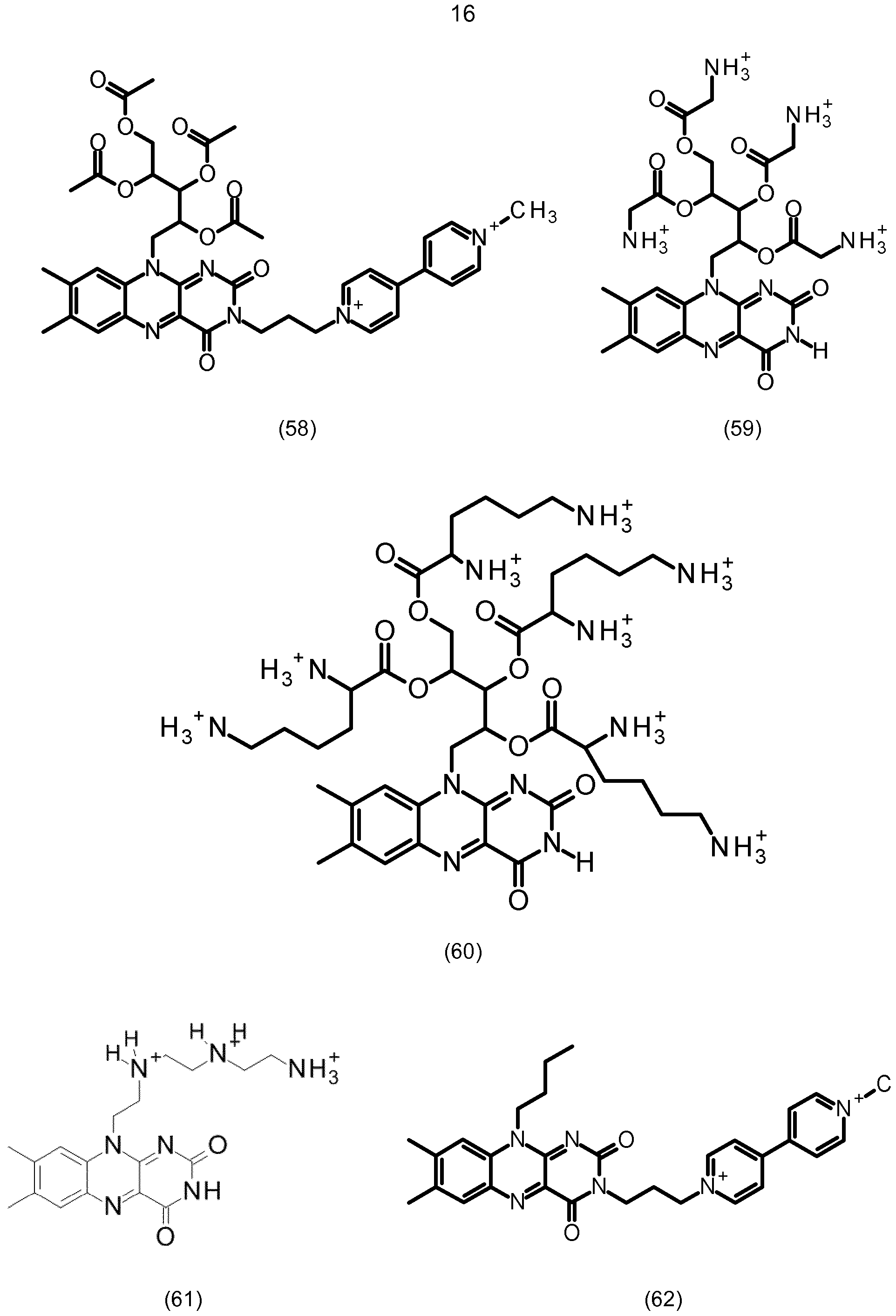

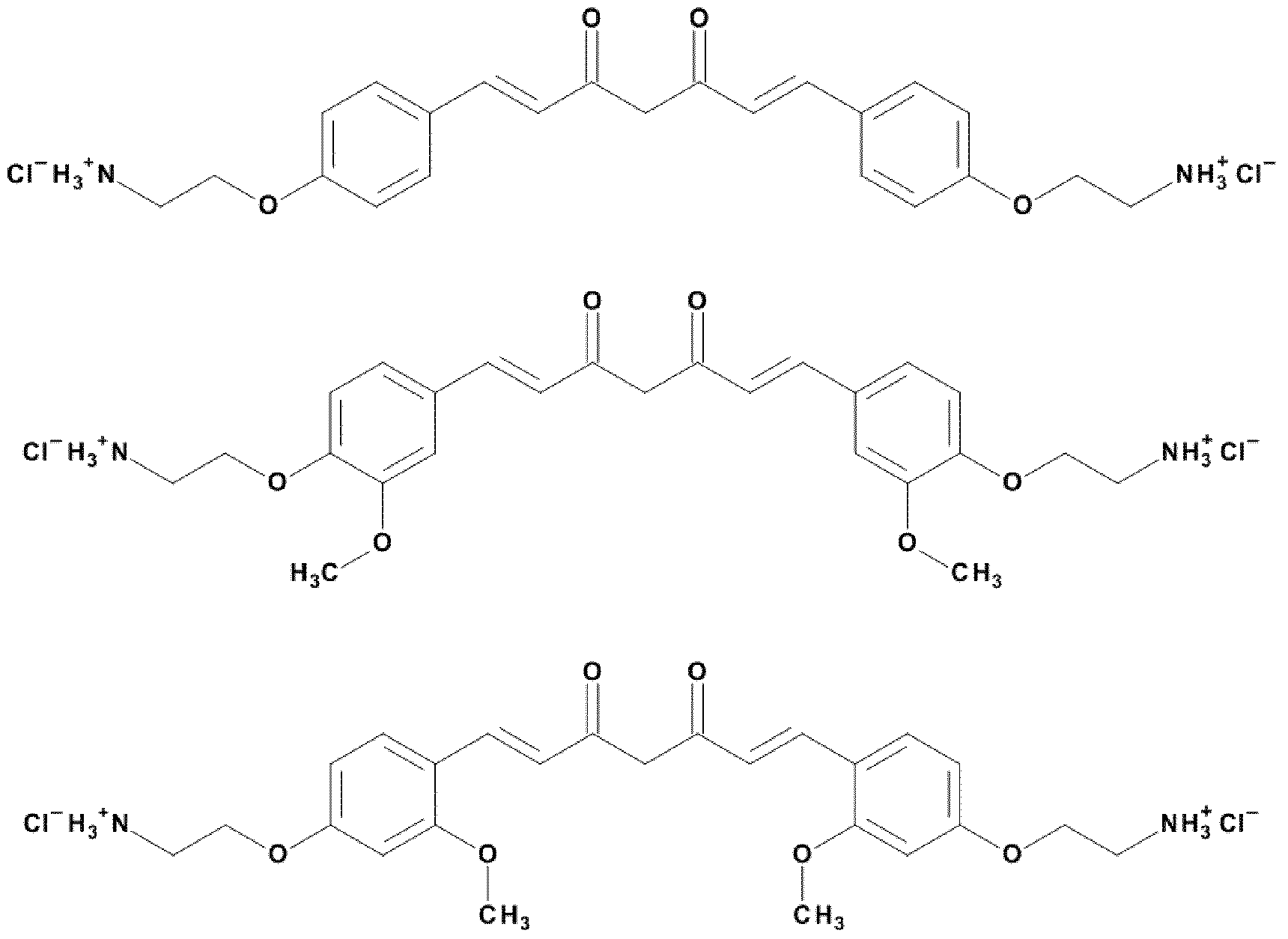


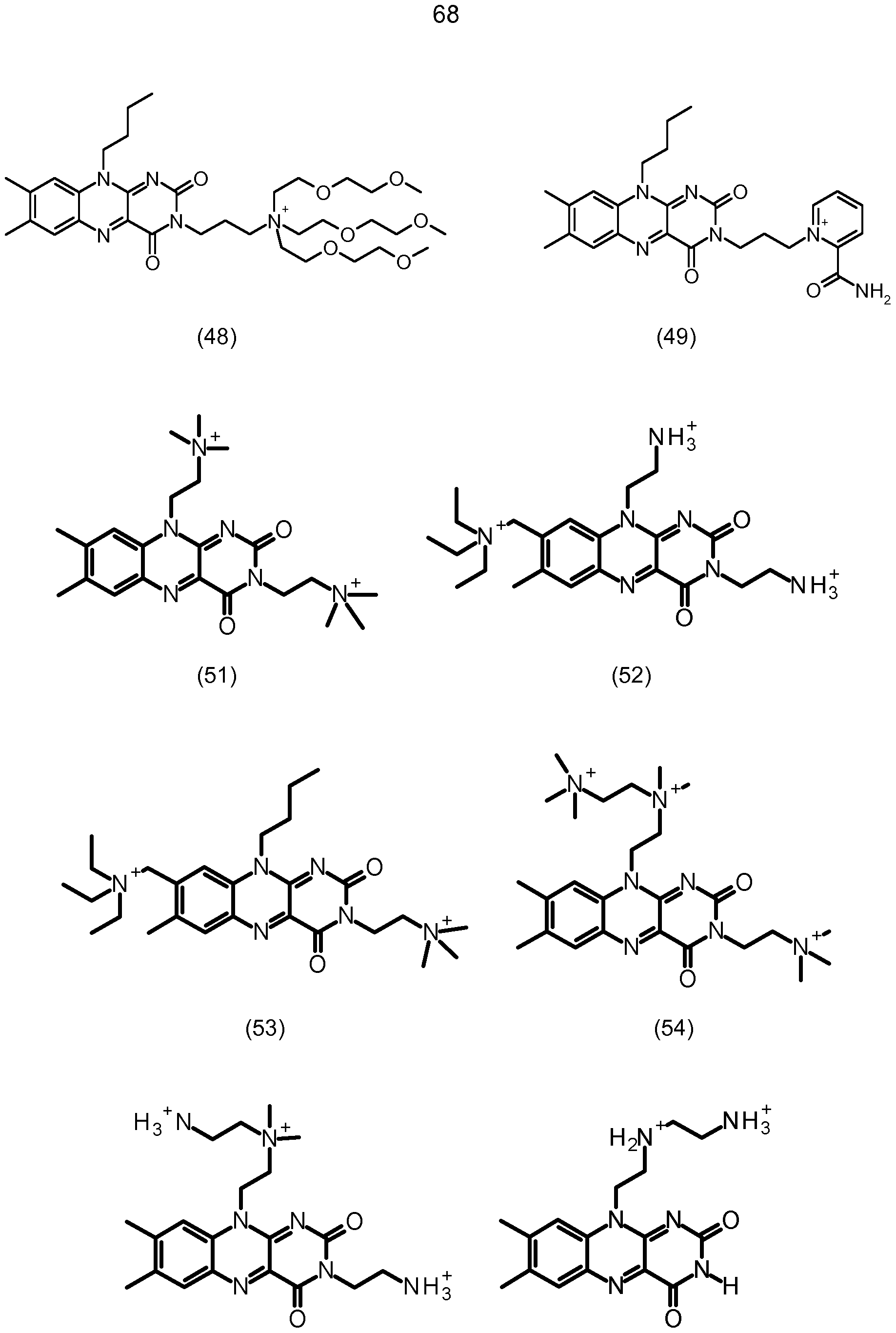


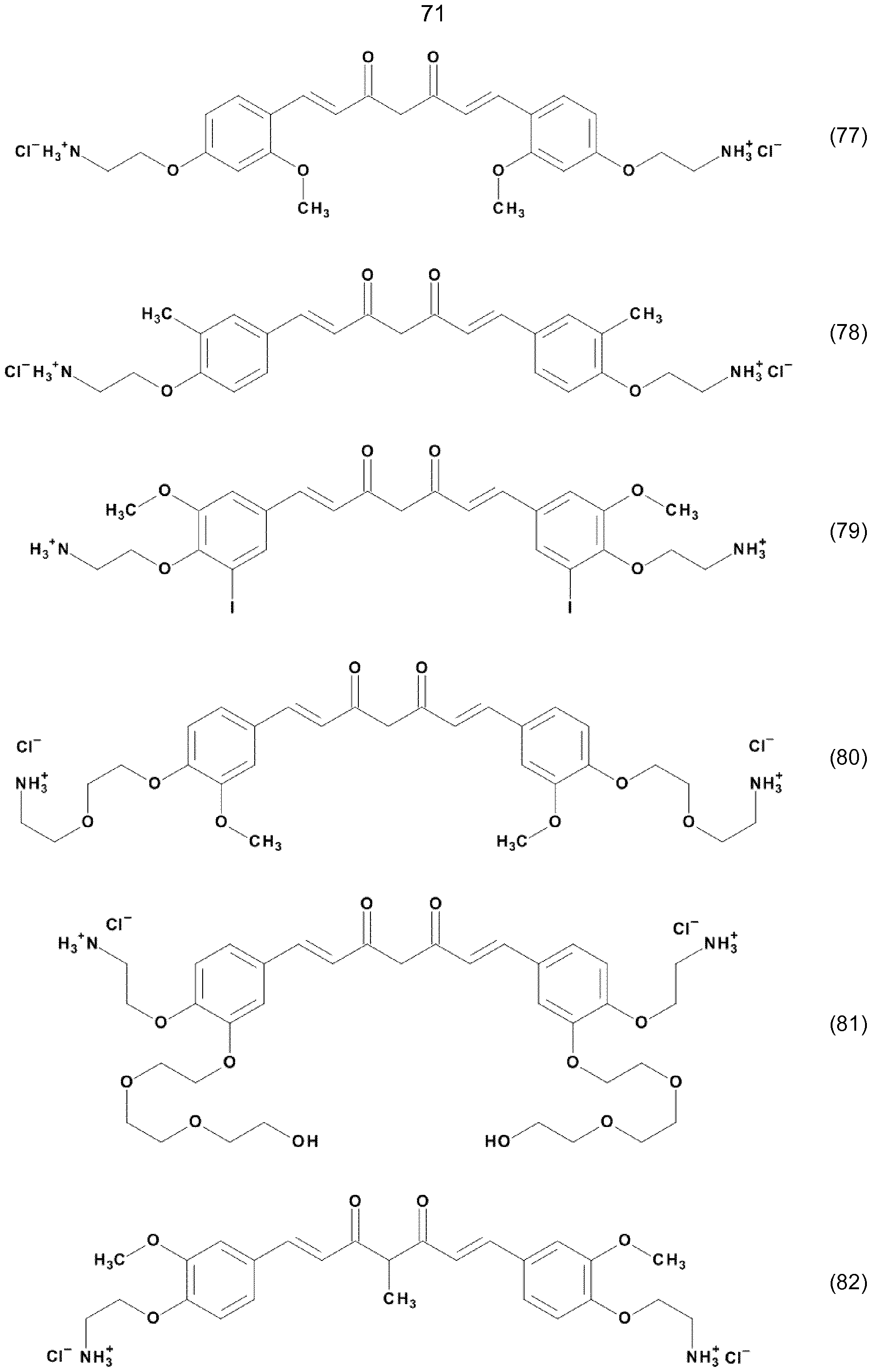


Claims
Priority Applications (11)
| Application Number | Priority Date | Filing Date | Title |
|---|---|---|---|
| AU2017240185A AU2017240185A1 (en) | 2016-04-01 | 2017-03-31 | Photosensitive dispersion and use thereof |
| SG11201808617UA SG11201808617UA (en) | 2016-04-01 | 2017-03-31 | Photosensitizer dispersion, and use thereof |
| RU2019101968A RU2766122C2 (ru) | 2016-04-01 | 2017-03-31 | Дисперсия фотосенсибилизатора и ее применение |
| CA3019623A CA3019623A1 (en) | 2016-04-01 | 2017-03-31 | Photosensitizer dispersion, and use thereof |
| BR112018070133-5A BR112018070133B1 (pt) | 2016-04-01 | 2017-03-31 | Dispersão, uso desta e método para a inativação fotodinâmica de micro-organismos |
| KR1020187031390A KR102476983B1 (ko) | 2016-04-01 | 2017-03-31 | 감광 분산액 및 이의 용도 |
| CN201780030800.XA CN109152358B (zh) | 2016-04-01 | 2017-03-31 | 光敏剂分散体及其用途 |
| JP2019502153A JP7347798B2 (ja) | 2016-04-01 | 2017-03-31 | 光増感剤分散物およびその使用 |
| US16/089,626 US20190111168A1 (en) | 2016-04-01 | 2017-03-31 | Photosensitizer dispersion, and use thereof |
| AU2021221865A AU2021221865A1 (en) | 2016-04-01 | 2021-08-26 | Photosensitive dispersion and use thereof |
| AU2024200362A AU2024200362A1 (en) | 2016-04-01 | 2024-01-19 | Photosensitive dispersion and use thereof |
Applications Claiming Priority (2)
| Application Number | Priority Date | Filing Date | Title |
|---|---|---|---|
| EP16163551.1 | 2016-04-01 | ||
| EP16163551.1A EP3225112B2 (de) | 2016-04-01 | 2016-04-01 | Photosensibilisator-dispersion und verwendung derselben |
Publications (1)
| Publication Number | Publication Date |
|---|---|
| WO2017167992A1 true WO2017167992A1 (de) | 2017-10-05 |
Family
ID=55952933
Family Applications (1)
| Application Number | Title | Priority Date | Filing Date |
|---|---|---|---|
| PCT/EP2017/057763 Ceased WO2017167992A1 (de) | 2016-04-01 | 2017-03-31 | Photosensibilisator-dispersion und verwendung derselben |
Country Status (14)
| Country | Link |
|---|---|
| US (1) | US20190111168A1 (de) |
| EP (1) | EP3225112B2 (de) |
| JP (2) | JP7347798B2 (de) |
| KR (1) | KR102476983B1 (de) |
| CN (1) | CN109152358B (de) |
| AU (3) | AU2017240185A1 (de) |
| BR (1) | BR112018070133B1 (de) |
| CA (1) | CA3019623A1 (de) |
| ES (1) | ES2895851T3 (de) |
| PL (1) | PL3225112T3 (de) |
| PT (1) | PT3225112T (de) |
| RU (1) | RU2766122C2 (de) |
| SG (1) | SG11201808617UA (de) |
| WO (1) | WO2017167992A1 (de) |
Cited By (6)
| Publication number | Priority date | Publication date | Assignee | Title |
|---|---|---|---|---|
| CN108042803A (zh) * | 2017-12-19 | 2018-05-18 | 国家纳米科学中心 | 一种负载有aie分子的脂质体分散液及其制备方法和用途 |
| US20200253211A1 (en) * | 2017-08-16 | 2020-08-13 | Suncor Energy Inc | Photodynamic inhibition of microbial pathogens in plants |
| DE202020102560U1 (de) | 2020-05-06 | 2021-08-09 | Amc Ag Advanced Methods Of Coating | Bakterizides Haftklebepapier |
| US20220132856A1 (en) * | 2019-02-15 | 2022-05-05 | Suncor Energy Inc. | Photosensitizer and chelating agent combinations for use as insecticides |
| DE102023105388B3 (de) | 2023-03-06 | 2024-05-29 | Multivac Sepp Haggenmüller Se & Co. Kg | Herstellen einer Verpackung aus einer photodynamischen Materialbahn |
| US12396455B2 (en) | 2012-06-04 | 2025-08-26 | Nutrien Ag Solutions (Canada) Inc. | Formulations containing paraffinic oil and anti-settling agent |
Families Citing this family (27)
| Publication number | Priority date | Publication date | Assignee | Title |
|---|---|---|---|---|
| US20230088251A1 (en) * | 2017-03-24 | 2023-03-23 | ChromaSol International LLC | Light-activated coating and materials |
| CN109497058A (zh) * | 2018-12-04 | 2019-03-22 | 四川赛华睿科技有限责任公司 | 一种增效减量的草甘膦增效剂 |
| WO2020150831A1 (en) | 2019-01-25 | 2020-07-30 | Suncor Energy Inc. | Photosensitizer compounds, methods of manufacture and application to plants |
| CN109717352B (zh) * | 2019-01-30 | 2022-07-05 | 广东温氏佳味食品有限公司 | 汤品的减菌方法、光敏水冷系统及其应用 |
| CN113677204B (zh) | 2019-02-15 | 2024-03-05 | 桑科能源股份有限公司 | 原卟啉ix衍生物改善植物健康的用途 |
| US12589055B2 (en) | 2019-09-13 | 2026-03-31 | Dentsply Sirona Inc. | Dental composition |
| CN111067007A (zh) * | 2019-12-26 | 2020-04-28 | 上海海洋大学 | 一种光动力杀灭沙门氏菌的方法 |
| CA3171324A1 (en) * | 2020-03-13 | 2021-09-16 | Nutri Co., Ltd. | Clostridiodes difficile growth inhibitor |
| DE102020110710A1 (de) | 2020-04-20 | 2021-10-21 | Airbus Operations Gmbh | Tischvorrichtung sowie Passagiersitz und Fahrzeugkabine mit einer Tischvorrichtung |
| US12324568B2 (en) * | 2020-04-27 | 2025-06-10 | Board Of Supervisors Of Louisiana State University And Agricultural And Mechanical College | Mouthwash to deliver dyes for dental imaging |
| US11007292B1 (en) | 2020-05-01 | 2021-05-18 | Uv Innovators, Llc | Automatic power compensation in ultraviolet (UV) light emission device, and related methods of use, particularly suited for decontamination |
| EP3933102A1 (de) * | 2020-06-29 | 2022-01-05 | Ortner Cleanroom Engineering GmbH | Textiles flächengebilde, bekleidung, verfahren zur herstellung, funktionalisierung eines textilen flächengebildes und verwendungen eines an einem textilen flächengebilde gebundenen photosensitizers |
| WO2022065942A1 (ko) * | 2020-09-25 | 2022-03-31 | 가톨릭대학교 산학협력단 | 의료기기 코팅용 조성물 |
| US20220152251A1 (en) * | 2020-11-19 | 2022-05-19 | Mi2 Holdings LLC | Non-Aqueous PS/ICP Systems And Application To Surfaces |
| US20240075652A1 (en) * | 2020-12-29 | 2024-03-07 | Certainteed Gypsum, Inc. | Methods for manufacturing building boards |
| CN113234362B (zh) * | 2021-04-26 | 2022-04-15 | 青岛职业技术学院 | 一种基于海藻酸盐凝胶-溶胶的光敏化防污损涂层及其制备方法与应用 |
| CN113274518A (zh) * | 2021-05-24 | 2021-08-20 | 三明学院 | 一种用于汽车消毒的光敏除菌喷雾及除菌方法 |
| FR3131180B1 (fr) * | 2021-12-23 | 2024-07-26 | Univ Limoges | Utilisation de phénylphénalénones en tant qu’herbicide sélectif |
| CN114403209A (zh) * | 2021-12-27 | 2022-04-29 | 中国农业大学 | 植物源食品原料的处理方法 |
| CN114403334A (zh) * | 2022-02-15 | 2022-04-29 | 吉林大学 | 一种姜黄素介导的光动力技术对果汁进行冷杀菌的方法 |
| JP2024075507A (ja) * | 2022-11-22 | 2024-06-03 | 株式会社ニイタカ | 抗ウイルスコーティング剤 |
| CN116081761B (zh) * | 2023-03-16 | 2024-02-20 | 杭州师范大学钱江学院 | 一种农村污水处理方法及其使用的复合材料 |
| WO2024200682A1 (en) * | 2023-03-31 | 2024-10-03 | Ondine International Ag | Photosensitizer compositions, devices, and methods of use for surface sanitization of processed food products |
| EP4458804A1 (de) * | 2023-05-04 | 2024-11-06 | TriOptoTec GmbH | Verfahren zur herstellung eines gegenstandes, phenalen-1-on-verbindung sowie deren verwendung |
| WO2024246147A1 (en) | 2023-06-02 | 2024-12-05 | Wella Germany Gmbh | Bleaching medium comprising a phenalenone |
| CN116649355B (zh) * | 2023-06-05 | 2025-04-25 | 上海师范大学 | 吩噻嗪衍生物在制备抑制蓝藻生长的药物或制剂中的应用 |
| CN119241418B (zh) * | 2024-12-05 | 2025-05-23 | 西安欧得光电材料有限公司 | 一种萘嵌苯酮类衍生物及基于其的电致发光器件 |
Citations (19)
| Publication number | Priority date | Publication date | Assignee | Title |
|---|---|---|---|---|
| EP0390743A1 (de) * | 1989-03-31 | 1990-10-03 | Ciba-Geigy Ag | Schädlingsbekämpfungsmittel mit verbesserter Wirkung |
| EP0437183B1 (de) | 1990-01-09 | 1994-07-27 | Ciba-Geigy Ag | Lichtdiffusor für eine photodynamische Therapie von Tumoren im Oesophagus eines Patienten |
| WO1996029943A1 (en) | 1995-03-28 | 1996-10-03 | Eli Lilly And Company | Photodynamic therapy system and method |
| WO1999043790A1 (en) | 1998-02-26 | 1999-09-02 | Hemasure Inc. | Method and apparatus for irradiating a biological fluid |
| WO2006135344A1 (en) * | 2005-06-13 | 2006-12-21 | National University Of Singapore | A photosensitising composition and uses thereof |
| CN101002757A (zh) * | 2006-01-20 | 2007-07-25 | 中国科学院化学研究所 | 一种竹红菌素微乳液及其制备方法 |
| DE60222421T2 (de) * | 2001-07-17 | 2008-06-05 | Steba Biotech N.V. | Injizierbare galenische formulierung zur verwendung in einer photodynamischen diagnose oder therapie sowie ihr herstellungsverfahren |
| US20090010806A1 (en) | 2007-07-02 | 2009-01-08 | Navigant Biotechnologies, Llc | Apparatus for Photo Reduction of Contaminants in Blood and Blood Products with Calibration Means |
| WO2009123575A1 (en) * | 2008-04-04 | 2009-10-08 | National University Of Singapore | A photosensitising composition and its uses |
| WO2010129340A2 (en) * | 2009-04-28 | 2010-11-11 | Ceramoptec Industries, Inc. | Novel photosensitizer formulations for oral administration |
| WO2010141564A2 (en) | 2009-06-02 | 2010-12-09 | Ceramoptec Industries, Inc. | A novel method for microbial depletion in human blood and blood products using antimicrobial photodynamic therapy |
| KR20130094069A (ko) * | 2012-02-15 | 2013-08-23 | 부산대학교병원 | 광역동 치료를 위한 계면활성제와 아미노레불리닉산이 혼합된 광증감제 |
| WO2013172977A1 (en) | 2012-05-16 | 2013-11-21 | Forsyth Dental Infirmary For Children | Handheld device for delivering photodynamic therapy |
| EP2678035A2 (de) | 2011-02-24 | 2014-01-01 | Trioptotec GmbH | Phenalen-1-on-derivate, verfahren zur herstellung und verwendung derselben |
| EP2698368A1 (de) | 2011-04-11 | 2014-02-19 | Pharma Eight Co. Ltd | Neuartiges pyrazolderivat |
| CA2888140A1 (en) | 2012-10-10 | 2014-04-17 | Green Tech Co., Ltd. | Novel pyrazole derivative |
| EP2723342A1 (de) | 2011-06-22 | 2014-04-30 | Trioptotec GmbH | Verwendung von 10h-benzo[g]pteridin-2,4-dion-derivaten |
| EP2723742A1 (de) | 2011-06-22 | 2014-04-30 | Trioptotec GmbH | 10h-benzo[g]pteridin-2,4-dion-derivate, verfahren zur herstellung und verwendung derselben |
| EP2723743A1 (de) | 2011-06-22 | 2014-04-30 | Trioptotec GmbH | 10h-benzo[g]pteridin-2,4-dion-derivate, verfahren zur herstellung und verwendung derselben |
Family Cites Families (27)
| Publication number | Priority date | Publication date | Assignee | Title |
|---|---|---|---|---|
| DK532877A (da) * | 1976-12-10 | 1978-06-11 | Elf Aquitaine | Koncentrat til fremstilling af mikroemulsioner af olie og vand med stort saltindhold |
| JP2860409B2 (ja) * | 1989-12-28 | 1999-02-24 | 三菱レイヨン株式会社 | 油中水型エマルジョンの製造法 |
| US5683625A (en) * | 1994-05-27 | 1997-11-04 | General Electric Company | Method of preparing microemulsions |
| US7186543B1 (en) * | 1998-07-21 | 2007-03-06 | Gambro Inc. | Preparation of vaccines using a photosensitizer and light |
| SG97168A1 (en) * | 1999-12-15 | 2003-07-18 | Ciba Sc Holding Ag | Photosensitive resin composition |
| CA2453237A1 (en) * | 2001-07-26 | 2003-02-06 | Ciba Specialty Chemicals Holding Inc. | Photosensitive resin composition |
| JP2004059728A (ja) | 2002-07-29 | 2004-02-26 | Fuji Silysia Chemical Ltd | 光増感色素担持シリカゲル、および光増感色素担持シリカゲルの製造方法 |
| WO2004080396A2 (en) | 2003-03-07 | 2004-09-23 | The University Of Texas Md Anderson Cancer Center | Liposomal curcumin for treatment of cancer |
| CN100352430C (zh) | 2005-03-09 | 2007-12-05 | 山东大学 | 姜黄素自微乳化制剂及其制备方法 |
| US20060264423A1 (en) * | 2005-05-20 | 2006-11-23 | Bioenvision, Inc. | Methylene Blue Therapy of Viral Disease |
| US20090035725A1 (en) | 2007-08-02 | 2009-02-05 | Ondine International, Ltd. | Photodisinfection of oral cavity |
| FR2934955B1 (fr) | 2008-08-14 | 2011-07-08 | Commissariat Energie Atomique | Encapsulation d'agents therapeutiques lipophiles ou amphiphiles dans des nanoemulsions |
| EP2204167A1 (de) * | 2009-01-05 | 2010-07-07 | Azad Pharma AG | Pharmazeutische Mikroemulsion zur Prävention von supramolekularer Aggregation von ampiphilen Molekülen |
| US8815931B2 (en) | 2009-04-28 | 2014-08-26 | Biolitec Pharma Marketing Ltd | Oral formulations for tetrapyrrole derivatives |
| HUE035716T2 (en) | 2009-07-17 | 2018-05-28 | Klox Tech Inc | Antibacterial oral composition |
| US20110144200A1 (en) * | 2009-12-14 | 2011-06-16 | Thomas Eidenberger | Combination of carotenoids and epi-lutein |
| FR2956320B1 (fr) | 2010-02-17 | 2013-12-20 | Commissariat Energie Atomique | Nanoemulsion pour la delivrance d'au moins deux agents d'interet |
| CN101869692B (zh) | 2010-06-30 | 2011-06-29 | 姜运华 | 一种姜黄素类物自微乳及其制备方法 |
| WO2012012616A1 (en) | 2010-07-21 | 2012-01-26 | Patty-Fu Giles | Photoactive vitamin nanoparticles for the treatment of chronic wounds |
| ES2616022T3 (es) † | 2010-09-15 | 2017-06-09 | Cadila Pharmaceuticals Ltd. | Composiciones farmacéuticas de curcumina |
| CN102451175B (zh) * | 2010-11-01 | 2013-03-20 | 中国科学院大连化学物理研究所 | 一种白藜芦醇和生物类黄酮组合物及其制备和应用 |
| CN102283373B (zh) * | 2011-08-30 | 2013-05-22 | 河南中大生物工程有限公司 | 一种姜黄素制剂的制备方法 |
| CN102641237B (zh) | 2012-05-15 | 2013-11-06 | 山东大学 | 鼻腔给药姜黄素微乳离子敏感原位凝胶制剂及其制备方法 |
| CN102670577B (zh) * | 2012-05-18 | 2018-04-13 | 上海复旦张江生物医药股份有限公司 | 一种光敏剂组合物、其使用方法及用途 |
| US9365542B2 (en) * | 2012-10-26 | 2016-06-14 | Memorial Sloan-Kettering Cancer Center | Modulators of resistant androgen receptor |
| JP2015159819A (ja) | 2014-02-25 | 2015-09-07 | 医療法人社団 吉岡歯科医院 | 光殺菌治療用装置及び光殺菌治療用装置に使用される光殺菌治療用光増感剤 |
| CN105288646A (zh) * | 2015-10-09 | 2016-02-03 | 东南大学 | 一种光敏剂磷脂化合物、其药物组合物及应用 |
-
2016
- 2016-04-01 ES ES16163551T patent/ES2895851T3/es active Active
- 2016-04-01 PL PL16163551T patent/PL3225112T3/pl unknown
- 2016-04-01 PT PT161635511T patent/PT3225112T/pt unknown
- 2016-04-01 EP EP16163551.1A patent/EP3225112B2/de active Active
-
2017
- 2017-03-31 JP JP2019502153A patent/JP7347798B2/ja active Active
- 2017-03-31 KR KR1020187031390A patent/KR102476983B1/ko active Active
- 2017-03-31 SG SG11201808617UA patent/SG11201808617UA/en unknown
- 2017-03-31 RU RU2019101968A patent/RU2766122C2/ru active
- 2017-03-31 AU AU2017240185A patent/AU2017240185A1/en not_active Abandoned
- 2017-03-31 US US16/089,626 patent/US20190111168A1/en not_active Abandoned
- 2017-03-31 CN CN201780030800.XA patent/CN109152358B/zh not_active Expired - Fee Related
- 2017-03-31 WO PCT/EP2017/057763 patent/WO2017167992A1/de not_active Ceased
- 2017-03-31 BR BR112018070133-5A patent/BR112018070133B1/pt not_active IP Right Cessation
- 2017-03-31 CA CA3019623A patent/CA3019623A1/en active Pending
-
2021
- 2021-08-26 AU AU2021221865A patent/AU2021221865A1/en not_active Abandoned
-
2022
- 2022-09-08 JP JP2022142961A patent/JP7501930B2/ja active Active
-
2024
- 2024-01-19 AU AU2024200362A patent/AU2024200362A1/en not_active Abandoned
Patent Citations (19)
| Publication number | Priority date | Publication date | Assignee | Title |
|---|---|---|---|---|
| EP0390743A1 (de) * | 1989-03-31 | 1990-10-03 | Ciba-Geigy Ag | Schädlingsbekämpfungsmittel mit verbesserter Wirkung |
| EP0437183B1 (de) | 1990-01-09 | 1994-07-27 | Ciba-Geigy Ag | Lichtdiffusor für eine photodynamische Therapie von Tumoren im Oesophagus eines Patienten |
| WO1996029943A1 (en) | 1995-03-28 | 1996-10-03 | Eli Lilly And Company | Photodynamic therapy system and method |
| WO1999043790A1 (en) | 1998-02-26 | 1999-09-02 | Hemasure Inc. | Method and apparatus for irradiating a biological fluid |
| DE60222421T2 (de) * | 2001-07-17 | 2008-06-05 | Steba Biotech N.V. | Injizierbare galenische formulierung zur verwendung in einer photodynamischen diagnose oder therapie sowie ihr herstellungsverfahren |
| WO2006135344A1 (en) * | 2005-06-13 | 2006-12-21 | National University Of Singapore | A photosensitising composition and uses thereof |
| CN101002757A (zh) * | 2006-01-20 | 2007-07-25 | 中国科学院化学研究所 | 一种竹红菌素微乳液及其制备方法 |
| US20090010806A1 (en) | 2007-07-02 | 2009-01-08 | Navigant Biotechnologies, Llc | Apparatus for Photo Reduction of Contaminants in Blood and Blood Products with Calibration Means |
| WO2009123575A1 (en) * | 2008-04-04 | 2009-10-08 | National University Of Singapore | A photosensitising composition and its uses |
| WO2010129340A2 (en) * | 2009-04-28 | 2010-11-11 | Ceramoptec Industries, Inc. | Novel photosensitizer formulations for oral administration |
| WO2010141564A2 (en) | 2009-06-02 | 2010-12-09 | Ceramoptec Industries, Inc. | A novel method for microbial depletion in human blood and blood products using antimicrobial photodynamic therapy |
| EP2678035A2 (de) | 2011-02-24 | 2014-01-01 | Trioptotec GmbH | Phenalen-1-on-derivate, verfahren zur herstellung und verwendung derselben |
| EP2698368A1 (de) | 2011-04-11 | 2014-02-19 | Pharma Eight Co. Ltd | Neuartiges pyrazolderivat |
| EP2723342A1 (de) | 2011-06-22 | 2014-04-30 | Trioptotec GmbH | Verwendung von 10h-benzo[g]pteridin-2,4-dion-derivaten |
| EP2723742A1 (de) | 2011-06-22 | 2014-04-30 | Trioptotec GmbH | 10h-benzo[g]pteridin-2,4-dion-derivate, verfahren zur herstellung und verwendung derselben |
| EP2723743A1 (de) | 2011-06-22 | 2014-04-30 | Trioptotec GmbH | 10h-benzo[g]pteridin-2,4-dion-derivate, verfahren zur herstellung und verwendung derselben |
| KR20130094069A (ko) * | 2012-02-15 | 2013-08-23 | 부산대학교병원 | 광역동 치료를 위한 계면활성제와 아미노레불리닉산이 혼합된 광증감제 |
| WO2013172977A1 (en) | 2012-05-16 | 2013-11-21 | Forsyth Dental Infirmary For Children | Handheld device for delivering photodynamic therapy |
| CA2888140A1 (en) | 2012-10-10 | 2014-04-17 | Green Tech Co., Ltd. | Novel pyrazole derivative |
Non-Patent Citations (15)
| Title |
|---|
| BAIER J. ET AL.: "Singlet Oxygen Generation by UVA Light Exposure of Endogenous Photosensitizers", BIOPHYS.J., vol. 91, no. 4, 2006, pages 1452 - 1459 |
| BOYCE, J. M.; PITTET, D.: "Guidelines for hand hygiene in healthcare settings. Recommendations of the Healthcare Infection Control Practices Advisory Committee and the HIPAC/SHEA/APIC/IDSA Hand Hygiene Task Force", AM.J.INFECT.CONTROL, vol. 30, no. 8, 2002, pages 1 - 46 |
| BUTENANDT J.; EPPLE R.; WALLENBORN E.-U.; EKER A.P.M.; GRAMLICH V.; CARELL T.: "A comparative repair study of thymine- and uracil-photodimers with model compounds and a photolyase repair enzyme", CHEM. EUR. J., vol. 6, no. 1, 2000, pages 62 - 72 |
| BUTENANDT, J. ET AL., H-NMR-SPEKTRUM IN DMSO-D6 WAR IDENTISCH ZU DEM AUS DER LITERATUR BEKANNTEN SPEKTRUM, 2002 |
| DATABASE WPI Week 200821, Derwent World Patents Index; AN 2008-C78122, XP002769753 * |
| DATABASE WPI Week 201379, Derwent World Patents Index; AN 2013-N15563, XP002759899 * |
| EGOROV S.Y.; KRASNOVSKY A.A.; BASHTANOV M.Y.; MIRONOV E.A.; LUDNIKOVA T.A.; KRITSKY M.S.: "Photosensitization of singlet oxygen formation by pterins and flavins. Time-resolved studies of oxygen phosphorescence under laser excitation", BIOCHEMISTRY (MOSC, vol. 64, no. 10, pages 1117 - 1121 |
| GRIFFIN, W. C.: "Calculation of HLB Values of Non-Ionic Surfactants", J. SOC. COSMET. CHEM, vol. 5, no. 4, 1954, pages 249 - 256, XP000671451 |
| GRIFFIN, W.C.: "Classification of Surface-Active Agents by 'HLB", J. SOC. COSMET. CHEM., vol. 1, no. 5, 1949, pages 311 - 326, XP000973377 |
| MILES, AA; MISRA, SS; IRWIN, JO: "The estimation of the bactericidal power of the blood", THE JOURNAL OF HYGIENE, vol. 38, no. 6, November 1938 (1938-11-01), pages 732 - 49 |
| MOSMANN T.: "Rapid colorimetric assay for cellular growth and survival: application to proliferation and cytotoxicity assays", J. IMMUNOL. METHODS, 1983, pages 55 - 63, XP023973702, DOI: doi:10.1016/0022-1759(83)90303-4 |
| RABENAU, H. F.; SCHWEBKE, I.: "Leitlinie der Deutschen Vereinigung zur Bekämpfung der Viruskrankheiten (DVV) e. V. und der Robert Koch-Instituts (RKI) zur Prüfung von chemischen Desinfektionsmitteln auf Wirksamkeit gegen Viren in der Humanmedizin", BUNDESGESUNDHEITSBLATT, GESUNDHEITSFORSCHUNG, GESUNDHEITSSCHUTZ, vol. 51, no. 8, 2008, pages 937 - 945 |
| SVOBODA J. ET AL., H-NMR-SPEKTRUM IN DMSO-D6 WAR IDENTISCH ZU DEM AUS DER LITERATUR BEKANNTEN SPEKTRUM, 2008 |
| SVOBODA J.; SCHMADERER H.; KÖNIG B.: "Thiourea-enhanced flavin photooxidation of benzyl alcohol", CHEM. EUR. J., vol. 14, 2008, pages 1854 - 1865, XP055034202, DOI: doi:10.1002/chem.200701319 |
| TAKA ET AL., BIOORG. MED. CHEM. LETT, vol. 24, 2014, pages 5242 - 5246 |
Cited By (7)
| Publication number | Priority date | Publication date | Assignee | Title |
|---|---|---|---|---|
| US12396455B2 (en) | 2012-06-04 | 2025-08-26 | Nutrien Ag Solutions (Canada) Inc. | Formulations containing paraffinic oil and anti-settling agent |
| US20200253211A1 (en) * | 2017-08-16 | 2020-08-13 | Suncor Energy Inc | Photodynamic inhibition of microbial pathogens in plants |
| CN108042803A (zh) * | 2017-12-19 | 2018-05-18 | 国家纳米科学中心 | 一种负载有aie分子的脂质体分散液及其制备方法和用途 |
| US20220132856A1 (en) * | 2019-02-15 | 2022-05-05 | Suncor Energy Inc. | Photosensitizer and chelating agent combinations for use as insecticides |
| DE202020102560U1 (de) | 2020-05-06 | 2021-08-09 | Amc Ag Advanced Methods Of Coating | Bakterizides Haftklebepapier |
| WO2021224113A1 (de) | 2020-05-06 | 2021-11-11 | Amc Ag Advanced Methods Of Coating | Bakterizides haftklebepapier |
| DE102023105388B3 (de) | 2023-03-06 | 2024-05-29 | Multivac Sepp Haggenmüller Se & Co. Kg | Herstellen einer Verpackung aus einer photodynamischen Materialbahn |
Also Published As
| Publication number | Publication date |
|---|---|
| SG11201808617UA (en) | 2018-11-29 |
| BR112018070133B1 (pt) | 2022-07-19 |
| KR20190015209A (ko) | 2019-02-13 |
| BR112018070133A2 (pt) | 2019-02-12 |
| AU2017240185A1 (en) | 2018-11-22 |
| EP3225112B2 (de) | 2025-03-26 |
| CN109152358B (zh) | 2023-07-07 |
| JP2022188039A (ja) | 2022-12-20 |
| US20190111168A1 (en) | 2019-04-18 |
| CN109152358A (zh) | 2019-01-04 |
| EP3225112A1 (de) | 2017-10-04 |
| RU2019101968A (ru) | 2020-07-24 |
| KR102476983B1 (ko) | 2022-12-14 |
| JP2019515946A (ja) | 2019-06-13 |
| EP3225112B1 (de) | 2021-08-18 |
| RU2019101968A3 (de) | 2020-07-24 |
| AU2024200362A1 (en) | 2024-02-08 |
| AU2021221865A1 (en) | 2021-09-23 |
| JP7501930B2 (ja) | 2024-06-18 |
| JP7347798B2 (ja) | 2023-09-20 |
| RU2766122C2 (ru) | 2022-02-08 |
| PL3225112T3 (pl) | 2022-01-03 |
| CA3019623A1 (en) | 2017-10-05 |
| ES2895851T3 (es) | 2022-02-22 |
| PT3225112T (pt) | 2021-09-16 |
Similar Documents
| Publication | Publication Date | Title |
|---|---|---|
| EP3225112B1 (de) | Photosensibilisator-dispersion und verwendung derselben | |
| EP1278420B1 (de) | Mit essentiellen ölen formulierte antimikrobielle zusammensetzung | |
| EP3135110B1 (de) | 1,7-diaryl-1,6-heptadien-3,5-dion-derivate, verfahren zur herstellung und verwendung derselben | |
| JPWO2009069619A1 (ja) | オゾン化界面活性剤を含有する新規組成物 | |
| DE102004046603A1 (de) | Mittel mit Depotwirkung zur Bekämpfung von Mikroorganismen | |
| DE2606519A1 (de) | Desinfizierende zusammensetzung | |
| BR112014013601B1 (pt) | composições antimicrobianas, método não terapêutico para desinfetar uma superfície e usos não terapêuticos de uma composição | |
| EP1250917A2 (de) | Mittel zur Bekämpfung von Mikroorganismen, enthaltend primäre und sekundäre Ester des Polyglycerins in einem wirksamen Verhältnis | |
| EP1250842A1 (de) | Mittel zur Bekämpfung von Mikroorganismen, enthaltend einen wirksamen Gehalt an Estern des Polyglycerins | |
| DE102007030406A1 (de) | Verminderung der Adhäsion von biologischem Material durch Algenextrakte | |
| DE2125893B2 (de) | Präparate zur Bekämpfung von Mikroorganismen und deren Verwendung | |
| DE2321656A1 (de) | Waschmittelmischungen | |
| WO2022223573A1 (de) | Desinfektionsmittel und dessen verwendung | |
| JP6833307B2 (ja) | ビスピリジニウムアルカンに基づいた着色殺菌調合剤 | |
| DE69214399T2 (de) | Iod-Verbindungen enthaltende germizide Zusammensetzungen | |
| HK1244629B (en) | Photosensitiser dispersion and use of the same | |
| DE1287259B (de) | Verwendung von Nitroalkoholen als Potenzierungsmittel in antimikrobiellen Mitteln | |
| HK1244629A1 (zh) | 光敏剂分散体及其应用 | |
| KR102129983B1 (ko) | 피부 소독용 조성물 | |
| EP1191016B1 (de) | Neue Diquaternäre Ammoniumverbindungen | |
| DE102023115010B4 (de) | Wasch- und/oder Desinfektionsmittel zum Waschen und/oder Desinfizieren | |
| RU2744273C1 (ru) | Дезинфицирующее средство | |
| RU2477149C1 (ru) | Биоцидный состав для пропитки салфеток | |
| RU2517031C1 (ru) | Биоцидный состав для пропитки салфеток | |
| DD149678A1 (de) | Verbesserte wasch-,reinigungs-und desinfektionsmittel |
Legal Events
| Date | Code | Title | Description |
|---|---|---|---|
| ENP | Entry into the national phase |
Ref document number: 2019502153 Country of ref document: JP Kind code of ref document: A |
|
| ENP | Entry into the national phase |
Ref document number: 3019623 Country of ref document: CA |
|
| WWE | Wipo information: entry into national phase |
Ref document number: MX/A/2018/012008 Country of ref document: MX |
|
| NENP | Non-entry into the national phase |
Ref country code: DE |
|
| REG | Reference to national code |
Ref country code: BR Ref legal event code: B01A Ref document number: 112018070133 Country of ref document: BR |
|
| ENP | Entry into the national phase |
Ref document number: 20187031390 Country of ref document: KR Kind code of ref document: A |
|
| ENP | Entry into the national phase |
Ref document number: 2017240185 Country of ref document: AU Date of ref document: 20170331 Kind code of ref document: A |
|
| 121 | Ep: the epo has been informed by wipo that ep was designated in this application |
Ref document number: 17714782 Country of ref document: EP Kind code of ref document: A1 |
|
| ENP | Entry into the national phase |
Ref document number: 112018070133 Country of ref document: BR Kind code of ref document: A2 Effective date: 20180928 |
|
| 122 | Ep: pct application non-entry in european phase |
Ref document number: 17714782 Country of ref document: EP Kind code of ref document: A1 |