WO2017191845A1 - Procédé de traitement de tissu végétal destiné à accélérer la décomposition d'un tissu végétal, agent principal correspondant, composition de matière première extraite à l'aide d'un procédé de traitement de tissu végétal, et procédé de réduction d'une masse de tissu végétal - Google Patents
Procédé de traitement de tissu végétal destiné à accélérer la décomposition d'un tissu végétal, agent principal correspondant, composition de matière première extraite à l'aide d'un procédé de traitement de tissu végétal, et procédé de réduction d'une masse de tissu végétal Download PDFInfo
- Publication number
- WO2017191845A1 WO2017191845A1 PCT/JP2017/017319 JP2017017319W WO2017191845A1 WO 2017191845 A1 WO2017191845 A1 WO 2017191845A1 JP 2017017319 W JP2017017319 W JP 2017017319W WO 2017191845 A1 WO2017191845 A1 WO 2017191845A1
- Authority
- WO
- WIPO (PCT)
- Prior art keywords
- plant tissue
- plant
- derived
- treatment
- tissue
- Prior art date
- Legal status (The legal status is an assumption and is not a legal conclusion. Google has not performed a legal analysis and makes no representation as to the accuracy of the status listed.)
- Ceased
Links
Images





Classifications
-
- B—PERFORMING OPERATIONS; TRANSPORTING
- B27—WORKING OR PRESERVING WOOD OR SIMILAR MATERIAL; NAILING OR STAPLING MACHINES IN GENERAL
- B27K—PROCESSES, APPARATUS OR SELECTION OF SUBSTANCES FOR IMPREGNATING, STAINING, DYEING, BLEACHING OF WOOD OR SIMILAR MATERIALS, OR TREATING OF WOOD OR SIMILAR MATERIALS WITH PERMEANT LIQUIDS, NOT OTHERWISE PROVIDED FOR; CHEMICAL OR PHYSICAL TREATMENT OF CORK, CANE, REED, STRAW OR SIMILAR MATERIALS
- B27K3/00—Impregnating wood, e.g. impregnation pretreatment, for example puncturing; Wood impregnation aids not directly involved in the impregnation process
- B27K3/16—Inorganic impregnating agents
- B27K3/20—Compounds of alkali metals or ammonium
-
- B—PERFORMING OPERATIONS; TRANSPORTING
- B27—WORKING OR PRESERVING WOOD OR SIMILAR MATERIAL; NAILING OR STAPLING MACHINES IN GENERAL
- B27K—PROCESSES, APPARATUS OR SELECTION OF SUBSTANCES FOR IMPREGNATING, STAINING, DYEING, BLEACHING OF WOOD OR SIMILAR MATERIALS, OR TREATING OF WOOD OR SIMILAR MATERIALS WITH PERMEANT LIQUIDS, NOT OTHERWISE PROVIDED FOR; CHEMICAL OR PHYSICAL TREATMENT OF CORK, CANE, REED, STRAW OR SIMILAR MATERIALS
- B27K5/00—Treating of wood not provided for in groups B27K1/00, B27K3/00
Definitions
- the present invention relates to a plant tissue treatment method for extracting plant-derived substances by promoting degradation of plant tissues by adding them to plant tissues such as wood pieces, herbaceous pieces or processed products derived therefrom, its main agent, and its plants
- the present invention relates to a raw material composition extracted by a tissue processing method and a method for reducing the volume of plant tissue.
- the present invention relates to an apparatus that can easily decompose plant tissue and easily extract plant tissue-derived substances from the plant tissue without using a large-scale processing apparatus or applying excessive energy.
- Wood has been widely used for a long time, and its uses such as building materials, fuels, and paper pulp materials are diverse. In this way, traditionally, the use of timber itself as a structure or loose wood fiber was the focus. In recent years, the use of materials as compounds by taking out plant tissue-derived substances contained in wood and herbs has attracted attention. In recent years, plant tissue-derived substances extracted from plant tissues such as wood and herb have industrial utility values, and attempts have been made to actively use these extracts for various purposes.
- Plant tissues such as wood and herbs are composites containing a wide variety of substances having different chemical structures.
- Substances constituting the plant tissue include cellulose, hemicellulose, lignin, tannin, suberin and the like.
- the structure of the plant tissue has cellulose at the center of the structure, hemicellulose is covered around it, and lignin is firmly present.
- lignin is firmly present.
- For cellulose extraction it is first necessary to relax or remove strong lignin. That is, when using these plant tissue-derived substances, it may be necessary to extract the target plant tissue-derived substance from the plant tissue and remove other substances.
- physical and chemical costs become a problem.
- Cellulose is increasingly used as a raw material for textile fibers and synthetic resins, for example.
- Glucose obtained from cellulose is a particularly important substance in relation to biomass such as a raw material for bioethanol.
- Hemicellulose is used, for example, in the manufacture of chemical products by combining with other extraction components in addition to papermaking, and is widely used as an industrial raw material.
- Lignin is widely used as a raw material for adhesives, pharmaceuticals, disinfectants, and the like that utilize the property of bonding and solidifying cells by binding to cellulose or the like.
- Tannin is an indispensable substance for tanning leather (so-called tannin tanning), for example, and is widely used in the leather industry.
- Suberin is a substance that is a raw material for producing alkyd resin, polyamide, and the like, for example, as suberic acid, and is widely used as an industrial raw material.
- plant tissue-derived substances have a variety of uses, have high industrial utility values, and have great potential as industrial raw materials.
- plant tissue treatment methods for obtaining these plant tissue-derived substances include alkaline hydrolysis using strong acid such as concentrated sulfuric acid or strong alkali (especially sodium hydroxide) under high temperature and high pressure (Patent Document 1), cyclic A hydrolysis method using a carbonic acid and an acid (Patent Document 2) is known.
- a catalyst may be used in combination.
- a processing method for physically destroying and crushing wood fibers or the like by an explosive pressure change called blasting treatment is also known.
- it is essential to input a large amount of energy such as treatment under high temperature and high pressure or explosion treatment.
- biomass In recent years, the use of biomass has progressed, and various biomass utilization devices are operating. However, stable supply of biomass, which is the carbon source, improvement in storage stability, reduction in transportation costs, and the like have become issues.
- wood In general, not only wood but also plants such as rice straw, wheat straw, Sasa, Japanese pampas grass, switchgrass, Giant Miscanthus, and thinned bark of wood are used as biomass.
- lumps are inconvenient for transportation and storage.
- vegetation has a low bulk density and a large volume, which is also inconvenient for transportation and storage. In any case, it is preferable to pulverize the plant tissue by promoting decomposition.
- JP-A-2-233701 Japanese Patent Laid-Open No. 11-80367
- the alkaline hydrolysis method can decompose plant tissue, but the one obtained is called alkali cellulose (fibrin).
- the alkali cellulose itself is an industrial raw material, and is extracted as viscose, methylcellulose, or carboxymethylcellulose that forms viscose rayon.
- the crystal form of cellulose in nature is type I
- polymorphs include type II, type III, and type IV.
- cellulose type I existing in nature is the starting point of each polymorph.
- the alkali hydrolysis method of the above prior art is known as a method for obtaining alkali cellulose
- the knowledge for obtaining a cellulose I-type component has not been known.
- the physical means accompanying the explosion of the above-mentioned prior art can obtain a cellulose type I component, all of them are rugged and large-scale expensive equipment having acid resistance or alkali resistance under high temperature and pressure, and explosion treatment.
- a sturdy and large-scale expensive apparatus that can withstand intense pressure changes is required.
- a post-treatment step for removing applied materials such as acids, alkalis, cyclic carbonates, and aromatic glycol ethers to be added in the course of the treatment is required, which contributes to an increase in cost.
- the catalyst is costly.
- the present invention provides a plant tissue-derived substance containing cellulose type I component from plant tissue while easily decomposing plant tissue without using a large-scale processing apparatus or applying excessive energy. It is an object of the present invention to provide a plant tissue treatment agent and a plant tissue treatment method capable of easily extracting sucrose.
- the present invention promotes the decomposition of the plant tissue or the plant-derived processed product by adding a plant tissue treating agent to the plant tissue of the wood piece or the herbaceous piece or the plant-derived processed product processed using them as a raw material.
- a method for extracting a cellulose type I component comprising adding a plant tissue treatment agent mainly composed of lithium hydroxide to the plant tissue or the plant-derived processed product at room temperature and normal pressure, to cellulose microfibrils in the tissue
- the slow slowdown of cellulose type I component that dissolves at least part of the amorphous part of the cellulose microfibrils gently and elutes the cellulose type I component without directly applying other active ingredients This is a dissolution extraction method.
- the present invention provides a non-crystalline cellulose microfibril by applying lithium hydroxide by immersion in an aqueous lithium hydroxide solution without applying other active ingredients or applying energy as in the prior art. In this method, at least a part of the part is gently dissolved to elute the cellulose type I component.
- the present inventors have invented a gentle dissolution extraction method for cellulose type I components. Through the research, the present inventors have found for the first time that an aqueous lithium hydroxide solution has a large ability to destroy plant tissues and can be used as a plant tissue treatment agent for a plant tissue-derived substance that can withstand industrial use.
- the plant tissue treatment method of the present invention is capable of easily extracting plant tissue-derived substances from plant tissues while easily decomposing plant tissues, and is a strong acid or strong alkali under high temperature and pressure as in the prior art. It does not require high energy treatment such as hydrolysis treatment or explosion treatment.
- FIG. 2 is a diagram showing the structure of plant tissue very simply. As shown in FIG. 2 (a), the plant tissues that are the basic components of wood and herbs are cellulose, hemicellulose, and lignin, and have a tissue structure in which hemicellulose and lignin are strongly entangled around cellulose. The basic structure is difficult to disassemble. In particular, it is difficult to extract a cellulose type I component, which is a basic form of cellulose located in the center.
- cellulose type I components that can be dissolved in cellulose to elute cellulose type I components and can be decomposed to the cellulose level. It is based on the look.
- a water-soluble lithium compound having an atomic diameter smaller than the atomic diameter constituting the plant tissue, especially a plant tissue treating agent having lithium hydroxide as a main component is added to the plant tissue at normal temperature and normal pressure, cellulose in the tissue Can penetrate directly to microfibrils.
- Lithium hydroxide has a high permeability to the inside of the plant tissue, and is considered to easily act on the internal cellulose microfibrils.
- Lithium hydroxide is applied to the non-crystalline part of the cellulose microfibril, and at least a part of the non-crystalline part is destroyed and decomposed slowly and gently, and leached as a cellulose I-type component. If the plant tissue processing method of this invention is used, it will become easy to take out plant origin substances, such as a cellulose I type component and also hemicellulose, lignin, a tannin, and suberin, from a plant tissue.
- the plant tissue treatment agent is mainly composed of lithium hydroxide.
- the concentration can be from 1 w% to 50 w% constituting a monohydrate, but 3 w% to 10 w%, particularly about 7 w% is preferable.
- the plant tissue-derived substance can be extracted from the plant tissue in a relatively short treatment time.
- the plant tissue includes bamboo, rice straw, straw, Sasa, Japanese pampas grass, switchgrass, giant miscanthus, wood wood, wood bark, plant residue contained in pulp liquid discharged from the papermaking process, or any of them. Combinations can be used.
- the plant tissue treatment method of the present invention in order to efficiently collect plant-derived substances, after the above-described decomposition and extraction treatment process, further, an immersion liquid treatment process for extracting plant-derived substances eluted in the immersion liquid; A residue treatment step of extracting plant-derived substances remaining in the plant tissue residue can be followed.
- the present inventors as a result of the decomposition and extraction treatment step, the decomposed plant-derived substances are eluted on the immersion liquid side and remain on the residue side.
- Cellulose I-type molecules and hemicellulose molecules are eluted on the immersion liquid side, and in some cases, a part of the residue is maintained as plant tissue, but the plant tissue is destroyed inside. It is considered that the proportion of hydrogen bonds in cellulose type I molecules and covalent bonds such as hemicellulose molecules is broken.
- the plant tissue treatment agent can be configured to use only lithium hydroxide as a main agent and no auxiliary agent, but sodium hydroxide can also be used as an auxiliary agent.
- the concentration of the main agent and the auxiliary agent is preferably 3 to 10 w%, particularly about 7 w%.
- a production process including a drying step for drying the plant tissue residue after the water washing process in the water washing step and a powdering step for pulverizing the plant tissue residue after the drying treatment in the drying step.
- the plant tissue powder can be obtained efficiently. For example, it can be used as a raw material for biomass after pulverization.
- the present invention can also be applied to a method for reducing the bulk of plant tissue. That is, if the plant tissue processing method of the present invention is used to promote the plant tissue decomposition and extraction process, the volume density of the plant tissue can be increased and the volume can be reduced.
- the plant tissue such as wood and herbaceous plants is made cellulose from the plant tissue by a very simple process of immersing in the main component of a lithium hydroxide solution at room temperature and normal pressure. Plant tissue-derived substances containing type I components can be extracted.
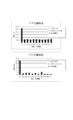
- FIG. 7 is a graph showing the results of FIG. 6. It is a figure which shows the result of the pressure
- FIG. 9 is a graph showing the result of FIG. 8. It is a figure which shows the crystallinity degree of the extraction result obtained using the plant tissue processing agent of each mixing ratio. It is a figure which shows the glucose yield result of the extract at the time of using lithium hydroxide as a plant tissue processing agent, and a sodium hydroxide. It is a figure which shows the graph which shows the X-ray diffraction result of the extract at the time of setting cedar as a process target. It is a figure which shows the graph which shows the X-ray-diffraction result of the extract at the time of setting Miso bamboo as a process target.
- FIG. 1 is a flow diagram simply showing the steps of the plant tissue treatment method of the present invention.
- the outline of the process of the plant tissue treatment method of the present invention is that a plant tissue treatment agent is added to a plant tissue such as wood or rice straw as a raw material, and the cellulose I type component is obtained through a decomposition and extraction treatment process of the plant tissue. This is an efficient extraction method.
- the cellulose type I component produced by the plant tissue treatment method of the present invention can be a raw material that can be used for various industrial applications.
- the essential step of the plant tissue treatment method of the present invention is the decomposition and extraction treatment step (1), and the other separation steps (2) to the cellulase reaction step (6) are merely examples, and are not limited to the use and contents. Accordingly, there can be various processing steps in addition to these steps.
- the decomposition extraction process step (1) will be mainly described below.
- the plant tissue to be input may be wood, herbaceous natural plant resources, or chemically treated plant resources.
- the natural plant resource may be bamboo, rice straw, straw, Sasa, Japanese pampas grass, switchgrass, Giant Miscanthus, timber thinned bark, or a combination thereof.
- a plant fragment residue contained in a pulp liquid discharged from a papermaking process can be used as a plant resource that has been chemically treated.
- the plant tissue treatment agent to be introduced is mainly composed of lithium hydroxide.
- the present invention decomposes plant tissue or plant-derived processed products by adding plant tissue treating agents to plant tissues of wood pieces or herbaceous pieces or plant-derived processed products processed from them. It is a method of promoting and extracting the cellulose I type component inside.
- the inventors here add a plant tissue treatment agent based on a compound of a metal element having an atomic diameter smaller than the atomic diameter constituting the plant tissue and a water-soluble compound to the plant tissue at room temperature and normal pressure. Then, it was considered to directly infiltrate cellulose microfibrils in the tissue.
- the metal compound having an atomic diameter smaller than that of the carbon atom is a lithium compound
- lithium hydroxide can be cited as an example of water solubility.
- Lithium hydroxide has a smaller atomic diameter of carbon constituting the plant tissue, and therefore has a high permeability to the inside of the plant tissue and is considered to easily act on cellulose microfibrils inside. Slow dissolution extraction of cellulose type I component by applying lithium hydroxide to the non-crystalline part of cellulose microfibrils and eluting the cellulose type I component by gently dissolving without any other active ingredients Established a method.
- the plant tissue treatment agent of the present invention is the same alkali metal hydroxide, it is not always possible to obtain an effect equivalent to that of the present invention even if the other alkali metal hydroxide is used as a main ingredient.
- lithium hydroxide solution, sodium hydroxide solution, potassium hydroxide solution, calcium hydroxide solution and the like are widely used as alkali metal hydroxides. It cannot be said that it is a property widely seen in all oxides.
- the inventors' research has revealed for the first time that the destruction ability of the plant tissue possessed by lithium hydroxide is clearly greater than the destruction ability of the plant tissue possessed by other alkali metal hydroxides.
- sodium hydroxide is inferior in the destruction ability of a plant tissue compared with lithium hydroxide, it can be considered to use it as an auxiliary agent while using a lithium hydroxide aqueous solution as a main agent.
- the pH of the plant tissue treatment agent was adjusted to be weakly alkaline with a pH of 13 or less.
- lithium hydroxide is applied to the non-crystalline part of the cellulose microfibril to slowly destroy and dissolve the non-crystalline part. Therefore, the temperature and pressure may be applied at normal temperature and normal pressure. In order to further improve the processing speed, it is not excluded to set the processing environment under high temperature and high pressure.
- the temperature is preferably in the range of 5 ° C to 200 ° C.
- Test pieces As a test piece of plant tissue used in the experiment, 100 mg each prepared by adjusting a size of 80 sq. To 30 sq. Of a sect bamboo and cedar (mixed sapwood and heartwood) material was prepared.
- Plant tissue treatment agent As the plant tissue treatment agent in the decomposition and extraction step (1), a test category using lithium hydroxide and a test category using sodium hydroxide as a comparison target were prepared.
- the concentration of the lithium hydroxide aqueous solution used was 7 wt%, which is a representative concentration in the concentration range 3 w% to 10 w% assumed in the plant tissue treatment method of the present invention.
- the sodium hydroxide solution used as a comparison object was a 11.8 wt% sodium hydroxide solution in terms of the same number of moles as the lithium hydroxide solution 7 w%.
- Plant tissue treatment method In the plant tissue treatment method, the prepared test piece was placed in a beaker, and the plant tissue treatment agent was added to such an extent that the test piece was sufficiently immersed, and the sample was pressed with a glass stopper so as not to float, and left still for 1 hour. Thereafter, it was washed neutral with running water for about 1 hour.
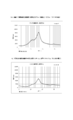
- FIG. 3 shows the test results in the case of cedar wood
- FIG. 4 shows the test results in the case of Soso bamboo.
- FIG. 3 (a) and FIG. 4 (a) as a result of analyzing the X-ray diffraction graph, in the test section using lithium hydroxide, there is a high peak around 20 degrees to 23 degrees, and around 10 degrees.
- the thing using lithium hydroxide as the main ingredient of the plant tissue treating agent of the present invention is a slow chemical treatment that permeates lithium hydroxide at normal temperature and normal pressure without accompanying physical treatment such as explosion.
- the cellulose type I cellulose can be obtained only by this.
- the experiment which compares the cellulose extraction amount in each test division was also conducted. Since it is difficult to directly measure the amount of cellulose extracted, it was performed by decomposing cellulose into glucose and comparing the amount of glucose. Experiments and evaluations were conducted at the Institute for Survival of Life at Kyoto University. The procedure of the test method was as follows. As the test piece, 1.0 g of cedar was used. As in the above, the plant tissue treatment agent was prepared in a test category of 11.8 w% so that lithium hydroxide was 7 w% and sodium hydroxide had the same number of moles. As in the above, the plant tissue treatment method was immersed for 1 hour to obtain an extract.
- glucose was converted by the cellulase reaction step, and the amount of glucose was measured.
- 40 ml of cellulase derived from tricoderma was applied to each test section. The reaction was carried out by shaking while maintaining the solution temperature at around 50 to 53 ° C. where the enzyme activity of cellulase was increased.
- the glucose yield was measured at 60 minutes, 120 minutes, and 240 minutes. GOD and a colorimetric method were used for measuring the glucose yield.
- the results are shown in FIG. As shown in FIG. 5, it can be seen that the yield of glucose is higher in the test group of lithium hydroxide, which is the main component of the plant tissue treating agent of the present invention, than in the test group of sodium hydroxide. That is, the superiority of lithium hydroxide can be confirmed also in the amount of cellulose extracted. Further, in consideration of the above X-ray diffraction results, in FIG. 5, the test category of lithium hydroxide is the amount of glucose produced from cellulose type I component, and the test category of sodium hydroxide is cellulose type II. It is the amount of glucose produced from alkali cellulose.
- evaluation was performed by applying a compression test in order to examine a change in the pressure strength of the test piece.
- the evaluation was conducted at the Institute for Survival of Kyoto University.
- the initial state of the test piece is so-called cork or wood, and it is hard and does not collapse.
- the destruction state becomes like a coarse powder. This physical change can be evaluated by examining the change in compression pressure resistance of the test piece.
- the material to be treated was cedar. For reference, beech wood and rice straw were also used as the material to be treated.
- the plant tissue treatment agent was prepared in a test category of 11.8 w% so that lithium hydroxide was 7 w% and sodium hydroxide had the same number of moles.
- the plant tissue treatment method was prepared by immersion for 1 hour, 2 hours, 4 hours, 12 hours, and 24 hours.
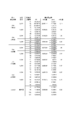
- FIG. 5 and FIG. FIG. 6 is a measurement result
- FIG. 7 is a graph of the measurement result.
- FIG. 6 and FIG. 7 it can be seen that the test category of the cedar wood immersed in the lithium hydroxide solution is changed so as to increase the brittleness.
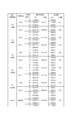
- FIG. 8 the result of the pressure
- FIG. 8 is a graph of the measurement result. As shown in FIG. 8 and FIG. 9, it can be seen that the test category of the beech material immersed in the lithium hydroxide solution changes so as to increase brittleness. Similarly, it can be seen that the test category of the beech material immersed in the sodium hydroxide solution is changed so as to increase the brittleness.
- an auxiliary agent is mixed and used with lithium hydroxide as a main agent
- a plant tissue treatment agent As the main ingredient of the plant tissue treating agent of the present invention, an aqueous lithium hydroxide solution was prepared as the main ingredient.
- the plant tissue treatment agent was prepared so that the concentration of the lithium hydroxide aqueous solution was 7 w%.
- sodium hydroxide was added as an auxiliary agent, the sodium hydroxide aqueous solution concentration was adjusted to 7% so as to replace lithium hydroxide.
- the following five plant tissue treating agents were prepared by changing the mixing ratio of lithium hydroxide as the main agent and sodium hydroxide as the auxiliary agent.
- item number 1 is an example in which only the lithium hydroxide aqueous solution as the main agent is used and no auxiliary agent is used.
- the amount of each plant tissue treating agent was 10 ml, and an amount sufficient to sufficiently immerse the test piece placed in the beaker was prepared.
- the pH was adjusted to about 10 to 12.
- cedar wood (S) and ⁇ jong bamboo (T) were prepared as a specimen of a plant tissue used in the experiment. 100 mg each prepared by adjusting the size of the sect bamboo and cedar (mixed sapwood and heartwood) to a size of 80 mesh or more and 30 mesh or less was prepared.
- Plant tissue treatment method In the plant tissue treatment method, each of the above five plant tissue treatment agents is put in a beaker, and the prepared test piece is sufficiently immersed in the plant tissue treatment agent. Soaked. Thereafter, it was washed neutral with running water for about 1 hour.
- FIG. 10 is a diagram showing the degree of crystallinity of an extraction result obtained using the plant tissue treating agent of each mixing ratio.
- T is the case of Somune bamboo and S is the case of cedar wood.
- the argument is the item number of each plant tissue treatment agent.
- T-1 indicates the crystallinity of an extract obtained by treating Misotake with the plant tissue treating agent of No. 1.
- the degree of crystallinity is the degree to which the molecule of interest is crystallized. The higher the degree of crystallinity, the higher the degree of polymerisation and the more stable. The lower the degree of crystallinity, the more the decomposition proceeds and the easier it is to extract. It shows that.
- the crystallinity of T-1 is clearly low when looking at the test results of Misotake. It can be seen that the crystallinity increases in the order of T-1 to T-2,. Further, as shown in FIG. 10, when the test result of the cedar wood is seen, the crystallinity of T-1 is clearly low. It can be seen that the crystallinity tends to increase in the order from T-1 to T-2,. From this, it can be seen that the plant tissue treatment agent of 100% lithium hydroxide is most decomposing the carbon source. Even if an auxiliary agent is used, it should be said that it should be between T-1 and T-2 and between S-1 and S-2. That is, it can be concluded that the mixing ratio of lithium hydroxide and sodium hydroxide is preferably in the range of 100: 0 to 75:25.
- Glucose production amount test for evaluating the efficiency of extract production
- the yield of cellulose in the extraction product obtained using the plant tissue treatment agent of each mixing ratio described above is verified. Since it is difficult to directly measure the yield of cellulose, cellulose was decomposed into glucose by a cellulase reaction, and the amount of glucose was compared.
- the procedure of the test method was as follows. The test piece used 400 mg of Miso bamboo.
- the plant tissue treatment agents were compared using No. 1 and No. 5 in Table 1, that is, using a 7 w% lithium hydroxide aqueous solution and 7% sodium hydroxide.
- the plant tissue treatment method was the same as described above. 40 ml of cellulase derived from tricoderma was applied to the extracted extract.
- the reaction was carried out by shaking while maintaining the solution temperature at around 50 to 53 ° C. where the enzyme activity of cellulase was increased. Next, after the cellulase immersion, the glucose yield was measured at 60 minutes, 120 minutes, and 240 minutes. GOD and a colorimetric method were used for measuring the glucose yield.
- lithium hydroxide as the main agent is preferably used at 100% without being mixed with the auxiliary agent. Even when lithium hydroxide is added as an auxiliary agent, although it was concluded that the ratio should be within the range of 100: 0 to 75:25, the item number 1 used in the above test (when the ratio of the main agent and the auxiliary agent is 100: 0), the item number 2 ( X-ray diffraction results were obtained for the main agent and auxiliary agent ratio of 75:25, and it was confirmed that both were cellulose I type. In other words, 100 mg each of two kinds of Sosetsu bamboo and cedar wood were used as test pieces, the plant tissue treatment agents used were those in No. 1 and No.
- FIG. 12 is a graph showing an X-ray diffraction result of the extract when cedar is a processing target
- FIG. 13 is a graph showing an X-ray diffraction result of the extract when Tsuji Munetake is a processing target. From the X-ray diffraction graphs of FIGS. 12 and 13, both have a high peak around 20 to 23 degrees, and no specific peak of cellulose type II is seen around 10 degrees. In both cases of 100: 0 and a ratio of the main agent to the auxiliary agent of 75:25, it was determined that cellulose type I was extracted. Further, it was also found that cellulose type II was not extracted and no cellulose type other than cellulose type I was mixed.
- Example 3 explains the utilization on the immersion liquid side and the utilization on the residue side obtained as a result of the decomposition and extraction treatment process of the plant tissue treatment.
- the present Example 3 performs post-treatment on the immersion liquid or the plant tissue residue obtained through the decomposition and extraction treatment step (1) of the plant tissue shown in FIG. 1 of Example 1, and useful substances such as a carbon source of biomass. Is what you get.
- the separation step (2) will be described as a step on the immersion liquid side in FIG.
- a part of the plant-derived constituent material is eluted in the immersion liquid.
- it can be separated into a usable form by a separation process which is a subsequent process of the decomposition and extraction treatment process.
- a separation process which is a subsequent process of the decomposition and extraction treatment process.
- plant-derived substances there are so-called water-soluble substances and oil-soluble substances, which can be separated and extracted by separating oil and water.
- the separation step shown in FIG. 1 the water-soluble component dissolved in the separated and extracted water layer can be concentrated by dehydration treatment, and the oil-soluble component dissolved in the oil component layer is concentrated by deoiling treatment. be able to.
- the water washing step (3) in FIG. 1 is a step of taking out the plant tissue residue after the decomposition treatment after the decomposition extraction treatment step (1) and washing it with water.
- the decomposition and extraction treatment step (1) since it is immersed in the plant tissue treatment agent, a large amount of the plant tissue treatment agent remains in the plant tissue. Since the component of this plant tissue treating agent is not necessary for the production of biomass carbon source, it must be removed. Since the plant tissue treatment agent is an alkali metal compound such as lithium hydroxide as shown in Example 1, it exhibits water solubility and can be washed away by washing with water.
- the plant tissue residue moves to the drying step (5), and the water-washed treated water moves to the lithium recovery step (4).
- the lithium recovery step (4) is a step of recovering lithium contained in the water subjected to washing with water.
- Lithium has an economic value as a raw material, and it is natural that the lithium hydroxide used in the decomposition and extraction treatment process is discarded as it is, and it is preferable to recover and reuse lithium.
- lithium hydroxide is changed to lithium carbonate by adding carbon dioxide, the solubility greatly changes and precipitates, so that lithium can be easily recovered in the form of lithium carbonate.
- 2LiOH ⁇ H2O + CO2 ⁇ Li2CO3 + 3H2O Even in the form of lithium carbonate, it is a substance with great economic value, and can be used as it is as lithium carbonate.
- lithium hydroxide can be produced and reused by reacting lithium carbonate with calcium hydroxide. Li2CO3 + Ca (OH) 2 ⁇ 2LiOH + CaCO3
- cellulase reaction step (5) cellulase which is a hydrolase of (1 ⁇ 4) - ⁇ -glucoside bond is applied to cellulose remaining in the plant tissue residue after the water washing step (3).
- This is the step of decomposing cellulose.
- Cellulases which are cellulolytic enzymes, have a variety of bacteria. The bacterial species to be used is not limited, and any bacterial species that decomposes cellulose can be used.
- the cellulase reaction step is a reaction for decomposing cellulose to produce glucose.
- glucose produced in the cellulase reaction step (5) in the residue side step is taken out by filtration.
- Glucose is a substance that has undergone advanced saccharification.
- glucose is a basic raw material for obtaining bioethanol, and is a substance suitable for biomass utilization. Since glucose is eluted in the liquid component, glucose and the residue can be easily separated by the filtration step (6).
- What is recovered as a residue in the filtration step (6) is fragile and can be pulverized using a general-purpose pulverizer such as a ball mill without using a special pulverizer. It becomes the raw material according to. If cellulase, which is a cellulose-degrading enzyme, is reacted at an appropriate temperature with cellulose obtained in these steps, glucose can be produced by the cellulose-decomposing reaction.
- Example 4 an example of a bulk reduction method in which the plant tissue treatment method of the present invention is applied to promote decomposition of the plant tissue to reduce the volume of the plant tissue will be described.
- the result of each process is verified as an example using “rice straw” as a plant tissue.
- Test category using the plant tissue treatment agent based on lithium hydroxide of the present invention hereinafter abbreviated as lithium hydroxide solution test category
- plant tissue treatment agent based on sodium hydroxide as a comparative experiment
- test category using simple purified water without using a plant tissue treating agent as a control hereinafter abbreviated as purified water test category).
- the rice straw that is a plant tissue used in the experiment was naturally dried in advance and cut into a length of about 30 mm. 0.5 g of the cut rice straw was prepared. In each test section, the concentration of the lithium hydroxide solution is adjusted to 7w% and the pH is about 10 to 12, and the concentration of the sodium hydroxide solution is 11.8w% and the pH is about 10 to 12. The prepared one was used.
- the decomposition extraction process step (1) in FIG. 1 was performed by immersing each test section in a solution for 6 hours.
- the plant tissue residue obtained as a result of the decomposition and extraction treatment step (1) is preferably dried to a form suitable for storage.
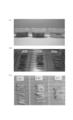
- FIG. 14 is a diagram showing the results of simulating the plant tissue decomposition and extraction process, the water washing process of the plant tissue residue taken out, and the drying process.
- Fig.14 (a) is a figure which shows the result of the decomposition extraction process process (1) of a plant tissue.
- the color of the immersion solution changes from a transparent color to a dark brown color over time, and the appearance of the plant-derived structure is leached. It can be seen.
- the change in the color of the solution is slightly different from the change in the color of the solution in the lithium hydroxide solution test category, but it changes from a transparent color to a dark brown color over time.
- the plant-derived structure is seen leaching.
- the purified water test section it can be seen that the purified water remains transparent and nothing is leached.
- FIG. 14 (b) is a diagram showing a state in which plant tissue residues are taken out from the respective test sections.
- the lithium hydroxide solution test section it was felt by touch that it was quite brittle.
- the sodium hydroxide solution test category the whole was sticky, and the plant tissue seemed to be slightly soft, but it was not felt that it was brittle.
- the purified water test section is clearly only wet.
- FIG.14 (c) is a figure which shows the mode of the plant tissue residue of each test division in the state which finished the water washing process process (3).
- indoor air drying was performed indoors on a nylon net for 18 days.
- the lithium hydroxide solution test section it was felt by touch that it became dry and more brittle.
- the sodium hydroxide solution test category it was felt that the fibers were slightly shrunk due to drying, but the fibers remained firmly and could not be said to be brittle.
- the purified water test category felt that it had returned to the initial state of raw rice straw.
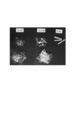
- FIG. 15 is a diagram showing the ease of pulverization of plant tissue residues.
- the upper part of FIG. 15 is a diagram showing a state where the plant tissue residue is easily rubbed with a finger.
- the plant tissue residue was fragile and could be easily crushed with fingers, few remained in the form of fibers, and broken into small pieces.
- the fibers can be decomposed by increasing the immersion time or adding agitation.
- the plant tissue residue was soft and could be crushed even with fingers, but only torn along the fiber and not broken into small pieces.
- the purified water test category the rice straw was only dried and it was not easy to break.
- FIG. 15 is a diagram showing a state in which plant tissue residues are crushed with a mortar.
- the lithium hydroxide solution test category since the plant tissue residue was brittle, it could be crushed even by lightly rubbing with a mortar, resulting in a small powder. It turned out that powdering progressed more when crushed with mortar with more power. That is, it turned out that a plant tissue residue can be easily pulverized.
- the plant tissue residue was soft and it was torn along the fiber, but the fiber was only broken apart and did not become small fragments. That is, it turned out that a plant tissue residue cannot be easily pulverized.
- the plant tissue residue can be effectively pulverized by the method for processing plant tissue or plant-derived processed product of the present invention.
- the bulky plant tissue is pulverized. It can be seen that the bulk density can be increased and the volume can be reduced. Thus, if the volume can be reduced as a material that uses plant tissue or plant-derived processed products as a carbon source for biomass, costs such as transportation and storage can be reduced.
- Example 5 an example will be described in which the plant tissue treating agent of the present invention is applied to a plant-derived processed product such as cardboard or paper product to promote its decomposition.
- a plant-derived processed product such as cardboard or paper product to promote its decomposition.
- cardboard and paper piece are used as examples of plant-derived processed products will be verified.
- test category using the plant tissue treatment agent based on lithium hydroxide of the present invention (hereinafter abbreviated as lithium hydroxide solution test category) and plant tissue treatment agent based on sodium hydroxide as a comparative experiment
- test category using simple purified water without using a plant tissue treating agent as a control (hereinafter abbreviated as purified water test category). ) was prepared and experimented.
- the cardboard used for the experiment was naturally dried in advance.
- the concentration of the lithium hydroxide solution is adjusted to 7w% and the pH is about 10 to 12
- the concentration of the sodium hydroxide solution is 11.8w% and the pH is about 10 to 12.
- the prepared one was used.
- the decomposition extraction process step was performed by dropping the solution in each test section and applying it for 1 hour. The state after applying for 1 hour was observed.
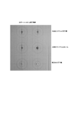
- FIG. 16 is a diagram showing a state where each solution is dropped on the surface of the cardboard and one hour has elapsed.
- the lithium hydroxide solution test section shown in the upper part of FIG. 16 the infiltration from the surface of the corrugated cardboard into the interior, the surface of the corrugated cardboard starts to decompose and slightly collapse, and gradually discolors over time. It can be seen that the derived structure is leached.
- the penetration from the surface of the corrugated board to the inside is not as large as that of lithium hydroxide, and the surface of the corrugated board is slightly discolored but is observed to be broken.
- the degree of leaching of plant-derived structures, such as changes in the lithium solution test category is not great over time.
- the purified water test section shown in the lower part of FIG. 16 it is clear that the purified water is repelled on the surface of the cardboard and the purified water is accumulated on the surface, and nothing is leached.
- test category using the plant tissue treatment agent based on lithium hydroxide of the present invention (hereinafter abbreviated as lithium hydroxide solution test category) and plant tissue treatment agent based on sodium hydroxide as a comparative experiment
- test category using simple purified water without using a plant tissue treating agent as a control (hereinafter abbreviated as purified water test category). ) was prepared and experimented.
- the paper piece used for the experiment was naturally dried in advance.
- the concentration of the lithium hydroxide solution is adjusted to 7w% and the pH is about 10 to 12
- the concentration of the sodium hydroxide solution is 11.8w% and the pH is about 10 to 12.
- the prepared one was used.
- the decomposition extraction process step was performed by dropping the solution in each test section and applying it for 1 hour. The state after applying for 1 hour was observed.
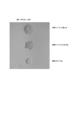
- FIG. 17 is a diagram illustrating a state in which each solution is dropped on the surface of a piece of paper and the state after one hour has been observed is observed.
- the surface penetrates from the surface of the paper piece, the surface of the paper piece is decomposed and the surface starts to collapse slightly, and the color gradually changes over time. It can be seen that the derived structure is leached.
- the surface is slightly discolored, but the state of collapse is not observed, and even when time passes, it is derived from a plant such as a change in the lithium solution test section. The degree of leaching of the structure is not great.
- the purified water test section shown in the lower part of FIG. 17 it is clear that purified water is repelled on the surface of the paper piece and the purified water is accumulated on the surface, and nothing is leached.
- the processing method of the plant tissue or plant-derived processed product for promoting the decomposition of the plant tissue of the present invention its main agent, the raw material composition extracted by the processing method of the plant tissue or plant-derived processed product, and the plant tissue or plant-derived An example was given regarding a method for reducing the bulk of a workpiece.
- a processing agent that is consumed in the prior art, a large-scale mechanical device, and a large amount Energy and the like, and it is a very simple method of reacting slowly by simply immersing it in the plant tissue treatment agent of the present invention, and without consuming the plant tissue treatment agent.
- Plant-derived components containing cellulose type I cellulose can be extracted from plant-derived processed products such as plant tissues, cardboard and paper products.
- plant tissue residues after herbaceous extraction such as rice straw
- the volume can be easily reduced to a fraction of that, greatly contributing to the reduction of carbon mileage from production areas to consumption areas. Is. Storage costs can also be reduced.
- lithium hydroxide has not been used for plant tissue treatment in this form until now, and it is also meaningful to find new uses.
- Sodium hydroxide has been frequently used as a basic compound for inorganic materials, but lithium hydroxide is a compound that exhibits the same basicity, but it has been found that there is a great difference in the ability to decompose plant tissues.
- the ability of decomposing lithium hydroxide to plant tissues and the ability to extract plant-derived substances found in the present invention are the effects of lithium hydroxide that have not been known so far, and these effects are the inventors of the present application.
- the present invention is considered to be able to play a part in the promotion of domestic forestry, which is currently sluggish, and regional development, if not so large.
Landscapes
- Life Sciences & Earth Sciences (AREA)
- Engineering & Computer Science (AREA)
- Wood Science & Technology (AREA)
- Forests & Forestry (AREA)
- Chemical & Material Sciences (AREA)
- Inorganic Chemistry (AREA)
- Chemical And Physical Treatments For Wood And The Like (AREA)
- Polysaccharides And Polysaccharide Derivatives (AREA)
- Paper (AREA)
- Processing Of Solid Wastes (AREA)
Abstract
L'invention vise à procurer un agent de traitement de tissu végétal et un procédé de traitement de tissu végétal avec lesquels il est possible de provoquer la décomposition d'un tissu végétal ou d'un matériau traité dérivé de plantes sans utiliser de dispositif de traitement à grande échelle. À cet effet, l'invention porte sur un agent de traitement destiné à un tissu végétal ou un matériau traité dérivé de plantes, lequel agent de traitement est ajouté à un tissu végétal ou à un matériau traité dérivé de plantes, et lequel accélère une étape destinée à effectuer un traitement d'extraction par décomposition sur le tissu végétal ou le matériau traité dérivé de plantes, et lequel agent de traitement comporte de l'hydroxyde de lithium comme agent principal. Cet agent de traitement de tissu végétal est ajouté à un tissu végétal ou à un matériau traité dérivé de plantes destiné à accélérer une étape de décomposition du tissu végétal ou du matériau traité dérivé de plantes et une étape d'extraction d'une substance dérivée de plantes. L'invention peut également disposer d'une étape de séparation de résidu après l'étape de réalisation d'un traitement d'extraction par décomposition sur le tissu végétal. Des exemples de tissu végétal comprennent du bois, de l'herbe, du carton, des produits de papier et des résidus de fragment de plantes contenus dans un liquide de pâte déchargé à partir d'un processus de fabrication de papier. Du côté liquide d'immersion et du côté résidu de tissu végétal, la substance dérivée de la plante comprend de la cellulose du type I. Il est également possible d'obtenir du glucose à l'aide de cellulase.
Priority Applications (1)
| Application Number | Priority Date | Filing Date | Title |
|---|---|---|---|
| JP2018515739A JP6535923B2 (ja) | 2016-05-04 | 2017-05-03 | 植物組織の分解を促進する植物組織処理方法、その主剤、その植物組織処理方法で抽出した原料組成物、および植物組織の嵩低減方法 |
Applications Claiming Priority (6)
| Application Number | Priority Date | Filing Date | Title |
|---|---|---|---|
| JP2016092879 | 2016-05-04 | ||
| JP2016-092879 | 2016-05-04 | ||
| JP2016163137 | 2016-08-23 | ||
| JP2016-163137 | 2016-08-23 | ||
| JP2017-001511 | 2017-01-09 | ||
| JP2017001511 | 2017-01-09 |
Publications (1)
| Publication Number | Publication Date |
|---|---|
| WO2017191845A1 true WO2017191845A1 (fr) | 2017-11-09 |
Family
ID=60203051
Family Applications (1)
| Application Number | Title | Priority Date | Filing Date |
|---|---|---|---|
| PCT/JP2017/017319 Ceased WO2017191845A1 (fr) | 2016-05-04 | 2017-05-03 | Procédé de traitement de tissu végétal destiné à accélérer la décomposition d'un tissu végétal, agent principal correspondant, composition de matière première extraite à l'aide d'un procédé de traitement de tissu végétal, et procédé de réduction d'une masse de tissu végétal |
Country Status (2)
| Country | Link |
|---|---|
| JP (1) | JP6535923B2 (fr) |
| WO (1) | WO2017191845A1 (fr) |
Families Citing this family (2)
| Publication number | Priority date | Publication date | Assignee | Title |
|---|---|---|---|---|
| JP7013009B2 (ja) * | 2018-01-31 | 2022-02-15 | 学校法人福岡大学 | セルロース含有材料の製造方法およびバイオエタノールの製造方法、ならびに、リグニン含有グリセリンの製造方法 |
| CN113908174B (zh) * | 2021-10-29 | 2022-06-24 | 北京四环制药有限公司 | 一种高效安全的脑蛋白水解物制备方法及其应用 |
Citations (5)
| Publication number | Priority date | Publication date | Assignee | Title |
|---|---|---|---|---|
| JP2005026088A (ja) * | 2003-07-02 | 2005-01-27 | Toyota Motor Corp | リチウム電池の処理方法およびリサイクル方法 |
| WO2008123419A1 (fr) * | 2007-03-30 | 2008-10-16 | National Institute Of Advanced Industrial Science And Technology | Matière de cellulose fibreuse fine et son procédé de fabrication |
| WO2014002674A1 (fr) * | 2012-06-26 | 2014-01-03 | 国立大学法人鳥取大学 | Procédé de fabrication de lignine à partir de biomasse à l'aide d'un liquide ionique de dissolution de lignine, et procédé de fabrication de lignine, d'hémicellulose et de cellulose |
| WO2015046473A1 (fr) * | 2013-09-27 | 2015-04-02 | 株式会社カネカ | Procédé de production de perles de cellulose poreuses par utilisation d'une solution aqueuse alcaline, support pour immobilisation de ligands, et adsorbant |
| JP2015218299A (ja) * | 2014-05-20 | 2015-12-07 | 凸版印刷株式会社 | セルロースナノファイバーの製造方法、セルロースナノファイバー、およびその分散液 |
-
2017
- 2017-05-03 WO PCT/JP2017/017319 patent/WO2017191845A1/fr not_active Ceased
- 2017-05-03 JP JP2018515739A patent/JP6535923B2/ja not_active Expired - Fee Related
Patent Citations (5)
| Publication number | Priority date | Publication date | Assignee | Title |
|---|---|---|---|---|
| JP2005026088A (ja) * | 2003-07-02 | 2005-01-27 | Toyota Motor Corp | リチウム電池の処理方法およびリサイクル方法 |
| WO2008123419A1 (fr) * | 2007-03-30 | 2008-10-16 | National Institute Of Advanced Industrial Science And Technology | Matière de cellulose fibreuse fine et son procédé de fabrication |
| WO2014002674A1 (fr) * | 2012-06-26 | 2014-01-03 | 国立大学法人鳥取大学 | Procédé de fabrication de lignine à partir de biomasse à l'aide d'un liquide ionique de dissolution de lignine, et procédé de fabrication de lignine, d'hémicellulose et de cellulose |
| WO2015046473A1 (fr) * | 2013-09-27 | 2015-04-02 | 株式会社カネカ | Procédé de production de perles de cellulose poreuses par utilisation d'une solution aqueuse alcaline, support pour immobilisation de ligands, et adsorbant |
| JP2015218299A (ja) * | 2014-05-20 | 2015-12-07 | 凸版印刷株式会社 | セルロースナノファイバーの製造方法、セルロースナノファイバー、およびその分散液 |
Also Published As
| Publication number | Publication date |
|---|---|
| JP6535923B2 (ja) | 2019-07-03 |
| JPWO2017191845A1 (ja) | 2018-07-26 |
Similar Documents
| Publication | Publication Date | Title |
|---|---|---|
| Wojnowska-Baryła et al. | Strategies of recovery and organic recycling used in textile waste management | |
| Serna et al. | Supercritical fluids as a green technology for the pretreatment of lignocellulosic biomass | |
| Hashim et al. | Characterization of raw materials and manufactured binderless particleboard from oil palm biomass | |
| Abe et al. | Dissolution of wet wood biomass without heating | |
| JP2010131004A (ja) | 糖類を製造する方法 | |
| CA2905239C (fr) | Traitement d'une biomasse lignocellulosique avec un liquide ionique | |
| Angulu et al. | Retting of bast fiber crops like hemp and flax—a review for classification of procedures | |
| CN110241644A (zh) | 一种农作物秸秆全组分分离及综合利用的方法 | |
| US9920389B2 (en) | Method for mixed biomass hydrolysis | |
| CN103861570A (zh) | 一种新型甘蔗渣吸附材料及其制备方法 | |
| CN104498562A (zh) | 氢氧化钠/尿素/水体系预处理农业废弃物生物质的方法 | |
| CN102304865B (zh) | 从烟草中提取纤维素的方法 | |
| Pandey et al. | Mushroom for the national circular economy | |
| CN103082393B (zh) | 一种利用生化机械法由烟秆制备烟草薄片的方法 | |
| JP6535923B2 (ja) | 植物組織の分解を促進する植物組織処理方法、その主剤、その植物組織処理方法で抽出した原料組成物、および植物組織の嵩低減方法 | |
| CN105435749A (zh) | 一种纤维素改性吸附剂及其制备工艺 | |
| CN102613685A (zh) | 一种改善烟梗品质的预处理方法 | |
| JP2016193594A (ja) | 植物組織の分解を促進する植物組織処理方法、その主剤、その植物組織処理方法で抽出した原料組成物、および植物組織の嵩低減方法 | |
| CN101565470B (zh) | 一种从马尾松毛虫幼虫中制备甲壳素和壳聚糖的方法 | |
| Khedr et al. | Bioconversion of rice straw into bioethanol by enzymatic hydrolysis of Bacillus subtilis | |
| CN107986275A (zh) | 一种生物活性炭的生产方法 | |
| CN109761709A (zh) | 一种利用棉杆中提取的木质素制备复合肥的方法 | |
| Ale et al. | Effective valorisation of cereal lignocellulosic waste: a review of pretreatment techniques to enhance microstructural modification | |
| CN107488413A (zh) | 一种石榴皮中栲胶的提取方法 | |
| JP2011217634A (ja) | 植物バイオマスの処理方法、植物バイオマスからの糖の製造方法、植物バイオマスからのアルコール及び/又は有機酸の製造方法 |
Legal Events
| Date | Code | Title | Description |
|---|---|---|---|
| ENP | Entry into the national phase |
Ref document number: 2018515739 Country of ref document: JP Kind code of ref document: A |
|
| NENP | Non-entry into the national phase |
Ref country code: DE |
|
| 121 | Ep: the epo has been informed by wipo that ep was designated in this application |
Ref document number: 17792777 Country of ref document: EP Kind code of ref document: A1 |
|
| 122 | Ep: pct application non-entry in european phase |
Ref document number: 17792777 Country of ref document: EP Kind code of ref document: A1 |