WO2017208973A1 - フルオレン骨格を有するアルコール類の製造方法 - Google Patents
フルオレン骨格を有するアルコール類の製造方法 Download PDFInfo
- Publication number
- WO2017208973A1 WO2017208973A1 PCT/JP2017/019608 JP2017019608W WO2017208973A1 WO 2017208973 A1 WO2017208973 A1 WO 2017208973A1 JP 2017019608 W JP2017019608 W JP 2017019608W WO 2017208973 A1 WO2017208973 A1 WO 2017208973A1
- Authority
- WO
- WIPO (PCT)
- Prior art keywords
- general formula
- represented
- group
- fluorene
- reaction
- Prior art date
- Legal status (The legal status is an assumption and is not a legal conclusion. Google has not performed a legal analysis and makes no representation as to the accuracy of the status listed.)
- Ceased
Links
- AAGZCJRYRWCYQL-UHFFFAOYSA-N CC(C=CC=C1)C(O)=C1C1=CCCC=C1 Chemical compound CC(C=CC=C1)C(O)=C1C1=CCCC=C1 AAGZCJRYRWCYQL-UHFFFAOYSA-N 0.000 description 1
Classifications
-
- C—CHEMISTRY; METALLURGY
- C07—ORGANIC CHEMISTRY
- C07C—ACYCLIC OR CARBOCYCLIC COMPOUNDS
- C07C41/00—Preparation of ethers; Preparation of compounds having groups, groups or groups
- C07C41/01—Preparation of ethers
- C07C41/16—Preparation of ethers by reaction of esters of mineral or organic acids with hydroxy or O-metal groups
-
- C—CHEMISTRY; METALLURGY
- C07—ORGANIC CHEMISTRY
- C07C—ACYCLIC OR CARBOCYCLIC COMPOUNDS
- C07C43/00—Ethers; Compounds having groups, groups or groups
- C07C43/02—Ethers
- C07C43/20—Ethers having an ether-oxygen atom bound to a carbon atom of a six-membered aromatic ring
- C07C43/23—Ethers having an ether-oxygen atom bound to a carbon atom of a six-membered aromatic ring containing hydroxy or O-metal groups
-
- C—CHEMISTRY; METALLURGY
- C07—ORGANIC CHEMISTRY
- C07B—GENERAL METHODS OF ORGANIC CHEMISTRY; APPARATUS THEREFOR
- C07B61/00—Other general methods
Definitions
- the present invention relates to a method for producing an alcohol having a fluorene skeleton, which is suitable as a monomer for forming a resin (optical resin) constituting an optical member such as an optical lens and an optical film, and has excellent workability and productivity.
- R 1 and R 2 are the same or different and each represents a halogen atom, an alkyl group or an alkoxyl group.
- N 1 and n 2 are the same or different and each represents 0 or an integer of 1 to 3;
- R 3 And R 4 are the same or different and each represents an alkylene group which may have a branch having 2 to 4 carbon atoms.
- the resin produced from bisarylfluorene alcohols having a phenyl group as a substituent represented by the formula is optical properties such as refractive index, heat resistance, water resistance, chemical resistance, electrical properties, mechanical properties, solubility It has been attracting attention as being excellent in various properties such as JP-A-07-149481 (Patent Document 1) and JP-A-2001-122828 (Patent Document 2).
- Patent Document 2 discloses the following general formula (1):
- An object of the present invention is to provide an industrial process for producing high-purity bisarylfluorene alcohols having a phenyl group as a substituent.
- the present inventors have found that in the presence of at least one compound selected from the group consisting of glycol diethers and ketones having 4 to 12 carbon atoms, the above general formula ( It has been found that the above problem can be solved by reacting the phenol represented by 1) with an alkylene carbonate. Specifically, the following invention is included.
- R 1 and R 2 are the same or different and each represents a halogen atom, an alkyl group or an alkoxyl group.
- N 1 and n 2 are the same or different and each represents 0 or an integer of 1 to 3)
- the following general formula (2) is reacted with a phenol represented by the following formula:
- R 1 , R 2 , n 1 , and n 2 have the same meanings as described above.
- R 3 and R 4 may be the same or different and each may be an alkylene group having 2 to 4 carbon atoms. Represents.) The manufacturing method of alcohol represented by these.
- high-purity bisarylfluorene alcohols having a phenyl group as a substituent can be produced.
- the reaction rate is greatly improved as compared with a conventionally known method, and therefore the alcohol represented by the general formula (2) can be produced more economically advantageously.
- the resin materials such as polycarbonate, polyester, polyacrylate, polyurethane, and epoxy are particularly useful. It can be suitably used as a raw material.
- Examples of the halogen atom in the phenol represented by the general formula (1) include fluorine, chlorine, bromine and iodine.
- Examples of the alkyl group include a methyl group, an ethyl group, a propyl group, a butyl group, a linear or branched alkyl group, a cyclopentyl group, a cyclohexyl group, a cycloheptyl group, a cyclic alkyl group such as a cyclooctyl group, and the like.
- a linear or branched alkyl group having 1 to 6 carbon atoms is preferable from the viewpoint of availability of phenols represented by the general formula (1).
- alkoxy group examples include C 1-6 alkoxy groups such as methoxy group, ethoxy group, and butoxy group.
- N 1 and n 2 representing the number of substituents are the same or different and each represents 0 or an integer of 1 to 3, preferably 0 or 1 from the viewpoint of the availability of phenols represented by the general formula (1). is there.
- n 1 and / or n 2 is 2 or 3
- the corresponding substituents (R 1 and / or R 2 ) may be the same or different.
- phenols may be used as the phenols represented by the general formula (1), or they can be produced by reacting fluorenone with the corresponding phenols in the presence of an acid catalyst.
- the glycol diether used in the present invention has the following formula (3): R 5 —O (CH 2 R 7 O) n —R 6 (3) (Wherein R 5 and R 6 are the same or different and each represents an alkyl group having 1 to 4 carbon atoms which may have a branch, and R 7 has 1 to 3 carbon atoms which may have a branch) Represents an alkylene group, and n represents an integer of 1 to 4.) It has the structure represented by these.
- Such glycol diethers include ethylene glycol dimethyl ether, propylene glycol dimethyl ether, diethylene glycol dimethyl ether, dipropylene glycol dimethyl ether, diethylene glycol ethyl methyl ether, diethylene glycol isopropyl methyl ether, diethylene glycol diethyl ether, diethylene glycol butyl methyl ether, tripropylene glycol dimethyl ether, tripropylene glycol Examples include ethylene glycol dimethyl ether, diethylene glycol dibutyl ether, triethylene glycol butyl methyl ether, and tetraethylene glycol dimethyl ether.
- ketones having 4 to 12 carbon atoms used in the present invention include chain ketones such as methyl ethyl ketone, methyl isobutyl ketone, methyl isoamyl ketone, 2-heptanone, 2-octanone, diisobutyl ketone, and cyclopentanone.
- cyclic ketones such as cyclohexanone, cycloheptanone, cyclooctanone, cyclononanone, cyclodecanone and cyclododecanone.
- ethylene glycol dimethyl ether, propylene glycol dimethyl ether, diethylene glycol dimethyl ether, dipropylene glycol dimethyl ether are available at low cost.
- the amount of the compound used is usually 0.05 to 3 times, preferably 0.08 to 1 times the weight of the phenol represented by the general formula (1). By using 0.05 times by weight or more, the effect of suppressing the formation of multimers is sufficiently exhibited. On the other hand, even when the amount used is more than 3 times by weight, alcohols represented by the above general formula (2) can be produced with high purity and little coloration, but an effect commensurate with the amount added is not exhibited. In order to obtain the alcohol represented by the above general formula (2) more economically advantageously, the amount used is preferably 3 times by weight or less.
- the alkylene carbonates in the present invention are alkylene carbonates having 3 to 5 carbon atoms, and specific examples thereof include ethylene carbonate, propylene carbonate, and butylene carbonate. Among these alkylene carbonates, ethylene carbonate is preferably used because of its availability and ease of handling.
- the alkylene carbonate used in the present invention is usually used in an amount of 2 to 10 mol, preferably 2 to 4 mol, per 1 mol of the phenol represented by the general formula (1). By using 2 mol or more, a sufficient reaction rate can be obtained, and when the amount used is 10 mol or less, alcohols represented by the above general formula (2) can be obtained more economically advantageously. .
- the reaction is carried out in the presence of a basic compound as necessary.
- basic compounds used in this reaction include carbonates, hydrogen carbonates, metal hydroxides, organic bases and the like, and more specifically, carbonates such as potassium carbonate, sodium carbonate, lithium carbonate, carbonate Cesium, etc. include potassium bicarbonate, sodium bicarbonate, lithium bicarbonate, cesium bicarbonate, etc. as metal carbonates, sodium hydroxide, potassium hydroxide, lithium hydroxide, etc.
- organic bases examples include triethylamine, dimethylaminopyridine, triphenylphosphine, tetramethylammonium bromide, tetramethylammonium chloride and the like.
- potassium carbonate, sodium carbonate, and triphenylphosphine are preferably used from the viewpoint of good handleability.
- the amount of these basic compounds used is usually 0.01 to 1.0 mol, preferably 0.03 to 0.2 times the amount of 1 mol of the phenol represented by the general formula (1). Is a mole.
- an inert organic solvent may be used in combination with at least one compound selected from the group consisting of glycol diethers and ketones having 4 to 12 carbon atoms, if necessary.
- Such inert organic solvents include aromatic hydrocarbons, halogenated aromatic hydrocarbons, aliphatic hydrocarbons, halogenated aliphatic hydrocarbons, ethers (excluding glycol diethers), Examples include esters, aliphatic nitriles, amides, sulfoxides and the like. More specifically, toluene, xylene, mesitylene, etc. as aromatic hydrocarbons, chlorobenzene, dichlorobenzene, etc.
- halogenated aromatic hydrocarbons pentane, hexane, heptane, etc. as aliphatic hydrocarbons, halogenated fats Dichloroether, 1,2-dichloroethane, etc. as aromatic hydrocarbons, diethyl ether, diisopropyl ether, methyl tertiary butyl ether, cyclopentyl methyl ether, diphenyl ether, etc. as ethers, ethyl acetate, butyl acetate, etc.
- nitriles include acetonitrile
- examples of amides include N, N-dimethylformamide, N, N-dimethylacetamide
- examples of sulfoxides include dimethyl sulfoxide.
- aromatic hydrocarbons or ethers having a boiling point of 110 ° C. or higher at 101.3 kPa are preferably used because of their availability and handling.
- These organic solvents may be used alone or as a mixture of two or more if necessary.
- the amount used when these organic solvents are used in combination is usually 0.1 to 5 times, preferably 0.5 to 3 times the weight of the phenol compound represented by the general formula (1). .
- the reaction between the phenol represented by the general formula (1) and the alkylene carbonate is usually carried out at 30 to 150 ° C., preferably 110 to 135 ° C.
- the reaction liquid containing the alcohol represented by the above general formula (2) obtained by the above method may be used as it is as a resin raw material (monomer), a medical and agricultural chemical raw material (intermediate), or the like.
- the alcohol represented by the general formula (2) may be taken out as crystals.
- a step of adding and mixing water and a strongly basic substance to the reaction solution containing the alcohol represented by the general formula (2) (hereinafter sometimes referred to as an alkali cleaning step) is performed.
- the alkali cleaning step will be described in detail.
- the strongly basic substance used in the alkali washing step refers to a basic compound having a base dissociation constant (pKb) of less than 1.
- these strongly basic substances include alkali metal hydroxides such as sodium hydroxide and potassium hydroxide, alkaline earth metal hydroxides such as calcium hydroxide and barium hydroxide, and particularly sodium hydroxide and water. Potassium oxide is preferred.
- These strong basic substances may be used alone or as a mixture of two or more if necessary.
- the amount of the strongly basic substance used in the alkali washing step is, for example, usually 0.3 to 4 mol, preferably 0.4 to 1 mol with respect to 1 mol of the phenol represented by the general formula (1) used in the reaction. 2.5 moles.
- the amount of water used in the alkali washing step is, for example, usually 1 to 50% by weight, preferably 3%, as the concentration of strong basic material in the aqueous phase produced from water and strong basic material charged into the reaction solution. ⁇ 30% by weight.
- concentration of the strongly basic substance in the aqueous phase is 1% by weight or more, the byproduct decomposition effect is enhanced, and by setting it to 50% by weight or less, the alcohol having the fluorene skeleton represented by the above general formula (2) This is preferable because the decomposition of the wastewater can be suppressed and the burden of wastewater treatment is reduced.
- the strongly basic substance and water used in the alkali washing step may be prepared as an aqueous solution having a predetermined concentration by adding water and a strongly basic substance into the reaction solution separately, and then mixing them.
- An aqueous solution in which a strongly basic substance is mixed may be used.
- phase transfer catalyst When carrying out the alkali cleaning step, a phase transfer catalyst may be used as necessary.
- the phase transfer catalyst that can be used include quaternary ammonium salts, quaternary phosphonium salts, pyridinium salts, crown ethers, and the like.
- a phase transfer catalyst is used when at least one compound selected from the group consisting of glycol diethers used in the reaction step and ketones having 4 to 12 carbon atoms remains. Even if it does not, the by-product produced
- organic solvent that can be separated from water When carrying out the alkali cleaning step, an organic solvent that can be separated from water may be used in combination, if necessary.
- organic solvents that can be separated from water include aromatic hydrocarbons such as benzene, toluene, xylene, and mesitylene, halogenated aromatic hydrocarbons such as chlorobenzene and dichlorobenzene, and aliphatic hydrocarbons such as pentane, hexane, and heptane.
- Halogenated hydrocarbons such as dichloromethane, chloroform and 1,2-dichloroethane
- ethers such as diethyl ether, diisopropyl ether, methyl tertiary butyl ether, cyclopentyl methyl ether and diphenyl ether, esters such as ethyl acetate and n-butyl acetate
- Alcohols such as butanol, pentanol, hexanol and heptanol, and aliphatic ketones such as methyl isobutyl ketone.
- aromatic hydrocarbons aromatic hydrocarbons, halogenated aromatic hydrocarbons, ketones, and ethers are preferable, and toluene and xylene are particularly preferable.
- These organic solvents may be used alone or as a mixture of two or more if necessary.
- These organic solvents separable from water include at least one compound selected from the group consisting of glycol diethers and ketones having 4 to 12 carbon atoms used in the above-described reaction step, and an inert combination used as necessary.
- the organic solvent may be used as an organic solvent separable from water, which is used in the alkali washing step.
- the amount of the organic solvent separable from water is not more than 40 times the weight of the alcohol represented by the general formula (2) contained in the reaction solution. It is preferable that the amount of the organic solvent used be 40 times by weight or less because decomposition of impurities is promoted and economic efficiency is improved.
- an organic solvent separable from water is used in combination, water, a strongly basic substance, and an organic solvent separable from water may be added simultaneously, or any one of them may be added later.
- an organic solvent separable from water it is easier to carry out the alkali washing step because it is more difficult for crystals to precipitate after adding the organic solvent separable from water. .
- the alkali washing step is usually performed at 0 to 150 ° C., preferably 60 to 120 ° C.
- the operating temperature By setting the operating temperature to 0 ° C. or higher, decomposition of by-products is promoted, and by setting the temperature to 150 ° C. or lower, it is preferable because coloring of the alcohol represented by the above general formula (2) can be suppressed. .
- an organic solvent that can be separated from water is not used when the alkali cleaning step is performed, an organic solvent that can be separated from water is added and further mixed.
- the organic phase containing the alcohol represented by the general formula (2) is separated from the aqueous phase, and the aqueous phase is removed.
- the obtained organic phase containing the alcohol represented by the general formula (2) may be concentrated as it is, and the alcohol represented by the general formula (2) may be taken out, or washed with water. Further, it may be purified by a conventional method such as post-treatment such as adsorption treatment or crystallization / column purification.
- the alcohol represented by the general formula (2) obtained by the method of the present invention has an HPLC purity determined by the method described later of usually 90% or more, preferably 95% or more, more preferably 98% or more. Moreover, since the YI value measured by the method described later is usually 10 or less, preferably 7 or less, it is suitably used as a raw material for resin materials such as polycarbonate, polyester, polyacrylate, polyurethane, and epoxy.
- Example 1 In a glass reactor equipped with a stirrer, a heating / cooling device, and a thermometer, 9, 9'-bis (4-hydroxy-3-phenylphenyl) fluorene 30 g (0.06 mol), potassium carbonate 0.7 g (0 0.005 mol), 13.1 g (0.149 mol) of ethylene carbonate, 45 g of toluene, and 15 g of triethylene glycol dimethyl ether, heated to 115 ° C., stirred at the same temperature for 5 hours, and then analyzed the reaction solution by HPLC. .
- the analysis results are as follows.
- Example 2 The reaction was carried out in the same manner as in Example 1 except that triethylene glycol dimethyl ether was changed to diethylene glycol dimethyl ether. After stirring for 4 hours, the reaction solution was analyzed by HPLC. The analysis results are as follows. 9,9'-bis (4-hydroxy-3-phenylphenyl) fluorene: not detected Alcohols represented by the above general formula (2): 92% ⁇ Multimer: 0.6% To the obtained reaction solution, 30 g of toluene and 30 g of a 12 wt% aqueous sodium hydroxide solution were added, and the mixture was stirred at 85 ° C. for 1 hour and allowed to stand to separate the aqueous phase. The result of analyzing the obtained organic phase by HPLC is shown below. 9,9'-bis (4-hydroxy-3-phenylphenyl) fluorene: not detected Alcohols represented by the above general formula (2): 97% -Multimer: 0.6%.
- Example 3 The reaction was conducted in the same manner as in Example 1 except that triethylene glycol dimethyl ether was changed to cyclohexanone. After stirring for 6 hours, the reaction solution was analyzed by HPLC. The analysis results are as follows. -9,9'-bis (4-hydroxy-3-phenylphenyl) fluorene: not detected-Alcohols represented by the above general formula (2): 93% ⁇ Multimer: 1.0% To the obtained reaction solution, 30 g of toluene and 30 g of a 12 wt% aqueous sodium hydroxide solution were added, and the mixture was stirred at 85 ° C. for 1 hour and allowed to stand to separate the aqueous phase. The result of analyzing the obtained organic phase by HPLC is shown below. 9,9'-bis (4-hydroxy-3-phenylphenyl) fluorene: not detected Alcohols represented by the above general formula (2): 97% -Multimer: 1.0%.
- Example 4 In a glass reactor equipped with a stirrer, a heating / cooling device, and a thermometer, 9, 9'-bis (4-hydroxy-3-phenylphenyl) fluorene 30 g (0.06 mol), potassium carbonate 0.7 g (0 0.005 mol), 12.0 g (0.137 mol) of ethylene carbonate, and 45 g of methyl isobutyl ketone, heated to 120 ° C., stirred at the same temperature for 6 hours, and then analyzed by HPLC. The analysis results are as follows.
- Example 5 In a glass reactor equipped with a stirrer, a heating / cooling device, and a thermometer, 9, 9'-bis (4-hydroxy-3-phenylphenyl) fluorene 30 g (0.06 mol), potassium carbonate 0.7 g (0 0.005 mol), 13.1 g (0.149 mol) of ethylene carbonate, and 30 g of methyl isoamyl ketone, the temperature was raised to 130 ° C., and the mixture was stirred at the same temperature for 5 hours, and then the reaction solution was analyzed by HPLC. The analysis results are as follows.
- 9,9'-bis (4-hydroxy-3-phenylphenyl) fluorene not detected Alcohols represented by the above general formula (2): 92% ⁇ Multimer: 0.7%
- To the obtained reaction liquid 60 g of toluene and 30 g of a 12 wt% aqueous sodium hydroxide solution were added, and the mixture was stirred at 85 ° C. for 3 hours and allowed to stand to separate the aqueous phase.
- the result of analyzing the obtained organic phase by HPLC is shown below.
- 9,9'-bis (4-hydroxy-3-phenylphenyl) fluorene not detected Alcohols represented by the above general formula (2): 97% -Multimer: 0.7%.
Landscapes
- Chemical & Material Sciences (AREA)
- Organic Chemistry (AREA)
- Chemical Kinetics & Catalysis (AREA)
- Organic Low-Molecular-Weight Compounds And Preparation Thereof (AREA)
- Polyethers (AREA)
Abstract
グリコールジエーテル及び炭素数4~12のケトン類からなる群より選ばれる少なくとも1種の化合物存在下、一般式(1)で表されるフェノール類と、アルキレンカーボネート類とを反応させる、一般式(2)で表されるアルコール類の製造方法が提供される。一般式(1)及び(2)中、R1及びR2はそれぞれ同一又は異なってハロゲン原子、アルキル基又はアルコキシル基を表す。n1及びn2はそれぞれ同一又は異なって、0又は1~3の整数を表す。一般式(2)中、R3及びR4はそれぞれ同一又は異なって炭素数2~4の分岐を有しても良いアルキレン基を表す。
Description
本発明は、光学レンズ、光学フィルム等の光学部材を構成する樹脂(光学樹脂)を形成するモノマーとして好適で、加工性、生産性に優れた、フルオレン骨格を有するアルコール類の製造方法に関する。
フルオレン骨格を有するアルコール類を原料モノマーとするポリカーボネート、ポリエステル、ポリアクリレート、ポリウレタン、エポキシなどの樹脂材料は、光学特性、耐熱性等に優れることから、近年、光学レンズや光学シートなどの新たな光学材料として注目されている。この中でも、下記一般式(2):
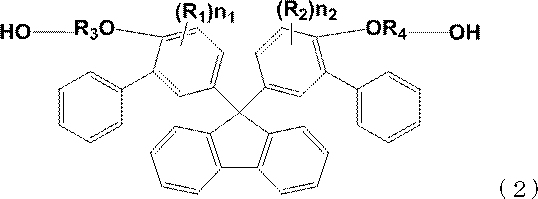
(式中、R1及びR2はそれぞれ同一又は異なってハロゲン原子、アルキル基又はアルコキシル基を表す。n1及びn2はそれぞれ同一又は異なって、0又は1~3の整数を表す。R3及びR4はそれぞれ同一又は異なって炭素数2~4の分岐を有しても良いアルキレン基を表す。)
で表される、置換基としてフェニル基を有する、ビスアリールフルオレンアルコール類から製造される樹脂は、屈折率等の光学特性、耐熱性、耐水性、耐薬品性、電気特性、機械特性、溶解性等の諸特性に優れるとして着目されている〔例えば特開平07-149881号公報(特許文献1)、特開2001-122828号公報(特許文献2)〕。
で表される、置換基としてフェニル基を有する、ビスアリールフルオレンアルコール類から製造される樹脂は、屈折率等の光学特性、耐熱性、耐水性、耐薬品性、電気特性、機械特性、溶解性等の諸特性に優れるとして着目されている〔例えば特開平07-149881号公報(特許文献1)、特開2001-122828号公報(特許文献2)〕。
一方、上記一般式(2)で表されるアルコール類の製造方法として、特許文献2には、下記一般式(1):

(式中、R1、R2、n1、n2の意味は上述の通りである。)
で表されるフェノール化合物と、アルキレンオキサイド類とを反応させる方法が記載されている。しかしながら、該方法で得られる上記一般式(2)で表されるアルコール類は、アルキレンオキサイドが3分子以上反応した化合物(以下、多量体と称することもある)が多量に副生する結果、その純度が低く、上記一般式(2)で表されるアルコール類を高純度で得ることは困難であった。
で表されるフェノール化合物と、アルキレンオキサイド類とを反応させる方法が記載されている。しかしながら、該方法で得られる上記一般式(2)で表されるアルコール類は、アルキレンオキサイドが3分子以上反応した化合物(以下、多量体と称することもある)が多量に副生する結果、その純度が低く、上記一般式(2)で表されるアルコール類を高純度で得ることは困難であった。
本発明の目的は、置換基としてフェニル基を有する、高純度なビスアリールフルオレンアルコール類の工業的製造方法を提供することにある。
本発明者らは、上記の課題を解決すべく鋭意研究を重ねた結果、グリコールジエーテル及び炭素数4~12のケトン類からなる群より選ばれる少なくとも1種の化合物存在下、上記一般式(1)で表されるフェノール類とアルキレンカーボネート類とを反応させることにより上記課題が解決可能であることを見出した。具体的には以下の発明を含む。
[1]
グリコールジエーテル及び炭素数4~12のケトン類からなる群より選ばれる少なくとも1種の化合物存在下、下記一般式(1):
グリコールジエーテル及び炭素数4~12のケトン類からなる群より選ばれる少なくとも1種の化合物存在下、下記一般式(1):
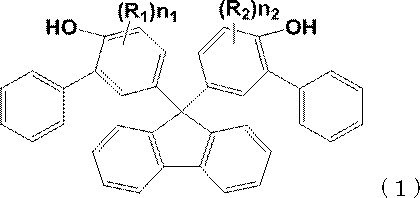
(式中、R1及びR2はそれぞれ同一又は異なってハロゲン原子、アルキル基又はアルコキシル基を表す。n1及びn2はそれぞれ同一又は異なって、0又は1~3の整数を表す。)
で表されるフェノール類と、アルキレンカーボネート類とを反応させる、下記一般式(2):
で表されるフェノール類と、アルキレンカーボネート類とを反応させる、下記一般式(2):
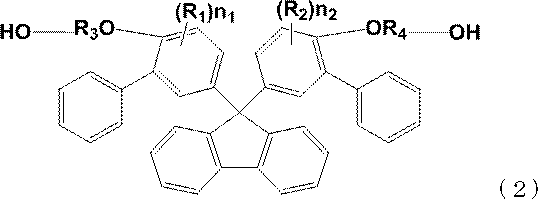
(式中、R1、R2、n1、n2の意味は上述の通りである。R3及びR4はそれぞれ同一又は異なって炭素数2~4の分岐を有しても良いアルキレン基を表す。)
で表されるアルコール類の製造方法。
で表されるアルコール類の製造方法。
[2]
反応温度が110~135℃である、[1]に記載の製造方法。
反応温度が110~135℃である、[1]に記載の製造方法。
[3]
反応後、反応生成物に水及び強塩基性物質を添加し、混合する工程をさらに含む、[1]又は[2]に記載の製造方法。
反応後、反応生成物に水及び強塩基性物質を添加し、混合する工程をさらに含む、[1]又は[2]に記載の製造方法。
本発明によれば、置換基としてフェニル基を有する、高純度なビスアリールフルオレンアルコール類が製造可能となる。特に本発明によれば、晶析をはじめとした工業的手法により除去が困難である、アルキレンカーボネート類が上記一般式(1)で表されるフェノール類に3分子以上反応した化合物(多量体)の生成が抑制可能であるため、高純度の上記一般式(2)で表されるアルコール類が工業的規模で製造可能となる。また、本発明の製造方法によれば、従来公知の方法に比べ、反応速度が大幅に向上するため、より経済的有利に上記一般式(2)で表されるアルコール類が製造可能となる。併せて、本発明の製造方法で得られる上記一般式(2)で表されるアルコール類は着色が少ないといった特徴を兼ね備えることから、特にポリカーボネート、ポリエステル、ポリアクリレート、ポリウレタン、エポキシなどの樹脂材料の原料として好適に用いることができる。
上記一般式(1)で表されるフェノール類におけるハロゲン原子としては、フッ素、塩素、臭素、ヨウ素等が例示される。アルキル基としてはメチル基、エチル基、プロピル基、ブチル基等の、直鎖又は分岐を有するアルキル基、シクロペンチル基、シクロヘキシル基、シクロヘプチル基、シクロオクチル基等の環状アルキル基等が例示され、これらアルキル基の中でも、上記一般式(1)で表されるフェノール類の入手性の点から炭素数1~6の直鎖又は分岐を有するアルキル基が好ましい。アルコキシ基としてはメトキシ基、エトキシ基、ブトキシ基等の炭素数1~6のアルコキシ基が例示される。置換基数を表すn1及びn2はそれぞれ同一又は異なって、0又は1~3の整数を表し、上記一般式(1)で表されるフェノール類の入手性の点から好ましくは0又は1である。n1及び/又はn2が2又は3である場合、該当する置換基(R1及び/又はR2)はそれぞれ同一であっても異なっても良い。
上述した上記一般式(1)で表されるフェノール類の中でも、該フェノール類の入手性の点から、置換基を有さないか(n1=n2=0)、又はそれぞれの芳香核に置換基を一つずつ有する(n1=n2=1)フェノール類であって、該置換基が炭素数1~6の直鎖又は分岐を有するアルキル基であるフェノール類が好ましい。
上記一般式(1)で表されるフェノール類は市販品を用いても良く、また、酸触媒存在下、フルオレノンと対応するフェノール類とを反応させて製造することもできる。
本発明で使用されるグリコールジエーテルは、下記式(3):
R5-O(CH2R7O)n-R6 (3)
(式中、R5及びR6はそれぞれ同一又は異なって、分岐を有してもよい炭素数1~4のアルキル基を表し、R7は分岐を有しても良い炭素数1~3のアルキレン基を表す。nは1~4の整数を表す。)
で表される構造を有する。このようなグリコールジエーテルとしては、エチレングリコールジメチルエーテル、プロピレングリコールジメチルエーテル、ジエチレングリコールジメチルエーテル、ジプロピレングリコールジメチルエーテル、ジエチレングリコールエチルメチルエーテル、ジエチレングリコールイソプロピルメチルエーテル、ジエチレングリコールジエチルエーテル、ジエチレングリコールブチルメチルエーテル、トリプロピレングリコールジメチルエーテル、トリエチレングリコールジメチルエーテル、ジエチレングリコールジブチルエーテル、トリエチレングリコールブチルメチルエーテル、テトラエチレングリコールジメチルエーテル等が例示される。
R5-O(CH2R7O)n-R6 (3)
(式中、R5及びR6はそれぞれ同一又は異なって、分岐を有してもよい炭素数1~4のアルキル基を表し、R7は分岐を有しても良い炭素数1~3のアルキレン基を表す。nは1~4の整数を表す。)
で表される構造を有する。このようなグリコールジエーテルとしては、エチレングリコールジメチルエーテル、プロピレングリコールジメチルエーテル、ジエチレングリコールジメチルエーテル、ジプロピレングリコールジメチルエーテル、ジエチレングリコールエチルメチルエーテル、ジエチレングリコールイソプロピルメチルエーテル、ジエチレングリコールジエチルエーテル、ジエチレングリコールブチルメチルエーテル、トリプロピレングリコールジメチルエーテル、トリエチレングリコールジメチルエーテル、ジエチレングリコールジブチルエーテル、トリエチレングリコールブチルメチルエーテル、テトラエチレングリコールジメチルエーテル等が例示される。
本発明で使用される炭素数4~12のケトン類とは具体的に、メチルエチルケトン、メチルイソブチルケトン、メチルイソアミルケトン、2-ヘプタノン、2-オクタノン、ジイソブチルケトン等の鎖状ケトン類、シクロペンタノン、シクロヘキサノン、シクロヘプタノン、シクロオクタノン、シクロノナノン、シクロデカノン、シクロドデカノン等の環状ケトン類が例示される。なお、炭素数4未満のケトン類を使用した場合、反応が進行しないか、進行したとしても反応速度が非常に遅くなり、また、炭素数13以上のケトン類を使用した場合、多量体の生成が抑制されない。
上述したグリコールジエーテル及び炭素数4~12のケトン類からなる群より選ばれる少なくとも1種の化合物の中でも、安価に入手可能なことからエチレングリコールジメチルエーテル、プロピレングリコールジメチルエーテル、ジエチレングリコールジメチルエーテル、ジプロピレングリコールジメチルエーテル、ジエチレングリコールエチルメチルエーテル、ジエチレングリコールイソプロピルメチルエーテル、ジエチレングリコールジエチルエーテル、ジエチレングリコールブチルメチルエーテル、トリプロピレングリコールジメチルエーテル、トリエチレングリコールジメチルエーテル、ジエチレングリコールジブチルエーテル、トリエチレングリコールブチルメチルエーテル、テトラエチレングリコールジメチルエーテルメチルエチルケトン、メチルイソブチルケトン、メチルイソアミルケトン、2-ヘプタノン、2-オクタノン、ジイソブチルケトン、シクロペンタノン、シクロヘキサノンが好ましい。また、該化合物の使用量は、上記一般式(1)で表されるフェノール類1重量倍に対し通常、0.05~3重量倍、好ましくは0.08~1重量倍である。0.05重量倍以上使用することにより、多量体の生成抑制効果が十分に発揮される。一方、使用量が3重量倍より多い場合であっても、高純度かつ着色の少ない上記一般式(2)で表されるアルコール類が製造可能であるが、添加量に見合う効果が発現しないため、より経済的有利に上記一般式(2)で表されるアルコール類を得るためには、使用量を3重量倍以下とすることが好ましい。
本発明におけるアルキレンカーボネート類とは炭素数3~5のアルキレンカーボネート類を示し、具体的に例えば、エチレンカーボネート、プロピレンカーボネート、ブチレンカーボネートが例示される。これらアルキレンカーボネート類の中でも入手性、取扱性の良さからエチレンカーボネートが好適に使用される。また、本発明で使用するアルキレンカーボネート類は、上記一般式(1)で表されるフェノール類1モルに対し通常、2~10モル、好ましくは2~4モル使用する。2モル以上使用することにより十分な反応速度を得ることができ、使用量を10モル以下とすることにより、より経済的有利に上記一般式(2)で表されるアルコール類を得ることができる。
上記一般式(1)で表されるフェノール類とアルキレンカーボネート類とを反応させる際、必要に応じ塩基性化合物存在下にて反応を行う。本反応で用いられる塩基性化合物としては、炭酸塩類、炭酸水素塩類、金属水酸化物類、有機塩基類等が例示され、より具体的には炭酸塩類として炭酸カリウム、炭酸ナトリウム、炭酸リチウム、炭酸セシウム等が、炭酸水素塩類として炭酸水素カリウム、炭酸水素ナトリウム、炭酸水素リチウム、炭酸水素セシウム等が、金属水酸化物類として水酸化ナトリウム、水酸化カリウム、水酸化リチウム等が、有機塩基類としてトリエチルアミン、ジメチルアミノピリジン、トリフェニルホスフィン、テトラメチルアンモニウムブロミド、テトラメチルアンモニウムクロリド等が例示される。これら塩基性化合物の中でも取扱性の良さの点から炭酸カリウム、炭酸ナトリウム、トリフェニルホスフィンが好適に使用される。これら塩基性化合物を使用する際の使用量は、上記一般式(1)で表されるフェノール類1モルに対し、通常0.01~1.0モル、好ましくは0.03~0.2倍モルである。
本発明においては、必要に応じ、グリコールジエーテル及び炭素数4~12のケトン類からなる群より選ばれる少なくとも1種の化合物と併せ、不活性な有機溶媒を併用することも可能である。かかる不活性な有機溶媒としては、芳香族炭化水素類、ハロゲン化芳香族炭化水素類、脂肪族炭化水素類、ハロゲン化脂肪族炭化水素類、エーテル類(但し、グリコールジエーテル類を除く)、エステル類、脂肪族ニトリル類、アミド類、スルホキシド類等が例示される。より具体的には、芳香族炭化水素類としてトルエン、キシレン、メシチレン等が、ハロゲン化芳香族炭化水素としてクロロベンゼン、ジクロロベンゼン等が、脂肪族炭化水素としてペンタン、ヘキサン、ヘプタン等が、ハロゲン化脂肪族炭化水素類としてジクロロメタン、1,2-ジクロロエタン等が、エーテル類としてジエチルエーテル、ジイソプロピルエーテル、メチルターシャリーブチルエーテル、シクロペンチルメチルエーテル、ジフェニルエーテル等が、エステル類として酢酸エチル、酢酸ブチル等が、脂肪族ニトリル類としてアセトニトリル等が、アミド類としてN,N-ジメチルホルムアミド、N,N-ジメチルアセトアミド等が、スルホキシド類としてジメチルスルホキシド等が例示される。これら不活性な有機溶媒の中でも入手性や取扱性の良さから、101.3kPaにおける沸点が110℃以上の芳香族炭化水素類又はエーテル類が好適に用いられる。これら有機溶媒は1種類、あるいは必要に応じ2種類以上混合して使用してもよい。これら有機溶媒を併用する際の使用量は、上記一般式(1)で表されるフェノール化合物1重量倍に対し、通常0.1~5重量倍、好ましくは0.5~3重量倍である。
上記一般式(1)で表されるフェノール類とアルキレンカーボネート類との反応は、通常30~150℃、好ましくは110~135℃で実施される。
上述の方法により得られた上記一般式(2)で表されるアルコール類を含む反応液は、そのまま樹脂原料(モノマー)や医農薬原料(中間体)等として使用しても良いし、水洗・吸着処理等の後処理や、晶析・カラム精製等を施した後、上記一般式(2)で表されるアルコール類を結晶として取り出しても良い。また、反応後、上記一般式(2)で表されるアルコール類を含む反応液に、水及び強塩基性物質を添加し混合する工程(以下アルカリ洗浄工程と称する場合もある)を実施することにより、反応で生成した副生物が分解されることによって、得られる上記一般式(2)で表されるアルコール類の純度がより向上することから、アルカリ洗浄工程を実施することが好ましい。以下、アルカリ洗浄工程について詳述する。
本発明における、アルカリ洗浄工程に用いられる強塩基性物質とは、塩基解離定数(pKb)が1未満である塩基化合物のことを示す。これら強塩基性物質として例えば、水酸化ナトリウム、水酸化カリウムなどのアルカリ金属水酸化物、水酸化カルシウム、水酸化バリウムなどのアルカリ土類金属水酸化物などが挙げられ、特に水酸化ナトリウム、水酸化カリウムが好ましい。これら強塩基性物質は1種類、あるいは必要に応じ2種類以上混合して使用しても良い。
アルカリ洗浄工程に用いられる強塩基性物質の使用量として例えば、反応に用いた上記一般式(1)で表されるフェノール類1モルに対し通常0.3~4モル、好ましくは0.4~2.5モルである。強塩基性物質の使用量を0.3モル以上とすることにより副生物の分解が促進され、また4モル以下とすることにより、アルカリ洗浄工程後の廃水処理の負担が低減される。
アルカリ洗浄工程に使用する水の使用量として例えば、反応液に投入した水と強塩基性物質から生成される、水相における強塩基性物質の濃度として、通常1~50重量%、好ましくは3~30重量%である。水相中の強塩基性物質の濃度として1重量%以上とすることにより副生物の分解効果が高まり、50重量%以下とすることにより上記一般式(2)で表されるフルオレン骨格を有するアルコール類の分解を抑制でき、また、廃水処理の負担が低減されることから好ましい。なお、アルカリ洗浄工程に使用する強塩基性物質及び水は、水と強塩基性物質を個別に反応液に投入し、投入後、混合することにより、所定濃度の水溶液としても良いし、予め水と強塩基性物質を混合した水溶液を使用しても良い。
アルカリ洗浄工程を実施する際、必要に応じ、相間移動触媒を使用しても良い。使用可能な相間移動触媒としては、第4級アンモニウム塩、第4級ホスホニウム塩、ピリジニウム塩、クラウンエーテル等が例示される。なお、アルカリ洗浄工程を実施する際、反応工程で使用したグリコールジエーテル及び炭素数4~12のケトン類からなる群より選ばれる少なくとも1種の化合物が残存している場合、相間移動触媒を使用しなくとも、反応で生成した副生物が分解可能となる。
アルカリ洗浄工程を実施する際、必要に応じ水と分離可能な有機溶媒を併用しても良い。水と分離可能な有機溶媒として例えば、ベンゼン、トルエン、キシレン、メシチレンなどの芳香族炭化水素類、クロロベンゼン、ジクロロベンゼンなどのハロゲン化芳香族炭化水素類、ペンタン、ヘキサン、ヘプタンなどの脂肪族炭化水素類、ジクロロメタン、クロロホルム、1,2-ジクロロエタンなどのハロゲン化炭化水素類、ジエチルエーテル、ジイソプロピルエーテル、メチルターシャリーブチルエーテル、シクロペンチルメチルエーテル、ジフェニルエーテルなどのエーテル類、酢酸エチル、酢酸n-ブチルなどのエステル類、ブタノール、ペンタノール、ヘキサノール、ヘプタノールなどのアルコール類、メチルイソブチルケトンなどの脂肪族ケトン類などが挙げられる。この中でも好ましくは芳香族炭化水素類、ハロゲン化芳香族炭化水素類、ケトン類、エーテル類であり、特にトルエン、キシレンが好ましい。これら有機溶媒は1種類、あるいは必要に応じ2種類以上混合して使用しても良い。これら水と分離可能な有機溶媒は、前述した反応工程で使用したグリコールジエーテル及び炭素数4~12のケトン類からなる群より選ばれる少なくとも1種の化合物、並びに必要に応じ併用した不活性な有機溶媒が水と分離可能である場合、該溶媒をアルカリ洗浄工程で使用する、水と分離可能な有機溶媒としても良い。
水と分離可能な有機溶媒の使用量としては、反応液に含まれる上記一般式(2)で表されるアルコール類1重量倍に対して40重量倍以下である。有機溶媒の使用量を40重量倍以下とすることにより、不純物の分解が促進され、また経済性が向上することから好ましい。水と分離可能な有機溶媒を併用する場合、水、強塩基性物質及び水と分離可能な有機溶媒の添加は同時でもよいし、何れか一つを後から添加してもよい。水と分離可能な有機溶媒を添加する場合、水と分離可能な有機溶媒を添加した後に強塩基性物質を添加する方が、結晶が析出しにくいため、アルカリ洗浄工程の実施がより容易となる。
アルカリ洗浄工程は通常0~150℃、好ましくは60~120℃で実施される。実施温度を0℃以上とすることにより副生物の分解が促進され、150℃以下とすることにより、得られる上記一般式(2)で表されるアルコール類の着色を抑制可能となることから好ましい。
アルカリ洗浄工程実施後、アルカリ洗浄工程実施時に水と分離可能な有機溶媒を使用していない場合は水と分離可能な有機溶媒を添加し、さらに混合を行う。
アルカリ洗浄工程終了後、上記一般式(2)で表されるアルコール類を含む有機相と水相とを分離し、水相を除去する。
アルカリ洗浄工程終了後、得られた上記一般式(2)で表されるアルコール類を含む有機相をそのまま濃縮して上記一般式(2)で表されるアルコール類を取り出しても良いし、水洗、吸着処理等の後処理や、晶析・カラム精製等の定法にて精製しても良い。
本発明の方法で得られる上記一般式(2)で表されるアルコール類は、後述する方法により決定されるHPLC純度が通常90%以上、好ましくは95%以上、より好ましくは98%以上となる。また、後述する方法で測定するYI値が通常10以下、好ましくは7以下となるので、ポリカーボネート、ポリエステル、ポリアクリレート、ポリウレタン、エポキシなどの樹脂材料の原料として好適に用いられる。
以下に実施例及び比較例を挙げて本発明を具体的に説明するが、本発明はこれに何ら限定されるものではない。なお、例中、各種測定は下記の方法で実施した。また、以下実施例・比較例・参考例に記載した各成分の生成率(残存率)及び純度は下記条件で測定したHPLCの面積百分率値(反応液中の溶媒のピークは除いた修正面積百分率値)である。
(1)HPLC純度
装置 :島津製作所製 LC-2010A、
カラム:SUMIPAX ODS A-211(5μm、4.6mmφ×250mm)、
移動相:純水/アセトニトリル(アセトニトリル30%→100%)、
流量 :1.0ml/min、カラム温度:40℃、検出波長:UV 254nm。
装置 :島津製作所製 LC-2010A、
カラム:SUMIPAX ODS A-211(5μm、4.6mmφ×250mm)、
移動相:純水/アセトニトリル(アセトニトリル30%→100%)、
流量 :1.0ml/min、カラム温度:40℃、検出波長:UV 254nm。
(2)YI値
上記一般式(2)で表されるアルコール類の結晶12gを、純度99重量%以上のN,N-ジメチルホルムアミド30mlに溶解させ、以下の条件で得られたN,N―ジメチルホルムアミド溶液のYI値(黄色度)を測定した。
装置 :色差計(日本電色工業社製,SE6000)、
使用セル:光路長33mm 石英セル。
なお、測定に使用するN,N-ジメチルホルムアミド自身の着色が測定値に影響を与えないよう、事前にN,N-ジメチルホルムアミドの色相を測定して補正した(ブランク測定)。
上述のブランク測定を実施したうえで、サンプルを測定した値を本発明におけるYI値とする。
上記一般式(2)で表されるアルコール類の結晶12gを、純度99重量%以上のN,N-ジメチルホルムアミド30mlに溶解させ、以下の条件で得られたN,N―ジメチルホルムアミド溶液のYI値(黄色度)を測定した。
装置 :色差計(日本電色工業社製,SE6000)、
使用セル:光路長33mm 石英セル。
なお、測定に使用するN,N-ジメチルホルムアミド自身の着色が測定値に影響を与えないよう、事前にN,N-ジメチルホルムアミドの色相を測定して補正した(ブランク測定)。
上述のブランク測定を実施したうえで、サンプルを測定した値を本発明におけるYI値とする。
<実施例1>
攪拌器、加熱冷却器、及び温度計を備えたガラス製反応器に、9,9’-ビス(4-ヒドロキシ-3-フェニルフェニル)フルオレン30g(0.06mol)、炭酸カリウム0.7g(0.005mol)、エチレンカーボネート13.1g(0.149mol)、トルエン45g、及びトリエチレングリコールジメチルエーテル15gを仕込み、115℃まで昇温し、同温度で5時間撹拌後、HPLCにて反応液を分析した。分析結果は下記の通り。
・9,9’-ビス(4-ヒドロキシ-3-フェニルフェニル)フルオレン:検出されず
・上記一般式(2)で表されるアルコール類:93%
・多量体:0.7%
得られた反応液にトルエン30g、12重量%の水酸化ナトリウム水溶液30gを加え、85℃で1時間攪拌後静置し、水相を分離した。得られた有機相をHPLCにて分析した結果を以下に示す。
・9,9’-ビス(4-ヒドロキシ-3-フェニルフェニル)フルオレン:検出されず
・上記一般式(2)で表されるアルコール類:97%
・多量体:0.7%
得られた有機相に、水30gを加え、80~85℃で30分撹拌し、静置後、水層を分離した。同じ操作を3回繰り返した後、得られた有機層を濃縮することにより溶媒を除去し、濃縮物を得た。得られた濃縮物にトルエン30g、メタノール30gを添加し20℃まで冷却した後、濾過し結晶を得た。得られた結晶を内圧1.1kPaの減圧下、内温70℃で3時間乾燥した。
得られた上記一般式(2)で表されるアルコール類の結晶の各分析値は以下の通り。
得られた結晶の重さ:29g(収率:82%)
HPLC純度:99%(多量体含量:0.7%)
YI値:0.7。
攪拌器、加熱冷却器、及び温度計を備えたガラス製反応器に、9,9’-ビス(4-ヒドロキシ-3-フェニルフェニル)フルオレン30g(0.06mol)、炭酸カリウム0.7g(0.005mol)、エチレンカーボネート13.1g(0.149mol)、トルエン45g、及びトリエチレングリコールジメチルエーテル15gを仕込み、115℃まで昇温し、同温度で5時間撹拌後、HPLCにて反応液を分析した。分析結果は下記の通り。
・9,9’-ビス(4-ヒドロキシ-3-フェニルフェニル)フルオレン:検出されず
・上記一般式(2)で表されるアルコール類:93%
・多量体:0.7%
得られた反応液にトルエン30g、12重量%の水酸化ナトリウム水溶液30gを加え、85℃で1時間攪拌後静置し、水相を分離した。得られた有機相をHPLCにて分析した結果を以下に示す。
・9,9’-ビス(4-ヒドロキシ-3-フェニルフェニル)フルオレン:検出されず
・上記一般式(2)で表されるアルコール類:97%
・多量体:0.7%
得られた有機相に、水30gを加え、80~85℃で30分撹拌し、静置後、水層を分離した。同じ操作を3回繰り返した後、得られた有機層を濃縮することにより溶媒を除去し、濃縮物を得た。得られた濃縮物にトルエン30g、メタノール30gを添加し20℃まで冷却した後、濾過し結晶を得た。得られた結晶を内圧1.1kPaの減圧下、内温70℃で3時間乾燥した。
得られた上記一般式(2)で表されるアルコール類の結晶の各分析値は以下の通り。
得られた結晶の重さ:29g(収率:82%)
HPLC純度:99%(多量体含量:0.7%)
YI値:0.7。
<実施例2>
トリエチレングリコールジメチルエーテルをジエチレングリコールジメチルエーテルに変更する以外は実施例1と同様に反応させ、4時間撹拌後、HPLCにて反応液を分析した。分析結果は下記の通り。
・9,9’-ビス(4-ヒドロキシ-3-フェニルフェニル)フルオレン:検出されず
・上記一般式(2)で表されるアルコール類:92%
・多量体:0.6%
得られた反応液にトルエン30g、12重量%の水酸化ナトリウム水溶液30gを加え、85℃で1時間攪拌後静置し、水相を分離した。得られた有機相をHPLCにて分析した結果を以下に示す。
・9,9’-ビス(4-ヒドロキシ-3-フェニルフェニル)フルオレン:検出されず
・上記一般式(2)で表されるアルコール類:97%
・多量体:0.6%。
トリエチレングリコールジメチルエーテルをジエチレングリコールジメチルエーテルに変更する以外は実施例1と同様に反応させ、4時間撹拌後、HPLCにて反応液を分析した。分析結果は下記の通り。
・9,9’-ビス(4-ヒドロキシ-3-フェニルフェニル)フルオレン:検出されず
・上記一般式(2)で表されるアルコール類:92%
・多量体:0.6%
得られた反応液にトルエン30g、12重量%の水酸化ナトリウム水溶液30gを加え、85℃で1時間攪拌後静置し、水相を分離した。得られた有機相をHPLCにて分析した結果を以下に示す。
・9,9’-ビス(4-ヒドロキシ-3-フェニルフェニル)フルオレン:検出されず
・上記一般式(2)で表されるアルコール類:97%
・多量体:0.6%。
<実施例3>
トリエチレングリコールジメチルエーテルをシクロヘキサノンに変更する以外は実施例1と同様に反応させ、6時間撹拌後、HPLCにて反応液を分析した。分析結果は下記の通り。
・9,9’-ビス(4-ヒドロキシ-3-フェニルフェニル)フルオレン:検出されず
・上記一般式(2)で表されるアルコール類:93%
・多量体:1.0%
得られた反応液にトルエン30g、12重量%の水酸化ナトリウム水溶液30gを加え、85℃で1時間攪拌後静置し、水相を分離した。得られた有機相をHPLCにて分析した結果を以下に示す。
・9,9’-ビス(4-ヒドロキシ-3-フェニルフェニル)フルオレン:検出されず
・上記一般式(2)で表されるアルコール類:97%
・多量体:1.0%。
トリエチレングリコールジメチルエーテルをシクロヘキサノンに変更する以外は実施例1と同様に反応させ、6時間撹拌後、HPLCにて反応液を分析した。分析結果は下記の通り。
・9,9’-ビス(4-ヒドロキシ-3-フェニルフェニル)フルオレン:検出されず
・上記一般式(2)で表されるアルコール類:93%
・多量体:1.0%
得られた反応液にトルエン30g、12重量%の水酸化ナトリウム水溶液30gを加え、85℃で1時間攪拌後静置し、水相を分離した。得られた有機相をHPLCにて分析した結果を以下に示す。
・9,9’-ビス(4-ヒドロキシ-3-フェニルフェニル)フルオレン:検出されず
・上記一般式(2)で表されるアルコール類:97%
・多量体:1.0%。
<実施例4>
攪拌器、加熱冷却器、及び温度計を備えたガラス製反応器に、9,9’-ビス(4-ヒドロキシ-3-フェニルフェニル)フルオレン30g(0.06mol)、炭酸カリウム0.7g(0.005mol)、エチレンカーボネート12.0g(0.137mol)、メチルイソブチルケトン45gを仕込み、120℃まで昇温し、同温度で6時間撹拌後、HPLCにて反応液を分析した。分析結果は下記の通り。
・9,9’-ビス(4-ヒドロキシ-3-フェニルフェニル)フルオレン:検出されず
・上記一般式(2)で表されるアルコール類:91%
・多量体:0.8%
得られた反応液にメチルイソブチルケトン45g、12重量%の水酸化ナトリウム水溶液30gを加え、90℃で3時間攪拌後静置し、水相を分離した。得られた有機相をHPLCにて分析した結果を以下に示す。
・9,9’-ビス(4-ヒドロキシ-3-フェニルフェニル)フルオレン:検出されず
・上記一般式(2)で表されるアルコール類:96%
・多量体:0.8%。
攪拌器、加熱冷却器、及び温度計を備えたガラス製反応器に、9,9’-ビス(4-ヒドロキシ-3-フェニルフェニル)フルオレン30g(0.06mol)、炭酸カリウム0.7g(0.005mol)、エチレンカーボネート12.0g(0.137mol)、メチルイソブチルケトン45gを仕込み、120℃まで昇温し、同温度で6時間撹拌後、HPLCにて反応液を分析した。分析結果は下記の通り。
・9,9’-ビス(4-ヒドロキシ-3-フェニルフェニル)フルオレン:検出されず
・上記一般式(2)で表されるアルコール類:91%
・多量体:0.8%
得られた反応液にメチルイソブチルケトン45g、12重量%の水酸化ナトリウム水溶液30gを加え、90℃で3時間攪拌後静置し、水相を分離した。得られた有機相をHPLCにて分析した結果を以下に示す。
・9,9’-ビス(4-ヒドロキシ-3-フェニルフェニル)フルオレン:検出されず
・上記一般式(2)で表されるアルコール類:96%
・多量体:0.8%。
<実施例5>
攪拌器、加熱冷却器、及び温度計を備えたガラス製反応器に、9,9’-ビス(4-ヒドロキシ-3-フェニルフェニル)フルオレン30g(0.06mol)、炭酸カリウム0.7g(0.005mol)、エチレンカーボネート13.1g(0.149mol)、メチルイソアミルケトン30gを仕込み、130℃まで昇温し、同温度で5時間撹拌後、HPLCにて反応液を分析した。分析結果は下記の通り。
・9,9’-ビス(4-ヒドロキシ-3-フェニルフェニル)フルオレン:検出されず
・上記一般式(2)で表されるアルコール類:91%
・多量体:0.9%
得られた反応液にメチルイソアミルケトン60g、12重量%の水酸化ナトリウム水溶液30gを加え、100℃で3時間攪拌後静置し、水相を分離した。得られた有機相をHPLCにて分析した結果を以下に示す。
・9,9’-ビス(4-ヒドロキシ-3-フェニルフェニル)フルオレン:検出されず
・上記一般式(2)で表されるアルコール類:96%
・多量体:0.9%。
攪拌器、加熱冷却器、及び温度計を備えたガラス製反応器に、9,9’-ビス(4-ヒドロキシ-3-フェニルフェニル)フルオレン30g(0.06mol)、炭酸カリウム0.7g(0.005mol)、エチレンカーボネート13.1g(0.149mol)、メチルイソアミルケトン30gを仕込み、130℃まで昇温し、同温度で5時間撹拌後、HPLCにて反応液を分析した。分析結果は下記の通り。
・9,9’-ビス(4-ヒドロキシ-3-フェニルフェニル)フルオレン:検出されず
・上記一般式(2)で表されるアルコール類:91%
・多量体:0.9%
得られた反応液にメチルイソアミルケトン60g、12重量%の水酸化ナトリウム水溶液30gを加え、100℃で3時間攪拌後静置し、水相を分離した。得られた有機相をHPLCにて分析した結果を以下に示す。
・9,9’-ビス(4-ヒドロキシ-3-フェニルフェニル)フルオレン:検出されず
・上記一般式(2)で表されるアルコール類:96%
・多量体:0.9%。
<実施例6>
攪拌器、加熱冷却器、及び温度計を備えたガラス製反応器に、9,9’-ビス(4-ヒドロキシ-3-フェニルフェニル)フルオレン30g(0.06mol)、炭酸カリウム0.7g(0.005mol)、エチレンカーボネート13.1g(0.149mol)、ジエチレングリコールブチルメチルエーテル45gを仕込み、120℃まで昇温し、同温度で5時間撹拌後、HPLCにて反応液を分析した。分析結果は下記の通り。
・9,9’-ビス(4-ヒドロキシ-3-フェニルフェニル)フルオレン:検出されず
・上記一般式(2)で表されるアルコール類:92%
・多量体:0.7%
得られた反応液にトルエン60g、12重量%の水酸化ナトリウム水溶液30gを加え、85℃で3時間攪拌後静置し、水相を分離した。得られた有機相をHPLCにて分析した結果を以下に示す。
・9,9’-ビス(4-ヒドロキシ-3-フェニルフェニル)フルオレン:検出されず
・上記一般式(2)で表されるアルコール類:97%
・多量体:0.7%。
攪拌器、加熱冷却器、及び温度計を備えたガラス製反応器に、9,9’-ビス(4-ヒドロキシ-3-フェニルフェニル)フルオレン30g(0.06mol)、炭酸カリウム0.7g(0.005mol)、エチレンカーボネート13.1g(0.149mol)、ジエチレングリコールブチルメチルエーテル45gを仕込み、120℃まで昇温し、同温度で5時間撹拌後、HPLCにて反応液を分析した。分析結果は下記の通り。
・9,9’-ビス(4-ヒドロキシ-3-フェニルフェニル)フルオレン:検出されず
・上記一般式(2)で表されるアルコール類:92%
・多量体:0.7%
得られた反応液にトルエン60g、12重量%の水酸化ナトリウム水溶液30gを加え、85℃で3時間攪拌後静置し、水相を分離した。得られた有機相をHPLCにて分析した結果を以下に示す。
・9,9’-ビス(4-ヒドロキシ-3-フェニルフェニル)フルオレン:検出されず
・上記一般式(2)で表されるアルコール類:97%
・多量体:0.7%。
<比較例1>
攪拌器、加熱冷却器、及び温度計を備えたガラス製反応器に、9,9’-ビス(4-ヒドロキシ-3-フェニルフェニル)フルオレン30g(0.06mol)、炭酸カリウム0.7g(0.005mol)、エチレンカーボネート13.1g(0.149mol)、及びトルエン60.0gを仕込み、115℃まで昇温し、同温度で5時間撹拌後、HPLCにて反応液を分析した所、原料である9,9’-ビス(4-ヒドロキシ-3-フェニルフェニル)フルオレンが残存していた。そこで、原料9,9’-ビス(4-ヒドロキシ-3-フェニルフェニル)フルオレンが検出されなくなるまで、適宜HPLCにて反応液を分析しながら同温度で撹拌を継続した所、昇温後18時間が経過した時点で9,9’-ビス(4-ヒドロキシ-3-フェニルフェニル)フルオレンが検出されなくなった。18時間撹拌後のHPLCによる分析結果は下記の通り。
・9,9’-ビス(4-ヒドロキシ-3-フェニルフェニル)フルオレン:検出されず
・上記一般式(2)で表されるアルコール類:85%
・多量体:3.4%
得られた反応液にトルエン30g、12重量%の水酸化ナトリウム水溶液30gを加え、85℃で3時間攪拌したが、純度の向上がみなれなかったため撹拌を中断し、トルエン180gを加え、80~85℃で30分撹拌し、静置後、水相を分離した。得られた有機相をHPLCにて分析した結果を以下に示す。
・9,9’-ビス(4-ヒドロキシ-3-フェニルフェニル)フルオレン:検出されず
・上記一般式(2)で表されるアルコール類:85%
・多量体:3.4%。
攪拌器、加熱冷却器、及び温度計を備えたガラス製反応器に、9,9’-ビス(4-ヒドロキシ-3-フェニルフェニル)フルオレン30g(0.06mol)、炭酸カリウム0.7g(0.005mol)、エチレンカーボネート13.1g(0.149mol)、及びトルエン60.0gを仕込み、115℃まで昇温し、同温度で5時間撹拌後、HPLCにて反応液を分析した所、原料である9,9’-ビス(4-ヒドロキシ-3-フェニルフェニル)フルオレンが残存していた。そこで、原料9,9’-ビス(4-ヒドロキシ-3-フェニルフェニル)フルオレンが検出されなくなるまで、適宜HPLCにて反応液を分析しながら同温度で撹拌を継続した所、昇温後18時間が経過した時点で9,9’-ビス(4-ヒドロキシ-3-フェニルフェニル)フルオレンが検出されなくなった。18時間撹拌後のHPLCによる分析結果は下記の通り。
・9,9’-ビス(4-ヒドロキシ-3-フェニルフェニル)フルオレン:検出されず
・上記一般式(2)で表されるアルコール類:85%
・多量体:3.4%
得られた反応液にトルエン30g、12重量%の水酸化ナトリウム水溶液30gを加え、85℃で3時間攪拌したが、純度の向上がみなれなかったため撹拌を中断し、トルエン180gを加え、80~85℃で30分撹拌し、静置後、水相を分離した。得られた有機相をHPLCにて分析した結果を以下に示す。
・9,9’-ビス(4-ヒドロキシ-3-フェニルフェニル)フルオレン:検出されず
・上記一般式(2)で表されるアルコール類:85%
・多量体:3.4%。
<比較例2>
トルエンをキシレンに変更する以外は比較例1と同様に反応させたところ、原料である9,9’-ビス(4-ヒドロキシ-3-フェニルフェニル)フルオレンが検出されなくなるまで20時間要した。20時間撹拌後のHPLCによる分析結果は下記の通り。
・9,9’-ビス(4-ヒドロキシ-3-フェニルフェニル)フルオレン:検出されず
・上記一般式(2)で表されるアルコール類:84%
・多量体:3.5%。
トルエンをキシレンに変更する以外は比較例1と同様に反応させたところ、原料である9,9’-ビス(4-ヒドロキシ-3-フェニルフェニル)フルオレンが検出されなくなるまで20時間要した。20時間撹拌後のHPLCによる分析結果は下記の通り。
・9,9’-ビス(4-ヒドロキシ-3-フェニルフェニル)フルオレン:検出されず
・上記一般式(2)で表されるアルコール類:84%
・多量体:3.5%。
<比較例3>
トルエンをクロロベンゼンに変更する以外は比較例1と同様に反応させたところ、原料である9,9’-ビス(4-ヒドロキシ-3-フェニルフェニル)フルオレンが検出されなくなるまで14時間要した。14時間撹拌後のHPLCによる分析結果は下記の通り。
・9,9’-ビス(4-ヒドロキシ-3-フェニルフェニル)フルオレン:検出されず
・上記一般式(2)で表されるアルコール類:86%
・多量体:2.5%。
トルエンをクロロベンゼンに変更する以外は比較例1と同様に反応させたところ、原料である9,9’-ビス(4-ヒドロキシ-3-フェニルフェニル)フルオレンが検出されなくなるまで14時間要した。14時間撹拌後のHPLCによる分析結果は下記の通り。
・9,9’-ビス(4-ヒドロキシ-3-フェニルフェニル)フルオレン:検出されず
・上記一般式(2)で表されるアルコール類:86%
・多量体:2.5%。
<比較例4>
トルエンをシクロペンチルメチルエーテルに変更する以外は比較例1と同様に反応させたところ、原料である9,9’-ビス(4-ヒドロキシ-3-フェニルフェニル)フルオレンが検出されなくなるまで14時間要した。14時間撹拌後のHPLCによる分析結果は下記の通り。
・9,9’-ビス(4-ヒドロキシ-3-フェニルフェニル)フルオレン:検出されず
・上記一般式(2)で表されるアルコール類:86%
・多量体:2.4%。
トルエンをシクロペンチルメチルエーテルに変更する以外は比較例1と同様に反応させたところ、原料である9,9’-ビス(4-ヒドロキシ-3-フェニルフェニル)フルオレンが検出されなくなるまで14時間要した。14時間撹拌後のHPLCによる分析結果は下記の通り。
・9,9’-ビス(4-ヒドロキシ-3-フェニルフェニル)フルオレン:検出されず
・上記一般式(2)で表されるアルコール類:86%
・多量体:2.4%。
<比較例5>
攪拌器、加熱冷却器、及び温度計を備えたガラス製反応器に、9,9’-ビス(4-ヒドロキシ-3-フェニルフェニル)フルオレン30g(0.06mol)、炭酸カリウム0.7g(0.005mol)、エチレンカーボネート13.1g(0.149mol)、及びアセトン30.0gを仕込み、60℃まで昇温し、同温度で5時間撹拌したが、上記一般式(2)で表されるアルコール類が検出されなかったため、反応を中断した。5時間撹拌後のHPLCによる分析結果は下記の通り。
・9,9’-ビス(4-ヒドロキシ-3-フェニルフェニル)フルオレン:95%
・上記一般式(2)で表されるアルコール類:検出されず。
・多量体:検出されず。
攪拌器、加熱冷却器、及び温度計を備えたガラス製反応器に、9,9’-ビス(4-ヒドロキシ-3-フェニルフェニル)フルオレン30g(0.06mol)、炭酸カリウム0.7g(0.005mol)、エチレンカーボネート13.1g(0.149mol)、及びアセトン30.0gを仕込み、60℃まで昇温し、同温度で5時間撹拌したが、上記一般式(2)で表されるアルコール類が検出されなかったため、反応を中断した。5時間撹拌後のHPLCによる分析結果は下記の通り。
・9,9’-ビス(4-ヒドロキシ-3-フェニルフェニル)フルオレン:95%
・上記一般式(2)で表されるアルコール類:検出されず。
・多量体:検出されず。
Claims (3)
- グリコールジエーテル及び炭素数4~12のケトン類からなる群より選ばれる少なくとも1種の化合物存在下、下記一般式(1):

(式中、R1及びR2はそれぞれ同一又は異なってハロゲン原子、アルキル基又はアルコキシル基を表す。n1及びn2はそれぞれ同一又は異なって、0又は1~3の整数を表す。)
で表されるフェノール類と、アルキレンカーボネート類とを反応させる、下記一般式(2):
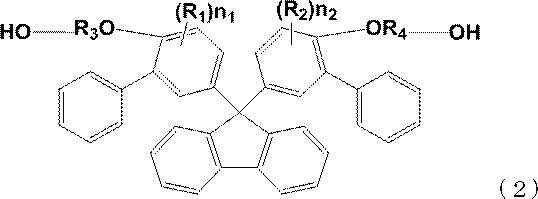
(式中、R1、R2、n1、n2の意味は上述の通りである。R3及びR4はそれぞれ同一又は異なって炭素数2~4の分岐を有しても良いアルキレン基を表す。)
で表されるアルコール類の製造方法。 - 反応温度が110~135℃である、請求項1に記載の製造方法。
- 反応後、反応生成物に水及び強塩基性物質を添加し、混合する工程をさらに含む、請求項1又は2に記載の製造方法。
Priority Applications (1)
| Application Number | Priority Date | Filing Date | Title |
|---|---|---|---|
| CN201780033105.9A CN109195936B (zh) | 2016-05-30 | 2017-05-25 | 具有芴骨架的醇类的制造方法 |
Applications Claiming Priority (2)
| Application Number | Priority Date | Filing Date | Title |
|---|---|---|---|
| JP2016-107746 | 2016-05-30 | ||
| JP2016107746 | 2016-05-30 |
Publications (1)
| Publication Number | Publication Date |
|---|---|
| WO2017208973A1 true WO2017208973A1 (ja) | 2017-12-07 |
Family
ID=60477461
Family Applications (1)
| Application Number | Title | Priority Date | Filing Date |
|---|---|---|---|
| PCT/JP2017/019608 Ceased WO2017208973A1 (ja) | 2016-05-30 | 2017-05-25 | フルオレン骨格を有するアルコール類の製造方法 |
Country Status (4)
| Country | Link |
|---|---|
| JP (1) | JP7290908B2 (ja) |
| CN (1) | CN109195936B (ja) |
| TW (1) | TWI707839B (ja) |
| WO (1) | WO2017208973A1 (ja) |
Cited By (2)
| Publication number | Priority date | Publication date | Assignee | Title |
|---|---|---|---|---|
| CN112585111A (zh) * | 2018-09-19 | 2021-03-30 | 本州化学工业株式会社 | 双芴化合物的结晶混合体 |
| JP2021134216A (ja) * | 2020-02-21 | 2021-09-13 | 大阪ガスケミカル株式会社 | フルオレン化合物およびそれを用いた樹脂 |
Families Citing this family (1)
| Publication number | Priority date | Publication date | Assignee | Title |
|---|---|---|---|---|
| JP2018076238A (ja) * | 2016-11-07 | 2018-05-17 | 田岡化学工業株式会社 | フルオレン骨格を含む樹脂原料用組成物およびその製造方法 |
Citations (9)
| Publication number | Priority date | Publication date | Assignee | Title |
|---|---|---|---|---|
| JPH09255609A (ja) * | 1996-03-21 | 1997-09-30 | Taoka Chem Co Ltd | 9,9−ビス(4−(2−ヒドロキシエトキシ)フ ェニル)フルオレンの製造方法 |
| JP2009155254A (ja) * | 2007-12-26 | 2009-07-16 | Osaka Gas Co Ltd | フルオレン骨格を有するエポキシ化合物 |
| JP2009155252A (ja) * | 2007-12-26 | 2009-07-16 | Osaka Gas Co Ltd | フルオレン骨格を有するアルコール |
| JP2009173647A (ja) * | 2007-12-26 | 2009-08-06 | Osaka Gas Co Ltd | フルオレン骨格を有する二官能性(メタ)アクリレート |
| JP2014227388A (ja) * | 2013-05-24 | 2014-12-08 | 田岡化学工業株式会社 | ビナフタレン化合物の製造方法 |
| JP2016138071A (ja) * | 2015-01-29 | 2016-08-04 | 田岡化学工業株式会社 | ビスフェノール類ビスヒドロキシエチルエーテルの製造方法 |
| WO2017006791A1 (ja) * | 2015-07-08 | 2017-01-12 | 田岡化学工業株式会社 | フルオレン骨格を有するアルコールの結晶およびその製造方法 |
| WO2017014141A1 (ja) * | 2015-07-21 | 2017-01-26 | 田岡化学工業株式会社 | フルオレン骨格を有するアルコールの結晶およびその製造方法 |
| JP2017025024A (ja) * | 2015-07-23 | 2017-02-02 | 田岡化学工業株式会社 | フルオレン骨格を有するアルコール類を用いた包接化合物 |
Family Cites Families (1)
| Publication number | Priority date | Publication date | Assignee | Title |
|---|---|---|---|---|
| JP6247992B2 (ja) | 2014-04-17 | 2017-12-13 | 株式会社ダイセル | ハロゲン化合物の製造方法 |
-
2017
- 2017-05-17 TW TW106116278A patent/TWI707839B/zh active
- 2017-05-24 JP JP2017102735A patent/JP7290908B2/ja active Active
- 2017-05-25 CN CN201780033105.9A patent/CN109195936B/zh active Active
- 2017-05-25 WO PCT/JP2017/019608 patent/WO2017208973A1/ja not_active Ceased
Patent Citations (9)
| Publication number | Priority date | Publication date | Assignee | Title |
|---|---|---|---|---|
| JPH09255609A (ja) * | 1996-03-21 | 1997-09-30 | Taoka Chem Co Ltd | 9,9−ビス(4−(2−ヒドロキシエトキシ)フ ェニル)フルオレンの製造方法 |
| JP2009155254A (ja) * | 2007-12-26 | 2009-07-16 | Osaka Gas Co Ltd | フルオレン骨格を有するエポキシ化合物 |
| JP2009155252A (ja) * | 2007-12-26 | 2009-07-16 | Osaka Gas Co Ltd | フルオレン骨格を有するアルコール |
| JP2009173647A (ja) * | 2007-12-26 | 2009-08-06 | Osaka Gas Co Ltd | フルオレン骨格を有する二官能性(メタ)アクリレート |
| JP2014227388A (ja) * | 2013-05-24 | 2014-12-08 | 田岡化学工業株式会社 | ビナフタレン化合物の製造方法 |
| JP2016138071A (ja) * | 2015-01-29 | 2016-08-04 | 田岡化学工業株式会社 | ビスフェノール類ビスヒドロキシエチルエーテルの製造方法 |
| WO2017006791A1 (ja) * | 2015-07-08 | 2017-01-12 | 田岡化学工業株式会社 | フルオレン骨格を有するアルコールの結晶およびその製造方法 |
| WO2017014141A1 (ja) * | 2015-07-21 | 2017-01-26 | 田岡化学工業株式会社 | フルオレン骨格を有するアルコールの結晶およびその製造方法 |
| JP2017025024A (ja) * | 2015-07-23 | 2017-02-02 | 田岡化学工業株式会社 | フルオレン骨格を有するアルコール類を用いた包接化合物 |
Cited By (3)
| Publication number | Priority date | Publication date | Assignee | Title |
|---|---|---|---|---|
| CN112585111A (zh) * | 2018-09-19 | 2021-03-30 | 本州化学工业株式会社 | 双芴化合物的结晶混合体 |
| JP2021134216A (ja) * | 2020-02-21 | 2021-09-13 | 大阪ガスケミカル株式会社 | フルオレン化合物およびそれを用いた樹脂 |
| JP7719611B2 (ja) | 2020-02-21 | 2025-08-06 | 大阪ガスケミカル株式会社 | フルオレン化合物およびそれを用いた樹脂 |
Also Published As
| Publication number | Publication date |
|---|---|
| CN109195936B (zh) | 2022-02-11 |
| TWI707839B (zh) | 2020-10-21 |
| CN109195936A (zh) | 2019-01-11 |
| TW201808869A (zh) | 2018-03-16 |
| JP7290908B2 (ja) | 2023-06-14 |
| JP2017214364A (ja) | 2017-12-07 |
Similar Documents
| Publication | Publication Date | Title |
|---|---|---|
| JP6083901B2 (ja) | ビナフタレン化合物の製造方法 | |
| JP6083900B2 (ja) | ビナフタレン化合物の製造方法 | |
| KR102564609B1 (ko) | 플루오렌 골격을 갖는 알코올의 결정 및 그 제조 방법 | |
| JP6241977B2 (ja) | フルオレン骨格を有するアルコール化合物の製造方法 | |
| CN107848933B (zh) | 具有芴骨架的醇的晶体及其制造方法 | |
| JP7290908B2 (ja) | フルオレン骨格を有するアルコール類の製造方法 | |
| JP6016303B2 (ja) | フルオレン骨格を有するキサンテン化合物の製造方法 | |
| JP6931984B2 (ja) | フルオレン骨格を有するアルコール化合物の結晶およびその製造方法 | |
| JP7238200B1 (ja) | ビナフチルカルボン酸の製造方法 | |
| JP2013216582A (ja) | ビスフェノール類のビスヒドロキシエチルエーテルの製造方法 | |
| JP7134579B2 (ja) | フルオレン骨格を有するビスフェノール化合物の製造方法 | |
| JP2007197367A (ja) | フルオレン誘導体の製造方法 | |
| JP7170374B2 (ja) | フルオレン骨格を有するビスフェノール化合物の製造方法 | |
| JP2019108408A (ja) | フルオレン骨格を有するアルコール化合物の結晶およびその製造方法 | |
| JP2015101572A (ja) | N−ビニルカルバゾールの製造方法 | |
| JP2015101546A (ja) | N−ビニルカルバゾールの製造方法 | |
| WO2013176090A1 (ja) | 9,9-ビス(ヒドロキシアルコキシフェニル)フルオレン類の製造方法 |
Legal Events
| Date | Code | Title | Description |
|---|---|---|---|
| 121 | Ep: the epo has been informed by wipo that ep was designated in this application |
Ref document number: 17806530 Country of ref document: EP Kind code of ref document: A1 |
|
| NENP | Non-entry into the national phase |
Ref country code: DE |
|
| 122 | Ep: pct application non-entry in european phase |
Ref document number: 17806530 Country of ref document: EP Kind code of ref document: A1 |