WO2018230723A1 - 積層体の製造方法、積層体、及びエアバッグ - Google Patents
積層体の製造方法、積層体、及びエアバッグ Download PDFInfo
- Publication number
- WO2018230723A1 WO2018230723A1 PCT/JP2018/022995 JP2018022995W WO2018230723A1 WO 2018230723 A1 WO2018230723 A1 WO 2018230723A1 JP 2018022995 W JP2018022995 W JP 2018022995W WO 2018230723 A1 WO2018230723 A1 WO 2018230723A1
- Authority
- WO
- WIPO (PCT)
- Prior art keywords
- base fabric
- layer
- adhesive layer
- multilayer film
- laminate
- Prior art date
- Legal status (The legal status is an assumption and is not a legal conclusion. Google has not performed a legal analysis and makes no representation as to the accuracy of the status listed.)
- Ceased
Links
- VJEIIJANCJRLFJ-UHFFFAOYSA-N C1CCCCNCCCC1 Chemical compound C1CCCCNCCCC1 VJEIIJANCJRLFJ-UHFFFAOYSA-N 0.000 description 1
Images

Classifications
-
- B—PERFORMING OPERATIONS; TRANSPORTING
- B32—LAYERED PRODUCTS
- B32B—LAYERED PRODUCTS, i.e. PRODUCTS BUILT-UP OF STRATA OF FLAT OR NON-FLAT, e.g. CELLULAR OR HONEYCOMB, FORM
- B32B3/00—Layered products comprising a layer with external or internal discontinuities or unevennesses, or a layer of non-planar shape; Layered products comprising a layer having particular features of form
- B32B3/02—Layered products comprising a layer with external or internal discontinuities or unevennesses, or a layer of non-planar shape; Layered products comprising a layer having particular features of form characterised by features of form at particular places, e.g. in edge regions
- B32B3/04—Layered products comprising a layer with external or internal discontinuities or unevennesses, or a layer of non-planar shape; Layered products comprising a layer having particular features of form characterised by features of form at particular places, e.g. in edge regions characterised by at least one layer folded at the edge, e.g. over another layer ; characterised by at least one layer enveloping or enclosing a material
-
- B—PERFORMING OPERATIONS; TRANSPORTING
- B32—LAYERED PRODUCTS
- B32B—LAYERED PRODUCTS, i.e. PRODUCTS BUILT-UP OF STRATA OF FLAT OR NON-FLAT, e.g. CELLULAR OR HONEYCOMB, FORM
- B32B25/00—Layered products comprising a layer of natural or synthetic rubber
- B32B25/04—Layered products comprising a layer of natural or synthetic rubber comprising rubber as the main or only constituent of a layer, which is next to another layer of the same or of a different material
- B32B25/08—Layered products comprising a layer of natural or synthetic rubber comprising rubber as the main or only constituent of a layer, which is next to another layer of the same or of a different material of synthetic resin
-
- B—PERFORMING OPERATIONS; TRANSPORTING
- B32—LAYERED PRODUCTS
- B32B—LAYERED PRODUCTS, i.e. PRODUCTS BUILT-UP OF STRATA OF FLAT OR NON-FLAT, e.g. CELLULAR OR HONEYCOMB, FORM
- B32B25/00—Layered products comprising a layer of natural or synthetic rubber
- B32B25/10—Layered products comprising a layer of natural or synthetic rubber next to a fibrous or filamentary layer
-
- B—PERFORMING OPERATIONS; TRANSPORTING
- B32—LAYERED PRODUCTS
- B32B—LAYERED PRODUCTS, i.e. PRODUCTS BUILT-UP OF STRATA OF FLAT OR NON-FLAT, e.g. CELLULAR OR HONEYCOMB, FORM
- B32B27/00—Layered products comprising a layer of synthetic resin
- B32B27/06—Layered products comprising a layer of synthetic resin as the main or only constituent of a layer, which is next to another layer of the same or of a different material
- B32B27/08—Layered products comprising a layer of synthetic resin as the main or only constituent of a layer, which is next to another layer of the same or of a different material of synthetic resin
-
- B—PERFORMING OPERATIONS; TRANSPORTING
- B32—LAYERED PRODUCTS
- B32B—LAYERED PRODUCTS, i.e. PRODUCTS BUILT-UP OF STRATA OF FLAT OR NON-FLAT, e.g. CELLULAR OR HONEYCOMB, FORM
- B32B27/00—Layered products comprising a layer of synthetic resin
- B32B27/12—Layered products comprising a layer of synthetic resin next to a fibrous or filamentary layer
-
- B—PERFORMING OPERATIONS; TRANSPORTING
- B32—LAYERED PRODUCTS
- B32B—LAYERED PRODUCTS, i.e. PRODUCTS BUILT-UP OF STRATA OF FLAT OR NON-FLAT, e.g. CELLULAR OR HONEYCOMB, FORM
- B32B27/00—Layered products comprising a layer of synthetic resin
- B32B27/28—Layered products comprising a layer of synthetic resin comprising synthetic resins not wholly covered by any one of the sub-groups B32B27/30 - B32B27/42
- B32B27/285—Layered products comprising a layer of synthetic resin comprising synthetic resins not wholly covered by any one of the sub-groups B32B27/30 - B32B27/42 comprising polyethers
-
- B—PERFORMING OPERATIONS; TRANSPORTING
- B32—LAYERED PRODUCTS
- B32B—LAYERED PRODUCTS, i.e. PRODUCTS BUILT-UP OF STRATA OF FLAT OR NON-FLAT, e.g. CELLULAR OR HONEYCOMB, FORM
- B32B27/00—Layered products comprising a layer of synthetic resin
- B32B27/32—Layered products comprising a layer of synthetic resin comprising polyolefins
-
- B—PERFORMING OPERATIONS; TRANSPORTING
- B32—LAYERED PRODUCTS
- B32B—LAYERED PRODUCTS, i.e. PRODUCTS BUILT-UP OF STRATA OF FLAT OR NON-FLAT, e.g. CELLULAR OR HONEYCOMB, FORM
- B32B27/00—Layered products comprising a layer of synthetic resin
- B32B27/34—Layered products comprising a layer of synthetic resin comprising polyamides
-
- B—PERFORMING OPERATIONS; TRANSPORTING
- B32—LAYERED PRODUCTS
- B32B—LAYERED PRODUCTS, i.e. PRODUCTS BUILT-UP OF STRATA OF FLAT OR NON-FLAT, e.g. CELLULAR OR HONEYCOMB, FORM
- B32B27/00—Layered products comprising a layer of synthetic resin
- B32B27/36—Layered products comprising a layer of synthetic resin comprising polyesters
-
- B—PERFORMING OPERATIONS; TRANSPORTING
- B32—LAYERED PRODUCTS
- B32B—LAYERED PRODUCTS, i.e. PRODUCTS BUILT-UP OF STRATA OF FLAT OR NON-FLAT, e.g. CELLULAR OR HONEYCOMB, FORM
- B32B27/00—Layered products comprising a layer of synthetic resin
- B32B27/40—Layered products comprising a layer of synthetic resin comprising polyurethanes
-
- B—PERFORMING OPERATIONS; TRANSPORTING
- B32—LAYERED PRODUCTS
- B32B—LAYERED PRODUCTS, i.e. PRODUCTS BUILT-UP OF STRATA OF FLAT OR NON-FLAT, e.g. CELLULAR OR HONEYCOMB, FORM
- B32B3/00—Layered products comprising a layer with external or internal discontinuities or unevennesses, or a layer of non-planar shape; Layered products comprising a layer having particular features of form
- B32B3/26—Layered products comprising a layer with external or internal discontinuities or unevennesses, or a layer of non-planar shape; Layered products comprising a layer having particular features of form characterised by a particular shape of the outline of the cross-section of a continuous layer; characterised by a layer with cavities or internal voids ; characterised by an apertured layer
-
- B—PERFORMING OPERATIONS; TRANSPORTING
- B32—LAYERED PRODUCTS
- B32B—LAYERED PRODUCTS, i.e. PRODUCTS BUILT-UP OF STRATA OF FLAT OR NON-FLAT, e.g. CELLULAR OR HONEYCOMB, FORM
- B32B37/00—Methods or apparatus for laminating, e.g. by curing or by ultrasonic bonding
- B32B37/04—Methods or apparatus for laminating, e.g. by curing or by ultrasonic bonding characterised by the partial melting of at least one layer
-
- B—PERFORMING OPERATIONS; TRANSPORTING
- B32—LAYERED PRODUCTS
- B32B—LAYERED PRODUCTS, i.e. PRODUCTS BUILT-UP OF STRATA OF FLAT OR NON-FLAT, e.g. CELLULAR OR HONEYCOMB, FORM
- B32B37/00—Methods or apparatus for laminating, e.g. by curing or by ultrasonic bonding
- B32B37/06—Methods or apparatus for laminating, e.g. by curing or by ultrasonic bonding characterised by the heating method
-
- B—PERFORMING OPERATIONS; TRANSPORTING
- B32—LAYERED PRODUCTS
- B32B—LAYERED PRODUCTS, i.e. PRODUCTS BUILT-UP OF STRATA OF FLAT OR NON-FLAT, e.g. CELLULAR OR HONEYCOMB, FORM
- B32B37/00—Methods or apparatus for laminating, e.g. by curing or by ultrasonic bonding
- B32B37/08—Methods or apparatus for laminating, e.g. by curing or by ultrasonic bonding characterised by the cooling method
-
- B—PERFORMING OPERATIONS; TRANSPORTING
- B32—LAYERED PRODUCTS
- B32B—LAYERED PRODUCTS, i.e. PRODUCTS BUILT-UP OF STRATA OF FLAT OR NON-FLAT, e.g. CELLULAR OR HONEYCOMB, FORM
- B32B37/00—Methods or apparatus for laminating, e.g. by curing or by ultrasonic bonding
- B32B37/10—Methods or apparatus for laminating, e.g. by curing or by ultrasonic bonding characterised by the pressing technique, e.g. using action of vacuum or fluid pressure
-
- B—PERFORMING OPERATIONS; TRANSPORTING
- B32—LAYERED PRODUCTS
- B32B—LAYERED PRODUCTS, i.e. PRODUCTS BUILT-UP OF STRATA OF FLAT OR NON-FLAT, e.g. CELLULAR OR HONEYCOMB, FORM
- B32B37/00—Methods or apparatus for laminating, e.g. by curing or by ultrasonic bonding
- B32B37/12—Methods or apparatus for laminating, e.g. by curing or by ultrasonic bonding characterised by using adhesives
-
- B—PERFORMING OPERATIONS; TRANSPORTING
- B32—LAYERED PRODUCTS
- B32B—LAYERED PRODUCTS, i.e. PRODUCTS BUILT-UP OF STRATA OF FLAT OR NON-FLAT, e.g. CELLULAR OR HONEYCOMB, FORM
- B32B37/00—Methods or apparatus for laminating, e.g. by curing or by ultrasonic bonding
- B32B37/12—Methods or apparatus for laminating, e.g. by curing or by ultrasonic bonding characterised by using adhesives
- B32B37/1207—Heat-activated adhesive
-
- B—PERFORMING OPERATIONS; TRANSPORTING
- B32—LAYERED PRODUCTS
- B32B—LAYERED PRODUCTS, i.e. PRODUCTS BUILT-UP OF STRATA OF FLAT OR NON-FLAT, e.g. CELLULAR OR HONEYCOMB, FORM
- B32B5/00—Layered products characterised by the non- homogeneity or physical structure, i.e. comprising a fibrous, filamentary, particulate or foam layer; Layered products characterised by having a layer differing constitutionally or physically in different parts
- B32B5/02—Layered products characterised by the non- homogeneity or physical structure, i.e. comprising a fibrous, filamentary, particulate or foam layer; Layered products characterised by having a layer differing constitutionally or physically in different parts characterised by structural features of a fibrous or filamentary layer
-
- B—PERFORMING OPERATIONS; TRANSPORTING
- B32—LAYERED PRODUCTS
- B32B—LAYERED PRODUCTS, i.e. PRODUCTS BUILT-UP OF STRATA OF FLAT OR NON-FLAT, e.g. CELLULAR OR HONEYCOMB, FORM
- B32B5/00—Layered products characterised by the non- homogeneity or physical structure, i.e. comprising a fibrous, filamentary, particulate or foam layer; Layered products characterised by having a layer differing constitutionally or physically in different parts
- B32B5/02—Layered products characterised by the non- homogeneity or physical structure, i.e. comprising a fibrous, filamentary, particulate or foam layer; Layered products characterised by having a layer differing constitutionally or physically in different parts characterised by structural features of a fibrous or filamentary layer
- B32B5/024—Woven fabric
-
- B—PERFORMING OPERATIONS; TRANSPORTING
- B32—LAYERED PRODUCTS
- B32B—LAYERED PRODUCTS, i.e. PRODUCTS BUILT-UP OF STRATA OF FLAT OR NON-FLAT, e.g. CELLULAR OR HONEYCOMB, FORM
- B32B7/00—Layered products characterised by the relation between layers; Layered products characterised by the relative orientation of features between layers, or by the relative values of a measurable parameter between layers, i.e. products comprising layers having different physical, chemical or physicochemical properties; Layered products characterised by the interconnection of layers
- B32B7/02—Physical, chemical or physicochemical properties
- B32B7/027—Thermal properties
-
- B—PERFORMING OPERATIONS; TRANSPORTING
- B32—LAYERED PRODUCTS
- B32B—LAYERED PRODUCTS, i.e. PRODUCTS BUILT-UP OF STRATA OF FLAT OR NON-FLAT, e.g. CELLULAR OR HONEYCOMB, FORM
- B32B7/00—Layered products characterised by the relation between layers; Layered products characterised by the relative orientation of features between layers, or by the relative values of a measurable parameter between layers, i.e. products comprising layers having different physical, chemical or physicochemical properties; Layered products characterised by the interconnection of layers
- B32B7/04—Interconnection of layers
- B32B7/12—Interconnection of layers using interposed adhesives or interposed materials with bonding properties
-
- B—PERFORMING OPERATIONS; TRANSPORTING
- B60—VEHICLES IN GENERAL
- B60R—VEHICLES, VEHICLE FITTINGS, OR VEHICLE PARTS, NOT OTHERWISE PROVIDED FOR
- B60R21/00—Arrangements or fittings on vehicles for protecting or preventing injuries to occupants or pedestrians in case of accidents or other traffic risks
- B60R21/02—Occupant safety arrangements or fittings, e.g. crash pads
- B60R21/16—Inflatable occupant restraints or confinements designed to inflate upon impact or impending impact, e.g. air bags
- B60R21/23—Inflatable members
- B60R21/235—Inflatable members characterised by their material
-
- C—CHEMISTRY; METALLURGY
- C08—ORGANIC MACROMOLECULAR COMPOUNDS; THEIR PREPARATION OR CHEMICAL WORKING-UP; COMPOSITIONS BASED THEREON
- C08J—WORKING-UP; GENERAL PROCESSES OF COMPOUNDING; AFTER-TREATMENT NOT COVERED BY SUBCLASSES C08B, C08C, C08F, C08G or C08H
- C08J5/00—Manufacture of articles or shaped materials containing macromolecular substances
- C08J5/12—Bonding of a preformed macromolecular material to the same or other solid material such as metal, glass, leather, e.g. using adhesives
-
- C—CHEMISTRY; METALLURGY
- C09—DYES; PAINTS; POLISHES; NATURAL RESINS; ADHESIVES; COMPOSITIONS NOT OTHERWISE PROVIDED FOR; APPLICATIONS OF MATERIALS NOT OTHERWISE PROVIDED FOR
- C09J—ADHESIVES; NON-MECHANICAL ASPECTS OF ADHESIVE PROCESSES IN GENERAL; ADHESIVE PROCESSES NOT PROVIDED FOR ELSEWHERE; USE OF MATERIALS AS ADHESIVES
- C09J167/00—Adhesives based on polyesters obtained by reactions forming a carboxylic ester link in the main chain; Adhesives based on derivatives of such polymers
- C09J167/02—Polyesters derived from dicarboxylic acids and dihydroxy compounds
- C09J167/025—Polyesters derived from dicarboxylic acids and dihydroxy compounds containing polyether sequences
-
- B—PERFORMING OPERATIONS; TRANSPORTING
- B32—LAYERED PRODUCTS
- B32B—LAYERED PRODUCTS, i.e. PRODUCTS BUILT-UP OF STRATA OF FLAT OR NON-FLAT, e.g. CELLULAR OR HONEYCOMB, FORM
- B32B37/00—Methods or apparatus for laminating, e.g. by curing or by ultrasonic bonding
- B32B37/12—Methods or apparatus for laminating, e.g. by curing or by ultrasonic bonding characterised by using adhesives
- B32B37/1207—Heat-activated adhesive
- B32B2037/1215—Hot-melt adhesive
-
- B—PERFORMING OPERATIONS; TRANSPORTING
- B32—LAYERED PRODUCTS
- B32B—LAYERED PRODUCTS, i.e. PRODUCTS BUILT-UP OF STRATA OF FLAT OR NON-FLAT, e.g. CELLULAR OR HONEYCOMB, FORM
- B32B37/00—Methods or apparatus for laminating, e.g. by curing or by ultrasonic bonding
- B32B37/12—Methods or apparatus for laminating, e.g. by curing or by ultrasonic bonding characterised by using adhesives
- B32B37/1207—Heat-activated adhesive
- B32B2037/1215—Hot-melt adhesive
- B32B2037/1223—Hot-melt adhesive film-shaped
-
- B—PERFORMING OPERATIONS; TRANSPORTING
- B32—LAYERED PRODUCTS
- B32B—LAYERED PRODUCTS, i.e. PRODUCTS BUILT-UP OF STRATA OF FLAT OR NON-FLAT, e.g. CELLULAR OR HONEYCOMB, FORM
- B32B2250/00—Layers arrangement
- B32B2250/03—3 layers
-
- B—PERFORMING OPERATIONS; TRANSPORTING
- B32—LAYERED PRODUCTS
- B32B—LAYERED PRODUCTS, i.e. PRODUCTS BUILT-UP OF STRATA OF FLAT OR NON-FLAT, e.g. CELLULAR OR HONEYCOMB, FORM
- B32B2250/00—Layers arrangement
- B32B2250/04—4 layers
-
- B—PERFORMING OPERATIONS; TRANSPORTING
- B32—LAYERED PRODUCTS
- B32B—LAYERED PRODUCTS, i.e. PRODUCTS BUILT-UP OF STRATA OF FLAT OR NON-FLAT, e.g. CELLULAR OR HONEYCOMB, FORM
- B32B2250/00—Layers arrangement
- B32B2250/24—All layers being polymeric
-
- B—PERFORMING OPERATIONS; TRANSPORTING
- B32—LAYERED PRODUCTS
- B32B—LAYERED PRODUCTS, i.e. PRODUCTS BUILT-UP OF STRATA OF FLAT OR NON-FLAT, e.g. CELLULAR OR HONEYCOMB, FORM
- B32B2250/00—Layers arrangement
- B32B2250/44—Number of layers variable across the laminate
-
- B—PERFORMING OPERATIONS; TRANSPORTING
- B32—LAYERED PRODUCTS
- B32B—LAYERED PRODUCTS, i.e. PRODUCTS BUILT-UP OF STRATA OF FLAT OR NON-FLAT, e.g. CELLULAR OR HONEYCOMB, FORM
- B32B2262/00—Composition or structural features of fibres which form a fibrous or filamentary layer or are present as additives
- B32B2262/02—Synthetic macromolecular fibres
-
- B—PERFORMING OPERATIONS; TRANSPORTING
- B32—LAYERED PRODUCTS
- B32B—LAYERED PRODUCTS, i.e. PRODUCTS BUILT-UP OF STRATA OF FLAT OR NON-FLAT, e.g. CELLULAR OR HONEYCOMB, FORM
- B32B2262/00—Composition or structural features of fibres which form a fibrous or filamentary layer or are present as additives
- B32B2262/02—Synthetic macromolecular fibres
- B32B2262/0253—Polyolefin fibres
-
- B—PERFORMING OPERATIONS; TRANSPORTING
- B32—LAYERED PRODUCTS
- B32B—LAYERED PRODUCTS, i.e. PRODUCTS BUILT-UP OF STRATA OF FLAT OR NON-FLAT, e.g. CELLULAR OR HONEYCOMB, FORM
- B32B2262/00—Composition or structural features of fibres which form a fibrous or filamentary layer or are present as additives
- B32B2262/02—Synthetic macromolecular fibres
- B32B2262/0261—Polyamide fibres
-
- B—PERFORMING OPERATIONS; TRANSPORTING
- B32—LAYERED PRODUCTS
- B32B—LAYERED PRODUCTS, i.e. PRODUCTS BUILT-UP OF STRATA OF FLAT OR NON-FLAT, e.g. CELLULAR OR HONEYCOMB, FORM
- B32B2262/00—Composition or structural features of fibres which form a fibrous or filamentary layer or are present as additives
- B32B2262/02—Synthetic macromolecular fibres
- B32B2262/0261—Polyamide fibres
- B32B2262/0269—Aromatic polyamide fibres
-
- B—PERFORMING OPERATIONS; TRANSPORTING
- B32—LAYERED PRODUCTS
- B32B—LAYERED PRODUCTS, i.e. PRODUCTS BUILT-UP OF STRATA OF FLAT OR NON-FLAT, e.g. CELLULAR OR HONEYCOMB, FORM
- B32B2262/00—Composition or structural features of fibres which form a fibrous or filamentary layer or are present as additives
- B32B2262/02—Synthetic macromolecular fibres
- B32B2262/0276—Polyester fibres
-
- B—PERFORMING OPERATIONS; TRANSPORTING
- B32—LAYERED PRODUCTS
- B32B—LAYERED PRODUCTS, i.e. PRODUCTS BUILT-UP OF STRATA OF FLAT OR NON-FLAT, e.g. CELLULAR OR HONEYCOMB, FORM
- B32B2262/00—Composition or structural features of fibres which form a fibrous or filamentary layer or are present as additives
- B32B2262/02—Synthetic macromolecular fibres
- B32B2262/0276—Polyester fibres
- B32B2262/0284—Polyethylene terephthalate [PET] or polybutylene terephthalate [PBT]
-
- B—PERFORMING OPERATIONS; TRANSPORTING
- B32—LAYERED PRODUCTS
- B32B—LAYERED PRODUCTS, i.e. PRODUCTS BUILT-UP OF STRATA OF FLAT OR NON-FLAT, e.g. CELLULAR OR HONEYCOMB, FORM
- B32B2262/00—Composition or structural features of fibres which form a fibrous or filamentary layer or are present as additives
- B32B2262/04—Cellulosic plastic fibres, e.g. rayon
-
- B—PERFORMING OPERATIONS; TRANSPORTING
- B32—LAYERED PRODUCTS
- B32B—LAYERED PRODUCTS, i.e. PRODUCTS BUILT-UP OF STRATA OF FLAT OR NON-FLAT, e.g. CELLULAR OR HONEYCOMB, FORM
- B32B2270/00—Resin or rubber layer containing a blend of at least two different polymers
-
- B—PERFORMING OPERATIONS; TRANSPORTING
- B32—LAYERED PRODUCTS
- B32B—LAYERED PRODUCTS, i.e. PRODUCTS BUILT-UP OF STRATA OF FLAT OR NON-FLAT, e.g. CELLULAR OR HONEYCOMB, FORM
- B32B2274/00—Thermoplastic elastomer material
-
- B—PERFORMING OPERATIONS; TRANSPORTING
- B32—LAYERED PRODUCTS
- B32B—LAYERED PRODUCTS, i.e. PRODUCTS BUILT-UP OF STRATA OF FLAT OR NON-FLAT, e.g. CELLULAR OR HONEYCOMB, FORM
- B32B2305/00—Condition, form or state of the layers or laminate
- B32B2305/10—Fibres of continuous length
- B32B2305/18—Fabrics, textiles
-
- B—PERFORMING OPERATIONS; TRANSPORTING
- B32—LAYERED PRODUCTS
- B32B—LAYERED PRODUCTS, i.e. PRODUCTS BUILT-UP OF STRATA OF FLAT OR NON-FLAT, e.g. CELLULAR OR HONEYCOMB, FORM
- B32B2307/00—Properties of the layers or laminate
- B32B2307/30—Properties of the layers or laminate having particular thermal properties
-
- B—PERFORMING OPERATIONS; TRANSPORTING
- B32—LAYERED PRODUCTS
- B32B—LAYERED PRODUCTS, i.e. PRODUCTS BUILT-UP OF STRATA OF FLAT OR NON-FLAT, e.g. CELLULAR OR HONEYCOMB, FORM
- B32B2307/00—Properties of the layers or laminate
- B32B2307/30—Properties of the layers or laminate having particular thermal properties
- B32B2307/308—Heat stability
-
- B—PERFORMING OPERATIONS; TRANSPORTING
- B32—LAYERED PRODUCTS
- B32B—LAYERED PRODUCTS, i.e. PRODUCTS BUILT-UP OF STRATA OF FLAT OR NON-FLAT, e.g. CELLULAR OR HONEYCOMB, FORM
- B32B2307/00—Properties of the layers or laminate
- B32B2307/30—Properties of the layers or laminate having particular thermal properties
- B32B2307/31—Heat sealable
-
- B—PERFORMING OPERATIONS; TRANSPORTING
- B32—LAYERED PRODUCTS
- B32B—LAYERED PRODUCTS, i.e. PRODUCTS BUILT-UP OF STRATA OF FLAT OR NON-FLAT, e.g. CELLULAR OR HONEYCOMB, FORM
- B32B2307/00—Properties of the layers or laminate
- B32B2307/50—Properties of the layers or laminate having particular mechanical properties
- B32B2307/51—Elastic
-
- B—PERFORMING OPERATIONS; TRANSPORTING
- B32—LAYERED PRODUCTS
- B32B—LAYERED PRODUCTS, i.e. PRODUCTS BUILT-UP OF STRATA OF FLAT OR NON-FLAT, e.g. CELLULAR OR HONEYCOMB, FORM
- B32B2307/00—Properties of the layers or laminate
- B32B2307/50—Properties of the layers or laminate having particular mechanical properties
- B32B2307/536—Hardness
-
- B—PERFORMING OPERATIONS; TRANSPORTING
- B32—LAYERED PRODUCTS
- B32B—LAYERED PRODUCTS, i.e. PRODUCTS BUILT-UP OF STRATA OF FLAT OR NON-FLAT, e.g. CELLULAR OR HONEYCOMB, FORM
- B32B2307/00—Properties of the layers or laminate
- B32B2307/70—Other properties
- B32B2307/714—Inert, i.e. inert to chemical degradation, corrosion
-
- B—PERFORMING OPERATIONS; TRANSPORTING
- B32—LAYERED PRODUCTS
- B32B—LAYERED PRODUCTS, i.e. PRODUCTS BUILT-UP OF STRATA OF FLAT OR NON-FLAT, e.g. CELLULAR OR HONEYCOMB, FORM
- B32B2307/00—Properties of the layers or laminate
- B32B2307/70—Other properties
- B32B2307/724—Permeability to gases, adsorption
- B32B2307/7242—Non-permeable
-
- B—PERFORMING OPERATIONS; TRANSPORTING
- B32—LAYERED PRODUCTS
- B32B—LAYERED PRODUCTS, i.e. PRODUCTS BUILT-UP OF STRATA OF FLAT OR NON-FLAT, e.g. CELLULAR OR HONEYCOMB, FORM
- B32B2309/00—Parameters for the laminating or treatment process; Apparatus details
- B32B2309/02—Temperature
-
- B—PERFORMING OPERATIONS; TRANSPORTING
- B32—LAYERED PRODUCTS
- B32B—LAYERED PRODUCTS, i.e. PRODUCTS BUILT-UP OF STRATA OF FLAT OR NON-FLAT, e.g. CELLULAR OR HONEYCOMB, FORM
- B32B2367/00—Polyesters, e.g. PET, i.e. polyethylene terephthalate
-
- B—PERFORMING OPERATIONS; TRANSPORTING
- B32—LAYERED PRODUCTS
- B32B—LAYERED PRODUCTS, i.e. PRODUCTS BUILT-UP OF STRATA OF FLAT OR NON-FLAT, e.g. CELLULAR OR HONEYCOMB, FORM
- B32B2571/00—Protective equipment
-
- B—PERFORMING OPERATIONS; TRANSPORTING
- B32—LAYERED PRODUCTS
- B32B—LAYERED PRODUCTS, i.e. PRODUCTS BUILT-UP OF STRATA OF FLAT OR NON-FLAT, e.g. CELLULAR OR HONEYCOMB, FORM
- B32B2605/00—Vehicles
-
- B—PERFORMING OPERATIONS; TRANSPORTING
- B32—LAYERED PRODUCTS
- B32B—LAYERED PRODUCTS, i.e. PRODUCTS BUILT-UP OF STRATA OF FLAT OR NON-FLAT, e.g. CELLULAR OR HONEYCOMB, FORM
- B32B2605/00—Vehicles
- B32B2605/08—Cars
-
- B—PERFORMING OPERATIONS; TRANSPORTING
- B32—LAYERED PRODUCTS
- B32B—LAYERED PRODUCTS, i.e. PRODUCTS BUILT-UP OF STRATA OF FLAT OR NON-FLAT, e.g. CELLULAR OR HONEYCOMB, FORM
- B32B37/00—Methods or apparatus for laminating, e.g. by curing or by ultrasonic bonding
- B32B37/10—Methods or apparatus for laminating, e.g. by curing or by ultrasonic bonding characterised by the pressing technique, e.g. using action of vacuum or fluid pressure
- B32B37/1027—Pressing using at least one press band
-
- B—PERFORMING OPERATIONS; TRANSPORTING
- B32—LAYERED PRODUCTS
- B32B—LAYERED PRODUCTS, i.e. PRODUCTS BUILT-UP OF STRATA OF FLAT OR NON-FLAT, e.g. CELLULAR OR HONEYCOMB, FORM
- B32B37/00—Methods or apparatus for laminating, e.g. by curing or by ultrasonic bonding
- B32B37/14—Methods or apparatus for laminating, e.g. by curing or by ultrasonic bonding characterised by the properties of the layers
- B32B37/16—Methods or apparatus for laminating, e.g. by curing or by ultrasonic bonding characterised by the properties of the layers with all layers existing as coherent layers before laminating
- B32B37/20—Methods or apparatus for laminating, e.g. by curing or by ultrasonic bonding characterised by the properties of the layers with all layers existing as coherent layers before laminating involving the assembly of continuous webs only
-
- B—PERFORMING OPERATIONS; TRANSPORTING
- B60—VEHICLES IN GENERAL
- B60R—VEHICLES, VEHICLE FITTINGS, OR VEHICLE PARTS, NOT OTHERWISE PROVIDED FOR
- B60R21/00—Arrangements or fittings on vehicles for protecting or preventing injuries to occupants or pedestrians in case of accidents or other traffic risks
- B60R21/02—Occupant safety arrangements or fittings, e.g. crash pads
- B60R21/16—Inflatable occupant restraints or confinements designed to inflate upon impact or impending impact, e.g. air bags
- B60R21/23—Inflatable members
- B60R21/235—Inflatable members characterised by their material
- B60R2021/23504—Inflatable members characterised by their material characterised by material
-
- B—PERFORMING OPERATIONS; TRANSPORTING
- B60—VEHICLES IN GENERAL
- B60R—VEHICLES, VEHICLE FITTINGS, OR VEHICLE PARTS, NOT OTHERWISE PROVIDED FOR
- B60R21/00—Arrangements or fittings on vehicles for protecting or preventing injuries to occupants or pedestrians in case of accidents or other traffic risks
- B60R21/02—Occupant safety arrangements or fittings, e.g. crash pads
- B60R21/16—Inflatable occupant restraints or confinements designed to inflate upon impact or impending impact, e.g. air bags
- B60R21/23—Inflatable members
- B60R21/235—Inflatable members characterised by their material
- B60R2021/23504—Inflatable members characterised by their material characterised by material
- B60R2021/23509—Fabric
-
- B—PERFORMING OPERATIONS; TRANSPORTING
- B60—VEHICLES IN GENERAL
- B60R—VEHICLES, VEHICLE FITTINGS, OR VEHICLE PARTS, NOT OTHERWISE PROVIDED FOR
- B60R21/00—Arrangements or fittings on vehicles for protecting or preventing injuries to occupants or pedestrians in case of accidents or other traffic risks
- B60R21/02—Occupant safety arrangements or fittings, e.g. crash pads
- B60R21/16—Inflatable occupant restraints or confinements designed to inflate upon impact or impending impact, e.g. air bags
- B60R21/23—Inflatable members
- B60R21/235—Inflatable members characterised by their material
- B60R2021/23504—Inflatable members characterised by their material characterised by material
- B60R2021/23509—Fabric
- B60R2021/23514—Fabric coated fabric
-
- B—PERFORMING OPERATIONS; TRANSPORTING
- B60—VEHICLES IN GENERAL
- B60R—VEHICLES, VEHICLE FITTINGS, OR VEHICLE PARTS, NOT OTHERWISE PROVIDED FOR
- B60R21/00—Arrangements or fittings on vehicles for protecting or preventing injuries to occupants or pedestrians in case of accidents or other traffic risks
- B60R21/02—Occupant safety arrangements or fittings, e.g. crash pads
- B60R21/16—Inflatable occupant restraints or confinements designed to inflate upon impact or impending impact, e.g. air bags
- B60R21/23—Inflatable members
- B60R21/235—Inflatable members characterised by their material
- B60R2021/23504—Inflatable members characterised by their material characterised by material
- B60R2021/23519—Resin
-
- B—PERFORMING OPERATIONS; TRANSPORTING
- B60—VEHICLES IN GENERAL
- B60R—VEHICLES, VEHICLE FITTINGS, OR VEHICLE PARTS, NOT OTHERWISE PROVIDED FOR
- B60R21/00—Arrangements or fittings on vehicles for protecting or preventing injuries to occupants or pedestrians in case of accidents or other traffic risks
- B60R21/02—Occupant safety arrangements or fittings, e.g. crash pads
- B60R21/16—Inflatable occupant restraints or confinements designed to inflate upon impact or impending impact, e.g. air bags
- B60R21/23—Inflatable members
- B60R21/235—Inflatable members characterised by their material
- B60R2021/23504—Inflatable members characterised by their material characterised by material
- B60R2021/23523—Composite
-
- B—PERFORMING OPERATIONS; TRANSPORTING
- B60—VEHICLES IN GENERAL
- B60R—VEHICLES, VEHICLE FITTINGS, OR VEHICLE PARTS, NOT OTHERWISE PROVIDED FOR
- B60R21/00—Arrangements or fittings on vehicles for protecting or preventing injuries to occupants or pedestrians in case of accidents or other traffic risks
- B60R21/02—Occupant safety arrangements or fittings, e.g. crash pads
- B60R21/16—Inflatable occupant restraints or confinements designed to inflate upon impact or impending impact, e.g. air bags
- B60R21/23—Inflatable members
- B60R21/235—Inflatable members characterised by their material
- B60R2021/23533—Inflatable members characterised by their material characterised by the manufacturing process
Definitions
- the present invention relates to a method for manufacturing a laminate, a laminate, and an airbag.
- a laminate including a base fabric and a polymer layer formed on the base fabric is known as a material used for vehicle airbags, outdoor products, packaging applications, and the like.
- a method for producing such a laminate a method of adhering a polymer film on a base fabric is known.
- Patent Document 1 discloses laminating a thermoplastic elastomer on a fabric made of thermoplastic resin fibers.
- Patent Document 2 discloses that the fabric surface is subjected to at least one treatment of discharge treatment or ultraviolet treatment, and then a thermoplastic elastomer is applied or laminated to the treated surface via an adhesive. Yes.
- thermoplastic elastomer to be laminated is a single layer. Therefore, when the thermoplastic elastomer is laminated using heat, it is difficult to adjust the temperature, and it may be impossible to obtain good adhesion between the thermoplastic elastomer and the fabric while ensuring the airtightness of the elastomer layer. is there. On the other hand, when laminating using an adhesive, it takes time and cost to apply the adhesive.
- one embodiment of the present invention is a method for manufacturing a laminate including a base fabric and a thermoplastic film, wherein the thermoplastic film is a multilayer film, and the multilayer film is a thermoplastic film.
- the method of manufacturing a laminate by bonding a base fabric and a thermoplastic film in the method of manufacturing a laminate by bonding a base fabric and a thermoplastic film, good adhesion between the base fabric and the thermoplastic film can be obtained, and less labor and cost are required. Can be done.
- thermoplastic film used by one form of this invention. It is typical sectional drawing of the laminated body by one form of this invention. It is typical sectional drawing of the laminated body by one form of this invention. It is typical sectional drawing of the laminated body by one form of this invention. It is a schematic diagram of the apparatus for manufacturing the laminated body by one form of this invention. It is a schematic diagram explaining lamination
- the manufacturing method is a method in which a base fabric and a thermoplastic film are laminated and bonded, and the thermoplastic film includes an airtight layer containing a polymer and an adhesive layer containing a thermoplastic polyester elastomer.
- the melting point of the airtight layer is higher than the melting point of the adhesive layer.
- the adhesive layer can be softened while ensuring the airtightness of the airtight layer, and the thermoplastic film can be adhered to the base fabric.
- thermoplastic film means a flexible thin film, and its temperature, hardness and the like are not limited. Therefore, the thermoplastic film supplied in the above production method may be at room temperature or lower, or at a temperature higher than room temperature. Further, it may be softened and at least partially capable of exhibiting an adhesive function.
- thermoplastic film supplied at room temperature or lower It includes adhering to the base fabric while heating at a temperature lower than the melting point of the hermetic layer, and also includes adhering the polymer heated in an extruder and extruded into a film to the base fabric.
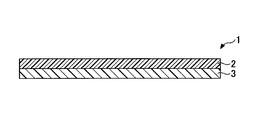
- thermoplastic film In FIG. 1, the typical sectional drawing of the thermoplastic film 1 used with the manufacturing method of this form is shown.
- the thermoplastic film 1 is a multilayer film, and has an airtight layer 2 and an adhesive layer 3 bonded to the airtight layer 2.
- the manufacturing method according to the present embodiment includes a step of bonding such a thermoplastic film 1 to a base fabric. At this time, the adhesive layer 3 becomes the side to be bonded to the base fabric.
- the adhesive layer 3 includes a thermoplastic polyester elastomer
- the airtight layer 2 includes a polymer
- the melting point of the airtight layer 2 is higher than the melting point of the adhesive layer 3.
- an airtight layer is a layer having a function of preventing gas from flowing inside and outside the layer.
- the adhesive layer is a layer having adhesiveness to the base fabric, and this adhesiveness is manifested by softening or melting under a predetermined condition, for example, a condition where the temperature and / or pressure is increased. It may be a thing.
- the adhesive layer is directly laminated to the base fabric, and in the laminate, an inner layer sandwiched between the base fabric and the airtight layer and become. Therefore, the adhesive layer can be said to be a layer that joins the airtight layer and the base fabric.
- the multilayer film has a structure of at least two layers having an airtight layer and an adhesive layer. Thereby, each layer can have an adhesion function when the film is adhered to the base fabric and an airtight function in the obtained laminate.
- the adhesiveness to the base fabric the delamination resistance between the base fabric and the thermoplastic film
- the airtightness are compared with the case where the single layer film is adhered to the base fabric.
- the melting point of the airtight layer is higher than the melting point of the adhesive layer. Therefore, by adhering the multilayer film to the base fabric on the adhesive layer side at a temperature lower than the melting point of the airtight layer, the adhesive layer is suitable for bonding to the base fabric while suppressing the softening of the airtight layer. Can be softened or melted. As a result, the adhesive function of the adhesive layer is reliably exhibited, and the airtight function of the hermetic layer can be maintained by suppressing the softening of the hermetic layer. Therefore, reliable adhesion to the base fabric and maintaining the airtightness of the multilayer film can both be achieved.
- the multilayer film according to the present embodiment can be favorably bonded to the base fabric using heat as described above without using an adhesive or the like, it is possible to reduce labor and cost due to the use of the adhesive. . Moreover, when using it for a long period of time, or when using it in a high-temperature, high-humidity environment, it can prevent that a laminated body loses a softness
- the melting point of a layer is a temperature at which the layer softens when the temperature of the layer is raised, the molecules of the polymer in the layer start relative movement, and the polymer becomes fluid. Point to. Therefore, it can be said that the melting points of the adhesive layer and the hermetic layer are the melting points of the polymers (including the polymer alloy) in the adhesive layer and the hermetic layer, respectively.
- the melting point of such a polymer can be the melting peak temperature measured with a differential scanning calorimeter.
- the adhesive layer includes a thermoplastic elastomer, specifically, a thermoplastic polyester elastomer.
- the thermoplastic elastomer is preferably a block copolymer including a hard segment (also referred to as a high melting point segment or a crystalline segment) and a soft segment (also referred to as a low melting point segment or an amorphous segment).
- a thermoplastic elastomer can be softened by heat to exhibit fluidity, and can exhibit rubber-like elasticity in a state where no heat is applied.
- the delamination resistance of the laminate can be improved. That is, the adhesiveness between the adhesive layer and the base fabric and the adhesiveness between the adhesive layer and the airtight layer can be improved at room temperature and under high temperature and / or high humidity conditions.
- the adhesive layer containing the thermoplastic polyester elastomer and the base fabric containing polyester are combined, a laminate having excellent delamination resistance can be obtained.
- flexibility and mechanical strength of a laminated body can be improved.
- the thermoplastic polyester elastomer may be a polyester / polyether type mainly containing an aromatic polyester or the like as a hard segment and mainly containing an aliphatic polyether or the like as a soft segment, or mainly an aromatic polyester or the like as a hard segment. It may be a polyester / polyester type containing an aliphatic polyester as a soft segment.
- the hard segment of the thermoplastic polyester elastomer is preferably a segment containing an aromatic polyester, for example, a polyester formed of an aromatic dicarboxylic acid component and a diol component.
- aromatic dicarboxylic acid used as the aromatic dicarboxylic acid component examples include terephthalic acid, isophthalic acid, phthalic acid, naphthalene-2,6-dicarboxylic acid, naphthalene-2,7-dicarboxylic acid, anthracene dicarboxylic acid, diphenyl-4,4 Examples include '-dicarboxylic acid, diphenoxyethanedicarboxylic acid, 4,4'-diphenyl ether dicarboxylic acid, 5-sulfoisophthalic acid, and sodium 3-sulfoisophthalate.
- the aromatic dicarboxylic acid component may be contained alone or in combination of two or more in the aromatic polyester. In the hard segment, a part of the aromatic dicarboxylic acid component may be replaced with an alicyclic or aliphatic carboxylic acid.
- diol as the diol component examples include diols having a molecular weight of 400 or less, for example, aliphatic diols such as 1,4-butanediol, ethylene glycol, trimethylene glycol, pentamethylene glycol, hexamethylene glycol, neopentyl glycol, and decamethylene glycol.
- diols having a molecular weight of 400 or less for example, aliphatic diols such as 1,4-butanediol, ethylene glycol, trimethylene glycol, pentamethylene glycol, hexamethylene glycol, neopentyl glycol, and decamethylene glycol.
- the diol component may be contained alone or in combination of two or more in the aromatic polyester.
- the polyester contained in the hard segment is preferably polybutylene terephthalate, polyethylene terephthalate, or polytrimethylene terephthalate, and more preferably polybutylene terephthalate, from the viewpoints of heat resistance and gas barrier properties.
- the soft segment of the thermoplastic polyester elastomer preferably contains an aliphatic polyether and / or an aliphatic polyester.
- Aliphatic polyethers include poly (ethylene oxide) glycol, poly (propylene oxide) glycol, poly (tetramethylene oxide) glycol (polytetramethylene ether glycol), poly (hexamethylene oxide) glycol, and the copolymer weight of ethylene oxide and propylene oxide.
- the aliphatic polyester include poly ( ⁇ -caprolactone), polyenantlactone, polycaprylolactone, polybutylene adipate, and polyethylene adipate.
- poly (tetramethylene oxide) glycol poly (propylene oxide) glycol ethylene oxide addition polymer, ethylene oxide and tetrahydrofuran copolymer Glycol, poly ( ⁇ -caprolactone), polybutylene adipate, polyethylene adipate and the like are preferable, and among these, poly (tetramethylene oxide) glycol (polytetramethylene ether glycol), poly (propylene oxide) glycol ethylene oxide addition polymer And a copolymer glycol of ethylene oxide and tetrahydrofuran is preferred.
- the number average molecular weight of the soft segment is preferably about 300 to 6000 in the copolymerized state.
- thermoplastic polyester elastomer may be modified with an unsaturated carboxylic acid such as acrylic acid, maleic acid or fumaric acid or a derivative thereof in the presence of a radical generator.
- unsaturated carboxylic acid or derivative thereof added for modification is preferably 0.1 to 30 parts by weight with respect to 100 parts by weight of the thermoplastic polyester elastomer.
- the kind and amount of the components used for such modification can be appropriately selected according to the material and application of the base fabric to be bonded.
- the content ratio of the hard segment in the thermoplastic polyester elastomer in the adhesive layer is preferably 10 to 60% by mass and more preferably 20 to 40% by mass with respect to 100% by mass of the thermoplastic polyester elastomer.
- the content ratio of the hard segment in the thermoplastic polyester elastomer in the adhesive layer is preferably 10 to 60% by mass and more preferably 20 to 40% by mass with respect to 100% by mass of the thermoplastic polyester elastomer.
- the content ratio of the soft segment in the thermoplastic polyester elastomer in the adhesive layer is preferably 50 to 90% by mass and more preferably 60 to 80% by mass with respect to 100% by mass of the thermoplastic polyester elastomer.
- the content ratio of the soft segment in the thermoplastic polyester elastomer in the adhesive layer is preferably 50 to 90% by mass and more preferably 60 to 80% by mass with respect to 100% by mass of the thermoplastic polyester elastomer.
- the content of the soft segment in the thermoplastic polyester elastomer is related to the melting point and softening point of the thermoplastic polyester elastomer. Generally, the higher the soft segment content in the thermoplastic polyester elastomer, the lower the melting point and softening point of the thermoplastic polyester elastomer. Therefore, the melting point of the thermoplastic polyester elastomer can be adjusted by adjusting the content ratio of the soft segment in the thermoplastic polyester elastomer in the adhesive layer, and consequently the melting point of the adhesive layer can be adjusted.
- the melting point of the thermoplastic polyester elastomer used for the adhesive layer is preferably 80 ° C. or higher, more preferably 100 ° C. or higher, and further preferably 130 ° C. or higher.
- the upper limit of the melting point of the thermoplastic polymer used for the adhesive layer is not particularly limited as long as it is lower than the melting point of the hermetic layer, but is preferably 250 ° C. or lower, more preferably 200 ° C. or lower, 170 More preferably, it is below °C.
- the adhesive layer can contain two or more of the above-mentioned thermoplastic polyester elastomers. Further, in addition to the thermoplastic polyester elastomer, it contains at least one other thermoplastic elastomer that is not polyester, for example, polyamide elastomer, polyolefin elastomer, polyurethane elastomer, polystyrene elastomer, polybutadiene elastomer, etc. Can do. Further, it may contain one or more of other polymers which are not elastomers, for example, polyester resin, polyamide resin, polyolefin resin, polystyrene resin, ethylene-vinyl acetate copolymer and the like.
- thermoplastic polyester elastomers include “Hytrel (registered trademark)” manufactured by Toray DuPont Co., Ltd., “Primary (registered trademark)” manufactured by Mitsubishi Chemical Corporation, and “Perpren (registered trademark)” manufactured by Toyobo Co., Ltd. Each series.
- additives such as pigments, fillers, antioxidants, hydrolysis stabilizers, and antiblocking agents.
- the total thickness of the adhesive layer is preferably 5 to 50 ⁇ m, and more preferably 5 to 30 ⁇ m.
- the hermetic layer comprises a polymer, preferably a thermoplastic polymer. Further, from the viewpoint of improving the elasticity and mechanical strength of the resulting laminate, the hermetic layer preferably contains a polyester-based, polyamide-based, polyolefin-based, polyurethane-based, polystyrene-based, or polybutadiene-based thermoplastic elastomer. It is preferable to contain a thermoplastic polyester elastomer. When the hermetic layer contains a thermoplastic polyester elastomer, it can be selected from those described for the thermoplastic polyester elastomer in the adhesive layer.
- thermoplastic elastomer when a similar thermoplastic elastomer is used in the airtight layer and the adhesive layer, for example, when a thermoplastic polyester elastomer is used for both the airtight layer and the adhesive layer, the bonding between the airtight layer and the adhesive layer is strong.
- the mechanical strength of the multilayer film as a whole can be improved.
- attaches on a base fabric and it is set as a laminated body the mechanical strength as the whole laminated body can be improved.
- the interlaminar bonding strength between the hermetic layer and the adhesive layer is improved at room temperature and / or after long-term storage and / or after storage at high temperature and high humidity.
- the type of hard segment in the thermoplastic polyester elastomer used in the hermetic layer and the type of hard segment in the thermoplastic polyester elastomer used in the adhesive layer may be the same as or different from each other.
- the kind of soft segment in the thermoplastic polyester elastomer used in the airtight layer and the kind of soft segment in the thermoplastic polyester elastomer used in the adhesive layer may be the same or different from each other. Also good.
- the types of hard segments and soft segments in the thermoplastic polyester elastomer used in the airtight layer, and the types of hard segments and soft segments in the thermoplastic polyester elastomer used in the adhesive layer may be the same as or different from each other.
- the types of segments are the same, the bonding strength between the airtight layer and the adhesive layer is increased, and delamination does not easily occur in the multilayer film, and the mechanical strength of the multilayer film and the laminate is further increased. Can be improved.
- the melting point of the polymer used for the hermetic layer can be higher than the melting point of the adhesive layer. Therefore, even when the multilayer film is heated at a temperature lower than the melting point of the hermetic layer and adhered to the base fabric, the hermetic layer is deformed or altered even if it is softened or melted so that the adhesive layer has an adhesive function. The airtight function of the airtight layer can be maintained.
- the melting point of the hermetic layer is higher than the melting point of the adhesive layer, but the difference between the melting point of the hermetic layer and the melting point of the adhesive layer is preferably 10 to 100 ° C., more preferably 20 to 80 ° C. It is more preferable that the temperature is higher than 20 ° C.
- the temperature can be easily controlled by setting the difference between the melting point of the airtight layer and the melting point of the adhesive layer within the above range. . Therefore, it is possible to reduce the occurrence of defective products in which the adhesive layer is not sufficiently softened and cannot perform the adhesive function, or the airtight layer is softened and deformed or deteriorated to deteriorate the airtightness. Stability can be improved.
- the melting point of the hermetic layer is not particularly limited, it is preferably 100 ° C. or higher, more preferably 150 ° C. or higher, and further preferably 180 ° C. or higher.
- the upper limit of the melting point of the thermoplastic polymer used for the hermetic layer is not particularly limited, but is preferably 300 ° C. or less, more preferably 270 ° C. or less in consideration of ease of handling at the time of forming the multilayer film. More preferably, it is 230 ° C. or lower.
- the hard segment content in the thermoplastic polyester elastomer is preferably 40 to 95% by mass with respect to 100% by mass of the thermoplastic polyester elastomer. It is more preferable that it is ⁇ 90% by mass.
- the mechanical strength of a multilayer film and a laminated body, heat resistance, and the tolerance in high temperature, high humidity can be improved.
- moderate elasticity, flexibility, and a moldability of a multilayer film and a laminated body can be ensured by setting it as 95 mass% or less.
- the content ratio of the soft segment in the thermoplastic polyester elastomer in the hermetic layer is preferably 5 to 60% by mass with respect to 100% by mass of the thermoplastic polyester elastomer, and 10 to 50% by mass. It is more preferable that it is less than.
- the moderate elasticity of a multilayer film and a laminated body, flexibility, and a moldability are securable.
- the mechanical strength of a multilayer film and a laminated body, heat resistance, and the tolerance in high temperature, high humidity can be improved.
- the value (Psa / Pss) of the ratio of the soft segment content ratio (Psa) in the thermoplastic polyester elastomer in the adhesive layer to the soft segment content ratio (Pss) in the thermoplastic polyester elastomer in the airtight layer is 1.2 to 5 is preferable, and 1.4 to 3.5 is more preferable.
- the hermetic layer can contain two or more of the above-mentioned thermoplastic polyester elastomers.
- the hermetic layer can be blended with another thermoplastic elastomer that is not polyester-based, or can be blended with a polymer that is not an elastomer.
- additives such as pigments, fillers, antioxidants, hydrolysis stabilizers, and antiblocking agents.
- the total thickness of the hermetic layer is preferably 5 to 50 ⁇ m, and more preferably 5 to 30 ⁇ m.
- the thermoplastic film has an airtight layer and an adhesive layer.
- the adhesive layer may be a single layer or a plurality of adhesive layers.
- the materials constituting each adhesive layer may be the same or different.
- the melting points of the layers of the plurality of adhesive layers may be the same or different.
- the airtight layer may be a single layer or a plurality of layers.
- the material and melting point of each hermetic layer may be the same or different.
- a pigment such as a pigment can be added to either the first adhesive layer or the second adhesive layer.
- the amount of the dye to be used can be reduced, and the manufacturing cost of the laminate can be reduced.
- the multilayer film can be manufactured by bonding an adhesive layer and an airtight layer.
- the adhesive layer and the hermetic layer can be formed in advance as separate sheets or films by extrusion or the like, and joined together to be integrated.
- the method include a method in which each sheet or film is stacked and melt-pressed by a hot press or a heat roll, and an extrusion laminating method in which a molten material is extruded onto a formed sheet or film.
- the material of each layer of the adhesive layer and the hermetic layer can be melted and simultaneously extruded (co-extruded), and molded using an inflation molding method or a T-die method.
- an inflation method that can increase the area and is excellent in productivity.
- the base fabric is a sheet-like structure functioning as a support for securing the strength of a laminate as a final product, obtained by laminating a multilayer film and a base fabric.
- the sheet shape includes a shape formed in a cylindrical shape, a bag shape, and a balloon shape in addition to a planar shape.
- the base fabric preferably includes fibers, and may be a woven fabric, a knitted fabric, or a non-woven fabric, and may be sewn entirely or partially.
- a woven fabric is preferable, and a biaxial structure in which a plurality of warps and a plurality of wefts are combined is preferable, and a combination of a plurality of warps, a plurality of wefts, and a plurality of oblique yarns is combined.
- a triaxial structure can also be used.
- a biaxial base fabric is preferable, and a plain woven fabric is more preferable in terms of strength and ease of manufacture.
- the base fabric is not a flat base fabric, but also includes ones woven into a bag shape without a seam (One Piece Woven) so that it can have a curved surface according to the shape of the target product. It is.
- the OPW can be suitably used for applications such as airbags that are used by inflating and storing air inside.
- the OPW used for the curtain airbag may have a complicated curved surface in which a plurality of rooms are formed, and a structure in which irregularities are formed when inflated.
- peeling between the base fabric and the film is more likely to occur than when a film is adhered to a base fabric without undulations.
- the multilayer film according to the present embodiment the multilayer film can be satisfactorily adhered even if it is an uneven OPW, and delamination can be prevented.
- polymer constituting the fiber examples include homopolyesters such as polyalkylene terephthalate such as polyethylene terephthalate and polybutylene terephthalate, and aliphatic dicarboxylic acids such as isophthalic acid, 5-sodium sulfoisophthalic acid and adipic acid as the acid component constituting the polyester repeating unit. It is preferable to include a polyester fiber copolymerized with an acid or the like.
- polyester fibers In addition to polyester fibers, synthetic fibers other than polyester fibers, natural fibers, regenerated fibers, semi-synthetic fibers, inorganic fibers, and combinations thereof (including mixed spinning and mixed weaving) may be included.
- synthetic fibers other than polyester fibers, natural fibers, regenerated fibers, semi-synthetic fibers, inorganic fibers, and combinations thereof (including mixed spinning and mixed weaving) may be included.
- composite fibers such as core-sheath fibers, side-by-side fibers, and split fibers can be used.
- the base fabric may include two or more types of fibers.
- different types of fibers can be used as the fibers used for the yarns extending in different directions.
- the warp and the weft can be different types of fibers.
- at least one of the warp and the weft can be a polyester fiber.
- the base fabric includes fibers containing polyester
- the adhesive layer of the multilayer film includes a thermoplastic polyester-based elastomer, whereby the adhesion between the base fabric and the multilayer film is improved, and the resulting laminate is obtained. In the body, peeling between the base fabric and the multilayer film hardly occurs.
- the base fabric is preferably formed using a yarn having a total fineness (single yarn fineness ⁇ number of combined yarns) of 100 to 700 dtex.
- the single yarn fineness of the fiber used for the base fabric is preferably 1 to 10 dtex.
- the weaving density is preferably 5 to 30 yarns / cm 2 for warps and wefts.
- the basis weight (weight per 1 m 2 ) of the base fabric is 300 g / m 2 or less, more preferably 200 g / m 2 or less, and even more preferably 190 g / m 2 in consideration of the storage property and cost of the laminate (final product).
- it is more preferably 150 g / m 2 or less and 100 g / m 2 or less.
- Preferably it is 30 g / m ⁇ 2 > or more, More preferably, it is 50 g / m ⁇ 2 > or more, More preferably, it can be 70 g / m ⁇ 2 > or more.
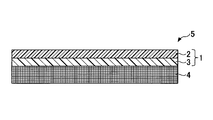
- FIG. 2 is a schematic cross-sectional view of a laminate according to an embodiment of the present invention.
- the laminated body 5 is configured by adhering the multilayer film 1 including the airtight layer 2 and the adhesive layer 3 described above and the base fabric 4 to each other.
- the multilayer film 1 is disposed on one surface of the base fabric 4, but the multilayer film of this embodiment can also be provided on both surfaces of the base fabric 4.
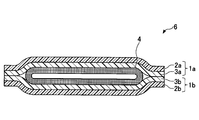
- the multilayer films 1a and 1b are laminated on both sides in a state where the bag air is drawn and folded. It may be.
- the laminate shown in FIG. 3 can be used for an airbag or the like.
- the manufacturing method of the laminated body by one form of this invention includes the process of adhere
- FIG. 4 schematically shows a laminate manufacturing apparatus 20 for carrying out the laminate manufacturing method according to the present embodiment.
- stacked on both surfaces of the base fabric 4 is demonstrated.
- the laminate manufacturing apparatus 20 includes a heating unit 22 and a cooling unit 24.
- the base fabric 4 and the multilayer films 1a and 1b previously wound on a reel or the like are unwound, and both surfaces (upper surface) of the base fabric 4 are unwound.
- Multilayer films 1a and 1b are overlaid on the lower surface and the lower surface, respectively.
- the multilayer film 1a having the airtight layer 2a and the adhesive layer 3a is overlapped so that the adhesive layer 3a is on the base cloth 4 side.
- the multilayer film 1b having the airtight layer 2b and the adhesive layer 3b is overlapped so that the adhesive layer 3b is on the base cloth 4 side.
- the laminated multilayer film 1 b, the base fabric 4, and the multilayer film 1 a are sent to the heating unit 22 and pressed while being heated in the heating unit 22.
- the heating unit 22 includes, for example, a pressurizing unit composed of a pair of opposed rolls (such as a nip roll) or a pair of opposed belts as in the illustrated example. And heating and pressurization can be performed by passing the laminated multilayer film 1b, the base fabric 4, and the multilayer film 1a between such a pair of pressurizing means.
- the heating and pressurization may be performed by the same means as in the illustrated example or may be performed by different means.
- the melting point of the adhesive layer of the multilayer film is a temperature lower than the melting point of the hermetic layer, by setting the heating temperature in the heating unit 22 to a temperature lower than the melting point of the hermetic layer, the adhesive layer is sufficiently softened.
- the adhesive layer can be pressed onto the base fabric.
- multilayer film 1a, 1b can be adhere
- the laminate 5 that has passed through the heating unit 22 is sent to the cooling unit 24.
- the temperature of the laminated body 5 can be preferably lowered to room temperature.
- the cooling unit 24 may include a cooling unit including a cooling medium, an intake unit, and the like. Further, in the cooling unit 24, as shown in the illustrated example, the pressure may be applied using a pressurizing unit including a pair of opposed belts, but the pressurization is not necessarily required.
- a laminate in which the multilayer film 1 is laminated on one side of the base fabric 4 as shown in FIG. 2 can be manufactured. it can.
- the base cloth 4 a tubular or bag-like OPW woven without a seam can be used. Thereby, a laminated body as shown in FIG. 3 can be manufactured.
- the base fabric 4 is made into a sheet shape by removing air from the inside of the bag-shaped base fabric 4, wound beforehand on a reel or the like, and unrolled before being overlapped. Then, the multilayer films 1a and 1b are overlaid on the upper and lower surfaces of the base fabric 4 as described above. In this case, since the base fabric 4 has a bag shape, the upper surface and the lower surface of the base fabric 4 are both the surface of the base fabric 4.
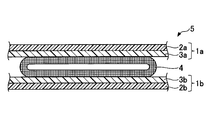
- FIG. 5 schematically shows a state in which the multilayer films 1a and 1b are overlaid on the upper and lower surfaces of the base fabric 4 put into the laminate manufacturing apparatus 20 in a flattened state.
- the multilayer film 1 a, the base fabric 4, and the multilayer film 1 b that are overlaid are pressed from both sides by a pair of pressing means in the pressing unit 22.
- the multilayer films 1a and 1b are bonded to the upper surface and the lower surface of the base fabric 4, respectively, and the edges of the multilayer films 1a and 1b are bonded to each other by heating or by an adhesive.
- a laminate (airbag) 6 FIG. 3
- Excess edges may be cut off.
- an airbag in which the base fabric is formed in a bag shape and the multilayer film is formed on the surface of the base fabric can be manufactured.
- the heating temperature at the time of producing the laminate is not particularly limited as long as the heating temperature is equal to or higher than the melting point of the adhesive layer and lower than the melting point of the hermetic layer.
- the heating temperature can be a temperature below the melting point of the hermetic layer and a temperature at which the adhesive layer softens. Specifically, the temperature is preferably 120 to 250 ° C.
- the pressure of the pressure roller can be 5 to 700 N / cm 2 , preferably 10 to 500 N / cm 2 , although it depends on the configuration of the multilayer film and the base fabric. Furthermore, it can be set to 5 to 50 N / cm 2 depending on the operating conditions at the time of manufacturing the laminate.
- the method for manufacturing a laminate according to this embodiment may include a step of bonding the multilayer film to the base fabric on the side of the adhesive layer while heating at a temperature lower than the melting point of the hermetic layer.
- the “step of bonding while heating at a temperature lower than the melting point of the hermetic layer” may be a step of bonding at a temperature lower than the melting point of the hermetic layer.
- this step can be said to be a step of adhering the multilayer film to the base fabric while keeping the multilayer film heated at a temperature below the melting point of the hermetic layer.
- a laminate manufacturing apparatus in which a multilayer film manufacturing apparatus is disposed in the vicinity of a base cloth conveying apparatus.
- a multilayer film manufacturing apparatus an extruder including a T die.
- the multilayer material heated in the extruder and extruded into a film form from the extruder can be supplied at a temperature that is at least below the melting point of the hermetic layer but higher than room temperature.
- a multilayer film can be arrange
- a laminated body can also be manufactured using the laminated body manufacturing apparatus which arrange
- the method for manufacturing a laminate according to the present embodiment may include a step of bonding the multilayer film to the base fabric on the side of the adhesive layer at a temperature lower than the melting point of the hermetic layer.
- the laminate produced by the method of the present embodiment is suitably used in vehicle airbags, outdoor goods, packaging applications, and the like, and particularly suitably used in the production of vehicle airbags, especially curtain airbags.
- the curtain airbag refers to an airbag that is attached to a roof line or the like on the upper side of a side window and is deployed in a curtain shape vertically downward along the side window when a high load is applied during a collision or the like.
- curtain airbag Since the curtain airbag is inflated for several seconds after operation, for example, 6 to 7 seconds, when deployed, the curtain airbag material is required to have pressure resistance. Further, curtain airbags are often stored in a casing or the like in a folded or rolled state for a long time before deployment, and are often exposed to high temperature and high humidity environments.
- the multilayer film and laminate according to the present embodiment can be suitably used even for such applications.
- the laminate according to this embodiment has a base fabric containing polyester and a multilayer film, but has a base fabric containing polyester, an airtight layer and an adhesive layer containing a thermoplastic polyester elastomer, and an airtight layer. Since a film having a melting point higher than the melting point of the adhesive layer is used, the adhesion between the base fabric and the film is excellent both under normal temperature and high temperature and high humidity conditions.
- a multilayer film including an airtight layer and an adhesive layer was formed, and the multilayer film was bonded to a base fabric to produce a laminate and evaluated.
- Thermoplastic polyester elastomer (PTEE-1): A polyester-polyether block copolymer having polybutylene terephthalate as a hard segment and polytetramethylene ether glycol having a number average molecular weight of 2000 as a soft segment.
- the content of polybutylene terephthalate is 25% by weight
- the content of polytetramethylene ether glycol segment is 75% by weight (melting point: 152 ° C.).
- Thermoplastic polyester elastomer (PTEE-2): A polyester-polyether block copolymer having polybutylene terephthalate as a hard segment and polytetramethylene ether glycol having a number average molecular weight of 2000 as a soft segment.
- the content of polybutylene terephthalate is 35% by weight
- the content of polytetramethylene ether glycol segment is 65% by weight (melting point 185 ° C.).
- Thermoplastic polyester-based elastomer (PTEE-3): A polyester-polyether block copolymer having polybutylene terephthalate as a hard segment and polytetramethylene ether glycol having a number average molecular weight of 2000 as a soft segment. In the copolymer, the content of polybutylene terephthalate is 58% by weight, and the content of polytetramethylene ether glycol segment is 42% by weight (melting point 207 ° C.).
- a polyethylene terephthalate film having a thickness of 100 ⁇ m is bonded to the airtight layer side of the multilayer film with an adhesive to prevent the multilayer film from being broken or stretched during the peel test. Reinforced and used.
- Example 1 (Multilayer film) The multilayer film was manufactured using the inflation extrusion apparatus (made by Dr Collin) which has three extruders. Each extruder is charged with thermoplastic polyester elastomer (PTEE-1), thermoplastic polyester elastomer (PTEE-1), and thermoplastic polyester elastomer (PTEE-3) and melted above the melting point of each raw material. Then, a three-layer film was produced by an inflation method.
- PTEE-1 thermoplastic polyester elastomer
- PTEE-1 thermoplastic polyester elastomer
- PTEE-1 thermoplastic polyester elastomer
- PTEE-3 thermoplastic polyester elastomer
- the obtained film includes a first adhesive layer made of a thermoplastic polyester elastomer (PTEE-1), a second adhesive layer made of a thermoplastic polyester elastomer (PTEE-1), and a thermoplastic polyester elastomer (PTEE). -3) was a three-layer film laminated in this order. The extrusion amounts of the first adhesive layer, the second adhesive layer, and the airtight layer were each 10 g / m 2 .
- a plain woven base fabric woven with polyethylene terephthalate fibers was used as the base fabric.
- the total fineness of the warp and weft was 470 dtex, and the weaving density was 22 / cm for each of the warp and the weft.
- the PET base fabric and the three-layer film are laminated so that the adhesive layer is in contact with the surface of the base fabric, heated at 200 ° C., and heated with a nip roll. While pressing to 18 N / cm 2 , the adhesive layer was softened, and a base fabric and a three-layer film were laminated. The adhesion of the obtained laminate at room temperature and the adhesion after storage at high temperature and high humidity were evaluated. The results are shown in Table 1.
- Example 2 (Multilayer film) A three-layer film was produced in the same manner as in Example 1 except that the thermoplastic polyester elastomer (PTEE-2) was used instead of the thermoplastic polyester elastomer (PTEE-1).
- the obtained film has a first adhesive layer made of a thermoplastic polyester elastomer (PTEE-2), a second adhesive layer made of a thermoplastic polyester elastomer (PTEE-2), and a thermoplastic polyester elastomer (PTEE).
- -3 was a three-layer film laminated in this order.
- the extrusion amounts of the first adhesive layer, the second adhesive layer, and the airtight layer were each 10 g / m 2 .
- a multilayer body was produced by laminating the multilayer film and the base fabric in the same manner as in Example 1 except that the base fabric was changed to nylon.
- the nylon base fabric used had a total fineness of warp and weft of 470 dtex, and the weave density was 22 warps and weft each.
- the adhesiveness at room temperature and the adhesiveness after storage at high temperature and high humidity were evaluated. The results are shown in Table 1.
Landscapes
- Engineering & Computer Science (AREA)
- Chemical & Material Sciences (AREA)
- Mechanical Engineering (AREA)
- Organic Chemistry (AREA)
- Chemical Kinetics & Catalysis (AREA)
- Physics & Mathematics (AREA)
- Thermal Sciences (AREA)
- Textile Engineering (AREA)
- Fluid Mechanics (AREA)
- Manufacturing & Machinery (AREA)
- Materials Engineering (AREA)
- Health & Medical Sciences (AREA)
- Medicinal Chemistry (AREA)
- Polymers & Plastics (AREA)
- Laminated Bodies (AREA)
- Manufacture Of Macromolecular Shaped Articles (AREA)
- Air Bags (AREA)
Abstract
Description
図1に、本形態の製造方法で用いられる熱可塑性フィルム1の模式的な断面図を示す。図1に示すように、熱可塑性フィルム1は多層フィルムであって、気密層2と、この気密層2に接合されている接着層3とを有する。本形態による製造方法は、このような熱可塑性フィルム1を、基布に接着させる工程を含む。この際、接着層3が基布に接着される側となる。接着層3は熱可塑性ポリエステル系エラストマーを含み、気密層2はポリマーを含み、気密層2の融点は接着層3の融点よりも高くなっている。
本形態において、接着層は、熱可塑性エラストマー、具体的には熱可塑性ポリエステル系エラストマーを含む。熱可塑性エラストマーは、ハードセグメント(高融点セグメント、結晶性セグメントともいう)と、ソフトセグメント(低融点セグメント、非結晶性セグメントともいう)とを含むブロック共重合体であることが好ましい。熱可塑性エラストマーは、熱により軟化して流動性を示し、熱を加えてない状態ではゴム様の弾性を示すことができる。
気密層は、ポリマーを含み、好ましくは熱可塑性ポリマーを含む。また、得られる積層体の弾性や機械的強度を向上させる観点から、気密層は、ポリエステル系、ポリアミド系、ポリオレフィン系、ポリウレタン系、ポリスチレン系、ポリブタジエン系の熱可塑性エラストマーを含むことが好ましく、中でも、熱可塑性ポリエステル系エラストマーを含むことが好ましい。気密層が熱可塑性ポリエステル系エラストマー含む場合には、接着層における熱可塑性ポリエステル系エラストマーについて説明したものから選択して使用することができる。
上述のように、熱可塑性フィルム(多層フィルム)は、気密層と接着層とを有している。接着層は、1層であってもよいし複数であってもよい。接着層が複数ある場合には、各接着層を構成する材料は、同じであってもよく、異なっていてもよい。また、複数の接着層の各層の融点は、同じであってもよいし異なっていてもよい。気密層も、同様に、1層であってもよいし、複数であってもよい。気密層が複数ある場合には、各気密層を構成する材料及び融点もそれぞれ、同じであってもよいし異なっていてもよい。
多層フィルムは、接着層と気密層とを接合させることによって製造することができる。その場合、予め、接着層及び気密層をそれぞれ別個のシート又はフィルムとして、押出成形等により成形しておき、互いを接合させて一体化させることができる。例えば、各シート又はフィルムを重ねて熱プレス又は熱ロールによって溶融圧着する方法、成形されたシート又はフィルム上に溶融した材料を押し出す押出ラミネート法等が挙げられる。
本明細書において、基布とは、多層フィルムと基布との積層により得られる、最終製品である積層体の強度を確保するための支持体として機能するシート状の構造体である。ここで、シート状とは、平面状の他、筒状、袋状、風船状に形成された形状も含む。
図2に、本発明の一形態による積層体の模式的な断面図を示す。積層体5は、上述した気密層2と接着層3とを備えた多層フィルム1と、基布4とが互いに接着されて構成されている。
本発明の一形態による積層体の製造方法は、前記気密層の融点を下回る温度で加熱しながら、前記多層フィルムを前記接着層の側で前記基布に接着させる工程を含むものである。
本形態の方法によって製造される積層体は、車両用エアバッグ、アウトドア用品、包装用途等において好適に用いられ、特に車両用エアバッグ、とりわけカーテンエアバッグの製造に好適に用いられる。カーテンエアバッグとは、サイドウインドウ上部のルーフライン等に取り付けられており、衝突時等に高荷重が作用した場合に、サイドウインドウに沿わせて鉛直下方にカーテン状に展開させるエアバッグを指す。
多層フィルムの原料として、以下のものを使用した。なお、各原料の融点は、示差走査熱量計で測定された融解ピーク温度である。
<常温での接着性(常温での耐層間剥離性)>
多層フィルムと基布とを積層させて得られた積層体から、50mm×150mmの試験片を作製し、試験片(積層体)の基布の部分を固定しつつ、多層フィルムの部分(気密層及び接着層)を180°方向に引張速度100mm/分で引きはがした際に要した力を剥離力(N/mm)として測定した。評価基準は以下の通りである。
〇:剥離力が0.5N/mm超であった。
△:剥離力が0.3~0.5N/mmであった。
×:剥離力が0.3N/mm未満であった、又は多層フィルム内で層間剥離が生じた。
上述のようにして得られた試験片を密閉容器内に入れ、容器内の条件を温度70℃、相対湿度95%にして408時間にわたり保った。容器から取り出した試験片(積層体)の基布の部分を固定しつつ、多層フィルムの部分(気密層及び接着層)を180°方向に引張速度100mm/分で引きはがした際に要した力を剥離力(N/mm)として測定した。評価基準は以下の通りである。
〇:剥離力が0.5N/mm超であった。
△:剥離力が0.3~0.5N/mmであった。
×:剥離力が0.3N/mm未満であった、又は多層フィルム内で層間剥離が生じた。
(多層フィルム)
3つの押出機を有するインフレーション押出装置(Dr Collin社製)を用いて多層フィルムの製造を行った。各押出機にそれぞれ、熱可塑性ポリエステル系エラストマー(PTEE-1)、熱可塑性ポリエステル系エラストマー(PTEE-1)、及び熱可塑性ポリエステル系エラストマー(PTEE-3)を投入し、各原料の融点以上で溶融し、インフレーション法にて3層フィルムを作製した。
基布として、ポリエチレンテレフタレート製の繊維で織られた平織基布を使用した。経糸及び緯糸の総繊度はいずれも470dtexであり、織り密度は、経糸及び緯糸それぞれ22本/cmであった。
(多層フィルム)
熱可塑性ポリエステル系エラストマー(PTEE-1)に代えて、熱可塑性ポリエステル系エラストマー(PTEE-2)を用いた以外は、実施例1と同様にして3層フィルムを作製した。得られたフィルムは、熱可塑性ポリエステル系エラストマー(PTEE-2)からなる第1の接着層、熱可塑性ポリエステル系エラストマー(PTEE-2)からなる第2の接着層、及び熱可塑性ポリエステル系エラストマー(PTEE-3)からなる気密層が、この順に積層された3層フィルムであった。第1の接着層、第2の接着層、及び気密層の押出量はそれぞれ、10g/m2であった。
実施例1と同様の方法で、基布と多層フィルムとの積層体を作製し、評価を行った。結果を表1に示す。
(多層フィルム)
実施例1と同様の3層フィルムを製造した。
基布を、ナイロン製のものに変更したこと以外は、実施例1と同様にして、多層フィルムと基布とを積層させ、積層体を作製した。用いたナイロン製基布は、経糸及び緯糸の総繊度はいずれも470dtexであり、織り密度は、経糸及び緯糸それぞれ22本/cmであった。実施例1と同様にして、常温での接着性及び高温高湿保存後の接着性を評価した。結果を表1に示す。

2、2a、2b 気密層
3、3a、3b 接着層
4 基布
5 積層体
6 積層体(エアバッグ)
20 積層体製造装置
22 加熱部
24 冷却部
Claims (7)
- 基布と熱可塑性フィルムとを含む積層体の製造方法であって、
前記熱可塑性フィルムが、熱可塑性ポリエステル系エラストマーを含む接着層と、当該接着層に接合されており、当該接着層の融点よりも高い融点を有し、ポリマーを含む気密層とを有する多層フィルムであり、
前記基布がポリエステルを含み、
前記気密層の融点を下回る温度で加熱しながら、前記多層フィルムを前記接着層の側で前記基布に接着させる工程を含む、積層体の製造方法。 - 前記接着層中の熱可塑性ポリエステル系エラストマーが、ポリエーテルを含むソフトセグメントと、ポリエステルを含むハードセグメントとを含むブロック共重合体である、請求項1に記載の製造方法。
- 前記気密層が、熱可塑性ポリエステル系エラストマーを含む、請求項1又は2に記載の製造方法。
- 前記基布がエアバッグ用基布である、請求項1から3のいずれか一項に記載の製造方法。
- 前記気密層の融点が、前記接着層の融点よりも20℃を超えて高い、請求項1から4のいずれか一項に記載の製造方法。
- 基布と熱可塑性フィルムとを含む積層体であって、
前記熱可塑性フィルムが、熱可塑性ポリエステル系エラストマーを含む接着層と、当該接着層に接合されており、当該接着層の融点よりも高い融点を有し、ポリマーを含む気密層とを有する多層フィルムであり、
前記基布がポリエステルを含む、積層体。 - 請求項6に記載の積層体を用いてなるエアバッグであって、
前記基布が袋状に形成されており、前記基布の表面に前記多層フィルムが形成されている、エアバッグ。
Priority Applications (8)
| Application Number | Priority Date | Filing Date | Title |
|---|---|---|---|
| CN201880039602.4A CN110958943A (zh) | 2017-06-16 | 2018-06-15 | 层叠体的制作方法、层叠体及气囊 |
| EP18817069.0A EP3640024B1 (en) | 2017-06-16 | 2018-06-15 | Method for producing laminate, laminate, and air bag |
| US16/621,424 US11667259B2 (en) | 2017-06-16 | 2018-06-15 | Method of manufacturing laminate, laminate, and airbag |
| CN202510594199.3A CN120307740A (zh) | 2017-06-16 | 2018-06-15 | 层叠体的制作方法、层叠体及气囊 |
| KR1020197036767A KR102389082B1 (ko) | 2017-06-16 | 2018-06-15 | 적층체 제조방법, 적층체 및 에어백 |
| CA3067204A CA3067204A1 (en) | 2017-06-16 | 2018-06-15 | Method of manufacturing laminate, laminate, and airbag |
| MX2019014945A MX2019014945A (es) | 2017-06-16 | 2018-06-15 | Procedimiento de fabricacion de laminado, laminado, y bolsa de aire. |
| US18/308,124 US12103487B2 (en) | 2017-06-16 | 2023-04-27 | Method of manufacturing laminate, laminate, and airbag |
Applications Claiming Priority (2)
| Application Number | Priority Date | Filing Date | Title |
|---|---|---|---|
| JP2017119101 | 2017-06-16 | ||
| JP2017-119101 | 2017-06-16 |
Related Parent Applications (1)
| Application Number | Title | Priority Date | Filing Date |
|---|---|---|---|
| US16621424 Continuation | 2019-12-11 |
Related Child Applications (2)
| Application Number | Title | Priority Date | Filing Date |
|---|---|---|---|
| US16/621,424 A-371-Of-International US11667259B2 (en) | 2017-06-16 | 2018-06-15 | Method of manufacturing laminate, laminate, and airbag |
| US18/308,124 Continuation US12103487B2 (en) | 2017-06-16 | 2023-04-27 | Method of manufacturing laminate, laminate, and airbag |
Publications (1)
| Publication Number | Publication Date |
|---|---|
| WO2018230723A1 true WO2018230723A1 (ja) | 2018-12-20 |
Family
ID=64660992
Family Applications (1)
| Application Number | Title | Priority Date | Filing Date |
|---|---|---|---|
| PCT/JP2018/022995 Ceased WO2018230723A1 (ja) | 2017-06-16 | 2018-06-15 | 積層体の製造方法、積層体、及びエアバッグ |
Country Status (8)
| Country | Link |
|---|---|
| US (2) | US11667259B2 (ja) |
| EP (1) | EP3640024B1 (ja) |
| JP (1) | JP7236819B2 (ja) |
| KR (1) | KR102389082B1 (ja) |
| CN (2) | CN120307740A (ja) |
| CA (1) | CA3067204A1 (ja) |
| MX (1) | MX2019014945A (ja) |
| WO (1) | WO2018230723A1 (ja) |
Cited By (1)
| Publication number | Priority date | Publication date | Assignee | Title |
|---|---|---|---|---|
| WO2021112202A1 (ja) * | 2019-12-06 | 2021-06-10 | 日東電工株式会社 | 多層フィルム、積層体及びエアバッグ |
Families Citing this family (4)
| Publication number | Priority date | Publication date | Assignee | Title |
|---|---|---|---|---|
| EP3722085A1 (en) * | 2019-04-12 | 2020-10-14 | Nitto Denko Corporation | Multilayer films for airbag applications and related methods |
| WO2021157733A1 (ja) * | 2020-02-07 | 2021-08-12 | 旭化成株式会社 | エアバッグ用多層複合体及びエアバッグ |
| CN216139614U (zh) * | 2021-01-14 | 2022-03-29 | 采埃孚汽车科技(上海)有限公司 | 安全气囊 |
| CN115583086A (zh) * | 2022-09-29 | 2023-01-10 | 中山莱圃新材料有限公司 | 一种轻质耐穿刺夹网布 |
Citations (9)
| Publication number | Priority date | Publication date | Assignee | Title |
|---|---|---|---|---|
| JPS58222847A (ja) * | 1982-06-21 | 1983-12-24 | 東レ株式会社 | セ−ル用積層体 |
| JPH02114035A (ja) | 1988-10-24 | 1990-04-26 | Toray Ind Inc | 車両用エアバッグ基布 |
| JPH037337A (ja) * | 1989-06-05 | 1991-01-14 | Tomoegawa Paper Co Ltd | エアーバック用基布およびエアーバック |
| JPH03294542A (ja) * | 1990-01-09 | 1991-12-25 | Toray Ind Inc | 樹脂加工織物、その製造方法、エアバッグおよび帆布 |
| JPH05338092A (ja) | 1992-06-04 | 1993-12-21 | Toray Ind Inc | エアバッグ基布の製造方法 |
| JPH10273002A (ja) * | 1997-03-28 | 1998-10-13 | Toray Ind Inc | エアバッグ用基布およびエアバッグ |
| JP2002265891A (ja) * | 2001-03-06 | 2002-09-18 | Teijin Ltd | 目止めテープおよびその製造方法 |
| JP2003526552A (ja) * | 2000-03-13 | 2003-09-09 | イー・アイ・デュポン・ドウ・ヌムール・アンド・カンパニー | エアバッグ用の積層布 |
| JP2017119101A (ja) | 2015-12-24 | 2017-07-06 | ファイテン株式会社 | 骨盤矯正器 |
Family Cites Families (48)
| Publication number | Priority date | Publication date | Assignee | Title |
|---|---|---|---|---|
| US3932326A (en) | 1973-02-20 | 1976-01-13 | E. I. Du Pont De Nemours And Company | Soft thermoplastic segmented copolyesters as pressure sensitive adhesives |
| JPS5819711B2 (ja) | 1975-04-04 | 1983-04-19 | 東レ株式会社 | セツチヤクザイソセイブツ |
| US4130603A (en) | 1977-02-04 | 1978-12-19 | Toray Industries, Inc. | Thermoplastic linear block copolyether-polyesters as hot melt adhesives for textiles |
| JPS5452143A (en) | 1977-10-03 | 1979-04-24 | Toray Ind Inc | Textile adhesive |
| JPS59156745A (ja) * | 1983-02-25 | 1984-09-06 | 東レ株式会社 | セ−ル用積層体 |
| JPH04201649A (ja) | 1990-11-29 | 1992-07-22 | Toray Ind Inc | エアバッグ |
| EP0603384B1 (en) | 1992-07-02 | 2002-10-16 | H.B. FULLER LICENSING & FINANCING, INC. | Hot melt adhesive composition |
| US5403123A (en) | 1992-07-29 | 1995-04-04 | Walters; William D. | Gas impermeable, elastically deformable laminate and inflatable articles formed therefrom |
| US5277230A (en) | 1993-02-22 | 1994-01-11 | Milliken Research Corporation | Double twillwoven air bag fabric |
| US5614302A (en) | 1995-06-28 | 1997-03-25 | Nance, Jr.; Fred H. | Protective garment utilizing heat stress reduction fabric |
| JPH09143848A (ja) * | 1995-11-20 | 1997-06-03 | Teijin Ltd | 寝具用敷物 |
| US6015524A (en) | 1997-10-20 | 2000-01-18 | Hoechst Celanese Corporation | Adhesives for making multilayer films comprising liquid crystalline polymers and polyethylene |
| JPH11170461A (ja) | 1997-12-15 | 1999-06-29 | Toray Ind Inc | 防水布帛およびそれからなる衣料、靴類およびテント類 |
| WO1999040154A1 (en) | 1998-02-06 | 1999-08-12 | Riken Vinyl Industry Co., Ltd. | Resin composition and resin sheet |
| US6416613B1 (en) | 1998-06-23 | 2002-07-09 | Nextec Applications, Inc. | Products of and method for improving adhesion between substrate and polymer layers |
| JP2000158593A (ja) | 1998-11-27 | 2000-06-13 | Mitsui Chemicals Inc | 伸縮性不織布積層体 |
| US6770578B2 (en) | 1999-06-07 | 2004-08-03 | Bradford Industries, Inc. | Laminated textile fabrics for use in air holding vehicle restraint systems |
| US20030157852A1 (en) | 2001-01-31 | 2003-08-21 | Hiroshi Honna | Water-vapor-permeable waterproof composite fabric, waterproof textile article containing same and process for producing same |
| US20040071927A1 (en) | 2000-09-25 | 2004-04-15 | Murphy Peter Michael | Liquid impermeable barrier |
| JP4116295B2 (ja) * | 2001-01-31 | 2008-07-09 | 帝人ファイバー株式会社 | 透湿防水布帛およびその製造方法 |
| JP2003292743A (ja) * | 2002-03-29 | 2003-10-15 | Toyobo Co Ltd | ポリエステルエラストマー樹脂組成物 |
| JP2003293243A (ja) | 2002-03-29 | 2003-10-15 | Toray Ind Inc | 布帛およびエアバッグ |
| JP2003291266A (ja) * | 2002-04-01 | 2003-10-14 | Toyobo Co Ltd | ポリエステルエラストマー積層体 |
| JP5072167B2 (ja) | 2002-04-15 | 2012-11-14 | 三菱化学株式会社 | 熱可塑性樹脂組成物および多層積層体 |
| US6815080B2 (en) | 2002-04-15 | 2004-11-09 | Mitsubishi Chemical Corporation | Thermoplastic resin composition and multi-layer laminate |
| JP3873960B2 (ja) * | 2003-09-25 | 2007-01-31 | オンキヨー株式会社 | スピーカー振動板およびその製造方法 |
| AU2003248525A1 (en) | 2003-05-15 | 2005-01-21 | Invista Technologies S.A.R.L. | Polyester filament woven fabric for air bags |
| DE50304487D1 (de) | 2003-09-16 | 2006-09-14 | Collano Xiro Ag | Verbundschichtmaterial insbesondere für einen Airbag, und Verfahren zu dessen Herstellung, Airbag, Passivrückhaltesysteme mit Airbag, sowie gasdichter Polyamidpolymerfilm |
| JP2005111926A (ja) | 2003-10-10 | 2005-04-28 | Mitsubishi Chemicals Corp | 多層積層体およびそれから成る成形体 |
| US20060160453A1 (en) | 2005-01-14 | 2006-07-20 | Hageun Suh | Breathable composite sheet |
| EP1731302A1 (en) | 2005-06-06 | 2006-12-13 | DSM IP Assets B.V. | Process for making a layered structure |
| US20070141373A1 (en) | 2005-12-20 | 2007-06-21 | Sommerfeld Eugene G | Segmented copolyesterether adhesive compositions |
| JP2007296798A (ja) * | 2006-05-02 | 2007-11-15 | Teijin Fibers Ltd | 防水透湿性衣料 |
| DE112007002973T5 (de) | 2006-12-19 | 2009-10-29 | Wintech Polymer Ltd. | Polybutylenterephthalatharzzusammensetzung |
| US20080169631A1 (en) | 2007-01-17 | 2008-07-17 | Trw Vehicle Safety Systems Inc. | Laminated inflatable vehicle occupant protection device construction |
| US7605198B2 (en) | 2007-05-04 | 2009-10-20 | The Yokohama Rubber Co., Ltd. | Molding resin composition |
| US7820566B2 (en) | 2007-05-21 | 2010-10-26 | Automotive Technologies International, Inc. | Film airbags |
| PL2034088T3 (pl) | 2007-09-10 | 2013-04-30 | Gore W L & Ass Gmbh | Tkanina i laminat tkaniny |
| JP5518374B2 (ja) | 2009-05-18 | 2014-06-11 | デクセリアルズ株式会社 | 貼り合わせ積層petフィルムのオリゴマ析出抑制接着剤層 |
| JP2011058133A (ja) * | 2009-09-11 | 2011-03-24 | Teijin Fibers Ltd | 産業繊維構造体 |
| JP2011102365A (ja) | 2009-11-11 | 2011-05-26 | Nippon Ester Co Ltd | ポリエステルエラストマー樹脂組成物 |
| JP5093374B2 (ja) | 2011-03-10 | 2012-12-12 | 東洋紡株式会社 | エアバッグ |
| JP6051160B2 (ja) | 2011-09-05 | 2016-12-27 | グンゼ株式会社 | 熱収縮性多層フィルム及び熱収縮性ラベル |
| JP6101362B2 (ja) | 2012-12-12 | 2017-03-22 | サン−ゴバン パフォーマンス プラスティックス コーポレイション | 粘着剤層を有する多層フィルム |
| KR101590152B1 (ko) | 2012-12-31 | 2016-01-29 | 코오롱인더스트리 주식회사 | 에어백용 라미네이팅 원단 |
| CN203168122U (zh) | 2013-01-22 | 2013-09-04 | 林正亮 | 安全气囊雨帽及雨衣 |
| JP6122799B2 (ja) | 2014-03-03 | 2017-04-26 | グンゼ株式会社 | 熱収縮性多層フィルム及び熱収縮性ラベル |
| BR112017019986B1 (pt) | 2015-03-30 | 2022-04-05 | Toray Industries, Inc | Tecido à base de poliéster para airbag, airbag de poliéster, e método para fabricação de tecido à base de poliéster para airbag |
-
2018
- 2018-06-15 CA CA3067204A patent/CA3067204A1/en not_active Abandoned
- 2018-06-15 CN CN202510594199.3A patent/CN120307740A/zh active Pending
- 2018-06-15 JP JP2018114710A patent/JP7236819B2/ja active Active
- 2018-06-15 EP EP18817069.0A patent/EP3640024B1/en active Active
- 2018-06-15 CN CN201880039602.4A patent/CN110958943A/zh active Pending
- 2018-06-15 WO PCT/JP2018/022995 patent/WO2018230723A1/ja not_active Ceased
- 2018-06-15 US US16/621,424 patent/US11667259B2/en active Active
- 2018-06-15 KR KR1020197036767A patent/KR102389082B1/ko not_active Expired - Fee Related
- 2018-06-15 MX MX2019014945A patent/MX2019014945A/es unknown
-
2023
- 2023-04-27 US US18/308,124 patent/US12103487B2/en active Active
Patent Citations (9)
| Publication number | Priority date | Publication date | Assignee | Title |
|---|---|---|---|---|
| JPS58222847A (ja) * | 1982-06-21 | 1983-12-24 | 東レ株式会社 | セ−ル用積層体 |
| JPH02114035A (ja) | 1988-10-24 | 1990-04-26 | Toray Ind Inc | 車両用エアバッグ基布 |
| JPH037337A (ja) * | 1989-06-05 | 1991-01-14 | Tomoegawa Paper Co Ltd | エアーバック用基布およびエアーバック |
| JPH03294542A (ja) * | 1990-01-09 | 1991-12-25 | Toray Ind Inc | 樹脂加工織物、その製造方法、エアバッグおよび帆布 |
| JPH05338092A (ja) | 1992-06-04 | 1993-12-21 | Toray Ind Inc | エアバッグ基布の製造方法 |
| JPH10273002A (ja) * | 1997-03-28 | 1998-10-13 | Toray Ind Inc | エアバッグ用基布およびエアバッグ |
| JP2003526552A (ja) * | 2000-03-13 | 2003-09-09 | イー・アイ・デュポン・ドウ・ヌムール・アンド・カンパニー | エアバッグ用の積層布 |
| JP2002265891A (ja) * | 2001-03-06 | 2002-09-18 | Teijin Ltd | 目止めテープおよびその製造方法 |
| JP2017119101A (ja) | 2015-12-24 | 2017-07-06 | ファイテン株式会社 | 骨盤矯正器 |
Non-Patent Citations (1)
| Title |
|---|
| See also references of EP3640024A4 |
Cited By (4)
| Publication number | Priority date | Publication date | Assignee | Title |
|---|---|---|---|---|
| WO2021112202A1 (ja) * | 2019-12-06 | 2021-06-10 | 日東電工株式会社 | 多層フィルム、積層体及びエアバッグ |
| US11745481B2 (en) | 2019-12-06 | 2023-09-05 | Zf Automotive Germany Gmbh | Multilayer film, laminated body, and air bag |
| JP2024029265A (ja) * | 2019-12-06 | 2024-03-06 | ツェット・エフ・オートモーティブ・ジャーマニー・ゲーエムベーハー | 多層フィルム、積層体及びエアバッグ |
| JP7562251B2 (ja) | 2019-12-06 | 2024-10-07 | ツェット・エフ・オートモーティブ・ジャーマニー・ゲーエムベーハー | 多層フィルム、積層体及びエアバッグ |
Also Published As
| Publication number | Publication date |
|---|---|
| EP3640024A1 (en) | 2020-04-22 |
| CN110958943A (zh) | 2020-04-03 |
| US12103487B2 (en) | 2024-10-01 |
| US20230264648A1 (en) | 2023-08-24 |
| KR20200015548A (ko) | 2020-02-12 |
| EP3640024B1 (en) | 2022-06-22 |
| KR102389082B1 (ko) | 2022-04-21 |
| US11667259B2 (en) | 2023-06-06 |
| US20200223389A1 (en) | 2020-07-16 |
| JP2019001164A (ja) | 2019-01-10 |
| EP3640024A4 (en) | 2020-07-08 |
| MX2019014945A (es) | 2020-08-06 |
| CA3067204A1 (en) | 2018-12-20 |
| JP7236819B2 (ja) | 2023-03-10 |
| CN120307740A (zh) | 2025-07-15 |
Similar Documents
| Publication | Publication Date | Title |
|---|---|---|
| US12103487B2 (en) | Method of manufacturing laminate, laminate, and airbag | |
| US10953639B2 (en) | Multilayer film, laminate, airbag, and method of manufacturing laminate | |
| US11072152B2 (en) | Multilayer film, laminate, airbag, and method of manufacturing laminate | |
| JP7236820B2 (ja) | 積層体、及びエアバッグ |
Legal Events
| Date | Code | Title | Description |
|---|---|---|---|
| 121 | Ep: the epo has been informed by wipo that ep was designated in this application |
Ref document number: 18817069 Country of ref document: EP Kind code of ref document: A1 |
|
| ENP | Entry into the national phase |
Ref document number: 3067204 Country of ref document: CA Ref document number: 20197036767 Country of ref document: KR Kind code of ref document: A |
|
| NENP | Non-entry into the national phase |
Ref country code: DE |
|
| WWE | Wipo information: entry into national phase |
Ref document number: 2018817069 Country of ref document: EP |
|
| ENP | Entry into the national phase |
Ref document number: 2018817069 Country of ref document: EP Effective date: 20200116 |