WO2019073831A1 - Procédé de prévention de décomposition de composé d'esters de silyles - Google Patents
Procédé de prévention de décomposition de composé d'esters de silyles Download PDFInfo
- Publication number
- WO2019073831A1 WO2019073831A1 PCT/JP2018/036589 JP2018036589W WO2019073831A1 WO 2019073831 A1 WO2019073831 A1 WO 2019073831A1 JP 2018036589 W JP2018036589 W JP 2018036589W WO 2019073831 A1 WO2019073831 A1 WO 2019073831A1
- Authority
- WO
- WIPO (PCT)
- Prior art keywords
- group
- carbon atoms
- silyl ester
- ester compound
- acid
- Prior art date
- Legal status (The legal status is an assumption and is not a legal conclusion. Google has not performed a legal analysis and makes no representation as to the accuracy of the status listed.)
- Ceased
Links
Images

Classifications
-
- H—ELECTRICITY
- H01—ELECTRIC ELEMENTS
- H01M—PROCESSES OR MEANS, e.g. BATTERIES, FOR THE DIRECT CONVERSION OF CHEMICAL ENERGY INTO ELECTRICAL ENERGY
- H01M10/00—Secondary cells; Manufacture thereof
- H01M10/05—Accumulators with non-aqueous electrolyte
- H01M10/056—Accumulators with non-aqueous electrolyte characterised by the materials used as electrolytes, e.g. mixed inorganic/organic electrolytes
- H01M10/0564—Accumulators with non-aqueous electrolyte characterised by the materials used as electrolytes, e.g. mixed inorganic/organic electrolytes the electrolyte being constituted of organic materials only
- H01M10/0566—Liquid materials
- H01M10/0567—Liquid materials characterised by the additives
-
- H—ELECTRICITY
- H01—ELECTRIC ELEMENTS
- H01M—PROCESSES OR MEANS, e.g. BATTERIES, FOR THE DIRECT CONVERSION OF CHEMICAL ENERGY INTO ELECTRICAL ENERGY
- H01M10/00—Secondary cells; Manufacture thereof
- H01M10/05—Accumulators with non-aqueous electrolyte
- H01M10/056—Accumulators with non-aqueous electrolyte characterised by the materials used as electrolytes, e.g. mixed inorganic/organic electrolytes
- H01M10/0564—Accumulators with non-aqueous electrolyte characterised by the materials used as electrolytes, e.g. mixed inorganic/organic electrolytes the electrolyte being constituted of organic materials only
- H01M10/0566—Liquid materials
- H01M10/0568—Liquid materials characterised by the solutes
-
- Y—GENERAL TAGGING OF NEW TECHNOLOGICAL DEVELOPMENTS; GENERAL TAGGING OF CROSS-SECTIONAL TECHNOLOGIES SPANNING OVER SEVERAL SECTIONS OF THE IPC; TECHNICAL SUBJECTS COVERED BY FORMER USPC CROSS-REFERENCE ART COLLECTIONS [XRACs] AND DIGESTS
- Y02—TECHNOLOGIES OR APPLICATIONS FOR MITIGATION OR ADAPTATION AGAINST CLIMATE CHANGE
- Y02E—REDUCTION OF GREENHOUSE GAS [GHG] EMISSIONS, RELATED TO ENERGY GENERATION, TRANSMISSION OR DISTRIBUTION
- Y02E60/00—Enabling technologies; Technologies with a potential or indirect contribution to GHG emissions mitigation
- Y02E60/10—Energy storage using batteries
Definitions
- the present invention relates to a method for suppressing the decomposition of a silyl ester compound in a non-aqueous electrolytic solution in which a lithium salt containing a fluorine atom and a silyl ester compound are dissolved in an organic solvent.
- non-aqueous electrolyte secondary batteries having high voltage and high energy density have been widely used as power supplies.
- commercialization of electric vehicles and hybrid vehicles using electric power as part of their motive power has been performed.
- secondary batteries so-called lithium ion secondary batteries
- lithium absorption and release for charge and discharge reactions have higher energy density than lead batteries and nickel cadmium batteries.
- a non-aqueous electrolytic solution in which a lithium salt containing a fluorine atom such as lithium hexafluorophosphate as an electrolyte is dissolved in a carbonate-based organic solvent such as propylene carbonate or diethyl carbonate is used.
- Carboxylic acid silyl esters see, for example, patent documents 1 to 3
- sulfuric acid silyl esters for example, see patent documents 4 to 5
- sulfonic acid silyl esters for example, patent document 4
- phosphoric silyl esters see, for example, Patent Documents 5, 7, and 8
- boric acid silyl esters see, for example, Patent Documents 5 and 9
- An electrolyte is being considered.
- the lithium salt containing a fluorine atom is gradually hydrolyzed by water to generate hydrofluoric acid, and when the silyl ester compound is decomposed by hydrofluoric acid, there is a case where improvement in cycle characteristics can not be observed.
- lactone compounds see, for example, Patent Document 10
- cycloolefin compounds see, for example, Patent Document 11
- silane compounds having SiH groups see, for example, Patent Document 12
- organosilicon compounds having Si-N bonds see, for example, Patent Document 13
- alkoxysilane compounds see, for example, Patent Document 14
- these scavengers have a rate of hydrofluoric acid capture In the case where the water content in the electrolytic solution is high, the decomposition of the silyl ester compound may not be effectively suppressed.
- An object of the present invention is to suppress decomposition of a silyl ester compound in a non-aqueous electrolytic solution in which a lithium salt containing a fluorine atom and a silyl ester compound are dissolved in an organic solvent, even when some water is present. It is to improve storage stability.
- the present invention relates to a lithium salt containing a fluorine atom, a carboxylic acid silyl ester compound, a sulfuric acid silyl ester compound, a sulfonic acid silyl ester compound, a phosphorous acid silyl ester compound, a phosphoric acid silyl ester compound and a boric acid silyl ester compound
- a method for suppressing the decomposition of silyl ester compounds is blended in an amount of 0.1 to 10% by mass in the non-aqueous electrolytic solution, and the water content of the non
- R 1 , R 2 , R 3 , R 4 and R 5 each independently represent a hydrogen atom, a halogen atom, a nitrile group, a nitro group, an alkyl group having 1 to 12 carbon atoms, or 2 to 12 carbon atoms
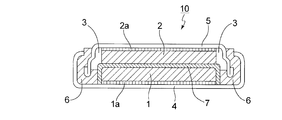
- FIG. 1 is a longitudinal sectional view schematically showing an example of the structure of a coin-type battery of a secondary battery as an example of the application of the non-aqueous electrolyte in the method of the present invention.
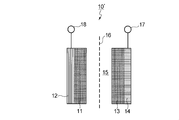
- FIG. 2 is a schematic view showing a basic configuration of a cylindrical battery of a secondary battery as an example of application of the non-aqueous electrolyte in the method of the present invention.
- FIG. 3 is a perspective view showing, as a cross section, the internal structure of a cylindrical battery of a secondary battery as an example of the application of the non-aqueous electrolyte in the method of the present invention.
- R 1 , R 2 , R 3 , R 4 and R 5 each independently represent a hydrogen atom, a halogen atom, a nitrile group, a nitro Group, an alkyl group having 1 to 12 carbon atoms, an alkenyl group having 2 to 12 carbon atoms, a cycloalkyl group having 5 to 12 carbon atoms, an aryl group having 6 to 12 carbon atoms, an aralkyl group having 7 to 12 carbon atoms, This represents an oxyalkyl group of 1 to 12, an acyl group of 1 to 12 carbon atoms, or a group represented by -SiR 8 R 9 R 10 .
- a halogen atom a fluorine atom, a chlorine atom, a bromine atom, an iodine atom etc. are mentioned.
- alkyl group having 1 to 12 carbon atoms examples include methyl group, ethyl group, propyl group, butyl group, pentyl group, hexyl group, heptyl group, octyl group, nonyl group, decyl group, undecyl group, dodecyl group and isopropyl group.
- alkyl group having 1 to 12 carbon atoms examples include methyl group, ethyl group, propyl group, butyl group, pentyl group, hexyl group, heptyl group, octyl group, nonyl group, decyl group, undecyl group, dodecyl group and isopropyl group.
- examples thereof include isobutyl group, s-butyl group, t-butyl group, isopentyl group, neopentyl group, 1-methylbutyl group, isohexyl group, 2-ethyl
- a vinyl group As a C2-C12 alkenyl group, a vinyl group, an allyl group, 1-butenyl group, 2-butenyl group, 3-butenyl group, 1,3-butanedienyl group, 1-methylvinyl group, 2-methylvinyl group 1-methyl allyl group, 1,1-dimethyl allyl group, pentenyl group, hexenyl group, heptenyl group, octenyl group, nonenyl group, decenyl group, undecenyl group, dodecenyl group and the like.
- Examples of the cycloalkyl group having 5 to 12 carbon atoms include a cyclopentyl group, a cyclohexyl group and a 2-norbornyl group.
- Examples of the aryl group having 6 to 12 carbon atoms include phenyl group, biphenyl group, naphthyl group, tolyl group, xylyl group, mesityl group and ethylphenyl group.
- Examples of the aralkyl group having 7 to 12 carbon atoms include benzyl group, phenylethyl group, phenylpropyl group, tolylmethyl group, tolylethyl group, tolylpropyl group, xylylmethyl group, xylylethyl group, xylylpropyl group and the like.
- Examples of the oxyalkyl group having 1 to 12 carbon atoms include a methoxy group, an ethoxy group, a propoxy group, a butoxy group, a pentyloxy group, a hexyloxy group, an octyloxy group and a decyloxy group.
- acyl group having 1 to 12 carbon atoms examples include methanoyl group, ethanolyl group, propanoyl group, butanoyl group, butanoyl group, pentanoyl group, hexanoyl group, heptanoyl group, octanoyl group, nonanoyl group, decanoyl group, decanoyl group, undecanoyl group, dodecanoyl group and the like.
- R 6 , R 7 , R 8 , R 9 and R 10 are each independently an alkyl group having 1 to 12 carbon atoms and an alkenyl group having 2 to 12 carbon atoms And a cycloalkyl group having 5 to 12 carbon atoms, an aryl group having 6 to 12 carbon atoms, or an aralkyl group having 7 to 12 carbon atoms.
- Examples of the alkyl group having 1 to 12 carbon atoms, the alkenyl group having 2 to 12 carbon atoms, the cycloalkyl group having 5 to 12 carbon atoms, the aryl group having 6 to 12 carbon atoms and the aralkyl group having 7 to 12 carbon atoms include R 1 alkyl group ⁇ R 5 having 1 to 12 carbon atoms exemplified by an alkenyl group having 2 to 12 carbon atoms, a cycloalkyl group having 5 to 12 carbon atoms, 6 to 12 carbon atoms an aryl group and aralkyl of 7 to 12 carbon atoms Each group is mentioned.
- R 1 to R 5 a hydrogen atom, a halogen atom, an alkyl group having 1 to 4 carbon atoms, or —SiR 8 R 9 R 10 is preferable, and a hydrogen atom or a fluorine is preferable because industrial raw materials are easily obtained. Atoms are more preferred. Further, it is also preferable that one or two of R 1 to R 5 be -SiR 8 R 9 R 10 . In this case, the remainder of R 1 to R 5 is preferably a hydrogen atom or an alkyl group having 1 to 4 carbon atoms, and it is particularly preferable that the remainder of R 1 to R 5 is a hydrogen atom.
- R 6 and R 7 an alkyl group having 1 to 4 carbon atoms or a phenyl group is preferable, and a methyl group is more preferable because industrial raw materials are easily obtained.
- R 8 , R 9 and R 10 an alkyl group having 1 to 4 carbon atoms or a phenyl group is preferable, and a methyl group is more preferable, because industrial raw materials can be easily obtained.
- X 1 represents an m-valent hydrocarbon group
- m represents a number of 1 to 3.
- the monovalent hydrocarbon group in the case where m is a number of 1 includes, for example, the alkyl group having 1 to 12 carbon atoms, the alkenyl group having 2 to 12 carbon atoms, and the cycloalkenyl having 5 to 12 carbon atoms exemplified for R 1 to R 5 Examples thereof include an alkyl group, an aryl group having 6 to 12 carbon atoms and an aralkyl group having 7 to 12 carbon atoms.
- Examples of the divalent hydrocarbon group when m is a number of 2 include methane-1,1-diyl, ethane-1,2-diyl, ethane-1,1-diyl and propane-1,3- Diyl group, propane-1,2-diyl group, butane-1,4-diyl group, 2-methylpropane-1,3-diyl group, 2,2-dimethylpropane-1,3-diyl group, pentane-1 3,5-diyl group, hexane-1,6-diyl group, heptane-1,7-diyl group, octane-1,8-diyl group, nonane-1,9-diyl group, decane-1,10-diyl group And C 1 -C 10 alkanediyl groups; groups represented by the following general formula (6), groups represented by the following general formula (7), and the like. In the alkanediyl
- R 45 and R 46 each independently represent an alkanediyl group having 1 to 10 carbon atoms or a direct bond).
- each of R 47 and R 48 independently represents an alkanediyl group having 1 to 10 carbon atoms or a direct bond).
- Examples of the trivalent hydrocarbon group when m is a number of 3 include methane-1,1,1-triyl group, ethane-1,1,1-triyl group, propane-1,1,1-triyl group, Propane-1,2,3-triyl group, pentane-1,3,5-triyl group, hexane-1,1-triyl group, octane-1,1,1-triyl group, decane-1,1,1- Examples thereof include alkanetriyl groups having 1 to 10 carbon atoms such as a triyl group; groups represented by the following general formula (8), groups represented by the following general formula (9), and the like.
- each of R 49 , R 50 and R 51 independently represents an alkanediyl group having 1 to 10 carbon atoms or a direct bond).
- each of R 52 , R 53 and R 54 independently represents an alkanediyl group having 1 to 10 carbon atoms or a direct bond).
- the C 1-10 alkanediyl group represented by R 45 , R 46 , R 47 , R 48 , R 49 , R 50 , R 51 , R 52 , R 53 and R 54 is represented by X 1
- particularly preferred compounds include trimethylphenylsilane, triethylphenylsilane, dimethyldiphenylsilane, methyltriphenylsilane, trimethyl-4-fluorophenylsilane and trimethyl-2 , 4,6-trifluorophenylsilane, butyldimethylphenylsilane, dimethyloctylphenylsilane, 1,4-bis (trimethylsilyl) benzene, 1,2-bis (trimethylsilyl) benzene, 1,4-bis (dimethylphenylsilyl) Benzene, 1,1,1-tris (dimethylphenylsilyl) ethane and the like can be mentioned.
- the amount of addition of the phenylsilane compound represented by the general formula (1) to the non-aqueous electrolytic solution is preferably 0.1 to 10% by mass. When the addition amount is 0.1% by mass or more, a sufficient effect is easily exhibited. When the addition amount is 10% by mass or less, an increase effect corresponding to the addition amount is easily obtained, and there is a fear that the battery performance may be reduced by the increase. It can prevent.
- the amount of the phenylsilane compound represented by the general formula (1) to be added to the non-aqueous electrolyte is more preferably 0.1 to 7% by mass, still more preferably 0.5 to 7% by mass, and 1 to 5% by mass Most preferred.
- the method for suppressing the decomposition of the silyl ester compound of the present invention is a method for suppressing the decomposition of the silyl ester compound in a non-aqueous electrolytic solution in which a lithium salt containing a fluorine atom and a silyl ester compound are dissolved in an organic solvent.
- the lithium salt containing a fluorine atom is a component to be blended as an electrolyte of the non-aqueous electrolyte.
- LiPF 6 , LiBF 4 , Li 2 SiF 6 , LiSbF 6 , LiN (SO 2 F) 2 , LiOSO 2 CF 3 , LiN (SO 2 CF 3 ) 2 , LiN (SO 2 CF 2) CF 3 ) 2 is preferred, LiPF 6 , LiBF 4 , LiN (SO 2 F) 2 , LiOSO 2 CF 3 , LiN (SO 2 CF 3 ) 2 , LiN (SO 2 CF 2) CF 3 ) 2 are more preferred, LiPF 6 6 , LiBF 4 and LiN (SO 2 CF 3 ) 2 are most preferred.
- the electrolyte in the non-aqueous electrolyte may contain an electrolyte other than a lithium salt containing a fluorine atom, but when the proportion of the lithium salt containing a fluorine atom in the electrolyte is low, decomposition of the silyl ester compound hardly occurs Since it is difficult to obtain the effect of suppressing decomposition by the phenylsilane compound of the present invention, the ratio of the lithium salt containing a fluorine atom to the entire electrolyte is preferably at least 20 mol%.
- electrolytes other than lithium salts containing a fluorine atom include LiClO 4 , LiCl, LiBr and the like.
- the concentration of the electrolyte in the non-aqueous electrolytic solution is preferably 0.1 mol / L to 7 mol / L, and more preferably 0.5 mol / L to 1.8 mol / L.
- concentration of the electrolyte in the non-aqueous electrolytic solution is preferably 0.1 mol / L to 7 mol / L, and more preferably 0.5 mol / L to 1.8 mol / L.
- silyl ester compounds include carboxylic acid silyl ester compounds, sulfuric acid silyl ester compounds, sulfonic acid silyl ester compounds, phosphorous acid silyl ester compounds, phosphoric acid silyl ester compounds, and boric acid silyl ester compounds.
- the content of the silyl ester compound in the non-aqueous electrolytic solution is preferably 0.01 to 7% by mass, more preferably 0.1 to 5% by mass, and most preferably 0.3 to 3% by mass.
- R 11 , R 12 and R 13 each independently represent an alkyl group having 1 to 12 carbon atoms, an alkenyl group having 2 to 12 carbon atoms, a cycloalkyl group having 5 to 12 carbon atoms, or 6 to 12 carbon atoms Or an aralkyl group having 7 to 12 carbon atoms,
- X 2 represents a direct bond or an n-valent group, and n represents a number of 1 to 4).
- R 11 , R 12 and R 13 are each independently an alkyl group having 1 to 12 carbon atoms and an alkenyl having 2 to 12 carbon atoms And a cycloalkyl group having 5 to 12 carbon atoms, an aryl group having 6 to 12 carbon atoms, or an aralkyl group having 7 to 12 carbon atoms.
- examples of such groups include the groups exemplified as R 6 to R 10 in the general formula (1).
- R 11 to R 13 a methyl group or a phenyl group is preferable, and a methyl group is more preferable, because industrial raw materials can be easily obtained.
- X 2 represents an n-valent group, and n represents a number of 1 to 4.
- Examples of X 2 when n is 1 include the same groups as the groups mentioned above as examples of X 1 when m is 1 in the general formula (1), and the monovalent carbon number 2 There may be mentioned to 12 heterocyclic groups.
- the monovalent heterocyclic group having a carbon number of 2 to 12 is preferably one having a carbon number of 3 to 9, and is selected from pyrrole ring, furan ring, thiophene ring, pyrrolidine ring, tetrahydrofuran ring, tetrahydrothiophene ring, piperidine ring, tetrahydropyran Derived from a heterocyclic ring such as a ring, tetrahydrothiopyran ring, imidazole ring, pyrazole ring, oxazole ring, thiazole ring, imidazoline ring, pyrazine ring, morpholine ring, thiazine ring, or a polynuclear heterocyclic ring of these heterocycles and a benzene ring A monovalent group is mentioned.
- X 2 is an alkyl group having 2 to 10 carbon atoms, an alkenyl group having 2 to 10 carbon atoms, a cycloalkyl group having 6 to 8 carbon atoms, an aryl group having 6 to 10 carbon atoms, or 7 to carbon atoms 9 aralkyl group or heterocyclic group having 2 to 5 carbon atoms is preferable, and particularly alkenyl group having 2 to 10 carbon atoms, aryl group having 6 to 10 carbon atoms or aralkyl group having 7 to 9 carbon atoms Is preferred.
- Examples of X 2 when n is 2 include the same groups as the groups mentioned above as examples of X 1 when m is 2 in the general formula (1), and direct bonding with 2 carbon atoms And an alkenediyl group of to 10 and a divalent heterocyclic group having 2 to 12 carbon atoms.
- alkenediyl group having 2 to 10 carbon atoms examples include ethene-1,1-diyl group, ethene-1,2-diyl group, propene-1,2-diyl group, propene-1,3-diyl group, and propene-2 2,3-diyl group, 1-butene-1,2-diyl group, 1-butene-1,3-diyl group, 1-butene-1,4-diyl group, 2-pentene-1,5-diyl group, Examples thereof include 3-hexene-1,6-diyl group and the like.
- divalent heterocyclic group having 2 to 12 carbon atoms examples include divalent groups derived from the heterocyclic ring or polynuclear heterocyclic ring mentioned in X 2 when n is 1 and having 3 to 9 carbon atoms. Is preferred.
- X 2 is an alkanediyl group having 2 to 6 carbon atoms, an alkene diyl group having 2 to 6 carbon atoms, a group represented by general formula (6) or (7), a divalent carbon number of 2 to 6 A heterocyclic group containing 5 carbon atoms, preferably an alkanediyl group having 2 to 6 carbon atoms, an alkene diyl group having 2 to 6 carbon atoms, or a divalent heterocyclic group having 2 to 5 carbon atoms preferable.
- the methylene group in the alkanediyl group may be replaced by -S- or -O-.
- Examples of X 2 when n is 3 include the same groups as the groups mentioned above as examples of X 1 when m is 3 in the general formula (1), and further, trivalent carbon number 2 There may be mentioned to 12 heterocyclic groups.
- Examples of the trivalent group having a carbon number of 2 to 12 include trivalent groups derived from the heterocyclic ring or polynuclear heterocyclic ring mentioned in X 2 where n is 1 and having 3 to 9 carbon atoms. Is preferred.
- Examples of X 2 when n is 4 include tetravalent groups corresponding to X 2 when n is 1 to 3 mentioned above.
- X 2 is an alkanetriyl group having 3 to 6 carbon atoms, a group represented by general formula (8) or (9) or a trivalent heterocyclic group having 2 to 5 carbon atoms In particular, a group represented by the general formula (9) or a trivalent heterocyclic group having 2 to 5 carbon atoms is preferable.
- X 2 is an alkanetetrayl group having 4 to 6 carbon atoms, a tetravalent aromatic ring-containing group having 6 to 10 carbon atoms, or a tetravalent heterocyclic group having 2 to 5 carbon atoms. Is preferred.
- heterocyclic group containing 2 to 12 carbon atoms refers to the carbon number of only the heterocycle in the heterocyclic group. And the carbon number of the entire heterocycle-containing group is not defined.
- the compound represented by the general formula (2) can be rephrased as a silyl ester of a carboxylic acid compound represented by the following general formula (2a), and the carboxyl group of the carboxylic acid compound represented by the general formula (2a) is known
- the compound represented by General formula (2) can be obtained by carrying out silyl esterification by the method of these.
- examples of the monocarboxylic acid in which n is 1 include acetic acid, propanoic acid, butanoic acid, pentanoic acid, isopentanoic acid, hexanoic acid, heptanoic acid, octanoic acid, Acrylic acid, methacrylic acid, crotonic acid, benzoic acid, toluic acid, 4-t-butylbenzoic acid, naphthalenecarboxylic acid, phenylacetic acid, naphthylacetic acid, 4-methoxybenzoic acid, 2-thiophenecarboxylic acid, picolinic acid, nicotinic acid Etc.
- dicarboxylic acids in which n is 2 include oxalic acid, malonic acid, succinic acid, maleic acid, fumaric acid, glutaric acid, adipic acid, azelaic acid, sebacic acid, muconic acid, dihydromuconic acid, acetylenic dicarboxylic acid, 4- 4- Cyclohexene-1,2-dicarboxylic acid, 1,2-cyclohexanedicarboxylic acid, 1,4-cyclohexanedicarboxylic acid, phthalic acid, isophthalic acid, terephthalic acid, 2,2'-thiodiacetic acid, ethylene dithiodiacetic acid, 3, 3'-thiodipropionic acid, 3,3'-dithiodipropionic acid, 2,5-thiophenedicarboxylic acid, 3,4-thiophenedicarboxylic acid, adamantanedicarboxylic acid, 2,5-furandicarboxylic acid,
- Examples of tricarboxylic acids wherein n is 3 include propane-1,2,3-tricarboxylic acid, pentane-1,3,5-tricarboxylic acid, benzene-1,2,3-tricarboxylic acid, benzene-1,2, Examples thereof include 4-tricarboxylic acid, benzene-1,3,5-tricarboxylic acid, thiophene-2,3,5-tricarboxylic acid and 1,3,5-trithiane-2,4,6-tricarboxylic acid.
- tetracarboxylic acids in which n is 4 include dodecane-1,1,12,12-tetracarboxylic acid, cyclopentane-1,2,3,4-tetracarboxylic acid, benzene-1,2,3,4. -Tetracarboxylic acid, benzene-1,2,4,5-tetracarboxylic acid, tetrahydrofuran-2,3,4,5-tetracarboxylic acid, thiophene-2,3,4,5-tetracarboxylic acid and the like .
- Examples of the sulfated silyl ester compound and the sulfonated silyl ester compound include compounds represented by the following general formula (3).
- R 14 , R 15 , R 16 and R 17 each independently represent an alkyl group having 1 to 12 carbon atoms, an alkenyl group having 2 to 12 carbon atoms, a cycloalkyl group having 5 to 12 carbon atoms, or the like
- each of R 14 , R 15 , R 16 and R 17 independently represents an alkyl group having 1 to 12 carbon atoms, 2 to 6 carbon atoms 12 represents an alkenyl group, a cycloalkyl group having 5 to 12 carbon atoms, an aryl group having 6 to 12 carbon atoms, or an aralkyl group having 7 to 12 carbon atoms.
- R 14 to R 17 independently represents an alkyl group having 1 to 12 carbon atoms
- 2 to 6 carbon atoms 12 represents an alkenyl group, a cycloalkyl group having 5 to 12 carbon atoms, an aryl group having 6 to 12 carbon atoms, or an aralkyl group having 7 to 12 carbon atoms.
- R 6 to R 10 examples include the groups exemplified as R 6 to R 10 in the general formula (1).
- p represents a number of 0 or 1
- the compound represented by the general formula (3) is a sulfated silyl ester compound, and when p is a number of 1, a sulfonate silyl ester compound is there.
- an alkyl group having 1 to 4 carbon atoms or an aryl group having 6 to 10 carbon atoms is preferable because it is easy to obtain industrial raw materials.
- preferred compounds include bis (trimethylsilyl) sulfate and bis (dimethylphenyl sulfate) And silyl), bis (methyldiphenylsilyl) sulfate, bis (triphenylsilyl) sulfate and the like.
- p in the general formula (3) is a number of 1, that is, when the compound represented by the general formula (3) is a sulfonic acid silyl ester compound, preferred compounds are trimethylsilyl methanesulfonate, dimethylphenyl methanesulfonate Examples include silyl, trimethylsilyl benzenesulfonate, trimethylsilyl toluenesulfonate and the like.
- Examples of phosphorous acid silyl ester compounds and phosphoric acid silyl ester compounds include compounds represented by the following general formula (4).
- R 18 , R 19 , R 20 , R 21 , R 22 , R 23 , R 24 , R 25 and R 26 each independently represent an alkyl group having 1 to 12 carbon atoms and 2 to 12 carbon atoms
- A represents an alkenyl group, a cycloalkyl group having 5 to 12 carbon atoms, an aryl group having 6 to 12 carbon atoms, or an aralkyl group having 7 to 12 carbon atoms, and q represents a number of 0 or 1.
- R 18 , R 19 , R 20 , R 21 , R 22 , R 23 , R 24 , R 25 and R 26 are each independently And an alkyl group having 1 to 12 carbon atoms, an alkenyl group having 2 to 12 carbon atoms, a cycloalkyl group having 5 to 12 carbon atoms, an aryl group having 6 to 12 carbon atoms, or an aralkyl group having 7 to 12 carbon atoms. Examples of such groups include the groups exemplified as R 6 to R 10 in the general formula (1).
- an alkyl group having 1 to 4 carbon atoms or a phenyl group is preferable, a methyl group or a phenyl group is more preferable, and a methyl group is particularly preferable, because industrial raw materials can be easily obtained.
- q represents a number of 0 or 1, and when q is a number of 0, the compound represented by the general formula (4) is a phosphite silyl ester compound, and when q is a number of 1, a phosphate silyl ester It is a compound.
- preferred compounds include tris (trimethylsilyl) phosphite, Examples thereof include tris (dimethylphenylsilyl) phosphate, tris (methyldiphenylsilyl) phosphite, and tris (triphenylsilyl) phosphite.
- preferable compounds include tris (trimethylsilyl) phosphate, tris phosphate (Dimethylphenylsilyl), tris (methyldiphenylsilyl) phosphate, tris (triphenylsilyl) phosphate and the like.
- R 27 , R 28 , R 29 , R 30 , R 31 , R 32 , R 33 , R 34 and R 35 are each independently an alkyl group having 1 to 12 carbon atoms and 2 to 12 carbon atoms And alkenyl group, cycloalkyl group having 5 to 12 carbon atoms, aryl group having 6 to 12 carbon atoms or aralkyl group having 7 to 12 carbon atoms.
- R 27 , R 28 , R 29 , R 30 , R 31 , R 32 , R 33 , R 34 and R 35 are each independently And an alkyl group having 1 to 12 carbon atoms, an alkenyl group having 2 to 12 carbon atoms, a cycloalkyl group having 5 to 12 carbon atoms, an aryl group having 6 to 12 carbon atoms, or an aralkyl group having 7 to 12 carbon atoms. Examples of such groups include the groups exemplified as R 6 to R 10 in the general formula (1).
- an alkyl group having 1 to 4 carbon atoms or a phenyl group is preferable because an industrial raw material can be easily obtained, a methyl group or a phenyl group is more preferable, and a methyl group is particularly preferable.
- preferred compounds are tris (trimethylsilyl) borate, tris (dimethylphenylsilyl) borate, tris (methyldiphenylsilyl) borate, tris (triphenylsilyl) borate Etc.).
- Organic solvent used for the non-aqueous electrolytic solution in the method for suppressing the decomposition of the silyl ester compound of the present invention one or two or more in combination of those commonly used in non-aqueous electrolytic solutions can be used. Specifically, carbonate solvents, ester solvents, ether solvents, sulfoxide solvents and the like can be mentioned.
- saturated linear carbonate compounds such as dimethyl carbonate, ethyl methyl carbonate, diethyl carbonate, ethyl butyl carbonate, methyl-t-butyl carbonate, diisopropyl carbonate, t-butyl propyl carbonate, etc .
- ethylene carbonate 1-fluoroethylene Carbonate, 1,2-propylene carbonate, 1,3-propylene carbonate, 1,2-butylene carbonate, 1,3-butylene carbonate, 1,1-dimethyl ethylene carbonate, 1,2-bis (methoxycarbonyloxy) ethane
- saturated cyclic carbonate compounds such as 1,2-bis (ethoxycarbonyloxy) ethane and 1,2-bis (ethoxycarbonyloxy) propane.
- saturated cyclic ester compounds such as ⁇ -butyrolactone, ⁇ -valerolactone, ⁇ -caprolactone, ⁇ -hexanolactone, ⁇ -octanolactone; methyl formate, ethyl formate, methyl acetate, ethyl acetate, acetic acid Propyl, isobutyl acetate, butyl acetate, methyl propionate, ethyl propionate, methyl butyrate, methyl isobutyrate, methyl trimethylacetate, ethyl trimethylacetate, methyl malonate, methyl malonate, ethyl malonate, methyl succinate, ethyl succinate, 3-methoxy
- saturated chain ester compounds such as methyl propionate, ethyl 3-methoxypropionate, ethylene glycol diacetyl, propylene glycol diacetyl and the like.
- ether solvents include dimethoxyethane, ethoxymethoxyethane, diethoxyethane, ethylene glycol bis (trifluoroethyl) ether, propylene glycol bis (trifluoroethyl) ether, ethylene glycol bis (trifluoromethyl) ether, diethylene glycol bis ( Examples thereof include chain ether compounds such as trifluoroethyl) ether; cyclic ether compounds such as tetrahydrofuran, dioxolane and dioxane.
- sulfoxide solvents include dimethyl sulfoxide, diethyl sulfoxide, dipropyl sulfoxide, diphenyl sulfoxide, thiophene and the like.
- a sulfone type solvent dimethyl sulfone, diethyl sulfone, dipropyl sulfone, diphenyl sulfone, sulfolane (also referred to as tetramethylene sulfone), 3-methylsulfolane, 3,4-dimethylsulfolane, 3,4-diphenymethylsulfolane, sulfolene And 3-methyl sulfolene, 3-ethyl sulfolene, 3-bromomethyl sulfolene and the like.
- amide solvents include N-methylpyrrolidone, dimethylformamide, dimethylacetamide and the like.
- the decomposition of the silyl ester compound of the present invention when the water content in the non-aqueous electrolytic solution is 1,000 ppm by mass or less, the decomposition of the silyl ester compound can be efficiently suppressed.
- the water content is more than 1000 mass ppm, it becomes difficult to suppress the decomposition of the silyl ester compound.
- 500 mass ppm or less is preferable, and, as for the water content in a non-aqueous electrolyte, 300 mass ppm or less is still more preferable.
- the water content of the non-aqueous electrolyte can be measured by Karl Fischer titration or the like.
- the non-aqueous electrolytic solution contains a lithium salt containing a fluorine atom, a silyl ester compound, an organic solvent, and a phenylsilane compound represented by the general formula (1) It may be at any time if it is.
- Water in the non-aqueous electrolyte causes decomposition of the silyl ester compound, but water is mixed not only from the raw material of the non-aqueous electrolyte, but also at the time of production of the non-aqueous electrolyte or at the assembly of a battery .
- a non-aqueous electrolytic solution it is not sufficient to use only a raw material having a low water content, and it is produced under an inert gas atmosphere or under a low humidity atmosphere, etc. Is required.
- it is necessary to assemble in a low humidity atmosphere for example, in a dry room), which requires a great deal of expense to obtain a low humidity atmosphere.
- the cost required for dehydration treatment of a non-aqueous electrolyte and the cost required for a low humidity atmosphere can be reduced.
- the dried inert gas may be blown into the non-aqueous electrolyte as described in the examples to be described later. Nitrogen gas is mentioned as an inert gas.
- the water content of the non-aqueous electrolytic solution is preferably 5 mass ppm or more, more preferably 10 mass ppm or more, and still more preferably 20 mass ppm or more.
- secondary batteries such as a lithium ion secondary battery
- the lamination of a heat-fusion film and aluminum foil is used as an exterior member.
- the water can not be completely shut off, and the water may gradually intrude into the non-aqueous electrolyte from the exterior part.
- the water content of the non-aqueous electrolyte of the assembled secondary battery is not immediately included to cause the decomposition of the silyl ester compound, the water content of the non-aqueous electrolyte is not It is preferable to blend 0.1 to 10% by mass of the phenylsilane compound represented by the general formula (1) into the water electrolyte.
- the non-aqueous electrolyte according to the method for suppressing the decomposition of a silyl ester compound of the present invention can be suitably used for a conventionally known non-aqueous electrolyte secondary battery, particularly a lithium ion secondary battery.
- the electrode material constituting the non-aqueous electrolyte secondary battery includes a positive electrode and a negative electrode, and as the positive electrode, a current collector obtained by slurrying a positive electrode active material, a binder and a conductive material with an organic solvent or water And dried to form a sheet.
- the positive electrode active material in the case of a lithium ion secondary battery, for example, a known positive electrode active material capable of inserting and extracting lithium which is an electrode reactant can be used.
- known positive electrode active materials include lithium transition metal complex oxides, lithium-containing transition metal phosphate compounds, metal oxides, metal sulfides, metal halides, metal intercalation compounds, sulfur, and these are mixed. You may use it.
- a transition metal of the lithium transition metal composite oxide vanadium, titanium, chromium, manganese, iron, cobalt, nickel, copper and the like are preferable.
- lithium transition metal complex oxide examples include lithium cobalt complex oxide such as LiCoO 2 , lithium nickel complex oxide such as LiNiO 2 , lithium manganese complex oxide such as LiMnO 2 , LiMn 2 O 4 and Li 2 MnO 3
- transition metal atoms that are the main constituents of these lithium transition metal complex oxides, such as aluminum, titanium, vanadium, chromium, manganese, iron, cobalt, lithium, nickel, copper, zinc, magnesium, gallium, zirconium, etc. What was substituted by the other metal etc. are mentioned.
- transition metal of the lithium-containing transition metal phosphate compound vanadium, titanium, manganese, iron, cobalt, nickel and the like are preferable, and specific examples thereof include iron phosphates such as LiFePO 4 and phosphorus such as LiCoPO 4 Acid cobalts and a part of transition metal atoms which are main components of these lithium transition metal phosphate compounds are aluminum, titanium, vanadium, chromium, manganese, iron, cobalt, lithium, nickel, copper, zinc, magnesium, gallium, zirconium And those substituted with another metal such as niobium.
- the surface of the positive electrode active material may be coated with a conductive material described later, if necessary.
- binder for example, polytetrafluoroethylene (PTFE), polyvinylidene fluoride (PVDF), ethylene-propylene-diene copolymer (EPDM), styrene-butadiene rubber (SBR), acrylonitrile butadiene rubber (NBR), Styrene-isoprene copolymer, polymethyl methacrylate, polyacrylate, polyvinyl alcohol (PVA), carboxymethyl cellulose (CMC), methyl cellulose (MC), starch, polyvinyl pyrrolidone, polyethylene (PE), polypropylene (PP), polyethylene oxide (PEO And polyimide (PI), polyamide imide (PAI), polyacrylonitrile (PAN), polyvinyl chloride (PVC), polyacrylic acid, polyurethane and the like.
- the amount of the binder used is usually about 1 to 50% by mass, preferably 2 to 20% by mass, with respect to the positive electrode active material.
- Examples of the conductive material include fine particles of graphite, natural graphite, artificial graphite, carbon black, acetylene black, ketjen black, channel black, furnace black, lamp black, thermal black, carbon nanotubes, vapor grown carbon fibers, graphene, Carbon materials such as needle coke; metal powders such as aluminum powder, nickel powder and titanium powder; conductive metal oxides such as zinc oxide and titanium oxide; La 2 S 3 , Sm 2 S 3 , Ce 2 S 3 , TiS 2 And sulfur-containing conductive materials, etc.
- the amount of the conductive material used is usually about 0.5 to 30% by mass, preferably 1 to 15% by mass, with respect to the positive electrode active material.
- an organic solvent or water that dissolves the binder As a solvent for forming a slurry, an organic solvent or water that dissolves the binder is used.
- the organic solvent include N-methyl pyrrolidone, dimethylformamide, dimethyl acetamide, methyl ethyl ketone, cyclohexanone, methyl acetate, methyl acrylate, diethyl triamine, N-N-dimethylaminopropyl amine, ethylene oxide, tetrahydrofuran and the like.
- the amount of the solvent used is usually about 20 to 400% by mass, preferably 30 to 200% by mass, with respect to the positive electrode active material.
- the negative electrode generally, a slurry obtained by slurrying a negative electrode active material, a binder and a conductive material with an organic solvent or water is coated on a current collector and dried to form a sheet.
- carbonaceous materials lithium, lithium alloy, silicon, silicon alloy, silicon oxide, tin, tin alloy, tin oxide, phosphorus, germanium, indium, copper oxide, copper sulfide, antimony sulfide, titanium oxide, iron oxide, oxide Other than manganese, cobalt oxide, nickel oxide, lead oxide, ruthenium oxide, tungsten oxide and zinc oxide, complex oxides such as LiVO 2 , Li 2 VO 4 and Li 4 Ti 5 O 12 , conductive polymers and the like can be mentioned.
- Such a carbonaceous material is not particularly limited, but natural graphite, artificial graphite, fullerene, graphene, graphite fiber chops, carbon nanotubes, graphite whiskers, crystalline carbon such as highly oriented pyrolytic graphite, kish graphite, and the like, non-graphite Carbon, graphitizable carbon, petroleum-based coke, coal-based coke, carbide of petroleum-based pitch, carbide of coal-based pitch, carbide of resin such as phenol resin / crystalline cellulose, etc., and carbon materials obtained by partially carbonizing these, There may be mentioned furnace black, acetylene black, pitch carbon fibers, PAN carbon fibers and the like.
- binder examples include the same as those of the positive electrode.
- the amount of the binder used is usually about 0.1 to 30% by mass, preferably about 0.5 to 15% by mass, with respect to the negative electrode active material.
- the amount of the solvent used is usually about 25 to 400% by mass, preferably 30 to 200% by mass, based on the negative electrode active material.
- Copper, nickel, stainless steel, nickel plated steel, etc. are usually used for the current collector of the negative electrode.
- a separator is used between the positive electrode and the negative electrode.
- a microporous film of a commonly used polymer can be used without particular limitation.
- the film include polyethylene, polypropylene, polyvinylidene fluoride, polyvinylidene chloride, polyacrylonitrile, polyacrylamide, polytetrafluoroethylene, polysulfone, polyethersulfone, polyether sulfone, polycarbonate, polyamide, polyimide, polyethylene oxide and polypropylene oxide, and the like.
- a film made of polyethylene, polypropylene, polyvinylidene fluoride or polysulfone is preferably used in the non-aqueous electrolyte secondary battery of the present invention. These films are micro-porous so that the electrolyte can penetrate and the ions can easily permeate. Moreover, you may coat with ceramics, such as an alumina and a silica, for safety improvement.
- the electrode material, the non-aqueous electrolyte, and the separator have a phenol-based antioxidant, a phosphorus-based antioxidant, and a thioether-based antioxidant for the purpose of further improving safety.
- a hindered amine compounds may be added.
- the shape of the non-aqueous electrolyte secondary battery of the present invention having the above-mentioned configuration is not particularly limited, and can be in various shapes such as coin, cylinder, square, laminate and the like.
- FIG. 1 shows an example of the coin-type battery of the non-aqueous electrolyte secondary battery of the present invention
- FIGS. 2 and 3 show an example of the cylindrical battery.
- 1 is a positive electrode capable of releasing lithium ions
- 1a is a positive electrode current collector
- 2 is a carbonaceous material capable of absorbing and releasing lithium ions released from the positive electrode.
- a negative electrode 2a is a negative electrode current collector
- 3 is a non-aqueous electrolyte of the present invention
- 4 is a stainless steel positive electrode case
- 5 is a stainless steel negative electrode case
- 6 is a polypropylene gasket
- 7 is a polyethylene separator It is.
- 11 is a negative electrode
- 12 is a negative electrode current collector
- 13 is a positive electrode
- 14 is a positive electrode current collector
- 15 is the present invention.
- Reference numeral 26 is a safety valve
- 27 is a PTC element.
- Electrolyte A 0.8 mol / L of LiPF 6 and 0 of LiN (SO 2 CF 3 ) 2 in a mixed solvent consisting of 30% by volume of ethylene carbonate, 40% by volume of ethyl methyl carbonate, and 30% by volume of dimethyl carbonate Dissolved at a concentration of 2 mol / L.
- dry nitrogen gas is blown at 3 L / min for 24 hours through the glass capillary into the electrolyte at 20 ° C. according to the method described in WO 99/34471, and The electrolyte was heated to 70 ° C. and dry nitrogen gas was bubbled in at 3 L / min.
- the water content of the electrolyte solution A thus obtained was 1.3 mass ppm.
- Electrolyte B LiBF 4 was dissolved in a mixed solvent consisting of 50% by volume of ethylene carbonate and 50% by volume of diethyl carbonate at a concentration of 1.0 mol / L to prepare an electrolyte solution. Thereafter, the same operation as in the electrolytic solution A was performed to obtain an electrolytic solution B.
- the water content of the electrolyte solution B was 1.8 mass ppm.
- the following silicon compounds and silyl ester compounds are added to the electrolytic solution A or the electrolytic solution B according to the composition shown in Table 1, and the water content is adjusted to prepare the electrolytic solutions of Examples 1 to 25 and Comparative Examples 1 to 18. did.
- the adjustment of the water content was performed by combining the electrolyte solution in which the water content was reduced and the electrolyte solution before the water content was reduced.
- ⁇ Silicon compound> A1: trimethylphenylsilane A2: 1,4-bis (trimethylsilyl) benzene A3: dimethyldiphenylsilane A′1: triethylsilane A ′ 2: 1,1,3,3,3-hexamethyldisilazane A′3: dimethoxy Dimethylsilane ⁇ silyl ester compound> B1: trimethylsilyl methacrylate B2: bis (trimethylsilyl) succinate B3: Bis (trimethylsilyl) fumarate B4: 2,2'-thiodiacetic acid bis (trimethylsilyl) B5: bis (trimethylsilyl) 2,5-thiophenedicarboxylate B6: Benzene-1,2,4-tricarboxylic acid tris (trimethylsilyl) B7: Bis (trimethylsilyl) sulfate B8: trimethylsilyl benzenesulfonate B9: tris (trimethyls
- Storage stability test The storage stability of the electrolytic solution was evaluated by measuring the residual ratio of the silyl ester compound by the following method. The higher the residual rate, the higher the storage stability.
- Storage stability test method The above electrolyte was put in a container made of stainless steel under an argon atmosphere, sealed, and stored in a thermostat at 45 ° C. to obtain an electrolyte after storage for 3 weeks.
- the electrolytic solution containing the phosphoric acid silyl ester compound or the phosphorous acid silyl ester compound is 31 P-NMR, and the electrolytic solution containing the carboxylic acid silyl ester compound, the sulfuric acid silyl ester compound and the sulfonic acid silyl ester compound is 1 H-NMR The residual rate was calculated by measuring.
- the 31 P-NMR is measured under the following conditions for an electrolytic solution to which triphenylphosphine is added as a reference substance, and the area of the peak derived from the phosphoric acid silyl ester compound or the phosphorous acid silyl ester compound relative to the area of the peak of the reference substance Find the ratio of The ratio (%) of the area of the peak after the storage test to the ratio of the area of the peak before the storage test was taken as the remaining rate.
- Measurement device Nuclear magnetic resonance device, model ECA-600, manufactured by JEOL Ltd.
- Solvent Heavy chloroform Reference substance: Triphenylphosphine (-6.0 ppm) [Method by 1 H-NMR] The electrolytic solution is subjected to 1 H-NMR measurement under the following conditions to determine the ratio of the area of the peak derived from the trimethylsilyl group of the silyl ester compound to the area of the ethylene carbonate peak of the solvent. The ratio (%) of the area of the peak after the storage test to the ratio of the area of the peak before the storage test was taken as the remaining rate.
- Measurement system Nuclear magnetic resonance system, model ECA-600, manufactured by Nippon Denshi Co., Ltd.
- Solvent Heavy chloroform Reference substance: Ethylene carbonate (4.58 ppm) ⁇ Addition of test method>
- non-aqueous electrolyte secondary batteries (lithium ion secondary batteries) were manufactured according to the following preparation procedure.
- [Production of positive electrode] 90 parts by mass of LiNi 1/3 Co 1/3 Mn 1/3 O 2 (NCM 111 : manufactured by Nippon Chemical Industrial Co., Ltd.) as an active material, 5 parts by mass of acetylene black (AB: manufactured by Denka) as a conduction aid, and
- As an adhesive 5 parts by mass of polyvinylidene fluoride (PVDF: manufactured by Kureha) was dispersed in 120 parts by mass of N-methyl-2-pyrrolidone (NMP) to form a slurry.
- PVDF polyvinylidene fluoride
- the decomposition of the silyl ester compound is suppressed even when some water is present. It is possible to improve storage stability.
Landscapes
- Chemical & Material Sciences (AREA)
- Physics & Mathematics (AREA)
- Condensed Matter Physics & Semiconductors (AREA)
- General Physics & Mathematics (AREA)
- Inorganic Chemistry (AREA)
- Engineering & Computer Science (AREA)
- Manufacturing & Machinery (AREA)
- Chemical Kinetics & Catalysis (AREA)
- Electrochemistry (AREA)
- General Chemical & Material Sciences (AREA)
- Secondary Cells (AREA)
Abstract
Priority Applications (3)
| Application Number | Priority Date | Filing Date | Title |
|---|---|---|---|
| KR1020207000009A KR20200067829A (ko) | 2017-10-11 | 2018-09-28 | 실릴에스테르 화합물의 분해억제 방법 |
| CN201880051367.2A CN111033862A (zh) | 2017-10-11 | 2018-09-28 | 甲硅烷基酯化合物的分解抑制方法 |
| JP2019548130A JPWO2019073831A1 (ja) | 2017-10-11 | 2018-09-28 | シリルエステル化合物の分解抑制方法 |
Applications Claiming Priority (2)
| Application Number | Priority Date | Filing Date | Title |
|---|---|---|---|
| JP2017197548 | 2017-10-11 | ||
| JP2017-197548 | 2017-10-11 |
Publications (1)
| Publication Number | Publication Date |
|---|---|
| WO2019073831A1 true WO2019073831A1 (fr) | 2019-04-18 |
Family
ID=66101518
Family Applications (1)
| Application Number | Title | Priority Date | Filing Date |
|---|---|---|---|
| PCT/JP2018/036589 Ceased WO2019073831A1 (fr) | 2017-10-11 | 2018-09-28 | Procédé de prévention de décomposition de composé d'esters de silyles |
Country Status (4)
| Country | Link |
|---|---|
| JP (1) | JPWO2019073831A1 (fr) |
| KR (1) | KR20200067829A (fr) |
| CN (1) | CN111033862A (fr) |
| WO (1) | WO2019073831A1 (fr) |
Cited By (5)
| Publication number | Priority date | Publication date | Assignee | Title |
|---|---|---|---|---|
| WO2019176618A1 (fr) * | 2018-03-13 | 2019-09-19 | 株式会社Adeka | Batterie secondaire à électrolyte non aqueux |
| JP2021106145A (ja) * | 2019-12-27 | 2021-07-26 | トヨタ自動車株式会社 | 非水電解液および非水電解液二次電池 |
| JP2021144926A (ja) * | 2020-03-11 | 2021-09-24 | Muアイオニックソリューションズ株式会社 | 蓄電デバイス用非水電解液および蓄電デバイス |
| JP2024078148A (ja) * | 2022-11-29 | 2024-06-10 | プライムプラネットエナジー&ソリューションズ株式会社 | 非水電解液、および該非水電解液を備える蓄電デバイス |
| JP7853196B2 (ja) | 2022-11-29 | 2026-04-28 | プライムプラネットエナジー&ソリューションズ株式会社 | 非水電解液、および該非水電解液を備える蓄電デバイス |
Families Citing this family (1)
| Publication number | Priority date | Publication date | Assignee | Title |
|---|---|---|---|---|
| CN110994031B (zh) * | 2019-12-19 | 2021-11-30 | 湖南美尼科技有限公司 | 一种快充耐高温电解液及制备方法 |
Citations (6)
| Publication number | Priority date | Publication date | Assignee | Title |
|---|---|---|---|---|
| JPH11185811A (ja) * | 1997-12-16 | 1999-07-09 | Tonen Corp | リチウム電池用電解液及びその製造方法 |
| JP2001283908A (ja) * | 2000-04-04 | 2001-10-12 | Matsushita Electric Ind Co Ltd | 非水電解質電池および非水電解液 |
| JP2002359001A (ja) * | 2001-05-11 | 2002-12-13 | Samsung Sdi Co Ltd | リチウム二次電池用電解液及びこれを含むリチウム二次電池 |
| JP2004342607A (ja) * | 2003-04-25 | 2004-12-02 | Mitsui Chemicals Inc | リチウム電池用非水電解液およびその製造方法ならびにリチウムイオン二次電池 |
| JP2011086391A (ja) * | 2009-10-13 | 2011-04-28 | Asahi Kasei Chemicals Corp | 非水電解液 |
| JP2013118168A (ja) * | 2011-11-01 | 2013-06-13 | Adeka Corp | 非水電解液二次電池 |
Family Cites Families (13)
| Publication number | Priority date | Publication date | Assignee | Title |
|---|---|---|---|---|
| JP3348344B2 (ja) | 1997-06-24 | 2002-11-20 | 株式会社豊田中央研究所 | 電池用非水電解液 |
| JP2000182666A (ja) | 1998-12-18 | 2000-06-30 | Mitsubishi Chemicals Corp | 非水電解液二次電池 |
| JP4538886B2 (ja) | 1999-03-16 | 2010-09-08 | 住友化学株式会社 | 非水電解液およびこれを用いたリチウム二次電池 |
| JP2001167792A (ja) | 1999-12-09 | 2001-06-22 | Tonen Chem Corp | 非水電解液および該電解液を含む非水電解液電池 |
| JP4194248B2 (ja) | 2001-03-15 | 2008-12-10 | 三洋電機株式会社 | リチウム二次電池 |
| JP2002313416A (ja) | 2001-04-13 | 2002-10-25 | Japan Storage Battery Co Ltd | 非水電解質二次電池 |
| KR100695109B1 (ko) | 2005-02-03 | 2007-03-14 | 삼성에스디아이 주식회사 | 유기전해액 및 이를 채용한 리튬 전지 |
| JP2006253086A (ja) | 2005-03-14 | 2006-09-21 | Sony Corp | 高分子電解質、電池および電池の製造方法 |
| US9112236B2 (en) | 2005-10-20 | 2015-08-18 | Mitsubishi Chemical Corporation | Lithium secondary batteries and nonaqueous electrolyte for use in the same |
| JP5631111B2 (ja) * | 2009-09-07 | 2014-11-26 | 株式会社デンソー | 非水電解液及び該電解液を用いた非水電解液二次電池 |
| CN105745779B (zh) | 2013-12-25 | 2021-02-05 | 旭化成株式会社 | 含有含甲硅烷基化合物的用于添加于电解液中的组合物、电解液以及锂离子二次电池 |
| JP2017191634A (ja) | 2014-07-23 | 2017-10-19 | 株式会社Adeka | 非水電解液二次電池、非水電解液及び化合物 |
| JP6647211B2 (ja) * | 2014-11-11 | 2020-02-14 | 株式会社Adeka | 非水電解液二次電池 |
-
2018
- 2018-09-28 CN CN201880051367.2A patent/CN111033862A/zh active Pending
- 2018-09-28 KR KR1020207000009A patent/KR20200067829A/ko not_active Withdrawn
- 2018-09-28 WO PCT/JP2018/036589 patent/WO2019073831A1/fr not_active Ceased
- 2018-09-28 JP JP2019548130A patent/JPWO2019073831A1/ja active Pending
Patent Citations (6)
| Publication number | Priority date | Publication date | Assignee | Title |
|---|---|---|---|---|
| JPH11185811A (ja) * | 1997-12-16 | 1999-07-09 | Tonen Corp | リチウム電池用電解液及びその製造方法 |
| JP2001283908A (ja) * | 2000-04-04 | 2001-10-12 | Matsushita Electric Ind Co Ltd | 非水電解質電池および非水電解液 |
| JP2002359001A (ja) * | 2001-05-11 | 2002-12-13 | Samsung Sdi Co Ltd | リチウム二次電池用電解液及びこれを含むリチウム二次電池 |
| JP2004342607A (ja) * | 2003-04-25 | 2004-12-02 | Mitsui Chemicals Inc | リチウム電池用非水電解液およびその製造方法ならびにリチウムイオン二次電池 |
| JP2011086391A (ja) * | 2009-10-13 | 2011-04-28 | Asahi Kasei Chemicals Corp | 非水電解液 |
| JP2013118168A (ja) * | 2011-11-01 | 2013-06-13 | Adeka Corp | 非水電解液二次電池 |
Cited By (7)
| Publication number | Priority date | Publication date | Assignee | Title |
|---|---|---|---|---|
| WO2019176618A1 (fr) * | 2018-03-13 | 2019-09-19 | 株式会社Adeka | Batterie secondaire à électrolyte non aqueux |
| JP2021106145A (ja) * | 2019-12-27 | 2021-07-26 | トヨタ自動車株式会社 | 非水電解液および非水電解液二次電池 |
| JP7265713B2 (ja) | 2019-12-27 | 2023-04-27 | トヨタ自動車株式会社 | 非水電解液および非水電解液二次電池 |
| JP2021144926A (ja) * | 2020-03-11 | 2021-09-24 | Muアイオニックソリューションズ株式会社 | 蓄電デバイス用非水電解液および蓄電デバイス |
| JP7458932B2 (ja) | 2020-03-11 | 2024-04-01 | Muアイオニックソリューションズ株式会社 | 蓄電デバイス用非水電解液および蓄電デバイス |
| JP2024078148A (ja) * | 2022-11-29 | 2024-06-10 | プライムプラネットエナジー&ソリューションズ株式会社 | 非水電解液、および該非水電解液を備える蓄電デバイス |
| JP7853196B2 (ja) | 2022-11-29 | 2026-04-28 | プライムプラネットエナジー&ソリューションズ株式会社 | 非水電解液、および該非水電解液を備える蓄電デバイス |
Also Published As
| Publication number | Publication date |
|---|---|
| KR20200067829A (ko) | 2020-06-12 |
| CN111033862A (zh) | 2020-04-17 |
| JPWO2019073831A1 (ja) | 2020-09-17 |
Similar Documents
| Publication | Publication Date | Title |
|---|---|---|
| KR102571760B1 (ko) | 비수 전해액용 첨가제, 비수 전해액, 및 축전 디바이스 | |
| JP5955629B2 (ja) | 非水電解液二次電池 | |
| CN108475824B (zh) | 非水电解液电池用电解液和使用其的非水电解液电池 | |
| KR102510110B1 (ko) | 이차전지용 전해액 첨가제, 이를 포함하는 전해액 및 이차전지 | |
| CN102201596B (zh) | 非水系电解液和非水系电解液二次电池 | |
| JP6255722B2 (ja) | 非水電解液電池用電解液、及びこれを用いた非水電解液電池 | |
| JP6221365B2 (ja) | 非水電解液電池用電解液、及びこれを用いた非水電解液電池 | |
| CN105103361B (zh) | 电池用非水电解液、化合物、高分子电解质和锂二次电池 | |
| JP6713452B2 (ja) | 非水電解液及び非水電解液二次電池 | |
| JP6081264B2 (ja) | 非水電解液用添加剤、非水電解液、及び、蓄電デバイス | |
| JP5604162B2 (ja) | 二次電池用非水電解液及び該電解液を用いた非水電解液二次電池 | |
| US20130236777A1 (en) | Non-aqueous electrolyte secondary battery | |
| CN108028417B (zh) | 含有异氰化物的锂离子电池无水电解质 | |
| CN106104895A (zh) | 包含基于砜化合物的非水电解质的特定锂电池 | |
| CN111342135A (zh) | 电化学装置及包含其的电子装置 | |
| WO2019073831A1 (fr) | Procédé de prévention de décomposition de composé d'esters de silyles | |
| CN103828116B (zh) | 非水电解液及使用了该电解液的非水电解液二次电池 | |
| JP2016091906A (ja) | 非水電解液及びこれを用いたリチウムイオン二次電池 | |
| JPWO2019181704A1 (ja) | 熱暴走の抑制剤 | |
| WO2018164130A1 (fr) | Additif pour électrolyte non aqueux, électrolyte non aqueux, et dispositif accumulateur de puissance | |
| WO2023123464A1 (fr) | Solution électrolytique, dispositif électrochimique la contenant et dispositif électronique | |
| JP7848321B2 (ja) | リチウム二次電池 | |
| CN119495814A (zh) | 二次电池和装置 |
Legal Events
| Date | Code | Title | Description |
|---|---|---|---|
| 121 | Ep: the epo has been informed by wipo that ep was designated in this application |
Ref document number: 18866907 Country of ref document: EP Kind code of ref document: A1 |
|
| ENP | Entry into the national phase |
Ref document number: 2019548130 Country of ref document: JP Kind code of ref document: A |
|
| ENP | Entry into the national phase |
Ref document number: 20207000009 Country of ref document: KR Kind code of ref document: A |
|
| NENP | Non-entry into the national phase |
Ref country code: DE |
|
| 122 | Ep: pct application non-entry in european phase |
Ref document number: 18866907 Country of ref document: EP Kind code of ref document: A1 |