WO2019123765A1 - Procédé de fabrication de fibre de pâte recyclée, utilisation de peracide pour inactiver et dégrader un polymère à forte absorption d'eau, et agent contenant un peracide pour inactiver et dégrader un polymère à forte absorption d'eau - Google Patents
Procédé de fabrication de fibre de pâte recyclée, utilisation de peracide pour inactiver et dégrader un polymère à forte absorption d'eau, et agent contenant un peracide pour inactiver et dégrader un polymère à forte absorption d'eau Download PDFInfo
- Publication number
- WO2019123765A1 WO2019123765A1 PCT/JP2018/036906 JP2018036906W WO2019123765A1 WO 2019123765 A1 WO2019123765 A1 WO 2019123765A1 JP 2018036906 W JP2018036906 W JP 2018036906W WO 2019123765 A1 WO2019123765 A1 WO 2019123765A1
- Authority
- WO
- WIPO (PCT)
- Prior art keywords
- peracid
- acid
- aqueous solution
- superabsorbent polymer
- polymer
- Prior art date
- Legal status (The legal status is an assumption and is not a legal conclusion. Google has not performed a legal analysis and makes no representation as to the accuracy of the status listed.)
- Ceased
Links
Images

Classifications
-
- B—PERFORMING OPERATIONS; TRANSPORTING
- B09—DISPOSAL OF SOLID WASTE; RECLAMATION OF CONTAMINATED SOIL
- B09B—DISPOSAL OF SOLID WASTE NOT OTHERWISE PROVIDED FOR
- B09B3/00—Destroying solid waste or transforming solid waste into something useful or harmless
- B09B3/70—Chemical treatment, e.g. pH adjustment or oxidation
-
- B—PERFORMING OPERATIONS; TRANSPORTING
- B09—DISPOSAL OF SOLID WASTE; RECLAMATION OF CONTAMINATED SOIL
- B09B—DISPOSAL OF SOLID WASTE NOT OTHERWISE PROVIDED FOR
- B09B3/00—Destroying solid waste or transforming solid waste into something useful or harmless
- B09B3/30—Destroying solid waste or transforming solid waste into something useful or harmless involving mechanical treatment
- B09B3/35—Shredding, crushing or cutting
-
- B—PERFORMING OPERATIONS; TRANSPORTING
- B09—DISPOSAL OF SOLID WASTE; RECLAMATION OF CONTAMINATED SOIL
- B09B—DISPOSAL OF SOLID WASTE NOT OTHERWISE PROVIDED FOR
- B09B3/00—Destroying solid waste or transforming solid waste into something useful or harmless
- B09B3/30—Destroying solid waste or transforming solid waste into something useful or harmless involving mechanical treatment
- B09B3/38—Stirring or kneading
-
- C—CHEMISTRY; METALLURGY
- C08—ORGANIC MACROMOLECULAR COMPOUNDS; THEIR PREPARATION OR CHEMICAL WORKING-UP; COMPOSITIONS BASED THEREON
- C08J—WORKING-UP; GENERAL PROCESSES OF COMPOUNDING; AFTER-TREATMENT NOT COVERED BY SUBCLASSES C08B, C08C, C08F, C08G or C08H
- C08J11/00—Recovery or working-up of waste materials
- C08J11/04—Recovery or working-up of waste materials of polymers
- C08J11/10—Recovery or working-up of waste materials of polymers by chemically breaking down the molecular chains of polymers or breaking of crosslinks, e.g. devulcanisation
- C08J11/16—Recovery or working-up of waste materials of polymers by chemically breaking down the molecular chains of polymers or breaking of crosslinks, e.g. devulcanisation by treatment with inorganic material
-
- C—CHEMISTRY; METALLURGY
- C08—ORGANIC MACROMOLECULAR COMPOUNDS; THEIR PREPARATION OR CHEMICAL WORKING-UP; COMPOSITIONS BASED THEREON
- C08J—WORKING-UP; GENERAL PROCESSES OF COMPOUNDING; AFTER-TREATMENT NOT COVERED BY SUBCLASSES C08B, C08C, C08F, C08G or C08H
- C08J11/00—Recovery or working-up of waste materials
- C08J11/04—Recovery or working-up of waste materials of polymers
- C08J11/10—Recovery or working-up of waste materials of polymers by chemically breaking down the molecular chains of polymers or breaking of crosslinks, e.g. devulcanisation
- C08J11/18—Recovery or working-up of waste materials of polymers by chemically breaking down the molecular chains of polymers or breaking of crosslinks, e.g. devulcanisation by treatment with organic material
- C08J11/22—Recovery or working-up of waste materials of polymers by chemically breaking down the molecular chains of polymers or breaking of crosslinks, e.g. devulcanisation by treatment with organic material by treatment with organic oxygen-containing compounds
- C08J11/26—Recovery or working-up of waste materials of polymers by chemically breaking down the molecular chains of polymers or breaking of crosslinks, e.g. devulcanisation by treatment with organic material by treatment with organic oxygen-containing compounds containing carboxylic acid groups, their anhydrides or esters
-
- D—TEXTILES; PAPER
- D21—PAPER-MAKING; PRODUCTION OF CELLULOSE
- D21B—FIBROUS RAW MATERIALS OR THEIR MECHANICAL TREATMENT
- D21B1/00—Fibrous raw materials or their mechanical treatment
- D21B1/04—Fibrous raw materials or their mechanical treatment by dividing raw materials into small particles, e.g. fibres
- D21B1/12—Fibrous raw materials or their mechanical treatment by dividing raw materials into small particles, e.g. fibres by wet methods, by the use of steam
- D21B1/30—Defibrating by other means
- D21B1/32—Defibrating by other means of waste paper
-
- D—TEXTILES; PAPER
- D21—PAPER-MAKING; PRODUCTION OF CELLULOSE
- D21C—PRODUCTION OF CELLULOSE BY REMOVING NON-CELLULOSE SUBSTANCES FROM CELLULOSE-CONTAINING MATERIALS; REGENERATION OF PULPING LIQUORS; APPARATUS THEREFOR
- D21C5/00—Other processes for obtaining cellulose, e.g. cooking cotton linters ; Processes characterised by the choice of cellulose-containing starting materials
- D21C5/02—Working-up waste paper
-
- A—HUMAN NECESSITIES
- A61—MEDICAL OR VETERINARY SCIENCE; HYGIENE
- A61F—FILTERS IMPLANTABLE INTO BLOOD VESSELS; PROSTHESES; DEVICES PROVIDING PATENCY TO, OR PREVENTING COLLAPSING OF, TUBULAR STRUCTURES OF THE BODY, e.g. STENTS; ORTHOPAEDIC, NURSING OR CONTRACEPTIVE DEVICES; FOMENTATION; TREATMENT OR PROTECTION OF EYES OR EARS; BANDAGES, DRESSINGS OR ABSORBENT PADS; FIRST-AID KITS
- A61F13/00—Bandages or dressings; Absorbent pads
- A61F13/15—Absorbent pads, e.g. sanitary towels, swabs or tampons for external or internal application to the body; Supporting or fastening means therefor; Tampon applicators
- A61F13/53—Absorbent pads, e.g. sanitary towels, swabs or tampons for external or internal application to the body; Supporting or fastening means therefor; Tampon applicators characterised by the absorbing medium
-
- Y—GENERAL TAGGING OF NEW TECHNOLOGICAL DEVELOPMENTS; GENERAL TAGGING OF CROSS-SECTIONAL TECHNOLOGIES SPANNING OVER SEVERAL SECTIONS OF THE IPC; TECHNICAL SUBJECTS COVERED BY FORMER USPC CROSS-REFERENCE ART COLLECTIONS [XRACs] AND DIGESTS
- Y02—TECHNOLOGIES OR APPLICATIONS FOR MITIGATION OR ADAPTATION AGAINST CLIMATE CHANGE
- Y02W—CLIMATE CHANGE MITIGATION TECHNOLOGIES RELATED TO WASTEWATER TREATMENT OR WASTE MANAGEMENT
- Y02W30/00—Technologies for solid waste management
- Y02W30/50—Reuse, recycling or recovery technologies
- Y02W30/62—Plastics recycling; Rubber recycling
-
- Y—GENERAL TAGGING OF NEW TECHNOLOGICAL DEVELOPMENTS; GENERAL TAGGING OF CROSS-SECTIONAL TECHNOLOGIES SPANNING OVER SEVERAL SECTIONS OF THE IPC; TECHNICAL SUBJECTS COVERED BY FORMER USPC CROSS-REFERENCE ART COLLECTIONS [XRACs] AND DIGESTS
- Y02—TECHNOLOGIES OR APPLICATIONS FOR MITIGATION OR ADAPTATION AGAINST CLIMATE CHANGE
- Y02W—CLIMATE CHANGE MITIGATION TECHNOLOGIES RELATED TO WASTEWATER TREATMENT OR WASTE MANAGEMENT
- Y02W30/00—Technologies for solid waste management
- Y02W30/50—Reuse, recycling or recovery technologies
- Y02W30/64—Paper recycling
Definitions
- the present disclosure relates to a process for the production of recycled pulp fibers, the use of peracids for the inactivation and degradation of superabsorbent polymers, and inactivation and degradation agents for superabsorbent polymers comprising peracids.
- Patent Document 1 discloses a method of recovering pulp fibers from used sanitary products containing pulp fibers and super absorbent polymer, and producing recycled pulp reusable as a sanitary product, which method is used
- Used sanitary articles are pulp fibers and other articles by applying physical force to used sanitary products in an aqueous solution containing polyvalent metal ions or an acidic aqueous solution having a pH of 2.5 or less.
- the process of decomposing into materials, the process of separating pulp fibers from the mixture of pulp fibers and other materials generated in the decomposition process, and the process of treating the separated pulp fibers with an ozone-containing aqueous solution having a pH of 2.5 or less A method is disclosed characterized in that.
- Patent Document 1 a step of deactivating a superabsorbent polymer using an aqueous solution containing polyvalent metal ions or an acidic aqueous solution having a pH of 2.5 or less, and an ozone-containing aqueous solution having a pH of 2.5 or less And a step of decomposing the activated superabsorbent polymer with a plurality of different agents, ie, an aqueous solution containing a divalent metal ion or an acidic aqueous solution having a pH of 2.5 or less (specifically, a polyvalent metal ion or acid).
- a plurality of different agents ie, an aqueous solution containing a divalent metal ion or an acidic aqueous solution having a pH of 2.5 or less (specifically, a polyvalent metal ion or acid).
- ozone-containing aqueous solution specifically, ozone
- ozone having a pH of 2.5 or less
- the present disclosure aims to provide a method for producing recycled pulp fibers in which the inactivation and degradation of superabsorbent polymer can be easily carried out using a single agent.
- the present inventors are a method of producing recycled pulp fibers from used sanitary products, comprising pulp fibers and a superabsorbent polymer, comprising the pulp fibers and a superabsorbent polymer having an acid group.
- the hygienic article constituent material which constitutes the above-mentioned hygienic article is immersed in a peroxy acid containing aqueous solution containing a peroxy acid to inactivate the above-mentioned super absorbent polymer, and at the same time the super absorbent polymer is deactivated which decomposes the above super absorbent polymer
- the method includes a decomposition step, and a recycled pulp fiber recovery step of recovering the recycled pulp fibers from the peroxy acid-containing aqueous solution subjected to the superabsorbent polymer inactivation and decomposition step.
- the method for producing recycled pulp fibers of the present disclosure can easily carry out the inactivation and decomposition of the superabsorbent polymer using a single agent.
- FIG. 1 is a block diagram of a system 1 for implementing the method according to one of the embodiments of the present disclosure.
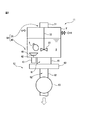
- FIG. 2 is a schematic view showing a configuration example of the bag removing device 11 and the crushing device 12 of FIG.
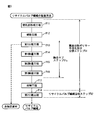
- FIG. 3 is a flow chart illustrating a method of using the system 1 to produce recycled pulp fibers from used sanitary products.
- “Inactivation” with respect to a super absorbent polymer is preferably 50 times or less, more preferably 30 times or less, of the super absorbent polymer retaining excrement and the like. More preferably, adjustment is made to have an absorption capacity of 25 times or less, for example, release of retained excrement, suppression of absorption of a peracid-containing aqueous solution, and the like.
- peracid-containing aqueous solution means an aqueous solution containing a peracid and / or a peracid-derived acid.
- the peroxy acid-containing aqueous solution at the time of immersing the sanitary product component constituting the sanitary product contains a peracid.
- the peracid-containing aqueous solution after decomposing the superabsorbent polymer, and the peracid-containing aqueous solution in the recycled pulp fiber recovery step are peracids depending on the degree of consumption of the peracid.
- the acid contained in the contained aqueous solution may vary. Specifically, when the peracid oxidizes the superabsorbent polymer and the like and is completely consumed, the peracid-containing aqueous solution contains no peracid and contains a peracid-derived acid. In addition, when the peracid oxidizes the superabsorbent polymer and the like but is not completely consumed, the peracid-containing aqueous solution contains a peracid and a peracid-derived acid.
- a method of producing recycled pulp fibers from used sanitary goods comprising pulp fibers and superabsorbent polymers comprising: The hygienic article constituent material which constitutes the above-mentioned hygienic goods which contains the above-mentioned pulp fiber and the super-absorbent polymer which has an acid group is immersed in the peroxy acid containing aqueous solution containing peroxy acid, and the above-mentioned super-absorbent polymer is inactivated.
- the peracid in the superabsorbent polymer inactivation and decomposition step, not only acts as an inactivating agent that inactivates the superabsorbent polymer. Since the peracid also acts as a decomposing agent capable of decomposing the superabsorbent polymer, and inactivation and degradation of the superabsorbent polymer can be carried out in a single step, the productivity of recycled pulp fibers can be increased. Excellent.
- the peracid since the peracid has an acid dissociation constant (pK a , in water) smaller than the acid group of the superabsorbent polymer, the peracid before oxidizing the superabsorbent polymer is not a superabsorbent polymer. It can have a higher effect as an activating inactivating agent.
- pK a acid dissociation constant
- the peracid from the acid generated from the peracid has the superabsorbent small acid dissociation constant than the acid group of the polymer (pK a, water), method according to embodiment 1 or 2.
- the peracid derived acids because it has a high water-absorbing polymers a small acid dissociation constant than acid groups (pK a, water), peracids derived acid produced after the peracid to oxidize the superabsorbent polymer
- pK a acid groups
- the above-mentioned hygienic goods constituent material is the above-mentioned hygienic goods
- the above-mentioned method immerses the above-mentioned hygienic article constituent material in the above-mentioned peroxy acid containing aqueous solution in the above-mentioned super absorbent polymer inactivation and decomposition step
- the above-mentioned pulp fiber and super-absorbent polymer are removed among the above-mentioned hygienic article constituent materials Further including a removal step for removing In the superabsorbent polymer inactivation and decomposition step, after the removal step, a peracid is added to the peracid-containing aqueous solution,
- the method according to any one of Aspects 1-3.
- the sanitary product component material to be immersed in the aqueous solution containing the peroxy acid is a sanitary product, and the pulp fiber and the highly water-absorptive polymer of the component products can be used in the above-mentioned superabsorbent polymer inactivation and decomposition steps.
- the method further includes a removal step of removing anything, and since the peracid is added to the peracid-containing aqueous solution after the removal step, the peracid can effectively decompose the superabsorbent polymer as a decomposing agent.
- the above-mentioned hygienic goods constituent material is the above-mentioned hygienic goods
- the above-mentioned method immerses the above-mentioned hygienic article constituent material in the above-mentioned peroxy acid containing aqueous solution in the above-mentioned super absorbent polymer inactivation and decomposition step
- the above-mentioned pulp fiber and super-absorbent polymer are removed among the above-mentioned hygienic article constituent materials Further including a removal step for removing After the removal step in the superabsorbent polymer inactivation and decomposition step, raising the temperature of the peroxy acid-containing aqueous solution,
- the method according to any one of aspects 1-4.
- the sanitary product component material to be immersed in the aqueous solution containing the peroxy acid is a sanitary product, and the pulp fiber and the highly water-absorptive polymer of the component products can be used in the above-mentioned superabsorbent polymer inactivation and decomposition steps.
- the method further includes a removal step of removing anything, and the temperature of the aqueous solution containing peracid is increased after the removal step, so that the peracid acts as a decomposing agent, that is, the oxidation of the superabsorbent polymer, and the superabsorbent It can promote the degradation of the polymer.
- the recycling pulp fiber in the recycling pulp fiber recovery step, since the peracid-derived acid generated from the peracid is left in the recycling pulp fiber, the recycling pulp fiber can be provided with an antimicrobial property.
- the peracid (and the peroxyacid derived acid) not only acts as an inactivating agent that inactivates the super absorbent polymer, but also that the peracid acts as a decomposing agent that degrades the super absorbent polymer Can.
- the above-mentioned inactivating and decomposing agents can not only inactivate the superabsorbent polymer but also decompose the superabsorbent polymer.
- a method of producing recycled pulp fibers from used sanitary goods including the pulp fiber of the present disclosure and the superabsorbent polymer includes the following steps. -The sanitary goods constituent material which constitutes the above-mentioned hygiene goods which contains the above-mentioned pulp fiber and a super-absorbent polymer which has an acid group is immersed in the peroxy acid containing aqueous solution containing peroxy acid, and the above-mentioned superabsorbent polymer is inactivated.
- Superabsorbent polymer inactivation and decomposition step (hereinafter referred to as “superabsorbent polymer inactivation and decomposition step”)
- Recycled pulp fiber recovery step (hereinafter sometimes referred to as “recycled pulp fiber recovery step”) which recovers the recycled pulp fiber from the aqueous solution containing peroxy acid which has been subjected to the super absorbent polymer inactivation and decomposition step
- the sanitary article construction material containing pulp fibers and the superabsorbent polymer having an acid group is immersed in a peroxy acid containing aqueous solution to inactivate the superabsorbent polymer. Disassemble super absorbent polymer.
- a peracid and / or a peracid-derived acid generated from the peracid can act as an inactivating agent for deactivating the superabsorbent polymer
- the peracid is a superabsorbent polymer Is not particularly limited as long as it can act as a decomposing agent that oxidizes and decomposes the superabsorbent polymer, for example, percarboxylic acids (eg, peracetic acid, perbenzoic acid, metachloroperbenzoic acid), Persulfonic acid (eg, persulfuric acid, methanepersulfonic acid, trifluoromethanepersulfonic acid, p-toluenepersulfonic acid), perphosphoric acid and the like, and metal salts thereof and the like can be mentioned.
- percarboxylic acids eg, peracetic acid, perbenzoic acid, metachloroperbenzoic acid
- Persulfonic acid eg, persulfuric acid, me
- peracid-derived acid examples include carboxylic acids (percarboxylic acids) such as acetic acid (peracetic acid), benzoic acid (perbenzoic acid), metachlorobenzoic acid (metachloroperbenzoic acid), sulfonic acid (Persulfonic acid), for example, sulfuric acid (persulfuric acid), methanesulfonic acid (methanepersulfonic acid), trifluoromethanesulfonic acid (trifluoromethanepersulfonic acid), p-toluenesulfonic acid (p-toluenepersulfonic acid), Phosphoric acid (perphosphoric acid) is mentioned.
- carboxylic acids percarboxylic acids
- acetic acid peracetic acid
- benzoic acid perbenzoic acid
- metachlorobenzoic acid metachloroperbenzoic acid
- sulfonic acid Persulfonic acid
- sulfuric acid persulfuric acid
- the peracid may be added as a mixture of a peracid derived acid and hydrogen peroxide.
- the peracid when the peracid is peracetic acid, the peracid may be added as a mixed aqueous solution of acetic acid which is a peracid-derived acid and hydrogen peroxide. This is from the viewpoint of stably adding (storing) the peracid.
- the peracid preferably has a smaller acid dissociation constant (pKa, in water) than the acid group of the superabsorbent polymer. By doing so, the action of the peracid itself as an inactivating agent can be further enhanced.
- pKa acid dissociation constant
- the largest acid dissociation among the acid dissociation constants (pK a , water) of the peracids constant (pK a, water) is, when the acid dissociation constant (pK a, water) of the acid groups of the superabsorbent polymer is preferably smaller than, and the superabsorbent polymer has a plurality of types of acid groups, the acid dissociation constant (pK a in water) peracids greatest acid dissociation constant (pK a in water) out of the smallest acid dissociation constant (pK a of the superabsorbent polymer is more acid groups, in water It is preferable that it is smaller than. It is from the viewpoint of the inactivation efficiency of the super absorbent polymer.
- the peracid-derived acid generated from the peracid have an acid dissociation constant (pK a , in water) smaller than the acid group of the superabsorbent polymer.
- pK a acid dissociation constant
- the acid dissociation constant of the peracid-derived acid (pK a , in water) the biggest acid dissociation constant (pK a, water) is an acid dissociation constant (pK a, water) of the acid groups of the superabsorbent polymer is preferably smaller than, and acid superabsorbent polymer is more of If with the above-mentioned acid dissociation constant of peracid from the acid (pK a, water) the largest acid dissociation constant of (pK a, water) is, the superabsorbent polymer is smallest among the plurality of kinds of groups acid dissociation constant (pK a, water) is preferably less than. It is from the viewpoint of the inactivation efficiency of the super absorbent polymer.
- the acid dissociation constant (pk a , in water) the value described in the Electrochemical Handbook edited by the Institute of Electrochemical Society can be adopted. According to the Electrochemical Handbook, the acid dissociation constants (pk a , in water, 25 ° C.) of the major compounds are as follows: [Organic acid] - tartaric acid: 2.99 (pK a1), 4.44 (pK a2) - malic acid: 3.24 (pK a1), 4.71 (pK a2) Citric acid: 2.87 (pK a1), 4.35 (pK a2), 5.69 (pK a3) [Inorganic acid] -Sulfuric acid: 1.99
- the acid dissociation constant (pk a , in water) of an acid not described in the Electrochemical Handbook can be determined by measurement.
- an apparatus which can measure the acid dissociation constant (pk a , in water) of an acid for example, a compound physical property evaluation analysis system manufactured by Sirius, T3 can be mentioned.
- the superabsorbent polymer is not particularly limited as long as it is used in the art as a superabsorbent polymer containing an acid group, and examples of the acid group include carboxyl. Groups, sulfo groups, etc. are mentioned, and a carboxyl group is preferable.
- Examples of highly water-absorptive polymers containing a carboxyl group include those of polyacrylates and polyanhydrides, and examples of highly water-absorptive polymers containing sulfo and the like include polysulphonates. It can be mentioned.
- the pulp fiber is not particularly limited as long as it can be contained in a sanitary product.
- the superabsorbent polymer inactivation and degradation steps are preferably performed at a predetermined pH.
- the predetermined pH is preferably 4.5 or less, more preferably 4.0 or less, still more preferably 3.5 or less, and still more preferably 3.0 or less. If the predetermined pH is too high, the inactivation of the superabsorbent polymer may be insufficient. Also, the predetermined pH is preferably 0.5 or more, and more preferably 1.0 or more. If the predetermined pH is too low, the recycled pulp fibers may be damaged.
- prescribed pH means the value in 25 degreeC.
- the predetermined pH described above can be measured, for example, using twin pH meter AS-711 manufactured by Horiba, Ltd.
- the manufacturing method of the present disclosure it is preferable to satisfy at least the predetermined pH at the start of the superabsorbent polymer inactivation and decomposition steps, for example, when immersing the sanitary product component in a peroxy acid containing aqueous solution.
- the production efficiency of the method for producing a recycled pulp of the present disclosure is reduced, and thus recycled pulp fibers to be produced, The super absorbent polymer may remain.
- the predetermined pH be satisfied at the end of the superabsorbent polymer inactivation and decomposition steps, for example, when the manufactured recycled pulp fiber is taken out of the aqueous solution containing peracid. This is from the viewpoint of continuing to inactivate the remaining super absorbent polymer, and from the viewpoint of leaving the acid derived from the peroxy acid to the manufactured recycled pulp fiber and imparting the antibacterial property to the recycled pulp fiber.
- a sanitary article construction material containing pulp fiber and superabsorbent polymer is put into a tank filled with a peroxy acid containing aqueous solution, and the peroxy acid containing aqueous solution is treated at room temperature. Stirring for about 5 to 60 minutes at (25 ° C.) can inactivate the superabsorbent polymer, oxidize the superabsorbent polymer, and decompose the superabsorbent polymer.
- the specific method is not particularly limited as long as the sanitary product component can be immersed in the peroxy acid-containing aqueous solution.
- the component The peracid-containing aqueous solution may be introduced into the tank in which the sanitary product construction material is disposed.
- the sanitary product is not particularly limited as long as it contains pulp fibers and a superabsorbent polymer, and, for example, disposable diapers, disposable shorts, sanitary napkins, panty liners, urine absorbing pads, bed sheets, pets Sheet etc. may be mentioned.
- Examples of the above-mentioned sanitary goods include those containing a liquid-permeable sheet, a liquid-impermeable sheet, and an absorbent (absorbent core and core wrap) therebetween.
- the sanitary product component in the superabsorbent polymer inactivation and degradation step is a mixture of pulp fibers and the superabsorbent polymer, for example, an absorbent core removed from a used sanitary product.
- the sanitary product component may be the sanitary product itself.
- the sanitary goods component material to be immersed in the aqueous solution containing peroxy acid is referred to as additional material (hereinafter "non-specific material")
- additional material hereinafter "non-specific material”
- non-specific material for example, when including a liquid-permeable sheet, a liquid-impermeable sheet, etc., for example, when immersing the sanitary goods itself as a sanitary goods constituent material in a peroxy acid containing aqueous solution, a superabsorbent polymer
- the inactivation and degradation steps can further include a removal substep of removing non-specific material (hereinafter sometimes referred to as "removal substep"). By doing so, the peracid can suppress oxidation of non-specific materials, and the peracid can efficiently oxidize the superabsorbent polymer.
- all of the non-specific materials may be removed from the aqueous solution containing the specific materials, but it is practically difficult to remove all of the non-specific materials.
- a part of non-specific material may remain in the aqueous solution containing peracid.
- the superabsorbent polymer inactivation and degradation step further comprises a removal substep
- the concentration of peracid in the aqueous solution containing peracid can be increased after performing the removal substep.
- the action as a decomposing agent by peracid specifically, the oxidizing power can be increased, and the peracid can efficiently oxidize the superabsorbent polymer.
- the total molar concentration of peracid and peracid-derived acid (hereinafter "peracidic acid”) in the aqueous solution containing peracid is removed
- the total molar concentration of the peroxyacid in the aqueous solution containing peroxyacid immediately after completion can be increased by preferably 2 to 100 times, more preferably 3 to 50 times, and still more preferably 4 to 20 times. From the above point of view.
- means for increasing the total molar concentration of the peracid acid include concentration of the peracid acid by heating of the peracid-containing aqueous solution, addition of the peracid to the peracid-containing aqueous solution, and the like.
- the temperature of the aqueous solution containing peracid may be raised after the removal substep.
- the temperature of the peroxy acid-containing aqueous solution is increased, the amount of radicals generated from the peroxyacid increases due to the thermal energy by heating, so the oxidative power of the peroxyacid increases, and the decomposition of the superabsorbent polymer can be promoted. .
- the superabsorbent polymer inactivation and decomposition step prior to the removal substep is mainly based on the inactivation of superabsorbent polymer, in other words, the function as the peracid and / or the peracid derived acid as the activator. , For example, at room temperature.
- the temperature can preferably be controlled at a temperature of 10 to 30 ° C, more preferably 15 to 25 ° C. By controlling the temperature within the above range, the action of the peracid as a decomposing agent can be suppressed, and the action of the peracid on non-specific materials as a decomposing agent can be suppressed.
- the temperature can be managed preferably at a temperature of 30 to 70 ° C., more preferably 40 to 60 ° C. higher.
- recycled pulp fiber recovery step recycled pulp fibers are recovered from the peroxy acid-containing aqueous solution that has undergone the superabsorbent polymer inactivation and decomposition steps.
- Recovery of the recycled pulp fiber can be used without particular limitation as long as it is an apparatus capable of solid-liquid separation, and examples of the apparatus capable of solid-liquid separation include a rotary drum screen, an inclined screen, a vibrating screen and the like.
- the recycled pulp fiber recovery step it is preferable to leave the peracid-derived acid in the recovered recycled pulp fiber. By doing so, it is possible to impart the antibacterial property to the recycled pulp fiber, and for example, even when the recycled pulp fiber is stored in a wet state, it is possible to suppress the growth of mold and the like.
- the present disclosure relates to the use of peracids for the deactivation and degradation of superabsorbent polymers with acid groups.
- the peracid and the peroxyacid derived acid
- the peracid not only acts as an inactivating agent that inactivates the super absorbent polymer, but also that the peracid acts as a decomposing agent that degrades the super absorbent polymer Can inactivate and degrade the superabsorbent polymer.
- the present disclosure also relates to the use of peracid for producing recycled pulp fibers from sanitary product construction materials comprising pulp fibers and superabsorbent polymers having acid groups.
- the peracid (and the peroxyacid derived acid) not only acts as an inactivating agent that inactivates the super absorbent polymer, but also that the peracid acts as a decomposing agent that degrades the super absorbent polymer
- Peracid-derived acid can impart antimicrobial properties to the recycled pulp fibers. Since the said use is demonstrated by "the manufacturing method of recycle pulp fiber", description here is abbreviate
- the present disclosure relates to deactivating and decomposing agents for superabsorbent polymers having acid groups, including peracids.
- the above-mentioned inactivating and decomposing agents can not only inactivate the superabsorbent polymer but also decompose the superabsorbent polymer.
- the present disclosure also relates to a superabsorbent polymer inactivating and decomposing agent in a sanitary product construction material comprising pulp fibers and a superabsorbent polymer having acid groups, comprising a peracid.
- the above-mentioned inactivating and decomposing agents can not only inactivate the superabsorbent polymer, but can decompose the superabsorbent polymer as well as impart antimicrobial properties to the recycled pulp fibers.
- the said inactivation and decomposition agent since it is demonstrated by "the manufacturing method of a recycling pulp fiber", description here is abbreviate
- FIG. 1 is a block diagram of a system 1 for implementing the manufacturing method according to one of the embodiments of the present disclosure.
- FIG. 1 is a diagram for explaining a manufacturing method according to one of the embodiments of the present disclosure, and does not limit the present disclosure in any way.
- the system 1 includes a bag removing device 11, a shredding device 12, a first separating device 13, a first dust removing device 14, a second dust removing device 15, a third dust removing device 16, a disassembling device 17, and a second And a separation device 18.
- the bag-breaking device 11 is filled with a peroxy acid-containing aqueous solution, and forms an opening in the collection bag containing used sanitary goods in the peroxy acid-containing aqueous solution.
- the crusher 12 crushes the used sanitary goods sunk below the surface of the aqueous solution containing the peroxy acid together with the collection bag.
- FIG. 2 is a schematic view showing a configuration example of the bag removing device 11 and the crushing device 12 of FIG.
- the bag-breaking apparatus 11 is filled with a peroxy acid-containing aqueous solution B, forms an opening in the collection bag A that has settled in the peroxy acid-containing aqueous solution B, contains used sanitary goods, A collection bag 91 is formed.
- the bag-breaking apparatus 11 includes a solution tank V and an aperture forming part 50.
- the solution tank V stores the peracid-containing aqueous solution B.
- the hole forming portion 50 is provided in the solution tank V, and when the collection bag A is put in the solution tank V, a hole is formed on the surface of the collection bag A in contact with the aqueous solution B containing peroxy acid. Do.
- the hole forming unit 50 includes a feeding unit 30 and a bag opening 40.
- the feed unit 30 feeds (pulls) the collection bag A (physically and forcibly) into the peroxy acid-containing aqueous solution B in the solution tank V.
- the feed unit 30 is, for example, a stirrer, and includes a stirring blade 33, a support shaft (rotary shaft) 32 supporting the stirring blade 33, and a drive device 31 rotating the support shaft 32 along an axis.
- the stirring blade 33 rotates around the rotation shaft (support shaft 32) by the drive device 31 to generate a swirling flow in the peroxy acid-containing aqueous solution B.
- the feed unit 30 draws the collection bag A toward the bottom of the peroxy acid-containing aqueous solution B (solution tank V) by the swirling flow.
- the tear-off portion 40 is disposed at the lower portion (preferably the bottom) of the solution tank V, and the tear-off blade 41, a support shaft (rotation shaft) 42 for supporting the tear-off blade 41, and the support shaft 42 And a driving device 43 which rotates along with it.
- the tear-off blade 41 forms an opening in the collection bag A moved to the lower part of the aqueous solution B (solution tank V) by rotating around the rotation shaft (support shaft 42) by the drive device 43. .
- the crushing apparatus 12 crushes the used sanitary goods in the collection bag A sunk below the surface of the aqueous solution B containing peroxy acid together with the collection bag A.
- the crushing apparatus 12 includes a crushing unit 60 and a pump 63.
- the crushing part 60 is connected by the solution tank V and the pipe 61, includes the used sanitary goods discharged from the solution tank V, and includes the collection bag 91 having the opening part, including the collection bag A, including the peroxide
- the aqueous solution B is crushed to form a peracid-containing aqueous solution 92 containing the crushed material.
- the crusher 60 may be a twin-screw crusher (for example, a twin-screw rotary crusher, a twin-screw differential crusher, a twin-screw shear crusher). Company-made).
- the pump 63 is connected to the crushing unit 60 by a pipe 62, and draws out from the crushing unit 60 the aqueous solution containing peracid containing the crushed material obtained in the crushing unit 60 and delivers it to the next process.
- the crushed material includes materials including pulp fiber, super absorbent polymer, material of collecting bag A, film, non-woven fabric, elastic body and the like.
- the first separation device 13 contains the crushed material while stirring the peracid-containing aqueous solution 92 containing the crushed material obtained by the crushing device 12 to remove dirt (excrements etc.) from the crushed material. From the aqueous solution containing peroxy acid 92, the aqueous solution containing peroxy acid 93 containing pulp fibers and super absorbent polymer from which foreign matter has been removed is separated and sent to the first dust removing device.
- Examples of the first separation device 13 include a washing tub and a dewatering tub and a washing machine provided with a water tub surrounding the same.
- a washing tank and dewatering tank (rotary drum) is used as a washing tank and sieving tank (separation tank).
- Examples of the washing machine include a horizontal washing machine ECO-22B (manufactured by Inamoto Seisakusho Co., Ltd.).
- the first dust remover 14 further removes foreign matter present in the aqueous solution containing peroxyacid 93 from which foreign matter has been removed by a screen having a plurality of openings, and foreign matter including pulp fiber and superabsorbent polymer is further removed.
- a peroxy acid-containing aqueous solution 94 is formed.
- the first dust remover 14 include a screen separator (coarse screen separator), and specifically, for example, a pack pulper (manufactured by Satomi Seisakusho Co., Ltd.).
- the second dust remover 15 removes finer foreign particles from the peroxy acid-containing aqueous solution 94 from the first dust remover 14 which has been removed from the first dust remover 14 by a screen having a plurality of openings, thereby removing pulp fibers and high water absorption. To form a peracid-containing aqueous solution 95 from which foreign substances have been further removed, including a hydrophobic polymer.
- Examples of the second dust remover 15 include a screen separator, and more specifically, for example, Lamo Screen (manufactured by Aikawa Tekko Co., Ltd.).
- the third dust remover 16 further removes foreign matter from the peroxy acid-containing aqueous solution 95 which is sent from the second dust remover 15 by centrifugal separation and from which foreign matter is further removed, and contains pulp fibers and a superabsorbent polymer And forms an aqueous solution containing peracid 96 from which foreign matter is further removed.
- Examples of the third dust remover 16 include a cyclone separator, specifically, ACT low concentration cleaner (manufactured by Aikawa Iron Works Co., Ltd.).
- the peracid-containing aqueous solution 96 from the third dust removing device 16 from which foreign substances are further removed is heated, and the superabsorbent polymer is oxidized and decomposed by the oxidizing power of the peracid to increase pulp fiber Remove the water absorbing polymer. Then, the peracid-containing aqueous solution 97 containing recycled pulp fibers is discharged.
- the second separation device 18 separates the recycled pulp fibers from the peroxy acid-containing aqueous solution 97 containing recycled pulp fibers that has been treated by the decomposition device 17 using a screen having a plurality of openings.
- Examples of the second separation device 18 include a screen separator.
- FIG. 3 is a flow chart illustrating a method of producing recycled pulp fibers from used sanitary products using the system 1 shown in FIG.
- the flowchart shown in FIG. 3 is an example and does not limit the present disclosure.
- FIG. 3 shows the superabsorbent polymer inactivation and decomposition step S1, the removal substep S1 S , and the recycled pulp fiber recovery step S2.
- the process P16 and the decomposition process P17 are included, and the removal sub-step S1 S includes the first separation process P13, the first dust removal process P14, the second dust removal process P15, and the third dust removal process P16.
- Be The recycled pulp fiber recovery step S2 includes a second separation step P18. The details will be described below.
- the opening portion forming step P11 is performed using the bag opening device 11.
- the collection bag A in which the used sanitary goods are enclosed is put into the solution tank V storing the peracid-containing aqueous solution B, and an opening is formed on the surface of the collection bag A in contact with the peroxy acid-containing aqueous solution B.
- the aqueous solution B containing peracid has a periphery of the collection bag A so that the dirt, fungi, odor and the like of the used sanitary goods in the collection bag A are not released to the outside when an opening is formed in the collection bag A. Seal around.
- the gas in the collection bag A escapes to the outside of the collection bag A, and the specific gravity of the collection bag A becomes heavier than the peroxy acid-containing aqueous solution B.
- A precipitates in the peracid-containing aqueous solution B.
- the peracid in the peracid-containing aqueous solution B acts as an inactivating agent, inactivates the superabsorbent polymer in the used sanitary goods in the collection bag A, and acts as a decomposing agent, thereby causing high water absorption. Oxidizable polymer begins to degrade.
- a peracid-derived acid generated by oxidizing a hygienic product constituent material such as a superabsorbent polymer or the like by the peracid oxidizes the superabsorbent polymer as an inactivating agent.
- the superabsorbent polymer in the used sanitary goods is inactivated and its ability to absorb water is reduced, so that the superabsorbent polymer is dewatered and the particle size is reduced, making it easy to handle in the subsequent steps. Process efficiency is improved.
- peracid used for inactivation, there is an advantage that ash does not remain in the pulp fiber as compared with the case of inactivating the superabsorbent polymer using lime, calcium chloride or the like, and the degree of inactivation (particle diameter, There is an advantage that it is easy to adjust the size of specific gravity etc. by pH.
- the sanitary product construction material to be immersed in the peroxy acid-containing aqueous solution contains a non-specific material such as a liquid permeable sheet, a liquid impermeable sheet, etc., for example, the sanitary product itself as a sanitary product construction material
- a non-specific material such as a liquid permeable sheet, a liquid impermeable sheet, etc.
- the sanitary product itself as a sanitary product construction material
- the size, specific gravity, etc., of the pulp fibers constituting the specific material be relatively close to the size, specific gravity, etc. of the superabsorbent polymer.
- the peracid-containing aqueous solution have the above-mentioned predetermined pH in the superabsorbent polymer inactivation and decomposition step.
- the rotation of the stirring blade 33 around the rotation shaft (support shaft 32) generates a swirling flow in the peroxy acid-containing aqueous solution B, and the collection bag A is physically forced to be peracid. It is drawn toward the bottom of the contained aqueous solution B (solution tank V). Then, the collection bag A that has moved to the bottom portion contacts the tear-off blade 41 by the rotation of the tear-off blade 41 around the rotation axis (support shaft 42), and an opening is formed in the collection bag A .
- the crushing process P12 is performed by the crushing apparatus 12.
- the collection bag 91 including the used sanitary goods and having the opening portion moves from the solution tank V to the crushing apparatus 12 together with the peroxy acid containing aqueous solution B, and in the crushing apparatus 12, the used bag in the collection bag A is used. Sanitary goods are crushed in the aqueous solution B containing peracid together with the collection bag A.
- the collection bag 91 having the openings and containing the used sanitary goods delivered by the crushing part 60 together with the aqueous solution B containing the peroxy acid from the solution tank V is collected It is crushed in the peracid-containing aqueous solution B together with the bag A (in-liquid crushing step).
- the peracid-containing aqueous solution 92 containing the crushed material obtained in the crushing part 60 is drawn from the crushing part 60 by the pump 63 (extraction step) to the next step It is sent out.
- the first separation step P13 is performed by the first separation device 13. While stirring the peracid-containing aqueous solution 92 containing the crushed material obtained by the crusher 12 while cleaning to remove dirt from the crushed material, the peracid-containing aqueous solution 92 containing the crushed material is a specified material and a peracid It separates into contained aqueous solution (namely, aqueous solution containing peracid containing pulp fiber and super absorbent polymer) and non-specific material of sanitary goods. At that time, a peracid-containing aqueous solution may be separately added to enhance the washing effect and / or to adjust the pH.
- aqueous solution namely, aqueous solution containing peracid containing pulp fiber and super absorbent polymer
- the peracid-containing aqueous solution 93 from which the foreign matter has been removed is separated from the peracid-containing aqueous solution 92 containing the crushed material through the through holes and delivered from the first separation device 13.
- a relatively large nonspecific material can not pass through the through hole, and remains in the first separation device 13 or is delivered by another route.
- small ones can not be separated by the first separation device 13 and are included in the aqueous solution containing peracid 93 from which foreign matter has been removed.
- the size of the through hole of the washing tub functioning as a sieve may be 5 mm to 20 mm in the case of a round hole, and holes of other shapes may be used. In the case, the size of the area substantially the same as that of the round hole may be mentioned.
- the first dust removing process P14 is performed by the first dust removing device 14.
- the peroxy acid-containing aqueous solution 93 from the first separation device 13 from which foreign matter has been removed is passed through a screen, and a peroxy acid-containing aqueous solution containing pulp fibers and a superabsorbent polymer, and crushed non-specific material (foreign body) To separate.
- the crushed non-specific material foreign matter
- the crushed non-specific material foreign material
- smaller ones are included in the peroxy acid containing aqueous solution 94 from which foreign matter is further removed without being completely separated by the first dust removing device 14.
- the second dust removing step P15 is executed by the second dust removing device 15, and the peroxy acid-containing aqueous solution 94 from the first dust removing device 14 from which foreign matter is further removed is passed through a screen, and pulp fibers and superabsorbent polymer are removed.
- the aqueous solution containing peroxy acid is further separated from the crushed non-specified material (foreign substance).
- the crushed non-specific material foreign material
- the peracid-containing aqueous solution 95 from which the foreign material is further removed is delivered from the second dust removing device 15.
- the crushed non-specific material (foreign matter) can not pass through the screen and remains in the second dust remover 15, or is sent out through another path.
- the crushed non-specific materials smaller ones are included in the aqueous solution containing peracid 95 from which foreign matter is further removed without being completely separated by the second dust remover 15.
- the third dust removal step P16 is performed by the third dust remover 16, and centrifugally separates the peroxy acid-containing aqueous solution 95 from the second dust remover 15, from which foreign matter has been further removed, in the inverted conical housing.
- a peracid-containing aqueous solution containing pulp fibers and a superabsorbent polymer is further separated from crushed non-specified materials (foreign matter).
- the peracid-containing aqueous solution 96 from which foreign matter is further removed is delivered from the upper part of the third dust remover 16 (cyclone separator).
- crushed non-specific material foreign material
- particularly heavy material such as metal is delivered from the lower part of the third dust remover 16 (cyclone separator).
- the pH of the peroxy acid-containing aqueous solution is adjusted so that the specific gravity and size of the superabsorbent polymer and the specific gravity and size of the pulp fibers are within predetermined ranges.
- the decomposition process P17 is performed by the decomposition apparatus 17.
- the peracid-containing aqueous solution 96 from which the foreign matter is further removed, which is sent from the third dust collector 16, is introduced into the decomposition apparatus 17, and the peracid-containing aqueous solution 96 from which the foreign matter is further removed is heated.
- a peracid-derived acid act as an inactivating agent, while enhancing the oxidizing power by the peracid and further enhancing the function of the peracid as a decomposing agent.
- the superabsorbent polymer adhering to the pulp fibers (for example, remaining on the surface of the pulp fibers) is converted into a low molecular weight organic substance soluble in an aqueous solution and removed from the pulp fibers.
- sterilization, bleaching, deodorization and the like of pulp fibers are performed by the peracid, and a peracid-containing aqueous solution 97 containing recycled pulp fibers is formed.
- a peracid may be added to the peroxy acid-containing aqueous solution 96 from which foreign matter is further removed.
- the action of the peracid as a decomposing agent can be enhanced to promote the decomposition of the superabsorbent polymer It is because it can.
- the second separation step P18 is executed by the second separation device 18 and processed by the decomposition device 17.
- the peroxy acid-containing aqueous solution 97 containing recycled pulp fibers passes through the screen having the plurality of slits, and the recycled pulp is removed.
- the fiber and the aqueous solution containing the peracid are separated.
- the recycled pulp fibers do not pass through the screen, but remain in the second separation device 18 or are delivered separately.
- Example 1 Polyacrylic acid-based highly water-absorbing polymer (Sumitomo Seika Co., Ltd., AquaKeep, unused product) at a temperature ratio of 25 ⁇ 5 ° C. and a humidity of 65 ⁇ 5% RH in a constant temperature and humidity chamber of 150 in mass ratio Immersed in double volume of saline for 10 minutes.
- the water absorption capacity of the immersed super absorbent polymer was measured according to the method as described in this specification, the absorption capacity was 86.6 (g / g).
- Biocide A is composed of 5.6% by mass of peracetic acid, 26.5% by mass of hydrogen peroxide, and 67.9% by mass of acetic acid and water.
- the decomposition rate of the highly water-absorbing polymer after stirring for 10 minutes was measured.
- Example 2 The superabsorbent polymer was inactivated and degraded in the same manner as in Example except that the amount of Biocide A was changed to 300 mL.
- the pH one minute after the start of stirring was 1.6, and the pH ten minutes after the start of stirring was 1.8.
- the decomposition rate was 72 mass%. From the above, it can be seen that, by adjusting the treatment time, treatment temperature and the like, peracetic acid can decompose the highly water-absorbent polymer in the sanitary product component.
Landscapes
- Engineering & Computer Science (AREA)
- Environmental & Geological Engineering (AREA)
- Chemical & Material Sciences (AREA)
- Health & Medical Sciences (AREA)
- Chemical Kinetics & Catalysis (AREA)
- Life Sciences & Earth Sciences (AREA)
- Organic Chemistry (AREA)
- Toxicology (AREA)
- General Chemical & Material Sciences (AREA)
- Sustainable Development (AREA)
- Medicinal Chemistry (AREA)
- Polymers & Plastics (AREA)
- General Health & Medical Sciences (AREA)
- Wood Science & Technology (AREA)
- Mechanical Engineering (AREA)
- Separation, Recovery Or Treatment Of Waste Materials Containing Plastics (AREA)
- Processing Of Solid Wastes (AREA)
- Paper (AREA)
- Absorbent Articles And Supports Therefor (AREA)
Abstract
La présente invention a pour objet de fournir un procédé de fabrication de fibre de pâte recyclée au moyen duquel il est possible d'inactiver et de dégrader facilement un polymère à forte absorption d'eau à l'aide d'un produit chimique unique. Ledit procédé est destiné à la fabrication de fibres de pâte recyclée à partir de produits sanitaires usagés contenant des fibres de pulpe et d'un polymère à absorption d'eau élevée, et est caractérisé en ce qu'il comprend : une étape d'inactivation et de dégradation de polymère à absorption d'eau élevée (S1) consistant à immerger un matériau constitutif de produits sanitaires contenant les fibres de pâte et un polymère à forte absorption d'eau contenant un radical acide dans une solution aqueuse contenant un peracide de façon à inactiver et dégrader le polymère à forte absorption d'eau ; et une étape de récupération de fibre de pâte recyclée (S2) consistant à récupérer les fibres de pâte recyclée à partir de la solution aqueuse contenant un peracide qui a subi l'étape d'inactivation et de dégradation de polymère à absorption d'eau élevée (S1).
Applications Claiming Priority (2)
| Application Number | Priority Date | Filing Date | Title |
|---|---|---|---|
| JP2017244095A JP6847028B2 (ja) | 2017-12-20 | 2017-12-20 | リサイクルパルプ繊維の製造方法、過酸の、高吸水性ポリマーの不活化及び分解のための使用、並びに過酸を含む、高吸水性ポリマーの不活化及び分解剤 |
| JP2017-244095 | 2017-12-20 |
Publications (1)
| Publication Number | Publication Date |
|---|---|
| WO2019123765A1 true WO2019123765A1 (fr) | 2019-06-27 |
Family
ID=66993285
Family Applications (1)
| Application Number | Title | Priority Date | Filing Date |
|---|---|---|---|
| PCT/JP2018/036906 Ceased WO2019123765A1 (fr) | 2017-12-20 | 2018-10-02 | Procédé de fabrication de fibre de pâte recyclée, utilisation de peracide pour inactiver et dégrader un polymère à forte absorption d'eau, et agent contenant un peracide pour inactiver et dégrader un polymère à forte absorption d'eau |
Country Status (2)
| Country | Link |
|---|---|
| JP (1) | JP6847028B2 (fr) |
| WO (1) | WO2019123765A1 (fr) |
Families Citing this family (8)
| Publication number | Priority date | Publication date | Assignee | Title |
|---|---|---|---|---|
| JP2021062132A (ja) * | 2019-10-16 | 2021-04-22 | ユニ・チャーム株式会社 | 使用済み衛生用品由来の部材を用いた衛生用品 |
| WO2021162082A1 (fr) | 2020-02-14 | 2021-08-19 | 株式会社日本触媒 | Procédé de recyclage d'une résine absorbant l'eau |
| JP7355714B2 (ja) | 2020-07-20 | 2023-10-03 | ユニ・チャーム株式会社 | 使用済みの衛生用品から、清浄化されたリサイクルパルプ繊維を製造する方法 |
| JPWO2022080342A1 (fr) * | 2020-10-15 | 2022-04-21 | ||
| JP7584277B2 (ja) | 2020-10-29 | 2024-11-15 | ユニ・チャーム株式会社 | 高吸水性ポリマーの溶解成分を含む廃液の処理方法 |
| US12152112B2 (en) * | 2021-02-22 | 2024-11-26 | The Procter & Gamble Company | Degradation of superabsorbent fibers via oxidative degradation |
| US12491548B2 (en) | 2021-02-22 | 2025-12-09 | The Procter & Gamble Company | Recycling of superabsorbent fibers with an extensional flow device |
| JP7850183B2 (ja) | 2022-02-04 | 2026-04-22 | 株式会社日本触媒 | 吸水性樹脂のリサイクル方法、および吸水性樹脂の製造方法 |
Citations (8)
| Publication number | Priority date | Publication date | Assignee | Title |
|---|---|---|---|---|
| JPH04317785A (ja) * | 1991-04-15 | 1992-11-09 | Nippon Shokubai Co Ltd | 吸水性製品からのパルプ回収方法 |
| JPH06502454A (ja) * | 1991-06-17 | 1994-03-17 | ノワスト・テクノロジーズ・インコーポレーテツド | 吸収性生理用紙製品の処理 |
| JPH06313008A (ja) * | 1993-04-28 | 1994-11-08 | Mitsubishi Petrochem Co Ltd | 吸水性ポリマーの分解方法 |
| JPH09249711A (ja) * | 1996-03-19 | 1997-09-22 | Mitsubishi Gas Chem Co Inc | 吸水性ポリマーの分解方法 |
| JP2001316519A (ja) * | 2000-05-09 | 2001-11-16 | Nippon Asahi Kiko Hanbai Kk | 分解剤および分解方法 |
| JP2003321574A (ja) * | 2002-04-30 | 2003-11-14 | Tadashi Komoto | 吸水性ポリマーの分解剤とこれを用いる吸水性ポリマーの分解方法 |
| US20140230322A1 (en) * | 2011-09-23 | 2014-08-21 | Zynnovation Llc | Disposable diaper recycling and applications thereof |
| JP2014217835A (ja) * | 2013-04-10 | 2014-11-20 | ユニ・チャーム株式会社 | 使用済み衛生用品からパルプ繊維を回収する方法およびその方法により得られる再生パルプ |
-
2017
- 2017-12-20 JP JP2017244095A patent/JP6847028B2/ja active Active
-
2018
- 2018-10-02 WO PCT/JP2018/036906 patent/WO2019123765A1/fr not_active Ceased
Patent Citations (8)
| Publication number | Priority date | Publication date | Assignee | Title |
|---|---|---|---|---|
| JPH04317785A (ja) * | 1991-04-15 | 1992-11-09 | Nippon Shokubai Co Ltd | 吸水性製品からのパルプ回収方法 |
| JPH06502454A (ja) * | 1991-06-17 | 1994-03-17 | ノワスト・テクノロジーズ・インコーポレーテツド | 吸収性生理用紙製品の処理 |
| JPH06313008A (ja) * | 1993-04-28 | 1994-11-08 | Mitsubishi Petrochem Co Ltd | 吸水性ポリマーの分解方法 |
| JPH09249711A (ja) * | 1996-03-19 | 1997-09-22 | Mitsubishi Gas Chem Co Inc | 吸水性ポリマーの分解方法 |
| JP2001316519A (ja) * | 2000-05-09 | 2001-11-16 | Nippon Asahi Kiko Hanbai Kk | 分解剤および分解方法 |
| JP2003321574A (ja) * | 2002-04-30 | 2003-11-14 | Tadashi Komoto | 吸水性ポリマーの分解剤とこれを用いる吸水性ポリマーの分解方法 |
| US20140230322A1 (en) * | 2011-09-23 | 2014-08-21 | Zynnovation Llc | Disposable diaper recycling and applications thereof |
| JP2014217835A (ja) * | 2013-04-10 | 2014-11-20 | ユニ・チャーム株式会社 | 使用済み衛生用品からパルプ繊維を回収する方法およびその方法により得られる再生パルプ |
Also Published As
| Publication number | Publication date |
|---|---|
| JP6847028B2 (ja) | 2021-03-24 |
| JP2019108640A (ja) | 2019-07-04 |
Similar Documents
| Publication | Publication Date | Title |
|---|---|---|
| WO2019123765A1 (fr) | Procédé de fabrication de fibre de pâte recyclée, utilisation de peracide pour inactiver et dégrader un polymère à forte absorption d'eau, et agent contenant un peracide pour inactiver et dégrader un polymère à forte absorption d'eau | |
| US12226752B2 (en) | Method for regenerating highly water-absorbing polymer, method for producing highly water-absorbing recycled polymer, and use of alkali metal ion source | |
| CN111566282B (zh) | 再循环浆粕纤维的制造方法 | |
| JP7446369B2 (ja) | 高吸水性ポリマーの再生方法、高吸水性リサイクルポリマーの製造方法、及びアルカリ金属イオン供給源の使用 | |
| JP7231522B2 (ja) | 再生高吸水性ポリマーを製造する方法、再生高吸水性ポリマーを用いて高吸水性ポリマーを製造する方法、及び、再生高吸水性ポリマー | |
| JP7168350B2 (ja) | 使用済み吸収性物品からパルプ繊維を回収する方法及びシステム | |
| JP6843030B2 (ja) | 使用済み吸収性物品からパルプ繊維及び高吸水性ポリマーを回収する方法及びシステム | |
| JP6762287B2 (ja) | 使用済み吸収性物品からパルプ繊維を回収する方法及びシステム | |
| JP3222462B2 (ja) | 吸収性生理用紙製品の処理 | |
| JP2019005733A (ja) | セルロースナノファイバー化用パルプ繊維を製造する方法、及びセルロースナノファイバー化用パルプ繊維 | |
| WO2023210528A1 (fr) | Procédé de production d'une matière plastique issue d'un produit hygiénique usagé adapté au recyclage de matières ou au recyclage de produits chimiques, et matière plastique issue d'un produit hygiénique usagé | |
| JP2019084526A (ja) | 有機酸の回収方法、及びリサイクルパルプの製造方法 | |
| WO2024090234A1 (fr) | Procédé de récupération de polymère superabsorbant à partir de matériaux constitutifs contenant un polymère superabsorbant constituant des produits d'hygiène usagés, et procédé de production de polymère superabsorbant recyclé à l'aide d'un polymère superabsorbant récupéré | |
| JP7517817B2 (ja) | セルロースナノファイバーの製造方法及びセルロースナノファイバー | |
| JP2024088438A (ja) | 使用済み衛生用品の繊維状物と粒子状物との分離方法 | |
| AU2022423654A1 (en) | Method for recycling multiple materials, including superabsorbent polymer and pulp fibers, from used absorbent articles |
Legal Events
| Date | Code | Title | Description |
|---|---|---|---|
| 121 | Ep: the epo has been informed by wipo that ep was designated in this application |
Ref document number: 18891056 Country of ref document: EP Kind code of ref document: A1 |
|
| NENP | Non-entry into the national phase |
Ref country code: DE |
|
| 122 | Ep: pct application non-entry in european phase |
Ref document number: 18891056 Country of ref document: EP Kind code of ref document: A1 |