WO2019135346A1 - Matériau d'électrode positive et batterie - Google Patents
Matériau d'électrode positive et batterie Download PDFInfo
- Publication number
- WO2019135346A1 WO2019135346A1 PCT/JP2018/046262 JP2018046262W WO2019135346A1 WO 2019135346 A1 WO2019135346 A1 WO 2019135346A1 JP 2018046262 W JP2018046262 W JP 2018046262W WO 2019135346 A1 WO2019135346 A1 WO 2019135346A1
- Authority
- WO
- WIPO (PCT)
- Prior art keywords
- positive electrode
- solid electrolyte
- charge
- battery
- discharge
- Prior art date
- Legal status (The legal status is an assumption and is not a legal conclusion. Google has not performed a legal analysis and makes no representation as to the accuracy of the status listed.)
- Ceased
Links
Images



Classifications
-
- C—CHEMISTRY; METALLURGY
- C01—INORGANIC CHEMISTRY
- C01F—COMPOUNDS OF THE METALS BERYLLIUM, MAGNESIUM, ALUMINIUM, CALCIUM, STRONTIUM, BARIUM, RADIUM, THORIUM, OR OF THE RARE-EARTH METALS
- C01F5/00—Compounds of magnesium
-
- C—CHEMISTRY; METALLURGY
- C01—INORGANIC CHEMISTRY
- C01F—COMPOUNDS OF THE METALS BERYLLIUM, MAGNESIUM, ALUMINIUM, CALCIUM, STRONTIUM, BARIUM, RADIUM, THORIUM, OR OF THE RARE-EARTH METALS
- C01F17/00—Compounds of rare earth metals
- C01F17/30—Compounds containing rare earth metals and at least one element other than a rare earth metal, oxygen or hydrogen, e.g. La4S3Br6
- C01F17/36—Compounds containing rare earth metals and at least one element other than a rare earth metal, oxygen or hydrogen, e.g. La4S3Br6 halogen being the only anion, e.g. NaYF4
-
- C—CHEMISTRY; METALLURGY
- C01—INORGANIC CHEMISTRY
- C01G—COMPOUNDS CONTAINING METALS NOT COVERED BY SUBCLASSES C01D OR C01F
- C01G9/00—Compounds of zinc
- C01G9/006—Compounds containing zinc, with or without oxygen or hydrogen, and containing two or more other elements
-
- H—ELECTRICITY
- H01—ELECTRIC ELEMENTS
- H01M—PROCESSES OR MEANS, e.g. BATTERIES, FOR THE DIRECT CONVERSION OF CHEMICAL ENERGY INTO ELECTRICAL ENERGY
- H01M10/00—Secondary cells; Manufacture thereof
- H01M10/05—Accumulators with non-aqueous electrolyte
- H01M10/052—Li-accumulators
- H01M10/0525—Rocking-chair batteries, i.e. batteries with lithium insertion or intercalation in both electrodes; Lithium-ion batteries
-
- H—ELECTRICITY
- H01—ELECTRIC ELEMENTS
- H01M—PROCESSES OR MEANS, e.g. BATTERIES, FOR THE DIRECT CONVERSION OF CHEMICAL ENERGY INTO ELECTRICAL ENERGY
- H01M10/00—Secondary cells; Manufacture thereof
- H01M10/05—Accumulators with non-aqueous electrolyte
- H01M10/056—Accumulators with non-aqueous electrolyte characterised by the materials used as electrolytes, e.g. mixed inorganic/organic electrolytes
- H01M10/0561—Accumulators with non-aqueous electrolyte characterised by the materials used as electrolytes, e.g. mixed inorganic/organic electrolytes the electrolyte being constituted of inorganic materials only
- H01M10/0562—Solid materials
-
- H—ELECTRICITY
- H01—ELECTRIC ELEMENTS
- H01M—PROCESSES OR MEANS, e.g. BATTERIES, FOR THE DIRECT CONVERSION OF CHEMICAL ENERGY INTO ELECTRICAL ENERGY
- H01M4/00—Electrodes
- H01M4/02—Electrodes composed of, or comprising, active material
- H01M4/13—Electrodes for accumulators with non-aqueous electrolyte, e.g. for lithium-accumulators; Processes of manufacture thereof
- H01M4/131—Electrodes based on mixed oxides or hydroxides, or on mixtures of oxides or hydroxides, e.g. LiCoOx
-
- H—ELECTRICITY
- H01—ELECTRIC ELEMENTS
- H01M—PROCESSES OR MEANS, e.g. BATTERIES, FOR THE DIRECT CONVERSION OF CHEMICAL ENERGY INTO ELECTRICAL ENERGY
- H01M4/00—Electrodes
- H01M4/02—Electrodes composed of, or comprising, active material
- H01M4/36—Selection of substances as active materials, active masses, active liquids
- H01M4/48—Selection of substances as active materials, active masses, active liquids of inorganic oxides or hydroxides
- H01M4/52—Selection of substances as active materials, active masses, active liquids of inorganic oxides or hydroxides of nickel, cobalt or iron
- H01M4/525—Selection of substances as active materials, active masses, active liquids of inorganic oxides or hydroxides of nickel, cobalt or iron of mixed oxides or hydroxides containing iron, cobalt or nickel for inserting or intercalating light metals, e.g. LiNiO2, LiCoO2 or LiCoOxFy
-
- H—ELECTRICITY
- H01—ELECTRIC ELEMENTS
- H01M—PROCESSES OR MEANS, e.g. BATTERIES, FOR THE DIRECT CONVERSION OF CHEMICAL ENERGY INTO ELECTRICAL ENERGY
- H01M4/00—Electrodes
- H01M4/02—Electrodes composed of, or comprising, active material
- H01M4/62—Selection of inactive substances as ingredients for active masses, e.g. binders, fillers
-
- H—ELECTRICITY
- H01—ELECTRIC ELEMENTS
- H01M—PROCESSES OR MEANS, e.g. BATTERIES, FOR THE DIRECT CONVERSION OF CHEMICAL ENERGY INTO ELECTRICAL ENERGY
- H01M4/00—Electrodes
- H01M4/02—Electrodes composed of, or comprising, active material
- H01M2004/026—Electrodes composed of, or comprising, active material characterised by the polarity
- H01M2004/028—Positive electrodes
-
- H—ELECTRICITY
- H01—ELECTRIC ELEMENTS
- H01M—PROCESSES OR MEANS, e.g. BATTERIES, FOR THE DIRECT CONVERSION OF CHEMICAL ENERGY INTO ELECTRICAL ENERGY
- H01M2300/00—Electrolytes
- H01M2300/0017—Non-aqueous electrolytes
- H01M2300/0065—Solid electrolytes
- H01M2300/0068—Solid electrolytes inorganic
- H01M2300/008—Halides
-
- Y—GENERAL TAGGING OF NEW TECHNOLOGICAL DEVELOPMENTS; GENERAL TAGGING OF CROSS-SECTIONAL TECHNOLOGIES SPANNING OVER SEVERAL SECTIONS OF THE IPC; TECHNICAL SUBJECTS COVERED BY FORMER USPC CROSS-REFERENCE ART COLLECTIONS [XRACs] AND DIGESTS
- Y02—TECHNOLOGIES OR APPLICATIONS FOR MITIGATION OR ADAPTATION AGAINST CLIMATE CHANGE
- Y02E—REDUCTION OF GREENHOUSE GAS [GHG] EMISSIONS, RELATED TO ENERGY GENERATION, TRANSMISSION OR DISTRIBUTION
- Y02E60/00—Enabling technologies; Technologies with a potential or indirect contribution to GHG emissions mitigation
- Y02E60/10—Energy storage using batteries
-
- Y—GENERAL TAGGING OF NEW TECHNOLOGICAL DEVELOPMENTS; GENERAL TAGGING OF CROSS-SECTIONAL TECHNOLOGIES SPANNING OVER SEVERAL SECTIONS OF THE IPC; TECHNICAL SUBJECTS COVERED BY FORMER USPC CROSS-REFERENCE ART COLLECTIONS [XRACs] AND DIGESTS
- Y02—TECHNOLOGIES OR APPLICATIONS FOR MITIGATION OR ADAPTATION AGAINST CLIMATE CHANGE
- Y02P—CLIMATE CHANGE MITIGATION TECHNOLOGIES IN THE PRODUCTION OR PROCESSING OF GOODS
- Y02P70/00—Climate change mitigation technologies in the production process for final industrial or consumer products
- Y02P70/50—Manufacturing or production processes characterised by the final manufactured product
Definitions
- the present disclosure relates to positive electrode materials for batteries, and batteries.
- Patent Document 1 discloses an all-solid-state battery using a sulfide solid electrolyte.
- Patent Document 2 discloses an all-solid-state battery using a halide containing indium as a solid electrolyte.
- JP 2011-129312 A Japanese Patent Application Publication No. 2006-244734
- the positive electrode material in one aspect of the present disclosure includes a positive electrode active material and a first solid electrolyte material.
- the first solid electrolyte material includes Li, M, and X.
- M contains at least either a metal element other than Li or a metalloid element.
- X is at least one selected from the group consisting of Cl, Br, and I.
- the charge and discharge efficiency of the battery can be improved.
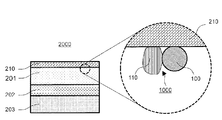
- FIG. 1 is a cross-sectional view showing a schematic configuration of the positive electrode material in the first embodiment.
- FIG. 2 is a cross-sectional view showing a schematic configuration of the battery in the second embodiment.
- FIG. 3A is a diagram showing a Cole-Cole diagram obtained by AC impedance measurement in Example 1 and Comparative Example 1.
- FIG. 3B is a diagram showing Bode diagrams obtained by AC impedance measurement in Example 1 and Comparative Example 1.
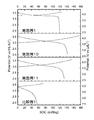
- FIG. 4 is a diagram showing the results of charge and discharge tests of Example 1, Example 10, Example 11, and Comparative Example 1.
- the positive electrode material in Embodiment 1 includes a positive electrode active material and a first solid electrolyte material.
- the first solid electrolyte material includes Li, M, and X.
- M contains at least either a metal element other than Li or a metalloid element.
- X is at least one selected from the group consisting of Cl, Br, and I.
- the first solid electrolyte material may not contain sulfur.
- the first solid electrolyte material may be a material represented by the following composition formula (1).
- ⁇ , ⁇ , and ⁇ are all greater than zero.
- the charge and discharge efficiency of the battery can be improved.
- Patent Document 1 discloses an all-solid-state battery using a sulfide solid electrolyte.
- a layer composed of a mixed material of a sulfide solid electrolyte and a positive electrode active material is used as a positive electrode layer.
- the charge / discharge efficiency is insufficient in the same configuration as that of Patent Document 1 (that is, the battery configuration including a sulfide solid electrolyte).
- Patent Document 2 in an all solid secondary battery, a layer composed of a positive electrode active material as a positive electrode layer or a layer composed of a positive electrode active material and a conductive agent is used, and indium is used as a solid electrolyte layer.
- an all solid secondary battery using a layer composed of a compound containing the compound As a result of investigations by the present inventors, in a configuration similar to that of Patent Document 2 (that is, a battery configuration including a positive electrode layer composed of a positive electrode active material and a solid electrolyte layer composed of a halide containing indium), It was found that the charge and discharge efficiency was insufficient. In particular, it was found that when the average discharge potential of the positive electrode active material is higher by 3.7 V or more with respect to the redox potential of Li metal, the charge and discharge efficiency is lowered.
- the present inventors are activated by using the positive electrode layer as the mixed material. It has been found that not only the utilization of the substance is improved, but also the charge and discharge efficiency is improved. In particular, it has been found that the charge and discharge efficiency is improved when the average discharge potential of the positive electrode active material is higher by 3.7 V or more with respect to the oxidation reduction potential of Li metal.
- an electrochemically stable and favorable interface is formed at the interface between the halide solid electrolyte and the positive electrode active material. It is conceivable that. The formation of a stable and good interface is believed to reduce interface resistance.
- a "metalloid element” is B, Si, Ge, As, Sb, and Te.
- metal element refers to all elements contained in Groups 1 to 12 of the periodic table excluding hydrogen, the above-mentioned metalloid elements, C, N, P, O, S and , Se, and elements contained in all of Groups 13 to 16 except Se. That is, it is an element group that can be a cation when forming an inorganic compound with a halogen compound.
- M may contain Y (yttrium).
- the first solid electrolyte material may contain Y as a metal element.
- the ion conductivity of the first solid electrolyte material can be further improved.
- the charge / discharge efficiency of the battery can be further improved.
- Me Li , at least one metal element and metalloid elements other than Y
- the compound may be a compound represented by the composition formula (m) (valence number of Me).
- any of Mg, Ca, Sr, Ba, Zn, Sc, Al, Ga, Bi, Zr, Hf, Ti, Sn, Ta, Nb, or a mixture thereof may be used.
- the ion conductivity of the first solid electrolyte material can be further improved.
- the first solid electrolyte material may be Li 3 YCl 6 or Li 3 YBr 6 .
- the ion conductivity of the first solid electrolyte material can be further improved.
- the charge / discharge efficiency of the battery can be further improved.
- M may contain an element selected from the group consisting of Ca, Sr, Ba, and Zn, and yttrium.
- the ion conductivity of the first solid electrolyte material can be further improved.
- the charge / discharge efficiency of the battery can be further improved.
- the first solid electrolyte material may be Li 3.1 Y 0.9 Ca 0.1 Cl 6 , Li 3.1 Y 0.9 Sr 0.1 Cl 6 , Li 3.1 Y 0.9 Ba 0. It may be 1 Cl 6 or Li 3.1 Y 0.9 Zn 0.1 Cl 6 .
- the ion conductivity of the first solid electrolyte material can be further improved.
- the charge / discharge efficiency of the battery can be further improved.
- the first solid electrolyte material may be a material represented by the following composition formula (A1). Li 6-3d Y d X 6 Formula (A1) Here, in the composition formula (A1), X is two or more elements selected from the group consisting of Cl, Br, and I.
- composition formula (A1) 0 ⁇ d ⁇ 2 is satisfied.
- the ion conductivity of the first solid electrolyte material can be further improved.
- the charge / discharge efficiency of the battery can be further improved.
- the first solid electrolyte material may be a material represented by the following composition formula (A2). Li 3 YX 6 ⁇ Formula (A2)
- X is two or more elements selected from the group consisting of Cl, Br, and I.
- the ion conductivity of the first solid electrolyte material can be further improved.
- the charge / discharge efficiency of the battery can be further improved.
- the first solid electrolyte material may be a material represented by the following composition formula (A3). Li 3-3 ⁇ Y 1 + ⁇ Cl 6 formula (A3) Here, in the composition formula (A3), 0 ⁇ ⁇ 0.15 is satisfied.
- the ion conductivity of the first solid electrolyte material can be further improved.
- the charge / discharge efficiency of the battery can be further improved.
- the first solid electrolyte material may be a material represented by the following composition formula (A4). Li 3-3 ⁇ Y 1 + ⁇ Br 6 ⁇ Formula (A4) Here, in the composition formula (A4), 0 ⁇ ⁇ 0.25 is satisfied.
- the ion conductivity of the first solid electrolyte material can be further improved.
- the charge / discharge efficiency of the battery can be further improved.
- the first solid electrolyte material may be a material represented by the following composition formula (A5). Li 3-3 ⁇ + a Y 1 + ⁇ -a Me a Cl 6-x-y Br x I y formula (A5)
- Me is at least one selected from the group consisting of Mg, Ca, Sr, Ba, and Zn.
- composition formula (A5) -1 ⁇ ⁇ 2, 0 ⁇ a ⁇ 3, 0 ⁇ (3 ⁇ 3 ⁇ + a), 0 ⁇ (1 + ⁇ -a), 0 ⁇ x ⁇ 6, 0 ⁇ y ⁇ 6, and (x + y) ⁇ 6, Is satisfied.
- the ion conductivity of the first solid electrolyte material can be further improved.
- the charge / discharge efficiency of the battery can be further improved.
- the first solid electrolyte material may be a material represented by the following composition formula (A6). Li 3 -3 ⁇ Y 1 + ⁇ -a Me a Cl 6-x-y Br x I y Formula (A6)
- Me is at least one selected from the group consisting of Al, Sc, Ga, and Bi.
- composition formula (A6) -1 ⁇ ⁇ 1, 0 ⁇ a ⁇ 2, 0 ⁇ (1 + ⁇ -a), 0 ⁇ x ⁇ 6, 0 ⁇ y ⁇ 6, and (x + y) ⁇ 6, Is satisfied.
- the ion conductivity of the first solid electrolyte material can be further improved.
- the charge / discharge efficiency of the battery can be further improved.
- the first solid electrolyte material may be a material represented by the following composition formula (A7). Li 3-3 ⁇ -a Y 1 + ⁇ -a Me a Cl 6-x-y Br x I y Formula (A7)
- Me is at least one selected from the group consisting of Zr, Hf, and Ti.
- composition formula (A7) -1 ⁇ ⁇ 1, 0 ⁇ a ⁇ 1.5, 0 ⁇ (3-3 ⁇ -a), 0 ⁇ (1 + ⁇ -a), 0 ⁇ x ⁇ 6, 0 ⁇ y ⁇ 6, and (x + y) ⁇ 6, Is satisfied.
- the ion conductivity of the first solid electrolyte material can be further improved.
- the charge / discharge efficiency of the battery can be further improved.
- the first solid electrolyte material may be a material represented by the following composition formula (A8). Li 3-3 ⁇ -2a Y 1 + ⁇ -a Me a Cl 6-x-y Br x I y Formula (A8)
- Me is at least one selected from the group consisting of Ta and Nb.
- composition formula (A8) -1 ⁇ ⁇ 1, 0 ⁇ a ⁇ 1.2, 0 ⁇ (3-3 ⁇ -2a), 0 ⁇ (1 + ⁇ -a), 0 ⁇ x ⁇ 6, 0 ⁇ y ⁇ 6, and (x + y) ⁇ 6, Is satisfied.
- the ion conductivity of the first solid electrolyte material can be further improved.
- the charge / discharge efficiency of the battery can be further improved.
- the first solid electrolyte material for example, Li 3 YX 6 , Li 2 MgX 4 , Li 2 FeX 4 , Li (Al, Ga, In) X 4 , Li 3 (Al, Ga, In) X 6 , etc. , May be used.
- the positive electrode active material includes a material having a property of absorbing and releasing metal ions (for example, lithium ions).
- the positive electrode active material may be, for example, a material containing at least one selected from the group consisting of cobalt, nickel, manganese, and aluminum, lithium, and oxygen.
- As the positive electrode active material for example, lithium-containing transition metal oxides (eg, Li (NiCoAl) O 2 , Li (NiCoMn) O 2 , LiCoO 2 , etc.), transition metal fluorides, polyanions and fluorinated polyanions, and Transition metal sulfides, transition metal oxysulfides, transition metal oxynitrides, etc. may be used.
- the manufacturing cost can be reduced and the average discharge voltage can be increased.
- the average charge and discharge potential of the positive electrode active material may be higher than or equal to 3.7 V vs Li / Li + with respect to the redox potential of Li metal.
- the average charge and discharge potential of the positive electrode active material can be determined, for example, from the average voltage when performing charge and discharge when Li removal and insertion of the positive electrode active material is performed using Li metal as a counter electrode.
- the average potential may be determined by adding the potential of the metal lithium of the material used for the counter electrode to the charge / discharge curve. At this time, charging and discharging may be performed at a relatively low current value in consideration of ohmic loss.
- the energy density of the battery can be further enhanced.
- the positive electrode active material may be lithium cobaltate, lithium nickel cobalt manganese oxide, or lithium nickel cobalt aluminum oxide.
- the positive electrode active material may be LiCoO 2 , or Li (NiCoMn) O 2 or Li (NiCoAl) O 2 .
- the charge and discharge efficiency of the battery can be further improved.
- FIG. 1 is a cross-sectional view showing a schematic configuration of positive electrode material 1000 in the first embodiment.
- Positive electrode material 1000 in the first embodiment includes a mixed material of first solid electrolyte particles 100 and positive electrode active material particles 110.
- the first solid electrolyte particle 100 may be a particle made of the first solid electrolyte material according to the first embodiment or the first solid electrolyte material according to the first embodiment as a main component (for example, the whole of the first solid electrolyte particle 100). Particles containing 50% or more (50% by weight or more) in weight ratio to
- the shape of the first solid electrolyte particle 100 in the first embodiment is not particularly limited, and may be, for example, needle-like, spherical, oval-spherical, or the like.
- the shape of the first solid electrolyte particles 100 may be particles.
- the median diameter may be 100 ⁇ m or less. If the median diameter is larger than 100 ⁇ m, there is a possibility that the positive electrode active material particles 110 and the first solid electrolyte particles 100 can not form a good dispersed state in the positive electrode material. Therefore, the charge and discharge characteristics are degraded. In the first embodiment, the median diameter may be 10 ⁇ m or less.
- the positive electrode active material particles 110 and the first solid electrolyte particles 100 can form a good dispersed state.
- the first solid electrolyte particles 100 may be smaller than the median diameter of the positive electrode active material particles 110.
- the first solid electrolyte particles 100 and the positive electrode active material particles 110 can form a better dispersed state in the electrode.
- the median diameter of the positive electrode active material particles 110 may be 0.1 ⁇ m or more and 100 ⁇ m or less.
- the median diameter of the positive electrode active material particles 110 is smaller than 0.1 ⁇ m, there is a possibility that the positive electrode active material particles 110 and the first solid electrolyte particles 100 can not form a good dispersed state in the positive electrode material. As a result, the charge and discharge characteristics of the battery are degraded. In addition, when the median diameter of the positive electrode active material particles 110 is larger than 100 ⁇ m, lithium diffusion in the positive electrode active material particles 110 becomes slow. For this reason, the operation at high power of the battery may be difficult.
- the median diameter of the positive electrode active material particles 110 may be larger than the median diameter of the first solid electrolyte particles 100. Thereby, the positive electrode active material particles 110 and the first solid electrolyte particles 100 can form a good dispersed state.
- positive electrode material 1000 in Embodiment 1 may include a plurality of first solid electrolyte particles 100 and a plurality of positive electrode active material particles 110.
- the content of the first solid electrolyte particles 100 and the content of the positive electrode active material particles 110 in the positive electrode material 1000 according to Embodiment 1 may be the same as or different from each other.
- the first solid electrolyte material may be in contact with the positive electrode active material.
- first solid electrolyte particles 100 and the positive electrode active material particles 110 there is no artificially formed interface layer between the first solid electrolyte particles 100 and the positive electrode active material particles 110, and the first solid electrolyte particles 100 and the positive electrode active material particles 110 are in direct contact with each other. May be formed. That is, different elements which are not contained in any component may not exist between the first solid electrolyte particle 100 and the positive electrode active material particle 110.
- the ion resistance between the positive electrode active material particles 110 and the first solid electrolyte particles 100 can be reduced. Furthermore, the electron resistance in the positive electrode layer can be reduced.
- the first solid electrolyte material in Embodiment 1 can be produced, for example, by the following method.
- LiCl and YCl 3 are prepared in a molar ratio of 3: 1.
- “M”, “Me”, and “X” in the above-described composition formula can be determined by selecting the type of the raw material powder.
- the above-mentioned values “ ⁇ ”, “ ⁇ ”, “ ⁇ ”, “d”, “ ⁇ ”, “a”, “a”, “x” and “y” can be adjusted by adjusting the raw materials, blending ratio and synthesis process. Can be adjusted.
- the raw material powders are thoroughly mixed, the raw material powders are mixed, pulverized and reacted using a method of mechanochemical milling. Alternatively, the raw material powder may be well mixed and then sintered in vacuum.
- composition of the crystal phase in the solid electrolyte material and the crystal structure can be determined by adjusting the reaction method and reaction conditions of the raw material powders.
- FIG. 2 is a cross-sectional view showing a schematic configuration of battery 2000 in the second embodiment.
- Battery 2000 in the second embodiment includes positive electrode 201, electrolyte layer 202, and negative electrode 203.
- Positive electrode 201 includes the positive electrode material (for example, positive electrode material 1000) according to the above-described Embodiment 1.
- the electrolyte layer 202 is disposed between the positive electrode 201 and the negative electrode 203.
- the charge and discharge efficiency of the battery can be improved.
- volume ratio “v: 100 ⁇ v” of the positive electrode active material particles 110 and the first solid electrolyte particles 100 contained in the positive electrode 201 30 ⁇ v ⁇ 95 may be satisfied.
- v ⁇ 30 it may be difficult to secure sufficient energy density of the battery.
- v> 95 operation at high output may be difficult.
- the thickness of the positive electrode 201 may be 10 ⁇ m or more and 500 ⁇ m or less. When the thickness of the positive electrode 201 is smaller than 10 ⁇ m, it may be difficult to secure sufficient energy density of the battery. When the thickness of the positive electrode 201 is greater than 500 ⁇ m, operation at high output may be difficult.
- Battery 2000 in the second embodiment may further include positive electrode current collector 210.
- the positive electrode current collector 210 is a current collector disposed in contact with the positive electrode.
- the first solid electrolyte material (for example, the first solid electrolyte particles 100) may be in contact with the positive electrode current collector 210.
- the charge and discharge efficiency of the battery can be further improved.
- first solid electrolyte particles 100 and the positive electrode active material particles 110 contained in the mixed material in the positive electrode layer may be in contact with the positive electrode current collector 210. As a result, a favorable and low resistance interface can be formed, and charge and discharge efficiency can be improved.
- the electrolyte layer 202 is a layer containing an electrolyte material.
- the electrolyte material is, for example, a solid electrolyte material (that is, a second solid electrolyte material). That is, the electrolyte layer 202 may be a solid electrolyte layer.
- Examples of the second solid electrolyte material contained in the electrolyte layer 202 include the first solid electrolyte material in the first embodiment described above. That is, the electrolyte layer 202 may include the first solid electrolyte material in the first embodiment described above.
- the charge and discharge efficiency of the battery can be further improved.
- the second solid electrolyte material contained in the electrolyte layer 202 may be a halide solid electrolyte material different from the first solid electrolyte material in the first embodiment described above. That is, the electrolyte layer 202 may include a halide solid electrolyte material different from the first solid electrolyte material in the first embodiment described above.
- the output density and charge / discharge efficiency of the battery can be improved.
- the halide solid electrolyte material contained in the electrolyte layer 202 may contain Y as a metal element.
- the output density and charge / discharge efficiency of the battery can be further improved.
- the material shown as the first solid electrolyte material in the above-mentioned Embodiment 1 can be used.
- a sulfide solid electrolyte may be used as the second solid electrolyte material contained in the electrolyte layer 202. That is, the electrolyte layer 202 may include a sulfide solid electrolyte.
- a low potential negative electrode material such as graphite or metallic lithium can be used, and the energy density of the battery can be improved.
- Li 2 S—P 2 S 5 Li 2 S—SiS 2 , Li 2 S—B 2 S 3 , Li 2 S—GeS 2 , Li 3.25 Ge 0.25 P 0. 75 S 4 , Li 10 GeP 2 S 12 , etc.
- LiX (X: F, Cl, Br, I), Li 2 O, MO q , Li p MO q (M: P, Si, Ge, B, Al, Ga, In, Fe, Zn) Any) (p, q: natural number) etc. may be added.
- an oxide solid electrolyte, a solid polymer electrolyte, or a complex hydride solid electrolyte may be used as the second solid electrolyte material contained in the electrolyte layer 202.
- oxide solid electrolyte for example, NASICON-type solid electrolyte represented by LiTi 2 (PO 4 ) 3 and its element substitution product, (LaLi) TiO 3 -based perovskite-type solid electrolyte, Li 14 ZnGe 4 O 16 , Li LISICON-type solid electrolyte represented by 4 SiO 4 , LiGeO 4 and its element substitution product, garnet-type solid electrolyte represented by Li 7 La 3 Zr 2 O 12 and its element substitution product, Li 3 N and its H substitution product , Glass, glass ceramics, etc. to which Li 2 SO 4 , Li 2 CO 3, etc. are added based on Li 3 PO 4 and its N-substituted, Li-BO compound such as LiBO 2 , Li 3 BO 3 etc. Can be used.
- Li-BO compound such as LiBO 2 , Li 3 BO 3 etc.
- a compound of a polymer compound and a lithium salt can be used.
- the polymer compound may have an ethylene oxide structure. By having an ethylene oxide structure, a large amount of lithium salt can be contained, and the ionic conductivity can be further enhanced.
- the lithium salt LiPF 6, LiBF 4, LiSbF 6, LiAsF 6, LiSO 3 CF 3, LiN (SO 2 CF 3) 2, LiN (SO 2 C 2 F 5) 2, LiN (SO 2 CF 3) ( SO 2 C 4 F 9), LiC (SO 2 CF 3) 3, etc., may be used.
- a lithium salt one lithium salt selected therefrom can be used alone. Alternatively, a mixture of two or more lithium salts selected therefrom may be used as the lithium salt.
- the complex hydride solid electrolyte for example, LiBH 4 -LiI, LiBH 4 -P 2 S 5 or the like can be used.
- the solid electrolyte layer may contain the second solid electrolyte material as a main component. That is, the solid electrolyte layer may contain, for example, 50% or more (50% by weight or more) of the second solid electrolyte material in a weight ratio to the entire solid electrolyte layer.
- the charge and discharge characteristics of the battery can be further improved.
- the solid electrolyte layer may contain the second solid electrolyte material, for example, 70% or more (70% by weight or more) in a weight ratio to the entire solid electrolyte layer.
- the charge and discharge characteristics of the battery can be further improved.
- the solid electrolyte layer further contains unavoidable impurities or starting materials used when synthesizing the second solid electrolyte material, as well as byproducts and decomposition products, while containing the second solid electrolyte material as a main component. You may include things, etc.
- the solid electrolyte layer may contain the second solid electrolyte material, for example, 100% (100% by weight) in weight ratio to the whole of the solid electrolyte layer except impurities which are inevitably mixed.
- the charge and discharge characteristics of the battery can be further improved.
- the solid electrolyte layer may be composed of only the second solid electrolyte material.
- the solid electrolyte layer may contain two or more of the materials listed as the second solid electrolyte material.
- the solid electrolyte layer may include a halide solid electrolyte material and a sulfide solid electrolyte material.
- the thickness of the electrolyte layer 202 may be 1 ⁇ m or more and 300 ⁇ m or less. When the thickness of the electrolyte layer 202 is smaller than 1 ⁇ m, the possibility of a short circuit between the positive electrode 201 and the negative electrode 203 is increased. In addition, when the thickness of the electrolyte layer 202 is thicker than 300 ⁇ m, operation at high output may be difficult.
- the negative electrode 203 includes a material having a property of inserting and extracting metal ions (eg, lithium ions).
- the negative electrode 203 contains, for example, a negative electrode active material.
- metal materials, carbon materials, oxides, nitrides, tin compounds, silicon compounds, etc. may be used.
- the metal material may be a single metal.
- the metal material may be an alloy.
- metal materials include lithium metal, lithium alloy, and the like.
- carbon materials include natural graphite, coke, graphitized carbon, carbon fibers, spherical carbon, artificial graphite, amorphous carbon and the like. From the viewpoint of capacity density, silicon (Si), tin (Sn), a silicon compound, or a tin compound may be used.
- the negative electrode 203 may include a solid electrolyte material. According to the above configuration, the lithium ion conductivity in the negative electrode 203 is enhanced, and an operation at high output becomes possible.
- a solid electrolyte material a material exemplified as the electrolyte layer 202 may be used.
- the median diameter of the negative electrode active material particles may be 0.1 ⁇ m or more and 100 ⁇ m or less. If the median diameter of the negative electrode active material particles is smaller than 0.1 ⁇ m, there is a possibility that the negative electrode active material particles and the solid electrolyte material can not form a good dispersed state in the negative electrode. This degrades the charge and discharge characteristics of the battery. In addition, when the median diameter of the negative electrode active material particles is larger than 100 ⁇ m, lithium diffusion in the negative electrode active material particles is delayed. For this reason, the operation at high power of the battery may be difficult.
- the median diameter of the negative electrode active material particles may be larger than the median diameter of the solid electrolyte material. Thereby, a favorable dispersed state of the negative electrode active material particles and the solid electrolyte material can be formed.
- volume ratio “v: 100 ⁇ v” of the negative electrode active material particles to the solid electrolyte material contained in the negative electrode 203 30 ⁇ v ⁇ 95 may be satisfied.
- v ⁇ 30 it may be difficult to secure sufficient energy density of the battery.
- v> 95 operation at high output may be difficult.
- the thickness of the negative electrode 203 may be 10 ⁇ m or more and 500 ⁇ m or less. If the thickness of the negative electrode is smaller than 10 ⁇ m, it may be difficult to secure sufficient energy density of the battery. In addition, when the thickness of the negative electrode is greater than 500 ⁇ m, operation at high output may be difficult.
- a binder may be contained in at least one of the positive electrode 201, the electrolyte layer 202, and the negative electrode 203 for the purpose of improving the adhesion between the particles.
- the binder is used to improve the binding properties of the material constituting the electrode.
- the binder polyvinylidene fluoride, polytetrafluoroethylene, polyethylene, polypropylene, aramid resin, polyamide, polyimide, polyamideimide, polyacrylonitrile, polyacrylic acid, polyacrylic acid methyl ester, polyacrylic acid ethyl ester, poly Acrylic acid hexyl ester, polymethacrylic acid, polymethacrylic acid methyl ester, polymethacrylic acid ethyl ester, polymethacrylic acid hexyl ester, polyvinyl acetate, polyvinyl pyrrolidone, polyether, polyether sulfone, hexafluoropolypropylene, styrene buta
- tetrafluoroethylene, hexafluoroethylene, hexafluoropropylene, perfluoroalkyl vinyl ether, vinylidene fluoride, chlorotrifluoroethylene, ethylene, propylene, pentafluoropropylene, fluoromethyl vinyl ether, acrylic acid, hexadiene Copolymers of two or more selected materials can be used. Moreover, 2 or more types selected from these may be mixed and it may be used as a binding agent.
- At least one of the positive electrode 201 and the negative electrode 203 may contain a conductive aid for the purpose of enhancing the electron conductivity.
- conductive aids include graphites of natural graphite or artificial graphite, carbon blacks such as acetylene black and ketjen black, conductive fibers such as carbon fibers or metal fibers, metal powders such as fluorinated carbon and aluminum , Conductive whiskers such as zinc oxide or potassium titanate, conductive metal oxides such as titanium oxide, conductive polymer compounds such as polyaniline, polypyrrole and polythiophene, and the like can be used.
- a carbon conductive aid is used, cost reduction can be achieved.
- the battery in the second embodiment can be configured as a battery of various shapes such as coin type, cylindrical type, square type, sheet type, button type, flat type, and laminated type.
- Example 1 Preparation of first solid electrolyte material
- the current collector was formed on the positive electrode side by pressure-molding this at a pressure of 360 MPa.
- metal In (thickness 200 ⁇ m) -metal Li (thickness 300 ⁇ m) -metal In (thickness 200 ⁇ m) was laminated on the side opposite to the side in contact with the positive electrode of the solid electrolyte layer.
- a pressure of 40 MPa By pressure-molding this at a pressure of 40 MPa, a laminate composed of a positive electrode, a solid electrolyte layer, and a negative electrode was produced.
- the battery was placed in a 25 ° C. thermostat.
- Constant current charging was performed at a current value of 48 ⁇ A at which 0.05 C rate (20 hours rate) relative to the theoretical capacity of the battery was reached, and charging was terminated at a voltage of 3.6 V.
- the AC impedance test was performed on the battery after the end of charging under the following conditions: “reference voltage: open circuit voltage” “voltage amplitude: 10 mV” “frequency: 1 MHz-0.01 Hz”.
- the battery was discharged at a current value of 48 ⁇ A at which the rate was 0.05 C, and the discharge was finished at a voltage of 1.9 V.
- FIGS. 3A and 3B are diagrams showing the results of AC impedance measurement of Example 1 and Comparative Example 1.
- FIG. 3A and 3B are diagrams showing the results of AC impedance measurement of Example 1 and Comparative Example 1.
- the Cole-Cole diagram obtained from the AC impedance test is shown in FIG. 3A, and the Bode diagram is shown in FIG. 3B.
- resistance components R 1 , R 2 and R 3 constituting three impedance components were observed.
- the frequency of the respective resistance components, 70 kHz or more for R 1, for R 2 is, 500 Hz-70 kHz, for R 3 was 40 MHz-500 Hz.
- the value of these frequencies can recognize the minimum value of the absolute value of the phase of impedance as a boundary of each impedance component.
- an equivalent circuit can be configured to derive the resistance value of each impedance component by fitting.
- R 1 is assigned as bulk resistance in the solid electrolyte layer
- R 2 as interface resistance between the positive electrode active material and the solid electrolyte
- R 3 as interface resistance between the negative electrode active material and the solid electrolyte. Accordingly, the bulk resistance of the solid electrolyte was 288 ⁇ , the interfacial resistance between the positive electrode active material and the solid electrolyte was 13 ⁇ , and the positive electrode interfacial resistance / solid electrolyte bulk resistance ratio (R 2 / R 1 ) was 4.5%. .
- FIG. 4 is a diagram showing the results of charge and discharge tests of Example 1, Example 10, Example 11, and Comparative Example 1.
- the initial discharge capacity was 0.837 mAh.
- the average charge potential in the charge process of the secondary battery in Example 1 is 3.38 V
- the average discharge potential in the discharge process is 3.30 V
- the average charge potential and the average discharge was 3.34 V.
- the average charge potential, average discharge potential, and average charge / discharge potential of the lithium metal of the positive electrode material in Example 1 can be calculated using the values of the metal negative electrode potential (0.62 V) of the In negative electrode material used in Example 1. It was 4.00 VvsLi / Li ⁇ +> , 3.92VvsLi / Li ⁇ +> , 3.96VvsLi / Li ⁇ + >.
- a planetary ball mill manufactured by Fritsch, P-7 type
- the initial discharge capacity was 0.599 mAh, and the initial charge / discharge efficiency was 91.1%.
- the average charge potential in the charge process of the secondary battery in Example 2 is 3.44 V
- the average discharge potential in the discharge process is 3.08 V
- the average charge / discharge potential which is the average value of the average charge potential and the average discharge potential is 3.3. It was 26V.
- the average charge potential, average discharge potential, and average charge / discharge potential of lithium metal of the positive electrode material in Example 2 were 4.06 Vvs Li / Li + , 3.70 Vvs Li / Li + , 3.88 Vvs Li / Li + .
- a planetary ball mill manufactured by Fritsch, P-7 type
- the positive electrode material of Example 3 which consists of mixed material was produced by mixing these with an agate mortar.
- Example 3 The following steps were carried out using the positive electrode material of Example 3 described above and the halide solid electrolyte Li 3 YCl 6 prepared in Example 1 for preparation of a secondary battery.
- the current collector was formed on the positive electrode side by pressure-molding this at a pressure of 360 MPa.
- metal In thickness 200 ⁇ m
- metal Li thickness 300 ⁇ m
- metal In thickness 200 ⁇ m
- the charge / discharge test and the impedance test were conducted in the same manner as in Example 1 except that the test was carried out in an 80 ° C. constant temperature bath.
- the first discharge capacity was 0.256 mAh, and the first charge / discharge efficiency was 81.8%.
- the average charge potential in the charge process of the secondary battery in Example 3 is 3.39 V
- the average discharge potential in the discharge process is 3.18 V
- the average charge / discharge potential which is the average value of the average charge potential and the average discharge potential is 3.3. It was 28V.
- the average charge potential, average discharge potential, and average charge / discharge potential of the metal lithium of the positive electrode material in Example 3 were 4.00 V vs Li / Li + , 3.80 V vs Li / Li + , and 3.90 V vs Li / Li + .
- the first discharge capacity was 0.584 mAh, and the first charge / discharge efficiency was 87.8%.
- the initial discharge capacity was 0.596 mAh, and the initial charge / discharge efficiency was 87.2%.
- the first discharge capacity was 0.619 mAh, and the first charge / discharge efficiency was 85.8%.
- the first discharge capacity was 0.614 mAh, and the first charge / discharge efficiency was 88.1%.
- Example 8 The preparation of the first solid electrolyte material and the preparation of the positive electrode material composed of the mixed material were performed in the same manner as in Example 1.
- the current collector was formed on the positive electrode side by pressure-molding this at a pressure of 360 MPa.
- metal Li 300 ⁇ m in thickness
- a laminate composed of a positive electrode, a solid electrolyte layer, and a negative electrode was produced.
- the charge / discharge test and the impedance test were performed in the same manner as in Example 1 except that the charge termination voltage was 4.2 V and the discharge termination voltage was 2.5 V.
- the initial discharge capacity was 0.338 mAh, and the initial charge / discharge efficiency was 85.4%.
- Example 9 The preparation of the first solid electrolyte material and the preparation of the positive electrode material composed of the mixed material were performed in the same manner as in Example 1.
- a sulfide solid electrolyte material was produced in the same manner as in Example 8.
- the initial discharge capacity was 0.575 mAh, and the initial charge / discharge efficiency was 90.3%.
- Example 10 The first solid electrolyte material was produced in the same manner as in Example 1.
- the first discharge capacity was 0.997 mAh, and the first charge / discharge efficiency was 81.1%.
- the average charge potential in the charge process of the secondary battery in Example 10 is 3.22 V
- the average discharge potential in the discharge process is 3.16 V
- the average charge / discharge potential which is the average value of the average charge potential and the average discharge potential is 3.3. It was 19V.
- the average charge potential, average discharge potential, and average charge / discharge potential of lithium metal of the positive electrode material in Example 10 were 3.84 Vvs Li / Li + , 3.78 Vvs Li / Li + , 3.81 Vvs Li / Li + .
- Example 11 The first solid electrolyte material was produced in the same manner as in Example 1.
- the first discharge capacity was 0.931 mAh, and the first charge / discharge efficiency was 86.3%.
- the average charge potential in the charge process of the secondary battery in Example 11 is 3.22 V
- the average discharge potential in the discharge process is 3.13 V
- the average charge / discharge potential which is the average value of the average charge potential and the average discharge potential is 3.3. It was 18V.
- the average charge potential, average discharge potential, and average charge / discharge potential of lithium metal of the positive electrode material in Example 11 were 3.84 Vvs Li / Li + , 3.75 Vvs Li / Li + , 3.80 Vvs Li / Li + .
- the first discharge capacity was 0.389 mAh, and the first charge / discharge efficiency was 76.5%.
- the average charge potential in the charge process of the secondary battery in Comparative Example 1 is 3.44 V
- the average discharge potential in the discharge process is 2.94 V
- the average charge / discharge potential which is the average value of the average charge potential and the average discharge potential is 3.3. It was 19V.
- the average charge potential, average discharge potential, and average charge / discharge potential of lithium metal of the positive electrode material in Example 2 were 4.06 Vvs Li / Li + , 3.56 Vvs Li / Li + , 3.81 Vvs Li / Li + .
- Comparative Example 2 A sulfide solid electrolyte material was produced in the same manner as in Comparative Example 1.
- Li 2 S—P 2 S 5 and 7 mg of LiCoO 2 as a positive electrode active material were laminated in the insulating outer cylinder in this order.
- a positive electrode layer composed of LiCoO 2 and a solid electrolyte layer composed of Li 2 S—P 2 S 5 were obtained.
- the first discharge capacity was 0.100 mAh, and the first charge / discharge efficiency was 71.3%.
- the initial discharge capacity was 0.214 mAh, and the initial charge / discharge efficiency was 71.5%.
- the positive electrode active material and the first solid electrolyte material were in direct contact with each other.
- the first solid electrolyte material was in direct contact with the positive electrode current collector.
- the value of the resistance component corresponding to the positive electrode interface resistance is as low as 250 ⁇ or less in the configuration of the present battery.
- the value of interface resistance was as high as 400 ⁇ or more.
- the interface resistance is 300 ⁇ or more, for example, when a current of 1 mA flows, the overvoltage becomes as large as 0.3 V or more, and the charge and discharge characteristics are largely degraded.
- Example 1 Compared Example 1 with Comparative Example 3, in the battery using the same first solid electrolyte material, the charge / discharge is achieved by making the positive electrode layer a mixed material of the first solid electrolyte material and the positive electrode active material. It can be seen that the efficiency is greatly improved.
- the inclusion of the first solid electrolyte material in the positive electrode layer to obtain high charge / discharge efficiency is an effect unique to the halide.
- the battery of the present disclosure can be utilized, for example, as an all solid lithium secondary battery.
- positive electrode material 100 first solid electrolyte particle 110 positive electrode active material particle 2000 battery 201 positive electrode 202 electrolyte layer 203 negative electrode 210 positive electrode current collector
Landscapes
- Chemical & Material Sciences (AREA)
- Organic Chemistry (AREA)
- Inorganic Chemistry (AREA)
- General Chemical & Material Sciences (AREA)
- Chemical Kinetics & Catalysis (AREA)
- Electrochemistry (AREA)
- Engineering & Computer Science (AREA)
- Manufacturing & Machinery (AREA)
- Life Sciences & Earth Sciences (AREA)
- Geology (AREA)
- General Physics & Mathematics (AREA)
- Condensed Matter Physics & Semiconductors (AREA)
- Physics & Mathematics (AREA)
- Materials Engineering (AREA)
- Secondary Cells (AREA)
- Battery Electrode And Active Subsutance (AREA)
- Inorganic Compounds Of Heavy Metals (AREA)
- Compounds Of Alkaline-Earth Elements, Aluminum Or Rare-Earth Metals (AREA)
- Conductive Materials (AREA)
Abstract
Un matériau d'électrode positive selon un mode de réalisation de la présente invention contient une substance active d'électrode positive et un premier matériau d'électrolyte solide. Le premier matériau d'électrolyte solide contient Li, M et X. M comprend au moins soit un élément métallique autre que Li, soit un élément métalloïde. X est au moins un élément choisi dans le groupe constitué par Cl, Br et I. Selon la présente invention, l'efficacité de charge-décharge de la batterie peut être améliorée.
Priority Applications (4)
| Application Number | Priority Date | Filing Date | Title |
|---|---|---|---|
| EP18898666.5A EP3736891B1 (fr) | 2018-01-05 | 2018-12-17 | Matériau d'électrode positive et batterie |
| CN201880071935.5A CN111316485B (zh) | 2018-01-05 | 2018-12-17 | 正极材料及电池 |
| JP2019563956A JP7228816B2 (ja) | 2018-01-05 | 2018-12-17 | 正極材料、および、電池 |
| US16/914,329 US11524902B2 (en) | 2018-01-05 | 2020-06-27 | Positive electrode material and battery |
Applications Claiming Priority (2)
| Application Number | Priority Date | Filing Date | Title |
|---|---|---|---|
| JP2018-000433 | 2018-01-05 | ||
| JP2018000433 | 2018-01-05 |
Related Child Applications (1)
| Application Number | Title | Priority Date | Filing Date |
|---|---|---|---|
| US16/914,329 Continuation US11524902B2 (en) | 2018-01-05 | 2020-06-27 | Positive electrode material and battery |
Publications (1)
| Publication Number | Publication Date |
|---|---|
| WO2019135346A1 true WO2019135346A1 (fr) | 2019-07-11 |
Family
ID=67143666
Family Applications (1)
| Application Number | Title | Priority Date | Filing Date |
|---|---|---|---|
| PCT/JP2018/046262 Ceased WO2019135346A1 (fr) | 2018-01-05 | 2018-12-17 | Matériau d'électrode positive et batterie |
Country Status (5)
| Country | Link |
|---|---|
| US (1) | US11524902B2 (fr) |
| EP (1) | EP3736891B1 (fr) |
| JP (1) | JP7228816B2 (fr) |
| CN (1) | CN111316485B (fr) |
| WO (1) | WO2019135346A1 (fr) |
Cited By (18)
| Publication number | Priority date | Publication date | Assignee | Title |
|---|---|---|---|---|
| CN111129429A (zh) * | 2019-12-31 | 2020-05-08 | 国联汽车动力电池研究院有限责任公司 | 一种富锂锰基固态电池电极和二次电池 |
| CN111146425A (zh) * | 2019-12-30 | 2020-05-12 | 国联汽车动力电池研究院有限责任公司 | 一种电极材料包覆固态电解质的方法和该包覆材料和使用该包覆方法制备电极 |
| CN111490243A (zh) * | 2020-05-25 | 2020-08-04 | 蜂巢能源科技有限公司 | 一种锂离子电池用复合正极材料、其制备方法及用途 |
| JPWO2021132406A1 (fr) * | 2019-12-27 | 2021-07-01 | ||
| WO2021132405A1 (fr) * | 2019-12-27 | 2021-07-01 | パナソニックIpマネジメント株式会社 | Électrode et batterie |
| WO2021217045A1 (fr) * | 2020-04-23 | 2021-10-28 | Saint-Gobain Ceramics & Plastics, Inc. | Couche conductrice d'ions et procédés de formation |
| CN115136349A (zh) * | 2020-03-05 | 2022-09-30 | 松下知识产权经营株式会社 | 正极材料及电池 |
| JP2022150892A (ja) * | 2021-03-26 | 2022-10-07 | Tdk株式会社 | 電極活物質層、電極、全固体電池 |
| US20220328869A1 (en) * | 2019-12-27 | 2022-10-13 | Panasonic Intellectual Property Management Co., Ltd. | Battery |
| WO2022244416A1 (fr) * | 2021-05-20 | 2022-11-24 | パナソニックIpマネジメント株式会社 | Matériau actif d'électrode positive composite, matériau d'électrode positive et batterie |
| CN115411217A (zh) * | 2021-05-28 | 2022-11-29 | 国联汽车动力电池研究院有限责任公司 | 一种全固态电池用正极及全固态电池 |
| US11522217B2 (en) | 2020-04-14 | 2022-12-06 | Saint-Gobain Ceramics & Plastics, Inc. | Electrolyte material and methods of forming |
| CN115916703A (zh) * | 2020-06-29 | 2023-04-04 | 松下知识产权经营株式会社 | 正极材料和电池 |
| US11637315B2 (en) | 2020-08-07 | 2023-04-25 | Saint-Gobain Ceramics & Plastics, Inc. | Electrolyte material and methods of forming |
| US11664531B2 (en) | 2020-04-14 | 2023-05-30 | Saint-Gobain Ceramics & Plastics, Inc. | Ion conductive material including complex metal halide, electrolyte including the same, and methods of forming the same |
| US11757099B2 (en) | 2020-04-23 | 2023-09-12 | Saint-Gobain Ceramics & Plastics, Inc. | Ion conductive layer and methods of forming |
| US11848414B2 (en) | 2021-05-17 | 2023-12-19 | Saint-Gobain Ceramics & Plastics, Inc. | Electrolyte material and methods of forming |
| WO2024096108A1 (fr) | 2022-11-04 | 2024-05-10 | 住友化学株式会社 | Matériau de batterie, électrode positive et batterie |
Families Citing this family (33)
| Publication number | Priority date | Publication date | Assignee | Title |
|---|---|---|---|---|
| WO2019135343A1 (fr) | 2018-01-05 | 2019-07-11 | パナソニックIpマネジメント株式会社 | Matériau d'électrolyte solide, et batterie |
| CN111492524B (zh) | 2018-01-05 | 2024-07-12 | 松下知识产权经营株式会社 | 固体电解质材料和电池 |
| EP3736899A4 (fr) | 2018-01-05 | 2021-03-10 | Panasonic Intellectual Property Management Co., Ltd. | Batterie |
| WO2019135328A1 (fr) | 2018-01-05 | 2019-07-11 | パナソニックIpマネジメント株式会社 | Matériau d'électrolyte solide et batterie |
| WO2019135320A1 (fr) | 2018-01-05 | 2019-07-11 | パナソニックIpマネジメント株式会社 | Matériau d'électrolyte solide et batterie |
| CN111279431B (zh) | 2018-01-05 | 2022-03-25 | 松下知识产权经营株式会社 | 固体电解质材料和电池 |
| EP3736821A4 (fr) | 2018-01-05 | 2021-03-10 | Panasonic Intellectual Property Management Co., Ltd. | Matériau d'électrolyte solide, et batterie |
| WO2019135348A1 (fr) | 2018-01-05 | 2019-07-11 | パナソニックIpマネジメント株式会社 | Matériau d'électrolyte solide et batterie |
| JPWO2019135318A1 (ja) | 2018-01-05 | 2021-01-14 | パナソニックIpマネジメント株式会社 | 固体電解質材料、および、電池 |
| CN111557057B (zh) | 2018-01-26 | 2024-04-19 | 松下知识产权经营株式会社 | 正极材料和使用它的电池 |
| WO2019146219A1 (fr) | 2018-01-26 | 2019-08-01 | パナソニックIpマネジメント株式会社 | Matériau d'électrolyte solide et batterie |
| JP7316564B6 (ja) | 2018-01-26 | 2024-02-19 | パナソニックIpマネジメント株式会社 | 電池 |
| WO2019146296A1 (fr) | 2018-01-26 | 2019-08-01 | パナソニックIpマネジメント株式会社 | Matériau d'électrode positive et batterie l'utilisant |
| JP7429870B2 (ja) | 2018-11-29 | 2024-02-09 | パナソニックIpマネジメント株式会社 | 負極材料、および電池 |
| WO2020110479A1 (fr) | 2018-11-29 | 2020-06-04 | パナソニックIpマネジメント株式会社 | Matériau d'électrode négative et batterie |
| WO2021131426A1 (fr) * | 2019-12-27 | 2021-07-01 | パナソニックIpマネジメント株式会社 | Composition d'électrolyte solide et particules d'électrolyte solide |
| US11677097B2 (en) * | 2020-06-02 | 2023-06-13 | Samsung Electronics Co., Ltd. | Solid electrolyte, method of preparing the same, and electrochemical device including the same |
| CN111900461B (zh) * | 2020-07-17 | 2022-06-28 | 国联汽车动力电池研究院有限责任公司 | 一种用于高压全固态电池的含氟固态电解质及其制备方法和应用 |
| CN116133991B (zh) * | 2020-07-22 | 2025-09-23 | 松下知识产权经营株式会社 | 固体电解质材料及使用了其的电池 |
| CN114079055A (zh) * | 2020-08-12 | 2022-02-22 | 恒大新能源技术(深圳)有限公司 | 一体化正极及其制备方法和固态电池 |
| US11928472B2 (en) | 2020-09-26 | 2024-03-12 | Intel Corporation | Branch prefetch mechanisms for mitigating frontend branch resteers |
| CN112086619B (zh) * | 2020-09-29 | 2021-09-28 | 珠海冠宇电池股份有限公司 | 全固态锂电池正极片及其制备方法以及全固态锂电池 |
| JP7239551B2 (ja) * | 2020-12-28 | 2023-03-14 | 本田技研工業株式会社 | リチウムイオン二次電池用電極 |
| US12182317B2 (en) | 2021-02-13 | 2024-12-31 | Intel Corporation | Region-based deterministic memory safety |
| US12504891B2 (en) | 2021-06-24 | 2025-12-23 | Intel Corporation | Zero-redundancy tag storage for bucketed allocators |
| US12235791B2 (en) | 2021-08-23 | 2025-02-25 | Intel Corporation | Loop driven region based frontend translation control for performant and secure data-space guided micro-sequencing |
| CN113782825B (zh) * | 2021-09-13 | 2023-07-21 | 蜂巢能源科技有限公司 | 一种固态电解质材料及其制备方法和应用 |
| CN113889662B (zh) * | 2021-09-29 | 2022-11-29 | 蜂巢能源科技有限公司 | 一种卤化物固态电解质材料及其制备方法和应用 |
| CN114300648A (zh) * | 2021-12-29 | 2022-04-08 | 合肥国轩高科动力能源有限公司 | 一种正极极片及其制备方法与正极极板、固态电池 |
| US20230387453A1 (en) * | 2022-05-25 | 2023-11-30 | GM Global Technology Operations LLC | Solid-state electrolyte materials for all-solid-state batteries |
| CN115275128A (zh) * | 2022-06-09 | 2022-11-01 | 深圳大学 | 一种卤化物固体电解质包覆的正极材料及制备方法与应用 |
| CN118176599B (zh) * | 2022-10-08 | 2026-01-30 | 宁德时代新能源科技股份有限公司 | 正极活性材料及其制备、正极极片及二次电池 |
| KR20250058845A (ko) | 2023-10-23 | 2025-05-02 | 주식회사 엘지에너지솔루션 | 이차전지용 양극 및 이를 포함하는 이차전지 |
Citations (7)
| Publication number | Priority date | Publication date | Assignee | Title |
|---|---|---|---|---|
| JPH08171938A (ja) * | 1994-12-15 | 1996-07-02 | Mitsubishi Cable Ind Ltd | Li二次電池及びその正極 |
| JPH09293516A (ja) * | 1996-04-25 | 1997-11-11 | Matsushita Electric Ind Co Ltd | 全固体リチウム電池 |
| JP2001052733A (ja) * | 1999-08-05 | 2001-02-23 | Matsushita Electric Ind Co Ltd | 全固体リチウム二次電池 |
| JP2006244734A (ja) | 2005-02-28 | 2006-09-14 | National Univ Corp Shizuoka Univ | 全固体型リチウム二次電池 |
| JP2011129312A (ja) | 2009-12-16 | 2011-06-30 | Toyota Motor Corp | 硫化物固体電解質材料の製造方法、硫化物固体電解質材料およびリチウム電池 |
| JP2017059342A (ja) * | 2015-09-15 | 2017-03-23 | トヨタ自動車株式会社 | 全固体電池の製造方法 |
| JP2017224474A (ja) * | 2016-06-15 | 2017-12-21 | 出光興産株式会社 | 正極合材 |
Family Cites Families (64)
| Publication number | Priority date | Publication date | Assignee | Title |
|---|---|---|---|---|
| US4352869A (en) | 1980-12-24 | 1982-10-05 | Union Carbide Corporation | Solid state electrolytes |
| DE3171075D1 (en) | 1980-12-24 | 1985-07-25 | Union Carbide Corp | Composition for use as solid state electrolyte and solid state cell employing same |
| US5714279A (en) | 1989-10-24 | 1998-02-03 | The United States Of America As Represented By The Secretary Of The Navy | Non-aqueous lithium cells |
| JP3151925B2 (ja) | 1992-05-07 | 2001-04-03 | 松下電器産業株式会社 | 非晶質リチウムイオン伝導性固体電解質並びにその合成法 |
| US5506073A (en) | 1992-06-22 | 1996-04-09 | Arizona State University (Arizona Board Of Regents, A Body Corporate Acting On Behalf Of Arizona State University) | Lithium ion conducting electrolytes |
| JPH11238528A (ja) | 1998-02-20 | 1999-08-31 | Ngk Insulators Ltd | リチウム二次電池 |
| KR100513726B1 (ko) | 2003-01-30 | 2005-09-08 | 삼성전자주식회사 | 고체 전해질, 이를 채용한 전지 및 그 고체 전해질의 제조방법 |
| JP5076134B2 (ja) | 2004-06-08 | 2012-11-21 | 国立大学法人東京工業大学 | リチウム電池素子 |
| JP4945182B2 (ja) | 2006-07-13 | 2012-06-06 | シャープ株式会社 | リチウム二次電池及びその製造方法 |
| US7655919B1 (en) * | 2007-11-09 | 2010-02-02 | Radiation Monitoring Devices, Inc. | Cesium and lithium-containing quaternary compound scintillators |
| JP5448038B2 (ja) | 2009-02-27 | 2014-03-19 | 公立大学法人大阪府立大学 | 硫化物固体電解質材料 |
| JP2011065982A (ja) * | 2009-08-18 | 2011-03-31 | Seiko Epson Corp | リチウム電池用電極体及びリチウム電池 |
| JP5594364B2 (ja) | 2010-06-29 | 2014-09-24 | トヨタ自動車株式会社 | 硫化物固体電解質材料の製造方法、リチウム固体電池の製造方法 |
| KR20140003514A (ko) | 2011-01-27 | 2014-01-09 | 이데미쓰 고산 가부시키가이샤 | 알칼리 금속 황화물과 도전제의 복합 재료 |
| JP5721540B2 (ja) | 2011-05-30 | 2015-05-20 | 株式会社オハラ | リチウムイオン伝導性無機物質 |
| JP2013073791A (ja) | 2011-09-28 | 2013-04-22 | Panasonic Corp | 非水電解質二次電池 |
| WO2014010043A1 (fr) | 2012-07-11 | 2014-01-16 | トヨタ自動車株式会社 | Batterie tout électronique et procédé de production correspondant |
| FR3004467B1 (fr) | 2013-04-12 | 2016-05-27 | Saint-Gobain Cristaux Et Detecteurs | Fabrication d'une elpasolite stoechiometrique |
| FR3005207B1 (fr) | 2013-04-24 | 2016-06-24 | Batscap Sa | Electrode positive pour batterie lithium |
| JP6003831B2 (ja) | 2013-06-28 | 2016-10-05 | トヨタ自動車株式会社 | 硫化物固体電解質材料、硫化物ガラス、リチウム固体電池、および、硫化物固体電解質材料の製造方法 |
| JPWO2015011937A1 (ja) | 2013-07-25 | 2017-03-02 | 三井金属鉱業株式会社 | リチウムイオン電池用硫化物系固体電解質 |
| JP2015032529A (ja) | 2013-08-06 | 2015-02-16 | トヨタ自動車株式会社 | 硫化物系固体電解質 |
| PL3043411T3 (pl) | 2013-09-02 | 2019-08-30 | Mitsubishi Gas Chemical Company, Inc. | Akumulator ze stałym elektrolitem |
| JP6187069B2 (ja) | 2013-09-13 | 2017-08-30 | 富士通株式会社 | リチウム電池 |
| KR102203952B1 (ko) | 2013-10-04 | 2021-01-18 | 내셔날 인스티튜트 오브 어드밴스드 인더스트리얼 사이언스 앤드 테크놀로지 | 비정질성 (리튬) 니오븀 황화물 또는 (리튬) 티타늄 니오븀 황화물 |
| WO2015102729A2 (fr) * | 2013-10-18 | 2015-07-09 | University Of Florida Research Foundation, Inc. | Batteries nucléaires optoélectroniques basées sur la nanoencapsulation de radionucléides et photodiodes organiques |
| CN104953175A (zh) | 2014-03-28 | 2015-09-30 | 比亚迪股份有限公司 | 一种锂离子电池固体电解质及其制备方法和锂离子电池 |
| JP5873533B2 (ja) | 2014-07-16 | 2016-03-01 | 三井金属鉱業株式会社 | リチウムイオン電池用硫化物系固体電解質 |
| US9608288B2 (en) | 2014-07-17 | 2017-03-28 | Samsung Electronics Co., Ltd. | Positive electrode for lithium ion secondary battery and lithium ion secondary battery including the same |
| US10559849B2 (en) | 2014-11-10 | 2020-02-11 | Murata Manufacturing Co., Ltd. | Glass-ceramic, lithium ion conductor, battery, electronic device, and method for producing electrode |
| JP6222134B2 (ja) | 2015-02-25 | 2017-11-01 | トヨタ自動車株式会社 | 硫化物固体電解質材料、電池および硫化物固体電解質材料の製造方法 |
| JP6672848B2 (ja) | 2015-03-10 | 2020-03-25 | Tdk株式会社 | ガーネット型又はガーネット型類似の結晶構造を有するリチウムイオン伝導性酸化物セラミックス材料 |
| US10218032B2 (en) | 2015-03-10 | 2019-02-26 | Tdk Corporation | Li-ion conductive oxide ceramic material including garnet-type or similar crystal structure |
| US10446872B2 (en) | 2015-08-04 | 2019-10-15 | Samsung Electronics Co., Ltd. | Solid electrolyte and lithium battery including the same |
| JP2017091955A (ja) | 2015-11-16 | 2017-05-25 | 旭化成株式会社 | リチウムイオン伝導体及びこれを用いたリチウムイオン電池 |
| JP2017091953A (ja) | 2015-11-16 | 2017-05-25 | 旭化成株式会社 | リチウムイオン伝導体及びこれを用いたリチウムイオン電池 |
| CN105254184A (zh) | 2015-11-27 | 2016-01-20 | 宁波大学 | 一种稀土离子掺杂的Li3YCl6微晶玻璃及其制备方法 |
| JP6611949B2 (ja) | 2015-12-22 | 2019-11-27 | トヨタ・モーター・ヨーロッパ | 固体電解質用材料 |
| US11245131B2 (en) | 2015-12-25 | 2022-02-08 | Samsung Electronics Co., Ltd. | Solid electrolyte and lithium battery including the same |
| JP6881892B2 (ja) | 2015-12-25 | 2021-06-02 | 三星電子株式会社Samsung Electronics Co.,Ltd. | 固体電解質、全固体電池及び固体電解質の製造方法 |
| JP6409794B2 (ja) * | 2016-02-18 | 2018-10-24 | トヨタ自動車株式会社 | 正極合剤の製造方法、正極の製造方法、及び全固体リチウムイオン二次電池の製造方法 |
| JP6748344B2 (ja) | 2016-02-26 | 2020-09-02 | 富士通株式会社 | 全固体電池 |
| CN109074893A (zh) | 2016-03-08 | 2018-12-21 | 株式会社村田制作所 | 固体电解质、全固体电池、固体电解质的制造方法及全固体电池的制造方法 |
| JP6658127B2 (ja) | 2016-03-10 | 2020-03-04 | セイコーエプソン株式会社 | 固体電解質、固体電解質の製造方法およびリチウムイオン電池 |
| CN105680048B (zh) | 2016-04-05 | 2019-05-17 | 惠州亿纬锂能股份有限公司 | 一种包含氮掺杂石墨烯的正极、其制备方法及采用该正极的锂电池 |
| KR20180132122A (ko) | 2016-04-05 | 2018-12-11 | 메사추세츠 인스티튜트 오브 테크놀로지 | 리튬 금속 전극 및 그의 배터리 |
| CN114976223B (zh) | 2016-08-04 | 2024-09-10 | 松下知识产权经营株式会社 | 固体电解质材料和电池 |
| CN108258358B (zh) | 2016-12-28 | 2022-11-11 | 松下知识产权经营株式会社 | 电池 |
| WO2019135348A1 (fr) | 2018-01-05 | 2019-07-11 | パナソニックIpマネジメント株式会社 | Matériau d'électrolyte solide et batterie |
| CN111295719B (zh) | 2018-01-05 | 2022-03-29 | 松下知识产权经营株式会社 | 固体电解质材料和电池 |
| CN111492524B (zh) | 2018-01-05 | 2024-07-12 | 松下知识产权经营株式会社 | 固体电解质材料和电池 |
| JPWO2019135317A1 (ja) | 2018-01-05 | 2021-01-14 | パナソニックIpマネジメント株式会社 | 固体電解質材料、および、電池 |
| EP3736899A4 (fr) | 2018-01-05 | 2021-03-10 | Panasonic Intellectual Property Management Co., Ltd. | Batterie |
| CN111279431B (zh) | 2018-01-05 | 2022-03-25 | 松下知识产权经营株式会社 | 固体电解质材料和电池 |
| WO2019135320A1 (fr) | 2018-01-05 | 2019-07-11 | パナソニックIpマネジメント株式会社 | Matériau d'électrolyte solide et batterie |
| JPWO2019135318A1 (ja) | 2018-01-05 | 2021-01-14 | パナソニックIpマネジメント株式会社 | 固体電解質材料、および、電池 |
| WO2019135328A1 (fr) | 2018-01-05 | 2019-07-11 | パナソニックIpマネジメント株式会社 | Matériau d'électrolyte solide et batterie |
| EP3736821A4 (fr) | 2018-01-05 | 2021-03-10 | Panasonic Intellectual Property Management Co., Ltd. | Matériau d'électrolyte solide, et batterie |
| EP3736820A4 (fr) | 2018-01-05 | 2021-03-10 | Panasonic Intellectual Property Management Co., Ltd. | Matériau d'électrolyte solide, et batterie |
| WO2019135343A1 (fr) | 2018-01-05 | 2019-07-11 | パナソニックIpマネジメント株式会社 | Matériau d'électrolyte solide, et batterie |
| WO2019146219A1 (fr) | 2018-01-26 | 2019-08-01 | パナソニックIpマネジメント株式会社 | Matériau d'électrolyte solide et batterie |
| CN111566757B (zh) | 2018-01-26 | 2022-08-12 | 松下知识产权经营株式会社 | 固体电解质材料和电池 |
| WO2019146294A1 (fr) | 2018-01-26 | 2019-08-01 | パナソニックIpマネジメント株式会社 | Batterie |
| CN113169371A (zh) * | 2018-06-07 | 2021-07-23 | 陈霖 | 用于锂电池的部件的材料和方法 |
-
2018
- 2018-12-17 CN CN201880071935.5A patent/CN111316485B/zh active Active
- 2018-12-17 EP EP18898666.5A patent/EP3736891B1/fr active Active
- 2018-12-17 WO PCT/JP2018/046262 patent/WO2019135346A1/fr not_active Ceased
- 2018-12-17 JP JP2019563956A patent/JP7228816B2/ja active Active
-
2020
- 2020-06-27 US US16/914,329 patent/US11524902B2/en active Active
Patent Citations (7)
| Publication number | Priority date | Publication date | Assignee | Title |
|---|---|---|---|---|
| JPH08171938A (ja) * | 1994-12-15 | 1996-07-02 | Mitsubishi Cable Ind Ltd | Li二次電池及びその正極 |
| JPH09293516A (ja) * | 1996-04-25 | 1997-11-11 | Matsushita Electric Ind Co Ltd | 全固体リチウム電池 |
| JP2001052733A (ja) * | 1999-08-05 | 2001-02-23 | Matsushita Electric Ind Co Ltd | 全固体リチウム二次電池 |
| JP2006244734A (ja) | 2005-02-28 | 2006-09-14 | National Univ Corp Shizuoka Univ | 全固体型リチウム二次電池 |
| JP2011129312A (ja) | 2009-12-16 | 2011-06-30 | Toyota Motor Corp | 硫化物固体電解質材料の製造方法、硫化物固体電解質材料およびリチウム電池 |
| JP2017059342A (ja) * | 2015-09-15 | 2017-03-23 | トヨタ自動車株式会社 | 全固体電池の製造方法 |
| JP2017224474A (ja) * | 2016-06-15 | 2017-12-21 | 出光興産株式会社 | 正極合材 |
Non-Patent Citations (3)
| Title |
|---|
| BOHNSACK, ANDREAS ET AL.: "Ternary Halides of the A3 MX 6 Type. VI. Ternary Chlorides of the Rare-Earth Elements with Lithium, Li3 MC 16(M=Tb-Lu, Y, Sc) : Synthesis, Crystal Structures, and Ionic Motion", JOURNAL OF INORGANIC AND GENERAL CHEMISTRY, vol. 623, 1997, pages 1067 - 1073, XP055600040, DOI: 10.1002/chin.199739018 * |
| BOHNSACK, ANDREAS ET AL.: "Ternary Halides of the A3 MX 6Type. VII. The Bromides Li3MBr6(M=Sm-Lu, Y) : Synthesis, Crystal Structure, and Ionic Mobility", JOURNAL OF INORGANIC AND GENERAL CHEMISTRY, vol. 623, 1997, pages 1352 - 1356, XP055600030, DOI: 10.1002/zaac.19976230905 * |
| TOMITA, YASUMASA ET AL.: "Lithium-ion conductivity of heterogeneous elements doped Li3InBr6", LECTURE ABSTRACTS OF 70TH ANNIVERSARY MEETING OF THE FOUNDATION OF ELECTROCHEMICAL SOCIETY OF JAPAN, 2003, pages 384, XP009521475 * |
Cited By (41)
| Publication number | Priority date | Publication date | Assignee | Title |
|---|---|---|---|---|
| JPWO2021132405A1 (fr) * | 2019-12-27 | 2021-07-01 | ||
| CN114846643B (zh) * | 2019-12-27 | 2026-01-13 | 松下知识产权经营株式会社 | 电极及电池 |
| JPWO2021132406A1 (fr) * | 2019-12-27 | 2021-07-01 | ||
| WO2021132405A1 (fr) * | 2019-12-27 | 2021-07-01 | パナソニックIpマネジメント株式会社 | Électrode et batterie |
| WO2021132406A1 (fr) * | 2019-12-27 | 2021-07-01 | パナソニックIpマネジメント株式会社 | Électrode et batterie |
| US20220320481A1 (en) * | 2019-12-27 | 2022-10-06 | Panasonic Intellectual Property Management Co., Ltd. | Electrode and battery |
| EP4084119A4 (fr) * | 2019-12-27 | 2023-04-19 | Panasonic Intellectual Property Management Co., Ltd. | Électrode et batterie |
| US20220328869A1 (en) * | 2019-12-27 | 2022-10-13 | Panasonic Intellectual Property Management Co., Ltd. | Battery |
| CN114846642A (zh) * | 2019-12-27 | 2022-08-02 | 松下知识产权经营株式会社 | 电极及电池 |
| CN114846643A (zh) * | 2019-12-27 | 2022-08-02 | 松下知识产权经营株式会社 | 电极及电池 |
| EP4084116A4 (fr) * | 2019-12-27 | 2023-04-19 | Panasonic Intellectual Property Management Co., Ltd. | Électrode et batterie |
| CN111146425A (zh) * | 2019-12-30 | 2020-05-12 | 国联汽车动力电池研究院有限责任公司 | 一种电极材料包覆固态电解质的方法和该包覆材料和使用该包覆方法制备电极 |
| CN111129429A (zh) * | 2019-12-31 | 2020-05-08 | 国联汽车动力电池研究院有限责任公司 | 一种富锂锰基固态电池电极和二次电池 |
| CN115136349A (zh) * | 2020-03-05 | 2022-09-30 | 松下知识产权经营株式会社 | 正极材料及电池 |
| US11522217B2 (en) | 2020-04-14 | 2022-12-06 | Saint-Gobain Ceramics & Plastics, Inc. | Electrolyte material and methods of forming |
| US11664531B2 (en) | 2020-04-14 | 2023-05-30 | Saint-Gobain Ceramics & Plastics, Inc. | Ion conductive material including complex metal halide, electrolyte including the same, and methods of forming the same |
| US11973186B2 (en) | 2020-04-14 | 2024-04-30 | Saint-Gobain Ceramics & Plastics, Inc. | Ion conductive material including halide material, electrolyte including the same, and methods of forming the same |
| US11978847B2 (en) | 2020-04-14 | 2024-05-07 | Saint-Gobain Ceramics & Plastics, Inc. | Ion conductive material, electrolyte including ion conductive material, and methods of forming |
| US11532816B2 (en) | 2020-04-23 | 2022-12-20 | Saint-Gobain Ceramics & Plastics, Inc. | Ion conductive layer including binder material |
| US11735732B2 (en) | 2020-04-23 | 2023-08-22 | Saint-Gobain Ceramics & Plastics, Inc. | Ion conductive layer and methods of forming |
| EP4712189A1 (fr) * | 2020-04-23 | 2026-03-18 | Saint-Gobain Ceramics&Plastics, Inc. | Couche conductrice d'ions et procédés de formation |
| US12095089B2 (en) | 2020-04-23 | 2024-09-17 | Saint-Gobain Ceramics & Plastics, Inc. | Ion conductive layer and methods of forming |
| EP4104233A4 (fr) * | 2020-04-23 | 2024-08-21 | Saint-Gobain Ceramics & Plastics Inc. | Couche conductrice d'ions et procédés de formation |
| US11984598B2 (en) | 2020-04-23 | 2024-05-14 | Saint-Gobain Ceramics & Plastics, Inc. | Ion conductive layer and methods of forming |
| WO2021217045A1 (fr) * | 2020-04-23 | 2021-10-28 | Saint-Gobain Ceramics & Plastics, Inc. | Couche conductrice d'ions et procédés de formation |
| US11757099B2 (en) | 2020-04-23 | 2023-09-12 | Saint-Gobain Ceramics & Plastics, Inc. | Ion conductive layer and methods of forming |
| WO2021238152A1 (fr) * | 2020-05-25 | 2021-12-02 | 蜂巢能源科技有限公司 | Matériau d'électrode positive composite pour batterie au lithium-ion, son procédé de préparation et son utilisation |
| CN111490243B (zh) * | 2020-05-25 | 2022-03-11 | 蜂巢能源科技有限公司 | 一种锂离子电池用复合正极材料、其制备方法及用途 |
| CN111490243A (zh) * | 2020-05-25 | 2020-08-04 | 蜂巢能源科技有限公司 | 一种锂离子电池用复合正极材料、其制备方法及用途 |
| CN115916703A (zh) * | 2020-06-29 | 2023-04-04 | 松下知识产权经营株式会社 | 正极材料和电池 |
| US11978849B2 (en) | 2020-08-07 | 2024-05-07 | Saint-Gobain Ceramics & Plastics, Inc. | Electrolyte material and methods of forming |
| US11637315B2 (en) | 2020-08-07 | 2023-04-25 | Saint-Gobain Ceramics & Plastics, Inc. | Electrolyte material and methods of forming |
| JP2022150892A (ja) * | 2021-03-26 | 2022-10-07 | Tdk株式会社 | 電極活物質層、電極、全固体電池 |
| JP7722827B2 (ja) | 2021-03-26 | 2025-08-13 | Tdk株式会社 | 電極活物質層、電極、全固体電池 |
| US12308384B2 (en) | 2021-05-17 | 2025-05-20 | Saint-Gobain Ceramics & Plastics, Inc. | Electrolyte material and methods of forming |
| US11848414B2 (en) | 2021-05-17 | 2023-12-19 | Saint-Gobain Ceramics & Plastics, Inc. | Electrolyte material and methods of forming |
| WO2022244416A1 (fr) * | 2021-05-20 | 2022-11-24 | パナソニックIpマネジメント株式会社 | Matériau actif d'électrode positive composite, matériau d'électrode positive et batterie |
| EP4343883A4 (fr) * | 2021-05-20 | 2025-08-13 | Panasonic Ip Man Co Ltd | Matériau actif d'électrode positive composite, matériau d'électrode positive et batterie |
| JPWO2022244416A1 (fr) * | 2021-05-20 | 2022-11-24 | ||
| CN115411217A (zh) * | 2021-05-28 | 2022-11-29 | 国联汽车动力电池研究院有限责任公司 | 一种全固态电池用正极及全固态电池 |
| WO2024096108A1 (fr) | 2022-11-04 | 2024-05-10 | 住友化学株式会社 | Matériau de batterie, électrode positive et batterie |
Also Published As
| Publication number | Publication date |
|---|---|
| EP3736891A4 (fr) | 2021-03-03 |
| EP3736891B1 (fr) | 2024-07-31 |
| US20200328464A1 (en) | 2020-10-15 |
| JP7228816B2 (ja) | 2023-02-27 |
| CN111316485B (zh) | 2023-10-20 |
| EP3736891A1 (fr) | 2020-11-11 |
| JPWO2019135346A1 (ja) | 2021-01-07 |
| US11524902B2 (en) | 2022-12-13 |
| CN111316485A (zh) | 2020-06-19 |
Similar Documents
| Publication | Publication Date | Title |
|---|---|---|
| JP7228816B2 (ja) | 正極材料、および、電池 | |
| US11670775B2 (en) | Positive electrode material and battery | |
| JP7316564B2 (ja) | 電池 | |
| JP7182196B2 (ja) | 電池 | |
| JP7199038B2 (ja) | 負極材料およびそれを用いた電池 | |
| JP7316571B2 (ja) | 固体電解質材料、および、電池 | |
| JP7249562B2 (ja) | 電池 | |
| JP7145439B6 (ja) | 電池 | |
| US11637287B2 (en) | Positive electrode material and battery using same | |
| WO2019146236A1 (fr) | Matériau d'électrode positive et batterie | |
| WO2019135323A1 (fr) | Batterie | |
| WO2019146308A1 (fr) | Matériau d'électrode et batterie | |
| JP2023106424A (ja) | 固体電解質材料、および、電池 | |
| WO2019146219A1 (fr) | Matériau d'électrolyte solide et batterie | |
| WO2019135320A1 (fr) | Matériau d'électrolyte solide et batterie | |
| WO2019146292A1 (fr) | Matériau d'électrode positive et batterie utilisant celui-ci | |
| WO2020174868A1 (fr) | Matériau d'électrode positive, et batterie | |
| CN115088096A (zh) | 正极材料及电池 |
Legal Events
| Date | Code | Title | Description |
|---|---|---|---|
| 121 | Ep: the epo has been informed by wipo that ep was designated in this application |
Ref document number: 18898666 Country of ref document: EP Kind code of ref document: A1 |
|
| ENP | Entry into the national phase |
Ref document number: 2019563956 Country of ref document: JP Kind code of ref document: A |
|
| NENP | Non-entry into the national phase |
Ref country code: DE |
|
| ENP | Entry into the national phase |
Ref document number: 2018898666 Country of ref document: EP Effective date: 20200805 |