WO2019142331A1 - Système et procédé de prédiction de défaillance - Google Patents
Système et procédé de prédiction de défaillance Download PDFInfo
- Publication number
- WO2019142331A1 WO2019142331A1 PCT/JP2018/001648 JP2018001648W WO2019142331A1 WO 2019142331 A1 WO2019142331 A1 WO 2019142331A1 JP 2018001648 W JP2018001648 W JP 2018001648W WO 2019142331 A1 WO2019142331 A1 WO 2019142331A1
- Authority
- WO
- WIPO (PCT)
- Prior art keywords
- period
- failure
- prediction
- time
- fault
- Prior art date
- Legal status (The legal status is an assumption and is not a legal conclusion. Google has not performed a legal analysis and makes no representation as to the accuracy of the status listed.)
- Ceased
Links
Images

Classifications
-
- G—PHYSICS
- G06—COMPUTING OR CALCULATING; COUNTING
- G06F—ELECTRIC DIGITAL DATA PROCESSING
- G06F11/00—Error detection; Error correction; Monitoring
- G06F11/07—Responding to the occurrence of a fault, e.g. fault tolerance
- G06F11/0703—Error or fault processing not based on redundancy, i.e. by taking additional measures to deal with the error or fault not making use of redundancy in operation, in hardware, or in data representation
- G06F11/0766—Error or fault reporting or storing
-
- G—PHYSICS
- G06—COMPUTING OR CALCULATING; COUNTING
- G06N—COMPUTING ARRANGEMENTS BASED ON SPECIFIC COMPUTATIONAL MODELS
- G06N20/00—Machine learning
-
- G—PHYSICS
- G06—COMPUTING OR CALCULATING; COUNTING
- G06F—ELECTRIC DIGITAL DATA PROCESSING
- G06F11/00—Error detection; Error correction; Monitoring
- G06F11/07—Responding to the occurrence of a fault, e.g. fault tolerance
- G06F11/0703—Error or fault processing not based on redundancy, i.e. by taking additional measures to deal with the error or fault not making use of redundancy in operation, in hardware, or in data representation
- G06F11/0706—Error or fault processing not based on redundancy, i.e. by taking additional measures to deal with the error or fault not making use of redundancy in operation, in hardware, or in data representation the processing taking place on a specific hardware platform or in a specific software environment
-
- G—PHYSICS
- G06—COMPUTING OR CALCULATING; COUNTING
- G06F—ELECTRIC DIGITAL DATA PROCESSING
- G06F11/00—Error detection; Error correction; Monitoring
- G06F11/07—Responding to the occurrence of a fault, e.g. fault tolerance
- G06F11/0703—Error or fault processing not based on redundancy, i.e. by taking additional measures to deal with the error or fault not making use of redundancy in operation, in hardware, or in data representation
- G06F11/0751—Error or fault detection not based on redundancy
- G06F11/0754—Error or fault detection not based on redundancy by exceeding limits
- G06F11/0757—Error or fault detection not based on redundancy by exceeding limits by exceeding a time limit, i.e. time-out, e.g. watchdogs
-
- G—PHYSICS
- G06—COMPUTING OR CALCULATING; COUNTING
- G06F—ELECTRIC DIGITAL DATA PROCESSING
- G06F11/00—Error detection; Error correction; Monitoring
- G06F11/07—Responding to the occurrence of a fault, e.g. fault tolerance
- G06F11/0703—Error or fault processing not based on redundancy, i.e. by taking additional measures to deal with the error or fault not making use of redundancy in operation, in hardware, or in data representation
- G06F11/0751—Error or fault detection not based on redundancy
- G06F11/0754—Error or fault detection not based on redundancy by exceeding limits
- G06F11/076—Error or fault detection not based on redundancy by exceeding limits by exceeding a count or rate limit, e.g. word- or bit count limit
-
- G—PHYSICS
- G06—COMPUTING OR CALCULATING; COUNTING
- G06F—ELECTRIC DIGITAL DATA PROCESSING
- G06F11/00—Error detection; Error correction; Monitoring
- G06F11/07—Responding to the occurrence of a fault, e.g. fault tolerance
- G06F11/0703—Error or fault processing not based on redundancy, i.e. by taking additional measures to deal with the error or fault not making use of redundancy in operation, in hardware, or in data representation
- G06F11/0766—Error or fault reporting or storing
- G06F11/0778—Dumping, i.e. gathering error/state information after a fault for later diagnosis
-
- G—PHYSICS
- G06—COMPUTING OR CALCULATING; COUNTING
- G06F—ELECTRIC DIGITAL DATA PROCESSING
- G06F11/00—Error detection; Error correction; Monitoring
- G06F11/07—Responding to the occurrence of a fault, e.g. fault tolerance
- G06F11/0703—Error or fault processing not based on redundancy, i.e. by taking additional measures to deal with the error or fault not making use of redundancy in operation, in hardware, or in data representation
- G06F11/0793—Remedial or corrective actions
-
- G—PHYSICS
- G06—COMPUTING OR CALCULATING; COUNTING
- G06Q—INFORMATION AND COMMUNICATION TECHNOLOGY [ICT] SPECIALLY ADAPTED FOR ADMINISTRATIVE, COMMERCIAL, FINANCIAL, MANAGERIAL OR SUPERVISORY PURPOSES; SYSTEMS OR METHODS SPECIALLY ADAPTED FOR ADMINISTRATIVE, COMMERCIAL, FINANCIAL, MANAGERIAL OR SUPERVISORY PURPOSES, NOT OTHERWISE PROVIDED FOR
- G06Q10/00—Administration; Management
- G06Q10/04—Forecasting or optimisation specially adapted for administrative or management purposes, e.g. linear programming or "cutting stock problem"
Definitions
- the present invention relates to a system for diagnosing the presence or absence of a sign of failure in a device and predicting the failure of the device.
- Preventive maintenance records the operation history and operation status of equipment and facilities, and based on this information, performs maintenance such as parts replacement before a failure occurs, and prevents in advance the entire equipment and facilities from stopping. It is As a system to predict the future failure based on the operation history of the device, cut out the part for a certain period of time before the failure occurrence from the operation log and associate it with the failure, and perform machine learning using the corresponding operation log and failure information as input It has been proposed to create a model and use it to predict future obstacles.
- Patent Document 1 discloses a technique for adjusting an operation log period (failure indication period) used for learning for each case of a failure.
- parameters used for operation control of an image forming apparatus are stored as time-series information, classified against failure patterns in a predetermined period for each failure type, and classified, failure prediction Technology is disclosed.
- the usage status of the device based on the operation log of the device Based on the numerical data representing the tendency and the type of the fault, the time difference and the period length by the fault type of the operation log (fault symptom) to be extracted for use in learning are determined .
- Patent Document 1 it is possible to absorb the time difference in which the symptom of the failure occurs for each failure type.
- Patent Document 1 is based on the premise that in a device whose operation state is implicitly similar to each other, a failure occurs after a predetermined period of time from a omen. Therefore, there is a limit to the response when there is a variation in the period from the symptom of the failure to the occurrence of the actual failure.
- An object of the present invention is to provide a technique for improving the prediction accuracy of the occurrence of a failure of a device or facility.
- a fault prediction system includes a storage device that stores data in a writable and readable manner, and a processor that executes processing of a software program using data stored in the storage device.
- the storage device stores operation log information including the past operation state of the prediction target device and failure record information including failure content and failure occurrence date and time regarding the failure that has occurred in the prediction target device in the past, and the processor
- the period from the point when going back by a predetermined first period length from the reference point of time corresponding to the predicted execution point to the reference point of time is taken as the sign detection period If a failure occurs from the reference time to the second period after the period until the end of the period, the period from the reference time to the failure occurrence time is the prediction target period, and the reference time is sequentially
- the feature quantity based on the operation log information in the sign detection period is used as an explanatory variable, and from the reference time to the failure time point whether there is a specific event in the operation log information corresponding to the failure occurrence in the failure record information in the
- the learning is performed in consideration of a period until the occurrence of the failure of the device.
- the variation in the period from the sign to the occurrence of the failure can be learned, and the sign detection accuracy can be improved.
- the period is divided by the state change point of the device due to maintenance or the statistical change point of the variable, and the machine is divided by each period
- the predictive detection accuracy can be improved by providing a simple means for characterizing the time-series change of the operation log to be learned.
- FIG. 1 It is a block diagram of a fault prediction system by this embodiment. It is a figure which shows the hardware constitutions for implement
- FIG. 1 is a block diagram of a failure prediction system according to the present embodiment.
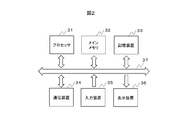
- FIG. 2 is a diagram showing a hardware configuration for realizing the failure prediction system shown in FIG.
- the processor 31, the main memory 32, the storage device 33, the communication device 34, the input device 35, and the display device 36 are bus 37 It is conceivable to implement with connected hardware.
- the storage device 33 stores data in a writable and readable manner, and the storage device 33 implements the device operation log storage unit 105 and the failure maintenance record storage unit 106 shown in FIG.
- the processor 31 reads the data stored in the storage device 33 into the main memory 32 and executes the processing of the software program.
- the processor 31 causes the failure model learning unit 107 shown in FIG.
- the unit 109 and the determination unit 111 are realized.
- the communication device 34 can transmit the information processed by the processor 31 via a wire or wirelessly.
- the input device 35 includes a keyboard, a mouse and the like, and is for inputting information.
- the operation log 120 and the maintenance record 121 of the devices 101-1 to 101-n are input through the communication device 34 and the input device 35.
- the display device 36 includes output means such as a display, and can display and output a prediction model, a maintenance list, and the like.
- Each of the devices 101-1 to 101-n has a function of collecting operation logs, storing them internally, and transmitting them (not shown).
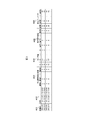
- FIG. 3 is a diagram showing an example of operation logs collected by the devices 101-1 to 101-n shown in FIG.
- the operation logs collected by the devices 101-1 to 101-n shown in FIG. 1 include the past operation states of the devices 101-1 to 101-n, and for example, as shown in FIG. It is composed of a device ID 401 which can uniquely identify the device, and various record information accompanying the operation recorded corresponding to the date and time 402 when the operation log is recorded.
- the various record information accompanying the operation includes the number of occurrences 403 for each specific event which is a detection record such as malfunction of the device, the value 404 of the sensor monitoring the operation of the device, the history 405 where the operator or user operated the device, It comprises the setting parameter 406 of the device at that time and the like.
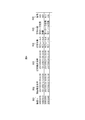
- FIG. 4 is a diagram showing an example of the failure maintenance record 104 shown in FIG.
- fault record information including fault contents regarding faults and fault occurrence dates, such as fault occurrence dates and times of maintenance and repairs, etc., occurring in the devices 101-1 to 101-n is recorded. .
- a maintenance worker records it as a work record, and as shown in FIG. 4, a device ID 501 which can uniquely identify the device, date and time of failure 502, maintenance The date and time of implementation 503, the target 504 for which maintenance has been performed due to a failure, the content of maintenance 505, and the like are included. Since maintenance content may be handwritten by a worker at a maintenance site, fluctuations or omissions in notation may occur. Further, there are also cases where it is possible to easily classify and collect faults and maintenance contents in data processing by writing symbols 506 according to the maintenance target 504 and the maintenance content 505.
- the operation log 120 collected from the devices 101-1 to 101-n is recorded and accumulated in the device operation log recording unit 105.
- the operation log recorded and accumulated in the device operation log recording unit 105 includes prediction of failure, machine learning for extracting features of failure sign, prediction of failure occurrence probability by a model of failure generated by machine learning, and Used for two purposes.
- the operation log 123 for machine learning is input to the failure model learning unit 107, and learning for generating a failure prediction model is performed.
- the operation log 122 for predicting the failure occurrence probability is input to the failure prediction unit 109.
- the maintenance record 121 collected from the devices 101-1 to 101-n or the maintenance worker is recorded and accumulated in the failure maintenance record storage unit 106.
- the maintenance record 121 recorded and accumulated in the fault maintenance record storage unit 106 is classified into a fault occurrence date 124, fault content 125, and maintenance date 126, and is input to the fault model learning unit 107.
- the failure model learning unit 107 whether there is a symptom related to a failure in the operation log collected from the devices 101-1 to 101-n prior to the failure occurring in the devices 101-1 to 101-n is correlated Do machine learning to analyze
- Machine learning generates a model that classifies a state according to an operation log that is input as an explanatory variable, using a failure or a specific event as a teacher signal (target variable).
- a model is represented by a polynomial called regression equation, and a target variable is predicted by inputting data corresponding to an explanatory variable into the polynomial.
- learning is performed on the operation log of the device implicitly as a normal case, and an abnormality is caused by the statistical distance of the state space when abnormal data is input.
- determining a model that classifies a state according to an operation log that is input as an explanatory variable using a failure or a specific event as a teacher signal (target variable).
- the failure model learning unit 107 sets a period from the time point when going back by a predetermined first period length from the reference time point corresponding to the predicted execution time to perform maintenance to the reference time point as the sign detection time period. If the failure does not occur until after a predetermined second period length, the period until the second period length is taken as the target period for the period until the failure occurrence point if the failure occurs after the reference period to the second period length Sequentially change the feature amount based on the operation log information in the sign detection period as an explanatory variable, and from the reference time to the presence / absence of the specific event occurrence in the operation log information corresponding to the failure occurrence in the failure record information of the prediction target period By performing machine learning with the failure index value based on the period length up to the occurrence point as the objective variable, it is possible to predict future failure in the devices 101-1 to 101-n. It will produce a failure prediction model.
- the failure prediction model 108 generated by machine learning in the failure model learning unit 107 is input to the failure prediction unit 109.
- the failure prediction unit 109 also receives the prediction operation log 122 output from the device operation log recording unit 105, and based on the failure prediction model 108 and the prediction operation log 122, the failure prediction unit 109 in the devices 101-1 to 101-n Predict the rate of failure.
- it may be a model that predicts the occurrence of failure as a target variable, or may predict the occurrence rate of a specific event related to the failure.
- the failure occurrence rate 110 predicted by the failure prediction unit 109 is input to the determination unit 111, and threshold determination is performed in the determination 111, and the maintenance target device list 112 is output as a list of devices with high possibility of failure.
- the apparatus operation log recording unit 105, the failure maintenance record storage unit 106, and the failure model learning unit 107 described above will be described in detail below.
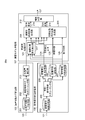
- FIG. 5 is a diagram showing the configuration of the apparatus operation log recording unit 105, the failure maintenance record storage unit 106, and the failure model learning unit 107 shown in FIG.
- the device operation log storage unit 105 shown in FIG. 1 includes a device operation log storage unit 201, a device operation log screening unit 202, and a feature quantity calculation unit 213.
- the operation log 120 collected from the devices 101-1 to 101-n is recorded in the device operation log storage unit 201 of the device operation log recording unit 105.
- the machine operation log of a machine is collected if there are duplicates or deletions due to the operation status of the machine and the collection route, and items with almost no records or inappropriate data in analysis There is.
- the apparatus operation log screening unit 202 cleans (removes, corrects, complements) these inappropriate data.
- the fault maintenance record storage unit 106 shown in FIG. 1 includes a fault maintenance information storage unit 203, a fault maintenance information log screening unit 204, a fault occurrence date storage unit 205, and a fault content storage unit. It has 206 and maintenance implementation date storage part 207.
- the maintenance record 121 collected from the devices 101-1 to 101-n or the maintenance worker is stored in the fault maintenance information storage unit 203 of the fault maintenance record storage unit 106. Then, similarly to the device log operation recording unit 105, the failure maintenance information screening unit 204 cleanses (removes, corrects, complements) the failure maintenance data.
- the fault maintenance information is not continuous data but an event, it is classified into the fault occurrence date, fault content, and the record of the maintenance implementation date, and the fault occurrence date storage unit 205, fault content storage unit 206, and maintenance implementation date storage unit It is stored in 207 respectively.
- the maintenance date 126 is input to the failure model learning unit 107.
- the failure model learning unit 107 shown in FIG. 1 includes the device state change detection unit 207, the period-specific explanatory variable generation unit 208, the period change objective variable generation unit 209, and the machine learning unit 212. Have.
- the period variable objective variable generation unit 209 generates the objective variable 211 based on the operation log or the failure maintenance information related to the failure, and the period-specific explanatory variable generation unit At 208, an explanatory variable 210 of failure sign is generated based on the learning operation log prior to the failure.
- the data period of the operation log for learning 123, failure occurrence date and time information 124, failure content information 125 and maintenance date and time information 126 for generating the explanatory variable 210 and the objective variable 211 is determined according to the state change of the device. Is distinctive.
- the state change of the equipment means that when the operation of the operation log changes due to the consumption or damage of the mechanical parts and electronic parts that constitute the apparatus before the failure of the apparatus occurs (predictive phenomenon), Or, when the device actually fails or when maintenance is performed and parts are replaced.
- the device state change is detected by the device state change detection unit 207.
- the device state change detection unit 207 refers to the learning operation log 123, and when the statistical property changes, performs period setting of the explanatory variable and the objective variable using the failure occurrence date information 124 and the maintenance implementation date information 126. .
- the period-specific explanatory variable generation unit 208 and the period fluctuation objective variable generation unit 209 respectively generate the explanatory variable 210 and the objective variable 211 based on the information of the device state change detected by the device state change detection unit 207, and perform machine learning. Input to the part 212.
- the machine learning unit 212 generates and outputs the failure prediction model 108 using the input explanatory variables 210 and the target variables 211.
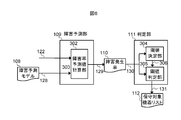
- FIG. 6 is a diagram showing the configuration of failure prediction unit 109 and determination unit 111 shown in FIG.
- the failure prediction unit 109 shown in FIG. 1 includes a failure rate prediction value calculation unit 302 as shown in FIG.
- the failure prediction unit 109 uses the prediction operation log 122 output from the device operation log recording unit 105 to the failure prediction model 108 obtained by the machine learning in the failure model learning unit 107 in the failure rate prediction value calculation unit 302. By inputting, the occurrence rate of failure is predicted for each of the devices 110-1 to 110-n.
- the failure prediction model 108 is configured by a polynomial, and the failure occurrence rate 110 is calculated by inputting the operation log 122 for prediction that is feature-characterized by the feature amount computing unit 213.
- the determination unit 111 shown in FIG. 1 includes a threshold determination unit 305 and a threshold determination unit 304 as shown in FIG.
- the threshold determination unit 305 compares the failure occurrence rate 110 calculated by the failure prediction unit 109 with a threshold to extract devices exceeding the threshold, and is used as a maintenance target device list 112 for performing preventive maintenance. Output.
- the threshold may be input to the system in advance, or may be determined by the threshold determination unit 304 based on the number of extracted targets such as targets.
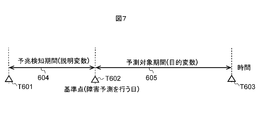
- FIG. 7 is a view showing a concept of a period for learning a sign of failure in the failure prediction system shown in FIG.
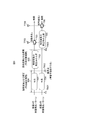
- FIG. 8 is a diagram showing the relationship between the occurrence of a failure in a device and the incidence of a specific event related to the failure.
- the purpose is to predict whether failure will occur in the period from the reference point T602 to T603 using the device operation log of the period from the reference point T602 to T601.
- the period 604 from T601 to T602 past the reference point may be referred to as a sign detection period.
- a period 605 from T602 to T603 in the future from the reference point may be referred to as a prediction target period.
- the occurrence 701 of the specific event related to the failure occurrence and the failure occurrence 703 continuously occur after the prediction 701 appears in the operation log. It shows the case that occurs.
- the occurrence rate of the specific event related to the occurrence of the failure does not increase for a while after the occurrence of the prediction 704 in the operation log on the basis of the reference point T602 at which the failure is predicted.
- An example is shown in which an increase in the incidence rate of a specific event 705 and a failure occurrence 706 occur thereafter.
- machine learning is performed with the fixed period 604 from the reference point T601 to the reference point T602 as a precursor detection period and the fixed period 605 from the reference point T602 to the predetermined period T603 as the prediction target period.
- the main period of the device B although there is a sign, the increase in the incidence rate of the specific event does not occur in the prediction period, and the learning accuracy is deteriorated.
- the target variable is generated in consideration of the time from the reference point to the failure occurrence in the prediction target period.
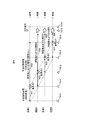
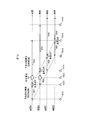
- FIG. 9 is a diagram for explaining a method of generating a target variable in consideration of the time from the reference point to the occurrence of a failure in the period to be predicted shown in FIG.
- the failure model learning unit 107 in this embodiment sequentially changes the reference points so as to set the sign detection period and the prediction target period while shifting the period for one device. It is conceivable to perform machine learning repeatedly.
- Period 1 is an example in which learning is performed with a period 801 from T810 to T811 as a sign detection period and a period 802 from T811 to T814 as a prediction target period.
- the length of the period 801 may be referred to as a first period length
- the length of the period 802 may be referred to as a second period length.
- Period 2 is an example in which learning is performed with a period 803 from T811 to T812 as a sign detection period and a period from T811 to T816 as a prediction target period. That is, in this example, the length of the period 803 may be referred to as a first period length. At this time, a failure has occurred at the timing of T815 in the prediction target period. Since the device state changes significantly before and after the failure, it is not appropriate to perform learning with data of a period including the device failure. So, in this form, learning is performed by making the period from T812 to T815 before a failure generation into a prediction object period. That is, in this example, the length of the period 804 from T811 to T815 may be referred to as a second period length.
- the lengths of the periods 804, 806, 808 until occurrence of a failure are different from the respective reference points T812, T813, T814.
- a coefficient is set to the incidence rate of the specific event which is the objective variable according to the length of the period from the reference point to the failure occurrence, and as the period from the reference point to the failure occurrence is shorter Learn to be highly valued.
- failure risk is calculated as a large value if the period until failure is short. It becomes possible.
- FIG. 10 is a diagram showing an example of explanatory variables used in the failure model learning unit 107 shown in FIG.
- the device ID 1001 which can uniquely identify the device and the period identifier 1002 which can uniquely identify the period are the keys.
- the feature quantified operation log items are expressed.
- the occurrence rate of a specific event (event A occurrence rate 1003), the recording of a specific action (action B activation count 1004), environment information (in-casing temperature 1005), and a sensor for monitoring a device Values (Sensor 1 Value 1006) and the like.
- FIG. 11 is a diagram showing an example of the objective variable used in the failure model learning unit 107 shown in FIG.
- the objective variables used by the failure model learning unit 107 shown in FIG. 1 are, as shown in FIG. 11, a device ID 1101 which can uniquely identify the device and a period identifier 1102 which can uniquely identify the period as keys. Items 1103 to 1106 related to the fault related to it are represented.
- the target of prediction is the occurrence probability of a specific event, the incidence 1103 of a specific event related to a fault, but the coefficient of the objective variable according to the period 1104 to the fault in the prediction target period
- a target variable 1106 serving as a failure index value is calculated as a failure risk. Zero period until failure occurrence indicates a case where no failure occurs in the forecast target period of the period.
- condition of the failure is generated by changing the coefficient of the objective variable according to the period up to the failure in the prediction target period and calculating the failure index value by multiplying the occurrence rate of the event by the coefficient. It becomes possible to study according to
- Period 1 to period 4 of period identifier 1101 in FIG. 11 correspond to period 1 to period 4 in FIG.
- the occurrence rate 1103 “0.1” of the learning target is used as it is as the target variable 1106.
- the coefficient 1105 of the objective variable determined according to the period 1104 until the failure occurrence is set as “1.2”. Then, “0.24” obtained by multiplying the occurrence rate 1103 “0.2” of the failure to be predicted by the coefficient 1105 of the objective variable is used as the objective variable serving as the failure risk.
- the coefficient 1105 of the objective variable determined according to the period 1104 until the occurrence of failure is set larger as the period until the occurrence of failure is shorter. As a result, the risk of failure can be evaluated more correctly even if the period from the sign to the occurrence of the failure varies.
- FIG. 12 is a diagram for explaining a method of generating an explanatory variable and a target variable when maintenance is performed in the sign detection period or the prediction target period shown in FIG. 7.
- T910 to T911 are the precursor detection period 901
- T911 to T915 are the prediction target period 902, but maintenance is performed at T912 in the prediction target period.
- T911 to T913 are the precursor detection period
- maintenance is performed at T912 in the precursor detection period.
- the state of the apparatus largely changes before and after maintenance. Therefore, in any of the sign detection period and the prediction target period, those including maintenance in the learning data cause deterioration in the learning accuracy. Therefore, in the present embodiment, the maintenance implementation time at which maintenance was performed in response to the failure is recorded in failure record information, and the information at the maintenance implementation time is utilized for generation of the objective variable and explanatory variable.
- the operation log information of the predictive detection period and the prediction target period including the maintenance implementation time in is excluded from machine learning. Thus, noise can be reduced and the accuracy of machine learning can be improved by excluding information of a period in which the state of the apparatus changes due to maintenance execution from machine learning.
- the explanatory variable whose period identifier 1002 is indicated by the period 5 to the period 8 corresponds to the period 5 to the period 8 in FIG. Since maintenance is performed in the sign detection period for period 6, the information of period 6 is excluded from the learning data.
- the explanatory variable whose period identifier 1102 is indicated by the period 5 to the period 8 corresponds to the period 5 to the period 8 in FIG.
- Information on period 5 is excluded from the learning data because maintenance is performed for period 5 in the prediction target period.
- the explanatory variable and the objective variable perform learning in pairs, and when the explanatory variable or the objective variable is excluded by maintenance, the paired objective variable or the explanatory variable is also included. At the same time, it is necessary to exclude it from the training data.
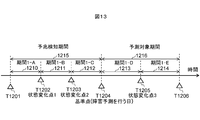
- FIG. 13 is a diagram for explaining the sub-period division of the sign detection period and the prediction target period in the failure prediction system shown in FIG.
- the auxiliary period division is to further divide the sign detection period or the prediction target period into one or more, add a unique identifier, and perform machine learning in each period.
- the sign detection period 1215 indicated by T1201 to T1204 includes a period 1-A: 1210 from T1201 to T1202; a period 1-B from T1202 to T1203; a period 1-C from T1203 to T1204; Divided into three precursor detection assistance periods, and the prediction target period 1216 indicated by T 1204 to T 1206 is divided into a period 1-D of T 1204 to T 1205; a period 1-E of T 1205 to T 1206; The example divided
- the sign detection period and the prediction target period are divided into a plurality of parts, and machine learning is performed as separate information to reflect changes in the appearance of the operation log in the sign detection period and the prediction target period in the failure prediction model.
- the accuracy of failure prediction can be improved.
- the division number is not particularly limited to one or more, and only the sign detection period may be divided and only the prediction target period may be divided.
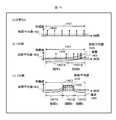
- FIG. 14 is a diagram for explaining a method of dividing the sign detection period and the prediction target period into auxiliary periods in the failure prediction system shown in FIG. 1, (a) shows no division, (b) shows two divisions, (C) shows an example of division into three.
- the data shows the case where a particular event 1402 occurs discretely six times during the period of interest 1401.
- the target data is a continuous value such as a sensor output.
- the failure model learning unit 107 does not perform period division.
- the period is divided into three: period A; 1401 A, period B; 1401 B, and period C; 1401 C, with the period label as a key and the explanatory variable or
- the period label as a key and the explanatory variable or
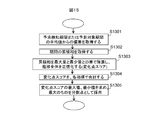
- FIG. 15 is a flowchart for describing a method of dividing the sign detection period and the prediction target period into the auxiliary periods at statistical change points in the failure prediction system shown in FIG.
- step 1301 an average value of the sign detection period or the prediction target period of the target operation log item The deviation from is obtained (step 1301).
- the increasing part is expressed as positive
- the decreasing part is expressed as negative.
- a transition (accumulated sum) obtained by sequentially adding log item values in the period from the top to the end of the period is acquired (step 1302).
- the cumulative sum has a positive slope when it is increasing and a negative slope when it is decreasing, so the point at which the operation log turns upward or downward is observed as a peak.
- the cumulative sum transition is normalized for each log item (divided by the difference between the maximum value and the minimum value) in order to calculate the state change of the device by summing the target log items (step 1303) . This prevents the contribution of each log item from becoming unbalanced in the change point score.
- the added cumulative sum is the change point score in the section, and a positive or negative peak is adopted as a division point according to the number of divisions (step 1305).
- division points are determined by extracting the peak of the absolute value of the change point score in order from the largest.
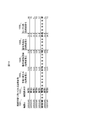
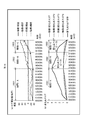
- FIG. 16 is a diagram showing an example in which the period division is performed using the index obtained from the operation log, (a) shows the transition of the log item value (deviation), (b) shows the change point score It is a figure which shows transition.
- the horizontal axis indicates the date, and the transition from March 19, 16 to May 28, 16 is shown.
- the log item values show a constant transition from March 19 to April 22, 2004, and thereafter, each index rises. Then, from about 14 May, it has further increased.
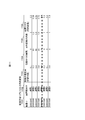
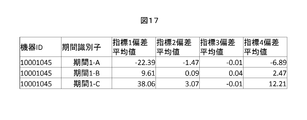
- FIG. 17 is a diagram showing the average value of the deviation in each section of each log item serving as the index shown in FIG.
- the deviation of index 1 takes a large negative value in period 1-A, a positive value in section 1-B, and a large positive value in section 1-C. This indicates that the index 1 tends to increase in this period.
- the deviation average value of the index 3 does not change significantly in each period, and the index indicates that there is no tendency to increase or decrease in this period.
- the operation log information is subjected to statistical processing that removes noises and errors from the operation log information and takes out objective feature quantities.
- a good failure prediction model can be obtained, and failure prediction accuracy can be improved. It is also conceivable to divide the sign detection period and the prediction target period not into a plurality of periods at a statistical change point, but to divide them at a failure occurrence time or a maintenance implementation time.
- the variation in the period from the omen to the occurrence of the failure can be reflected in the failure prediction model. It is possible to improve the accuracy.
- 101-1 to 101-n device, 104: failure maintenance record, 105: device operation log recording unit, 106: failure maintenance record storage unit, 107: failure model learning unit, 109: failure prediction unit, 111: determination unit
Landscapes
- Engineering & Computer Science (AREA)
- Theoretical Computer Science (AREA)
- Physics & Mathematics (AREA)
- General Physics & Mathematics (AREA)
- General Engineering & Computer Science (AREA)
- Quality & Reliability (AREA)
- Software Systems (AREA)
- Business, Economics & Management (AREA)
- Computing Systems (AREA)
- Medical Informatics (AREA)
- Evolutionary Computation (AREA)
- Mathematical Physics (AREA)
- Data Mining & Analysis (AREA)
- Computer Vision & Pattern Recognition (AREA)
- Artificial Intelligence (AREA)
- Human Resources & Organizations (AREA)
- Strategic Management (AREA)
- Economics (AREA)
- Operations Research (AREA)
- Development Economics (AREA)
- Entrepreneurship & Innovation (AREA)
- Marketing (AREA)
- Game Theory and Decision Science (AREA)
- Tourism & Hospitality (AREA)
- General Business, Economics & Management (AREA)
- Health & Medical Sciences (AREA)
- Biomedical Technology (AREA)
- Debugging And Monitoring (AREA)
- Testing And Monitoring For Control Systems (AREA)
- Management, Administration, Business Operations System, And Electronic Commerce (AREA)
Abstract
La présente invention concerne un apprentissage automatique dans lequel : la période entre un instant de référence, qui correspond à un instant de prédiction de défaillance, et un instant antérieur, qui est une première durée prédéterminée plus tôt que l'instant de référence, est définie comme une période de détection de signe d'avertissement ; si aucune défaillance ne s'est produite pendant la période entre l'instant de référence et un instant ultérieur, qui est une deuxième durée prédéterminée plus tard que l'instant de référence, alors cette période est définie comme une période de prédiction et, le cas contraire, si une défaillance s'est produite pendant la période entre l'instant de référence et l'instant ultérieur, alors la période entre l'instant de référence et l'instant auquel la défaillance s'est produite est définie comme une période de prédiction ; l'instant de référence est ensuite décalé séquentiellement ; une quantité caractéristique basée sur des informations de journal d'opération obtenues pendant la période de détection de signe d'avertissement est définie en tant que variable explicative ; et une valeur d'indice de défaillance est définie en tant que variable de réponse, ladite valeur d'indice de défaillance étant basée sur le fait que l'occurrence d'un événement spécifique est ou non indiquée par des informations de journal d'opération associées à une occurrence de défaillance indiquée par des informations d'enregistrement de défaillance obtenues pendant la période de prédiction, et également en se basant sur la durée entre l'instant de référence et l'instant auquel la défaillance s'est produite.
Priority Applications (4)
| Application Number | Priority Date | Filing Date | Title |
|---|---|---|---|
| US16/959,630 US11403160B2 (en) | 2018-01-19 | 2018-01-19 | Fault predicting system and fault prediction method |
| JP2019565664A JP7003159B2 (ja) | 2018-01-19 | 2018-01-19 | 障害予測システムおよび障害予測方法 |
| PCT/JP2018/001648 WO2019142331A1 (fr) | 2018-01-19 | 2018-01-19 | Système et procédé de prédiction de défaillance |
| CN201880081401.0A CN111542846B (zh) | 2018-01-19 | 2018-01-19 | 故障预测系统和故障预测方法 |
Applications Claiming Priority (1)
| Application Number | Priority Date | Filing Date | Title |
|---|---|---|---|
| PCT/JP2018/001648 WO2019142331A1 (fr) | 2018-01-19 | 2018-01-19 | Système et procédé de prédiction de défaillance |
Publications (1)
| Publication Number | Publication Date |
|---|---|
| WO2019142331A1 true WO2019142331A1 (fr) | 2019-07-25 |
Family
ID=67301383
Family Applications (1)
| Application Number | Title | Priority Date | Filing Date |
|---|---|---|---|
| PCT/JP2018/001648 Ceased WO2019142331A1 (fr) | 2018-01-19 | 2018-01-19 | Système et procédé de prédiction de défaillance |
Country Status (4)
| Country | Link |
|---|---|
| US (1) | US11403160B2 (fr) |
| JP (1) | JP7003159B2 (fr) |
| CN (1) | CN111542846B (fr) |
| WO (1) | WO2019142331A1 (fr) |
Cited By (16)
| Publication number | Priority date | Publication date | Assignee | Title |
|---|---|---|---|---|
| CN111209131A (zh) * | 2019-12-30 | 2020-05-29 | 航天信息股份有限公司广州航天软件分公司 | 一种基于机器学习确定异构系统的故障的方法和系统 |
| JP2021043891A (ja) * | 2019-09-13 | 2021-03-18 | 株式会社日立製作所 | ストレージシステム及びその制御方法 |
| JP2021064099A (ja) * | 2019-10-11 | 2021-04-22 | キヤノン株式会社 | 情報処理装置、情報処理システム、学習モデルの生成方法、異常予測方法、およびプログラム |
| CN113093702A (zh) * | 2021-03-31 | 2021-07-09 | 上海明略人工智能(集团)有限公司 | 故障数据的预测方法和装置、电子设备和存储介质 |
| JP2021105928A (ja) * | 2019-12-27 | 2021-07-26 | 富士通株式会社 | 学習データ生成方法、学習データ生成プログラムおよび情報処理装置 |
| JP2021117554A (ja) * | 2020-01-22 | 2021-08-10 | 株式会社ジェイテクト | 歩行支援機器保守システム及びサーバシステム |
| JP2021149849A (ja) * | 2020-03-23 | 2021-09-27 | 富士通株式会社 | 障害原因特定システム、障害原因特定方法および障害原因特定プログラム |
| WO2021193396A1 (fr) * | 2020-03-27 | 2021-09-30 | 住友重機械工業株式会社 | Dispositif et système de gestion de pelle, dispositif de support de pelle et pelle |
| EP3965373A1 (fr) | 2020-09-02 | 2022-03-09 | Fujitsu Limited | Procédé de détection d'anomalie et programme de détection d'anomalie |
| CN115263587A (zh) * | 2021-04-29 | 2022-11-01 | 三一汽车制造有限公司 | 作业机械的发动机维保提示方法、装置和电子设备 |
| US11500368B2 (en) * | 2020-05-21 | 2022-11-15 | Tata Consultancy Services Limited | Predicting early warnings of an operating mode of equipment in industry plants |
| CN117615057A (zh) * | 2023-11-22 | 2024-02-27 | 中电金信数字科技集团有限公司 | 故障检测方法、装置、系统、计算机设备和存储介质 |
| CN118350677A (zh) * | 2024-06-13 | 2024-07-16 | 江苏细元科技有限公司 | 一种基于机器学习的停电事件异常分析系统及方法 |
| JP2024100928A (ja) * | 2019-12-10 | 2024-07-26 | キヤノン株式会社 | 情報処理方法、情報処理装置、生産システム、物品の製造方法、プログラム、記録媒体 |
| CN118395303A (zh) * | 2024-04-24 | 2024-07-26 | 深圳职业技术大学 | 故障预测方法、模型训练方法及电子设备、可读存储介质 |
| US20240290475A1 (en) * | 2023-02-17 | 2024-08-29 | Glassbeam, Inc. | Predicting failure of a medical device part using operational and non-operational data |
Families Citing this family (27)
| Publication number | Priority date | Publication date | Assignee | Title |
|---|---|---|---|---|
| US11935646B1 (en) * | 2018-03-26 | 2024-03-19 | Glassbeam, Inc. | Predicting medical device failure based on operational log data |
| US11275646B1 (en) * | 2019-03-11 | 2022-03-15 | Marvell Asia Pte, Ltd. | Solid-state drive error recovery based on machine learning |
| EP3761240B1 (fr) | 2019-07-01 | 2026-01-07 | Palantir Technologies Inc. | Objets de données prédictifs |
| KR102367831B1 (ko) * | 2019-07-23 | 2022-02-28 | 엘지전자 주식회사 | 운전 로그 및 인공지능모델을 이용하여 고장 진단을 하는 인공 지능 기기 및 그 방법 |
| US12248859B2 (en) * | 2019-08-07 | 2025-03-11 | Carnegie Mellon University | Integrated circuit defect diagnosis using machine learning |
| CN110765619B (zh) * | 2019-10-28 | 2023-05-30 | 中国人民解放军63921部队 | 基于多状态参数的无失效屏蔽泵故障短期多步预测方法 |
| JP7335154B2 (ja) * | 2019-12-17 | 2023-08-29 | 株式会社東芝 | 情報処理装置、情報処理方法、およびプログラム |
| WO2022071615A1 (fr) * | 2020-09-29 | 2022-04-07 | 제이엠사이트 주식회사 | Procédé de prédiction de défaillances et son appareil de mise en œuvre |
| JP7331269B2 (ja) * | 2020-10-08 | 2023-08-22 | 三菱電機ビルソリューションズ株式会社 | 機器不具合兆候通知装置 |
| CN112731903B (zh) * | 2020-11-27 | 2022-05-10 | 成都飞机工业(集团)有限责任公司 | 一种全电传飞控故障的诊断系统及方法 |
| CN112465237B (zh) * | 2020-12-02 | 2023-04-07 | 浙江正泰电器股份有限公司 | 基于大数据分析的故障预测方法、装置、设备和存储介质 |
| CN112861256B (zh) * | 2021-01-08 | 2023-12-19 | 北京空间飞行器总体设计部 | 一种寿命预示和维修预估方法 |
| DE102021104735A1 (de) * | 2021-02-26 | 2022-09-01 | Bundesdruckerei Gmbh | Log-Daten Analyse |
| US11620162B2 (en) * | 2021-05-24 | 2023-04-04 | Capital One Services, Llc | Resource allocation optimization for multi-dimensional machine learning environments |
| CN113094200B (zh) * | 2021-06-07 | 2021-08-24 | 腾讯科技(深圳)有限公司 | 一种应用程序的故障预测方法和装置 |
| CN115455217B (zh) * | 2021-06-09 | 2026-03-24 | 浙江宇视科技有限公司 | 数据检索预测方法、装置、电子设备及可读介质 |
| US11500712B1 (en) * | 2021-06-14 | 2022-11-15 | EMC IP Holding Company LLC | Method and system for intelligent proactive error log activation |
| CN114490303B (zh) * | 2022-04-07 | 2022-07-12 | 阿里巴巴达摩院(杭州)科技有限公司 | 故障根因确定方法、装置和云设备 |
| CN116820813A (zh) * | 2022-07-06 | 2023-09-29 | 中移(苏州)软件技术有限公司 | 一种故障事件预测方法及装置、存储介质 |
| CN115543665A (zh) * | 2022-09-23 | 2022-12-30 | 超聚变数字技术有限公司 | 一种内存可靠性评估方法、装置及存储介质 |
| EP4428782A4 (fr) * | 2023-01-24 | 2025-01-15 | Rakuten Group, Inc. | Système de détermination d'anomalie, procédé de détermination d'anomalie et programme |
| CN116189868B (zh) * | 2023-03-02 | 2024-12-17 | 杭州电子科技大学信息工程学院 | 一种基于大数据的医疗设备管理方法和系统 |
| CN116489687B (zh) * | 2023-03-31 | 2023-11-17 | 宁夏回族自治区水利工程建设中心 | 一种基于5g通信技术的水利智慧监测系统及方法 |
| CN117131992B (zh) * | 2023-09-07 | 2024-07-19 | 比聆数据科技(湖北)有限公司 | 大数据电力抢修热点预测系统 |
| CN117390496B (zh) * | 2023-12-08 | 2024-03-29 | 骊阳(广东)节能科技股份有限公司 | 面向工业燃气发电机组系统的运行信息识别方法及系统 |
| CN118364305B (zh) * | 2024-04-11 | 2024-11-22 | 陕西科源宝华科技有限责任公司 | 基于大数据分析的电机故障预测方法 |
| CN119863227B (zh) * | 2024-12-19 | 2025-10-31 | 中国民航信息网络股份有限公司 | 一种民航系统智能故障预警方法及装置 |
Citations (3)
| Publication number | Priority date | Publication date | Assignee | Title |
|---|---|---|---|---|
| JP2009086896A (ja) * | 2007-09-28 | 2009-04-23 | Toshiba Corp | コンピュータの障害予測システムおよび障害予測方法 |
| JP2009128636A (ja) * | 2007-11-22 | 2009-06-11 | Ricoh Co Ltd | 稼働状態判別方法および画像形成装置 |
| JP2010206496A (ja) * | 2009-03-03 | 2010-09-16 | Fuji Xerox Co Ltd | 監視装置および情報処理システムおよび監視プログラム |
Family Cites Families (32)
| Publication number | Priority date | Publication date | Assignee | Title |
|---|---|---|---|---|
| JP3243129B2 (ja) * | 1994-11-15 | 2002-01-07 | 株式会社東芝 | 自動取引装置の資金運用支援装置 |
| US20080059120A1 (en) * | 2006-08-30 | 2008-03-06 | Fei Xiao | Using fault history to predict replacement parts |
| US7730364B2 (en) * | 2007-04-05 | 2010-06-01 | International Business Machines Corporation | Systems and methods for predictive failure management |
| US8339637B2 (en) | 2007-08-03 | 2012-12-25 | Ricoh Company, Ltd. | Management apparatus, management system, operation status determination method, and image forming apparatus |
| US8751195B2 (en) * | 2008-09-24 | 2014-06-10 | Inotera Memories, Inc. | Method for automatically shifting a base line |
| WO2010096783A1 (fr) * | 2009-02-20 | 2010-08-26 | The Trustees Of Columbia University In The City Of New York | Système de prévention et d'atténuation de contingence dynamique |
| JP5271761B2 (ja) * | 2009-03-12 | 2013-08-21 | 株式会社富士通エフサス | 障害対処方法及び装置 |
| US9069730B2 (en) * | 2009-06-29 | 2015-06-30 | Hewlett-Packard Development Company, L. P. | Coordinated reliability management of virtual machines in a virtualized system |
| JP5625689B2 (ja) * | 2010-09-29 | 2014-11-19 | 株式会社リコー | 管理装置、管理システムおよび管理方法 |
| US20120191439A1 (en) * | 2011-01-25 | 2012-07-26 | Power Analytics Corporation | Systems and methods for automated model-based real-time simulation of a microgrid for market-based electric power system optimization |
| JP5623950B2 (ja) * | 2011-03-25 | 2014-11-12 | 株式会社日立ソリューションズ | It障害予兆検知装置及びプログラム |
| WO2014043623A1 (fr) * | 2012-09-17 | 2014-03-20 | Siemens Corporation | Maintenance prédictive basée sur un journal |
| JP6075240B2 (ja) * | 2013-08-16 | 2017-02-08 | 富士ゼロックス株式会社 | 障害予兆診断装置、障害予兆診断システム、障害予兆診断プログラム及び障害予兆診断方法 |
| EP3058679B1 (fr) * | 2013-10-18 | 2018-10-03 | Telefonaktiebolaget LM Ericsson (publ) | Prédiction d'alarmes dans un réseau de télécommunication |
| US9774522B2 (en) * | 2014-01-06 | 2017-09-26 | Cisco Technology, Inc. | Triggering reroutes using early learning machine-based prediction of failures |
| JP6167948B2 (ja) * | 2014-03-14 | 2017-07-26 | 富士ゼロックス株式会社 | 障害予測システム、障害予測装置およびプログラム |
| JP6301791B2 (ja) * | 2014-09-17 | 2018-03-28 | 株式会社東芝 | 配電網の故障予兆診断システムおよびその方法 |
| US10176032B2 (en) * | 2014-12-01 | 2019-01-08 | Uptake Technologies, Inc. | Subsystem health score |
| US9542296B1 (en) * | 2014-12-01 | 2017-01-10 | Amazon Technologies, Inc. | Disk replacement using a predictive statistical model |
| US10048996B1 (en) * | 2015-09-29 | 2018-08-14 | Amazon Technologies, Inc. | Predicting infrastructure failures in a data center for hosted service mitigation actions |
| CN105701574B (zh) * | 2016-01-18 | 2020-01-14 | 南京邮电大学 | 一种故障率非恒定的配电系统可靠性评估方法 |
| US20170286854A1 (en) * | 2016-03-30 | 2017-10-05 | General Electric Company | Automatic revision of a predictive damage model |
| CN105893208A (zh) * | 2016-03-31 | 2016-08-24 | 城云科技(杭州)有限公司 | 基于隐半马尔可夫模型的云计算平台系统故障预测方法 |
| US11003518B2 (en) * | 2016-09-29 | 2021-05-11 | Hewlett-Packard Development Company, L.P. | Component failure prediction |
| US10216558B1 (en) * | 2016-09-30 | 2019-02-26 | EMC IP Holding Company LLC | Predicting drive failures |
| CN106356846B (zh) * | 2016-10-18 | 2019-02-19 | 国网山东省电力公司烟台供电公司 | 一种基于时间的初期电网连锁故障模拟仿真方法 |
| JP7074069B2 (ja) * | 2016-12-22 | 2022-05-24 | ソニーグループ株式会社 | 情報処理装置および方法、並びにプログラム |
| CN107067100B (zh) * | 2017-01-25 | 2020-12-04 | 国网冀北电力有限公司 | 风电功率异常数据辨识方法及辨识装置 |
| US11057284B2 (en) * | 2017-06-06 | 2021-07-06 | International Business Machines Corporation | Cognitive quality of service monitoring |
| US10901832B2 (en) * | 2017-07-26 | 2021-01-26 | Hitachi, Ltd. | System for maintenance recommendation based on failure prediction |
| US10462027B2 (en) * | 2017-08-22 | 2019-10-29 | Bank Of America Corporation | Cloud network stability |
| US11194692B2 (en) * | 2017-09-22 | 2021-12-07 | Nec Corporation | Log-based system maintenance and management |
-
2018
- 2018-01-19 WO PCT/JP2018/001648 patent/WO2019142331A1/fr not_active Ceased
- 2018-01-19 JP JP2019565664A patent/JP7003159B2/ja active Active
- 2018-01-19 CN CN201880081401.0A patent/CN111542846B/zh active Active
- 2018-01-19 US US16/959,630 patent/US11403160B2/en active Active
Patent Citations (3)
| Publication number | Priority date | Publication date | Assignee | Title |
|---|---|---|---|---|
| JP2009086896A (ja) * | 2007-09-28 | 2009-04-23 | Toshiba Corp | コンピュータの障害予測システムおよび障害予測方法 |
| JP2009128636A (ja) * | 2007-11-22 | 2009-06-11 | Ricoh Co Ltd | 稼働状態判別方法および画像形成装置 |
| JP2010206496A (ja) * | 2009-03-03 | 2010-09-16 | Fuji Xerox Co Ltd | 監視装置および情報処理システムおよび監視プログラム |
Cited By (29)
| Publication number | Priority date | Publication date | Assignee | Title |
|---|---|---|---|---|
| JP7273669B2 (ja) | 2019-09-13 | 2023-05-15 | 株式会社日立製作所 | ストレージシステム及びその制御方法 |
| JP2021043891A (ja) * | 2019-09-13 | 2021-03-18 | 株式会社日立製作所 | ストレージシステム及びその制御方法 |
| JP2021064099A (ja) * | 2019-10-11 | 2021-04-22 | キヤノン株式会社 | 情報処理装置、情報処理システム、学習モデルの生成方法、異常予測方法、およびプログラム |
| JP7391601B2 (ja) | 2019-10-11 | 2023-12-05 | キヤノン株式会社 | 情報処理装置、情報処理システム、学習モデルの生成方法、異常予測方法、およびプログラム |
| JP7771268B2 (ja) | 2019-12-10 | 2025-11-17 | キヤノン株式会社 | 情報処理方法、情報処理装置、生産システム、物品の製造方法、プログラム、記録媒体 |
| JP2024100928A (ja) * | 2019-12-10 | 2024-07-26 | キヤノン株式会社 | 情報処理方法、情報処理装置、生産システム、物品の製造方法、プログラム、記録媒体 |
| JP2021105928A (ja) * | 2019-12-27 | 2021-07-26 | 富士通株式会社 | 学習データ生成方法、学習データ生成プログラムおよび情報処理装置 |
| JP7409080B2 (ja) | 2019-12-27 | 2024-01-09 | 富士通株式会社 | 学習データ生成方法、学習データ生成プログラムおよび情報処理装置 |
| CN111209131A (zh) * | 2019-12-30 | 2020-05-29 | 航天信息股份有限公司广州航天软件分公司 | 一种基于机器学习确定异构系统的故障的方法和系统 |
| CN111209131B (zh) * | 2019-12-30 | 2024-05-14 | 航天信息股份有限公司广州航天软件分公司 | 一种基于机器学习确定异构系统的故障的方法和系统 |
| JP2021117554A (ja) * | 2020-01-22 | 2021-08-10 | 株式会社ジェイテクト | 歩行支援機器保守システム及びサーバシステム |
| EP3885915A1 (fr) * | 2020-03-23 | 2021-09-29 | Fujitsu Limited | Programme, appareil et procédé d'identification des causes de défaillance |
| JP2021149849A (ja) * | 2020-03-23 | 2021-09-27 | 富士通株式会社 | 障害原因特定システム、障害原因特定方法および障害原因特定プログラム |
| JP7415714B2 (ja) | 2020-03-23 | 2024-01-17 | 富士通株式会社 | 障害原因特定システム、障害原因特定方法および障害原因特定プログラム |
| WO2021193396A1 (fr) * | 2020-03-27 | 2021-09-30 | 住友重機械工業株式会社 | Dispositif et système de gestion de pelle, dispositif de support de pelle et pelle |
| US12371883B2 (en) | 2020-03-27 | 2025-07-29 | Sumitomo Heavy Industries, Ltd. | Shovel management device, shovel management system, shovel support device, and shovel |
| JP7575164B2 (ja) | 2020-03-27 | 2024-10-29 | 住友重機械工業株式会社 | ショベルの管理装置、ショベル |
| JPWO2021193396A1 (fr) * | 2020-03-27 | 2021-09-30 | ||
| US11500368B2 (en) * | 2020-05-21 | 2022-11-15 | Tata Consultancy Services Limited | Predicting early warnings of an operating mode of equipment in industry plants |
| EP3965373A1 (fr) | 2020-09-02 | 2022-03-09 | Fujitsu Limited | Procédé de détection d'anomalie et programme de détection d'anomalie |
| US11637764B2 (en) | 2020-09-02 | 2023-04-25 | Fujitsu Limited | Abnormality detection method and a non-transitory computer-readable storage medium for storing abnormality detection program |
| CN113093702A (zh) * | 2021-03-31 | 2021-07-09 | 上海明略人工智能(集团)有限公司 | 故障数据的预测方法和装置、电子设备和存储介质 |
| CN115263587B (zh) * | 2021-04-29 | 2023-10-20 | 三一汽车制造有限公司 | 作业机械的发动机维保提示方法、装置和电子设备 |
| CN115263587A (zh) * | 2021-04-29 | 2022-11-01 | 三一汽车制造有限公司 | 作业机械的发动机维保提示方法、装置和电子设备 |
| US20240290475A1 (en) * | 2023-02-17 | 2024-08-29 | Glassbeam, Inc. | Predicting failure of a medical device part using operational and non-operational data |
| US12451241B2 (en) * | 2023-02-17 | 2025-10-21 | Glassbeam, Inc. | Predicting failure of a medical device part using operational and non-operational data |
| CN117615057A (zh) * | 2023-11-22 | 2024-02-27 | 中电金信数字科技集团有限公司 | 故障检测方法、装置、系统、计算机设备和存储介质 |
| CN118395303A (zh) * | 2024-04-24 | 2024-07-26 | 深圳职业技术大学 | 故障预测方法、模型训练方法及电子设备、可读存储介质 |
| CN118350677A (zh) * | 2024-06-13 | 2024-07-16 | 江苏细元科技有限公司 | 一种基于机器学习的停电事件异常分析系统及方法 |
Also Published As
| Publication number | Publication date |
|---|---|
| CN111542846A (zh) | 2020-08-14 |
| JP7003159B2 (ja) | 2022-01-20 |
| CN111542846B (zh) | 2023-08-29 |
| US20200371858A1 (en) | 2020-11-26 |
| US11403160B2 (en) | 2022-08-02 |
| JPWO2019142331A1 (ja) | 2020-12-03 |
Similar Documents
| Publication | Publication Date | Title |
|---|---|---|
| JP7003159B2 (ja) | 障害予測システムおよび障害予測方法 | |
| EP3776113B1 (fr) | Appareil et procédé de commande d'un système | |
| Moghaddass et al. | An integrated framework for online diagnostic and prognostic health monitoring using a multistate deterioration process | |
| US10402511B2 (en) | System for maintenance recommendation based on performance degradation modeling and monitoring | |
| CN108628281B (zh) | 异常检测系统及异常检测方法 | |
| CN117930815A (zh) | 一种基于云平台的风电机组远程故障诊断方法及系统 | |
| US20170293862A1 (en) | Machine learning device and machine learning method for learning fault prediction of main shaft or motor which drives main shaft, and fault prediction device and fault prediction system including machine learning device | |
| JP6708203B2 (ja) | 情報処理装置、情報処理方法、及び、プログラム | |
| CN112534370A (zh) | 用于预测工业机器故障的系统和方法 | |
| US20190265088A1 (en) | System analysis method, system analysis apparatus, and program | |
| Lai et al. | Accelerated multiple alarm flood sequence alignment for abnormality pattern mining | |
| JPWO2019239542A1 (ja) | 異常検知装置、異常検知方法及び異常検知プログラム | |
| Baptista et al. | Classification prognostics approaches in aviation | |
| Baptista et al. | Comparative case study of life usage and data-driven prognostics techniques using aircraft fault messages | |
| WO2013041440A1 (fr) | Système et procédé permettant une gestion d'actifs à l'échelle de l'usine | |
| KR102108975B1 (ko) | 함정설비의 상태기반 정비 지원 장치 및 방법 | |
| CN113196311A (zh) | 用于识别和预测机器的异常感测行为模式的系统和方法 | |
| CN119494467B (zh) | 一种基于知识图谱的能源系统故障预测方法 | |
| JP6915693B2 (ja) | システム分析方法、システム分析装置、および、プログラム | |
| CN119809618A (zh) | 基于ai的擦地机生产设备异常预测系统及方法 | |
| CN115081647A (zh) | 基于贝叶斯网络模型的工业智能仪表故障预诊断方法 | |
| Lughofer et al. | Prologue: Predictive maintenance in dynamic systems | |
| CN121169365A (zh) | 基于资产全生命周期的电网设备维护与寿命优化方法 | |
| JP2022191680A (ja) | データ選択支援装置及びデータ選択支援方法 | |
| JP7805918B2 (ja) | 故障評価システム、故障評価方法、及び故障評価プログラム |
Legal Events
| Date | Code | Title | Description |
|---|---|---|---|
| 121 | Ep: the epo has been informed by wipo that ep was designated in this application |
Ref document number: 18901454 Country of ref document: EP Kind code of ref document: A1 |
|
| ENP | Entry into the national phase |
Ref document number: 2019565664 Country of ref document: JP Kind code of ref document: A |
|
| NENP | Non-entry into the national phase |
Ref country code: DE |
|
| 122 | Ep: pct application non-entry in european phase |
Ref document number: 18901454 Country of ref document: EP Kind code of ref document: A1 |