WO2019154363A1 - Agoniste du récepteur de la prostacycline - Google Patents
Agoniste du récepteur de la prostacycline Download PDFInfo
- Publication number
- WO2019154363A1 WO2019154363A1 PCT/CN2019/074575 CN2019074575W WO2019154363A1 WO 2019154363 A1 WO2019154363 A1 WO 2019154363A1 CN 2019074575 W CN2019074575 W CN 2019074575W WO 2019154363 A1 WO2019154363 A1 WO 2019154363A1
- Authority
- WO
- WIPO (PCT)
- Prior art keywords
- compound
- group
- pharmaceutically acceptable
- acceptable salt
- isomer
- Prior art date
- Legal status (The legal status is an assumption and is not a legal conclusion. Google has not performed a legal analysis and makes no representation as to the accuracy of the status listed.)
- Ceased
Links
- 0 Cc1cc(*)ccc1 Chemical compound Cc1cc(*)ccc1 0.000 description 7
- VDJJCLQNUAFAIM-UHFFFAOYSA-N CC(C)(C)OC(COCC(CC1)(CCN1c1nc(N(c2ccccc2)c2cc(F)ccc2)cnc1)F)=O Chemical compound CC(C)(C)OC(COCC(CC1)(CCN1c1nc(N(c2ccccc2)c2cc(F)ccc2)cnc1)F)=O VDJJCLQNUAFAIM-UHFFFAOYSA-N 0.000 description 1
- QYSWOEHSHXGLNI-UHFFFAOYSA-N CC(C)(C)OC(COCC(CC1)(CCN1c1nc(N(c2ccccc2)c2nccc(Cl)c2)cnc1)F)=O Chemical compound CC(C)(C)OC(COCC(CC1)(CCN1c1nc(N(c2ccccc2)c2nccc(Cl)c2)cnc1)F)=O QYSWOEHSHXGLNI-UHFFFAOYSA-N 0.000 description 1
- SPIDGQYGBDOEFX-UHFFFAOYSA-N Cc(cc1)ccc1OC(N)(N)N Chemical compound Cc(cc1)ccc1OC(N)(N)N SPIDGQYGBDOEFX-UHFFFAOYSA-N 0.000 description 1
- FELFOTWMZQIYMM-UHFFFAOYSA-N Cc(cc1)cnc1N(c1ccccc1)c1cncc(N(CC2)CCC2(COCC(O)=O)F)n1 Chemical compound Cc(cc1)cnc1N(c1ccccc1)c1cncc(N(CC2)CCC2(COCC(O)=O)F)n1 FELFOTWMZQIYMM-UHFFFAOYSA-N 0.000 description 1
- JJYPMNFTHPTTDI-UHFFFAOYSA-N Cc1cc(N)ccc1 Chemical compound Cc1cc(N)ccc1 JJYPMNFTHPTTDI-UHFFFAOYSA-N 0.000 description 1
- RANZERMAXMDOST-UHFFFAOYSA-N Cc1cc(OC(N)(N)N)ccc1 Chemical compound Cc1cc(OC(N)(N)N)ccc1 RANZERMAXMDOST-UHFFFAOYSA-N 0.000 description 1
- JDDCXVYEAGKJJK-UHFFFAOYSA-N Cc1cccc(OC(N)N)c1 Chemical compound Cc1cccc(OC(N)N)c1 JDDCXVYEAGKJJK-UHFFFAOYSA-N 0.000 description 1
- VGSCRDGQNWWIRH-UHFFFAOYSA-N Clc1ccnc(Nc2ccccc2)c1 Chemical compound Clc1ccnc(Nc2ccccc2)c1 VGSCRDGQNWWIRH-UHFFFAOYSA-N 0.000 description 1
- YALRBUHWXPELQP-UHFFFAOYSA-N Fc1cccc(Nc2ccccc2)c1 Chemical compound Fc1cccc(Nc2ccccc2)c1 YALRBUHWXPELQP-UHFFFAOYSA-N 0.000 description 1
- RQMWVVBHJMUJNZ-UHFFFAOYSA-N Nc1nccc(Cl)c1 Chemical compound Nc1nccc(Cl)c1 RQMWVVBHJMUJNZ-UHFFFAOYSA-N 0.000 description 1
- BJUBRGCMTPGFQM-UHFFFAOYSA-N OC(COCC(CC1)(CCN1c1nc(N(c2ccccc2)c2cc(F)ccc2)cnc1)F)=O Chemical compound OC(COCC(CC1)(CCN1c1nc(N(c2ccccc2)c2cc(F)ccc2)cnc1)F)=O BJUBRGCMTPGFQM-UHFFFAOYSA-N 0.000 description 1
- XHXAVNHIZCOLAG-UHFFFAOYSA-N OC(COCC(CC1)(CCN1c1nc(N(c2ccccc2)c2nccc(Cl)c2)cnc1)F)=O Chemical compound OC(COCC(CC1)(CCN1c1nc(N(c2ccccc2)c2nccc(Cl)c2)cnc1)F)=O XHXAVNHIZCOLAG-UHFFFAOYSA-N 0.000 description 1
- ZRELPVCULQHBLH-UHFFFAOYSA-N OC(COCC(CC1)CCN1c1cncc(N(c2ccccc2)c2cc(F)ccc2)n1)=O Chemical compound OC(COCC(CC1)CCN1c1cncc(N(c2ccccc2)c2cc(F)ccc2)n1)=O ZRELPVCULQHBLH-UHFFFAOYSA-N 0.000 description 1
Images
Classifications
-
- C—CHEMISTRY; METALLURGY
- C07—ORGANIC CHEMISTRY
- C07D—HETEROCYCLIC COMPOUNDS
- C07D401/00—Heterocyclic compounds containing two or more hetero rings, having nitrogen atoms as the only ring hetero atoms, at least one ring being a six-membered ring with only one nitrogen atom
- C07D401/14—Heterocyclic compounds containing two or more hetero rings, having nitrogen atoms as the only ring hetero atoms, at least one ring being a six-membered ring with only one nitrogen atom containing three or more hetero rings
-
- A—HUMAN NECESSITIES
- A61—MEDICAL OR VETERINARY SCIENCE; HYGIENE
- A61P—SPECIFIC THERAPEUTIC ACTIVITY OF CHEMICAL COMPOUNDS OR MEDICINAL PREPARATIONS
- A61P25/00—Drugs for disorders of the nervous system
- A61P25/06—Antimigraine agents
-
- A—HUMAN NECESSITIES
- A61—MEDICAL OR VETERINARY SCIENCE; HYGIENE
- A61P—SPECIFIC THERAPEUTIC ACTIVITY OF CHEMICAL COMPOUNDS OR MEDICINAL PREPARATIONS
- A61P7/00—Drugs for disorders of the blood or the extracellular fluid
- A61P7/02—Antithrombotic agents; Anticoagulants; Platelet aggregation inhibitors
-
- A—HUMAN NECESSITIES
- A61—MEDICAL OR VETERINARY SCIENCE; HYGIENE
- A61P—SPECIFIC THERAPEUTIC ACTIVITY OF CHEMICAL COMPOUNDS OR MEDICINAL PREPARATIONS
- A61P9/00—Drugs for disorders of the cardiovascular system
-
- A—HUMAN NECESSITIES
- A61—MEDICAL OR VETERINARY SCIENCE; HYGIENE
- A61P—SPECIFIC THERAPEUTIC ACTIVITY OF CHEMICAL COMPOUNDS OR MEDICINAL PREPARATIONS
- A61P9/00—Drugs for disorders of the cardiovascular system
- A61P9/12—Antihypertensives
-
- C—CHEMISTRY; METALLURGY
- C07—ORGANIC CHEMISTRY
- C07D—HETEROCYCLIC COMPOUNDS
- C07D241/00—Heterocyclic compounds containing 1,4-diazine or hydrogenated 1,4-diazine rings
- C07D241/02—Heterocyclic compounds containing 1,4-diazine or hydrogenated 1,4-diazine rings not condensed with other rings
- C07D241/10—Heterocyclic compounds containing 1,4-diazine or hydrogenated 1,4-diazine rings not condensed with other rings having three double bonds between ring members or between ring members and non-ring members
- C07D241/14—Heterocyclic compounds containing 1,4-diazine or hydrogenated 1,4-diazine rings not condensed with other rings having three double bonds between ring members or between ring members and non-ring members with hetero atoms or with carbon atoms having three bonds to hetero atoms with at the most one bond to halogen, e.g. ester or nitrile radicals, directly attached to ring carbon atoms
- C07D241/20—Nitrogen atoms
-
- C—CHEMISTRY; METALLURGY
- C07—ORGANIC CHEMISTRY
- C07D—HETEROCYCLIC COMPOUNDS
- C07D401/00—Heterocyclic compounds containing two or more hetero rings, having nitrogen atoms as the only ring hetero atoms, at least one ring being a six-membered ring with only one nitrogen atom
- C07D401/02—Heterocyclic compounds containing two or more hetero rings, having nitrogen atoms as the only ring hetero atoms, at least one ring being a six-membered ring with only one nitrogen atom containing two hetero rings
- C07D401/04—Heterocyclic compounds containing two or more hetero rings, having nitrogen atoms as the only ring hetero atoms, at least one ring being a six-membered ring with only one nitrogen atom containing two hetero rings directly linked by a ring-member-to-ring-member bond
-
- C—CHEMISTRY; METALLURGY
- C07—ORGANIC CHEMISTRY
- C07D—HETEROCYCLIC COMPOUNDS
- C07D417/00—Heterocyclic compounds containing two or more hetero rings, at least one ring having nitrogen and sulfur atoms as the only ring hetero atoms, not provided for by group C07D415/00
- C07D417/14—Heterocyclic compounds containing two or more hetero rings, at least one ring having nitrogen and sulfur atoms as the only ring hetero atoms, not provided for by group C07D415/00 containing three or more hetero rings
Definitions
- the present invention relates to a compound of the formula (I), an isomer thereof or a pharmaceutically acceptable salt thereof, and to its use in the preparation of a medicament for treating a disease associated with a PGI 2 receptor.
- Prostacyclin is one of the metabolites of Arachidonic acid (AA) and is mainly produced by vascular endothelial cells.
- arachidonic acid under the action of cyclooxygenase converted into prostaglandin G 2 (prostaglandin G 2, PGG 2), which generates prostaglandin H2 (prostaglandin H 2 under the action of peroxidase, PGH 2 )
- prostaglandin H 2 is an important metabolic intermediate through which a series of different prostaglandins can be obtained through different routes. Under the action of prostacyclin synthetase, prostaglandin H 2 is converted to prostacyclin.
- the main target of prostacyclin is the prostacyclin receptor (IP receptor).
- IP receptor The main target of prostacyclin is the prostacyclin receptor (IP receptor).
- the prostacyclin receptor After activation, the prostacyclin receptor is coupled to a regulatory protein and activates adenylate cyclase (AC), thereby allowing the target cell to undergo cyclic phosphate.
- Adenosine (cAMP) levels increase, and at the same time play a role in vasodilation, anti-platelet aggregation, anti-proliferation and immune regulation.
- Pulmonary arterial hypertension refers to a group of clinical pathophysiological syndromes in which the right duct is at a resting state of ⁇ 25 mmHg at the resting state of the sea level.
- the vasospasm, intimal hyperplasia and remodeling of the pulmonary arterioles are the main factors. Characteristics that lead to a continuous increase in pulmonary vascular resistance eventually lead to right heart failure and death in patients. Prostacyclin synthesis is reduced in patients with pulmonary hypertension, so the use of prostacyclin and its analogues is a viable alternative therapy.
- the present invention provides a compound represented by the formula (I), an isomer thereof or a pharmaceutically acceptable salt thereof,
- n is selected from 1 and 2;
- R 1 is selected from the group consisting of H and F;
- R 2 is independently selected from the group consisting of H, OH, NH 2 , halogen, C 1-6 alkyl, and C 1-6 heteroalkyl, wherein the C 1-6 alkyl and C 1-6 heteroalkyl are optional Substituted by 1, 2 or 3 R b ;
- R b is independently selected from the group consisting of F, Cl, Br, I, OH, NH 2 ;
- R 3 is selected from the group consisting of H, OH, NH 2 , halogen, C 1-6 alkyl and C 1-6 heteroalkyl, wherein the C 1-6 alkyl and C 1-6 heteroalkyl are optionally 2 or 3 R c substitutions;
- R c is independently selected from the group consisting of F, Cl, Br, I, OH, NH 2 ;
- R d is independently selected from the group consisting of F, Cl, Br, I, OH, NH 2 ;
- Ring A is selected from the group consisting of phenyl and 5- to 6-membered heteroaryl
- Ring B is selected from the group consisting of phenyl, 5- to 6-membered heteroaryl, C 3-6 cycloalkyl, and 3- to 6-membered heterocycloalkyl;
- T 1 is selected from N and CH;
- T 2 is selected from N and CH;
- T 3 is selected from N and CH;
- T 4 is selected from N and C (R 5 );
- T 5 is selected from the group consisting of N, CH and C;
- R 5 is selected from the group consisting of H, OH, NH 2 , halogen, C 1-6 alkyl and C 1-6 heteroalkyl, wherein the C 1-6 alkyl and C 1-6 heteroalkyl are optionally 2 or 3 R e substitutions;
- R c is independently selected from the group consisting of F, Cl, Br, I, OH, NH 2 ;
- the C 1-6 heteroalkyl group and the 3-6 membered heterocycloalkyl 4-6-membered heteroaryl group respectively contain 1, 2 or 3 independently selected from the group consisting of -O-, -NH-, -S- and N.
- a hetero atom or a hetero atomic group respectively contain 1, 2 or 3 independently selected from the group consisting of -O-, -NH-, -S- and N.
- R 2 are each independently selected from the group consisting of H, OH, NH 2 , halogen, C 1-3 alkyl, and C 1-3 alkoxy, wherein the C 1-3 alkyl and C The 1-3 alkoxy group is optionally substituted by 1, 2 or 3 R b , and other variables are as defined in the present invention.
- R 2 are independently selected from the group consisting of H, F, Cl, Br, I, OH, NH 2 , Me, and The Me and Optionally 1, 2 or 3 R b are substituted, and other variables are as defined herein.
- R 2 are independently selected from the group consisting of H, F, Cl, Br, I, OH, NH 2 , Me, CF 3 , Other variables are as defined by the present invention.
- R 3 above is selected from the group consisting of H, OH, NH 2 , halogen, C 1-3 alkyl, and C 1-3 alkoxy, wherein said C 1-3 alkyl and C 1-3
- the alkoxy group is optionally substituted by 1, 2 or 3 R c , and other variables are as defined in the present invention.
- R 3 is selected from the group consisting of H, F, Cl, Br, I, OH, NH 2 , Me, and The Me and Optionally 1, 2 or 3 R c are substituted, and other variables are as defined by the present invention.
- R 3 is selected from the group consisting of H, F, Cl, Br, I, OH, NH 2 , Me, CF 3 , Other variables are as defined by the present invention.
- the above R 4 is selected from the group consisting of OH, Among the above Optionally substituted by 1, 2 or 3 R d , other variables are as defined by the present invention.
- R 4 is selected from the group consisting of OH, Other variables are as defined by the present invention.
- R 5 above is selected from the group consisting of H, OH, NH 2 , halogen, C 1-3 alkyl, and C 1-3 alkoxy, wherein said C 1-3 alkyl and C 1-3
- the alkoxy group is optionally substituted by 1, 2 or 3 R e , and other variables are as defined in the present invention.
- R 5 is selected from the group consisting of H, OH, NH 2 , F, Cl, Br, I, Me, and Where the Me and Optionally substituted by 1, 2 or 3 R e , other variables are as defined by the present invention.
- R 5 is selected from the group consisting of H, OH, NH 2 , F, Cl, Br, I, Me, and Other variables are as defined by the present invention.
- T 1 is selected from CH
- T 2 is selected from CH
- T 3 is selected from CH
- other variables are as defined herein.
- T 1 is selected from N
- T 2 is selected from CH
- T 3 is selected from CH
- other variables are as defined in the present invention.
- T 1 is selected from CH
- T 2 is selected from N
- T 3 is selected from CH
- other variables are as defined in the present invention.
- T 1 is selected from CH
- T 2 is selected from CH
- T 3 is selected from N
- other variables are as defined in the present invention.
- Ring A is selected from the group consisting of phenyl and pyridyl, and other variables are as defined herein.
- the structural unit Selected from Other variables are as defined by the present invention.
- the structural unit Selected from Other variables are as defined by the present invention.
- the structural unit Selected from Other variables are as defined by the present invention.
- Ring B is selected from the group consisting of phenyl, pyridyl, thiazolyl, and cyclohexane.
- the structural unit Selected from Other variables are as defined by the present invention.
- the structural unit Selected from Other variables are as defined by the present invention.
- the structural unit Selected from Other variables are as defined by the present invention.
- R 1 , R 2 , R 3 and R 4 are as defined above.
- the present invention also provides a compound of the formula, an isomer thereof or a pharmaceutically acceptable salt thereof, which is selected from the group consisting of:
- the present invention also provides the use of the above compound, an isomer thereof or a pharmaceutically acceptable salt thereof for the preparation of a medicament for treating a disease associated with a PGI 2 receptor.
- the above application is characterized in that the medicament is for pulmonary hypertension, systemic sclerosis, acute pulmonary embolism, renal failure, heart failure, rhinitis, thrombosis, arteriosclerosis, chronic thromboembolism Drugs for pulmonary hypertension, Raynaud's disease, headache, migraine, and cardiac arrest.
- the invention is a novel prostacyclin agonist, which has the characteristics of high activity, good metabolic stability, good solubility and suitable for oral administration.
- the compound of the present invention has improved activity, improved solubility and plasma protein binding rate, especially human plasma protein binding, and oral bioavailability is also significantly improved.
- pharmaceutically acceptable salt refers to a salt of a compound of the invention prepared from a compound having a particular substituent found in the present invention and a relatively non-toxic acid or base.
- a base addition salt can be obtained by contacting a neutral amount of such a compound with a sufficient amount of a base in a neat solution or a suitable inert solvent.
- Pharmaceutically acceptable base addition salts include sodium, potassium, calcium, ammonium, organic amine or magnesium salts or similar salts.
- an acid addition salt can be obtained by contacting a neutral form of such a compound with a sufficient amount of an acid in a neat solution or a suitable inert solvent.
- pharmaceutically acceptable acid addition salts include inorganic acid salts including, for example, hydrochloric acid, hydrobromic acid, nitric acid, carbonic acid, hydrogencarbonate, phosphoric acid, monohydrogen phosphate, dihydrogen phosphate, sulfuric acid, Hydrogen sulfate, hydroiodic acid, phosphorous acid, etc.; and an organic acid salt, such as acetic acid, propionic acid, isobutyric acid, maleic acid, malonic acid, benzoic acid, succinic acid, suberic acid, Similar acids such as fumaric acid, lactic acid, mandelic acid, phthalic acid, benzenesulfonic acid, p-toluenesulfonic acid, citric acid, tartaric acid, and me
- the pharmaceutically acceptable salts of the present invention can be synthesized from the parent compound containing an acid group or a base by conventional chemical methods.
- such salts are prepared by reacting these compounds in water or an organic solvent or a mixture of the two via a free acid or base form with a stoichiometric amount of a suitable base or acid.
- the compounds of the invention may exist in specific geometric or stereoisomeric forms.
- the present invention contemplates all such compounds, including the cis and trans isomers, the (-)- and (+)-p-enantiomers, the (R)- and (S)-enantiomers, and the diastereomeric a conformation, a (D)-isomer, a (L)-isomer, and a racemic mixture thereof, and other mixtures, such as enantiomerically or diastereomeric enriched mixtures, all of which belong to It is within the scope of the invention.
- Additional asymmetric carbon atoms may be present in the substituents such as alkyl groups. All such isomers, as well as mixtures thereof, are included within the scope of the invention.
- enantiomer or “optical isomer” refer to stereoisomers that are mirror images of one another.
- cis-trans isomer or “geometric isomer” is caused by the inability to freely rotate a single bond due to a double bond or a ring-forming carbon atom.
- diastereomer refers to a stereoisomer in which the molecule has two or more chiral centers and the molecules are in a non-mirrored relationship.
- wedge-shaped dashed keys Represents the absolute configuration of a solid center with straight solid keys
- straight dashed keys Indicates the relative configuration of the stereocenter, using wavy lines Indicates a wedge solid key Or wedge-shaped dotted key Or with wavy lines Represents a straight solid key And straight dashed keys
- tautomer or “tautomeric form” mean that the different functional isomers are in dynamic equilibrium at room temperature and can be rapidly converted into each other. If tautomers are possible (as in solution), the chemical equilibrium of the tautomers can be achieved.
- proton tautomers also known as prototropic tautomers
- prototropic tautomers include interconversions by proton transfer, such as keto-enol isomerization and imine-enes. Amine isomerization.
- the valence tautomer includes the mutual transformation of some of the bonding electrons.
- keto-enol tautomerization is the interconversion between two tautomers of pentane-2,4-dione and 4-hydroxypent-3-en-2-one.
- the terms "enriched in one isomer”, “isomer enriched”, “enriched in one enantiomer” or “enantiomeric enriched” refer to one of the isomers or pairs
- the content of the oligo is less than 100%, and the content of the isomer or enantiomer is 60% or more, or 70% or more, or 80% or more, or 90% or more, or 95% or more, or 96% or more, or 97% or more, 98% or more, 99% or more, 99.5% or more, 99.6% or more, 99.7% or more, 99.8% or more, or greater than or equal to 99.9%.
- the term “isomer excess” or “enantiomeric excess” refers to the difference between the two isomers or the relative percentages of the two enantiomers. For example, if one of the isomers or enantiomers is present in an amount of 90% and the other isomer or enantiomer is present in an amount of 10%, the isomer or enantiomeric excess (ee value) is 80%. .
- optically active (R)- and (S)-isomers as well as the D and L isomers can be prepared by chiral synthesis or chiral reagents or other conventional techniques. If an enantiomer of a compound of the invention is desired, it can be prepared by asymmetric synthesis or by derivatization with a chiral auxiliary wherein the resulting mixture of diastereomers is separated and the auxiliary group cleaved to provide pure The desired enantiomer.
- a diastereomeric salt is formed with a suitable optically active acid or base, followed by conventional methods well known in the art.
- the diastereomers are resolved and the pure enantiomer is recovered.
- the separation of enantiomers and diastereomers is generally accomplished by the use of chromatography using a chiral stationary phase and optionally in combination with chemical derivatization (eg, formation of an amino group from an amine) Formate).
- the compounds of the present invention may contain unnatural proportions of atomic isotopes on one or more of the atoms that make up the compound.
- radiolabeled compounds can be used, such as tritium (3 H), iodine -125 (125 I) or C-14 (14 C).
- hydrogen can be replaced by heavy hydrogen to form a deuterated drug.
- the bond composed of barium and carbon is stronger than the bond composed of common hydrogen and carbon.
- deuterated drugs have reduced side effects and increased drug stability. Enhance the efficacy and prolong the biological half-life of the drug.
- Alterations of all isotopic compositions of the compounds of the invention, whether radioactive or not, are included within the scope of the invention.
- “Optional” or “optionally” means that the subsequently described event or condition may, but is not necessarily, to occur, and that the description includes instances in which the event or condition occurs and instances in which the event or condition does not occur.
- substituted means that any one or more hydrogen atoms on a particular atom are replaced by a substituent, and may include variants of heavy hydrogen and hydrogen, as long as the valence of the particular atom is normal and the substituted compound is stable. of.
- Oxygen substitution does not occur on the aromatic group.
- optionally substituted means that it may or may not be substituted, and unless otherwise specified, the kind and number of substituents may be arbitrary on the basis of chemically achievable.
- any variable eg, R
- its definition in each case is independent.
- the group may optionally be substituted with at most two R, and each case has an independent option.
- combinations of substituents and/or variants thereof are permissible only if such combinations result in stable compounds.
- linking group When the number of one linking group is 0, such as -(CRR) 0 -, it indicates that the linking group is a single bond.
- one of the variables When one of the variables is selected from a single bond, it means that the two groups to which it is attached are directly linked. For example, when L represents a single bond in A-L-Z, the structure is actually A-Z.
- substituent When a substituent is vacant, it means that the substituent is absent.
- X when X is vacant in A-X, the structure is actually A.
- substituents are not indicated by which atom is attached to the substituted group, such a substituent may be bonded through any atom thereof, for example, a pyridyl group as a substituent may be passed through any one of the pyridine rings. A carbon atom is attached to the substituted group.
- the medium linking group L is -MW-, and at this time, -MW- can be connected in the same direction as the reading order from left to right to form ring A and ring B. It is also possible to connect the ring A and the ring B in a direction opposite to the reading order from left to right. Combinations of the linking groups, substituents and/or variants thereof are permissible only if such combinations result in stable compounds.
- hetero denotes a hetero atom or a hetero atomic group (ie, a radical containing a hetero atom), including atoms other than carbon (C) and hydrogen (H), and radicals containing such heteroatoms, including, for example, oxygen (O).
- ring means substituted or unsubstituted cycloalkyl, heterocycloalkyl, cycloalkenyl, heterocycloalkenyl, cycloalkynyl, heterocycloalkynyl, aryl or heteroaryl.
- the ring includes a single ring, and also includes a bicyclic or polycyclic ring system such as a spiro ring, a ring and a bridge ring.
- the number of atoms on the ring is usually defined as the number of elements of the ring. For example, "5 to 7-membered ring" means 5 to 7 atoms arranged in a circle. Unless otherwise specified, the ring optionally contains from 1 to 3 heteroatoms.
- the "5-7 membered ring” includes, for example, phenyl, pyridyl and piperidinyl; on the other hand, the term “5-7 membered heterocycloalkyl” includes pyridyl and piperidinyl, but does not include phenyl.
- the term “ring” also includes ring systems containing at least one ring, each of which "ring” independently conforms to the above definition.
- alkyl is used to mean a straight or branched saturated hydrocarbon group, and in some embodiments, the alkyl group is a C 1-12 alkyl group; in other embodiments The alkyl group is a C 1-6 alkyl group; in other embodiments, the alkyl group is a C 1-3 alkyl group. It may be monosubstituted (such as -CH 2 F) or polysubstituted (such as -CF 3 ), and may be monovalent (such as methyl), divalent (such as methylene) or polyvalent (such as methine). .
- alkyl groups include, but are not limited to, methyl (Me), ethyl (Et), propyl (including n-propyl and isopropyl), butyl (including n-butyl, isobutyl, s-butyl) And t-butyl), pentyl (including n-pentyl, isopentyl and neopentyl), hexyl and the like.
- heteroalkyl by itself or in conjunction with another term, denotes a stable straight or branched alkyl radical or a combination thereof consisting of a number of carbon atoms and at least one heteroatom or heteroatom. Things.
- the heteroatoms are selected from the group consisting of B, O, N, and S, wherein the nitrogen and sulfur atoms are optionally oxidized, and the nitrogen heteroatoms are optionally quaternized.
- the heteroalkyl group is a C1-6 heteroalkyl group; in other embodiments, the heteroalkyl group is a C1-3 heteroalkyl group.
- a heteroatom or heteroatom can be located at any internal position of a heteroalkyl group, including the position at which the alkyl group is attached to the rest of the molecule, but the terms "alkoxy”, “alkylamino” and “alkylthio” (or thioalkyl) Oxyl) is a conventional expression and refers to those alkyl groups which are attached to the remainder of the molecule through an oxygen atom, an amino group or a sulfur atom, respectively.
- cycloalkyl includes any stable cyclic alkyl group including monocyclic, bicyclic or tricyclic systems wherein the bicyclic and tricyclic systems include spiro, co and ring.
- the cycloalkyl group is a C 3-8 cycloalkyl group; in other embodiments, the cycloalkyl group is a C 3-6 cycloalkyl group; in other embodiments, the The cycloalkyl group is a C 5-6 cycloalkyl group. It may be monosubstituted or polysubstituted, and may be monovalent, divalent or multivalent.
- cycloalkyl groups include, but are not limited to, cyclopropyl, cyclobutyl, cyclopentyl, cyclohexyl, cycloheptyl, norbornyl, [2.2.2]bicyclooctane, [4.4.0] Dicyclodecane and the like.
- cycloalkenyl includes any stable cyclic alkenyl group containing one or more unsaturated carbon-carbon double bonds at any position of the group, including monocyclic, bicyclic or tricyclic The system wherein the bicyclic and tricyclic systems include spiro, parallel and bridged rings, but any ring of this system is non-aromatic.
- the cycloalkenyl group is a C 3-8 cycloalkenyl group; in other embodiments, the cycloalkenyl group is a C 3-6 cycloalkenyl group; in other embodiments, the The cycloalkenyl group is a C 5-6 cycloalkenyl group.
- cycloalkenyl groups include, but are not limited to, cyclopentenyl, cyclohexenyl, and the like.
- cycloalkynyl includes any stable cyclic alkynyl group containing one or more carbon-carbon triple bonds at any position of the group, including monocyclic, bicyclic or tricyclic systems, wherein Bicyclic and tricyclic systems include spiro, parallel and bridging rings. It may be monosubstituted or polysubstituted, and may be monovalent, divalent or multivalent.
- heterocycloalkyl by itself or in conjunction with other terms, denotes a cyclized “heteroalkyl”, respectively, which includes monocyclic, bicyclic, and tricyclic systems, wherein the bicyclic and tricyclic systems include spiro rings, And ring and bridge ring. Further, in the case of the "heterocycloalkyl group", a hetero atom may occupy a position where a heterocycloalkyl group is bonded to the rest of the molecule.
- the heterocycloalkyl group is a 4-6 membered heterocycloalkyl group; in other embodiments, the heterocycloalkyl group is a 5-6 membered heterocycloalkyl group.
- heterocycloalkyl groups include, but are not limited to, azetidinyl, oxetanyl, thioheterobutyl, pyrrolidinyl, pyrazolidinyl, imidazolidinyl, tetrahydrothiophenyl (including tetrahydrothiophene) -2-yl and tetrahydrothiophen-3-yl, etc.), tetrahydrofuranyl (including tetrahydrofuran-2-yl, etc.), tetrahydropyranyl, piperidinyl (including 1-piperidinyl, 2-piperidinyl and 3-piperidinyl, etc.), piperazinyl (including 1-piperazinyl and
- alkoxy represents attached through an oxygen bridge
- C 1-6 alkoxy groups include C 1, C 2, C 3 , C 4, C 5 , and C 6 alkoxy groups.
- the alkoxy group is a C 1-3 alkoxy group.
- alkoxy groups include, but are not limited to, methoxy, ethoxy, n-propoxy, isopropoxy, n-butoxy, sec-butoxy, tert-butoxy, n-pentyloxy, and S- Pentyloxy.
- aromatic ring and “aryl” are used interchangeably and the term “aryl ring” or “aryl” means a polyunsaturated carbocyclic ring system which may be monocyclic, bicyclic or poly A ring system in which at least one ring is aromatic, and each ring in the bicyclic and polycyclic ring system is fused together. It may be mono- or poly-substituted, may be monovalent, divalent or multivalent, in some embodiments, the aryl is a C 6-12 aryl; in other embodiments, the aryl It is a C 6-10 aryl group.
- aryl groups include, but are not limited to, phenyl, naphthyl (including 1-naphthyl and 2-naphthyl, and the like). Substituents for any of the above aryl ring systems are selected from the group of acceptable substituents described herein.
- heteroaryl ring and “heteroaryl” are used interchangeably and the term “heteroaryl” means 1, 2, 3 or 4 independently selected from B, N, O and An aryl (or aromatic ring) of a hetero atom of S, which may be a monocyclic, bicyclic or tricyclic ring system in which the nitrogen atom may be substituted or unsubstituted (ie, N or NR, wherein R is H or has been herein Other substituents are defined, and are optionally quaternized, and the nitrogen and sulfur heteroatoms can be optionally oxidized (i.e., NO and S(O) p , p is 1 or 2).
- a heteroaryl group can be attached to the remainder of the molecule through a heteroatom.
- the heteroaryl is a 5-10 membered heteroaryl; in other embodiments, the heteroaryl is a 5-6 membered heteroaryl.
- the heteroaryl group include, but are not limited to, pyrrolyl (including N-pyrrolyl, 2-pyrrolyl, and 3-pyrrolyl, etc.), pyrazolyl (including 2-pyrazolyl and 3-pyrazolyl, etc.) , imidazolyl (including N-imidazolyl, 2-imidazolyl, 4-imidazolyl and 5-imidazolyl, etc.), oxazolyl (including 2-oxazolyl, 4-oxazolyl and 5-oxazolyl, etc.) , triazolyl (1H-1,2,3-triazolyl, 2H-1,2,3-triazolyl, 1H-1,2,4-triazolyl and 4H-1,2,4- Triazolyl
- aralkyl is intended to include those groups in which an aryl group is attached to an alkyl group.
- the aralkyl group is a C6-10 aryl- C1-4 alkyl group.
- the aralkyl group is a C 6-10 aryl-C 1-2 alkyl group. Examples of aralkyl groups include, but are not limited to, benzyl, phenethyl, naphthylmethyl, and the like.
- Aryloxy and "arylthio” mean those groups wherein the carbon atom (e.g., methyl) in the aralkyl group has been replaced by an oxygen or sulfur atom, and in some embodiments, the aryloxy group is C. 6-10 Aryl-OC 1-2 alkyl; in other embodiments, the aryloxy group is C 6-10 aryl-C 1-2 alkyl-O-. In some embodiments, the arylthio group is a C 6-10 aryl-SC 1-2 alkyl group; in other embodiments, the arylthio group is a C 6-10 aryl-C 1-2 alkyl group. -S-. Examples of aryloxy and arylthio groups include, but are not limited to, phenoxymethyl, 3-(1-naphthyloxy)propyl, phenylthiomethyl, and the like.
- heteroarylkyl is meant to include those heteroaryl groups attached to an alkyl group, in some embodiments, the heteroaryl group is a 5-8 membered heteroaryl -C 1 -4 alkyl; in other embodiments, the heteroarylalkyl group is a 5-6 membered heteroaryl-C 1-2 alkyl group.
- heteroarylalkyl include, but are not limited to, pyrrolylmethyl, pyrazolylmethyl, pyridylmethyl, pyrimidinylmethyl, and the like.
- Heteroaryloxy and “heteroarylthio” mean those groups in which the carbon atom (eg, methyl) in the heteroaralkyl group has been replaced by an oxygen or sulfur atom, respectively, and in some embodiments, the heteroaryl The oxy group is a 5-8 membered heteroaryl-OC 1-2 alkyl group; in other embodiments, the heteroaryloxy group is a 5-6 membered heteroaryl-C 1-2 alkyl-O- group. In some embodiments, the heteroarylthio group is a 5-8 membered heteroaryl-SC 1-2 alkyl group; in other embodiments, the heteroarylthio group is a 5-6 membered heteroaryl-C 1 -2 alkyl-S-.
- heteroaryloxy and heteroarylthio groups include, but are not limited to, pyrroleoxymethyl, pyrazolyloxymethyl, 2-pyridyloxymethyl, pyrrolethiomethyl, pyrazolethiomethyl, 2-pyridinethiomethyl Wait.
- C n-n+m or C n -C n+m includes any one of n to n+m carbons, for example, C 1-12 includes C 1 , C 2 , C 3 , C 4 , C 5 , C 6 , C 7 , C 8 , C 9 , C 10 , C 11 , and C 12 , also including any range of n to n+m, for example, C 1-12 includes C 1-3 , C 1-6 , C 1-9 , C 3-6 , C 3-9 , C 3-12 , C 6-9 , C 6-12 , and C 9-12 , etc.; similarly, n to n
- the +m element indicates that the number of atoms on the ring is n to n+m, for example, the 3-12 element ring includes a 3-membered ring, a 4-membered ring, a 5-membered ring, a 6-membered ring, a 7-membered ring, an 8-membere
- a 10-membered ring, a 11-membered ring, and a 12-membered ring and includes any one of n to n+m, for example, a 3-12-membered ring including a 3-6-membered ring, a 3-9-membered ring, and a 5-6-membered ring. Ring, 5-7 membered ring, 6-7 membered ring, 6-8 membered ring, and 6-10 membered ring.
- leaving group refers to a functional group or atom which may be substituted by another functional group or atom by a substitution reaction (for example, an affinity substitution reaction).
- substituent groups include triflate; chlorine, bromine, iodine; sulfonate groups such as mesylate, tosylate, p-bromobenzenesulfonate, p-toluenesulfonic acid Esters and the like; acyloxy groups such as acetoxy, trifluoroacetoxy and the like.
- protecting group includes, but is not limited to, "amino protecting group", “hydroxy protecting group” or “thiol protecting group”.
- amino protecting group refers to a protecting group suitable for preventing side reactions at the amino nitrogen position.
- Representative amino protecting groups include, but are not limited to, formyl; acyl, such as alkanoyl (e.g., acetyl, trichloroacetyl or trifluoroacetyl); alkoxycarbonyl, e.g., tert-butoxycarbonyl (Boc) Arylmethoxycarbonyl, such as benzyloxycarbonyl (Cbz) and 9-fluorenylmethoxycarbonyl (Fmoc); arylmethyl, such as benzyl (Bn), trityl (Tr), 1, 1-di -(4'-methoxyphenyl)methyl; silyl groups such as trimethylsilyl (TMS) and tert-
- hydroxy protecting group refers to a protecting group suitable for use in preventing hydroxy side reactions.
- Representative hydroxy protecting groups include, but are not limited to, alkyl groups such as methyl, ethyl and t-butyl groups; acyl groups such as alkanoyl groups (e.g., acetyl); arylmethyl groups such as benzyl (Bn), Oxybenzyl (PMB), 9-fluorenylmethyl (Fm) and diphenylmethyl (diphenylmethyl, DPM); silyl groups such as trimethylsilyl (TMS) and tert-butyl Dimethylsilyl (TBS) and the like.
- alkyl groups such as methyl, ethyl and t-butyl groups
- acyl groups such as alkanoyl groups (e.g., acetyl)
- arylmethyl groups such as benzyl (Bn), Oxybenzyl (PMB), 9-fluoreny
- the compounds of the present invention can be prepared by a variety of synthetic methods well known to those skilled in the art, including the specific embodiments set forth below, combinations thereof with other chemical synthetic methods, and those well known to those skilled in the art. Equivalent alternatives, preferred embodiments include, but are not limited to, embodiments of the invention.
- the solvent used in the present invention is commercially available.
- the present invention employs the following abbreviations: aq for water; HATU for O-(7-azabenzotriazol-1-yl)-N,N,N',N'-tetramethyluronium hexafluorophosphate ; EDC stands for N-(3-dimethylaminopropyl)-N'-ethylcarbodiimide hydrochloride; m-CPBA stands for 3-chloroperoxybenzoic acid; eq stands for equivalent, equivalent; CDI stands for Carbonyldiimidazole; DCM stands for dichloromethane; PE stands for petroleum ether; DIAD stands for diisopropyl azodicarboxylate; DMF stands for N,N-dimethylformamide; DMSO stands for dimethyl sulfoxide; EtOAc stands for acetic acid Esters; EtOH for ethanol; MeOH for methanol; CBz for benzyl
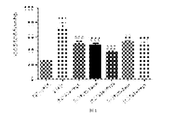
- Fig. 1 Effect of the compound of the present invention on the right ventricular systolic pressure (mRVSP) in a rat model of pulmonary hypertension induced by MCT (wildolin).
- mRVSP right ventricular systolic pressure
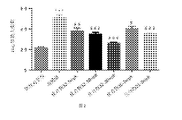
- FIG. 2 Effect of the compound of the present invention on the right ventricular hypertrophy index (RVHI) in a rat model of pulmonary hypertension induced by MCT (wild alkaloid).
- RVHI right ventricular hypertrophy index
- the compound I2-A (2 g, 8.57 mmol) was uniformly mixed with ethyl acetate (10.00 mL), and the mixture was stirred at 20 ° C for 0.5 hour, and the reaction mixture was filtered to give I2-B.
- reaction liquid was filtered, and the filtrate was concentrated under reduced pressure to give crude crystals.
- Compound 2-B was prepared in the same manner as in the preparation of compound 1-B in Example 1 except that the corresponding materials were used.
- Compound 2-C was prepared in the same manner as in the preparation of compound 1-C in Example 1, except that the corresponding materials were used.
- Compound 2-D was prepared in the same manner as in the preparation of compound 1-D in Example 1 except that the corresponding materials were used.
- Compound 2 was prepared in the same manner as in the preparation of Compound 1 in Example 1, except that the corresponding materials were used.
- Compound 4 was prepared in the same manner as in the preparation of compound 3 in Example 3 except that the corresponding materials were used.
- Compound 5-A was prepared in the same manner as in the preparation of compound 1-A in Example 1, except that the corresponding materials were used.
- Compound 5 was prepared in the same manner as in the preparation of compound 3 in Example 3 except that the corresponding materials were used.
- Compound 6-A was prepared in the same manner as in the preparation of Compound 1-A in Example 1, except that the corresponding materials were used.
- Compound 7-A was prepared in the same manner as in the preparation of Compound 1-A in Example 1, except that the corresponding materials were used.
- Compound 8-A was prepared in the same manner as in the preparation of Compound 1-A in Example 1, except that the corresponding materials were used.
- Compound 8 was prepared in the same manner as in the preparation of compound 3 in Example 3 except that the corresponding materials were used.
- Compound 10-A was prepared in the same manner as in the preparation of compound 1-A in Example 1, except that the corresponding materials were used.
- Compound 10-B was prepared in the same manner as in the preparation of compound 3-B in Example 3 except that the corresponding material was used.
- Compound 10 was prepared in the same manner as in the preparation of compound 3 in Example 3 except that the corresponding materials were used.
- Compound 11-A was prepared in the same manner as in the preparation of Compound 1-A in Example 1, except that the corresponding materials were used.
- Compound 11 was prepared in the same manner as in the preparation of compound 3 in Example 3 except that the corresponding materials were used.
- Compound 12-A was prepared in the same manner as in the preparation of compound 1-A in Example 1, except that the corresponding materials were used.
- Compound 12-B was prepared in the same manner as in the preparation of compound 3-B in Example 3 except that the corresponding materials were used.
- Compound 12 was prepared in the same manner as in the preparation of compound 3 in Example 3 except that the corresponding materials were used.
- Compound 13 was prepared in the same manner as in the preparation of compound 3 in Example 3 except that the corresponding materials were used.
- Compound 14-A was prepared in the same manner as in the preparation of compound 13-A in Example 13 except that the corresponding material was used.
- Compound 14 was prepared in the same manner as in the preparation of compound 3 in Example 3 except that the corresponding materials were used.
- Compound 15-D was prepared in the same manner as in the preparation of Compound 3-B in Example 3 except that the corresponding material was used.
- Compound 16-B was prepared in the same manner as in the preparation of compound 15-B in Example 15 except that the corresponding material was used.
- Compound 16-C was prepared in the same manner as in the preparation of compound 15-C in Example 15 except that the corresponding material was used.
- Compound 16 was prepared in the same manner as in the preparation of compound 15 in Example 15 except that the corresponding material was used.
- Compound 17 was prepared in the same manner as in the preparation of compound 3 in Example 3 except that the corresponding materials were used.
- Compound 20-B was prepared in the same manner as in the preparation of compound 3-B in Example 3 except that the corresponding material was used.
- Compound 20 was prepared in the same manner as in the preparation of compound 3 in Example 3 except that the corresponding materials were used.
- Compound 21 was prepared in the same manner as in the preparation of compound 5 in Example 3 except that the corresponding materials were used.
- Compound 22 was prepared in the same manner as in the preparation of compound 3 in Example 3 except that the corresponding materials were used.
- Compound 23 was prepared in the same manner as in the preparation of compound 3 in Example 3 except that the corresponding materials were used.
- Compound 24-B was prepared in the same manner as in the preparation of compound 3-B in Example 3 except that the corresponding material was used.
- Compound 24 was prepared in the same manner as in the preparation of compound 3 in Example 3 except that the corresponding materials were used.
- Compound 25 was prepared in the same manner as in the preparation of compound 3 in Example 3 except that the corresponding materials were used.
- Compound 26 was prepared in the same manner as in the preparation of compound 3 in Example 3 except that the corresponding materials were used.
- Compound 27 was prepared in the same manner as in the preparation of compound 3 in Example 3 except that the corresponding materials were used.
- Compound 28-A was prepared in the same manner as in the preparation of compound 27-A in Example 27 except that the corresponding material was used.
- Compound 28 was prepared in the same manner as in the preparation of compound 3 in Example 3 except that the corresponding materials were used.
- Compound 29-A was prepared in the same manner as in the preparation of compound 27-A in Example 27 except that the corresponding material was used.
- Compound 29 was prepared in the same manner as in the preparation of compound 3 in Example 3 except that the corresponding materials were used.
- Compound 30-B was prepared in the same manner as in the preparation of compound 3-B in Example 3 except that the corresponding materials were used.
- Compound 30 was prepared in the same manner as in the preparation of compound 3 in Example 3 except that the corresponding materials were used.
- Compound 31-A was prepared in the same manner as in the preparation of compound 27-A in Example 27 except that the corresponding material was used.
- Compound 31 was prepared in the same manner as in the preparation of compound 3 in Example 3 except that the corresponding materials were used.
- Compound 32-B was prepared in the same manner as in the preparation of compound 3-B in Example 3 except that the corresponding materials were used.
- Compound 32 was prepared in the same manner as in the preparation of compound 3 in Example 3 except that the corresponding materials were used.
- Compound 34-A was prepared in the same manner as in the preparation of compound 32-A in Example 32 except that the corresponding material was used.
- Compound 34 was prepared in the same manner as in the preparation of compound 3 in Example 3 except that the corresponding materials were used.
- Compound 35 was prepared in the same manner as in the preparation of compound 3 in Example 3 except that the corresponding materials were used.
- Compound 36-B was prepared in the same manner as in the preparation of compound 3-B in Example 3 except that the corresponding material was used.
- Compound 36 was prepared in the same manner as in the preparation of compound 18 in Example 18 except that the corresponding material was used.
- Compound 37 was prepared in the same manner as in the preparation of compound 3 in Example 3 except that the corresponding materials were used.
- Compound 38 was prepared in the same manner as in the preparation of compound 3 in Example 3 except that the corresponding materials were used.
- Compound 39-A was prepared in the same manner as in the preparation of compound 38-A in Example 38 except that the corresponding material was used.
- Compound 39 was prepared in the same manner as in the preparation of Compound 3 in Example 3 except that the corresponding materials were used.
- Compound 40-A was prepared in the same manner as in the preparation of compound 27-A in Example 27 except that the corresponding material was used.
- Compound 40-B was prepared in the same manner as in the preparation of compound 3-B in Example 3 except that the corresponding material was used.
- Compound 40 was prepared in the same manner as in the preparation of compound 3 in Example 3 except that the corresponding materials were used.
- Compound 41-A was prepared in the same manner as in the preparation of compound 27-A in Example 27 except that the corresponding material was used.
- Compound 41 was prepared in the same manner as in the preparation of compound 3 in Example 3 except that the corresponding materials were used.
- Compound 42-A was prepared in the same manner as in the preparation of compound 27-A in Example 27 except that the corresponding material was used.
- Compound 42 was prepared in the same manner as in the preparation of compound 3 in Example 3 except that the corresponding materials were used.
- Compound 43-A was prepared in the same manner as in the preparation of compound 27-A in Example 27 except that the corresponding material was used.
- Compound 43 was prepared in the same manner as in the preparation of compound 3 in Example 3 except that the corresponding materials were used.
- Compound 44-A was prepared in the same manner as in the preparation of compound 32-A in Example 32 except that the corresponding material was used.
- Compound 44 was prepared in the same manner as in the preparation of compound 3 in Example 3 except that the corresponding materials were used.
- Compound 45-A was prepared in the same manner as in the preparation of compound 32-A in Example 32 except that the corresponding material was used.
- Compound 45 was prepared in the same manner as in the preparation of compound 3 in Example 3 except that the corresponding materials were used.
- Compound 46-B was prepared in the same manner as in the preparation of compound 3-B in Example 3 except that the corresponding material was used.
- Compound 46 was prepared in the same manner as in the preparation of compound 3 in Example 3 except that the corresponding materials were used.
- the compound 47-B (1.7 g, 7.93 mmol) was dissolved in tetrahydrofuran (30.00 mL), and the mixture was stirred at -78 ° C under a nitrogen atmosphere, and the mixture was stirred at -78 ° C for 1 hour. Then, a solution (5 mL) of tetrahydrofuran containing Compound 47-C (3.40 g, 9.52 mmol) was added dropwise. After half an hour, the dry ice acetone bath was removed, the temperature was raised to 20 ° C and the reaction was continued for 2 hours.
- Example 48 Compound 48a, Compound 48b
- Compound 48-B was prepared in the same manner as in the preparation of compound 47-F.
- Compound 48-D was prepared in the same manner as in the preparation of compound 47 in Example 47 except that the corresponding material was used.
- Compound 48 was separated by SFC (SFC method: separation column: AD (250 mm * 30 mm, 10 ⁇ m); mobile phase: [0.1% NH 3 H 2 O EtOH]; B%: 25% - 25%, minimum flow: 60 mL / min ) Compound 48a (retention time: 3.48 min) and 48b (retention time: 3.25 min) were obtained.
- Compound 49 was prepared in the same manner as in the preparation of compound 3 in Example 3 except that the corresponding materials were used.
- Compound 50-B was prepared in the same manner as in the preparation of compound 49-C.
- Compound 50-C was prepared in the same manner as in the preparation of Compound I1 in Intermediate I1 except for using the corresponding materials.
- Compound 50 was prepared in the same manner as in the preparation of compound 3 in Example 3 except that the corresponding materials were used.
- Compound 51-B was prepared in the same manner as in the preparation of compound 49-C.
- Compound 51-C was prepared in the same manner as in the preparation of Compound I1 in Intermediate I1 except for using the corresponding materials.
- Compound 51 was prepared in the same manner as in the preparation of compound 3 in Example 3 except that the corresponding materials were used.
- the sample was diluted with a Bravo automated liquid handling platform to a starting concentration of 2 mM, serially diluted 10 times and 5 times.
- the reference sample was diluted with Bravo to give a starting concentration of 2 mM and serial dilutions of 10 points and 5 times.
- Table 1 measurement results of the compounds of the present invention in vitro activity (EC 50)
- test compounds were tested for their effects on pulmonary artery pressure and right ventricular function in rats. The effects of test compounds on pulmonary artery pressure and right ventricular function in rats were observed by using test compounds to induce the pulmonary hypertension induced by monocrotaline (MCT). The possible mechanisms were also explored.
- MCT monocrotaline
- Pulmonary hypertension model was induced by subcutaneous injection of MCT (60 mg/kg) at a dose of 2 ml/kg.
- the intragastric administration was started on the day of MCT subcutaneous injection, and the indexes were measured after 3 weeks of gavage.
- mice were randomly divided according to body weight and animal status: Sham (negative control group), Vehicle (module), compound 32-5mpk, compound 32-10mpk, compound 32-30mpk, compound 35-2mpk, Compound 35-5mpk.
- RVSP right ventricular systolic pressure
- RVHI right ventricular hypertrophy index
- RVHI RV/(LV+SEP).
- RVHI right ventricular hypertrophy index
- RV right ventricular weight
- LV+SEP left ventricular plus ventricular septal weight
- the compound of the present invention significantly attenuated the right ventricular systolic blood pressure (mRVSP), the right ventricular hypertrophy index (RVHI) was also significantly relieved, and had a good dose-related, so that the compound of the present invention can be used to treat pulmonary hypertension in rats.
- the body has obvious curative effect.
Landscapes
- Chemical & Material Sciences (AREA)
- Organic Chemistry (AREA)
- Health & Medical Sciences (AREA)
- General Chemical & Material Sciences (AREA)
- Nuclear Medicine, Radiotherapy & Molecular Imaging (AREA)
- Veterinary Medicine (AREA)
- Engineering & Computer Science (AREA)
- Chemical Kinetics & Catalysis (AREA)
- Public Health (AREA)
- Medicinal Chemistry (AREA)
- Bioinformatics & Cheminformatics (AREA)
- Pharmacology & Pharmacy (AREA)
- Life Sciences & Earth Sciences (AREA)
- Animal Behavior & Ethology (AREA)
- General Health & Medical Sciences (AREA)
- Cardiology (AREA)
- Heart & Thoracic Surgery (AREA)
- Hematology (AREA)
- Biomedical Technology (AREA)
- Neurology (AREA)
- Neurosurgery (AREA)
- Pain & Pain Management (AREA)
- Diabetes (AREA)
- Pharmaceuticals Containing Other Organic And Inorganic Compounds (AREA)
- Plural Heterocyclic Compounds (AREA)
Abstract
L'invention concerne un composé représenté par la formule (I) ou un isomère ou un sel pharmaceutiquement acceptable de celui-ci. La présente invention concerne également une application de celui-ci dans la préparation d'un médicament pour le traitement d'une maladie liée à un récepteur PGI2.
Priority Applications (4)
| Application Number | Priority Date | Filing Date | Title |
|---|---|---|---|
| EP19751459.9A EP3750879A4 (fr) | 2018-02-07 | 2019-02-02 | Agoniste du récepteur de la prostacycline |
| CN201980012529.6A CN111699175B (zh) | 2018-02-07 | 2019-02-02 | 前列环素受体受体激动剂 |
| JP2020542609A JP2021512902A (ja) | 2018-02-07 | 2019-02-02 | プロスタサイクリン受容体アゴニスト |
| US16/967,546 US11299475B2 (en) | 2018-02-07 | 2019-02-02 | Prostacyclin receptor agonist |
Applications Claiming Priority (2)
| Application Number | Priority Date | Filing Date | Title |
|---|---|---|---|
| CN201810124492.3 | 2018-02-07 | ||
| CN201810124492 | 2018-02-07 |
Publications (1)
| Publication Number | Publication Date |
|---|---|
| WO2019154363A1 true WO2019154363A1 (fr) | 2019-08-15 |
Family
ID=67548776
Family Applications (1)
| Application Number | Title | Priority Date | Filing Date |
|---|---|---|---|
| PCT/CN2019/074575 Ceased WO2019154363A1 (fr) | 2018-02-07 | 2019-02-02 | Agoniste du récepteur de la prostacycline |
Country Status (5)
| Country | Link |
|---|---|
| US (1) | US11299475B2 (fr) |
| EP (1) | EP3750879A4 (fr) |
| JP (1) | JP2021512902A (fr) |
| CN (1) | CN111699175B (fr) |
| WO (1) | WO2019154363A1 (fr) |
Cited By (2)
| Publication number | Priority date | Publication date | Assignee | Title |
|---|---|---|---|---|
| CN109125325A (zh) * | 2018-09-25 | 2019-01-04 | 中国人民解放军总医院 | 前列环素受体激动剂的医药用途 |
| WO2021023271A1 (fr) * | 2019-08-06 | 2021-02-11 | 南京明德新药研发有限公司 | Forme cristalline d'un composé en tant qu'agoniste du récepteur de la prostacycline et son procédé de préparation |
Citations (10)
| Publication number | Priority date | Publication date | Assignee | Title |
|---|---|---|---|---|
| JPH1069030A (ja) * | 1996-08-28 | 1998-03-10 | Konica Corp | 帯電特性を改良した画像要素とその処理方法及び写真感光材料 |
| WO2002088084A1 (fr) | 2001-04-26 | 2002-11-07 | Nippon Shinyaku Co., Ltd. | Derives de composes heterocycliques et medicaments |
| WO2009117095A1 (fr) | 2008-03-18 | 2009-09-24 | Arena Pharmaceuticals, Inc. | Modulateurs du récepteur de la prostacycline (pgi2) utiles pour le traitement de troubles liés à celui-ci |
| WO2009157398A1 (fr) | 2008-06-23 | 2009-12-30 | 日本新薬株式会社 | Agent thérapeutique pour une affection abdominale inflammatoire |
| WO2010150865A1 (fr) | 2009-06-26 | 2010-12-29 | 日本新薬株式会社 | Cristaux |
| WO2011017612A1 (fr) * | 2009-08-06 | 2011-02-10 | Concert Pharmaceuticals, Inc. | Dérivés de diphénylpyrazine substitués |
| WO2011024874A1 (fr) | 2009-08-26 | 2011-03-03 | 日本新薬株式会社 | Sels d'addition avec une base |
| WO2011037613A1 (fr) | 2009-09-23 | 2011-03-31 | Arena Pharmaceuticals, Inc. | Formes cristallines et procédés pour la préparation d'agonistes du récepteur pgi2 |
| EP2370413B1 (fr) * | 2008-12-08 | 2015-08-05 | Arena Pharmaceuticals, Inc. | Modulateurs du récepteur de prostacycline (pgi2) utiles pour le traitement de troubles associés à celui-ci |
| WO2018019296A1 (fr) * | 2016-07-29 | 2018-02-01 | 成都苑东生物制药股份有限公司 | Composé d'aminopyrazine, sel ou isomère, son procédé de préparation et son application |
Family Cites Families (1)
| Publication number | Priority date | Publication date | Assignee | Title |
|---|---|---|---|---|
| JP5603343B2 (ja) * | 2008-11-26 | 2014-10-08 | アリーナ ファーマシューティカルズ, インコーポレイテッド | 関連する障害を処置するために有用なプロスタサイクリン(pgi2)受容体モジュレーターとしてのピラゾリル置換炭酸誘導体 |
-
2019
- 2019-02-02 CN CN201980012529.6A patent/CN111699175B/zh active Active
- 2019-02-02 US US16/967,546 patent/US11299475B2/en active Active
- 2019-02-02 JP JP2020542609A patent/JP2021512902A/ja active Pending
- 2019-02-02 EP EP19751459.9A patent/EP3750879A4/fr not_active Withdrawn
- 2019-02-02 WO PCT/CN2019/074575 patent/WO2019154363A1/fr not_active Ceased
Patent Citations (11)
| Publication number | Priority date | Publication date | Assignee | Title |
|---|---|---|---|---|
| JPH1069030A (ja) * | 1996-08-28 | 1998-03-10 | Konica Corp | 帯電特性を改良した画像要素とその処理方法及び写真感光材料 |
| WO2002088084A1 (fr) | 2001-04-26 | 2002-11-07 | Nippon Shinyaku Co., Ltd. | Derives de composes heterocycliques et medicaments |
| CN1516690A (zh) * | 2001-04-26 | 2004-07-28 | �ձ���ҩ��ʽ���� | 杂环衍生物及医药品 |
| WO2009117095A1 (fr) | 2008-03-18 | 2009-09-24 | Arena Pharmaceuticals, Inc. | Modulateurs du récepteur de la prostacycline (pgi2) utiles pour le traitement de troubles liés à celui-ci |
| WO2009157398A1 (fr) | 2008-06-23 | 2009-12-30 | 日本新薬株式会社 | Agent thérapeutique pour une affection abdominale inflammatoire |
| EP2370413B1 (fr) * | 2008-12-08 | 2015-08-05 | Arena Pharmaceuticals, Inc. | Modulateurs du récepteur de prostacycline (pgi2) utiles pour le traitement de troubles associés à celui-ci |
| WO2010150865A1 (fr) | 2009-06-26 | 2010-12-29 | 日本新薬株式会社 | Cristaux |
| WO2011017612A1 (fr) * | 2009-08-06 | 2011-02-10 | Concert Pharmaceuticals, Inc. | Dérivés de diphénylpyrazine substitués |
| WO2011024874A1 (fr) | 2009-08-26 | 2011-03-03 | 日本新薬株式会社 | Sels d'addition avec une base |
| WO2011037613A1 (fr) | 2009-09-23 | 2011-03-31 | Arena Pharmaceuticals, Inc. | Formes cristallines et procédés pour la préparation d'agonistes du récepteur pgi2 |
| WO2018019296A1 (fr) * | 2016-07-29 | 2018-02-01 | 成都苑东生物制药股份有限公司 | Composé d'aminopyrazine, sel ou isomère, son procédé de préparation et son application |
Non-Patent Citations (1)
| Title |
|---|
| See also references of EP3750879A4 |
Cited By (2)
| Publication number | Priority date | Publication date | Assignee | Title |
|---|---|---|---|---|
| CN109125325A (zh) * | 2018-09-25 | 2019-01-04 | 中国人民解放军总医院 | 前列环素受体激动剂的医药用途 |
| WO2021023271A1 (fr) * | 2019-08-06 | 2021-02-11 | 南京明德新药研发有限公司 | Forme cristalline d'un composé en tant qu'agoniste du récepteur de la prostacycline et son procédé de préparation |
Also Published As
| Publication number | Publication date |
|---|---|
| EP3750879A1 (fr) | 2020-12-16 |
| JP2021512902A (ja) | 2021-05-20 |
| US11299475B2 (en) | 2022-04-12 |
| EP3750879A4 (fr) | 2020-12-16 |
| CN111699175A (zh) | 2020-09-22 |
| US20210087168A1 (en) | 2021-03-25 |
| CN111699175B (zh) | 2022-03-29 |
Similar Documents
| Publication | Publication Date | Title |
|---|---|---|
| WO2021249492A1 (fr) | Composé de benzobisoxazole à substitution méthyle et son utilisation | |
| WO2022218429A1 (fr) | Composés d'acide carboxylique aromatique substitués bicycliques | |
| WO2020063855A1 (fr) | Dérivé de quinolino-pyrrolidin-2-one et application associée | |
| WO2018137683A1 (fr) | Composé promédicament à base de lanostérol, procédé de préparation et utilisation associés | |
| CN114555600B (zh) | 作为cdk2/4/6三重抑制剂的氨基嘧啶类化合物 | |
| WO2023076237A1 (fr) | Composés utilisés en tant qu'agonistes de glp-1r | |
| TWI839738B (zh) | 含氮雜環化合物、其製備方法及應用 | |
| CN111699175B (zh) | 前列环素受体受体激动剂 | |
| CN109563032B (zh) | 作为ppar激动剂的吡咯烷衍生物 | |
| CN107614498B (zh) | 二氮杂-苯并荧蒽类化合物 | |
| HUT62007A (en) | Process for producing thienotriazolo (or imidazolo) diazepine amides and pharmaceutical compositions comprising same | |
| CN113874379B (zh) | 作为Cdc7抑制剂的四并环类化合物 | |
| US9688684B2 (en) | Substituted tetrazolo[1,5-a]pyrazines as ROR-gamma inhibitors | |
| JP7275444B2 (ja) | チエノ[2,3-c]ピリダジン-4(1H)-オン系誘導体及びその使用 | |
| JP2023535692A (ja) | 腸内分解性共薬、その調製及び使用 | |
| JP7607218B2 (ja) | 置換のピリジン-2,4-ジオン系誘導体 | |
| KR20080012976A (ko) | Orl1-수용기 길항제로서의 알파-(아릴- 또는헤테로아릴-메틸)-베타-피페리디노 프로판아마이드 화합물 | |
| HK40036972A (en) | Prostacyclin receptor agonist | |
| HK40036972B (en) | Prostacyclin receptor agonist | |
| WO2022083687A1 (fr) | Composés hétérocycliques de sélénium et leur application | |
| MX2007016215A (es) | Compuestos del acido alfa-(aril-o heteroaril-metil)-beta-piperidin opropanoico como antagonistas del receptor orl1. | |
| CN111057069B (zh) | 一种环状化合物、其应用及组合物 | |
| CN120936601A (zh) | Pgdh抑制剂及其制备与使用方法 | |
| JP2025537242A (ja) | 含窒素スピロ環式化合物、医薬組成物及びその用途 | |
| HK40129411A (zh) | 作为trem2激动剂用於治疗帕金森病的吡啶并[3,4-d]嘧啶-4-酮和嘧啶并[5,4-d]嘧啶-4-酮衍生物 |
Legal Events
| Date | Code | Title | Description |
|---|---|---|---|
| 121 | Ep: the epo has been informed by wipo that ep was designated in this application |
Ref document number: 19751459 Country of ref document: EP Kind code of ref document: A1 |
|
| ENP | Entry into the national phase |
Ref document number: 2020542609 Country of ref document: JP Kind code of ref document: A |
|
| NENP | Non-entry into the national phase |
Ref country code: DE |
|
| ENP | Entry into the national phase |
Ref document number: 2019751459 Country of ref document: EP Effective date: 20200907 |