WO2020003413A1 - Dispositif de traitement d'informations, procédé de commande et programme - Google Patents
Dispositif de traitement d'informations, procédé de commande et programme Download PDFInfo
- Publication number
- WO2020003413A1 WO2020003413A1 PCT/JP2018/024391 JP2018024391W WO2020003413A1 WO 2020003413 A1 WO2020003413 A1 WO 2020003413A1 JP 2018024391 W JP2018024391 W JP 2018024391W WO 2020003413 A1 WO2020003413 A1 WO 2020003413A1
- Authority
- WO
- WIPO (PCT)
- Prior art keywords
- score
- voice data
- input
- registrant
- calculated
- Prior art date
- Legal status (The legal status is an assumption and is not a legal conclusion. Google has not performed a legal analysis and makes no representation as to the accuracy of the status listed.)
- Ceased
Links
Images



Classifications
-
- G—PHYSICS
- G10—MUSICAL INSTRUMENTS; ACOUSTICS
- G10L—SPEECH ANALYSIS TECHNIQUES OR SPEECH SYNTHESIS; SPEECH RECOGNITION; SPEECH OR VOICE PROCESSING TECHNIQUES; SPEECH OR AUDIO CODING OR DECODING
- G10L17/00—Speaker identification or verification techniques
- G10L17/06—Decision making techniques; Pattern matching strategies
- G10L17/12—Score normalisation
-
- G—PHYSICS
- G10—MUSICAL INSTRUMENTS; ACOUSTICS
- G10L—SPEECH ANALYSIS TECHNIQUES OR SPEECH SYNTHESIS; SPEECH RECOGNITION; SPEECH OR VOICE PROCESSING TECHNIQUES; SPEECH OR AUDIO CODING OR DECODING
- G10L17/00—Speaker identification or verification techniques
- G10L17/06—Decision making techniques; Pattern matching strategies
-
- G—PHYSICS
- G10—MUSICAL INSTRUMENTS; ACOUSTICS
- G10L—SPEECH ANALYSIS TECHNIQUES OR SPEECH SYNTHESIS; SPEECH RECOGNITION; SPEECH OR VOICE PROCESSING TECHNIQUES; SPEECH OR AUDIO CODING OR DECODING
- G10L17/00—Speaker identification or verification techniques
- G10L17/20—Pattern transformations or operations aimed at increasing system robustness, e.g. against channel noise or different working conditions
-
- G—PHYSICS
- G10—MUSICAL INSTRUMENTS; ACOUSTICS
- G10L—SPEECH ANALYSIS TECHNIQUES OR SPEECH SYNTHESIS; SPEECH RECOGNITION; SPEECH OR VOICE PROCESSING TECHNIQUES; SPEECH OR AUDIO CODING OR DECODING
- G10L15/00—Speech recognition
- G10L15/04—Segmentation; Word boundary detection
-
- G—PHYSICS
- G10—MUSICAL INSTRUMENTS; ACOUSTICS
- G10L—SPEECH ANALYSIS TECHNIQUES OR SPEECH SYNTHESIS; SPEECH RECOGNITION; SPEECH OR VOICE PROCESSING TECHNIQUES; SPEECH OR AUDIO CODING OR DECODING
- G10L17/00—Speaker identification or verification techniques
- G10L17/02—Preprocessing operations, e.g. segment selection; Pattern representation or modelling, e.g. based on linear discriminant analysis [LDA] or principal components; Feature selection or extraction
Definitions
- the present invention relates to a technology for recognizing a speaker of voice included in voice data.
- a speaker score is calculated by calculating a feature amount of an input speech signal, and the calculated feature amount is input to a speaker model, and a speaker is calculated based on the calculated speaker score.
- An identifying technique is disclosed.
- the input voice often uses voice recorded under an arbitrary environment, and thus may include voices other than the voice of the speaker to be recognized.
- voice other than the speech of the speaker to be recognized is included in the input speech, the accuracy of speaker recognition is reduced.
- Non-Patent Document 1 describes a score normalization method that is robust against background noise. This method divides the recognized speech into two parts, a speech section and a non-speech section. Further, score normalization is performed using the SNR (signal noise ratio) of the recognized voice, the SNR of the registered voice, and the score obtained when speaker recognition is performed. Then, it is determined whether or not the speaker of the recognized voice is a registrant using the normalized score.
- SNR signal noise ratio
- ⁇ SNR ⁇ of the recognized speech mainly indicates the amount of noise (that is, background noise) included in the non-speech section.
- Recognition speech may include not only background noise but also speech of another person other than the speaker to be recognized. According to the method of Non-Patent Document 1, it is difficult to improve recognition accuracy for input voices in which voices of other people are mixed. This is because, unlike the background noise included in the non-voice section, the voice of the other person is included in the voice section along with the voice of the speaker to be recognized, and the degree of mixing of the voice of the other party cannot be expressed by the above-described ⁇ SNR ⁇ That's why.
- the present invention has been made in view of the above-described problem, and one of its objects is to improve the accuracy of speaker recognition in a case where the voice of a person other than the speaker to be recognized is included in the input voice. It is to provide.
- the information processing apparatus includes: 1) a first calculating unit that calculates a first score representing a degree of similarity between input voice data and registrant voice data that is registrant voice data; A second calculating unit that divides the input voice data into a plurality of segment voice data by dividing in a time direction, and calculates a second score representing the degree of similarity between the segment voice data and the registrant voice data for each segment voice data 3) a first determination unit that determines whether one or more speakers of the voice included in the input voice data are used by using at least the second score; and 4) a first score, a second score, And a second determination unit that determines whether or not the input voice data includes the voice of the registrant based on the determination result by the first determination unit.
- the control method of the present invention is executed by a computer.
- the control method includes: 1) a first calculation step of calculating a first score representing a degree of similarity between input voice data and registrant voice data that is registrant voice data; Dividing the input voice data into a plurality of segment voice data, and calculating a second score representing the degree of similarity between the segment voice data and the registrant voice data for each of the segment voice data; A) a first determination step of determining whether one or a plurality of speakers of the voice included in the input voice data is at least using the second score; and 4) a first score, a second score, and a first score.
- a second determining step of determining whether or not the input voice data includes the voice of the registrant based on the result of the determination in the determining step.
- the program of the present invention causes a computer to execute each step of the control method of the present invention.
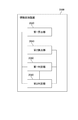
- FIG. 2 is a diagram illustrating a functional configuration of the information processing apparatus according to the first embodiment.
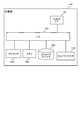
- FIG. 2 is a diagram illustrating a computer for realizing an information processing device.
- 5 is a flowchart illustrating a flow of a process executed by the information processing apparatus according to the first embodiment.
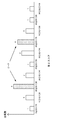
- FIG. 4 is a diagram illustrating input voice data divided into a predetermined length. It is a figure which illustrates a 1st score and a 2nd score with a graph. It is a figure which illustrates the histogram of a 2nd score.
- each block diagram represents a configuration of a functional unit, not a configuration of a hardware unit.
- FIG. 1 is a diagram conceptually illustrating an outline of processing performed by the information processing apparatus 2000 of the present embodiment.
- the information processing device 2000 recognizes the speaker of the voice included in the input voice data 10.
- the information processing apparatus 2000 compares the input voice data 10 with the registrant voice data 22 representing the voice of the registrant 20 (not shown).
- the operation of the information processing apparatus 2000 will be described more specifically.
- the information processing apparatus 2000 calculates a first score indicating the degree of similarity between the input voice data 10 and the registrant voice data 22. Further, the information processing apparatus 2000 obtains a plurality of segment audio data 12 by dividing the input audio data 10 in the time direction. Then, the information processing device 2000 calculates a second score indicating the degree of similarity between the segment voice data 12 and the registrant voice data 22 for each segment voice data 12.
- the information processing apparatus 2000 makes a first determination of determining whether the number of speakers included in the input voice data 10 is one or more using at least the second score. However, the first score may be further used for this determination.
- FIG. 1 illustrates a case where the first score and the second score are used for the first determination. Then, the information processing device 2000 performs a second determination to determine whether or not the input voice data 10 includes the voice of the registrant 20 based on the first score, the second score, and the result of the first determination. .
- the information processing apparatus 2000 calculates a correction score using at least the second score, and sets the calculated correction score as a threshold. A second determination is made by comparing. On the other hand, when it is determined that there is only one speaker of the voice included in the input voice data 10, the information processing apparatus 2000 performs the second determination by comparing the first score with the threshold. In any case, if the score is equal to or more than the threshold, it is determined that the voice of the registrant 20 is included in the input voice data 10. If the score is less than the threshold, the voice of the registrant 20 is included in the input voice data 10. Is determined not to be present.
- the second score indicating the similarity with the registrant voice data 22 is calculated, Using at least the second score, it is determined whether the speaker included in the input voice data 10 is a single speaker or a plurality of speakers. Then, using this determination result, it is determined whether or not the voice of the registrant 20 is included in the input voice data 10. As described above, by determining whether one or more speakers are included in the input voice data 10, it is determined whether the input voice data 10 includes voices of persons other than the registrant 20.
- the accuracy of speaker recognition can be improved in the case where the input voice data 10 includes voices of people other than the registrant 20.
- a correction score is calculated, and the voice of the registrant 20 is included in the input voice data 10 using the correction score. It is determined whether or not.
- the voice of the registrant 20 is included in the input voice data 10 using the correction score. It is determined whether or not.
- the score calculated for the entire input voice data 10 that is, the first score.
- Speaker recognition using the information processing device 2000 can be used in various situations. For example, it may be used for biometric authentication using voice data. Specifically, speaker recognition is performed using voice data generated by recording a voice uttered by a person who wants to be authenticated.
- the information processing apparatus 2000 of the present embodiment even if voices of a person other than the person to be mixed into voice data obtained by recording voices uttered by a person to be recognized, speaker recognition can be performed with high accuracy. It can be carried out. Therefore, even in an environment where a person other than the person to be recognized exists, biometric authentication using voice data can be realized with high accuracy.
- FIG. 1 is an example for facilitating understanding of the information processing device 2000, and does not limit the functions of the information processing device 2000.
- the information processing apparatus 2000 of the present embodiment will be described in more detail.
- FIG. 2 is a diagram illustrating a functional configuration of the information processing apparatus 2000 according to the first embodiment.
- the information processing device 2000 includes a first calculation unit 2020, a second calculation unit 2040, a first determination unit 2060, and a second determination unit 2080.
- the first calculation unit 2020 calculates a first score indicating the degree of similarity between the input voice data 10 and the registrant voice data 22.
- the second calculating unit 2040 divides the input voice data 10 into a plurality of segment voice data 12 and calculates a second score indicating the degree of similarity between each segment voice data 12 and the registrant voice data 22. Note that the input audio data 10 is divided in the time direction.
- the first determination unit 2060 determines whether the number of speakers included in the input voice data 10 is one or more using at least the second score.
- the second determination unit 2080 determines whether or not the input voice data 10 includes the voice of the registrant 20 based on the first score, the second score, and the result of the determination by the first determination unit 2060.
- Each functional component of the information processing apparatus 2000 may be realized by hardware (for example, a hard-wired electronic circuit or the like) that realizes each functional component, or a combination of hardware and software (for example: Electronic circuit and a program for controlling the electronic circuit).
- hardware for example, a hard-wired electronic circuit or the like
- software for example: Electronic circuit and a program for controlling the electronic circuit.
- FIG. 3 is a diagram illustrating a computer 1000 for realizing the information processing device 2000.
- the computer 1000 is an arbitrary computer.
- the computer 1000 is a personal computer (PC) or a server machine.
- the computer 1000 may be a dedicated computer designed to realize the information processing device 2000, or may be a general-purpose computer.
- the computer 1000 has a bus 1020, a processor 1040, a memory 1060, a storage device 1080, an input / output interface 1100, and a network interface 1120.
- the bus 1020 is a data transmission path through which the processor 1040, the memory 1060, the storage device 1080, the input / output interface 1100, and the network interface 1120 mutually transmit and receive data.
- a method of connecting the processors 1040 and the like to each other is not limited to a bus connection.
- the processor 1040 is various processors such as a CPU (Central Processing Unit), a GPU (Graphics Processing Unit), and an FPGA (Field-Programmable Gate Array).
- the memory 1060 is a main storage device realized using a RAM (Random Access Memory) or the like.
- the storage device 1080 is an auxiliary storage device realized using a hard disk, a solid state drive (SSD), a memory card, or a read only memory (ROM).
- the input / output interface 1100 is an interface for connecting the computer 1000 and an input / output device.
- an input device such as a keyboard and an output device such as a display device are connected to the input / output interface 1100.
- the network interface 1120 is an interface for connecting the computer 1000 to a communication network.
- the communication network is, for example, a LAN (Local Area Network) or a WAN (Wide Area Network).
- the method by which the network interface 1120 connects to the communication network may be a wireless connection or a wired connection.
- the storage device 1080 stores a program module that implements each functional component of the information processing apparatus 2000.
- the processor 1040 realizes a function corresponding to each program module by reading out each of these program modules into the memory 1060 and executing them.
- the storage device 1080 may further store the registrant voice data 22.
- the registrant voice data 22 only needs to be information that can be obtained from the computer 1000, and does not have to be stored in the storage device 1080.
- the registrant voice data 22 can be stored in a database server connected to the computer 1000 via the network interface 1120.
- a feature amount extracted from the registrant voice data 22 may be stored in a storage device. In this case, the registrant voice data 22 may not be obtainable from the information processing device 2000.
- FIG. 4 is a flowchart illustrating a flow of processing executed by the information processing apparatus 2000 according to the first embodiment.
- the first calculation unit 2020 acquires the input voice data 10 (S102).
- the second calculator 2040 calculates the first score (S104).
- the second calculator 2040 divides the input audio data 10 into a plurality of segment audio data 12 (S106).
- the second calculator 2040 calculates a second score for each segment sound data 12 (S108).
- the first determination unit 2060 performs a first determination (determination of whether one or more speakers of the voice included in the input voice data 10) (S110).
- the second determination unit 2080 performs a second determination (determination of whether or not the voice of the registrant 20 is included in the input voice data 10) (S112).
- the first calculator 2020 acquires the input voice data 10 (S102).
- the input voice data 10 is voice data to be subjected to speaker recognition.
- the method by which the first calculation unit 2020 acquires the input voice data 10 is arbitrary.
- the first calculator 2020 acquires the input audio data 10 from a storage device in which the input audio data 10 is stored.
- the storage device in which the input voice data 10 is stored may be provided inside the information processing device 2000 or may be provided outside.
- the first calculation unit 2020 acquires the input audio data 10 by receiving the input audio data 10 transmitted by another device.
- the first score and the second score are calculated using a feature amount extracted from the input voice data 10. Therefore, instead of acquiring the registrant voice data 22, the first calculation unit 2020 may acquire a feature amount extracted in advance from the registrant voice data 22. In this case, the feature amount extracted from the registrant voice data 22 is stored in an arbitrary storage device in advance.
- the first calculation unit 2020 calculates a first score by comparing the input voice data 10 with the registrant voice data 22 (S104). More specifically, the first calculation unit 2020 calculates the similarity between the feature amounts extracted from each of the input voice data 10 and the registrant voice data 22, and sets the calculated similarity as the first score.
- the feature quantity that can be extracted from audio data can be used as the feature quantity used for calculating the first score and the second score.
- the feature quantity that can be extracted from the voice data is, for example, information representing a physical quantity such as an envelope characteristic of a spectrum reflecting vocal tract information and a fundamental frequency characteristic reflecting vocal cord information.
- the ⁇ i-vector ⁇ calculated using the mel frequency cepstrum coefficient (MFCC: ⁇ Mel-Frequency ⁇ Cepstrum ⁇ Coefficients ⁇ ) can be used.
- MFCC mel frequency cepstrum coefficient
- PLDA Probabilistic linear discriminant analysis
- An existing technique can be used as a specific technique for extracting a feature value from audio data and a specific technique for calculating a similarity between feature values.
- the second calculation unit 2040 divides the input audio data 10 into a plurality of segment audio data 12 by dividing the input audio data 10 in the time direction (S106).
- various methods can be adopted as a method of dividing the input audio data 10.
- a specific example of the method will be described.
- the second calculator 2040 divides the input audio data 10 into a plurality of segment audio data 12 by dividing the input audio data 10 into audio data having a predetermined length (for example, 10 seconds).
- FIG. 5 is a diagram illustrating the input audio data 10 divided into a predetermined length.
- the predetermined length that is, the length of the segment audio data 12 is 10 seconds.
- the adjacent segment audio data 12 may be divided such that a part thereof overlaps with each other.
- two adjacent segment audio data 12 overlap each other for 3 seconds.
- adjacent segment audio data 12 may be separated from each other in the time direction.
- two adjacent segment audio data 12 are separated by 3 seconds.
- the second calculator 2040 detects the speaker exchange point for the input speech data 10 and divides the input speech data 10 into a plurality of segment speech data 12 by dividing the input speech data 10 at the speaker exchange point. Is also good.
- a technique for detecting a speaker exchange point a technique described in Non-Patent Document 2 or the like can be used.
- the second calculator 2040 calculates a second score for each segment sound data 12 (S108). For this purpose, the second calculator 2040 extracts a feature amount from each segment audio data 12. Then, the second calculator 2040 calculates the similarity between the feature amount extracted from the segment voice data 12 and the feature amount extracted from the registrant voice data 22, and calculates the calculated similarity degree in the segment voice data.
- the second score is 12.
- the first determination unit 2060 determines whether the speaker included in the input voice data 10 is a single speaker or a plurality of speakers using at least the second score (S110). However, as described above, the first score may be further used for this determination. For example, the first determination unit 2060 compares the first score with the maximum value of the second score. Specifically, the first determination unit 2060 specifies the maximum value from the plurality of second scores calculated by the second calculation unit 2040, and if the first score is smaller than the maximum value, the input voice data It is determined that there are a plurality of speakers of the voice included in 10. On the other hand, if the first score is equal to or more than the maximum value of the second score, the first determination unit 2060 determines that the voice included in the input voice data 10 is a single speaker.
- FIG. 6 is a diagram illustrating the first score and the second score in a graph.
- the upper part of FIG. 6 shows a case where the input voice data 10 includes only the voice of the registrant.
- the lower part of FIG. 6 illustrates a case where the input voice data 10 includes voices other than those of the registrant.
- the score representing the similarity between feature quantities is affected by the length of the input speech. Specifically, since the amount of information used for extracting the feature amount decreases as the input voice becomes shorter, the shorter the input voice, the more accurate the extracted feature amount (the feature amount represents the speaker's feature). Degree) decreases. Therefore, if only the voice of the registrant 20 is included in the input voice data 10, the first score is higher than any of the second scores. That is, the first score is larger than the maximum value of the second score (see the upper part of FIG. 6).
- the second score may be higher than the first score (see the lower part of FIG. 6).
- the segment voice data 12 which is a part of the input voice data 10 includes the voice of the person other than the registrant 20.
- the feature value extracted from the segment voice data 12 is considered to have a higher similarity to the feature value extracted from the registrant voice data 22 than the feature value extracted from the input voice data 10. Therefore, a second score larger than the first score may exist. That is, the maximum value of the second score may be larger than the first score.
- the first determination unit 2060 determines that there are a plurality of speakers of the voice included in the input voice data 10.
- the method of determining whether the number of speakers included in the input voice data 10 is one or more is not limited to a method of comparing the first score and the maximum value of the second score.
- the first determination unit 2060 calculates an index value indicating the magnitude of the variation in the values of the plurality of second scores, and compares the index value with a predetermined threshold value, to thereby determine the value of the voice included in the input voice data 10. It is determined whether the number of speakers is one or more. Specifically, if the calculated index value is equal to or more than a predetermined threshold, the first determination unit 2060 determines that there are a plurality of speakers of the voice included in the input voice data 10, and determines that the calculated index value is a predetermined value.
- the index value representing the magnitude of the variation of the values of the plurality of second scores includes values such as the difference between the maximum value and the minimum value of the second scores, the variance of the second scores, and the standard deviation of the second scores. Can be used.
- the first determination unit 2060 inputs the first score calculated by the first calculation unit 2020 and the second score calculated by the second calculation unit 2040 to the learned prediction model. As a result, it is possible to obtain, as an output of the prediction model, a result of determining whether the number of speakers included in the input voice data 10 is one or more.
- ⁇ Learning of the prediction model is performed in advance using learning data generated from voice data in which the number of speakers is known. Specifically, a first score is calculated for the entire voice data of which the number of speakers is known, and a second score is calculated for each of a plurality of segment voice data obtained by dividing the voice data. Then, a prediction model is learned using a combination of “the number of known speakers, the calculated first score, and the calculated second score” as teacher data. The voice used for learning the prediction model does not need to include the voice of the registrant 20.
- the prediction model may be constructed so as to use only the second model without using the first score. That is, in response to the input of the second score calculated from the input voice data 10, a prediction model for determining whether one or more speakers are included in the voice included in the input voice data 10 is constructed. Keep it. The types of models that can be adopted are the same as in the case where the first score is used. In the learning of the prediction model, a second score calculated for each of a plurality of segment voice data obtained by dividing voice data having a known number of speakers is associated with a known number of speakers. Use learning data.
- the second determination unit 2080 performs a second determination (S112). Specifically, the second determination unit 2080 determines whether or not the input voice data 10 includes the voice of the registrant 20 based on the first score, the second score, and the result of the first determination ( S112).
- the specific method of the second determination differs depending on the result of the first determination.
- a specific method of the second determination will be described for each result of the first determination.
- the second determination unit 2080 compares the first score with a threshold. When the first score is equal to or greater than the threshold, the second determination unit 2080 determines that the voice of the registrant 20 is included in the input voice data 10. On the other hand, when the first score is less than the threshold, the second determination unit 2080 determines that the voice of the registrant 20 is not included in the input voice data 10.
- This threshold is stored in a storage device accessible from the information processing device 2000 in advance.
- the second determination unit 2080 calculates a correction score using at least the second score, and compares the calculated correction score with the threshold. I do. If the correction score is equal to or greater than the threshold, the second determination unit 2080 determines that the voice of the registrant 20 is included in the input voice data 10. On the other hand, when the first score is less than the threshold, the second determination unit 2080 determines that the voice of the registrant 20 is not included in the input voice data 10.
- the second determination unit 2080 generates a histogram indicating the number of second scores included in each of the plurality of partial ranges obtained by dividing the domain of the second score, and calculates a correction score using the histogram. For example, when the domain of the second score S2 is “0 ⁇ S2 ⁇ 100”, this domain has 10 partial ranges (“0 ⁇ S2 ⁇ 10”,..., “80 ⁇ S2 ⁇ 90”). , “90 ⁇ S2 ⁇ 100”). The second determination unit 2080 calculates the number of second scores calculated from the segment audio data 12 for each of these partial ranges.
- FIG. 7 is a diagram illustrating a histogram of the second score.
- the domain of the second score ⁇ S2 ⁇ is “0 ⁇ S2 ⁇ 100”, and this domain is equally divided into ten. Then, the number of second scores in each partial range is represented by a graph.
- the second determination unit 2080 specifies one or more partial ranges indicating a peak from the above-described histogram, and specifies the partial range having the largest second score among the specified partial ranges.
- the partial range specified here is called a range of interest. For example, in the example of FIG. 7, two partial ranges indicating the peak are “20 ⁇ S2 ⁇ 30” and “60 ⁇ S2 ⁇ 70”. Among them, the partial range where the second score is the maximum is “60 ⁇ S2 ⁇ 70”. Therefore, “60 ⁇ S2 ⁇ 70” is specified as the range of interest.
- the utterer of the voice included in the segment voice data 12 is mainly one.
- a speaker often speaks alternately in a conversation
- a segment voice extracted from a voice recording a conversation such as a telephone recording
- one speaker is often included in one segment voice.
- the second score calculated in comparison with the segment voice data 12 in which the main utterer is a person other than the registrant 20 is considered to be higher.
- the numerical range in which the second score is the largest in the numerical range indicating the peak that is, the range of interest is included in the second score calculated for the segment voice data 12 whose main speaker is the registrant 20. It becomes.
- the second determination unit 2080 calculates a correction score using the attention range. For example, the second determination unit 2080 sets a statistic value (such as a maximum value or an average value) of the second score included in the range of interest as a correction score.
- a statistic value such as a maximum value or an average value
- the second determination unit 2080 generates one audio data by combining the segment audio data 12 included in the range of interest, and a feature amount extracted from the generated audio data and the registrant audio data 22 Is calculated as a correction score.
- the longer the length of the audio data the more accurate the score can be calculated. Therefore, by combining the segment audio data 12 included in the range of interest to generate audio data longer than the segment audio data 12 and calculating the score for this audio data, the score calculated for the segment audio data 12 is calculated. Also, a highly accurate score can be obtained. Therefore, by using the calculated score as the correction score, it is possible to determine whether or not the input voice data 10 includes the voice of the registrant 20 using a more accurate score.
- the second determination unit 2080 includes, in the segment voice data 12 to be combined as described above, not only the segment voice data 12 included in the range of interest, but also each partial range having the second score larger than the range of interest.
- the segment audio data 12 may be included.
- the second determination unit 2080 combines all the segment audio data 12 whose calculated second scores are equal to or larger than the lower limit of the range of interest to generate one audio data. For example, in the example of FIG. 7, eight segment audio data 12 having a second score of 60 or more are combined to generate one audio data, and the similarity to the registrant audio data 22 calculated for the audio data is calculated. The corrected score is used.
- Correction Score Calculation Method 2 a prediction model that receives the first score and the second score as inputs and outputs a correction score may be prepared.
- the second determination unit 2080 obtains a correction score by inputting the first score calculated by the first calculation unit 2020 and the second score calculated by the second calculation unit 2040 to the prediction model.
- the prediction model 1) the distribution of the second score obtained from the segment voice of the speaker having the highest probability of being the registrant 20 from the distribution of all the second scores (the distribution including the above-mentioned attention range) And (2) a prediction model that calculates a correction score based on the extracted distribution.
- a Gaussian mixture model (GMM: Gaussian Mixture Model) can be used.
- the second determination unit 2080 constructs ⁇ GMM ⁇ using the plurality of second scores calculated by the second calculation unit 2040.
- GMM Gaussian Mixture Model
- the distribution of all the second scores obtained from the input voice data 10 can be divided into a plurality of Gaussian distributions.
- the distribution having the maximum average value of the second score is considered to be the distribution including the above-mentioned attention range. Therefore, the second determination unit 2080 extracts a Gaussian distribution having the maximum average value of the second score from a plurality of Gaussian distributions obtained using GMM.
- EM ExpectationExMaximization
- MAP Maximum A Posteriori
- Various prediction models that implement regression such as support vector regression (SVR: Support Vector Regression) and neural networks, can be used for the prediction model that calculates the correction score based on the distribution of the ⁇ ⁇ ⁇ second score.
- This prediction model is made to learn how the distribution of the second score corresponds to the first score in the voice of a single speaker. By performing such learning, the prediction model outputs the first score that is predicted to correspond to the distribution in response to the input of the distribution of the second score as a correction score.
- the learning data used for learning the prediction model can be generated using an arbitrary voice with a single speaker. Specifically, a first score is calculated for the entire voice data in which one speaker is one. Further, the audio data is divided into a plurality of segment audio data, and a second score is calculated for each segment audio data. By doing so, it is possible to obtain the correspondence between the first score and a plurality of second scores (distribution of the second scores) in the voice of a single speaker. Therefore, the prediction model is made to learn the correspondence between the calculated first score and the plurality of second scores. Such learning enables the prediction model to output the corresponding first score in response to the input of the distribution of the second score.
- the registrant voice data 22 used for comparison with the input voice data 10 is specified as one.
- the registrant voice data 22 to be compared with the input voice data 10 can be specified as one, for example, a case where an input of an identifier (user ID or the like) for specifying the registrant 20 is separately accepted is considered.
- the information processing apparatus 2000 receives an input of an identifier (for example, a character string) specifying the registrant 20, and acquires the registrant voice data 22 stored in the storage device in association with the received identifier. I do. Then, the information processing apparatus 2000 performs the above-described series of speaker recognition processing (the processing shown in the flowchart of FIG.
- Such speaker recognition can be used, for example, in a case where user authentication is performed using a pair of a user ID and a user's voice instead of performing user authentication using a pair of a user ID and a password.
- the registrant voice data 22 used for comparison with the input voice data 10 does not have to be specified as one.
- the information processing apparatus 2000 acquires the registrant voice data 22 one by one from a storage device in which a plurality of registrant voice data 22 are stored, and the registrant 20 corresponding to the acquired registrant voice data 22 is described above. A series of speaker recognition processing is performed.
- the information processing device 2000 ends the speaker recognition processing. In this case, it is determined that the voice of the registrant 20 corresponding to the registrant voice data 22 to be processed is included in the input voice data 10. On the other hand, it is assumed that in the speaker recognition processing performed on the acquired registrant voice data 22, it is determined that the input voice data 10 does not include the voice of the registrant 20. In this case, the information processing apparatus 2000 acquires the next registrant voice data 22 from the storage device in which the registrant voice data 22 is stored, and performs a speaker recognition process on the registrant voice data 22. Such speaker recognition can be used, for example, in a case where user authentication is performed using only a user's voice instead of performing user authentication using a pair of a user ID and a password.
- the second determination unit 2080 may output a result of the second determination, that is, information indicating whether or not the voice of the registrant 20 is included in the input voice data 10.
- a result of the second determination that is, information indicating whether or not the voice of the registrant 20 is included in the input voice data 10.
- Various methods can be adopted as a method of outputting the result of the second determination.
- the second determination unit 2080 outputs information indicating the result of the second determination to a display device connected to the information processing device 2000.
- the second determination unit 2080 may store information indicating the result of the second determination in a storage device connected to the information processing device 2000.
- the information indicating the result of the second determination is, for example, information that “input voice data 10 includes voice of registrant 20” or “input voice data 10 does not include voice of registrant 20”. Is a character string, an image, a sound, or the like representing the information.
- the second determination unit 2080 includes, in addition to the information indicating the result of the second determination, information indicating whether the voice included in the input voice data 10 is a single speaker or a plurality of voices (that is, the first voice).
- Information indicating a result of the determination) or information indicating a score (first score or correction score) compared with the threshold may be output. By doing so, the user of the information processing apparatus 2000 can grasp not only the result of the determination as to whether or not the voice of the registrant 20 is included in the input voice data 10, but also the basis of the determination.
- the information processing apparatus 2000 Information for specifying a registrant whose voice is included in the voice data 10 (for example, an identifier of the registrant) may be output.
Landscapes
- Engineering & Computer Science (AREA)
- Health & Medical Sciences (AREA)
- Audiology, Speech & Language Pathology (AREA)
- Human Computer Interaction (AREA)
- Physics & Mathematics (AREA)
- Acoustics & Sound (AREA)
- Multimedia (AREA)
- Business, Economics & Management (AREA)
- Computer Vision & Pattern Recognition (AREA)
- Game Theory and Decision Science (AREA)
- Circuit For Audible Band Transducer (AREA)
- Telephonic Communication Services (AREA)
Abstract
Dispositif de traitement d'informations (2000) calculant un premier score indiquant le degré de similarité entre des données vocales d'entrée (10) et des données vocales de d'inscrit (22) d'un inscrit (20). Le dispositif de traitement d'informations (2000) divise les données vocales d'entrée (10) dans une direction temporelle pour obtenir ainsi une pluralité de données vocales segmentées (12). Le dispositif de traitement d'informations (2000) calcule un second score indiquant le degré de similarité entre les données vocales segmentées (12) et les données vocales d'inscrit (22) par rapport à chacune des données vocales segmentées (12). Le dispositif de traitement d'informations (2000) effectue une première détermination qui détermine si un locuteur de voix comprise dans les données vocales d'entrée (10) est un locuteur ou plusieurs locuteurs à l'aide d'au moins le second score. Le dispositif de traitement d'informations (2000) effectue une seconde détermination qui détermine si les données vocales d'entrée (10) comprennent la voix de l'inscrit (20) sur la base du premier score, du second score, et du résultat de la première détermination.
Priority Applications (5)
| Application Number | Priority Date | Filing Date | Title |
|---|---|---|---|
| EP18923907.2A EP3816996B1 (fr) | 2018-06-27 | 2018-06-27 | Dispositif de traitement d'informations, procédé de commande et programme |
| US17/255,511 US11437044B2 (en) | 2018-06-27 | 2018-06-27 | Information processing apparatus, control method, and program |
| PCT/JP2018/024391 WO2020003413A1 (fr) | 2018-06-27 | 2018-06-27 | Dispositif de traitement d'informations, procédé de commande et programme |
| JP2020526784A JP6996627B2 (ja) | 2018-06-27 | 2018-06-27 | 情報処理装置、制御方法、及びプログラム |
| JP2021203111A JP7287442B2 (ja) | 2018-06-27 | 2021-12-15 | 情報処理装置、制御方法、及びプログラム |
Applications Claiming Priority (1)
| Application Number | Priority Date | Filing Date | Title |
|---|---|---|---|
| PCT/JP2018/024391 WO2020003413A1 (fr) | 2018-06-27 | 2018-06-27 | Dispositif de traitement d'informations, procédé de commande et programme |
Publications (1)
| Publication Number | Publication Date |
|---|---|
| WO2020003413A1 true WO2020003413A1 (fr) | 2020-01-02 |
Family
ID=68986703
Family Applications (1)
| Application Number | Title | Priority Date | Filing Date |
|---|---|---|---|
| PCT/JP2018/024391 Ceased WO2020003413A1 (fr) | 2018-06-27 | 2018-06-27 | Dispositif de traitement d'informations, procédé de commande et programme |
Country Status (4)
| Country | Link |
|---|---|
| US (1) | US11437044B2 (fr) |
| EP (1) | EP3816996B1 (fr) |
| JP (1) | JP6996627B2 (fr) |
| WO (1) | WO2020003413A1 (fr) |
Cited By (4)
| Publication number | Priority date | Publication date | Assignee | Title |
|---|---|---|---|---|
| JPWO2022149384A1 (fr) * | 2021-01-05 | 2022-07-14 | ||
| JPWO2023181272A1 (fr) * | 2022-03-24 | 2023-09-28 | ||
| WO2024122304A1 (fr) * | 2022-12-05 | 2024-06-13 | 日本電気株式会社 | Système d'aide à la collecte d'empreinte vocale, procédé d'aide à la collecte d'empreinte vocale et programme |
| WO2024257307A1 (fr) * | 2023-06-15 | 2024-12-19 | 日本電気株式会社 | Dispositif de traitement audio, procédé de traitement audio, support d'enregistrement et dispositif d'affichage d'informations |
Families Citing this family (3)
| Publication number | Priority date | Publication date | Assignee | Title |
|---|---|---|---|---|
| JP7287442B2 (ja) * | 2018-06-27 | 2023-06-06 | 日本電気株式会社 | 情報処理装置、制御方法、及びプログラム |
| CN114049898B (zh) * | 2021-11-10 | 2025-07-15 | 北京声智科技有限公司 | 一种音频提取方法、装置、设备和存储介质 |
| CN115547340A (zh) * | 2022-08-10 | 2022-12-30 | 深圳市声扬科技有限公司 | 语音同一性的检验方法、装置、电子设备及存储介质 |
Citations (2)
| Publication number | Priority date | Publication date | Assignee | Title |
|---|---|---|---|---|
| WO2008117626A1 (fr) | 2007-03-27 | 2008-10-02 | Nec Corporation | Dispositif de sélection de haut-parleur, dispositif de réalisation d'un modèle adaptatif de haut-parleur, méthode de sélection de haut-parleur, programme de sélection de haut-parleur et programme de réalisation d'un modèle adaptatif de haut-parleur |
| JP2017517027A (ja) * | 2014-07-18 | 2017-06-22 | グーグル インコーポレイテッド | コロケーション情報を使用した話者照合 |
Family Cites Families (4)
| Publication number | Priority date | Publication date | Assignee | Title |
|---|---|---|---|---|
| NL8500377A (nl) * | 1985-02-12 | 1986-09-01 | Philips Nv | Werkwijze en inrichting voor het segmenteren van spraak. |
| US7177808B2 (en) * | 2000-11-29 | 2007-02-13 | The United States Of America As Represented By The Secretary Of The Air Force | Method for improving speaker identification by determining usable speech |
| US7231019B2 (en) | 2004-02-12 | 2007-06-12 | Microsoft Corporation | Automatic identification of telephone callers based on voice characteristics |
| GB2566215B (en) * | 2016-06-06 | 2022-04-06 | Cirrus Logic Int Semiconductor Ltd | Voice user interface |
-
2018
- 2018-06-27 EP EP18923907.2A patent/EP3816996B1/fr active Active
- 2018-06-27 US US17/255,511 patent/US11437044B2/en active Active
- 2018-06-27 WO PCT/JP2018/024391 patent/WO2020003413A1/fr not_active Ceased
- 2018-06-27 JP JP2020526784A patent/JP6996627B2/ja active Active
Patent Citations (2)
| Publication number | Priority date | Publication date | Assignee | Title |
|---|---|---|---|---|
| WO2008117626A1 (fr) | 2007-03-27 | 2008-10-02 | Nec Corporation | Dispositif de sélection de haut-parleur, dispositif de réalisation d'un modèle adaptatif de haut-parleur, méthode de sélection de haut-parleur, programme de sélection de haut-parleur et programme de réalisation d'un modèle adaptatif de haut-parleur |
| JP2017517027A (ja) * | 2014-07-18 | 2017-06-22 | グーグル インコーポレイテッド | コロケーション情報を使用した話者照合 |
Non-Patent Citations (3)
| Title |
|---|
| AJMERA JITENDRALAIN MCCOWANHERVE BOURLARD: "Robust speaker change detection", IEEE SIGNAL PROCESSING LETTERS, 2004 |
| HARMSE JORGENSTEVEN D. BECKHIROTAKA NAKASONE: "Speaker recognition score-normalization to compensate for snr and duration", SPEAKER AND LANGUAGE RECOGNITION WORKSHOP, 2006 |
| See also references of EP3816996A4 |
Cited By (9)
| Publication number | Priority date | Publication date | Assignee | Title |
|---|---|---|---|---|
| JPWO2022149384A1 (fr) * | 2021-01-05 | 2022-07-14 | ||
| WO2022149384A1 (fr) * | 2021-01-05 | 2022-07-14 | パナソニック インテレクチュアル プロパティ コーポレーション オブ アメリカ | Dispositif et procédé d'identification, ainsi que programme |
| EP4276817A4 (fr) * | 2021-01-05 | 2024-05-29 | Panasonic Intellectual Property Corporation of America | Dispositif et procédé d'identification, ainsi que programme |
| JP7781783B2 (ja) | 2021-01-05 | 2025-12-08 | パナソニック インテレクチュアル プロパティ コーポレーション オブ アメリカ | 識別装置、識別方法、および、プログラム |
| JPWO2023181272A1 (fr) * | 2022-03-24 | 2023-09-28 | ||
| JP7845457B2 (ja) | 2022-03-24 | 2026-04-14 | 日本電気株式会社 | 情報処理装置、情報処理方法、及び記録媒体 |
| WO2024122304A1 (fr) * | 2022-12-05 | 2024-06-13 | 日本電気株式会社 | Système d'aide à la collecte d'empreinte vocale, procédé d'aide à la collecte d'empreinte vocale et programme |
| JPWO2024122304A1 (fr) * | 2022-12-05 | 2024-06-13 | ||
| WO2024257307A1 (fr) * | 2023-06-15 | 2024-12-19 | 日本電気株式会社 | Dispositif de traitement audio, procédé de traitement audio, support d'enregistrement et dispositif d'affichage d'informations |
Also Published As
| Publication number | Publication date |
|---|---|
| US20210287682A1 (en) | 2021-09-16 |
| JP6996627B2 (ja) | 2022-01-17 |
| EP3816996B1 (fr) | 2023-03-01 |
| EP3816996A4 (fr) | 2021-06-02 |
| EP3816996A1 (fr) | 2021-05-05 |
| US11437044B2 (en) | 2022-09-06 |
| JPWO2020003413A1 (ja) | 2021-07-08 |
Similar Documents
| Publication | Publication Date | Title |
|---|---|---|
| Sahidullah et al. | Introduction to voice presentation attack detection and recent advances | |
| US10593336B2 (en) | Machine learning for authenticating voice | |
| JP6996627B2 (ja) | 情報処理装置、制御方法、及びプログラム | |
| EP2410514B1 (fr) | Vérification d'interlocuteur | |
| US20170236520A1 (en) | Generating Models for Text-Dependent Speaker Verification | |
| US9047866B2 (en) | System and method for identification of a speaker by phonograms of spontaneous oral speech and by using formant equalization using one vowel phoneme type | |
| TW202018696A (zh) | 語音識別方法、裝置及計算設備 | |
| US8447614B2 (en) | Method and system to authenticate a user and/or generate cryptographic data | |
| CN111737515B (zh) | 音频指纹提取方法、装置、计算机设备和可读存储介质 | |
| US20140188468A1 (en) | Apparatus, system and method for calculating passphrase variability | |
| CN115101077A (zh) | 一种声纹检测模型训练方法及声纹识别方法 | |
| JP2023532844A (ja) | 患者固有の音声モデルの合成 | |
| Saritha et al. | A comprehensive review on speaker recognition | |
| JP2007133414A (ja) | 音声の識別能力推定方法及び装置、ならびに話者認証の登録及び評価方法及び装置 | |
| Sharma | Speaker recognition using machine learning techniques | |
| JP5229124B2 (ja) | 話者照合装置、話者照合方法およびプログラム | |
| JP7287442B2 (ja) | 情報処理装置、制御方法、及びプログラム | |
| CN1366295A (zh) | 基于事先知识的说话者检验及说话者识别系统和方法 | |
| TWI763207B (zh) | 聲音訊號處理評估方法及裝置 | |
| JP2991288B2 (ja) | 話者認識装置 | |
| Panda et al. | Study of speaker recognition systems | |
| Kanrar | Speaker Identification by GMM based i Vector | |
| US12573378B2 (en) | Speech tendency classification | |
| Fitzgibbon et al. | Do synthetic voices have emotions? Exploring emotional cues for spoofed speech detection | |
| Eijaz | Counter measure system for automatic speaker verification systems |
Legal Events
| Date | Code | Title | Description |
|---|---|---|---|
| 121 | Ep: the epo has been informed by wipo that ep was designated in this application |
Ref document number: 18923907 Country of ref document: EP Kind code of ref document: A1 |
|
| ENP | Entry into the national phase |
Ref document number: 2020526784 Country of ref document: JP Kind code of ref document: A |
|
| NENP | Non-entry into the national phase |
Ref country code: DE |
|
| ENP | Entry into the national phase |
Ref document number: 2018923907 Country of ref document: EP Effective date: 20210127 |