WO2020004295A1 - Dispositif de perfusion et procédé de perfusion - Google Patents
Dispositif de perfusion et procédé de perfusion Download PDFInfo
- Publication number
- WO2020004295A1 WO2020004295A1 PCT/JP2019/024870 JP2019024870W WO2020004295A1 WO 2020004295 A1 WO2020004295 A1 WO 2020004295A1 JP 2019024870 W JP2019024870 W JP 2019024870W WO 2020004295 A1 WO2020004295 A1 WO 2020004295A1
- Authority
- WO
- WIPO (PCT)
- Prior art keywords
- oxygen
- perfusion
- gas
- perfusate
- organ
- Prior art date
- Legal status (The legal status is an assumption and is not a legal conclusion. Google has not performed a legal analysis and makes no representation as to the accuracy of the status listed.)
- Ceased
Links
Images




Classifications
-
- A—HUMAN NECESSITIES
- A01—AGRICULTURE; FORESTRY; ANIMAL HUSBANDRY; HUNTING; TRAPPING; FISHING
- A01N—PRESERVATION OF BODIES OF HUMANS OR ANIMALS OR PLANTS OR PARTS THEREOF; BIOCIDES, e.g. AS DISINFECTANTS, AS PESTICIDES OR AS HERBICIDES; PEST REPELLANTS OR ATTRACTANTS; PLANT GROWTH REGULATORS
- A01N1/00—Preservation of bodies of humans or animals, or parts thereof
- A01N1/10—Preservation of living parts
-
- B—PERFORMING OPERATIONS; TRANSPORTING
- B01—PHYSICAL OR CHEMICAL PROCESSES OR APPARATUS IN GENERAL
- B01F—MIXING, e.g. DISSOLVING, EMULSIFYING OR DISPERSING
- B01F21/00—Dissolving
Definitions
- the present invention relates to a perfusion apparatus and a perfusion method for preserving an organ by perfusion.
- various preservation methods and perfusion methods have been developed in order to preserve the removed organ in a transplantable state.
- a simple cooling method in which blood in the organ is replaced with a low-temperature organ preservation solution in order to suppress cell metabolism and then immersed in a low-temperature preservation solution is known.
- a perfusion preservation method is known in which a perfusate is perfused into an intravascular vascular network for the purpose of removing waste products from a stored organ.
- Patent Document 1 A conventional perfusion apparatus for preserving an organ by perfusion is described in, for example, Patent Document 1.
- oxygen can be efficiently supplied to an organ to be perfused by adding oxygen to the perfusion solution.
- ROS reactive oxygen species
- the present invention has been made in view of such circumstances, and has as its object to provide a technique for adding an appropriate concentration of oxygen to a perfusate.
- a first invention of the present application is a perfusion device for perfusing an organ with a perfusion solution, wherein an inflow pipe for flowing the perfusion solution from the reservoir storing the perfusion solution to the organ is provided.
- an oxygen supply unit for supplying oxygen gas containing oxygen to the gas exchanger, wherein the amount of dissolved oxygen in the perfusate to which the oxygen gas has been supplied in the gas exchanger is 400 mmHg or less.
- a second invention according to the present application is the perfusion apparatus according to the first invention, wherein the oxygen supply unit includes a compressor that supplies the compressed oxygen gas and a pressure of the oxygen gas supplied from the compressor to 200 kPa or less.
- a first regulator that reduces the pressure; and a second regulator that can control the pressure of the oxygen gas supplied from the first regulator in units of 1 kPa.
- a third invention of the present application is the perfusion apparatus according to the first invention or the second invention, wherein the gas exchanger includes a gas layer to which the oxygen gas is supplied from the oxygen supply unit, and a liquid through which the perfusion liquid passes. Layer, the oxygen permeable membrane interposed between the gas layer and the liquid layer, and a pressure measurement unit that measures a pressure value in the gas layer, the oxygen supply unit, the pressure measurement unit The set value of the output pressure in the oxygen supply unit is changed based on the measurement result of the above.
- the fourth invention of the present application is the perfusion apparatus according to any one of the first invention to the third invention, wherein the perfusate contains red blood cells.
- a fifth invention of the present application is the perfusion apparatus according to any one of the first invention to the fourth invention, wherein the organ is a liver, and the dissolved oxygen of the perfusion solution supplied with the oxygen gas in the gas exchanger.
- the amount is 200 mmHg or more and 400 mmHg or less.
- a sixth invention according to the present application is the perfusion apparatus according to any one of the first invention to the fourth invention, wherein the organ is a kidney, and the dissolved oxygen of the perfusion solution supplied with the oxygen gas in the gas exchanger.
- the amount is 150 mmHg or more and 300 mmHg or less.
- the seventh invention of the present application is a perfusion method for adding oxygen to a perfusion solution in a gas exchanger having an oxygen permeable membrane and perfusing the perfusion solution into an organ.
- An eighth invention of the present application is the perfusion method according to the seventh invention, wherein the step c) is based on c1) a step of measuring the pressure value in the gas layer, and c2) a measurement result of the step c1). A step of calculating a set value of an output pressure of the oxygen gas supplied to the gas exchanger; and c3) supplying the oxygen gas to the gas layer based on a calculation result of the step c2).
- the ninth invention of the present application is the perfusion method according to the seventh invention or the eighth invention, wherein the perfusion solution contains red blood cells.
- the tenth invention of the present application is the perfusion method according to any of the seventh to ninth inventions, wherein the amount of dissolved oxygen in the perfusate to which oxygen has been added in the step c) is 400 mmHg or less.
- An eleventh invention of the present application is the perfusion method according to the tenth invention, wherein the organ is a liver, and the amount of dissolved oxygen in the perfusate to which oxygen is added in the step c) is 200 mmHg or more and 400 mmHg. It is as follows.
- the twelfth invention of the present application is the perfusion method according to the tenth invention, wherein the organ is a kidney, and the amount of dissolved oxygen in the perfusate to which oxygen is added in the step c) is 150 mmHg or more and 300 mmHg or less. It is.
- the present invention it is possible to suppress the occurrence of ROS due to excessive oxygen inside the organ to be perfused. Therefore, damage to the tissue of the organ to be perfused can be suppressed. That is, oxygen can be added to the perfusate at an appropriate concentration.
- hemolysis of red blood cells in the perfusate can be suppressed. That is, oxygen can be added to the perfusate at an appropriate concentration.
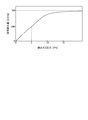
- FIG. 4 is a diagram illustrating an example of initial data indicating a relationship between a pressure of oxygen gas in a gas layer and an amount of dissolved oxygen in a perfusate in the gas exchanger according to the first embodiment. It is the schematic which showed the structure of the perfusion apparatus which concerns on 2nd Embodiment.
- FIG. 4 is a diagram showing the amount of dissolved oxygen in the inflow and the amount of dissolved oxygen in the outflow during perfusion of the liver.
- “donor” and “recipient” may be a human or a non-human animal. That is, in the present application, the “organ” including “kidney” and “liver” may be a human organ or a non-human animal organ.
- the non-human animal may be a rodent including a mouse and a rat, an ungulate including a pig, a goat and a sheep, a non-human primate including a chimpanzee, and other non-human mammals. Other animals may be used.
- FIG. 1 is a schematic diagram showing a configuration of the perfusion apparatus 1.
- the perfusion device 1 is a device for temporarily storing an organ such as a kidney or a liver extracted from a donor outside the body until the organ is transplanted to a recipient.
- the perfusion apparatus 1 includes a housing 20, a perfusate inflow section 30, an oxygen supply section 40, a perfusion solution discharge section 50, and a control section 60.
- the perfusion apparatus 1 is an apparatus for performing a perfusion process on an extracted organ.
- the organ to be perfused is the kidney 9.
- the organ to be perfused may be a liver or another organ.
- the housing 20 houses the perfusate inflow section 30 except for a part of the inflow pipe 31 and the oxygen supply section 40.
- a reservoir 70 described later is arranged outside the housing 20, but the reservoir 70 may be arranged inside the housing 20.
- the perfusate inflow section 30 supplies the perfusate from the reservoir 70 to the kidney 9.
- the reservoir 70 is a container for storing a perfusate.
- a temperature control mechanism or the like may be provided around the reservoir 70.
- a solution obtained by adding red blood cells to an ETK solution is used as the perfusion solution of the present embodiment. It should be noted that other types of perfusate may be used as the perfusate, and red blood cells may not be added.
- the perfusate inflow section 30 includes an inflow pipe 31, a pump 32, a gas exchanger 33, and a temperature adjustment unit.
- the pump 32, the gas exchanger 33, and the temperature adjustment unit 34 are inserted into the inflow pipe 31.
- the perfusate inflow section 30 is disposed inside the housing 20 except for a part of the inflow pipe 31.
- the inflow pipe 31 is a pipe for allowing the perfusate to flow from the reservoir 70 to the organ to be perfused.
- One end of the inflow pipe 31 is connected to the reservoir 70.
- the other end of the inflow pipe 31 is connected to an organ to be perfused during the perfusion process.
- the other end of the inflow pipe 31 is connected to the renal artery of the kidney 9. As a result, the perfusate is supplied from the reservoir 70 to the renal artery of the kidney 9.
- the pump 32 generates a flow of the perfusate from the reservoir 70 to the kidney 9 in the inflow pipe 31. That is, the pump 32 sends the perfusate in the inflow pipe 31 from the reservoir 70 to the kidney 9.
- the pump 32 of the present embodiment is a pump equipped with a brushless motor. As a result, it is possible to stably control the amount of perfusate to be sent in units of 1 ml / min.
- the gas exchanger 33 is a mechanism for adding oxygen to the perfusate flowing in the inflow pipe 31.
- FIG. 2 is a cutaway perspective view of the gas exchanger 33 of the present embodiment.
- the gas exchanger 33 has an outer cylinder 331 and an inner cylinder 332.
- the outer cylinder portion 331 is formed of a material having no permeability to water and oxygen.
- the inner cylindrical portion 332 is formed of an oxygen-permeable film that does not have water permeability and has oxygen permeability.
- the inner cylinder 332 is formed, for example, of a fluoropolymer.
- the inside of the inner cylindrical portion 332 is a liquid layer through which the perfusate passes.
- the outside of the inner cylinder 332 and the inside of the outer cylinder 331 are gas layers to which oxygen gas is supplied from the oxygen supply unit 40. That is, the inner cylindrical portion 332 is an oxygen permeable film interposed between the gas layer and the liquid layer. Note that the arrangement of the liquid layer and the gas layer may be reversed.
- the inner cylindrical portion 332 has an inner surface having irregularities. Thereby, the contact area between the perfusate flowing through the liquid layer and the inner cylinder 332, which is the oxygen permeable membrane, increases. Therefore, oxygen contained in the oxygen gas supplied to the gas layer is easily supplied to the perfusate via the inner cylinder 332.
- the gas exchanger 33 is provided with a pressure sensor 35 for measuring a pressure value in a space between the outer cylinder 331 and the inner cylinder 332. That is, the pressure sensor 35 is a pressure measuring unit that measures a pressure value in the gas layer of the gas exchanger 33.
- the oxygen supply unit 40 supplies oxygen gas containing oxygen to the gas exchanger 33. Specifically, the oxygen supply unit 40 adjusts the pressure of the high-pressure oxygen gas supplied from the compressor 80 and supplies the gas layer of the gas exchanger 33 with the oxygen gas.
- the oxygen supply unit 40 has a first regulator 41 and a second regulator 42.
- the compressor 80 is an example of an oxygen gas supply source that supplies a high-pressure oxygen gas.
- the oxygen gas supplied from the compressor 80 contains, for example, 90% ⁇ 5% oxygen.
- a utility provided in the operating room, a gas cylinder containing compressed oxygen gas, or the like may be used instead of the compressor 80 of the present embodiment.
- the first regulator 41 reduces the pressure of the oxygen gas supplied from the compressor 80 that supplies the compressed oxygen gas to 200 kPa or less.
- an electropneumatic regulator R-1000-8-WB3W manufactured by CKD Corporation is used as the first regulator 41.
- the second regulator 42 can control the pressure of the oxygen gas output from the first regulator 41 in units of 1 kPa.
- the second regulator 42 for example, an electropneumatic regulator EVL-1050-108-C13 manufactured by CKD Corporation is used.
- This electropneumatic regulator has an inputtable pressure of 140 kPa or less and an outputable pressure of 0 kPa or more and 50 kPa or less. Therefore, when this electropneumatic regulator is used as the second regulator, the output pressure of the first regulator 41 is set to 100 kPa.
- the perfusate discharging unit 50 discharges the perfusate from the kidney 9.
- the perfusate discharge section 50 has a discharge pipe 51.
- One end of the discharge pipe 51 is connected to an organ to be perfused during the perfusion process.
- one end of the discharge pipe 51 is connected to a renal vein of the kidney 9.
- the other end of the discharge pipe is connected to a waste liquid tank (not shown) that stores the perfusate discharged from the kidney 9.
- the perfusate discharged from the renal artery of the kidney 9 is discarded in the waste liquid tank.
- the perfusion device 1 of the present embodiment is configured to discard the perfusate discharged from the kidney 9, but the present invention is not limited to this.
- the perfusate discharged from the kidney 9 may be returned to the reservoir 70 or may be used for another purpose.
- the reservoir 70, the perfusate inlet 30 or the perfusate outlet 50 may include a measurement unit for detecting pH or a specific component. Further, the perfusate inflow section 30 and the perfusion solution discharge section 50 may include a flow meter for measuring the flow rate of the perfusion solution. Further, an electromagnetic valve for controlling communication may be interposed between the inflow pipe 31 and the discharge pipe 51. Further, the discharge pipe 51 may be provided with a pump for promoting discharge of the perfusate.
- the control unit 60 is a part for controlling the operation of each unit in the perfusion apparatus 1.
- the control unit 60 of the present embodiment is configured by a computer having an arithmetic processing unit 61 such as a CPU, a memory 62 such as a RAM, and a storage unit 63 such as a hard disk drive. ing.
- the control unit 60 is electrically connected to the pump 32, the temperature adjustment unit 34, the pressure sensor 35, the first regulator 41, and the second regulator, respectively.
- the control unit 60 controls the liquid supply amount of the pump 32 and controls the oxygen supply unit 40 based on the measurement result of the pressure sensor 35. Thereby, the oxygen supply unit 40 adjusts the supply amount of the oxygen gas to the gas exchanger 33 based on the measurement result of the pressure sensor 35.
- the oxygen supply unit 40 is controlled such that the dissolved oxygen amount of the perfusion solution to which oxygen has been supplied in the gas exchanger 33 is 400 mmHg or less.
- This perfusion apparatus 1 may be used for performing a perfusion process while performing an operation of removing and transplanting an organ.
- the size of the housing 20 of the perfusion apparatus 1 can be set to a size within 60 cm square.
- the perfusion apparatus 1 can be arranged in the vicinity of the operation field when performing an organ extraction operation and a transplant operation. Therefore, it becomes easy to perform the perfusion process while performing the excision operation and the transplant operation.
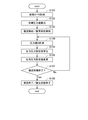
- FIG. 3 is a flowchart showing a flow of a perfusion process of the kidney 9 using the perfusion apparatus 1.
- FIG. 4 is a diagram showing an example of initial data indicating the relationship between the pressure of oxygen gas in the gas layer of the gas exchanger 33 and the amount of dissolved oxygen in the perfusate.
- step S101 In performing the perfusion process of the kidney 9, first, in the gas exchanger 33, initial data indicating the relationship between the pressure of oxygen gas in the gas layer and the amount of dissolved oxygen in the perfusate is obtained (step S101).
- the dissolved oxygen amount in the perfusate increases as the oxygen gas pressure increases.
- the pressure of the oxygen gas is 10 kPa or more
- the pressure of the oxygen gas in the gas layer is measured by the pressure sensor 35.
- the amount of dissolved oxygen in the perfusate is measured, for example, using a dissolved oxygen meter for the perfusate discharged from the other end (downstream end) of the inflow pipe 41.
- the amount of dissolved oxygen in the perfusate may be measured by inserting a sensor for measuring dissolved oxygen into the inflow pipe 41.
- a target pressure value which is a pressure value corresponding to the target dissolved oxygen amount, is calculated based on the initial data obtained as a result of step S101 (step S102).
- the amount of dissolved oxygen in the perfusate is 400 mmHg or less, the possibility that dissolved oxygen becomes bubbles in the inflow pipe 31 or the organ is extremely low. For this reason, it is preferable that the amount of dissolved oxygen in the perfusate flow be 400 mmHg or less.
- the target pressure value is calculated with the target dissolved oxygen amount being 240 mmHg.
- the target pressure value is calculated as 5 kPa.
- “the target pressure value is set to 5 kPa” means that control is performed so that the pressure value measured by the pressure sensor 35 becomes 5 kPa.
- the target pressure value setting process in steps S101 to S102 is performed before the perfusion process in steps S103 to S108.
- the target pressure value setting step may be performed each time the perfusion processing is performed, or a plurality of times of the perfusion processing are performed using the target pressure value set in one target pressure value setting step. You may.
- the target pressure value setting process in steps S101 to S102 may be automatically performed by the control unit 60, or after the user inputs a command to the control unit 60 and performs step S101, the user may set the target pressure value in step S102.
- the pressure value may be calculated and input to the control unit 60.
- step S103 the control unit 60 drives the pump 32 to start sending the perfusate in the inflow pipe, and also drives the oxygen supply unit 40 to start supplying oxygen gas to the gas exchanger 33 (step S103). ).
- step S103 the control unit 60 sets the output pressure of the oxygen gas from the second regulator 42 to the target pressure value of 5 kPa, and operates the first regulator 41 and the second regulator 42.
- oxygen gas containing oxygen is supplied to the gas exchanger 33, and oxygen is added to the perfusate passing through the gas exchanger 33.
- the control unit 60 measures the pressure value of the oxygen gas in the gas layer of the gas exchanger 33 using the pressure sensor 35 (Step S104).
- the output pressure of the second regulator 42 is set to 5 kPa, but the measurement result in step S104 is not always exactly 5 kPa.
- the control unit 60 calculates the set value of the output pressure of the oxygen gas supplied from the oxygen supply unit 40 to the gas exchanger 33 by feedback control based on the measurement result of step S104 (step S105). Then, after changing the set value of the output pressure of the second regulator 42 based on the calculation result in step S105, the supply of the oxygen gas from the oxygen supply unit 40 to the gas layer of the gas exchanger 33 is continued (step S106). ). That is, in step S106, the oxygen supply unit 40 changes the supply amount of the oxygen gas supplied from the oxygen supply unit 40 based on the measurement result of the pressure sensor 35.
- step S107 determines whether to end the perfusion process. In step S107, for example, it is determined whether or not a termination command signal for perfusion processing has been input from the outside to the control unit 60. If it is determined in step S107 that the perfusion process is not to be ended, the control unit 60 returns to step S104 and continues the perfusion process.
- Step S107 when determining in Step S107 that the perfusion process is to be ended, the control unit 60 ends the perfusion process. That is, the control unit 60 stops the liquid supply by the pump 32 and ends the supply of the oxygen gas by the oxygen supply unit 40 (step S108).
- the amount of dissolved oxygen in the perfusate is set to 400 mmHg or less. This can suppress occurrence of ROS due to excessive oxygen inside the kidney 9 to be perfused. Therefore, damage to the tissue of the organ to be perfused can be suppressed. That is, oxygen can be appropriately added to the perfusion solution.
- the amount of dissolved oxygen in the perfusate is preferably set to 150 mmHg or more and 300 mmHg or less. In this way, it is possible to appropriately supply oxygen to the kidney 9 while further suppressing the occurrence of ROS due to excessive oxygen inside the kidney 9 to be perfused.
- the target of the oxygen gas to be supplied to the gas exchanger 33 The pressure value is between 2.5 and 5 kPa.
- the target pressure value of the oxygen gas to be supplied to the gas exchanger 33 is 5 kPa to 8 kPa.
- the relationship between the pressure of oxygen gas in the gas layer of the gas exchanger 33 and the amount of dissolved oxygen in the perfusate varies almost as long as the flow rate of the perfusate in the inflow pipe 31 is constant. do not do. For this reason, by measuring the pressure value of oxygen gas in the gas layer of the gas exchanger 33 without measuring the amount of dissolved oxygen in the inflow pipe 31 as in this embodiment, the dissolved oxygen in the inflow pipe 31 is measured. The amount of oxygen can be accurately estimated. Note that a sensor for measuring the amount of dissolved oxygen in the inflow pipe 31 may be separately provided. In that case, the measurement result of the sensor may be used for feedback control of the gas exchanger 33.
- FIG. 5 is a schematic diagram showing the configuration of the perfusion apparatus 1A.
- the perfusion apparatus 1A is different from the perfusion apparatus 1 according to the first embodiment in the configuration of the perfusate discharge unit 50A.
- the other configuration of the perfusion apparatus 1A is the same as that of the perfusion apparatus 1 according to the first embodiment, and thus the description is omitted.
- the same components as those of the perfusion apparatus 1 according to the first embodiment are denoted by the same reference numerals as those in FIG.
- one end of the inflow pipe 31 of the perfusate inflow section 30 is connected to the reservoir 70.
- the other end of the inflow pipe 31 is connected to an organ to be perfused during the perfusion process.
- the other end of the inflow pipe 31 is connected to the portal vein or hepatic artery of the liver 9A.
- the perfusate is supplied from the reservoir 70 to the portal vein or hepatic artery of the liver 9A.
- 1 A of perfusion apparatuses may have two perfusion liquid inflow parts 30. In that case, the two inflow pipes 31 can be respectively connected to the portal vein and the hepatic artery of the liver 9A.
- the perfusate discharge section 50A has a discharge pipe 51A and a discharge pump 52A.
- One end of the discharge pipe 51A is connected to an organ to be perfused during the perfusion process.
- one end of the discharge pipe 51A is connected to the upper hepatic inferior vena cava (SH-IVC) or the lower inferior vena cava (IH-IVC) of the liver 9A.
- the other end of the discharge pipe 51A of the liver 9A is connected to the reservoir 70.
- the perfusate discharged from the upper hepatic inferior vena cava (SH-IVC) or the lower inferior vena cava (IH-IVC) of the liver 9A is returned to the reservoir 70.
- the perfusate discharged from the organ to be perfused may be returned to the reservoir 70 and reused.
- the amount of dissolved oxygen in the perfusate is set to 400 mmHg or less, as in the case of the perfusion apparatus 1 according to the first embodiment.
- This can suppress occurrence of ROS due to excessive oxygen inside the liver 9A to be perfused. Therefore, damage to the tissue of the organ to be perfused can be suppressed.
- it is possible to suppress dissolved oxygen from forming bubbles in the inflow pipe 31 and the inside of the liver 9A. Therefore, damage to the tissue of the liver 9A can be suppressed.
- the perfusate contains red blood cells, the red blood cells in the perfusate can be prevented from lysing.
- FIG. 6 shows the amount of dissolved oxygen in the perfusate (inflow) flowing into the liver 9A from the inflow pipe 31 during perfusion of the liver 9A, and the perfusate (outflow) discharged from the liver 9A to the discharge pipe 51A.
- 3) is a diagram showing the dissolved oxygen amount in FIG.
- the liver 9 ⁇ / b> A consumes more oxygen than the kidney 9. Therefore, as shown in FIG. 6, even when the dissolved oxygen amount in the inflow temporarily exceeds 400 mmHg, the dissolved oxygen amount in the outflow becomes 50 mmHg or less. That is, in the liver 9A, it is preferable to increase the amount of dissolved oxygen in the perfusate as much as possible in a range where ROS does not occur as compared with the kidney 9.
- the organ to be perfused is the liver as in the present embodiment
- the amount of dissolved oxygen in the perfusate be 200 mmHg or more and 400 mmHg or less. In this way, it is possible to appropriately supply oxygen to the liver 9A while further suppressing the occurrence of ROS due to excessive oxygen inside the liver 9A to be perfused.
- the perfusion device has one inflow pipe and one outflow pipe.
- the present invention is not limited to this.
- the number of the inflow pipes and the number of the discharge pipes may be one or more.
- the pipe connected to the reservoir was directly connected to the blood vessel of the organ. That is, the end of the pipe connected to the reservoir served as a cannula.
- a separate member cannula may be connected to the distal ends of the inflow pipe and the discharge pipe, and the cannula may be connected to a blood vessel.
Landscapes
- Life Sciences & Earth Sciences (AREA)
- Health & Medical Sciences (AREA)
- Engineering & Computer Science (AREA)
- Dentistry (AREA)
- General Health & Medical Sciences (AREA)
- Wood Science & Technology (AREA)
- Zoology (AREA)
- Environmental Sciences (AREA)
- Chemical & Material Sciences (AREA)
- Chemical Kinetics & Catalysis (AREA)
- Agricultural Chemicals And Associated Chemicals (AREA)
Abstract
La présente invention concerne un dispositif de perfusion (1) comportant : un tuyau d'entrée (31) à travers lequel une solution de perfusion peut s'écouler vers un organe interne (9) à partir d'un réservoir (70) à l'intérieur duquel la solution de perfusion est retenue ; un tuyau d'évacuation (51) à travers lequel la solution de perfusion est évacuée de l'organe interne (9) ; une pompe (32) qui distribue la solution de perfusion à travers le tuyau d'entrée (31) à partir du réservoir (70) vers l'organe interne (9) ; un échangeur de gaz (33) qui est disposé dans le tuyau d'entrée (31) et qui comporte une membrane perméable à l'oxygène (332) ; et une partie d'alimentation en oxygène (40) qui alimente l'échangeur de gaz (33) en oxygène. La solution de perfusion comporte une quantité d'oxygène dissous d'au plus 400 mmHg lorsque l'oxygène est alimenté à l'intérieur de l'échangeur de gaz (33). Grâce à ladite configuration, il est possible de supprimer la génération de ROS, due à un excès d'oxygène, dans un organe interne soumis à une perfusion. Par conséquent, une lésion du tissu de l'organe interne soumis à une perfusion est réduite au minimum. Ainsi, l'invention permet à une solution de perfusion d'être additionnée d'oxygène à une concentration appropriée.
Applications Claiming Priority (4)
| Application Number | Priority Date | Filing Date | Title |
|---|---|---|---|
| JP2018-121454 | 2018-06-27 | ||
| JP2018121454 | 2018-06-27 | ||
| JP2019108831A JP2020007297A (ja) | 2018-06-27 | 2019-06-11 | 灌流装置および灌流方法 |
| JP2019-108831 | 2019-06-11 |
Publications (1)
| Publication Number | Publication Date |
|---|---|
| WO2020004295A1 true WO2020004295A1 (fr) | 2020-01-02 |
Family
ID=68986944
Family Applications (1)
| Application Number | Title | Priority Date | Filing Date |
|---|---|---|---|
| PCT/JP2019/024870 Ceased WO2020004295A1 (fr) | 2018-06-27 | 2019-06-24 | Dispositif de perfusion et procédé de perfusion |
Country Status (1)
| Country | Link |
|---|---|
| WO (1) | WO2020004295A1 (fr) |
Citations (2)
| Publication number | Priority date | Publication date | Assignee | Title |
|---|---|---|---|---|
| JP2001516768A (ja) * | 1997-09-23 | 2001-10-02 | ハッサネイン,ワリード,エイチ. | 臓器を維持するための組成物、方法及び装置 |
| WO2017200089A1 (fr) * | 2016-05-20 | 2017-11-23 | 株式会社Screenホールディングス | Appareil de perfusion pour greffe de foie, et procédé d'isolement de foie et procédé de greffe de foie utilisant ledit appareil |
-
2019
- 2019-06-24 WO PCT/JP2019/024870 patent/WO2020004295A1/fr not_active Ceased
Patent Citations (2)
| Publication number | Priority date | Publication date | Assignee | Title |
|---|---|---|---|---|
| JP2001516768A (ja) * | 1997-09-23 | 2001-10-02 | ハッサネイン,ワリード,エイチ. | 臓器を維持するための組成物、方法及び装置 |
| WO2017200089A1 (fr) * | 2016-05-20 | 2017-11-23 | 株式会社Screenホールディングス | Appareil de perfusion pour greffe de foie, et procédé d'isolement de foie et procédé de greffe de foie utilisant ledit appareil |
Non-Patent Citations (4)
| Title |
|---|
| GELLERT K. ET AL., EXP. PATH., vol. 28, 1985, pages 245 - 250 * |
| HART, NILS A. 'T ET AL.: "Oxygenation During Hypothermic Rat LiverPreservation: an In Vitro Slice Study to DemonstrateBeneficial or Toxic Oxygenation Effects", LIVER TRANSPLANTATION, vol. 11, no. 11, 19 October 2005 (2005-10-19), pages 1403 - 1411, XP055666995 * |
| HOSGOOD, SARAH A. ET AL., TRANSPLANTATION, vol. 93, no. 5, 2012, pages 455 - 459 * |
| PLAATS, ARJAN VAN DER ET AL.: "Hypothermic Machine Preservation in Liver Transplantation Revisited: Concepts and Criteria in the New Millennium", ANNALS OF BIOMEDICAL ENGINEERING, vol. 32, no. 4, April 2004 (2004-04-01), pages 623 - 631, XP055666991 * |
Similar Documents
| Publication | Publication Date | Title |
|---|---|---|
| US12295361B2 (en) | Organ perfusion device | |
| US11963526B2 (en) | Apparatus and method for organ perfusion | |
| US20200128813A1 (en) | Organ perfusion systems | |
| US9089126B2 (en) | Methods and apparatus for organ support | |
| CN206603121U (zh) | 一种离体器官体外灌流保存装置 | |
| JP7240832B2 (ja) | 臓器保存容器および灌流装置 | |
| WO2020004088A1 (fr) | Dispositif de perfusion et procédé de perfusion | |
| JP2021017433A (ja) | 臓器収容容器 | |
| WO2019044354A1 (fr) | Récipient de stockage d'organe et dispositif de perfusion | |
| JP2020007297A (ja) | 灌流装置および灌流方法 | |
| WO2020004295A1 (fr) | Dispositif de perfusion et procédé de perfusion | |
| JP7278898B2 (ja) | 灌流装置 | |
| CN114946838A (zh) | 一种肝脏低温灌注保存装置和方法 | |
| WO2023112555A1 (fr) | Dispositif de conservation d'organe et procédé de conservation d'organe | |
| CN121322851B (zh) | 一种流体快速供应装置 | |
| WO2024111377A1 (fr) | Récipient de stockage de liquide | |
| Khodeli et al. | New type of pump for the heart-lung bypass system | |
| JP2020143028A (ja) | 灌流装置 | |
| SE532730C2 (sv) | Apparat för att inrymma ett organ för evaluering eller preservation |
Legal Events
| Date | Code | Title | Description |
|---|---|---|---|
| 121 | Ep: the epo has been informed by wipo that ep was designated in this application |
Ref document number: 19826274 Country of ref document: EP Kind code of ref document: A1 |
|
| NENP | Non-entry into the national phase |
Ref country code: DE |
|
| 122 | Ep: pct application non-entry in european phase |
Ref document number: 19826274 Country of ref document: EP Kind code of ref document: A1 |