WO2020004541A1 - Composition pharmaceutique comprenant une dispersion à constituante lipidique contenant ed -71 et sa forme époxy dans le corps gras - Google Patents
Composition pharmaceutique comprenant une dispersion à constituante lipidique contenant ed -71 et sa forme époxy dans le corps gras Download PDFInfo
- Publication number
- WO2020004541A1 WO2020004541A1 PCT/JP2019/025572 JP2019025572W WO2020004541A1 WO 2020004541 A1 WO2020004541 A1 WO 2020004541A1 JP 2019025572 W JP2019025572 W JP 2019025572W WO 2020004541 A1 WO2020004541 A1 WO 2020004541A1
- Authority
- WO
- WIPO (PCT)
- Prior art keywords
- oil
- water
- pharmaceutical composition
- excipient
- solution
- Prior art date
- Legal status (The legal status is an assumption and is not a legal conclusion. Google has not performed a legal analysis and makes no representation as to the accuracy of the status listed.)
- Ceased
Links
Images


Classifications
-
- A—HUMAN NECESSITIES
- A61—MEDICAL OR VETERINARY SCIENCE; HYGIENE
- A61K—PREPARATIONS FOR MEDICAL, DENTAL OR TOILETRY PURPOSES
- A61K31/00—Medicinal preparations containing organic active ingredients
- A61K31/59—Compounds containing 9, 10- seco- cyclopenta[a]hydrophenanthrene ring systems
- A61K31/593—9,10-Secocholestane derivatives, e.g. cholecalciferol, i.e. vitamin D3
-
- A—HUMAN NECESSITIES
- A61—MEDICAL OR VETERINARY SCIENCE; HYGIENE
- A61K—PREPARATIONS FOR MEDICAL, DENTAL OR TOILETRY PURPOSES
- A61K47/00—Medicinal preparations characterised by the non-active ingredients used, e.g. carriers or inert additives; Targeting or modifying agents chemically bound to the active ingredient
- A61K47/06—Organic compounds, e.g. natural or synthetic hydrocarbons, polyolefins, mineral oil, petrolatum or ozokerite
- A61K47/26—Carbohydrates, e.g. sugar alcohols, amino sugars, nucleic acids, mono-, di- or oligo-saccharides; Derivatives thereof, e.g. polysorbates, sorbitan fatty acid esters or glycyrrhizin
-
- A—HUMAN NECESSITIES
- A61—MEDICAL OR VETERINARY SCIENCE; HYGIENE
- A61K—PREPARATIONS FOR MEDICAL, DENTAL OR TOILETRY PURPOSES
- A61K47/00—Medicinal preparations characterised by the non-active ingredients used, e.g. carriers or inert additives; Targeting or modifying agents chemically bound to the active ingredient
- A61K47/30—Macromolecular organic or inorganic compounds, e.g. inorganic polyphosphates
- A61K47/36—Polysaccharides; Derivatives thereof, e.g. gums, starch, alginate, dextrin, hyaluronic acid, chitosan, inulin, agar or pectin
- A61K47/38—Cellulose; Derivatives thereof
-
- A—HUMAN NECESSITIES
- A61—MEDICAL OR VETERINARY SCIENCE; HYGIENE
- A61K—PREPARATIONS FOR MEDICAL, DENTAL OR TOILETRY PURPOSES
- A61K9/00—Medicinal preparations characterised by special physical form
- A61K9/10—Dispersions; Emulsions
- A61K9/107—Emulsions ; Emulsion preconcentrates; Micelles
-
- A—HUMAN NECESSITIES
- A61—MEDICAL OR VETERINARY SCIENCE; HYGIENE
- A61K—PREPARATIONS FOR MEDICAL, DENTAL OR TOILETRY PURPOSES
- A61K9/00—Medicinal preparations characterised by special physical form
- A61K9/14—Particulate form, e.g. powders, Processes for size reducing of pure drugs or the resulting products, Pure drug nanoparticles
-
- A—HUMAN NECESSITIES
- A61—MEDICAL OR VETERINARY SCIENCE; HYGIENE
- A61K—PREPARATIONS FOR MEDICAL, DENTAL OR TOILETRY PURPOSES
- A61K9/00—Medicinal preparations characterised by special physical form
- A61K9/20—Pills, tablets, discs, rods
-
- A—HUMAN NECESSITIES
- A61—MEDICAL OR VETERINARY SCIENCE; HYGIENE
- A61K—PREPARATIONS FOR MEDICAL, DENTAL OR TOILETRY PURPOSES
- A61K9/00—Medicinal preparations characterised by special physical form
- A61K9/20—Pills, tablets, discs, rods
- A61K9/28—Dragees; Coated pills or tablets, e.g. with film or compression coating
- A61K9/2806—Coating materials
- A61K9/2833—Organic macromolecular compounds
- A61K9/286—Polysaccharides, e.g. gums; Cyclodextrin
- A61K9/2866—Cellulose; Cellulose derivatives, e.g. hydroxypropyl methylcellulose
-
- A—HUMAN NECESSITIES
- A61—MEDICAL OR VETERINARY SCIENCE; HYGIENE
- A61K—PREPARATIONS FOR MEDICAL, DENTAL OR TOILETRY PURPOSES
- A61K9/00—Medicinal preparations characterised by special physical form
- A61K9/48—Preparations in capsules, e.g. of gelatin, of chocolate
- A61K9/50—Microcapsules having a gas, liquid or semi-solid filling; Solid microparticles or pellets surrounded by a distinct coating layer, e.g. coated microspheres, coated drug crystals
- A61K9/5005—Wall or coating material
- A61K9/5021—Organic macromolecular compounds
- A61K9/5036—Polysaccharides, e.g. gums, alginate; Cyclodextrin
- A61K9/5042—Cellulose; Cellulose derivatives, e.g. phthalate or acetate succinate esters of hydroxypropyl methylcellulose
-
- A—HUMAN NECESSITIES
- A61—MEDICAL OR VETERINARY SCIENCE; HYGIENE
- A61P—SPECIFIC THERAPEUTIC ACTIVITY OF CHEMICAL COMPOUNDS OR MEDICINAL PREPARATIONS
- A61P19/00—Drugs for skeletal disorders
- A61P19/08—Drugs for skeletal disorders for bone diseases, e.g. rachitism, Paget's disease
- A61P19/10—Drugs for skeletal disorders for bone diseases, e.g. rachitism, Paget's disease for osteoporosis
Definitions
- the present invention relates to (5Z, 7E)-(1R, 2R, 3R) -2- (3-hydroxypropoxy) -9,10-secocholesta-5,7,10 (19) -triene-1,3 in fats and oils. , 25-triol (hereinafter also referred to as ED-71 or compound 1) and (1R, 2R, 3R, 5Z) -2- (3-hydroxypropoxy) -7,8-epoxy-9,10 (19) -secocholesta
- ED-71 or compound 1 25-triol
- the present invention relates to a pharmaceutical composition containing -5,10-diene-1,3,25-triol (hereinafter, also referred to as ED-71 epoxide) and a method for producing the same, a method for suppressing oxidation or decomposition of
- ED-71 (generic name: eldecalcitol) is a synthetic derivative of active vitamin D 3 with bone formation action, which is manufactured and sold as a therapeutic agent for osteoporosis by oral administration.
- Patent Literature 1 discloses a seamless soft capsule in which a medium-chain fatty acid triglyceride (hereinafter, also referred to as MCT) solution of ED-71 is encapsulated in a gelatin skin. Patent Literature 1 also discloses that the addition of an antioxidant such as dl- ⁇ -tocopherol to the solution suppresses the production of decomposed products of ED-71, a taxosterol compound and a trans compound. ing.
- MCT medium-chain fatty acid triglyceride
- Patent Literature 2 discloses a combination of a strontium salt and a vitamin D derivative applicable to osteoporosis, and mentions eldecalcitol as an example of the vitamin D derivative. Patent Document 2 describes that the mixture can be made into a tablet. However, the description is merely a description as a general tablet, and does not disclose the effect of adding a specific additive other than a strontium salt to the ED-71 formulation.
- Patent Document 3 discloses that, for example, a reaction product obtained by dissolving 1 ⁇ - (OH) -D 3 and polyvinylpyrrolidone in ethanol, adding anhydrous lactose, stirring and distilling off ethanol under reduced pressure is further pulverized.
- a 1 ⁇ - (OH) -D 3 composition obtained by the above method is described.
- Patent Document 4 discloses a solid dispersion of ED-71 (a composition in which solid ED-71 and a solid additive are mixed) and an oil dispersion (particles of a fat solution of ED-71 in an excipient). And a method for producing the same.
- Patent Document 5 describes that a 7,8-epoxide can be obtained by reacting a specific vitamin D 3 derivative with 3-chloroperbenzoic acid.
- Edirol (registered trademark) capsules that are commercially available as therapeutic agents for osteoporosis are only spherical soft capsules, and development of a functionally superior ED-71 formulation using a new formulation is required. Had been. Further, by making the spherical soft capsule non-spherical, there has been a demand for usability such that the soft capsule is more easily pinched and hard to roll. For the convenience of patients who need to administer ED-71, development of a non-spherical ED-71 formulation other than soft capsules has been required.
- the present inventors have proceeded with the development of a formulation prepared from an oil dispersion in which particles of a fat solution of ED-71 are dispersed in an excipient as such a formulation. It has been found that the use of an oil dispersion prepared using the oil / fat solution as it is cannot produce a preparation of sufficient quality. As a result of further research to solve this problem, the idea of coating the particles of the ED-71 oil and fat solution with a specific additive was obtained, but the stability of the ED-71 depends on many of the additives used. A new problem has been found that is reduced.
- Patent Document 4 a water-soluble polymer such as hydroxypropylmethylcellulose or hydroxypropylcellulose as an additive.
- the present invention has been made in view of such circumstances, and an object of the present invention is to provide a novel pharmaceutical composition containing an ED-71 oil dispersion and a method for producing the same.
- the present inventors have newly found that only a small portion (several percent or less) of ED-71 is converted to ED-71 epoxide in the process of producing a tablet containing an oil dispersion of ED-71.
- the present inventors have further studied based on this discovery, and completed the present invention.
- the present invention more specifically provides the following [1] to [12].
- [1] ED-71 and (1R, 2R, 3R, 5Z) -2- (3-hydroxypropoxy) -7,8-epoxy-9,10 (19) -secocholesta-5,10-diene-1,3 A process for the preparation of a pharmaceutical composition comprising, 25-triol, A step of preparing an oil-in-water emulsion containing an oil-fat solution of ED-71 and an aqueous solution of a water-soluble polymer; The step of attaching or adsorbing the oil-in-water emulsion to the excipient, and the step of drying the oil-in-water emulsion, Including The above method, wherein the water-soluble polymer is selected from hydroxypropylmethylcellulose and hydroxypropylcellulose.
- a pharmaceutical composition comprising, 25-triol, In the vehicle or on the surface of the vehicle, comprising particles coated with a coating agent containing a water-soluble polymer selected from hydroxypropylmethylcellulose and hydroxypropylcellulose, The above-mentioned pharmaceutical composition, wherein the particles comprise a fat solution of ED-71.
- the pharmaceutical composition according to [6], wherein the excipient is mannitol.
- the present invention provides the following [9] and [10].
- [9] A product in which the pharmaceutical composition according to any one of [5] to [8] and an oxygen scavenger are hermetically sealed in a package.
- [10] The product according to [9], wherein the packaging form is bottle packaging or pillow packaging.
- ED-71 preparations in various dosage forms other than soft capsules can be produced using the oil dispersion.
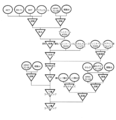
- FIG. 3 It is a schematic diagram of a production flow for producing a tablet containing an oil dispersion of ED-71.
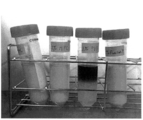
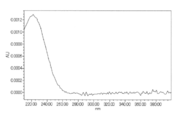
- 3 is a photograph showing an emulsified state when a 2% aqueous solution of a water-soluble polymer is mixed with a medium-chain fatty acid triglyceride. From left, HPMC, HPC, PVP, and POVA-COAT. It is the analysis result by the liquid chromatography of the tablet obtained by "[Production example] oil-dispersion tablet.” It is an ultraviolet-visible spectrum of ED-71. It is an ultraviolet-visible spectrum of ED-71 epoxide (compound 2).
- ED-71 is a compound represented by the following formula (I), preferably the following formula (Ia).
- ED-71 can be prepared, for example, according to the method described in JP-A-10-72432 by using (1R, 2R, 3R) -2- (3-hydroxypropoxy) -cholesta-5,7-diene-1,3,25-.
- triol as a starting material, it can be obtained by purifying by reverse phase HPLC after ultraviolet irradiation and thermal isomerization reaction, concentrating, and crystallizing with ethyl acetate.
- ED-71 epoxide is a compound represented by the following formula (II).
- any of the compounds represented by the following formulas (IIa) and (IIb), that is, (1R, 2R, 3R, 5Z, 7 ⁇ , 8 ⁇ ) -2- (3-hydroxypropoxy) -7 , 8-Epoxy-9,10 (19) -secocholesta-5,10-diene-1,3,25-triol (hereinafter also referred to as compound 2) is preferred.
- the stereo at position 14 in compounds (II), (IIa), (IIb) and (IIc) is preferably the same as that of compound (Ia).
- Oil dispersion of ED-71 Pharmaceutical compositions comprising an ED-71 and ED-71 epoxide and TECHNICAL FIELD
- the present invention relates to oil dispersion comprising oil dispersion and ED-71 and ED-71 epoxide of ED-71.
- the oil dispersion of ED-71 refers to a composition in which particles of a fat or oil solution of ED-71 are dispersed in an excipient.
- the oil dispersion containing ED-71 and ED-71 epoxide refers to a composition in which particles of fats and oils containing ED-71 and ED-71 epoxide are dispersed in an excipient.
- the present invention provides a pharmaceutical composition comprising such an oil dispersion containing ED-71 and ED-71 epoxide.
- a pharmaceutical composition containing ED-71 and ED-71 epoxide, wherein a water-soluble polymer selected from hydroxypropylmethylcellulose and hydroxypropylcellulose is added to or on the surface of an excipient.
- a water-soluble polymer selected from hydroxypropylmethylcellulose and hydroxypropylcellulose
- the present invention also provides a method for producing such a pharmaceutical composition.
- the present invention relates to a method for producing a pharmaceutical composition containing ED-71 and ED-71 epoxide, wherein (i) an oil-in-water emulsion containing an oil / fat solution of ED-71 and an aqueous solution of a water-soluble polymer. Preparing, (ii) attaching or adsorbing the oil-in-water emulsion to an excipient, and (iii) drying the oil-in-water emulsion, wherein the water-soluble polymer is hydroxy.
- the method provided above is selected from propylmethylcellulose and hydroxypropylcellulose.
- the oil and fat particles containing ED-71 and ED-71 epoxide are coated with the water-soluble polymer in the excipient, and the formulation using the oil dispersion of ED-71 and ED-71 epoxide is obtained. (Especially tablets) can be produced.
- the ED-71 epoxide is not contained at the start of the step (i), or even if it is contained, it is preferably a small amount of not more than 0.1%, but mainly in the step (iii) It is produced by conversion (oxidation) of ED-71 and is contained in fats and oils.
- the fats and oils used in the present invention include medium-chain fatty acid triglyceride (hereinafter also referred to as “MCT”), tricaprylin, caproic acid, caprylic acid, capric acid, oleic acid, linoleic acid, linolenic acid, and vegetable oil And the like.
- MCT medium-chain fatty acid triglyceride
- examples of the vegetable oil include coconut oil, olive oil, rapeseed oil, peanut oil, corn oil, soybean oil, cottonseed oil, grape oil, safflower oil, and the like.
- MCT medium-chain fatty acid triglyceride
- tricaprylin caproic acid
- caprylic acid capric acid
- oleic acid linoleic acid
- linolenic acid linolenic acid
- examples of the vegetable oil include coconut oil, olive oil, rapeseed oil, peanut oil, corn oil, soybean oil, cottonseed oil, grape oil,
- the concentration of ED-71 in the fat or oil solution in step (i) can be appropriately determined according to the disease or condition to be treated, the dosage form, the administration route, etc., for example, 0.001 to 0.3% by weight. , Preferably 0.005 to 0.1% by weight, more preferably 0.01 to 0.05% by weight.
- An antioxidant may be further added to the fat or oil solution in the step (i).
- the antioxidant in the present invention include nitrite (eg, sodium nitrite), sulfite (eg, sodium sulfite, dried sodium sulfite, sodium hydrogen sulfite, sodium pyrosulfite), thiosulfate (eg, sodium thiosulfate), Alpha thioglycerin, 1,3-butylene glycol, thioglycolic acid and its salts (eg, sodium thioglycolate), thiomalate (eg, sodium thiomalate), thiourea, thiolactic acid, edetate (eg, sodium edetate) , Dichloroisocyanurate (eg, potassium dichlorisocyanurate), citric acid, cysteine and its salts (eg, cysteine hydrochloride), benzotriazole, 2-mercaptobenzimidazole, erythor
- tocopherol acetate, dibutylhydroxytoluene, natural vitamin E, dl- ⁇ -tocopherol, d- ⁇ -tocopherol, concentrated mixed tocopherol, ascorbic acid palmitate, stearic L-ascorbic acid ester, butylhydroxyanisole, propyl gallate are preferred, dl- ⁇ -tocopherol, dibutylhydroxytoluene, butylhydroxyanisole, or propyl gallate are more preferred, and dl- ⁇ -tocopherol or dibutylhydroxytoluene is even more preferred.
- the amount of the antioxidant added to the fat or oil solution is not particularly limited, but is not more than the maximum amount that can be used as an antioxidant (for example, the approval described in the Pharmaceutical Additives Encyclopedia (Yakuji Nippo, 2000)) Normally, the maximum amount of use or less as described in the precedent example, or the amount of use or less as described in the Official Specification of Food Additives (Japan Food Additives Association, 1999) can be used.
- dl- ⁇ -tocopherol is added to the fat or oil solution at a concentration of 0.01% by weight or more (eg, 1% by weight or more) and 10% by weight or less (eg, 5% by weight or less).
- concentration 0.01% by weight or more (eg, 1% by weight or more) and 10% by weight or less (eg, 5% by weight or less).
- dibutylhydroxytoluene, butylhydroxyanisole, propyl gallate and the like are the same as those for dl- ⁇ -tocopherol described above.
- the coating agent used in the present invention contains a water-soluble polymer.
- the water-soluble polymer is selected from hydroxypropylmethylcellulose and hydroxypropylcellulose. Although many additives reduce the stability of ED-71 when added to a fat solution of ED-71, hydroxypropylmethylcellulose and hydroxypropylcellulose do not reduce the stability of ED-71. When hydroxypropylmethylcellulose and hydroxypropylcellulose are used, the emulsified state of the oil-in-water emulsion can be maintained for a long time.
- the fact that the stability of ED-71 in the pharmaceutical composition of the present invention does not decrease means that tablets are produced from the pharmaceutical composition of the present invention and stored at 40 ° C. for 1, 3, or 6 months under light shielding. After that, it is confirmed by examining the residual ratio of ED-71.
- the residual ratio of ED-71 was determined for the preserved sample and the initial sample by high performance liquid chromatography (measuring wavelength: 265 nm) and ED-71 and its isomer pre-form (chemical name: 6Z- (1R, 2R, 3R)) -2- (3-hydroxypropoxy) -9,10-secocholesta-5 (10), 6,8 (9) -triene-1,3,25-triol; also referred to herein as Pre ED-71) Is measured and calculated by the following formula.
- Hydroxypropylmethylcellulose and hydroxypropylcellulose may be of a pharmaceutically acceptable grade. Hydroxypropyl methylcellulose in the present invention can be purchased, for example, from Shin-Etsu Chemical under the trade name TC-5.
- hydroxypropylcellulose is defined as a component in the Pharmaceutical Excipients Dictionary 2016 (edited by the Japan Pharmaceutical Excipients Association; published by Yakuji Nippo, Inc .; ISBN978-4-8408-1329-7). This refers to hydroxypropylcellulose listed as number 23303, which is different from the low-substituted hydroxypropylcellulose listed as component number 24440 in the same encyclopedia.
- the degree of molar substitution (MS) (indicating the ratio of the hydroxy group of the repeating unit (glucose ring) of the HPC to the hydroxypropoxy group) is usually 2-3, preferably 2. 5 to 3, more preferably 3.
- the molar substitution degree of the low-substituted hydroxypropylcellulose is 0.2 to 0.4.
- the hydroxypropyl cellulose in the present invention can be purchased, for example, from ASP Japan under the trade name Klucel and from Nippon Soda under the trade name hydroxypropyl cellulose.
- the coating agent in the present invention may include additives other than the water-soluble polymer, and may include, for example, a stabilizer and an antioxidant.
- the concentration of the water-soluble polymer in the aqueous solution in step (i) is appropriately determined according to the amount of ED-71, and is, for example, 1 to 15% by weight, preferably 2 to 10% by weight, Preferably it is 3-6% by weight, more preferably 4-6% by weight, even more preferably 5-6% by weight.
- the aqueous solution in the step (i) may contain an additive other than the water-soluble polymer, and for example, may contain a stabilizer or an antioxidant.
- the oil-in-water emulsion can be prepared by a method generally used in the field of pharmaceutical preparation, but is preferably prepared by a mechanical emulsification method.
- the mechanical emulsification method includes, for example, a chemical stirrer, a vortex mixer, a homomixer, a homogenizer, a hydroshear, a colloid mill, a flow jet mixer, an ultrasonic generator, a wet mill using glass beads, a membrane emulsifier using a porous membrane, Examples thereof include a method using an electroemulsifying apparatus using electric energy.
- the homogenizer for example, T-50 @ Ultra @ Turrax (manufactured by IKA) can be used.
- the ratio (weight ratio, o / w ratio) of the oil / fat solution of ED-71 to the aqueous solution of the water-soluble polymer may be within a range in which an oil-in-water emulsion can be prepared, and is usually 1: 1.5. 1 : 1: 20, preferably 1: 2 to 1:20, or 1: 2 to 1: 4.
- the concentration of the water-soluble polymer in the aqueous solution of the water-soluble polymer is 3 to 6% by weight, 4 to 6% by weight, or 5 to 6% by weight
- the ED-71 oil-fat solution and the water-soluble The ratio of polymer to aqueous solution is from 1: 1.5 to 1:20, 1: 2 to 1:20, or 1: 2 to 1: 4.
- the ratio (weight ratio) of the fat / oil solution of ED-71 to the water-soluble polymer may be within a range in which the particles of the fat / oil solution of ED-71 can be coated with the water-soluble polymer. It is usually 1: 0.05 to 1:10, preferably 1: 0.1 to 1: 1, or 1: 0.1 to 1: 0.3.
- the concentration of the water-soluble polymer in the aqueous solution of the water-soluble polymer is 3 to 6% by weight, 4 to 6% by weight, or 5 to 6% by weight
- the ED-71 oil-fat solution and the water-soluble The ratio (weight ratio) to the polymer is 1: 0.05 to 1:10, 1: 0.1 to 1: 1, or 1: 0.1 to 1: 0.3.
- the particles are preferably spherical.
- the particle size is usually from 0.01 to 100 ⁇ m, preferably from 0.1 to 10 ⁇ m.
- excipients used in the present invention include, for example, corn starch, potato starch, wheat starch, rice starch, partially pregelatinized starch, starches such as pregelatinized starch, perforated starch, anhydrous lactose, Lactose hydrate, fructose, glucose, mannitol, sorbitol, sugars or sugar alcohols such as erythritol, anhydrous calcium hydrogen phosphate, crystalline cellulose, precipitated calcium carbonate, calcium silicate and the like, preferably sugar or sugar alcohols And more preferably mannitol, anhydrous lactose, lactose hydrate, and more preferably mannitol.
- the ratio (weight ratio) of the oil-in-water emulsion and the excipient used in the step (ii) may vary depending on the type of the excipient and the like, but is usually 1: 1 to 1: 100, preferably 1: 4 to The range is 1:20.
- the excipient is mannitol
- the weight ratio is usually in the range of 1: 4 to 1:20, it is possible to obtain a preferable granulated powder that can be used for producing a preparation such as a tablet.
- the adhesion or adsorption of the oil-in-water emulsion to the excipient can be carried out by a method generally used in the field of pharmaceutical preparations, for example, a method of granulating the excipient by spraying the emulsion, shaping, A method of adding an emulsion to the agent and mixing and stirring.
- a method can be performed using, for example, a high-speed stirring granulator (VG-600CT manufactured by POWREX), a mixing stirrer (DM type manufactured by Shinagawa Kogyosho), or the like.
- the adhesion or adsorption includes impregnation (infiltration of an oil-in-water emulsion into pores with a porous excipient).
- step (iii) the oil-in-water emulsion adhering or adsorbed to the excipient is dried, whereby water is removed from the aqueous solution of the water-soluble polymer, and the oil-fat solution is directly coated with the water-soluble polymer. Is considered to be formed.
- the oil dispersion thus obtained contains particles containing an ED-71 oil / fat solution, and exhibits good productivity (eg, fluidity and compression moldability) when used in the production of tablets and other preparations. .
- Drying of the oil-in-water emulsion can be performed by a method generally used in the field of pharmaceutical preparations, for example, fluidized drying, freeze drying, air drying, spray drying, standing drying, stirring drying, flash drying, and vacuum drying. , Microwave drying, and infrared / far infrared drying. Drying may be performed together with heating or cooling. Drying can be performed using, for example, a fluidized bed granulating dryer (WSG-200pro manufactured by POWREX), a vacuum dryer (Conical Dryer manufactured by Nippon Dryer), or the like.
- WSG-200pro fluidized bed granulating dryer
- Conical Dryer manufactured by Nippon Dryer or the like.
- the pharmaceutical composition of the present invention can be made into oral preparations such as tablets, capsules, granules and powders. These oral preparations can be produced by a method used in the field of pharmaceuticals.
- the method for producing a tablet includes the following methods i), ii) and iii).
- Tablets are prepared by mixing the ED-71 and the oil dispersion containing the ED-71 epoxide with additional additives (excipient 2, disintegrant, lubricant, etc.) and then compression molding.
- additional additives excipient 2, disintegrant, lubricant, etc.
- the solvent eg, purified water, ethanol, or a mixture thereof
- a tablet is produced by adding an appropriate amount of a lubricant and, if necessary, a disintegrant and the like to the obtained granules, mixing and then compression-molding.
- the binder and optionally other additives are mixed with a solvent (eg, purified water). , Ethanol, or a mixture thereof), and granulation is performed while adding or spraying a liquid obtained by dispersing or dissolving the resulting mixture.
- a tablet is produced by adding an appropriate amount of a lubricant and, if necessary, a disintegrant or the like to the obtained granules and mixing the resulting mixture, followed by compression molding.
- Additional additives include, for example, surfactants and pH adjusters to improve drug release, stabilizing agents to improve fluidity during the process, and stabilizing agents to increase stability.
- a flavoring agent can be used for the purpose of adding taste and smell, and a coloring agent can be used for the purpose of adding color.
- the amount of these to be used is generally 0 to 99.999 parts by weight, preferably 50 to 99.5 parts by weight, more preferably 90 to 99 parts by weight, based on 100 parts by weight of the preparation.
- Tablets may also contain additional antioxidants as additional additives.
- the antioxidant can be added at any step in the production method of i), ii) and iii).
- a tablet can be produced by mixing an antioxidant with an oil dispersion together with other additives, followed by compression molding.
- a tablet can also be produced by preparing an oil dispersion using an ED-71 oil / fat solution in which an antioxidant has been dissolved in advance, mixing this with other additives, and compression molding. .
- the content of ED-71 in the pharmaceutical composition (preferably tablet) of the present invention is not particularly limited, in one embodiment, the amount of ED-71 per unit preparation is 0.05 to 5 ⁇ g, preferably 0.1 to 0.1 ⁇ g. 5 to 0.75 ⁇ g.
- excipient 2 examples include starches such as corn starch, potato starch, wheat starch, rice starch, partially pregelatinized starch, pregelatinized starch, perforated starch, lactose hydrate, fructose, glucose, mannitol, sorbitol And sugar alcohols, anhydrous calcium hydrogen phosphate, crystalline cellulose, precipitated calcium carbonate, calcium silicate and the like.
- excipient 2 is a starch, lactose hydrate, microcrystalline cellulose, or anhydrous calcium hydrogen phosphate.
- disintegrant examples include sodium starch glycolate, carboxymethylcellulose, carboxymethylcellulose calcium, sodium carboxymethylstarch, croscarmellose sodium, crospovidone, low-substituted hydroxypropylcellulose, hydroxypropylstarch and the like.
- the amount of the disintegrant to be used is preferably 0.5 to 25 parts by weight, more preferably 1 to 15 parts by weight, based on 100 parts by weight of the preparation.
- binder examples include hydroxypropylcellulose, hydroxypropylmethylcellulose, methylcellulose, povidone (polyvinylpyrrolidone), gum arabic powder and the like.
- the amount of the binder used is preferably 0.1 to 50 parts by weight, more preferably 0.5 to 40 parts by weight, based on 100 parts by weight of the preparation.
- Lubricants include, for example, stearic acid, magnesium stearate, calcium stearate, talc, sucrose fatty acid ester, sodium stearyl fumarate, light anhydrous silicic acid, and the like.
- surfactant examples include polysorbate 80, polyoxyl stearate 40, lauromacrogol, and the like.
- pH adjuster examples include acetic acid, lactic acid, citric acid, malic acid, succinic acid, fumaric acid, tartaric acid, phosphoric acid, and salts thereof.
- Examples of the fluidizing agent include light anhydrous silicic acid, silicon dioxide such as hydrated silicon dioxide, and talc.
- specific examples of the light anhydrous silicic acid include, for example, Sylysia 320 (trade name, Fuji Silysia Chemical Ltd.), Aerosil 200 (trade name, Nippon Aerosil Co., Ltd.) and the like.
- the stabilizer examples include paraoxybenzoic acid esters such as methylparaben and propylparaben; alcohols such as chlorobutanol, benzyl alcohol and phenylethyl alcohol; benzalkonium chloride; phenols such as phenol and cresol; thimerosal; dehydroacetic acid; Sorbic acid.
- paraoxybenzoic acid esters such as methylparaben and propylparaben
- alcohols such as chlorobutanol, benzyl alcohol and phenylethyl alcohol
- benzalkonium chloride examples include phenols such as phenol and cresol; thimerosal; dehydroacetic acid; Sorbic acid.
- sweeteners for example, sweeteners, sour agents, flavors, and the like usually used in the field of pharmaceutical preparations can be mentioned.
- Any coloring agent may be used as long as it is permitted to be added to pharmaceutical products, for example, Food Yellow No. 5 (Sunset Yellow, US Food Yellow No. 6), Food Red No. 2, Food Blue Food dyes such as No. 2, food lake dyes, iron sesquioxide and the like.
- antioxidants examples include nitrite (eg, sodium nitrite), sulfite (eg, sodium sulfite, dried sodium sulfite, sodium hydrogen sulfite, sodium pyrosulfite), thiosulfate (eg, sodium thiosulfate), alpha thioglycerin 1,3-butylene glycol, thioglycolic acid and its salts (eg, sodium thioglycolate), thiomalate (eg, sodium thiomalate), thiourea, thiolactic acid, edetate (eg, sodium edetate), dichlor Isocyanurate (eg, potassium dichlorocyanurate), citric acid, cysteine and its salts (eg, cysteine hydrochloride), benzotriazole, 2-mercaptobenzimidazole, erythorbic acid and its salts (eg, sodium erythorbic acid) ), Ascorbic acid and its este
- the amount of the antioxidant to be used is preferably 0.001 to 10 parts by weight, more preferably 0.01 to 1 part by weight, based on 100 parts by weight of the preparation.
- the additional additives may be used as a mixture of two or more kinds at an appropriate ratio.
- Sugar-coated tablets or film-coated tablets can also be obtained from tablets by using a suitable coating additive.
- the coating additive include a sugar coating base, a coating agent, an enteric film coating base, a sustained release film coating base, and the like.
- sugar-coating base examples include sugars such as sucrose and erythritol and sugar alcohols. Further, one or more kinds selected from talc, precipitated calcium carbonate, gelatin, gum arabic, pullulan, carnauba wax and the like are used in combination. Is also good.
- the coating agent examples include ethyl cellulose, hydroxypropyl cellulose, hydroxypropyl methyl cellulose, shellac, talc, carnauba wax, paraffin and the like.
- enteric film coating base examples include cellulose-based polymers such as hydroxypropylmethylcellulose phthalate, hydroxypropylmethylcellulose acetate succinate, carboxymethylethylcellulose, cellulose acetate phthalate; methacrylic acid copolymer L [Eudragit L (trade name); Acrylic polymers such as Evonik Degussa Co., Ltd., methacrylic acid copolymer LD [Eudragit L-30D55 (trade name), Evonik Degussa Co., Ltd.], and methacrylic acid copolymer S [Eudragit S (trade name), Evonik Degussa Company]; Natural products such as shellac are exemplified.
- sustained-release film coating base examples include cellulosic polymers such as ethylcellulose; aminoalkyl methacrylate copolymer RS (Eudragit RS (trade name), Evonik Degussa), and ethyl acrylate / methyl methacrylate copolymer suspension.
- An acrylic acid-based polymer such as a suspension [Eudragit NE (trade name), Evonik Degussa]; cellulose acetate;
- the above-mentioned coating additives may be used by mixing two or more kinds thereof at an appropriate ratio.
- a water-soluble substance such as hydroxypropylmethylcellulose, sugar alcohols such as mannitol, sugars such as sucrose and anhydrous maltose, sucrose fatty acid esters, polyoxyethylene polyoxypropylene glycol, polysorbate, and sodium lauryl sulfate.
- water-soluble polymers such as hydroxypropylmethylcellulose, sugar alcohols such as mannitol, sugars such as sucrose and anhydrous maltose, sucrose fatty acid esters, polyoxyethylene polyoxypropylene glycol, polysorbate, and sodium lauryl sulfate.
- surfactants and the like can be used.
- Plasticizers include acetylated monoglyceride, triethyl citrate, triacetin, dibutyl sebacate, dimethyl sebacate, medium-chain fatty acid triglyceride, acetyl triethyl citrate, tributyl citrate, acetyl tributyl citrate, dibutyl adipate, oleic acid, oleinol One or more selected from such as can be used.
- a general method in the field of pharmaceuticals can be used, for example, a pan coating method, a fluid coating method, a rolling coating method, The fluid tumbling coating method may be used.
- the coating liquid used in these methods is obtained by mixing the coating additive, talc, and a solvent (preferably, ethanol or a mixture of ethanol and water).
- the solid content of such a coating solution is preferably in the range of 5 to 15% by weight based on the total weight of the coating solution.
- the pharmaceutical composition of the present invention is a coated tablet coated with an HPMC film.
- granulation is, in addition to the principle and apparatus described in the examples, extrusion granulation, crushing and sizing, rotary granulation, dry granulation, wet high shear granulation, And fluidized bed granulation.
- Granulation devices based on extrusion granulation include, for example, twin dome granules, basket louvers, semi-dry / low-moisture granulator disk pelleters, semi-dry / small-diameter granulators, fine disk pelleters, and pelletizer doubles. , And Multigran (all from Dalton), and KEX Extruder and KRC Kneader (all from Kurimoto).
- Examples of granulators based on the principle of crushing and sizing include power mills (made by Dalton), sieving machines Fiore F and Landel mills (manufactured by Tokuju Kosakusho), and no-screen sizing machines Nebula Sizer (manufactured by Nara Machine Works) ), Quick Mill QMY (manufactured by Seishin Enterprise), Roll Granulator (manufactured by Matsubo), New Speed Mill (manufactured by Okada Seiko), MF Type Granulator Oscillator and Crusher Granulator (Conibit) Manufactured by Earth Technica).
- power mills made by Dalton
- sieving machines Fiore F and Landel mills manufactured by Tokuju Kosakusho
- no-screen sizing machines Nebula Sizer (manufactured by Nara Machine Works) ), Quick Mill QMY (manufactured by Seishin Enterprise), Roll Granulator (manufactured by Matsubo), New
- Examples of the granulating apparatus based on rotary granulation include a marmellaizer (made by Dalton), a centrifugal flow coating granulator CF and Granulex GX (all made by Freund Corporation).
- Examples of a granulating apparatus based on dry granulation include, for example, a roller compactor (manufactured by Freund Corporation), a Pharma compactor (manufactured by Hosokawa Micron), an RCP roller compactor (manufactured by Kurimoto Iron Works), and a pharmaceutical compactor (manufactured by Matsubo).
- a roller compactor manufactured by Freund Corporation
- a Pharma compactor manufactured by Hosokawa Micron
- an RCP roller compactor manufactured by Kurimoto Iron Works
- a pharmaceutical compactor manufactured by Matsubo
- Examples of granulating devices based on wet high shear granulation include SP Granulator and Spartan Luzer (above, manufactured by Dalton), Vertical Granulator (manufactured by Powrex), Pharma Connect for GEA Aeromatic Fielder Multiprocessor R & D ( Eurotechno), Mixer & Granulator (NMG) (Nara Machinery), Crushing and Rolling Type New Grass Machine SEG (Seisin Enterprise), New Speed Kneader (Okada Seiko), High Speed Mixer (Advanced Series), Dynamic Dryers, high-flex granules, and microwave granulator dryers (both sold by Fukae Powtech, sold by Earth Technica), and TM-type granulating mixers (manufactured by Nippon Coke Industries).
- Examples of a granulating apparatus based on fluidized bed granulation include a pulverizer, a swirling fluidized bed, a microfluidized bed, a swing processor (above, manufactured by Dalton), a flow coater containment, a flow coater Universal, and a flow coater FLO.
- Spiral Flow SFC from Freund Corporation
- Agromaster from Hosokawa Micron
- GEA Aeromatic Fielder Flexstream from Eurotechno
- Sprude Okawara Seisakusho.
- the mixing is performed according to each principle of a convection type (mechanical stirring type), a diffusion type (container rotating type), and a kneading / kneader.
- Mixing devices based on the principle of convection include, for example, a mixing stirrer NDM type, a mixing stirrer XDM type, a mixing stirrer DM type, a mixing stirrer AM / XDM / DM type for prototype and research, and a mixing stirrer twin for a laboratory.
- Examples of the mixing device based on the diffusion type include a GEA book system IBC blender, a GEA book system IBC blender with an NIR measuring device (all manufactured by Eurotechno), a V-type mixer, and a W-type mixer.
- Machines manufactured by Tokuju Kosakusho
- V-type mixers manufactured by Nara Machinery Works
- W-type mixers SCM manufactured by Seishin Enterprises
- capsule locking mixers made by Aichi Electric
- Bohle container mixer PM manufactured by Kotobuki Kogyo.
- Mixing devices based on kneading and kneading are, for example, continuous kneaders, batch kneaders (above, manufactured by Dalton), TK Hibismix, and TK hibisdispermix (above, manufactured by Primix), Leistritz extruder (Manufactured by Nara Machinery) and a planetary mixer (manufactured by Asada Tekko).
- ⁇ Other mixing devices include, for example, Conti-TDS (manufactured by Dalton) and mixing torque meter ST-3000II ⁇ process reactor DDL 3000, and stirring simulation MixSim (all manufactured by Satake Chemical Machinery Co., Ltd.).
- mixing can also be performed based on principles such as a fluid stirring type, a non-stirring type, and a high-speed shearing type.
- Tabletting is performed according to each principle of single-shot tableting and rotary tableting, but rotary tableting is preferred from the viewpoint of efficiency.
- Examples of tableting devices based on rotary tableting include, in addition to those described in the examples, detachable high-speed tableting machine Fette (manufactured by Bosch Packaging Technology), high-speed tableting machine COMPRIMA, and high-speed tableting machine.
- a single-layer tablet can be obtained with the above-described tableting apparatus. It is also possible to produce a dry-coated tablet using a dry-pressed tablet machine (manufactured by Kikusui Seisakusho) and an AP / MS type C-type dry-pressed tableting machine (manufactured by Hata Iron Works).
- pan coating is performed by each principle of pan coating (horizontal pan), pan coating (inclined pan), and air floating type (fluidized bed).
- Examples of the coating apparatus based on ⁇ ⁇ ⁇ ⁇ ⁇ ⁇ ⁇ pan coating (horizontal pan) include High Coater FZ, Aqua Coater AQC Containment, and Aqua Coater AQC (all manufactured by Freund Corporation).
- Examples of the coating apparatus based on pan coating (inclined pan) include a Porec coater PRC and a amia coater DRC (all manufactured by Powrex).
- ⁇ As a coating apparatus based on an air-floating type (fluidized bed), for example, a Glatt powder coater ⁇ GPCG ⁇ SPC, multiplex, and composite fluidized bed ⁇ SFP (all manufactured by Powrex) can be mentioned.
- a Glatt powder coater ⁇ GPCG ⁇ SPC, multiplex, and composite fluidized bed ⁇ SFP all manufactured by Powrex
- coating apparatuses include, for example, a hybridization system (manufactured by Nara Kikai Seisakusho), and a mechano hybrid (manufactured by Nippon Coke E).
- the pharmaceutical composition of the present invention is useful for treating or preventing a disease or condition (eg, osteoporosis) that can be treated or prevented by suppressing bone turnover and improving bone density and strength.
- a disease or condition eg, osteoporosis
- treatment or prevention of a disease or symptom includes prevention of onset of the disease, suppression or inhibition of exacerbation or progression, reduction of one or more symptoms exhibited by an individual suffering from the disease, or suppression of exacerbation or progression. , Secondary disease treatment or prevention, and the like.
- the subject to which the pharmaceutical composition of the present invention is administered is a mammal.
- the mammal is preferably a human.
- the pharmaceutical composition of the present invention is administered to a subject in an amount effective for treatment or prevention.
- “Therapeutically or prophylactically effective amount” means an amount that produces a therapeutic or prophylactic effect for a particular disease, mode of administration and route of administration, and includes the species, type of disease, symptom, gender, age, chronic disease, other Is appropriately determined in accordance with the element of.
- the route of administration is usually oral.
- the dose of the pharmaceutical composition of the present invention is appropriately determined according to the species, type of disease, symptom, sex, age, chronic disease, and other factors of the subject. 0.01 to 10 ⁇ g, preferably 0.5 to 0.75 ⁇ g per day.
- the present invention also relates to a method for treating or preventing a disease or condition, which comprises administering a therapeutically or prophylactically effective amount of the pharmaceutical composition of the present invention to a subject in need thereof.
- terapéuticaally or prophylactically effective amount in the present invention means an amount that produces a therapeutic or prophylactic effect for a specific disease or condition, administration form and administration route, and is the species of the subject, the type of the disease or condition, the condition, the sex, It is appropriately determined according to age, chronic disease, and other factors.
- ⁇ The“ subject ”in the present invention is, for example, a mammal, preferably a human.
- Administering "in the present invention usually means oral administration.
- ⁇ The“ disease or condition ”in the present invention includes a disease or condition that can be treated or prevented by suppressing bone turnover to improve bone density and strength (eg, osteoporosis).
- the ED-71 epoxide is produced mainly by conversion from ED-71 in step (iii) (drying step) and is present in the prepared tablets in a fat solution together with ED-71.
- step (iii) drying step
- the conversion of ED-71 to ED-71 epoxide progresses more gradually, but the progress is made in a container (packaging form) in which an oxygen scavenger is coexistent. It can be suppressed by saving in the state.
- the present invention provides a product in which the pharmaceutical composition of the present invention and the oxygen scavenger are hermetically enclosed in a packaged form.
- oxygen scavenger examples include Wonder Keep (registered trademark) (Powder Tech), Oxymove (registered trademark) (Nantong Oe Chemical), Modulan (Nippon Kayaku Food Techno), Keypit (Drainy), Wellpack (Taisei), Oxytor (registered trademark) (Ueno Food Techno), Keplon (Keplon), freshness preservative (Toppan Printing), Sansoles (Hakuyo), Sansocut (registered trademark) (Iris Fine Products), Ageless (registered trademark) ZM (Mitsubishi) Gas Chemistry, ZM-1), Everfresh (Tori Shigeki, QJ-30, etc.), Vitalon PH (Tokiwa Sangyo, PH-100SL, etc.), SEQUEL (registered trademark) (Nisso resin, AP-250, etc.) , Preferably Ageless ZM.
- the “packing form” can be in an airtight state and includes, for example, bottle packaging, pillow packaging, blister pack packaging, and ampoule packaging, and is preferably bottle packaging and pillow packaging.
- the pharmaceutical composition of the present invention is packaged as it is or in a PTP package (press-through pack packaging) and hermetically sealed in a package form.
- the composition as it is is hermetically sealed in a bottle package.
- the PTP packaged composition is hermetically sealed in a pillow package.
- thermoplastic resin, glass, pottery, enamel, metal and the like can be mentioned, and thermoplastic resin and glass are preferable.
- the material of the bottle packaging is not limited to a single-layer material.
- the same thermoplastic resin or a multi-layer structure made of a plurality of types of materials may be used.
- the lid portion of the bottle packaging may be in any form as long as it can be made airtight, and includes, for example, a screw cap.
- Examples of the material of the lid include a thermoplastic resin and a metal (eg, iron, tin, stainless steel, etc.), and preferably a metal.
- plastic bottle packaging with a seal preferably an aluminum seal
- “Pillow packaging” refers to a packaging form in which the pharmaceutical composition of the present invention as it is or in a PTP package is covered in a bag shape with a film, and is then kept in an air-tight state with a gas still contained.
- a material of the pillow packaging for example, an aluminum laminated film, a thermoplastic resin, or the like, or a combination thereof can be mentioned, and an aluminum laminated film is preferable.
- Airtight means that there is no danger of liquid intrusion in daily handling or in normal storage conditions. Airtightness includes a state in which gas intrusion is suppressed depending on the degree. In the case of bottle packaging, the degree of airtightness can be quantified by using, for example, “closing torque”. The numerical value is, for example, 100 to 300 N ⁇ cm, preferably 150 to 250 N ⁇ cm, and more preferably 200 to 220 N ⁇ cm.
- the airtight state may be a sealed state.
- “Sealed” means a state in which there is no risk of gas or microorganisms entering under daily handling or normal storage conditions.
- Examples of materials for PTP packaging and blister pack packaging include resins such as thermoplastic resins, metals, various paints, various adhesives, and the like, with thermoplastic resins being preferred.
- thermoplastic resin examples include polyvinyl chloride (PVC), unstretched polypropylene (CPP), polypropylene (PP), polyvinylidene chloride (PVDC), poly (chlorotrifluoroethylene) (PCTFE), and cyclic olefin copolymer ( COC), polyethylene (PE; high, medium and low density), polycarbonate (PC), polyamide (PA), ethylene-vinyl acetate copolymer (EVA), ethylene-methacrylate copolymer, polystyrene (PS) , Polyester (PET), polyacrylic acid (PAA), ethylene-vinyl alcohol copolymer, etc., preferably, polyvinyl chloride, unstretched polypropylene, polypropylene, polyvinylidene chloride, poly (ethylene trifluoride) chloride, cyclic An olefin copolymer and an ethylene-vinyl alcohol copolymer.
- PVC polyvinyl chloride
- lid material of the PTP packaging examples include an aluminum foil, a laminated film obtained by laminating an aluminum foil with a thermoplastic resin film, and the like.
- a known method may be used as a method for producing the PTP package or the blister pack package.
- the packaging material of the pillow packaging, the PTP packaging, or the blister pack packaging in the present invention is not limited to a single layer, but may be a multilayer film in which a plurality of layers are laminated.
- the multilayer film has an outer layer or an intermediate layer having a barrier layer for suppressing oxygen permeation, and may have an inner layer or an intermediate layer having an absorbing layer having a deoxygenation function.
- the absorbing layer having a deoxidizing function includes, for example, a resin in which a deoxidizing agent having a deoxidizing function is kneaded.
- a packaging form having a high light-shielding property is preferable, and examples thereof include a brown glass bottle packaging with a metal cap.
- a gas other than oxygen for example, nitrogen gas, carbon dioxide gas, helium gas, argon gas, neon gas, (Krypton gas, xenon gas, radon gas).
- ED-71 epoxide is difficult to completely eliminate its presence in the pharmaceutical composition (preferably tablet) of the present invention prepared through a drying step (step (iii)) in contact with air, although it is a substance that is allowed to be present, the content thereof is preferably small from the viewpoint of the effectiveness of ED-71. Specifically, the content is preferably 5% or less, more preferably 2% or less, and further preferably 1.2% or less. A specific example of a preferable content is 0.5%. The lower limit of the content may be, for example, 0.1% or less.
- the “content” of the ED-71 epoxide is calculated based on the peak area obtained from the 220 nm profile when analyzed by liquid chromatography under the conditions described in Test Example 3 in the following Examples.
- EtOH ethanol
- HPMC Hydroxypropyl methylcellulose
- BHT dibutylhydroxytoluene
- MCT Medium chain fatty acid triglyceride
- HPC Hydroxypropyl cellulose
- PVP Polyvinylpyrrolidone
- PVA copolymer Polyvinyl alcohol / acrylic acid / methyl methacrylate copolymer
- Example 1 Composition change 1 50 mg of ED-71 was dissolved in 2.5 mL of EtOH to prepare an ethanol solution of ED-71. 1 g of BHT (Merck) and 2 g of dl- ⁇ -tocopherol (Wako Pure Chemical Industries, Ltd.) were dissolved in 97 g of MCT (ODOC, Nisshin Oilio) to prepare an MCT solution. was prepared. 0.5 mL of an ethanol solution of ED-71 was added to the prepared MCT solution, and the mixture was stirred with a vortex mixer. Further, the mixture was distilled off under reduced pressure to prepare an ED-71 oil and fat solution.
- Example 1 300 mg of hydroxypropyl methylcellulose was added to 150 mg of the prepared ED-71 oil / fat solution to prepare an ED-71 composition (Example 1).
- the prepared ED-71 composition was stored in a thermostat adjusted to 60 ° C. in the presence of air, and the residual ratio (%) of ED-71 was examined after 14 days and 28 days.
- the above ED-71 oil / fat solution alone (Control Example 1) was used.
- An ED-71 composition was prepared in the same manner as in Example 1, except that the additives (300 mg) described in Table 1 were used instead of the hydroxypropylmethylcellulose of Example 1, and the stability at 60 ° C was measured. The examination was performed in the same manner as in Example 1.
- Example 2 Composition change 2 Using the additives described in Table 2 in place of the hydroxypropyl methylcellulose of Example 1, the ED-71 compositions of Example 2 and Control Example 35 were prepared in the same manner as in Example 1, and at 60 ° C. The stability was examined as in Example 1 and compared to Control 1. The results are shown in Table 2. The composition of Example 2 was shown to be more stable than or equal to Control Example 1 and more stable than the compositions of Control Examples 2-34 shown in Table 1 under high temperature conditions. Although the stability of ED-71 was not reduced in the composition of Comparative Example 35, when meglumine was used as an additive, the emulsified state required in the production process of the oil dispersion tablet described below was obtained. It has been found that meglumine is not suitable as an additive for the production of oil dispersion tablets because it cannot be maintained.
- FIG. 2 shows the emulsified state (photograph) in the centrifuge tube after 24 hours when a 2% aqueous solution of a water-soluble polymer was used. Separation of the water layer and the oil layer did not occur in HPMC, HPC, and PVA copolymer, whereas separation occurred in PVP.
- Examples 3 to 11 Stability of ED-71 at the time of emulsion preparation 100 mg of ED-71 was dissolved in 5.0 mL of EtOH to prepare an ethanol solution of ED-71. 1 g of BHT (Merck) and 2 g of dl- ⁇ -tocopherol (Wako Pure Chemical Industries, Ltd.) and 97 g of MCT (ODOC, Nisshin Oilio) were dissolved in MCT solution. was prepared. To the prepared MCT solution was added 0.5 mL of an ED-71 ethanol solution, and the mixture was stirred with a vortex mixer to obtain an ED-71 dissolved MCT solution. Water-soluble polymer solutions shown in Table 4 were prepared.
- An ED-71-containing emulsion was prepared by mixing the ED-71-dissolved MCT solution and the water-soluble polymer solution in the proportions shown in Table 5 and stirring the mixture at 5400 rpm for 1 minute using a homogenizer.
- the prepared ED-71-containing emulsion was weighed so as to be about 1 ⁇ g as the ED-71 drug substance amount, and was distilled off under reduced pressure with a vacuum dryer, and the obtained sample was used for residual ratio measurement (Example 3). ⁇ 11).
- the sample was stored in a thermostat adjusted to 60 ° C. in the presence of air, and the ED-71 content value immediately after preparation, the ED-71 content value after 14 days and 25 days after, and the residual ratio (%) were examined.
- the obtained granulated powder is sieved with a wet granulator (POWREX U-20) equipped with a 9.5 mm (square hole) screen at 300 rpm to obtain a fluidized bed granulating dryer ( It was transferred to POWREX WSG-200pro) and dried (Sample 1).
- a wet granulator POWREX U-20
- 9.5 mm (square hole) screen at 300 rpm
- the dried granulated powder was sized by operating a dry granulator (U-20 manufactured by POWREX) equipped with a screen having a diameter of 2 mm at 800 rpm.
- the sized product was mixed for 15 minutes with a mixture of 3.0 kg of mannitol and 3.6 kg of croscarmellose sodium (DFE pharma) sieved through a 850 ⁇ m sieve, respectively, and further sieved through a 850 ⁇ m sieve.
- Example 2 After mixing with a mixture of 6.6 kg and calcium stearate (Merck) 0.72 kg for 3 minutes (sample 2), the mixture was tabletted with a tableting machine (COMPRIMA manufactured by IMA) at a pressure of about 7.5 kN to obtain tablets (sample 3). . At the time of tableting, the tablet weight was adjusted so that the erdecalcitol content per tablet was 0.75 ⁇ g.
- the second layer is 4.950 kg of hypromellose, 1.350 kg of talc (Merck), 2.502 kg of titanium oxide (Ishihara Sangyo), and 2.502 kg of iron sesquioxide (Kishimi)
- a suspension of 0.018 kg of Kasei) and 0.180 kg of yellow iron sesquioxide (Kishi Kasei) (65.167 kg) was spray-coated.
- FIG. 1 shows a schematic diagram of the manufacturing flow.
- the residual ratio of ED-71 was measured by the following method. Five tablets were placed in a 30 mL centrifuge tube. 7 mL of water: acetonitrile (20:80) was added, and the mixture was irradiated with ultrasonic waves for 30 minutes. During ultrasonic irradiation, stirring was performed once every 10 minutes. The supernatant was filtered through a polytetrafluoroethylene (PTFE) filter having a pore size of 0.20 ⁇ m, the first about 1 mL was discarded, and the remaining filtrate was used as a sample solution.
- PTFE polytetrafluoroethylene
- an ED-71 standard product was dissolved in water: acetonitrile (20:80) to a concentration of about 0.6 ⁇ g / mL, and a standard solution was prepared in the same manner as in the preparation of the sample solution.
- the sample solution and the standard solution were measured by a high performance liquid chromatography method (Alliance, manufactured by Waters, measurement wavelength: 265 nm), and the ED-71 content in the sample was quantified.
- Residual rate of ED-71 ratio of ED-71 content in accelerated sample to indicated amount (%) / ratio of ED-71 content in unaccelerated sample to indicated amount (%) x 100
- the indicated amount refers to the weight (0.5 ⁇ g or 0.75 ⁇ g) of ED-71 intended to be contained per tablet.
- the filtrate was injected into a solid phase extraction cartridge (InertSep TM NH 2 FF 500 mg / 3 mL, manufactured by GL Sciences), washed with 10 mL of a mixed solution of ethyl acetate and hexane mixed at a volume ratio of 1: 1 and then washed with 6 mL of ethanol. And eluted.
- the eluted liquid was evaporated and evaporated to dryness using an evaporator, and then 100 ⁇ L of a mixed solution of water and acetonitrile mixed at a volume ratio of 1: 1 was added to redissolve to obtain a sample solution.
- Test Example 4 Measurement of Content of Compound 2 in Each Step of Tablet Production
- the content of compound 2 was measured for Samples 1 to 4 in the above Production Examples.
- Samples 3 and 4 were subjected to a purity test in the same manner as in Test Example 3, and Samples 1 and 2 were subjected to a purity test in the same manner as in Test Example 3 except that the grinding step was omitted.
- the content of Compound 2 was determined from the 220 nm profile obtained by liquid chromatography analysis under the conditions described in Test Example 3, from the ED-71, Pred, which is a thermal isomer of Compound 2 and ED-71 in the sample solution.
- the peak areas of ED-71 and other ED-71 analogs were determined and calculated by the following formula.
- the peak areas of Compound 2, Pre ED-71, and other ED-71 analogs were corrected by the relative sensitivity coefficient (RRF) for ED-71.
- RRF relative sensitivity coefficient
- Step 1 ((1R, 2R, 3R, 5Z, 7E) -25-hydroxy-1,3-bis [(methoxycarbonyl) oxy] -2- ⁇ 3-[(methoxycarbonyl) oxy] propoxy ⁇ -9, 10-secocholesta-5,7,10 (19) -triene (compound 3)) (1R, 2R, 3R, 5Z, 7E) -2- (3-hydroxypropoxy) -9,10-secocholesta-5,7,10 (19) -triene-1,3,25-triol (compounds 1,4 .008 g, 8.17 mmol) in dichloromethane (40 mL) was added with 1-methylimidazole (3.6 mL, 44.9 mmol) and cooled in an ice bath.
- methyl chloroformate (3.1 mL, 40.8 mmol) was added dropwise at 10 ° C. or lower, and the mixture was stirred at room temperature for 15 hours, and then the solvent was distilled off under reduced pressure.
- Water (40 mL) was added to the residue, and the mixture was extracted with a mixture of heptane (10 mL) and ethyl acetate (30 mL). The extract was washed with water (40 mL) and a saturated aqueous solution of sodium hydrogen carbonate (40 mL), passed through diatomaceous earth and anhydrous sodium sulfate, and then the solvent was distilled off under reduced pressure.
- Step 2 ((1R, 2R, 3R, 5Z, 7 ⁇ , 8 ⁇ ) -25-hydroxy-1,3-bis [(methoxycarbonyl) oxy] -2- ⁇ 3-[(methoxycarbonyl) oxy] propoxy ⁇ - 7,8-epoxy-9,10-secocholesta-5,10 (19) -diene (compound 4)) 3-Chloroperbenzoic acid (74.2%) was added to a suspension of compound 3 (5.3683 g, 8.10 mmol) obtained in Step 1 and sodium hydrogen carbonate (1.3694 g, 16.3 mmol) in dichloromethane (81 mL). 1.9917 g, 8.56 mmol) at 0 ° C.
- Step 3 ((1R, 2R, 3R, 5Z, 7 ⁇ , 8 ⁇ ) -2- (3-hydroxypropoxy) -7,8-epoxy-9,10 (19) -secocholesta-5,10-diene-1, 3,25-triol (compound 2)
- a mixture of compound 4 (4.1369 g, 6.08 mmol) obtained in step 2, potassium carbonate (0.8406 g, 6.08 mmol) and methanol (61 mL) was stirred at room temperature for 3 hours.
- the reaction was diluted with dichloromethane (183 mL) and filtered over silica gel.
- the silica gel was washed with dichloromethane-methanol (3: 1, 100 mL), and the filtrates were combined and concentrated under reduced pressure.
- a sample 4 500 tablets was filled in a brown glass bottle (manufactured by Daiichi Glass Co., Ltd., PS-10K (brown)), and a steel cap (manufactured by Araki Industry Co., Ltd., No. 10-13 (L)) was closed and airtight. State.
- the content of Compound 2 in Sample 4 after storage for 19 months at a storage temperature of 25 ° C. and a relative humidity of 75% was measured in the same manner as in Test Example 3, and was determined as the content of Compound 2 in the absence of an oxygen scavenger. .
- sample 4 500 tablets was filled into a brown glass bottle, an oxygen scavenger (manufactured by Mitsubishi Gas Chemical Company, Ageless ZM, ZM-1) was added, the steel cap was closed, and the container was airtight with a stopper torque of 200 to 220 N ⁇ cm. State.
- the content of Compound 2 in Sample 4 after storage for 19 months at a storage temperature of 25 ° C. and a relative humidity of 75% was measured in the same manner as in Test Example 3, and was defined as the content of Compound 2 in the presence of an oxygen scavenger.
- an ED-71 preparation in a dosage form other than a soft capsule, in which the decomposition of ED-71 is suppressed.
Landscapes
- Health & Medical Sciences (AREA)
- Chemical & Material Sciences (AREA)
- Life Sciences & Earth Sciences (AREA)
- Medicinal Chemistry (AREA)
- Veterinary Medicine (AREA)
- Public Health (AREA)
- General Health & Medical Sciences (AREA)
- Pharmacology & Pharmacy (AREA)
- Animal Behavior & Ethology (AREA)
- Epidemiology (AREA)
- Engineering & Computer Science (AREA)
- Physical Education & Sports Medicine (AREA)
- Bioinformatics & Cheminformatics (AREA)
- Chemical Kinetics & Catalysis (AREA)
- General Chemical & Material Sciences (AREA)
- Orthopedic Medicine & Surgery (AREA)
- Rheumatology (AREA)
- Oil, Petroleum & Natural Gas (AREA)
- Molecular Biology (AREA)
- Dispersion Chemistry (AREA)
- Biochemistry (AREA)
- Nuclear Medicine, Radiotherapy & Molecular Imaging (AREA)
- Organic Chemistry (AREA)
- Inorganic Chemistry (AREA)
- Medicinal Preparation (AREA)
- Pharmaceuticals Containing Other Organic And Inorganic Compounds (AREA)
Abstract
Priority Applications (5)
| Application Number | Priority Date | Filing Date | Title |
|---|---|---|---|
| CN201980043428.5A CN112368000B (zh) | 2018-06-27 | 2019-06-27 | 含有在油脂中包含ed-71及其环氧体的油分分散体的药物组合物 |
| KR1020217001874A KR102708351B1 (ko) | 2018-06-27 | 2019-06-27 | 유지 중에 ed-71 및 그의 에폭시체를 포함하는 유분 분산체를 포함하는 의약 조성물 |
| JP2020527627A JP7291138B2 (ja) | 2018-06-27 | 2019-06-27 | 油脂中にed-71およびそのエポキシ体を含む油分分散体を含む医薬組成物 |
| JP2022018843A JP7406581B2 (ja) | 2018-06-27 | 2022-02-09 | 油脂中にed-71およびそのエポキシ体を含む油分分散体を含む医薬組成物 |
| JP2023194149A JP2024020402A (ja) | 2018-06-27 | 2023-11-15 | 油脂中にed-71およびそのエポキシ体を含む油分分散体を含む医薬組成物 |
Applications Claiming Priority (2)
| Application Number | Priority Date | Filing Date | Title |
|---|---|---|---|
| JP2018121761 | 2018-06-27 | ||
| JP2018-121761 | 2018-06-27 |
Publications (1)
| Publication Number | Publication Date |
|---|---|
| WO2020004541A1 true WO2020004541A1 (fr) | 2020-01-02 |
Family
ID=68986642
Family Applications (1)
| Application Number | Title | Priority Date | Filing Date |
|---|---|---|---|
| PCT/JP2019/025572 Ceased WO2020004541A1 (fr) | 2018-06-27 | 2019-06-27 | Composition pharmaceutique comprenant une dispersion à constituante lipidique contenant ed -71 et sa forme époxy dans le corps gras |
Country Status (4)
| Country | Link |
|---|---|
| JP (3) | JP7291138B2 (fr) |
| KR (1) | KR102708351B1 (fr) |
| CN (1) | CN112368000B (fr) |
| WO (1) | WO2020004541A1 (fr) |
Cited By (1)
| Publication number | Priority date | Publication date | Assignee | Title |
|---|---|---|---|---|
| CN114272239A (zh) * | 2020-09-27 | 2022-04-05 | 苏州澳宗生物科技有限公司 | 依达拉奉固体分散体或其制剂的包装体 |
Citations (6)
| Publication number | Priority date | Publication date | Assignee | Title |
|---|---|---|---|---|
| JPH02229115A (ja) * | 1989-03-01 | 1990-09-11 | Teijin Ltd | 安定性の改良された活性型ビタミンd↓3類固型製剤 |
| JP2001316248A (ja) * | 2000-02-28 | 2001-11-13 | Eisai Co Ltd | 油状薬物含有組成物の製造方法 |
| WO2007072840A1 (fr) * | 2005-12-20 | 2007-06-28 | Eisai R & D Management Co., Ltd. | Comprime se desintegrant oralement comprenant une substance liposoluble |
| JP2010046002A (ja) * | 2008-08-20 | 2010-03-04 | Ishikawa Prefecture | 脂溶性ビタミンないし脂溶性ビタミン様物質の油脂−糖質粉末素材及びその製造方法 |
| WO2018124260A1 (fr) * | 2016-12-28 | 2018-07-05 | 中外製薬株式会社 | Composition médicinale comprenant une dispersion solide de ed-71 et une dispersion d'huile |
| JP2019006681A (ja) * | 2017-06-20 | 2019-01-17 | 沢井製薬株式会社 | エルデカルシトール含有医薬組成物及びそれを含むエルデカルシトール含有固形製剤 |
Family Cites Families (7)
| Publication number | Priority date | Publication date | Assignee | Title |
|---|---|---|---|---|
| JPS58216179A (ja) | 1982-06-11 | 1983-12-15 | Chugai Pharmaceut Co Ltd | 7,8−エポキシ化ビタミンd↓3誘導体 |
| JPH10182687A (ja) * | 1996-10-21 | 1998-07-07 | Bayer Yakuhin Kk | アカルボースの貯蔵安定化法 |
| US7632518B2 (en) * | 2002-01-15 | 2009-12-15 | Dsm Ip Assets B.V. | 25-hydroxy vitamin D3 compositions |
| JP2005103148A (ja) | 2003-10-01 | 2005-04-21 | Nisshin Kyorin Pharmaceutical Co Ltd | 5−アミノサリチル酸の保存方法及び保存システム |
| WO2005074943A1 (fr) | 2004-02-06 | 2005-08-18 | Chugai Seiyaku Kabushiki Kaisha | Preparation de l’ed-71 |
| JP2006298774A (ja) | 2005-04-15 | 2006-11-02 | Lead Chemical Co Ltd | 経皮吸収型フリーラジカル抑制製剤 |
| CN102688249A (zh) | 2012-05-14 | 2012-09-26 | 北京阜康仁生物制药科技有限公司 | 一种含有锶盐的药用组合物 |
-
2019
- 2019-06-27 CN CN201980043428.5A patent/CN112368000B/zh active Active
- 2019-06-27 KR KR1020217001874A patent/KR102708351B1/ko active Active
- 2019-06-27 WO PCT/JP2019/025572 patent/WO2020004541A1/fr not_active Ceased
- 2019-06-27 JP JP2020527627A patent/JP7291138B2/ja active Active
-
2022
- 2022-02-09 JP JP2022018843A patent/JP7406581B2/ja active Active
-
2023
- 2023-11-15 JP JP2023194149A patent/JP2024020402A/ja active Pending
Patent Citations (6)
| Publication number | Priority date | Publication date | Assignee | Title |
|---|---|---|---|---|
| JPH02229115A (ja) * | 1989-03-01 | 1990-09-11 | Teijin Ltd | 安定性の改良された活性型ビタミンd↓3類固型製剤 |
| JP2001316248A (ja) * | 2000-02-28 | 2001-11-13 | Eisai Co Ltd | 油状薬物含有組成物の製造方法 |
| WO2007072840A1 (fr) * | 2005-12-20 | 2007-06-28 | Eisai R & D Management Co., Ltd. | Comprime se desintegrant oralement comprenant une substance liposoluble |
| JP2010046002A (ja) * | 2008-08-20 | 2010-03-04 | Ishikawa Prefecture | 脂溶性ビタミンないし脂溶性ビタミン様物質の油脂−糖質粉末素材及びその製造方法 |
| WO2018124260A1 (fr) * | 2016-12-28 | 2018-07-05 | 中外製薬株式会社 | Composition médicinale comprenant une dispersion solide de ed-71 et une dispersion d'huile |
| JP2019006681A (ja) * | 2017-06-20 | 2019-01-17 | 沢井製薬株式会社 | エルデカルシトール含有医薬組成物及びそれを含むエルデカルシトール含有固形製剤 |
Cited By (1)
| Publication number | Priority date | Publication date | Assignee | Title |
|---|---|---|---|---|
| CN114272239A (zh) * | 2020-09-27 | 2022-04-05 | 苏州澳宗生物科技有限公司 | 依达拉奉固体分散体或其制剂的包装体 |
Also Published As
| Publication number | Publication date |
|---|---|
| JP7406581B2 (ja) | 2023-12-27 |
| JP2022065053A (ja) | 2022-04-26 |
| KR102708351B1 (ko) | 2024-09-20 |
| CN112368000B (zh) | 2024-08-27 |
| CN112368000A (zh) | 2021-02-12 |
| KR20210024566A (ko) | 2021-03-05 |
| JP2024020402A (ja) | 2024-02-14 |
| JP7291138B2 (ja) | 2023-06-14 |
| JPWO2020004541A1 (ja) | 2021-07-08 |
Similar Documents
| Publication | Publication Date | Title |
|---|---|---|
| JP7196239B2 (ja) | Ed-71の固体分散体および油分分散体を含む医薬組成物 | |
| JP7586523B2 (ja) | 改善されたブロモクリプチン製剤 | |
| US20100158998A1 (en) | Formulations comprising vitamin d or derivatives thereof | |
| CN107812195B (zh) | (6s)‐5‐甲基‐四氢叶酸钙盐的稳定药物组合物 | |
| EP2812074B1 (fr) | Formulations de liberation modifiée du viloxazine | |
| NO20240297A1 (en) | Co-crystals | |
| JP7406581B2 (ja) | 油脂中にed-71およびそのエポキシ体を含む油分分散体を含む医薬組成物 | |
| KR101936343B1 (ko) | 콜린알포세레이트를 포함하는 연질 캡슐 | |
| EP2368543A1 (fr) | Procédé de préparation de composition pharmaceutique granulée comprenant de la simvastatine et/ou ézétimibe | |
| KR20150115334A (ko) | 실로도신을 포함하는 과립물, 및 이를 포함하는 약학적 조성물 및 제형 | |
| CA3190856A1 (fr) | Formes posologiques solides de palbociclib | |
| HK40043294B (zh) | 含有在油脂中包含ed-71及其环氧体的油分分散体的药物组合物 | |
| HK40043294A (en) | Pharamaceutical composition comprising oil component dispersion that contains ed-71 and epoxy form thereof in fat/oil | |
| JP2020075874A (ja) | ルビプロストン含有フィルム状医薬組成物 | |
| HK40007075A (en) | Medicinal composition comprising ed-71 solid dispersion and oil dispersion | |
| CN102626395B (zh) | 一种阿利克仑缬沙坦药物组合物脂质体固体制剂 | |
| CN102440958A (zh) | 一种布洛芬钠脂质体固体制剂及其制法 |
Legal Events
| Date | Code | Title | Description |
|---|---|---|---|
| 121 | Ep: the epo has been informed by wipo that ep was designated in this application |
Ref document number: 19827368 Country of ref document: EP Kind code of ref document: A1 |
|
| ENP | Entry into the national phase |
Ref document number: 2020527627 Country of ref document: JP Kind code of ref document: A |
|
| NENP | Non-entry into the national phase |
Ref country code: DE |
|
| ENP | Entry into the national phase |
Ref document number: 20217001874 Country of ref document: KR Kind code of ref document: A |
|
| 122 | Ep: pct application non-entry in european phase |
Ref document number: 19827368 Country of ref document: EP Kind code of ref document: A1 |