WO2020008623A1 - リソース融通支援システム、リソース融通支援方法、および、リソース融通支援装置 - Google Patents
リソース融通支援システム、リソース融通支援方法、および、リソース融通支援装置 Download PDFInfo
- Publication number
- WO2020008623A1 WO2020008623A1 PCT/JP2018/025706 JP2018025706W WO2020008623A1 WO 2020008623 A1 WO2020008623 A1 WO 2020008623A1 JP 2018025706 W JP2018025706 W JP 2018025706W WO 2020008623 A1 WO2020008623 A1 WO 2020008623A1
- Authority
- WO
- WIPO (PCT)
- Prior art keywords
- power
- predetermined
- purchase
- transaction
- resource
- Prior art date
- Legal status (The legal status is an assumption and is not a legal conclusion. Google has not performed a legal analysis and makes no representation as to the accuracy of the status listed.)
- Ceased
Links
Images










Classifications
-
- G—PHYSICS
- G06—COMPUTING OR CALCULATING; COUNTING
- G06Q—INFORMATION AND COMMUNICATION TECHNOLOGY [ICT] SPECIALLY ADAPTED FOR ADMINISTRATIVE, COMMERCIAL, FINANCIAL, MANAGERIAL OR SUPERVISORY PURPOSES; SYSTEMS OR METHODS SPECIALLY ADAPTED FOR ADMINISTRATIVE, COMMERCIAL, FINANCIAL, MANAGERIAL OR SUPERVISORY PURPOSES, NOT OTHERWISE PROVIDED FOR
- G06Q30/00—Commerce
- G06Q30/06—Buying, selling or leasing transactions
-
- G—PHYSICS
- G06—COMPUTING OR CALCULATING; COUNTING
- G06Q—INFORMATION AND COMMUNICATION TECHNOLOGY [ICT] SPECIALLY ADAPTED FOR ADMINISTRATIVE, COMMERCIAL, FINANCIAL, MANAGERIAL OR SUPERVISORY PURPOSES; SYSTEMS OR METHODS SPECIALLY ADAPTED FOR ADMINISTRATIVE, COMMERCIAL, FINANCIAL, MANAGERIAL OR SUPERVISORY PURPOSES, NOT OTHERWISE PROVIDED FOR
- G06Q20/00—Payment architectures, schemes or protocols
- G06Q20/08—Payment architectures
- G06Q20/085—Payment architectures involving remote charge determination or related payment systems
-
- G—PHYSICS
- G06—COMPUTING OR CALCULATING; COUNTING
- G06Q—INFORMATION AND COMMUNICATION TECHNOLOGY [ICT] SPECIALLY ADAPTED FOR ADMINISTRATIVE, COMMERCIAL, FINANCIAL, MANAGERIAL OR SUPERVISORY PURPOSES; SYSTEMS OR METHODS SPECIALLY ADAPTED FOR ADMINISTRATIVE, COMMERCIAL, FINANCIAL, MANAGERIAL OR SUPERVISORY PURPOSES, NOT OTHERWISE PROVIDED FOR
- G06Q20/00—Payment architectures, schemes or protocols
- G06Q20/08—Payment architectures
- G06Q20/14—Payment architectures specially adapted for billing systems
- G06Q20/145—Payments according to the detected use or quantity
-
- G—PHYSICS
- G06—COMPUTING OR CALCULATING; COUNTING
- G06Q—INFORMATION AND COMMUNICATION TECHNOLOGY [ICT] SPECIALLY ADAPTED FOR ADMINISTRATIVE, COMMERCIAL, FINANCIAL, MANAGERIAL OR SUPERVISORY PURPOSES; SYSTEMS OR METHODS SPECIALLY ADAPTED FOR ADMINISTRATIVE, COMMERCIAL, FINANCIAL, MANAGERIAL OR SUPERVISORY PURPOSES, NOT OTHERWISE PROVIDED FOR
- G06Q20/00—Payment architectures, schemes or protocols
- G06Q20/30—Payment architectures, schemes or protocols characterised by the use of specific devices or networks
- G06Q20/308—Payment architectures, schemes or protocols characterised by the use of specific devices or networks using the Internet of Things
-
- G—PHYSICS
- G06—COMPUTING OR CALCULATING; COUNTING
- G06Q—INFORMATION AND COMMUNICATION TECHNOLOGY [ICT] SPECIALLY ADAPTED FOR ADMINISTRATIVE, COMMERCIAL, FINANCIAL, MANAGERIAL OR SUPERVISORY PURPOSES; SYSTEMS OR METHODS SPECIALLY ADAPTED FOR ADMINISTRATIVE, COMMERCIAL, FINANCIAL, MANAGERIAL OR SUPERVISORY PURPOSES, NOT OTHERWISE PROVIDED FOR
- G06Q20/00—Payment architectures, schemes or protocols
- G06Q20/38—Payment protocols; Details thereof
- G06Q20/389—Keeping log of transactions for guaranteeing non-repudiation of a transaction
-
- G—PHYSICS
- G06—COMPUTING OR CALCULATING; COUNTING
- G06Q—INFORMATION AND COMMUNICATION TECHNOLOGY [ICT] SPECIALLY ADAPTED FOR ADMINISTRATIVE, COMMERCIAL, FINANCIAL, MANAGERIAL OR SUPERVISORY PURPOSES; SYSTEMS OR METHODS SPECIALLY ADAPTED FOR ADMINISTRATIVE, COMMERCIAL, FINANCIAL, MANAGERIAL OR SUPERVISORY PURPOSES, NOT OTHERWISE PROVIDED FOR
- G06Q20/00—Payment architectures, schemes or protocols
- G06Q20/38—Payment protocols; Details thereof
- G06Q20/40—Authorisation, e.g. identification of payer or payee, verification of customer or shop credentials; Review and approval of payers, e.g. check credit lines or negative lists
- G06Q20/401—Transaction verification
-
- G—PHYSICS
- G06—COMPUTING OR CALCULATING; COUNTING
- G06Q—INFORMATION AND COMMUNICATION TECHNOLOGY [ICT] SPECIALLY ADAPTED FOR ADMINISTRATIVE, COMMERCIAL, FINANCIAL, MANAGERIAL OR SUPERVISORY PURPOSES; SYSTEMS OR METHODS SPECIALLY ADAPTED FOR ADMINISTRATIVE, COMMERCIAL, FINANCIAL, MANAGERIAL OR SUPERVISORY PURPOSES, NOT OTHERWISE PROVIDED FOR
- G06Q20/00—Payment architectures, schemes or protocols
- G06Q20/38—Payment protocols; Details thereof
- G06Q20/40—Authorisation, e.g. identification of payer or payee, verification of customer or shop credentials; Review and approval of payers, e.g. check credit lines or negative lists
- G06Q20/405—Establishing or using transaction specific rules
-
- G—PHYSICS
- G06—COMPUTING OR CALCULATING; COUNTING
- G06Q—INFORMATION AND COMMUNICATION TECHNOLOGY [ICT] SPECIALLY ADAPTED FOR ADMINISTRATIVE, COMMERCIAL, FINANCIAL, MANAGERIAL OR SUPERVISORY PURPOSES; SYSTEMS OR METHODS SPECIALLY ADAPTED FOR ADMINISTRATIVE, COMMERCIAL, FINANCIAL, MANAGERIAL OR SUPERVISORY PURPOSES, NOT OTHERWISE PROVIDED FOR
- G06Q50/00—Information and communication technology [ICT] specially adapted for implementation of business processes of specific business sectors, e.g. utilities or tourism
- G06Q50/06—Energy or water supply
-
- G—PHYSICS
- G07—CHECKING-DEVICES
- G07F—COIN-FREED OR LIKE APPARATUS
- G07F15/00—Coin-freed apparatus with meter-controlled dispensing of liquid, gas or electricity
- G07F15/003—Coin-freed apparatus with meter-controlled dispensing of liquid, gas or electricity for electricity
- G07F15/008—Rewarding for providing delivery of electricity to the network
-
- Y—GENERAL TAGGING OF NEW TECHNOLOGICAL DEVELOPMENTS; GENERAL TAGGING OF CROSS-SECTIONAL TECHNOLOGIES SPANNING OVER SEVERAL SECTIONS OF THE IPC; TECHNICAL SUBJECTS COVERED BY FORMER USPC CROSS-REFERENCE ART COLLECTIONS [XRACs] AND DIGESTS
- Y04—INFORMATION OR COMMUNICATION TECHNOLOGIES HAVING AN IMPACT ON OTHER TECHNOLOGY AREAS
- Y04S—SYSTEMS INTEGRATING TECHNOLOGIES RELATED TO POWER NETWORK OPERATION, COMMUNICATION OR INFORMATION TECHNOLOGIES FOR IMPROVING THE ELECTRICAL POWER GENERATION, TRANSMISSION, DISTRIBUTION, MANAGEMENT OR USAGE, i.e. SMART GRIDS
- Y04S50/00—Market activities related to the operation of systems integrating technologies related to power network operation or related to communication or information technologies
- Y04S50/10—Energy trading, including energy flowing from end-user application to grid
-
- Y—GENERAL TAGGING OF NEW TECHNOLOGICAL DEVELOPMENTS; GENERAL TAGGING OF CROSS-SECTIONAL TECHNOLOGIES SPANNING OVER SEVERAL SECTIONS OF THE IPC; TECHNICAL SUBJECTS COVERED BY FORMER USPC CROSS-REFERENCE ART COLLECTIONS [XRACs] AND DIGESTS
- Y04—INFORMATION OR COMMUNICATION TECHNOLOGIES HAVING AN IMPACT ON OTHER TECHNOLOGY AREAS
- Y04S—SYSTEMS INTEGRATING TECHNOLOGIES RELATED TO POWER NETWORK OPERATION, COMMUNICATION OR INFORMATION TECHNOLOGIES FOR IMPROVING THE ELECTRICAL POWER GENERATION, TRANSMISSION, DISTRIBUTION, MANAGEMENT OR USAGE, i.e. SMART GRIDS
- Y04S50/00—Market activities related to the operation of systems integrating technologies related to power network operation or related to communication or information technologies
- Y04S50/12—Billing, invoicing, buying or selling transactions or other related activities, e.g. cost or usage evaluation
Definitions
- the present invention relates to a resource accommodation support system, a resource accommodation support method, and a resource accommodation support device.
- a power purchaser terminal that receives power generation amount data of the power generation device via a network, and the generated power as a valuable point or
- a power seller terminal connected to a value point providing server having a calculation function for converting into credit, and transmitting the value point or the credit to the power seller terminal via a network.
- a point giving system see Patent Document 1 and the like have been proposed.
- a power trading system including a power seller system installed in a house of a power seller and a power buyer system installed in a predetermined facility, wherein the power seller A first communication unit that communicates with the power purchaser side system via a predetermined network; a power generation system that is installed in the house and generates power using renewable energy; Power-sellable-power-amount calculating means for measuring the total power consumption of the load equipment in the house, and calculating the power-sellable power based on the measured power generation and the total power consumption; A power sale condition is created based on the amount of power available for sale calculated by the power sellable electricity amount calculation means, and the created power sale condition is transmitted to the power purchaser side system via the first communication means.
- Power selling negotiation means for selecting a policy and notifying the power buyer system of a notification based on the selected response policy, wherein the power buyer system includes the power seller system and the predetermined
- a second communication unit for performing communication via the network, a demand status acquisition unit for acquiring a power demand status in the facility, and a power sale condition notification from the power seller side system.
- the power resource transaction management server and a plurality of terminal units of the power producing entity are connected via a network, and the power producing entity is a power resource transaction system for mutually conducting online transaction of power resources.
- the power resource transaction management server includes a trading condition registration unit and a trading real power amount calculating unit, and the trading condition registration unit includes a sales power demand and a sales demand presented by a power producer who wants to sell power.
- the calculation unit considers a power transmission loss amount when the power producer transmits power to another power producer from the desired power amount presented by the power producer wishing to sell the power.
- the unit has a function of obtaining in units of the time zone, and each user interface of the plurality of power-producing main terminals has a sales desired power display unit, a power transaction execution unit,
- the power trading screen is displayed in the time zone unit having the following.
- the desired sales power display unit includes at least the corrected desired sales power amount and the desired sales price presented by the power producer wishing to sell the power.
- the power transaction execution unit has a purchase order column for the desired power for sale, which allows selection of one or more desired powers for sale displayed on the power sale display unit.
- a power resource transaction system, which is displayed, has been proposed (see Patent Document 3).
- An electric power trading matching system for mutually exchanging surplus electric power between a plurality of consumers who own a power generator and a storage battery, wherein the electric power required by the first consumer in a predetermined time zone A required power amount information acquisition unit for acquiring information on the power generation device and the storage battery owned by a second customer, a customer information acquisition unit for acquiring information on the power consumption of the second customer, Based on the power generation amount of the power generation device and the power storage amount of the storage battery in the predetermined time zone of the second customer acquired by the customer information acquisition unit, information on the power consumption amount, the second customer A surplus power estimating unit for estimating a surplus power that can be supplied, a surplus power amount that can be supplied from the second customer estimated by the surplus power estimating unit, and a And a matching unit for comparing the information on the required amount of power of the first customer acquired by the unit and detecting a combination of the first customer and the second customer for which a transaction is established.
- a power trading matching system provided (see Patent Document 4) and the like have also been proposed
- a power distribution determining device that determines power distribution from a plurality of power supply units to a plurality of power reception units, and for each of the power supply units, an amount of power that can be supplied from the power supply unit or an amount of power that is expected to be supplied.
- Supply information obtaining means for obtaining supply information indicating a certain amount of supplied power, and, for each of the power receiving units, a required amount of power or a demanded amount of power that is expected to be necessary, and a condition regarding a power supply unit that receives power supply.
- Demand information acquisition means for acquiring demand information that is information indicating a certain reception condition, and one or more power supply units for supplying power to each power reception unit so as to satisfy the reception condition corresponding to each power reception unit.
- a first matching unit that performs a first matching for determining the power supply unit; and determining, as a surplus power supply unit, the power supply unit that does not use a part or all of the supplied power as a result of the first matching.
- each of the bases includes a power generation device that generates power using natural energy, a power transmission / reception control unit that transmits power generated by the power generation device to the power distribution network, and receives power from the power distribution network, and The power transmission / reception control unit includes: a power sales amount measurement device that measures the amount of power transmitted to the electric wire; and a power purchase amount measurement device that measures the amount of power transmitted from the purchase line.
- a power management system (see Patent Literature 6) that transmits information necessary for power sales to the communication line of the power distribution network when power is sold by transmitting the generated power to the power distribution network has been proposed. ing.
- an object of the present invention is to provide a technology that enables efficient resource exchange between a general household and a customer with a predetermined accompanying effect.
- the resource accommodation support system of the present invention that solves the above-mentioned problem is a resource sales from a business in a community to an intermediary business, a resource purchase by another business for resources secured by the intermediary business through the resource sales, and Holds a distributed ledger that stores transactions issued from a predetermined device in accordance with each event of the business that obtained a predetermined settlement token from the intermediary business in the sale and purchased other resources from the other business.
- a processing unit that processes a transaction for payment associated with the purchase at the time of the purchase event, and stores the transaction in the distributed ledger through a predetermined process with another information processing device. It is characterized by including a plurality of information processing devices.
- the resource interchange support system of the present invention is a method for selling power from a general household to a power retailer, purchasing power by a consumer for power secured by the power retailer through the power sale, and A storage unit that holds a distributed ledger that stores a transaction issued from a predetermined device in accordance with each event of purchase of goods from the consumer by the general household who obtained a predetermined settlement token from a power retailer, At the time of the purchase event, a predetermined smart contract held in advance is executed to process a transaction of payment for the purchase with an amount obtained by adding a predetermined premium to the payment token by the consumer, An arithmetic unit that stores the transaction in the distributed ledger through a predetermined process with another information processing device; and Characterized in that it comprises a management device.
- the resource interchange support method of the present invention is a method for selling power from a general household to a power retailer, purchasing power by a consumer for power secured by the power retailer through the power sale, and A storage unit that holds a distributed ledger that stores transactions issued from a predetermined device in accordance with each event of the general household who has obtained a predetermined settlement token from a power retailer and purchases of goods from the consumer; Further, at the time of the purchase event, each of the plurality of information processing devices executes a predetermined smart contract held in advance, and performs the purchase with an amount obtained by adding a predetermined premium due to the customer to the payment token. Process the payment transaction associated with the transaction, and store the transaction in the distributed ledger through a predetermined process with another information processing device. That, characterized in that.
- the resource interchange support device of the present invention is a method for selling power from a general household to a power retailer, purchasing power by a consumer for power secured by the power retailer through the power sale, and A storage unit that holds a distributed ledger that stores a transaction issued from a predetermined device in accordance with each event of purchase of goods from the consumer by the general household who obtained a predetermined settlement token from a power retailer, At the time of the purchase event, a predetermined smart contract held in advance is executed to process a transaction of payment for the purchase with an amount obtained by adding a predetermined premium to the payment token by the consumer, And an operation unit for storing the transaction in the distributed ledger through a predetermined process with another information processing device. .
- the resource accommodation support system of the present invention is a resource seller terminal owned by a resource seller, a resource retailer terminal owned by a resource retailer purchased from the resource seller, A resource accommodation support system for communicating with a customer terminal owned by a resource purchasing consumer, wherein the resource retailer terminal or the customer terminal purchases a resource from the resource seller. Issue a payment token that can be used to purchase a product from the consumer according to the quantity, send the payment token to the resource seller terminal, and the resource seller terminal, the resource retailer From the terminal, the issued payment token is received, and the customer terminal receives the payment token based on a predetermined condition. It approved the purchase of goods by resource seller in the amount obtained by applying a predetermined premium due to the burden of the serial customers, and executes the payment associated with the purchase.
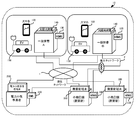
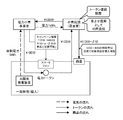
- FIG. 2 is a diagram illustrating a conceptual example of a resource accommodation support method according to the first embodiment.
- FIG. 1 is a diagram illustrating a conceptual example of a resource accommodation support method according to the first embodiment.
- FIG. 5 is a diagram illustrating a sequence example in the resource accommodation support method according to the first embodiment.
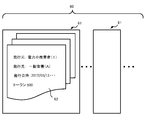
- FIG. 2 is a diagram illustrating an example 1 of a block chain according to the first embodiment.
- FIG. 6 is a diagram illustrating a second example of the block chain in the first embodiment. It is a figure showing example 1 of a flow in the resource accommodation support method of a 1st embodiment. It is a figure which shows the example 2 of a flow in the resource accommodation support method of 1st Embodiment. It is a figure which shows the example 3 of a flow in the resource accommodation support method of 1st Embodiment. It is a figure which shows the example 4 of a flow in the resource accommodation support method of 1st Embodiment.
- Blockchain (hereinafter, referred to as “Peer to Peer”) is a technology that replaces transactions that have traditionally been conducted via a trusted central authority such as a financial institution or government with direct transactions by P2P (Peer to Peer) between users.
- P2P Peer to Peer
- a distributed ledger technology using the same also referred to as BC has appeared.
- the main characteristics of the distributed ledger technology at present are as follows: (1) In the transaction between participants in the distributed ledger system, the transaction is confirmed by consensus building and approval by the (arbitrary or specific) participant, not by the central authority. (2) Combine multiple transactions as blocks, record them in a daisy chain in a distributed ledger called a blockchain, and perform hash calculation on consecutive blocks to make it virtually impossible to falsify; (3) Participate All participants share the same ledger data so that all participants can confirm transactions.
- Such distributed ledger technology using BC has the above features, and as a mechanism for managing / sharing reliable data and executing / managing transactions based on contracts, it has been used in a wide range of fields such as finance and manufacturing. Is being considered for application.
- the distributed ledger manages not only transaction data but also logic describing transaction conditions, that is, smart contracts.
- Other techniques have been proposed.
- information is accepted on a plurality of nodes (ledger) by accepting a transaction while forming a consensus between the nodes at a predetermined agreement level, executing the transaction on each node, and retaining the execution result of the transaction. Will be shared. Further, a smart contract execution function for executing a predetermined logic for the above-described transaction is provided.
- FIG. 1 is a diagram showing a configuration example of a resource accommodation support system 10 of the present embodiment.
- a resource accommodation support system 100 shown in FIG. 1 is a computer system for enabling efficient resource accommodation with a predetermined incidental effect between a general household and a customer, and assumes a distributed ledger system. .
- the resource accommodation support system 10 is mainly configured by a smartphone 100, a power retailer terminal 200, and a customer terminal 300, which are distributed ledger nodes, which are connected to the network 1 and can communicate with each other.
- the resource seller in the present invention is a general household which is a user of the above-described smartphone 100
- a resource retailer is a power retailer which is a user of the above-mentioned power retailer terminal 200.
- the type of resource is not limited to the above-described power.
- electric power gas, various fuels, materials, personnel, and the like can be assumed.
- each distributed ledger node is operated and managed by a stakeholder (eg, a general household, a plurality of businesses, a plurality of organizations, and a plurality of vendors) as a user using the resource accommodation support system 10. It is assumed that a stakeholder (eg, a general household, a plurality of businesses, a plurality of organizations, and a plurality of vendors) as a user using the resource accommodation support system 10. It is assumed that a stakeholder (eg, a general household, a plurality of businesses, a plurality of organizations, and a plurality of vendors) as a user using the resource accommodation support system 10. It is assumed that a stakeholder (eg, a general household, a plurality of businesses, a plurality of organizations, and a plurality of vendors) as a user using the resource accommodation support system 10. It is assumed that a stakeholder (eg, a general household, a plurality of businesses, a plurality of organizations, and a plurality of vendors) as a user using the resource accommodation
- a terminal that can access information on the distributed ledger 50 may be connected to the network 1.
- the smartphone 100 is a terminal used in a general household of an individual.
- the general household of the present embodiment is a household in which a photovoltaic power generator 140 is installed in its residence, and its own power can be secured to some extent separately from a commercial power supply supplied from a power retailer via the power network 2. . For this reason, part or all of the electric power generated by the photovoltaic power generator 140 is surplus power, and can be sold to a power retailer via the power network 2.
- the above-mentioned house is also provided with a HEMS 130, which manages and displays information such as the amount of energy used in the house, the amount of power generated by the photovoltaic power generator 140, and the state of power purchase from a power retailer. It is also possible to control the functions of the HEMS 130 and a networked electrical device provided in the house.
- this general household owns an EV 150 (electric vehicle), and the electric power held by the electric storage unit is supplied to the electric power retailer via the electric power network 2 in the same manner as the electric power generated by the above-described solar power generation device 140. It is assumed that electricity can be sold to businesses.
- EV 150 electric vehicle
- the power retailer terminal 200 included in the above-described network 1 is a terminal used by the power retailer.
- the electric power retailer includes, for example, an EMS (Energy Management System) 230.
- the EMS 230 appropriately supplies or purchases power to each stakeholder (the general household, the electric power retailer itself, and the consumer) via the electric power network 2 that performs actual electric power interchange. Responsible for appropriate control to balance supply and demand.
- the customer terminal 300 included in the network 1 described above is a terminal used by a company that operates a retail store such as a convenience store.
- This retail store is provided with a HEMS 330 as in a general household.
- the retail store receives power from a power retailer via the above-described power network 2 and operates various electric devices such as lighting, air conditioning, and cooling equipment.
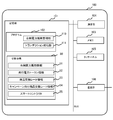
- FIG. 2 is a diagram illustrating a hardware configuration example of the smartphone 100 as a general household terminal in the present embodiment.
- the smartphone 100 illustrated in FIG. 2 reads out a storage unit 101 including an appropriate nonvolatile storage element, a memory 103 including a volatile storage element such as a RAM, and a program 102 stored in the storage unit 101 to the memory 103.
- a central processing unit 104 such as a CPU for performing overall control of the apparatus itself and performing various determinations, calculations and control processing, a touch panel 105 for performing input / output processing with a user, and a network 1.
- at least a communication unit 106 such as a network interface that performs communication processing with other devices such as the electric power retailer terminal 200 and the customer terminal 300, which are other distributed ledger nodes.
- the communication unit 106 can communicate with the HEMS 130 via a home line.
- the storage unit 101 stores a surplus power sales management unit 110 and a transaction processing unit 111 that are implemented by executing the program 102. Each function of the surplus power sales management unit 110 and the transaction processing unit 111 will be described later.
- the storage unit 101 holds the distributed ledger 50 in addition to the program 102 described above.
- the distributed ledger 50 is defined by the distributed ledger technology, such as consensus formation, between the smartphone 100 as a distributed ledger node and the electric retailer terminal 200 and the customer terminal 300 as other distributed ledger nodes. Is a block of transactions for each predetermined time zone stored after processing according to the above, that is, a series of blocks (block chain).
- the smartphone 100 which is a distributed ledger node, receives a transaction issued by another distributed ledger node (the electric power retailer terminal 200, the customer terminal 300) via the network 1 by the function of the transaction processing unit 111, and executes another distributed ledger.
- a consensus is formed between the ledger node and whether the transaction can be accepted, and when the consensus is formed, the smart contract 55 (previously held by the distributed ledger 50) is executed, and the smart contract 55 is deployed and the deployed smart The execution of the contract 55 is performed, and the history of the transaction and the execution result are recorded in the distributed ledger 50.
- the distributed ledger 50 stores and manages smart contracts 55 related to various events such as power sale, power purchase, and product purchase, and execution results of the smart contracts 55.
- the data structure for example, it is assumed that a general data structure is used in which a transaction history is used as a block chain and state information based on a transaction execution result is stored in a table format.
- the smart contract 55 determines the value of the payment token and the contents of the premium by comparing the value of the transaction issued with each event with the product exchange rate information 53 or the product exchange rate information 54 for the campaign. Yes, other data configurations are the same as existing general ones.
- surplus power sales information 51 As the above-mentioned state information, surplus power sales information 51, issued power token information 52, commodity exchange rate information 53, and campaign commodity exchange rate information 54 are assumed.
- the (latest) state for example, account balance in the case of virtual currency; ownership and value of the power token in the present embodiment
- the processing efficiency is poor. Therefore, there has conventionally been a method in which the latest state information obtained from each block constituting the block chain is cached separately from the block chain.
- the smartphone 100 receives and processes a transaction and requests a transaction from a node such as an electric power retailer terminal 200 or a customer terminal 300 which is another distributed ledger node or an appropriate client node. Provides a function / interface for acquiring and browsing history information.
- the smartphone 100 can issue a transaction by the transaction processing unit 111, and issues a transaction in response to an event of a power sale or a product purchase.
- the description about the blockchain such as the distributed ledger 50 described above can be similarly applied to other distributed ledger nodes, such as the electric power retailer terminal 200 and the customer terminal 300.
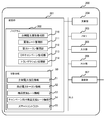
- the power retailer terminal 200 includes a storage unit 201 including a suitable nonvolatile storage element such as a hard disk drive, a memory 203 including a volatile storage element such as a RAM, and a storage unit.
- An arithmetic unit 204 such as a CPU that executes the program 202 held in the memory 201 by reading it into the memory 203 to execute overall control of the apparatus itself and perform various determinations, calculations, and control processes, a keyboard and a mouse that receive user input, and the like.
- Input unit 205, an output unit 206 such as a display for outputting a processing result, and a network interface connected to the network 1 and responsible for communication processing with other devices such as the smartphone 100 and the customer terminal 300 as other distributed ledger nodes.
- the communication unit 207 can communicate with the EMS 230 via a private line or the like.
- the storage unit 201 includes a surplus power purchase management unit 210, a purchase rate management unit 211, a power token management unit 212, a DR campaign management unit 213, and a transaction process, which are implemented by executing the program 202. Section 214 is held. The functions of these units 210 to 213 will be described later.
- the storage unit 201 holds the distributed ledger 50 as in the case of the smartphone 100.
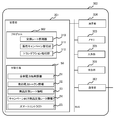
- the customer terminal 300 includes a storage unit 301 including a suitable nonvolatile storage element such as a hard disk drive, a memory 303 including a volatile storage element such as a RAM, and a storage unit 301.
- the stored program 302 is read into a memory 303 and executed to execute overall control of the apparatus itself and to perform various determinations, calculations and control processing.
- An arithmetic unit 304 such as a CPU, and an input such as a keyboard and a mouse for receiving user input.
- Unit 305, an output unit 306 such as a display for outputting a processing result, and a network connected to the network 1 and responsible for communication processing with other devices such as the smartphone 100 and the electric power retailer terminal 200, which are other distributed ledger nodes.
- At least a communication unit 307 such as an interface is provided.
- the communication unit 307 can also communicate with the HEMS 330 via an in-store line or the like.
- the storage unit 301 stores an exchange rate management unit 310, a sales campaign management unit 311, and a transaction processing unit 312, which are implemented by executing the program 302. The functions of these units 310 to 312 will be described later.
- the storage unit 301 holds a distributed ledger 50 as in the case of the smartphone 100 and the electric power retailer terminal 200.
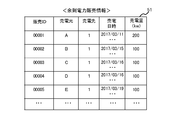
- FIG. 5 shows an example of surplus electricity sales information 51 in the present embodiment.
- the surplus electric power sales information 51 is used by the smartphone 100 (or the electric power retailer) during transaction processing of surplus electric power (generated by the general household) between the general household and the electric power retailer among the distributed ledger nodes. This corresponds to the transaction issued by the terminal 200). In other words, this transaction was issued when surplus power was sold from a general household to a power retailer.
- the data structure is an aggregate of records including data such as a power selling source, a power selling destination, a power selling date and time, and a power selling amount in the power selling, with a sales ID uniquely identifying a power selling order as a key.
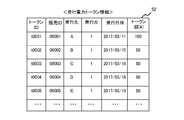
- FIG. 6 shows an example of the issued power token information 52 in the present embodiment.
- the issued power token information 52 is used by the power retailer in connection with the transaction processing of surplus power (generated by the general household) between the general household and the power retailer among the distributed ledger nodes.
- This corresponds to a transaction issued by the electric power retailer terminal 200 at the event in which a settlement token (hereinafter, an electric power token) is provided from the electric power retailer terminal 200 to the smartphone 100 of the general household. That is, this transaction is issued when a power token is given to a general household by a power retailer in association with the sale of the surplus power described above.
- a settlement token hereinafter, an electric power token
- the data structure includes, as a key, a token ID that uniquely identifies a power token, a sales ID related to the power sale described above, which is a trigger for granting the power token, an issue destination (general household) indicating ownership of the power token, and issuance. It is a collection of records composed of data such as source (electric power retailer), issue date, and token amount.
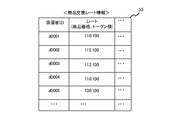
- FIG. 7 shows an example of the commodity exchange rate information 53 according to the present embodiment.
- This product exchange rate information 53 is a correspondence between the amount of the price and the amount of the power token when performing a payment using the power token as a settlement fund at a product purchase event at a retail store (consumer operation) by a general household. It defines the relationship.
- the commodity exchange rate information 53 which is the information of the correspondence, is, for example, a transaction issued by the customer terminal 300 when the customer reviews the registration at a certain period and performs the registration processing at the customer terminal 300. It consists of.
- the data structure is a set of records including values such as a rate (ratio between a product price and a token amount) determined by the customer, with the customer ID uniquely identifying the customer as a key.
- FIG. 8 shows an example of the product exchange rate information 54 for a campaign in the present embodiment.
- the product exchange rate information 54 for the campaign is used for the time period during which the above-mentioned customer who operates a retail store conducts a sales campaign at the retail store, and for the electric power retailer to purchase the electric power in order to deal with the tight supply and demand of electric power. This is rate information on the time period during which the electronic campaign is performed.
- the product exchange rate information 54 for the campaign is, for example, when the electric power retailer predicts the power demand situation and senses that the demand and supply will be tight, the electric power retailer terminal 200 becomes in the tight supply and demand state. It is configured by information of a transaction issued by the electric power retailer terminal 200 when the registration processing of the power purchase campaign scheduled for the time zone is performed.
- the data structure includes, as a key, a campaign ID that uniquely identifies a campaign, a target time zone in which the supply and demand is tight in the campaign, and a consumer of a consumer who performs a sales campaign in the time zone. It is a collection of records including values such as ID, rate ⁇ , and rate ⁇ .
- the rate ⁇ is the ratio between the purchase price of the electricity retailer and the amount of the power token granted to the general household, determined by the electricity retailer for the time period. Note that the rate ⁇ is determined by the customer with respect to the corresponding time zone in the commodity exchange rate information 53.
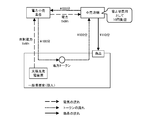
- FIG. 9 is a diagram showing a conceptual example of the resource accommodation support method in the present embodiment.
- the general household which is an individual, sells the surplus power generated by the photovoltaic power generator 140 owned by his / her home to a power retailer, and obtains a power token in exchange for the power token (for example, a unit power amount). 100 yen per power token).
- the power token for 100 yen is worth being exchanged for a 110 yen product at a retail store according to the provisions of the product exchange rate information 53. That is, the customer who is the operator of the retail store pays a premium of 10 yen as the customer enclosing cost.
- the above-mentioned retail store can purchase 100 yen of electric power from an electric power retailer by using the electric power token received from the individual of the above-mentioned general household as a payment for the product.
- FIG. 10 shows a sequence example in the resource accommodation support method of the first embodiment. An example of a sequence when the resource accommodation support method is executed based on the above concept will be described.
- the smartphone 100 specifies, for example, a predetermined ratio of the surplus power as a power sale amount, and transmits a power sale request including the power sale amount information to the power retail business. (S10; s20 to s22 in the flow of FIG. 13).
- the transaction processing unit 111 issues a transaction (s21 in the flow of FIG. 13), and the other distributed ledger nodes such as the electric power retailer terminal 200 and the consumer terminal 300 via the network 1. (Hereinafter the same).
- the distributed transactions are stored in the blocks of each distributed ledger 50 through appropriate processing such as consensus formation at each distributed ledger node, and form a block chain.
- identification information of a power selling source that is, a general household
- identification information of a power retailer of a power selling destination that is, power selling date and time
- power sale amount can be assumed. That is, the value included in the record of the surplus power sales information 51 corresponds.
- such values are included in the transaction issued from the transaction processing unit 111 in the event.
- the customer terminal 300 receives, for example, a predetermined instruction from the customer as the user, and transmits a power purchase request corresponding to the instruction to the power retailer terminal 200 (s11).
- the consumer intends to supplement the insufficient power by purchasing the power of the retail store that is expected to have a power shortage in the initial frame of the electricity use contract based on the information such as the demand forecast indicated by the HEMS 330. ing.
- the transaction processing unit 312 of the consumer terminal 300 issues a transaction and distributes the transaction to another distributed ledger node, the electric power retailer terminal 200 or the smartphone 100, via the network 1. (The same applies hereinafter).
- the distributed transactions are stored in the blocks of each distributed ledger 50 through appropriate processing such as consensus formation in each distributed ledger node, as described above, to form a block chain.
- the identification information of the power purchaser that is, the consumer, the identification information of the power retailer of the power purchase destination, the power purchase date and time, and the amount of power purchase.
- these values are included in the transaction issued from the transaction processing unit 312 in the event.
- the power retailer terminal 200 receives the power sale request and the power purchase request described above (s30 and s31 in the flow of FIG. 14), and as a response to the power purchase request,
- the amount of power to be supplied that is, the amount of power to be supplied
- the amount of power tokens that is, the amount of payment token, required by the customer as a price for the amount of power to be supplied are specified (s32 in the flow of FIG. 13).
- the information is notified to the customer terminal 300 (s12). The specification of the power supply amount and the payment token amount will be described later.
- the transaction processing unit 214 of the electric power retailer terminal 200 also issues a transaction at the time of the notification event of the supplied power amount and the paid token amount, and performs distribution to other distributed ledger nodes, consensus building, and the like. It is assumed that the information is also stored in the distributed ledger 50 (s34 in the flow of FIG. 14).
- the power retailer terminal 200 responds to the power sales request of the general household by responding to the power amount to be purchased, that is, the purchased power amount, of the power amount requested to be sold, and the purchased power amount.
- the amount of the power token to be issued that is, the issued token amount is specified, and the specified information is notified to the smartphone 100 (s13). The specification of the purchased power amount and the issued token amount will be described later.
- the transaction processing unit 214 of the power retailer terminal 200 also issues a transaction (for example, the transaction 61 included in the block 61 in the block chain 60 in FIG. 11) at the time of the notification event of the purchased power amount and the issued token amount. Then, distribution to other distributed ledger nodes, agreement formation, and the like are performed, and storage in the distributed ledger 50 is also performed (s33 in the flow of FIG. 14).
- a transaction for example, the transaction 61 included in the block 61 in the block chain 60 in FIG. 11
- distribution to other distributed ledger nodes, agreement formation, and the like are performed, and storage in the distributed ledger 50 is also performed (s33 in the flow of FIG. 14).
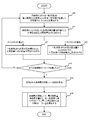
- the electric power retailer terminal 200 calculates the total value P (t) of the electric power sales amount of all the general households in the above-mentioned time zone t and the electric power purchase amount, that is, the electric power indicated by the electric power purchase request of a certain retail store in the time period t.
- the purchase amount Q (t) is compared (s41).
- the electric power retailer terminal 200 calculates the amount of electric power purchased from the general household n by p (n, t), and The supplied power amount is set to P (t) (s42).
- the power retailer terminal 200 determines the amount of power purchased from the general household n by p (n, t) * Q ( t) / P (t), and the amount of power supplied to the retail store described above is Q (t) (s43).
- the electric power retailer terminal 200 determines whether or not the processing has been performed for all the time zones (s44). If there is an unprocessed time zone (s44: n), the process returns to s40.
- the electric power retailer terminal 200 reads the information on the surplus power purchase rate previously stored in the storage unit 201 (s45).
- the surplus power purchase rate can be assumed to be, for example, a purchase price (eg, 100 yen) per unit power (1 kWh).
- the power retailer terminal 200 based on the above-mentioned surplus power purchase rate, the power purchase amount for each general household determined in s42 to s43, and the power supply to the retail store, receives a general The amount of power tokens issued to the household and the amount of power tokens received from the retail store (consumer) in response to the power purchase request are calculated (s46), and the process ends.
- the power token amount issued to the general household is calculated as the product of the surplus power purchase rate and the power purchase amount from the general household n, as indicated by s50 in the flow of FIG.
- the power token amount received from the consumer is calculated as the product of the surplus power purchase rate and the power supply amount to the retail store as indicated by s51 in the flow of FIG.
- the smartphone 100 that has received the notification of the issued token amount issues a transaction including the information of the issued token amount, that is, the information of the amount of the power token, and stores the transaction in the distributed ledger 50 through a predetermined consensus building process. (S23 in the flow of FIG. 13), the apparatus enters a standby state waiting for an instruction from an individual of a general household which is a user.
- the user of the smartphone 100 carries the smartphone 100 and visits a retail store operated by a consumer for shopping.
- the power token held by the smartphone 100 can be used as the fund for the payment for the product purchase.
- the user at the cash register of the retail store, for example, a two-dimensionally coded image of the power token (eg, a two-dimensionally coded content of the power token using a predetermined power token management application provided in the smartphone in advance) ) Is displayed on the smartphone 100 and is presented to the staff as funds for payment.
- a two-dimensionally coded image of the power token eg, a two-dimensionally coded content of the power token using a predetermined power token management application provided in the smartphone in advance
- the staff performs an operation of reading the above-mentioned image using, for example, a code reader provided at a cash register. It is assumed that this cash register is a part or the customer terminal 300 itself. Therefore, the cash register serving as the customer terminal 300 acquires the above read content.
- the read contents include the token ID, issuer, issuer, issue date and time, and token amount of the power token.
- the consumer terminal 300 uses the token amount indicated by the above-described read content as the settlement fund, checks the above-mentioned user with the price of the product desired to be purchased, and performs a predetermined price settlement process (s14).
- the ownership of the power token used as the settlement fund moves from the smartphone 100 (an individual of a general household who is a user) to the consumer terminal 300 (a consumer who is a user of). I do.
- the transaction processing unit 312 issues a transaction (for example, transaction 65 in FIG. 12) regarding the above-described payment and the associated ownership transfer of the power token, and performs distribution to other distributed ledger nodes, consensus building, and the like. It is assumed that storage in the distribution ledger 50 is also performed. In this case, for example, in the issued power token information 52 in the distributed ledger 50, the “issue destination” of the record is updated from the identification information of the general household to the identification information of the consumer described above (the ownership is changed from the general household to the demand Move home).
- a transaction for example, transaction 65 in FIG. 12
- the “issue destination” of the record is updated from the identification information of the general household to the identification information of the consumer described above (the ownership is changed from the general household to the demand Move home).
- the consumer who operates the retail store obtains the power token acquired in step s14. Can be used as settlement funds.
- the customer terminal 300 receives a predetermined instruction from a user, for example, and instructs the power retailer terminal 200 to perform a predetermined power purchase process using the power token held by the customer terminal as a settlement fund (s15).
- the supplied power amount in the notification received in s12 is the power purchase amount
- the paid token amount is the power purchase price. Therefore, the amount of the power token used as the settlement fund is in accordance with the amount of the paid token described above.
- the transaction processing unit 312 issues a transaction with respect to the above instruction, performs distribution to another distributed ledger node, forms agreement, and the like, and also stores the distributed ledger 50 in the distributed ledger 50.
- the power retailer terminal 200 executes a settlement process in accordance with the purchase of the power purchase amount with the power token corresponding to the amount of the paid token amount (s16).
- the transaction processing unit 312 issues a transaction regarding the above-described settlement processing and the accompanying transfer of ownership of the power token, performs distribution to other distributed ledger nodes, forms an agreement, and stores the distributed ledger 50 in the distributed ledger 50. And In this case, for example, in the issued power token information 52 in the distributed ledger 50, the “issue destination” of the record is updated from the identification information of the customer to the identification information of the electric power retailer described above (the ownership is changed to the customer). To electricity retailers from).
- the power to be purchased is supplied from the power retailer to the customer's retail store via the power network 2.
- FIG. 17 is a diagram illustrating a conceptual example of the resource accommodation support method according to the second embodiment.
- the power token value in the target time zone is increased by a predetermined amount. It is in the point to let.
- a general household sells power during that time zone, a premium ⁇ of 5 yen for a power token of 100 yen is adjusted.
- the cost is provided by the electricity retailer.
- a retail store gives a premium ⁇ of 15 yen to the power token as a sales campaign cost for customers.
- FIG. 18 is a diagram illustrating a conceptual example of a resource accommodation support method according to the third embodiment.
- the value of the power token in a predetermined time zone is increased purely as a campaign for a retail store to attract customers. Become.
- the retail store is charged with a power token of 100 yen and a normal premium of 10 yen. It can be exchanged for a product with an additional premium ⁇ yen added. At this time, the ⁇ yen is to be borne by the retail store as an extra cost for customers.
- FIG. 19 is a diagram illustrating a sequence example in the resource accommodation support method according to the second embodiment.
- the third embodiment is different from the second embodiment in that a configuration for an electric power retailer to cope with a tight supply and demand is omitted, and thus the description of the second embodiment will be omitted.
- FIG. 20 is a diagram illustrating a flow example 1 in the resource accommodation support method according to the second embodiment.
- the electric power retailer terminal 200 specifies a time zone in which the supply and demand tightness is predicted based on information from the EMS 230 and the existing power supply and demand monitoring system and the like, and determines in advance according to the degree of the demand and supply tightness.
- the above-mentioned premium ⁇ is specified by a rule (s70).
- the rate of supply exceeding demand is 3% or less: very high, the rate of supply exceeding demand is 3% or more and 6% or less. It is assumed that there are three levels: high, the rate of supply exceeding the demand is 6% or more and 8% or less: slightly high.
- the degree of tight supply and demand is extremely high: 5 yen, the degree of tight supply and demand is 3 yen, and the degree of tight supply and demand is slightly higher: 1 yen. Suppose it had been.
- the power retailer terminal 200 specifies the premium ⁇ as “5 yen” when the degree of tight supply and demand in a certain time zone is “very high”.
- the electric power retailer terminal 200 acquires the value of the premium ⁇ determined by the customer with respect to the above-mentioned time zone from the customer terminal 300 (s71).
- the electric power retailer terminal 200 compares the values of the premiums ⁇ and ⁇ obtained in s70 and s71 with the merchandise exchange rate information for campaigns set by the electric power retailer and the above-mentioned customers with respect to the above-mentioned time zone. Is issued, and is stored in the block chain of the distributed ledger 50 through predetermined processing such as consensus formation (s72), and the processing ends.
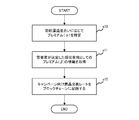
- the power retailer terminal 200 generates predetermined campaign information including the product exchange rate information for a campaign generated in the above-described flow (s80), and executes a transaction including the same. It is issued and stored in the blockchain of the distributed ledger 50 through predetermined processing such as agreement formation (s81).
- the electric power retailer terminal 200 distributes the above-mentioned campaign information to the smartphone 100, which is a user of the above-mentioned general household (s82), and ends the process.
- the electric power retailer terminal 200 When generating the campaign information (s80), the electric power retailer terminal 200 obtains the target date and time, the target retail store, the premium, and the like from the block chain stored in s81 as shown in the flow of FIG.
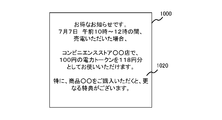
- the product exchange rate information 55 for the campaign such as the amount of the power token in consideration of the values of ⁇ and ⁇ is acquired (s90), and this is set in a predetermined model to generate the campaign information 1000 (see FIG. 23).
- the electric power retailer terminal 200 further sets merchandise promotion information 1020 (see FIG. 23) of the merchandise targeted for the campaign or the like obtained in advance from the customer terminal 300 in the campaign information (s92), and performs processing. To end.
- FIG. 24 is a diagram illustrating a conceptual example of a resource accommodation support method according to the fourth embodiment.
- the electric power stored in the EV150 storage battery of a general household can be sold to an electric power retailer as surplus electric power during the night time.
- the power retailer gives a power token that is higher than the normal surplus power purchase rate (for example, a power token worth 120 yen per unit power in the evening).
- sequence and the flow are the same as those in the above-described second embodiment, except that only a time zone other than daytime is specified as a power sale time zone for giving a premium. It is.
- the power retailer terminal 200 when a power sale event from a general household, the timing of the power sale is included in a predetermined time zone at night that is assumed in advance by the power retailer side, A power token is provided in an amount to which a predetermined premium is provided by a power retailer.
- the resource accommodation support system of the present embodiment it is possible to efficiently carry out the resource accommodation between the general household and the customer with a predetermined accompanying effect.
- the calculation unit of the information processing device executes a predetermined smart contract held in advance and gives a predetermined premium due to the burden of the other business operator to the settlement token. It may process a transaction of payment for the purchase in the amount. According to this, by the smart contract, the automatic grant of the settlement token according to the transaction content can be efficiently performed. As a result, more efficient and flexible resource accommodating with predetermined incidental effects becomes possible between ordinary households and consumers.
- the computing unit of the information processing device executes a predetermined smart contract held in advance at the time of the power purchase event, and obtains the customer through the payment. It may be configured to process a transaction of the payment for the power purchase with the amount of the payment token, and store the transaction in the distributed ledger through a predetermined process with another information processing device.
- At least one of the information processing devices is configured such that, when the general household makes the purchase, the premium is a premium time premium which is higher than a default premium time.
- the information is to further execute a process of notifying to a predetermined terminal of the general household, the arithmetic unit of the information processing apparatus, upon the event of the purchase, executes a predetermined smart contract held in advance, If the timing of the purchase is included in the campaign time zone, process the transaction of the price settlement associated with the purchase with the amount given to the payment token with the predetermined premium paid by the customer as the extra premium. And performs the transaction through a predetermined process with another information processing device. It is for storing the serial dispersion ledger may be.
- At least one of the information processing devices is configured such that when the general household sells the power, a predetermined premium borne by the electric power retailer is paid for the power sale.
- the information of the supply and demand adjustment time zone to be added is further subjected to a process of notifying the information to a predetermined terminal of the general household, and the arithmetic unit of the information processing apparatus holds in advance at the time of the power selling event
- a predetermined smart contract is executed and the timing of the power sale is included in the demand-supply adjustment time zone, the power sale is performed at the amount given the predetermined premium at the burden of the power retailer. It is assumed that the transaction of the payment is processed and the transaction is stored in the distributed ledger through a predetermined process with another information processing device. It may be.
- the electric power retailer can efficiently purchase the surplus electric power of general households.
- the purchase of goods at the above-mentioned stores and the like by general households who have reached the premium-added settlement token from each of the above is further promoted, and as a result, a more efficient and predetermined Resource accommodating with the accompanying effect of
- At least one of the information processing devices is configured such that when the general household sells the power, a predetermined premium borne by the electric power retailer is paid for the power sale.
- a process of notifying information of a predetermined time zone at night to a predetermined terminal of the general household is further executed, and the arithmetic unit of the information processing apparatus includes: At the time of the event, the predetermined smart contract held in advance is executed, and when the timing of the power sale is included in the predetermined time zone during the night, the predetermined premium given by the electric power retailer is added. , And processes the transaction of the settlement of the price accompanying the power sale, and executes the transaction through a predetermined process with another information processing apparatus. It is for storing may be.
- each of the plurality of information processing devices executes a predetermined smart contract held in advance at the time of the power purchase event, and obtains the customer obtained through the payment. It is also possible to process a transaction for payment for the power purchase in the amount of the payment token, and store the transaction in the distributed ledger through a predetermined process with another information processing device.
- At least one of the plurality of information processing devices when the general household makes the purchase, the campaign time when the premium becomes an extra premium over the default one. Further performing a process of notifying the information of the band to a predetermined terminal of the general household, the plurality of information processing devices execute a predetermined smart contract held in advance at the time of the purchase event, If the timing of the purchase is included in the campaign time slot, the transaction of the price settlement associated with the purchase is processed at the amount given to the settlement token with the predetermined premium paid by the customer as the extra premium.
- Stored in the distributed ledger may be.
- At least one of the information processing devices when the general household performs the power sale, a predetermined premium borne by the power retailer is used as a price for the power sale.
- a process of notifying the information of the supply and demand adjustment time zone to be added to a predetermined terminal of the general household is further executed, and each of the plurality of information processing apparatuses is configured to store a predetermined smart phone in advance in the event of the power sale.
- the contract is executed, and the timing of the power sale is included in the supply and demand adjustment time zone, the payment of the price associated with the power sale is performed at the amount provided with the predetermined premium borne by the power retailer.
- a transaction may be processed, and the transaction may be stored in the distribution ledger through a predetermined process with another information processing device.
- At least one of the information processing devices when the general household performs the power sale, a predetermined premium borne by the power retailer is used as a price for the power sale.
- a predetermined premium borne by the power retailer is used as a price for the power sale.
- As the supply and demand adjustment time zone to be added information of a predetermined time zone at night is further notified to a predetermined terminal of the general household, and each of the plurality of information processing apparatuses is configured to execute the power sale event.
- the resource accommodation support system based on FIG. 10 or 19, a resource seller terminal owned by a resource seller, and a resource retailer terminal owned by a resource retailer purchased from the resource seller.
- a customer terminal owned by a consumer who purchases a resource from a resource retailer, and a resource interchange support system that communicates with the resource retailer terminal or the key house terminal.
- Issue a payment token that can be used to purchase products from consumers according to the purchase amount, send the payment token to the resource seller terminal, and the resource seller terminal
- the customer terminal receives the issued payment token and the payment terminal writes the payment token to the payment token based on a predetermined condition based on predetermined conditions. Approved the purchase of goods by resource seller in the amount of grant our software to perform the payment associated with the purchase, it may be.
- the resources to be accommodated may be resources other than electric power (for example, gas, fuel, personnel, etc.).
- tokens are exchanged for commodities
- resources other than commodities for example, resources such as power, gas, fuel, and personnel may be exchangeable for tokens.
Landscapes
- Business, Economics & Management (AREA)
- Accounting & Taxation (AREA)
- Engineering & Computer Science (AREA)
- Physics & Mathematics (AREA)
- General Physics & Mathematics (AREA)
- Theoretical Computer Science (AREA)
- Strategic Management (AREA)
- General Business, Economics & Management (AREA)
- Finance (AREA)
- Economics (AREA)
- Health & Medical Sciences (AREA)
- Marketing (AREA)
- Development Economics (AREA)
- Water Supply & Treatment (AREA)
- Public Health (AREA)
- Human Resources & Organizations (AREA)
- Computer Security & Cryptography (AREA)
- Primary Health Care (AREA)
- General Health & Medical Sciences (AREA)
- Tourism & Hospitality (AREA)
- Computing Systems (AREA)
- Computer Networks & Wireless Communication (AREA)
- Management, Administration, Business Operations System, And Electronic Commerce (AREA)
Abstract
【課題】一般世帯と需要家との間における、効率的で所定の付随効果も伴うリソース融通を可能とする。 【解決手段】リソース融通支援システム10において、一般世帯から電力小売事業者への売電、売電を通じて電力小売事業者が確保した電力に対する需要家による買電、および、売電で電力小売事業者から決済用トークンを得た一般世帯による需要家からの商品の購入、の各イベントに伴い発行されたトランザクションを格納する分散台帳50を保持する記憶部101と、購入のイベントに際し、スマートコントラクトを実行して、需要家の負担による所定プレミアムを決済用トークンに付与した額での、当該購入に伴う代金決済のトランザクションを処理し、当該トランザクションを他の情報処理装置との所定処理を経て分散台帳50に格納する演算部104を備えた複数の情報処理装置100を含む構成とする。
Description
本発明は、リソース融通支援システム、リソース融通支援方法、および、リソース融通支援装置に関する。
再生可能エネルギーによる発電形態の隆盛は、固定価格買取制度(いわゆるFIT)により下支えされ、継続してきたと言える。ただし、この固定価格買取制度は2019年以降、順次終了する予定である。よって、上述の発電形態に伴う機器運用や電力の売買等について将来的な検討が必要となっている。
そこで、例えば電力の売買に関する各種の従来技術として、自然エネルギー利用発電装置に接続されると共に、ネットワークを介して前記発電装置の発電電力量データを受信する電力買取者端末並びに発電電力を有価ポイント又はクレジットに換算する演算機能を備えた有価ポイント付与サーバに接続される売電者端末とから構成され、前記有価ポイント又はクレジットをネットワークを介して売電者端末に送信することを特徴とする売電ポイント付与システム(特許文献1参照)などが提案されている。
また他にも、売電者の家屋に設置される売電者側システムと、所定の施設に設置される買電者側システムと、から構成される電力売買システムであって、前記売電者側システムは、前記買電者側システムと所定のネットワークを介して通信を行う第1の通信手段と、前記家屋に設置され、再生可能エネルギーを利用した発電を行う発電システムの発電量と、前記家屋における負荷機器の総電力消費量と、を計測し、計測した前記発電量及び前記総電力消費量に基づいて、売電が可能な電力量を算出する売電可能電力量算出手段と、該売電可能電力量算出手段が算出した前記売電が可能な電力量に基づいて売電条件を作成し、該作成した売電条件を前記第1の通信手段を介して前記買電者側システムに通知すると共に、前記買電者側システムから買電条件の通知があった場合には、当該買電条件を解析し、その結果に基づいて、当該買電条件に対して、承諾、拒否又は売電条件の変更、の何れかの応答方針を選択し、選択した応答方針に基づいた通知を前記買電者側システムに対して行う売電交渉手段と、を備え、前記買電者側システムは、前記売電者側システムと前記所定のネットワークを介して通信を行う第2の通信手段と、前記施設内における電力の需要状況を取得する需要状況取得手段と、前記売電者側システムから売電条件の通知があった場合には、当該売電条件を解析し、その結果と、前記需要状況取得手段が取得した前記電力の需要状況と、に基づいて、当該売電条件に対して、承諾、拒否又は買電条件の作成、の何れかの応答方針を選択し、選択した応答方針に基づいた通知を前記売電者側システムに対して行う買電交渉手段と、を備える、ことを特徴とする電力売買システム(特許文献2参照)なども提案されている。
さらに、電力資源取引管理サーバと、複数の電力生産主体の端末装置とがネットワークを介して接続され、前記電力生産主体間で相互に電力資源のオンライン取引を行うための電力資源取引システムであって、前記電力資源取引管理サーバは、売買条件登録部と、売買実質電力量計算部とを備え、前記売買条件登録部は、電力販売を希望する電力生産主体が提示する販売希望電力量と販売希望価格とを含む販売条件を、当該販売希望電力生産主体の端末装置から前記ネットワークを介して、1日24時間が振分けられた複数の時間帯単位で登録する機能を有し、前記売買実質電力量計算部は、前記電力販売を希望する電力生産主体が提示した販売希望電力量から、当該電力生産主体が他の電力生産主体に送電するときの送電ロス分を考慮した電力量を補正後販売希望電力量として、前記時間帯単位で求める機能を有し、前記複数の電力生産主体の端末装置の各ユーザインタフェースには、販売希望電力表示部と、電力取引実行部とを有する前記時間帯単位での電力取引画面が表示され、前記販売希望電力表示部には、少なくとも前記補正後販売希望電力量と、当該電力販売を希望する電力生産主体が提示した前記販売希望価格とが販売希望電力として表示され、前記電力取引実行部には、前記販売電力表示部に表示された1つまたは複数の販売希望電力のうち何れかの選択ができる販売希望電力の購入注文欄が表示される、ことを特徴とする電力資源取引システム(特許文献3参照)なども提案されている。
また、発電装置と蓄電池とを所有する複数の需要家間において、お互いの余剰電力を融通し合うための電力取引マッチングシステムであって、第1の需要家が所定時間帯に必要とする電力量に関する情報を取得する必要電力量情報取得部と、第2の需要家が所有する前記発電装置および前記蓄電池、前記第2の需要家の消費電力量に関する情報を取得する需要家情報取得部と、前記需要家情報取得部において取得された前記第2の需要家の所定時間帯における前記発電装置の発電量および前記蓄電池の蓄電量、消費電力量に関する情報に基づいて、前記第2の需要家において供給可能な余剰電力量を推定する余剰電力推定部と、前記余剰電力推定部において推定された前記第2の需要家から供給可能な余剰電力量と、前記必要電力量情報取得部において取得された前記第1の需要家の必要電力量に関する情報とを照合して、取引が成立する前記第1の需要家と前記第2の需要家の組合せを検出するマッチング部と、を備えている電力取引マッチングシステム(特許文献4参照)なども提案されている。
また、複数の給電部から複数の受電部への電力配分を決定する電力配分決定装置であって、各前記給電部について、その給電部から供給できる電力量又は供給できると予想される電力量である供給電力量を示す供給情報を取得する供給情報取得手段と、各前記受電部について、必要な電力量又は必要と予想される電力量である需要電力量と、給電を受け付ける給電部に関する条件である受付条件とを示す情報である需要情報を取得する需要情報取得手段と、各前記受電部に対応する前記受付条件を満たすように、各受電部に対して電力を供給する1つ又は複数の前記給電部を決定する第1マッチングを行う第1マッチング手段と、前記第1マッチングの結果、供給電力量の一部又は全部が使用されていない前記給電部を余剰給電部として定める余剰給電部決定手段と、前記第1マッチングの結果、前記需要電力量の一部又は全部が満たされていない前記受電部を、任意の前記給電部から給電を受け付ける任意受電部として定める任意受電部決定手段と、を有する電力配分決定装置。(特許文献5参照)なども提案されている。
また、2以上の拠点を含んで構成され、前記2以上の拠点は、電力を買電する買電線、電力を売電する売電線及び情報の通信がされる通信線を含む配電網で接続され、各前記拠点は、自然エネルギーにより発電する発電装置と、前記発電装置が発電した電力を前記配電網へ送電したり、電力を前記配電網から受電したりする電力送受電制御部と、前記売電線へ送電される電力量を計測する売電量計測装置と、前記買電線から送電される電力量を計測する買電量計測装置と、を備え、前記電力送受電制御部は、前記発電装置が発電した電力を前記配電網へ送電することで電力を売電する際に、売電に必要な情報を前記配電網の前記通信線へ送信する、電力マネジメントシステム(特許文献6参照)なども提案されている。
上述のごとき太陽光発電装置等を運用する者のうち、例えば一般世帯は、既存の電力取引市場にアクセスできず、余剰電力の販売先を旧来の電気事業者以外に確保することが困難である。そのため、そうした余剰電力を適宜な価格で効率良く販売できず、太陽光発電装置を運用する経済的メリットが無くなる恐れがある。
一方、各種店舗や工場、オフィスビルといった、相応規模の需要家は、その業務時間帯に応じて昼間電力のニーズが高い傾向にある。また、当該ニーズが、需要家の当初予測を超えて高まる事態も十分起こりうる。そのため、当該需要家としては、電気事業者との電気使用契約での規定範囲を超えて、高単価の電力購入に迫られるケースもある。
他方、上述の一般世帯における余剰電力の販売ニーズと、需要家における電力購入ニーズとを、効率的に結びつける技術は提案されていない。勿論、電力需給関係にのみ着目したマッチング技術は提案されているが、そもそもマッチング対象として一般世帯を想定すること自体、実用上の無理がある(電力取引市場にアクセスできていない)。また、一般世帯および需要家ともに、電力売買以外のメリットが見いだしにくいという問題もある。
そこで本発明の目的は、一般世帯と需要家との間における、効率的で所定の付随効果も伴うリソース融通を可能とする技術を提供することにある。
上記課題を解決する本発明のリソース融通支援システムは、コミュニティ内の事業者から仲介事業者へのリソース販売、前記リソース販売を通じて前記仲介事業者が確保したリソースに対する他事業者によるリソース購入、および、前記販売で前記仲介事業者から所定の決済用トークンを得た前記事業者による前記他事業者からの他リソースの購入、の各イベントに伴い所定装置から発行されたトランザクションを格納する分散台帳を保持する記憶部と、前記購入のイベントに際し、当該購入に伴う代金決済のトランザクションを処理し、当該トランザクションを他の情報処理装置との所定処理を経て前記分散台帳に格納する演算部と、を備えた複数の情報処理装置を含むことを特徴とする。
また、本発明のリソース融通支援システムは、一般世帯から電力小売事業者への売電、前記売電を通じて前記電力小売事業者が確保した電力に対する需要家による買電、および、前記売電で前記電力小売事業者から所定の決済用トークンを得た前記一般世帯による前記需要家からの商品の購入、の各イベントに伴い所定装置から発行されたトランザクションを格納する分散台帳を保持する記憶部と、前記購入のイベントに際し、予め保持する所定のスマートコントラクトを実行して、前記需要家の負担による所定プレミアムを前記決済用トークンに付与した額での、当該購入に伴う代金決済のトランザクションを処理し、当該トランザクションを他の情報処理装置との所定処理を経て前記分散台帳に格納する演算部と、を備えた複数の情報処理装置を含むことを特徴とする。
また、本発明のリソース融通支援方法は、一般世帯から電力小売事業者への売電、前記売電を通じて前記電力小売事業者が確保した電力に対する需要家による買電、および、前記売電で前記電力小売事業者から所定の決済用トークンを得た前記一般世帯による前記需要家からの商品の購入、の各イベントに伴い所定装置から発行されたトランザクションを格納する分散台帳を保持する記憶部を備えた、複数の情報処理装置それぞれが、前記購入のイベントに際し、予め保持する所定のスマートコントラクトを実行して、前記需要家の負担による所定プレミアムを前記決済用トークンに付与した額での、当該購入に伴う代金決済のトランザクションを処理し、当該トランザクションを他の情報処理装置との所定処理を経て前記分散台帳に格納する、ことを特徴とする。
また、本発明のリソース融通支援装置は、一般世帯から電力小売事業者への売電、前記売電を通じて前記電力小売事業者が確保した電力に対する需要家による買電、および、前記売電で前記電力小売事業者から所定の決済用トークンを得た前記一般世帯による前記需要家からの商品の購入、の各イベントに伴い所定装置から発行されたトランザクションを格納する分散台帳を保持する記憶部と、前記購入のイベントに際し、予め保持する所定のスマートコントラクトを実行して、前記需要家の負担による所定プレミアムを前記決済用トークンに付与した額での、当該購入に伴う代金決済のトランザクションを処理し、当該トランザクションを他の情報処理装置との所定処理を経て前記分散台帳に格納する演算部と、を備えたことを特徴とする。
また、本発明のリソース融通支援システムは、リソース販売者が所有するリソース販売者端末と、前記リソース販売者から購入するリソース小売事業者が所有するリソース小売事業者端末と、前記リソース小売事業者からリソース購入する需要家が所有する需要家端末と、が通信するリソース融通支援システムであって、前記リソース小売事業者端末又は前記需要家端末は、前記リソース販売者からのリソース購入に対して、購入量に応じた、前記需要家からの商品の購入に使用可能な決済用トークンを発行し、前記リソース販売者端末に前記決済用トークンを送信し、前記リソース販売者端末は、前記リソース小売事業者端末から、発行された前記決済用トークンを受信し、前記需要家端末は、所定条件に基づき、前記決済用トークンに前記需要家の負担による所定プレミアムを付与した額での前記リソース販売者による商品の購入を認可し、前記購入に伴う代金決済を実行することを特徴とする。
本発明によれば、一般世帯と需要家との間における、効率的で所定の付随効果も伴うリソース融通が可能となる。
---分散台帳システムの概要---
ここでまず、本実施形態のリソース融通支援技術のベースとなる分散台帳システムに関して、説明しておくものとする。従来、金融機関や政府などの信頼できる中央集権機関を経由して実施されてきた取引を、利用者間のP2P(Peer to Peer)による直接的な取引で代替する技術として、ブロックチェーン(以下、BCとも称する)を用いた分散台帳技術が登場している。
ここでまず、本実施形態のリソース融通支援技術のベースとなる分散台帳システムに関して、説明しておくものとする。従来、金融機関や政府などの信頼できる中央集権機関を経由して実施されてきた取引を、利用者間のP2P(Peer to Peer)による直接的な取引で代替する技術として、ブロックチェーン(以下、BCとも称する)を用いた分散台帳技術が登場している。
現状における分散台帳技術の主な特徴としては、(1)分散台帳システムへの参加者間の取引において、中央集権機関ではなく(任意ないしは特定の)参加者による合意形成や承認によって取引を確定させること、(2)複数のトランザクションをブロックとしてまとめ、数珠つなぎにブロックチェーンと呼ばれる分散台帳に記録し、連続するブロックにハッシュ計算を施すことにより、改ざんを実質不可能にすること、(3)参加者全員が同一の台帳データを共有することにより、参加者全員での取引の確認を可能とする、といったものが挙げられる。
このようなBCを用いた分散台帳技術は、以上のような特徴から、信頼できるデータの管理/共有や、契約に基づく取引の執行/管理を行う仕組みとして、金融や製造業等、幅広い分野での応用が検討されている。
そうした応用例の一つとして、分散台帳技術を複雑な取引条件や多様なアプリケーションにも適用可能とすべく、分散台帳にて取引データだけでなく取引条件を記載したロジック、すなわちスマートコントラクトも管理しうる技術も提案されている。
上述のスマートコントラクトに関する技術としては、スマートコントラクトの実行機能を有する分散台帳基盤に関するいくつかの技術(”Ethereum White Paper”, [online]、[平成29年6月30日検索]、インターネット<URL:https://github.com/ethereum/wiki/wiki/White-Paper>や、”Hyperledger Fabric”, [online]、[平成29年6月30日検索]、インターネット<URL:http://hyperledger-fabric.readthedocs.io/en/latest/>)が提案されている。
こうした分散台帳基盤では、ノード間で所定の合意水準で合意形成しながらトランザクションを受け入れて、各ノードでトランザクションを実行し、当該トランザクションの実行結果を保持することにより、複数ノード上で情報(台帳)を共有することとなる。また、上述のトランザクションに対して予め決めたロジックを実行するスマートコントラクト実行機能を備えている。
---ネットワーク構成---
以下に本発明の実施形態について図面を用いて詳細に説明する。図1は本実施形態のリソース融通支援システム10の構成例を示す図である。図1に示すリソース融通支援システム100は、一般世帯と需要家との間における、効率的で所定の付随効果も伴うリソース融通を可能とするためのコンピュータシステムであって、分散台帳システムを想定する。
以下に本発明の実施形態について図面を用いて詳細に説明する。図1は本実施形態のリソース融通支援システム10の構成例を示す図である。図1に示すリソース融通支援システム100は、一般世帯と需要家との間における、効率的で所定の付随効果も伴うリソース融通を可能とするためのコンピュータシステムであって、分散台帳システムを想定する。
こうしたリソース融通支援システム10は、ネットワーク1に接続されて互いに通信可能な、分散台帳ノードである、スマートフォン100、電力小売事業者端末200、および、需要家端末300、から主に構成されている。本実施形態では、リソースの一例として電力を想定し、説明を行うものとする。そこで、本発明におけるリソース販売者を上述のスマートフォン100のユーザである一般世帯、リソース小売事業者を上述の電力小売事業者端末200のユーザである電力小売事業者、としている。
なお、リソースの種類としては、上述の電力に限定するものではない。例えば、電力以外にも、ガス、各種燃料、資材、人員、なども想定できる。
本実施形態は、上述の分散台帳ノードは複数台存在するものとしている。また、それぞれの分散台帳ノードは、リソース融通支援システム10を利用するユーザとして、ステークホルダーとなる主体(例えば、個人である一般世帯、複数の事業者、複数の組織、複数のベンダ)によって運営、管理されることを想定する。
なお、特に図示はしないが、他にも、クライアントノードなど、分散台帳50(詳細後述)の情報にアクセス可能な端末がネットワーク1に接続されているとしてもよい。
このうちスマートフォン100は、個人の一般世帯で利用される端末である。本実施形態の一般世帯は、その住居に太陽光発電装置140を設置し、電力小売事業者から電力ネットワーク2経由で給電される商用電源とは別に、自前の電力をある程度確保可能な世帯である。このため、太陽光発電装置140で発電した電力は、その一部または全部を余剰電力とし、電力ネットワーク2を介して電力小売事業者に売電可能である。
また、上述の住居には、HEMS130も設置されており、当該住居での使用エネルギー量や太陽光発電装置140での発電量、電力小売事業者からの買電状況等の情報を管理しモニタ表示して見える化する機能や、住居に備わり本HEMS130とネットワーク化された電気機器の制御も可能である。
さらに、この一般世帯は、EV150(電気自動車)を保有しており、その蓄電ユニットで保持する電力を、上述の太陽光発電装置140で発電した電力と同様に、電力ネットワーク2を介して電力小売事業者に売電できるものとする。
また、上述のネットワーク1に含まれる、電力小売事業者端末200は、電力小売事業者が利用する端末である。この電力小売事業者は、例えばEMS(Energy Management System)230を備えている。このEMS230は、実際の電力融通を行う電力ネットワーク2を介して、各ステークホルダー(上述の一般世帯、電力小売事業者自身、および、需要家)に対する給電或いは買電を適宜に行い、担当地域における電力需給状況等をバランスさせる適宜な制御を担う。
また、上述のネットワーク1に含まれる需要家端末300は、例えばコンビニエンスストアなど小売店舗を運営する事業者が用いる端末である。この小売店舗には、一般世帯と同様にHEMS330が備わっている。この小売店舗は、上述の電力ネットワーク2を介して電力小売事業者からの給電を受け、照明や空調、保冷設備などの各種電気機器を稼働させている。
---ハードウェア構成例---
また、リソース融通支援システム10を構成する、各装置のハードウェア構成例について説明する。図2は、本実施形態における一般世帯端末たるスマートフォン100のハードウェア構成例を示す図である。
また、リソース融通支援システム10を構成する、各装置のハードウェア構成例について説明する。図2は、本実施形態における一般世帯端末たるスマートフォン100のハードウェア構成例を示す図である。
図2で例示するスマートフォン100は、適宜な不揮発性記憶素子で構成される記憶部101、RAMなど揮発性記憶素子で構成されるメモリ103、記憶部101に保持されるプログラム102をメモリ103に読み出すなどして実行し装置自体の統括制御を行なうとともに各種判定、演算及び制御処理を行なうCPU等の演算部104、ユーザとの間での入出力処理を担うタッチパネル105、および、ネットワーク1と接続し、他の分散台帳ノードである電力小売事業者端末200や需要家端末300といった他装置との通信処理を担うネットワークインターフェイス等の通信部106を少なくとも備えている。なお、上述の通信部106は、HEMS130とも宅内回線を介して通信可能である。
なお、上述の記憶部101には、プログラム102を実行することで実装される、余剰電力販売管理部110、および、トランザクション処理部111を保持する。この余剰電力販売管理部110、トランザクション処理部111の各機能については後述する。
また、記憶部101には、上述のプログラム102の他、分散台帳50が保持されている。
この分散台帳50は、分散台帳ノードである本スマートフォン100が、他の分散台帳ノードである電力小売事業者端末200、需要家端末300との各間で、合意形成等の分散台帳技術での規定に応じた処理を経て格納した所定時間帯ごとのトランザクションの塊、すなわちブロックを連ねたもの(ブロックチェーン)である。
ブロックチェーンを用いた分散台帳管理では、一定時間に発行、合意形成された複数のトランザクションをブロックとしてまとめて、各ブロックが前のブロックのハッシュ値を持つことで各ブロックを数珠つなぎにして管理する。こうした管理を行う場合、前段のブロックの値が1ビットでも変わると後続の全ブロックのハッシュ値が変わることになる。そのため、分散台帳50における改ざんは困難である。
分散台帳ノードであるスマートフォン100は、トランザクション処理部111の機能によりネットワーク1を介して他の分散台帳ノード(電力小売事業者端末200、需要家端末300)が発行したトランザクションを受け付けて、他の分散台帳ノードとの間で当該トランザクションを受け入れてよいかの合意形成を行い、合意形成がなされたらスマートコントラクト55(分散台帳50が予め保持)を実行し、当該スマートコントラクト55のデプロイ、デプロイ済みのスマートコントラクト55に対する実行を行い、当該トランザクションの履歴とその実行結果を分散台帳50に記録する。
なお、分散台帳50では、売電、買電、商品購入といった各種のイベントに関するスマートコントラクト55、および当該スマートコントラクト55の実行結果を格納・管理しているものとする。そのデータ構造としては、例えば、トランザクションの履歴をブロックチェーンとして、トランザクションの実行結果に基づくステート情報をテーブル形式で保持する、といった一般的なものを想定する。
スマートコントラクト55としては、各イベントに伴い発行されたトランザクションについて、その値を商品交換レート情報53ないしキャンペーン向け商品交換レート情報54に照合し、決済用トークンの額やプレミアムの内容を決定するものであり、その他のデータ構成等に関しては既存の一般的なものと同様である。
また、上述のステート情報としては、余剰電力販売情報51、発行電力トークン情報52、商品交換レート情報53、および、キャンペーン向け商品交換レート情報54、を想定している。
ブロックチェーンを用いた分散台帳管理では、通常、(最新の)ステート(例えば、仮想通貨の場合にはアカウントの残高。本実施形態の場合は、電力トークンの所有権や値)を取得するためには、ブロックチェーンを辿らなければならない。これでは処理効率が悪いため、ブロックチェーンとは別に、当該ブロックチェーンを構成する各ブロックから得た最新のステート情報をキャッシュしておく方法が従来存在する。
また、スマートフォン100は、他の分散台帳ノードである電力小売事業者端末200や需要家端末300、或いは適宜なクライアントノード等の各ノードからの要求に対して、トランザクションの受信および処理や、トランザクションの履歴情報の取得・閲覧の機能/インタフェースを提供する。
なお、スマートフォン100は、トランザクション処理部111により、トランザクションを発行可能であり、売電や商品購入のイベントに応じてトランザクションを発行する。
上述の分散台帳50などブロックチェーンに関する説明は、他の分散台帳ノードである、電力小売事業者端末200や需要家端末300に関しても同様に適用できる。
また、電力小売事業者端末200は、図3で例示するように、ハードディスクドライブなど適宜な不揮発性記憶素子で構成される記憶部201、RAMなど揮発性記憶素子で構成されるメモリ203、記憶部201に保持されるプログラム202をメモリ203に読み出すなどして実行し装置自体の統括制御を行なうとともに各種判定、演算及び制御処理を行なうCPU等の演算部204、ユーザの入力を受け付けるキーボードやマウス等の入力部205、処理結果を出力するディスプレイ等の出力部206、および、ネットワーク1と接続し、他の分散台帳ノードであるスマートフォン100、需要家端末300といった他装置との通信処理を担うネットワークインターフェイス等の通信部207を少なくとも備えている。なお、上述の通信部207は、EMS230とも構内回線等を介して通信可能である。
なお、上述の記憶部201には、プログラム202を実行することで実装される、余剰電力買取管理部210、買取レート管理部211、電力トークン管理部212、DRキャンペーン管理部213、および、トランザクション処理部214、を保持する。これらの各部210~213の機能それぞれについては後述する。
また、記憶部201には、上述のプログラム202の他、スマートフォン100と同様に分散台帳50が保持されている。
また、需要家端末300は、図4で例示するように、ハードディスクドライブなど適宜な不揮発性記憶素子で構成される記憶部301、RAMなど揮発性記憶素子で構成されるメモリ303、記憶部301に保持されるプログラム302をメモリ303に読み出すなどして実行し装置自体の統括制御を行なうとともに各種判定、演算及び制御処理を行なうCPU等の演算部304、ユーザの入力を受け付けるキーボードやマウス等の入力部305、処理結果を出力するディスプレイ等の出力部306、および、ネットワーク1と接続し、他の分散台帳ノードであるスマートフォン100、電力小売事業者端末200、といった他装置との通信処理を担うネットワークインターフェイス等の通信部307を少なくとも備えている。なお、上述の通信部307は、HEMS330とも店内回線等を介して通信可能である。
なお、上述の記憶部301には、プログラム302を実行することで実装される、交換レート管理部310、販売キャンペーン管理部311、および、トランザクション処理部312、を保持する。これらの各部310~312の機能それぞれについては後述する。
また、記憶部301には、上述のプログラム302の他、スマートフォン100や電力小売事業者端末200と同様に分散台帳50が保持されている。
---情報例---
続いて、本実施形態のリソース融通支援システム10を構成する分散台帳ノードらがそれぞれ保持する分散台帳50の保持情報について説明する。
続いて、本実施形態のリソース融通支援システム10を構成する分散台帳ノードらがそれぞれ保持する分散台帳50の保持情報について説明する。
図5に、本実施形態における余剰電力販売情報51の一例を示す。この余剰電力販売情報51は、各分散台帳ノードらのうち、一般世帯と電力小売事業者との間での余剰電力(一般世帯で生じたもの)の取引処理に際してスマートフォン100(ないし電力小売事業者端末200)で発行された、トランザクションに対応したものである。つまりこのトランザクションは、一般世帯から電力小売事業者に対する余剰電力の売電が行われた際に発行されたものである。
そのデータ構造は、売電のオーダーを一意に特定する販売IDをキーとして、当該売電における、売電元、売電先、売電日時、売電量といったデータから成るレコードの集合体である。
続いて図6に、本実施形態における発行電力トークン情報52の一例を示す。この発行電力トークン情報52は、各分散台帳ノードらのうち、上述の一般世帯と電力小売事業者との間での余剰電力(一般世帯で生じたもの)の取引処理に伴い、電力小売事業者の電力小売事業者端末200から当該一般世帯のスマートフォン100に決済用トークン(以下、電力トークン)が付与されたイベントに際して電力小売事業者端末200で発行された、トランザクションに対応したものである。つまりこのトランザクションは、上述の余剰電力の売電に伴って、電力小売事業者から一般世帯に電力トークンが付与された際に発行されたものである。
そのデータ構造は、電力トークンを一意に特定するトークンIDをキーとして、当該電力トークンの付与契機となった上述の売電に関する販売ID、電力トークンの所有権を示す発行先(一般世帯)、発行元(電力小売事業者)、発行日、トークン額といったデータから成るレコードの集合体である。
続いて図7に、本実施形態における商品交換レート情報53の一例を示す。この商品交換レート情報53は、一般世帯による小売店舗(需要家運営)での商品購入イベントに際し、電力トークンを決済資金とした代金決済を行う場合の、代金の金額と電力トークンの額との対応関係を規定したものである。
この対応関係の情報である商品交換レート情報53は、例えば、需要家が一定期間ごとに検討し、需要家端末300でその登録処理を行った際に、当該需要家端末300で発行されたトランザクションにより構成されている。
そのデータ構造は、需要家を一意に特定する需要家IDをキーとして、当該需要家が定めたレート(商品価格とトークン額との比率)といった値から成るレコードの集合体である。
続いて図8に、本実施形態におけるキャンペーン向け商品交換レート情報54の一例を示す。このキャンペーン向け商品交換レート情報54は、小売店舗を営む上述の需要家が当該小売店舗での販売キャンペーンを行う時間帯、および、電力小売事業者が電力の需給逼迫状況の到来に対処すべく買電キャンペーンを行う時間帯、についてのレート情報である。
このキャンペーン向け商品交換レート情報54は、例えば、電力小売事業者が電力の需要状況を予測して需給逼迫状態となることを感知した場合に、電力小売事業者端末200でその需給逼迫状態となる時間帯に関して予定する買電キャンペーンの登録処理を行った際に、電力小売事業者端末200で発行されたトランザクションの情報により構成されている。
なお、当該時間帯については、需要家側でも販売キャンペーンをタイアップさせる意図があり、同時間帯における商品購入に上述のプレミアムを考慮した商品交換レート情報を登録しているものとする(商品交換レート情報53で規定済み)。
そのデータ構造は、キャンペーンを一意に特定するキャンペーンIDをキーとして、当該キャンペーンにおいて、電力小売事業者が予測した需給逼迫状態となる対象時間帯、当該時間帯に販売キャンペーンを行う需要家の需要家ID、レートα、および、レートβ、といった値から成るレコードの集合体である。
このうち、レートαは、当該電力小売事業者が当該時間帯について定めた、電力小売事業者による買電価格と一般世帯に付与する電力トークンの額との比率である。なお、レートβは、商品交換レート情報53で該当時間帯に関して当該需要家が定めているものとなる。
---第1実施形態---
以下、本実施形態におけるリソース融通支援方法の実際手順について図に基づき説明する。以下で説明するリソース融通支援方法に対応する各種動作は、リソース融通支援システム10を構成し、互いに協働する各装置らが、そのメモリに読み出して実行するプログラムによって実現される。そして、これらのプログラムは、以下に説明される各種の動作を行うためのコードから構成されている。
以下、本実施形態におけるリソース融通支援方法の実際手順について図に基づき説明する。以下で説明するリソース融通支援方法に対応する各種動作は、リソース融通支援システム10を構成し、互いに協働する各装置らが、そのメモリに読み出して実行するプログラムによって実現される。そして、これらのプログラムは、以下に説明される各種の動作を行うためのコードから構成されている。
図9は、本実施形態におけるリソース融通支援方法の概念例を示す図である。この場合、個人である一般世帯は、自宅住居に所有している太陽光発電装置140で発電した余剰電力を、電力小売事業者に売電し、その対価として電力トークンを得る(例えば単位電力量当り100円分の電力トークン)。
この100円分の電力トークンは、商品交換レート情報53の規定により、小売店舗における110円分の商品と交換できる価値がある。つまり、小売店舗の運営者である需要家が、10円のプレミアムを客囲い込み費用として負担している形となっている。
一方、上述の小売店舗は、上述の一般世帯の個人から商品の決済代金として受領した電力トークンを使い、100円分の電力を電力小売事業者から買電できる。
こうした形態によれば、小売店舗として客である一般世帯の囲い込みを狙うことができる。また、個人である一般世帯が自宅住居で生じた余剰電力を販売できる形となる為、電力小売事業者にとっての客の囲い込みにつながりうる。
また図10に、第1実施形態のリソース融通支援方法におけるシーケンス例を示す。上述のような概念でリソース融通支援方法を実行する場合のシーケンス例について説明する。
この場合、スマートフォン100は、例えば、HEMS130から得た余剰電力の情報に基づいて、例えば、当該余剰電力の所定割合を売電量として特定し、この売電量の情報を含む売電依頼を電力小売事業者端末200に送信する(s10。図13のフローにおけるs20~s22)。
なお、この売電依頼に際し、トランザクション処理部111がトランザクションを発行し(図13のフローにおけるs21)、ネットワーク1を介して他の分散台帳ノードである、電力小売事業者端末200や需要家端末300に配信するものとする(以下同様)。
配信されたトランザクションは、既に述べたように、各分散台帳ノードにて合意形成等の適宜な処理を経て、それぞれの分散台帳50のブロックに格納され、ブロックチェーンを形成する。
また、売電依頼の内容としては、売電元すなわち一般世帯の識別情報、売電先の電力小売事業者の識別情報、売電日時、売電量、といったものを想定出来る。つまり、余剰電力販売情報51のレコードに含まれる値が該当する。勿論、こうした値は、当該イベントでトランザクション処理部111から発行されるトランザクションが含むものである。
また、需要家端末300は、例えば、ユーザたる需要家からの所定指示を受け付けて、当該指示に応じた買電依頼を電力小売事業者端末200に送信する(s11)。この場合の需要家は、HEMS330が示す需要予測等の情報に基づき、当初の電気使用契約の規定枠では電力不足が見込まれる小売店舗に関して、その不足分の電力を買電により補うことを意図している。
なお、上述の買電依頼に際し、需要家端末300のトランザクション処理部312がトランザクションを発行し、ネットワーク1を介して他の分散台帳ノードである、電力小売事業者端末200やスマートフォン100に配信するものとする(以下同様)。
配信されたトランザクションは、既に述べたように、各分散台帳ノードにて合意形成等の適宜な処理を経て、それぞれの分散台帳50のブロックに格納され、ブロックチェーンを形成する。
また、買電依頼の内容としては、買電元すなわち需要家の識別情報、買電先の電力小売事業者の識別情報、買電日時、買電量、といったものを想定出来る。勿論、こうした値は、当該イベントでトランザクション処理部312から発行されるトランザクションが含むものである。
一方、電力小売事業者端末200は、上述の売電依頼および買電依頼を受けて(図14のフローのs30、s31)、このうち買電依頼への応答として、買電依頼のあった電力量のうち供給対象とする電力量すなわち供給電力量と、この供給電力量の代金として需要家に要求する電力トークンの額すなわち支払トークン量を特定し(図13のフローのs32)、当該特定した情報を需要家端末300に通知する(s12)。この供給電力量、支払トークン量の特定については後述する。
なお、当然ながら、供給電力量および支払トークン量の通知イベントに際しても、電力小売事業者端末200のトランザクション処理部214がトランザクションを発行し、他の分散台帳ノードへの配信や合意形成等を行い、分散台帳50への格納も行うものとする(図14のフローのs34)。
また、電力小売事業者端末200は、一般世帯の売電依頼への応答として、売電依頼のあった電力量のうち買取対象とする電力量すなわち買取電力量と、この買取電力量に応じて発行する電力トークンの額すなわち発行トークン量、を特定し、当該特定した情報をスマートフォン100に通知する(s13)。この買取電力量、発行トークン量の特定については後述する。
なお、当然ながら、買取電力量および発行トークン量の通知イベントに際しても、電力小売事業者端末200のトランザクション処理部214がトランザクション(例えば、図11のブロックチェーン60におけるブロック61が含むトランザクション61)を発行し、他の分散台帳ノードへの配信や合意形成等を行い、分散台帳50への格納も行うものとする(図14のフローのs33)。
また、上述の買電依頼への応答として供給電力量と支払トークン量を特定する処理(図14のフローのs32)と、上述の売電依頼への応答として買取電力量と発行トークン量を特定する処理の具体的なフローについて、図15に基づき説明する。
この場合、電力小売事業者端末200は、一日の或る時間帯tにおける一般世帯nの売電依頼が示す売電量すなわち電力販売量(上限値)p(n,t)を、担当エリア内の全一般世帯で合算した合計値P(t)=Σn p(n,t)を算出する(s40)。
続いて電力小売事業者端末200は、上述の時間帯tにおける全一般世帯の電力販売量の合計値P(t)と、時間帯tにおける或る小売店舗の買電依頼が示す買電量すなわち電力買取量Q(t)とを比較する(s41)。
上述の比較の結果、P(t)≦Q(t)であった場合、電力小売事業者端末200は、一般世帯nからの電力買取量をp(n,t)、上述の小売店舗への供給電力量をP(t)とする(s42)。
一方、上述の比較の結果、P(t)>Q(t)の場合であった場合、電力小売事業者端末200は、一般世帯nからの電力買取量をp(n,t)*Q(t)/P(t)、上述の小売店舗への供給電力量をQ(t)とする(s43)。
続いて、電力小売事業者端末200は、全ての時間帯について処理したか判定し(s44)、未処理の時間帯が残っている場合(s44:n)、処理をs40に戻す。
他方、上述の判定の結果、未処理の時間帯が残っていない場合(s44:y)、電力小売事業者端末200は、予め記憶部201で保持する余剰電力買取レートの情報を読み取る(s45)。この余剰電力買取レートは、例えば、単位電力量(1kwh)あたりの買取金額(例:100円)、といったものを想定できる。
また、電力小売事業者端末200は、上述の余剰電力買取レートと、s42ないしs43で決定した一般世帯毎の電力買取量および小売店舗への供給電力量とに基づき、売電依頼に伴い各一般世帯へ発行する電力トークン量、買電依頼に伴い小売店舗(需要家)から受け取る電力トークン量を算出し(s46)、処理を終了する。
なお、上述の一般世帯に発行する電力トークン量については、図16のフローにおけるs50で示すように、余剰電力買取レートと一般世帯nからの電力買取量との積として算定する。
また、上述の需要家から受け取る電力トークン量については、図16のフローにおけるs51で示すように、余剰電力買取レートと小売店舗への供給電力量の積として算定する。
ここで図10のシーケンスの説明に戻る。一方、発行トークン量の通知を受けたスマートフォン100は、当該発行トークン量の情報、すなわち電力トークンの額の情報を含むトランザクションを発行し、所定の合意形成等の処理を経て分散台帳50に格納し(図13のフローのs23)、ユーザである一般世帯の個人からの指示を待つ待機状態となる。
ここで、このスマートフォン100のユーザが、当該スマートフォン100を携行し、需要家の運営する小売店舗を買物のために訪れたとする。その際の商品購入の代金決済には、その資金としてスマートフォン100で保持する電力トークンが使用できる。
そこで、このユーザは、当該小売店舗のレジにて、例えば二次元コード化した電力トークンのイメージ(例:スマートフォンが予め備える電力トークン管理用の所定アプリで電力トークンの内容を二次元コード化したもの)をスマートフォン100で表示させ、代金決済の資金としてスタッフに提示する。
一方、スタッフは、例えば、レジの備えるコードリーダーで上述のイメージを読み取る動作を行う。このレジは需要家端末300の一部又はそのものであると想定する。よって、需要家端末300であるレジは、上述の読取り内容を取得する。
読取り内容には、電力トークンのトークンID、発行先、発行元、発行日時、および、トークン額、の各値が含まれている。
また、需要家端末300は、上述の読取り内容が示すトークン額を決済資金として、上述のユーザが購入希望の商品の代金と照合し、所定の代金決済の処理を行う(s14)。
この決済処理を正常に完了した場合、決済資金として使用された電力トークンの所有権は、スマートフォン100(のユーザである一般世帯の個人)から需要家端末300(のユーザである需要家)に移動する。
トランザクション処理部312は、上述の代金決済およびこれに伴う電力トークンの所有権移動に関してトランザクション(例えば、図12のトランザクション65)を発行し、他の分散台帳ノードへの配信や合意形成等を行い、分散台帳50への格納も行うものとする。この場合、例えば、分散台帳50における発行電力トークン情報52における、該当レコードの「発行先」が一般世帯の識別情報から、上述の需要家の識別情報に更新される(所有権が一般世帯から需要家に移動)。
また、上述の代金決済の正常完了に伴い、購入対象の商品が、小売店舗のスタッフから、上述の一般世帯の個人に対して手交されることとなる。
その後、当該小売店舗を運営する需要家は、小売店舗で使用する電力の購入すなわち買電(s11で行った買電要求に対応したもの)に際し、上述のs14で所有権を得ている電力トークンを決済資金として使用可能である。
そこで、この需要家端末300は、例えばユーザからの所定指示を受けて、自身が保持する電力トークンを決済資金とした所定の買電処理を電力小売事業者端末200に指示する(s15)。この指示は、上述のs12で受けた通知における供給電力量が買電量であり、支払トークン量が買電代金の額であるものとなる。よって、決済資金として使用する電力トークンの額は、上述の支払トークン量に応じたものとなる、
トランザクション処理部312は、上述の指示に関してトランザクションを発行し、他の分散台帳ノードへの配信や合意形成等を行い、分散台帳50への格納も行うものとする。
トランザクション処理部312は、上述の指示に関してトランザクションを発行し、他の分散台帳ノードへの配信や合意形成等を行い、分散台帳50への格納も行うものとする。
一方、電力小売事業者端末200は、上述のs15の指示を受けて、上述の買電量を支払トークン量の額に応じた電力トークンで購入することに応じた決済処理を実行する(s16)。
トランザクション処理部312は、上述の決済処理およびこれに伴う電力トークンの所有権移動に関してトランザクションを発行し、他の分散台帳ノードへの配信や合意形成等を行い、分散台帳50への格納も行うものとする。この場合、例えば、分散台帳50における発行電力トークン情報52における、該当レコードの「発行先」が需要家の識別情報から、上述の電力小売事業者の識別情報に更新される(所有権が需要家から電力小売事業者に移動)。
また、上述の決済処理の正常完了に伴い、買電対象の電力が、電力ネットワーク2を通じて、電力小売事業者から需要家の小売店舗に対して給電されることとなる。
---第2実施形態、第3実施形態---
続いて、上述の第1実施形態を基本とした、他の実施形態について説明する。図17は、第2実施形態のリソース融通支援方法の概念例を示す図である。
続いて、上述の第1実施形態を基本とした、他の実施形態について説明する。図17は、第2実施形態のリソース融通支援方法の概念例を示す図である。
第1実施形態との相違点としては、電力小売事業者が電力需給状況を監視していた結果、或る時間帯における需給逼迫が見込まれる場合、対象の時間帯の電力トークン価値を所定程度増大させる点にある。
例えば、その需給逼迫の時間帯が12:00-14:00であるとして、その時間帯に一般世帯が売電してくれる場合、100円の電力トークンに対して5円のプレミアムαを需給調整コストとして電力小売事業者が付与する。また、当該電力トークンに対して、更に15円のプレミアムβを客寄せの販売キャンペーンコストとして小売店舗(需要家)が付与する。すなわち、上述の売電を行った一般世帯は、100円分の売電を行った結果、100円+α+β=120円分の商品と交換可能となる。
こうした概念を適用することで、一般世帯の個人が上述のキャンペーンに誘われて外出し、その電気使用量は自ずと減少する。このことはネガワット獲得につながり、上述の需給逼迫の時間帯に関するピークシフトが達成されやすくなる。電力小売事業者としては、ピーク時に外部からの追加調達を行うためのコストを抑制できる。また、小売店舗としては、対象時間帯に売りたい商品を顧客すなわち上述の個人に販売しやすくなるため、商品プロモーションや在庫処分が効率的に図られることとなる。
また図18は、第3実施形態のリソース融通支援方法の概念例を示す図である。この場合、上述のような電力小売事業者における需給逼迫時の対策としての概念を含めず、純粋に小売店舗が客寄せを行うためのキャンペーンとして、所定の時間帯の電力トークン価値を増大させるものとなる。
例えば、或る一般世帯の個人が、12:00-14:00の時間帯に当該小売店舗にて商品を購入する場合、小売店舗としては、100円の電力トークンに、通常のプレミアム10円に更なるプレミアムβ円を上乗せした額の商品と交換可能とする。この時、β円は小売店舗が客よせ費用として負担するものとなる。
こうした概念を適用することで、小売店舗としては所望のタイミングで売りたい商品を、買ってもらいやすくできることとなる。そのため、商品プロモーションや在庫処分が効率的に図られることとなる。
ここで第2実施形態のリソース融通支援方法の詳細について説明する。図19は、第2実施形態のリソース融通支援方法におけるシーケンス例を示す図である。なお、第3実施形態については、第2実施形態から電力小売事業者が需給逼迫に対処するための構成を除いたものとなるため、第2実施形態の説明をもってその説明を省略する。
図19で例示するように、シーケンスの大きな流れとしては、図10で既に示したシーケンスと同様である。ただし、電力トークンに付与するプレミアムのα、β、の特定を含めたキャンペーン情報の処理が別途必要になってくる。
そこでまず、上述のプレミアムα、βの特定について、図20のフローに基づき説明する。図20は、第2実施形態のリソース融通支援方法におけるフロー例1を示す図である。
この場合、電力小売事業者端末200は、EMS230や既存の電力需給モニターシステム等からの情報に基づき、需給逼迫が予測される時間帯を特定し、当該需給逼迫の度合いに応じて、予め定めたルールで上述のプレミアムαを特定する(s70)。
例えば、需給逼迫の度合いの定義として、需要量に対して供給量が上回っている率が3%以下:非常に高い、需要量に対して供給量が上回っている率が3%以上6%以下:高い、需要量に対して供給量が上回っている率が6%以上8%以下:やや高い、の3段階存在したとする。また、需給逼迫の度合いとプレミアムαとの対応関係として、需給逼迫の度合いが非常に高い:5円、需給逼迫の度合いが高い:3円、需給逼迫の度合いがやや高い:1円、と規定されていたとする。
こうした場合、電力小売事業者端末200は、或る時間帯の需給逼迫の度合いが「非常に高い」場合、プレミアムαを「5円」と特定する。
続いて、電力小売事業者端末200は、需要家端末300から、上述の時間帯に関して需要家が定めたプレミアムβの値を取得する(s71)。
また、電力小売事業者端末200は、s70、s71で得た、プレミアムα、βの各値を、上述の時間帯に関して電力小売事業者および上述の需要家が設定した、キャンペーン向け商品交換レート情報として含むトランザクションを発行し、合意形成等の所定の処理を経て分散台帳50のブロックチェーンに格納し(s72)、処理を終了する。
また、図21のフローに示すように、電力小売事業者端末200は、上述のフローで生成したキャンペーン向け商品交換レート情報を含む、所定のキャンペーン情報を生成し(s80)、これを含むトランザクションを発行し、合意形成等の所定の処理を経て分散台帳50のブロックチェーンに格納する(s81)。
また、電力小売事業者端末200は、上述のキャンペーン情報を、上述の一般世帯の個人がユーザであるスマートフォン100に配信し(s82)、処理を終了する。
なお、上述のキャンペーン情報の生成(s80)に際し、電力小売事業者端末200は、例えば、図22のフローに示すように、s81で格納したブロックチェーンから、対象日時や対象となる小売店舗、プレミアムα、βの各値を考慮した電力トークンの額、といったキャンペーン向け商品交換レート情報55を取得し(s90)、これを所定の雛形にセットしてキャンペーン情報1000(図23参照)の生成を行う(s91)この場合、電力小売事業者端末200は、需要家端末300から予め得ているキャンペーン対象商品等の商品プロモーション情報1020(図23参照)を、キャンペーン情報に更にセットし(s92)、処理を終了する。
---その他の実施形態---
続いて、一般世帯に太陽光発電装置140の他にも、EV(電気自動車)150が備わっている状況に特有の構成について説明する。図24は、第4実施形態のリソース融通支援方法の概念例を示す図である。
続いて、一般世帯に太陽光発電装置140の他にも、EV(電気自動車)150が備わっている状況に特有の構成について説明する。図24は、第4実施形態のリソース融通支援方法の概念例を示す図である。
この場合、一般世帯におけるEV150蓄電池に蓄えた電力を、夜間の時間帯の余剰電力として電力小売事業者に販売可能である。そのように夜間に売電を行う場合、電力小売事業者としては、通常の余剰電力買取レートより割り増しした電力トークンを付与する(例えば、夕方は単位電力量当り120円分の電力トークン)。
こうした構成とすれば、電力小売事業者としては、太陽光発電が期待できない時間帯においても、一般世帯で発電した余剰電力を需給調整に利用できることとなる。
こうした実施形態であっても、シーケンスやフローは上述の実施形態2と同様であるが、相違点としては、プレミアムを付与する売電の時間帯として、昼間以外の時間帯のみが特定される点である。
よって、電力小売事業者端末200は、一般世帯からの売電のイベントに際し、当該売電のタイミングが、電力小売事業者側で予め想定している夜間の所定時間帯に含まれている場合、電力小売事業者の負担による所定プレミアムを付与した額の電力トークンを付与することになる。
本実施形態のリソース融通支援システムによれば、一般世帯と需要家との間における、効率的で所定の付随効果も伴うリソース融通が可能となる。
本明細書の記載により、少なくとも次のことが明らかにされる。すなわち、本実施形態のリソース融通支援システムにおいて、前記情報処理装置の演算部は、予め保持する所定のスマートコントラクトを実行して、前記他事業者の負担による所定プレミアムを前記決済用トークンに付与した額での、当該購入に伴う代金決済のトランザクションを処理するものである、としてもよい。これによれば、スマートコントラクトにより、トランザクション内容に応じた決済用トークンの自動付与を効率的に行えることとなる。ひいては、一般世帯と需要家との間における、より効率的で所定の付随効果も伴うリソース融通が可能となる。
また、本実施形態のリソース融通支援システムにおいて、前記情報処理装置の演算部は、前記買電のイベントに際し、予め保持する所定のスマートコントラクトを実行して、前記代金決済を通じて前記需要家が得た前記決済用トークンの額での、当該買電に伴う代金決済のトランザクションを処理し、当該トランザクションを他の情報処理装置との所定処理を経て前記分散台帳に格納するものである、としてもよい。
これによれば、需要家がいわゆるグリーン電力である一般世帯のPV由来の余剰電力を電力小売事業者から買電する際、別途機会に商品代金として一般世帯から得ている決済用トークンを決済資金として利用できることとなる。ひいては、一般世帯と需要家との間における、より効率的で所定の付随効果も伴うリソース融通が可能となる。
また本実施形態のリソース融通支援システムにおいて、前記情報処理装置のうち少なくともいずれかが、前記一般世帯が前記購入を行う際、前記プレミアムがデフォルトのものより割り増しされた割増プレミアムとなるキャンペーン時間帯の情報を、前記一般世帯の所定端末に宛てて通知する処理を更に実行するものであり、前記情報処理装置の演算部は、前記購入のイベントに際し、予め保持する所定のスマートコントラクトを実行して、当該購入のタイミングが前記キャンペーン時間帯に含まれている場合、前記需要家の負担による所定プレミアムを前記割増プレミアムとして前記決済用トークンに付与した額での、当該購入に伴う代金決済のトランザクションを処理し、当該トランザクションを他の情報処理装置との所定処理を経て前記分散台帳に格納するものである、としてもよい。
これによれば、店舗等を運営する需要家における、効率的な在庫販売ニーズに基づいた、一般世帯から電力小売事業者への余剰電力売電や、これで需要家からプレミアムの付与された決済用トークンを保持するに至った一般世帯による上述の店舗等での商品購入が促進され、ひいては、一般世帯と需要家との間における、より効率的で所定の付随効果も伴うリソース融通が可能となる。
また本実施形態のリソース融通支援システムにおいて、前記情報処理装置のうち少なくともいずれかが、前記一般世帯が前記売電を行う際、前記電力小売事業者の負担による所定プレミアムが当該売電の代金に加算される需給調整時間帯の情報を、前記一般世帯の所定端末に宛てて通知する処理を更に実行するものであり、前記情報処理装置の演算部は、前記売電のイベントに際し、予め保持する所定のスマートコントラクトを実行して、当該売電のタイミングが前記需給調整時間帯に含まれている場合、前記電力小売事業者の負担による前記所定プレミアムを付与した額での、当該売電に伴う代金決済のトランザクションを処理し、当該トランザクションを他の情報処理装置との所定処理を経て前記分散台帳に格納するものである、としてもよい。
これによれば、電力の需給が逼迫状況となる(或いは、なった)時間帯に関して、電力小売事業者は一般世帯の余剰電力を効率良く買電可能となり、これで電力小売事業者および需要家のそれぞれからプレミアムの付与された決済用トークンを保持するに至った一般世帯による上述の店舗等での商品購入が更に促進され、ひいては、一般世帯と需要家との間における、より効率的で所定の付随効果も伴うリソース融通が可能となる。
また本実施形態のリソース融通支援システムにおいて、前記情報処理装置のうち少なくともいずれかが、前記一般世帯が前記売電を行う際、前記電力小売事業者の負担による所定プレミアムが当該売電の代金に加算される需給調整時間帯として、夜間の所定時間帯の情報を、前記一般世帯の所定端末に宛てて通知する処理を更に実行するものであり、前記情報処理装置の演算部は、前記売電のイベントに際し、予め保持する所定のスマートコントラクトを実行して、当該売電のタイミングが前記夜間の所定時間帯に含まれている場合、前記電力小売事業者の負担による前記所定プレミアムを付与した額での、当該売電に伴う代金決済のトランザクションを処理し、当該トランザクションを他の情報処理装置との所定処理を経て前記分散台帳に格納するものである、としてもよい。
これによれば、一般世帯で所有する電気自動車など蓄電ユニットをリソースとして、夜間の時間帯にも、一般世帯から電力小売事業者への売電/買電が可能となり、PVなど昼間のみの発電による電力だけに依存しないリソース融通の枠組みが可能となる。ひいては、一般世帯と需要家との間における、より効率的で所定の付随効果も伴うリソース融通が可能となる。
また本実施形態のリソース融通支援方法において、前記複数の情報処理装置それぞれが、前記買電のイベントに際し、予め保持する所定のスマートコントラクトを実行して、前記代金決済を通じて前記需要家が得た前記決済用トークンの額での、当該買電に伴う代金決済のトランザクションを処理し、当該トランザクションを他の情報処理装置との所定処理を経て前記分散台帳に格納する、としてもよい。
また本実施形態のリソース融通支援方法において、前記複数の情報処理装置のうち少なくともいずれかが、前記一般世帯が前記購入を行う際、前記プレミアムがデフォルトのものより割り増しされた割増プレミアムとなるキャンペーン時間帯の情報を、前記一般世帯の所定端末に宛てて通知する処理を更に実行し、前記複数の情報処理装置それぞれが、前記購入のイベントに際し、予め保持する所定のスマートコントラクトを実行して、当該購入のタイミングが前記キャンペーン時間帯に含まれている場合、前記需要家の負担による所定プレミアムを前記割増プレミアムとして前記決済用トークンに付与した額での、当該購入に伴う代金決済のトランザクションを処理し、当該トランザクションを他の情報処理装置との所定処理を経て前記分散台帳に格納する、としてもよい。
また本実施形態のリソース融通支援方法において、前記情報処理装置のうち少なくともいずれかが、前記一般世帯が前記売電を行う際、前記電力小売事業者の負担による所定プレミアムが当該売電の代金に加算される需給調整時間帯の情報を、前記一般世帯の所定端末に宛てて通知する処理を更に実行し、前記複数の情報処理装置それぞれが、前記売電のイベントに際し、予め保持する所定のスマートコントラクトを実行して、当該売電のタイミングが前記需給調整時間帯に含まれている場合、前記電力小売事業者の負担による前記所定プレミアムを付与した額での、当該売電に伴う代金決済のトランザクションを処理し、当該トランザクションを他の情報処理装置との所定処理を経て前記分散台帳に格納する、としてもよい。
また本実施形態のリソース融通支援方法において、前記情報処理装置のうち少なくともいずれかが、前記一般世帯が前記売電を行う際、前記電力小売事業者の負担による所定プレミアムが当該売電の代金に加算される需給調整時間帯として、夜間の所定時間帯の情報を、前記一般世帯の所定端末に宛てて通知する処理を更に実行し、前記複数の情報処理装置それぞれが、前記売電のイベントに際し、予め保持する所定のスマートコントラクトを実行して、当該売電のタイミングが前記夜間の所定時間帯に含まれている場合、前記電力小売事業者の負担による前記所定プレミアムを付与した額での、当該売電に伴う代金決済のトランザクションを処理し、当該トランザクションを他の情報処理装置との所定処理を経て前記分散台帳に格納する、としてもよい。
さらに、本発明に係るリソース融通支援システムは、図10又は19に基づき、リソース販売者が所有するリソース販売者端末と、リソース販売者から購入するリソース小売事業者が所有するリソース小売事業者端末と、リソース小売事業者からリソース購入する需要家が所有する需要家端末と、が通信するリソース融通支援システムであって、リソース小売事業者端末又は要家端末は、リソース販売者からのリソース購入に対して、購入量に応じた、需要家からの商品の購入に使用可能な決済用トークンを発行し、リソース販売者端末に決済用トークンを送信し、リソース販売者端末は、リソース小売事業者端末から、発行された決済用トークンを受信し、需要家端末は、所定条件に基づき記決済用トークンに需要家の負担による所定プレミアムを付与した額でのリソース販売者による商品の購入を認可し、購入に伴う代金決済を実行する、としても良い。
また本発明に係るリソース融通支援システム、リソース融通支援方法又はリソース融通支援装置において、融通するリソースは電力以外のリソース(例えば、ガス、燃料、人員など)であってもよい。
また本実施形態においては、トークンを商品を交換する例について記載しているが、商品以外のもの、例えば電力、ガス、燃料、人員などのリソースをトークンと交換可能としてもよい。
なお、本発明は上記実施形態だけに限定される事なく、実施段階ではその要旨を逸脱しない範囲内で構成要素を変形して具体化できる。
1 ネットワーク
10 リソース融通支援システム
50 分散台帳
51 余剰電力販売情報
52 余剰電力買取情報
53 発行電力トークン情報
54 商品交換レート情報
55 キャンペーン向け商品交換レート情報
100 スマートフォン(リソース販売者端末、一般世帯端末)
101 記憶部
102 プログラム
103 メモリ
104 CPU(演算部)
105 タッチパネル
106 通信部
110 余剰電力販売管理部
111 トランザクション処理部
130 HEMS
140 太陽光発電装置
150 EV(電気自動車)
200 電力小売事業者端末(リソース小売事業者)
201 記憶部
202 プログラム
203 メモリ
204 CPU(演算部)
205 入力部
206 出力部
207 通信部
210 余剰電力買取管理部
211 買取レート管理部
212 電力トークン管理部
213 DRキャンペーン管理部
214 トランザクション処理部
230 EMS
300 需要家端末
301 記憶部
302 プログラム
303 メモリ
304 CPU(演算部)
305 入力部
306 出力部
307 通信部
310 交換レート管理部
311 販売キャンペーン管理部
312 トランザクション処理部
330 HEMS
10 リソース融通支援システム
50 分散台帳
51 余剰電力販売情報
52 余剰電力買取情報
53 発行電力トークン情報
54 商品交換レート情報
55 キャンペーン向け商品交換レート情報
100 スマートフォン(リソース販売者端末、一般世帯端末)
101 記憶部
102 プログラム
103 メモリ
104 CPU(演算部)
105 タッチパネル
106 通信部
110 余剰電力販売管理部
111 トランザクション処理部
130 HEMS
140 太陽光発電装置
150 EV(電気自動車)
200 電力小売事業者端末(リソース小売事業者)
201 記憶部
202 プログラム
203 メモリ
204 CPU(演算部)
205 入力部
206 出力部
207 通信部
210 余剰電力買取管理部
211 買取レート管理部
212 電力トークン管理部
213 DRキャンペーン管理部
214 トランザクション処理部
230 EMS
300 需要家端末
301 記憶部
302 プログラム
303 メモリ
304 CPU(演算部)
305 入力部
306 出力部
307 通信部
310 交換レート管理部
311 販売キャンペーン管理部
312 トランザクション処理部
330 HEMS
Claims (14)
- コミュニティ内の事業者から仲介事業者へのリソース販売、前記リソース販売を通じて前記仲介事業者が確保したリソースに対する他事業者によるリソース購入、および、前記販売で前記仲介事業者から所定の決済用トークンを得た前記事業者による前記他事業者からの他リソースの購入、の各イベントに伴い所定装置から発行されたトランザクションを格納する分散台帳を保持する記憶部と、
前記購入のイベントに際し、当該購入に伴う代金決済のトランザクションを処理し、当該トランザクションを他の情報処理装置との所定処理を経て前記分散台帳に格納する演算部と、
を備えた複数の情報処理装置を含むことを特徴とするリソース融通支援システム。 - 前記情報処理装置の演算部は、予め保持する所定のスマートコントラクトを実行して、前記他事業者の負担による所定プレミアムを前記決済用トークンに付与した額での、当該購入に伴う代金決済のトランザクションを処理するものである、
ことを特徴とする請求項1に記載のリソース融通支援システム。 - 一般世帯から電力小売事業者への売電、前記売電を通じて前記電力小売事業者が確保した電力に対する需要家による買電、および、前記売電で前記電力小売事業者から所定の決済用トークンを得た前記一般世帯による前記需要家からの商品の購入、の各イベントに伴い所定装置から発行されたトランザクションを格納する分散台帳を保持する記憶部と、
前記購入のイベントに際し、予め保持する所定のスマートコントラクトを実行して、前記需要家の負担による所定プレミアムを前記決済用トークンに付与した額での、当該購入に伴う代金決済のトランザクションを処理し、当該トランザクションを他の情報処理装置との所定処理を経て前記分散台帳に格納する演算部と、
を備えた複数の情報処理装置を含むことを特徴とするリソース融通支援システム。 - 前記情報処理装置の演算部は、
前記買電のイベントに際し、予め保持する所定のスマートコントラクトを実行して、前記代金決済を通じて前記需要家が得た前記決済用トークンの額での、当該買電に伴う代金決済のトランザクションを処理し、当該トランザクションを他の情報処理装置との所定処理を経て前記分散台帳に格納するものである、
ことを特徴とする請求項3に記載のリソース融通支援システム。 - 前記情報処理装置のうち少なくともいずれかが、
前記一般世帯が前記購入を行う際、前記プレミアムがデフォルトのものより割り増しされた割増プレミアムとなるキャンペーン時間帯の情報を、前記一般世帯の所定端末に宛てて通知する処理を更に実行するものであり、
前記情報処理装置の演算部は、
前記購入のイベントに際し、予め保持する所定のスマートコントラクトを実行して、当該購入のタイミングが前記キャンペーン時間帯に含まれている場合、前記需要家の負担による所定プレミアムを前記割増プレミアムとして前記決済用トークンに付与した額での、当該購入に伴う代金決済のトランザクションを処理し、当該トランザクションを他の情報処理装置との所定処理を経て前記分散台帳に格納するものである、
ことを特徴とする請求項3に記載のリソース融通支援システム。 - 前記情報処理装置のうち少なくともいずれかが、
前記一般世帯が前記売電を行う際、前記電力小売事業者の負担による所定プレミアムが当該売電の代金に加算される需給調整時間帯の情報を、前記一般世帯の所定端末に宛てて通知する処理を更に実行するものであり、
前記情報処理装置の演算部は、
前記売電のイベントに際し、予め保持する所定のスマートコントラクトを実行して、当該売電のタイミングが前記需給調整時間帯に含まれている場合、前記電力小売事業者の負担による前記所定プレミアムを付与した額での、当該売電に伴う代金決済のトランザクションを処理し、当該トランザクションを他の情報処理装置との所定処理を経て前記分散台帳に格納するものである、
ことを特徴とする請求項5に記載のリソース融通支援システム。 - 前記情報処理装置のうち少なくともいずれかが、
前記一般世帯が前記売電を行う際、前記電力小売事業者の負担による所定プレミアムが当該売電の代金に加算される需給調整時間帯として、夜間の所定時間帯の情報を、前記一般世帯の所定端末に宛てて通知する処理を更に実行するものであり、
前記情報処理装置の演算部は、
前記売電のイベントに際し、予め保持する所定のスマートコントラクトを実行して、当該売電のタイミングが前記夜間の所定時間帯に含まれている場合、前記電力小売事業者の負担による前記所定プレミアムを付与した額での、当該売電に伴う代金決済のトランザクションを処理し、当該トランザクションを他の情報処理装置との所定処理を経て前記分散台帳に格納するものである、
ことを特徴とする請求項6に記載のリソース融通支援システム。 - 一般世帯から電力小売事業者への売電、前記売電を通じて前記電力小売事業者が確保した電力に対する需要家による買電、および、前記売電で前記電力小売事業者から所定の決済用トークンを得た前記一般世帯による前記需要家からの商品の購入、の各イベントに伴い所定装置から発行されたトランザクションを格納する分散台帳を保持する記憶部を備えた、複数の情報処理装置それぞれが、
前記購入のイベントに際し、予め保持する所定のスマートコントラクトを実行して、前記需要家の負担による所定プレミアムを前記決済用トークンに付与した額での、当該購入に伴う代金決済のトランザクションを処理し、当該トランザクションを他の情報処理装置との所定処理を経て前記分散台帳に格納する、
ことを特徴とするリソース融通支援方法。 - 前記複数の情報処理装置それぞれが、
前記買電のイベントに際し、予め保持する所定のスマートコントラクトを実行して、前記代金決済を通じて前記需要家が得た前記決済用トークンの額での、当該買電に伴う代金決済のトランザクションを処理し、当該トランザクションを他の情報処理装置との所定処理を経て前記分散台帳に格納する、
ことを特徴とする請求項8に記載のリソース融通支援方法。 - 前記複数の情報処理装置のうち少なくともいずれかが、
前記一般世帯が前記購入を行う際、前記プレミアムがデフォルトのものより割り増しされた割増プレミアムとなるキャンペーン時間帯の情報を、前記一般世帯の所定端末に宛てて通知する処理を更に実行し、
前記複数の情報処理装置それぞれが、
前記購入のイベントに際し、予め保持する所定のスマートコントラクトを実行して、当該購入のタイミングが前記キャンペーン時間帯に含まれている場合、前記需要家の負担による所定プレミアムを前記割増プレミアムとして前記決済用トークンに付与した額での、当該購入に伴う代金決済のトランザクションを処理し、当該トランザクションを他の情報処理装置との所定処理を経て前記分散台帳に格納する、
ことを特徴とする請求項8に記載のリソース融通支援方法。 - 前記情報処理装置のうち少なくともいずれかが、
前記一般世帯が前記売電を行う際、前記電力小売事業者の負担による所定プレミアムが当該売電の代金に加算される需給調整時間帯の情報を、前記一般世帯の所定端末に宛てて通知する処理を更に実行し、
前記複数の情報処理装置それぞれが、
前記売電のイベントに際し、予め保持する所定のスマートコントラクトを実行して、当該売電のタイミングが前記需給調整時間帯に含まれている場合、前記電力小売事業者の負担による前記所定プレミアムを付与した額での、当該売電に伴う代金決済のトランザクションを処理し、当該トランザクションを他の情報処理装置との所定処理を経て前記分散台帳に格納する、
ことを特徴とする請求項10に記載のリソース融通支援方法。 - 前記情報処理装置のうち少なくともいずれかが、
前記一般世帯が前記売電を行う際、前記電力小売事業者の負担による所定プレミアムが当該売電の代金に加算される需給調整時間帯として、夜間の所定時間帯の情報を、前記一般世帯の所定端末に宛てて通知する処理を更に実行し、
前記複数の情報処理装置それぞれが、
前記売電のイベントに際し、予め保持する所定のスマートコントラクトを実行して、当該売電のタイミングが前記夜間の所定時間帯に含まれている場合、前記電力小売事業者の負担による前記所定プレミアムを付与した額での、当該売電に伴う代金決済のトランザクションを処理し、当該トランザクションを他の情報処理装置との所定処理を経て前記分散台帳に格納する、
ことを特徴とする請求項11に記載のリソース融通支援方法。 - 一般世帯から電力小売事業者への売電、前記売電を通じて前記電力小売事業者が確保した電力に対する需要家による買電、および、前記売電で前記電力小売事業者から所定の決済用トークンを得た前記一般世帯による前記需要家からの商品の購入、の各イベントに伴い所定装置から発行されたトランザクションを格納する分散台帳を保持する記憶部と、
前記購入のイベントに際し、予め保持する所定のスマートコントラクトを実行して、前記需要家の負担による所定プレミアムを前記決済用トークンに付与した額での、当該購入に伴う代金決済のトランザクションを処理し、当該トランザクションを他の情報処理装置との所定処理を経て前記分散台帳に格納する演算部と、
を備えたことを特徴とするリソース融通支援装置。 - リソース販売者が所有するリソース販売者端末と、前記リソース販売者から購入するリソース小売事業者が所有するリソース小売事業者端末と、前記リソース小売事業者からリソース購入する需要家が所有する需要家端末と、が通信するリソース融通支援システムであって、
前記リソース小売事業者端末又は前記需要家端末は、
前記リソース販売者からのリソース購入に対して、購入量に応じた、前記需要家からの商品の購入に使用可能な決済用トークンを発行し、前記リソース販売者端末に前記決済用トークンを送信し、
前記リソース販売者端末は、
前記リソース小売事業者端末から、発行された前記決済用トークンを受信し、
前記需要家端末は、
所定条件に基づき、前記決済用トークンに前記需要家の負担による所定プレミアムを付与した額での前記リソース販売者による商品の購入を認可し、前記購入に伴う代金決済を実行することを特徴とするリソース融通支援システム。
Priority Applications (4)
| Application Number | Priority Date | Filing Date | Title |
|---|---|---|---|
| US17/252,297 US11682009B2 (en) | 2018-07-06 | 2018-07-06 | Resource accommodation assistance system, resource accommodation assistance method, and resource accommodation assistance apparatus |
| PCT/JP2018/025706 WO2020008623A1 (ja) | 2018-07-06 | 2018-07-06 | リソース融通支援システム、リソース融通支援方法、および、リソース融通支援装置 |
| EP18925218.2A EP3819857B1 (en) | 2018-07-06 | 2018-07-06 | Resource accommodation assisting system, resource accommodation assisting method, and resource accommodation assisting device |
| JP2020528651A JP6895588B2 (ja) | 2018-07-06 | 2018-07-06 | リソース融通支援システム、リソース融通支援方法、および、リソース融通支援装置 |
Applications Claiming Priority (1)
| Application Number | Priority Date | Filing Date | Title |
|---|---|---|---|
| PCT/JP2018/025706 WO2020008623A1 (ja) | 2018-07-06 | 2018-07-06 | リソース融通支援システム、リソース融通支援方法、および、リソース融通支援装置 |
Publications (1)
| Publication Number | Publication Date |
|---|---|
| WO2020008623A1 true WO2020008623A1 (ja) | 2020-01-09 |
Family
ID=69060822
Family Applications (1)
| Application Number | Title | Priority Date | Filing Date |
|---|---|---|---|
| PCT/JP2018/025706 Ceased WO2020008623A1 (ja) | 2018-07-06 | 2018-07-06 | リソース融通支援システム、リソース融通支援方法、および、リソース融通支援装置 |
Country Status (4)
| Country | Link |
|---|---|
| US (1) | US11682009B2 (ja) |
| EP (1) | EP3819857B1 (ja) |
| JP (1) | JP6895588B2 (ja) |
| WO (1) | WO2020008623A1 (ja) |
Cited By (6)
| Publication number | Priority date | Publication date | Assignee | Title |
|---|---|---|---|---|
| JP2021152844A (ja) * | 2020-03-19 | 2021-09-30 | 株式会社リコー | ノード、取引システム、ブロックチェーンネットワーク、処理方法、及びプログラム |
| JP2022026012A (ja) * | 2020-07-30 | 2022-02-10 | Tis株式会社 | 情報処理装置、プログラム、および情報処理方法 |
| JP2022040045A (ja) * | 2020-08-28 | 2022-03-10 | トヨタ自動車株式会社 | 輸送機への電力割り当て |
| JP2023509940A (ja) * | 2020-01-14 | 2023-03-10 | インターナショナル・ビジネス・マシーンズ・コーポレーション | スマート発電およびターゲティング |
| JP2023047830A (ja) * | 2021-09-27 | 2023-04-06 | Tis株式会社 | 情報処理装置、情報処理方法、及び情報処理プログラム |
| JP2023141642A (ja) * | 2022-03-24 | 2023-10-05 | 株式会社豊田中央研究所 | 電力調整装置、アグリゲーションシステム、および、コンピュータプログラム |
Families Citing this family (7)
| Publication number | Priority date | Publication date | Assignee | Title |
|---|---|---|---|---|
| WO2019092725A1 (en) * | 2017-11-13 | 2019-05-16 | Newglobes Ltd. | Novel means and methods for implementation of secure transactions. |
| US11599943B2 (en) * | 2018-12-07 | 2023-03-07 | Abaxx Technologies Corp. | Computer method and GUI for displaying a reflexive index price from the settlement of commodity contracts |
| JP7189435B2 (ja) * | 2019-01-30 | 2022-12-14 | 日本電信電話株式会社 | 貢献度算出システム、登録装置、貢献度算出装置、貢献度算出方法、および、貢献度算出プログラム |
| JP7578013B2 (ja) * | 2020-03-19 | 2024-11-06 | 株式会社リコー | 仲介サーバ、取引システム、仲介方法、及びプログラム |
| US11983765B2 (en) * | 2022-02-25 | 2024-05-14 | Distro Energy B.V. | Distributed energy trading with blockchain settlement |
| EP4343601A1 (en) * | 2022-09-26 | 2024-03-27 | Ricoh Company, Ltd. | Intermediary system, transaction system, method of intermediating, and carrier means |
| JP2024095035A (ja) * | 2022-12-28 | 2024-07-10 | 株式会社リコー | ノード、データ共有方法、及びプログラム |
Citations (10)
| Publication number | Priority date | Publication date | Assignee | Title |
|---|---|---|---|---|
| JP2005284420A (ja) | 2004-03-26 | 2005-10-13 | Tokyo Electric Power Co Inc:The | 電力資源取引システムおよび電力資源取引管理サーバ |
| JP2011180791A (ja) | 2010-02-27 | 2011-09-15 | Sanwa Newtec Co Ltd | 売電ポイント付与システム |
| JP2011227837A (ja) | 2010-04-22 | 2011-11-10 | Mitsubishi Electric Corp | 電力売買システム |
| JP2015100264A (ja) | 2010-12-08 | 2015-05-28 | ソニー株式会社 | 電力マネジメントシステム |
| JP2015102984A (ja) * | 2013-11-25 | 2015-06-04 | 株式会社日立製作所 | 仮想市場取引装置およびシステム |
| JP2015211594A (ja) | 2014-04-28 | 2015-11-24 | 日本電気株式会社 | 電力配分決定装置、制御方法、及びプログラム |
| WO2017010455A1 (ja) * | 2015-07-13 | 2017-01-19 | 日本電信電話株式会社 | 契約合意方法、合意検証方法、契約合意システム、合意検証装置、契約合意装置、契約合意プログラム及び合意検証プログラム |
| JP2017153274A (ja) | 2016-02-25 | 2017-08-31 | オムロン株式会社 | 電力取引マッチングシステム、電力取引マッチング方法および電力取引マッチングプログラム |
| JP2018028762A (ja) * | 2016-08-16 | 2018-02-22 | 株式会社Sound−F | クーポン管理システムおよび方法 |
| JP2018036893A (ja) * | 2016-08-31 | 2018-03-08 | ヤフー株式会社 | 生成プログラム、生成装置及び生成方法 |
Family Cites Families (11)
| Publication number | Priority date | Publication date | Assignee | Title |
|---|---|---|---|---|
| US10861112B2 (en) * | 2012-07-31 | 2020-12-08 | Causam Energy, Inc. | Systems and methods for advanced energy settlements, network-based messaging, and applications supporting the same on a blockchain platform |
| GB2531828A (en) * | 2015-03-24 | 2016-05-04 | Intelligent Energy Ltd | An energy resource network |
| US10643288B2 (en) * | 2015-10-13 | 2020-05-05 | TransActive Grid Inc. | Use of blockchain based distributed consensus control |
| CA2956290A1 (en) * | 2017-02-08 | 2018-08-08 | Graeme S. Harrison | Network power plant |
| AU2018219961A1 (en) * | 2017-02-13 | 2019-09-19 | Griddy Holdings Llc | Methods and systems for an automated utility marketplace platform |
| CN107423945B (zh) | 2017-04-13 | 2020-12-29 | 葛武 | 基于区块链技术的智能能源交易管理系统及方法 |
| US20190139159A1 (en) * | 2017-05-18 | 2019-05-09 | Drift Marketplace, Inc. | Energy opportunity optimization system |
| US10305833B1 (en) * | 2017-07-23 | 2019-05-28 | Turing Technology, Inc. | Blockchain based email procedures |
| US20190123580A1 (en) * | 2017-10-23 | 2019-04-25 | Sigora International Inc. | Management of a power-distribution system |
| CN107870996A (zh) | 2017-11-02 | 2018-04-03 | 国家电网公司 | 基于区块链的电力交易管控方法及装置 |
| EP3771064B1 (en) * | 2018-03-20 | 2023-08-09 | Honda Motor Co., Ltd. | Energy system, energy management server, method for manufacturing energy source, and program |
-
2018
- 2018-07-06 US US17/252,297 patent/US11682009B2/en active Active
- 2018-07-06 EP EP18925218.2A patent/EP3819857B1/en active Active
- 2018-07-06 WO PCT/JP2018/025706 patent/WO2020008623A1/ja not_active Ceased
- 2018-07-06 JP JP2020528651A patent/JP6895588B2/ja active Active
Patent Citations (10)
| Publication number | Priority date | Publication date | Assignee | Title |
|---|---|---|---|---|
| JP2005284420A (ja) | 2004-03-26 | 2005-10-13 | Tokyo Electric Power Co Inc:The | 電力資源取引システムおよび電力資源取引管理サーバ |
| JP2011180791A (ja) | 2010-02-27 | 2011-09-15 | Sanwa Newtec Co Ltd | 売電ポイント付与システム |
| JP2011227837A (ja) | 2010-04-22 | 2011-11-10 | Mitsubishi Electric Corp | 電力売買システム |
| JP2015100264A (ja) | 2010-12-08 | 2015-05-28 | ソニー株式会社 | 電力マネジメントシステム |
| JP2015102984A (ja) * | 2013-11-25 | 2015-06-04 | 株式会社日立製作所 | 仮想市場取引装置およびシステム |
| JP2015211594A (ja) | 2014-04-28 | 2015-11-24 | 日本電気株式会社 | 電力配分決定装置、制御方法、及びプログラム |
| WO2017010455A1 (ja) * | 2015-07-13 | 2017-01-19 | 日本電信電話株式会社 | 契約合意方法、合意検証方法、契約合意システム、合意検証装置、契約合意装置、契約合意プログラム及び合意検証プログラム |
| JP2017153274A (ja) | 2016-02-25 | 2017-08-31 | オムロン株式会社 | 電力取引マッチングシステム、電力取引マッチング方法および電力取引マッチングプログラム |
| JP2018028762A (ja) * | 2016-08-16 | 2018-02-22 | 株式会社Sound−F | クーポン管理システムおよび方法 |
| JP2018036893A (ja) * | 2016-08-31 | 2018-03-08 | ヤフー株式会社 | 生成プログラム、生成装置及び生成方法 |
Non-Patent Citations (1)
| Title |
|---|
| See also references of EP3819857A4 |
Cited By (13)
| Publication number | Priority date | Publication date | Assignee | Title |
|---|---|---|---|---|
| JP2023509940A (ja) * | 2020-01-14 | 2023-03-10 | インターナショナル・ビジネス・マシーンズ・コーポレーション | スマート発電およびターゲティング |
| JP7569135B2 (ja) | 2020-01-14 | 2024-10-17 | インターナショナル・ビジネス・マシーンズ・コーポレーション | ブロックチェーンにおける、エネルギーのユニットをターゲットにする方法、システム及びコンピュータ・プログラム |
| JP2021184239A (ja) * | 2020-03-19 | 2021-12-02 | 株式会社リコー | ノード、取引システム、ブロックチェーンネットワーク、処理方法、及びプログラム |
| JP6992918B2 (ja) | 2020-03-19 | 2022-01-13 | 株式会社リコー | ノード、取引システム、ブロックチェーンネットワーク、処理方法、及びプログラム |
| JP2021152844A (ja) * | 2020-03-19 | 2021-09-30 | 株式会社リコー | ノード、取引システム、ブロックチェーンネットワーク、処理方法、及びプログラム |
| JP7608085B2 (ja) | 2020-07-30 | 2025-01-06 | Tis株式会社 | 情報処理装置、プログラム、および情報処理方法 |
| JP2022026012A (ja) * | 2020-07-30 | 2022-02-10 | Tis株式会社 | 情報処理装置、プログラム、および情報処理方法 |
| JP2022040045A (ja) * | 2020-08-28 | 2022-03-10 | トヨタ自動車株式会社 | 輸送機への電力割り当て |
| JP7700574B2 (ja) | 2020-08-28 | 2025-07-01 | トヨタ自動車株式会社 | 輸送機への電力割り当て |
| JP2023047830A (ja) * | 2021-09-27 | 2023-04-06 | Tis株式会社 | 情報処理装置、情報処理方法、及び情報処理プログラム |
| JP7777948B2 (ja) | 2021-09-27 | 2025-12-01 | Tis株式会社 | 情報処理装置、情報処理方法、及び情報処理プログラム |
| JP2023141642A (ja) * | 2022-03-24 | 2023-10-05 | 株式会社豊田中央研究所 | 電力調整装置、アグリゲーションシステム、および、コンピュータプログラム |
| JP7653947B2 (ja) | 2022-03-24 | 2025-03-31 | 株式会社豊田中央研究所 | 電力調整装置、アグリゲーションシステム、および、コンピュータプログラム |
Also Published As
| Publication number | Publication date |
|---|---|
| EP3819857A1 (en) | 2021-05-12 |
| US20210264414A1 (en) | 2021-08-26 |
| EP3819857B1 (en) | 2025-10-22 |
| JPWO2020008623A1 (ja) | 2020-12-17 |
| EP3819857A4 (en) | 2022-03-09 |
| JP6895588B2 (ja) | 2021-06-30 |
| US11682009B2 (en) | 2023-06-20 |
Similar Documents
| Publication | Publication Date | Title |
|---|---|---|
| JP6895588B2 (ja) | リソース融通支援システム、リソース融通支援方法、および、リソース融通支援装置 | |
| US20230068532A1 (en) | Systems and methods for advanced energy settlements, network-based messaging, and applications supporting the same on a blockchain platform | |
| US11436582B2 (en) | Systems and methods for advanced energy settlements, network-based messaging, and applications supporting the same | |
| Akbary et al. | Extracting appropriate nodal marginal prices for all types of committed reserve | |
| Oprea et al. | Two novel blockchain-based market settlement mechanisms embedded into smart contracts for securely trading renewable energy | |
| US20100218108A1 (en) | System and method for trading complex energy securities | |
| US20100217642A1 (en) | System and method for single-action energy resource scheduling and participation in energy-related securities | |
| Dong et al. | Decentralized peer-to-peer energy trading: A blockchain-enabled pricing paradigm | |
| WO2020231288A1 (ru) | Информационная система купли-продажи электроэнергии | |
| JP2021015468A (ja) | 電力資産運用システム及び方法 | |
| Umar et al. | Decentralized energy trading in microgrids: a blockchain-integrated model for efficient power flow with social welfare optimization | |
| JP2025109875A (ja) | 電力取引システムおよび電力取引方法 | |
| Talari et al. | The role of various market participants in blockchain business model | |
| WO2018016148A1 (ja) | 情報処理装置、情報処理システム、制御方法、及びプログラム | |
| JP7434396B2 (ja) | 電力取引システム、及び、電力取引方法 | |
| Cali et al. | Optimization and digitalization of power markets | |
| US20250166065A1 (en) | Information processing apparatus | |
| JP2021015467A (ja) | 電力託送システム及び方法 | |
| Nguyen | Demand response exchange in a deregulated environment | |
| JP7718685B2 (ja) | 再生可能エネルギー消費量の保証方法、再生可能エネルギーの取引支援システム及びコンピュータプログラム | |
| Jay et al. | Introduction to Electricity Markets | |
| Chawda et al. | Load Serving Entity’s Profit Maximization Framework for Correlated Demand and Pool Price Uncertainties | |
| KR20250092803A (ko) | 플랫폼 전력망 기반 에너지 서비스 시스템 및 방법 | |
| JP2024141448A (ja) | 発電所レイティングシステム、発電所レイティング方法及び発電所レイティングプログラム | |
| Fang et al. | Research on The Optimization Strategy of Cross-border B2B Supply Chain with Service Cost Information Sharing |
Legal Events
| Date | Code | Title | Description |
|---|---|---|---|
| 121 | Ep: the epo has been informed by wipo that ep was designated in this application |
Ref document number: 18925218 Country of ref document: EP Kind code of ref document: A1 |
|
| ENP | Entry into the national phase |
Ref document number: 2020528651 Country of ref document: JP Kind code of ref document: A |
|
| NENP | Non-entry into the national phase |
Ref country code: DE |
|
| WWG | Wipo information: grant in national office |
Ref document number: 2018925218 Country of ref document: EP |