WO2020079948A1 - Feuille adhésive et procédé de production associé - Google Patents
Feuille adhésive et procédé de production associé Download PDFInfo
- Publication number
- WO2020079948A1 WO2020079948A1 PCT/JP2019/032632 JP2019032632W WO2020079948A1 WO 2020079948 A1 WO2020079948 A1 WO 2020079948A1 JP 2019032632 W JP2019032632 W JP 2019032632W WO 2020079948 A1 WO2020079948 A1 WO 2020079948A1
- Authority
- WO
- WIPO (PCT)
- Prior art keywords
- adhesive sheet
- pressure
- sensitive adhesive
- coating layer
- solvent
- Prior art date
- Legal status (The legal status is an assumption and is not a legal conclusion. Google has not performed a legal analysis and makes no representation as to the accuracy of the status listed.)
- Ceased
Links
Images

Classifications
-
- B—PERFORMING OPERATIONS; TRANSPORTING
- B32—LAYERED PRODUCTS
- B32B—LAYERED PRODUCTS, i.e. PRODUCTS BUILT-UP OF STRATA OF FLAT OR NON-FLAT, e.g. CELLULAR OR HONEYCOMB, FORM
- B32B27/00—Layered products comprising a layer of synthetic resin
-
- B—PERFORMING OPERATIONS; TRANSPORTING
- B32—LAYERED PRODUCTS
- B32B—LAYERED PRODUCTS, i.e. PRODUCTS BUILT-UP OF STRATA OF FLAT OR NON-FLAT, e.g. CELLULAR OR HONEYCOMB, FORM
- B32B27/00—Layered products comprising a layer of synthetic resin
- B32B27/18—Layered products comprising a layer of synthetic resin characterised by the use of special additives
-
- C—CHEMISTRY; METALLURGY
- C09—DYES; PAINTS; POLISHES; NATURAL RESINS; ADHESIVES; COMPOSITIONS NOT OTHERWISE PROVIDED FOR; APPLICATIONS OF MATERIALS NOT OTHERWISE PROVIDED FOR
- C09D—COATING COMPOSITIONS, e.g. PAINTS, VARNISHES OR LACQUERS; FILLING PASTES; CHEMICAL PAINT OR INK REMOVERS; INKS; CORRECTING FLUIDS; WOODSTAINS; PASTES OR SOLIDS FOR COLOURING OR PRINTING; USE OF MATERIALS THEREFOR
- C09D201/00—Coating compositions based on unspecified macromolecular compounds
-
- C—CHEMISTRY; METALLURGY
- C09—DYES; PAINTS; POLISHES; NATURAL RESINS; ADHESIVES; COMPOSITIONS NOT OTHERWISE PROVIDED FOR; APPLICATIONS OF MATERIALS NOT OTHERWISE PROVIDED FOR
- C09D—COATING COMPOSITIONS, e.g. PAINTS, VARNISHES OR LACQUERS; FILLING PASTES; CHEMICAL PAINT OR INK REMOVERS; INKS; CORRECTING FLUIDS; WOODSTAINS; PASTES OR SOLIDS FOR COLOURING OR PRINTING; USE OF MATERIALS THEREFOR
- C09D7/00—Features of coating compositions, not provided for in group C09D5/00; Processes for incorporating ingredients in coating compositions
- C09D7/40—Additives
-
- C—CHEMISTRY; METALLURGY
- C09—DYES; PAINTS; POLISHES; NATURAL RESINS; ADHESIVES; COMPOSITIONS NOT OTHERWISE PROVIDED FOR; APPLICATIONS OF MATERIALS NOT OTHERWISE PROVIDED FOR
- C09J—ADHESIVES; NON-MECHANICAL ASPECTS OF ADHESIVE PROCESSES IN GENERAL; ADHESIVE PROCESSES NOT PROVIDED FOR ELSEWHERE; USE OF MATERIALS AS ADHESIVES
- C09J7/00—Adhesives in the form of films or foils
- C09J7/20—Adhesives in the form of films or foils characterised by their carriers
-
- C—CHEMISTRY; METALLURGY
- C09—DYES; PAINTS; POLISHES; NATURAL RESINS; ADHESIVES; COMPOSITIONS NOT OTHERWISE PROVIDED FOR; APPLICATIONS OF MATERIALS NOT OTHERWISE PROVIDED FOR
- C09J—ADHESIVES; NON-MECHANICAL ASPECTS OF ADHESIVE PROCESSES IN GENERAL; ADHESIVE PROCESSES NOT PROVIDED FOR ELSEWHERE; USE OF MATERIALS AS ADHESIVES
- C09J7/00—Adhesives in the form of films or foils
- C09J7/30—Adhesives in the form of films or foils characterised by the adhesive composition
- C09J7/38—Pressure-sensitive adhesives [PSA]
Definitions
- the technology disclosed in the present specification relates to an adhesive sheet provided with a coating layer and a method for manufacturing the same.
- Patent Document 1 a package made of a water-soluble film containing polyvinyl alcohol (PVA) resin and denatonium benzoate, which is a bitter component, is used to prevent infants from accidentally ingesting a liquid detergent or the like.
- PVA polyvinyl alcohol
- Patent Document 1 discloses an adhesive sheet in which an adhesive layer contains an accidental ingestion inhibitor having an emetic property.
- Patent Document 2 discloses an adhesive sheet in which an adhesive layer contains an accidental ingestion inhibitor having an emetic property.
- an adhesive sheet is not exposed unless the pressure-sensitive adhesive sheet is peeled off, and thus accidental ingestion of the toy cannot be prevented.
- An object of the present invention is to provide an adhesive sheet that can effectively prevent accidental ingestion of an adherend.
- the pressure-sensitive adhesive sheet disclosed in the present specification includes a base film, a coating layer formed on one surface of the base film, containing a bitter component, and comprising a cured product of a solvent-based paint, and the base film. And an adhesive layer formed on the other surface of the.
- the coating layer contains 2% by mass or more of the bitterness component with respect to the resin solid content of the solvent-based paint. Particularly, it is preferable that the coating layer contains a curing agent.
- the production method of the pressure-sensitive adhesive sheet of the present invention on one surface of the substrate film, a solvent-based paint containing a bitterness component and a curing agent is applied, and the resin solid content in the solvent-based paint and the curing agent A step of forming a coating layer by a curing reaction, And a step of providing an adhesive layer on the other surface of the base film.
- the coating layer made of the cured product of the solvent-based paint containing the bitterness component is provided, it is possible to effectively prevent accidental ingestion of the adherend.
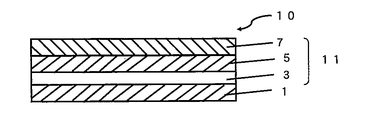
- FIG. 1 is a cross-sectional view showing an example of the pressure-sensitive adhesive sheet disclosed in this specification.
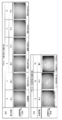
- FIG. 2 is a diagram showing results of a wiping test using alcohol for the pressure-sensitive adhesive sheet disclosed in the present specification.
- FIG. 3 is a diagram showing a wiping test using alcohol for a pressure-sensitive adhesive sheet having a coating layer prepared by adding a curing agent to a solvent-based paint.
- the inventors of the present invention considered coating the surface of the pressure-sensitive adhesive sheet with a water-soluble resin containing a bitter component in order to prevent accidental ingestion of the adherend.
- the coating layer having a bitter taste may disappear by washing with water or wiping with water. Therefore, when the adherend is a toy or the like, it is considered that the accidental ingestion prevention effect may be lost by washing with water to remove dirt or licking by an infant. Therefore, the inventors of the present application studied to provide a pressure-sensitive adhesive sheet with a coating layer made of a solvent-based paint so that the bitterness of the coating layer can be maintained even after washing with water, and conceived the present invention.
- FIG. 1 is a cross-sectional view showing an example of the pressure-sensitive adhesive sheet 10 disclosed in this specification.
- the pressure-sensitive adhesive sheet 10 of the present embodiment includes a base film 5, a coating layer 7 formed on one surface of the base film 5 and made of a cured product of a solvent-based paint, and a base material.
- the adhesive layer 3 formed on the other surface of the film 5 and the release liner 1 provided on the surface of the adhesive layer 3 opposite to the base film 5 are provided.
- the “solvent-based paint” means a paint that is poorly soluble in water but well soluble in an organic solvent.
- the coating layer 7 contains a bitter ingredient.
- the bitter component for example, one or a mixture of two or more selected from the group consisting of denatonium salt or its derivative, octaacetylsucrose, quercetin, quassin, hop extract and the like can be used. Since these bitterness components are highly safe, they are preferably used even when the adherend of the pressure-sensitive adhesive sheet 10 is a toy or the like for infants.
- denatonium benzoate, saccharin denatonium, denatonium chloride or a mixture thereof is used as a bitterness component, even a small amount can exert the effect of preventing accidental ingestion.
- the pressure-sensitive adhesive sheet 10 can be attached to any adherend by cutting it into an appropriate shape.
- This pressure-sensitive adhesive sheet 10 may be directly attached to the surface of an article such as a toy, but it is attached to the print layer of a label having a print layer on one surface and an adhesive layer on the other surface. You may be asked.
- the coating layer 7 is formed of a cured product of a solvent-based paint, so that the coating layer 7 is less likely to be washed out even after being washed with water or wiped with water. Therefore, even if the adherend is a toy or the like, the effect of preventing accidental ingestion can be maintained for a long period of time.
- a solvent-based paint such as acrylic, epoxy, urethane, silicone, and rubber can be used.
- the bitterness component may be contained in the coating layer 7 at a concentration sufficient for humans to feel the bitterness. Since the coating layer 7 is formed of the cured product of the solvent-based paint, the bitterness component is less likely to dissolve into saliva as compared with the case where it is formed of the cured product of the water-based paint. For example, in the water-soluble film described in Patent Document 1, bitterness can be felt even when the concentration of denatonium benzoate, which is a bitterness component, added to the PVA resin is 0.001% by mass. On the other hand, in the pressure-sensitive adhesive sheet 10 of the present embodiment, the ratio of the bitterness component to the resin solid content of the coating layer 7 is 2% by mass or more.
- the sensitivity to bitterness varies from person to person, if the content ratio of the bitterness component to the resin solid content is 2% by mass or more, the effect of preventing accidental ingestion can be sufficiently exerted.
- the concentration of the bitterness component may be equal to or lower than the upper limit at which the bitterness component can be dissolved in the coating, but in order to avoid precipitation of the bitterness component, the content ratio of the bitterness component to the resin solid content may be 10% by mass or less.
- the bitterness component may be mixed in the coating layer 7 as it is, or may be encapsulated in a water-soluble fine capsule.
- the film thickness of the coating layer 7 is not particularly limited, it may be 0.1 ⁇ m or more and 10 ⁇ m or less, or may be 0.5 ⁇ m or more and 5 ⁇ m or less in consideration of ease of manufacturing and manufacturing cost. The thicker the coating layer 7, the longer the coating layer 7 is maintained, and the longer the effect of preventing accidental ingestion is.
- the constituent material of the base film 5 is not particularly limited, but may be, for example, polyethylene terephthalate (PET), polybutylene terephthalate (PBT), polypropylene (PP), polyethylene (PE), polyvinyl chloride, or the like.
- the constituent material of the base film 5 may be translucent, and may be colored or, in the case of lamination, may be matted. If the total light transmittance of the adhesive sheet 10 (measured according to JIS K7361-1) is about 70% or more, the article to which the adhesive sheet 10 is applied without impairing the design of the decorative layer of the underlying label You can prevent accidental ingestion. In this case, since it can be used for a label or an adherend having any pattern, the versatility of the adhesive sheet 10 can be enhanced.
- total light transmittance of the pressure-sensitive adhesive sheet specifically refers to the “total light transmittance of the main body portion 11 of the pressure-sensitive adhesive sheet 10 with the release liner 1 removed from the pressure-sensitive adhesive sheet 10." Shall be pointed out.
- the thickness of the base material film 5 is not particularly limited, but may be about 2 ⁇ m or more and 250 ⁇ m or less, or may be about 10 ⁇ m or more and 100 ⁇ m or less from the viewpoint of easy handling and manufacturing cost.
- the pressure-sensitive adhesive layer 3 may be formed of a cured product of a general pressure-sensitive adhesive.
- the pressure-sensitive adhesive used for forming the pressure-sensitive adhesive layer 3 may be, for example, a known acrylic pressure-sensitive adhesive, silicone pressure-sensitive adhesive, rubber pressure-sensitive adhesive or polyester pressure-sensitive adhesive.
- the thickness of the pressure-sensitive adhesive layer 3 is not particularly limited, but may be, for example, 5 ⁇ m or more and 50 ⁇ m or less.
- the adhesive force of the adhesive layer 3 to the adherend may be set arbitrarily, but as a guide, if it is at least about 5 N / 25 mm or more with respect to stainless steel, the user (for example, an infant) is stuck to the adherend.
- the pressure-sensitive adhesive sheet 10 can be made difficult to peel off, and if it is 8 N / 25 mm or more, the pressure-sensitive adhesive sheet 10 can be made more difficult to peel off.
- the pressure-sensitive adhesive force of the pressure-sensitive adhesive layer 3 to the adherend may be less than 5 N / 25 mm.
- the release liner 1 may have a configuration that allows the main body portion 11 of the adhesive sheet 10 to be easily peeled off from the release liner 1 during use.
- a release liner 1 may be formed by forming a known release agent layer on the surface of the base material such as glassine paper, high-quality paper, or resin film on the side of the pressure-sensitive adhesive layer 3.
- the paint containing the bitterness component and the solvent-based paint used for forming the coating layer 7 may be directly applied to an article such as a toy to prevent accidental ingestion of the article.
- the pressure-sensitive adhesive sheet 10 of the present embodiment is superior to the method of directly applying the paint to the article in that it can be peeled off from the adherend or replaced with a new one as needed. This advantage does not change even when the adhesive sheet 10 is attached to the surface of the printed label.
- the pressure-sensitive adhesive sheet 10 described above is an example of the embodiment, and the configuration of the pressure-sensitive adhesive sheet may be appropriately changed without departing from the spirit of the present invention.
- a commercially available solvent-based paint is diluted with a solvent such as toluene or ethyl acetate to have an appropriate viscosity to prepare a coating liquid.
- This coating solution is thinly applied to one surface of the base film 5 using a coater to form a coating layer 7 having a thickness after drying of about 0.1 ⁇ m or more and about 10 ⁇ m or less.
- the coater used for coating the coating liquid can be appropriately selected from a knife coater, a comma type coater, a micro bar coater, an air knife coater, a reverse roll coater, a reverse gravure coater, a die coater, a curtain coater and the like.
- a pressure-sensitive adhesive layer 3 is formed by applying a coating liquid containing a commercially available pressure-sensitive adhesive to the release surface of the release liner 1 and drying it.
- the pressure-sensitive adhesive sheet 10 of the present embodiment is formed by bonding the surface of the base film 5 opposite to the coating layer 7 to the surface of the pressure-sensitive adhesive layer 3 opposite to the release liner 1. be able to.
- the adhesive sheet 10 can be appropriately processed into a predetermined size by a slitter and a cutting machine.
- the pressure-sensitive adhesive sheet 10 from which the release liner 1 has been peeled off may be attached to the print layer of the label, for example, the back surface of which is adhesively processed and the print layer is provided on the front surface.
- the label laminate including the pressure-sensitive adhesive sheet 10 (hereinafter, simply referred to as “label”) may be punched into a predetermined shape. This label is attached to an article such as a toy.
- the pressure-sensitive adhesive processing step instead of the above method, after applying a coating liquid containing a pressure-sensitive adhesive to the surface of the base film 5 opposite to the coating layer 7, the pressure-sensitive adhesive layer 3 is removed.
- the base film 5 and the release liner 1 may be attached so as to be sandwiched between.
- the coating layer 7 may be formed after the adhesive processing step.
- a known curing agent such as an epoxy type, an isocyanate type, a metal chelate type, or a melamine type may be added to the solvent-based paint used for forming the coating layer 7.
- the addition amount of the curing agent is not particularly limited, but may be, for example, about 0.1 parts by mass to 10 parts by mass with respect to 100 parts by mass of the resin solid content in the solvent-based paint used for forming the coating layer. Since the crosslinking density in the coating layer 7 can be increased by using the curing agent, it is possible to prevent the coating layer from peeling off when wiping with water. As a result, even if the number of times of wiping with water is increased, bitterness can be maintained more easily than in the case where no curing agent is used.
- the addition of the curing agent to the solvent-based coating makes it easier to maintain the bitterness even when wiping is repeated using a liquid containing alcohol such as ethanol. Therefore, even if stains are repeatedly wiped off with a liquid containing alcohol for disinfection, the effect of preventing accidental ingestion can be exerted for a long period of time.
- the pressure-sensitive adhesive sheet 10 of the present embodiment can also be used alone or in the form of a label laminate as an animal repellent sheet. Since dogs, cats, boars, etc. tend to avoid bitterness components like humans, for example, by arranging the adhesive sheet 10 or the label laminate at a place where animal excrement damage or food damage occurs, These damages can be reduced.
- the animal repellent effect of the pressure-sensitive adhesive sheet 10 is more effective for animals that largely depend on information by taste. Therefore, the adhesive sheet 10 of the present embodiment has a greater repellent effect on cats than dogs, for example.
- Sensitivity to bitterness varies from person to person, but it is generally less likely to feel bitterness with age, so it can be said that children are more sensitive to bitterness than adults. Also, smokers tend to be less sensitive to bitterness. Therefore, by setting the concentration of the bitterness component blended in the coating layer 7 to a relatively low concentration (for example, 2% by mass or more and less than 6% by mass based on the resin solid content of the solvent-based paint), the pressure-sensitive adhesive sheet according to the present embodiment The accidental ingestion prevention effect of 10 can be easily exerted selectively on the child.
- the concentration of the bitterness component blended in the coating layer 7 is relatively high (for example, 6% by mass or more and 10% by mass or more with respect to the resin solid content of the solvent-based paint). Mass% or less).
- a plurality of pressure-sensitive adhesive sheets 10 having different concentrations of bitterness components can be set as one set to serve as an aging checker. For example, if you can feel the bitterness of the adhesive sheet 10 having the lowest bitterness component concentration, it is determined to be “young”, and if you cannot feel the bitterness of the adhesive sheet 10 having the highest bitterness component concentration, it is “aged”. Can be determined.
- Example 1 In a mixed solvent of 100 parts by mass of toluene, 100 parts by mass of ethyl acetate and 5 parts by mass of methanol, 0.492 parts of denatonium benzoate powder (manufactured by MacFarlan Smith Co., Ltd .; product name "Vitrex”) was dissolved.
- this denatonium benzoate solution total 205.492 parts by mass
- a coating liquid was prepared by mixing the same with parts by mass, and the coating liquid was applied to one surface of a transparent PET film (manufactured by Toray Industries, Inc .; product name “Lumirror T11”). Then, the PET film was dried at 100 ° C. for 1 minute to form a coating layer having a thickness of 1 ⁇ m on the PET film.
- this pressure-sensitive adhesive sheet contains 2.00% by mass of denatonium benzoate with respect to the resin solid content on a mass basis.
- an adhesive sheet having a structure as shown in FIG. 1 was produced.
- the total light transmittance of the pressure-sensitive adhesive sheet (measured according to JIS K7361-1) was 91.72%.
- Example 2 A pressure-sensitive adhesive sheet was prepared in the same manner as in Example 1 except that the amount of denatonium benzoate powder mixed with 100 parts by mass of the thermoplastic acrylic acid ester-based polymer solution was changed to 1.23 parts by mass.
- the coating layer of this pressure-sensitive adhesive sheet contains 5.00% by mass of denatonium benzoate based on the resin solid content.
- the total light transmittance of this pressure-sensitive adhesive sheet was 91.84%.
- Example 3 To the coating liquid for forming the coating layer, 0.91 part of a commercially available melamine-based curing agent and 0.45 part of a commercially available isocyanate-based curing agent were added to 100 parts by weight of the thermoplastic acrylic acid ester-based polymer.
- a pressure-sensitive adhesive sheet was produced by the same method as in Example 2 except for.
- a pressure-sensitive adhesive sheet was produced in the same manner as in Example 1 except that the amount of denatonium benzoate powder mixed with 100 parts by mass of the thermoplastic acrylic ester polymer solution was changed to 0.123 parts by mass.
- the coating layer of this pressure-sensitive adhesive sheet contains denatonium benzoate in an amount of 0.50% by mass based on the resin solid content.
- the total light transmittance of this pressure-sensitive adhesive sheet was 91.73%.
- This denatonium benzoate solution (total of 200.00147 parts by mass) and a solution of PVA resin containing water (manufactured by Taisei Kagaku Co., Ltd .; product name "Maltite 150") (resin solid content 14.7% by mass) are mixed.
- To prepare a coating liquid and the coating liquid was applied to one surface of the transparent PET film. Then, the PET film was dried at 100 ° C. for 1 minute to form a coating layer having a thickness of 1 ⁇ m on the PET film.
- the coating layer of this pressure-sensitive adhesive sheet contains 0.01% by mass of denatonium benzoate based on the resin solid content. The total light transmittance of this pressure-sensitive adhesive sheet was 91.72%.
- a pressure-sensitive adhesive sheet was produced in the same manner as in Comparative Example 2 except that the amount of denatonium benzoate contained in the dried coating layer was adjusted to be 1.00% by mass based on the resin solid content of the layer. .
- the total light transmittance of this pressure-sensitive adhesive sheet was 91.70%.
- test piece with a size of 2.5 cm ⁇ 2.5 cm was cut out from each produced pressure-sensitive adhesive sheet, and this was used as a test piece before wiping with water.
- the test piece cut out from each pressure-sensitive adhesive sheet was wiped 10 times in one direction with a cloth impregnated with pure water from the coating layer side, and this was used as a test piece after wiping with water.
- Whether or not the coating layer of each test piece before and after wiping with water was lightly licked once with a tongue and whether bitterness was felt was confirmed by 5 men, 3 men and 2 women, and evaluated as follows. The cloth was replaced with a new one after each wipe.
- Table 1 shows the test results for the prevention of accidental ingestion of the adhesive sheet.
- FIG. 2 is a diagram showing the result of wiping the pressure-sensitive adhesive sheet prepared in Example 2 with ethanol
- FIG. 3 is a diagram showing the result of wiping the pressure-sensitive adhesive sheet prepared in Example 3 with ethanol.
- the coating layer formed without using the curing agent began to peel off in a streak shape at the time of wiping three times with ethanol, and after the tenth wiping was completed. The coating layer was completely removed. The bitterness was maintained until after the sixth wiping, but the bitterness disappeared after the tenth wiping.
- the pressure-sensitive adhesive sheet disclosed in this specification is used to prevent accidental ingestion of adherends that may be accidentally ingested, such as toys.
Landscapes
- Chemical & Material Sciences (AREA)
- Organic Chemistry (AREA)
- Life Sciences & Earth Sciences (AREA)
- Engineering & Computer Science (AREA)
- Materials Engineering (AREA)
- Wood Science & Technology (AREA)
- Adhesive Tapes (AREA)
- Paints Or Removers (AREA)
Abstract
L'invention concerne une feuille adhésive capable d'empêcher efficacement l'ingestion accidentelle d'une partie adhérée, et un procédé de production de la feuille adhésive. La feuille adhésive (10) est équipée : d'un film de base (5) ; d'une couche de revêtement (7) composée d'un produit durci d'une peinture à base de solvant qui contient un composant amer, la couche de revêtement (7) étant formée sur une surface du film de base (5) ; et une couche adhésive (3) formée sur l'autre surface du film de base (5). La couche de revêtement (7) contient 2 % en masse ou plus du composant amer par rapport à la fraction de solides de résine de la peinture à base de solvant. De préférence, la couche de revêtement (7) comprend un agent de durcissement.
Priority Applications (2)
| Application Number | Priority Date | Filing Date | Title |
|---|---|---|---|
| CN201980066352.8A CN112823191A (zh) | 2018-10-17 | 2019-08-21 | 粘合片及其制造方法 |
| JP2020552552A JP7329857B2 (ja) | 2018-10-17 | 2019-08-21 | 粘着シート及びその製造方法 |
Applications Claiming Priority (2)
| Application Number | Priority Date | Filing Date | Title |
|---|---|---|---|
| JP2018196154 | 2018-10-17 | ||
| JP2018-196154 | 2018-10-17 |
Publications (1)
| Publication Number | Publication Date |
|---|---|
| WO2020079948A1 true WO2020079948A1 (fr) | 2020-04-23 |
Family
ID=70283076
Family Applications (1)
| Application Number | Title | Priority Date | Filing Date |
|---|---|---|---|
| PCT/JP2019/032632 Ceased WO2020079948A1 (fr) | 2018-10-17 | 2019-08-21 | Feuille adhésive et procédé de production associé |
Country Status (3)
| Country | Link |
|---|---|
| JP (1) | JP7329857B2 (fr) |
| CN (1) | CN112823191A (fr) |
| WO (1) | WO2020079948A1 (fr) |
Families Citing this family (1)
| Publication number | Priority date | Publication date | Assignee | Title |
|---|---|---|---|---|
| CN117004317A (zh) * | 2023-09-18 | 2023-11-07 | 奥利安自动化(东莞)有限公司 | 防虫鼠、宠物和幼儿啃咬的苦味硅橡胶漆及其制备方法 |
Citations (9)
| Publication number | Priority date | Publication date | Assignee | Title |
|---|---|---|---|---|
| JPH06220357A (ja) * | 1993-01-25 | 1994-08-09 | Nippon Tokushu Toryo Co Ltd | 動物忌避塗料 |
| JPH07100843A (ja) * | 1993-10-01 | 1995-04-18 | Shinagawa Shoko Kk | 動物害防除プラスチック成形法及び成形物 |
| JPH09192580A (ja) * | 1996-01-12 | 1997-07-29 | Mitsubishi Pencil Co Ltd | 誤飲防止用の液体塗布具及びその塗布方法 |
| JP2000094584A (ja) * | 1998-09-25 | 2000-04-04 | Oike Ind Co Ltd | ウインドーフイルム |
| JP2001517695A (ja) * | 1997-10-01 | 2001-10-09 | エルティエス ローマン テラピー−ズュステーメ アーゲー | 経皮吸収治療システムの誤用を防止する方法 |
| JP2012006262A (ja) * | 2010-06-24 | 2012-01-12 | Dainippon Printing Co Ltd | 香り付きシート |
| JP2012043086A (ja) * | 2010-08-17 | 2012-03-01 | Toppan Printing Co Ltd | Icカードとその製造方法 |
| US20140053379A1 (en) * | 2012-08-24 | 2014-02-27 | J & P Coats Limited | Surface treatment and items having treated surface |
| JP2016107547A (ja) * | 2014-12-09 | 2016-06-20 | 平岡織染株式会社 | 組立式テント用膜材 |
Family Cites Families (4)
| Publication number | Priority date | Publication date | Assignee | Title |
|---|---|---|---|---|
| BRPI0718388A8 (pt) * | 2006-10-17 | 2018-03-13 | Labtec Gesellschaft Fuer Tech Forschung Und Entwicklung Mbh | etiqueta adesiva com agente amargante e agentes fluidificantes para secreções naturais das vias aéreas |
| JP5736730B2 (ja) * | 2010-10-29 | 2015-06-17 | 王子ホールディングス株式会社 | 粘着シート |
| JP5269960B2 (ja) * | 2011-07-29 | 2013-08-21 | 大阪化成株式会社 | ネズミ忌避剤 |
| CN103725151A (zh) * | 2012-10-16 | 2014-04-16 | 单晓明 | 一种新型涂料 |
-
2019
- 2019-08-21 CN CN201980066352.8A patent/CN112823191A/zh active Pending
- 2019-08-21 JP JP2020552552A patent/JP7329857B2/ja active Active
- 2019-08-21 WO PCT/JP2019/032632 patent/WO2020079948A1/fr not_active Ceased
Patent Citations (9)
| Publication number | Priority date | Publication date | Assignee | Title |
|---|---|---|---|---|
| JPH06220357A (ja) * | 1993-01-25 | 1994-08-09 | Nippon Tokushu Toryo Co Ltd | 動物忌避塗料 |
| JPH07100843A (ja) * | 1993-10-01 | 1995-04-18 | Shinagawa Shoko Kk | 動物害防除プラスチック成形法及び成形物 |
| JPH09192580A (ja) * | 1996-01-12 | 1997-07-29 | Mitsubishi Pencil Co Ltd | 誤飲防止用の液体塗布具及びその塗布方法 |
| JP2001517695A (ja) * | 1997-10-01 | 2001-10-09 | エルティエス ローマン テラピー−ズュステーメ アーゲー | 経皮吸収治療システムの誤用を防止する方法 |
| JP2000094584A (ja) * | 1998-09-25 | 2000-04-04 | Oike Ind Co Ltd | ウインドーフイルム |
| JP2012006262A (ja) * | 2010-06-24 | 2012-01-12 | Dainippon Printing Co Ltd | 香り付きシート |
| JP2012043086A (ja) * | 2010-08-17 | 2012-03-01 | Toppan Printing Co Ltd | Icカードとその製造方法 |
| US20140053379A1 (en) * | 2012-08-24 | 2014-02-27 | J & P Coats Limited | Surface treatment and items having treated surface |
| JP2016107547A (ja) * | 2014-12-09 | 2016-06-20 | 平岡織染株式会社 | 組立式テント用膜材 |
Also Published As
| Publication number | Publication date |
|---|---|
| JPWO2020079948A1 (ja) | 2021-09-16 |
| CN112823191A (zh) | 2021-05-18 |
| JP7329857B2 (ja) | 2023-08-21 |
Similar Documents
| Publication | Publication Date | Title |
|---|---|---|
| JP5736730B2 (ja) | 粘着シート | |
| KR101413858B1 (ko) | 네일 스티커 및 그 제조 방법 | |
| KR940009077B1 (ko) | 표층상의 부착성 라벨 | |
| WO2010071302A3 (fr) | Matière biodégradable pour une publicité et procédé de préparation de cette matière | |
| JP7329857B2 (ja) | 粘着シート及びその製造方法 | |
| KR20180039530A (ko) | 항균 기능 점착층을 포함하는 네일 스티커 | |
| KR101708239B1 (ko) | 문신 스티커와 그 제조방법 | |
| JP5667318B1 (ja) | 装飾具 | |
| US9974937B2 (en) | Temporary tattoo | |
| WO2019009318A1 (fr) | Outil de fixation de surface de paroi | |
| KR101874598B1 (ko) | 스티커형 판박이 | |
| US20040091682A1 (en) | Composite material | |
| CN203866239U (zh) | 具有清洁作用的不干胶标贴 | |
| US20080047185A1 (en) | Label | |
| KR20090096117A (ko) | 열전사필름과 이의 제작방법 | |
| JP4990454B2 (ja) | シート状またはロール巻き状の紙粘着材 | |
| KR100415693B1 (ko) | 인쇄용지 및 그 제조방법 | |
| JP7352431B2 (ja) | アイキャッチラベル | |
| JP5347055B1 (ja) | 爪装飾用シール | |
| JP7309598B2 (ja) | アイキャッチラベル | |
| KR102880374B1 (ko) | 친환경 스티커 및 그 제조방법 | |
| CN216659403U (zh) | 防水纹身贴纸 | |
| JP7301357B2 (ja) | 粘着シート、医薬品包装材及び催吐成分貼り付け方法 | |
| KR101999058B1 (ko) | 투명성이 우수하며 환경호르몬의 방출이 없는 점착패드 및 이의 제조방법 | |
| CN106726694A (zh) | 一种温变指甲贴膜及其制备方法 |
Legal Events
| Date | Code | Title | Description |
|---|---|---|---|
| 121 | Ep: the epo has been informed by wipo that ep was designated in this application |
Ref document number: 19873625 Country of ref document: EP Kind code of ref document: A1 |
|
| ENP | Entry into the national phase |
Ref document number: 2020552552 Country of ref document: JP Kind code of ref document: A |
|
| NENP | Non-entry into the national phase |
Ref country code: DE |
|
| 122 | Ep: pct application non-entry in european phase |
Ref document number: 19873625 Country of ref document: EP Kind code of ref document: A1 |