WO2020090965A1 - Composition de traitement dentaire - Google Patents
Composition de traitement dentaire Download PDFInfo
- Publication number
- WO2020090965A1 WO2020090965A1 PCT/JP2019/042742 JP2019042742W WO2020090965A1 WO 2020090965 A1 WO2020090965 A1 WO 2020090965A1 JP 2019042742 W JP2019042742 W JP 2019042742W WO 2020090965 A1 WO2020090965 A1 WO 2020090965A1
- Authority
- WO
- WIPO (PCT)
- Prior art keywords
- dental treatment
- treatment composition
- group
- compound
- dentin
- Prior art date
- Legal status (The legal status is an assumption and is not a legal conclusion. Google has not performed a legal analysis and makes no representation as to the accuracy of the status listed.)
- Ceased
Links
Images


Classifications
-
- A—HUMAN NECESSITIES
- A61—MEDICAL OR VETERINARY SCIENCE; HYGIENE
- A61K—PREPARATIONS FOR MEDICAL, DENTAL OR TOILETRY PURPOSES
- A61K6/00—Preparations for dentistry
- A61K6/80—Preparations for artificial teeth, for filling teeth or for capping teeth
- A61K6/831—Preparations for artificial teeth, for filling teeth or for capping teeth comprising non-metallic elements or compounds thereof, e.g. carbon
- A61K6/838—Phosphorus compounds, e.g. apatite
-
- A—HUMAN NECESSITIES
- A61—MEDICAL OR VETERINARY SCIENCE; HYGIENE
- A61K—PREPARATIONS FOR MEDICAL, DENTAL OR TOILETRY PURPOSES
- A61K6/00—Preparations for dentistry
- A61K6/80—Preparations for artificial teeth, for filling teeth or for capping teeth
- A61K6/884—Preparations for artificial teeth, for filling teeth or for capping teeth comprising natural or synthetic resins
- A61K6/891—Compounds obtained otherwise than by reactions only involving carbon-to-carbon unsaturated bonds
-
- A—HUMAN NECESSITIES
- A61—MEDICAL OR VETERINARY SCIENCE; HYGIENE
- A61P—SPECIFIC THERAPEUTIC ACTIVITY OF CHEMICAL COMPOUNDS OR MEDICINAL PREPARATIONS
- A61P1/00—Drugs for disorders of the alimentary tract or the digestive system
- A61P1/02—Stomatological preparations, e.g. drugs for caries, aphtae, periodontitis
-
- C—CHEMISTRY; METALLURGY
- C07—ORGANIC CHEMISTRY
- C07K—PEPTIDES
- C07K7/00—Peptides having 5 to 20 amino acids in a fully defined sequence; Derivatives thereof
- C07K7/04—Linear peptides containing only normal peptide links
- C07K7/06—Linear peptides containing only normal peptide links having 5 to 11 amino acids
-
- C—CHEMISTRY; METALLURGY
- C08—ORGANIC MACROMOLECULAR COMPOUNDS; THEIR PREPARATION OR CHEMICAL WORKING-UP; COMPOSITIONS BASED THEREON
- C08G—MACROMOLECULAR COMPOUNDS OBTAINED OTHERWISE THAN BY REACTIONS ONLY INVOLVING UNSATURATED CARBON-TO-CARBON BONDS
- C08G63/00—Macromolecular compounds obtained by reactions forming a carboxylic ester link in the main chain of the macromolecule
- C08G63/02—Polyesters derived from hydroxycarboxylic acids or from polycarboxylic acids and polyhydroxy compounds
- C08G63/06—Polyesters derived from hydroxycarboxylic acids or from polycarboxylic acids and polyhydroxy compounds derived from hydroxycarboxylic acids
- C08G63/08—Lactones or lactides
-
- C—CHEMISTRY; METALLURGY
- C08—ORGANIC MACROMOLECULAR COMPOUNDS; THEIR PREPARATION OR CHEMICAL WORKING-UP; COMPOSITIONS BASED THEREON
- C08L—COMPOSITIONS OF MACROMOLECULAR COMPOUNDS
- C08L67/00—Compositions of polyesters obtained by reactions forming a carboxylic ester link in the main chain; Compositions of derivatives of such polymers
-
- C—CHEMISTRY; METALLURGY
- C08—ORGANIC MACROMOLECULAR COMPOUNDS; THEIR PREPARATION OR CHEMICAL WORKING-UP; COMPOSITIONS BASED THEREON
- C08L—COMPOSITIONS OF MACROMOLECULAR COMPOUNDS
- C08L89/00—Compositions of proteins; Compositions of derivatives thereof
Definitions
- the present invention relates to a dental treatment composition.
- the present application claims priority based on Japanese Patent Application No. 2018-205226 filed in Japan on October 31, 2018, the contents of which are incorporated herein by reference.
- Non-Patent Document 1 a calcium hydroxide preparation and Mineral Trioxide Aggregate (MTA) are known (Non-Patent Document 1).
- MTA Mineral Trioxide Aggregate
- the calcium hydroxide preparation covers the exposed spinal cord part such as the cavity, thereby promoting the formation of dentin and recovering the exposed spinal cord part.
- MTA is not adhesive, it can satisfactorily close the exposed pulp and protect the pulp.
- a method has been proposed in which the Wnt signaling pathway is activated to induce differentiation of dental pulp cells into odontoblasts to form dentin (Patent Document 1).
- Patent Document 2 a compound having a structure represented by a specific formula is useful as a bone marrow hemostatic agent.
- the calcium hydroxide preparation has a problem that the formation of dentin is slow and the quality of the formed dentin is not high.
- the calcium hydroxide preparation has a problem that the curing speed is fast and the handling is complicated.
- MTA has the problem that it may give rise to dead spaces due to its lack of adhesion.
- MTA has a problem that it causes discoloration of MTA itself and discoloration of tooth structure.
- MTA has a problem that it requires a technique to be applied to a treatment site, the curing time is long, and the handling is complicated.
- an object of the present invention is to provide a dental treatment composition which has excellent handleability and can promote the formation of dentin.
- a dental treatment composition containing a compound (I) having a structure represented by the following general formula (1) and a dentin forming agent (II).
- R 1 is a hydrocarbon group
- A is a group represented by the following general formula (a)
- B is a group represented by the following general formula (b)
- s is It is a number of 0 or more
- m is 0 to 800
- n is 0 to 700.
- R 2 is a linear or branched alkylene group having 1 to 5 carbon atoms which may have a substituent.
- R 3 is a hydrogen atom or a hydrocarbon group, and R 4 is a hydrocarbon group.
- the compound (I) is an alcohol having one or more hydroxy groups.
- A is a group represented by the general formula (a)
- B is a group represented by the general formula (b)
- m is 0 to 800
- n is 0. It is up to 700. However, m and n cannot be 0 at the same time.
- R 1 is a hydrocarbon group
- R 5 is a hydrogen atom or a hydrocarbon group
- A is a group represented by the general formula (a)
- B is the general formula ( b is a group represented by b)
- s is a number of 0 or more
- t is 1 to 4
- m is 0 to 800
- n is 0 to 700. , It never becomes 0 at the same time.
- the dental treatment composition according to [6] or [7], wherein the inorganic powder is one or more inorganic powders selected from the group consisting of tetracalcium phosphate and alkali metal salts of phosphoric acid. ..
- Bone morphogenetic protein a peptide consisting of the amino acid sequence represented by any of SEQ ID NOS: 1 to 3, and one or several amino acid sequences represented by any of the amino acid sequences represented by SEQ ID NOS: 1 to 3.
- a dental treatment composition comprising one or more dentin forming agents (II) selected from peptides consisting of amino acid sequences in which amino acids are substituted, deleted, added or inserted, and a curable matrix.
- the dental treatment composition according to any one of [1] to [10], which is for direct pulp capping method.
- the dental treatment composition of the present invention has excellent handleability and can promote the formation of dentin.
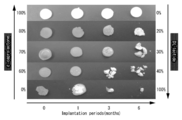
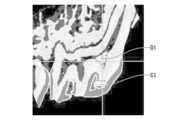
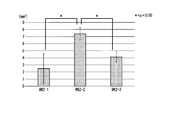
- FIG. 3 is photographs showing the state of decomposition of compounds (I-3-1) to (I-3-5) in vivo. It is an image of micro CT of Example 2-1. It is a micro CT image of Example 2-2. It is an image of micro CT of Example 2-3. 3 is a graph showing the amount of new dentin formed (volume) in Examples 2-1 to 2-3.
- the composition for dental treatment of the present invention is, for example, a composition that fills the exposed pulp and promotes the formation of dentin.
- a dental treatment composition according to one aspect of the present invention (hereinafter, also referred to as “dental treatment composition of the present invention”) includes the following compound (I) and a dentin forming agent (II).
- the compound (I) contained in the dental treatment composition of the present invention is a compound having a structure represented by the following general formula (1).
- R 1 is a hydrocarbon group
- A is a group represented by the following general formula (a)
- B is a group represented by the following general formula (b)
- s is 0.
- m is 0 to 800
- n is 0 to 700.
- m and n cannot be 0 at the same time.
- R 1 is a hydrocarbon group.
- the carbon number of R 1 is preferably 1-10, more preferably 1-6.
- Examples of the hydrocarbon group for R 1 include a linear or branched alkylene group, and a linear or branched alkylene group having 1 to 6 carbon atoms is preferable. Specific examples include methylene, 1,2-ethylene and 1,3-propylene, with methylene being preferred.
- R 2 is a linear or branched alkylene group having 1 to 5 carbon atoms which may have a substituent.
- the alkylene group may or may not have a substituent.
- Specific examples of the linear or branched alkylene group having 1 to 5 carbon atoms include methylene, 1,2-ethylene, 1,3-propylene, 1,4-butylene, 1,5-pentylene and methyl. Examples thereof include methylene, 1,2-propylene, 1,3-butylene and 1,4-pentylene, with methylene, 1,2-ethylene, 1,3-propylene, 1,4-butylene and 1,5-pentylene being preferred.
- 1,3-propylene, 1,4-butylene and 1,5-pentylene are more preferred, and 1,5-pentylene is even more preferred.
- the linear or branched alkylene group having 1 to 5 carbon atoms represented by R 2 preferably has no substituent.
- R 3 is a hydrogen atom or a hydrocarbon group
- R 4 is a hydrocarbon group.
- the carbon number of R 3 and R 4 is preferably from 1 to 10, and more preferably from 1 to 6.
- Examples of the hydrocarbon group of R 3 and R 4 include a linear or branched alkyl group or a linear or branched alkenyl group, and the hydrocarbon groups of R 3 and R 4 are the same. May also be different.
- R 3 is preferably a hydrogen atom.
- R 4 is preferably a linear or branched alkyl group having 1 to 10 carbon atoms, preferably 1 to 6 carbon atoms, and more preferably 1 to 3 carbon atoms.
- methyl, ethyl, n-propyl, isopropyl, n-butyl, s-butyl, t-butyl, n-pentyl and n-hexyl with methyl, ethyl, n-propyl and isopropyl being preferred, Methyl and ethyl are more preferable, and methyl is further preferable.
- s is a number of 0 or more, preferably 0 to 20, more preferably 1 to 10, further preferably 1 to 6, particularly preferably 1 to 3, and most preferably 1.
- m is 0 to 800, preferably 1 to 500, more preferably 2 to 300, further preferably 3 to 150, particularly preferably 5 to 100.
- n is 0 to 700, preferably 1 to 500, more preferably 2 to 300, further preferably 3 to 100, particularly preferably 5 to 100.
- m + n 5 to 1000 is preferable, 10 to 500 is more preferable, 30 to 300 is further preferable, and 50 to 150 is particularly preferable.
- n 0: 100 to 100: 0, preferably 0: 100 to 99: 1, more preferably 10:90 to 90:10, further preferably 20:80 to 80:20, and 30:70 to 70:30 is particularly preferable, and 40:60 to 60:40 is the most preferable.
- n 1 or more, biodegradability can be imparted to the dental treatment composition.
- the ratio of m and n in the compound (I) can be measured by NMR.
- a and B When A and B are mixed, they may be mixed alternately, may be mixed randomly, and may be mixed in a block. Further, they may be mixed in a graft form. That is, [(A) m / (B) n ] in the formula (1) means that A and B are mixed in any of alternating, random, block and graft forms. For example, when A and B are randomly mixed, the melting point of the compound (I) tends to be low, and a dental treatment composition having a touch like wax can be obtained. When A and B are mixed in a block form, the melting point of the compound (I) tends to be high, and a dental treatment composition having a feel like plastic can be obtained. Considering handleability, it is preferable that A and B are mixed randomly. The mixed state of A and B can be easily controlled by the polymerization method, and the mixed ratio of A and B can be easily controlled by adjusting the range of m + n.
- the compound (I) is a compound obtained by substituting at least a part of the hydroxy groups of an alcohol having one or more hydroxy groups with a substituent represented by the following general formula (2) (hereinafter, referred to as “compound (I-2 ) ”.) Is also preferable.
- A is a group represented by the general formula (a)
- B is a group represented by the general formula (b)
- m is 0 to 800
- n is 0 to 700. is there.
- m and n cannot be 0 at the same time.
- A, B, m and n in the formula (2) are the same as A, B, m and n in the general formula (1), respectively, and the preferred embodiments are also the same.
- Examples of alcohols having one or more hydroxy groups include monohydric alcohols, dihydric alcohols, trihydric alcohols, tetrahydric alcohols, and polyhydric alcohols having a valence of 5 or more.
- Examples of monohydric alcohols include aliphatic alcohols having 1 to 20 carbon atoms such as methanol, ethanol, 1-propanol, isopropanol, 1-butanol, isobutanol, sec-butanol, tert-butanol; phenol, cresol, benzyl alcohol.
- aromatic alcohols having 6 to 30 carbon atoms such as naphthol and anthrol.
- dihydric alcohol examples include ethylene glycol, neopentyl glycol, 1,2-propanediol, 1,3-propanediol, 1,3-butanediol, 1,4-butanediol, diethylene glycol, triethylene glycol and polyethylene.
- examples thereof include glycol, azobenzenediol (4,4′-dihydroxyazobenzene, 2,2′-dihydroxyazobenzene and the like), mesogen diol and the like.
- trihydric alcohol examples include glycerin, trimethylolpropane, 1,2,4-butanetriol, 1,2,5-pentanetriol, 2-methyl-1,2,3-propanetriol, 2-methyl-1, 2,4-butanetriol, 1,2,4-benzenetriol, calcitriol (1,25-dihydroxycholecalciferol), triethanolamine, butyltrihydroxysilane and the like can be mentioned.
- tetrahydric alcohol examples include pentaerythritol and 1,4-sorbitan.
- polyhydric alcohol having a valence of 5 or more examples include xylitol, sorbitol, mannitol, dipentaerythritol, tripentaerythritol, chitosan, cyclodextrin, chitin, cellulose, hyaluronic acid, dendrimer (or dendron) having an amidoethanol surface group, and polyvinyl alcohol. And a hydroxyl group-containing polymer and the like.
- branched alcohols may be used alone or in combination of two or more. Of these, branched alcohols are preferable.
- a branched alcohol tends to have a lower viscosity of the compound (2) than a linear alcohol having the same molecular weight. Therefore, when the composition for dental treatment is kneaded with a finger or the like and used, it becomes less sticky and more excellent in handleability.
- the “branched chain alcohol” means an alcohol having one or more side chains branched from the main chain, and one or more side chains branched from the main chain also have a hydroxy group. Alcohol is preferred.
- compound (I-2) examples include a compound represented by the following general formula (3) (hereinafter, also referred to as “compound (I-3)”).
- R 1 is a hydrocarbon group
- R 5 is a hydrogen atom or a hydrocarbon group
- A is a group represented by the general formula (a)
- B is a general formula (b).
- R 1 in the formula (3), A, B, m and n are the same as R 1, A, B, m and n, respectively in formula (1), and their preferred embodiments are also the same.
- S in the formula (3) is a number of 0 or more, preferably 0 to 20, more preferably 0 to 10, further preferably 0 to 6, particularly preferably 0 to 3, and most preferably 0 to 1.
- R 5 is a hydrogen atom or a hydrocarbon group, and when R 5 is a hydrocarbon, the carbon number of R 5 is preferably 1-10, and more preferably 1-6.
- the hydrocarbon group for R 5 include a linear or branched alkyl group or a linear or branched alkenyl group.
- R 5 is preferably a linear or branched alkyl group having 1 to 10 carbon atoms, and more preferably a linear or branched alkyl group having 1 to 6 carbon atoms.
- t is 1 to 4, preferably 2 to 4, and more preferably 3 to 4. t corresponds to the valence (number of hydroxy groups) of the alcohol having one or more hydroxy groups described above.
- Compound (I) is produced, for example, as follows. First, in the presence of an alcohol initiator and a catalyst, a compound from which A in the general formula (1) is derived (hereinafter, also referred to as “compound (A)”) and a compound from which B in the general formula (1) is derived. The following compound (hereinafter, also referred to as “compound (B)”) is polymerized. When either m or n is 0, polymerization may be carried out without using either the compound (A) or the compound (B). Next, the reaction solution containing the obtained polymer (compound (I)) is diluted with a good solvent, and the diluted solution is added dropwise to the poor solvent to reprecipitate the compound (I) for recovery.
- Examples of the alcohol initiator include alcohols having one or more hydroxy groups exemplified above.
- Examples of the compound (A) include ⁇ -caprolactone, ⁇ -acetolactone, ⁇ -propiolactone, ⁇ -butyrolactone and ⁇ -valerolactone.
- Examples of the compound (B) include D-lactide, L-lactide, DL-lactide and the like.
- Examples of the catalyst include tin-based catalysts such as tin octylate and tin alkoxide; aluminum-based catalysts such as aluminum isopropoxide and aluminum alkoxide; magnesium-based catalysts such as magnesium alkoxide; titanium-based catalysts such as tetrabutoxytitanium. ..
- the good solvent may be determined according to the compound (I) to be obtained, and examples thereof include tetrahydrofuran (THF) and ethyl acetate.
- the poor solvent may be determined according to the compound (I) to be obtained, and examples thereof include hexane, diethyl ether, methanol and the like.
- A: B is preferably 0: 100 to 99: 1, more preferably 10:90 to 90:10, further preferably 20:80 to 80:20, particularly preferably 30:70 to 70:30, and particularly 40: Most preferred is 60 to 60:40.
- the polymerization temperature is preferably 50 to 200 ° C, more preferably 100 to 150 ° C.
- the polymerization time is preferably 1 to 48 hours, more preferably 10 to 24 hours.
- the compound (A) when the compound (A) is a liquid, the compound (B) and the alcohol initiator are preferably dissolved in the compound (A).
- an organic solvent in which the compound (A), the compound (B) and the alcohol initiator are soluble is used. You may use together.
- the compound (I) thus obtained is a compound in which at least a part of the hydroxy groups of the alcohol having one or more hydroxy groups is substituted with the substituent represented by the general formula (2), that is, the compound ( It corresponds to I-2).
- the compound (I-3) can be obtained by using a mono- to tetravalent alcohol as the alcohol having one or more hydroxy groups.
- the dentin forming agent (II) contained in the dental treatment composition of the present invention is not particularly limited as long as it can promote the formation of dentin.
- the dentin forming agent (II) include bovine blood extract, polysaccharides such as N-acetylglucosamine, and growth factors such as TGF- ⁇ .
- the dentin forming agent (II) include proteins such as bone morphogenetic protein (BMP) and biomolecules such as peptides. Examples of this peptide include peptides having amino acid sequences derived from highly homologous and highly conserved regions of 19 species of BMP subtypes of 8 animal species.
- biomolecules include proteins or peptides that act on odontoblasts to activate odontoblasts, proteins that act on dental pulp to promote the secretion of TGF- ⁇ , etc., or to promote odontoblast differentiation. Examples include peptides.
- biomolecules are preferable, proteins or peptides are more preferable, and peptides are further preferable.
- a peptide (i) consisting of the amino acid sequence represented by any of SEQ ID NOS: 1 to 3 and one or several of the amino acid sequences represented by any of SEQ ID NOS: 1 to 3
- Peptide (ii) consisting of an amino acid sequence in which amino acids are substituted, deleted, added or inserted is included.
- Peptide (ii) has an activity of promoting the formation of dentin when acting on the pulp.
- the term “plurality” refers to 2 to 3, and preferably 2 pieces.
- the number of amino acids to be substituted, deleted, added or inserted is preferably 1 to 3, more preferably 1 to 2.
- the length of the peptide is not particularly limited as long as it is a general length for the peptide.
- the length of the peptide is, for example, preferably 2 to 20 amino acid residues, more preferably 2 to 10 amino acid residues, still more preferably 2 to 9 amino acid residues. Further, the number of amino acid residues in the peptide may be even smaller.
- the length of the peptide may be 2-5 amino acid residues.
- the peptide may contain a sequence other than the above-mentioned sequence as long as it has an activity of promoting the formation of dentin when acting on the dental pulp.
- Other sequences are not particularly limited, but it is desirable to determine them from the viewpoint that the entire oligopeptide becomes hydrophilic and that the intracellular half-life is longer. It should be noted that determination of hydrophilicity and calculation of intracellular half-life can be performed on various websites (for example, Expacy (http://web.expasy.org/protparam/)). When using Expacy, it is preferable to design the sequence so that "Grand average of hydropathicity" has a negative value for hydrophilicity.
- the peptide may be chemically modified as long as it has an activity of promoting the formation of dentin when acting on the dental pulp.
- the peptide may have either a carboxyl group (—COOH), a carboxylate (—COO ⁇ ), an amide (—CONH 2 ) or an ester (—COOR) at the C terminus.
- R in the ester is C 1-6 alkyl group, C 3-8 cycloalkyl group, C 6-12 aryl group, phenyl-C 1-2 alkyl group, C 7-14 aralkyl group, pivaloyloxy.
- a methyl group or the like is used.
- Examples of the C 1-6 alkyl group include methyl, ethyl, n-propyl, isopropyl, n-butyl and the like.
- Examples of the C 3-8 cycloalkyl group include cyclopentyl, cyclohexyl and the like.
- Examples of the C 6-12 aryl group include phenyl and ⁇ -naphthyl.
- Examples of the phenyl-C 1-2 alkyl group include benzyl, phenethyl and the like.
- Examples of the C 7-14 aralkyl group include ⁇ -naphthyl-C 1-2 alkyl groups such as ⁇ -naphthylmethyl.
- the amino group of the amino acid residue at the N-terminal is protected by a protecting group (for example, C 1-6 acyl group such as C 1-6 alkanoyl such as formyl group, acetyl group, etc.), Etc. are also included.
- a protecting group for example, C 1-6 acyl group such as C 1-6 alkanoyl such as formyl group, acetyl group, etc.
- Etc. are also included.
- the peptides include various forms such as linear, branched, and cyclic, but the linear form is preferable.
- the peptide may be crosslinked according to known means or in a similar manner as long as it has an activity of promoting the formation of dentin when acting on the dental pulp.
- the peptide may be a pharmaceutically acceptable salt with an acid or a base as long as it has an activity of promoting the formation of dentin when it acts on the pulp.
- the salt is not particularly limited as long as it is a pharmaceutically acceptable salt, and examples thereof include acid salts, basic salts and amino acid salts.
- the acid salt may be either an inorganic acid salt or an organic acid salt. Examples of the inorganic acid salt include hydrochloride, hydrobromide, sulfate, nitrate, phosphate and the like. Examples of the organic acid salt include acetate, propionate, tartrate, fumarate, maleate, malate, citrate, methanesulfonate, p-toluenesulfonate and the like.
- amino acid salt examples include aspartate and glutamate.
- Examples of the basic salt include alkali metal salts and alkaline earth metal salts.
- Examples of the alkali metal salt include sodium salt and potassium salt.
- Examples of the alkaline earth metal salt include calcium salt and magnesium salt.
- the peptide may be in the form of a solvate as long as it has an activity of promoting the formation of dentin when it acts on the pulp.
- the solvent is not particularly limited as long as it is pharmaceutically acceptable, and examples thereof include water, ethanol, glycerol, acetic acid and the like.
- a peptide can be produced according to a known peptide synthesis method according to its amino acid sequence.
- the content of the dentin forming agent (II) with respect to 100 parts by mass of the compound (I) is preferably 0.05 to 1 part by mass, more preferably 0.1 to 0.5 part by mass, and 0.1 to 0.2 part by mass. Parts are more preferred.
- the content of the dentin forming agent (II) relative to 100 parts by mass of the compound (I) is within the above range, the dentin regeneration effect is more likely to be improved.
- composition for dental treatment of the present invention is within a range that does not impair the effects of the present invention, if necessary, components other than the compound (I) and the dentin forming agent (II) (hereinafter, referred to as "optional component”). Also referred to as “.”.
- optional component include powder and the like.
- the dental treatment composition of the present invention may include a powder (excluding compound (I)).
- the dental treatment composition tends to have a high viscosity because it contains a powder. Therefore, when the composition for dental treatment is kneaded with a finger or the like and used, it becomes less sticky and more excellent in handleability. In addition, the dentin becomes easier to regenerate in the place where the composition for dental treatment is used.
- the powder may be an inorganic powder or an organic powder.
- the volume average particle diameter of the powder is preferably 10 nm to 500 ⁇ m, more preferably 100 nm to 400 ⁇ m, and further preferably 1 to 300 ⁇ m, in terms of excellent miscibility with the mixture of the compound (I) and the dentin forming agent (II). , 20 to 200 ⁇ m is particularly preferable, and 40 to 150 ⁇ m is most preferable.
- the volume average particle diameter of the powder is preferably 10 nm to 50 ⁇ m, more preferably 10 nm to 10 ⁇ m, and further preferably 20 nm to 8 ⁇ m, from the viewpoint of improving the operability and increasing the powder content.
- the volume average particle diameter of the powder is measured by the dynamic light scattering method. For example, the powder is dispersed in a dispersion medium, the volume-based particle size distribution is measured using a particle size distribution measuring device, and the volume average particle size is calculated from the obtained particle size distribution.
- Examples of the inorganic powder used in the present invention include calcium phosphate, calcium silicate, calcium carbonate, calcium hydrogen carbonate, calcium oxide, calcium hydroxide, calcium chloride, calcium fluoride and other calcium compounds; alkali metal salts of phosphoric acid; silica.
- silica such as kaolin, clay, mica, mica, or a mineral based on silica; based on silica, Al 2 O 3 , B 2 O 3 , TiO 2 , ZrO 2 , BaO, La 2 O 3 , SrO, ZnO, CaO, P 2 O 5 , Li 2 O, Na 2 O and other ceramics and glasses (lanthanum glass, barium glass, strontium glass, soda glass, lithium borosilicate glass, zinc glass, fluoroalumino) Silicate glass, borosilicate glass, bio glass); Near, alumina, zirconia, cerium oxide (ceria), hafnium oxide (hafnia), yttrium oxide (yttria), beryllium oxide (beryllia), niobium oxide (niobia), lanthanum oxide, bismuth oxide, tin oxide, zinc oxide, iron oxide , Metal oxides such as molybdenum oxide, nickel oxide, y
- one or more inorganic powders selected from the group consisting of alkali metal salts of acids are used, and calcium compounds are more preferably used.
- at least one inorganic powder selected from the group consisting of calcium phosphate and calcium silicate is preferably used from the viewpoint of biocompatibility, and calcium phosphate is more preferably used.
- Examples of the calcium phosphate include hydroxyapatite [Ca 10 (PO 4 ) 6 (OH) 2 ], tetracalcium phosphate [Ca 4 (PO 4 ) 2 O], anhydrous calcium monohydrogen phosphate [CaHPO 4 ] and anhydrous phosphoric acid.
- hydroxyapatite [Ca 10 (PO 4 ) 6 (OH) 2 ], tetracalcium phosphate [Ca 4 (PO 4 ) 2 O], anhydrous calcium monohydrogen phosphate [CaHPO 4 ], calcium monohydrogen phosphate 2 hydrates [CaHPO 4 ⁇ 2H 2 O] , tricalcium phosphate [Ca 3 (PO 4) 2 ], HAp [Ca 10 (PO 4) 6 (OH) 2] at least one selected from the group consisting of calcium phosphate is preferably used in, tetracalcium phosphate [Ca 4 (PO 4) 2 O], calcium hydrogen phosphate anhydrous [CaHPO 4], calcium hydrogen phosphate dihydrate [CaHPO 4 ⁇ 2H 2 O] At least one calcium phosphate selected from the group consisting of is more preferably used, and tetracalcium phosphate is particularly preferable. In another aspect, hydroxyapatite is preferred.
- Examples of the calcium silicate include calcium metasilicate [CaSiO 3 ], calcium orthosilicate [Ca 2 SiO 4 ], tricalcium silicate [Ca 3 SiO 5 ], and the like. Among them, tricalcium silicate [Ca 3 SiO 5 ] is preferably used from the viewpoint of biocompatibility.
- Examples of the organic powder used in the present invention include polylactic acid particles, glycolic acid particles, and particles of lactic acid / glycolic acid copolymer. These inorganic powders and organic powders may be used alone or in combination of two or more. Further, the inorganic powder and the organic powder may be used together.
- the method for producing such a powder is not particularly limited, and a commercially available product may be used if it is available, but it may be preferable to further pulverize the commercially available product. In that case, it can be crushed using a crushing device such as a ball mill, a liquor machine, or a jet mill.
- hydroxyapatite is preferable because it is more likely to have a waxy texture and can form dentin better.
- the content of the powder relative to 100 parts by mass of the compound (I) is preferably 10 to 250 parts by mass, more preferably 30 to 200 parts by mass, further preferably 50 to 150 parts by mass, particularly preferably 50 to 80 parts by mass, and 60 Most preferred is ⁇ 70 parts by weight.
- the content of the powder is equal to or more than the lower limit value, the handleability of the dental treatment composition is further improved. However, if the content of the powder exceeds the above upper limit, the effect of improving the handleability reaches a ceiling.
- Examples of the method for producing the composition for dental treatment of the present invention include a method of kneading the compound (I), the dentin forming agent (II) and, if necessary, an optional component. By kneading these, a dental treatment composition in which the dentin forming agent (II) and optional components are dispersed in the matrix of the compound (I) can be obtained.
- the compound (I) may be molded into a desired shape to obtain a molded product, and the dentin forming agent (II) may be applied to the molded product.
- An appropriate amount of the composition for dental treatment of the present invention is taken according to the size of the exposed part of the spinal cord, and it is brought into close contact with the exposed part of the spinal cord with a dental instrument, an applicator or the like.
- the dental treatment composition of the present invention is unlikely to adhere to fingers, appliances, etc., the user can easily attach the dental treatment composition to the exposed pulp.
- the dental treatment composition of the present invention has appropriate flexibility and shape-retaining property, it easily adheres to the exposed spinal cord and does not easily form a gap.
- the dental treatment composition of the present invention can be easily molded into an arbitrary size, it can be attached to a relatively large exposed pulp (for example, 2 mm or more) in an appropriate amount.
- the dental treatment composition is covered with an adhesive material having a high sealing property such as glass ionomer cement (GIC) and sealed.
- the composition for dental treatment which is in close contact with the exposed pulp prevents foreign substances such as microorganisms from entering the pulp and blocks the communication with the outside world.
- the dentin forming agent (II) in the dental treatment composition acts on the dental pulp and promotes the formation of dentin on the end surface of the dental pulp (that is, immediately below the dental treatment composition).
- n in the general formula (1) is 1 or more, the compound (I) is gradually decomposed and the supply amount of the dentin forming agent (II) to the dental pulp can be increased.
- the formation of dentin can be appropriately promoted by controlling the rate of biodegradation of the dental treatment composition.
- the dental treatment composition can be adhered to the exposed pulp for a long period of time. In this case, the dental treatment composition may be removed after formation of dentin is observed.
- the dental treatment composition of the present invention is capable of adhering to the exposed pulp and appropriately promoting the formation of dentin. Therefore, the dental treatment composition of the present invention is suitable as a direct pulp capping agent.
- the pulp capping agent is exposed to tissue fluid and blood from the living body when it is applied to dental pulp.
- MTA may not be able to exhibit its original performance due to contact with tissue fluid or blood during hardening.
- the dentin forming agent (II) can be gradually released to promote the formation of dentin.
- the dental treatment composition according to another aspect of the present invention uses, for example, another matrix instead of the compound (I). It may be one in which the dentin-forming agent (II) is contained in or attached to the matrix.
- the other matrix contained in the dental treatment composition according to aspect A a curable matrix that is cured by energy rays such as heat and light is preferable.
- the curable matrix include composite resins. That is, the dental treatment composition according to aspect A preferably contains the dentin forming agent (II) and a curable matrix.
- the dentin forming agent (II) contained in the dental treatment composition according to aspect A can be used, and proteins such as bone morphogenetic protein (BMP), peptides, etc. Of the biomolecules are preferred, and peptides are more preferred.
- BMP bone morphogenetic protein
- peptides are more preferred.
- the dentin forming agent (II) contained in the dental treatment composition according to aspect A is a bone morphogenetic protein, a peptide having the amino acid sequence represented by any of SEQ ID NOs: 1 to 3, and SEQ ID NO: 1
- One or more dentin forming agents selected from peptides consisting of amino acid sequences in which one or several amino acids are substituted, deleted, added or inserted to the amino acid sequence represented by any one of (1) to (3) (II ) Is preferable.
- the dental treatment composition of aspect A may optionally contain components (optional components) other than the above-mentioned curable matrix and dentin forming agent (II) as long as they do not impair the effects of the present invention.
- the aspects of the optional components are as described above, and examples thereof include powder.
- the powder form is as described above.
- a dental treatment composition according to still another aspect of the present invention includes a dentin forming agent (II), calcium phosphate and calcium silicate. And one or more inorganic powders selected from the group.
- the dental treatment composition according to aspect B may further include the compound (I) described above and / or another matrix contained in the dental treatment composition according to aspect A.
- Aspects of calcium phosphate and calcium silicate contained in the dental treatment composition according to aspect B are as described above.
- the dentin forming agent (II) contained in the dental treatment composition according to aspect B can be used, and proteins such as bone morphogenetic protein (BMP), peptides and the like. Of the biomolecules are preferred, and peptides are more preferred.
- BMP bone morphogenetic protein
- the dentin forming agent (II) contained in the dental treatment composition according to another aspect of the present invention is a bone morphogenetic protein, a peptide comprising the amino acid sequence represented by any of SEQ ID NOs: 1 to 3, and ,
- the dental treatment composition of aspect B is, as long as it does not impair the effects of the present invention, one kind selected from the group consisting of the above-mentioned dentin forming agent (II) and calcium phosphate and calcium silicate, if necessary.
- Components (optional components) other than the above inorganic powders may be included.
- the aspects of the optional components are as described above, and examples thereof include powders other than one or more kinds of inorganic powders selected from the group consisting of calcium phosphate and calcium silicate.
- the powder form is as described above.
- Content of the compound (I) and the curable matrix is 100 parts by mass
- the content of the dentin forming agent (II) is preferably 0.05 to 1 part by mass, and 0.1 to 0.5 part by mass. Is more preferable, and 0.1 to 0.2 parts by mass is further preferable.
- the dentin regeneration effect is further improved. It's easy to do.
- the method for producing the dental treatment composition of aspect A and the dental treatment composition of aspect B is selected from the group consisting of compound (I), a curable matrix, a dentin forming agent (II), calcium phosphate and calcium silicate.
- a method of selecting one or more kinds of inorganic powder and optional components as raw materials as necessary and kneading the selected raw materials can be mentioned.
- the kneading mode is as described above.
- the dental treatment composition of aspect A and the dental treatment composition of aspect B can be used in the same manner as the above-described dental treatment composition of the present invention.
- 400 mol of ⁇ -caprolactone and DL-lactide in total was used with respect to 1 mol of pentaerythritol.
- FIG. 1 shows the states of the compound (I-3-1) before the decomposition test and the compound (I-3-1) 1, 3, and 6 months after the start of the decomposition test.
- R 1 methylene group
- R 2 pentylene group
- R 3 hydrogen atom
- R 4 methyl group
- a compound (I-3-2) was prepared and subjected to an in vivo decomposition test. The results are shown in Fig. 1.
- Example 1-5 Production of compound (I-3-5)>
- R 1 methylene group
- R 2 pentylene group
- the first stage from the top is Example 1-5
- the second stage is Example 1-1
- the third stage is Example 1-2
- the fourth stage is Example 1-3.
- the fifth row is Example 1-4.
- the compounds (I-3-1) to (I-3-4) decomposed in vivo over time.
- Example 2-1 A cavity with a diameter of 0.5 mm was formed on the occlusal surface of the maxillary first molar of an 8-week-old male Wistar Rat and exposed. The exposed pulp was closed with the compound (I-3-3) produced in Example 1-3 (direct pulp capping). Next, the upper portion of the compound (I-3-3) was temporarily sealed with a dental cement resin cement. Four weeks after the treatment, the treated portion was observed by micro CT (Computed Tomography). The result is shown in FIG.
- Example 2-2 A cavity with a diameter of 0.5 mm was formed on the occlusal surface of the maxillary first molar of an 8-week-old male Wistar Rat and exposed. 100 parts by mass of the compound (I-3-3) produced in Example 1-3 and 0.2 parts by mass of the peptide having the amino acid sequence represented by SEQ ID NO: 3 were mixed to prepare a dental treatment composition. The exposed pulp was closed with this dental treatment composition (direct pulp capping). Then, the upper part of the dental treatment composition was temporarily sealed with a resin cement for dental adhesion. Four weeks after the treatment, the treated portion was observed by micro CT (Computed Tomography). The result is shown in FIG.
- Example 2-3 A cavity with a diameter of 0.5 mm was formed on the occlusal surface of the maxillary first molar of an 8-week-old male Wistar Rat and exposed. The exposed pulp was closed with ProRoor MTA® (direct pulp capping). Then, the upper part of the MTA was temporarily sealed with a filling glass ionomer cement. Four weeks after the treatment, the treated portion was observed by micro CT (Computed Tomography). The result is shown in FIG.
- a region surrounded by a broken line is a region C1 in which the compound (I-3-3) exists.
- the area surrounded by the dotted line is the new dentin D1.
- new dentin D1 was formed immediately below the region C1 in which the compound (I-3-3) was present, but the formation amount was slight.
- a region surrounded by a broken line is a region C2 where the dental treatment composition is present.
- the area surrounded by the dotted line is the new dentin D2.
- new dentin D2 was formed immediately below the region C2 where the dental treatment composition was present. The area of new dentin D2 was larger than the area of new dentin D1.
- the area surrounded by the broken line is the area C3 where the MTA exists.
- the area surrounded by the dotted line is the new dentin D3.
- new dentin D3 was formed in the vicinity of the area C3 where MTA was present, but the area of new dentin D3 was smaller than the area of new dentin D2.
- Example 2-2 using the composition for dental treatment of the present invention produced a larger amount of new dentin than Examples 2-1 and 2-3. From these results, it was confirmed that the formation of dentin can be promoted by applying the present invention.
- Example 3-1 A cavity with a diameter of 0.5 mm was formed on the occlusal surface of the maxillary first molar of an 8-week-old male Wistar Rat and exposed.
- the exposed pulp was closed with this dental treatment composition (direct pulp capping).
- the upper part of the dental treatment composition was temporarily sealed with a resin cement for dental adhesion.
- the treated portion was observed by micro CT (Computed Tomography). As a result, it was confirmed that new dentin was formed.
- a dental treatment composition was prepared in the same manner as in Example 3-1, except that the amounts of hydroxyapatite used were changed to 55% by mass, 60% by mass, 65% by mass, 70% by mass, and 80% by mass, respectively. Then, when the same test as in Example 3-1 was performed, it was confirmed that new dentin was formed in each case.
- hydroxyapatite was changed to hydroxyapatite having a volume average particle diameter of 40 nm (manufactured by Softera), and the amounts of the hydroxyapatite used were 50% by mass, 55% by mass, 60% by mass, 65% by mass and 70% by mass, respectively.
- a dental treatment composition was prepared in the same manner as in Example 3-1, except that the content was changed to 100%, and the same test as in Example 3-1 was conducted. In all cases, it was confirmed that new dentin was formed. did it.
- the dental treatment composition of the present invention has excellent handleability and can promote the formation of dentin.
Landscapes
- Health & Medical Sciences (AREA)
- Chemical & Material Sciences (AREA)
- Organic Chemistry (AREA)
- Medicinal Chemistry (AREA)
- Oral & Maxillofacial Surgery (AREA)
- Life Sciences & Earth Sciences (AREA)
- General Health & Medical Sciences (AREA)
- Chemical Kinetics & Catalysis (AREA)
- Polymers & Plastics (AREA)
- Veterinary Medicine (AREA)
- Public Health (AREA)
- Animal Behavior & Ethology (AREA)
- Epidemiology (AREA)
- Plastic & Reconstructive Surgery (AREA)
- Nuclear Medicine, Radiotherapy & Molecular Imaging (AREA)
- Bioinformatics & Cheminformatics (AREA)
- General Chemical & Material Sciences (AREA)
- Engineering & Computer Science (AREA)
- Pharmacology & Pharmacy (AREA)
- Biochemistry (AREA)
- Biophysics (AREA)
- Genetics & Genomics (AREA)
- Molecular Biology (AREA)
- Proteomics, Peptides & Aminoacids (AREA)
- Dental Preparations (AREA)
Abstract
La présente invention concerne une composition de traitement dentaire qui présente une excellente maniabilité et peut faciliter la formation de dentine. Cette composition de traitement dentaire contient un composé (I) ayant une structure représentée par la formule générale (1) et un agent de formation de dentine (II). (Dans la formule (1), R1 est un groupe hydrocarboné, A est un groupe -C(=O)-R2-O- (R2 est un groupe alkylène spécifique), B est un groupe -C(=O)-C(-R3)(-R4)-O- (R3 est un atome d'hydrogène ou un groupe hydrocarboné, et R4 est un groupe hydrocarboné), s est un nombre qui est supérieur ou égal à 0, m est 0 à 800, et n est 0 à 700. Cependant, m et n ne peuvent pas être tous deux 0.)
Applications Claiming Priority (2)
| Application Number | Priority Date | Filing Date | Title |
|---|---|---|---|
| JP2018-205226 | 2018-10-31 | ||
| JP2018205226 | 2018-10-31 |
Publications (1)
| Publication Number | Publication Date |
|---|---|
| WO2020090965A1 true WO2020090965A1 (fr) | 2020-05-07 |
Family
ID=70463319
Family Applications (1)
| Application Number | Title | Priority Date | Filing Date |
|---|---|---|---|
| PCT/JP2019/042742 Ceased WO2020090965A1 (fr) | 2018-10-31 | 2019-10-31 | Composition de traitement dentaire |
Country Status (1)
| Country | Link |
|---|---|
| WO (1) | WO2020090965A1 (fr) |
Citations (3)
| Publication number | Priority date | Publication date | Assignee | Title |
|---|---|---|---|---|
| JPH11501029A (ja) * | 1995-03-01 | 1999-01-26 | クリエイティブ バイオモレキュールズ,インコーポレイテッド | モルフォゲン誘導性ぞうげ質再生 |
| WO2010113800A1 (fr) * | 2009-03-30 | 2010-10-07 | クラレメディカル株式会社 | Agent de calcification de la dentine et procédé de production de celui-ci |
| WO2014061341A1 (fr) * | 2012-10-18 | 2014-04-24 | グンゼ株式会社 | Composé polymère biodégradable |
-
2019
- 2019-10-31 WO PCT/JP2019/042742 patent/WO2020090965A1/fr not_active Ceased
Patent Citations (3)
| Publication number | Priority date | Publication date | Assignee | Title |
|---|---|---|---|---|
| JPH11501029A (ja) * | 1995-03-01 | 1999-01-26 | クリエイティブ バイオモレキュールズ,インコーポレイテッド | モルフォゲン誘導性ぞうげ質再生 |
| WO2010113800A1 (fr) * | 2009-03-30 | 2010-10-07 | クラレメディカル株式会社 | Agent de calcification de la dentine et procédé de production de celui-ci |
| WO2014061341A1 (fr) * | 2012-10-18 | 2014-04-24 | グンゼ株式会社 | Composé polymère biodégradable |
Non-Patent Citations (5)
| Title |
|---|
| HANAFY, A. K. ET AL.: "Nano Hydroxyapatite & Mineral Trioxide Aggregate Efficiently Promote Odontogenic Differentiation of Dental Pulp Stem Cells", OPEN ACCESS MACEDONIAN JOURNAL OF MEDICAL SCIENCES, vol. 6, no. 9, 25 September 2018 (2018-09-25), pages 1727 - 1731, XP55704440 * |
| KANIE, K. ET AL.: "Screening of Osteogenic- Enhancing Short Peptides from BMPs for Biomimetic Material Applications", MATERIALS, vol. 9, no. 9, 2016, pages 1 - 17, XP55704446 * |
| KOIKE, TOSHIYUKI ET AL.: "Reparative dentin induction with calcified algae derived hydroxyapatite-BMP composite in rat maxillary molars", THE DENTAL JOURNAL OF HEALTH SCIENCES UNIVERSITY OF HOKKAIDO, vol. 29, no. 2, pages 183 - 189, Retrieved from the Internet <URL:https://id.nii.ac.jp/1145/00006465> * |
| NOGUCHI, H. ET AL., BONE CONDUCTIVE AND INDUCTIVE EFFECTS OF POLY(L-LACTID AND EPSILON-CAPROLACTONE)/ HYDROXYAPATITE COMPOSITES AND BONE MORPHOGENETIC PROTEIN-2 IN RATS, vol. 35, no. 2, 2008, pages 147 - 154, XP55704449, Retrieved from the Internet <URL:https://hdl.handle.net/10295/1567> * |
| SUWA, F. ET AL.: "Ability of hydroxyapatite-bone morphogenetic (corrected from morphologenetic) protein (BMP) complex to induce dentin formation in dogs", OKAJIMAS FOLIA ANATOMICA JAPONICA, vol. 70, no. 5, 1993, pages 195 - 201, XP55704452 * |
Similar Documents
| Publication | Publication Date | Title |
|---|---|---|
| Ramadoss et al. | Role of bioglass in enamel remineralization: Existing strategies and future prospects—A narrative review | |
| Gu et al. | Effects of incorporation of HA/ZrO2 into glass ionomer cement (GIC) | |
| EP2066703B1 (fr) | Formules et composites comprenant des charges réactives | |
| CN110859755B (zh) | 一种用于治疗牙髓病变的盖髓剂及其制备方法和用途 | |
| JP2008260702A (ja) | 再石灰化促進剤及び口腔用組成物 | |
| JP6232671B2 (ja) | 歯科用硬化性組成物及びその製造方法 | |
| CN108618967B (zh) | 一种含有磷硅酸盐玻璃的牙齿脱敏剂及其制备方法和用途 | |
| EP2163233A1 (fr) | Ciment dentaire pâteux | |
| CA2970595C (fr) | Preparation pour injection sous-cutanee, et procede de fabrication de seringue comprenant cette preparation | |
| Saud et al. | Current bio-based cements and radioactive opacifiers in endodontic approaches: a review of the materials used in clinical practice | |
| US10918766B2 (en) | Agent for hypodermic injection | |
| WO2020090965A1 (fr) | Composition de traitement dentaire | |
| JP6316296B2 (ja) | 生体硬組織修復用硬化性リン酸カルシウム組成物並びに骨修復材料及び各種歯科材料 | |
| JP2018168098A (ja) | 骨髄止血剤 | |
| JP5363743B2 (ja) | リン酸カルシウム組成物及びその製造方法 | |
| JP6501189B2 (ja) | 歯科用硬化性組成物及びその製造方法 | |
| JP5386094B2 (ja) | リン酸カルシウム組成物の製造方法 | |
| JP5463392B2 (ja) | リン酸カルシウム組成物の製造方法 | |
| WO2013060362A1 (fr) | Implants osseux artificiels, ou greffes osseuses, en composites polymères avec propriétés de formation osseuse | |
| JP6083742B2 (ja) | 象牙細管封鎖材キット | |
| KR20230018666A (ko) | 고기능성을 갖는 치과용 수경성 임시 수복재 조성물 및 이의 제조방법 | |
| Gnaba et al. | Recent Advances in Newer Generation Composite Resin | |
| Yari et al. | Calcium phosphate nanoparticles in dentistry | |
| JPH0728909B2 (ja) | 生体硬組織修復材料 | |
| Lin | Development of a novel bioceramic root canal sealer and its effect on the dislodgement resistance and dentinal tubule penetration |
Legal Events
| Date | Code | Title | Description |
|---|---|---|---|
| 121 | Ep: the epo has been informed by wipo that ep was designated in this application |
Ref document number: 19879089 Country of ref document: EP Kind code of ref document: A1 |
|
| NENP | Non-entry into the national phase |
Ref country code: DE |
|
| 122 | Ep: pct application non-entry in european phase |
Ref document number: 19879089 Country of ref document: EP Kind code of ref document: A1 |
|
| NENP | Non-entry into the national phase |
Ref country code: JP |