WO2020116635A1 - Administration d'un composé cyclique au moyen d'un excipient - Google Patents
Administration d'un composé cyclique au moyen d'un excipient Download PDFInfo
- Publication number
- WO2020116635A1 WO2020116635A1 PCT/JP2019/047900 JP2019047900W WO2020116635A1 WO 2020116635 A1 WO2020116635 A1 WO 2020116635A1 JP 2019047900 W JP2019047900 W JP 2019047900W WO 2020116635 A1 WO2020116635 A1 WO 2020116635A1
- Authority
- WO
- WIPO (PCT)
- Prior art keywords
- polymer
- cyclic compound
- group
- shaft portion
- val
- Prior art date
- Legal status (The legal status is an assumption and is not a legal conclusion. Google has not performed a legal analysis and makes no representation as to the accuracy of the status listed.)
- Ceased
Links
Images
















Classifications
-
- A—HUMAN NECESSITIES
- A61—MEDICAL OR VETERINARY SCIENCE; HYGIENE
- A61P—SPECIFIC THERAPEUTIC ACTIVITY OF CHEMICAL COMPOUNDS OR MEDICINAL PREPARATIONS
- A61P35/00—Antineoplastic agents
-
- A—HUMAN NECESSITIES
- A61—MEDICAL OR VETERINARY SCIENCE; HYGIENE
- A61K—PREPARATIONS FOR MEDICAL, DENTAL OR TOILETRY PURPOSES
- A61K47/00—Medicinal preparations characterised by the non-active ingredients used, e.g. carriers or inert additives; Targeting or modifying agents chemically bound to the active ingredient
- A61K47/50—Medicinal preparations characterised by the non-active ingredients used, e.g. carriers or inert additives; Targeting or modifying agents chemically bound to the active ingredient the non-active ingredient being chemically bound to the active ingredient, e.g. polymer-drug conjugates
- A61K47/69—Medicinal preparations characterised by the non-active ingredients used, e.g. carriers or inert additives; Targeting or modifying agents chemically bound to the active ingredient the non-active ingredient being chemically bound to the active ingredient, e.g. polymer-drug conjugates the conjugate being characterised by physical or galenical forms, e.g. emulsion, particle, inclusion complex, stent or kit
- A61K47/6949—Medicinal preparations characterised by the non-active ingredients used, e.g. carriers or inert additives; Targeting or modifying agents chemically bound to the active ingredient the non-active ingredient being chemically bound to the active ingredient, e.g. polymer-drug conjugates the conjugate being characterised by physical or galenical forms, e.g. emulsion, particle, inclusion complex, stent or kit inclusion complexes, e.g. clathrates, cavitates or fullerenes
-
- A—HUMAN NECESSITIES
- A61—MEDICAL OR VETERINARY SCIENCE; HYGIENE
- A61K—PREPARATIONS FOR MEDICAL, DENTAL OR TOILETRY PURPOSES
- A61K31/00—Medicinal preparations containing organic active ingredients
- A61K31/70—Carbohydrates; Sugars; Derivatives thereof
- A61K31/7042—Compounds having saccharide radicals and heterocyclic rings
- A61K31/7048—Compounds having saccharide radicals and heterocyclic rings having oxygen as a ring hetero atom, e.g. leucoglucosan, hesperidin, erythromycin, nystatin, digitoxin or digoxin
-
- A—HUMAN NECESSITIES
- A61—MEDICAL OR VETERINARY SCIENCE; HYGIENE
- A61K—PREPARATIONS FOR MEDICAL, DENTAL OR TOILETRY PURPOSES
- A61K38/00—Medicinal preparations containing peptides
- A61K38/04—Peptides having up to 20 amino acids in a fully defined sequence; Derivatives thereof
- A61K38/12—Cyclic peptides, e.g. bacitracins; Polymyxins; Gramicidins S, C; Tyrocidins A, B or C
-
- A—HUMAN NECESSITIES
- A61—MEDICAL OR VETERINARY SCIENCE; HYGIENE
- A61K—PREPARATIONS FOR MEDICAL, DENTAL OR TOILETRY PURPOSES
- A61K38/00—Medicinal preparations containing peptides
- A61K38/04—Peptides having up to 20 amino acids in a fully defined sequence; Derivatives thereof
- A61K38/15—Depsipeptides; Derivatives thereof
-
- A—HUMAN NECESSITIES
- A61—MEDICAL OR VETERINARY SCIENCE; HYGIENE
- A61K—PREPARATIONS FOR MEDICAL, DENTAL OR TOILETRY PURPOSES
- A61K47/00—Medicinal preparations characterised by the non-active ingredients used, e.g. carriers or inert additives; Targeting or modifying agents chemically bound to the active ingredient
- A61K47/50—Medicinal preparations characterised by the non-active ingredients used, e.g. carriers or inert additives; Targeting or modifying agents chemically bound to the active ingredient the non-active ingredient being chemically bound to the active ingredient, e.g. polymer-drug conjugates
- A61K47/51—Medicinal preparations characterised by the non-active ingredients used, e.g. carriers or inert additives; Targeting or modifying agents chemically bound to the active ingredient the non-active ingredient being chemically bound to the active ingredient, e.g. polymer-drug conjugates the non-active ingredient being a modifying agent
- A61K47/54—Medicinal preparations characterised by the non-active ingredients used, e.g. carriers or inert additives; Targeting or modifying agents chemically bound to the active ingredient the non-active ingredient being chemically bound to the active ingredient, e.g. polymer-drug conjugates the non-active ingredient being a modifying agent the modifying agent being an organic compound
- A61K47/545—Heterocyclic compounds
-
- A—HUMAN NECESSITIES
- A61—MEDICAL OR VETERINARY SCIENCE; HYGIENE
- A61K—PREPARATIONS FOR MEDICAL, DENTAL OR TOILETRY PURPOSES
- A61K47/00—Medicinal preparations characterised by the non-active ingredients used, e.g. carriers or inert additives; Targeting or modifying agents chemically bound to the active ingredient
- A61K47/50—Medicinal preparations characterised by the non-active ingredients used, e.g. carriers or inert additives; Targeting or modifying agents chemically bound to the active ingredient the non-active ingredient being chemically bound to the active ingredient, e.g. polymer-drug conjugates
- A61K47/51—Medicinal preparations characterised by the non-active ingredients used, e.g. carriers or inert additives; Targeting or modifying agents chemically bound to the active ingredient the non-active ingredient being chemically bound to the active ingredient, e.g. polymer-drug conjugates the non-active ingredient being a modifying agent
- A61K47/56—Medicinal preparations characterised by the non-active ingredients used, e.g. carriers or inert additives; Targeting or modifying agents chemically bound to the active ingredient the non-active ingredient being chemically bound to the active ingredient, e.g. polymer-drug conjugates the non-active ingredient being a modifying agent the modifying agent being an organic macromolecular compound, e.g. an oligomeric, polymeric or dendrimeric molecule
- A61K47/59—Medicinal preparations characterised by the non-active ingredients used, e.g. carriers or inert additives; Targeting or modifying agents chemically bound to the active ingredient the non-active ingredient being chemically bound to the active ingredient, e.g. polymer-drug conjugates the non-active ingredient being a modifying agent the modifying agent being an organic macromolecular compound, e.g. an oligomeric, polymeric or dendrimeric molecule obtained otherwise than by reactions only involving carbon-to-carbon unsaturated bonds, e.g. polyureas or polyurethanes
- A61K47/595—Polyamides, e.g. nylon
-
- A—HUMAN NECESSITIES
- A61—MEDICAL OR VETERINARY SCIENCE; HYGIENE
- A61K—PREPARATIONS FOR MEDICAL, DENTAL OR TOILETRY PURPOSES
- A61K47/00—Medicinal preparations characterised by the non-active ingredients used, e.g. carriers or inert additives; Targeting or modifying agents chemically bound to the active ingredient
- A61K47/50—Medicinal preparations characterised by the non-active ingredients used, e.g. carriers or inert additives; Targeting or modifying agents chemically bound to the active ingredient the non-active ingredient being chemically bound to the active ingredient, e.g. polymer-drug conjugates
- A61K47/51—Medicinal preparations characterised by the non-active ingredients used, e.g. carriers or inert additives; Targeting or modifying agents chemically bound to the active ingredient the non-active ingredient being chemically bound to the active ingredient, e.g. polymer-drug conjugates the non-active ingredient being a modifying agent
- A61K47/56—Medicinal preparations characterised by the non-active ingredients used, e.g. carriers or inert additives; Targeting or modifying agents chemically bound to the active ingredient the non-active ingredient being chemically bound to the active ingredient, e.g. polymer-drug conjugates the non-active ingredient being a modifying agent the modifying agent being an organic macromolecular compound, e.g. an oligomeric, polymeric or dendrimeric molecule
- A61K47/59—Medicinal preparations characterised by the non-active ingredients used, e.g. carriers or inert additives; Targeting or modifying agents chemically bound to the active ingredient the non-active ingredient being chemically bound to the active ingredient, e.g. polymer-drug conjugates the non-active ingredient being a modifying agent the modifying agent being an organic macromolecular compound, e.g. an oligomeric, polymeric or dendrimeric molecule obtained otherwise than by reactions only involving carbon-to-carbon unsaturated bonds, e.g. polyureas or polyurethanes
- A61K47/60—Medicinal preparations characterised by the non-active ingredients used, e.g. carriers or inert additives; Targeting or modifying agents chemically bound to the active ingredient the non-active ingredient being chemically bound to the active ingredient, e.g. polymer-drug conjugates the non-active ingredient being a modifying agent the modifying agent being an organic macromolecular compound, e.g. an oligomeric, polymeric or dendrimeric molecule obtained otherwise than by reactions only involving carbon-to-carbon unsaturated bonds, e.g. polyureas or polyurethanes the organic macromolecular compound being a polyoxyalkylene oligomer, polymer or dendrimer, e.g. PEG, PPG, PEO or polyglycerol
-
- A—HUMAN NECESSITIES
- A61—MEDICAL OR VETERINARY SCIENCE; HYGIENE
- A61K—PREPARATIONS FOR MEDICAL, DENTAL OR TOILETRY PURPOSES
- A61K47/00—Medicinal preparations characterised by the non-active ingredients used, e.g. carriers or inert additives; Targeting or modifying agents chemically bound to the active ingredient
- A61K47/50—Medicinal preparations characterised by the non-active ingredients used, e.g. carriers or inert additives; Targeting or modifying agents chemically bound to the active ingredient the non-active ingredient being chemically bound to the active ingredient, e.g. polymer-drug conjugates
- A61K47/69—Medicinal preparations characterised by the non-active ingredients used, e.g. carriers or inert additives; Targeting or modifying agents chemically bound to the active ingredient the non-active ingredient being chemically bound to the active ingredient, e.g. polymer-drug conjugates the conjugate being characterised by physical or galenical forms, e.g. emulsion, particle, inclusion complex, stent or kit
- A61K47/6905—Medicinal preparations characterised by the non-active ingredients used, e.g. carriers or inert additives; Targeting or modifying agents chemically bound to the active ingredient the non-active ingredient being chemically bound to the active ingredient, e.g. polymer-drug conjugates the conjugate being characterised by physical or galenical forms, e.g. emulsion, particle, inclusion complex, stent or kit the form being a colloid or an emulsion
- A61K47/6907—Medicinal preparations characterised by the non-active ingredients used, e.g. carriers or inert additives; Targeting or modifying agents chemically bound to the active ingredient the non-active ingredient being chemically bound to the active ingredient, e.g. polymer-drug conjugates the conjugate being characterised by physical or galenical forms, e.g. emulsion, particle, inclusion complex, stent or kit the form being a colloid or an emulsion the form being a microemulsion, nanoemulsion or micelle
-
- A—HUMAN NECESSITIES
- A61—MEDICAL OR VETERINARY SCIENCE; HYGIENE
- A61K—PREPARATIONS FOR MEDICAL, DENTAL OR TOILETRY PURPOSES
- A61K9/00—Medicinal preparations characterised by special physical form
- A61K9/14—Particulate form, e.g. powders, Processes for size reducing of pure drugs or the resulting products, Pure drug nanoparticles
- A61K9/16—Agglomerates; Granulates; Microbeadlets ; Microspheres; Pellets; Solid products obtained by spray drying, spray freeze drying, spray congealing,(multiple) emulsion solvent evaporation or extraction
- A61K9/1605—Excipients; Inactive ingredients
- A61K9/1629—Organic macromolecular compounds
Definitions
- the present invention relates to a complex of a cyclic compound and a transport carrier having a shaft for supporting the cyclic compound.
- DDS drug delivery systems
- cyclic compounds that have the inhibitory ability to bind to proteins and inactivate them have been studied as drugs. It has been reported that the cyclic compound is more likely to act on the binding site of the protein because the structure is sterically determined compared to the linear compound, and as a result, it exhibits high selectivity and inhibitory activity for the protein. (Non-patent document 1).
- the cyclic compound generally has a molecular weight of 500 to 2000, which is an intermediate value between a low molecular weight drug and a biomolecular drug, and has a membrane permeability characteristic of the low molecular weight drug and selective binding of a protein which is a biomolecular drug. Since it has both of the two properties, a wide range of application is expected.
- the cyclic compound is poorly soluble in water, and often does not have a functional group suitable for binding to a conventional transport carrier.
- the present invention has been made to solve the above problems, and its main purpose is to provide a drug delivery system for delivering a cyclic compound to a target cell or tissue while suppressing its pharmacological activity. is there.
- a composite of a cyclic compound and a transport carrier having a shaft for supporting the cyclic compound the composite being obtained by including the shaft in the cyclic compound.
- An embodied, complex is provided.
- the transport carrier is a polymer having a side chain, and at least one side chain has the shaft portion.
- the polymer has a hydrophilic polymer segment and a hydrophobic polymer segment, and a side chain of the hydrophobic polymer segment has the shaft portion.
- the transport carrier includes the shaft portion and lid portions arranged at both ends thereof to prevent the cyclic compound from being detached from the shaft portion.
- the lid includes a hydrophilic polymer.
- an in-vivo cleavable bond exists between the shaft and the lid.
- the shaft is at least one residue selected from hydralazine, dihydralazine, 1-naphthylhydralazine and diethylenetriamine.
- the cyclic compound is at least one selected from valinomycin, bacitracin and erythromycin. According to another aspect of the present invention, there is provided a polymer particle composition comprising the above composite.
- a transport carrier having a shaft portion for carrying a cyclic compound is used, and the cyclic compound is included in a complex to form a complex, thereby suppressing the pharmacological activity of the cyclic compound.
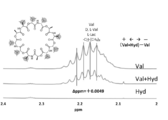
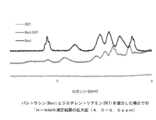
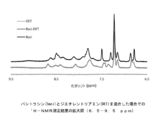
- 2 is a chart showing the evaluation results of host-guest interaction between valinomycin and hydralazine by 1 H-NMR.
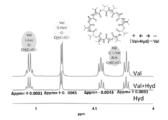
- 2 is a chart showing the evaluation results of host-guest interaction between valinomycin and hydralazine by 1 H-NMR.
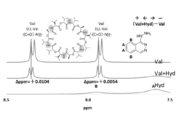
- 2 is a chart showing the evaluation results of host-guest interaction between valinomycin and hydralazine by 1 H-NMR.
- 2 is a chart showing the evaluation results of host-guest interaction between valinomycin and hydralazine by 1 H-NMR.
- 2 is a chart showing the evaluation results of host-guest interaction between valinomycin and hydralazine by 1 H-NMR.
- FIG. 2 is a chart showing the evaluation results of host-guest interaction between valinomycin and hydralazine by 1 H-NMR. It is a graph which shows the result of the stability test of the valinomycin inclusion polymer micelle. It is a graph which shows the evaluation result of the valinomycin release rate of a valinomycin encapsulating polymer micelle. It is a graph which shows the evaluation result of blood retention and tissue permeability of a valinomycin encapsulating polymer micelle. It is a graph which shows the evaluation result of biodistribution of a valinomycin encapsulating polymer micelle.
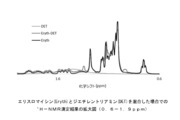
- 2 is a chart showing the results of evaluation of host-guest interaction between erythromycin and diethylenetriamine by 1 H-NMR.
- 2 is a chart showing the results of evaluation of host-guest interaction between erythromycin and diethylenetriamine by 1 H-NMR.
- 2 is a chart showing the results of evaluation of host-guest interaction between erythromycin and diethylenetriamine by 1 H-NMR.
- 2 is a chart showing the results of evaluation of host-guest interaction between erythromycin and diethylenetriamine by 1 H-NMR.
- 2 is a chart showing the results of evaluation of host-guest interaction between erythromycin and diethylenetriamine by 1 H-NMR.
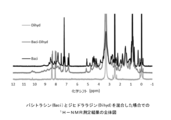
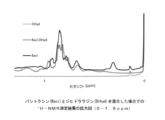
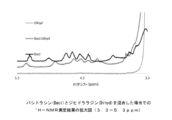
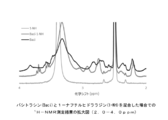
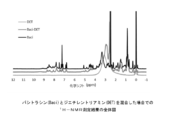
- 2 is a chart showing the evaluation results of host-guest interaction between bacitracin and dihydralazine by 1 H-NMR.
- 2 is a chart showing the evaluation results of host-guest interaction between bacitracin and dihydralazine by 1 H-NMR.
- 2 is a chart showing the evaluation results of host-guest interaction between bacitracin and dihydralazine by 1 H-NMR.
- 2 is a chart showing the evaluation results of host-guest interaction between bacitracin and dihydralazine by 1 H-NMR.
- 2 is a chart showing the evaluation results of host-guest interaction between bacitracin and dihydralazine by 1 H-NMR.
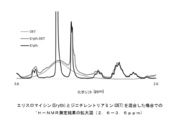
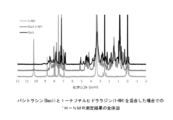
- 1 is a chart showing the evaluation results of host-guest interaction between bacitracin and 1-naphthylhydralazine by 1 H-NMR.
- 1 is a chart showing the evaluation results of host-guest interaction between bacitracin and 1-naphthylhydralazine by 1 H-NMR.
- 1 is a chart showing the evaluation results of host-guest interaction between bacitracin and 1-naphthylhydralazine by 1 H-NMR.
- 1 is a chart showing the evaluation results of host-guest interaction between bacitracin and 1-naphthylhydralazine by 1 H-NMR.
- 1 is a chart showing the evaluation results of host-guest interaction between bacitracin and 1-naphthylhydralazine by 1 H-NMR.
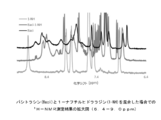
- 1 is a chart showing the evaluation results of host-guest interaction between bacitracin and diethylenetriamine by 1 H-NMR.
- 1 is a chart showing the evaluation results of host-guest interaction between bacitracin and diethylenetriamine by 1 H-NMR.
- 1 is a chart showing the evaluation results of host-guest interaction between bacitracin and diethylenetriamine by 1 H-NMR.
- 1 is a chart showing the evaluation results of host-guest interaction between bacitracin and diethylenetriamine by 1 H-NMR.
- 1 is a chart showing the evaluation results of host-guest interaction between bacitracin and diethylenetriamine by 1 H-NMR.
- 1 is a chart showing the evaluation results of host-guest interaction between bacitracin and diethylenetriamine by 1 H-NMR.
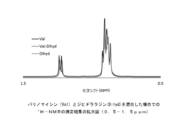
- 2 is a chart showing the evaluation results of host-guest interaction between valinomycin and dihydralazine by 1 H-NMR.
- 2 is a chart showing the evaluation results of host-guest interaction between valinomycin and dihydralazine by 1 H-NMR.
- 2 is a chart showing the evaluation results of host-guest interaction between valinomycin and dihydralazine by 1 H-NMR.
- 2 is a chart showing the evaluation results of host-guest interaction between valinomycin and dihydralazine by 1 H-NMR.
- 2 is a chart showing the evaluation results of host-guest interaction between valinomycin and dihydralazine by 1 H-NMR.
- Complex A complex according to one embodiment of the present invention is a complex of a cyclic compound and a transport carrier having a shaft for supporting the cyclic compound, the shaft being clathrated by the cyclic compound. It becomes a complex by doing.
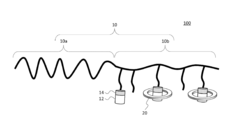
- FIG. 1 is an image diagram illustrating a complex in the first embodiment of the present invention.
- the composite 100 is a composite of a polymer (transport carrier) 10 having a shaft portion 12 in a side chain and a cyclic compound 20. Are complexed.
- the number of molecules of the cyclic compound 20 supported on one molecule of the polymer 10 may be, for example, 1 to 200, preferably 5 to 100, and more preferably 10 to 60.
- the polymer 10 is a block copolymer having a hydrophilic polymer segment 10a and a hydrophobic polymer segment 10b, and only the hydrophobic polymer segment 10b has the shaft portion 12 in the side chain.
- a polymer consisting only of a polymer segment having a shaft portion in its side chain may be used as a transport carrier.
- the bond 14 that can be cleaved in vivo is present between the shaft portion 12 and the polymer main chain, but the present invention is not limited to this embodiment.
- the shank can be introduced into the side chain with or without a bond cleavable in vivo.
- the cyclic compound clathrates the shaft portion provided at the end of the side chain of the polymer.
- a cyclic compound which has been difficult to apply to conventional DDS, can be delivered to a target cell or tissue while suppressing its pharmacological activity.
- a block copolymer having a hydrophilic polymer segment and a hydrophobic polymer segment as a polymer, in a polar medium, the hydrophobic polymer segment carrying the drug is directed inward and the hydrophilic polymer segment is directed outward.
- Polymeric micelles can be formed.
- the polymer micelle having such a structure is useful as a DDS because it has excellent biocompatibility and blood stability.
- Cyclic Compound As the cyclic compound, any suitable compound having a desired pharmacological activity can be used.
- the ring of the cyclic compound has a size and shape capable of including the shank, and is, for example, a 8-membered or more, preferably a 10-membered or more, more preferably a 12-membered or more, still more preferably a 16-membered to 50-membered monocyclic ring. Or it may be a heterocycle.
- the heteroatoms contained in the heterocycle can be, for example, oxygen or nitrogen.
- cyclic compound examples include valinomycin, aureobasidin A, HUN-7293, nonactin, rapamycin, tacrolimus, erythromycin, clarithromycin, roxithromycin, azithromycin, josamycin, rokitamycin, kitasamycin, acetylspiramycin, and telithromycin.
- cyclic compounds may be used alone or in combination of two or more.
- any appropriate polymer can be used as the polymer having a shaft in the side chains.
- the polymer is a block copolymer in which a hydrophilic polymer segment and a hydrophobic polymer segment are connected in series
- examples of the polymer that constitutes the hydrophilic polymer segment include polyethylene glycol, polypropylene glycol, poly(2-oxazoline), Polysaccharide, polyvinyl alcohol, polyvinylpyrrolidone, polyacrylamide, polymethacrylamide, polyacrylic acid ester, polymethacrylic acid ester and the like can be mentioned, and polyethylene glycol can be preferably used.
- the hydrophilic polymer segment may be linear or branched.
- the repeating number of monomer units in the polymer constituting the hydrophilic polymer segment (in the case of a branched chain, the repeating number in each chain) may be, for example, 20 to 20,000.
- the block copolymer is more hydrophilic than the hydrophilic polymer segment to the extent that the hydrophilic polymer segment faces outward in the polar solvent and the hydrophobic polymer segment faces inward.
- a polymer having a low hydrophilicity is also selected. Examples of such polymers include polyglycolic acid (PGA), polylactic acid (PLA) and copolymers thereof (PLGA), polyamino acids, polyethers, and the like. Among them, polyamino acids can be preferably used.
- polyamino acid examples include poly(aspartic acid) and/or its derivatives (for example, poly(alkyl aspartate), poly(aryl aspartate), poly(aralkyl aspartate), and poly(aspartic acid) with these. Copolymers, etc.), poly(glutamic acid) and/or its derivatives (for example, poly(alkylglutamates), poly(arylglutamates), poly(aralkylglutamide), and copolymers of these with poly(glutamic acid)) and poly(lysine). ) And/or a derivative thereof in which a shaft portion is introduced into at least one side chain.
- the number of repeating amino acid residues is, for example, 5 to 300, preferably 10 to 250, and more preferably 20 to 200.
- the introduction rate of the shaft portion is, for example, 5% to 100%, preferably 10% to 90%, and more preferably It can be 30% to 70%.
- the number of shafts contained in one molecule of polymer is 1 or more, preferably 5 or more, more preferably 10 or more, still more preferably 15 to 150, still more preferably 20 to 100.
- the above-mentioned shaft portion is a portion that is clathrated by the cyclic compound, and has a size and shape that can be clathrated in the ring of the cyclic compound.
- the shaft portion further has a group capable of interacting with the cyclic compound non-covalently, for example, by hydrophobic interaction or hydrogen bond.
- the non-covalent interaction between the shaft portion and the cyclic compound may be referred to as so-called host-guest interaction.
- the shaft portion has a structure corresponding to the size of the ring of the cyclic compound, the electric atmosphere in the ring, etc., and can be molecularly recognized by the cyclic compound.
- the above-mentioned shaft portion is typically introduced into the polymer side chain by the reaction between the compound having the shaft portion and the polymer side chain.
- a compound having a functional group available for reaction with the shaft portion and the polymer side chain is selected.
- Step 1 Analyze the structure of the cyclic compound (host molecule) to be delivered (eg, chemical structure, three-dimensional structure, ring size, etc.).
- Step 2 Search for guest molecule candidates (conditions: chemical structure, three-dimensional structure, molecular size, presence of a donor atom having an unshared electron pair such as nitrogen atom in the molecule, introduction into a polymer side chain) For having a functional group, etc.).
- Step 3 Using a molecular modeling program “Maestro” (manufactured by Schrodinger) or the like, it is examined whether or not the guest molecule enters the host molecule.
- Step 4 Actually, a combination of a host-guest complex which causes a host-guest interaction and stabilizes by simply mixing a guest molecule (or a polymer in which a guest molecule is conjugated) and a host molecule in water or an organic solvent. Find out.
- the combination forming the stabilizing host-guest complex can be determined by, for example, a method including the following steps A and B.
- Step A The presence of functional groups for mutually recognizing molecules is confirmed by peak shift in 1 H-NMR spectrum.
- Step B The binding constant (K) is calculated from the UV spectrum, and a combination having a large binding constant (for example, a combination in which the binding constant (association constant) is 10M ⁇ 1 to 1000M ⁇ 1 , or 10M ⁇ 1 to 100M, for example) -1 ) is searched.
- the method using the molecular modeling program “Maestro” (manufactured by Schrodinger) is exemplified as the method for determining the compound (guest molecule) having the shaft portion, but the method is not limited to the method and is applicable to host guest chemistry.
- a compound (guest molecule) having an axial portion that can be included in a target cyclic compound (host molecule) can be determined.
- a cyclic compound capable of forming an inclusion body by host-guest interaction and a shank compound having a shank
- valinomycin and hydralazine valinomycin and dihydralazine
- cyclosporine and dihydralazine erythromycin and hydralazine
- lorlatinib and Hydralazine ⁇ -benzyl-L-aspartic acid and rifampicin
- 1,5-diaminopentane and erythromycin diaminopentane and lorlatinib
- diethylenetriamine and valinomycin, diethylenetriamine and rifampicin diethylenetriamine and erythromycin
- bacitracin and diethylenetriamine bacitracin and diethylenetriamine
- bacitracin and dihydralazine 1-naphthyl hydralazine and the like
- the shaft portion is introduced to the end of the side chain, preferably via a bond that can be cleaved in vivo.
- a bond capable of being cleaved in vivo, any suitable chemical bond available in DDS can be adopted.
- Typical examples of such a bond include a disulfide bond, an acetal bond, a ketal bond, a hydrazone bond, an enol ether bond, an enol ester bond, an amide bond, an imine bond, an iminium bond, an enamine bond, a silyl ether bond, a silazane bond, and a silyl bond.
- Examples include enol ether bond, diol bond, diazo bond, ester bond, sulfone bond, and silicon-carbon bond. Disulfide bond, acetal bond and hydrazone bond are preferred.
- the above disulfide bond (-SS-) is easily cleaved in a reducing environment.
- efficient drug delivery to cells can be achieved.
- the complex can maintain the form in which the shroud is included in the cyclic compound until it reaches the cell, and after being taken up by the cell, the bond between sulfur atoms in the disulfide bond is cleaved.
- the clathrate of the shank and the cyclic compound can be smoothly and efficiently released into cells. After that, the shaft part is detached from the clathrate in the cell, so that the cyclic compound can exert its pharmacological activity.
- the above acetal bond and hydrazone bond are easily cleaved due to the difference in pH inside and outside the cell.
- the extracellular pH is about 7
- the intracellular late endosome has a pH of 4-5.
- the acetal bond and the hydrazone bond maintain the bond extracellularly and are easily cleaved in the intracellular late endosome.
- the complex can maintain the form in which the shroud is included in the cyclic compound until reaching the cell, and after being taken up by the cell, An inclusion body with a cyclic compound can be released into cells smoothly and efficiently.
- R 1 and R 9 independently of each other represent a hydrogen atom or an unsubstituted or substituted linear or branched alkyl group having 1 to 12 carbon atoms
- R 2 represents a hydrogen atom, an unsubstituted or substituted straight-chain or branched alkyl group having 1 to 12 carbon atoms, or an unsubstituted or substituted straight-chain or branched alkyl carbonyl group having 1 to 24 carbon atoms.
- R 3a , R 3b , R 4a and R 4b each independently represent a methylene group or an ethylene group
- R 5a , R 5b , R 7a and R 7b each independently represent —O— or NH—
- R 6a and R 6b each independently represent a hydrogen atom or a hydrophobic organic group
- R 8a and R 8b each independently represent a linear or branched alkylene group having 1 to 12 carbon atoms, an arylene group having 6 to 12 carbon atoms, or a combination thereof.
- R 10 represents a hydroxyl group, an oxybenzyl group, an —O—R 10a or a —NH—R 10b group, wherein each R 10a or R 10b independently represents an unsubstituted or substituted straight chain or branched chain.
- L 1 and L 2 each independently represent a divalent linking group
- B represents a bond that can be cleaved in vivo
- A represents a shaft portion
- k represents an integer of 20 to 20,000
- a, b, c and d are each independently an integer of 0 to 300, However, the relationship of 5 ⁇ a+b+c+d ⁇ 300 is satisfied, Satisfying the relation of 1 ⁇ c+d
- the binding order of the above amino acid repeating units is arbitrary, R 6a , R 6b , R 8a and R 8b can be arbitrarily selected for each amino acid repeating unit in the polymer molecule.
- Examples of the linear or branched alkyl group having 1 to 12 carbon atoms which is defined by the groups of R 1 , R 2 , R 9 , R 10a and R 10b , include, for example, methyl group, ethyl group and n-propyl group. Group, isopropyl group, n-butyl group, sec-butyl group, tert-butyl group, n-hexyl group, decyl group, and undecyl group.
- the straight-chain or branched alkyl moiety having 1 to 12 carbon atoms in the straight-chain or branched alkylcarbonyl group having 1 to 24 carbon atoms defined by the group of R 2 can be referred to the above-mentioned examples.
- Examples of the alkyl moiety having 13 or more carbon atoms include a tridecyl group, a tetradecyl group, a pentadecyl group, a nonadecyl group, a docosanyl group, and a tetracosyl group.
- the substituent in the case of “substituted” is not limited, but is a C 1-6 alkoxy group, an aryloxy group, an aryl C 1-3 oxy group, a cyano group, a carboxyl group.
- Group, amino group, C 1-6 alkoxycarbonyl group, C 2-7 acylamido group, tri-C 1-6 alkylsiloxy group, siloxy group, silylamino group, or an acetalized formyl group, formyl group, chlorine or Halogen atoms such as fluorine can be mentioned.
- a display such as C 1-6 means that the carbon number is 1 to 6.
- the R 1 and R 9 groups may be substituted with a group containing a target binding site.
- the group containing the target binding site may be any suitable group as long as it has directivity or functionality to the target tissue, for example, antibody or fragment thereof, or other functional or targeting group. It may be a group derived from proteins, peptides, aptamers, sugars such as lactose, physiologically active substances such as folic acid and derivatives thereof.
- the hydrophobic organic group defined by the groups of R 6a and R 6b is, for example, a saturated or unsaturated linear or branched aliphatic hydrocarbon group having 6 to 27 carbon atoms, or an aryl group having 6 to 27 carbon atoms. A group or a residue derived from an aralkyl group or a sterol.
- Representative examples of the hydrophobic organic group include a benzyl group and a phenyl group.
- Examples of the group consisting of a linear or branched alkylene group having 1 to 12 carbon atoms, an arylene group having 6 to 12 carbon atoms, or a combination thereof defined by the groups of R 8a and R 8b above include C 1-10.
- the L 1 is, for example, -NH -, - O -, - O-L 1a -NH -, - CO -, - CH 2 -, and -NH- O-L 1a -S-L 1a (wherein, L 1a may be a linking group independently selected from an alkylene group having 1 to 6 carbon atoms.
- L 2 may be, for example, a linking group selected from —OCO—L 2a —CO— and NHCO—L 2a —CO— (wherein L 2a is an alkylene group having 1 to 6 carbon atoms).
- the above-mentioned B is preferably an acetal bond, a hydrazone bond or a disulfide bond, more preferably a hydrazone bond.
- A”, “b”, “c”, and “d” representing the number of repetitions of each amino acid residue are each independently preferably an integer of 0 to 200, and more preferably an integer of 0 to 100.
- the degree of polymerization (a+b+c+d) of the polyamino acid is preferably an integer of 10 to 250, more preferably an integer of 20 to 200.
- the total number (c+d) of side chains having a shaft portion is preferably 5 or more, more preferably 10 or more, still more preferably 15 to 150, still more preferably 20 to 100.
- K which represents the number of repeating ethylene glycols, preferably represents an integer of 50 to 2,000, more preferably 100 to 1,000.
- the polymer represented by the above formula (I) or (II) can be synthesized by any appropriate method.
- a method for synthesizing a polyethylene glycol-poly(benzyl aspartate) block copolymer having a shaft portion introduced into at least one side chain via a hydrazone bond will be described below.
- ⁇ -benzyl-L-aspartate-N-carboxylic acid anhydride is polymerized by using polyethylene glycol having a primary amino group at the terminal as an initiator to form polyethylene glycol-poly( ⁇ -benzyl-L-aspartate).
- a block copolymer is synthesized.
- transesterification or aminolysis is performed using a compound having a hydroxyl group or an amino group and a carbonyl group to introduce a carbonyl group into the side chain.
- a compound having a hydroxyl group or an amino group and an acetal group may be used for transesterification or aminolysis, and then the acetal group may be converted to a carbonyl group under an acid catalyst. Then, the carbonyl group is reacted with a hydralazine derivative as a compound having a shaft.
- a block copolymer having a shaft introduced into at least one side chain via a hydrazone bond can be obtained.
- Method for preparing complex The complex is prepared, for example, by adding a water-soluble organic solvent capable of dissolving the polymer to a polymer having a shaft portion in the side chain to dissolve the polymer, then adding a cyclic compound, and then adding water or a buffer solution. It can be prepared by dialysis against an aqueous medium such as.
- the water-soluble organic solvent include methanol, ethanol, acetonitrile, dimethyl sulfoxide, N,N-dimethylformamide, N,N-dimethylacetamide and the like.
- the mixing ratio of the polymer having a shaft portion in the side chain and the cyclic compound can be appropriately set depending on the purpose.
- the mixing ratio can be set to, for example, a ratio by which the shaft portion and the cyclic compound can efficiently form a complex by using the Jobs-plot method.
- the molar ratio of the cyclic compound to the shank in the mixture can be set to be, for example, 0.1 to 5.0, preferably 0.2 to 2.0, where 1 is the mol of the shank.
- the ratio of the cyclic compound supported in the above preparation method (the number of molecules of the cyclic compound supported on one molecule of the polymer/the number of shaft portions in the polymer of one molecule ⁇ 100) is, for example, 10% or more, preferably 20% or more, It may be more preferably 40% to 100%.
- FIG. 2 is an image diagram illustrating a complex in the second embodiment of the present invention.
- the composite body 200 is a composite body of the transport compound 30 having the shaft portion 32 and the lid portions 34a and 34b arranged on both end sides thereof, and the cyclic compound 20, and the cyclic compound 20. Encloses the shaft portion 32, and the lid portions 34a and 34b prevent the cyclic compound 20 from being detached from the shaft portion 32, thereby forming a complex.
- the number of molecules of the cyclic compound 20 supported on one molecule of the transport carrier 30 may be 1 or 2 or more.
- the bonds 36a and 36b that can be cleaved in the living body are present between the shaft portion 32 and the lid portion 34a and between the shaft portion 32 and the lid portion 34b, respectively, but the present invention is not limited to this.
- the present invention is not limited to this embodiment.
- a bond that can be cleaved in a living body may exist only between one of the shafts and the lid.
- the lid may be directly connected to the shaft without a bond that can be cleaved in vivo.
- the shroud can be clathrated by the cyclic compound, and the lid can prevent the cyclic compound from being detached from the shank.
- a cyclic compound which has been difficult to apply to conventional DDS, can be delivered to a target cell or tissue while suppressing its pharmacological activity.
- the complex having such a configuration by adopting a bulky lid, the complex alone stably exists in blood without forming aggregates such as micelles by secondary association. It is expected to exhibit excellent tissue penetration due to its small size.
- the inclusion of the shank with the cyclic compound is similar to that of the complex according to the first embodiment with the host guest having the cyclic compound as the host molecule and the shank as the guest molecule. It can be done by utilizing the interaction.
- Cyclic Compound Examples of the cyclic compound include the cyclic compounds described in the section A-1-1.
- the transport carrier has a shaft portion, and preferably a lid portion connected to both ends thereof directly or via a bond capable of being cleaved in vivo.
- the lid has a bulkiness that can prevent the cyclic compound from being detached from the shaft.
- the material forming the lid is hydrophilic such as polyethylene glycol, polypropylene glycol, poly(2-oxazoline), polysaccharide, polyvinyl alcohol, polyvinylpyrrolidone, polyacrylamide, polymethacrylamide, polyacrylic ester, polymethacrylic ester. Polymers. Among them, polyethylene glycol can be preferably used from the viewpoints of excellent biocompatibility, large spread of molecular chains in a polar solvent, and the like.
- the hydrophilic polymer may be linear or branched.
- the number of repeating monomer units in the polymer constituting the hydrophilic polymer segment is, for example, 20 to 20,000, preferably 200 to 2,000, and more preferably 400 to 2,000. It is 1,000.
- the above-mentioned shaft portion is a portion that is clathrated by the cyclic compound, and has a size and shape that can be clathrated in the ring of the cyclic compound.
- the shaft portion further has a group capable of interacting with the cyclic compound non-covalently, for example, by hydrophobic interaction or hydrogen bond.
- the non-covalent interaction between the shaft portion and the cyclic compound may be referred to as so-called host-guest interaction.
- the shaft portion has a structure corresponding to the size of the ring of the cyclic compound, the electric atmosphere in the ring, etc., and can be molecularly recognized by the cyclic compound.
- the shaft portion is typically introduced into the transport carrier by a reaction between a compound having the shaft portion and a material forming the lid portion (for example, the hydrophilic polymer).
- a compound having a shaft portion a compound having a functional group that can be used for a reaction with the shaft portion and the material forming the lid portion at two positions with the shaft portion interposed is selected.
- a method for determining the compound having a shaft portion the same method as the method described in the section A-1-2 can be used.
- the bond that can be cleaved in vivo is as described in Section A-1-2.
- the complex can be prepared by any suitable method.
- a complex of a transport carrier having a shaft portion and polyethylene glycol bound to both ends thereof via hydrazone bonds and a cyclic compound is prepared by dissolving a cyclic compound in a water-soluble organic solvent and an aldehyde at one end. It can be prepared by adding and mixing a polyethylene glycol having a group and a dihydralazine compound as a compound having a shaft portion to cause a reaction, and then dialyzing against an aqueous medium such as water or a buffer solution.
- the water-soluble organic solvent examples include methanol, ethanol, acetonitrile, dimethyl sulfoxide, N,N-dimethylformamide, N,N-dimethylacetamide and the like.
- the mixing ratio of the compound having the shaft portion, the cyclic compound, and the polyethylene glycol can be appropriately set depending on the purpose.
- the mixing ratio is, for example, such that the molar ratio of the cyclic compound to the compound having a shank in the mixture is 0.1 to 5.0, preferably 0.2 to 2.0, where the mol of the shank is 1.
- the molar ratio of polyethylene glycol to the compound having a shaft portion can be set to 1.0 to 5.0, preferably 1.0 to 2.0.
- a polymer particle composition according to one embodiment of the present invention includes the composite described in the above section A-1.
- the composites may associate in a polar medium to suitably form polymer particles.
- the transport carrier forming the complex is a block copolymer having a hydrophilic polymer segment and a hydrophobic polymer segment
- the complex has a hydrophobic polymer segment carrying a cyclic compound facing inward and is hydrophilic.
- Polymeric micelles can be formed with the polymer segments facing outward.
- an aggregate in which a plurality of composites are aggregated into particles is also included in the particles, and such an aggregate is also referred to as polymer particles.
- the average particle diameter of the polymer particles is, for example, 1000 nm or less, preferably 400 nm or less, 200 nm or less, 150 nm or less, 100 nm or less, or 80 nm or less, and for example, 20 nm or more or 30 nm or more.
- the average particle diameter of the particles can be measured using a commercially available dynamic light scattering (DLS) measuring device.
- DLS dynamic light scattering
- the above-mentioned polymer particle composition may contain other polymers in addition to the composite described in the section A-1 within a range in which the effect of the present invention can be obtained.
- examples of such other polymer include a block copolymer having a hydrophilic polymer segment and a hydrophobic polymer segment. Since such a block copolymer can be suitably associated with each other in a polar medium to form stable polymer particles (for example, polymer micelles), by coexisting them, a polymer particle composition having excellent stability can be obtained. Can be done. Such an effect can be particularly suitably exerted in a polymer particle composition containing a complex using a polymer having no hydrophilic polymer chain segment as a transport carrier.
- Examples of the other block copolymers include polymers described in WO2007/099660, WO2007/099661, WO2010/093036, WO2012/096399, WO2014/133172, WO2015/170757 and the like.
- the polymer particle composition can be prepared by any suitable method.
- a polymer having a shaft portion in the side chain, a cyclic compound and the above-mentioned other polymer which is an optional component are added to and mixed with a water-soluble organic solvent, and then allowed to associate with an aqueous medium such as water or a buffer solution.
- a water-soluble organic solvent include methanol, ethanol, acetonitrile, dimethyl sulfoxide, N,N-dimethylformamide, N,N-dimethylacetamide and the like.
- the complex described in the above section A and the polymer particle composition described in the above section B are administered to an individual in need of treatment with the cyclic compound to be carried.
- individuals to be administered include humans and mammals other than humans.
- the administration method is preferably parenteral administration, and examples thereof include subcutaneous administration, intramuscular administration, intravenous administration, intraperitoneal administration, and intrathecal administration.
- Val 10 mg/mL
- Hyd 1.44 mg/mL
- the chemical shift was measured by 1 H-NMR, and each peak was assigned.
- the chemical shifts of valinomycin (10 mg/mL) alone and hydralazine (1.44 mg/mL) alone were also measured, and each peak was assigned.
- the change amount of the chemical shift was calculated. The results are shown in FIGS. 3A-3E and Table 1.
- Example 10 Evaluation of drug-carrying amount of Val-encapsulated polymeric micelles The micelles were recovered from the polymeric micelle solution (1 mL, 0.5 mg/mL) obtained in Experimental Example 9 by lyophilization, and acetonitrile (0.5 mg) was collected. /ML). After sonication for 30 minutes, the solution was added to diethyl ether and the filtrate was dried under reduced pressure to obtain Val. Next, with respect to the polymer micelle sample using PEG-P (Asp-BH), the drug loading amount (Val loading amount (mg) per 1 mg of polymer) was calculated by 1 H-NMR.
- the drug loading amount (Val loading amount (mg) per 1 mg of polymer) was calculated from the UV absorbance at 220 nm in acetonitrile. Further, the ratio of the amount of Val supported on the polymer to the amount of Val added during the preparation of micelles was calculated as the drug loading efficiency (%). The results are shown in Table 2.
- Val-encapsulating polymer micelle solution prepared by adding 0.3 equivalent of Val to PEG-P(Asp-BH) (1 mg /ML) was dialyzed (MWCO: 3,500) against 10 mM phosphate buffer (pH 7.4, 5.5, 3.0), and polymer at each time (after 1, 3, 6, 24 hours) The derived scattering intensity was measured by the DLS method. The results are shown in Fig. 4.
- Val-encapsulated polymer micelles showed high stability under the conditions of pH 7.4 and pH 5.5.
- Val-encapsulated polymer micelle solutions (2 mL, 0) prepared by adding 0.3 equivalent of Val to PEG-P(Asp-AH). 0.5 mg/mL) was dialyzed (MWCO: 3,500) against a 10 mM phosphate buffer solution (pH 7.4, 5.0), and in the external solution at each time (after 1, 3, 6, 24 hours). Was measured by the HPLC method. The ratio of the amount of Val released into the external liquid to the amount of Val supported on the micelle was calculated as the release rate. Results are shown in FIG.
- Val-encapsulated polymer micelle solution stably carried Val at physiological pH (7.4), while releasing Val at endosome pH (5.0).
- Val-encapsulated polymer micelles show high blood stability and penetrate into the tissue over time.
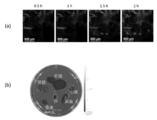
- Val-encapsulating polymer micelle solution prepared by using PEG-P(Asp-BH)-Cy5 fluorescently labeled with Cy5 and 0.3 equivalent of Val was intravenously administered from the tail vein of a subcutaneous tumor model mouse (BxPC3) (Val dose: 1.5 mg/kg), and the fluorescence intensity in the tumor was observed over time by the IV-CLSM method.
- organs liver, kidney, spleen, heart, lung
- tumor were excised, and fluorescence intensity in the collected organs and tumor was measured by IVIS method.
- FIG. 7(a) shows the fluorescence intensity in the tumor over time
- FIG. 7(b) shows the fluorescence intensity in the collected organs and the tumor.
- Val-encapsulating polymer micelles accumulate in the tumor over time. Further, as shown in FIG. 7(b), accumulation of micelles in the tumor was confirmed 24 hours after administration.
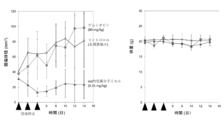
- Val-encapsulated polymer micelle solution-administered group tumor growth was significantly suppressed as compared with the control group (physiological saline-administered group) and the gemcitabine solution-administered group, while the body weight was high. No change was observed. All the valinomycin solution administration groups died within 24 hours after the first administration.
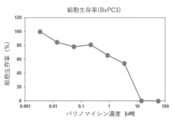
- the uHGC-added group showed a cell viability of about 70% at a Val concentration of 1 ⁇ M, which shows that the toxicity of Val can be suppressed by forming a complex.
- the addition of high concentration of uHGC decreased the cell viability, suggesting the induction of cell death by the release of encapsulated valinomycin.
- the ring diameter of erythromycin is 3 ⁇
- the molecular diameter is less than 3 ⁇
- the erythromycin and the host have a donor atom having an unshared electron pair such as a nitrogen atom in the molecule.
- bacitracin Since the ring diameter of bacitracin is 8 ⁇ , bacitracin and the host-guest mutual interaction must be provided, provided that the molecular diameter is less than 8 ⁇ and that there is a donor atom having an unshared electron pair such as a nitrogen atom in the molecule.
- dihydralazine, 1-naphthylhydralazine, and DET were selected.
- the chemical structures and 1 H-NMR measurement results of dihydralazine and 1-naphthylhydralazine are shown below.
- FIGS. 11A to 11E, FIGS. 12A to 12E, and FIGS. 13A to 13F when coexisting with dihydralazine, 1-naphthylhydralazine, or DET, the chemical shift in the ring of bacitracin is changed. From this, it can be seen that dihydralazine, 1-naphthylhydralazine or DET exerts an intermolecular interaction on the ring structure of bacitracin.
- the present invention can be preferably used in the DDS field, for example.
Landscapes
- Health & Medical Sciences (AREA)
- Life Sciences & Earth Sciences (AREA)
- Chemical & Material Sciences (AREA)
- Medicinal Chemistry (AREA)
- Pharmacology & Pharmacy (AREA)
- Animal Behavior & Ethology (AREA)
- General Health & Medical Sciences (AREA)
- Public Health (AREA)
- Veterinary Medicine (AREA)
- Engineering & Computer Science (AREA)
- Bioinformatics & Cheminformatics (AREA)
- Epidemiology (AREA)
- Proteomics, Peptides & Aminoacids (AREA)
- Gastroenterology & Hepatology (AREA)
- Immunology (AREA)
- Molecular Biology (AREA)
- Organic Chemistry (AREA)
- General Chemical & Material Sciences (AREA)
- Nuclear Medicine, Radiotherapy & Molecular Imaging (AREA)
- Nanotechnology (AREA)
- Chemical Kinetics & Catalysis (AREA)
- Dispersion Chemistry (AREA)
- Medicinal Preparation (AREA)
- Pharmaceuticals Containing Other Organic And Inorganic Compounds (AREA)
- Peptides Or Proteins (AREA)
- Medicines That Contain Protein Lipid Enzymes And Other Medicines (AREA)
Abstract
La présente invention concerne un système d'administration de médicament permettant d'administrer un composé cyclique à des cellules ou tissus cibles tout en supprimant l'activité pharmacologique. L'invention concerne un complexe d'un composé cyclique et d'un excipient ayant une partie tige pour retenir le composé cyclique, le complexe étant formé par l'inclusion de la partie tige dans le composé cyclique.
Priority Applications (3)
| Application Number | Priority Date | Filing Date | Title |
|---|---|---|---|
| US17/299,960 US20210386869A1 (en) | 2018-12-07 | 2019-12-06 | Delivery of cyclic compound by using carrier |
| JP2020560063A JPWO2020116635A1 (ja) | 2018-12-07 | 2019-12-06 | 輸送担体を用いた環状化合物の送達 |
| EP19893158.6A EP3892334A4 (fr) | 2018-12-07 | 2019-12-06 | Administration d'un composé cyclique au moyen d'un excipient |
Applications Claiming Priority (2)
| Application Number | Priority Date | Filing Date | Title |
|---|---|---|---|
| JP2018-229598 | 2018-12-07 | ||
| JP2018229598 | 2018-12-07 |
Publications (1)
| Publication Number | Publication Date |
|---|---|
| WO2020116635A1 true WO2020116635A1 (fr) | 2020-06-11 |
Family
ID=70973933
Family Applications (1)
| Application Number | Title | Priority Date | Filing Date |
|---|---|---|---|
| PCT/JP2019/047900 Ceased WO2020116635A1 (fr) | 2018-12-07 | 2019-12-06 | Administration d'un composé cyclique au moyen d'un excipient |
Country Status (4)
| Country | Link |
|---|---|
| US (1) | US20210386869A1 (fr) |
| EP (1) | EP3892334A4 (fr) |
| JP (1) | JPWO2020116635A1 (fr) |
| WO (1) | WO2020116635A1 (fr) |
Citations (10)
| Publication number | Priority date | Publication date | Assignee | Title |
|---|---|---|---|---|
| WO2007099660A1 (fr) | 2006-03-01 | 2007-09-07 | The University Of Tokyo | complexe de micelles polymeres contenant de l'acide nucleique |
| WO2007099661A1 (fr) | 2006-03-01 | 2007-09-07 | The University Of Tokyo | complexe de micelles polymeres contenant de l'acide nucleique |
| WO2010093036A1 (fr) | 2009-02-13 | 2010-08-19 | 国立大学法人東京大学 | Poly(acides aminés) cationiques et leurs utilisations |
| WO2011105402A1 (fr) * | 2010-02-23 | 2011-09-01 | ナノキャリア株式会社 | Acide polyaminé cationique à chaîne courte et son utilisation |
| WO2012096399A1 (fr) | 2011-01-14 | 2012-07-19 | 国立大学法人東京大学 | Composition de particule et composition pharmaceutique l'utilisant |
| JP2013543880A (ja) * | 2010-11-25 | 2013-12-09 | シグモイド・ファーマ・リミテッド | 胃腸管疾患を治療するためのヒドララジン含有免疫調節組成物 |
| WO2014133172A1 (fr) | 2013-03-01 | 2014-09-04 | 独立行政法人科学技術振興機構 | Vésicule contenant une substance, et procédé de production de celle-ci |
| WO2015075942A1 (fr) * | 2013-11-22 | 2015-05-28 | 国立大学法人 東京大学 | Vecteur d'apport de médicament et conjugué, composition le contenant, et son procédé d'administration |
| WO2015170757A1 (fr) | 2014-05-08 | 2015-11-12 | 国立大学法人 東京大学 | Composition pharmaceutique |
| CN106943603A (zh) * | 2017-01-24 | 2017-07-14 | 中山大学 | 一种以pH敏感胶束为模板的纳米金壳的制备方法 |
-
2019
- 2019-12-06 WO PCT/JP2019/047900 patent/WO2020116635A1/fr not_active Ceased
- 2019-12-06 EP EP19893158.6A patent/EP3892334A4/fr not_active Withdrawn
- 2019-12-06 US US17/299,960 patent/US20210386869A1/en active Pending
- 2019-12-06 JP JP2020560063A patent/JPWO2020116635A1/ja active Pending
Patent Citations (10)
| Publication number | Priority date | Publication date | Assignee | Title |
|---|---|---|---|---|
| WO2007099660A1 (fr) | 2006-03-01 | 2007-09-07 | The University Of Tokyo | complexe de micelles polymeres contenant de l'acide nucleique |
| WO2007099661A1 (fr) | 2006-03-01 | 2007-09-07 | The University Of Tokyo | complexe de micelles polymeres contenant de l'acide nucleique |
| WO2010093036A1 (fr) | 2009-02-13 | 2010-08-19 | 国立大学法人東京大学 | Poly(acides aminés) cationiques et leurs utilisations |
| WO2011105402A1 (fr) * | 2010-02-23 | 2011-09-01 | ナノキャリア株式会社 | Acide polyaminé cationique à chaîne courte et son utilisation |
| JP2013543880A (ja) * | 2010-11-25 | 2013-12-09 | シグモイド・ファーマ・リミテッド | 胃腸管疾患を治療するためのヒドララジン含有免疫調節組成物 |
| WO2012096399A1 (fr) | 2011-01-14 | 2012-07-19 | 国立大学法人東京大学 | Composition de particule et composition pharmaceutique l'utilisant |
| WO2014133172A1 (fr) | 2013-03-01 | 2014-09-04 | 独立行政法人科学技術振興機構 | Vésicule contenant une substance, et procédé de production de celle-ci |
| WO2015075942A1 (fr) * | 2013-11-22 | 2015-05-28 | 国立大学法人 東京大学 | Vecteur d'apport de médicament et conjugué, composition le contenant, et son procédé d'administration |
| WO2015170757A1 (fr) | 2014-05-08 | 2015-11-12 | 国立大学法人 東京大学 | Composition pharmaceutique |
| CN106943603A (zh) * | 2017-01-24 | 2017-07-14 | 中山大学 | 一种以pH敏感胶束为模板的纳米金壳的制备方法 |
Non-Patent Citations (2)
| Title |
|---|
| F. ALBERICIO ET AL., FUTURE MED. CHEM., vol. 4, 2012, pages 1527 - 1531 |
| ZENG SAN ET AL.: "Trilayer micelles for combination delivery of rapamycin and si RNA targeting Y-box binding protein-1(siYB-1", BIOMATERIALS, vol. 34, 2013, pages 6882 - 6892, XP028573395, DOI: 10.1016/j.biomaterials.2013.05.010 * |
Also Published As
| Publication number | Publication date |
|---|---|
| JPWO2020116635A1 (ja) | 2021-10-21 |
| EP3892334A4 (fr) | 2022-11-30 |
| US20210386869A1 (en) | 2021-12-16 |
| EP3892334A1 (fr) | 2021-10-13 |
Similar Documents
| Publication | Publication Date | Title |
|---|---|---|
| Lv et al. | Well-defined polymer-drug conjugate engineered with redox and pH-sensitive release mechanism for efficient delivery of paclitaxel | |
| KR101444274B1 (ko) | 약제복합체용 블록 공중합체 및 의약조성물 | |
| Pan et al. | PEGylated dendritic diaminocyclohexyl-platinum (II) conjugates as pH-responsive drug delivery vehicles with enhanced tumor accumulation and antitumor efficacy | |
| CN104056275B (zh) | 多功能主动靶向透明质酸‑聚乳酸载体合成及其抗肿瘤药物胶束制备方法 | |
| EP3284474B1 (fr) | Complexe polyionique constitué d'un bloc copolymère contenant un segment poly(l-arginine) et d'un polymère polyanionique | |
| CN102188717B (zh) | 一种自乳化阿霉素纳米药物及其制备方法 | |
| CN101721350B (zh) | 一种叶酸介导靶向的聚合物胶束 | |
| Niu et al. | Octreotide-modified and pH-triggering polymeric micelles loaded with doxorubicin for tumor targeting delivery | |
| CN105997880A (zh) | 一种基于交联生物可降解聚合物囊泡的抗肿瘤纳米药物及其制备方法 | |
| Liu et al. | A ROS-stimulus-responsive nanocarrier loading with guanidine-modified hydroxycamptothecin prodrug for enhanced anti-tumor efficacy | |
| Nie et al. | In vitro and in vivo evaluation of stimuli-responsive vesicle from PEGylated hyperbranched PAMAM-doxorubicin conjugate for gastric cancer therapy | |
| Dong et al. | Nucleobase-crosslinked poly (2-oxazoline) nanoparticles as paclitaxel carriers with enhanced stability and ultra-high drug loading capacity for breast cancer therapy | |
| KR20180097707A (ko) | 생분해성 양친매성 폴리머, 그것에 의해 제조되는 폴리머 베시클, 및 폐암표적 치료제의 제조에 있어서의 사용 | |
| EP2737896B1 (fr) | Micelles d'umirolimus pour le traitement du cancer | |
| CN114377144B (zh) | pH/活性氧双重响应性超分子聚肽前药纳米粒子 | |
| WO2020116635A1 (fr) | Administration d'un composé cyclique au moyen d'un excipient | |
| CN112999159A (zh) | 一种ha介导的靶向双载药阳离子脂质体涂层及其制备方法 | |
| CN112316139A (zh) | 一种吲哚菁绿纳米药物及其制备方法 | |
| Yang et al. | Synthesis, characterization, and in vivo efficacy evaluation of PGG–docetaxel conjugate for potential cancer chemotherapy | |
| Nguyen et al. | Interplay between the linker and polymer molecular weight of a self-assembling prodrug on the pharmacokinetics and therapeutic efficacy | |
| ITPD20090168A1 (it) | Coniugati polimerici fosfolipidi | |
| Yan et al. | Patupilone-loaded poly (L-glutamic acid)-graft-methoxy-poly (ethylene glycol) micelle for oncotherapy | |
| Callari | Polymer Nanocarriers to Enhance the Efficiency of Platinum-Based Chemotherapeutics | |
| Zhao | Formulation Development of Anti-Cancer Drugs | |
| HK1231499B (zh) | 衍生的超支化聚丙三醇 |
Legal Events
| Date | Code | Title | Description |
|---|---|---|---|
| 121 | Ep: the epo has been informed by wipo that ep was designated in this application |
Ref document number: 19893158 Country of ref document: EP Kind code of ref document: A1 |
|
| ENP | Entry into the national phase |
Ref document number: 2020560063 Country of ref document: JP Kind code of ref document: A |
|
| NENP | Non-entry into the national phase |
Ref country code: DE |
|
| ENP | Entry into the national phase |
Ref document number: 2019893158 Country of ref document: EP Effective date: 20210707 |