WO2020137754A1 - 測距装置及び測距方法 - Google Patents
測距装置及び測距方法 Download PDFInfo
- Publication number
- WO2020137754A1 WO2020137754A1 PCT/JP2019/049653 JP2019049653W WO2020137754A1 WO 2020137754 A1 WO2020137754 A1 WO 2020137754A1 JP 2019049653 W JP2019049653 W JP 2019049653W WO 2020137754 A1 WO2020137754 A1 WO 2020137754A1
- Authority
- WO
- WIPO (PCT)
- Prior art keywords
- light
- distance
- light source
- unit
- time
- Prior art date
- Legal status (The legal status is an assumption and is not a legal conclusion. Google has not performed a legal analysis and makes no representation as to the accuracy of the status listed.)
- Ceased
Links
Images
















Classifications
-
- G—PHYSICS
- G01—MEASURING; TESTING
- G01C—MEASURING DISTANCES, LEVELS OR BEARINGS; SURVEYING; NAVIGATION; GYROSCOPIC INSTRUMENTS; PHOTOGRAMMETRY OR VIDEOGRAMMETRY
- G01C3/00—Measuring distances in line of sight; Optical rangefinders
- G01C3/02—Details
- G01C3/06—Use of electric means to obtain final indication
-
- G—PHYSICS
- G01—MEASURING; TESTING
- G01C—MEASURING DISTANCES, LEVELS OR BEARINGS; SURVEYING; NAVIGATION; GYROSCOPIC INSTRUMENTS; PHOTOGRAMMETRY OR VIDEOGRAMMETRY
- G01C25/00—Manufacturing, calibrating, cleaning, or repairing instruments or devices referred to in the other groups of this subclass
-
- G—PHYSICS
- G01—MEASURING; TESTING
- G01C—MEASURING DISTANCES, LEVELS OR BEARINGS; SURVEYING; NAVIGATION; GYROSCOPIC INSTRUMENTS; PHOTOGRAMMETRY OR VIDEOGRAMMETRY
- G01C3/00—Measuring distances in line of sight; Optical rangefinders
- G01C3/02—Details
- G01C3/06—Use of electric means to obtain final indication
- G01C3/08—Use of electric radiation detectors
-
- G—PHYSICS
- G01—MEASURING; TESTING
- G01S—RADIO DIRECTION-FINDING; RADIO NAVIGATION; DETERMINING DISTANCE OR VELOCITY BY USE OF RADIO WAVES; LOCATING OR PRESENCE-DETECTING BY USE OF THE REFLECTION OR RERADIATION OF RADIO WAVES; ANALOGOUS ARRANGEMENTS USING OTHER WAVES
- G01S17/00—Systems using the reflection or reradiation of electromagnetic waves other than radio waves, e.g. lidar systems
- G01S17/02—Systems using the reflection of electromagnetic waves other than radio waves
- G01S17/06—Systems determining position data of a target
- G01S17/08—Systems determining position data of a target for measuring distance only
-
- G—PHYSICS
- G01—MEASURING; TESTING
- G01S—RADIO DIRECTION-FINDING; RADIO NAVIGATION; DETERMINING DISTANCE OR VELOCITY BY USE OF RADIO WAVES; LOCATING OR PRESENCE-DETECTING BY USE OF THE REFLECTION OR RERADIATION OF RADIO WAVES; ANALOGOUS ARRANGEMENTS USING OTHER WAVES
- G01S17/00—Systems using the reflection or reradiation of electromagnetic waves other than radio waves, e.g. lidar systems
- G01S17/02—Systems using the reflection of electromagnetic waves other than radio waves
- G01S17/06—Systems determining position data of a target
- G01S17/08—Systems determining position data of a target for measuring distance only
- G01S17/10—Systems determining position data of a target for measuring distance only using transmission of interrupted, pulse-modulated waves
-
- G—PHYSICS
- G01—MEASURING; TESTING
- G01S—RADIO DIRECTION-FINDING; RADIO NAVIGATION; DETERMINING DISTANCE OR VELOCITY BY USE OF RADIO WAVES; LOCATING OR PRESENCE-DETECTING BY USE OF THE REFLECTION OR RERADIATION OF RADIO WAVES; ANALOGOUS ARRANGEMENTS USING OTHER WAVES
- G01S17/00—Systems using the reflection or reradiation of electromagnetic waves other than radio waves, e.g. lidar systems
- G01S17/02—Systems using the reflection of electromagnetic waves other than radio waves
- G01S17/06—Systems determining position data of a target
- G01S17/42—Simultaneous measurement of distance and other co-ordinates
-
- G—PHYSICS
- G01—MEASURING; TESTING
- G01S—RADIO DIRECTION-FINDING; RADIO NAVIGATION; DETERMINING DISTANCE OR VELOCITY BY USE OF RADIO WAVES; LOCATING OR PRESENCE-DETECTING BY USE OF THE REFLECTION OR RERADIATION OF RADIO WAVES; ANALOGOUS ARRANGEMENTS USING OTHER WAVES
- G01S17/00—Systems using the reflection or reradiation of electromagnetic waves other than radio waves, e.g. lidar systems
- G01S17/88—Lidar systems specially adapted for specific applications
- G01S17/93—Lidar systems specially adapted for specific applications for anti-collision purposes
- G01S17/931—Lidar systems specially adapted for specific applications for anti-collision purposes of land vehicles
-
- G—PHYSICS
- G01—MEASURING; TESTING
- G01S—RADIO DIRECTION-FINDING; RADIO NAVIGATION; DETERMINING DISTANCE OR VELOCITY BY USE OF RADIO WAVES; LOCATING OR PRESENCE-DETECTING BY USE OF THE REFLECTION OR RERADIATION OF RADIO WAVES; ANALOGOUS ARRANGEMENTS USING OTHER WAVES
- G01S7/00—Details of systems according to groups G01S13/00, G01S15/00, G01S17/00
- G01S7/48—Details of systems according to groups G01S13/00, G01S15/00, G01S17/00 of systems according to group G01S17/00
- G01S7/497—Means for monitoring or calibrating
Definitions
- the present technology relates to a distance measuring device and a distance measuring method.
- a distance measuring device that directly measures the distance to an object using ToF (Time of Flight) (see Patent Document 1, for example).
- ToF Time of Flight
- the distance measuring result is calibrated at the time of shipping in order to reduce an error in the distance measuring result.
- An object of the present disclosure is to provide a distance measuring device and a distance measuring method in which an error in a distance measuring result is further reduced.
- a distance measuring device of the present disclosure includes (a) a light source that emits light, (b) a reflecting object that is arranged at a predetermined distance along the path of the light from the light source, and (c) a reflecting object and an object on the path.
- a light receiving element that receives each of the reflected light from the object, and (d) a first time from when the first light is emitted from the light source to when the reflected light from the reflective object is received by the light receiving element is measured.
- a distance calculator that calculates the distance from the light source to the object along the path of the second light based on the predetermined distance, the first time, and the second time.
- the distance measuring method of the present disclosure (a) after the first light is emitted from the light source, the reflected light from the reflecting object arranged at a position at a predetermined distance along the path of the first light from the light source is The first time until the light is received by the light receiving element is measured, and (b) after the second light is emitted from the light source, the reflected light from the object on the path of the second light is received by the light receiving element. Measuring a second time until the light is reflected, and (c) calculating a distance from the light source to the object along the second light path based on the predetermined distance, the first time and the second time. ..
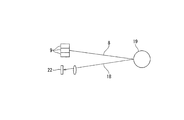
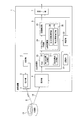
- FIG. 1 is a diagram showing an overall configuration of a distance measuring device according to a first embodiment of the present disclosure. It is a figure which shows the structure of a light projection part.
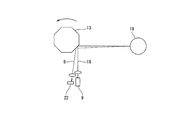
- FIG. 11 is a diagram showing a method of measuring a distance to an object by using a polygon mirror type light projecting unit in a distance measuring device according to a modification.
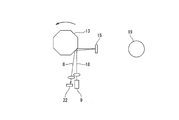
- FIG. 11 is a diagram showing a method of measuring a distance to a reflecting object by using a polygon mirror type light projecting unit in a distance measuring apparatus according to a modification.
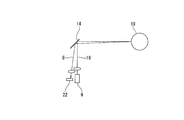
- FIG. 9 is a diagram showing a method of measuring a distance to an object using a MEMS mirror type light projecting unit in a distance measuring device according to a modification.
- FIG. 11 is a diagram showing a method of measuring a distance to an object by using a polygon mirror type light projecting unit in a distance measuring device according to a modification.
- FIG. 11 is a diagram showing a method of measuring a distance to an object by using a polygon mirror type
- FIG. 13 is a diagram showing a method of measuring a distance to a reflecting object by using a MEMS mirror type light projecting unit in a distance measuring device according to a modification.
- FIG. 9 is a diagram showing a method of measuring a distance to an object using an OPT type light projecting unit in a distance measuring apparatus according to a modification.
- FIG. 13 is a diagram showing a method of measuring a distance to a reflecting object using an OPT type light projecting unit in a distance measuring apparatus according to a modification.
- FIG. 11 is a diagram showing a method of measuring a distance to an object by using a flash type light projecting unit in a distance measuring apparatus according to a modification.
- FIG. 11 is a diagram showing a method of measuring a distance to a reflecting object by using a flash type light projecting unit in a distance measuring apparatus according to a modification. It is a figure which shows the structure of a shutter curtain. It is a figure which shows the structure of the shutter curtain of the ranging device which concerns on a modification. It is a figure which shows the structure of the shutter curtain of the ranging device which concerns on a modification. It is a figure which shows the structure of the shutter curtain of the ranging device which concerns on a modification. It is a figure which shows the structure of the shutter curtain of the ranging device which concerns on a modification. It is a figure which shows the histogram created by the histogram creation part. FIG.
- FIG. 3 is a sequence diagram showing an operation of the distance measuring device according to the first embodiment of the present disclosure. It is a figure which shows the effect of the ranging device which concerns on 1st Embodiment of this indication. It is a figure which shows the structure of the reflective object of the ranging device which concerns on a modification. It is a figure which shows the structure of the light projection part of the distance measuring device which concerns on the 2nd Embodiment of this indication. It is a figure which shows the structure of a fixing member. It is a figure which shows the structure of a fixing member. It is a figure which shows the structure of a fixing member. It is a figure which shows the structure of a fixing member. It is a figure which shows the structure of the fixing member of the distance measuring device which concerns on a modification.
- the present inventors have found the following problems in the conventional distance measuring device. Even if the distance measurement result is calibrated at the time of shipment with the conventional distance measuring device, the error in the distance measurement result may increase due to deterioration over time after shipment, temperature change, circuit Long Time Jitter, etc. there were. However, it was not possible to calibrate the distance measurement result in real time.
- First embodiment distance measuring device 1-1 Overall configuration of distance measuring device 1-2 Operation of distance measuring device 1-3 Modified example 2. Second embodiment: Distance measuring device 2-1 Configuration of essential parts 2-2 Modified example 3. Application example: Mobile control system
- FIG. 1 is a schematic configuration diagram showing an entire range finder according to a first embodiment of the present disclosure.
- the distance measuring device 1 of FIG. 1 is a ToF distance measuring sensor.
- the distance measuring device 1 of the first embodiment includes components such as a light projecting unit 2, a reflecting object 3, a light receiving unit 4, a distance measuring processing unit 5, and a control unit 6.
- these components may be integrally configured as, for example, a SoC (System on a chip) such as a CMOS (Complementary MOS) or an LSI (Large Scale Integration).
- the component may be configured as a separate LSI.
- the distance measuring device 1 operates according to an operation clock (not shown).
- the distance measuring device 1 further includes a communication IF (Inter Face) unit 7 for outputting distance measurement data relating to the distance calculated by the distance measurement processing unit 5 to the outside.
- the distance measuring device 1 is configured to be able to communicate with an external host IC via the communication IF unit 7.
- the light projecting unit 2 has a light source 9 that emits light 8 for ToF distance measurement.
- laser light can be used as the light 8.
- the light source 9 may be, for example, an edge emitting semiconductor laser or a surface emitting semiconductor laser.
- the light source 9 is driven by the trigger pulse from the control unit 6.
- the trigger pulse is a pulsed signal having a predetermined frequency.
- the light projecting unit 2 also has a scanning mechanism for raster-scanning the light 8.
- a mirror scanning type scanning mechanism including an emitter lens 10, a projection mirror 11, and a micromirror 12 is illustrated.
- the micro mirror 12 changes the direction of the reflecting surface according to the control signal from the control unit 6.
- the light 8 (laser light) emitted from the light source 9 is emitted through the emitter lens 10, the light projecting mirror 11 and the micro mirror 12 in a direction corresponding to the direction of the reflecting surface of the micro mirror 12.
- a mirror scan type scan mechanism is used as the scan mechanism
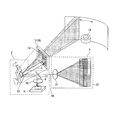
- FIGS. 3A and 3B a polygon mirror type scanning mechanism using a polygon mirror 13 may be used, and as shown in FIGS. 4A and 4B, a MEMS (Micro Electro Mechanical Systems) mirror 14 is used.
- a MEMS mirror type scanning mechanism may be used.
- FIGS. 5A and 5B an OPT (Optical Phased Array) type scanning mechanism that raster-scans the light 8 using a plurality of light sources 9 may be adopted.
- FIGS. 6A and 6B a flash type mechanism may be adopted in which the LED is used as the light source 9 and the light 8 is emitted in a wide range.
- the reflecting object 3 is arranged at a position of a predetermined distance L along the path of the light 8 from the light source 9 and constitutes a shutter mechanism 16 capable of opening and closing the shutter curtain 15.
- the size of the shutter curtain 15 is such that all the paths of the light 8 that can be taken during the raster scan can be blocked.
- the entire area of the shutter curtain 15 on the light source 9 side, that is, the entire area of the micro mirror 12 side is a reflection area 17 for reflecting the light 8 as shown in FIG. 7A.
- the shutter mechanism 16 for example, a mechanism such as a mechanical shutter mounted on a digital camera can be adopted.
- the shutter mechanism 16 drives the shutter curtain 15 between a closed state and an open state according to a control signal from the control unit 6.
- the light 8 from the micro mirror 12 is reflected by the reflection area 17 of the shutter curtain 15, and the reflected light 8 (hereinafter, also referred to as “reflected light 18”) is generated. Then, the light is incident on the light receiving unit 4 via the light projecting mirror 11. Further, when the shutter curtain 15 is opened, the light 8 from the light source 9 is not reflected by the reflection area 17 of the shutter curtain 15, but reflected by the object 19 present farther than the shutter mechanism 16 and reflected. The light 18 is incident on the light receiving unit 4 via the micro mirror 12 and the light projecting mirror 11. Examples of the target object 19 include a preceding vehicle, a rear vehicle, a structure on the road (for example, a curb), and other vehicles existing around the own vehicle when the distance measuring device 1 is mounted on the vehicle. ..
- the shutter curtain 15 is a curtain in which the entire area on the light source 9 side is the reflection area 17 is shown, but other configurations may be adopted.
- it may be a curtain in which a plurality of elongated passage regions 20 for allowing the light 8 to pass and a plurality of elongated reflection regions 17 are arranged in stripes.
- the passage region 20 may be, for example, a region made of a transparent material, or may be a region provided with an opening. Further, as shown in FIG.
- the curtain may be a curtain in which a plurality of passing areas 20 for passing the light 8 and a plurality of reflecting areas 17 are arranged in a checkered pattern, and as shown in FIG. It may be a curtain in which a plurality of passing areas 20 and a plurality of reflecting areas 17 for passing through are arranged at random.
- the light receiving section 4 has a receiver lens 21 and a plurality of light receiving elements 22.
- the plurality of light receiving elements 22 are arranged in a two-dimensional array.
- a SPAD single photon avalanche diode
- the light receiving unit 4 collects the reflected light 18 that has entered through the micro mirror 12 and the light projecting mirror 11 by the receiver lens 21, and causes the light receiving element 22 according to the scanning direction of the light 8 to receive the light.
- the electric signal from the light receiving element 22 is output to the distance measurement processing unit 5.
- the example in which the light receiving unit 4 has a plurality of light receiving elements 22 is shown, but other configurations may be adopted.
- the number of light receiving elements 22 may be singular (one).
- the example in which the SPAD is used as the light receiving element 22 is shown, but other configurations can be adopted.
- it may be PD (photodiode) or APD (avalanche PD).
- the distance measurement processing unit 5 is a component that calculates the distance to the object 19 based on the timing when the light source 9 emits the light 8 and the timing when the light receiving unit 4 receives the reflected light 18.
- the distance measurement processing unit 5 is composed of, for example, a signal processor.
- the distance measurement processing unit 5 includes a TDC (Time-to-Digital Converter) 23, a histogram creation unit 24, and a distance calculation unit 25. Based on the trigger pulse from the control unit 6 (trigger pulse for driving the light source 9) and the electric pulse signal from the light receiving unit 4, the TDC 23 emits the light 8 from the light source 9 and then reflects the reflected light 18 from the light receiving element 22.
- TDC Time-to-Digital Converter
- the TDC 23 constitutes a first time measuring section 26 and a second time measuring section 27.
- the first time measuring unit 26 causes the light receiving element 22 to reflect the reflected light 18 from the shutter curtain 15 (reflection area 17) after the light 8 (hereinafter, also referred to as “first light 8”) is emitted from the light source 9.
- the arrival time until the light is received (hereinafter, also referred to as “first time”) is measured, and a digital value (numerical value of 0 to 255) corresponding to the measured first time is output.
- the second time measuring unit 27 until the reflected light 18 from the object 19 is received by the light receiving element 22 after the light 8 (hereinafter, also referred to as “second light”) is emitted from the light source 9.
- Arrival time (hereinafter, also referred to as “second time”) of, and outputs a digital value (numerical value of 0 to 255) according to the measured second time.
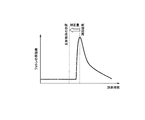
- the histogram creation unit 24 is a component that creates a histogram as shown in FIG. 8 by accumulating each digital value (bin) of arrival time converted by the TDC 23.
- the histogram is held in the storage device 34 of the distance measurement processing unit 5 as a kind of data structure or table.
- the storage device 34 also holds a predetermined distance L between the light source 9 and the reflecting object 3 at the time of shipping.
- the histogram is created for each light receiving element 22. That is, as many histograms as the number of light receiving elements 22 are created.
- the distance calculation unit 25 refers to the histogram and the predetermined distance L of the storage device 34.
- the distance calculation unit 25 refers to each histogram created by the histogram creation unit 24 and the predetermined distance L to detect a peak value (digital value) in the histogram and corresponds to the detected peak value (digital value). It is a component that calculates the distance to the object 19 from the arrival time. That is, if the reflected light 18 when the emitted light 8 is reflected by the target object 19 is received, the arrival time is the round-trip time to the target object 19, and therefore the arrival time is c/2 (c is The distance to the target object 19 can be calculated for each light receiving element 22 by multiplying by the speed of light. Further, the distance calculator 25 corrects the calculated distance based on the first time and the predetermined distance L. Then, a distance image can be obtained from the corrected distances for each of the plurality of light receiving elements 22. The data related to the range image is output to the communication IF unit 7.
- the histogram creation unit 24 and the distance calculation unit 25 form a distance calculation unit 35 including a first distance calculation unit 28 and a second distance calculation unit 29.
- the first distance calculation unit 28 based on the first time measured by the first time measurement unit 26, the distance from the light source 9 to the shutter curtain 15 along the path of the first light 8 (hereinafter, “ Also called "first distance”).
- the first distance may be, for example, an average value of the distances from the light source 9 to a plurality of positions on the shutter curtain 15, and is the shortest distance among the distances from the light source 9 to a plurality of positions on the shutter curtain 15.
- the distance from the light source 9 to the representative position of the shutter curtain 15 may be used.
- the second distance calculation unit 29 has a predetermined distance L held in the storage device 34, a first distance calculated by the first distance calculation unit 28, and a second distance measured by the second time measurement unit 27. Based on the time of 2, the distance from the light source 9 to the target object 19 (hereinafter, also referred to as “second distance”) along the path of the second light 8 is calculated.
- second distance the distance from the light source 9 to the target object 19 along the path of the second light 8 is calculated.
- a method of calculating the second distance for example, a method of subtracting the first distance from the predetermined distance L and adding the subtraction result to the calculation result of the second time ⁇ c/2 to obtain the second distance
- the predetermined distance L may be divided by the first distance, and the division result may be multiplied by the calculation result of the second time ⁇ c/2 to obtain the second distance.
- the control unit 6 is a component that integrally controls the operation of the distance measuring device 1.
- the control unit 6 is composed of, for example, a microprocessor.
- the control unit 6 outputs a trigger pulse for emitting the light 8 to the light source 9 and the TDC 23 each time a predetermined light emission period elapses. Further, the control unit 6 outputs a control signal for closing the shutter curtain 15 to the shutter mechanism 16 each time when the calibration of the distance measurement result comes.
- the range finder 1 when the range finder 1 is mounted on an object (vehicle or the like) that moves at high speed, (1) when the system is started, (2) near the traveling direction in the previous scan (for example, When it is determined that there is no obstacle within 50 m), (3) when the user or the system side issues a calibration execution command, (4) or a combination thereof.
- the distance measuring device 1 when the distance measuring device 1 is mounted on an object that does not move at high speed (for example, a mobile terminal), (1) when the system is started, (2) when a calibration execution command is issued from the user or the system side , (3) or a combination thereof.
- the first distance calculation unit 28 calculates the first distance after the shutter curtain 15 is closed, the control unit 6 releases a control signal for opening the shutter curtain 15. Output to the mechanism 16.
- the communication IF unit 7 is an interface circuit for outputting the distance measurement data calculated by the distance calculation unit 25 to an external host IC.
- the communication IF unit 7 may be, for example, an interface circuit compliant with MIPI (Mobile Industry Processor Interface), SPI (Serial Peripheral Interface) or I2C (Inter-Integrated Circuit), and these interfaces. It may be implemented with some of the circuits.
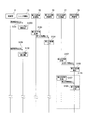
- FIG. 9 is a sequence diagram showing the operation of the distance measuring device according to the first embodiment.
- the control unit 6 closes the shutter curtain 15. It is assumed that a control signal for setting the state is output to the shutter mechanism 16 (step S101). Then, the shutter mechanism 16 closes the shutter curtain 15 according to the control signal from the control unit 6 (step S102).
- the light 8 (first light 8) from the light source 9 is reflected by the reflection area 17 of the shutter curtain 15, and the reflected first light 8 (reflected light 18) is included in the micro mirror 12 and the projection mirror.
- the light is incident on the light receiving unit 4 via 11.
- the first time measuring unit 26 arrives from the light source 9 to emit the first light 8 until the light receiving element 22 receives the reflected light 18 from the reflective area 17 of the shutter curtain 15 ( The first time) is measured (step S103).
- the first distance calculation unit 28 calculates the distance (first distance) from the light source 9 to the shutter curtain 15 along the path of the first light 8 based on the measured first time. (Step S104). As a result, the first distance that is the distance measurement result when the predetermined distance L that is a known distance is measured by the ToF distance measurement is obtained.
- the control unit 6 When the first distance is calculated, the control unit 6 outputs a control signal for opening the shutter curtain 15 (step S105). Then, the shutter mechanism 16 opens the shutter curtain 15 according to the control signal (step S106). As a result, the light 8 (second light 8) from the light source 9 is not reflected by the reflection area 17 of the shutter curtain 15, but the second light 8 is reflected by the target object 19 present farther than the shutter mechanism 16. Then, the reflected second light 8 (reflected light 18) enters the light receiving unit 4 via the micro mirror 12 and the light projecting mirror 11.
- the second time measuring unit 27 arrives from the light source 9 to emit the second light 8 until the light receiving element 22 receives the reflected light 18 from the object 19 (second time). ) Is measured (step S107). Then, the second distance calculation unit 29 causes the light source 9 along the path of the second light 8 based on the measured second time and first distance, and the predetermined distance L that is a known distance. The distance (second distance) from the object to the object 19 is calculated (step S108). As a result, using the deviation between the predetermined distance L and the first distance, the calculation result of the second distance in the second time, that is, the distance measurement result from the light source 9 to the object 19 is calibrated. ..
- step S109 the second distances calibrated using the first distance and the predetermined distance L are successively obtained. Then, by operating the scanning mechanism or the like, the distance image of the target object 19 is obtained by repeating the flow of steps S101 to S111 for all the light receiving elements 22.
- the distance measuring device 1 includes the reflecting object 3 arranged at the position of the predetermined distance L along the path of the light 8 from the light source 9. Then, first, the first time measuring unit 26 measures the first time from the emission of the first light 8 from the light source 9 to the reception of the reflected light 18 from the reflective object 3 by the light receiving element 22. I decided to do it. After that, the second time measuring unit 27 measures the second time from when the second light 8 is emitted from the light source 9 until the reflected light 18 from the target object 19 is received by the light receiving element 22.
- the distance from the light source 9 to the target object 19 (the second distance) along the path of the second light 8 based on the predetermined distance L, the first time, and the second time. ) was calculated. Therefore, for example, as shown at times t 1 and t 2 in FIG. 10, when the error in the distance measurement result increases due to deterioration over time after shipment, temperature change, circuit Long Time Jitter, etc. Since the result can be calibrated and the error in the distance measurement result can be reduced, the accuracy of the distance measurement result can be improved. After the distance measuring device 1 is shipped, there is a possibility that the light source 9 and the reflecting object 3 may be physically displaced from each other and the predetermined distance L may change.
- the distance calculation unit 35 determines the first distance from the light source 9 to the reflecting object 3 along the path of the first light 8 based on the first time. And a distance from the light source 9 to the target object 19 along the path of the second light 8 based on the first distance calculation unit 28 for calculating the predetermined distance L, the first distance, and the second time.
- the second distance calculation unit 29 is provided. Therefore, the distance from the light source 9 to the target object 19 can be calculated more appropriately.
- the reflecting object 3 is arranged on the path of the light 8 emitted by the light source 9 and has the shutter mechanism 16 for opening and closing the shutter curtain 15. Therefore, the shutter curtain 15 can be arranged in the path of the light 8 when the calibration is required.
- the shutter curtain 15 has the entire area on the light source 9 side as the reflective area 17 that reflects the first light 8, and the second light 8 passes through.
- the first distance calculation unit 28 calculates the average value of the distances from the light source 9 to a plurality of points of the reflecting object 3 and the distance from the light source 9 to a plurality of points of the reflecting object 3.
- the shortest distance among the distances or the distance from the light source 9 to the representative position of the reflecting object 3 was used. Therefore, the first distance can be easily calculated, and the second distance can be easily calculated based on the first distance.
- the micro mirror 12 and the reflecting object 3 are integrally formed. Therefore, the variation in the distance between the micro mirror 12 and the reflecting object 3 can be suppressed, and the variation in the predetermined distance L between the light source 9 and the reflecting object 3 can be suppressed.
- the distance measuring device 1 the example in which the shutter mechanism 16 that opens and closes the shutter curtain 15 is used as the reflective object 3 has been described, but other configurations may be adopted.
- a transmissive liquid crystal panel 30 arranged on the path of the light 8 emitted from the light source 9 may be used.
- the reflection area 17 and the passage area 20 can be realized by making only the pixels corresponding to the reflection area 17 opaque or transparent, and the driving parts of the shutter curtain 15 can be omitted, and the durability can be improved.
- the manufacturing cost can be reduced. Further, the distance measurement result can be calibrated more frequently than in the case of the shutter mechanism 16.
- FIG. 12 is a conceptual diagram of a main part of the distance measuring device 1 of the present embodiment. In FIG. 12, parts corresponding to those in FIG.
- the configuration of the reflecting object 3 is different from that of the first embodiment.
- the reflective object 3 has a reflective region 17 that reflects the first light 8 along at least a part of the peripheral edge thereof, and the second part is provided in the other part.
- a fixing member 31 having a passage area 20 for passing the light 8 is provided.
- the fixing member 31 may have the reflection regions 17 along all the peripheral portions, and as shown in FIG. 13B, the fixing member 31 has the reflection regions 17 along the left and right peripheral portions.
- the reflective region 17 may be provided along the upper and lower peripheral portions as shown in FIG. 13C.
- the control unit 6 sends a control signal for changing the angle of the micro mirror 12 so that the first light 8 is emitted to the reflection area 17 at the timing of performing the calibration of the distance measurement result. It outputs to 12 drive mechanisms (not shown).
- the calibration execution timing includes (1) system startup, (2) every scan, (3) once every several scans, and (4) a calibration execution command is issued from the user or system side. In this case, (5) or a combination thereof may be mentioned.
- the timing of (3) the distance to the fixed member 31 can always be measured at the edge of the field of view, so that power consumption can be suppressed to some extent by not measuring or evaluating it.
- the timing of (4) it is possible to further reduce power consumption as compared with the implementation at the timing of (2).
- the reflective object 3 has the reflective region 17 that reflects the first light 8 along at least a part of the peripheral edge portion, and the other portions.
- the fixing member 31 having the passage area 20 that allows the second light 8 to pass therethrough is used. Therefore, when the distance to the object 19 is measured, the light 8 is emitted to the passage area 20, and when the calibration is executed, the light 8 is emitted to the reflection area 17, which is different from the method using the shutter mechanism 16.
- the drive parts of the shutter curtain 15 can be omitted, and the durability can be improved and the manufacturing cost can be reduced. Further, the distance measurement result can be calibrated more frequently than in the case of the shutter mechanism 16.
- the reflection area 17 has a constant reflectance
- an area having a plurality of portions having different reflectances that is, an area having at least a high reflectance area 17a whose reflectance is a predetermined value or more and a low reflectance area 17b whose reflectance is less than a predetermined value is used.
- the region having the high reflectance region 17a and the low reflectance region 17b may be a region having a gradation of light and shade along the longitudinal direction of the peripheral portion as shown in FIG. 14A, or as shown in FIG. 14B. Alternatively, it may be an area having a gradation of light and shade along the lateral direction of the peripheral portion. Further, color gradation may be used instead of light and shade.
- the distance measurement processing unit 5 may further include an adjustment unit 32 and a determination unit 33, as shown in FIG. Good.
- the adjusting unit 32 is a component that adjusts the detection efficiency of the light receiving element 22 based on the electric signal from the light receiving unit 4 and the histogram created by the histogram creating unit 24.
- the adjustment of the detection efficiency of the light receiving element 22 as shown in FIG. 16, at least one of the plurality of light receiving elements 22 does not react with the light 8 reflected by the high reflectance region 17a.
- an electric signal is not output from the light receiving element 22.
- the determination unit 33 is a component that determines a failure of the distance measuring device 1 based on the histogram created by the histogram creation unit 24.
- the peak value of the histogram created by the TDC 23 and the histogram creation unit 24 based on the light 8 reflected by the reflection area 17 is the reflection area 17. It is determined for each reflectance whether it is within a predetermined normal range. Then, when it is determined that the light source 9 is within the normal range, it is determined that the light source 9 is operating normally, and when it is determined that the light source 9 is outside the normal range, it is determined that the light source 9 is out of order.
- the peak value of the histogram when the peak value of the histogram is larger than the upper limit value of the normal range, the energy of the light 8 emitted from the light source 9 is too large, and therefore, after outputting a failure warning for eye safe to the communication IF unit 7, The use of the distance measuring device 1 can be immediately stopped. Further, when the peak value of the histogram is smaller than the lower limit value of the normal range, the energy of the light 8 emitted from the light source 9 is too small, so that a failure warning can be output to the communication IF unit 7.
- the technology according to the present disclosure can be applied to various products.
- the technology according to the present disclosure is applicable to any type of movement such as an automobile, an electric vehicle, a hybrid electric vehicle, a motorcycle, a bicycle, a personal mobility, an airplane, a drone, a ship, a robot, a construction machine, and an agricultural machine (tractor). It may be realized as a device mounted on the body.
- FIG. 19 is a block diagram showing a schematic configuration example of a vehicle control system 7000 which is an example of a mobile body control system to which the technology according to the present disclosure can be applied.
- the vehicle control system 7000 includes a plurality of electronic control units connected via a communication network 7010.
- the vehicle control system 7000 includes a drive system control unit 7100, a body system control unit 7200, a battery control unit 7300, a vehicle exterior information detection unit 7400, a vehicle interior information detection unit 7500, and an integrated control unit 7600. ..
- the communication network 7010 connecting these plural control units complies with any standard such as CAN (Controller Area Network), LIN (Local Interconnect Network), LAN (Local Area Network), or FlexRay (registered trademark). It may be an in-vehicle communication network.
- CAN Controller Area Network
- LIN Local Interconnect Network
- LAN Local Area Network
- FlexRay registered trademark
- Each control unit includes a microcomputer that performs arithmetic processing according to various programs, a storage unit that stores a program executed by the microcomputer or parameters used for various arithmetic operations, and a drive circuit that drives various controlled devices. Equipped with.
- Each control unit is equipped with a network I/F for communicating with other control units via the communication network 7010, and also by wire communication or wireless communication with devices or sensors inside or outside the vehicle. A communication I/F for performing communication is provided. In FIG.
- a microcomputer 7610 As the functional configuration of the integrated control unit 7600, a microcomputer 7610, a general-purpose communication I/F 7620, a dedicated communication I/F 7630, a positioning unit 7640, a beacon receiving unit 7650, an in-vehicle device I/F 7660, an audio image output unit 7670, An in-vehicle network I/F 7680 and a storage unit 7690 are illustrated.
- the other control units also include a microcomputer, a communication I/F, a storage unit, and the like.
- the drive system control unit 7100 controls the operation of devices related to the drive system of the vehicle according to various programs.
- the drive system control unit 7100 includes a drive force generation device for generating a drive force of a vehicle such as an internal combustion engine or a drive motor, a drive force transmission mechanism for transmitting the drive force to wheels, and a steering angle of the vehicle. It functions as a steering mechanism for adjusting and a control device such as a braking device for generating a braking force of the vehicle.
- the drive system control unit 7100 may have a function as a control device such as ABS (Antilock Brake System) or ESC (Electronic Stability Control).
- a vehicle state detection unit 7110 is connected to the drive system control unit 7100.
- the vehicle state detection unit 7110 includes, for example, a gyro sensor that detects the angular velocity of the axial rotation motion of the vehicle body, an acceleration sensor that detects the acceleration of the vehicle, or an accelerator pedal operation amount, a brake pedal operation amount, or a steering wheel steering operation. At least one of sensors for detecting an angle, an engine speed, a wheel rotation speed, and the like is included.
- the drive system control unit 7100 performs arithmetic processing using a signal input from the vehicle state detection unit 7110 to control the internal combustion engine, drive motor, electric power steering device, brake device, or the like.
- the body system control unit 7200 controls the operation of various devices mounted on the vehicle body according to various programs.
- the body system control unit 7200 functions as a keyless entry system, a smart key system, a power window device, or a control device for various lamps such as a head lamp, a back lamp, a brake lamp, a winker, or a fog lamp.
- the body system control unit 7200 may receive radio waves or signals of various switches transmitted from a portable device that substitutes for a key.
- the body system control unit 7200 receives the input of these radio waves or signals and controls the vehicle door lock device, the power window device, the lamp, and the like.
- the battery control unit 7300 controls the secondary battery 7310 that is the power supply source of the drive motor according to various programs. For example, the battery control unit 7300 receives information such as the battery temperature, the battery output voltage, and the remaining capacity of the battery from the battery device including the secondary battery 7310. The battery control unit 7300 performs arithmetic processing using these signals to perform temperature control control of the secondary battery 7310 or control of a cooling device or the like included in the battery device.
- the exterior information detection unit 7400 detects information outside the vehicle equipped with the vehicle control system 7000.
- the image pickup unit 7410 and the vehicle exterior information detection unit 7420 is connected to the vehicle exterior information detection unit 7400.
- the imaging unit 7410 includes at least one of a ToF (Time Of Flight) camera, a stereo camera, a monocular camera, an infrared camera, and other cameras.
- the outside-vehicle information detection unit 7420 detects, for example, an environment sensor for detecting the current weather or weather, or another vehicle around the vehicle equipped with the vehicle control system 7000, an obstacle, a pedestrian, or the like. At least one of the ambient information detection sensors of.
- the environment sensor may be, for example, at least one of a raindrop sensor that detects rainy weather, a fog sensor that detects fog, a sunshine sensor that detects the degree of sunshine, and a snow sensor that detects snowfall.
- the ambient information detection sensor may be at least one of an ultrasonic sensor, a radar device, and a LIDAR (Light Detection and Ranging, Laser Imaging Detection and Ranging) device.
- the image pickup unit 7410 and the vehicle exterior information detection unit 7420 may be provided as independent sensors or devices, or may be provided as a device in which a plurality of sensors or devices are integrated.
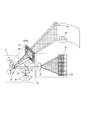
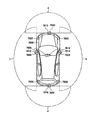
- FIG. 20 shows an example of the installation positions of the imaging unit 7410 and the vehicle exterior information detection unit 7420.
- the imaging units 7910, 7912, 7914, 7916, 7918 are provided at at least one of the front nose of the vehicle 7900, the side mirrors, the rear bumper, the back door, and the upper part of the windshield in the vehicle interior.
- An image capturing unit 7910 provided on the front nose and an image capturing unit 7918 provided on the upper part of the windshield in the vehicle interior mainly acquire an image in front of the vehicle 7900.
- the imaging units 7912 and 7914 included in the side mirrors mainly acquire images of the side of the vehicle 7900.
- the imaging unit 7916 provided in the rear bumper or the back door mainly acquires an image of the rear of the vehicle 7900.
- the imaging unit 7918 provided on the upper part of the windshield in the vehicle interior is mainly used for detecting a preceding vehicle, a pedestrian, an obstacle, a traffic signal, a traffic sign, a lane, or the like.
- FIG. 20 shows an example of the shooting ranges of the respective image pickup units 7910, 7912, 7914, 7916.
- the imaging range a indicates the imaging range of the imaging unit 7910 provided on the front nose
- the imaging ranges b and c indicate the imaging ranges of the imaging units 7912 and 7914 provided on the side mirrors
- the imaging range d is The imaging range of the imaging part 7916 provided in the rear bumper or the back door is shown. For example, by overlaying the image data captured by the image capturing units 7910, 7912, 7914, and 7916, a bird's-eye view image of the vehicle 7900 viewed from above can be obtained.
- the vehicle exterior information detection units 7920, 7922, 7924, 7926, 7928, 7930 provided on the front, rear, sides, corners of the vehicle 7900 and on the windshield in the vehicle interior may be ultrasonic sensors or radar devices, for example.
- the vehicle exterior information detection units 7920, 7926, 7930 provided on the front nose, rear bumper, back door, and upper windshield of the vehicle 7900 may be, for example, LIDAR devices.
- These vehicle exterior information detection units 7920 to 7930 are mainly used to detect a preceding vehicle, a pedestrian, an obstacle, or the like.
- the vehicle exterior information detection unit 7400 causes the image capturing unit 7410 to capture an image of the vehicle exterior and receives the captured image data. Further, the vehicle exterior information detection unit 7400 receives the detection information from the vehicle exterior information detection unit 7420 connected thereto.
- the vehicle exterior information detection unit 7420 is an ultrasonic sensor, a radar device, or a LIDAR device
- the vehicle exterior information detection unit 7400 transmits ultrasonic waves, electromagnetic waves, or the like, and receives information on the received reflected waves.
- the vehicle exterior information detection unit 7400 may perform object detection processing or distance detection processing such as people, vehicles, obstacles, signs, or characters on the road surface based on the received information.
- the vehicle exterior information detection unit 7400 may perform environment recognition processing for recognizing rainfall, fog, road surface conditions, or the like based on the received information.
- the vehicle exterior information detection unit 7400 may calculate the distance to an object outside the vehicle based on the received information.
- the vehicle exterior information detection unit 7400 may also perform image recognition processing or distance detection processing for recognizing a person, a car, an obstacle, a sign, characters on the road surface, or the like based on the received image data.
- the vehicle exterior information detection unit 7400 performs processing such as distortion correction or position adjustment on the received image data, combines the image data captured by different image capturing units 7410, and generates an overhead image or a panoramic image. Good.
- the vehicle exterior information detection unit 7400 may perform viewpoint conversion processing using image data captured by different image capturing units 7410.
- the in-vehicle information detection unit 7500 detects in-vehicle information.
- a driver state detection unit 7510 that detects the state of the driver is connected.
- the driver state detection unit 7510 may include a camera that captures an image of the driver, a biometric sensor that detects biometric information of the driver, a microphone that collects voice in the vehicle, and the like.
- the biometric sensor is provided on, for example, a seat surface or a steering wheel, and detects biometric information of an occupant sitting on a seat or a driver who holds the steering wheel.
- the in-vehicle information detection unit 7500 may calculate the degree of fatigue or concentration of the driver based on the detection information input from the driver state detection unit 7510, or determine whether the driver is asleep. You may.
- the in-vehicle information detection unit 7500 may perform processing such as noise canceling processing on the collected audio signal.
- the integrated control unit 7600 controls overall operations in the vehicle control system 7000 according to various programs.
- An input unit 7800 is connected to the integrated control unit 7600.
- the input unit 7800 is realized by a device that can be input and operated by a passenger, such as a touch panel, a button, a microphone, a switch or a lever. Data obtained by voice recognition of voice input by a microphone may be input to the integrated control unit 7600.
- the input unit 7800 may be, for example, a remote control device that uses infrared rays or other radio waves, or may be an external connection device such as a mobile phone or a PDA (Personal Digital Assistant) that supports the operation of the vehicle control system 7000. May be.
- the input unit 7800 may be, for example, a camera, in which case the passenger can input information by gesture. Alternatively, data obtained by detecting the movement of the wearable device worn by the passenger may be input. Further, the input unit 7800 may include, for example, an input control circuit that generates an input signal based on information input by a passenger or the like using the input unit 7800 and outputs the input signal to the integrated control unit 7600. A passenger or the like operates the input unit 7800 to input various data to the vehicle control system 7000 and instruct a processing operation.
- the storage unit 7690 may include a ROM (Read Only Memory) that stores various programs executed by the microcomputer, and a RAM (Random Access Memory) that stores various parameters, calculation results, sensor values, and the like.
- the storage unit 7690 may be realized by a magnetic storage device such as an HDD (Hard Disc Drive), a semiconductor storage device, an optical storage device, a magneto-optical storage device, or the like.
- the general-purpose communication I/F 7620 is a general-purpose communication I/F that mediates communication with various devices existing in the external environment 7750.
- the general-purpose communication I/F 7620 is a cellular communication protocol such as GSM (registered trademark) (Global System of Mobile communications), WiMAX (registered trademark), LTE (registered trademark) (Long Term Evolution), or LTE-A (LTE-Advanced).
- GSM Global System of Mobile communications
- WiMAX registered trademark
- LTE registered trademark
- LTE-A Long Term Evolution
- LTE-A Long Term Evolution-Advanced
- a wireless LAN also referred to as Wi-Fi (registered trademark)
- Bluetooth registered trademark
- the general-purpose communication I/F 7620 is connected to a device (for example, an application server or a control server) existing on an external network (for example, the Internet, a cloud network, or a network unique to a business operator) via a base station or an access point, for example. You may.
- the general-purpose communication I/F 7620 uses, for example, the P2P (Peer To Peer) technology, and is a terminal existing in the vicinity of the vehicle (for example, a driver, a pedestrian or a shop terminal, or an MTC (Machine Type Communication) terminal). You may connect with.
- P2P Peer To Peer
- MTC Machine Type Communication
- the dedicated communication I/F 7630 is a communication I/F that supports a communication protocol formulated for use in a vehicle.
- the dedicated communication I/F 7630 uses a standard protocol such as WAVE (Wireless Access in Vehicle Environment), DSRC (Dedicated Short Range Communications), or a cellular communication protocol, which is a combination of a lower layer IEEE 802.11p and an upper layer IEEE 1609, for example. May be implemented.
- the dedicated communication I/F 7630 is typically a vehicle-to-vehicle communication, a vehicle-to-infrastructure communication, a vehicle-to-home communication, and a pedestrian-to-pedestrian communication (Vehicle to Pedestrian). ) Perform V2X communications, a concept that includes one or more of the communications.
- the positioning unit 7640 receives, for example, a GNSS signal from a GNSS (Global Navigation Satellite System) satellite (for example, a GPS signal from a GPS (Global Positioning System) satellite) to perform positioning, and the latitude, longitude, and altitude of the vehicle.
- the position information including is generated.
- the positioning unit 7640 may specify the current position by exchanging signals with the wireless access point, or may acquire position information from a terminal having a positioning function, such as a mobile phone, PHS, or smartphone.
- the beacon receiving unit 7650 receives, for example, a radio wave or an electromagnetic wave transmitted from a wireless station or the like installed on the road, and acquires information such as the current position, traffic jam, traffic closure, or required time.
- the function of beacon receiving unit 7650 may be included in dedicated communication I/F 7630 described above.
- the in-vehicle device I/F 7660 is a communication interface that mediates a connection between the microcomputer 7610 and various in-vehicle devices 7760 existing in the vehicle.
- the in-vehicle device I/F 7660 may establish a wireless connection using a wireless communication protocol such as a wireless LAN, Bluetooth (registered trademark), NFC (Near Field Communication) or WUSB (Wireless USB). Further, the in-vehicle device I/F 7660 is connected to a USB (Universal Serial Bus), HDMI (registered trademark) (High-Definition Multimedia Interface), or MHL (Mobile) via a connection terminal (and a cable if necessary) not shown. Wired connection such as High-definition Link) may be established.
- the in-vehicle device 7760 may include, for example, at least one of a mobile device or a wearable device that an occupant has, or an information device that is carried in or attached to a vehicle.
- the in-vehicle device 7760 may include a navigation device that searches for a route to an arbitrary destination.
- the in-vehicle device I/F 7660 exchanges control signals or data signals with these in-vehicle devices 7760.
- the in-vehicle network I/F 7680 is an interface that mediates communication between the microcomputer 7610 and the communication network 7010.
- the vehicle-mounted network I/F 7680 transmits and receives signals and the like according to a predetermined protocol supported by the communication network 7010.
- the microcomputer 7610 of the integrated control unit 7600 passes through at least one of a general-purpose communication I/F 7620, a dedicated communication I/F 7630, a positioning unit 7640, a beacon receiving unit 7650, an in-vehicle device I/F 7660, and an in-vehicle network I/F 7680.
- the vehicle control system 7000 is controlled according to various programs based on the information acquired by the above. For example, the microcomputer 7610 calculates a control target value of the driving force generation device, the steering mechanism or the braking device based on the acquired information on the inside and outside of the vehicle, and outputs a control command to the drive system control unit 7100. Good.
- the microcomputer 7610 realizes the functions of ADAS (Advanced Driver Assistance System) including avoidance or impact mitigation of a vehicle, follow-up traveling based on an inter-vehicle distance, vehicle speed maintenance traveling, vehicle collision warning, vehicle lane departure warning, etc. You may perform the coordinated control aiming at.
- the microcomputer 7610 controls the driving force generation device, the steering mechanism, the braking device, and the like based on the acquired information about the surroundings of the vehicle, so that the microcomputer 7610 automatically travels independently of the driver's operation. You may perform the cooperative control aiming at driving etc.
- ADAS Advanced Driver Assistance System
- a general-purpose communication I/F 7620 a dedicated communication I/F 7630, a positioning unit 7640, a beacon receiving unit 7650, an in-vehicle device I/F 7660, and an in-vehicle network I/F 7680.
- the microcomputer 7610 may generate a warning signal by predicting a danger such as a vehicle collision, a pedestrian or the like approaching or entering a closed road, based on the acquired information.
- the warning signal may be, for example, a signal for generating a warning sound or turning on a warning lamp.
- the voice image output unit 7670 transmits an output signal of at least one of a voice and an image to an output device capable of visually or audibly notifying information to a passenger of the vehicle or the outside of the vehicle.
- an audio speaker 7710, a display unit 7720, and an instrument panel 7730 are illustrated as output devices.
- the display unit 7720 may include at least one of an onboard display and a head-up display, for example.
- the display unit 7720 may have an AR (Augmented Reality) display function.
- the output device may be a device other than these devices, such as headphones, a wearable device such as a glasses-type display worn by a passenger, a projector, or a lamp.
- the output device When the output device is a display device, the display device displays results obtained by various processes performed by the microcomputer 7610 or information received from another control unit in various formats such as text, images, tables, and graphs. Display it visually.
- the output device is a voice output device, the voice output device converts an audio signal composed of reproduced voice data, acoustic data, or the like into an analog signal and outputs it audibly.
- control units connected via the communication network 7010 may be integrated as one control unit.
- each control unit may be composed of a plurality of control units.
- the vehicle control system 7000 may include another control unit not shown.
- some or all of the functions of one of the control units may be given to another control unit. That is, if the information is transmitted and received via the communication network 7010, the predetermined arithmetic processing may be performed by any one of the control units.
- a sensor or device connected to one of the control units may be connected to another control unit, and a plurality of control units may send and receive detection information to and from each other via the communication network 7010. .
- the distance measuring device 1 in the vehicle control system 7000 described above, can be applied to the vehicle exterior information detection unit 7420 of the application example shown in FIG. For example, the distance measuring device 1 can calculate the distance to an obstacle in front of the vehicle 7900.
- the present technology may have the following configurations.
- a light source that emits light
- a reflecting object arranged at a predetermined distance along the path of light from the light source,
- a light receiving element that receives each of the reflected light from the reflective object and the object on the path,
- a first time measuring unit that measures a first time from when the first light is emitted from the light source to when the reflected light from the reflective object is received by the light receiving element;
- a second time measuring unit that measures a second time from when the second light is emitted from the light source to when the reflected light from the object is received by the light receiving element;
- a distance calculation unit that calculates a distance from the light source to the object along the path of the second light based on the predetermined distance, the first time, and the second time. ..
- the distance calculation unit A first distance calculator that calculates a first distance from the light source to the reflective object along the path of the first light based on the first time; A second distance calculator that calculates a distance from the light source to the object along the path of the second light based on the predetermined distance, the first distance, and the second time.
- the distance measuring device according to (1) above.
- (3) The distance measuring device according to (1) or (2), wherein the reflective object is arranged on a path of light emitted from the light source and has a shutter mechanism for opening and closing a shutter curtain.
- the shutter curtain has a curtain in which the entire area on the light source side is a reflection area that reflects the first light, and a plurality of elongated passage areas that allow the second light to pass through and a plurality of elongated reflection areas that are striped.
- a curtain in which a plurality of passing areas for passing the second light and a plurality of reflecting areas are arranged in a checkered pattern, or a plurality of passing areas and a plurality of passing areas for passing the second light The distance measuring device according to (3) above, wherein the reflective area and the reflective area are randomly arranged.
- the distance measuring apparatus wherein the reflective object is a transmissive liquid crystal panel arranged on a path of light emitted from the light source.
- the reflecting object is a fixing member that has a reflecting region that reflects the first light along at least a part of a peripheral edge portion, and has a passing region that allows the second light to pass through in other portions.
- the range finder according to 1).
- the first distance calculated by the first distance calculation unit is an average value of distances from the light source to a plurality of points of the reflecting object, and a shortest distance among distances from the light source to a plurality of points of the reflecting object.
- the distance measuring device which is a distance from the light source to a representative position of the reflective object.
- the reflective object has a high reflectance region having a reflectance of a predetermined value or more, and a low reflectance region having a reflectance of less than the predetermined value,
- a plurality of the light receiving elements are provided,
- the light source includes a histogram creation unit that creates a histogram based on the time from when the light is emitted to when the light is received by the light receiving element, At least one or more of the plurality of light receiving elements do not react by the light reflected in the high reflectance region, and for each of the plurality of light receiving elements based on the light reflected in the low reflectance region.
- the distance measuring device according to any one of (1) to (7), further including an adjusting unit that adjusts the detection efficiency of the light receiving element so that a peak value appears in each of the plurality of created histograms.
- the reflective region has a plurality of portions having different reflectances
- the light source includes a histogram creation unit that creates a histogram based on the time from when the light is emitted to when the light is received by the light receiving element, The peak value of the histogram created based on the light reflected in the reflection area is determined whether it is within a predetermined normal range for each reflectance of the reflection area, and is outside the normal range.
- the distance measuring device further including a determination unit that determines that the light source is out of order when it is determined that the light source is out of order.
- a micro mirror for reflecting the light emitted from the light source The distance measuring device according to any one of (1) to (9), wherein the micromirror and the reflecting object are integrally formed.
- (11) From the emission of the first light from the light source to the reception of the reflected light from the reflecting object arranged at a predetermined distance along the path of the first light from the light source by the light receiving element Second time from when the second light is emitted from the light source to when the reflected light from the object on the path of the second light is received by the light receiving element. And a distance measuring method for calculating a distance from the light source to the object along the path of the second light based on the predetermined distance, the first time, and the second time.
Landscapes
- Physics & Mathematics (AREA)
- Engineering & Computer Science (AREA)
- Electromagnetism (AREA)
- General Physics & Mathematics (AREA)
- Radar, Positioning & Navigation (AREA)
- Remote Sensing (AREA)
- Computer Networks & Wireless Communication (AREA)
- Manufacturing & Machinery (AREA)
- Measurement Of Optical Distance (AREA)
- Optical Radar Systems And Details Thereof (AREA)
Abstract
測距結果の誤差をさらに低減させた測距装置を提供する。光源から光の経路に沿って所定距離の位置に配置される反射物体を備えるようにした。そして、まず、第1の時間計測部で、光源から第1の光が発せられてから反射物体からの反射光が受光素子で受光されるまでの第1の時間を計測するようにした。その後、第2の時間計測部で、光源から第2の光が発せられてから対象物1からの反射光が受光素子で受光されるまでの第2の時間を計測するようにした。続いて、距離演算部で、所定距離、第1の時間及び第2の時間に基づき、第2の光の経路に沿った、光源から対象物までの距離を算出するようにした。これにより、測距結果のキャリブレーションを行うようにした。
Description
本技術は、測距装置及び測距方法に関する。
近年、対象物までの距離を直接ToF(Time of Flight)を用いて計測する測距装置が提案されている(例えば特許文献1参照。)。このような測距装置では、一般に、測距結果の誤差を低減させるために、出荷時に測距結果のキャリブレーションを行っている。
しかし、このような測距装置では、測距結果の誤差のさらなる低減が求められている。
本開示は、測距結果の誤差をさらに低減させた測距装置及び測距方法を提供することを目的とする。
本開示は、測距結果の誤差をさらに低減させた測距装置及び測距方法を提供することを目的とする。
本開示の測距装置は、(a)光を発する光源と、(b)光源から光の経路に沿って所定距離の位置に配置される反射物体と、(c)反射物体及び経路上の対象物からの反射光のそれぞれを受光する受光素子と、(d)光源から第1の光が発せられてから反射物体からの反射光が受光素子で受光されるまでの第1の時間を計測する第1の時間計測部と、(e)光源から第2の光が発せられてから対象物からの反射光が受光素子で受光されるまでの第2の時間を計測する第2の時間計測部と、(f)所定距離、第1の時間及び第2の時間に基づき、第2の光の経路に沿った、光源から対象物までの距離を算出する距離演算部とを備える。
本開示の測距方法は、(a)光源から第1の光が発せられてから、光源から第1の光の経路に沿って所定距離の位置に配置されている反射物体からの反射光が受光素子で受光されるまでの第1の時間を計測し、(b)光源から第2の光が発せられてから、第2の光の経路上の対象物からの反射光が受光素子で受光されるまでの第2の時間を計測し、(c)所定距離、第1の時間及び第2の時間に基づき、第2の光の経路に沿った、光源から対象物までの距離を算出する。
本発明者らは、従来の測距装置において、以下の課題を発見した。従来の測距装置では、出荷時に測距結果のキャリブレーションを行っても、出荷後の経時劣化や温度変化、回路Long Time Jitter等に起因して、測距結果の誤差が増大する可能性があった。しかしながら、測距結果のキャリブレーションを、リアルタイムに行うことはできなかった。
以下に、本開示の実施形態に係る測距装置及び測距方法の一例を、図1~図20を参照しながら説明する。本開示の実施形態は、以下の順序で説明する。なお、本開示は、以下の例に限定されるものではない。また、本明細書に記載された効果はあくまで例示であって限定されるものでは無く、また他の効果があってもよい。
1.第1の実施形態:測距装置
1-1 測距装置の全体構成
1-2 測距装置の動作
1-3 変形例
2.第2の実施形態:測距装置
2-1 要部の構成
2-2 変形例
3.応用例:移動体制御システム
1-1 測距装置の全体構成
1-2 測距装置の動作
1-3 変形例
2.第2の実施形態:測距装置
2-1 要部の構成
2-2 変形例
3.応用例:移動体制御システム
〈1.第1の実施形態〉
[1-1 測距装置の全体構成]
図1は、本開示の第1の実施形態に係る測距装置の全体を示す概略構成図である。図1の測距装置1は、ToF測距センサである。図1に示すように、第1の実施形態の測距装置1は、投光部2と、反射物体3と、受光部4と、測距処理部5と、制御部6といったコンポーネントを備えている。これらのコンポーネントは、例えば、CMOS(Complementary MOS)、LSI(Large Scale Integration)のようなSoC(System on a chip)として一体的に構成してもよく、投光部2や受光部4といった幾つかのコンポーネントを別体のLSIとして構成してもよい。測距装置1は、図示しない動作クロックに従って動作する。測距装置1は、さらに、測距処理部5で算出された距離に係る測距データを外部に出力するための通信IF(Inter Face)部7を含んでいる。図示されていないが、測距装置1は、通信IF部7を介して外部のホストICと通信可能に構成されている。
[1-1 測距装置の全体構成]
図1は、本開示の第1の実施形態に係る測距装置の全体を示す概略構成図である。図1の測距装置1は、ToF測距センサである。図1に示すように、第1の実施形態の測距装置1は、投光部2と、反射物体3と、受光部4と、測距処理部5と、制御部6といったコンポーネントを備えている。これらのコンポーネントは、例えば、CMOS(Complementary MOS)、LSI(Large Scale Integration)のようなSoC(System on a chip)として一体的に構成してもよく、投光部2や受光部4といった幾つかのコンポーネントを別体のLSIとして構成してもよい。測距装置1は、図示しない動作クロックに従って動作する。測距装置1は、さらに、測距処理部5で算出された距離に係る測距データを外部に出力するための通信IF(Inter Face)部7を含んでいる。図示されていないが、測距装置1は、通信IF部7を介して外部のホストICと通信可能に構成されている。
投光部2は、図2に示すように、ToF測距のための光8を発する光源9を有している。光8としては、例えば、レーザ光を用いることができる。光源9としては、例えば、端面発光型半導体レーザであってもよく、面発光型半導体レーザであってもよい。光源9は、制御部6からのトリガパルスによって駆動される。トリガパルスは、所定の周波数を有するパルス状の信号である。また、投光部2は、光8をラスタスキャンするためのスキャン機構を有している。図2では、スキャン機構として、エミッタレンズ10、投光ミラー11、及びマイクロミラー12を含むミラースキャン型のスキャン機構を例示している。マイクロミラー12は、制御部6からの制御信号に従って、反射面の向きを変更する。そして、光源9が発した光8(レーザ光)を、エミッタレンズ10、投光ミラー11及びマイクロミラー12を介してマイクロミラー12の反射面の向きに応じた方向に出射する。
なお、本実施形態では、スキャン機構として、ミラースキャン型のスキャン機構を用いる例を示したが、他の構成を採用することもできる。例えば、図3A及び図3Bに示すように、ポリゴンミラー13を用いるポリゴンミラー型のスキャン機構であってもよく、図4A及び図4Bに示すように、MEMS(Micro Electro Mechanical Systems)ミラー14を用いるMEMSミラー型のスキャン機構であってもよい。また、図5A及び図5Bに示すように、複数の光源9を用いて光8をラスタスキャンするOPT(Optical Phased Array)型のスキャン機構を採用してもよい。さらに、図6A及び図6Bに示すように、LEDを光源9として光8を広範囲に放射するフラッシュ型の機構を採用してもよい。
反射物体3は、図2に示すように、光源9から光8の経路に沿って所定距離Lの位置に配置され、シャッタ幕15を開閉可能なシャッタ機構16を構成している。シャッタ幕15の大きさは、ラスタスキャン時に取り得るすべての光8の経路を遮蔽できる大きさとする。シャッタ幕15の光源9側の全領域、つまりマイクロミラー12側の全領域は、図7Aに示すように、光8を反射する反射領域17となっている。シャッタ機構16としては、例えば、デジタルカメラに搭載されるメカニカルシャッターのような機構を採用できる。シャッタ機構16は、制御部6からの制御信号に従って、シャッタ幕15を閉状態と開状態との間で駆動させる。シャッタ幕15が閉状態とされると、マイクロミラー12からの光8をシャッタ幕15の反射領域17が反射して、反射した光8(以下、「反射光18」とも呼ぶ)がマイクロミラー12及び投光ミラー11を介して、受光部4に入射される。また、シャッタ幕15が開状態とされると、光源9からの光8がシャッタ幕15の反射領域17で反射されず、シャッタ機構16よりも遠方に存在する対象物19で反射して、反射光18がマイクロミラー12及び投光ミラー11を介して、受光部4に入射される。対象物19としては、例えば、測距装置1が車両に搭載されている場合、先行車両や後方車両、道路上の構造物(例えば縁石)、自車両の周囲に存在する他の車両が挙げられる。
なお、本実施形態では、シャッタ幕15として、光源9側の全領域が反射領域17となっている幕を用いる例を示したが、他の構成を採用することもできる。例えば、図7B、図7Cに示すように、光8を通過させる細長い複数の通過領域20と細長い複数の反射領域17とが縞状に配置された幕であってもよい。通過領域20は、例えば、透明材料からなる領域であってもよく、開口部が設けられた領域であってもよい。また、図7Dに示すように、光8を通過させる複数の通過領域20と複数の反射領域17とが市松模様状に配置された幕であってもよく、図7Eに示すように、光8を通過させる複数の通過領域20と複数の反射領域17とがランダムに配置された幕であってもよい。これにより、シャッタ幕15が閉状態である場合にも、通過領域20を介して対象物19に光8を出射でき、対象物19からの反射光18を得て、光源9から対象物19までの距離を測距できる。
また、マイクロミラー12と反射物体3とは、互いの相対的な位置関係が変動しないように、一体に形成されている。図2では、マイクロミラー12の角部と反射物体3(シャッタ機構16)の角部とが、棒状の骨組部材を介して接合された構成を例示している。
また、マイクロミラー12と反射物体3とは、互いの相対的な位置関係が変動しないように、一体に形成されている。図2では、マイクロミラー12の角部と反射物体3(シャッタ機構16)の角部とが、棒状の骨組部材を介して接合された構成を例示している。
受光部4は、図2に示すように、レシーバレンズ21と、複数の受光素子22とを有している。複数の受光素子22は、二次元のアレイ状に配置される。受光素子22としては、受光した光に反応して電気信号を出力するSPAD(single photon avalanche diode)を用いる。そして、受光部4は、マイクロミラー12及び投光ミラー11を介して入射された反射光18を、レシーバレンズ21で集光して、光8のスキャン方向に応じた受光素子22に受光させる。受光素子22からの電気信号は、測距処理部5に出力される。
なお、本実施形態では、受光部4が、受光素子22を複数有する例を示したが、他の構成を採用することもできる。例えば、受光素子22の数が単数(1つ)であってもよい。
また、本実施形態では、受光素子22として、SPADを用いる例を示したが、他の構成を採用することもできる。例えば、PD(photodiode)、APD(avalanche PD)であってもよい。
なお、本実施形態では、受光部4が、受光素子22を複数有する例を示したが、他の構成を採用することもできる。例えば、受光素子22の数が単数(1つ)であってもよい。
また、本実施形態では、受光素子22として、SPADを用いる例を示したが、他の構成を採用することもできる。例えば、PD(photodiode)、APD(avalanche PD)であってもよい。
測距処理部5は、光源9が光8を発したタイミング、及び受光部4が反射光18を受光したタイミングに基づき、対象物19までの距離を算出するコンポーネントである。測距処理部5は、例えば、信号処理プロセッサによって構成される。測距処理部5は、TDC(Time-to-Digital Converter)23と、ヒストグラム作成部24と、距離演算部25とを含んで構成される。
TDC23は、制御部6からのトリガパルス(光源9の駆動用のトリガパルス)、及び受光部4からの電気パルス信号に基づき、光源9から光8が発せられてから受光素子22で反射光18が受光されるまでの時間(以下、「到来時間」とも呼ぶ)をデジタル値に変換するコンポーネントである。デジタル値としては、例えば、0~255の範囲の数値を用いることができる。得られたデジタル値は、ヒストグラム作成部24に出力される。
より具体的には、TDC23は、第1の時間計測部26と、第2の時間計測部27とを構成している。第1の時間計測部26は、光源9から光8(以下、「第1の光8」とも呼ぶ)が発せられてからシャッタ幕15(反射領域17)からの反射光18が受光素子22で受光されるまでの到来時間(以下、「第1の時間」とも呼ぶ)を計測し、計測した第1の時間に応じたデジタル値(0~255の数値)を出力する。また、第2の時間計測部27は、光源9から光8(以下、「第2の光」とも呼ぶ)が発せられてから対象物19からの反射光18が受光素子22で受光されるまでの到来時間(以下「第2の時間」とも呼ぶ)を計測し、計測した第2の時間に応じたデジタル値(0~255の数値)を出力する。
TDC23は、制御部6からのトリガパルス(光源9の駆動用のトリガパルス)、及び受光部4からの電気パルス信号に基づき、光源9から光8が発せられてから受光素子22で反射光18が受光されるまでの時間(以下、「到来時間」とも呼ぶ)をデジタル値に変換するコンポーネントである。デジタル値としては、例えば、0~255の範囲の数値を用いることができる。得られたデジタル値は、ヒストグラム作成部24に出力される。
より具体的には、TDC23は、第1の時間計測部26と、第2の時間計測部27とを構成している。第1の時間計測部26は、光源9から光8(以下、「第1の光8」とも呼ぶ)が発せられてからシャッタ幕15(反射領域17)からの反射光18が受光素子22で受光されるまでの到来時間(以下、「第1の時間」とも呼ぶ)を計測し、計測した第1の時間に応じたデジタル値(0~255の数値)を出力する。また、第2の時間計測部27は、光源9から光8(以下、「第2の光」とも呼ぶ)が発せられてから対象物19からの反射光18が受光素子22で受光されるまでの到来時間(以下「第2の時間」とも呼ぶ)を計測し、計測した第2の時間に応じたデジタル値(0~255の数値)を出力する。
ヒストグラム作成部24は、TDC23で変換された到来時間のデジタル値(bin)ごとに累積して、図8に示すようなヒストグラムを作成するコンポーネントである。ヒストグラムは、測距処理部5の記憶装置34上に、ある種のデータ構造ないしはテーブルとして保持される。記憶装置34には、出荷時における光源9と反射物体3との間の所定距離Lも保持される。ヒストグラムは、受光素子22ごとに作成される。つまり、ヒストグラムは、受光素子22の数だけ作成される。ヒストグラム作成部24は、TDC23から出力されるデジタル値を受けるごとに、対応するbinの値を増分してヒストグラムを更新する。記憶装置34のヒストグラム及び所定距離Lは、距離演算部25で参照される。
距離演算部25は、ヒストグラム作成部24で作成された各ヒストグラム、及び所定距離Lを参照して、ヒストグラム中のピーク値(デジタル値)を検出し、検出したピーク値(デジタル値)に対応する到来時間から、対象物19までの距離を算出するコンポーネントである。すなわち、出射された光8が対象物19で反射したときの反射光18が受光されたとすれば、到来時間は、対象物19までの往復時間であるから、到来時間にc/2(cは光速)を乗算することにより、受光素子22ごとに、対象物19までの距離を算出することができる。また、距離演算部25は、算出した距離を、第1の時間及び所定距離Lを基に補正する。そして、複数の受光素子22それぞれに対して補正された距離により、距離画像を得ることができる。距離画像に係るデータは、通信IF部7に出力される。
より具体的には、ヒストグラム作成部24及び距離演算部25は、第1の距離演算部28と、第2の距離演算部29とを含む距離演算部35を構成している。第1の距離演算部28は、第1の時間計測部26で計測した第1の時間に基づき、第1の光8の経路に沿った、光源9からシャッタ幕15までの距離(以下、「第1の距離」とも呼ぶ)を算出する。第1の距離としては、例えば、光源9からシャッタ幕15の複数箇所までの距離の平均値であってもよく、光源9からシャッタ幕15の複数箇所までの距離のうちの最短距離であってもよく、光源9からシャッタ幕15の代表位置(例えば、予め定めた一点)までの距離であってもよい。また、第2の距離演算部29は、記憶装置34が保持している所定距離L、第1の距離演算部28で算出した第1の距離、及び第2の時間計測部27で計測した第2の時間に基づき、第2の光8の経路に沿った、光源9から対象物19までの距離(以下、「第2の距離」とも呼ぶ)を算出する。第2の距離の算出方法としては、例えば、所定距離Lから第1の距離を減算し、減算結果を、第2の時間×c/2の算出結果に加算して第2の距離を得る方法であってもよく、所定距離Lを第1の距離で除算し、除算結果を、第2の時間×c/2の算出結果に乗算して第2の距離を得る方法であってもよい。
制御部6は、測距装置1の動作を統括的に制御するコンポーネントである。制御部6は、例えば、マイクロプロセッサによって構成される。制御部6は、所定の発光周期が経過するたびに、光8を出射させるトリガパルスを光源9及びTDC23に出力する。また、制御部6は、測距結果のキャリブレーションの実施タイミングになるたびに、シャッタ幕15を閉状態とするための制御信号をシャッタ機構16に出力する。キャリブレーションの実施タイミングとしては、測距装置1が高速に移動する物体(車両等)に搭載されている場合、(1)システム起動時、(2)前回スキャンで進行方向に対して近く(例えば50m以内)に障害物がないと判断された場合、(3)ユーザ又はシステム側からキャリブレーションの実施命令が発行された場合、(4)或いはこれらの組み合わせが挙げられる。一方、測距装置1が高速に移動しない物体(例えば、モバイル端末)に搭載されている場合、(1)システム起動時、(2)ユーザ又はシステム側からキャリブレーションの実施命令が発行された場合、(3)或いはこれらの組み合わせが挙げられる。また、制御部6は、シャッタ幕15が閉状態とされた後、第1の距離演算部28で第1の距離が算出されると、シャッタ幕15を開状態とするための制御信号をシャッタ機構16に出力する。
通信IF部7は、距離演算部25で算出された測距データを外部のホストICに出力するためのインタフェース回路である。通信IF部7としては、例えば、MIPI(Mobile Industry Processor Interface)に準拠したインタフェース回路であってもよく、SPI(Serial Peripheral Interface)やI2C(Inter-Integrated Circuit)であってもよく、これらのインタフェース回路のうちの幾つかを実装したものであってもよい。
[1-2 測距装置の動作]
次に、本開示の第1の実施形態に係る測距装置1の動作(測距方法)について説明する。図9は、第1の実施形態に係る測距装置の動作を示すシーケンス図である。
まず、光源9が光を出射し、ToF測距を実行しているときに、システム側からキャリブレーションの実施命令が発行され、図9に示すように、制御部6が、シャッタ幕15を閉状態とするための制御信号をシャッタ機構16に出力したとする(ステップS101)。すると、シャッタ機構16が、制御部6からの制御信号に従って、シャッタ幕15を閉状態とする(ステップS102)。これにより、光源9からの光8(第1の光8)がシャッタ幕15の反射領域17で反射されて、反射された第1の光8(反射光18)がマイクロミラー12及び投光ミラー11を介して、受光部4に入射されるようになる。
次に、本開示の第1の実施形態に係る測距装置1の動作(測距方法)について説明する。図9は、第1の実施形態に係る測距装置の動作を示すシーケンス図である。
まず、光源9が光を出射し、ToF測距を実行しているときに、システム側からキャリブレーションの実施命令が発行され、図9に示すように、制御部6が、シャッタ幕15を閉状態とするための制御信号をシャッタ機構16に出力したとする(ステップS101)。すると、シャッタ機構16が、制御部6からの制御信号に従って、シャッタ幕15を閉状態とする(ステップS102)。これにより、光源9からの光8(第1の光8)がシャッタ幕15の反射領域17で反射されて、反射された第1の光8(反射光18)がマイクロミラー12及び投光ミラー11を介して、受光部4に入射されるようになる。
続いて、第1の時間計測部26が、光源9から第1の光8が発せられてからシャッタ幕15の反射領域17からの反射光18が受光素子22で受光されるまでの到来時間(第1の時間)を計測する(ステップS103)。続いて、第1の距離演算部28が、計測された第1の時間に基づき、第1の光8の経路に沿った、光源9からシャッタ幕15までの距離(第1の距離)を算出する(ステップS104)。これにより、既知の距離である所定距離Lを、ToF測距によって計測した場合の測距結果である第1の距離が得られる。
第1の距離が算出されると、制御部6が、シャッタ幕15を開状態とするための制御信号を出力する(ステップS105)。すると、シャッタ機構16が、制御信号に従って、シャッタ幕15を開状態とする(ステップS106)。これにより、光源9からの光8(第2の光8)がシャッタ幕15の反射領域17で反射されず、第2の光8がシャッタ機構16よりも遠方に存在する対象物19で反射されて、反射された第2の光8(反射光18)がマイクロミラー12及び投光ミラー11を介して受光部4に入射されるようになる。
続いて、第2の時間計測部27が、光源9から第2の光8が発せられてから対象物19からの反射光18が受光素子22で受光されるまでの到来時間(第2の時間)を計測する(ステップS107)。続いて、第2の距離演算部29が、計測された第2の時間及び第1の距離、並びに既知の距離である所定距離Lに基づき、第2の光8の経路に沿った、光源9から対象物19までの距離(第2の距離)を算出する(ステップS108)。これにより、所定距離Lと第1の距離とのズレを用いて、第2の時間による第2の距離の算出結果、つまり、光源9から対象物19までの測距結果のキャリブレーションが行われる。
その後、上記ステップS107~S108のフローを繰り返し、新しい第2の時間を次々に測定し、測定した第2の時間、上記ステップS104で得られた第1の距離及び所定距離Lに基づき、第2の距離を次々に算出する(ステップS109)。これにより、第1の距離及び所定距離Lを用いてキャリブレーションされた第2の距離が次々に得られる。
そして、スキャン機構を動作させる等して、すべての受光素子22に対して、上記ステップS101~S111のフローを繰り返すことで、対象物19の距離画像が得られる。
そして、スキャン機構を動作させる等して、すべての受光素子22に対して、上記ステップS101~S111のフローを繰り返すことで、対象物19の距離画像が得られる。
以上説明したように、第1の実施形態の測距装置1は、光源9から光8の経路に沿って所定距離Lの位置に配置される反射物体3を備えるようにした。そして、まず、第1の時間計測部26で、光源9から第1の光8が発せられてから反射物体3からの反射光18が受光素子22で受光されるまでの第1の時間を計測するようにした。その後、第2の時間計測部27で、光源9から第2の光8が発せられてから対象物19からの反射光18が受光素子22で受光されるまでの第2の時間を計測するようにした。続いて、距離演算部35で、所定距離L、第1の時間及び第2の時間に基づき、第2の光8の経路に沿った、光源9から対象物19までの距離(第2の距離)を算出するようにした。それゆえ、例えば、図10の時刻t1、t2に示すように出荷後の経時劣化や温度変化、回路Long Time Jitter等に起因して、測距結果の誤差が増大したときに、測距結果のキャリブレーションを行うことができ、測距結果の誤差を低減できるため、測距結果の精度を向上できる。
なお、測距装置1の出荷後には、光源9と反射物体3とに物理位置ずれが発生し、所定距離Lが変動する可能性もある。しかしながら、経時劣化や温度変化、回路Long Time Jitter等に起因する測距結果の誤差が数cmほどになるのに対し、物理位置ずれに起因する測距結果の誤差の増大量は、数μmほどであるため、十分に小さく問題とならない。
なお、測距装置1の出荷後には、光源9と反射物体3とに物理位置ずれが発生し、所定距離Lが変動する可能性もある。しかしながら、経時劣化や温度変化、回路Long Time Jitter等に起因する測距結果の誤差が数cmほどになるのに対し、物理位置ずれに起因する測距結果の誤差の増大量は、数μmほどであるため、十分に小さく問題とならない。
また、第1の実施形態の測距装置1では、距離演算部35は、第1の時間に基づき、第1の光8の経路に沿った、光源9から反射物体3までの第1の距離を算出する第1の距離演算部28と、所定距離L、第1の距離及び第2の時間に基づき、第2の光8の経路に沿った、光源9から対象物19までの距離を算出する第2の距離演算部29とを備えるようにした。それゆえ、光源9から対象物19までの距離をより適切に算出できる。
また、第1の実施形態の測距装置1では、反射物体3は、光源9が発する光8の経路上に配置され、シャッタ幕15を開閉させるシャッタ機構16を有するようにした。それゆえ、キャリブレーションが必要なときに、光8の経路にシャッタ幕15を配置できる。
また、第1の実施形態の測距装置1では、反射物体3は、光源9が発する光8の経路上に配置され、シャッタ幕15を開閉させるシャッタ機構16を有するようにした。それゆえ、キャリブレーションが必要なときに、光8の経路にシャッタ幕15を配置できる。
また、第1の実施形態の測距装置1では、シャッタ幕15は、光源9側の全領域が第1の光8を反射する反射領域17となっている幕、第2の光8を通過させる通過領域20と反射領域17とが縞状に配置された幕、通過領域20と反射領域17とが市松模様状に配置された幕、又は通過領域20と反射領域17とがランダムに配置された幕とした。それゆえ、シャッタ幕15が閉状態である場合にも、通過領域20を介して対象物19に光8を出射でき、対象物19からの反射光18を得て対象物19までの距離を測距できる。
また、第1の実施形態の測距装置1では、第1の距離演算部28は、光源9から反射物体3の複数箇所までの距離の平均値、光源9から反射物体3の複数箇所までの距離のうちの最短距離、又は光源9から反射物体3の代表位置までの距離とした。それゆえ、第1の距離を容易に算出でき、その第1の距離を基に第2の距離を容易に算出できる。
また、第1の実施形態の測距装置1では、マイクロミラー12と反射物体3とを一体に形成するようにした。それゆえ、マイクロミラー12と反射物体3との間の距離の変動を抑制でき、光源9と反射物体3との間の所定距離Lの変動を抑制することができる。
[1-3 変形例]
なお、第1の実施形態に係る測距装置1では、反射物体3として、シャッタ幕15を開閉させるシャッタ機構16を用いる例を示したが、他の構成を採用することもできる。例えば、図11に示すように、光源9が発する光8の経路上に配置された透過型液晶パネル30を用いるようにしてもよい。透過型液晶パネル30を用いる場合、反射領域17や通過領域20は反射領域17に対応する画素のみ不透明や透明とすることで実現でき、シャッタ幕15の駆動部品を省略でき、耐久性の向上や製造コストの低減を図ることができる。また、シャッタ機構16の場合よりも頻繁に測距結果のキャリブレーションを実行できる。
なお、第1の実施形態に係る測距装置1では、反射物体3として、シャッタ幕15を開閉させるシャッタ機構16を用いる例を示したが、他の構成を採用することもできる。例えば、図11に示すように、光源9が発する光8の経路上に配置された透過型液晶パネル30を用いるようにしてもよい。透過型液晶パネル30を用いる場合、反射領域17や通過領域20は反射領域17に対応する画素のみ不透明や透明とすることで実現でき、シャッタ幕15の駆動部品を省略でき、耐久性の向上や製造コストの低減を図ることができる。また、シャッタ機構16の場合よりも頻繁に測距結果のキャリブレーションを実行できる。
〈2.第2の実施形態:測距装置〉
[2-1 要部の構成]
次に、本開示の第2の実施形態に係る測距装置1について説明する。第2の実施形態の測距装置1の全体構成は、図1と同様であるから図示を省略する。図12は、本実施形態の測距装置1の要部の概念図である。図12において、図2に対応する部分には同一符号を付し重複説明を省略する。
[2-1 要部の構成]
次に、本開示の第2の実施形態に係る測距装置1について説明する。第2の実施形態の測距装置1の全体構成は、図1と同様であるから図示を省略する。図12は、本実施形態の測距装置1の要部の概念図である。図12において、図2に対応する部分には同一符号を付し重複説明を省略する。
第2の実施形態の測距装置1は、反射物体3の構成が、第1の実施形態と異なっている。第2の実施形態では、図12に示すように、反射物体3として、少なくとも一部の周縁部に沿って第1の光8を反射する反射領域17を有し、その他の部分に第2の光8を通過させる通過領域20を有する固定部材31を備えている。固定部材31は、図13Aに示すように、すべての周縁部に沿って反射領域17を有するものであってもよく、図13Bに示すように、左右の周縁部に沿って反射領域17を有するものであってもよく、図13Cに示すように、上下の周縁部に沿って反射領域17を有するものであってもよい。
また、制御部6は、測距結果のキャリブレーションの実施タイミングになると、第1の光8が反射領域17に出射されるように、マイクロミラー12の角度を変更するための制御信号をマイクロミラー12の駆動機構(不図示)に出力する。キャリブレーションの実施タイミングとしては、(1)システム起動時、(2)毎スキャン時、(3)数スキャンに1回の割合、(4)ユーザ又はシステム側からキャリブレーションの実施命令が発行された場合、(5)或いはこれらの組み合わせが挙げられる。これらのうち、(3)のタイミングによれば、常に視界の端で固定部材31までの距離を計測できるので、それを計測・評価しないことで、多少の電力消費を抑えることができる。また、(4)のタイミングによれば、(2)のタイミングでの実施よりも、さらに消費電力を抑えることができる。
以上説明したように、第2の実施形態の測距装置1では、反射物体3を、少なくとも一部の周縁部に沿って第1の光8を反射する反射領域17を有し、その他の部分に第2の光8を通過させる通過領域20を有する固定部材31とした。それゆえ、対象物19までの距離の計測時には、光8を通過領域20に出射し、キャリブレーションの実行時には、光8を反射領域17に出射すればよく、シャッタ機構16を用いる方法と異なり、シャッタ幕15の駆動部品を省略でき、耐久性の向上や製造コストの低減を図ることができる。また、シャッタ機構16の場合よりも頻繁に測距結果のキャリブレーションを実行できる。
[2-2 変形例]
なお、第2の実施形態にかかる測距装置1では、反射領域17として、反射率が一定の領域を用いる例を示したが、他の構成を採用することもできる。例えば、反射率が異なる複数の部分を有する領域、つまり、少なくとも反射率が所定値以上の高反射率領域17a、及び反射率が所定値未満の低反射率領域17bを有する領域を用いるようにしてもよい。高反射率領域17a及び低反射率領域17bを有する領域としては、図14Aに示すように、周縁部の長手方向に沿って濃淡のグラデーションを有する領域であってもよく、図14Bに示すように、周縁部の短手方向に沿って濃淡のグラデーションを有する領域であってもよい。また、濃淡に代えて、色彩のグラデーションを用いるようにしてもよい。
なお、第2の実施形態にかかる測距装置1では、反射領域17として、反射率が一定の領域を用いる例を示したが、他の構成を採用することもできる。例えば、反射率が異なる複数の部分を有する領域、つまり、少なくとも反射率が所定値以上の高反射率領域17a、及び反射率が所定値未満の低反射率領域17bを有する領域を用いるようにしてもよい。高反射率領域17a及び低反射率領域17bを有する領域としては、図14Aに示すように、周縁部の長手方向に沿って濃淡のグラデーションを有する領域であってもよく、図14Bに示すように、周縁部の短手方向に沿って濃淡のグラデーションを有する領域であってもよい。また、濃淡に代えて、色彩のグラデーションを用いるようにしてもよい。
また、反射率が異なる複数の部分を有する反射領域17を用いる場合には、図15に示すように、測距処理部5は、調整部32と、判定部33とを更に備えるようにしてもよい。
調整部32は、受光部4からの電気信号及びヒストグラム作成部24で作成したヒストグラムに基づき、受光素子22の検出効率を調整するコンポーネントである。受光素子22の検出効率の調整では、図16に示すように、高反射率領域17aで反射される光8によって複数の受光素子22の少なくとも1つ以上が反応しないようにする。受光素子22が反応しない状態では、受光素子22から電気信号が出力されない状態となる。また、図17に示すように、低反射率領域17bで反射される光8に基づき複数の受光素子22のそれぞれに対してTDC23及びヒストグラム作成部24によって作成される複数のヒストグラムのそれぞれにピーク値が現れるようにする。これにより、真夏等の環境光が強いときに、反射光18がなくても受光素子22のすべてが反応してしまうことを防止でき、対象物19までの距離をより適切に判別できる。また反射率が低い対象物19の各部を測距したときに、各部に対応する受光素子22のそれぞれに対してヒストグラムのピークがノイズに埋もれることを防止でき、対象物19の表面の凹凸等をより適切に判別できる。
調整部32は、受光部4からの電気信号及びヒストグラム作成部24で作成したヒストグラムに基づき、受光素子22の検出効率を調整するコンポーネントである。受光素子22の検出効率の調整では、図16に示すように、高反射率領域17aで反射される光8によって複数の受光素子22の少なくとも1つ以上が反応しないようにする。受光素子22が反応しない状態では、受光素子22から電気信号が出力されない状態となる。また、図17に示すように、低反射率領域17bで反射される光8に基づき複数の受光素子22のそれぞれに対してTDC23及びヒストグラム作成部24によって作成される複数のヒストグラムのそれぞれにピーク値が現れるようにする。これにより、真夏等の環境光が強いときに、反射光18がなくても受光素子22のすべてが反応してしまうことを防止でき、対象物19までの距離をより適切に判別できる。また反射率が低い対象物19の各部を測距したときに、各部に対応する受光素子22のそれぞれに対してヒストグラムのピークがノイズに埋もれることを防止でき、対象物19の表面の凹凸等をより適切に判別できる。
判定部33は、ヒストグラム作成部24で作成したヒストグラムに基づき、測距装置1の故障判定を行うコンポーネントである。測距装置1の故障判定では、図18A、図18Bに示すように、反射領域17で反射される光8に基づきTDC23及びヒストグラム作成部24で作成されるヒストグラムのピーク値が、反射領域17の反射率毎に予め定められた正常範囲内にあるか否かを判定する。そして、正常範囲内にあると判定した場合には、光源9が正常に動作していると判定し、正常範囲外にあると判定した場合には、光源9が故障していると判定する。これにより、ヒストグラムのピーク値が正常範囲の上限値よりも大きい場合には、光源9から発せられる光8のエネルギーが大き過ぎるため、アイセーフのための故障警告を通信IF部7に出力した後、測距装置1の使用を直ちに停止できる。またヒストグラムのピーク値が正常範囲の下限値よりも小さい場合には、光源9から発せられる光8のエネルギーが小さ過ぎるため、故障警告を通信IF部7に出力できる。
〈3.応用例〉
本開示に係る技術は、様々な製品へ応用することができる。例えば、本開示に係る技術は、自動車、電気自動車、ハイブリッド電気自動車、自動二輪車、自転車、パーソナルモビリティ、飛行機、ドローン、船舶、ロボット、建設機械、農業機械(トラクター)などのいずれかの種類の移動体に搭載される装置として実現されてもよい。
本開示に係る技術は、様々な製品へ応用することができる。例えば、本開示に係る技術は、自動車、電気自動車、ハイブリッド電気自動車、自動二輪車、自転車、パーソナルモビリティ、飛行機、ドローン、船舶、ロボット、建設機械、農業機械(トラクター)などのいずれかの種類の移動体に搭載される装置として実現されてもよい。
図19は、本開示に係る技術が適用され得る移動体制御システムの一例である車両制御システム7000の概略的な構成例を示すブロック図である。車両制御システム7000は、通信ネットワーク7010を介して接続された複数の電子制御ユニットを備える。図19に示した例では、車両制御システム7000は、駆動系制御ユニット7100、ボディ系制御ユニット7200、バッテリ制御ユニット7300、車外情報検出ユニット7400、車内情報検出ユニット7500、及び統合制御ユニット7600を備える。これらの複数の制御ユニットを接続する通信ネットワーク7010は、例えば、CAN(Controller Area Network)、LIN(Local Interconnect Network)、LAN(Local Area Network)又はFlexRay(登録商標)等の任意の規格に準拠した車載通信ネットワークであってよい。
各制御ユニットは、各種プログラムにしたがって演算処理を行うマイクロコンピュータと、マイクロコンピュータにより実行されるプログラム又は各種演算に用いられるパラメータ等を記憶する記憶部と、各種制御対象の装置を駆動する駆動回路とを備える。各制御ユニットは、通信ネットワーク7010を介して他の制御ユニットとの間で通信を行うためのネットワークI/Fを備えるとともに、車内外の装置又はセンサ等との間で、有線通信又は無線通信により通信を行うための通信I/Fを備える。図19では、統合制御ユニット7600の機能構成として、マイクロコンピュータ7610、汎用通信I/F7620、専用通信I/F7630、測位部7640、ビーコン受信部7650、車内機器I/F7660、音声画像出力部7670、車載ネットワークI/F7680及び記憶部7690が図示されている。他の制御ユニットも同様に、マイクロコンピュータ、通信I/F及び記憶部等を備える。
駆動系制御ユニット7100は、各種プログラムにしたがって車両の駆動系に関連する装置の動作を制御する。例えば、駆動系制御ユニット7100は、内燃機関又は駆動用モータ等の車両の駆動力を発生させるための駆動力発生装置、駆動力を車輪に伝達するための駆動力伝達機構、車両の舵角を調節するステアリング機構、及び、車両の制動力を発生させる制動装置等の制御装置として機能する。駆動系制御ユニット7100は、ABS(Antilock Brake System)又はESC(Electronic Stability Control)等の制御装置としての機能を有してもよい。
駆動系制御ユニット7100には、車両状態検出部7110が接続される。車両状態検出部7110には、例えば、車体の軸回転運動の角速度を検出するジャイロセンサ、車両の加速度を検出する加速度センサ、あるいは、アクセルペダルの操作量、ブレーキペダルの操作量、ステアリングホイールの操舵角、エンジン回転数又は車輪の回転速度等を検出するためのセンサのうちの少なくとも一つが含まれる。駆動系制御ユニット7100は、車両状態検出部7110から入力される信号を用いて演算処理を行い、内燃機関、駆動用モータ、電動パワーステアリング装置又はブレーキ装置等を制御する。
ボディ系制御ユニット7200は、各種プログラムにしたがって車体に装備された各種装置の動作を制御する。例えば、ボディ系制御ユニット7200は、キーレスエントリシステム、スマートキーシステム、パワーウィンドウ装置、あるいは、ヘッドランプ、バックランプ、ブレーキランプ、ウィンカー又はフォグランプ等の各種ランプの制御装置として機能する。この場合、ボディ系制御ユニット7200には、鍵を代替する携帯機から発信される電波又は各種スイッチの信号が入力され得る。ボディ系制御ユニット7200は、これらの電波又は信号の入力を受け付け、車両のドアロック装置、パワーウィンドウ装置、ランプ等を制御する。
バッテリ制御ユニット7300は、各種プログラムにしたがって駆動用モータの電力供給源である二次電池7310を制御する。例えば、バッテリ制御ユニット7300には、二次電池7310を備えたバッテリ装置から、バッテリ温度、バッテリ出力電圧又はバッテリの残存容量等の情報が入力される。バッテリ制御ユニット7300は、これらの信号を用いて演算処理を行い、二次電池7310の温度調節制御又はバッテリ装置に備えられた冷却装置等の制御を行う。
車外情報検出ユニット7400は、車両制御システム7000を搭載した車両の外部の情報を検出する。例えば、車外情報検出ユニット7400には、撮像部7410及び車外情報検出部7420のうちの少なくとも一方が接続される。撮像部7410には、ToF(Time Of Flight)カメラ、ステレオカメラ、単眼カメラ、赤外線カメラ及びその他のカメラのうちの少なくとも一つが含まれる。車外情報検出部7420には、例えば、現在の天候又は気象を検出するための環境センサ、あるいは、車両制御システム7000を搭載した車両の周囲の他の車両、障害物又は歩行者等を検出するための周囲情報検出センサのうちの少なくとも一つが含まれる。
環境センサは、例えば、雨天を検出する雨滴センサ、霧を検出する霧センサ、日照度合いを検出する日照センサ、及び降雪を検出する雪センサのうちの少なくとも一つであってよい。周囲情報検出センサは、超音波センサ、レーダ装置及びLIDAR(Light Detection and Ranging、Laser Imaging Detection and Ranging)装置のうちの少なくとも一つであってよい。これらの撮像部7410及び車外情報検出部7420は、それぞれ独立したセンサないし装置として備えられてもよいし、複数のセンサないし装置が統合された装置として備えられてもよい。
ここで、図20は、撮像部7410及び車外情報検出部7420の設置位置の例を示す。撮像部7910,7912,7914,7916,7918は、例えば、車両7900のフロントノーズ、サイドミラー、リアバンパ、バックドア及び車室内のフロントガラスの上部のうちの少なくとも一つの位置に設けられる。フロントノーズに備えられる撮像部7910及び車室内のフロントガラスの上部に備えられる撮像部7918は、主として車両7900の前方の画像を取得する。サイドミラーに備えられる撮像部7912,7914は、主として車両7900の側方の画像を取得する。リアバンパ又はバックドアに備えられる撮像部7916は、主として車両7900の後方の画像を取得する。車室内のフロントガラスの上部に備えられる撮像部7918は、主として先行車両又は、歩行者、障害物、信号機、交通標識又は車線等の検出に用いられる。
なお、図20には、それぞれの撮像部7910,7912,7914,7916の撮影範囲の一例が示されている。撮像範囲aは、フロントノーズに設けられた撮像部7910の撮像範囲を示し、撮像範囲b,cは、それぞれサイドミラーに設けられた撮像部7912,7914の撮像範囲を示し、撮像範囲dは、リアバンパ又はバックドアに設けられた撮像部7916の撮像範囲を示す。例えば、撮像部7910,7912,7914,7916で撮像された画像データが重ね合わせられることにより、車両7900を上方から見た俯瞰画像が得られる。
車両7900のフロント、リア、サイド、コーナ及び車室内のフロントガラスの上部に設けられる車外情報検出部7920,7922,7924,7926,7928,7930は、例えば超音波センサ又はレーダ装置であってよい。車両7900のフロントノーズ、リアバンパ、バックドア及び車室内のフロントガラスの上部に設けられる車外情報検出部7920,7926,7930は、例えばLIDAR装置であってよい。これらの車外情報検出部7920~7930は、主として先行車両、歩行者又は障害物等の検出に用いられる。
図19に戻って説明を続ける。車外情報検出ユニット7400は、撮像部7410に車外の画像を撮像させるとともに、撮像された画像データを受信する。また、車外情報検出ユニット7400は、接続されている車外情報検出部7420から検出情報を受信する。車外情報検出部7420が超音波センサ、レーダ装置又はLIDAR装置である場合には、車外情報検出ユニット7400は、超音波又は電磁波等を発信させるとともに、受信された反射波の情報を受信する。車外情報検出ユニット7400は、受信した情報に基づいて、人、車、障害物、標識又は路面上の文字等の物体検出処理又は距離検出処理を行ってもよい。車外情報検出ユニット7400は、受信した情報に基づいて、降雨、霧又は路面状況等を認識する環境認識処理を行ってもよい。車外情報検出ユニット7400は、受信した情報に基づいて、車外の物体までの距離を算出してもよい。
また、車外情報検出ユニット7400は、受信した画像データに基づいて、人、車、障害物、標識又は路面上の文字等を認識する画像認識処理又は距離検出処理を行ってもよい。車外情報検出ユニット7400は、受信した画像データに対して歪補正又は位置合わせ等の処理を行うとともに、異なる撮像部7410により撮像された画像データを合成して、俯瞰画像又はパノラマ画像を生成してもよい。車外情報検出ユニット7400は、異なる撮像部7410により撮像された画像データを用いて、視点変換処理を行ってもよい。
車内情報検出ユニット7500は、車内の情報を検出する。車内情報検出ユニット7500には、例えば、運転者の状態を検出する運転者状態検出部7510が接続される。運転者状態検出部7510は、運転者を撮像するカメラ、運転者の生体情報を検出する生体センサ又は車室内の音声を集音するマイク等を含んでもよい。生体センサは、例えば、座面又はステアリングホイール等に設けられ、座席に座った搭乗者又はステアリングホイールを握る運転者の生体情報を検出する。車内情報検出ユニット7500は、運転者状態検出部7510から入力される検出情報に基づいて、運転者の疲労度合い又は集中度合いを算出してもよいし、運転者が居眠りをしていないかを判別してもよい。車内情報検出ユニット7500は、集音された音声信号に対してノイズキャンセリング処理等の処理を行ってもよい。
統合制御ユニット7600は、各種プログラムにしたがって車両制御システム7000内の動作全般を制御する。統合制御ユニット7600には、入力部7800が接続されている。入力部7800は、例えば、タッチパネル、ボタン、マイクロフォン、スイッチ又はレバー等、搭乗者によって入力操作され得る装置によって実現される。統合制御ユニット7600には、マイクロフォンにより入力される音声を音声認識することにより得たデータが入力されてもよい。入力部7800は、例えば、赤外線又はその他の電波を利用したリモートコントロール装置であってもよいし、車両制御システム7000の操作に対応した携帯電話又はPDA(Personal Digital Assistant)等の外部接続機器であってもよい。入力部7800は、例えばカメラであってもよく、その場合搭乗者はジェスチャにより情報を入力することができる。あるいは、搭乗者が装着したウェアラブル装置の動きを検出することで得られたデータが入力されてもよい。さらに、入力部7800は、例えば、上記の入力部7800を用いて搭乗者等により入力された情報に基づいて入力信号を生成し、統合制御ユニット7600に出力する入力制御回路などを含んでもよい。搭乗者等は、この入力部7800を操作することにより、車両制御システム7000に対して各種のデータを入力したり処理動作を指示したりする。
記憶部7690は、マイクロコンピュータにより実行される各種プログラムを記憶するROM(Read Only Memory)、及び各種パラメータ、演算結果又はセンサ値等を記憶するRAM(Random Access Memory)を含んでいてもよい。また、記憶部7690は、HDD(Hard Disc Drive)等の磁気記憶デバイス、半導体記憶デバイス、光記憶デバイス又は光磁気記憶デバイス等によって実現してもよい。
汎用通信I/F7620は、外部環境7750に存在する様々な機器との間の通信を仲介する汎用的な通信I/Fである。汎用通信I/F7620は、GSM(登録商標)(Global System of Mobile communications)、WiMAX(登録商標)、LTE(登録商標)(Long Term Evolution)若しくはLTE-A(LTE-Advanced)などのセルラー通信プロトコル、又は無線LAN(Wi-Fi(登録商標)ともいう)、Bluetooth(登録商標)などのその他の無線通信プロトコルを実装してよい。汎用通信I/F7620は、例えば、基地局又はアクセスポイントを介して、外部ネットワーク(例えば、インターネット、クラウドネットワーク又は事業者固有のネットワーク)上に存在する機器(例えば、アプリケーションサーバ又は制御サーバ)へ接続してもよい。また、汎用通信I/F7620は、例えばP2P(Peer To Peer)技術を用いて、車両の近傍に存在する端末(例えば、運転者、歩行者若しくは店舗の端末、又はMTC(Machine Type Communication)端末)と接続してもよい。
専用通信I/F7630は、車両における使用を目的として策定された通信プロトコルをサポートする通信I/Fである。専用通信I/F7630は、例えば、下位レイヤのIEEE802.11pと上位レイヤのIEEE1609との組合せであるWAVE(Wireless Access in Vehicle Environment)、DSRC(Dedicated Short Range Communications)、又はセルラー通信プロトコルといった標準プロトコルを実装してよい。専用通信I/F7630は、典型的には、車車間(Vehicle to Vehicle)通信、路車間(Vehicle to Infrastructure)通信、車両と家との間(Vehicle to Home)の通信及び歩車間(Vehicle to Pedestrian)通信のうちの1つ以上を含む概念であるV2X通信を遂行する。
測位部7640は、例えば、GNSS(Global Navigation Satellite System)衛星からのGNSS信号(例えば、GPS(Global Positioning System)衛星からのGPS信号)を受信して測位を実行し、車両の緯度、経度及び高度を含む位置情報を生成する。なお、測位部7640は、無線アクセスポイントとの信号の交換により現在位置を特定してもよく、又は測位機能を有する携帯電話、PHS若しくはスマートフォンといった端末から位置情報を取得してもよい。
ビーコン受信部7650は、例えば、道路上に設置された無線局等から発信される電波あるいは電磁波を受信し、現在位置、渋滞、通行止め又は所要時間等の情報を取得する。なお、ビーコン受信部7650の機能は、上述した専用通信I/F7630に含まれてもよい。
車内機器I/F7660は、マイクロコンピュータ7610と車内に存在する様々な車内機器7760との間の接続を仲介する通信インタフェースである。車内機器I/F7660は、無線LAN、Bluetooth(登録商標)、NFC(Near Field Communication)又はWUSB(Wireless USB)といった無線通信プロトコルを用いて無線接続を確立してもよい。また、車内機器I/F7660は、図示しない接続端子(及び、必要であればケーブル)を介して、USB(Universal Serial Bus)、HDMI(登録商標)(High-Definition Multimedia Interface)、又はMHL(Mobile High-definition Link)等の有線接続を確立してもよい。車内機器7760は、例えば、搭乗者が有するモバイル機器若しくはウェアラブル機器、又は車両に搬入され若しくは取り付けられる情報機器のうちの少なくとも1つを含んでいてもよい。また、車内機器7760は、任意の目的地までの経路探索を行うナビゲーション装置を含んでいてもよい。車内機器I/F7660は、これらの車内機器7760との間で、制御信号又はデータ信号を交換する。
車載ネットワークI/F7680は、マイクロコンピュータ7610と通信ネットワーク7010との間の通信を仲介するインタフェースである。車載ネットワークI/F7680は、通信ネットワーク7010によりサポートされる所定のプロトコルに則して、信号等を送受信する。
統合制御ユニット7600のマイクロコンピュータ7610は、汎用通信I/F7620、専用通信I/F7630、測位部7640、ビーコン受信部7650、車内機器I/F7660及び車載ネットワークI/F7680のうちの少なくとも一つを介して取得される情報に基づき、各種プログラムにしたがって、車両制御システム7000を制御する。例えば、マイクロコンピュータ7610は、取得される車内外の情報に基づいて、駆動力発生装置、ステアリング機構又は制動装置の制御目標値を演算し、駆動系制御ユニット7100に対して制御指令を出力してもよい。例えば、マイクロコンピュータ7610は、車両の衝突回避あるいは衝撃緩和、車間距離に基づく追従走行、車速維持走行、車両の衝突警告、又は車両のレーン逸脱警告等を含むADAS(Advanced Driver Assistance System)の機能実現を目的とした協調制御を行ってもよい。また、マイクロコンピュータ7610は、取得される車両の周囲の情報に基づいて駆動力発生装置、ステアリング機構又は制動装置等を制御することにより、運転者の操作に拠らずに自律的に走行する自動運転等を目的とした協調制御を行ってもよい。
マイクロコンピュータ7610は、汎用通信I/F7620、専用通信I/F7630、測位部7640、ビーコン受信部7650、車内機器I/F7660及び車載ネットワークI/F7680のうちの少なくとも一つを介して取得される情報に基づき、車両と周辺の構造物や人物等の物体との間の3次元距離情報を生成し、車両の現在位置の周辺情報を含むローカル地図情報を作成してもよい。また、マイクロコンピュータ7610は、取得される情報に基づき、車両の衝突、歩行者等の近接又は通行止めの道路への進入等の危険を予測し、警告用信号を生成してもよい。警告用信号は、例えば、警告音を発生させたり、警告ランプを点灯させたりするための信号であってよい。
音声画像出力部7670は、車両の搭乗者又は車外に対して、視覚的又は聴覚的に情報を通知することが可能な出力装置へ音声及び画像のうちの少なくとも一方の出力信号を送信する。図19の例では、出力装置として、オーディオスピーカ7710、表示部7720及びインストルメントパネル7730が例示されている。表示部7720は、例えば、オンボードディスプレイ及びヘッドアップディスプレイの少なくとも一つを含んでいてもよい。表示部7720は、AR(Augmented Reality)表示機能を有していてもよい。出力装置は、これらの装置以外の、ヘッドホン、搭乗者が装着する眼鏡型ディスプレイ等のウェアラブルデバイス、プロジェクタ又はランプ等の他の装置であってもよい。出力装置が表示装置の場合、表示装置は、マイクロコンピュータ7610が行った各種処理により得られた結果又は他の制御ユニットから受信された情報を、テキスト、イメージ、表、グラフ等、様々な形式で視覚的に表示する。また、出力装置が音声出力装置の場合、音声出力装置は、再生された音声データ又は音響データ等からなるオーディオ信号をアナログ信号に変換して聴覚的に出力する。
なお、図19に示した例において、通信ネットワーク7010を介して接続された少なくとも二つの制御ユニットが一つの制御ユニットとして一体化されてもよい。あるいは、個々の制御ユニットが、複数の制御ユニットによって構成されてもよい。さらに、車両制御システム7000が、図示されていない別の制御ユニットを備えてもよい。また、上記の説明において、いずれかの制御ユニットが担う機能の一部又は全部を、他の制御ユニットに持たせてもよい。つまり、通信ネットワーク7010を介して情報の送受信がされるようになっていれば、所定の演算処理が、いずれかの制御ユニットで行われるようになってもよい。同様に、いずれかの制御ユニットに接続されているセンサ又は装置が、他の制御ユニットに接続されるとともに、複数の制御ユニットが、通信ネットワーク7010を介して相互に検出情報を送受信してもよい。
以上説明した車両制御システム7000において、図20を用いて説明した本実施形態に係る測距装置1は、図19に示した応用例の車外情報検出部7420に適用することができる。例えば、測距装置1で車両7900前方の障害物までを距離を算出できる。
なお、本技術は、以下のような構成を取ることができる。
(1)
光を発する光源と、
前記光源から光の経路に沿って所定距離の位置に配置される反射物体と、
前記反射物体及び前記経路上の対象物からの反射光のそれぞれを受光する受光素子と、
前記光源から第1の光が発せられてから前記反射物体からの前記反射光が前記受光素子で受光されるまでの第1の時間を計測する第1の時間計測部と、
前記光源から第2の光が発せられてから前記対象物からの前記反射光が前記受光素子で受光されるまでの第2の時間を計測する第2の時間計測部と、
前記所定距離、前記第1の時間及び前記第2の時間に基づき、前記第2の光の経路に沿った、前記光源から前記対象物までの距離を算出する距離演算部とを備える
測距装置。
(2)
前記距離演算部は、
前記第1の時間に基づき、前記第1の光の経路に沿った、前記光源から前記反射物体までの第1の距離を算出する第1の距離演算部と、
前記所定距離、前記第1の距離及び前記第2の時間に基づき、前記第2の光の経路に沿った、前記光源から前記対象物までの距離を算出する第2の距離演算部とを備える
前記(1)に記載の測距装置。
(3)
前記反射物体は、前記光源が発する光の経路上に配置され、シャッタ幕を開閉させるシャッタ機構を有する
前記(1)又は(2)に記載の測距装置。
(4)
前記シャッタ幕は、前記光源側の全領域が前記第1の光を反射する反射領域となっている幕、前記第2の光を通過させる細長い複数の通過領域と細長い複数の反射領域とが縞状に配置された幕、前記第2の光を通過させる複数の通過領域と複数の反射領域とが市松模様状に配置された幕、又は前記第2の光を通過させる複数の通過領域と複数の反射領域とがランダムに配置された幕である
前記(3)に記載の測距装置。
(5)
前記反射物体は、前記光源が発する光の経路上に配置された透過型液晶パネルである
前記(1)に記載の測距装置。
(6)
前記反射物体は、少なくとも一部の周縁部に沿って前記第1の光を反射する反射領域を有し、その他の部分に前記第2の光を通過させる通過領域を有する固定部材である
前記(1)に記載の測距装置。
(7)
前記第1の距離演算部が算出する前記第1の距離は、前記光源から前記反射物体の複数箇所までの距離の平均値、前記光源から前記反射物体の複数箇所までの距離のうちの最短距離、又は前記光源から前記反射物体の代表位置までの距離である
前記(2)に記載の測距装置。
(8)
前記反射物体は、反射率が所定値以上の高反射率領域、及び反射率が前記所定値未満の低反射率領域を有し、
前記受光素子は、複数備えられ、
前記光源が光を発してから前記受光素子で前記光を受光するまでの時間に基づくヒストグラムを作成するヒストグラム作成部を備え、
前記高反射率領域で反射される前記光によって複数の前記受光素子の少なくとも1つ以上が反応せず、前記低反射率領域で反射される前記光に基づき複数の前記受光素子のそれぞれに対して作成される複数の前記ヒストグラムのそれぞれにピーク値が現れるように、前記受光素子の検出効率を調整する調整部を備える
前記(1)から(7)の何れかに記載の測距装置。
(9)
前記反射領域は、反射率が異なる複数の部分を有し、
前記光源が光を発してから前記受光素子で前記光を受光するまでの時間に基づくヒストグラムを作成するヒストグラム作成部を備え、
前記反射領域で反射される前記光に基づいて作成される前記ヒストグラムのピーク値が、前記反射領域の反射率毎に予め定められた正常範囲内にあるか否かを判定し、前記正常範囲外にあると判定した場合には、前記光源が故障していると判定する判定部を備える
前記(4)に記載の測距装置。
(10)
前記光源から発せられた前記光を反射させるマイクロミラーを備え、
前記マイクロミラーと前記反射物体とが一体に形成されている
前記(1)から(9)の何れかに記載の測距装置。
(11)
光源から第1の光が発せられてから、前記光源から前記第1の光の経路に沿って所定距離の位置に配置されている反射物体からの反射光が受光素子で受光されるまでの第1の時間を計測し、前記光源から第2の光が発せられてから、前記第2の光の経路上の対象物からの前記反射光が前記受光素子で受光されるまでの第2の時間を計測し、前記所定距離、前記第1の時間及び前記第2の時間に基づき、前記第2の光の経路に沿った、前記光源から前記対象物までの距離を算出する
測距方法。
(1)
光を発する光源と、
前記光源から光の経路に沿って所定距離の位置に配置される反射物体と、
前記反射物体及び前記経路上の対象物からの反射光のそれぞれを受光する受光素子と、
前記光源から第1の光が発せられてから前記反射物体からの前記反射光が前記受光素子で受光されるまでの第1の時間を計測する第1の時間計測部と、
前記光源から第2の光が発せられてから前記対象物からの前記反射光が前記受光素子で受光されるまでの第2の時間を計測する第2の時間計測部と、
前記所定距離、前記第1の時間及び前記第2の時間に基づき、前記第2の光の経路に沿った、前記光源から前記対象物までの距離を算出する距離演算部とを備える
測距装置。
(2)
前記距離演算部は、
前記第1の時間に基づき、前記第1の光の経路に沿った、前記光源から前記反射物体までの第1の距離を算出する第1の距離演算部と、
前記所定距離、前記第1の距離及び前記第2の時間に基づき、前記第2の光の経路に沿った、前記光源から前記対象物までの距離を算出する第2の距離演算部とを備える
前記(1)に記載の測距装置。
(3)
前記反射物体は、前記光源が発する光の経路上に配置され、シャッタ幕を開閉させるシャッタ機構を有する
前記(1)又は(2)に記載の測距装置。
(4)
前記シャッタ幕は、前記光源側の全領域が前記第1の光を反射する反射領域となっている幕、前記第2の光を通過させる細長い複数の通過領域と細長い複数の反射領域とが縞状に配置された幕、前記第2の光を通過させる複数の通過領域と複数の反射領域とが市松模様状に配置された幕、又は前記第2の光を通過させる複数の通過領域と複数の反射領域とがランダムに配置された幕である
前記(3)に記載の測距装置。
(5)
前記反射物体は、前記光源が発する光の経路上に配置された透過型液晶パネルである
前記(1)に記載の測距装置。
(6)
前記反射物体は、少なくとも一部の周縁部に沿って前記第1の光を反射する反射領域を有し、その他の部分に前記第2の光を通過させる通過領域を有する固定部材である
前記(1)に記載の測距装置。
(7)
前記第1の距離演算部が算出する前記第1の距離は、前記光源から前記反射物体の複数箇所までの距離の平均値、前記光源から前記反射物体の複数箇所までの距離のうちの最短距離、又は前記光源から前記反射物体の代表位置までの距離である
前記(2)に記載の測距装置。
(8)
前記反射物体は、反射率が所定値以上の高反射率領域、及び反射率が前記所定値未満の低反射率領域を有し、
前記受光素子は、複数備えられ、
前記光源が光を発してから前記受光素子で前記光を受光するまでの時間に基づくヒストグラムを作成するヒストグラム作成部を備え、
前記高反射率領域で反射される前記光によって複数の前記受光素子の少なくとも1つ以上が反応せず、前記低反射率領域で反射される前記光に基づき複数の前記受光素子のそれぞれに対して作成される複数の前記ヒストグラムのそれぞれにピーク値が現れるように、前記受光素子の検出効率を調整する調整部を備える
前記(1)から(7)の何れかに記載の測距装置。
(9)
前記反射領域は、反射率が異なる複数の部分を有し、
前記光源が光を発してから前記受光素子で前記光を受光するまでの時間に基づくヒストグラムを作成するヒストグラム作成部を備え、
前記反射領域で反射される前記光に基づいて作成される前記ヒストグラムのピーク値が、前記反射領域の反射率毎に予め定められた正常範囲内にあるか否かを判定し、前記正常範囲外にあると判定した場合には、前記光源が故障していると判定する判定部を備える
前記(4)に記載の測距装置。
(10)
前記光源から発せられた前記光を反射させるマイクロミラーを備え、
前記マイクロミラーと前記反射物体とが一体に形成されている
前記(1)から(9)の何れかに記載の測距装置。
(11)
光源から第1の光が発せられてから、前記光源から前記第1の光の経路に沿って所定距離の位置に配置されている反射物体からの反射光が受光素子で受光されるまでの第1の時間を計測し、前記光源から第2の光が発せられてから、前記第2の光の経路上の対象物からの前記反射光が前記受光素子で受光されるまでの第2の時間を計測し、前記所定距離、前記第1の時間及び前記第2の時間に基づき、前記第2の光の経路に沿った、前記光源から前記対象物までの距離を算出する
測距方法。
1…測距装置、2…投光部、3…反射物体、4…受光部、5…測距処理部、6…制御部、7…通信IF部、8…光、第1の光、第2の光、9…光源、10…エミッタレンズ、11…投光ミラー、12…マイクロミラー、13…ポリゴンミラー、14…MEMSミラー、15…シャッタ幕、16…シャッタ機構、17…反射領域、17a…高反射率領域、17b…低反射率領域、18…反射光、19…対象物、20…通過領域、21…レシーバレンズ、22…受光素子、23…TDC、24…ヒストグラム作成部、25…距離演算部、26…第1の時間計測部、27…第2の時間計測部、28…第1の距離演算部、29…第2の距離演算部、30…透過型液晶パネル、31…固定部材、32…調整部、33…判定部、34…記憶装置、35…距離演算部、7000…車両制御システム、7010…通信ネットワーク、7100…駆動系制御ユニット、7110…車両状態検出部、7200…ボディ系制御ユニット、7300…バッテリ制御ユニット、7310…二次電池、7400…車外情報検出ユニット、7410…撮像部、7420…車外情報検出部、7500…車内情報検出ユニット、7510…運転者状態検出部、7600…統合制御ユニット、7610…マイクロコンピュータ、7620…汎用通信I/F、7630…専用通信I/F、7640…測位部、7650…ビーコン受信部、7660…車内機器I/F、7670…音声画像出力部、7680…車載ネットワークI/F、7690…記憶部、7710…オーディオスピーカ、7720…表示部、7730…インストルメントパネル、7750…外部環境、7760…車内機器、7800…入力部、7900…車両、7910、7912、7914、7916、7918…撮像部、7920、7921、7922、7923、7924、7925、7926、7927、7928、7929、7930…車外情報検出部
Claims (11)
- 光を発する光源と、
前記光源から前記光の経路に沿って所定距離の位置に配置される反射物体と、
前記反射物体及び前記経路上の対象物からの反射光のそれぞれを受光する受光素子と、
前記光源から第1の光が発せられてから前記反射物体からの前記反射光が前記受光素子で受光されるまでの第1の時間を計測する第1の時間計測部と、
前記光源から第2の光が発せられてから前記対象物からの前記反射光が前記受光素子で受光されるまでの第2の時間を計測する第2の時間計測部と、
前記所定距離、前記第1の時間及び前記第2の時間に基づき、前記第2の光の経路に沿った、前記光源から前記対象物までの距離を算出する距離演算部とを備える
測距装置。 - 前記距離演算部は、
前記第1の時間に基づき、前記第1の光の経路に沿った、前記光源から前記反射物体までの第1の距離を算出する第1の距離演算部と、
前記所定距離、前記第1の距離及び前記第2の時間に基づき、前記第2の光の経路に沿った、前記光源から前記対象物までの距離を算出する第2の距離演算部とを備える
請求項1に記載の測距装置。 - 前記反射物体は、前記光源が発する光の経路上に配置され、シャッタ幕を開閉させるシャッタ機構を有する
請求項1に記載の測距装置。 - 前記シャッタ幕は、前記光源側の全領域が前記第1の光を反射する反射領域となっている幕、前記第2の光を通過させる細長い複数の通過領域と細長い複数の反射領域とが縞状に配置された幕、前記第2の光を通過させる複数の通過領域と複数の反射領域とが市松模様状に配置された幕、又は前記第2の光を通過させる複数の通過領域と複数の反射領域とがランダムに配置された幕である
請求項3に記載の測距装置。 - 前記反射物体は、前記光源が発する光の経路上に配置された透過型液晶パネルである
請求項1に記載の測距装置。 - 前記反射物体は、少なくとも一部の周縁部に沿って前記第1の光を反射する反射領域を有し、その他の部分に前記第2の光を通過させる通過領域を有する固定部材である
請求項1に記載の測距装置。 - 前記第1の距離演算部が算出する前記第1の距離は、前記光源から前記反射物体の複数箇所までの距離の平均値、前記光源から前記反射物体の複数箇所までの距離のうちの最短距離、又は前記光源から前記反射物体の代表位置までの距離である
請求項2に記載の測距装置。 - 前記反射物体は、反射率が所定値以上の高反射率領域、及び反射率が前記所定値未満の低反射率領域を有し、
前記受光素子は、複数備えられ、
前記光源が光を発してから前記受光素子で前記光を受光するまでの時間に基づくヒストグラムを作成するヒストグラム作成部を備え、
前記高反射率領域で反射される前記光によって複数の前記受光素子の少なくとも1つ以上が反応せず、前記低反射率領域で反射される前記光に基づき複数の前記受光素子のそれぞれに対して作成される複数の前記ヒストグラムのそれぞれにピーク値が現れるように、前記受光素子の検出効率を調整する調整部を備える
請求項1に記載の測距装置。 - 前記反射領域は、反射率が異なる複数の部分を有し、
前記光源が光を発してから前記受光素子で前記光を受光するまでの時間に基づくヒストグラムを作成するヒストグラム作成部を備え、
前記反射領域で反射される前記光に基づいて作成される前記ヒストグラムのピーク値が、前記反射領域の反射率毎に予め定められた正常範囲内にあるか否かを判定し、前記正常範囲外にあると判定した場合には、前記光源が故障していると判定する判定部を備える
請求項4に記載の測距装置。 - 前記光源から発せられた前記光を反射させるマイクロミラーを備え、
前記マイクロミラーと前記反射物体とが一体に形成されている
請求項1に記載の測距装置。 - 光源から第1の光が発せられてから、前記光源から前記第1の光の経路に沿って所定距離の位置に配置されている反射物体からの反射光が受光素子で受光されるまでの第1の時間を計測し、前記光源から第2の光が発せられてから、前記第2の光の経路上の対象物からの前記反射光が前記受光素子で受光されるまでの第2の時間を計測し、前記所定距離、前記第1の時間及び前記第2の時間に基づき、前記第2の光の経路に沿った、前記光源から前記対象物までの距離を算出する
測距方法。
Priority Applications (2)
| Application Number | Priority Date | Filing Date | Title |
|---|---|---|---|
| EP19904965.1A EP3904826A4 (en) | 2018-12-27 | 2019-12-18 | DISTANCE MEASUREMENT DEVICE AND DISTANCE MEASUREMENT METHOD |
| US17/415,249 US20220057203A1 (en) | 2018-12-27 | 2019-12-18 | Distance measurement device and distance measurement method |
Applications Claiming Priority (2)
| Application Number | Priority Date | Filing Date | Title |
|---|---|---|---|
| JP2018245389A JP2020106396A (ja) | 2018-12-27 | 2018-12-27 | 測距装置 |
| JP2018-245389 | 2018-12-27 |
Publications (1)
| Publication Number | Publication Date |
|---|---|
| WO2020137754A1 true WO2020137754A1 (ja) | 2020-07-02 |
Family
ID=71129803
Family Applications (1)
| Application Number | Title | Priority Date | Filing Date |
|---|---|---|---|
| PCT/JP2019/049653 Ceased WO2020137754A1 (ja) | 2018-12-27 | 2019-12-18 | 測距装置及び測距方法 |
Country Status (4)
| Country | Link |
|---|---|
| US (1) | US20220057203A1 (ja) |
| EP (1) | EP3904826A4 (ja) |
| JP (1) | JP2020106396A (ja) |
| WO (1) | WO2020137754A1 (ja) |
Families Citing this family (6)
| Publication number | Priority date | Publication date | Assignee | Title |
|---|---|---|---|---|
| KR102206223B1 (ko) * | 2018-10-08 | 2021-01-22 | 주식회사 만도 | 데이터 처리 방법, 데이터 처리 장치 및 차량 제어 시스템 |
| EP4105597A4 (en) * | 2020-02-14 | 2023-08-09 | Sony Semiconductor Solutions Corporation | DISTANCE MEASURING DEVICE AND METHOD OF DISTANCE MEASUREMENT |
| DE102021119239A1 (de) * | 2021-07-26 | 2023-01-26 | Valeo Schalter Und Sensoren Gmbh | Verfahren zum Betreiben einer optischen Detektionsvorrichtung, optische Detektionsvorrichtung zur Überwachung wenigstens eines Überwachungsbereichs und Fahrzeug mit wenigstens einer Detektionsvorrichtung |
| CN114966609A (zh) * | 2022-04-27 | 2022-08-30 | 蔚来汽车科技(安徽)有限公司 | 激光雷达以及激光雷达检测方法 |
| US20240085343A1 (en) * | 2022-09-08 | 2024-03-14 | Waymo Llc | Temporally Modulated Light Emission for Defect Detection in Light Detection and Ranging (Lidar) Devices and Cameras |
| WO2024195531A1 (ja) * | 2023-03-23 | 2024-09-26 | ソニーセミコンダクタソリューションズ株式会社 | 光検出装置、及び測距システム |
Citations (12)
| Publication number | Priority date | Publication date | Assignee | Title |
|---|---|---|---|---|
| JPH03264885A (ja) * | 1990-03-15 | 1991-11-26 | M T Precision:Kk | 距離計 |
| JPH06289137A (ja) * | 1993-04-05 | 1994-10-18 | Hamamatsu Photonics Kk | 光学式距離計 |
| JPH09145332A (ja) * | 1995-11-29 | 1997-06-06 | Komatsu Ltd | 物体の計測装置における検出データ読出し装置 |
| JP2007232499A (ja) * | 2006-02-28 | 2007-09-13 | Hitachi Ltd | 車載用レーダ装置 |
| JP2008051759A (ja) * | 2006-08-28 | 2008-03-06 | Nissan Motor Co Ltd | 距離計測装置及び距離計測方法 |
| JP2011226938A (ja) * | 2010-04-21 | 2011-11-10 | Koyama Naoyuki | 測距方法及びレーザ測距装置 |
| JP2012093256A (ja) * | 2010-10-27 | 2012-05-17 | Mitsubishi Electric Corp | レーザ画像計測装置 |
| US20160124089A1 (en) * | 2014-10-31 | 2016-05-05 | Cedes Safety & Automation Ag | Absolute distance measurement for time-of-flight sensors |
| JP2017032355A (ja) | 2015-07-30 | 2017-02-09 | 三菱電機株式会社 | レーザレーダ装置 |
| US20180188361A1 (en) * | 2016-12-30 | 2018-07-05 | Panosense, Inc. | Lidar sensor assembly calibration based on reference surface |
| JP2018194484A (ja) * | 2017-05-19 | 2018-12-06 | 株式会社デンソーウェーブ | 距離測定装置 |
| JP2018194564A (ja) * | 2018-09-14 | 2018-12-06 | 株式会社デンソー | 距離測定装置 |
Family Cites Families (6)
| Publication number | Priority date | Publication date | Assignee | Title |
|---|---|---|---|---|
| DE19607345A1 (de) * | 1996-02-27 | 1997-08-28 | Sick Ag | Laserabstandsermittlungsvorrichtung |
| DE20022683U1 (de) * | 2000-07-27 | 2002-02-14 | Leuze Electronic Gmbh + Co, 73277 Owen | Optoelektronische Vorrichtung |
| US6999649B1 (en) * | 2001-10-26 | 2006-02-14 | Kent Optronics Inc. | Optical switches made by nematic liquid crystal switchable mirrors, and apparatus of manufacture |
| CN106154279B (zh) * | 2016-07-22 | 2019-03-01 | 武汉海达数云技术有限公司 | 一种激光测距仪校正方法 |
| CN108415003B (zh) * | 2018-06-08 | 2019-12-27 | 深圳煜炜光学科技有限公司 | 一种激光测距校准装置及其校准方法 |
| US20200191926A1 (en) * | 2018-12-18 | 2020-06-18 | Aptiv Technologies Limited | Object detector |
-
2018
- 2018-12-27 JP JP2018245389A patent/JP2020106396A/ja active Pending
-
2019
- 2019-12-18 EP EP19904965.1A patent/EP3904826A4/en not_active Withdrawn
- 2019-12-18 WO PCT/JP2019/049653 patent/WO2020137754A1/ja not_active Ceased
- 2019-12-18 US US17/415,249 patent/US20220057203A1/en not_active Abandoned
Patent Citations (12)
| Publication number | Priority date | Publication date | Assignee | Title |
|---|---|---|---|---|
| JPH03264885A (ja) * | 1990-03-15 | 1991-11-26 | M T Precision:Kk | 距離計 |
| JPH06289137A (ja) * | 1993-04-05 | 1994-10-18 | Hamamatsu Photonics Kk | 光学式距離計 |
| JPH09145332A (ja) * | 1995-11-29 | 1997-06-06 | Komatsu Ltd | 物体の計測装置における検出データ読出し装置 |
| JP2007232499A (ja) * | 2006-02-28 | 2007-09-13 | Hitachi Ltd | 車載用レーダ装置 |
| JP2008051759A (ja) * | 2006-08-28 | 2008-03-06 | Nissan Motor Co Ltd | 距離計測装置及び距離計測方法 |
| JP2011226938A (ja) * | 2010-04-21 | 2011-11-10 | Koyama Naoyuki | 測距方法及びレーザ測距装置 |
| JP2012093256A (ja) * | 2010-10-27 | 2012-05-17 | Mitsubishi Electric Corp | レーザ画像計測装置 |
| US20160124089A1 (en) * | 2014-10-31 | 2016-05-05 | Cedes Safety & Automation Ag | Absolute distance measurement for time-of-flight sensors |
| JP2017032355A (ja) | 2015-07-30 | 2017-02-09 | 三菱電機株式会社 | レーザレーダ装置 |
| US20180188361A1 (en) * | 2016-12-30 | 2018-07-05 | Panosense, Inc. | Lidar sensor assembly calibration based on reference surface |
| JP2018194484A (ja) * | 2017-05-19 | 2018-12-06 | 株式会社デンソーウェーブ | 距離測定装置 |
| JP2018194564A (ja) * | 2018-09-14 | 2018-12-06 | 株式会社デンソー | 距離測定装置 |
Also Published As
| Publication number | Publication date |
|---|---|
| EP3904826A1 (en) | 2021-11-03 |
| JP2020106396A (ja) | 2020-07-09 |
| EP3904826A4 (en) | 2022-02-23 |
| US20220057203A1 (en) | 2022-02-24 |
Similar Documents
| Publication | Publication Date | Title |
|---|---|---|
| US11397250B2 (en) | Distance measurement device and distance measurement method | |
| WO2020137754A1 (ja) | 測距装置及び測距方法 | |
| US20200322585A1 (en) | Image processing device, image processing method, and vehicle | |
| US20220146647A1 (en) | Light receiving device, method of evaluating the same, and method of driving the same | |
| CN113227836B (zh) | 距离测量装置和距离测量方法 | |
| WO2019163315A1 (ja) | 情報処理装置、撮像装置、及び撮像システム | |
| WO2020100569A1 (ja) | 制御装置、制御方法及びセンサ制御システム | |
| JP2021128084A (ja) | 測距装置および測距方法 | |
| JPWO2018179650A1 (ja) | 測距装置及び車両 | |
| US12554015B2 (en) | Light source module, distance measuring device and control method | |
| WO2023234033A1 (ja) | 測距装置 | |
| WO2023162734A1 (ja) | 測距装置 | |
| WO2024195531A1 (ja) | 光検出装置、及び測距システム | |
| WO2024162109A1 (ja) | 光検出装置及び測距システム | |
| CN118891539A (zh) | 测距装置及测距方法 | |
| US20230106211A1 (en) | Distance measuring device and distance measuring method | |
| WO2021161858A1 (ja) | 測距装置および測距方法 | |
| US20250180715A1 (en) | Light receiving device, distance measuring device, and method for controlling light receiving device | |
| JP2024132574A (ja) | 発光装置、及び測距システム | |
| WO2023281825A1 (ja) | 光源装置、測距装置及び測距方法 | |
| WO2023190279A1 (ja) | 測距装置 | |
| WO2023189917A1 (ja) | 測距装置及び測距方法 | |
| WO2024257565A1 (ja) | 光検出装置、及び測距システム |
Legal Events
| Date | Code | Title | Description |
|---|---|---|---|
| 121 | Ep: the epo has been informed by wipo that ep was designated in this application |
Ref document number: 19904965 Country of ref document: EP Kind code of ref document: A1 |
|
| NENP | Non-entry into the national phase |
Ref country code: DE |
|
| ENP | Entry into the national phase |
Ref document number: 2019904965 Country of ref document: EP Effective date: 20210727 |
|
| WWW | Wipo information: withdrawn in national office |
Ref document number: 2019904965 Country of ref document: EP |