WO2020157531A1 - Dispositif de détermination de permission d'embarquement et procédé de détermination de permission d'embarquement - Google Patents
Dispositif de détermination de permission d'embarquement et procédé de détermination de permission d'embarquement Download PDFInfo
- Publication number
- WO2020157531A1 WO2020157531A1 PCT/IB2019/000103 IB2019000103W WO2020157531A1 WO 2020157531 A1 WO2020157531 A1 WO 2020157531A1 IB 2019000103 W IB2019000103 W IB 2019000103W WO 2020157531 A1 WO2020157531 A1 WO 2020157531A1
- Authority
- WO
- WIPO (PCT)
- Prior art keywords
- vehicle
- person
- passenger
- traveling
- stop location
- Prior art date
- Legal status (The legal status is an assumption and is not a legal conclusion. Google has not performed a legal analysis and makes no representation as to the accuracy of the status listed.)
- Ceased
Links
Images





Classifications
-
- G—PHYSICS
- G06—COMPUTING OR CALCULATING; COUNTING
- G06V—IMAGE OR VIDEO RECOGNITION OR UNDERSTANDING
- G06V20/00—Scenes; Scene-specific elements
- G06V20/50—Context or environment of the image
- G06V20/56—Context or environment of the image exterior to a vehicle by using sensors mounted on the vehicle
-
- B—PERFORMING OPERATIONS; TRANSPORTING
- B60—VEHICLES IN GENERAL
- B60W—CONJOINT CONTROL OF VEHICLE SUB-UNITS OF DIFFERENT TYPE OR DIFFERENT FUNCTION; CONTROL SYSTEMS SPECIALLY ADAPTED FOR HYBRID VEHICLES; ROAD VEHICLE DRIVE CONTROL SYSTEMS FOR PURPOSES NOT RELATED TO THE CONTROL OF A PARTICULAR SUB-UNIT
- B60W60/00—Drive control systems specially adapted for autonomous road vehicles
- B60W60/001—Planning or execution of driving tasks
- B60W60/0025—Planning or execution of driving tasks specially adapted for specific operations
- B60W60/00253—Taxi operations
-
- G—PHYSICS
- G06—COMPUTING OR CALCULATING; COUNTING
- G06Q—INFORMATION AND COMMUNICATION TECHNOLOGY [ICT] SPECIALLY ADAPTED FOR ADMINISTRATIVE, COMMERCIAL, FINANCIAL, MANAGERIAL OR SUPERVISORY PURPOSES; SYSTEMS OR METHODS SPECIALLY ADAPTED FOR ADMINISTRATIVE, COMMERCIAL, FINANCIAL, MANAGERIAL OR SUPERVISORY PURPOSES, NOT OTHERWISE PROVIDED FOR
- G06Q10/00—Administration; Management
- G06Q10/02—Reservations, e.g. for tickets, services or events
-
- G—PHYSICS
- G06—COMPUTING OR CALCULATING; COUNTING
- G06Q—INFORMATION AND COMMUNICATION TECHNOLOGY [ICT] SPECIALLY ADAPTED FOR ADMINISTRATIVE, COMMERCIAL, FINANCIAL, MANAGERIAL OR SUPERVISORY PURPOSES; SYSTEMS OR METHODS SPECIALLY ADAPTED FOR ADMINISTRATIVE, COMMERCIAL, FINANCIAL, MANAGERIAL OR SUPERVISORY PURPOSES, NOT OTHERWISE PROVIDED FOR
- G06Q50/00—Information and communication technology [ICT] specially adapted for implementation of business processes of specific business sectors, e.g. utilities or tourism
- G06Q50/40—Business processes related to the transportation industry
-
- G—PHYSICS
- G06—COMPUTING OR CALCULATING; COUNTING
- G06T—IMAGE DATA PROCESSING OR GENERATION, IN GENERAL
- G06T7/00—Image analysis
-
- G—PHYSICS
- G06—COMPUTING OR CALCULATING; COUNTING
- G06T—IMAGE DATA PROCESSING OR GENERATION, IN GENERAL
- G06T7/00—Image analysis
- G06T7/20—Analysis of motion
-
- G—PHYSICS
- G06—COMPUTING OR CALCULATING; COUNTING
- G06V—IMAGE OR VIDEO RECOGNITION OR UNDERSTANDING
- G06V40/00—Recognition of biometric, human-related or animal-related patterns in image or video data
- G06V40/20—Movements or behaviour, e.g. gesture recognition
- G06V40/28—Recognition of hand or arm movements, e.g. recognition of deaf sign language
-
- G—PHYSICS
- G08—SIGNALLING
- G08G—TRAFFIC CONTROL SYSTEMS
- G08G1/00—Traffic control systems for road vehicles
- G08G1/20—Monitoring the location of vehicles belonging to a group, e.g. fleet of vehicles, countable or determined number of vehicles
- G08G1/205—Indicating the location of the monitored vehicles as destination, e.g. accidents, stolen, rental
Definitions
- the present invention relates to a boarding permission determination device and a boarding permission determination method.
- Patent Document 1 a technique of discriminating the face direction of a person around the vehicle or the movement of the person (raising a hand, etc.) from an image and notifying a taxi driver of the presence or absence of a passenger.
- the present invention has been made in view of the above problems, and an object thereof is to provide a boarding permission determination device and a boarding permission determination method that allow a person who has sent a signal of a boarding request to board. ..
- the boarding permission determination device includes a controller that uses a sensor mounted on the vehicle to detect at least a predetermined movement of a person who is around the vehicle while the vehicle is traveling.
- the controller detects a predetermined movement of a person while the vehicle is traveling, the controller determines the stop location of the vehicle, controls the vehicle so that the vehicle stops at the determined stop location, and stops the vehicle at the stop location.
- a predetermined device mounted on the vehicle is controlled so that the person can get on the vehicle.
- FIG. 1 is a schematic configuration diagram of a boarding permission determination device according to a first embodiment of the present invention.
- FIG. 2 is a diagram illustrating an example of a predetermined movement of the user.
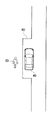
- FIG. 3 is a diagram illustrating an example of a stop location.
- FIG. 4 is a diagram illustrating an example of a message displayed on the mobile terminal of the user.
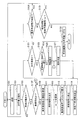
- FIG. 5 is a flowchart illustrating an operation example of the boarding permission determination device according to the first embodiment of the present invention.
- FIG. 6 is a diagram illustrating an example of a usage scene of the boarding permission determination device according to the first embodiment of the present invention.
- FIG. 7 is a schematic configuration diagram of a boarding permission determination device according to the second embodiment of the present invention.
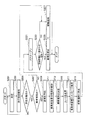
- FIG. 8 is a flowchart illustrating an operation example of the boarding permission determination device according to the second embodiment of the present invention.
- the boarding permission determination device 1 is mounted, for example, in an autonomous vehicle in which no driver exists.
- the autonomous driving vehicle will be described as a taxi.
- a driverless self-driving vehicle may be described as a robot taxi or an unmanned taxi.
- the boarding permission determination device 1 is not limited to being installed in an autonomous driving vehicle.
- the boarding permission determination device 1 may be installed in a vehicle in which a driver is present.
- the vehicle in which the driver exists may be a vehicle having an automatic driving function or a vehicle having no automatic driving function. Further, the vehicle in which the driver exists may be a vehicle capable of switching between automatic driving and manual driving.
- the autonomous driving level controlled by the driverless vehicle is a level 4 or higher.
- the autonomous driving level controlled by the vehicle in which the driver is present is level 1 or higher.
- the boarding permission determination device 1 includes a sensor 10, a GPS receiver 12, a controller 20, a storage device 13, a speaker 14, a display 15, and an authentication device 16.
- the sensor 10 is a device that is mounted on an autonomous driving vehicle and detects an object around the autonomous driving vehicle.
- the sensor 10 includes a camera, a lidar, a radar, a millimeter wave radar, a laser range finder, a sonar, and the like.
- the sensor 10 detects, as objects around the self-driving vehicle, other vehicles different from the self-driving vehicle, motorcycles, bicycles, moving objects including pedestrians, and stationary objects including obstacles, falling objects, and parked vehicles. Further, the sensor 10 detects the position, posture (yaw angle), size, speed, acceleration, deceleration, and yaw rate of a moving object and a stationary object with respect to the autonomous driving vehicle. Further, the sensor 10 may include a wheel speed sensor, a steering angle sensor, a gyro sensor, and the like. The sensor 10 outputs the detected information to the controller 20. In the present embodiment, the sensor 10 may be read as a camera.
- the GPS receiver 12 detects the position information of the autonomous driving vehicle on the ground by receiving the radio wave from the artificial satellite.
- the position information of the self-driving vehicle detected by the GPS receiver 12 includes latitude information and longitude information.
- the GPS receiver 12 outputs the detected position information of the autonomous driving vehicle to the controller 20.
- the controller 20 is a general-purpose microcomputer including a CPU (central processing unit), a memory, and an input/output unit.
- a computer program for causing the boarding permission determination device 1 to function is installed in the microcomputer.
- the microcomputer functions as a plurality of information processing circuits included in the boarding permission determination device 1.
- a plurality of information processing circuits included in the boarding permission determination device 1 are realized by software is shown.
- dedicated hardware for executing each information processing described below is prepared to It is also possible to configure the processing circuit.
- the plurality of information processing circuits may be configured by individual hardware.
- the controller 20 is, as an example of a plurality of information processing circuits, a communication unit 21, a detection unit 22, a stop location determination unit 23, a route setting unit 24, a guide unit 25, a speed calculation unit 26, and a recognition unit 27.
- the speaker 14 is installed inside the vehicle interior (inside) or outside the vehicle (outside) of the self-driving vehicle and outputs sound.
- the display 15 is installed inside (inside) or outside (outside) the autonomous driving vehicle and outputs an image.
- the image includes a still image and a moving image.
- the display 15 When the display 15 is installed outside the vehicle, it may be installed at a position where it is easy for the passenger who wants to see it to see it. Such a position is, for example, on the lower side (lower half) of the door 18.
- the display 15 has a touch panel function.
- the communication unit 21 is an interface for connecting to a communication network and transmitting/receiving data to/from a data center (not shown).
- the communication network is configured by a wireless communication system, and is the Internet, for example.
- the data center remotely controls an autonomous vehicle using the Internet.
- Detecting unit 22 detects a pedestrian around the self-driving vehicle using sensor 10 while the self-driving vehicle is traveling. Specifically, first, the detection unit 22 extracts a plurality of objects from the image (including the moving image) acquired by the sensor 10.
- An object is a collection of pixels.
- the plurality of objects include a pedestrian's hands, elbows, shoulders, head, chest, waist, knees, ankles, toes, fingertips, eyes, nose, mouth and ears.
- the detection unit 22 may extract an object including the eyes, nose, mouth, and ears of the pedestrian as the face of the pedestrian.
- the detection unit 22 may remove noise, distortion, and the like in the image in order to easily extract the object.
- the detection unit 22 may emphasize the contour of the object or adjust the brightness and the color tone of the image. This makes it easier for the detection unit 22 to extract the object.
- the detection unit 22 performs pattern matching on the extracted object.
- the pattern matching is, for example, comparing the extracted object A with the learning data and recognizing that the extracted object A is a pedestrian's face.
- the learning data for pattern matching is stored in the storage device 13.
- the pattern matching allows the detection unit 22 to detect an object around the self-driving vehicle as a pedestrian.
- the storage device 13 is a storage device different from the memory of the controller 20, and is, for example, a hard disk or a solid state drive.
- the detection unit 22 When the pedestrian is detected, the detection unit 22 also detects the movement of the pedestrian.
- the time-series data of these objects is data indicating the movements of the hands and elbows of the pedestrian. That is, the moving image acquired by the sensor 10 includes time-series information on the movement of the pedestrian's organ parts (the above-mentioned hands, elbows, etc.).
- the time-series information of such organ parts may be two-dimensional information or three-dimensional information.
- the detection unit 22 determines whether or not the movement is a predetermined movement.
- the predetermined movement is, for example, a pedestrian's raising hand. More specifically, the pedestrian's raised hand is a movement in which the pedestrian 50 raises his/her hand toward the autonomous driving vehicle 40 as shown in FIG. Pattern matching is used as the determination method.
- the motion of raising the hand toward the autonomous driving vehicle 40 is registered in the storage device 13 as learning data in advance.
- the learning data includes a large amount of raised hand data classified into sex, age, height, weight, etc. so as to be able to deal with various pedestrians.
- the detection unit 22 compares the movement of the pedestrian 50 with the learning data and determines whether the movement of the pedestrian 50 matches or is similar to the learning data.
- the detection unit 22 determines that the pedestrian 50 is raising his/her hand toward the autonomous driving vehicle 40.
- the detection unit 22 considers the face orientation, body orientation, palm orientation, etc. of the pedestrian 50, so that the pedestrian 50 operates automatically. It may be determined whether or not the hand is raised toward 40.
- movements such as the pedestrian 50 facing the self-driving vehicle 40, facing the body, or facing the palm may be registered in the storage device 13 as learning data in advance.
- the movement of the pedestrian 50 (the pedestrian 50 is facing the self-driving vehicle 40, facing the body, facing the palm, raising the hand) matches or is similar to the learning data.
- the detection unit 22 may determine that the pedestrian 50 is raising his/her hand toward the self-driving vehicle 40.
- the detection unit 22 detects the pedestrian 50 as the passenger 50 who desires to get on the self-driving vehicle 40.
- the predetermined movement may be any movement that can determine whether the pedestrian 50 wants to board or the boarding signal.
- the predetermined movement may be a movement in which the pedestrian 50 points his/her finger toward the self-driving vehicle 40.
- the boarding permission determination device 1 according to the present embodiment is used to place the pedestrian 50 in the autonomous driving vehicle 40 when the detection unit 22 detects that the pedestrian 50 is the boarding candidate 50.
- the detection unit 22 registers information indicating the characteristics of the passenger 50 in the storage device 13.
- the information indicating the characteristics of the passenger 50 is the time series data of the object indicating the characteristics of the passenger 50. Typically, it is time-series data of the face image of the passenger 50.
- the information indicating the characteristics of the passenger 50 is not limited to this.
- the information indicating the characteristics of the passenger 50 may include clothes, height, presence of a companion, and the like. The clothes and height of the passenger 50 are obtained by performing edge detection processing on the image.
- the presence/absence of a companion when a person is detected near the passenger 50 who is going to board the vehicle by performing pattern matching processing on the image, the person is acquired as a companion.
- the information indicating the characteristics of the boarding candidate 50 may include position information of the boarding person 50.
- the position information of the passenger 50 is obtained as follows.
- the image acquired by the sensor 10 includes position information (latitude information, longitude information, direction information) of the sensor 10.
- the distance from the sensor 10 to the passenger 50 can be obtained by image processing using parallax of two images, for example. Therefore, the position information of the passenger 50 is calculated based on the position information of the sensor 10 and the distance from the sensor 10 to the passenger 50.
- the distance from the sensor 10 to the passenger 50 may be acquired from data such as rider data.
- the stop location determining unit 23 causes the autonomous driving vehicle 40 to safely stop (hereinafter, simply referred to as a place). It may be called a stop location).
- the stop location determination unit 23 refers to the map database 13a stored in the storage device 13 to determine the stop location.
- the map database 13a stores a place where the autonomous driving vehicle 40 can safely stop.
- the stop location includes a roadside belt, a predetermined stop space, and the like. As shown in FIG. 3, if there is a stop-only space 60 near the passenger 50, the self-driving vehicle 40 stops in the stop-only space 60.
- the map database 13a may store a place where the autonomous driving vehicle 40 cannot stop.
- the boarding permission determination device 1 recognizes a place other than a place where the vehicle cannot stop as a place where the autonomous driving vehicle 40 can safely stop. Places that cannot be stopped include intersections, pedestrian crossings, and areas around railroad crossings where legally prohibited.
- the map database 13a also stores various data necessary for autonomous driving such as road information and facility information.
- the road information includes information such as the number of lanes on the road and road boundaries.
- the map database 13a outputs map information to the controller 20 in response to a request from the controller 20.
- various data such as road information is not necessarily limited to that acquired from the map database 13a, and may be acquired by the sensor 10 or may be acquired by using inter-vehicle communication or road-vehicle communication.
- the controller 20 may obtain these data from the server at any time through communication.
- the controller 20 may periodically obtain the latest map information from an externally installed server and update the stored map information.
- the stop location determination unit 23 may determine the stop location based on the position information of the boarding applicant 50 described above. If the autonomous driving vehicle 40 can be stopped near the passenger 50, the convenience of the passenger 50 will be improved.
- the route setting unit 24 sets a route for the autonomous driving vehicle 40 to make a patrol.
- the route setting section 24 changes the route for patrol and sets a new route to the stop location.
- the route setting unit 24 refers to the map database 13a and sets a new route that can be reached from the current location to the stop location in the shortest distance.
- the route setting unit 24 may set a new route that can reach the stop location from the current location in the shortest time in consideration of the congestion of the road.
- the guide unit 25 guides the passenger 50 to the stop location.
- the guide unit 25 displays on the display 15 a message "Stop before a convenience store 30 meters ahead".
- the passenger 50 who has seen the message on the display 15 can confirm at a glance the stop location of the self-driving vehicle 40.
- the guide unit 25 may notify a portable terminal (for example, a smartphone) carried by the passenger 50 to inform the stop location.
- the message "Stop in front of the convenience store 30 meters ahead" is displayed on the mobile terminal 70, so that the passenger 50 can confirm the stop location of the autonomous driving vehicle 40 at a glance.
- the guide unit 25 determines that the face registration information corresponding to or similar to the face registration information of the passenger 50 who is detected by the detection unit 22 from the database regarding the membership registration. To extract. Then, the guide unit 25 sends the message to the email address associated with the extracted face image information. This realizes notification of the message to the mobile terminal 70.
- the speed calculation unit 26 calculates the time required for the passenger 50 to walk to reach the stop location from the place where the raised hand of the passenger 50 is detected.
- a time may be simply referred to as an estimated arrival time.
- the estimated arrival time is calculated by dividing the distance from the place where the raised hand of the passenger 50 is detected to the stop place by the walking speed of the passenger 50.
- the distance from the place where the raising hand of the passenger 50 is detected to the stop place is calculated based on the position information of the place where the raising hand of the passenger 50 is detected and the position information of the stop place.
- the position information of the place where the raised hand of the passenger 50 is detected is obtained by the method described above.
- the position information of the stop location is stored in the map database 13a.
- the walking speed of the passenger 50 is obtained by dividing the change in the position information of the passenger 50 between the images by the time.
- the estimated arrival time calculated in this manner is used to cancel the boarding of the passenger 50.
- the speed calculation unit 26 calculates the estimated time of arrival+ ⁇ , which is the time that has elapsed after the autonomous vehicle 40 stopped at the stop location without being able to recognize the passenger 50 (hereinafter, simply referred to as elapsed time). To compare. When the time elapsed while the passenger 50 is not recognized exceeds the estimated arrival time + ⁇ , the speed calculation unit 26 determines that the boarding has been canceled. When the boarding is canceled, it is a waste of time to stop the autonomous driving vehicle 40, so the vehicle control unit 29 causes the autonomous driving vehicle 40 to start traveling. As a result, useless waiting time of the autonomous driving vehicle 40 is reduced.
- the value of ⁇ added to the estimated arrival time can be appropriately changed according to the attribute (for example, height) of the passenger 50.
- the value of ⁇ may be zero.
- the recognizing unit 27 recognizes the passenger 50 who is detected while the self-driving vehicle 40 is running after the self-driving vehicle 40 has stopped at the stop location. Specifically, first, the recognition unit 27 uses the sensor 10 to detect a pedestrian around the stop place. Then, the recognition unit 27 detects the information of the pedestrian such as the face, clothes, height, presence of accompanying persons of the pedestrian. The reason for detecting the pedestrians around the stop location is that the pedestrians around the stop location are assumed to include the passenger 50.
- the vicinity of the stop location is, for example, a radius of 5 m centered on the stop location.
- the recognition unit 27 compares the detected pedestrian information with the information of the passenger 50 who is registered in the storage device 13 to detect the pedestrian and the passenger. It is determined whether the information of the applicant 50 matches or is similar. For example, the recognition unit 27 determines whether the face image of the pedestrian and the face image of the passenger 50 are the same or similar. When the face image of the pedestrian and the face image of the passenger 50 are similar or similar, the recognition unit 27 recognizes the pedestrian as the passenger 50. Of course, the recognition unit 27 compares the face image of the passenger 50 and the clothes, height, presence/absence of a companion of both the passenger 50 and the pedestrian registered in the storage device 13 to determine the above determination. You may go.
- the door control unit 28 controls locking (locking) and unlocking of the door 18 of the autonomous driving vehicle 40, and opening/closing of the door 18.
- the door control unit 28 releases the door lock, which is a locking device of the door 18. This allows the passenger 50 to open and close the door 18, so that the passenger 50 can open the door 18 and get on the autonomous vehicle 40.
- the door control unit 28 may control the opening/closing device of the door 18 so that the door 18 automatically opens after releasing the door lock. This allows the passenger 50 to get on the autonomous driving vehicle 40 without touching the door 18.
- the automatic opening and closing of the door 18 is performed so that the passenger 50 will not be in danger. For example, when the door control unit 28 automatically opens and closes the door 18, the door control unit 28 notifies the passenger 50 using the speaker 14 "The door opens. Please leave the door.”
- the door control unit 28 may change the authentication device 16 installed outside (outside) the autonomous driving vehicle 40 from the inactive state to the active state.
- the authentication device 16 is, for example, a touch panel type device, and is a device capable of authentication or payment using a non-contact type IC card or the like. Authentication or payment using a contactless IC card or the like will be described.
- the recognition unit 27 has completed the recognition of the passenger 50, so the authentication using the non-contact type IC card is It means the final confirmation of the boarding intention.
- Payment using a contactless IC card or the like means advance payment.
- the inactive state is a state in which the non-contact type IC card or the like does not react.
- the active state is a state in which a non-contact type IC card or the like reacts.
- the vehicle control unit 29 controls the brake actuator, the accelerator pedal actuator, the steering actuator, and the like based on the information acquired by the sensor 10 so that the autonomous driving vehicle 40 travels along the route set by the route setting unit 24. Control. As a result, automatic driving is realized.
- step S101 the autonomous driving vehicle 40 travels along a preset route.
- the preset route may be the route set by the route setting unit 24 or the route set by the data center.
- the detection unit 22 detects a pedestrian using the sensor 10 (step S103).
- the detection unit 22 determines whether or not the detected movement of the pedestrian is a predetermined movement. Specifically, the detection unit 22 determines whether or not the pedestrian is raising his/her hand toward the self-driving vehicle 40.
- the detection unit 22 determines that the pedestrian 50 is raising his/her hand toward the self-driving vehicle 40 (step Yes in S105). At this time, the detection unit 22 detects the pedestrian 50 as the passenger 50 who desires to get on the self-driving vehicle 40.
- the process returns to step S101.
- step S107 the guide unit 25 determines whether the passenger 50 is able to board.
- the self-driving vehicle 40 is reserved by another user different from the passenger 50, the passenger 50 cannot board.
- step S127 the guide unit 25 dispatches another vehicle.
- the guide unit 25 transmits the position information of the current position of the autonomous driving vehicle 40 to another vehicle, and instructs the other vehicle to come to the current position of the autonomous driving vehicle 40.
- the guide unit 25 has a function of providing a dispatch service to the passenger 50. This allows the passenger 50 to board another vehicle without searching for another vehicle.
- the communication between the autonomous driving vehicle 40 and another vehicle may be performed directly or via a data center.
- the other vehicle may be a robot taxi like the self-driving vehicle 40 or a normal taxi.
- the Internet can be used for communication between the autonomous driving vehicle 40 and another vehicle.
- the autonomous driving vehicle 40 may not be able to board the passenger 50 even though it is not reserved. For example, when the timing for raising the hand of the passenger 50 is just before the autonomous vehicle 40 passes by the passenger 50, the autonomous vehicle 40 cannot smoothly stop, and thus the passenger 50 cannot be boarded. In this case as well, the guide unit 25 can dispatch another vehicle. This allows the passenger 50 to board another vehicle without searching for another vehicle.
- the detection unit 22 registers information indicating the characteristics of the passenger 50 in the storage device 13.
- the information indicating the characteristics of the passenger 50 will include the face image of the passenger 50 detected by the sensor 10 as described above, clothes, height, presence of accompanying persons, position information of the passenger 50, and the like. ..
- step S111 the stop location determination unit 23 refers to the map database 13a to determine a stop location at which the autonomous vehicle 40 can safely stop.
- step S113 the route setting unit 24 changes the route for patrol and sets a new route to the stop location determined by the stop location determining unit 23.
- step S115 the guide unit 25 displays a message for informing the boarding applicant 50 of the stop location.
- the guide unit 25 displays on the display 15 a message "Stop before a convenience store 30 meters ahead".
- the guide unit 25 may notify the portable terminal 70 carried by the passenger 50 of the boarding place of the stop location (see FIG. 4).
- the boarding candidate 50 who sees the message on the display 15 or the mobile terminal 70 can confirm the stop location of the autonomous driving vehicle 40 at a glance.
- step S117 the vehicle control unit 29 causes the autonomous driving vehicle 40 to travel along the route newly set in step S113 and stops the autonomous driving vehicle 40 at the stop place.
- step S119 the speed calculation unit 26 calculates an estimated arrival time required for the passenger 50 to walk to reach the stop location from the place where the passenger 50's raised hand is detected.
- step S121 the recognition unit 27 uses the sensor 10 to detect a pedestrian around the stop place.
- the reason for detecting the pedestrians around the stop location is that the pedestrians around the stop location are assumed to include the passenger 50.
- the recognition unit 27 compares the detected pedestrian information with the information of the passenger 50 who is registered in the storage device 13. Then, it is determined whether or not the information of the pedestrian and the information of the passenger 50 is similar or similar. For example, the recognition unit 27 determines whether the face image of the pedestrian and the face image of the passenger 50 are the same or similar. When the face image of the pedestrian and the face image of the passenger 50 are similar or similar, the recognition unit 27 recognizes the pedestrian as the passenger 50.
- the recognition unit 27 compares the face image of the passenger 50 and the clothes, height, presence/absence of a companion of both the passenger 50 and the pedestrian registered in the storage device 13 to determine the above determination. You may go.
- step S133 the door control unit 28 causes the predetermined device mounted on the autonomous driving vehicle 40 to operate.
- the boarding applicant 50 is controlled so that it can be used.
- the door control unit 28 controls a predetermined device mounted on the autonomous driving vehicle 40 so that the passenger 50 can get on the autonomous driving vehicle 40.
- the predetermined device is, for example, an opening/closing device for the door 18 or a locking device.
- the opening/closing device for the door 18 may be expressed as a door opening/closing control device that controls opening/closing of the door 18.
- the locking device of the door 18 may be expressed as a door lock control device that controls locking and unlocking of the door 18.
- the door control unit 28 unlocks the door lock that is the locking device of the door 18. This allows the passenger 50 to open and close the door 18, so that the passenger 50 can open the door 18 and get on the autonomous vehicle 40.
- the door control unit 28 may control the opening/closing device of the door 18 so that the door 18 automatically opens after releasing the door lock. This allows the passenger 50 to get on the autonomous driving vehicle 40 without touching the door 18.
- the predetermined device also includes the authentication device 16.
- the door control unit 28 may change the authentication device 16 installed outside (outside) the autonomous driving vehicle 40 from the inactive state to the active state.
- the door control unit 28 unlocks the door. As a result, the passenger 50 can get on the self-driving vehicle 40.
- step S121 if the pedestrian is not detected in the vicinity of the stop place after the autonomous driving vehicle 40 has stopped at the stop place (No in step S121), the process proceeds to step S129, and the recognizing unit 27 determines that the passenger 50 wants to board. Determine whether or not you have left. Withdrawal of the passenger 50 is meant that the passenger 50 is moving away from the autonomous driving vehicle 40. The departure of the passenger 50 from the self-driving vehicle 40 means that the passenger 50 does not intend to board. Therefore, withdrawal of the passenger 50 in the present embodiment means cancellation of the passenger.
- the recognition unit 27 determines that the passenger desiring vehicle 50 has left when the distance between the passenger desiring vehicle 50 and the autonomous driving vehicle 40 becomes longer as time elapses after the autonomous driving vehicle 40 stops at the stop location.
- step S129 occurs when the passenger 50 who is detected in step S105 is continuously detected by the sensor 10 and is not in the vicinity of the stop place.
- the distance between the passenger 50 and the autonomous driving vehicle 40 is the distance from the sensor 10 to the passenger 50, and such a distance can be obtained by image processing using the parallax of two images. ..
- that the distance between the passenger 50 and the autonomous driving vehicle 40 becomes longer with the passage of time means that the passenger 50 has kept moving away from the autonomous driving vehicle 40 for a predetermined time, or if the passenger 50 is a predetermined distance or more. This means that the vehicle has moved away from the autonomous driving vehicle 40.
- step S129 If it is determined that the passenger 50 has left (Yes in step S129), that is, if the passenger has been canceled, it is a waste of time to stop the autonomous driving vehicle 40. Therefore, in this case, the process returns to step S101, and the vehicle control unit 29 causes the autonomous driving vehicle 40 to start traveling. As a result, useless waiting time of the autonomous driving vehicle 40 is reduced.
- step S131 the speed calculation unit 26 compares the time that elapses in a state in which the passenger 50 cannot be recognized since the autonomous driving vehicle 40 stopped at the stop location with the estimated arrival time calculated in step S119. More specifically, the speed calculation unit 26 compares the elapsed time with the estimated arrival time + ⁇ . When the time elapsed while the passenger 50 is not recognized exceeds the estimated arrival time + ⁇ (Yes in step S131), the speed calculation unit 26 determines that the boarding has been canceled. This is because it is assumed that the passenger 50 is not willing to board. If the boarding is canceled, it is a waste of time to stop the autonomous vehicle 40. Therefore, in this case, the process returns to step S101, and the vehicle control unit 29 causes the autonomous driving vehicle 40 to start traveling. As a result, useless waiting time of the autonomous driving vehicle 40 is reduced.
- step S123 if the information of the pedestrian and the passenger 50 does not match or are not similar (No in step S123), a person different from the passenger 50 may board the autonomous driving vehicle 40.
- a person different from the person who wants to board 50 is not unlocking the door to try to get into the autonomous vehicle 40, a person different from person who wants to board 50 cannot get into the autonomous vehicle 40. Therefore, when it is detected that a person different from the passenger 50 is detected around the stop and that a person different from the passenger 50 has operated the door 18 to get into the self-driving vehicle 40, The unit 25 uses a voice or an image to notify a person different from the passenger 50 as to that the self-driving vehicle 40 is already reserved. As a result, a person different from the person desiring to board 50 can know that he/she cannot board the self-driving vehicle 40, and the convenience of a person different from the person 50 desiring to board is improved.
- the guide unit 25 may propose the allocation of another vehicle for a person different from the passenger 50.
- the controller 20 may display “Do you want to arrange a vehicle at the current location?” on the display 15 and ask a person different from the passenger 50 to arrange a vehicle.
- the controller 20 transmits information regarding the current location of the autonomous driving vehicle 40 to the other vehicle, and the other vehicle causes the current location of the autonomous driving vehicle 40. Instruct you to come to.
- a person different from the person desiring to board 50 can get on another vehicle, so that the convenience of the person different from the person desiring to board 50 is improved.
- the boarding permission determination device 1 uses a sensor 10 mounted on a vehicle (autonomous vehicle 40) to detect a predetermined movement of a person who is at least around the autonomous vehicle 40 while the autonomous vehicle 40 is traveling. Equipped with.
- An example of the predetermined movement is raising the hand of the person as described above.
- the controller 20 detects a predetermined movement of a person while the autonomous driving vehicle 40 is traveling, the controller 20 detects the person as a passenger 50 who desires to get on the autonomous driving vehicle 40. After detecting the passenger 50, the controller 20 determines the stop location of the autonomous driving vehicle 40.
- the controller 20 controls the autonomous driving vehicle 40 using various actuators so that the autonomous driving vehicle 40 stops at the determined stop location.
- the controller 20 When the controller 20 recognizes the passenger 50 who has been detected while the autonomous vehicle 40 is traveling after stopping the autonomous vehicle 40 at a stop place, the controller 20 enables the passenger 50 to get on the autonomous vehicle 40. Controls a predetermined device mounted on the autonomous driving vehicle 40.
- the predetermined device is, for example, an opening/closing device for the door 18 or a locking device.
- the opening/closing device for the door 18 may be expressed as a door opening/closing control device that controls opening/closing of the door 18.
- the locking device of the door 18 may be expressed as a door lock control device that controls locking and unlocking of the door 18.
- the controller 20 unlocks the door lock, which is a locking device for the door 18.
- the controller 20 may control the opening/closing device of the door 18 so that the door 18 automatically opens after releasing the door lock. This allows the passenger 50 to get on the autonomous driving vehicle 40 without touching the door 18.
- the predetermined device also includes the authentication device 16 installed outside (outside) the autonomous driving vehicle 40. When the controller 20 recognizes the passenger 50, the authentication device 16 may change from the inactive state to the active state. This allows the passenger 50 to smoothly perform authentication or payment using a non-contact type IC card or the like. After the authentication or payment by the authentication device 16 is completed, the controller 20 unlocks the door.
- the passenger 50 can get on the self-driving vehicle 40.
- the boarding candidate 50 who has sent the signal of boarding request can board the autonomous driving vehicle 40. In other words, it is possible to prevent a person other than the passenger 50 who has sent the signal that he/she wants to board the vehicle from accidentally getting into the autonomous driving vehicle 40.
- the controller 20 when the controller 20 detects a predetermined movement of the passenger 50 while the autonomous driving vehicle 40 is traveling, the controller 20 registers information indicating the characteristics of the passenger 50 in the storage device 13. As described above, the information indicating the characteristics of the passenger 50 is a face image of the passenger 50, clothes, height, presence of a companion, position information of the passenger 50, and the like.
- the controller 20 stops the autonomous driving vehicle 40 at a stop place, and then recognizes the passenger 50 who is detected while the autonomous driving vehicle 40 is traveling, using the information registered in the storage device 13. Specifically, the controller 20 stops the self-driving vehicle 40 at the stop location, and then uses the sensor 10 to detect a pedestrian around the stop location.
- the controller 20 compares the detected pedestrian information (for example, face image) with the information (for example, face image) of the passenger 50 who is registered in the storage device 13. , It is determined whether the information of the pedestrian and the information of the passenger 50 is the same or similar. When the face image of the pedestrian and the face image of the passenger 50 are the same or similar, the controller 20 recognizes the pedestrian as the passenger 50. In this way, the controller is obtained by comparing information indicating the characteristics of the passenger 50 who is detected while the autonomous driving vehicle 40 is running with information about the pedestrian detected when the autonomous driving vehicle 40 is stopped at the stop location. The vehicle 20 can accurately recognize the passenger 50 who is detected while the autonomous vehicle 40 is traveling, at the stop location.
- the detected pedestrian information for example, face image
- the information for example, face image
- the controller 20 when the controller 20 cannot recognize the passenger 50 who has been detected while the autonomous vehicle 40 is running after stopping the autonomous vehicle 40 at the stop location, the controller 20 does not allow the passenger 50 to board the vehicle.
- the traveling of the autonomous driving vehicle 40 is started. Specifically, the controller 20 compares the estimated time of arrival+ ⁇ with the time that elapses in a state in which the passenger 50 cannot be recognized since the autonomous driving vehicle 40 stopped at the stop location. When the time that has passed without being able to recognize the passenger 50 is more than the estimated arrival time + ⁇ , the controller 20 determines that the passenger has been canceled. If the boarding is canceled, it is a waste of time to stop the autonomous vehicle 40. Therefore, the controller 20 causes the autonomous driving vehicle 40 to start traveling. As a result, useless waiting time of the autonomous driving vehicle 40 is reduced.
- the predetermined time corresponds to the estimated arrival time+ ⁇ .
- the controller 20 stops the autonomous driving vehicle 40 at a stopping place, and thereafter, the distance between the passenger 50 and the autonomous driving vehicle 40, which are detected while the autonomous driving vehicle 40 is traveling, becomes longer as time passes. In this case, the traveling of the self-driving vehicle 40 is started without riding the passenger 50.
- the fact that the distance between the passenger 50 and the self-driving vehicle 40 increases with the passage of time means that the passenger 50 has canceled the passenger's riding as described above. If the boarding is canceled, it is a waste of time to stop the autonomous vehicle 40. Therefore, the controller 20 causes the autonomous driving vehicle 40 to start traveling. As a result, useless waiting time of the autonomous driving vehicle 40 is reduced.
- the controller 20 detects an operation of a predetermined device by a person (second person) different from the passenger wishing passenger 50 detected while the autonomous driving vehicle 40 is running after stopping the autonomous driving vehicle 40 at a stop place. In that case, a person different from the passenger 50 is notified that the self-driving vehicle 40 is reserved by using a voice or an image. Since the autonomous driving vehicle 40 is a taxi, a person different from the passenger 50 may board the autonomous driving vehicle 40. However, since the self-driving vehicle 40 is reserved by the passenger 50, the person other than the passenger 50 cannot board.
- the controller 20 informs a person different from the boarding candidate 50 that the self-driving vehicle 40 is already reserved by using a voice or an image.
- a person different from the person desiring to board 50 can know that he/she cannot board the self-driving vehicle 40, and the convenience of a person different from the person 50 desiring to board is improved.
- the controller 20 when the controller 20 detects a request for vehicle allocation by a person different from the passenger 50, the controller 20 transmits information related to the current location of the autonomous driving vehicle 40 to the other vehicle, and the other vehicle becomes the current location of the autonomous driving vehicle 40. Instruct them to come. A person different from the passenger 50 is unable to board the self-driving vehicle 40, but a person different from the passenger 50 is a person who wants to use a taxi. Therefore, the controller 20 may display "Do you want to arrange a vehicle at the current location?" on the display 15 in order to confirm a request from a person different from the passenger 50.
- the controller 20 transmits information regarding the current location of the autonomous driving vehicle 40 to the other vehicle, and the other vehicle causes the current location of the autonomous driving vehicle 40. Instruct you to come to. In this way, the autonomous vehicle 40 can provide a vehicle dispatch service to a person different from the passenger 50. This allows a person different from the passenger 50 to board the vehicle without looking for the other vehicle.
- the controller 20 when the controller 20 detects a predetermined movement of the passenger 50 while the self-driving vehicle 40 is traveling, the controller 20 changes a preset route so that the self-driving vehicle 40 stops at the stop place.
- the vehicle 40 is controlled. Specifically, the controller 20 changes a preset route and sets a new route to the stop location.
- the controller 20 drives the autonomous vehicle 40 along the new route. Then, the controller 20 controls the autonomous driving vehicle 40 so that the autonomous driving vehicle 40 stops at the stop location. As a result, the autonomous driving vehicle 40 can smoothly go to the stop location.
- the controller 20 acquires the position information of the passenger 50 or the position information of the self-driving vehicle 40 when the predetermined motion of the passenger 50 is detected while the self-driving vehicle 40 is traveling. Then, the controller 20 determines the stop location based on the position information of the passenger 50 or the position information of the self-driving vehicle 40. By using the position information of the passenger 50, the self-driving vehicle 40 can be stopped near the passenger 50. This improves the convenience of the passenger 50. Further, by referring to the map database 13a using the position information of the autonomous driving vehicle 40, the stop location can be quickly determined.
- the controller 20 when the controller 20 detects a predetermined movement of the passenger 50 while the autonomous driving vehicle 40 is traveling, the controller 20 notifies the portable terminal 70 (for example, a smartphone) carried by the passenger 50 of the stop location, or automatically.
- the stop location is displayed on the display 15 mounted on the driving vehicle 40.
- the controller 20 notifies the mobile terminal 70 of the message “Stop before the convenience store 30 m ahead”. Thereby, the passenger 50 can check the stop location of the autonomous driving vehicle 40 at a glance.
- the controller 20 calculates the time (expected arrival time) required for the passenger 50 to arrive at the stop location based on the position information of the passenger 50 and the position information of the stop location. After the controller 20 stops the autonomous driving vehicle 40 at the stop location, if the time when the autonomous driving vehicle 40 cannot recognize the passenger 50 who is detected during traveling exceeds the expected arrival time, the autonomous driving vehicle 40 travels. To start. The time during which the passenger 50, who is detected while the self-driving vehicle 40 is traveling, cannot be recognized is the above-described elapsed time. If the time during which the passenger 50, who is detected while the self-driving vehicle 40 is traveling, cannot be recognized exceeds the estimated arrival time, it means cancellation of the passenger. If the boarding is canceled, it is a waste of time to stop the autonomous vehicle 40. Therefore, the controller 20 causes the autonomous driving vehicle 40 to start traveling. As a result, useless waiting time of the autonomous driving vehicle 40 is reduced.
- the boarding permission determination device 1 allows the boarding applicant 50 to check the boarding candidate 50 even if the boarding applicant 50 is in the lane opposite to the lane in which the autonomous vehicle 40 travels. Can be boarded.
- a boarding permission determination device 2 according to a second embodiment of the present invention will be described.
- the boarding permission determination device 2 according to the second embodiment is different from the boarding permission determination device 1 according to the first embodiment in that the boarding permission determination device 2 includes a seat reservation unit 30 and a seat control unit 31. ..
- Constituent elements that are the same as those in the first embodiment will be denoted by the reference numerals and the description thereof will be omitted. The difference will be mainly described below.
- the autonomous driving vehicle 40 having no driver has been described as a taxi, but the autonomous driving vehicle 40 having no driver includes not only a taxi but also a bus.
- the self-driving vehicle 40 will be described as a bus with no driver.
- the boarding permission determination device 2 is used for the purpose of seating a user.
- the seat reservation unit 30 determines whether or not the passenger 50 can board.
- being able to get on does not mean simply being able to get on the autonomous driving vehicle 40.
- To be able to board means that there is a vacant seat in the self-driving vehicle 40 and that seat is not reserved. Even if there is a vacant seat, the passenger 50 cannot sit down if the seat is reserved. Therefore, if there is no vacant seat, or if there is a vacant seat and that seat is reserved, the passenger 50 cannot board. In this case, it is determined that the passenger cannot board.
- the seat reservation unit 30 reserves an empty seat as a seat for the passenger 50 to sit in.
- the information regarding the reserved seat may be transmitted to the mobile terminal 70 carried by the passenger 50.
- the same method as in the first embodiment is used.
- the information about the reserved seat includes, for example, the seat number.
- the boarding applicant 50 is not recognized when the boarding candidate 50 gets on, unlike the first embodiment.
- the passenger 50 desires to board the self-driving vehicle 40 and sits in the reserved seat, the passenger 50 is recognized.
- the seated portion of the reserved seat is folded by the seat control unit 31.
- the seat is provided with an elevating device, and the seat control unit 31 controls the elevating device to fold the seated portion of the seat or lower the folded seated portion. The reason why the seated portion of the reserved seat is folded by the seat control unit 31 is to prevent a person different from the passenger 50 from sitting in the reserved seat.
- the recognizing unit 27 compares the information of the passenger 50 who has boarded the autonomous driving vehicle 40 with the information of the passenger 50 who has registered in the storage device 13, and the passenger 50 who has boarded the autonomous driving vehicle 40. And the information of the passenger 50 registered in the storage device 13 is determined to be the same or similar.
- the seat control unit 31 lowers the folded sitting portion. This allows the passenger 50 to sit in the reserved seat.
- the seat control unit 31 is installed near the reserved seat.
- the authenticated authentication device 16 may be changed from the inactive state to the active state. After the passenger 50 has completed the authentication or payment by the authentication device 16 using a non-contact type IC card or the like, the seat control unit 31 may lower the folded sitting portion.
- steps S201 to 205 shown in FIG. 8 are the same as steps S101 to 105 shown in FIG.
- steps S211 to 219 shown in FIG. 8 are the same as steps S109 to 117 shown in FIG.
- step S207 the seat reservation unit 30 determines whether or not the passenger 50 is able to board if the detector 22 detects the passenger 50 who wants to board the self-driving vehicle 40.
- the process proceeds to step S227, and the guide unit 25 uses the display 15 or the like to notify the passenger 50 who cannot board the vehicle.
- step S207 If it is determined in step S207 that it is possible to board (Yes in step S207), the process proceeds to step S209, and the seat reservation unit 30 reserves an empty seat as a seat for the passenger 50 to sit in.
- the information regarding the reserved seat may be transmitted to the portable terminal 70 carried by the passenger 50.
- the seat information includes, for example, a seat number.
- the seat control unit 31 controls the lifting device to fold the seated portion of the reserved seat. This is to prevent a person different from the passenger 50 from sitting in the reserved seat.
- step S221 the door control unit 28 opens the door 18 and allows the passenger 50 to board.
- the boarding candidate 50 is not recognized when the boarding candidate 50 gets on, unlike the first embodiment.
- the passenger 50 who has boarded the self-driving vehicle 40 moves to the reserved seat based on the seat number acquired in step S209.
- the reserved seat is folded and the passenger 50 cannot sit in the reserved seat.
- the recognition unit 27 uses the sensor 10 to acquire the information of the passenger 50.
- the recognition unit 27 may use the sensor 10 at the time when the passenger 50 has boarded the self-driving vehicle 40 to acquire the information of the passenger 50.
- the sensor 10 may be installed for each seat, or may be installed at a position overlooking the passenger compartment.
- the recognition unit 27 compares the acquired information (for example, a face image) of the passenger 50 who desires to board and the information (for example, a facial image) of the passenger 50 who is registered in the storage device 13, and selects the reserved seat. It is determined whether the passenger 50 who has moved and the passenger 50 who is registered in the storage device 13 are the same or similar.
- the seat control unit 31 selects the folded sitting portion. Unload (step S225). This allows the passenger 50 to sit in the reserved seat.
- the boarding permission determination device 2 includes a controller 20 that uses the sensor 10 mounted on the autonomous driving vehicle 40 to detect a predetermined movement of at least a person around the autonomous driving vehicle 40 while the autonomous driving vehicle 40 is traveling.
- An example of the predetermined movement is raising the hand of the person as described above.
- the controller 20 detects a predetermined movement of a person while the autonomous driving vehicle 40 is traveling, the controller 20 detects the person as a passenger 50 who desires to get on the autonomous driving vehicle 40. After detecting the passenger 50, the controller 20 determines the stop location of the autonomous driving vehicle 40.
- the controller 20 controls the autonomous driving vehicle 40 using various actuators so that the autonomous driving vehicle 40 stops at the determined stop location.
- the controller 20 stops the self-driving vehicle 40 at the stop location, then opens the door 18 and allows the passenger 50 to board. After that, when the passenger wishing vehicle 50 detected while the self-driving vehicle 40 is running is recognized in the self-driving vehicle 40, the self-driving vehicle 50 is installed so that the self-driving person 50 can sit on the seat installed in the self-driving vehicle 40.
- a predetermined device mounted on the control unit 40 is controlled.
- the predetermined device is, for example, a seat lifting device.
- the controller 20 controls the lifting device to lower the folded sitting portion. .. This allows the passenger 50 to sit in the reserved seat.
- the predetermined device also includes the authentication device 16 installed near the reserved seat.
- the processing circuit includes a programmed processing device such as a processing device including an electrical circuit.
- Processing circuitry also includes devices such as application specific integrated circuits (ASICs) and circuit components that are arranged to perform the functions described.
- ASICs application specific integrated circuits
- the boarding permission judgment device 1 and the boarding permission judgment device 2 can improve the functions of the computer.
- the passenger 50 may use the mobile terminal 70 to reserve an empty seat.
Landscapes
- Engineering & Computer Science (AREA)
- General Physics & Mathematics (AREA)
- Physics & Mathematics (AREA)
- Theoretical Computer Science (AREA)
- Multimedia (AREA)
- Computer Vision & Pattern Recognition (AREA)
- Business, Economics & Management (AREA)
- Human Computer Interaction (AREA)
- General Health & Medical Sciences (AREA)
- Health & Medical Sciences (AREA)
- Tourism & Hospitality (AREA)
- Social Psychology (AREA)
- Psychiatry (AREA)
- Automation & Control Theory (AREA)
- Transportation (AREA)
- Mechanical Engineering (AREA)
- Marketing (AREA)
- Human Resources & Organizations (AREA)
- Strategic Management (AREA)
- Economics (AREA)
- General Business, Economics & Management (AREA)
- Primary Health Care (AREA)
- Development Economics (AREA)
- Entrepreneurship & Innovation (AREA)
- Operations Research (AREA)
- Quality & Reliability (AREA)
- Traffic Control Systems (AREA)
- Image Analysis (AREA)
Abstract
Priority Applications (6)
| Application Number | Priority Date | Filing Date | Title |
|---|---|---|---|
| CN201980090816.9A CN113383368A (zh) | 2019-01-29 | 2019-01-29 | 乘车许可判断装置以及乘车许可判断方法 |
| JP2020568857A JP7095757B2 (ja) | 2019-01-29 | 2019-01-29 | 乗車許可判断装置及び乗車許可判断方法 |
| PCT/IB2019/000103 WO2020157531A1 (fr) | 2019-01-29 | 2019-01-29 | Dispositif de détermination de permission d'embarquement et procédé de détermination de permission d'embarquement |
| US17/426,221 US12249155B2 (en) | 2019-01-29 | 2019-01-29 | Boarding permission determination device and boarding permission determination method |
| BR112021014864-7A BR112021014864A2 (pt) | 2019-01-29 | 2019-01-29 | Dispositivo de determinação para permissão de embarque e método de determinação para permissão de embarque |
| EP19912205.2A EP3920141B1 (fr) | 2019-01-29 | 2019-01-29 | Dispositif de détermination de permission d'embarquement et procédé de détermination de permission d'embarquement |
Applications Claiming Priority (1)
| Application Number | Priority Date | Filing Date | Title |
|---|---|---|---|
| PCT/IB2019/000103 WO2020157531A1 (fr) | 2019-01-29 | 2019-01-29 | Dispositif de détermination de permission d'embarquement et procédé de détermination de permission d'embarquement |
Publications (1)
| Publication Number | Publication Date |
|---|---|
| WO2020157531A1 true WO2020157531A1 (fr) | 2020-08-06 |
Family
ID=71841421
Family Applications (1)
| Application Number | Title | Priority Date | Filing Date |
|---|---|---|---|
| PCT/IB2019/000103 Ceased WO2020157531A1 (fr) | 2019-01-29 | 2019-01-29 | Dispositif de détermination de permission d'embarquement et procédé de détermination de permission d'embarquement |
Country Status (6)
| Country | Link |
|---|---|
| US (1) | US12249155B2 (fr) |
| EP (1) | EP3920141B1 (fr) |
| JP (1) | JP7095757B2 (fr) |
| CN (1) | CN113383368A (fr) |
| BR (1) | BR112021014864A2 (fr) |
| WO (1) | WO2020157531A1 (fr) |
Cited By (2)
| Publication number | Priority date | Publication date | Assignee | Title |
|---|---|---|---|---|
| JP2021123978A (ja) * | 2020-02-07 | 2021-08-30 | トヨタ紡織株式会社 | シート制御システム |
| EP4361987A4 (fr) * | 2021-06-23 | 2024-08-07 | Nissan Motor Co., Ltd. | Dispositif de commande de véhicule, procédé de commande de véhicule, programme de commande de véhicule et système de commande de véhicule |
Families Citing this family (6)
| Publication number | Priority date | Publication date | Assignee | Title |
|---|---|---|---|---|
| US10635994B2 (en) | 2015-12-11 | 2020-04-28 | Lyft, Inc. | System for navigating driver to passenger for ride authorized by another user of transportation service |
| KR102880592B1 (ko) * | 2019-08-09 | 2025-11-03 | 하만인터내셔날인더스트리스인코포레이티드 | 자율 차량 상호 작용 시스템 |
| USD1102436S1 (en) | 2020-03-30 | 2025-11-18 | Lyft, Inc. | Display screen or portion thereof with graphical user interface |
| JP2022047081A (ja) * | 2020-09-11 | 2022-03-24 | トヨタ自動車株式会社 | 情報処理装置、情報処理システム、及び、情報処理方法 |
| US11947356B2 (en) * | 2021-04-13 | 2024-04-02 | Waymo Llc | Evaluating pullovers for autonomous vehicles |
| KR20250026542A (ko) * | 2023-08-17 | 2025-02-25 | 현대모비스 주식회사 | 차량용 정보표시 장치 및 이를 이용한 정보표시 방법 |
Citations (6)
| Publication number | Priority date | Publication date | Assignee | Title |
|---|---|---|---|---|
| JP2012014482A (ja) | 2010-07-01 | 2012-01-19 | Panasonic Corp | タクシー用判定装置 |
| JP2015191264A (ja) * | 2014-03-27 | 2015-11-02 | 株式会社ニコン | 自律走行車両 |
| JP2018073351A (ja) * | 2016-11-04 | 2018-05-10 | 本田技研工業株式会社 | 車両制御システム、車両制御方法、および車両制御プログラム |
| WO2018142528A1 (fr) * | 2017-02-02 | 2018-08-09 | 日産自動車株式会社 | Procédé de gestion de partage de conduite, dispositif de gestion de partage de conduite, et véhicule |
| WO2018189952A1 (fr) * | 2017-04-14 | 2018-10-18 | パナソニック インテレクチュアル プロパティ コーポレーション オブ アメリカ | Véhicule autonome, procédé d'arrêt de véhicule autonome et programme |
| JP2019016150A (ja) * | 2017-07-06 | 2019-01-31 | 矢崎エナジーシステム株式会社 | 無人タクシー制御方法および無人タクシー制御装置 |
Family Cites Families (13)
| Publication number | Priority date | Publication date | Assignee | Title |
|---|---|---|---|---|
| KR101537936B1 (ko) * | 2013-11-08 | 2015-07-21 | 현대자동차주식회사 | 차량 및 그 제어방법 |
| KR101551215B1 (ko) * | 2014-05-28 | 2015-09-18 | 엘지전자 주식회사 | 차량 운전 보조 장치 및 이를 구비한 차량 |
| KR101556521B1 (ko) * | 2014-10-06 | 2015-10-13 | 현대자동차주식회사 | 휴먼 머신 인터페이스 장치, 그를 가지는 차량 및 그 제어 방법 |
| TWI549069B (zh) * | 2014-12-15 | 2016-09-11 | Sheng Hui Meng | Method and device for passenger barge |
| JP2016218895A (ja) * | 2015-05-25 | 2016-12-22 | 日本電気株式会社 | 同一人物検証システム、方法およびプログラム |
| US10088846B2 (en) * | 2016-03-03 | 2018-10-02 | GM Global Technology Operations LLC | System and method for intended passenger detection |
| JP6722066B2 (ja) * | 2016-08-29 | 2020-07-15 | 株式会社Soken | 周辺監視装置及び周辺監視方法 |
| DE102016217770A1 (de) | 2016-09-16 | 2018-03-22 | Audi Ag | Verfahren zum Betrieb eines Kraftfahrzeugs |
| JP6573929B2 (ja) | 2017-03-17 | 2019-09-11 | 本田技研工業株式会社 | 情報提供車載装置、情報提供システム、及び情報提供プログラム |
| US10268203B2 (en) * | 2017-04-20 | 2019-04-23 | GM Global Technology Operations LLC | Calibration validation for autonomous vehicle operations |
| DE112018003029T5 (de) * | 2017-06-16 | 2020-03-12 | Honda Motor Co., Ltd. | Fahrzeug und servicemanagementvorrichtung |
| CN108664120A (zh) * | 2018-03-30 | 2018-10-16 | 斑马网络技术有限公司 | 手势识别系统及其方法 |
| JP7028158B2 (ja) * | 2018-12-28 | 2022-03-02 | トヨタ自動車株式会社 | 情報処理装置および移動体システム |
-
2019
- 2019-01-29 US US17/426,221 patent/US12249155B2/en active Active
- 2019-01-29 CN CN201980090816.9A patent/CN113383368A/zh active Pending
- 2019-01-29 BR BR112021014864-7A patent/BR112021014864A2/pt not_active IP Right Cessation
- 2019-01-29 WO PCT/IB2019/000103 patent/WO2020157531A1/fr not_active Ceased
- 2019-01-29 EP EP19912205.2A patent/EP3920141B1/fr active Active
- 2019-01-29 JP JP2020568857A patent/JP7095757B2/ja active Active
Patent Citations (6)
| Publication number | Priority date | Publication date | Assignee | Title |
|---|---|---|---|---|
| JP2012014482A (ja) | 2010-07-01 | 2012-01-19 | Panasonic Corp | タクシー用判定装置 |
| JP2015191264A (ja) * | 2014-03-27 | 2015-11-02 | 株式会社ニコン | 自律走行車両 |
| JP2018073351A (ja) * | 2016-11-04 | 2018-05-10 | 本田技研工業株式会社 | 車両制御システム、車両制御方法、および車両制御プログラム |
| WO2018142528A1 (fr) * | 2017-02-02 | 2018-08-09 | 日産自動車株式会社 | Procédé de gestion de partage de conduite, dispositif de gestion de partage de conduite, et véhicule |
| WO2018189952A1 (fr) * | 2017-04-14 | 2018-10-18 | パナソニック インテレクチュアル プロパティ コーポレーション オブ アメリカ | Véhicule autonome, procédé d'arrêt de véhicule autonome et programme |
| JP2019016150A (ja) * | 2017-07-06 | 2019-01-31 | 矢崎エナジーシステム株式会社 | 無人タクシー制御方法および無人タクシー制御装置 |
Non-Patent Citations (1)
| Title |
|---|
| See also references of EP3920141A4 |
Cited By (6)
| Publication number | Priority date | Publication date | Assignee | Title |
|---|---|---|---|---|
| JP2021123978A (ja) * | 2020-02-07 | 2021-08-30 | トヨタ紡織株式会社 | シート制御システム |
| JP7342728B2 (ja) | 2020-02-07 | 2023-09-12 | トヨタ紡織株式会社 | シート制御システム |
| EP4361987A4 (fr) * | 2021-06-23 | 2024-08-07 | Nissan Motor Co., Ltd. | Dispositif de commande de véhicule, procédé de commande de véhicule, programme de commande de véhicule et système de commande de véhicule |
| JP2025074107A (ja) * | 2021-06-23 | 2025-05-13 | 日産自動車株式会社 | 車両制御装置、及び、車両制御方法 |
| US12454289B2 (en) | 2021-06-23 | 2025-10-28 | Nissan Motor Co., Ltd. | Vehicle control device, vehicle control method, vehicle control program, and vehicle control system |
| JP7836915B2 (ja) | 2021-06-23 | 2026-03-27 | 日産自動車株式会社 | 車両制御装置、及び、車両制御方法 |
Also Published As
| Publication number | Publication date |
|---|---|
| EP3920141A4 (fr) | 2022-01-26 |
| CN113383368A (zh) | 2021-09-10 |
| EP3920141A1 (fr) | 2021-12-08 |
| BR112021014864A2 (pt) | 2021-10-05 |
| JP7095757B2 (ja) | 2022-07-05 |
| JPWO2020157531A1 (ja) | 2021-11-25 |
| US12249155B2 (en) | 2025-03-11 |
| US20220101633A1 (en) | 2022-03-31 |
| EP3920141B1 (fr) | 2024-05-15 |
Similar Documents
| Publication | Publication Date | Title |
|---|---|---|
| JP7095757B2 (ja) | 乗車許可判断装置及び乗車許可判断方法 | |
| US11422555B2 (en) | Autonomous vehicle and control method thereof | |
| US20240280997A1 (en) | Information processing system and information processing device | |
| CN111391826B (zh) | 车辆控制系统、车辆控制方法及存储介质 | |
| WO2019208015A1 (fr) | Dispositif de traitement d'informations, dispositif mobile, système et procédé de traitement d'informations et programme | |
| KR20190106845A (ko) | 자율 주행 차량의 탑승자 인식 및 승하차 지원 장치 및 방법 | |
| KR20180108854A (ko) | 자율 차량들의 승객 픽업 배치 | |
| CN108241371A (zh) | 自动驾驶系统 | |
| JP2018190217A (ja) | 運転者監視装置、及び運転者監視方法 | |
| CN111376853B (zh) | 车辆控制系统、车辆控制方法及存储介质 | |
| JP2019128659A (ja) | 車両呼び出しシステム | |
| JP7087976B2 (ja) | 交通管理装置、交通管理システム、交通管理方法、及び交通管理用コンピュータプログラム | |
| US20200231183A1 (en) | Vehicle control apparatus | |
| US11377124B2 (en) | Vehicle control device, vehicle control method, and storage medium | |
| US20200310457A1 (en) | Vehicle control device, vehicle control method, and storage medium | |
| JPWO2020002959A1 (ja) | 乗降車地点決定方法及び乗降車地点決定装置 | |
| CN115547091B (zh) | 合乘车辆以及运行管理系统 | |
| JP2022099048A (ja) | 自動運転装置及び自動運転方法 | |
| CN114207685B (zh) | 自主车辆交互系统 | |
| JP7439780B2 (ja) | 乗合車両及び自動運転車両の配車管理装置 | |
| JP7407031B2 (ja) | 管理システム、管理方法、およびプログラム | |
| JP6925131B2 (ja) | 車両制御装置及び車両制御方法 | |
| JP7836915B2 (ja) | 車両制御装置、及び、車両制御方法 | |
| US20240173179A1 (en) | Apparatus and method for guiding the transportation vulnerable | |
| JP2020157871A (ja) | 運転支援方法及び運転支援装置 |
Legal Events
| Date | Code | Title | Description |
|---|---|---|---|
| 121 | Ep: the epo has been informed by wipo that ep was designated in this application |
Ref document number: 19912205 Country of ref document: EP Kind code of ref document: A1 |
|
| ENP | Entry into the national phase |
Ref document number: 2020568857 Country of ref document: JP Kind code of ref document: A |
|
| NENP | Non-entry into the national phase |
Ref country code: DE |
|
| REG | Reference to national code |
Ref country code: BR Ref legal event code: B01A Ref document number: 112021014864 Country of ref document: BR |
|
| ENP | Entry into the national phase |
Ref document number: 2019912205 Country of ref document: EP Effective date: 20210830 |
|
| ENP | Entry into the national phase |
Ref document number: 112021014864 Country of ref document: BR Kind code of ref document: A2 Effective date: 20210728 |
|
| WWG | Wipo information: grant in national office |
Ref document number: 17426221 Country of ref document: US |