WO2020161981A1 - Dispositif de diagnostic de mémoire et procédé de diagnostic de mémoire - Google Patents
Dispositif de diagnostic de mémoire et procédé de diagnostic de mémoire Download PDFInfo
- Publication number
- WO2020161981A1 WO2020161981A1 PCT/JP2019/044367 JP2019044367W WO2020161981A1 WO 2020161981 A1 WO2020161981 A1 WO 2020161981A1 JP 2019044367 W JP2019044367 W JP 2019044367W WO 2020161981 A1 WO2020161981 A1 WO 2020161981A1
- Authority
- WO
- WIPO (PCT)
- Prior art keywords
- memory
- consumption
- unit
- information
- consumption information
- Prior art date
- Legal status (The legal status is an assumption and is not a legal conclusion. Google has not performed a legal analysis and makes no representation as to the accuracy of the status listed.)
- Ceased
Links
Images




Classifications
-
- G—PHYSICS
- G06—COMPUTING OR CALCULATING; COUNTING
- G06F—ELECTRIC DIGITAL DATA PROCESSING
- G06F12/00—Accessing, addressing or allocating within memory systems or architectures
-
- G—PHYSICS
- G11—INFORMATION STORAGE
- G11C—STATIC STORES
- G11C16/00—Erasable programmable read-only memories
- G11C16/02—Erasable programmable read-only memories electrically programmable
- G11C16/06—Auxiliary circuits, e.g. for writing into memory
- G11C16/34—Determination of programming status, e.g. threshold voltage, overprogramming or underprogramming, retention
Definitions
- the present technology relates to a memory diagnostic device. More specifically, the present invention relates to a memory diagnostic device for diagnosing consumption of a memory medium, a processing method therefor, and a program for causing a computer to execute the method.
- Non-volatile memory is used in an electronic device such as a mobile device because it can maintain its storage state even when power is not supplied and can be highly integrated.
- some NAND flash memories have a life such as the number of times of rewriting, and have the property of being consumed depending on the access status. Therefore, it becomes necessary to diagnose the consumption condition of the memory. For example, there has been proposed a memory system that periodically issues a self-diagnosis command to a NAND flash memory to determine the degree of wear thereof (see, for example, Patent Document 1).
- the degree of memory consumption is determined by periodically issuing a self-diagnosis command.
- it is necessary to make a read access to the memory in order to determine the consumption level and if the access becomes frequent, the original memory operation may be hindered.
- the interval for determining the consumption level becomes long, the memory may be consumed during that time, and it may become impossible to access the memory.
- This technology was created in view of this situation, and its purpose is to determine the consumption state of the memory in use at an appropriate frequency.
- the present technology has been made in order to solve the above problems, and a first aspect thereof is an access status observing unit for observing an access status to a memory and a frequency according to the observed access status.
- a memory diagnostic device and a memory diagnostic method including a consumption information acquisition unit that acquires the consumption information from the memory and a consumption state determination unit that determines the consumption state of the memory based on the consumption information.
- the access status observing unit may monitor the read or write data amount to the memory as the access status. As a result, there is an effect that the consumption information is acquired and the consumption state is determined at a frequency according to the read or write data amount to the memory.
- the consumption information may be acquired from the memory at a frequency according to the generated cumulative amount. This brings about the effect that the consumption information is acquired and the consumption state is determined at a frequency according to the cumulative amount of read or write data to the memory.
- the consumption information may include a cumulative amount of read or write data amount to the memory, and a threshold value thereof. This brings about the effect of determining the consumption state of the memory based on the accumulated amount of the read or write data amount to the memory and the threshold value thereof.
- the memory is a flash memory
- the consumption information may include at least one of the number of rewrites to the memory, the alternative block remaining amount, and a threshold value thereof. .. This brings about the effect of determining the consumption state of the memory based on the number of times of rewriting of the memory up to now, the alternative block remaining amount, and their threshold values.
- the consumption information may include a determination expression for the consumption state determination unit to determine the consumption state of the memory. This brings about the effect of determining the consumption state of the memory based on the determination formula.
- the consumption information acquisition unit may acquire the consumption information from the memory at a frequency according to an access pattern in the access situation. This brings about the effect that the consumption information is acquired at a frequency according to the access pattern and the consumption state is determined. In this case, the consumption information acquisition unit may increase the frequency of acquisition of the consumption information when the size of the data in the access situation is smaller than a predetermined value.
- an individual information acquisition unit that acquires the individual information from the memory may be further provided.
- the consumption information is acquired based on the individual information of the memory and the consumption state is determined.
- a memory information storage unit that stores the individual identifier based on the individual information and the corresponding immediately preceding accumulated amount in association with each other
- the data accumulated amount generation unit may include the acquisition unit.
- the immediately preceding accumulated amount corresponding thereto is acquired from the memory information storage unit, and the immediately preceding accumulated amount and the observed amount are observed.
- the cumulative amount may be generated based on the data amount.
- the individual information may include information for specifying an algorithm or firmware for the consumption state determination unit to determine the consumption state of the memory. This brings about the effect of determining the consumption state according to these algorithms or firmware.
- the individual information includes information for specifying the durability of the memory
- the consumption information acquisition unit is configured to perform the consumption information based on the information for specifying the durability.
- the acquisition frequency of may be adjusted. This brings about the effect of adjusting the acquisition frequency of the consumption information based on the information for specifying the durability of the memory.
- a notifying unit for notifying a result of the determination of the consumption state of the memory by the consumption state determination unit may be further provided. This brings about the effect of notifying the determination result of the consumption state of the memory.
- Embodiment 2 Application example (application example to surveillance cameras)
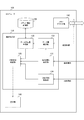
- FIG. 1 is a diagram illustrating an example of a computer system according to an embodiment of the present technology. In this embodiment, an example in which the memory medium 200 is connected to the computer 100 is shown.
- the computer 100 accesses the memory medium 200 to read data or write data.
- the computer 100 also acquires individual information and consumption information, which will be described later, from the memory medium 200.
- the memory medium 200 is an external storage device connectable to the computer 100.
- a flash memory card incorporating a non-volatile NAND flash memory is assumed.
- the NAND flash memory is limited in the number of times of rewriting, and if the number of times of rewriting is exceeded in a certain bit, data failure may occur in that bit. That is, the NAND flash memory has a life problem that it is consumed by rewriting. Therefore, it is useful to determine this rewriting status as a criterion for consumption and notify the user if necessary.
- the memory medium 200 may be provided with an alternative area in preparation for a bit failure. However, in this case, if the alternative area is used up, further writing cannot be performed. Therefore, it becomes necessary to consider the usage status of this alternative area as a criterion for consumption.
- the following describes a configuration example in the case where the computer 100 determines the consumption states of the memory medium 200.
- FIG. 2 is a diagram illustrating a configuration example for exhaustion diagnosis of the memory medium 200 in the computer 100 according to the embodiment of the present technology.
- the computer 100 includes a memory access unit 110 that accesses the memory medium 200.
- the computer 100 includes a consumption diagnosis unit 130, a notification unit 140, and a media information storage unit 150 in order to monitor the access and diagnose the consumption of the memory medium 200.
- the consumption diagnosing unit 130 diagnoses the consumption of the memory medium 200 according to the access status between the memory medium 200 and the memory access unit 110 and the information from the memory medium 200.
- the consumption diagnosis unit 130 includes an individual information acquisition unit 131, a data amount observation unit 132, a data accumulated amount generation unit 133, a consumption information acquisition unit 134, and a consumption state determination unit 135.
- the consumption diagnosis unit 130 may be realized as an application by a software program.
- the individual information acquisition unit 131 acquires the individual information from the memory medium 200.
- the individual information acquisition unit 131 acquires individual information when an event indicating that the memory medium 200 is connected to the computer 100 is detected by the OS (Operating System).
- the individual information acquired by the individual information acquisition unit 131 may include information such as an individual identifier for identifying an individual of the memory medium 200, a model number, a manufacturer name, a manufacturing date and time, a firmware version, and a corresponding function. Moreover, this individual information may include an algorithm or a determination formula for determining the consumption state of the memory medium 200. It is also possible to specify the firmware for determining the consumption state of the memory medium 200 from the firmware version described above. This individual information is supplied to the data amount observation unit 132 and the data accumulated amount generation unit 133.
- the data amount observing unit 132 acquires the access status between the memory medium 200 and the memory access unit 110 as observation information, and observes the amount of data that the memory access unit 110 reads or writes to the memory medium 200. is there.
- the data amount observation unit 132 makes this observation when the individual information acquired by the individual information acquisition unit 131 indicates that the individual information is a diagnosis target.
- the data amount observed by the data amount observation unit 132 is supplied to the data accumulated amount generation unit 133.
- the data amount observing unit 132 is an example of the access status observing unit described in the claims.
- the data cumulative amount generation unit 133 generates a cumulative amount of read or write data amount for the memory medium 200 based on the data amount observed by the data amount observation unit 132.
- the data accumulation amount generation unit 133 causes the media information storage unit 150 to store the data amount and individual information received from the data amount observation unit 132. Then, each time a new data amount is received from the data amount observation unit 132, it is added to the data amount stored in the media information storage unit 150 to generate a data accumulated amount.
- the generated amount of accumulated data is stored in the media information storage unit 150 and is also supplied to the consumption state determination unit 135.
- the consumption information acquisition unit 134 acquires the consumption information from the memory medium 200 at a frequency according to the access status observed by the data amount observation unit 132. That is, the consumption information acquisition unit 134 acquires the consumption information from the memory medium 200 at a frequency according to the cumulative amount generated by the data cumulative amount generation unit 133.
- This consumption information is information regarding the consumption of the memory medium 200, and includes parameters according to the characteristics of the memory such as the cumulative amount of the total written data amount, the alternative block remaining amount, the number of times of rewriting, and its threshold value. Further, this consumption information may include a determination formula for determining the consumption state.
- the consumption information acquisition unit 134 acquires the consumption information from the memory medium 200 at a frequency according to the access status of the memory medium 200, the consumption state can be obtained at an appropriate timing without hindering the original memory operation. Can be determined.
- the consumption state determination unit 135 determines the consumption state of the memory medium 200 based on the consumption information acquired by the consumption information acquisition unit 134.
- the consumption state determination unit 135 may determine the algorithm or the determination formula required for determining the consumption state based on the individual information or the consumption information. Thereby, the consumption state determination unit 135 can determine the consumption state by the determination method for each diagnosis target medium.
- the consumption state determination unit 135 does not have to make the determination again.
- the notification unit 140 notifies the outside of the consumption state determined by the consumption state determination unit 135 as a diagnosis result.
- the diagnosis result may be displayed on a display of an electronic device such as a smartphone or a camera as a GUI (Graphical User Interface). Further, the notification may be made by sound, vibration, lighting of a light, or the like.
- the media information storage unit 150 is built in the computer 100, and stores the cumulative amount of read or write data for the memory medium 200. If the individual memory medium 200 can be identified, the individual identifier of each medium and the corresponding cumulative amount of the immediately preceding data amount may be stored in association with each other.
- the media information storage unit 150 is preferably composed of a device having a non-volatile characteristic such as a semiconductor memory or a hard disk. In that case, even if the connection of the memory medium 200 is disconnected in the middle, the cumulative amount of data can be grasped from the immediately preceding state.
- the media information storage unit 150 is an example of the memory information storage unit described in the claims.
- the notification unit 140 and the media information storage unit 150 are described as being external to the consumption diagnosis unit 130, but they may be configured to be included inside the consumption diagnosis unit 130.
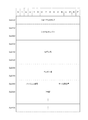
- FIG. 3 is a diagram showing an example of a storage field configuration of the media information storage unit 150 according to the embodiment of the present technology.
- Form type is a value such as a character string that represents the data storage format. By changing this "format type”, it is possible to support different algorithms.
- Serial number is a value such as a character string unique to the product specified by the vendor. This “serial number” can be used to identify the memory medium 200.
- Model name is a value such as a character string that represents the model name of the product specified by the vendor. This “model name” can be used to identify the memory medium 200.
- Vendor name is a value such as a character string representing the name of the product vendor of the memory medium 200. This "vendor name" can be used to identify the memory medium.
- “Version number” is a value such as a character string that can identify the version of the product firmware. This "version number” can be used to identify the firmware, as the firmware can affect the life of the product.
- Data accumulated amount is a numerical value (variable value) that indicates the accumulated amount of data being monitored and stored. When the memory medium 200 is disconnected and reconnected, a new monitoring data amount is added to this value. When this value exceeds a predetermined threshold value, the consumption state is acquired from the memory medium 200 and the consumption diagnosis is performed. After the diagnosis, this "data accumulated amount” is reset to "0" or the like.
- the threshold value of the “cumulative amount of data” may be acquired separately from the consumption information, may be installed in the application in advance, or may be arbitrarily set by the user. This threshold may be, for example, 10 GB.
- FIG. 4 is a flowchart showing an example of a processing procedure of the consumption diagnosis unit 130 according to the embodiment of the present technology.
- step S911 when the memory medium 200 is connected to the computer 100 (step S911), it is determined whether the memory medium 200 is a medium to be diagnosed (step S912). If it is not the medium to be diagnosed (step S912: No), the following diagnostic process is not performed and the process ends. If it is the medium to be diagnosed (step S912: Yes), the following diagnostic process is performed.
- the individual information acquisition unit 131 and the consumption information acquisition unit 134 acquire the individual information and consumption information from the memory medium 200 (step S913). Then, the data cumulative amount generation unit 133 refers to the media information storage unit 150 and determines whether or not the memory medium 200 is an individual that has previously been diagnosed (step S914). If the individual has been diagnosed in the past (step S914: Yes), the data cumulative amount generation unit 133 acquires the data cumulative amount from the media information storage unit 150 (step S915).
- the data amount observation unit 132 acquires the read or write data amount for the memory medium 200 (step S921). Then, the data cumulative amount generation unit 133 adds the acquired data amount to the data cumulative amount (step S922).
- a predetermined threshold value for example, 10 GB
- the consumption information acquisition unit 134 acquires the consumption information from the memory medium 200 (step S931). Then, the consumption state determination unit 135 determines the consumption state of the memory medium 200 based on the acquired consumption information (step S932).
- step S932 If no abnormality is detected (step S932: No), the accumulated data amount is reset (step S933), and access to the memory medium 200 is observed again (L920). On the other hand, when an abnormality is detected (step S932: Yes), the notification unit 140 notifies the diagnosis result to the outside (step S934).
- Rewriting consumption rate Cumulative number of rewriting / Rewritable number of times as a device
- the “cumulative rewrite count” can be generated by the data cumulative amount generation unit 133.
- the “rewritable count as a device” is defined for each device type.
- the number of spare blocks is the total number of spare blocks prepared for the device.
- the “spare block consumption number” is the number of spare blocks that are actually consumed.
- the random write consumes faster than the sequential write. Therefore, when the size of the data observed by the data amount observing unit 132 is smaller than a predetermined value, it is considered that the write is determined to be random write (or near random write), and the frequency of exhaustion diagnosis may be increased. ..
- the frequency of exhaustion diagnosis may be changed according to durability.
- the durability is different for each memory medium 200 due to the components of the memory medium 200, the difference in performance of longevity algorithms such as wear leveling, and the like. Therefore, if the durability of the target medium for consumption diagnosis can be specified, the frequency of the consumption diagnosis may be adjusted according to the durability.
- the upper limit of the number of guaranteed rewrites which is one of the indicators of durability
- the durability information which is one of the indicators of durability
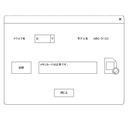
- FIG. 5 is a diagram showing a first example of notification by the notification unit 140 according to the embodiment of the present technology.
- the first example is a notification example when the consumption state of the memory medium 200 is normal. In this case, there is a notification that the memory card is normal. As a result, the user can continue to use the memory medium 200 with peace of mind.
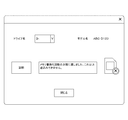
- FIG. 6 is a diagram showing a second example of notification by the notification unit 140 according to the embodiment of the present technology.
- the second example is a notification example when attention is required to the consumption state of the memory medium 200.
- FIG. 7 is a diagram showing a third example of notification by the notification unit 140 according to the embodiment of the present technology.
- the third example is a notification example when the consumption state of the memory medium 200 is abnormal. In this case, there is a warning saying, "No more writing is possible.” This allows the user to take measures such as stopping the use of the memory medium 200 and using a new memory card.
- the consumption information is acquired from the memory medium 200 at a frequency according to the access status (data amount) observed by the data amount observation unit 132.
- the consumption state of the memory medium 200 can be determined and notified at an appropriate timing without disturbing the original memory operation.
- FIG. 8 is a diagram showing an example in which the embodiment of the present technology is applied to the surveillance camera device 10.
- the surveillance camera device 10 includes a memory access unit 110, a consumption diagnosis unit 130, a notification unit 140, and an imaging unit 180. Except for the imaging unit 180, the configuration is the same as that described in the above embodiment.
- the image capturing unit 180 captures an image of the monitoring target and generates a captured image thereof.
- the picked-up images generated by the image pickup unit 180 are sequentially written to the memory medium 200 via the memory access unit 110.
- the surveillance camera device 10 In the surveillance camera device 10, captured images are continuously and continuously written in the memory medium 200. Therefore, it is necessary to notify the abnormality of the memory medium 200 at an early stage.
- the surveillance camera device 10 is often realized as a small device, and it is assumed that the surveillance camera device 10 itself does not include a display. Although it is necessary for the remote terminal to display such a display as described above, it is useful if the surveillance camera device 10 itself has a function of notifying an abnormality.
- a lamp is provided as the notification unit 140 for notifying the abnormality of the connected memory medium 200.
- the administrator near the surveillance camera device 10 can grasp the abnormality at an early stage and take measures such as replacement of the memory medium 200.
- the processing procedure described in the above-described embodiment may be regarded as a method having these series of procedures, or as a program for causing a computer to execute the series of procedures or a recording medium storing the program. You can catch it.
- this recording medium for example, a CD (Compact Disc), an MD (MiniDisc), a DVD (Digital Versatile Disc), a memory card, a Blu-ray disc (Blu-ray (registered trademark) Disc), or the like can be used.
- the present technology may have the following configurations.
- An access status observing unit for observing the access status to the memory A consumption information acquisition unit that acquires the consumption information from the memory at a frequency according to the observed access status;
- a memory diagnostic device comprising: a consumption state determination unit that determines a consumption state of the memory based on the consumption information.
- the memory diagnostic device according to (1) wherein the access status observing section observes a read or write data amount to the memory as the access status.
- It further comprises a data cumulative amount generation unit that generates a cumulative amount of read or write data amount to the memory based on the observed data amount,
- the memory diagnosis device includes a cumulative amount of read or write data amount to the memory, and a threshold value thereof.
- the memory is a flash memory, 5.
- the memory diagnostic device according to any one of (2) to (4), wherein the consumption information includes at least one of the number of rewrites to the memory, the alternative block remaining amount, and a threshold value thereof.
- the consumption information includes a determination expression for the consumption state determination unit to determine the consumption state of the memory.
- the consumption information acquisition unit acquires the consumption information from the memory at a frequency according to an access pattern in the access situation.
- the memory diagnostic device increases the frequency of acquisition of the consumption information when the size of data in the access status is smaller than a predetermined value.
- the memory diagnostic device according to any one of (1) to (8), further including an individual information acquisition unit that acquires the individual information from the memory.
- the memory diagnostic device wherein the cumulative amount is generated based on the immediately preceding cumulative amount and the observed data amount.
- the individual information includes information for identifying an algorithm or firmware for the consumption state determination unit to determine the consumption state of the memory.
- the individual information includes information for specifying the durability of the memory,
- the memory diagnostic device according to any one of (9) to (11), wherein the consumption information acquisition unit adjusts an acquisition frequency of the consumption information based on information for identifying the durability.
- the memory diagnostic device according to any one of (1) to (12), further including a notifying unit that notifies a result of determination of the consumption state of the memory by the consumption state determination unit.
Landscapes
- Engineering & Computer Science (AREA)
- Theoretical Computer Science (AREA)
- Physics & Mathematics (AREA)
- General Engineering & Computer Science (AREA)
- General Physics & Mathematics (AREA)
- Memory System (AREA)
- Read Only Memory (AREA)
- For Increasing The Reliability Of Semiconductor Memories (AREA)
- Techniques For Improving Reliability Of Storages (AREA)
Abstract
La présente invention vise à réaliser une détermination de l'état de consommation de mémoire pendant l'utilisation à une fréquence appropriée dans un dispositif de diagnostic de mémoire. Le dispositif de diagnostic de mémoire comprend une unité d'observation d'état d'accès, une unité d'acquisition d'informations de consommation, et une unité de détermination d'état de consommation. L'unité d'observation d'état d'accès observe l'état d'accès à la mémoire. L'unité d'acquisition d'informations de consommation acquiert des informations de consommation à partir de la mémoire à une fréquence qui correspond à l'état d'accès observé. L'unité de détermination d'état de consommation détermine l'état de consommation de la mémoire sur la base des informations de consommation acquises par l'unité d'acquisition d'informations de consommation.
Priority Applications (1)
| Application Number | Priority Date | Filing Date | Title |
|---|---|---|---|
| JP2020570376A JP7424321B2 (ja) | 2019-02-06 | 2019-11-12 | メモリ診断装置およびメモリ診断方法 |
Applications Claiming Priority (2)
| Application Number | Priority Date | Filing Date | Title |
|---|---|---|---|
| JP2019019269 | 2019-02-06 | ||
| JP2019-019269 | 2019-02-06 |
Publications (1)
| Publication Number | Publication Date |
|---|---|
| WO2020161981A1 true WO2020161981A1 (fr) | 2020-08-13 |
Family
ID=71947561
Family Applications (1)
| Application Number | Title | Priority Date | Filing Date |
|---|---|---|---|
| PCT/JP2019/044367 Ceased WO2020161981A1 (fr) | 2019-02-06 | 2019-11-12 | Dispositif de diagnostic de mémoire et procédé de diagnostic de mémoire |
Country Status (2)
| Country | Link |
|---|---|
| JP (1) | JP7424321B2 (fr) |
| WO (1) | WO2020161981A1 (fr) |
Cited By (1)
| Publication number | Priority date | Publication date | Assignee | Title |
|---|---|---|---|---|
| WO2024218945A1 (fr) | 2023-04-20 | 2024-10-24 | 日立Astemo株式会社 | Dispositif de commande de véhicule |
Citations (7)
| Publication number | Priority date | Publication date | Assignee | Title |
|---|---|---|---|---|
| WO2008001649A1 (fr) * | 2006-06-28 | 2008-01-03 | Seiko Epson Corporation | Système de gestion de dispositif de stockage à semi-conducteur, dispositif de stockage à semi-conducteur, unité hôte, programme et procédé de gestion de dispositif de stockage à semi-conducteur |
| JP2008009755A (ja) * | 2006-06-29 | 2008-01-17 | Sony Corp | 記録装置および寿命情報算出方法 |
| WO2008066058A1 (fr) * | 2006-11-30 | 2008-06-05 | Kabushiki Kaisha Toshiba | Système mémoire |
| JP2011258182A (ja) * | 2010-05-12 | 2011-12-22 | Panasonic Corp | 半導体メモリ装置及び半導体メモリシステム |
| JP2017142776A (ja) * | 2016-02-10 | 2017-08-17 | 株式会社リコー | 寿命管理装置および寿命管理方法 |
| JP2018106458A (ja) * | 2016-12-27 | 2018-07-05 | 三菱電機株式会社 | メモリ診断装置、車両制御装置、メモリ診断方法および車両制御方法 |
| JP2019199059A (ja) * | 2018-05-18 | 2019-11-21 | キヤノン株式会社 | 画像形成装置、画像形成装置の制御方法及びプログラム |
Family Cites Families (3)
| Publication number | Priority date | Publication date | Assignee | Title |
|---|---|---|---|---|
| JP2001147862A (ja) * | 1999-11-22 | 2001-05-29 | Alps Electric Co Ltd | フラッシュメモリ書込方法 |
| US8614920B2 (en) * | 2012-04-02 | 2013-12-24 | Winbond Electronics Corporation | Method and apparatus for logic read in flash memory |
| JP6306548B2 (ja) * | 2015-09-07 | 2018-04-04 | Necプラットフォームズ株式会社 | メモリー管理回路、記憶装置、メモリー管理方法、及びメモリー管理プログラム |
-
2019
- 2019-11-12 WO PCT/JP2019/044367 patent/WO2020161981A1/fr not_active Ceased
- 2019-11-12 JP JP2020570376A patent/JP7424321B2/ja active Active
Patent Citations (7)
| Publication number | Priority date | Publication date | Assignee | Title |
|---|---|---|---|---|
| WO2008001649A1 (fr) * | 2006-06-28 | 2008-01-03 | Seiko Epson Corporation | Système de gestion de dispositif de stockage à semi-conducteur, dispositif de stockage à semi-conducteur, unité hôte, programme et procédé de gestion de dispositif de stockage à semi-conducteur |
| JP2008009755A (ja) * | 2006-06-29 | 2008-01-17 | Sony Corp | 記録装置および寿命情報算出方法 |
| WO2008066058A1 (fr) * | 2006-11-30 | 2008-06-05 | Kabushiki Kaisha Toshiba | Système mémoire |
| JP2011258182A (ja) * | 2010-05-12 | 2011-12-22 | Panasonic Corp | 半導体メモリ装置及び半導体メモリシステム |
| JP2017142776A (ja) * | 2016-02-10 | 2017-08-17 | 株式会社リコー | 寿命管理装置および寿命管理方法 |
| JP2018106458A (ja) * | 2016-12-27 | 2018-07-05 | 三菱電機株式会社 | メモリ診断装置、車両制御装置、メモリ診断方法および車両制御方法 |
| JP2019199059A (ja) * | 2018-05-18 | 2019-11-21 | キヤノン株式会社 | 画像形成装置、画像形成装置の制御方法及びプログラム |
Cited By (2)
| Publication number | Priority date | Publication date | Assignee | Title |
|---|---|---|---|---|
| WO2024218945A1 (fr) | 2023-04-20 | 2024-10-24 | 日立Astemo株式会社 | Dispositif de commande de véhicule |
| EP4700587A1 (fr) | 2023-04-20 | 2026-02-25 | Astemo, Ltd. | Dispositif de commande de véhicule |
Also Published As
| Publication number | Publication date |
|---|---|
| JPWO2020161981A1 (ja) | 2021-12-02 |
| JP7424321B2 (ja) | 2024-01-30 |
Similar Documents
| Publication | Publication Date | Title |
|---|---|---|
| JP4487978B2 (ja) | 半導体記憶装置管理システム、プログラム、半導体記憶装置の管理方法 | |
| KR101079502B1 (ko) | 메모리 시스템 | |
| US10268553B2 (en) | Adaptive failure prediction modeling for detection of data storage device failures | |
| TWI406126B (zh) | 用於存儲媒體的存儲控制裝置及其資料存取的控制方法 | |
| JP2006048789A (ja) | 磁気ディスク装置の故障予測方法及びこれを用いた磁気ディスク装置 | |
| WO2009100078A1 (fr) | Sous-système de stockage à semi-conducteurs qui conservent et fournit un accès à des données reflétant un risque d'échec | |
| JP2017537369A (ja) | データ保存方法、装置及び端末 | |
| US20110119430A1 (en) | Methods for measuring usable lifespan and replacing an in-system programming code of a memory device, and data storage sysem using the same | |
| JP2020064696A (ja) | 電子的記録媒体の異常発生リスク検知方法 | |
| CN101872641A (zh) | 硬盘录像机中的硬盘失效预警方法及装置 | |
| US20100306484A1 (en) | Heterogeneous storage array optimization through eviction | |
| JP7424321B2 (ja) | メモリ診断装置およびメモリ診断方法 | |
| JP2020201546A (ja) | 不揮発性半導体記憶装置の性能評価装置、性能評価方法、及び性能評価プログラム | |
| JP2006323751A (ja) | 情報処理装置、寿命監視方法およびプログラム | |
| CN102122262A (zh) | 一种用于固态存储设备的监控系统及方法 | |
| JP2005267761A (ja) | フラッシュメモリの劣化監視方法 | |
| JP2004342168A (ja) | ディスク型記録装置を内蔵する装置を内蔵する装置及びディスク型記録装置の制御方法、並びにコンピュータ・プログラム | |
| JP2013025632A (ja) | ディスク制御装置、ディスク装置異常検出方法、及びプログラム | |
| JP2010218138A (ja) | メモリカード読み書き装置、メモリカードの寿命管理方法およびそのプログラム | |
| JP5418687B2 (ja) | 記憶媒体診断装置、記憶媒体診断方法及び記憶媒体診断プログラム | |
| US9053006B2 (en) | Method for memory management | |
| JP2006107236A (ja) | 部品寿命監視システム | |
| TWI782219B (zh) | 風扇控制系統 | |
| JP2011527473A (ja) | 半導体記憶装置、その早期警報システムおよび早期警報方法 | |
| JP2009151407A (ja) | 障害処理方式、及び、障害処理方法 |
Legal Events
| Date | Code | Title | Description |
|---|---|---|---|
| 121 | Ep: the epo has been informed by wipo that ep was designated in this application |
Ref document number: 19914231 Country of ref document: EP Kind code of ref document: A1 |
|
| ENP | Entry into the national phase |
Ref document number: 2020570376 Country of ref document: JP Kind code of ref document: A |
|
| NENP | Non-entry into the national phase |
Ref country code: DE |
|
| 122 | Ep: pct application non-entry in european phase |
Ref document number: 19914231 Country of ref document: EP Kind code of ref document: A1 |