WO2020166029A1 - Équipement d'utilisateur et procédé de mesure - Google Patents
Équipement d'utilisateur et procédé de mesure Download PDFInfo
- Publication number
- WO2020166029A1 WO2020166029A1 PCT/JP2019/005433 JP2019005433W WO2020166029A1 WO 2020166029 A1 WO2020166029 A1 WO 2020166029A1 JP 2019005433 W JP2019005433 W JP 2019005433W WO 2020166029 A1 WO2020166029 A1 WO 2020166029A1
- Authority
- WO
- WIPO (PCT)
- Prior art keywords
- measurement result
- measurement
- type
- satisfied
- threshold value
- Prior art date
- Legal status (The legal status is an assumption and is not a legal conclusion. Google has not performed a legal analysis and makes no representation as to the accuracy of the status listed.)
- Ceased
Links
Images




Classifications
-
- H—ELECTRICITY
- H04—ELECTRIC COMMUNICATION TECHNIQUE
- H04W—WIRELESS COMMUNICATION NETWORKS
- H04W52/00—Power management, e.g. Transmission Power Control [TPC] or power classes
- H04W52/02—Power saving arrangements
- H04W52/0209—Power saving arrangements in terminal devices
- H04W52/0225—Power saving arrangements in terminal devices using monitoring of external events, e.g. the presence of a signal
- H04W52/0229—Power saving arrangements in terminal devices using monitoring of external events, e.g. the presence of a signal where the received signal is a wanted signal
-
- H—ELECTRICITY
- H04—ELECTRIC COMMUNICATION TECHNIQUE
- H04W—WIRELESS COMMUNICATION NETWORKS
- H04W52/00—Power management, e.g. Transmission Power Control [TPC] or power classes
- H04W52/02—Power saving arrangements
- H04W52/0209—Power saving arrangements in terminal devices
- H04W52/0225—Power saving arrangements in terminal devices using monitoring of external events, e.g. the presence of a signal
-
- H—ELECTRICITY
- H04—ELECTRIC COMMUNICATION TECHNIQUE
- H04W—WIRELESS COMMUNICATION NETWORKS
- H04W24/00—Supervisory, monitoring or testing arrangements
- H04W24/10—Scheduling measurement reports ; Arrangements for measurement reports
-
- H—ELECTRICITY
- H04—ELECTRIC COMMUNICATION TECHNIQUE
- H04W—WIRELESS COMMUNICATION NETWORKS
- H04W24/00—Supervisory, monitoring or testing arrangements
- H04W24/02—Arrangements for optimising operational condition
-
- H—ELECTRICITY
- H04—ELECTRIC COMMUNICATION TECHNIQUE
- H04W—WIRELESS COMMUNICATION NETWORKS
- H04W52/00—Power management, e.g. Transmission Power Control [TPC] or power classes
- H04W52/02—Power saving arrangements
- H04W52/0209—Power saving arrangements in terminal devices
- H04W52/0212—Power saving arrangements in terminal devices managed by the network, e.g. network or access point is leader and terminal is follower
- H04W52/0216—Power saving arrangements in terminal devices managed by the network, e.g. network or access point is leader and terminal is follower using a pre-established activity schedule, e.g. traffic indication frame
-
- Y—GENERAL TAGGING OF NEW TECHNOLOGICAL DEVELOPMENTS; GENERAL TAGGING OF CROSS-SECTIONAL TECHNOLOGIES SPANNING OVER SEVERAL SECTIONS OF THE IPC; TECHNICAL SUBJECTS COVERED BY FORMER USPC CROSS-REFERENCE ART COLLECTIONS [XRACs] AND DIGESTS
- Y02—TECHNOLOGIES OR APPLICATIONS FOR MITIGATION OR ADAPTATION AGAINST CLIMATE CHANGE
- Y02D—CLIMATE CHANGE MITIGATION TECHNOLOGIES IN INFORMATION AND COMMUNICATION TECHNOLOGIES [ICT], I.E. INFORMATION AND COMMUNICATION TECHNOLOGIES AIMING AT THE REDUCTION OF THEIR OWN ENERGY USE
- Y02D30/00—Reducing energy consumption in communication networks
- Y02D30/70—Reducing energy consumption in communication networks in wireless communication networks
Definitions
- the present invention relates to a user device and a measuring method in a wireless communication system.
- NR New Radio
- LTE Long Term Evolution
- NR defines a measurement report (measurement report) in which the user device performs measurement and reports the measurement result (for example, Non-Patent Document 2).
- RSRP Reference Signal Received Power
- SINR Signal Received Noise power Ratio
- the present invention has been made in view of the above points, and in a wireless communication system, a user apparatus can relax/adapt RRM measurement under appropriate conditions, and consumes less power without substantially reducing performance.
- the purpose is to be able to reduce.
- a receiving unit that receives information instructing to report a measurement result of a second type when the first condition is satisfied by the measurement result of the first type, It is determined that the threshold value corresponds to the measurement result of the first type when the second condition including the threshold value is satisfied and when the RRM measurement is defined or instructed to be relaxed or adapted, And a control unit that relaxes or adapts the RRM measurement when the second condition including the threshold value is satisfied by the measurement result of 1).
- a receiving unit that receives information instructing to report a measurement result of a second type when the first condition is satisfied by the measurement result of the first type, When the second condition including the threshold value is satisfied, it is determined that the threshold value corresponds to the measurement result of the second type when the RRM measurement is defined or instructed to be relaxed or adapted. And a control unit that relaxes or adapts the RRM measurement when the second condition including the threshold value is satisfied by the measurement result of the above type.
- a receiving unit that receives information instructing to report a measurement result of a second type when the first condition is satisfied by the measurement result of the first type, The threshold value according to the measurement result of the first type when defined or instructed to perform the relaxation or adaptation of the RRM measurement when the second condition including the threshold value is satisfied by the measurement result of the first type.
- a control unit that mitigates or adapts the RRM measurement when the second condition including the above is satisfied.
- a user apparatus in a wireless communication system, can relax/adapt RRM measurement under appropriate conditions, and can reduce power consumption without substantially reducing performance.
- FIG. 1 is a diagram for explaining a wireless communication system according to an embodiment of the present invention. It is a figure explaining the argument on NR standardization. 6 is an example of a flowchart for explaining the operation of the user device according to the first embodiment. 9 is an example of a flowchart for explaining the operation of the user device according to the second embodiment. 9 is an example of a flowchart for explaining the operation of the user device according to the third embodiment. It is a figure which shows an example of a functional structure of the base station apparatus 10 in embodiment of this invention. It is a figure showing an example of functional composition of user device 20 in an embodiment of the present invention. It is a figure which shows an example of the hardware constitutions of the base station apparatus 10 or the user apparatus 20 in embodiment of this invention.
- the existing technology is appropriately used for the operation of the wireless communication system according to the embodiment of the present invention.
- the existing technology is, for example, existing LTE, but is not limited to existing LTE.
- LTE Long Term Evolution
- LTE-Advanced and LTE-Advanced and subsequent schemes eg, NR
- the duplex system may be a TDD (Time Division Duplex) system, an FDD (Frequency Division Duplex) system, or another (for example, Flexible Duplex).
- TDD Time Division Duplex
- FDD Frequency Division Duplex
- Flexible Duplex another (for example, Flexible Duplex). The method may be used.
- the method of transmitting a signal using a transmission beam may be digital beam forming for transmitting a signal multiplied by a precoding vector (precoded with the precoding vector), It may be analog beamforming in which beamforming is realized using a variable phase shifter in an RF (Radio Frequency) circuit.
- the method of receiving a signal using a receive beam may be digital beam forming in which a received signal is multiplied by a predetermined weight vector, or beam forming is realized using a variable phase shifter in an RF circuit.
- Analog beam forming may be used.
- Hybrid beamforming which combines digital beamforming and analog beamforming, may be applied for transmission and/or reception.
- transmitting the signal using the transmission beam may be transmitting the signal at a specific antenna port.
- receiving a signal using the receive beam may be receiving a signal at a particular antenna port.
- the antenna port refers to a logical antenna port or a physical antenna port defined by the 3GPP standard.
- the precoding or beamforming may also be called a precoder or a spatial domain filter.
- the method of forming the transmission beam and the reception beam is not limited to the above method.
- a method of changing the angle of each antenna may be used, or a method of using a precoding vector and a method of changing the angle of the antenna may be combined.
- different antenna panels may be switched for use, a method of combining a plurality of antenna panels may be used in combination, or another method may be used.
- a plurality of different transmission beams may be used. The use of multiple transmit beams is called multi-beam operation, and the use of one transmit beam is called single-beam operation.
- “setting (configure)” a wireless parameter or the like may mean that a predetermined value is set in advance (pre-configure), or the base station device 10 Alternatively, the wireless parameter notified from the user device 20 may be set.
- FIG. 1 is a diagram for explaining a wireless communication system according to an embodiment of the present invention.
- the wireless communication system in the embodiment of the present invention includes a base station device 10 and a user device 20, as shown in FIG. Although one base station apparatus 10 and one user apparatus 20 are shown in FIG. 1, this is an example, and a plurality of each may be provided.
- the base station device 10 is a communication device that provides one or more cells and performs wireless communication with the user device 20.
- the physical resource of the radio signal is defined in the time domain and the frequency domain, the time domain may be defined by the number of OFDM symbols, and the frequency domain may be defined by the number of subcarriers or the number of resource blocks.
- the base station apparatus 10 transmits a control signal or data to the user apparatus 20 by DL (Downlink), and receives a control signal or data from the user apparatus 20 by UL (Uplink). Both the base station apparatus 10 and the user apparatus 20 can perform beamforming to transmit and receive signals.
- the user device 20 is a communication device having a wireless communication function such as a smartphone, a mobile phone, a tablet, a wearable terminal, and a communication module for M2M (Machine-to-Machine). As shown in FIG. 1, the user equipment 20 receives a control signal or data from the base station apparatus 10 in DL and transmits the control signal or data to the base station apparatus 10 in UL, thereby providing the wireless communication system. Use various communication services.
- the user device 20 performs measurement to grasp the communication status.
- the user device 20 is designated by the base station device 10 as an event as a measurement setting (Measurement Configuration).
- the user apparatus 20 transmits a measurement report (Measurement report) to the base station apparatus 10, when the conditions regarding the measurement result set by the event are satisfied.
- FIG. 2 is a diagram for explaining the discussion on NR standardization.
- NR standardization discusses relaxation or adaptation of RRM measurement when a predetermined condition is satisfied.
- the relaxation may be, for example, reducing the frequency with which the user device 20 performs the measurement. It may also be to reduce the frequency of reporting the measurement results.
- related requirement specifications for example, measurement period (measurement period) defined in Non-Patent Document 2
- measurement period measurement period defined in Non-Patent Document 2
- the adaptation may be, for example, an operation of returning the RRM measurement to the original when the predetermined condition is not satisfied after the user device 20 relaxes the RRM measurement. Further, the operation is not limited to the operation of returning the RRM measurement to the original one, and may be an operation of RRM measurement adaptation for power consumption reduction.
- the predetermined condition for easing or adapting the RRM measurement is, for example, a condition that a threshold of the measurement result is specified from the base station device 10 and the RRM measurement is relaxed or adapted when a condition including the threshold is satisfied. May be
- RSRP the type of measurement result used for a predetermined condition for mitigation or adaptation of RRM measurement.
- the type of the measurement result used for the trigger (also referred to as an event trigger) for transmitting the measurement report is not limited to RSRP, and RSRQ, SINR, etc. may be used.
- RSRQ the type of measurement result transmitted in the measurement report
- an operation of performing the relaxation when the condition that it is assumed that the transmission of the measurement report is not expected to be immediately triggered is considered. ..
- an operation of relaxing or adapting the RRM measurement an operation of relaxing according to the situation of the value of the measurement result transmitted in the measurement report can be considered. Considering these operations, if RSRP is the only type of measurement result used for the condition for relaxing or adapting the RRM measurement, these operations may not be performed properly.
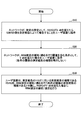
- FIG. 3 is an example of a flowchart for explaining the operation of the user device according to the first embodiment.
- the type of the measurement result used as the condition is not specified, and the user device 20 uses the measurement used for triggering the transmission of the measurement report.
- the same type of measurement result as the type of result is used as a condition for relaxing or adapting the RRM measurement.
- step S10 the network or base station device 10 instructs the user device to report the SINR value by a measurement report when RSRQ exceeds X dB as a measurement setting.
- step S20 the network or the base station apparatus 10 instructs the user apparatus to perform the RRM measurement relaxation or adaptation when the threshold YdB is exceeded as a condition including the threshold for performing the RRM measurement relaxation or adaptation. (Or may be specified in advance). In other words, in step S20, the type of threshold measurement result used for the condition is not specified.
- step S30 the user apparatus 20 determines that RSRQ, which is the type of the measurement result used to trigger the measurement report, is the type of the measurement result of the threshold value of the condition for relaxing or adapting the RRM measurement, and RSRQ. If the above exceeds YdB, the RRM measurement is relaxed or adapted.
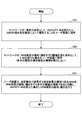
- FIG. 4 is an example of a flowchart for explaining the operation of the user device according to the second embodiment.
- the type of the measurement result used as the condition is not specified, and the user device 20 determines the type of the measurement result transmitted in the measurement report.
- step S10 the network or base station device 10 instructs the user device to report the SINR value by a measurement report when RSRQ exceeds X dB as a measurement setting.
- step S20 the network or the base station apparatus 10 instructs the user apparatus to perform the RRM measurement relaxation or adaptation when the threshold YdB is exceeded as a condition including the threshold for performing the RRM measurement relaxation or adaptation. (Or may be specified in advance). In other words, in step S20, the type of threshold measurement result used for the condition is not specified.
- step S31 the user apparatus 20 determines that the SINR, which is the type of the measurement result transmitted in the measurement report, is the type of the measurement result of the threshold value of the condition for relaxing or adapting the RRM measurement, and the SINR is Relax or adapt the RRM measurement if YdB is exceeded.
- FIG. 5 is an example of a flowchart for explaining the operation of the user equipment according to the third embodiment. As shown in FIG. 5, in the specification of the condition for relaxing or adapting the RRM measurement, the type of measurement result used as the condition is specified.
- step S10 the network or base station device 10 instructs the user device to report the SINR value by a measurement report when RSRQ exceeds X dB as a measurement setting.
- step S21 the network or the base station apparatus 10 instructs the user apparatus to perform the RRM measurement relaxation or adaptation when RSRQ exceeds the threshold YdB, as a condition including the threshold for performing the RRM measurement relaxation or adaptation. Give instructions.
- step S21 the type of the threshold measurement result used for the condition is specified.
- step S32 the user apparatus 20 mitigates or adapts the RRM measurement when RSRQ exceeds YdB.
- the type of measurement result may be any of RSRP, RSRQ, and SINR, for example. Further, the types of these measurement results (RSRP, RSRQ, and SINR) are further finely distinguished, and the measurement result for each beam (for example, each SSB index, each CSI-RS) or the measurement combining a plurality of beams The result (for example, the result obtained by filtering the result obtained by different beams or the averaged result) may be used. Further, the measurement results in different layers such as L1 and L3 may be distinguished and used as different types of measurement results.
- the threshold value may be designated by the value of the measurement result itself, or by the amount of change in the measurement result from the previous measurement. Also, the amount of change in the measurement result at a certain time (specified time or specified time) may be specified. Moreover, a relative value with respect to the value of another measurement result may be designated. Also, a combination of these values may be designated. The designation of the threshold value is not limited to these designations.
- a user apparatus in a wireless communication system, can relax/adapt RRM measurement under appropriate conditions, and can reduce power consumption without substantially reducing performance.
- the base station device 10 and the user device 20 include a function for implementing the above-described embodiment. However, each of the base station device 10 and the user device 20 may be provided with only a part of the functions in the embodiment.
- FIG. 6 is a diagram illustrating an example of a functional configuration of the base station device 10.
- the base station device 10 includes a transmission unit 110, a reception unit 120, a setting unit 130, and a control unit 140.
- the functional configuration shown in FIG. 6 is merely an example. As long as the operation according to the embodiment of the present invention can be executed, the function classification and the names of the function units may be any names.
- the transmitting unit 110 includes a function of generating a signal to be transmitted to the user device 20 side and wirelessly transmitting the signal.
- the reception unit 120 includes a function of receiving various signals transmitted from the user device 20 and acquiring, for example, information of a higher layer from the received signals.
- the setting unit 130 stores preset setting information and various setting information to be transmitted to the user device 20 in the storage device, and reads it from the storage device as necessary.
- the content of the setting information is, for example, information related to the measurement of the user device 20.
- the control unit 140 performs a process of generating a measurement setting of the user device 20.
- the control unit 140 also controls communication based on the measurement report acquired from the user device 20.
- the functional unit related to signal transmission in the control unit 140 may be included in the transmission unit 110, and the functional unit related to signal reception in the control unit 140 may be included in the reception unit 120.
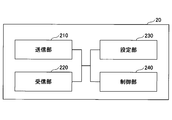
- FIG. 7 is a diagram showing an example of a functional configuration of the user device 20.
- the user device 20 includes a transmission unit 210, a reception unit 220, a setting unit 230, and a control unit 240.
- the functional configuration shown in FIG. 7 is merely an example. As long as the operation according to the embodiment of the present invention can be executed, the function classification and the names of the function units may be any names.
- the transmitter 210 creates a transmission signal from the transmission data and wirelessly transmits the transmission signal.
- the receiving unit 220 wirelessly receives various signals and acquires signals of higher layers from the received physical layer signals. Further, the receiving unit 220 has a function of receiving a DL/UL control signal or the like transmitted from the base station device 10.
- the setting unit 230 stores various setting information received from the base station device 10 by the receiving unit 220 in a storage device and reads it from the storage device as necessary.
- the setting unit 230 also stores preset setting information.
- the content of the setting information is, for example, information related to the measurement of the user device 20.
- the control unit 240 executes the measurement based on the measurement setting acquired from the base station device 10, as described in the embodiment.
- the control unit 240 also reports the measurement result to the base station device 10.
- the functional unit related to signal transmission in the control unit 240 may be included in the transmission unit 210, and the functional unit related to signal reception in the control unit 240 may be included in the reception unit 220.
- each functional block may be realized by using one device physically or logically coupled, or directly or indirectly (for example, two or more devices physically or logically separated). , Wired, wireless, etc.) and may be implemented using these multiple devices.
- the functional block may be implemented by combining the one device or the plurality of devices with software.
- Functions include judgment, decision, judgment, calculation, calculation, processing, derivation, investigation, search, confirmation, reception, transmission, output, access, resolution, selection, selection, establishment, comparison, assumption, expectation, observation, Broadcasting, notifying, communicating, forwarding, configuration, reconfiguring, allocating, mapping, assigning, etc., but not limited to these.
- I can't.
- functional blocks (components) that function transmission are called a transmitting unit and a transmitter.
- the implementation method is not particularly limited.
- the base station device 10, the user device 20, and the like according to the embodiment of the present disclosure may function as a computer that performs the process of the wireless communication method of the present disclosure.
- FIG. 8 is a diagram illustrating an example of a hardware configuration of the base station device 10 and the user device 20 according to the embodiment of the present disclosure.
- the base station device 10 and the user device 20 described above are physically configured as a computer device including a processor 1001, a storage device 1002, an auxiliary storage device 1003, a communication device 1004, an input device 1005, an output device 1006, a bus 1007, and the like. May be done.
- the word “apparatus” can be read as a circuit, device, unit, or the like.
- the hardware configurations of the base station device 10 and the user device 20 may be configured to include one or a plurality of each device illustrated in the figure, or may be configured not to include some devices.
- Each function in the base station device 10 and the user device 20 causes a predetermined software (program) to be loaded onto hardware such as the processor 1001, the storage device 1002, etc., so that the processor 1001 performs an arithmetic operation and communication by the communication device 1004. It is realized by controlling or at least one of reading and writing of data in the storage device 1002 and the auxiliary storage device 1003.
- the processor 1001 operates an operating system to control the entire computer, for example.
- the processor 1001 may be configured by a central processing unit (CPU) including an interface with peripheral devices, a control device, a calculation device, a register, and the like.
- CPU central processing unit
- the control unit 140, the control unit 240, and the like described above may be realized by the processor 1001.
- the processor 1001 reads a program (program code), software module, data, or the like from at least one of the auxiliary storage device 1003 and the communication device 1004 to the storage device 1002, and executes various processes according to these.
- a program that causes a computer to execute at least part of the operations described in the above-described embodiments is used.
- the control unit 140 of the base station device 10 illustrated in FIG. 6 may be realized by a control program stored in the storage device 1002 and operated by the processor 1001.
- the control unit 240 of the user device 20 illustrated in FIG. 7 may be realized by a control program stored in the storage device 1002 and operated by the processor 1001.
- the various processes described above are executed by one processor 1001, they may be executed simultaneously or sequentially by two or more processors 1001.
- the processor 1001 may be implemented by one or more chips.
- the program may be transmitted from the network via an electric communication line.
- the storage device 1002 is a computer-readable recording medium, and is, for example, at least one of ROM (Read Only Memory), EPROM (Erasable Programmable ROM), EEPROM (ElectricallyErasable Programmable ROM), RAM (Random Access Memory), and the like. It may be configured.
- the storage device 1002 may be called a register, a cache, a main memory (main storage device), or the like.
- the storage device 1002 can store an executable program (program code), a software module, or the like for implementing the communication method according to the embodiment of the present disclosure.
- the auxiliary storage device 1003 is a computer-readable recording medium, and is, for example, an optical disc such as a CD-ROM (Compact Disc ROM), a hard disk drive, a flexible disc, a magneto-optical disc (for example, a compact disc, a digital versatile disc, a Blu disc). -Ray disk), smart card, flash memory (eg card, stick, key drive), floppy disk, magnetic strip, etc.
- the auxiliary storage device 1003 may be called an auxiliary storage device.
- the above-described storage medium may be, for example, a database including at least one of the storage device 1002 and the auxiliary storage device 1003, a server, or another appropriate medium.
- the communication device 1004 is hardware (transmission/reception device) for performing communication between computers via at least one of a wired network and a wireless network, and is also called, for example, a network device, a network controller, a network card, a communication module, or the like.
- the communication device 1004 includes, for example, a high frequency switch, a duplexer, a filter, a frequency synthesizer, etc. in order to realize at least one of frequency division duplex (FDD: Frequency Division Duplex) and time division duplex (TDD). May be composed of
- FDD Frequency Division Duplex
- TDD time division duplex
- the transmitter/receiver may be implemented by physically or logically separating the transmitter and the receiver.
- the input device 1005 is an input device (eg, keyboard, mouse, microphone, switch, button, sensor, etc.) that receives an input from the outside.
- the output device 1006 is an output device (for example, a display, a speaker, an LED lamp, etc.) that outputs to the outside.
- the input device 1005 and the output device 1006 may be integrated (for example, a touch panel).
- each device such as the processor 1001 and the storage device 1002 is connected by a bus 1007 for communicating information.
- the bus 1007 may be configured using a single bus, or may be configured using different buses for each device.
- the base station device 10 and the user device 20 include a microprocessor, a digital signal processor (DSP: Digital Signal Processor), an ASIC (Application Specific Integrated Circuit), a PLD (Programmable Logic Device), an FPGA (Field Programmable Gate Array), and the like. It may be configured to include hardware, and the hardware may implement part or all of each functional block. For example, the processor 1001 may be implemented using at least one of these hardware.
- DSP Digital Signal Processor
- ASIC Application Specific Integrated Circuit
- PLD Programmable Logic Device
- FPGA Field Programmable Gate Array
- the information instructing to report the measurement result of the second type is received.
- a receiving unit that determines that the threshold corresponds to the measurement result of the first type when defined or instructed to relax or adapt the RRM measurement when the second condition including the threshold is satisfied.
- the user apparatus is provided with: a control unit that relaxes or adapts the RRM measurement when the second condition including the threshold value is satisfied by the measurement result of the first type.
- a receiving unit that receives information instructing to report the measurement result of the second type when the first condition is satisfied by the measurement result of the first type, When the second condition including the threshold value is satisfied, it is determined that the threshold value corresponds to the measurement result of the second type when the RRM measurement is defined or instructed to be relaxed or adapted. And a control unit that relaxes or adapts the RRM measurement when the second condition including the threshold value is satisfied by the measurement result of 1).
- a receiving unit that receives information instructing to report the measurement result of the second type when the first condition is satisfied by the measurement result of the first type, The threshold value according to the measurement result of the first type when defined or instructed to perform the relaxation or adaptation of the RRM measurement when the second condition including the threshold value is satisfied by the measurement result of the first type.
- a control unit that mitigates or adapts the RRM measurement when the second condition including the above is satisfied.
- the user device 20 can relax/adapt RRM measurement under appropriate conditions, and can reduce power consumption without substantially reducing performance.
- the operation of the plurality of functional units may be physically performed by one component, or the operation of one functional unit may be physically performed by the plurality of components.
- the order of processing may be changed as long as there is no contradiction.
- the base station apparatus 10 and the user apparatus 20 have been described using functional block diagrams for convenience of processing description, such an apparatus may be realized by hardware, software, or a combination thereof.
- the software operated by the processor included in the base station device 10 according to the embodiment of the present invention and the software operated by the processor included in the user device 20 according to the embodiment of the present invention are respectively a random access memory (RAM), a flash memory, and a read memory. It may be stored in a dedicated memory (ROM), EPROM, EEPROM, register, hard disk (HDD), removable disk, CD-ROM, database, server, or any other suitable storage medium.
- the notification of information is not limited to the mode/embodiment described in the present disclosure, and may be performed using another method.
- information is notified by physical layer signaling (for example, DCI (Downlink Control Information), UCI (Uplink Control Information)), upper layer signaling (for example, RRC (Radio Resource Control) signaling, MAC (Medium Access Control) signaling, It may be implemented by broadcast information (MIB (Master Information Block), SIB (System Information Block)), other signals, or a combination thereof, and RRC signaling may be called an RRC message, for example, RRC message. It may be a connection setup (RRC Connection Setup) message, an RRC connection reconfiguration message, or the like.
- LTE Long Term Evolution
- LTE-A Long Term Evolution-Advanced
- SUPER 3G IMT-Advanced
- 4G 4th generation mobile communication system
- 5G 5th generation mobile communication system
- FRA Full Radio Access
- NR new Radio
- W-CDMA registered trademark
- GSM registered trademark
- CDMA2000 Code Division Multiple Access 2000
- UMB Universal Mobile Broadband
- IEEE 802.11 Wi-Fi (registered trademark)
- IEEE 802.16 WiMAX (registered trademark)
- IEEE 802.20 UWB (Ultra-WideBand
- Bluetooth registered trademark
- It may be applied to at least one of the next-generation systems.
- a plurality of systems may be combined and applied (for example, a combination of at least one of LTE and LTE-A and 5G).
- the specific operation that is assumed to be performed by the base station device 10 in this specification may be performed by its upper node in some cases.
- various operations performed for communication with the user device 20 are other than the base station device 10 and the base station device 10. It is clear that it can be performed by at least one of the network nodes of (for example, but not limited to, MME or S-GW, etc.).
- the other network node may be a combination of a plurality of other network nodes (for example, MME and S-GW). Good.
- Information, signals, etc. described in the present disclosure may be output from the upper layer (or lower layer) to the lower layer (or upper layer). Input/output may be performed via a plurality of network nodes.
- Information that has been input and output may be stored in a specific location (for example, memory), or may be managed using a management table. Information that is input/output may be overwritten, updated, or added. The output information and the like may be deleted. The input information and the like may be transmitted to another device.
- the determination in the present disclosure may be performed by a value (0 or 1) represented by 1 bit, may be performed by a Boolean value (Boolean: true or false), and may be performed by comparing numerical values (for example, , Comparison with a predetermined value).
- software, instructions, information, etc. may be transmitted and received via a transmission medium.
- the software uses a wired technology (coaxial cable, optical fiber cable, twisted pair, digital subscriber line (DSL: Digital Subscriber Line), etc.) and/or wireless technology (infrared, microwave, etc.) websites, When sent from a server, or other remote source, at least one of these wired and wireless technologies is included within the definition of transmission medium.
- wired technology coaxial cable, optical fiber cable, twisted pair, digital subscriber line (DSL: Digital Subscriber Line), etc.
- wireless technology infrared, microwave, etc.
- data, instructions, commands, information, signals, bits, symbols, chips, etc. that may be referred to throughout the above description include voltage, current, electromagnetic waves, magnetic fields or magnetic particles, optical fields or photons, or any of these. May be represented by a combination of
- At least one of the channel and the symbol may be a signal (signaling).
- the signal may also be a message.
- a component carrier CC:Component Carrier
- CC Component Carrier
- system and “network” used in this disclosure are used interchangeably.
- the information, parameters, etc. described in the present disclosure may be represented by using an absolute value, may be represented by using a relative value from a predetermined value, or by using other corresponding information. May be represented.
- the radio resources may be those indicated by the index.
- base station Base Station
- radio base station base station
- base station device fixed station
- NodeB NodeB
- eNodeB eNodeB
- GNB NodeB
- access point “transmission point”, “reception point”, “transmission/reception point”, “cell”, “sector”
- a base station may be referred to by terms such as macro cell, small cell, femto cell, and pico cell.
- a base station can accommodate one or more (eg, three) cells.
- a base station accommodates multiple cells, the entire coverage area of the base station can be divided into multiple smaller areas, each smaller area being defined by a base station subsystem (eg, indoor small base station (RRH: It is also possible to provide communication services by Remote Radio Head).
- RRH indoor small base station
- the term "cell” or “sector” means a part or the whole coverage area of at least one of the base station and the base station subsystem that perform communication services in this coverage. Refers to.
- MS Mobile Station
- UE User Equipment
- Mobile stations are defined by those skilled in the art as subscriber stations, mobile units, subscriber units, wireless units, remote units, mobile devices, wireless devices, wireless communication devices, remote devices, mobile subscriber stations, access terminals, mobile terminals, wireless. It may also be referred to as a terminal, remote terminal, handset, user agent, mobile client, client, or some other suitable term.
- At least one of the base station and the mobile station may be called a transmission device, a reception device, a communication device, or the like.
- the base station and the mobile station may be a device mounted on the mobile body, the mobile body itself, or the like.
- the moving body may be a vehicle (eg, car, airplane, etc.), an unmanned moving body (eg, drone, self-driving car, etc.), or a robot (manned type or unmanned type).
- At least one of the base station and the mobile station also includes a device that does not necessarily move during communication operation.
- at least one of the base station and the mobile station may be an IoT (Internet of Things) device such as a sensor.
- IoT Internet of Things
- determining and “determining” as used in this disclosure may encompass a wide variety of actions.
- “Judgment” and “decision” are, for example, judgment, calculating, computing, processing, deriving, investigating, and looking up, search, inquiry. (Eg, searching in a table, database, or another data structure), considering ascertaining as “judging” or “deciding”, and the like.
- “decision” and “decision” include receiving (eg, receiving information), transmitting (eg, transmitting information), input (input), output (output), access (accessing) (for example, accessing data in a memory) may be regarded as “judging” and “deciding”.
- judgment and “decision” are considered to be “judgment” and “decision” when things such as resolving, selecting, choosing, selecting, establishing, and comparing are done. May be included. That is, the “judgment” and “decision” may include considering some action as “judgment” and “decision”. In addition, “determination (decision)” may be read as “assuming”, “expecting”, “considering”, and the like.
- connection means any direct or indirect connection or coupling between two or more elements, and It can include the presence of one or more intermediate elements between two elements that are “connected” or “coupled”.
- the connections or connections between the elements may be physical, logical, or a combination thereof.
- connection may be read as “access”.
- two elements are in the radio frequency domain, with at least one of one or more wires, cables and printed electrical connections, and as some non-limiting and non-exhaustive examples. , Can be considered to be “connected” or “coupled” to each other, such as with electromagnetic energy having wavelengths in the microwave and light (both visible and invisible) regions.
- the reference signal may be abbreviated as RS (Reference Signal), or may be referred to as a pilot (Pilot) depending on the applied standard.
- RS Reference Signal
- Pilot pilot
- the phrase “based on” does not mean “based only on,” unless expressly specified otherwise. In other words, the phrase “based on” means both "based only on” and “based at least on.”
- references to elements using designations such as “first”, “second”, etc. used in this disclosure does not generally limit the amount or order of those elements. These designations may be used in this disclosure as a convenient way to distinguish between two or more elements. Thus, references to the first and second elements do not mean that only two elements may be employed, or that the first element must precede the second element in any way.
- the term “A and B are different” may mean “A and B are different from each other”.
- the term may mean that “A and B are different from C”.
- the terms “remove”, “coupled” and the like may be construed similarly as “different”.
- the notification of the predetermined information (for example, the notification of “being X”) is not limited to the explicit notification, and is performed implicitly (for example, the notification of the predetermined information is not performed). Good.
- base station device 110 transmission unit 120 reception unit 130 setting unit 140 control unit 20 user device 210 transmission unit 220 reception unit 230 setting unit 240 control unit 1001 processor 1002 storage device 1003 auxiliary storage device 1004 communication device 1005 input device 1006 output device
Landscapes
- Engineering & Computer Science (AREA)
- Computer Networks & Wireless Communication (AREA)
- Signal Processing (AREA)
- Mobile Radio Communication Systems (AREA)
Abstract
L'invention concerne un équipement d'utilisateur comprenant : une unité de réception qui, si une première condition est vérifiée par un premier type de résultat de mesure, reçoit des informations ordonnant de signaler un second type de résultat de mesure ; et une unité de commande qui, lorsqu'il est nécessaire ou ordonné de réduire ou d'appliquer une mesure de RRM, si une seconde condition comprenant une valeur seuil est vérifiée, détermine que la valeur seuil correspond au premier type de résultat de mesure, et qui, si la seconde condition comprenant la valeur de seuil est vérifiée par le premier type de résultat de mesure, diminue ou applique la mesure de RRM.
Priority Applications (5)
| Application Number | Priority Date | Filing Date | Title |
|---|---|---|---|
| US17/429,833 US20220095223A1 (en) | 2019-02-14 | 2019-02-14 | User equipment and measurement method |
| CN201980091331.1A CN113383572B (zh) | 2019-02-14 | 2019-02-14 | 用户装置以及测量方法 |
| JP2020572010A JP7346469B2 (ja) | 2019-02-14 | 2019-02-14 | 端末、基地局、通信システム及び通信方法 |
| PCT/JP2019/005433 WO2020166029A1 (fr) | 2019-02-14 | 2019-02-14 | Équipement d'utilisateur et procédé de mesure |
| EP19915350.3A EP3927006A1 (fr) | 2019-02-14 | 2019-02-14 | Équipement d'utilisateur et procédé de mesure |
Applications Claiming Priority (1)
| Application Number | Priority Date | Filing Date | Title |
|---|---|---|---|
| PCT/JP2019/005433 WO2020166029A1 (fr) | 2019-02-14 | 2019-02-14 | Équipement d'utilisateur et procédé de mesure |
Publications (1)
| Publication Number | Publication Date |
|---|---|
| WO2020166029A1 true WO2020166029A1 (fr) | 2020-08-20 |
Family
ID=72045198
Family Applications (1)
| Application Number | Title | Priority Date | Filing Date |
|---|---|---|---|
| PCT/JP2019/005433 Ceased WO2020166029A1 (fr) | 2019-02-14 | 2019-02-14 | Équipement d'utilisateur et procédé de mesure |
Country Status (5)
| Country | Link |
|---|---|
| US (1) | US20220095223A1 (fr) |
| EP (1) | EP3927006A1 (fr) |
| JP (1) | JP7346469B2 (fr) |
| CN (1) | CN113383572B (fr) |
| WO (1) | WO2020166029A1 (fr) |
Cited By (5)
| Publication number | Priority date | Publication date | Assignee | Title |
|---|---|---|---|---|
| CN115380573A (zh) * | 2021-03-18 | 2022-11-22 | 北京小米移动软件有限公司 | Ue省电处理方法、装置、通信设备及存储介质 |
| CN115460660A (zh) * | 2021-06-09 | 2022-12-09 | 华为技术有限公司 | 测量放松方法及装置 |
| WO2023279351A1 (fr) * | 2021-07-08 | 2023-01-12 | 北京小米移动软件有限公司 | Procédé et appareil d'indication de relaxation de mesure, et équipement utilisateur, station de base et support de stockage |
| CN115989697A (zh) * | 2020-09-10 | 2023-04-18 | 华为技术有限公司 | 一种通信方法及通信装置 |
| JP2024512561A (ja) * | 2021-03-26 | 2024-03-19 | インテル コーポレイション | 省電力のためのsinr測定技術 |
Families Citing this family (4)
| Publication number | Priority date | Publication date | Assignee | Title |
|---|---|---|---|---|
| GB2588802A (en) * | 2019-11-08 | 2021-05-12 | Nokia Technologies Oy | Apparatus, method and computer program |
| US11937208B2 (en) * | 2020-01-17 | 2024-03-19 | Qualcomm Incorporated | Reference signal monitoring occasion updates for idle and inactive user equipment |
| CN114449527B (zh) * | 2020-11-05 | 2025-12-30 | 维沃移动通信有限公司 | 资源测量的调整方法及装置、终端及可读存储介质 |
| GB2641238A (en) * | 2024-05-20 | 2025-11-26 | Nokia Technologies Oy | Condition modification |
Family Cites Families (19)
| Publication number | Priority date | Publication date | Assignee | Title |
|---|---|---|---|---|
| CN104488330B (zh) * | 2012-05-22 | 2019-02-15 | 三星电子株式会社 | 在小区检测期间最小化用户设备的电力消耗的方法和系统 |
| EP2876926B1 (fr) * | 2012-07-23 | 2019-07-03 | LG Electronics Inc. | Procédé pour faire rapport d'une mesure de manière combinée dans un système de communication sans fil et appareil pour mettre en oeuvre ce procédé |
| US20160044541A1 (en) * | 2013-04-05 | 2016-02-11 | Nokia Technologies Oy | Relaxed performance requirements for offloading measurements |
| WO2015149337A1 (fr) * | 2014-04-03 | 2015-10-08 | 华为技术有限公司 | Procédé et dispositif de mesure rrm dans un système tdd |
| CN105792243B (zh) * | 2014-12-22 | 2020-11-06 | 索尼公司 | 管理装置、测量装置、管理方法、测量方法和电子设备 |
| WO2016117985A1 (fr) * | 2015-01-23 | 2016-07-28 | Samsung Electronics Co., Ltd. | Procédé de gestion d'une mesure de gestion de ressources radio au niveau d'un équipement d'utilisateur |
| EP3328117B1 (fr) * | 2015-07-22 | 2025-03-19 | Guangdong Oppo Mobile Telecommunications Corp., Ltd. | Dispositif de terminal, système de communication et procédé de mesure |
| US10616865B2 (en) * | 2015-08-14 | 2020-04-07 | Qualcomm Incorporated | Techniques for reporting radio resource management (RRM) measurements for a shared radio frequency spectrum band |
| JP2020500449A (ja) * | 2016-09-30 | 2020-01-09 | テレフオンアクチーボラゲット エルエム エリクソン(パブル) | 無線デバイス、ネットワークノード、およびそこにおいて実行される方法 |
| US10735117B2 (en) * | 2017-03-23 | 2020-08-04 | Qualcomm Incorporated | Techniques and apparatuses for signal quality measurements for narrowband internet of things (NB-IOT) devices |
| US10536878B2 (en) * | 2017-03-24 | 2020-01-14 | Mediatek Inc. | User equipment and methods for PDCP duplication in 5G RAN |
| CN109309938B (zh) * | 2017-07-27 | 2022-01-28 | 维沃移动通信有限公司 | 一种测量方法、用户终端和网络侧设备 |
| KR102346259B1 (ko) * | 2017-11-09 | 2022-01-03 | 삼성전자 주식회사 | 무선 통신 시스템에서 데이터를 전송하기 위한 전송자원을 요청하기 위한 방법 및 장치 |
| US11297674B2 (en) * | 2018-02-14 | 2022-04-05 | Samsung Electronics Co., Ltd. | Method and apparatus for power savings at a user equipment |
| US11483895B2 (en) * | 2018-04-13 | 2022-10-25 | Qualcomm Incorporated | Interaction between WUS and RRM measurement |
| EP3826417B1 (fr) * | 2018-07-25 | 2024-04-17 | Beijing Xiaomi Mobile Software Co., Ltd. | Procédé et dispositif de configuration de transmission |
| US11197338B2 (en) * | 2018-11-02 | 2021-12-07 | Mediatek Inc. | Power saving radio resource management (RRM) measurements in a wireless network |
| ES3040544T3 (en) * | 2018-11-02 | 2025-11-03 | Nokia Technologies Oy | Method for power consumption reduction for measurement configurations |
| KR102802520B1 (ko) * | 2018-12-25 | 2025-05-02 | 광동 오포 모바일 텔레커뮤니케이션즈 코포레이션 리미티드 | Rrm 측정 방법 및 디바이스 |
-
2019
- 2019-02-14 US US17/429,833 patent/US20220095223A1/en active Pending
- 2019-02-14 CN CN201980091331.1A patent/CN113383572B/zh active Active
- 2019-02-14 WO PCT/JP2019/005433 patent/WO2020166029A1/fr not_active Ceased
- 2019-02-14 EP EP19915350.3A patent/EP3927006A1/fr not_active Withdrawn
- 2019-02-14 JP JP2020572010A patent/JP7346469B2/ja active Active
Non-Patent Citations (4)
| Title |
|---|
| 3GPP TS 38.133, December 2018 (2018-12-01) |
| 3GPP TS 38.300 |
| NTT DOCOMO, INC.: "Discussion on UE power Consumption Reduction in RRM Measurements", 3GPP TSG RAN WG1 #95 R1-1813335, 3 November 2018 (2018-11-03), XP051479645 * |
| VIVO: "Summary of UE power Consumption Reduction in RRM Measurements", 3GPP TSG RAN WG1 #95 R1-1814286, 16 November 2018 (2018-11-16), XP051494742 * |
Cited By (5)
| Publication number | Priority date | Publication date | Assignee | Title |
|---|---|---|---|---|
| CN115989697A (zh) * | 2020-09-10 | 2023-04-18 | 华为技术有限公司 | 一种通信方法及通信装置 |
| CN115380573A (zh) * | 2021-03-18 | 2022-11-22 | 北京小米移动软件有限公司 | Ue省电处理方法、装置、通信设备及存储介质 |
| JP2024512561A (ja) * | 2021-03-26 | 2024-03-19 | インテル コーポレイション | 省電力のためのsinr測定技術 |
| CN115460660A (zh) * | 2021-06-09 | 2022-12-09 | 华为技术有限公司 | 测量放松方法及装置 |
| WO2023279351A1 (fr) * | 2021-07-08 | 2023-01-12 | 北京小米移动软件有限公司 | Procédé et appareil d'indication de relaxation de mesure, et équipement utilisateur, station de base et support de stockage |
Also Published As
| Publication number | Publication date |
|---|---|
| JPWO2020166029A1 (ja) | 2021-12-16 |
| US20220095223A1 (en) | 2022-03-24 |
| CN113383572A (zh) | 2021-09-10 |
| CN113383572B (zh) | 2024-05-07 |
| EP3927006A1 (fr) | 2021-12-22 |
| JP7346469B2 (ja) | 2023-09-19 |
Similar Documents
| Publication | Publication Date | Title |
|---|---|---|
| JP7346469B2 (ja) | 端末、基地局、通信システム及び通信方法 | |
| JP7687560B2 (ja) | 端末、測定方法、及び無線通信システム | |
| JP7223026B2 (ja) | 端末、基地局、無線通信システム、及び通信方法 | |
| JP7326426B2 (ja) | 端末、通信方法、及び無線通信システム | |
| US11770697B2 (en) | Terminal, transmission method, and radio communication system | |
| WO2021019631A1 (fr) | Dispositif de communication et procédé de communication | |
| JP7254203B2 (ja) | 端末、基地局、通信方法、及び通信システム | |
| WO2020090097A1 (fr) | Dispositif utilisateur et dispositif de station de base | |
| WO2020202397A1 (fr) | Dispositif utilisateur et procédé de communication | |
| WO2020070898A1 (fr) | Terminal utilisateur, station de base sans fil et procédé de communication sans fil | |
| WO2020100559A1 (fr) | Équipement utilisateur et appareil de station de base | |
| WO2020100379A1 (fr) | Dispositif d'utilisateur et dispositif de station de base | |
| JPWO2020166018A1 (ja) | ユーザ装置 | |
| JP7241160B2 (ja) | ユーザ装置及び通信方法 | |
| WO2020170403A1 (fr) | Dispositif utilisateur, station de base et procédé de transmission | |
| WO2020171182A1 (fr) | Dispositif utilisateur et dispositif de station de base | |
| JP7376580B2 (ja) | 端末、基地局、システム、及び通信方法 | |
| WO2020170457A1 (fr) | Terminal et procédé de commande de communication sans fil | |
| WO2020255420A1 (fr) | Terminal |
Legal Events
| Date | Code | Title | Description |
|---|---|---|---|
| 121 | Ep: the epo has been informed by wipo that ep was designated in this application |
Ref document number: 19915350 Country of ref document: EP Kind code of ref document: A1 |
|
| ENP | Entry into the national phase |
Ref document number: 2020572010 Country of ref document: JP Kind code of ref document: A |
|
| NENP | Non-entry into the national phase |
Ref country code: DE |
|
| ENP | Entry into the national phase |
Ref document number: 2019915350 Country of ref document: EP Effective date: 20210914 |