WO2020171082A1 - Fibre optique - Google Patents
Fibre optique Download PDFInfo
- Publication number
- WO2020171082A1 WO2020171082A1 PCT/JP2020/006348 JP2020006348W WO2020171082A1 WO 2020171082 A1 WO2020171082 A1 WO 2020171082A1 JP 2020006348 W JP2020006348 W JP 2020006348W WO 2020171082 A1 WO2020171082 A1 WO 2020171082A1
- Authority
- WO
- WIPO (PCT)
- Prior art keywords
- meth
- acrylate
- resin layer
- optical fiber
- inorganic oxide
- Prior art date
- Legal status (The legal status is an assumption and is not a legal conclusion. Google has not performed a legal analysis and makes no representation as to the accuracy of the status listed.)
- Ceased
Links
Images
Classifications
-
- C—CHEMISTRY; METALLURGY
- C08—ORGANIC MACROMOLECULAR COMPOUNDS; THEIR PREPARATION OR CHEMICAL WORKING-UP; COMPOSITIONS BASED THEREON
- C08G—MACROMOLECULAR COMPOUNDS OBTAINED OTHERWISE THAN BY REACTIONS ONLY INVOLVING UNSATURATED CARBON-TO-CARBON BONDS
- C08G18/00—Polymeric products of isocyanates or isothiocyanates
- C08G18/06—Polymeric products of isocyanates or isothiocyanates with compounds having active hydrogen
- C08G18/28—Polymeric products of isocyanates or isothiocyanates with compounds having active hydrogen characterised by the compounds used containing active hydrogen
- C08G18/40—High-molecular-weight compounds
- C08G18/48—Polyethers
- C08G18/4825—Polyethers containing two hydroxy groups
-
- C—CHEMISTRY; METALLURGY
- C03—GLASS; MINERAL OR SLAG WOOL
- C03C—CHEMICAL COMPOSITION OF GLASSES, GLAZES OR VITREOUS ENAMELS; SURFACE TREATMENT OF GLASS; SURFACE TREATMENT OF FIBRES OR FILAMENTS MADE FROM GLASS, MINERALS OR SLAGS; JOINING GLASS TO GLASS OR OTHER MATERIALS
- C03C25/00—Surface treatment of fibres or filaments made from glass, minerals or slags
- C03C25/10—Coating
- C03C25/104—Coating to obtain optical fibres
- C03C25/1065—Multiple coatings
-
- C—CHEMISTRY; METALLURGY
- C03—GLASS; MINERAL OR SLAG WOOL
- C03C—CHEMICAL COMPOSITION OF GLASSES, GLAZES OR VITREOUS ENAMELS; SURFACE TREATMENT OF GLASS; SURFACE TREATMENT OF FIBRES OR FILAMENTS MADE FROM GLASS, MINERALS OR SLAGS; JOINING GLASS TO GLASS OR OTHER MATERIALS
- C03C13/00—Fibre or filament compositions
- C03C13/04—Fibre optics, e.g. core and clad fibre compositions
-
- C—CHEMISTRY; METALLURGY
- C03—GLASS; MINERAL OR SLAG WOOL
- C03C—CHEMICAL COMPOSITION OF GLASSES, GLAZES OR VITREOUS ENAMELS; SURFACE TREATMENT OF GLASS; SURFACE TREATMENT OF FIBRES OR FILAMENTS MADE FROM GLASS, MINERALS OR SLAGS; JOINING GLASS TO GLASS OR OTHER MATERIALS
- C03C13/00—Fibre or filament compositions
- C03C13/04—Fibre optics, e.g. core and clad fibre compositions
- C03C13/045—Silica-containing oxide glass compositions
-
- C—CHEMISTRY; METALLURGY
- C03—GLASS; MINERAL OR SLAG WOOL
- C03C—CHEMICAL COMPOSITION OF GLASSES, GLAZES OR VITREOUS ENAMELS; SURFACE TREATMENT OF GLASS; SURFACE TREATMENT OF FIBRES OR FILAMENTS MADE FROM GLASS, MINERALS OR SLAGS; JOINING GLASS TO GLASS OR OTHER MATERIALS
- C03C25/00—Surface treatment of fibres or filaments made from glass, minerals or slags
- C03C25/10—Coating
- C03C25/24—Coatings containing organic materials
- C03C25/26—Macromolecular compounds or prepolymers
- C03C25/28—Macromolecular compounds or prepolymers obtained by reactions involving only carbon-to-carbon unsaturated bonds
- C03C25/285—Acrylic resins
-
- C—CHEMISTRY; METALLURGY
- C03—GLASS; MINERAL OR SLAG WOOL
- C03C—CHEMICAL COMPOSITION OF GLASSES, GLAZES OR VITREOUS ENAMELS; SURFACE TREATMENT OF GLASS; SURFACE TREATMENT OF FIBRES OR FILAMENTS MADE FROM GLASS, MINERALS OR SLAGS; JOINING GLASS TO GLASS OR OTHER MATERIALS
- C03C25/00—Surface treatment of fibres or filaments made from glass, minerals or slags
- C03C25/10—Coating
- C03C25/465—Coatings containing composite materials
- C03C25/47—Coatings containing composite materials containing particles, fibres or flakes, e.g. in a continuous phase
-
- C—CHEMISTRY; METALLURGY
- C03—GLASS; MINERAL OR SLAG WOOL
- C03C—CHEMICAL COMPOSITION OF GLASSES, GLAZES OR VITREOUS ENAMELS; SURFACE TREATMENT OF GLASS; SURFACE TREATMENT OF FIBRES OR FILAMENTS MADE FROM GLASS, MINERALS OR SLAGS; JOINING GLASS TO GLASS OR OTHER MATERIALS
- C03C3/00—Glass compositions
- C03C3/04—Glass compositions containing silica
- C03C3/06—Glass compositions containing silica with more than 90% silica by weight, e.g. quartz
-
- C—CHEMISTRY; METALLURGY
- C08—ORGANIC MACROMOLECULAR COMPOUNDS; THEIR PREPARATION OR CHEMICAL WORKING-UP; COMPOSITIONS BASED THEREON
- C08F—MACROMOLECULAR COMPOUNDS OBTAINED BY REACTIONS ONLY INVOLVING CARBON-TO-CARBON UNSATURATED BONDS
- C08F290/00—Macromolecular compounds obtained by polymerising monomers on to polymers modified by introduction of aliphatic unsaturated end or side groups
- C08F290/02—Macromolecular compounds obtained by polymerising monomers on to polymers modified by introduction of aliphatic unsaturated end or side groups on to polymers modified by introduction of unsaturated end groups
- C08F290/06—Polymers provided for in subclass C08G
- C08F290/067—Polyurethanes; Polyureas
-
- C—CHEMISTRY; METALLURGY
- C08—ORGANIC MACROMOLECULAR COMPOUNDS; THEIR PREPARATION OR CHEMICAL WORKING-UP; COMPOSITIONS BASED THEREON
- C08G—MACROMOLECULAR COMPOUNDS OBTAINED OTHERWISE THAN BY REACTIONS ONLY INVOLVING UNSATURATED CARBON-TO-CARBON BONDS
- C08G18/00—Polymeric products of isocyanates or isothiocyanates
- C08G18/06—Polymeric products of isocyanates or isothiocyanates with compounds having active hydrogen
- C08G18/28—Polymeric products of isocyanates or isothiocyanates with compounds having active hydrogen characterised by the compounds used containing active hydrogen
- C08G18/40—High-molecular-weight compounds
- C08G18/48—Polyethers
- C08G18/4854—Polyethers containing oxyalkylene groups having four carbon atoms in the alkylene group
-
- C—CHEMISTRY; METALLURGY
- C08—ORGANIC MACROMOLECULAR COMPOUNDS; THEIR PREPARATION OR CHEMICAL WORKING-UP; COMPOSITIONS BASED THEREON
- C08G—MACROMOLECULAR COMPOUNDS OBTAINED OTHERWISE THAN BY REACTIONS ONLY INVOLVING UNSATURATED CARBON-TO-CARBON BONDS
- C08G18/00—Polymeric products of isocyanates or isothiocyanates
- C08G18/06—Polymeric products of isocyanates or isothiocyanates with compounds having active hydrogen
- C08G18/28—Polymeric products of isocyanates or isothiocyanates with compounds having active hydrogen characterised by the compounds used containing active hydrogen
- C08G18/40—High-molecular-weight compounds
- C08G18/48—Polyethers
- C08G18/487—Polyethers containing cyclic groups
- C08G18/4879—Polyethers containing cyclic groups containing aromatic groups
-
- C—CHEMISTRY; METALLURGY
- C08—ORGANIC MACROMOLECULAR COMPOUNDS; THEIR PREPARATION OR CHEMICAL WORKING-UP; COMPOSITIONS BASED THEREON
- C08G—MACROMOLECULAR COMPOUNDS OBTAINED OTHERWISE THAN BY REACTIONS ONLY INVOLVING UNSATURATED CARBON-TO-CARBON BONDS
- C08G18/00—Polymeric products of isocyanates or isothiocyanates
- C08G18/06—Polymeric products of isocyanates or isothiocyanates with compounds having active hydrogen
- C08G18/70—Polymeric products of isocyanates or isothiocyanates with compounds having active hydrogen characterised by the isocyanates or isothiocyanates used
- C08G18/72—Polyisocyanates or polyisothiocyanates
- C08G18/74—Polyisocyanates or polyisothiocyanates cyclic
- C08G18/75—Polyisocyanates or polyisothiocyanates cyclic cycloaliphatic
- C08G18/751—Polyisocyanates or polyisothiocyanates cyclic cycloaliphatic containing only one cycloaliphatic ring
- C08G18/752—Polyisocyanates or polyisothiocyanates cyclic cycloaliphatic containing only one cycloaliphatic ring containing at least one isocyanate or isothiocyanate group linked to the cycloaliphatic ring by means of an aliphatic group
- C08G18/753—Polyisocyanates or polyisothiocyanates cyclic cycloaliphatic containing only one cycloaliphatic ring containing at least one isocyanate or isothiocyanate group linked to the cycloaliphatic ring by means of an aliphatic group containing one isocyanate or isothiocyanate group linked to the cycloaliphatic ring by means of an aliphatic group having a primary carbon atom next to the isocyanate or isothiocyanate group
- C08G18/755—Polyisocyanates or polyisothiocyanates cyclic cycloaliphatic containing only one cycloaliphatic ring containing at least one isocyanate or isothiocyanate group linked to the cycloaliphatic ring by means of an aliphatic group containing one isocyanate or isothiocyanate group linked to the cycloaliphatic ring by means of an aliphatic group having a primary carbon atom next to the isocyanate or isothiocyanate group and at least one isocyanate or isothiocyanate group linked to a secondary carbon atom of the cycloaliphatic ring, e.g. isophorone diisocyanate
-
- C—CHEMISTRY; METALLURGY
- C08—ORGANIC MACROMOLECULAR COMPOUNDS; THEIR PREPARATION OR CHEMICAL WORKING-UP; COMPOSITIONS BASED THEREON
- C08G—MACROMOLECULAR COMPOUNDS OBTAINED OTHERWISE THAN BY REACTIONS ONLY INVOLVING UNSATURATED CARBON-TO-CARBON BONDS
- C08G18/00—Polymeric products of isocyanates or isothiocyanates
- C08G18/06—Polymeric products of isocyanates or isothiocyanates with compounds having active hydrogen
- C08G18/70—Polymeric products of isocyanates or isothiocyanates with compounds having active hydrogen characterised by the isocyanates or isothiocyanates used
- C08G18/72—Polyisocyanates or polyisothiocyanates
- C08G18/74—Polyisocyanates or polyisothiocyanates cyclic
- C08G18/76—Polyisocyanates or polyisothiocyanates cyclic aromatic
- C08G18/7614—Polyisocyanates or polyisothiocyanates cyclic aromatic containing only one aromatic ring
- C08G18/7621—Polyisocyanates or polyisothiocyanates cyclic aromatic containing only one aromatic ring being toluene diisocyanate including isomer mixtures
-
- C—CHEMISTRY; METALLURGY
- C08—ORGANIC MACROMOLECULAR COMPOUNDS; THEIR PREPARATION OR CHEMICAL WORKING-UP; COMPOSITIONS BASED THEREON
- C08G—MACROMOLECULAR COMPOUNDS OBTAINED OTHERWISE THAN BY REACTIONS ONLY INVOLVING UNSATURATED CARBON-TO-CARBON BONDS
- C08G18/00—Polymeric products of isocyanates or isothiocyanates
- C08G18/06—Polymeric products of isocyanates or isothiocyanates with compounds having active hydrogen
- C08G18/70—Polymeric products of isocyanates or isothiocyanates with compounds having active hydrogen characterised by the isocyanates or isothiocyanates used
- C08G18/72—Polyisocyanates or polyisothiocyanates
- C08G18/74—Polyisocyanates or polyisothiocyanates cyclic
- C08G18/76—Polyisocyanates or polyisothiocyanates cyclic aromatic
- C08G18/7657—Polyisocyanates or polyisothiocyanates cyclic aromatic containing two or more aromatic rings
-
- C—CHEMISTRY; METALLURGY
- C09—DYES; PAINTS; POLISHES; NATURAL RESINS; ADHESIVES; COMPOSITIONS NOT OTHERWISE PROVIDED FOR; APPLICATIONS OF MATERIALS NOT OTHERWISE PROVIDED FOR
- C09D—COATING COMPOSITIONS, e.g. PAINTS, VARNISHES OR LACQUERS; FILLING PASTES; CHEMICAL PAINT OR INK REMOVERS; INKS; CORRECTING FLUIDS; WOODSTAINS; PASTES OR SOLIDS FOR COLOURING OR PRINTING; USE OF MATERIALS THEREFOR
- C09D175/00—Coating compositions based on polyureas or polyurethanes; Coating compositions based on derivatives of such polymers
- C09D175/04—Polyurethanes
- C09D175/14—Polyurethanes having carbon-to-carbon unsaturated bonds
-
- C—CHEMISTRY; METALLURGY
- C09—DYES; PAINTS; POLISHES; NATURAL RESINS; ADHESIVES; COMPOSITIONS NOT OTHERWISE PROVIDED FOR; APPLICATIONS OF MATERIALS NOT OTHERWISE PROVIDED FOR
- C09D—COATING COMPOSITIONS, e.g. PAINTS, VARNISHES OR LACQUERS; FILLING PASTES; CHEMICAL PAINT OR INK REMOVERS; INKS; CORRECTING FLUIDS; WOODSTAINS; PASTES OR SOLIDS FOR COLOURING OR PRINTING; USE OF MATERIALS THEREFOR
- C09D175/00—Coating compositions based on polyureas or polyurethanes; Coating compositions based on derivatives of such polymers
- C09D175/04—Polyurethanes
- C09D175/14—Polyurethanes having carbon-to-carbon unsaturated bonds
- C09D175/16—Polyurethanes having carbon-to-carbon unsaturated bonds having terminal carbon-to-carbon unsaturated bonds
-
- C—CHEMISTRY; METALLURGY
- C09—DYES; PAINTS; POLISHES; NATURAL RESINS; ADHESIVES; COMPOSITIONS NOT OTHERWISE PROVIDED FOR; APPLICATIONS OF MATERIALS NOT OTHERWISE PROVIDED FOR
- C09D—COATING COMPOSITIONS, e.g. PAINTS, VARNISHES OR LACQUERS; FILLING PASTES; CHEMICAL PAINT OR INK REMOVERS; INKS; CORRECTING FLUIDS; WOODSTAINS; PASTES OR SOLIDS FOR COLOURING OR PRINTING; USE OF MATERIALS THEREFOR
- C09D7/00—Features of coating compositions, not provided for in group C09D5/00; Processes for incorporating ingredients in coating compositions
- C09D7/40—Additives
- C09D7/60—Additives non-macromolecular
- C09D7/61—Additives non-macromolecular inorganic
-
- C—CHEMISTRY; METALLURGY
- C09—DYES; PAINTS; POLISHES; NATURAL RESINS; ADHESIVES; COMPOSITIONS NOT OTHERWISE PROVIDED FOR; APPLICATIONS OF MATERIALS NOT OTHERWISE PROVIDED FOR
- C09D—COATING COMPOSITIONS, e.g. PAINTS, VARNISHES OR LACQUERS; FILLING PASTES; CHEMICAL PAINT OR INK REMOVERS; INKS; CORRECTING FLUIDS; WOODSTAINS; PASTES OR SOLIDS FOR COLOURING OR PRINTING; USE OF MATERIALS THEREFOR
- C09D7/00—Features of coating compositions, not provided for in group C09D5/00; Processes for incorporating ingredients in coating compositions
- C09D7/40—Additives
- C09D7/66—Additives characterised by particle size
- C09D7/68—Particle size between 100-1000 nm
-
- G—PHYSICS
- G01—MEASURING; TESTING
- G01N—INVESTIGATING OR ANALYSING MATERIALS BY DETERMINING THEIR CHEMICAL OR PHYSICAL PROPERTIES
- G01N23/00—Investigating or analysing materials by the use of wave or particle radiation, e.g. X-rays or neutrons, not covered by groups G01N3/00 – G01N17/00, G01N21/00 or G01N22/00
- G01N23/20—Investigating or analysing materials by the use of wave or particle radiation, e.g. X-rays or neutrons, not covered by groups G01N3/00 – G01N17/00, G01N21/00 or G01N22/00 by using diffraction of the radiation by the materials, e.g. for investigating crystal structure; by using scattering of the radiation by the materials, e.g. for investigating non-crystalline materials; by using reflection of the radiation by the materials
- G01N23/201—Investigating or analysing materials by the use of wave or particle radiation, e.g. X-rays or neutrons, not covered by groups G01N3/00 – G01N17/00, G01N21/00 or G01N22/00 by using diffraction of the radiation by the materials, e.g. for investigating crystal structure; by using scattering of the radiation by the materials, e.g. for investigating non-crystalline materials; by using reflection of the radiation by the materials by measuring small-angle scattering
-
- G—PHYSICS
- G02—OPTICS
- G02B—OPTICAL ELEMENTS, SYSTEMS OR APPARATUS
- G02B6/00—Light guides; Structural details of arrangements comprising light guides and other optical elements, e.g. couplings
- G02B6/02—Optical fibres with cladding with or without a coating
- G02B6/02395—Glass optical fibre with a protective coating, e.g. two layer polymer coating deposited directly on a silica cladding surface during fibre manufacture
-
- G—PHYSICS
- G02—OPTICS
- G02B—OPTICAL ELEMENTS, SYSTEMS OR APPARATUS
- G02B6/00—Light guides; Structural details of arrangements comprising light guides and other optical elements, e.g. couplings
- G02B6/44—Mechanical structures for providing tensile strength and external protection for fibres, e.g. optical transmission cables
- G02B6/4401—Optical cables
- G02B6/4402—Optical cables with one single optical waveguide
-
- B—PERFORMING OPERATIONS; TRANSPORTING
- B82—NANOTECHNOLOGY
- B82Y—SPECIFIC USES OR APPLICATIONS OF NANOSTRUCTURES; MEASUREMENT OR ANALYSIS OF NANOSTRUCTURES; MANUFACTURE OR TREATMENT OF NANOSTRUCTURES
- B82Y20/00—Nanooptics, e.g. quantum optics or photonic crystals
-
- C—CHEMISTRY; METALLURGY
- C03—GLASS; MINERAL OR SLAG WOOL
- C03C—CHEMICAL COMPOSITION OF GLASSES, GLAZES OR VITREOUS ENAMELS; SURFACE TREATMENT OF GLASS; SURFACE TREATMENT OF FIBRES OR FILAMENTS MADE FROM GLASS, MINERALS OR SLAGS; JOINING GLASS TO GLASS OR OTHER MATERIALS
- C03C2201/00—Glass compositions
- C03C2201/06—Doped silica-based glasses
- C03C2201/08—Doped silica-based glasses containing boron or halide
- C03C2201/12—Doped silica-based glasses containing boron or halide containing fluorine
-
- C—CHEMISTRY; METALLURGY
- C03—GLASS; MINERAL OR SLAG WOOL
- C03C—CHEMICAL COMPOSITION OF GLASSES, GLAZES OR VITREOUS ENAMELS; SURFACE TREATMENT OF GLASS; SURFACE TREATMENT OF FIBRES OR FILAMENTS MADE FROM GLASS, MINERALS OR SLAGS; JOINING GLASS TO GLASS OR OTHER MATERIALS
- C03C2201/00—Glass compositions
- C03C2201/06—Doped silica-based glasses
- C03C2201/30—Doped silica-based glasses containing metals
- C03C2201/31—Doped silica-based glasses containing metals containing germanium
-
- C—CHEMISTRY; METALLURGY
- C03—GLASS; MINERAL OR SLAG WOOL
- C03C—CHEMICAL COMPOSITION OF GLASSES, GLAZES OR VITREOUS ENAMELS; SURFACE TREATMENT OF GLASS; SURFACE TREATMENT OF FIBRES OR FILAMENTS MADE FROM GLASS, MINERALS OR SLAGS; JOINING GLASS TO GLASS OR OTHER MATERIALS
- C03C2213/00—Glass fibres or filaments
-
- C—CHEMISTRY; METALLURGY
- C08—ORGANIC MACROMOLECULAR COMPOUNDS; THEIR PREPARATION OR CHEMICAL WORKING-UP; COMPOSITIONS BASED THEREON
- C08K—Use of inorganic or non-macromolecular organic substances as compounding ingredients
- C08K2201/00—Specific properties of additives
- C08K2201/002—Physical properties
- C08K2201/005—Additives being defined by their particle size in general
-
- C—CHEMISTRY; METALLURGY
- C08—ORGANIC MACROMOLECULAR COMPOUNDS; THEIR PREPARATION OR CHEMICAL WORKING-UP; COMPOSITIONS BASED THEREON
- C08K—Use of inorganic or non-macromolecular organic substances as compounding ingredients
- C08K3/00—Use of inorganic substances as compounding ingredients
- C08K3/18—Oxygen-containing compounds, e.g. metal carbonyls
- C08K3/20—Oxides; Hydroxides
- C08K3/22—Oxides; Hydroxides of metals
-
- C—CHEMISTRY; METALLURGY
- C08—ORGANIC MACROMOLECULAR COMPOUNDS; THEIR PREPARATION OR CHEMICAL WORKING-UP; COMPOSITIONS BASED THEREON
- C08K—Use of inorganic or non-macromolecular organic substances as compounding ingredients
- C08K3/00—Use of inorganic substances as compounding ingredients
- C08K3/34—Silicon-containing compounds
- C08K3/36—Silica
Definitions
- the present disclosure relates to optical fibers.
- This application claims priority based on Japanese Patent Application No. 2019-026609 filed on February 18, 2019, and incorporates all the contents described in the Japanese application.
- optical fibers have a coating resin layer for protecting the glass fiber, which is an optical transmission body.
- the optical fiber is required to have excellent lateral pressure characteristics in order to reduce an increase in transmission loss induced by minute bending that occurs when lateral pressure is applied to the optical fiber.
- Patent Document 1 it is considered to improve the lateral pressure characteristic of an optical fiber by forming a resin layer using an ultraviolet curable resin composition containing a filler made of synthetic quartz as a raw material.
- An optical fiber includes a glass fiber including a core and a clad, a primary resin layer that contacts the glass fiber and covers the glass fiber, and a secondary resin layer that covers the primary resin layer,
- the secondary resin layer is composed of a cured product of a resin composition containing a base resin containing a urethane (meth)acrylate oligomer, a monomer and a photopolymerization initiator, and inorganic oxide particles, and is measured by an X-ray small angle scattering method.
- An optical fiber in which the volume average particle diameter of the inorganic oxide particles is 800 nm or less and the normalized dispersion of the volume average particle diameter is 60% or less.
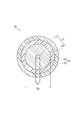
- FIG. 1 is a schematic cross-sectional view showing an example of the optical fiber according to the present embodiment.
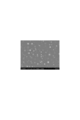
- FIG. 2A is an electron micrograph of the optical fiber obtained in Example 6.
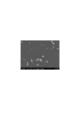
- FIG. 2B is an electron micrograph of the optical fiber obtained in Comparative Example 2.
- the coating resin layer generally includes a primary resin layer and a secondary resin layer.
- the secondary resin layer is required to have high Young's modulus to improve the lateral pressure characteristic of the optical fiber. However, if the content of the filler is increased, the Young's modulus of the coating resin layer can be increased, but it tends to become brittle.
- the present disclosure aims to provide an optical fiber that has a secondary resin layer having a high Young's modulus and is also excellent in toughness.
- An optical fiber according to an aspect of the present disclosure includes a glass fiber including a core and a clad, a primary resin layer that contacts the glass fiber and covers the glass fiber, and a secondary resin layer that covers the primary resin layer,
- the secondary resin layer is composed of a cured product of a resin composition containing a base resin containing a urethane (meth)acrylate oligomer, a monomer and a photopolymerization initiator, and inorganic oxide particles, and is measured by an X-ray small angle scattering method.
- An optical fiber in which the volume average particle diameter of the inorganic oxide particles is 800 nm or less and the normalized dispersion of the volume average particle diameter is 60% or less.
- the secondary resin layer has a high Young's modulus and the toughness of the entire optical fiber is excellent.
- the secondary resin layer locally becomes hard and brittle, and the toughness of the optical fiber is impaired. If, for example, the glass strength is measured in this state, cracks may occur at the grip portion and the coating may peel off.
- the inorganic oxide particles may be particles containing at least one selected from the group consisting of silicon dioxide, zirconium dioxide, aluminum oxide, magnesium oxide, titanium oxide, tin oxide and zinc oxide. This makes it easy to develop an excellent Young's modulus.
- the content of the inorganic oxide particles may be 5% by mass or more and 60% by mass or less based on the total amount of the resin composition. Thereby, it is easy to develop an excellent Young's modulus and it is easy to maintain excellent toughness.
- the inorganic oxide particles may be hydrophobic. Thereby, excellent toughness is likely to be exhibited.
- the resin composition for forming the secondary resin layer of the optical fiber according to the present embodiment includes a base resin containing a urethane (meth)acrylate oligomer, a monomer and a photopolymerization initiator, and inorganic oxide particles.
- (meth)acrylate means acrylate or corresponding methacrylate.
- (meth)acrylic acid means acrylate or corresponding methacrylate.
- the inorganic oxide particles are not particularly limited, but for example, silicon dioxide (silica), zirconium dioxide (zirconia), aluminum oxide (from the viewpoint of excellent dispersibility in the resin composition and easy formation of a smooth resin layer) Particles containing at least one selected from the group consisting of alumina), magnesium oxide (magnesia), titanium oxide (titania), tin oxide and zinc oxide are preferable.
- Silica particles are more preferably used as the inorganic oxide particles according to the present embodiment, from the viewpoints of low cost, easy surface treatment, ultraviolet transparency, and easy provision of appropriate hardness to the resin layer. preferable.
- the surface of the inorganic oxide particles may be treated with an organic compound having a predetermined functional group. That is, the inorganic oxide particles may be particles in which a predetermined functional group is introduced on the surface (surface-modified inorganic oxide particles). Further, the inorganic oxide particles may be hydrophobic particles. Examples of the functional group include an acryloyl group, a methacryloyl group, a vinyl group and the like. These functional groups have ultraviolet curability. By having such a functional group, the standardized dispersion of the volume average particle diameter can be suppressed, and the resin layer having a high Young's modulus can be easily formed.
- Examples of the organic compound having a UV-curable functional group include 3-methacryloxypropyltrimethoxysilane, 3-acryloxypropyltrimethoxysilane, 3-methacryloxypropyltriethoxysilane, and 3-acryloxypropyltriethoxysilane.
- Silane compounds such as 8-methacryloxyoctyltrimethoxysilane, 8-acryloxyoctyltrimethoxysilane, 7-octenyltrimethoxysilane, vinyltrimethoxysilane and vinyltriethoxysilane.
- the inorganic oxide particles particles dispersed in a dispersion medium can be used.
- the inorganic oxide particles dispersed in the dispersion medium By using the inorganic oxide particles dispersed in the dispersion medium, the inorganic oxide particles can be uniformly dispersed in the resin composition, and the storage stability of the resin composition can be improved. Further, the standardized dispersion of the volume average particle diameter can be suppressed. Thereby, the dispersibility of the inorganic oxide particles is easily maintained even in the formed resin layer.
- the dispersion medium is not particularly limited as long as it does not inhibit the curing of the resin composition.
- the dispersion medium may be reactive or non-reactive.
- a monomer such as a (meth)acryloyl compound or an epoxy compound may be used as a reactive dispersion medium.
- the (meth)acryloyl compound include 1,6-hexanediol di(meth)acrylate, EO-modified bisphenol A di(meth)acrylate, polyethylene glycol di(meth)acrylate, PO-modified bisphenol A di(meth)acrylate, Polypropylene glycol di(meth)acrylate, polytetramethylene glycol di(meth)acrylate, 2-hydroxy-3-phenoxypropyl acrylate, (meth)acrylic acid adduct of propylene glycol diglycidyl ether, tripropylene glycol diglycidyl ether ( Examples thereof include (meth)acrylic acid adducts and (meth)acrylic acid adducts of glycerin diglycidyl ether.
- a (meth)acryloyl compound exempl
- a ketone solvent such as methyl ethyl ketone (MEK), an alcohol solvent such as methanol (MeOH), propylene glycol monomethyl ether (PGME), or an ester solvent such as propylene glycol monomethyl ether acetate (PGMEA).
- MEK methyl ethyl ketone
- MeOH methanol
- PGME propylene glycol monomethyl ether
- PMEA propylene glycol monomethyl ether acetate
- the resin composition may be prepared by mixing the base resin and the inorganic oxide particles dispersed in the dispersion medium and then removing a part of the dispersion medium.
- the content of the inorganic oxide particles is preferably 5% by mass or more and 60% by mass or less, but 5% by mass or more and 50% by mass or less, based on the total amount of the resin composition (total amount of the base resin and the inorganic oxide particles). It may be 10 mass% or more and 40 mass% or less.
- the content of the inorganic oxide particles is 5% by mass or more, it becomes easy to form a resin layer having excellent lateral pressure characteristics (excellent Young's modulus).
- excellent Young's modulus excellent Young's modulus
- the content of the inorganic oxide particles is 60% by mass or less, the coating property of the resin composition is easily improved, and a tough resin layer can be formed.
- the base resin according to the present embodiment contains a urethane (meth)acrylate oligomer, a monomer and a photopolymerization initiator.
- urethane (meth)acrylate oligomer an oligomer obtained by reacting a polyol compound, a polyisocyanate compound and a hydroxyl group-containing (meth)acrylate compound can be used.
- polyol compound examples include polytetramethylene glycol, polypropylene glycol, and bisphenol A/ethylene oxide addition diol.
- polyisocyanate compound examples include 2,4-tolylene diisocyanate, 2,6-tolylene diisocyanate, isophorone diisocyanate and dicyclohexylmethane 4,4'-diisocyanate.
- hydroxyl group-containing (meth)acrylate compound examples include 2-hydroxyethyl (meth)acrylate, 2-hydroxybutyl (meth)acrylate, 1,6-hexanediol mono(meth)acrylate, pentaerythritol tri(meth)acrylate, 2-Hydroxypropyl (meth)acrylate and tripropylene glycol di(meth)acrylate are mentioned.
- the number average molecular weight of the polyol compound may be 300 or more and 3000 or less.
- Organotin compounds are generally used as catalysts when synthesizing urethane (meth)acrylate oligomers.
- organotin compound examples include dibutyltin dilaurate, dibutyltin diacetate, dibutyltin malate, dibutyltin bis (2-ethylhexyl mercaptoacetate), dibutyltin bis (isooctyl mercaptoacetate) and dibutyltin oxide. From the viewpoint of easy availability or catalytic performance, it is preferable to use dibutyltin dilaurate or dibutyltin diacetate as a catalyst.
- a lower alcohol having 5 or less carbon atoms may be used during the synthesis of the urethane (meth)acrylate oligomer.
- the lower alcohol include methanol, ethanol, 1-propanol, 2-propanol, 1-butanol, 2-butanol, 2-methyl-2-propanol, 1-pentanol, 2-pentanol, 3-pentanol, Mention may be made of 2-methyl-1-butanol, 3-methyl-1-butanol, 2-methyl-2-butanol, 3-methyl-2-butanol and 2,2-dimethyl-1-propanol.
- the resin composition may further contain an epoxy (meth)acrylate oligomer.
- an epoxy (meth)acrylate oligomer an oligomer obtained by reacting an epoxy resin having two or more glycidyl groups with a compound having a (meth)acryloyl group can be used.
- a monofunctional monomer having one polymerizable group and a polyfunctional monomer having two or more polymerizable groups can be used.
- the monomers may be used as a mixture of two or more kinds.
- Examples of the monofunctional monomer include methyl (meth)acrylate, ethyl (meth)acrylate, propyl (meth)acrylate, n-butyl (meth)acrylate, s-butyl (meth)acrylate, tert-butyl (meth)acrylate, Isobutyl (meth)acrylate, n-pentyl (meth)acrylate, isopentyl (meth)acrylate, hexyl (meth)acrylate, heptyl (meth)acrylate, isoamyl (meth)acrylate, 2-ethylhexyl (meth)acrylate, n-octyl (Meth)acrylate, isooctyl (meth)acrylate, isodecyl (meth)acrylate, lauryl (meth)acrylate, 2-phenoxyethyl (meth)acrylate, 3-phenoxybenzyl acrylate, phenoxydiethylene glycol
- polyfunctional monomer examples include ethylene glycol di(meth)acrylate, polyethylene glycol di(meth)acrylate, polypropylene glycol di(meth)acrylate, neopentyl glycol di(meth)acrylate, tripropylene glycol di(meth)acrylate, Di(meth)acrylate of alkylene oxide adduct of bisphenol A, tetraethylene glycol di(meth)acrylate, hydroxypivalic acid neopentyl glycol di(meth)acrylate, 1,4-butanediol di(meth)acrylate, 1,6 -Hexanediol di(meth)acrylate, 1,9-nonanediol di(meth)acrylate, 1,12-dodecanediol di(meth)acrylate, 1,14-tetradecanediol di(meth)acrylate, 1,16-hexadecane EO addition of diol di(meth)acrylate
- the photopolymerization initiator can be appropriately selected and used from known radical photopolymerization initiators.
- the photopolymerization initiator include 1-hydroxycyclohexyl phenyl ketone (Omnirad 184, manufactured by IGM Resins), 2,2-dimethoxy-2-phenylacetophenone, 1-(4-isopropylphenyl)-2-hydroxy-2- Methylpropan-1-one, bis(2,6-dimethoxybenzoyl)-2,4,4-trimethylpentylphosphine oxide, 2-methyl-1-[4-(methylthio)phenyl]-2-morpholino-propane-1 -One (Omnirad 907, manufactured by IGM Resins), 2,4,6-trimethylbenzoyldiphenylphosphine oxide (Omnirad TPO, manufactured by IGM Resins) and bis(2,4,6-trimethylbenzoyl)phenylphosphine oxide (Omnirad 81
- the resin composition may further contain a silane coupling agent, a leveling agent, an antifoaming agent, an antioxidant, a sensitizer and the like.
- silane coupling agent is not particularly limited as long as it does not hinder the curing of the resin composition.
- silane coupling agents include tetramethyl silicate, tetraethyl silicate, mercaptopropyltrimethoxysilane, vinyltrichlorosilane, vinyltriethoxysilane, vinyltris( ⁇ -methoxy-ethoxy)silane, ⁇ -(3,4-epoxycyclohexyl).
- -Ethyltrimethoxysilane dimethoxydimethylsilane, diethoxydimethylsilane, 3-acryloxypropyltrimethoxysilane, ⁇ -glycidoxypropyltrimethoxysilane, ⁇ -glycidoxypropylmethyldiethoxysilane, ⁇ -methacryloxypropyl Trimethoxysilane, N-( ⁇ -aminoethyl)- ⁇ -aminopropyltrimethoxysilane, N-( ⁇ -aminoethyl)- ⁇ -aminopropyltrimethyldimethoxysilane, N-phenyl- ⁇ -aminopropyltrimethoxysilane, ⁇ -chloropropyltrimethoxysilane, ⁇ -mercaptopropyltrimethoxysilane, ⁇ -aminopropyltrimethoxysilane, bis-[3-(triethoxysilyl)propyl
- the viscosity of the resin composition at 45° C. is preferably 3500 mPa ⁇ s or less, more preferably 2000 mPa ⁇ s or less, and further preferably 1500 mPa ⁇ s or less.
- the viscosity of the resin composition is within the above range, the coatability of the resin composition can be improved.
- the lower limit of the viscosity is not particularly limited, it can be set to 300 mPa ⁇ s from the viewpoint of wettability to the primary resin layer.
- the above resin composition can be suitably used as a secondary coating material for optical fibers.
- an optical fiber having a high Young's modulus and excellent lateral pressure characteristics can be manufactured.
- FIG. 1 is a schematic sectional view showing an example of the optical fiber according to the present embodiment.
- the optical fiber 10 includes a glass fiber 13 including a core 11 and a clad 12, and a coating resin layer 16 including a primary resin layer 14 and a secondary resin layer 15 provided on the outer periphery of the glass fiber 13.
- the clad 12 surrounds the core 11.
- the core 11 and the clad 12 mainly contain glass such as quartz glass.
- the core 11 may be made of germanium-added quartz
- the clad 12 may be made of pure quartz or fluorine-added quartz. be able to.
- the outer diameter (D2) of the glass fiber 13 is about 125 ⁇ m
- the diameter (D1) of the core 11 constituting the glass fiber 13 is about 7 ⁇ m or more and 15 ⁇ m or less.
- the thickness of the coating resin layer 16 is usually 60 ⁇ m or more and 70 ⁇ m or less.
- the thickness of each of the primary resin layer 14 and the secondary resin layer 15 may be about 10 ⁇ m or more and 50 ⁇ m or less, and for example, the thickness of the primary resin layer 14 is 35 ⁇ m and the thickness of the secondary resin layer 15 is 25 ⁇ m. It may be.
- the outer diameter of the optical fiber 10 may be about 245 ⁇ m or more and 265 ⁇ m or less.
- the above resin composition can be used when forming the secondary resin layer.
- the secondary resin layer can be formed by curing the resin composition containing the base resin and the inorganic oxide particles. Thereby, the lateral pressure characteristic of the optical fiber can be improved.
- the Young's modulus of the secondary resin layer at 23° C. is preferably 1300 MPa or more, more preferably 1300 MPa or more and 2600 MPa or less, still more preferably 1300 MPa or more and 2500 MPa or less.
- the Young's modulus of the secondary resin layer is 1300 MPa or more, the lateral pressure characteristic is easily improved, and when it is 2600 MPa or less, the secondary resin layer can be provided with appropriate toughness, so that the secondary resin layer is less likely to crack.
- the inorganic oxide particles dispersed in the dispersion medium exist in a state of being dispersed in the resin layer even after the resin layer is cured.
- a reactive dispersion medium When a reactive dispersion medium is used, the inorganic oxide particles are mixed with the resin composition together with the dispersion medium, and taken into the resin layer while maintaining the dispersed state.
- a non-reactive dispersion medium When a non-reactive dispersion medium is used, at least a part of the dispersion medium is volatilized from the resin composition and disappears, but the inorganic oxide particles remain in the resin composition in a dispersed state, and the resin layer after curing is used. It also exists in a dispersed state. Most of the inorganic oxide particles present in the resin layer are observed in a state in which primary particles are dispersed, when observed by an electron microscope.
- the primary resin layer 14 can be formed, for example, by curing a resin composition containing a urethane (meth)acrylate oligomer, a monomer, a photopolymerization initiator and a silane coupling agent.
- a resin composition containing a urethane (meth)acrylate oligomer, a monomer, a photopolymerization initiator and a silane coupling agent for the resin composition for the primary resin layer, conventionally known techniques can be used.
- the urethane (meth)acrylate oligomer, the monomer, the photopolymerization initiator and the silane coupling agent may be appropriately selected from the compounds exemplified as the above base resin.
- the resin composition forming the primary resin layer has a different composition from the base resin forming the secondary resin layer.
- the volume average particle diameter of the inorganic oxide particles measured by the X-ray small angle scattering method is 800 nm or less.
- the toughness of the optical fiber is maintained well.
- a high Young's modulus is easily maintained.
- the volume average particle size may be 750 nm or less, 500 nm or less, 300 nm or less, 150 nm or less, 75 nm or less, 20 nm. It may be the following.
- the lower limit of the volume average particle size is not particularly limited, but can be 5 nm from the viewpoint of dispersion stability.
- the standardized dispersion of the volume average particle size is 60% or less. Since the dispersion of the particle size of the inorganic oxide particles in the secondary resin layer is suppressed and the dispersibility of the inorganic oxide particles is maintained well, excellent toughness can be imparted to the optical fiber. Moreover, a high Young's modulus is easily maintained. From this viewpoint, the standardized dispersion of the volume average particle diameter may be 55% or less, 45% or less, 35% or less, 20% or less, and 10% or less. It may be% or less. The lower limit of the standardized dispersion is not particularly limited, but may be 5% from the viewpoint of efficiently filling the inorganic oxide particles in the resin.
- the volume average particle diameter and the standardized dispersion thereof of the inorganic oxide particles are the average particle diameter of the inorganic fine particles used as a raw material, the particle size distribution of the particle diameter, the surface state of the inorganic fine particles (the amount of hydroxyl groups on the surface, the functional group It can be changed by adjusting the type).
- the small-angle X-ray scattering method is a method of quantifying the shape and distribution of scatterers by analyzing the X-ray scattering intensity obtained at a scattering angle of 5° or less.
- the state of the inorganic oxide particles in the secondary resin layer can be analyzed by the X-ray small angle scattering method.
- the volume average particle diameter and the standardized dispersion showing the dispersion of the particle diameter can be obtained from the X-ray scattering intensity profile. That is, by fitting the measured X-ray scattering intensity and the X-ray scattering intensity calculated from a theoretical formula expressed by a function of the particle size and the particle size distribution by fitting with the nonlinear least square method, The average particle size and its normalized dispersion can be determined.
- a urethane acrylate oligomer (UA) obtained by reacting polypropylene glycol having a molecular weight of 600, 2,4-tolylene diisocyanate and hydroxyethyl acrylate, and an epoxy acrylate oligomer (EA) were prepared.
- Photopolymerization initiator 1-Hydroxycyclohexyl phenyl ketone and 2,4,6-trimethylbenzoyldiphenylphosphine oxide were prepared as photopolymerization initiators.
- Base resin Various raw materials were mixed so that the content in the composition was the ratio shown in Table 1, to prepare a base resin.
- silica sol MEK dispersion liquid
- hydrophobic silica particles Silica particles surface-treated with a silane coupling agent.
- a urethane acrylate oligomer obtained by reacting polypropylene glycol having a molecular weight of 4000, isophorone diisocyanate, hydroxyethyl acrylate and methanol was prepared. 75 parts by weight of this urethane acrylate oligomer, 12 parts by weight of nonylphenol EO-modified acrylate, 6 parts by weight of N-vinylcaprolactam, 2 parts by weight of 1,6-hexanediol diacrylate, 1 part by weight of 2,4,6-trimethylbenzoyldiphenylphosphine oxide. And 1 part by mass of 3-mercaptopropyltrimethoxysilane were mixed to obtain a resin composition for the primary resin layer.
- a 35 ⁇ m-thick primary resin layer is formed using a resin composition for a primary resin layer on the outer periphery of a glass fiber having a diameter of 125 ⁇ m composed of a core and a clad, and the liquid resin of Example or Comparative Example is further formed on the outer periphery thereof.
- An optical fiber was produced by forming a 45 ⁇ m-thick secondary resin layer using the resin composition. The linear velocity was 1500 m/min.
- the beam line “BL8S3” of the Ichi Synchrotron Optical Center is mainly used, and for the region where the particle size is large (approximately 50 nm or more), Aichi Synchro Synchrotron is used.
- a scattering pattern was acquired using the beamline “BL8S3” of the tron light center and the beamline “BL19B2” of SPring-8.
- the respective experimental conditions were as follows. "BL8S3”: X-ray energy of 13.5 keV, camera length of 4 m, detector R-AXISIV++. "BL19B2": X-ray energy 18 keV, camera length 42 m, detector PILATUS 2M.
- the X-ray scattering intensity profile obtained as described above was analyzed using particle size/pore analysis software “NANO-Solver, Ver. 3.7” (manufactured by Rigaku Corporation). More specifically, the fitting was performed by the nonlinear least squares method so that the measured X-ray scattering intensity and the value of the X-ray scattering intensity calculated by the analysis software approximated each other. From the fitting results, the volume average particle size of the inorganic oxide particles and its standardized dispersion were calculated. In the analysis, it was assumed that the inorganic oxide particles had a perfect spherical shape.
- the optical fibers obtained in Examples or Comparative Examples were dipped in a mixed solvent of acetone and ethanol, and only the coating resin layer was extracted into a cylindrical shape. Next, after removing the solvent by vacuum drying, the sample was allowed to stand for 16 hours or more in a thermostatic chamber maintained at 23° C. and 50% RH, and then a tensile test (marked line interval 25 mm, tensile speed 1 mm/min) was performed. .. Then, the Young's modulus of the coating resin layer was obtained by the secant equation of 2.5% strain. The measurement was performed 5 times, and the average value was defined as the Young's modulus. The Young's modulus thus obtained can be regarded substantially as the Young's modulus of the secondary resin layer.
- FIG. 2A is an electron micrograph of the optical fiber obtained in Example 6.
- FIG. 2B is an electron micrograph of the optical fiber obtained in Comparative Example 2.
- FIG. 2A Example 6
- FIG. 2B Comparative Example 2
- the optical fiber of the example has a high Young's modulus and excellent toughness.
- optical fiber 11 core 12 clad 13 glass fiber 14 primary resin layer 15 secondary resin layer 16 coating resin layer
Landscapes
- Chemical & Material Sciences (AREA)
- Organic Chemistry (AREA)
- Chemical Kinetics & Catalysis (AREA)
- Life Sciences & Earth Sciences (AREA)
- Engineering & Computer Science (AREA)
- Materials Engineering (AREA)
- Health & Medical Sciences (AREA)
- Medicinal Chemistry (AREA)
- Polymers & Plastics (AREA)
- Geochemistry & Mineralogy (AREA)
- General Chemical & Material Sciences (AREA)
- Physics & Mathematics (AREA)
- Wood Science & Technology (AREA)
- Optics & Photonics (AREA)
- General Life Sciences & Earth Sciences (AREA)
- General Physics & Mathematics (AREA)
- Nanotechnology (AREA)
- Inorganic Chemistry (AREA)
- Composite Materials (AREA)
- Crystallography & Structural Chemistry (AREA)
- Pathology (AREA)
- Immunology (AREA)
- General Health & Medical Sciences (AREA)
- Biochemistry (AREA)
- Analytical Chemistry (AREA)
- Macromonomer-Based Addition Polymer (AREA)
- Optical Fibers, Optical Fiber Cores, And Optical Fiber Bundles (AREA)
- Surface Treatment Of Glass Fibres Or Filaments (AREA)
Abstract
Priority Applications (5)
| Application Number | Priority Date | Filing Date | Title |
|---|---|---|---|
| EP20759468.0A EP3929226B1 (fr) | 2019-02-18 | 2020-02-18 | Fibre optique |
| KR1020217028795A KR102765390B1 (ko) | 2019-02-18 | 2020-02-18 | 광섬유 |
| US17/047,848 US20210149107A1 (en) | 2019-02-18 | 2020-02-18 | Optical fiber |
| JP2021502042A JP7388425B2 (ja) | 2019-02-18 | 2020-02-18 | 光ファイバ |
| CN202080009828.7A CN113396170B (zh) | 2019-02-18 | 2020-02-18 | 光纤 |
Applications Claiming Priority (2)
| Application Number | Priority Date | Filing Date | Title |
|---|---|---|---|
| JP2019-026609 | 2019-02-18 | ||
| JP2019026609 | 2019-02-18 |
Publications (1)
| Publication Number | Publication Date |
|---|---|
| WO2020171082A1 true WO2020171082A1 (fr) | 2020-08-27 |
Family
ID=72143946
Family Applications (1)
| Application Number | Title | Priority Date | Filing Date |
|---|---|---|---|
| PCT/JP2020/006348 Ceased WO2020171082A1 (fr) | 2019-02-18 | 2020-02-18 | Fibre optique |
Country Status (7)
| Country | Link |
|---|---|
| US (1) | US20210149107A1 (fr) |
| EP (1) | EP3929226B1 (fr) |
| JP (1) | JP7388425B2 (fr) |
| KR (1) | KR102765390B1 (fr) |
| CN (1) | CN113396170B (fr) |
| TW (1) | TWI834816B (fr) |
| WO (1) | WO2020171082A1 (fr) |
Families Citing this family (2)
| Publication number | Priority date | Publication date | Assignee | Title |
|---|---|---|---|---|
| US11914186B2 (en) | 2018-04-16 | 2024-02-27 | Sumitomo Electric Industries, Ltd. | Optical fiber |
| WO2020255818A1 (fr) * | 2019-06-19 | 2020-12-24 | 住友電気工業株式会社 | Composition de résine, matériau de revêtement secondaire pour fibre optique, et fibre optique ainsi que procédé de fabrication de celle-ci |
Citations (8)
| Publication number | Priority date | Publication date | Assignee | Title |
|---|---|---|---|---|
| JPH0269706A (ja) * | 1988-09-06 | 1990-03-08 | Sumitomo Electric Ind Ltd | 被覆光ファイバ |
| JP2004204206A (ja) * | 2002-03-29 | 2004-07-22 | Mitsubishi Chemicals Corp | 光硬化性組成物及びその製造方法、並びに硬化物 |
| JP2006265502A (ja) * | 2005-03-25 | 2006-10-05 | Fuji Xerox Co Ltd | 光重合性組成物及び難燃性樹脂成形品 |
| JP2010511770A (ja) * | 2006-12-05 | 2010-04-15 | ディーエスエム アイピー アセッツ ビー.ブイ. | 放射線硬化性被覆組成物 |
| US20120321265A1 (en) * | 2009-11-26 | 2012-12-20 | Lidia Terruzzi | Optical fiber with double coating |
| JP2014219550A (ja) | 2013-05-08 | 2014-11-20 | 住友電気工業株式会社 | 光ファイバ心線 |
| JP2019504339A (ja) * | 2015-11-25 | 2019-02-14 | コーニング インコーポレイテッド | 光拡散性光ファイバ用コーティング |
| JP2019026609A (ja) | 2017-08-01 | 2019-02-21 | ロート製薬株式会社 | 医薬用錠剤 |
Family Cites Families (9)
| Publication number | Priority date | Publication date | Assignee | Title |
|---|---|---|---|---|
| JP2000007717A (ja) * | 1998-06-19 | 2000-01-11 | Takeda Chem Ind Ltd | 紫外線硬化型樹脂組成物 |
| US20100120965A1 (en) * | 2007-03-28 | 2010-05-13 | Masako Kikuchi | Optical Organic-Inorganic Composite Material and Optical Element |
| US8426027B2 (en) * | 2008-03-27 | 2013-04-23 | Fujikura Kasei Co., Ltd. | Composition for coating plastic substrate, coating film formed therefrom, and formed body |
| WO2015019512A1 (fr) * | 2013-08-08 | 2015-02-12 | 日立化成株式会社 | Composition de résine pour guides d'ondes optiques, film en résine pour guides d'ondes optiques l'utilisant, guide d'ondes optiques et tableau de connexions composite photoélectrique |
| JP2016040352A (ja) * | 2014-08-12 | 2016-03-24 | 日立化成株式会社 | ガラス用メンテナンス保護フィルム及びその製造方法、メンテナンス保護方法並びにメンテナンス保護フィルム付きガラス及びその製造方法 |
| JP6574327B2 (ja) * | 2014-11-13 | 2019-09-11 | 株式会社カネカ | 絶縁膜改質用組成物及び絶縁膜用硬化性樹脂組成物 |
| US11345606B2 (en) * | 2017-02-17 | 2022-05-31 | David Brown | Deposition particles and a method and apparatus for producing the same |
| US20220017773A1 (en) * | 2018-12-03 | 2022-01-20 | Ms Holding B.V. | Filled radiation curable compositions for coating optical fiber and the coatings produced therefrom |
| TWI706012B (zh) * | 2019-09-12 | 2020-10-01 | 明基材料股份有限公司 | 高硬度可撓硬塗層膜 |
-
2020
- 2020-02-18 KR KR1020217028795A patent/KR102765390B1/ko active Active
- 2020-02-18 US US17/047,848 patent/US20210149107A1/en not_active Abandoned
- 2020-02-18 JP JP2021502042A patent/JP7388425B2/ja active Active
- 2020-02-18 TW TW109105217A patent/TWI834816B/zh active
- 2020-02-18 EP EP20759468.0A patent/EP3929226B1/fr active Active
- 2020-02-18 WO PCT/JP2020/006348 patent/WO2020171082A1/fr not_active Ceased
- 2020-02-18 CN CN202080009828.7A patent/CN113396170B/zh active Active
Patent Citations (8)
| Publication number | Priority date | Publication date | Assignee | Title |
|---|---|---|---|---|
| JPH0269706A (ja) * | 1988-09-06 | 1990-03-08 | Sumitomo Electric Ind Ltd | 被覆光ファイバ |
| JP2004204206A (ja) * | 2002-03-29 | 2004-07-22 | Mitsubishi Chemicals Corp | 光硬化性組成物及びその製造方法、並びに硬化物 |
| JP2006265502A (ja) * | 2005-03-25 | 2006-10-05 | Fuji Xerox Co Ltd | 光重合性組成物及び難燃性樹脂成形品 |
| JP2010511770A (ja) * | 2006-12-05 | 2010-04-15 | ディーエスエム アイピー アセッツ ビー.ブイ. | 放射線硬化性被覆組成物 |
| US20120321265A1 (en) * | 2009-11-26 | 2012-12-20 | Lidia Terruzzi | Optical fiber with double coating |
| JP2014219550A (ja) | 2013-05-08 | 2014-11-20 | 住友電気工業株式会社 | 光ファイバ心線 |
| JP2019504339A (ja) * | 2015-11-25 | 2019-02-14 | コーニング インコーポレイテッド | 光拡散性光ファイバ用コーティング |
| JP2019026609A (ja) | 2017-08-01 | 2019-02-21 | ロート製薬株式会社 | 医薬用錠剤 |
Non-Patent Citations (3)
| Title |
|---|
| I.S. FEDOROVAP. SCHMIDT, J. APPL. CRYST., vol. 11, 1978, pages 405 |
| See also references of EP3929226A4 |
| SHIUE, J. ET AL.: "Effects of silica nanoparticle addition to the secondary coating of dual-coated optical fibers", ACTA MATERIALIA, vol. 54, no. 10, June 2006 (2006-06-01), pages 2631 - 2636, XP025027691, DOI: 10.1016/j.actamat.2006.02.002 * |
Also Published As
| Publication number | Publication date |
|---|---|
| KR20210127958A (ko) | 2021-10-25 |
| TWI834816B (zh) | 2024-03-11 |
| TW202041556A (zh) | 2020-11-16 |
| CN113396170B (zh) | 2023-08-08 |
| JP7388425B2 (ja) | 2023-11-29 |
| EP3929226A1 (fr) | 2021-12-29 |
| CN113396170A (zh) | 2021-09-14 |
| EP3929226A4 (fr) | 2022-04-13 |
| KR102765390B1 (ko) | 2025-02-10 |
| JPWO2020171082A1 (ja) | 2021-12-16 |
| EP3929226B1 (fr) | 2025-01-15 |
| US20210149107A1 (en) | 2021-05-20 |
Similar Documents
| Publication | Publication Date | Title |
|---|---|---|
| JP7327405B2 (ja) | 光ファイバ | |
| JP7255588B2 (ja) | 樹脂組成物、光ファイバのセカンダリ被覆材料及び光ファイバ | |
| JP7322874B2 (ja) | 光ファイバ | |
| WO2020101030A1 (fr) | Composition de résine et fibre optique | |
| JP7367696B2 (ja) | 樹脂組成物、光ファイバ及び光ファイバの製造方法 | |
| WO2021019908A1 (fr) | Ruban de fibres optiques et câble à fibres optiques | |
| JP7388426B2 (ja) | 光ファイバ被覆用の樹脂組成物 | |
| WO2020101029A1 (fr) | Composition de résine, fibre optique et procédé de fabrication de fibre optique | |
| JP7388425B2 (ja) | 光ファイバ | |
| US11947161B2 (en) | Resin composition, optical fiber secondary coating material, optical fiber and manufacturing method of optical fiber | |
| US11820704B2 (en) | Resin composition, secondary coating material for optical fiber, optical fiber, and method for producing optical fiber |
Legal Events
| Date | Code | Title | Description |
|---|---|---|---|
| 121 | Ep: the epo has been informed by wipo that ep was designated in this application |
Ref document number: 20759468 Country of ref document: EP Kind code of ref document: A1 |
|
| ENP | Entry into the national phase |
Ref document number: 2021502042 Country of ref document: JP Kind code of ref document: A |
|
| NENP | Non-entry into the national phase |
Ref country code: DE |
|
| ENP | Entry into the national phase |
Ref document number: 20217028795 Country of ref document: KR Kind code of ref document: A |
|
| ENP | Entry into the national phase |
Ref document number: 2020759468 Country of ref document: EP Effective date: 20210920 |