WO2020255938A1 - Marqueur de diagnostic pour trouble cognitif léger - Google Patents
Marqueur de diagnostic pour trouble cognitif léger Download PDFInfo
- Publication number
- WO2020255938A1 WO2020255938A1 PCT/JP2020/023496 JP2020023496W WO2020255938A1 WO 2020255938 A1 WO2020255938 A1 WO 2020255938A1 JP 2020023496 W JP2020023496 W JP 2020023496W WO 2020255938 A1 WO2020255938 A1 WO 2020255938A1
- Authority
- WO
- WIPO (PCT)
- Prior art keywords
- hmgb1
- cognitive impairment
- mild cognitive
- concentration
- subject
- Prior art date
- Legal status (The legal status is an assumption and is not a legal conclusion. Google has not performed a legal analysis and makes no representation as to the accuracy of the status listed.)
- Ceased
Links
Images

Classifications
-
- G—PHYSICS
- G01—MEASURING; TESTING
- G01N—INVESTIGATING OR ANALYSING MATERIALS BY DETERMINING THEIR CHEMICAL OR PHYSICAL PROPERTIES
- G01N33/00—Investigating or analysing materials by specific methods not covered by groups G01N1/00 - G01N31/00
- G01N33/48—Biological material, e.g. blood, urine; Haemocytometers
- G01N33/50—Chemical analysis of biological material, e.g. blood, urine; Testing involving biospecific ligand binding methods; Immunological testing
- G01N33/53—Immunoassay; Biospecific binding assay; Materials therefor
-
- G—PHYSICS
- G01—MEASURING; TESTING
- G01N—INVESTIGATING OR ANALYSING MATERIALS BY DETERMINING THEIR CHEMICAL OR PHYSICAL PROPERTIES
- G01N33/00—Investigating or analysing materials by specific methods not covered by groups G01N1/00 - G01N31/00
- G01N33/48—Biological material, e.g. blood, urine; Haemocytometers
- G01N33/50—Chemical analysis of biological material, e.g. blood, urine; Testing involving biospecific ligand binding methods; Immunological testing
- G01N33/68—Chemical analysis of biological material, e.g. blood, urine; Testing involving biospecific ligand binding methods; Immunological testing involving proteins, peptides or amino acids
Definitions
- the present invention is a method for determining whether or not a subject has mild cognitive impairment (hereinafter sometimes referred to as "MCI"), and whether or not a subject has MCI. About the kit for.
- MCI mild cognitive impairment
- Alzheimer's disease (hereinafter sometimes referred to as "AD") is one of the irreversible progressive central nervous system diseases, and cognitive dysfunction (dementia) with memory disorder and thought disorder, behavioral disorder, It is known to exhibit symptoms such as personality changes. Alzheimer's disease is the most common disease among dementia patients and accounts for about 60 to 80% of all dementia patients. Alzheimer's disease generally develops in the elderly aged 65 and over, but some also develop in aged 64 and under, in which case it is called juvenile Alzheimer's disease.
- the number of dementia patients in Japan in 2012 was 4.62 million, which was one in seven elderly people aged 65 and over, but increased to about 7 million in 2025. However, it is expected to be one in five. As the number of patients with dementia such as AD increases, it is expected that the financial or mental burden on the national government and patients will become more serious due to the increase in medical expenses and long-term care problems.
- MCI patients Although cognitive decline was observed in MCI patients, they did not meet the diagnostic criteria for dementia and did not interfere with basic daily life or social life. Since some MCI patients are thought to develop AD in the future, if the presence or absence of MCI can be diagnosed at an early stage, appropriate measures to prevent dementia will be taken before the onset of dementia to prevent dementia. It can be expected to prevent it.
- Patent Document 1 a device using artificial intelligence to predict whether or not AD may develop in the future based on a brain image of an MCI patient has been reported.
- Patent Document 2 transferrin containing a sugar chain having mannose at the non-reducing end is present in cerebrospinal fluid, and MCI can be diagnosed using such transferrin as an index.
- the subject of the present invention is a method for accurately determining whether or not a patient has mild cognitive impairment; an evaluation criterion for the effectiveness / ineffectiveness of a therapeutic method that can be a candidate for mild cognitive impairment; an objective variation or degree of clinical symptoms.
- the purpose is to provide an index (particularly, an index for observing the progress of the same patient); etc.
- the present inventor has the HMGB1 concentration in a biological sample derived from an MCI patient and a person who is not affected by MCI (specifically, a healthy person and a non-dementia nerve).
- MCI biological sample derived from an MCI patient
- a person who is not affected by MCI specifically, a healthy person and a non-dementia nerve.
- the HMGB1 concentration in the biological sample derived from MCI patients was found in the biological sample derived from a person not suffering from MCI. It was found to be higher than the HMGB1 concentration.
- the present invention has been completed based on these findings.
- a method for determining mild cognitive impairment which comprises the following steps (a) and (b).
- a step of measuring the concentration of HMGB1 in a biological sample collected from a subject (B) A step of determining whether or not a subject has mild cognitive impairment using the concentration of HMGB1 in a biological sample collected from a subject as an index; [2] The determination method according to the above [1], wherein the biological sample is a cerebrospinal fluid sample.
- step (b) the concentration of HMGB1 in the biological sample collected from the subject is compared with the concentration of HMGB1 in the biological sample derived from the control who does not suffer from mild cognitive impairment, and collected from the subject.
- the subject is likely to have mild cognitive impairment.
- the determination method according to the above [3], wherein the control person who does not suffer from mild cognitive impairment is a healthy person or a patient with Alzheimer's disease.
- a kit for determining mild cognitive impairment which comprises an antibody that specifically binds to human HMGB1 or a label thereof.
- How to create data to determine mild cognitive impairment including sequential; A method for diagnosing mild cognitive impairment, which comprises the above steps (a) and (b); Treatment to prevent the onset of dementia in patients with mild cognitive impairment whose concentration of HMGB1 in the biological sample is higher than the concentration of HMGB1 in the biological sample derived from a control who does not suffer from mild cognitive impairment.
- Administer eg, administer a dementia drug
- treat mild cognitive impairment eg, administer a dementia drug
- Perform include the step of providing a diet for improving mild cognitive impairment [eg, eating foods rich in vitamins C, E, ⁇ -carotene, DHA, EPA, polyphenols]; performing cognitive training;). How to prevent the onset of dementia, or how to treat mild cognitive impairment; An antibody that specifically binds to human HMGB1 or a label thereof for use in the determination (diagnosis) of mild cognitive impairment; Can be mentioned.
- mild cognitive impairment eg, eating foods rich in vitamins C, E, ⁇ -carotene, DHA, EPA, polyphenols
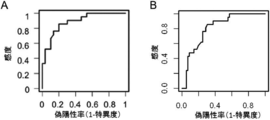
- FIG. 2A is a diagram showing the results of creating a Receiver Operating Characteristic (ROC) curve based on the measurement results of HMGB1 concentration in CSF samples derived from MCI patients and non-MCI / AD controls.
- ROC Receiver Operating Characteristic
- FIG. 2B is a diagram showing the results of creating an ROC curve based on the measurement results of the HMGB1 concentration in CSF samples derived from MCI patients and AD patients.
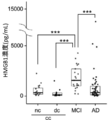
- FIG. 1 is a diagram showing the results of displaying non-MCI / AD controls separately for healthy subjects (“nc” in the figure) and diseased patients (“dc” in the figure).
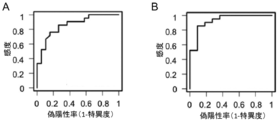
- FIG. 4A is a diagram showing the results of creating an ROC curve based on the measurement results of the HMGB1 concentration in CSF samples derived from MCI patients and healthy subjects.
- FIG. 4B is a diagram showing the results of creating an ROC curve based on the measurement results of the HMGB1 concentration in CSF samples derived from MCI patients and non-dementia neurological disease patients.
- a method for determining mild cognitive impairment which sequentially includes a step (b); for determining whether or not a subject has mild cognitive impairment (whether or not they develop mild cognitive impairment) using the concentration of HMGB1 as an index. (Hereinafter, it may be referred to as "the judgment method"), and the judgment method is a method for assisting the doctor in diagnosing the presence or absence of mild cognitive impairment, and does not include the diagnosis by the doctor. ..
- the kit for determining mild cognitive impairment of the present invention includes an antibody that specifically binds to human HMGB1 (that is, an anti-human HMGB1 antibody) or a label of an anti-human HMGB1 antibody, and is used for determining mild cognitive impairment.
- the kit is not particularly limited as long as it is a kit for determining mild cognitive impairment (hereinafter, may be referred to as "the kit for determining the present case").
- These kits include components generally used in this type of kit, such as carriers, pH buffers, stabilizers, instruction manuals, instructions for determining mild cognitive impairment, etc. Attachments are usually included.
- “mild cognitive impairment” means that cognitive function (for example, memory function, executive function, attention function, visuospatial cognitive function, language comprehension function) is deteriorated, but the diagnostic criteria for dementia are not satisfied. In other words, it means a state in which people do not suffer from dementia and do not interfere with basic daily life or social life.
- “although deterioration of cognitive function is observed, the diagnostic criteria for dementia are not met” means, for example, that the score of the Mini-Mental State Examination (MMSE) is in the range of 19 to 27 points ( For example, 20-27 points, 21-27 points, 22-27 points, 23-27 points, 24-27 points, 19-26 points, 19-25 points, 19-24 points, 19-23 points, 21-26 points. Points, 21-25 points, 21-24 points, 21-23 points); and / or a clinical dementia scale (CDR; Clinical Dementia Rating) score of 0.5 points;
- CDR Clinical Dementia Rating
- the dementia includes, for example, Alzheimer's disease (Alzheimer's disease), dementia that develops in Parkinson's disease, Lewy body dementia, frontotemporal dementia, and progressive nonfluent aphrodisiac. Dementia that develops in dementia, semantic dementia, and corticobasal degeneration can be exemplified.
- the biological sample may be a sample derived from a subject (living body), and examples thereof include a blood sample, a cerebrospinal fluid (CSF; Cerebrospinal Fluid) sample, and a urine sample. Since the effect has been demonstrated, a CSF sample can be preferably exemplified.
- CSF cerebrospinal fluid
- the method for measuring and quantifying the concentration of HMGB1 in the biological sample may be any method as long as it can specifically detect the HMGB1 protein in the biological sample or the peptides constituting the HMGB1 protein.
- Samples or processed products thereof for example, in the case of blood samples, serum samples and plasma samples; in the case of cerebrospinal fluid samples, cerebrospinal fluid from which impurities have been removed by centrifugation; in the case of urine samples, impurities have been removed by centrifugation.
- a mass spectrometric method for detecting a peptide constituting the HMGB1 protein and an immunological measurement method using an antibody that specifically recognizes the HMGB1 protein can be mentioned.
- immunohistochemical staining method As the immunological measurement method, immunohistochemical staining method, ELISA method, EIA method, RIA method, Western blotting method, flow cytometry and the like can be preferably exemplified.
- Flow cytometry is performed with fluorescent substances (alophycocyanin [APC], phycoerythrin [PE], FITC [fluorescein isothiocyanate], AlexaFluor488, AlexaFluor647, AlexaFluor700, PE-TexasRed, PE-Cy5, PE-Cy7, etc.).
- APC alophycocyanin
- PE phycoerythrin
- FITC fluorescein isothiocyanate
- AlexaFluor488, AlexaFluor647, AlexaFluor700, PE-TexasRed, PE-Cy5, PE-Cy7, etc. This can be done with a fluorescence activated cell sorter
- the value of HMGB1 concentration may be an absolute value or a relative value.
- the absolute value of the HMGB1 concentration for example, using a known concentration of HMGB1, a calibration curve showing the relationship between the signal amount derived from HMGB1 (for example, the amount of fluorescence, the amount of dye, and the amount of peptide peak) and the HMGB1 concentration is created. , Can be calculated based on such a calibration curve.
- the relative value of the HMGB1 concentration can be calculated based on, for example, the amount of signal derived from HMGB1 derived from a control person who does not suffer from mild cognitive impairment (for example, the amount of fluorescence, the amount of dye, and the amount of peptide peak). ..
- HMGB1 concentration in biological sample in non-controls said mean + standard deviation (SD); said mean + 2SD; said mean + 3SD; HMGB1 in biosample in controls not suffering from mild cognitive impairment
- SD standard deviation
- the median concentration; the third quartile of the HMGB1 concentration; the maximum value of the HMGB1 concentration; etc. can be mentioned.
- the cutoff value has sensitivity (ratio that can correctly judge a person suffering from mild cognitive impairment as positive) and specificity (ratio that can correctly judge a person not suffering from mild cognitive impairment as negative).
- ROC using statistical analysis software based on HMGB1 concentration data in biological samples in patients with mild cognitive impairment and HMGB1 concentration data in biological samples in controls not suffering from mild cognitive impairment It can also be calculated using a curve.
- step (b) as a method for determining whether or not the subject suffers from mild cognitive impairment, specifically, the concentration of HMGB1 in the biological sample collected from the subject and suffering from mild cognitive impairment Compared with the concentration of HMGB1 in the biological sample derived from the non-control, the concentration of HMGB1 in the biological sample collected from the subject is HMGB1 in the biological sample derived from the control who does not suffer from mild cognitive impairment. If the concentration is higher than the above concentration, a method for determining that the subject is likely to have mild cognitive impairment can be preferably exemplified.
- HMGB1 in a biological sample collected from the subject Comparing the concentration with the concentration of HMGB1 in a biological sample derived from a control person who does not suffer from mild cognitive impairment, the concentration of HMGB1 in the biological sample collected from the subject is a control which does not suffer from mild cognitive impairment.
- a method for creating data for determining that the subject is likely to suffer from mild cognitive impairment can be preferably exemplified.
- a control who does not suffer from mild cognitive impairment a person who does not suffer from mild cognitive impairment (control of the subject), that is, 1) no deterioration of cognitive function is observed; 2).
- mild cognitive impairment eg, Alzheimer's disease, spinal cone syndrome, optic neuromyelitis, tumor-associated syndrome, idiopathic normal pressure hydrocephalus, alcohol dependence, peripheral neuropathy, multiple sclerosis
- Patients suffering from one or more diseases selected from the diseases of systemic erythematosus, lung cancer, and herpes zoster meningitis can be mentioned, and healthy subjects and patients with Alzheimer's disease can be preferably exemplified. it can.
- HMGB1 which is an index for determining mild cognitive impairment is a human-derived HMGB1 (high mobility group box 1) protein, and specifically, 1 or 2 selected from the following [Group A proteins]. More than a species of protein can be mentioned.
- [Group A protein] (1) One or several amino acids are deleted in the protein consisting of the amino acid sequence shown in SEQ ID NO: 1 (HMGB1 isoform 1 [NCBI Reference Sequence: NP_001300821]) or the amino acid sequence shown in SEQ ID NO: 1.
- amino acid sequence in which one or several amino acids are deleted, substituted and / or added is usually in the range of 1 to 10, preferably in the range of 1 to 7, and more preferably in the range of 1 to 6. Within the range of 1, more preferably within the range of 1-5, even more preferably within the range of 1-4, particularly preferably within the range of 1-3, particularly more preferably within the range of 1-2. , Most preferably, means an amino acid sequence in which one number of amino acids has been deleted, substituted and / or added.
- the anti-human HMGB1 antibody in the determination kit may be an antibody such as a monoclonal antibody, a polyclonal antibody, a human antibody, a chimeric antibody, or a humanized antibody, and among them, F (ab') 2 , Also included are antibody fragments consisting of parts of antibodies such as Fab, diabody, Fv, ScFv, Sc (Fv) 2 .
- the labeling substances in the labeled product of the anti-human HMGB1 antibody include peroxidase (for example, horseradish peroxidase), alkaline phosphatase, ⁇ -D-galactosidase, glucose oxidase, glucos-6-phosphate dehydrogenase, and alcohol dehydration. Elemental enzymes, malic acid dehydrogenase, penicillinase, catalase, apogluconexase, urease, luciferase or acetylcholinesterase, etc.
- peroxidase for example, horseradish peroxidase
- alkaline phosphatase for example, alkaline phosphatase
- ⁇ -D-galactosidase glucose oxidase
- glucos-6-phosphate dehydrogenase glucos-6-phosphate dehydrogenase
- Alcohol dehydration Elemental enzymes, malic acid dehydrogenas
- Green Fluorescence Protein Green Fluorescence Protein (GFP), Cyan Fluorescence Protein (CFP), Blue Fluorescence Protein (BFP), Yellow Fluorescence Protein (YFP), Red fluorescence protein (Red fluorescence protein; RFP), luciferase (luciferase) fluorescent proteins, such as, 3 H, 14 C, radioisotopes such as 125 I or 131 I, may be mentioned biotin, avidin, or a chemiluminescent substance.
- GFP Green Fluorescence Protein
- CFP Cyan Fluorescence Protein
- BFP Blue Fluorescence Protein
- YFP Yellow Fluorescence Protein
- RFP Red fluorescence protein
- luciferase fluorescent proteins such as, 3 H, 14 C, radioisotopes such as 125 I or 131 I, may be mentioned biotin, avidin, or a chemiluminescent substance.
- the anti-human HMGB1 antibody can be produced by using a known method.
- an anti-human HMGB1 polyclonal antibody immunizes a non-human mammal (for example, mouse, rat, rabbit, goat, sheep) with a peptide constituting human HMGB1 as a sensitizing antigen, and collects and purifies the antiserum.
- the anti-human HMGB1 monoclonal antibody can be produced, for example, by a known hybridoma method.
- an antibody-producing hybridoma is prepared. Using the peptide constituting human HMGB1 as a sensitizing antigen, immunize a mammal according to a conventional immunization method, and fuse the obtained immune cells with a known parent cell by a conventional cell fusion method, and perform normal screening. By the method, monoclonal antibody-producing cells are cloned.
- the mammal immunized with the sensitizing antigen is not particularly limited, but is preferably selected in consideration of compatibility with the parent cell (myeloma cell) used for cell fusion, and is generally rodent.
- mice such as mice, rats, hamsters, etc. are often used.
- a method for immunizing a mammal with a sensitizing antigen a known method can be used.
- myeloma cells fused with the immune cells various known cell lines can be used.
- Cell fusion of immune cells and myeloma cells can be performed according to a known method, for example, the method of Milstein et al. (Methods Enzymol. 73: 3-46 (1981)).
- the resulting fusion cells can be selected by culturing in a normal selective medium, for example, a HAT medium (culture medium containing hypoxanthine, aminopterin, and thymidine).
- the culture in this HAT medium is usually continued for several days to several weeks until the cells other than the target hybridoma (non-fusion cells) die.
- the usual limiting dilution method is performed to screen and clone hybridomas that produce antibodies that bind to human HMGB1.
- a monoclonal antibody that binds to human HMGB1 can be obtained. Purification can be performed by appropriately combining general biochemical methods such as salting out, ion exchange chromatography, affinity chromatography and the like.
- the anti-human HMGB1 monoclonal antibody can also be produced by a host transformed with an expression vector containing an antibody gene by a genetic engineering technique.
- MRNA can be obtained from mammalian splenocytes; lymphocytes; or hybridomas that produce monoclonal antibodies, which are immunized with the peptides constituting human HMGB1 as sensitizing antigens, and a cDNA library can be prepared using this as a template.
- Clone producing an antibody that reacts with the sensitizing antigen is screened, the obtained clone is cultured, and general biochemical methods such as salting out, ion exchange chromatography, affinity chromatography, etc. are used from the culture supernatant.
- the desired monoclonal antibody can be purified by appropriately combining the above.
- chimeric antibody, CDR transplanted antibody, humanized antibody, single chain antibody, or antigen-binding fragment thereof shall be prepared by a genetic engineering method using, for example, the variable region or hypervariable region of the monoclonal antibody. (For example, Method in Enzymology 203: 99-121 (1991)).
- the concentrations of the two types of A ⁇ (A ⁇ 40 and A ⁇ 42) in the CSF sample are the ELISA kit (292-62301, manufactured by Wako Pure Chemical Industries, Ltd.) for detecting human A ⁇ 40 and the ELISA kit (298-62401, sum) for detecting human A ⁇ 42. It was measured using a product manufactured by Kojunyaku Kogyo Co., Ltd.).
- the pTau concentration in the CSF sample was measured using INNOTEST PHOSPHO-TAU (181P) (manufactured by Innogenetics).
- HMGB1 in CSF sample Each well on a polystyrene microtiter plate (Nunc) was coated with 100 ⁇ L of PBS containing 1 mg / L of anti-human HMGB1 monoclonal antibody (2D4, Synotest) and incubated overnight under 2-8 ° C. conditions. After that, each well was washed 3 times with PBS containing 0.05% Tween20, blocked with 400 ⁇ L / well of PBS containing 1% BSA, washed 3 times with PBS containing 0.05% Tween20, and then 100 ⁇ L. CSF samples were added to each well and incubated at 37 ° C. for 24 hours.
- Each well is then washed 3 times with PBS containing 0.05% Tween 20 and contains anti-human HMGB1, 2 monoclonal antibody (R04, manufactured by Sinotest) conjugated with 0.5 mg / L peroxidase.
- 100 ⁇ L of PBS was added to each well and incubated for 2 hours at room temperature.
- each well was washed 3 times with PBS containing 0.05% Tween20, and TMB (3,3', 5,5'-tetra-methylbenzidine) (manufactured by Dojin Chemical Laboratory Co., Ltd.), which is a coloring substrate, was added to each well. Added to the wells.
- the reaction treatment of TMB was stopped by adding 0.35 M sodium sulfate to each well, and the absorbance at 450 nm, which is the maximum absorption wavelength, was measured using a model 680 microplate reader (manufactured by Bio-Rad).
- the standard curve of such absorbance was prepared using purified HMGB1 derived from porcine thymus (manufactured by Synotest).
- the "age”, "MMSE value”, and “CDR value” in the table are indicated by the mean value ⁇ standard deviation (SD).
- SD standard deviation
- the above 14 disease patients are 1 patient with Spinal conus syndrome, 1 patient with Neuromyelitis optica, 1 patient with Paraneoplastic syndrome, and idiopathic normal pressure.
- the median HMGB1 concentration (1548 pg / mL) in the CSF sample derived from MCI patients is the median HMGB1 concentration (338 pg / mL) in the CSF sample derived from healthy subjects and the HMGB1 concentration in the CSF sample derived from disease patients. It was higher than the median value of (133 pg / mL) (see FIG. 3).
- HMGB1 concentration in a biological sample derived from an MCI patient is higher than the HMGB1 concentration in a biological sample derived from a person other than an MCI patient (for example, a healthy person; a dementia patient such as AD).
- the interquartile ranges in the box plots of "cc", “MCI”, and “AD” in FIG. 1 are 20 to 680.75 pg / mL, 205 to 2701 pg / mL, and 3 to 961.75 pg /, respectively. It is mL.
- the interquartile ranges in the box plots of "nc", "dc", “MCI”, and “AD” in FIG. 3 are 56 to 796.5 pg / mL, 20 to 298 pg / mL, and 205 to 2701 pg, respectively. / ML and 3-961.75 pg / mL.
- the sensitivity ratio of test positives among MCI patients
- specificity test negatives among AD patients
- specificity test negatives among AD patients
- specificity test negatives among AD patients
- the ratio was 86% and 70%, respectively.
- 992 when 992 was set as a cutoff value for distinguishing between MCI patients and healthy subjects, the sensitivity (ratio of test positives among MCI patients) and specificity (test negative among healthy subjects) and specificity (test negative among healthy subjects) were set. The ratio) was 76% and 84%, respectively.
- the AUC (Area Under the Curve) in the ROC curve (see FIG. 2A) for discriminating between the MCI patient and the non-MCI / AD control is 0.887, in order to discriminate between the MCI patient and the AD patient.
- the AUC in the ROC curve (see FIG. 2B) is 0.809, and the AUC in the ROC curve (see FIG. 4A) for distinguishing between an MCI patient and a healthy person is 0.861, and the MCI patient and the disease. Since the AUC in the ROC curve (see FIG. 4B) for distinguishing from the patient is 0.931, it can be seen that the ability to distinguish from the MCI patient is high.
- the present invention contributes to early diagnosis of mild cognitive impairment, treatment of mild cognitive impairment, and prevention of dementia morbidity (onset).
Landscapes
- Life Sciences & Earth Sciences (AREA)
- Health & Medical Sciences (AREA)
- Engineering & Computer Science (AREA)
- Immunology (AREA)
- Molecular Biology (AREA)
- Biomedical Technology (AREA)
- Chemical & Material Sciences (AREA)
- Hematology (AREA)
- Urology & Nephrology (AREA)
- Biotechnology (AREA)
- Microbiology (AREA)
- Cell Biology (AREA)
- Food Science & Technology (AREA)
- Medicinal Chemistry (AREA)
- Physics & Mathematics (AREA)
- Analytical Chemistry (AREA)
- Biochemistry (AREA)
- General Health & Medical Sciences (AREA)
- General Physics & Mathematics (AREA)
- Pathology (AREA)
- Proteomics, Peptides & Aminoacids (AREA)
- Investigating Or Analysing Biological Materials (AREA)
Abstract
La présente invention concerne : un procédé pour évaluer avec précision si un sujet souffre ou non d'un trouble cognitif léger ; des critères pour évaluer l'efficacité ou l'inefficacité d'un procédé thérapeutique candidat pour traiter un trouble cognitif léger ; un indice objectif pour évaluer la variation ou la gravité d'un symptôme clinique (en particulier, un indice pour surveiller les progrès d'un patient), etc. La concentration de HMGB1 dans un échantillon biologique prélevé sur un sujet est mesurée et la concentration de HMGB1 est utilisée en tant qu'indice pour évaluer si le sujet souffre ou non d'un trouble cognitif léger.
Applications Claiming Priority (2)
| Application Number | Priority Date | Filing Date | Title |
|---|---|---|---|
| JP2019-112658 | 2019-06-18 | ||
| JP2019112658A JP2020204554A (ja) | 2019-06-18 | 2019-06-18 | 軽度認知障害の診断マーカー |
Publications (1)
| Publication Number | Publication Date |
|---|---|
| WO2020255938A1 true WO2020255938A1 (fr) | 2020-12-24 |
Family
ID=73837421
Family Applications (1)
| Application Number | Title | Priority Date | Filing Date |
|---|---|---|---|
| PCT/JP2020/023496 Ceased WO2020255938A1 (fr) | 2019-06-18 | 2020-06-16 | Marqueur de diagnostic pour trouble cognitif léger |
Country Status (2)
| Country | Link |
|---|---|
| JP (1) | JP2020204554A (fr) |
| WO (1) | WO2020255938A1 (fr) |
Cited By (1)
| Publication number | Priority date | Publication date | Assignee | Title |
|---|---|---|---|---|
| WO2023058627A1 (fr) * | 2021-10-04 | 2023-04-13 | 国立大学法人北海道大学 | Procédé de test de démence |
Citations (2)
| Publication number | Priority date | Publication date | Assignee | Title |
|---|---|---|---|---|
| US20140315736A1 (en) * | 2011-07-12 | 2014-10-23 | Rowan University | Diagnostic biomarker profiles for the detection and diagnosis of alzheimer's disease |
| WO2018030405A1 (fr) * | 2016-08-09 | 2018-02-15 | 国立大学法人東京医科歯科大学 | Anticorps dirigés contre hmgb1 et composition les comprenant pour le traitement ou la prévention de la maladie d'alzheimer |
-
2019
- 2019-06-18 JP JP2019112658A patent/JP2020204554A/ja active Pending
-
2020
- 2020-06-16 WO PCT/JP2020/023496 patent/WO2020255938A1/fr not_active Ceased
Patent Citations (2)
| Publication number | Priority date | Publication date | Assignee | Title |
|---|---|---|---|---|
| US20140315736A1 (en) * | 2011-07-12 | 2014-10-23 | Rowan University | Diagnostic biomarker profiles for the detection and diagnosis of alzheimer's disease |
| WO2018030405A1 (fr) * | 2016-08-09 | 2018-02-15 | 国立大学法人東京医科歯科大学 | Anticorps dirigés contre hmgb1 et composition les comprenant pour le traitement ou la prévention de la maladie d'alzheimer |
Non-Patent Citations (5)
| Title |
|---|
| FESTOFF, BARRY W., SAJJA RAVI K., VAN DREDEN PATRICK, CUCULLO LUCA: "HMGB1 and thrombin mediate the blood-brain barrier dysfunction acting as biomarkers of neuroinflammation and progression to neurodegeneration in Alzheimer's disease", JOURNAL OF NEUROINFLAMMATION, vol. 13, no. 194, 2016, pages 1 - 12, XP055774547, DOI: 10.1186/sl2974-016-0670-z * |
| FUJITA, KYOTA ET AL.: "HMGB1, a pathogenic molecule that induces neurite degeneration via TLR4-MARCKS, is a potential therapeutic target for Alzheimer's disease", SCIENTIFIC REPORTS, vol. 6, no. 31895, 2016, pages 1 - 15, XP055463477, DOI: 10.1038/srep31895 * |
| NISHIBORI, MASAHIRO, MORI SHUJI, TAKAHASHI HIDEO K.: "Anti-HMGBl monoclonal antibody therapy for a wide range of CNS and PNS diseases", JOURNAL OF PHARMACOLOGICAL SCIENCES, vol. 140, 4 May 2019 (2019-05-04), pages 94 - 101, XP055774549, DOI: 10.1016/j.jphs.2019.04.006 * |
| OKAZAWA, HITOSHI ET AL.: "Ultra-Early Phase pathologies of Alzheimer's disease and other neurodegenerative diseases", PROCEEDINGS OF THE JAPAN ACADEMY. SERIES B. PHYSICAL AND BIOLOGICAL SCIENCES, vol. 93, no. 6, 2017, pages 361 - 377, XP055774576, DOI: 10.2183/pjab.93.022 * |
| TANAKA, HIKARI, HOMMA HIDENORI, FUJITA KYOTA, KONDO KANOH, YAMADA SHINGO, JIN XIAOCEN, WARAGAI MASAAKI, OHTOMO GAKU, IWATA ATSUSHI: "YAP-dependent necrosis occurs in early stages of Alzheimer's disease and regulates mouse model pathology", NATURE COMMUNICATIONS, vol. 11, no. 507, 24 January 2020 (2020-01-24), pages 1 - 22, XP055774580, DOI: 10.1038/s41467-020-14353-6 * |
Cited By (1)
| Publication number | Priority date | Publication date | Assignee | Title |
|---|---|---|---|---|
| WO2023058627A1 (fr) * | 2021-10-04 | 2023-04-13 | 国立大学法人北海道大学 | Procédé de test de démence |
Also Published As
| Publication number | Publication date |
|---|---|
| JP2020204554A (ja) | 2020-12-24 |
Similar Documents
| Publication | Publication Date | Title |
|---|---|---|
| US20240426842A1 (en) | Novel biomarkers and methods for diagnosing and evaluating traumatic brain injury | |
| US11931161B2 (en) | Methods for aiding in diagnosing and evaluating a mild traumatic brain injury in a human subject using cardiac troponin I and early biomarkers | |
| JP7080899B2 (ja) | 同じヒト対象に由来する少なくとも2つの試料に対して早期バイオマーカーを使用する、外傷性脳損傷の超急性の診断及び決定の一助となるための方法 | |
| KR102198869B1 (ko) | 잠재적 염증, 특히 이식 거부반응과 연관된 잠재적 염증, 신경변성 장애 또는 우울증의 조기 검출을 위한 시험관 내 방법 | |
| AU2018378971A1 (en) | Methods for aiding in the diagnosis and evaluation of a subject who has sustained an orthopedic injury and that has or may have sustained an injury to the head, such as mild traumatic brain injury (TBI), using glial fibrillary acidic protein (GFAP) and/or ubiquitin carboxy-terminal hydrolase l1 (UCH-L1) | |
| JP5892169B2 (ja) | 補体c3タンパク質の糖鎖測定によるアルツハイマー型認知症の診断キット、診断マーカー及び検出方法 | |
| WO2020255938A1 (fr) | Marqueur de diagnostic pour trouble cognitif léger | |
| US20110143382A1 (en) | IgA Nephropathy Testing Method And Test Kit | |
| JP2020526745A (ja) | 血液中のユビキチンカルボキシ末端ヒドロラーゼl1レベルを測定するための、改善された方法 | |
| EP2924437A1 (fr) | Méthode de détection de maladie neurologique accompagnée d'une inflammation et/ou d'une démyélinisation | |
| US20230258661A1 (en) | Methods and systems of diagnosing brain injury | |
| KR20130063229A (ko) | 단클론항체를 이용한 알츠하이머병을 진단하기 위한 혈액용 진단키트 | |
| US20220214362A1 (en) | Evaluating biomarkers along with advanced magnetic resonance imaging procedures in a human subject that has sustained or may have sustained a head injury | |
| JP2011509408A (ja) | 診断の方法を行うためのニトロ化タンパク質又はペプチド配列の使用 | |
| RU2258934C2 (ru) | Способ прогнозирования течения нервно-психических заболеваний | |
| JP7432190B2 (ja) | 抗うつ薬抵抗性の大うつ病患者を識別するための、データの取得方法およびキット | |
| US20240110928A1 (en) | Biomarkers and methods for differentiating between mild and supermild traumatic brain injury | |
| US20220381796A1 (en) | Methods of evaluating brain injury in a pediatric subject | |
| JP2024070581A (ja) | Als検査用バイオマーカー及び検査方法 | |
| JP2024064487A (ja) | 認知症の診断マーカー | |
| JPWO2005108985A1 (ja) | 全身性動脈硬化症の判定方法、及び判定試薬 | |
| HK1150457A (en) | Iga nephropathy detection method and detection kit |
Legal Events
| Date | Code | Title | Description |
|---|---|---|---|
| 121 | Ep: the epo has been informed by wipo that ep was designated in this application |
Ref document number: 20826279 Country of ref document: EP Kind code of ref document: A1 |
|
| NENP | Non-entry into the national phase |
Ref country code: DE |
|
| 122 | Ep: pct application non-entry in european phase |
Ref document number: 20826279 Country of ref document: EP Kind code of ref document: A1 |