WO2020258995A1 - Procédé et dispositif de gestion de faisceau basés sur un système nsa de mise en réseau non indépendante - Google Patents
Procédé et dispositif de gestion de faisceau basés sur un système nsa de mise en réseau non indépendante Download PDFInfo
- Publication number
- WO2020258995A1 WO2020258995A1 PCT/CN2020/084326 CN2020084326W WO2020258995A1 WO 2020258995 A1 WO2020258995 A1 WO 2020258995A1 CN 2020084326 W CN2020084326 W CN 2020084326W WO 2020258995 A1 WO2020258995 A1 WO 2020258995A1
- Authority
- WO
- WIPO (PCT)
- Prior art keywords
- base station
- target user
- beams
- measurement information
- angle range
- Prior art date
- Legal status (The legal status is an assumption and is not a legal conclusion. Google has not performed a legal analysis and makes no representation as to the accuracy of the status listed.)
- Ceased
Links
Images


Classifications
-
- H—ELECTRICITY
- H04—ELECTRIC COMMUNICATION TECHNIQUE
- H04W—WIRELESS COMMUNICATION NETWORKS
- H04W16/00—Network planning, e.g. coverage or traffic planning tools; Network deployment, e.g. resource partitioning or cells structures
- H04W16/24—Cell structures
- H04W16/28—Cell structures using beam steering
-
- H—ELECTRICITY
- H04—ELECTRIC COMMUNICATION TECHNIQUE
- H04W—WIRELESS COMMUNICATION NETWORKS
- H04W72/00—Local resource management
- H04W72/04—Wireless resource allocation
-
- H—ELECTRICITY
- H04—ELECTRIC COMMUNICATION TECHNIQUE
- H04W—WIRELESS COMMUNICATION NETWORKS
- H04W72/00—Local resource management
- H04W72/04—Wireless resource allocation
- H04W72/044—Wireless resource allocation based on the type of the allocated resource
- H04W72/046—Wireless resource allocation based on the type of the allocated resource the resource being in the space domain, e.g. beams
-
- H—ELECTRICITY
- H04—ELECTRIC COMMUNICATION TECHNIQUE
- H04W—WIRELESS COMMUNICATION NETWORKS
- H04W72/00—Local resource management
- H04W72/50—Allocation or scheduling criteria for wireless resources
- H04W72/54—Allocation or scheduling criteria for wireless resources based on quality criteria
-
- H—ELECTRICITY
- H04—ELECTRIC COMMUNICATION TECHNIQUE
- H04W—WIRELESS COMMUNICATION NETWORKS
- H04W72/00—Local resource management
- H04W72/50—Allocation or scheduling criteria for wireless resources
- H04W72/54—Allocation or scheduling criteria for wireless resources based on quality criteria
- H04W72/542—Allocation or scheduling criteria for wireless resources based on quality criteria using measured or perceived quality
-
- H—ELECTRICITY
- H04—ELECTRIC COMMUNICATION TECHNIQUE
- H04W—WIRELESS COMMUNICATION NETWORKS
- H04W88/00—Devices specially adapted for wireless communication networks, e.g. terminals, base stations or access point devices
- H04W88/02—Terminal devices
- H04W88/06—Terminal devices adapted for operation in multiple networks or having at least two operational modes, e.g. multi-mode terminals
Definitions
- the embodiments of the present application relate to the field of mobile communication technology, in particular to a beam management method and device based on a non-independent networking NSA system.
- Beamforming technology is one of the core technologies of 5G communication.
- the beamforming technology focuses the energy of the wireless signal to form a precise directional beam (Beam), which generates stronger signal gain to overcome the path loss, thereby providing a strong guarantee for the transmission quality of 5G wireless signals.
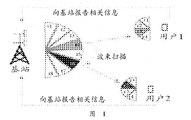
- the base station After the beamforming technology is adopted, usually the narrower the beam, the larger the signal gain, but the smaller the corresponding coverage area. Once the beam direction deviates from the user, the user cannot receive high-quality wireless signals. Therefore, 5G base stations must use more Only a beam of different directions can fully cover the cell. In the downlink process, the base station sequentially uses beams of different directions to transmit wireless signals, and determines the best transmit beam (Beam determination) aimed at the user according to user feedback. To make things more complicated, users also have antenna arrays. This means that in the process of beam alignment, both the transmitting beam and the receiving beam must be considered.
- the 5G standard allows users to transform different receive beams on the transmit beam and select the best receive beam from them, thereby generating a pair of best transmit-receive beams.
- the best transmit-receive beam pairs corresponding to user 1 and user 2 are (t4, r3) and (t6, r2), respectively.
- This scanning process of beam alignment and matching is called beam management technology.
- the beam generated by a large-scale antenna array usually needs to be very narrow.
- the price paid is that the base station needs to use a large number of narrow beams to ensure that users in any direction in the cell can be effectively covered.
- the strategy of traversing and scanning all narrow beams to find the best transmit-receive beam appears to be time-consuming and laborious, which is inconsistent with the user experience expected by 5G.
- the best transmit-receive beam will change with the user's location.
- the embodiments of the present application provide a beam management method and device based on a non-independent networking NSA system.
- the embodiment of the present application provides a beam management method based on a non-independent networking NSA system.
- the method includes: scanning a target user in an area covered by the first base station in the NSA system to determine the location of the target user Angle range: the second base station in the NSA system scans the azimuth angle range where the target user is located to determine the matching beam between the second base station and the target user.
- the embodiments of the present application also provide a beam management method based on a non-independent networking NSA system.
- the method includes: a terminal receives M first beams transmitted by a first base station, and performs processing on the M first beams.
- the beam performs intensity measurement, and M is an integer greater than or equal to 1; the first beam measurement information is fed back to the first base station, and the first beam measurement information is performed by the terminal according to the M first beams transmitted by the first base station Obtained by intensity measurement; the terminal receives the N second beams transmitted by the second base station, and performs intensity measurement on the N second beams, where N is an integer greater than 1, and feeds back the second beam measurement information to the second base station
- the second beam measurement information is obtained by the terminal through intensity measurement according to the N second beams transmitted by the first base station.
- an embodiment of the present application also provides a beam management device based on a non-independent networking NSA system, including: a first scanning module configured to scan targets in the coverage area through the first base station in the NSA system The user determines the azimuth angle range where the target user is located; the second scanning module is configured to scan the azimuth angle range where the target user is located through the second base station in the NSA system to determine the matching beam between the second base station and the target user.
- an embodiment of the present application also provides a beam management device based on a non-independent networking NSA system, including: a first measurement module configured to receive M first beams transmitted by a first base station, and to respond to the M Perform intensity measurement on the first beams, and M is an integer greater than or equal to 1.
- the first feedback module is configured to feed back first beam measurement information to the first base station, where the first beam measurement information indicates that the terminal is M first beams transmitted by a base station are obtained by intensity measurement;
- the second measurement module is configured to receive N second beams transmitted by a second base station, and perform intensity measurement on the N second beams, where N is greater than An integer of 1;
- the second feedback module is configured to feed back second beam measurement information to the second base station, where the second beam measurement information is obtained by the terminal according to the intensity measurement of the N second beams transmitted by the first base station of.
- an embodiment of the present application also provides a beam management device based on a non-independent networking NSA system, including a memory and a processor, the memory stores a program, and the program is read and executed by the processor.
- a beam management device based on a non-independent networking NSA system, including a memory and a processor, the memory stores a program, and the program is read and executed by the processor.
- embodiments of the present application further provide a computer-readable storage medium, wherein the computer-readable storage medium stores one or more programs, and the one or more programs can be used by one or more processors Is executed to implement the beam management method based on the non-independent networking NSA system as described in the first aspect or the second aspect.
- Figure 1 is a schematic diagram of the principle of the best transmitting-receiving beam in the related technology
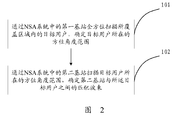
- FIG. 2 is a flowchart of a beam management method based on a non-independent networking NSA system according to an embodiment of the application;
- FIG. 3 is a flowchart of a beam management method based on a non-independent networking NSA system according to an embodiment of the application;
- FIG. 4 is a schematic structural diagram of a beam management device based on a non-independent networking NSA system according to an embodiment of the application;
- FIG. 5 is a schematic structural diagram of a first scanning module according to an embodiment of the application.
- FIG. 6 is a schematic structural diagram of a second scanning module according to an embodiment of the application.
- FIG. 7 is a schematic structural diagram of a beam management device based on a non-independent networking NSA system according to an embodiment of the application.
- FIG. 8 is a schematic diagram of a beam management process based on a non-independent networking NSA system according to an embodiment of the application;
- FIG. 9 is a flowchart of a beam management device based on a non-independent networking NSA system provided by an embodiment of the present application.
- Fig. 10 is a block diagram of a computer-readable storage medium according to an embodiment of the present application.
- the embodiment of the application provides a beam management method based on a non-independent networking NSA system. As shown in FIG. 2, the method includes:
- the first base station in the NSA system scans the target user in the covered area in an all-round way to determine the azimuth angle range where the target user is located;
- S102 Scan the azimuth angle range where the target user is located by the second base station in the NSA system, and determine a matching beam between the second base station and the target user.
- Non-Standalone, independent networking There are currently two ways to build and deploy 5G networks: SA (Standalone, independent networking) and NSA (Non-Standalone, non-independent networking). Among them, non-independent networking refers to the use of existing 4G infrastructure. Carry out 5G network deployment.
- the coverage of 4G base stations is larger than that of 5G base stations.
- the coverage of 5G base stations is smaller than that of 4G base stations, areas with 4G coverage and no 5G coverage will not provide 5G services and will not switch to 5G base stations;
- the coverage of 5G base stations can be increased by increasing the transmission power, so that the coverage of 5G base stations is consistent with that of 4G base stations.
- the 5G base station cell handover is actually the handover of different matched beams, and the specific cell handover method is consistent with the 4G base station cell handover method.
- the step S101 to scan the target users in the covered area by the first base station in the NSA system in an all-round way includes:
- M is an integer greater than or equal to 1;
- the 4G base station performs beam scanning on the covered area based on the M first beams.
- scanning the azimuth angle range where the target user is located by the second base station in the NSA system in step S102 includes:
- N second beams to the azimuth angle range where the target user is located through the beam antenna of the 5G base station, where N is an integer greater than 1;
- the 5G base station scans the azimuth angle range where the target user is located based on the N second beam traversal.
- beam scanning matching management is performed in two stages:
- the 4G base station in the NSA architecture is used to cover 5G users in an all-round and large range in real time.
- 5G users in the coverage area can be tracked in real time, and the user's azimuth and angle range is obtained and fed back to the 5G base station;
- the 5G base station uses multiple narrow beams to scan the user azimuth angle range covered by the 4G base station in the first stage one by one. For a single user, although the scanning beam is narrowed at this time, the required scanning range has been reduced, and the number of scanning will be reduced accordingly. At this time, the 5G base station has improved the accuracy of the beam direction aimed at each user, and the quality of the established wireless communication connection has been improved. As a result, fine scanning of the best matching beam is achieved.
- This embodiment provides a solution for determining the azimuth angle range where the target user is located on the basis of the first embodiment.
- step S101 to determine the azimuth angle range where the target user is located includes:
- the first beam measurement information is obtained by the target user through intensity measurement according to the M first beams transmitted by the first base station;
- 4G base stations use beams with different directions to transmit wireless signals in turn. This process is called beam sweeping.
- users measure the wireless signals emitted by different beams (Beam measurement) and report relevant information to the 4G base station ( Beam reporting); the base station determines the azimuth angle range aimed at the user according to the user report.
- Beam measurement the wireless signals emitted by different beams
- Beam reporting the base station determines the azimuth angle range aimed at the user according to the user report.
- step S102 determining the matching beam between the second base station and the target user includes:
- the second beam measurement information is obtained by the target user through intensity measurement according to the N second beams transmitted by the second base station;
- the number of second beams corresponding to each first beam may be the same or different.
- the first beam A may correspond to three second beams
- the first beam B may correspond to four second beams
- the first beam may correspond to four second beams.
- One beam C corresponds to four second beams
- the first beam D also corresponds to four second beams.
- the specific correspondence relationship depends on the deployment of the NSA system.
- an embodiment of the present application also provides 6.
- a beam management method based on a non-independent networking NSA system wherein the method includes:
- S201 The terminal receives M first beams transmitted by the first base station, and performs intensity measurement on the M first beams, where M is an integer greater than or equal to 1.
- S202 Feed back first beam measurement information to the first base station, where the first beam measurement information is obtained by the terminal according to the intensity measurement of the M first beams transmitted by the first base station;
- S203 The terminal receives N second beams transmitted by the second base station, and performs intensity measurement on the N second beams, where N is an integer greater than 1.
- S204 Feed back second beam measurement information to the second base station, where the second beam measurement information is obtained by the terminal through intensity measurement according to the N second beams transmitted by the first base station.
- the terminal will receive the first beam transmitted by the first base station, and record its own reception quality of each first beam. After the transmission of the first beam of the first base station is completed, the terminal can compare its own reception quality of each first beam, and then use the first beam with the best quality from the M first beams as the selected beam. It is understandable that there may be more than one selected beam in this embodiment. For example, in addition to the beam with the best reception quality, the beam with the second best reception quality can also be selected.
- the terminal receiving the second beam measures its own reception quality for each second beam, and then compares the N second beams The second beam with the best quality is used as the matching beam.
- an embodiment of the present application also provides a beam management device based on a non-independent networking NSA system, including:
- the first scanning module 100 is configured to scan the target user in the covered area through the first base station in the NSA system to determine the azimuth angle range where the target user is located;
- the second scanning module 200 is configured to scan the azimuth angle range where the target user is located through the second base station in the NSA system to determine the matching beam between the second base station and the target user.
- the first base station is a 4G base station
- the second base station is a 5G base station.
- the first scanning module scans the target users in the area covered by the first base station in the NSA system including:
- M is an integer greater than or equal to 1;
- the 4G base station performs beam scanning on the covered area based on the M first beams.
- the first scanning module includes: a first communication unit 10 and a second analysis unit 20:
- the first communication unit is configured to receive first beam measurement information sent by a target user; the first beam measurement information is obtained by the target user through intensity measurement according to the M first beams transmitted by the first base station;
- the first analysis unit is configured to determine the azimuth angle range where the target user is located according to the first beam measurement information of the target user.
- the azimuth angle range where the second scanning module scans the target user through the second base station in the NSA system includes:
- N second beams to the azimuth angle range where the target user is located through the beam antenna of the 5G base station, where N is an integer greater than 1;
- the 5G base station scans the azimuth angle range where the target user is located based on the N second beam traversal.
- the second scanning module 200 includes: a second communication unit 30 and a second analysis unit 40:
- the second communication unit 30 is configured to receive second beam measurement information sent by a target user; the second beam measurement information is obtained by the target user through intensity measurement according to the N second beams transmitted by the second base station;
- the second analysis unit 40 is configured to determine the best transmit-receive beam corresponding to the target user according to the second beam measurement information of the target user.
- an embodiment of the present application also provides a beam management device based on a non-independent networking NSA system, including:
- the first measurement module 300 is configured to receive M first beams transmitted by the first base station and perform intensity measurement on the M first beams, where M is an integer greater than or equal to 1;
- the first feedback module 400 is configured to feed back first beam measurement information to the first base station, where the first beam measurement information is obtained by the terminal through intensity measurement according to the M first beams transmitted by the first base station;
- the second measurement module 500 is configured to receive N second beams transmitted by the second base station, and perform intensity measurement on the N second beams, where N is an integer greater than 1;
- the second feedback module 600 is configured to feed back second beam measurement information to the second base station, where the second beam measurement information is obtained by the terminal according to the intensity measurement of the N second beams transmitted by the first base station.
- the 5G base station based on the 4G base station covering a wide range of tracking, the 5G base station only needs to continue to scan the 4 narrow beams related to each user, for example, scan beams t1-t4 for user 1. Therefore, in the NSA-based beam management process shown in FIG. 8, the base station only needs to scan 4 times for each user, instead of scanning all 12 beams.
- the beam management method based on the NSA system utilizes the characteristics of large-scale omnidirectional real-time coverage of 4G base stations under 5G NSA (non-independent networking), which effectively reduces the range and frequency of 5G beam matching traversal scanning, reduces resource waste, and affects base stations and users.
- 5G NSA non-independent networking
- the gradual increase in the number of array antennas is particularly obvious, while providing seamless coverage for users to ensure that communication is not interrupted or dropped, and communication quality is improved.
- the process of the 5G array antenna beam management party based on the NSA system is as follows:
- the NSA base station analysis and control system analyzes and processes the above-mentioned user information, controls the corresponding 5G beam to perform fine scans for users in this direction, and determines the best matching beam between the 5G base station and the user;
- an embodiment of the present application provides a beam management device 90 based on a non-independent networking NSA system, including a memory 910 and a processor 920.
- the memory 910 stores a program, and the program is When the processor 920 reads and executes, it implements the beam management method based on the non-independent networking NSA system described in any of the embodiments.
- an embodiment of the present application provides a computer-readable storage medium 1000.
- the computer-readable storage medium 1000 stores one or more programs 1010, and the one or more programs 1010 can be used by one or
- the multiple processors are executed to implement the beam management method based on the non-independent networking NSA system described in any embodiment.
- Such software may be distributed on a computer-readable medium, and the computer-readable medium may include a computer storage medium (or a non-transitory medium) and a communication medium (or a transitory medium).
- the term computer storage medium includes volatile and non-volatile memory implemented in any method or technology for storing information (such as computer-readable instructions, data structures, program modules, or other data). Sexual, removable and non-removable media.
- Computer storage media include but are not limited to RAM, ROM, EEPROM, flash memory or other memory technology, CD-ROM, digital versatile disk (DVD) or other optical disk storage, magnetic cassette, tape, magnetic disk storage or other magnetic storage device, or Any other medium used to store desired information and that can be accessed by a computer.
- communication media usually contain computer-readable instructions, data structures, program modules, or other data in a modulated data signal such as carrier waves or other transmission mechanisms, and may include any information delivery media .
Landscapes
- Engineering & Computer Science (AREA)
- Computer Networks & Wireless Communication (AREA)
- Signal Processing (AREA)
- Quality & Reliability (AREA)
- Mobile Radio Communication Systems (AREA)
- Radio Transmission System (AREA)
Abstract
Applications Claiming Priority (2)
| Application Number | Priority Date | Filing Date | Title |
|---|---|---|---|
| CN201910553389.5A CN112135304A (zh) | 2019-06-25 | 2019-06-25 | 一种基于非独立组网nsa系统的波束管理方法和装置 |
| CN201910553389.5 | 2019-06-25 |
Publications (1)
| Publication Number | Publication Date |
|---|---|
| WO2020258995A1 true WO2020258995A1 (fr) | 2020-12-30 |
Family
ID=73850046
Family Applications (1)
| Application Number | Title | Priority Date | Filing Date |
|---|---|---|---|
| PCT/CN2020/084326 Ceased WO2020258995A1 (fr) | 2019-06-25 | 2020-04-10 | Procédé et dispositif de gestion de faisceau basés sur un système nsa de mise en réseau non indépendante |
Country Status (2)
| Country | Link |
|---|---|
| CN (1) | CN112135304A (fr) |
| WO (1) | WO2020258995A1 (fr) |
Cited By (2)
| Publication number | Priority date | Publication date | Assignee | Title |
|---|---|---|---|---|
| US11516809B2 (en) * | 2018-11-07 | 2022-11-29 | Sony Group Corporation | Electronic apparatus, wireless communication method and computer-readable medium for measurements based on adjusted beam configurations |
| CN116249165A (zh) * | 2021-12-07 | 2023-06-09 | 中国电信股份有限公司 | 波束确定方法及装置、存储介质、电子设备 |
Families Citing this family (2)
| Publication number | Priority date | Publication date | Assignee | Title |
|---|---|---|---|---|
| CN115378472A (zh) * | 2021-05-19 | 2022-11-22 | 北京小米移动软件有限公司 | 通信方法、装置、电子设备及存储介质 |
| WO2025112849A1 (fr) * | 2023-11-29 | 2025-06-05 | Guangdong Oppo Mobile Telecommunications Corp., Ltd. | Appareil et procédé de communication sans fil |
Citations (3)
| Publication number | Priority date | Publication date | Assignee | Title |
|---|---|---|---|---|
| CN102868477A (zh) * | 2011-07-05 | 2013-01-09 | 中兴通讯股份有限公司 | 一种基于分组波束的多用户预编码方法和装置 |
| CN108476513A (zh) * | 2016-01-19 | 2018-08-31 | 英特尔Ip公司 | 用于提供5g上行链路请求的设备和方法 |
| EP3448114A1 (fr) * | 2016-05-24 | 2019-02-27 | Samsung Electronics Co., Ltd. | Procédé et appareil pour émettre et recevoir des données entre une station de base dans un système de communication mobile |
Family Cites Families (11)
| Publication number | Priority date | Publication date | Assignee | Title |
|---|---|---|---|---|
| EP3217737B1 (fr) * | 2014-12-29 | 2019-09-25 | Huawei Technologies Co., Ltd. | Procédé et appareil d'alignement de faisceaux d'antennes de réseau de co-station à haute-basse fréquence |
| WO2016129744A1 (fr) * | 2015-02-13 | 2016-08-18 | 엘지전자 주식회사 | Procédé de balayage utilisant des informations de position d'un terminal dans un système d'accès sans fil prenant en charge des ondes millimétriques et dispositifs associés |
| JP2017022581A (ja) * | 2015-07-10 | 2017-01-26 | 富士通株式会社 | ビーム制御方法、無線通信装置および無線通信システム |
| CN106685504B (zh) * | 2015-11-09 | 2020-08-07 | 华为技术有限公司 | 设备间协作方法及装置 |
| CN106817762B (zh) * | 2015-11-30 | 2020-01-31 | 华为技术有限公司 | 一种随机接入方法和基站以及用户设备 |
| GB2546099B (en) * | 2016-01-08 | 2019-05-29 | Samsung Electronics Co Ltd | Initial access method |
| CN108023628B (zh) * | 2016-11-04 | 2021-08-20 | 华为技术有限公司 | 终端设备移动性的处理方法、终端设备和基站 |
| CN108540176B (zh) * | 2017-03-01 | 2022-04-05 | 中兴通讯股份有限公司 | 波束扫描方法、系统、基站及终端 |
| CN109429235B (zh) * | 2017-08-30 | 2022-04-01 | 中国移动通信有限公司研究院 | 一种波束扫描方法、网络侧设备及移动通信终端 |
| CN108600944A (zh) * | 2018-04-23 | 2018-09-28 | 电子科技大学 | 基于地理位置信息的小区切换参量的测量方法 |
| CN108540254B (zh) * | 2018-04-23 | 2019-06-04 | 电子科技大学 | 基于高低频混合组网的小区搜索方法 |
-
2019
- 2019-06-25 CN CN201910553389.5A patent/CN112135304A/zh active Pending
-
2020
- 2020-04-10 WO PCT/CN2020/084326 patent/WO2020258995A1/fr not_active Ceased
Patent Citations (3)
| Publication number | Priority date | Publication date | Assignee | Title |
|---|---|---|---|---|
| CN102868477A (zh) * | 2011-07-05 | 2013-01-09 | 中兴通讯股份有限公司 | 一种基于分组波束的多用户预编码方法和装置 |
| CN108476513A (zh) * | 2016-01-19 | 2018-08-31 | 英特尔Ip公司 | 用于提供5g上行链路请求的设备和方法 |
| EP3448114A1 (fr) * | 2016-05-24 | 2019-02-27 | Samsung Electronics Co., Ltd. | Procédé et appareil pour émettre et recevoir des données entre une station de base dans un système de communication mobile |
Non-Patent Citations (3)
| Title |
|---|
| GIORDANI MARCO; MEZZAVILLA MARCO; RANGAN SUNDEEP; ZORZI MICHELE: "Multi-connectivity in 5G mmWave cellular networks", 2016 MEDITERRANEAN AD HOC NETWORKING WORKSHOP (MED-HOC-NET), IEEE, 20 June 2016 (2016-06-20), pages 1 - 7, XP032935714, DOI: 10.1109/MedHocNet.2016.7528494 * |
| GIORDANI MARCO; MEZZAVILLA MARCO; ZORZI MICHELE: "Initial Access in 5G mmWave Cellular Networks", IEEE COMMUNICATIONS MAGAZINE., IEEE SERVICE CENTER, PISCATAWAY., US, vol. 54, no. 11, 15 November 2016 (2016-11-15), US, pages 40 - 47, XP011634340, ISSN: 0163-6804, DOI: 10.1109/MCOM.2016.1600193CM * |
| ZTE, ZTE MICROELECTRONICS: "Beam grouping evaluation for beam management", 3GPP TSG RAN WG1 NR AD-HOC MEETING R1-1701188, 3RD GENERATION PARTNERSHIP PROJECT (3GPP), SOPHIA-ANTIPOLIS CEDEX ; FRANCE, 17 January 2017 (2017-01-17), Spokane, USA; 20170116 - 20170120, XP051222227 * |
Cited By (3)
| Publication number | Priority date | Publication date | Assignee | Title |
|---|---|---|---|---|
| US11516809B2 (en) * | 2018-11-07 | 2022-11-29 | Sony Group Corporation | Electronic apparatus, wireless communication method and computer-readable medium for measurements based on adjusted beam configurations |
| US11785622B2 (en) | 2018-11-07 | 2023-10-10 | Sony Group Corporation | Electronic apparatus, wireless communication method and computer-readable medium for measurements based on adjusted beam configurations |
| CN116249165A (zh) * | 2021-12-07 | 2023-06-09 | 中国电信股份有限公司 | 波束确定方法及装置、存储介质、电子设备 |
Also Published As
| Publication number | Publication date |
|---|---|
| CN112135304A (zh) | 2020-12-25 |
Similar Documents
| Publication | Publication Date | Title |
|---|---|---|
| WO2020258995A1 (fr) | Procédé et dispositif de gestion de faisceau basés sur un système nsa de mise en réseau non indépendante | |
| CN110959259B (zh) | 自适应天线配置 | |
| US9531446B2 (en) | Use of location information in multi-radio devices for mmWave beamforming | |
| US11083046B2 (en) | System and method for selecting a beamforming configuration | |
| CN115209383A (zh) | 协作感知的方法、电子设备和可读存储介质 | |
| EP4329213A1 (fr) | Appareil, procédé, produits de programme pour maximiser un signal de point de transmission multiple souhaité à un brouillage entre groupes de couches par l'intermédiaire d'une commande de faisceau d'ue | |
| CN103002497A (zh) | 基于aas的信息交互方法、系统、ue及基站 | |
| WO2017045384A1 (fr) | Système et procédé pour configuration de formation de faisceau rapide | |
| CN113873651B (zh) | 通信方法和通信装置 | |
| WO2018166368A1 (fr) | Dispositif électronique et procédé de communication sans fil | |
| CN105680918B (zh) | 阶层式波束形成方法及其基站与用户设备 | |
| CN104170274B (zh) | 处理信号的装置和方法 | |
| WO2023273168A1 (fr) | Procédé et appareil de gestion de faisceau mimo massive 5g, support de stockage et dispositif électronique | |
| WO2018103297A1 (fr) | Procédé et dispositif de sélection de faisceau de communication, et terminal | |
| US8437333B2 (en) | Contention based period beamforming | |
| US10568101B2 (en) | Base-station control apparatus, base-station apparatus, and control method that determine a number of training packets to be transmitted by a wireless terminal | |
| CN107637155B (zh) | 一种波束调整方法及装置 | |
| US11469804B1 (en) | Sectorized analog beam search system | |
| CN114531187B (zh) | 自动天线波束对准 | |
| CN112730998B (zh) | 基于近场的大规模阵列天线ota测试方法及系统 | |
| Chen et al. | A beamforming method based on image tracking and positioning in the LOS scenario | |
| US20200137590A1 (en) | Considerations in wireless networks that support beam steering mobile devices | |
| CN118509978B (zh) | Ta确定方法、装置、目标传输接入点和目标终端 | |
| WO2021233529A1 (fr) | Dispositif émetteur, et procédés de commande de dispositif émetteur | |
| US12184378B2 (en) | Variable port mapping configurations for beamforming in antenna arrays |
Legal Events
| Date | Code | Title | Description |
|---|---|---|---|
| 121 | Ep: the epo has been informed by wipo that ep was designated in this application |
Ref document number: 20831489 Country of ref document: EP Kind code of ref document: A1 |
|
| NENP | Non-entry into the national phase |
Ref country code: DE |
|
| 122 | Ep: pct application non-entry in european phase |
Ref document number: 20831489 Country of ref document: EP Kind code of ref document: A1 |
|
| 32PN | Ep: public notification in the ep bulletin as address of the adressee cannot be established |
Free format text: NOTING OF LOSS OF RIGHTS PURSUANT TO RULE 112(1) EPC (EPO FORM 1205A DATED 25/05/2022) |
|
| 122 | Ep: pct application non-entry in european phase |
Ref document number: 20831489 Country of ref document: EP Kind code of ref document: A1 |