WO2021070673A1 - 遮光部材 - Google Patents
遮光部材 Download PDFInfo
- Publication number
- WO2021070673A1 WO2021070673A1 PCT/JP2020/036863 JP2020036863W WO2021070673A1 WO 2021070673 A1 WO2021070673 A1 WO 2021070673A1 JP 2020036863 W JP2020036863 W JP 2020036863W WO 2021070673 A1 WO2021070673 A1 WO 2021070673A1
- Authority
- WO
- WIPO (PCT)
- Prior art keywords
- polarizing plate
- temperature
- light
- melting point
- crystalline polymer
- Prior art date
- Legal status (The legal status is an assumption and is not a legal conclusion. Google has not performed a legal analysis and makes no representation as to the accuracy of the status listed.)
- Ceased
Links
Images

Classifications
-
- G—PHYSICS
- G02—OPTICS
- G02F—OPTICAL DEVICES OR ARRANGEMENTS FOR THE CONTROL OF LIGHT BY MODIFICATION OF THE OPTICAL PROPERTIES OF THE MEDIA OF THE ELEMENTS INVOLVED THEREIN; NON-LINEAR OPTICS; FREQUENCY-CHANGING OF LIGHT; OPTICAL LOGIC ELEMENTS; OPTICAL ANALOGUE/DIGITAL CONVERTERS
- G02F1/00—Devices or arrangements for the control of the intensity, colour, phase, polarisation or direction of light arriving from an independent light source, e.g. switching, gating or modulating; Non-linear optics
- G02F1/0009—Materials therefor
- G02F1/009—Thermal properties
-
- G—PHYSICS
- G02—OPTICS
- G02B—OPTICAL ELEMENTS, SYSTEMS OR APPARATUS
- G02B5/00—Optical elements other than lenses
- G02B5/003—Light absorbing elements
-
- E—FIXED CONSTRUCTIONS
- E06—DOORS, WINDOWS, SHUTTERS, OR ROLLER BLINDS IN GENERAL; LADDERS
- E06B—FIXED OR MOVABLE CLOSURES FOR OPENINGS IN BUILDINGS, VEHICLES, FENCES OR LIKE ENCLOSURES IN GENERAL, e.g. DOORS, WINDOWS, BLINDS, GATES
- E06B9/00—Screening or protective devices for wall or similar openings, with or without operating or securing mechanisms; Closures of similar construction
- E06B9/24—Screens or other constructions affording protection against light, especially against sunshine; Similar screens for privacy or appearance; Slat blinds
-
- C—CHEMISTRY; METALLURGY
- C08—ORGANIC MACROMOLECULAR COMPOUNDS; THEIR PREPARATION OR CHEMICAL WORKING-UP; COMPOSITIONS BASED THEREON
- C08F—MACROMOLECULAR COMPOUNDS OBTAINED BY REACTIONS ONLY INVOLVING CARBON-TO-CARBON UNSATURATED BONDS
- C08F20/00—Homopolymers and copolymers of compounds having one or more unsaturated aliphatic radicals, each having only one carbon-to-carbon double bond, and only one being terminated by only one carboxyl radical or a salt, anhydride, ester, amide, imide or nitrile thereof
- C08F20/02—Monocarboxylic acids having less than ten carbon atoms, Derivatives thereof
- C08F20/10—Esters
- C08F20/12—Esters of monohydric alcohols or phenols
- C08F20/16—Esters of monohydric alcohols or phenols of phenols or of alcohols containing two or more carbon atoms
- C08F20/18—Esters of monohydric alcohols or phenols of phenols or of alcohols containing two or more carbon atoms with acrylic or methacrylic acids
-
- C—CHEMISTRY; METALLURGY
- C08—ORGANIC MACROMOLECULAR COMPOUNDS; THEIR PREPARATION OR CHEMICAL WORKING-UP; COMPOSITIONS BASED THEREON
- C08F—MACROMOLECULAR COMPOUNDS OBTAINED BY REACTIONS ONLY INVOLVING CARBON-TO-CARBON UNSATURATED BONDS
- C08F220/00—Copolymers of compounds having one or more unsaturated aliphatic radicals, each having only one carbon-to-carbon double bond, and only one being terminated by only one carboxyl radical or a salt, anhydride ester, amide, imide or nitrile thereof
- C08F220/02—Monocarboxylic acids having less than ten carbon atoms; Derivatives thereof
- C08F220/10—Esters
- C08F220/12—Esters of monohydric alcohols or phenols
- C08F220/14—Methyl esters, e.g. methyl (meth)acrylate
-
- C—CHEMISTRY; METALLURGY
- C08—ORGANIC MACROMOLECULAR COMPOUNDS; THEIR PREPARATION OR CHEMICAL WORKING-UP; COMPOSITIONS BASED THEREON
- C08F—MACROMOLECULAR COMPOUNDS OBTAINED BY REACTIONS ONLY INVOLVING CARBON-TO-CARBON UNSATURATED BONDS
- C08F220/00—Copolymers of compounds having one or more unsaturated aliphatic radicals, each having only one carbon-to-carbon double bond, and only one being terminated by only one carboxyl radical or a salt, anhydride ester, amide, imide or nitrile thereof
- C08F220/02—Monocarboxylic acids having less than ten carbon atoms; Derivatives thereof
- C08F220/10—Esters
- C08F220/12—Esters of monohydric alcohols or phenols
- C08F220/16—Esters of monohydric alcohols or phenols of phenols or of alcohols containing two or more carbon atoms
- C08F220/18—Esters of monohydric alcohols or phenols of phenols or of alcohols containing two or more carbon atoms with acrylic or methacrylic acids
- C08F220/1804—C4-(meth)acrylate, e.g. butyl (meth)acrylate, isobutyl (meth)acrylate or tert-butyl (meth)acrylate
-
- C—CHEMISTRY; METALLURGY
- C08—ORGANIC MACROMOLECULAR COMPOUNDS; THEIR PREPARATION OR CHEMICAL WORKING-UP; COMPOSITIONS BASED THEREON
- C08F—MACROMOLECULAR COMPOUNDS OBTAINED BY REACTIONS ONLY INVOLVING CARBON-TO-CARBON UNSATURATED BONDS
- C08F220/00—Copolymers of compounds having one or more unsaturated aliphatic radicals, each having only one carbon-to-carbon double bond, and only one being terminated by only one carboxyl radical or a salt, anhydride ester, amide, imide or nitrile thereof
- C08F220/02—Monocarboxylic acids having less than ten carbon atoms; Derivatives thereof
- C08F220/10—Esters
- C08F220/12—Esters of monohydric alcohols or phenols
- C08F220/16—Esters of monohydric alcohols or phenols of phenols or of alcohols containing two or more carbon atoms
- C08F220/18—Esters of monohydric alcohols or phenols of phenols or of alcohols containing two or more carbon atoms with acrylic or methacrylic acids
- C08F220/1812—C12-(meth)acrylate, e.g. lauryl (meth)acrylate
-
- C—CHEMISTRY; METALLURGY
- C08—ORGANIC MACROMOLECULAR COMPOUNDS; THEIR PREPARATION OR CHEMICAL WORKING-UP; COMPOSITIONS BASED THEREON
- C08F—MACROMOLECULAR COMPOUNDS OBTAINED BY REACTIONS ONLY INVOLVING CARBON-TO-CARBON UNSATURATED BONDS
- C08F220/00—Copolymers of compounds having one or more unsaturated aliphatic radicals, each having only one carbon-to-carbon double bond, and only one being terminated by only one carboxyl radical or a salt, anhydride ester, amide, imide or nitrile thereof
- C08F220/02—Monocarboxylic acids having less than ten carbon atoms; Derivatives thereof
- C08F220/10—Esters
- C08F220/12—Esters of monohydric alcohols or phenols
- C08F220/16—Esters of monohydric alcohols or phenols of phenols or of alcohols containing two or more carbon atoms
- C08F220/18—Esters of monohydric alcohols or phenols of phenols or of alcohols containing two or more carbon atoms with acrylic or methacrylic acids
- C08F220/1818—C13or longer chain (meth)acrylate, e.g. stearyl (meth)acrylate
-
- G—PHYSICS
- G02—OPTICS
- G02B—OPTICAL ELEMENTS, SYSTEMS OR APPARATUS
- G02B27/00—Optical systems or apparatus not provided for by any of the groups G02B1/00 - G02B26/00, G02B30/00
- G02B27/28—Optical systems or apparatus not provided for by any of the groups G02B1/00 - G02B26/00, G02B30/00 for polarising
- G02B27/281—Optical systems or apparatus not provided for by any of the groups G02B1/00 - G02B26/00, G02B30/00 for polarising used for attenuating light intensity, e.g. comprising rotatable polarising elements
-
- G—PHYSICS
- G02—OPTICS
- G02B—OPTICAL ELEMENTS, SYSTEMS OR APPARATUS
- G02B27/00—Optical systems or apparatus not provided for by any of the groups G02B1/00 - G02B26/00, G02B30/00
- G02B27/28—Optical systems or apparatus not provided for by any of the groups G02B1/00 - G02B26/00, G02B30/00 for polarising
- G02B27/286—Optical systems or apparatus not provided for by any of the groups G02B1/00 - G02B26/00, G02B30/00 for polarising for controlling or changing the state of polarisation, e.g. transforming one polarisation state into another
-
- G—PHYSICS
- G02—OPTICS
- G02B—OPTICAL ELEMENTS, SYSTEMS OR APPARATUS
- G02B5/00—Optical elements other than lenses
-
- G—PHYSICS
- G02—OPTICS
- G02B—OPTICAL ELEMENTS, SYSTEMS OR APPARATUS
- G02B5/00—Optical elements other than lenses
- G02B5/30—Polarising elements
-
- G—PHYSICS
- G02—OPTICS
- G02F—OPTICAL DEVICES OR ARRANGEMENTS FOR THE CONTROL OF LIGHT BY MODIFICATION OF THE OPTICAL PROPERTIES OF THE MEDIA OF THE ELEMENTS INVOLVED THEREIN; NON-LINEAR OPTICS; FREQUENCY-CHANGING OF LIGHT; OPTICAL LOGIC ELEMENTS; OPTICAL ANALOGUE/DIGITAL CONVERTERS
- G02F1/00—Devices or arrangements for the control of the intensity, colour, phase, polarisation or direction of light arriving from an independent light source, e.g. switching, gating or modulating; Non-linear optics
- G02F1/01—Devices or arrangements for the control of the intensity, colour, phase, polarisation or direction of light arriving from an independent light source, e.g. switching, gating or modulating; Non-linear optics for the control of the intensity, phase, polarisation or colour
-
- G—PHYSICS
- G02—OPTICS
- G02F—OPTICAL DEVICES OR ARRANGEMENTS FOR THE CONTROL OF LIGHT BY MODIFICATION OF THE OPTICAL PROPERTIES OF THE MEDIA OF THE ELEMENTS INVOLVED THEREIN; NON-LINEAR OPTICS; FREQUENCY-CHANGING OF LIGHT; OPTICAL LOGIC ELEMENTS; OPTICAL ANALOGUE/DIGITAL CONVERTERS
- G02F1/00—Devices or arrangements for the control of the intensity, colour, phase, polarisation or direction of light arriving from an independent light source, e.g. switching, gating or modulating; Non-linear optics
- G02F1/01—Devices or arrangements for the control of the intensity, colour, phase, polarisation or direction of light arriving from an independent light source, e.g. switching, gating or modulating; Non-linear optics for the control of the intensity, phase, polarisation or colour
- G02F1/03—Devices or arrangements for the control of the intensity, colour, phase, polarisation or direction of light arriving from an independent light source, e.g. switching, gating or modulating; Non-linear optics for the control of the intensity, phase, polarisation or colour based on ceramics or electro-optical crystals, e.g. exhibiting Pockels effect or Kerr effect
- G02F1/0305—Constructional arrangements
- G02F1/0311—Structural association of optical elements, e.g. lenses, polarizers, phase plates, with the crystal
-
- C—CHEMISTRY; METALLURGY
- C08—ORGANIC MACROMOLECULAR COMPOUNDS; THEIR PREPARATION OR CHEMICAL WORKING-UP; COMPOSITIONS BASED THEREON
- C08F—MACROMOLECULAR COMPOUNDS OBTAINED BY REACTIONS ONLY INVOLVING CARBON-TO-CARBON UNSATURATED BONDS
- C08F2500/00—Characteristics or properties of obtained polyolefins; Use thereof
- C08F2500/34—Melting point [Tm]
-
- G—PHYSICS
- G02—OPTICS
- G02F—OPTICAL DEVICES OR ARRANGEMENTS FOR THE CONTROL OF LIGHT BY MODIFICATION OF THE OPTICAL PROPERTIES OF THE MEDIA OF THE ELEMENTS INVOLVED THEREIN; NON-LINEAR OPTICS; FREQUENCY-CHANGING OF LIGHT; OPTICAL LOGIC ELEMENTS; OPTICAL ANALOGUE/DIGITAL CONVERTERS
- G02F1/00—Devices or arrangements for the control of the intensity, colour, phase, polarisation or direction of light arriving from an independent light source, e.g. switching, gating or modulating; Non-linear optics
- G02F1/01—Devices or arrangements for the control of the intensity, colour, phase, polarisation or direction of light arriving from an independent light source, e.g. switching, gating or modulating; Non-linear optics for the control of the intensity, phase, polarisation or colour
- G02F1/0147—Devices or arrangements for the control of the intensity, colour, phase, polarisation or direction of light arriving from an independent light source, e.g. switching, gating or modulating; Non-linear optics for the control of the intensity, phase, polarisation or colour based on thermo-optic effects
-
- G—PHYSICS
- G02—OPTICS
- G02F—OPTICAL DEVICES OR ARRANGEMENTS FOR THE CONTROL OF LIGHT BY MODIFICATION OF THE OPTICAL PROPERTIES OF THE MEDIA OF THE ELEMENTS INVOLVED THEREIN; NON-LINEAR OPTICS; FREQUENCY-CHANGING OF LIGHT; OPTICAL LOGIC ELEMENTS; OPTICAL ANALOGUE/DIGITAL CONVERTERS
- G02F1/00—Devices or arrangements for the control of the intensity, colour, phase, polarisation or direction of light arriving from an independent light source, e.g. switching, gating or modulating; Non-linear optics
- G02F1/01—Devices or arrangements for the control of the intensity, colour, phase, polarisation or direction of light arriving from an independent light source, e.g. switching, gating or modulating; Non-linear optics for the control of the intensity, phase, polarisation or colour
- G02F1/13—Devices or arrangements for the control of the intensity, colour, phase, polarisation or direction of light arriving from an independent light source, e.g. switching, gating or modulating; Non-linear optics for the control of the intensity, phase, polarisation or colour based on liquid crystals, e.g. single liquid crystal display cells
- G02F1/132—Thermal activation of liquid crystals exhibiting a thermo-optic effect
Definitions
- the present invention relates to a light-shielding member.
- a light-shielding member that electrically controls the transmission and non-transmission of light is known (see, for example, Patent Document 1).
- An object of the present invention is to provide a light-shielding member capable of controlling light transmission and non-transmission by temperature.
- the light-shielding member of the present invention includes a first polarizing plate, a second polarizing plate facing the first polarizing plate, and a temperature-sensitive sheet sandwiched between the first polarizing plate and the second polarizing plate.
- the first polarizing plate and the second polarizing plate are located so that their transmission axes are different from each other, and the temperature-sensitive sheet crystallizes at a temperature lower than the melting point and flows at a temperature higher than the melting point. Contains a side-chain crystalline polymer that exhibits properties.
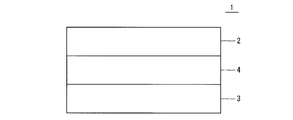
- FIG. 1 It is a side view which shows the light-shielding member which concerns on one Embodiment of this invention. It is an exploded perspective view of the light-shielding member shown in FIG.
- the light-shielding member 1 of the present embodiment includes a first polarizing plate 2, a second polarizing plate 3 facing the first polarizing plate 2, a first polarizing plate 2 and a second polarized light.
- a temperature-sensitive sheet 4 sandwiched between the plates 3 is provided.
- the light-shielding member 1 of the present embodiment is a laminated body in which the first polarizing plate 2 is laminated on one side of the temperature-sensitive sheet 4, and the second polarizing plate 3 is laminated on the other surface of the temperature-sensitive sheet 4.
- the first polarizing plate 2 and the second polarizing plate 3 are located so that their transmission axes are different from each other. Further, the temperature-sensitive sheet 4 contains a side chain crystalline polymer that crystallizes at a temperature below the melting point and exhibits fluidity at a temperature above the melting point.
- the side chain crystalline polymer described above is a polymer having a melting point.
- Melting point is the temperature at which a specific portion of a polymer initially matched to an ordered sequence becomes disordered by a certain equilibrium process and is 10 ° C./min using a differential thermal calorimetry (DSC). It is a value obtained by measuring under the measurement conditions of.
- the side chain crystalline polymer crystallizes at a temperature below the melting point described above, and undergoes a phase transition at a temperature above the melting point to exhibit fluidity.
- the side chain crystalline polymer has a temperature sensitivity that reversibly causes a crystalline state and a flowing state (amorphous state) in response to a temperature change. Since the temperature-sensitive sheet 4 contains such a side-chain crystalline polymer, it has a temperature-sensitive property derived from the side-chain crystalline polymer.
- the first polarizing plate 2 and the second polarizing plate 3 are located so that their transmission axes are different from each other. Therefore, if the light is advanced in the order of the first polarizing plate 2 and the second polarizing plate 3 without the temperature-sensitive sheet 4, the light transmitted through the first polarizing plate 2 does not pass through the second polarizing plate 3. .. This point is the same when the light is advanced in the order of the second polarizing plate 3 and the first polarizing plate 2.
- the side chain crystalline polymer when the side chain crystalline polymer is crystallized, light is scattered inside the temperature sensitive sheet 4. Therefore, when the temperature of the light-shielding member 1 is lower than the melting point, the light transmitted through the first polarizing plate 2 is scattered when it is transmitted through the temperature-sensitive sheet 4, and as a result, it is transmitted through the second polarizing plate 3. Further, when the side chain crystalline polymer is in a fluid state, light is not scattered inside the temperature sensitive sheet 4. Therefore, when the temperature of the light-shielding member 1 is set to a temperature equal to or higher than the melting point, the light transmitted through the first polarizing plate 2 is not scattered even if it is transmitted through the temperature-sensitive sheet 4, and therefore is not transmitted through the second polarizing plate 3.
- the light-shielding member 1 utilizes the change in the optical characteristics of the side-chain crystalline polymer in addition to the temperature sensitivity of the side-chain crystalline polymer, the light-shielding function (change in brightness) can be controlled by the temperature. That is, when the light is propagated from one of the first polarizing plate 2 and the second polarizing plate 3 toward the other, the light-shielding member 1 transmits light at a temperature lower than the melting point and emits light at a temperature higher than the melting point. Not transparent. For example, the light-shielding member 1 is transparent at a temperature below the melting point and black at a temperature above the melting point.
- the light-shielding member 1 can repeat light transmission and non-transmission due to the side chain crystalline polymer reversibly causing a crystalline state and a flowing state in response to a temperature change.
- the light transmission and non-transmission (light-shielding function) of the light-shielding member 1 may be visually confirmed.
- the thickness of the first polarizing plate 2 is, for example, 200 to 1000 ⁇ m.
- the thickness of the second polarizing plate 3 is, for example, 200 to 1000 ⁇ m.
- the thicknesses of the first polarizing plate 2 and the second polarizing plate 3 may be the same or different. Commercially available products can be used for the first polarizing plate 2 and the second polarizing plate 3.
- the transmission axes of the first polarizing plate 2 and the second polarizing plate 3 allow light to travel from one of the first polarizing plate 2 and the second polarizing plate 3 toward the other in the absence of the temperature-sensitive sheet 4. It suffices if the light that has passed through one of them differs from each other at an angle that does not pass through the other. Examples of such an angle include 80 to 100 °.
- FIG. 2 illustrates a state in which the transmission axes of the first polarizing plate 2 and the second polarizing plate 3 differ from each other by 90 °. That is, the first polarizing plate 2 and the second polarizing plate 3 shown in FIG. 2 are located so that their transmission axes differ from each other by 90 °.
- the melting point of the side chain crystalline polymer is preferably higher than 23 ° C, more preferably higher than 23 ° C and 70 ° C or lower, still more preferably 35 to 70 ° C.
- the melting point is higher than 23 ° C.
- the melting point can be adjusted, for example, by changing the composition of the monomer components constituting the side chain crystalline polymer.
- the side chain crystalline polymer contains (meth) acrylate having a linear alkyl group having 16 or more carbon atoms as a monomer component.
- a (meth) acrylate having a linear alkyl group having 16 or more carbon atoms the linear alkyl group having 16 or more carbon atoms functions as a side chain crystalline site in the side chain crystalline polymer. That is, the side chain crystalline polymer is a comb-shaped polymer having a linear alkyl group having 16 or more carbon atoms in the side chain, and the side chain is crystallized by being matched to an ordered arrangement by intermolecular force or the like. To do.
- the above-mentioned (meth) acrylate refers to acrylate or methacrylate.
- Examples of the (meth) acrylate having a linear alkyl group having 16 or more carbon atoms include cetyl (meth) acrylate, stearyl (meth) acrylate, eicosyl (meth) acrylate, and behenyl (meth) acrylate, which have 16 to 16 carbon atoms. Examples thereof include (meth) acrylates having 22 linear alkyl groups. As the exemplified (meth) acrylate, only one kind may be used, or two or more kinds may be used in combination.
- the (meth) acrylate having a linear alkyl group having 16 or more carbon atoms is preferably contained in the monomer component constituting the side chain crystalline polymer in a proportion of 10 to 99% by weight, more preferably 15 to 99% by weight. Is done.
- the monomer component constituting the side chain crystalline polymer may contain another monomer copolymerizable with (meth) acrylate having a linear alkyl group having 16 or more carbon atoms.
- examples of other monomers include (meth) acrylates having an alkyl group having 1 to 6 carbon atoms, polar monomers and the like.
- Examples of the (meth) acrylate having an alkyl group having 1 to 6 carbon atoms include methyl (meth) acrylate, ethyl (meth) acrylate, butyl (meth) acrylate, and hexyl (meth) acrylate.
- the (meth) acrylate having an alkyl group having 1 to 6 carbon atoms is preferably contained in the monomer component constituting the side chain crystalline polymer in a proportion of 80% by weight or less, more preferably 0 to 80% by weight.
- the polar monomer examples include ethylenically unsaturated monomers having a carboxyl group such as acrylic acid, methacrylic acid, crotonic acid, itaconic acid, maleic acid, and fumaric acid; 2-hydroxyethyl (meth) acrylate and 2-hydroxy. Examples thereof include ethylenically unsaturated monomers having a hydroxyl group such as propyl (meth) acrylate and 2-hydroxyhexyl (meth) acrylate. As the exemplified polar monomer, only one kind may be used, or two or more kinds may be used in combination.
- the polar monomer is preferably contained in the monomer component constituting the side chain crystalline polymer in a proportion of 10% by weight or less, more preferably 1 to 10% by weight.
- the preferred composition of the side chain crystalline polymer is 15 to 90% by weight of the (meth) acrylate having a linear alkyl group having 16 or more carbon atoms and 5 the (meth) acrylate having an alkyl group having 1 to 6 carbon atoms. ⁇ 75% by weight, and 5-10% by weight of polar monomer.
- Other preferable compositions of the side chain crystalline polymer are 90 to 99% by weight of the (meth) acrylate having a linear alkyl group having 16 or more carbon atoms and 1 to 10% by weight of the polar monomer.
- Examples of the polymerization method of the monomer component include a solution polymerization method, a massive polymerization method, a suspension polymerization method, and an emulsion polymerization method.
- a solution polymerization method adopted, the monomer component and the solvent are mixed, a polymerization initiator, a chain transfer agent, etc. are added as necessary, and the reaction is carried out at about 40 to 90 ° C. for about 2 to 10 hours with stirring. Just let me do it.
- the weight average molecular weight of the side chain crystalline polymer is preferably 100,000 or more, more preferably 200,000 to 900,000, and further preferably 250,000 to 700,000.
- the weight average molecular weight is a value measured by gel permeation chromatography (GPC) and obtained by converting the obtained measured value into polystyrene.
- the temperature-sensitive sheet 4 may contain the side-chain crystalline polymer at a ratio that exhibits the temperature-sensitive property derived from the side-chain crystalline polymer.
- the temperature sensitive sheet 4 may contain a side chain crystalline polymer as a main component.
- the main component is the component contained most in the temperature-sensitive sheet 4 in terms of weight ratio.
- the content of the side chain crystalline polymer may be 80% by weight or more. Further, the upper limit of the content of the side chain crystalline polymer may be 100% by weight or less.
- the temperature sensitive sheet 4 may contain an additive or the like in addition to the side chain crystalline polymer.
- the additive include a cross-linking agent and the like.
- the cross-linking agent include a metal chelate compound, an aziridine compound, an isocyanate compound, an epoxy compound and the like.
- the content of the cross-linking agent is preferably 0.1 to 10 parts by weight with respect to 100 parts by weight of the side chain crystalline polymer.
- the heating temperature is about 90 to 120 ° C.
- the heating time is about 1 minute to 20 minutes.
- the thickness of the temperature sensitive sheet 4 is, for example, 40 to 1500 ⁇ m.
- the temperature-sensitive sheet 4 is not limited to the sheet shape, and is a concept including a film shape or a plate shape as long as the effect of the present embodiment is not impaired.
- the temperature sensitive sheet 4 may come into direct contact with the first polarizing plate 2 and the second polarizing plate 3. In this case, since the light transmitted through the first polarizing plate 2 or the second polarizing plate 3 is incident on the temperature-sensitive sheet 4 without loss, the light-shielding member 1 exhibits an excellent light-shielding function.
- the temperature-sensitive sheet 4 can fix the first polarizing plate 2 and the second polarizing plate 3 without using an adhesive layer or the like, it may come into direct contact with the first polarizing plate 2 and the second polarizing plate 3. It is possible. Specifically, when the temperature of the temperature-sensitive sheet 4 is set to a temperature equal to or higher than the melting point, the side chain crystalline polymer exhibits fluidity. Therefore, the temperature-sensitive sheet 4 is attached to the first polarizing plate 2 and the second polarizing plate 3. Can be pasted. Further, when the side chain crystalline polymer exhibits fluidity, the temperature-sensitive sheet 4 follows the fine uneven shape existing on the surfaces of the first polarizing plate 2 and the second polarizing plate 3.
- the temperature-sensitive sheet 4 in this state is cooled to a temperature lower than the melting point, a so-called anchor effect is exhibited by crystallizing the side chain crystalline polymer, and as a result, the first polarizing plate 2 and the second polarizing plate are exhibited. 3 can be fixed with the temperature sensitive sheet 4. If necessary, another member may be interposed between the temperature-sensitive sheet 4 and the first polarizing plate 2. Similarly, another member may be interposed between the temperature sensitive sheet 4 and the second polarizing plate 3.
- the form of the light-shielding member 1 is not particularly limited.
- the light-shielding member 1 may be in the form of a film, a sheet, a plate, or the like.
- the light-shielding member 1 can be suitably used in a place where a light-shielding function is required and a temperature change is likely to occur.
- the light-shielding member 1 may be, for example, for a window glass, a partition, an automobile glass, or the like. The use of the light-shielding member 1 is not limited to the illustrated one.
- a mixed solvent of ethyl acetate: heptane 70:30 (weight ratio) was added to the reaction vessel so that the solid content concentration became 30% by weight to obtain a mixed solution.
- the obtained mixed solution was stirred at 55 ° C. for 4 hours to copolymerize each monomer to obtain a side chain crystalline polymer.
- Table 1 shows the weight average molecular weight and melting point of the obtained side chain crystalline polymer.
- the weight average molecular weight is a polystyrene-converted value of the measured value obtained by measuring with GPC.
- the melting point is a value measured using a DSC under measurement conditions of 10 ° C./min.
- Example 1 ⁇ Preparation of test piece> First, the cross-linking agent was mixed at a ratio of 1 part by weight with 100 parts by weight of the side chain crystalline polymer obtained in Synthesis Example 1 to obtain a mixture.
- the cross-linking agents used are as follows.
- Cross-linking agent Aluminum trisacetylacetone made by Kawaken Fine Chemical Co., Ltd., which is a metal chelate compound.
- the obtained mixture was adjusted with ethyl acetate so that the solid content concentration was 23% by weight, and a coating liquid was obtained. Then, the obtained coating liquid is applied onto a release film placed on a hot plate heated to 70 ° C., and a cross-linking reaction is carried out under the condition of 110 ° C. ⁇ 3 minutes, and the temperature sensitivity is 160 ⁇ m in thickness. I got a sheet.
- the release film a polyethylene terephthalate film having a thickness of 50 ⁇ m coated with silicone on the surface was used.
- the obtained temperature-sensitive sheet was removed from the release film and sandwiched between the first polarizing plate and the second polarizing plate to obtain a laminated body.
- the first polarizing plate and the second polarizing plate were arranged so that their transmission axes differed from each other by 90 °.
- Polarizing plate A polarizing plate manufactured by Artec with a thickness of 250 ⁇ m.
- the obtained laminate was heated to a temperature (70 ° C.) higher than the melting point with a dryer, and a temperature-sensitive sheet was attached to the first polarizing plate and the second polarizing plate. Then, the laminated body was cooled to room temperature (23 ° C.), and the first polarizing plate and the second polarizing plate were fixed with a temperature-sensitive sheet to obtain a test piece.
- Example 1 The light-shielding function of the test piece obtained in Example 1 was evaluated. Specifically, first, the test piece was visually observed at room temperature. As a result, the test piece was transparent. Next, the test piece was heated to a temperature (70 ° C.) higher than the melting point with a dryer and visually observed. As a result, the test piece turned black. Then, the test piece was cooled to room temperature again and visually observed. As a result, the test piece changed to transparent. As is clear from these results, it can be seen that Example 1 transmits light at a temperature below the melting point and does not transmit light at a temperature above the melting point. It can also be seen that Example 1 repeats light transmission and non-transmission.
- Example 1 a coating liquid was obtained in the same manner as in Example 1 except that the polymer obtained in Comparative Synthesis Example 1 was used, and a pressure-sensitive adhesive sheet having a thickness of 160 ⁇ m was obtained using the obtained coating liquid. Next, the obtained pressure-sensitive adhesive sheet was sandwiched between the first polarizing plate and the second polarizing plate, and the first polarizing plate and the second polarizing plate were fixed with the pressure-sensitive adhesive sheet to obtain a test piece. As the first polarizing plate and the second polarizing plate, the same ones as in Example 1 were used. Further, the first polarizing plate and the second polarizing plate were arranged so that their transmission axes differed from each other by 90 °. The test piece was prepared at room temperature.
- the light-shielding function of the test piece obtained in Comparative Example 1 was evaluated in the same manner as in Example 1. As a result, the test piece was black at both room temperature and 70 ° C.
Landscapes
- Physics & Mathematics (AREA)
- Chemical & Material Sciences (AREA)
- Optics & Photonics (AREA)
- General Physics & Mathematics (AREA)
- Nonlinear Science (AREA)
- Health & Medical Sciences (AREA)
- Organic Chemistry (AREA)
- Polymers & Plastics (AREA)
- Medicinal Chemistry (AREA)
- Chemical Kinetics & Catalysis (AREA)
- Engineering & Computer Science (AREA)
- Structural Engineering (AREA)
- Architecture (AREA)
- Civil Engineering (AREA)
- Ceramic Engineering (AREA)
- Crystallography & Structural Chemistry (AREA)
- Polarising Elements (AREA)
- Optical Elements Other Than Lenses (AREA)
- Addition Polymer Or Copolymer, Post-Treatments, Or Chemical Modifications (AREA)
Abstract
Description
まず、表1に示すモノマーを表1に示す割合で反応容器に加えた。表1に示すモノマーは、以下のとおりである。
C22A:ベヘニルアクリレート
C1A:メチルアクリレート
C4A:ブチルアクリレート
AA:アクリル酸
表1に示すモノマーを表1に示す割合で反応容器に加えた以外は、合成例1~8と同様にして各モノマーを共重合させてポリマーを得た。得られたポリマーの重量平均分子量を、合成例1~8と同様にして測定した。その結果を表1に示す。なお、比較合成例1のポリマーは、粘着性を有し、且つ、融点を有さないポリマーである。

<試験片の作製>
まず、合成例1で得られた側鎖結晶性ポリマー100重量部に対して架橋剤を1重量部の割合で混合し、混合物を得た。使用した架橋剤は、以下のとおりである。
架橋剤:金属キレート化合物である川研ファインケミカル社製のアルミニウムトリスアセチルアセトナート
偏光板:厚さが250μmであるアーテック社製の偏光板
実施例1で得られた試験片について、遮光機能を評価した。具体的には、まず、試験片を室温で目視観察した。その結果、試験片は透明であった。次に、試験片をドライヤーで融点以上の温度(70℃)に加温して目視観察した。その結果、試験片は黒色に変化した。そして、試験片を再び室温にまで冷却して目視観察した。その結果、試験片は透明に変化した。これらの結果から明らかなように、実施例1は、融点未満の温度で光を透過し、融点以上の温度で光を透過しないことがわかる。また、実施例1は、光の透過および非透過を繰り返すこともわかる。
まず、比較合成例1で得られたポリマーを用いた以外は、実施例1と同様にして塗布液を得、得られた塗布液を用いて厚さ160μmの粘着シートを得た。次に、得られた粘着シートを第1偏光板および第2偏光板の間に挟んで、第1偏光板および第2偏光板を粘着シートで固定し、試験片を得た。なお、第1偏光板および第2偏光板は、実施例1と同じものを使用した。また、第1偏光板および第2偏光板は、それぞれの透過軸が互いに90°異なるように配置した。試験片の作製は、室温で行った。
2・・・第1偏光板
3・・・第2偏光板
4・・・感温性シート
Claims (5)
- 第1偏光板と、
前記第1偏光板に対向する第2偏光板と、
前記第1偏光板および前記第2偏光板の間に挟まれた感温性シートと、を備え、
前記第1偏光板および前記第2偏光板は、それぞれの透過軸が互いに異なるように位置し、
前記感温性シートは、融点未満の温度で結晶化し、且つ、前記融点以上の温度で流動性を示す側鎖結晶性ポリマーを含有する、遮光部材。 - 前記第1偏光板および前記第2偏光板のうち一方から他方に向かって光を進行させたとき、前記融点未満の温度で光を透過し、前記融点以上の温度で光を透過しない、請求項1に記載の遮光部材。
- 前記融点が、23℃よりも高い、請求項1または2に記載の遮光部材。
- 前記側鎖結晶性ポリマーが、炭素数16以上の直鎖状アルキル基を有する(メタ)アクリレートをモノマー成分として含む、請求項1~3のいずれかに記載の遮光部材。
- 前記感温性シートが、前記第1偏光板および前記第2偏光板に直接接触する、請求項1~4のいずれかに記載の遮光部材。
Priority Applications (4)
| Application Number | Priority Date | Filing Date | Title |
|---|---|---|---|
| US17/765,701 US12332508B2 (en) | 2019-10-09 | 2020-09-29 | Light shielding member |
| CN202080068271.4A CN114450464B (zh) | 2019-10-09 | 2020-09-29 | 遮光构件 |
| KR1020227010400A KR20220074881A (ko) | 2019-10-09 | 2020-09-29 | 차광 부재 |
| EP20875274.1A EP4043931B1 (en) | 2019-10-09 | 2020-09-29 | Light blocking member |
Applications Claiming Priority (2)
| Application Number | Priority Date | Filing Date | Title |
|---|---|---|---|
| JP2019-185854 | 2019-10-09 | ||
| JP2019185854 | 2019-10-09 |
Publications (1)
| Publication Number | Publication Date |
|---|---|
| WO2021070673A1 true WO2021070673A1 (ja) | 2021-04-15 |
Family
ID=75380290
Family Applications (1)
| Application Number | Title | Priority Date | Filing Date |
|---|---|---|---|
| PCT/JP2020/036863 Ceased WO2021070673A1 (ja) | 2019-10-09 | 2020-09-29 | 遮光部材 |
Country Status (7)
| Country | Link |
|---|---|
| US (1) | US12332508B2 (ja) |
| EP (1) | EP4043931B1 (ja) |
| JP (1) | JP7584972B2 (ja) |
| KR (1) | KR20220074881A (ja) |
| CN (1) | CN114450464B (ja) |
| TW (1) | TWI850478B (ja) |
| WO (1) | WO2021070673A1 (ja) |
Cited By (1)
| Publication number | Priority date | Publication date | Assignee | Title |
|---|---|---|---|---|
| WO2022209550A1 (ja) * | 2021-03-29 | 2022-10-06 | ニッタ株式会社 | 遮光部材 |
Citations (7)
| Publication number | Priority date | Publication date | Assignee | Title |
|---|---|---|---|---|
| JPS5810717A (ja) | 1981-07-13 | 1983-01-21 | Ricoh Co Ltd | 光シヤツタ |
| JP2007231265A (ja) * | 2006-02-06 | 2007-09-13 | Mitsubishi Chemicals Corp | 温度応答性高分子組成物 |
| JP2010533252A (ja) * | 2007-07-11 | 2010-10-21 | レイブンブリック,エルエルシー | 温度応答切換式反射型光シャッタ |
| JP2011522277A (ja) * | 2007-12-20 | 2011-07-28 | レイブンブリック,エルエルシー | 温度応答切換式吸収型窓シャッタ |
| JP2013173912A (ja) * | 2011-11-10 | 2013-09-05 | Nitto Denko Corp | 粘着剤組成物、及び粘着シート |
| JP2014510934A (ja) * | 2011-01-28 | 2014-05-01 | メルク パテント ゲゼルシャフト ミット ベシュレンクテル ハフツング | 光透過を制御するための層配列 |
| JP2018178060A (ja) * | 2017-04-21 | 2018-11-15 | ニッタ株式会社 | 感温性粘着剤 |
Family Cites Families (6)
| Publication number | Priority date | Publication date | Assignee | Title |
|---|---|---|---|---|
| US5152111A (en) * | 1987-06-25 | 1992-10-06 | Allied-Signal Inc. | Dual-pane thermal window with liquid crystal shade |
| EP1304161B1 (en) * | 2001-10-19 | 2007-02-28 | Pacific Corporation | Thermotropic liquid crystal polymer microcapsules, a method for preparing the same, and cosmetic compositions containing the same |
| CN103718087B (zh) * | 2011-08-08 | 2018-01-02 | 默克专利股份有限公司 | 用于调节光透射的层布置 |
| EP2798397B1 (de) * | 2011-12-27 | 2016-07-13 | Merck Patent GmbH | Vorrichtung zur temperaturabhängigen regulierung des energie-durchtritts durch eine lichtdurchlässige fläche |
| JP6330401B2 (ja) | 2014-03-18 | 2018-05-30 | 藤倉化成株式会社 | ブロック共重合体の製造方法、フィルムの製造方法、および塗料の製造方法 |
| JP6967908B2 (ja) * | 2016-09-09 | 2021-11-17 | ニッタ株式会社 | 感温性粘着シートおよびこれを用いるウエハの製造方法 |
-
2020
- 2020-09-29 KR KR1020227010400A patent/KR20220074881A/ko active Pending
- 2020-09-29 JP JP2020163181A patent/JP7584972B2/ja active Active
- 2020-09-29 CN CN202080068271.4A patent/CN114450464B/zh active Active
- 2020-09-29 EP EP20875274.1A patent/EP4043931B1/en active Active
- 2020-09-29 WO PCT/JP2020/036863 patent/WO2021070673A1/ja not_active Ceased
- 2020-09-29 US US17/765,701 patent/US12332508B2/en active Active
- 2020-10-06 TW TW109134603A patent/TWI850478B/zh active
Patent Citations (7)
| Publication number | Priority date | Publication date | Assignee | Title |
|---|---|---|---|---|
| JPS5810717A (ja) | 1981-07-13 | 1983-01-21 | Ricoh Co Ltd | 光シヤツタ |
| JP2007231265A (ja) * | 2006-02-06 | 2007-09-13 | Mitsubishi Chemicals Corp | 温度応答性高分子組成物 |
| JP2010533252A (ja) * | 2007-07-11 | 2010-10-21 | レイブンブリック,エルエルシー | 温度応答切換式反射型光シャッタ |
| JP2011522277A (ja) * | 2007-12-20 | 2011-07-28 | レイブンブリック,エルエルシー | 温度応答切換式吸収型窓シャッタ |
| JP2014510934A (ja) * | 2011-01-28 | 2014-05-01 | メルク パテント ゲゼルシャフト ミット ベシュレンクテル ハフツング | 光透過を制御するための層配列 |
| JP2013173912A (ja) * | 2011-11-10 | 2013-09-05 | Nitto Denko Corp | 粘着剤組成物、及び粘着シート |
| JP2018178060A (ja) * | 2017-04-21 | 2018-11-15 | ニッタ株式会社 | 感温性粘着剤 |
Non-Patent Citations (1)
| Title |
|---|
| See also references of EP4043931A4 |
Cited By (2)
| Publication number | Priority date | Publication date | Assignee | Title |
|---|---|---|---|---|
| WO2022209550A1 (ja) * | 2021-03-29 | 2022-10-06 | ニッタ株式会社 | 遮光部材 |
| US12386171B2 (en) | 2021-03-29 | 2025-08-12 | Nitta Corporation | Light shielding member |
Also Published As
| Publication number | Publication date |
|---|---|
| US20220404646A1 (en) | 2022-12-22 |
| TW202229941A (zh) | 2022-08-01 |
| EP4043931A4 (en) | 2023-10-11 |
| EP4043931B1 (en) | 2026-04-22 |
| EP4043931A1 (en) | 2022-08-17 |
| TWI850478B (zh) | 2024-08-01 |
| KR20220074881A (ko) | 2022-06-03 |
| CN114450464B (zh) | 2024-04-12 |
| CN114450464A (zh) | 2022-05-06 |
| US12332508B2 (en) | 2025-06-17 |
| JP7584972B2 (ja) | 2024-11-18 |
| JP2021060578A (ja) | 2021-04-15 |
Similar Documents
| Publication | Publication Date | Title |
|---|---|---|
| TW451083B (en) | Laminate polarizer and liquid crystal display | |
| JP6346776B2 (ja) | ガラス表面への接着テープの接着性を改善するための黒色シランプライマー | |
| JP2004536930A (ja) | 低い屈折率を有する光学的接着コーティング | |
| KR20100059470A (ko) | 빛샘 제어용 점착제 조성물과 그 조성물이 도포된 디스플레이장치용 광학필름 | |
| WO2021070673A1 (ja) | 遮光部材 | |
| JP2018178060A (ja) | 感温性粘着剤 | |
| TWI733241B (zh) | 黏著劑組成物、黏著層、片及帶 | |
| KR20160044420A (ko) | 점착제 조성물 및 점착 시트 | |
| WO2022209550A1 (ja) | 遮光部材 | |
| JP6792509B2 (ja) | 感温性粘着剤 | |
| JP6850175B2 (ja) | 粘着剤組成物、粘着剤、粘着シート、及び光学部材 | |
| TWI359180B (en) | Pressure-sensitive adhesive composition and adhesi | |
| JP7514703B2 (ja) | 感温性撥水剤 | |
| US20230374353A1 (en) | Composite pressure sensitive adhesives | |
| JP2017186532A (ja) | 感温性粘着剤 | |
| JPH05107410A (ja) | 偏光板固定構造物 | |
| JP2636991B2 (ja) | 位相差板固定構造物 | |
| TWI917612B (zh) | 黏著劑組成物、黏著層、及黏著膜 | |
| JPH0720314A (ja) | 偏光板固定構造物 | |
| JP7045006B2 (ja) | 感温性樹脂および感温性粘着剤 | |
| JPH03244685A (ja) | 感圧性接着剤 | |
| JPH0720315A (ja) | 位相差板固定構造物 | |
| WO2024190876A1 (ja) | 両面粘着テープ | |
| JPH01306483A (ja) | 感圧性接着剤組成物 | |
| JPS59126482A (ja) | 粘着剤組成物 |
Legal Events
| Date | Code | Title | Description |
|---|---|---|---|
| 121 | Ep: the epo has been informed by wipo that ep was designated in this application |
Ref document number: 20875274 Country of ref document: EP Kind code of ref document: A1 |
|
| NENP | Non-entry into the national phase |
Ref country code: DE |
|
| ENP | Entry into the national phase |
Ref document number: 2020875274 Country of ref document: EP Effective date: 20220509 |
|
| WWG | Wipo information: grant in national office |
Ref document number: 17765701 Country of ref document: US |
|
| WWG | Wipo information: grant in national office |
Ref document number: 2020875274 Country of ref document: EP |