WO2021193907A1 - 飼料用組成物およびその製造方法 - Google Patents
飼料用組成物およびその製造方法 Download PDFInfo
- Publication number
- WO2021193907A1 WO2021193907A1 PCT/JP2021/012817 JP2021012817W WO2021193907A1 WO 2021193907 A1 WO2021193907 A1 WO 2021193907A1 JP 2021012817 W JP2021012817 W JP 2021012817W WO 2021193907 A1 WO2021193907 A1 WO 2021193907A1
- Authority
- WO
- WIPO (PCT)
- Prior art keywords
- yeast
- feed
- nucleic acid
- feed composition
- cell wall
- Prior art date
- Legal status (The legal status is an assumption and is not a legal conclusion. Google has not performed a legal analysis and makes no representation as to the accuracy of the status listed.)
- Ceased
Links
Images
Classifications
-
- A—HUMAN NECESSITIES
- A23—FOODS OR FOODSTUFFS; TREATMENT THEREOF, NOT COVERED BY OTHER CLASSES
- A23K—FODDER
- A23K20/00—Accessory food factors for animal feeding-stuffs
- A23K20/10—Organic substances
- A23K20/153—Nucleic acids; Hydrolysis products or derivatives thereof
-
- A—HUMAN NECESSITIES
- A23—FOODS OR FOODSTUFFS; TREATMENT THEREOF, NOT COVERED BY OTHER CLASSES
- A23K—FODDER
- A23K10/00—Animal feeding-stuffs
- A23K10/10—Animal feeding-stuffs obtained by microbiological or biochemical processes
- A23K10/16—Addition of microorganisms or extracts thereof, e.g. single-cell proteins, to feeding-stuff compositions
-
- A—HUMAN NECESSITIES
- A23—FOODS OR FOODSTUFFS; TREATMENT THEREOF, NOT COVERED BY OTHER CLASSES
- A23K—FODDER
- A23K10/00—Animal feeding-stuffs
- A23K10/30—Animal feeding-stuffs from material of plant origin, e.g. roots, seeds or hay; from material of fungal origin, e.g. mushrooms
- A23K10/32—Animal feeding-stuffs from material of plant origin, e.g. roots, seeds or hay; from material of fungal origin, e.g. mushrooms from hydrolysates of wood or straw
-
- A—HUMAN NECESSITIES
- A23—FOODS OR FOODSTUFFS; TREATMENT THEREOF, NOT COVERED BY OTHER CLASSES
- A23K—FODDER
- A23K10/00—Animal feeding-stuffs
- A23K10/30—Animal feeding-stuffs from material of plant origin, e.g. roots, seeds or hay; from material of fungal origin, e.g. mushrooms
- A23K10/37—Animal feeding-stuffs from material of plant origin, e.g. roots, seeds or hay; from material of fungal origin, e.g. mushrooms from waste material
-
- A—HUMAN NECESSITIES
- A23—FOODS OR FOODSTUFFS; TREATMENT THEREOF, NOT COVERED BY OTHER CLASSES
- A23K—FODDER
- A23K20/00—Accessory food factors for animal feeding-stuffs
- A23K20/10—Organic substances
- A23K20/105—Aliphatic or alicyclic compounds
-
- A—HUMAN NECESSITIES
- A23—FOODS OR FOODSTUFFS; TREATMENT THEREOF, NOT COVERED BY OTHER CLASSES
- A23K—FODDER
- A23K20/00—Accessory food factors for animal feeding-stuffs
- A23K20/10—Organic substances
- A23K20/111—Aromatic compounds
-
- A—HUMAN NECESSITIES
- A23—FOODS OR FOODSTUFFS; TREATMENT THEREOF, NOT COVERED BY OTHER CLASSES
- A23K—FODDER
- A23K50/00—Feeding-stuffs specially adapted for particular animals
- A23K50/50—Feeding-stuffs specially adapted for particular animals for rodents
-
- C—CHEMISTRY; METALLURGY
- C12—BIOCHEMISTRY; BEER; SPIRITS; WINE; VINEGAR; MICROBIOLOGY; ENZYMOLOGY; MUTATION OR GENETIC ENGINEERING
- C12N—MICROORGANISMS OR ENZYMES; COMPOSITIONS THEREOF; PROPAGATING, PRESERVING, OR MAINTAINING MICROORGANISMS; MUTATION OR GENETIC ENGINEERING; CULTURE MEDIA
- C12N1/00—Microorganisms; Compositions thereof; Processes of propagating, maintaining or preserving microorganisms or compositions thereof; Processes of preparing or isolating a composition containing a microorganism; Culture media therefor
- C12N1/14—Fungi; Culture media therefor
- C12N1/16—Yeasts; Culture media therefor
Definitions
- the present invention relates to a feed composition and a method for producing the same, and more particularly to a feed composition using yeast and a method for producing the same.
- yeast is used as a raw material and a yeast extract composition having a feeding promoting action and an immunopotentiating action is used as a feed additive (for example, Patent Document 1).
- a feed to which an immunostimulator containing a predetermined amount of glucan derived from brewer's yeast and a lipid is added is disclosed (for example, Patent Document 2).
- feeds contaminated with mycotoxins, which are metabolites of molds, may cause growth conditions and toxicity problems in animals, a method of adsorbing and inactivating mycotoxins using yeast cell wall extract has been disclosed. (For example, Patent Document 3).
- the feed is generally required to be inexpensive, and it is required to produce a feed having a plurality of effects at the lowest possible cost.
- one of the several problems to be solved by the present invention is to provide a feed composition that simultaneously satisfies the immunostimulatory action and the mycotoxin adsorbing action. Further, one of the other problems of the present invention is to provide a technique for easily suppressing putrefaction in a feed composition using yeast. Furthermore, one of the other problems of the present invention is to provide a method for producing a feed composition as described above at a low cost.
- the present inventors have found that by adding lignin sulfonic acid, which is sometimes used as a component of a medium for culturing yeast, in addition to the merit of adding a yeast-derived component, it rots. It has been found that a difficult feed composition can be obtained, and the present invention has been completed. As some aspects of the present invention, the following feed compositions and methods for producing the same are provided.
- a method for producing a feed composition which comprises mixing a nucleic acid having a molecular weight of 5,000 to 100,000, a yeast cell wall component, and lignin sulfonic acid.
- the above-mentioned 5] The method for producing a feed composition according to.
- the production method Culturing yeast in a medium containing lignin sulfonic acid and Alkaline treatment of the yeast and To recover a mixture containing the medium containing the lignin sulfonic acid, the nucleic acid derived from the yeast, and the yeast cell wall component derived from the yeast.
- a feed composition using yeast as a raw material which has an immunostimulatory action and a mycotoxin adsorption action and is resistant to putrefaction.
- a feed composition that is resistant to putrefaction can be produced at low cost.
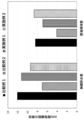
- FIG. 1 is a graph showing the results of measuring the phagocytic activity of macrophages against pathogens.
- the results of Comparative Examples 1 and 2 and Examples 1 and 2 are shown for the group using pleural pneumonia and the group using porcine streptococcus as antigens, respectively.
- bar graphs of Comparative Example 1 painted in black
- Comparative Example 2 upward diagonal line
- Example 1 vertical line
- Example 2 lat line
- composition for feed may be a composition for feed.
- the feed composition contains a nucleic acid having a molecular weight of 5,000 to 100,000, a yeast cell wall component, and lignin sulfonic acid.
- the use of the feed composition includes various aspects used with respect to the feed, for example, the feed itself to be directly fed to the target animal such as livestock, poultry, fish farming, or a feed such as a grain. It may be a feed additive added to other major nutritional components used as.
- the feed composition contains nucleic acids. By blending the nucleic acid into the feed composition, the immunity of the feed-fed animal can be activated.
- the nucleic acid may be not only the nucleic acid as a polymer but also a nucleotide which is a constituent unit of the nucleic acid, but a molecule having a certain size is preferable.
- a nucleic acid molecule having a molecular weight in the range of 5,000 to 100,000 is contained in the feed composition.
- the lower limit of the molecular weight of nucleic acid is preferably 5,000 or more, more preferably 6,000, 7,000, 8,000, or 9,000 or more, still more preferably 10,000, 15,000 or 20,000 or more. Can be.
- the upper limit of the molecular weight of the nucleic acid can be preferably 100,000 or less, more preferably 80,000 or less, still more preferably 70,000, 60,000, or 50,000 or less.
- the molecular weight distribution of nucleic acid referred to here can be obtained by, for example, GPC (gel permeation chromatography).
- the weight average molecular weight (Mw) may be used as an index for a suitable nucleic acid.
- the lower limit of the weight average molecular weight of the nucleic acid can be preferably 5,000 or more, more preferably 10,000 or more, still more preferably 20,000 or more.
- the upper limit of the weight average molecular weight of the nucleic acid can be preferably 100,000 or less, more preferably 70,000 or less, still more preferably 50,000 or less.
- the type of sugar constituting the nucleic acid may be either deoxyribose or ribose. That is, the nucleic acid may be either deoxyribonucleic acid (DNA) or ribonucleic acid (RNA).
- the types of bases constituting nucleic acids mainly include adenine, guanosine, thymine, cytosine, and uracil, that is, the types of nucleosides constituting nucleic acids include adenosine, guanosine, cytidine, uridine, and thymidine.
- the phosphoric acid constituting the nucleotide may be monophosphoric acid or may be composed of a plurality of phosphoric acids.
- nucleic acid A commercially available product may be used as the nucleic acid.
- One type of nucleic acid may be blended alone, or a plurality of types may be mixed and blended.
- nucleic acid preferably, ribonucleic acid and nucleotides can be used.
- the origin of the nucleic acid is not particularly limited and may be artificially synthesized or derived from a natural product.
- those extracted or purified from microorganisms such as yeast may be used.
- the nucleic acid synthesized, extracted or purified in this way can be in a form that is easily absorbed when the target organism such as an animal to which the feed composition is fed feeds. It is made into waste material by growing microorganisms such as yeast using biological resources that are made into waste material, for example, wood sugar contained in wood that is made into waste material, to obtain nucleic acid, and to mix and use it in a feed composition. It can be converted into useful substances and contribute to the formation of a sustainable sound material-cycle society.
- the content of nucleic acid in the feed composition may be appropriately adjusted according to the use of the feed composition.
- feeds and feed additives will generally have different contents.
- the guideline of the nucleic acid content when the feed composition is used as a feed is as follows.
- the lower limit of the nucleic acid content in the feed composition is preferably 3% by weight or more, more preferably 5, 6 or 7% by weight or more, still more preferably 8, 9 or 10% by weight or more.
- the upper limit of the nucleic acid content in the feed composition is preferably 50% by weight or less, more preferably 30% by weight or less, and further preferably 20% by weight or less.
- a feed composition containing a nucleic acid having a preferable molecular weight (for example, 5,000 to 100,000) shown above and having a preferable content shown here can be exemplified.
- a nucleic acid having a molecular weight other than the preferable molecular weight shown above is not contained in the feed composition at all, but it is preferable that the content is small, and specifically. Is preferably less than the content of the nucleic acid molecule having the above-mentioned preferable molecular weight, and more preferably 1% by weight or less.
- the feed composition contains a yeast cell wall component.
- yeast cell wall components can adsorb mycotoxins. Even if an animal ingests a feed composition in which some germs have propagated, the toxin produced by the germs is suppressed from being absorbed by the animal due to the mycotoxin adsorption action of the yeast cell wall component, and is excreted from the animal. Can contribute to.
- yeast cell wall component means a part or whole of a yeast-derived cell wall, or a fibrous component.
- the yeast cell wall component may be an enucleated yeast obtained by enucleating nucleic acid from yeast cells, may be a cell wall having an outer shell shape of yeast, or may not retain the outer shell shape. The cell wall may be crushed to a certain extent.
- the cell wall component used in the present invention can be part of the yeast cell wall, but it is desirable to retain at least fibrous material. By retaining at least fibrous material, it has excellent mycotoxin adsorption. On the other hand, if the decomposition progresses to the extent that no fiber remains, the mycotoxin adsorptivity tends to decrease.
- the content of the yeast cell wall component in the feed composition may be appropriately adjusted according to the use of the feed composition.
- feeds and feed additives will generally have different contents.
- the following is a guideline for the content of yeast cell wall components when the feed composition is used as feed.
- the lower limit of the content of the yeast cell wall component in the feed composition is preferably 3% by weight or more, more preferably 5% by weight or more, and further preferably 10% by weight or more.
- the upper limit of the content of the yeast cell wall component in the feed composition is preferably 30% by weight or less, more preferably 25% by weight or less, and further preferably 20% by weight or less.
- Yeast can be used as a raw material for nucleic acids and yeast cell wall components in feed compositions.
- the type of yeast that can be used may be spore-forming yeast or non-spore-forming yeast. Specific examples of yeast include the following types.
- Saccharomyces include, for example, the genus Saccharomyces, the genus Saccharomyces, the genus Kluyveromyces, the genus Hansenula, the genus Pichia, and the genus Pichia.
- Yeasts of the genus Lipomyces are mentioned, and more specifically, Saccharomyces pombie, Saccharomyces octosporus, Saccharomyces octopus saccharomyces octosporus; uvarum, Saccharomyces rouxii; Kluyveromyces fragilis, Kluyveromyces lactis; Kluyveromyces lactis; Hansenula nameraac Debaryomyces hansenii; and Lipomyces stalkeyi and the like.
- Spore-free yeasts include, for example, yeasts of the genus Torulopsis, Candida, and Rhodotorula, and more specifically, Torulopsis versatilis; Candida tropica. Examples include Candida tropicalis, Candida lipolyticis, Candida utilis; Rhodotorula glutinis and the like.
- the yeast of the genus Candida is also taxonomically referred to as torula yeast, and may be classified as a yeast of the genus Cyberlindnera.
- yeasts that can be used include, for example, brewer's yeast, wine yeast, bread yeast, tollula yeast and the like, and more specifically, Saccharomyces cerevisiae, Saccharomyces uvalum, Saccharomyces uvalum, Saccharomyces luxi. Saccharomyces rouxii; Kluyveromyces fragilis, Torulopsis versatilis, Candida tropicalis, Candida tropicalis, Candida tropicalis (Rhodotorula glutinis) and the like.
- Candida utilis may be classified as (Cyberlindnella jadinii) as one kind of torula yeast in terms of taxonomy.
- the feed composition contains lignin sulfonic acid.
- lignin sulfonic acid By blending lignin sulfonic acid, spoilage of a feed composition made from yeast can be suppressed.
- Ligno sulfonic acid is a compound having a skeleton in which the carbon at the ⁇ -position of the side chain of the hydroxyphenyl propane structure of lignin is cleaved and a sulfo group is introduced.
- the lignin sulfonic acid can be in the form of a salt.
- lignin sulfonate may be added. Examples of the lignin sulfonate include calcium salt, magnesium salt, sodium salt, calcium / sodium mixed salt, ammonium salt, organic ammonium salt and the like.
- Ligno sulfonic acid can be obtained from, for example, sulfite pulp waste liquid generated in the paper industry.
- the lignin sulfonic acid used in the present invention may be a lignin sulfonic acid modified with a polyelectrolyte having a functional group such as a sulfone group, a carboxyl group, and a phenolic hydroxyl group.
- the content of lignin sulfonic acid in the feed composition may be appropriately adjusted according to the use of the feed composition.
- feeds and feed additives will generally have different contents.
- a guideline for the content of lignin sulfonic acid when a feed composition is used as a feed is as follows.
- the lower limit of the content of lignin sulfonic acid in the feed composition is preferably 1% by weight or more, more preferably 3% by weight or more, and further preferably 5% by weight or more.
- the upper limit of the content of lignin sulfonic acid in the feed composition is preferably 50% by weight or less, more preferably 40% by weight or less, and further preferably 30% by weight or less.
- Sulfite may be blended as another preferable form of the feed composition.
- the addition of sulfites can contribute to the suppression of oxidation or the growth of germs.
- feed compositions include water, oil, pH regulators, antioxidants, preservatives, coloring materials, fragrances, excipients, vitamins, hormones, amino acids, and antibiotics as optional ingredients as necessary.
- a substance, an antibacterial agent, or the like may be blended.
- the feed composition may be in a form generally adopted as a feed or feed additive.
- Shapes of the feed composition include, for example, powders, granules, mashes, pellets, crumbles, flakes and the like.
- the form of the feed composition may be a single form, or a mixed form of two or more forms as described above, such as a mixture of pellets and flakes, a mixture of mash and pellets, etc. May be.
- the feed composition can be used, for example, as a feed or feed additive.
- the mixture containing the above-mentioned nucleic acid, yeast cell wall component, and lignin sulfonic acid may be used as it is as a feed.
- the feed composition may contain a main nutritional component (hereinafter, also referred to as a main feed component).
- the main feed component include vegetable feed and / or animal feed.
- the vegetable feed is a feed derived from a plant, and examples thereof include corn, mylo, barley, wheat, cassava, rice bran, bran, soybean meal, rapeseed meal, rice, rice bran, and beet, and processed products thereof. ..
- the animal feed is an animal-derived feed, and examples thereof include fish meal, pork meal, chicken meal, skim milk powder, and concentrated whey. These may be used alone or in combination.
- the feed composition may be added as an additive to the main feed component as described above.
- Some embodiments of the present invention include a method for producing the feed composition.
- the first embodiment of the production method in the present invention comprises mixing a nucleic acid having a molecular weight of 5,000 to 100,000, a yeast cell wall component, and lignin sulfonic acid.
- nucleic acid yeast cell wall component, and lignin sulfonic acid may be mixed, and each component may be mixed one by one, or each component may be added and mixed at the same time.
- the nucleic acids, yeast cell wall components, and lignin sulfonic acid are as described above.
- Each component may be prepared individually, or yeast may be cultured and nucleic acid and yeast cell wall may be prepared using the yeast as a raw material.
- yeast is enucleated, separated into nucleic acid and enucleated yeast, and recovered, and nucleic acid having a molecular weight of 5,000 to 100,000 and yeast cell wall components are prepared respectively. You may. In addition to the nucleic acid and yeast cell wall components prepared in this manner, lignin sulfonic acid can be added to obtain a feed composition.
- the yeast cells may be blended as they are, but a method in which the nucleic acid and the yeast cell wall component are once separated and then remixed. However, it is more preferable in that it enhances the effect of immunostimulation.
- the usual method used for obtaining the yeast extract may be used. That is, a part or all of the yeast cell wall may be lysed or damaged by using an alkaline chemical so that the components in the yeast cells are eluted.
- Preferred alkaline chemicals include, for example, sodium hydroxide, potassium hydroxide, barium hydroxide, calcium hydroxide, sodium carbonate and the like.
- a feed composition that is resistant to putrefaction can be produced at low cost.
- the amount of lignin sulfonic acid added can be easily adjusted. Therefore, when it is desired to reduce the amount of lignin sulfonic acid added, for example, when it is desired to keep it to about 10% by weight, 8% by weight, or 5% by weight or less, the first embodiment is easy to carry out.
- the second embodiment of the manufacturing method in the present invention includes the following steps: Incubating yeast in a medium containing lignin sulfonic acid and Alkaline treatment of the yeast and To recover a mixture containing the medium containing the lignin sulfonic acid, the nucleic acid derived from the yeast, and the yeast cell wall component derived from the yeast. including.
- lignin sulfonic acid is blended in the medium for culturing yeast.
- lignin sulfonic acid By blending lignin sulfonic acid in the medium, it is possible to suppress yeast spoilage during yeast culture. Further, since the whole medium containing lignin sulfonic acid is recovered to prepare a feed composition, the feed composition can also be made resistant to putrefaction.
- lignin sulfonic acid may be added to the medium generally used for culturing yeast.
- the lower limit of the content of lignin sulfonic acid to be blended in the medium is preferably 1% by weight or more, more preferably 3% by weight or more, and further preferably 5% by weight or more.
- the upper limit of the content of lignin sulfonic acid in the feed composition is preferably 50% by weight or less, more preferably 40% by weight or less, and further preferably 30% by weight or less.
- the nucleic acid is eluted into the medium by treating the yeast with alkali as in the first embodiment.
- the medium containing lignin sulfonic acid, the yeast-derived nucleic acid, and the yeast-derived yeast cell wall component are collectively recovered, and a mixture containing the nucleic acid, the yeast cell wall component, and the lignin sulfonic acid is prepared.
- the number of steps for obtaining the mixture containing the above three components can be reduced, so that the feed composition can be easily produced at low cost.
- RNA preparation product name "RNA-M”, manufactured by Nippon Paper Industries, Ltd.
- Mw weight average molecular weight
- the weight average molecular weight (Mw) of nucleic acid can be measured by gel permeation chromatography (GPC).
- GPC gel permeation chromatography
- the GPC may be measured by a known method for pullulan conversion under the following conditions.
- Measuring device Made by Tosoh Column used: Shodex Volume OH-pak SB-806HQ, SB-804HQ, SB-802.5HQ
- Eluent Aqueous solution of Na tetraborate 1.0%, isopropyl alcohol 0.3% Eluent flow rate: 1.00 ml / min
- Detector RI detector (manufactured by Tosoh)
- Calibration curve Pullulan standard
- ⁇ Comparative Example 2 (Feed 2)> Raw yeast (Cyberlindnera jadinii) was cultured in a sulfite pulp effluent medium having a sugar concentration of 3% and a lignin sulfonic acid concentration of 10%, and after collecting the bacteria, dried with a drum dryer to prepare 100 g, which was used as feed 2. bottom.
- RNA-M and enucleated yeast (product name "Kabitrula” manufactured by Nippon Paper Industries, Ltd.) were suspended in water at a mixing ratio of 1: 9 to a concentration of 10% by weight, and dried with a drum dryer to prepare 100 g. The obtained mixture was used as feed 3.
- the enucleated yeast of "Kabitrula” contains lignin sulfonic acid.
- the weight average molecular weight (Mw) of the nucleic acid in the feed 3 is such that a 10% suspension is stirred with a homodisper under the conditions of 1 hr and 5,000 rpm, and then treated with a high-speed centrifuge at 10,000 rpm for 10 minutes. It was 20,000 as calculated by GPC measurement of the obtained supernatant.
- Example 2 (feed 4)> Raw material yeast (Cyberlindnella jadinii) was cultured in a sulfite pulp effluent medium having a sugar concentration of 3% and a lignin sulfonic acid concentration of 10%, and yeast was collected. The lignin sulfonic acid was contained at 20% by weight. Then, 3000 g of the obtained yeast was stirred in a boiling bath at 95 ° C. for 10 minutes to inactivate the intracellular enzyme. Then, after adjusting the pH to 8.5 with a 48% NaOH aqueous solution in a water bath whose temperature was adjusted to 55 ° C., an alkali extraction reaction was carried out by stirring for 2 hours.
- the powder contains nucleic acid derived from the yeast, enucleated yeast cell wall, and lignin sulfonic acid used for culturing. The powder was used as feed 4.
- the weight average molecular weight (Mw) of the nucleic acid in the feed 4 was 45,000 when calculated by the same method as the weight average molecular weight (Mw) of the nucleic acid in the feed 3.
- Example 3 feed 5
- the feed 5 was prepared in the same manner as in Example 1 except that the product name "RNA-FN manufactured by Nippon Paper Industries Co., Ltd.” was used as the RNA preparation.
- the weight average molecular weight (Mw) of the nucleic acid in the feed 5 was 11,000 when calculated by the same method as the weight average molecular weight (Mw) of the nucleic acid in the feed 3.
- the "soluble nucleic acid” is generally a relatively high molecular weight nucleic acid (for example, a molecular weight of about 10,000 to 50,000) and a relatively low molecular weight nucleic acid (for example, a molecular weight of less than about 10,000). It is possible to measure by classifying each molecular weight.
- the methoxyl group content is an index of the lignin content.
- the methoxyl group content was measured and measured by the quantification method of methoxyl groups by the Viewbook and Schwappac methods (see “Lignin Chemistry Research Method", P.336-340, 1994, published by Uni Publishing Co., Ltd.). The amount of Mg lignin sulfonate was quantified from the content of the methoxyl group.
- ⁇ -glucan> The measurement was performed using the method described in the ⁇ -glucan ( ⁇ -1,3: -1,6 yeast type) assay kit manufactured by Nippon Biocon Co., Ltd.
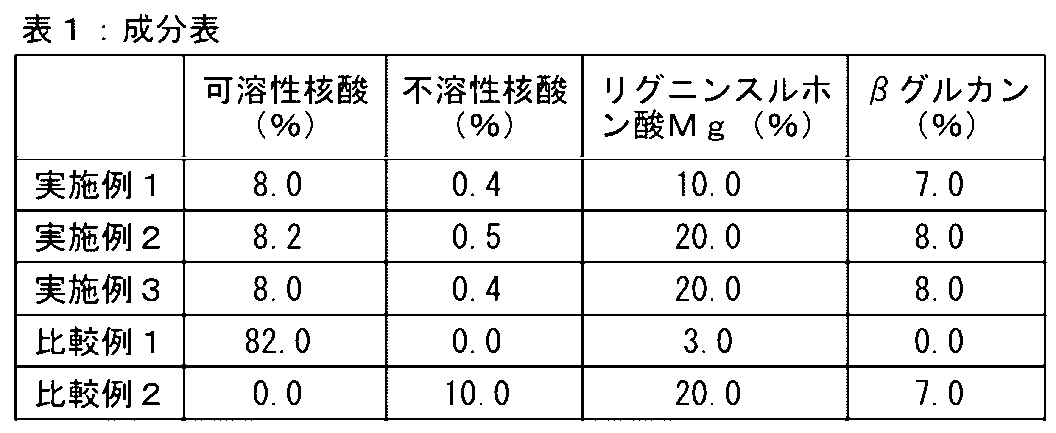
- Table 1 shows the analytical values of Comparative Examples 1 and 2 and Examples 1 and 2.
- the unit of the content of each component in Table 1 is% by weight.
- Test group> The following four test groups were set. ⁇ Test group 1> Comparative Example 1 (Feed 1) 0.0174 mg / 20 g B. W. (BW is weight) ⁇ Test group 2> Comparative Example 2 (Feed 2) 0.1813 mg / 20 gB. W. ⁇ Test group 3> Example 1 (Feed 3) 0.1988 mg / 20 g B. W. ⁇ Test group 4> Example 2 (Feed 4) 0.1988 mg / 20 g B. W. ⁇ Control group> Saline
- mice were randomly grouped and housed in a plastic cage for each group. The facility and feed were acclimated for one week. After the acclimation was completed, administration of each of the above feeds was started. In each test group, each of the above feeds was suspended in physiological saline so as to have a predetermined dose, and forced oral administration was performed. Saline administration The same amount of saline was forcibly administered to the control group. I was paid every day at 16:00 for 7 days.
- ⁇ Measurement of phagocytic activity of macrophages against pathogens The cells were seeded on a 96-well plate so that the number of live macrophages was 2 ⁇ 10 5 cells / mL, and cultured in a CO 2 incubator for 2 hours. After culturing, non-adherent cells were removed, and FITC (Fluorescein isothiocynate) -labeled antigen (pleural pneumonia or porcine streptococcus) was added to each well. That is, two types were provided: a test group using pleural pneumonia as an antigen and a test group using porcine streptococcus as an antigen.
- FITC Fluorescein isothiocynate
- a Blank section without addition was also provided (not shown in FIG. 1).
- the culture was carried out in two repetitions. After the culture was completed, the number of FITC-positive cells was counted with a flow cytometer. The results are shown in FIG.
- zearalenone a type of mycotoxin
Landscapes
- Life Sciences & Earth Sciences (AREA)
- Chemical & Material Sciences (AREA)
- Polymers & Plastics (AREA)
- Engineering & Computer Science (AREA)
- Zoology (AREA)
- Health & Medical Sciences (AREA)
- Food Science & Technology (AREA)
- Animal Husbandry (AREA)
- Biotechnology (AREA)
- Molecular Biology (AREA)
- Microbiology (AREA)
- Biochemistry (AREA)
- Mycology (AREA)
- Physiology (AREA)
- Biomedical Technology (AREA)
- Botany (AREA)
- Genetics & Genomics (AREA)
- Bioinformatics & Cheminformatics (AREA)
- Wood Science & Technology (AREA)
- Organic Chemistry (AREA)
- Medicinal Chemistry (AREA)
- Tropical Medicine & Parasitology (AREA)
- Virology (AREA)
- General Engineering & Computer Science (AREA)
- General Health & Medical Sciences (AREA)
- Birds (AREA)
- Fodder In General (AREA)
Abstract
Description
飼料は、一般に廉価であることが求められており、複数の効能を持つ飼料をできるだけ低コストで製造することが求められている。
また、本発明の他の課題の1つは、酵母を用いた飼料用組成物において、腐敗を簡便に抑制する技術を提供することである。
さらに、本発明の他の課題の1つは、上記のような飼料用組成物を廉価に製造する方法を提供することである。
酵母細胞壁成分と、
リグニンスルホン酸と、
を含む飼料用組成物。
〔2〕 リグニンスルホン酸の含有量が、1~30重量%である、上記〔1〕に記載の飼料用組成物。
〔3〕 前記核酸が、酵母由来のリボ核酸である、上記〔1〕または〔2〕に記載の飼料用組成物。
〔4〕 さらに、亜硫酸塩を含む、上記〔1〕~〔3〕のいずれか一項に記載の飼料用組成物。
〔5〕 分子量5,000~100,000の核酸と、酵母細胞壁成分と、リグニンスルホン酸とを混合することを含む、飼料用組成物の製造方法。
〔6〕 酵母を脱核処理して核酸と脱核酵母とに分離して回収し、前記分子量5,000~100,000の核酸と前記酵母細胞壁成分とをそれぞれ用意することを含む、上記〔5〕に記載の飼料用組成物の製造方法。
〔7〕 分子量5,000~100,000の核酸と、酵母細胞壁成分と、リグニンスルホン酸とを含む飼料用組成物の製造方法であって、
リグニンスルホン酸を含む培地で酵母を培養することと、
前記酵母をアルカリ処理することと、
前記リグニンスルホン酸を含む培地と、前記酵母由来の核酸と、前記酵母由来の酵母細胞壁成分とを含む混合物を回収することと、
を含む、前記製造方法。
また、本発明の一実施形態によれば、免疫活性化作用、カビ毒吸着作用に加え、腐敗しにくい飼料用組成物を廉価に製造することができる。
本発明の一実施形態は、飼料用組成物でありうる。本発明の一実施形態において、飼料用組成物は、分子量5,000~100,000の核酸と、酵母細胞壁成分と、リグニンスルホン酸とを含有する。
核酸の分子量の下限は、好ましくは5,000以上、より好ましくは6,000、7,000、8,000、または9,000以上、更に好ましくは10,000、15,000または20,000以上でありうる。
核酸の分子量の上限は、好ましくは100,000以下、より好ましくは80,000以下、更に好ましくは、70,000、60,0000、または50,000以下でありうる。
なお、ここでいう核酸の分子量分布は、例えばGPC(ゲルパーミエーションクロマトグラフィー)により求めることができる。
核酸の重量平均分子量の下限は、好ましくは5,000以上、より好ましくは10,000以上、更に好ましくは20,000以上でありうる。
核酸の重量平均分子量の上限は、好ましくは100,000以下、より好ましくは70,000以下、更に好ましくは50,000以下でありうる。
飼料用組成物中における核酸の含有量の下限は、好ましくは3重量%以上であり、より好ましくは5、6、または7重量%以上であり、さらに好ましくは8、9、または10重量%以上でありうる。
飼料用組成物中における核酸の含有量の上限は、好ましくは50重量%以下であり、より好ましくは30重量%以下であり、さらに好ましくは20重量%以下でありうる。
好ましい実施形態としては、上記にて示した好ましい分子量(例えば、5,000~100,000)を有する核酸を、ここに示す好ましい含有量含んでいる飼料組成物を例示しうる。この場合において、上記にて示した好ましい分子量以外の分子量を有する核酸分子が、飼料組成物中にまったく含まれていないということまでは要しないが、その含有量は少ないことが好ましく、具体的には、上記の好ましい分子量の核酸分子の含有量よりは少ないことが好ましく、より好ましくは1重量%以下でありうる。
飼料用組成物中における酵母細胞壁成分の含有量の下限は、好ましくは3重量%以上であり、より好ましくは5重量%以上であり、さらに好ましくは10重量%以上でありうる。
飼料用組成物中における酵母細胞壁成分の含有量の上限は、好ましくは30重量%以下であり、より好ましくは25重量%以下であり、さらに好ましくは20重量%以下でありうる。
なお、カンジダ(Candida)属の酵母は、分類学上、トルラ酵母(torula yeast)とも言われ、サイバリンドネラ(Cyberlindnera)属の酵母として分類されることがある。
なお、カンジダ・ユチリス(Candida utilis)は、分類学上、トルラ酵母の1種として、(Cyberlindnera jadinii)に分類されることがある。
飼料用組成物中におけるリグニンスルホン酸の含有量の下限は、好ましくは1重量%以上であり、より好ましくは3重量%以上であり、さらに好ましくは5重量%以上でありうる。
飼料用組成物中におけるリグニンスルホン酸の含有量の上限は、好ましくは50重量%以下であり、より好ましくは40重量%以下であり、さらに好ましくは30重量%以下でありうる。
飼料として用いる場合、上述の核酸、酵母細胞壁成分、およびリグニンスルホン酸を含む混合物をそのまま飼料として用いてもよい。
また、飼料用組成物を飼料として用いる場合、飼料用組成物には主たる栄養成分(以下、主飼料成分ともいう。)を配合してもよい。主飼料成分としては、植物性飼料および/または動物性飼料などが挙げられる。植物性飼料は、植物由来の飼料であり、例えば、トウモロコシ、マイロ、大麦、小麦、キャッサバ、米ぬか、ふすま、大豆かす、菜種かす、米、米ぬか、およびビート、並びにこれらの加工品などが挙げられる。また、動物性飼料は、動物由来の飼料であり、例えば、魚粉、ポークミール、チキンミール、脱脂粉乳、および濃縮ホエーなどが挙げられる。これらは一種を単独で用いてもよいし、混合して用いてもよい。
また、飼料用組成物を飼料用添加物として用いる場合、上記のような主飼料成分に、飼料用組成物を添加剤として加えてもよい。
本発明のいくつかの実施形態のうちには、上記飼料用組成物を製造する方法が含まれる。
本発明における製造方法の第1の実施形態は、分子量5,000~100,000の核酸と、酵母細胞壁成分と、リグニンスルホン酸とを混合することを含む。
本発明における製造方法の第2の実施形態は、以下の工程:
酵母をリグニンスルホン酸を含む培地で培養することと、
前記酵母をアルカリ処理することと、
前記リグニンスルホン酸を含む培地と、前記酵母由来の核酸と、前記酵母由来の酵母細胞壁成分とを含む混合物を回収することと、
を含む。
飼料用組成物中におけるリグニンスルホン酸の含有量の上限は、好ましくは50重量%以下であり、より好ましくは40重量%以下であり、さらに好ましくは30重量%以下でありうる。
<1.飼料の調製>
次の3種類の飼料を用意した。
RNA製剤(製品名「RNA-M」、日本製紙社製)を飼料1とした。「RNA-M」の分子量分布は約10,000~50,000の範囲にわたり、重量平均分子量(Mw)20,000のRNAが含まれる製品である。
使用カラム:Shodex Column OH-pak SB-806HQ、SB-804HQ、SB-802.5HQ
溶離液:四ホウ酸Na1.0%、イソプロピルアルコール0.3%の水溶液
溶離液流速:1.00ml/min
カラム温度:50℃
測定サンプル濃度:0.2質量%
標準物質:プルラン(昭和電工製)
検出器:RI検出器(東ソー製)
検量線:プルラン基準
原料酵母(Cyberlindnera jadinii)を糖濃度3%、リグニンスルホン酸濃度10%の亜硫酸パルプ排液培地を用いて培養し、集菌後、ドラムドライヤーで乾燥させ、100gを調製し、これを飼料2とした。
RNA-Mと、脱核酵母(製品名「カビトルラ」日本製紙社製)とを1:9の混合比で10重量%の濃度になるように水懸濁し、ドラムドライヤーで乾燥させ、100gを調製し、得られた混合物を飼料3とした。なお、「カビトルラ」の脱核酵母にはリグニンスルホン酸が含まれている。
原料酵母(Cyberlindnera jadinii)を糖濃度3%、リグニンスルホン酸濃度10%の亜硫酸パルプ排液培地を用いて培養し、酵母を集菌した。リグニンスルホン酸は重量あたり20%含有されていた。その後、得られた酵母3000gを95℃の沸騰浴内で10分間攪拌して、菌体内酵素を失活させた。その後、55℃に温度調整したウォーターバス内で48%NaOH水溶液にてpH=8.5に調整後、2時間攪拌にてアルカリ抽出反応を実施した。反応後、35%HClでpHを7.0に調整した。その後、ダブルドラムドライヤー(表面温度120℃、3rpm)にて乾燥し、フィルム化した乾燥物を乳鉢ですりつぶして乾燥品(粉末)を得た。当該粉末は、当該酵母に由来する核酸と、脱核した酵母細胞壁と、培養に用いたリグニンスルホン酸を含む。当該粉末を飼料4とした。
RNA製剤として製品名「RNA-FN 日本製紙社製」を用いた以外は実施例1と同様にして飼料5を調製した。飼料5中の核酸の重量平均分子量(Mw)は飼料3中の核酸の重量平均分子量(Mw)と同様の方法で算出したところ11,000であった。
<可溶性核酸・不溶性核酸>
各飼料を水懸濁して得られた可溶成分及び不溶成分の核酸は、Schmidt-Thannhauser-Schneider法による高分子核酸の定量法(「東京大学出版会 生物化学実験法」1969年初版P16~P28参照)に従って測定した。なお、「可溶性核酸」は総じて相対的に高分子の核酸(例えば、分子量、約10,000~50,000程度)と、総じて相対的に低分子の核酸(例えば、分子量、約10,000未満程度)の分子量ごとに区分して測定可能である。
一般にリグニンの構造中には芳香核に結合したメトキシル基が存在する。そのため、メトキシル基含量は、リグニン含量の指標となる。例えばメトキシル基含量は、ViebockおよびSchwappach法によるメトキシル基の定量法(「リグニン化学研究法」、P.336~340、平成6年、ユニ出版(株)発行、参照)によって測定し、測定されたメトキシル基の含有量からリグニンスルホン酸Mg量を定量した。
日本バイオコン(株)社製のβグルカン(β-1,3:-1,6酵母型)アッセイキットに記載の方法を用いて測定した。
以下の4つの試験群を設定した。
<試験群1>
比較例1(飼料1) 0.0174mg/20gB.W.(B.W.は体重)
<試験群2>
比較例2(飼料2) 0.1813mg/20gB.W.
<試験群3>
実施例1(飼料3) 0.1988mg/20gB.W.
<試験群4>
実施例2(飼料4) 0.1988mg/20gB.W.
<対照群>
生理食塩水
週齢マウスを導入後、5匹ずつ無作為に群れ分けし、プラスティックケージ内に群毎に収容した。1週間施設及び飼料馴化を行った。馴化終了後、上記の各飼料の投与を開始した。各試験群において、上記各飼料が所定の投与量となるように生理食塩水に懸濁し、強制経口投与を行った。生理食塩水投与対照群へは、同量の生理食塩水を強制投与した。7日間、毎日夕方16時に給与を行った。
7日間、飼料を投与した後、17時に、マウスの腹腔内へ、1g/100mL濃度のグリセリン溶液を、マウス1匹あたりに0.4mL注射して、一晩飼育した。翌朝、腹腔内に冷却したPBS(リン酸緩衝食塩水)を、マウス一匹あたりに5mL注射して腹部をよく揉んだ後、腹腔内液、約4mLを注射器で取り出し、シリコンコートしたスピッツ管に入れて遠心分離(1200rpm、5分)を行った。上清および壁面の赤血球を除去した後、冷PBSを加えてピペッティングし、さらに遠心分離(800rpm、5分)を行い、上清及び血球を除去する洗浄操作を2回繰り返した。洗浄完了後、10%FCS(ウシ胎仔血清)を添加したRPMI640培地(サーモフィッシャーサイエンティフィック社製)で懸濁した。
マクロファージ生細胞数が2×10⁵個/mLとなるように96穴プレートに播種し、CO2インキュベーターで2時間培養した。培養後、非付着性細胞を除去し、各ウェルにFITC(Fluorescein isothiocyanate)ラベルした抗原(胸膜肺炎菌または豚連鎖球菌)を添加した。すなわち、胸膜肺炎菌を抗原とする試験区と豚連鎖球菌を抗原とする試験区の2種を設けた。また、添加しないBlank区も設けた(図1では不図示)。培養は2反復で実施する培養終了後,フローサイトメーターでFITC陽性細胞数をカウントした。結果を図1に示す。
以下のようにして、比較例1、2および実施例1、2の各飼料用組成物について、カビ毒の吸着能を以下のようにして測定した。
カラム温度:40℃、
溶離液:メタノール/蒸留水=65/35、
インジェクション:20μl、
流速:1ml/分、
検出:励起278nm/測定460nm
ゼアラレノン吸着率(%)={(A-B)/A}×100
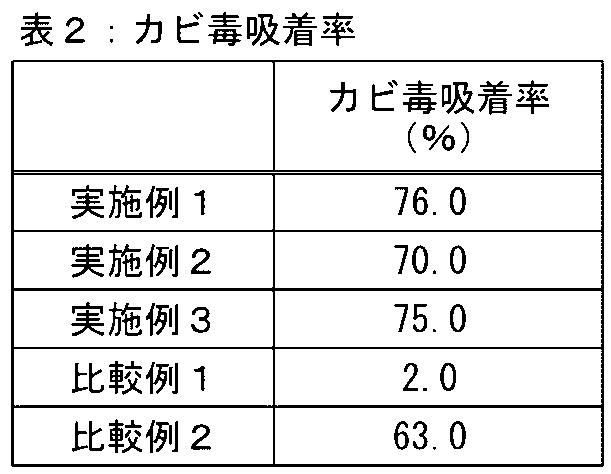
結果を、表2に示す。
比較例1、比較例2、実施例1および実施例2の各飼料用組成物をシャーレに入れ、35~40℃、相対湿度約70~90%、窓のある室内で直射日光の当たらない条件下で7日間放置した。
比較例1および2の飼料用組成物では腐敗臭が確認されたが、実施例1および2は腐敗臭が発生していなかった。
Claims (7)
- 分子量5,000~100,000の核酸と、
酵母細胞壁成分と、
リグニンスルホン酸と、
を含む飼料用組成物。 - リグニンスルホン酸の含有量が、1~30重量%である、請求項1に記載の飼料用組成物。
- 前記核酸が、酵母由来のリボ核酸である、請求項1または2に記載の飼料用組成物。
- さらに、亜硫酸塩を含む、請求項1~3のいずれか一項に記載の飼料用組成物。
- 分子量5,000~100,000の核酸と、酵母細胞壁成分と、リグニンスルホン酸とを混合することを含む、飼料用組成物の製造方法。
- 酵母を脱核処理して核酸と脱核酵母とに分離して回収し、前記分子量5,000~100,000の核酸と前記酵母細胞壁成分とをそれぞれ用意することを含む、請求項5に記載の飼料用組成物の製造方法。
- 分子量5,000~100,000の核酸と、酵母細胞壁成分と、リグニンスルホン酸とを含む飼料用組成物の製造方法であって、
リグニンスルホン酸を含む培地で酵母を培養することと、
前記酵母をアルカリ処理することと、
前記リグニンスルホン酸を含む培地と、前記酵母由来の核酸と、前記酵母由来の酵母細胞壁成分とを含む混合物を回収することと、
を含む、前記製造方法。
Priority Applications (3)
| Application Number | Priority Date | Filing Date | Title |
|---|---|---|---|
| EP21775409.2A EP4129078A4 (en) | 2020-03-26 | 2021-03-26 | FEED COMPOSITION AND PRODUCTION PROCESS |
| JP2022510727A JP7441305B2 (ja) | 2020-03-26 | 2021-03-26 | 飼料用組成物およびその製造方法 |
| US17/949,493 US20230021363A1 (en) | 2020-03-26 | 2022-09-21 | Feed composition and manufacturing method therefor |
Applications Claiming Priority (2)
| Application Number | Priority Date | Filing Date | Title |
|---|---|---|---|
| JP2020055577 | 2020-03-26 | ||
| JP2020-055577 | 2020-03-26 |
Related Child Applications (1)
| Application Number | Title | Priority Date | Filing Date |
|---|---|---|---|
| US17/949,493 Continuation US20230021363A1 (en) | 2020-03-26 | 2022-09-21 | Feed composition and manufacturing method therefor |
Publications (1)
| Publication Number | Publication Date |
|---|---|
| WO2021193907A1 true WO2021193907A1 (ja) | 2021-09-30 |
Family
ID=77891910
Family Applications (1)
| Application Number | Title | Priority Date | Filing Date |
|---|---|---|---|
| PCT/JP2021/012817 Ceased WO2021193907A1 (ja) | 2020-03-26 | 2021-03-26 | 飼料用組成物およびその製造方法 |
Country Status (4)
| Country | Link |
|---|---|
| US (1) | US20230021363A1 (ja) |
| EP (1) | EP4129078A4 (ja) |
| JP (1) | JP7441305B2 (ja) |
| WO (1) | WO2021193907A1 (ja) |
Cited By (2)
| Publication number | Priority date | Publication date | Assignee | Title |
|---|---|---|---|---|
| JP2023037133A (ja) * | 2021-09-03 | 2023-03-15 | 日本製紙株式会社 | 肥料用組成物およびその製造方法 |
| JP2023161124A (ja) * | 2022-04-25 | 2023-11-07 | 日本製紙株式会社 | 家禽の生産方法 |
Citations (5)
| Publication number | Priority date | Publication date | Assignee | Title |
|---|---|---|---|---|
| JPH0230846B2 (ja) | 1983-03-30 | 1990-07-10 | Sumitomo Rubber Ind | Gomuseibogenzainoseizohoho |
| JPH07184595A (ja) | 1993-12-28 | 1995-07-25 | Nippon Paper Ind Co Ltd | 酵母エキス組成物及びその製造法並びにそれを含有する飼料 |
| JPH09327268A (ja) * | 1996-06-10 | 1997-12-22 | Kikkoman Corp | 養殖魚用飼料添加剤及び養殖魚用飼料 |
| JP2002512011A (ja) | 1998-04-17 | 2002-04-23 | オールテック インコーポレイテッド | 飼料の脱マイコトキシン用組成物 |
| CN101480220A (zh) * | 2008-11-07 | 2009-07-15 | 江苏省苏微微生物研究有限公司 | 一种从酵母细胞制备混合型核苷酸饲料添加剂的方法及应用 |
Family Cites Families (5)
| Publication number | Priority date | Publication date | Assignee | Title |
|---|---|---|---|---|
| JPS5312900A (en) * | 1976-07-23 | 1978-02-04 | Yamasa Shoyu Co Ltd | Extraction of natural ribonucleic acid |
| JPH08113539A (ja) * | 1993-09-22 | 1996-05-07 | Nippon Paper Ind Co Ltd | 免疫増強剤及びその製造方法、並びにそれを用いた甲殻類及び魚類の養殖用飼料 |
| JP3744020B2 (ja) * | 1995-04-14 | 2006-02-08 | 日本製紙株式会社 | 免疫増強剤並びにそれを含有する甲殻類、魚類及び家畜用飼料 |
| CN101928674A (zh) * | 2008-12-24 | 2010-12-29 | 大连珍奥生物技术股份有限公司 | 选育高核酸酵母、用高核酸酵母制备核糖核酸的方法 |
| CN108018220A (zh) * | 2017-11-16 | 2018-05-11 | 山东圣琪生物有限公司 | 一种酿酒酵母、其制备方法以及应用 |
-
2021
- 2021-03-26 JP JP2022510727A patent/JP7441305B2/ja active Active
- 2021-03-26 WO PCT/JP2021/012817 patent/WO2021193907A1/ja not_active Ceased
- 2021-03-26 EP EP21775409.2A patent/EP4129078A4/en not_active Withdrawn
-
2022
- 2022-09-21 US US17/949,493 patent/US20230021363A1/en active Pending
Patent Citations (5)
| Publication number | Priority date | Publication date | Assignee | Title |
|---|---|---|---|---|
| JPH0230846B2 (ja) | 1983-03-30 | 1990-07-10 | Sumitomo Rubber Ind | Gomuseibogenzainoseizohoho |
| JPH07184595A (ja) | 1993-12-28 | 1995-07-25 | Nippon Paper Ind Co Ltd | 酵母エキス組成物及びその製造法並びにそれを含有する飼料 |
| JPH09327268A (ja) * | 1996-06-10 | 1997-12-22 | Kikkoman Corp | 養殖魚用飼料添加剤及び養殖魚用飼料 |
| JP2002512011A (ja) | 1998-04-17 | 2002-04-23 | オールテック インコーポレイテッド | 飼料の脱マイコトキシン用組成物 |
| CN101480220A (zh) * | 2008-11-07 | 2009-07-15 | 江苏省苏微微生物研究有限公司 | 一种从酵母细胞制备混合型核苷酸饲料添加剂的方法及应用 |
Non-Patent Citations (7)
| Title |
|---|
| ANONYMOUS: "Gotsu factory", JAPAN TAPPI JOURNAL, vol. 52, no. 6, 1998, JP , pages 838 - 847, XP009538881, ISSN: 0022-815X * |
| FOOD SAFETY COMMISSION OF JAPAN: "Calcium lignosulfonate and sodium lignosulfonate as excipients", EVALUATION REPORT, JP, pages 4, XP009538983, Retrieved from the Internet <URL:https://www.fsc.go.jp/fsciis/attachedFile/download?retrievalId=kai20120412sfc&fileId=230> * |
| NIPPON KAGAKU, ZASSHI, vol. 71, no. 4, June 1950 (1950-06-01) |
| SCHMIDT-THANNHAUSER-SCHNEIDER: "Seibutsu-kagaku Jikken-ho", 1969, UNIVERSITY OF TOKYO PRESS, pages: 16 - 28 |
| See also references of EP4129078A4 |
| TSUDA, RYUZ I: "Utilization of Sulfite Waste Liquor (Lignin) and Fermented Substance", JOURNAL OF THE SOCIETY OF MATERIALS SCIENCE, vol. 16, no. 169, 1967, Japan, pages 819 - 824, XP055861926 * |
| VIEBOCKSCHWAPPACH: "Methods in Lignin Chemistry", 1994, UNI SHUPPAN K, pages: 336 - 340 |
Cited By (5)
| Publication number | Priority date | Publication date | Assignee | Title |
|---|---|---|---|---|
| JP2023037133A (ja) * | 2021-09-03 | 2023-03-15 | 日本製紙株式会社 | 肥料用組成物およびその製造方法 |
| JP7640413B2 (ja) | 2021-09-03 | 2025-03-05 | 日本製紙株式会社 | 肥料用組成物およびその製造方法 |
| JP2025061819A (ja) * | 2021-09-03 | 2025-04-11 | 日本製紙株式会社 | 肥料用組成物およびその製造方法 |
| JP7810834B2 (ja) | 2021-09-03 | 2026-02-03 | 日本製紙株式会社 | 肥料用組成物およびその製造方法 |
| JP2023161124A (ja) * | 2022-04-25 | 2023-11-07 | 日本製紙株式会社 | 家禽の生産方法 |
Also Published As
| Publication number | Publication date |
|---|---|
| EP4129078A4 (en) | 2024-05-01 |
| JP7441305B2 (ja) | 2024-02-29 |
| EP4129078A1 (en) | 2023-02-08 |
| US20230021363A1 (en) | 2023-01-26 |
| JPWO2021193907A1 (ja) | 2021-09-30 |
Similar Documents
| Publication | Publication Date | Title |
|---|---|---|
| JP2756907B2 (ja) | 酵母エキス組成物及びその製造法並びにそれを含有する飼料 | |
| KR101389240B1 (ko) | 점토 혼입된 효모 조성물 및 이의 사용방법 | |
| Vieira et al. | Evaluation of brewer’s spent yeast to produce flavor enhancer nucleotides: influence of serial repitching | |
| JP6292725B2 (ja) | リポ多糖、リポ多糖製造方法及びリポ多糖配合物 | |
| Selvakumar et al. | Biosynthesis of glucoamylase from Aspergillus niger by solid-state fermentation using tea waste as the basis of a solid substrate | |
| US20030232038A1 (en) | Feed additives for cattle: prevention of E. coli infection | |
| EP3266863B1 (en) | Composition substantially consisting of yeast cell walls and process for the preparation thereof | |
| US20230021363A1 (en) | Feed composition and manufacturing method therefor | |
| JP4069253B2 (ja) | 栄養添加物の製造方法、添加物、およびその使用 | |
| KR101088442B1 (ko) | 감태발효 사료첨가물, 이의 제조방법 및 이를 포함하는 사료 | |
| CN107788332A (zh) | 益生高效毒素吸附剂及其生产方法和应用 | |
| CN106190847A (zh) | 一种生产高活性物质酵母自溶物的自溶工艺方法及由此制得的酵母产品 | |
| US20250204552A1 (en) | A microbial cell extract, method for obtaining said microbial cell extract and use of said microbial cell extract | |
| JP2025012672A (ja) | 腸内有機酸増進製剤 | |
| JP2023161124A (ja) | 家禽の生産方法 | |
| Mohanty et al. | Effect of feeding solid state fermented mahua oil cake (Bassia latifolia) on growth performance, enzymatic and immunological parameters in rohu (Labeo rohita) | |
| CN113207999A (zh) | 发酵竹粉及其产品在猪生产中的应用 | |
| JPH10271960A (ja) | 養殖用飼料組成物 | |
| WO2020189746A1 (ja) | 飼料添加剤、豚用飼料および豚の生産方法 | |
| CN104855733A (zh) | 一种含活性多糖和核苷酸的酵母在奶牛饲料中的应用 | |
| US20200178580A1 (en) | Malt sprouts extracts and their uses | |
| CN120113744A (zh) | 用于减少幼龄反刍动物腹泻的组合物及其制备方法和应用 | |
| JP2024088899A (ja) | 非ヒト哺乳類の生産方法、非ヒト哺乳類の新生仔用乳組成物およびその生産方法、並びにこれらの応用 | |
| Haryati et al. | Preservation of mannanase Eupenicillium javanicum (BS4) in solid state fermentation using glycerol and polyol | |
| RU2694256C2 (ru) | Кормовая добавка для профилактики бактерионосительства микроорганизмов рода Salmonella у сельскохозяйственной птицы и способ ее применения |
Legal Events
| Date | Code | Title | Description |
|---|---|---|---|
| 121 | Ep: the epo has been informed by wipo that ep was designated in this application |
Ref document number: 21775409 Country of ref document: EP Kind code of ref document: A1 |
|
| ENP | Entry into the national phase |
Ref document number: 2022510727 Country of ref document: JP Kind code of ref document: A |
|
| NENP | Non-entry into the national phase |
Ref country code: DE |
|
| ENP | Entry into the national phase |
Ref document number: 2021775409 Country of ref document: EP Effective date: 20221026 |
|
| WWW | Wipo information: withdrawn in national office |
Ref document number: 2021775409 Country of ref document: EP |